
When a bride asks me about a crown, I first ask what she means, because the word covers a lot: a crystal tiara, a flower halo, a pearl headband, a braid wrapped around the head, or a fine vine tucked into waves. They sit in different places, weigh different amounts and pair with different dresses. What I’m balancing in a fitting is the gown, the venue, your hair texture and how much shine you want near your face. A cathedral and a vineyard call for different answers. The fifteen pairings below run from royal and formal to soft garden looks and pared-back modern ones, and each is easy to show your stylist at a trial.
Silver, Gold or Pearl Against Your Gown
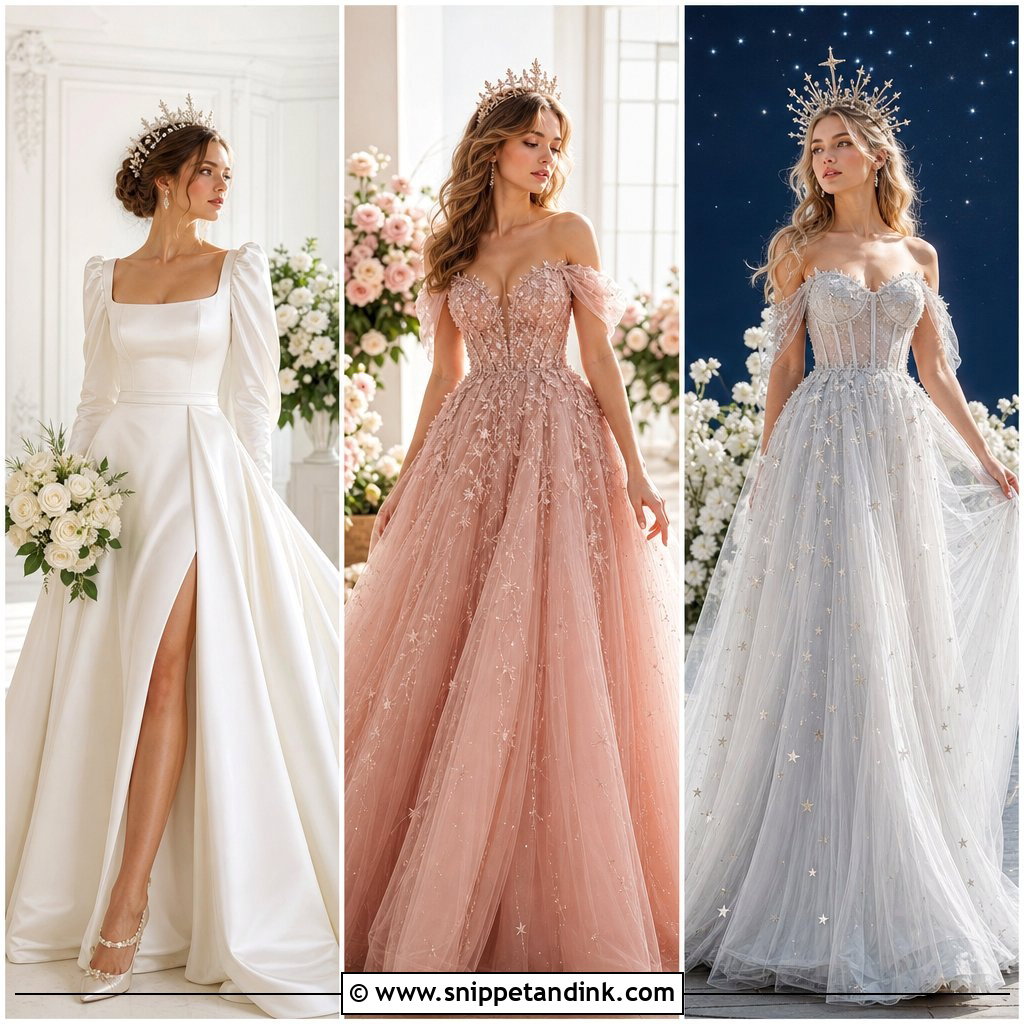
In a fitting, I hold a crown next to the bodice before it ever goes near the hair, because the metal and stones have to agree with the fabric. A crown that fights the dress color is the most common mismatch I see in photos.
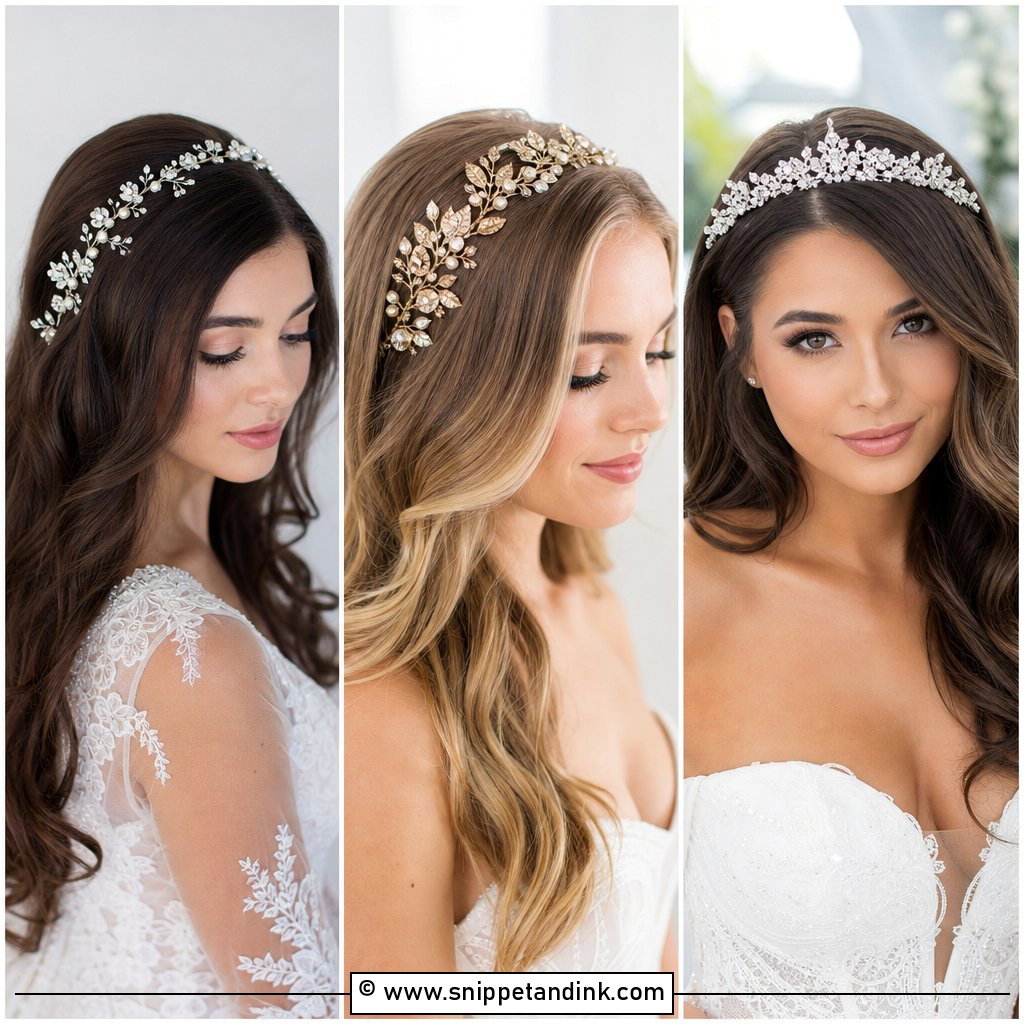
- Bright white gowns: silver, platinum tones and clear crystal look crisp. Yellow gold can look brassy against stark white.
- Ivory and soft white: pale gold, rose gold and pearls warm up next to it; antique silver works too.
- Champagne, blush and nude: gold and rose gold blend best; very cold crystal can look grey.
- Beaded or embellished bodices: match the crown to the beading color, not just the fabric.
Then match your earrings and any necklace to the crown, not the other way round. Mixing metals can work, but it should look like a decision, so I’d keep it to two tones at most.
1. Bridal Tiara With Low Bun
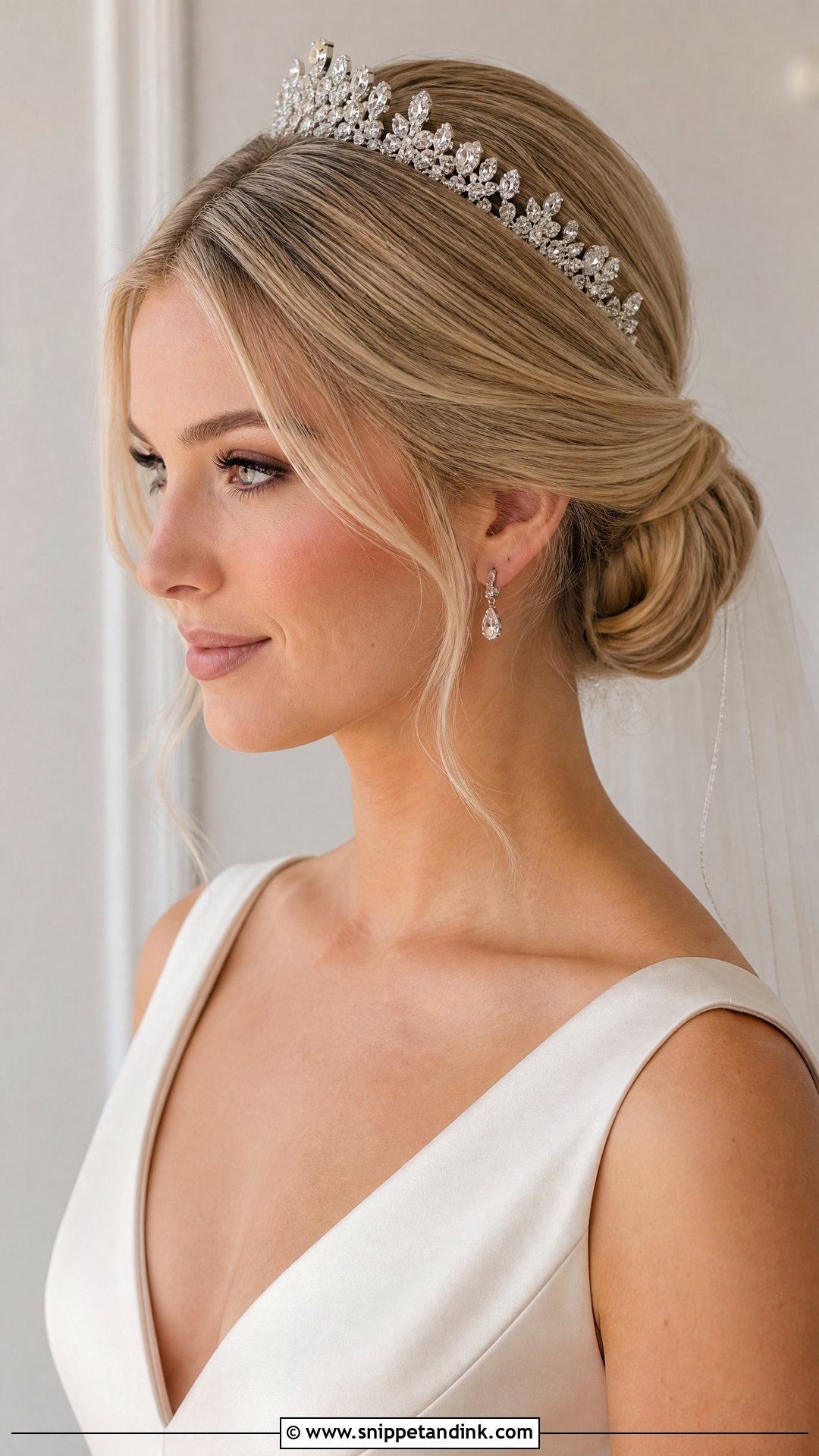
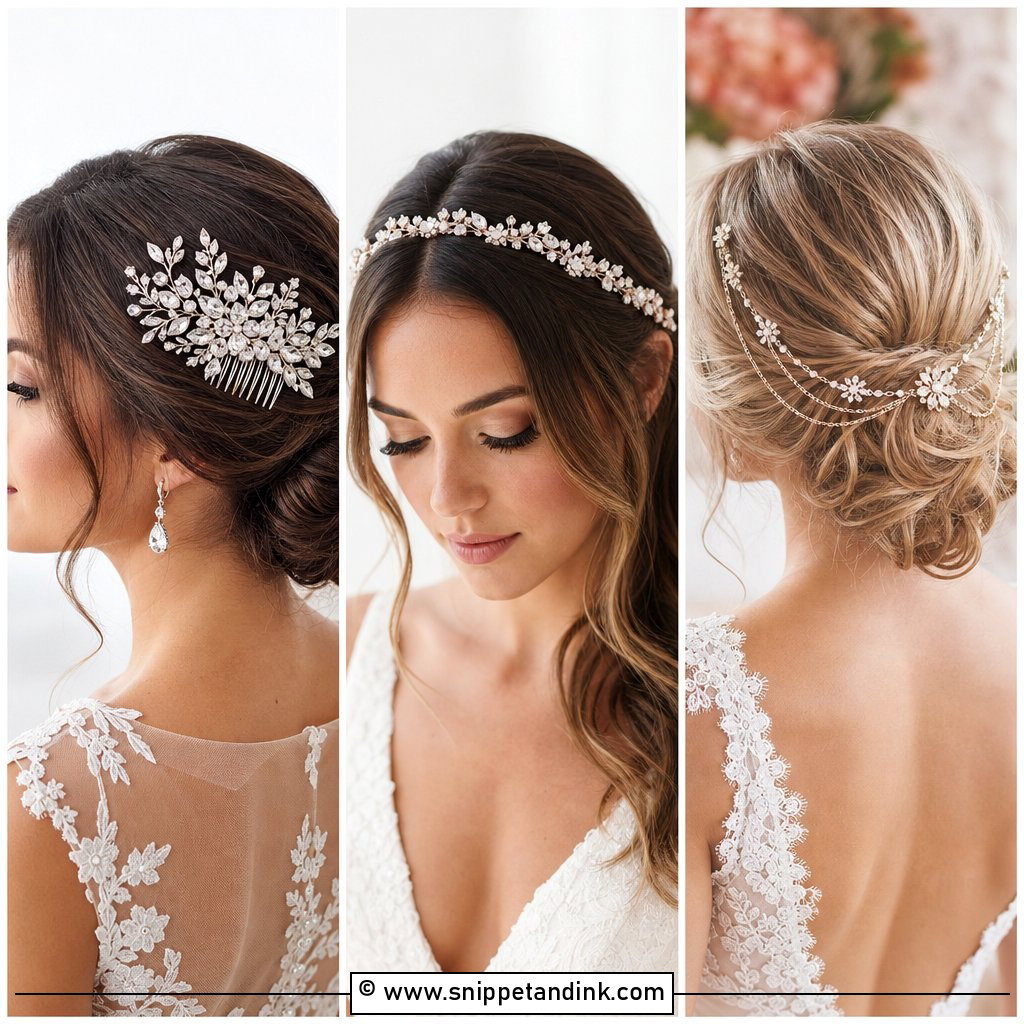
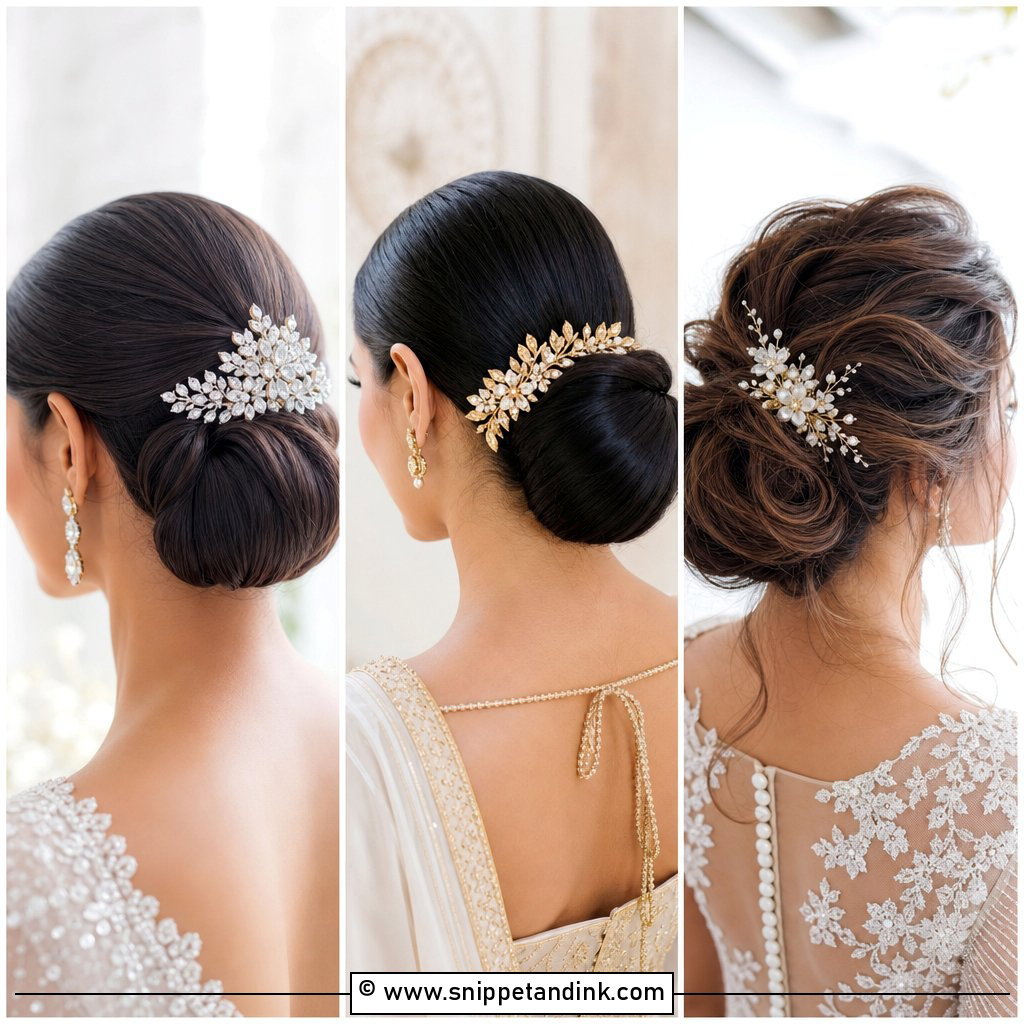
This is the pairing I suggest most to brides who want something formal but not fussy. A low bun leaves the neckline open, so strapless bodices, high necks, lace sleeves and plain satin all show clearly, while the tiara gives the head shape and height. I ask the stylist to set the tiara slightly tilted forward rather than flat, which lets the stones catch light toward the camera. Center part reads modern; side part has a vintage feel. With a veil, the comb goes beneath the bun and the tiara stays fully visible on top.
2. Flower Crown With Loose Waves
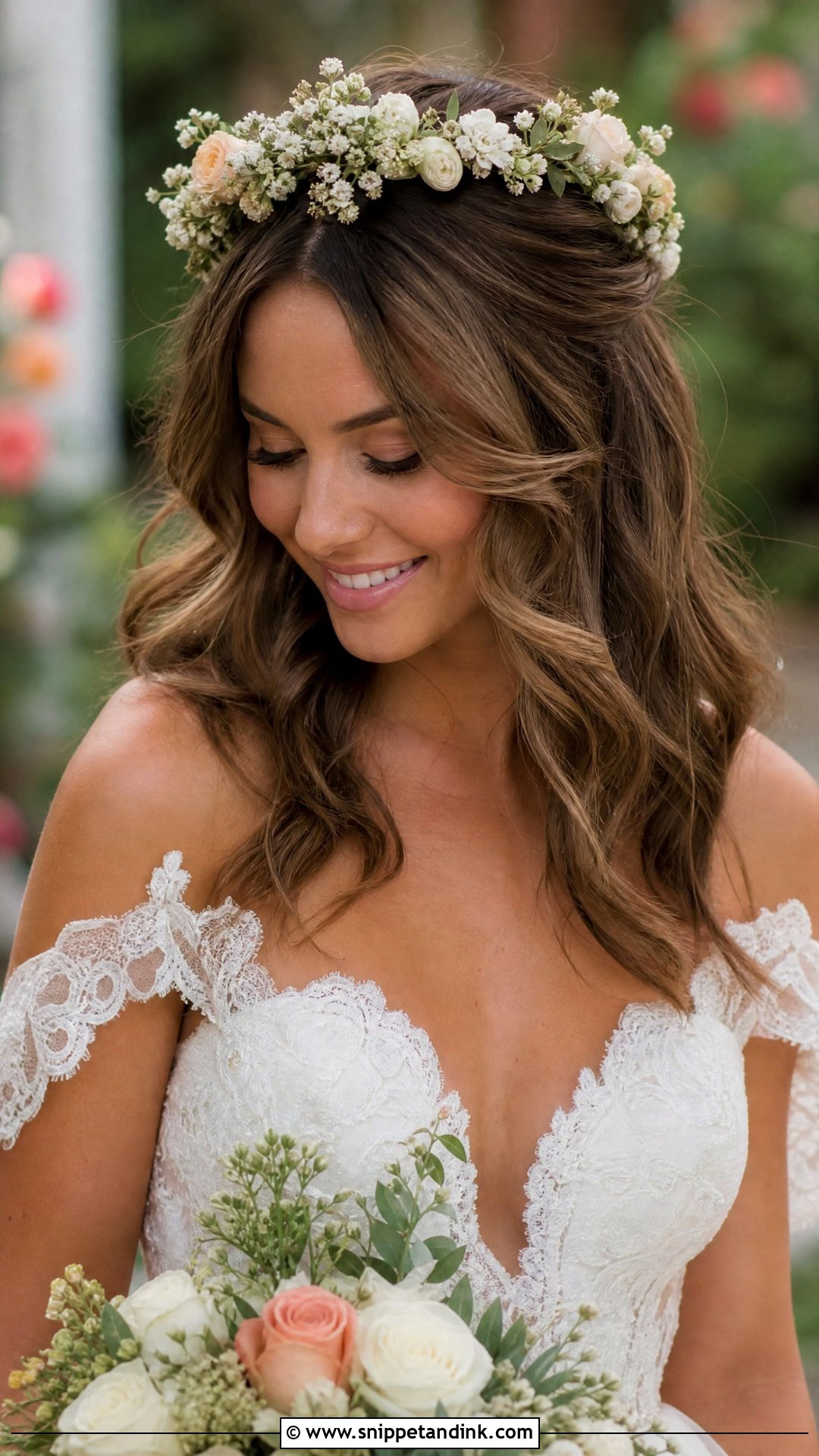
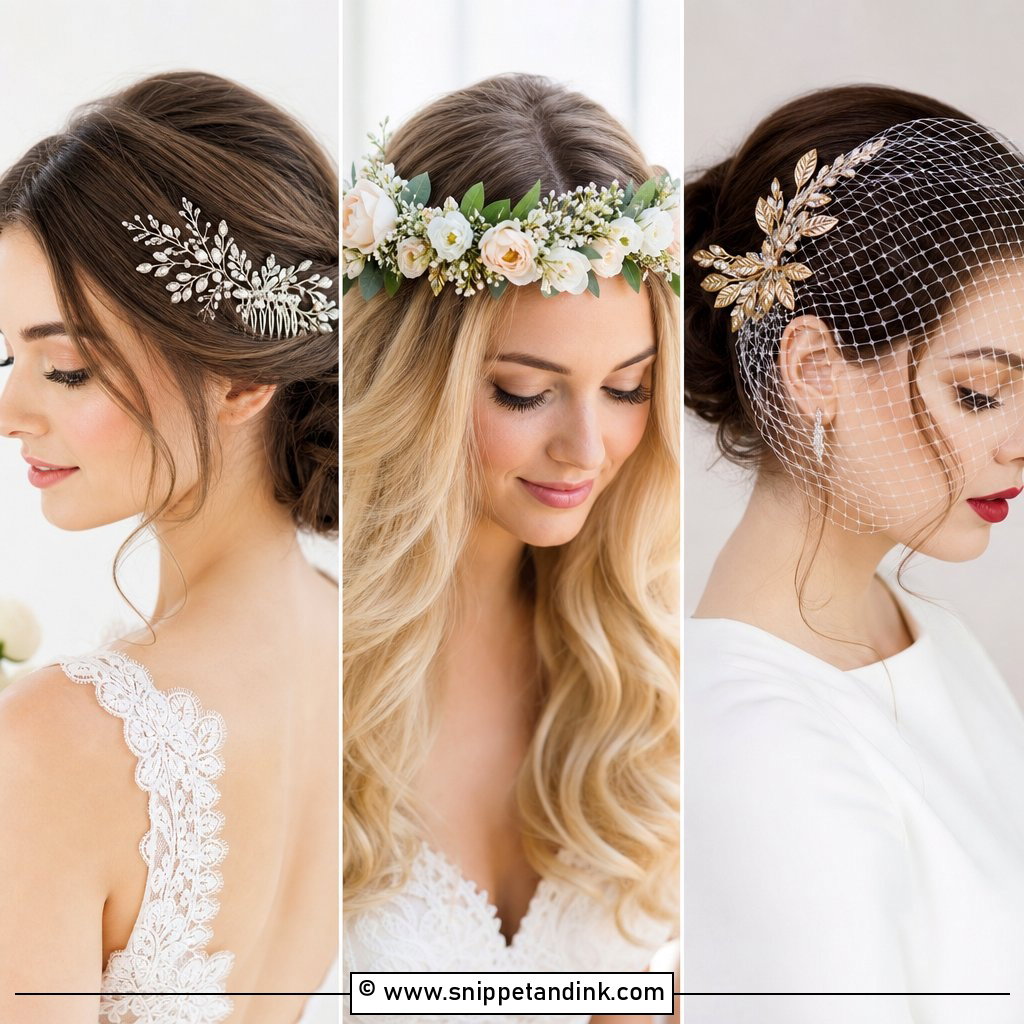
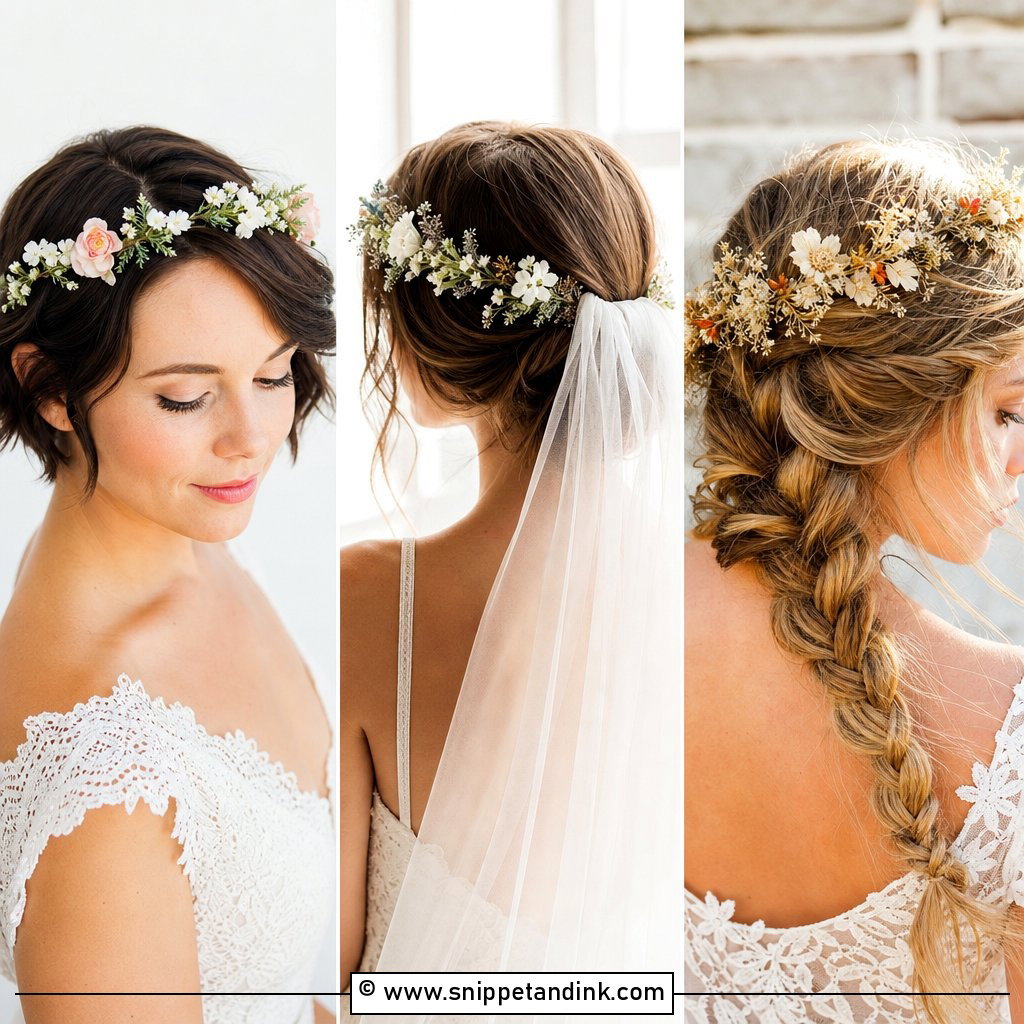
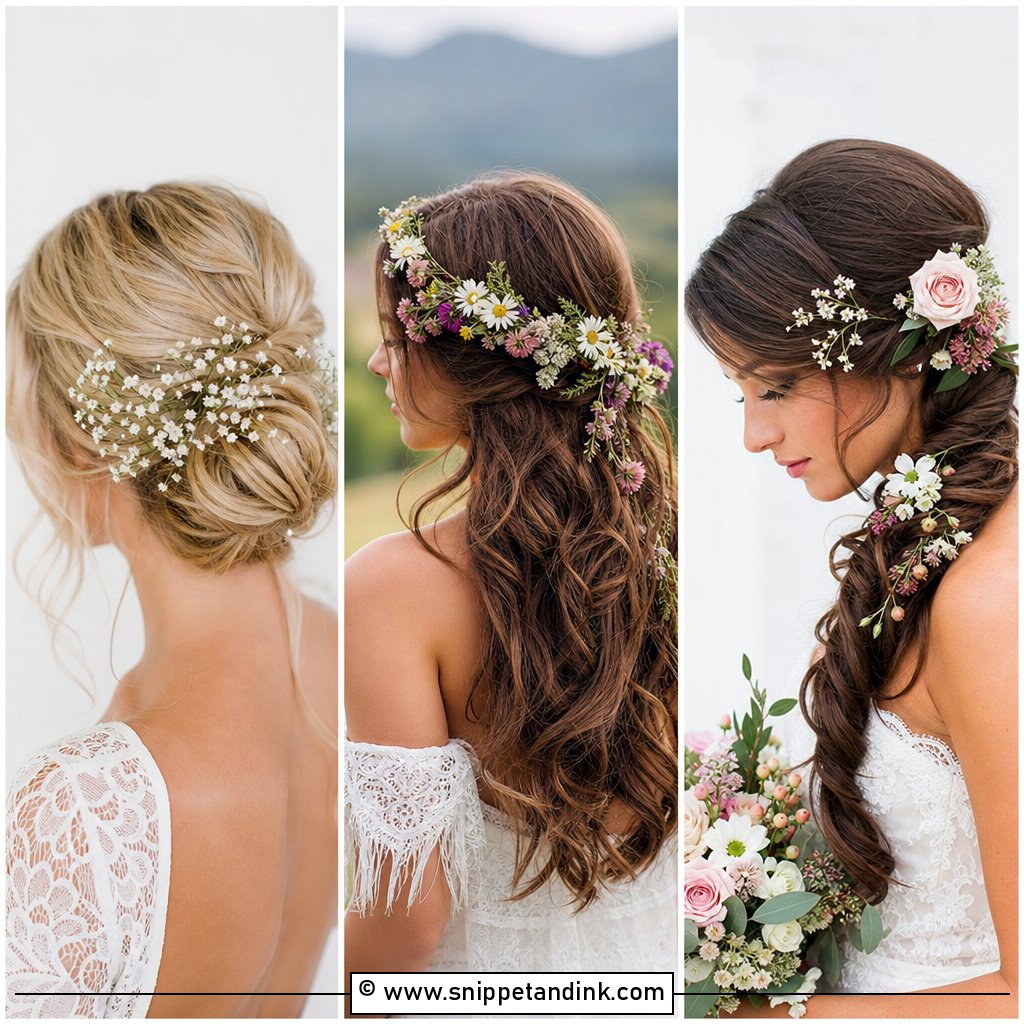
Garden ceremonies, beaches and relaxed spring weddings are where this works best. The waves give movement and the flowers sit around the face rather than on top of it. My guideline is to keep the crown lighter and smaller than your bouquet, so the two look related without the hair outweighing what you carry. Small blooms read romantic; a few larger ones make a bolder statement but get heavy. Waves should be polished, not stiff, and a flexible spray keeps them soft to the touch through the reception.
3. Pearl Crown With Half Up Hair
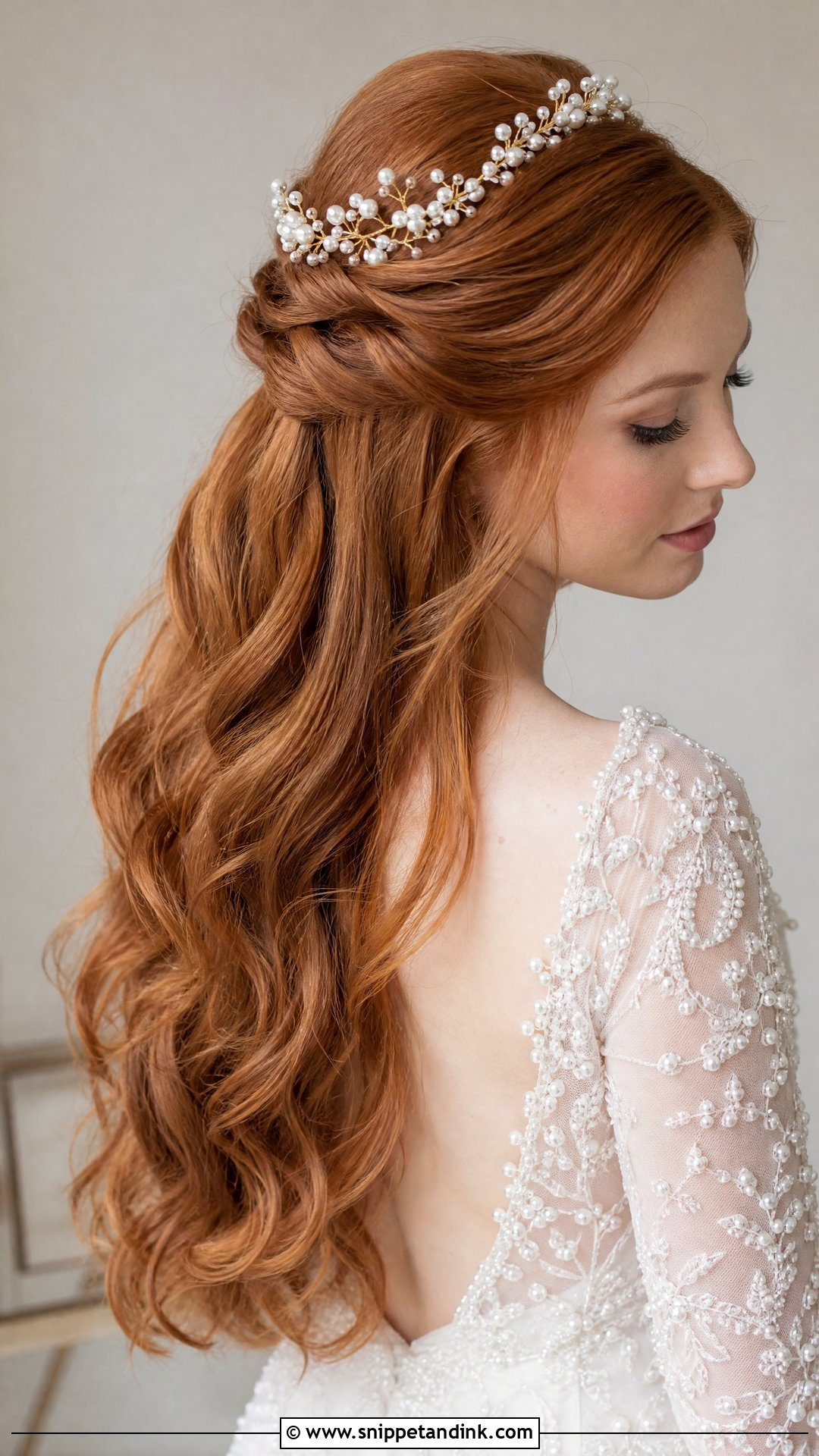
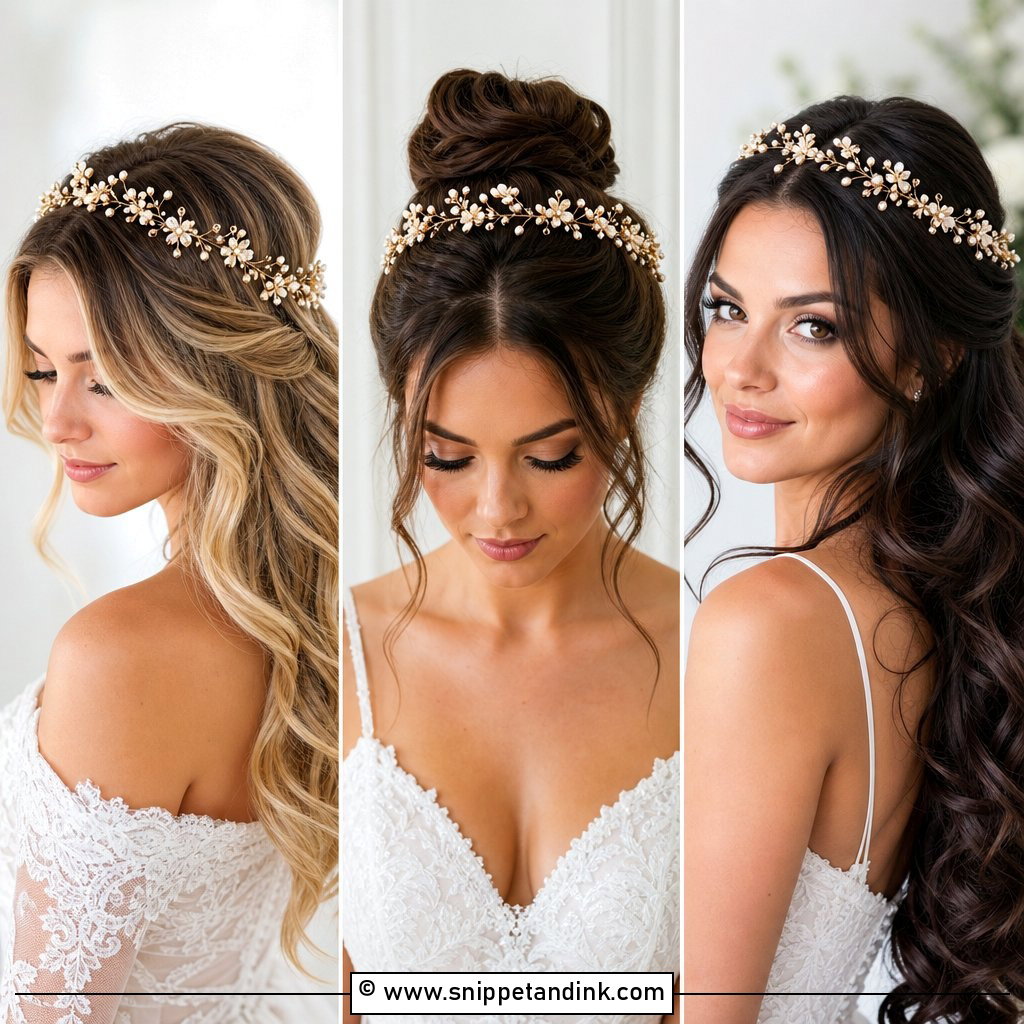
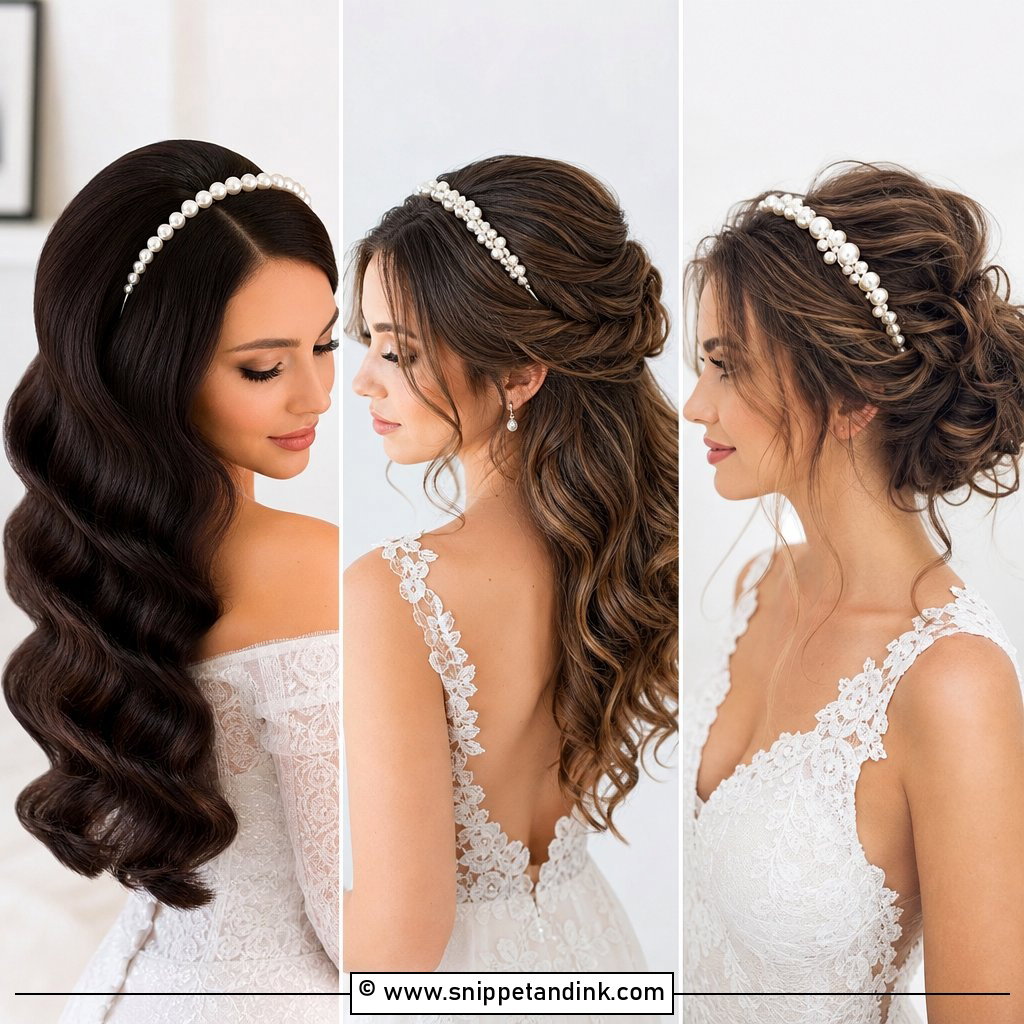
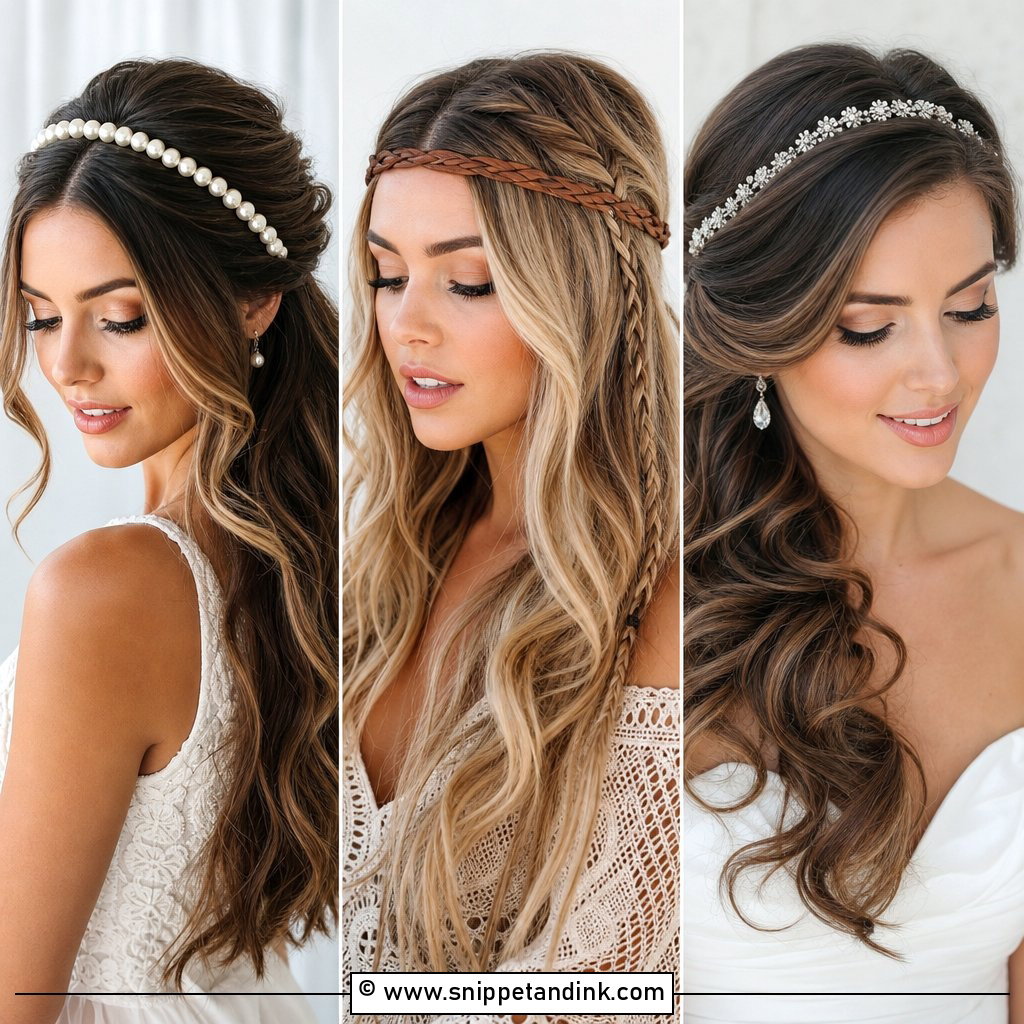
Half up hair lets you keep your length on show and still gives the crown a firm place to sit. The top section is twisted, braided or pinned back, with the rest falling in waves or curls. Pearls flatter lace, silk and gowns with pearl buttons or beaded details; I match the pearl tone to the dress, since bright white pearls can look grey against ivory. The crown must touch the pinned section. If it floats in front of it with a gap of loose hair, it reads like a headband that slipped.
4. Crystal Crown With Hollywood Waves
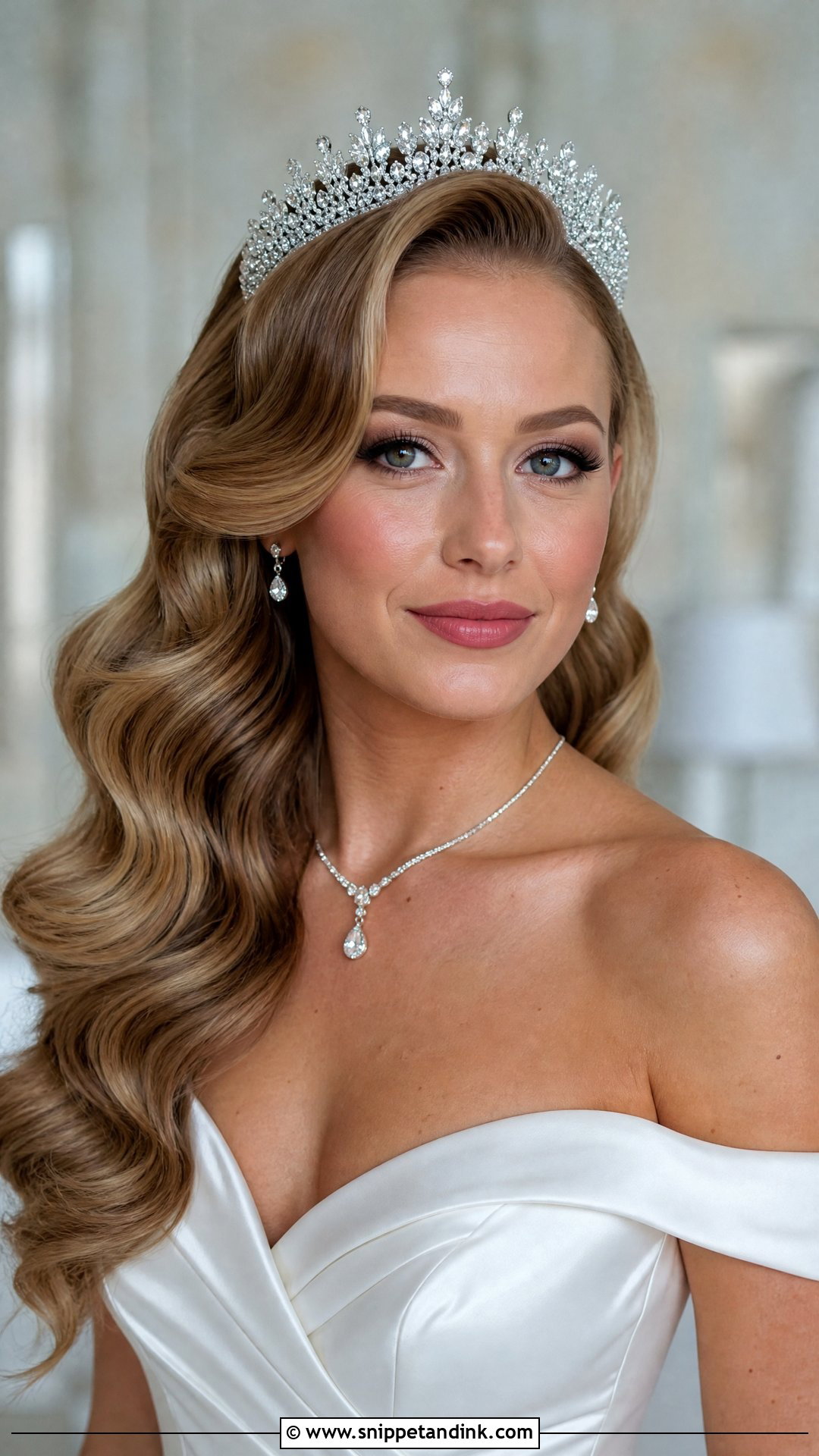
Sculpted waves and a crystal crown is evening glamour, and it’s the combination I steer toward fitted gowns, clean satin, long veils and black-tie receptions. The waves supply shine and structure, so the crown doesn’t need help from much else. Ask for smooth lift at the roots; a crown pressed onto flat roots crushes the wave pattern right where everyone looks. A deep side part makes it more dramatic. I keep earrings slim with this look, because waves plus crown plus chandelier earrings is three focal points fighting each other.
5. Gold Leaf Crown With Textured Updo
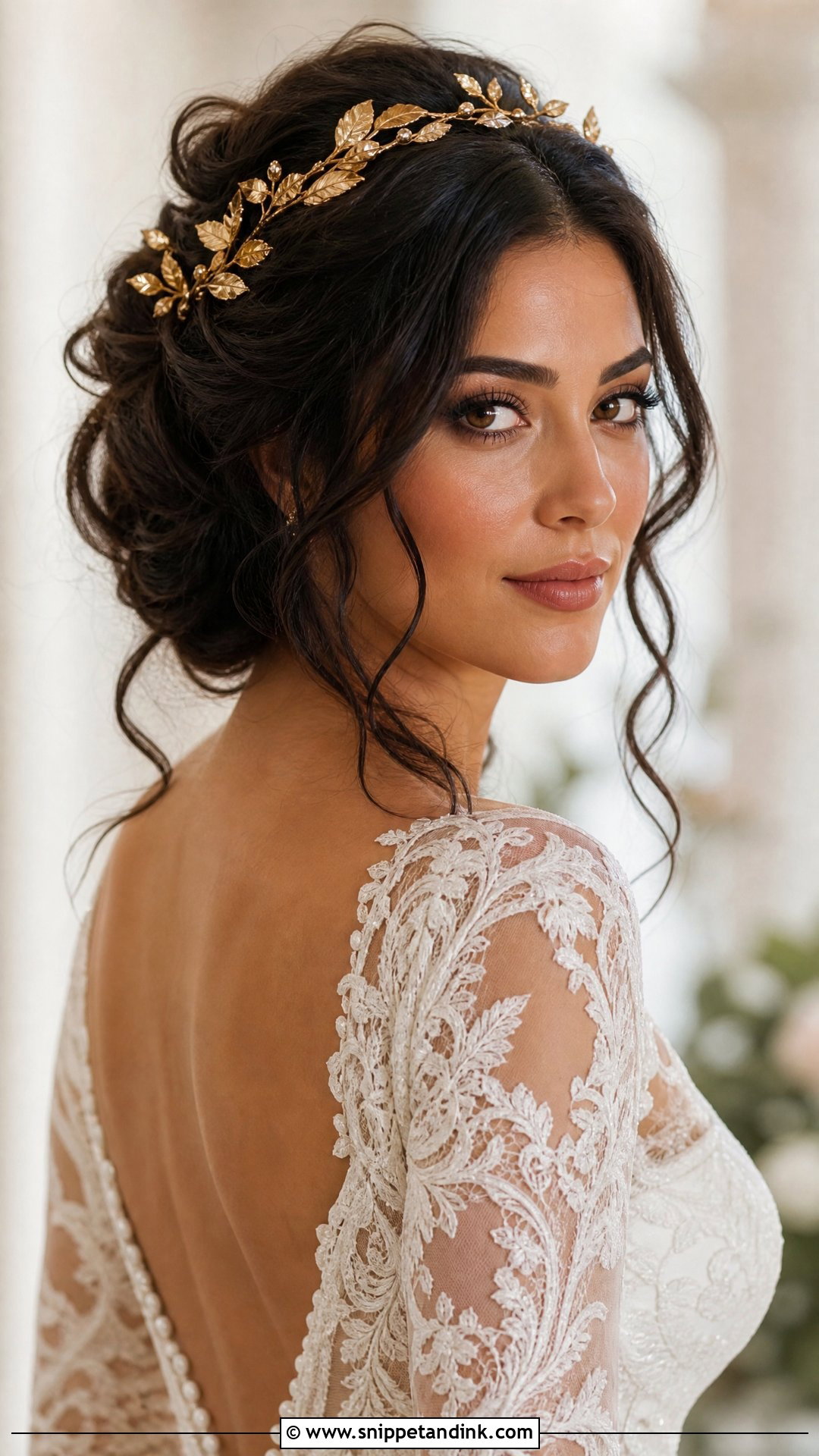
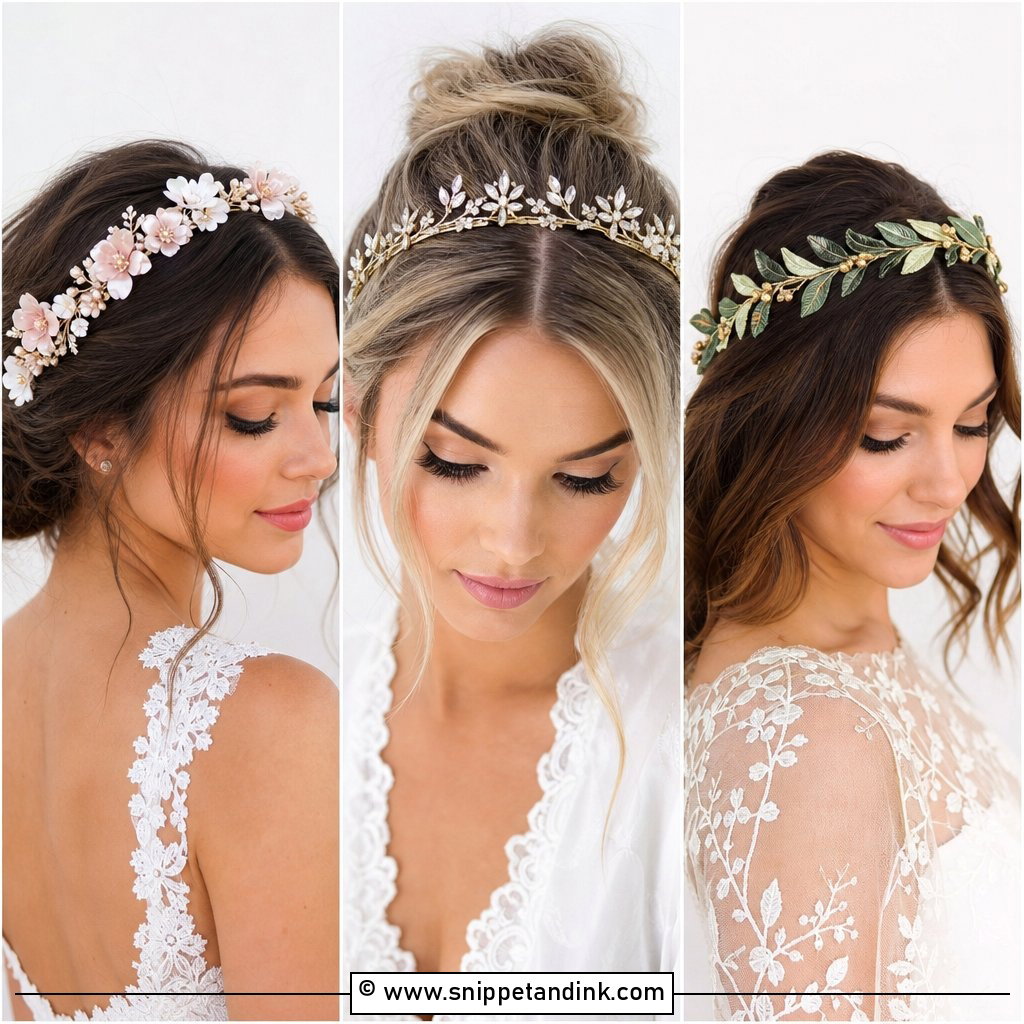
Gold leaves have a warmth that silver crystal doesn’t. Paired with a textured updo, they suit ivory and champagne gowns, warm makeup and late-afternoon light. The updo can be loose twists, soft curls or a slightly undone bun, as long as it’s secure underneath. I want the leaves to follow the curve of the updo so the crown blends in rather than sitting above it like a ring. It’s my favorite option for autumn weddings, vineyards and candlelit receptions, where gold picks up the glow.
6. Braided Crown With Low Chignon
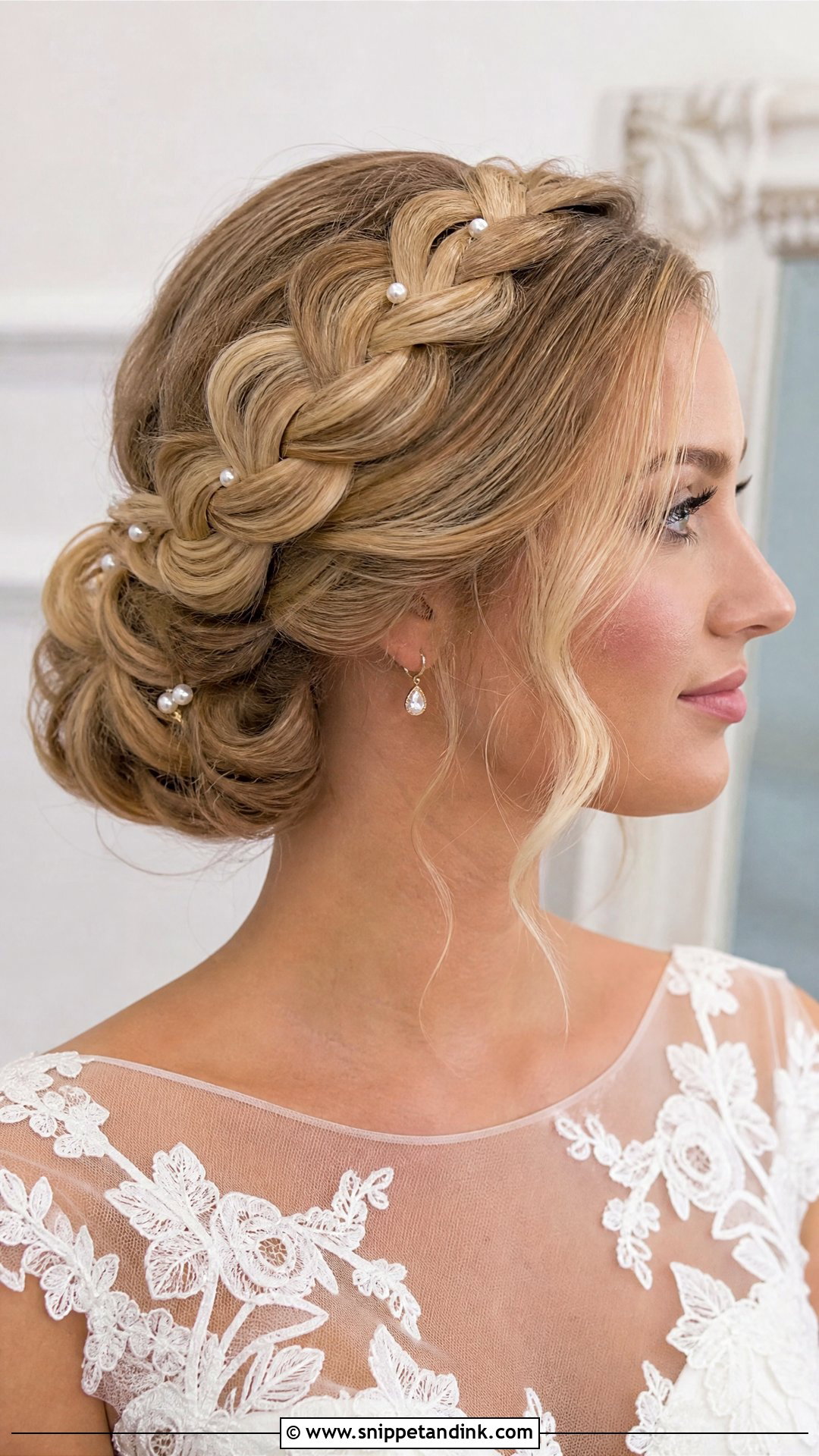
A braid wrapped around the head gives you the crown shape with no accessory at all, which is why I suggest it to brides who dislike things pressing on their head. The chignon anchors everything at the nape, and the combination is among the longest-lasting styles you can wear. Polished, it suits a formal ceremony; pulled looser, a country wedding. Small pearl pins, baby’s breath or a few crystals add detail. The braid needs to be thick enough to read as a crown, so on fine hair the stylist may weave in a clip-in piece.
7. Floral Vine Crown With Messy Bun
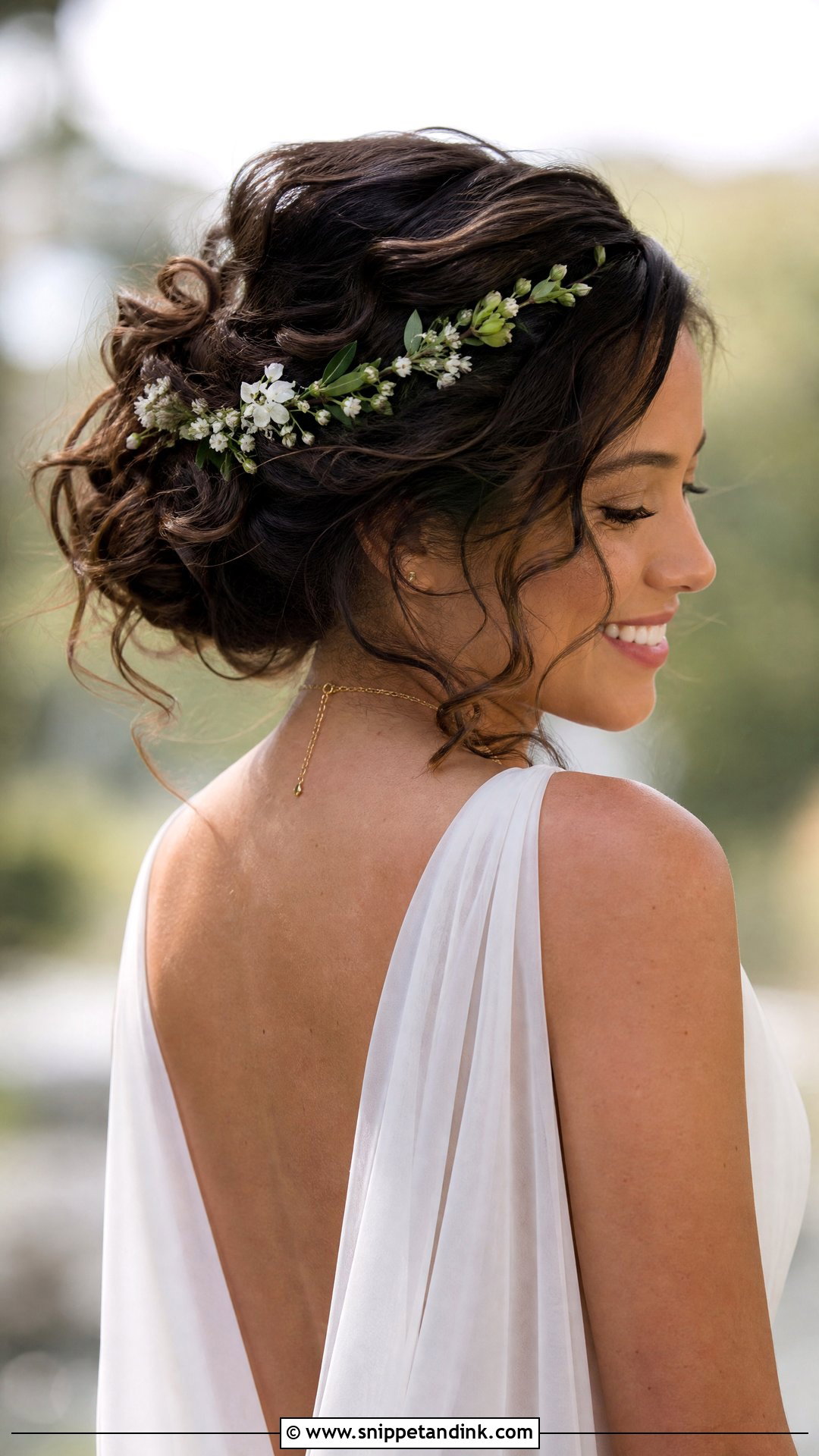
A vine is the most adaptable crown there is, because the wire bends. A floral vine crown can cross the top of the head, wrap around a messy bun, or sit just behind the hairline, so it works on most face shapes and lengths. It suits tulle, lace, chiffon and floral embroidery. A messy bun still has to be secure underneath, with a few chosen loose pieces. The rule I give brides: small leaves or flowers if your dress is detailed, a fuller vine if your gown is plain.
8. Princess Crown With Long Curls
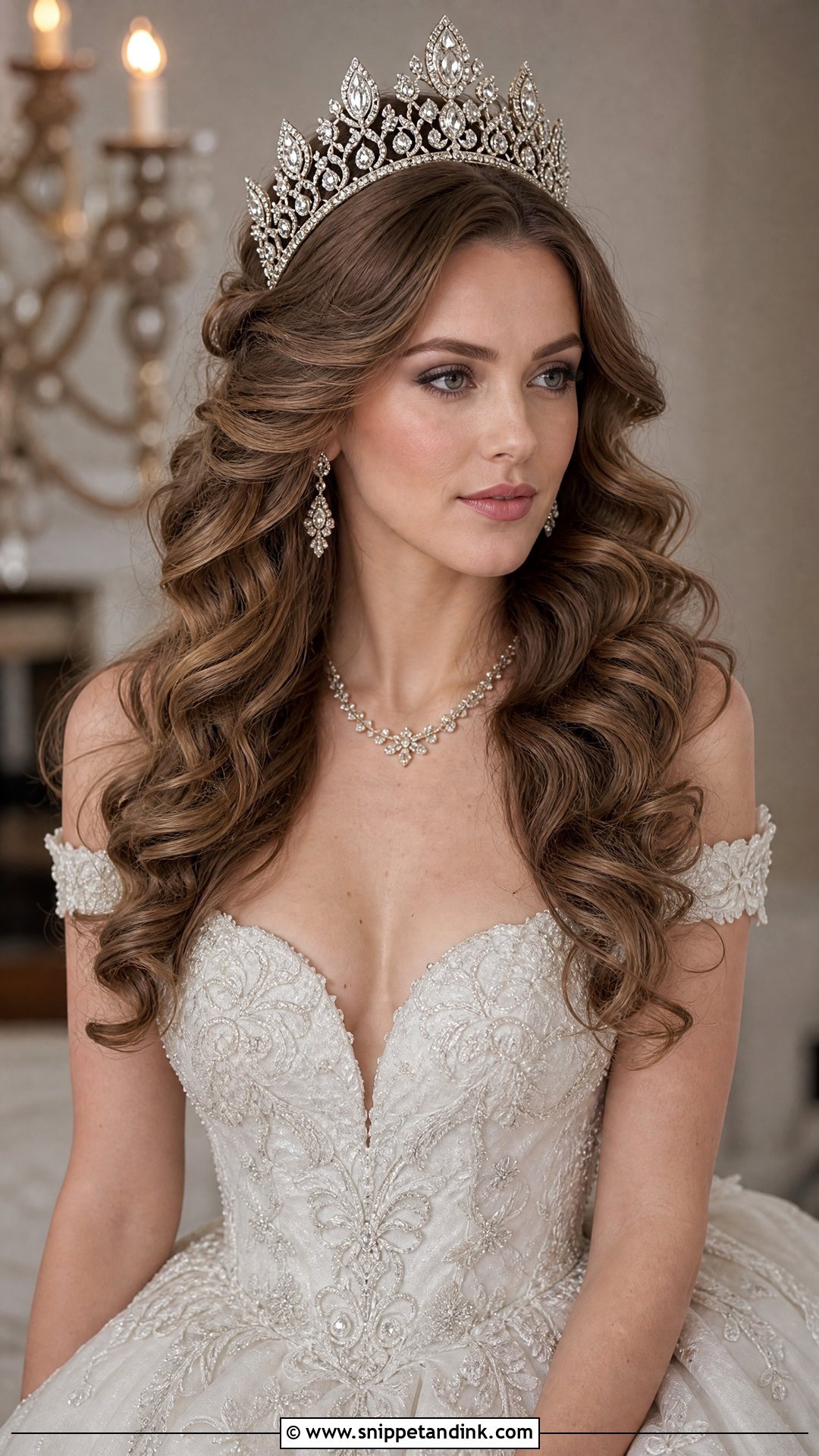
Long curls and a tall crown are the fairytale combination, and they need a big dress to balance them: think ball gowns, cathedral veils, off-the-shoulder bodices and grand venues. On a slim sheath, a tall crown with full curls can look top-heavy. Curls should be defined and smooth, never crunchy. Thick, heavy hair needs the crown anchored with pins through its loops on both sides, otherwise the weight of the curls slowly tips it backward.
9. Minimal Tiara With Sleek Bun
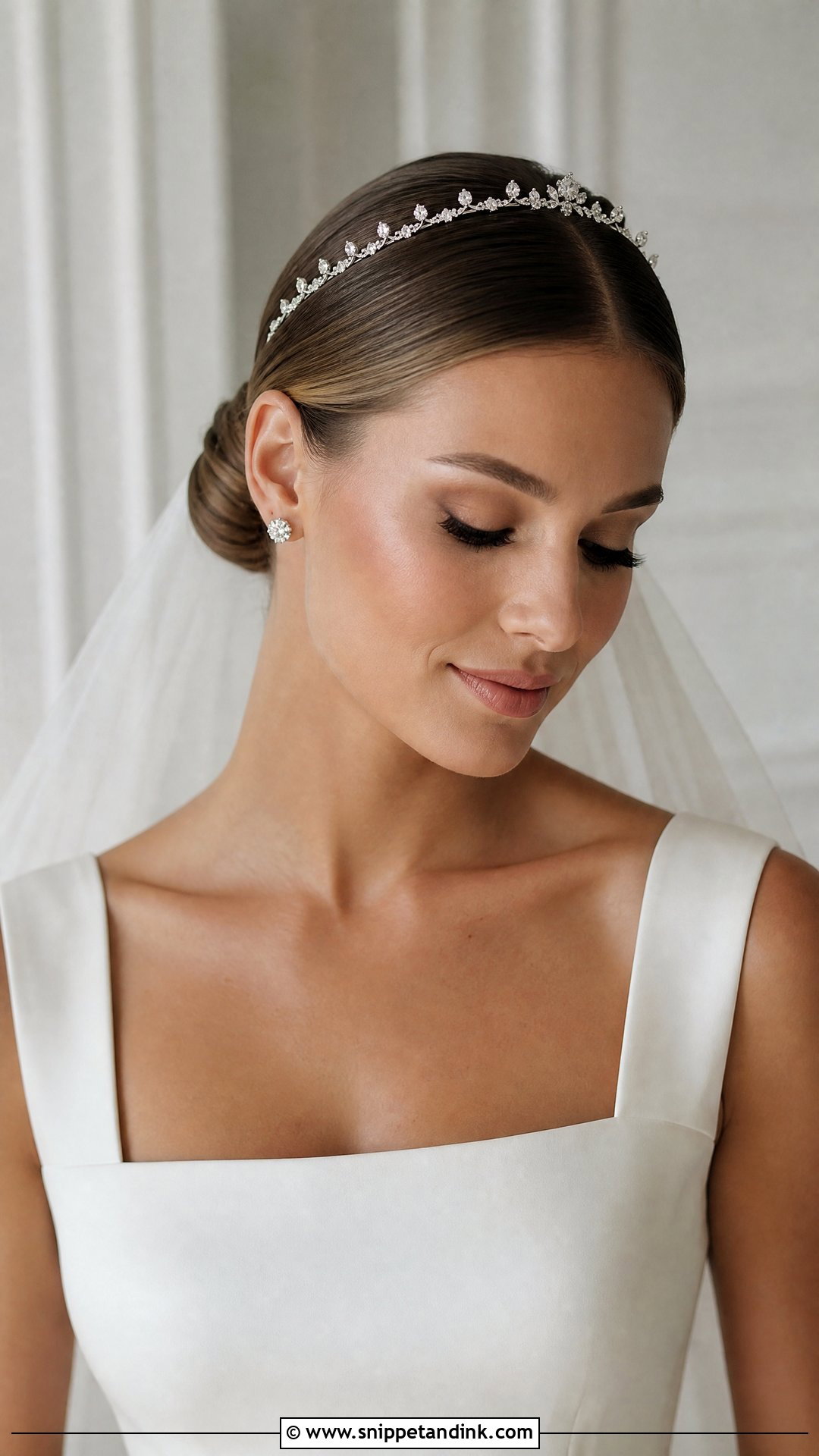
A minimal tiara and a sleek bun is what I show brides who want quiet shine and clean lines. The bun can sit low, mid-height or a little higher, depending on neckline and veil. Minimal gowns, square necklines, sculptural sleeves and city weddings all suit it. Because there’s so little going on, the placement shows every millimeter: I want the tiara centered and parallel to the hairline, sitting in front of the smoothest part of the hair. Flyaways get tamed with a little product, never so much it looks wet.
10. Boho Crown Braid With Flowers
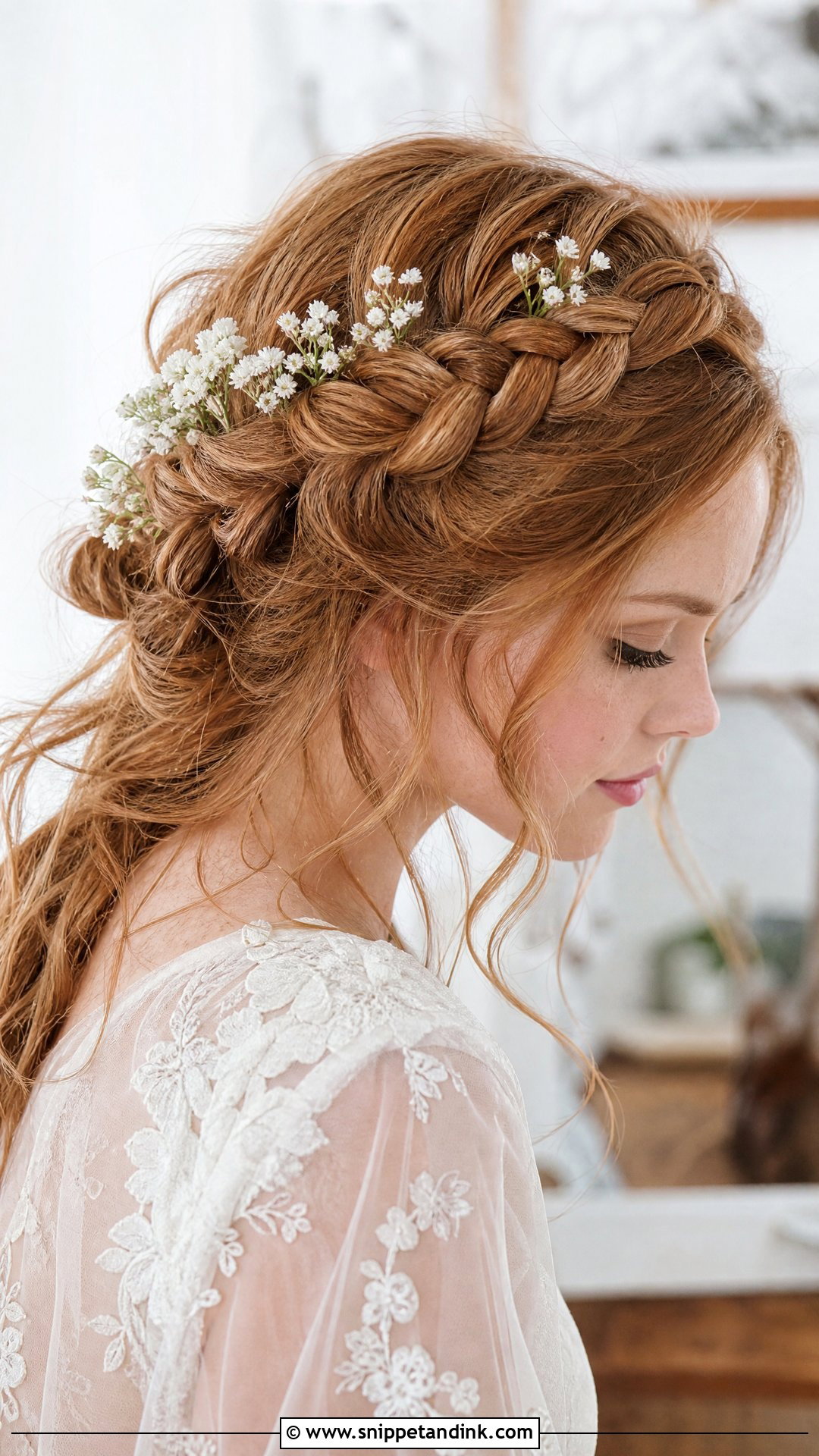
Wrapping a braid around the head and adding small flowers is the relaxed, outdoor version of a crown. Rustic venues, garden ceremonies and less formal weddings suit it. The braid can be loose and full but must be pinned firmly every few inches so it holds through photos and dancing. Heavy stems are the risk; a big bloom pinned into a soft braid pulls it out of shape within a couple of hours. I keep flowers small and light, and finish with a few loose tendrils at the face.
11. Pearl Headband Crown With Short Hair
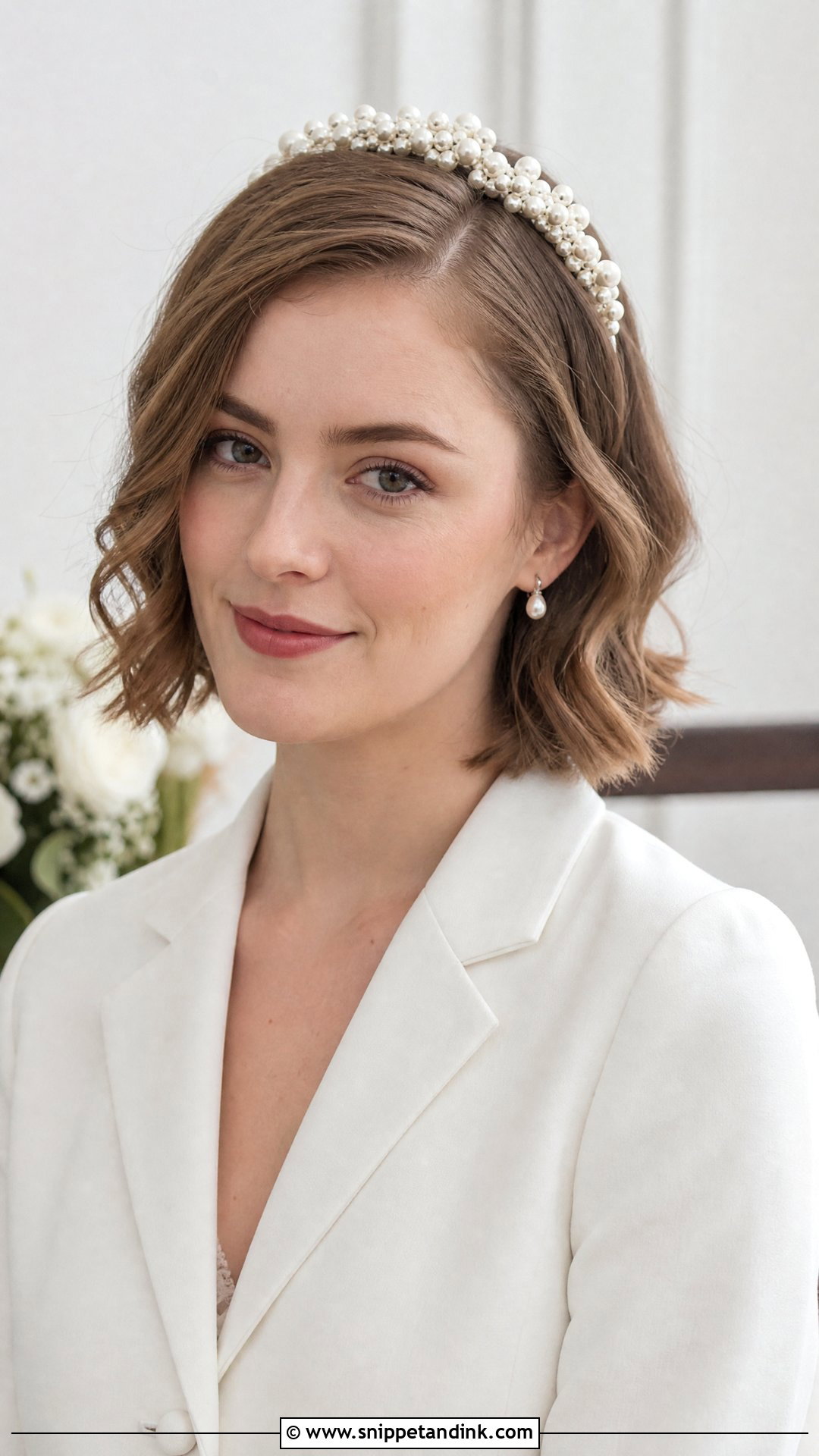
Short hair is where a pearl headband really comes into its own. Bobs, lobs, pixies and cropped cuts get a bridal finish without extensions or heavy styling. Set close to the hairline, it looks vintage; pushed further back, cleaner and more modern. Soft waves give a bob movement; a sleek finish suits a pixie. The fit is the thing I check most, since a headband that grips too tightly behind the ears can give you a headache before dinner. I pair it with pearl studs or simple earrings so it all reads as one.
12. Rhinestone Crown With High Bun
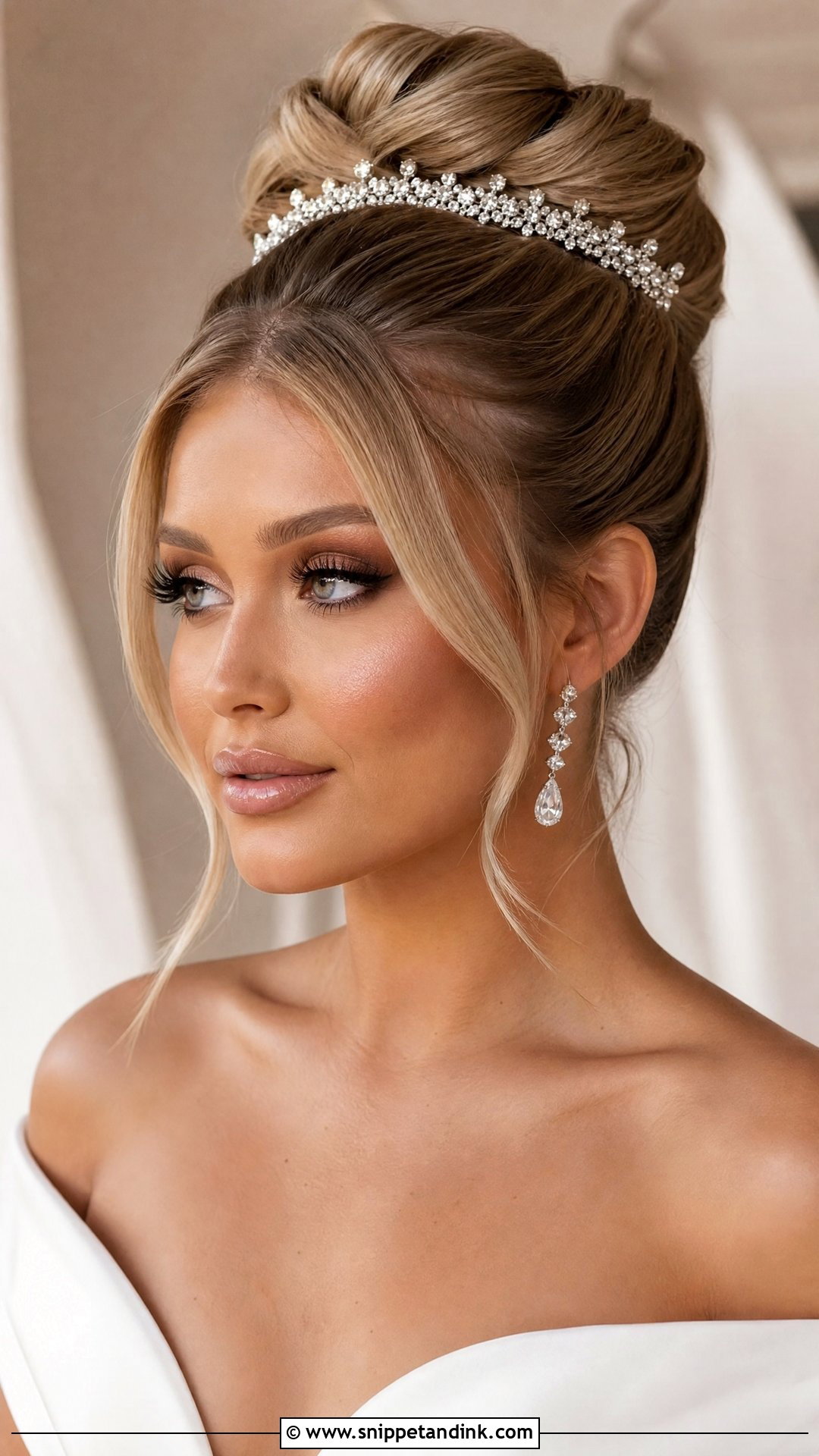
Height, sparkle and confidence are what this pairing delivers. A high bun lifts the face and suits dramatic gowns, long veils and bold earrings. The rhinestone crown can sit at the base of the bun, across the front, or tilted slightly for a softer look. It needs a strong base, so fine hair often gets padding inside the bun and extra pins. I limit sparkle elsewhere: with a rhinestone crown, I’d choose either statement earrings or a crystal necklace, not both.
13. Greenery Crown With Natural Waves
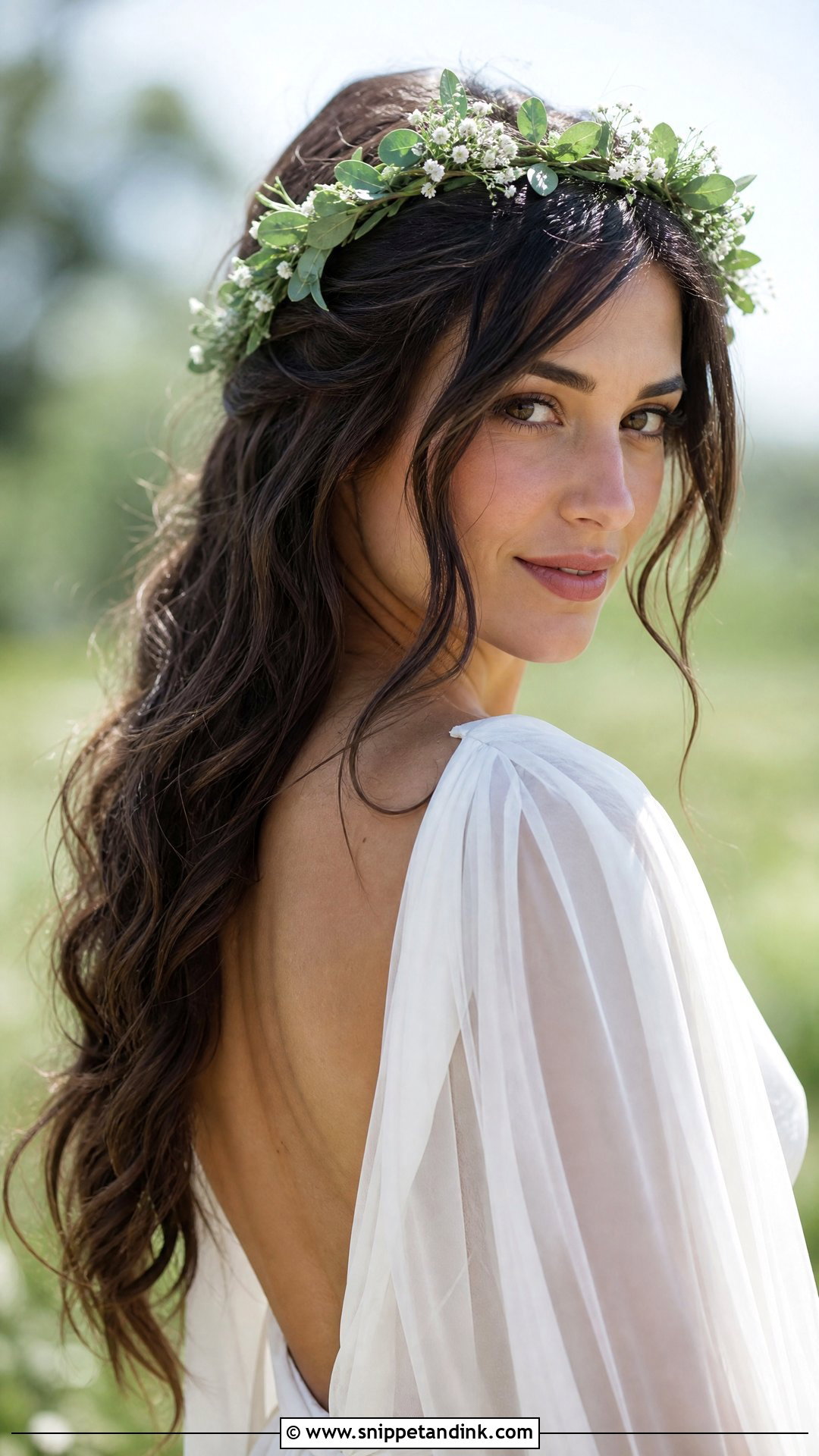
Leaves instead of sparkle suit brides who prefer an earthy, fresh look. Eucalyptus, olive, small fern fronds or tiny white flowers make a crown that feels organic. Natural waves keep it easy, especially outdoors and in warm weather. Your florist and stylist need to plan it together so it’s light and secure. Greenery adds up quickly, so I leave space around the face and keep the crown narrower at the temples. Simple gowns, airy sleeves, soft makeup and loose bouquets complete it.
14. Vintage Crown With Finger Waves
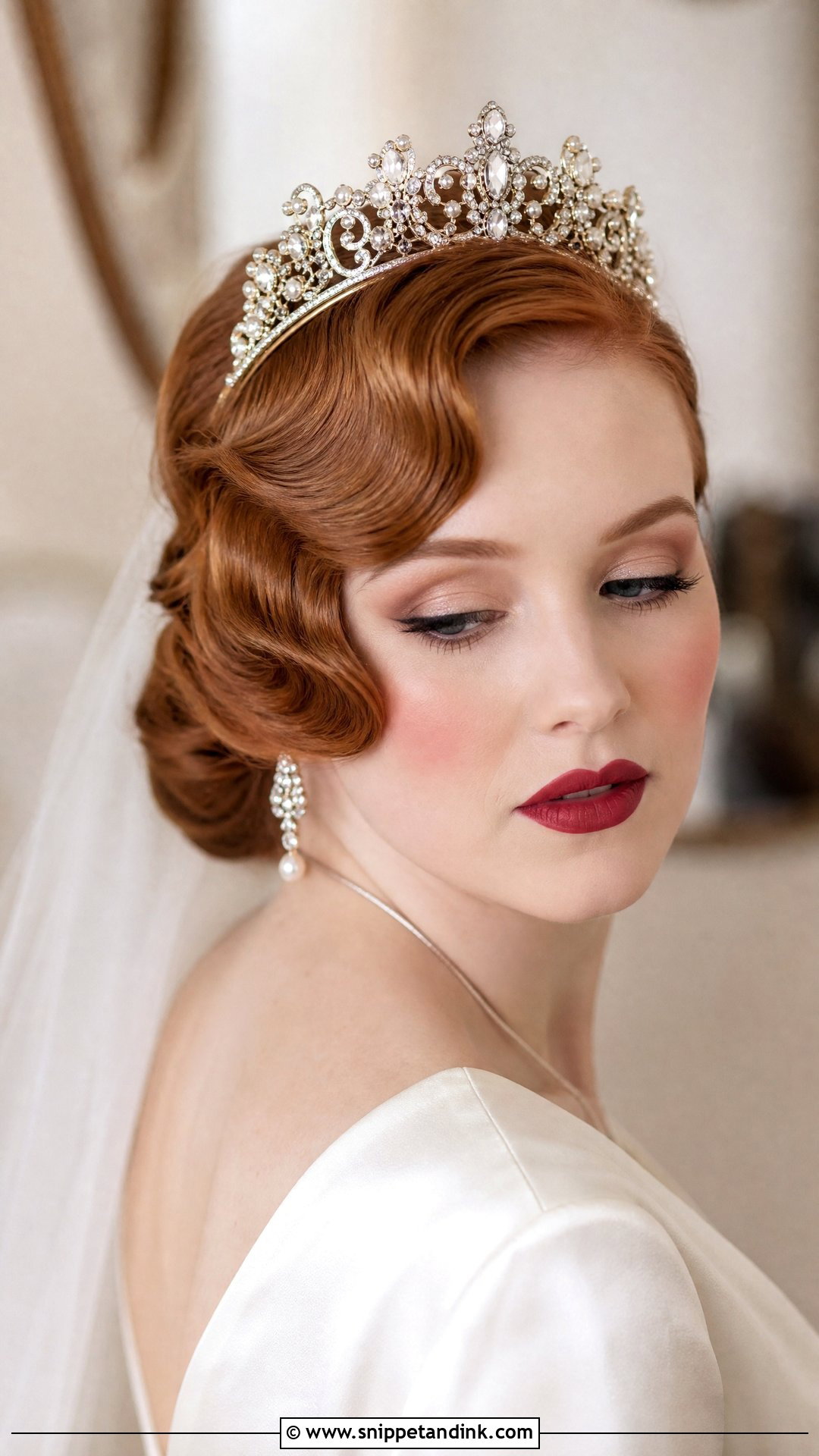
Finger waves need precision, and the crown has to match that precision. The waves sit close to the head in tight, glossy curves; the crown gives it a formal bridal finish. Short hair, bobs, tucked styles and neat updos all work. I look for antique-style crystals, pearls or art deco geometry to suit the era. Hair must stay glossy and controlled, so I’d book a stylist who does finger waves regularly. Satin gowns, red lips, drop earrings and a short, plain veil suit it; a heavy veil covers the waves you paid for.
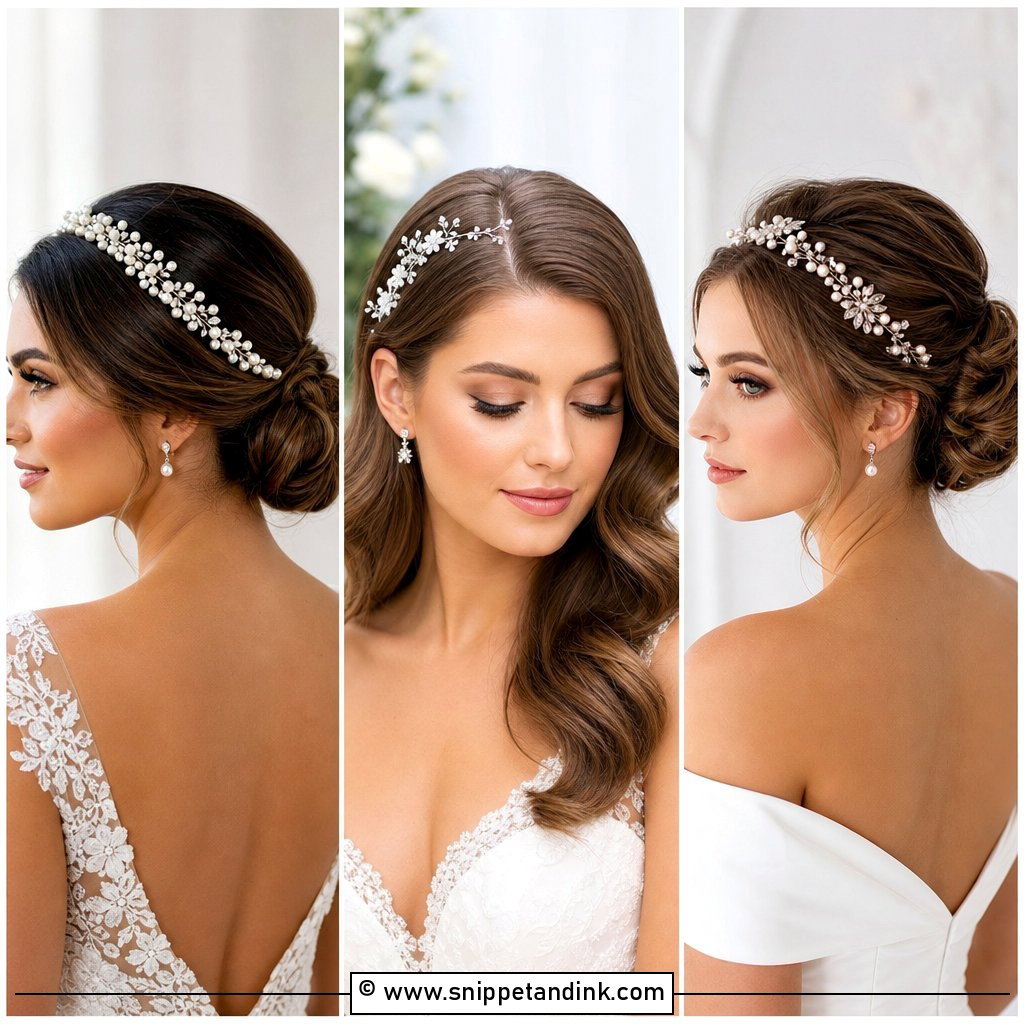
15. Crystal Halo Crown With Soft Updo
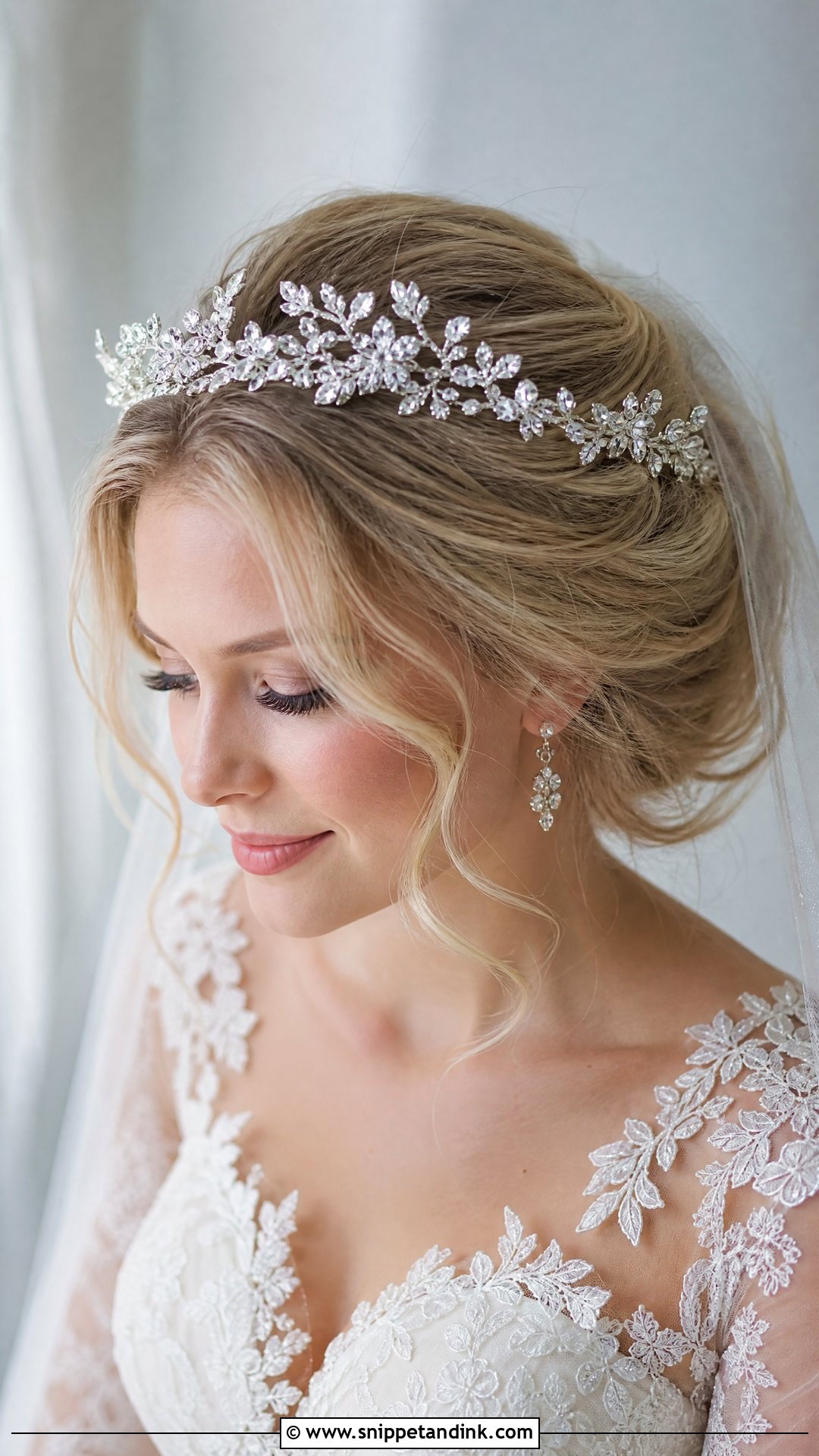
A crystal halo crown circles the whole head, so it shines from the front, side and back, which is useful during a ceremony when guests mostly see you from behind. A soft updo underneath keeps it from looking rigid. It pairs with lace, beading and romantic veils. Curls or twists pinned low or mid-height work well, airy but secure. I fit the halo so it rests gently, held by pins through its loops, and doesn’t squeeze; a halo that’s too small gets lifted by the hair and sits like a hat.
Why a Crown Starts to Hurt by Dinner
Brides tell me a tiara felt fine in the shop and miserable by the speeches. Almost always it’s pressure behind the ears or at the temples from a band that’s the wrong curve for her head. A few checks prevent it:
- Ask how it fastens. Tiaras with small loops at each end can be pinned through, which spreads the hold. Combs grip better in thick hair; bands suit short hair.
- Most metal bands can be bent gently by hand to follow your head. Do it slowly, a little at a time, and never at the stones.
- Wear it at home for at least an hour, with your hair roughly up, and note any spot that aches.
- Weight matters more than height. Heavy crystal crowns need more pins and are tiring after six hours.
Where the Veil Sits Once the Crown Is On
The usual order is hair, then crown, then veil. The veil comb goes behind the crown or under the bun, so it never covers the stones. A blusher veil worn over the face needs a lighter crown, since the tulle drapes across it. If you plan to remove the veil for the reception, ask your stylist to place the comb so it slides out without catching the crown’s loops.
Wear It for an Hour Before You Commit
A crown can be regal, soft, modern, vintage or boho, and the biggest one is rarely the best one. What works is the crown that suits your hairstyle, dress, venue and comfort. At your hair trial, wear it with the veil, the earrings and something close to your neckline. Then move: hug someone, turn your head quickly, look down. If it shifts or pinches, adjust it now rather than on the morning. The right crown holds, photographs well, and lets you forget you’re wearing it.
You'll Like These Ideas:


Leave a Reply