
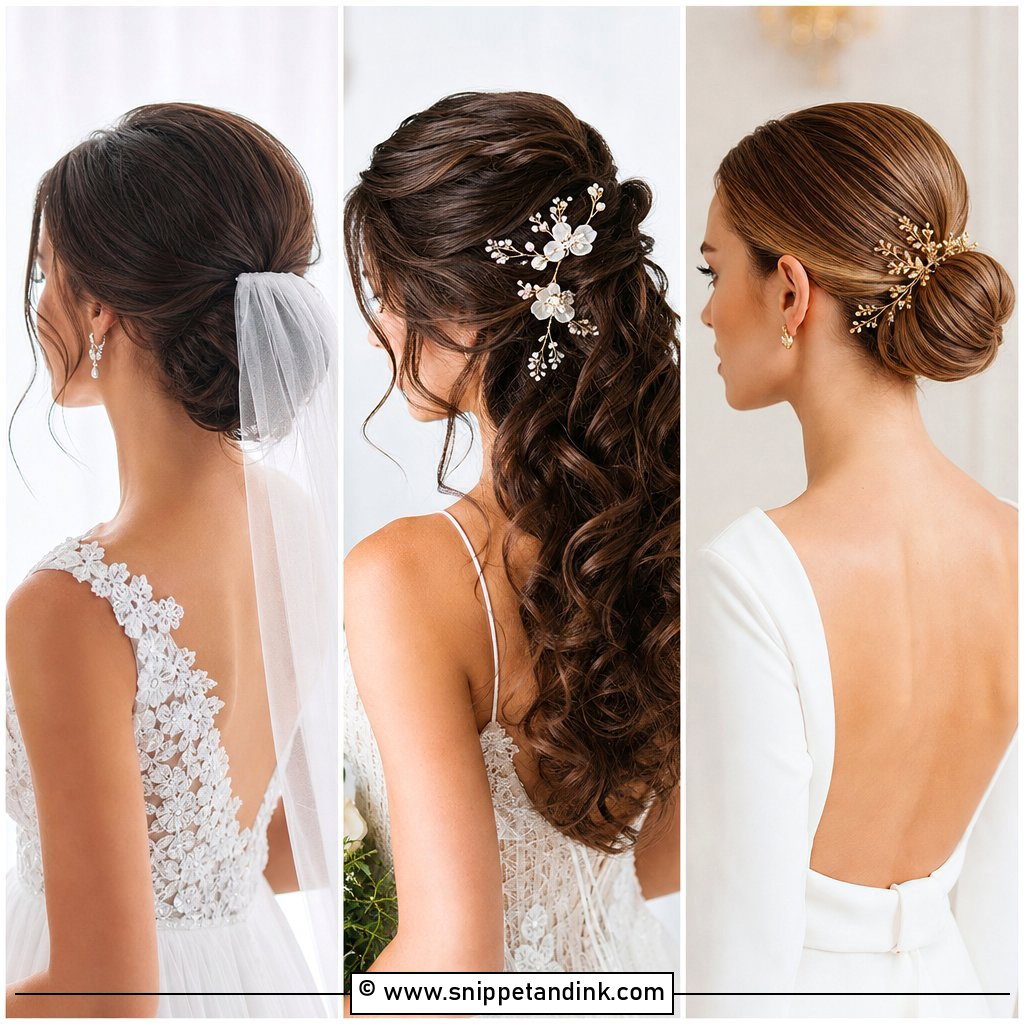
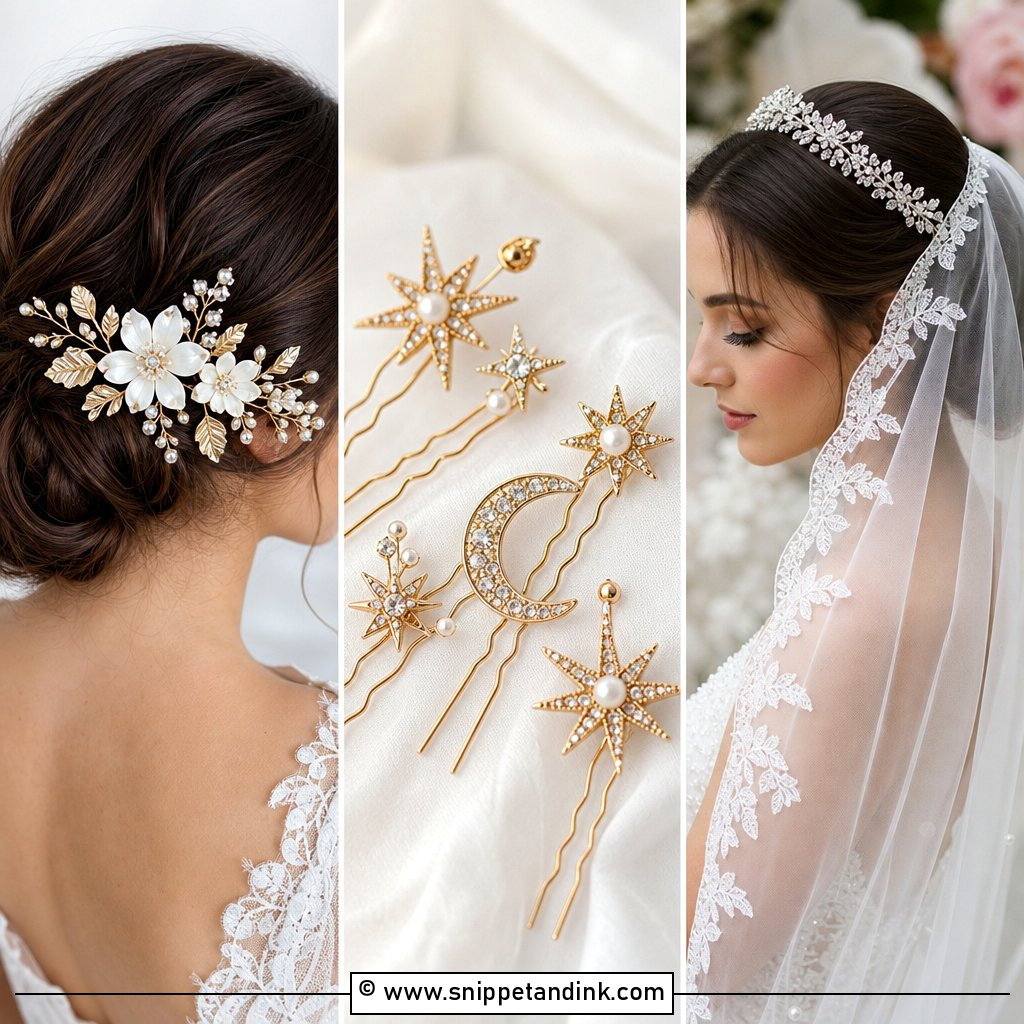
Wedding hair pieces and headpieces do more work than most brides expect. A small comb can make a plain low bun look finished, and the wrong band can flatten a set of curls I spent forty minutes building. When a bride brings me a headpiece, I’m not only asking whether it’s pretty. I’m asking where it will grip, how much it weighs, and whether it fights the veil. The twenty pieces below range from a single pearl pin to a full crown, and each one behaves differently once it’s in real hair.
How Much Weight Your Hairstyle Can Actually Hold
Before I fall for any headpiece, I look at the hair it has to sit in. Every accessory needs something to grip, and the hairstyle decides how much it can carry.
- Smooth, freshly washed hair grips almost nothing. I ask brides to wash the day before, then I add texture spray or dry shampoo at the roots so combs and pins have friction to hold.
- Fine hair suits pins, small combs and light vines. A heavy crown or wide metal band will drag the style down by evening.
- Thick hair can hold a substantial comb or tiara, but slim pieces can vanish into it, so I size up slightly.
- Hair worn down does best with headbands, clips or a vine tucked behind the ear, because there’s no bun to anchor a comb into.
Combs need a base of crossed bobby pins. Headbands hold by tension behind the ears. Crowns and tiaras need pins threaded through their frames at both ends. Ask your stylist which method they plan to use, because it tells you whether the piece will last the day.
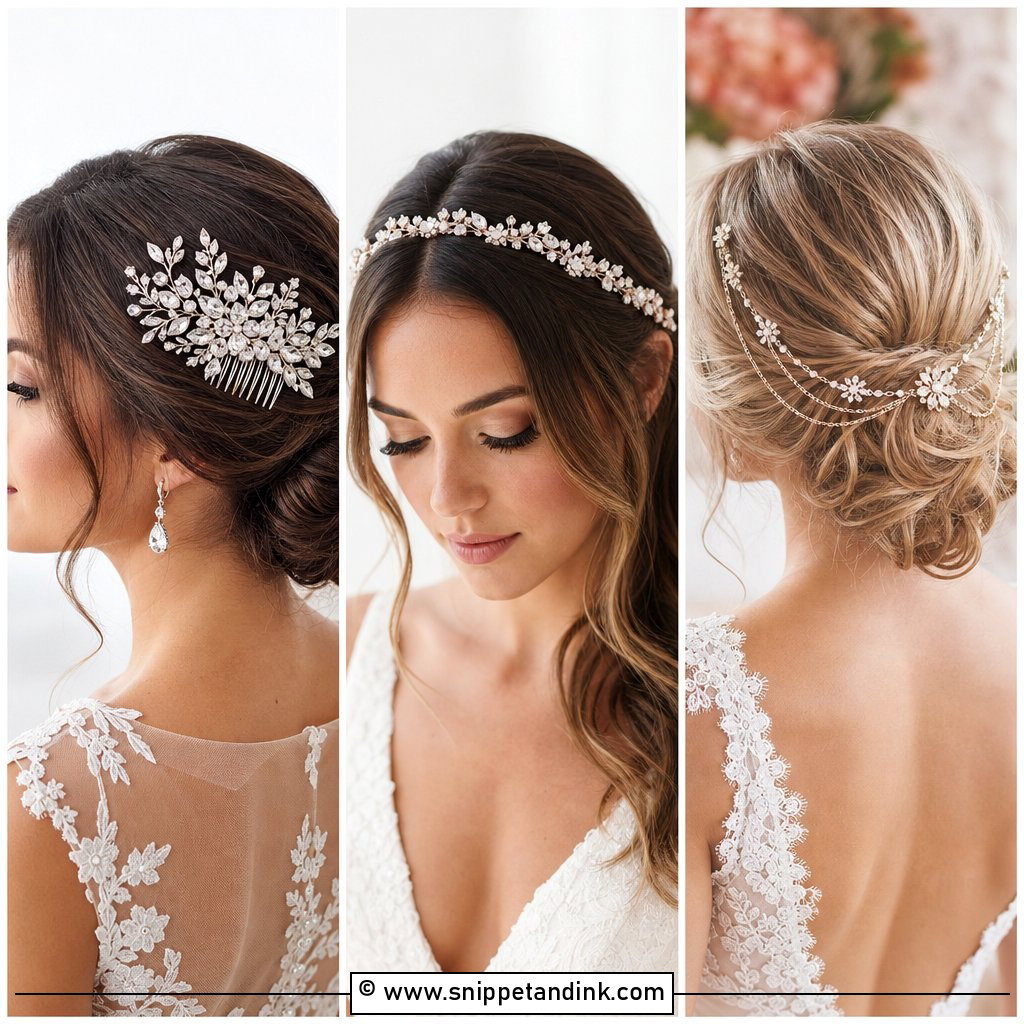
1. Wedding Pearl Hair Comb
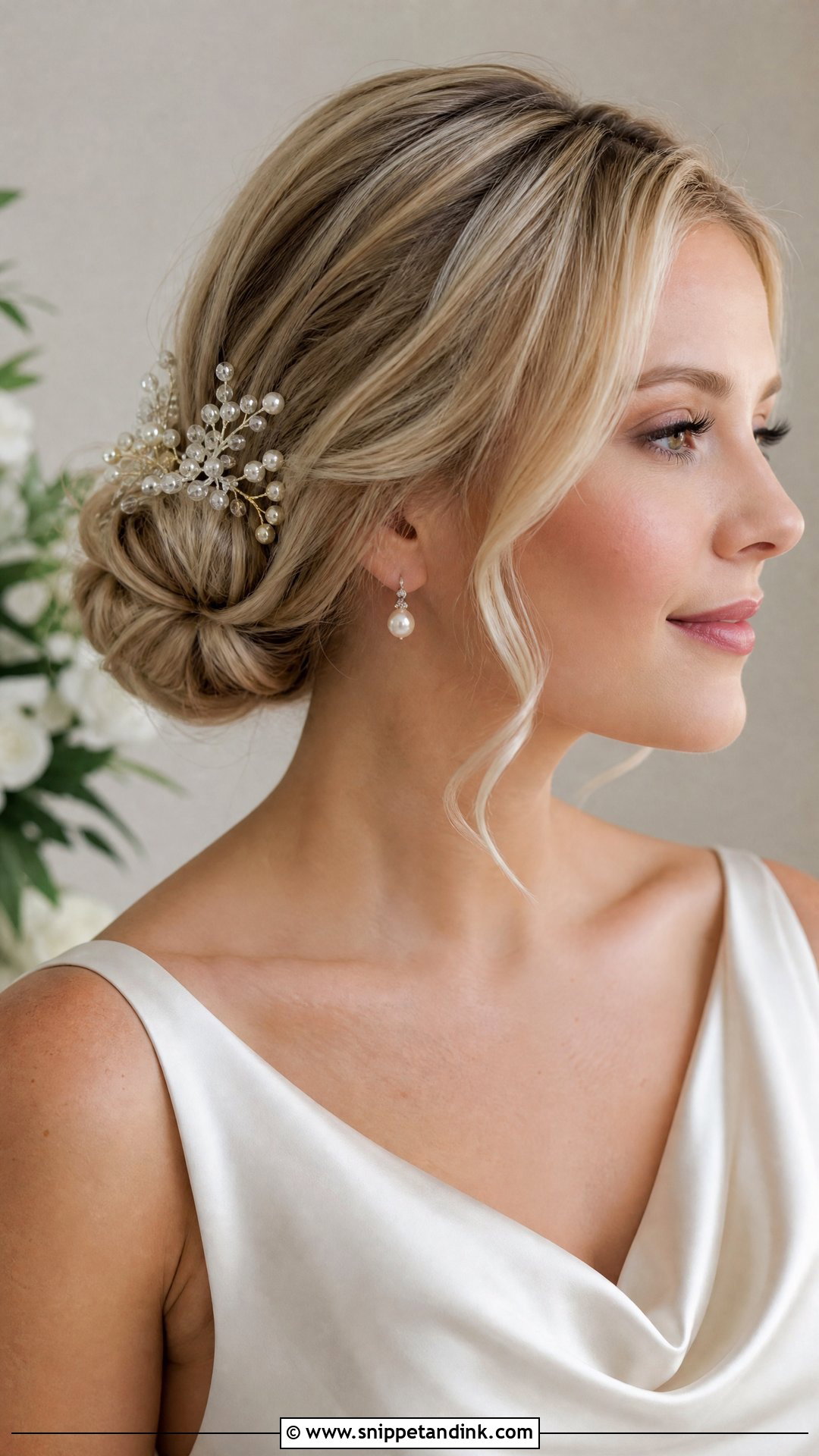
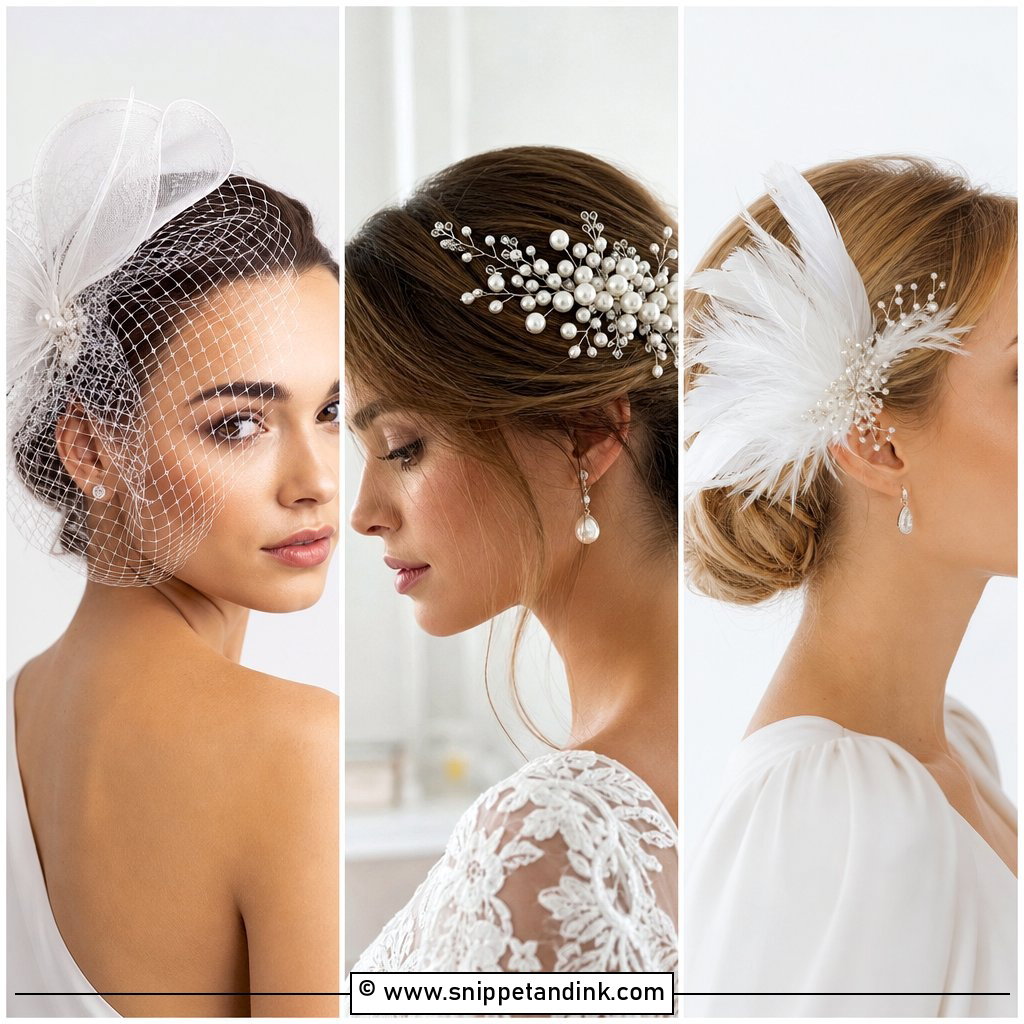
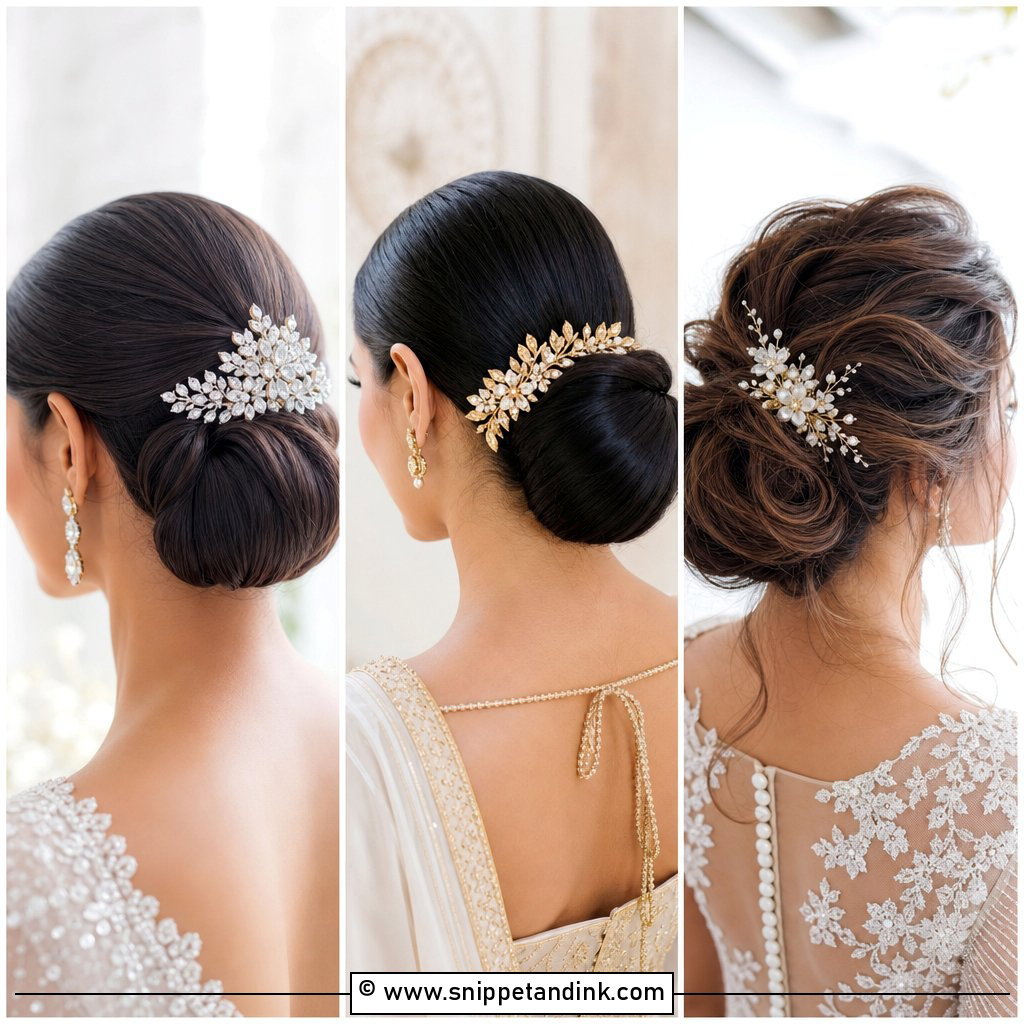
A pearl comb is the piece I reach for most often, because the teeth slide into a chignon or a half-up section without any fuss. The trick is what sits underneath it. I lay two bobby pins in an X where the comb will go, then push the teeth through so they hook the pins instead of slipping on smooth hair. Pearls sit quietly beside lace, crepe or a gown with pearl buttons. On fine hair, keep the comb narrow; a wide spray needs volume behind it or it tips forward.
2. Wedding Crystal Hair Comb
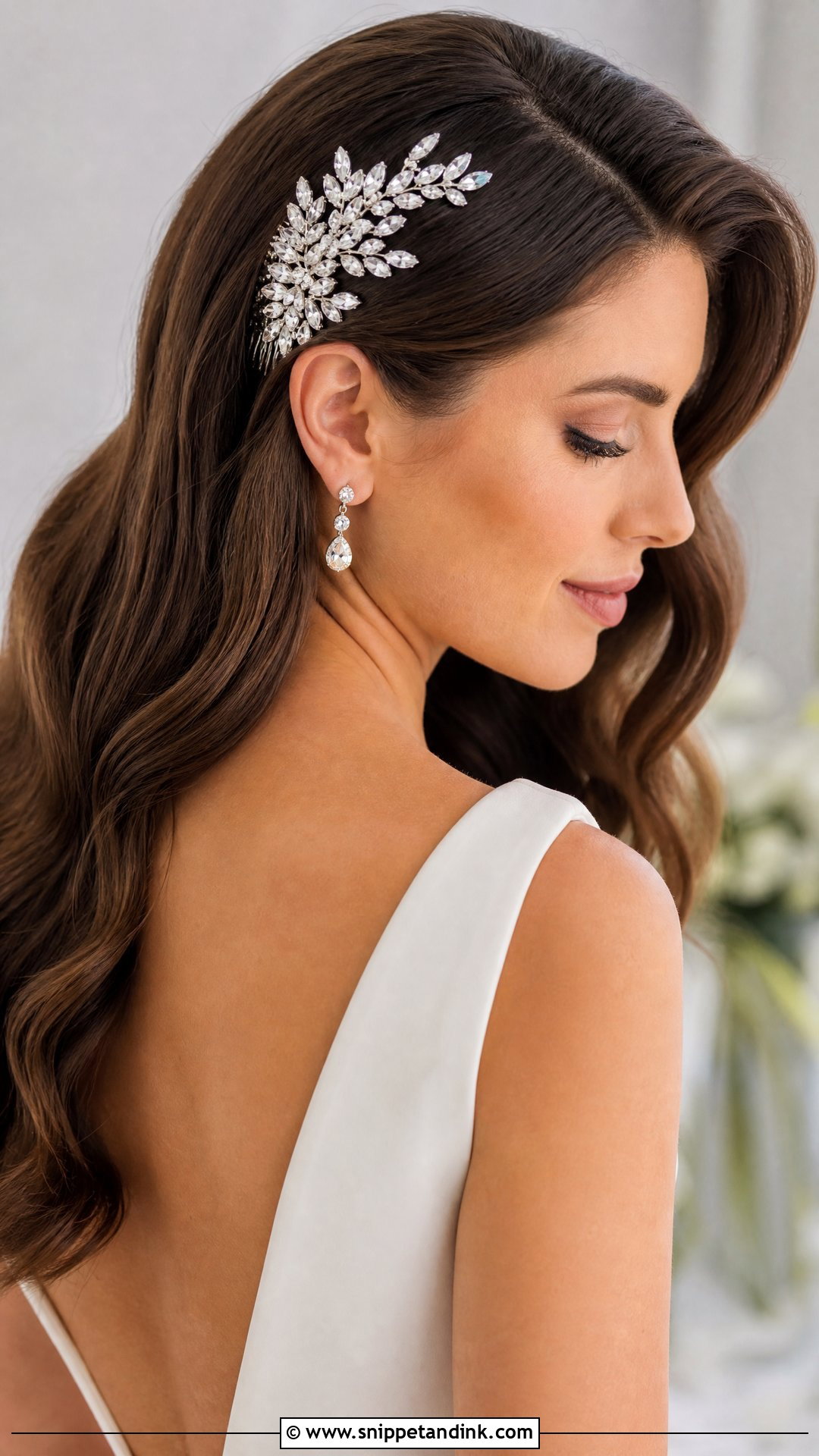
Crystal combs throw light in a way pearls don’t, so they read well in evening ceremony photos and under string lights. Match the metal to your earrings: rhodium looks cool and bright, gold sits warmer against the skin. What I check first is the curve of the comb. A flat comb on a round bun leaves a gap you can see from the side, while a curved one hugs the head and feels lighter by the end of the night.
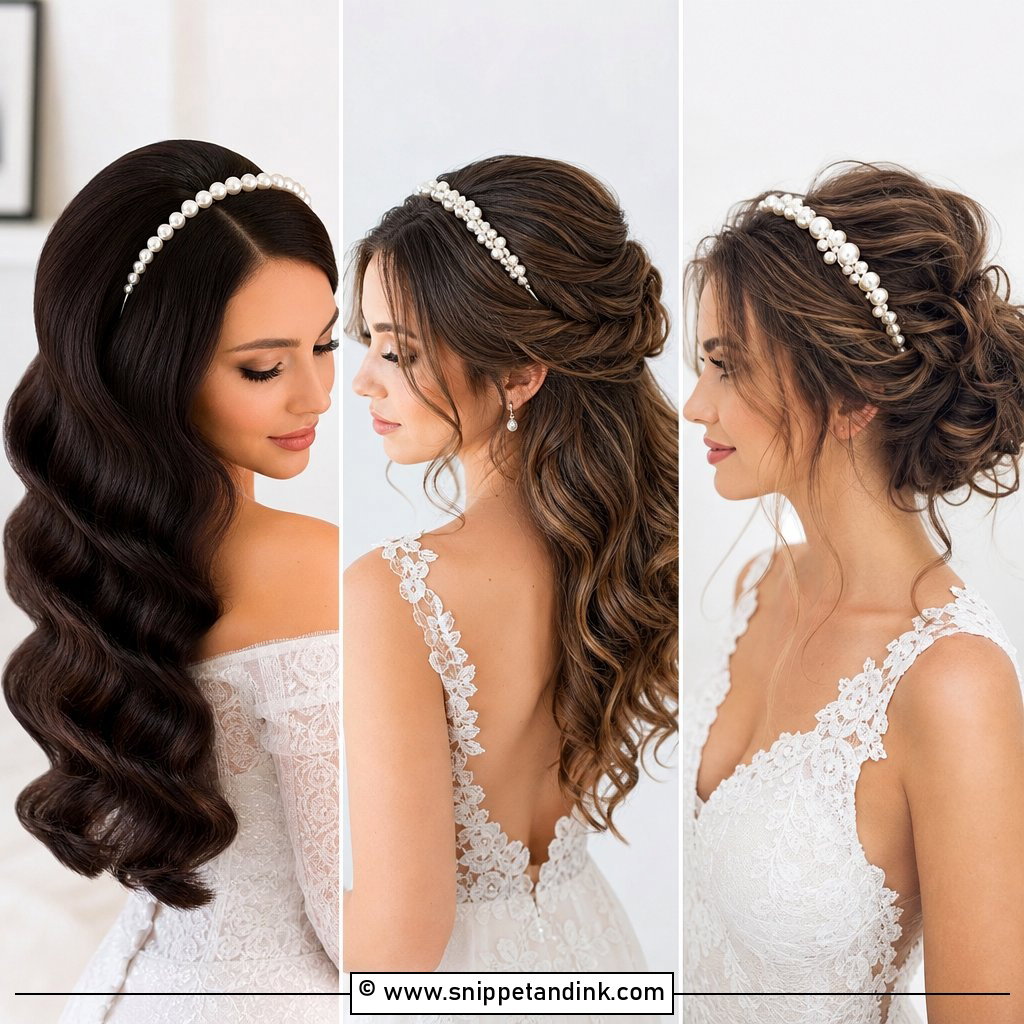
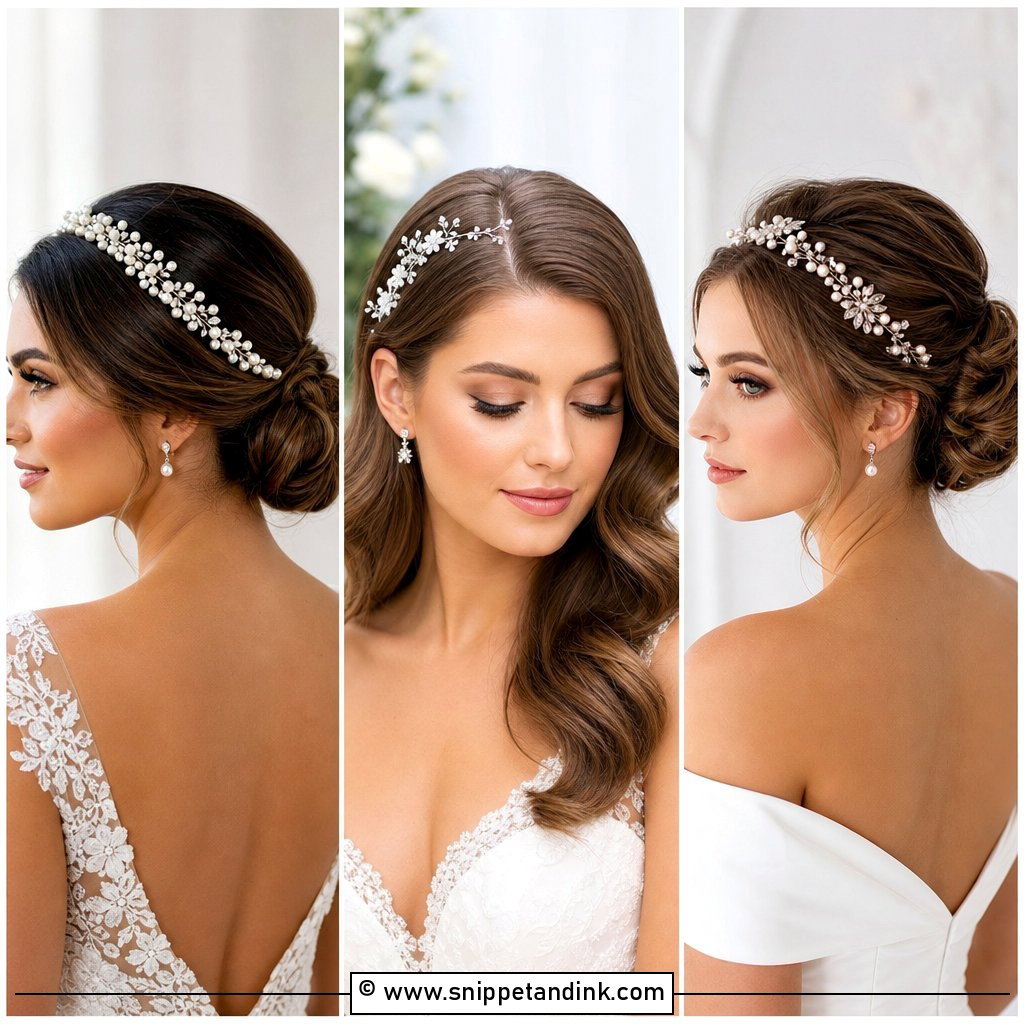
3. Wedding Pearl Headband
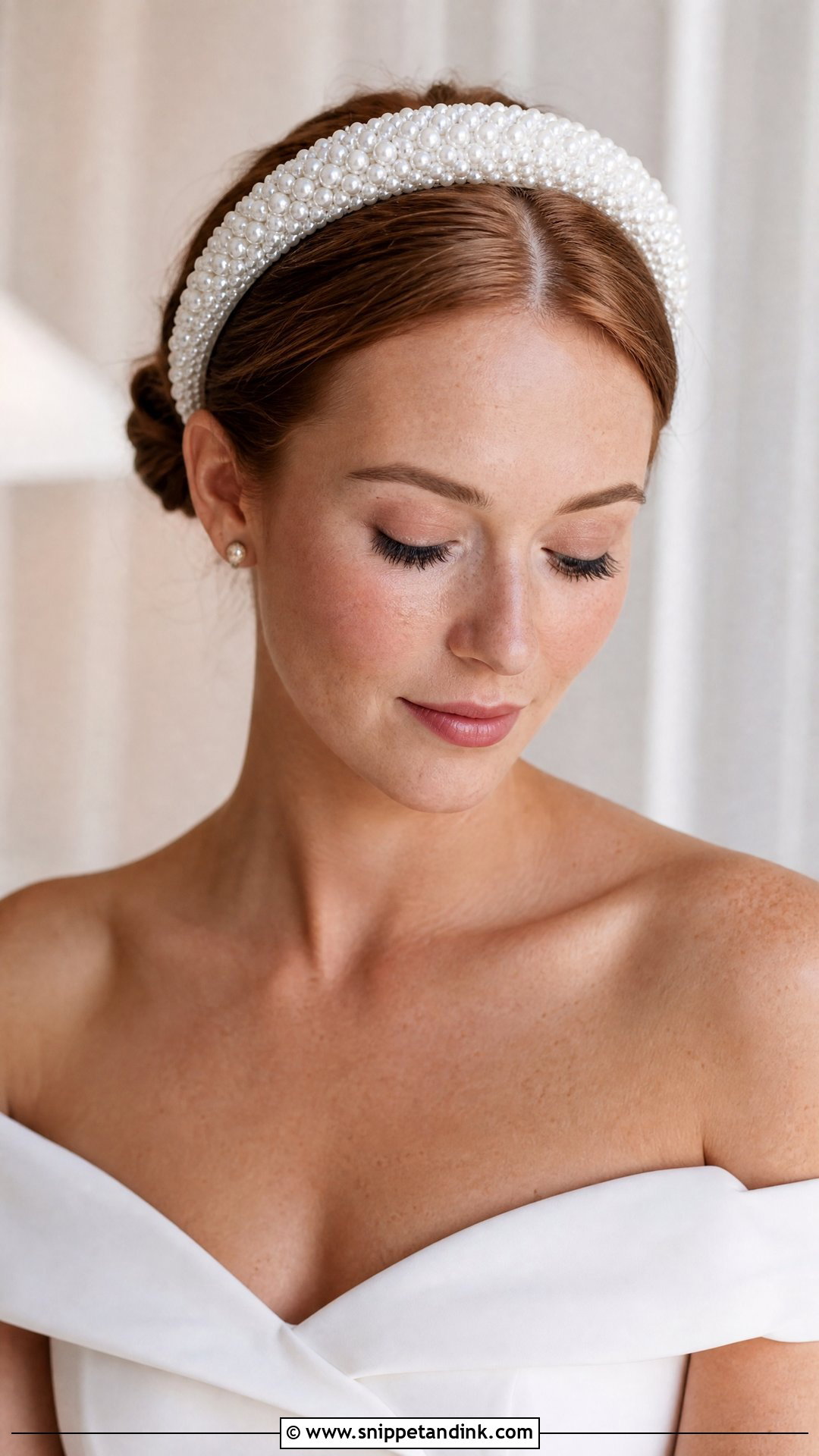
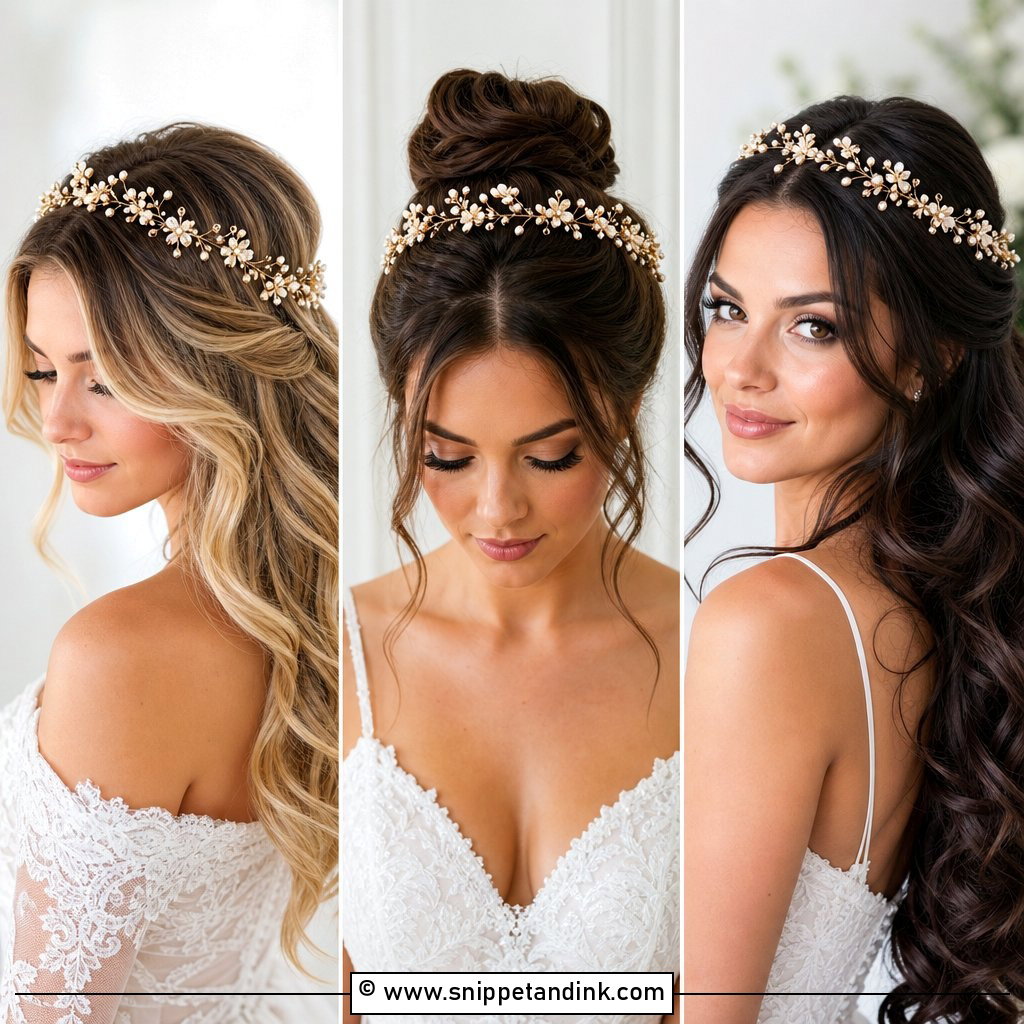
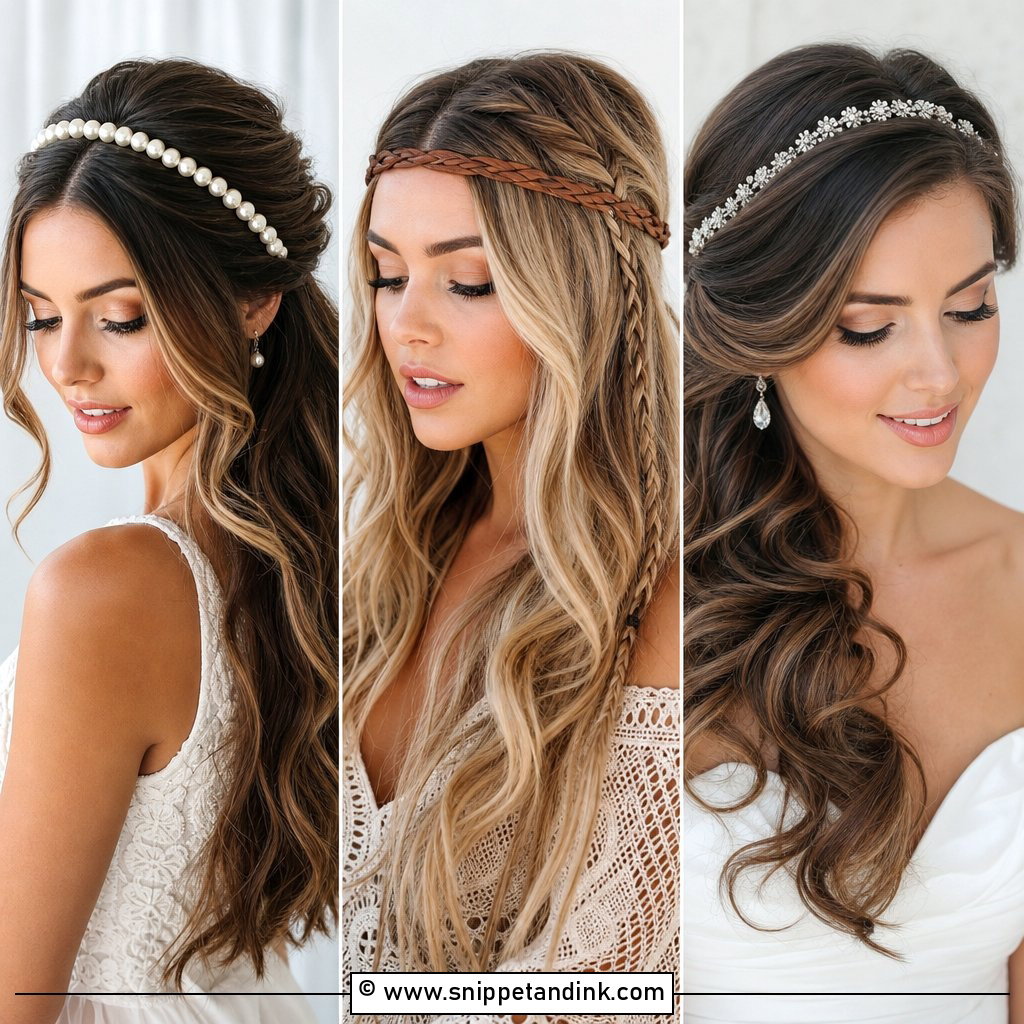
A wedding pearl headband frames the face and asks very little of the hairstyle, which is why I suggest it for brides who’ll wear their hair down or in a simple blowout. Padded bands look more fashion-led; a thin strand of pearls looks quieter. The fit behind the ears matters most. I bend the ends slightly inward at the trial so the band holds by tension, not by squeezing. It also carries through to the reception once the veil is off, and if the band is bold, keep the earrings small.
4. Wedding Crystal Headband
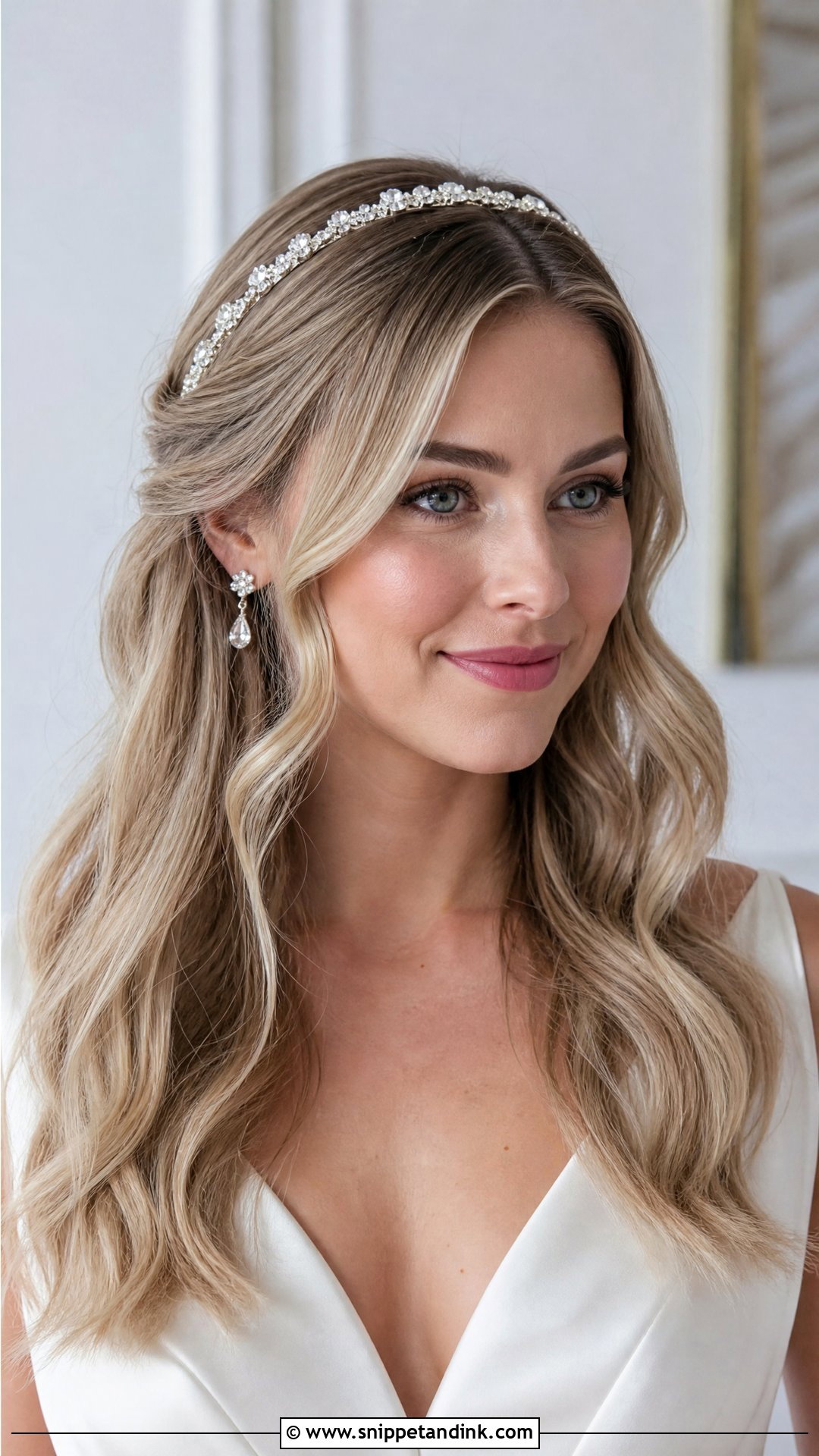
Crystal headbands give loose waves a more formal edge. They suit off-the-shoulder gowns and minimal jewelry because nothing else competes near the face. Narrow bands disappear into thick hair, so I’d go a touch wider if your hair is dense. Wear it for a full hour at the trial. Pressure points behind the ears rarely show up in the first ten minutes, and by the reception they’re the only thing you’ll notice.
5. Wedding Tiara Headpiece
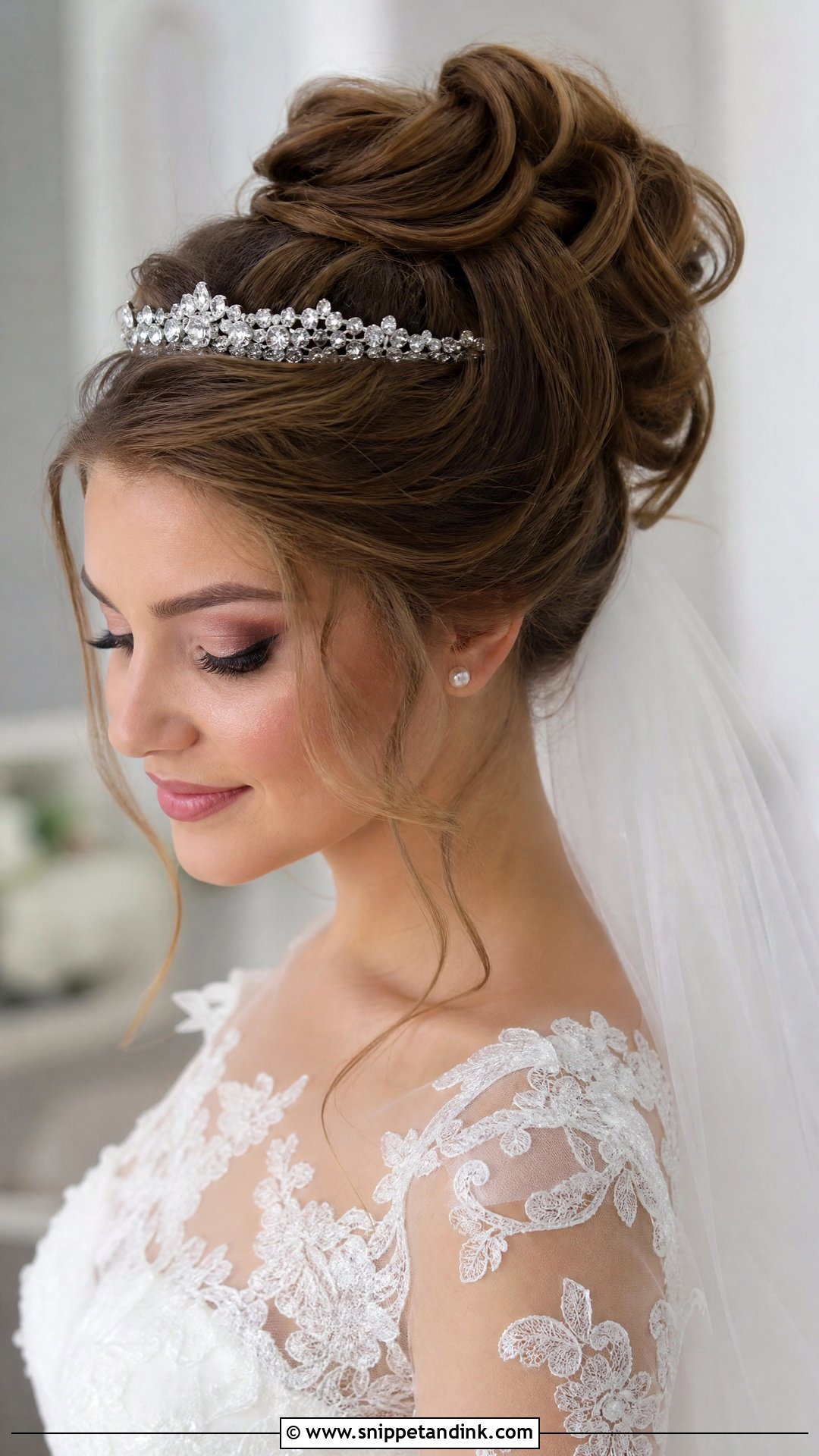
Tiaras ask for structure. A smooth updo or full curls gives the base something to sit in, and a classic veil tucks neatly behind. Height is the decision that changes everything: a low tiara reads soft, a tall one reads ceremonial. I place it slightly forward of the crown but well back from the hairline, then secure each end with pins threaded through the frame. If the gown is heavily beaded, a plainer tiara keeps the whole outfit from looking busy.
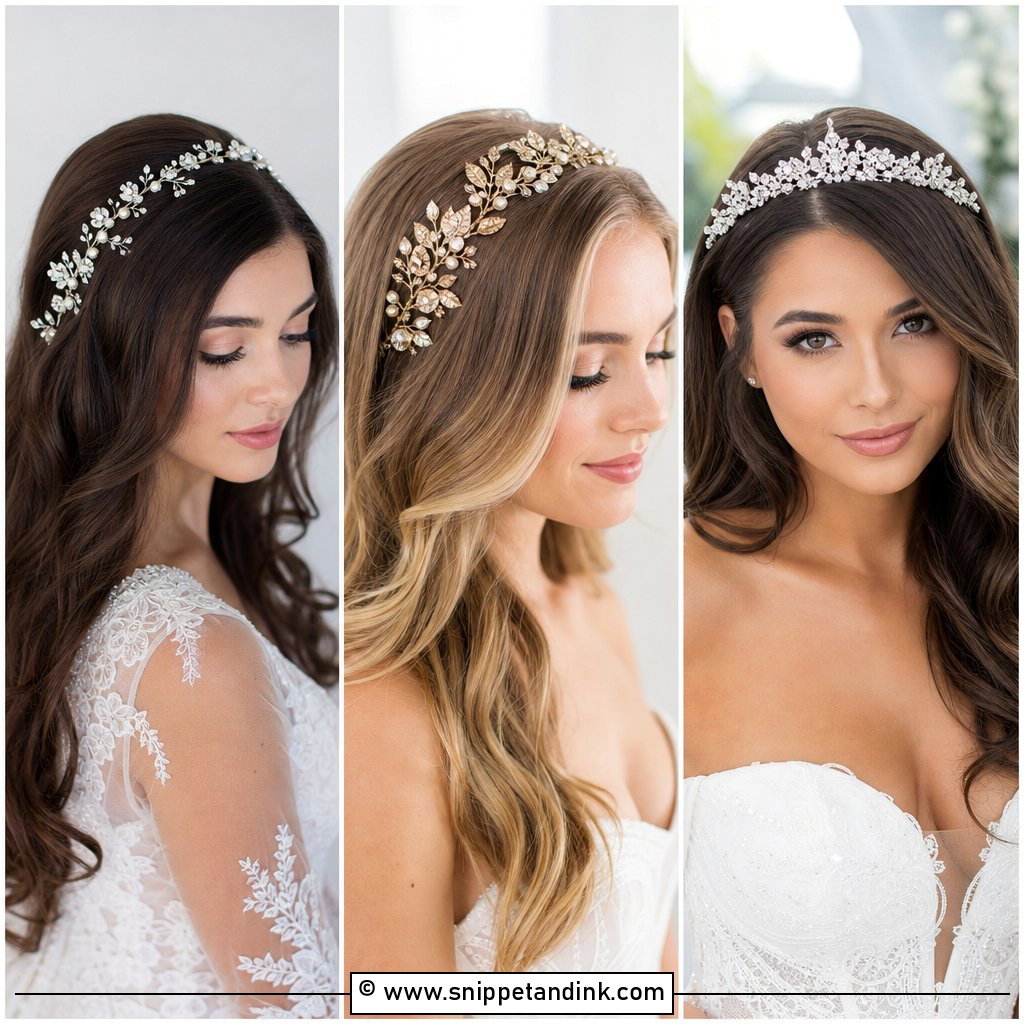
6. Wedding Hair Vine
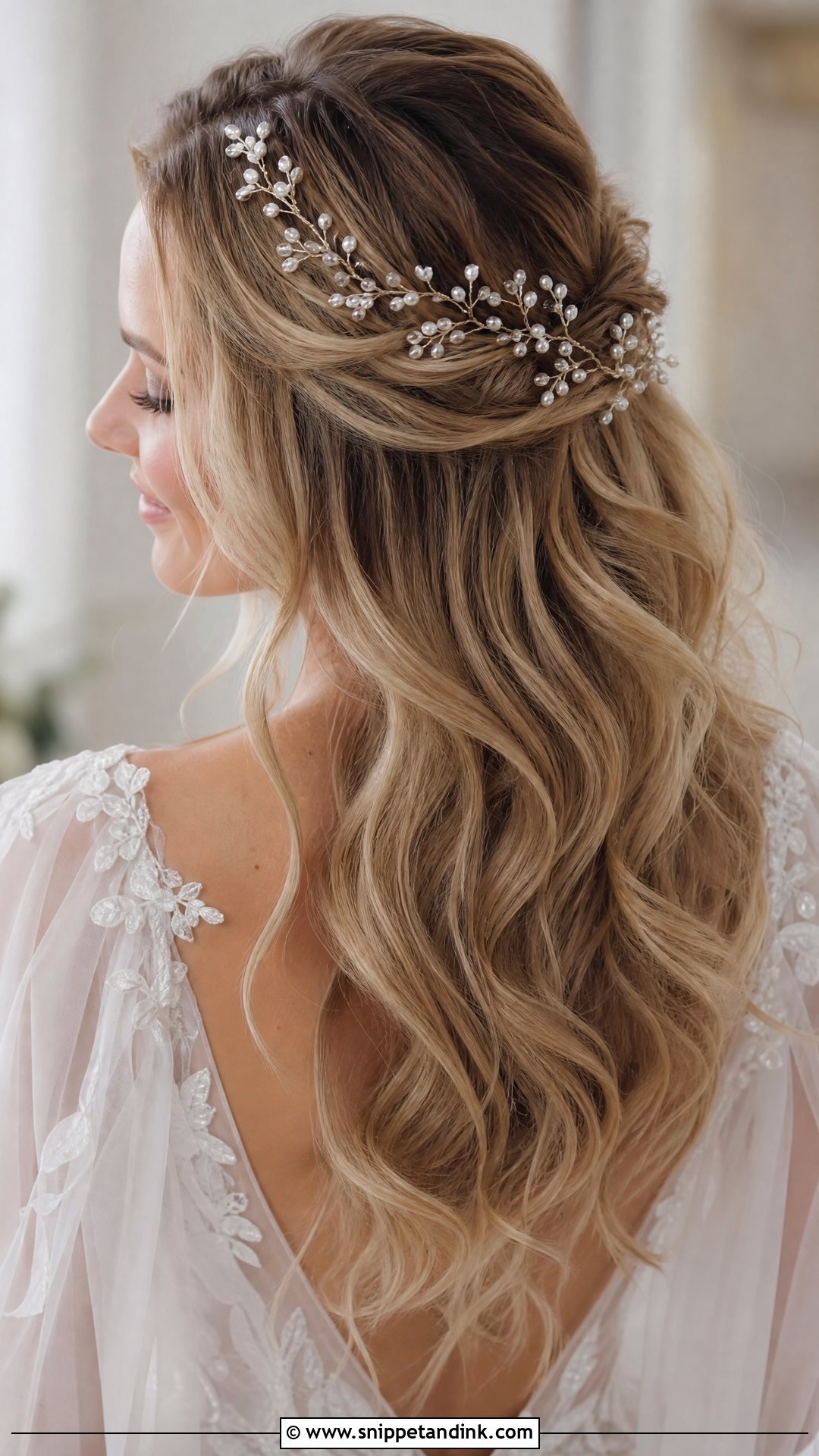
I like hair vines because the wire bends to the shape of the hairstyle rather than sitting in one fixed spot. I wrap them around a bun, thread them along a braid or drape them across the back of loose waves. Most have pearls, crystals or small leaves along the length. The secret to making one look grown into the hair is tucking a few sections of the wire under strands, then pinning at the loops. Laid flat on top, it looks like an afterthought.
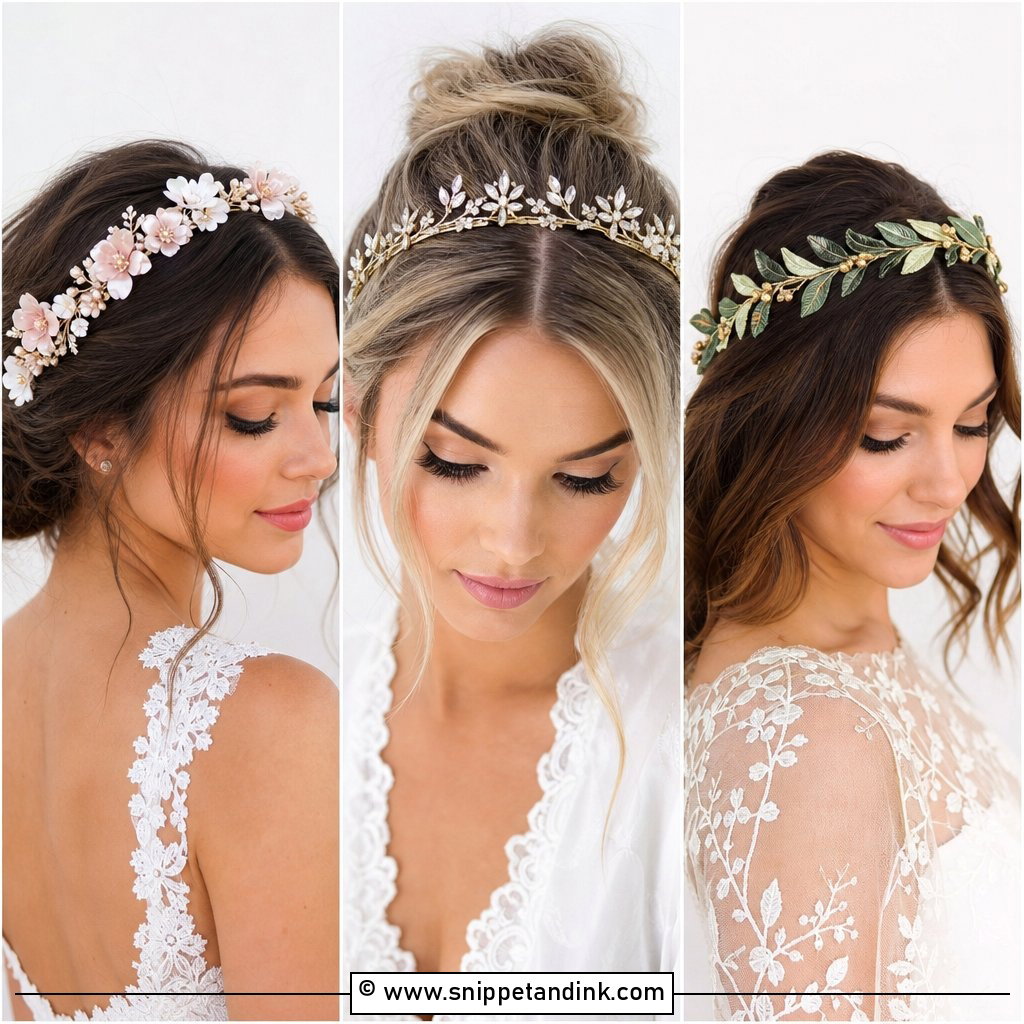
7. Wedding Floral Hair Vine
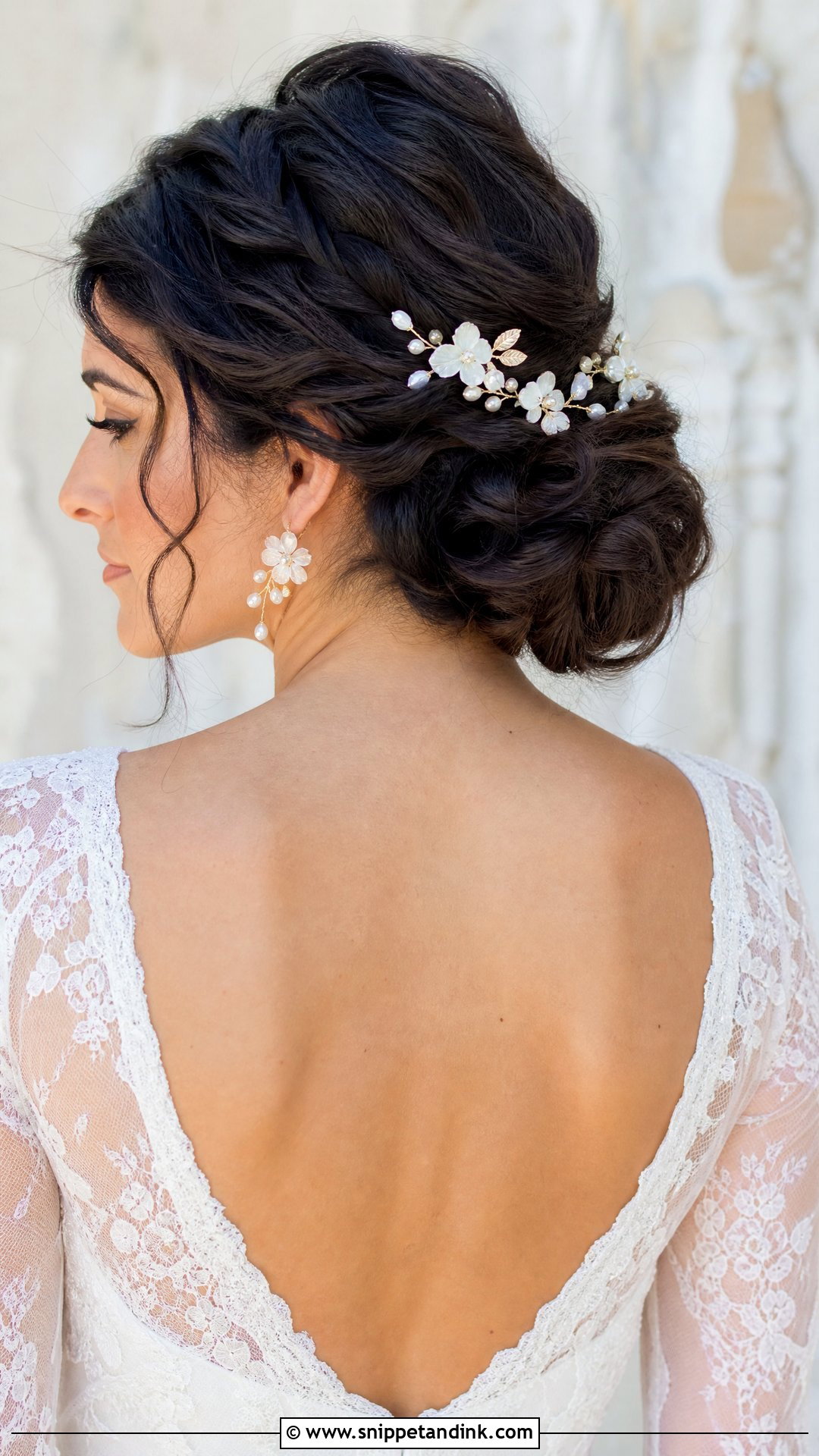
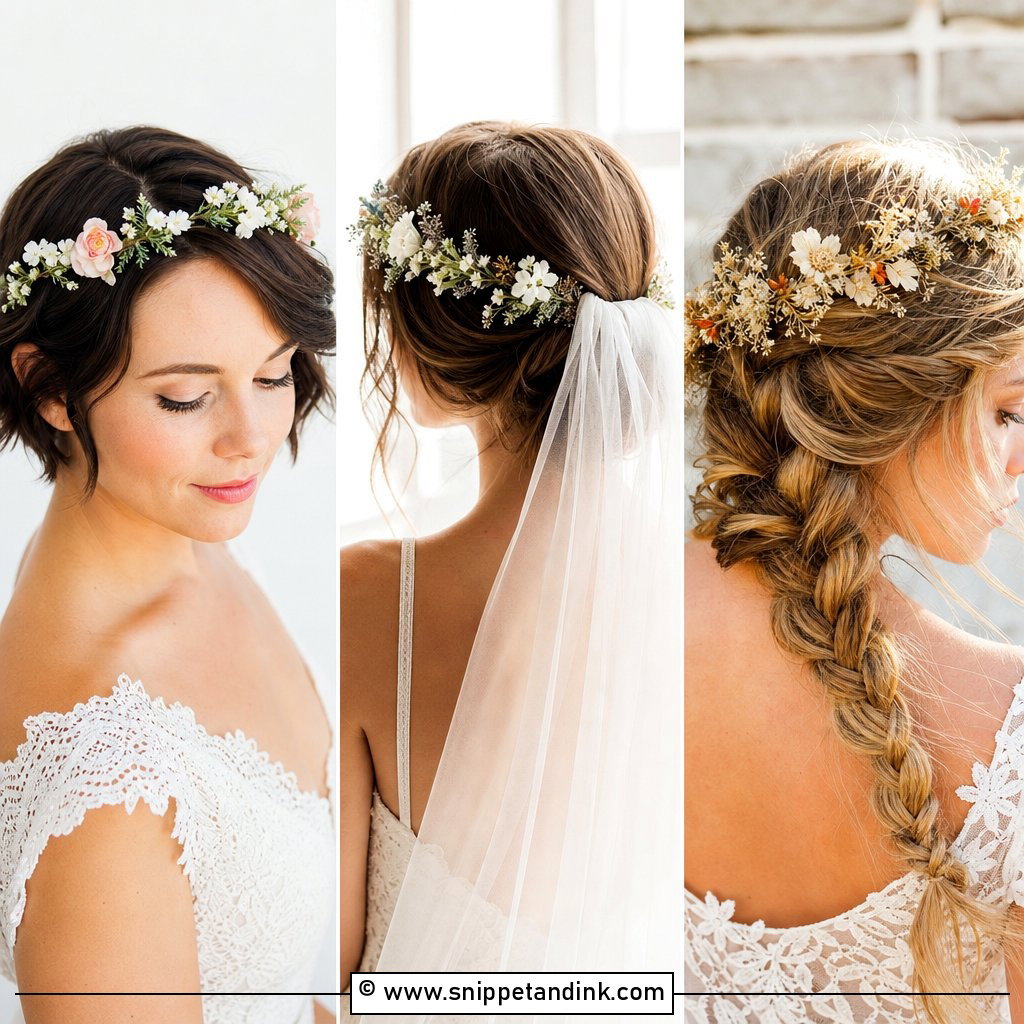
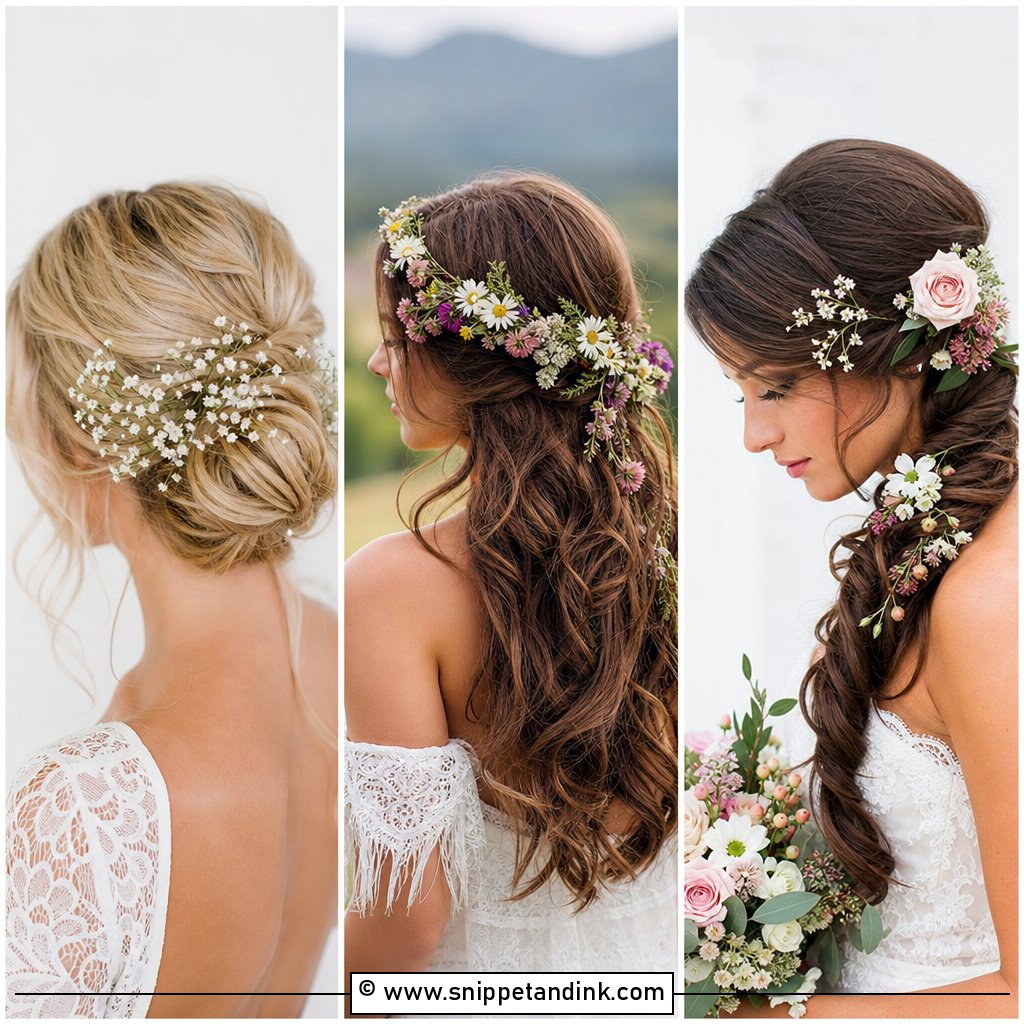
A floral vine gives you the garden feel without fresh flowers wilting by the first dance. It suits lace and tulle dresses, spring dates and braided or half-up styles where the flowers can sit in the twists. Echo a bloom from your bouquet and the two pieces start talking to each other in photos. Ivory reads classic, blush adds warmth. I keep the placement airy, because a vine packed edge to edge looks heavy from the back.
8. Wedding Hair Pins
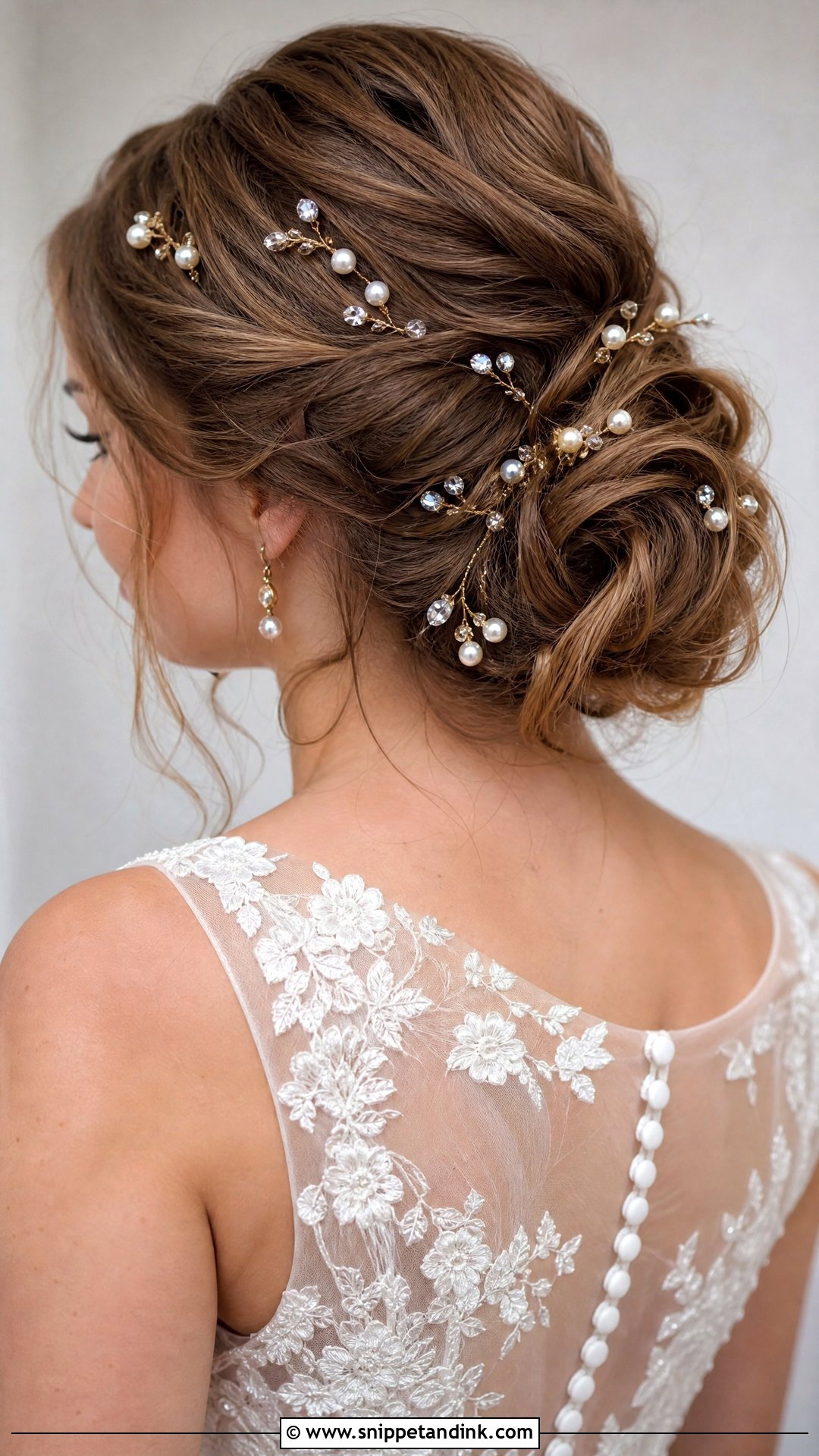
Decorative pins let me put sparkle exactly where a hairstyle needs it: the dip of a twist, the edge of a braided crown, one side of a half-up. You can scatter them softly or cluster them for impact. They also make bridesmaid hair easy to coordinate, since the bride wears five and each bridesmaid wears one. Every decorative pin I place goes into a firm section or into crossed bobby pins. Pushed into loose hair alone, they slide out within the hour.
9. Wedding Pearl Hair Pins
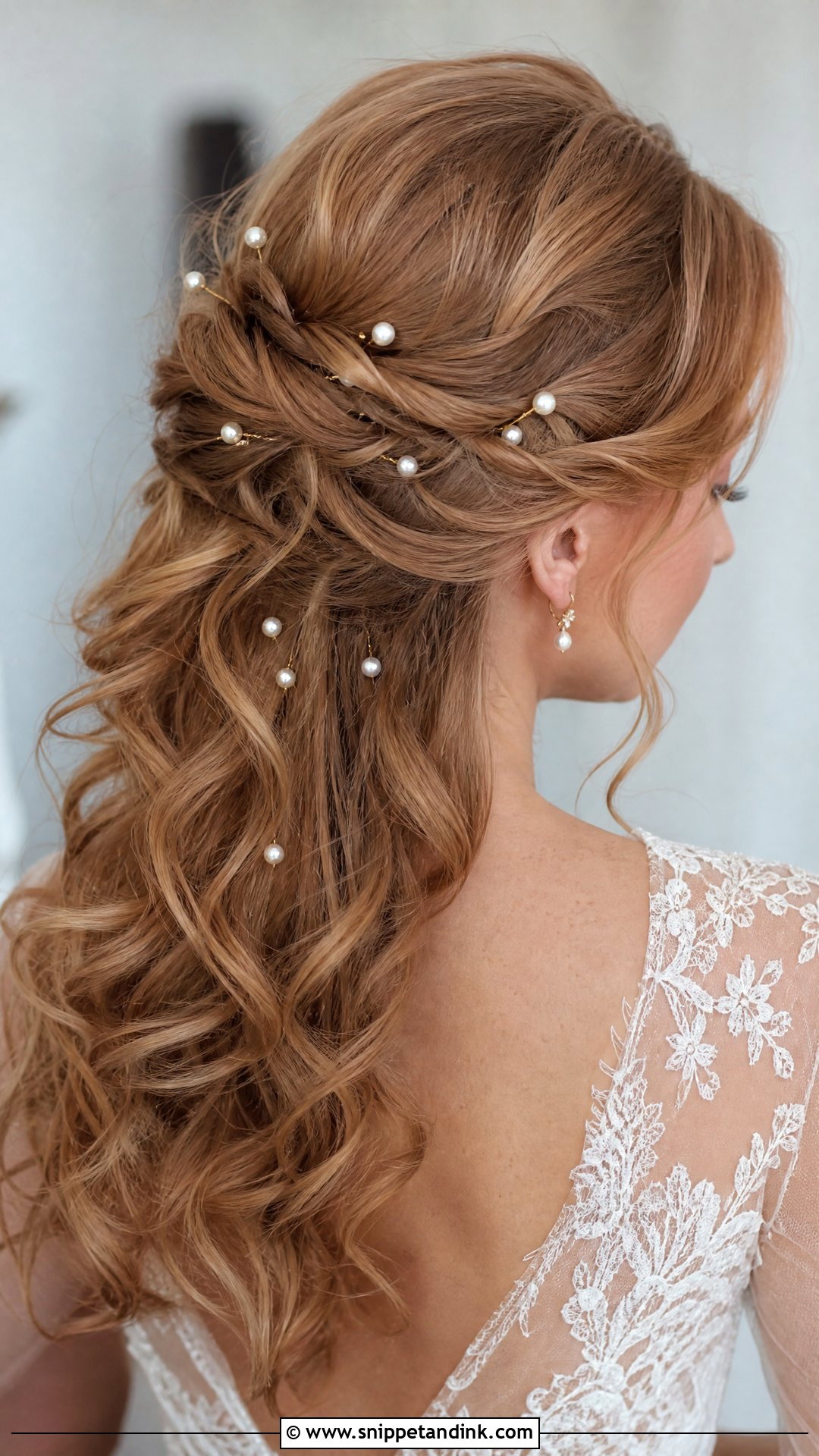
Pearl pins are my answer for fine hair that can’t carry a heavy comb. They weigh almost nothing, so the style doesn’t drag down by evening. A few large pearls look modern; lots of tiny ones look dotted and soft. Tuck them into a low chignon, scatter them through curls or run them along a braid. Keep the spacing a little uneven. Perfectly measured gaps look mechanical in close-up photos.
10. Wedding Crystal Hair Pins
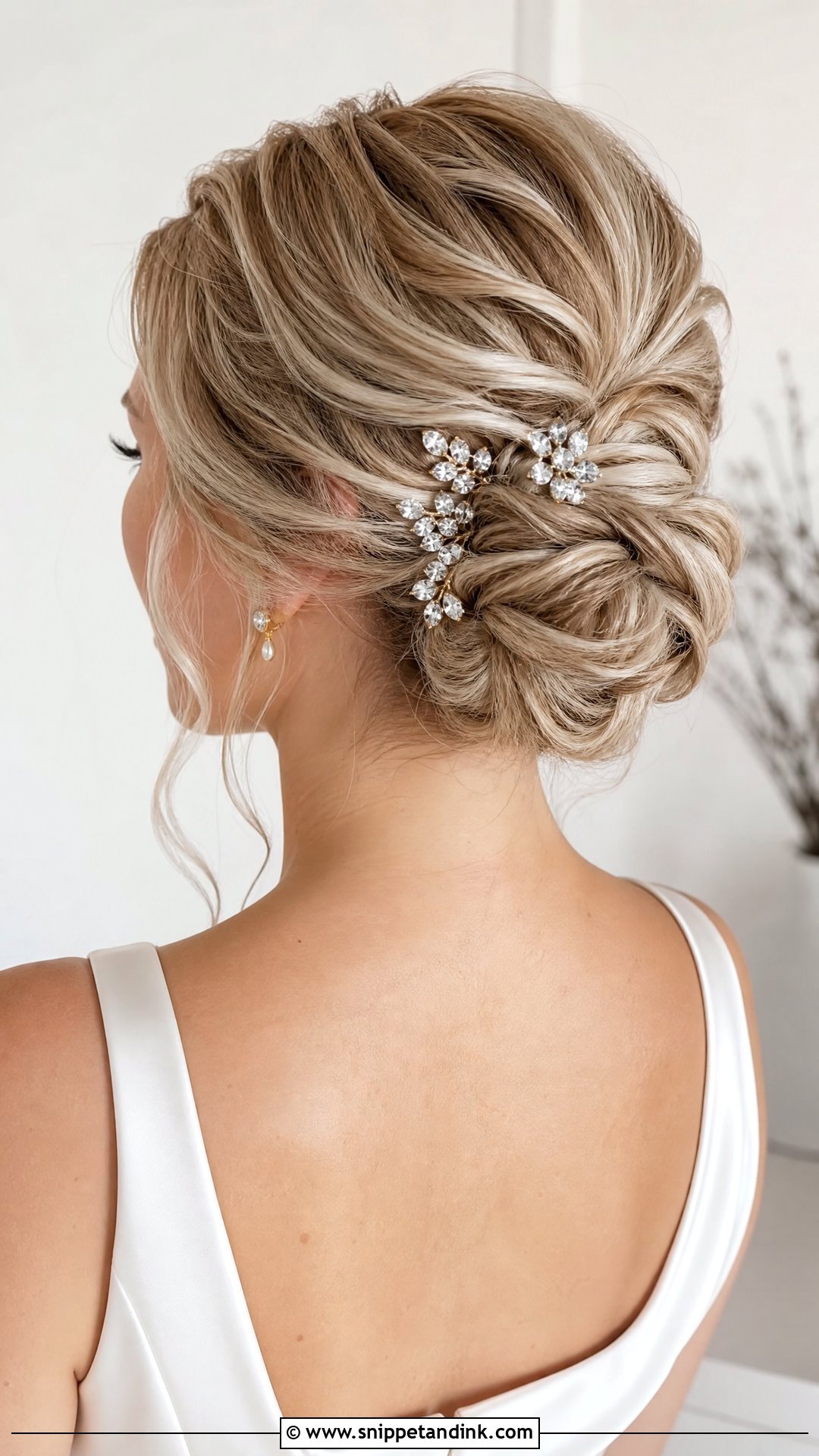
Crystal pins catch light inside a textured bun, peeking out from the twists in a way a single comb can’t. Evening and winter weddings, ballroom receptions and gowns with silver beading suit them best. Clear crystals match silver beads; champagne or gold-toned stones sit better on ivory and warm gowns. Restraint is the hard part. Five well-placed pins look more expensive than fifteen crowded ones, and every extra pin is another one to lose on the dance floor.
11. Wedding Flower Crown
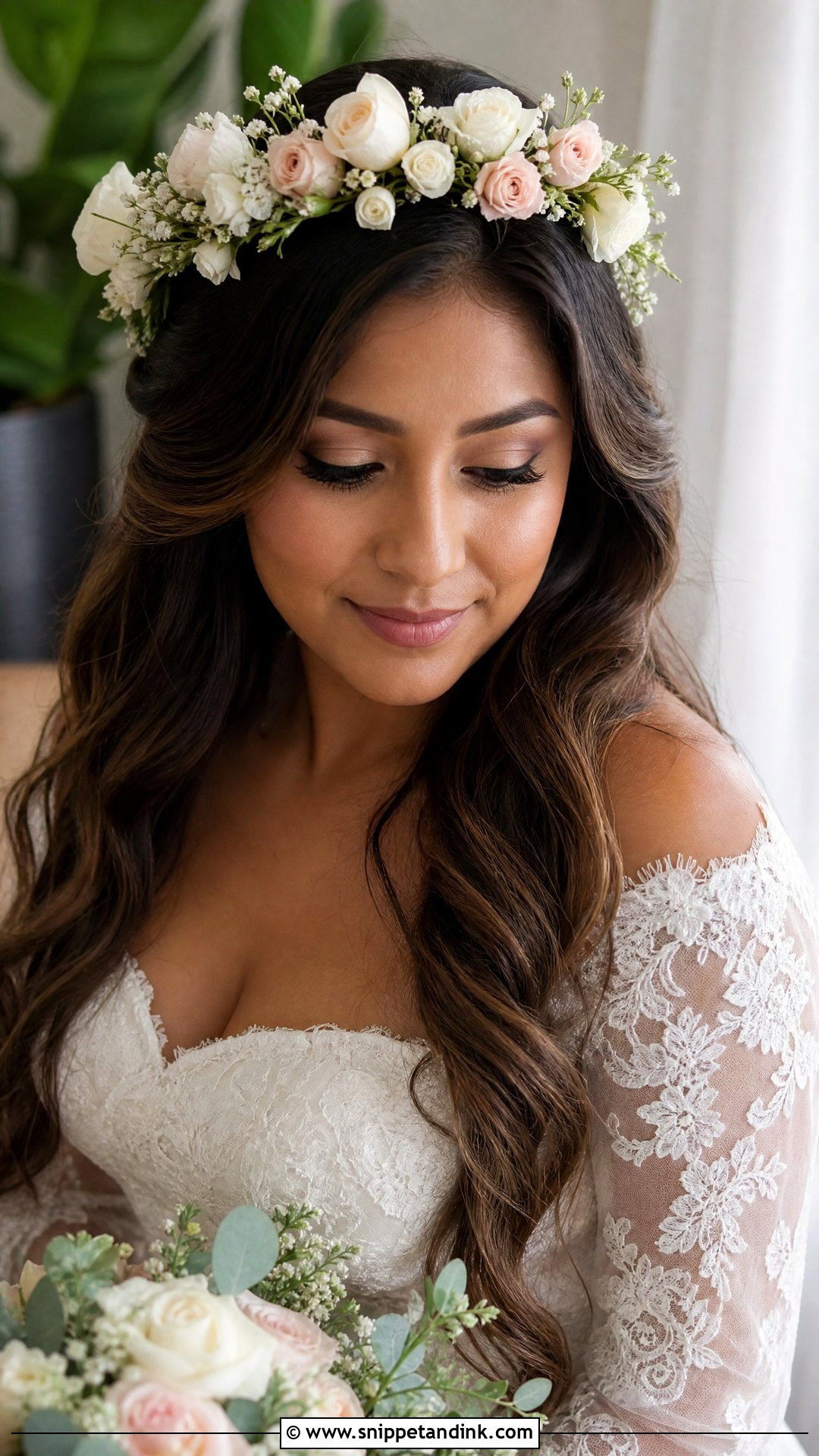
A flower crown belongs with relaxed hair: loose waves, textured curls, a soft braid. On a sleek bun it looks pasted on. Fresh flowers feel natural but start to droop in heat, so for long summer days I usually suggest silk, or ask the florist which stems hold without water. Scale it to your bouquet. If you’re also wearing a veil, the comb goes under or behind the crown so the two pieces aren’t pulling against each other.
12. Wedding Gold Leaf Headpiece
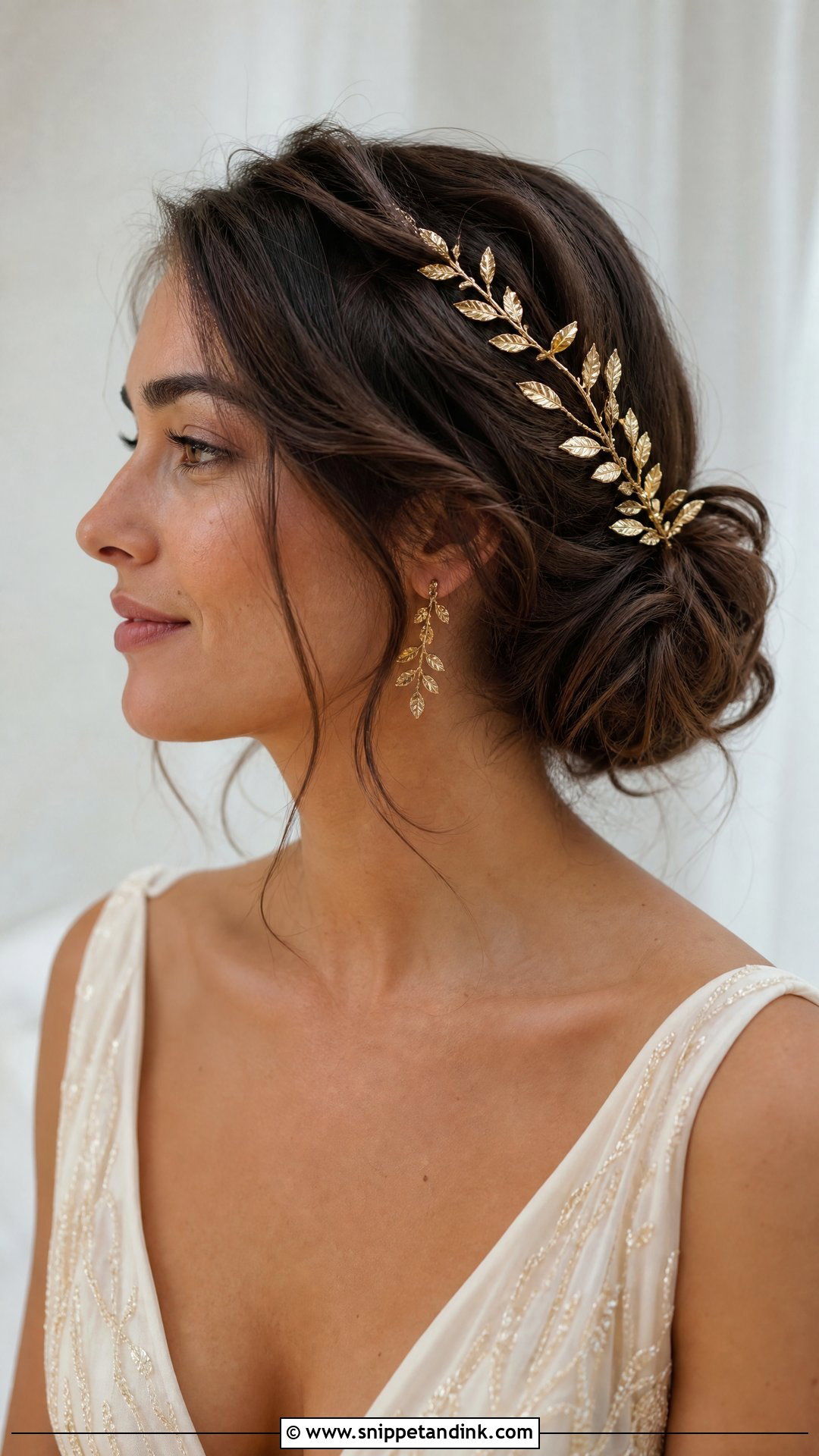
Gold leaf pieces warm up an ivory, champagne or nude gown, and they look right at home at fall weddings and candlelit receptions. A delicate branch suits a low bun or soft waves; a fuller leaf crown works on textured updos with enough grip to hold it. Because the metal is warm, I’d pair it with gold jewelry and glowing makeup. Next to cool silver earrings, the leaves can start to look brassy.
13. Wedding Silver Leaf Headpiece
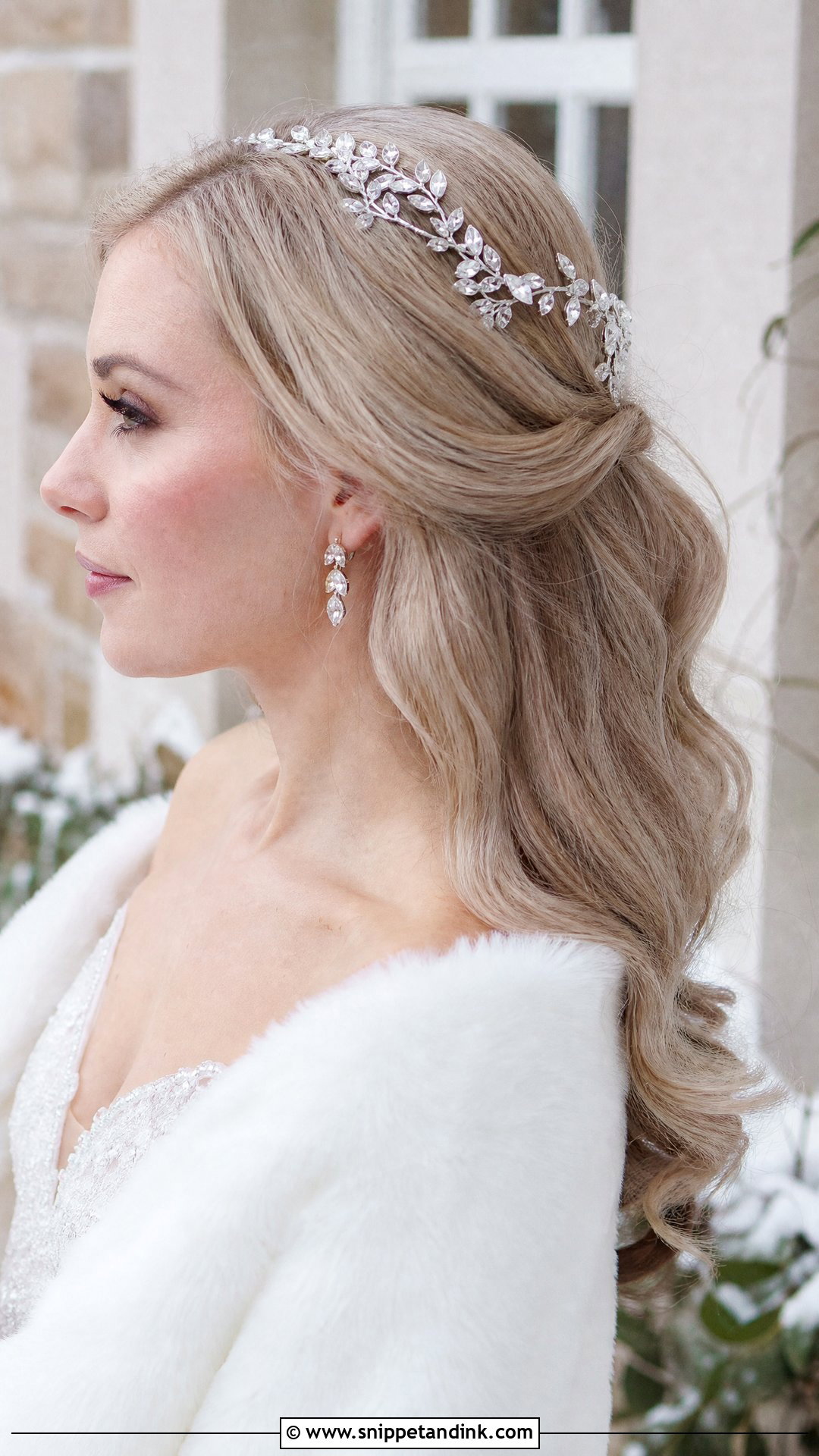
Silver leaves feel cooler and lighter, which is why they sit so well with white gowns, crystal beading and winter settings. The leaf shape adds an organic line that a tiara doesn’t have. Worn across the back of an updo or tucked into one side of curls, the bendable wire lets me follow the shape of the style. Silver shows up clearly against brunette and dark blonde hair. On very light platinum, it can blend in, so I’d test it in daylight first.
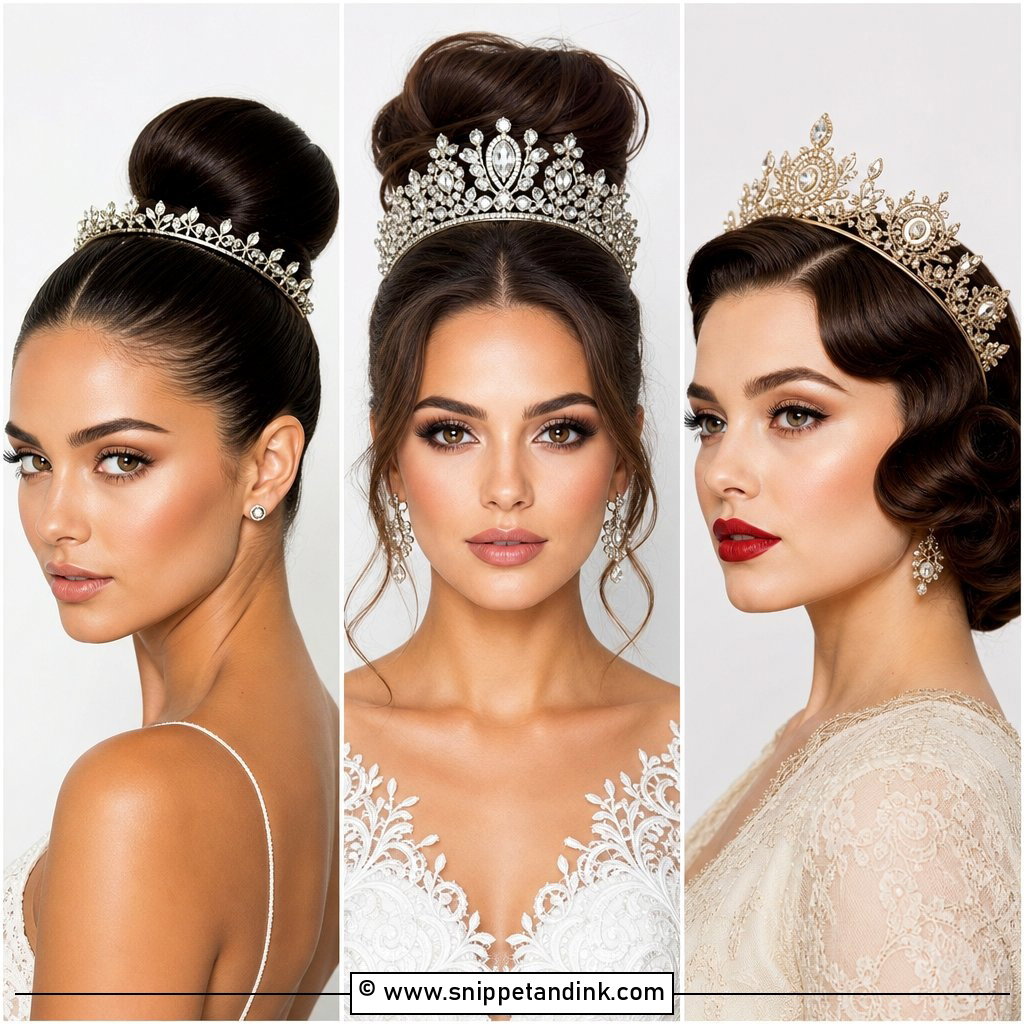
14. Wedding Bridal Crown
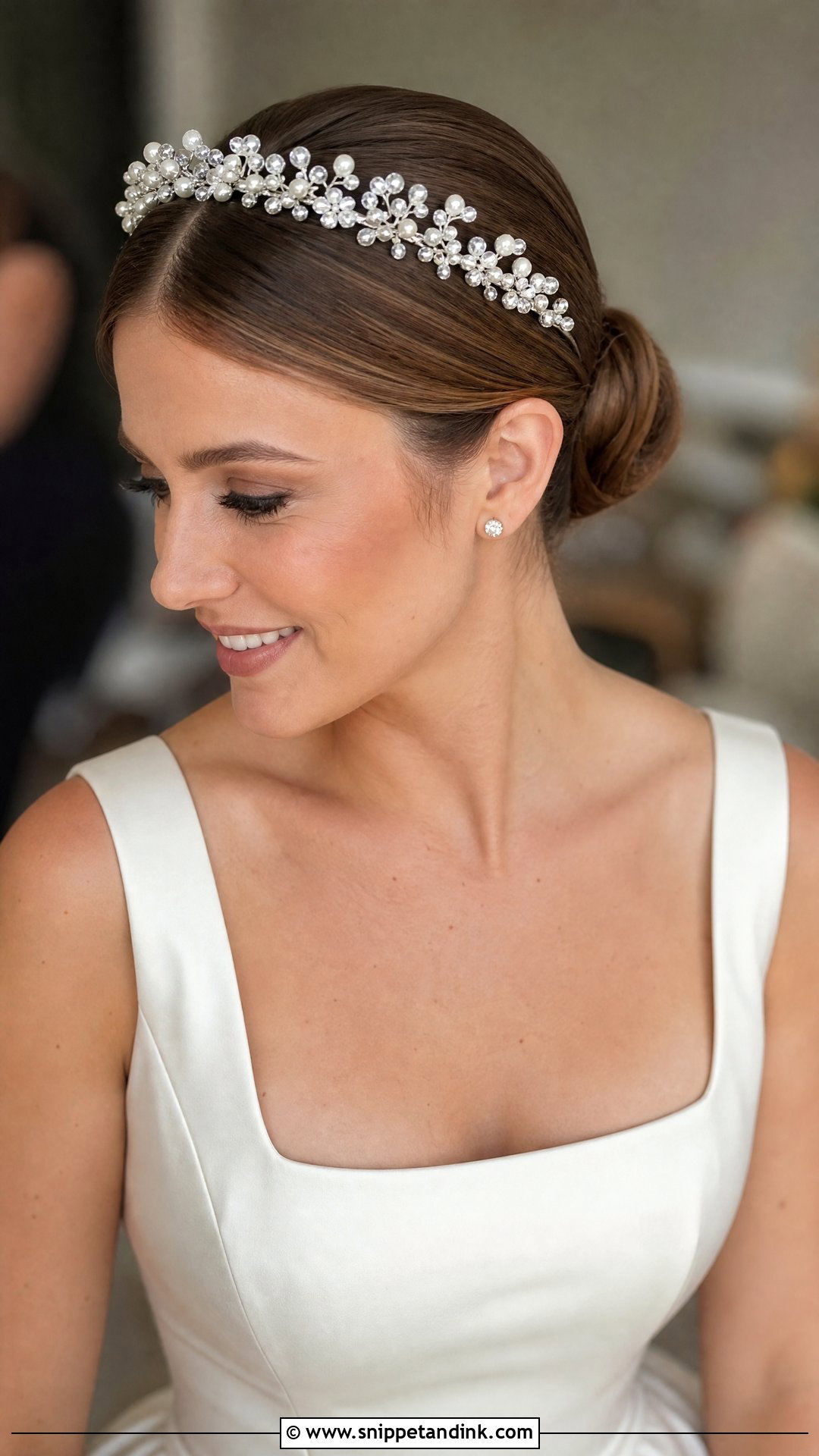
A crown is the headpiece that leads the whole look, so I keep the hair underneath simple: a sleek bun, soft waves or a polished middle part. Crowns sit naturally with structured gowns, corset bodices and long sleeves. Weight is my main worry. A heavy metal crown pinned onto fine hair will pull at the scalp within a couple of hours, so bring it to your trial, wear it while you eat lunch, and tell your stylist honestly how it feels.
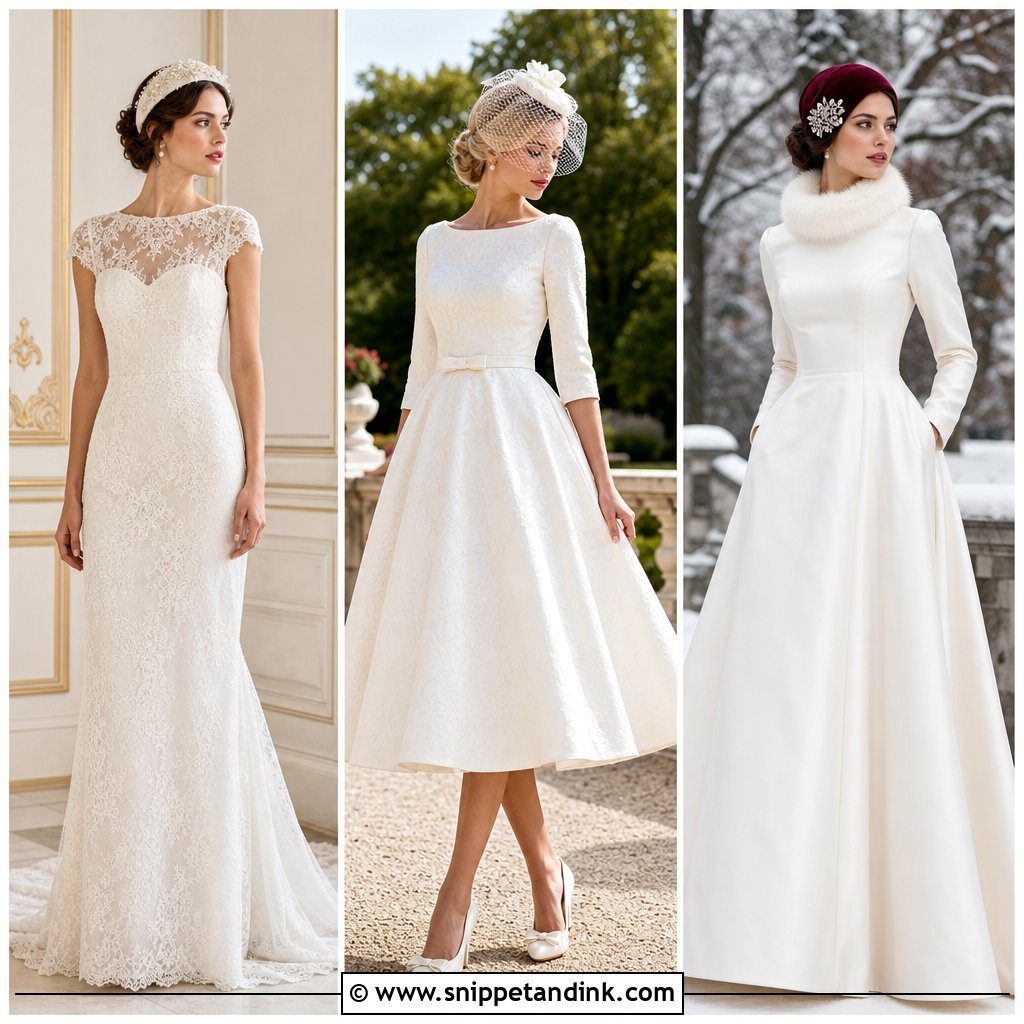
15. Wedding Juliet Cap Headpiece
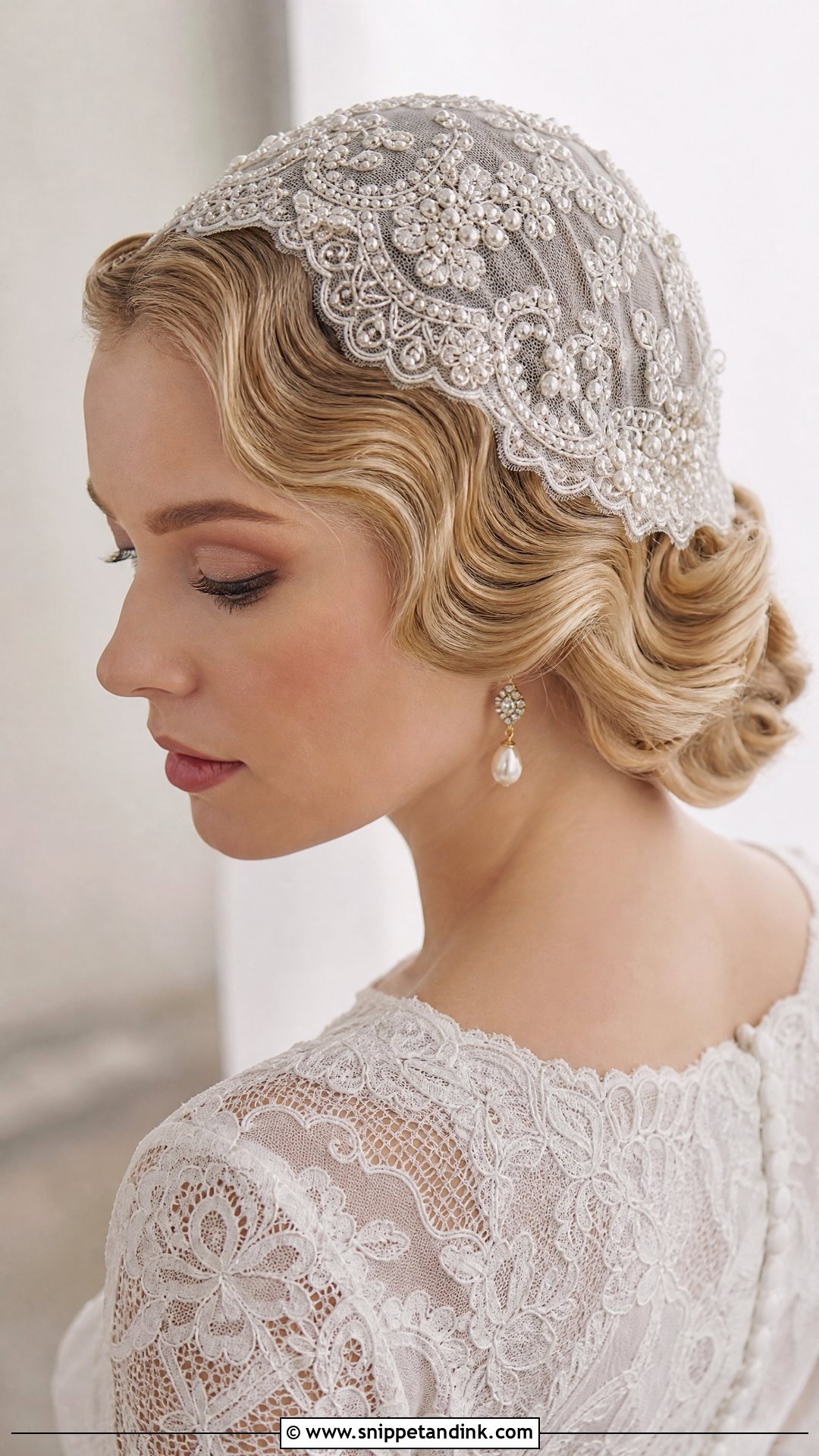
A wedding Juliet cap headpiece sits close to the head and suits soft waves, finger waves, low buns and lace gowns. Most are built from pearls, beading or netting, and many are designed to anchor a veil, so the cap and veil can go in as one unit. Because it covers the crown, I don’t add volume there; height under a cap looks lumpy. It suits chapels, historic venues and small ceremonies, and the rest of your accessories can stay quiet.
16. Wedding Birdcage Veil Headpiece
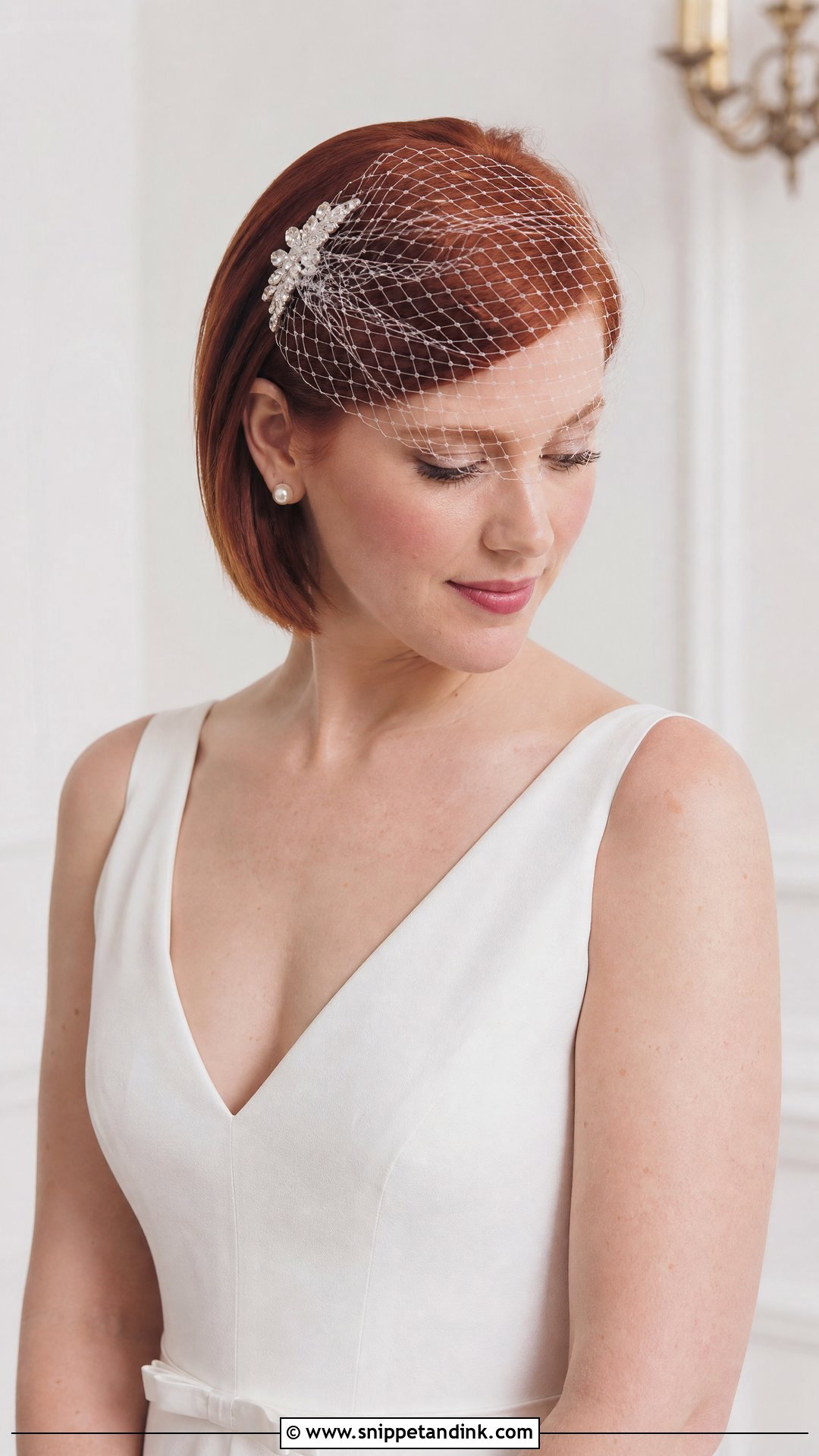
A wedding birdcage veil headpiece gives you a veil moment without fabric trailing behind the gown. The short net is usually mounted on a comb, clip, flower or bow. Bobs, sleek buns and retro waves suit it, as do courthouse ceremonies, city weddings and tea-length dresses. The edge of the netting needs to land near the eye or the cheekbone. Ending at the mouth looks accidental, and it gets in the way of the kiss.
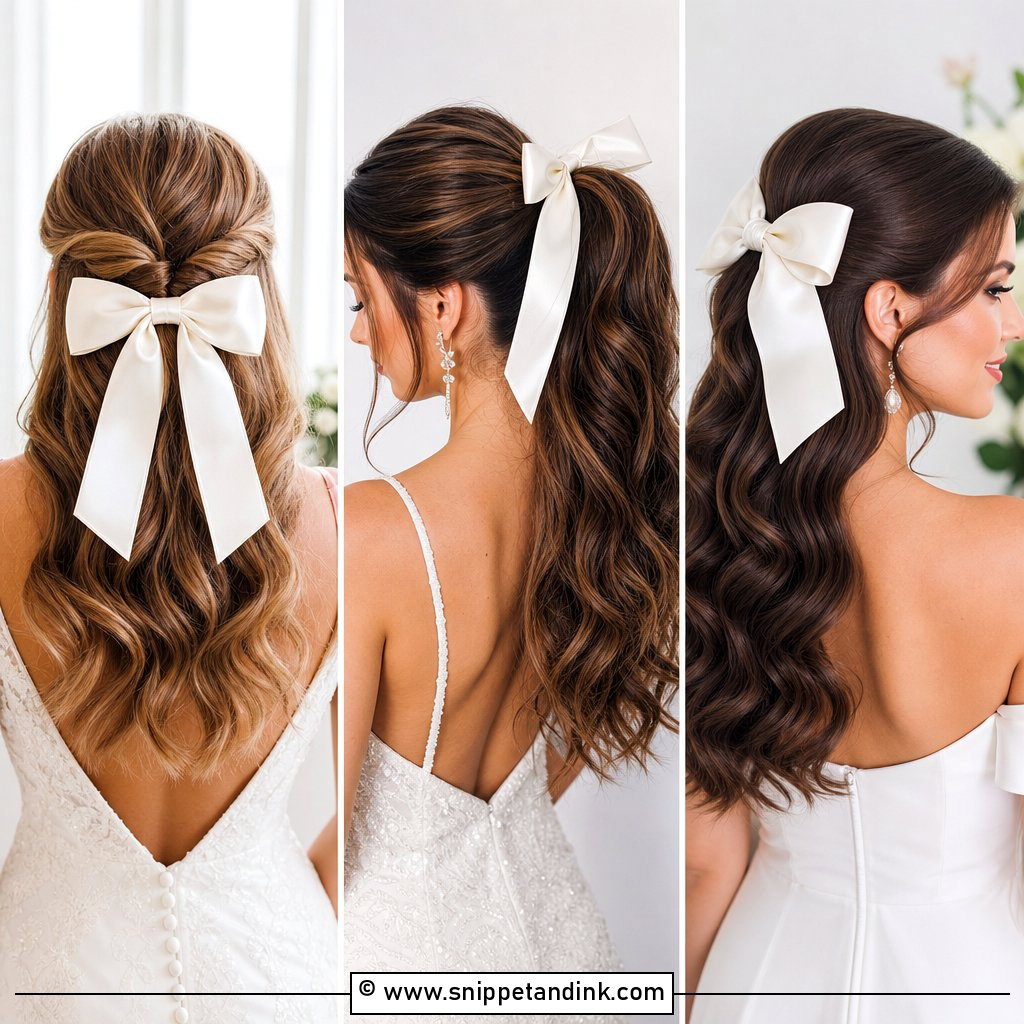
17. Wedding Bow Headpiece
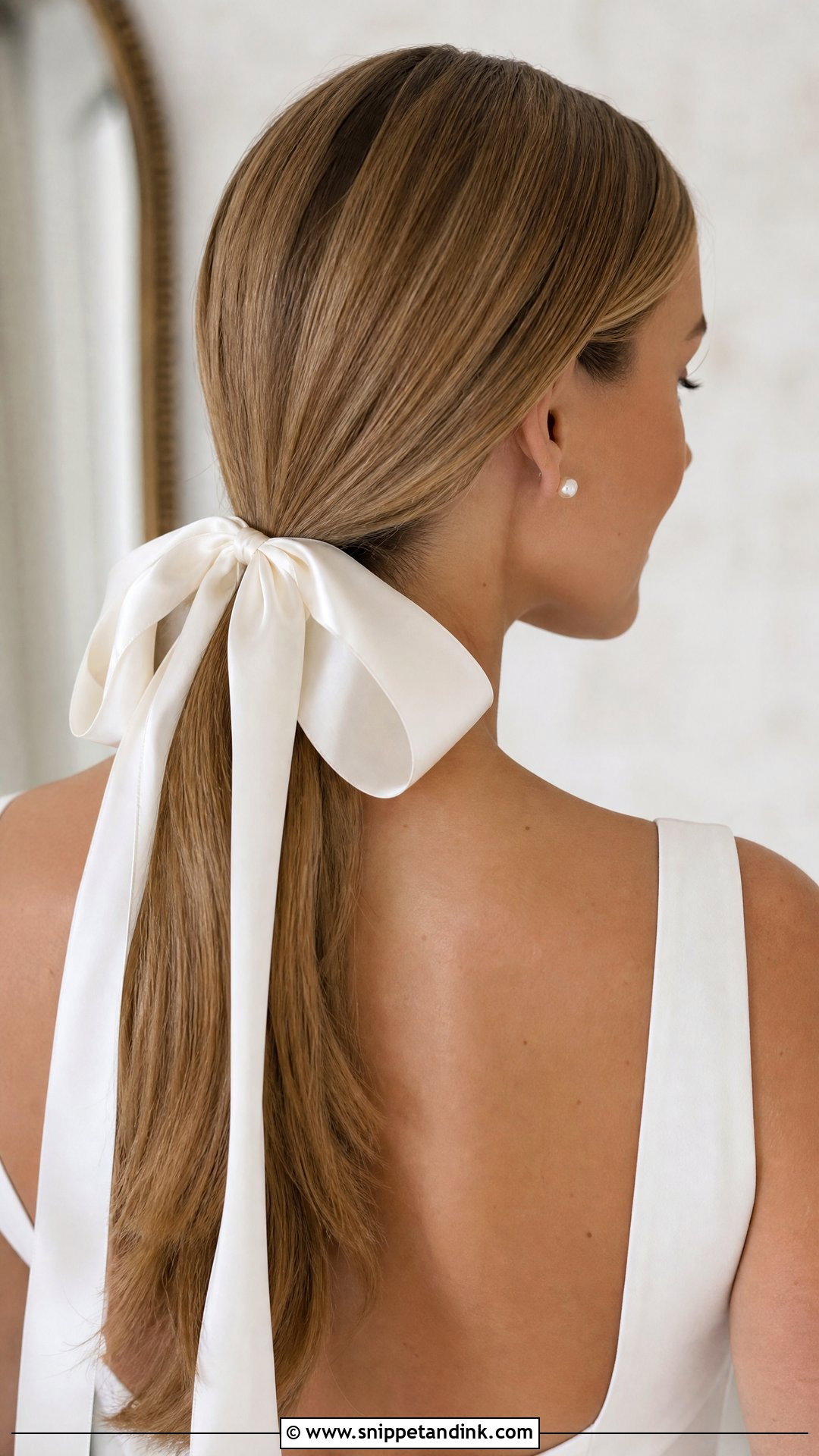
A wedding bow headpiece changes with the fabric: satin looks crisp, velvet suits winter, organza and tulle are lighter. A small bow at the base of a ponytail looks clean; a big one over a low bun becomes a fashion piece. I keep the hair underneath smooth or softly waved. Frizz around a bow is what tips it from chic to childish, so on humid days I set the base with a little smoothing cream first. If your dress already has a bow, match the fabric.
18. Wedding Bridal Hat
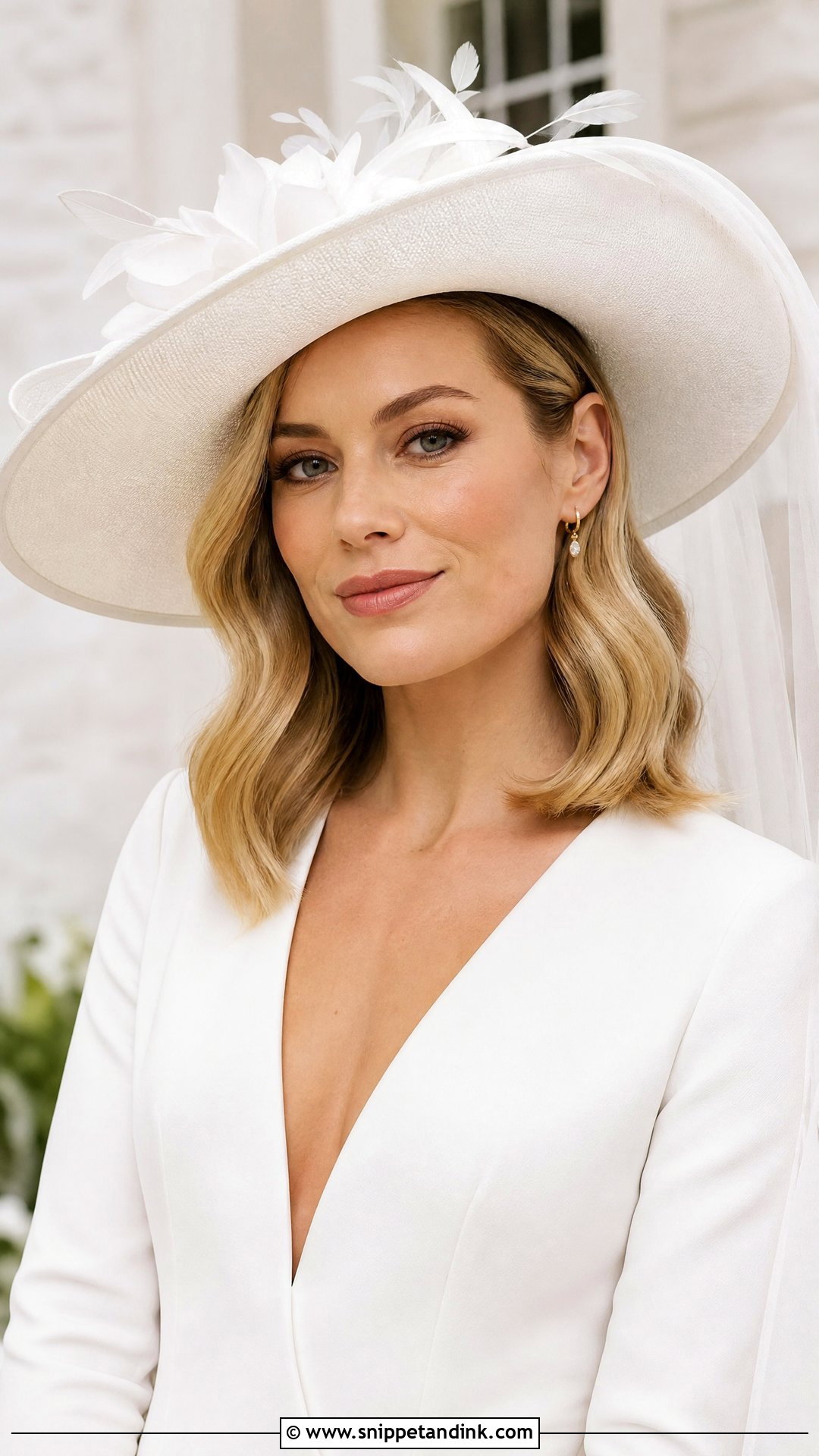
A bridal hat is the bold option, and the shape decides the mood: a wide brim reads dramatic, a pillbox reads polished. Wide brims look striking with sleek waves, low buns and tailored gowns, while smaller hats suit city weddings and courthouse ceremonies. Outdoors, a brim also gives real shade. Fit matters more than anything. I build the hairstyle low so the hat sits on the head rather than on top of the hair, and I use hatpins or a hidden comb so it doesn’t lift in the wind.
19. Wedding Hair Clip
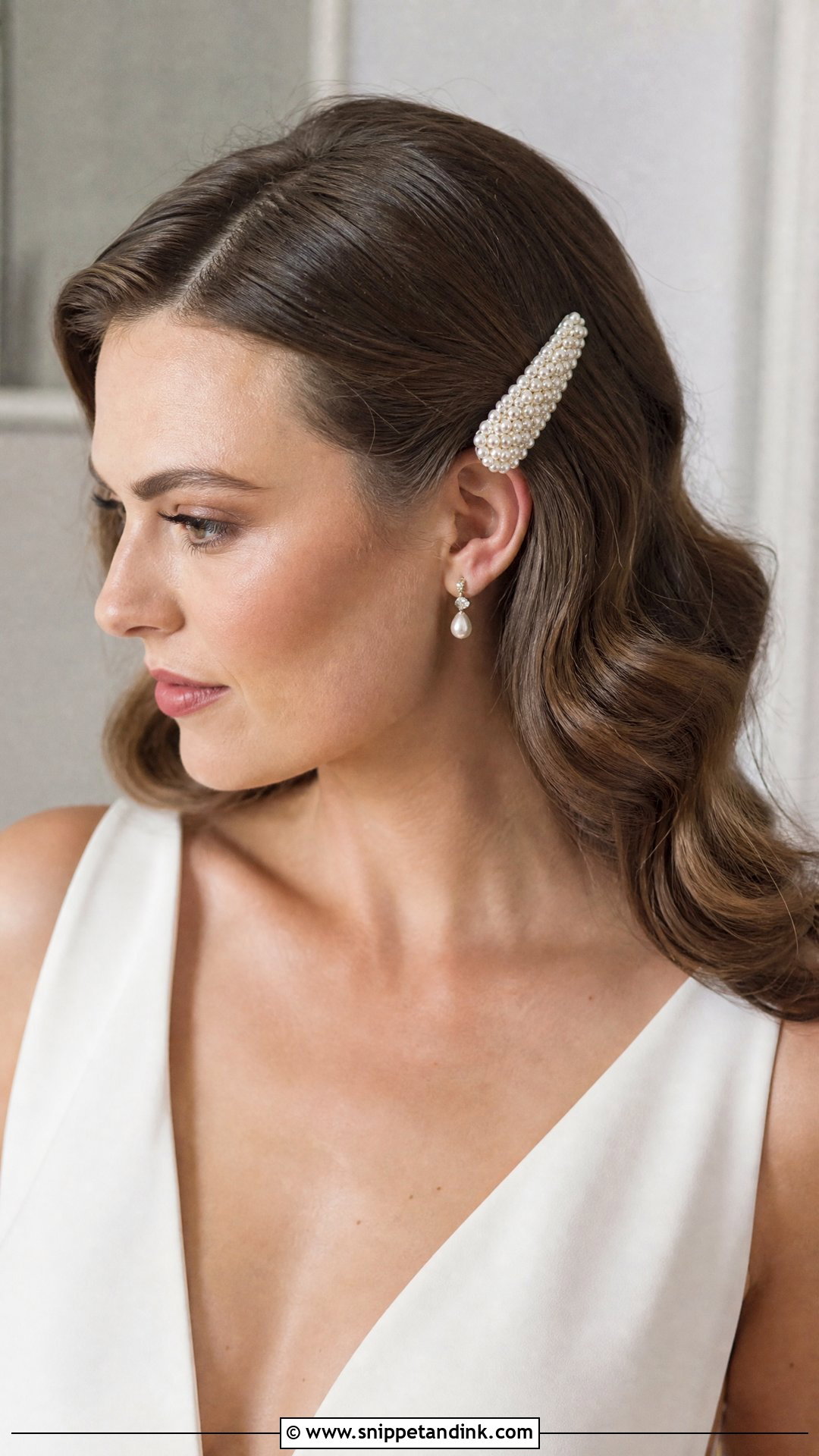
A single clip is the simplest piece on this list, and it can still carry a look. I use them to hold back one side, decorate a low bun or finish a half-up style. Pearl clips read soft, crystal ones dressy, metal ones modern. Shorter hair suits them because there’s no updo to decorate. Test the clasp on your own hair before the wedding. Silky or very fine hair lets a weak spring clasp slide down slowly over the evening.
20. Wedding Bridal Hair Chain
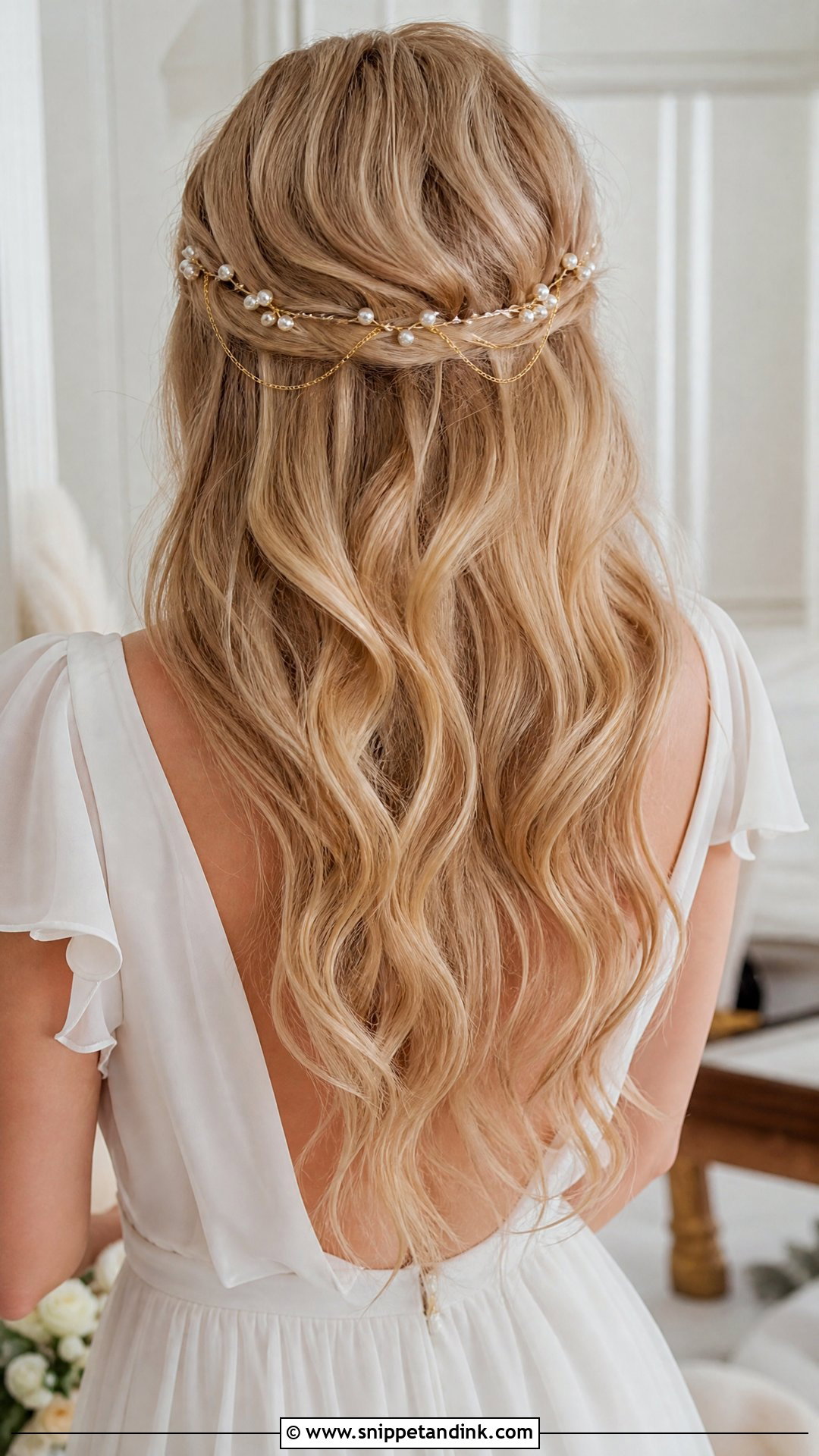
A hair chain drapes, which is the whole point: it can fall across loose waves, circle a bun or rest across the crown. Boho, beach and destination weddings suit it best. Chains usually carry small pearls, crystals, gold links or floral charms. I’d only wear one on textured hair, because the chain needs a little grip to stay where I place it. On freshly washed, silky hair it migrates. If you add a veil, keep that veil plain so the two don’t tangle.
Stacking a Veil and a Headpiece Without a Tug of War
Most of the trouble I’m called to fix on a wedding morning comes from two combs fighting for the same spot. When a bride wears both, I decide the order before I start curling.
The veil comb usually goes in first, set into the back of the bun or just under the crown. The headpiece then sits in front of it or slightly above it, covering the veil comb so you don’t see two separate pieces of hardware. With a tiara or crown, the veil goes behind and below. With a flower crown, the veil comb slides under the back of the crown. If the veil is coming out after the ceremony, I make sure removing it doesn’t loosen the headpiece; that usually means giving each one its own set of pins.
When to Buy It, and How to Keep It in Shape
Have the headpiece in hand before your hair trial. A trial without it only tells half the story, since the accessory changes where I put volume and where I hide pins. Handmade and custom pieces often take several weeks, so order with plenty of margin.
Store it flat in its box, away from humidity. Keep pearls out of contact with perfume and hairspray, because both can dull the coating. Gold-toned and silver-toned plating can tarnish if left in a damp bathroom. On the morning itself, give it to your stylist directly rather than leaving it loose on a table where it can get bent or knocked to the floor.
The Piece That Still Feels Secure at Midnight
The headpiece that works is the one that supports the hairstyle, the gown and the veil together, not just the one that looks best in its box. Think about your dress fabric, metal tone and venue, then bring the actual piece to your trial. Wear it while you walk, sit, hug someone and turn your head quickly. If it still feels secure after all that, you’ve found it.
You'll Like These Ideas:


Leave a Reply