
Flowers are the hair accessory I set the most time aside for on a wedding morning, because they behave so differently from a comb or a pin. Fresh blooms wilt and bruise, dried ones crumble if they’re handled roughly, and silk or porcelain pieces stay exactly as they are all night. Any of them can be the detail people remember, provided the size suits your hair and the style has enough structure to hold them. A loose wildflower braid belongs at a garden wedding; a sleek bun with a few tiny white pins suits a formal ceremony. Below are twenty ways I place flowers in bridal hair, with what I check before I commit to each one.
Wired, Taped and Pinned: How I Anchor Flowers So They Stay Put
Flowers don’t hold onto hair by themselves. Every fresh bloom I use is cut short, wired through or around the stem, and wrapped in floral tape so it has a firm little handle that I can push into the style and pin across. Without that, stems snap, slide out, or leave damp patches in the hair.
- Ask your florist for hair flowers wired and taped, delivered in a cool box, with a few spares.
- Finish and spray the hairstyle first, then add the flowers. Spray on petals can mark or darken them.
- Pin across each stem with two bobby pins in an X, sliding into the base of the style, not the top layer.
- Place the largest flower first and build around it, so the arrangement doesn’t drift as you add more.
Silk, porcelain and metal flowers usually come on pins, combs or clips already. They still need a firm base: a small teased or pinned section underneath gives them something to grip.
1. Fresh Flower Crown Bridal Hair
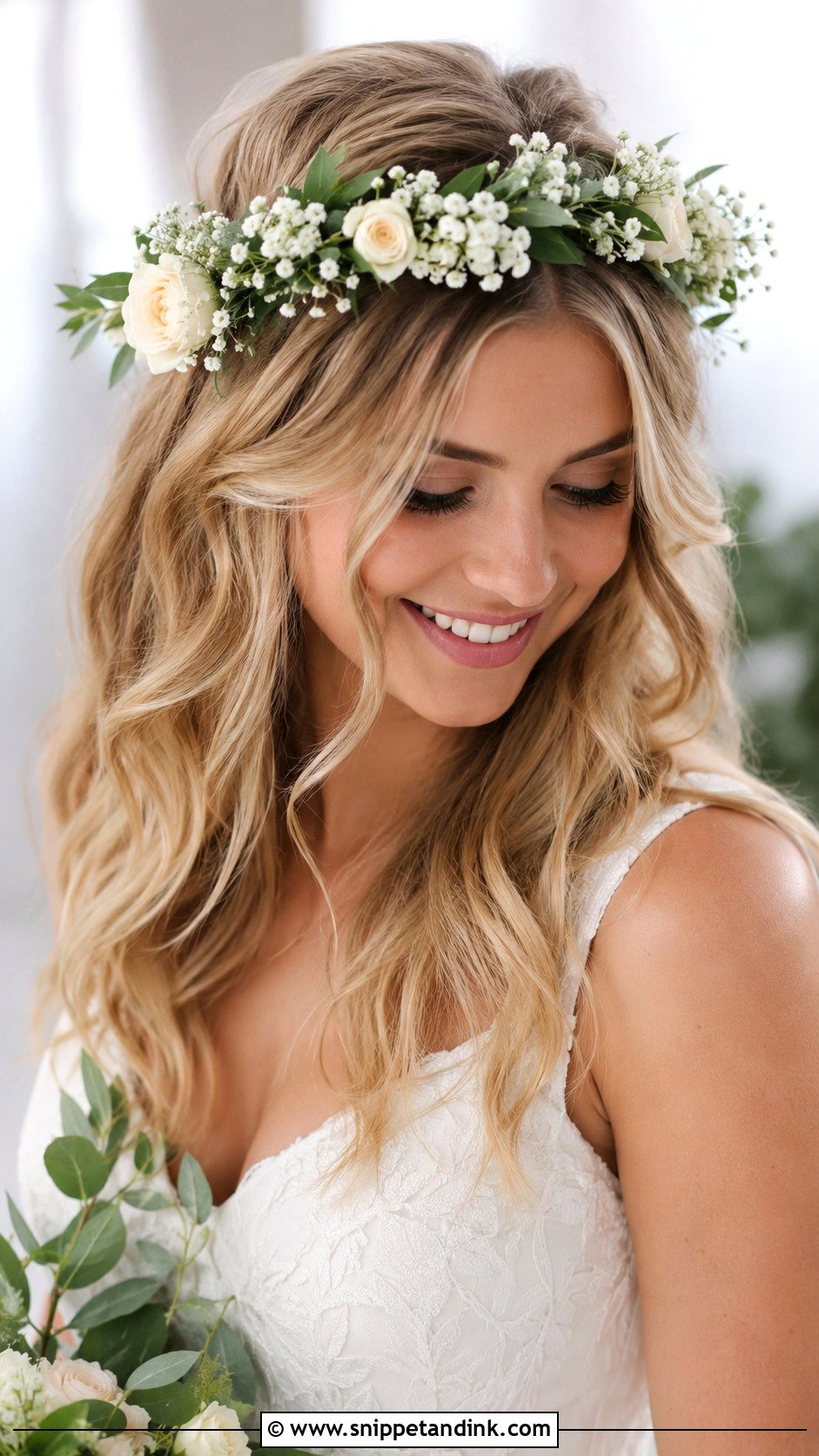
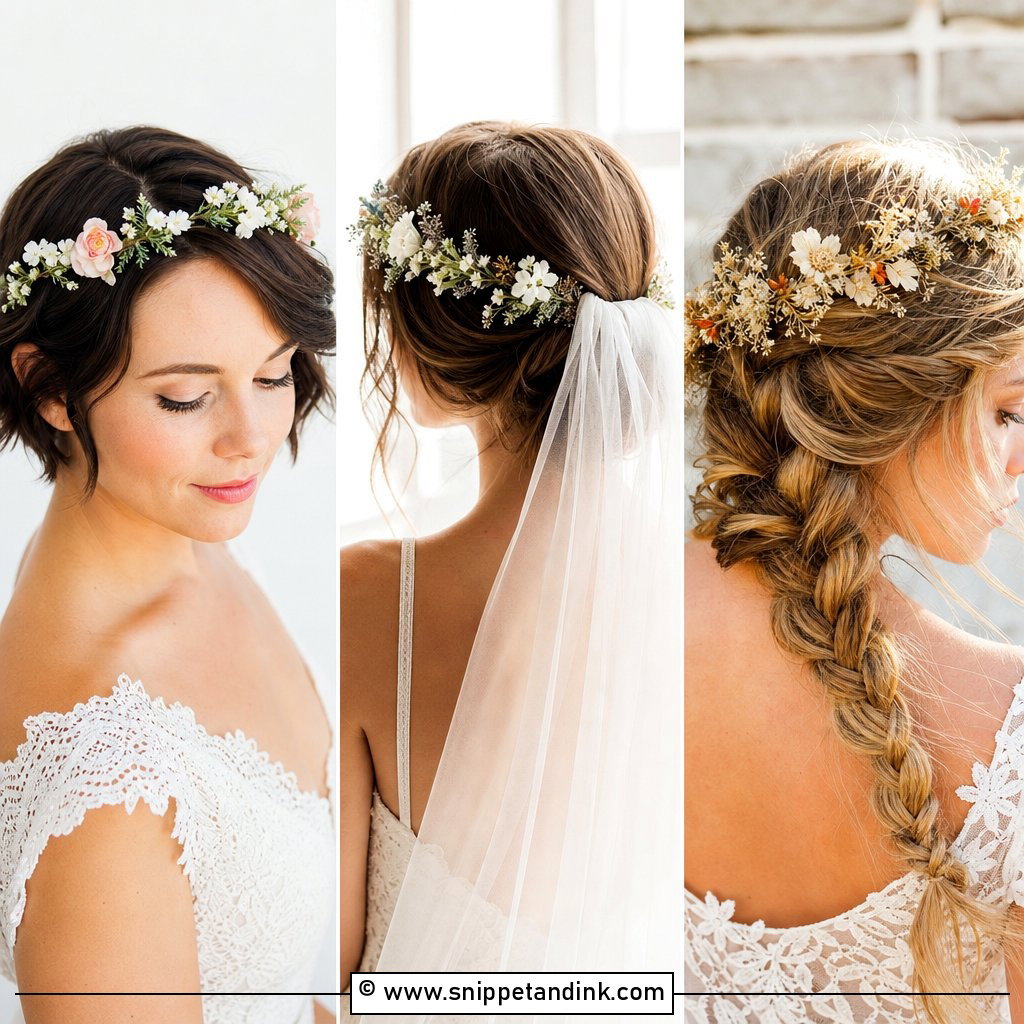
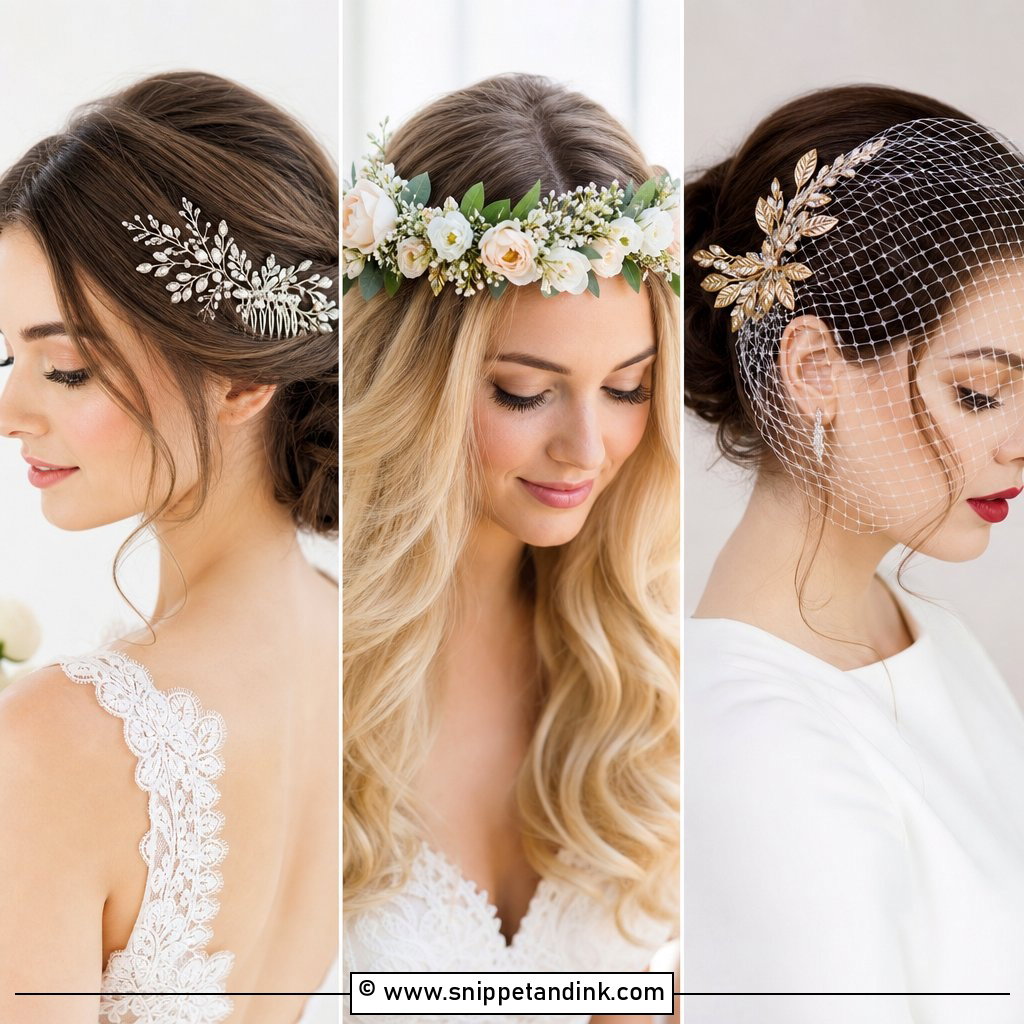
A fresh flower crown bridal hairstyle sits best on loose waves, soft curls or a relaxed half-up, where there’s texture for it to grip. Weight is the thing I watch. Small roses, baby’s breath, wax flower and greenery wired onto a thin base stay comfortable for hours; a crown built from big garden roses slides forward and gives you a headache by the speeches. Ask your florist to keep it light and to bring it chilled. I anchor it with two crossed bobby pins on each side, hidden under the stems.
2. Baby’s Breath Bridal Updo
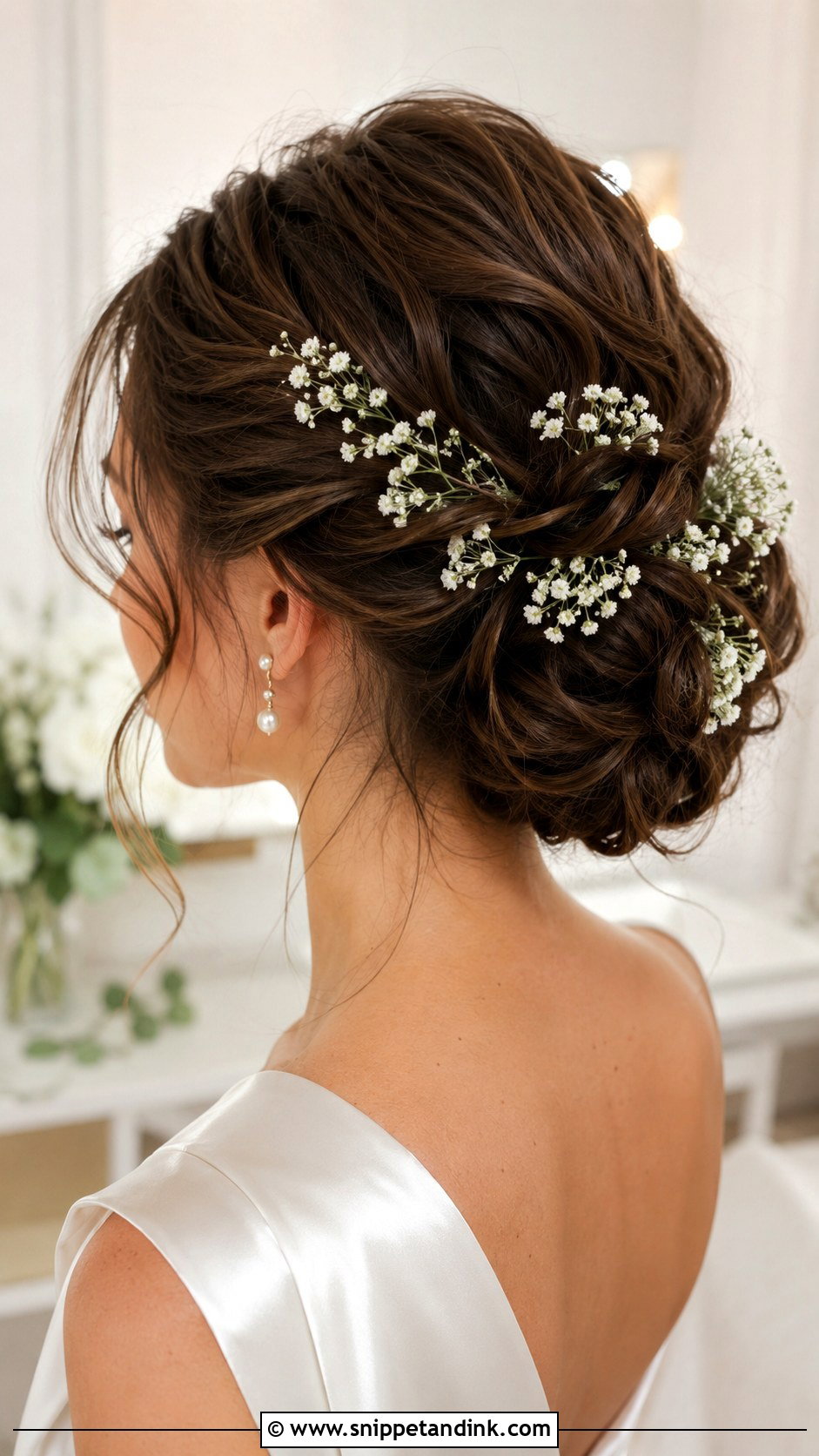
Baby’s breath is one of the hardiest fresh flowers I work with. It barely wilts out of water, and the tiny heads disappear into a low bun, a twisted chignon or a braided updo so the detail shows from every angle without looking heavy. That matters for veil shots and the back-of-the-head photos at the ceremony. If you want flower decorations that read delicate rather than bold, this is where I’d start. I tuck small sprigs in at slightly random spacing; lined up in a neat row, they look like a hair accessory instead of flowers.
3. Floral Bridal Hair Pins
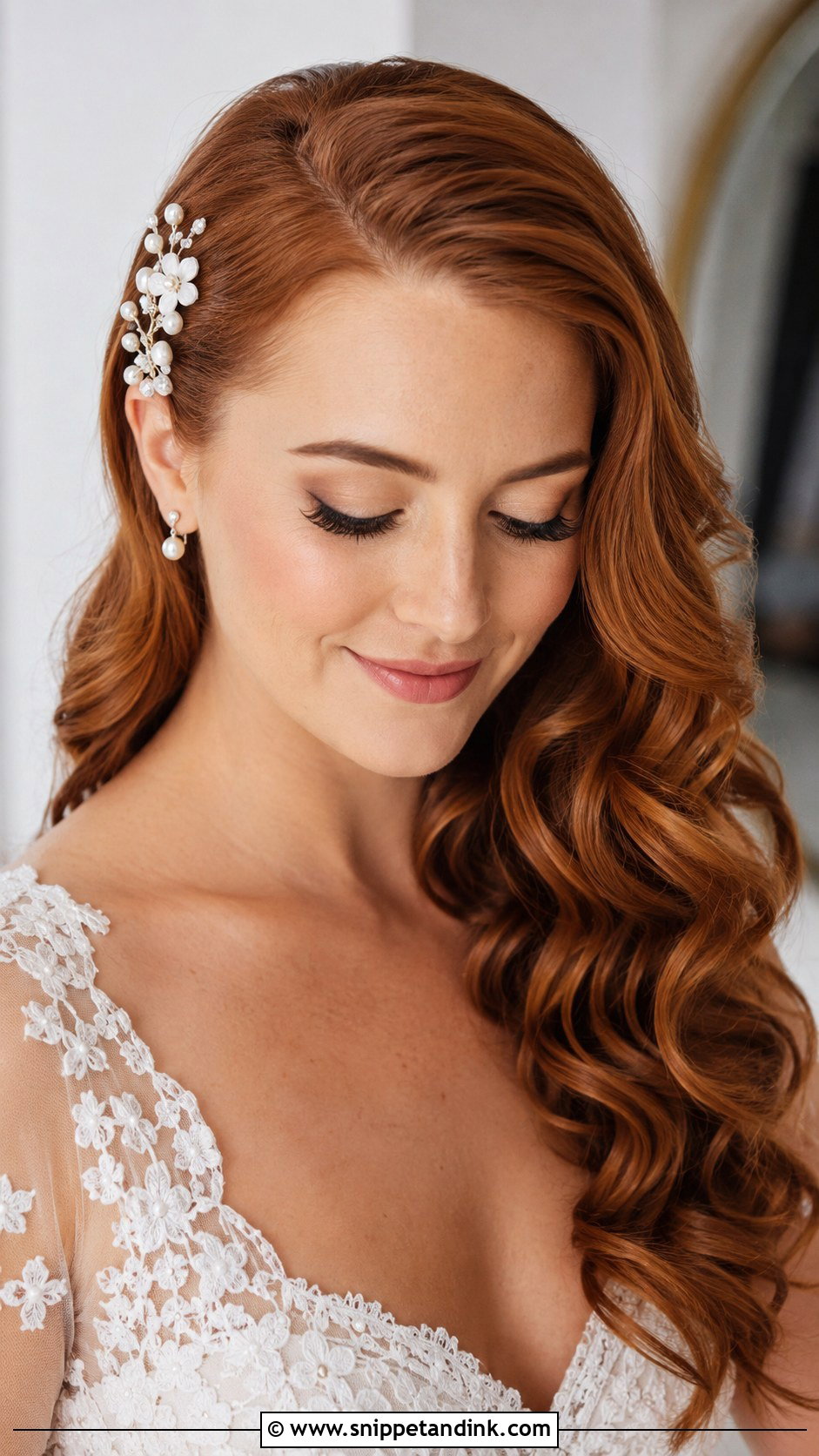
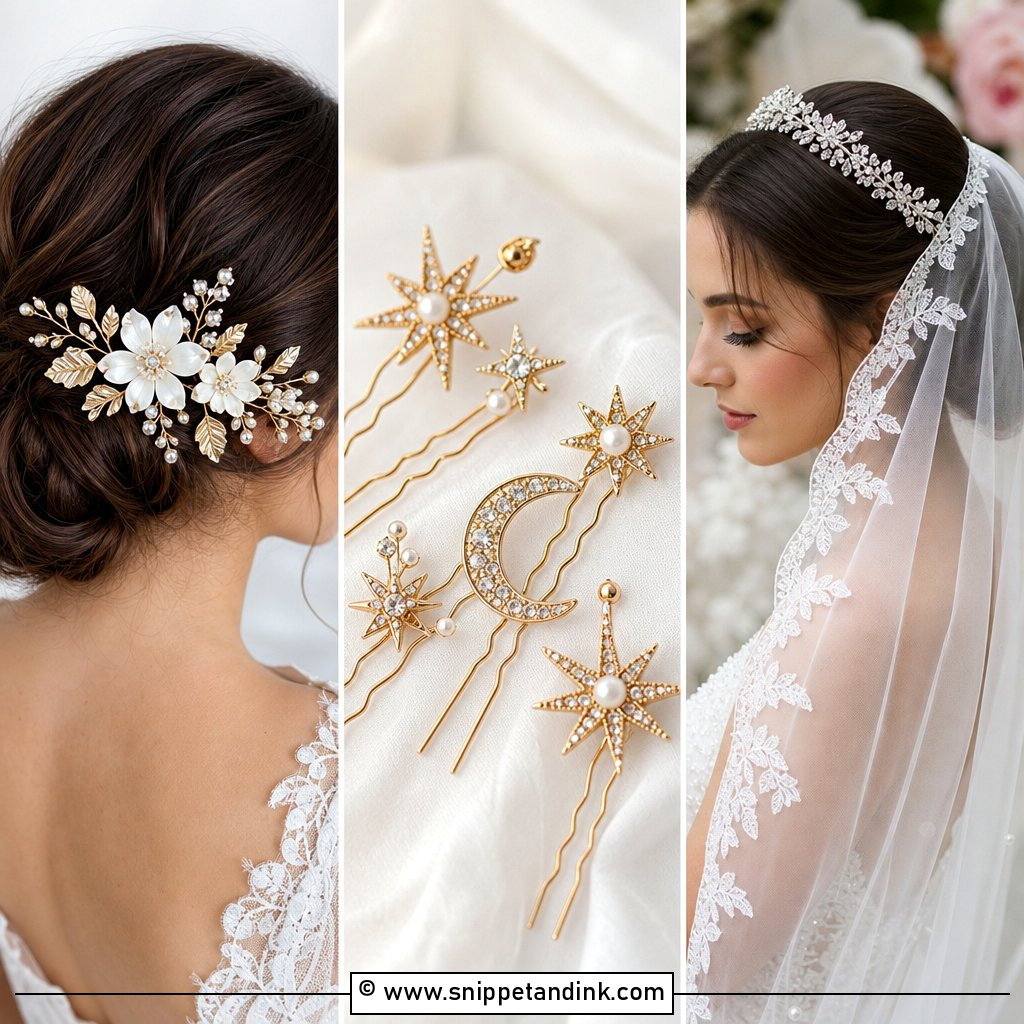
Pins are the most flexible way to add flowers, and they work in buns, waves, braids, ponytails and short hair alike. Real flowers, porcelain, pearl-centered or silk blooms can all come on pins. I usually place them on one side of the style or where the hair gathers at the back, since that’s where the pin can grip the most hair. Three to five pins is normally plenty. More than that and the style starts looking decorated rather than finished.
4. Low Bun With Flowers
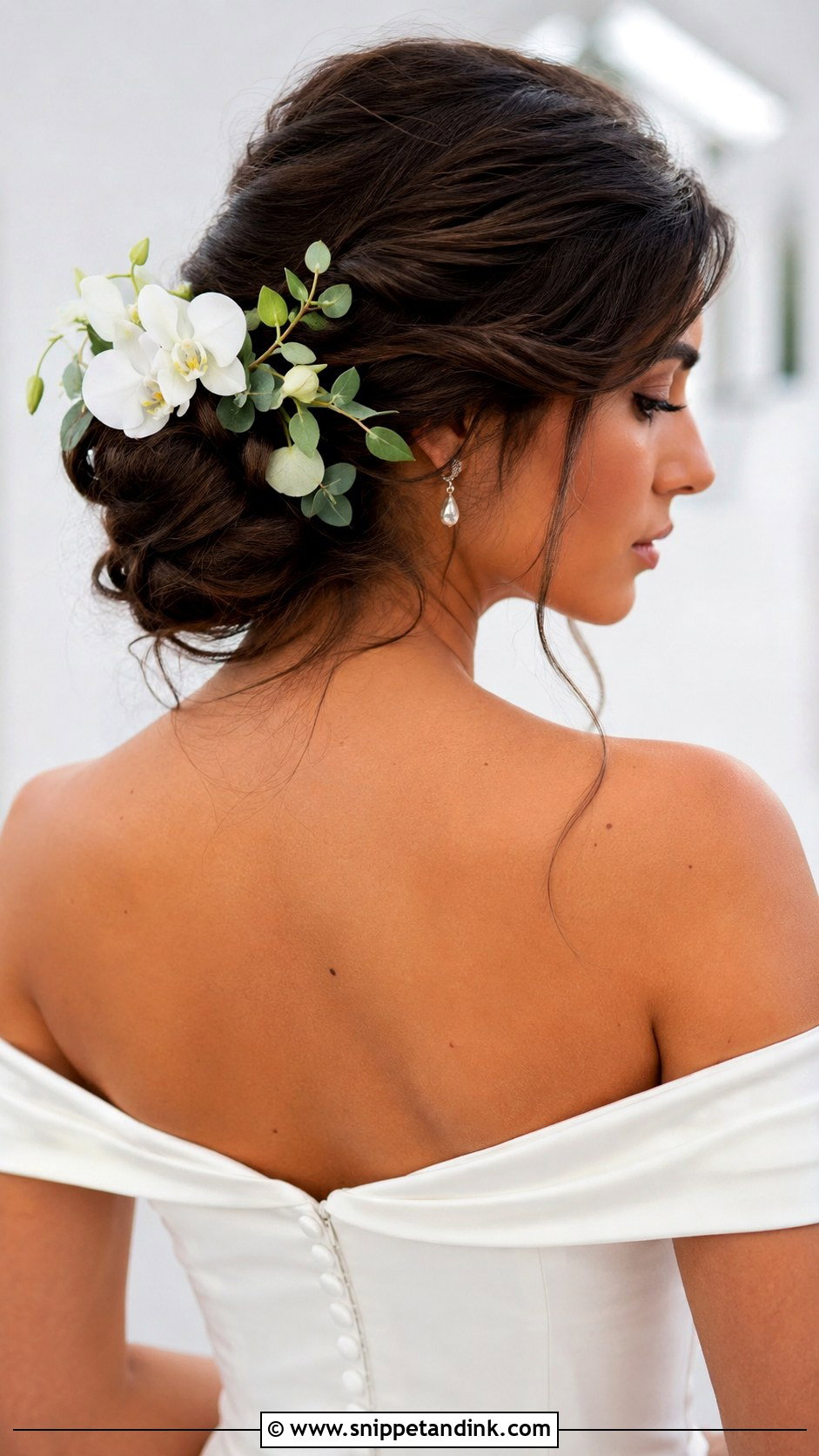
A low bun gives flowers a solid base, which is why it’s one of my safest choices for a long day. I can tuck blooms above it, around one side, or just underneath the twist so they show only when you turn your head. White orchids, mini roses, jasmine and small dried flowers all sit well. It works under a veil and shows off a backless dress. Jasmine smells wonderful, but it browns within a few hours out of water, so I use it only if the ceremony is close to the time I finish styling.
5. Half Up Bridal Hair With Flowers
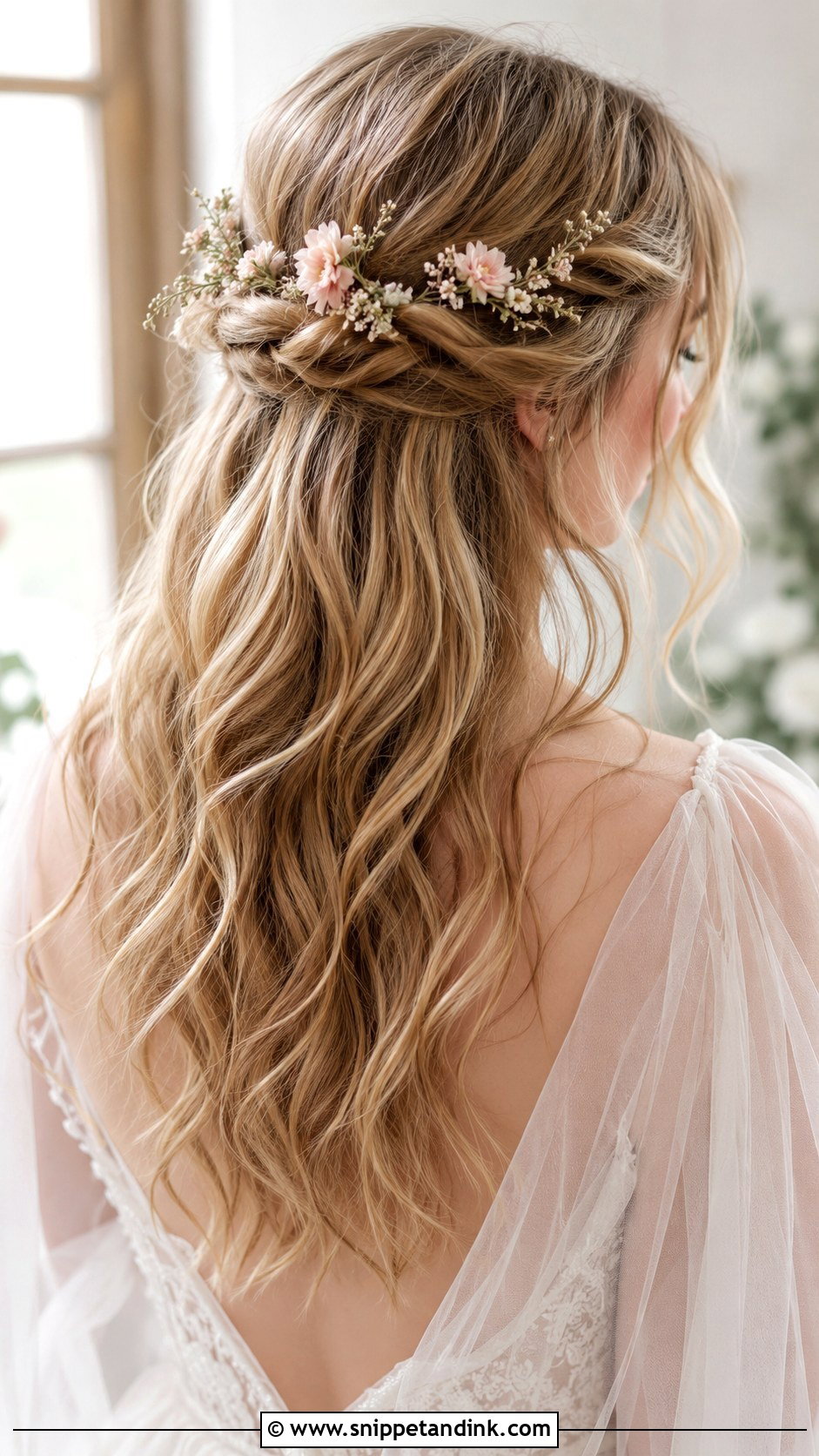
Half-up styles have one weak point for flowers: the hair left down has no structure, so the flowers must go into the pinned section at the crown, where hair twists, braids or gathers. That’s the only area that will hold them. Small blooms blend into the shape; larger ones pull the section loose. Soft waves keep it romantic, and smoother hair makes it look more polished. On very fine hair, I add a small hidden braid as an anchor point before any flowers go in.
6. Braided Bridal Hair With Flowers
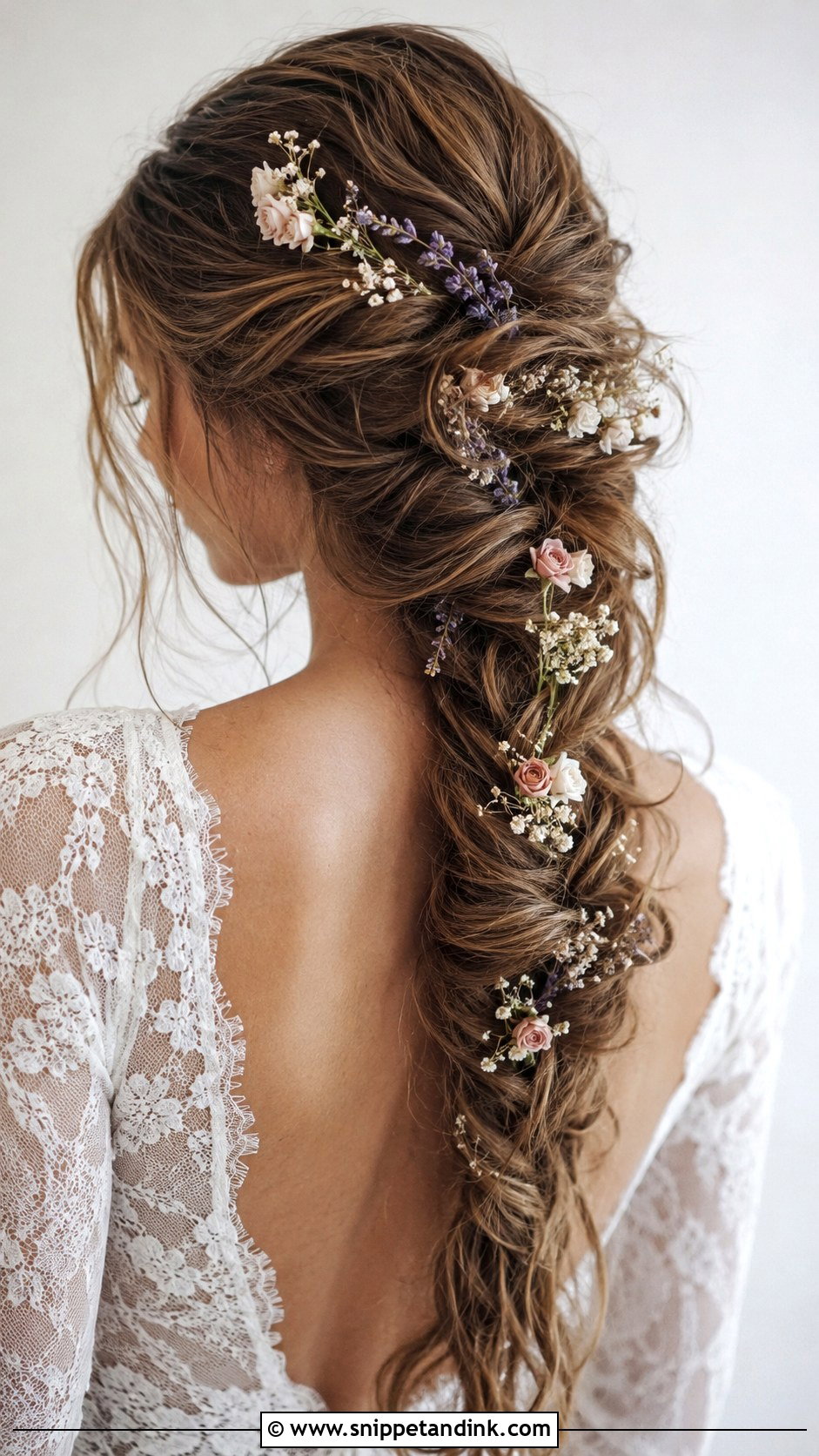
Braids give flowers something to grip, which is why I like them for outdoor and rustic weddings. Fishtail, crown, side or loose boho braids all take small blooms woven through the sections. Big flowers pull the braid apart, so keep to baby’s breath, dried lavender, wax flower and tiny roses. I braid first, pancake the edges gently to soften it, then push short wired stems into the braid. Thick or long hair handles this best; very short layers tend to poke out around the flowers.
7. Orchid Bridal Hair Decoration
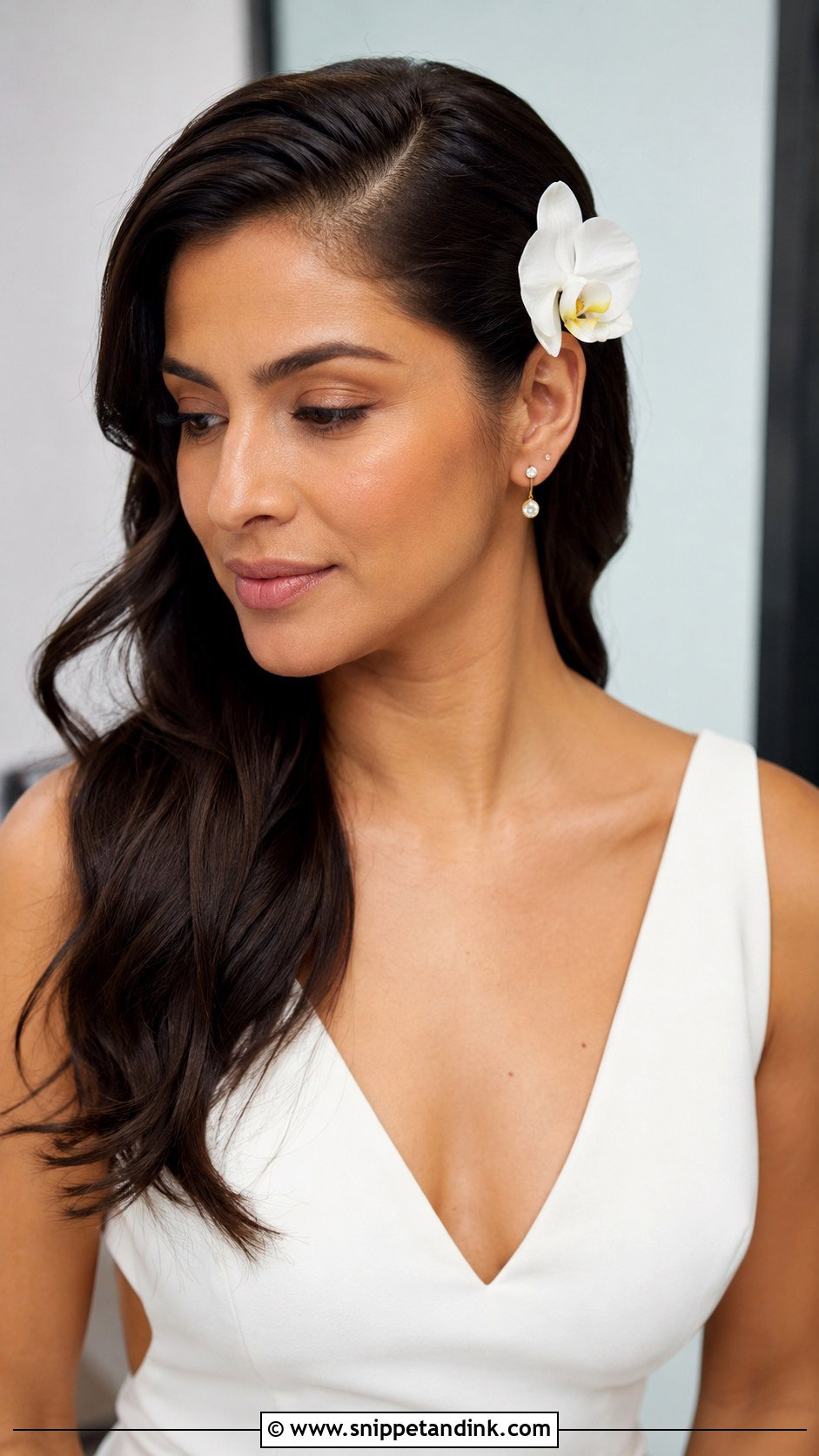
Orchids hold their shape far longer than most fresh flowers, so they’re one of the few I’m happy to use for a hot beach or tropical wedding. One orchid tucked behind the ear looks sharp with sleek waves, and several small ones can frame a bun or low twist. White is classic, blush or pale yellow softer. The sculpted petals don’t need much around them. Keep jewelry simple and the hair smooth and shiny, and let the flower be the only detail.
8. Rose Bridal Hair Comb
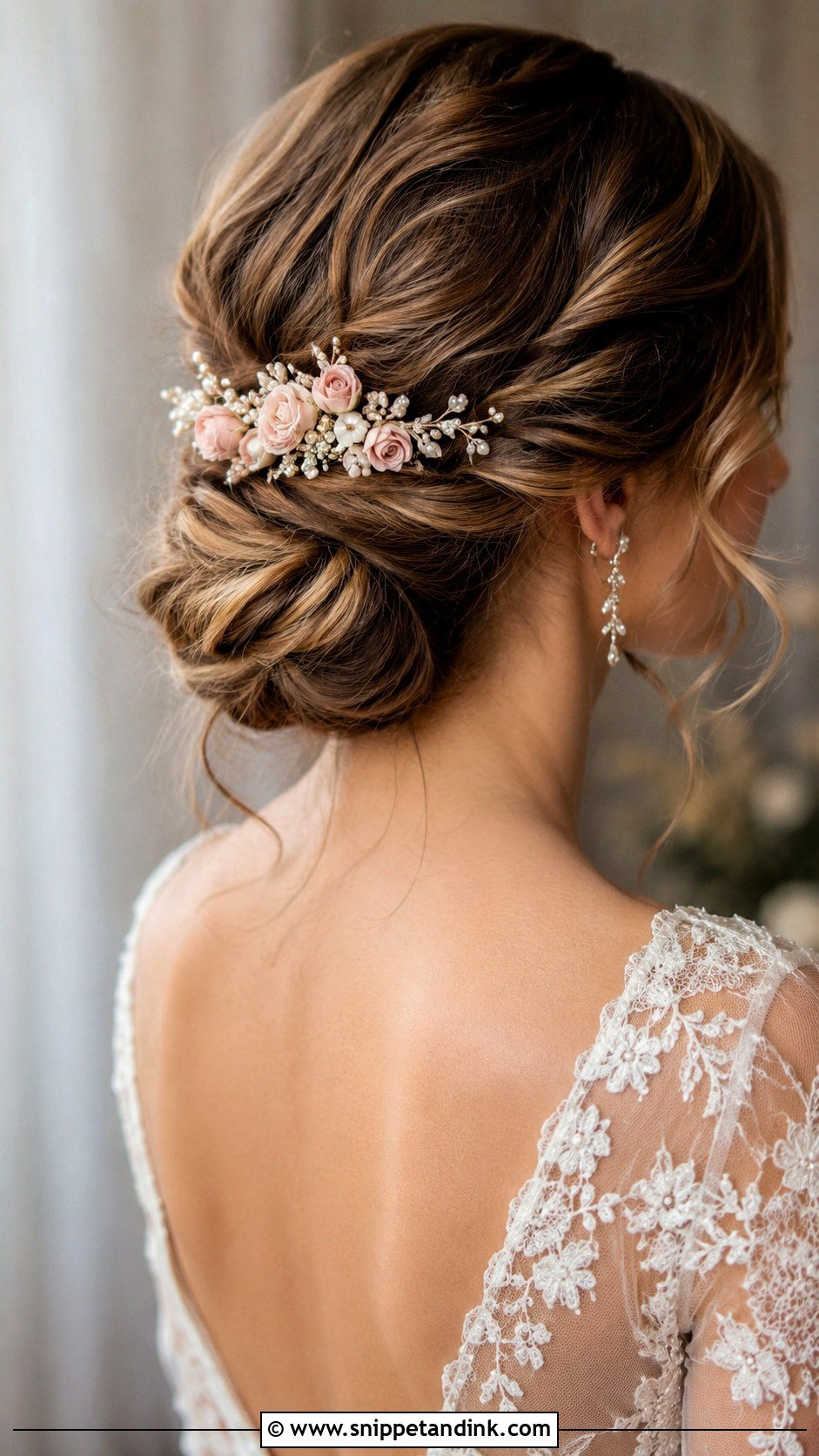
A comb is easier to secure than loose stems, which is why rose combs suit brides with slippery hair. The teeth slide into a low bun, side twist, half-up section or French twist. For a comb to hold, it needs a pinned or teased base underneath; pushed into loose, smooth hair it will slip. Mini roses look better balanced than big ones. Fresh roses give a natural finish, while silk ones last the whole day. Matching the shade to the bouquet ties it together.
9. Dried Flower Bridal Hair
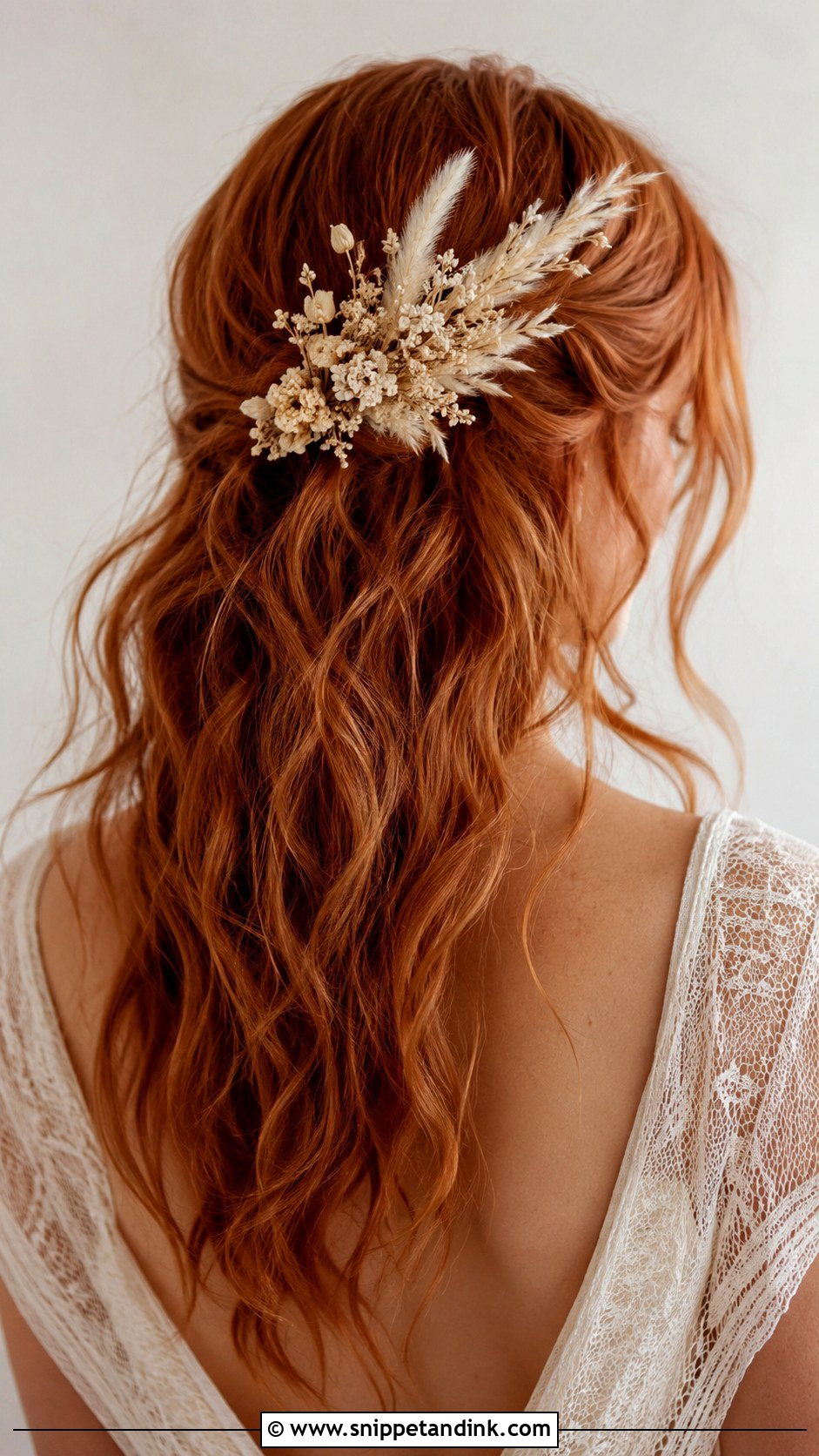
Dried flowers suit brides who want texture and something to keep afterward. They come as crowns, combs, pins, braid fillers or bun wraps, often with pampas, preserved baby’s breath, dried lavender, bunny tails and tiny wildflowers. Fall weddings, desert venues, barns and boho dresses suit them. They weigh very little, but they’re brittle, so I handle them last and avoid pushing them hard into the hair. Hairspray can darken some dried petals, so I spray the style before the flowers go in.
10. Wildflower Bridal Hair Crown
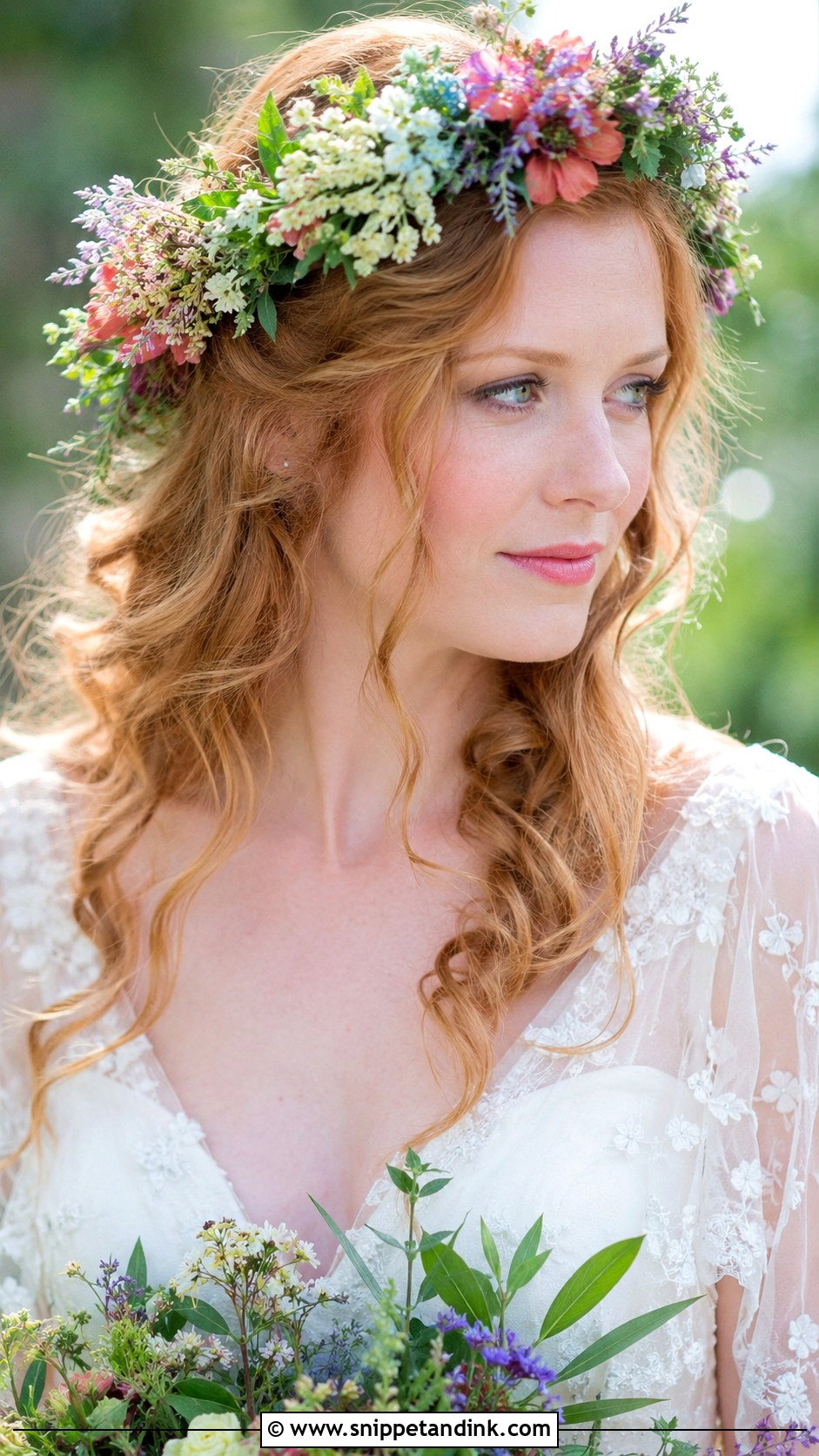
A wildflower crown gives a colorful, free-spirited look and fits best on loose curls, textured waves or a relaxed braid. Choose small seasonal flowers in soft colors, with a little greenery for movement. Meadow flowers are delicate, so the crown should be made as close to the wedding as possible and kept cool and lightly misted. It suits meadow weddings, backyard ceremonies, elopements and whimsical bridal outfits. I’d keep makeup fresh and simple so the crown doesn’t look busy.
11. Floral Bridal Ponytail
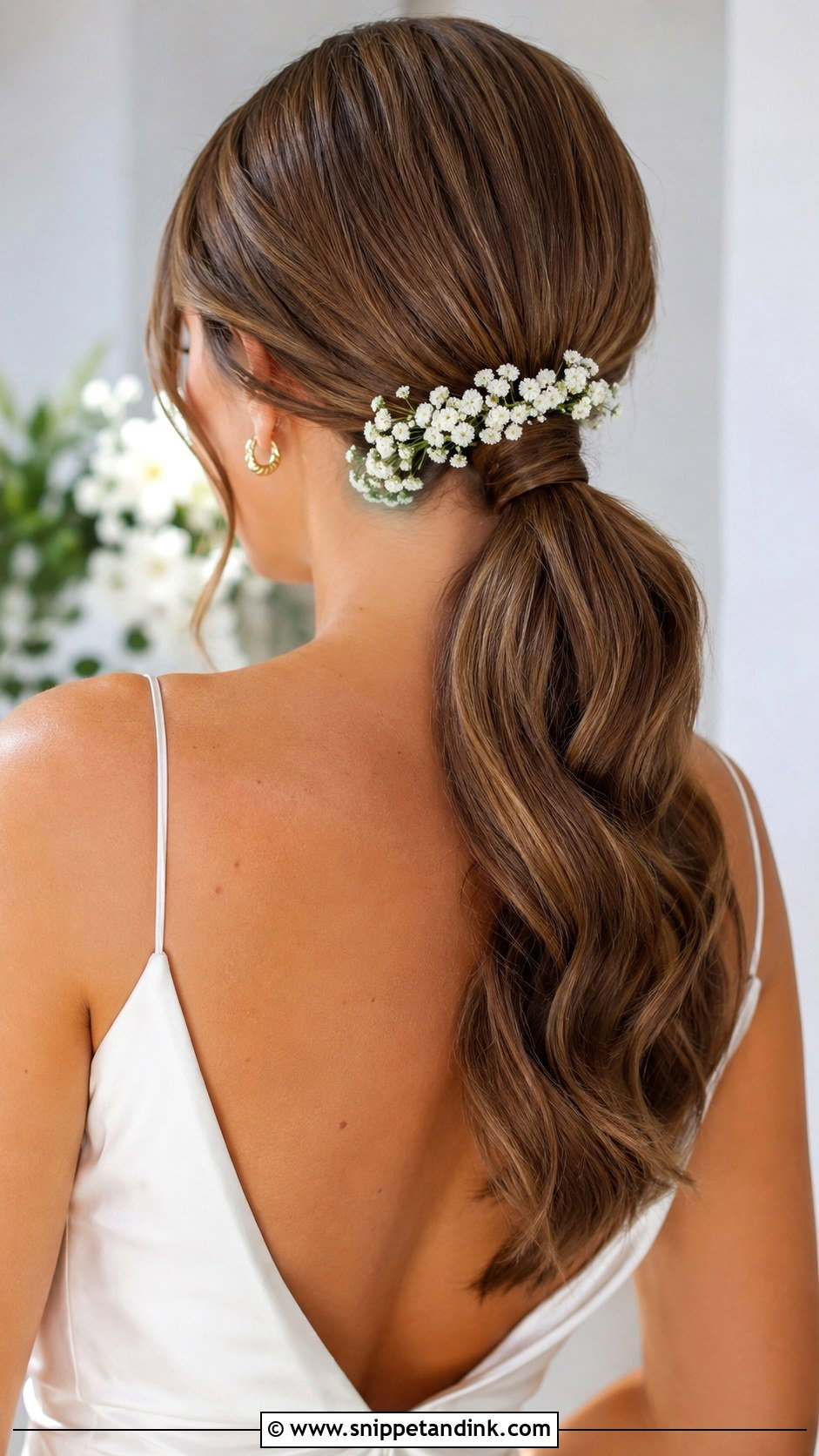
A floral bridal ponytail is the modern way to wear flowers, and it’s easy to move and dance in. Low and smooth, high and full, or softly waved through the lengths all work. I place flowers around the base, along a wrapped section, or down one side of a textured pony; the base is the most secure spot, since the elastic gives every pin something to grab. Small white blooms, pearl floral pins or silk flowers suit it. A high pony with heavy flowers will droop, so I keep the weight low.
12. Flower Bridal Hair Vine
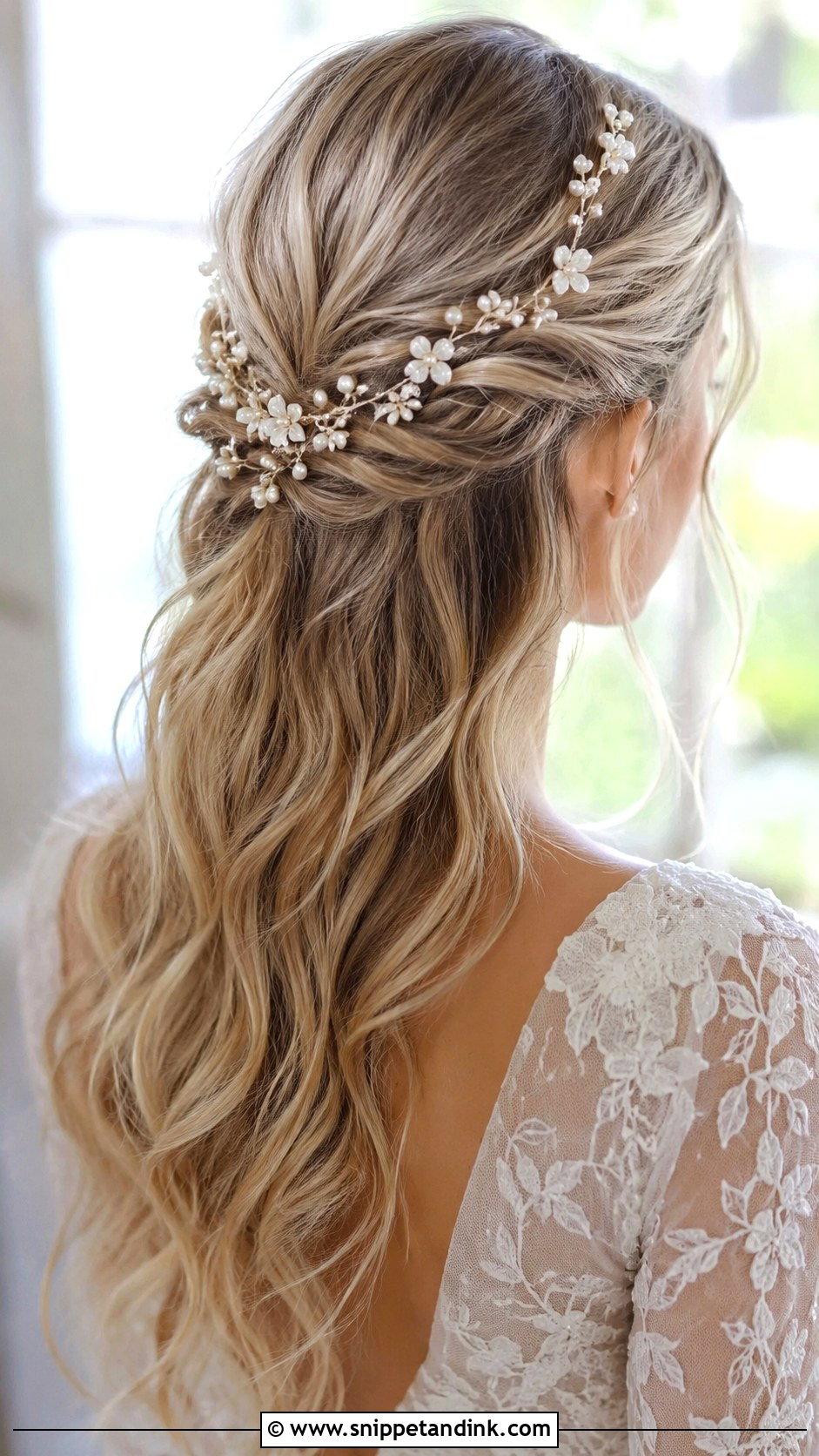
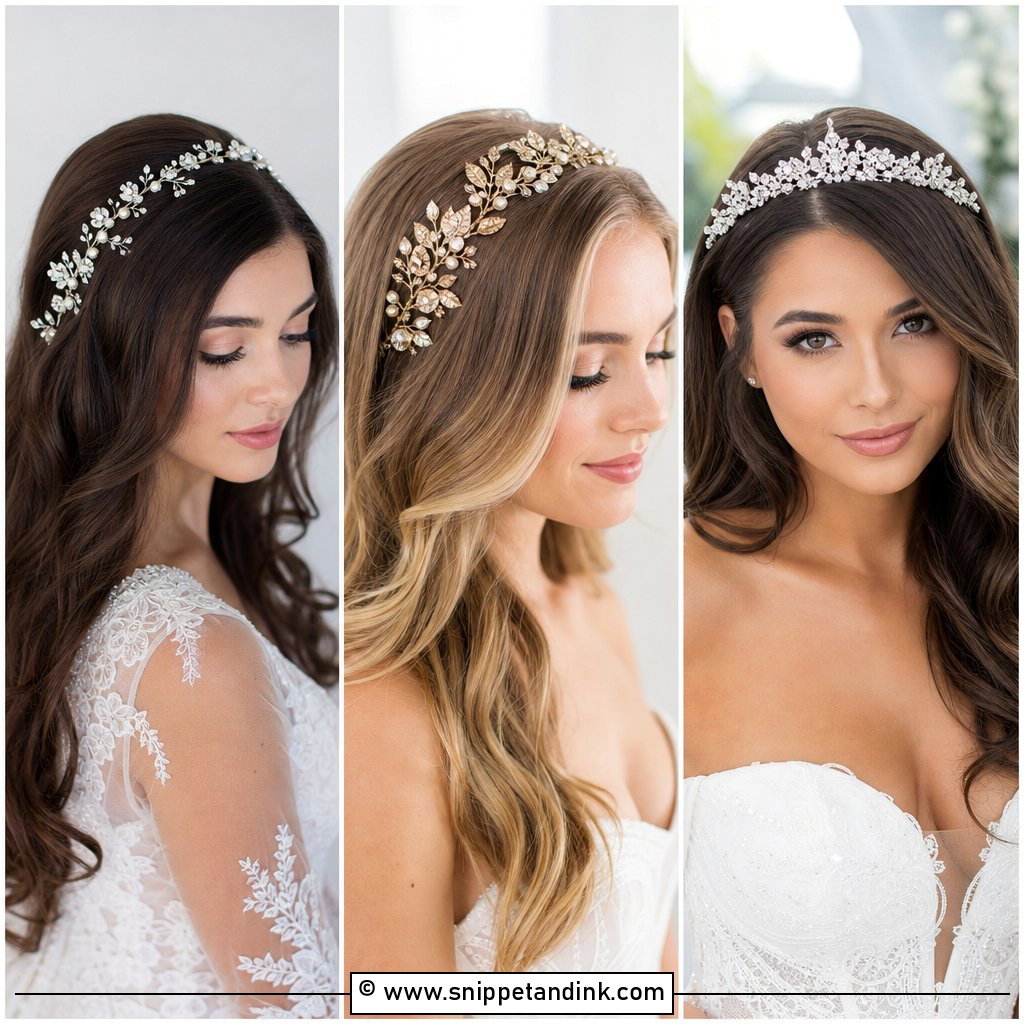
Hair vines are made of wire, so I can bend them around almost any shape: through a braid, around a bun, or across a half-up like a halo. They often carry tiny blossoms, pearls, crystals, leaves or metal branches, giving a floral look with no fresh flowers at all. That makes them the sensible choice for a hot, humid or very long wedding. Vines also lie flatter than a crown, so they sit under a veil without lifting it. I sew the ends in with small pins at several points so the wire doesn’t spring out.
13. Floral French Twist Bridal Hair
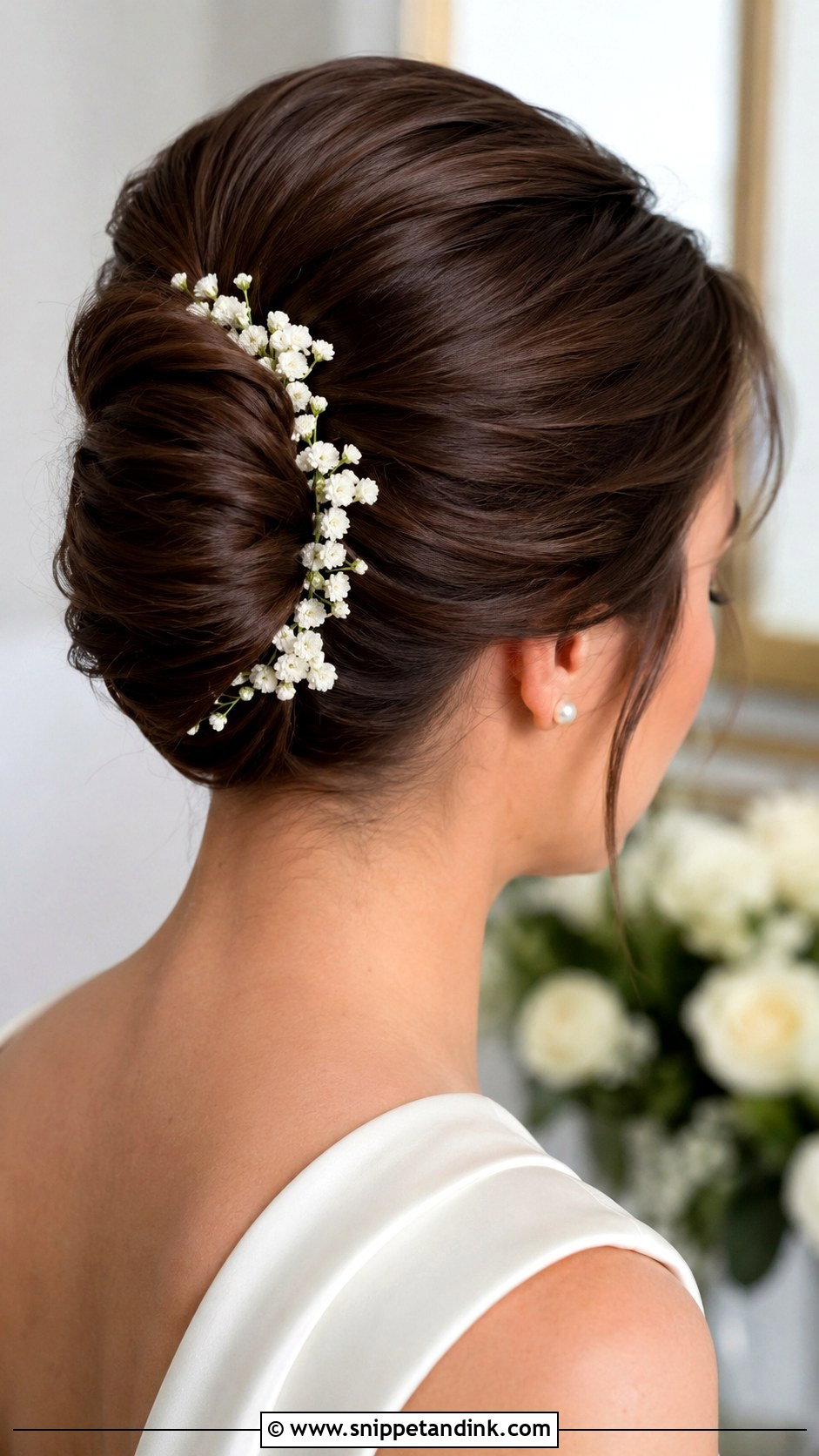
A French twist has a smooth vertical seam, and that seam is where the flowers belong. Small blooms tucked along it or clustered near the base soften the shape without hiding it. Structured gowns, satin, long sleeves and classic makeup suit it. White flowers keep it formal, and blush makes it a little warmer. The twist itself needs to be built on a strong, crossed-pin foundation before any flowers go near it; the stems add weight that a loose twist can’t carry.
14. Side Swept Bridal Hair With Flowers
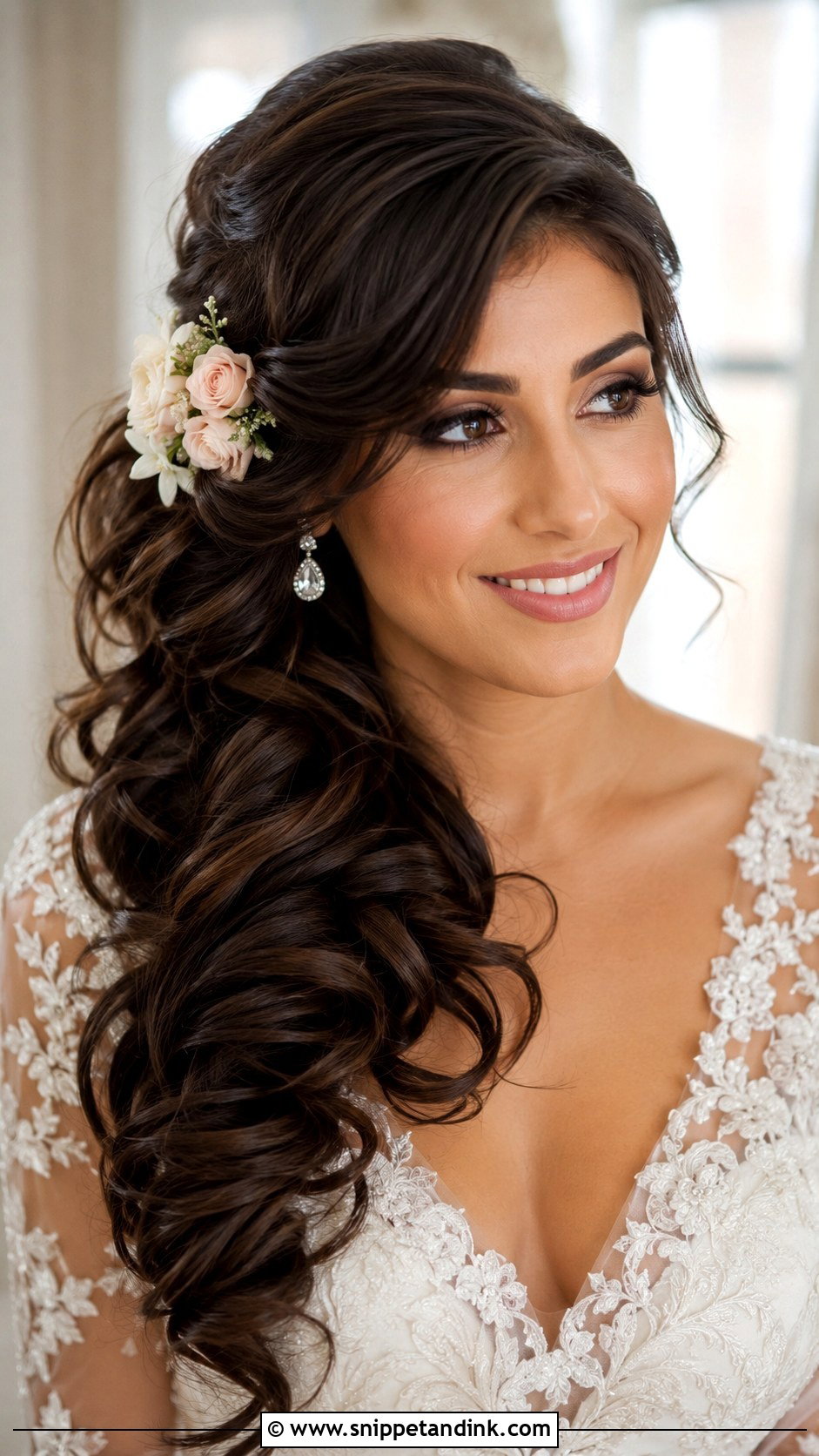
Gathering the hair over one shoulder opens up the other side of the face, and the flowers go there, near the pinned area. It shows off earrings, the neckline and makeup. Fresh, silk or pinned floral pieces all work, depending on how much hold you need. Medium to long hair suits it best. I keep the blooms small and close to the head, because a big flower on a side sweep tips the whole look off balance in photos.
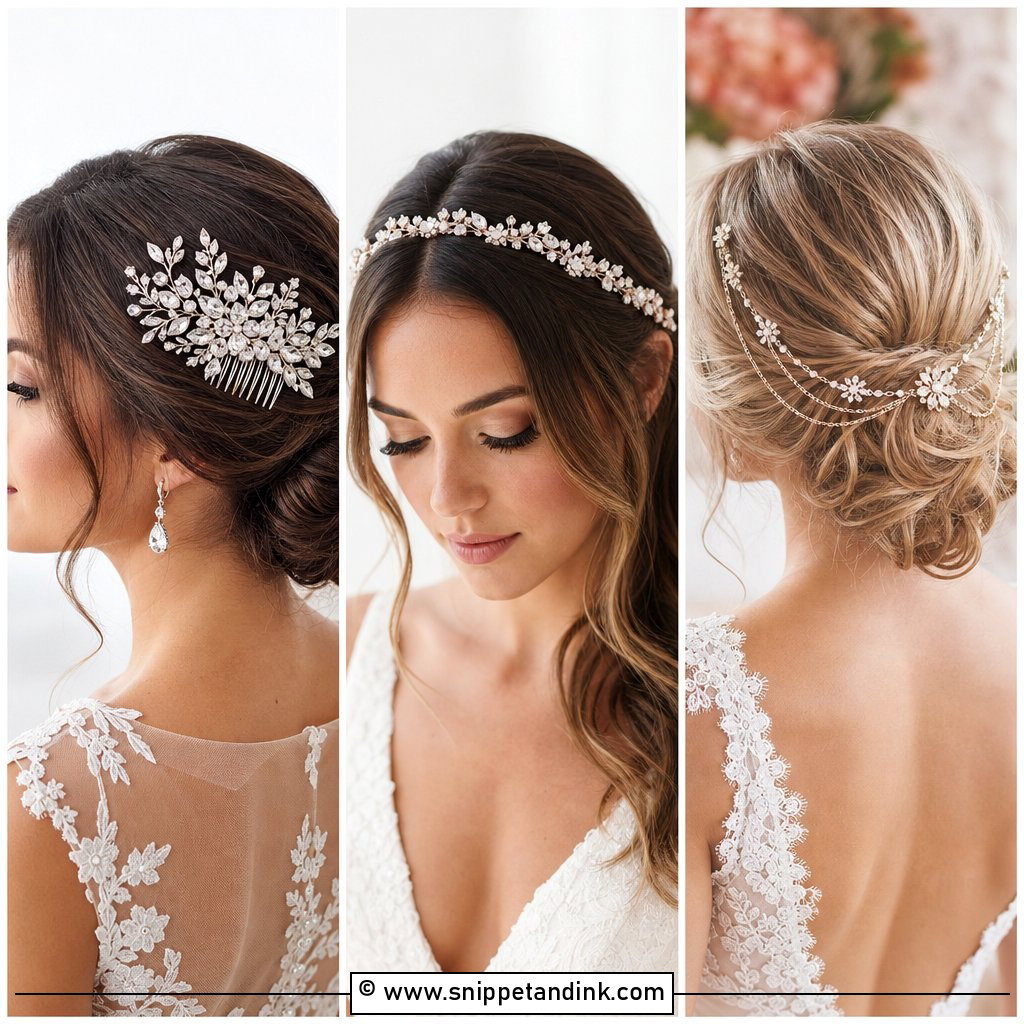
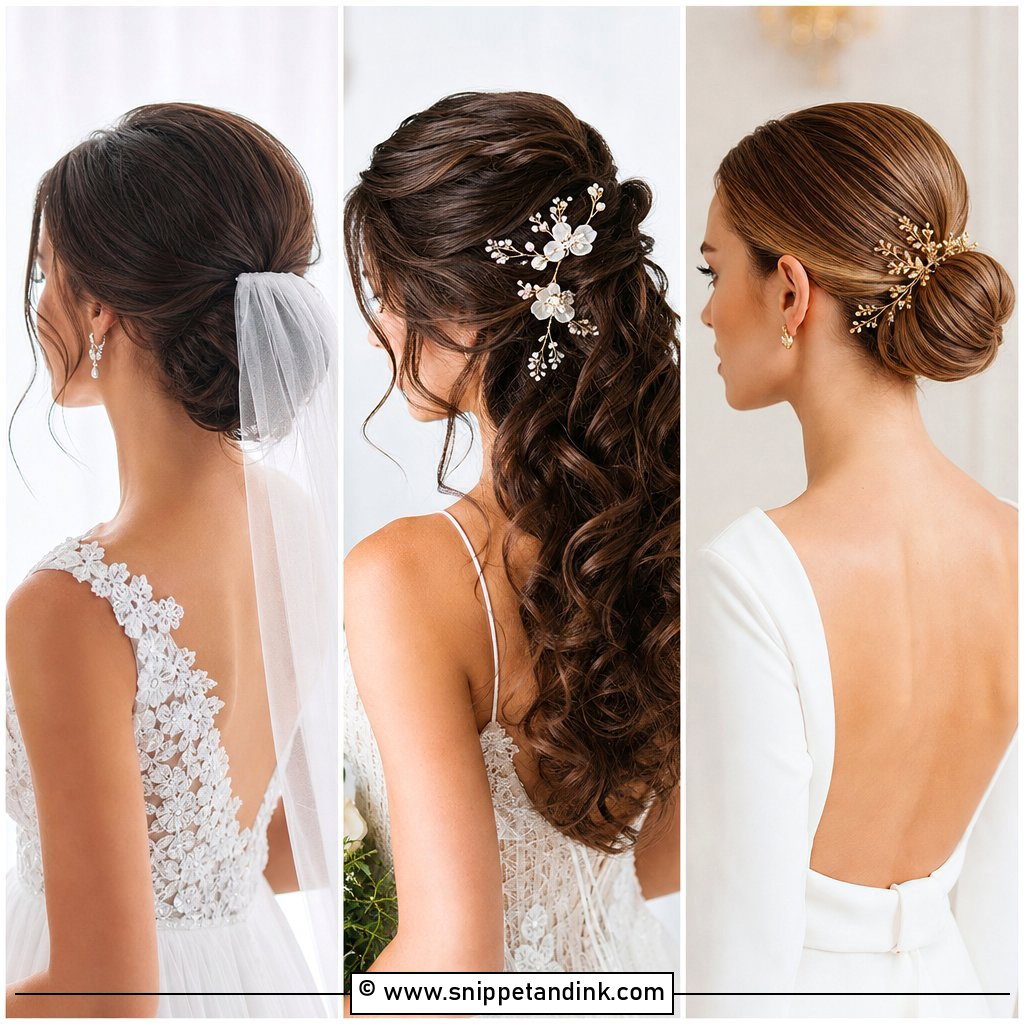
15. Floral Chignon Bridal Hair
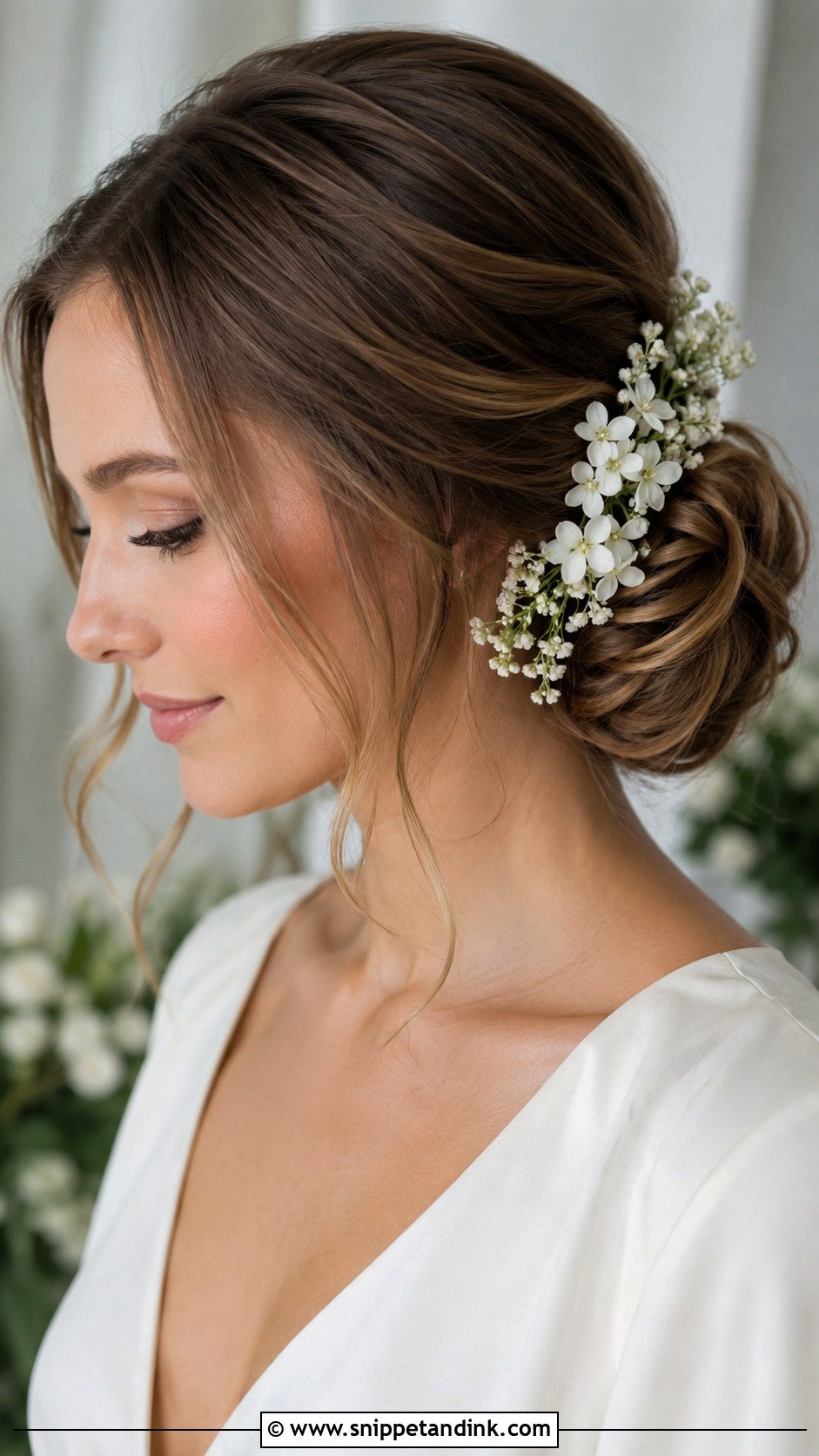
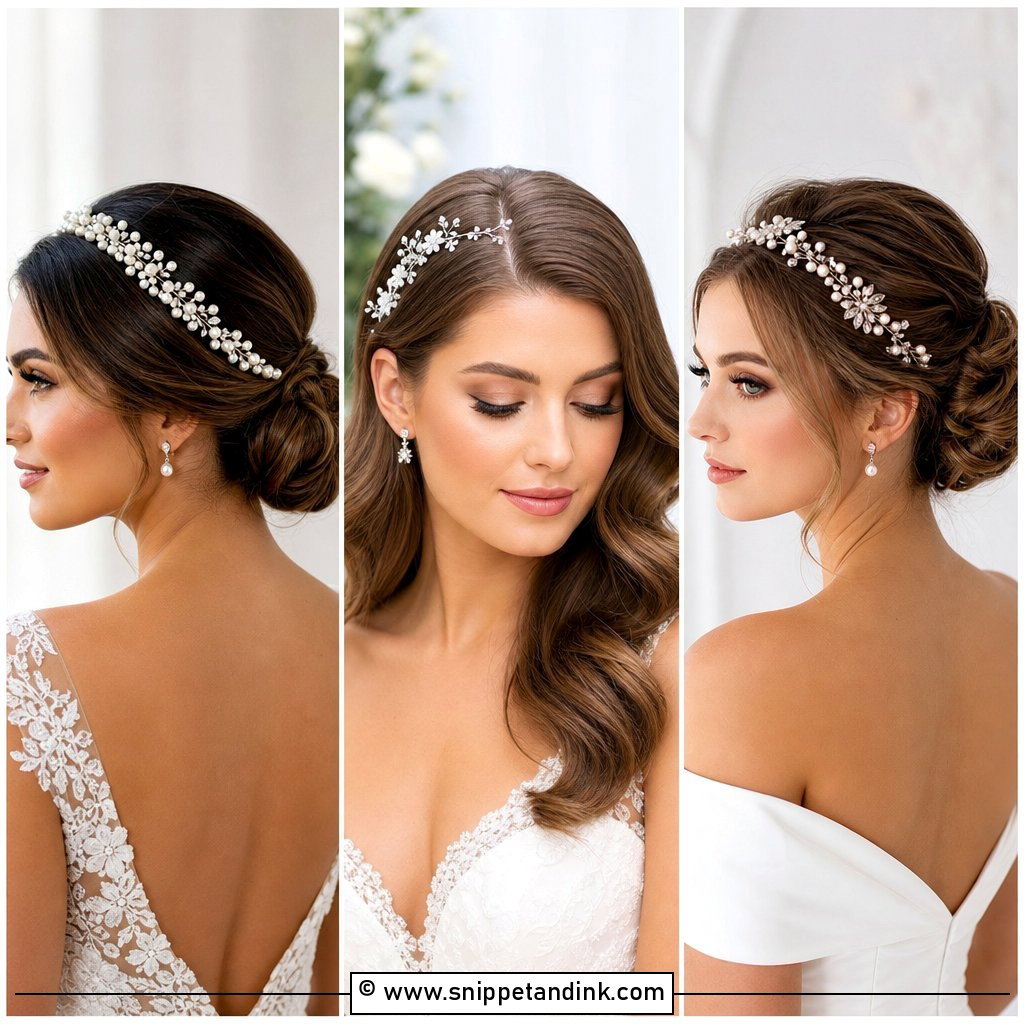
A chignon is a neat updo that can be smooth, twisted, braided or textured, and it takes flowers across the top, along one side or tucked under the bun. It works with a veil, a hair comb or pearls, or on its own. Mini roses, jasmine, baby’s breath and tiny orchids are strong choices. Keep the flowers close to the bun shape so the outline stays clean. I place the largest bloom first and fill around it, which keeps the arrangement from sliding off-center.
16. Flower Crown With Veil Bridal Hair
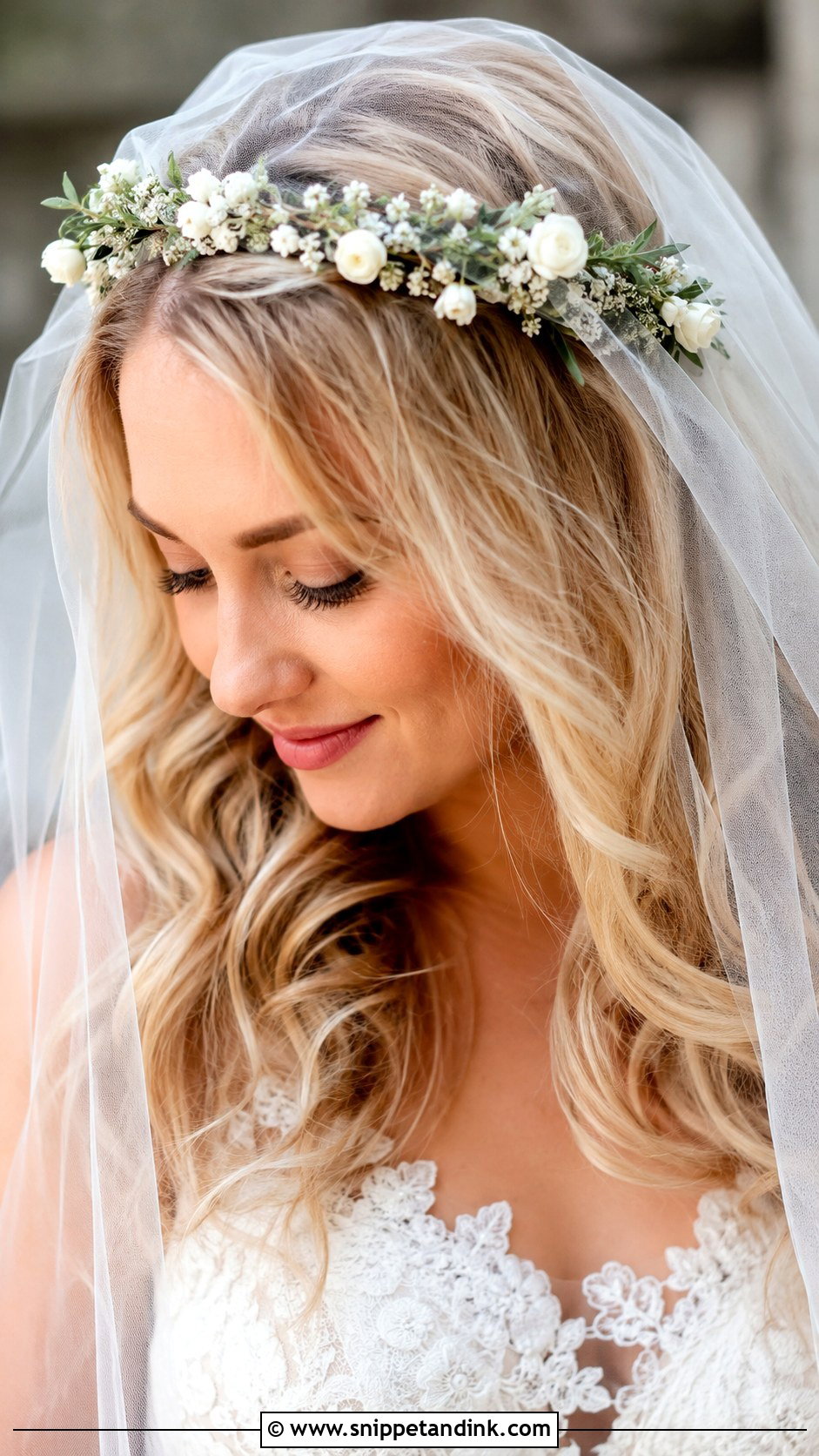
A crown and a veil together need planning. The crown can sit above the veil, under it, or at the back depending on the veil style, and the order changes how I pin everything. For a veil under the crown, the veil comb goes in first and the crown holds the fabric down. A thinner crown suits a veil best, since a thick one competes with the fabric. Waves, curls and half-up hair are the easiest pairings. Keep the colors close to the bouquet.
17. Floral Bridal Headband
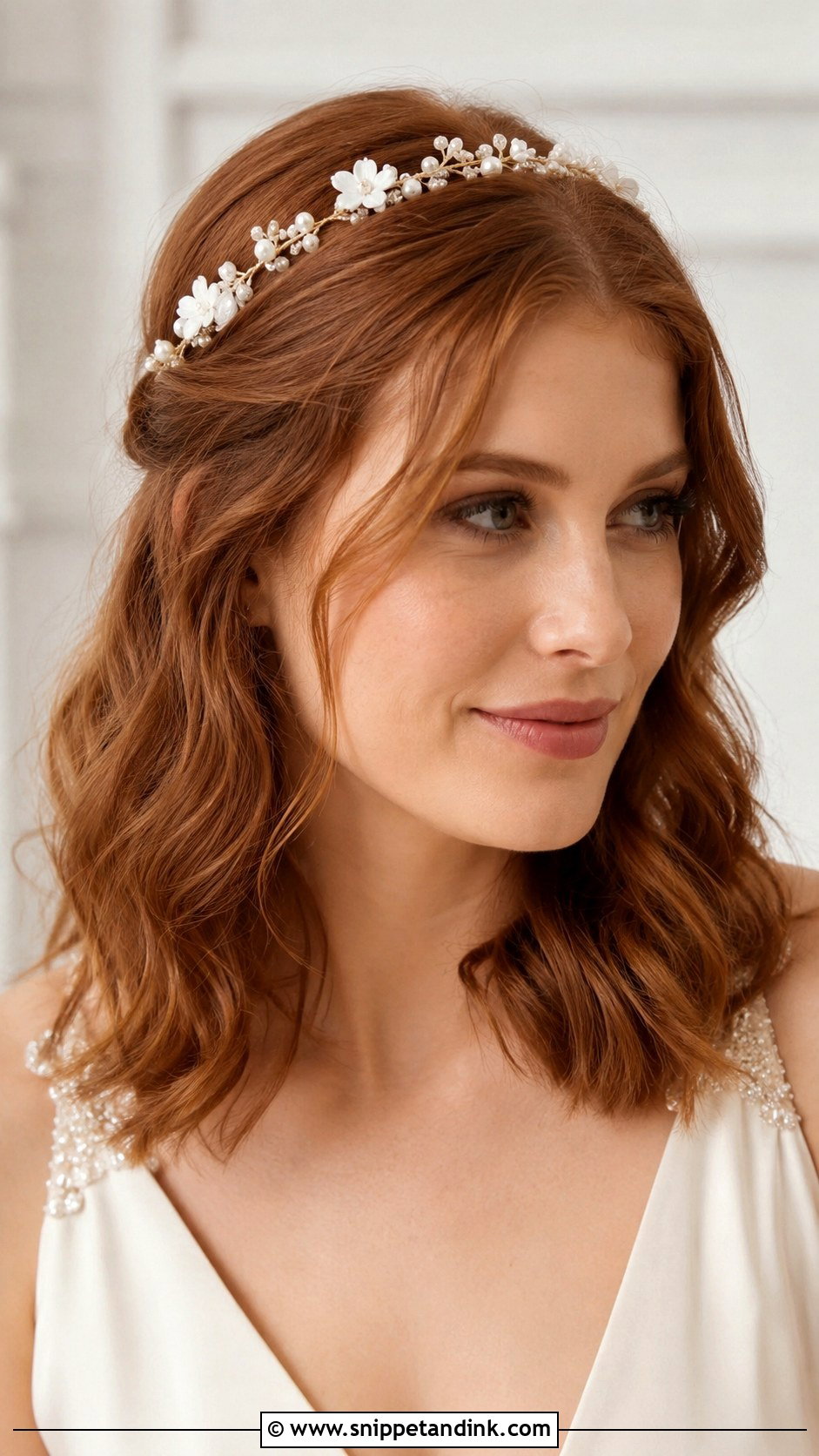
Headbands give the look of flowers without loose stems or many pins. They work on hair worn down, a bob, soft waves, a low bun or a sleek ponytail, covered with silk flowers, metal blossoms, pearls or preserved petals. They are secure, which helps on long days. My one warning is comfort: a stiff band pressing behind the ears can ache by evening, so try it for an hour at home first. Thin bands read delicate, wide ones bolder.
18. Floral Bridal Hair Clips
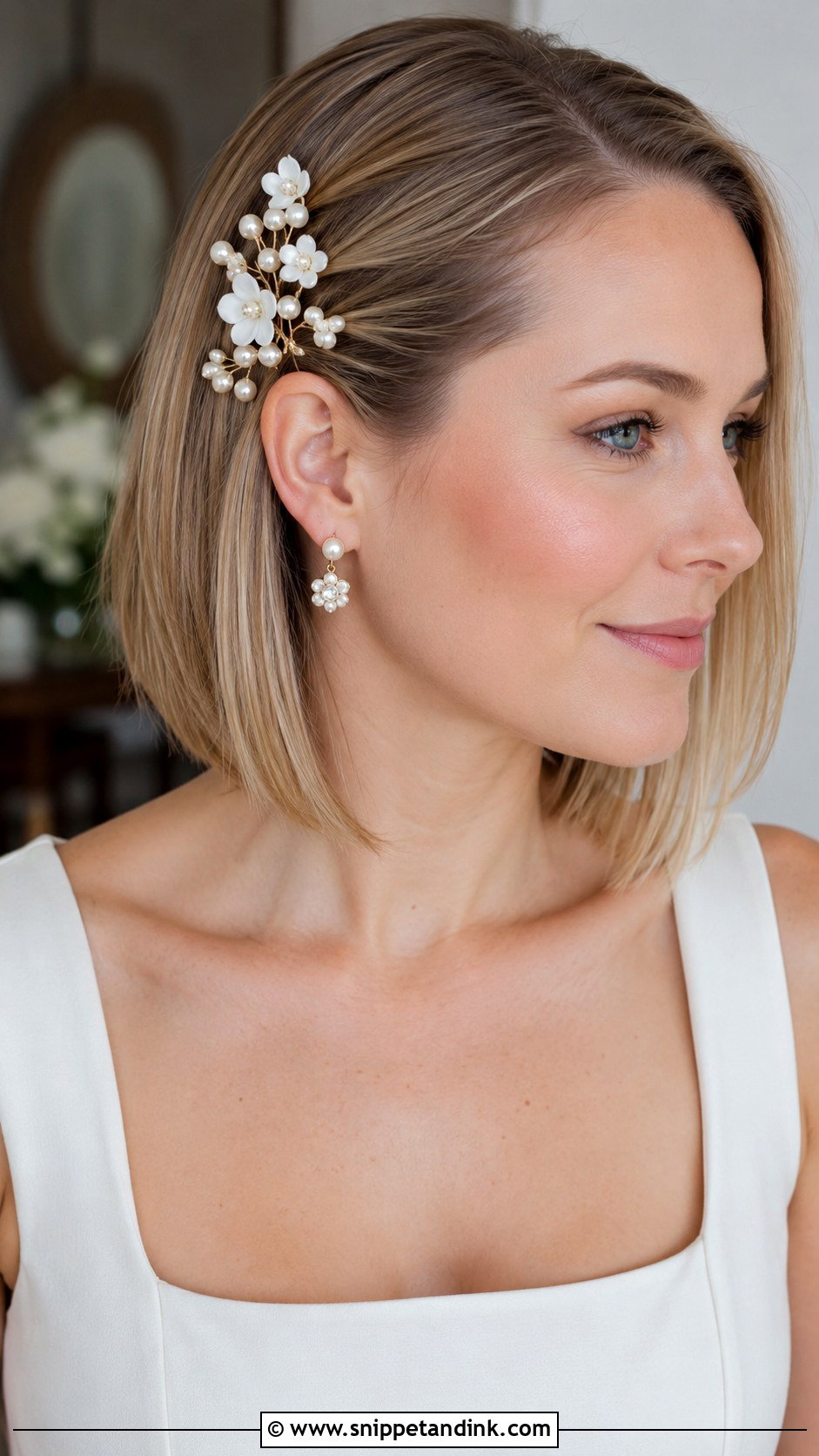
Clips are the easiest flowers to adjust or replace mid-day, which makes them practical for touch-ups. They can hold back one side of loose waves, decorate a short bob, secure a twist or sit above a low bun. Pearl, crystal, enamel, silk or preserved flower clips are all options. Placement is the trick. A clip should do a job, like holding a section, rather than sitting on top of the hair, otherwise it slides. That makes it look intentional and keeps it comfortable.
19. Floral Bridal Braid Crown
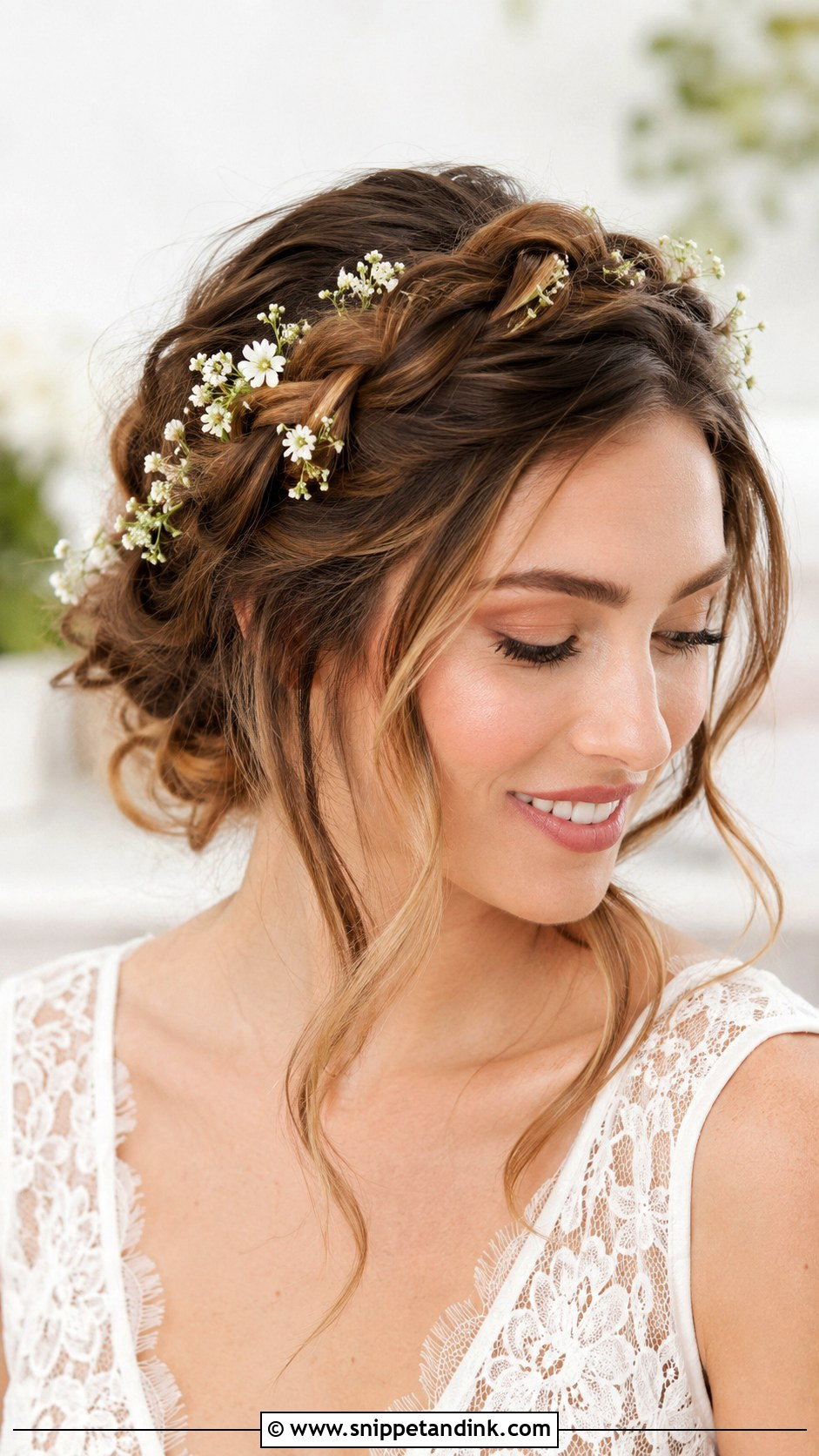
A braid crown wraps the hair around the head, so it’s secure enough to carry flowers all day. Small blooms can go along the braid, cluster at the back or sit near the temple. Lace gowns, outdoor ceremonies and natural makeup suit it. I pull the braid slightly loose so the stems have room to slide in; pushed into a tight braid, flowers look jammed. It needs enough length to circle the head, so shoulder-length hair may need clip-in extensions to make it work.
20. Minimal Flower Bridal Hair
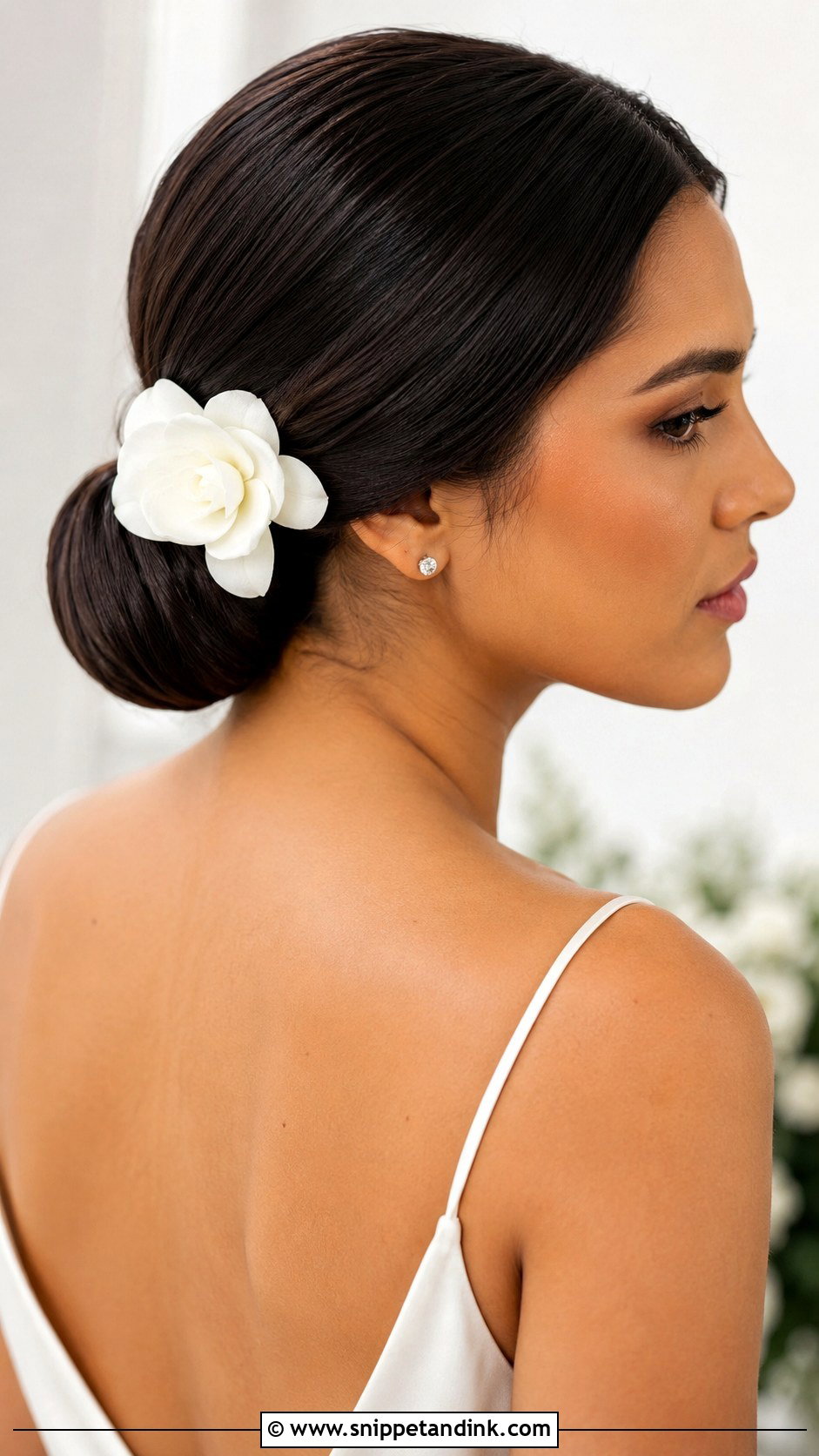
One flower can be enough. A single bloom behind the ear, above a bun, beside a twist or at the base of a ponytail suits sleek styles, simple gowns and modern weddings. Orchid, rose, camellia or gardenia are good single choices. Gardenias smell wonderful but bruise brown wherever fingers touch the petals, so I handle them by the stem only and add them at the last minute. Keep everything else clean so the single flower looks chosen, not forgotten.
Gardenias Brown, Orchids Don’t: Fresh Flowers by Staying Power
Hair flowers live without water from the moment they’re placed until the last dance. Some handle that well. Others start fading before the first photos.
- Reliable all day: orchids, spray roses, wax flower, baby’s breath and most sturdy greenery.
- Good for a few hours: standard roses, ranunculus and lisianthus. Fine for the ceremony and portraits, tired by late evening.
- Handle with care: gardenias and camellias bruise where touched; jasmine and stephanotis brown quickly in warmth.
- Best avoided in hair: hydrangeas and peonies wilt or shed fast and are heavy for their size.
If a flower wilts mid-reception
It happens, especially in a warm room. Ask your florist for two or three spare wired blooms kept in the venue fridge, and show your maid of honor where they go. Swapping one takes a minute. If you’d rather not think about it at all, mix a few silk or preserved flowers in among the fresh ones; from a little distance nobody can tell which is which.
Your Hair Texture Decides How Big the Flowers Can Go
All of these ideas come back to the same thing I check at every trial: how much structure your hair has, and how much weight it can carry. Bold or minimal, the right flower is the one that fits your style, dress, bouquet, venue and comfort. Fresh flowers feel natural and smell lovely, while dried, silk, porcelain and metal pieces last longer and behave more predictably. Test the placement before the wedding, especially if you’ll wear a veil, and ask your florist for a sample bloom to bring to your trial.
You'll Like These Ideas:


Leave a Reply