
A hair wreath looks easy in photos and takes more planning than almost any other accessory I pin in. Some brides arrive wanting a full flower crown over soft waves; others want a thin ring of greenery around a bun or tucked behind a braid. The same ring can read boho or quite formal depending on the flowers, where it sits and the texture underneath it. I’ve grouped the looks below by hairstyle on purpose, because a wreath only behaves when the hair under it was built for it.
Fresh, Dried or Silk: What Each One Asks of You
The material decides more about your day than the design does. A fresh wreath is usually made by your florist the day before or the morning of, and it has to stay cool until I put it on. It’s at its best for the ceremony and portraits and a little softer by the time speeches start.
- Fresh: the prettiest up close and the most fragile. Order it with your bouquet so the colours match, and ask the florist to wire and tape each stem rather than glue them, so nothing pops off when you hug people.
- Dried or preserved: lighter than you’d expect, and it can be made weeks ahead, so you can bring it to your hair trial. Grasses and bunny tails shed if they get crushed in a bag.
- Silk or faux: the safest pick for a destination wedding, a long day in heat, or anyone with pollen allergies. Good ones photograph well; cheap ones look shiny under flash, so check them in daylight first.
If you want fresh flowers but still want a proper trial, ask your florist for a mock-up in faux blooms of the same size. I can practise placement far better with something the right weight than with nothing at all.
1. Bridal Hair Wreath With Loose Waves
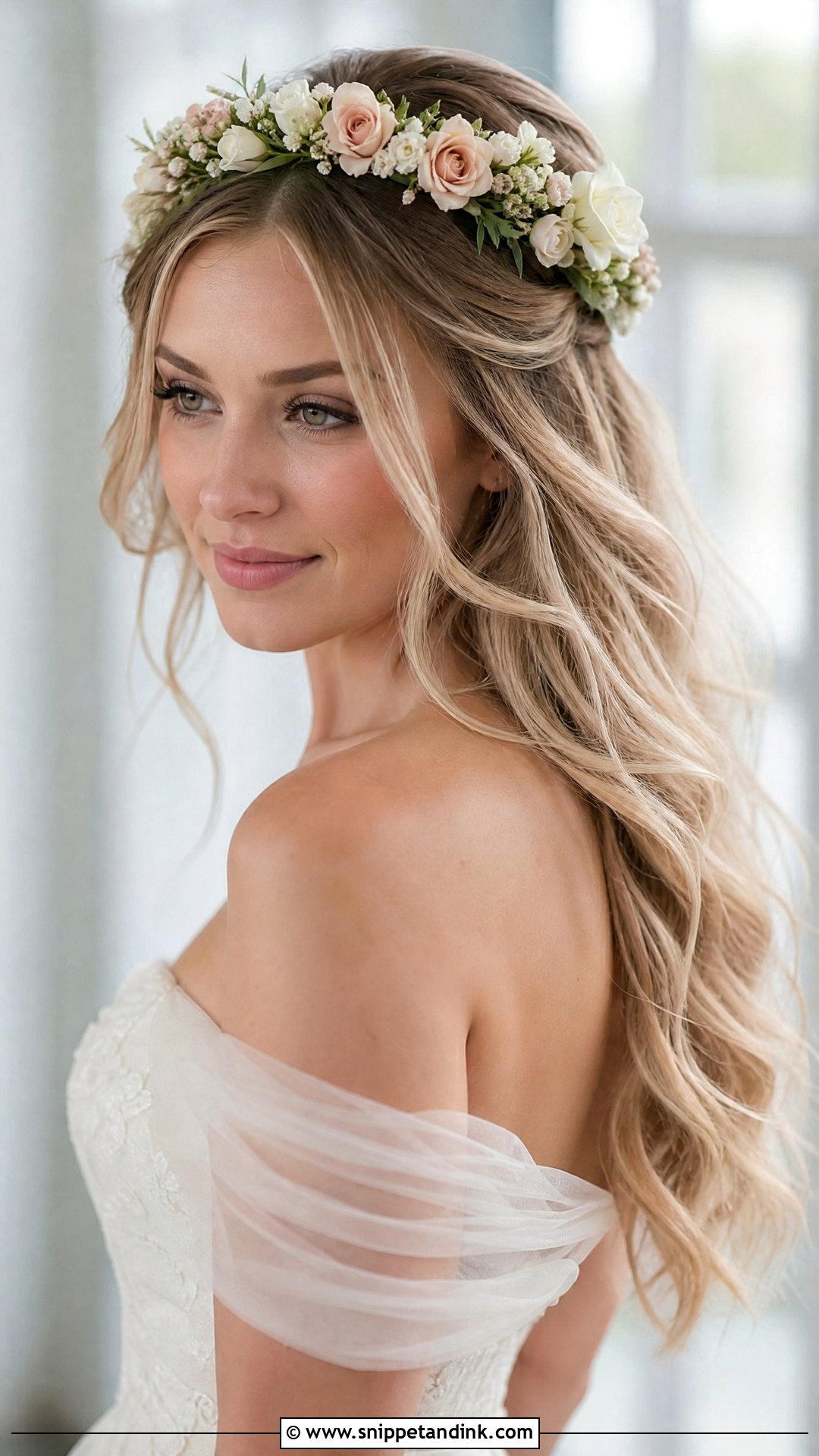
Loose waves are the style I reach for first with a wreath, because the ring hides the parting and the waves fill in around it. The catch is that brushed-out waves are slippery, so I set a small anchor of pin curls at the crown before any brushing happens. Medium to long hair suits it best. If your dress has lace or beaded sleeves, keep the blooms small so the two details don’t fight; a plain gown can carry fuller flowers. Finish with a flexible spray rather than a lacquer, or the waves go crunchy where the wreath touches them.
2. Bridal Hair Wreath With Half Up Hair
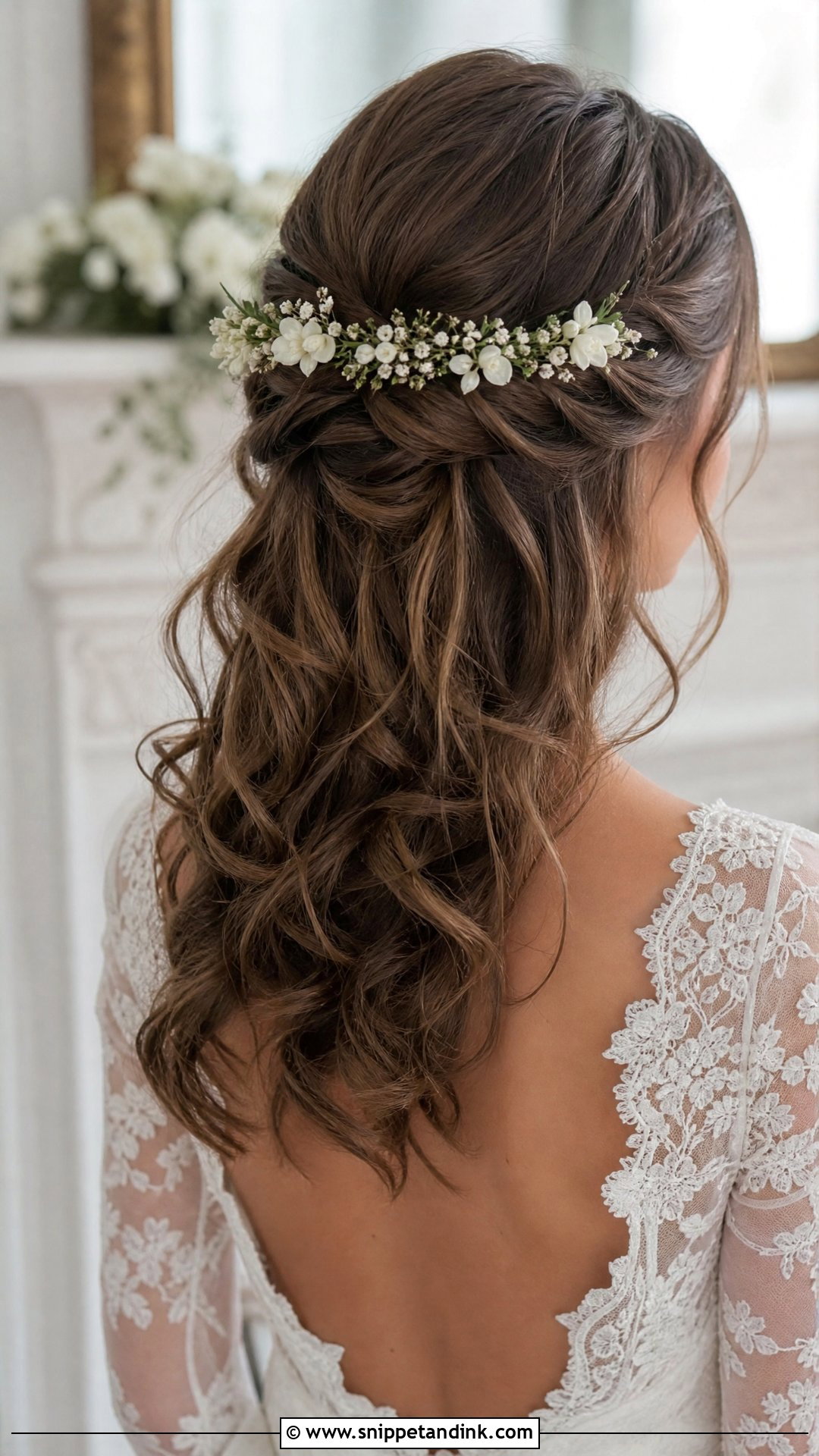
Half up hair gives a wreath the most secure footing of any style here. The pinned top section acts as a shelf, and I sit the ring just above the twist so it looks as if it grew out of the hairstyle. You keep the length moving at the back while the front stays off your face, which matters outdoors where flyaways catch the light. Leave out a couple of face-framing pieces, but cut them shorter in your mind than you think: long tendrils tangle into the flowers within an hour.
3. Bridal Hair Wreath With Low Bun
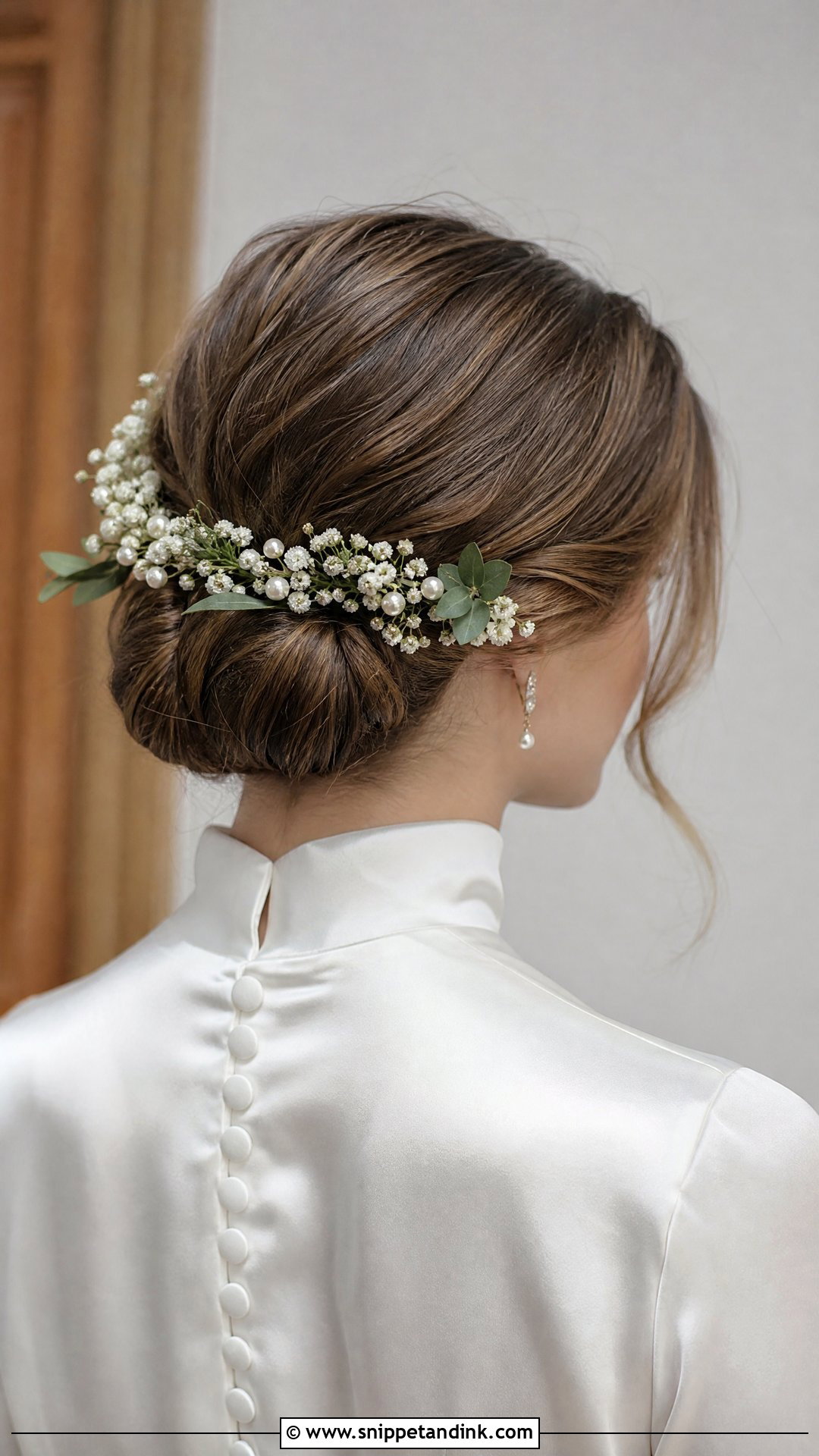
A low bun is the one I suggest to brides who want a veil and a wreath and don’t want to choose. The veil comb slides into the top of the bun, and the wreath wraps the base, so the back view is finished during the vows when guests are staring at it. I’d keep the bun slightly soft if the flowers are fresh and loose; a glassy bun with rustic blooms looks like two different weddings. It pairs well with open backs and high necklines. At the trial I pin the wreath through the bun itself, not just the surrounding hair, so the weight is carried by the most solid part of the style.
4. Bridal Hair Wreath With Braided Crown
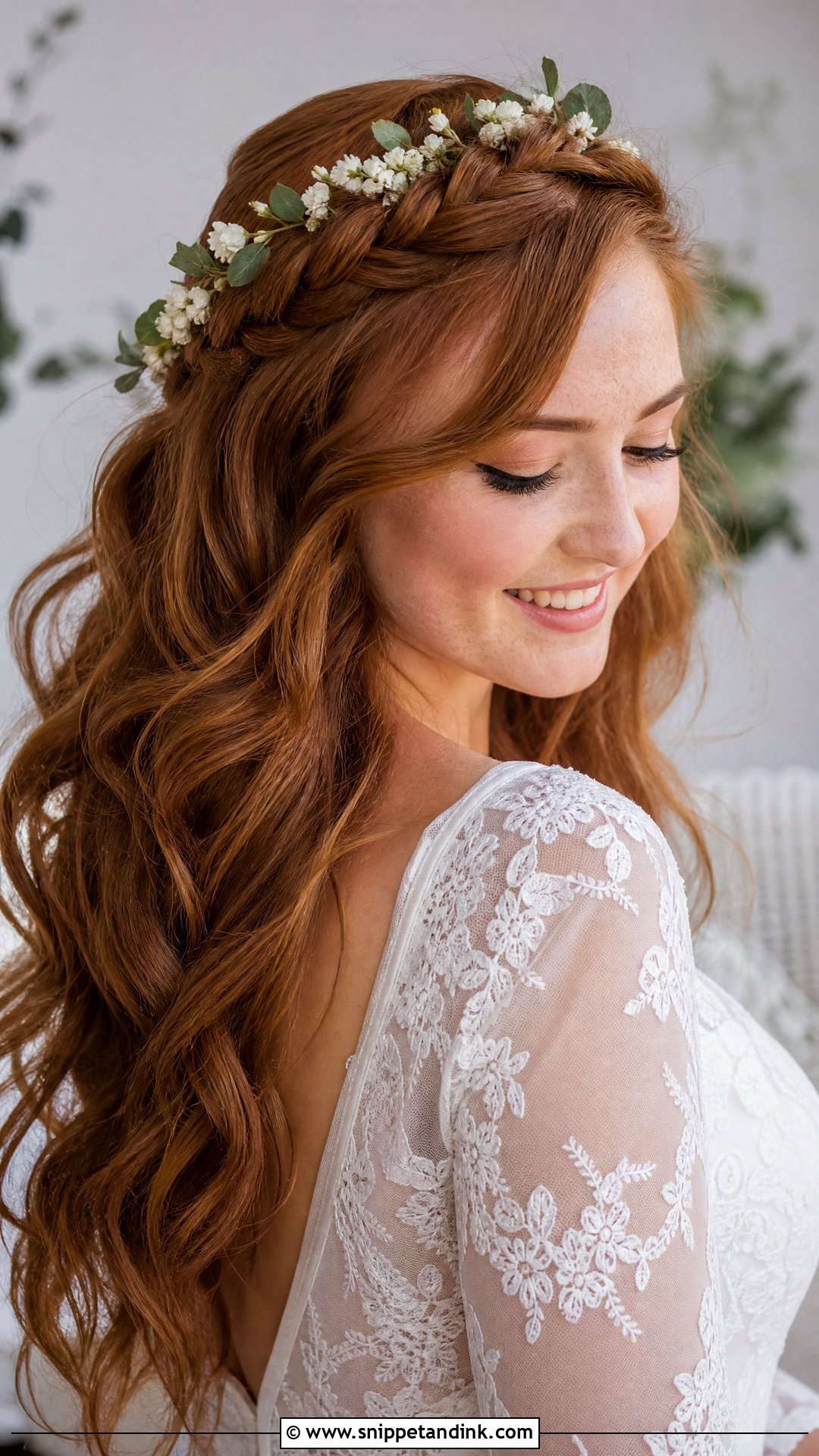
Braided crowns are the most practical base for a wreath because the braid is already a frame the pins can grip. Thick hair holds the shape best; on fine hair I often hide a small padded piece or extra braid inside to give it body. Pull the braid apart gently so it doesn’t look like a school plait. A detailed braid wants small flowers, while a loose, simple one can take a fuller ring. This is the style I’d choose for a bride who plans to dance hard, since nothing here can slide.
5. Bridal Hair Wreath With Long Curls
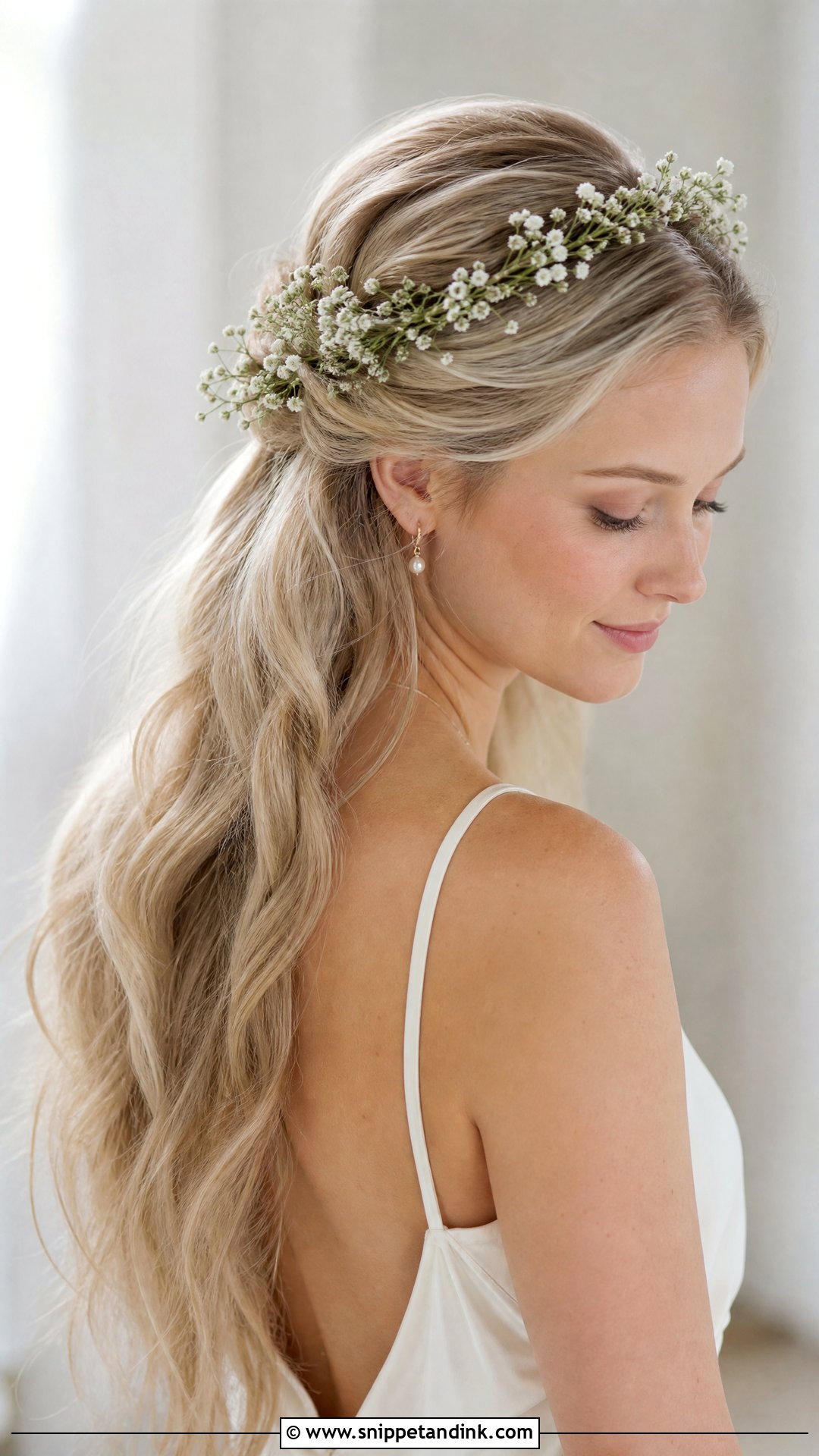
Long curls give you volume all the way round, and a wreath sitting slightly forward turns them into a halo. The mistake I see is curling with a tight barrel and leaving the curls stiff; they need to be brushed into layers so they move when you turn your head. Roses, baby’s breath or soft greenery all suit this length. Very long, heavy hair pulls downward on the ring, so I add a hidden row of pins under the wreath to take the strain off your scalp. Garden and outdoor ceremonies are where this look earns its keep.
6. Bridal Hair Wreath With Short Hair
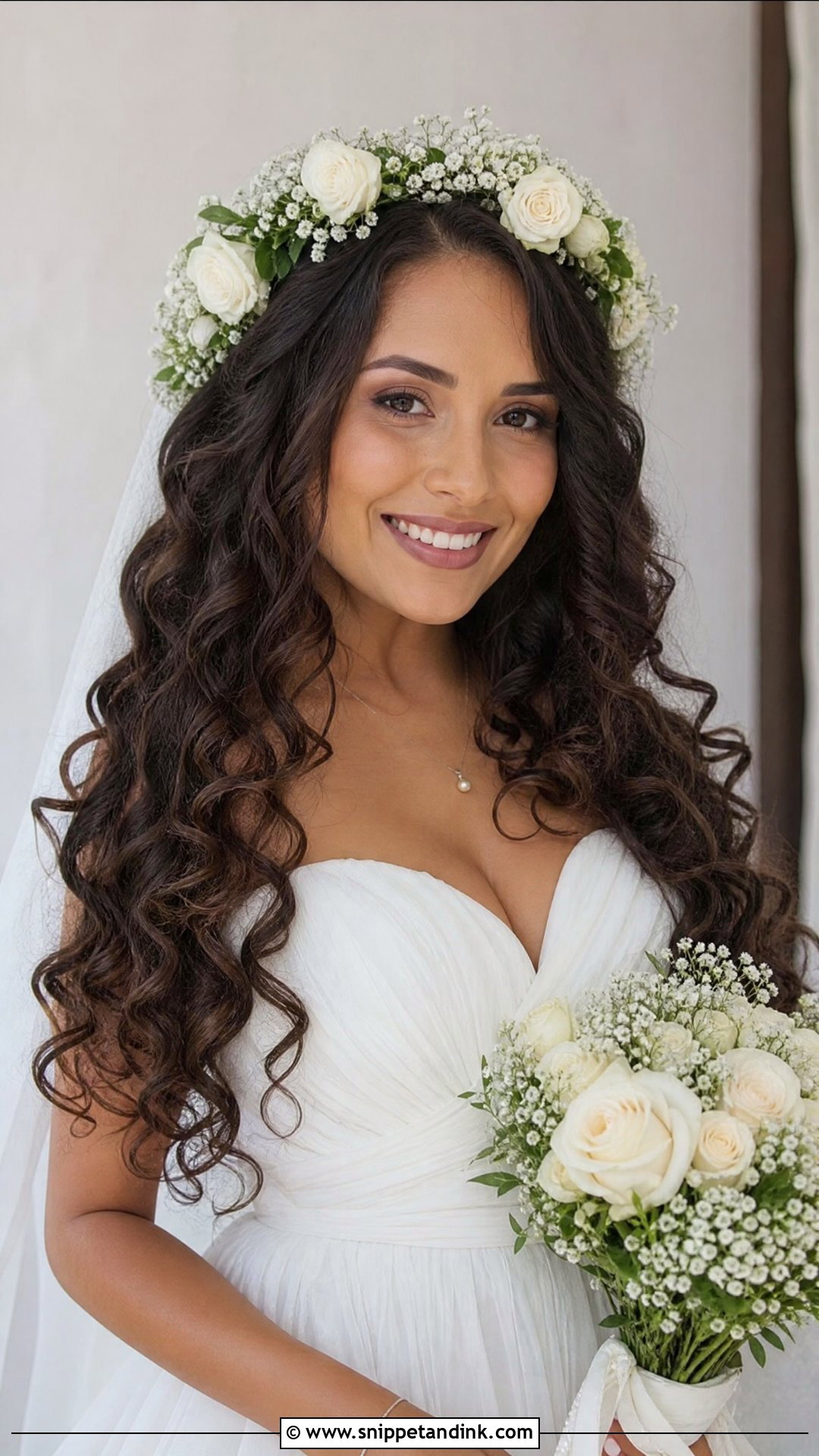
A wreath on short hair often stands out more than on long hair, because it becomes the only detail on the head. The trick is scale: a bob or pixie needs slim greenery and tiny blossoms, not the chunky crown that suits waist-length curls. I set it slightly back from the hairline, which lengthens the face and leaves room for the fringe to move. Short hair has less to pin into, so I use a thin elastic or comb sewn into the wreath and anchor that instead. Rough the roots up with a little texture powder first and it will hold.
7. Bridal Hair Wreath With Veil
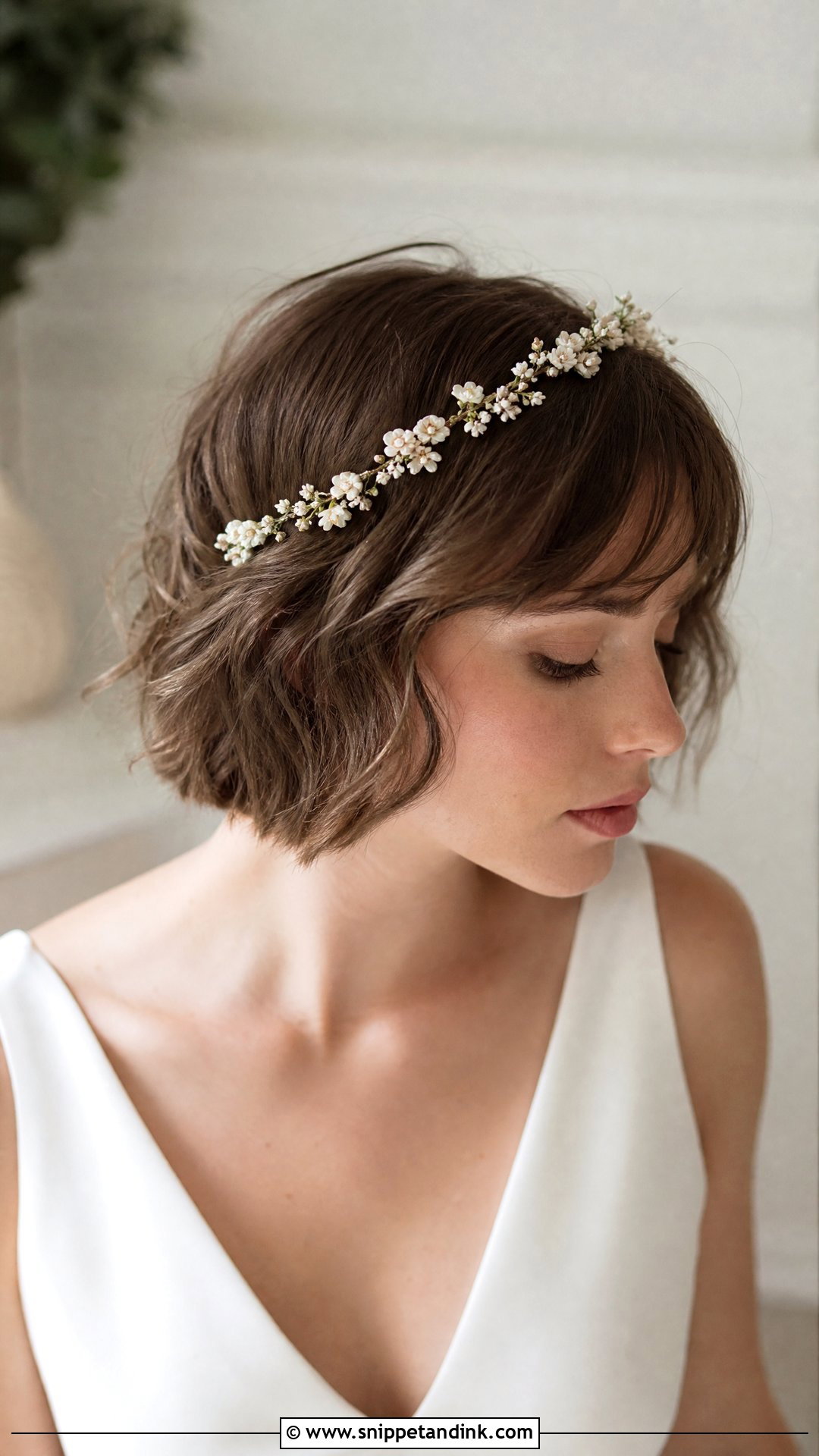
Wreath and veil together can work, but the order of layering decides everything. I put the veil comb in first, low and tucked into the bun, then lay the wreath over the crown so it frames the top of the veil rather than sitting on the fabric. Sheer, plain veils let the flowers show; a veil with lace or embroidery calls for a quieter ring of small blooms. Keep the hair underneath smooth or lightly curled. If your veil is cathedral length, test the weight at your trial, because a heavy veil can tug the wreath backwards when you walk.
8. Bridal Hair Wreath With Baby’s Breath
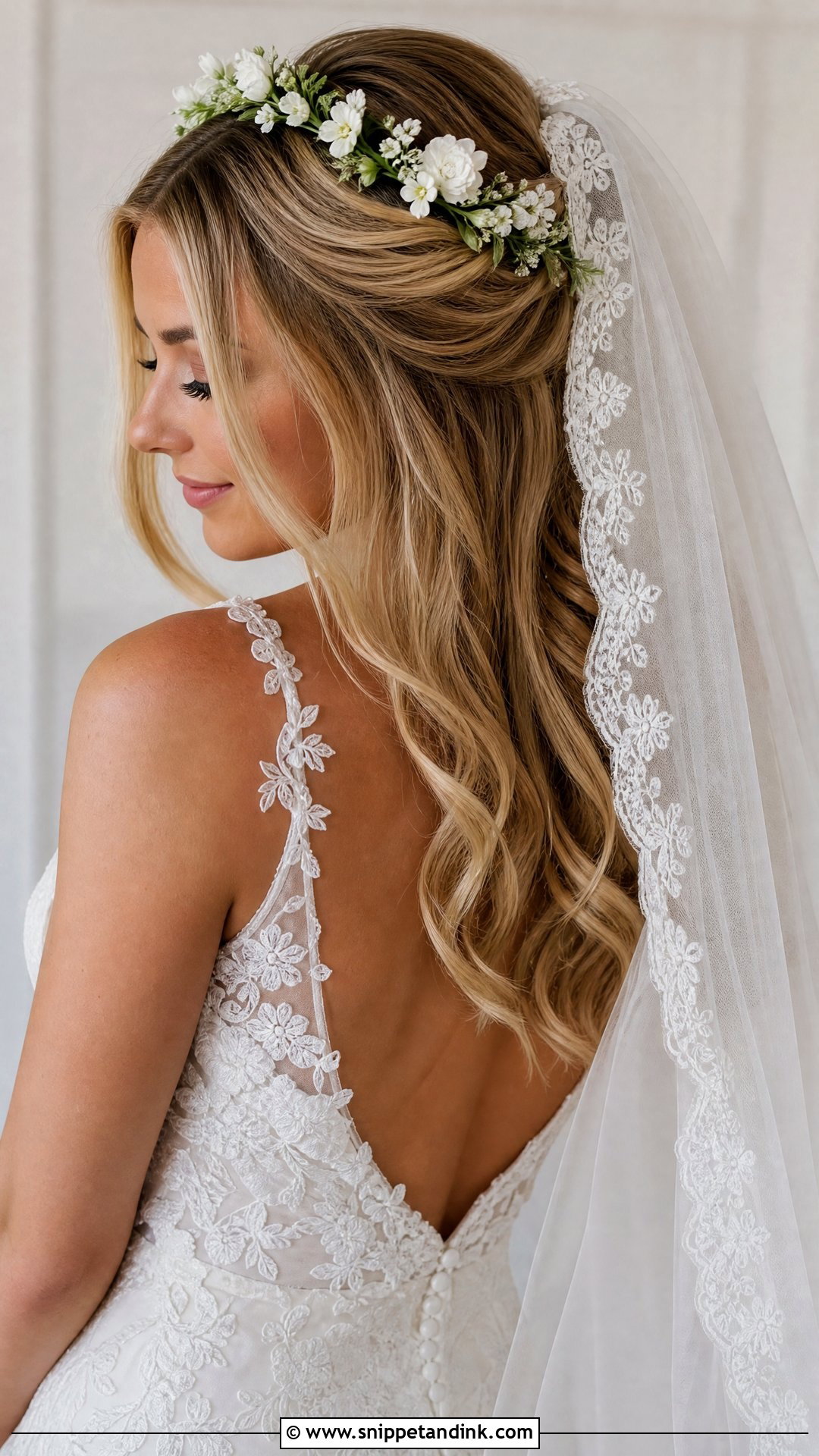
Baby’s breath is the lightest wreath you can wear, and that is its whole appeal. It adds texture without adding colour, so it never competes with the dress. It sits happily on waves, buns, braids or half up styles. I ask florists to leave the ring a little uneven; a perfectly symmetrical band of white clusters looks manufactured. One honest warning: it has a faint smell some people find unpleasant up close, so sniff a stem before you commit to wearing it next to your face all day.
9. Bridal Hair Wreath With Roses
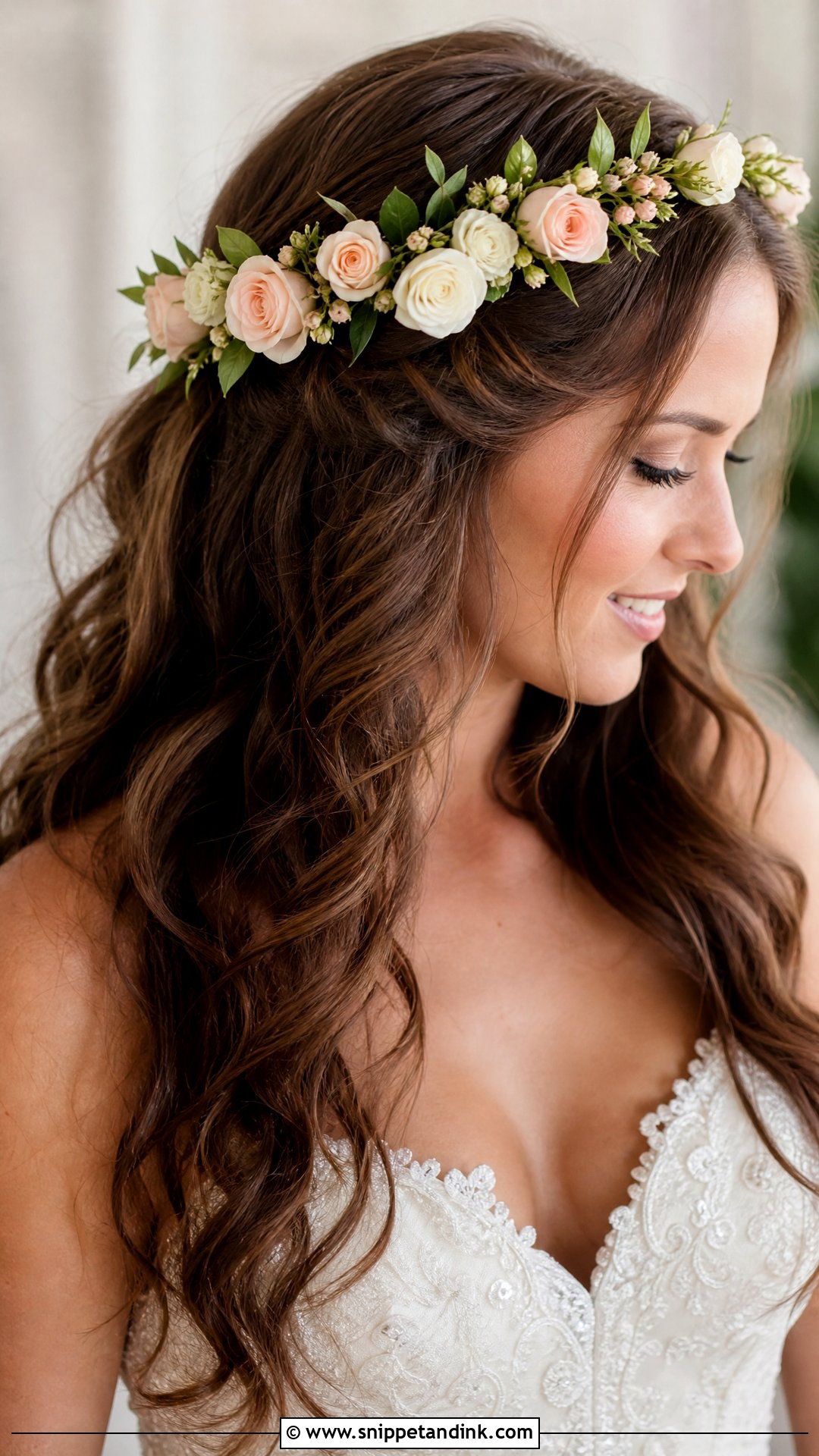
Roses are sturdier out of water than most brides expect, which makes them a safe wreath flower. Spray roses keep things delicate; full-size heads are heavy and need a stronger base. I pair them with soft curls, a low bun or a half up twist, and I keep the rest of the hair polished because roses already bring plenty of detail. Repeating your bouquet’s rose colour in the hair ties the look together. Blush, ivory, champagne and dusty pink are the shades I see requested most for softer weddings.
10. Bridal Hair Wreath With Wildflowers
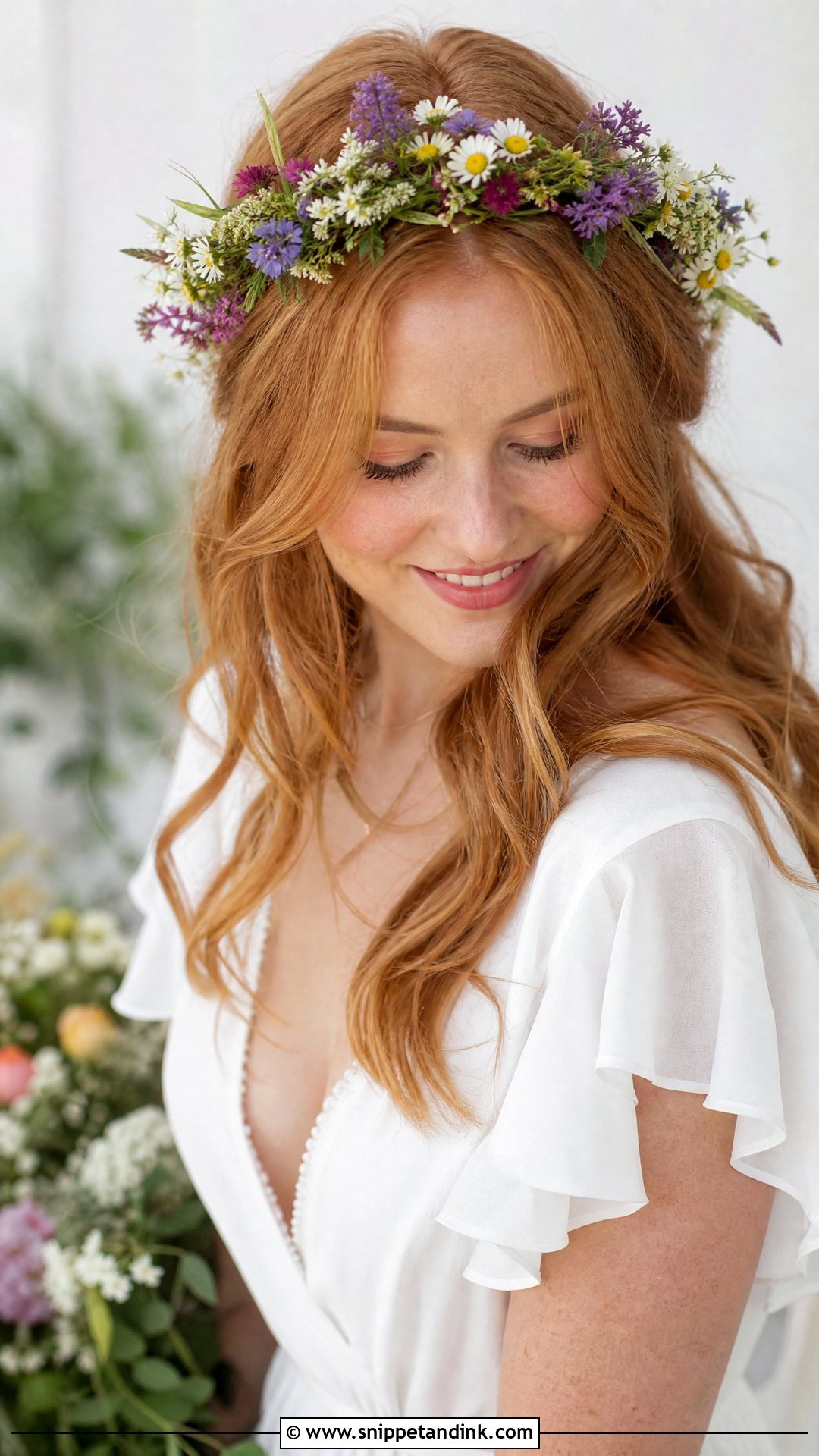
A wreath with wildflowers belongs at meadow, backyard and barn weddings, where a little untidiness is the point. Uneven stems and tiny mixed blooms need hair with movement under them; on sleek hair they look as if they landed there by accident. Loose waves, a textured braid or a soft half up style all match that mood. I’d limit the wreath to two or three colours pulled from your bouquet, otherwise it starts to look busy from the back. Many wildflowers wilt fast without water, so ask your florist which ones will last the afternoon.
11. Bridal Hair Wreath With Greenery
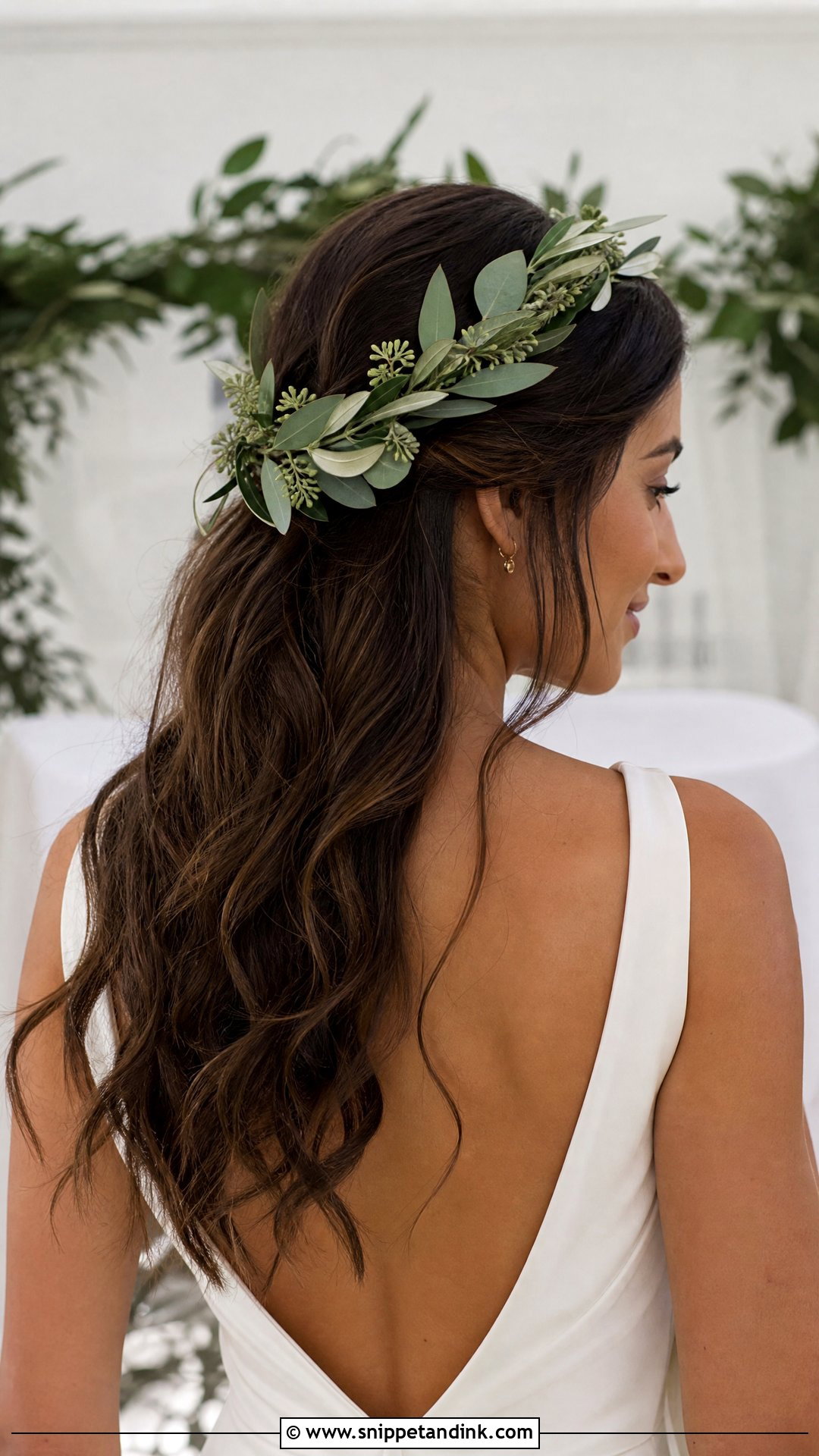
Greenery wreaths suit the bride who wants texture without much colour. Eucalyptus, olive leaves, ivy, fern or soft herbs all make a fresh ring that sits well with simple gowns and gold or pearl jewellery. They’re also lighter than a full flower crown, which brides with sensitive scalps appreciate by hour six. I like them with a low bun or a sleek centre part. Eucalyptus leaves can leave a faint oily mark on very pale hair if they rub, so I keep a thin wrap of floral tape where the stems meet the head.
12. Bridal Hair Wreath With Dried Flowers
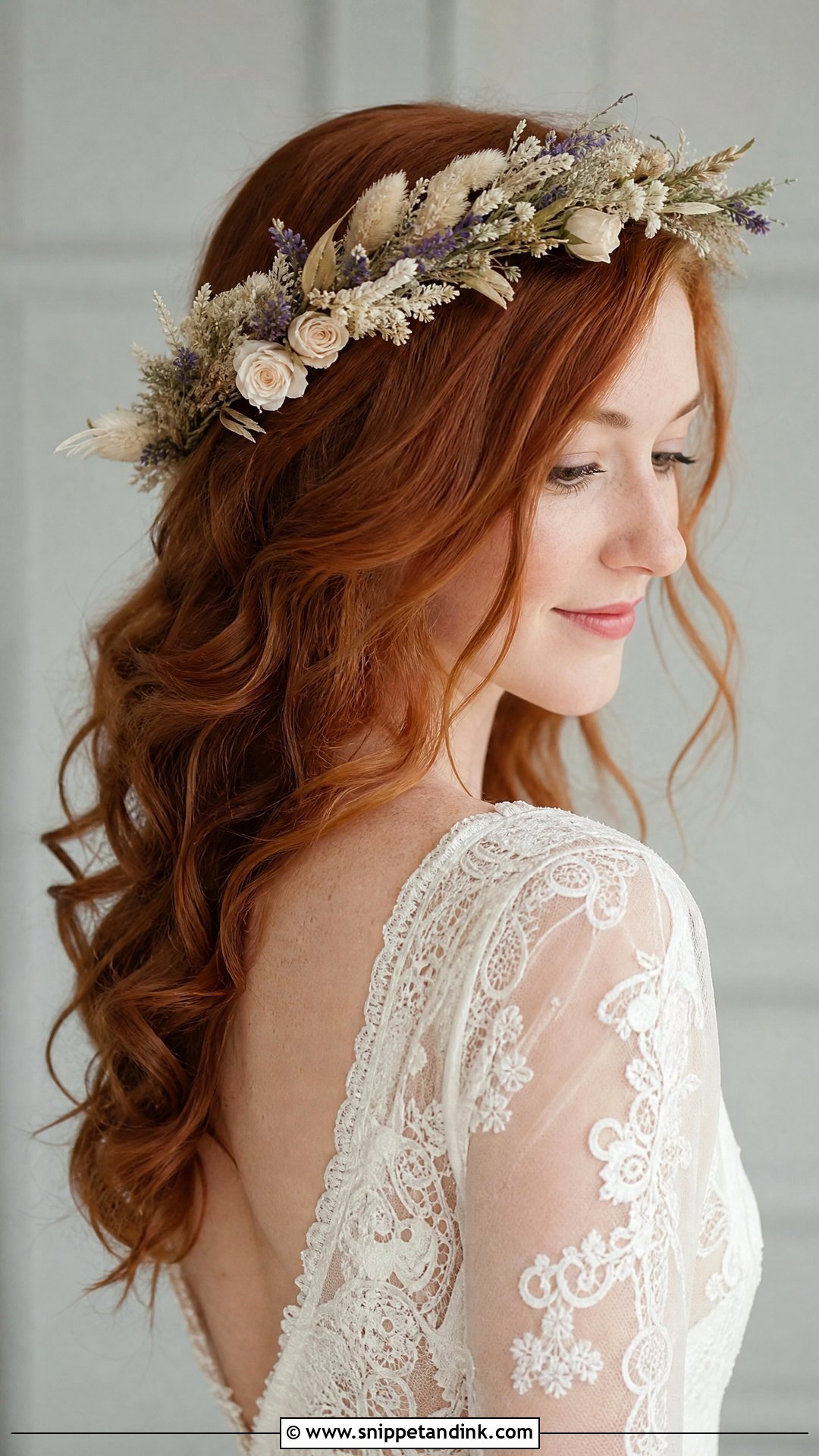
A wreath made of dried flowers is the one I’m happiest to see at a trial, because it can arrive weeks early and we can practise with the real thing. Grasses, bunny tails, lavender and preserved roses won’t wilt, so it holds its shape through a hot afternoon. Rustic, boho and autumn weddings suit it, as do muted shades like cream, mauve and honey. Pair it with relaxed waves or a textured bun. The downside is brittleness: store it in a rigid box, never squashed in a tote, and handle it by the base wire.
13. Bridal Hair Wreath With Side Braid
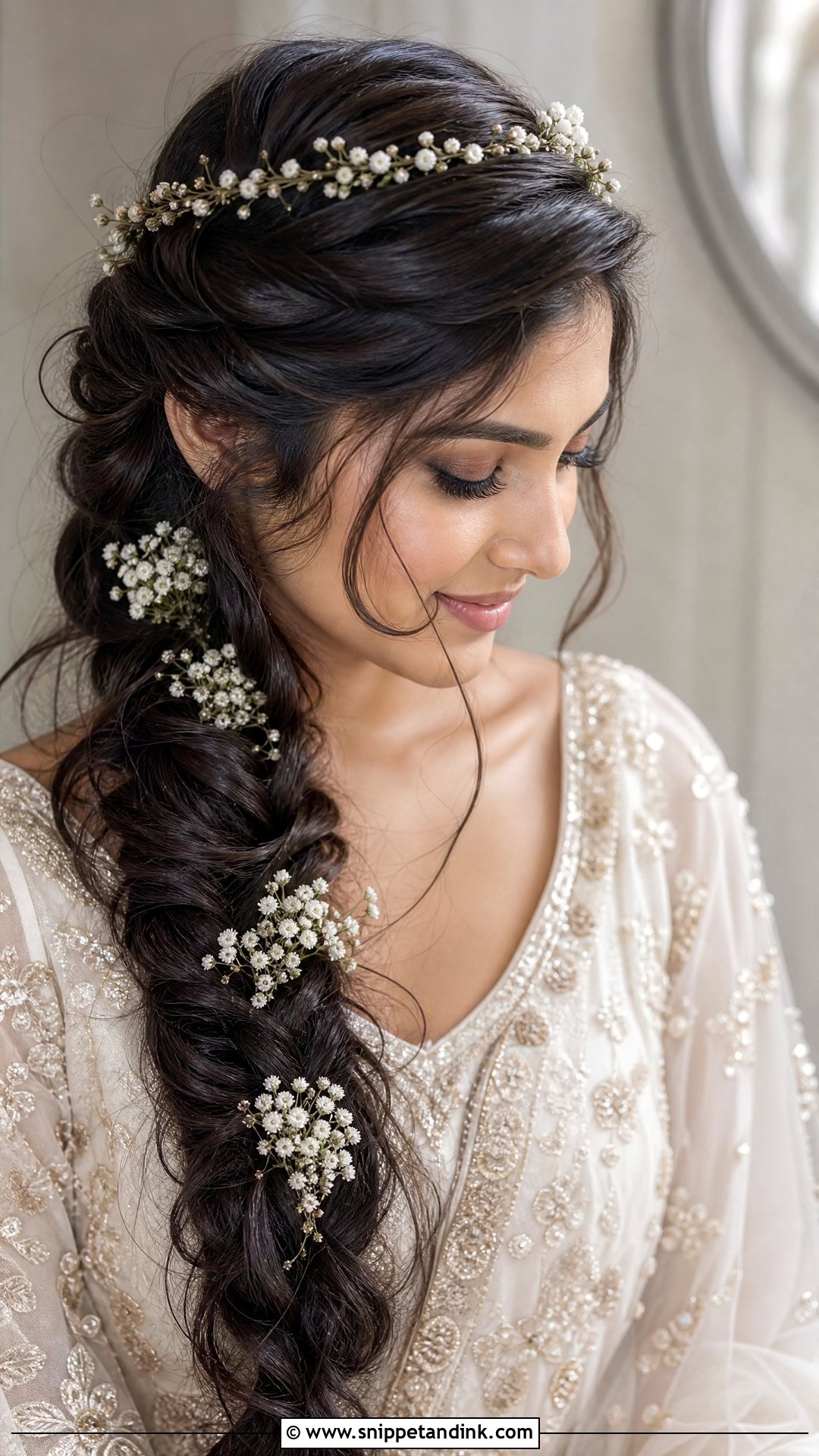
A side braid shows off the hair and the flowers at the same time. The braid falls over one shoulder, and the wreath sits across the crown or a little toward the back. I recommend it for long hair that a bride wants visible but controlled. Pulling the braid apart gently adds fullness and leaves gaps where I can tuck in tiny blooms that echo the wreath. Keep the wreath light; a heavy ring drags the hair on the braided side and the whole style starts to tilt by evening.
14. Bridal Hair Wreath With Sleek Bun
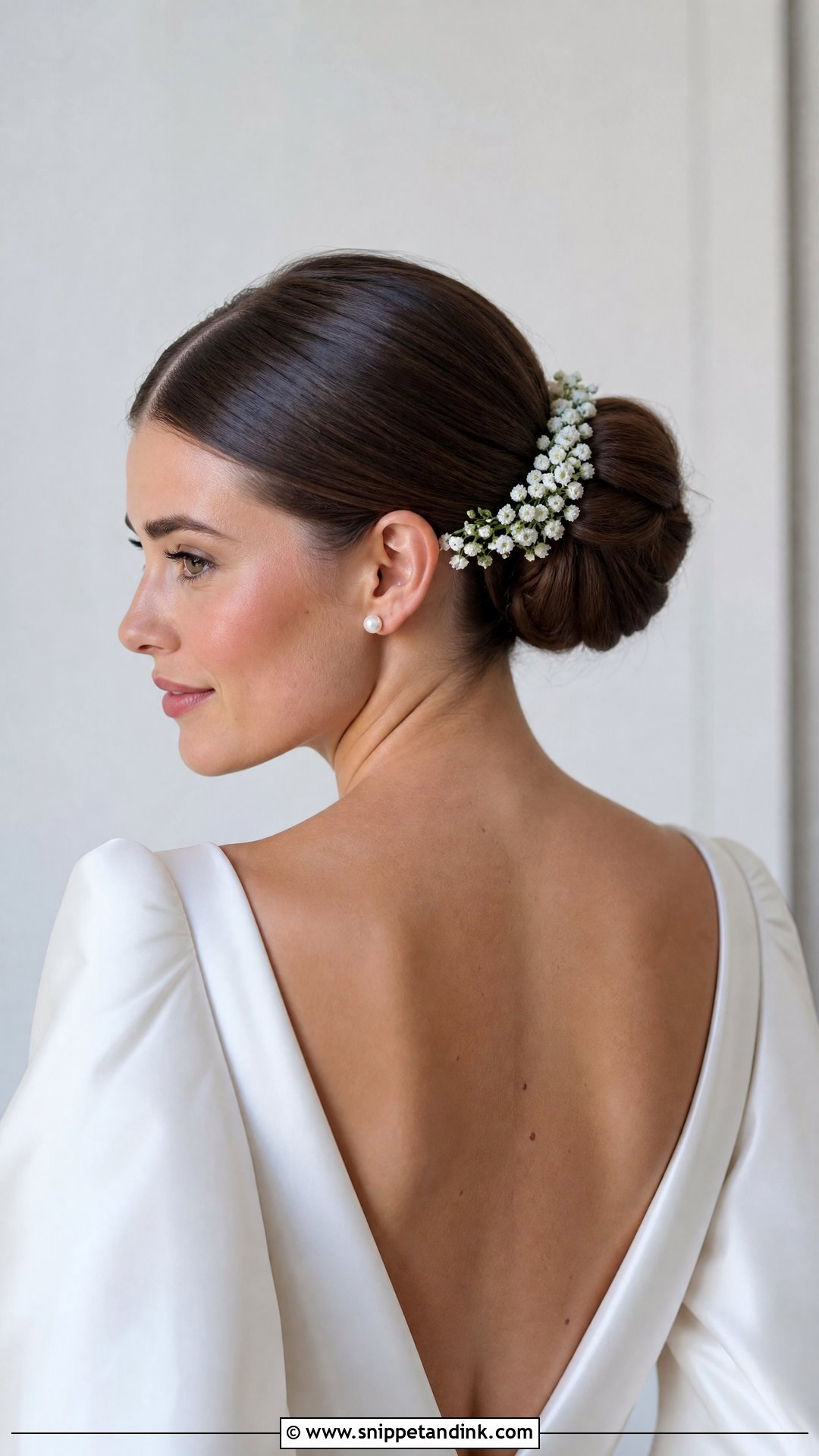
Sleek buns and flowers make a good contrast: the hair gives structure, the wreath softens it. This suits satin gowns, structured bodices and minimal jewellery. I’d keep the ring slim, with tiny white flowers or preserved blooms, because a big crown on glassy hair looks top-heavy. Use a strong gel or smoothing cream for the base. Pin the wreath before the final shine spray goes on; once the hair is slick, pins skate straight out of it.
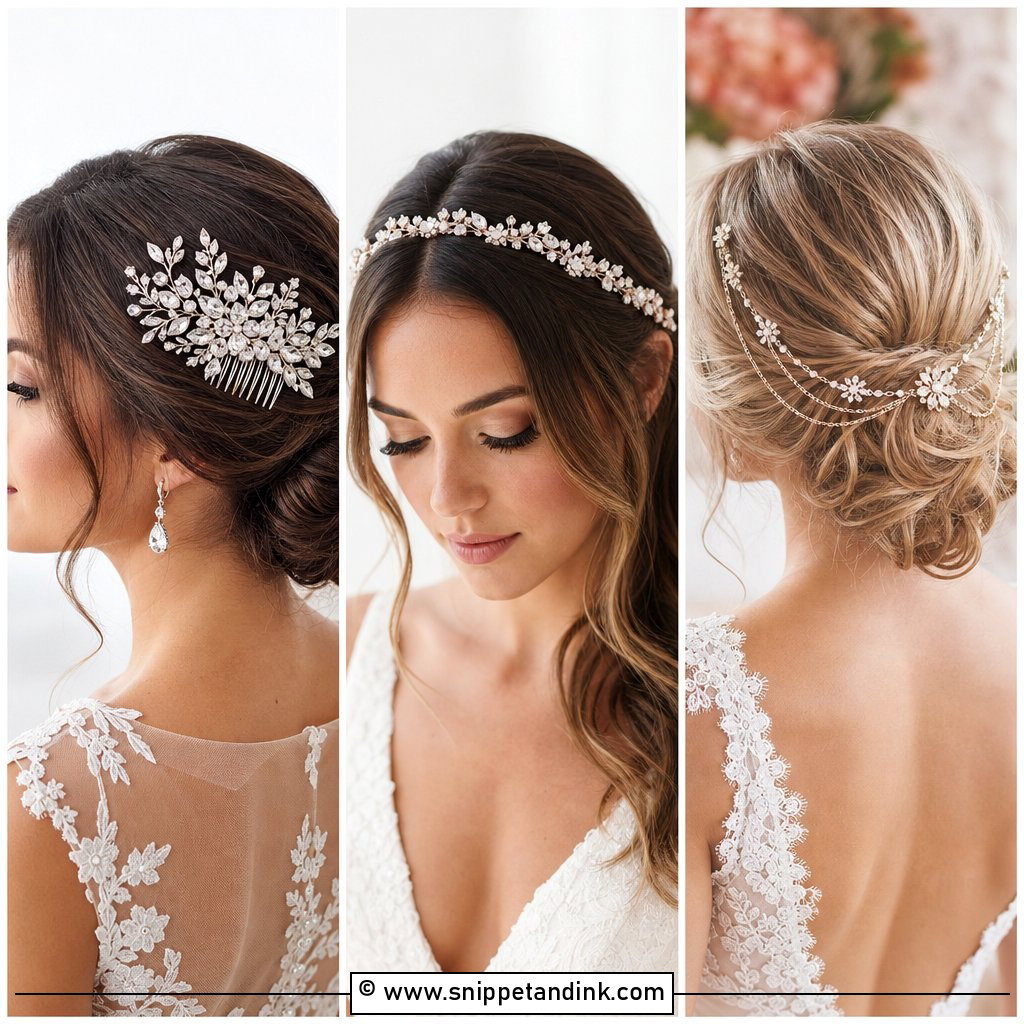
15. Bridal Hair Wreath With Beach Waves
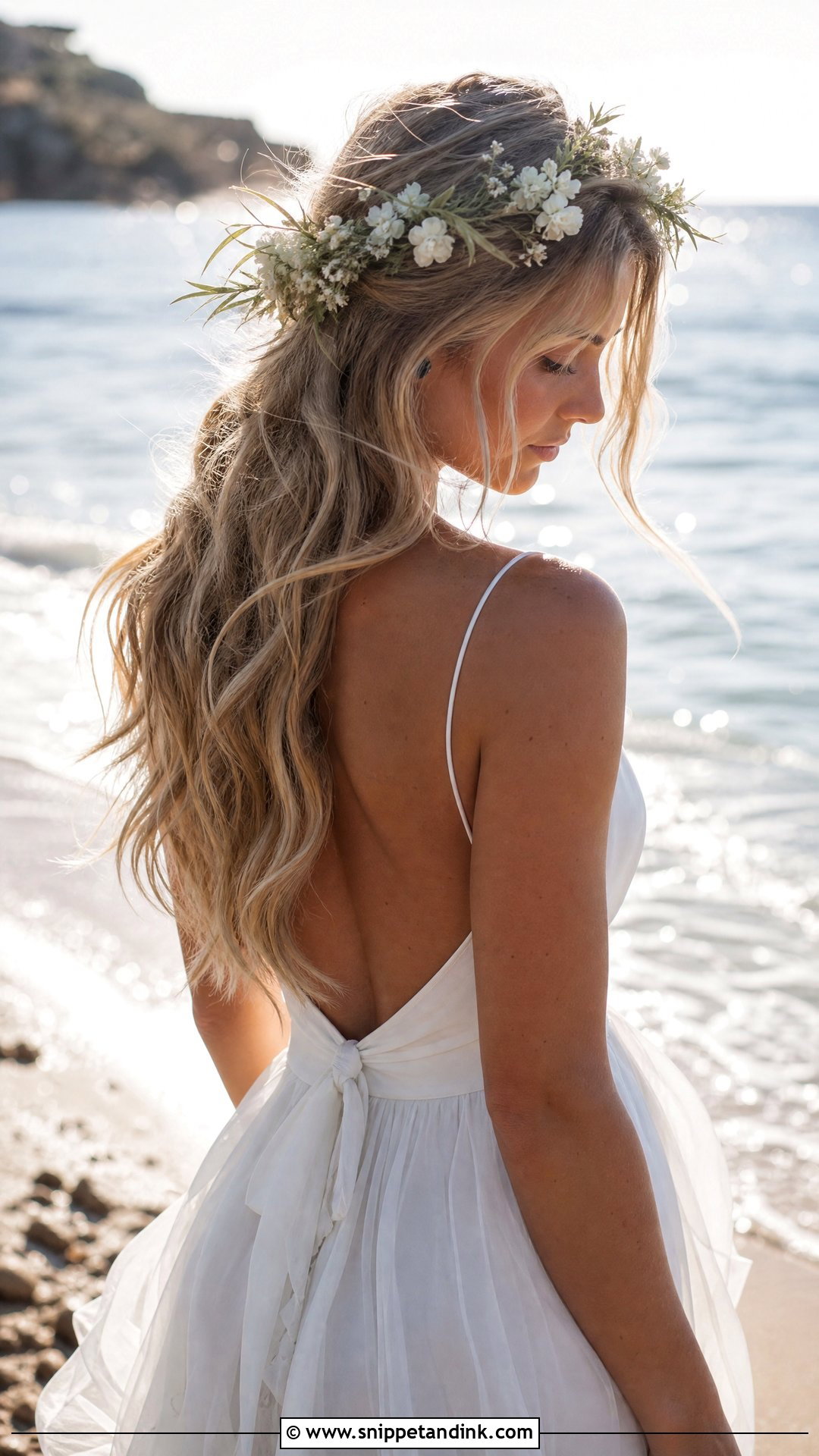
Beach waves suit coastal and warm-weather weddings, and they need to stay soft rather than freshly curled. A wreath of small white flowers, greenery or tropical-inspired blooms should sit lightly so it doesn’t flatten the texture. Texture spray gives the pins grip. Sea air is the real problem: humidity relaxes waves and wind lifts the ring, so I pin hidden sections near the crown and send the bride out with spare pins. Flowing fabrics and natural makeup finish the look.
Anchoring a Wreath So It Stays Put Through the First Dance
A wreath that looks secure in the mirror can creep backwards an hour later, especially on fine or freshly washed hair. The fix happens before the wreath goes on, not after.
- Give the hair grip. Second-day hair or a dusting of texture spray at the crown holds pins far better than silky clean hair.
- Build a base. A few small pin curls, a hidden twist or a thin braid under where the wreath will sit gives the pins something to lock into.
- Cross the pins. Bobby pins pushed in as an X over the base wire hold much better than a row of single pins.
- Use loops or combs. Many florists will add small wire loops or a comb at the back if you ask; pinning through those spreads the weight.
- Do the hug test. At the trial I have brides shake their head, look down and hug someone taller. If it shifts, add pins there rather than more hairspray.
Which Blooms Hold Up Out of Water
A hair wreath has no water source, so flower choice matters more than in a bouquet. Spray roses, wax flower, baby’s breath, eucalyptus, rosemary, statice, small orchids and lavender cope well for several hours. Gardenias bruise brown wherever they’re touched, hydrangea and sweet peas wilt quickly in warm air, and big peonies are heavy and tend to drop petals by evening.
Keep a fresh wreath in its box in a cool room or a fridge that isn’t set too cold, away from fruit, and mist it lightly before it goes on. To keep it afterwards, hang it upside down somewhere dark and dry for a couple of weeks; roses and lavender dry well, while softer petals shrivel.
Plan the Hair Around the Wreath, Not After It
Brides who love their wreath in the pictures usually decided on the whole look at once: neckline, veil, venue, hair length and how much movement they wanted. Loose waves give romance, a bun gives polish, a braid gives the flowers something to grip, and short hair simply needs a smaller ring. Fresh flowers have a clock on them; dried or preserved pieces are calmer and easier to keep. Get the placement right at your trial and the wreath will look like it belongs there, from the aisle to the last song.
You'll Like These Ideas:


Leave a Reply