
A fascinator does something a veil can’t: it gives the hair a focal point while the back of the dress and the shape of your updo stay on show. I like them most for brides who feel swamped under tulle, or who want one piece that stays on from the ceremony to the last song. The catch is that a fascinator is only as good as what it’s fixed to, so the hairstyle and the headpiece have to be planned together. Below are the wedding hair fascinator looks I reach for most, with what each one needs from the hair underneath it.
How a Fascinator Attaches, and the Hair Each Fitting Needs
Before you fall for a shape, turn it over and look at what is underneath. The fitting decides which hairstyles it can sit on far more than the decoration on top does.
- Comb: the strongest grip, but it needs hair to bite into. Buns, twists and the pinned section of half-up styles suit it best.
- Clip: a small alligator or snap clip works on short cuts and fine hair where a comb would slide out.
- Headband: spreads the weight over the head and needs almost no pinning, though it can press behind the ears after a few hours.
- Hat elastic: a thin cord worn under the hair at the back, common on pillboxes and small hats. It hides well in darker or thicker hair and can show through very fine blonde hair.
Hair texture matters as much as the fitting. Squeaky-clean, silky hair is the hardest thing to anchor anything into, so I prefer hair washed the day before, with a little dry shampoo or texture spray at the root where the piece will sit. Wherever the fascinator goes, I build a small base first, usually crossed bobby pins or a tiny hidden braid, and attach the headpiece to that rather than to loose strands.
1. Birdcage Veil Fascinator
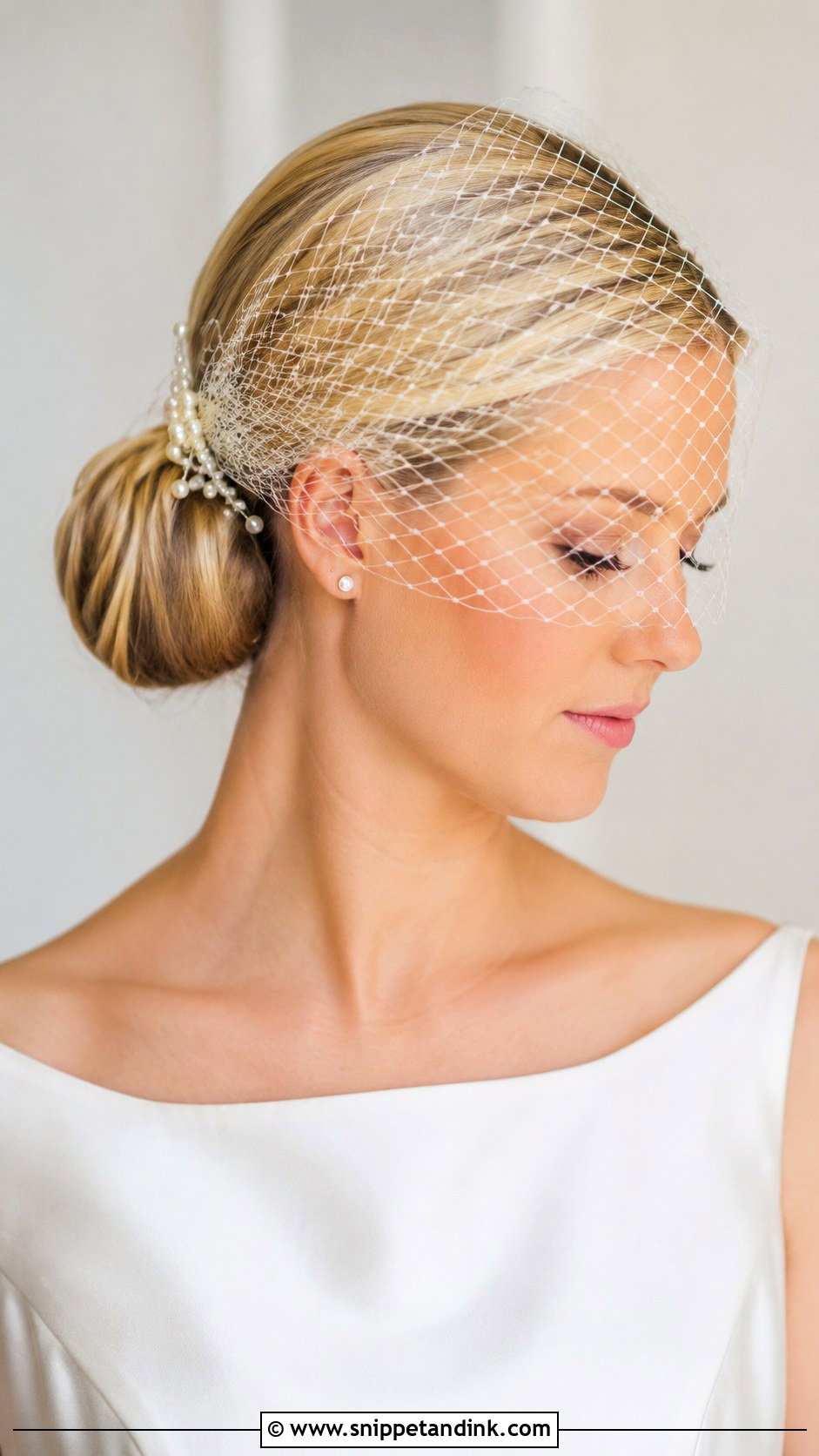
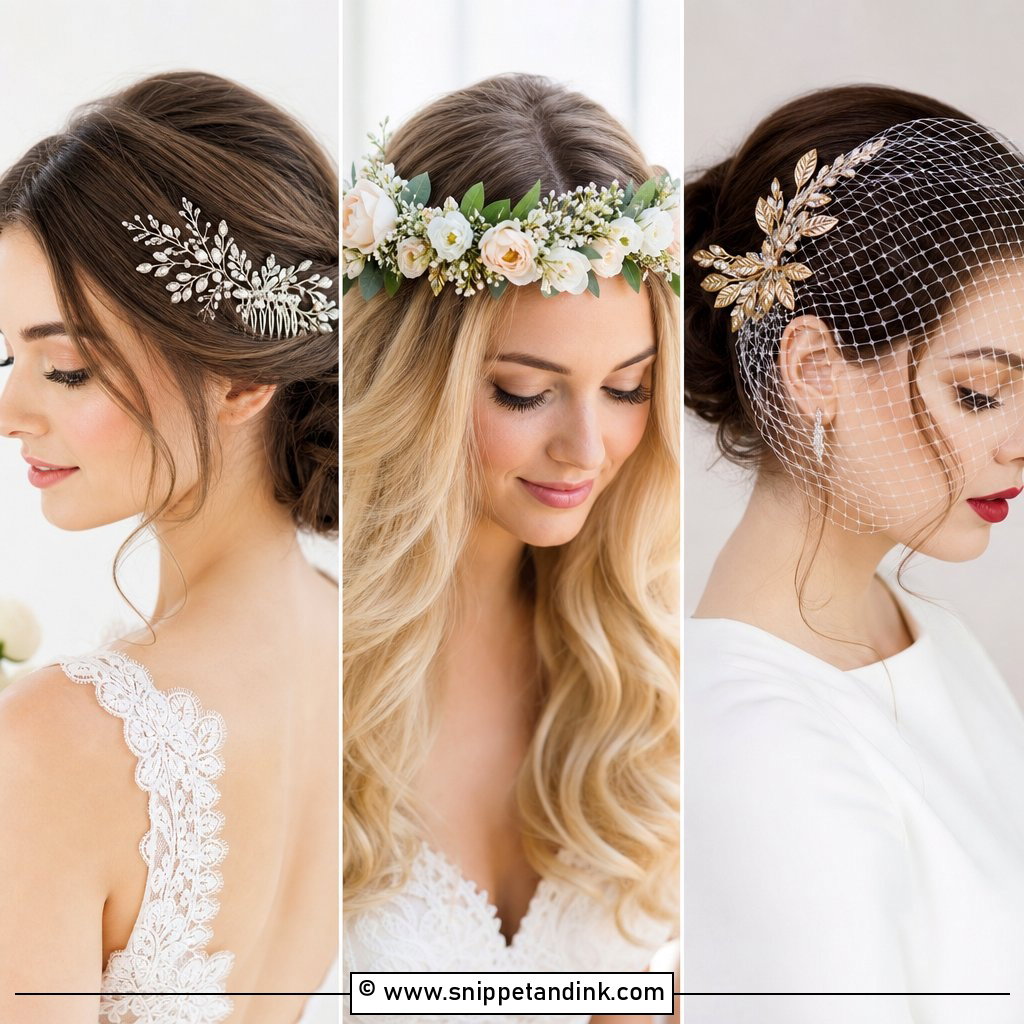
Birdcage netting is the most flattering piece here for close-up portraits, because the mesh softens the eye area without hiding it. I pin the comb first and drape the net second, so it falls freely over one eye instead of catching on the brow bone. Fine French netting almost disappears on camera; a wider grid reads more openly retro. It sits best on a low bun, a deep side part or a tucked bob, and it suits satin gowns and tea-length dresses. If the net has pearls or crystals sewn in, keep your earrings small, since the two sit right beside each other at the cheek.
2. Pearl Wedding Hair Fascinator
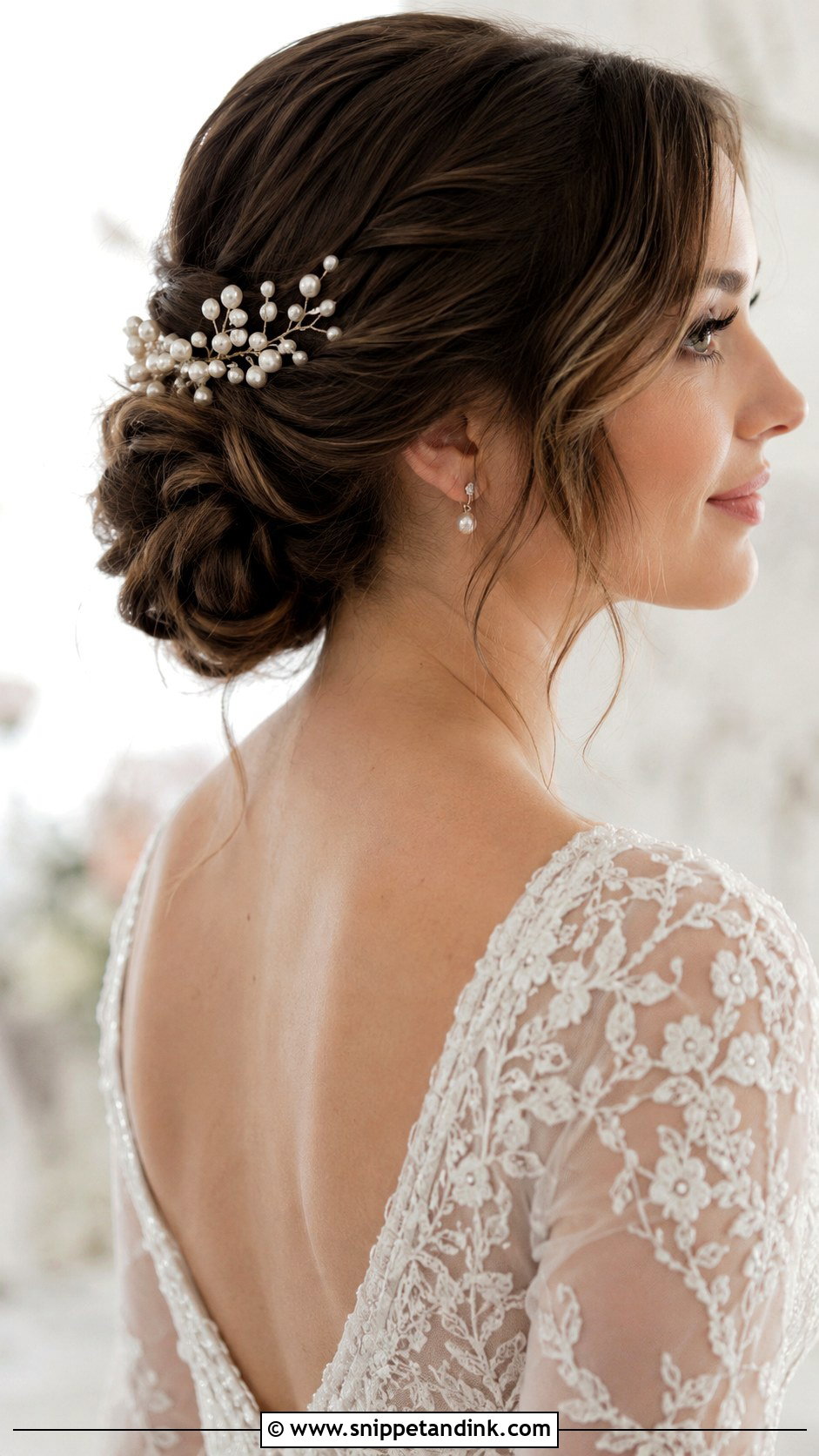
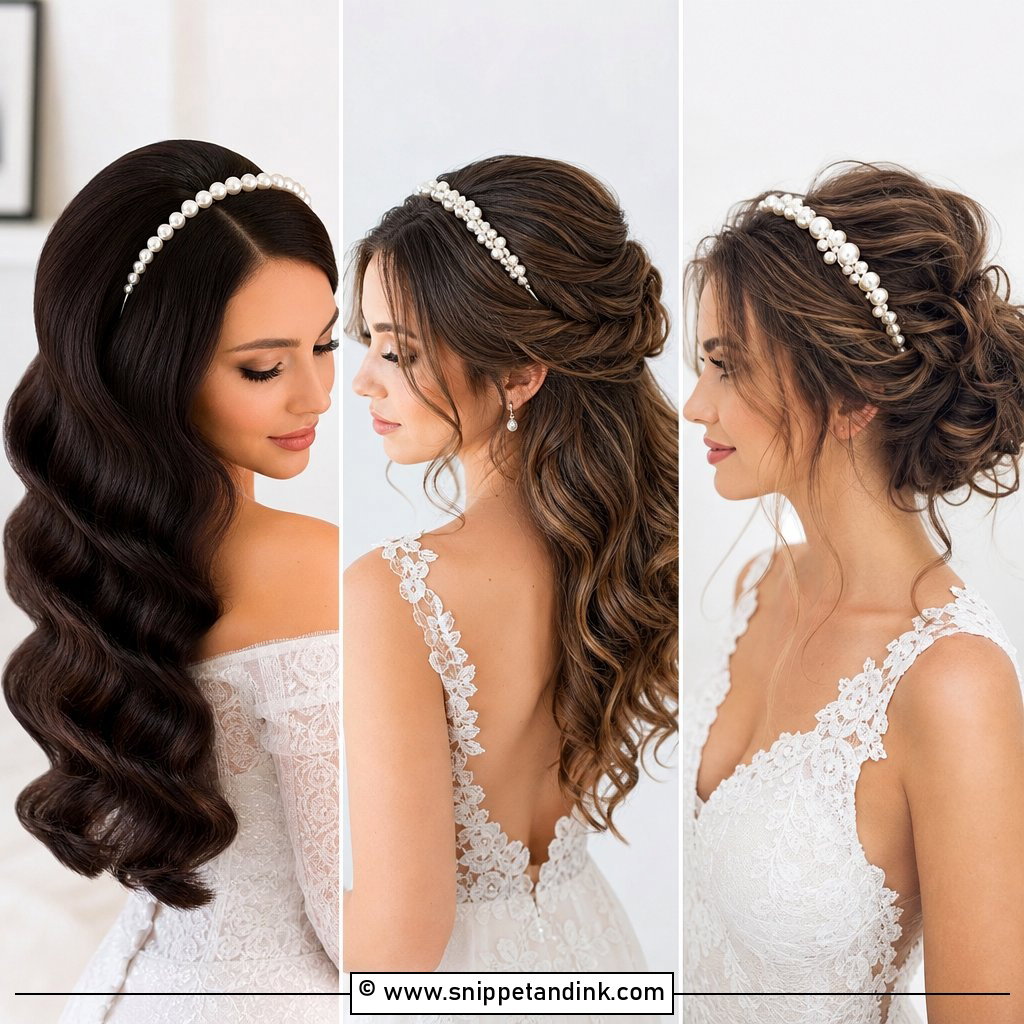
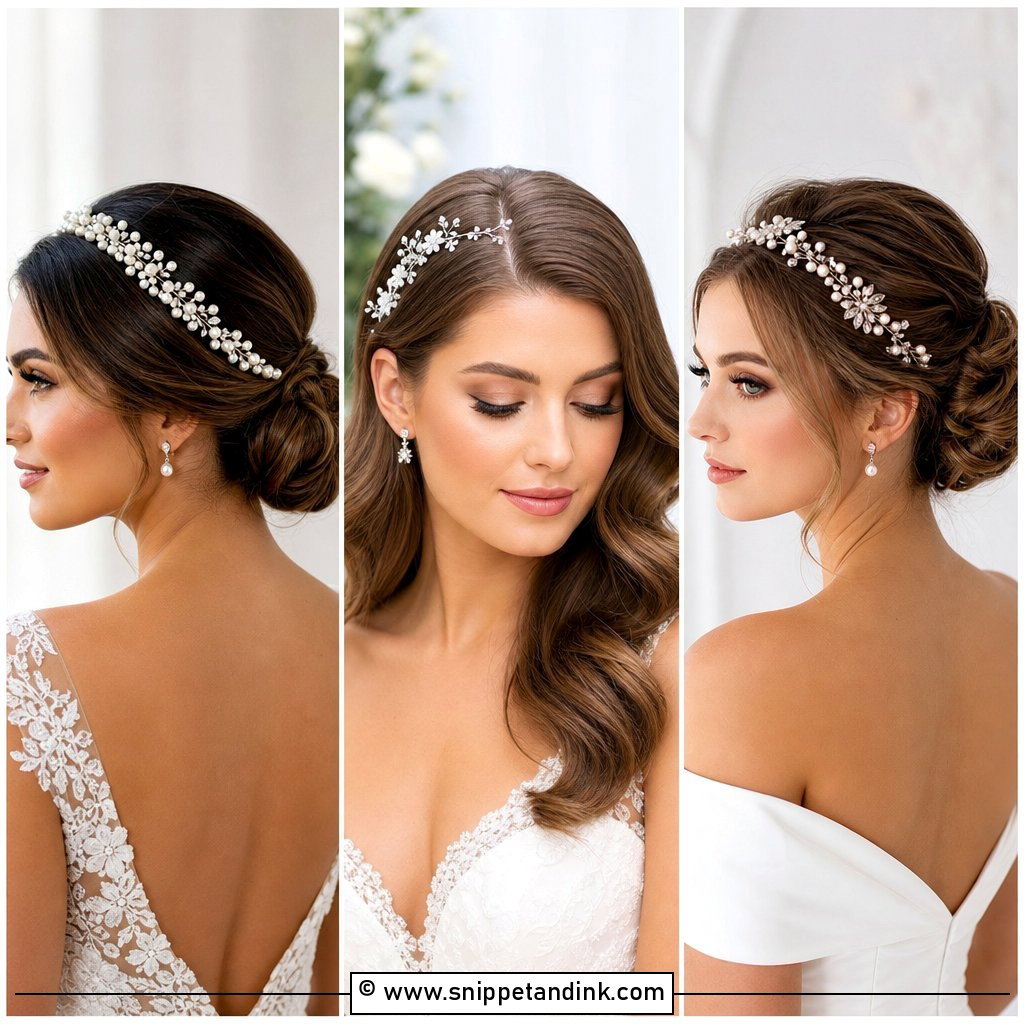
Pearls give you detail without glare, which matters once the flash comes out. A small pearl comb above a smooth chignon is one of the most secure pieces I fit, because the teeth have a dense bun to grip. The headband version frames the face more and suits loose curls or twisted half-up hair. If your gown has pearl beading, bring a photo of it to the trial so we can match the pearl size; mismatched sizes are what make an outfit look assembled instead of planned. Scattered pearls also weigh less than one heavy cluster, so they don’t drag the hair down by evening.
3. Floral Wedding Hair Fascinator
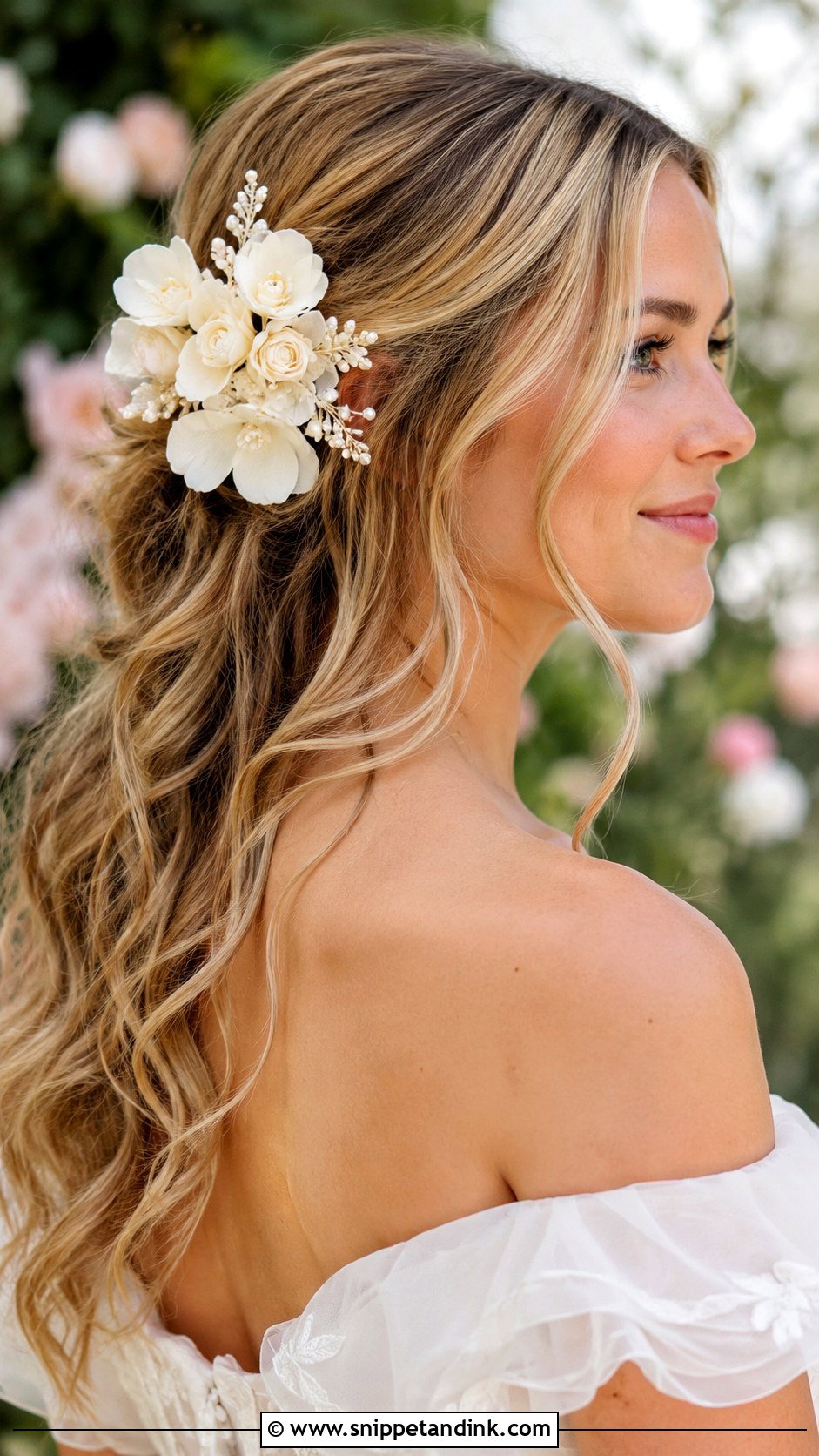
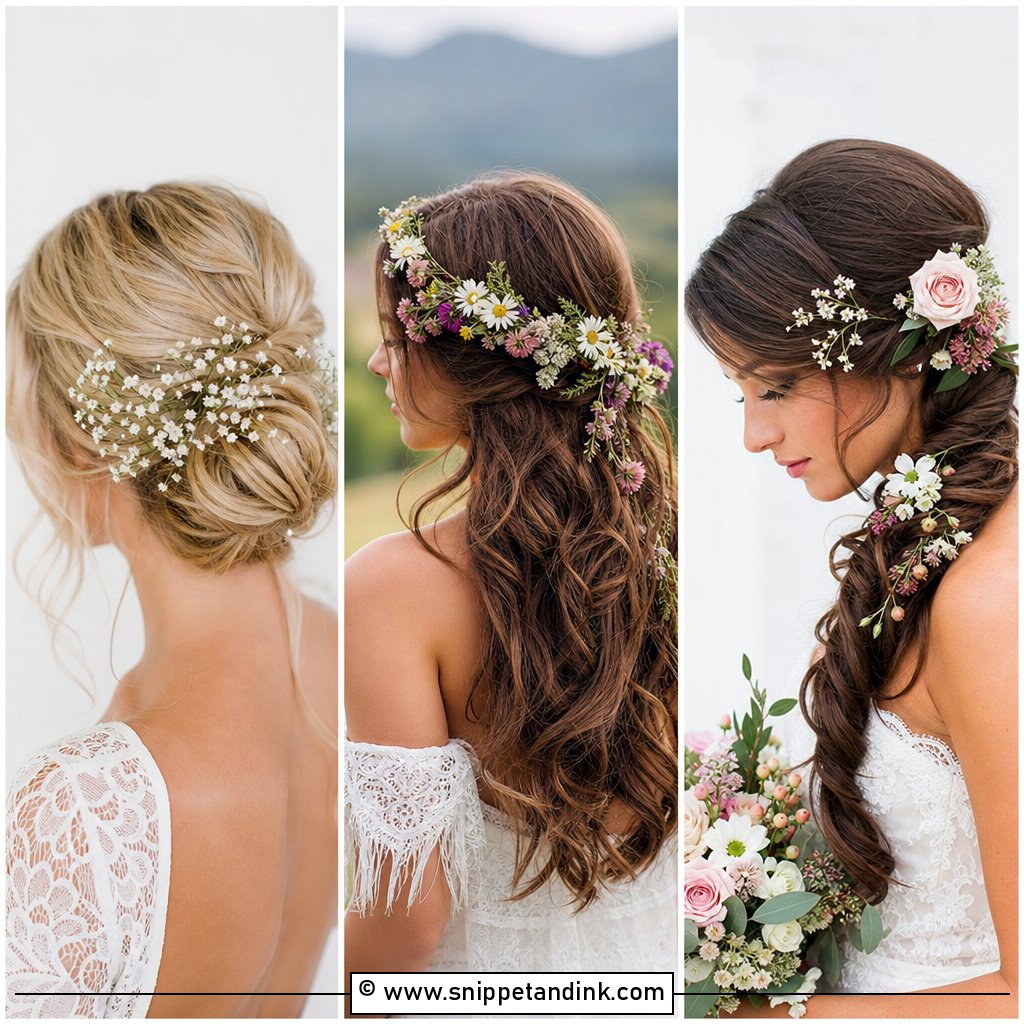
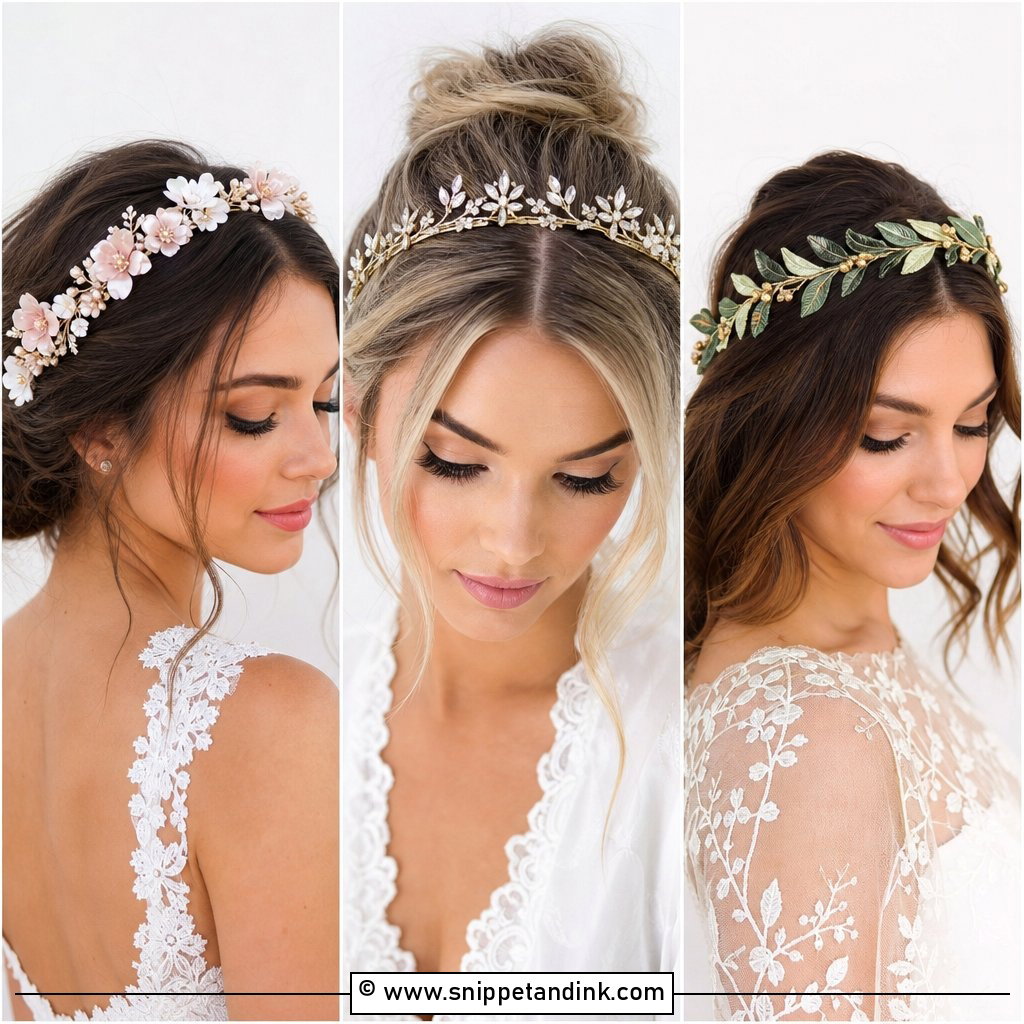
I steer most brides toward silk or clay flowers here rather than fresh ones. Fresh blooms sit against warm hair and skin all day and can droop by the reception, while silk keeps its shape for hours. The piece can go beside a loose bun, above a braid or into half-up waves. White and ivory petals look very different next to a gown, so hold the fascinator against your dress fabric in daylight before you decide. A few loose tendrils near the face help the flowers look grown into the style rather than perched on top.
4. Feather Wedding Hair Fascinator
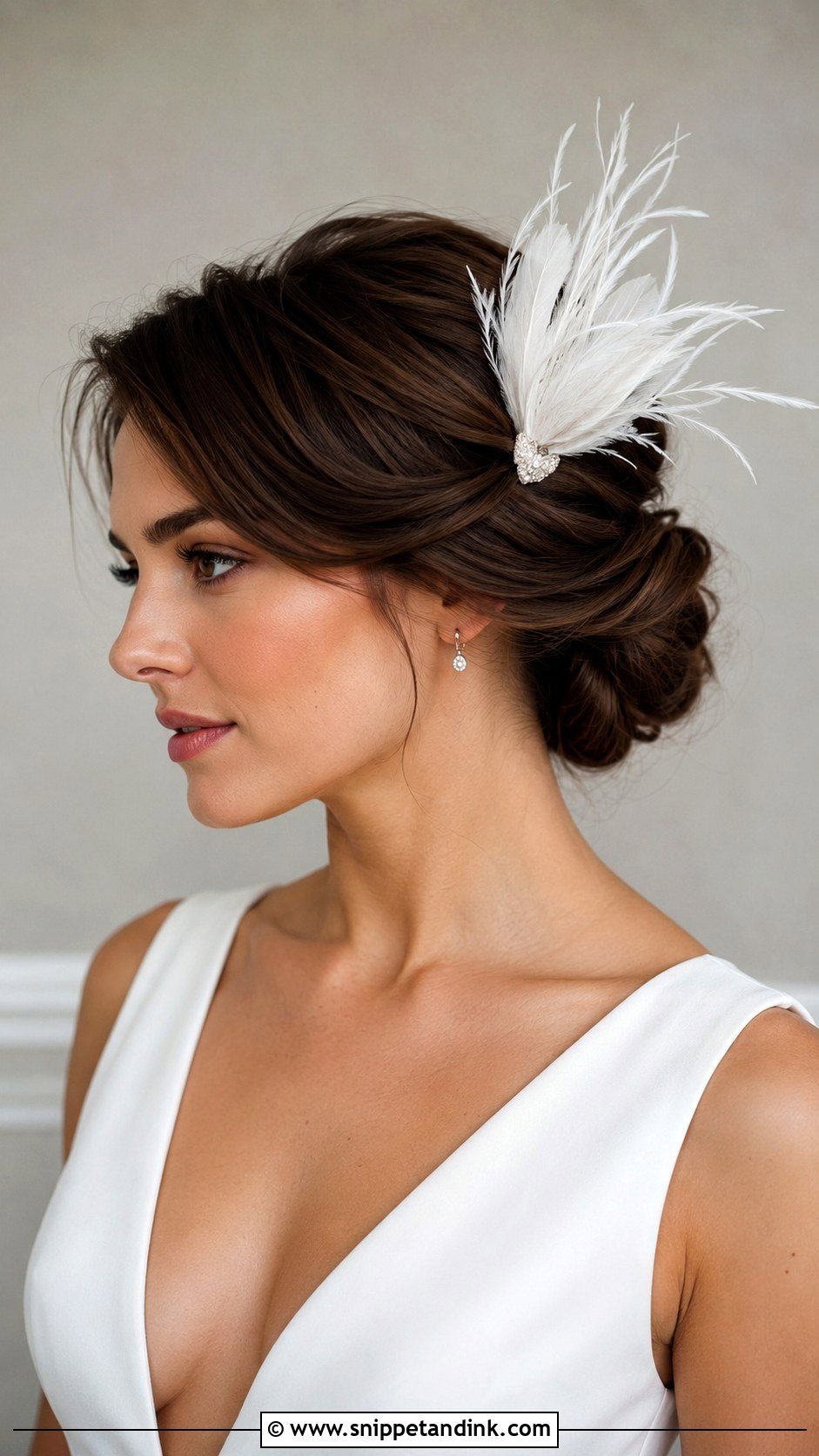
A feather wedding hair fascinator brings movement, and movement is exactly what you have to manage. Small sprays sit happily on short hair and sleek buns. Taller pieces need a smooth, controlled base, because feathers catch the wind like a little sail and will lever a loose style apart. I anchor tall pieces with crossed pins over the comb and keep the hair around them polished. Ivory and champagne feathers are the easiest to match to a gown. Skip big earrings with this one; two dramatic things beside the face just compete.
5. Pillbox Hat Fascinator
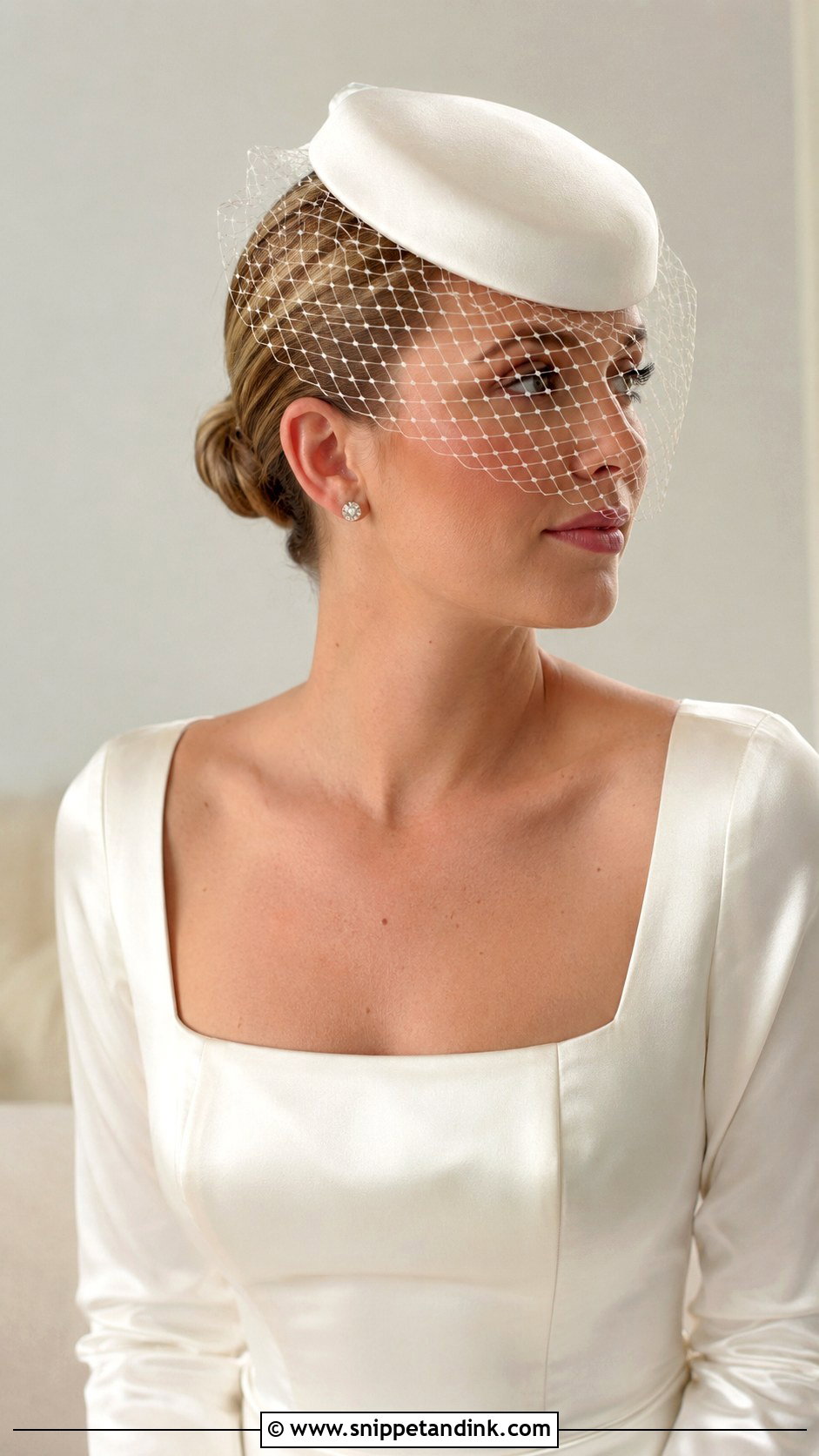
A pillbox sits on top of the head rather than gripping into it, so it depends on a comb, a clip or a thin hat elastic tucked under the hair at the back. It suits courthouse weddings, city ceremonies and second looks, and it looks sharpest with sleek hair, a smooth bob or a low bun. I tilt it slightly forward and to one side. Worn flat and dead center, it starts to look like a costume piece. Pair it with satin, crepe or a square neckline, where the clean edges of the hat repeat in the dress.
6. Lace Wedding Hair Fascinator
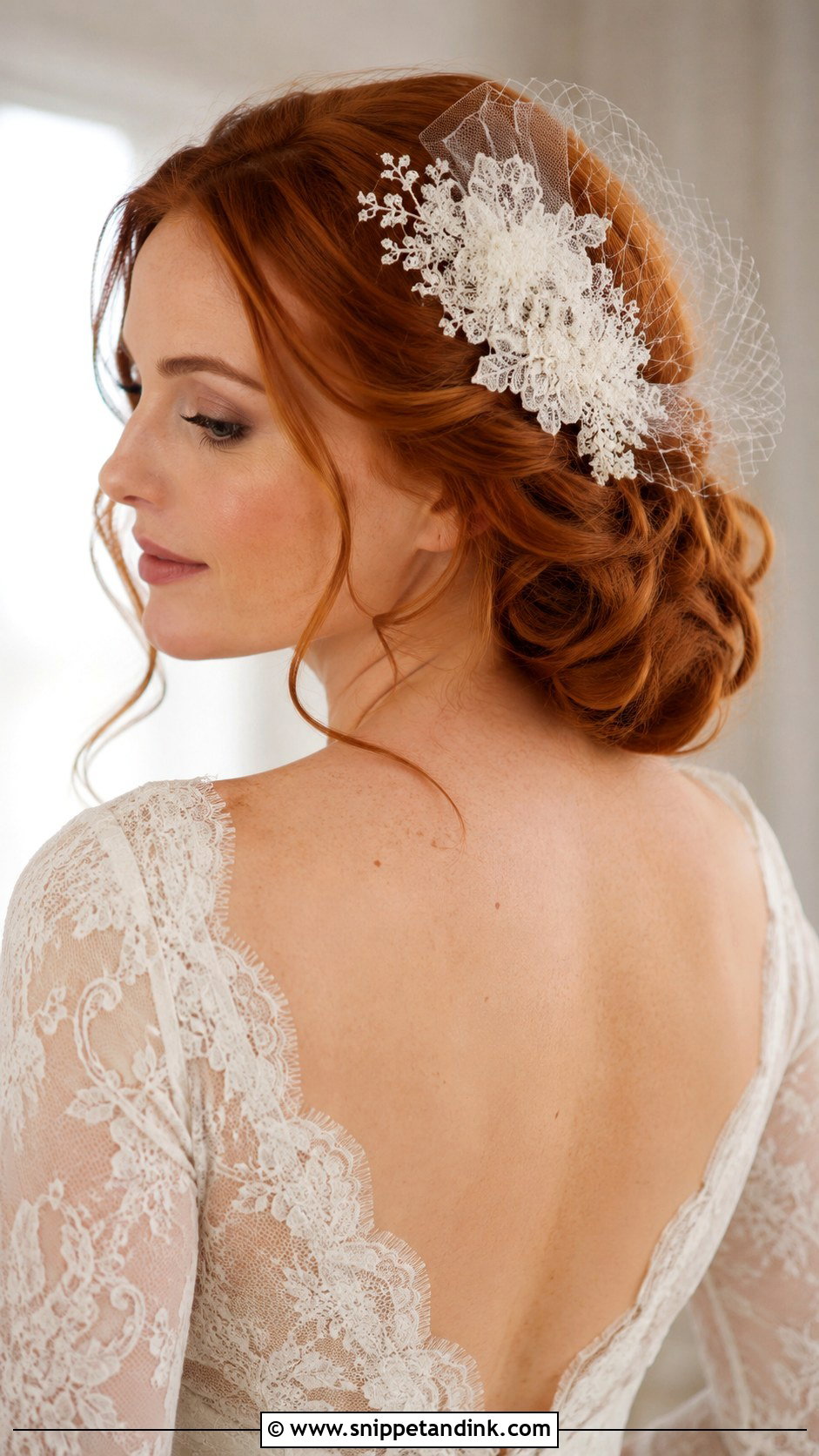
Lace is the easiest fascinator to tie to the gown, but only if the motifs actually relate. Ask your bridal shop whether they have a swatch of the dress lace, or at least photograph it in daylight, so the headpiece echoes the pattern instead of clashing with it. It comes as a small comb, a mini hat or a side piece with netting, and it settles nicely into soft curls, braided updos and low twisted buns. If your sleeves or bodice already carry heavy lace, go smaller in the hair. Ivory lace usually photographs softer than bright white against skin.
7. Crystal Wedding Hair Fascinator
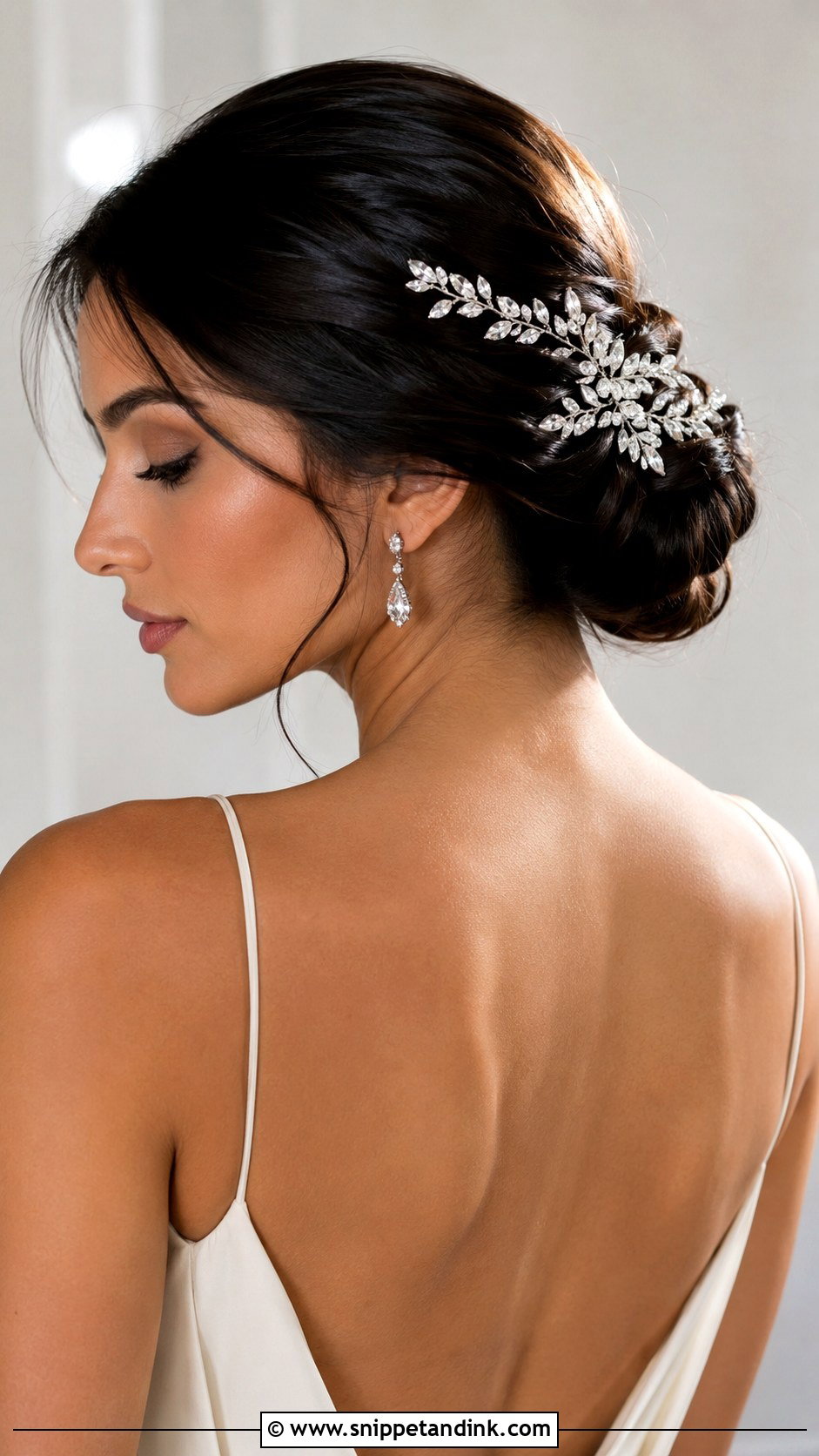
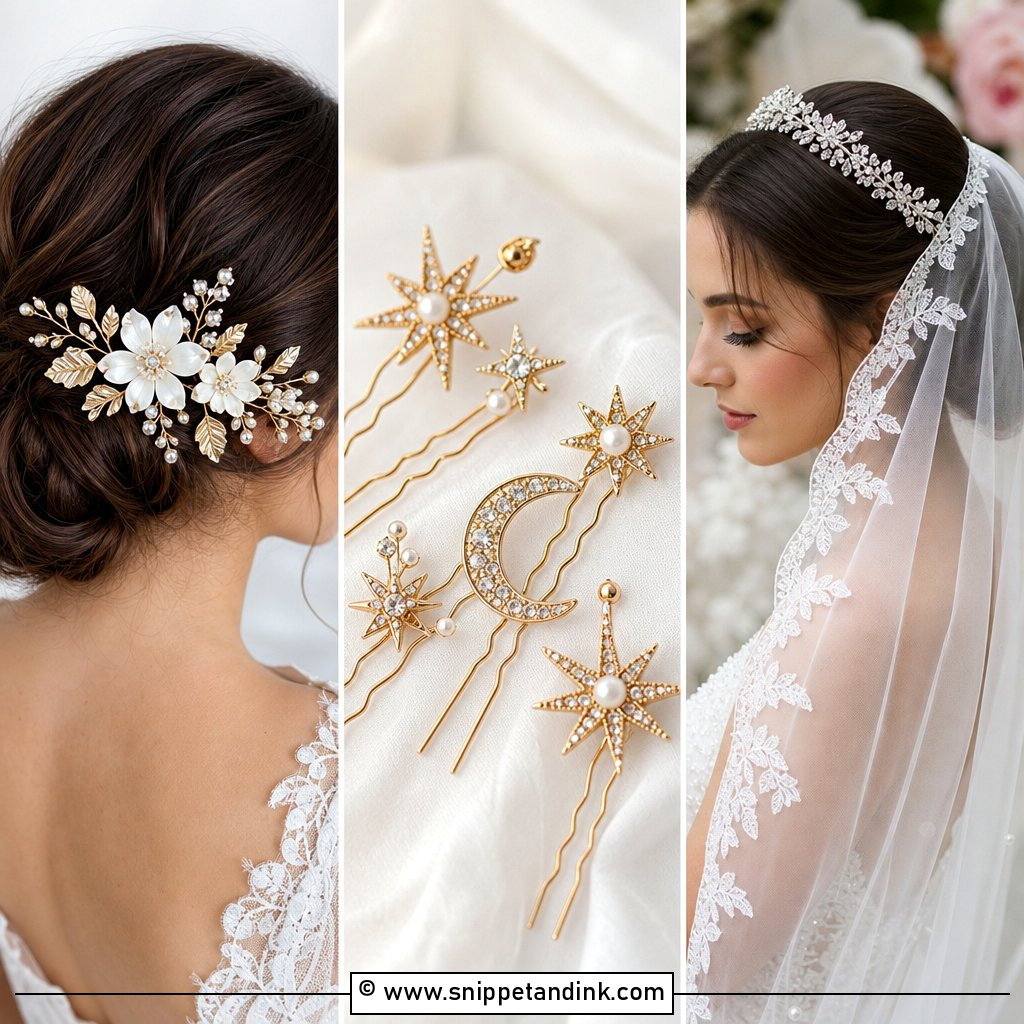
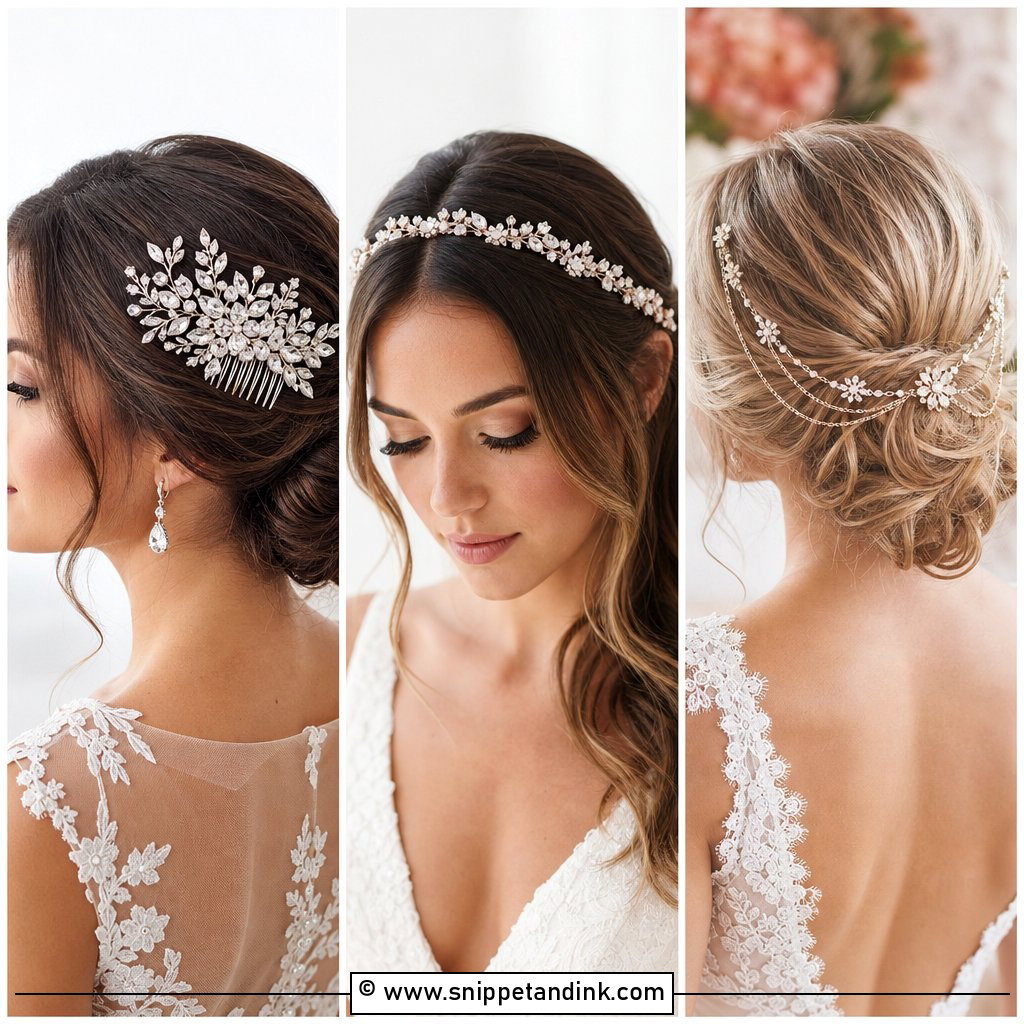
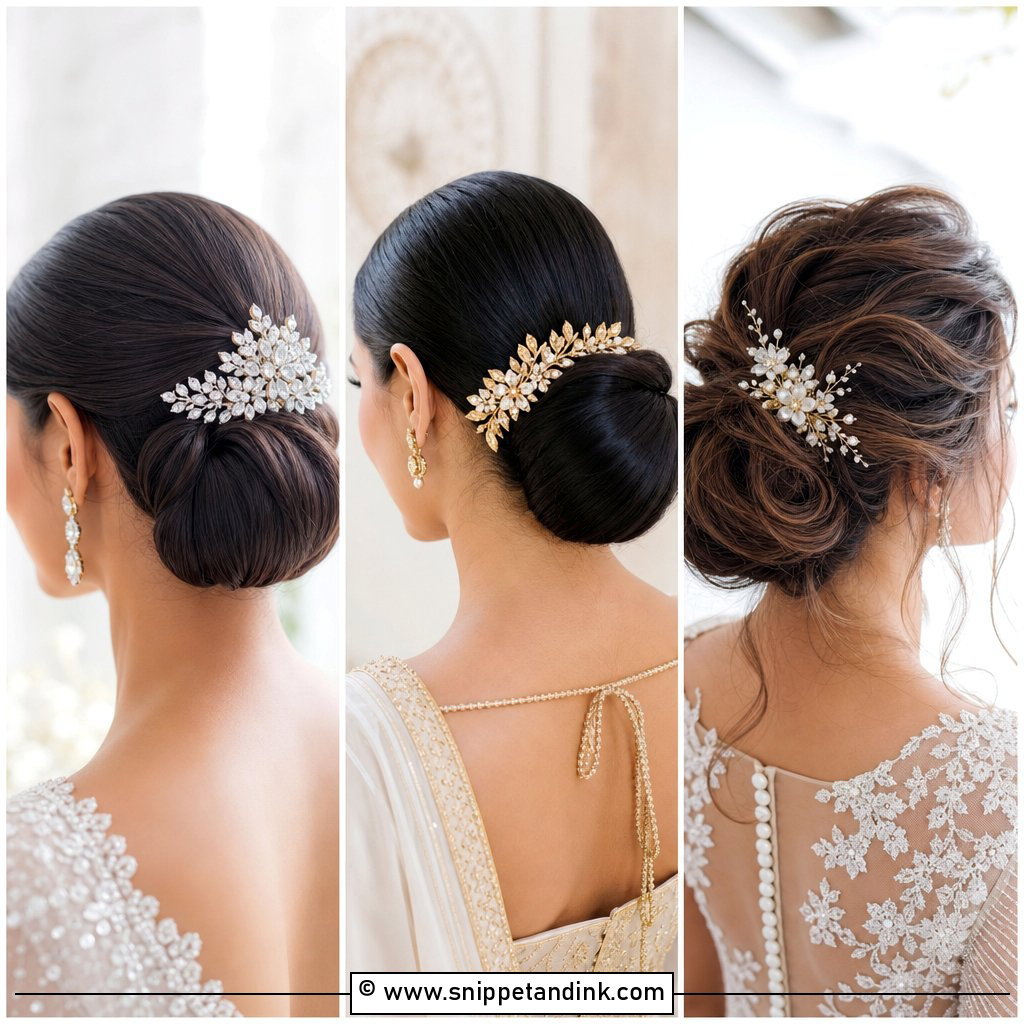
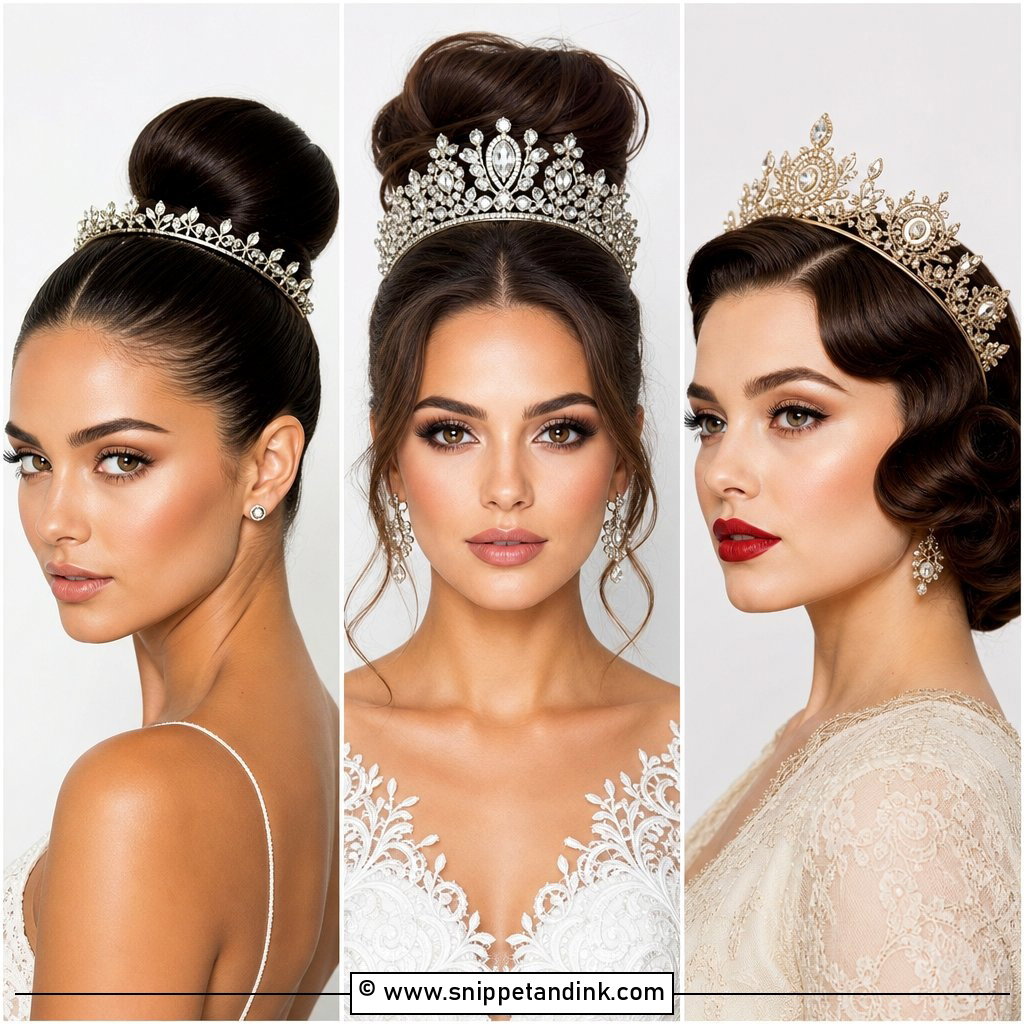
Crystals need light to do anything. That’s why I save them for evening receptions, ballrooms and winter weddings with candles and uplighting; in flat overcast daylight they can look a little dull. Place the piece where it will catch light as you turn your head: the crown, the side part or the edge of a bun. A crystal comb with a low chignon is the most secure version. If your dress is beaded, match the stone shape, round with round and baguette with baguette, so the sparkle feels connected. On a plain gown the crystals become the main focal point, so size them with that in mind.
8. Bow Wedding Hair Fascinator
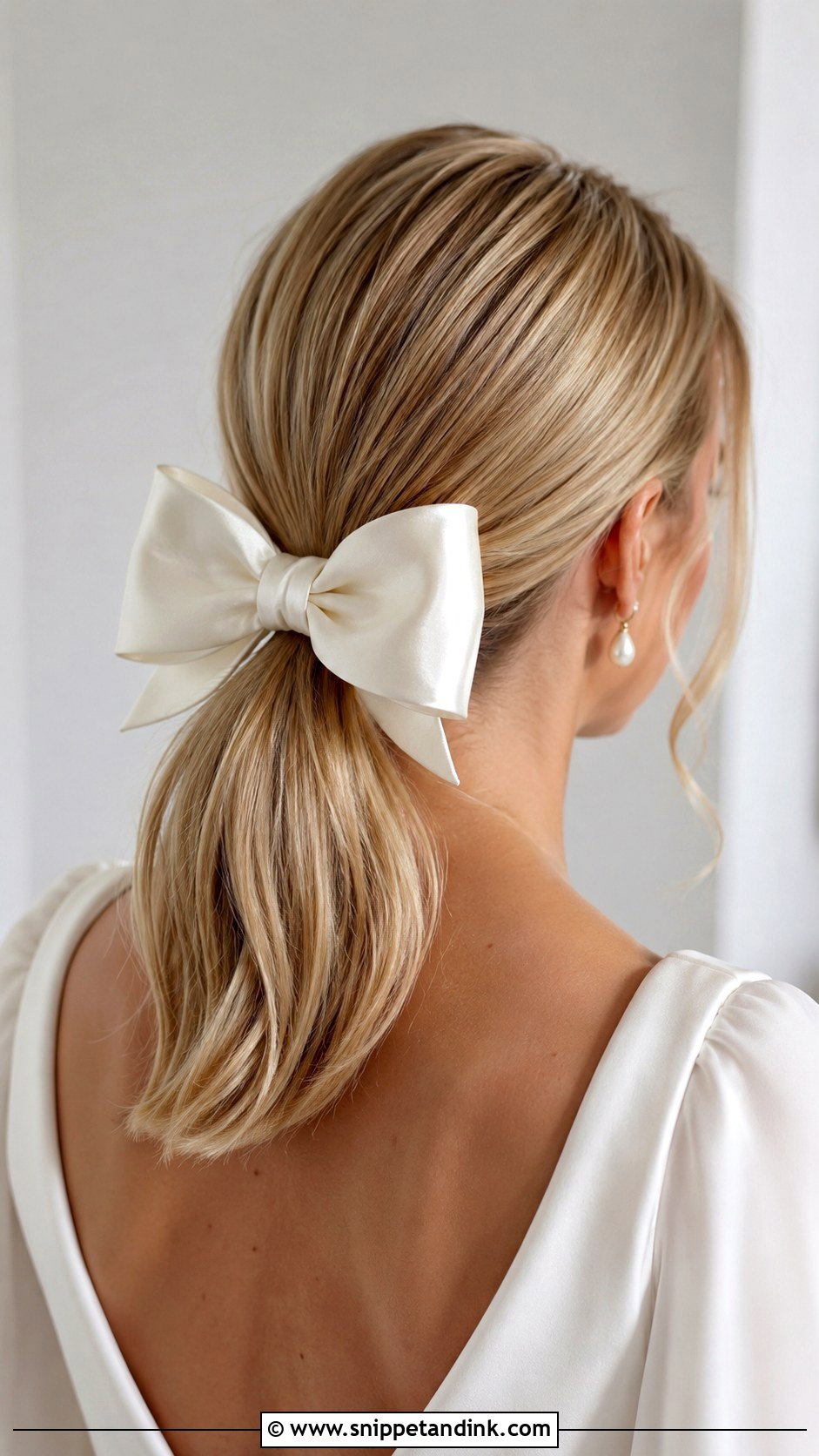
Bows are fabric, and fabric behaves differently from metal or pearl. Satin holds a crisp outline, organza looks airy but crushes if you lean back against a headrest, and oversized silk droops unless it has a stiffened interior. I usually place a small bow above a low ponytail or beside a bun, where the hair underneath is smooth enough to show the shape. A large bow belongs with a simple dress. Bows are fun for showers, rehearsal dinners and courthouse ceremonies, and ivory or champagne keeps them bridal.
9. Tulle Wedding Hair Fascinator
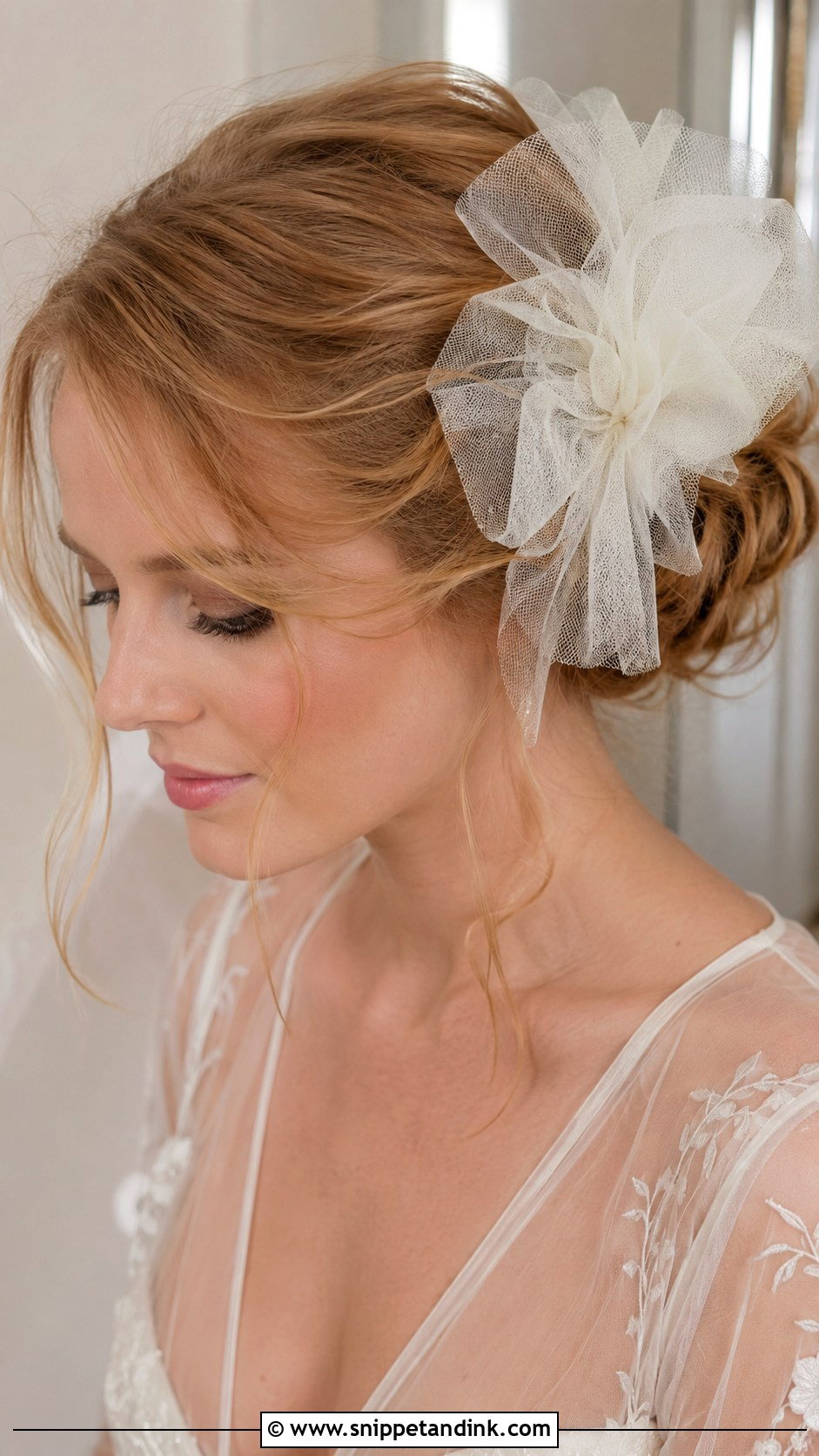
Tulle gives you some of the veil feeling in a size you can dance in. Small poufs sit on short hair, ponytails and mini buns; longer tulle can drape near the face or behind a low updo. The first thing I check is how the tulle feels in the hand. Stiff tulle keeps every crease from the box and looks wiry in photos, while soft bridal tulle moves when you do. If it arrived folded, steam it the day before, holding the steamer well away from the fabric. It makes a natural reception swap because it reads bridal but less formal than a long veil.
10. Vintage Wedding Hair Fascinator
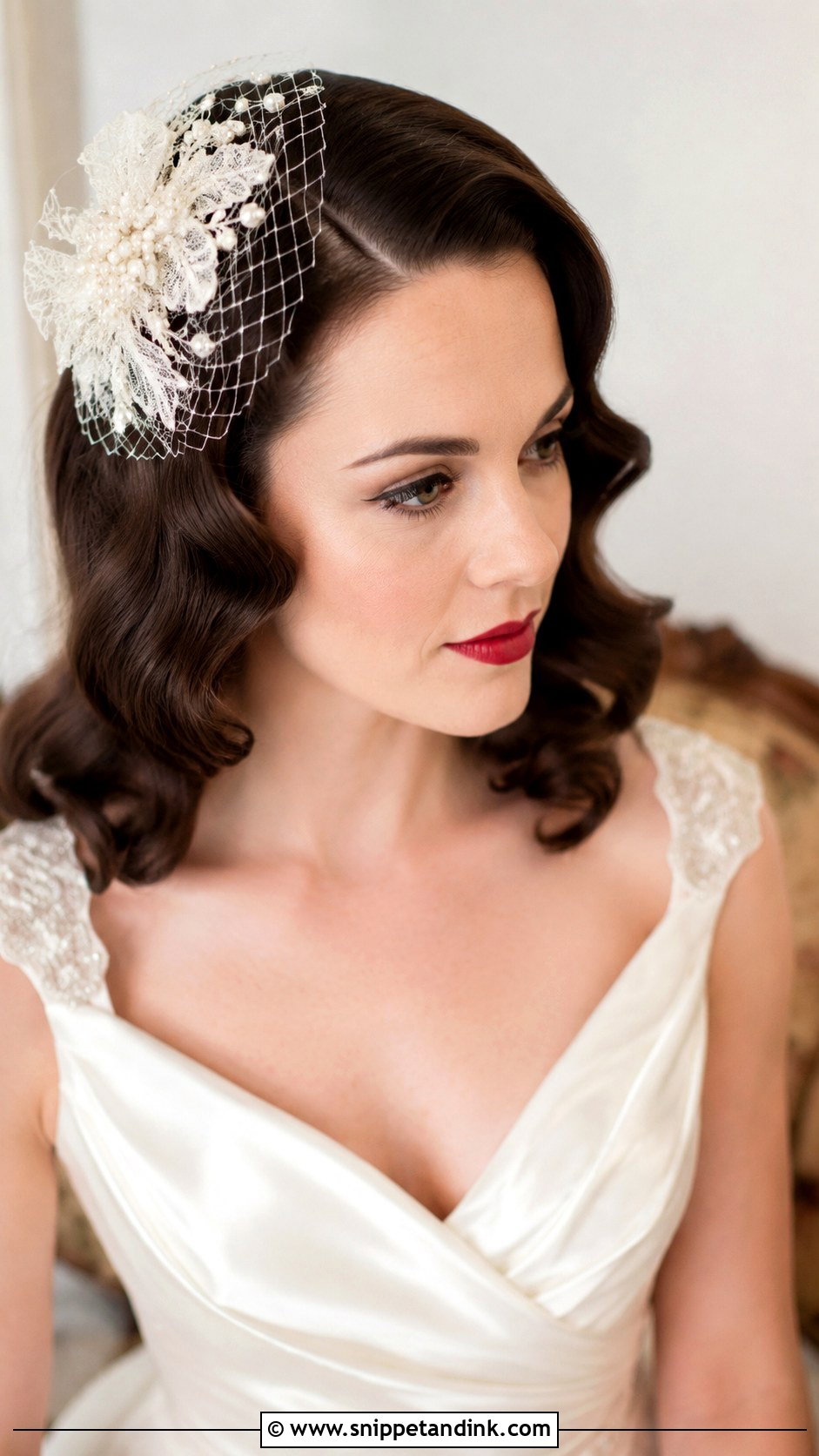
Vintage pieces only work when the hair is vintage too. Netting, small hats and sculpted flowers look odd on loose beach waves, and right on brushed-out set curls, a deep side part, a tucked roll or a neat low bun. Pick one era and stay in it; a wartime victory roll under a beaded twenties band starts to read as fancy dress. Red lipstick, winged liner and pearl studs finish the picture. For brushed waves I let the set curls cool completely before brushing them out, because warm curls brushed too early fall flat before the ceremony.
11. Side Comb Wedding Hair Fascinator
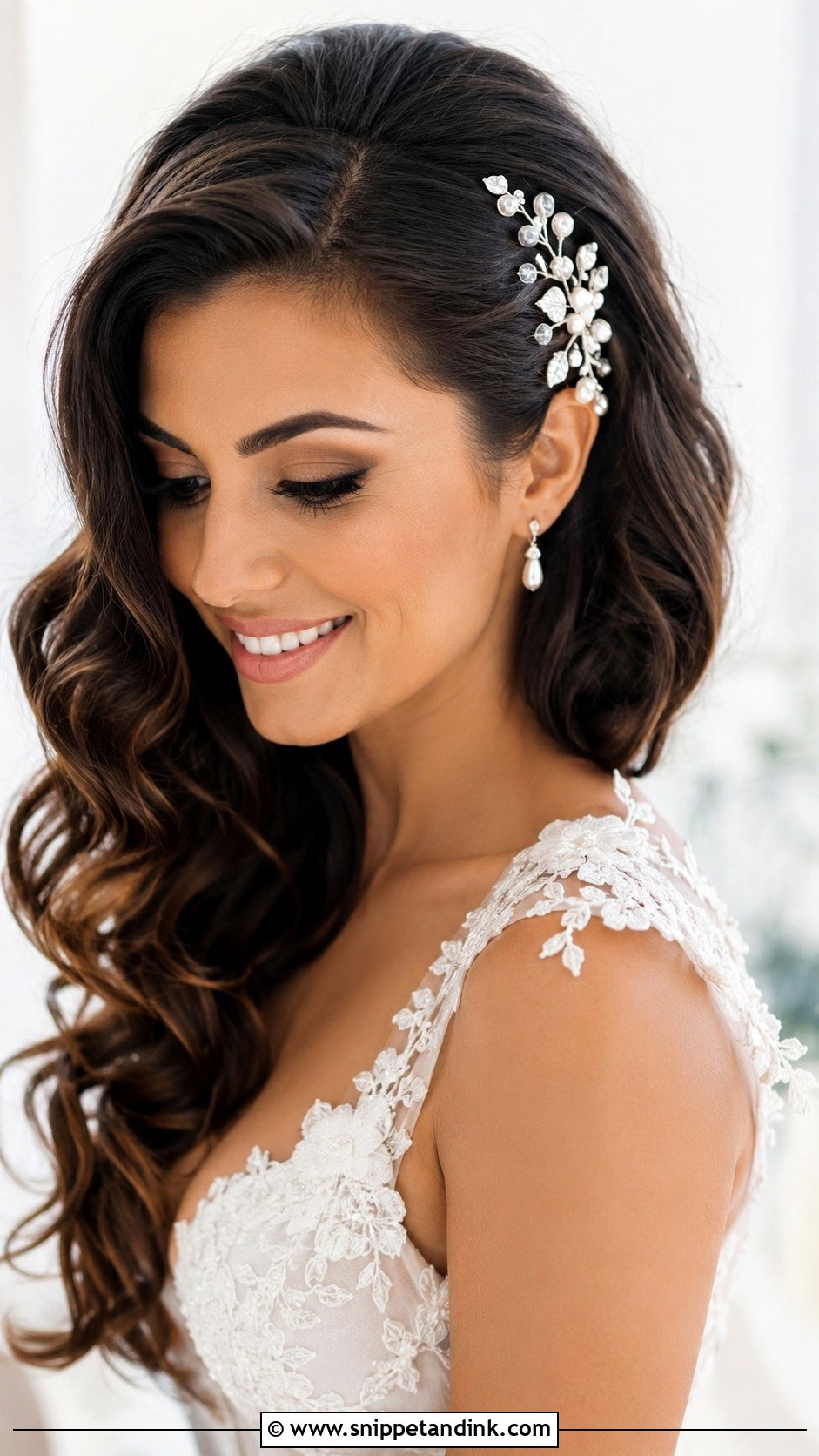
A side comb is the piece I trust most on a long day because the teeth physically weave into the hair. On fine or slippery hair, give the teeth something to bite: I set two bobby pins crossed in an X, slide the comb in against them, then hide one more pin over the spine. Pearl, crystal, floral or feather, the method is the same. It flatters loose waves, side-swept curls and low buns. It’s also an easy way for bridesmaids and mothers of the bride to tie in with you without everyone wearing an identical headpiece.
12. Headband Wedding Hair Fascinator
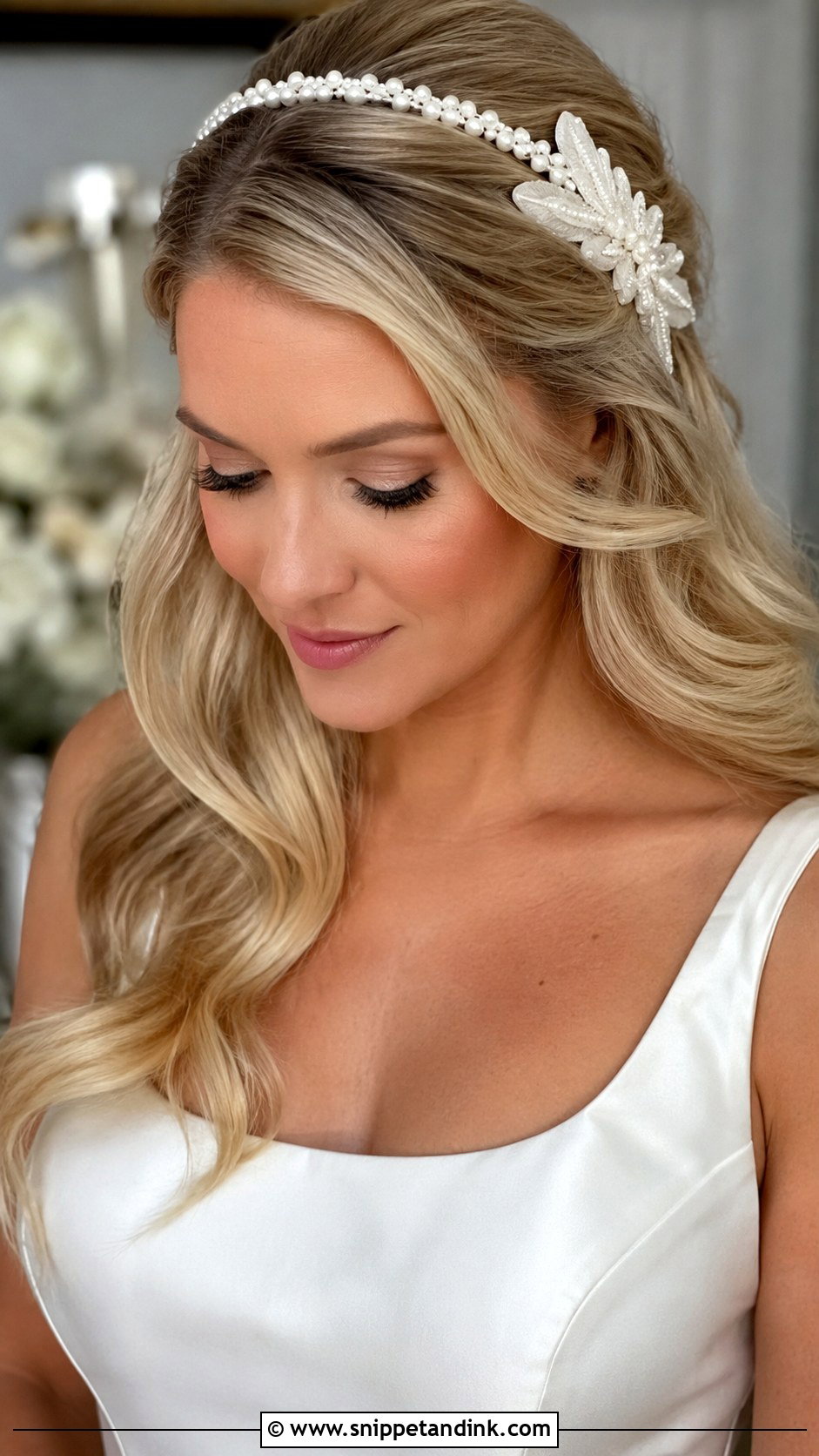
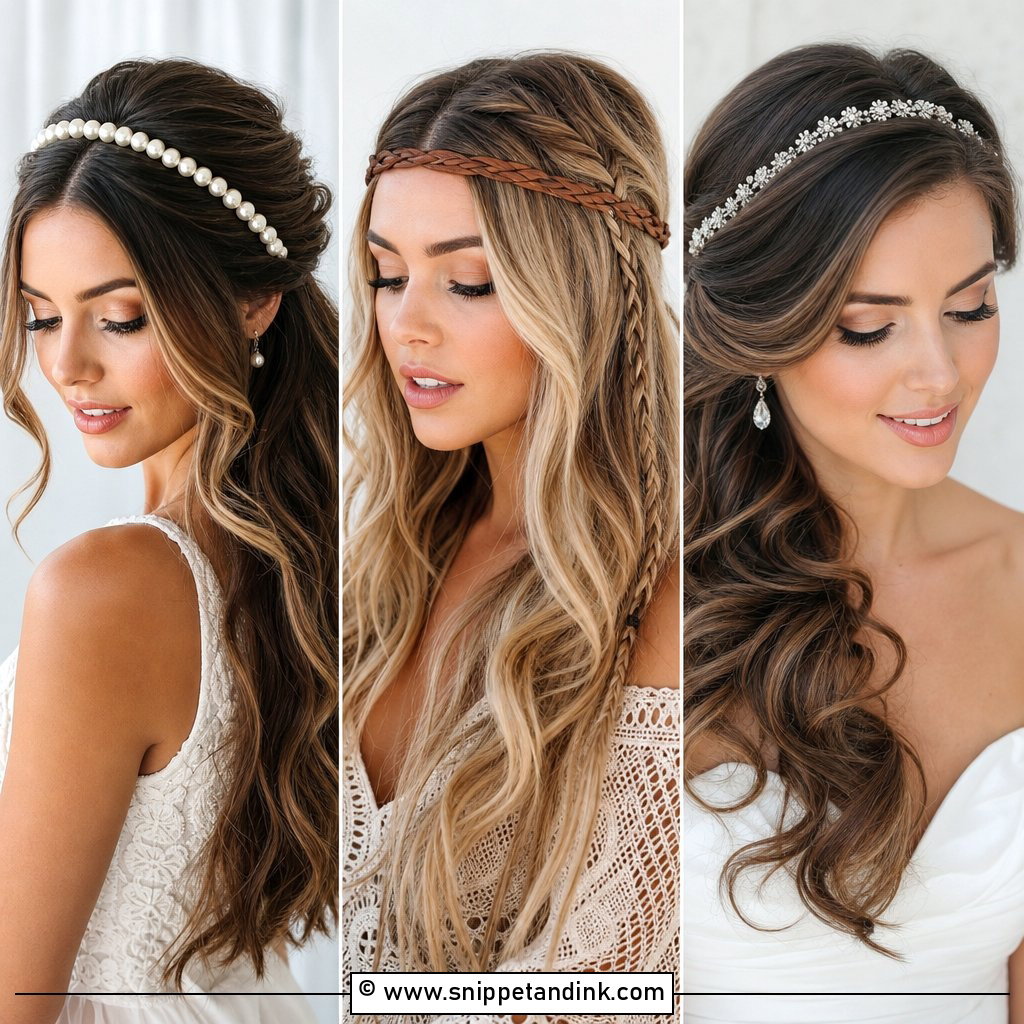
A headband base spreads the weight across the top of the head, which is why it stays put through outdoor wind and a long reception. The trade-off is pressure. A band that is slightly tight behind the ears can give you a headache by the fourth hour, so wear yours for a full hour at the trial, not five minutes. Pearl bands read classic, floral bands suit a garden setting, and a mini fascinator mounted on a band gives height without any pins. Keep the crown smooth or only gently lifted, or you’ll see a gap under the band.
13. Short Hair Wedding Fascinator
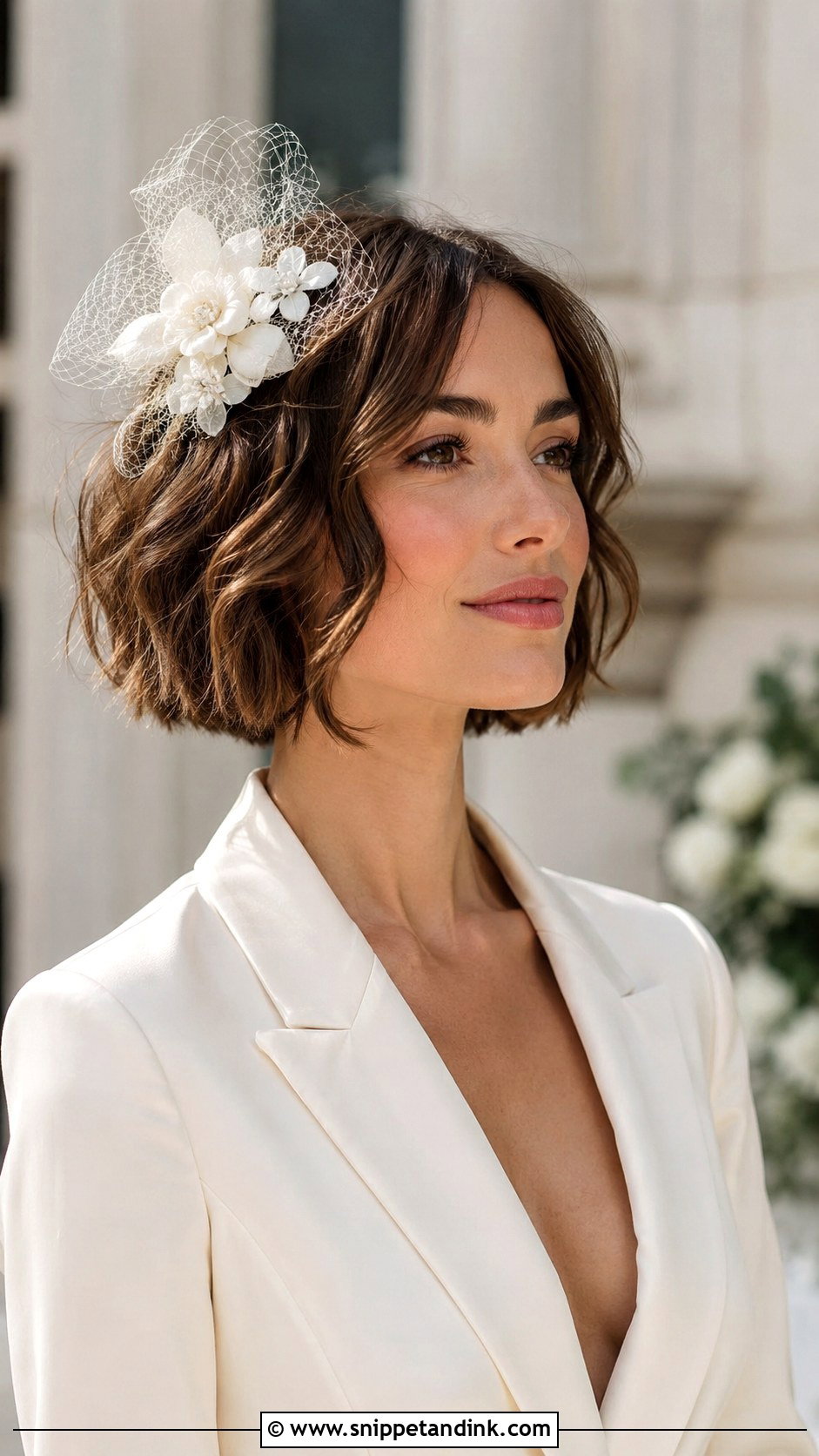
On a pixie or a bob there’s less hair for a comb to hold, so I lean on slim clips, light bands and pieces fixed with a small alligator clip. Birdcage veils, pearl clips, mini hats, small floral combs and feather accents all suit shorter cuts. I mist a little dry texture spray where the piece will sit so the clip has grip. Side placement softens a short cut; a centered band looks more graphic. Have your last trim a week or two out, so the shape has settled but the neckline is still crisp. On short hair, small is plenty.
14. Low Bun Wedding Fascinator
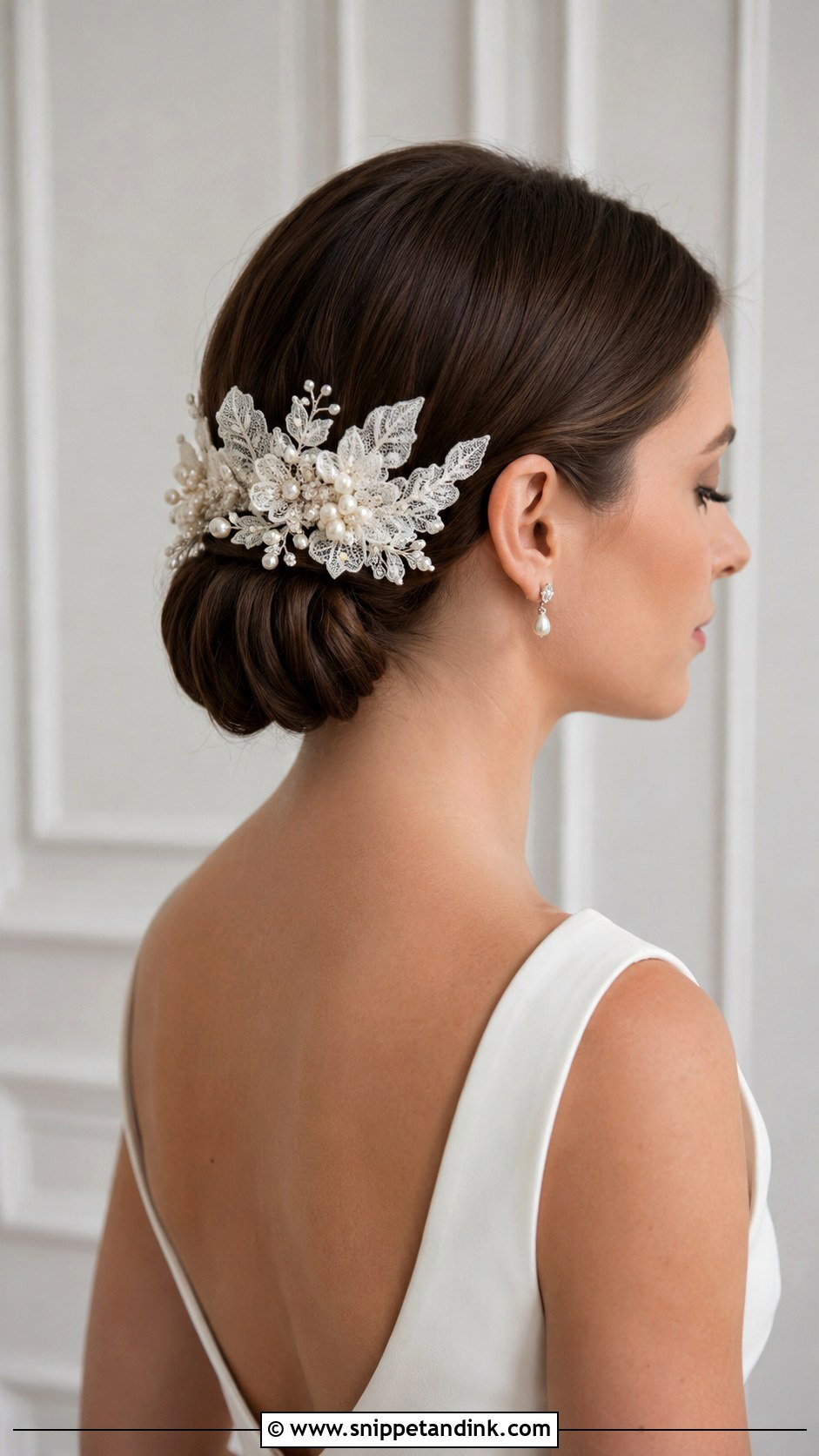
The low bun is the most reliable base a fascinator can have, because the comb sinks into a solid knot of hair. The piece can sit above the bun, to one side or slightly forward near the part. Smooth buns read formal. A loose twisted bun is softer, but its looseness also means fewer firm places to pin, so I build the anchor before I pull it apart. Leave a couple of face-framing pieces if you want it relaxed. It’s also the easiest base for swapping a ceremony veil for a fascinator later, since the bun keeps its shape when the first comb comes out.
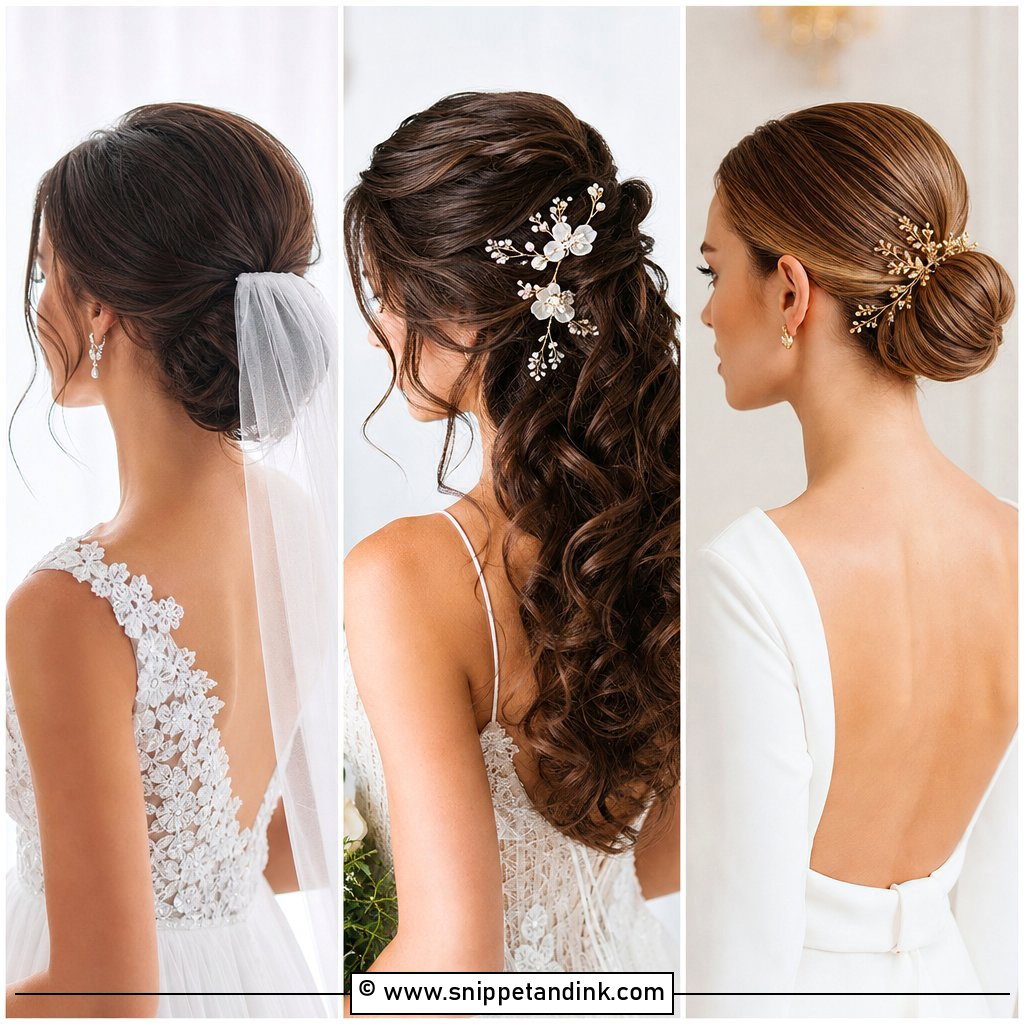
15. Half Up Wedding Fascinator
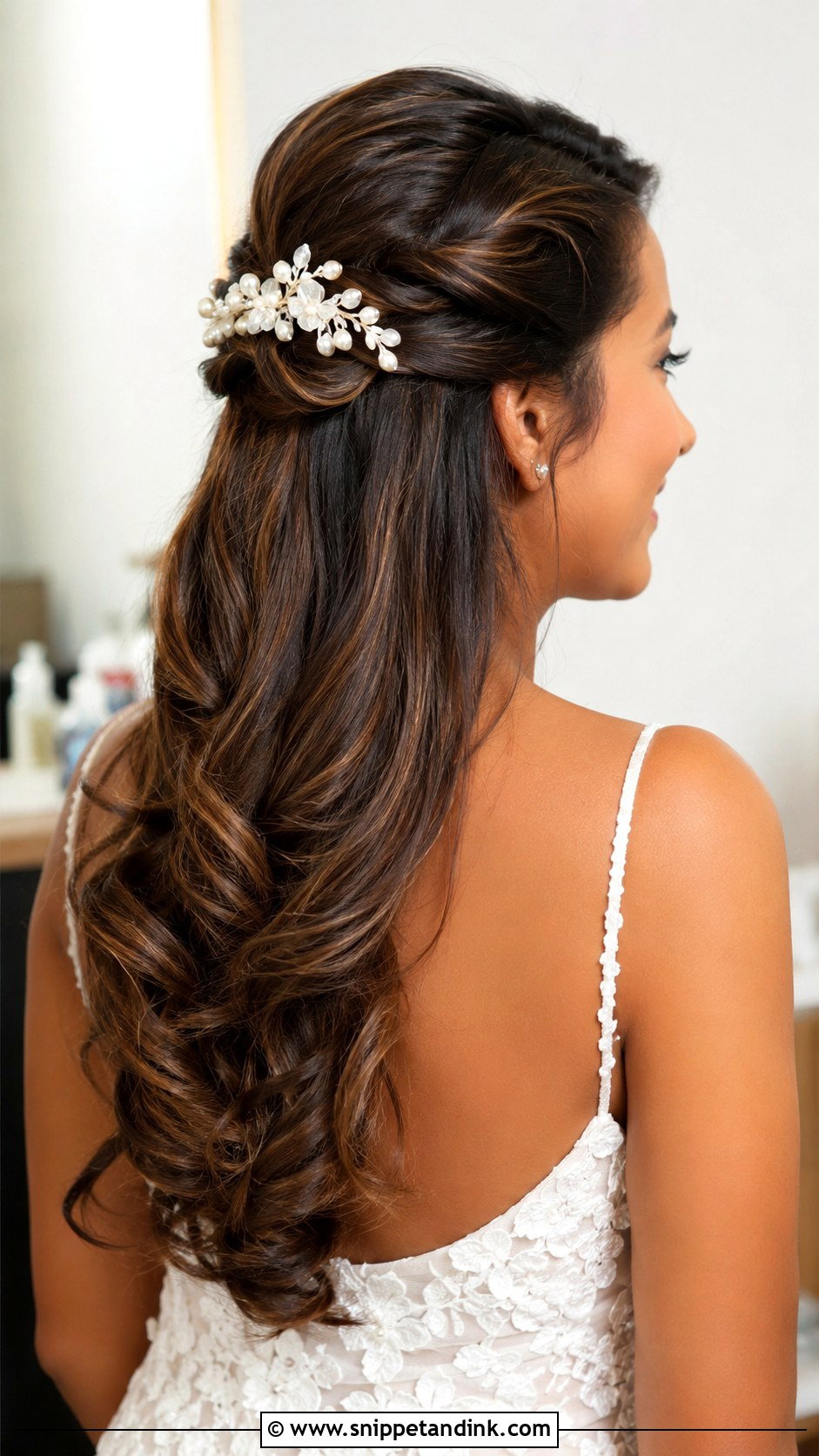
Half-up hair gives you both: the pinned top section is the anchor, and the lengths stay down. Floral, pearl and crystal pieces all sit well right at the join where the two sections meet. I keep the crown height modest, because a big pouf pushes the fascinator forward until it tilts toward the forehead. The curled lengths need setting spray and time to cool, or they’ll relax long before the pinned top does. Waves, curls, loose braids and soft twists are all good partners for it.
Scaling a Headpiece to Your Face, Neckline and Veil
A fascinator that looks right in a shop mirror can look tiny or overwhelming in full-length photos. At the trial I check it three ways: from the front, from the side, and from about ten feet back, because guests and the photographer mostly see you at a distance.
- A high or embellished neckline usually wants a smaller headpiece; a strapless or plain neckline can carry more height.
- Wide-brimmed or tall pieces need a little more hair volume at the opposite side, or the head looks lopsided.
- If you’re wearing a veil too, the fascinator goes above or in front of the veil comb, never under it, and the two shouldn’t be the same width.
- Glasses wearers should check the piece doesn’t press on the arm of the frames above the ear.
I place it on the side you turn toward the camera most naturally, which we figure out at the trial by taking a few quick phone photos from each side. Most people have a clear favorite the moment they see them next to each other.
If It Starts Slipping Mid-Reception
A fascinator usually loosens after hugs, a car ride or the first hour of dancing. It is almost always fixable in two minutes if someone has the right things in a small pouch. Give these to a bridesmaid, not your own bag:
- Six or eight bobby pins in your hair color, plus a couple of U-pins for buns
- A travel-size firm hairspray
- A small mirror, so she can see the back of your head
- A spare hat elastic if your piece uses one
Don’t just push the comb back in where it was; that spot is already loosened. Pull it out, put two fresh pins in an X a little to one side, and slide the comb in against them. Light pieces need nothing more. If a heavy feather or hat keeps tipping, it’s often better to move it lower on the head, closer to the bun, where the hair is denser.
Bring the Real Headpiece to Your Trial
A fascinator can replace a veil, sit alongside a short one, or arrive later as part of a second bridal look. Which one suits you depends on the dress, the venue and how much you’ll be moving. Bring the actual piece to your hair trial, not a picture of it, and wear it while you sit down, hug someone and turn your head quickly. If it shifts at the trial it will shift at the wedding, and the trial is when we fix the anchor.
You'll Like These Ideas:


Leave a Reply