
Half updos are the style I’m asked for most at bridal trials, and I understand why. You keep the movement of hair worn down, the face stays clear, and the pinned section gives a veil, a hair vine, pearl pins or floral clips something solid to hold onto. It suits a ballroom as easily as a beach. The catch is that the loose half carries all the risk, so the version you pick has to match your texture as much as your dress. Here are fifteen half updos I’d recommend, with what each one needs to last until the last song.
One Pinning Point Decides the Silhouette
Every half updo below is really a decision about one spot on the back of your head. Where I gather and secure the top section shapes your profile, your face and what the veil does.
- At the crown: lifts the silhouette and adds height, which flatters a round face from the front. It’s also the most secure base for a heavy veil comb.
- Just below the crown: the most natural placement and the easiest to wear for hours. It reads soft rather than styled.
- Low, near ear level: relaxed and slightly vintage, but less hair holds it, so it relies more on pins and texture.
Put your saved photos side by side and you’ll often find they share one placement. That detail is worth telling your stylist, more than the twists or the braid.
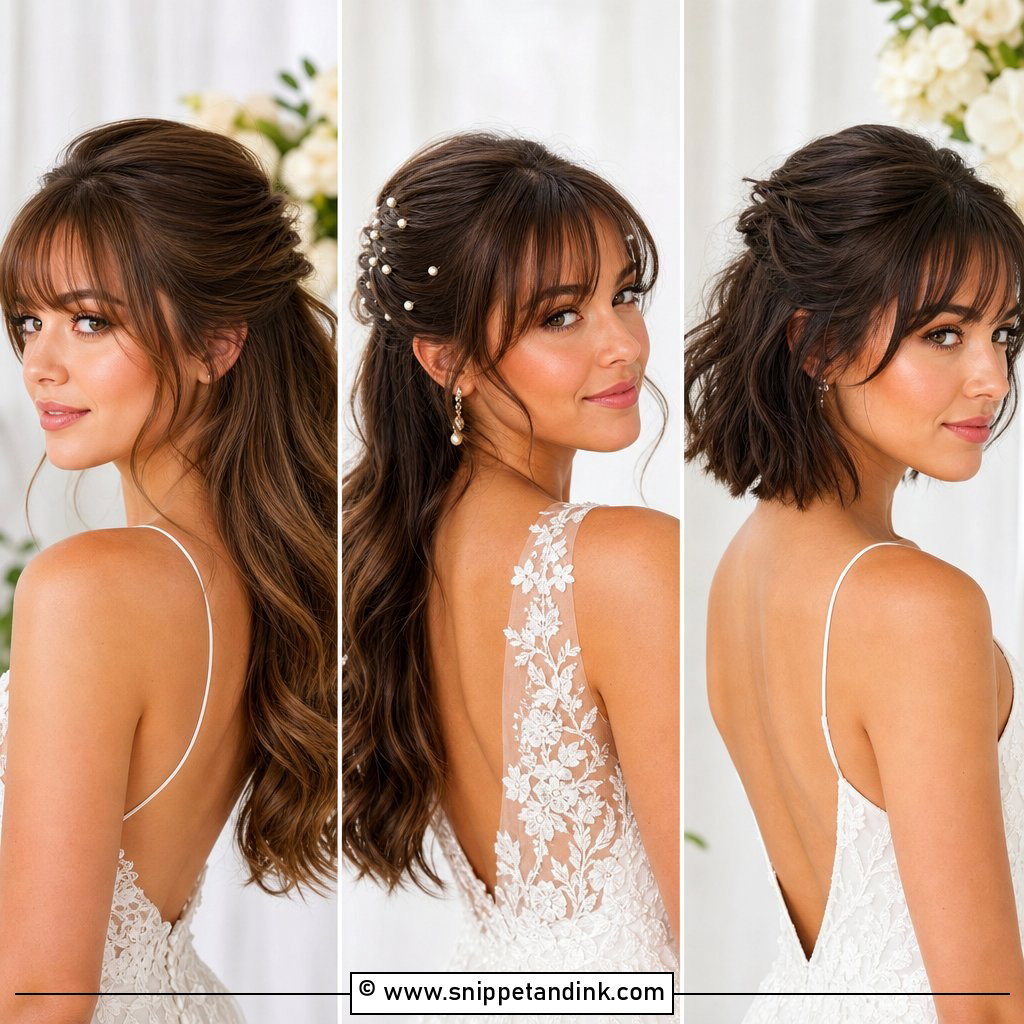
1. Bride Half Updo With Loose Curls
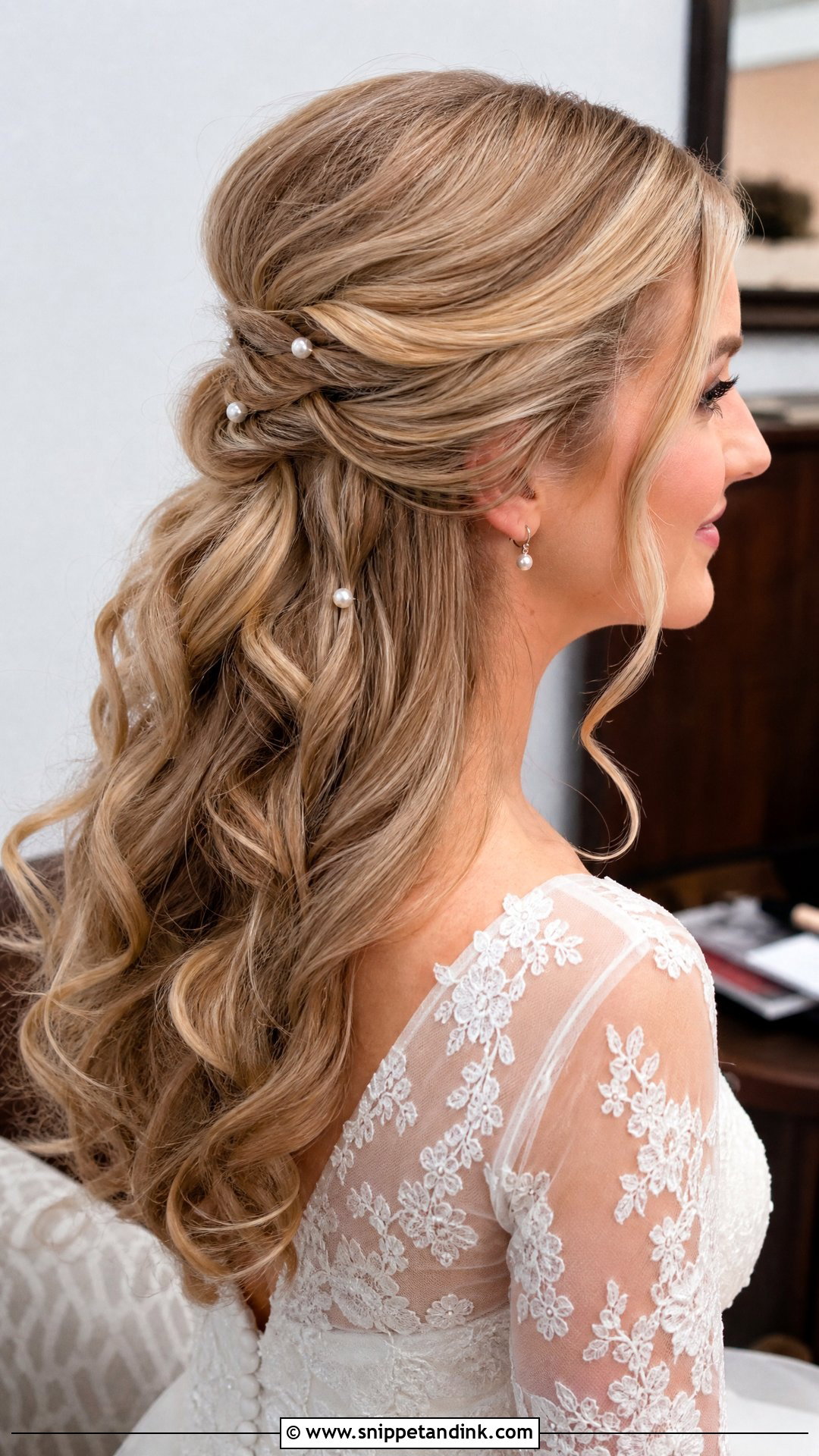
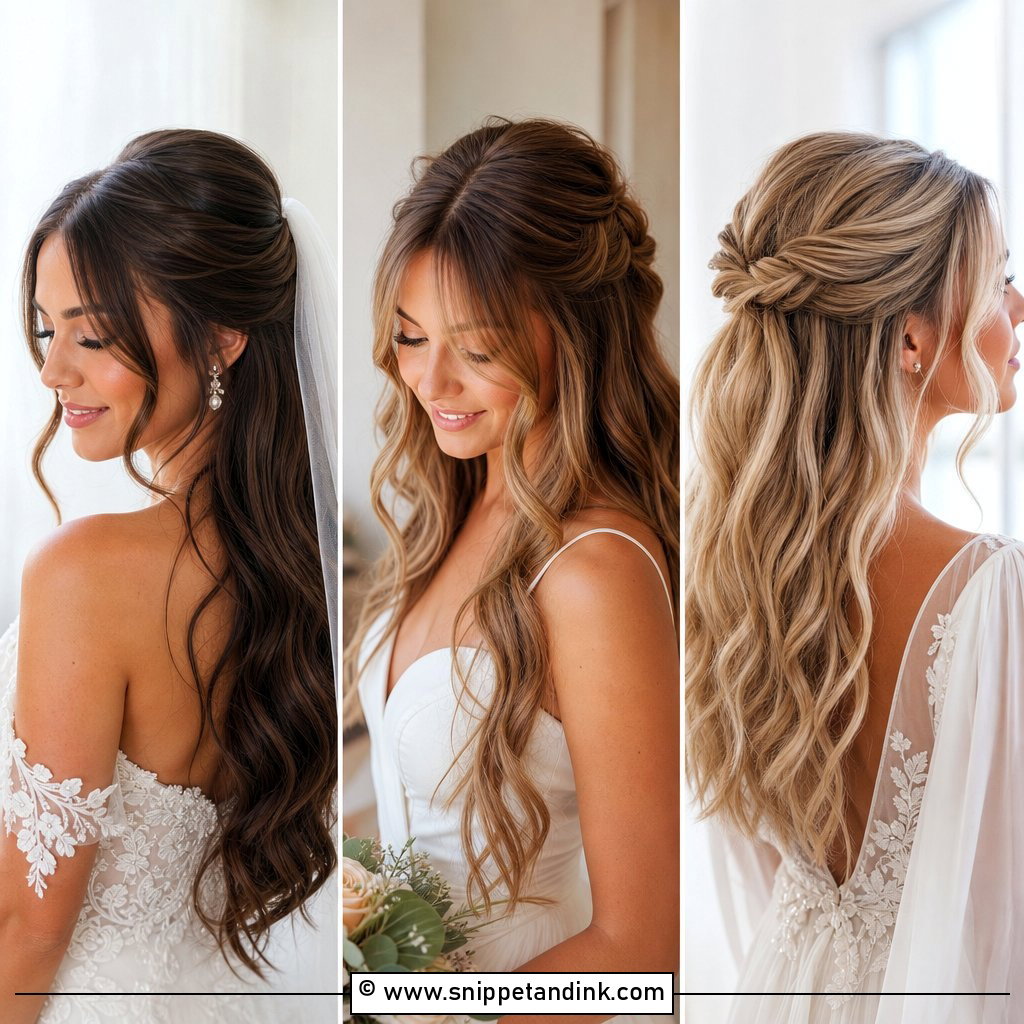
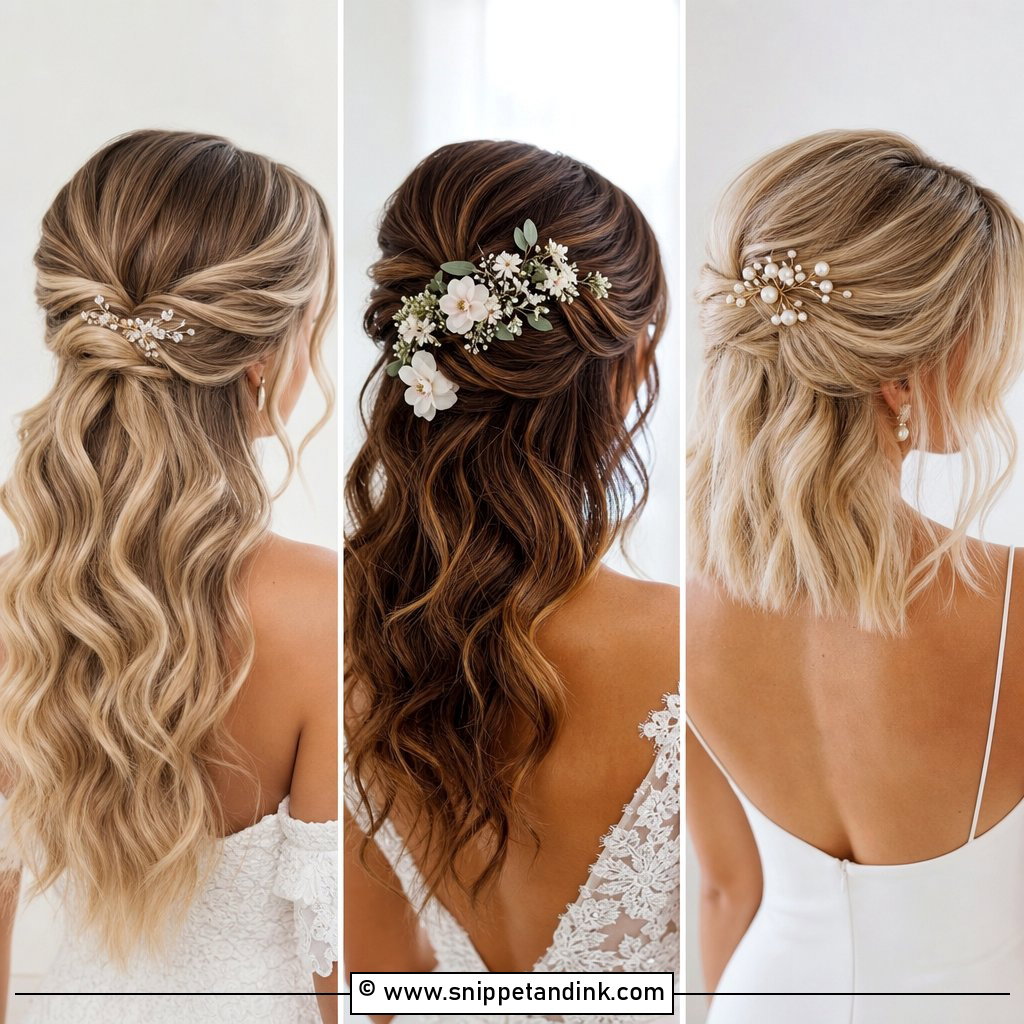
Loose curls are the default half updo for good reason: they look full from every side and forgive small imperfections. I lift the top section with light backcombing at the crown, pin it back, and leave the lower lengths in big curls set around a 1.25-inch iron. Medium to long hair shows them best. The veil comb slides in just under the pinned section, where the backcombing gives it grip. Pearl pins or a crystal comb finish it.
2. Bride Half Updo With Soft Waves
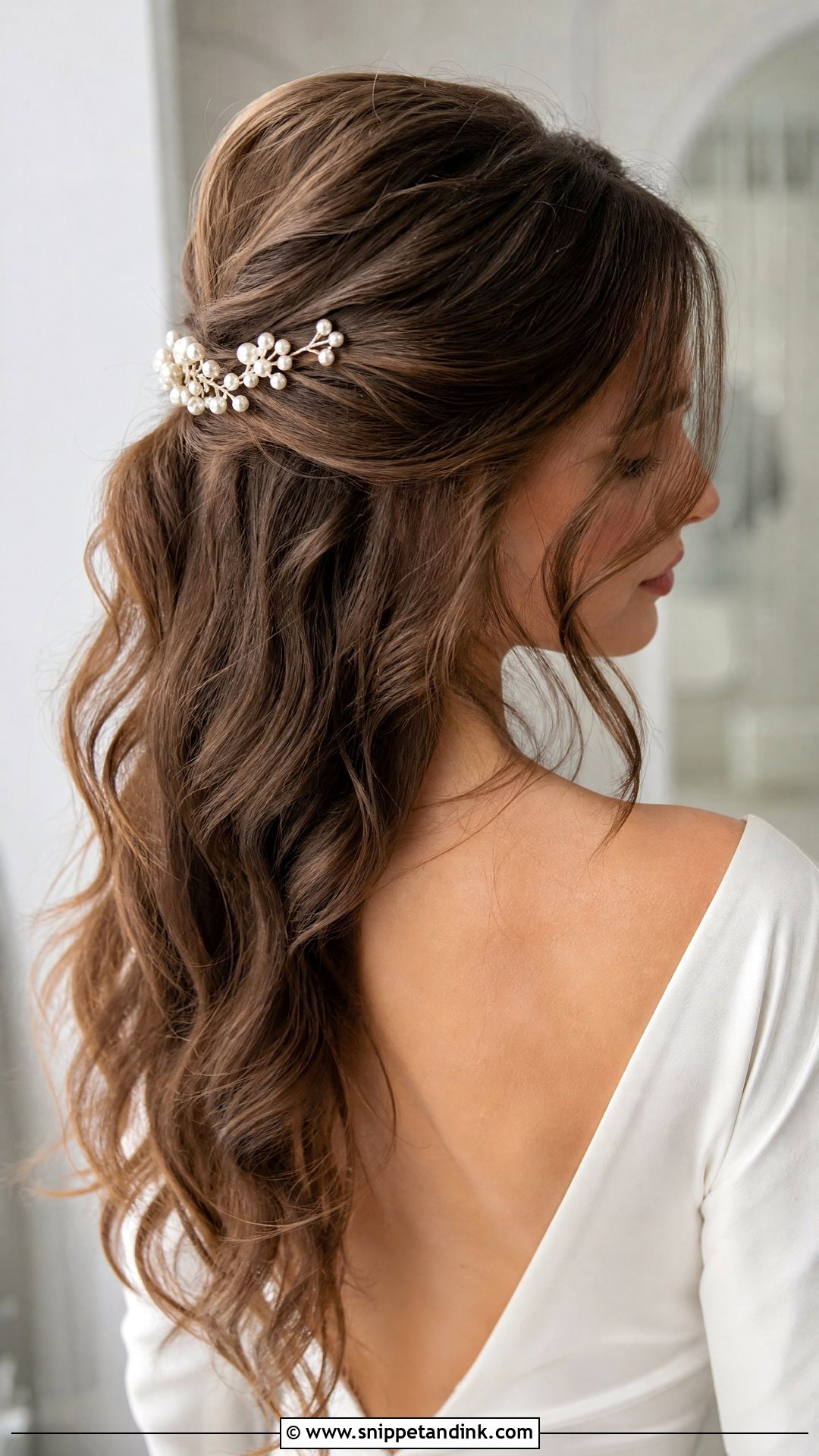
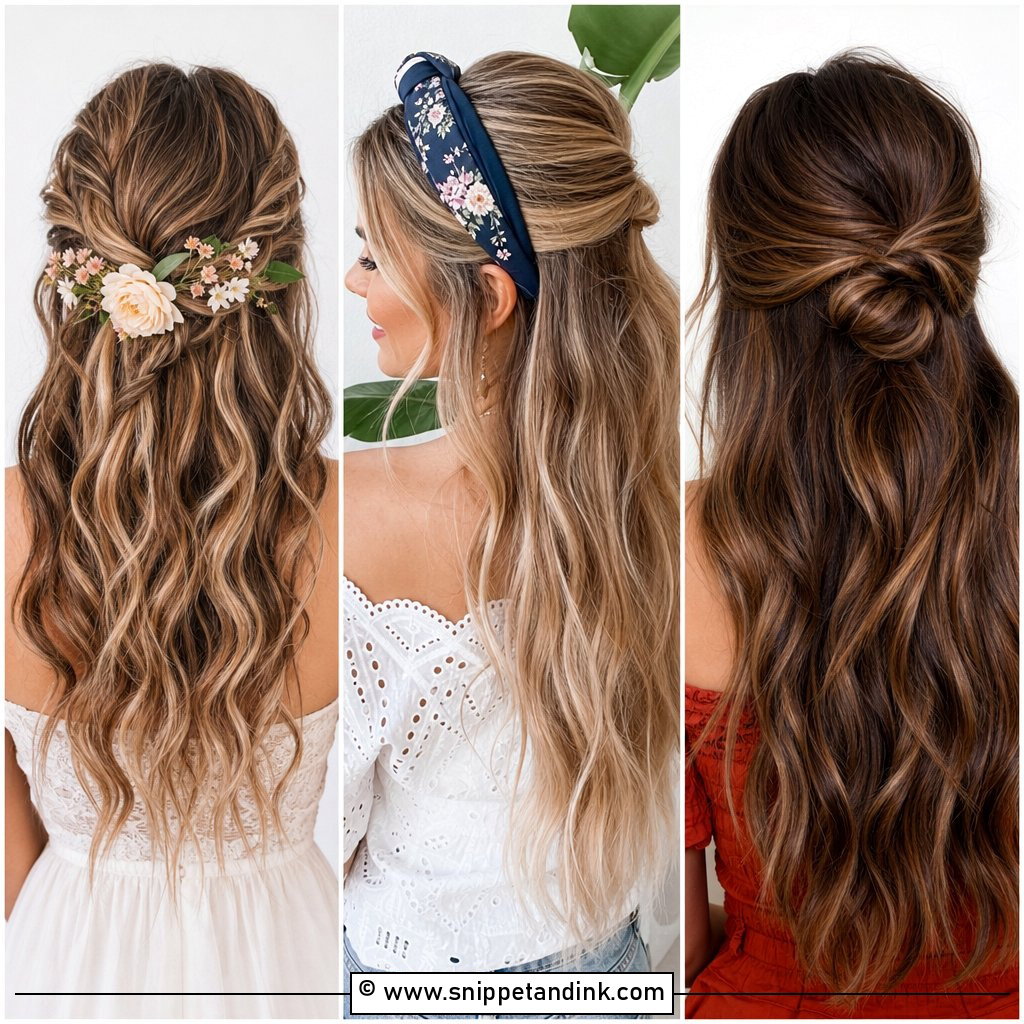
Waves are curls with the definition brushed out, and that’s the version I steer brides toward when they never wear their hair styled. They keep a relaxed shape that sits well against lace, satin slips and off-shoulder necklines. I curl first, let it cool, then brush through with a paddle brush so the pattern softens without collapsing. The top can be twisted, pinned or loosely gathered. It’s the closest thing to your everyday hair that still reads as finished.
3. Bride Half Updo With Twists
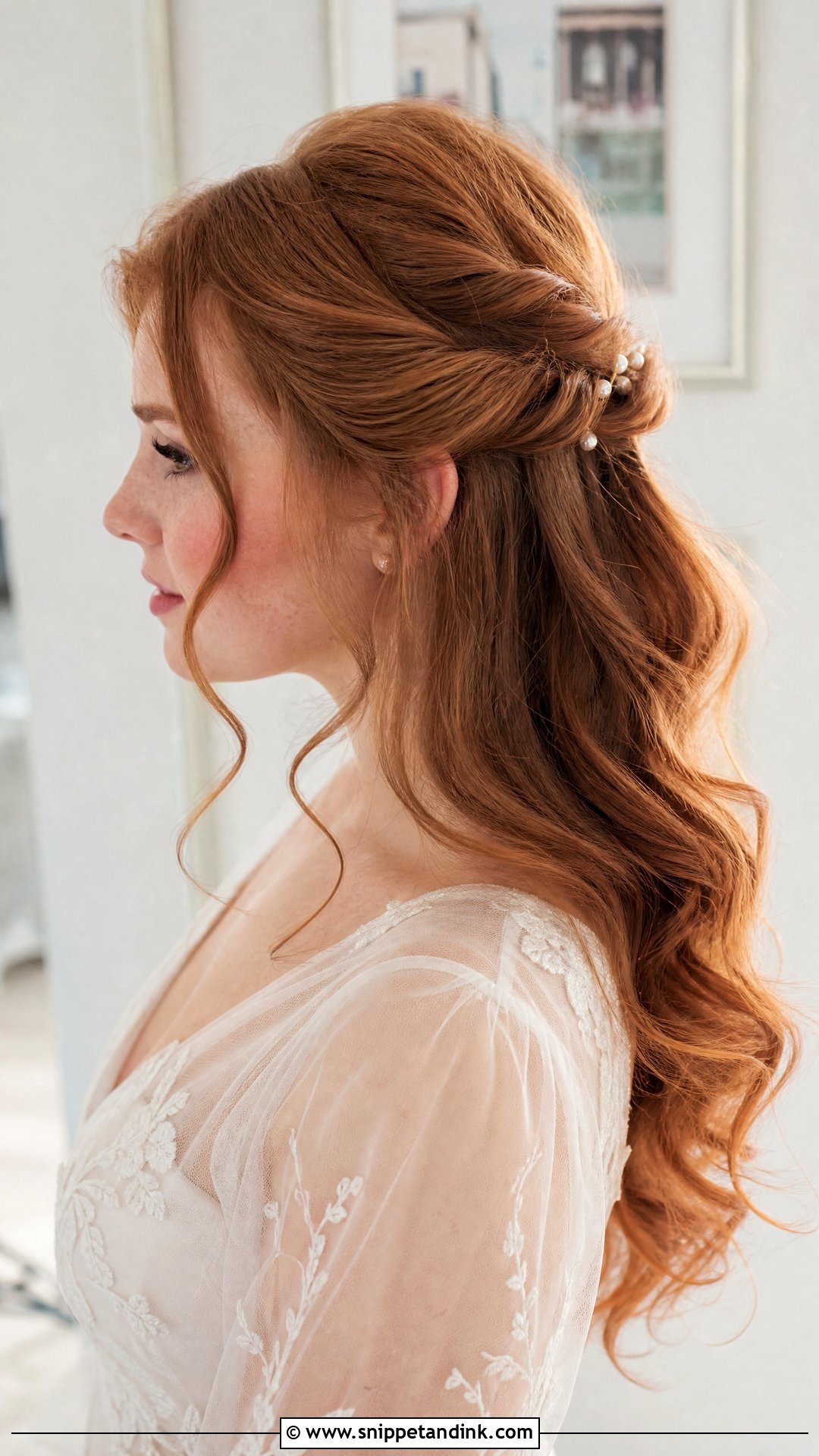
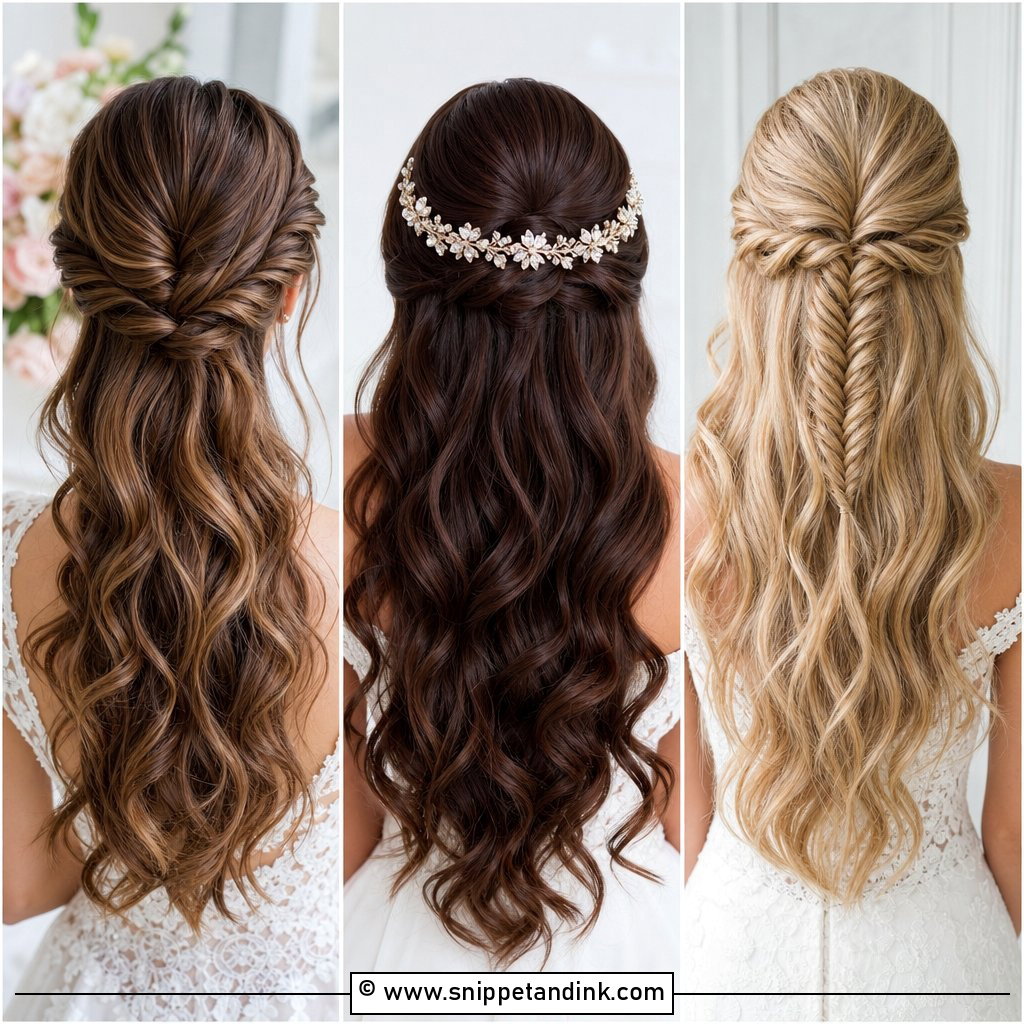
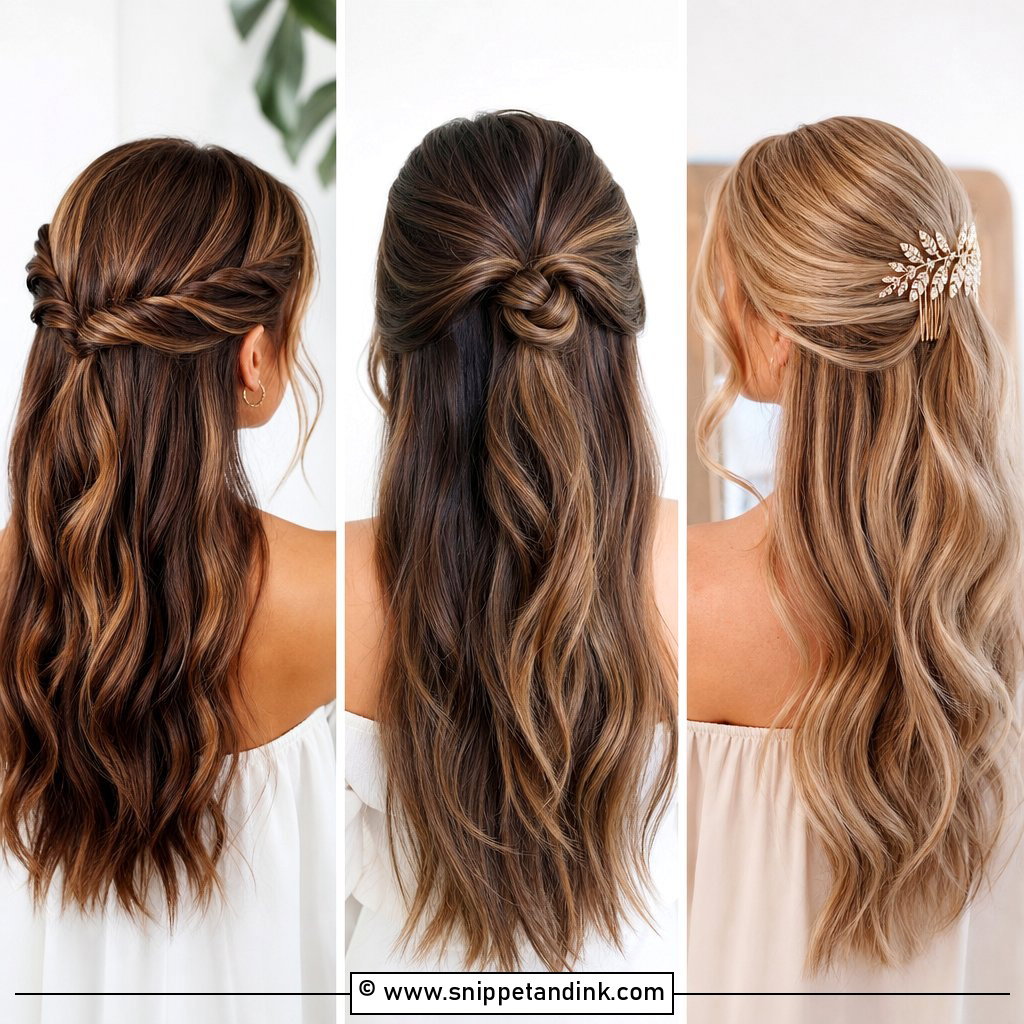
Two small twists from each temple, pinned at the center back, is the simplest structure I build and one of the most reliable. It controls the front pieces during the ceremony while the ends keep moving. I twist toward the back of the head, never toward the face, or the twists loosen as you turn. The back view matters here because guests watch it through vows and aisle moments. Small pins or a few fresh flowers can hide the meeting point.
4. Bride Half Updo With Braid
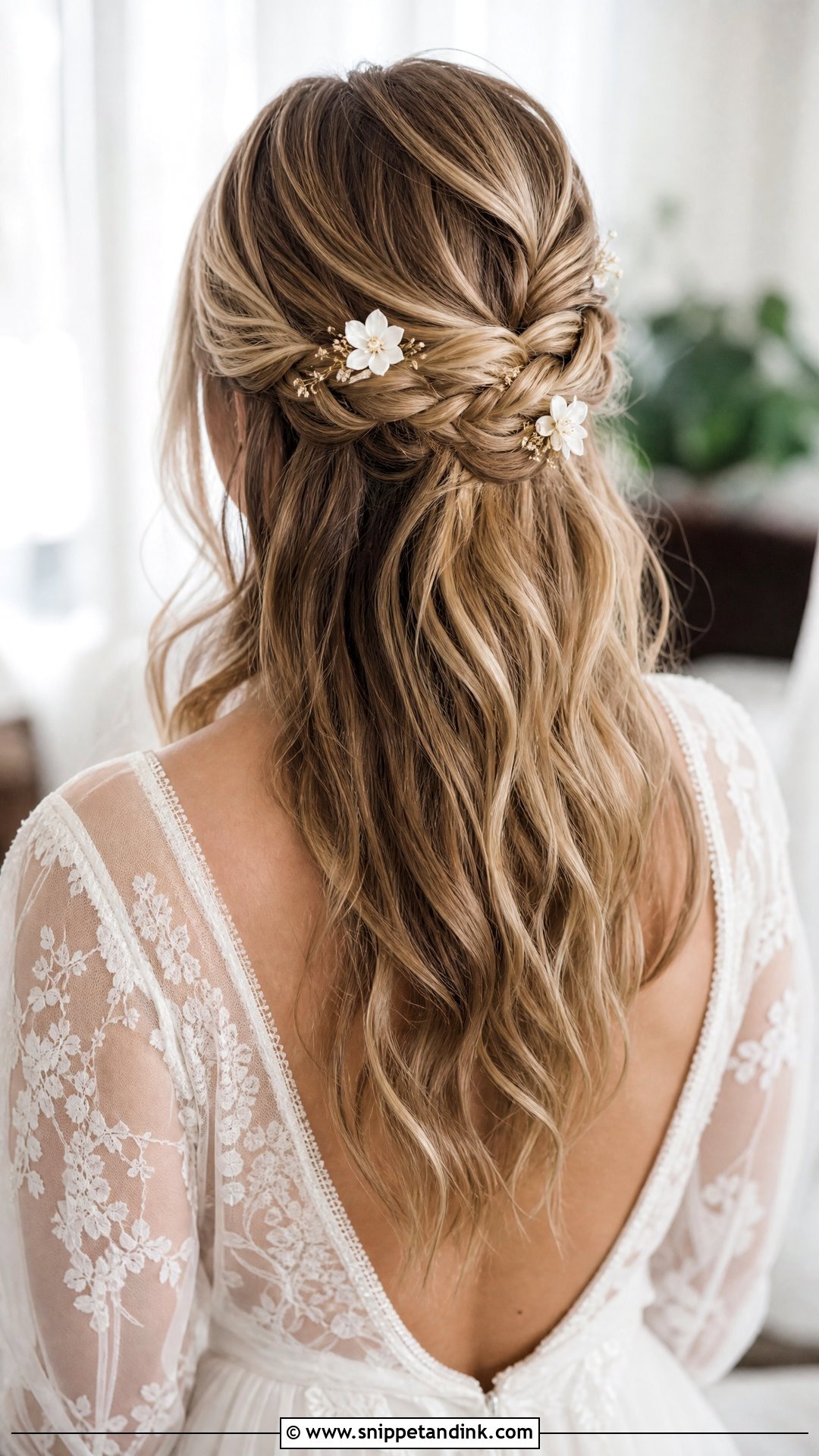
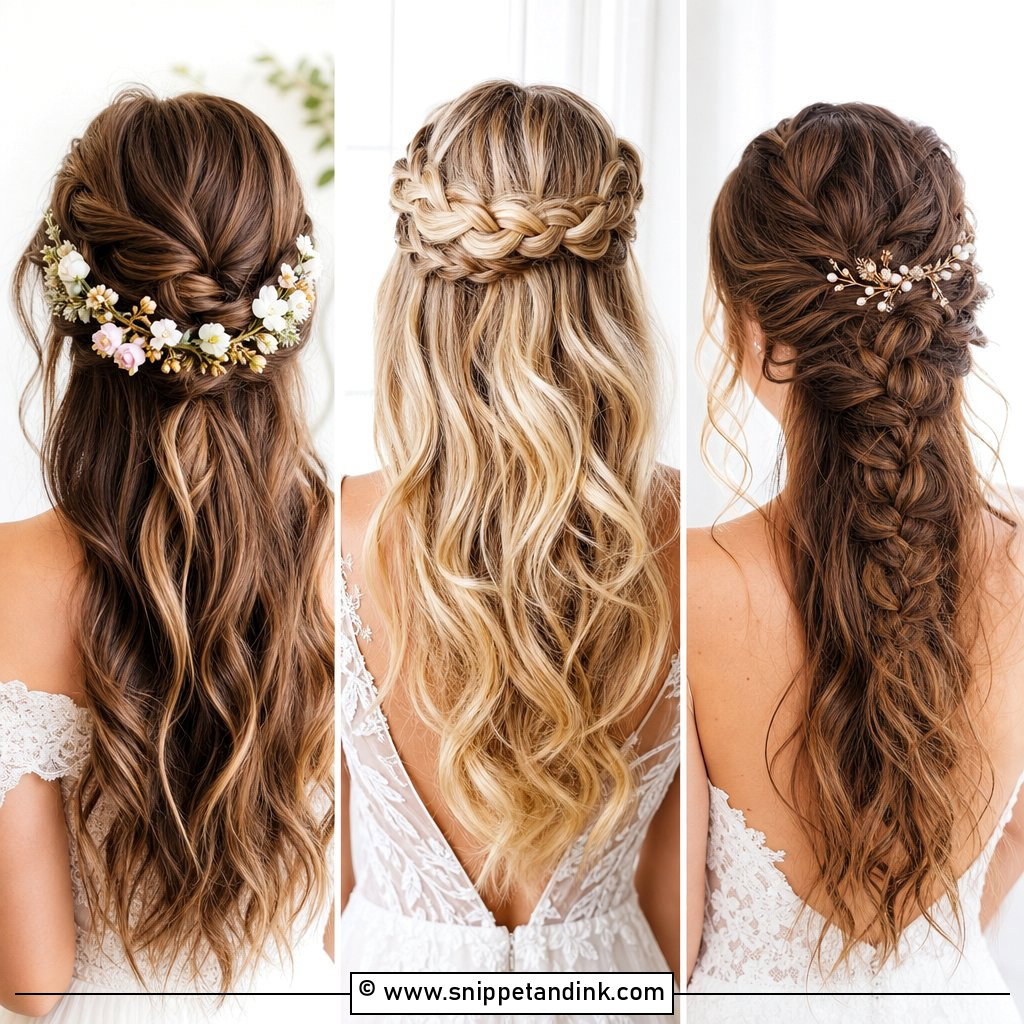
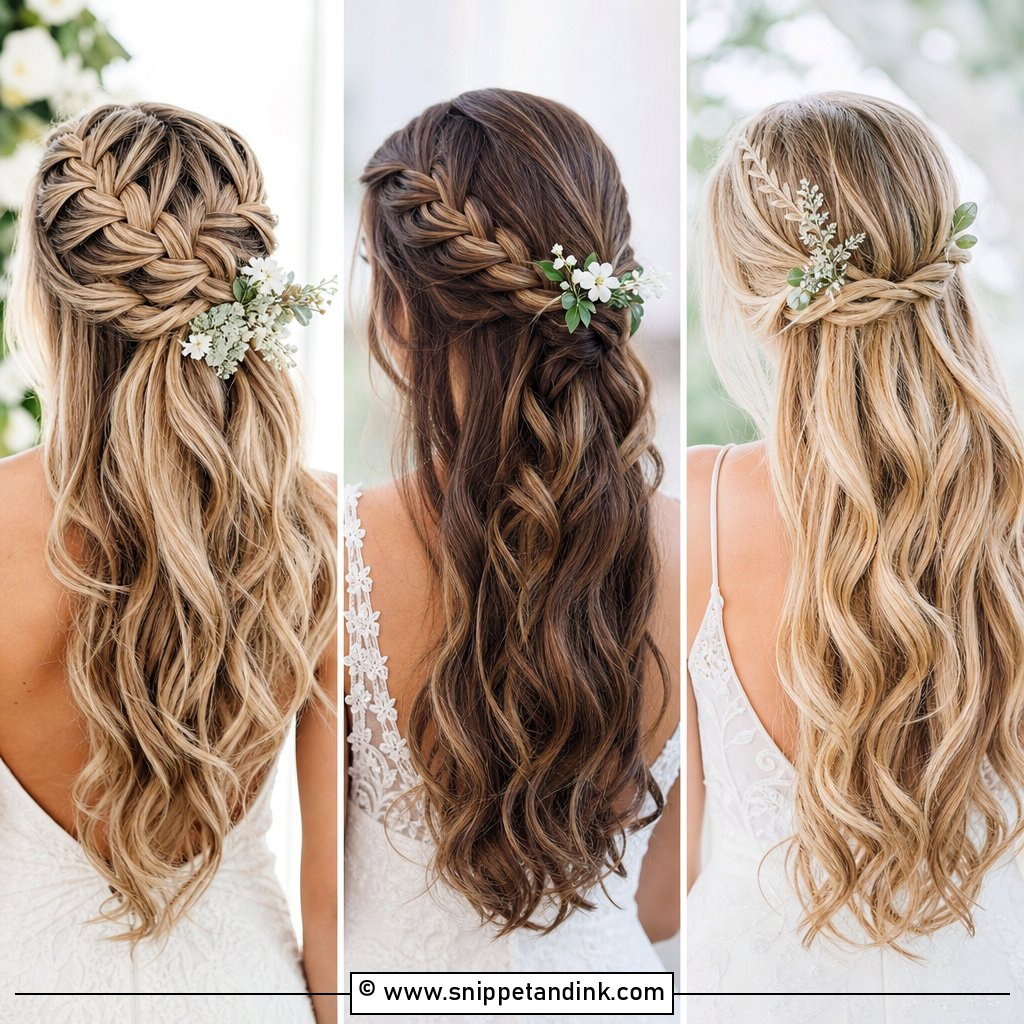
Braids add texture and hold, which is why I like them for outdoor weddings where wind is a factor. The braid can sit across the back like a crown, blend into twisted sides or form the pinned center. Curls or loose waves below keep it soft. I braid snugly and then pull the outer loops wider, which gives fullness without loosening the core. Boho, garden and rustic settings suit it.
5. Bride Half Updo With Fishtail Braid
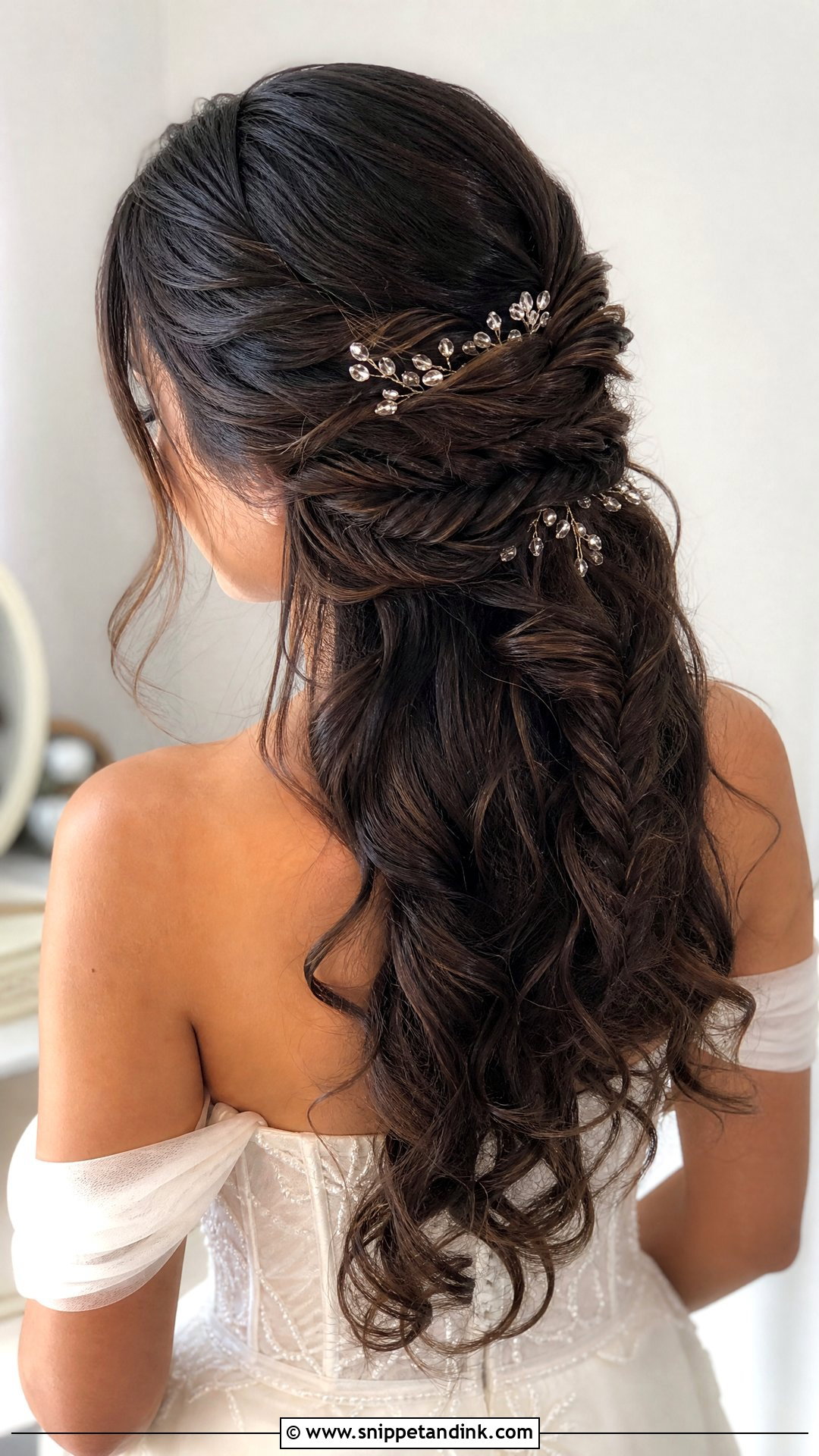
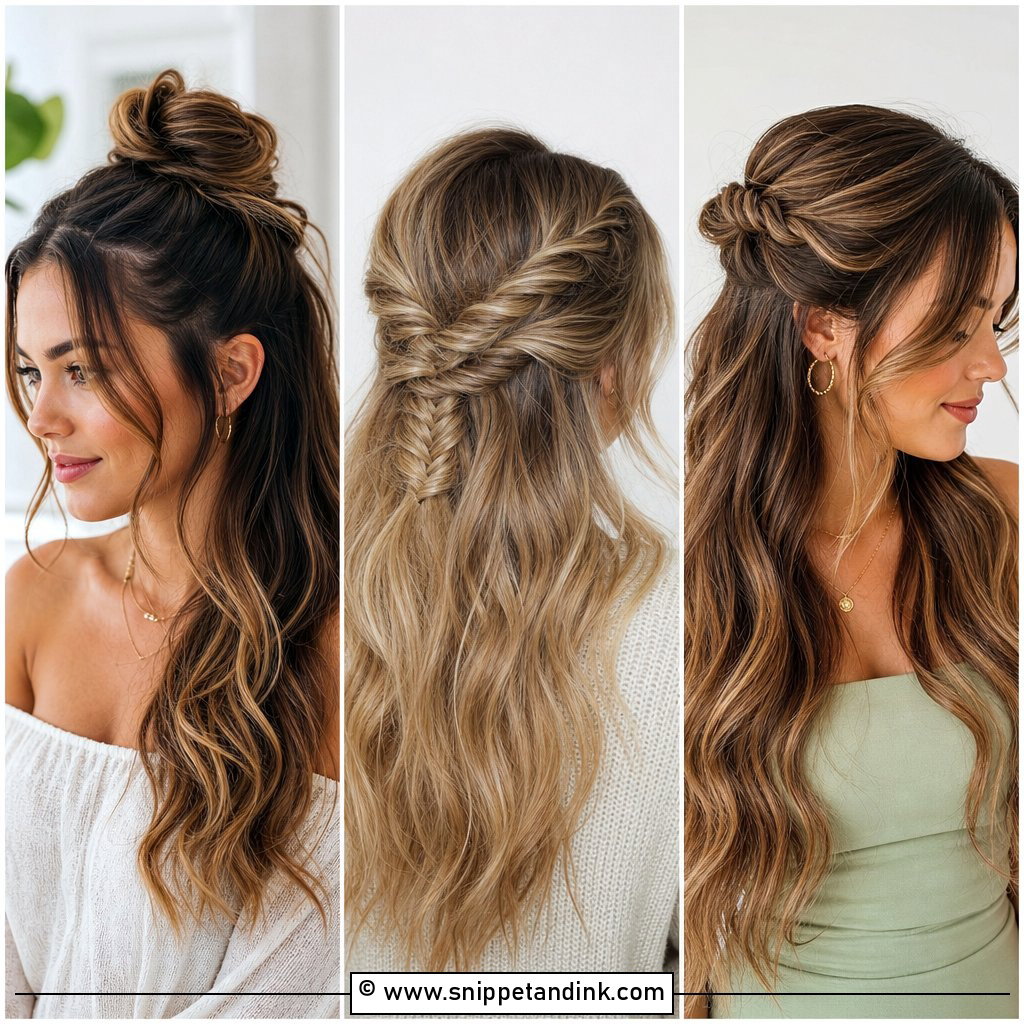
A fishtail has many more crossings than a three-strand braid, so it reads as detailed from a distance without any accessory. It stands out best against waved or curled hair. I braid it down the center or bring in sections from both sides into one pinned point, secure it, and only then loosen it. Loosening before securing makes it fall apart. Fine hair can look thin in a fishtail, so add texture spray before you start.
6. Bride Half Updo With Pearl Pins
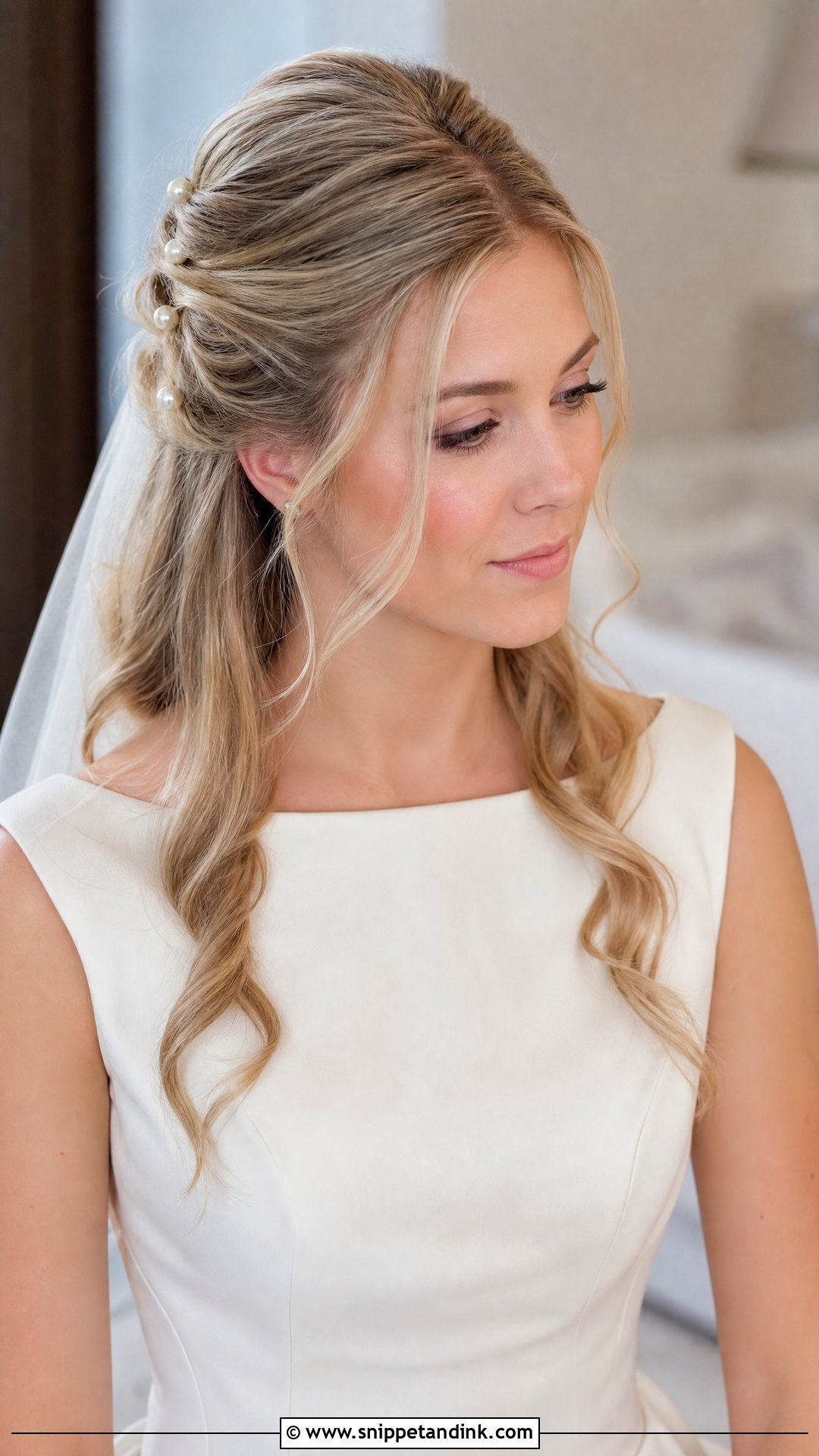
Pearl pins add shine and detail to fine hair that can’t produce much volume. I curl or smooth the hair first, pin the top section back, and then place the pearls in a loose, uneven pattern rather than a straight row. An organic scatter looks more current in close-ups. Pearls need something to bite into, so I push each one into a pinned section, not loose hair. Clean gowns, lace and a classic veil all pair with it.
7. Bride Half Updo With Flower Pins
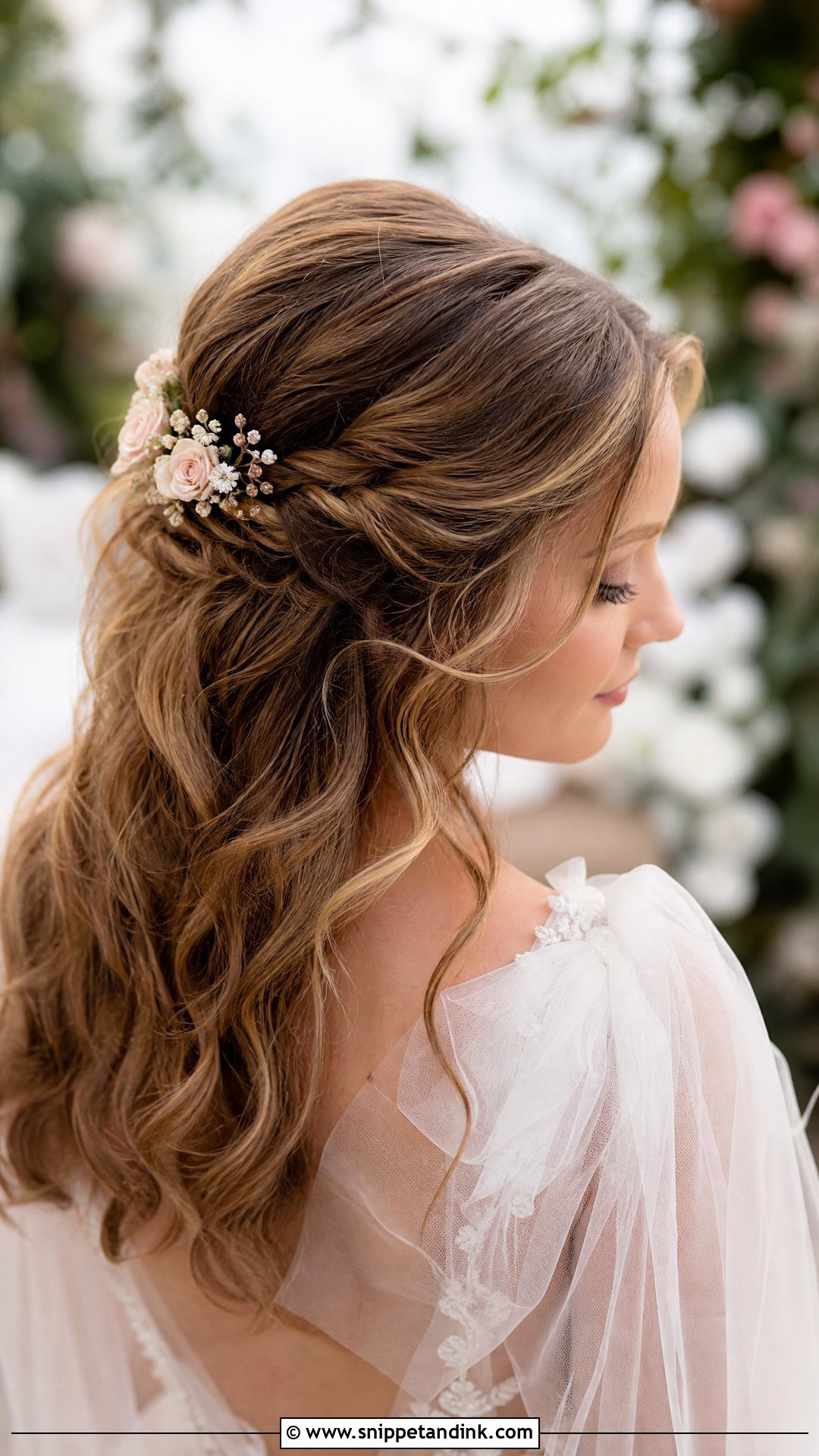
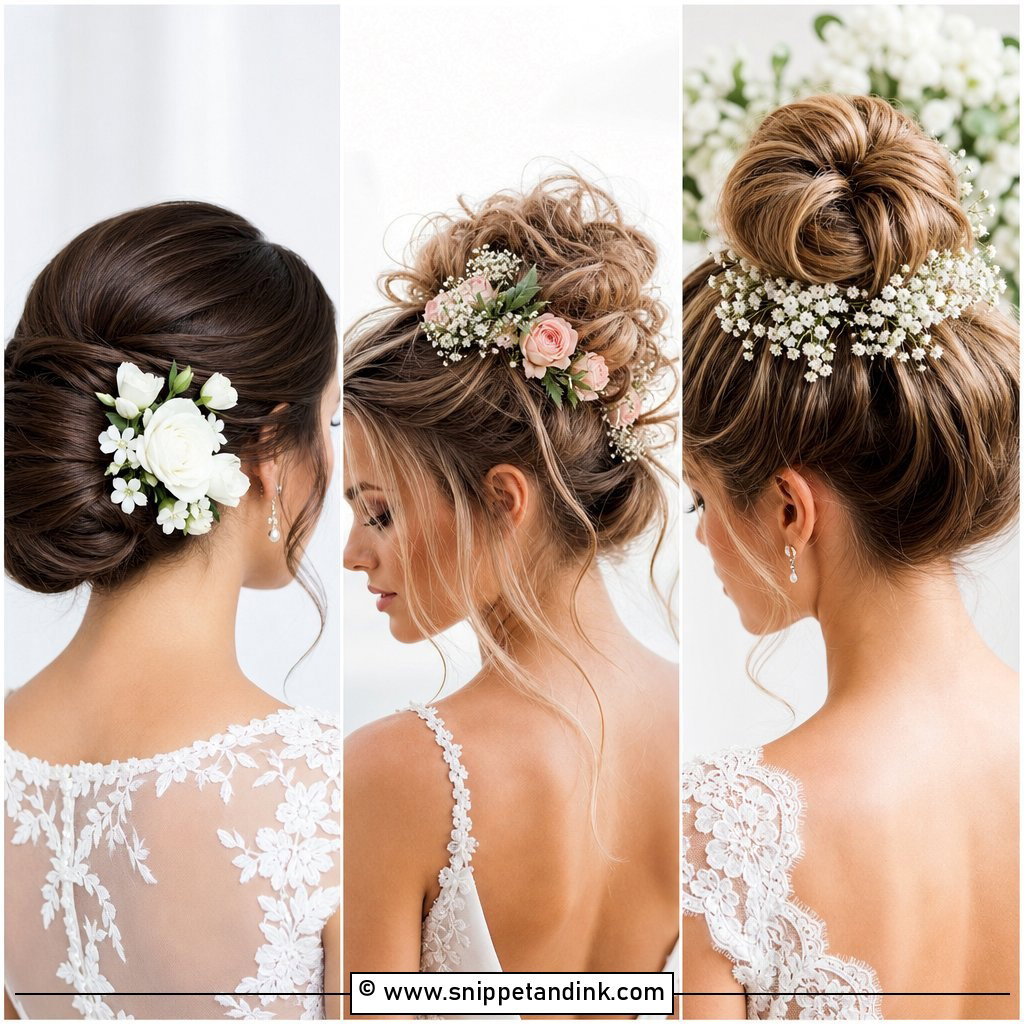
Flowers in hair need a plan for heat. Tiny dried blooms, silk pins or fresh baby’s breath tucked into the pinned section all work, but fresh flowers out of water start to wilt within a few hours in summer, so I add them last and choose hardy varieties. Loose waves or relaxed curls give the flowers a soft backdrop. Follow the curve of the half updo with the flowers instead of piling them in one cluster. Ivory, blush, champagne or peach that echoes your bouquet keeps it connected.
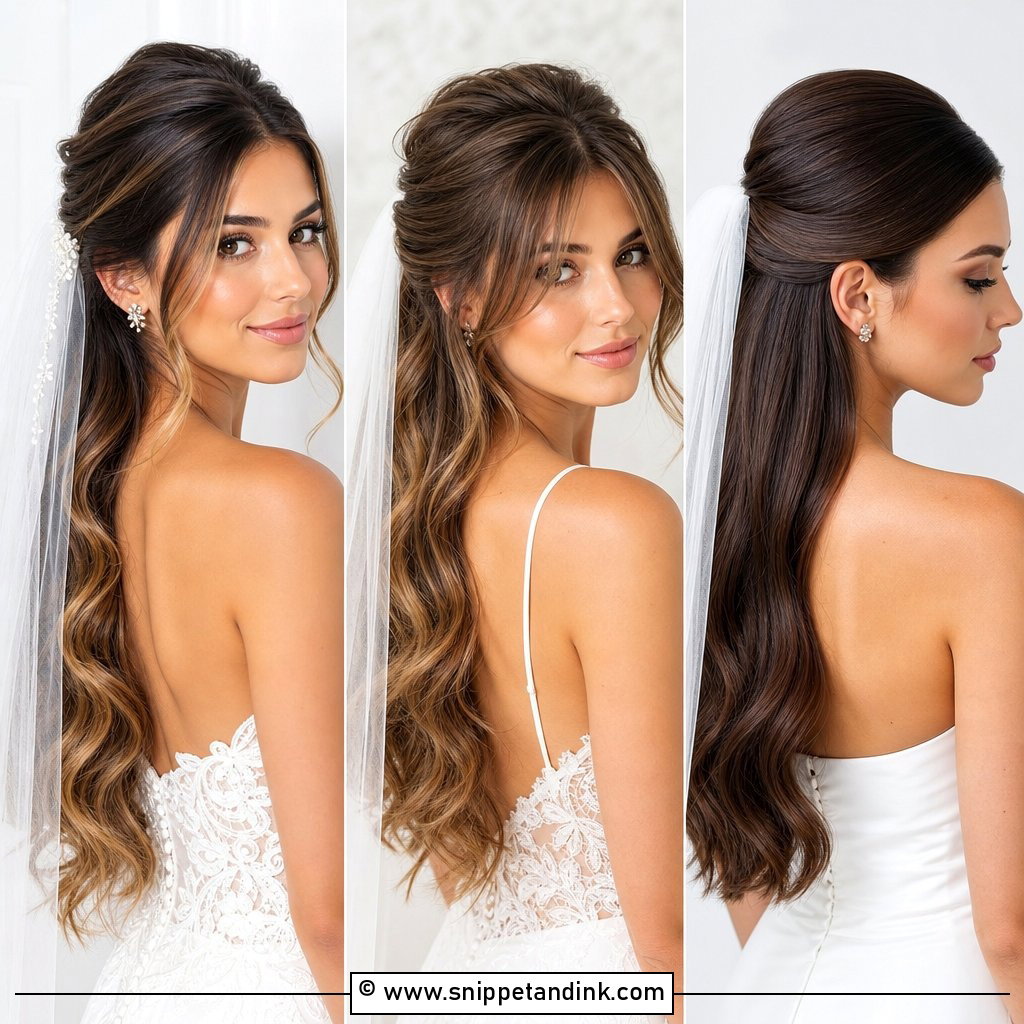
8. Bride Half Updo With Veil
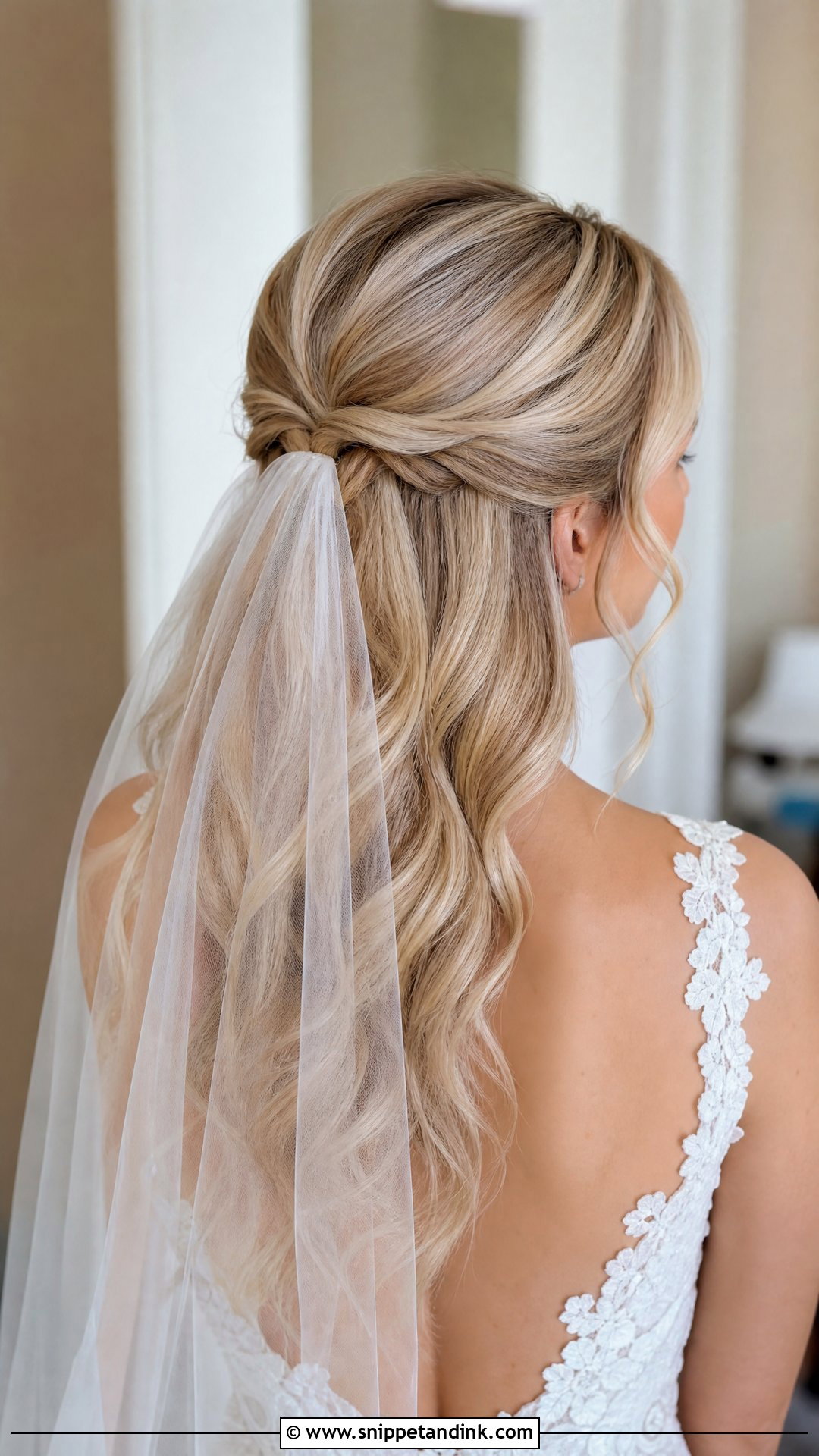
With a veil, the half updo does double duty as an anchor. Placing the veil above the pinned detail looks classic; tucking it underneath lets it flow out softly from below. Heavy or cathedral veils need hidden support, so I backcomb a small base and cross two pins exactly where the comb will grip. Long waves, polished curls or a smooth blowout all work below it. Test the veil at your trial for at least an hour to make sure it doesn’t drag.
9. Bride Half Updo With Hair Vine
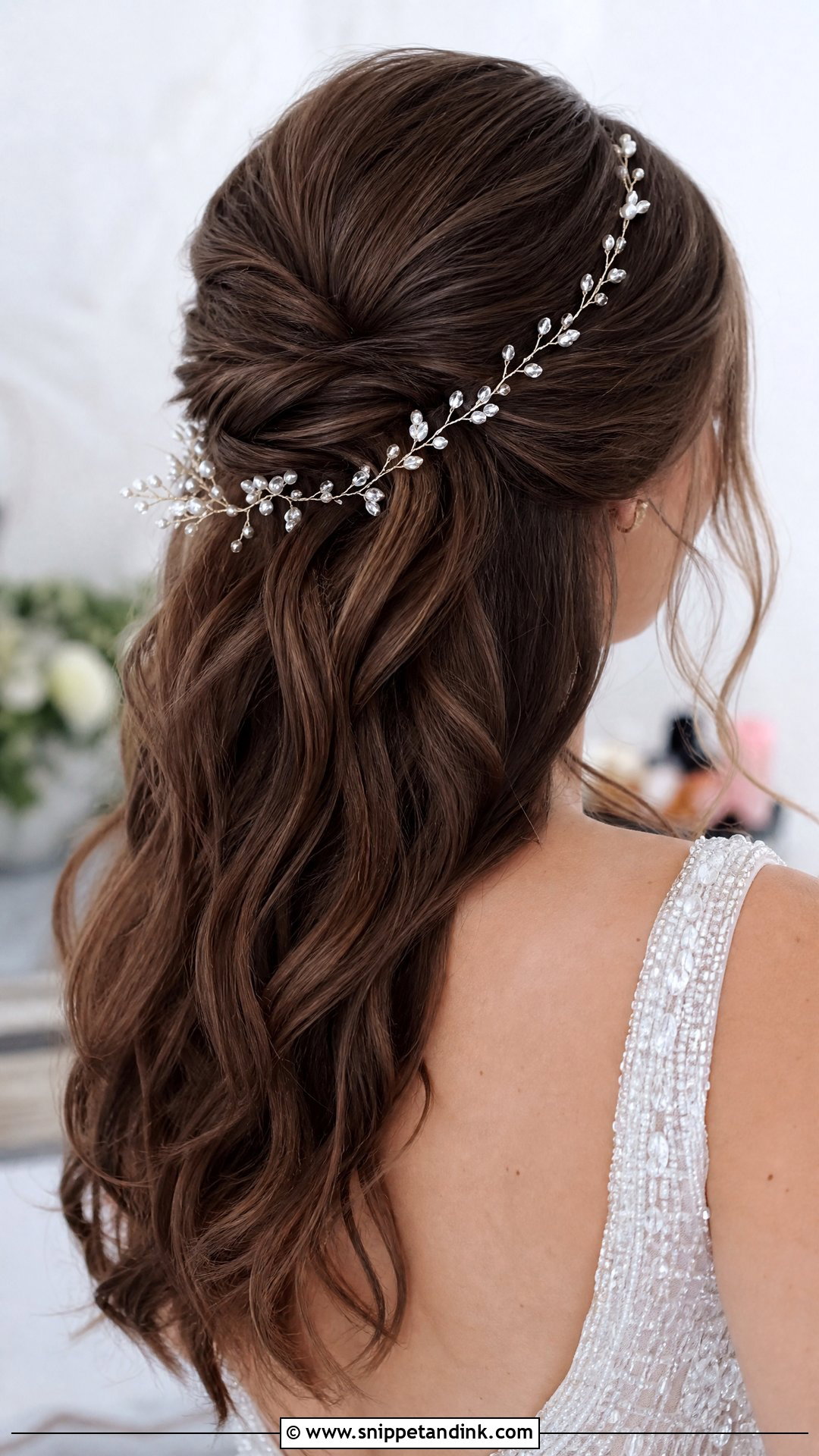
Hair vines bend, so they follow a twist, a braid or the curve at the back of the head in a way a rigid comb can’t. That flexibility makes them ideal for half updos. I sew them in with bobby pins every couple of inches, hooking the wire under the pinned hair so it stays flat. Loose curls or waves balance the sparkle. Choose pearls, crystals or tiny florals to echo the detailing on your dress.
10. Bride Half Updo With Crown Braid
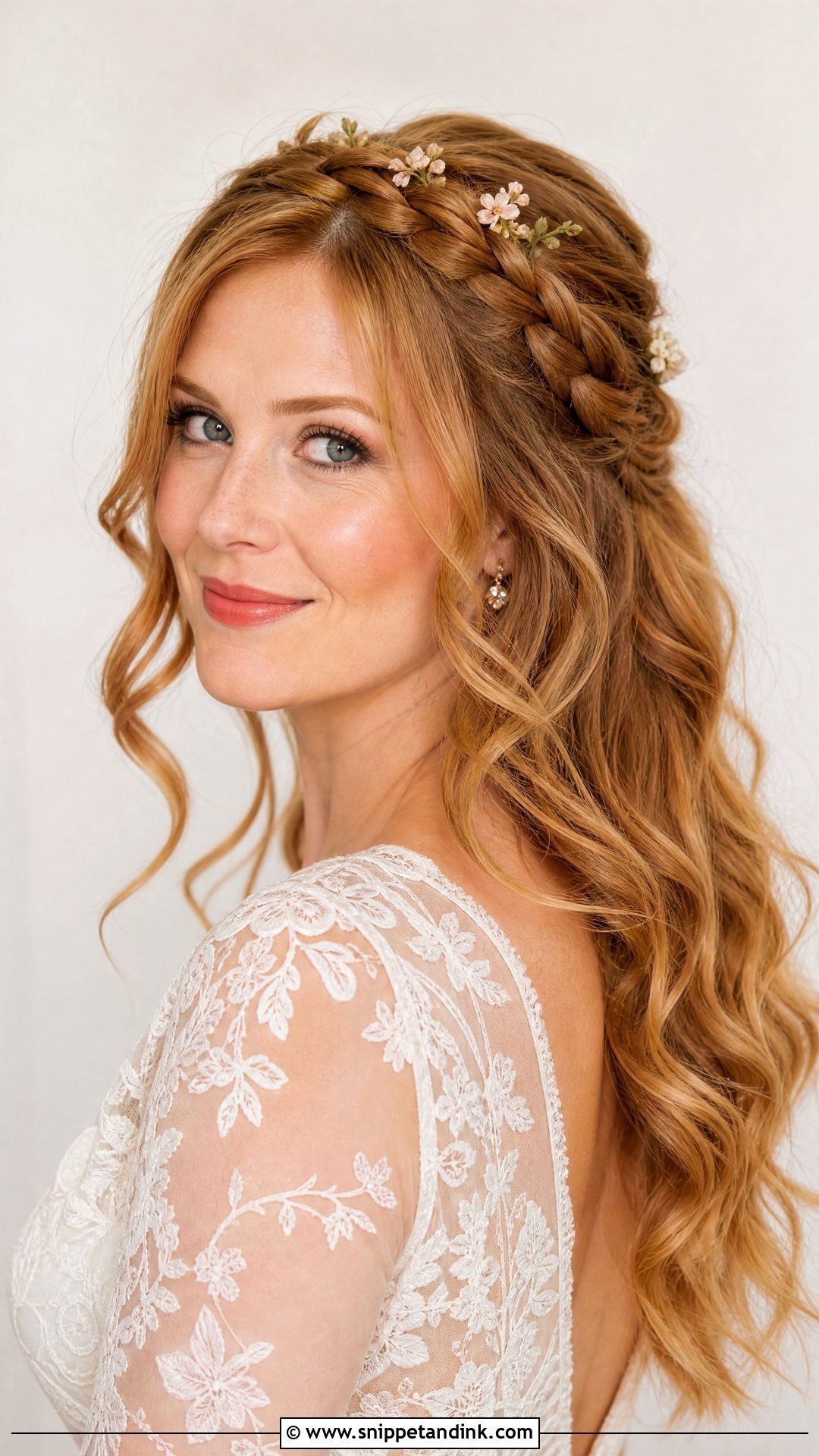
Crown braids give the most face-framing control of any half updo here. The braid wraps around the upper head or across the back, while the lengths flow down. It keeps the front firmly in place outdoors, which I appreciate on a breezy day. I keep the braid slightly loose so it reads romantic rather than tight. Soft curls and delicate accessories suit it.
11. Bride Half Updo With Side Part
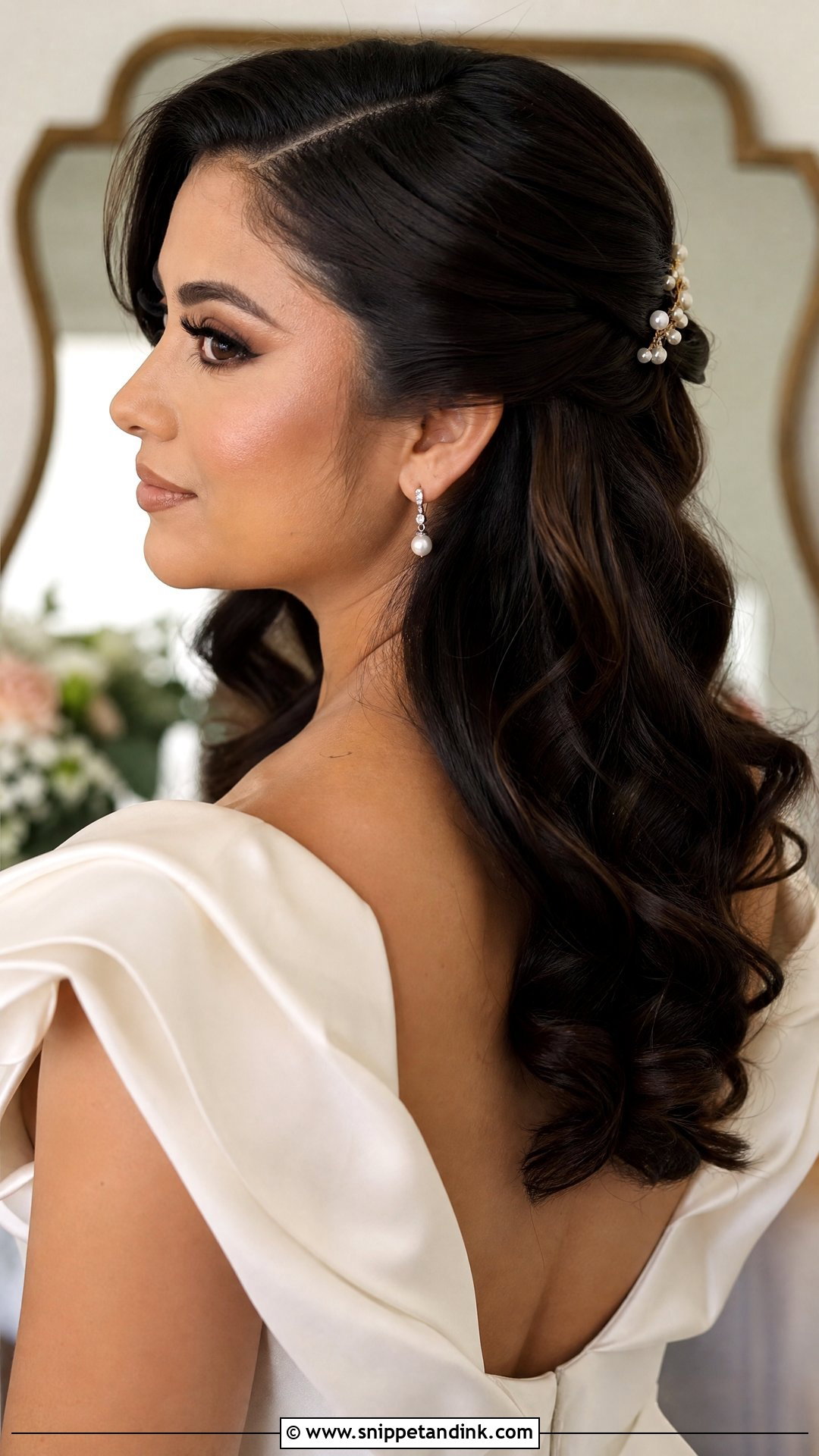
Asymmetry is what makes this one modern. A side part adds softness on one side while the other sweeps smoothly back, which balances a one-shoulder neckline or a statement earring. I backcomb under the part to lift the crown slightly, since a flat side part can look heavy. Hollywood waves, loose curls or brushed waves all suit it. Watch for a strong cowlick at the crown; it will try to pull the part back to its natural place.
12. Bride Half Updo For Short Hair
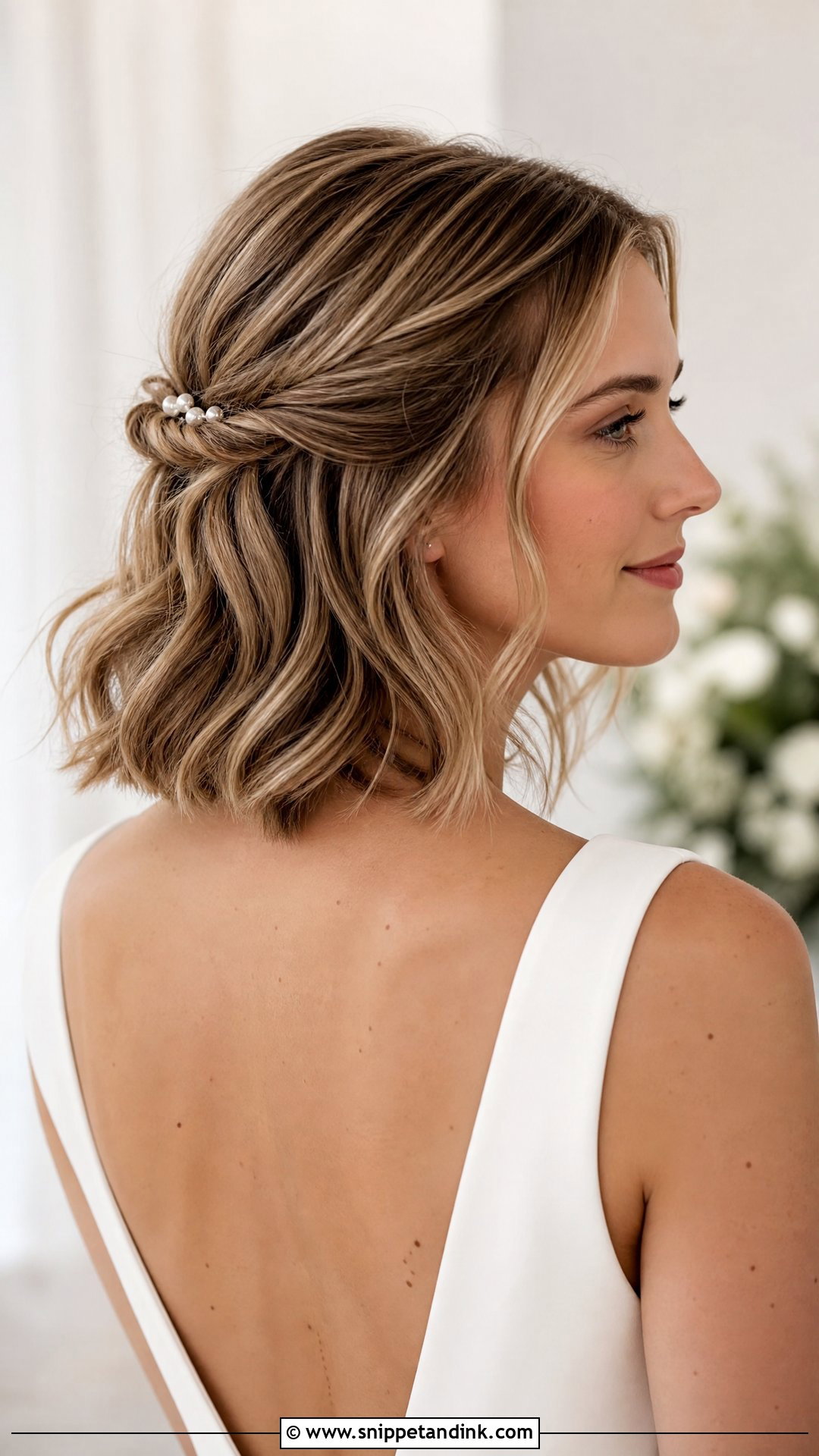
Short hair can absolutely do a half updo, but texture is non-negotiable. A bob, lob, or shoulder-length cut gets soft bends, pinned twists or a tiny braid, and the pins need texture to grip. I use a texture spray or dry shampoo before sectioning. Small pearl pins, mini combs or delicate clips suit shorter hair better than large accessories, which overwhelm it. It’s a secure option that keeps hair off the face and shows off the cut.
13. Bride Half Updo For Long Hair
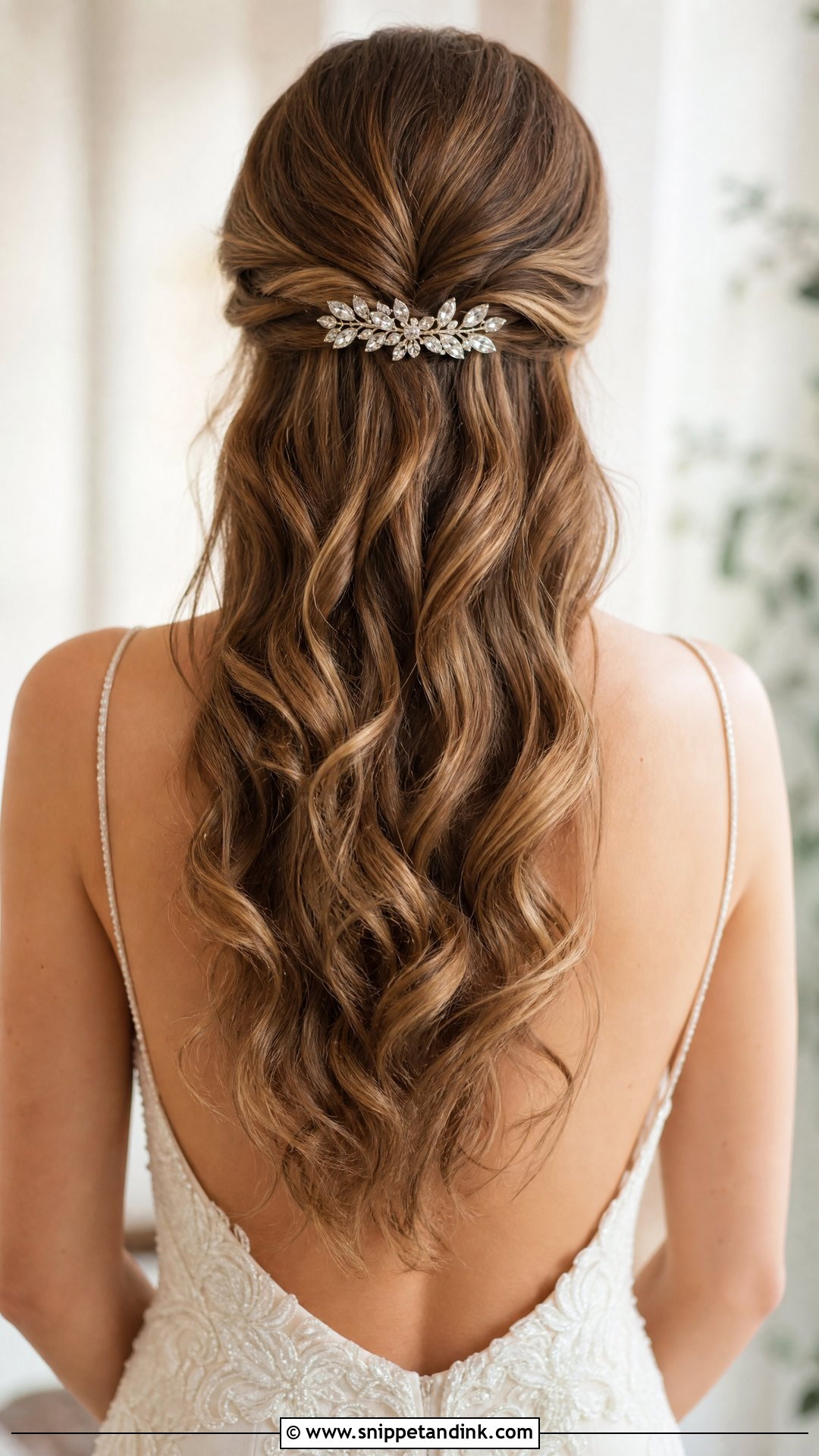
Long hair gives a half updo drama, and weight. The top section can be twisted, braided or gathered, but heavy lengths pull on the pinned part all day, so I use more pins than look necessary and cross them. A setting spray before curling helps the curls last against their own weight. With an open-back gown, the hair becomes part of the silhouette, though it will cover some of the back. Flexible hold products keep it moving without stiffness.
14. Bride Half Updo For Curly Hair
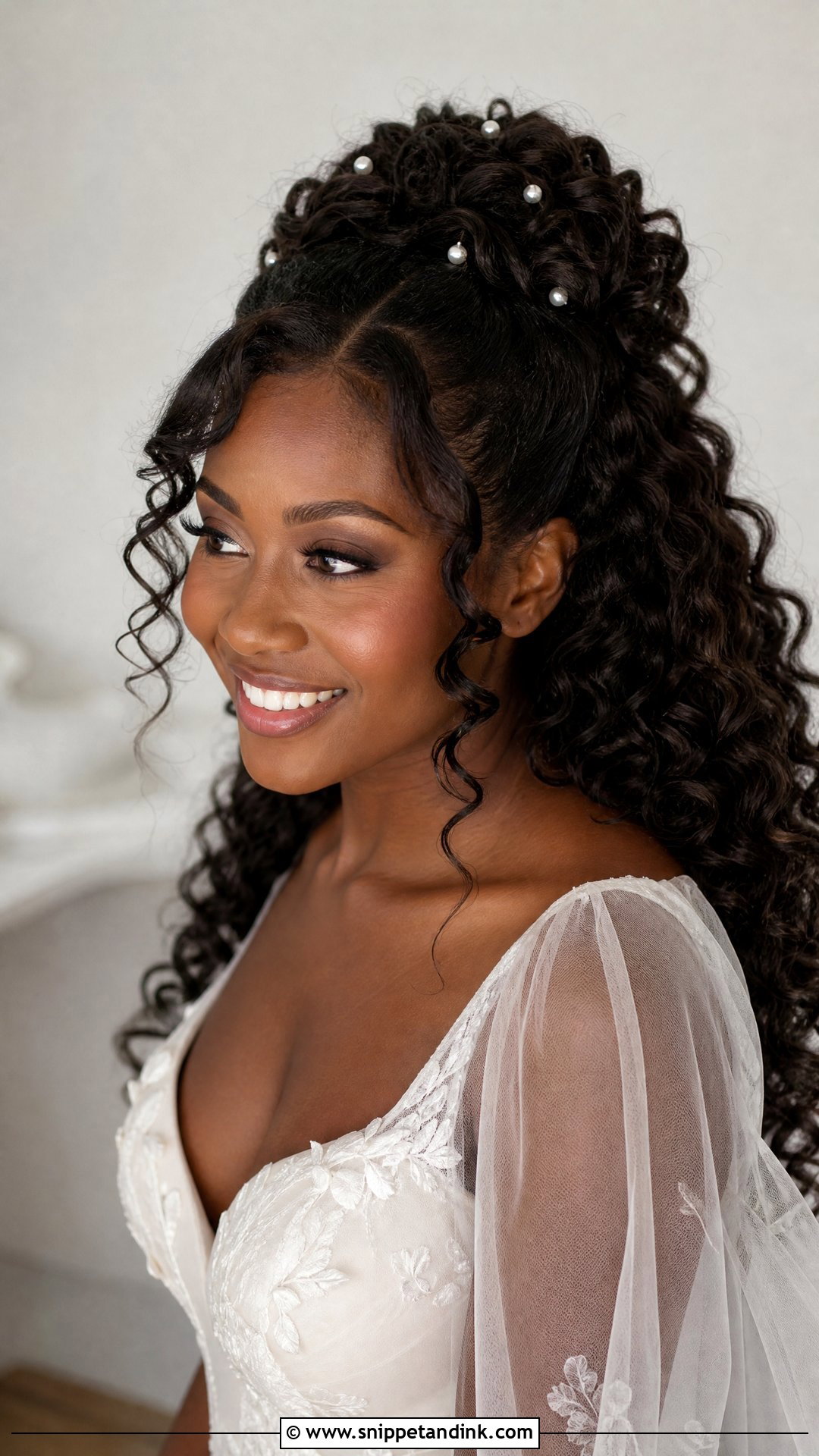
Curly hair should look like curls in a half updo, not a blowout. I gather the top curls loosely and pin them with U-pins, which hold curly texture better than bobby pins and don’t flatten the pattern. The rest stays full and defined. I never brush curly hair dry; I define it while damp with a curl cream and let it set. A few face-framing curls and small flowers, pearls or a delicate comb complete it.
15. Bride Half Updo With Bow
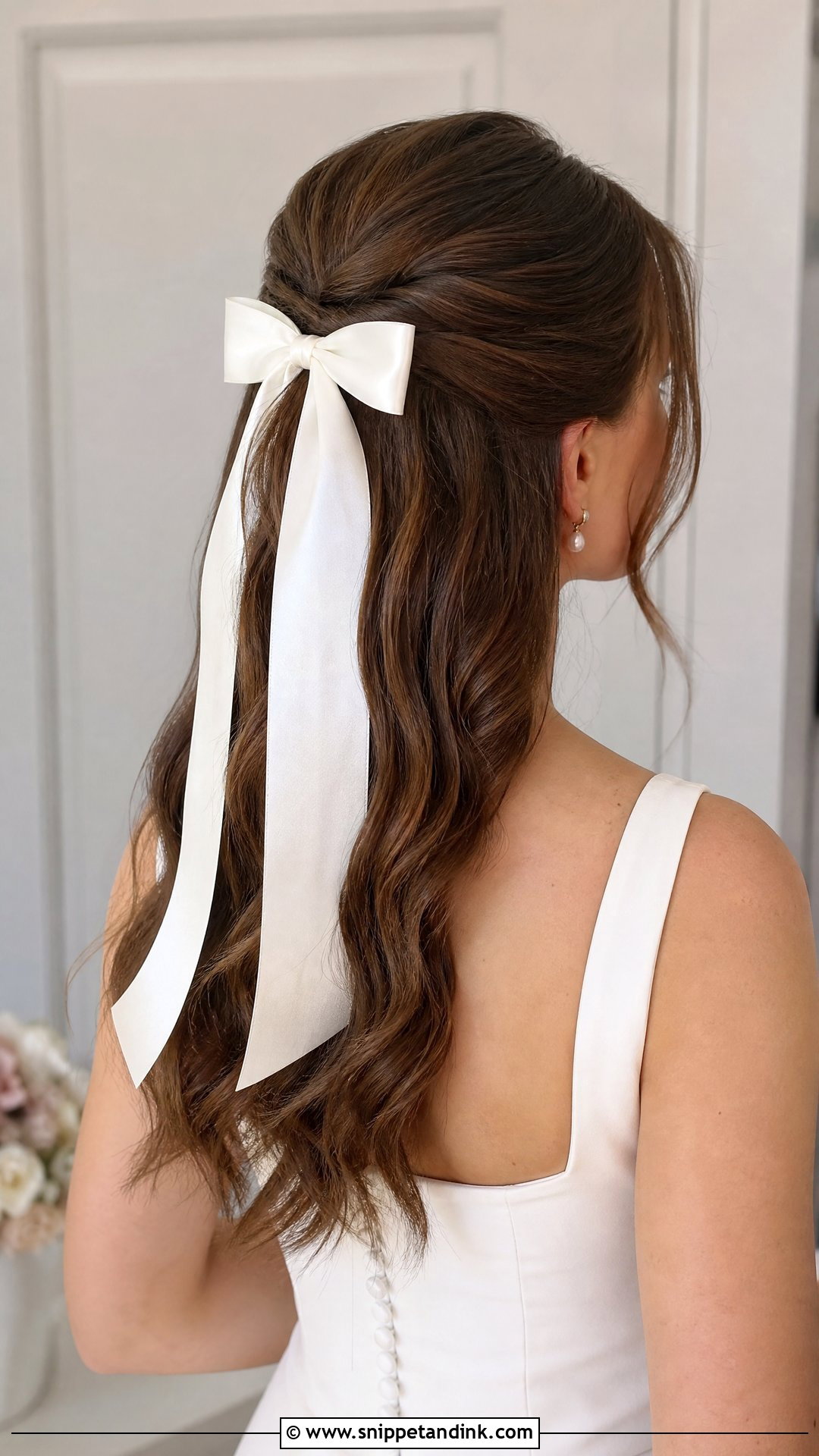
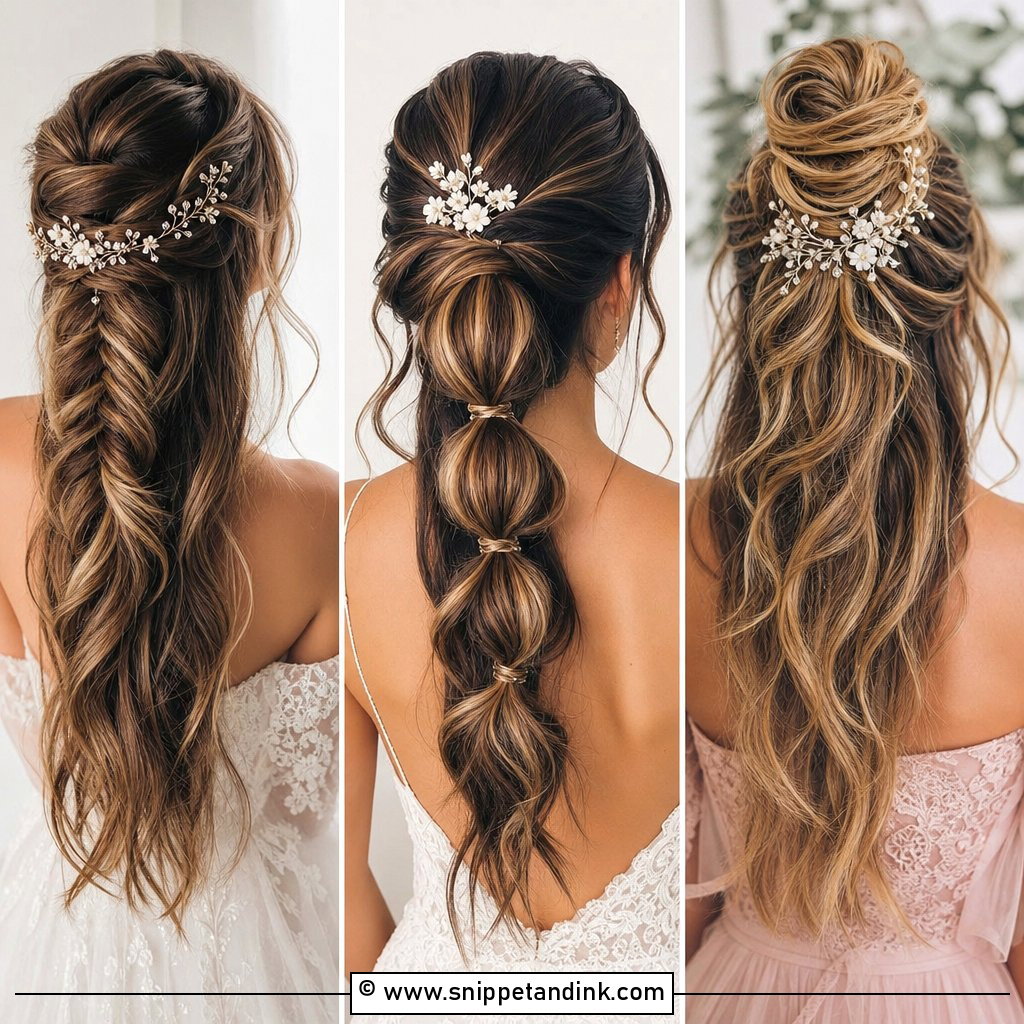
Bows are the one accessory that hides pins instead of adding more. Bride half updo with bow styling puts it right where the top section is secured. Satin, silk, organza or velvet can each fit a season and dress. I attach the bow with a clip and two crossed bobby pins through the knot. Proportion matters: a smaller bow looks delicate, while a long trailing ribbon has an editorial feel but can tangle with a veil. Smooth waves, curls or a sleek blowout all suit it.
The Loose Half Gives Up First
Pinned sections rarely fail. The loose lengths do. Curls hanging free carry their own weight, rub against the dress and shoulders, and take on any humidity in the air. By the first dance, tight ringlets have usually relaxed into waves, which is fine if you plan for it.
- Ask for curls a little tighter than you want in photos. They open up over the first hour or two.
- Let each curl cool fully, ideally pinned in a loop, before brushing out. Curls released while hot drop fastest.
- If your hair rarely holds a curl, say so at the trial. A setting product or soft waves, which look intentional as they loosen, may suit you better.
- Give a bridesmaid a small kit: spare pins, a travel hairspray and a wide-tooth comb. A slipping section takes two minutes to fix.
When Hair Down Hides the Dress
A half updo isn’t always the right call. If the gown has a low back, buttons down the spine or fine lace across the shoulders, long loose hair covers much of it in every photo taken from behind during the ceremony. Lace and beading can also snag strands as you move.
Halter necks and high collars are another catch, since loose hair sits right on top of the neckline. For those dresses I’ll sweep the lengths over one shoulder, or plan a quick change into a low bun after the ceremony. Plenty of brides wear one look for the vows and another for dancing.
A Half Updo That Holds From Vows to the Last Song
Half updos are flexible enough for nearly any venue, which is why they keep coming back. Curls, waves, braids, pearls, flowers, veils and bows each change the mood, and any of them can work with the right dress. What matters more is comfort for hours and the way the loose half holds. Bring several photos to your trial and look at the style from the front, side and back. If you still feel like yourself in it after a long afternoon, it’s the right one.
You'll Like These Ideas:


Leave a Reply