
Bridal hair has two jobs, and only one of them shows in the inspiration photo. The other is staying put through a veil going on and off, a lot of hugging and a long evening. At a first consultation I ask about the neckline, where the veil sits, the venue and the forecast long before I look at anyone’s saved pictures, because those decide what will actually last. Bridal hair right now leans soft but structured: polished waves, romantic buns, natural texture, nothing lacquered. Below are fifteen looks, from classic updos and loose curls to sleek buns and braids, for anything from a garden ceremony to a ballroom.
Gown Details That Should Steer Your Pick
Before you fall for a hairstyle, look hard at the dress. A few details in the gown quietly rule certain looks in or out, and it’s easier to know that now than at the trial.
- High or lace necklines: hair worn down hides the work and can snag on lace. An updo, chignon or sleek bun lets the neckline show.
- Open or low backs: loose hair covers the very thing you chose the dress for. A low bun or a ponytail swept to one side keeps the back visible from the aisle.
- Strapless and sweetheart shapes: these leave a lot of bare shoulder, so waves, side swept curls or half up hair soften the line.
- Heavy beading at the shoulders: long curls rub against beads all day and frizz. Pin the lengths up or to the other side.
- Minimal satin or crepe: clean fabric suits clean hair. A sleek bun or polished waves look intentional next to it, where messy texture can look unfinished.
Then think about the veil. A cathedral veil set high needs a firm base to anchor to, and a low veil looks best tucked under a bun or chignon.
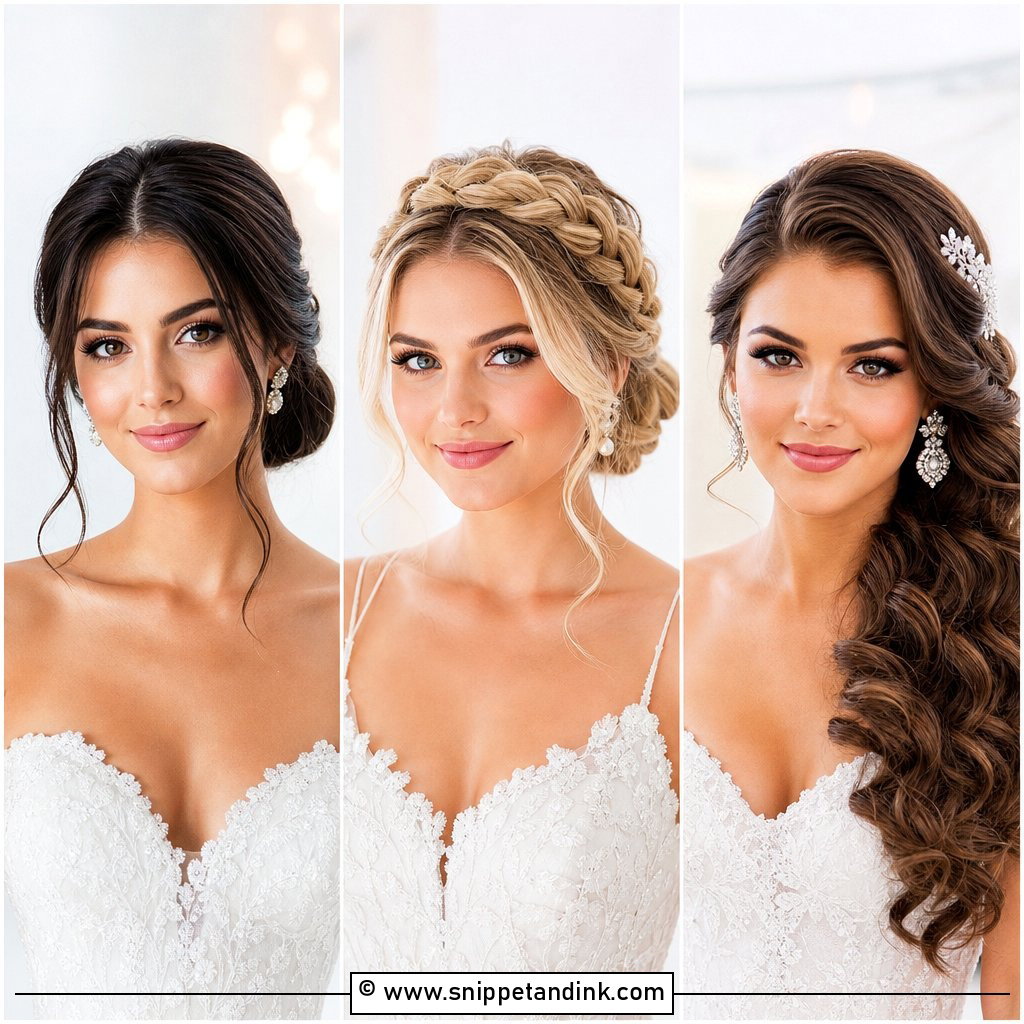
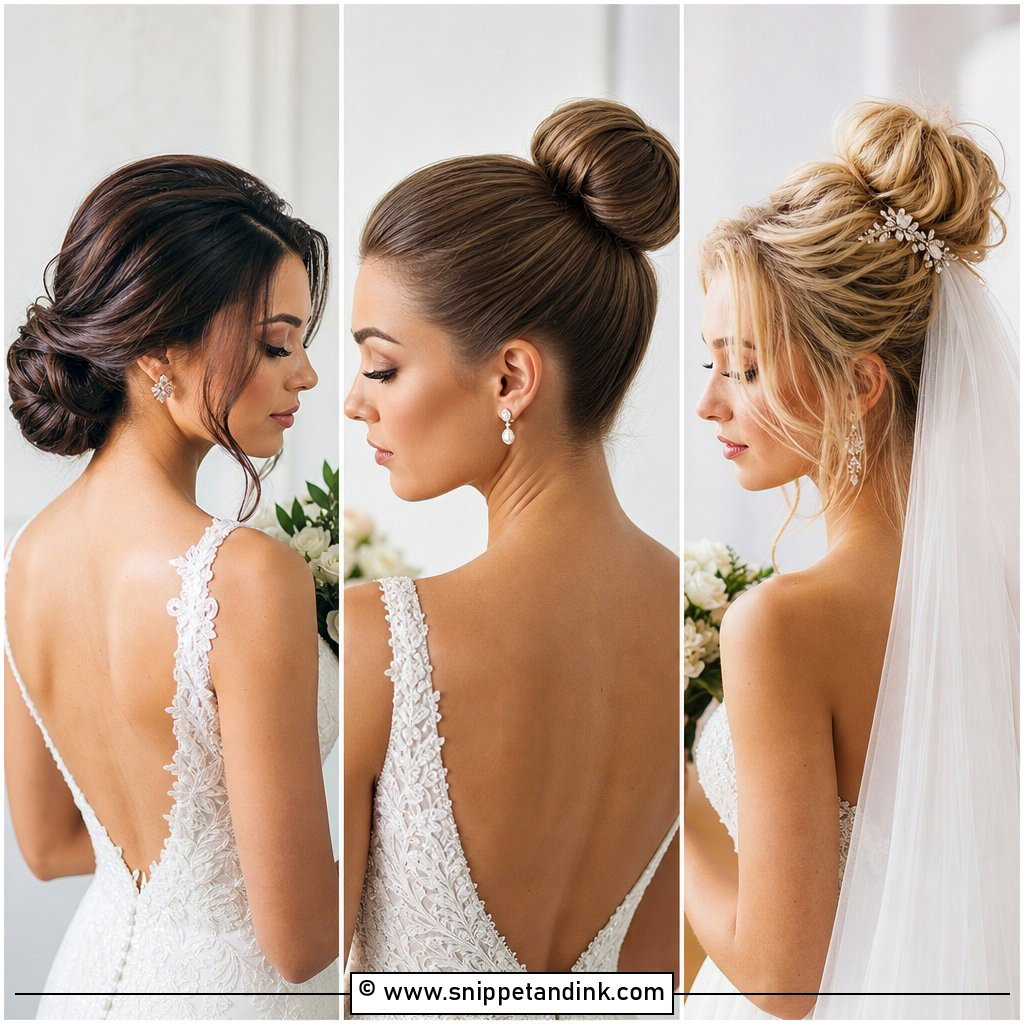
1. Low Bun Wedding Hairstyle
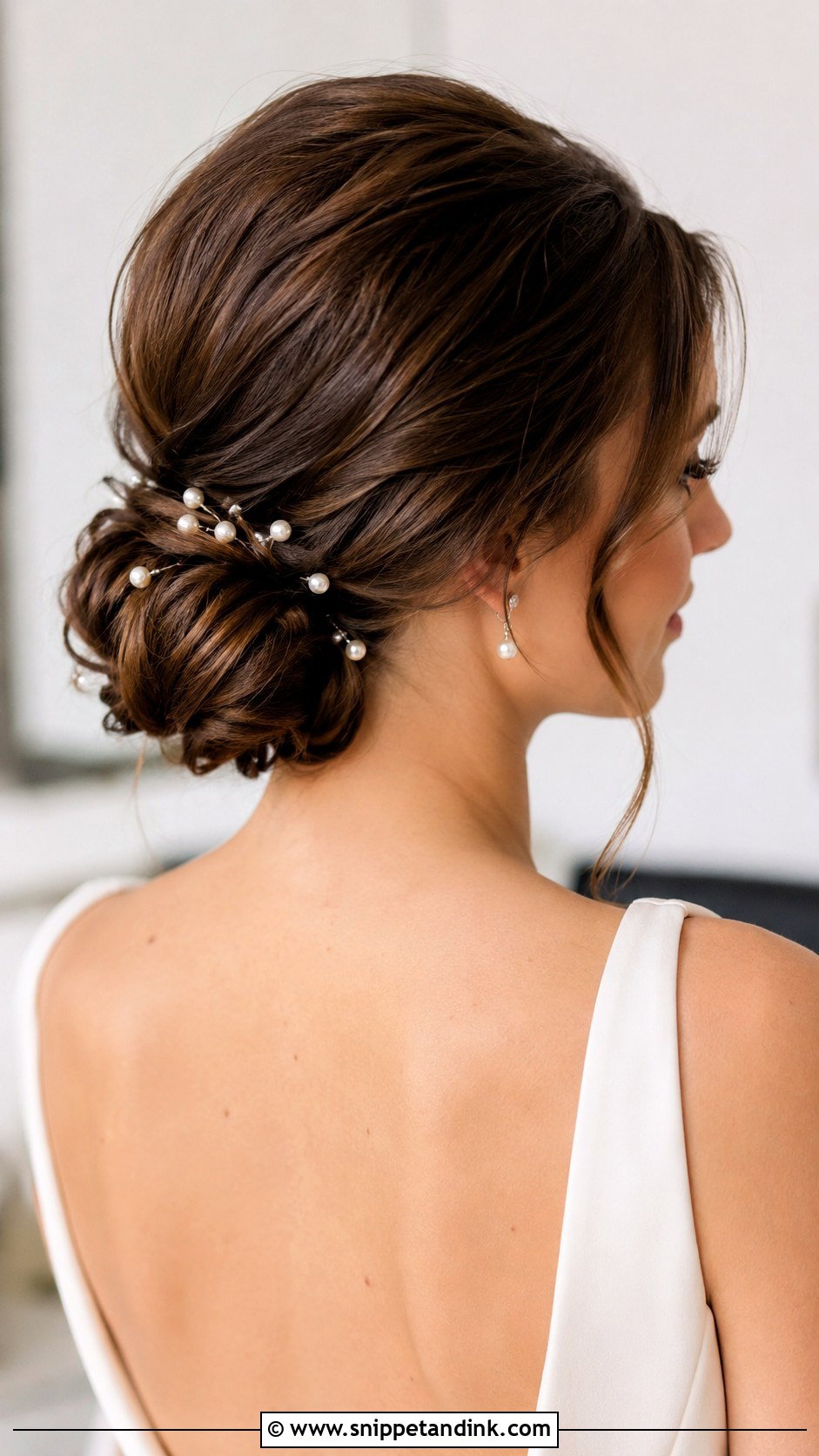
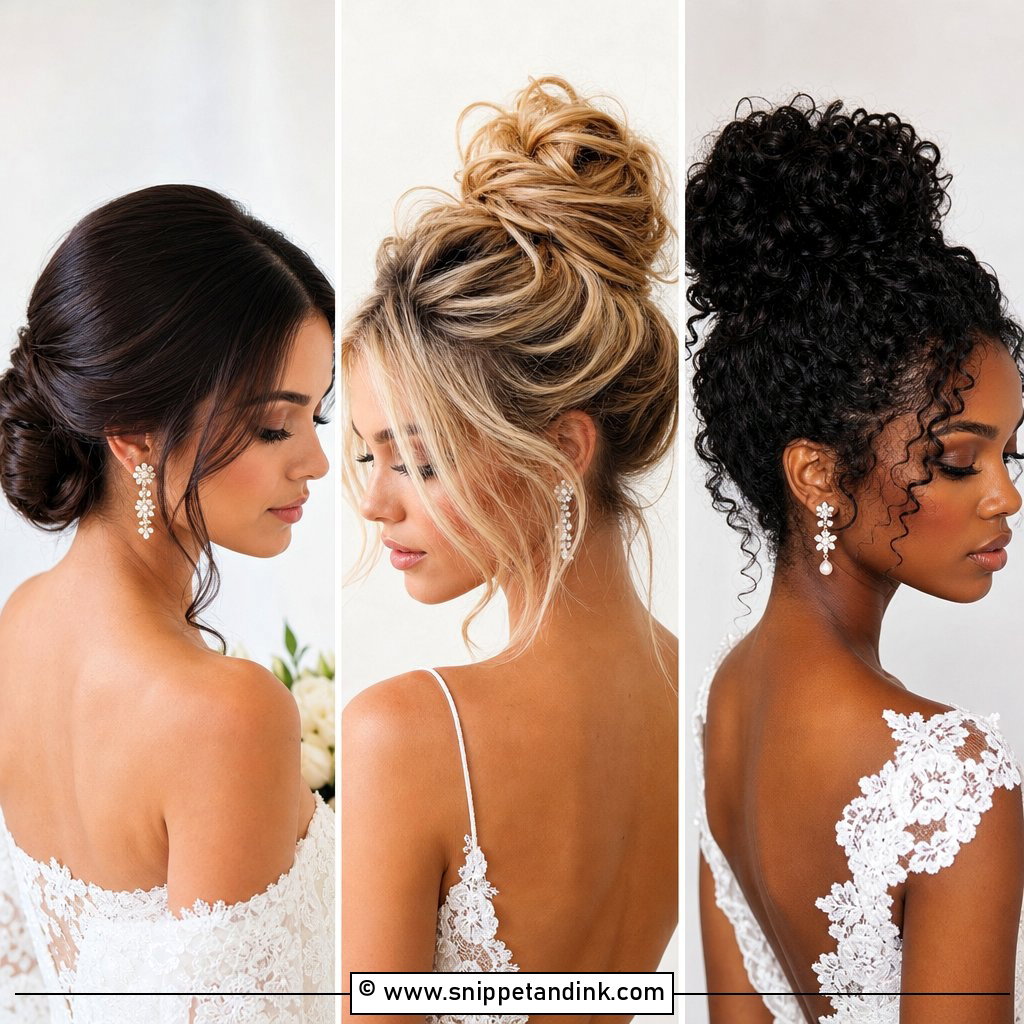
If you can’t decide, start here. A bun at the nape gives a veil comb the best possible anchor, keeps hair off lace or beading at the shoulders, and leaves a high neckline or open back fully visible. I pad the inside with a little backcombing or a small donut so the bun keeps its size all day, and I place it a touch lower than most brides expect, because the veil sits higher and the profile looks longer that way. Secure, never tight. A few face-framing pieces soften it for outdoor or candlelit photos.
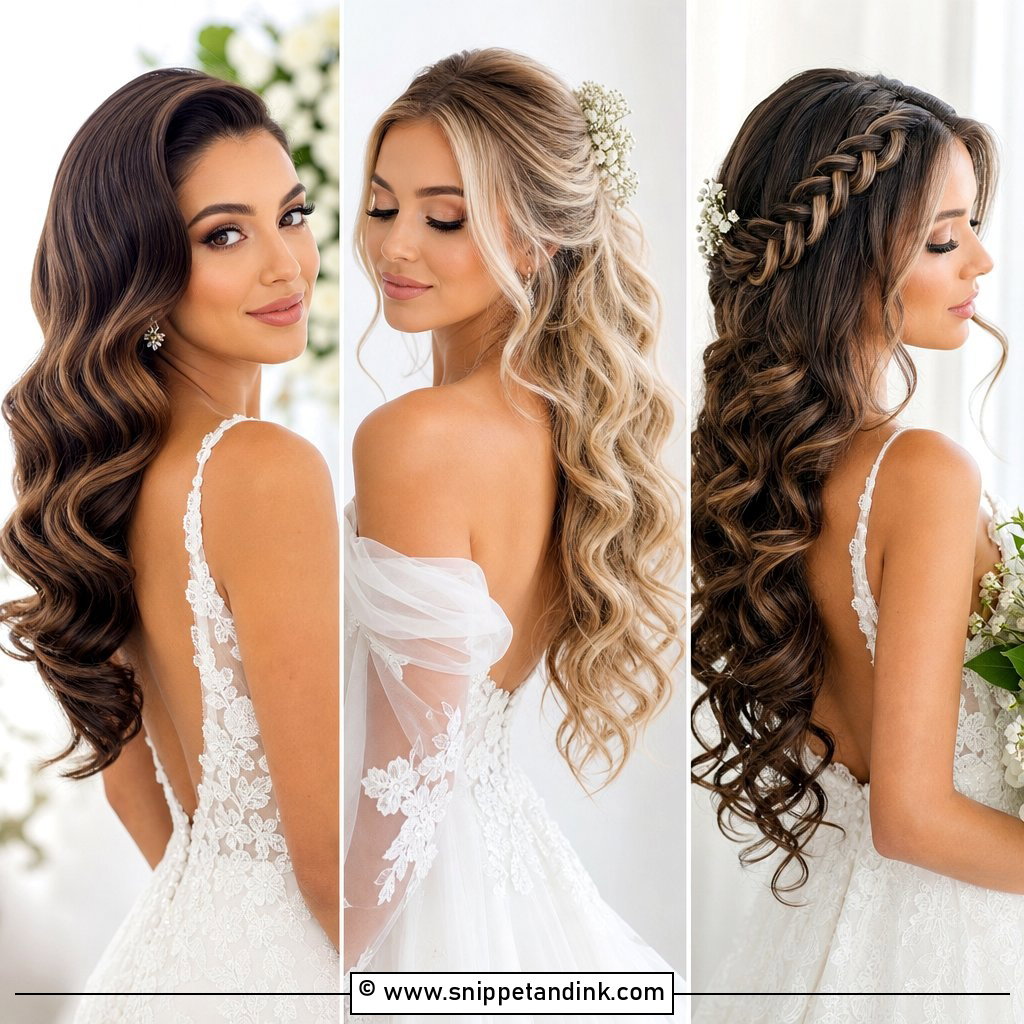
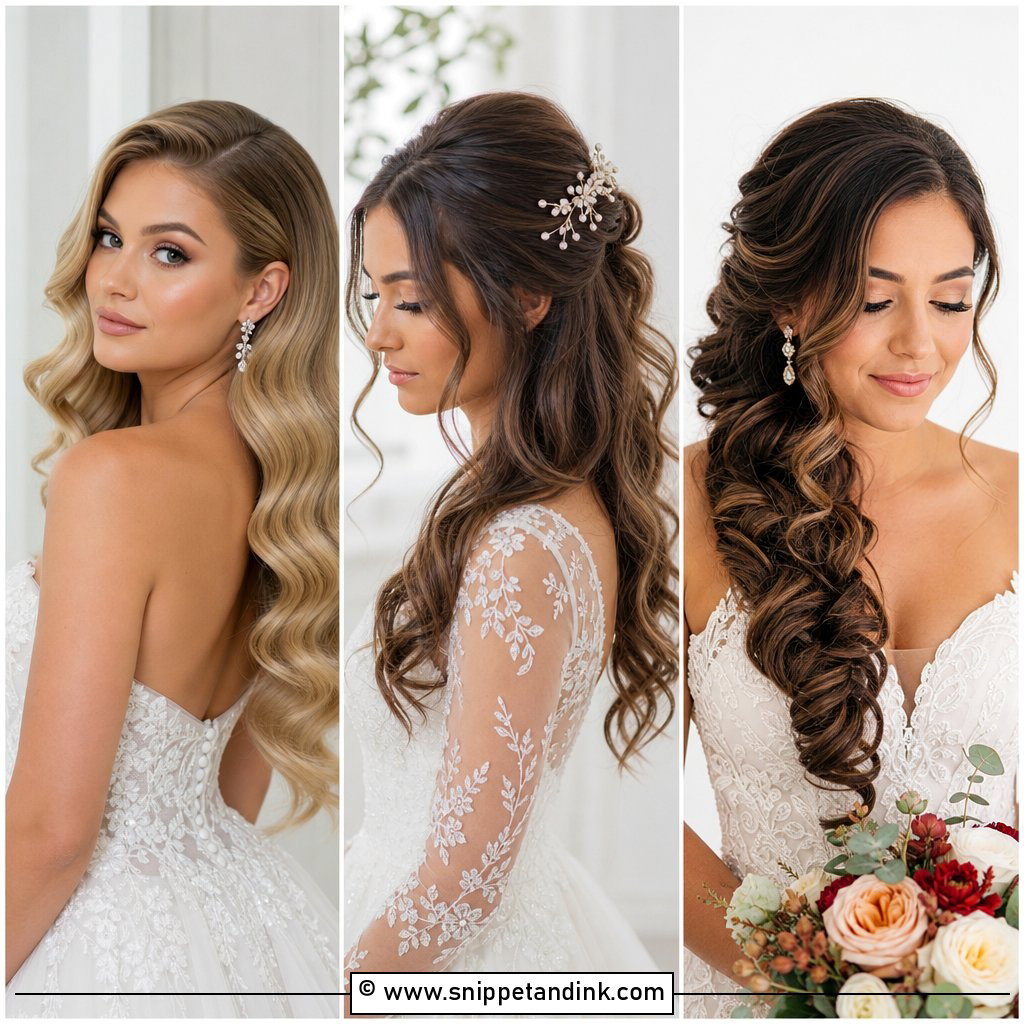
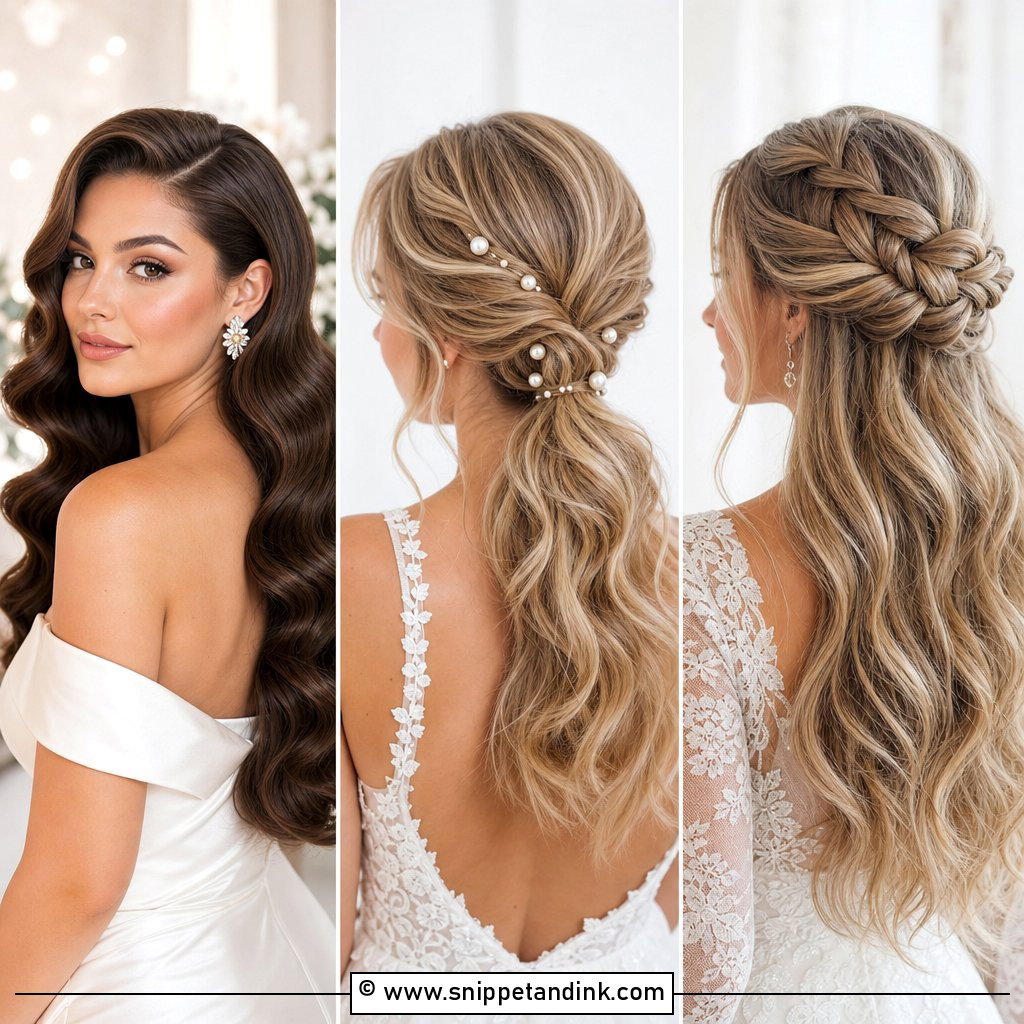
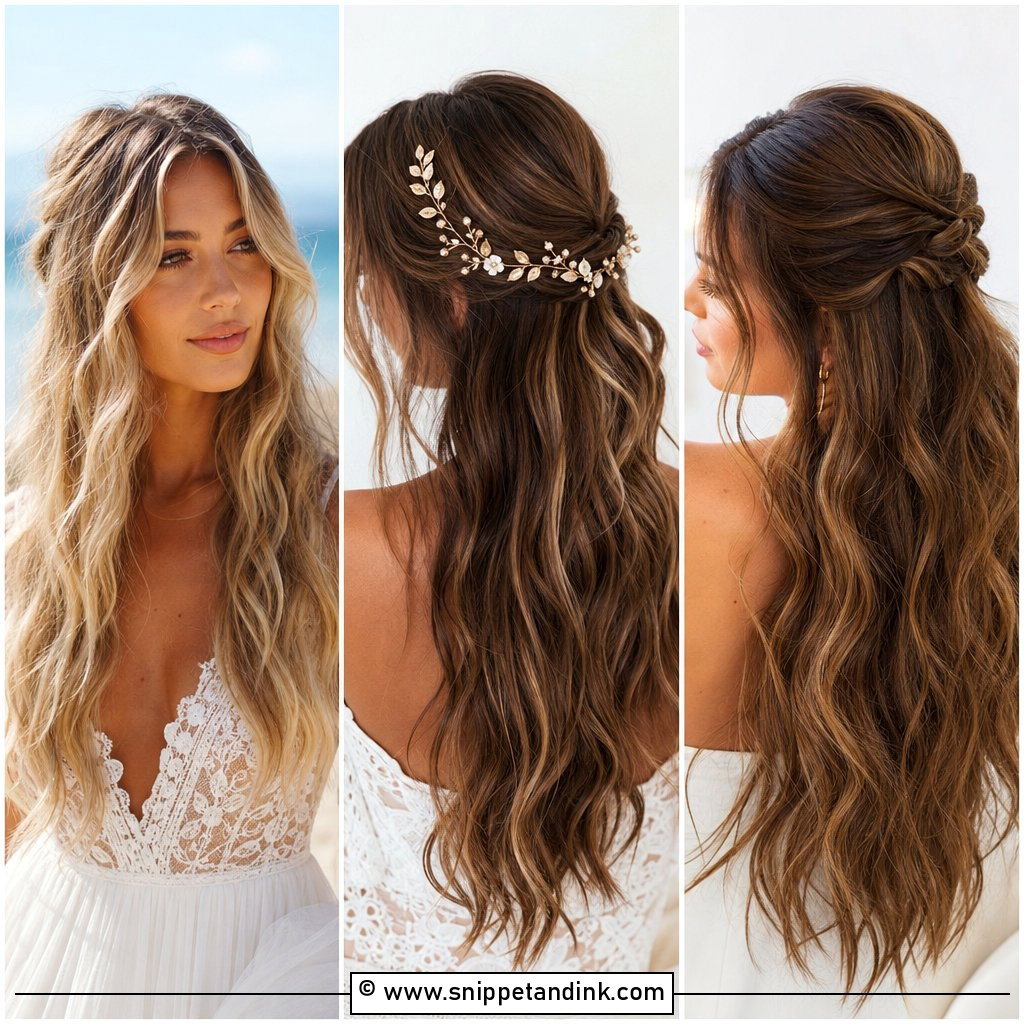
2. Soft Waves Wedding Hairstyle
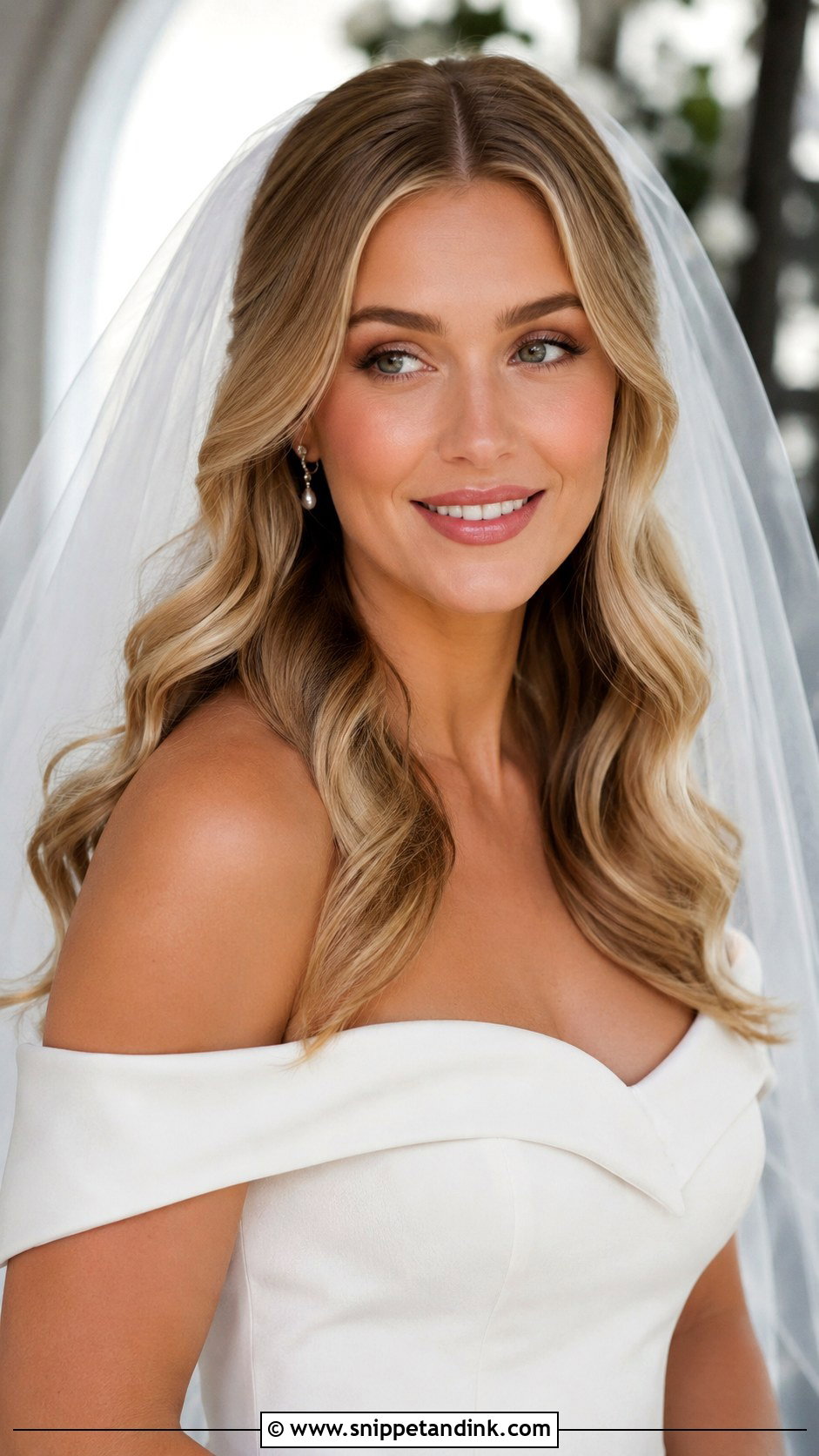
Waves let you wear your hair down while still looking polished enough for the aisle. They should feel smooth and shaped, never beachy. Dimensional color, balayage and highlights show up well in waves because each bend catches the light differently. My method is mousse at the roots, every curl pinned while it cools, and brushing out only once the bride is dressed. Brush too early and they’ve dropped by the first dance. A center part reads modern, a side part reads classic, and a veil at the crown frames either.
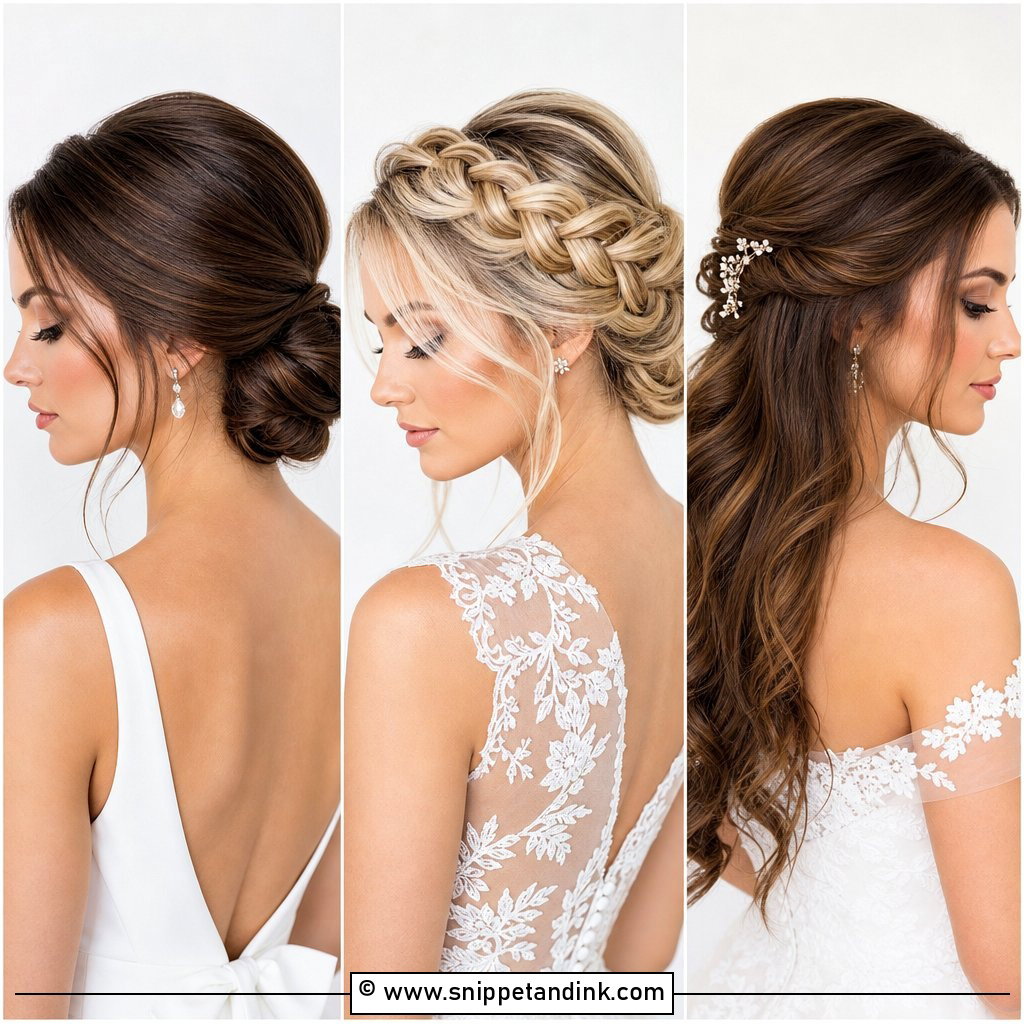
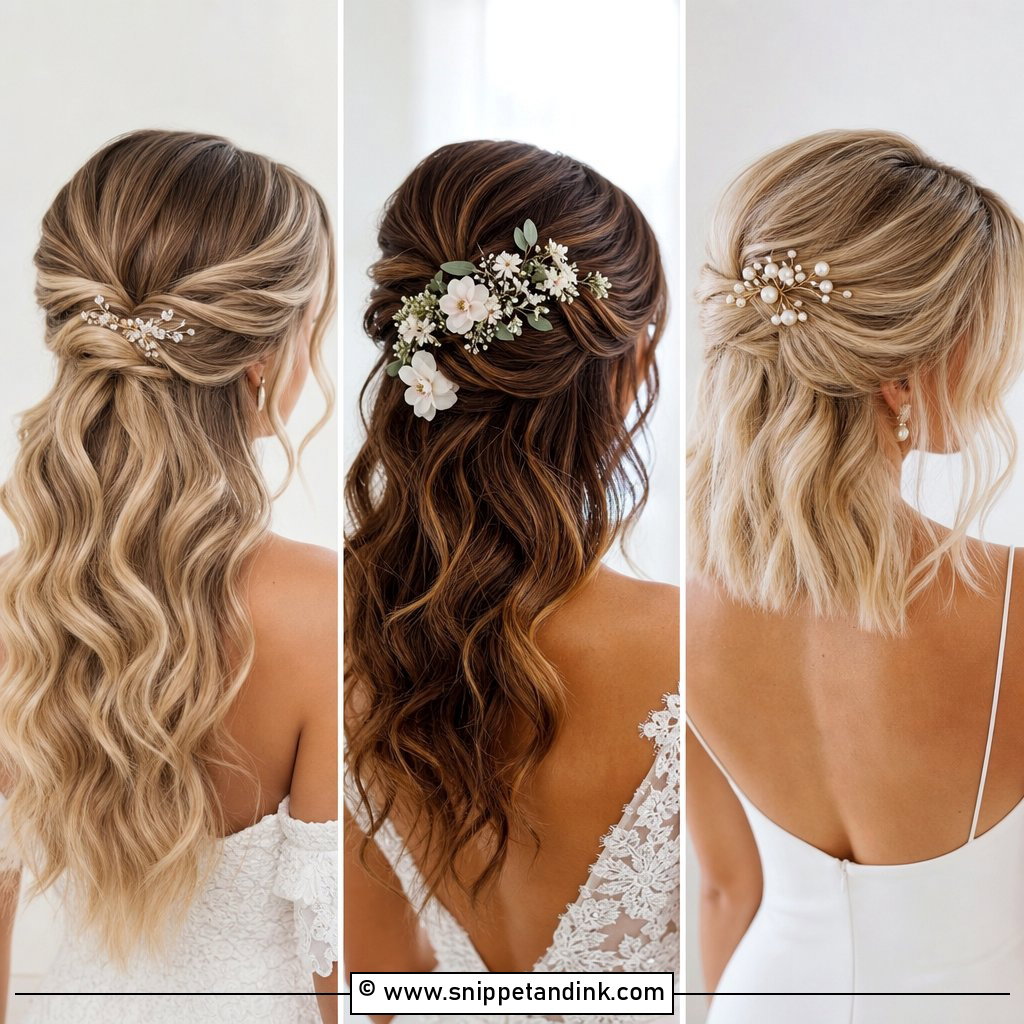
3. Half Up Half Down Wedding Hairstyle
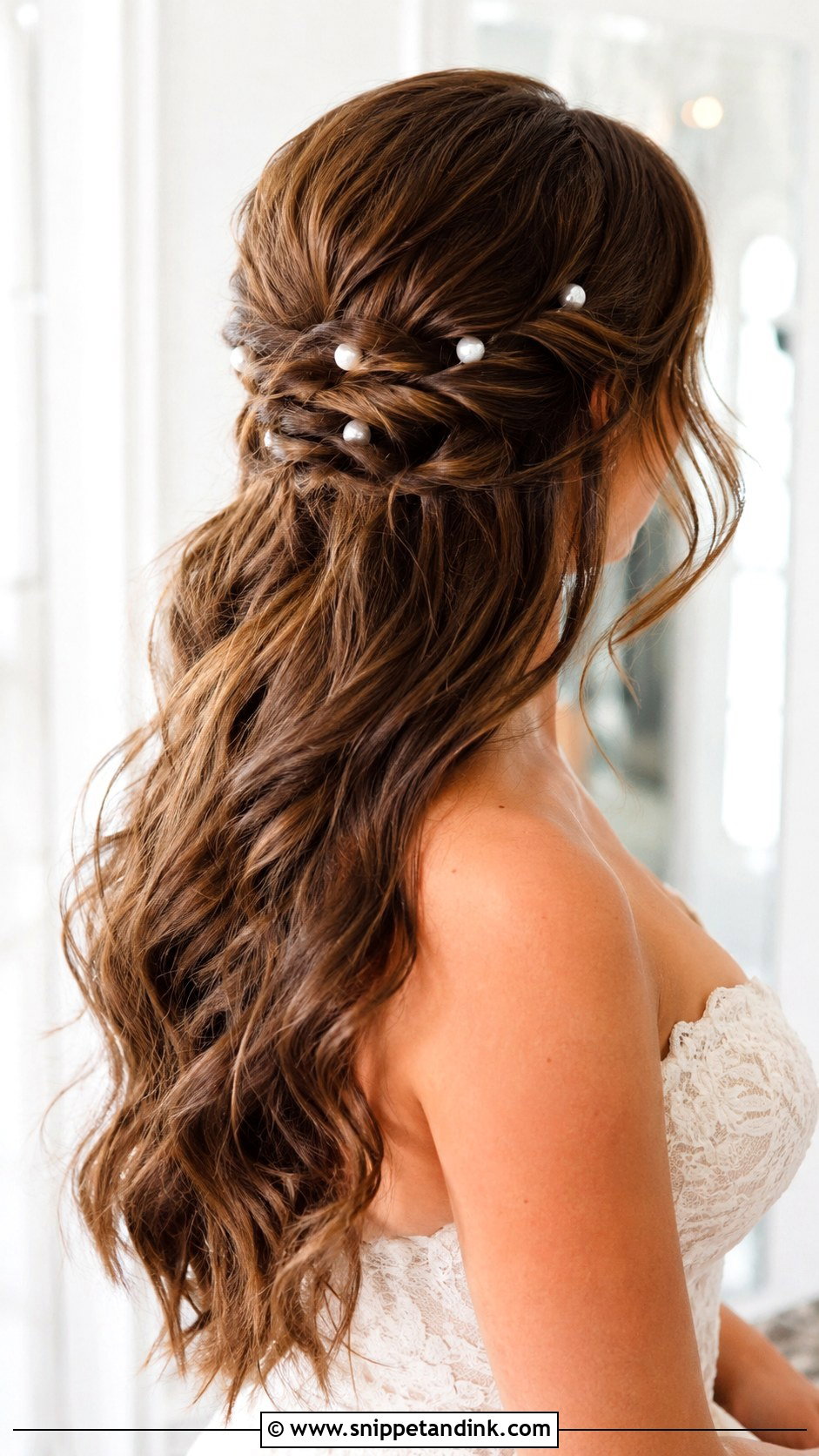
Half up hair gives you loose lengths without strands blowing into your face during vows. The pinned crown also gives a veil comb something to grip, which loose hair alone never does. Waves, curls, twists or a small braid all work at the back. The weak point is the join: grips alone let the top section droop by evening, so I tie it with a small elastic first and pin over that. Keep the crown softly lifted rather than teased into a bump, which can look dated.
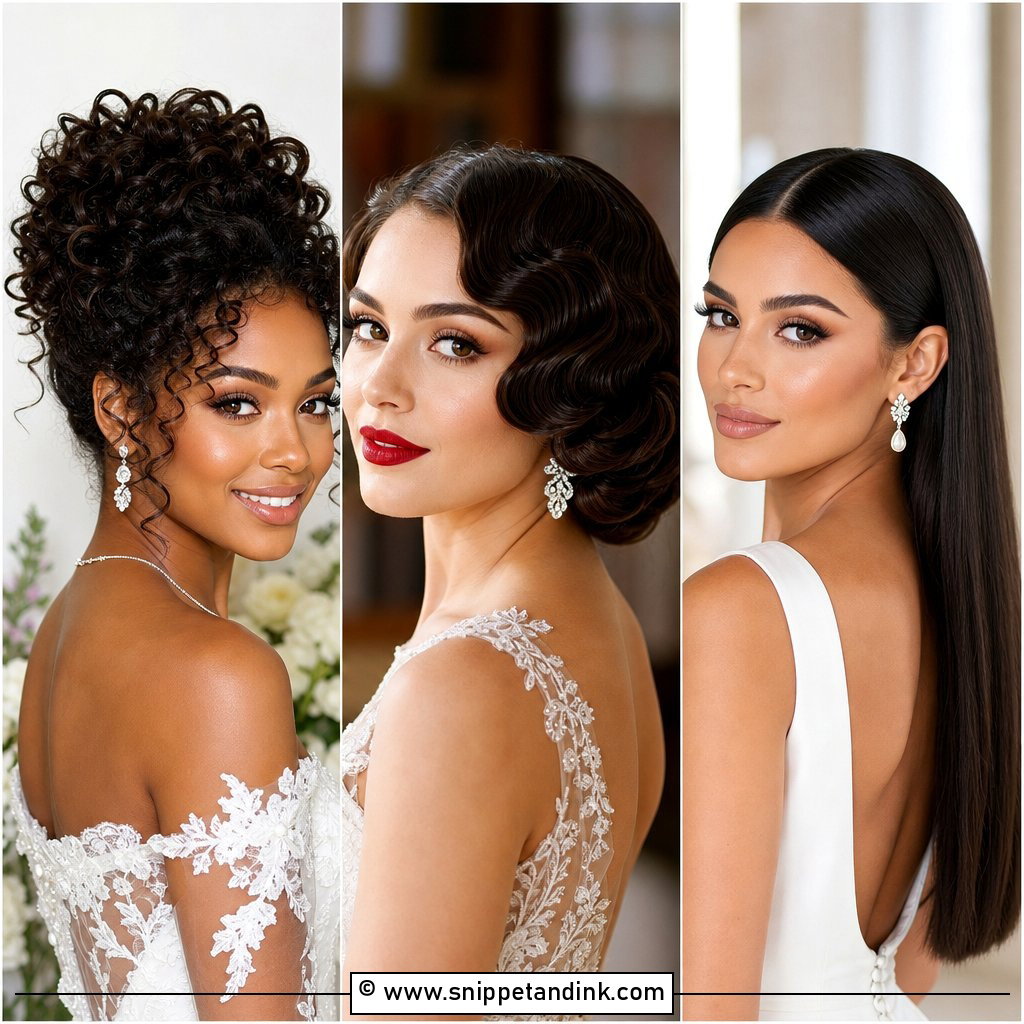
4. Sleek Bun Wedding Hairstyle
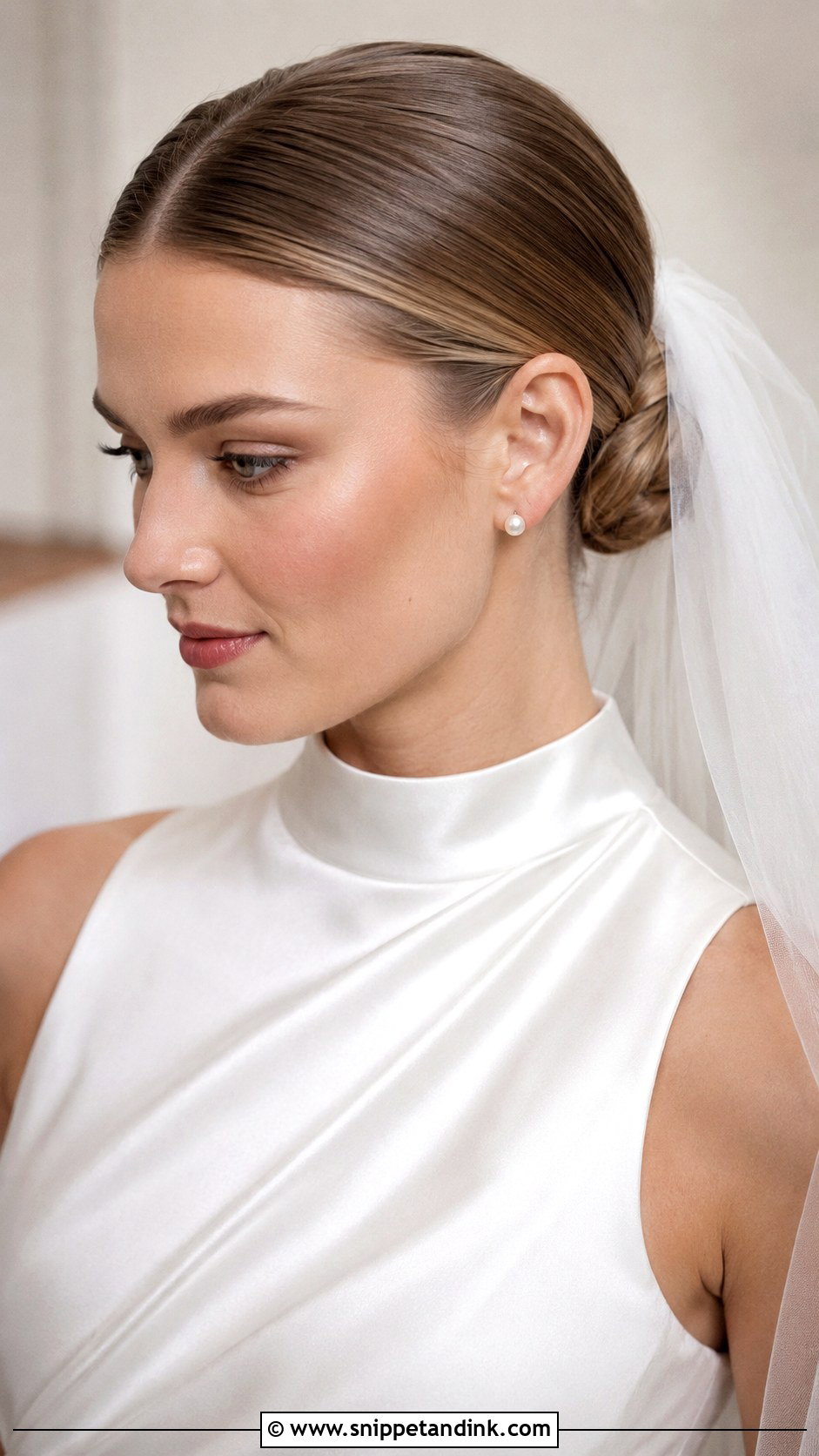
Shine and control are the whole look. A sleek bun suits minimalist gowns, satin, high or square necklines and city weddings, and it’s one of the most humidity-proof options because nothing is left loose. I work in sections with a smoothing cream and a boar-bristle brush, then set the surface with a light spray; too much product and the hair looks wet under flash. A middle part is the fashion version, a soft side part gentler. Pearl studs, a long veil or a single pin is all it needs. If you have a cowlick at the hairline, mention it at the trial; it needs blow-drying flat before anything else.
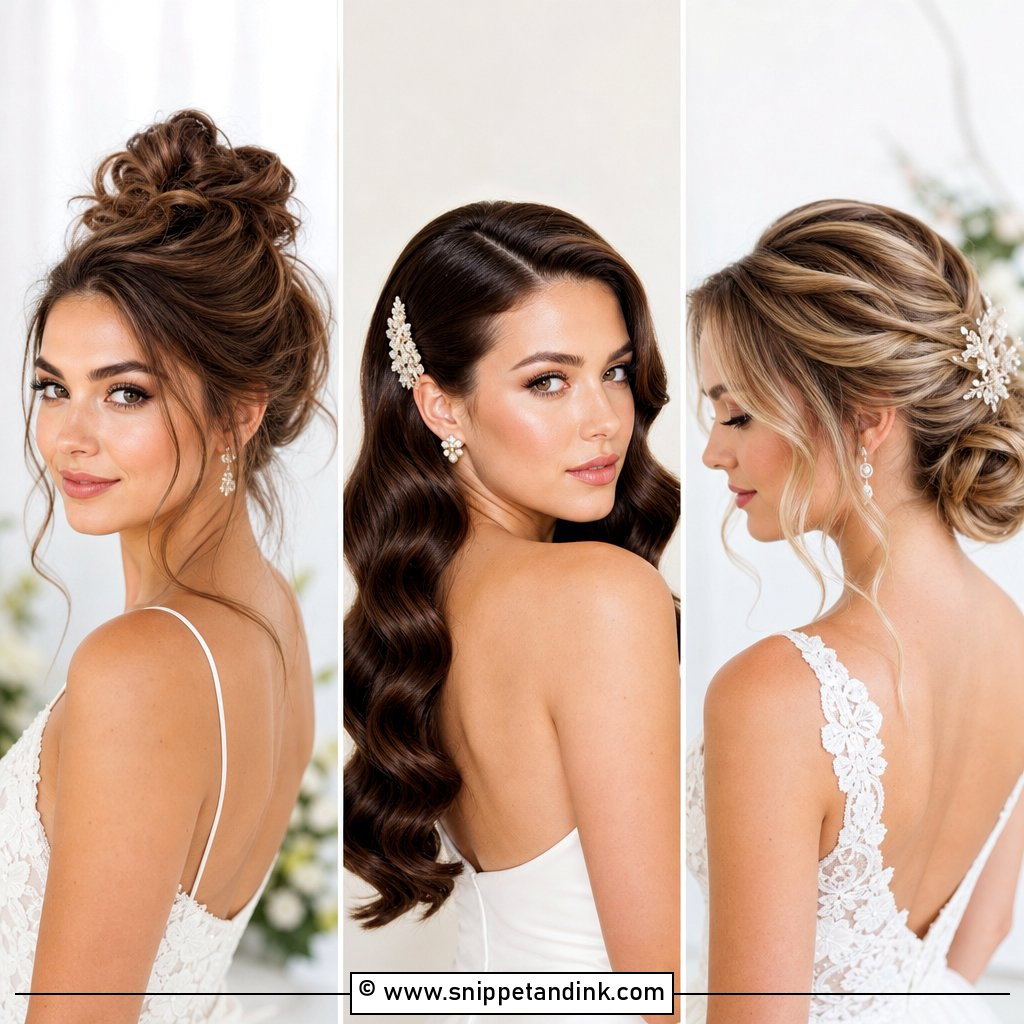
5. Textured Updo Wedding Hairstyle
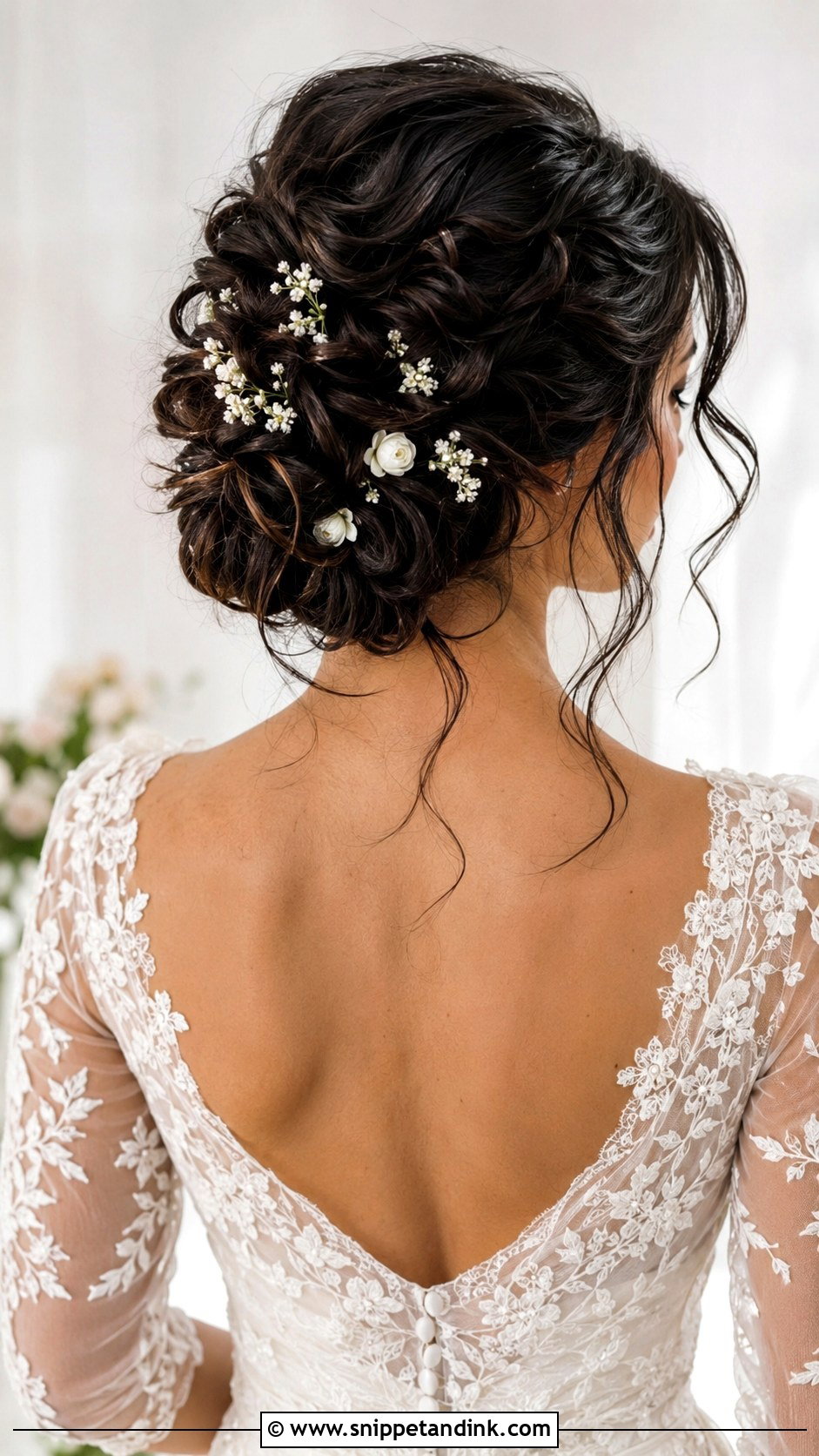
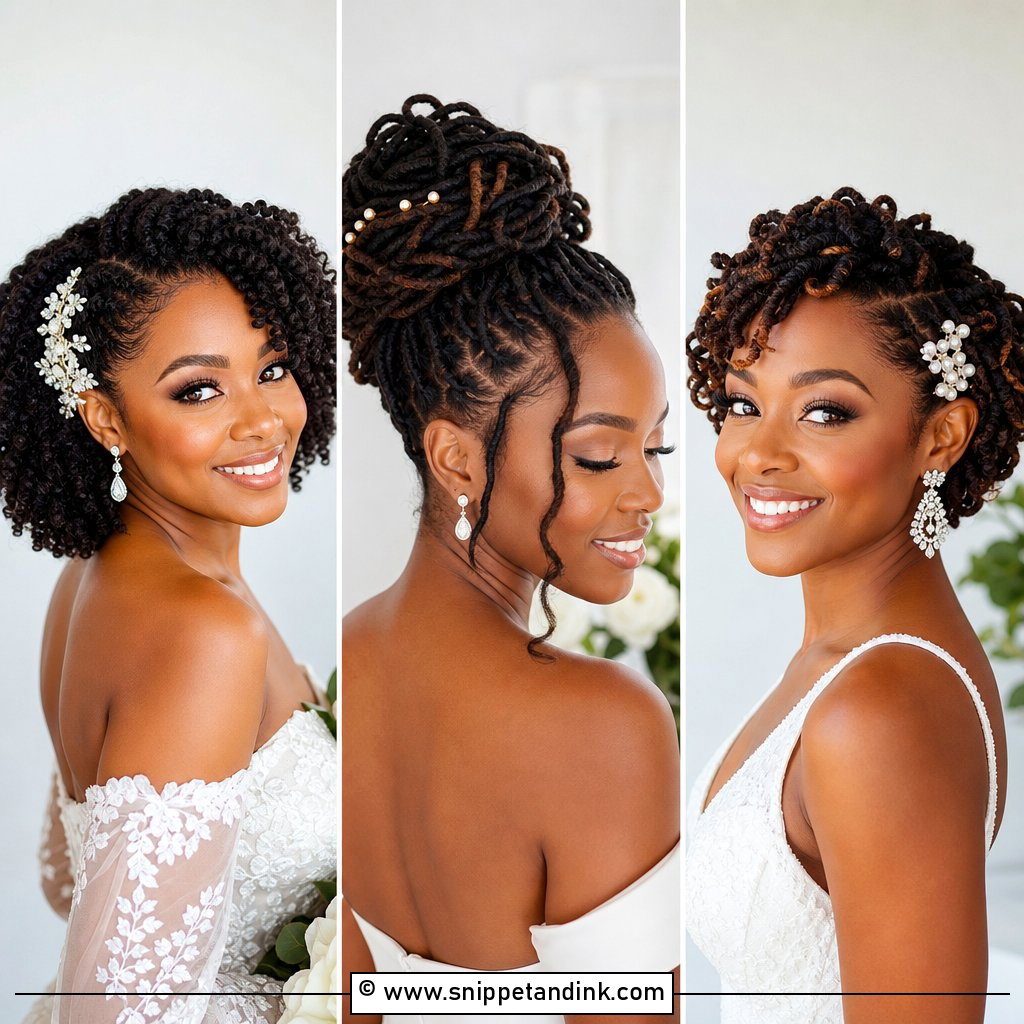
Less strict than a sleek bun, more secure than wearing it down. That middle ground is why textured updos suit garden weddings, rustic venues and coastal ceremonies. The texture comes from curls, twists or loose sections gathered at the back, and the skill is in making it look balanced from every side, not messy. I check it in a hand mirror from both profiles before I let a bride go. Small pearl pins, floral clips or a delicate comb add detail without competing with the dress.
6. Hollywood Waves Wedding Hairstyle
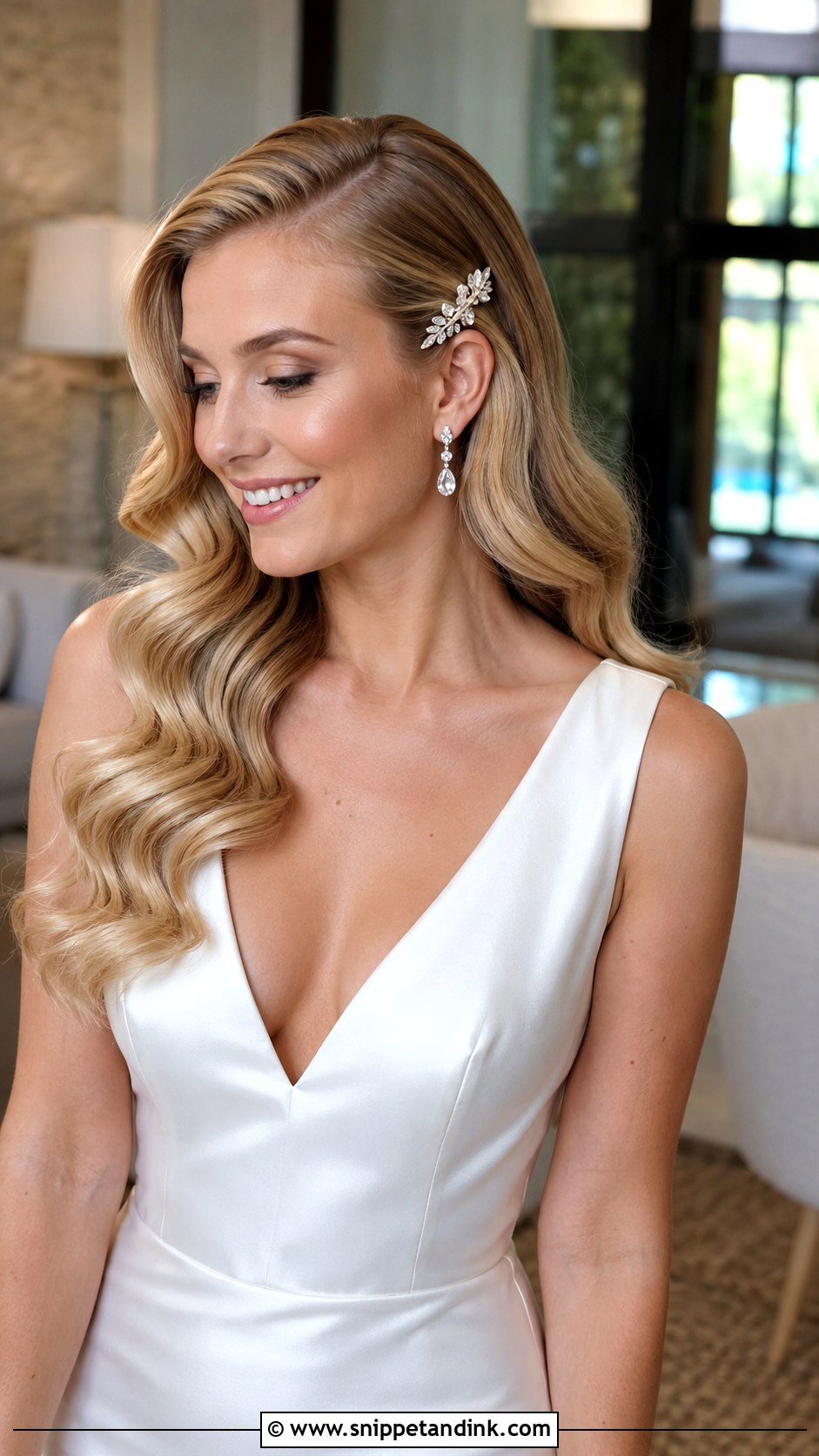
Smooth, uniform waves set in one direction, usually from a deep side part, give the glamour of an old film still. Fitted gowns, vintage-inspired dresses and off-the-shoulder necklines suit them best. They need length and density to form the full pattern; thin hair shows gaps between the waves, so I often add a few wefts underneath. Set in pin curls, brushed out once cold, then the ridges pressed in with clips for a few minutes. Keep accessories to one piece, a barrette, veil or crystal comb, so nothing interrupts the line.
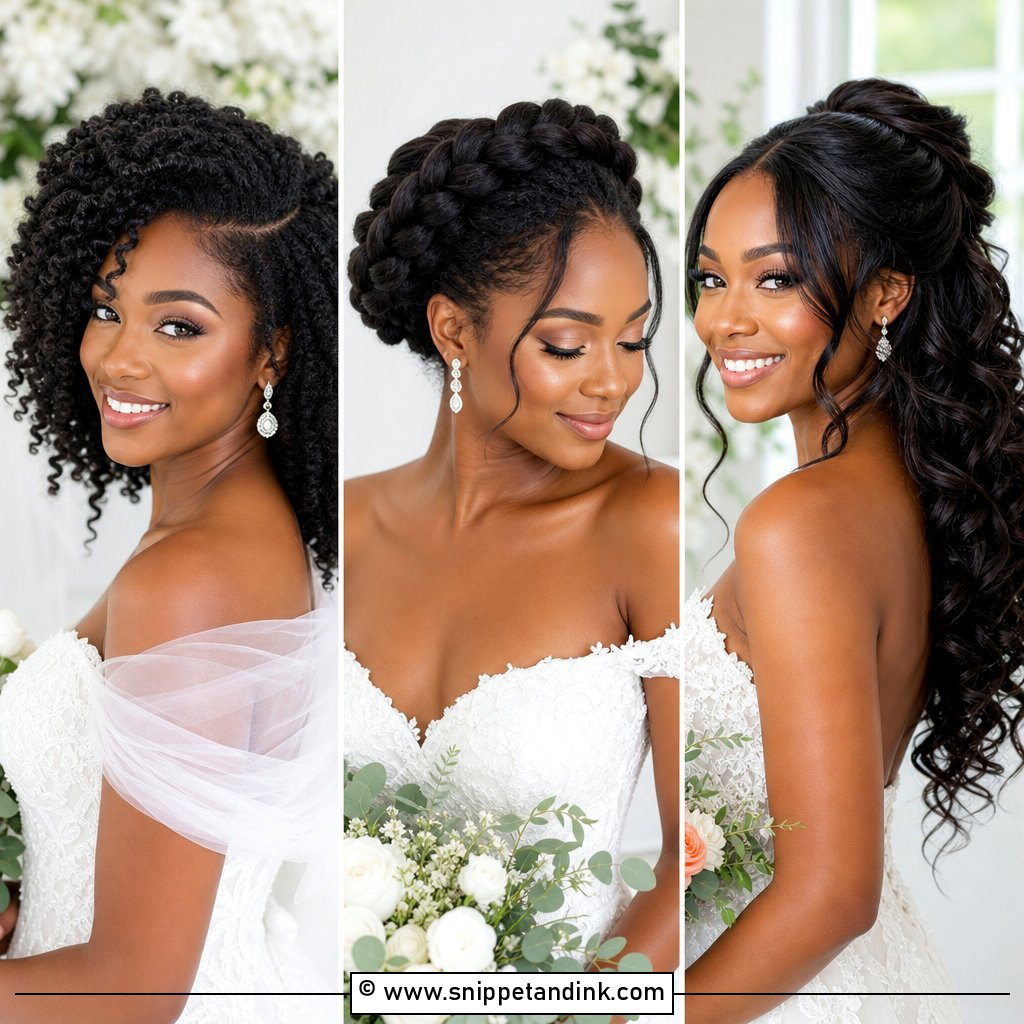
7. Braided Crown Wedding Hairstyle
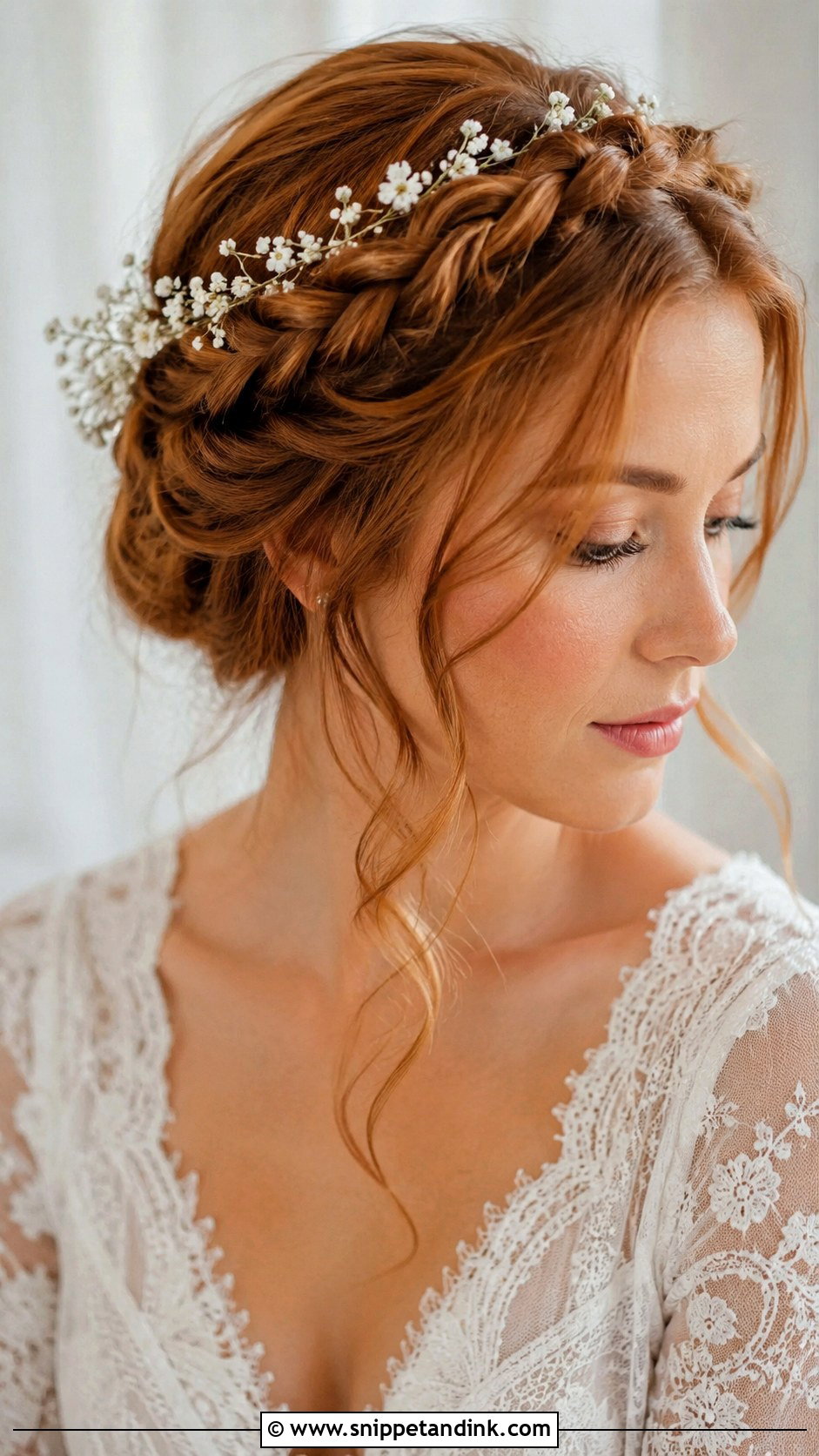
A braided crown frames the face like a halo, either wrapping fully around the head or sitting across the top, depending on length and thickness. It suits outdoor weddings, garden ceremonies and bohemian dresses. Very layered hair struggles here, since short pieces poke out along the braid; I’ll use a little wax on each section as I plait to tuck them in. Pull the braid gently apart for fullness once it’s pinned, and leave a few tendrils at the temples. Tiny flowers or pearl pins slot neatly into the loops.
8. Bridal Ponytail Wedding Hairstyle
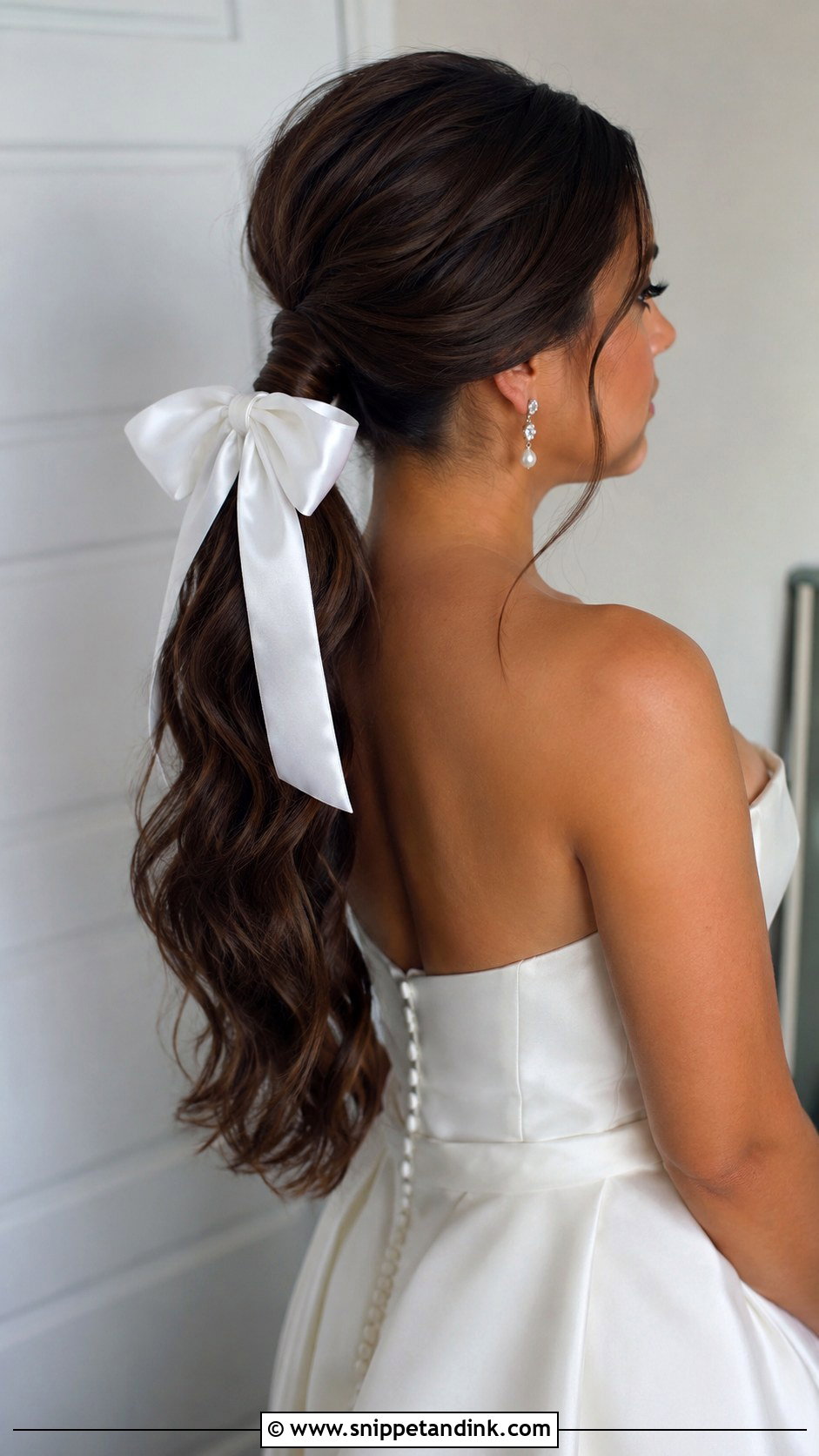
Movement and comfort, with a modern shape. A low ponytail reads soft; mid or high adds lift and energy. I wave the lengths first for fullness, wrap a section around the elastic and pin it underneath so no band shows. It sits well with strapless gowns, halter necks and dresses with detailed backs. The one honest drawback is the veil: it needs to sit above the ponytail, so plan your comb placement with your stylist. For extra bridal detail, tie on a bow or slide pearl pins along the base.
9. Chignon Wedding Hairstyle
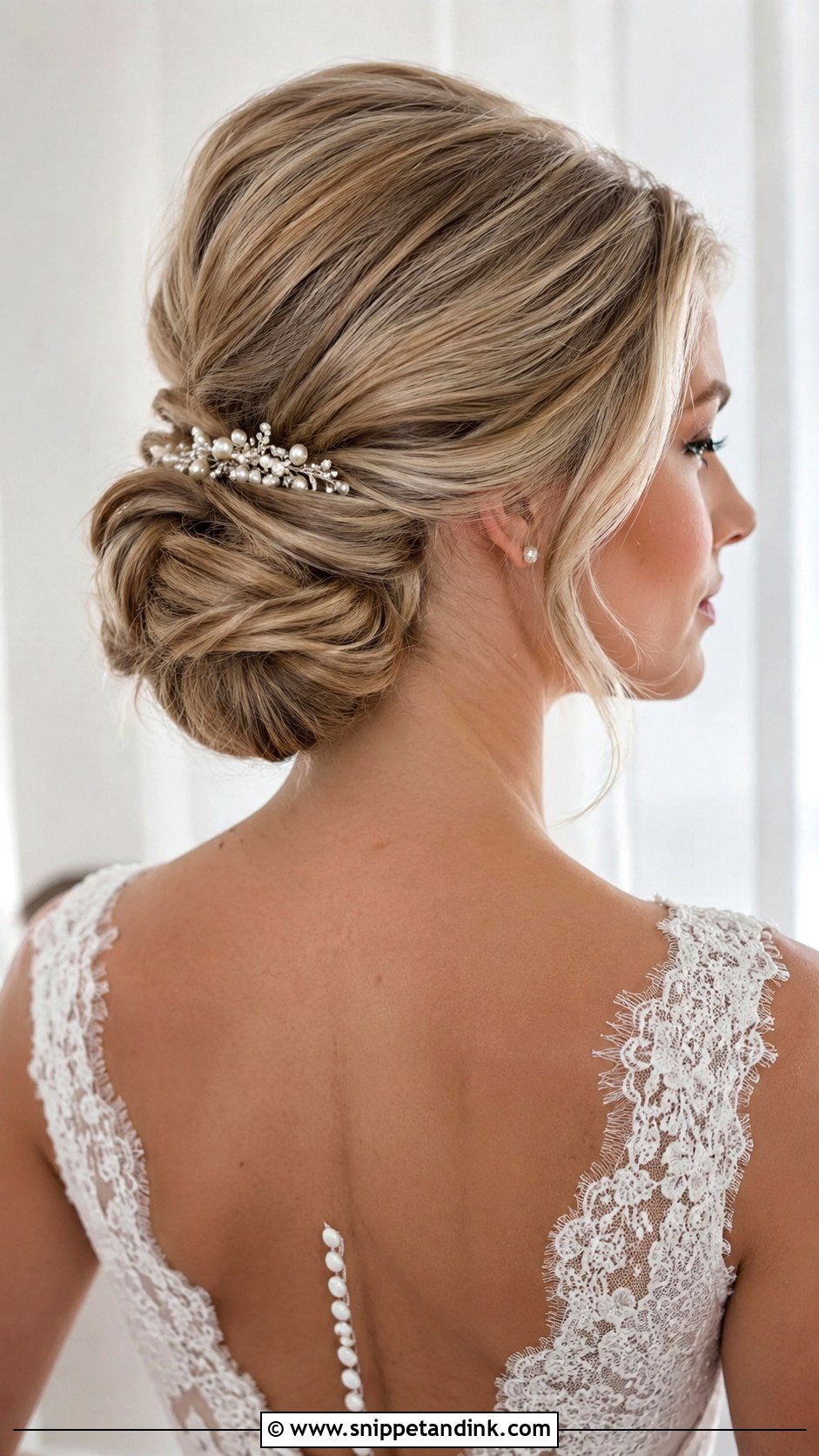
A chignon sits low at the back and can be smooth, twisted, softly curled or slightly undone, which is why it adapts to almost any dress. From the side and back, the angle guests see during the ceremony, its shape is very clean. It’s also one of the best anchors for a veil. My rule of thumb: a detailed dress gets a simple chignon, a minimal gown can carry a comb, pins or extra volume. It’s the style I’ve rarely seen a bride regret in her photos years later.
10. Curly Wedding Hairstyle
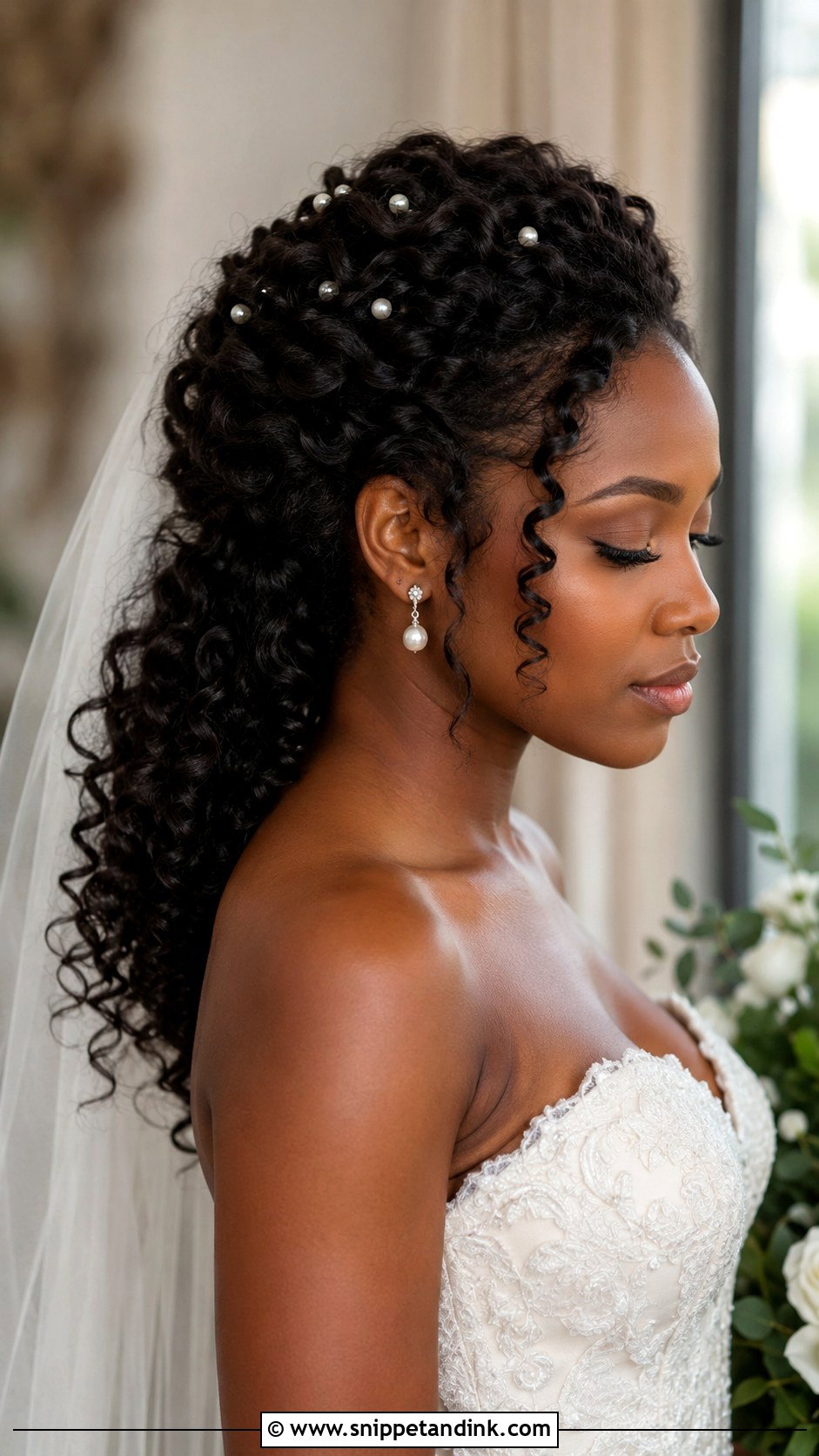
A good bridal stylist won’t try to turn your curls into something else. Instead, curls get defined, hydrated and arranged into a shape: down, half up, swept to one side or gathered into a soft updo. Prep decides everything. I want curls washed and treated a day or two before, then on the morning I refresh with water and cream, never a brush, so the pattern stays intact. A strong but flexible hold follows. Floral pins and pearl clips sit well in curls, and a veil works if the comb is placed so it doesn’t flatten the pattern underneath.
11. Side Swept Curls Wedding Hairstyle
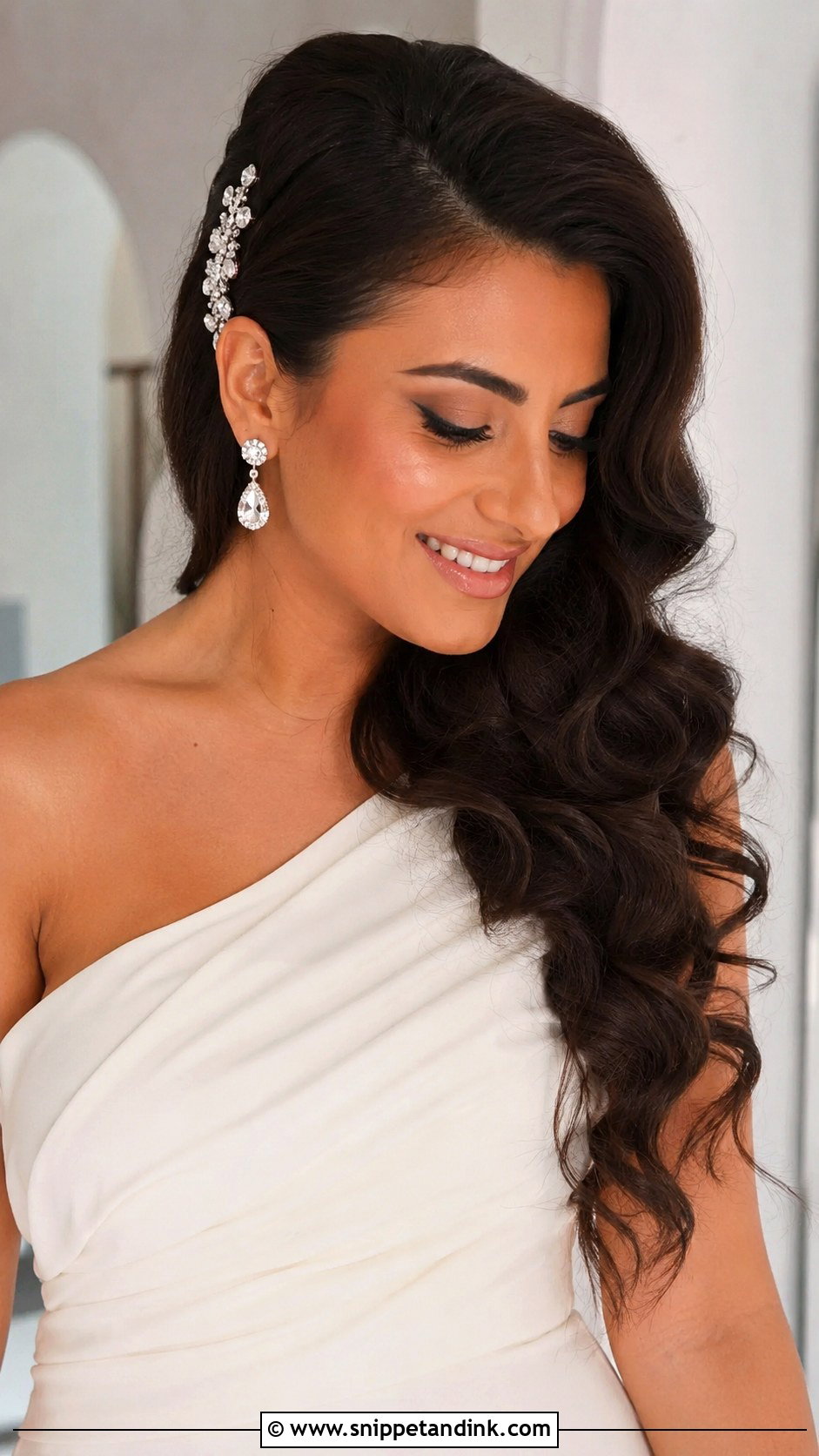
Curls gathered over one shoulder leave the neckline and the opposite side of the face open, which is why this works so well with one-shoulder gowns, strapless dresses, sweetheart necklines and statement earrings. It’s softer than an updo but more controlled than hair simply down. The pinned side needs real anchoring: I lay crossed pins in a line behind the ear, then bring the curls over the top. Aim for full and polished curls, not crunchy. Your hair stays visible in front-facing photos, which brides with long hair often want.
12. Messy Bun Wedding Hairstyle
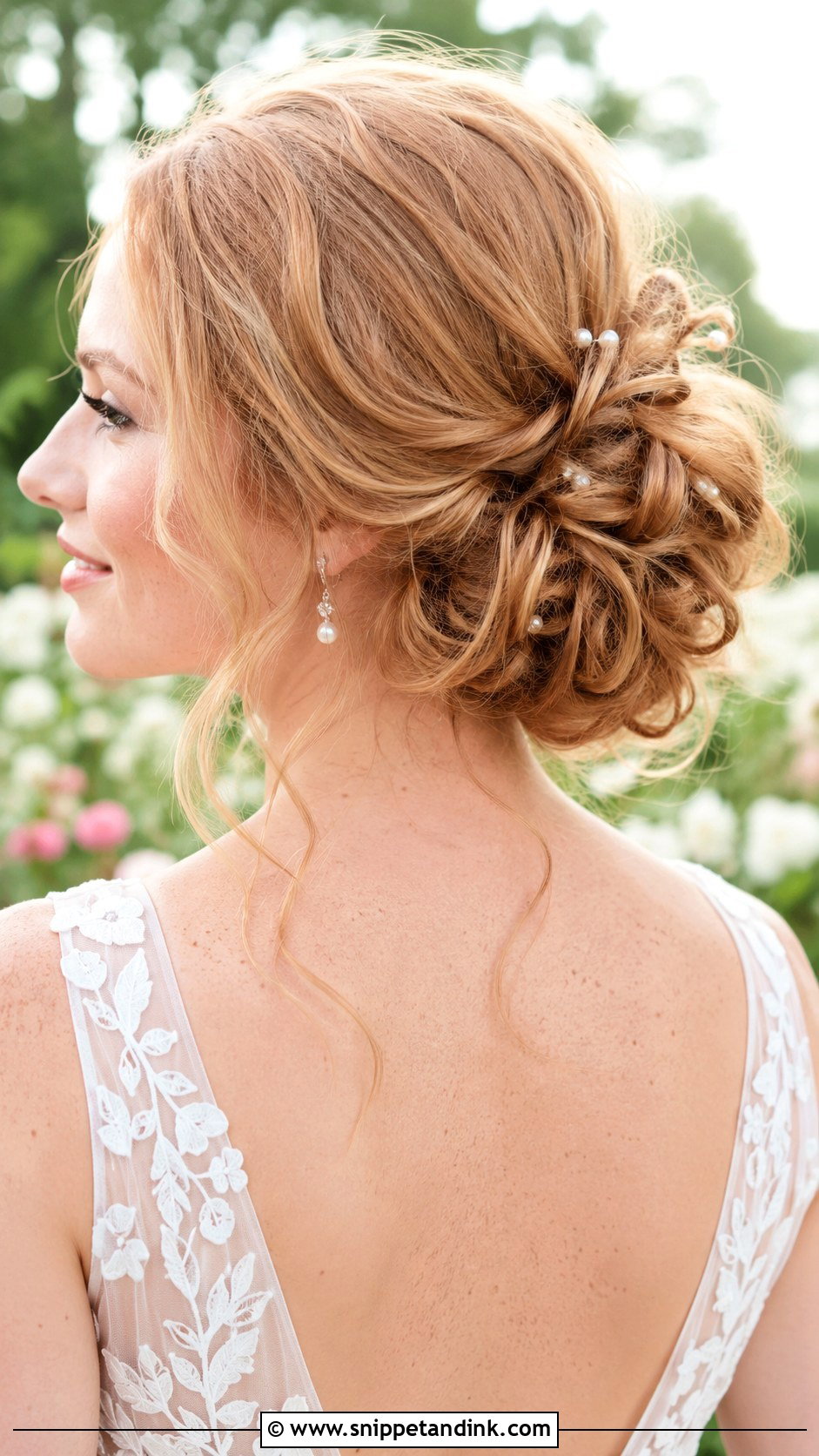
Relaxed, but built underneath. A messy bun that’s simply thrown up looks unfinished in photos; the bridal version has clean volume, controlled flyaways and firm pinning, with the looseness placed on purpose. Outdoor venues, barns, beaches and small ceremonies suit it. It can sit low, mid-height or slightly to the side. On very slippery hair I set a few curls first so there’s texture to pin into. Tiny pearls, soft florals or a delicate veil make it bridal without losing that ease.
13. Long Braid Wedding Hairstyle
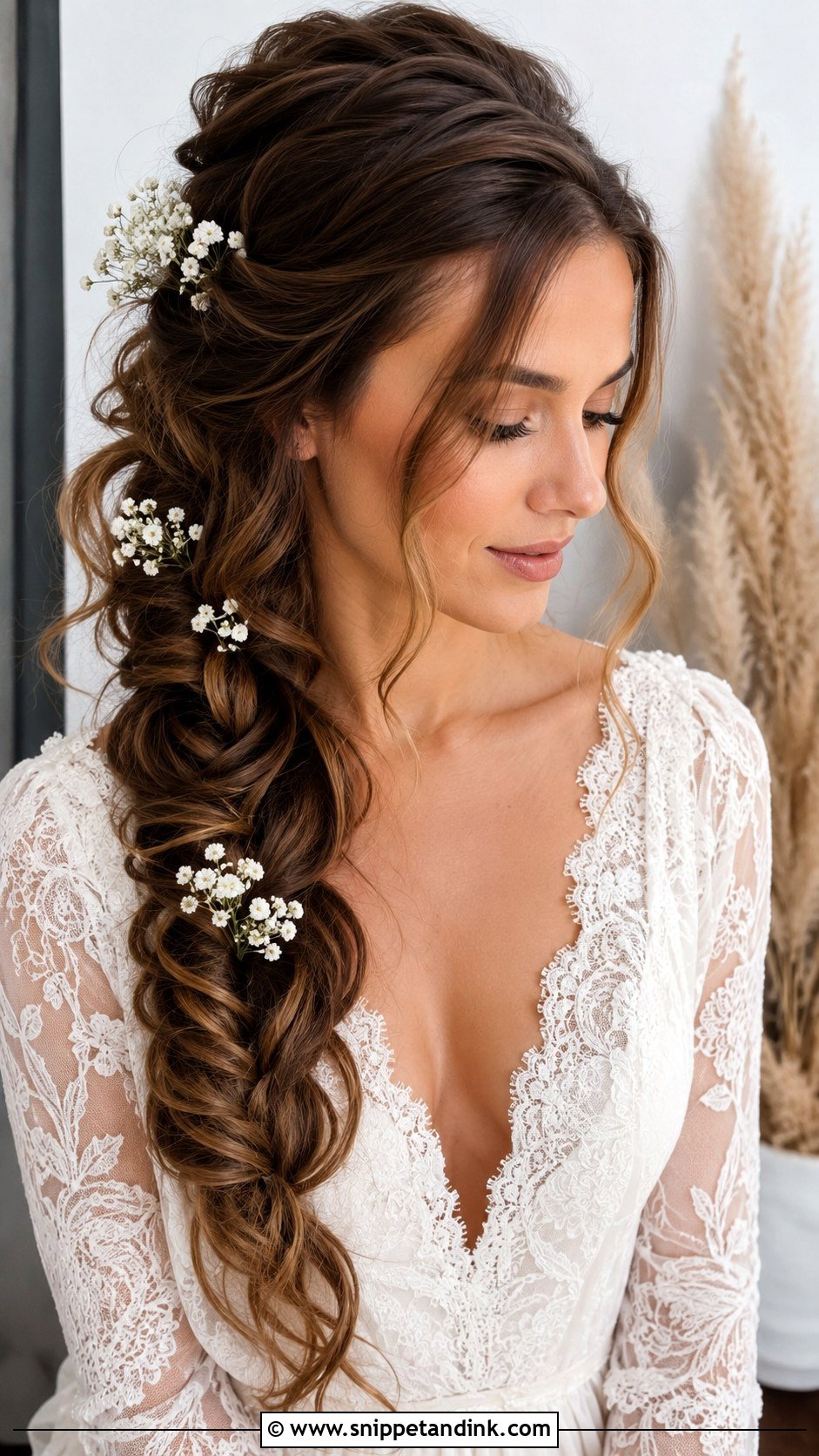
Long or thick hair often gets heavy in an updo by evening, and a braid keeps all that length controlled while still showing it off. Fishtail, loose three-strand, pull-through or a soft side braid are all options. I usually gently pull each section apart after braiding for width, and for a fuller finish a few extensions braided in from the nape disappear easily. Boho gowns, lace and outdoor ceremonies suit it. Keep the braid soft around the face so it reads romantic, not schoolgirl tight.
14. Short Hair Wedding Hairstyle
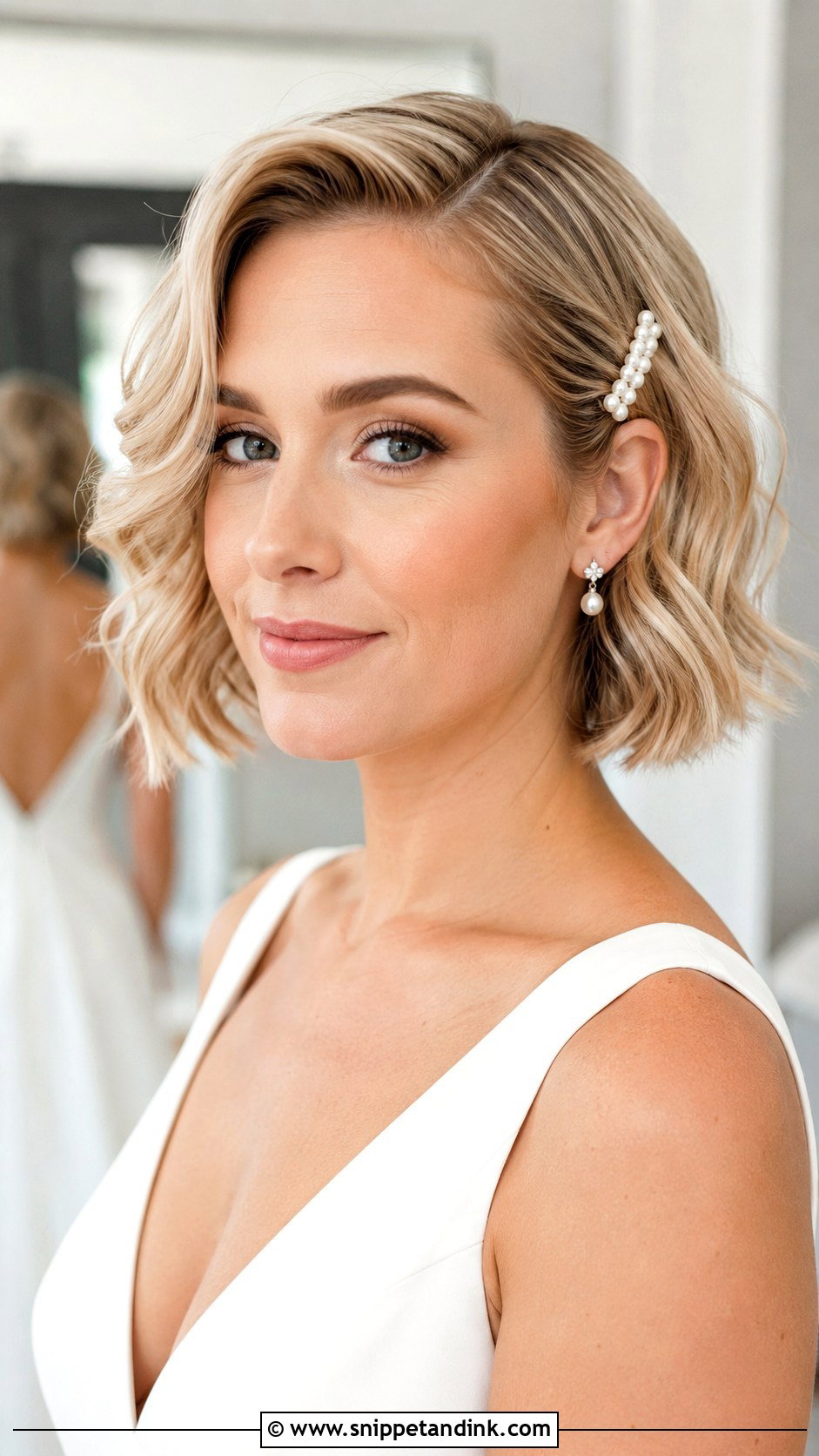
Short hair can look every bit as bridal with shape, shine and one good accessory. A bob, lob, pixie or cropped cut can take waves, a deep side part, smooth volume or a sleek tucked finish. Accessories carry a lot here: pearl clips, a delicate headband, a mini veil or a small floral comb. Short hair also leaves earrings, makeup and the neckline on full view. Get your trim two to three weeks before so the edges have softened; a cut the day before always looks a little raw.
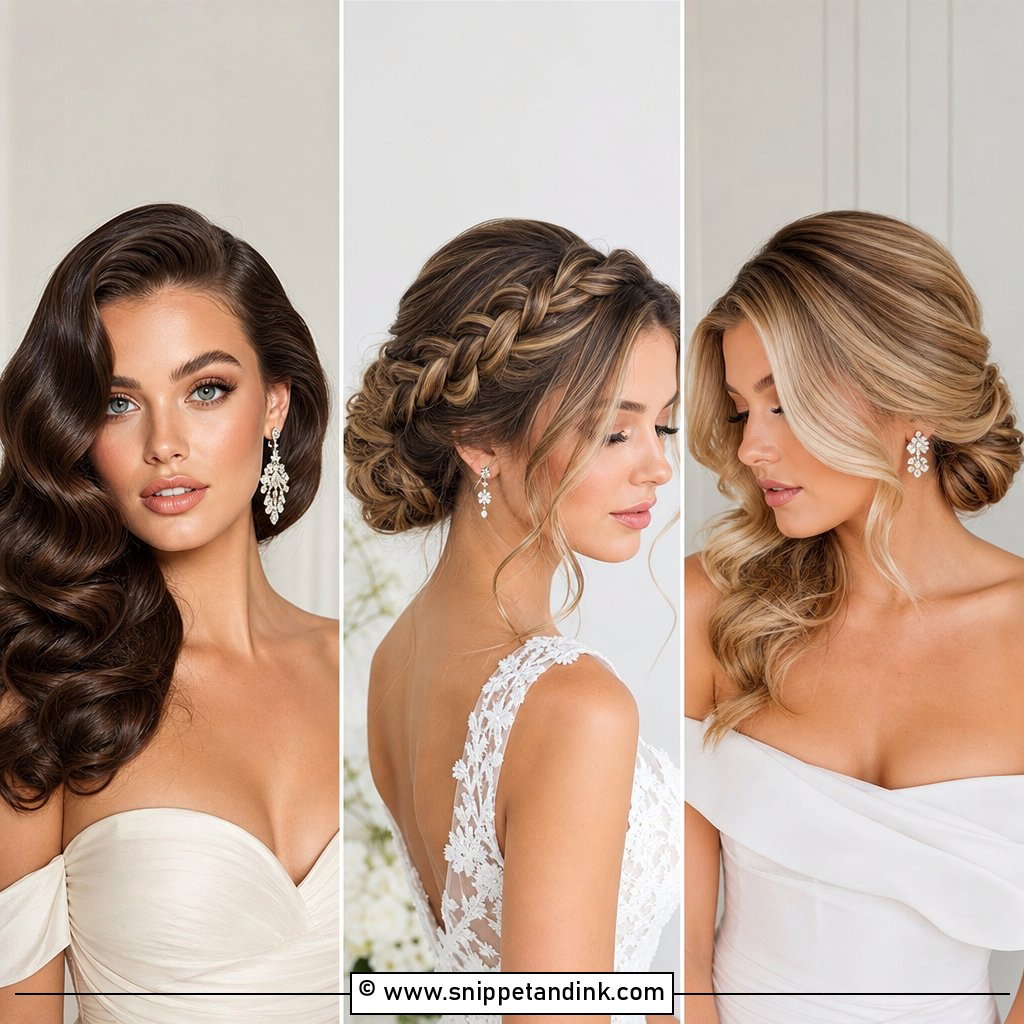
15. Veil Wedding Hairstyle
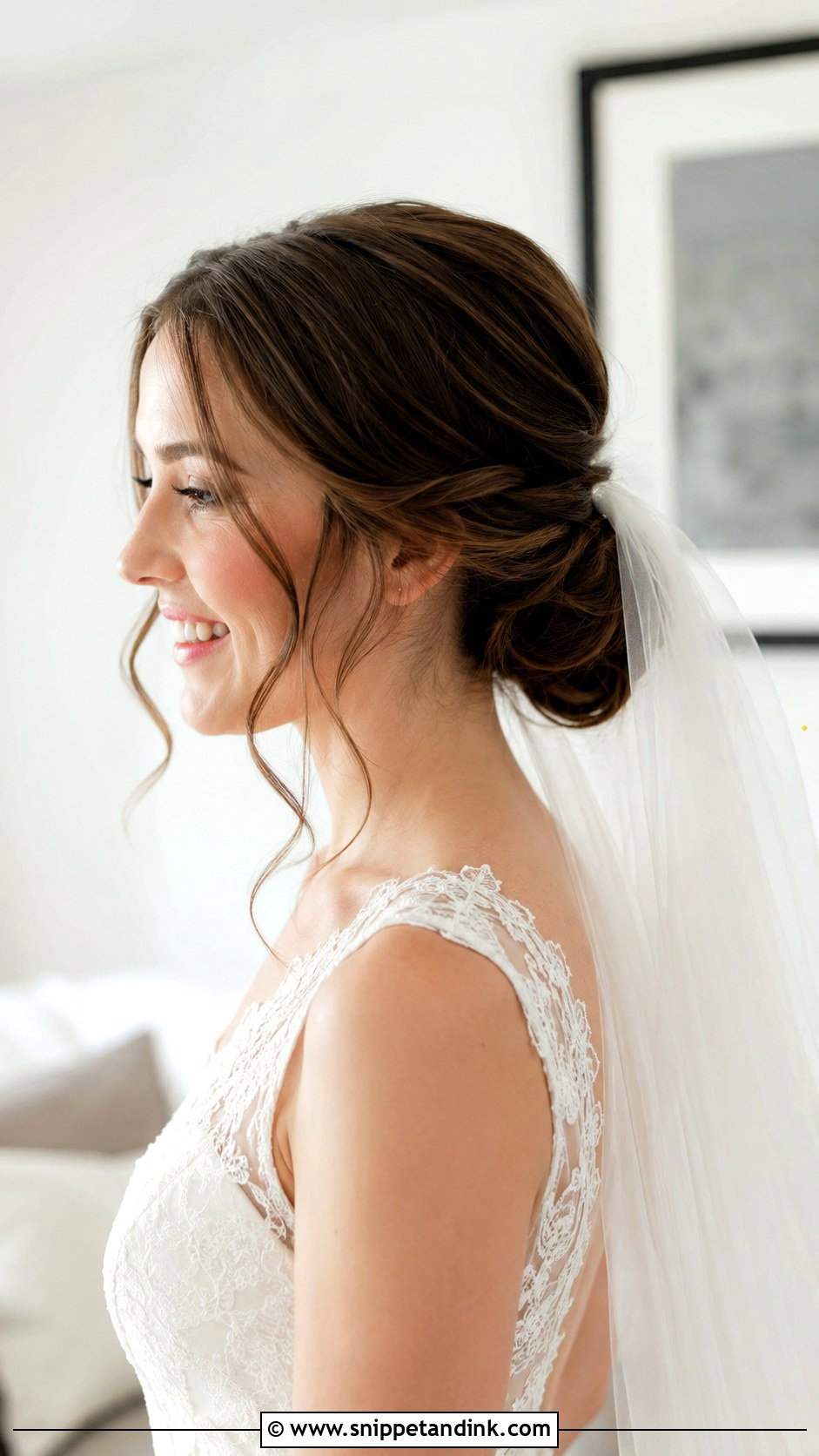
Plan the hair around where the veil will sit and how long you’ll wear it. Above the bun reads traditional; under the bun is softer and shows more of the style. Low buns, chignons, half up looks and waves all work, but each gives a different effect. With loose hair, I build a small hidden anchor braid at the crown so the comb has something to bite into. Please bring the veil to your trial. I want to test the weight, how it photographs, and how quickly it comes out without dragging the style apart.
Reading a Bridal Hair Quote Line by Line
Bridal hair quotes vary a lot by region and stylist, and the headline price is rarely the whole story. When you compare stylists, check what each one actually covers.
- Is the trial included, or charged separately? Some stylists deduct it from the final bill if you book.
- Is there a travel fee, and does it change if you get ready somewhere other than the ceremony venue?
- Are very early starts charged extra? A large bridal party can push the first appointment before dawn.
- Do bridesmaids and mothers have a separate per-person rate, and is there a minimum number?
- Does the price include extensions, or are you expected to buy and color-match them yourself?
- Will someone stay for touch-ups after the ceremony, and for how long?
Get the final schedule and every fee in writing, and read the deposit and cancellation terms before you pay.
A Backup Look for a Rainy or Humid Morning
Loose waves and open curls are the looks most likely to fall flat if the day turns muggy or wet. I always agree a backup at the trial, such as gathering the same waves into a low textured bun or turning the half up style into a full updo. Then the forecast that morning becomes a quick decision rather than a panic, and you already know you like the alternative.
Comfort at Hour Nine Is the Real Test
When you’re stuck between two looks, picture yourself at nine in the evening, after the speeches, maybe still in the veil. Which one are you still comfortable in? If you love your hair down, soft waves or side swept curls will feel natural. If you need staying power, a low bun, chignon or textured updo is the safer bet. A sleek bun or bridal ponytail gives a modern line, and braids, curls or a half up style lean romantic. Whatever you pick, wear it at a trial with your real veil and accessories, take photos from the front, side and back, and notice how your scalp feels after a couple of hours.
You'll Like These Ideas:



Leave a Reply