
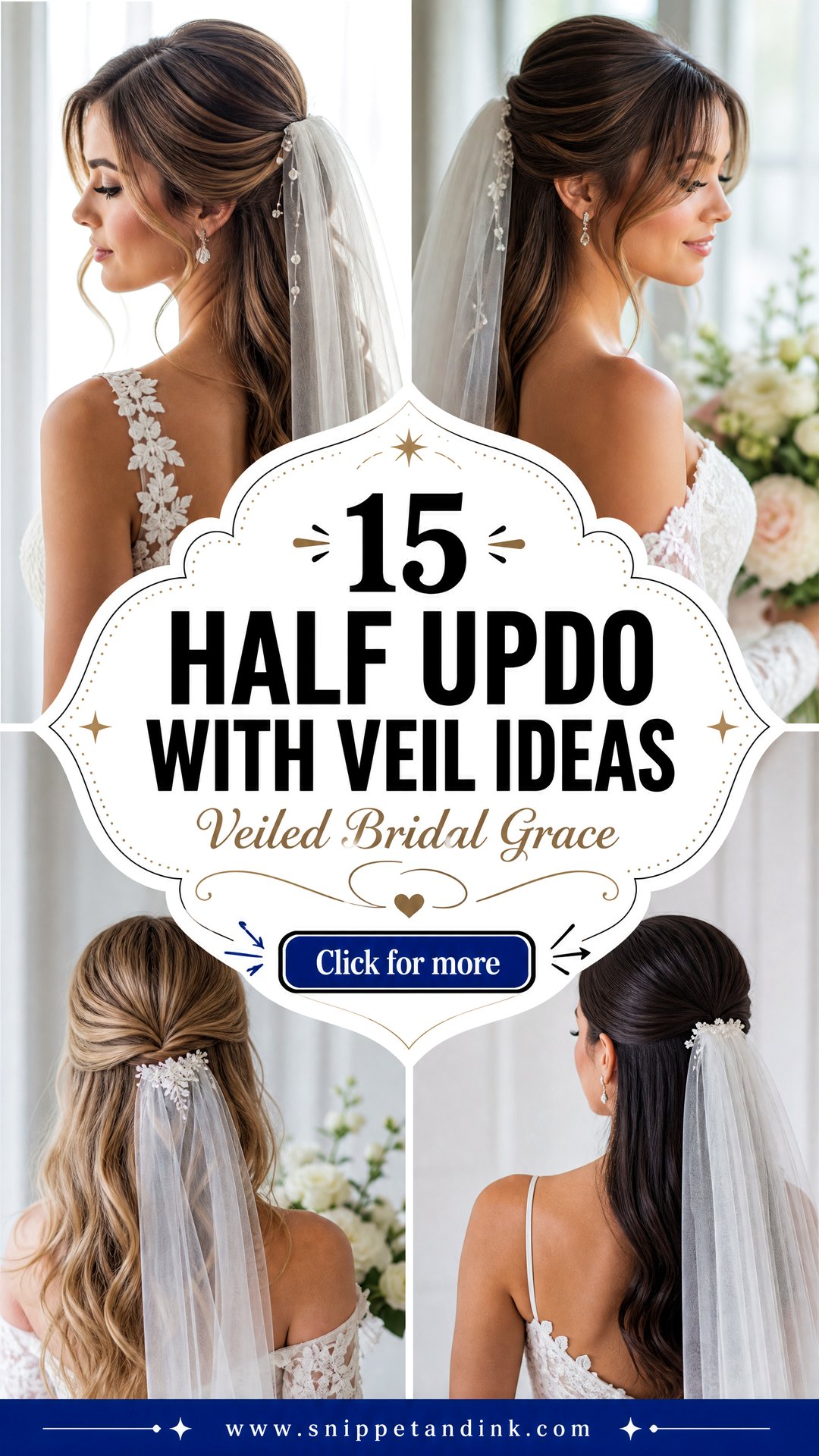
Veils need somewhere to hold on, and loose hair gives them almost nothing. That’s the quiet reason so many brides I work with end up in a half updo: the pinned top section is a ready-made anchor for the comb, and everything underneath can still fall in curls or waves. It suits most veil lengths and nearly every texture, from sleek blowouts to natural curls, braids and twists. What changes from bride to bride is where the veil sits and how much of the hairstyle you want it to cover. The fifteen looks below show that range, with notes on what each one does well.
Over the Twist or Under It? Where the Comb Should Sit
You’ll see both in the looks below, and they create quite different pictures.
Above the pinned section, the veil frames the crown and spreads out over the loose hair. It’s the more traditional look, and it photographs well from the front. The trade-off is that a braid, twist or pearl detail at the back mostly disappears until the veil comes off.
Tucked underneath, the comb slides into the base of the half-up section and the veil hangs from there. Your hair detail stays visible through the tulle in back shots, and the veil tends to fall straighter. It needs a fairly solid base, though, because the comb has less hair above it to grip.
Veil weight changes the answer
A short single-tier veil barely pulls at all. A cathedral length, especially with lace edging or a second tier, can drag noticeably on a small pinned section. For long or heavy veils, I build a small hidden braid or crossed pins as the anchor and push the comb in with its teeth angled toward the front of your head, so the backward pull drives it deeper rather than out.
1. Half Updo With Veil And Loose Curls
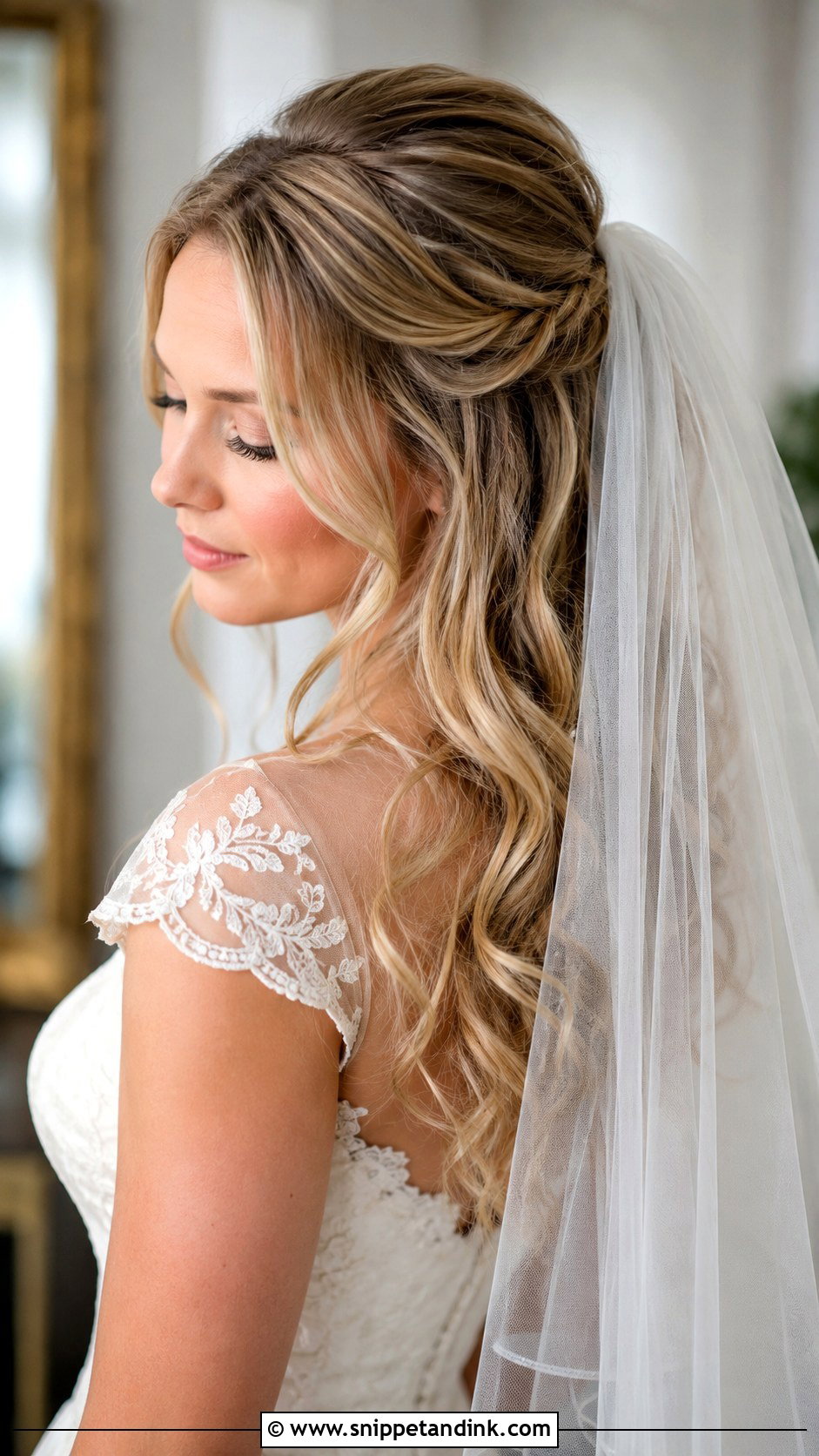
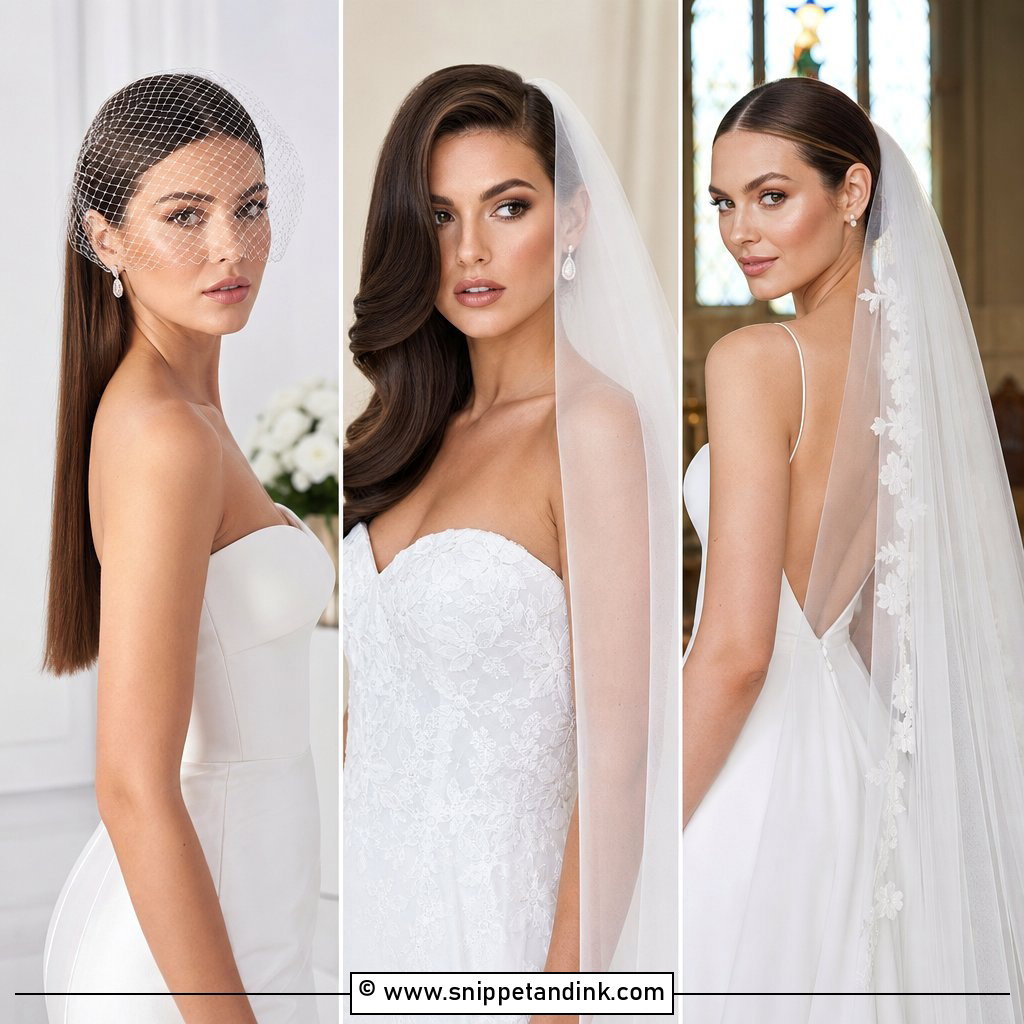
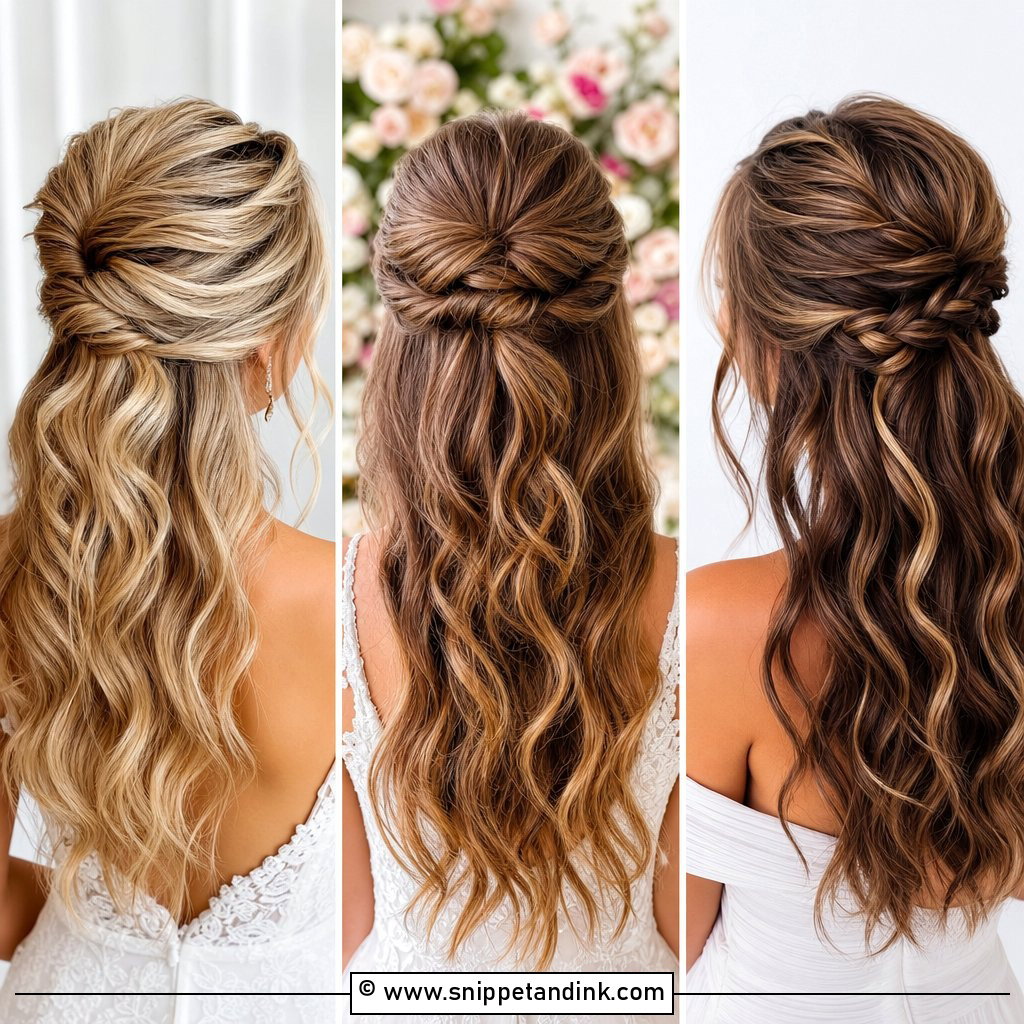
This is the classic for a reason. I pull the top section back with a little lift at the crown and pin it firmly, so the comb slides in above a solid base, and the curls fall over the shoulders. Sweetheart, off-the-shoulder and plain satin gowns suit it, since the curls add movement without hiding the neckline. Ask for curls that are brushed through once after cooling. Ringlets left tight look stiff through a sheer veil and, oddly, older in photos.
2. Half Updo With Veil And Hollywood Waves
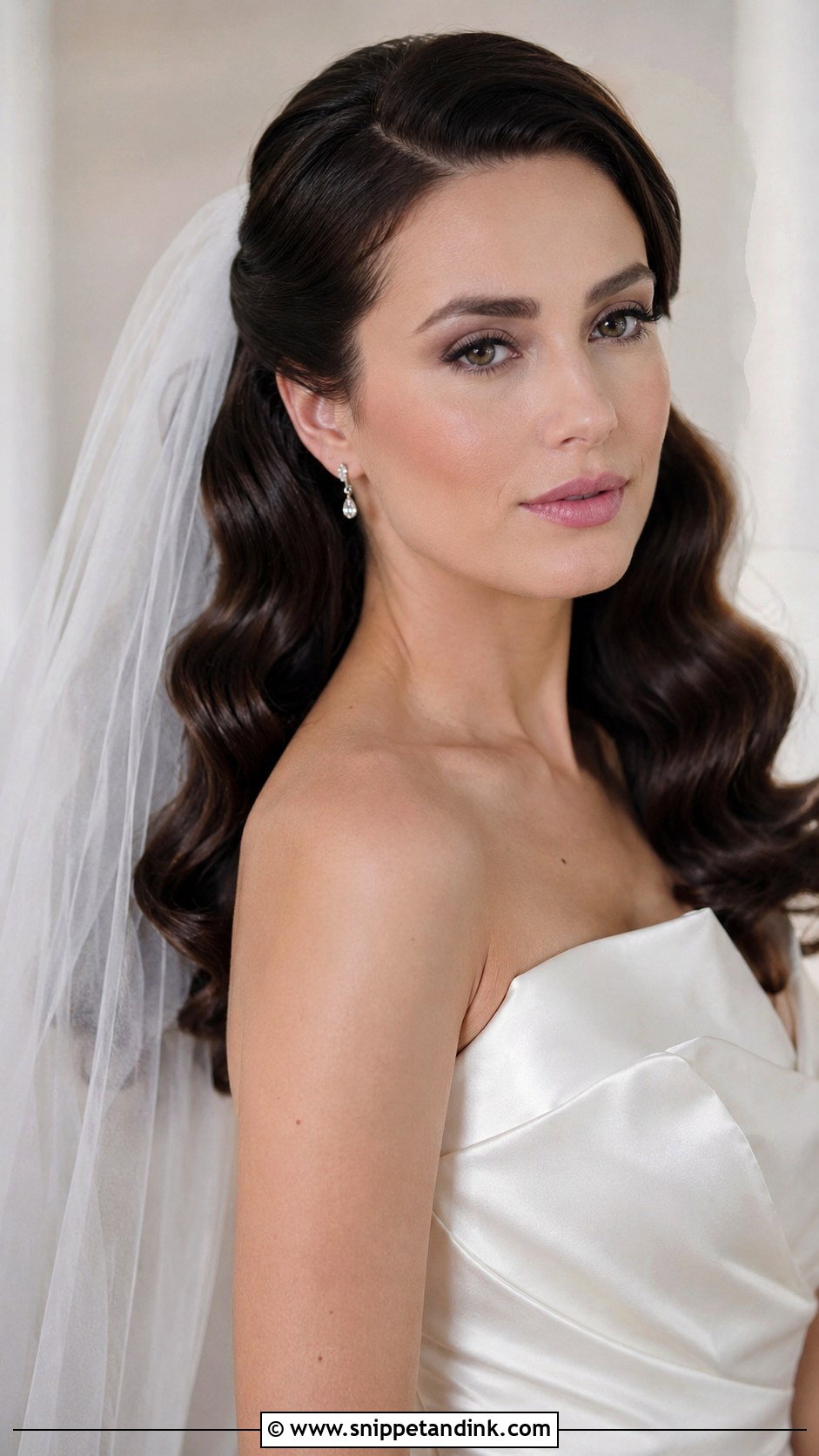
Glossy, uniform waves have an old-Hollywood polish. I set them in the same direction on each side, then brush them into one continuous ripple, and the front can sweep back or fall from a side part. A cathedral veil, chapel veil or fingertip length lets that pattern show through the tulle. Keep the pinned section low and smooth; a high crown with Hollywood waves starts to look like a costume. Structured gowns and indoor ceremonies suit this one, because wind wrecks a set wave faster than any other style.
3. Half Updo With Veil And Braided Crown
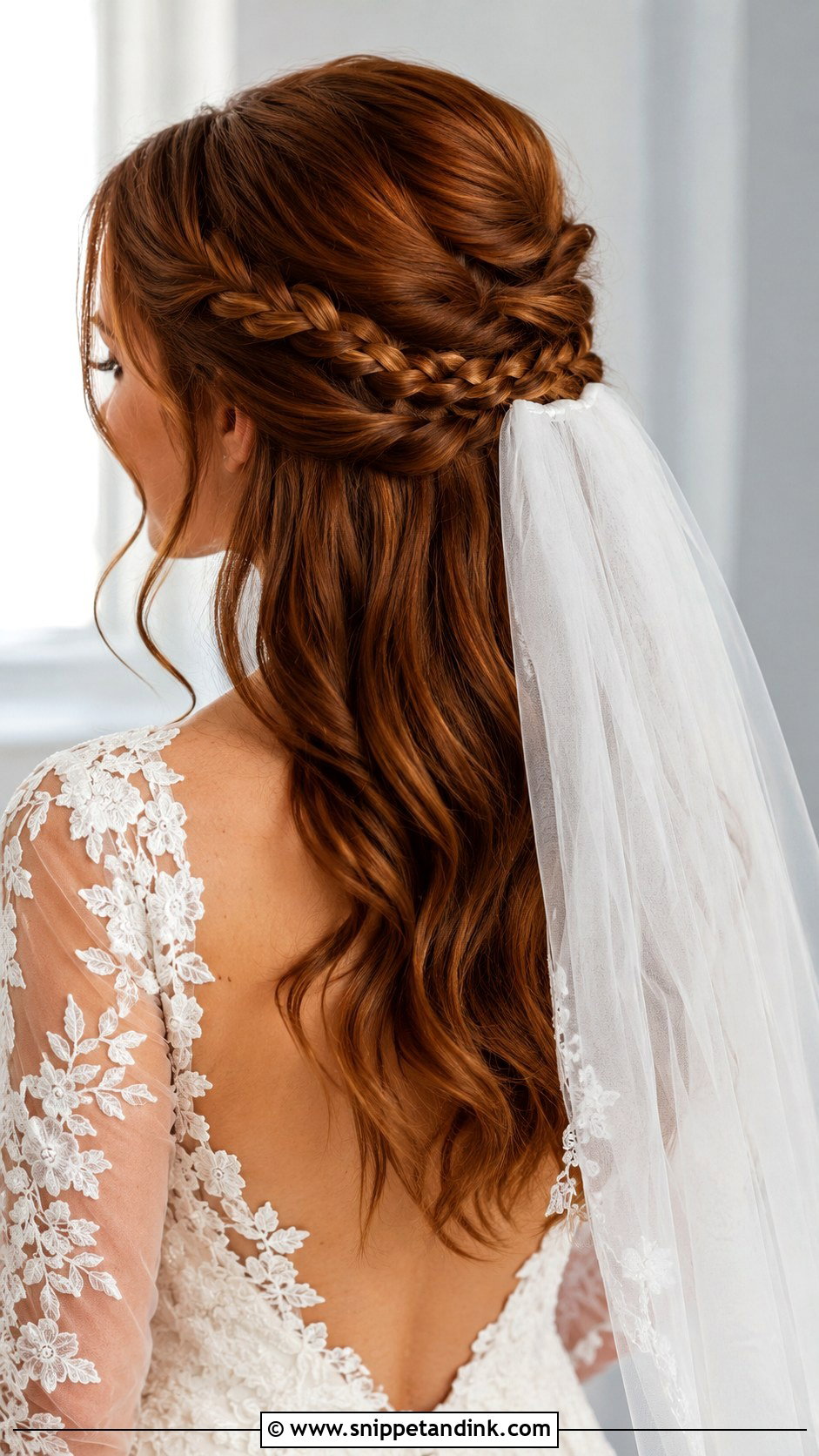
Braids wrapped in from both temples meet at the back and create a firm ridge, which is exactly what a veil comb wants to grip. I tuck the comb just under where the braids join. It looks finished from the side and the back, and it keeps face-framing pieces under control at outdoor ceremonies. After pinning, I loosen the braids slightly by pulling the outer loops, so they don’t feel heavy or tight against the scalp. Soft waves through the bottom keep it relaxed.
4. Half Updo With Veil And Pearl Pins
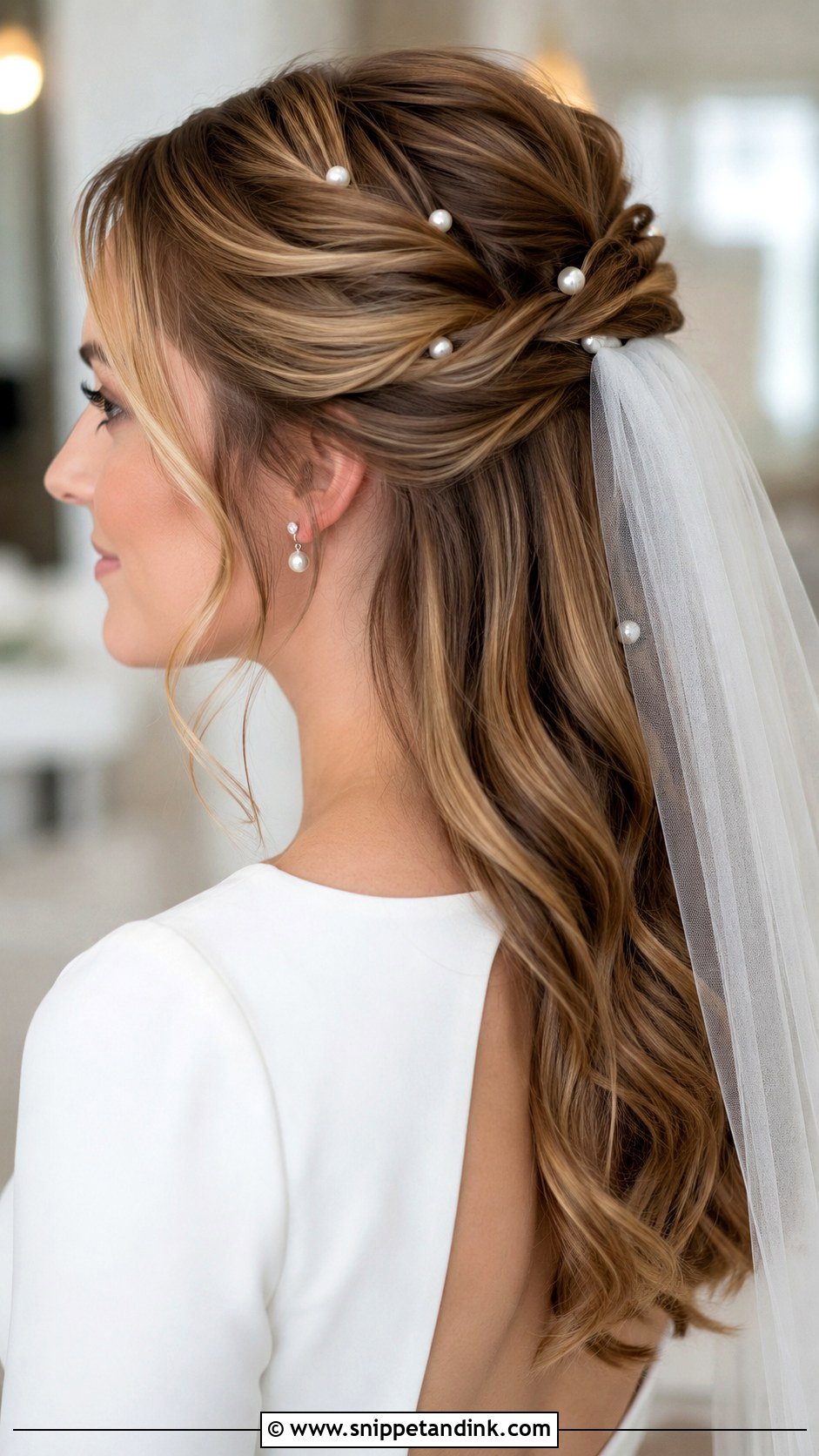
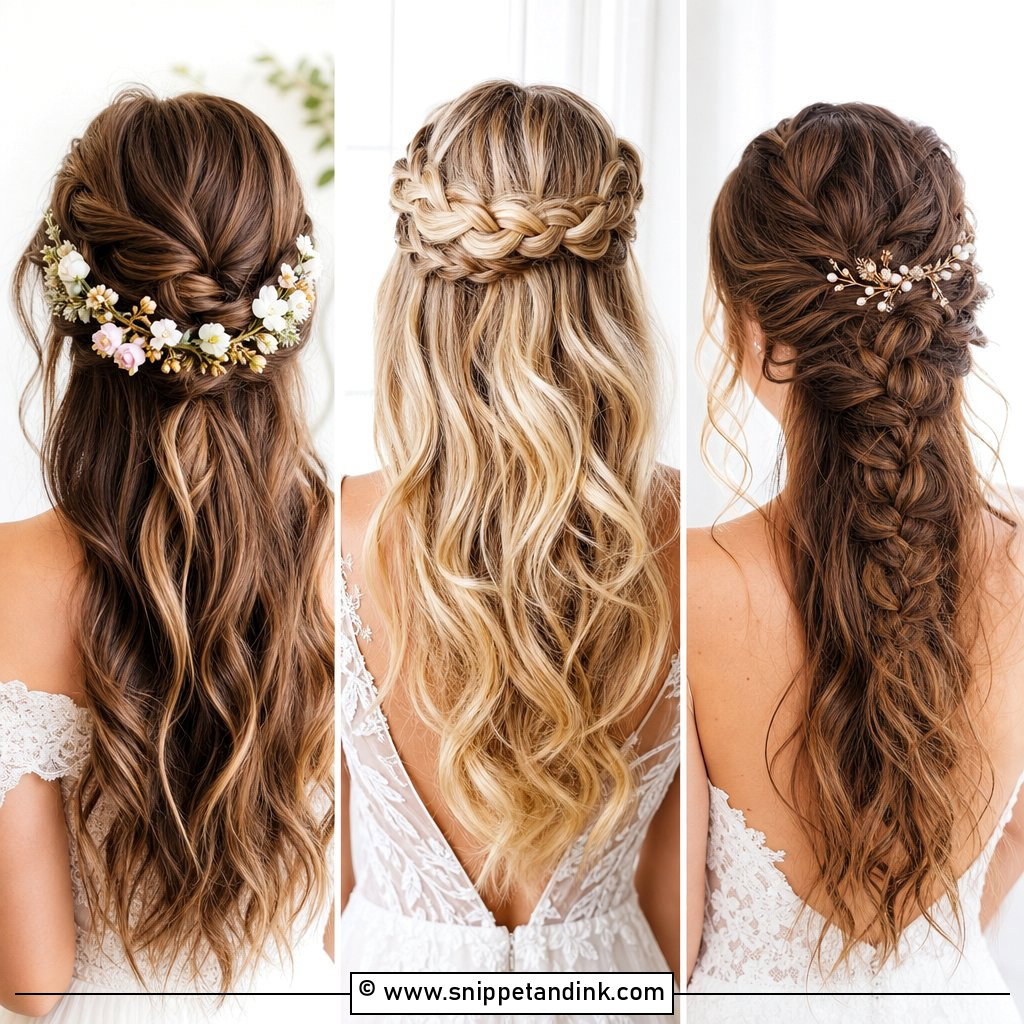
Placement is everything with pearl pins and a veil. I keep them around the pinned section and well clear of the spot where the comb slides in, or the comb catches on them and tilts. Scattered pearls look soft; a small cluster near the twist looks more styled. They pair naturally with lace, tulle, crepe, and beaded gowns. The loose hair below can be curled, waved or smooth, depending on the dress.
5. Half Updo With Veil And Twisted Back
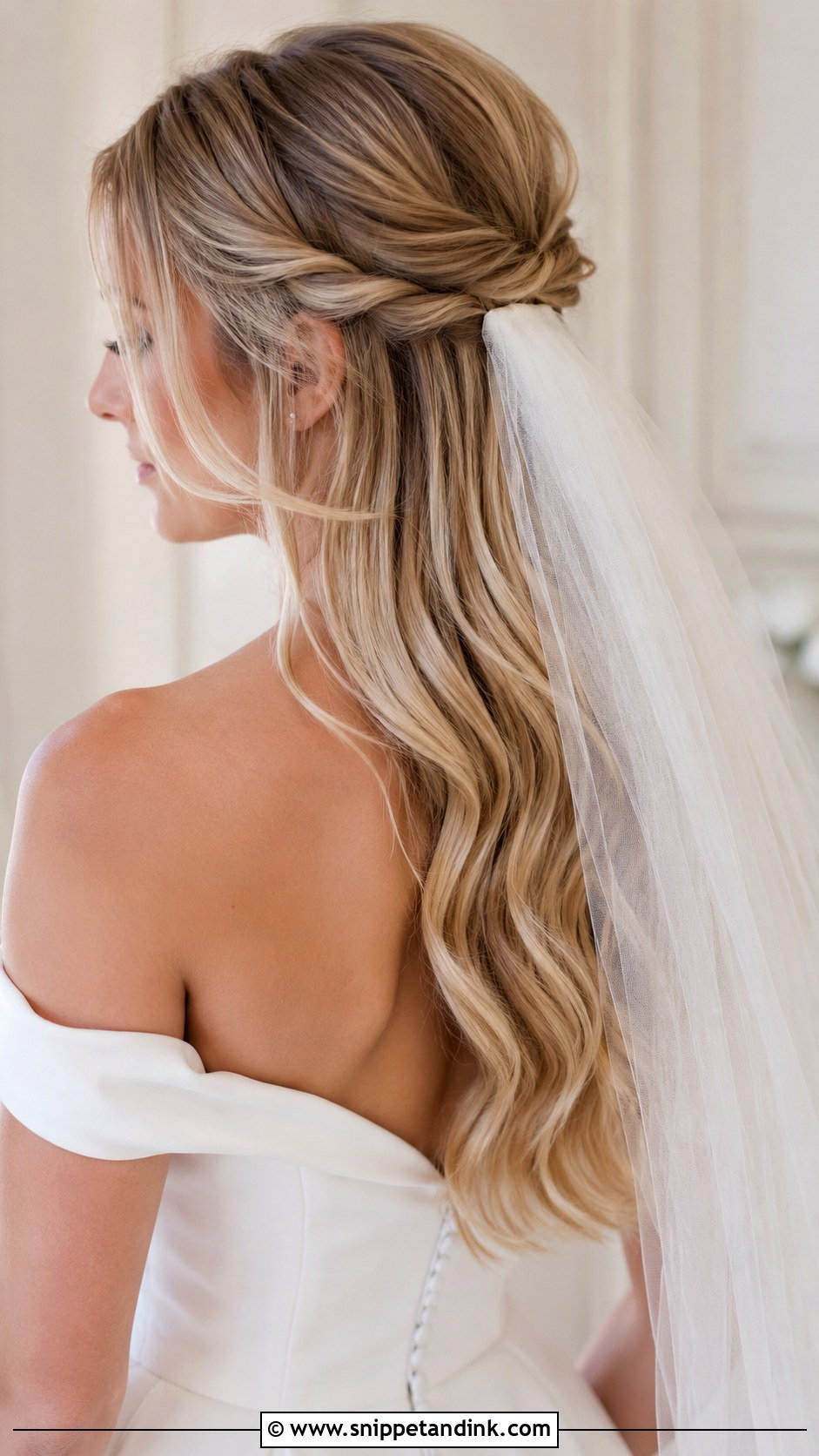
Twists are quicker than braids and just as secure if they’re pinned properly. I twist the front sections away from the face and pin them so the pins cross over each other at the back, which gives the veil a stable base. Kept neat, the twists look classic; pulled apart a little, they relax. If you don’t want visible detail but still want the veil to stay put, this is the one I’d suggest. Soft curls through the ends keep the loose hair looking deliberate under the tulle.
6. Half Updo With Veil For Long Hair
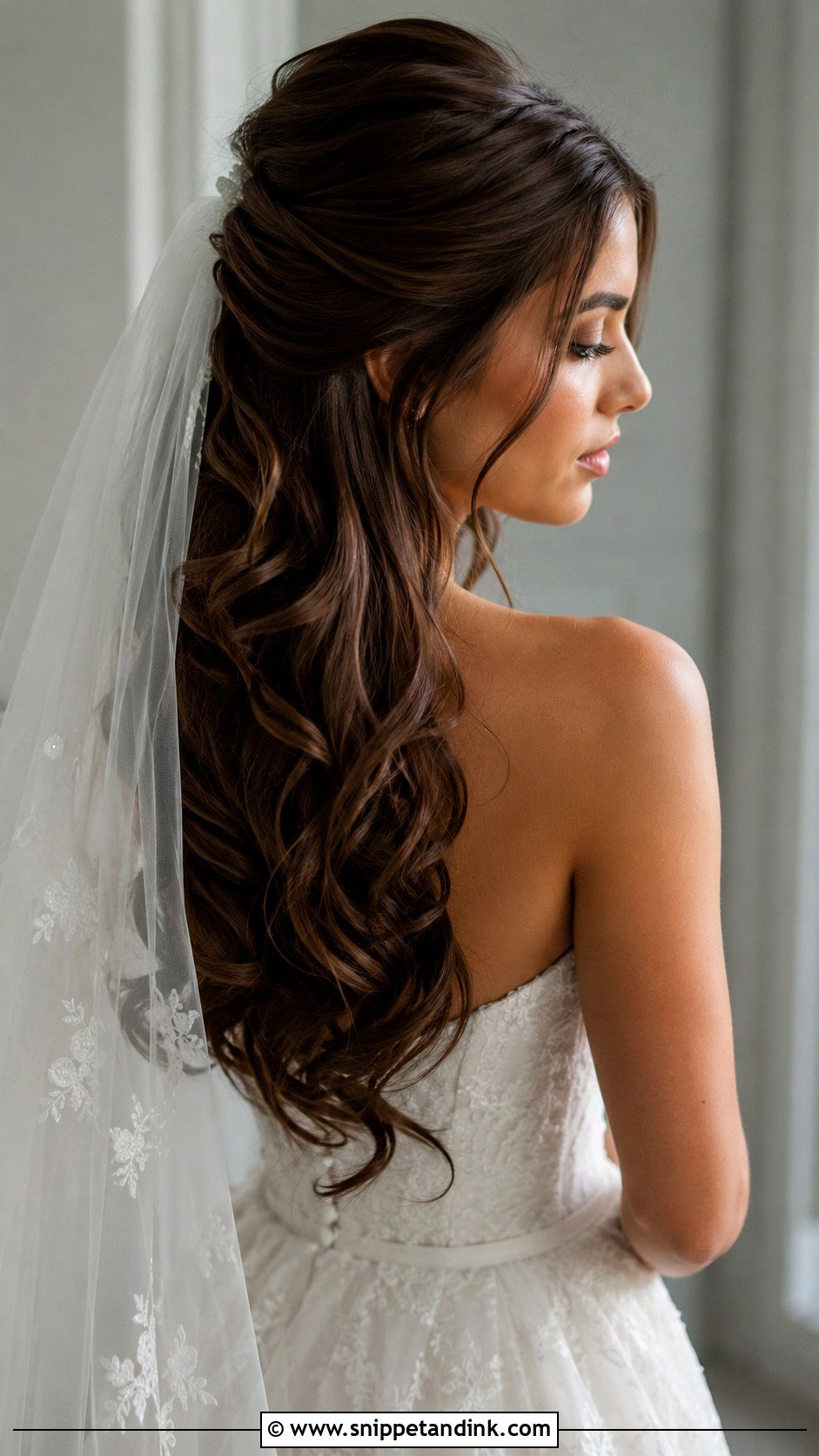
Long hair gives the veil plenty to flow over, and the length still shows through. I lift the crown slightly, pin the top section securely and blend it into long waves. With very thick hair, I often hide a small clear elastic under the half-up section before pinning, because pins alone can’t hold that much weight plus a long veil. Long veils can go over or under the loose hair. Try both at the trial and see which shows more of the style you’ve paid for.
7. Half Updo With Veil For Medium Hair
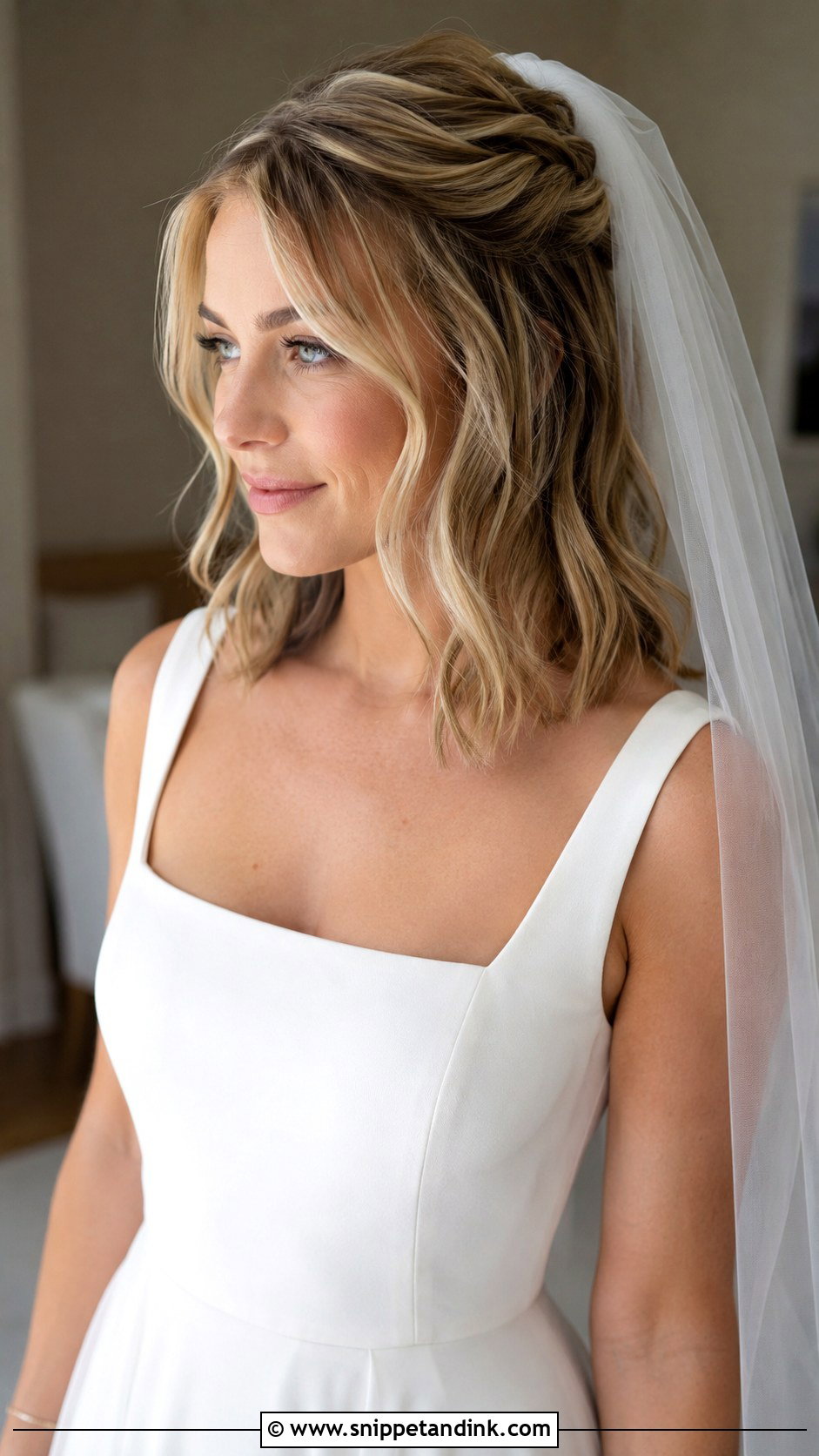
Shoulder and collarbone length is light and manageable, and it usually holds curl well. A small twist, braid or pinned crown gives the veil enough structure without making the hair look shorter than it is. The one catch is that a long, wide veil can swamp medium hair, so I’d look at fingertip or shorter lengths. Ask for waves that start around the cheekbones with textured ends, which adds fullness where it shows.
8. Half Updo With Veil For Short Hair
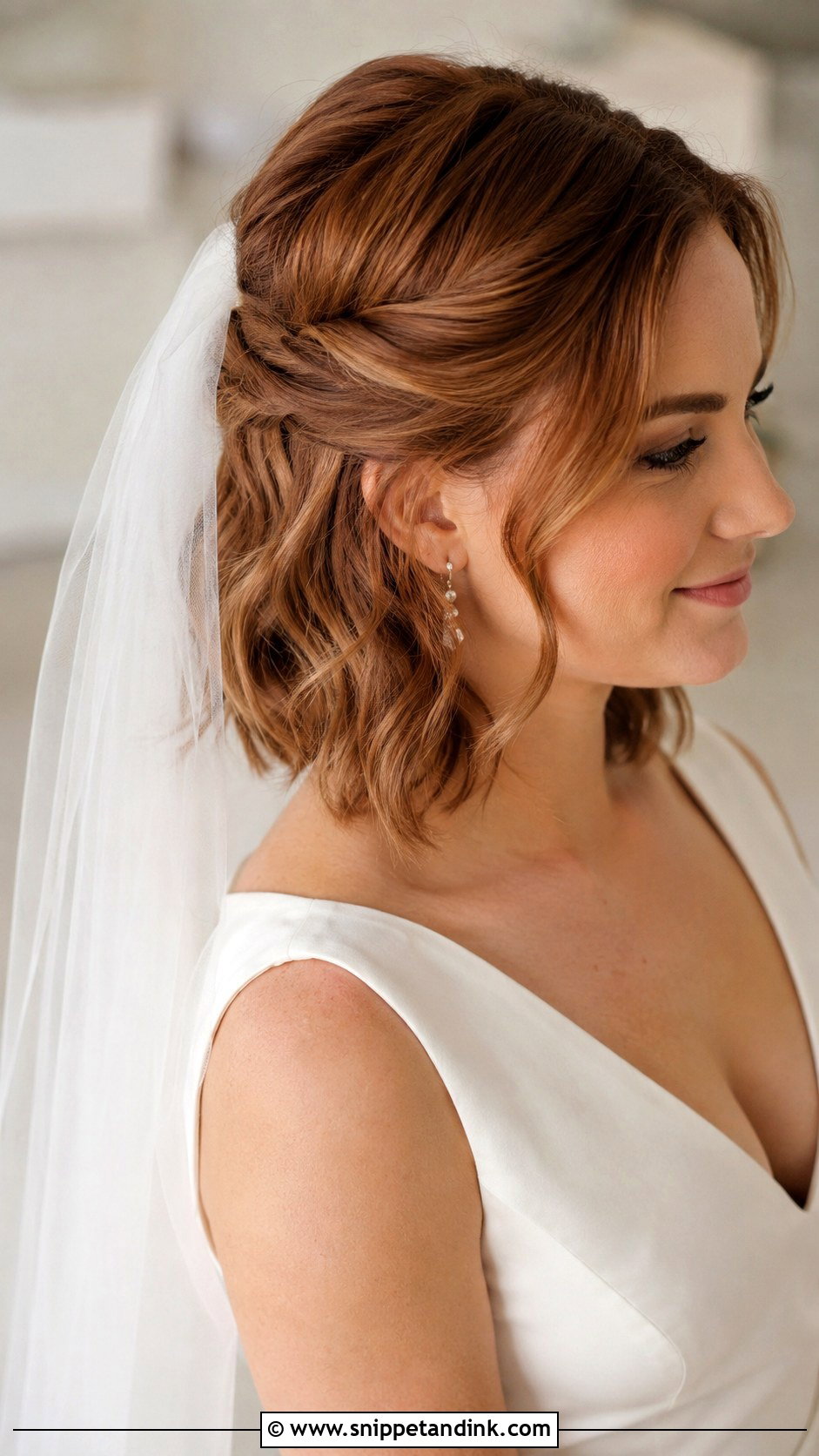
Short hair can carry a veil, but it takes planning. On a bob, lob or short layered cut, I curl softly and pin back the sides to make the half-up shape. The comb needs extra support, so I’ll build a small hidden braid, cross several pins, or add a decorative clip near the crown for it to sit against. A cut this length suits birdcage, fingertip, or shoulder-length veils far better than a heavy cathedral length. A little root volume makes it look fuller and more formal.
9. Half Updo With Veil And Floral Hair Piece
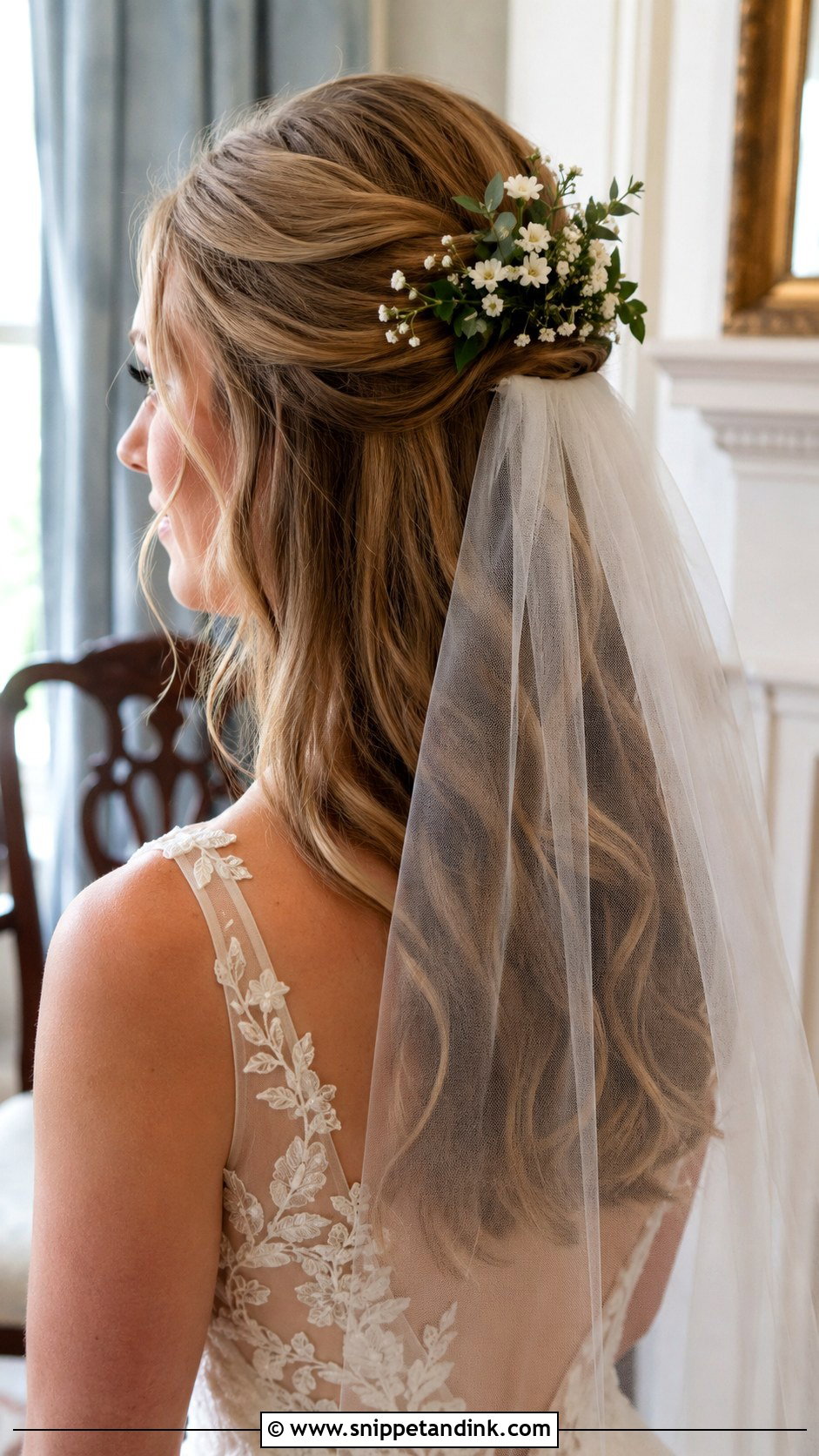
Flowers and a veil have to share space at the back of the head. I place blooms around the pinned section, slightly above or beside where the comb goes, so neither blocks the other. Small blooms, baby’s breath and fine greenery keep the weight down, while oversized flowers drag on a half-up base. Fresh flowers wilt in heat, so ask your florist which varieties hold up, or use good faux ones. Garden, beach and outdoor ceremonies suit it.
10. Half Updo With Veil And Side Part
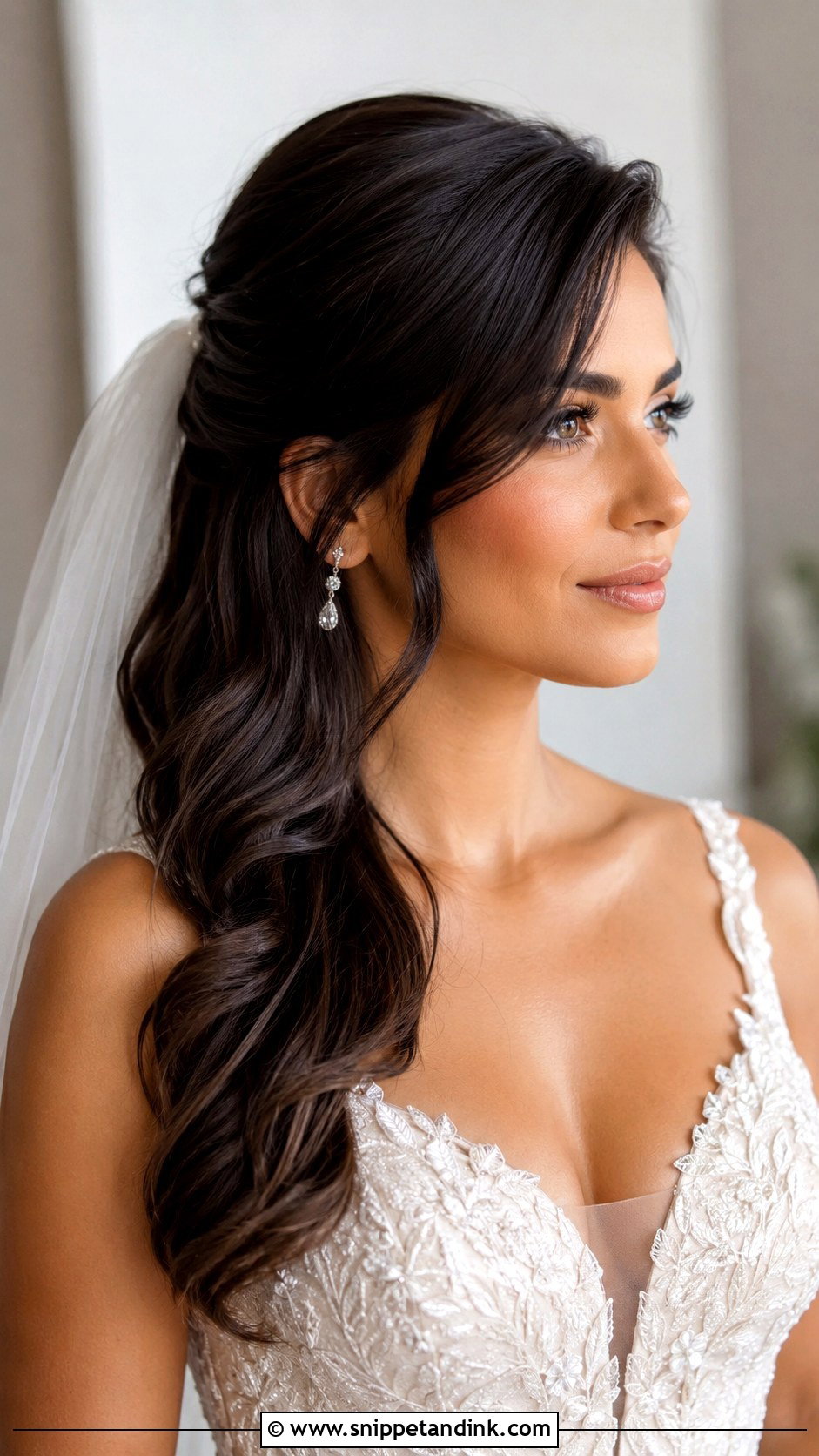
A side part adds shape and a little old-school glamour without any complicated work. The heavier side sweeps back or falls in a smooth wave near the face, and the other side tucks into the pinned section. I place the veil at the back of that pinned section so the part and the front shape stay visible in photos. Drop earrings look great on the open side. Set the part with heat before curling, so it doesn’t creep back to where it usually falls.
11. Half Updo With Veil And Curtain Bangs
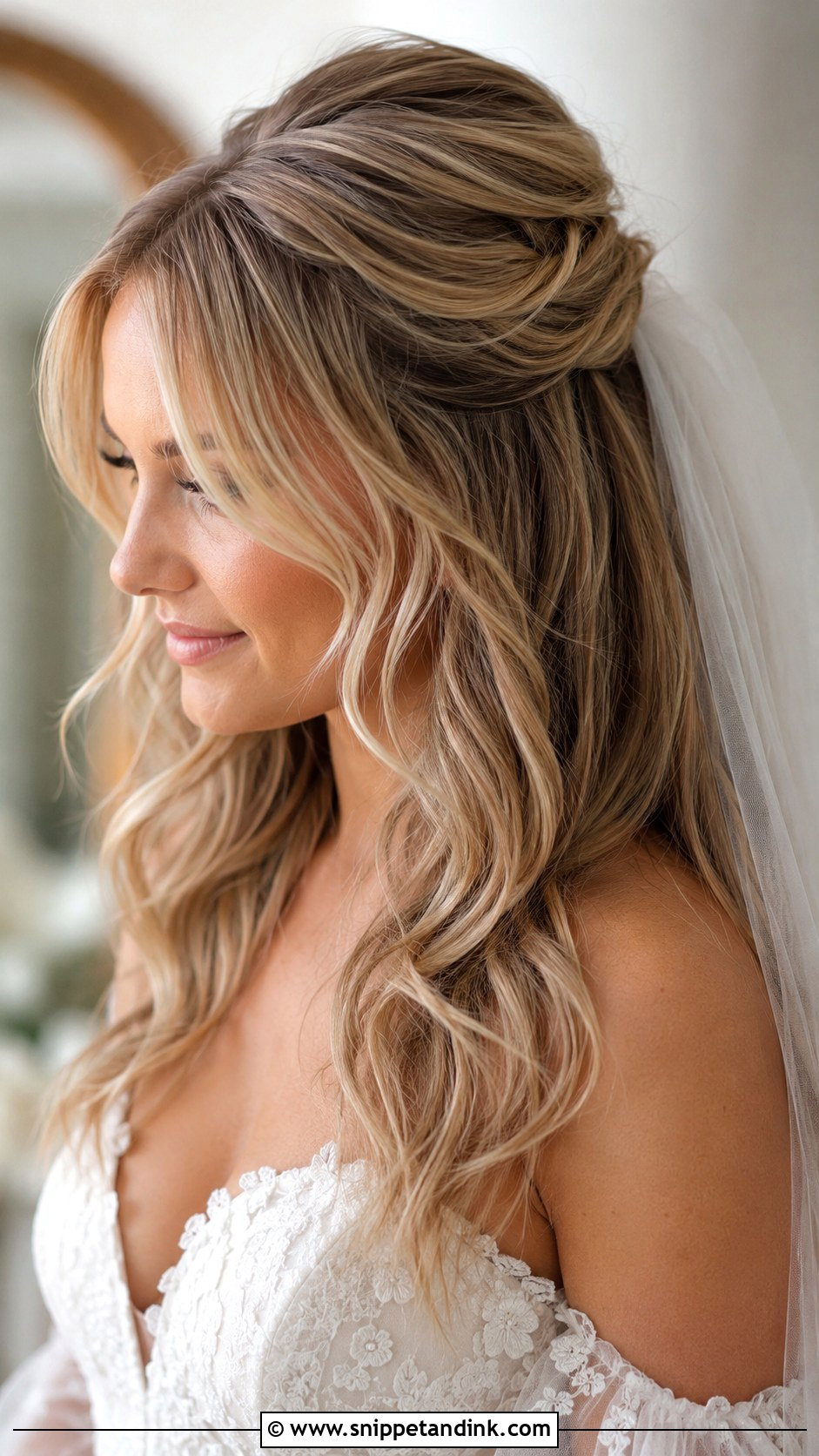
If you wear bangs every day, keep them. Curtain bangs blown out away from the cheeks look current and soft, and the top section pins back at the crown with waves underneath. I keep the bangs light, with no heavy spray, so they still move. Get them trimmed two to three weeks before the wedding so they settle; freshly cut bangs often sit too short and too blunt. Tuck the veil under the half-up section to keep the crown detail visible.
12. Half Updo With Veil And Low Volume Crown
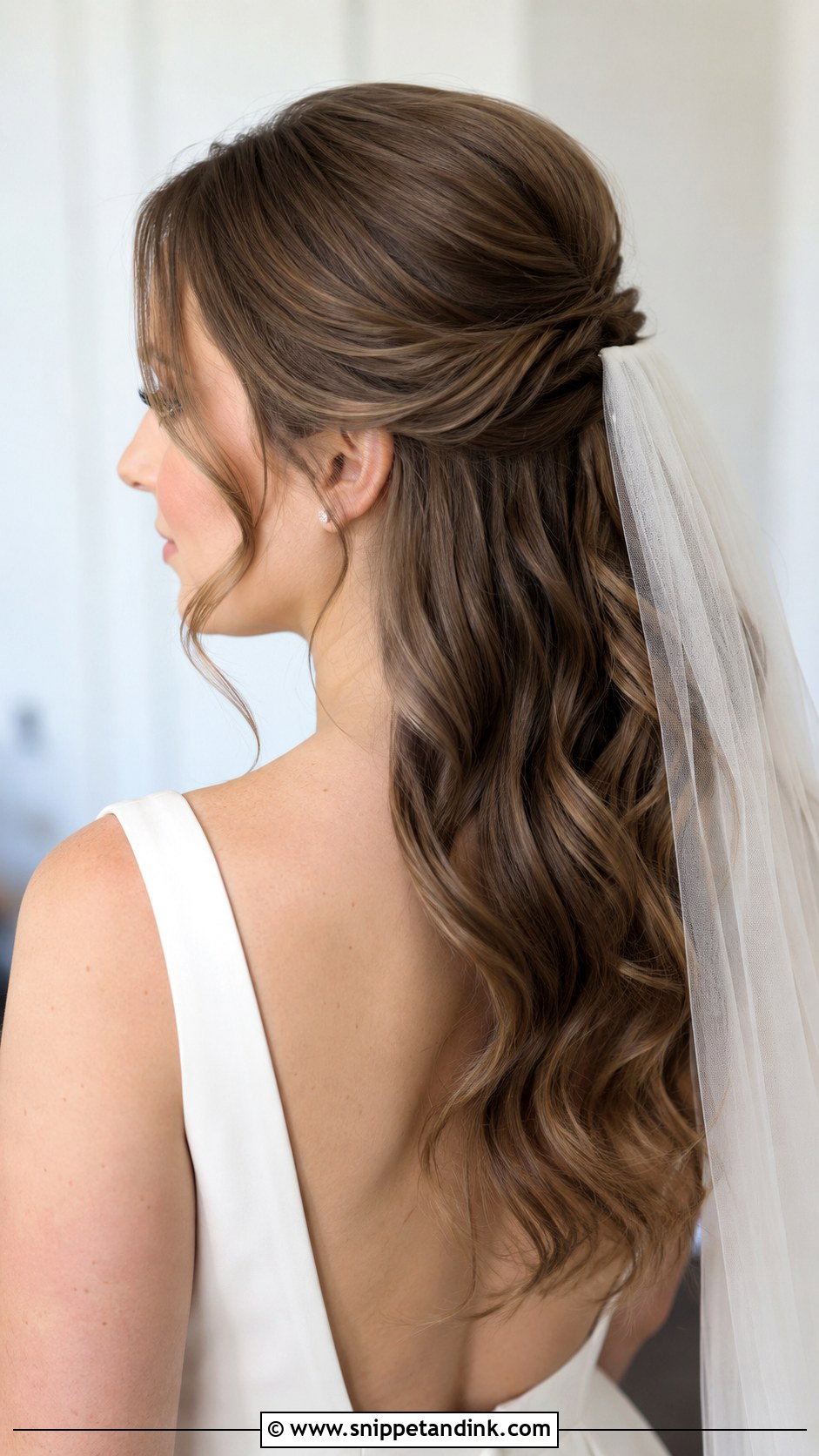
Fine or flat hair benefits most from this. I tease gently at the crown, smooth the top layer over it, and pin, so the volume sits under the surface and the comb has something to bite into. Fine hair without that support lets a veil slide backward and flatten the top within an hour. The trick is keeping the lift low, so it reads as fullness rather than a bouffant. Waves or brushed curls underneath keep it soft.
13. Half Updo With Veil And Curly Hair
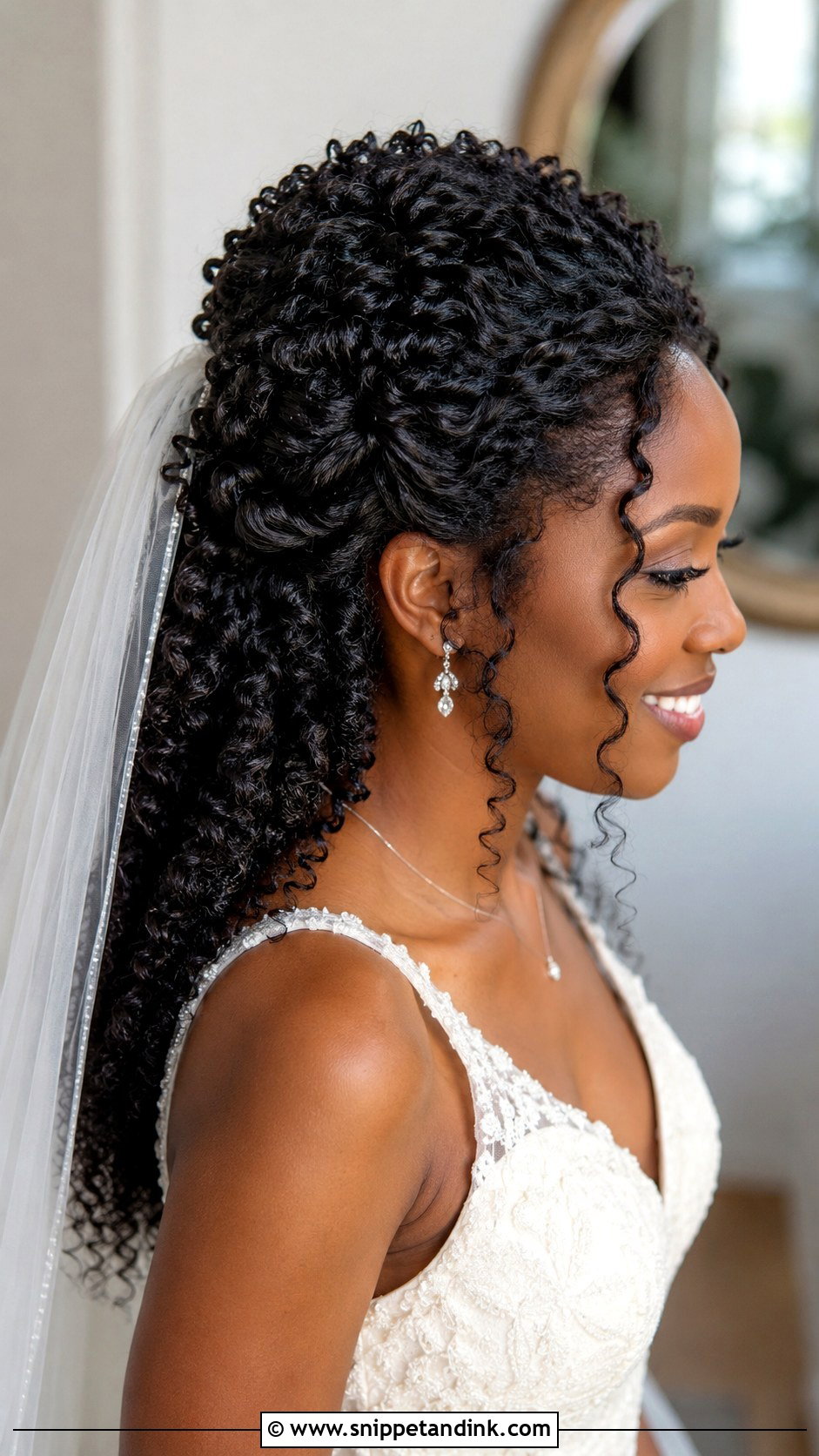
Curls bring their own volume, so I gather the top section gently and avoid stretching the pattern. The veil can sit beneath the pinned area to show more of the curl shape, or slightly above it for a more traditional look. Define the curls with your usual products on wash day; switching products right before the wedding is a risk I’d avoid. I use a light hand with anything crunchy and smooth only the very surface of the pinned section.
14. Half Updo With Veil And Sleek Hair
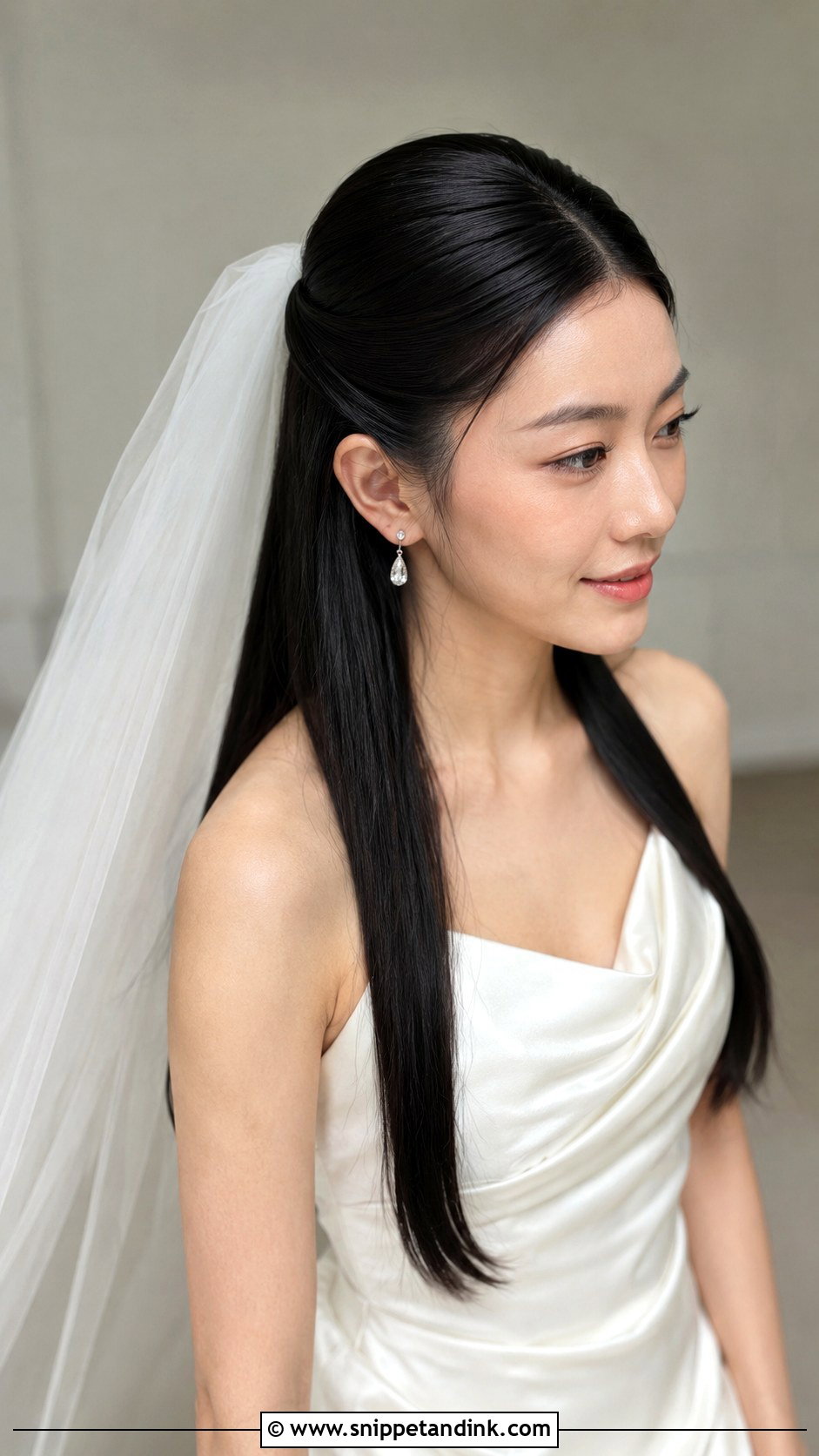
Clean lines and shine define this one. The top section is smoothed back from a center or soft side part and pinned neatly, and the loose hair stays straight, softly bent or tucked behind the shoulders. Minimalist gowns, high or square necklines and a dramatic veil suit it. Shine depends on a good smooth blowout, finished with a lightweight spray. I check the back under bright light, because every pin and bump shows on sleek hair.
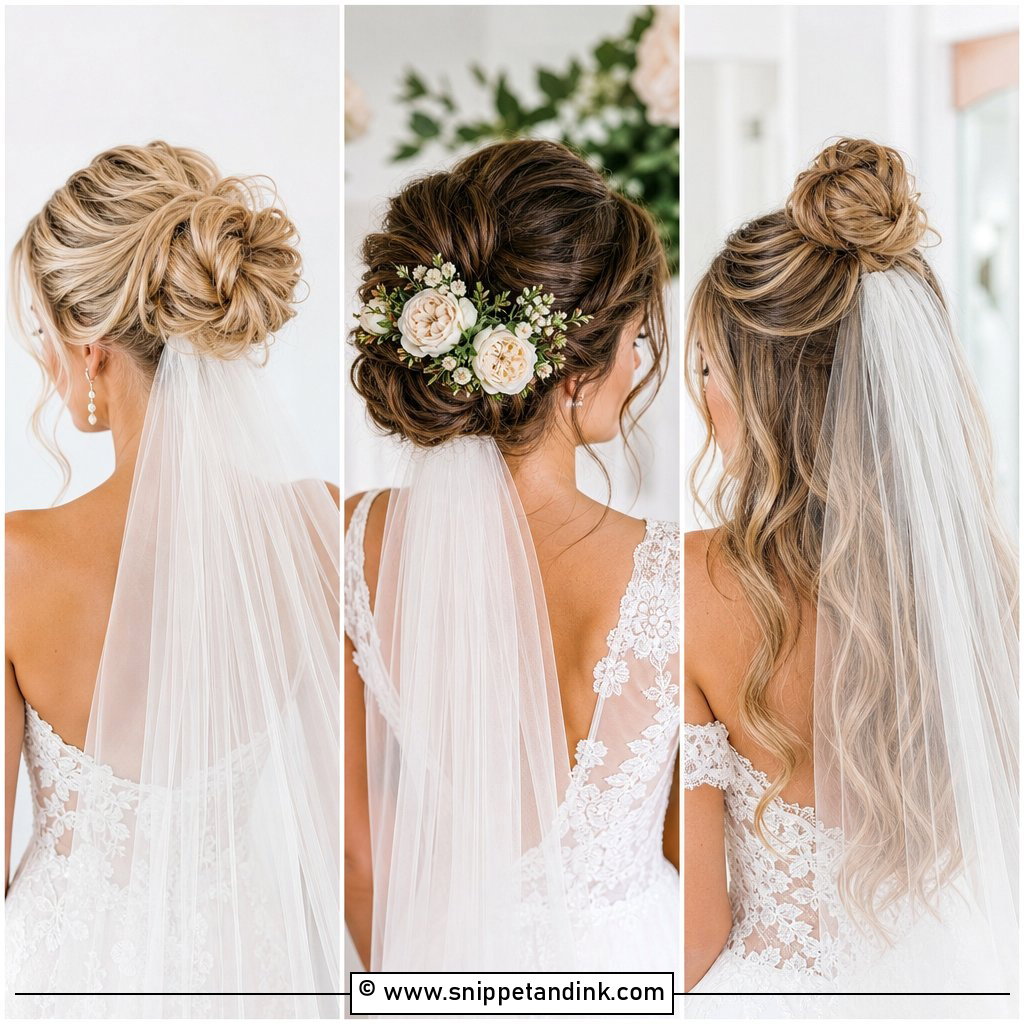
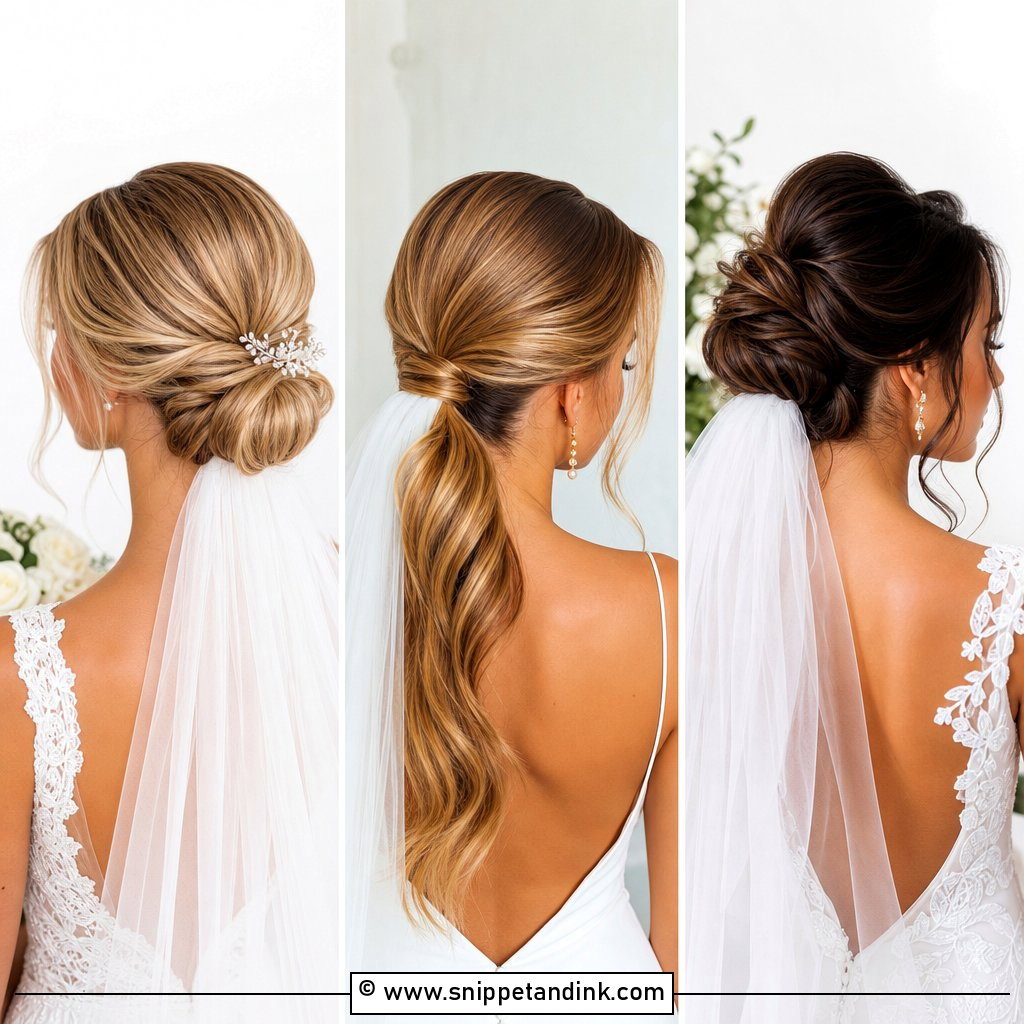
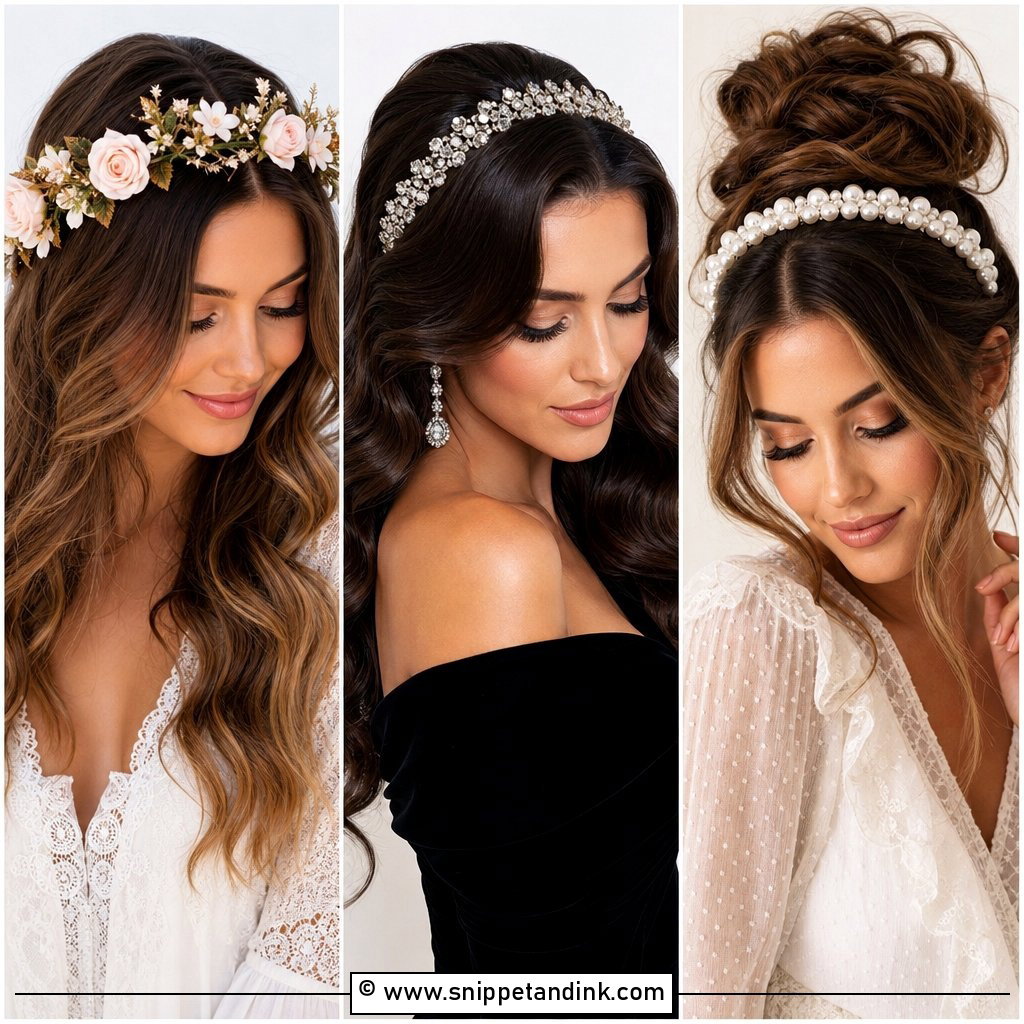
15. Half Updo With Veil And Bow
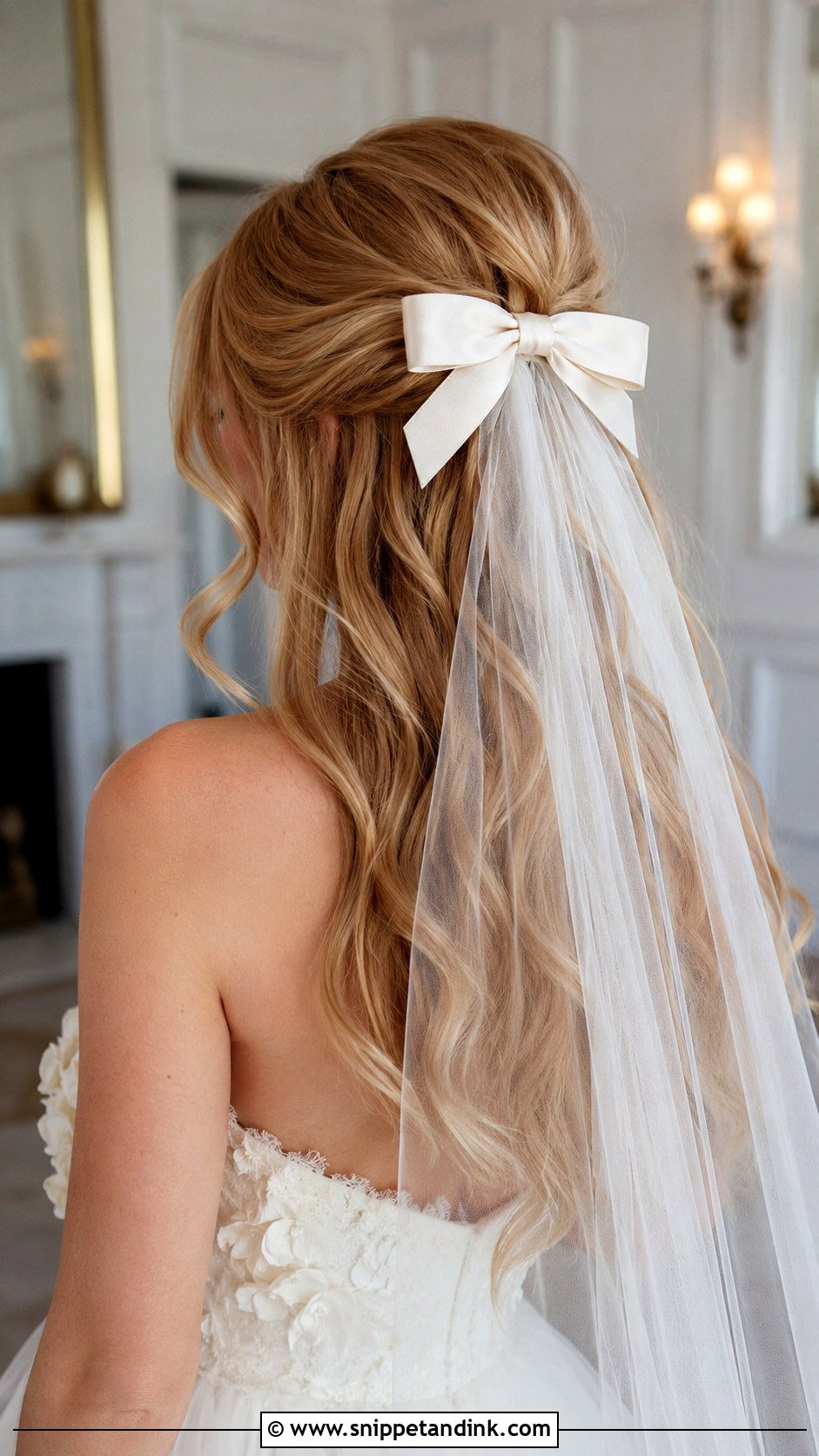
A bow next to a veil can look sweet or cluttered, and scale decides which. I keep the bow modest and place it above the comb, around the pinned section, or slightly off-center. Satin, organza, and velvet bows each set a different mood, with velvet best saved for cold-weather weddings. Satin slips, so I pin through the knot. Loose curls underneath keep the whole look from reading too young, and the veil needs room to fall freely.
Taking the Veil Out Without Undoing Your Hair
Most brides take the veil off after the portraits, often right before the reception entrance. That’s a busy few minutes, and the stylist has usually gone home. If nobody has been shown how, the veil gets yanked and half the pinned section comes with it.
- At the trial, have your stylist show one bridesmaid exactly which pins hold the comb.
- On the night, she removes those securing pins first.
- Then she slides the comb out in the same direction the teeth went in, holding the hair above it flat with her other hand.
- A quick spritz of hairspray and a finger-fluff at the crown hides any dent.
Have something small ready for the empty spot, like a pearl pin, a flower or a clip, because a comb can leave a visible gap in a sleek style. Some brides keep the veil on for the first dance and remove it afterward, which works too. Just decide in advance, so you’re not working it out in a corridor.
Your Veil Should Get to the Trial Before You Do
Almost every style here can carry a veil, from glossy waves to curls, pearls, flowers or a bow. What decides whether it works on the day happens weeks before. Get the veil itself to your hair trial, along with any combs or clips and a photo of the dress back, and ask your stylist to build the half-up section around it rather than pushing the comb in at the end. Walk around in it, turn your head, have someone tug the veil gently. If it stays put and the crown doesn’t sag, I’d trust it through the ceremony and well into the evening.
You'll Like These Ideas:


Leave a Reply