
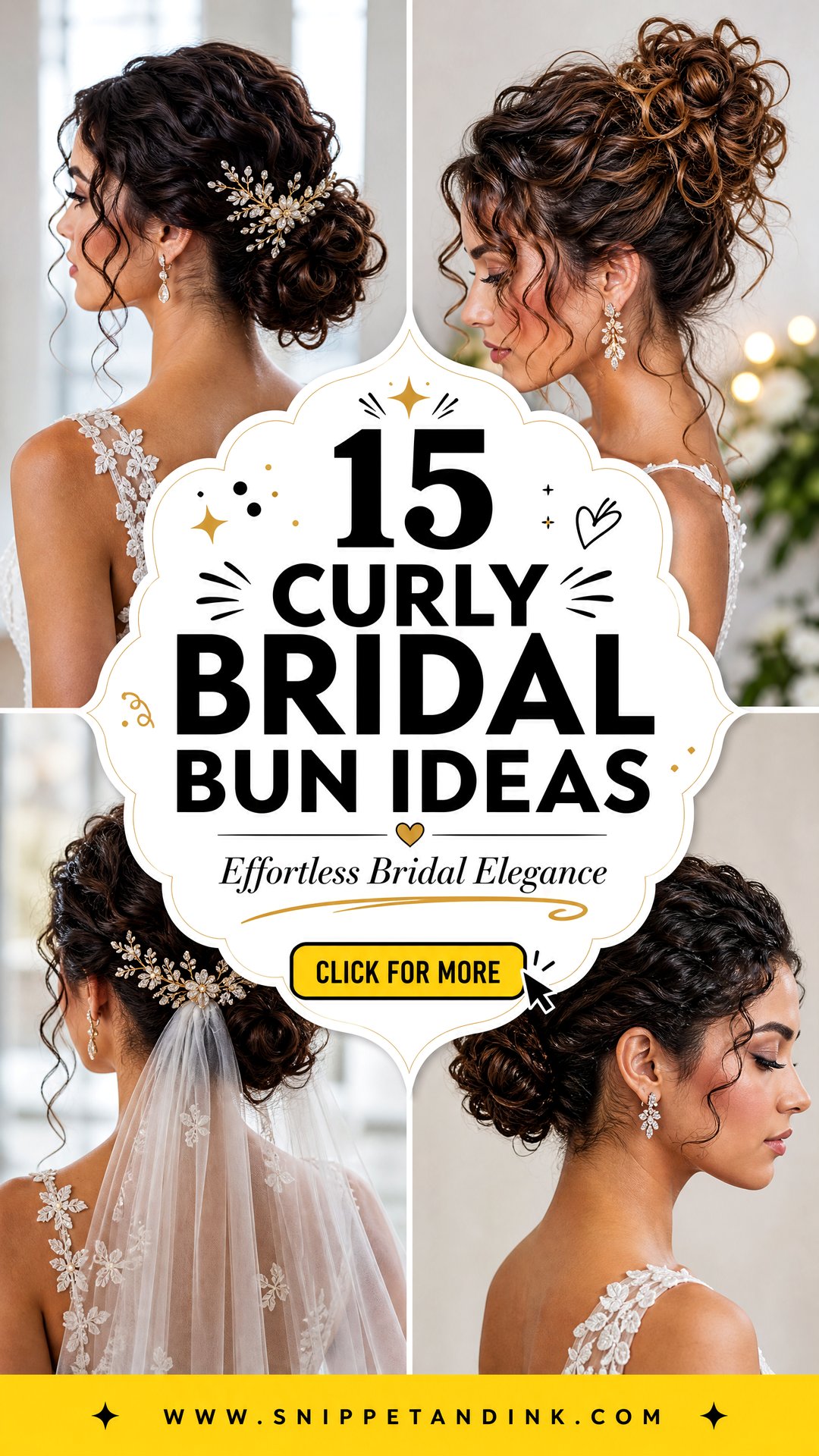
A curly bun is the updo I’d recommend to anyone who wants their hair up but doesn’t want to lose the curls doing it. You get the security of pinned hair for ten or twelve hours, and the texture stays on show instead of being smoothed into a tight knot. Move the bun an inch and the whole mood shifts: soft at the nape, sharp and formal on the crown, romantic tucked behind one ear. It plays well with veils, combs, pins, flowers and big earrings. Loose waves, defined ringlets and thick coils all work. Here are fifteen versions to compare before your trial.
A Two-Mirror Test for Bun Height
You can work out a lot before you ever sit in my chair. Stand with your back to a large mirror, hold a hand mirror in front of you, and gather your hair loosely in one hand. Try it at the nape, at the middle of the back of your head and up near the crown. Each height changes your profile, and the right one is usually obvious once you see it from the side.
- Wear the neckline of your dress, or something close to it, while you test. A high neck can make a nape bun look crowded, while a deep V or open back tends to want the hair low.
- Look at where your veil will attach. Most combs sit just above or just below a low bun; a high bun usually means the veil goes underneath.
- Check your earrings. Big drops look best with the ear fully cleared, which favours high or sleek buns.
- Notice which height you keep touching. If it feels odd now, it will feel odder after the speeches.
Take a couple of phone photos of your favourite placement and bring them along. They tell me more than any saved picture of someone else.
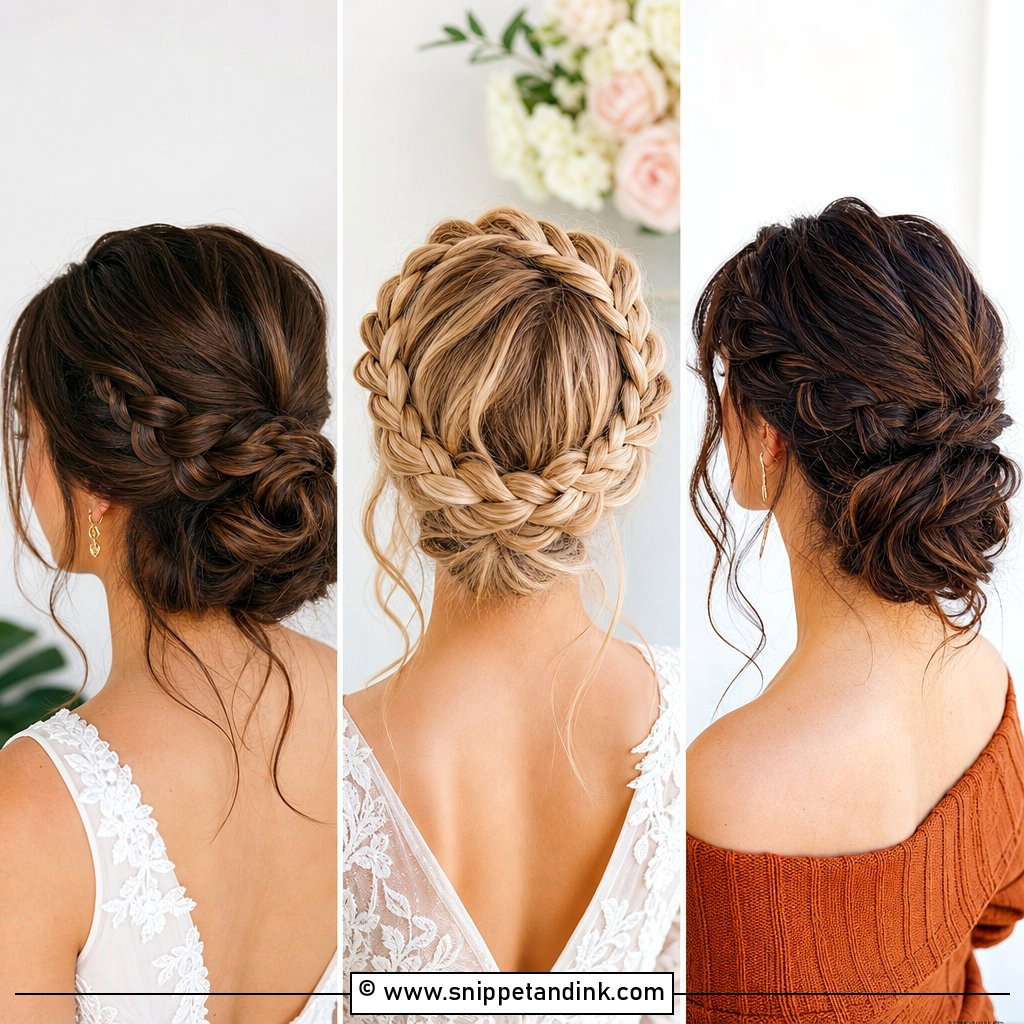
1. Low Curly Bridal Bun
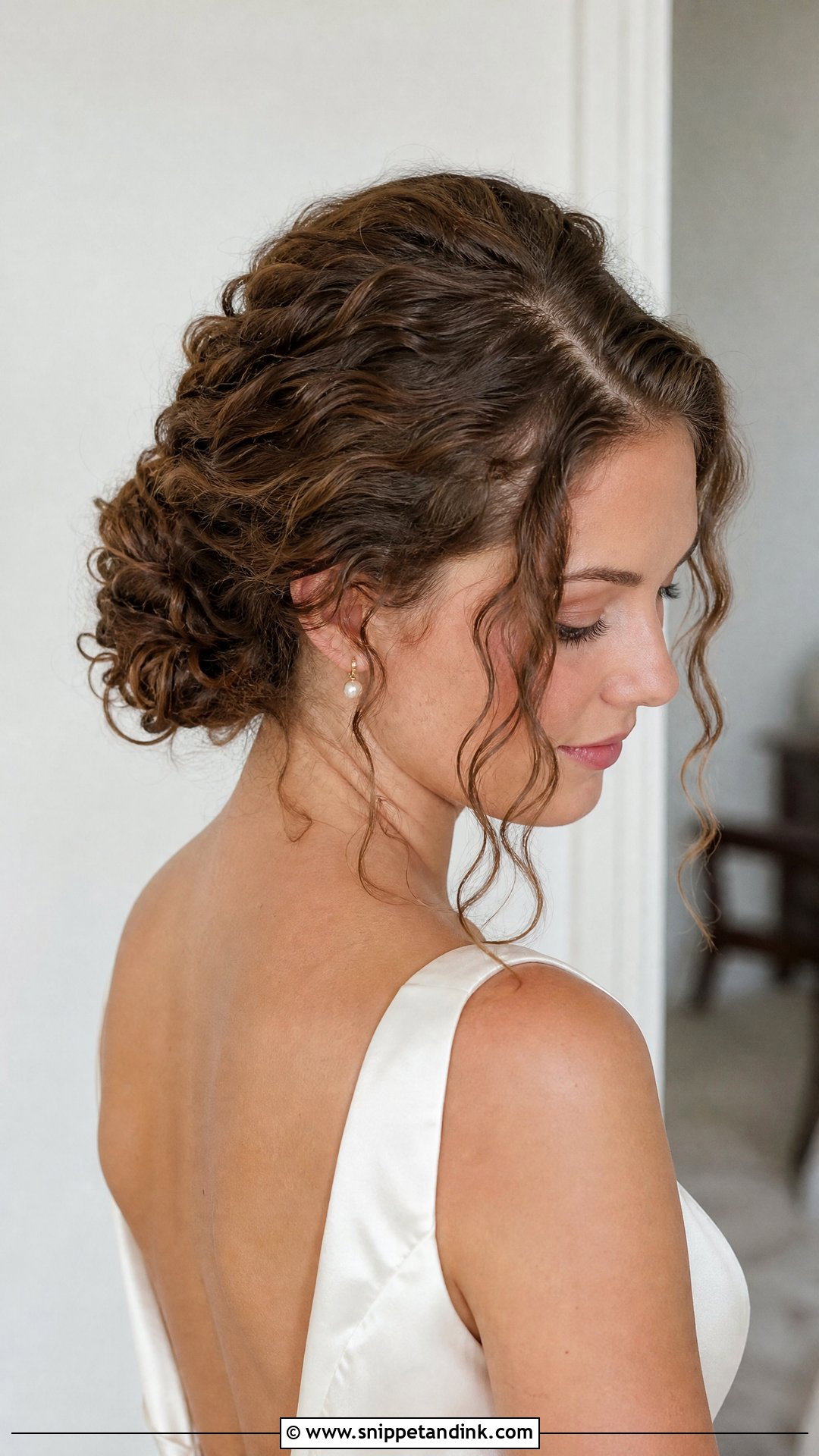
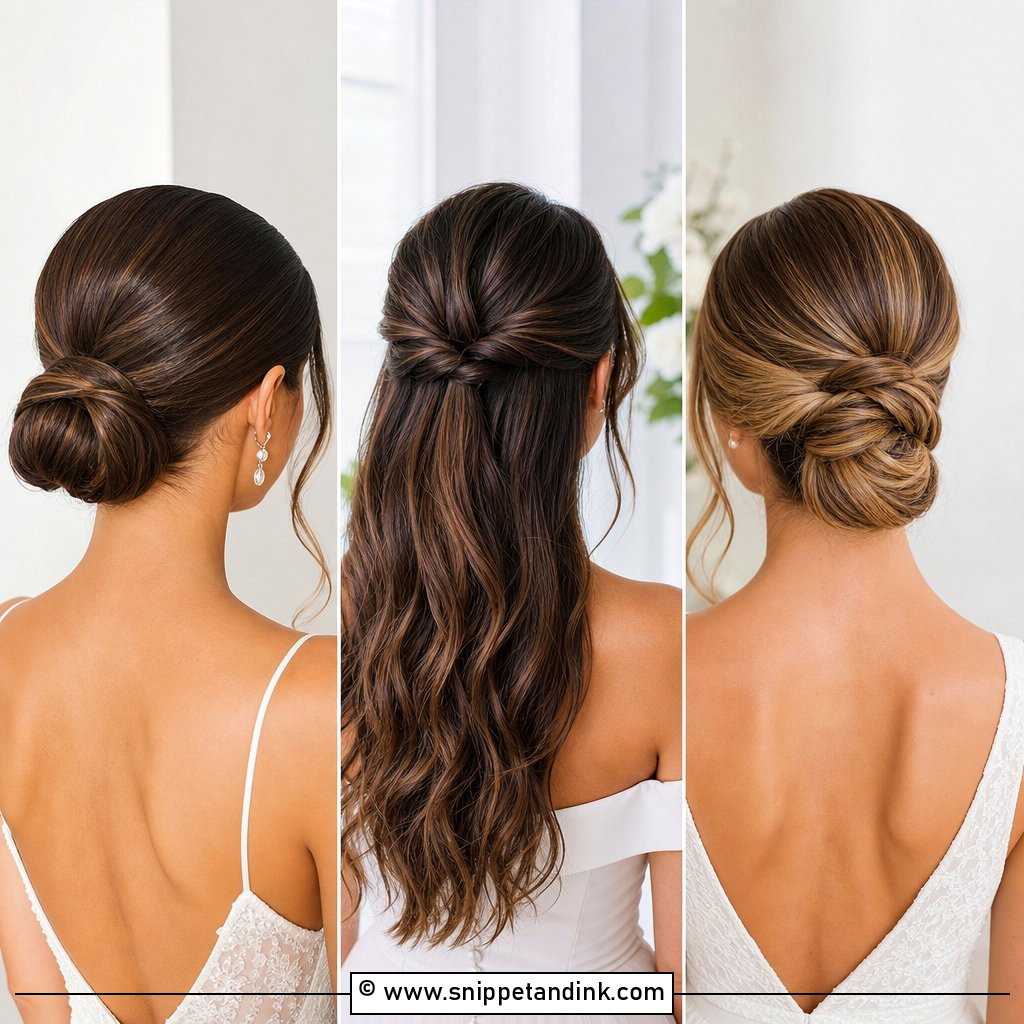
If you asked me for the safest bun on this list, it’s this one. Sitting at the nape, it stays clear of a veil comb, an open back and a high neckline alike, and it carries delicate earrings without competing. I define the curls before anything goes up, then pin them loosely into place rather than brushing the hair back first. Brushing a curl pattern before an updo breaks it into frizz you can’t put back. Leave a few face-framing pieces out if you like it softer.
2. Messy Curly Bridal Bun
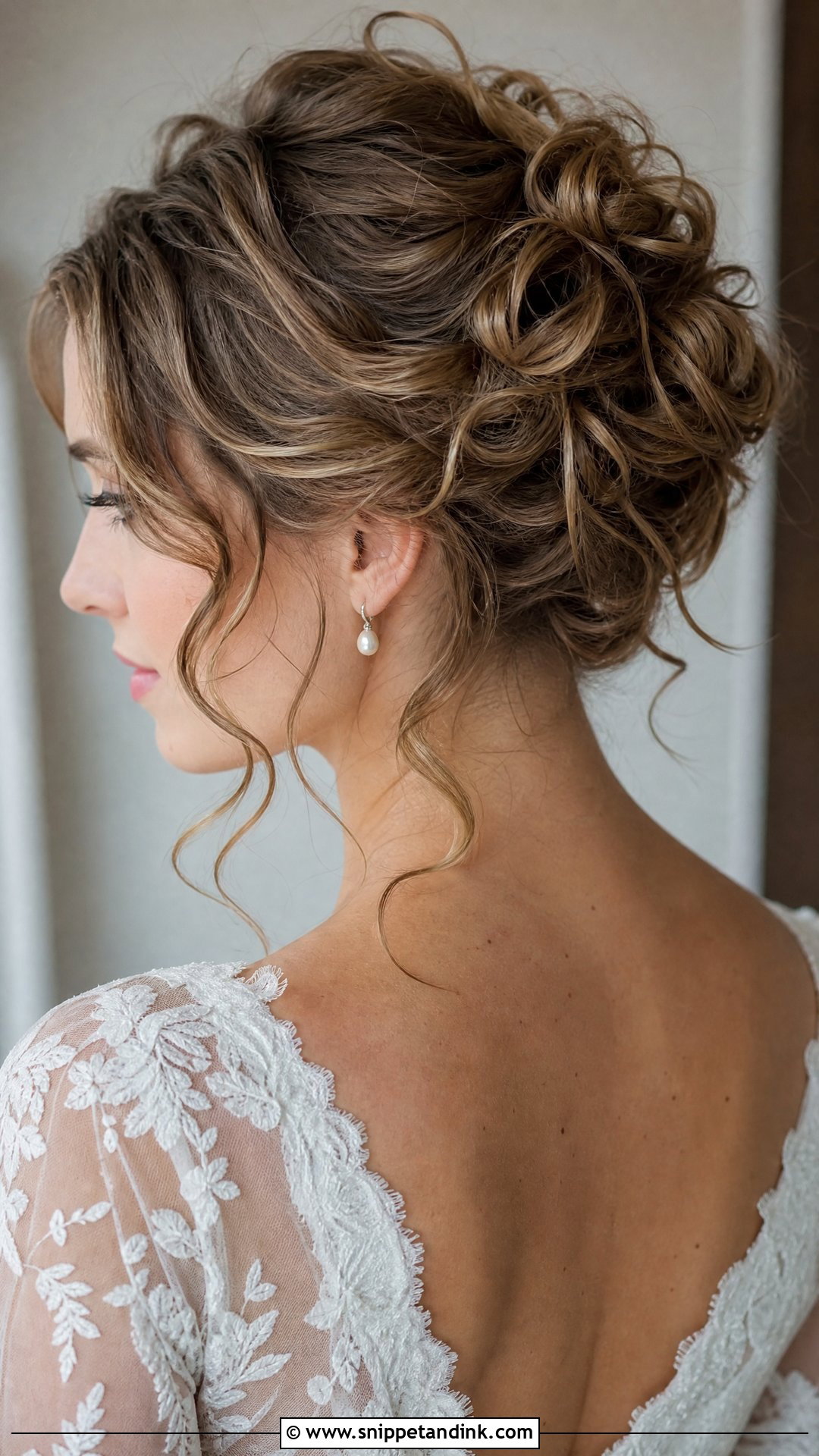
Messy is the hardest bun to do well, because the gap between undone and unfinished comes down to pins. I build it from small sections, each pinned at its base, so the airy shape is structured underneath even when it looks thrown together. Tendrils at the hairline soften it, and it suits garden ceremonies, lace and soft fabrics. Use light hold so the curls keep their bounce, and pins that match your hair color. A silver pin glinting out of a dark messy bun looks like a mistake.
3. High Curly Bridal Bun
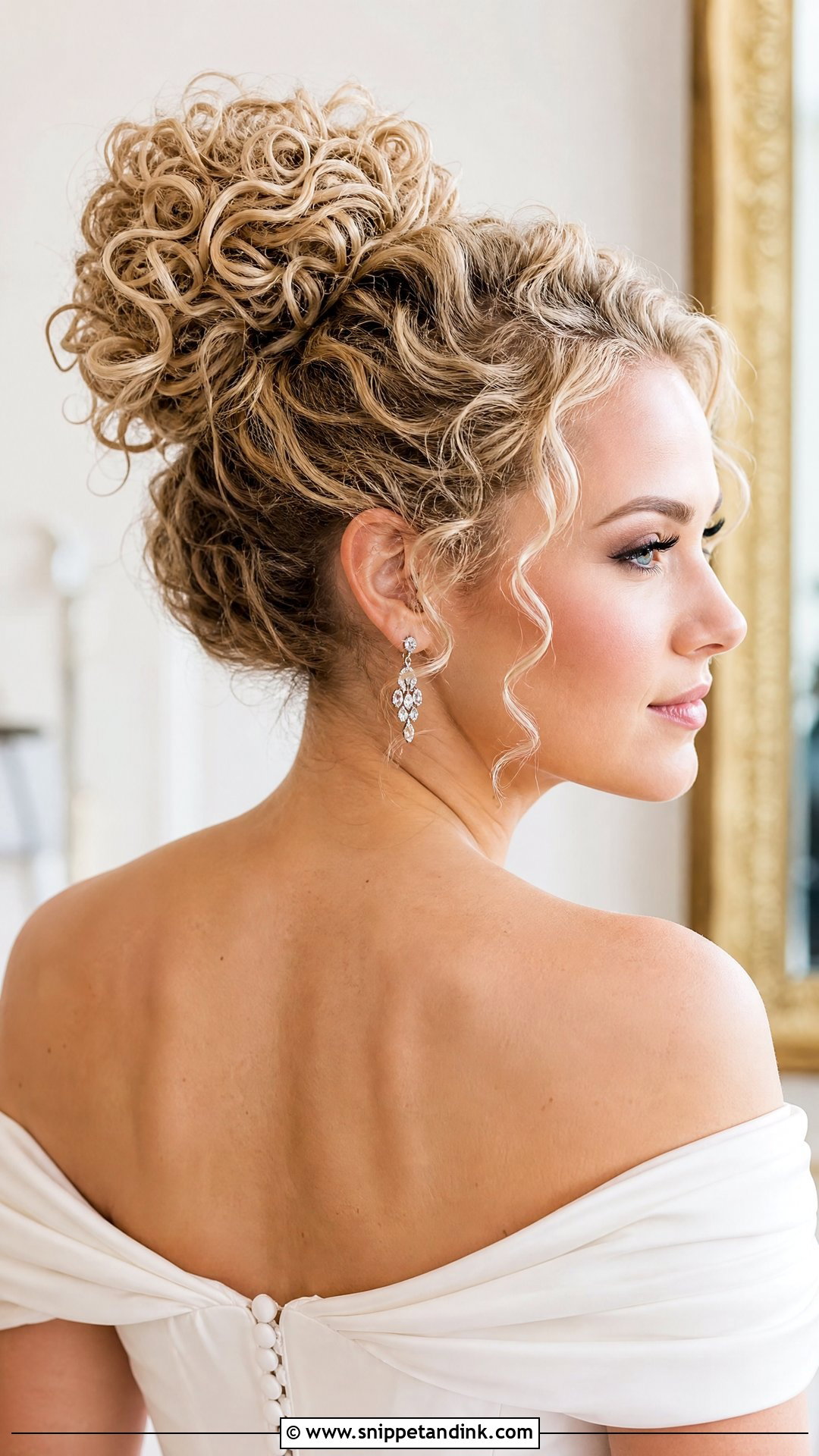
Up on the crown, a bun lifts the face and puts cheekbones, neckline and earrings on show. It can be a rounded shape, a loose top knot or a big textured bun. I keep the front soft, because pulling curly hair tightly up to the crown flattens the hairline, looks severe and starts to hurt by evening. A tiara sits well in front of it. For a veil, a short or minimal one pinned underneath the bun works; a heavy comb on top tips it backward.
4. Side Curly Bridal Bun
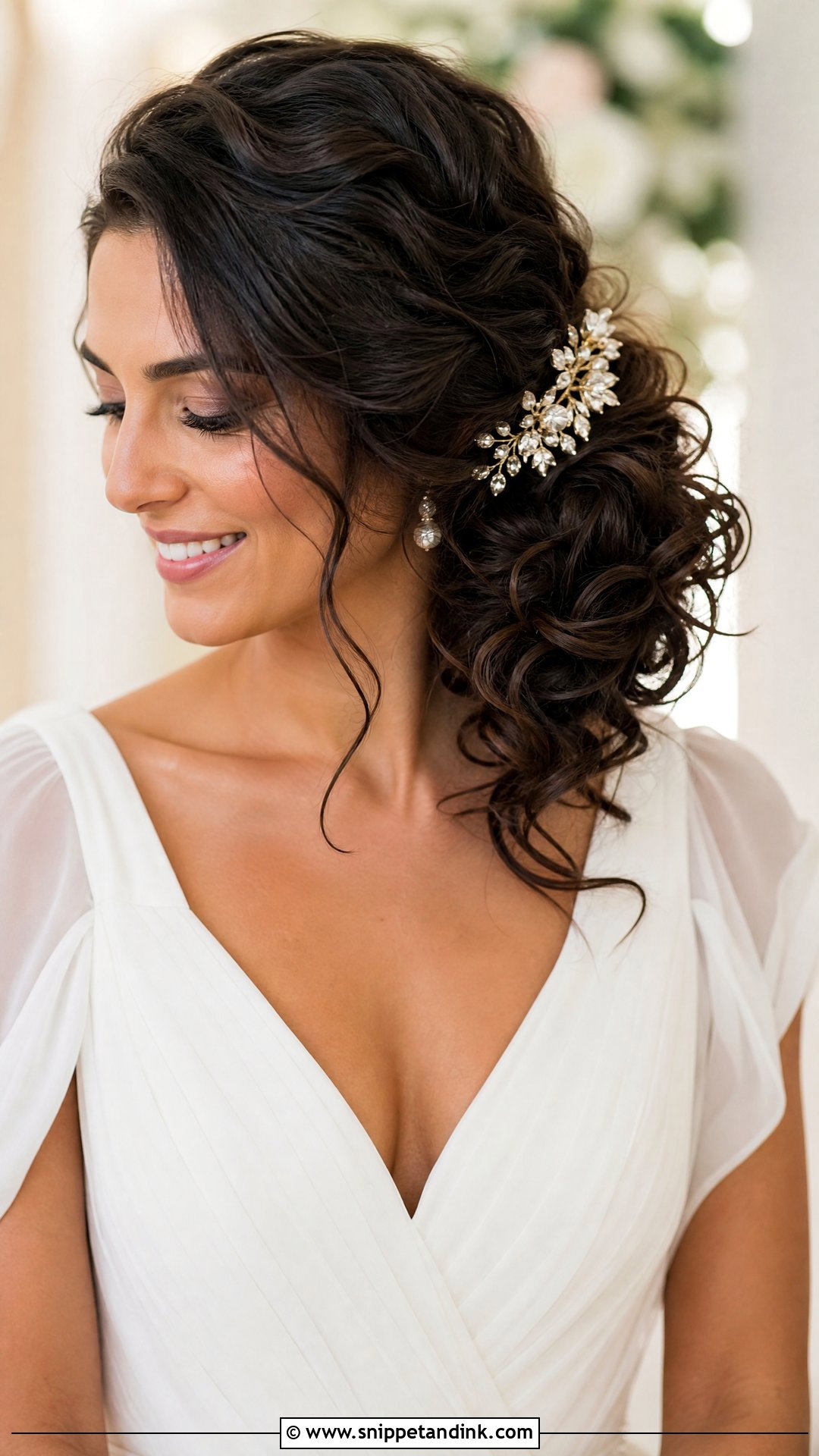
Set low behind one ear, a side bun gives every photo a clear focal point. It suits a one-shoulder neckline, a detailed back or romantic sleeves, with the veil, a floral comb or a clip on the opposite side for balance. Weight is where I see this go wrong. A side bun that’s too full pulls the head sideways in candid shots, so on thick hair I put less into the bun itself and pin the rest flat underneath. A few face-framing curls connect the front to the bun.
5. Curly Bridal Bun With Veil
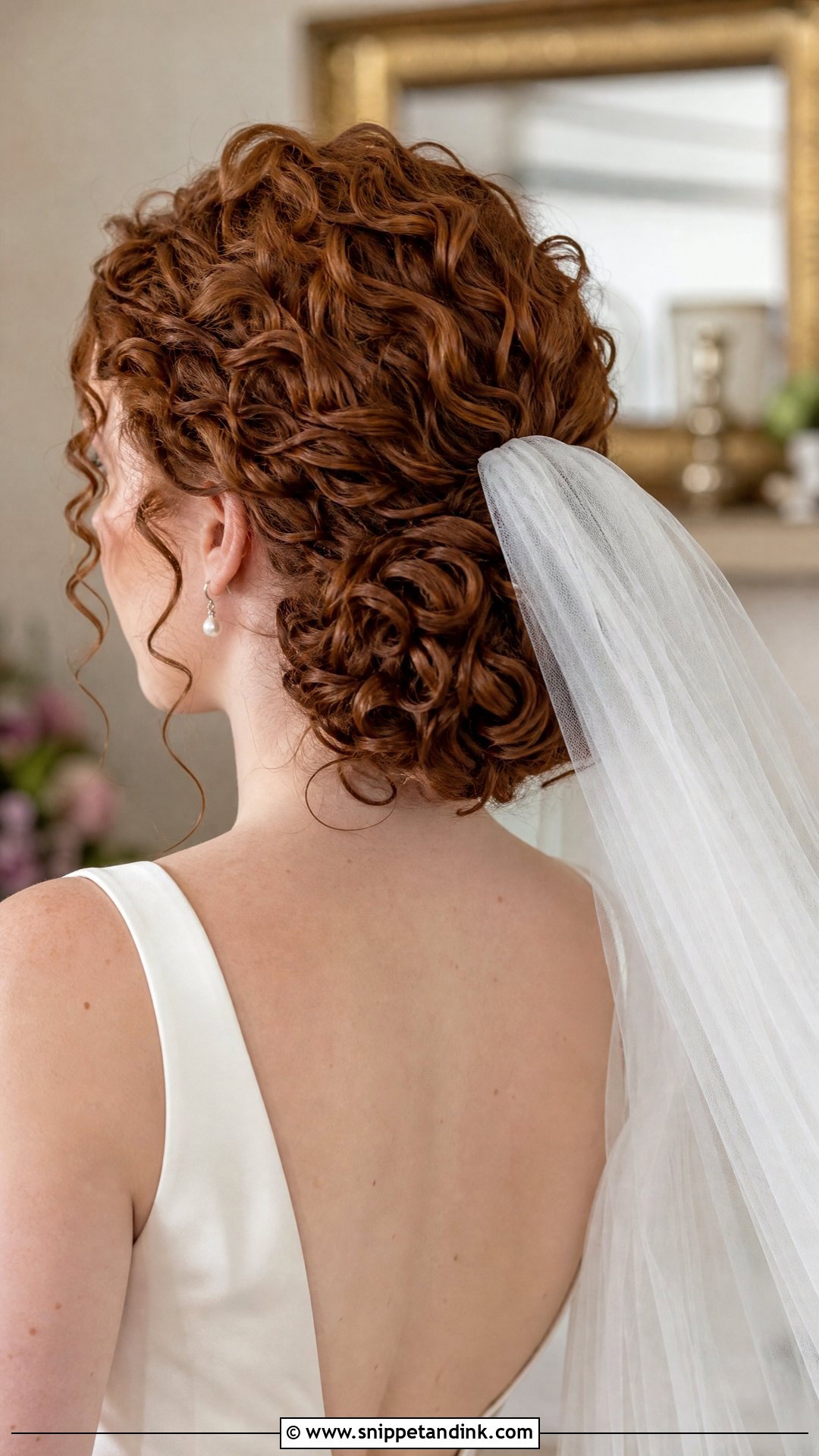
With a bun, the veil question is above or below. Pinned above a low bun, it looks traditional; tucked underneath, it reads cleaner and more modern. Either way the bun needs real structure beneath the curls, or the comb drags loose texture out of place. I build a firm base, define the curls, then shape them into a rounded bun around that anchor. If the veil comes off for the reception, I add decorative pins where the comb sat, so there’s no bare gap at the back.
6. Curly Bridal Bun With Flowers
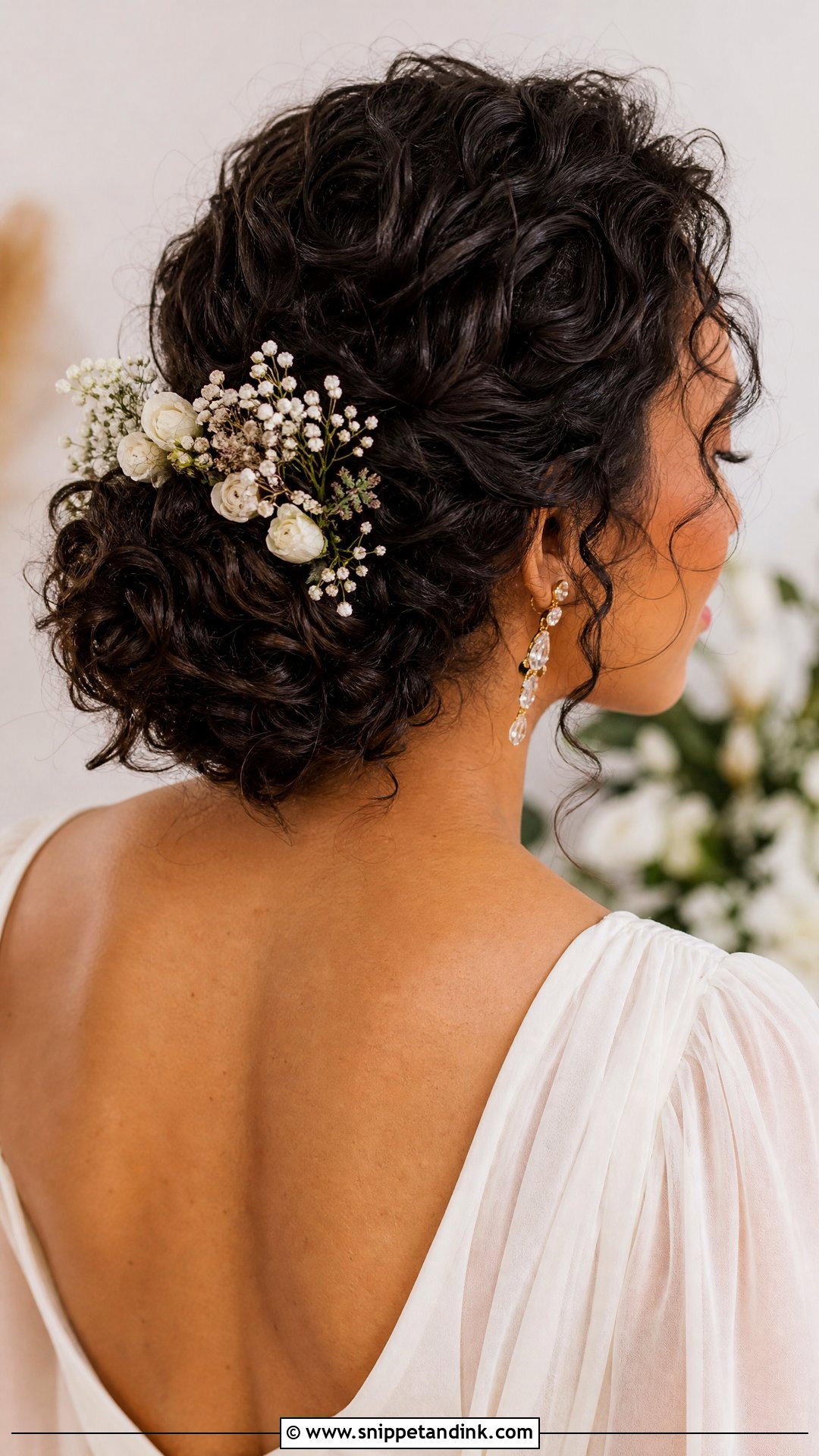
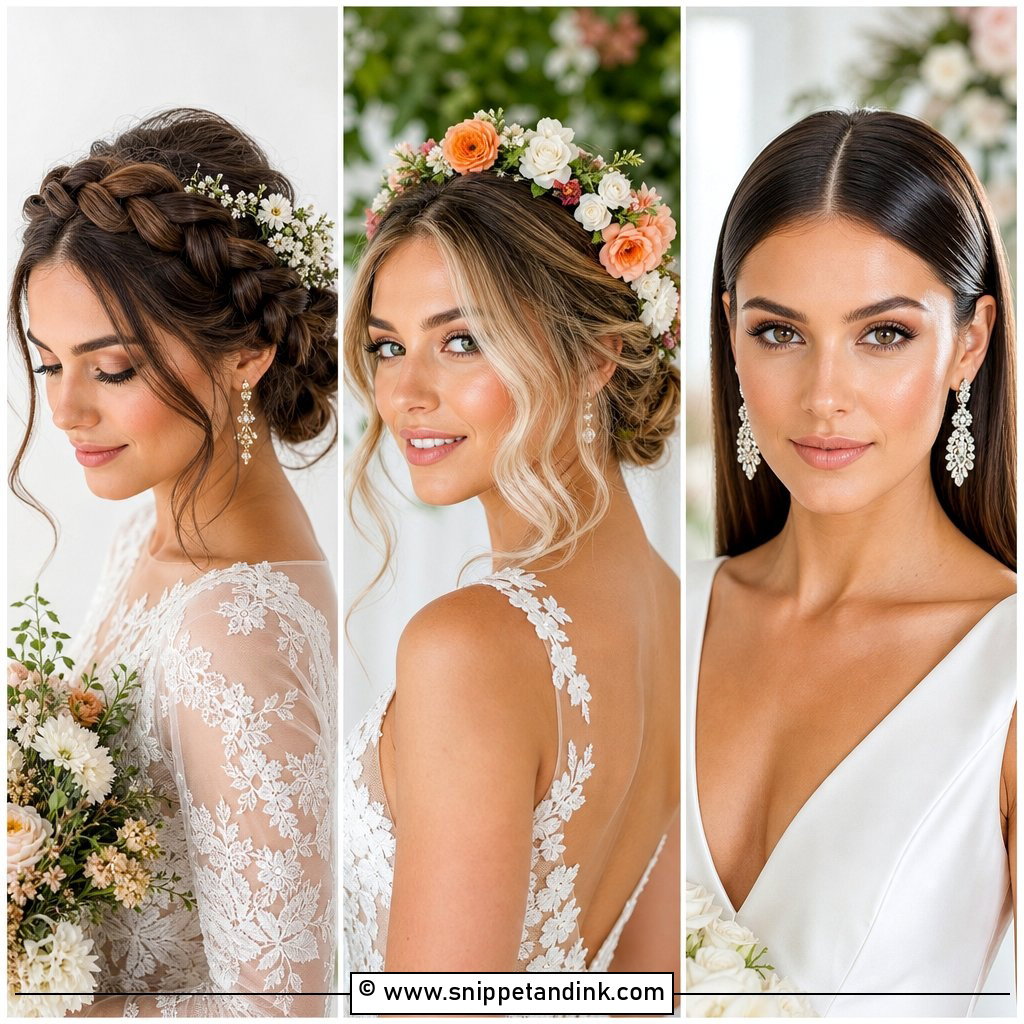
Flowers soften a curly bun, especially at spring, summer, beach and garden weddings. Small blooms tuck in without hiding the curls; larger ones become the main feature. My worry is weight. A bun stuffed with fresh stems drags and loosens over the day, so I keep the count modest, ask the florist for wired stems and anchor each one into a pinned section. Matching the bouquet is a nice touch. Preserved blooms and realistic floral pins are lighter and won’t wilt.
7. Curly Bridal Bun With Pearls
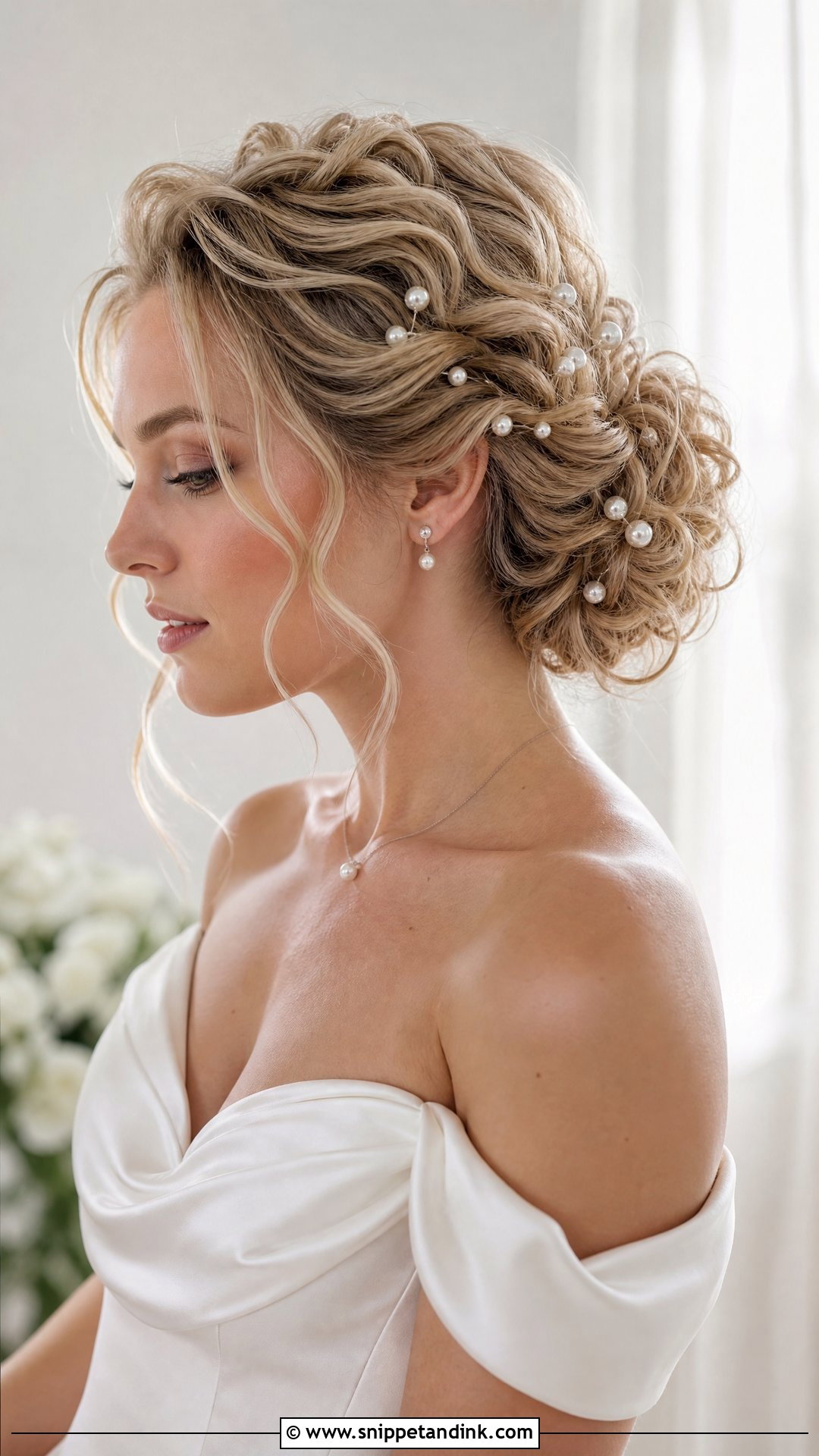
Pearls are the quiet option. Scattered through a textured bun, they catch the light while the curls still lead. I place them at uneven spacing on purpose, since pearls lined up evenly look like a pattern rather than a scatter. They work in high and side buns, though I think they look most refined low. Brides in classic gowns, satin or plain silhouettes often pick pearls for exactly this reason: detail that never takes over. Pearl pins are light, too, so you won’t feel them after twelve hours.
8. Curly Bridal Bun With Braids
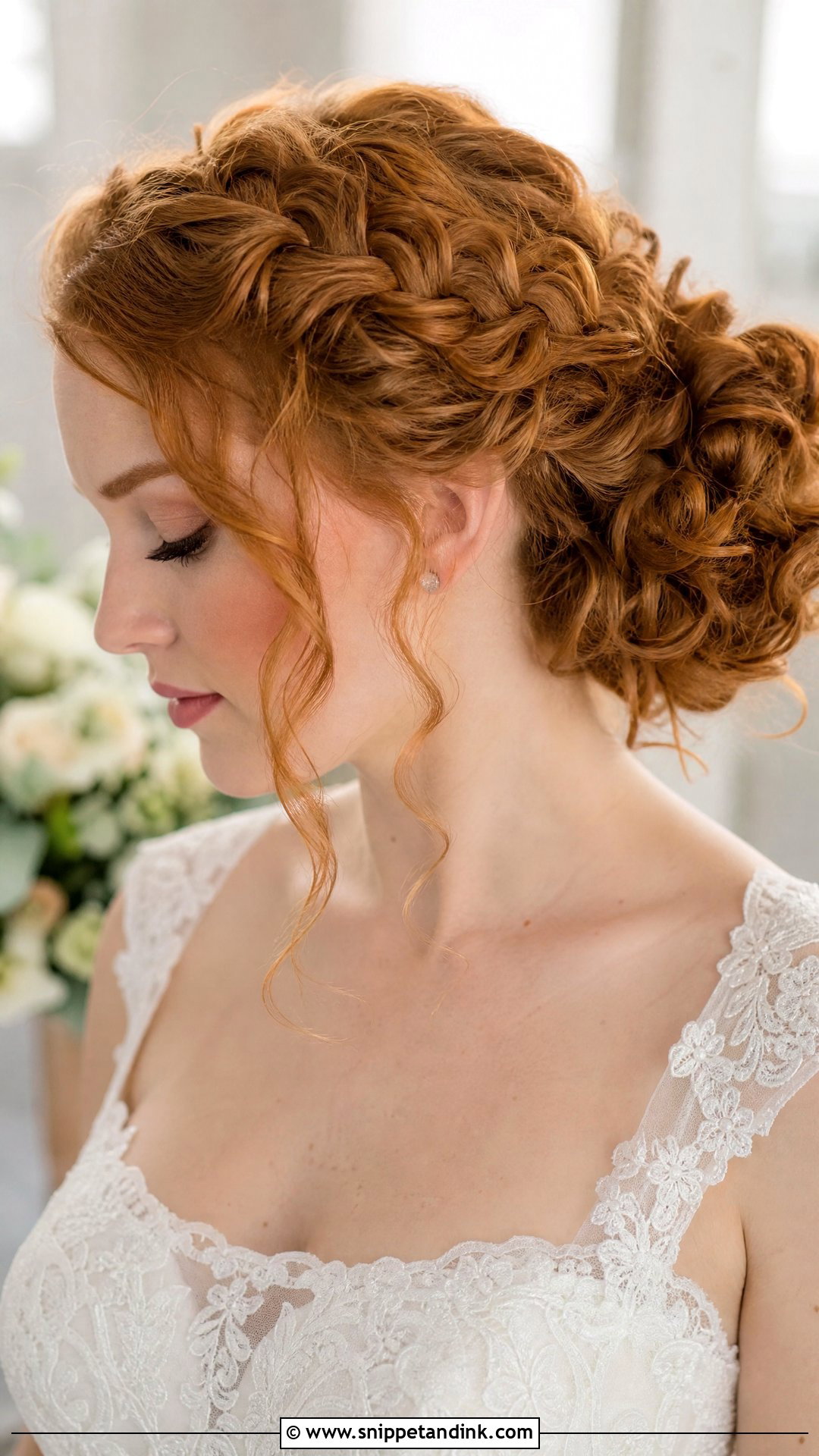
Got short layers that won’t reach the bun? A braid solves it. Along the crown, wrapped into the bun or used as a side accent, it catches the shorter pieces that would otherwise poke out by mid-afternoon, which matters outdoors. The bun stays the main feature, with the braid as a frame. After pinning, I loosen the plait slightly so it blends with the curls instead of sitting there tight and separate.
9. Curly Bridal Bun With Tendrils
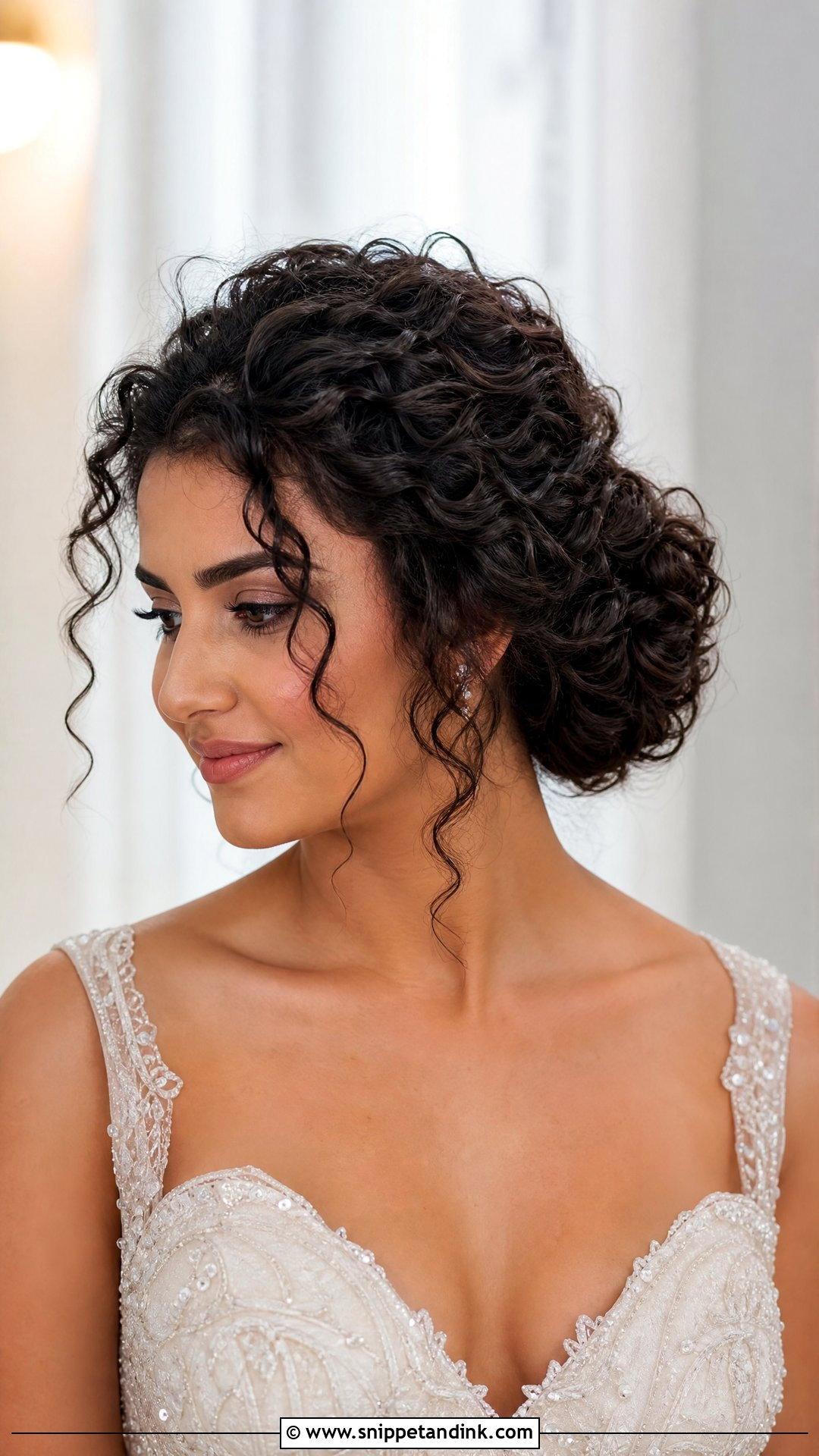
Tendrils are what I offer anyone who feels exposed with everything pulled back. The bun can sit high, low or centred; it’s the loose curls around the face that do the softening, along the jaw and over the cheekbones. The usual mistake is perfect, tight ringlets that look stuck on. I curl tendrils to match your real pattern and use a light spray so they move rather than hang. And please don’t cut new face-framing layers in the last month; they’re the pieces most likely to misbehave.
10. Sleek Curly Bridal Bun
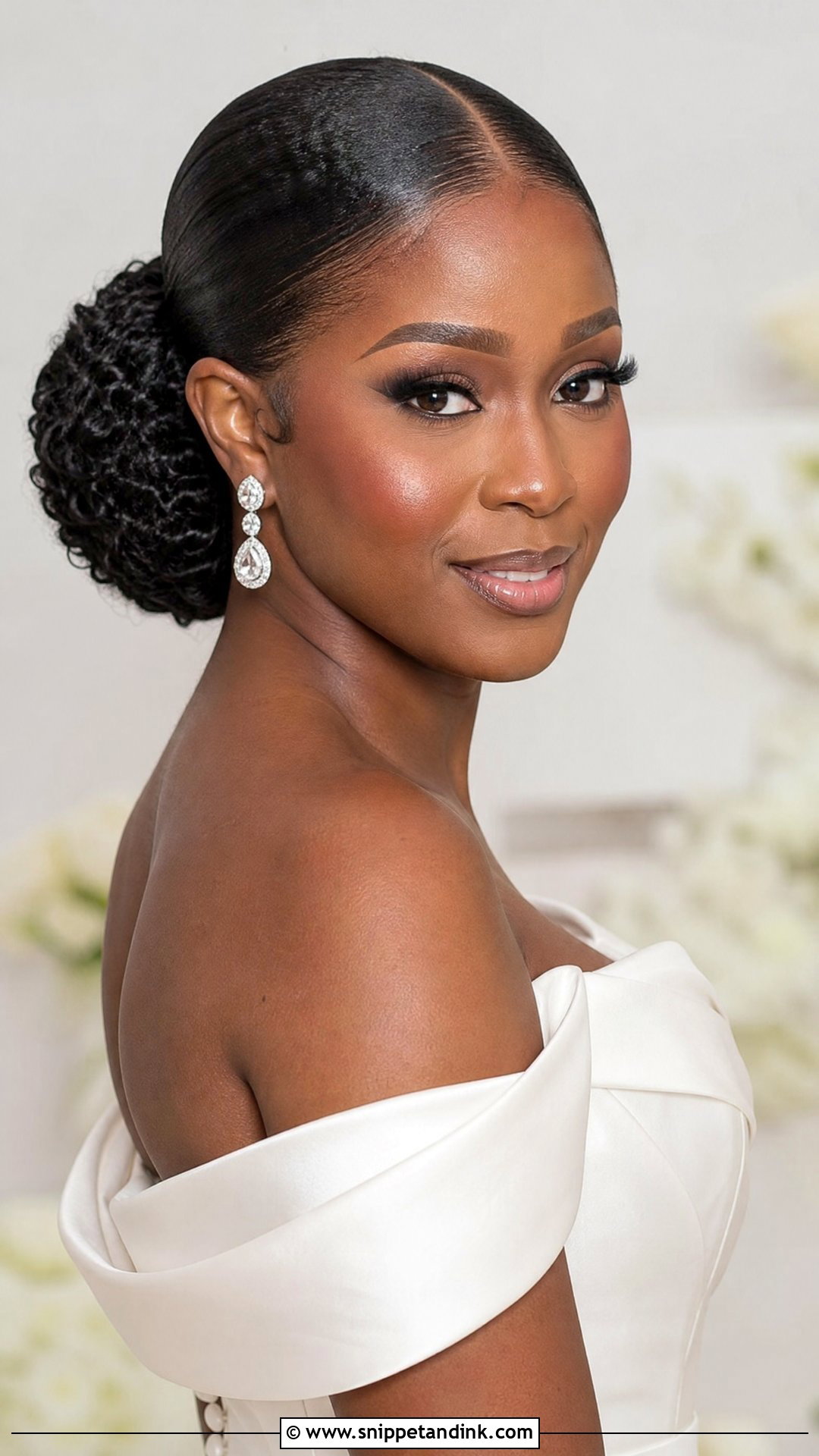
The contrast is the look: smooth roots, full curls. I control the front and sides with gel or a styling cream, brushing through with a soft bristle brush while the product is wet, and leave the bun full and defined. Shine is the test. A sleek section that dries white or crunchy ruins the effect up close, so I use less product than people expect and finish with a touch of light oil. Minimal gowns, structured dresses and bold jewelry suit it. Low reads classic; higher reads fashion.
11. Boho Curly Bridal Bun
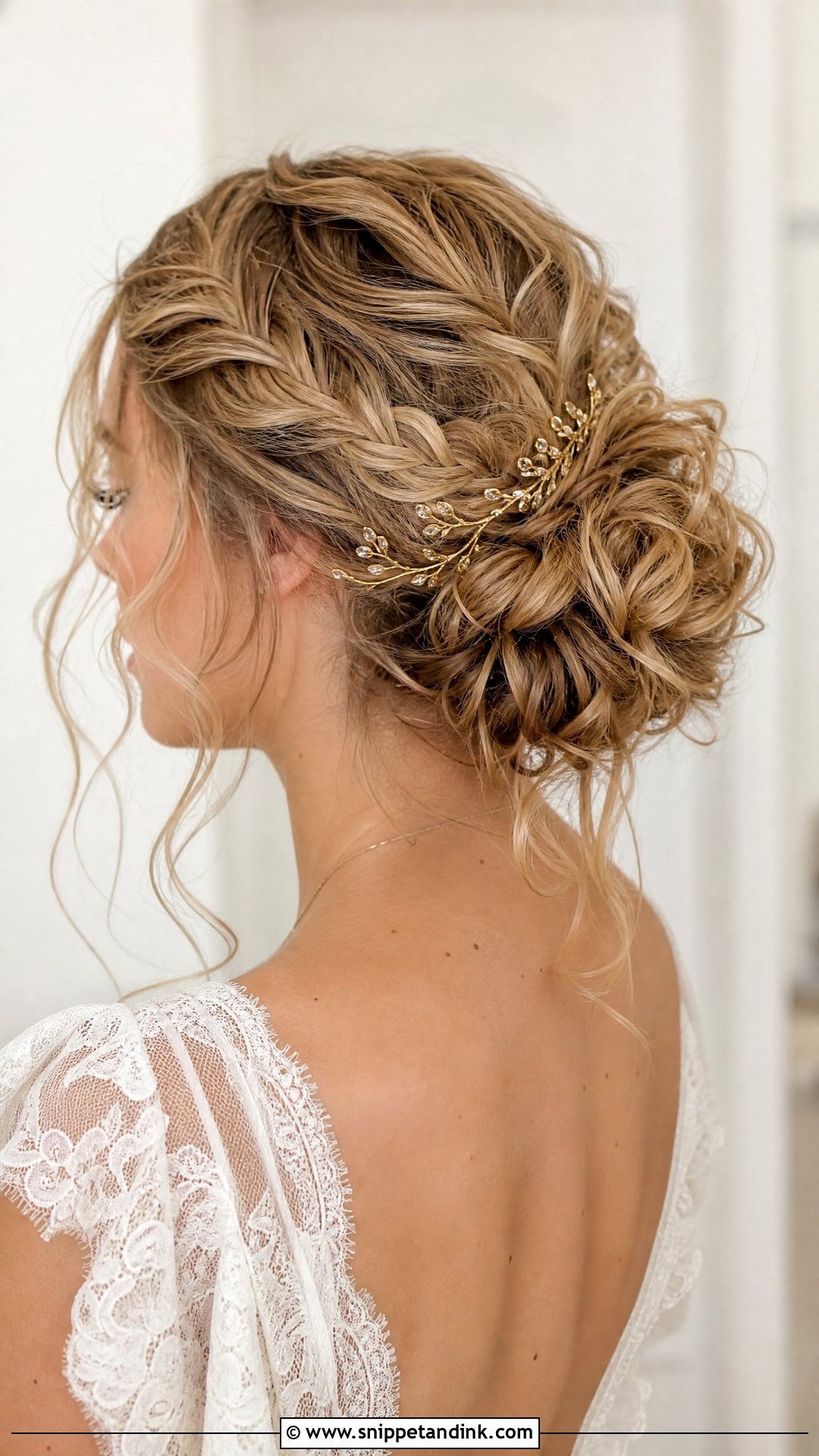
Boho buns are about restraint, odd as that sounds. Loose curls, gentle volume, perhaps a small braid, floral pins or a fine vine, all pinned so the curl shape stays visible. It pairs with lace, flowy sleeves, outdoor venues and natural makeup. Overworking is the danger. Every extra brush stroke turns curl into frizz, so I define the curls first and shape the bun with my hands and flexible hold. Airy outside, secure underneath.
12. Voluminous Curly Bridal Bun
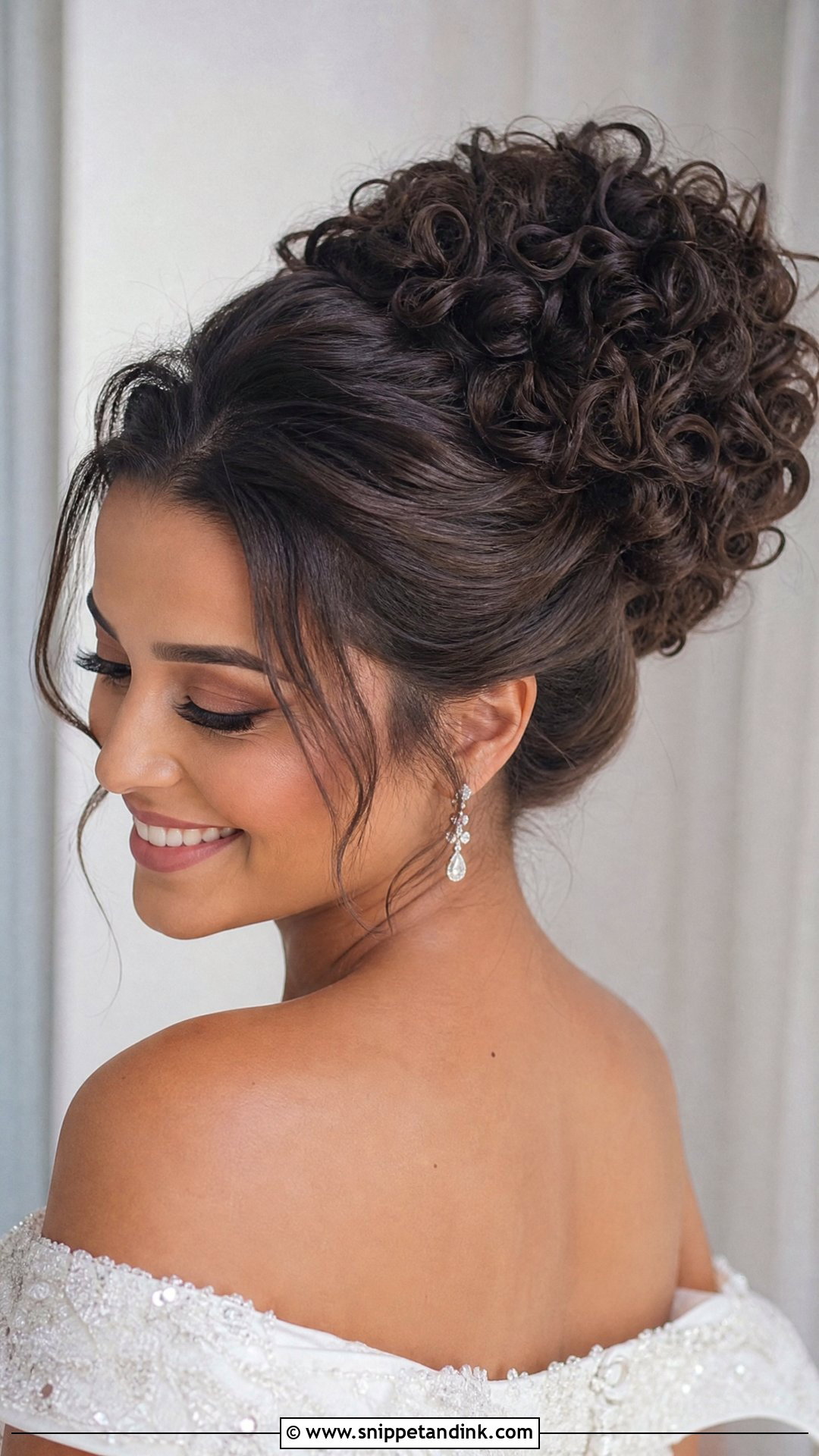
Volume in a bun comes from the hair’s own body, and thick curls have plenty. Finer curls can get there with padding, a few clip-in wefts or more strategic pinning, and nobody needs to know. The aim is a full, rounded, camera-ready bun that looks balanced from the front, side and back, which is why I’d never skip a trial for this one. Keep the crown softly lifted, because flat roots under a huge bun look lopsided. Dramatic veils, off-shoulder gowns and statement earrings can all keep up with it.
13. Curly Chignon Bridal Bun
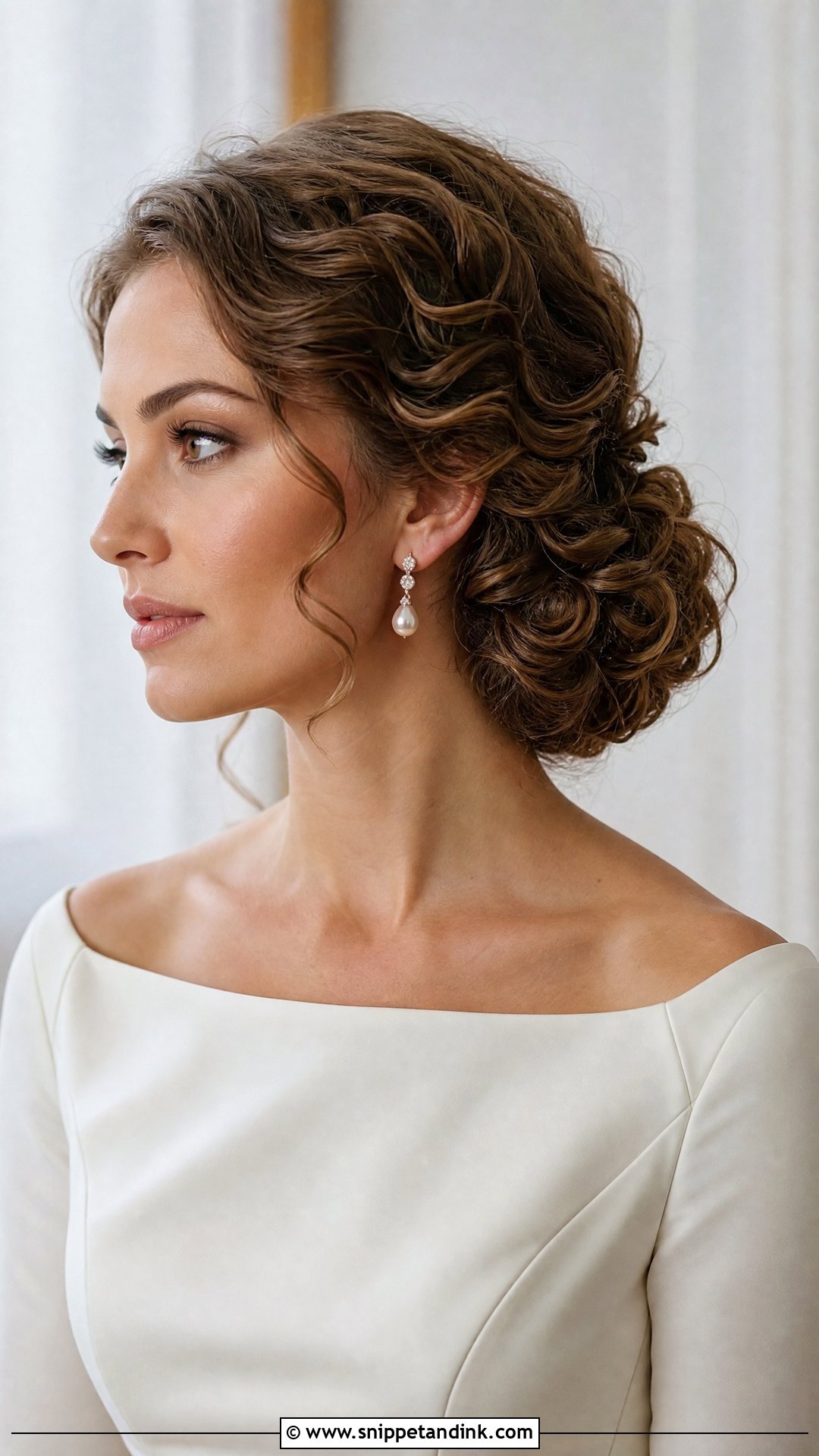
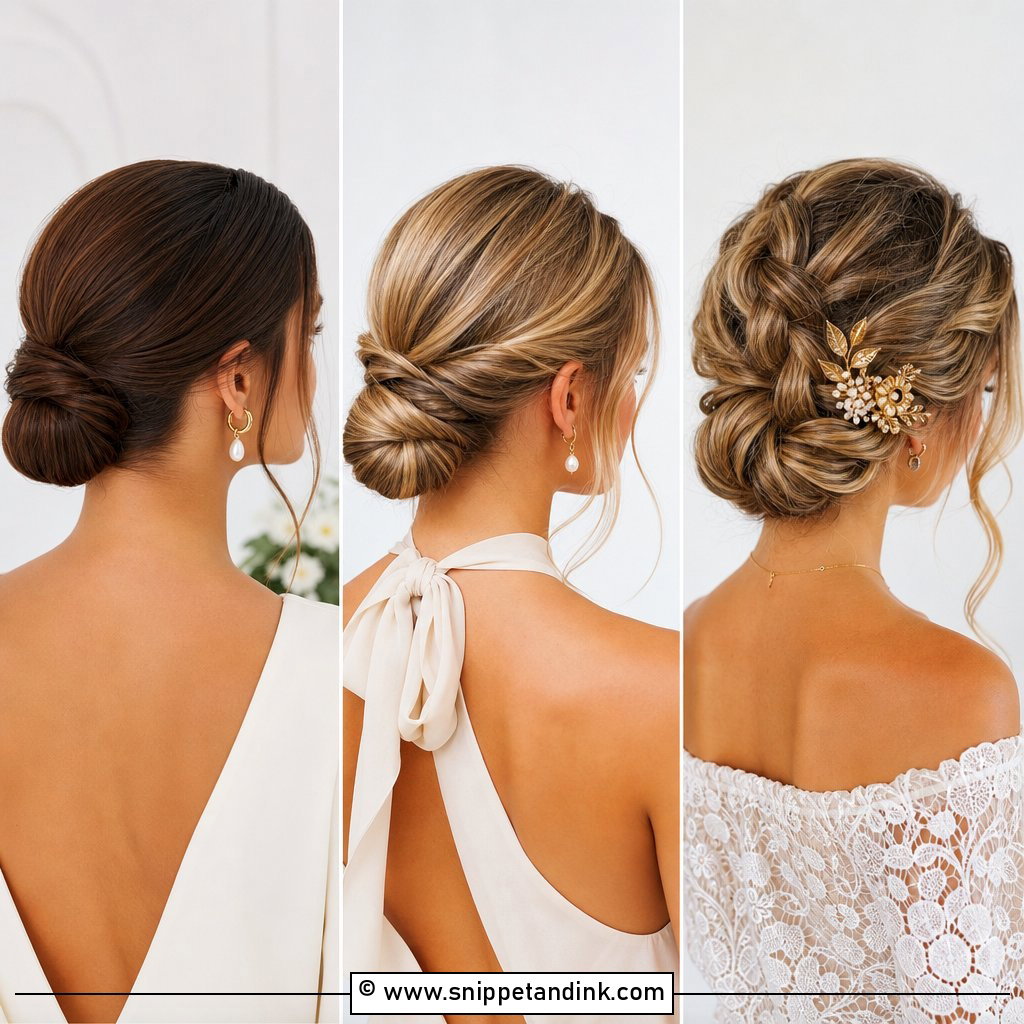
A chignon sits at the nape but spreads wider than a simple knot, and curls give it depth. Formal weddings and ball gowns are its natural home. A centre part, side part or slightly lifted crown all work. Neat without flat is the balance I aim for: I pin the curls in controlled rows so the outline is tidy, but never press them down. Add a comb, pearls or a veil for a more traditional finish.
14. Curly Bridal Bun With Hair Comb
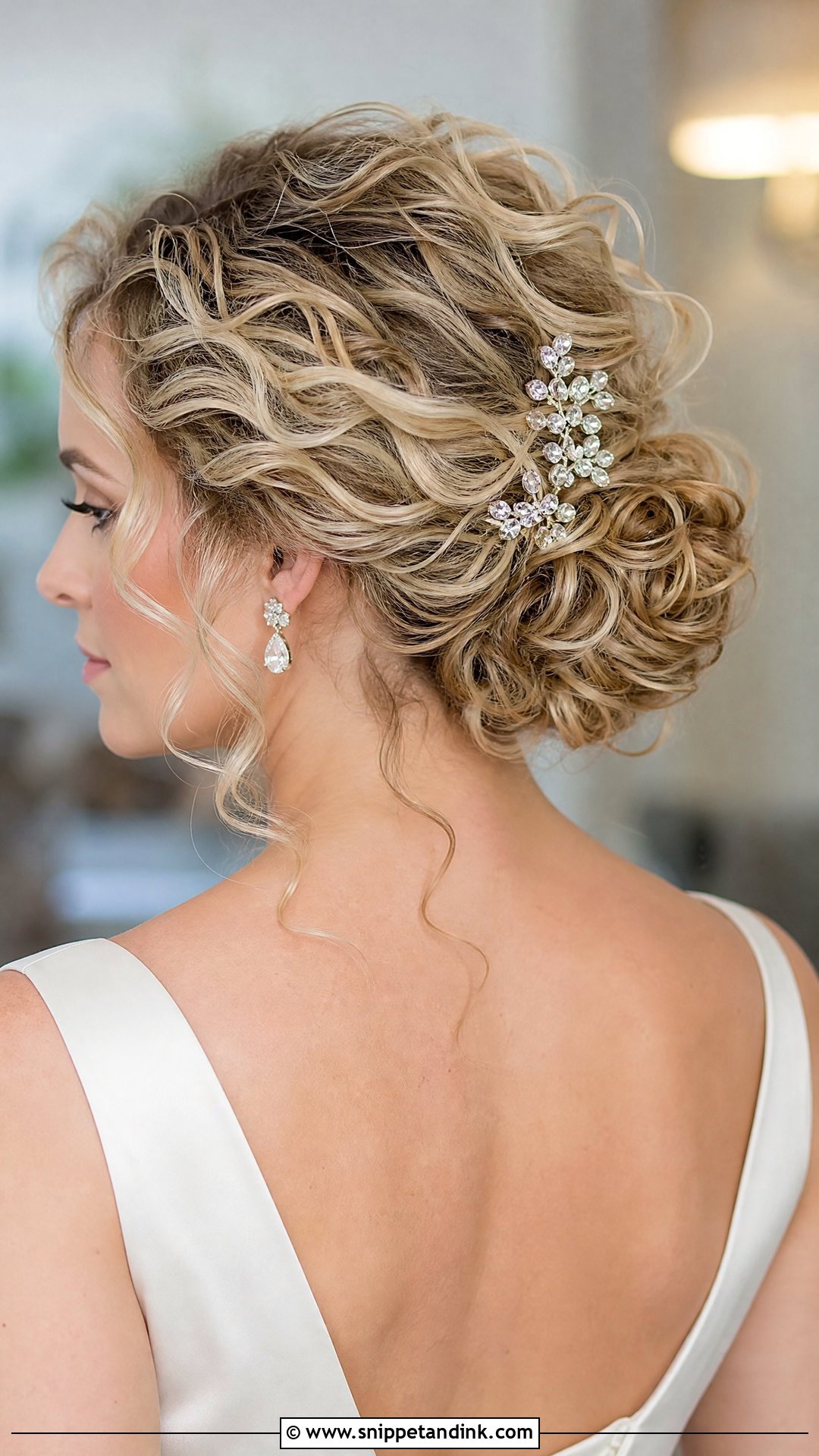
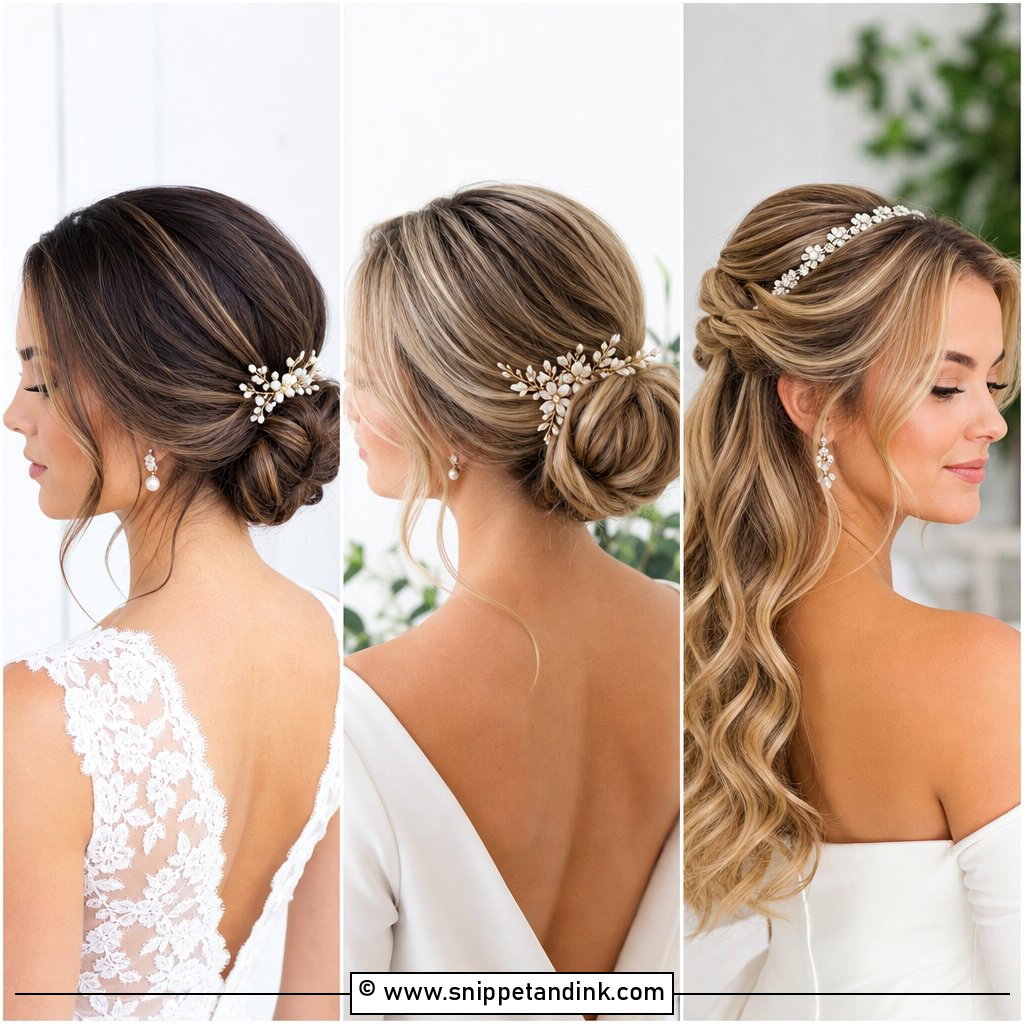
A comb changes the mood of a bun without changing the bun. It can sit above a low bun, on one side of a side bun, or tucked into the curve of a chignon, and it ties the hair to your dress, jewelry or veil. Curls give a comb something to grip, but they won’t carry its weight, so the bun still needs firm pinning right where the teeth go. Scale it to your volume. A tiny comb gets lost in thick curls, and an oversized one swamps a soft bun.
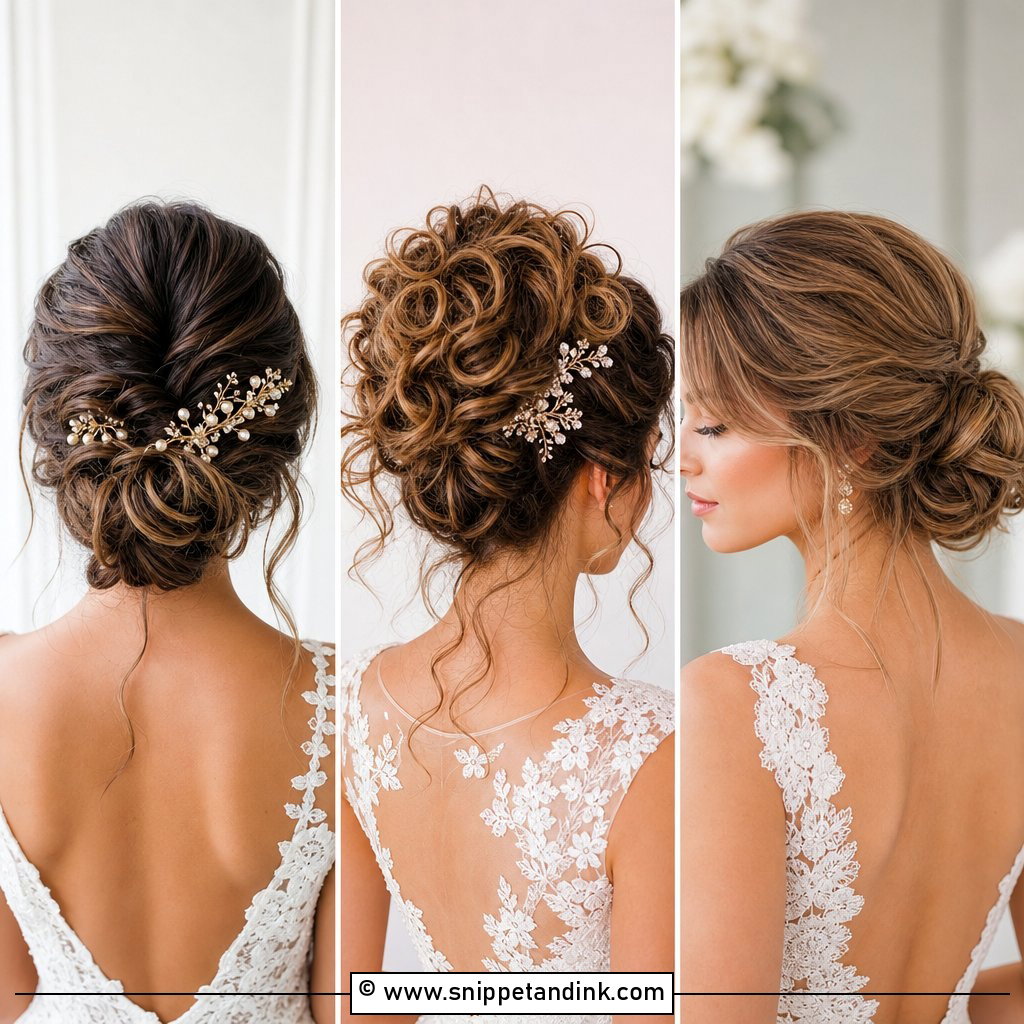
15. Natural Curly Bridal Bun
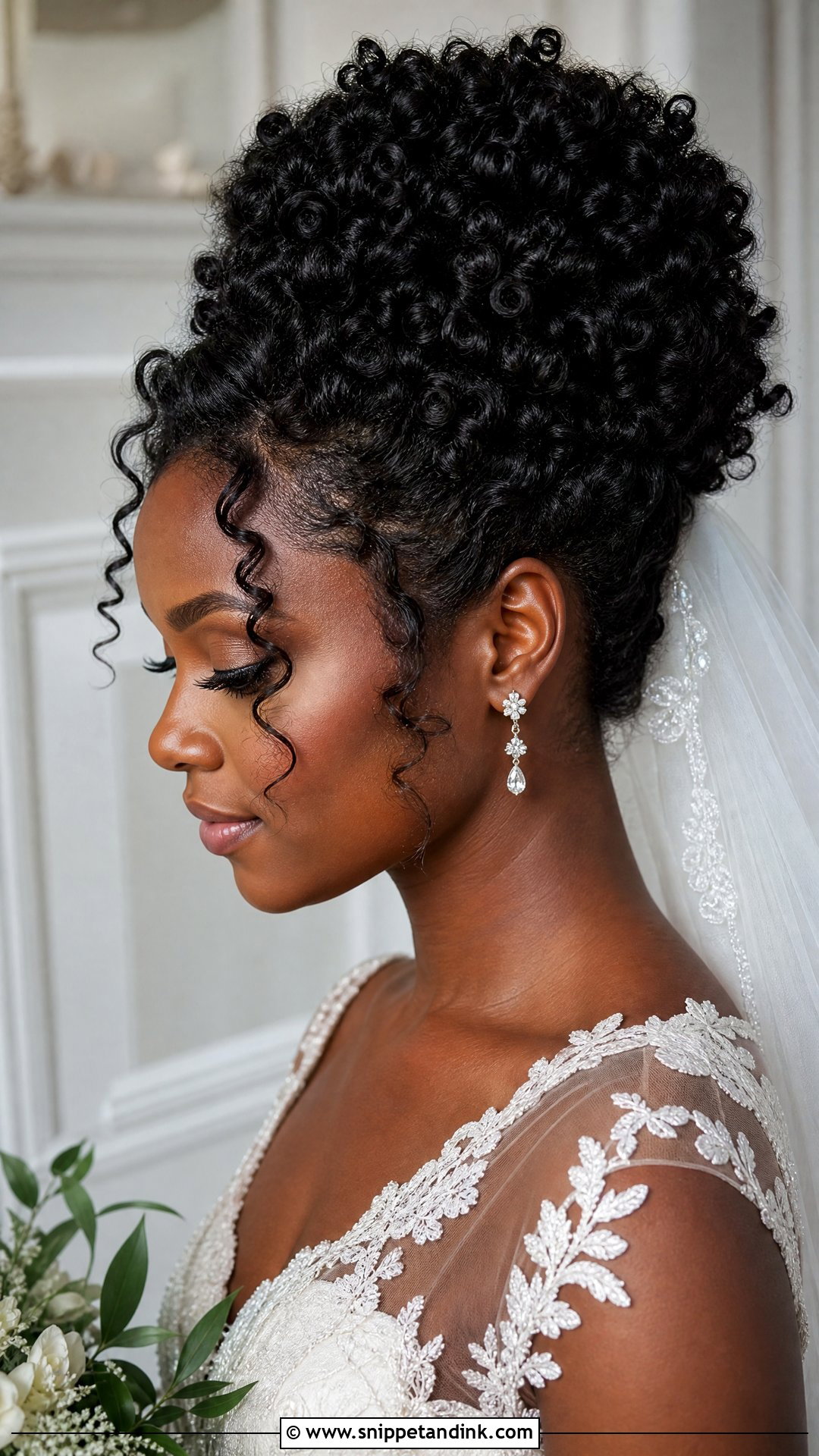
This is the bun for looking like yourself on a very good day. I build it around your pattern instead of forcing a different texture, and curls that are coily, wavy, or ringlet-shaped each give the bun a different surface. Prep starts weeks out, with steady hydration and the products you already know control your frizz and add shine. Coily hair shrinks as it dries, so I plan the bun size on dry hair, never stretched. Low, high or centred, the curl pattern should still be visible when it’s finished.
Thin Curls Need Padding, Thick Curls Need Anchors
The bun that looks easy in a photo was probably built with some help, and the help depends on how much hair you have.
If your curls are fine or sparse
A mesh bun shaper or a little padding in your hair colour gives the bun bulk without stretching the curls thin over it. Clip-in wefts placed underneath add fullness too. I pull curls loosely over the padding and pin them in small clusters, so nothing reads as hollow from the back. Texture spray at the root before any pinning gives everything something to grip.
If your curls are thick or heavy
Weight is the real issue here. A big bun hanging from a single elastic can ache by late afternoon and slowly slide. Splitting the hair into two or three sections, each secured on its own and then wrapped together, spreads the load. U-shaped hair pins hold dense curls better than bobby pins alone, and they’re gentler when everything comes out at night.
Whatever your density, ask at the trial how the style is anchored and how long it takes to remove. Someone helping you take forty pins out at midnight is much easier when you know where they are.
Pin It Where Your Neckline Points
If I had to give one rule for this list, it would be that the dress decides the bun’s height more than the hair does. A low knot suits a veil and an open back, a high one shows off a halter or a strong neckline, and a side bun loves a one-shoulder gown. Flowers make it feel softer, pearls make it classic, and a comb adds detail without changing the shape. Take your favourite two to the trial along with photos of the back of your dress, ask for pictures from the side and behind, and wear it for a few hours afterwards. A bun that still feels comfortable at dinner time is the one to book.
You'll Like These Ideas:


Leave a Reply