
Most brides who ask me for a pulled-back style want hair that stays flawless from the first look to the last dance, and taking everything off the face is the surest way I know to get there. Hair anchored at the nape or crown can’t blow into lip gloss or collapse under a veil. The catch is that a swept-back style hides nothing. The hairline, the part and the shape of the head are all on show, so the prep matters as much as the pins. Below are 20 pulled-back looks, from sleek low buns to braided crowns, with notes on how each one actually behaves over a long wedding day.
Prepping Hair for a Style That Hides Nothing
With everything pulled away from your face, the prep shows more than the styling. Hair washed that morning is soft and slippery, and pins slide straight out of it. Most pulled-back looks hold best on hair washed the day before, or on clean hair with a texture spray worked through after drying. The exceptions are the sleek bun and the slick-back, which want smooth hair with no leftover oil at the roots.
- Get any trim at least two weeks out, so blunt new ends soften and short layers don’t stick out of a bun.
- Skip rich conditioning masks for the last two days; they leave hair too soft to grip a pin.
- Refresh color about a week before, because grown-out roots show the moment hair is brushed straight back.
- Mention any cowlick, thinning at the temples or sensitive scalp at the trial, not on the morning.
Bring your earrings and any hair piece to the trial as well. A pulled-back style is built around what sits beside it, and a heavy comb can change where the bun has to go.
1. Sleek Low Bun Wedding Hair
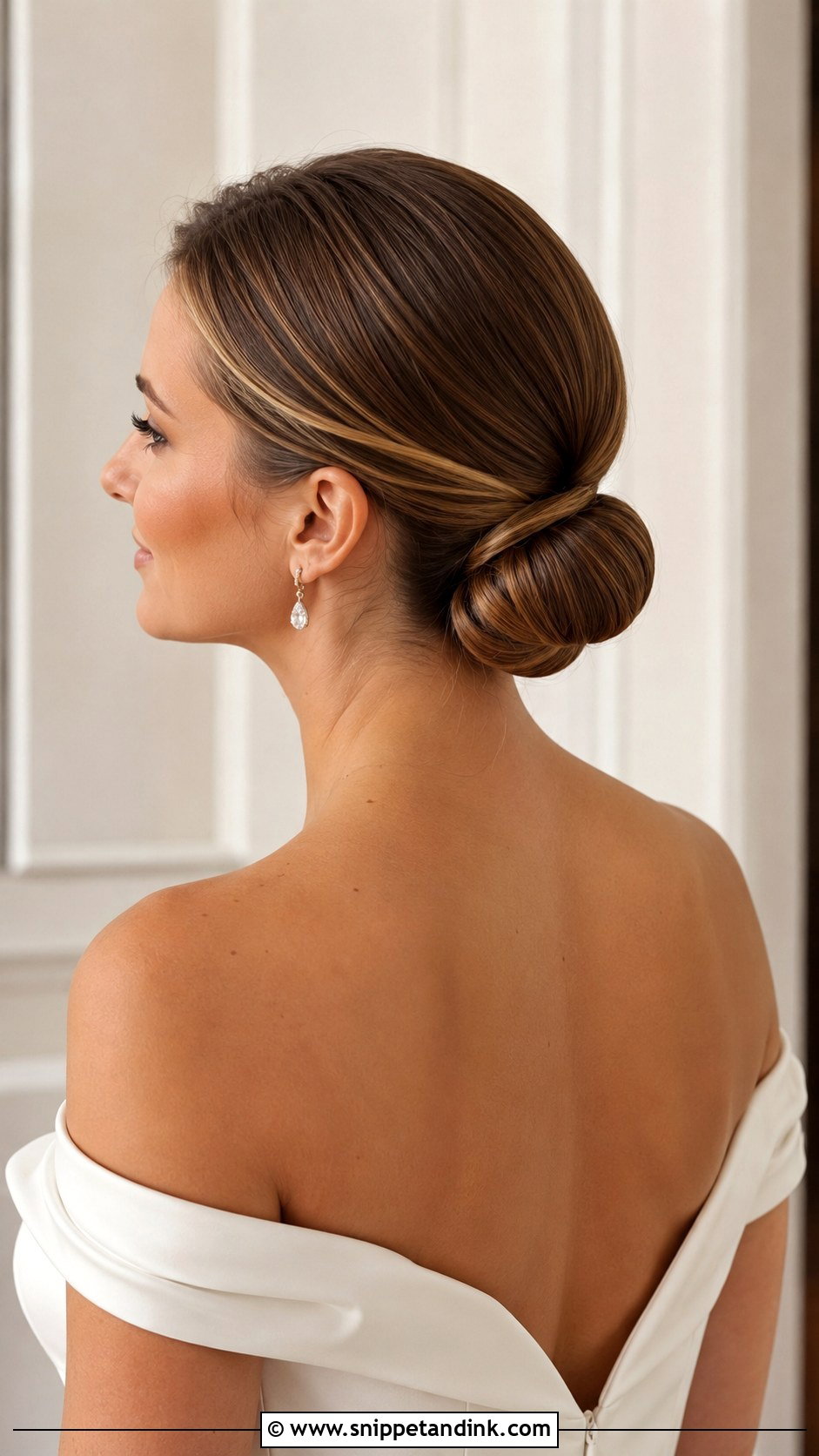
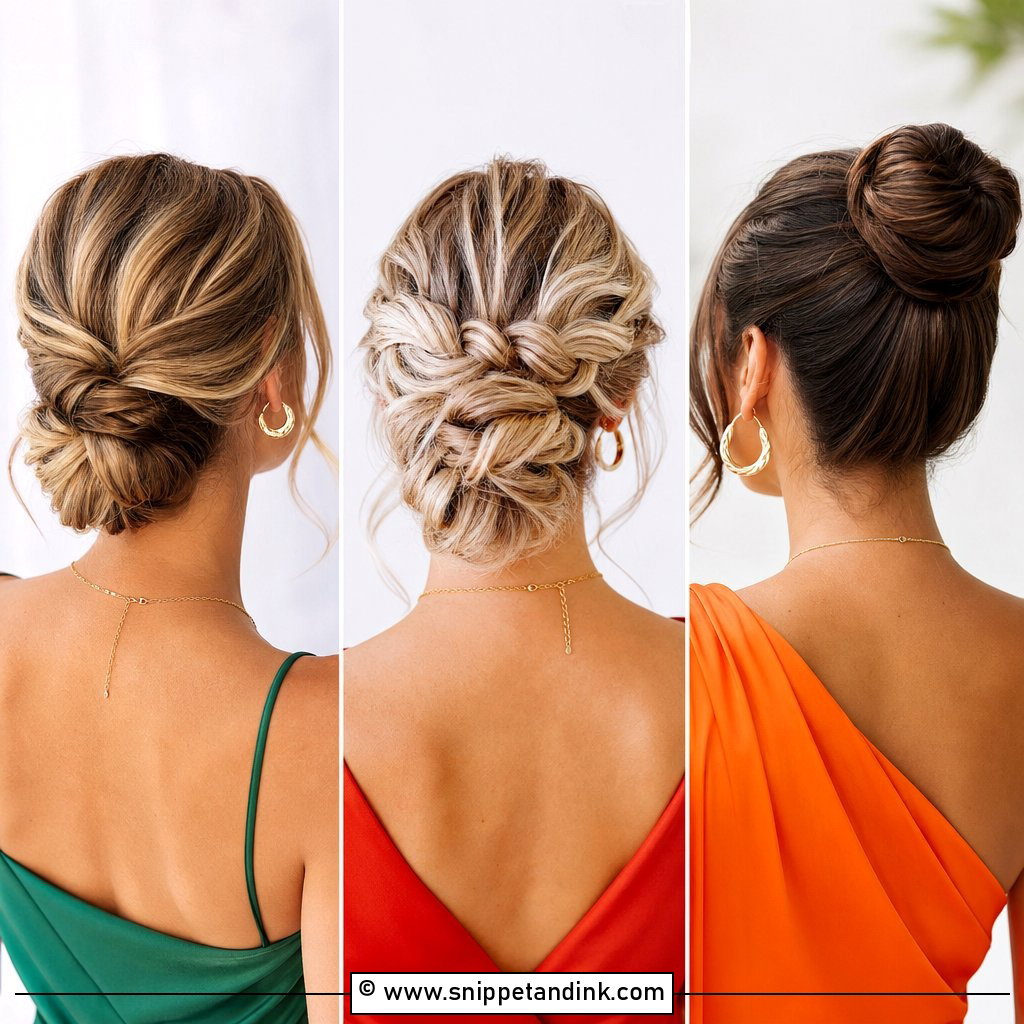
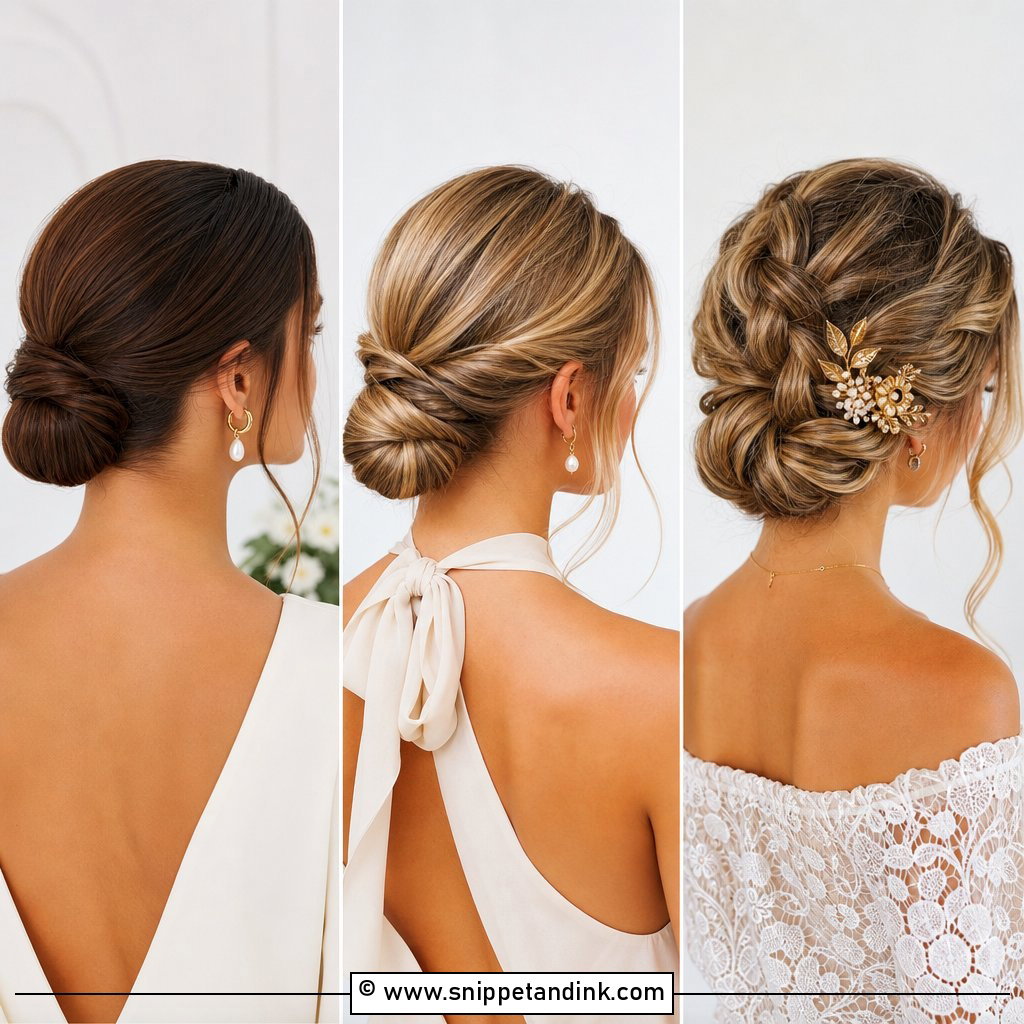
This is the style I get asked for most, and the one that needs the most patience. Every strand is brushed back into a smooth knot at the nape, so any bump at the crown shows from across the room. I work with a boar bristle brush and a pea-sized amount of smoothing cream, then set the elastic before forming the knot so the bun can’t slide down as the day goes on. It sits well with structured gowns and minimal jewelry. On very fine hair I pad the bun with a doughnut in a matching shade, because a tiny bun next to a big skirt looks lost in full-length photos.
2. Classic French Twist Bridal Updo
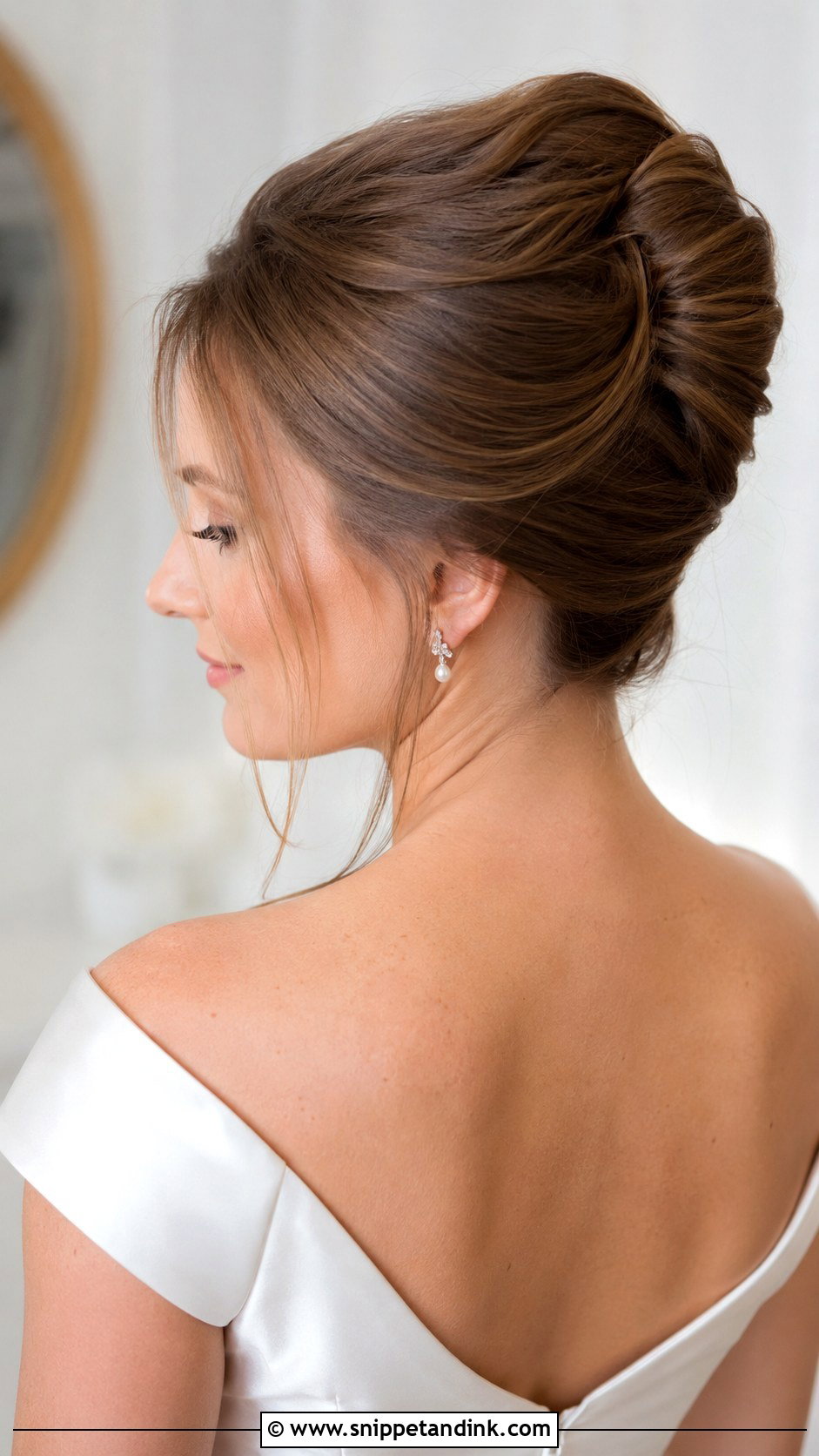
A French twist rolls the hair upward into a vertical seam along the back of the head, and it rewards hair that’s at least shoulder length with some weight to it. The part nobody sees is a hidden row of crossed bobby pins down the center back, put in before the twist. The roll then hooks onto that anchor instead of relying on a few pins at the top. It reads formal and suits ballroom receptions. If your hair is layered short at the back, say so early, since those ends tend to poke out of the roll by evening.
3. Half-Up Half-Down Wedding Hair
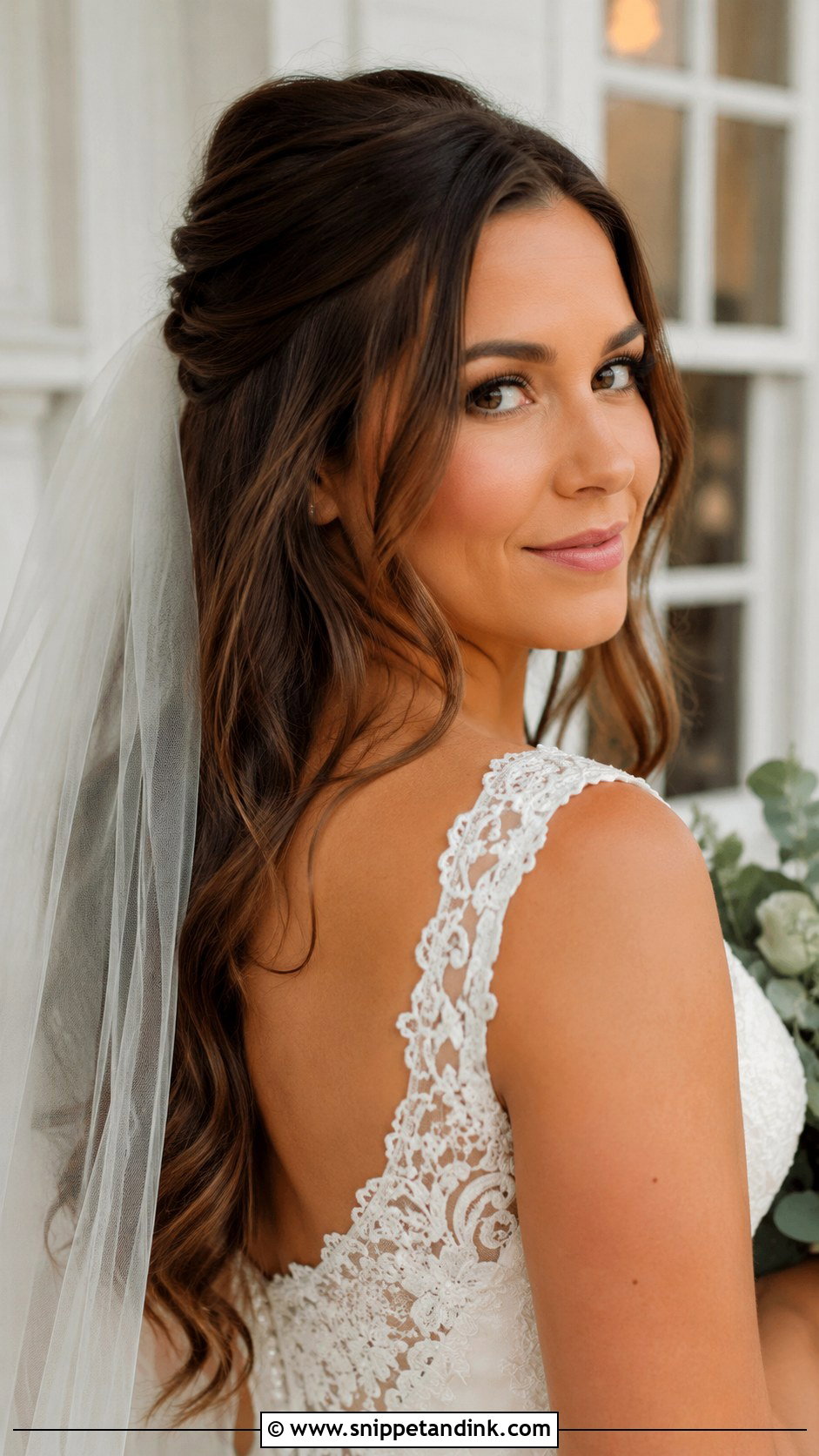
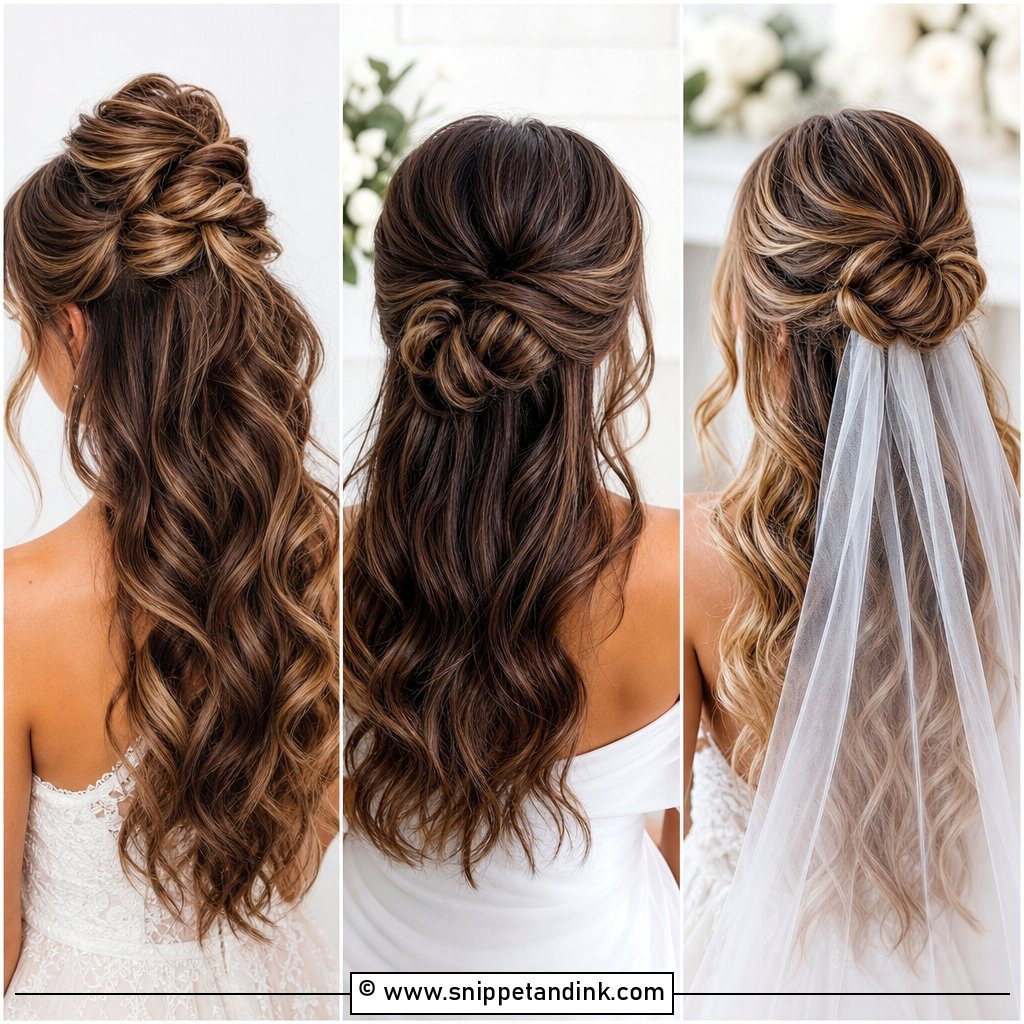
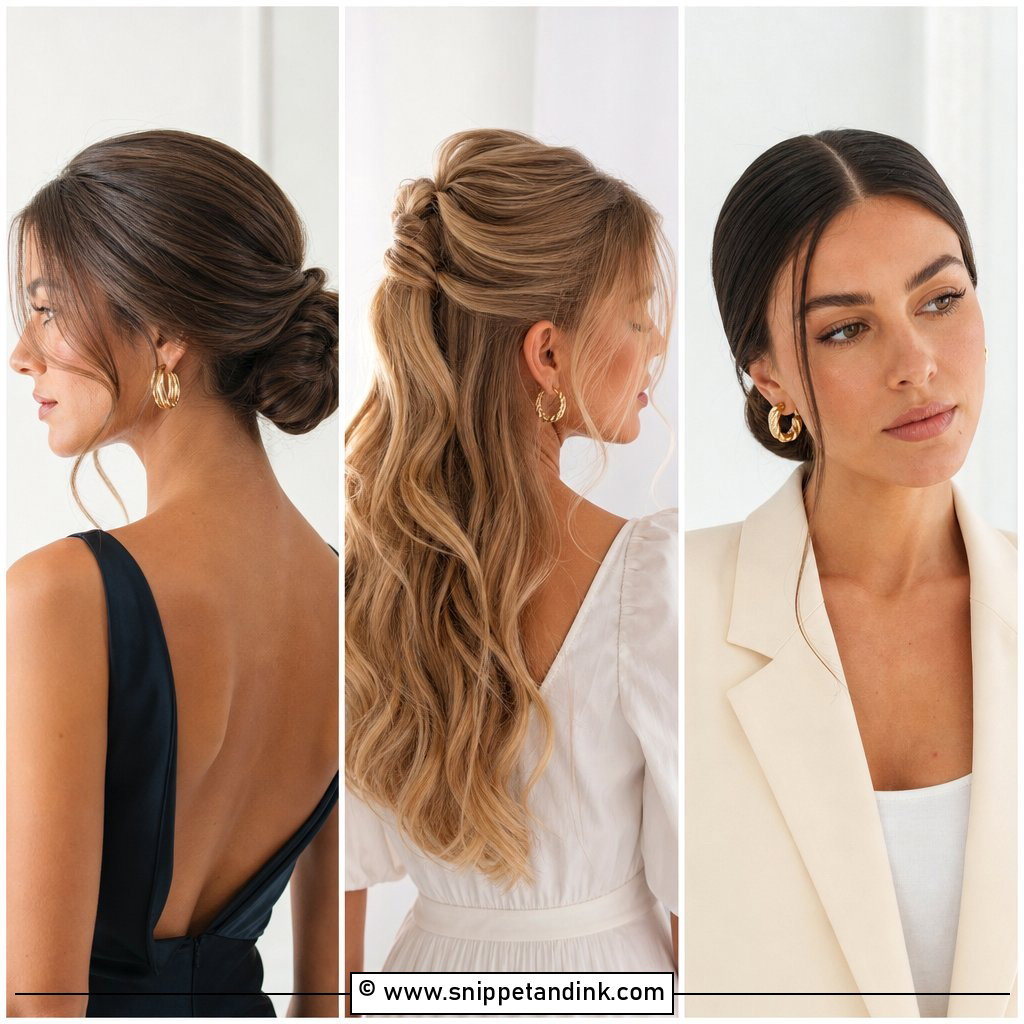
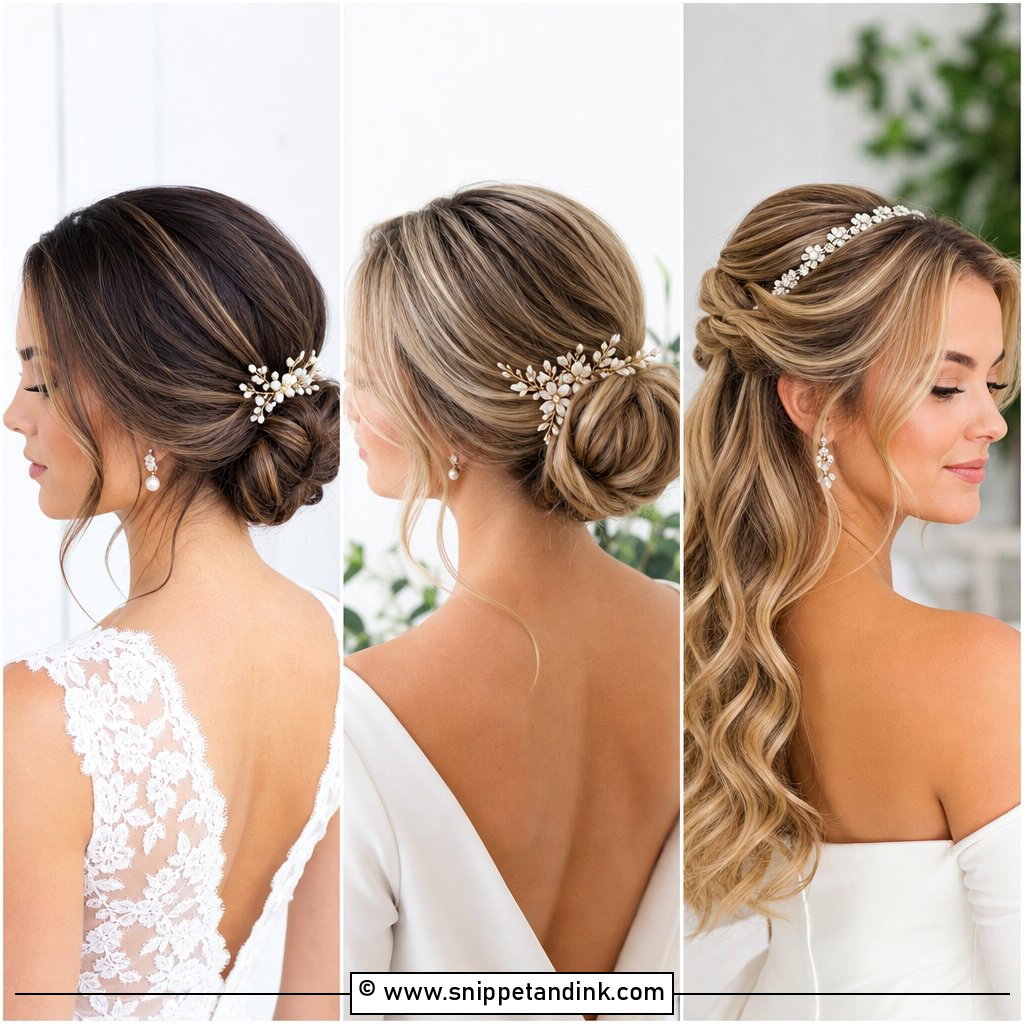
Can’t decide between up and down? Half-up pulls back the top sections and leaves curls or waves below, so your face stays clear and you still feel length on your shoulders. I’ll be honest about the trade-off: the down part is the first thing to drop, especially in humidity or after a lot of hugging. I set the curls with a medium-hold spray while they’re still warm and let them cool pinned up before brushing out. A small braid or pearl clip at the crown hides where the sections meet and gives a veil comb something to grip.
4. Sleek Bridal Ponytail
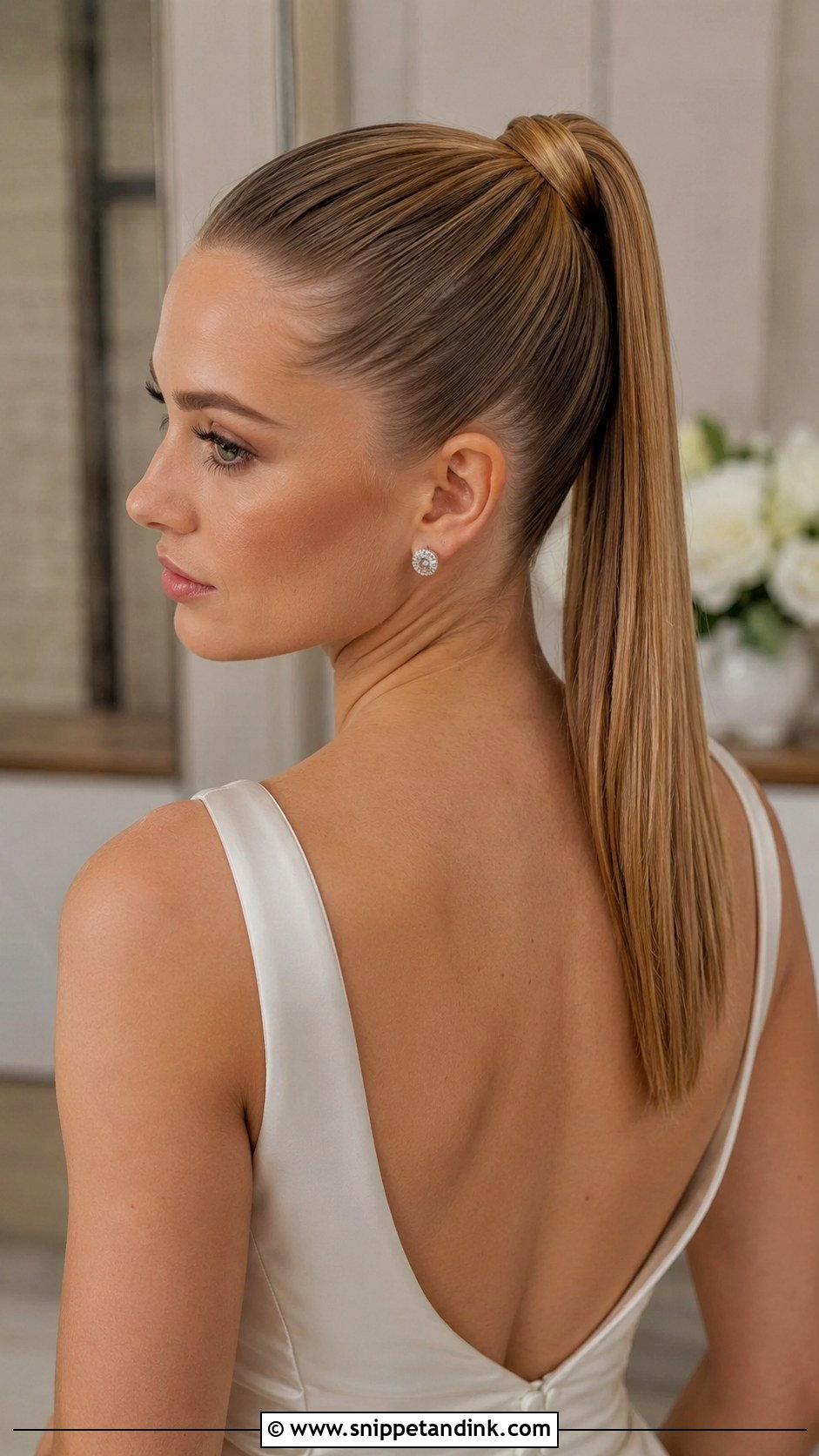
A sleek ponytail looks simple, but the line from hairline to elastic has to be perfect because there’s nothing to hide behind. I place a high pony on the line running from the chin through the top of the ear, and a low one at the occipital bone, the bump at the back of the skull. Two elastics stacked close together stop the tail drooping through the evening. A strand wrapped around the base and pinned underneath covers the elastic. Be realistic about weight, though. Very heavy hair in a high pony can give you a headache by the reception.
5. Low Chignon Wedding Hairstyle
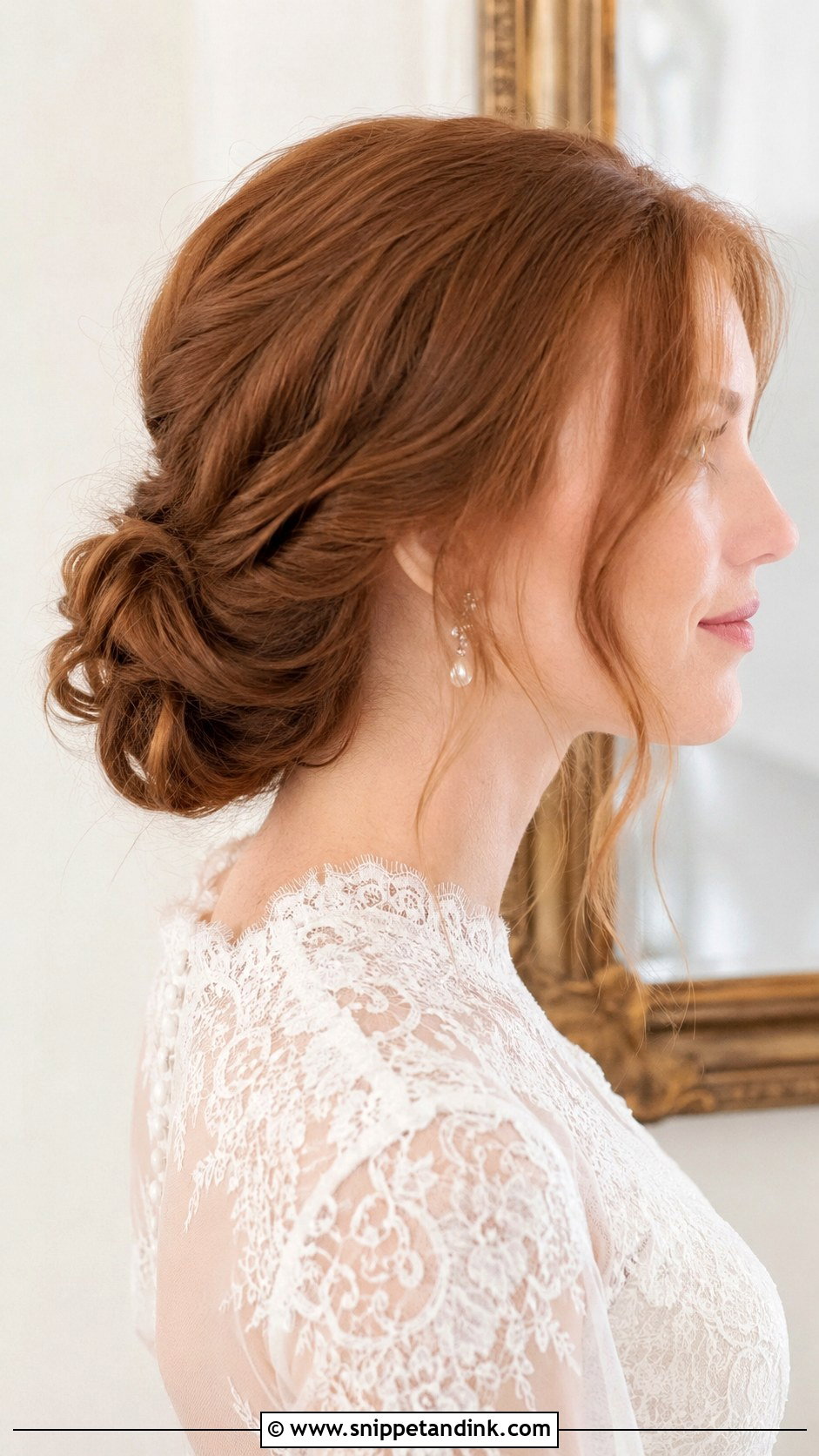
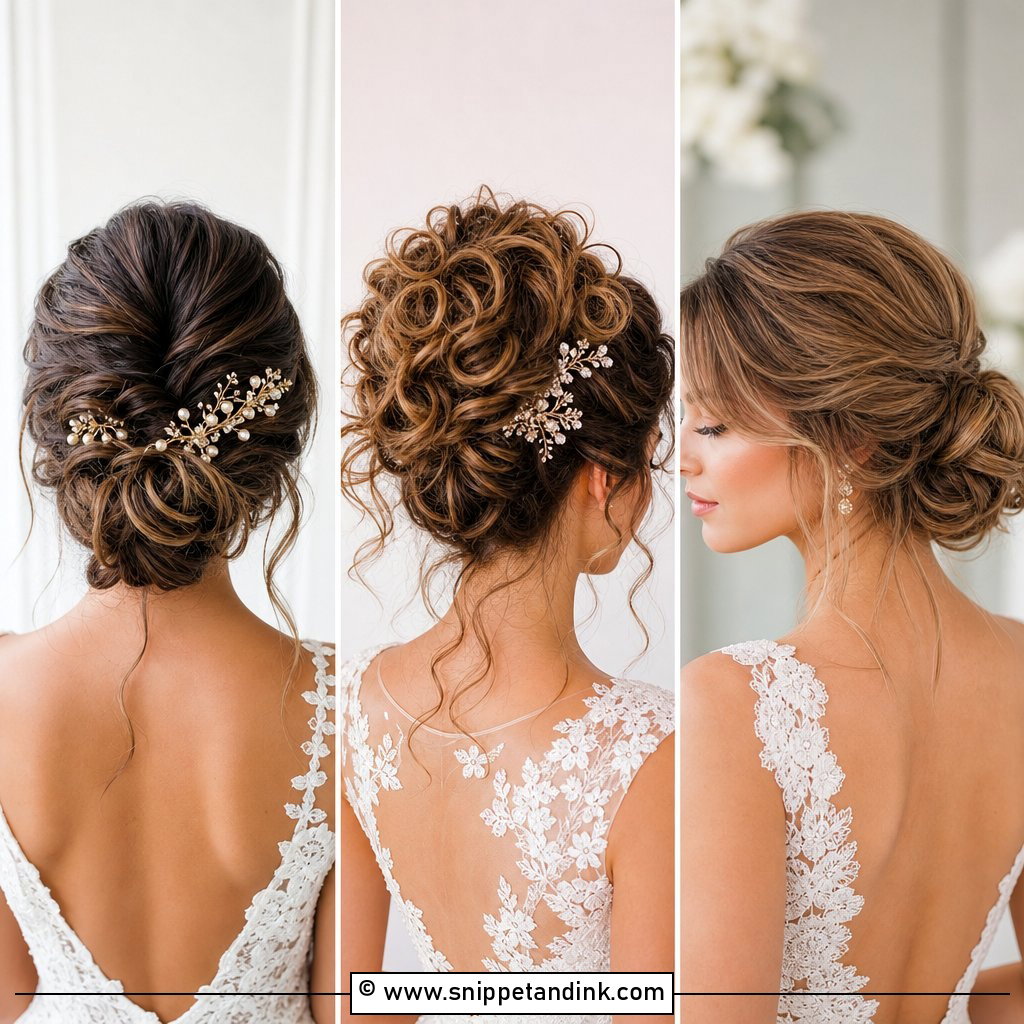
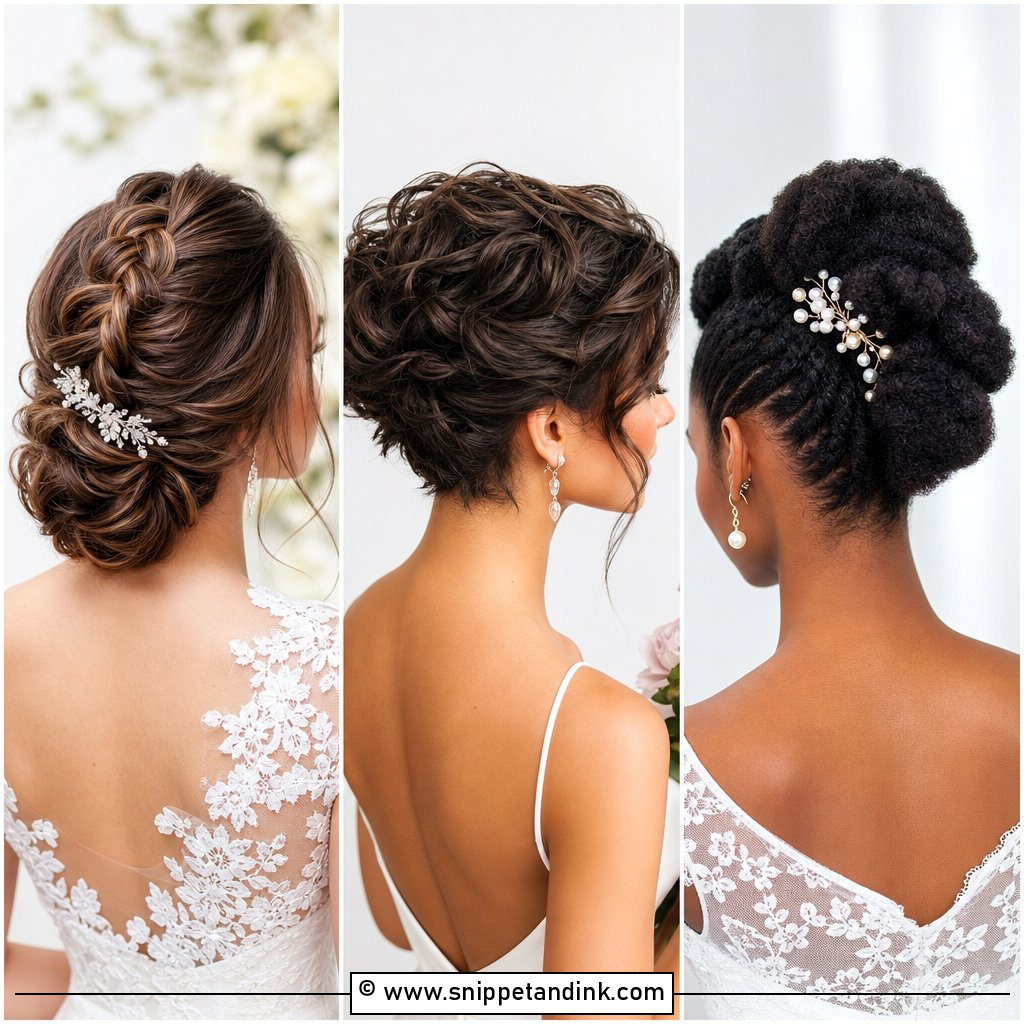
A low chignon is a looser looped bun at the nape that lets a little texture show, so it forgives frizz and layers far better than a sleek bun. I prep with texture spray instead of shine products, because the loops need grip to keep their shape. It’s a natural partner for lace and vintage-leaning gowns. Watch the neckline: a high collar or a dress with detail at the nape can crush a low chignon, so bring a photo of the back of the dress to your trial.
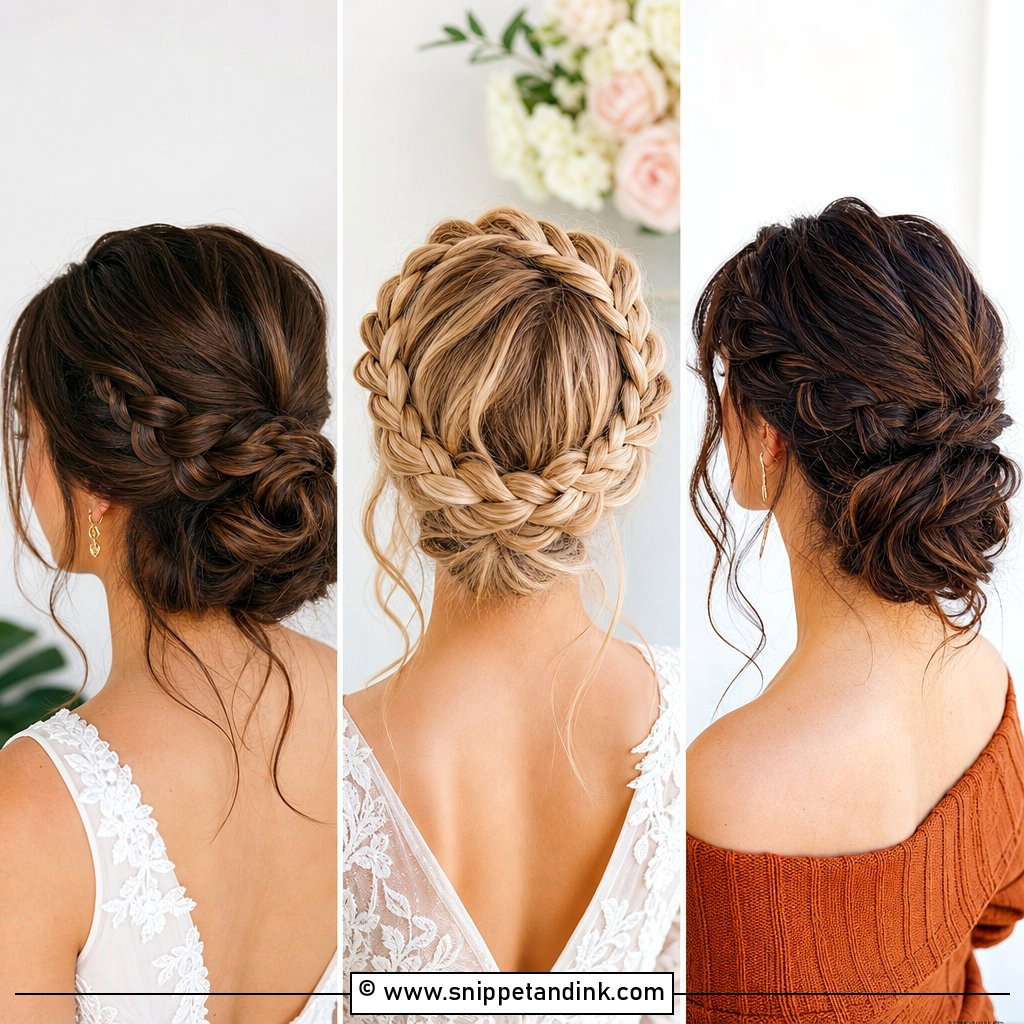
6. Braided Low Bun Bridal Updo
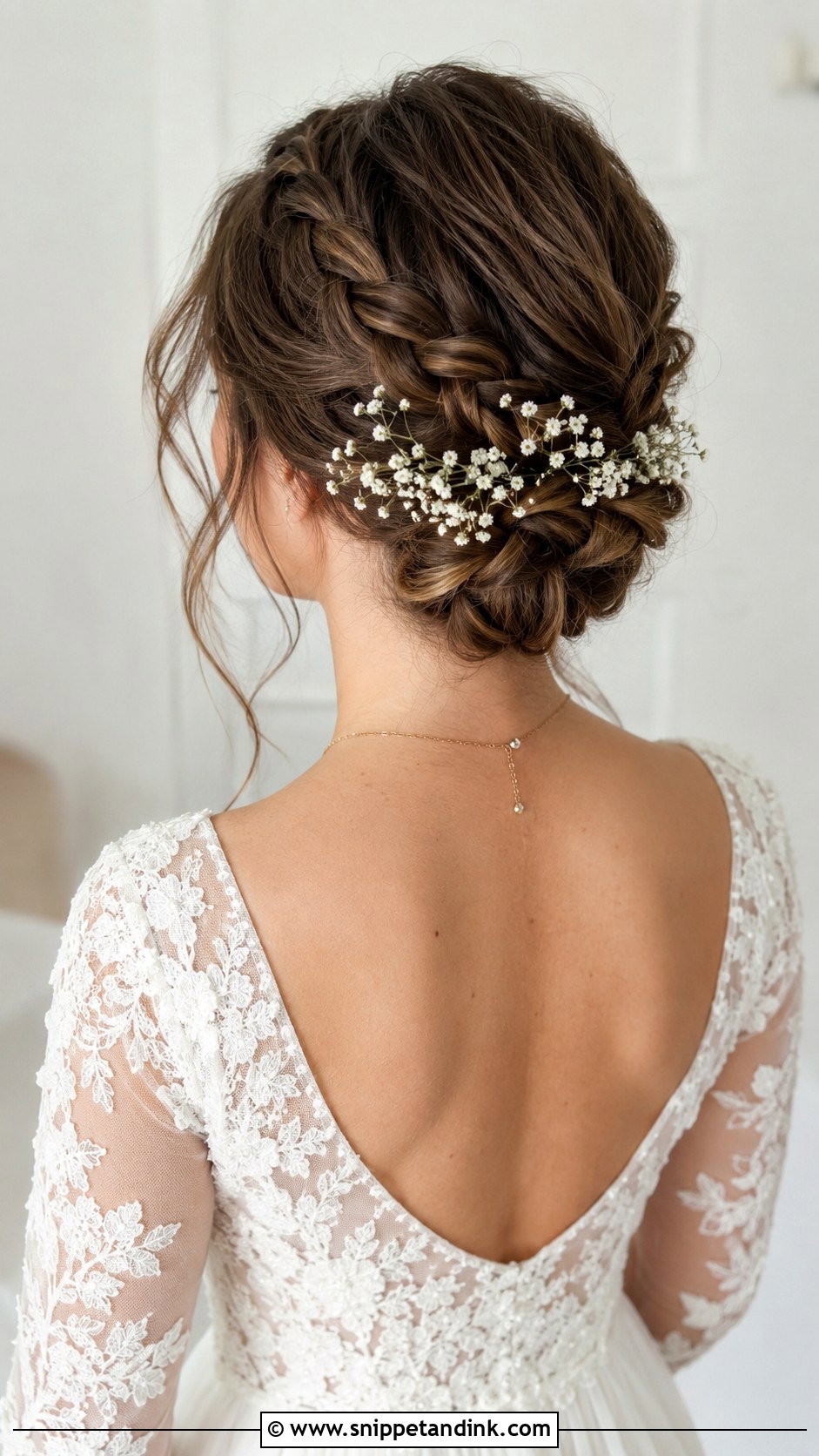
Braids woven into a low bun hold far longer than loose sections, because the braid itself carries the structure. I braid tightly first, then gently pull the edges wider, which gives that full, airy shape without losing grip. Fishtails show the most detail in photos; rope braids are quicker and suit slippery hair that won’t stay in a three-strand plait. Rustic and garden weddings suit it best. Small sprigs such as baby’s breath or small blooms can be pushed into the gaps of the braid, and they stay put there much better than on a smooth surface.
7. Messy High Bun Wedding Hair
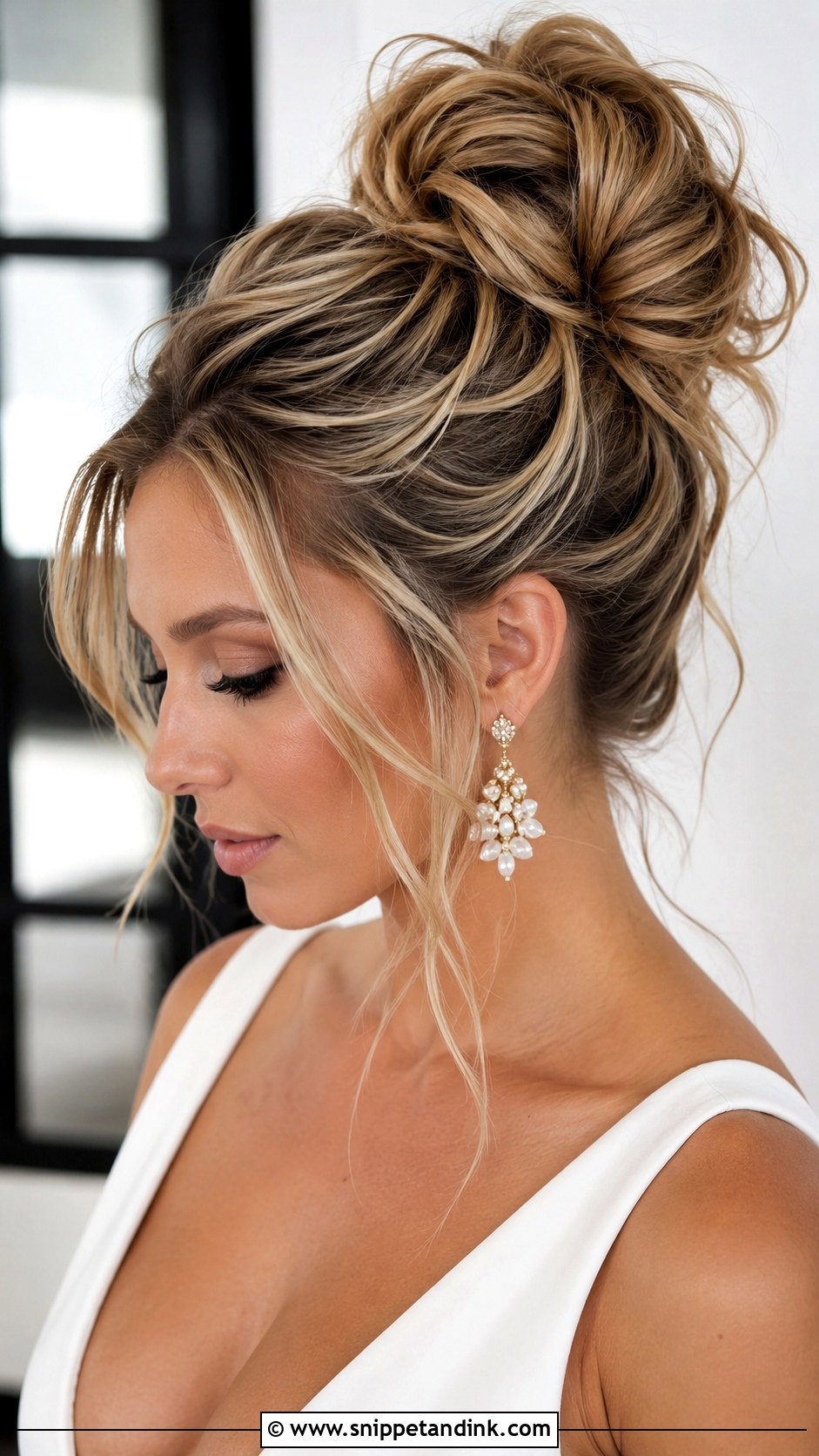
Messy is a slightly misleading word here, since every loose piece in this high bun is placed on purpose. I tease the base for height and pin the bun firmly before pulling out any face-framing wisps, never after, or the whole thing loosens. It shows off the neck and a pair of statement earrings. Under a long veil it’s not my first choice: the comb has to sit beneath or behind the bun, and the weight can drag it down. For a boho or minimalist wedding, though, it’s one of the most comfortable styles to wear for twelve hours.
8. Sleek Slicked-Back Bridal Look
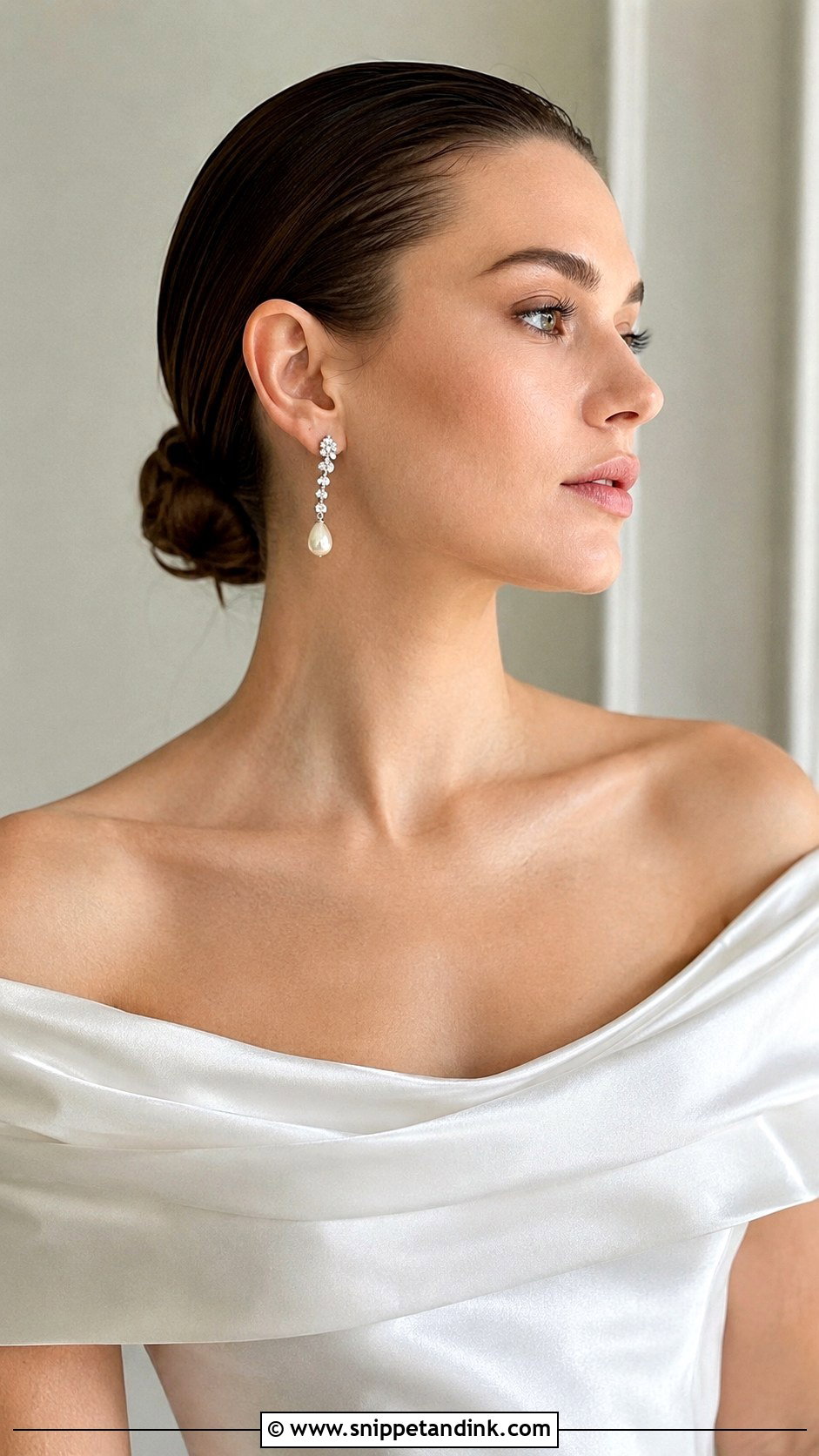
The slicked-back look smooths every strand away from the face with gel or pomade for a wet finish, and it’s the least forgiving style on this list. It exposes the entire hairline, so I check for patchy temples or baby hairs that refuse to lie flat before I suggest it. Gel applied in thin layers and combed through with a fine-tooth comb dries harder than one thick coat. If you have a cowlick at the front, test it first. Cowlicks often spring back up after a couple of hours.
9. Twisted Updo Wedding Hairstyle
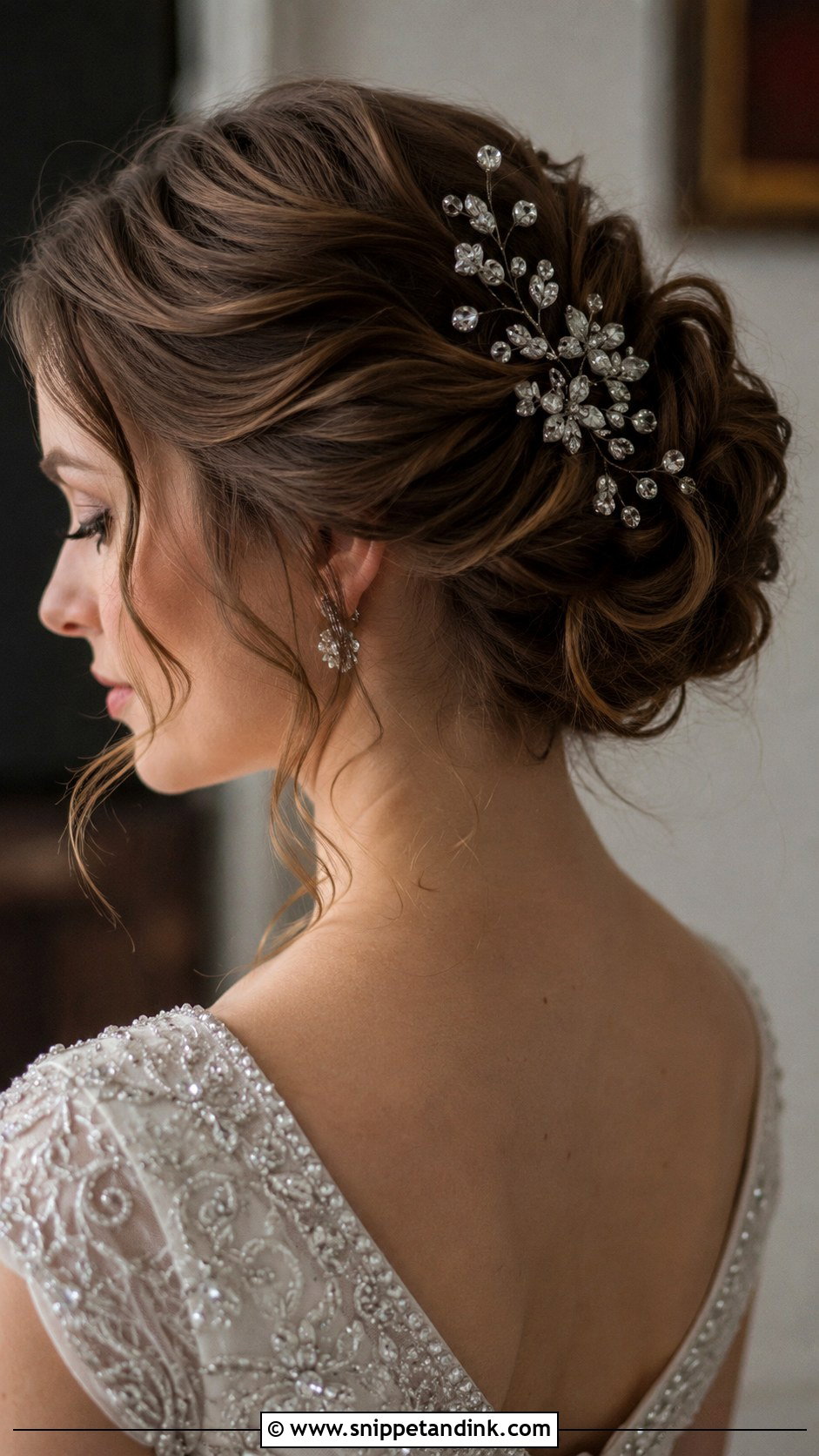
On hair that refuses to keep a curl, twists hold better than curls ever will. Each section is twisted, then locked with its own pin into a small crossed base, which is why a well-built twisted updo barely moves on the dance floor. It needs medium to long hair; a bob simply doesn’t have the length to wrap. I leave a couple of tendrils at the temples so it doesn’t look severe. Pearl pins or small crystal accents fit neatly into the grooves between twists, which is the one place they won’t slide.
10. Low Ponytail With Face-Framing Waves
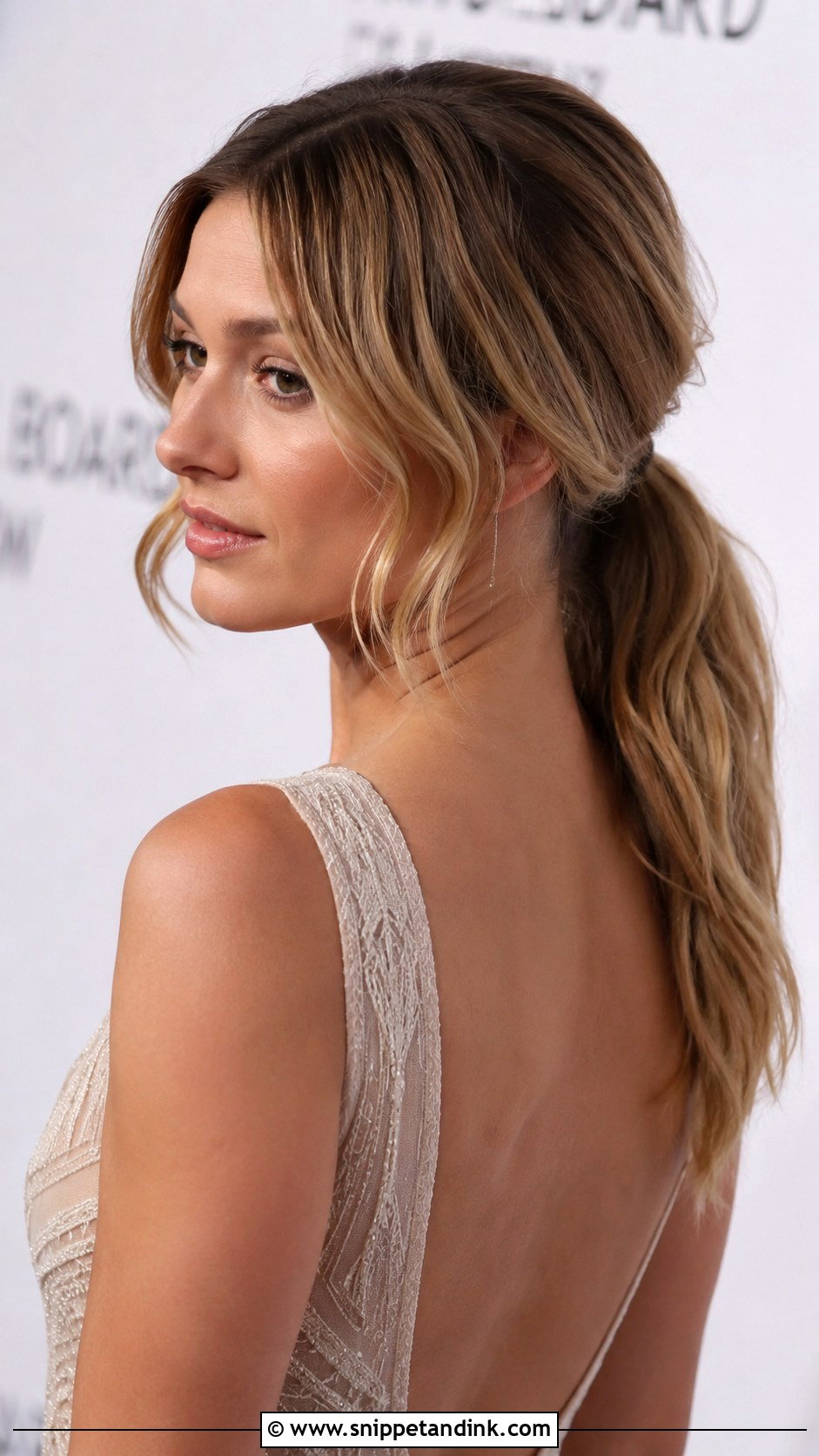
This low ponytail keeps the back smooth and lets curled pieces fall around the face, which helps brides who feel a full slick-back is too harsh. I separate those front pieces before brushing the rest back, so they aren’t tugged out of the ponytail later and leave a gap. A strand wrapped round the base hides the elastic, and waves in the tail add movement as you walk. The front pieces are the weak point. They flatten when touched, so keep your hands away from your face, which is harder than it sounds on an emotional day.
11. Bridal Updo With Pearl Accessories
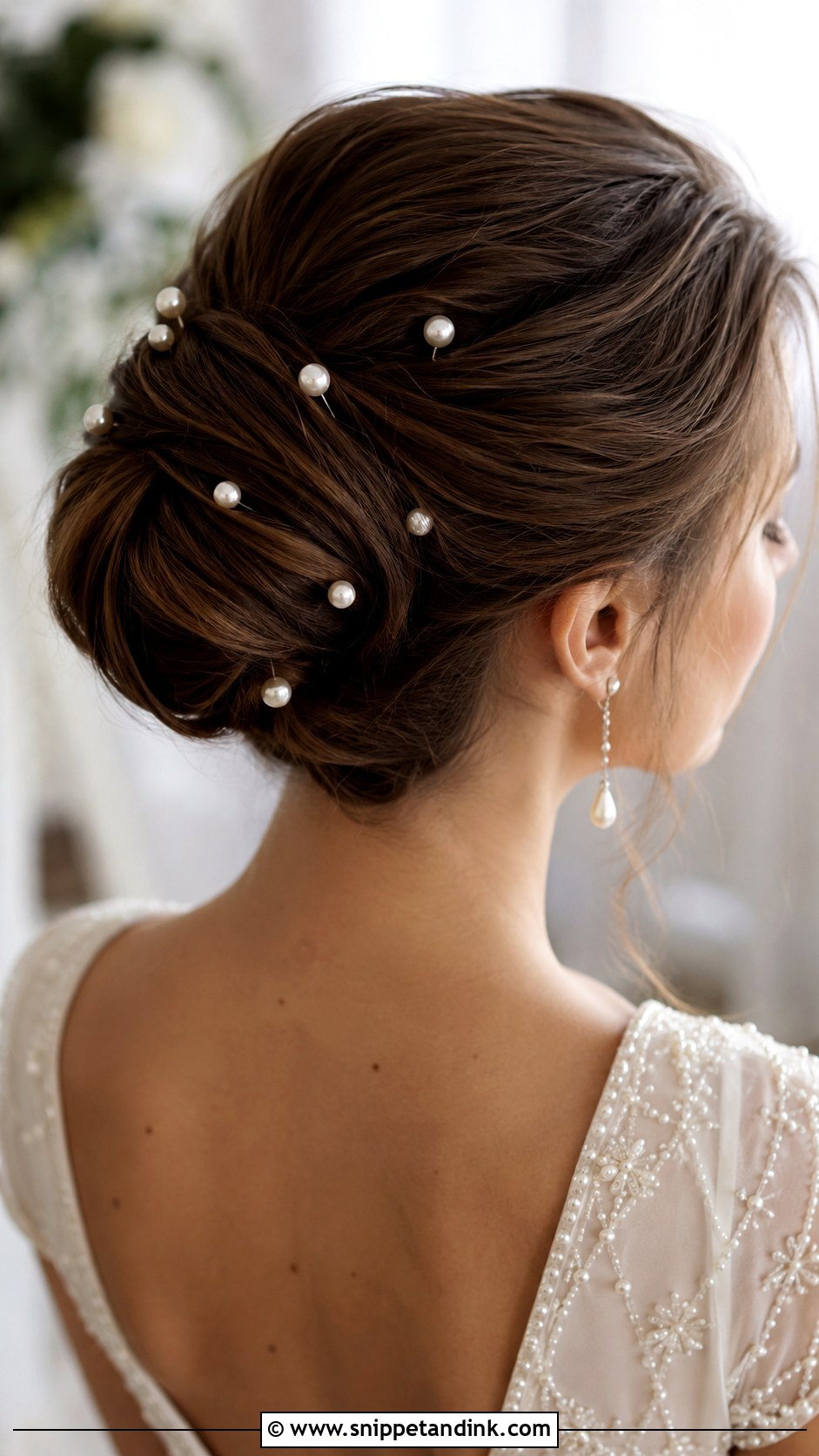
Pearl pins dress up a smooth bun or twist without much weight, and they catch the light softly instead of flashing like crystals. I place them after the style is finished and sprayed, pushing each into a section with some grip, since pearls in slippery hair slide out by the reception. Clustered at the bun they read classic; scattered across the crown they feel looser. Match the pearl tone to your gown, because bright white pearls can make an ivory dress look yellow beside them. Five or six well-placed pins often look richer than twenty.
12. Swept-Back Curls Wedding Hairstyle
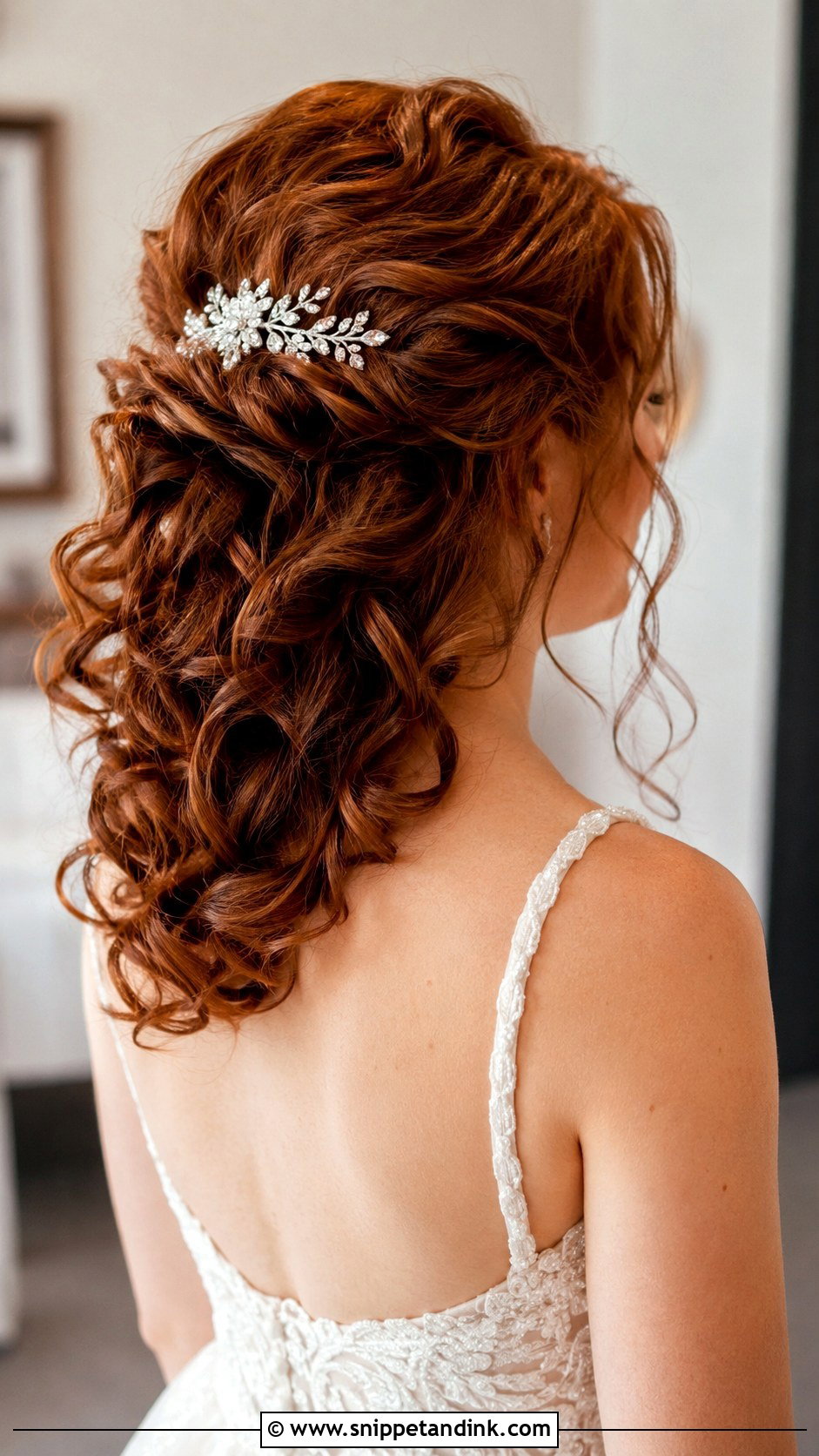
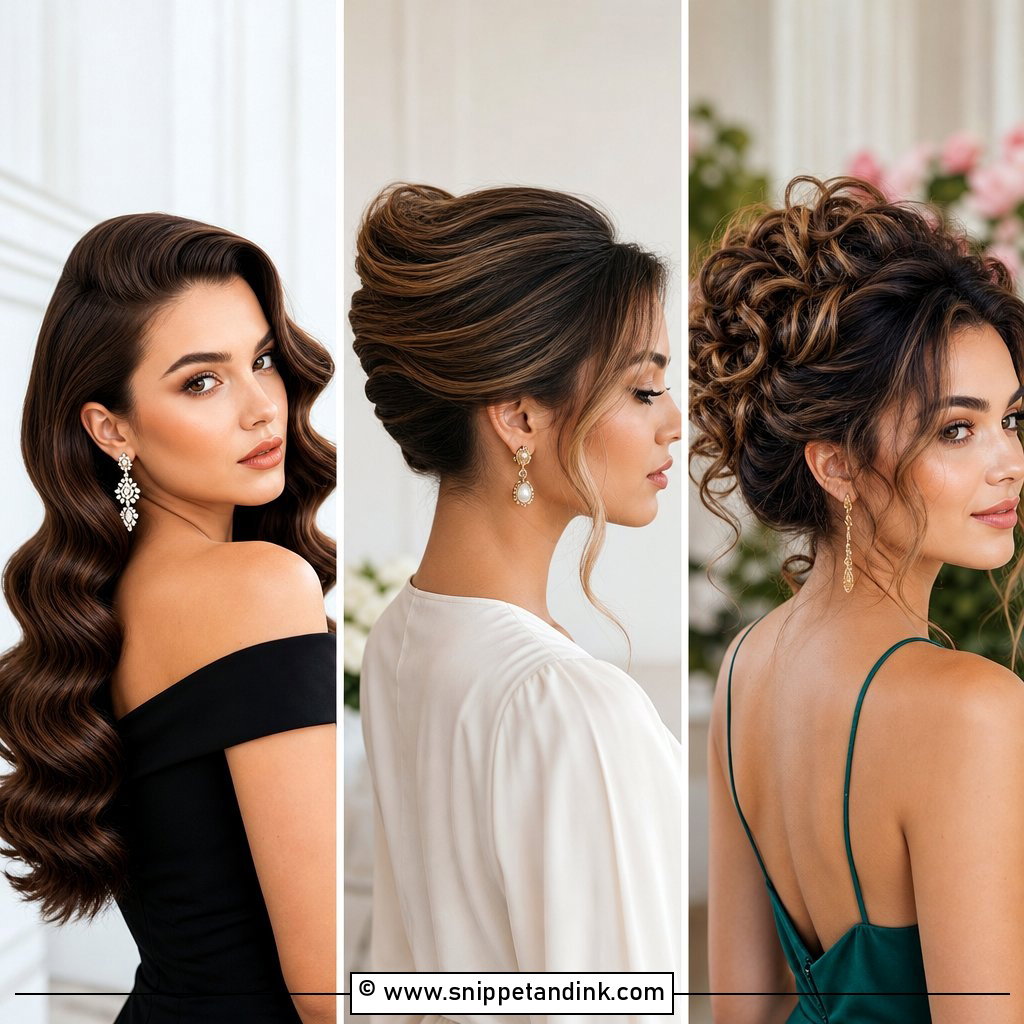
Full, voluminous, swept-back curls are pulled off the face and pinned loosely at the back, so you keep the body of a down style with your shoulders clear. Natural waves hold this best; straight, fine hair usually needs hot rollers left in until completely cool. I pin the curls into position before brushing them out, never the other way round. The volume sits behind the ears rather than at the cheeks, which is kind to round faces. Expect the curls to relax by roughly a third over the day, so start tighter than the shape you want.
13. Sleek Bun With Center Part
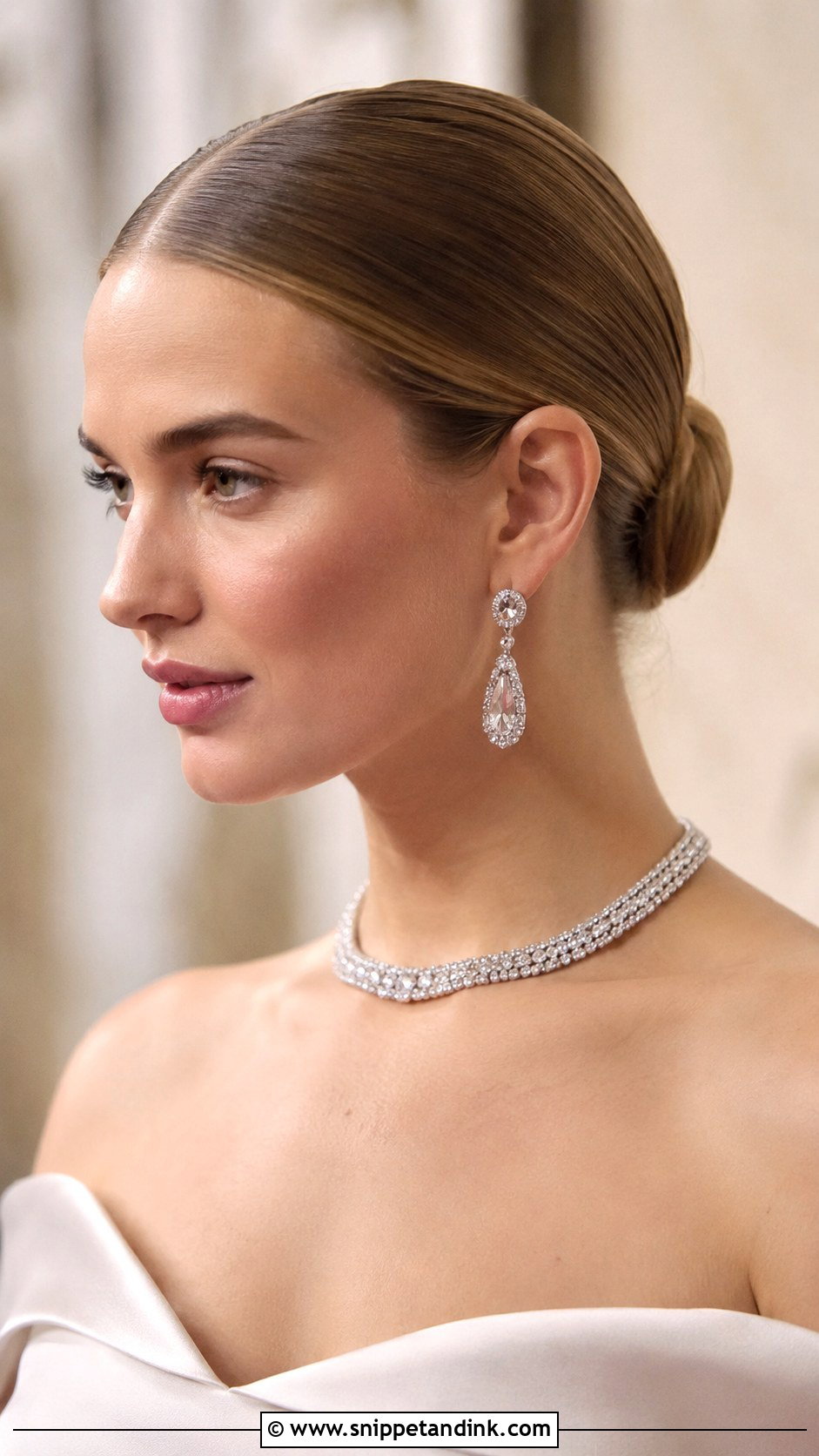
Symmetry is everything in a center-parted bun, so the part has to run exactly in line with the nose, which isn’t always where your hair naturally falls. I find the true center with a tail comb from the bridge of the nose, then press the part flat with a little gel. Minimal gowns and bold earrings suit it. It doesn’t flatter everyone, and I’d rather say so: a hard center part can widen a round face, and a slightly off-center line is often kinder. Shine spray goes on last, held well away so it doesn’t leave wet spots.
14. Boho Braided Crown Updo
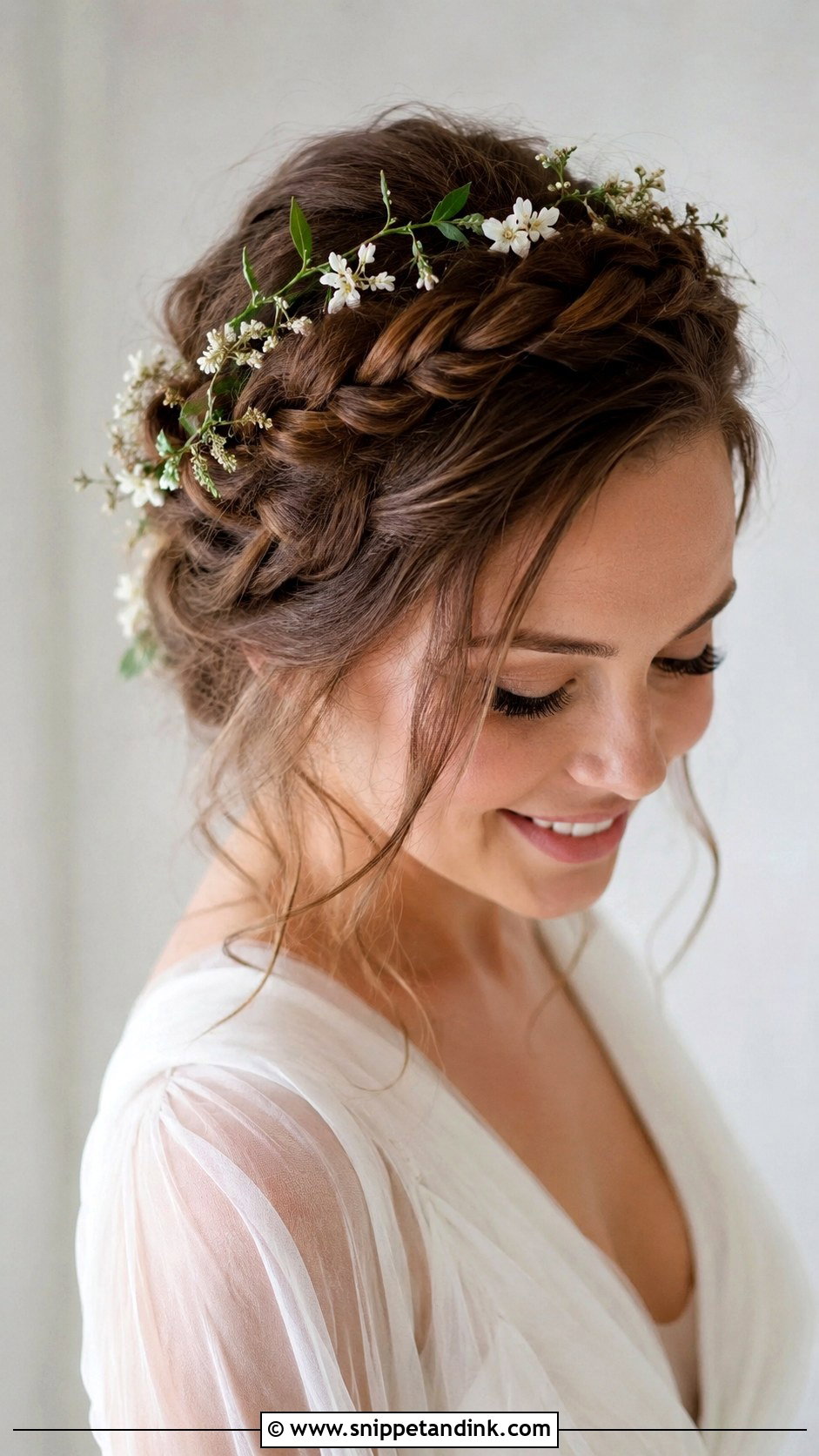
A braided crown wraps around the head like a halo and is pinned flat, which makes it one of the best styles for wind on a beach or a hillside. I braid a section down each side, cross them over the top and hide each end under the opposite braid. Gently widening the plait afterward makes thin hair look fuller. Tiny flowers or sprigs of greenery tuck straight into it. If you plan to wear a veil, the comb has to slide under the back of the crown, not sit on top of it, so bring the veil to your trial.
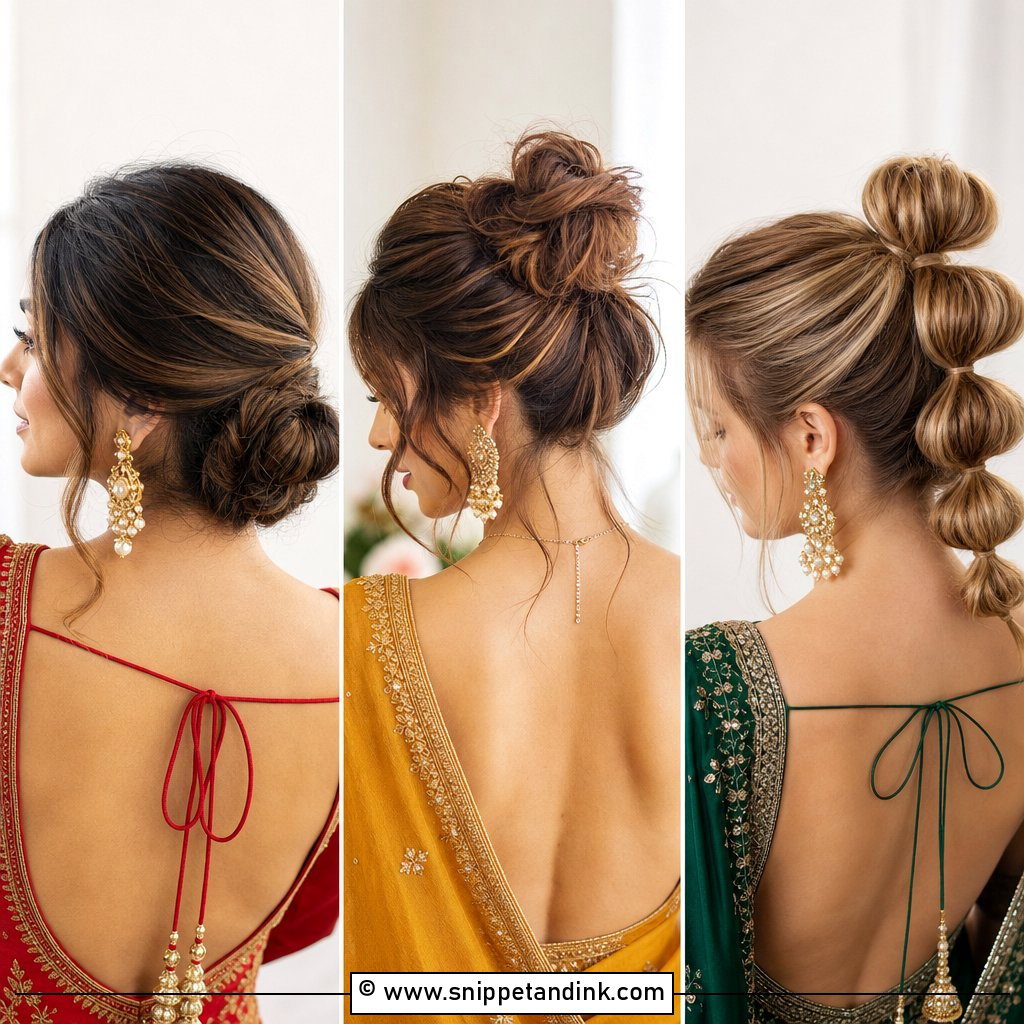
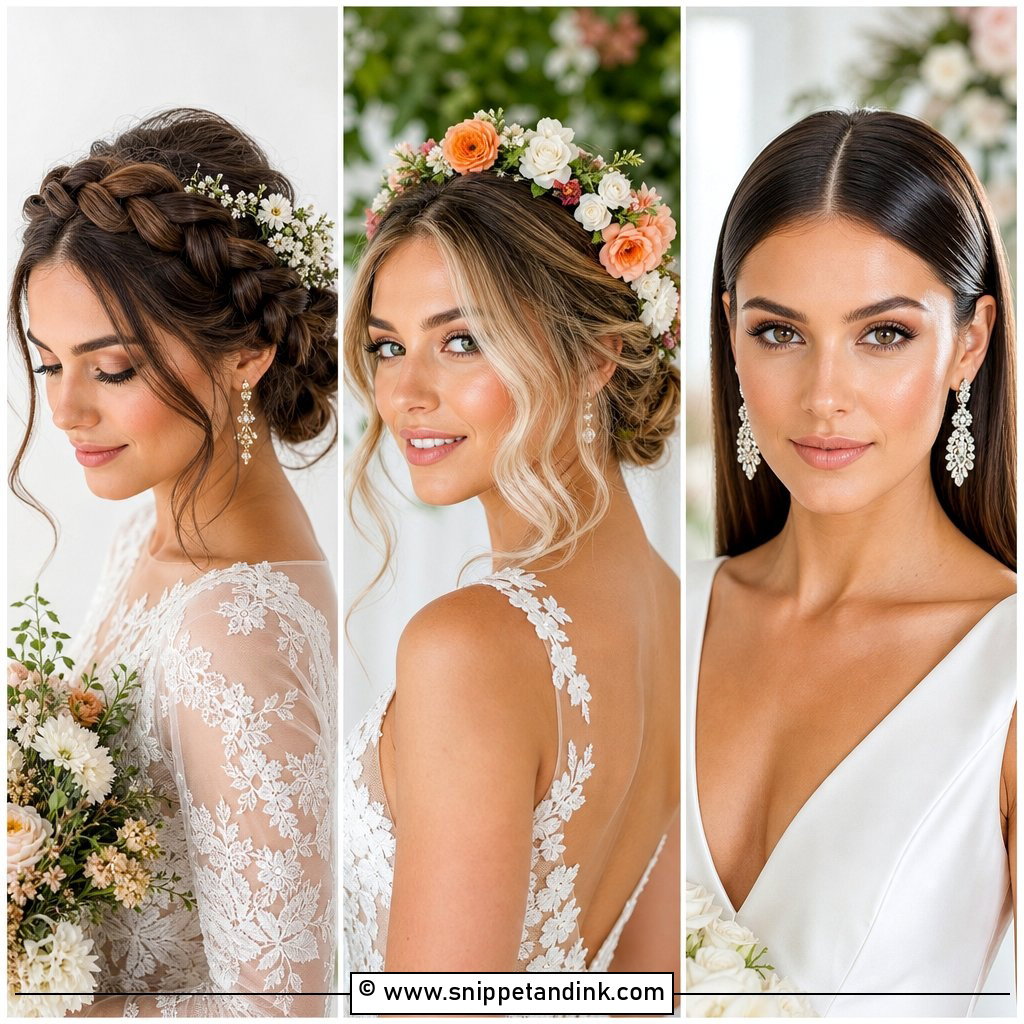
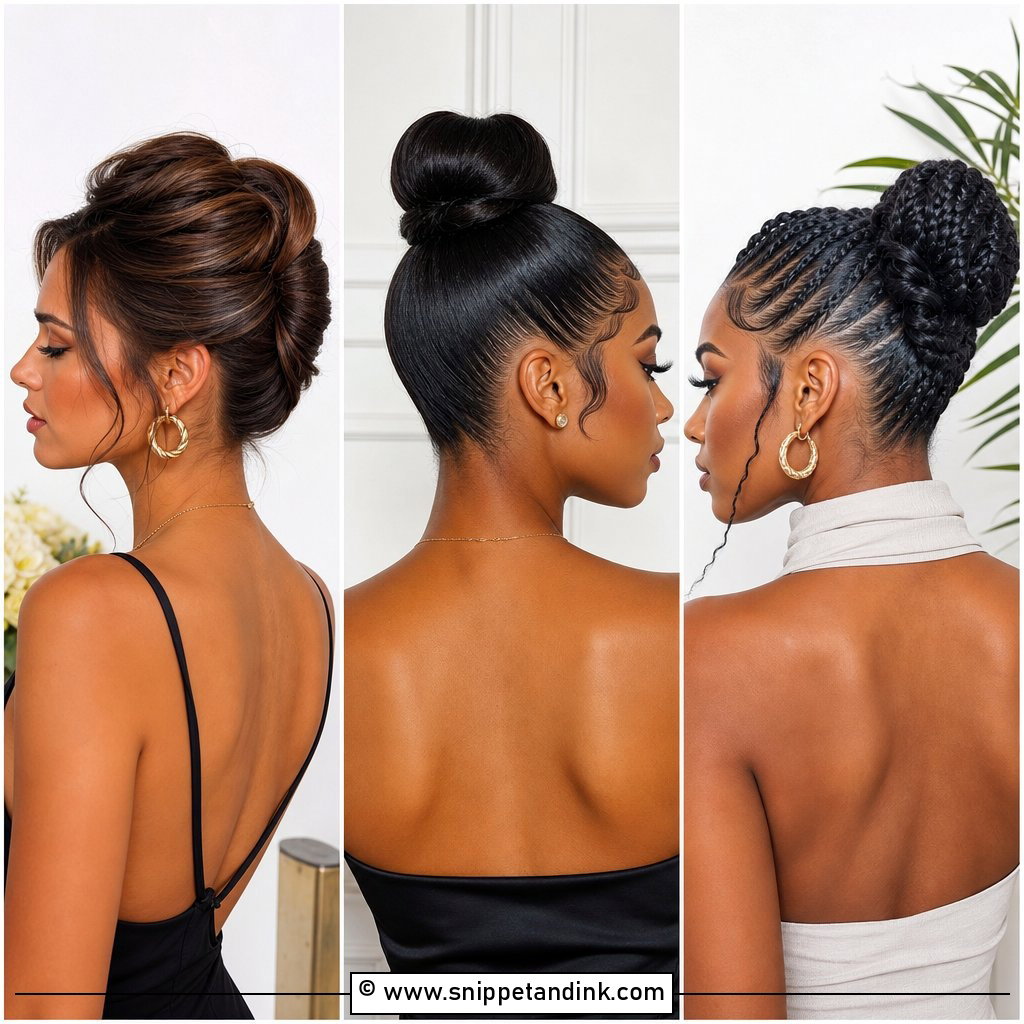
15. Low Bun With Side Braid
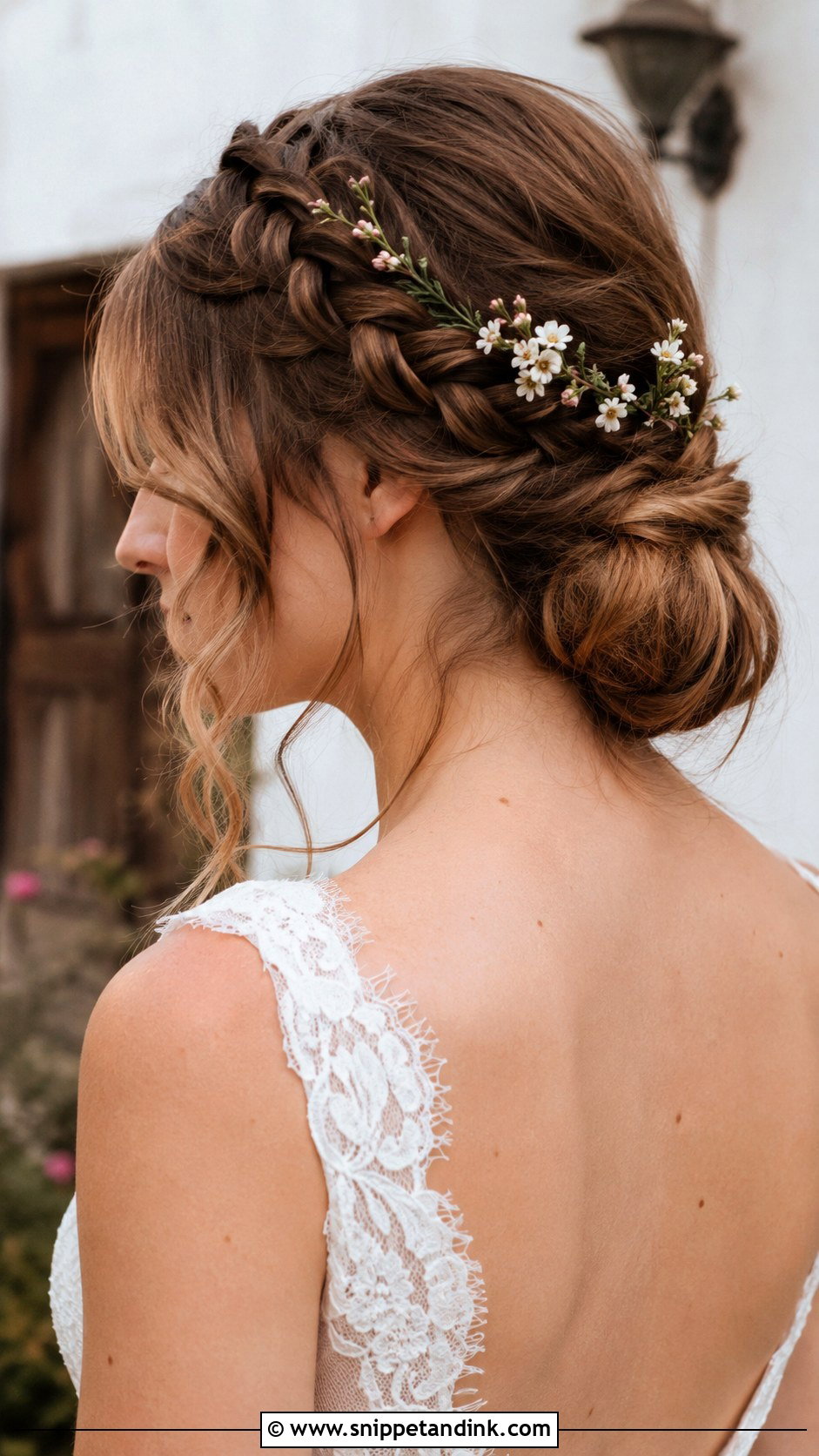
One braid running along the side of the head into a low bun puts the detail where guests can see it during the ceremony. Ask which side of you will face them and braid that side. The braid also catches short layers above the ear that would otherwise poke out. For rustic or outdoor weddings I keep it loose and airy, then cover the join with small pins or blooms where it meets the bun. It’s a simple way to give a classic bun a unique, personalized touch without changing its shape.
16. Vintage Hollywood Pulled-Back Hair
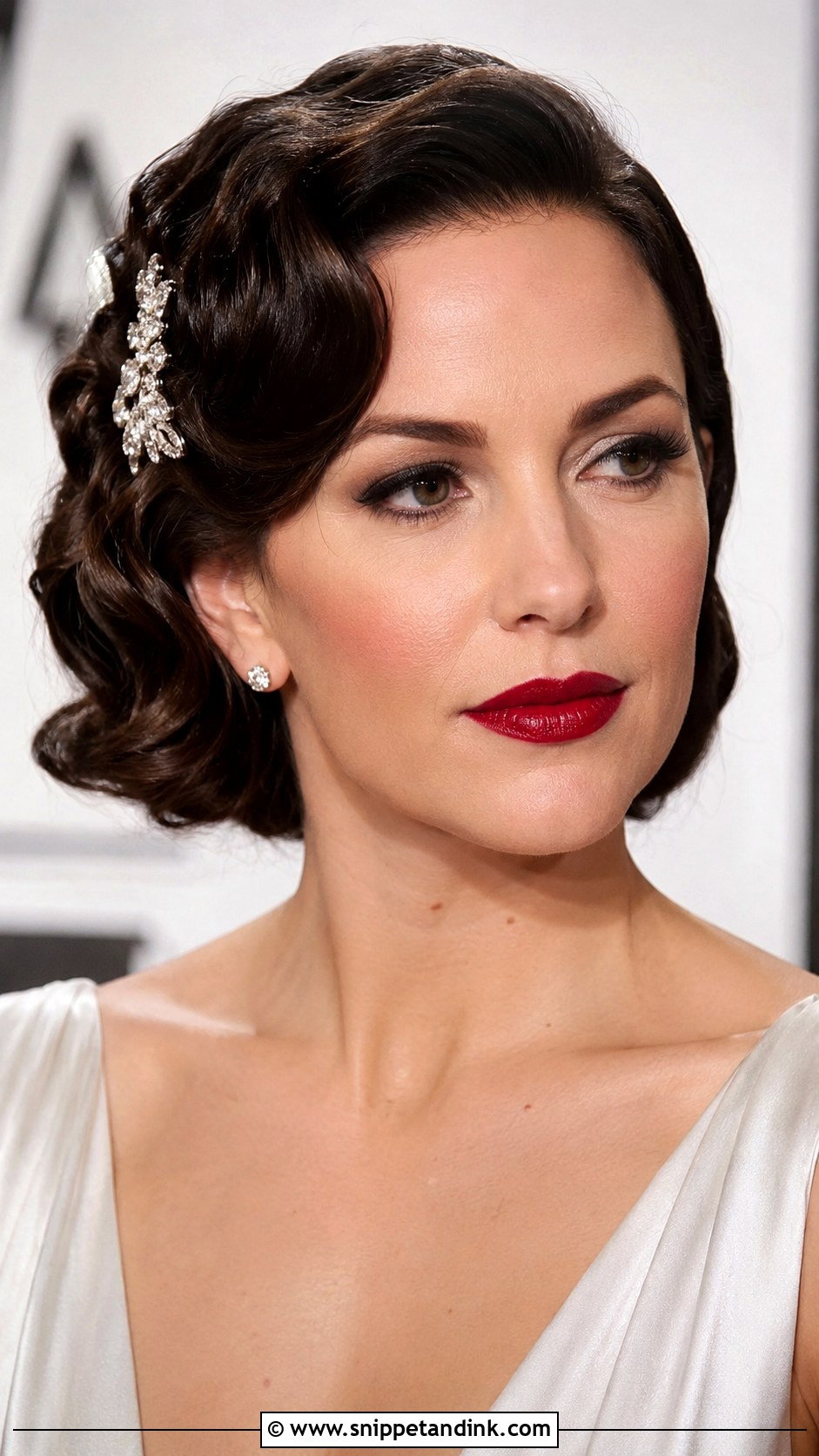
Old Hollywood hair sweeps glossy finger waves or sculpted curls to one side and pins them low behind the ear. True finger waves are set wet with setting lotion and a fine-tooth comb, then left to dry completely, which eats into a busy morning. The faster version uses a large iron, brushed-out curls and clips pressed into each ridge while it cools. Pair it with satin and a red lip. Humidity is its enemy, since the crisp ridges soften in steamy air, so for a summer garden I’d choose a looser wave. A jeweled clip at the gathered side covers the pins.
17. Knotted Low Bun Wedding Hairstyle
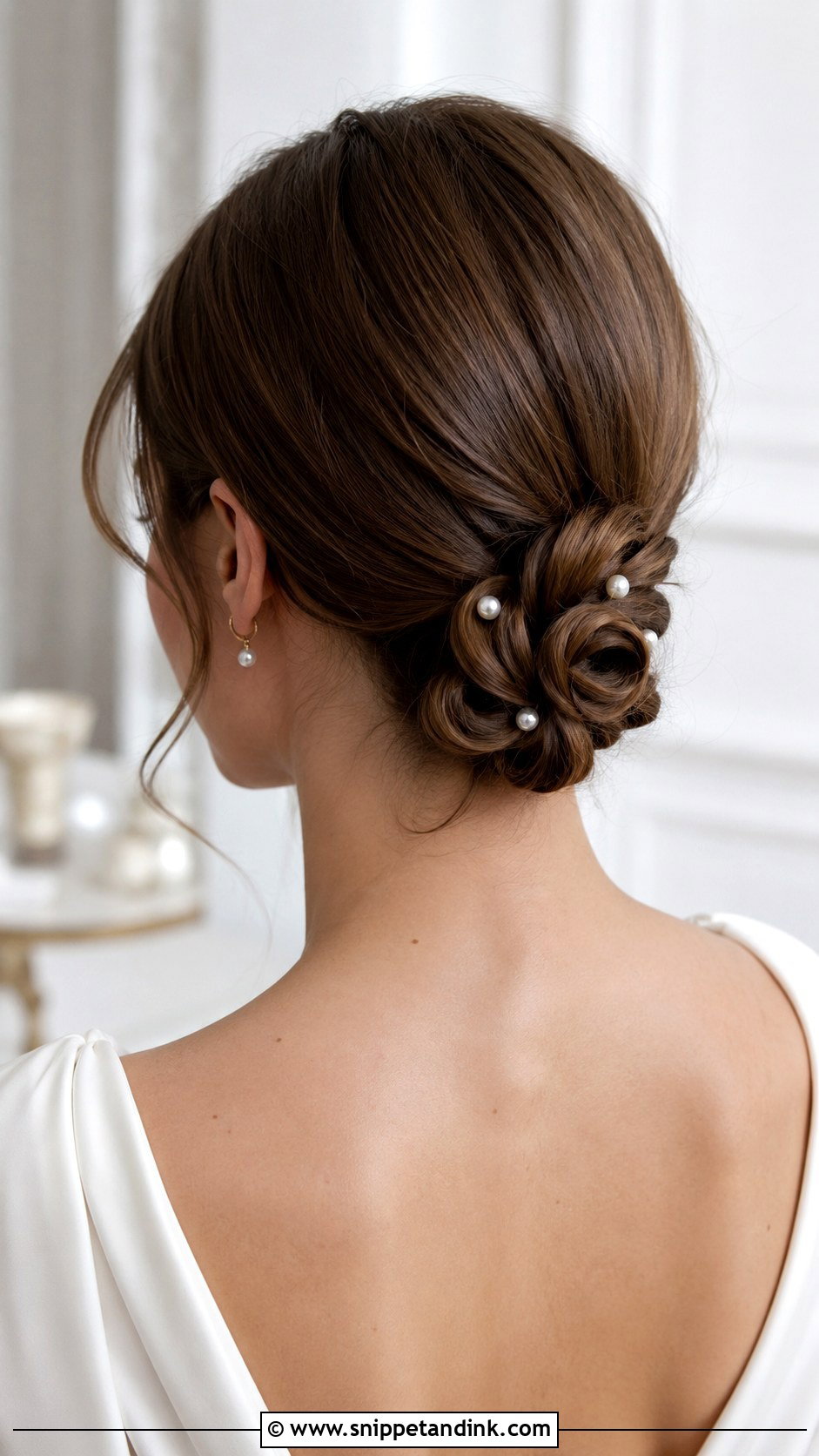
A knotted low bun ties sections of hair into loops and knots at the nape, so the texture comes from folding rather than curling. Each knot locks itself, which is why it holds so well. I reach for it with thick, heavy hair because the weight is spread across several anchor points instead of one. Fine hair can look sparse in the gaps, so I backcomb lightly at the root of each section first. Pearls or small pins slipped into the knots finish it.
18. Sleek High Bun Ballerina Updo
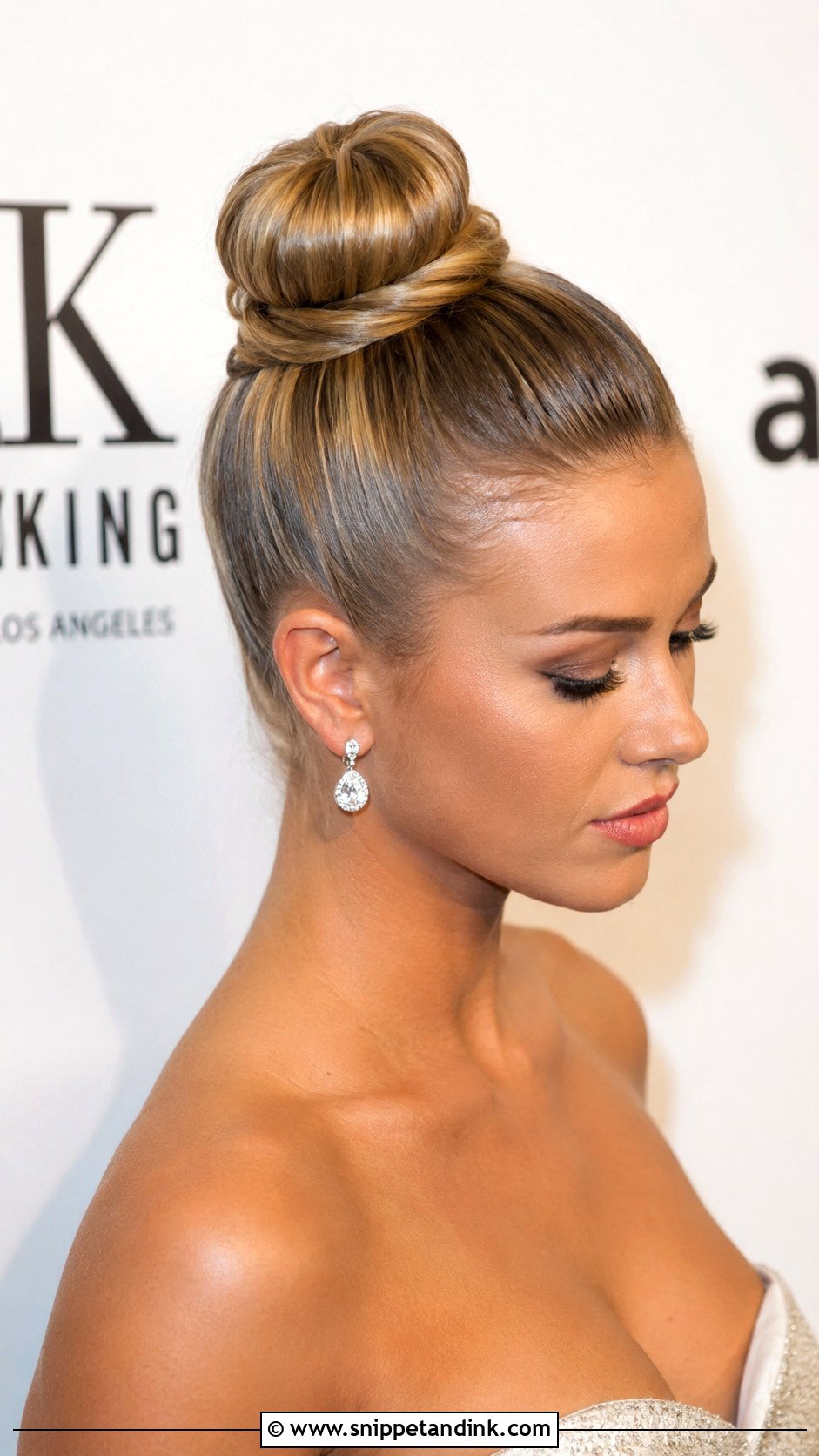
Smoothed tight onto the crown, a ballerina bun lengthens the neck and suits strapless and off-shoulder necklines. Gel along the hairline and a light shine spray give the polish, and a wrapped strand hides the elastic. I always ask about headaches before I build one. A tight high bun pulls on the scalp for hours, and some brides feel it by the speeches, so I set the elastic a fraction looser and secure the bun with pins rather than extra tension. With a veil, the comb sits under the bun, which suits a fingertip length better than a heavy cathedral.
19. Romantic Updo With Loose Tendrils
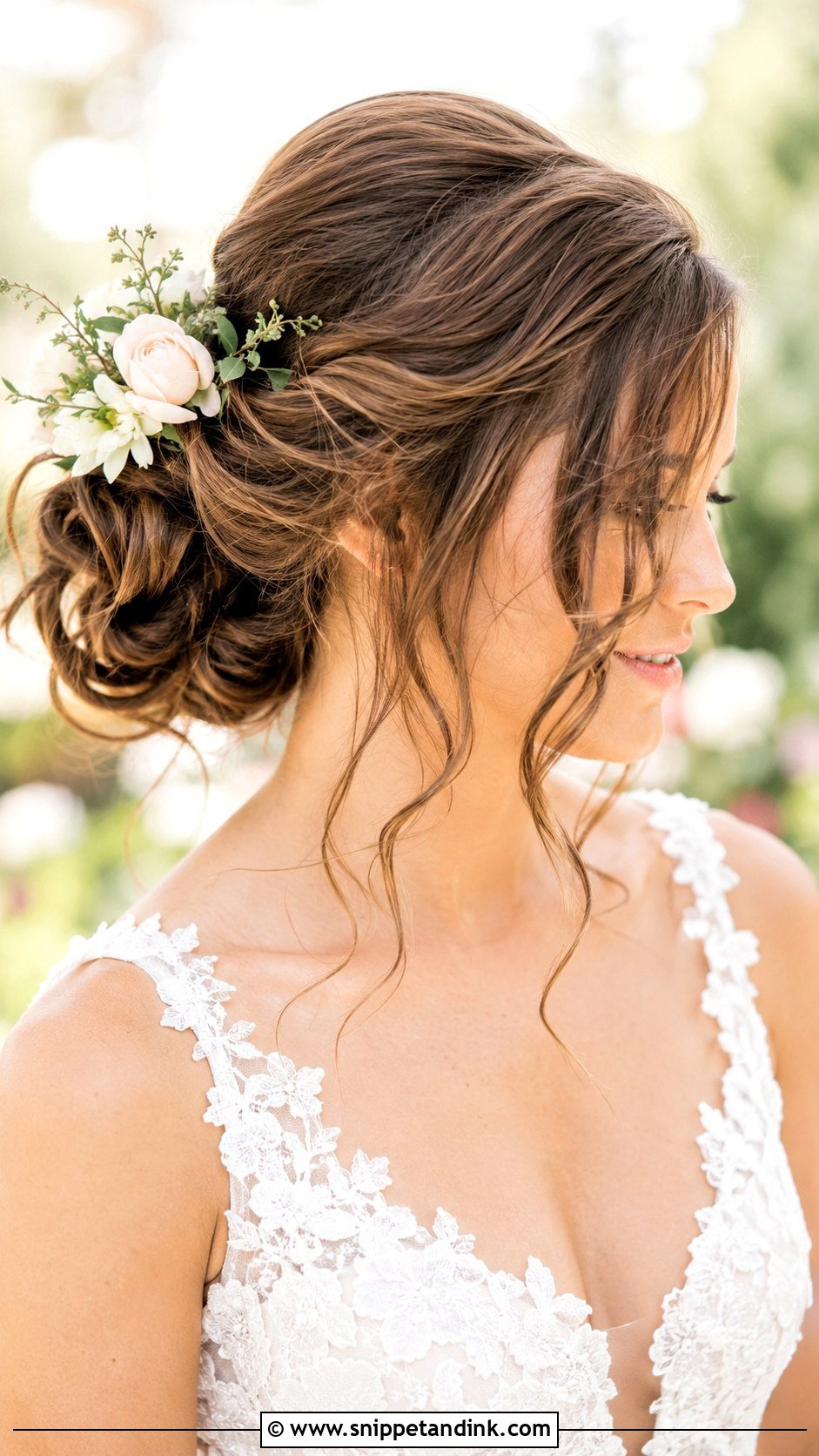
A loose bun or twist with wisps left around the face looks the gentlest, and it’s the style people underestimate. The tendrils are picked from the hairline before the updo is built, each about the width of a pencil. Take too many and the front looks unfinished. I curl them lightly with a small iron so they don’t hang limp by afternoon, and I tuck fresh flowers or pearl pins into the bun. On humid days, keep them fewer and thinner, because tendrils frizz first.
20. Sleek Low Bun With Veil
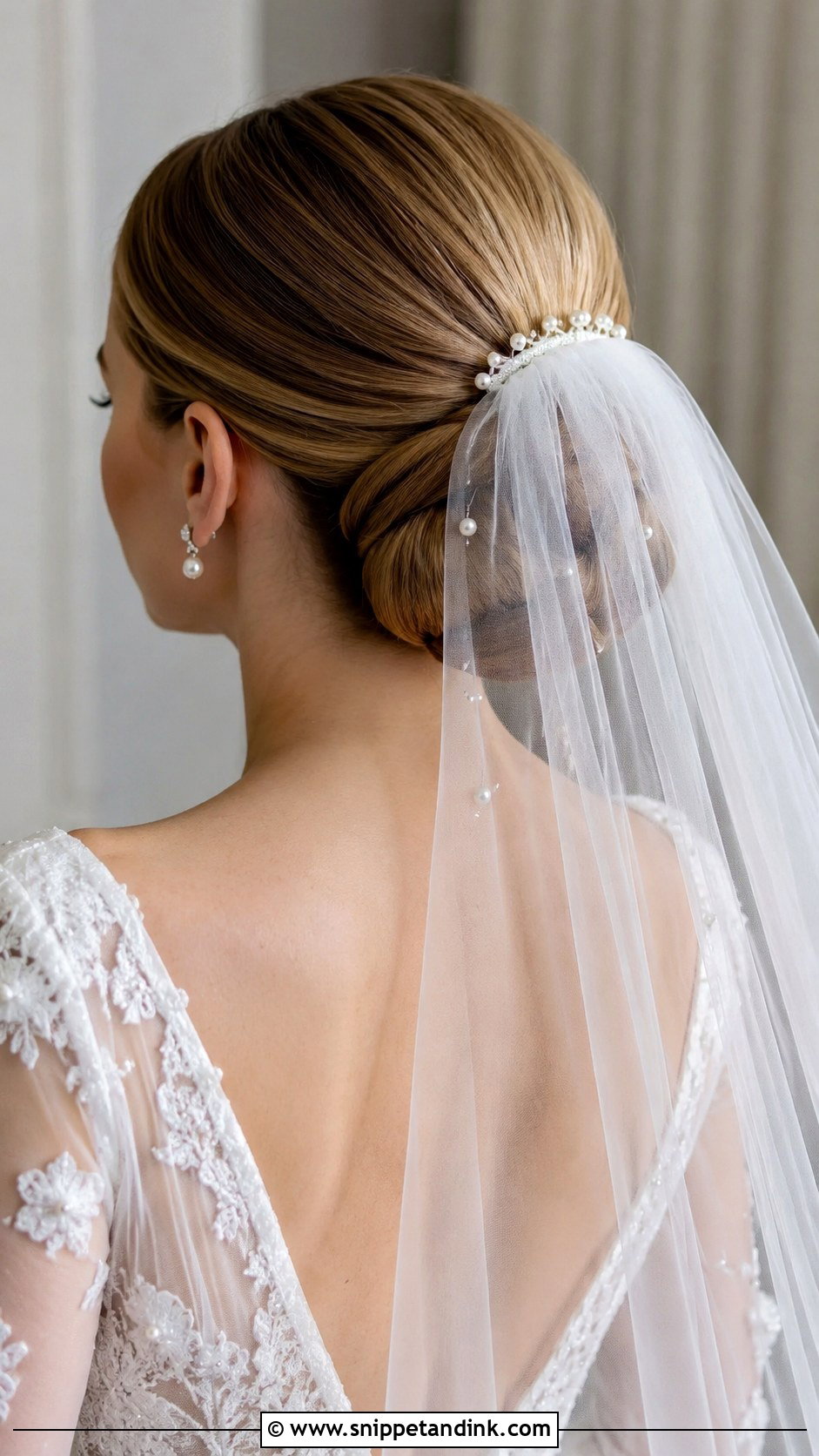
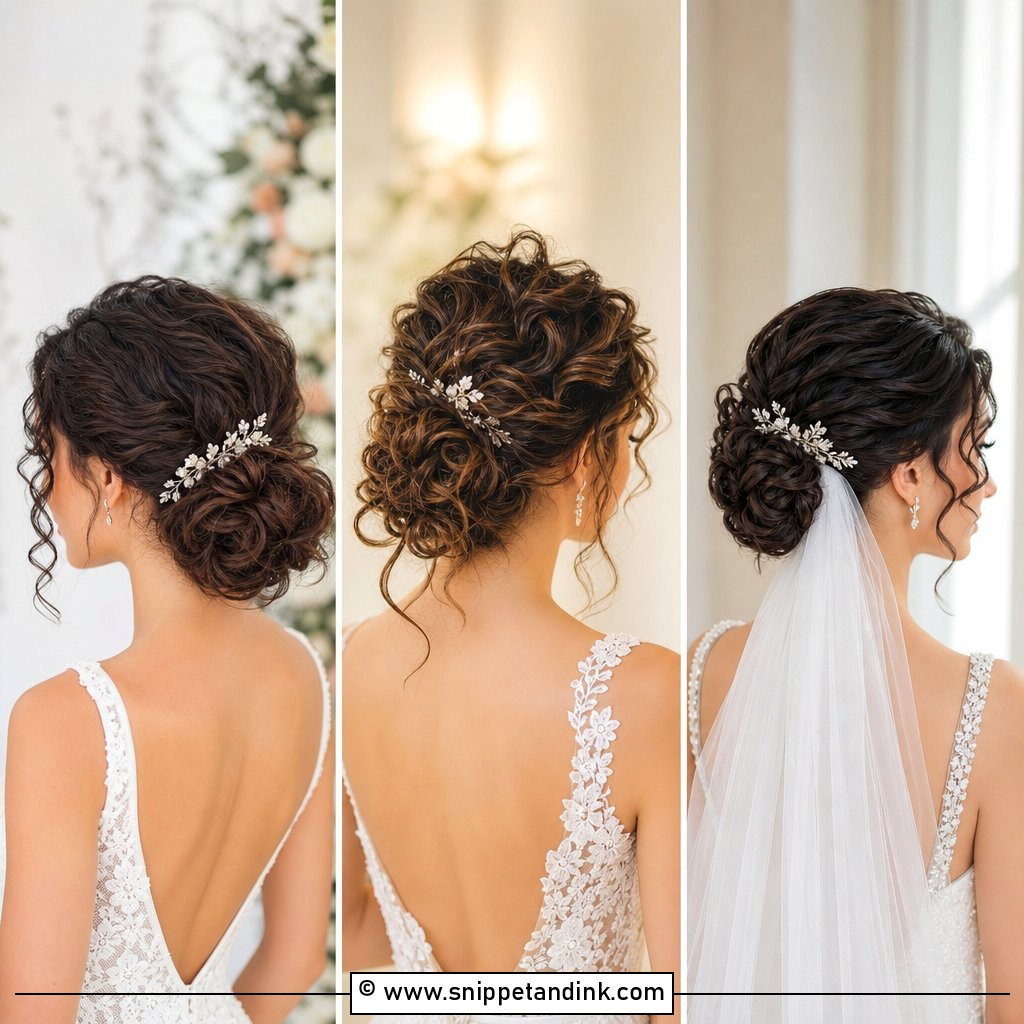
Building a low bun around a veil changes how I make it. I leave a flat, firm area just above the bun so the comb has something solid to grip, and often cross two bobby pins there first as a ladder for its teeth. Fingertip and cathedral lengths both sit well here. Slide the comb in pointing down, then flip it up into the hair so the teeth bite. Long veils are heavy, so plan a quiet moment after the ceremony to take it out; the bun will still look tidy for the reception.
Why Some Brides Get a Headache by the Speeches
Tension is the complaint I hear most about pulled-back hair, and it usually comes from one of three places: an elastic set too tight, a heavy bun hanging from a single anchor, or pins pushed straight into the scalp. None of these show up in a twenty-minute trial. That’s why I ask brides to keep the trial style in for the rest of the day and tell me where it aches.
A good build spreads the weight. A bun pinned across several anchor points, with pins sliding along the scalp instead of digging in, should feel snug but quiet after six hours. If you feel a pull at one spot, a single pin is usually to blame, and removing it rarely brings the style down.
Undoing the Pins at Midnight
Take accessories out first, then pins from the outside in, and the elastic last. The final few pins hide deepest, so feel for them before you brush. Work a little conditioner or oil through the lengths first, because hair stiff with spray and gel snaps when a brush is dragged through it.
Ears, Necks and Earrings Once Your Hair Is Off Your Face
Pulling hair back puts the ears, the jawline and the back of the neck into almost every photo, and that changes a few decisions. Earrings become the main accessory, so a drop that moves often works better than a stud that disappears. Ask your makeup artist to carry foundation and powder down the neck and around the ears so your skin matches from the front and the side. Fine baby hairs at the nape can look fuzzy in close shots; a clean toothbrush with a touch of gel lays them flat, or I leave them soft if the style is relaxed.
The Trial Tells You More Than Any Photo
Your neckline, the way your hair behaves in humidity and how many hours you’ll wear the style should decide between these more than any picture. A sleek bun and a braided crown both pull everything back, yet they ask very different things of your hair. Take two or three favorites to a trial, wear the winner for the rest of that day, and notice whether it pulls or slips. Add the personal piece last, whether that’s pearls, a few flowers or a comb borrowed from your mother.
You'll Like These Ideas:


Leave a Reply