
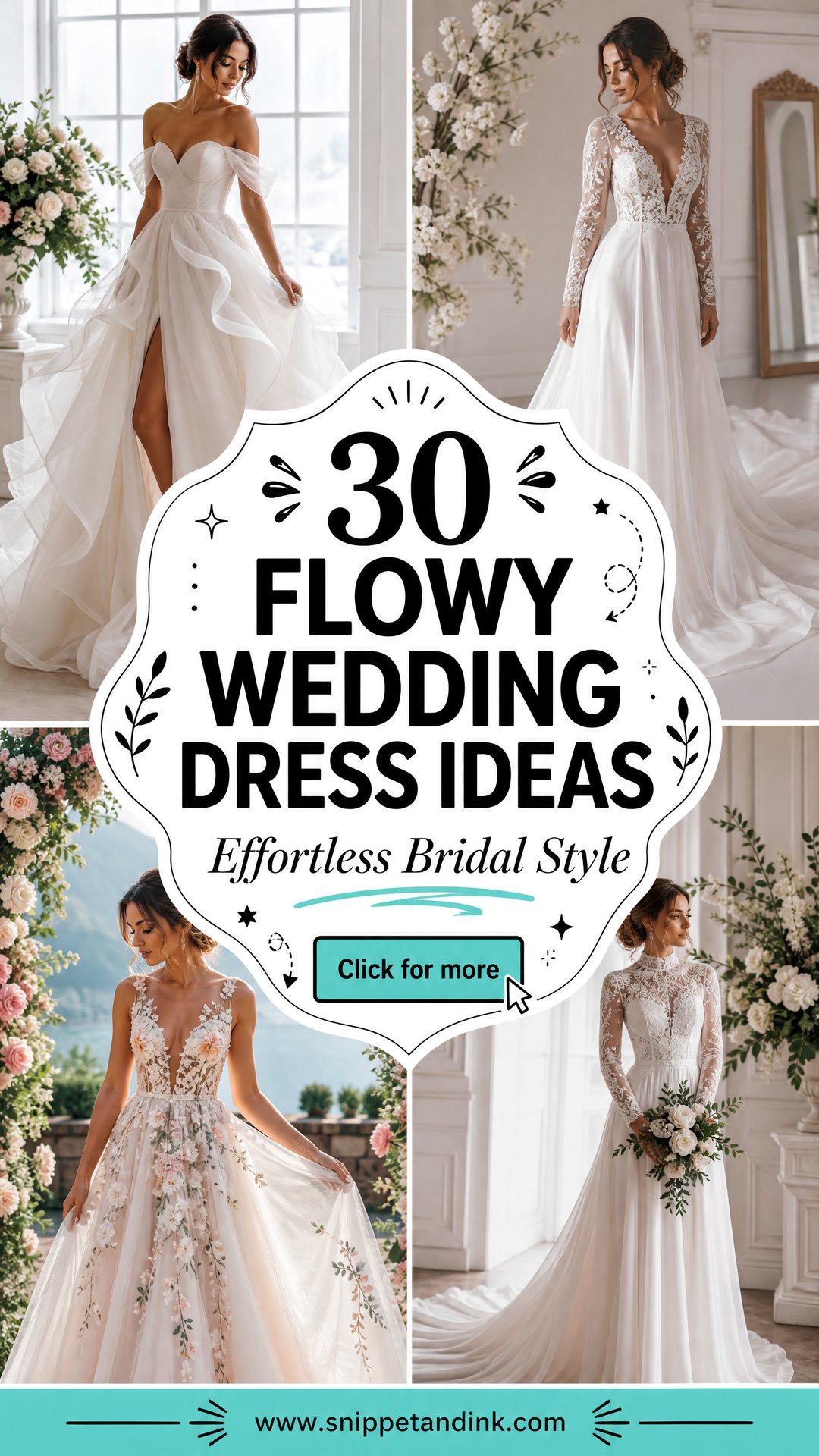
A gown that moves is usually a gown you forget you’re wearing, and that’s what most brides mean when they ask me for something flowy. Chiffon, tulle, organza, silk crepe and open lace all glide rather than stand stiff, which is why they turn up at beaches, gardens and destination weddings as often as in ballrooms. Right now I’m seeing a lot of soft draping, corset bodices with basque waists, 3D florals, detachable capes and very plain gowns that rely on motion alone. Below are thirty ways to wear that ease, with notes on how each one behaves once you start walking, dancing and sitting down.
A Five-Minute Movement Test in the Fitting Room
Flowy dresses look alike on a hanger and very different once you move, so I run every bride through the same short routine before she decides. It takes five minutes and tells you more than the mirror.
- Walk briskly toward the mirror and away from it. A good flowy skirt follows you a beat behind; a heavy one swings like a bell.
- Turn quickly. Chiffon and bias-cut silk should wrap and settle; layered tulle should puff and drop.
- Sit on a hard chair for a full minute. Check whether the bodice digs in at the hips and whether the fabric creases across the lap when you stand.
- Climb a step or two, lifting the front of the skirt. If you need both hands, the hem is too long or too full for stairs.
- Raise both arms over your head. Straps that slip and necklines that ride up show here, not when you stand still.
Then look at the lining. A dress only moves as freely as its slowest layer, and plenty of light-looking gowns have a stiff polyester lining that stops the outer fabric from swinging. If the lining feels rigid, ask whether it can be swapped for something softer during alterations.
1. Chiffon A Line Wedding Dress
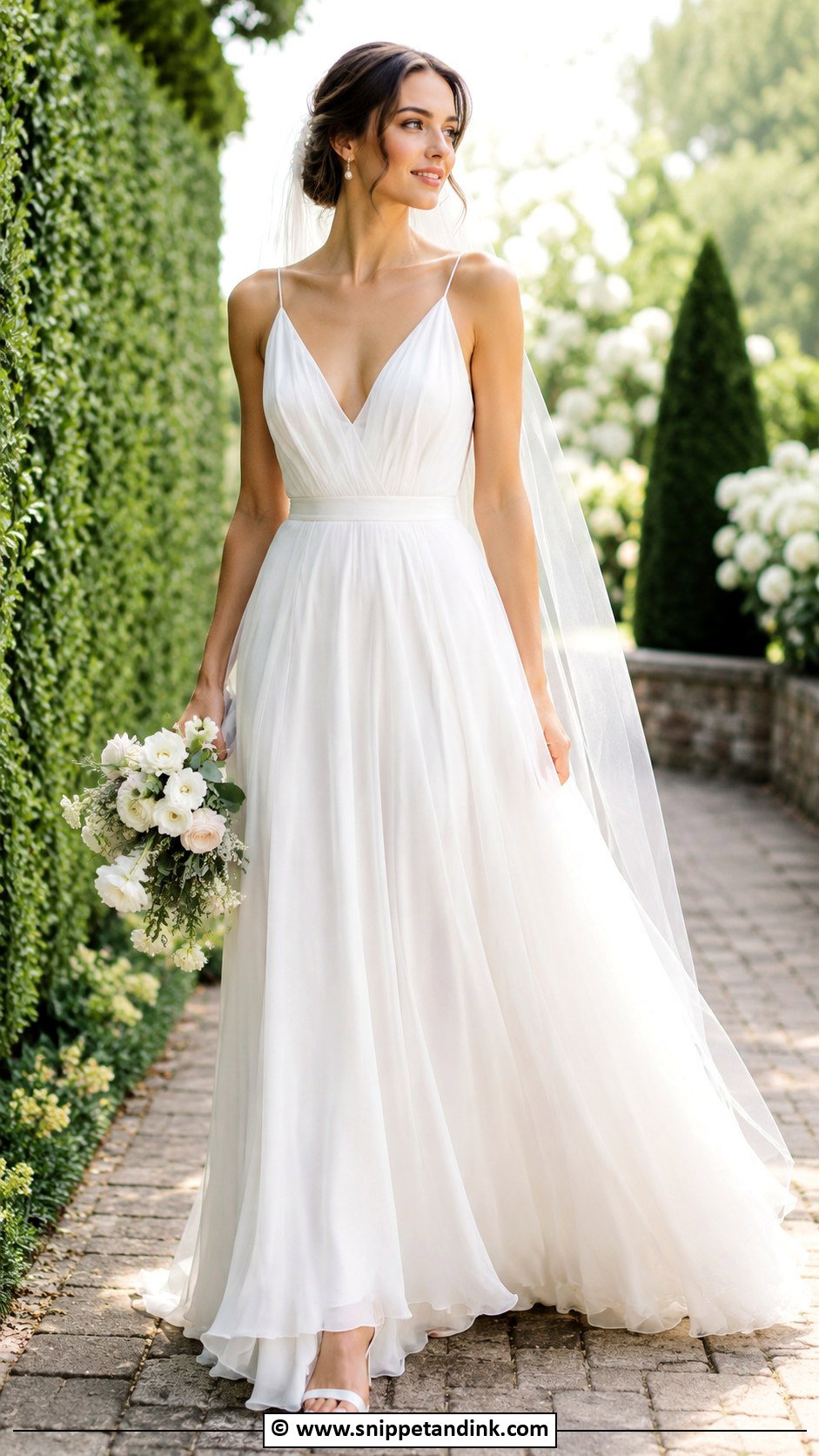
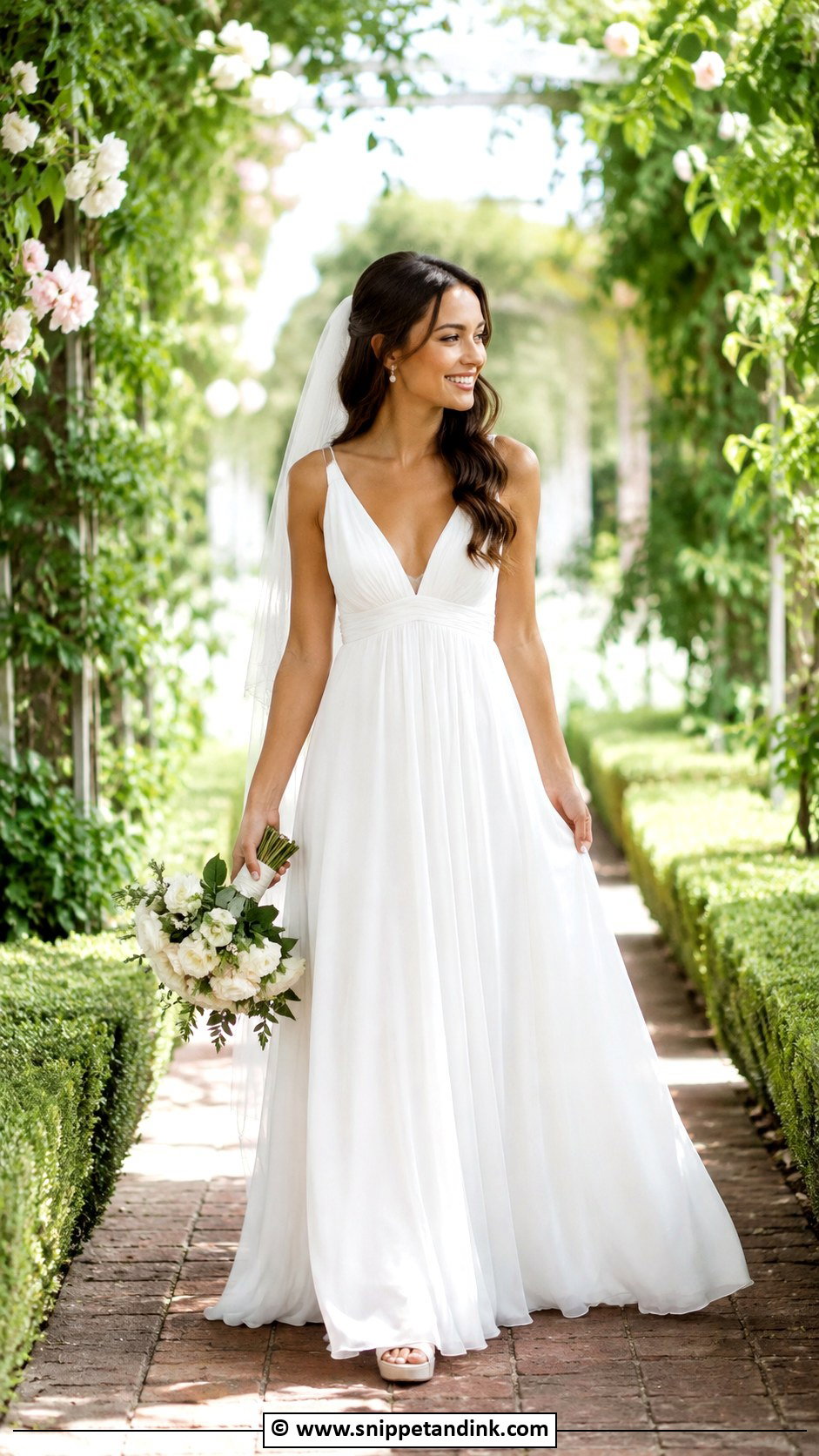
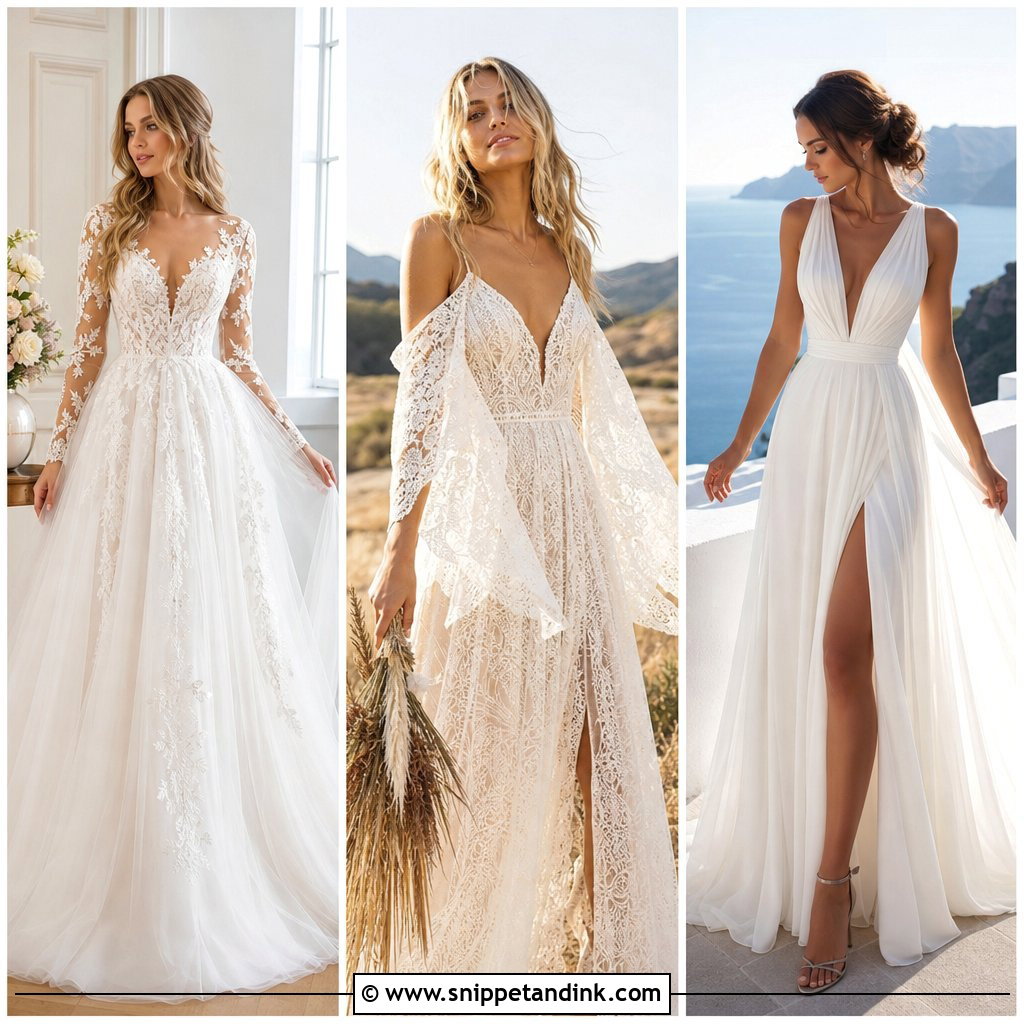
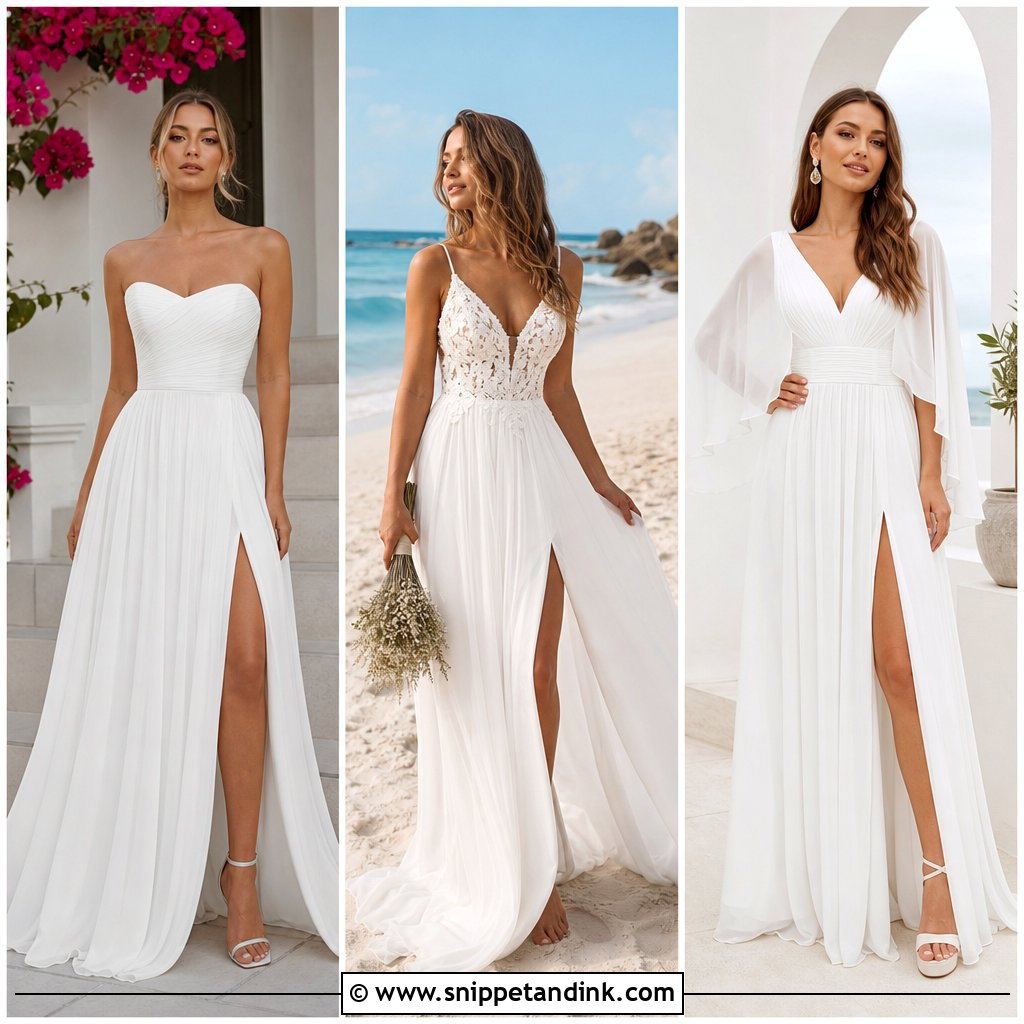
If I had to put one flowy gown on the widest range of brides, it would be chiffon in an A-line. The bodice holds the waist and the skirt falls away cleanly, so there’s shape without weight. A V-neck, delicate straps or a simple sweetheart all suit it. Chiffon does fray at raw edges, so check that the hem is finished properly. Pearl earrings, soft waves, barely-there sandals and a long sheer veil carry the movement through for a garden or beach ceremony.
2. Tulle Ball Gown Wedding Dress
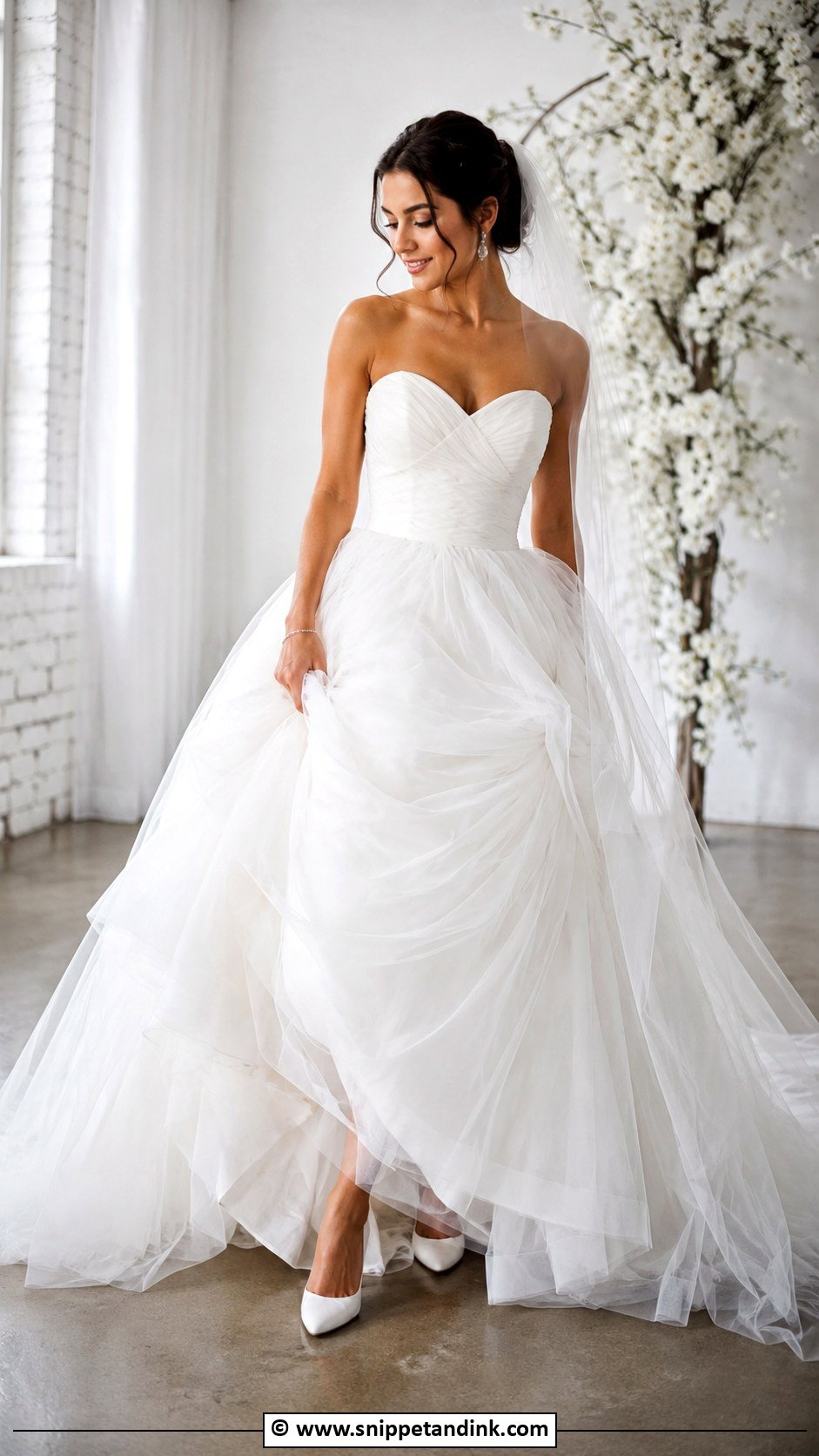
Tulle gives you ball gown volume at a fraction of the weight of satin, because the fullness comes from many sheer layers. That suits anyone after a princess shape who dreads a heavy skirt. A boned bodice does the supporting, and the skirt floats. Plain tulle stays clean; tulle scattered with tiny appliqués adds texture. Count on the layers catching on rough stone and bramble, so keep a lint roller and small scissors in the emergency kit. A simple veil, drop earrings and classic heels are plenty.
3. Organza Wedding Dress
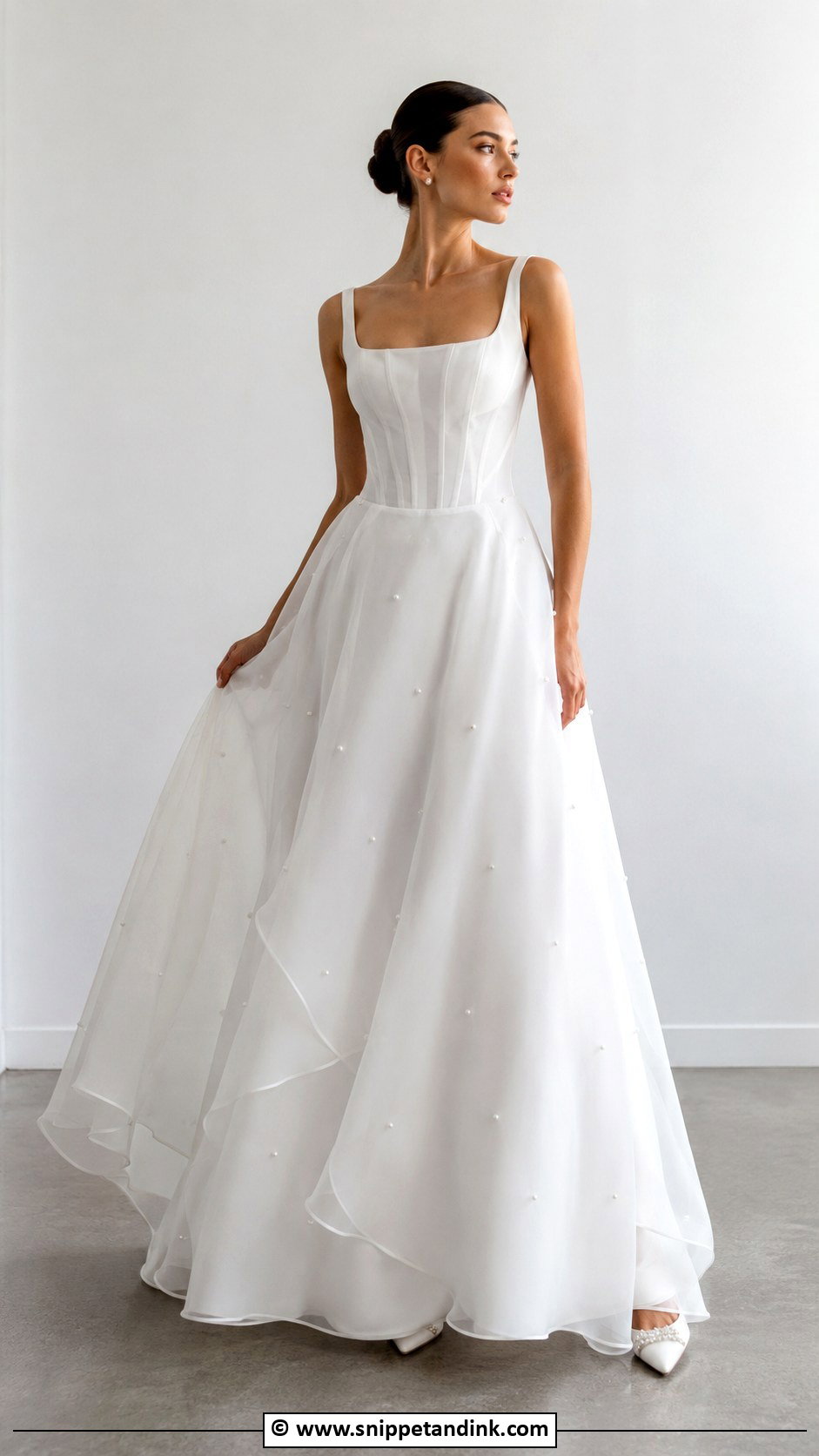
Organza is the middle ground: sheer and light, but crisp enough to hold a shape that chiffon can’t. It suits A-lines, layered skirts and softer ball gowns. A strapless or square-neck version reads modern; puff sleeves or floral details read romantic. The one thing I warn brides about is creasing, which shows more on organza than on tulle, so it needs a good steam on the morning. Sleek hair, pearl studs and pointed heels keep the finish crisp.
4. Boho Lace Wedding Dress
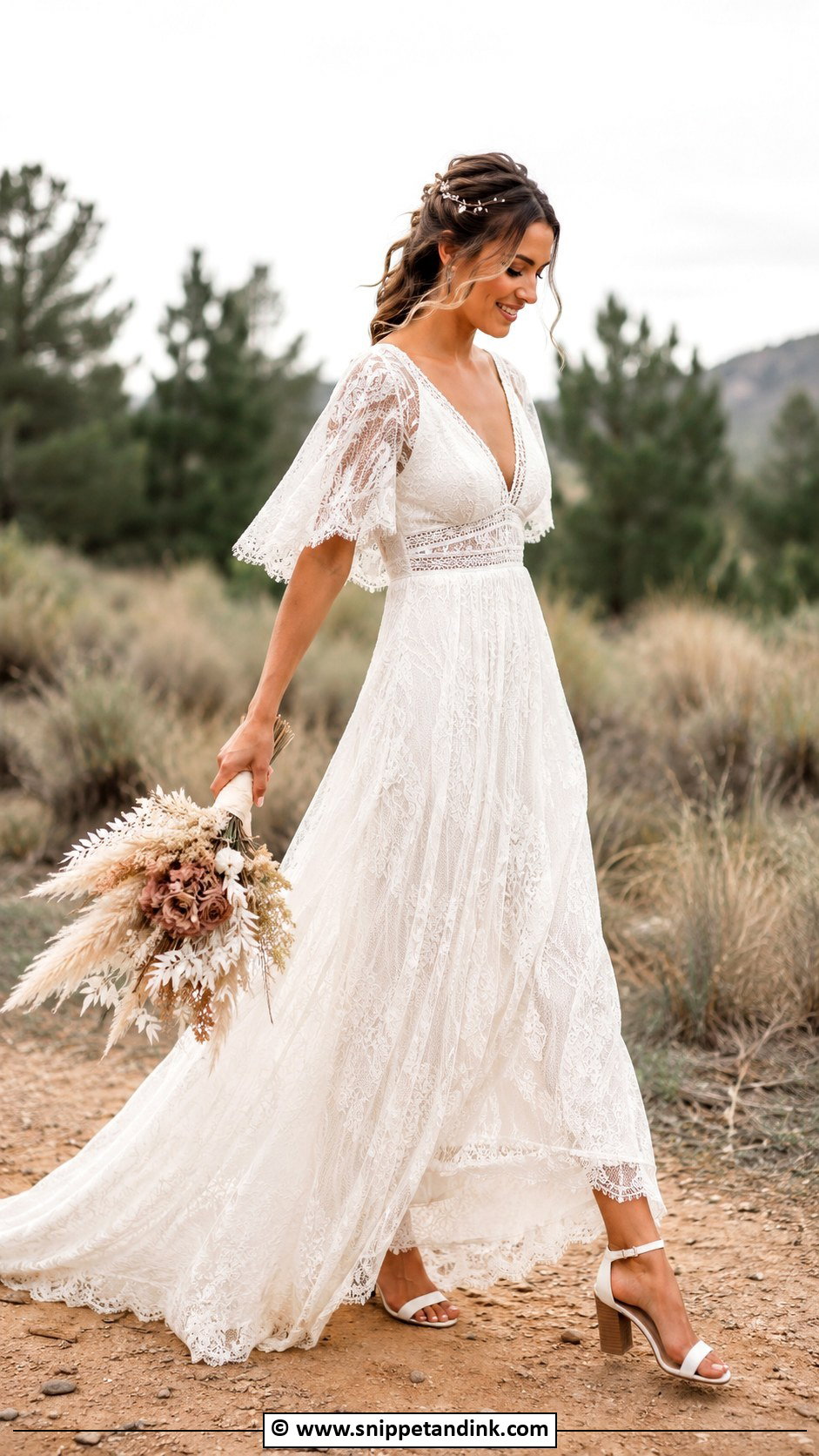
Boho lace only feels relaxed if the lining is relaxed too. A stiff lining under soft lace undoes the whole effect, so I always check what’s underneath. Look for lightweight lace, a loose skirt and flutter sleeves, an open back or fine embroidery. Desert, woodland and outdoor venues suit it. Loose waves, minimal jewelry and block heels or flat sandals keep you comfortable, and a fingertip veil or floral pins add the bridal note.
5. Beach Wedding Dress
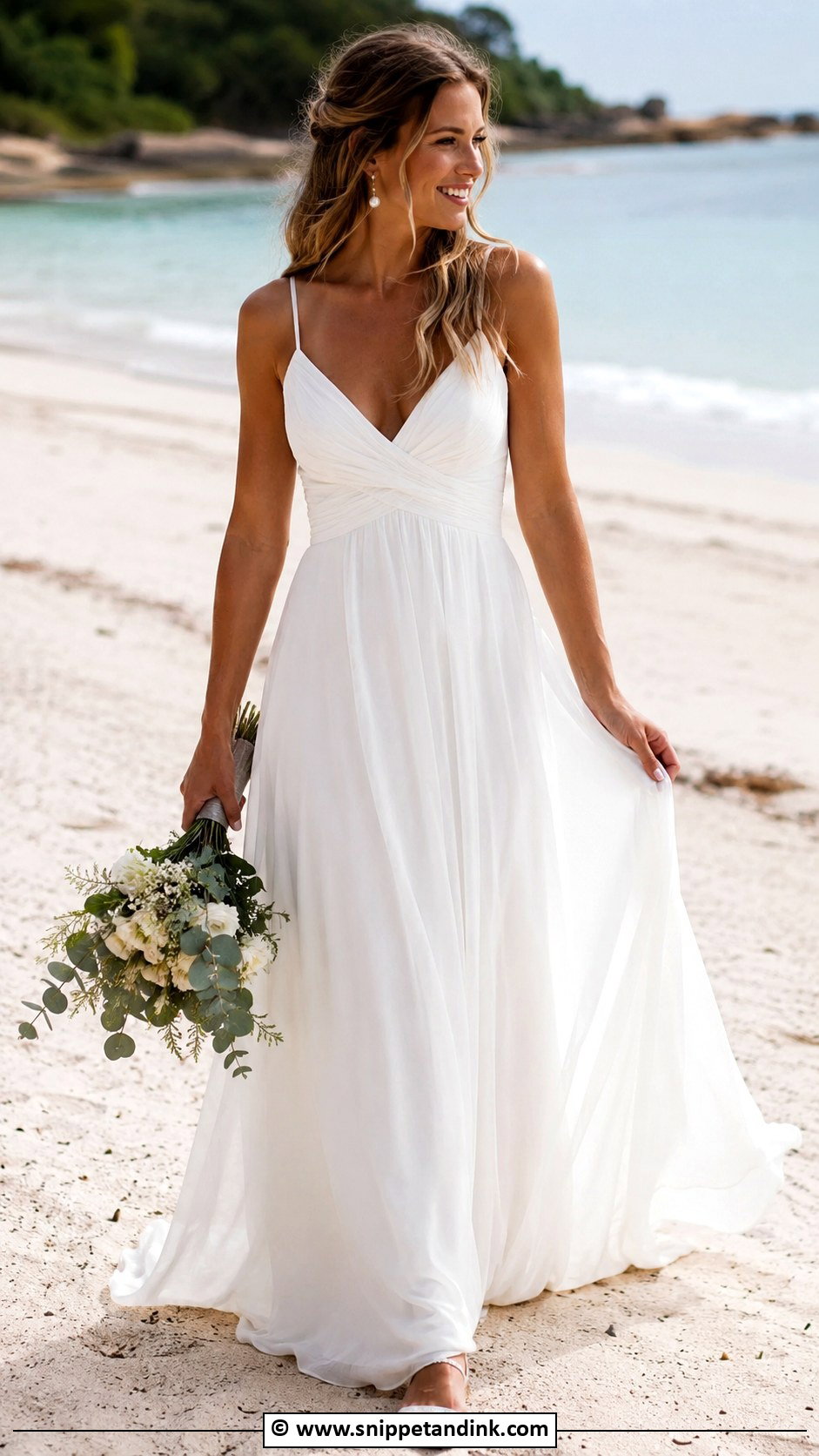
Sand changes how you walk, so a beach gown has to be light and short enough at the back not to drag a pound of it behind you. Chiffon, soft tulle, silk crepe and fine lace breathe in the heat. A simple A-line, a slip or a flowy empire waist gown suits the shore. Swap a long train for a sweep train, a side slit or a detachable overskirt. Flat sandals, soft curls and pearl or shell earrings finish it.
6. Garden Wedding Dress
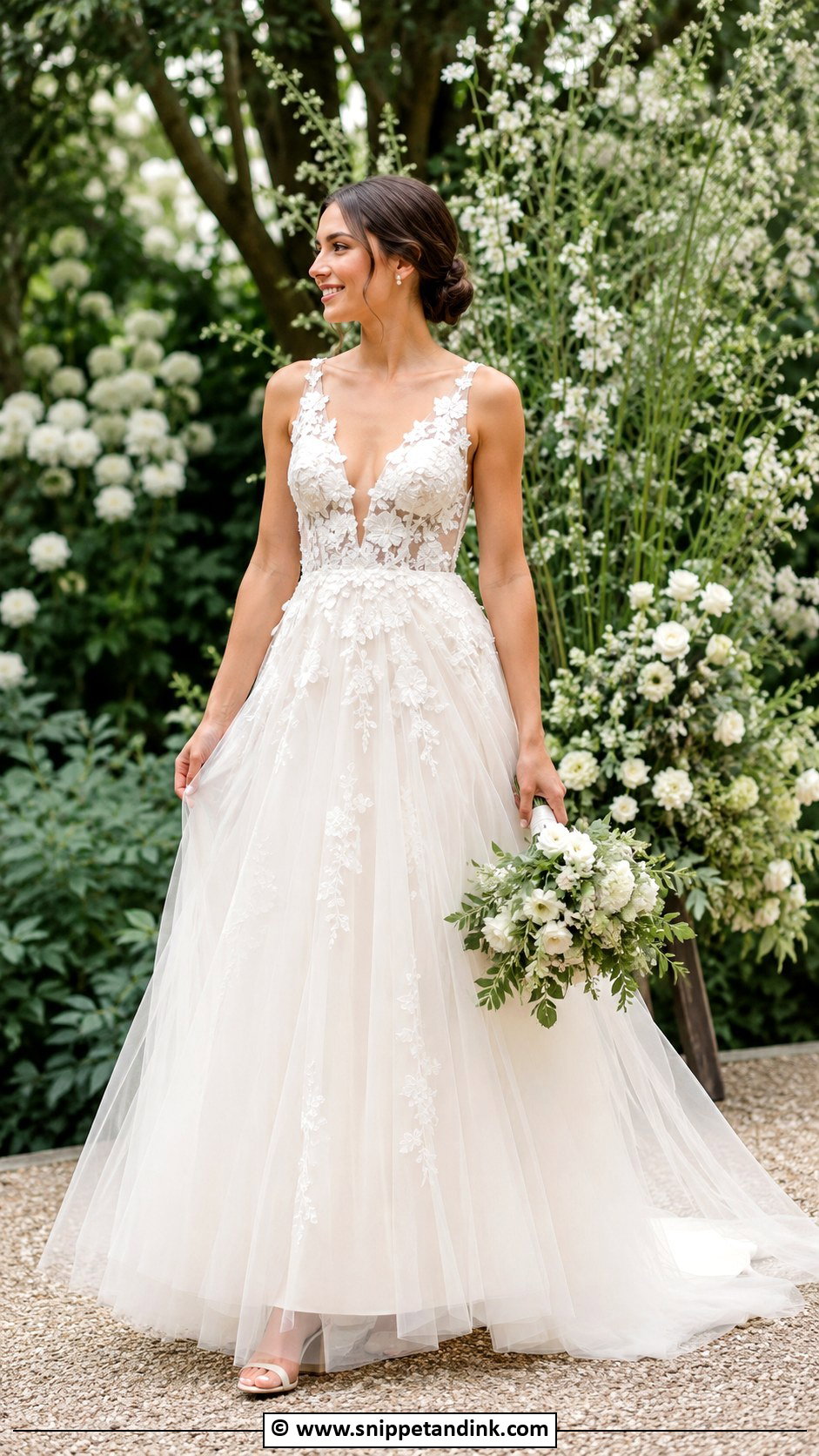
Green embroidery on a garden dress can vanish against hedges in photos, so I nudge brides toward ivory or blush florals that stand out from the planting. Flowing tulle, chiffon or organza with floral lace, vines or 3D appliqués suits the setting. A fitted bodice with a light A-line skirt photographs well and still moves. Soft straps, off-shoulder sleeves or a sweetheart neckline all work. Dainty earrings, a low bun, heels that won’t sink into lawn and a floral veil or delicate pins complete it.
7. Long Sleeve Flowy Wedding Dress
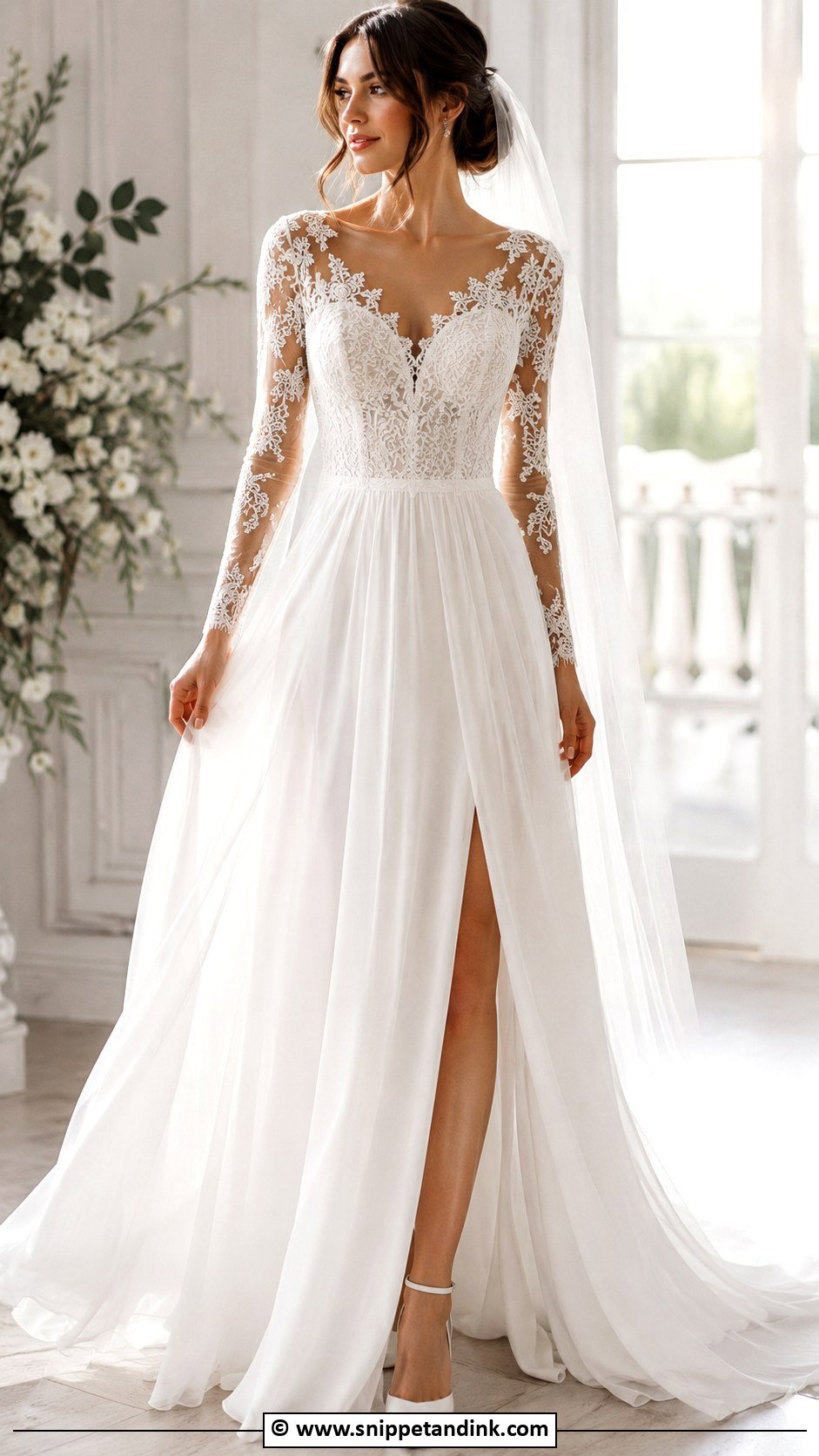
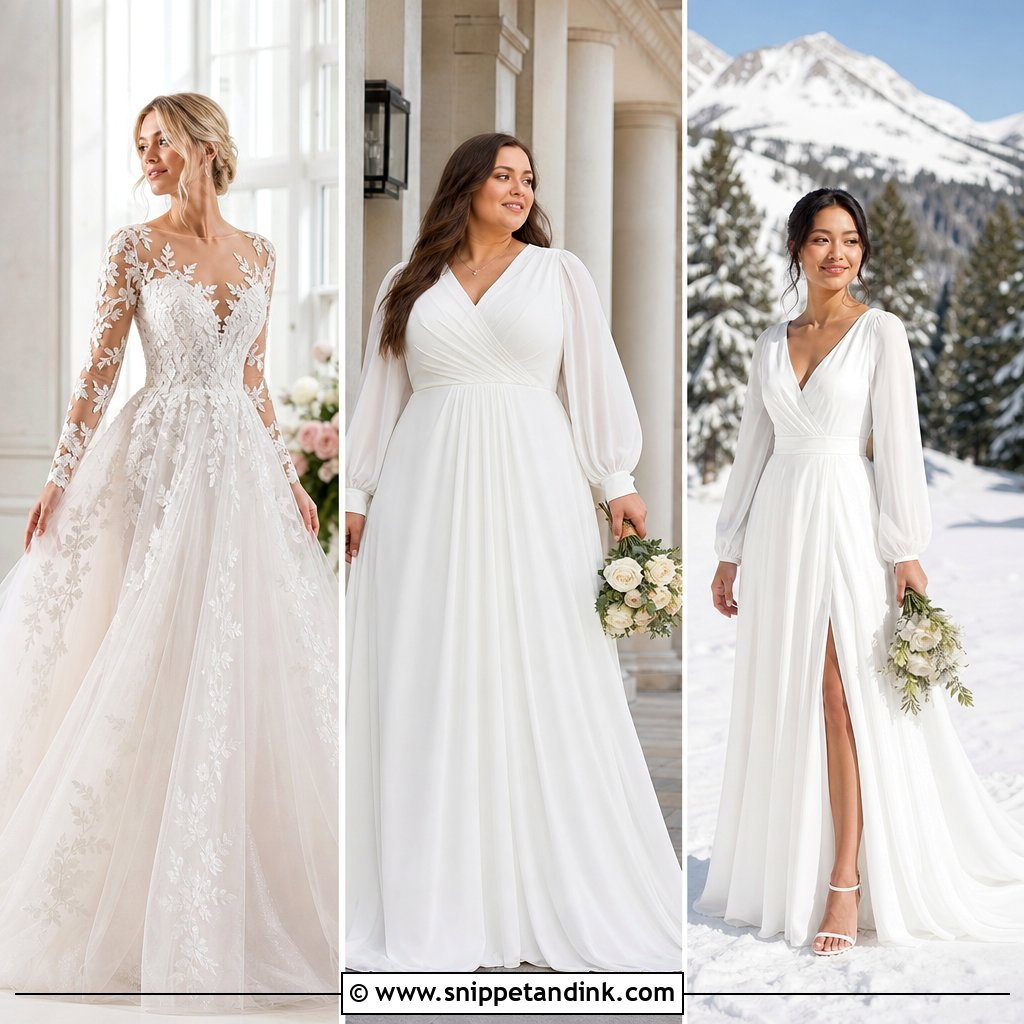
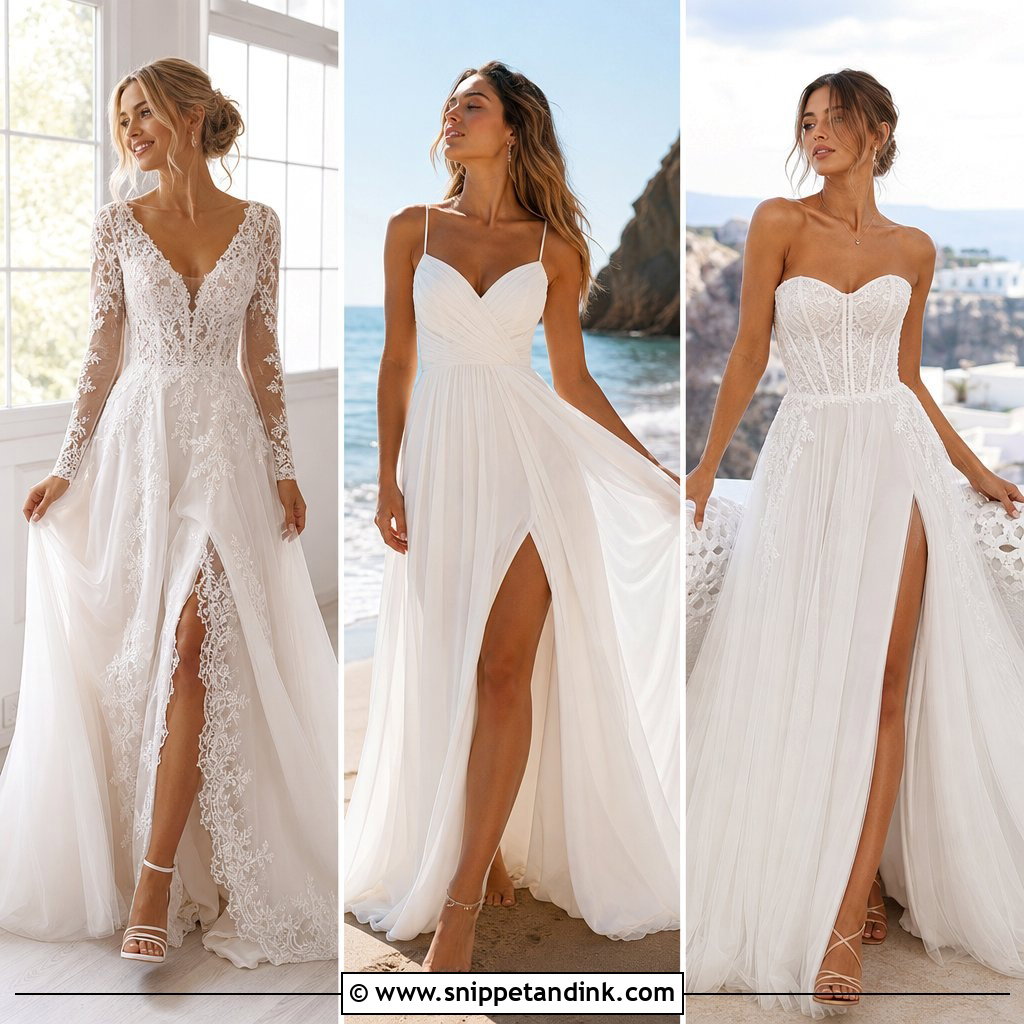
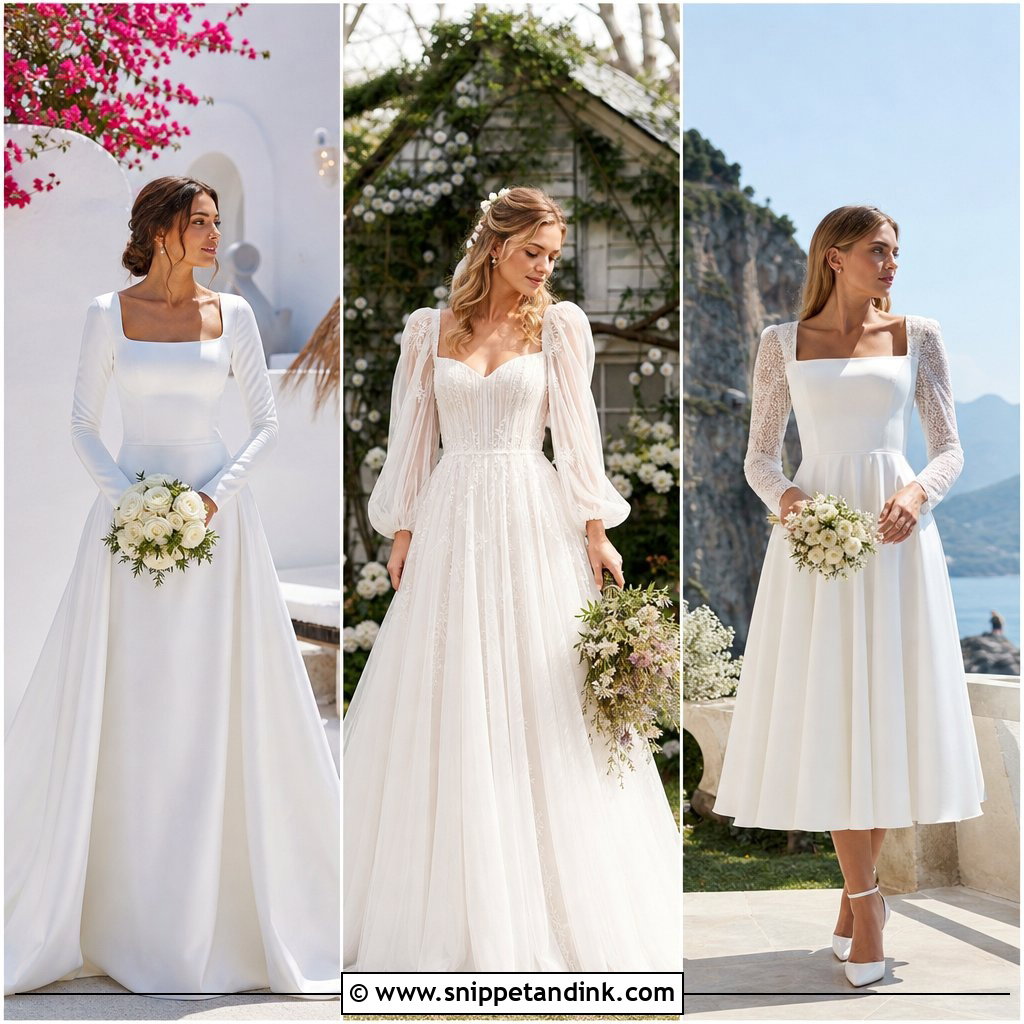
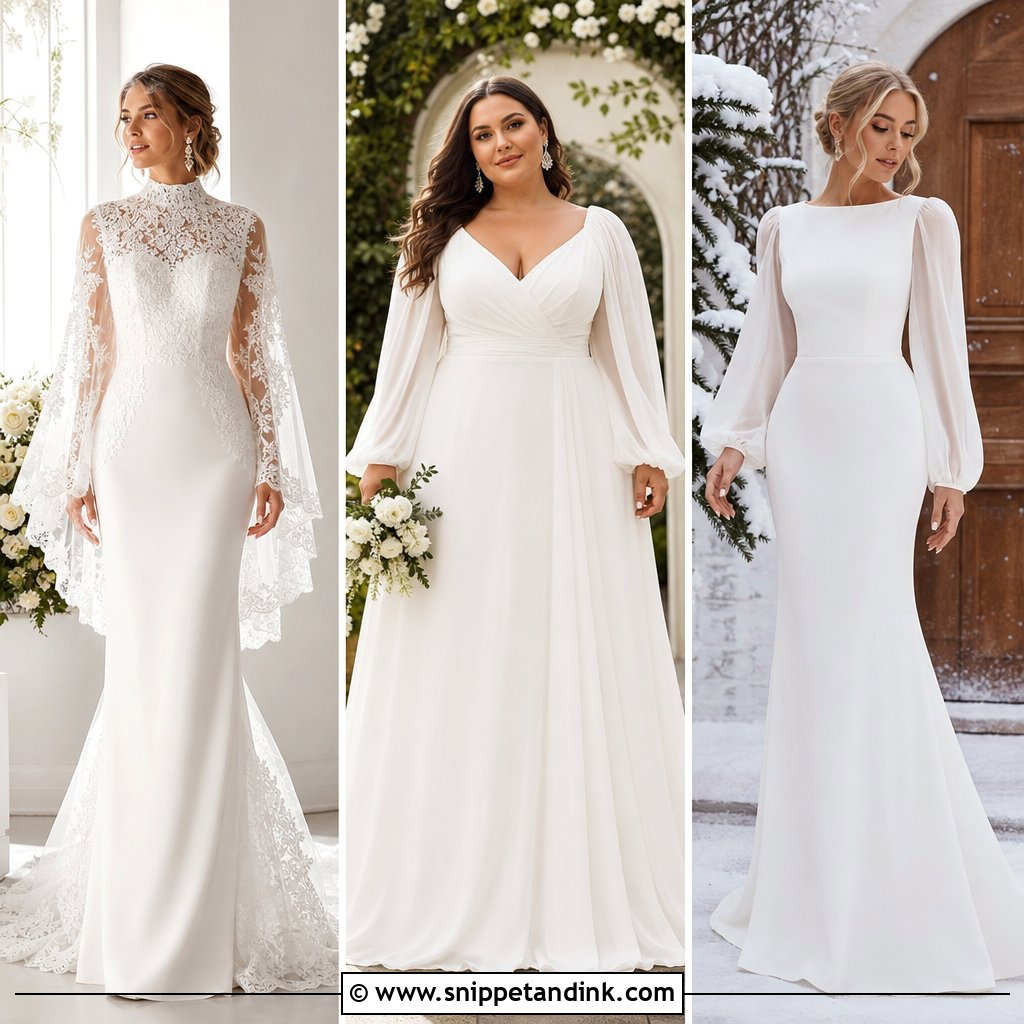
Sleeves add coverage without adding weight when they’re sheer: lace, chiffon bishop sleeves or fine tulle. Bishop sleeves gather at the cuff and billow, which is lovely in portraits but catches on cake and bouquet stems, so a hidden elastic cuff helps. With a breathable fabric, this shape works from fall through spring and outdoors too. A soft updo shows off the neckline and sleeves. Keep the earrings simple and the veil clean.
8. Off Shoulder Wedding Dress
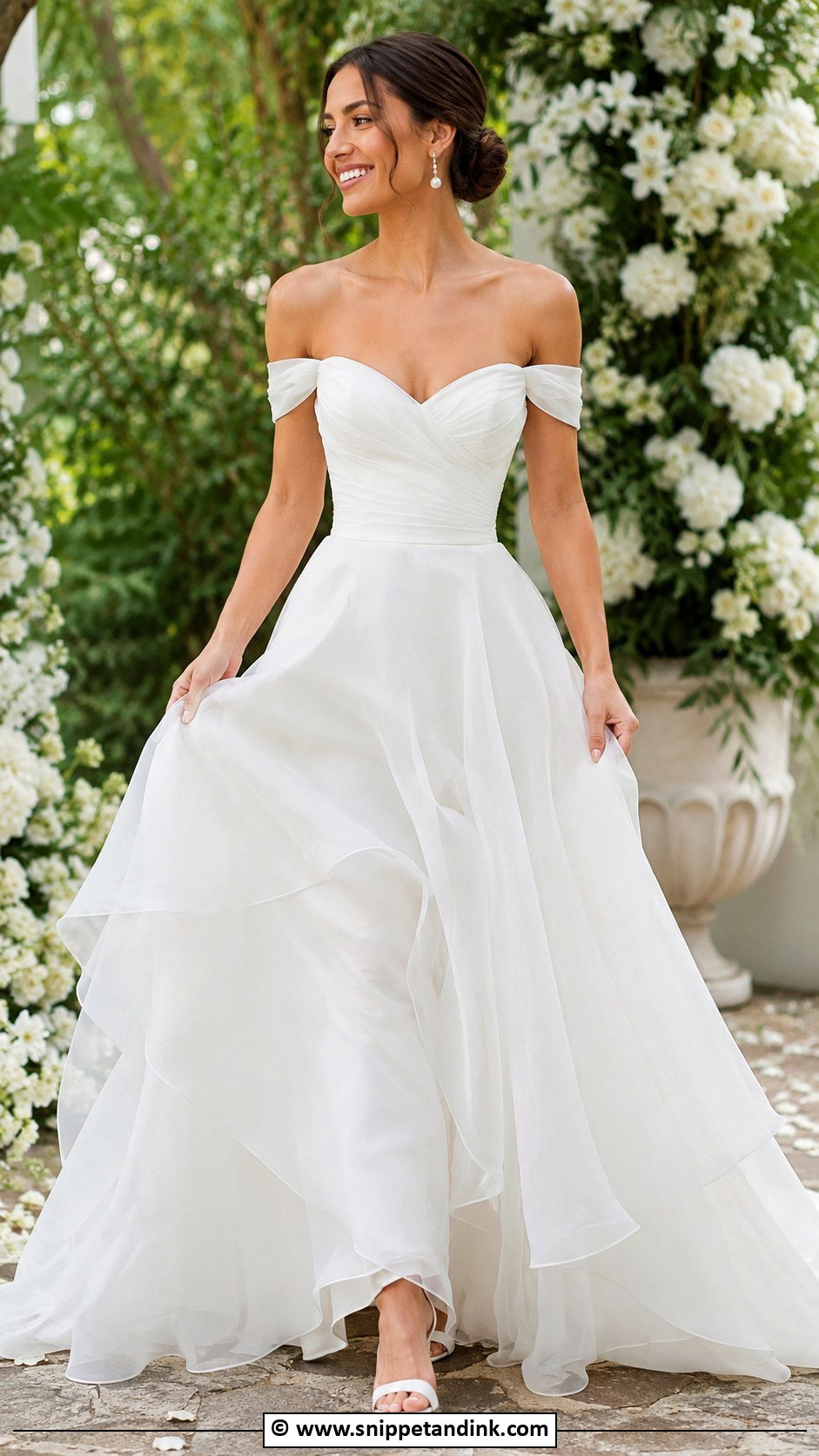
Pairing an off-shoulder neckline with a flowy chiffon, tulle or organza skirt balances a structured top with a moving skirt. The neckline shows the collarbones and shoulders. Draped sleeves feel softer; lace off-shoulder straps add detail. One thing to test: raise your arms as if hugging someone, because some off-shoulder bands ride up without a grip strip. A low bun, pearl earrings and a sheer veil suit it, with a soft simple bouquet. It suits gardens, ballrooms and destination weddings alike.
9. Strapless Flowy Wedding Dress
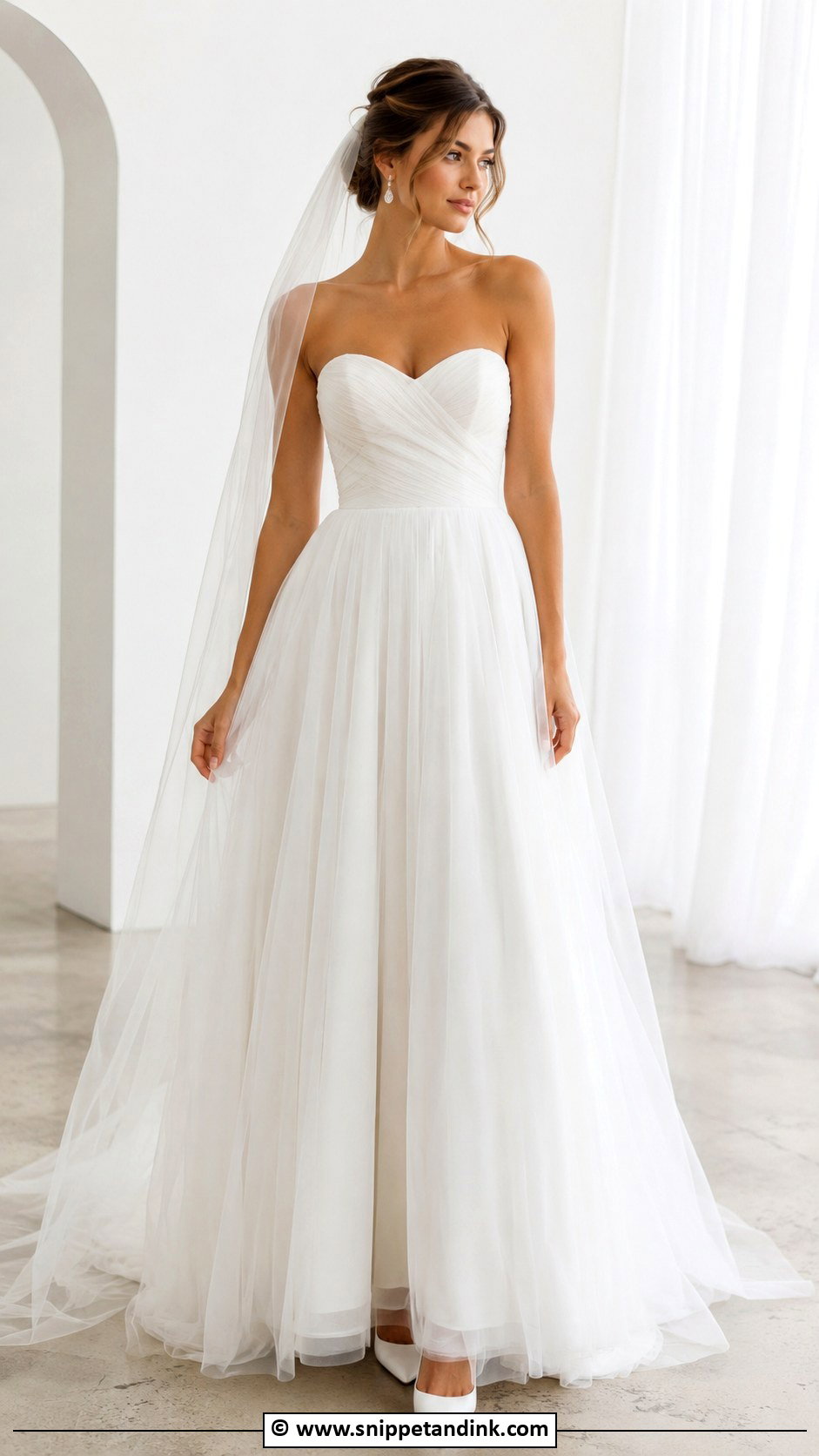
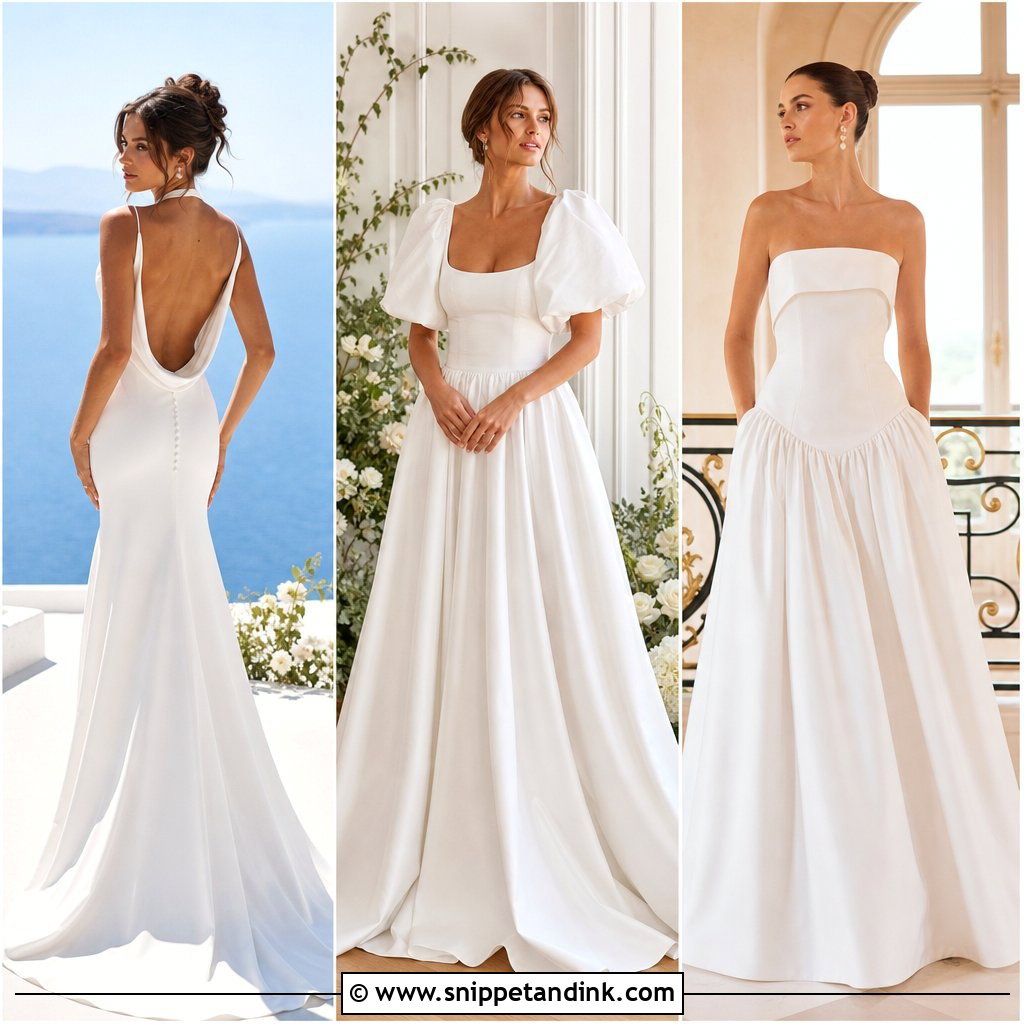
Everything in a strapless gown depends on the bodice fit. If it’s right, the skirt can float and you never think about it; if it’s loose by even a little, you’ll be tugging all night. I have brides sit, bend and dance at the final fitting. Chiffon, tulle, organza and silk blends all suit the skirt. A straight neckline reads modern; a sweetheart reads romantic. Go minimal with sleek hair, or add a long veil and statement earrings.
10. V Neck Wedding Dress
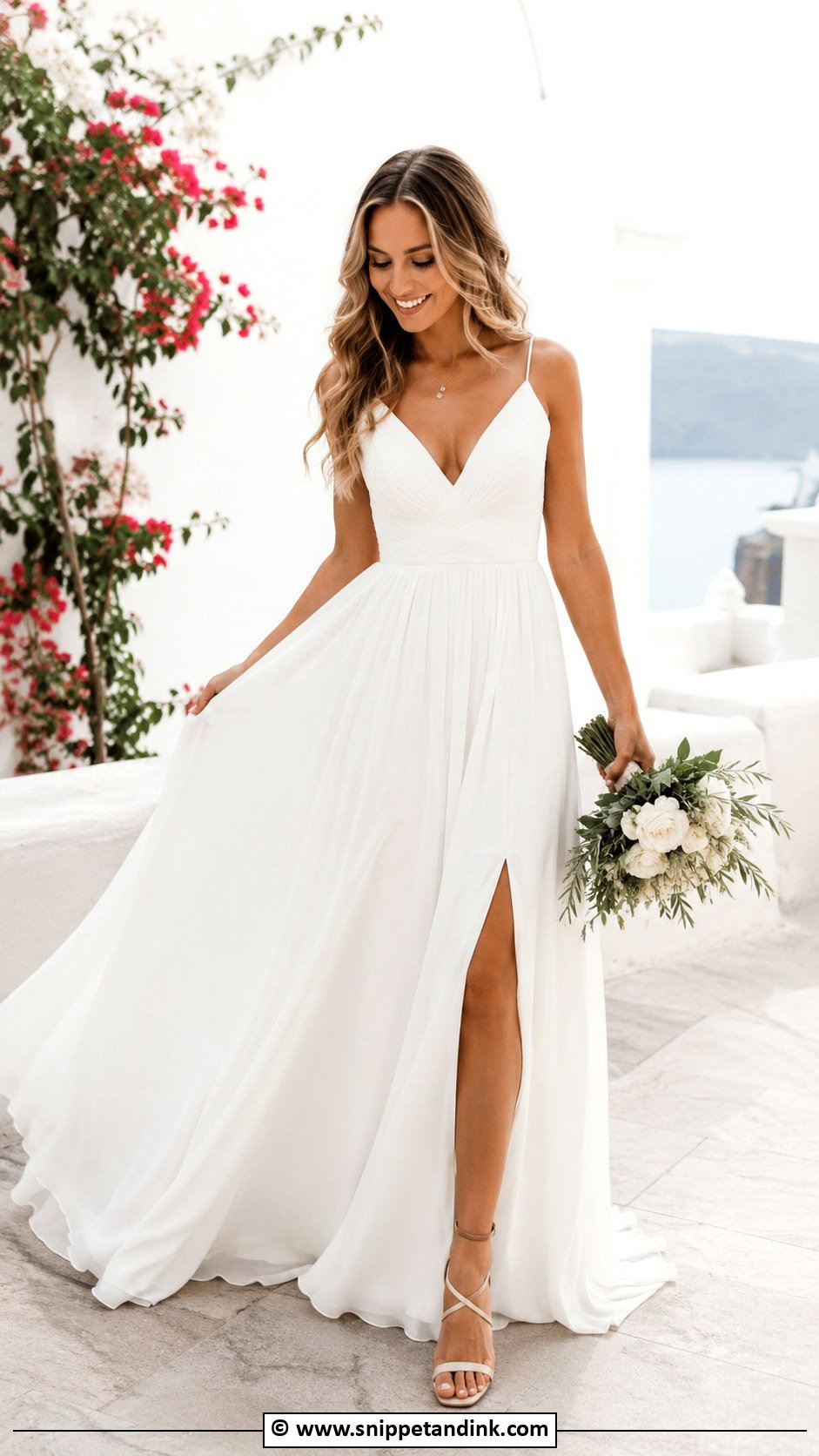
A V-neck draws the eye in a long vertical line, which makes a flowy gown look taller and lighter. It works with thin straps, lace bodices, illusion panels or a wrap shape. A deep V sits better over a soft A-line skirt than a very fitted one, which can feel like too much at once. Ask about fashion tape or a mesh modesty panel if the V is deep. Wear a pendant, small earrings or nothing at the neck, with soft waves and a light veil.
11. Square Neck Wedding Dress
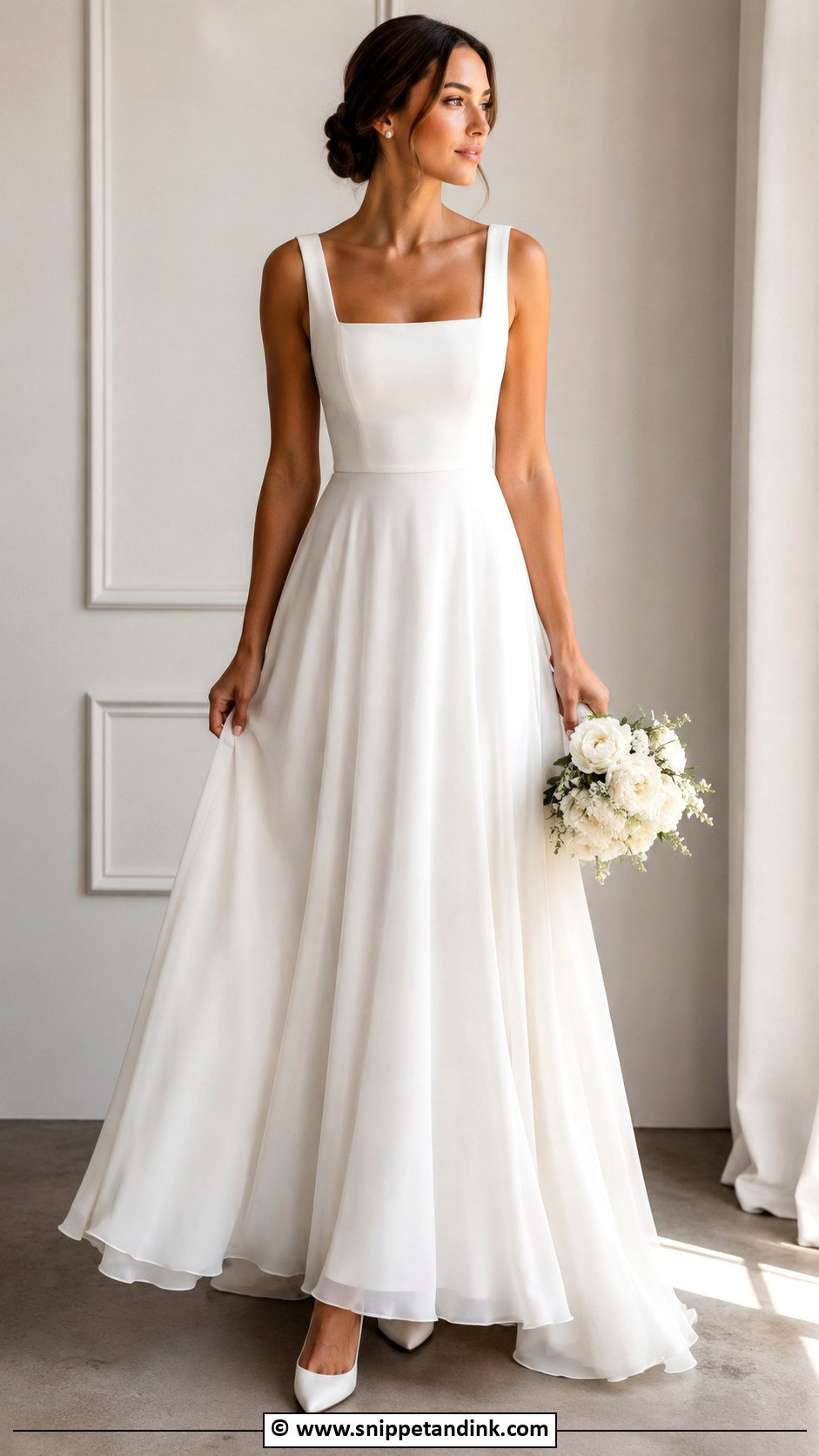
Square necklines give a flowy gown a clean frame at the collarbones. Straps, cap sleeves or sheer long sleeves all sit well with them. In chiffon or organza, the shape suits brides who want simple without plain. A smooth bodice stays minimal; lace appliqués soften it. I’d style it with a low bun, pearl studs and a medium-length veil.
12. Corset Wedding Dress
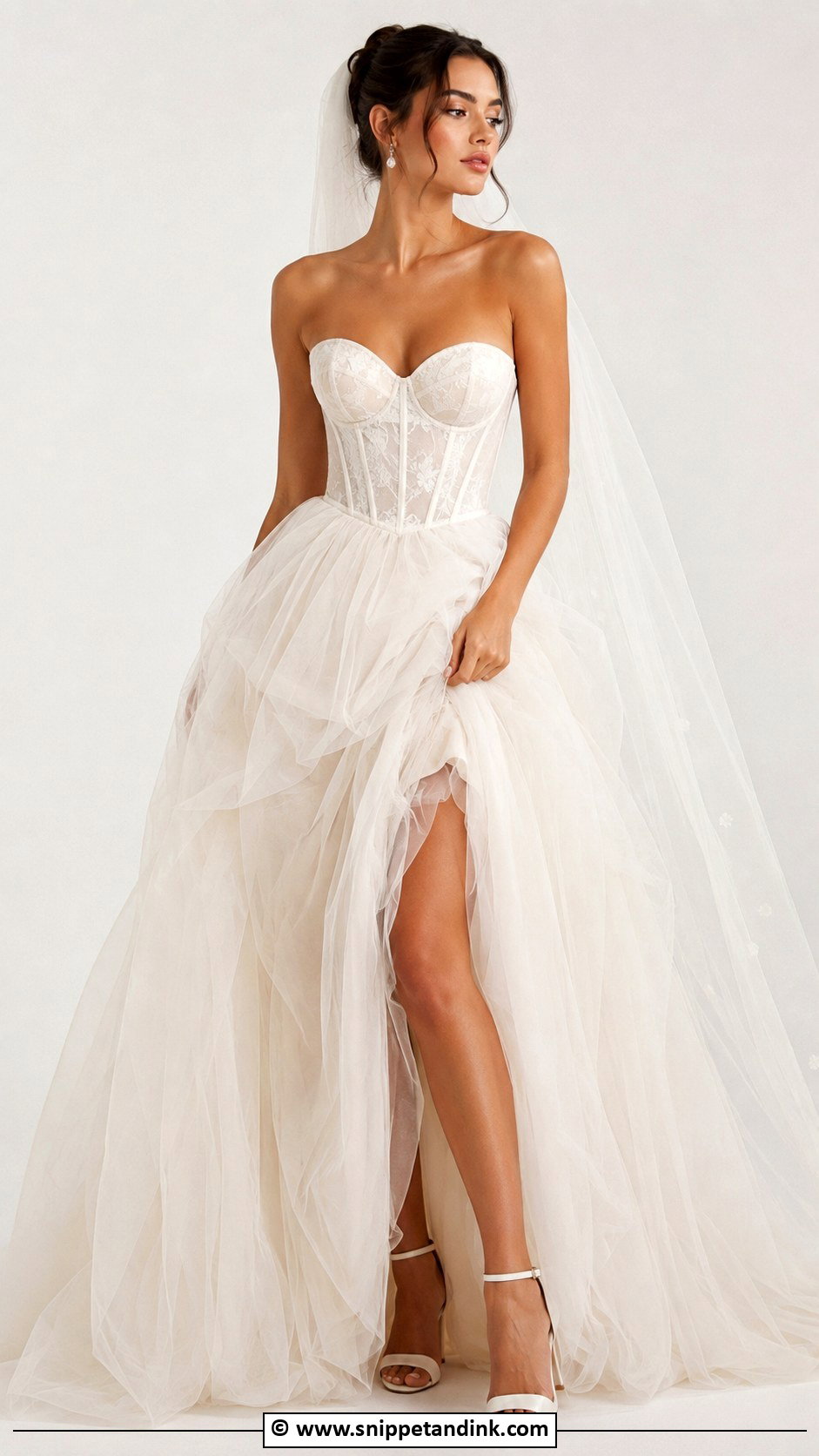
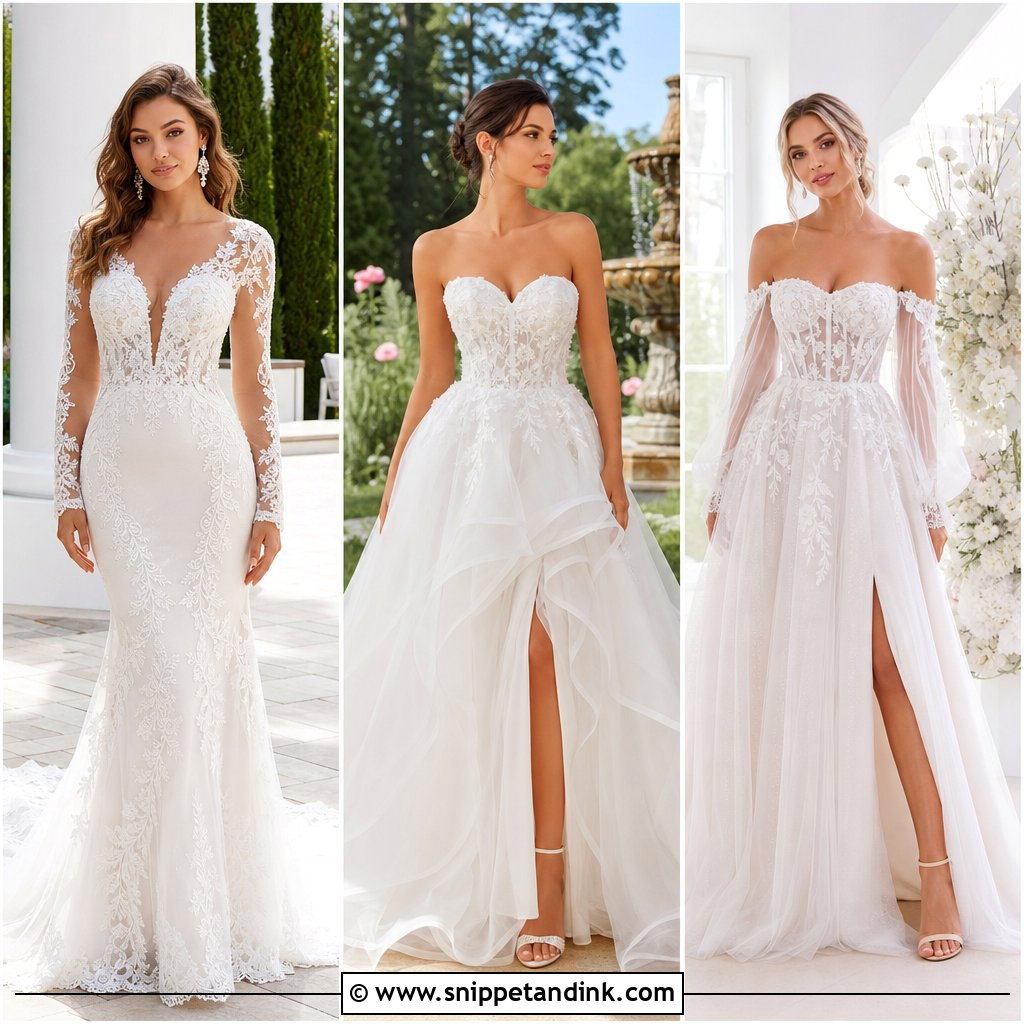
A corset wedding dress defines the waist while the skirt stays soft, and tulle, chiffon or organza layers keep it light. Exposed boning looks modern; boning hidden under lace looks classic. The fit matters most at the bottom edge: a corset that’s a touch too long presses into the hips when you sit, so test it in a chair. It pairs well with strapless, off-shoulder or detachable sleeves. Delicate earrings and a soft veil keep things balanced.
13. Basque Waist Wedding Dress
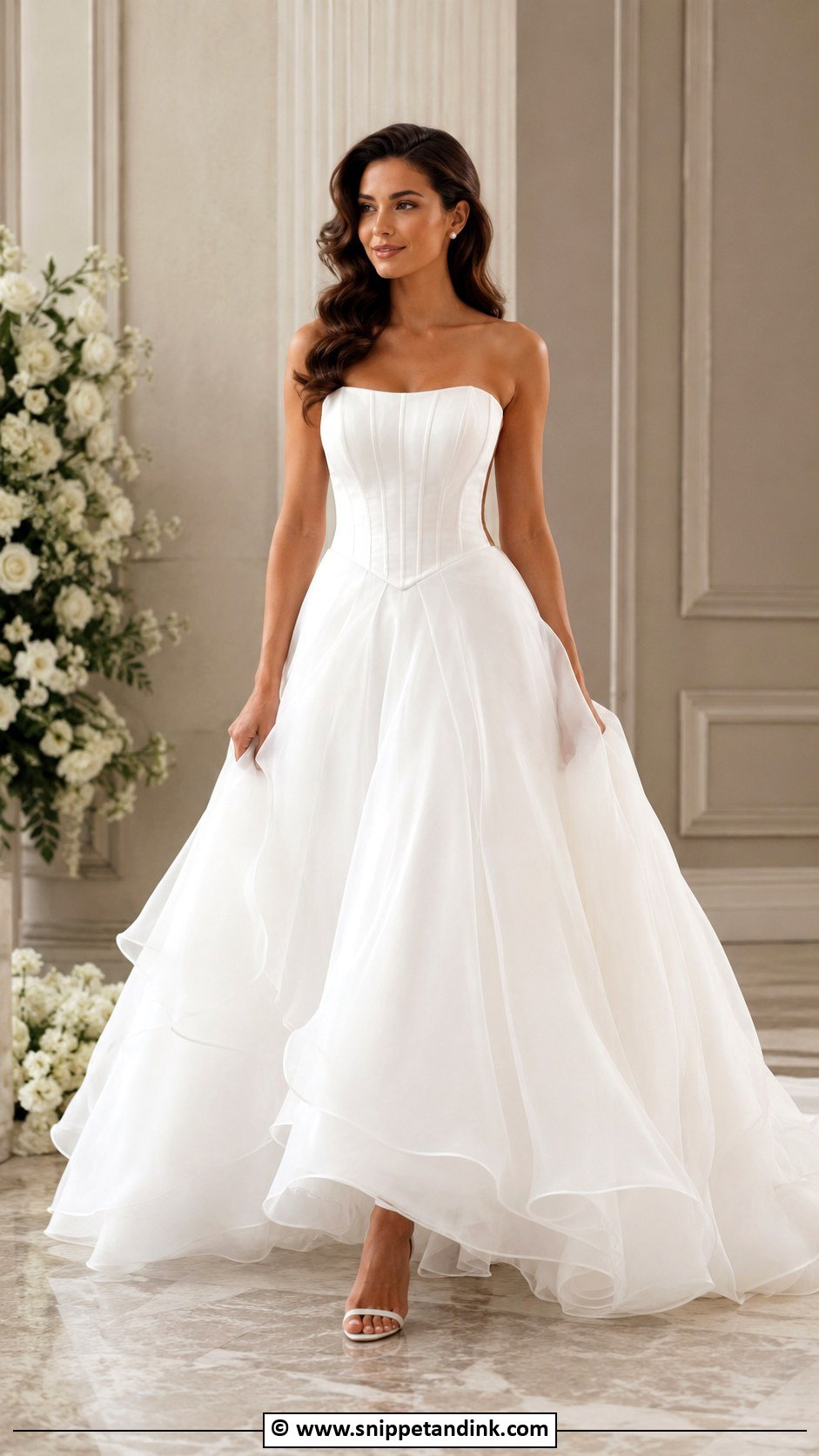
The basque waist dips into a V or U at the front, which lengthens the torso. With flowing tulle or organza underneath, it feels regal but light. Strapless, scoop and square necklines suit it best. The point of the V should land just below your natural waist; too low and it shortens the legs instead. Since the waistline already carries interest, a simple veil, soft curls and classic heels are all it needs.
14. Drop Waist Wedding Dress
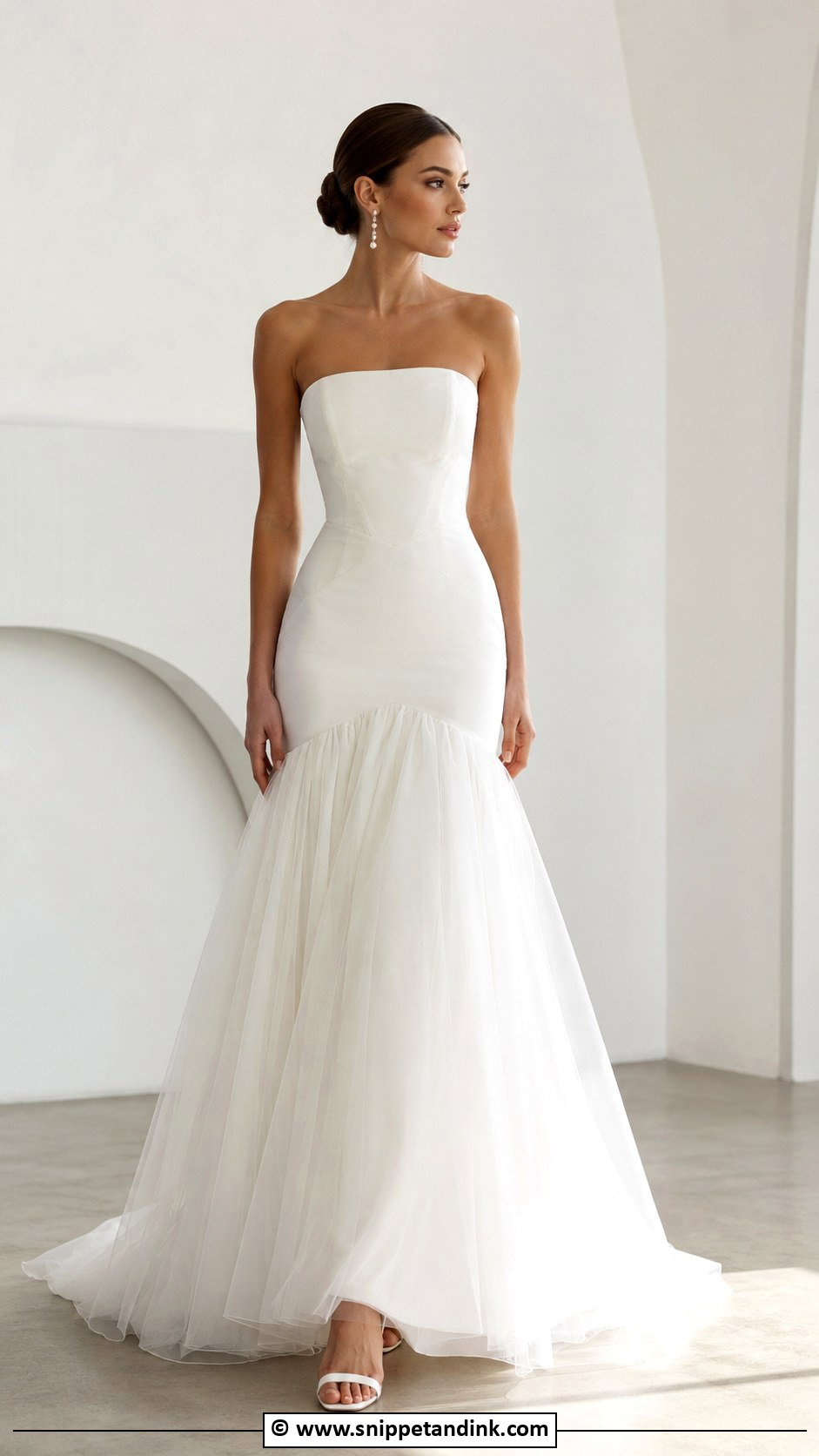
Drop waists sit below the natural waist and give you a longer bodice before the skirt starts to move. Soft tulle, chiffon or organza lets the skirt float without bulk. The shape is less forgiving on short torsos, so I’d try it on before falling for a photo. A simple bodice keeps it sleek; textured fabric with a fuller skirt makes it dramatic. Minimal jewelry and a long veil keep the line clear.
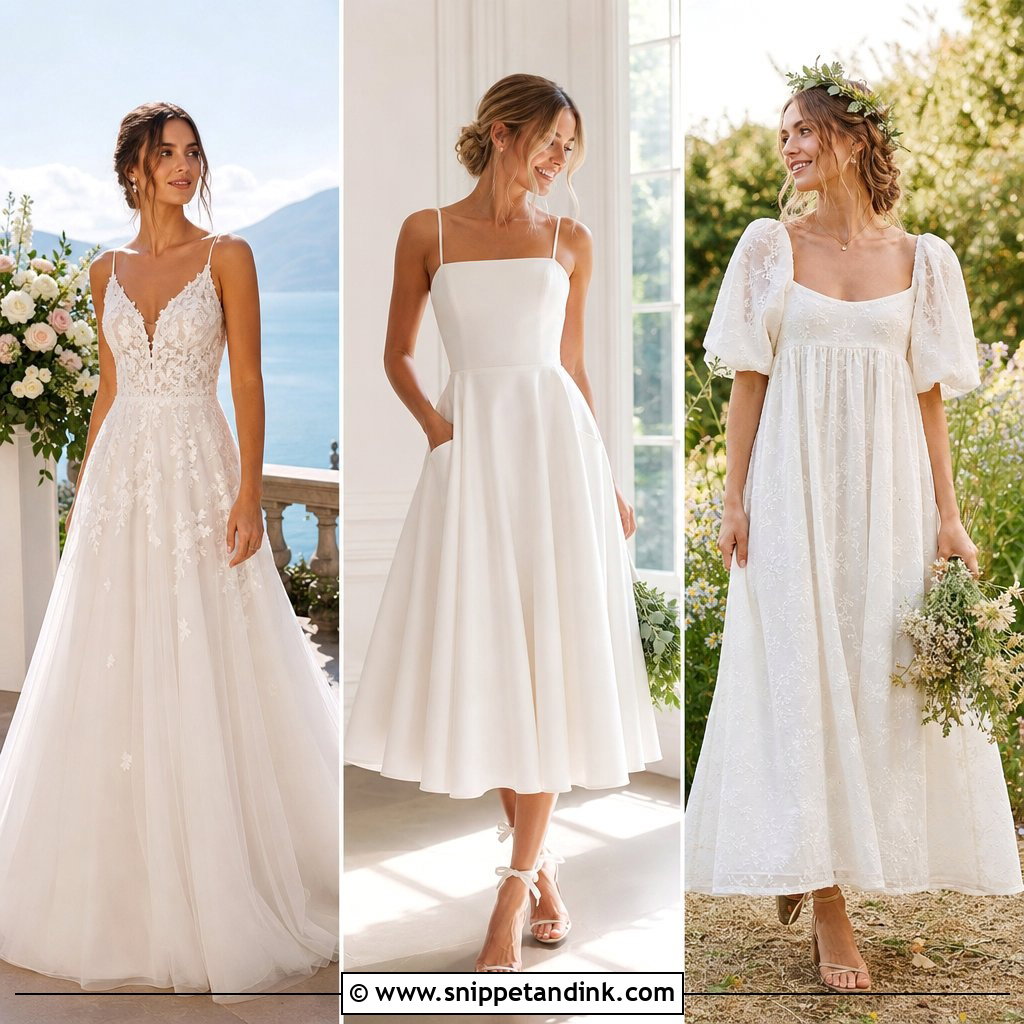
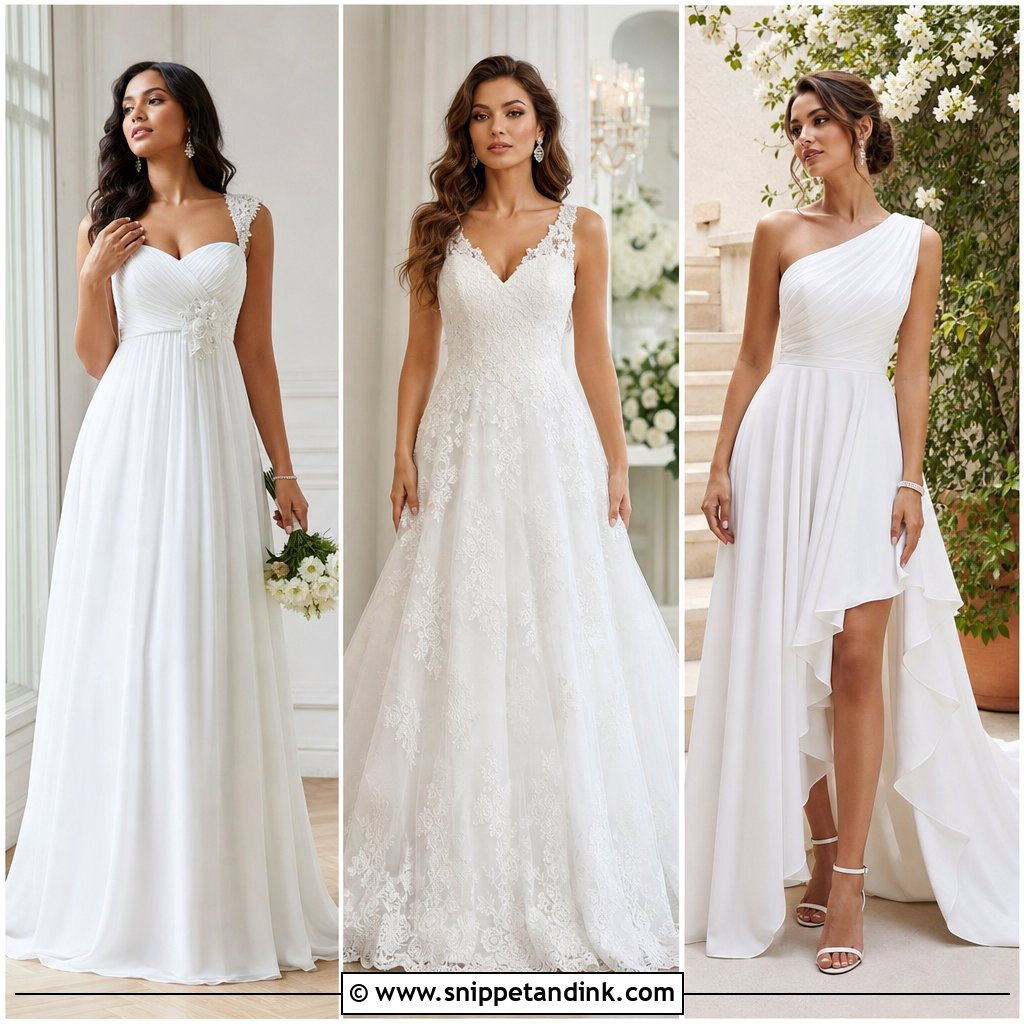
15. Empire Waist Wedding Dress
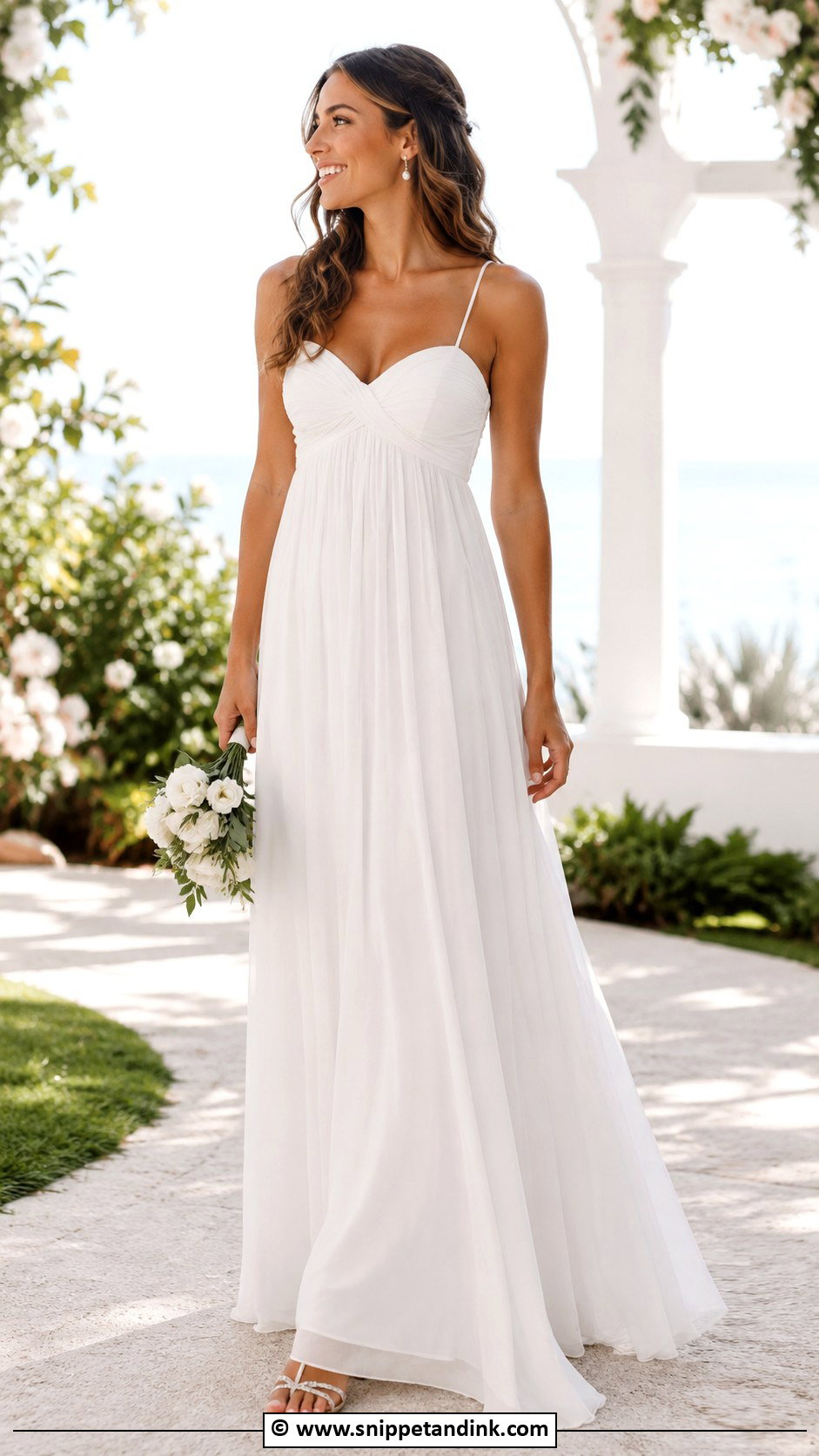
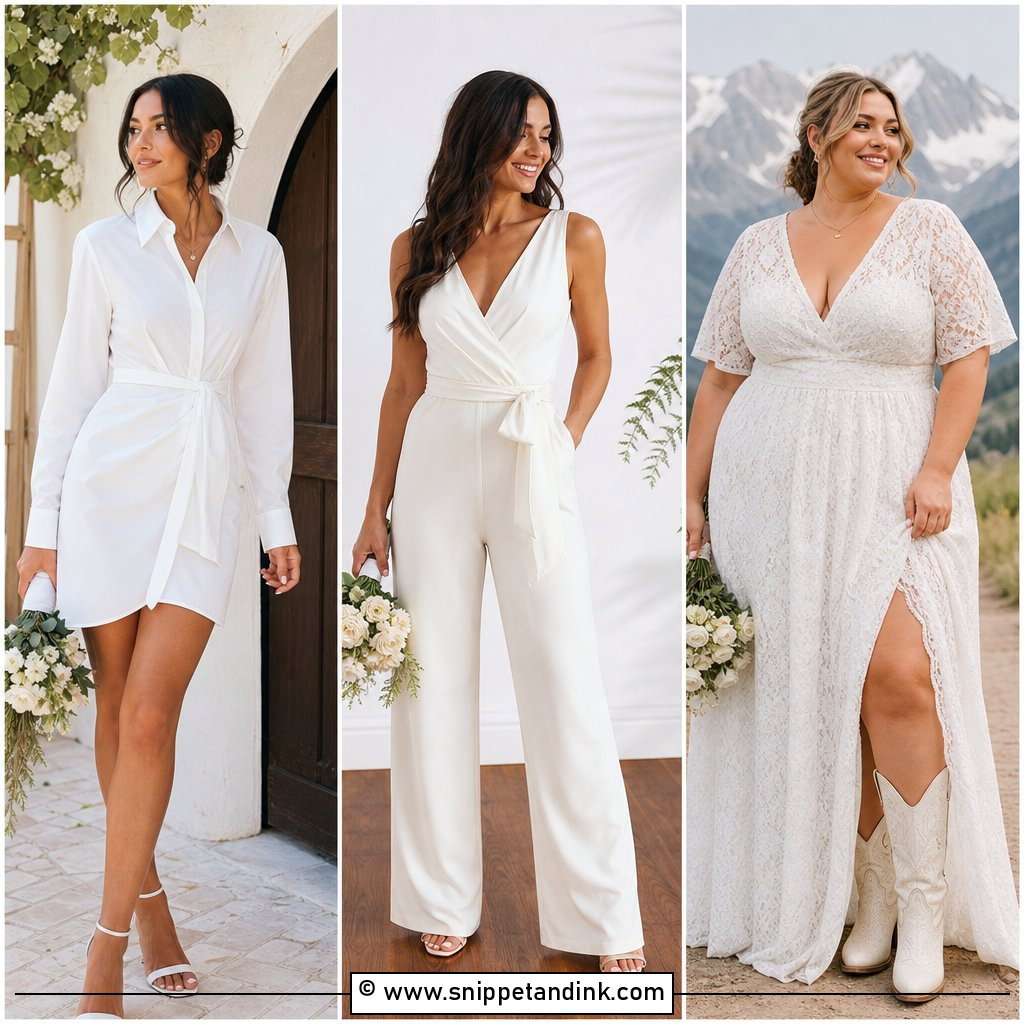
With the waist sitting just under the bust, an empire gown falls straight and soft over the waist and hips, which is why so many brides find it comfortable through a long day. Chiffon drapes best for this. Thin straps and pleats look Grecian; lace sleeves look romantic. Watch the seam under the bust in fittings; if it sits too high or too low, the whole dress looks off. Fine sandals, a simple veil and natural hair suit beaches and gardens.
16. Floral Applique Wedding Dress
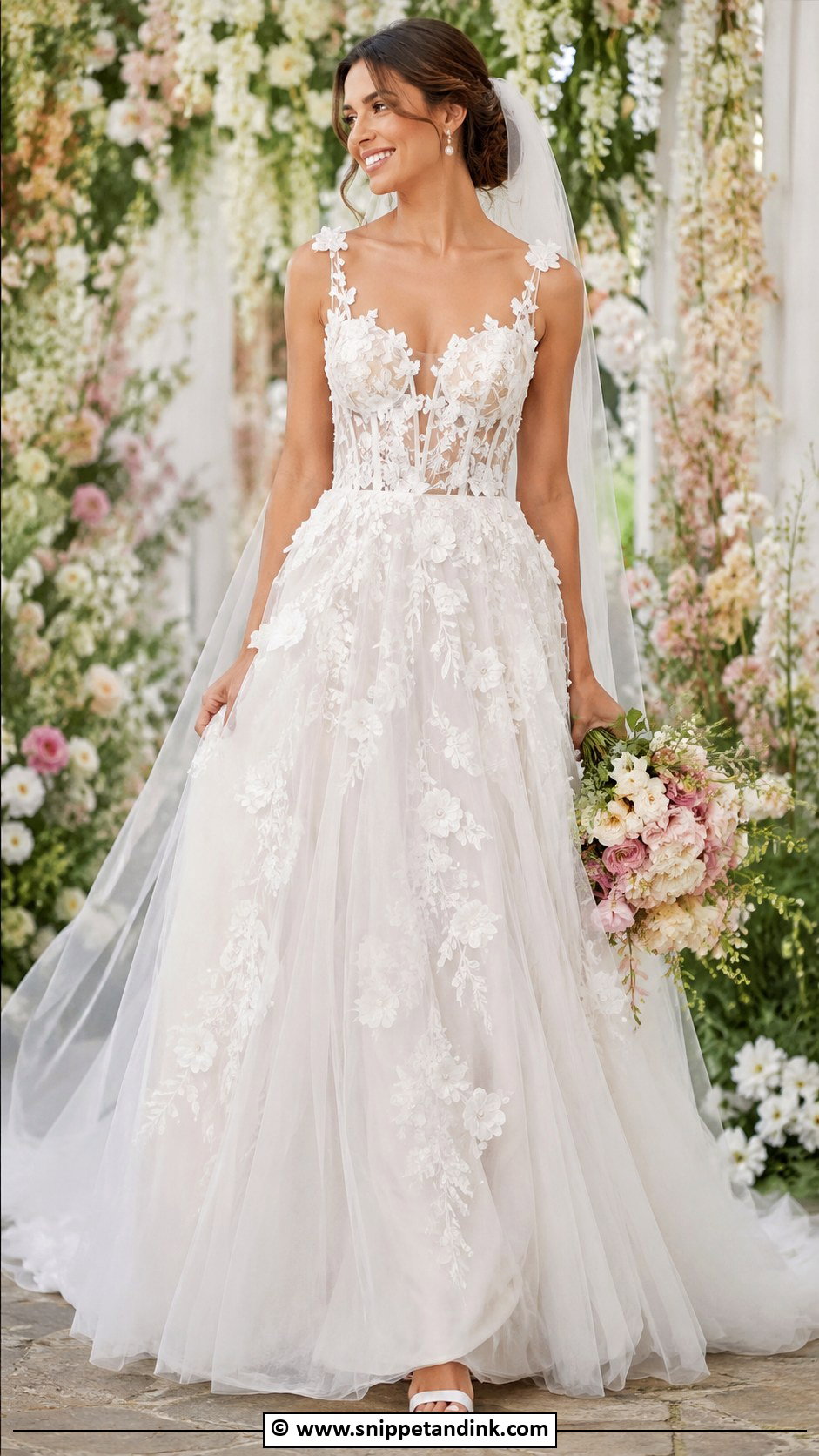
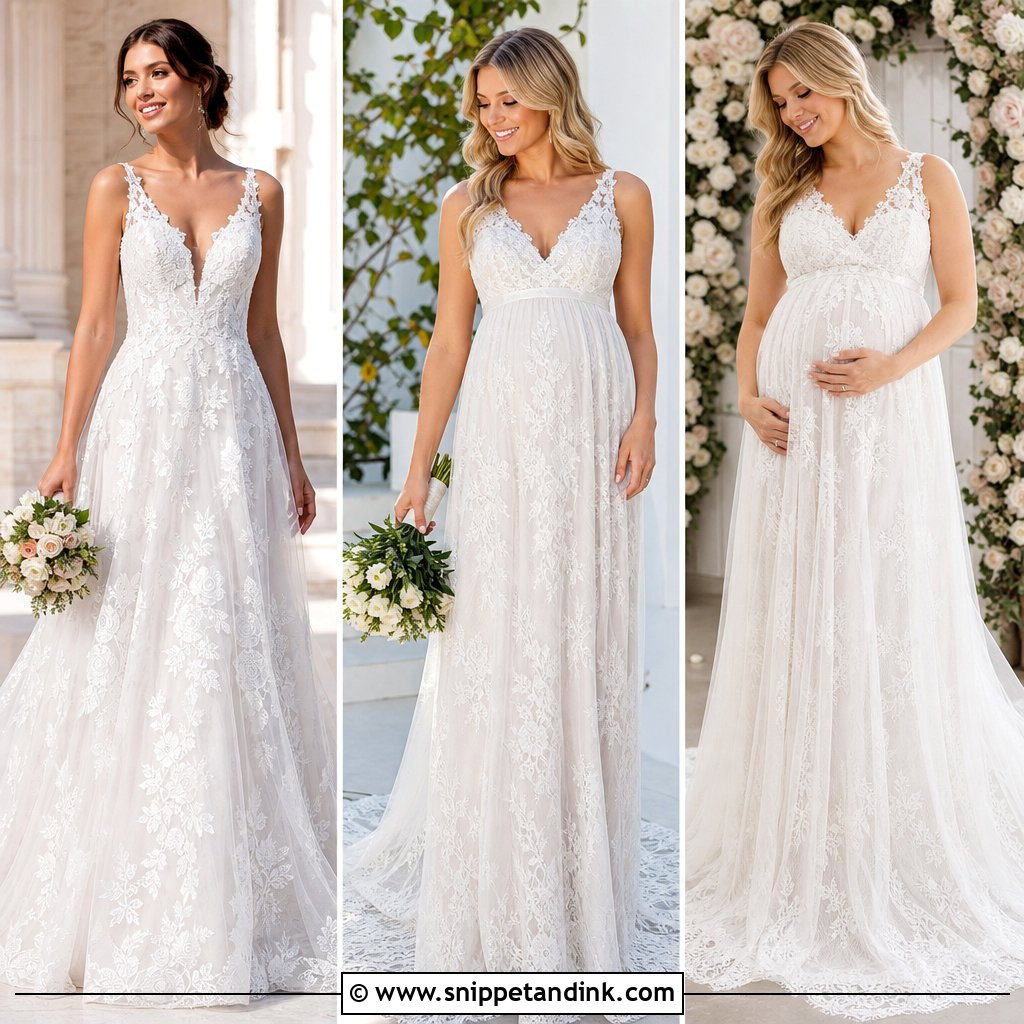
Appliqués placed on tulle, organza or lace seem to float over the gown, which is the effect most brides want. Scattered flowers are subtle; allover appliqué is bolder and heavier. A fitted bodice with a light A-line skirt keeps the balance. Since the dress has detail, small earrings and a sheer veil are enough. Spring and garden venues suit it.
17. Minimalist Wedding Dress
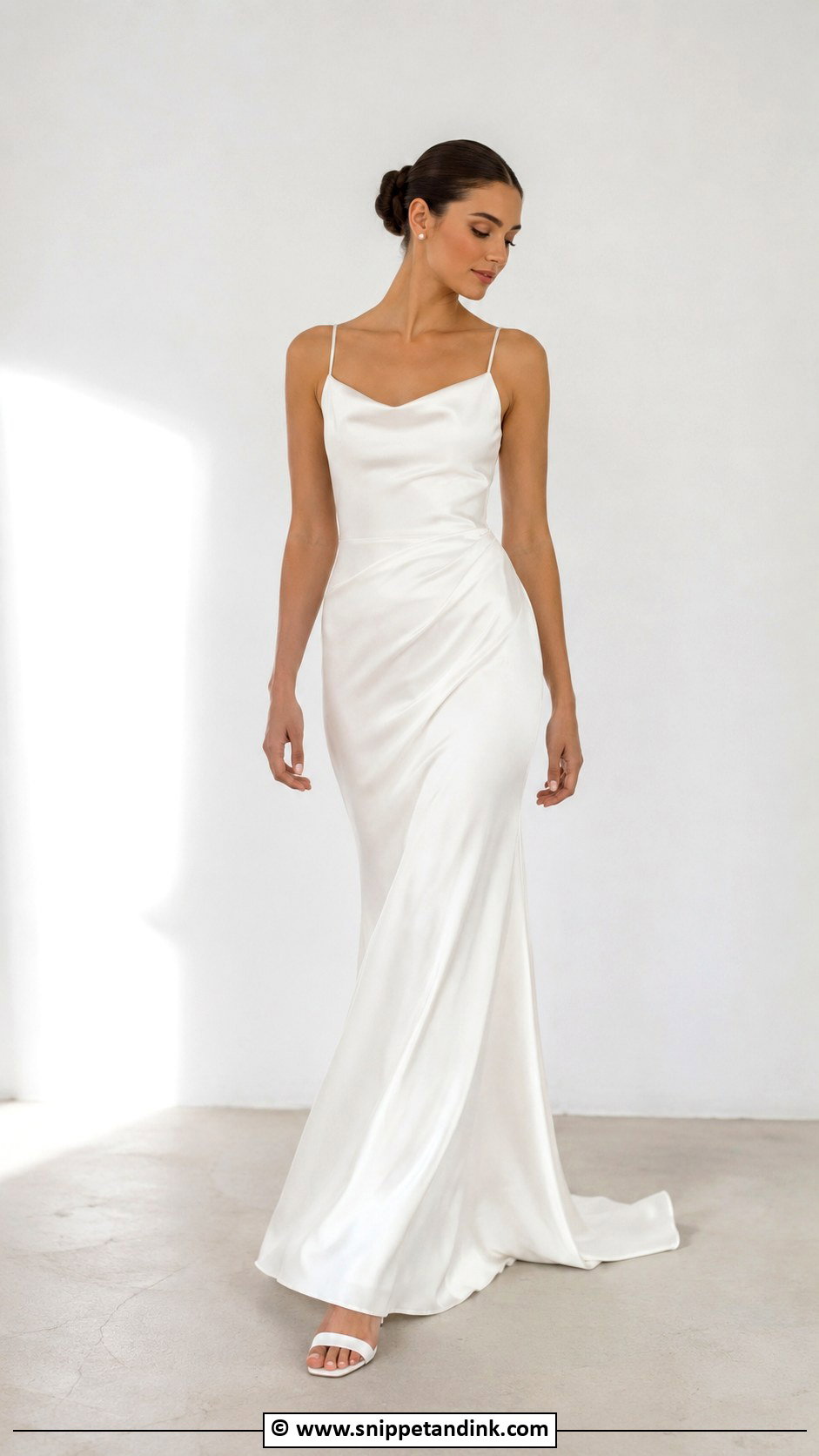
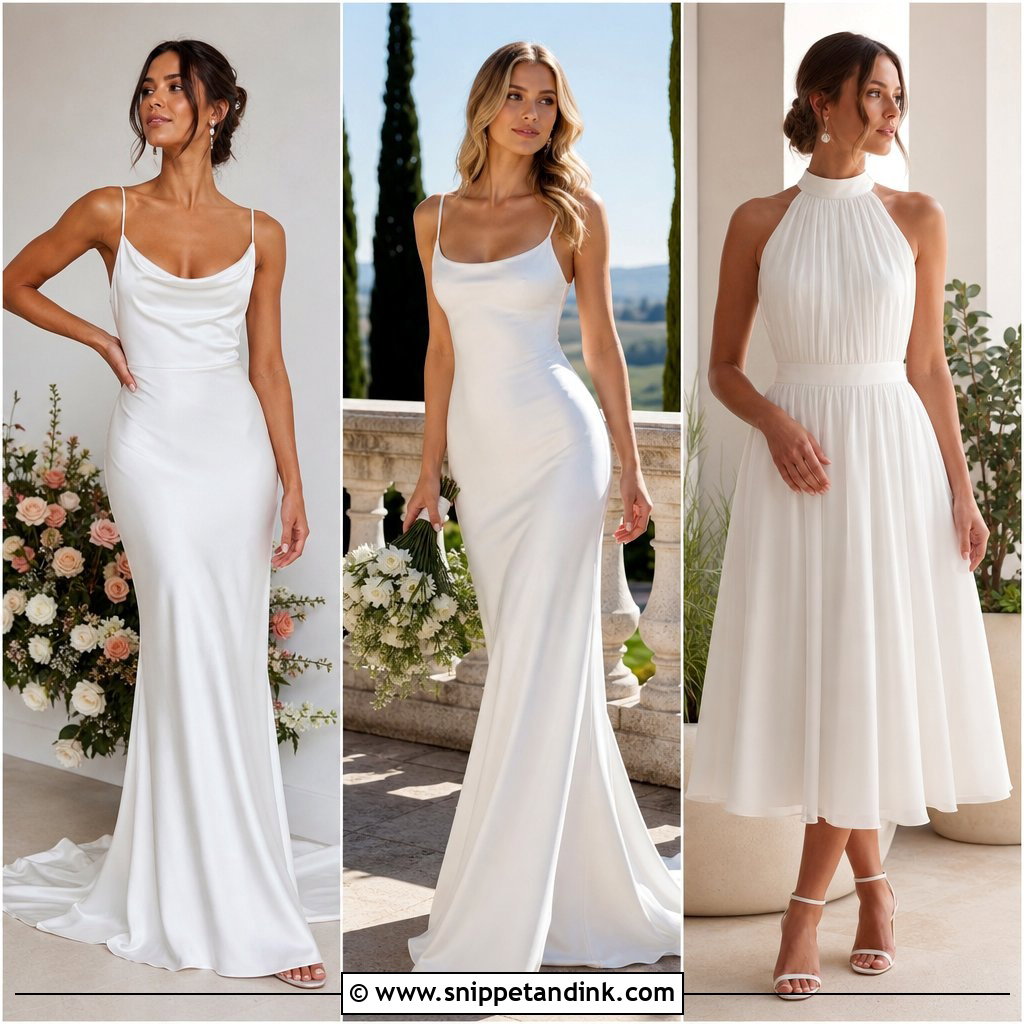
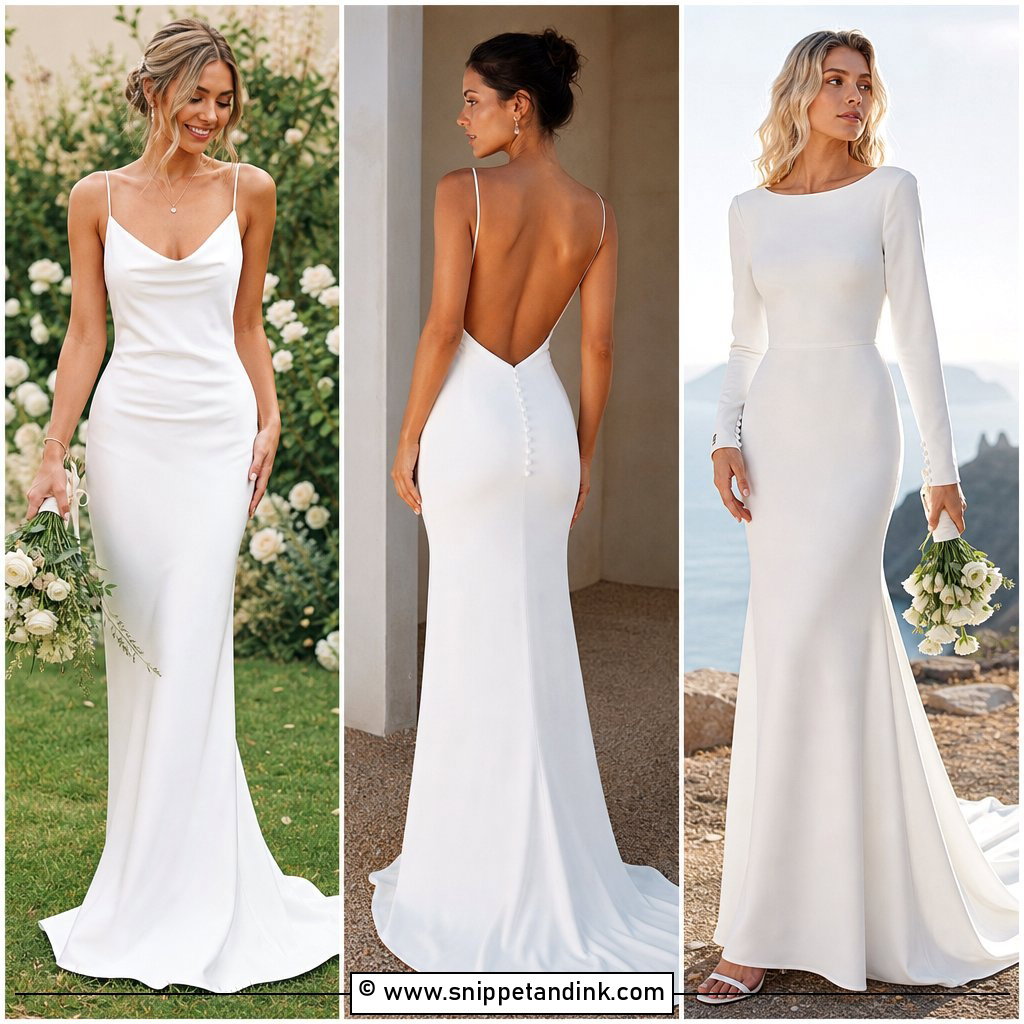
A plain gown can only feel flowy if the fabric is good and the fit is exact, because there’s no embellishment to hide anything. Silk crepe, chiffon or satin-back crepe in an A-line or slip skirt does the work. A cowl neck, simple straps or a low back add quiet interest. I’d keep the styling to sleek hair, small pearl earrings, clean white heels and a long plain veil.
18. Slip Wedding Dress
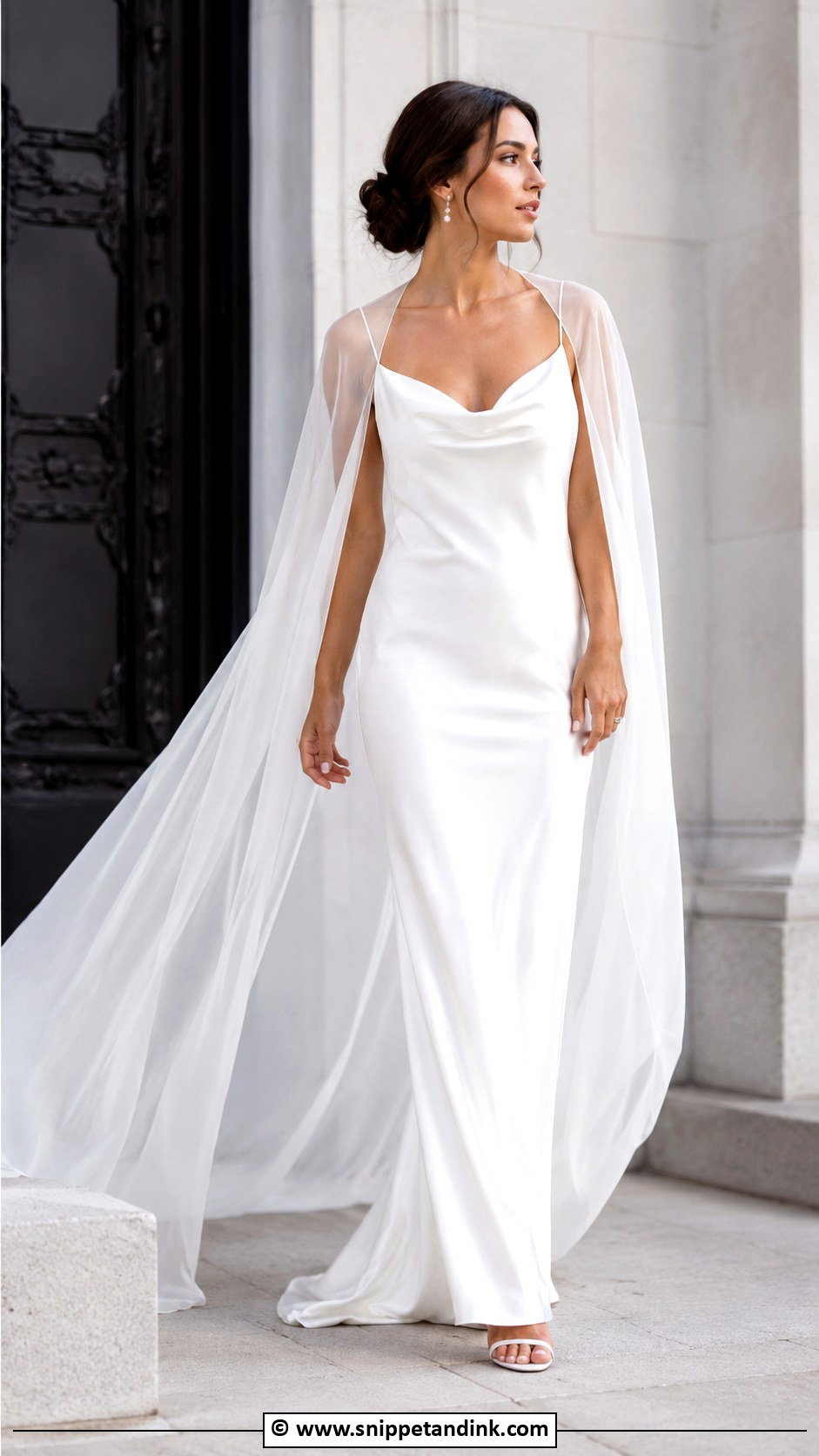
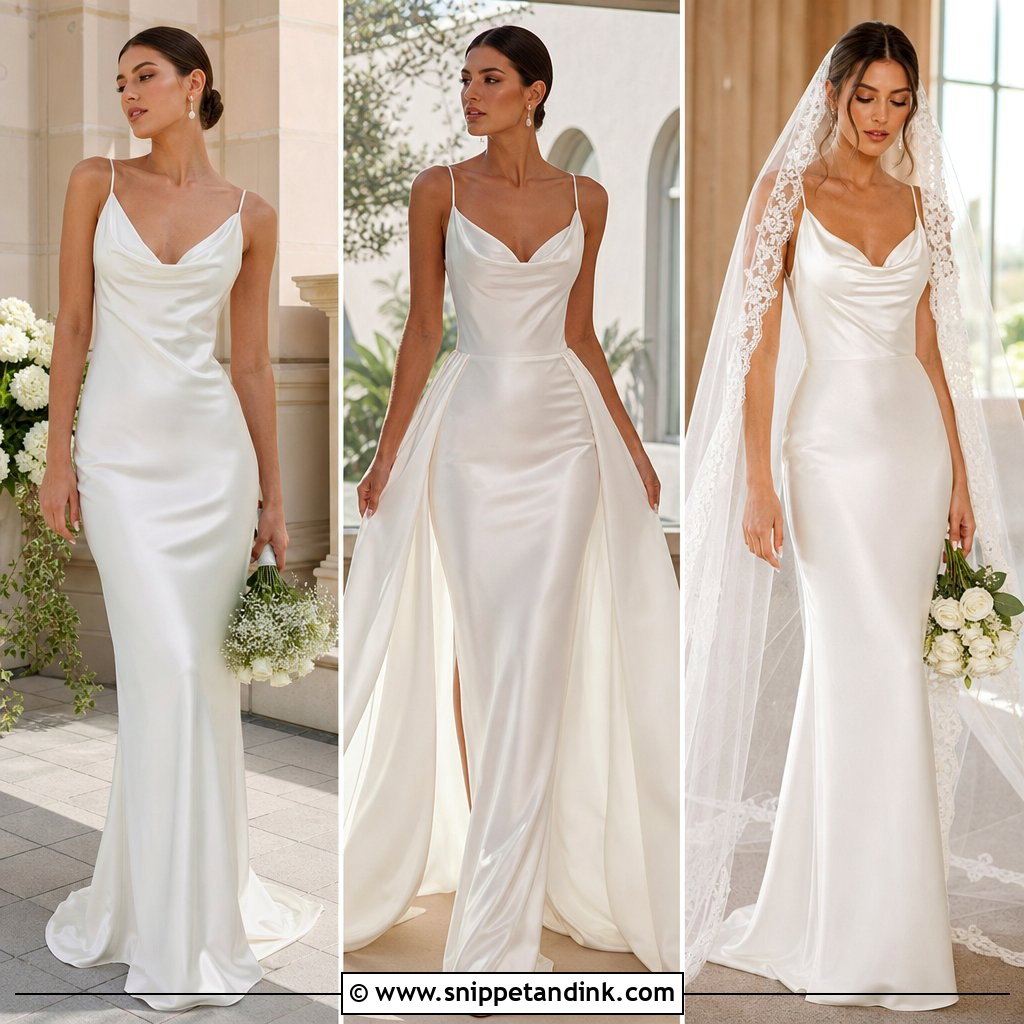
Bias-cut fabric is what makes a slip wedding dress skim rather than cling; cut on the diagonal, the silk or crepe stretches and drapes over the body. It also shows everything underneath, so smooth, line-free underwear matters. A cowl neck or slight train keeps it bridal. City and destination weddings suit it. Wear it alone, or add a sheer cape, chiffon scarf or light overskirt, with strappy heels, sleek hair and fine earrings.
19. High Neck Wedding Dress
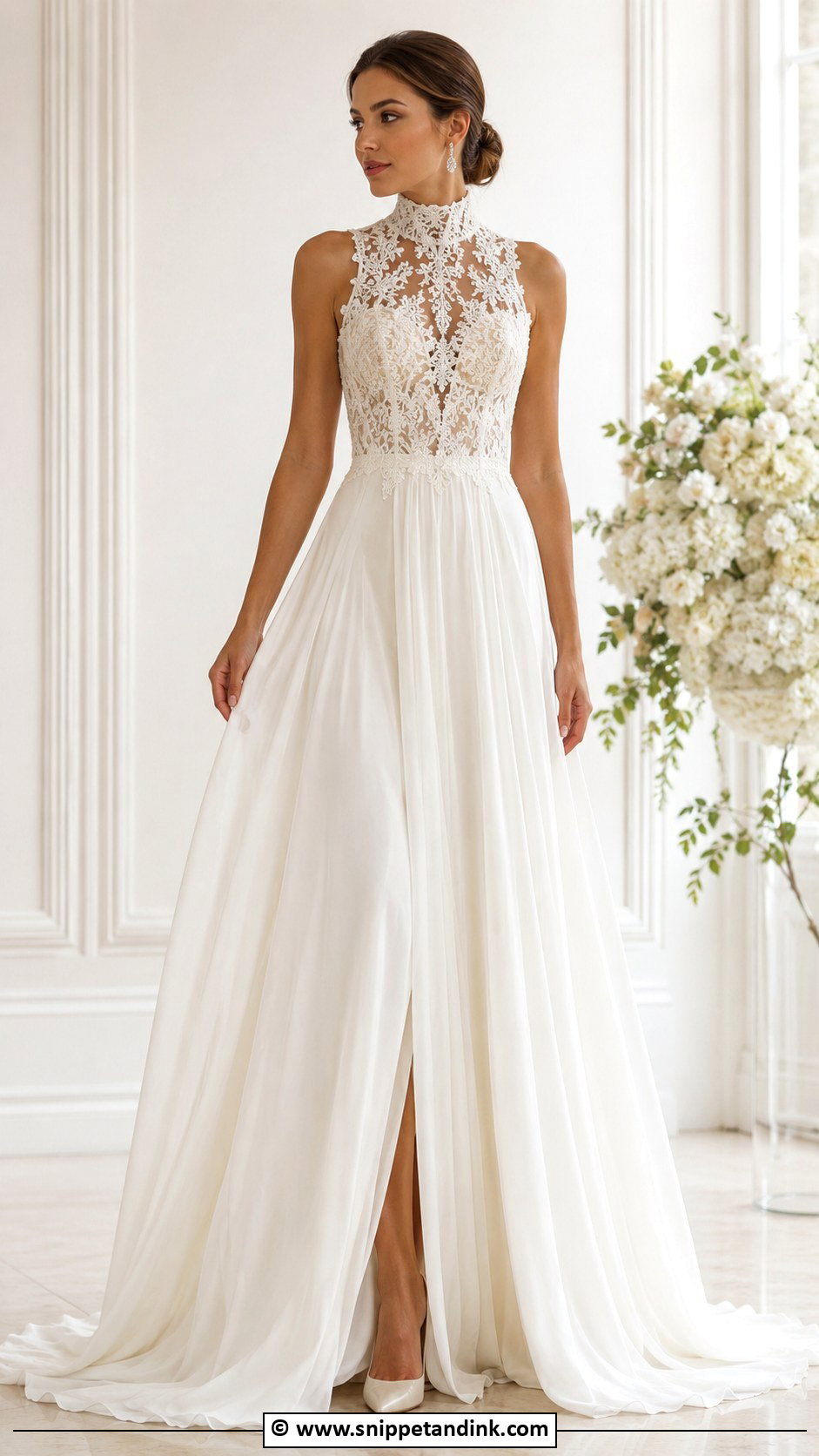
High necklines can feel heavy, but sheer lace, soft tulle or light chiffon keeps them airy. The coverage sits at the top and the skirt keeps the gown from feeling severe. It works sleeveless, with long sleeves or as an illusion bodice, and looks especially good with a low back or button detail. Skip necklaces in favor of earrings, and choose a neat bun so the neckline isn’t hidden.




20. Halter Wedding Dress
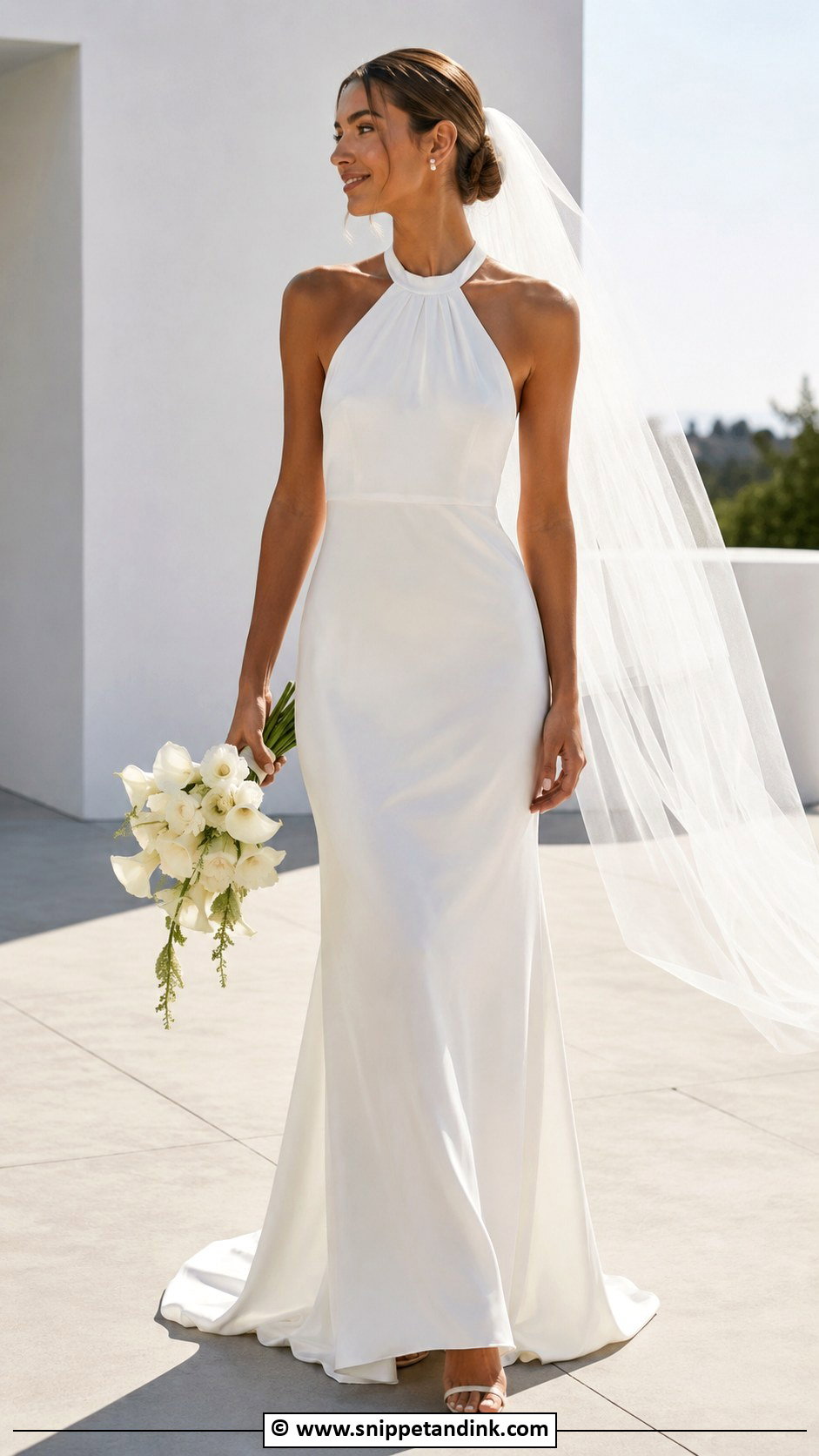
A halter holds itself up at the neck, so it feels secure for dancing in a way strapless never quite does. The trade-off is weight on the back of the neck with a heavy skirt, which is why chiffon, silk crepe or light satin suit it. A high halter looks modern; a tied one feels more relaxed for a destination wedding. A sleek bun, small earrings and simple heels keep focus on the neckline. Beaches and rooftops suit it.
21. One Shoulder Wedding Dress
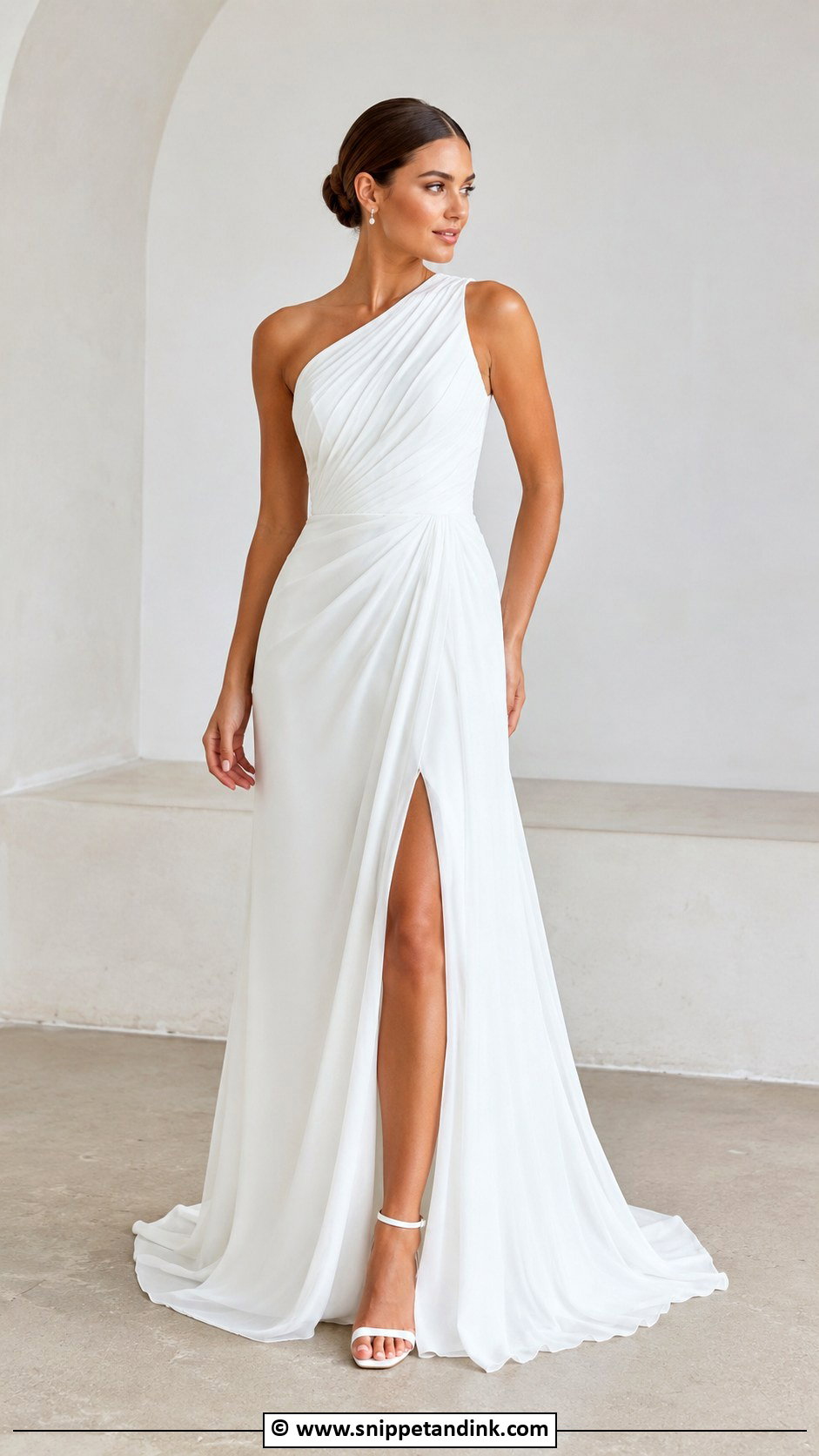
One-shoulder necklines are asymmetrical, so the drape from the shoulder into the skirt has to be balanced or the gown looks lopsided. Chiffon, crepe and organza drape well enough for that. Keep it sleek or add a soft bow, a floral accent or a draped sleeve. With the neckline already doing so much, one bracelet or small earrings is enough. A smooth updo and clean heels finish it.
22. Tea Length Wedding Dress
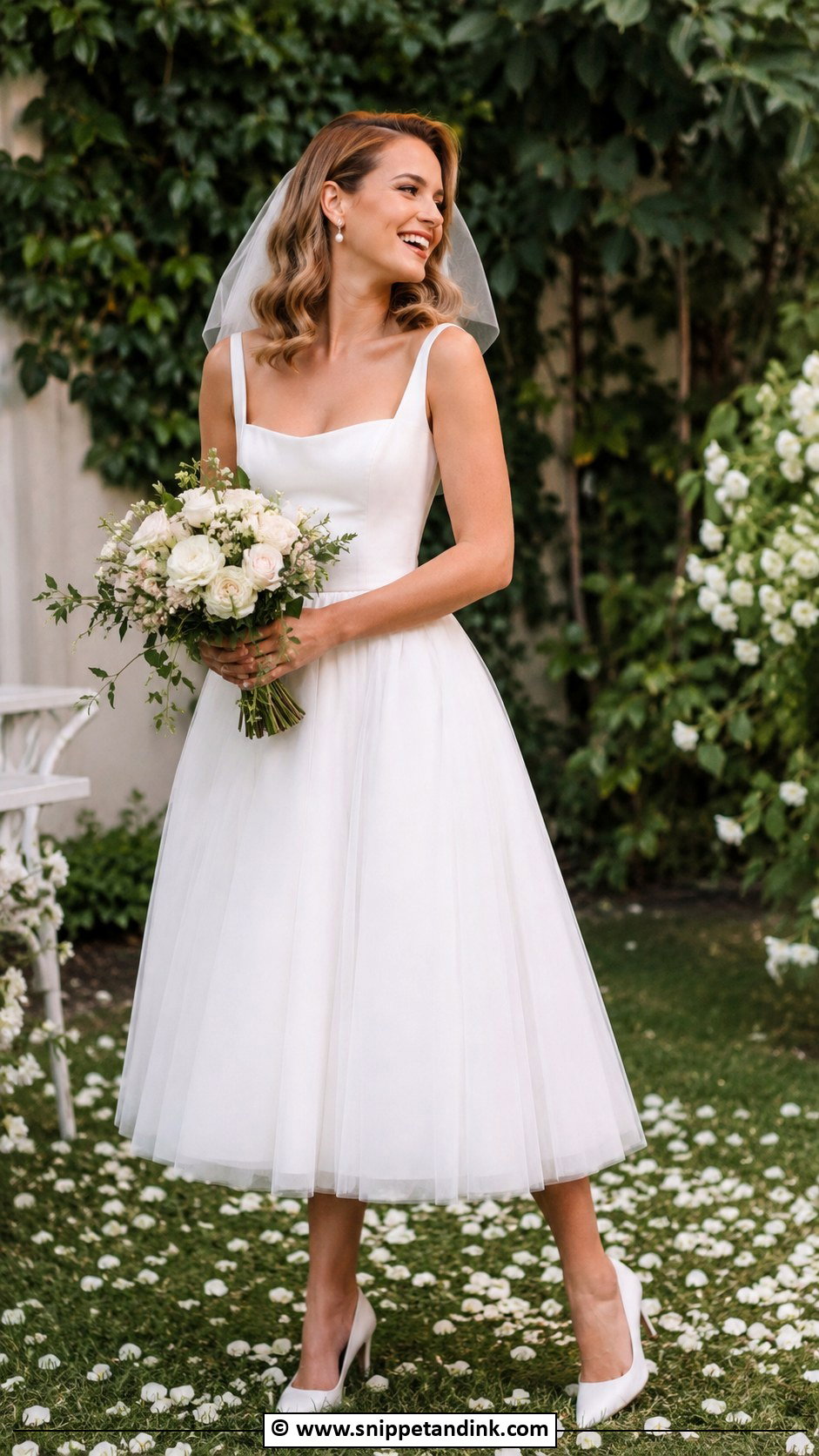
Tea length falls between knee and ankle, so walking, dancing and showing your shoes all get easier. Stiff fabric makes the shorter skirt stand out like a lampshade; soft tulle, chiffon or organza layers keep it moving. Courthouse, garden and vintage-style weddings suit it. Pointed heels, ballet flats or block sandals depend on the ground. A short veil, pearl earrings and soft waves finish it.
23. Plus Size Flowy Wedding Dress
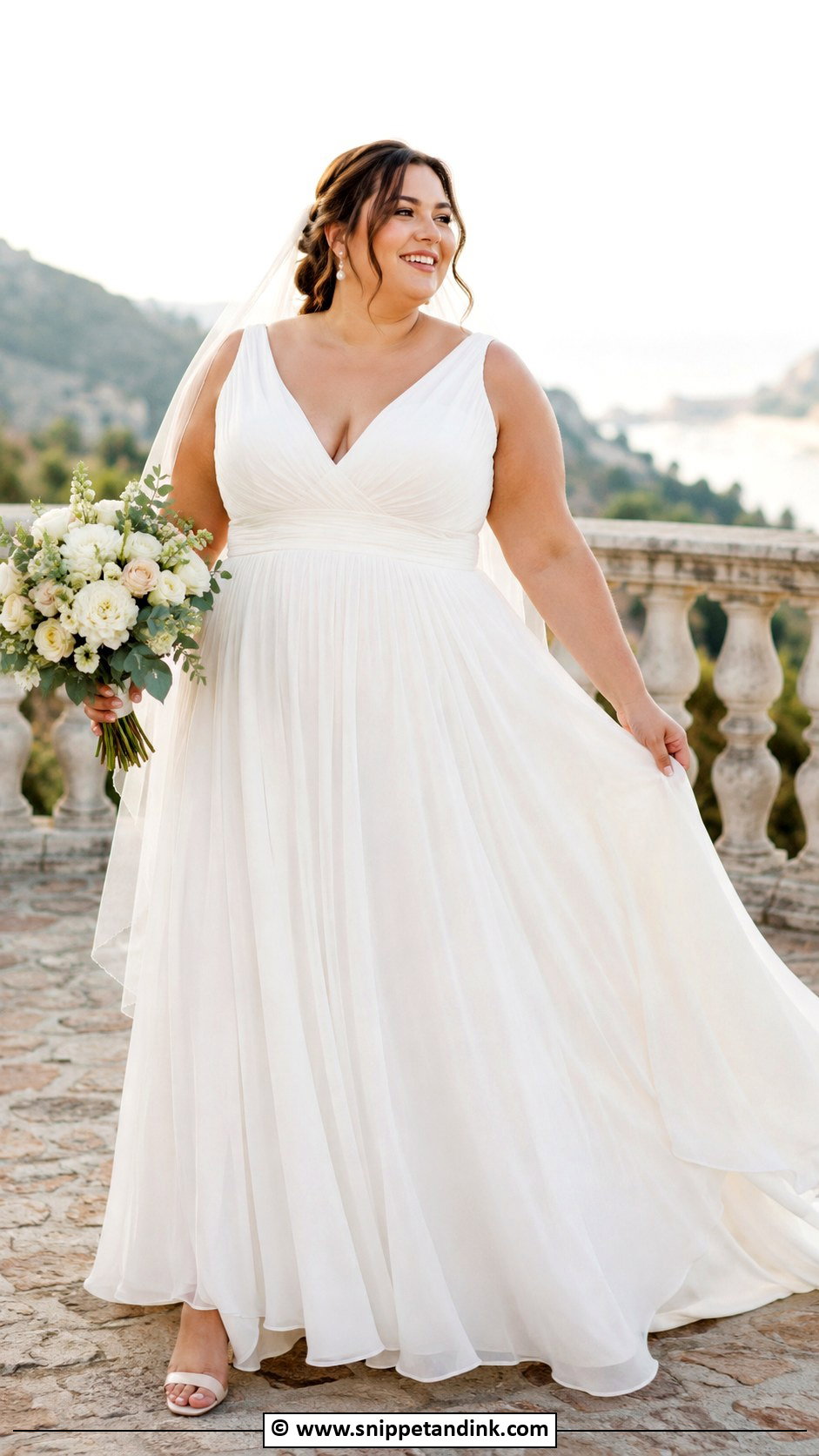
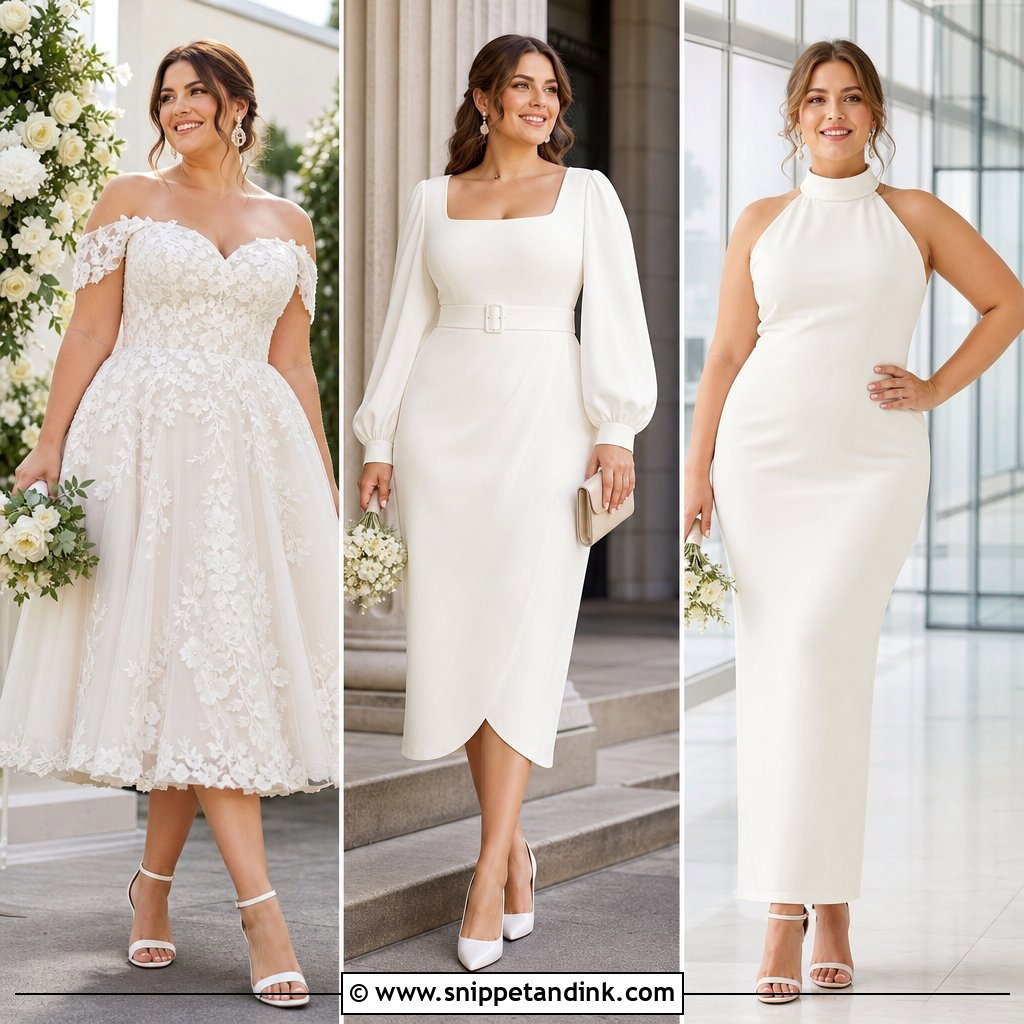
Support is the first thing I look at in a plus size flowy wedding dress, then drape. A-line, empire, corset and wrap shapes all work, in fabrics that fall rather than cling: chiffon, soft tulle, organza or crepe. Proper straps, a structured bodice and a good lining change how secure the gown feels across a ten-hour day. A V-neck, sweetheart or square neckline frames the upper body. None of this is about hiding anything; it’s about a dress that fits well and moves with you.
24. Petite Flowy Wedding Dress
Too much volume can swallow a shorter frame, so for petite brides I lean toward soft A-lines, slim chiffon skirts, empire waists and gentle sheaths. Vertical details like a V-neck, soft pleats or a front seam lengthen the line, and a slightly higher waist makes the legs look longer. Choose heels or platform sandals that feel stable on the venue’s ground. Keep the veil and train in proportion so they add softness rather than burying you.
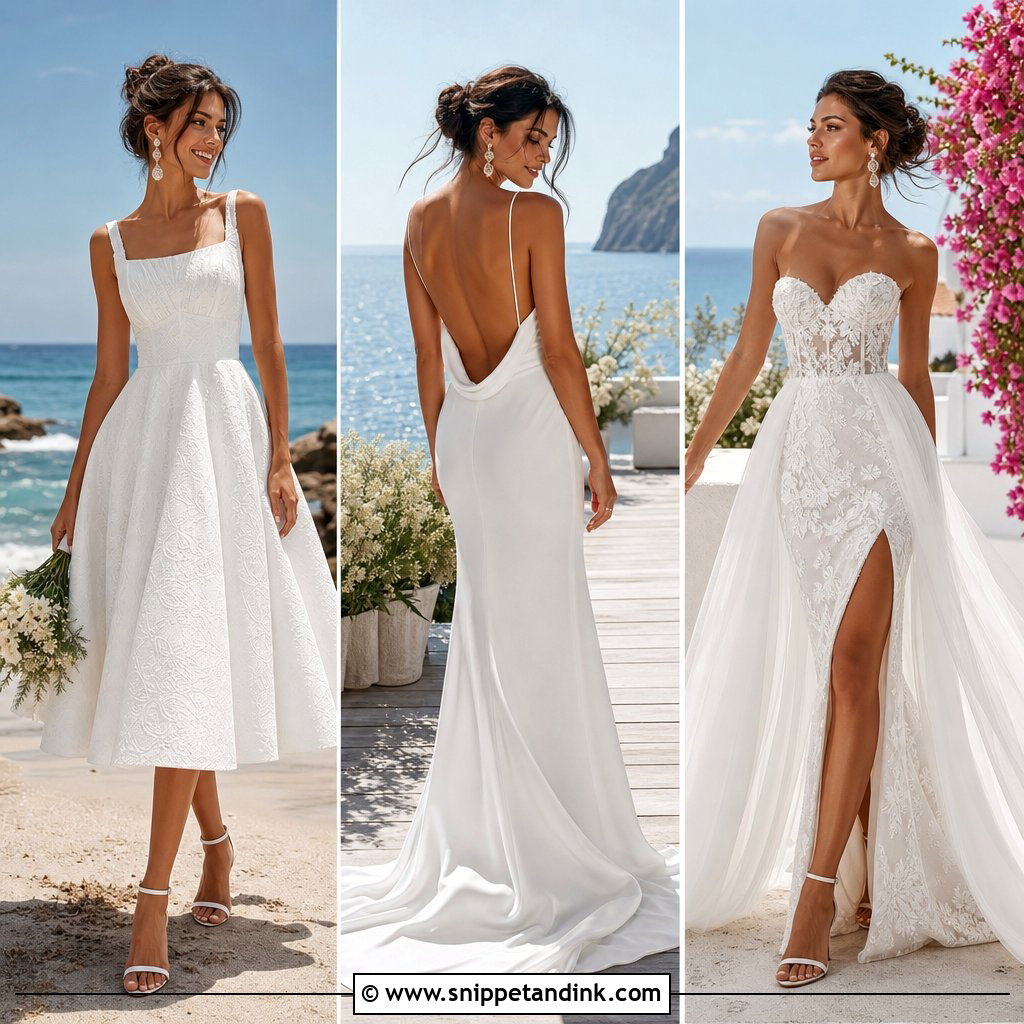

25. Maternity Wedding Dress
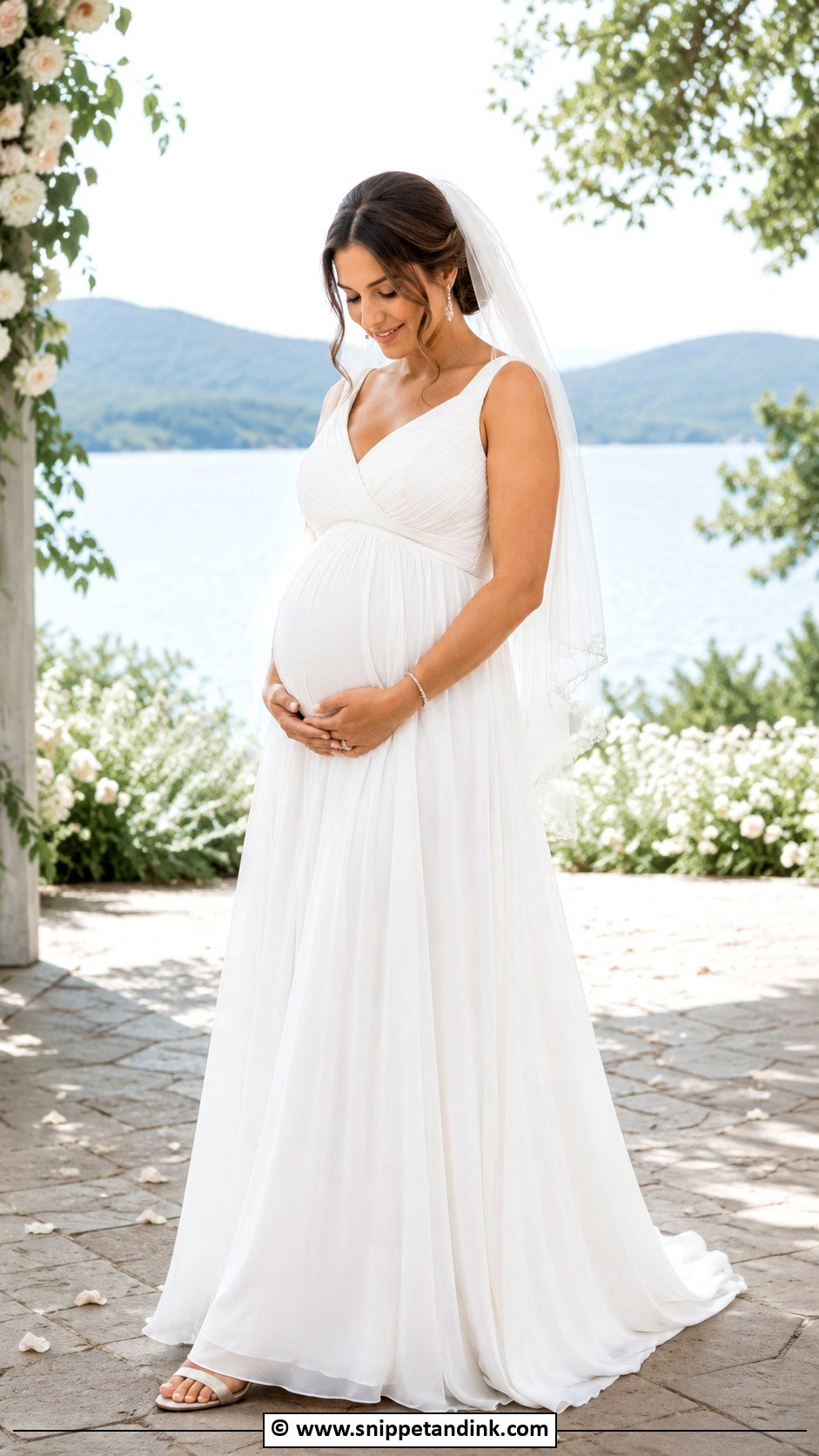
Comfort has to come first in a maternity wedding dress, and the fit should be planned around how much the bump may grow between the last fitting and the date. Empire waists give room through the belly by falling from under the bust. Soft chiffon, stretch crepe and light tulle move well. Lace-up backs, adjustable straps or a soft wrap bodice allow for change. I’d pair it with cushioned sandals or low heels, delicate earrings and a light veil.
26. Short Sleeve Wedding Dress
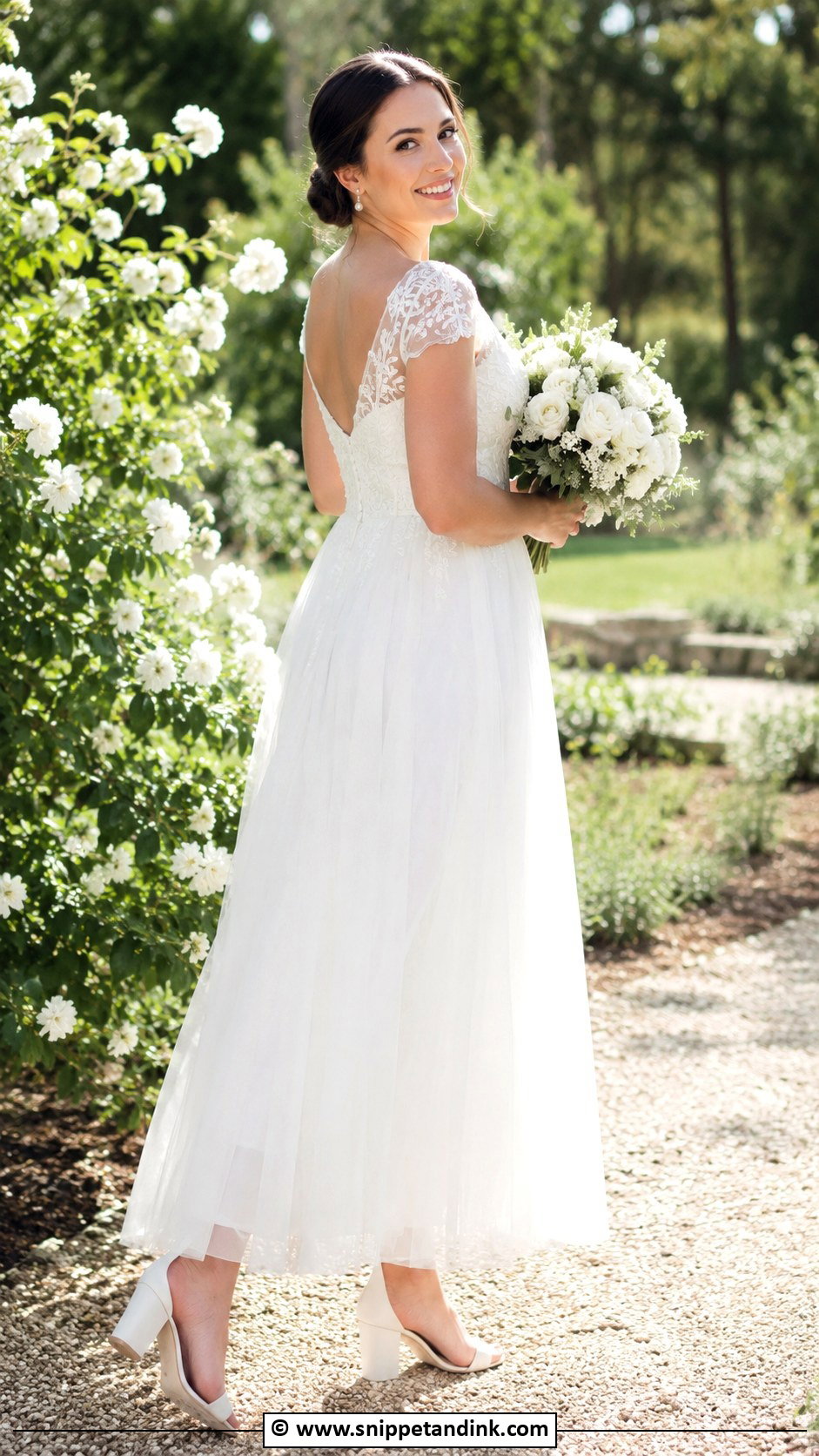
Short sleeves give light coverage without the warmth of full sleeves. Flutter, cap or sheer lace sleeves suit chiffon, tulle and organza skirts because they move the same way. Spring and summer outdoor weddings are a good fit. A soft updo, small pearl earrings and block heels finish it.
27. Flutter Sleeve Wedding Dress
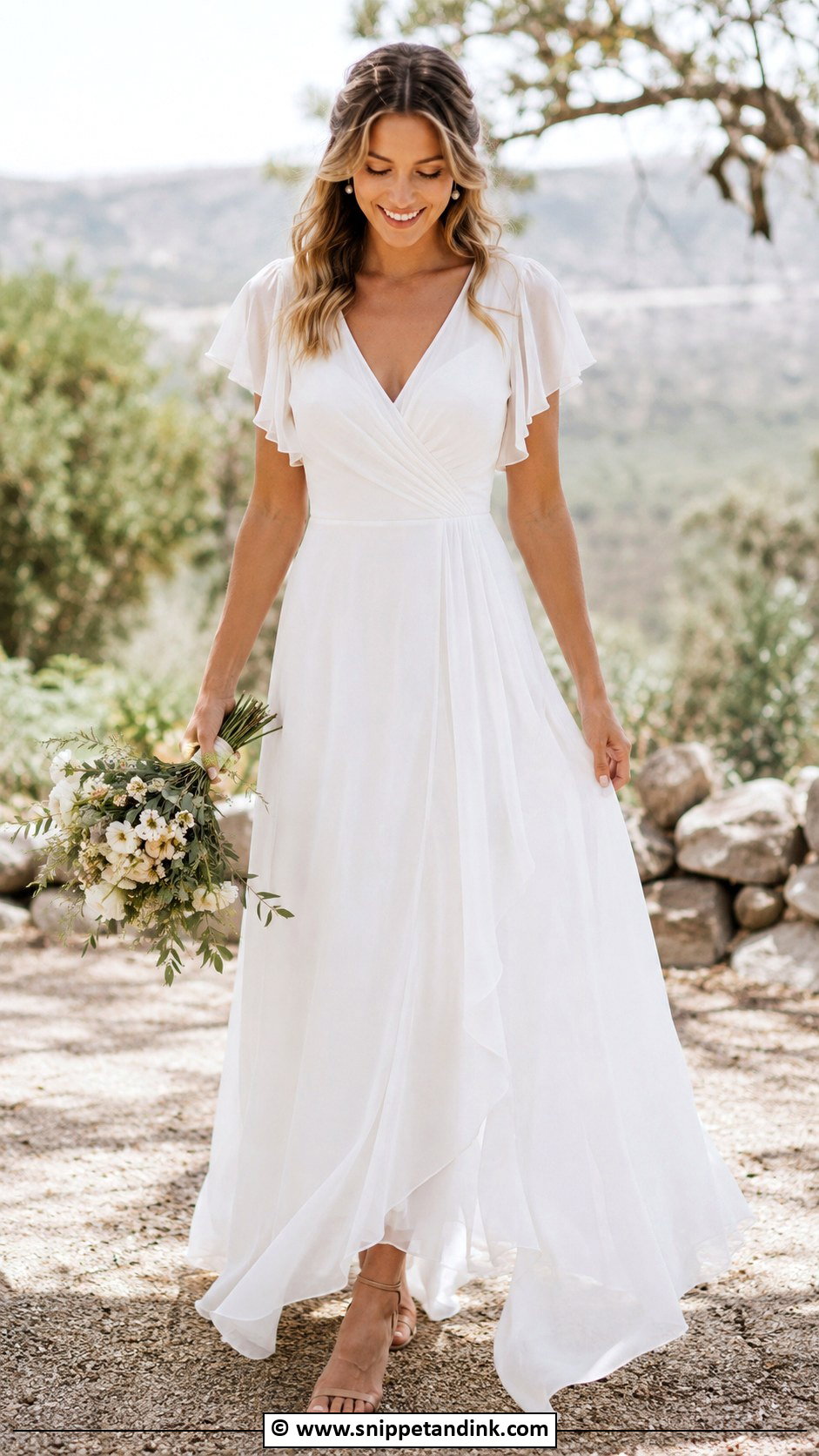
Flutter sleeves carry the movement up from the skirt to the shoulders, so the whole gown sways as you walk. They give arm coverage that still breathes, which matters in warm weather. Chiffon, soft tulle or fine lace work best, with a V, square or wrap neckline. I’d keep the jewelry delicate and the hair loose, with sandals or heels and a sheer veil. Gardens, beaches and relaxed outdoor ceremonies suit it.
28. Wedding Dress With Cape
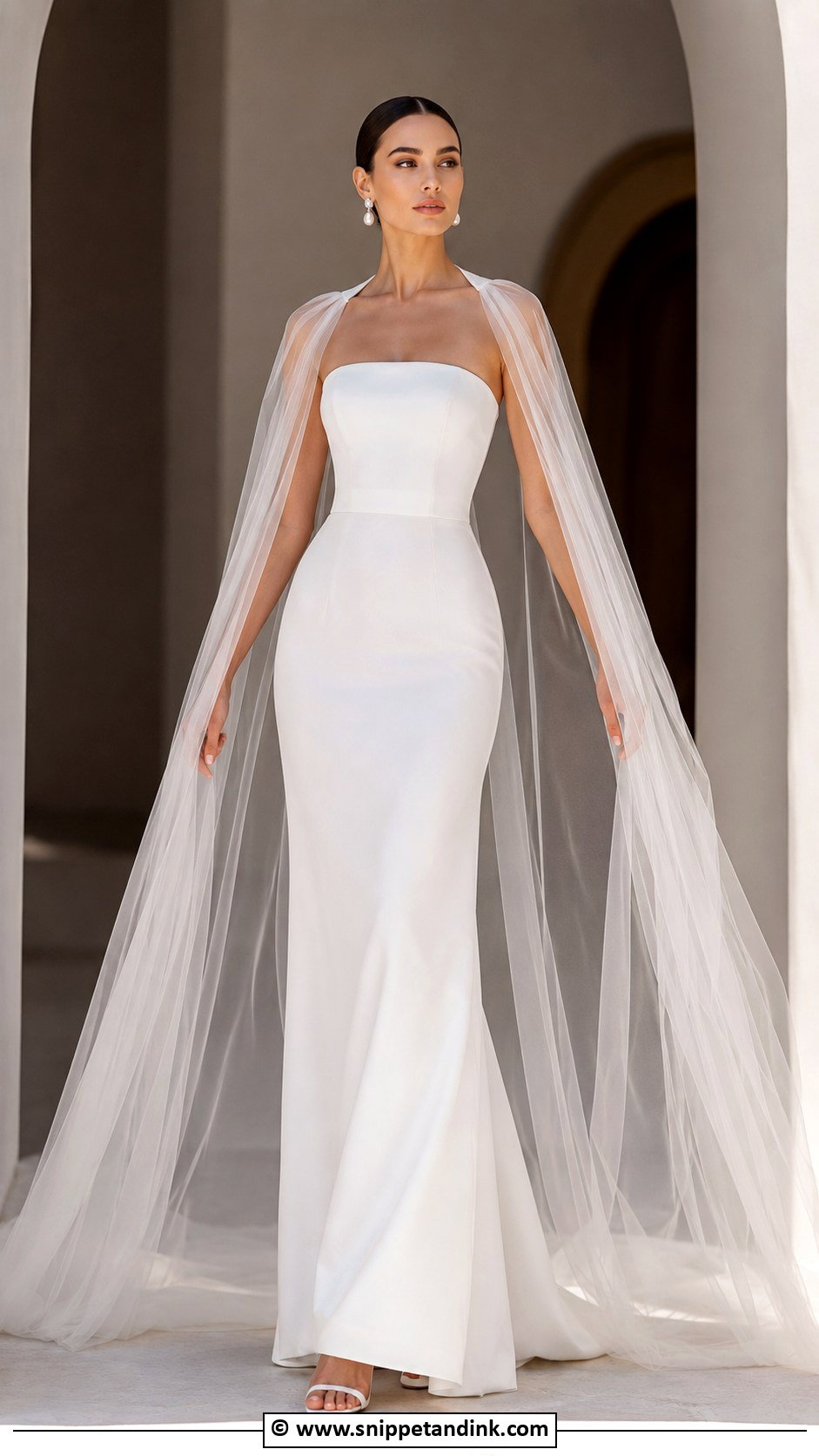
A cape gives you the movement of a veil without anything in your hair. Sheer tulle, chiffon or organza floats behind you on the walk and looks good from every angle. It pairs best with plain gowns: slips, strapless styles or fitted bodices with flowy skirts. A short capelet is soft; a long cape is dramatic. Check whether it clips or ties on, since clips at the shoulder seams are easiest to remove for the reception. Keep the jewelry simple.
29. Wedding Dress With Chiffon Scarf
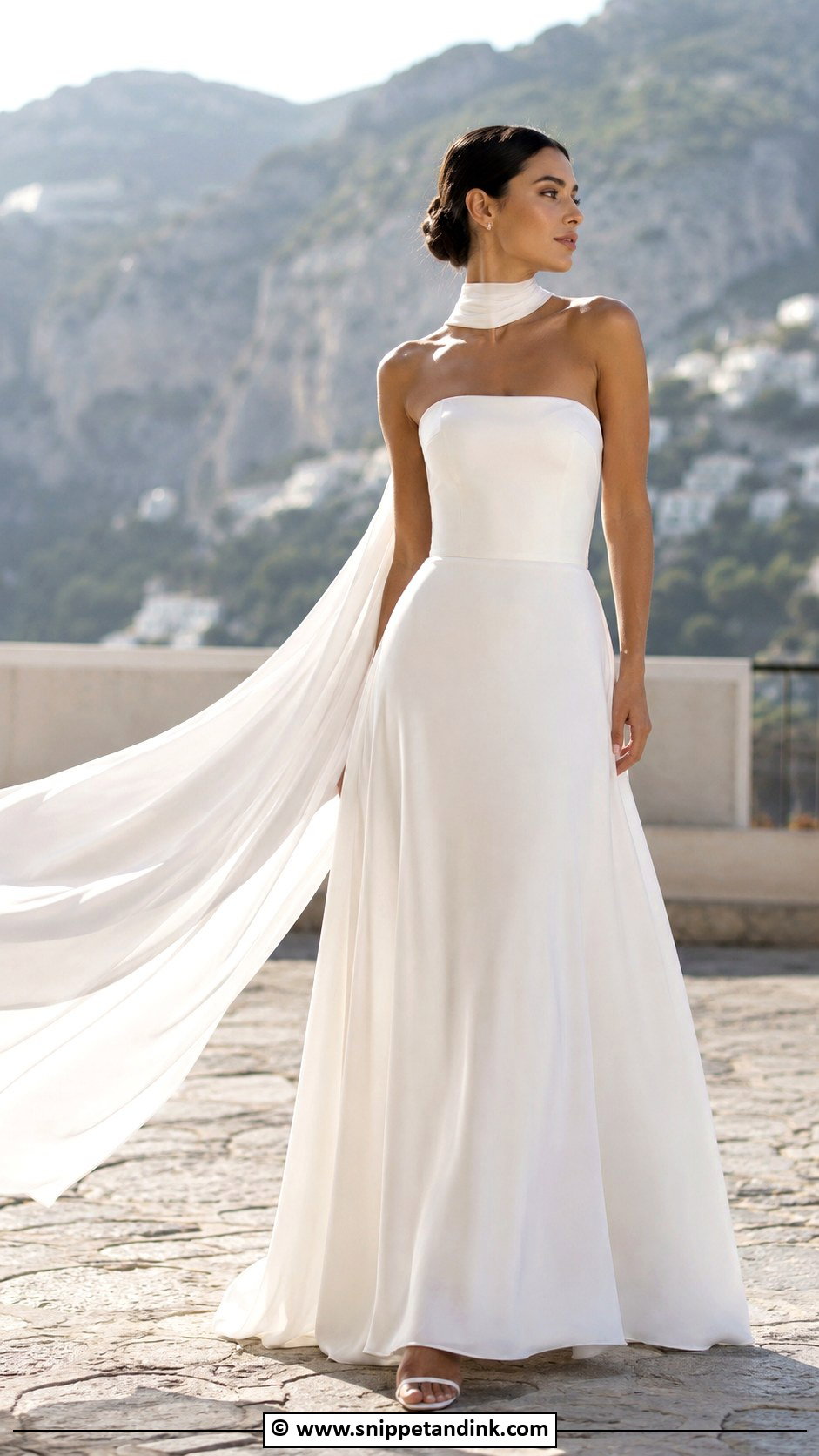
A wedding dress with a chiffon scarf lets the scarf supply all the motion while the gown underneath stays simple. Drape it around the neck, tie it loosely at the back or fix it to the shoulders like a cape. A strapless gown, a slip or a clean A-line suits it. Chiffon catches every breeze, which is wonderful for outdoor portraits but means it needs a few hidden stitches or pins in wind. A sleek bun, small earrings and simple heels finish it.
30. Detachable Overskirt Wedding Dress
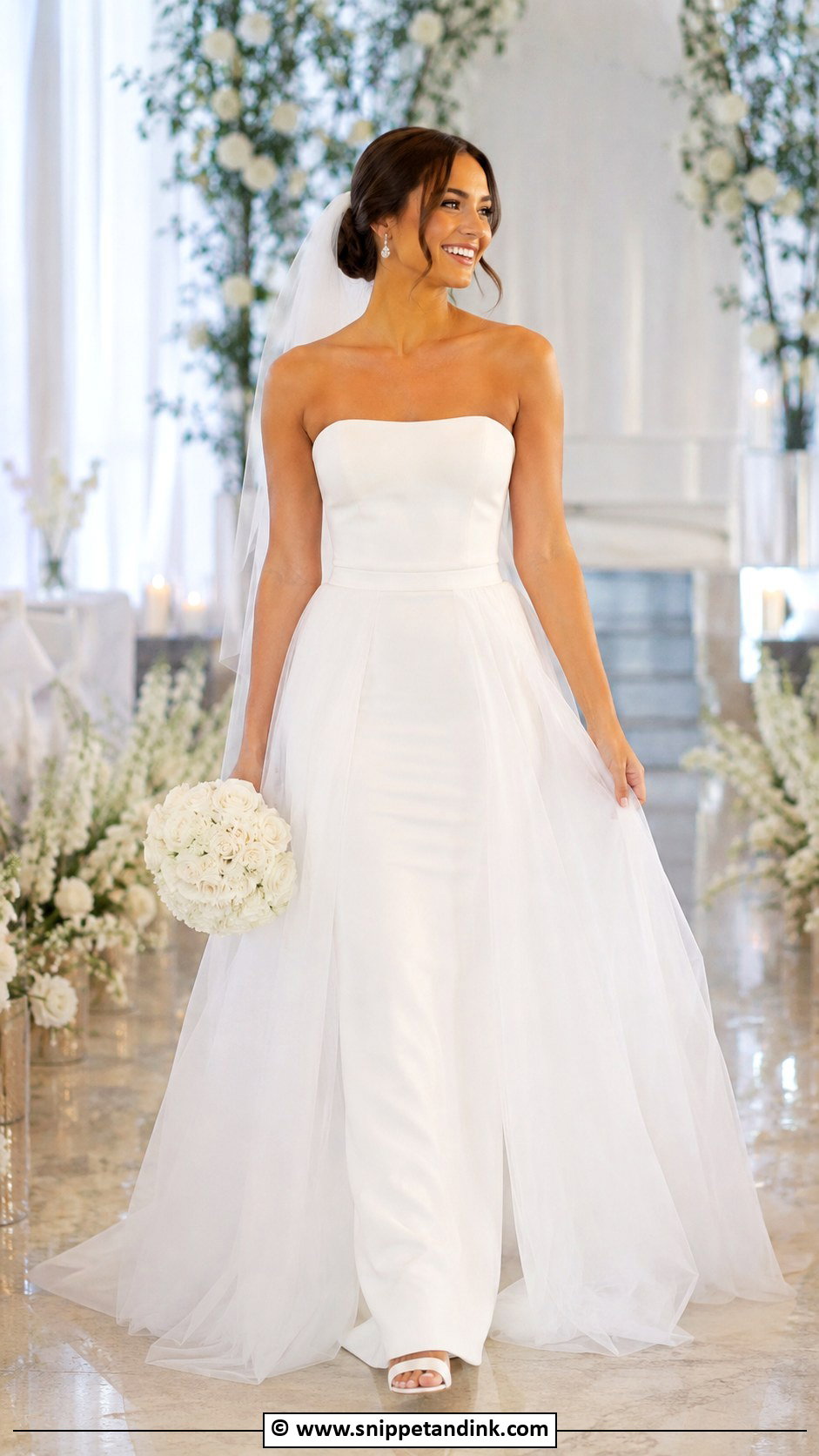
Two looks, one dress: a full overskirt for the ceremony, then off it comes for dancing. Tulle, organza and chiffon overskirts add movement without much weight. A fitted gown or slim A-line underneath gives the best balance. Practice taking it off once before the day, with whoever will help you, so the change takes minutes instead of half an hour. Simple heels, a clean veil and delicate jewelry keep both looks connected.
Wind, Static and Grass Stains on Light Fabrics
The qualities that make a dress flowy are the same ones that cause problems outdoors. None of them are reasons to avoid a light gown. They’re things to plan for.
Wind
Chiffon and sheer veils lift in even a light breeze. A small weight or a few hidden stitches tacking the veil to your hair keeps it from wrapping round your face, and a seamstress can add fine weights inside a chiffon hem if the venue is exposed. Pick a sweep train over a long one for clifftops and beaches.
Static
Polyester chiffon and tulle cling in dry, cool air, especially over tights or a synthetic slip. A light mist of anti-static spray on the underside of the lining, tested first on a hidden seam, usually settles it. A cotton or silk slip helps too.
The hem by evening
A floor-length light hem will pick up grass and dust by the end of the night. That’s normal, and it’s why I suggest hemming flowy gowns half an inch above the floor in your wedding shoes rather than letting them pool. For a long sweep train, plan a bustle before dancing so you’re not walking on it. Bring a white chalk stick and a stain pen for small marks, and dab rather than rub.
Does Your Dress Still Move When You Sit, Dance and Walk?
A flowy gown earns its place through how it moves and how it feels to wear. Chiffon, tulle, organza, lace, crepe and silk each move differently, and the silhouette changes the effect again, from A-lines and soft ball gowns to empire waists, slips, capes and detachable overskirts. Think about your venue, season, comfort and favorite neckline. The dress should look right in photos, but it also has to let you breathe, sit, eat and celebrate.
You'll Like These Ideas:


Leave a Reply