
An updo is the easiest way to look put together at an engagement party, and also the easiest way to look like you’re wearing a helmet. The difference is almost always softness. The updos I’m proudest of have a bit of give at the crown, a shape that’s interesting from behind, and enough pins in the right places that you stop thinking about your hair after the first hour. Good engagement hair right now leans toward textured low buns, relaxed French twists, braided details, curly volume and a few well-placed pearls. Below are fifteen updos, from very simple to quite dramatic, with my notes on who each one suits.
Your Neckline Decides Where the Updo Sits
Most people pick an updo from a photo and then try to make it fit the outfit. I work the other way round. The space around your neck and shoulders is what the updo frames, so I look at that first.
- High neck, collar or heavy embroidered blouse: go high or mid-height. A low bun crowds into the collar and gets crushed every time you sit back.
- Off-shoulder or sweetheart: a low bun, chignon or French twist shows the line of the neck and shoulders. A very high bun can make this neckline feel top-heavy.
- One-shoulder: a side bun on the bare side balances the asymmetry. On the strap side, everything bunches up on one side of the photo.
- Deep or open back: keep the nape clear. Pin any loose tendrils at the front only, or they’ll stick to skin during the evening.
- Dupatta or veil over the head: low or mid buns give the fabric something to rest on.
Earrings matter too. Big chandbalis or long drops look best with the hair fully off the ears, while small studs leave room for soft face-framing pieces.
1. Engagement Low Bun
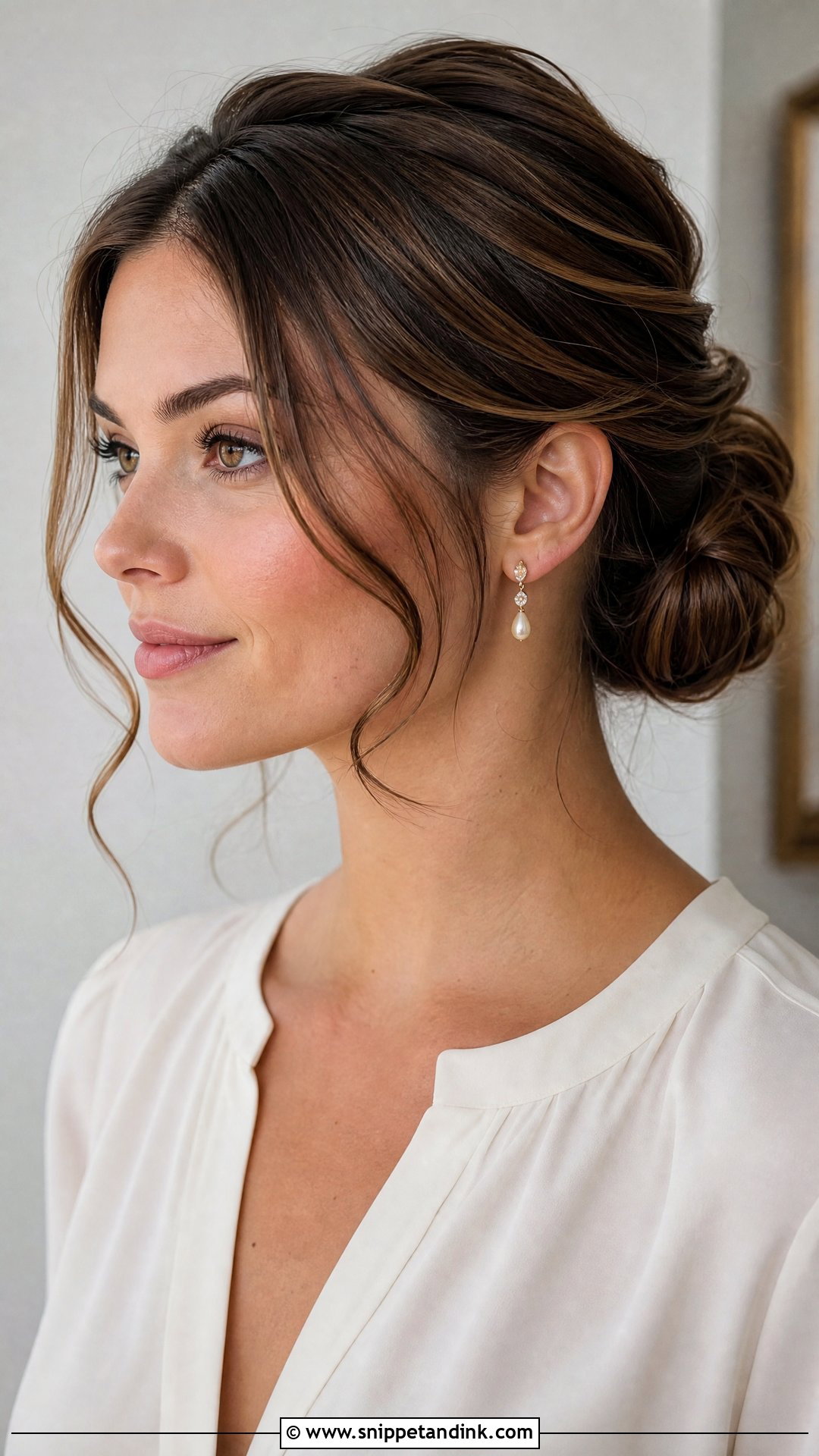
If a bride can’t decide, I usually build this one first. A low bun sits at the nape, so it gets out of the way of high necklines, off-shoulder outfits and big earrings alike. Soft volume at the crown and a few light face-framing pieces stop it from looking strict. The hold should come from hidden pins placed in a ring around the base, with a flexible spray on top, so the shape stays firm without feeling hard to the touch. Straight, wavy and curled hair all sit well in it.
2. Engagement Textured Low Bun
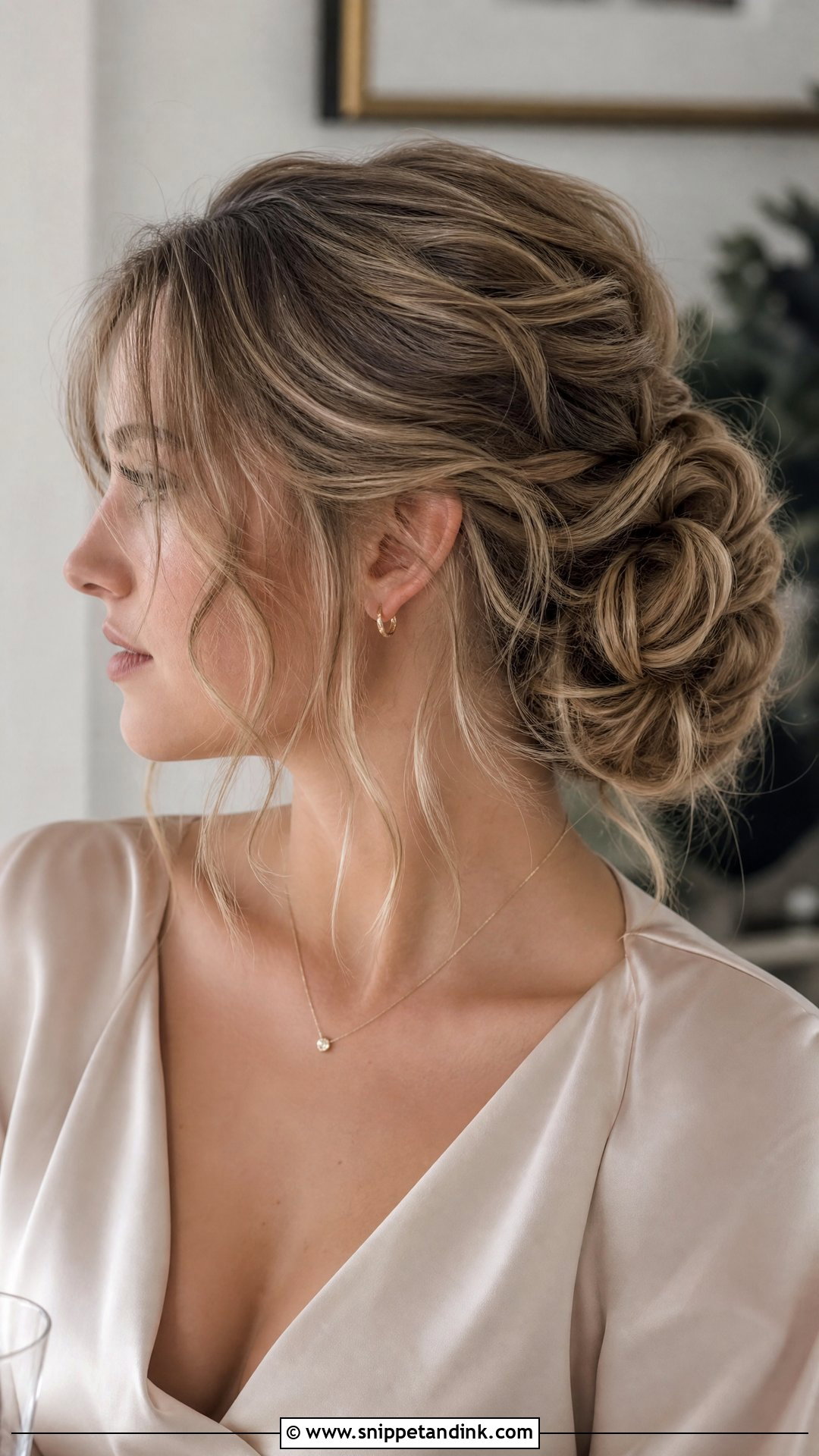
Texture is what lets a low bun look relaxed without looking unfinished. I curl the hair first, then pin it in loose sections so each twist keeps some of the wave and catches light separately. That dimension matters most next to lace, embroidery or shimmer, where a sleek bun can look flat beside the fabric. Leave a few airy pieces near the temples. The finish feels modern while still carrying enough polish for a meaningful engagement celebration.
3. Engagement French Twist
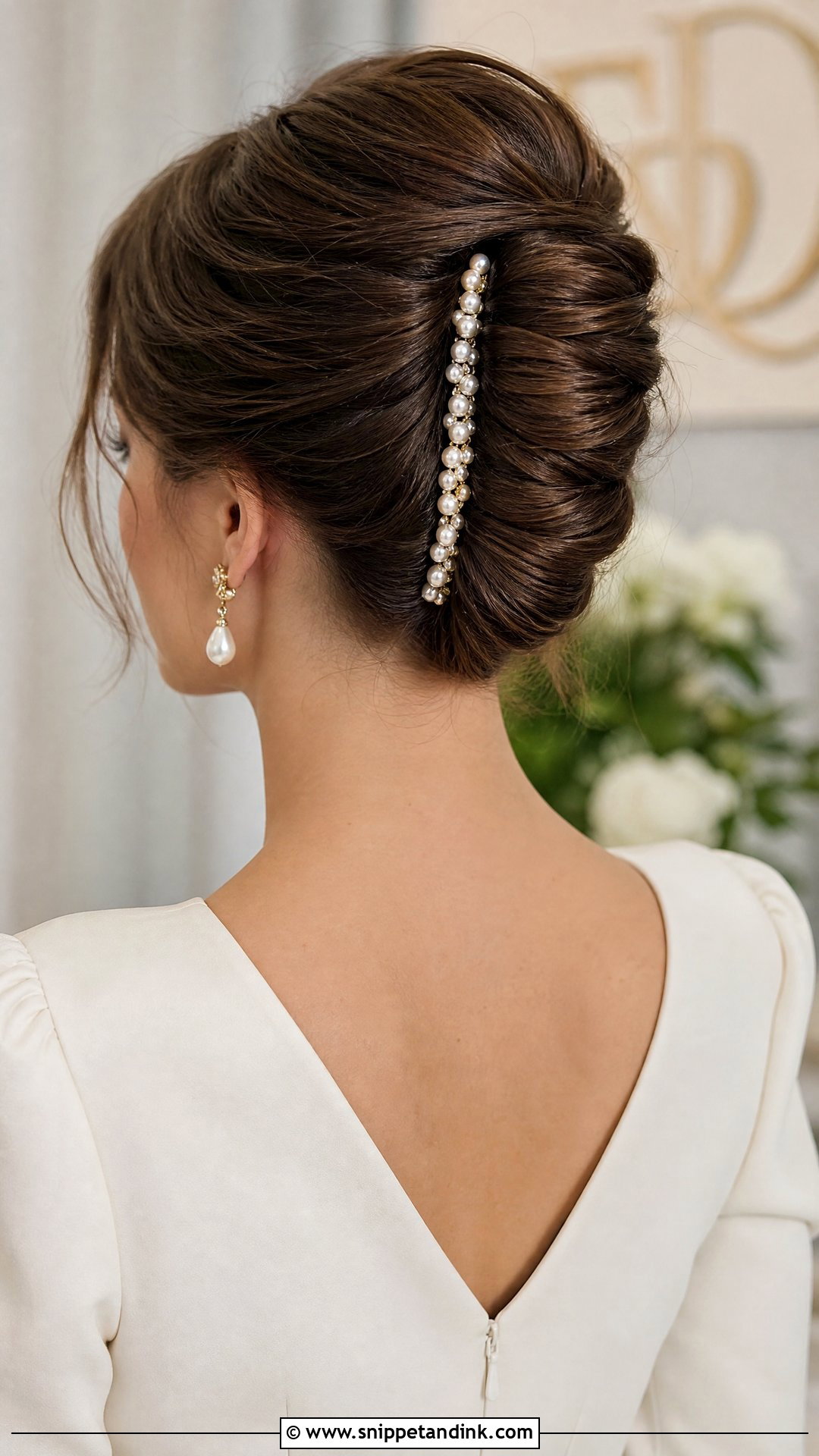
The French twist is a vertical roll up the back of the head, and it does more to lengthen the neck than any bun. I keep the top slightly soft rather than scraped flat, which is what makes it look current rather than formal-office. Medium to long hair works; very short layers poke out of the seam. The seam itself is where accessories go, so a slim comb or a line of pearl pins along it looks deliberate. Structured, satin and minimal outfits suit it best.
4. Engagement Braided Bun
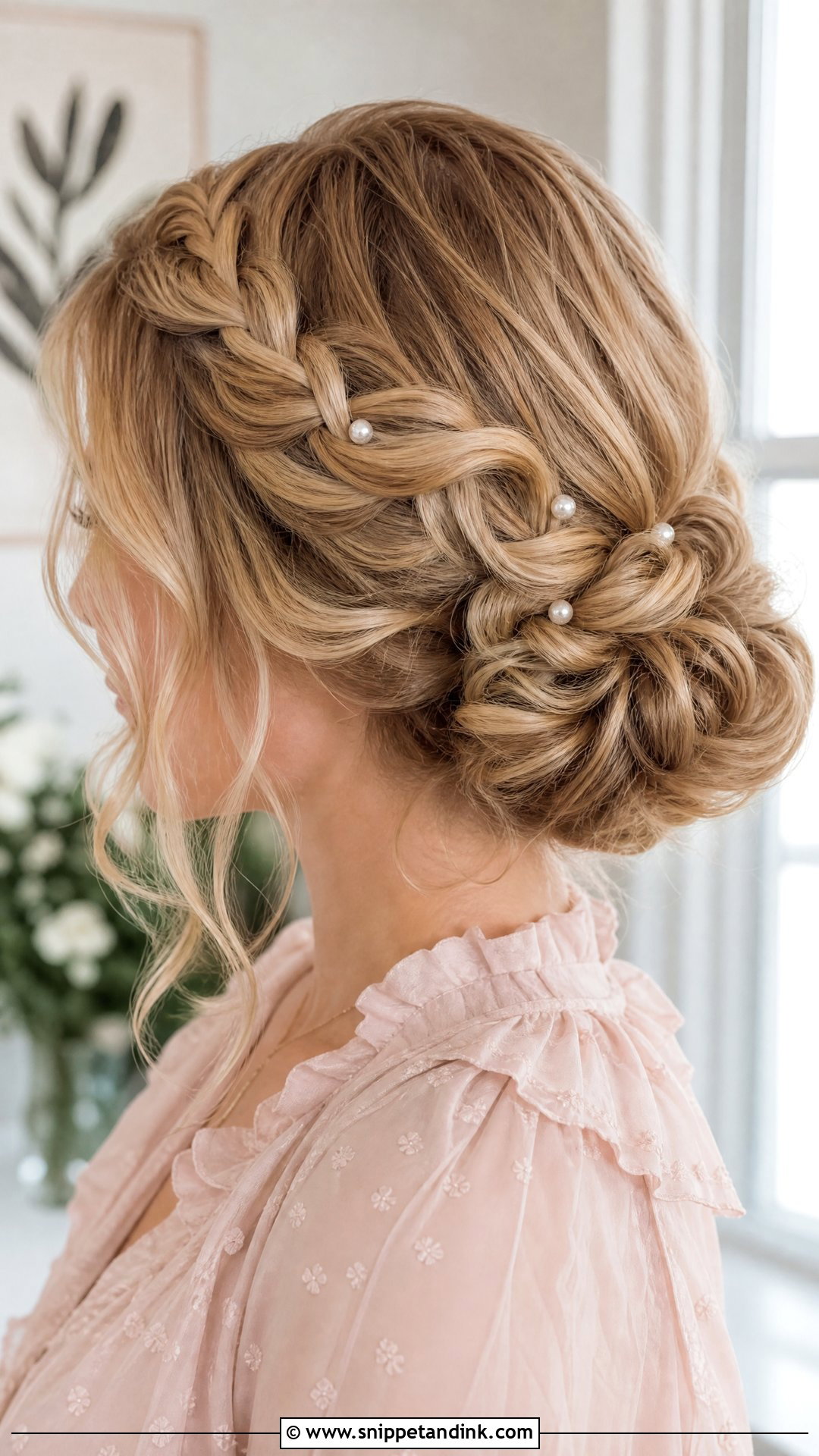
Braided buns photograph well up close because there’s detail on every side. The braid can wrap the bun, cross the crown or blend into the pinned shape. Where this style really earns its place is layered hair: shorter layers that would slip out of a plain bun get locked inside the braid. I loosen the braid slightly after pinning so it doesn’t look like a school plait. A few small pearls or one decorative pin give it a more bridal finish.
5. Engagement Curly Updo
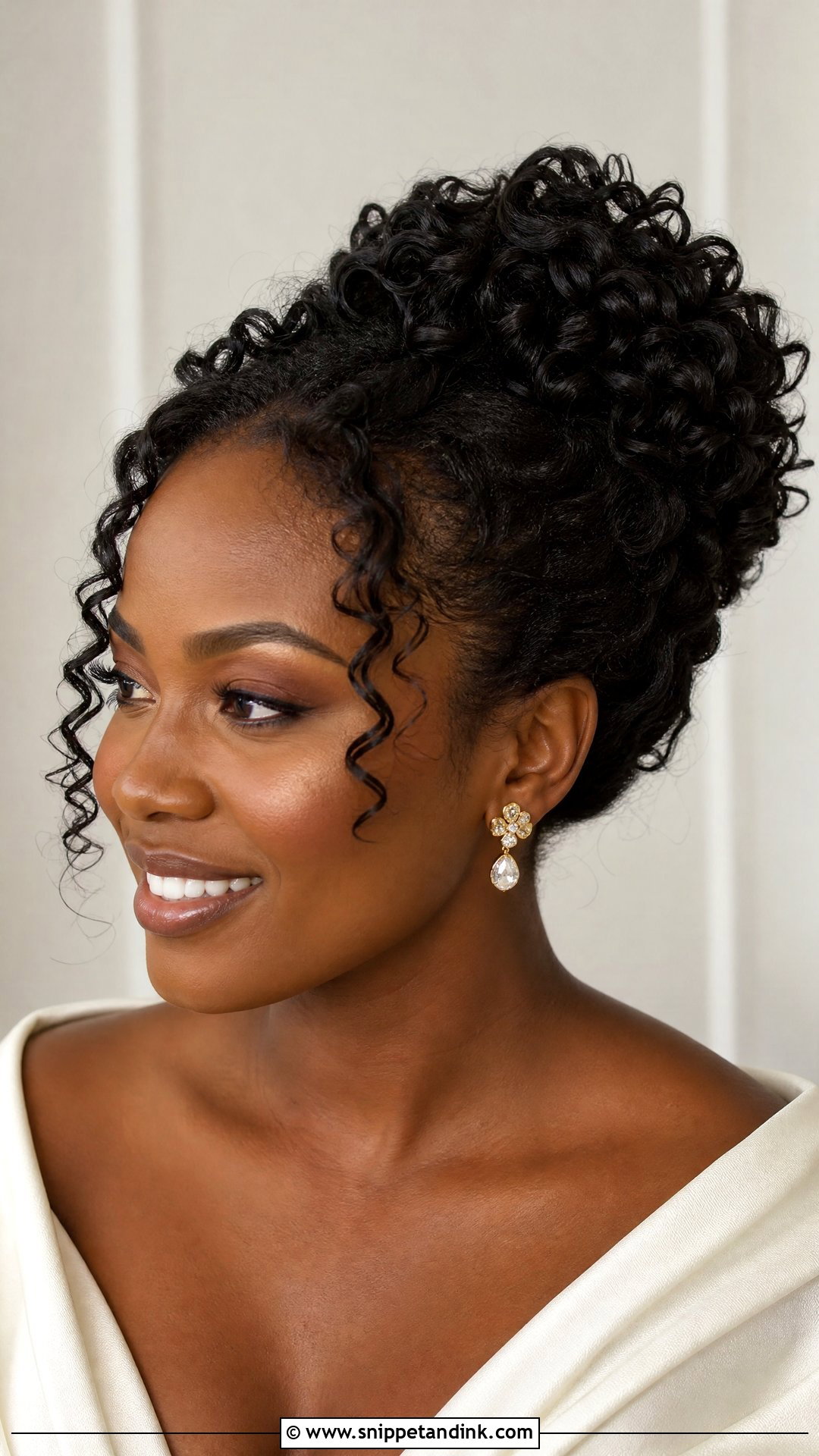
With a curly updo, I never brush the curls out. Define them first with curl cream or a light gel, let them set, then pin them into a rounded shape with some curls sitting higher at the crown and others framing the sides and back. Pins go in under the curls, not through them, so the pattern stays intact. It has an expressive, happy energy that suits engagement parties well. Humidity is the main risk, so a final mist of anti-frizz spray is worth it.
6. Engagement High Bun
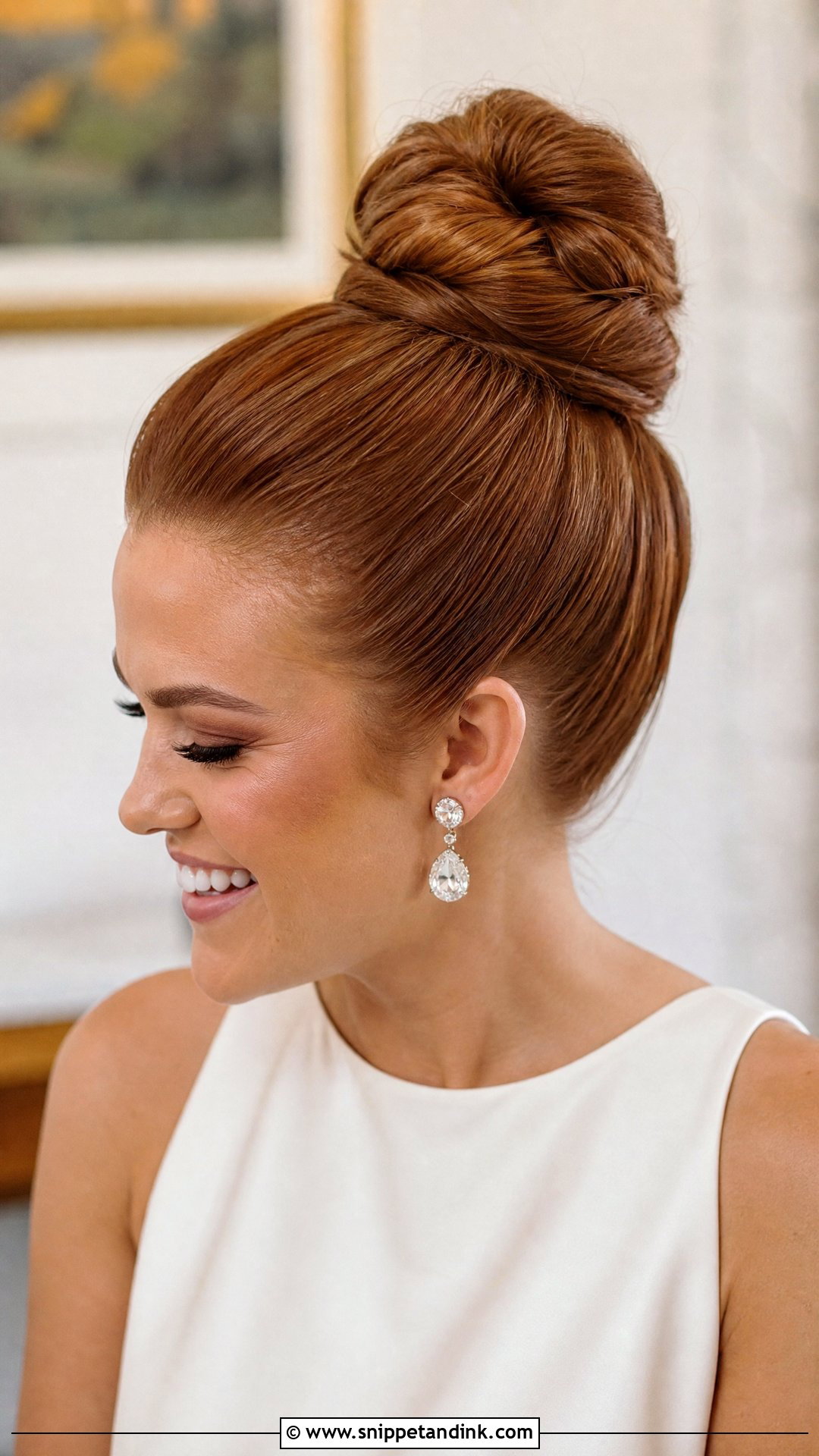
A high bun lifts everything: the eye moves up, the cheekbones look sharper, and statement earrings get room to show. For an engagement I make it full but not tight, with soft volume at the front and a smooth wrapped base. It’s also the coolest option on a hot day because nothing touches the shoulders. Sleek or textured both work. The one thing I’d check is your dupatta or veil, because a high bun pushes fabric into an awkward peak.
7. Engagement Messy Bun
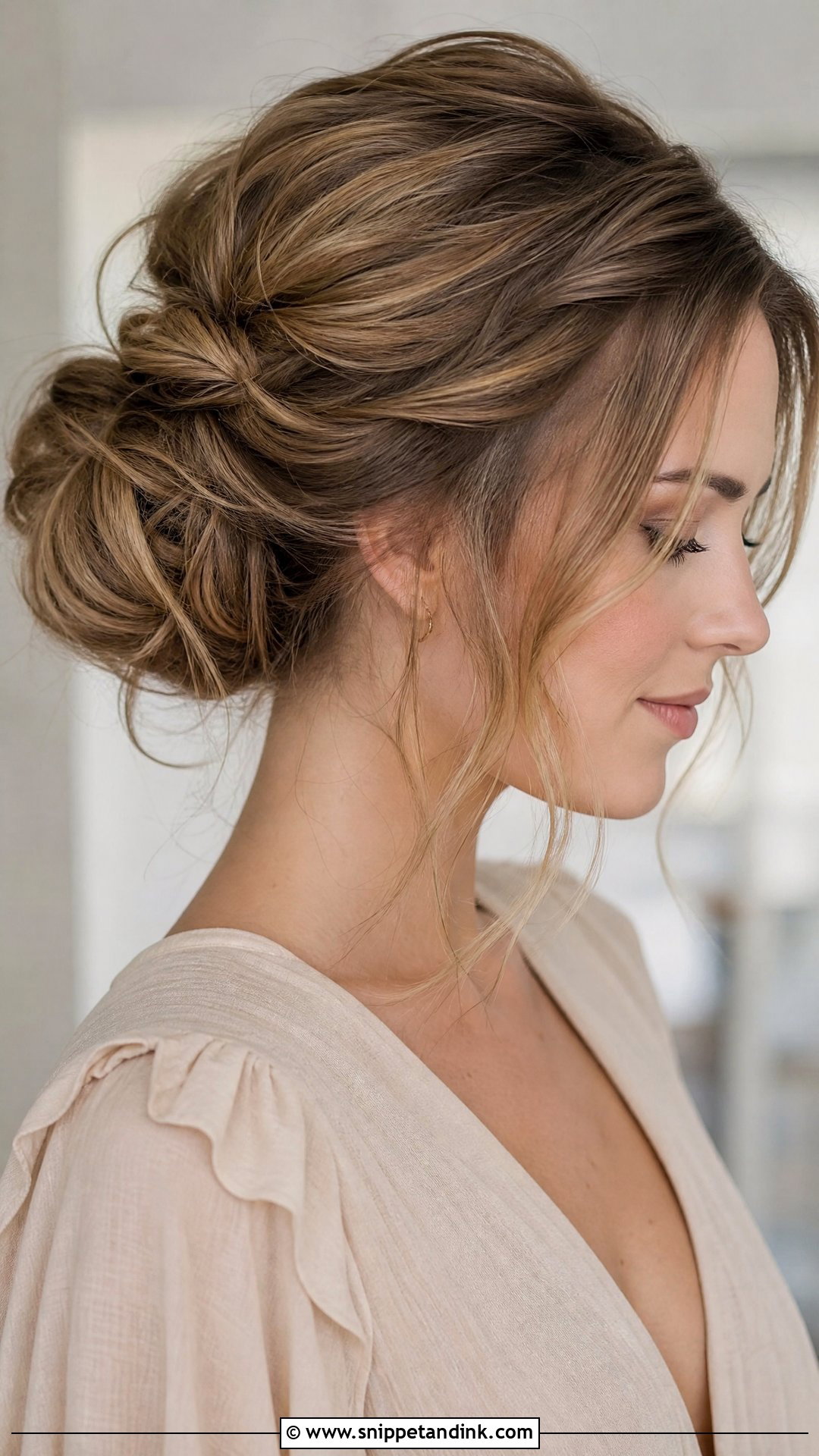
Messy buns need more control than people expect. I start with waves, pin the hair into a low or mid-height bun with visible texture, then decide on the loose pieces last, one by one. The crown stays smooth enough to read as polished. Gardens and relaxed parties suit it, as do floaty, romantic fabrics. A flexible hairspray lets the bun move a little through hugs and dancing; a stiff one makes the loose pieces look crunchy by evening.
8. Engagement Sleek Chignon
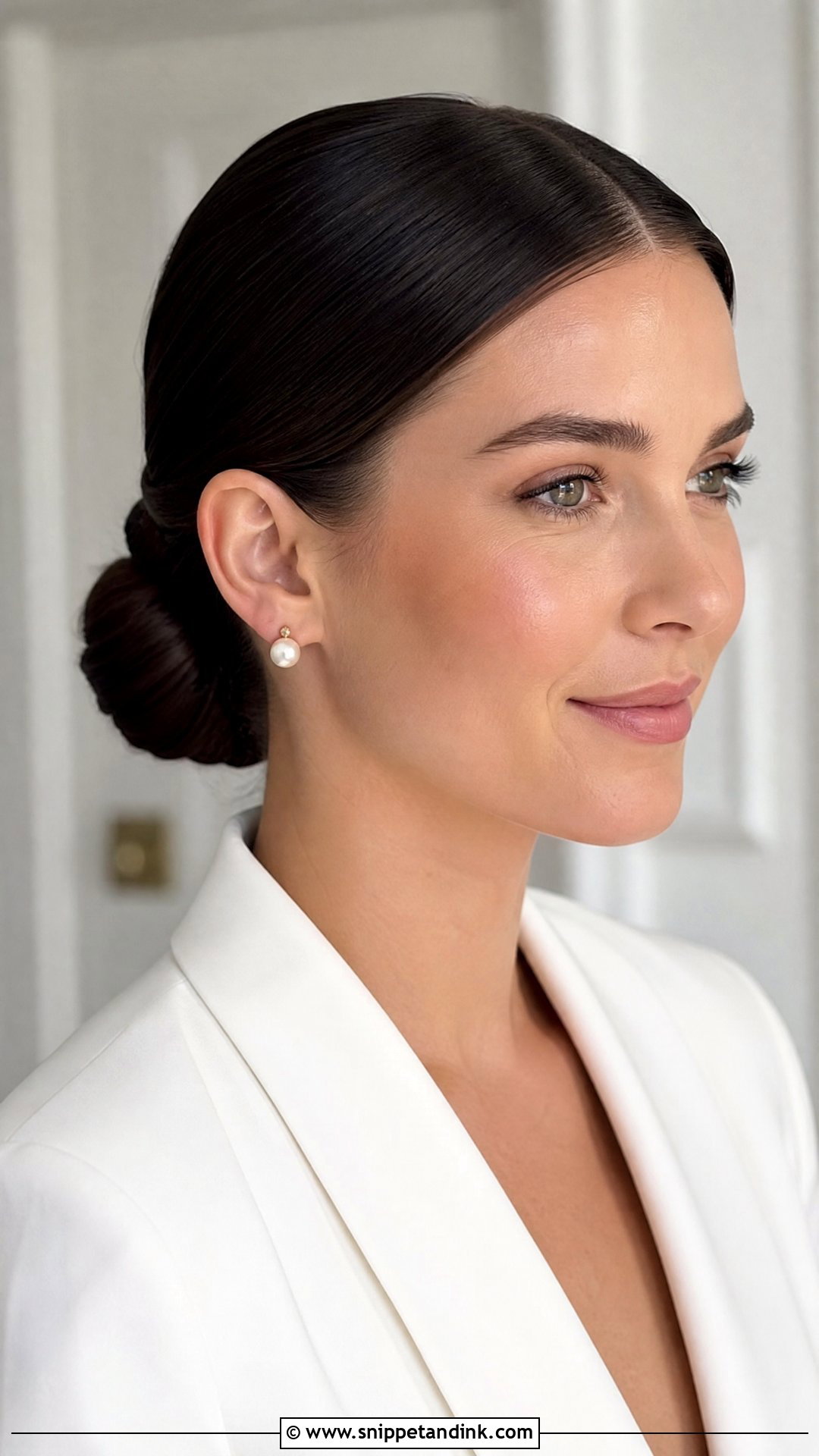
A sleek chignon is clean lines and nothing else, so preparation is everything. I blow-dry the hair smooth before pinning, because any kink at the root shows once the hair is pulled back. Middle part for something fashion-led, side part for something softer. Smoothing cream controls flyaways, but too much makes the hair look wet and heavy under camera flash. It sits comfortably with tailored outfits and simple jewellery.
9. Engagement Side Bun
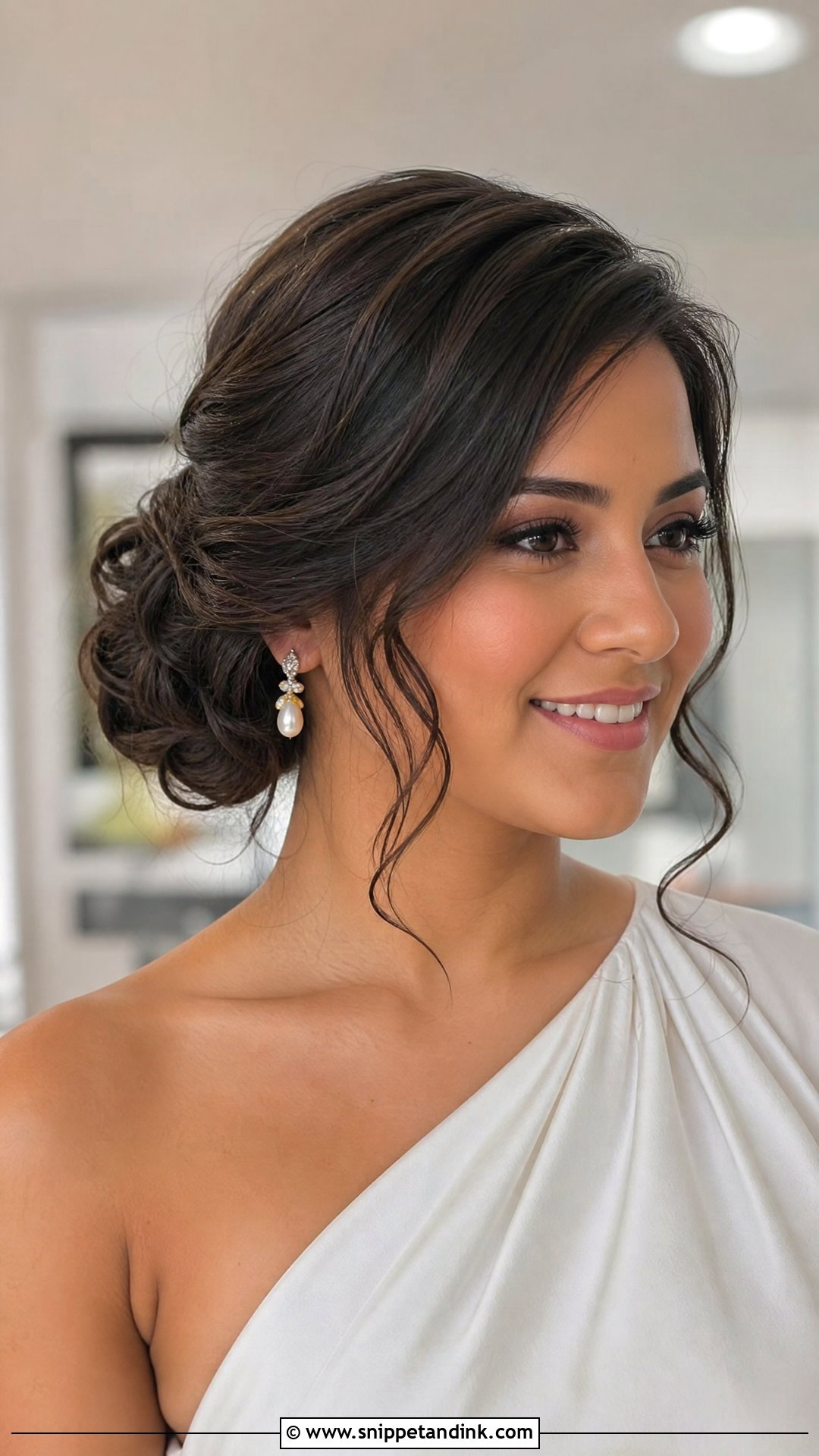
A side bun works best on the side you naturally turn toward the camera, so I ask clients to show me their favourite angle before I place it. Sitting off-centre, it softens the whole outline. Curls, twists, braids or smooth sections can all form the bun. Keep it low, near the jawline or nape, and leave a strand or two at the face for balance. It pairs neatly with one-shoulder outfits and suits both formal and semi-formal celebrations.
10. Engagement Half Updo
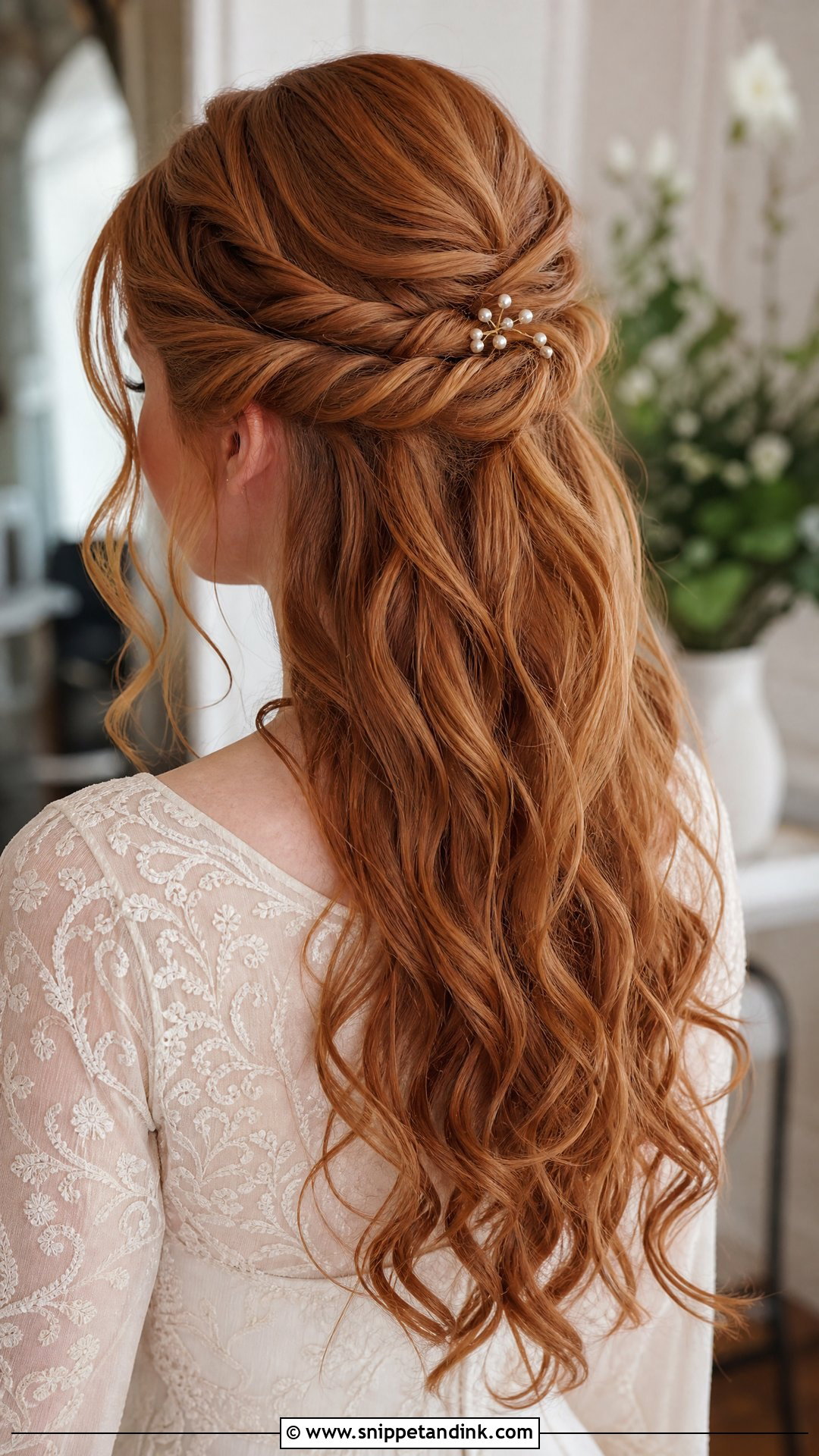
Strictly speaking, a half updo is half down, but it’s the answer for anyone who wants loose hair with some control. The top section is twisted, pinned or braided back while the lengths fall in waves. Long hair shows its shine and colour this way. My caution: loose lengths tangle under a heavy embroidered blouse or a necklace clasp over a long evening, so I set the curls firmly and keep a comb in the touch-up kit. A small comb or a few pearl pins can cover the join.
11. Engagement Twisted Updo
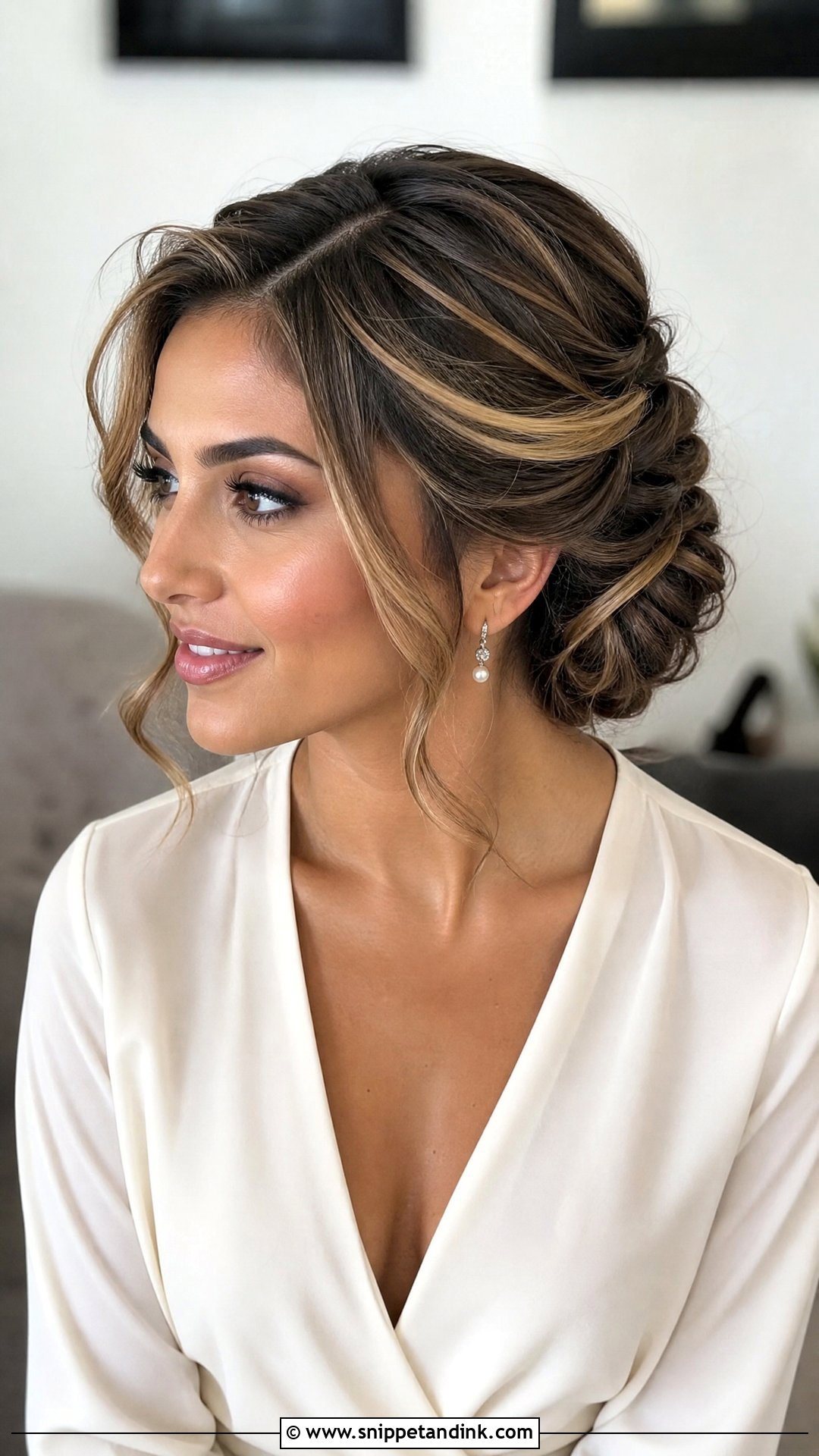
Twisted updos give detail without the time a braid takes. Sections are rolled and pinned together into a soft woven effect at the back. Highlighted or balayage hair looks particularly good here because each twist turns a different tone toward the light. I build the shape rounded and full when viewed from the side, since side-profile photos are where flat twists look thin. It can sit low, centred or slightly loose.
12. Engagement Crown Braid Updo
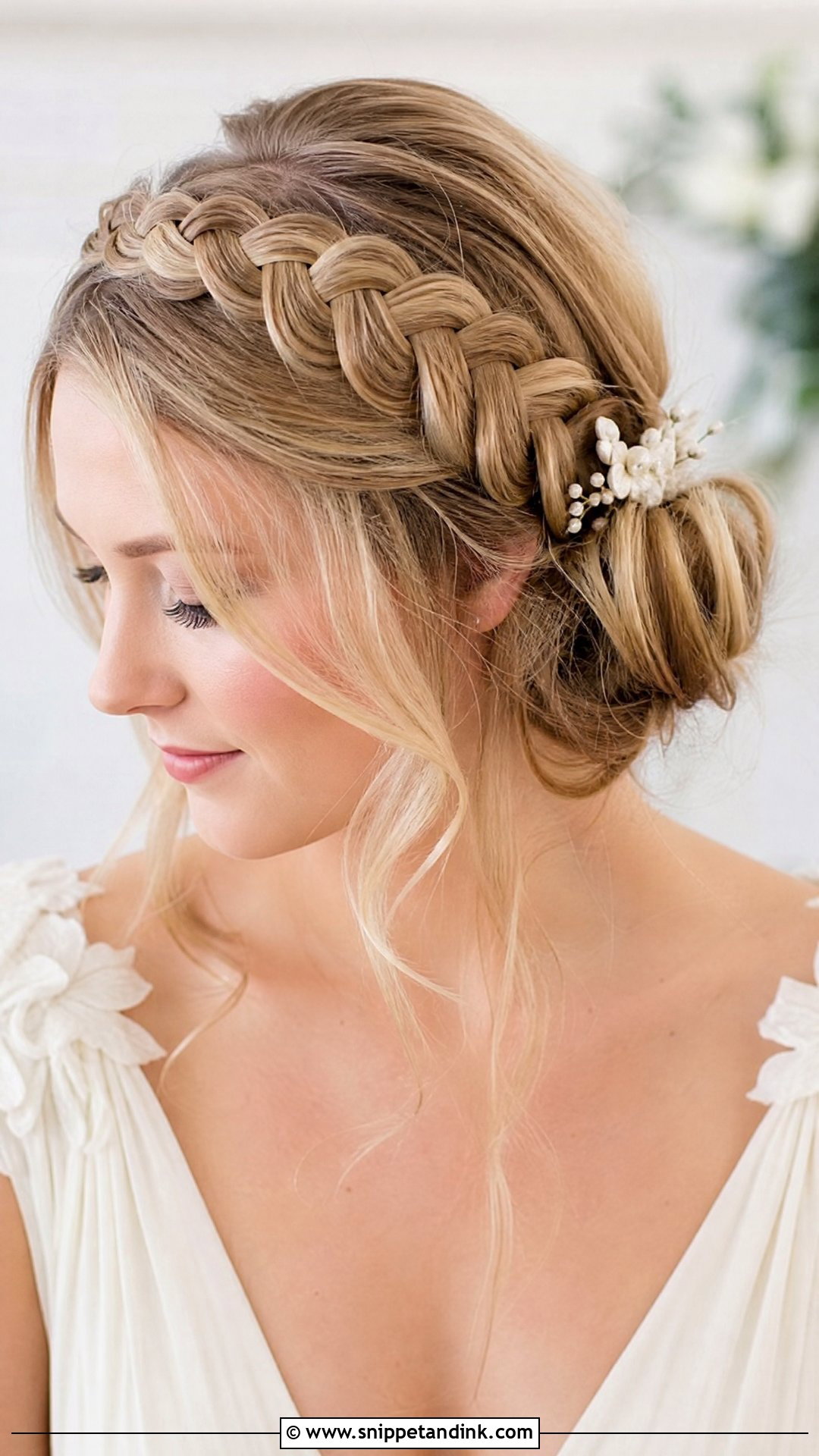
A crown braid updo gives a romantic, fairy-tale feel and is surprisingly practical. The braid wraps around the head or across the front, then joins a pinned bun or tucked finish, and because the braid is anchored at several points it holds the whole style together through a long evening. Loose and soft reads relaxed; tighter reads formal. I add small flowers or pearl pins only after the braid is fully secured, never woven in, so they can be adjusted later.
13. Engagement Pearl Bun
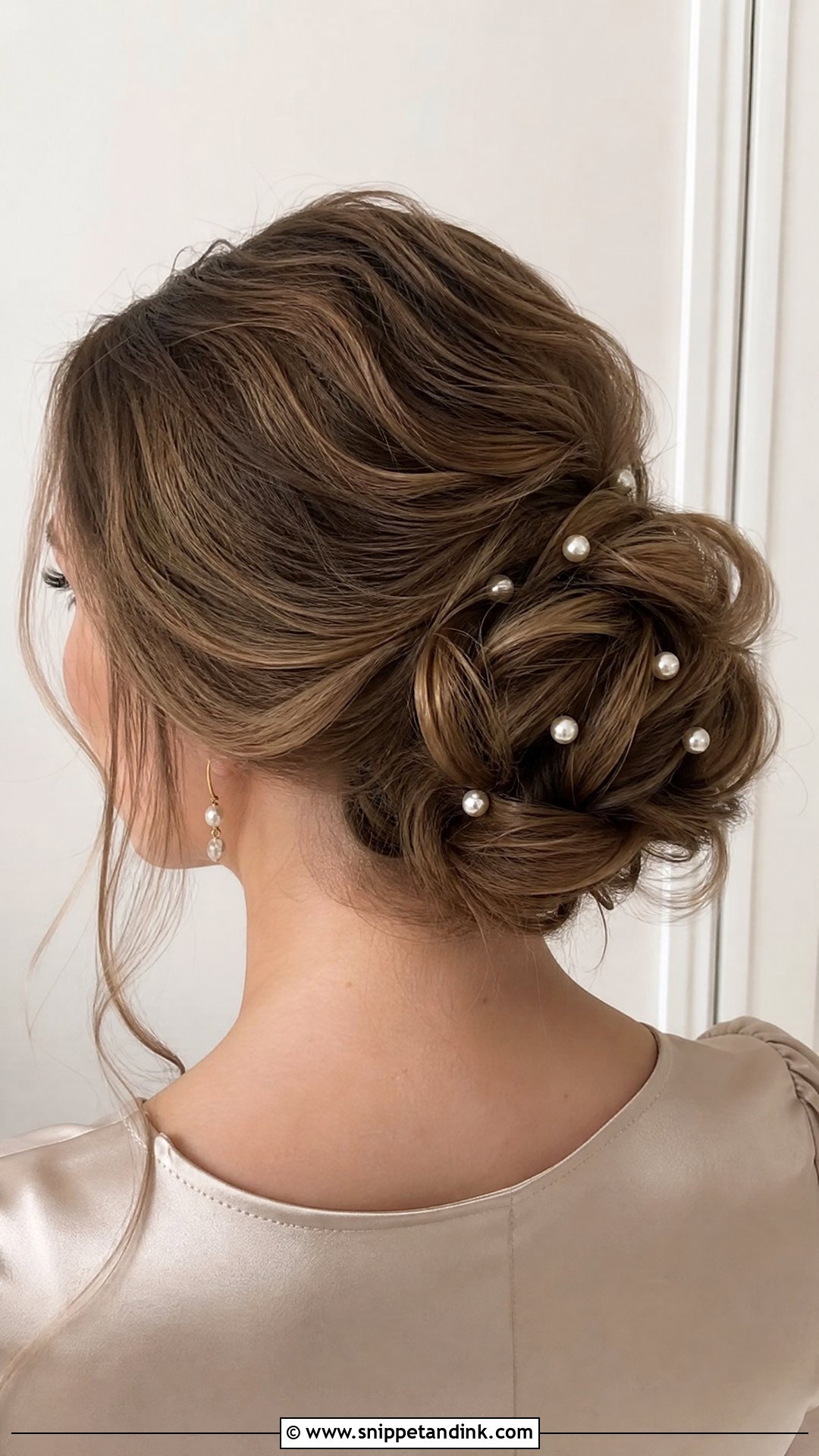
Pearls should accent an updo, not cover it. I build the bun first, whether low, textured or sleek, then place pins where the eye naturally travels: along a twist, at the edge of the bun, near the crown. Five or six well-spaced pearls look elegant; twenty start to look like a costume. They catch light gently in photos and tie in nicely with beading or satin on an outfit.
14. Engagement Floral Updo
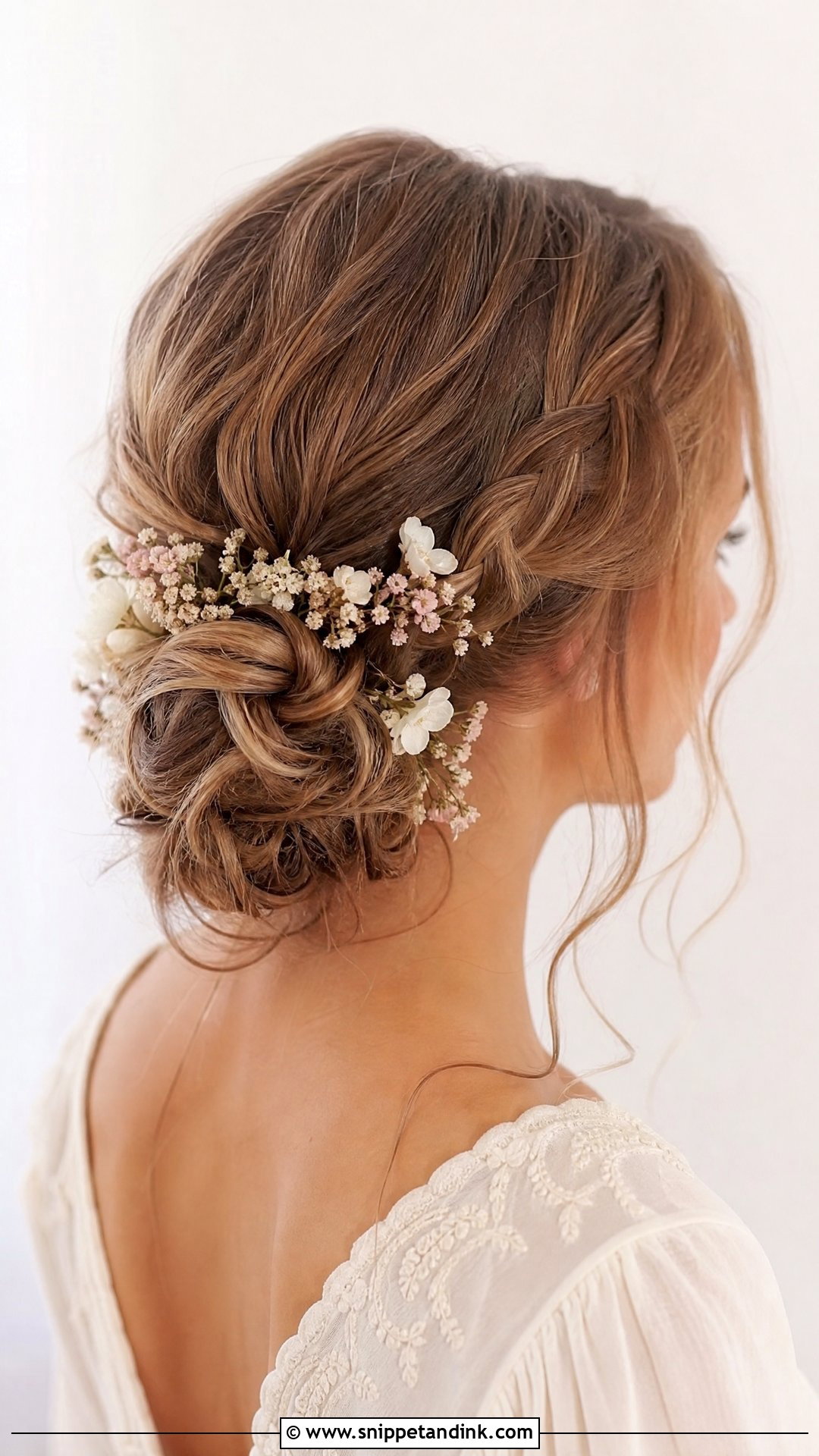
Fresh flowers in an updo need planning. Small clusters look more refined than one oversized bloom, and they’re easier to secure. I prefer hardy blooms like spray roses or baby’s breath for fresh work, because delicate petals bruise and wilt against a warm head within a few hours; silk flowers are the safer option for long outdoor events. They sit best in textured buns, crown braids and loose pinned curls. Keep the colours tied to your outfit or neutral, in ivory, blush or soft beige.
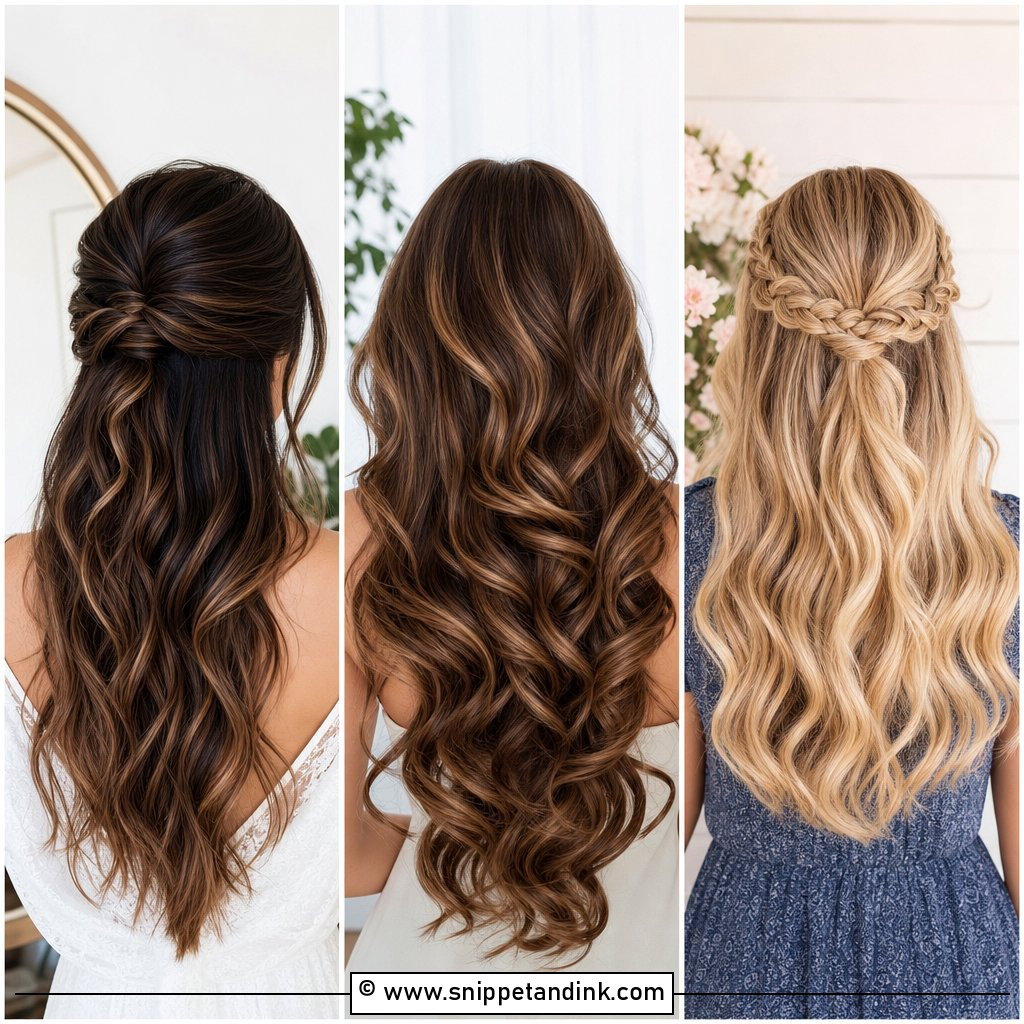
15. Engagement Voluminous Updo
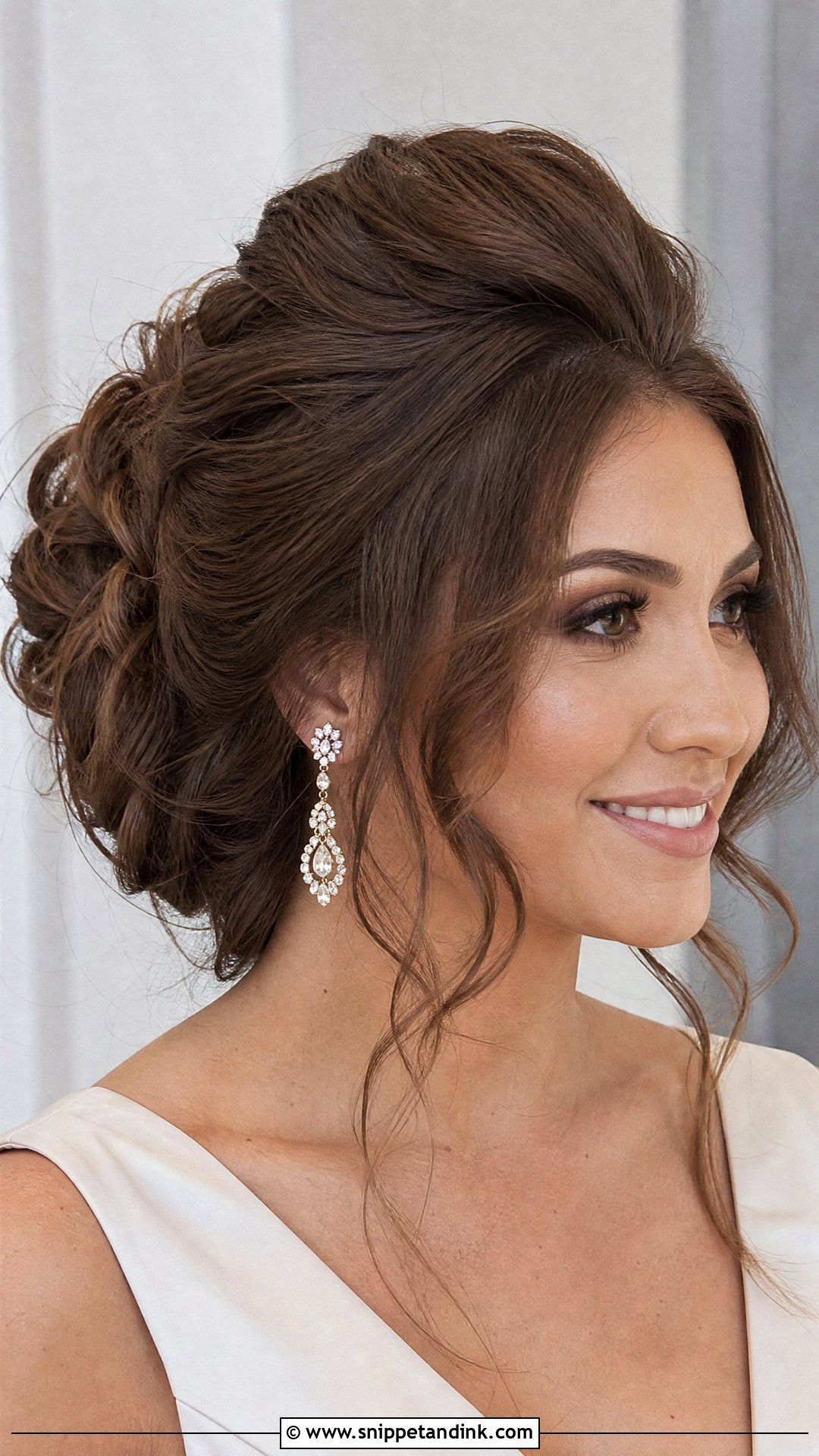
Volume at the crown gives the most photo impact of any updo here, with the back pinned into curls, twists or a full bun. It flatters round, heart and oval faces because the lift adds balance. I keep the front soft and leave a couple of pieces near the cheeks, otherwise the height looks stiff. Fine hair needs a padding piece or backcombing set with spray to hold that shape for hours. Dramatic sleeves and statement earrings sit well against it.
Why Some Updos Hurt by Hour Three
A headache under a pretty bun is common, and it’s rarely bad luck. Usually it’s one of three things: an elastic pulled too tight at the base, pins pushed straight into the scalp instead of along it, or a heavy accessory hanging off one spot. Tell your stylist at the start that you’ll be wearing it for six or seven hours. I build the base a little looser for long events and use more pins at lighter pressure.
Your own prep helps more than you’d think:
- Arrive with clean, completely dry hair, ideally washed the day before. Very fresh, silky hair slides out of pins and needs more of them.
- Wear a button or zip top to the appointment so you don’t drag a sweater over the finished style.
- At the trial, sit for twenty minutes after it’s done, then shake your head and hug someone. Tightness shows up then, not in the first two minutes.
- Ask where the main anchor pins are, so you can push one back in yourself if it loosens.
At the end of the night, take pins out slowly from the outside in, and brush through gently once a few drops of oil have softened the spray. Pulling a set updo apart in one go is how people lose a fistful of hair.
Soft Enough to Hug In, Firm Enough to Dance
Every updo here can look polished. What separates them is mood: a sleek chignon feels calm and tailored, a curly updo feels joyful, a floral one feels like a garden party. Start from your neckline and your hair texture, then pick the mood. Save a few inspiration photos that show the back and side, not just the front, and book a trial if your hair is layered, very thick, very fine or naturally curly, because those are the textures where a picture and real life differ most. If it still feels comfortable when you take it down that night, your stylist got it right.
You'll Like These Ideas:


Leave a Reply