
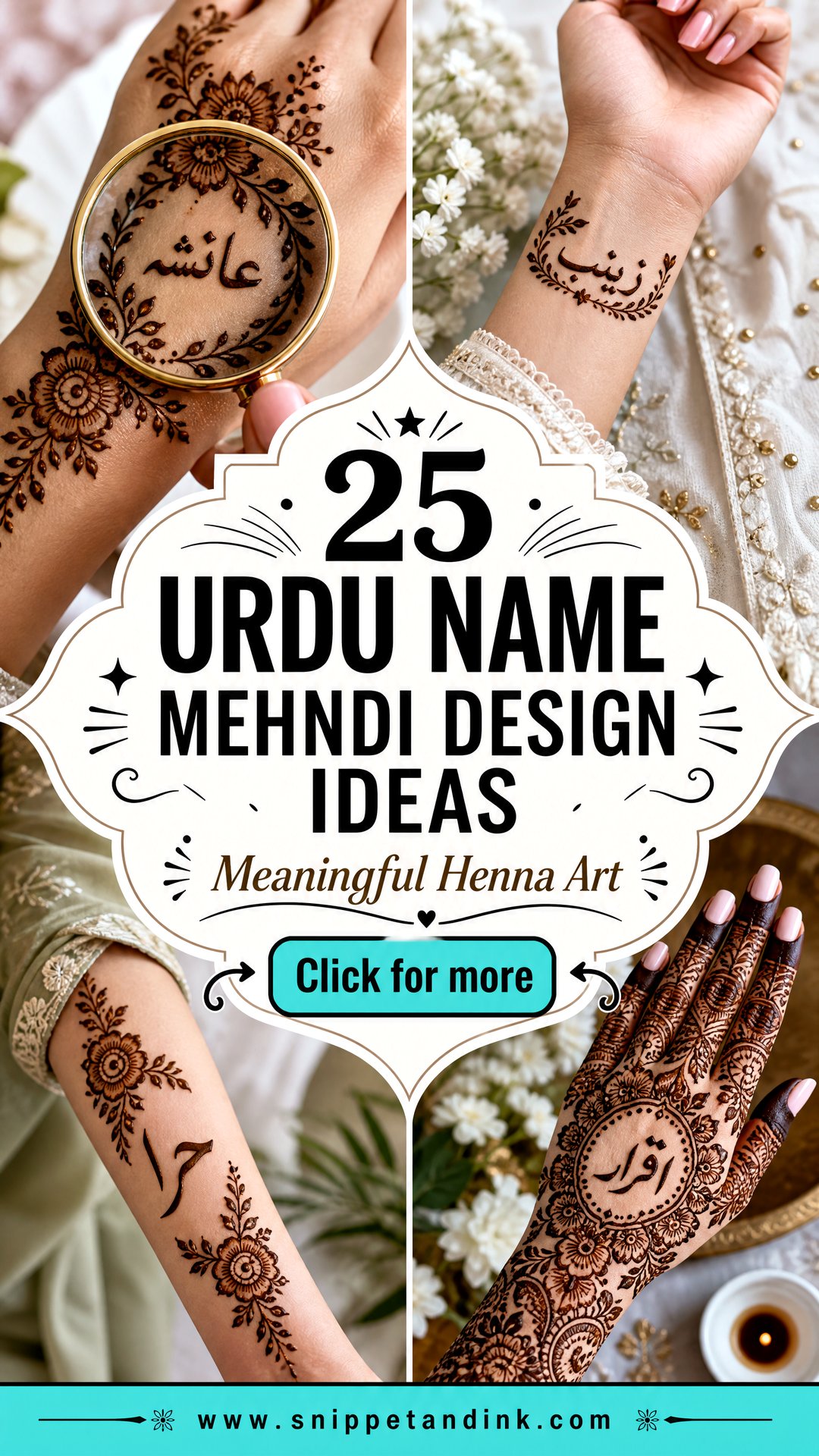
A name in Urdu script turns a henna pattern into something only your family can fully read. Instead of writing it plainly in a corner, I build the calligraphy into the flowers, paisleys, mandalas, vines and jaali so it belongs to the design from the first line. These patterns suit brides, sisters, friends, Eid evenings, engagements and anniversaries. The name can be bold and readable or tucked away for someone to hunt for. What decides the layout is the length of the name, the shape of the hand and how much time you can give the paste afterwards. Below are 25 ways to place it, with the details I watch for in each.
Getting the Urdu Spelling Right Before Any Paste Goes On
A misspelled name can’t be erased once the stain sets, and it happens more often than people expect. Plenty of skilled henna artists draw Urdu as shapes rather than reading it fluently, so they copy exactly what you give them. If what you give them is wrong, the hand will be wrong.
Urdu runs right to left, and its letters join within a word, except for a handful that never connect to the next letter. Those breaks split a name into separate pieces, which changes how long it is on the hand. The dots matter just as much: several letters share a body and are told apart only by one, two or three dots above or below.
- Ask someone in the family who writes Urdu to handwrite the name clearly on paper, and photograph it.
- Send a typed version too, so the artist can check each letter against the handwriting.
- Agree on one spelling. Many names have more than one accepted form, and families sometimes disagree.
- Look at the artist’s paper sketch before she starts, and have the family member check it as well.
I also ask whether the name should be readable to guests or only to the couple. That one answer decides almost everything about where it goes.
1. Urdu Name Bridal Mehndi Design
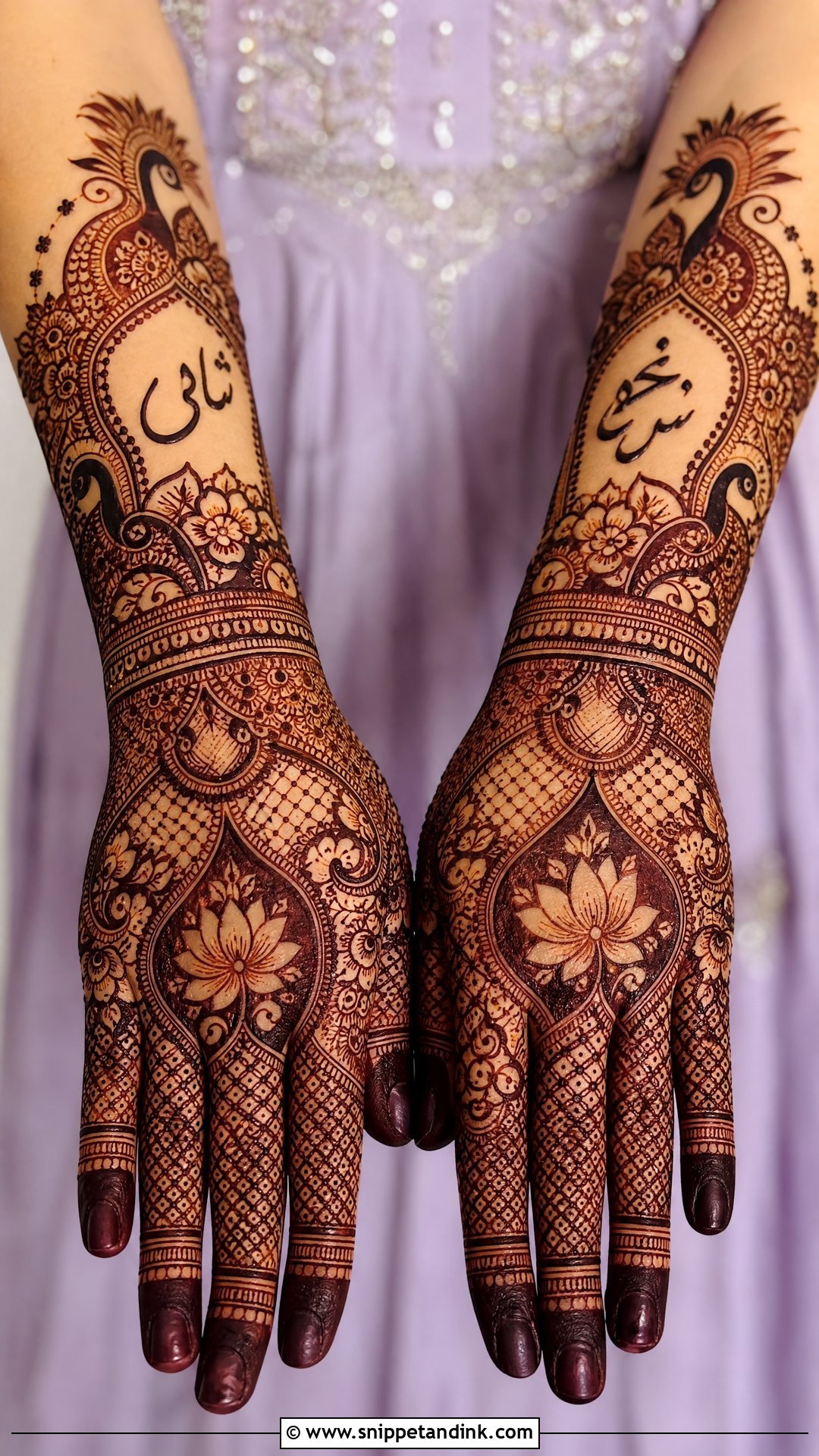
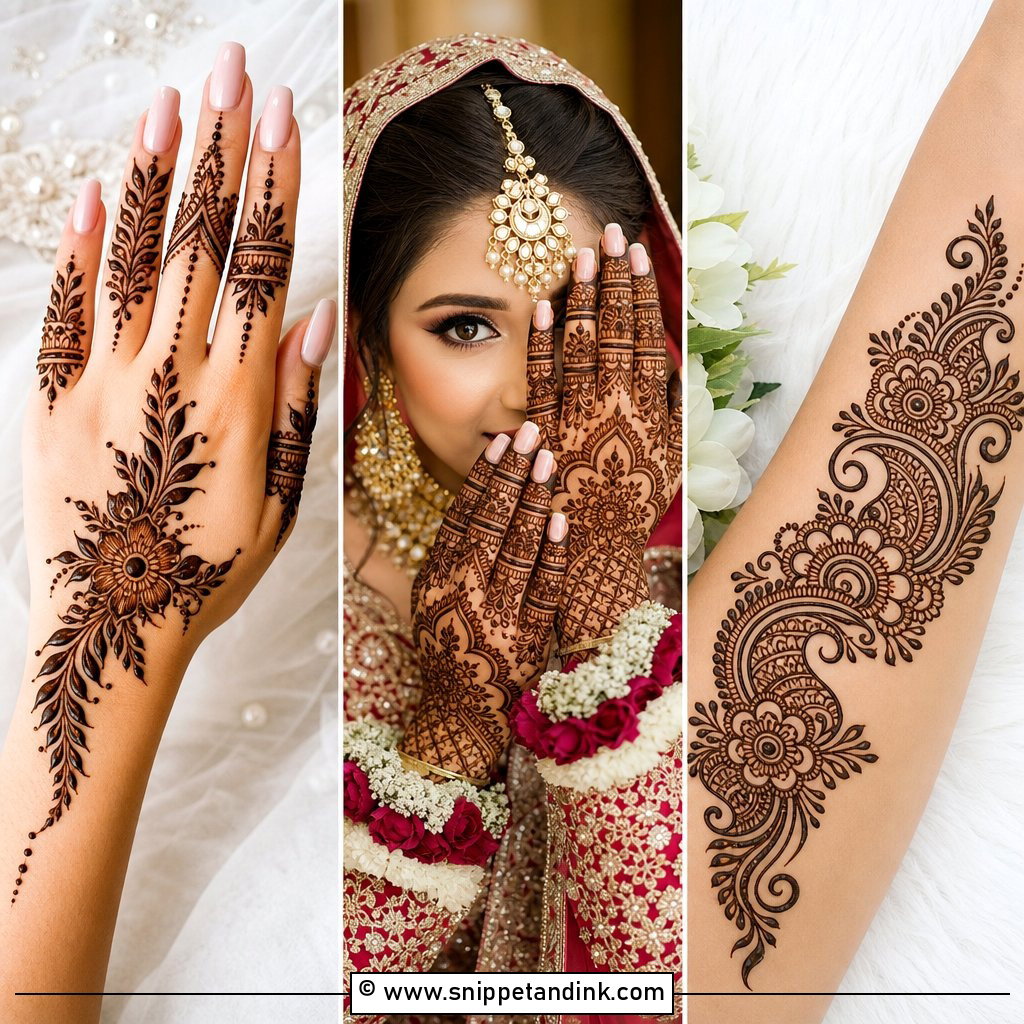
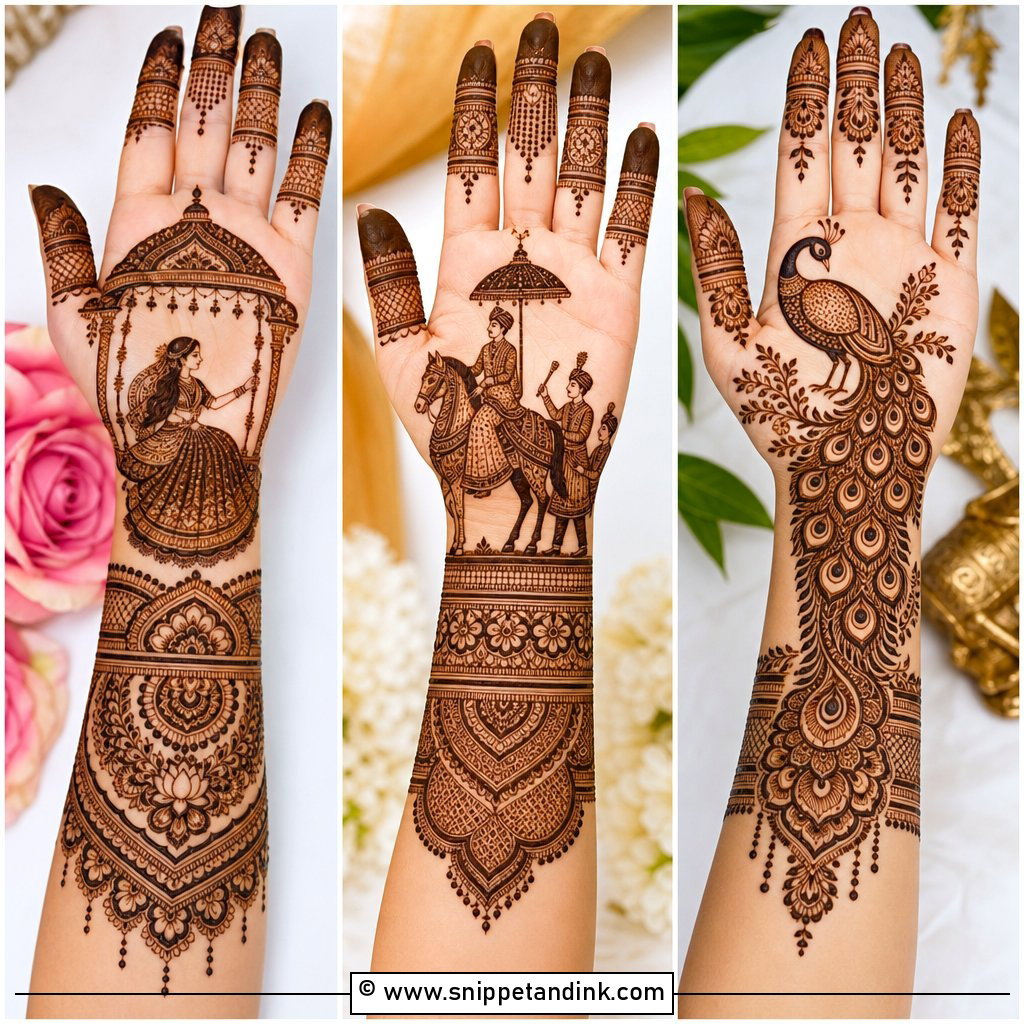
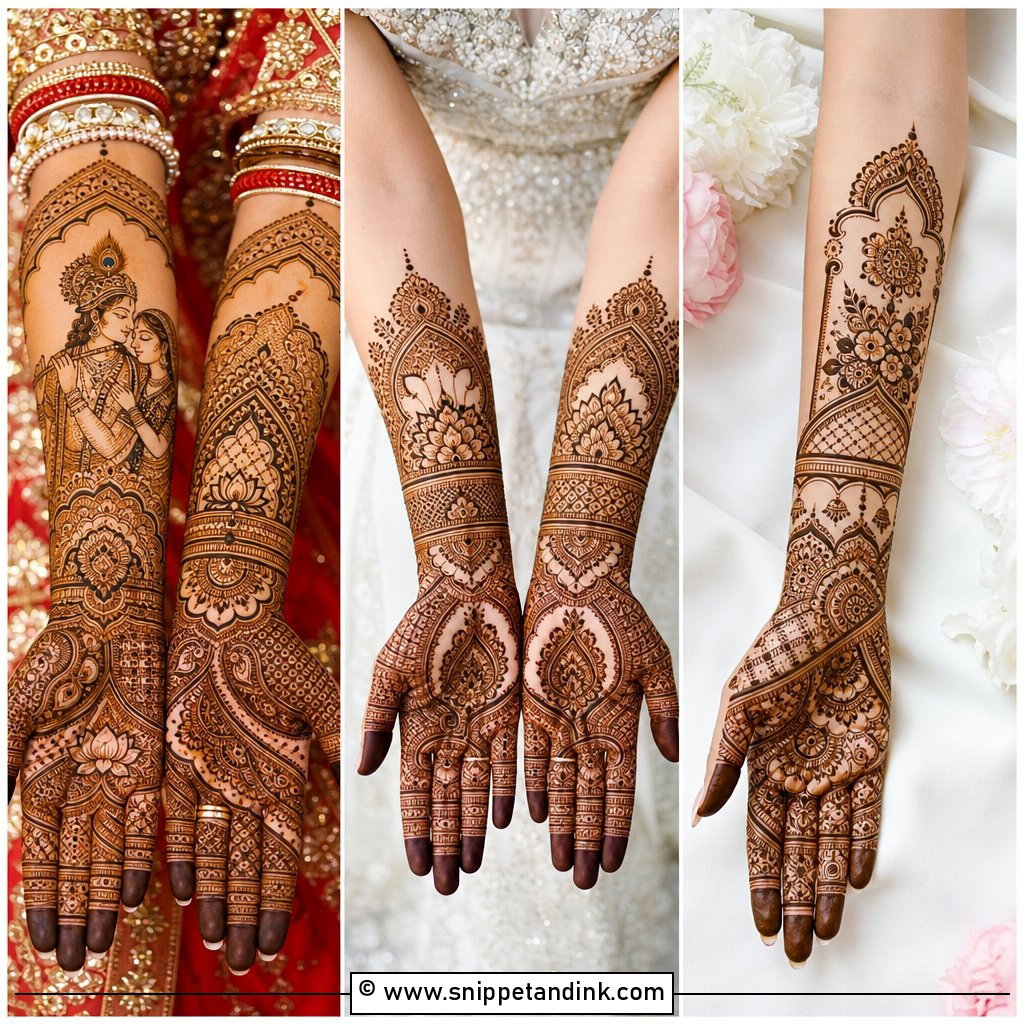
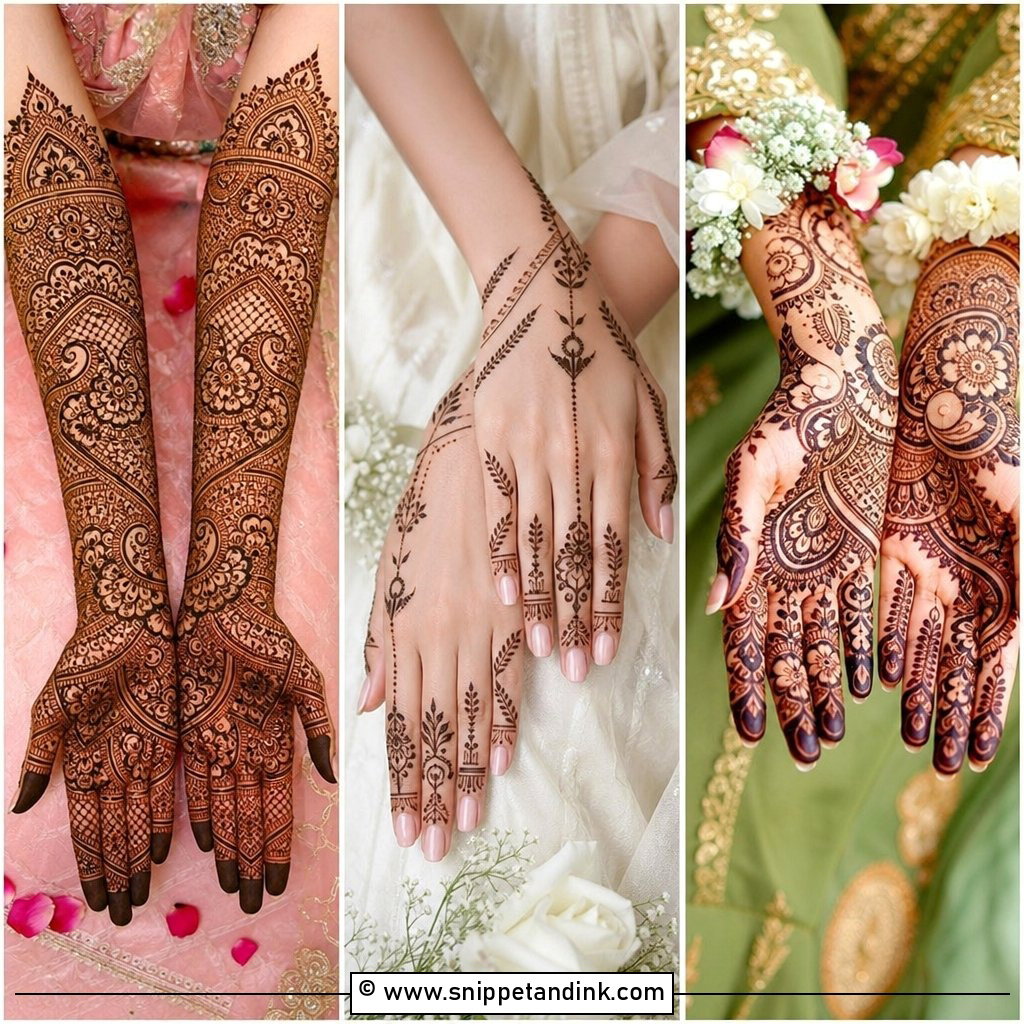
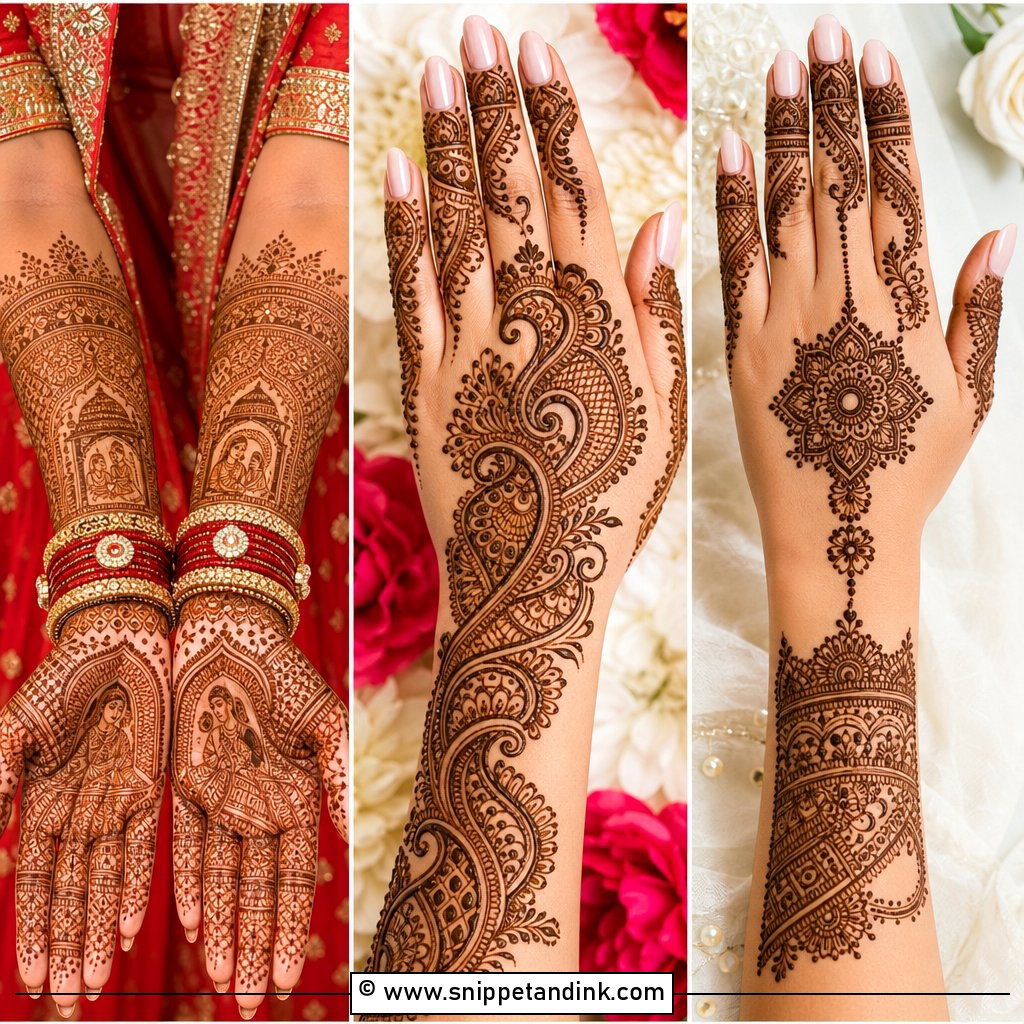
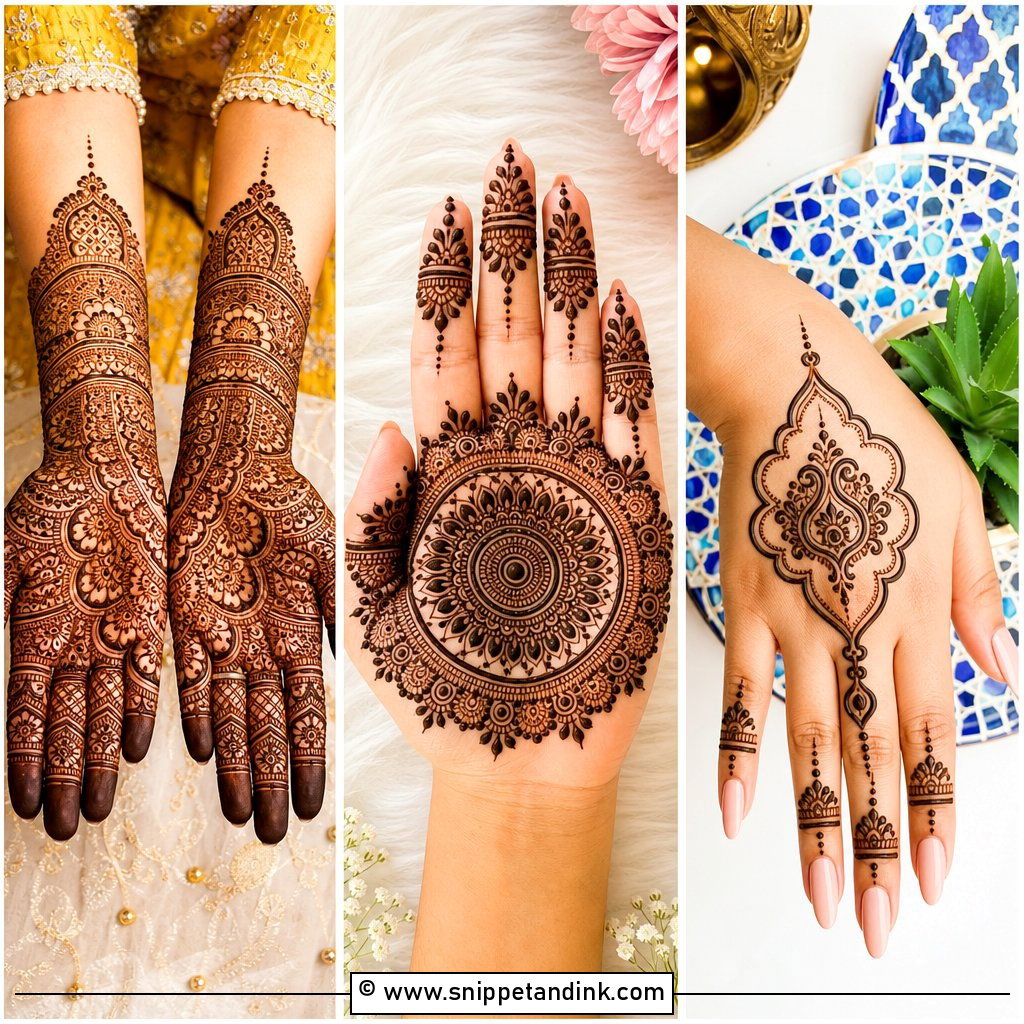
Bridal coverage gives the name the most room and the most competition. Palm, fingers, wrist and forearm fill with detailed Indian patterns, and the name sits in the centre of the palm, inside a heart frame or between paisleys and floral bands. Most brides choose the groom’s name, both names or initials. I draw the script a touch thicker than the filler around it, because fine filler and fine calligraphy stain to the same depth and the eye can’t separate them. Peacocks, lotus, lace borders and a ring of dots around the script finish the frame.
2. Simple Urdu Name Mehndi Design
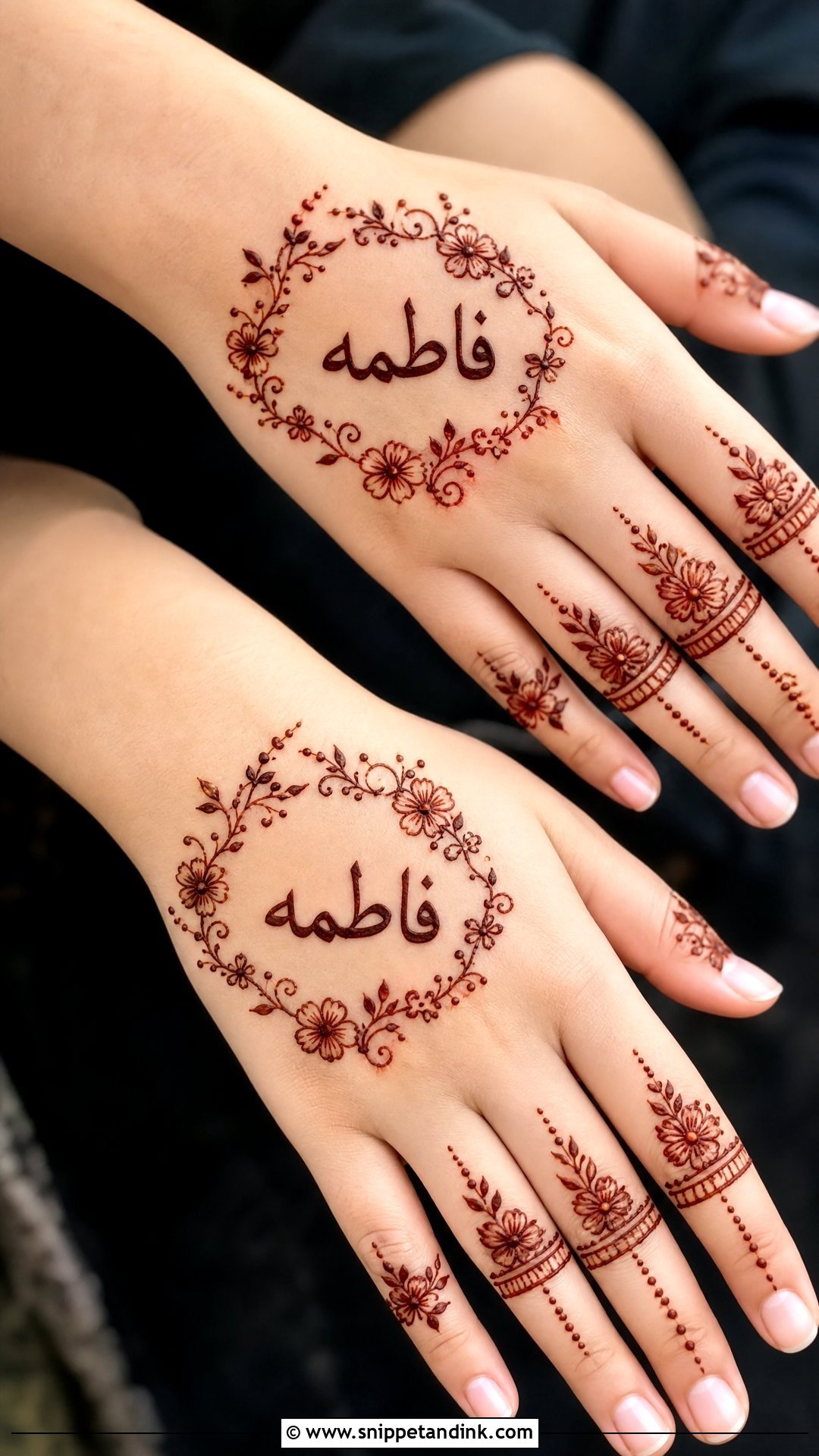
Short names are the easiest to make look good, and this layout proves it. The name is the focus, on the back of the hand, the palm centre or the wrist, with a thin floral border, a few leaves and dots, and delicate finger lines to finish. It suits Eid, birthdays or a first-ever mehndi. Keep the fingers light so the script stays the star. With so little around it, any shaky stroke will show, so ask your artist to sketch the name once on paper before it goes on your skin.
3. Arabic Urdu Name Mehndi Design
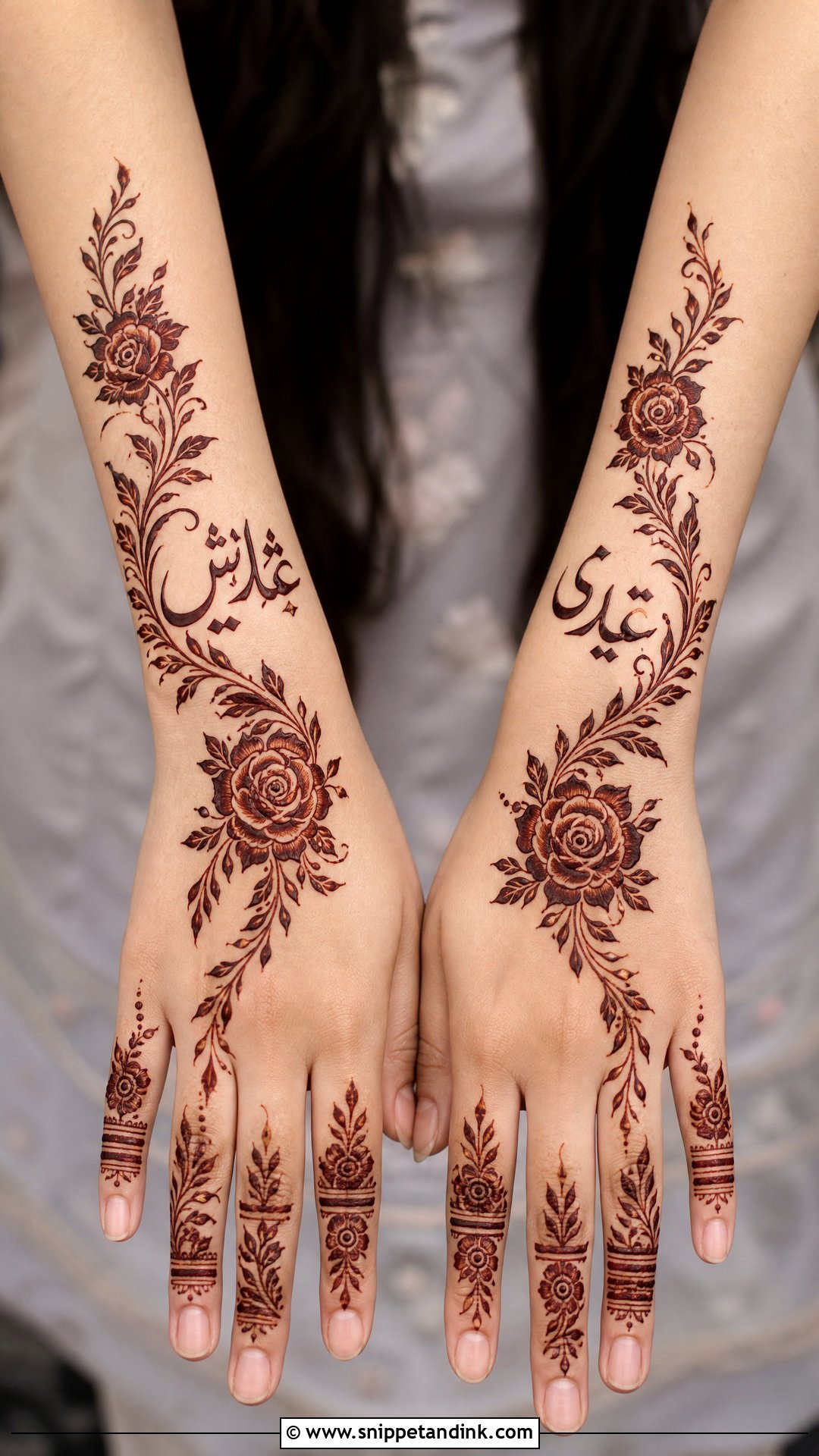
Nastaliq, the script Urdu is usually written in, slopes downward from right to left, which is why it settles so comfortably into an Arabic trail running diagonally from the wrist toward the index finger. The name can follow the main vine, sit inside a large flower or rest near the wrist band, with open skin around bold florals. Longer names do well here because the trail lets the letters stretch. I use thick outlines for the flowers and a slimmer, steady line for the script so the two never merge.
4. Hidden Urdu Name Mehndi Design
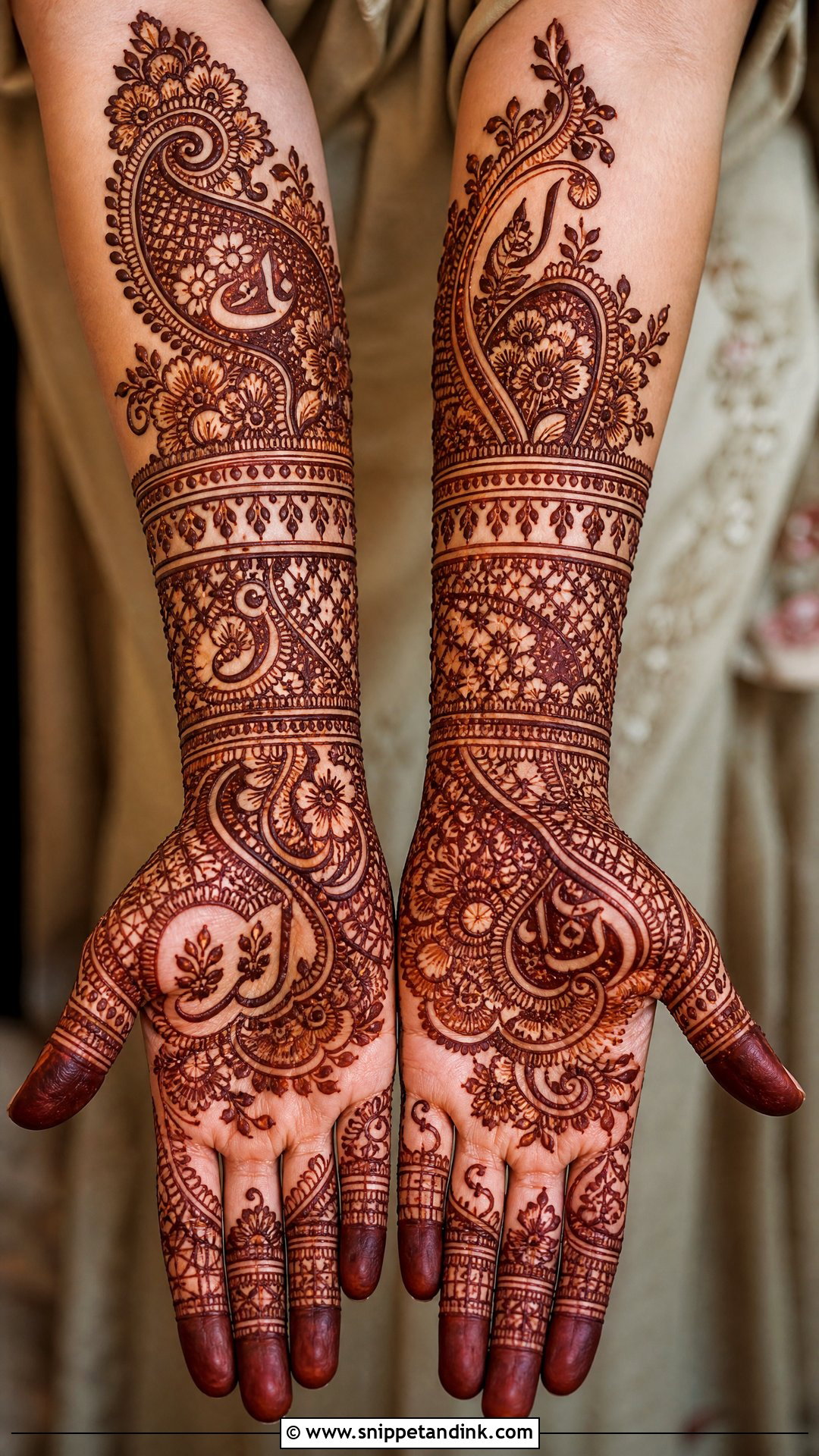
Hiding a name is a balancing act: too obvious and there’s no game, too buried and nobody finds it, sometimes not even the bride. I blend the letters into petals, paisleys, mesh lines or a bracelet band, but keep them inside one zone, usually the palm or lower forearm, and draw the script with the same flow as the pattern around it. I always tell the bride exactly where it is. If the search at the ceremony drags on, she can drop a hint.
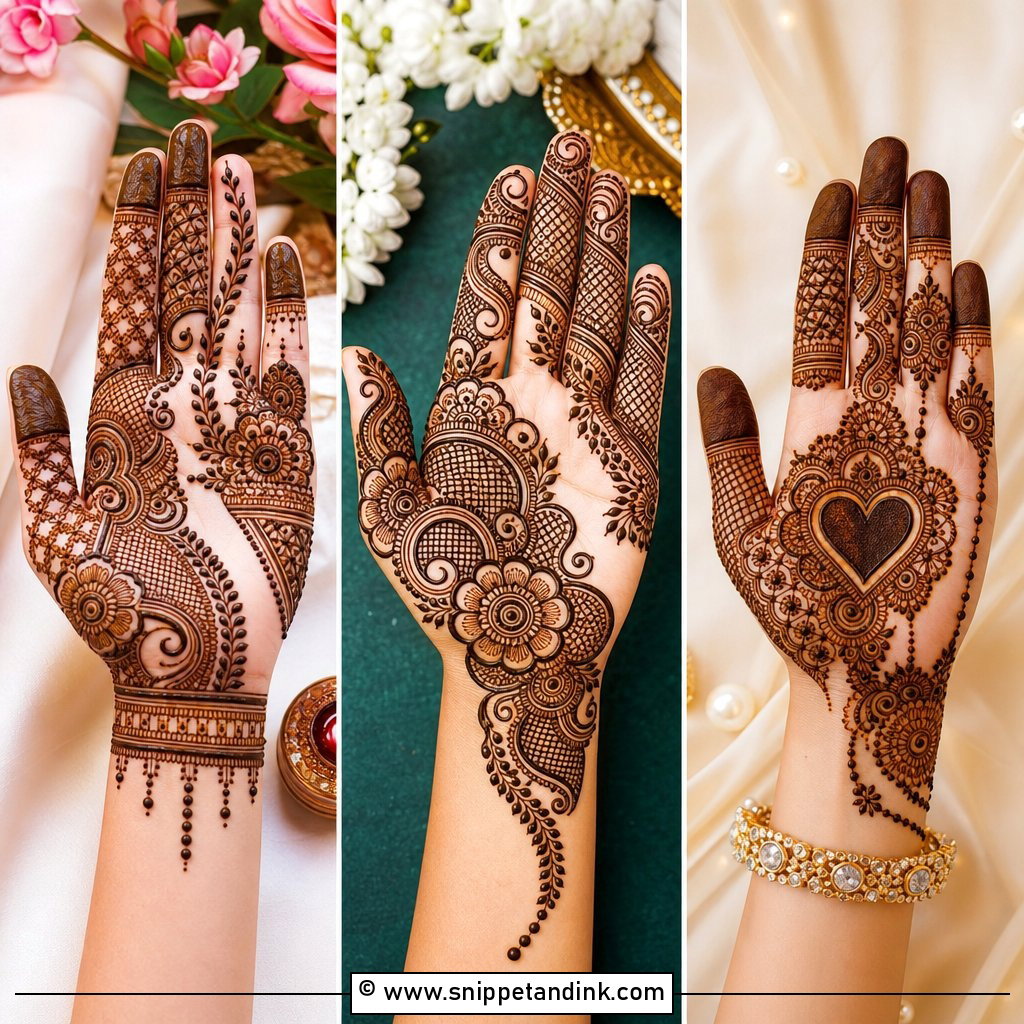
5. Urdu Name Heart Mehndi Design
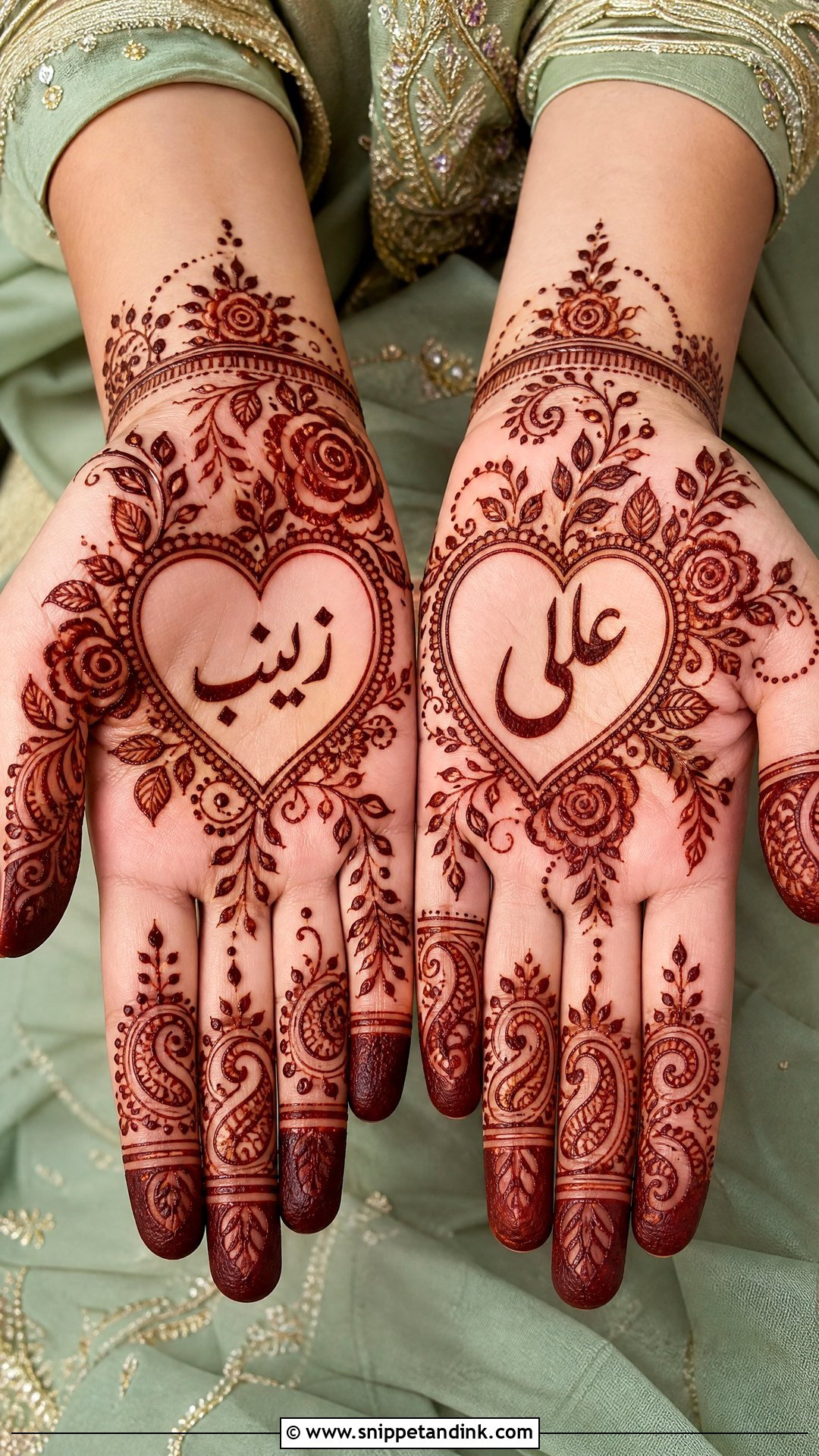
A heart frame is the clearest way to make a name the focal point, on the palm or back of the hand, softened with roses, leaves, small paisleys and dotted curves. For a bride I extend the heart into a full-hand pattern with filled fingers and wrist jewellery details; for an engagement guest, a clean heart and one bracelet band are enough. Size the heart to the name, not the name to the heart. A long name squeezed into a small heart forces the letters to crowd, and Urdu letters that touch lose their shape.
6. Urdu Name Mandala Mehndi Design
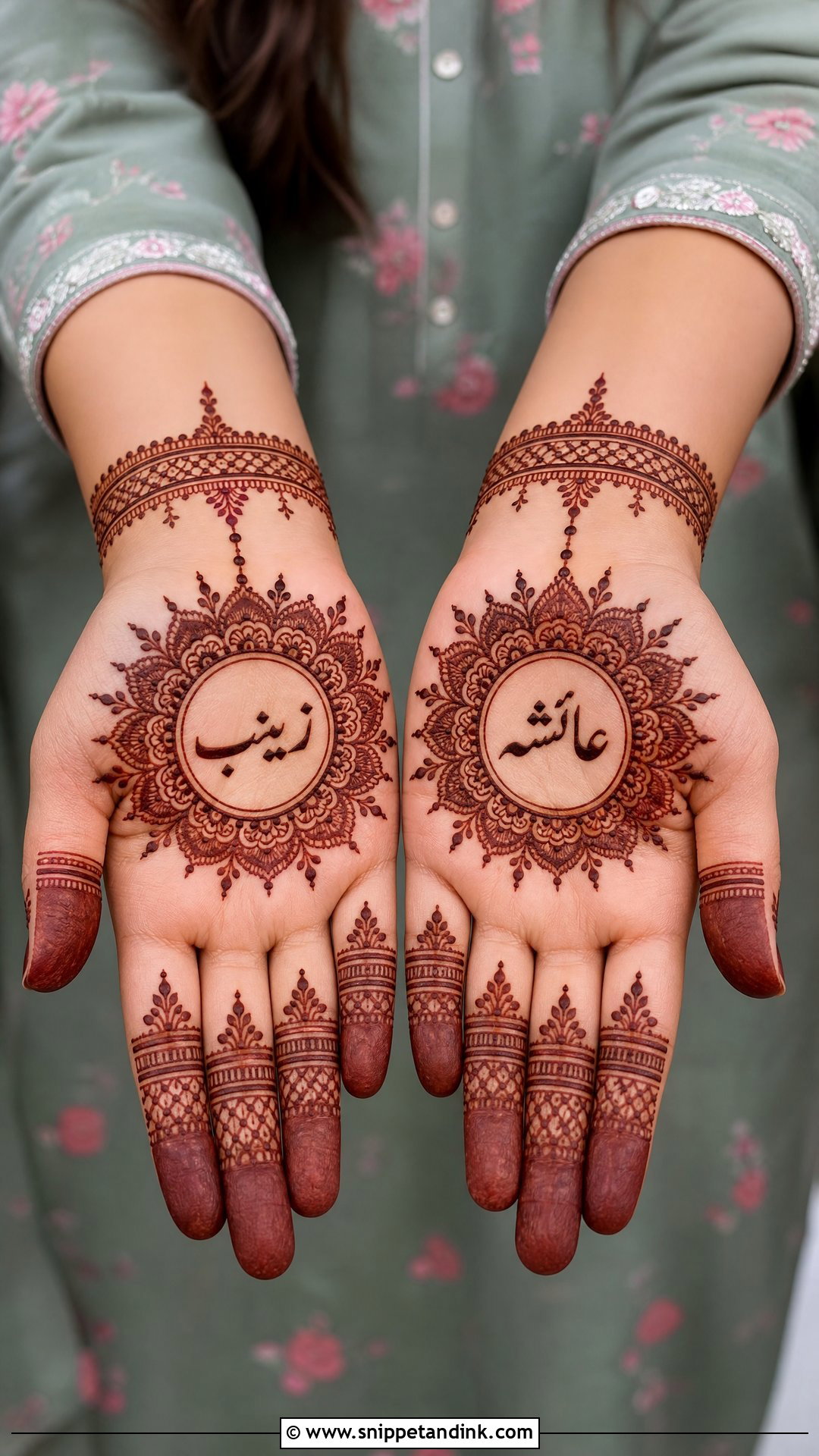
Mandalas give script a frame that looks deliberate. The name can sit inside the center circle, curve around the outer edge or run in a small banner across the palm. Curving it around the edge is the hardest of the three, since the letters have to follow an arc while staying upright enough to read, so I only suggest it for short names. Finger details, dotted chains and wrist bands support the circle. Leave bare skin around it for a modern feel, or add fine petals and spirals for a traditional one.
7. Urdu Name Back Hand Mehndi Design
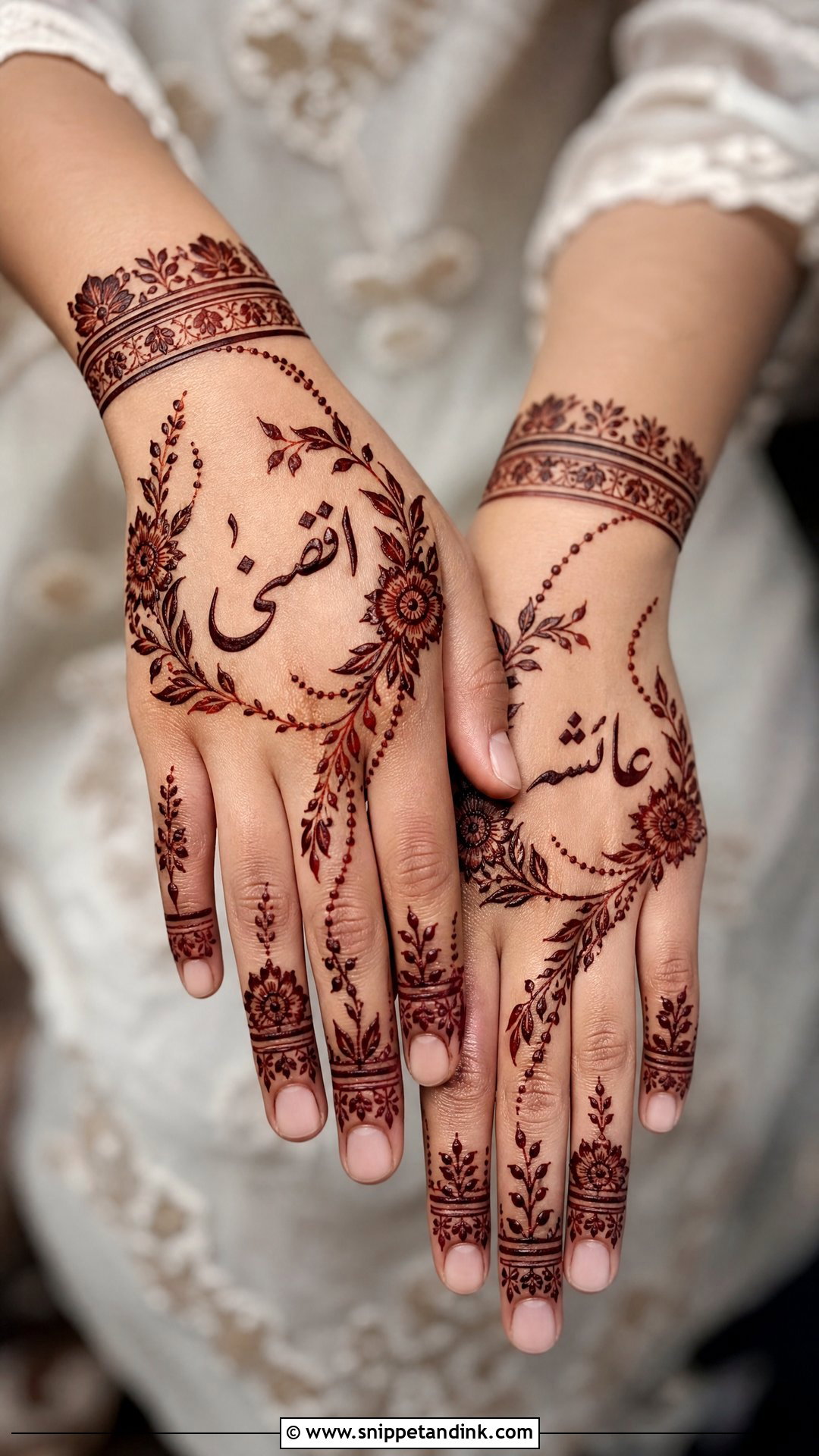
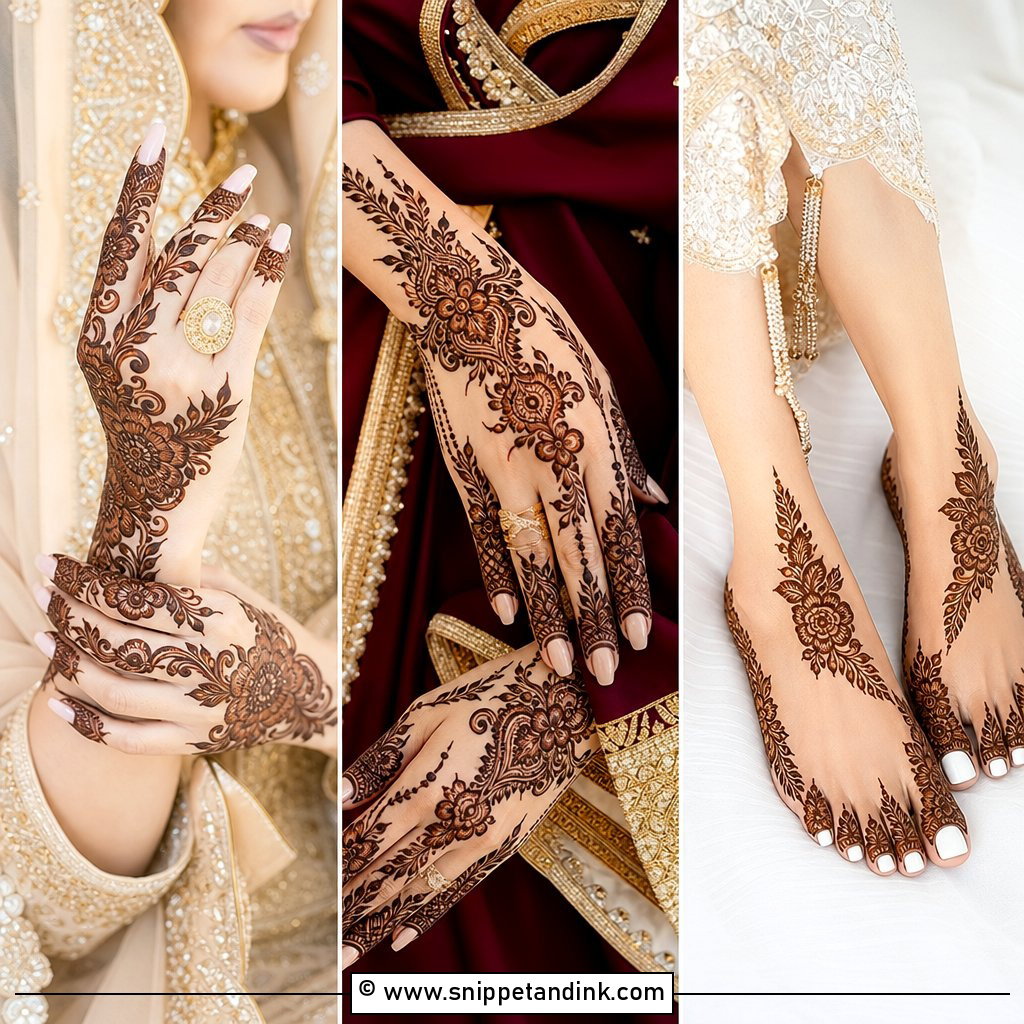
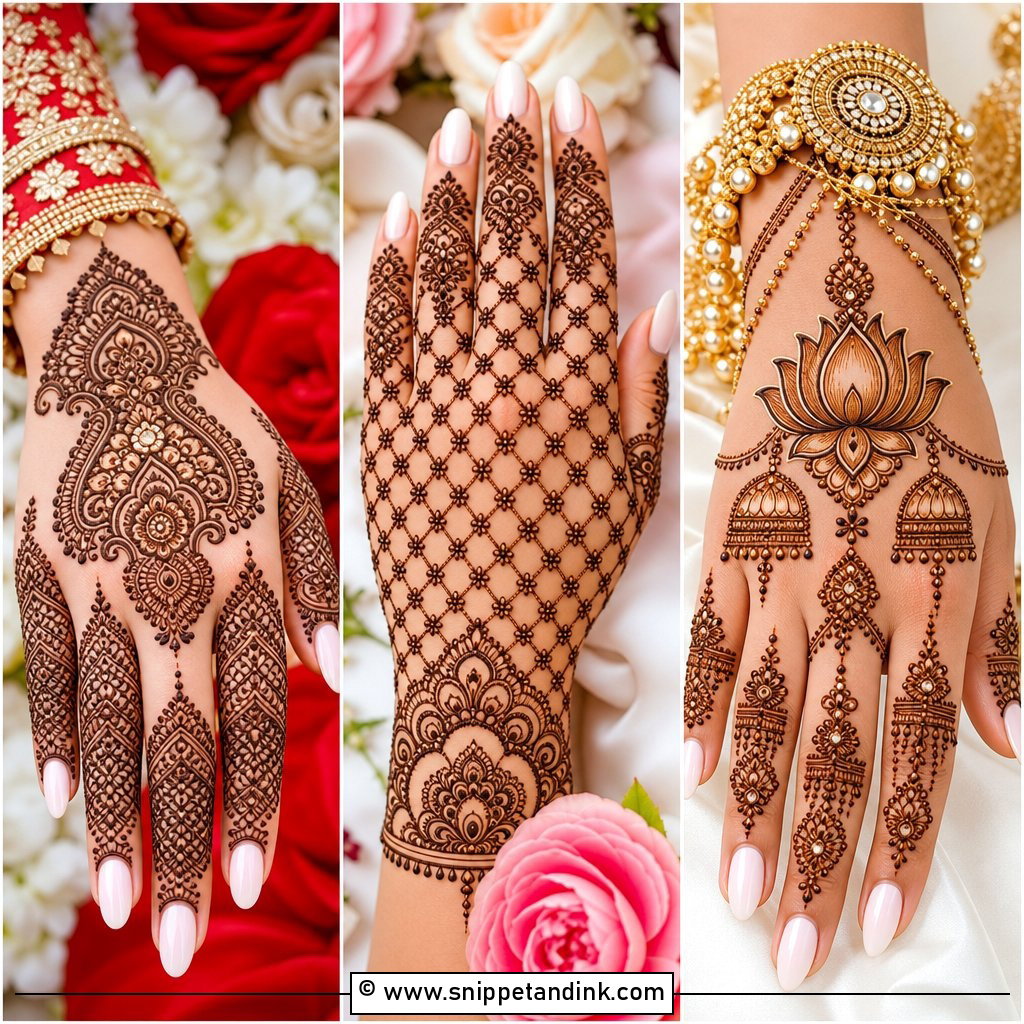
On the back of the hand, the name turns up in every jewellery close-up, so I treat it as part of the jewellery. The script runs across the centre, near the wrist or along a diagonal floral trail, with decorated fingers and a bracelet-style cuff tying it together. Rings and bangles are the main competition, so I keep the area around the name slightly open and away from where a ring rests. One more thing: the back hand stains lighter than the palm, so a name here needs a confident, slightly thicker line to stay legible.
8. Urdu Name Palm Mehndi Design
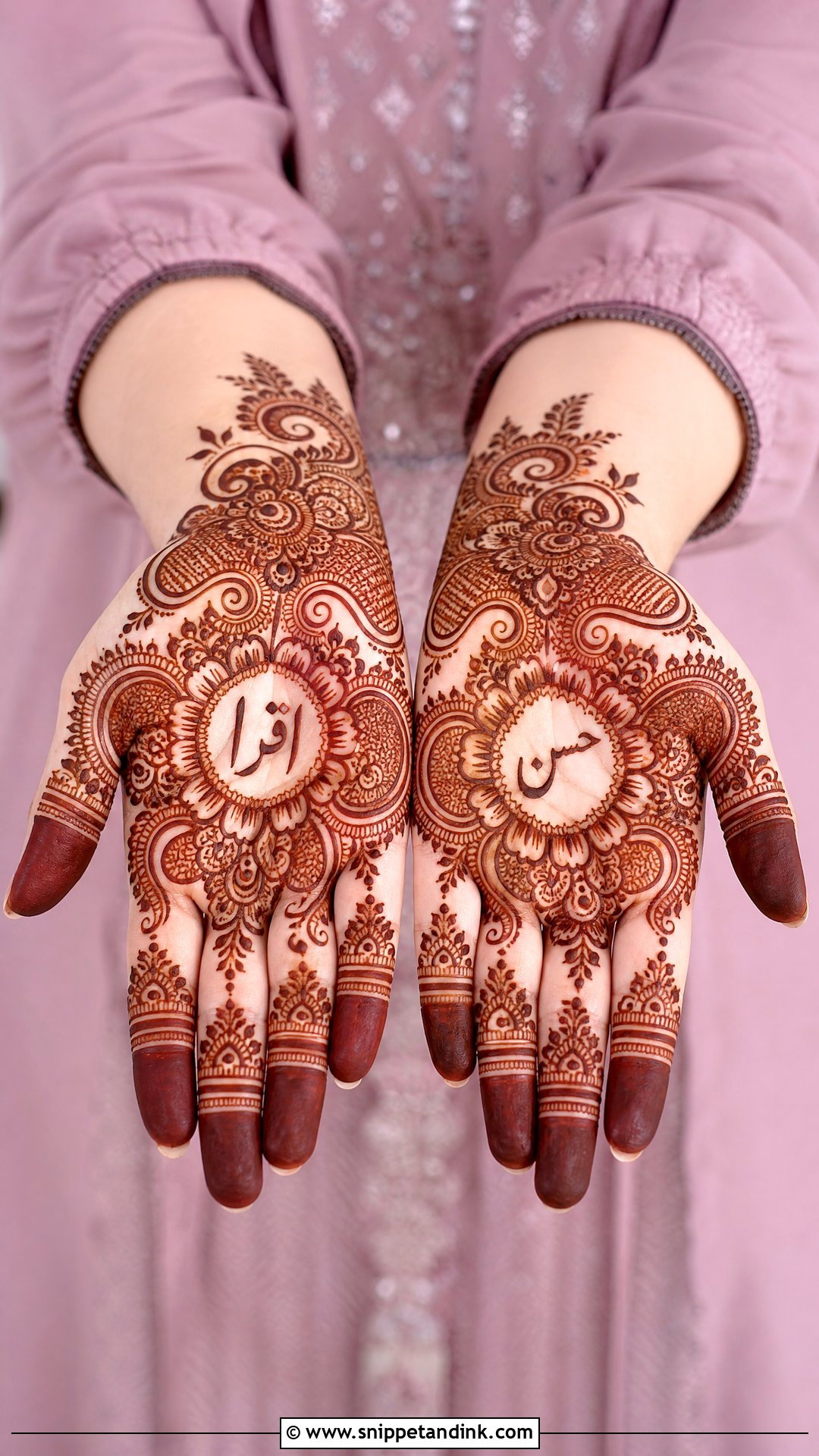
The palm is the classic home for a name, flat and wide enough for medium and long names in readable calligraphy. A floral frame, mandala circle, paisley border or small royal-style panel holds it, with fine lines, leaves and dots on the fingers. Palms stain darker than anywhere else on the hand, so the script reads clearly in ceremony photos. Keep the name bold and the details around it lighter. I avoid running letters across the deep palm creases, where paste cracks every time the hand flexes.
9. Urdu Name Finger Mehndi Design
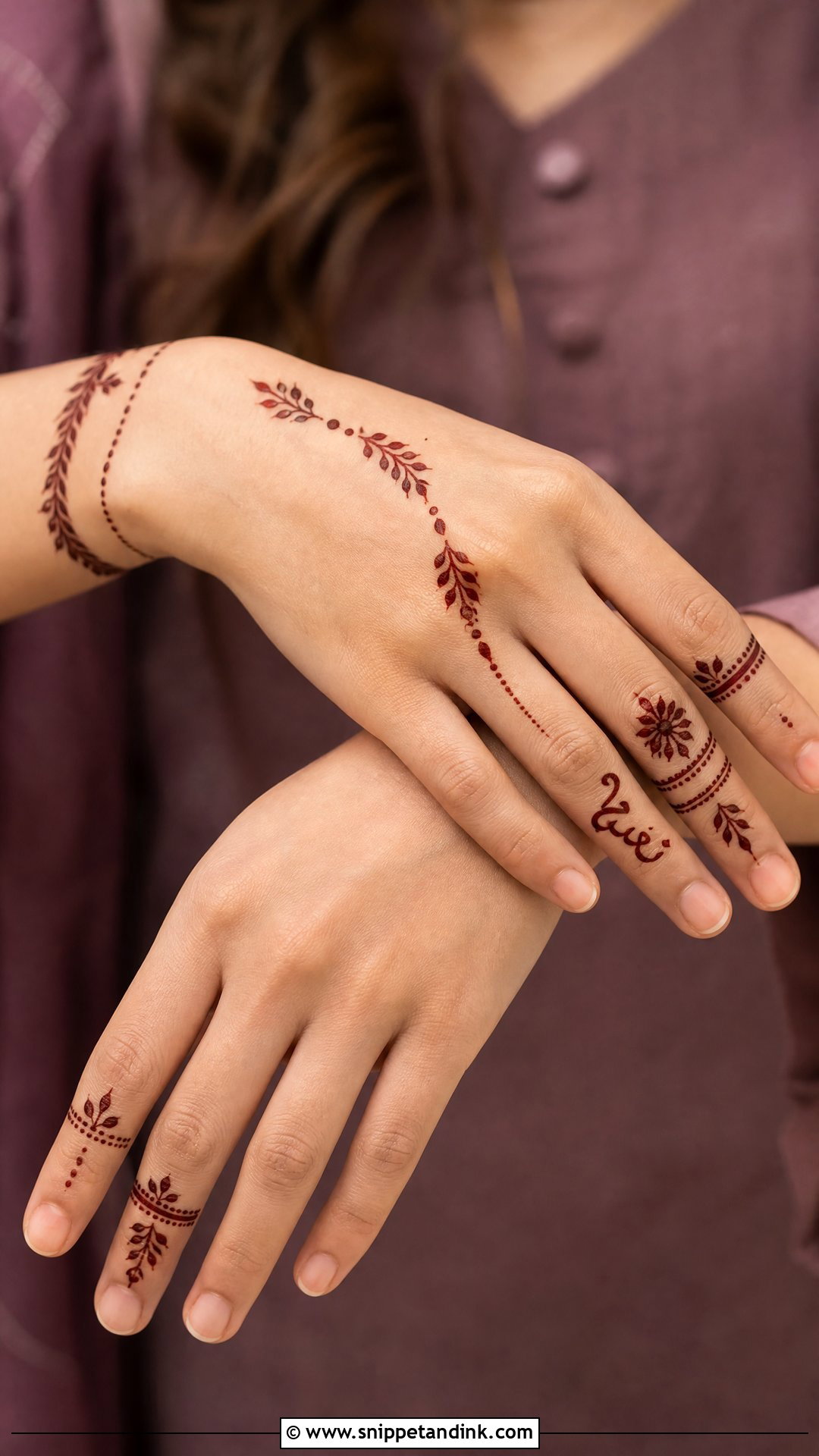
Finger placement only works for short names or initials. Writing across one finger, splitting a name between two or tucking it near the knuckle with tiny vines all demand very small letters, and Urdu’s dots are the first thing to blur at that size. I’d put a single meaningful letter or a short name here and save longer names for the palm. Fine bands, dotted rings and a light back-hand trail turn it into a complete look for Eid, college events or a minimal pre-wedding function.
10. Urdu Name Wrist Mehndi Design
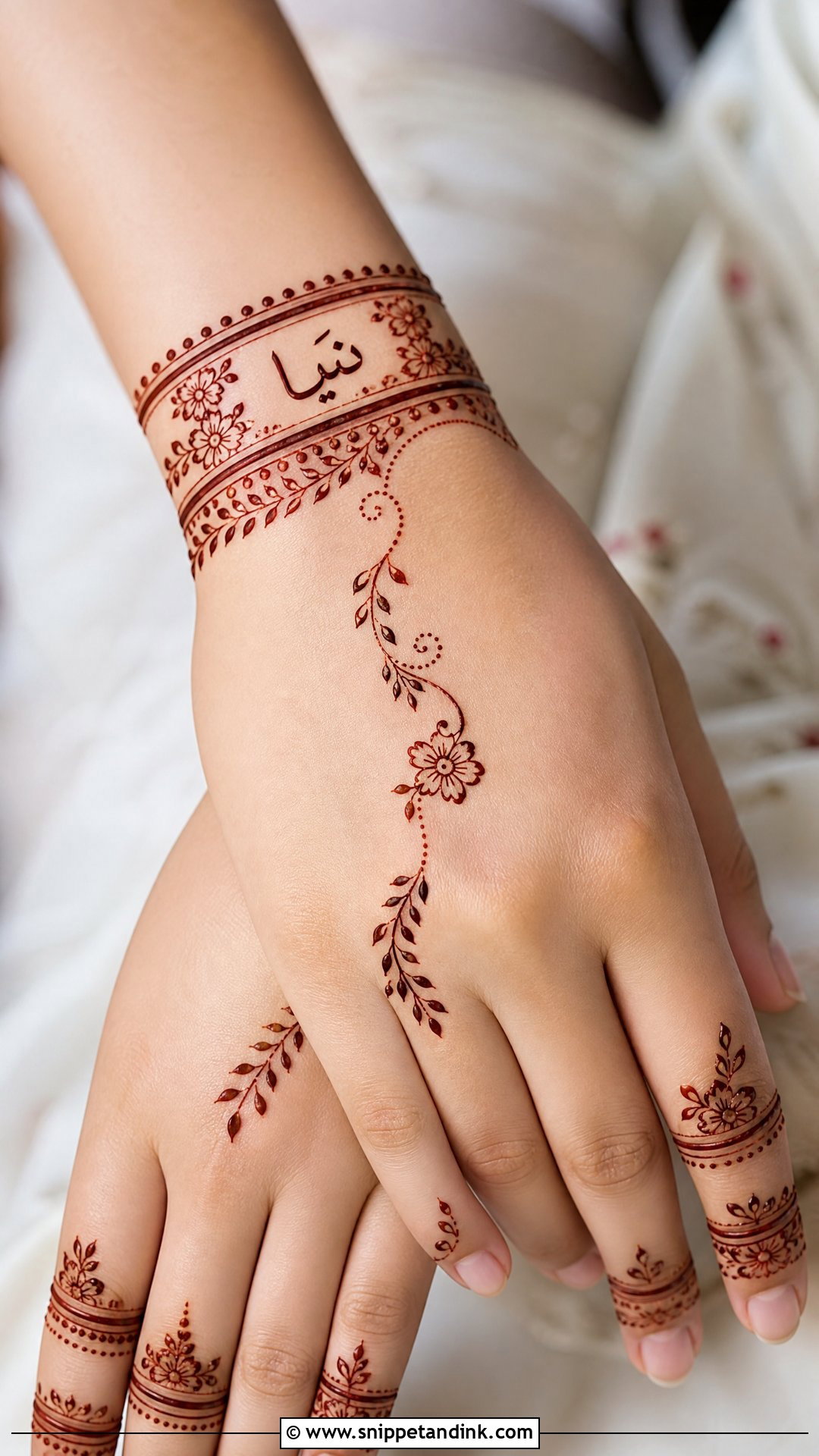
A name on the wrist reads like a personalised bracelet. It can sit in the centre of a cuff, inside a curved band or along a chain pattern, with small flowers, leaves, dots and thin parallel lines finishing the area. Plan it around your bangles. If you’ll wear a full stack, the script should sit just above where they rest, or it spends the whole evening hidden. A gentle extension toward the back of the hand or forearm adds decoration without crowding the letters.
11. Urdu Name Forearm Mehndi Design
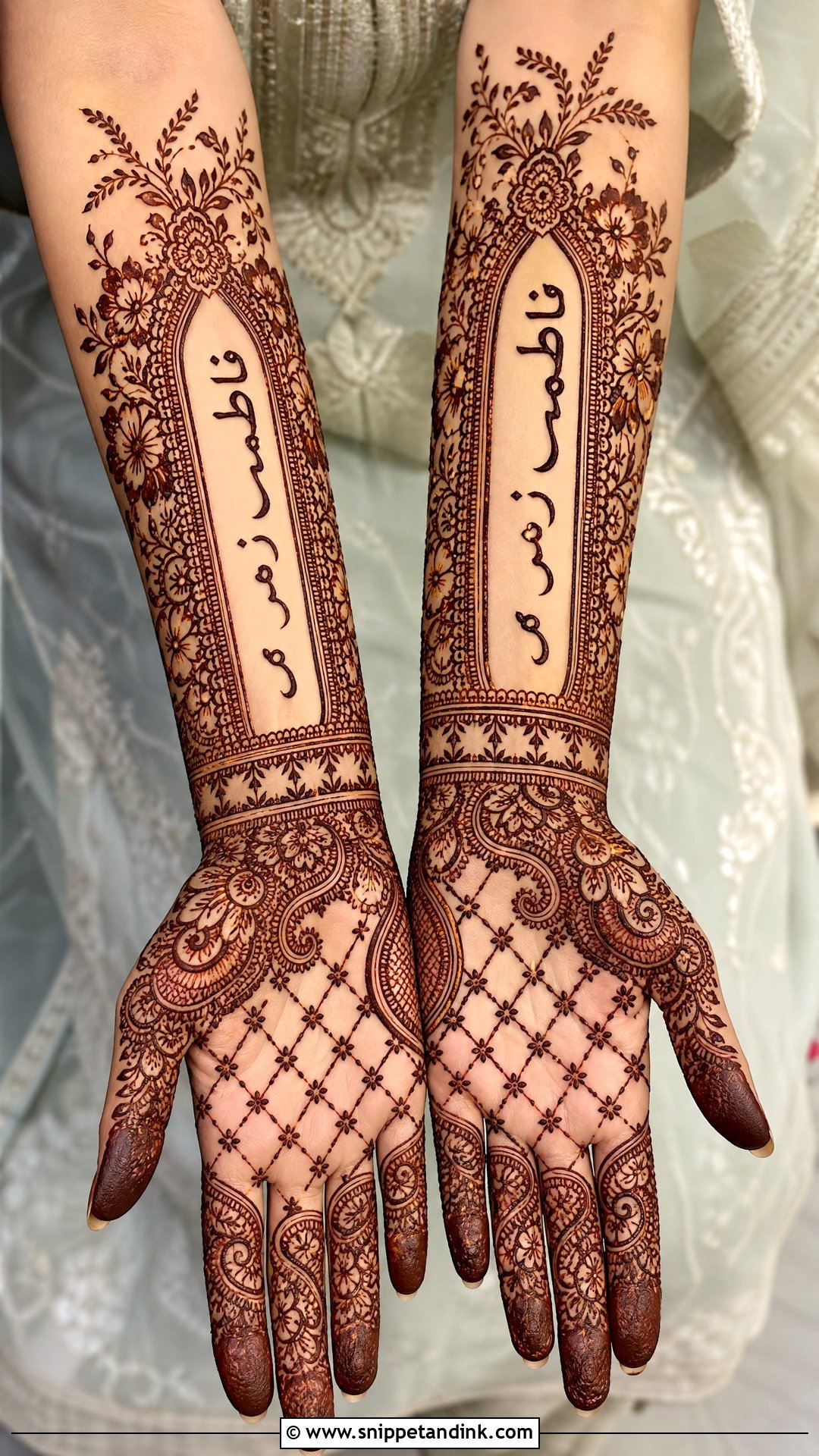
The forearm gives a long name, both names or a short phrase the space it needs. Floral vines, paisley rows and lace borders flow up from the wrist, and the script sits in a horizontal panel, a vertical trail or between larger motifs. I write it horizontally whenever I can. Vertical Urdu can look striking, but most people won’t tilt their head to read it. For a bridal look, connect it to a full palm; for a party look, keep the palm light and let the forearm carry the name.
12. Urdu Name Engagement Mehndi Design
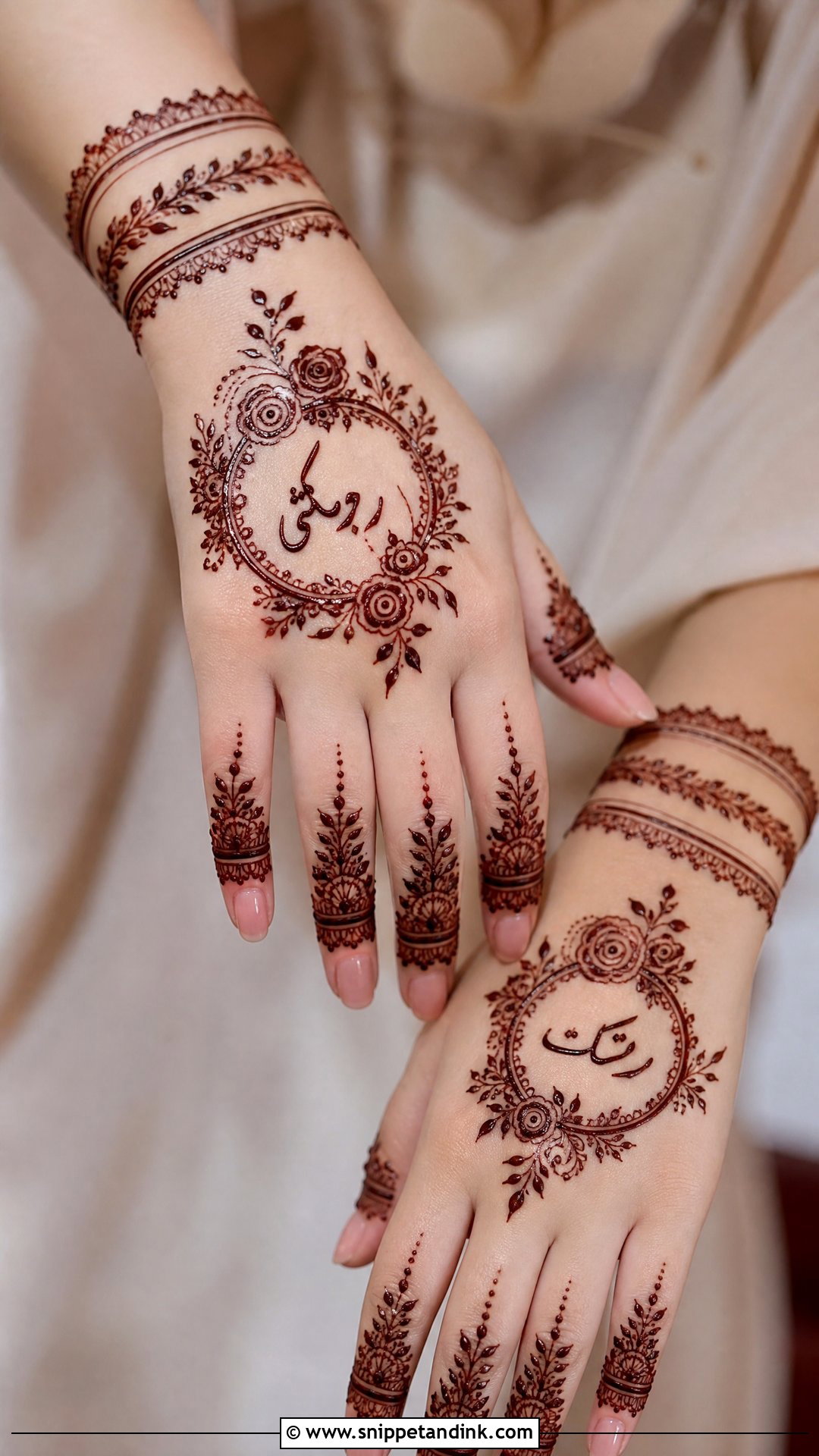
An Urdu name engagement mehndi design is usually lighter than bridal, so pick one strong spot on the back hand or palm. A small heart, ring motif, floral frame or curved banner holds the partner’s name, with fine fingertips, bracelet lines and a few leaves around it. At the ring ceremony the name shares the frame with the ring itself, which is exactly why I keep filler away from the script. Bare skin around it is what lets it read in a close-up.
13. Urdu Name Eid Mehndi Design
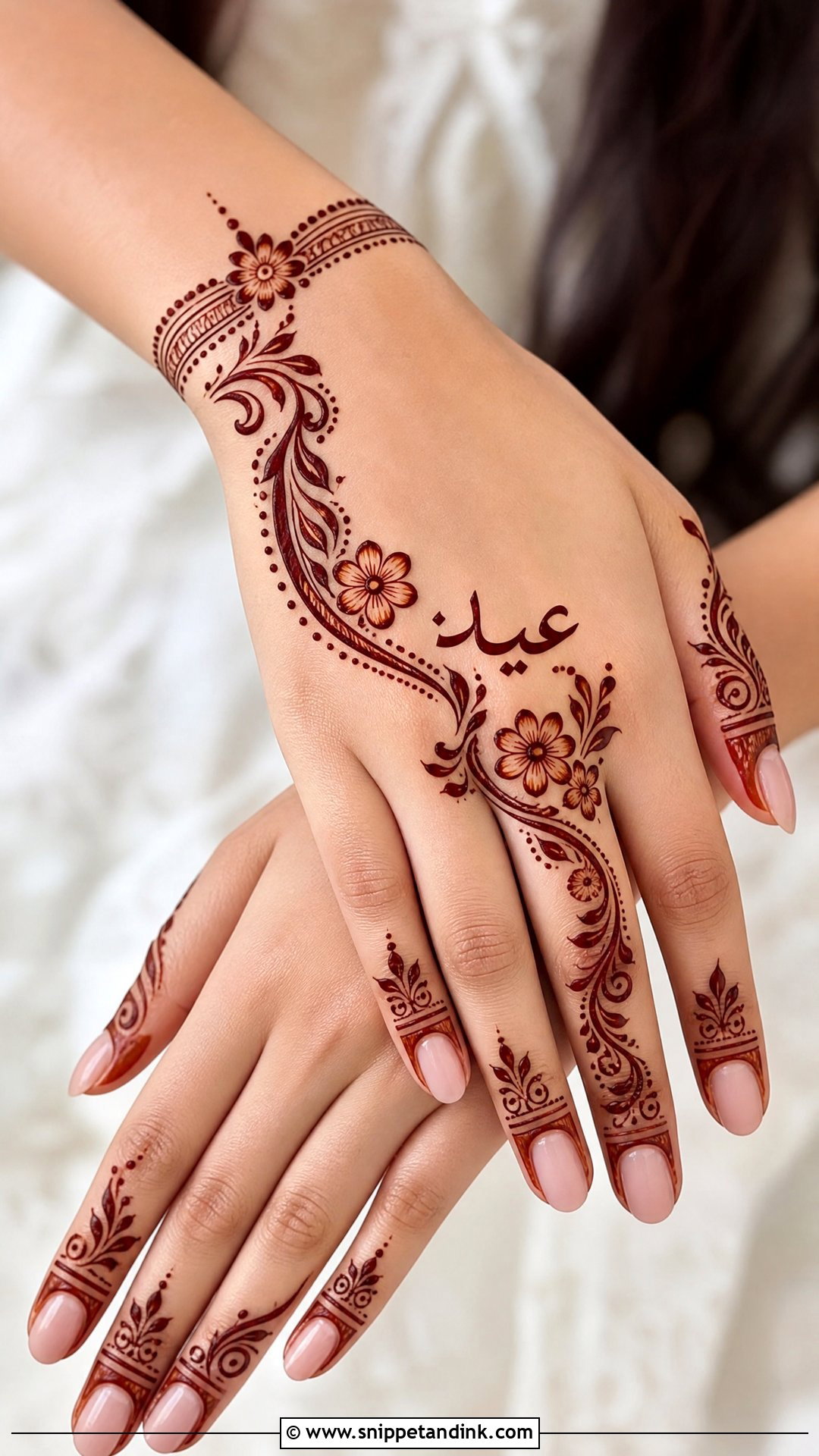
An Urdu name Eid mehndi design tends to be lighter, often on the back of the hand with a floral trail, a crescent-inspired curve or a soft bracelet band. Your own name, a loved one’s or a meaningful word all work. Most people get their Eid mehndi on chaand raat, when every artist is booked solid, so a simple name design is often the realistic choice that evening. Small leaves, dots and simple bands on the fingers finish it, and the coverage scales easily for girls, teens and adults.
14. Urdu Name Rose Mehndi Design
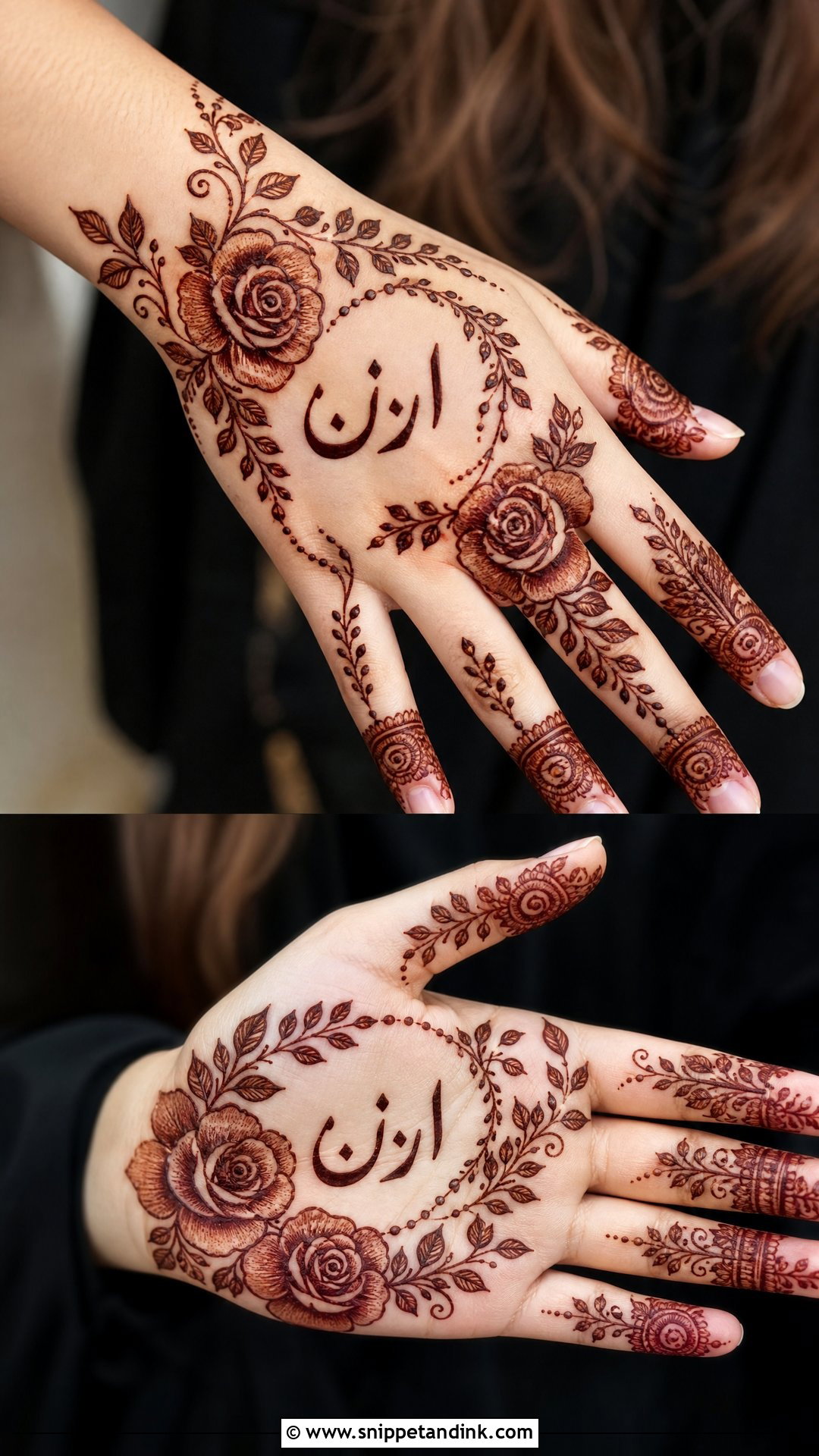
Roses and Urdu calligraphy share the same curves, which is why they sit so naturally together. The name can rest inside a rose frame, follow a rose vine or hide in the petal curves, on the palm or the back of the hand. One large rose with the name beside it is the simple version; leaves, shaded petals, dotted trails and finger details make it fuller. My caution is about hiding script inside shaded petals. Shading is a thin film of paste that stains pale, so letters drawn there in a normal line stand out more than you’d expect. Draw them thinner if you want them hidden.
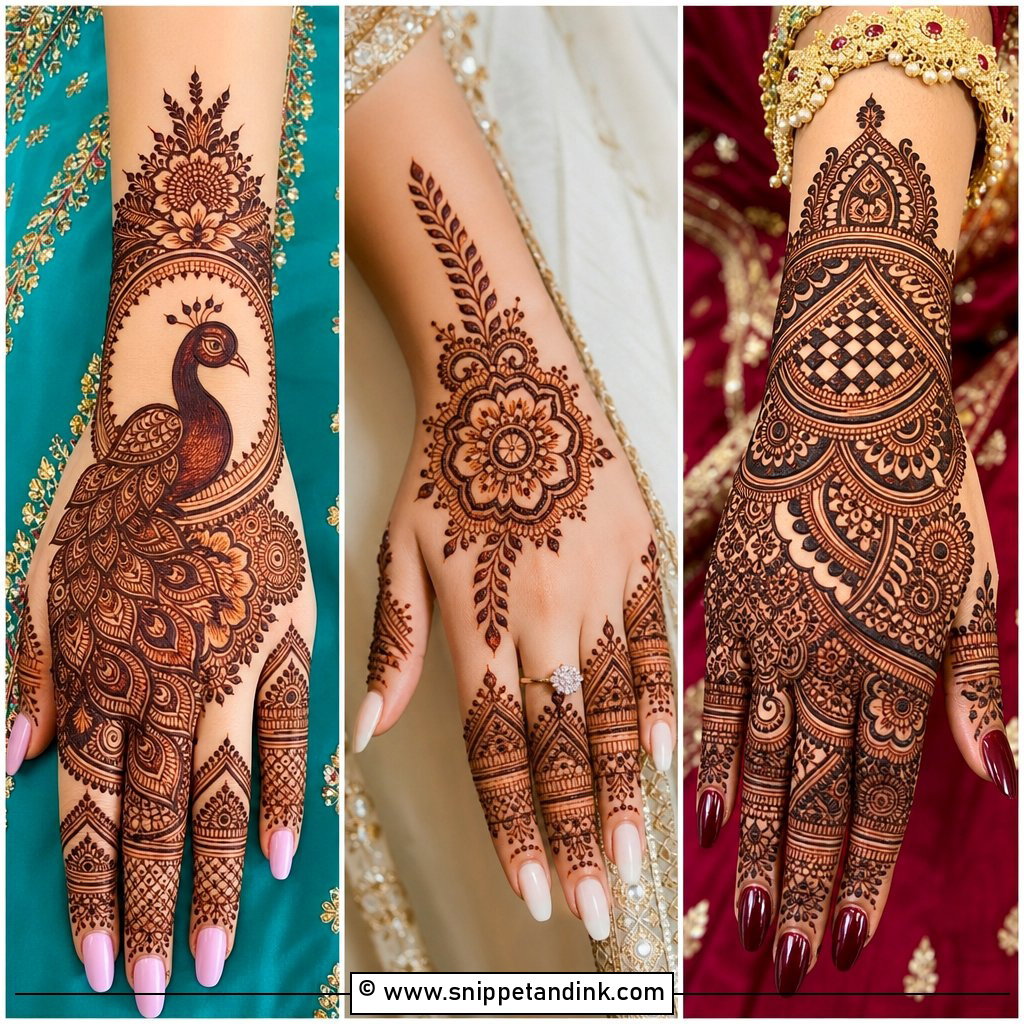
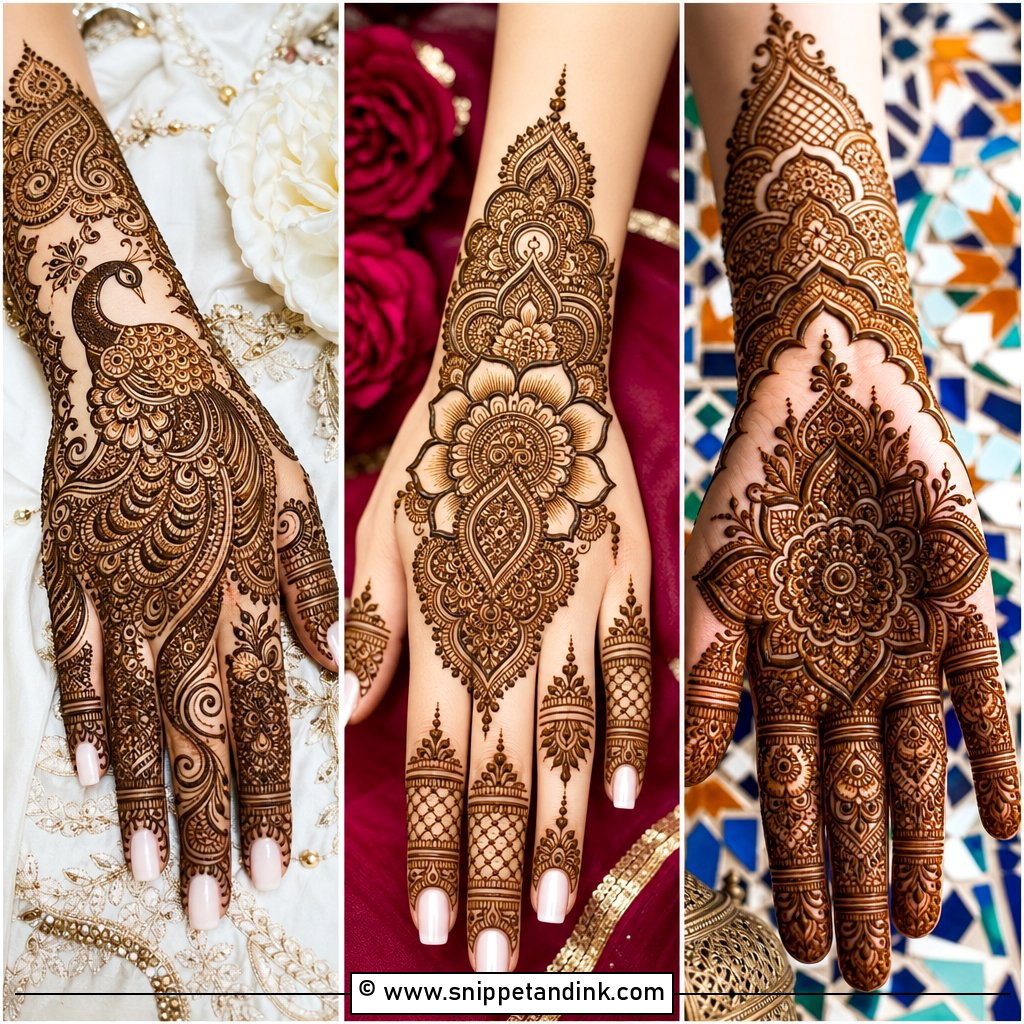
15. Urdu Name Peacock Mehndi Design
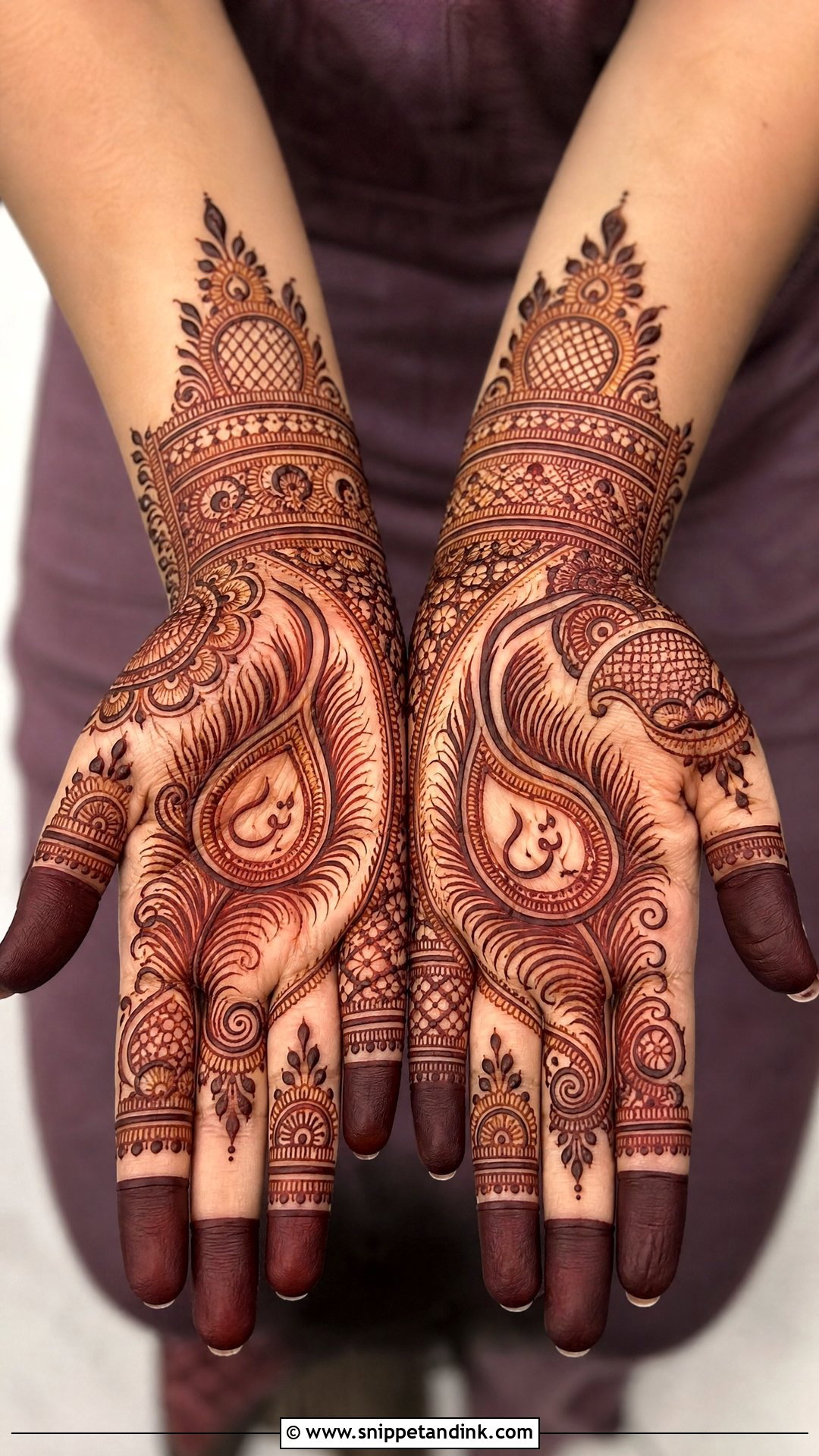
Peacock designs are naturally busy, which makes them good hiding places. The name can sit in the feather pattern, beside the curve of the neck or in a panel near the bird, connected to the rest of the hand with paisleys, feather lines, dots and fine net work. It needs space, so palms or full hands only. If the feather detail is dense, I open the letters up slightly, widening the gaps inside loops so they don’t fill in as the stain darkens.
16. Urdu Name Paisley Mehndi Design
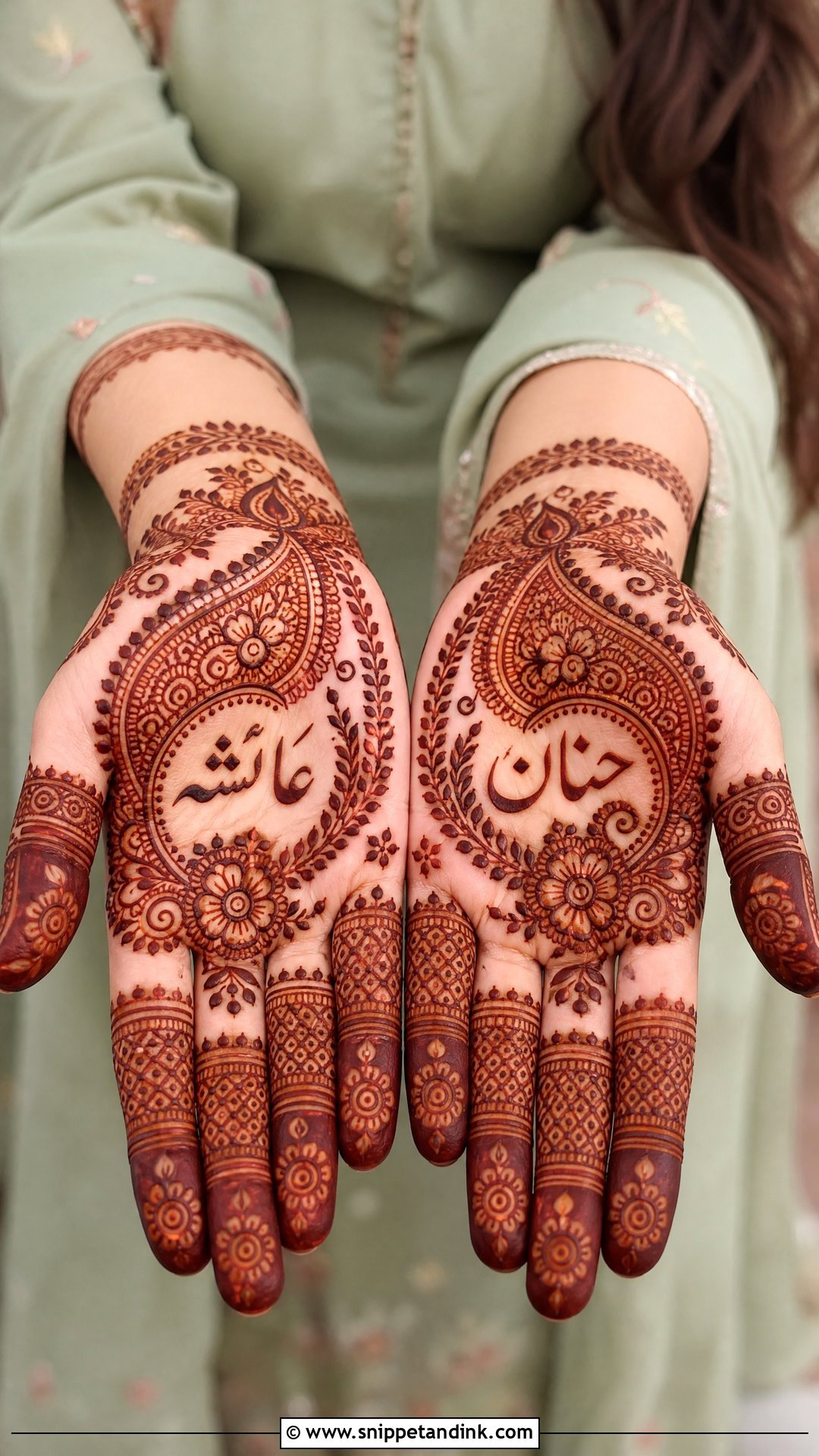
The curve of a paisley frames Urdu letters almost on its own. Place the name inside a large paisley on the palm, between two paisleys on the back hand or along a paisley trail heading for the wrist, then surround it with tiny flowers, leaf chains, dots and curved lines. Long names suit a stretched paisley panel; short ones fit a compact motif. It reads as traditional and personal at the same time, which is why I draw it for weddings, Eid and family functions alike.
17. Urdu Name Jaali Mehndi Design
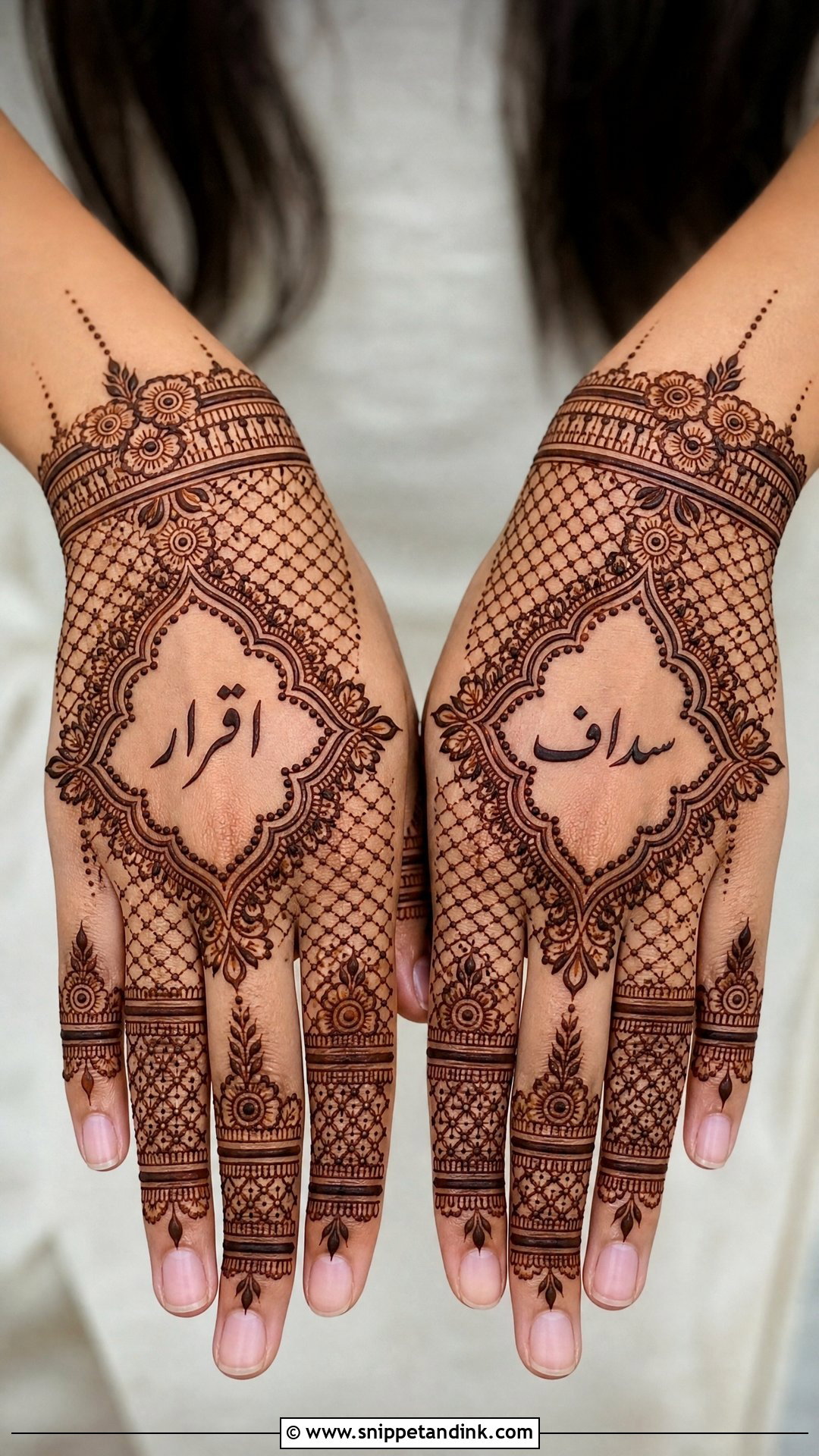
Jaali and calligraphy are both line work, and that’s the problem: a thin name inside a mesh vanishes. I clear a centre panel on the back of the hand, write the name in a bolder line than the grid, and only then fill the surrounding skin with mesh. Flowers at the corners, finger bands and a wrist cuff complete it. The contrast between solid script and fine net is what gives it a polished, modern finish.
18. Urdu Name Floral Trail Mehndi Design
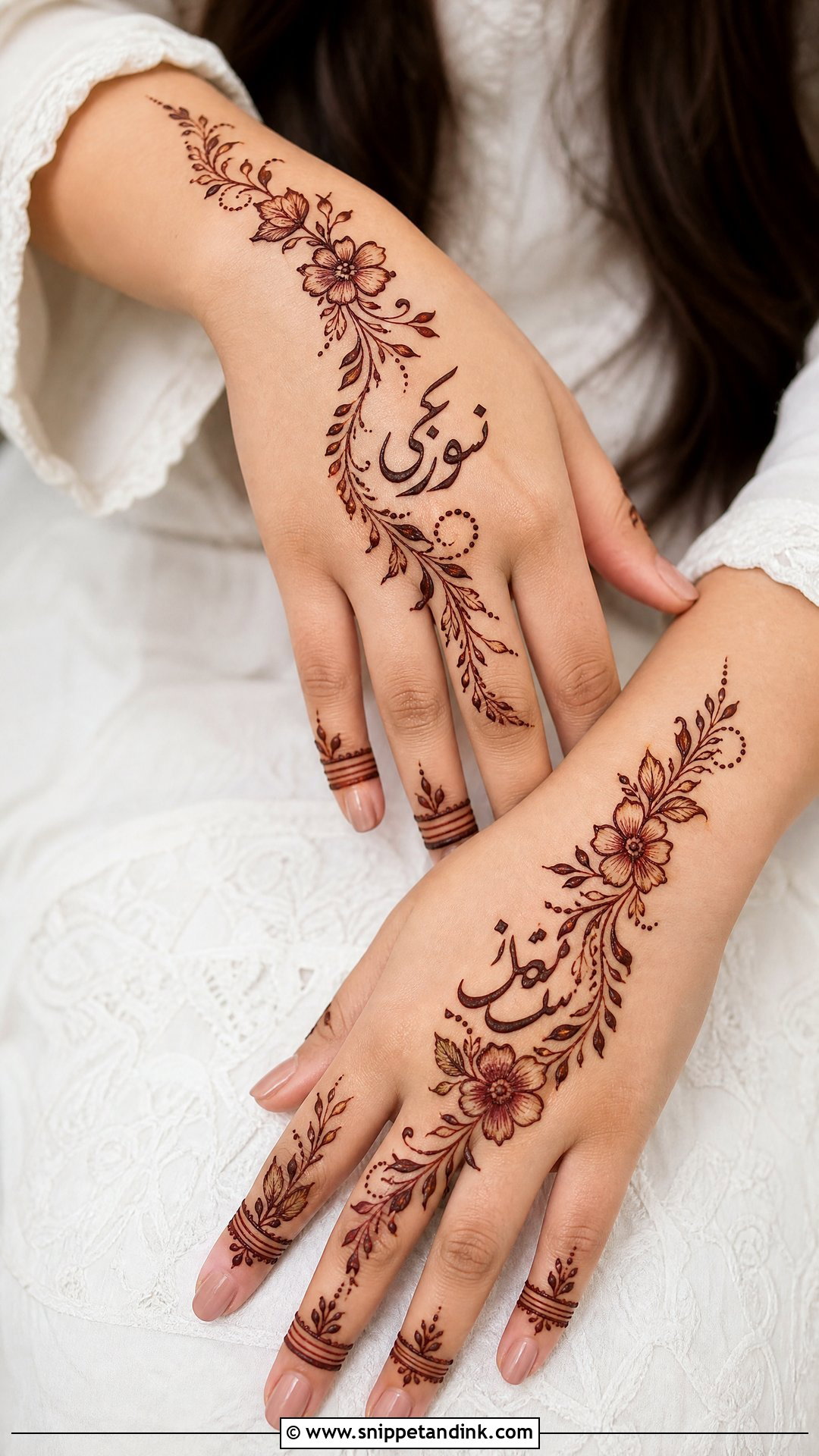
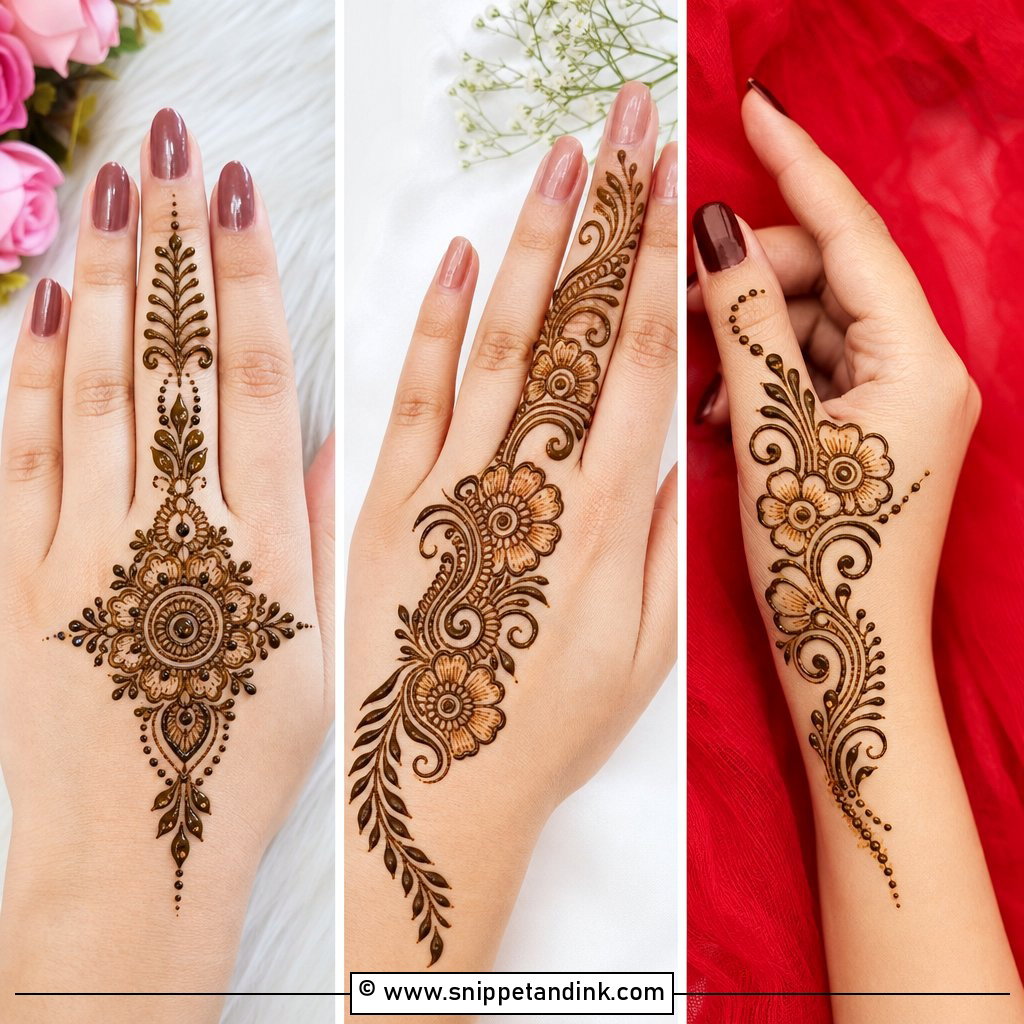
A floral trail starts near the wrist and moves diagonally toward one finger, and the name can travel along the vine, sit inside a flower or rest in a curved gap between blooms. It suits Arabic and Indo-Arabic henna, since both rely on open space and movement. Bridesmaids and guests like it because it’s personal without being full bridal. I check that the name lands on the straightest stretch of the vine, because script bent around a tight curve gets hard to read. Shaded petals and small dotted curves add depth around it.
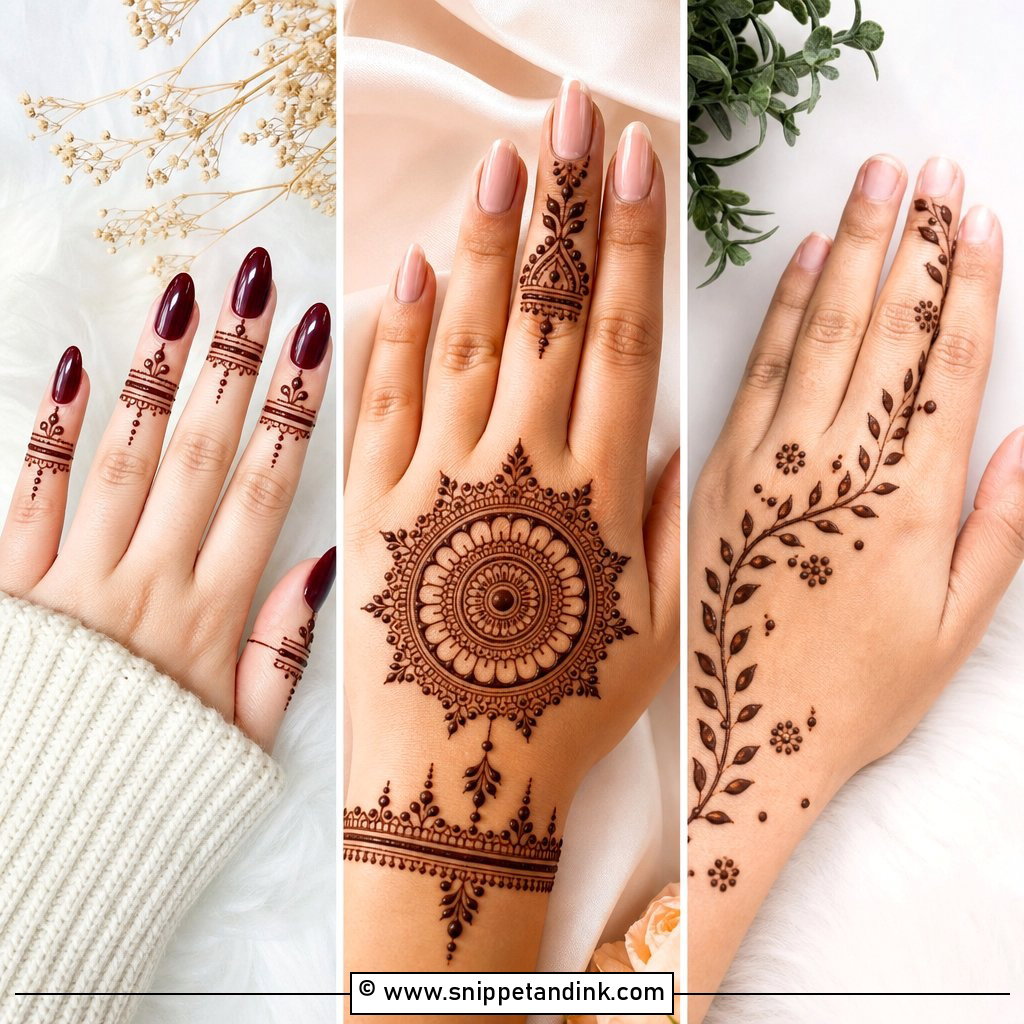
19. Urdu Name Minimal Mehndi Design
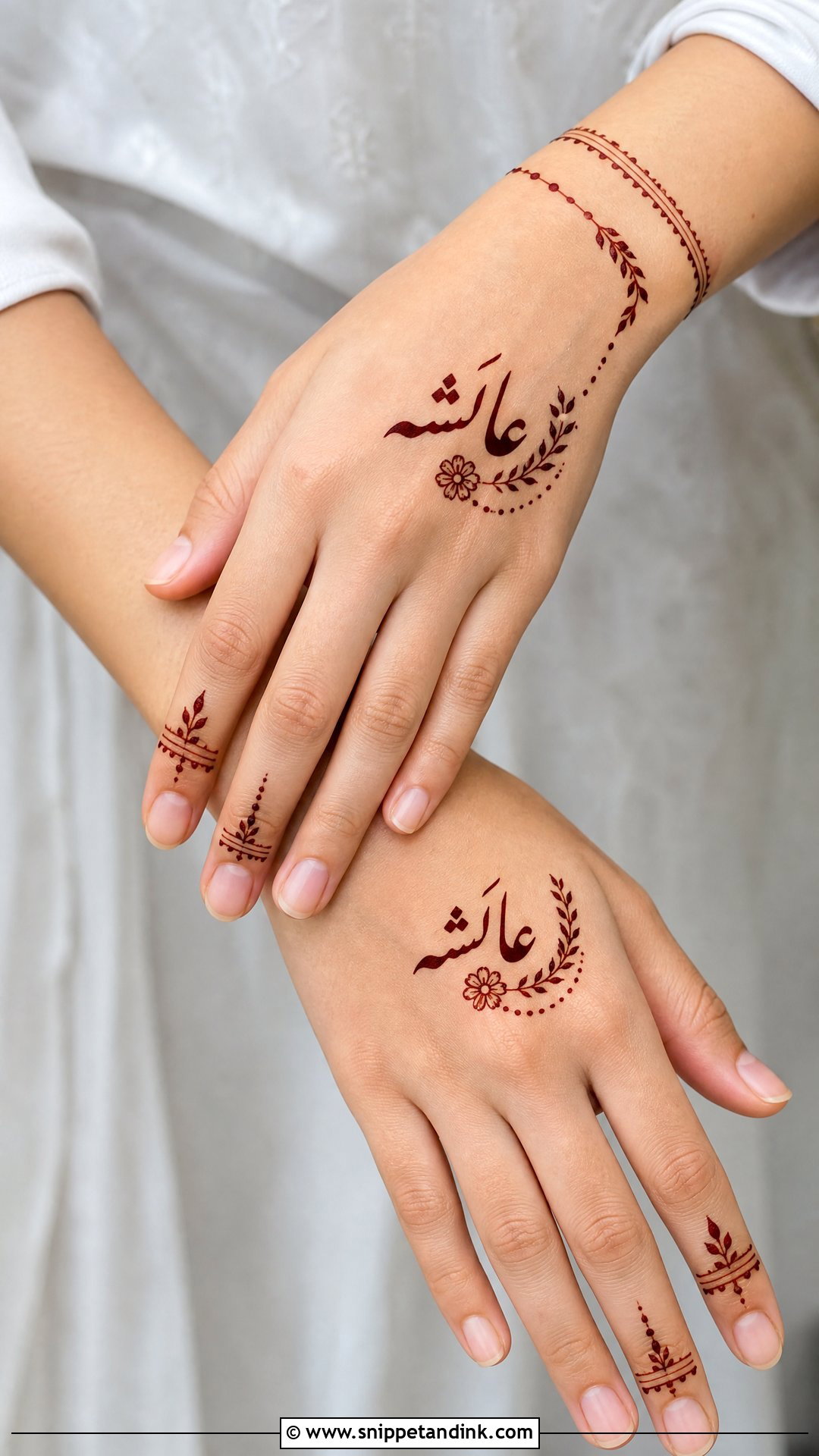
Here the calligraphy has nowhere to hide. A simple name with a small border, a tiny flower or a thin bracelet line sits on the wrist, the side of the palm, the back of the hand or near the thumb, with no heavy filler at all. Neat spacing and smooth script are the whole design. Use natural henna and resist the urge to keep adding motifs. It works for office-friendly events and school functions, as long as the name is crisp and centred.
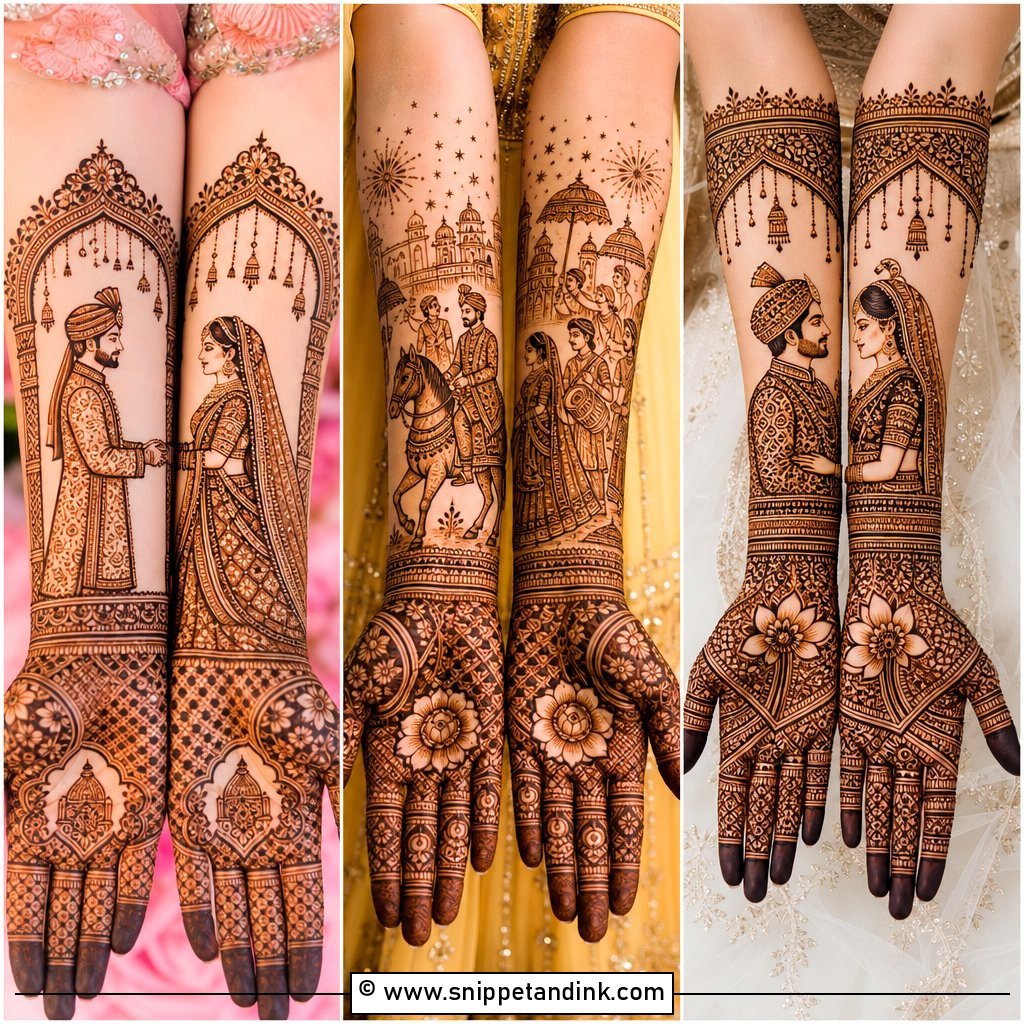
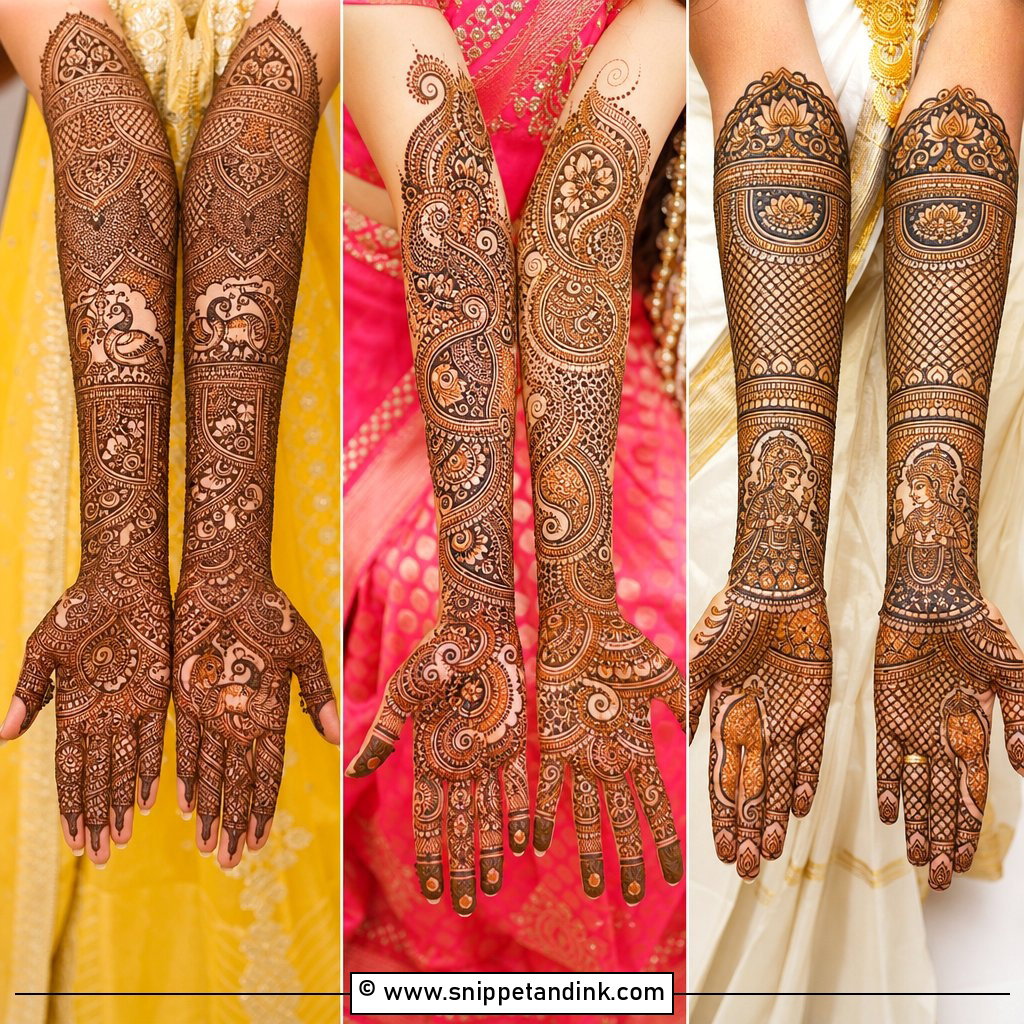
20. Urdu Name Dulhan Mehndi Design
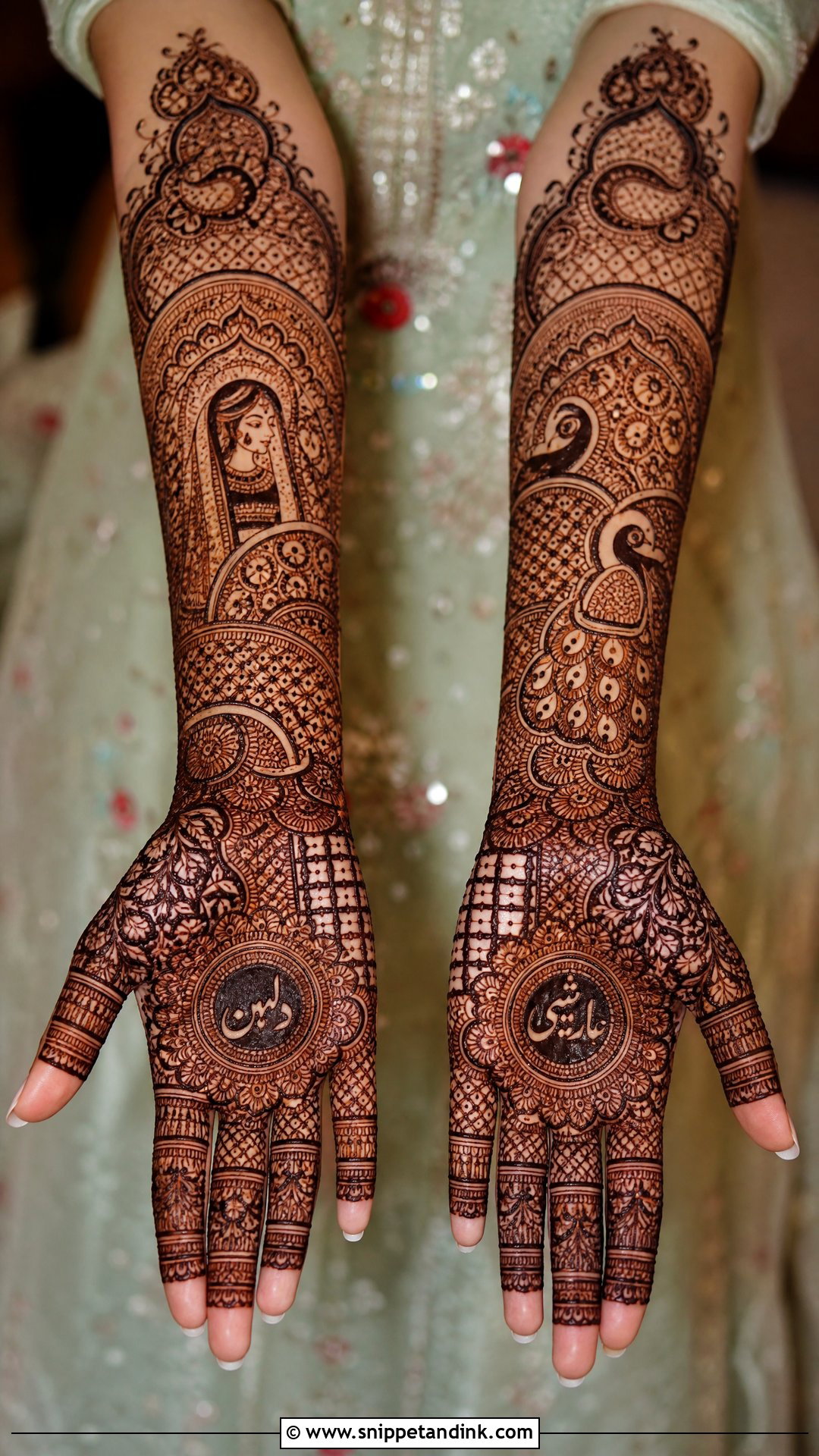
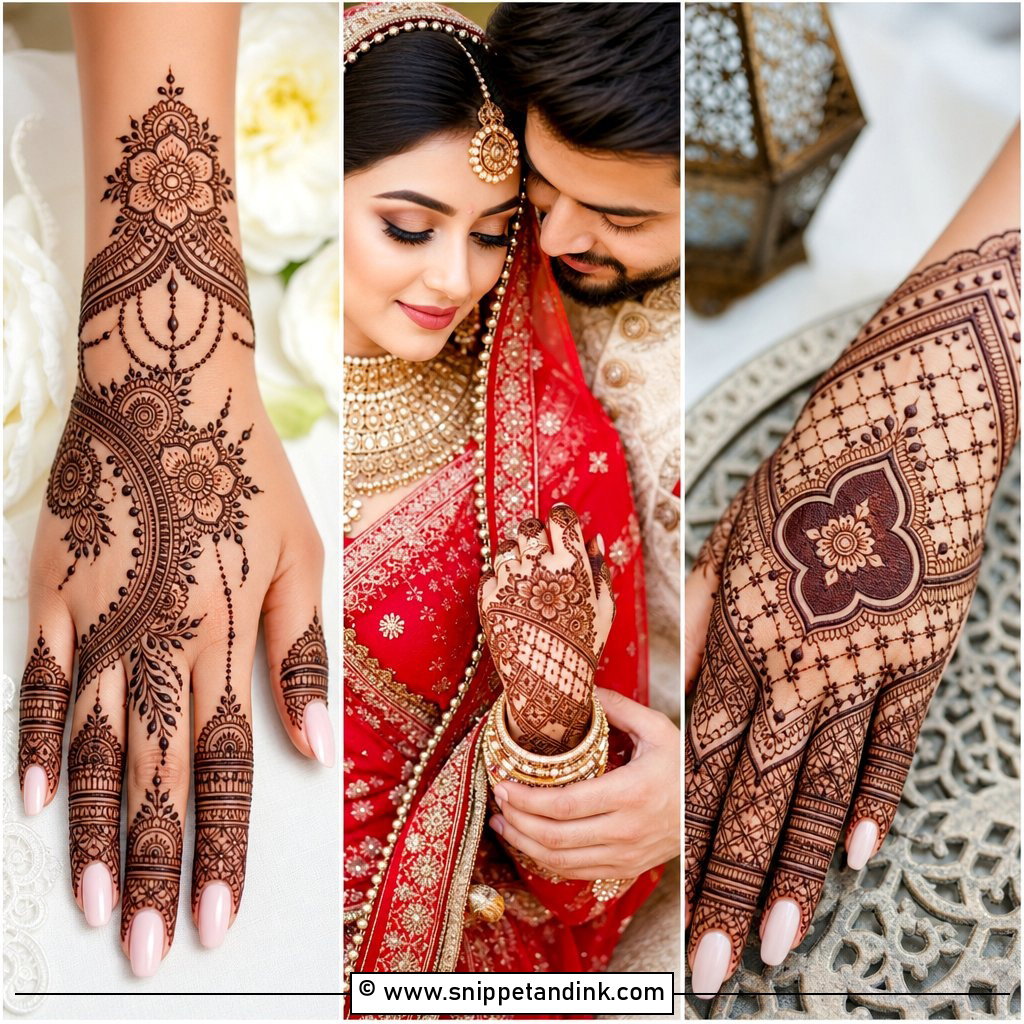
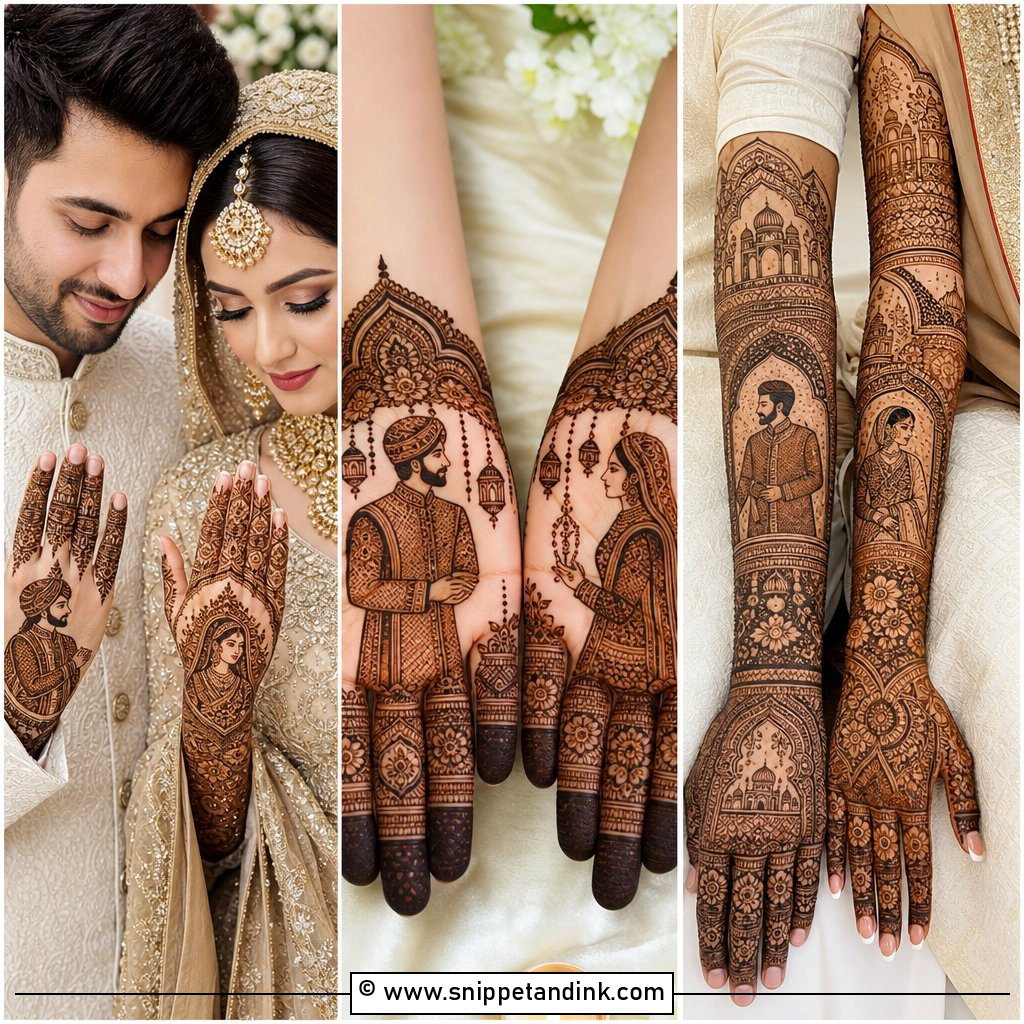
Dulhan mehndi is full bridal coverage from fingers to forearms, with mandalas, paisleys, peacocks, jaali, fine filler and often a bride-and-groom scene. The name usually hides in the palm, the wrist band or a floral panel. It has to be planned before the first line, not squeezed in afterwards, so I ask for the exact spelling when the booking is made. For photos I like one readable name and one hidden name on the same pair of hands: the camera gets a clear moment, and the family still gets their search.
21. Urdu Name Couple Mehndi Design
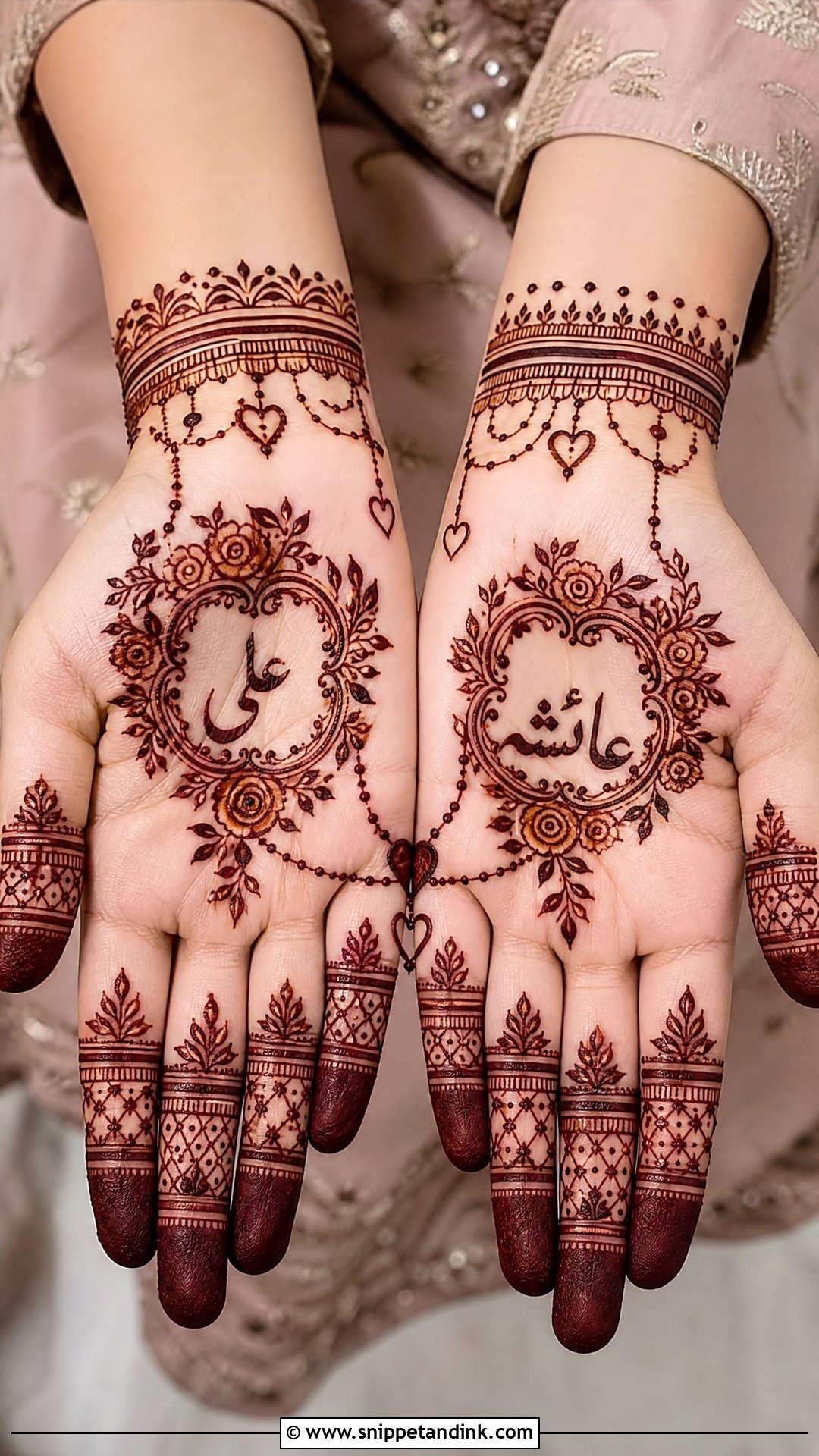
Two names need to look equal. One on each hand, both inside matching frames, or joined by floral vines and heart details all work, as long as the calligraphy weight and borders match. If one name is much longer, I adjust the frame sizes so both carry the same visual weight, instead of writing the long one smaller. Long names suit the palms or forearms; short ones fit the back hands. Small symbols such as rings, flowers or joined mandalas tie the pair together.
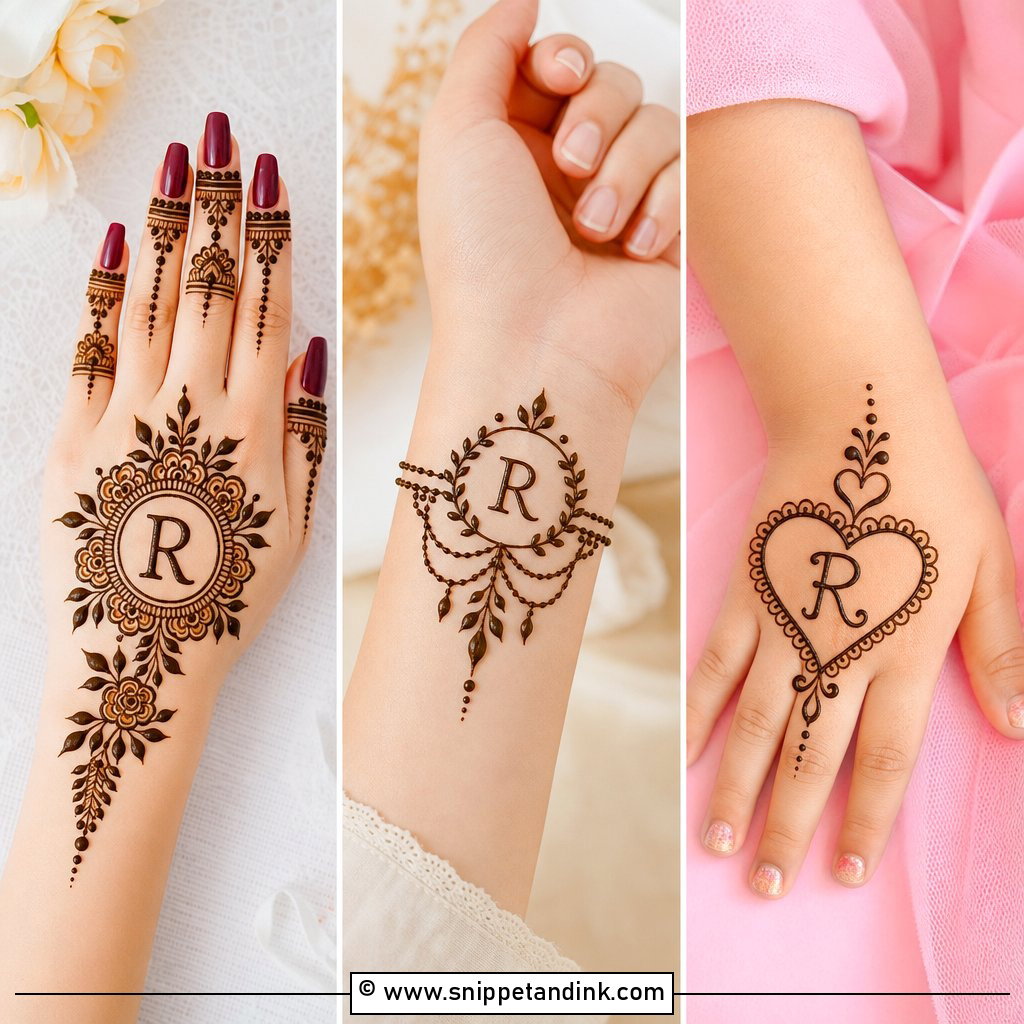
22. Urdu Name Initial Mehndi Design
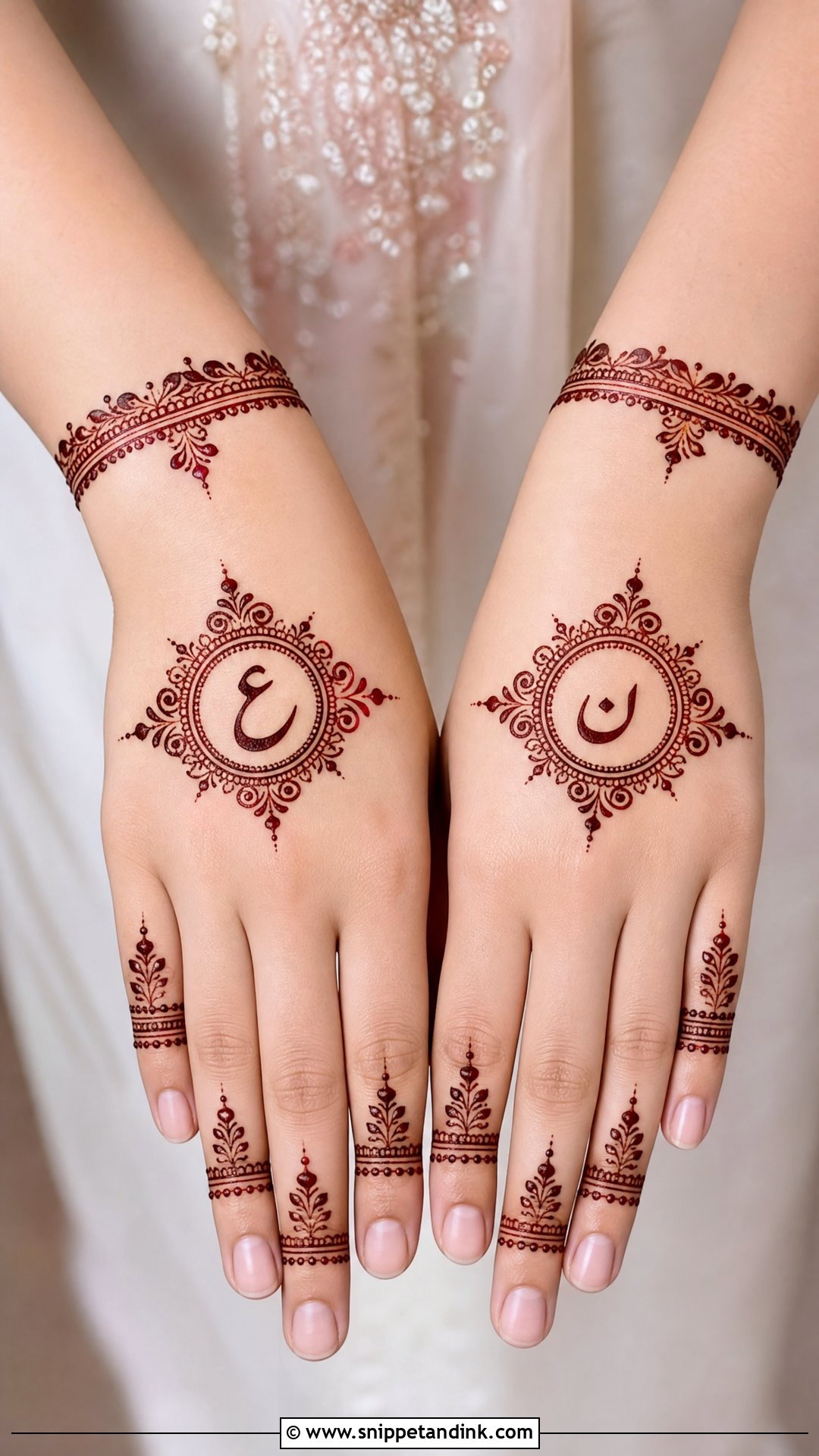
An initial is the subtlest option: the first Urdu letter, or a pair of initials, inside a mandala, heart, flower, paisley or bracelet frame. It fits fingers, wrists and small back-hand designs that couldn’t hold a full name, with light vines, dots and finger bands around it. Draw it bold enough to recognise. Several Urdu letters share one base shape and differ only by their dots, so I place the dots with care; a smudged dot can turn one letter into another.
23. Urdu Name Full Hand Mehndi Design
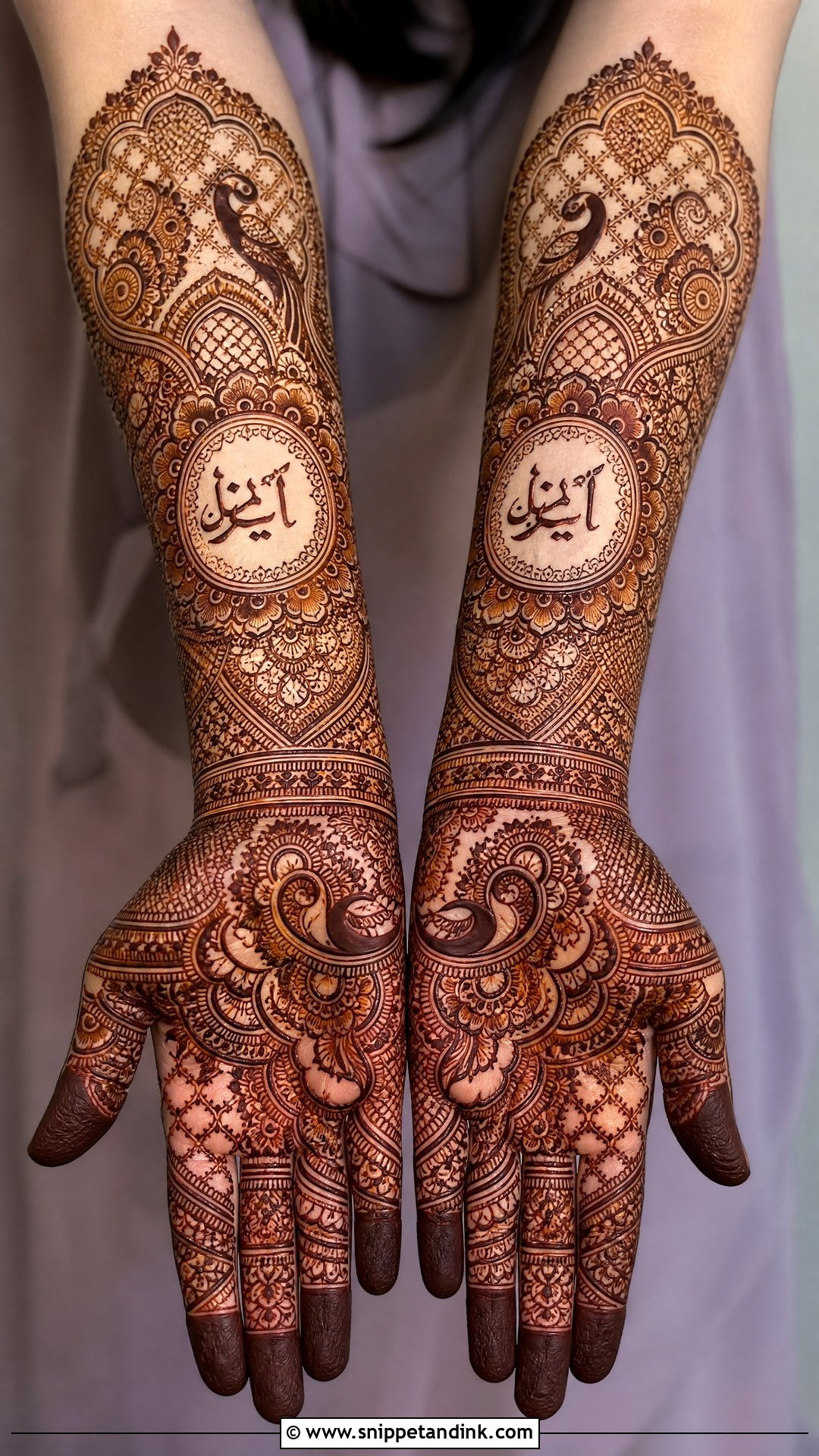
Full coverage fills the palm, fingers, wrist and lower forearm with connected motifs, and the name sits in a central panel, inside paisley work or along a floral band. The risk is obvious: the name gets lost. I reserve one open frame for the script before drawing anything else and keep the fillers around it small, then build out with mandalas, peacocks, jaali and leafy borders. Both hands take hours at this level of detail, so book it for the day before the main celebration.
24. Urdu Name Front Hand Mehndi Design
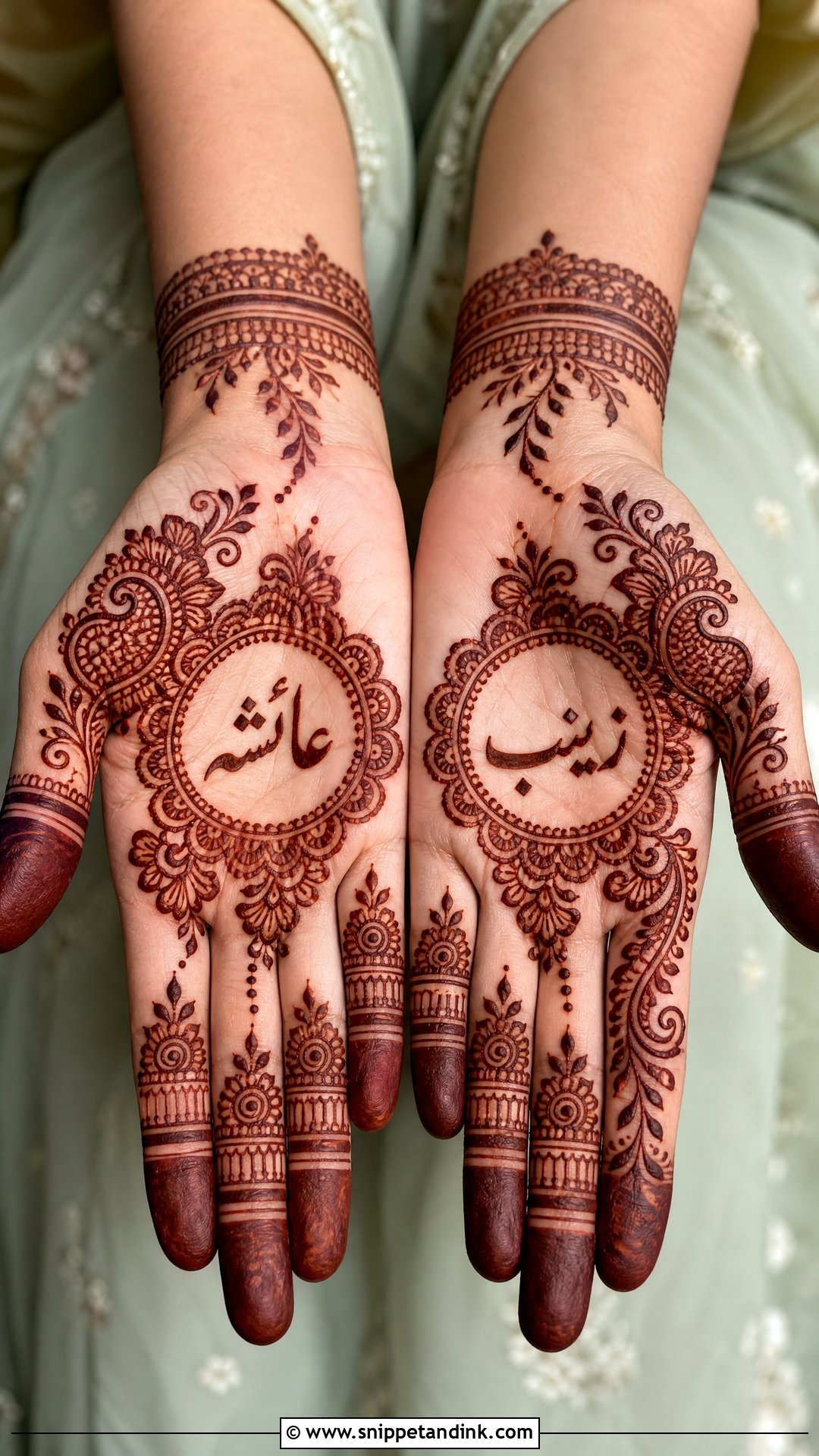
The palm side is flat, so a name can be written cleanly inside a circle, heart, paisley or floral frame, with matching bands, vines and fingertip details on the fingers. It scales from simple to heavily detailed, which suits brides, Eid and family events. Palm centre is the placement for a name you want seen in photos; near the wrist or thumb side is softer. The palm is also the part of the hand you use most, so keep it still and dry for the first few hours.
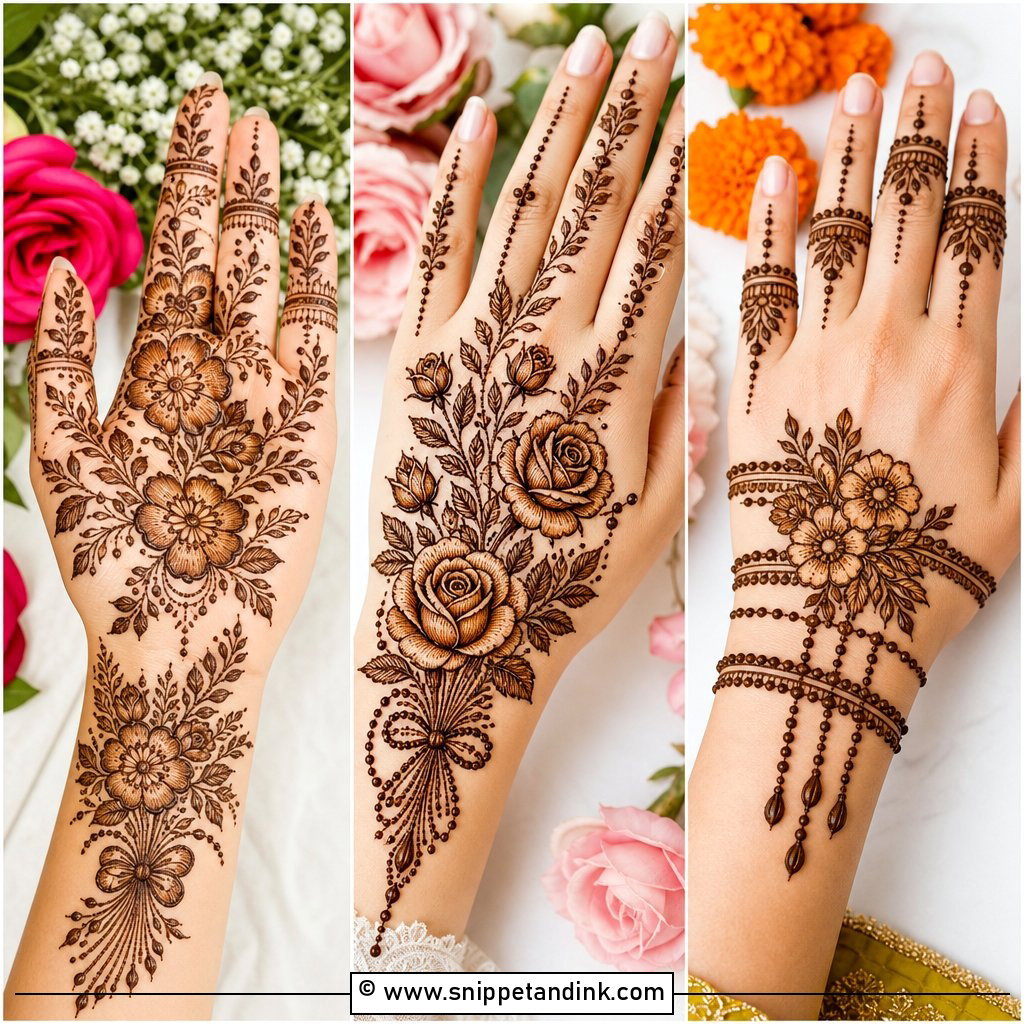
25. Urdu Name Modern Mehndi Design
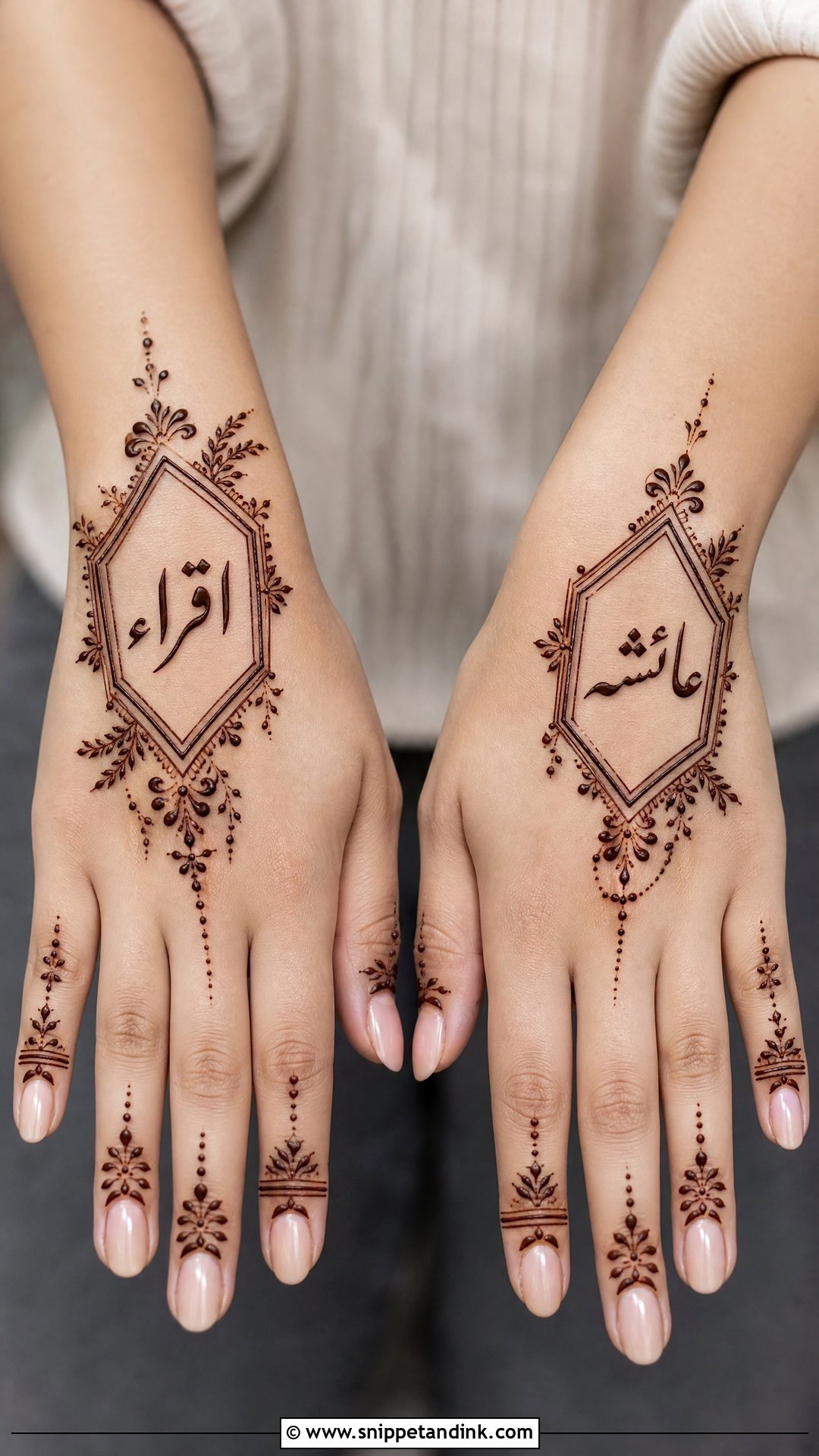
Modern name designs swap dense filler for negative space, slim vines, geometric borders and a few small floral accents, with the name in a sleek frame on the back of the hand, the wrist or the palm. Decorating only two or three fingers keeps the balance, and it sits well beside contemporary outfits. Because there’s so little else on the hand, letter spacing matters more than anything. I’d rather redraw a name on paper twice than rush it on skin.
The Name Hunt on Mehndi Night
In many families the groom is handed the bride’s hands and asked to find his name hidden in her mehndi, while everyone around teases him as he searches. It’s a light moment in a long programme, and it works best when the name is hidden well enough to take a minute, not twenty.
For a fair game I hide the name in one zone, draw it at the same line weight as the pattern around it, and avoid tucking it into the darkest filler, where even the bride couldn’t point it out once the stain deepens. If both families enjoy the custom, a second, smaller name on the other hand keeps it going a little longer.
How Long Fine Script Stays Readable
A henna stain fades as your skin naturally sheds, usually over one to three weeks, and calligraphy is the first part to suffer. The thinnest strokes and the dots go first, so a name that was crisp on the wedding day can look like a different word ten days later. That’s normal and nothing to worry about, but it’s worth knowing if you’re planning photos for a later function.
- Ask for the letters in a slightly heavier line than the surrounding filler.
- Rub a little natural oil or balm into the design before showering, which helps protect the stain from hot water and soap.
- Skip scrubs, exfoliating gloves and long swims for the first week.
- Expect the palm to fade faster than the back of the hand, since it’s the part you wash and use most.
Whose Name Will You Carry, and on Which Hand?
A name changes what a henna pattern means to the person wearing it. Bold or hidden, minimal or bridal, the design starts with where the script goes and how much space it gets. Short names fit fingers, wrists and small frames; longer ones need palms, back hands or forearms. Floral trails, paisleys, mandalas, jaali and hearts all frame Urdu calligraphy well. Pick the placement for your event and outfit, confirm the spelling in writing, and give the stain a day or two to deepen before the celebration.
You'll Like These Ideas:


Leave a Reply