
An engagement cake is usually smaller than a wedding cake and seen up closer, which makes the finish matter more than the size. Guests stand right next to it with their phones out. When a couple asks me for something classy, I steer them toward one clear focal point, a calm palette and a surface I can get truly smooth, whether that’s buttercream or fondant. Pearls, pressed flowers, monograms and a bit of gold all have a place, just not all at once. Below are 20 Classy Engagement Cake Designs with notes on how each is made and where it can go wrong.
Sizing the Cake to the Guest List, Not the Photo
Most engagement cakes in photos are bigger than the party needs. Bakers usually count servings two ways: wedding slices, which are thin fingers about an inch wide, and party slices, which are closer to a wedge you’d cut at a birthday. An engagement party usually means party slices, so the same cake feeds fewer people than its wedding count suggests.
- A 6-inch round, three layers tall, comfortably serves around 10 to 12 party slices.
- An 8-inch round serves roughly 20 party slices.
- A 6-inch tier on an 8-inch tier gives about 30, which suits most medium parties.
- If you need more, a plain sheet cake in the kitchen in the same flavor keeps the display cake small.
Exact counts vary by baker and how tall they make each tier, so ask for theirs. For lead time, a simple buttercream cake can often be booked a few weeks out, but anything with sugar flowers, hand piping or a custom topper needs more notice. Bring a photo of the room and a guest count to the first conversation.
1. White Engagement Cake With Fresh Flowers
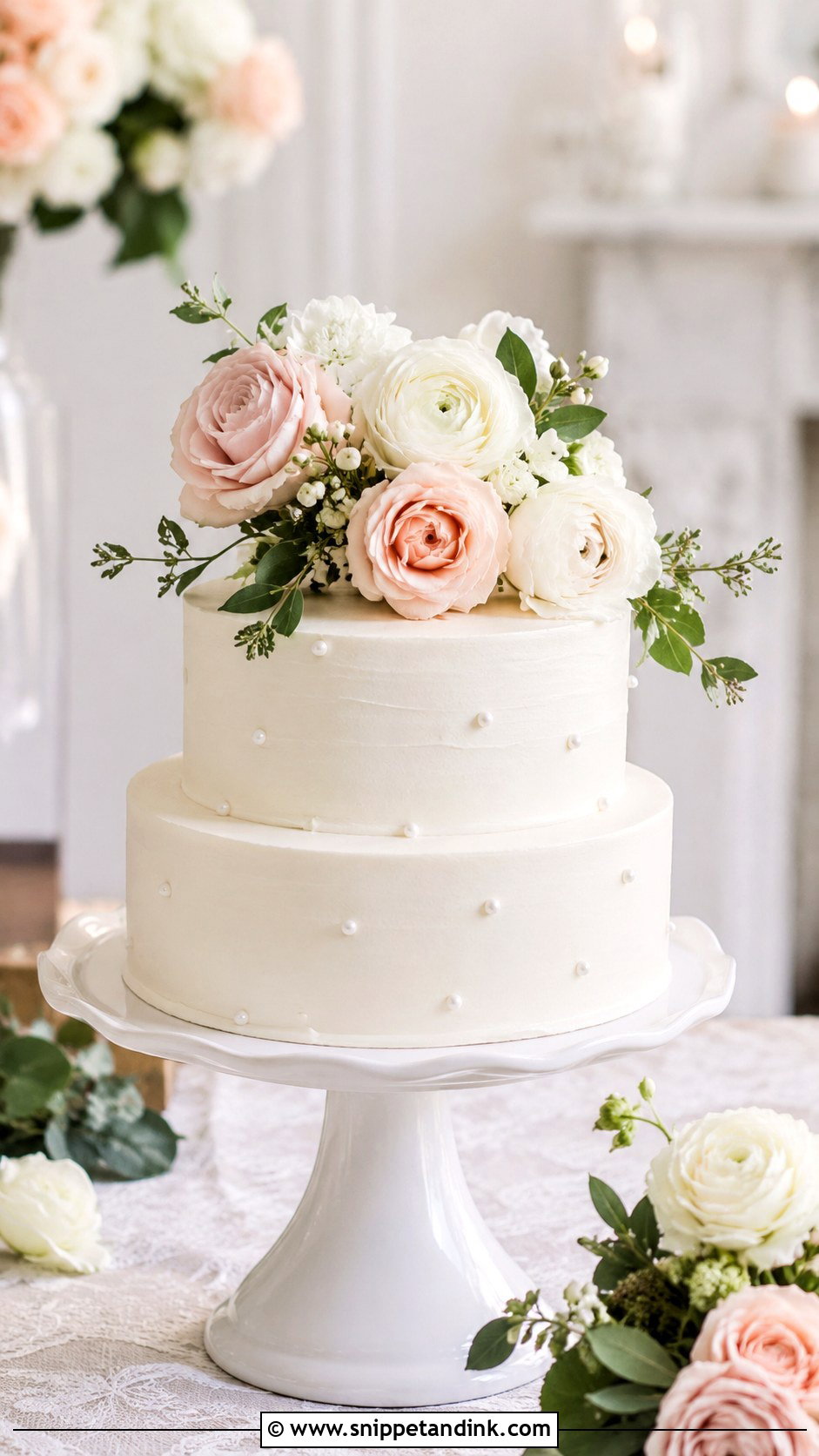
White with fresh flowers is the design I make most for engagement parties, and the flowers are where it succeeds or fails. They need to come from a grower who knows they’re going on food, without pesticides, and the stems must be wrapped in floral tape or set in picks so they never touch the cake directly. Roses, ranunculus and orchids hold up well; peonies drop petals in a warm room. Smooth buttercream gives a soft look, and fondant gives sharper edges. Group the flowers in one cascade or a neat ring rather than scattering them, and the cake keeps its shape in photos.
2. Minimalist Engagement Cake
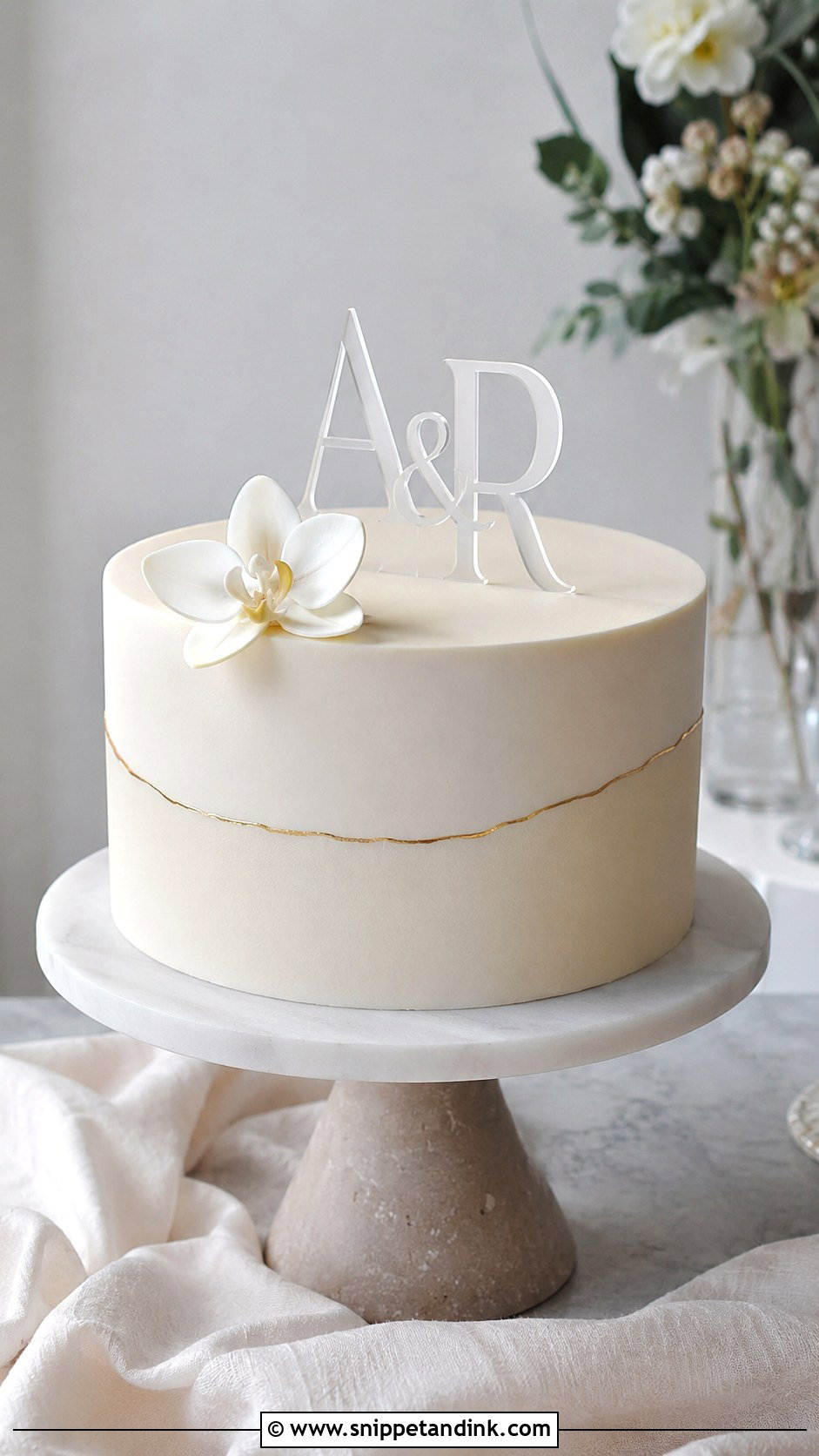
A minimalist engagement cake has nowhere to hide. With a white, ivory, blush or beige base and one detail, like a thin gold line or a single sugar flower, every wobble in the frosting shows. I chill the cake between coats and finish with a hot bench scraper to get the sides glass-smooth and the top edge sharp. A single tier can look as finished as a tall one if the edges are clean. Vanilla bean, almond, lemon or chocolate suit the plain exterior.
3. Two Tier Engagement Cake
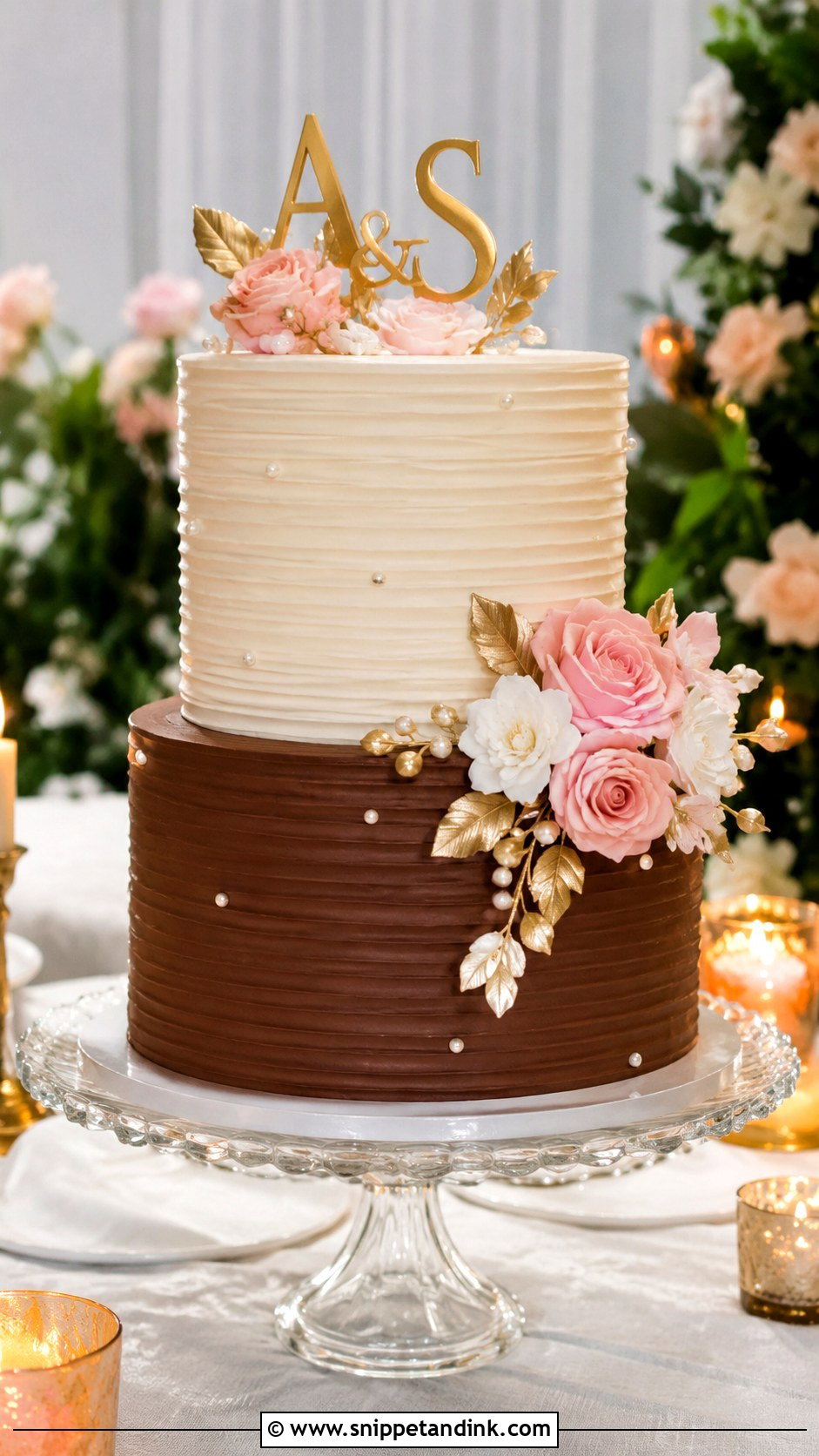
Two tiers are the size I suggest most for engagement parties of forty to sixty people. A two tier engagement cake gives height on the table without the formality of a wedding cake. The top tier needs internal supports, usually dowels or bubble tea straws cut to height, or it will sink into the bottom tier over a few hours. Stick to one main color and one accent: ivory with blush flowers, white with gold trim, or beige with greenery. It also lets you offer two flavors, vanilla on one tier and chocolate on the other.
4. Gold Engagement Cake
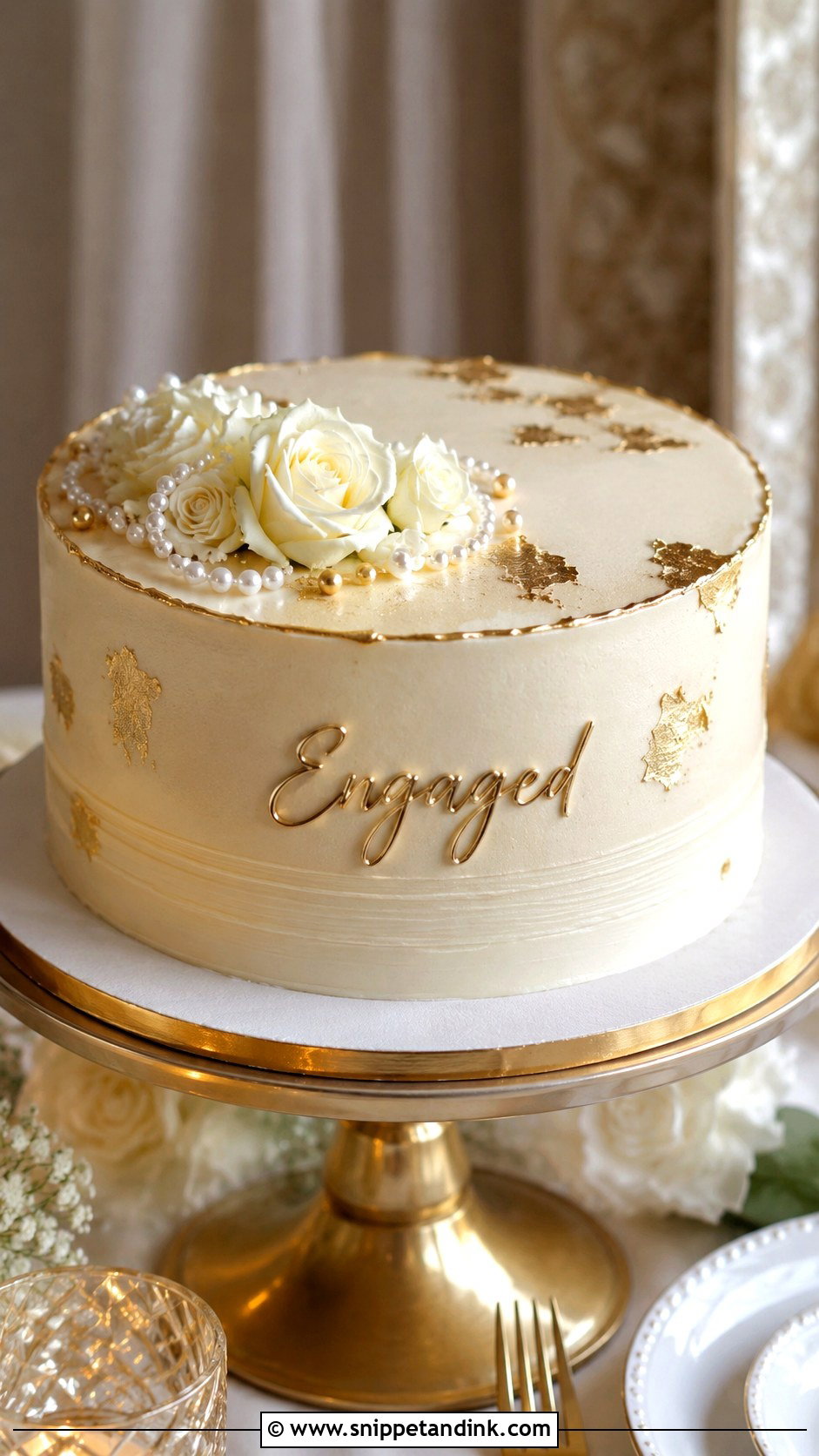
Gold works best in small doses. Edible gold leaf, a thin painted border or a soft drip look expensive; a fully gilded tier tends to look brassy under party lights. I paint gold with edible luster dust mixed with a little alcohol, which evaporates and leaves the metallic finish behind. A neutral base, white, ivory, warm beige or pale blush, makes the gold stand out cleanly. Evening parties and indoor venues show it at its best. A few white flowers or pearls soften the shine if it feels too flashy.
5. Floral Engagement Cake
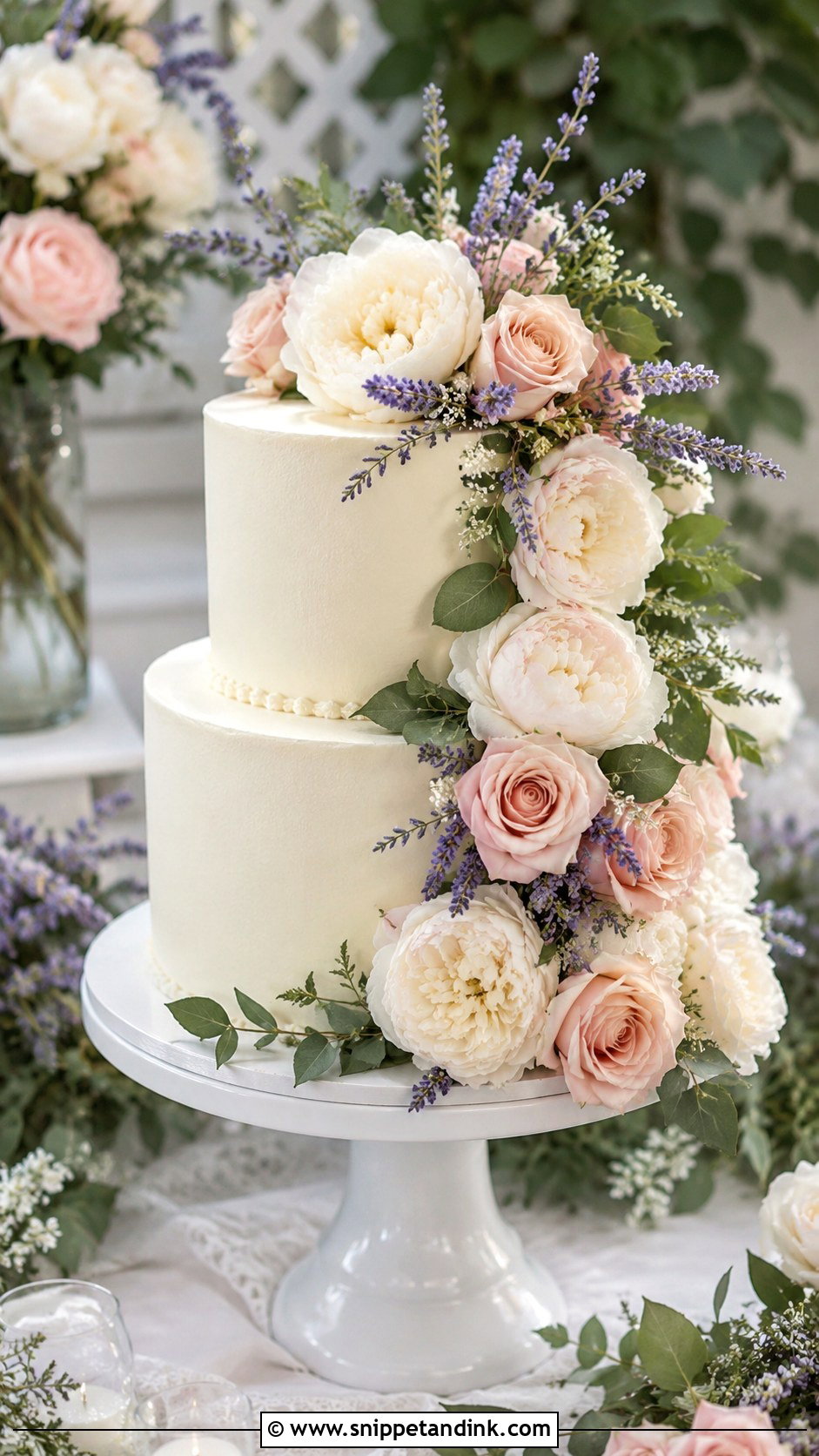
Floral cakes can use fresh, sugar, pressed or piped buttercream flowers, and each behaves differently. Sugar flowers are made weeks ahead and last indefinitely, but they’re the priciest option because each petal is shaped by hand. Piped buttercream flowers are softer and cheaper but don’t like heat. Whichever you pick, settle on one direction rather than mixing colors and shapes. Blush roses, ivory peonies, lavender sprigs or peach blooms all work. A cascade down one side, or a crescent on the top tier, gives movement without crowding the cake.
6. Pearl Engagement Cake
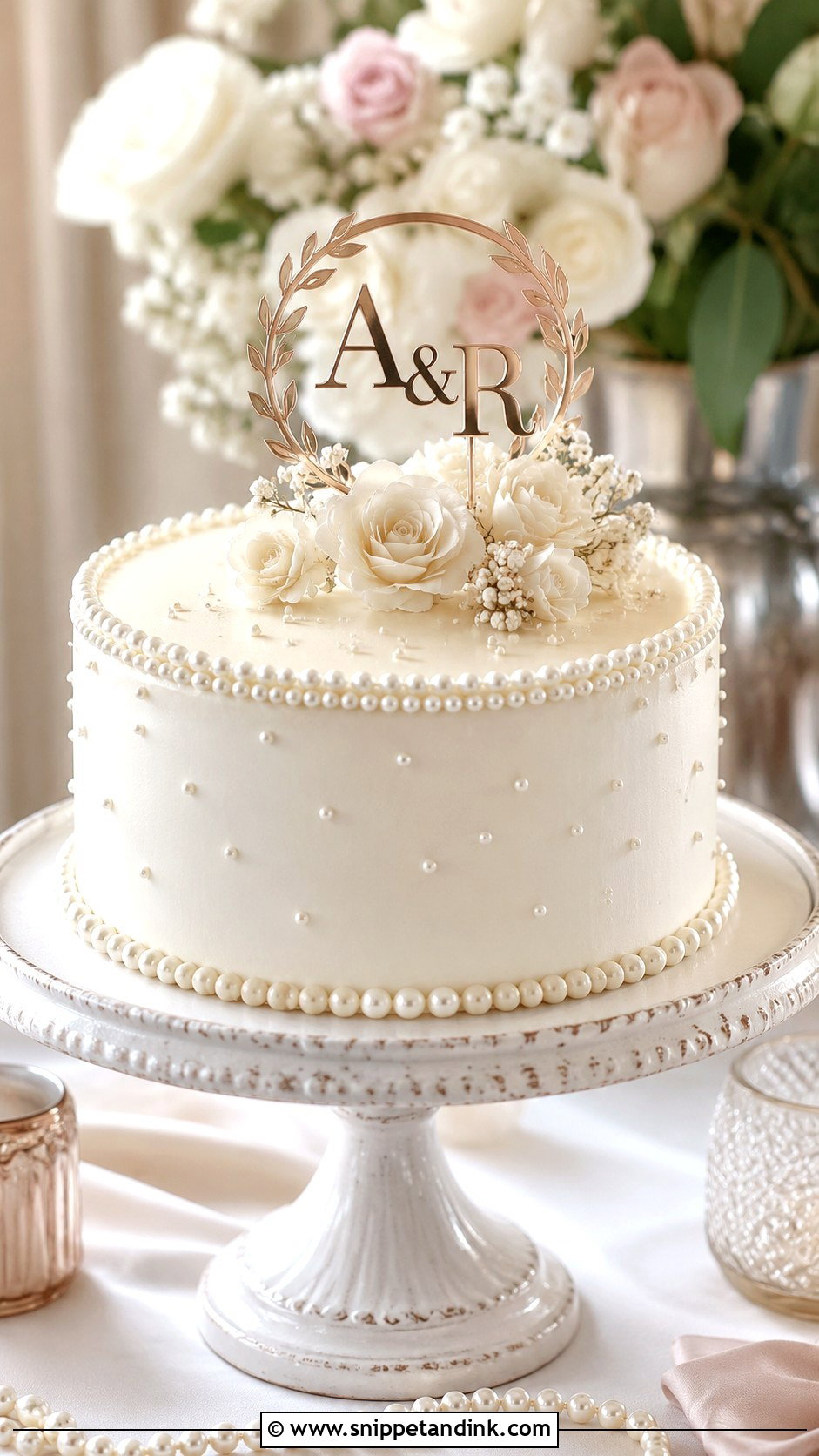
Edible pearls look graceful, but they’re hard sugar, so I warn couples they crunch. I place them around the base of each tier or scatter a few across the buttercream, pressing each into a dab of piping gel so they stay put. White, ivory, blush and pale blue frostings all take them well. A pearl engagement cake fits a classic celebration because it hints at a wedding without looking like one. Use fewer pearls than you think; a lighter hand looks more expensive. A few sugar flowers or an initials topper completes it.
7. Ring Engagement Cake
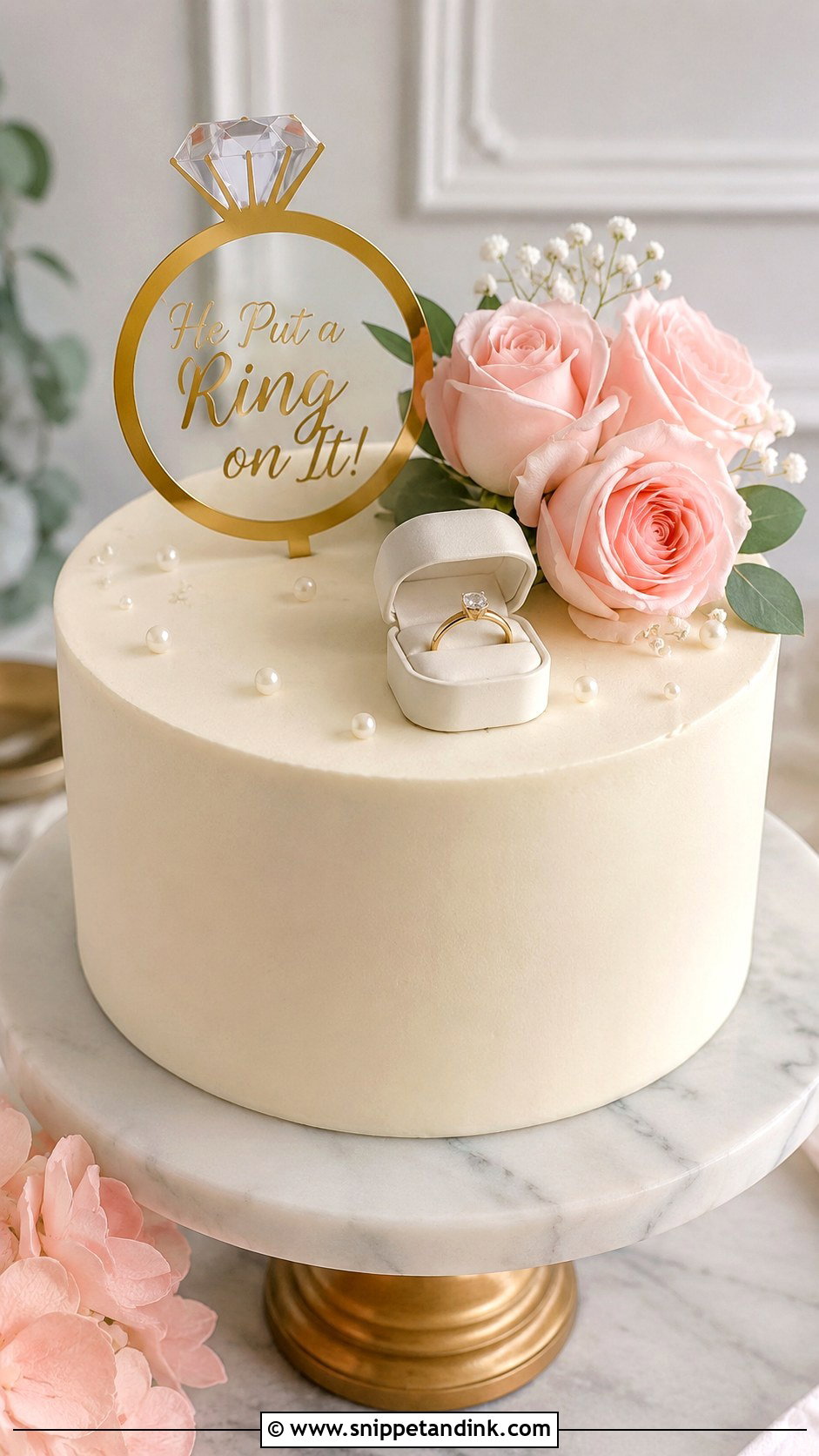
A ring is the obvious engagement motif, and the classy version uses it once. A small gold ring topper, a fondant ring box or a fine ring outline piped on the side is enough. I keep the cake base smooth and simple so the ring detail is the focal point, often white buttercream with gold edging. If you add anything else, keep it low: blush flowers, tiny pearls or soft piping around the base. Guests get the meaning right away.
8. Heart Engagement Cake
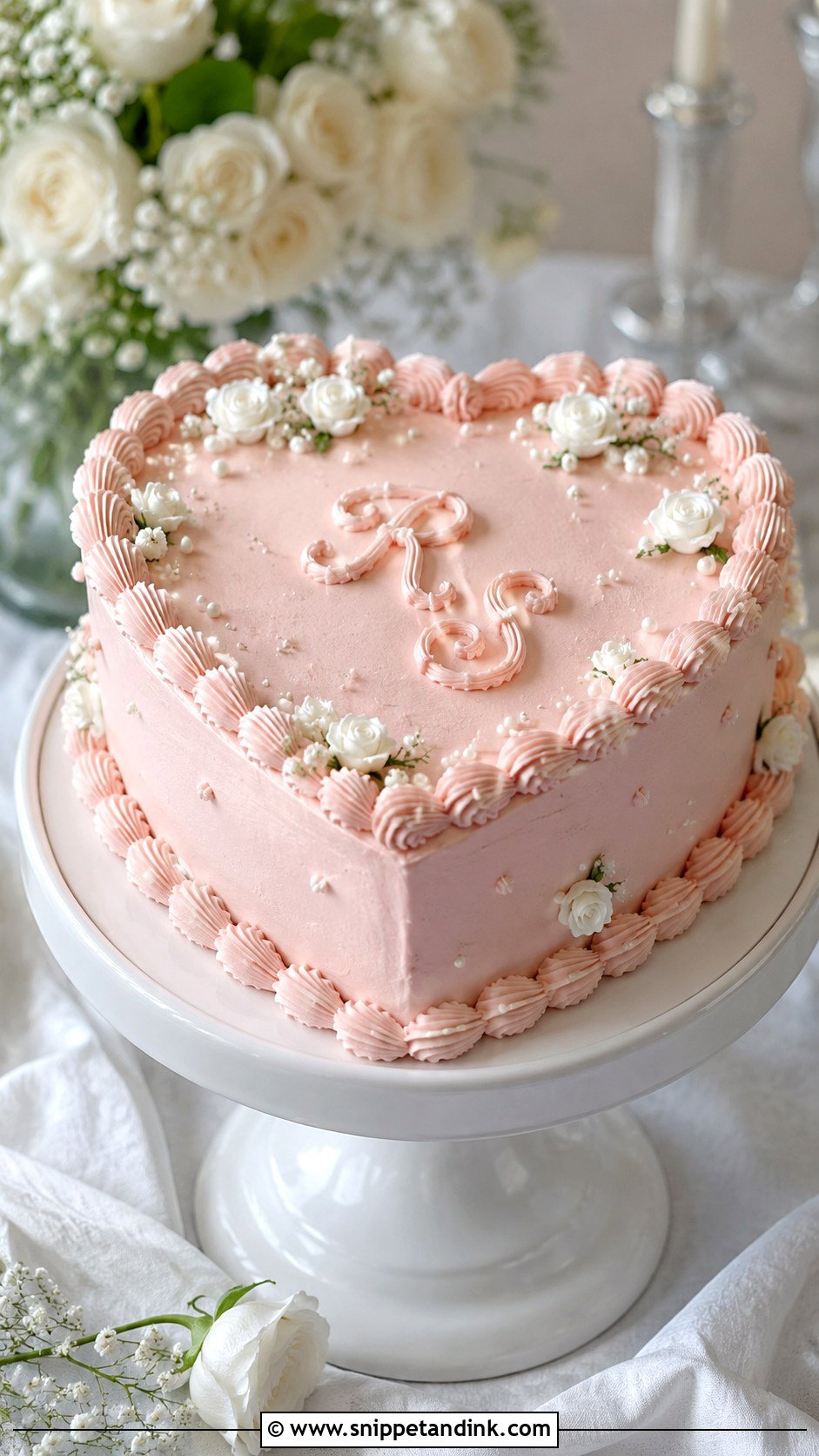
Heart-shaped cakes can tip into childish quickly, so I keep the decoration calm. Smooth buttercream, a vintage shell border and a few delicate flowers in ivory, blush or pale pink feel grown-up. The point of a heart is the hardest part to frost neatly; I chill the cake well before the final coat so the point stays crisp. You can add the couple’s initials or a short message on top. It suits intimate celebrations and dessert tables with candles and soft linens.
9. Monogram Engagement Cake
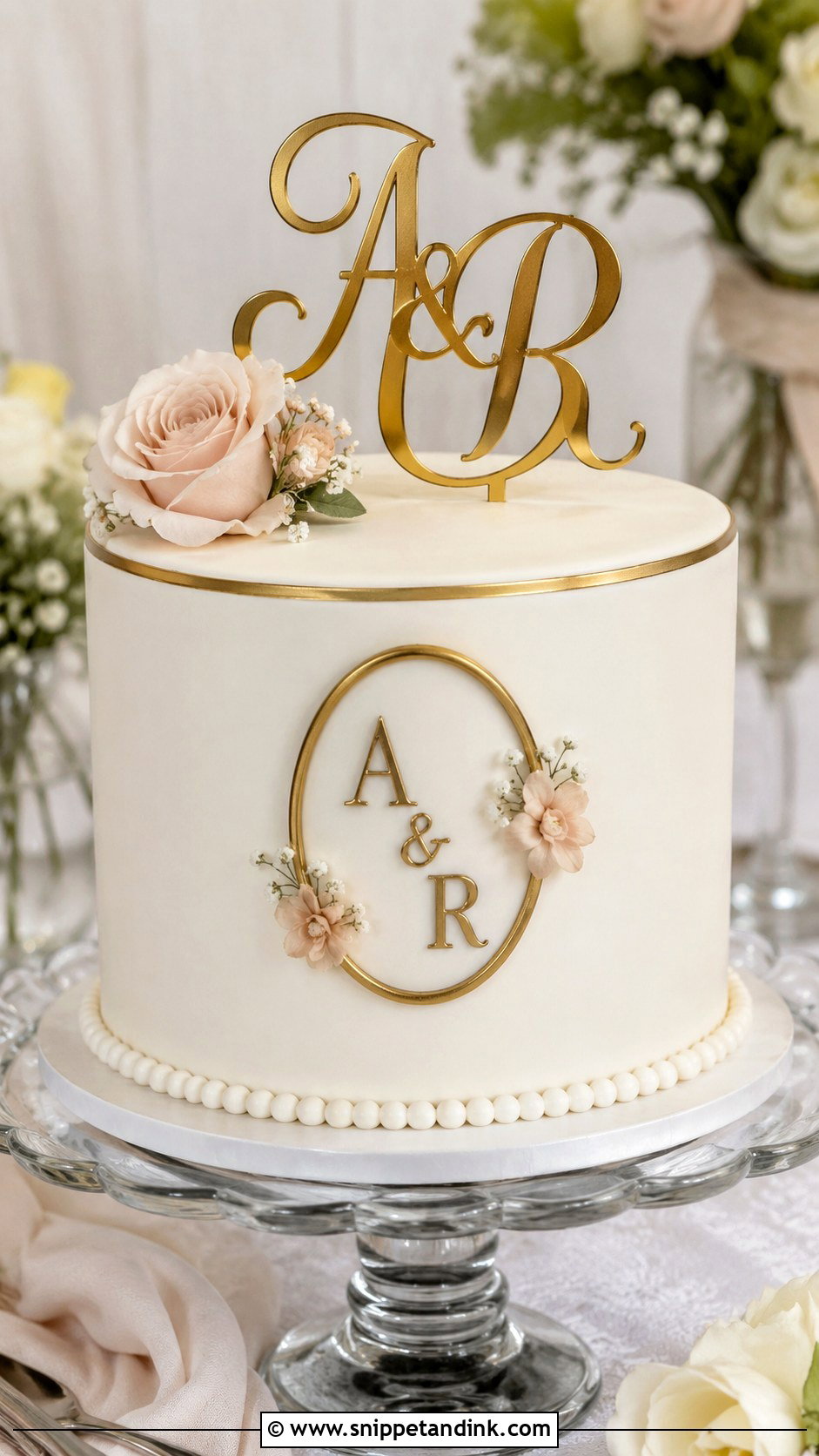
A monogram engagement cake is personal without being themed. Initials can be piped, embossed or stamped into fondant, or added as an acrylic topper. Piping a monogram freehand on the side is the riskiest version, since there’s no undo on buttercream, so I usually transfer the design with a stencil or a pin-pricked template first. Keep the lettering clean and easy to read. A smooth white or ivory cake with pearls, flowers or a thin gold border works well, and the initials give the camera somewhere to land.
10. Vintage Engagement Cake
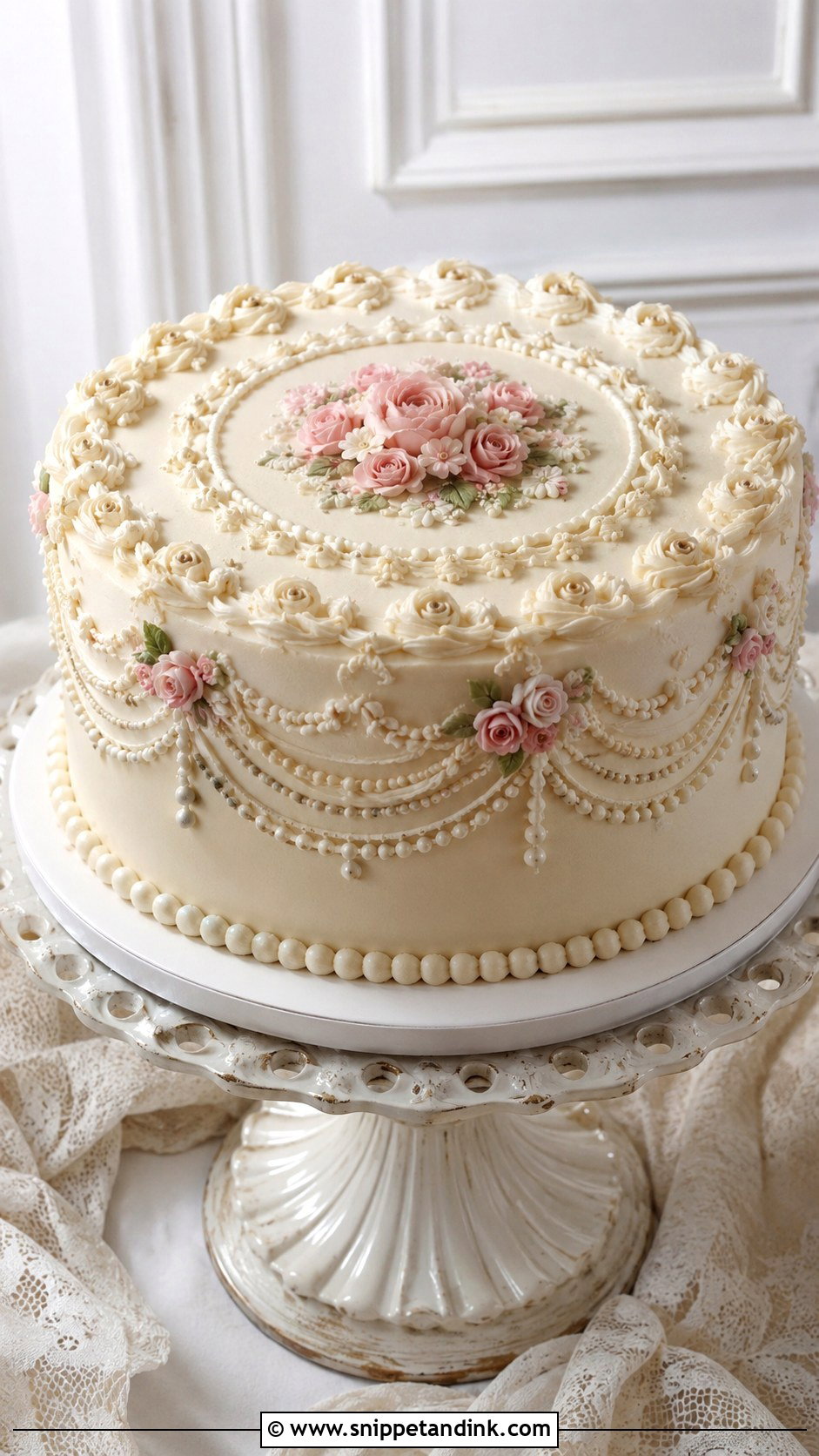
Vintage cakes are all about piping: shell borders, lace patterns, swags and pearl borders. They take time, and buttercream piping softens in heat, so I’d only do this design indoors or in cool weather. Keep the colors gentle, such as ivory, buttercream white, blush or pale peach. A single-tier heart with piped borders has plenty of charm, while two tiers feel more formal. Vanilla, red velvet or almond suit the nostalgic look. Show it off on a pedestal stand.
11. Lace Engagement Cake
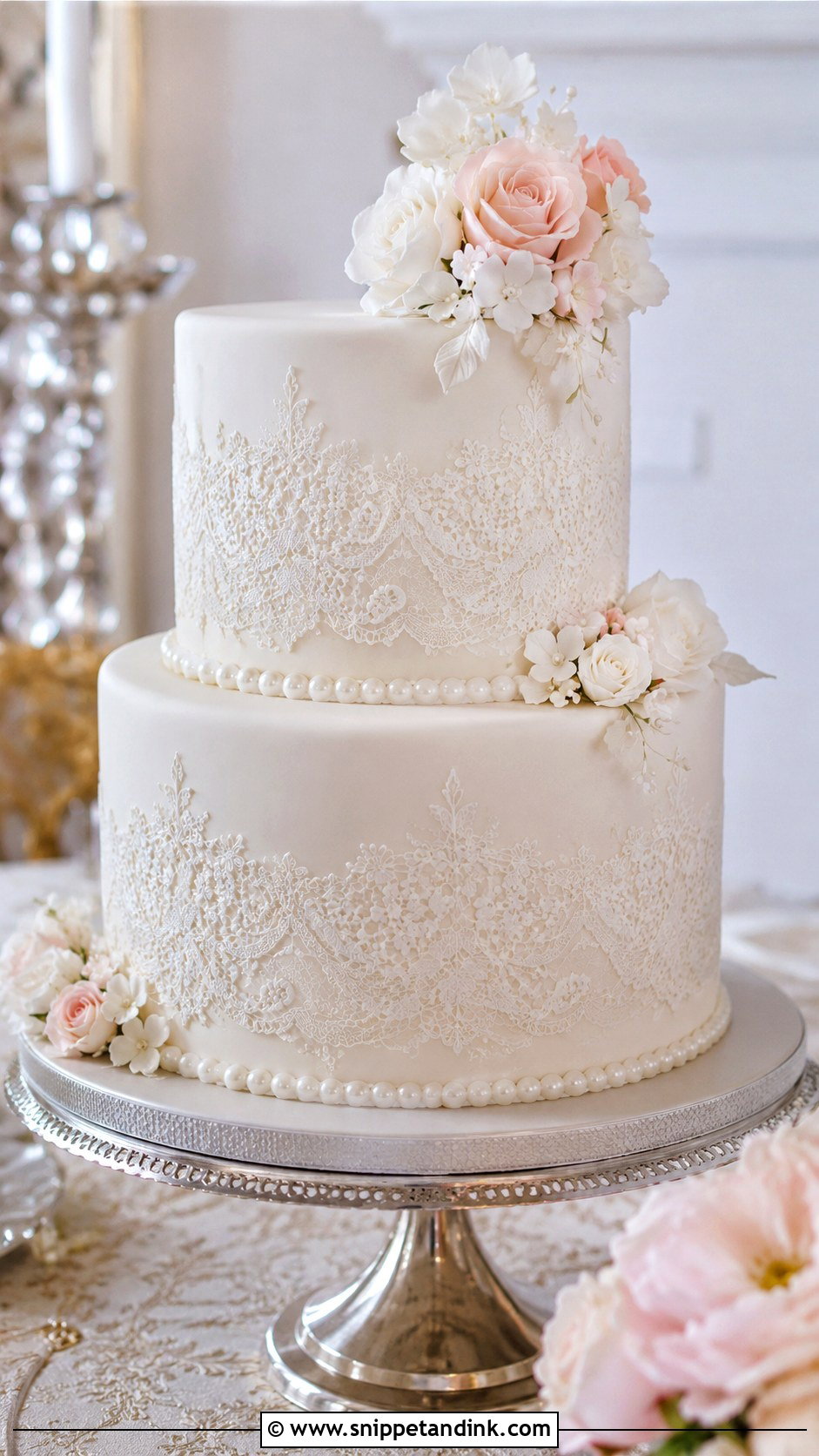
Lace on a cake can be piped in royal icing, pressed into fondant with a mat, or made from edible lace sheets. The sheets look most like real fabric but can go limp in humidity, so I add them as close to the party as possible. White-on-white lace looks classic, and ivory lace over blush fondant is softer. Keep the palette simple and let the lace be the main feature. A small cluster of flowers or pearls is enough. It suits formal dinners and banquet halls.
12. Blush Engagement Cake
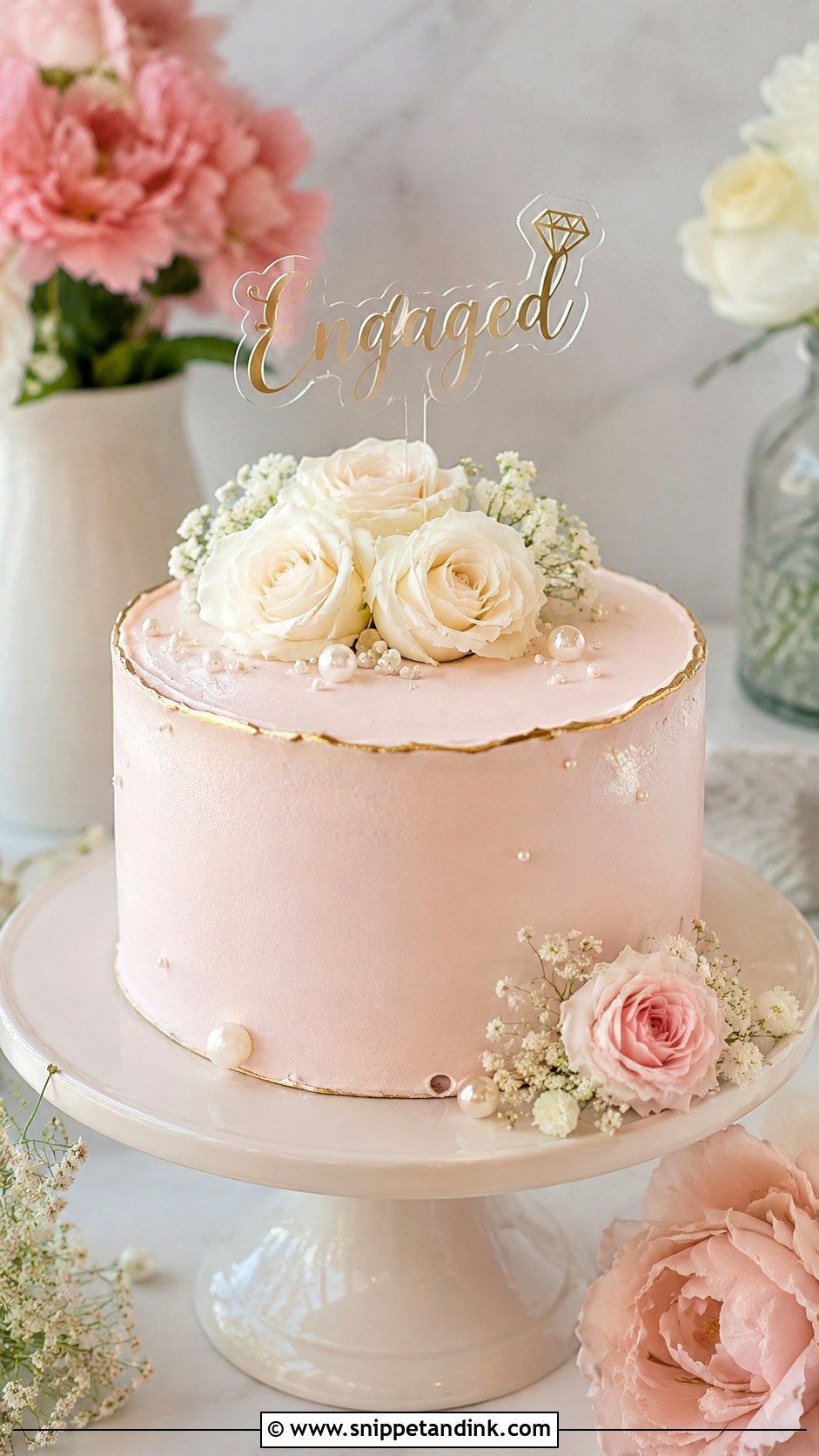
Blush covers a lot of ground, from pale pink to dusty rose. With buttercream, I mix the color a day ahead, because pinks and reds deepen as they sit, and a shade that looks right fresh can darken by the next morning. Pair blush with white flowers, gold accents, pearls or subtle piping. Smooth buttercream reads modern; a textured finish looks more handmade. The color adds warmth in photos without being bright. It fits spring parties and garden celebrations.
13. Black And White Engagement Cake
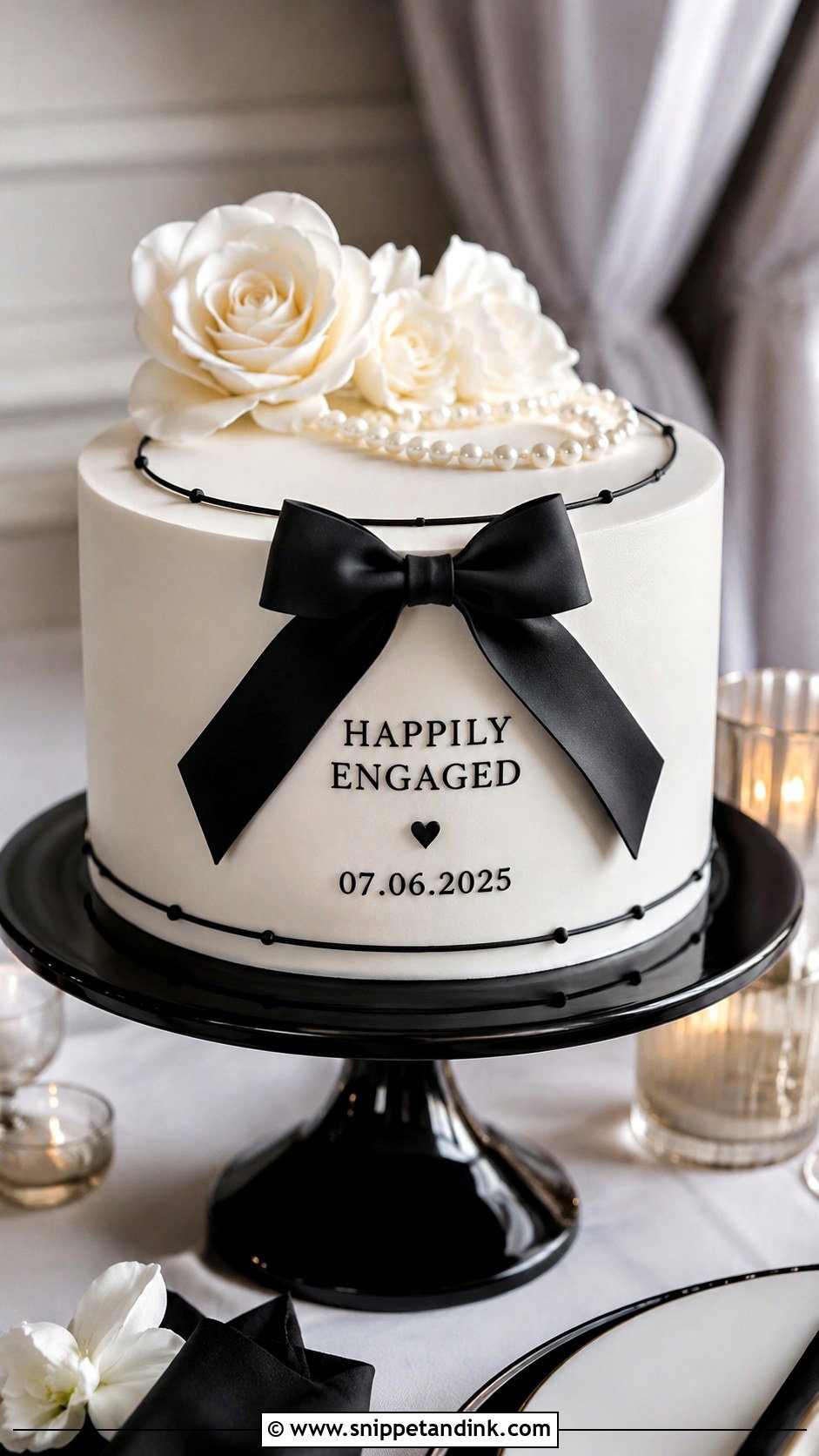
Black and white works when black is the accent, not the whole cake. A white cake with a black fondant ribbon, thin piping or a small bow feels chic. True black frosting takes a lot of coloring, which can stain teeth and taste bitter, so I keep black to small fondant details. White flowers, pearls or a monogram balance it. It suits evening parties and modern venues. Keep the lines sharp so the contrast looks intentional.
14. Marble Engagement Cake
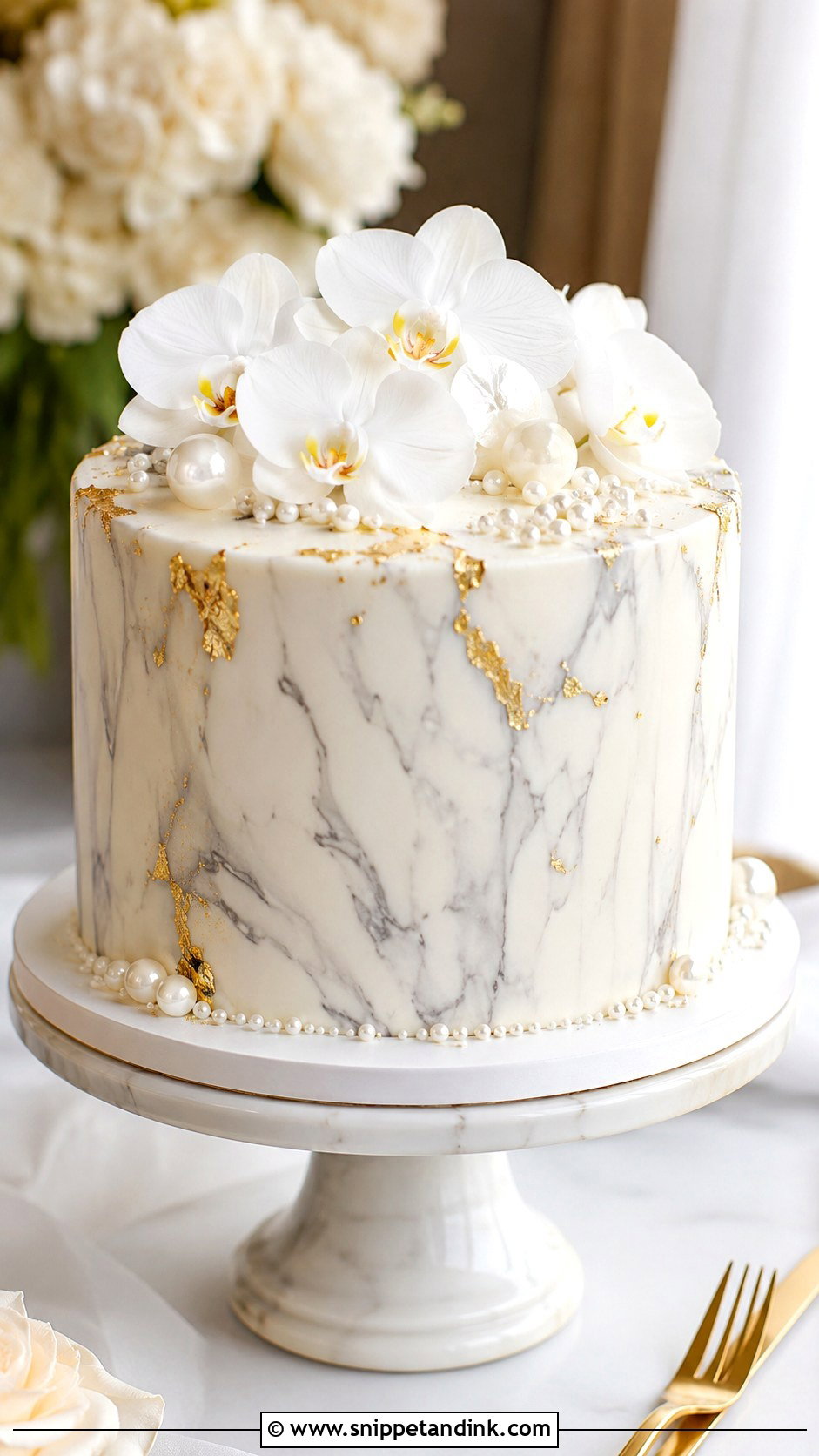
Marbling is easier on fondant than buttercream; I knead small amounts of gray or beige into white fondant and roll it out so the veins stretch naturally, then cover the cake in one piece. A little edible gold leaf along one vein makes the pattern feel finished. Ivory, beige and pale blush marbling all look refined. Because marble already has movement, keep decorations to a few white flowers, a small topper or minimal pearls. It suits couples who like contemporary style and neutral colors.
15. Semi Naked Engagement Cake
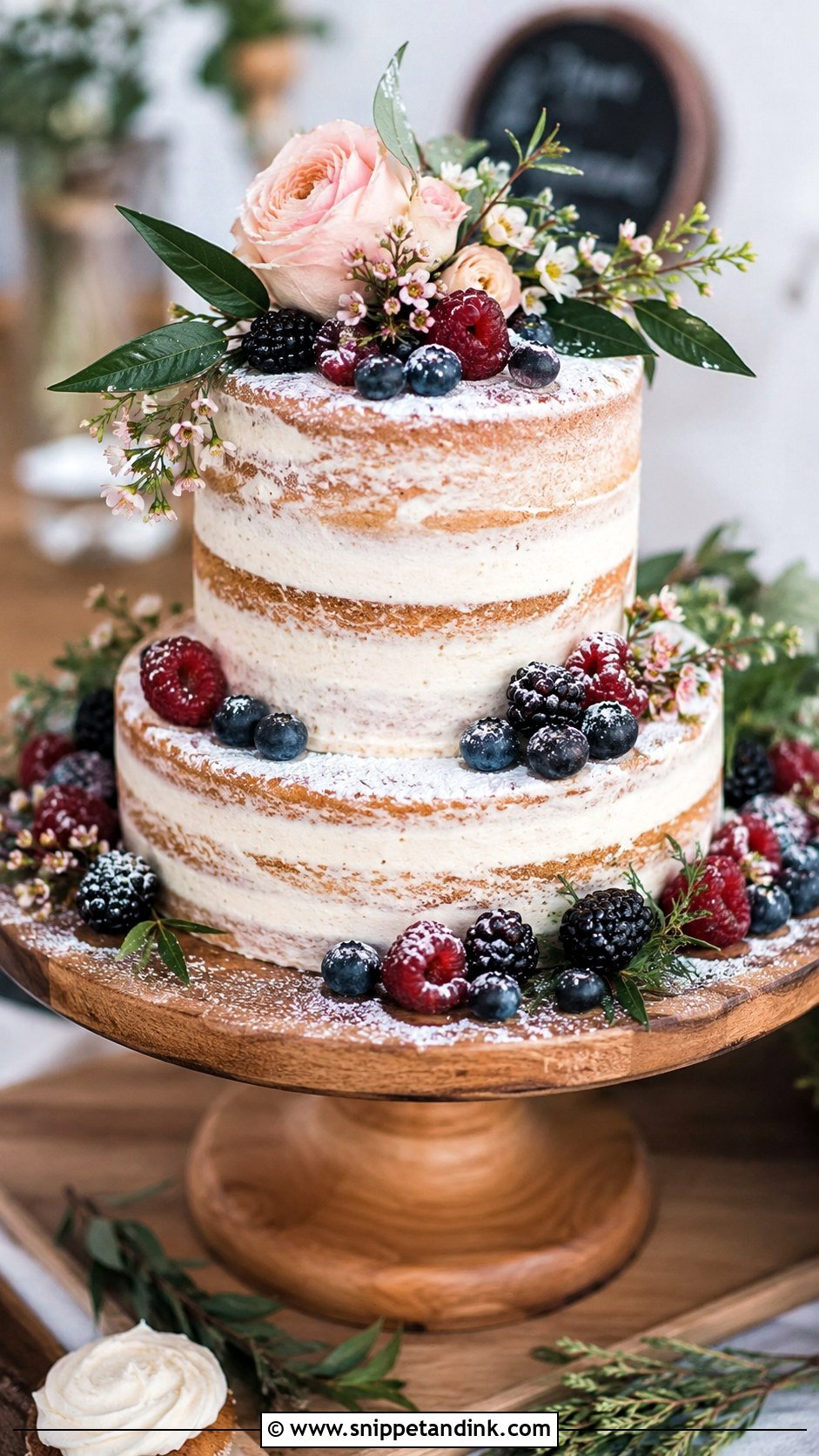
A semi naked cake has a thin scrape of frosting so the layers show through. The trade-off is that exposed sponge dries out faster, so I bake and assemble it as close to the party as I can, and brush the layers with a simple syrup. Vanilla, almond, lemon, carrot and chocolate all work. Fresh berries, flowers and greenery are the usual decorations; keep them neat. A wooden stand feels warm, a white ceramic stand more refined. It suits outdoor parties and backyard celebrations, though not in direct midday sun.
16. Textured Buttercream Engagement Cake
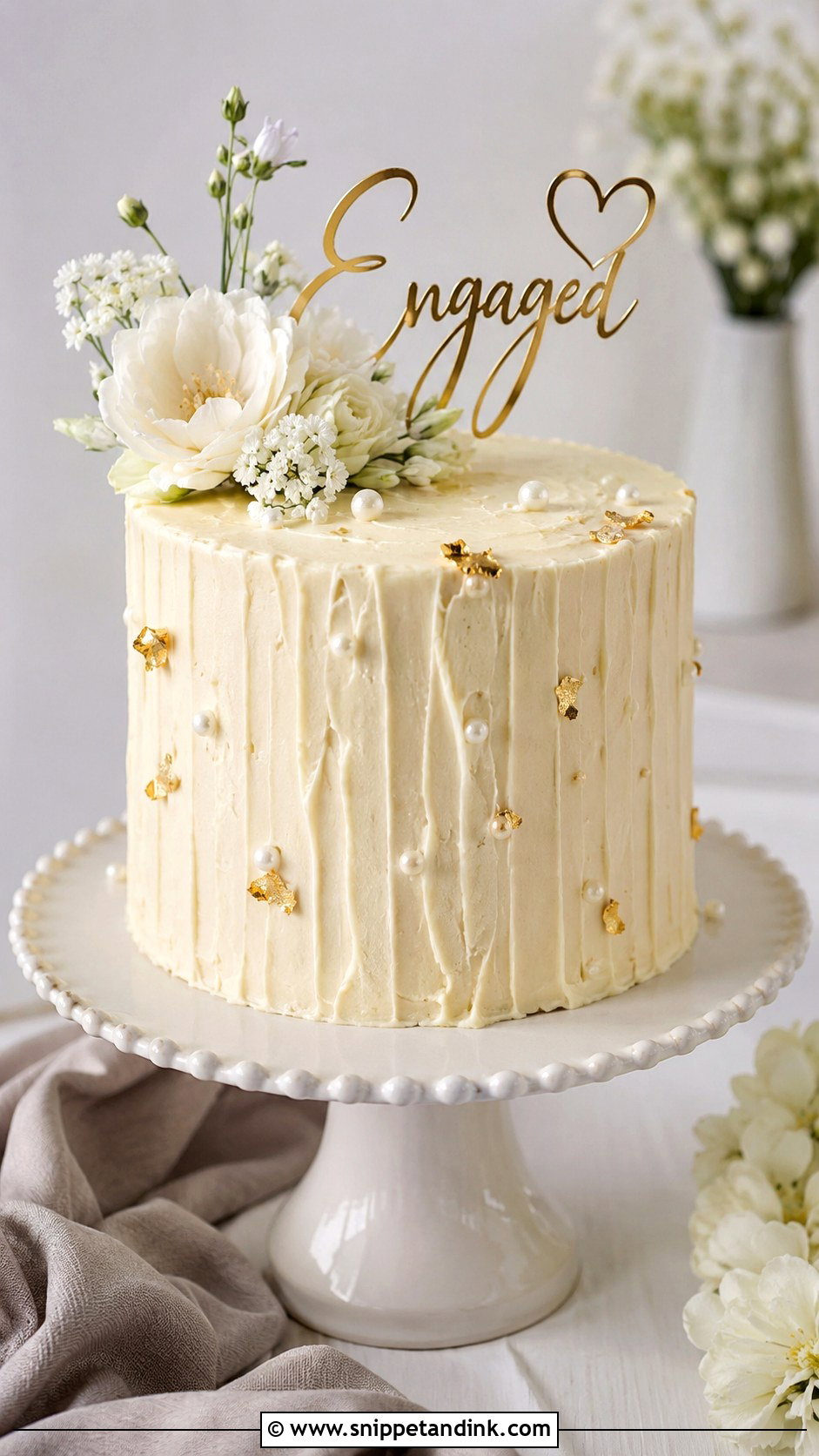
Textured buttercream adds movement: vertical ridges with a comb scraper, palette knife strokes, ruffles or soft waves. It’s also more forgiving than a smooth finish, which makes it a sensible choice if your venue is warm and small dents are likely during setup. Ivory, white, blush and pale sage suit it. Keep decorations light, such as one flower cluster, a few pearls or a simple topper, so the texture stays the star.
17. Pressed Flower Engagement Cake
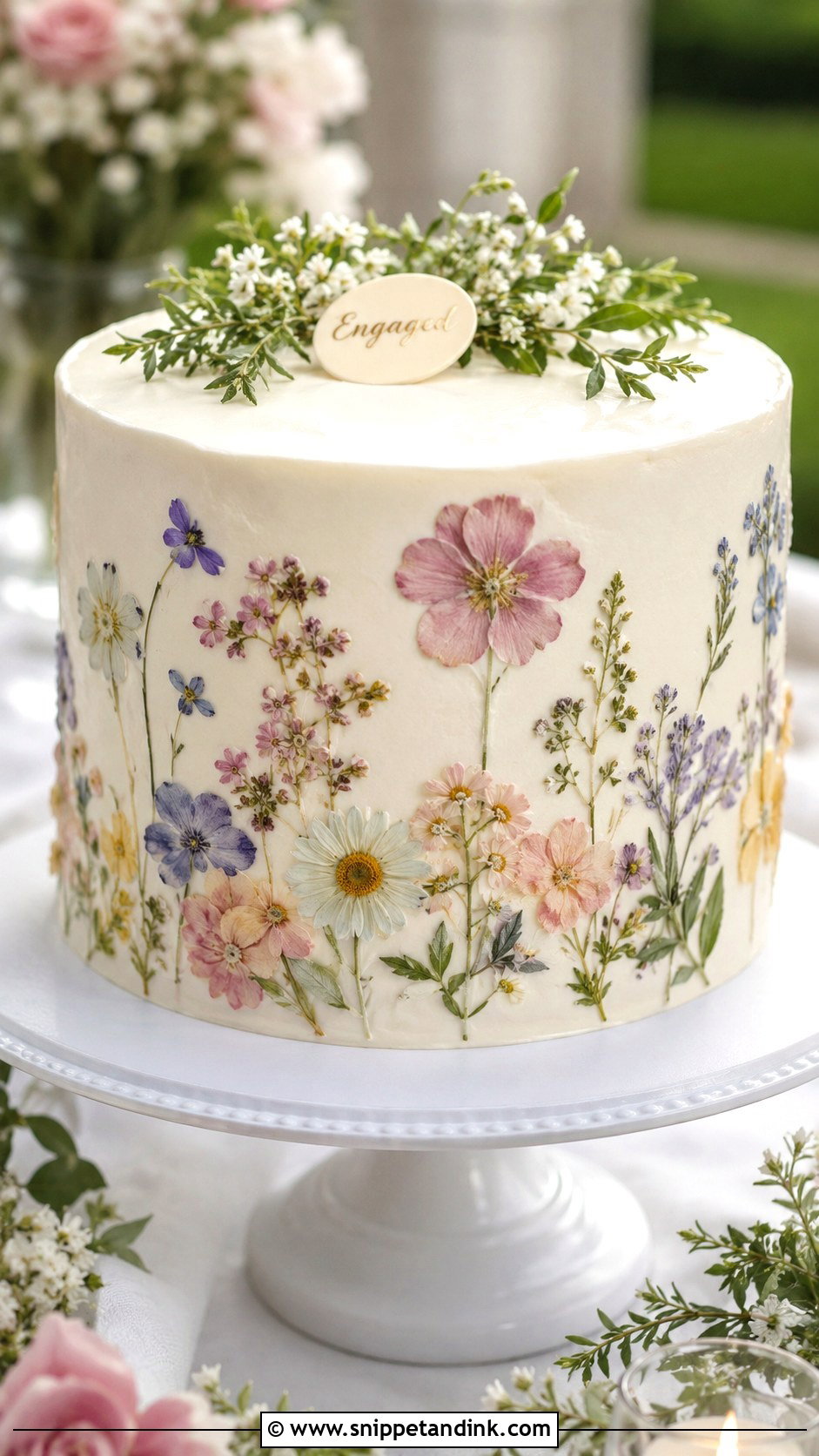
A pressed flower engagement cake needs edible flowers specifically grown and dried for food, such as pansies, violas and cornflowers. I brush a thin layer of piping gel on the back of each flower and press it gently onto chilled buttercream. White or pale bases make the colors stand out. Lavender, yellow, blush and pale blue petals are a soft mix. Leave space between them; negative space is what makes it look classy. It suits daytime and spring parties.
18. Bow Engagement Cake
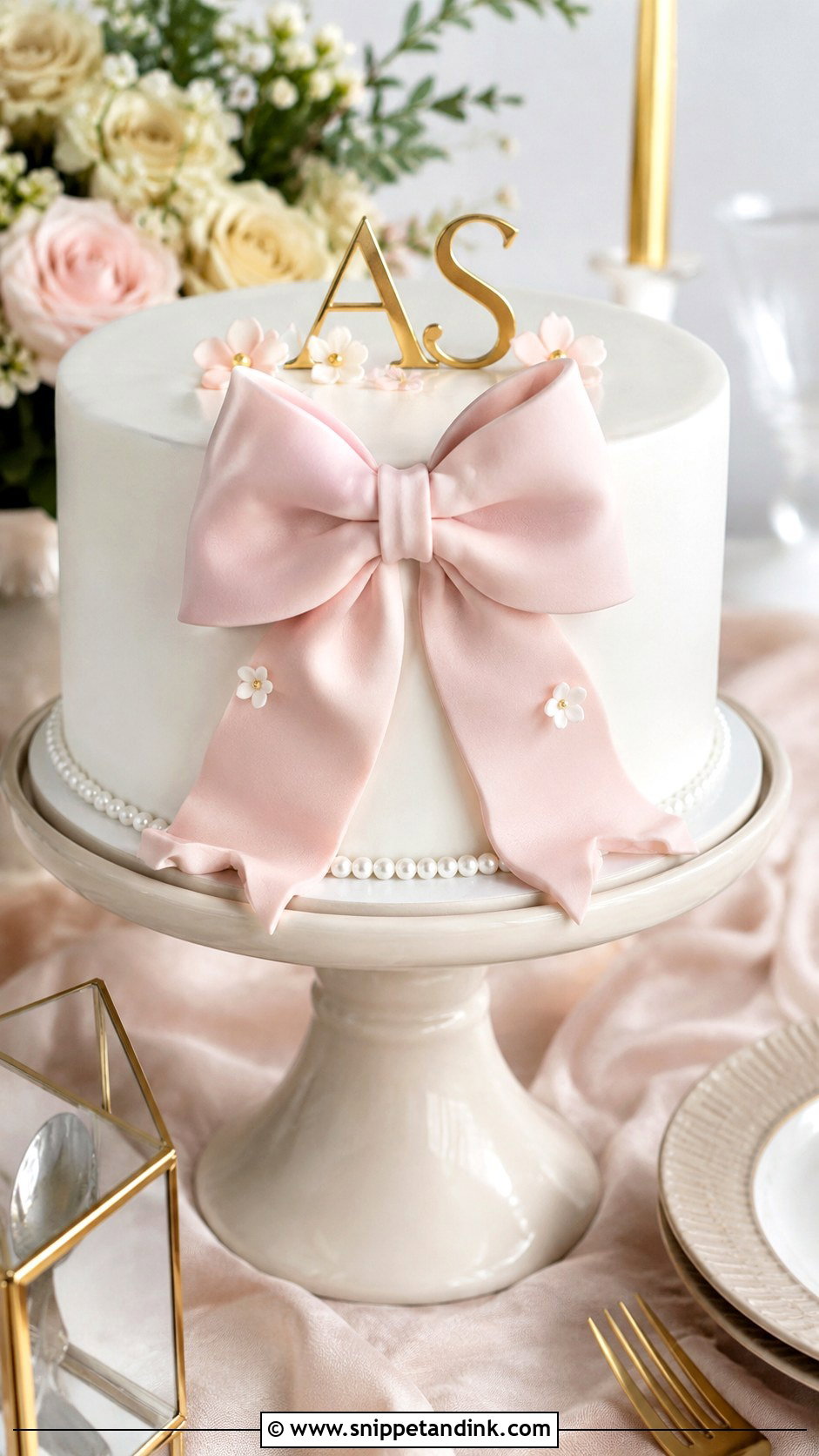
A bow works as a single focal point. It can be made from fondant, buttercream or ribbon-style edible decoration, and fondant bows need a day or two to dry and hold their shape, so I make them in advance. A large soft bow on a plain cake is romantic, while a small black bow on white looks modern. Keep the rest of the cake smooth. Add pearls or tiny flowers only if they support the bow. It fits a fashion-inspired dessert table.
19. Watercolor Engagement Cake
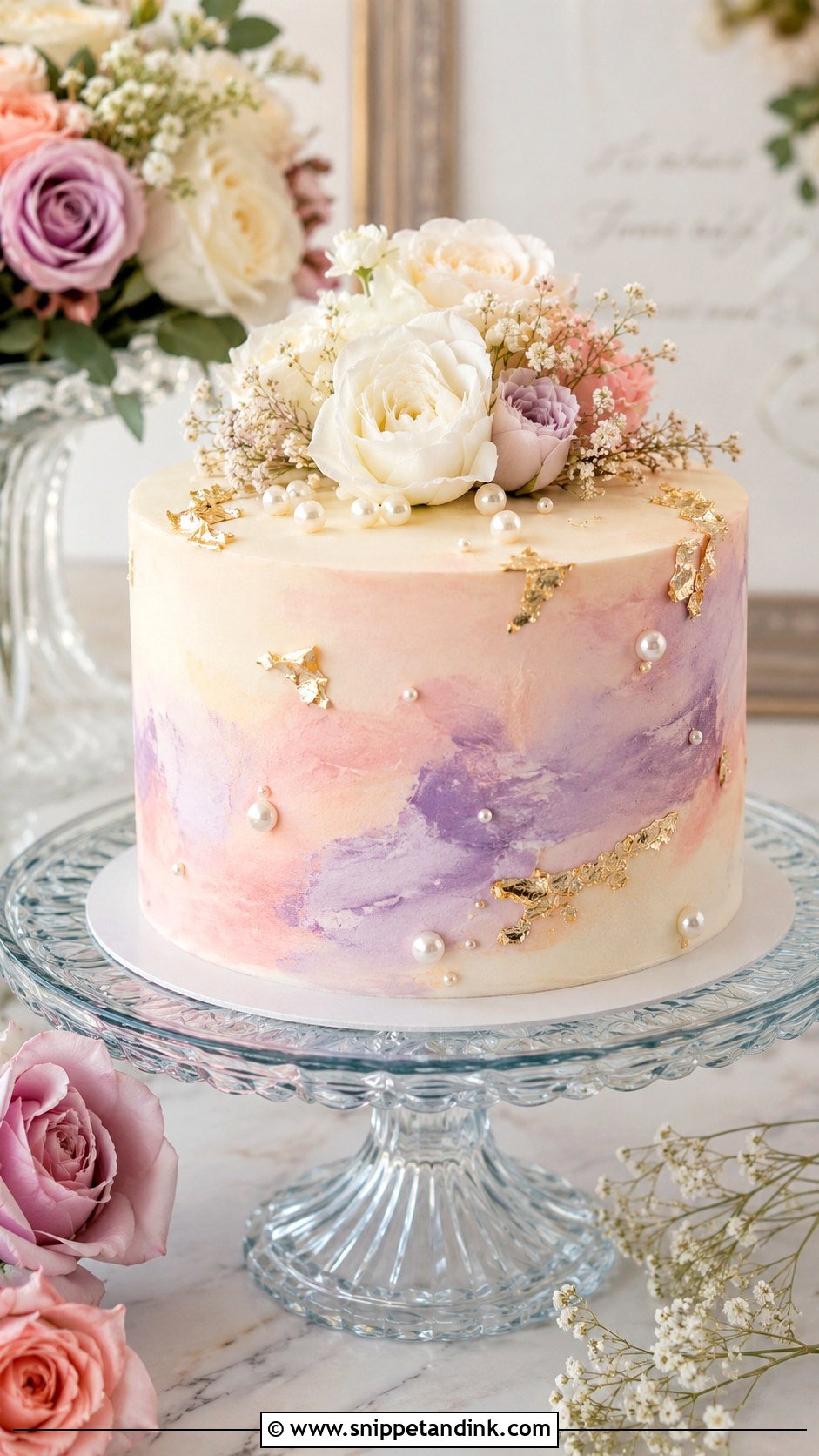
Watercolor cakes look painted, with blush, lavender, peach, blue or beige blended softly together. On buttercream, I apply patches of color and smooth them with the scraper while the cake is cold, so the colors blend at the edges without turning muddy. Two or three colors is the limit; more and they turn gray where they meet. Gold leaf, white flowers or a simple topper finish it. It suits garden parties and spring events with floral decor.
20. Square Engagement Cake
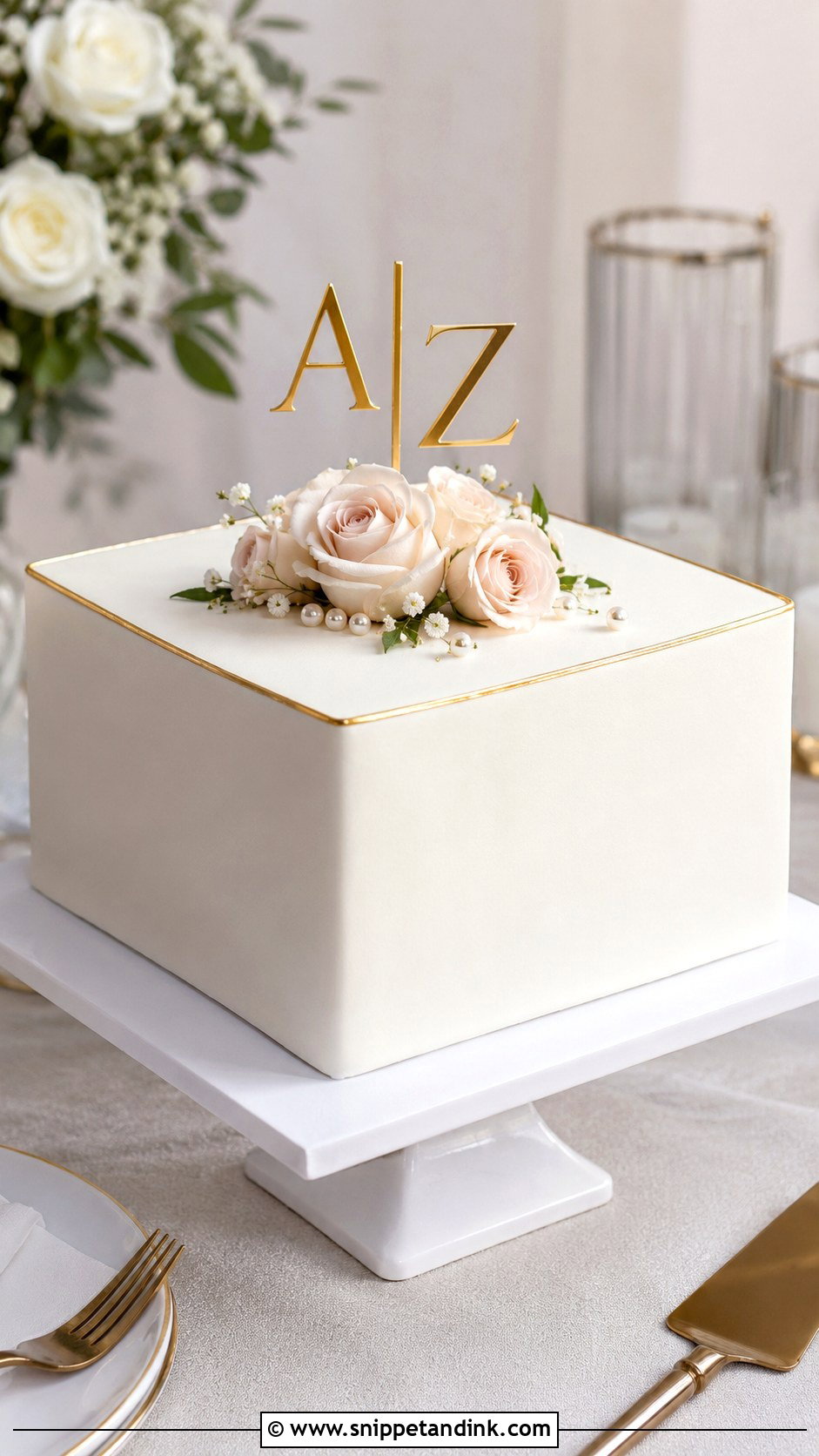
Square cakes stand out on a table full of rounds, but those corners are the hardest thing to finish. I frost the sides one at a time and use a straight-edged scraper on each face, chilling between them, to keep the corners sharp. Note that a square tier serves more people than a round of the same width. One tier, two tiers or stacked geometric layers all work. White fondant with gold trim, ivory buttercream with flowers, or blush frosting with pearls keep it classy.
Getting a Buttercream Cake Through a Warm Afternoon Party
Buttercream softens as the room warms up, and an engagement party in a garden or a crowded living room can be warmer than you think. A smooth finish starts to sag, piping loses its edges and fresh flowers wilt. Fondant handles heat better, but the buttercream under it still softens.
What I’d plan for
- Keep the cake in the fridge or the coolest room until about an hour before it’s cut, then bring it out.
- Set the table out of direct sun, and away from a window, a buffet heater or a candle cluster.
- Drive the cake on a flat surface such as the car floor, never a sloped seat, with the air conditioning on.
- Ask whether your baker uses a heat-stable buttercream if the party is outdoors in summer.
- Have one person in charge of the cake knife and a damp cloth, so the first cut doesn’t drag frosting down the side.
If the frosting does start to slump, don’t try to smooth it with a knife at the table. Move the cake somewhere cooler for twenty minutes, or simply cut and serve it sooner than planned. A slightly soft cake that’s been cut on time tastes far better than one that’s been rescued badly in front of the guests.
One Focal Point and a Calm Palette Carry the Whole Table
A classy engagement cake reflects the couple and the mood of the party. Some will love a minimalist cake with one tiny detail; others want flowers, pearls, lace, gold leaf or a vintage heart. Either way, the rule I come back to is balance: one main feature, refined colors and a finish that looks intentional from top to bottom. Bring your designer a photo of the venue and the party colors, and the cake will sit naturally among them.
You'll Like These Ideas:


Leave a Reply