
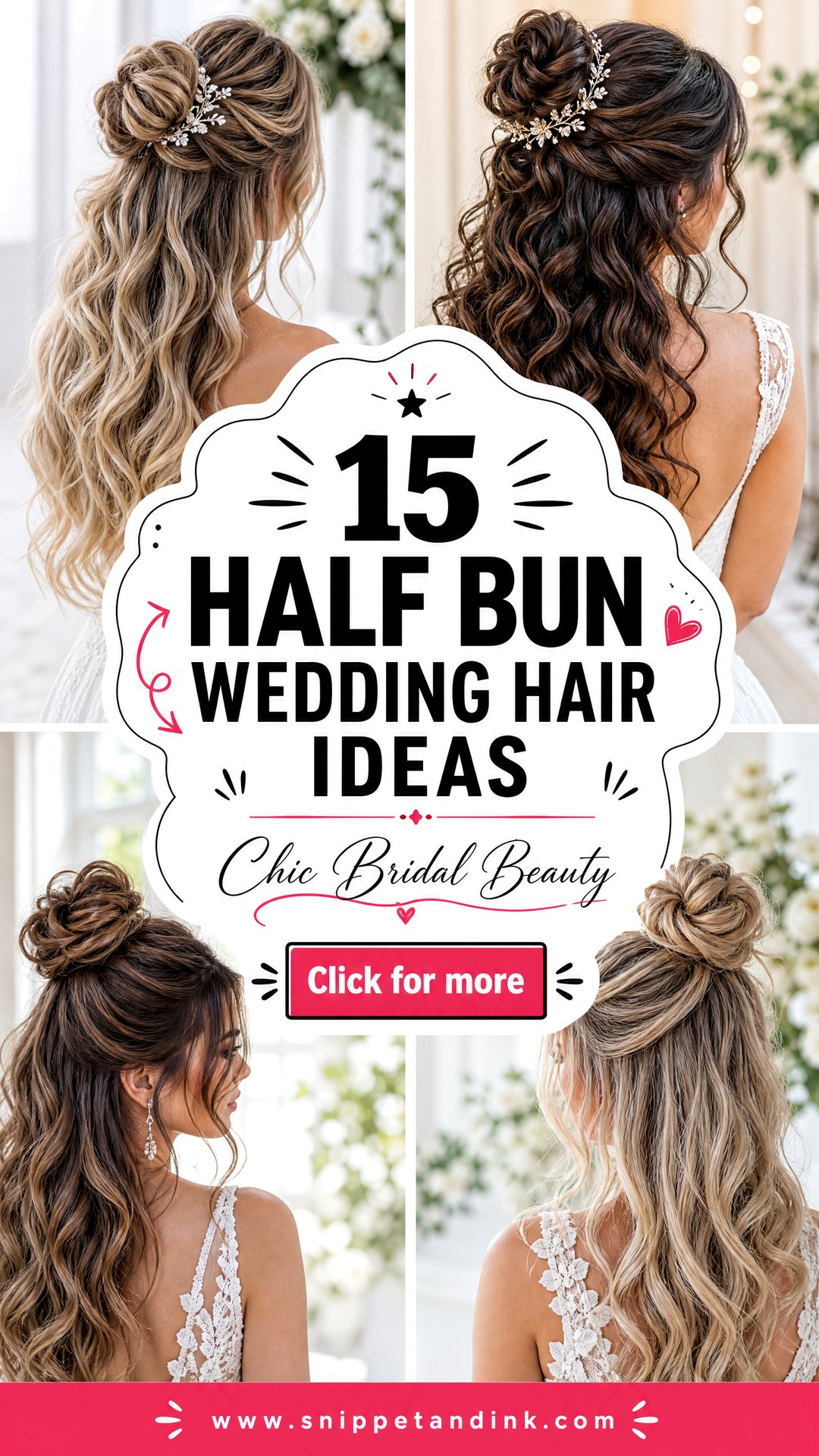
A half bun is the style I suggest when someone can’t decide between an updo and wearing it down. The top section gets lifted and locked away from your face, so nothing sticks to lip gloss during the vows, and the rest of your length still moves. Change the bun height, the texture or the accessory and the same base can go boho, sleek or very classic. Below you’ll find pearl pins, floral clips, soft tendrils, braids and smooth crown volume, and every one of them works for bridesmaids and guests too. Save the two or three closest to your own hair and dress, and bring those to your stylist rather than all fifteen.
The Loose Section Does the Hard Work
Everyone looks at the bun, but in my experience the bun is rarely what fails. It’s the hair left down. That section rubs against straps and lace, gets crushed in hugs and soaks up the day’s humidity. Waves that looked full at noon can be close to straight by the speeches if nobody planned for it.
Prep that keeps the waves
- Wash the day before rather than the morning of, unless your hair gets oily fast. Slightly lived-in hair holds a bend better than freshly conditioned hair.
- Ask for the curls to be pinned up while they cool, then brushed out last. Hot curls that drop straight onto your shoulders loosen quickly.
- Go a size larger on the barrel than you think and let the curls relax. Firm curls that soften over hours look better at night than loose waves that collapse.
- On very fine or slippery hair, a light texture spray at the roots of the loose section gives the curl something to grip.
Curly and coily hair is the exception. Define it on wash day with the products you already trust, stretch only as much as you like, and let your stylist work with your pattern instead of resetting it with heat.
1. Half Bun Wedding Hair With Loose Waves
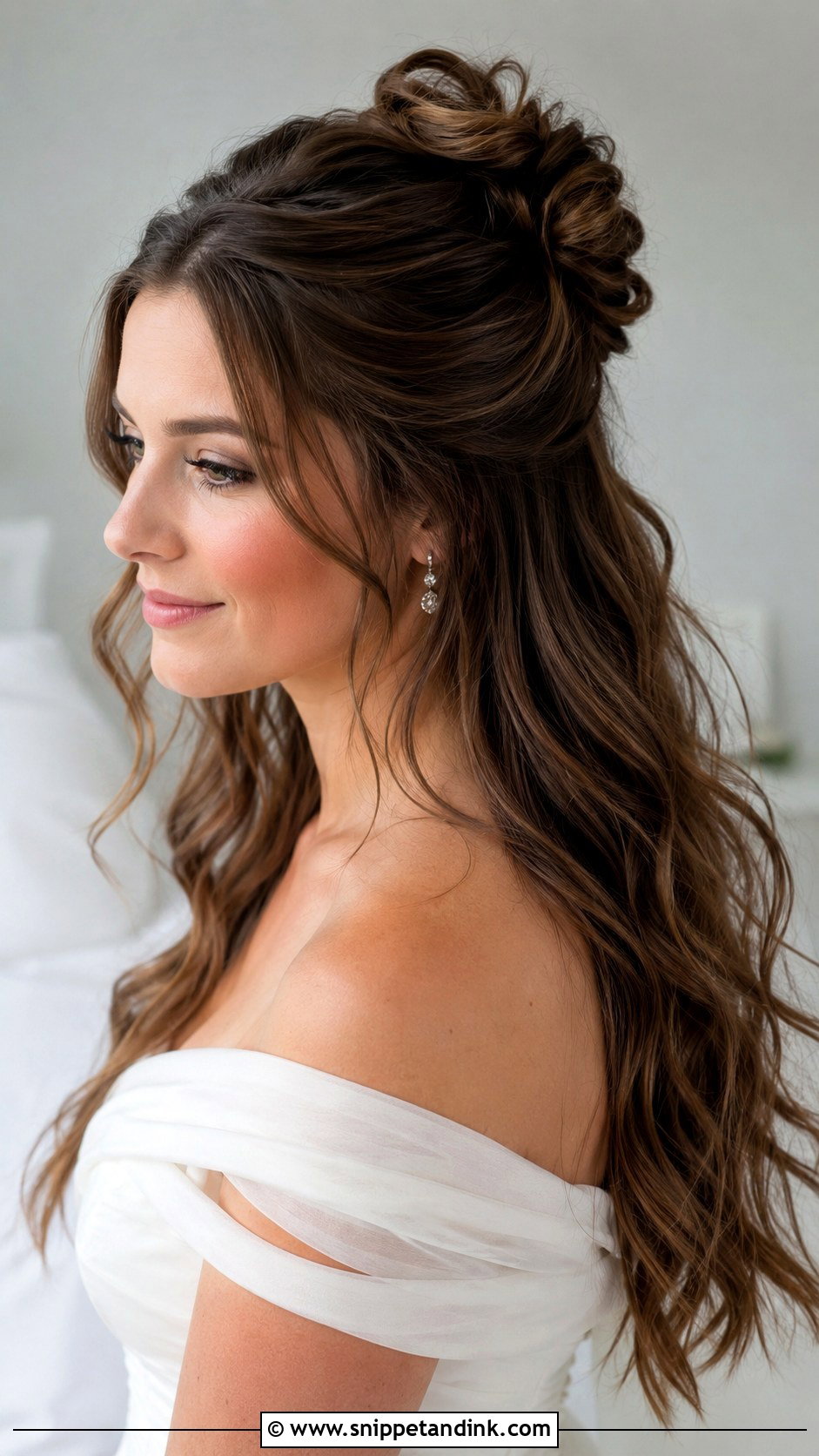
This is the version I get asked for most, and the reason is simple: it doesn’t look stiff from any angle. I gather the top section into a soft bun at the back of the crown and leave the rest in relaxed waves. The gentle lift around the crown shows up well in side profiles and under a veil. When you brief your stylist, ask for texture worked through the bun before it’s pinned, not a tight knot that looks like a gym bun. A few face-framing pieces help with strapless or sweetheart necklines, where there’s a lot of bare shoulder to balance.
2. Half Bun Wedding Hair With Curls
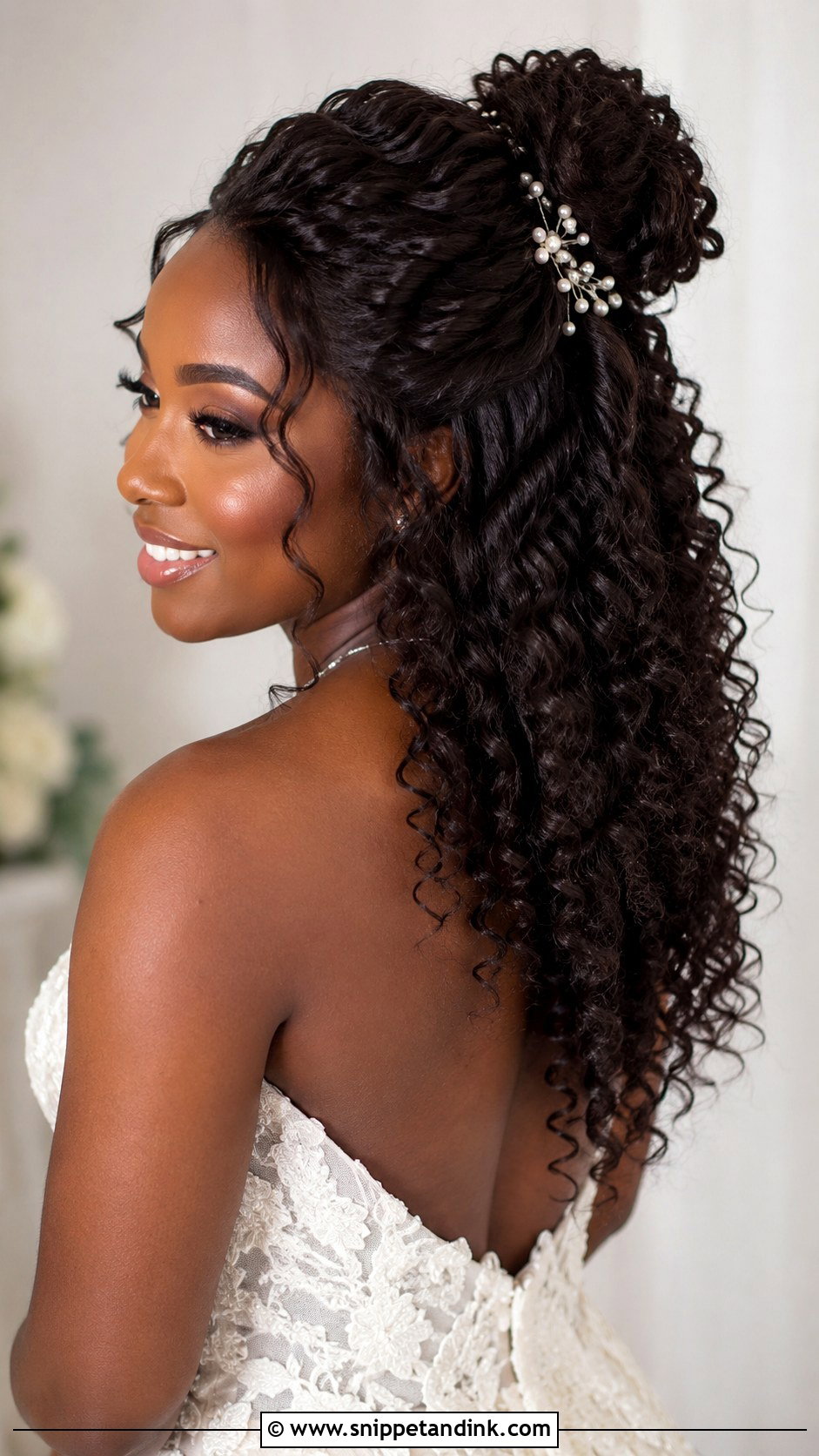
Natural curls give a half bun real fullness without any padding, which is why I love doing this on curly brides. I place the bun high enough to give shape, but if it creeps toward the top of the head it starts to look like a weekend topknot. The bigger risk is the loose section: curls brushed or over-handled turn to frizz by the reception. I define them with a curl cream while damp, pin the bun with as few passes as possible, and finish with a flexible spray. A small comb just above the gathered section sits well in curly hair because the teeth have plenty to grip.
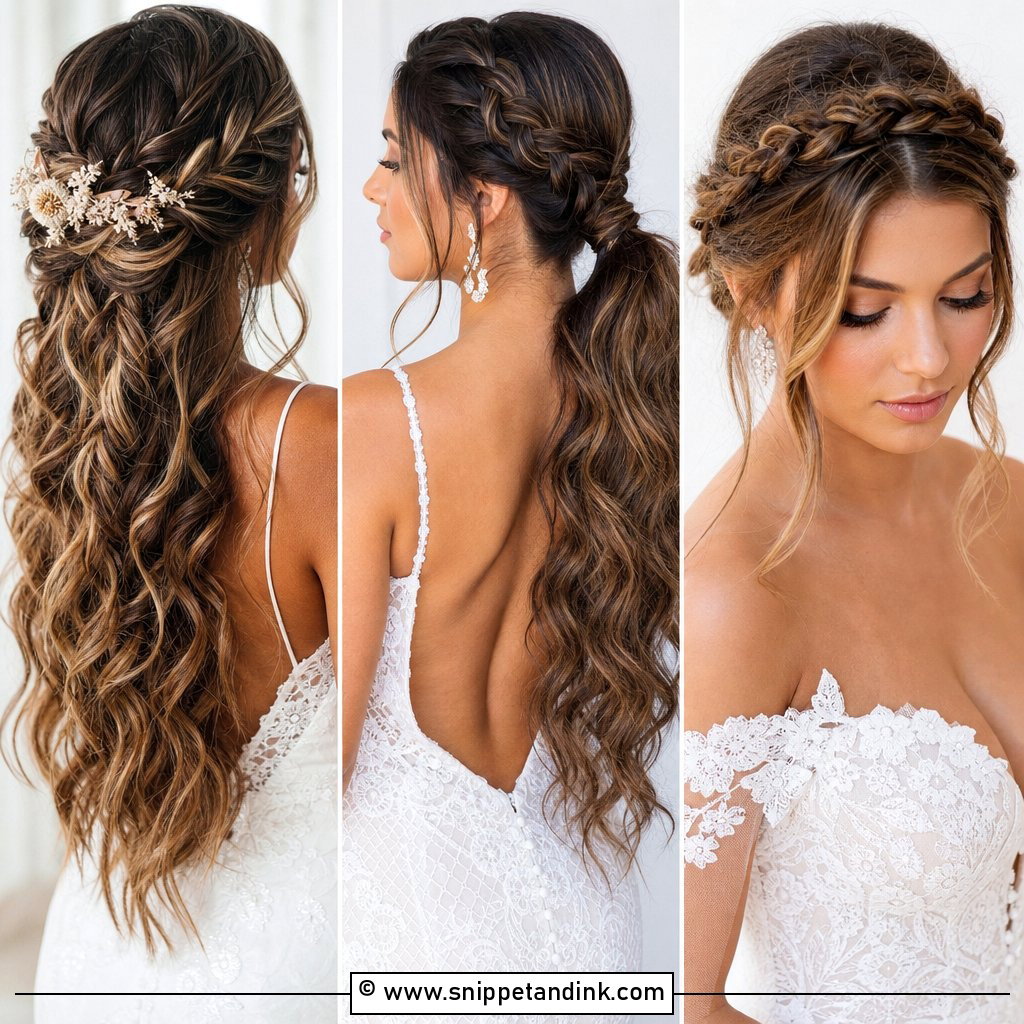
3. Half Bun Wedding Hair With Braids
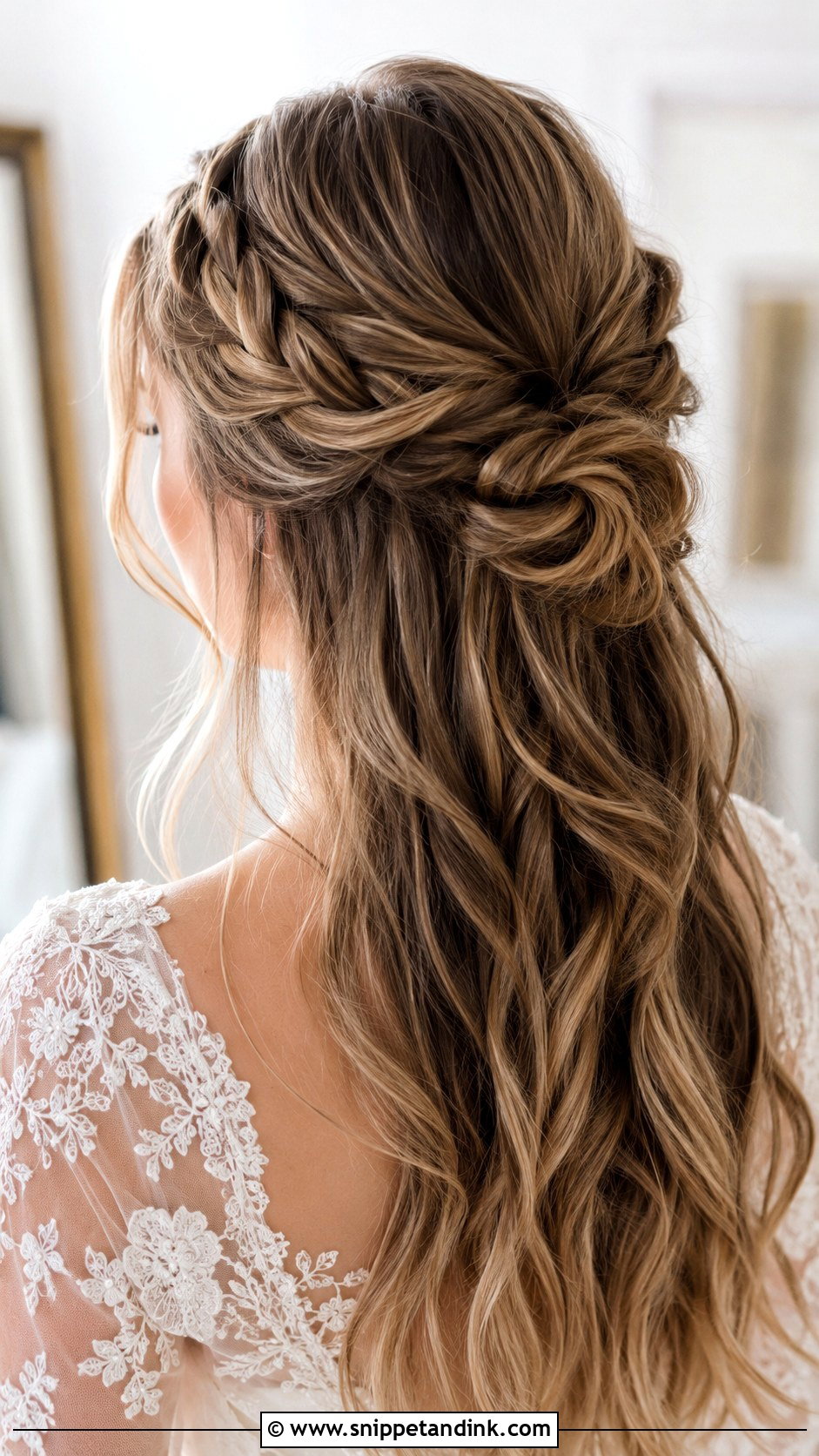
Braids do two jobs here. They add detail, and they act as an anchor for the whole half-up section. I start small braids near each temple and bring them back to meet the bun, which gives the pins something solid to grab on medium and long hair. Once they’re secure, I pancake the braids gently so they read soft rather than schoolgirl tight. Very short layers can poke out of temple braids, so if your cut is heavily layered around the face, expect a few wisps. Outdoor ceremonies suit this one well, since braided sections cope with wind far better than smooth ones.
4. Half Bun Wedding Hair With Pearl Pins
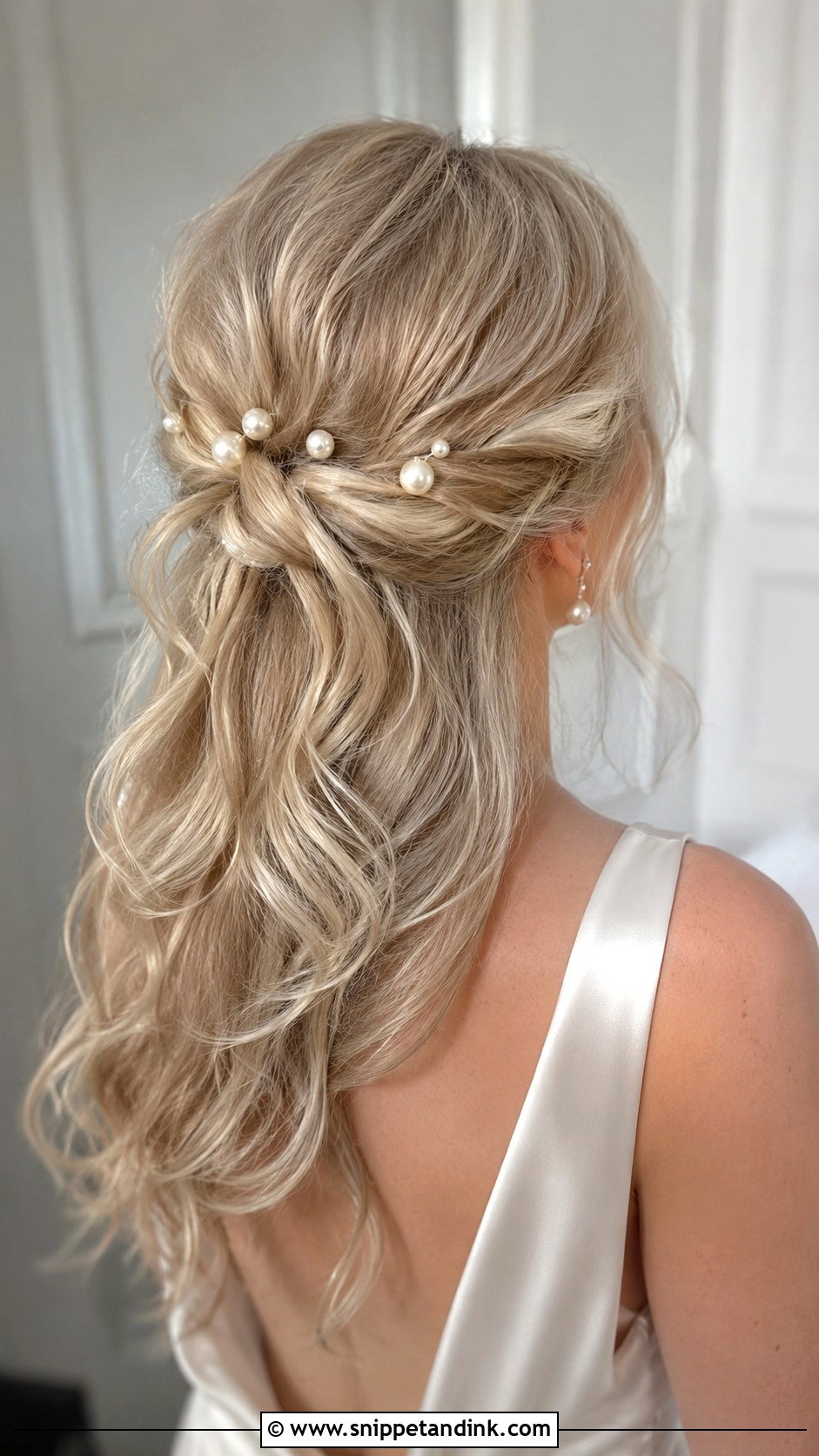
Pearl pins are the easiest way to make a plain bun look bridal. The bun underneath can be smooth, twisted or a bit messy; the pearls carry the finish. I scatter them around the bun and a few through the upper waves, at slightly different heights, so they look sprinkled rather than lined up. Push each pin in at an angle toward the bun, not straight down, or the weight of the pearl tips it over within an hour. If your dress has pearl beading or satin buttons, this ties the two together without anyone needing to point it out.
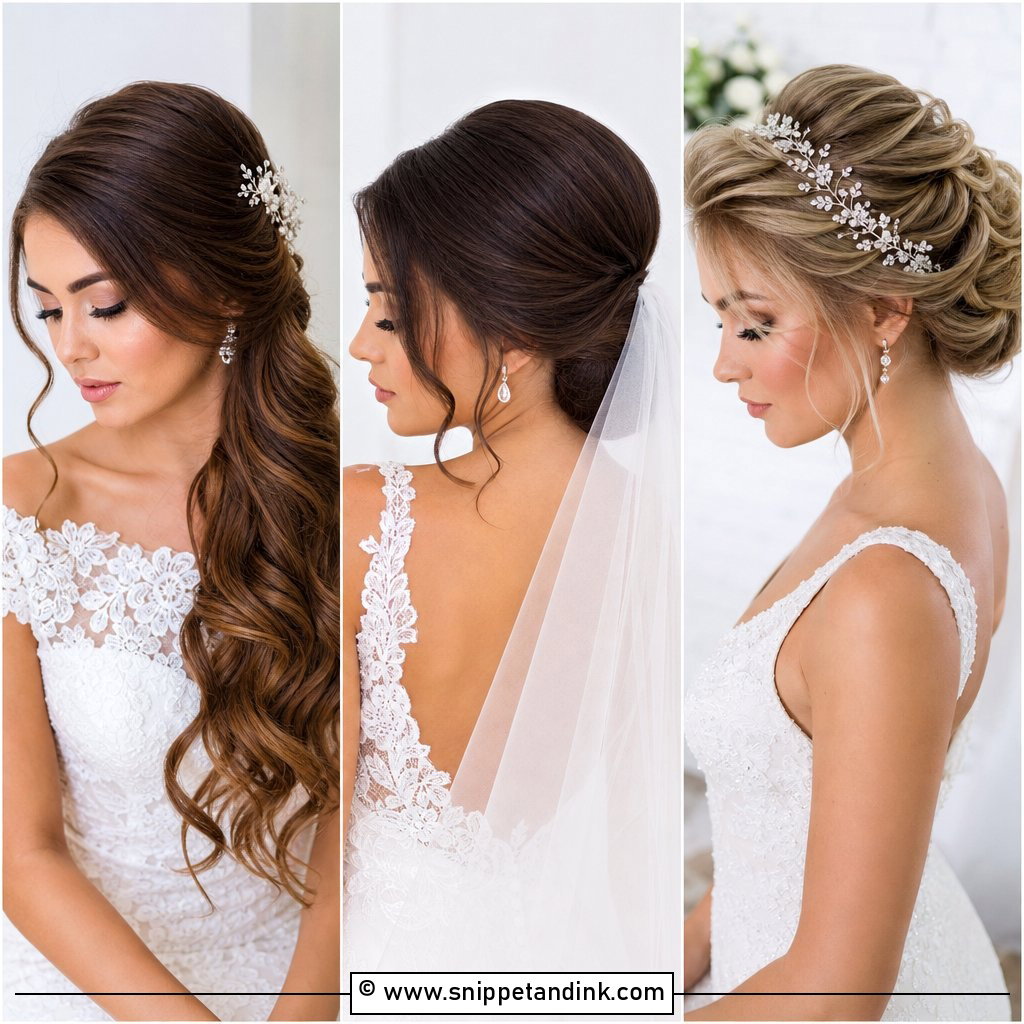
5. Half Bun Wedding Hair With Veil
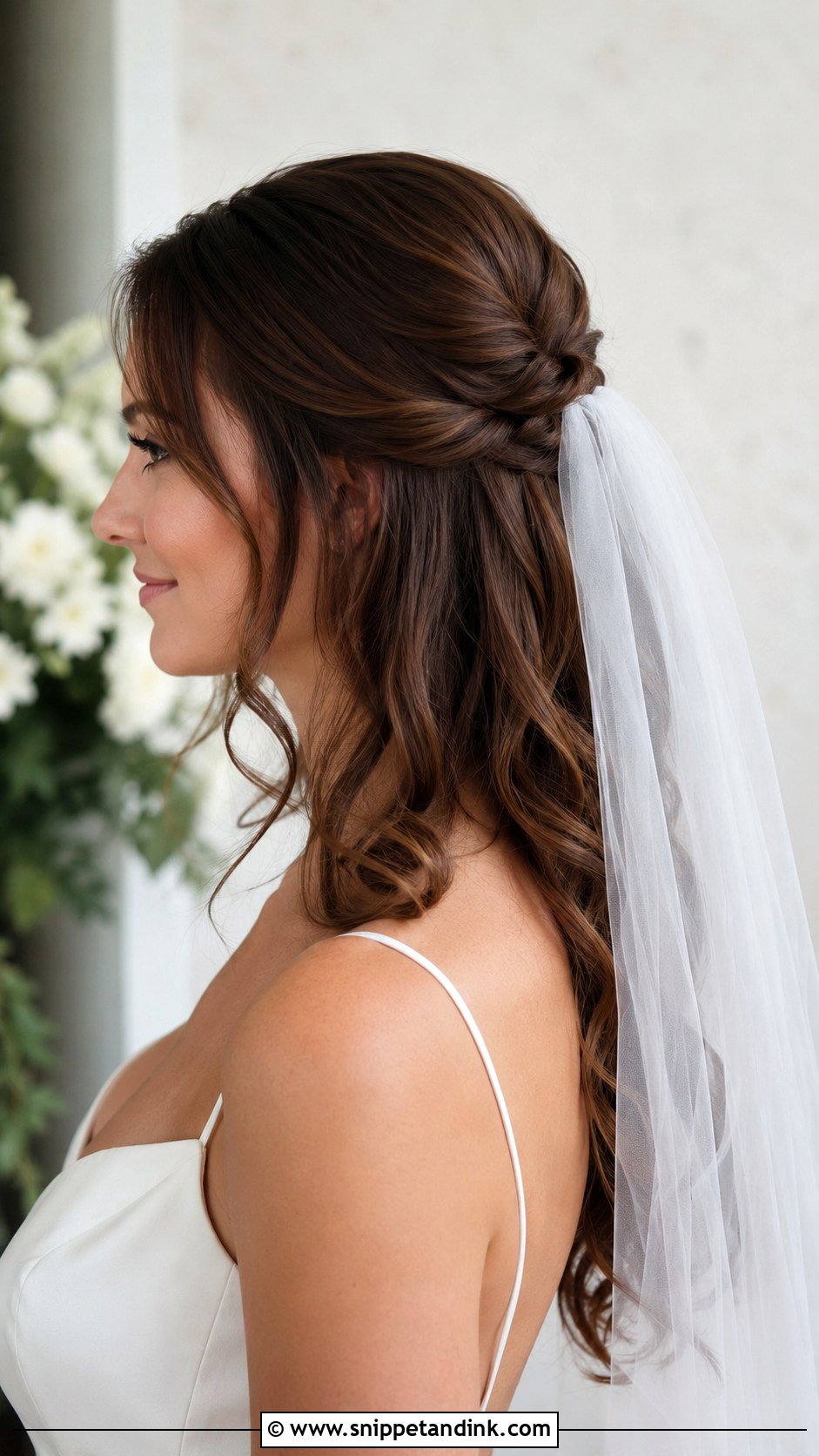
Here’s the practical reason a half bun is so good with a veil: it gives the comb a firm base to slide into. Hair worn fully down has nothing to hold a comb, and a heavy veil drags it backward through the ceremony. With a bun, I can tuck the comb underneath for a soft fall or above it for more height. I tease and smooth the crown before the veil goes in, because the weight will flatten anything that isn’t supported. Plan who takes the veil out after photos, so the waves underneath don’t get pulled apart in the process.
6. Half Bun Wedding Hair With Flower Clips
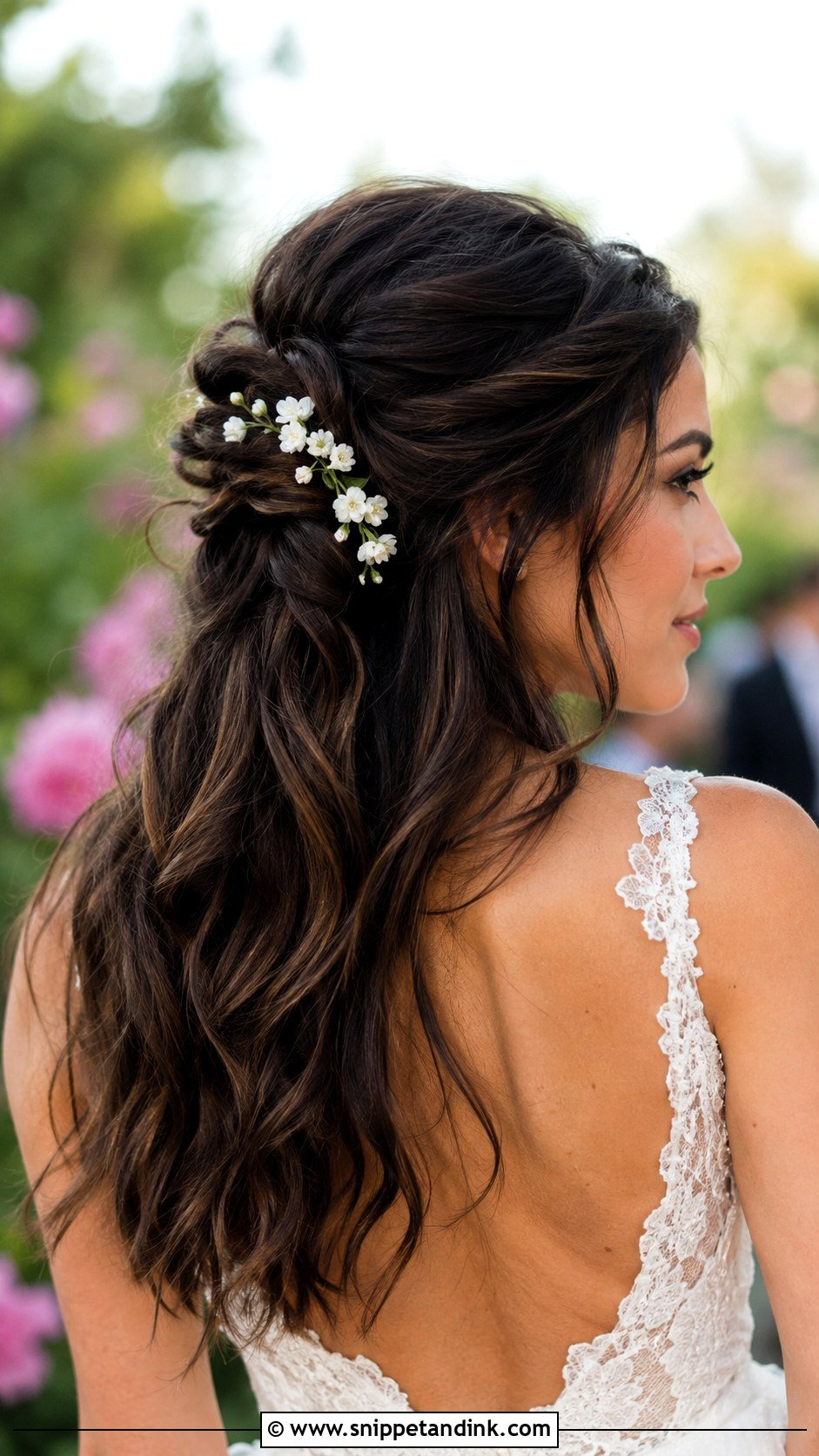
A loose, textured bun with flower clips tucked around its base suits spring and summer and outdoor venues. Keep the blooms small and pull colors from your bouquet, but let the bun stay visible; a cluster that hides it just looks like a corsage on your head. Fresh flowers wilt, especially in sun, so I ask florists for hardy varieties or use good silk ones for the clips. Whatever you choose, I back each clip with a hidden bobby pin crossed under it. Clips alone slide down soft, freshly curled hair.
7. Half Bun Wedding Hair For Long Hair
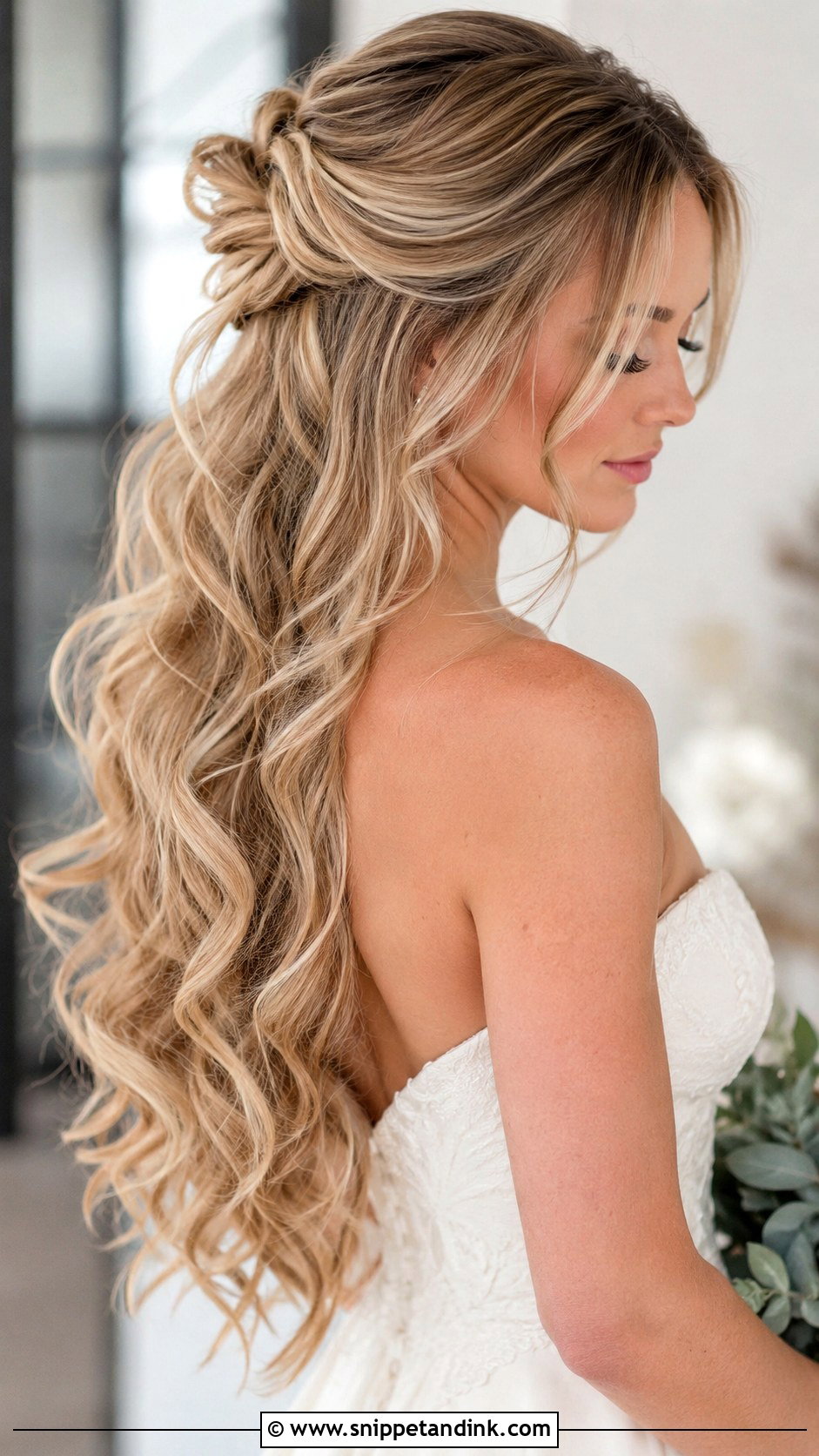
Long hair shows off the length and the structure at the same time, but it’s also heavy. The top section has to be pinned to a secure base, often with crossed pins under the bun, or the weight of the loose hair below pulls it down by mid-afternoon. A soft bun at the crown breaks up all that length and gives the shape some rhythm. Balayage and dimensional color look great here, because loose curls show the movement of the tones. On very thick hair I make the bun a little larger so it doesn’t look tiny against the volume underneath.
8. Half Bun Wedding Hair For Medium Hair
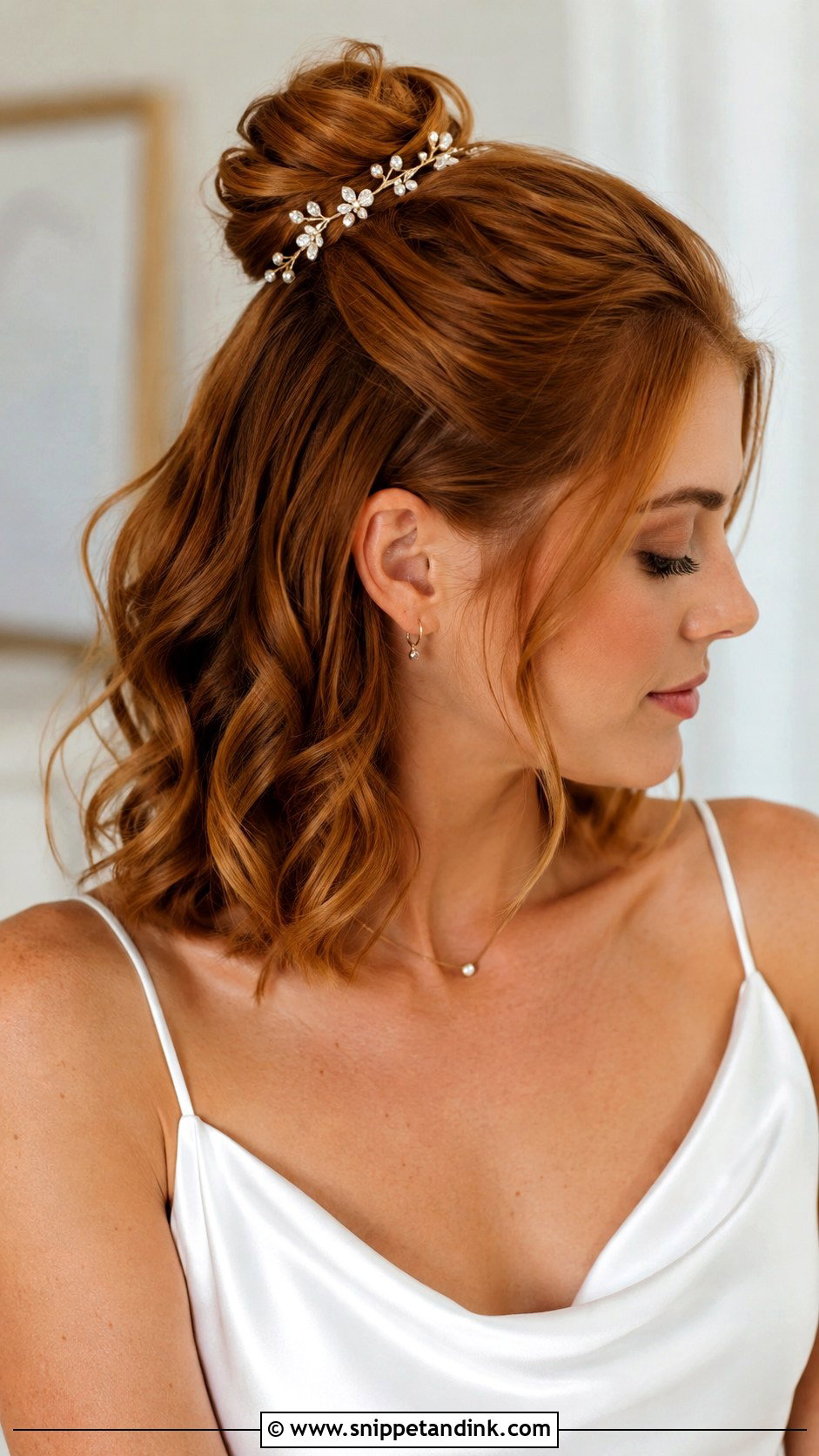
People with shoulder or collarbone length hair often assume a half bun won’t work. It does, as long as the top section is twisted rather than wrapped, because a twist needs less hair to look full. I add bend through the ends with a wand, then brush through lightly so the waves don’t look like separate ringlets. Lobs and layered cuts keep their shape because the front pieces stay controlled without hiding the haircut. For a finishing detail, a small comb, a few pearls or a ribbon is plenty at this length.
9. Half Bun Wedding Hair For Short Hair
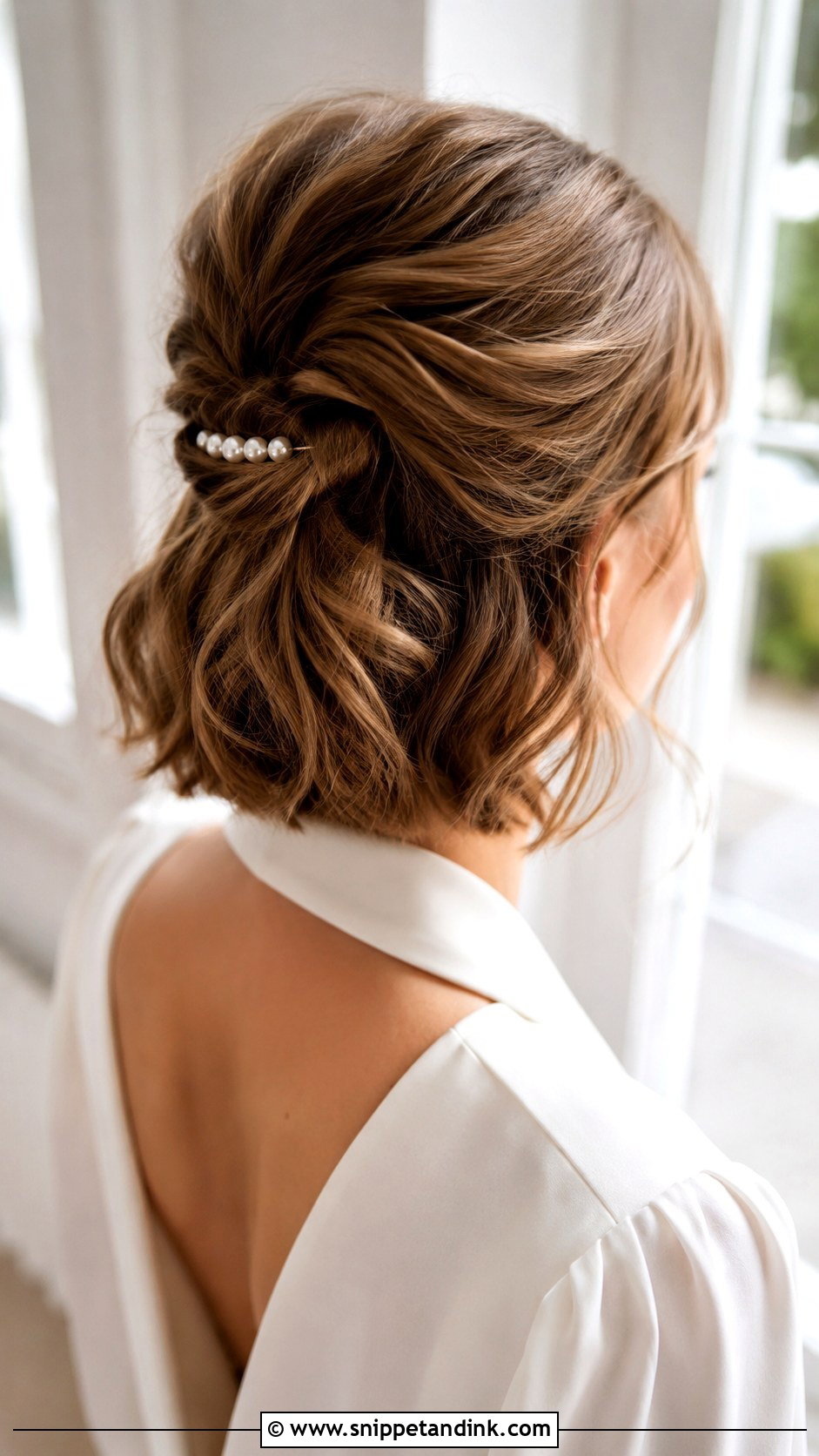
On a bob, a full updo usually isn’t possible, but a tiny knot at the crown is. I twist the top section into a small bun and pin it with more pins than you’d expect, since short ends tend to spring loose. The rest can be waved or tucked slightly behind the ears for a cleaner line. Prep matters more here than on long hair: a dry texture spray at the roots of the top section gives slippery short hair enough grip to hold. A barrette or small pearl clip covers any short ends that won’t stay in the knot.
10. Half Bun Wedding Hair With Curtain Bangs
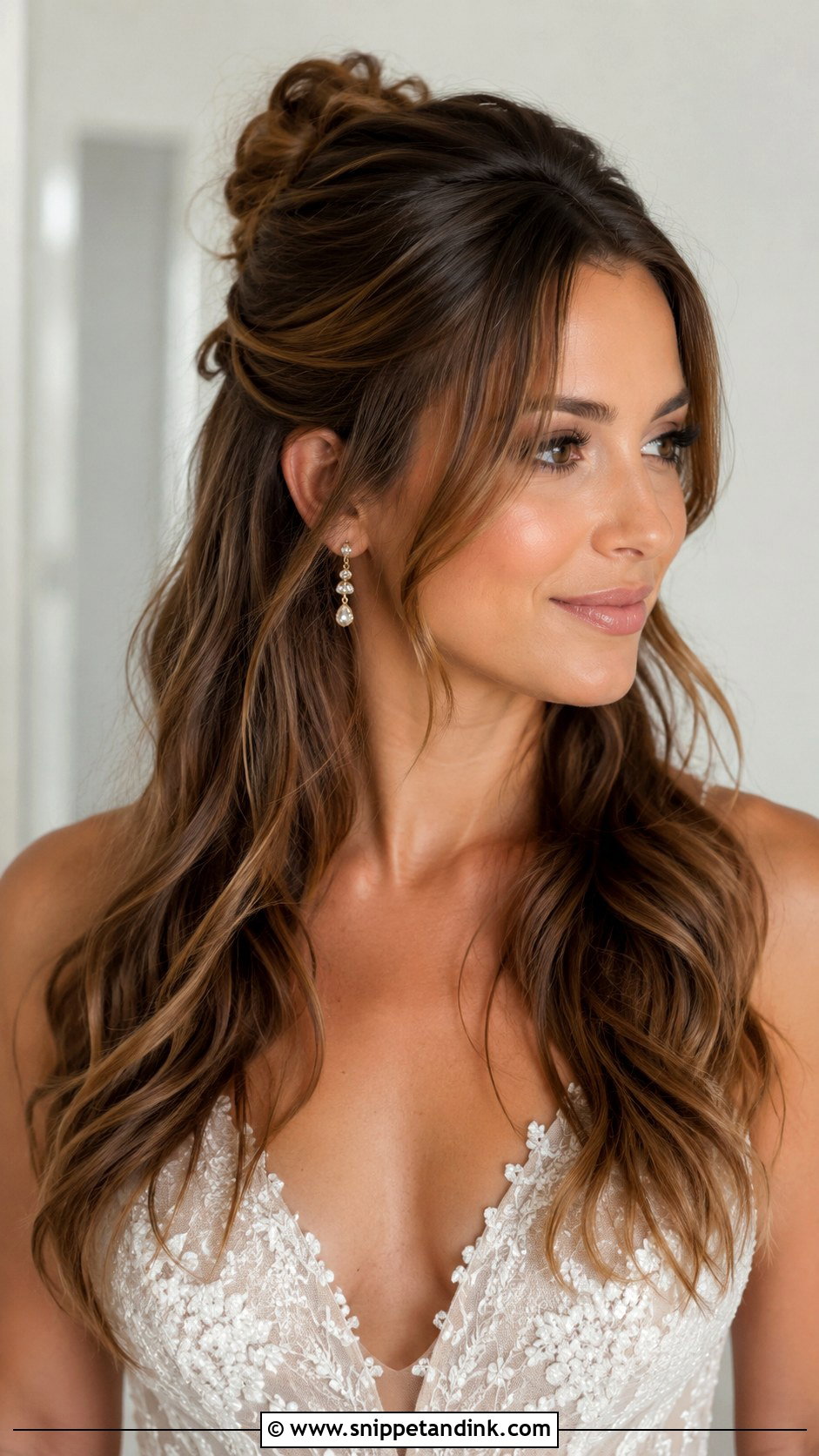
Curtain bangs frame the cheekbones, and pairing them with a half bun keeps everything else lifted and out of the way. The bun sits at the back of the crown, and the curtain bangs fall open on either side. I always blow out bangs first with a round brush, before any curling, so they fall in the right direction and blend into the waves. Freshly trimmed bangs can be too short to sit right, so get them cut two to three weeks before the wedding, not the week of. Delicate earrings show through nicely between the bangs and the waves.
11. Half Bun Wedding Hair With Face Framing Pieces
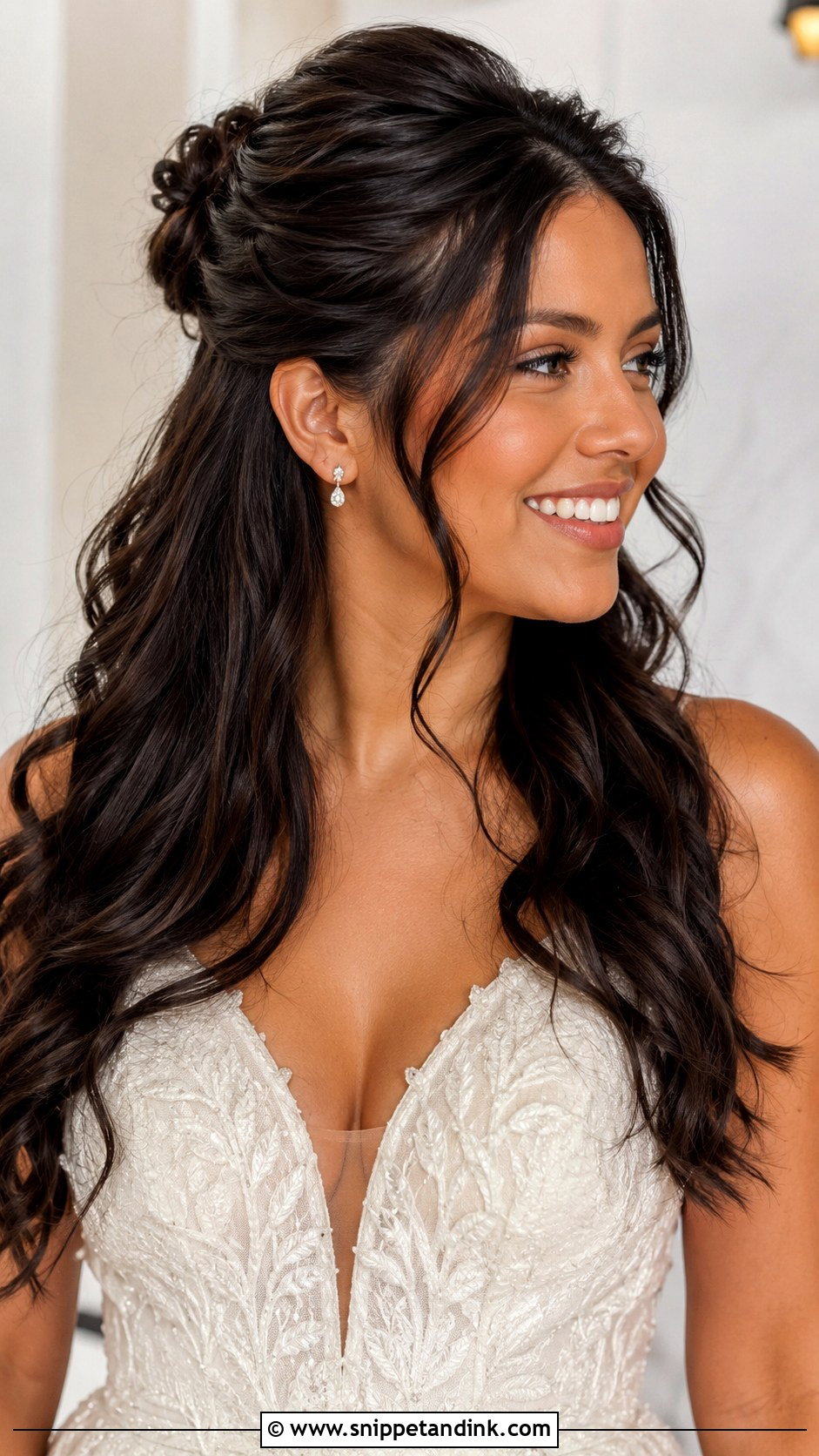
Face-framing pieces only look good when they’re chosen on purpose. I separate out a few thin sections at the temples and cheekbones, curl them away from the face, and leave the rest in the bun. Too thick a piece and it falls into your eyes during the first dance; too many and the style starts to look like it’s coming down. The bun should be secure but not tight, because a tight pull at the hairline is what gives brides a headache by hour six. Those soft pieces do soften a strong jawline and draw attention up toward the eyes.
12. Sleek Half Bun Wedding Hair
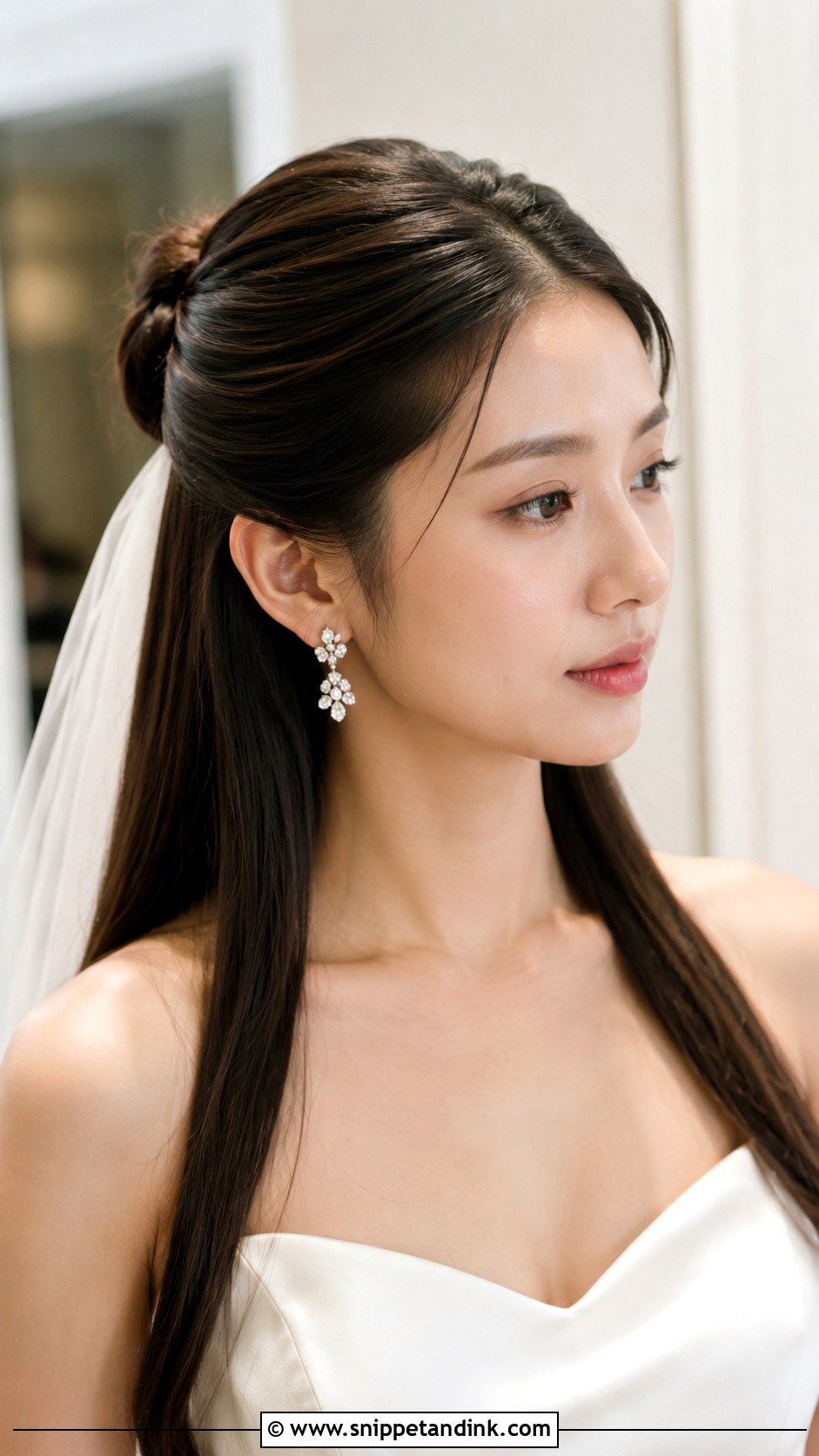
A sleek half bun is pure polish. The top section is brushed back smooth into a neat bun, and the rest stays straight or gets a glossy, low bend. Minimalist gowns, satin and structured necklines suit it, as do bigger earrings. I use a smoothing cream on damp hair and a light shine spray at the end, but go easy on the spray; too much and it looks wet in flash photos. A middle part feels fashion-forward, while a deep side part reads more classic. Keep the bun compact, because a large bun undoes the clean line.
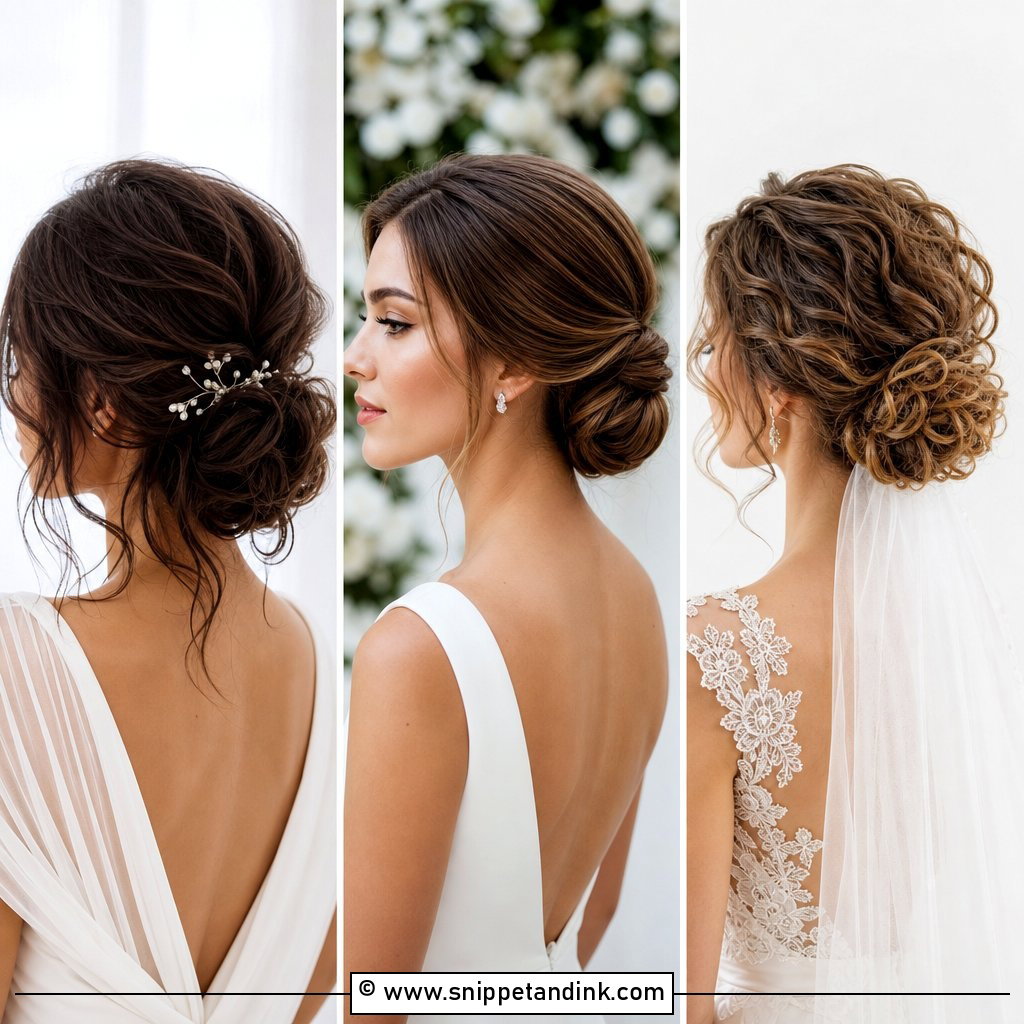
13. Messy Half Bun Wedding Hair
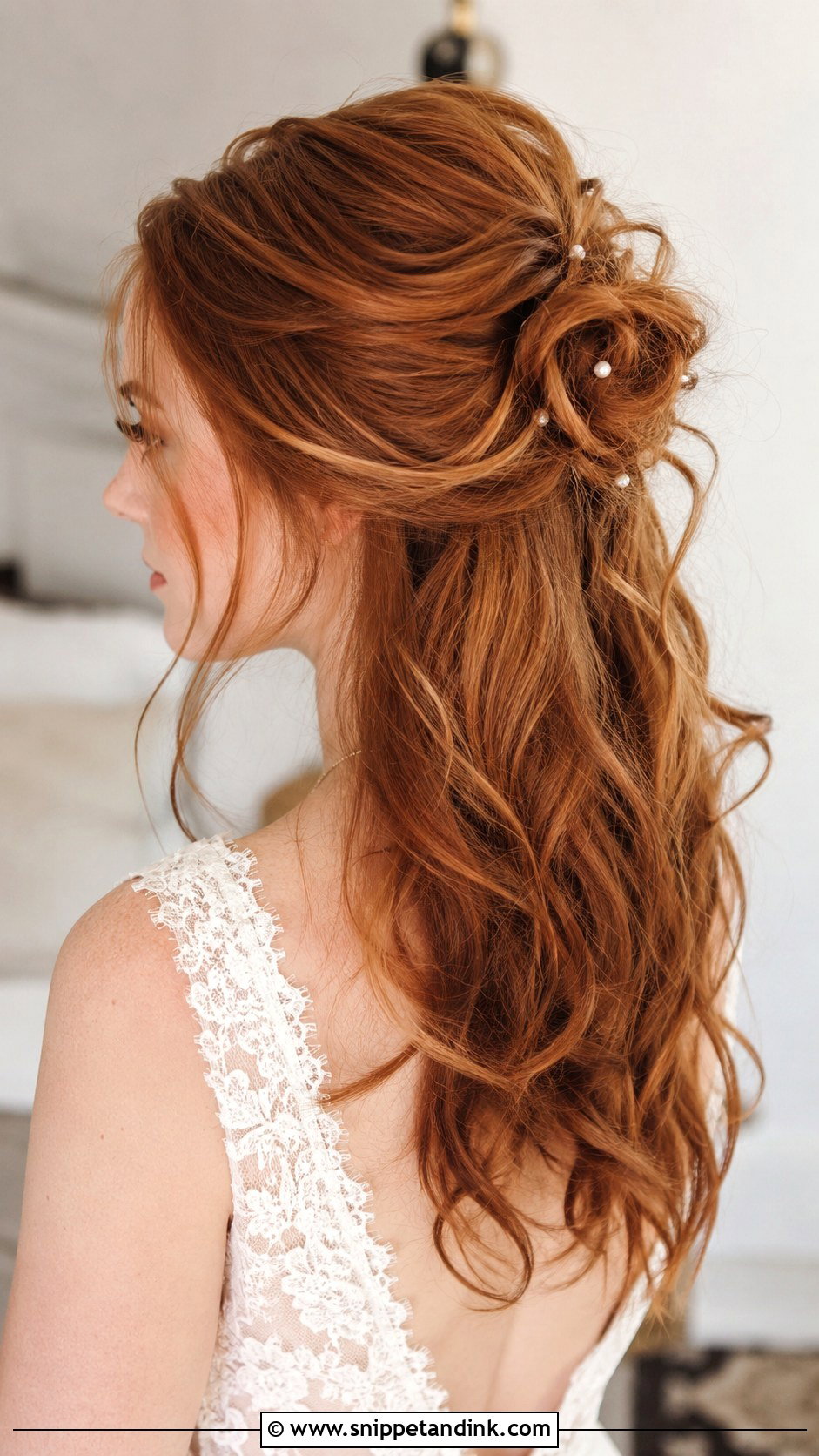
Messy should still mean intentional. I curl all the hair first, tease lightly at the crown, then twist the top section into a loose bun and pull out a few soft pieces with my fingertips. The loose hair gets relaxed waves so it matches the texture up top. The thing I watch for is fine hair: it collapses into a limp knot by evening unless the base is built with a bit of backcombing and a grippy texture spray. It suits barn venues, beach ceremonies and less formal dresses. Tiny pearls or a couple of small flowers are enough decoration.
14. High Half Bun Wedding Hair
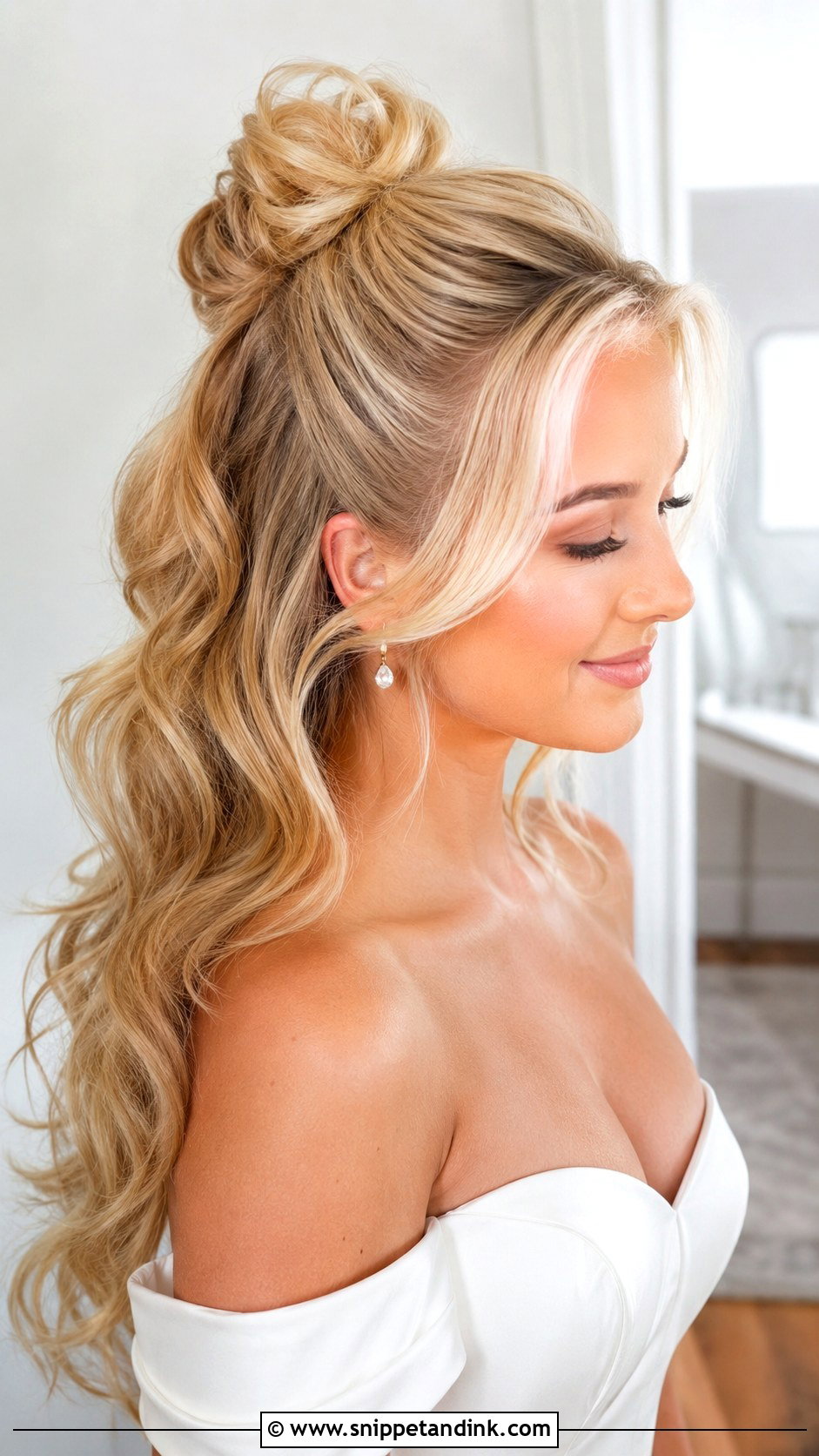
Moving the bun up toward the crown opens the face and makes the whole look feel younger and more modern. The danger is that it can tip into casual if the bun is too tight or too small. I build it with soft volume and polish the surface so it stays dressy. Loose waves underneath balance the height. This does best on long or layered hair, and it keeps the neckline and back of the dress clear, which is useful if your dress has a low back or detail at the shoulders.
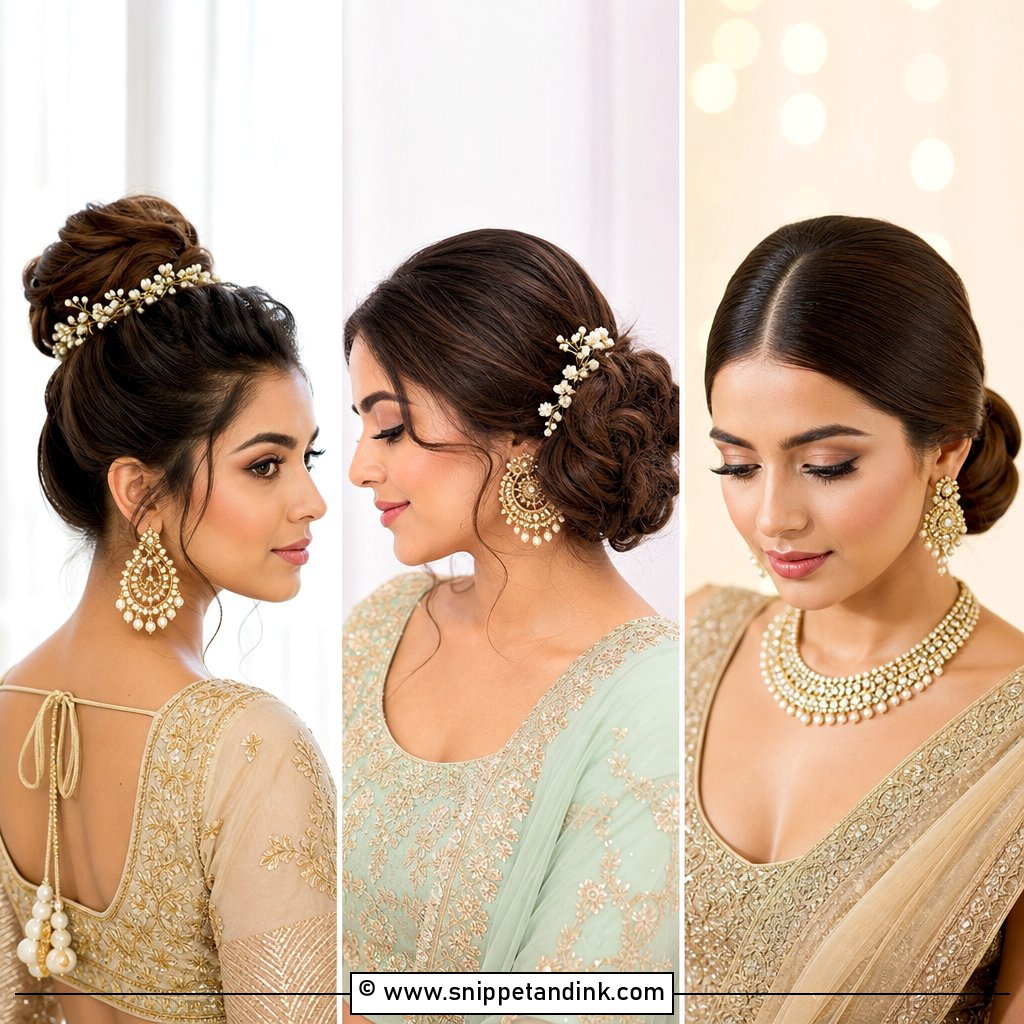
15. Low Half Bun Wedding Hair
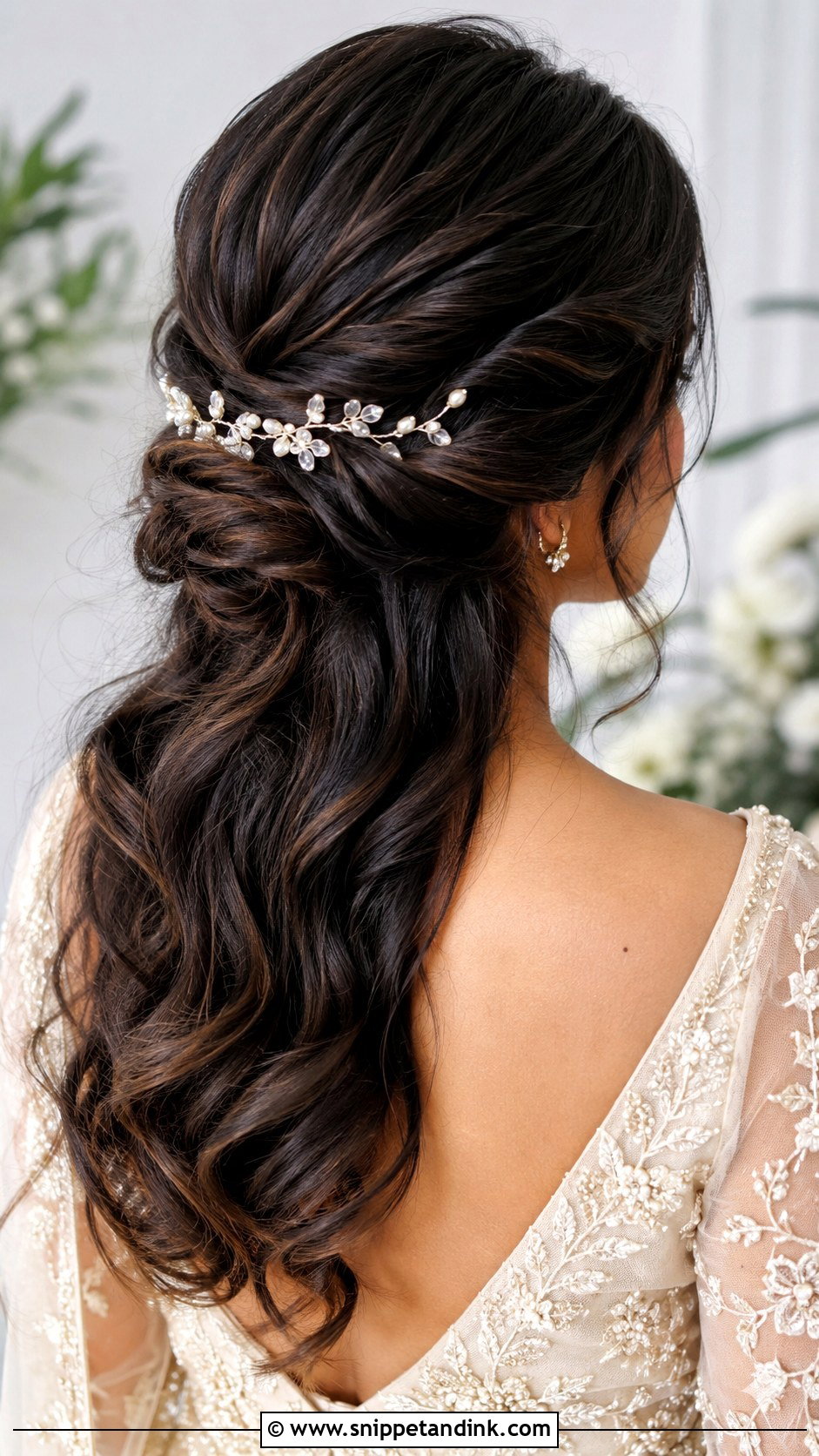
A low bun rests at the back of the head rather than at the crown, so the shape feels relaxed and graceful without much height. It’s a good choice if you don’t want a lot of lift, or if your veil comb needs to sit above the bun and still have room. Floral combs and hair vines wrap neatly around it. One practical point: a low bun sits right where you’ll lean back against a chair, so I pin it a little firmer than usual. Soft waves underneath keep it from looking too formal with lace sleeves or garden settings.
Sizing the Bun to How Much Hair You Actually Have
Most inspiration photos show a lot of hair, which can be misleading. The bun’s size should come from your density, not from the picture, and the fix is different at each end of the scale.
Fine or thin hair
A small section twisted into a bun can look like a walnut stuck to the crown. I gently backcomb the base, wrap the twist around a mini donut or a little padding in a matching shade, or blend a clip-in piece into the top section only. Ask to see the back in a hand mirror. If you can see scalp around the bun, it needs more fullness.
Thick or heavy hair
Here the problem is weight. One big twist slides down the back of the head within a few hours and starts to pull. Splitting the top into two twists that pin into each other spreads the load, and crossing pins in an X beneath the bun locks it to a base of hair rather than to itself. If you feel a headache starting at the trial, say so. It won’t feel better at hour eight.
Either way, decide on the veil before the trial. A cathedral veil needs a firmer bun than a short blusher or a single clip, and it’s much easier to build that support in from the start than to add it on the morning.
Wear the Trial Version Until Bedtime
Every version on this list starts from the same base, and you can change the mood by changing the texture, the bun height or the one accessory. Sleek feels modern, braided feels detailed, and messy feels relaxed. My strongest suggestion is to treat your trial like a dress rehearsal. Bring your saved photos, keep the finished style in for the rest of that day, put the veil on and take it off, sit in a car and hug someone. If the bun still feels secure and the waves still hold by evening, you’ve found yours.
You'll Like These Ideas:


Leave a Reply