
Bridal hair tucked behind ears is one of those small decisions that changes the whole picture. Push the front pieces back and your earrings, your neckline and your makeup suddenly have room to show. I use it on long waves, poker-straight hair, bobs, half-up styles and low buns alike. If you love wearing your hair down but dread a strand sticking to your lip gloss during the vows, this is the shape I’d have you try first at your trial.
Who the Ear Tuck Flatters, and When I Tuck Just One Side
Tucking hair back puts your ears in every close-up, so look in the mirror honestly before you fall for the idea. If you’ve always felt self-conscious about ears that stick out, you don’t have to rule it out. I’ll often tuck only one side, or bring the hair back loosely over the top half of the ear so it’s softened rather than fully exposed.
Earrings matter more here than with almost any other style. A drop or chandelier becomes the focal point, so choose them before the trial and wear them to it. Heavy earrings can also pull the tuck forward as you turn your head, which is why slim drops or studs tend to behave better.
- Round or full faces: a middle part with some lift at the crown stops the sides looking flat.
- Long or narrow faces: a side part with waves starting at the jaw adds width where you want it.
- Strong jawlines and high cheekbones: a sleek, straight tuck shows them off with almost no work.
- Glasses wearers: the arms sit over the tuck, so bring your frames to the trial and I’ll pin underneath them, not on top.
1. Bridal Hair Tucked Behind Ears With Soft Waves
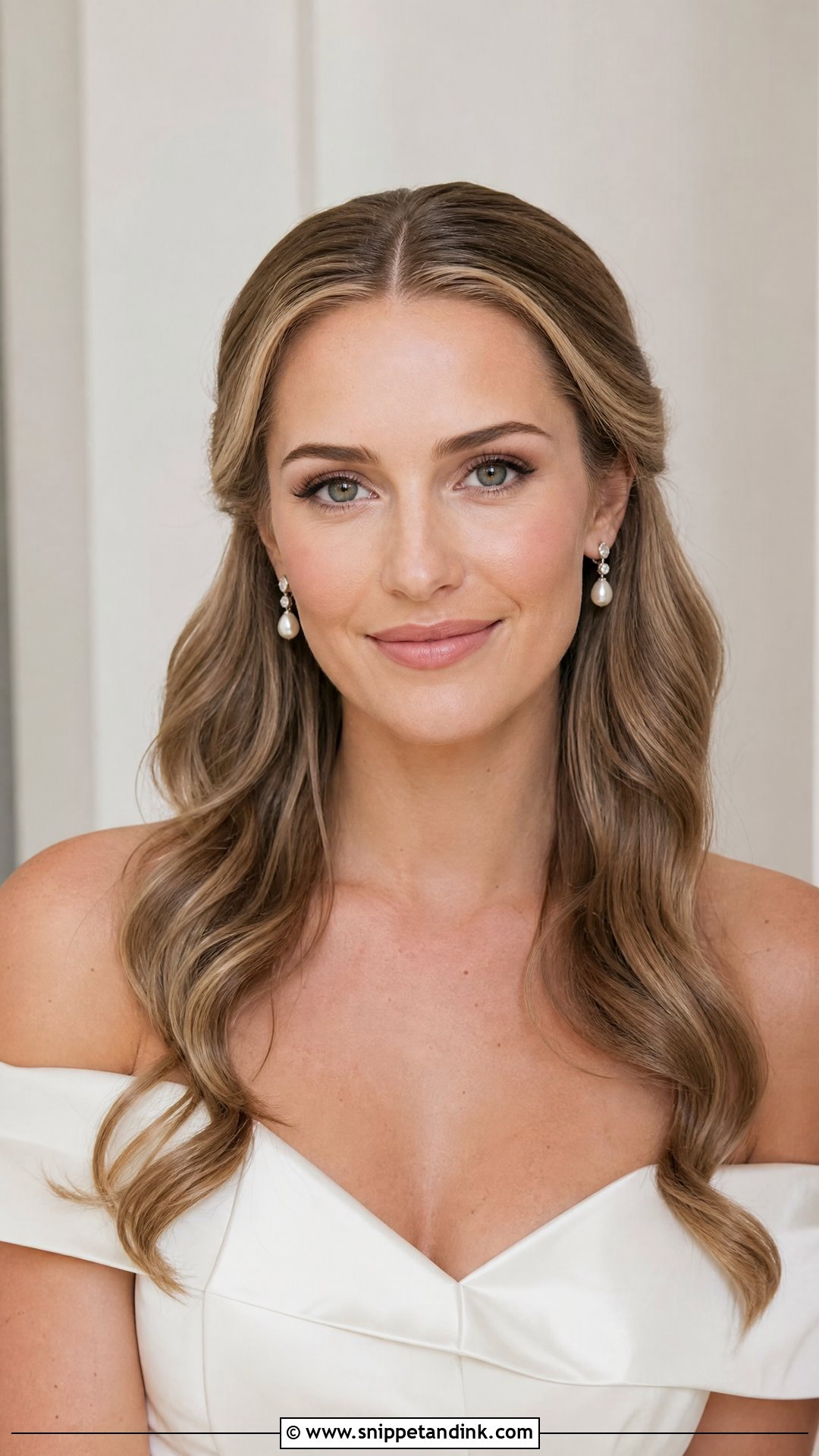
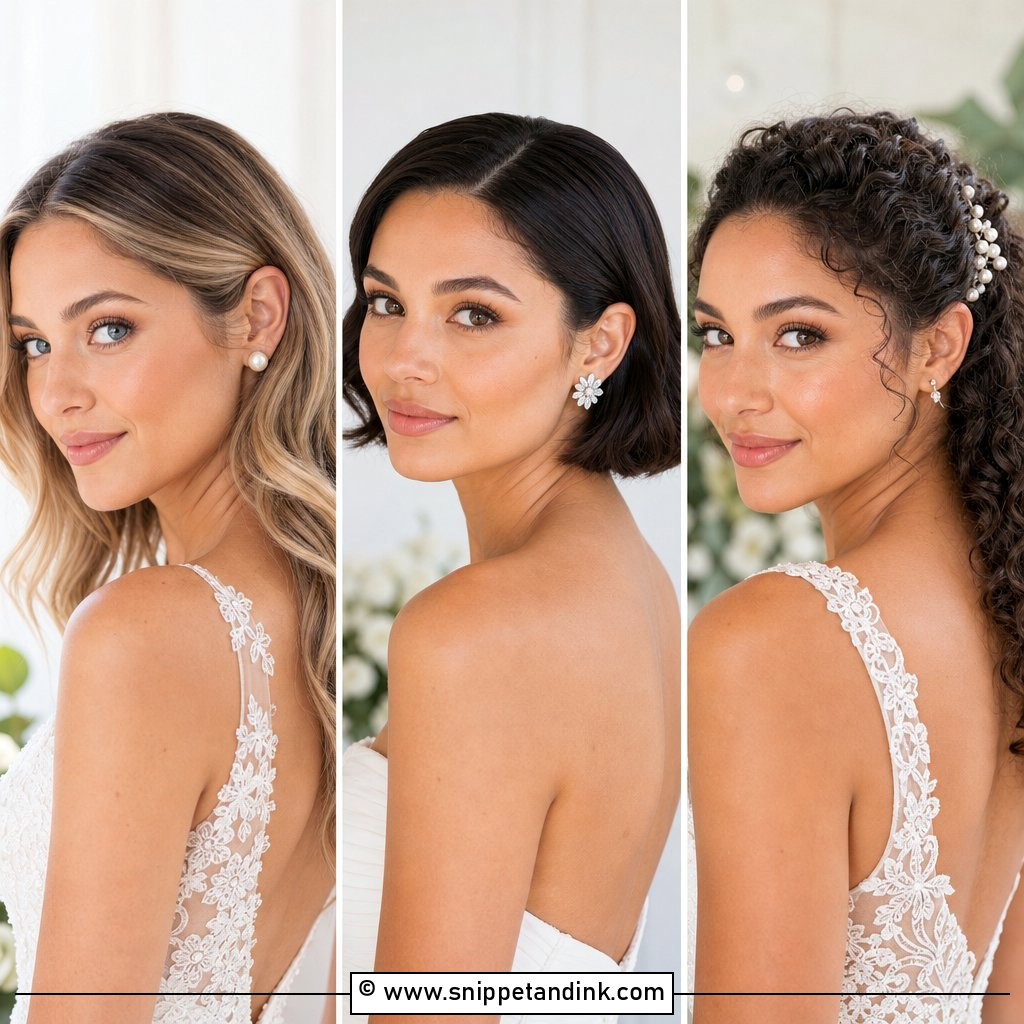
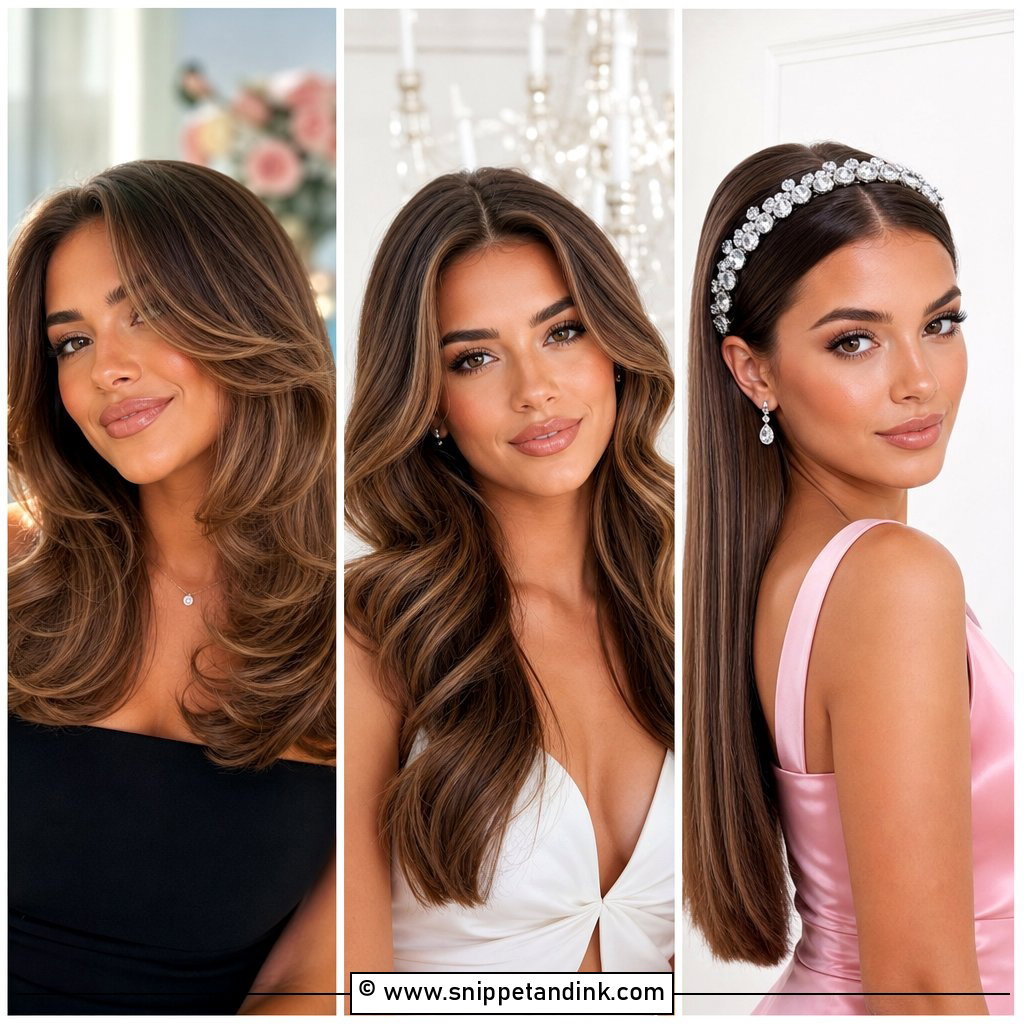
Soft waves tucked behind the ears give you hair down that still looks deliberate. I start the wave below the cheekbone, never at the root, because a bend near the ear pushes the hair forward and fights the tuck all day. A center or soft off-center part lets both sides smooth back evenly. Underneath, I hide a tiny clear elastic joining a thin piece from each side, so the waves can move while the front stays put.
2. Bridal Hair Tucked Behind Ears With Hollywood Waves
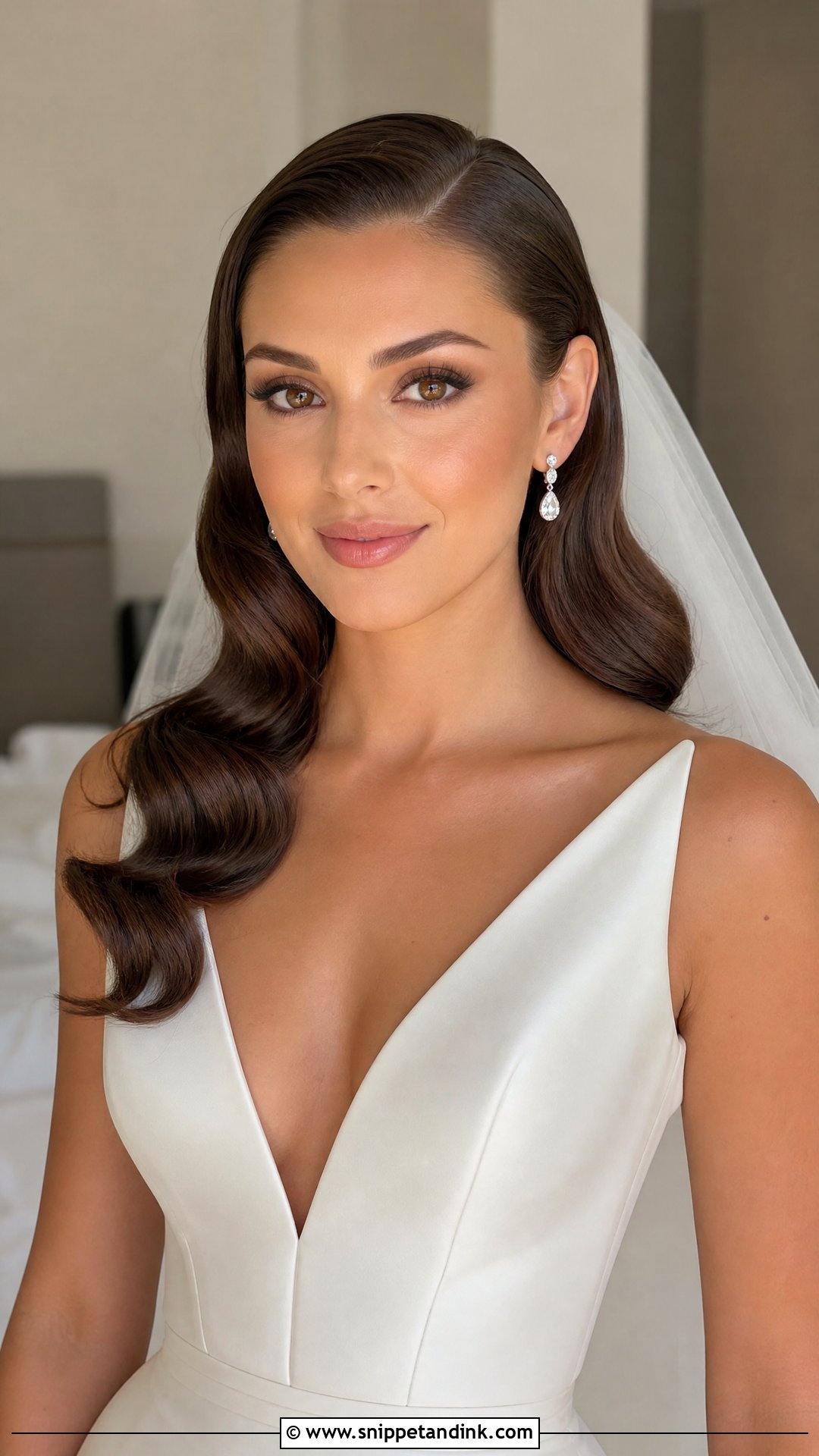
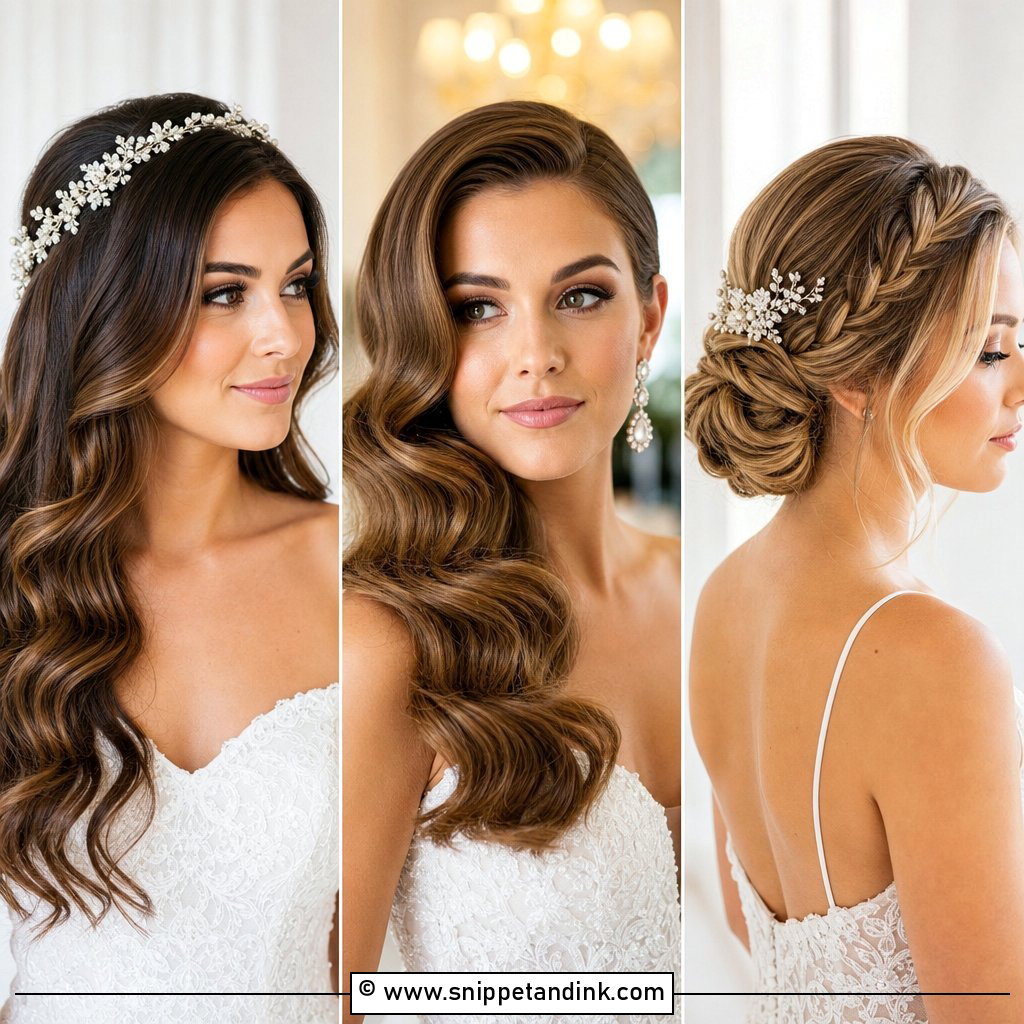
Hollywood waves tucked behind the ears are the most technical version on this list. Those deep, uniform S-shapes only line up if every section is curled in the same direction and brushed out together, so I set them in pin curls and leave them to cool fully before touching anything. The payoff is huge with satin gowns and off-the-shoulder necklines. One honest warning: this pattern hates humidity. For a summer garden wedding I’d choose looser waves instead.
3. Bridal Hair Tucked Behind Ears With Straight Hair
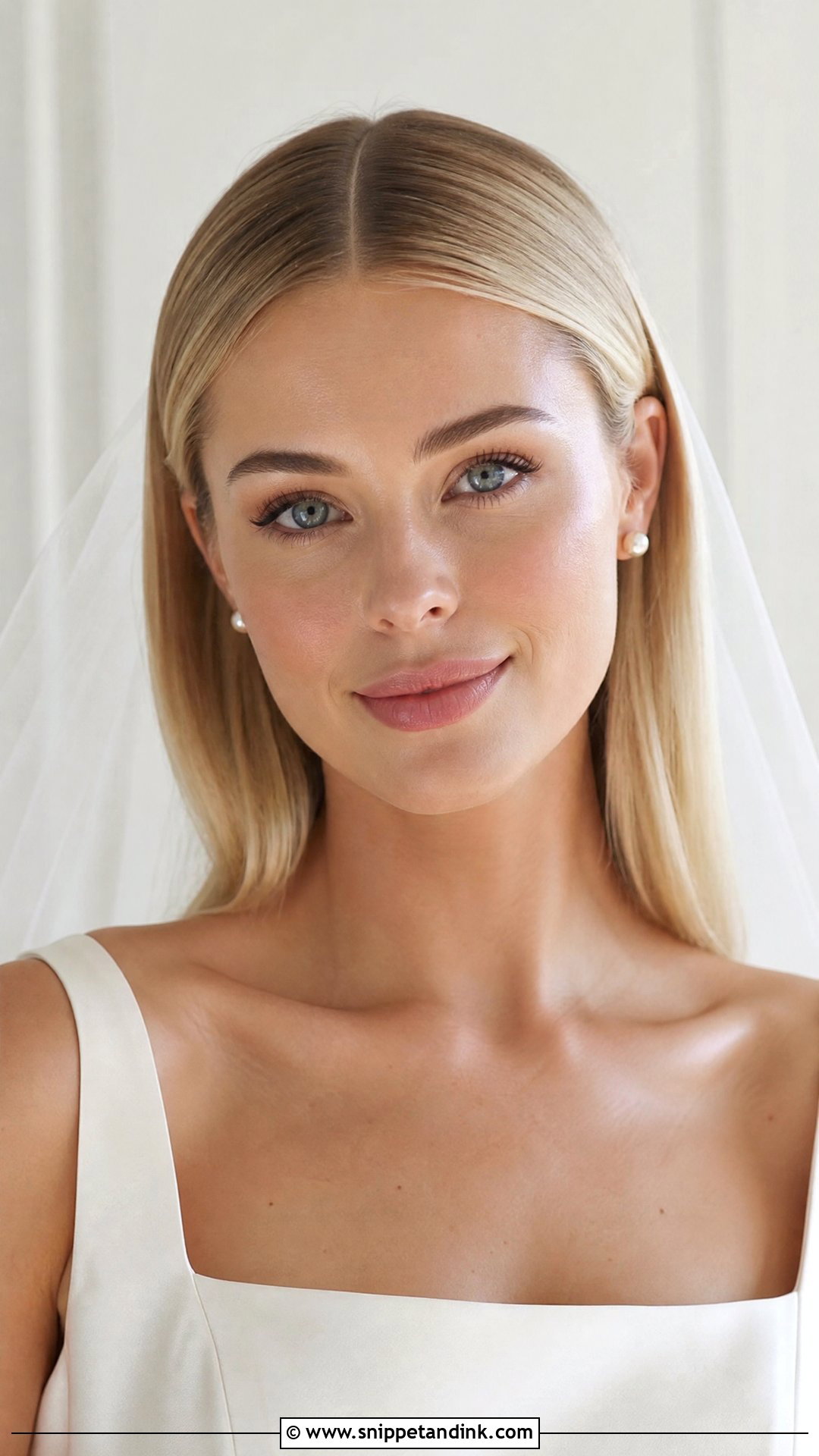
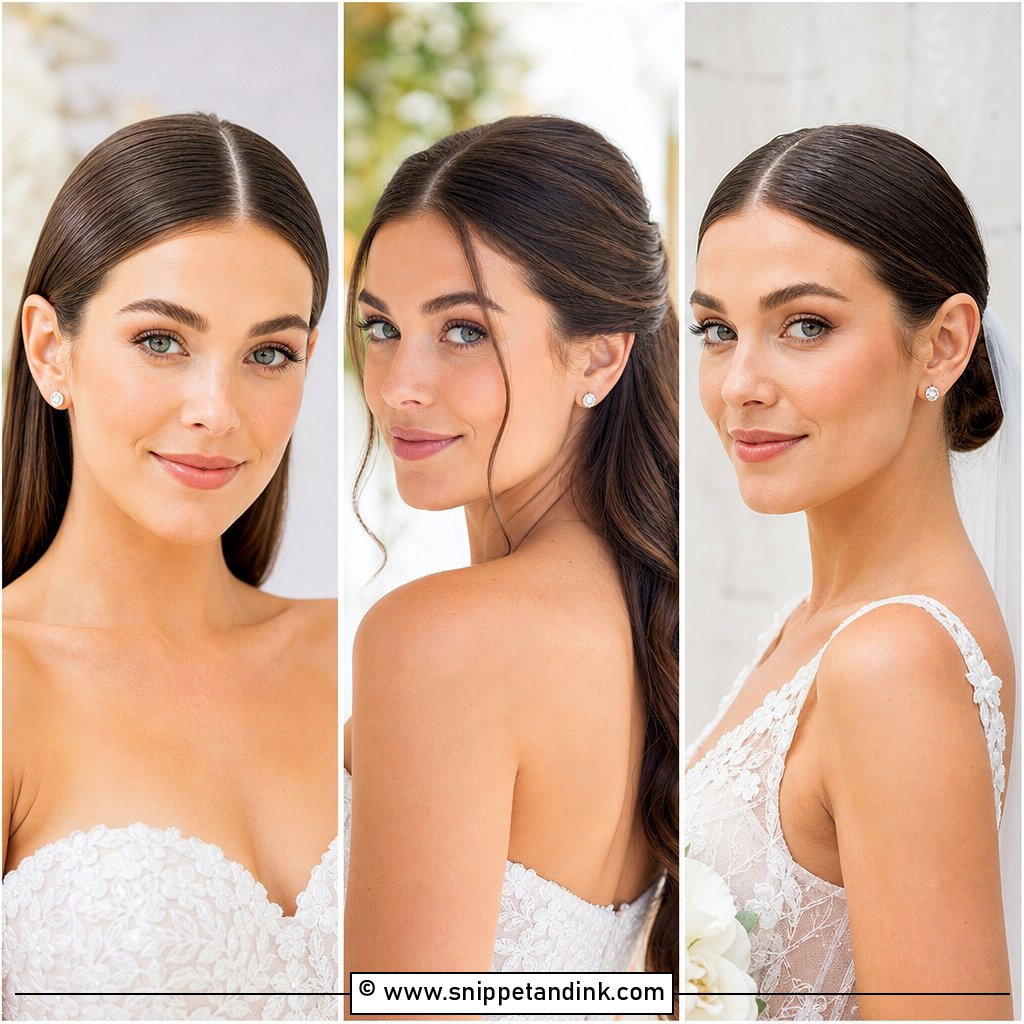
Straight hair behind the ears looks simple, which means there’s nowhere to hide. Split ends, uneven lengths or a frizzy halo all show in close-ups, so I ask brides to book a trim about two weeks out rather than the day before, when the ends still look blunt. On the morning I blow-dry with a round brush for a slightly beveled finish, then add a drop of anti-frizz serum to the lengths only. It sits best with square necklines and simple studs.
4. Bridal Hair Tucked Behind Ears With Middle Part
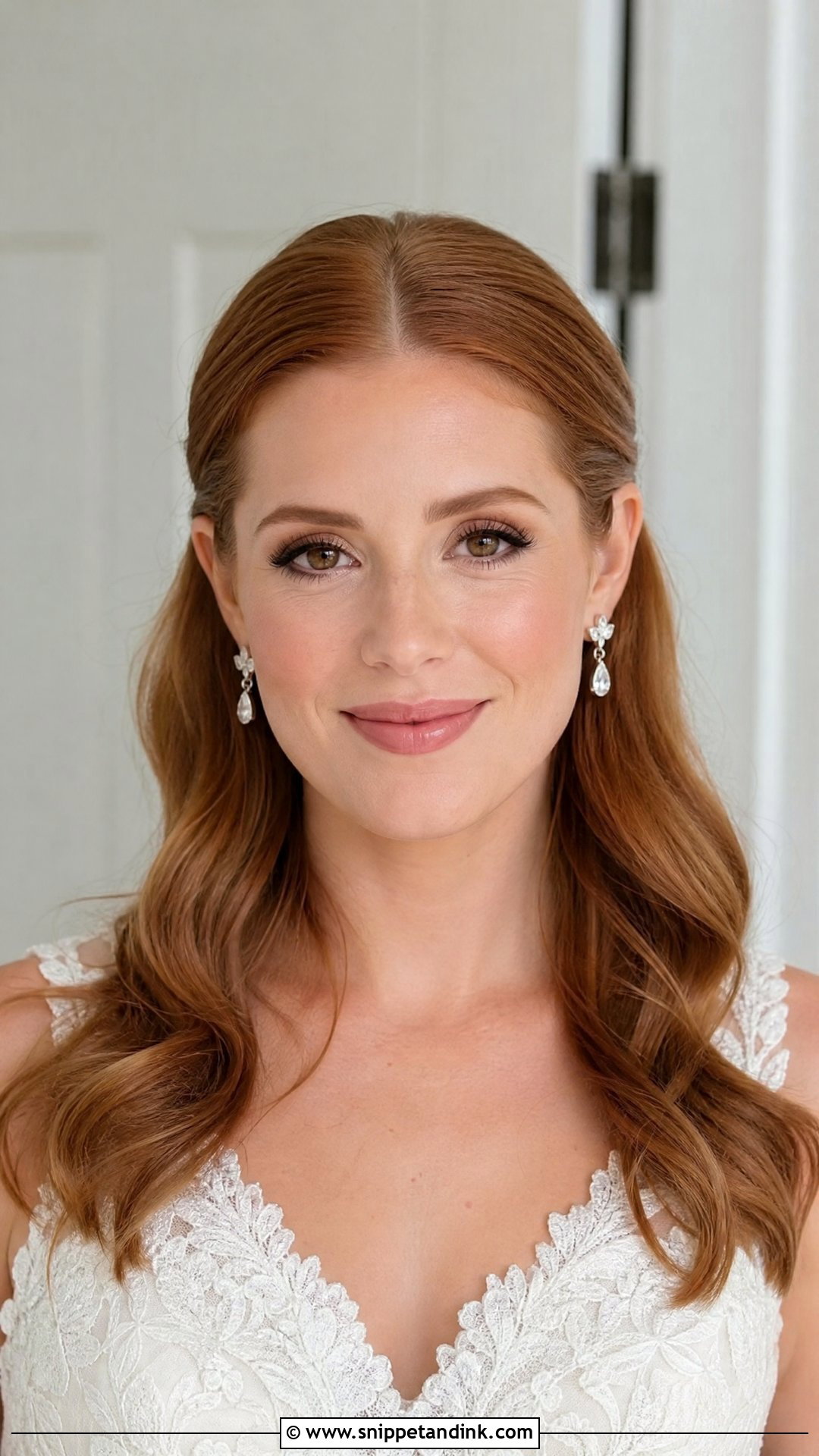
A middle part is the most symmetrical way to wear the tuck, and symmetry is unforgiving. Before I commit to it, I check where your natural part falls, because forcing a center line on hair that wants to sit left will lift by mid-afternoon. A little root lift at the crown keeps it from looking like your everyday ponytail-out hair. A veil can go at the crown or lower toward the nape without disturbing the front.
5. Bridal Hair Tucked Behind Ears With Side Part
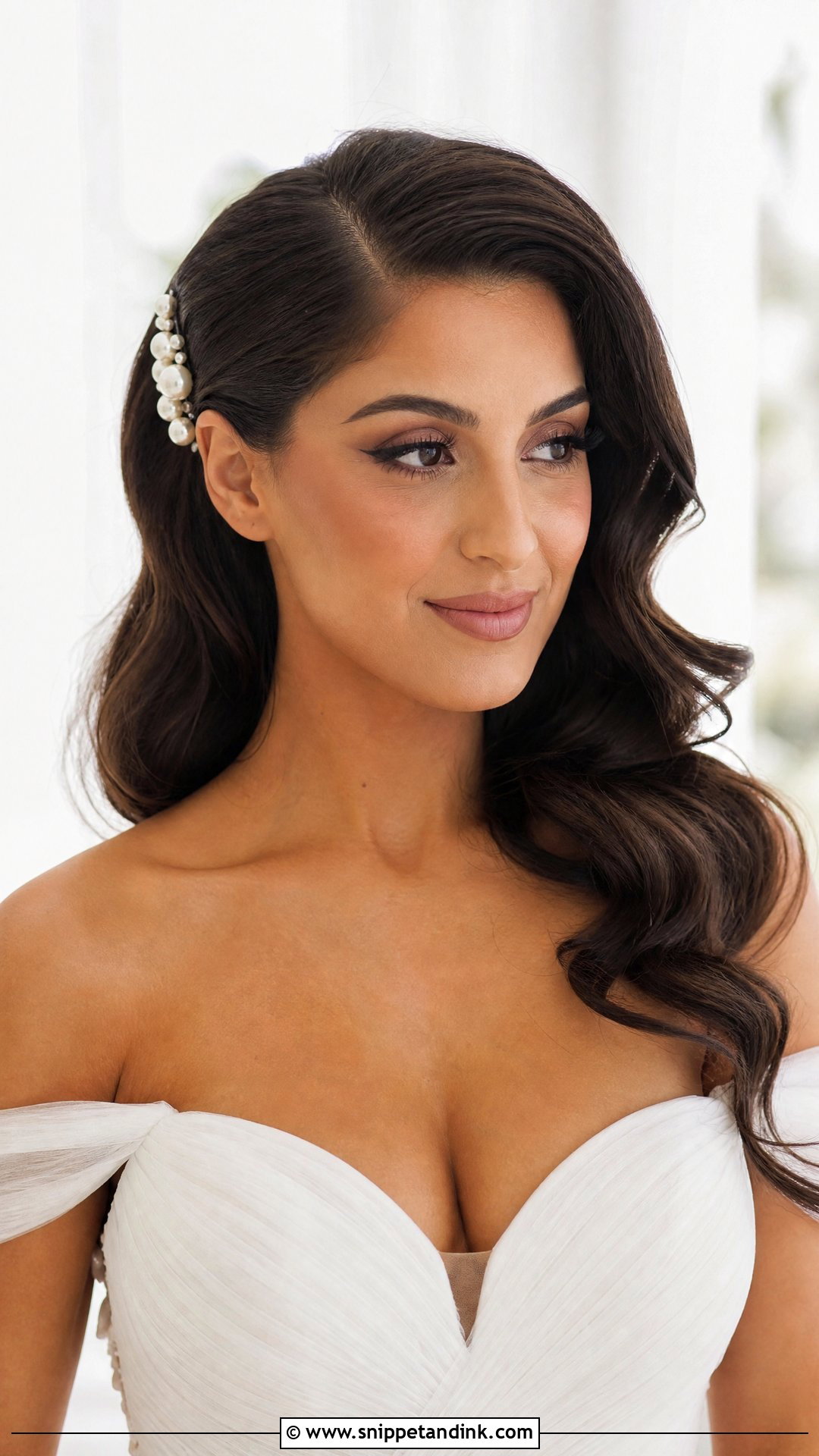
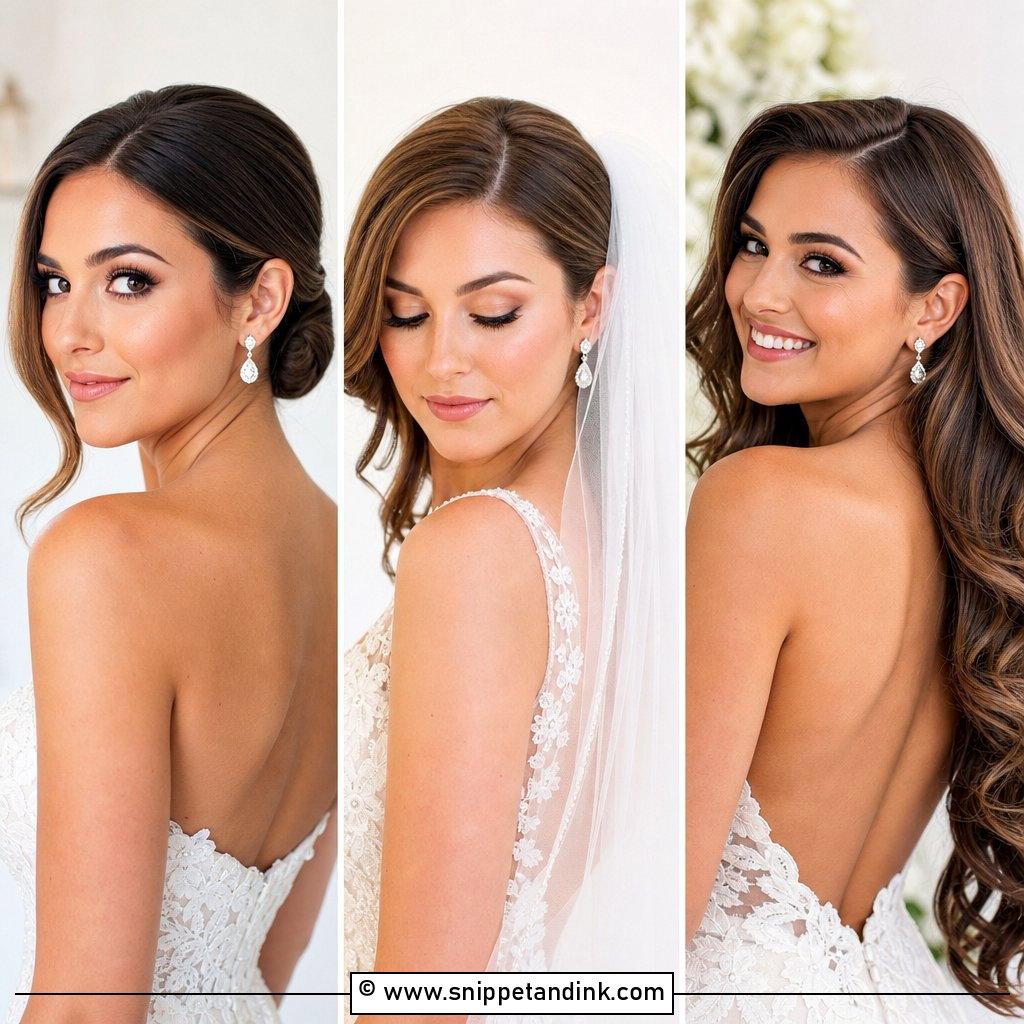
Side parts are kinder to most faces than a strict center, and they’re easier to tuck. The smaller side slips behind the ear neatly, while the fuller side sweeps back in a softer curve across the forehead. I place one hidden pin just above the ear on the small side, angled upward so it grips the hair underneath. Delicate combs or pearl clips look natural here, sitting on the fuller side where the hair has some body to hold them.
6. Bridal Hair Tucked Behind Ears With Pearl Pins
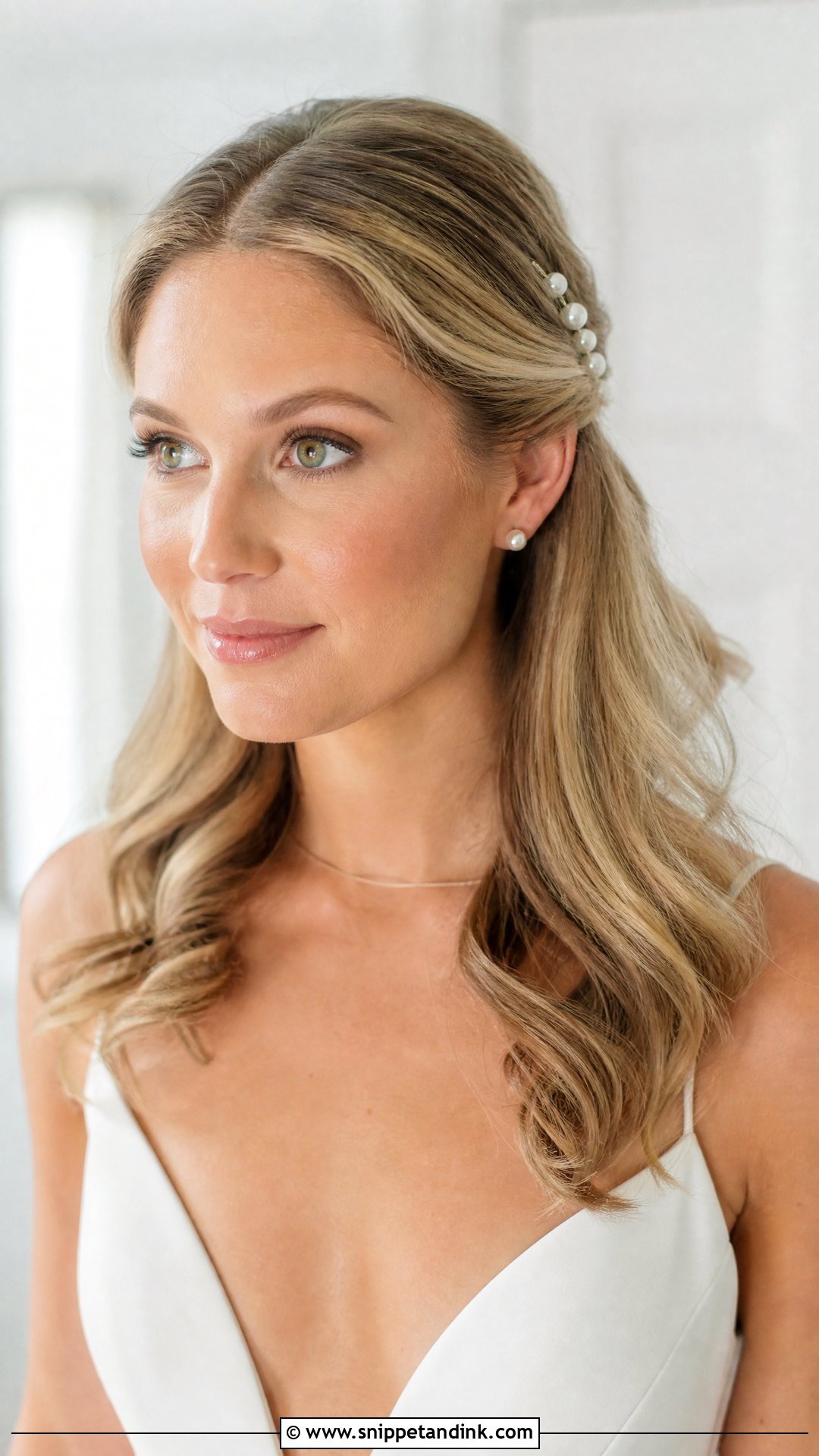
Pearl pins do two jobs at once: they decorate the tuck and they actually hold it. That’s why I like them for brides with slippery hair. I slide each pin in against the direction the hair wants to fall, so the weight of the pearl locks it rather than loosening it. Use one cluster behind a single ear for an asymmetric look, or matching pins on both sides. Hold the pearls against your dress before buying; ivory and bright white rarely sit well together in photos.
7. Bridal Hair Tucked Behind Ears With Veil
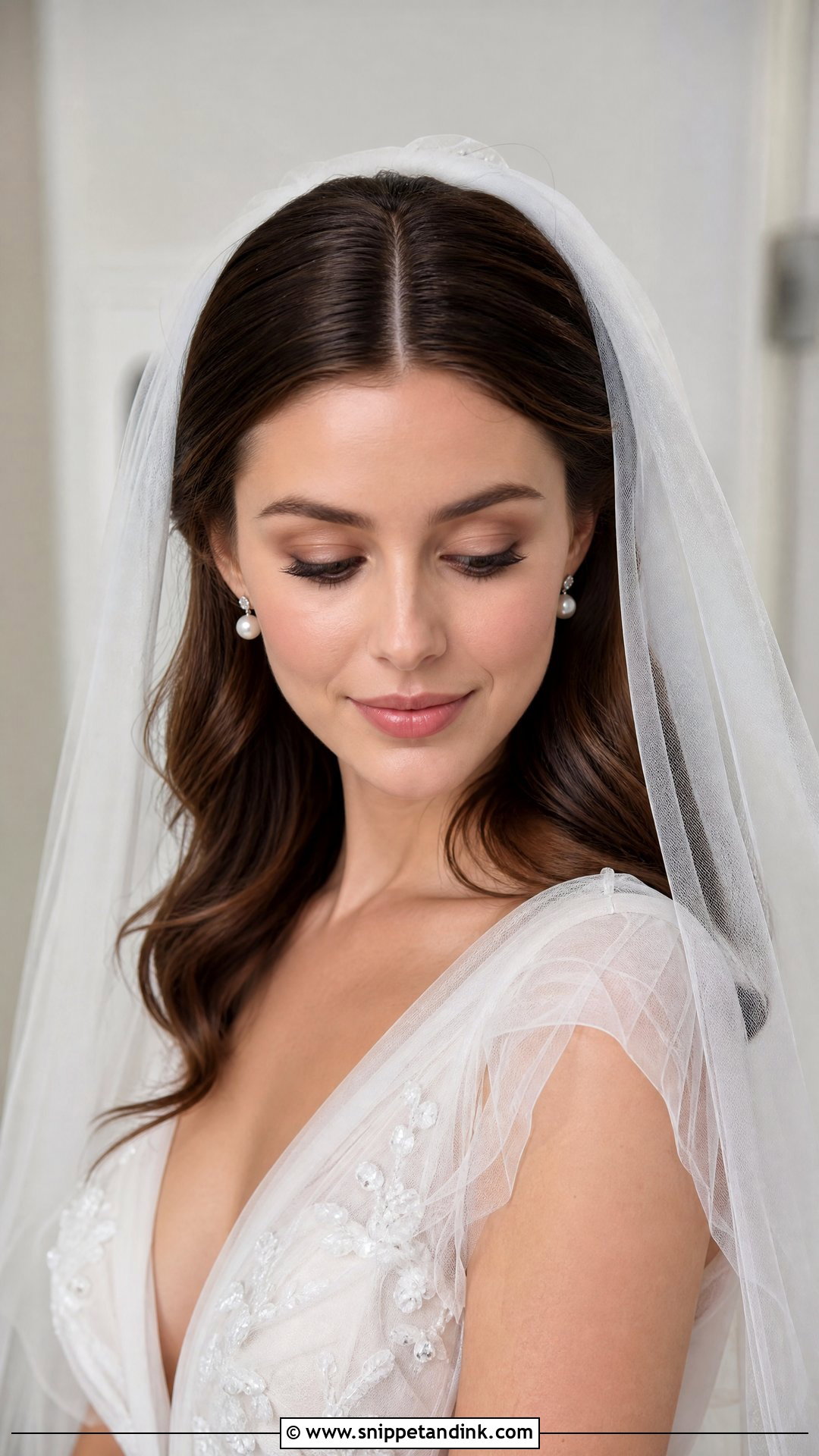
The order matters with a veil. I secure the front tuck first, then set the comb, because sliding a veil comb in afterwards drags the sides loose. Waves under a cathedral or fingertip veil give the tulle something to rest on, so it doesn’t cling flat to the back of your head. If your veil is heavy, ask for it lower near the nape; a crown placement pulls on the tuck every time someone steps on the hem.
8. Bridal Hair Tucked Behind Ears With Tiara
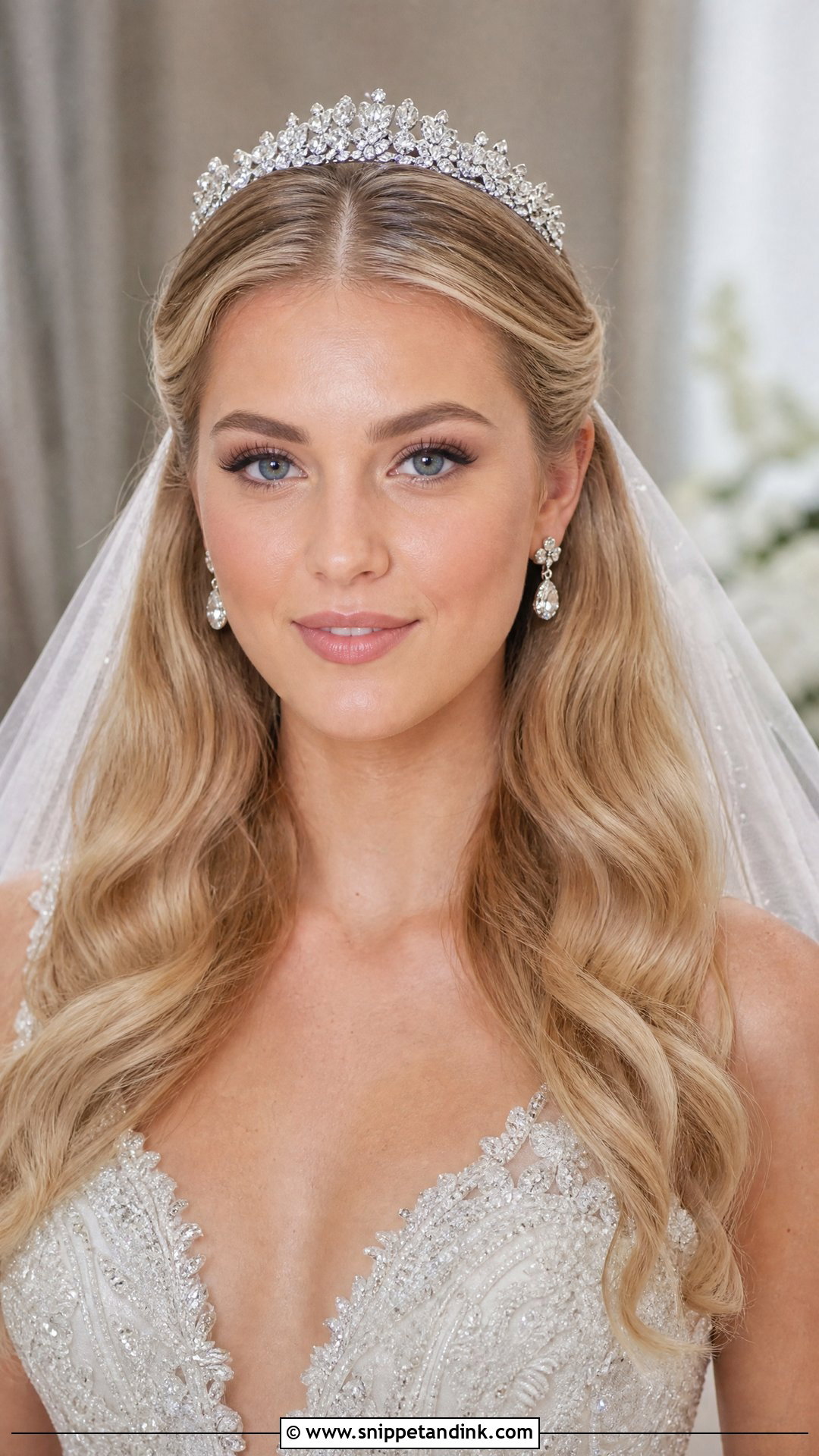
A tiara with bridal hair tucked behind the ears reads regal without much fuss, since nothing at the sides competes with the metalwork. The trick is height. I backcomb a small section at the crown so the tiara sits on a slight lift, otherwise it looks pressed onto the skull. Tiaras grip best when their ends are pinned through the band into a small anchored base. With a bold tiara I’d keep earrings to plain studs.
9. Bridal Hair Tucked Behind Ears With Low Bun
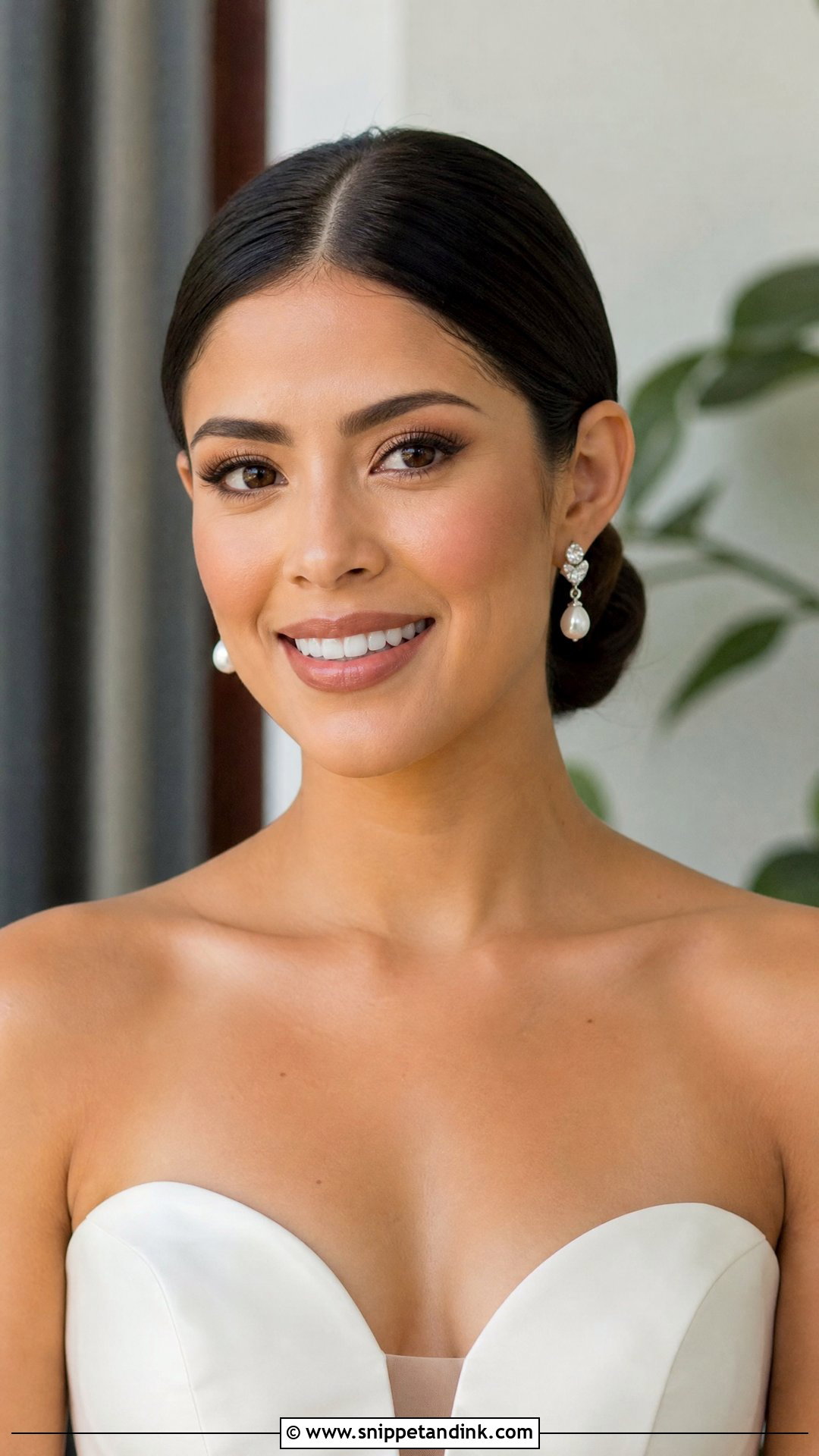
This is the low bun I recommend most for long, hot days, because nothing can come loose and your neck stays cool. I smooth and pin the sides behind the ears before I even gather the bun; if you build the bun first, the sides always end up slightly saggy. Sleek suits a crepe gown, a textured twist suits lace. A detailed open back is where it really earns its place.
10. Bridal Hair Tucked Behind Ears With Chignon
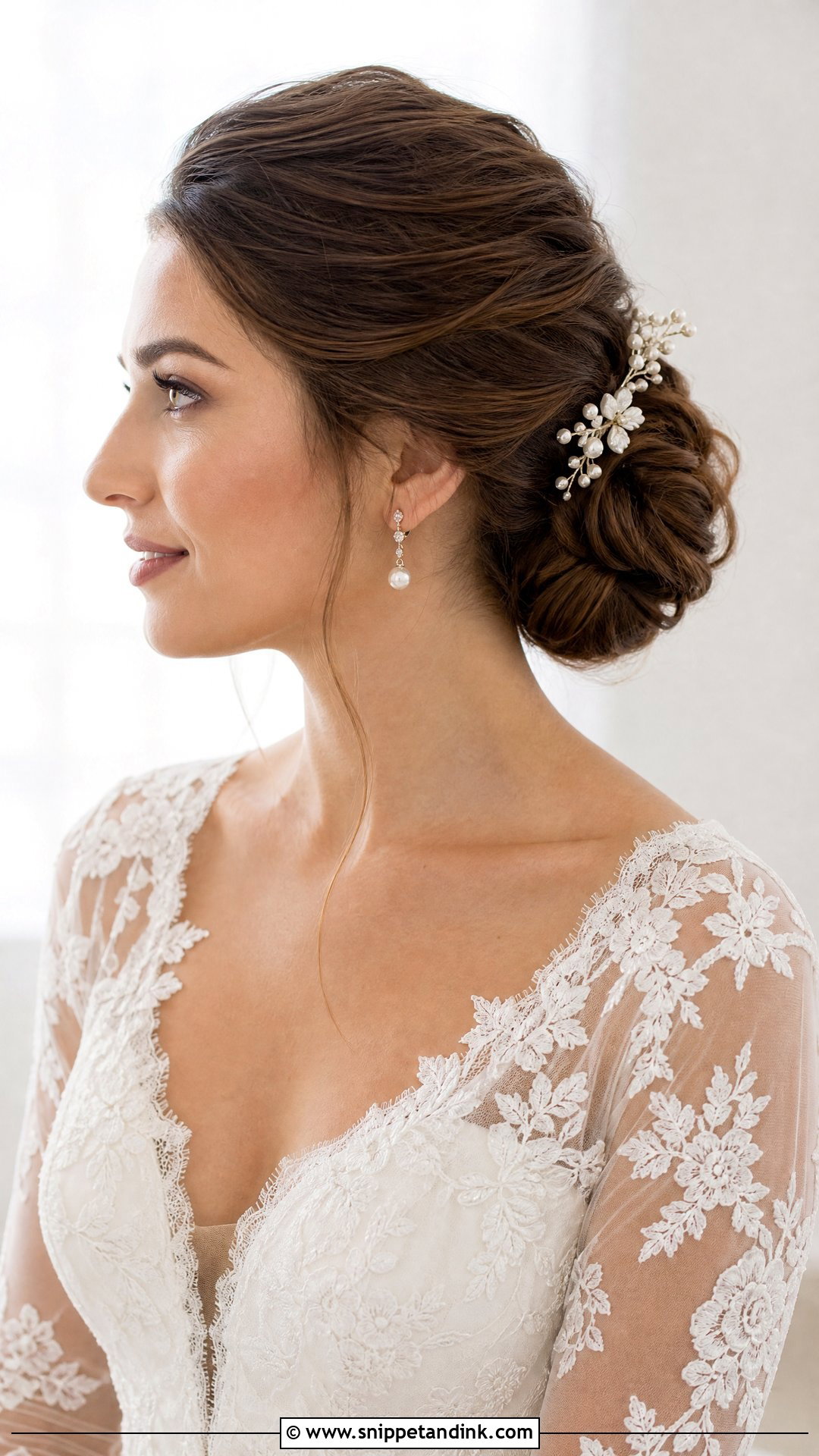
A chignon sits a little softer than a bun, with twists or gathered texture rather than one smooth wrap. I build it on a hidden ponytail base at the nape so it can’t shift through hugs and dancing. The front sections go behind the ears first, crossed over pins so they don’t slide. Leave some lift at the crown for dimension, but skip the loose face-framing pieces if you want the tuck to stay crisp. It takes a veil comb, pearl pins or small flowers easily.
11. Bridal Hair Tucked Behind Ears With Half Up Hair
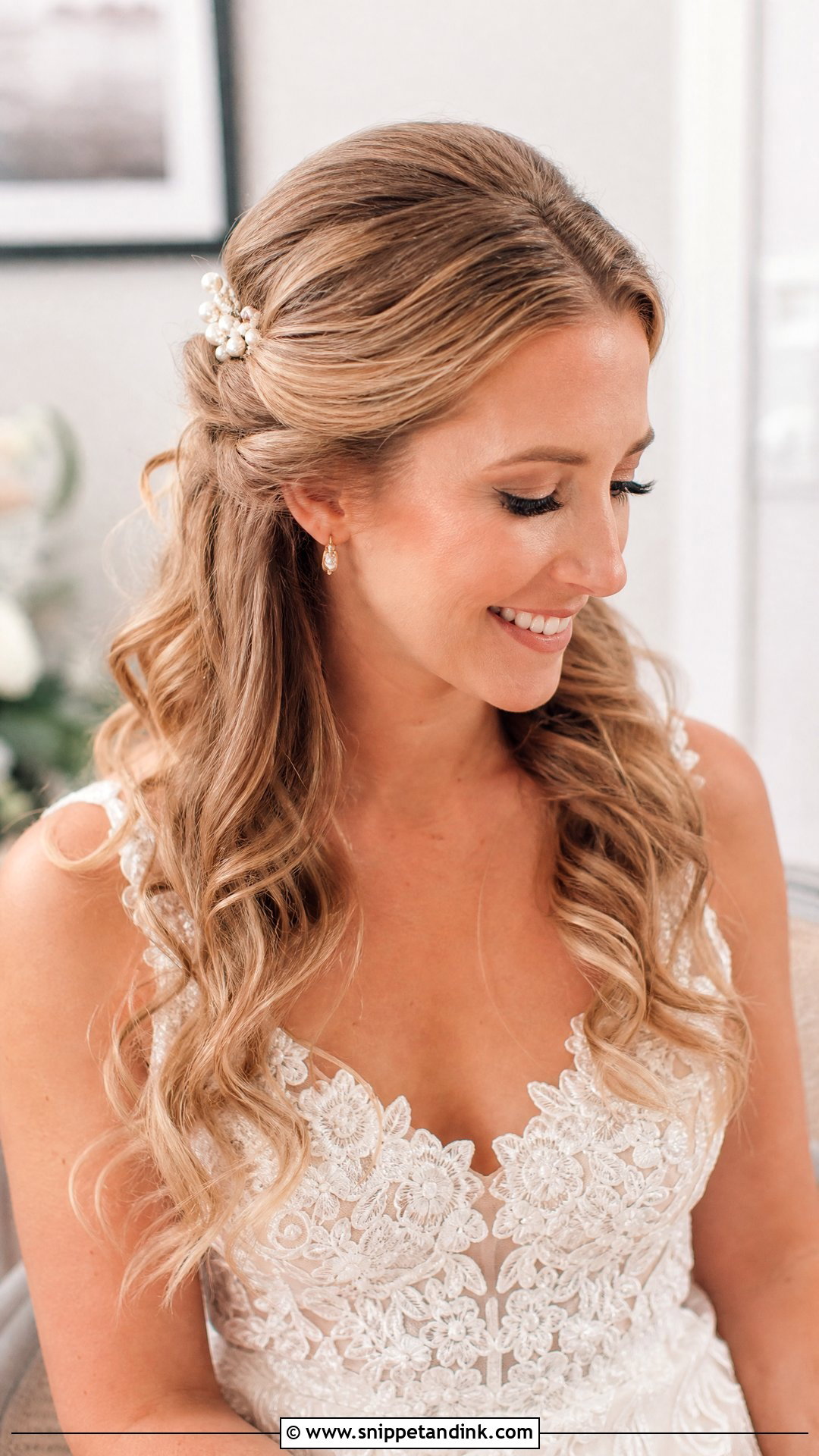
Half up with a tuck solves the most common complaint I hear from brides who want their hair down: it ends up in their face. I gather the top into a small hidden ponytail or a twist at the back, then bring the front pieces behind the ears and pin them into that base, not into loose hair. The lengths underneath stay free for curls or smooth waves. Very fine hair can look thin when split this way, so a clip-in weft sometimes helps.
12. Bridal Hair Tucked Behind Ears With Bob
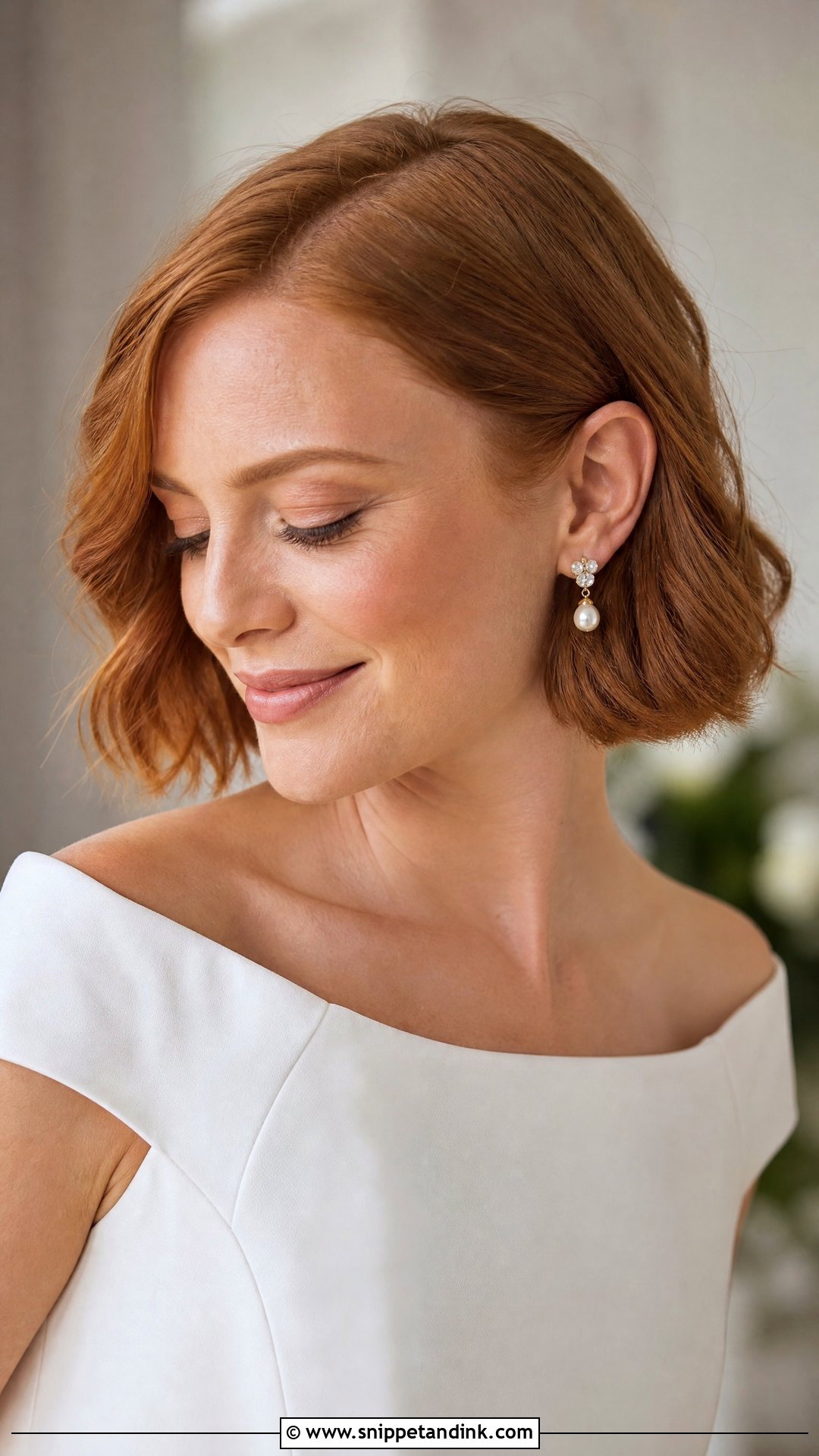
A bob tucked behind the ears gives short hair real shape without extensions. Chin to collarbone length works best; much shorter and the hair can’t physically reach behind the ear. I add volume at the roots first, because a bob that’s tucked flat collapses around the face by evening. The ends can curl under or sit sleek. A light styling cream tames flyaways while keeping the hair soft to touch.
13. Bridal Hair Tucked Behind Ears With Short Hair
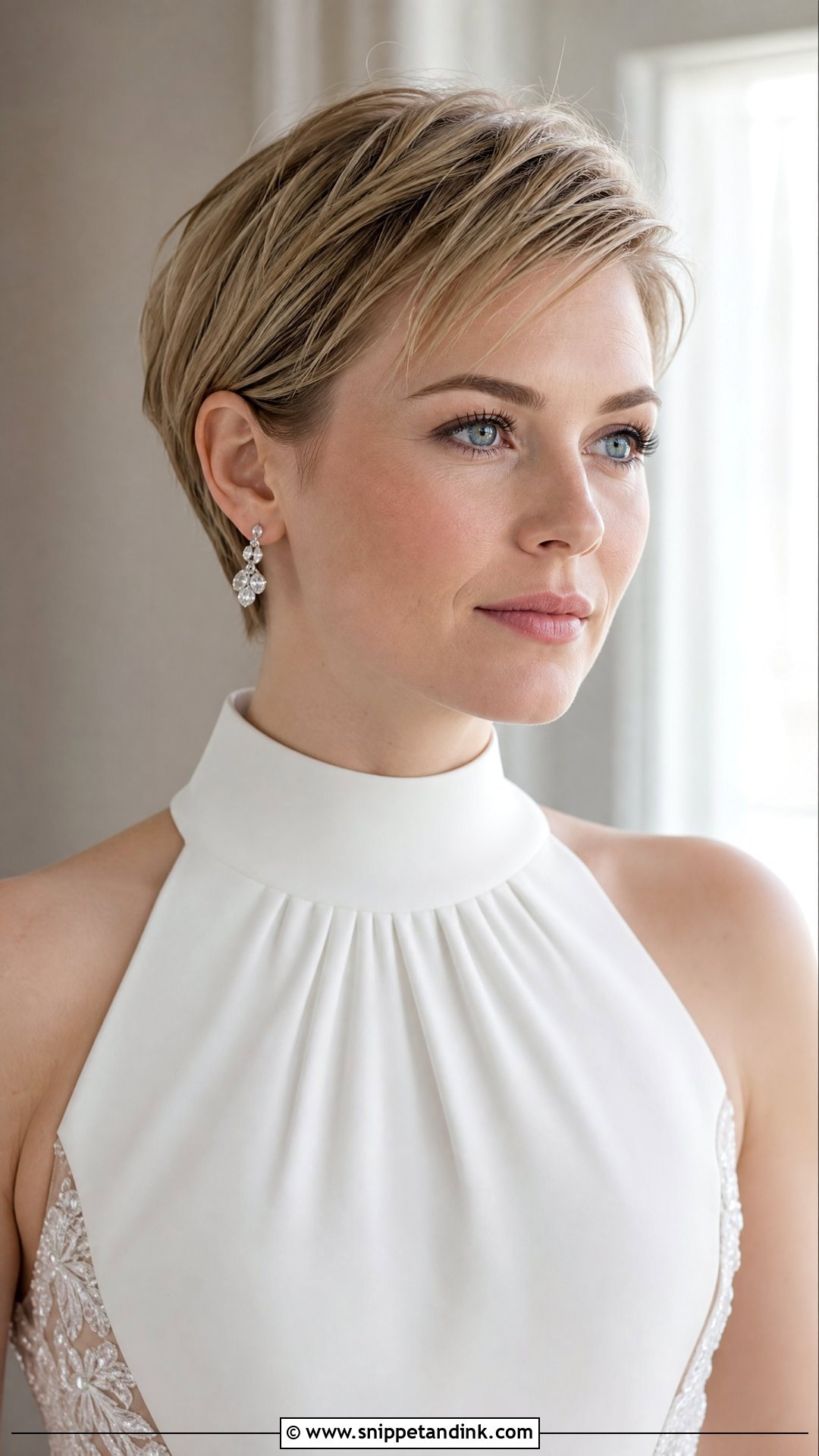
Short cuts are actually the easiest to keep tucked. Whether you have a pixie, bixie, or short crop, the sides sit close to the ear on their own and only need a flexible paste or a light gel to stay there. I leave texture on top so it doesn’t look severe. Timing matters more than product here: get the cut about a week before so it has settled but still looks sharp. Bold earrings or a birdcage veil both suit it.
14. Bridal Hair Tucked Behind Ears With Loose Curls
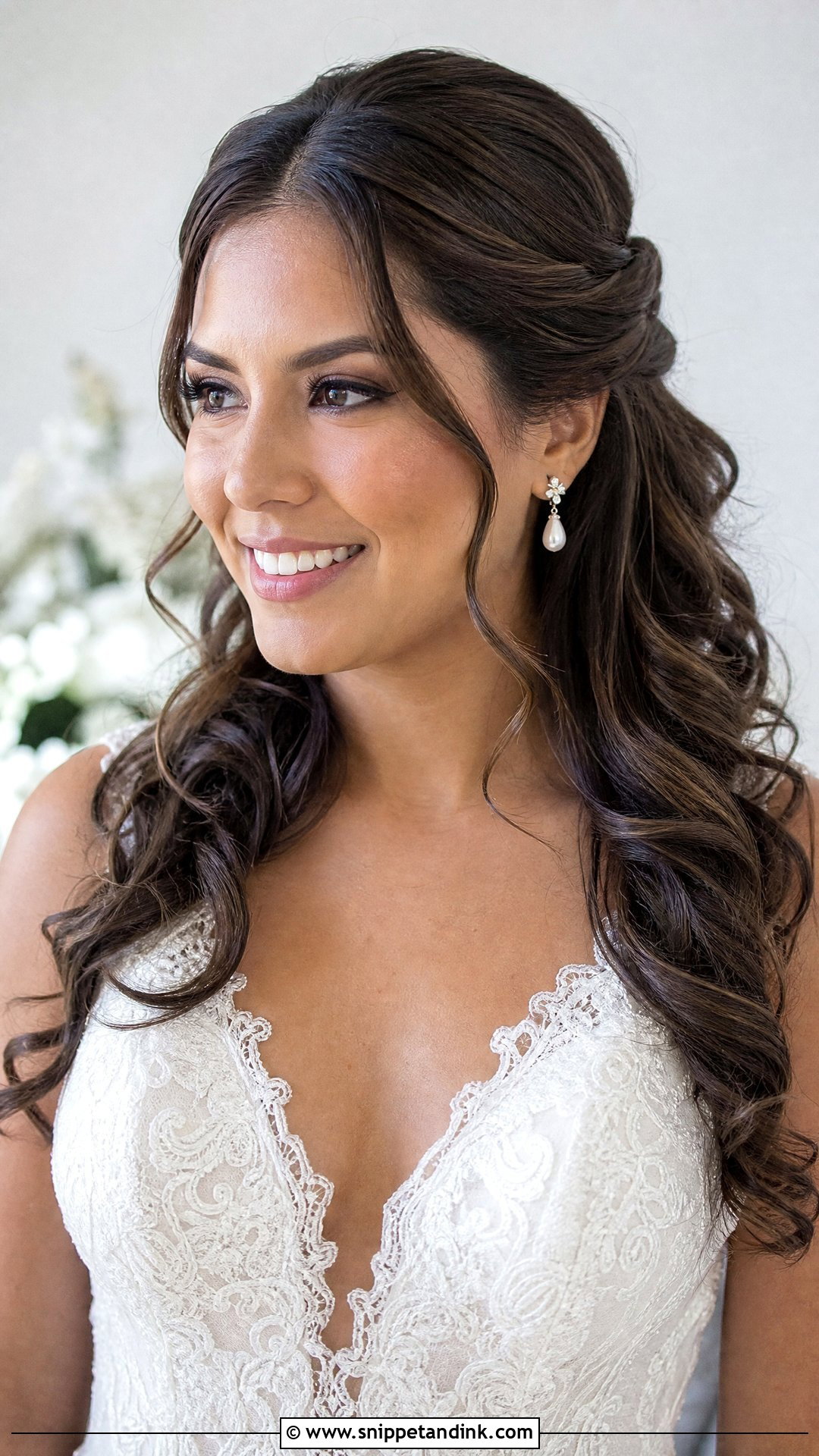
Loose curls give volume while the tuck keeps your face clear for the ceremony. I start curls below the cheekbone and let some fall over the shoulders. Curls set with a hot tool need to cool completely in a pin or in your hand before being brushed, or they drop within an hour. Highlighted hair shows the curl pattern especially well in photos. I finish with a flexible spray so they still move when you walk.
15. Bridal Hair Tucked Behind Ears With Hair Comb
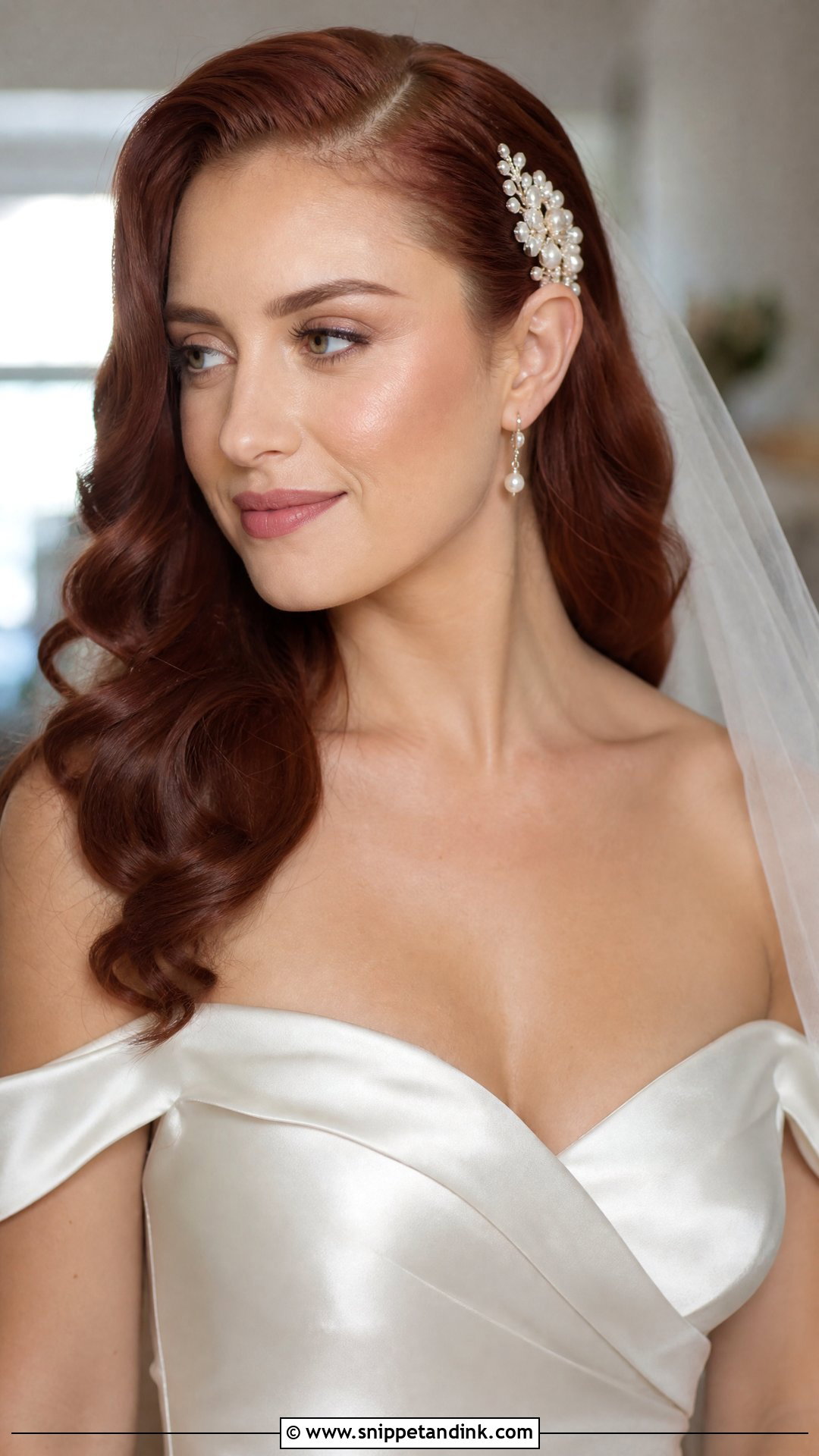
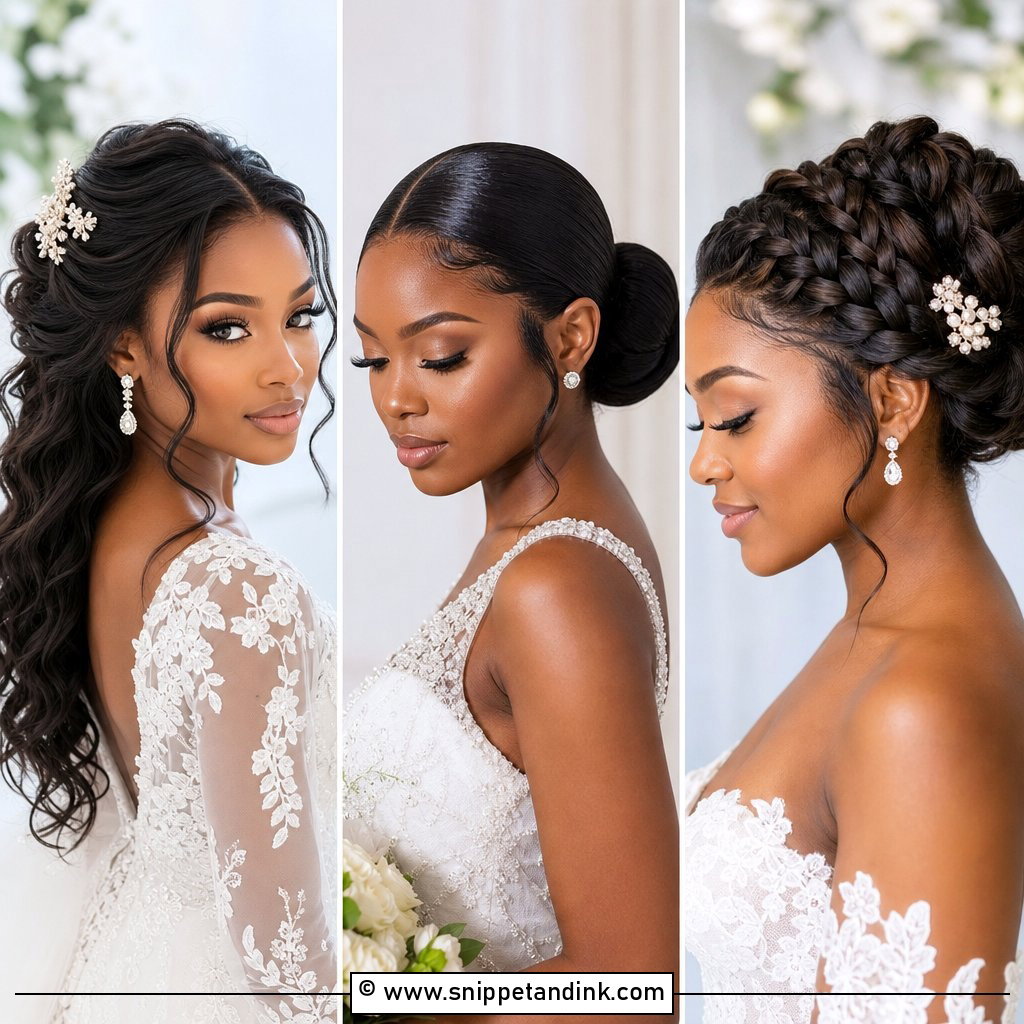
A comb is the accessory I reach for when a bride wants a little sparkle without a tiara. It sits behind one ear, above a low bun or at the back of a half-up style, and its teeth grip far better than a clip. I weave a small criss-cross of pins first and slide the comb into that base. Match the comb’s pearl or crystal to your gown’s embellishment rather than your earrings; the dress covers more of the frame.
How the Tuck Stays Put on Fine, Thick and Curly Hair
A tuck that looks perfect at ten in the morning can be half undone by cocktail hour. How I anchor it depends almost entirely on texture, so tell your stylist honestly how your hair behaves on a normal day, not how it looks after a salon blow-dry.
Fine or slippery hair
This texture slides forward first. A little dry texture spray at the roots gives the pins something to grip, and two bobby pins crossed in an X just behind the ear hold far better than one. Matte pins in your hair color disappear; shiny ones catch the flash.
Thick or heavy hair
The weight of the back hair pulls on the tuck all day. I take a thin section from each side and tie them together with a tiny clear elastic at the back of the head, so the tuck is tied in rather than just pinned. It feels a little snug for the first ten minutes, then you forget it.
Curly and coily hair
Curls hold a tuck naturally but also spring back out of it. A smoothing gel just along the hairline and behind the ear, left to set while you finish makeup, calms the sides without flattening the curls below. Don’t brush curls out for the tuck unless you want a much fuller shape than you planned.
Whatever your texture, pins pressed against the top of the ear start to ache after six or seven hours. If you feel any pressure at the trial, say so and have them moved slightly higher. It’s a two-second fix then and a long evening if you don’t.
Test the Tuck at Your Trial, Not on the Morning
An ear tuck looks like nothing, which is exactly why it gets underestimated. It opens your face, shows your jewelry and keeps the front tidy from the first portrait to the last song, whichever version you pick. The part people skip is the anchoring. At your trial, decide with your stylist how the tuck will be held, then wear it for a few hours afterwards. If it’s still sitting where it should by dinner, you’ll know it will be there when the speeches start.
You'll Like These Ideas:


Leave a Reply