
A bun is the most practical bridal shape I know. It keeps hair off the face and neck, gives a veil or tiara a solid base, and holds through hours of hugging that would flatten loose curls. The variety is wider than people think, from a smooth chignon at the nape to a loose top knot. Where it sits and how it’s built matter more than the photo you save, so below each of the twenty buns I’ve added what I’d check before doing it on you: placement, hair length, and what tends to slip.
Setting the Bun Height to Your Profile and Your Veil
I place every bun with a hand mirror and a side view, because height changes your profile more than any other choice. Here’s how I think about it.
- Low, at the nape: balances a strong jaw or a prominent profile, sits under a long veil comfortably, and shows a high neckline well.
- Mid-height, around the occipital bone at the back of the head: the most comfortable for a long day, and the most adaptable for both tiaras and veils.
- High, at the crown: lengthens a shorter neck and shows off a low-back dress, but it’s the hardest to anchor a long veil to and the most likely to cause tension.
Then I check the veil. A veil anchored above the bun sits more traditionally and frames the bun from behind; anchored below, it lets the whole bun show. If you’re wearing glasses, I also check that the arms don’t press into pins near the ears. Small things, but they decide whether a bun is still comfortable at nine in the evening.
1. Sleek Low Bun for Brides
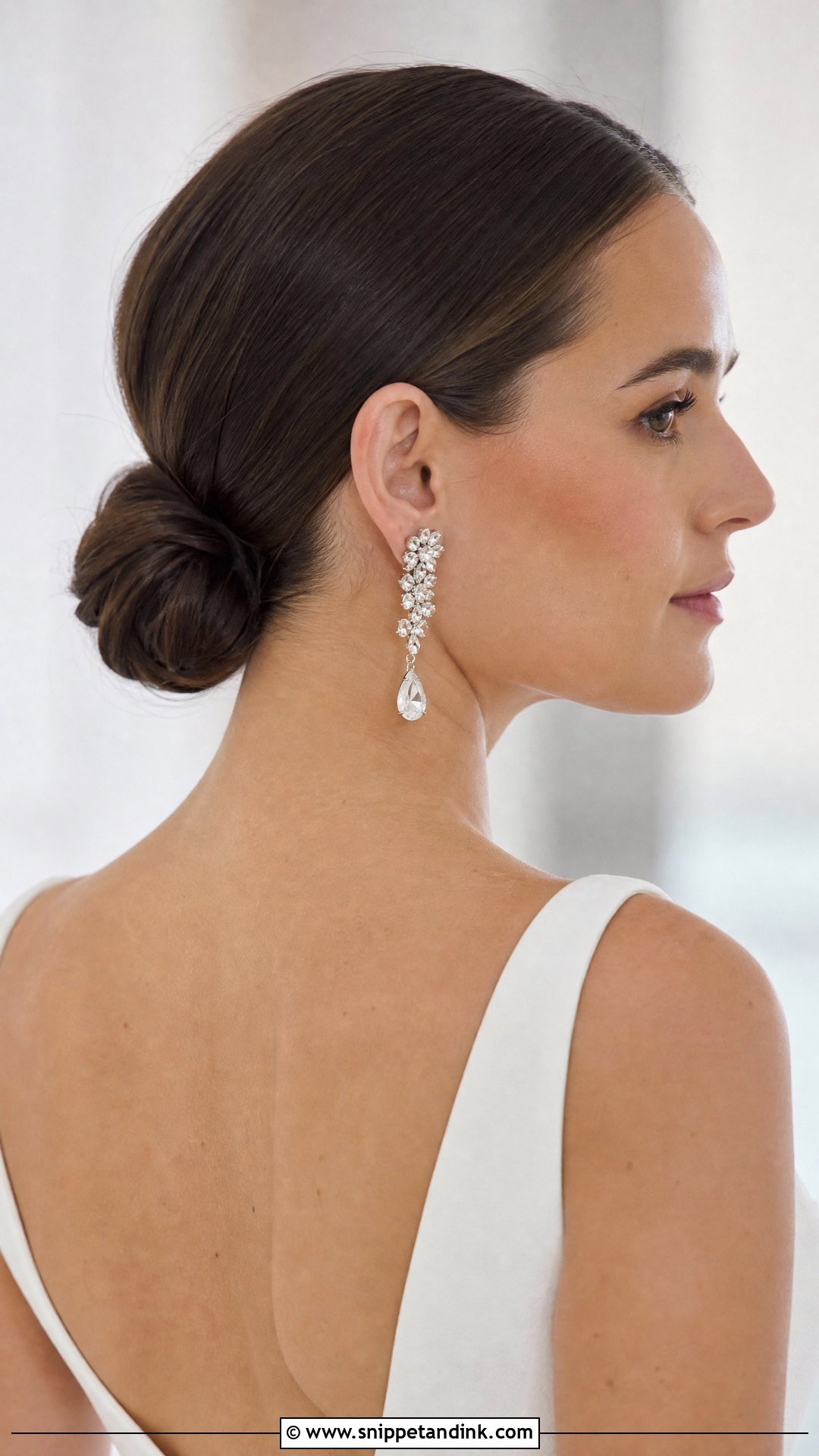
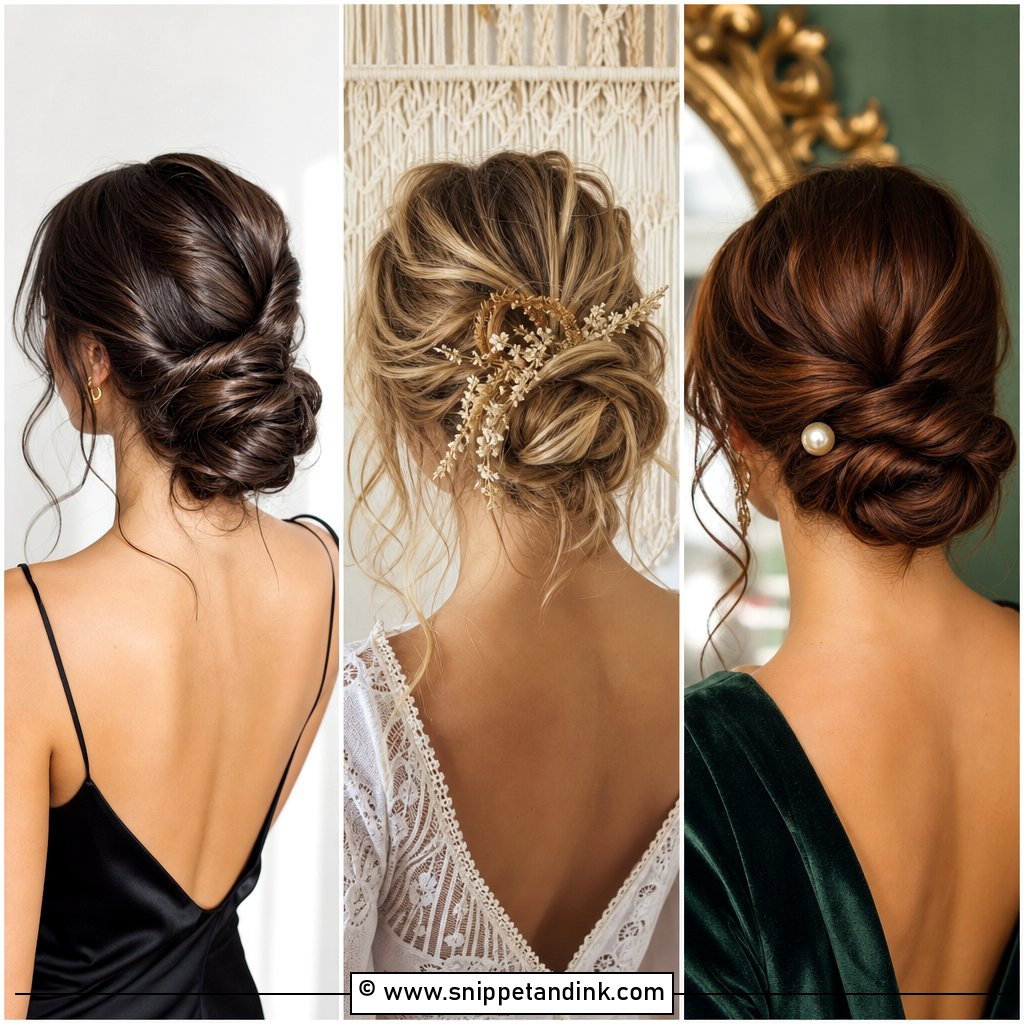
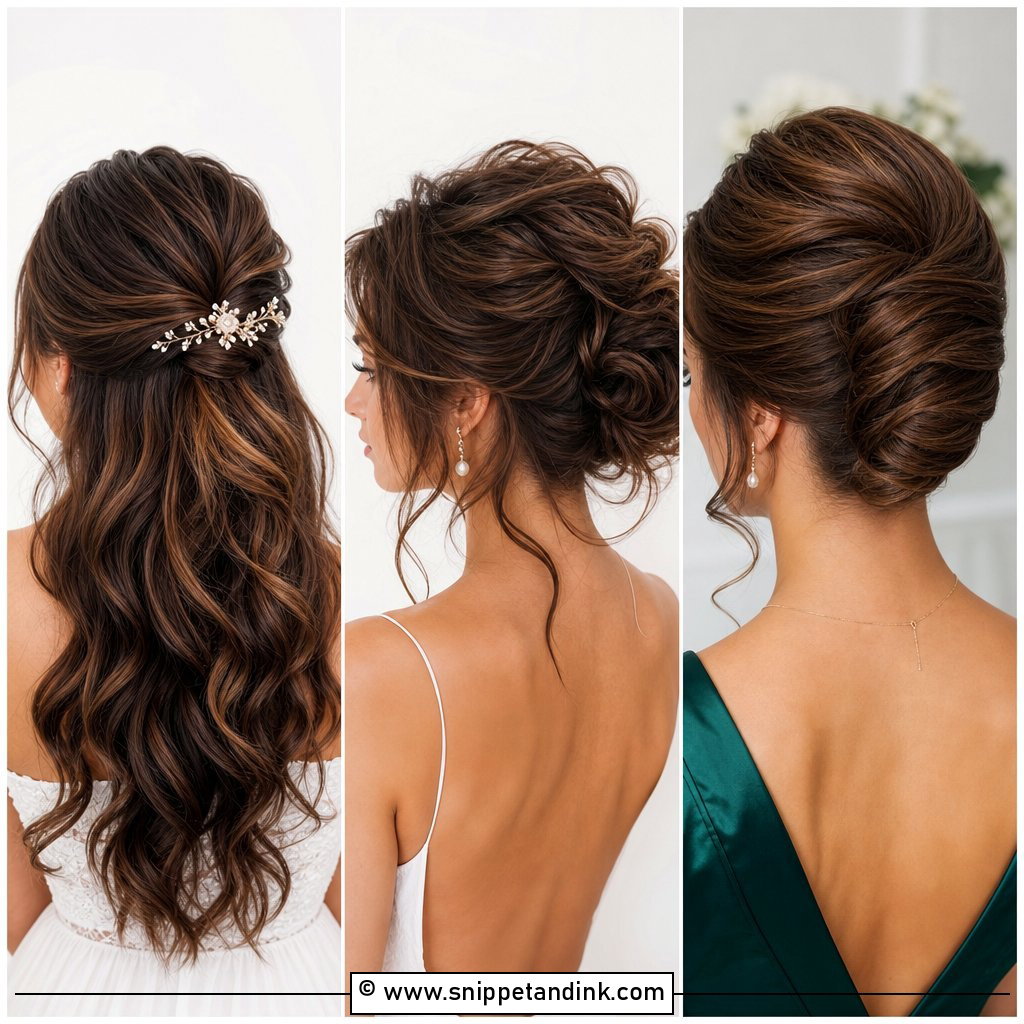
There’s nowhere to hide in a sleek low bun, which is exactly its appeal and its challenge. I smooth the hair back with a firm cream or gel while it’s still slightly damp, then brush it through with a boar bristle brush before securing the base. A drop of shine serum on the surface helps under flash. It sits under a cathedral veil comfortably and leaves the neckline completely clear, so it works with minimalist gowns and bold earrings. Frizz-prone hair needs a smoothing prep and a fine mist of hold spray to stay neat in humidity.
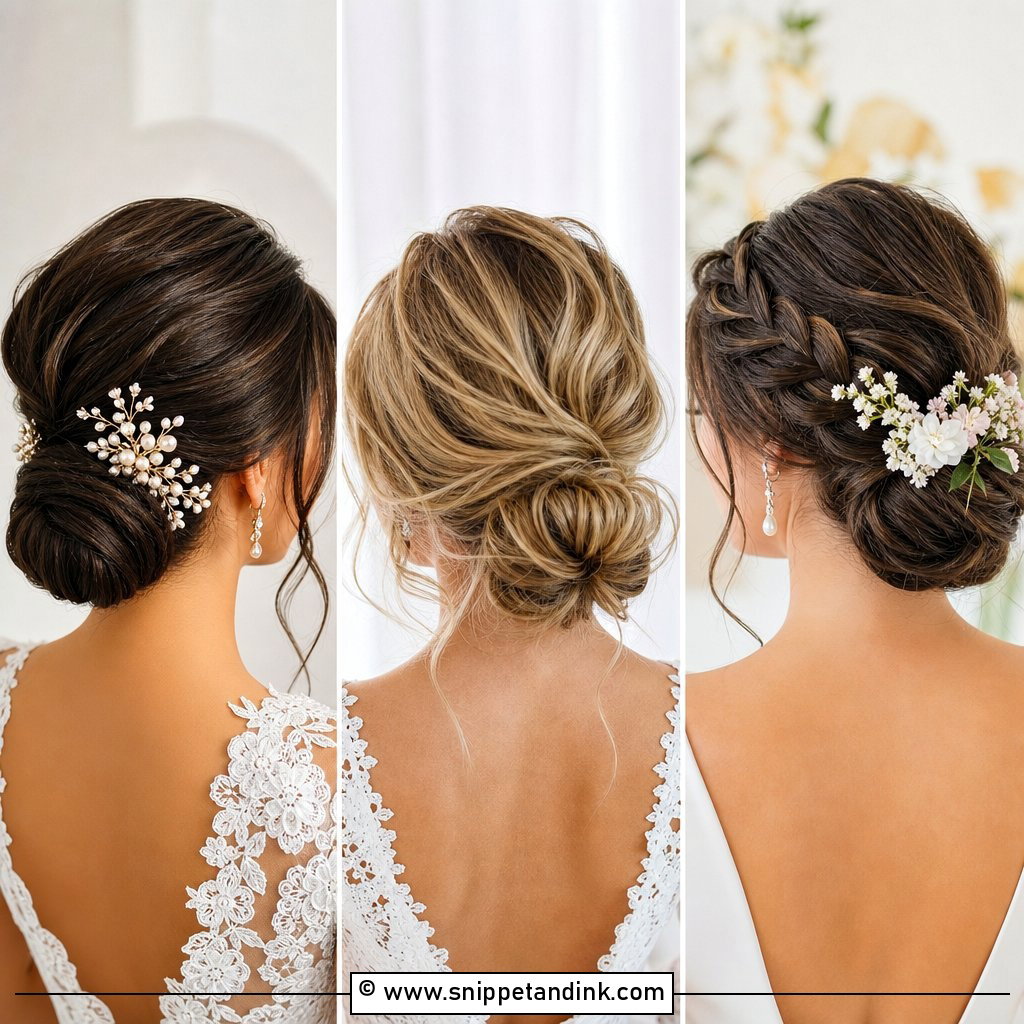
2. Messy Bun With Loose Curls
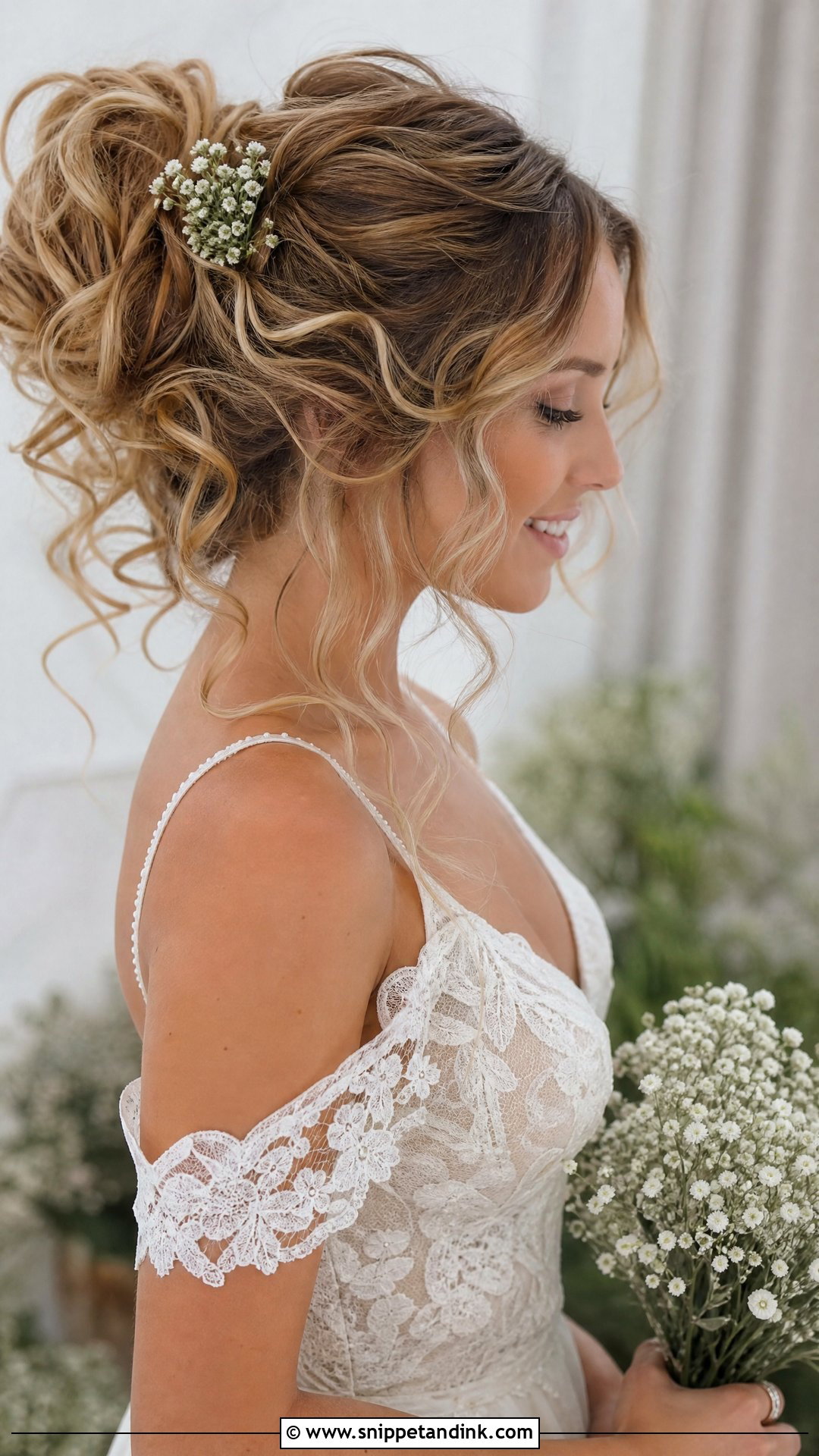
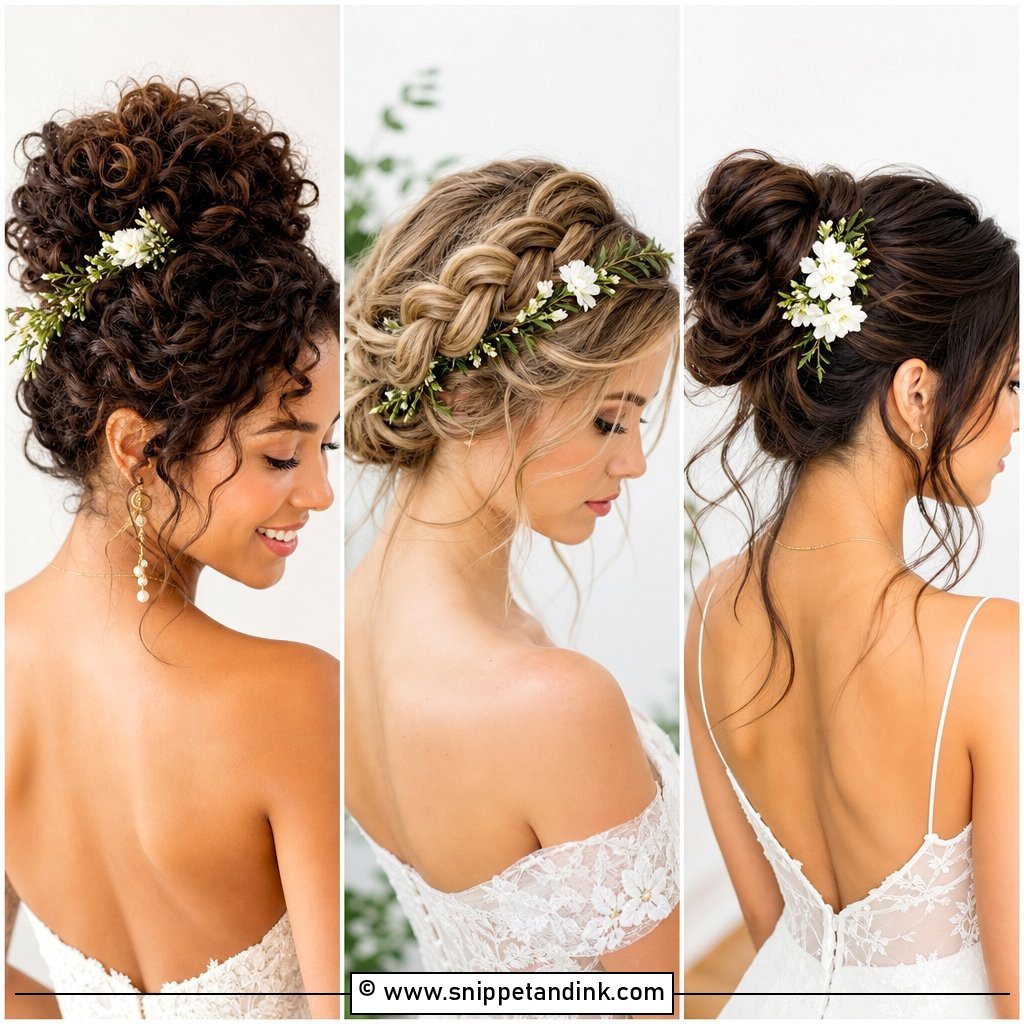
Messy is the hardest bun to get right, because random never looks random enough. I curl all the hair first, then pin it loosely into a shape and pull pieces out on purpose so the texture looks even. Curled tendrils near the face soften it. It’s forgiving on most textures, though very fine hair may need a little padding inside so it doesn’t look small. Tiny flowers or pearl pins suit a garden or boho ceremony.
3. Braided Low Bun for Wedding
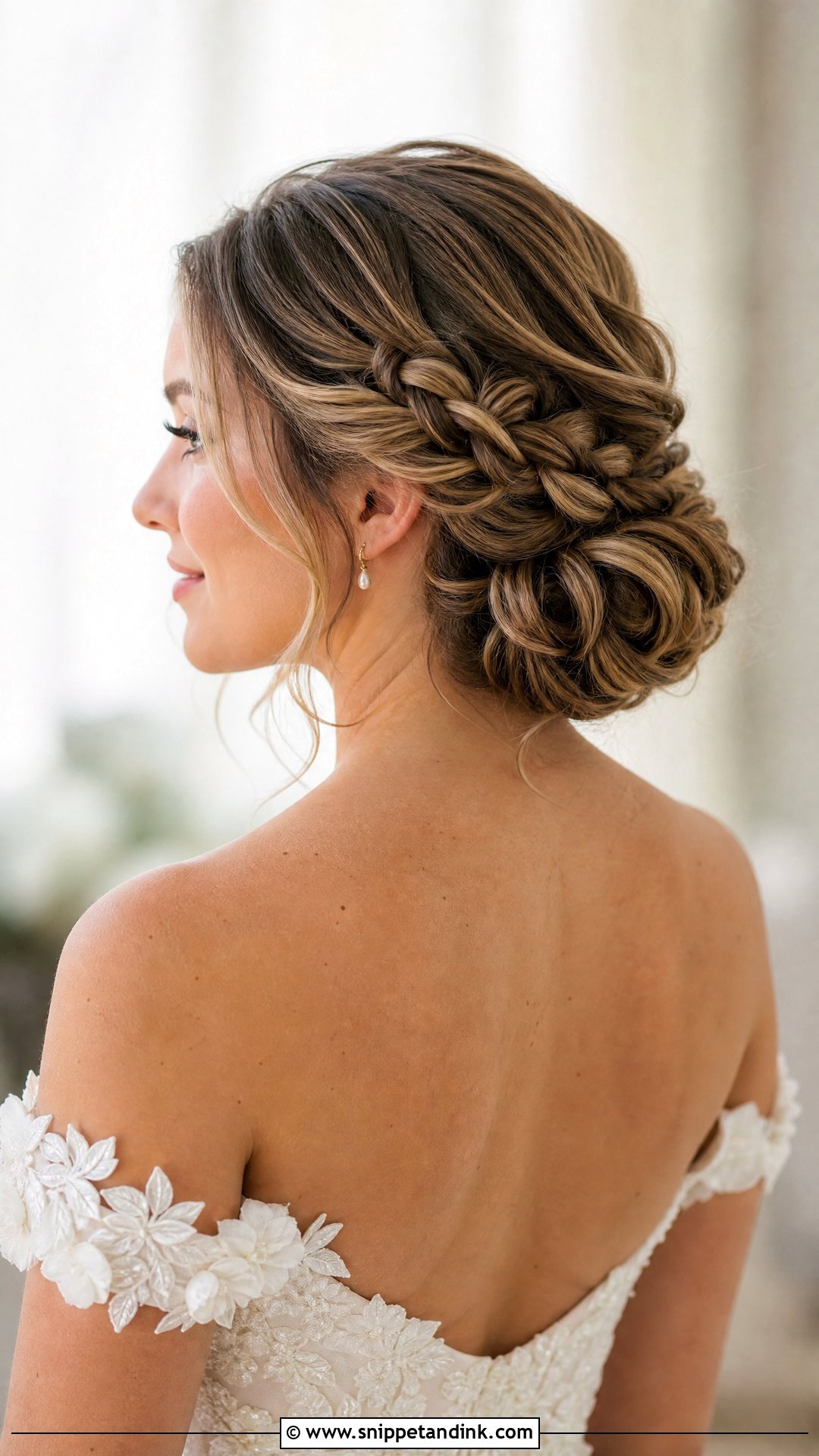
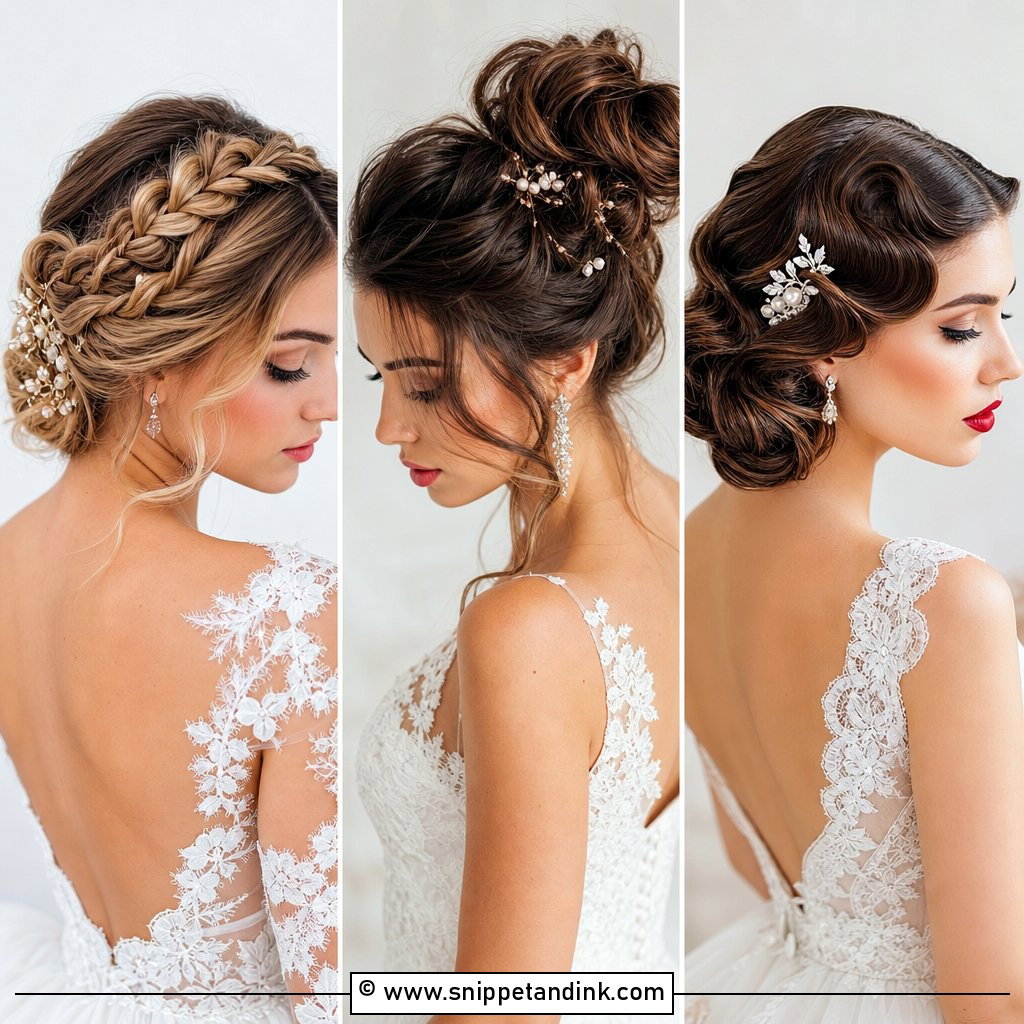
A braid wrapped into a low coil gives a bun texture and structure at the same time. Dutch, French and three-strand braids all work; I choose by density, since a Dutch braid adds the most visible bulk on fine hair. The braid also grips the pins well, which makes this one of the most secure buns here. Flowers pinned along the braid suit a spring ceremony, and the woven surface catches light from the side in photos.
4. High Bun for Brides
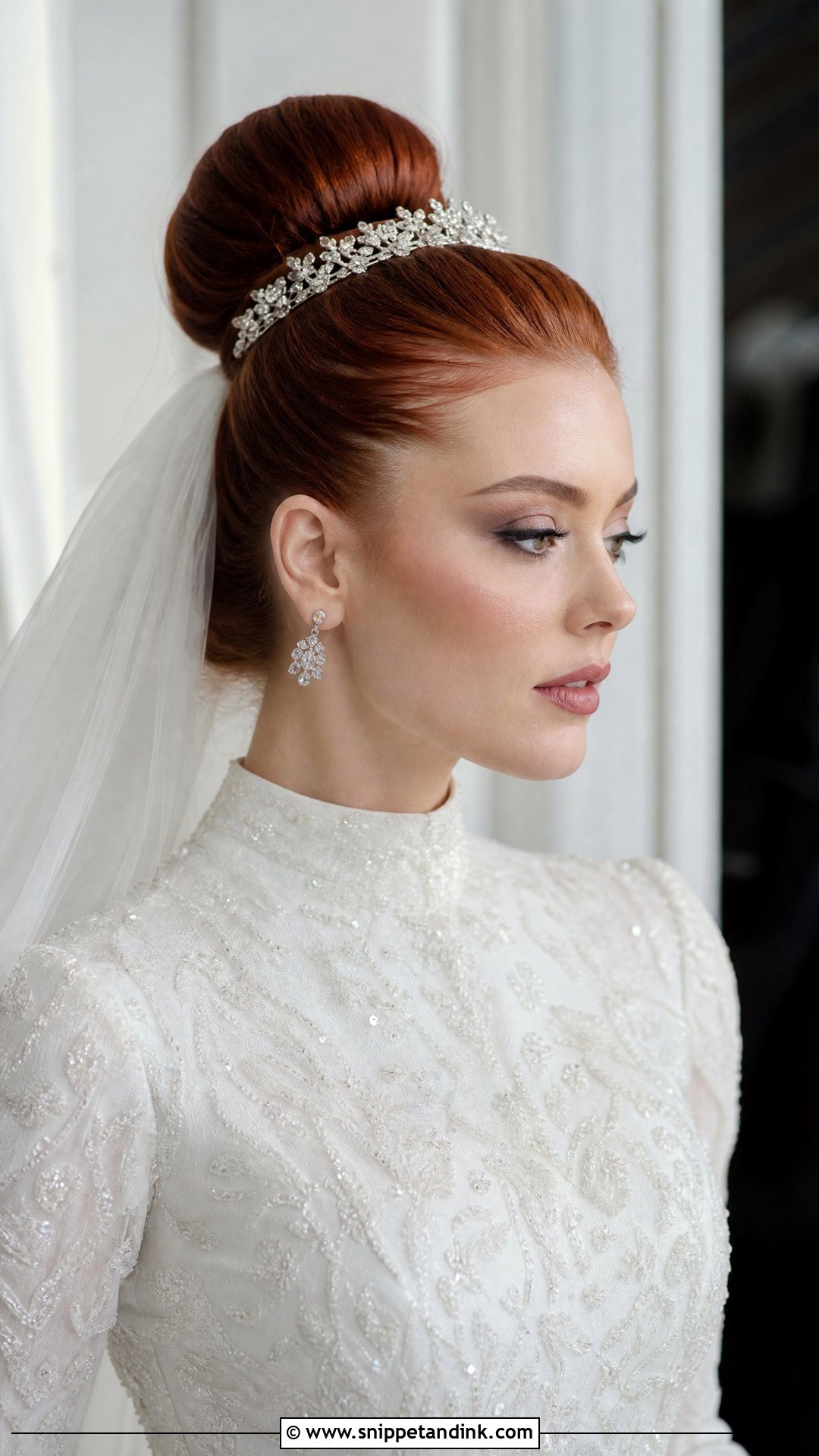
Placed at the crown, a high bun lengthens the neck and puts the back of your dress on show. It’s formal and regal, and it takes a tiara well. My caution is comfort: a heavy bun pinned high pulls on the scalp, and by the reception some brides get a headache. I build it on a firm ponytail base and spread the weight with extra pins, and if your hair is very thick, I’d suggest placing it a little lower. Off-shoulder and high-neck gowns both pair well with it.
5. Side Bun Wedding Hairstyle
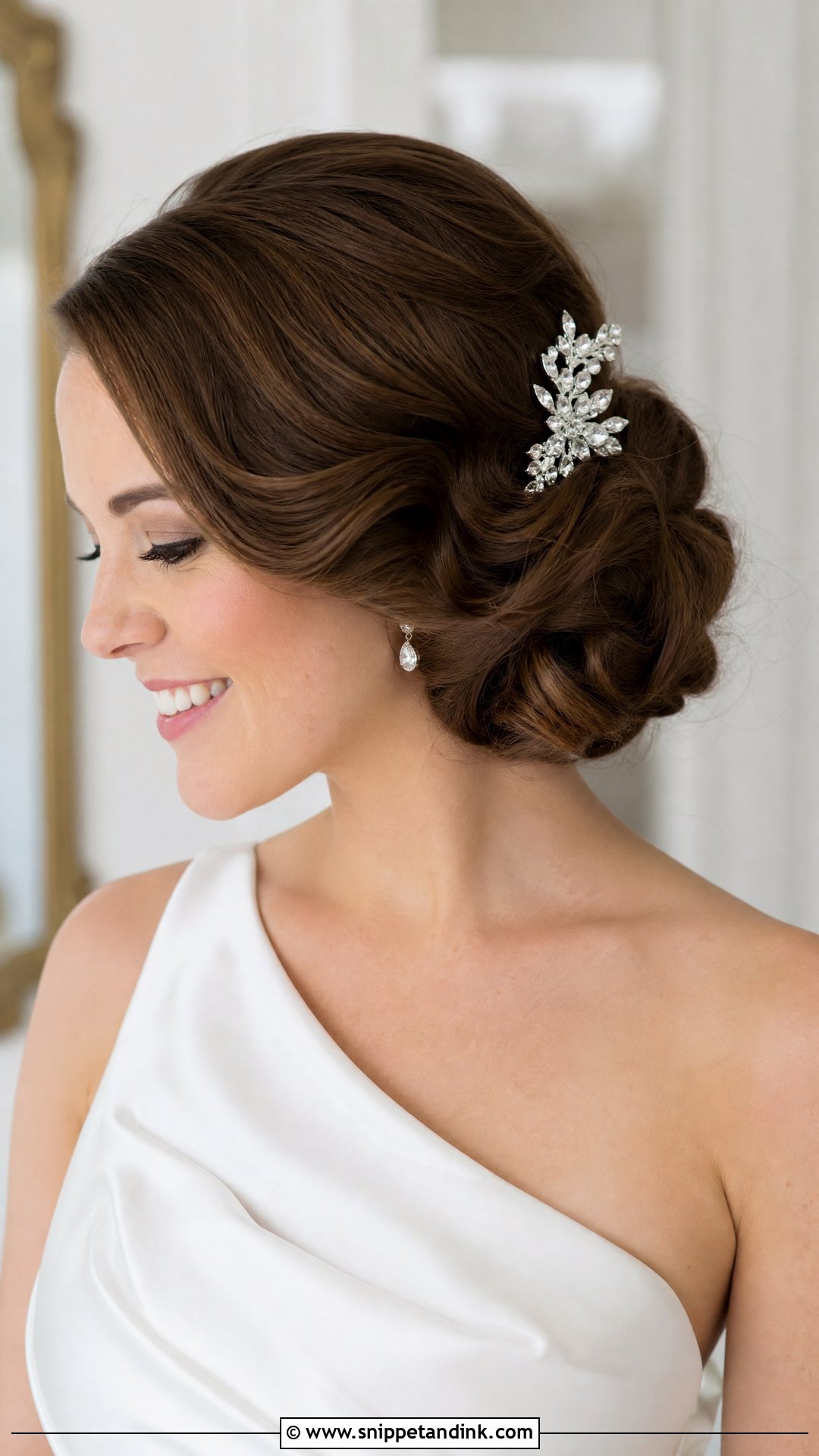
Sweeping the hair to one side creates a flattering angle that has a vintage feel. I always ask which side the photographer will mostly be shooting from and which side your groom will stand, since the bun should face the camera. One-shoulder gowns and side-placed veils pair with it naturally. A jewelled comb on the gathered side adds a point of interest. On round and heart-shaped faces the asymmetry also breaks up width nicely.
6. Low Bun With Face-Framing Pieces
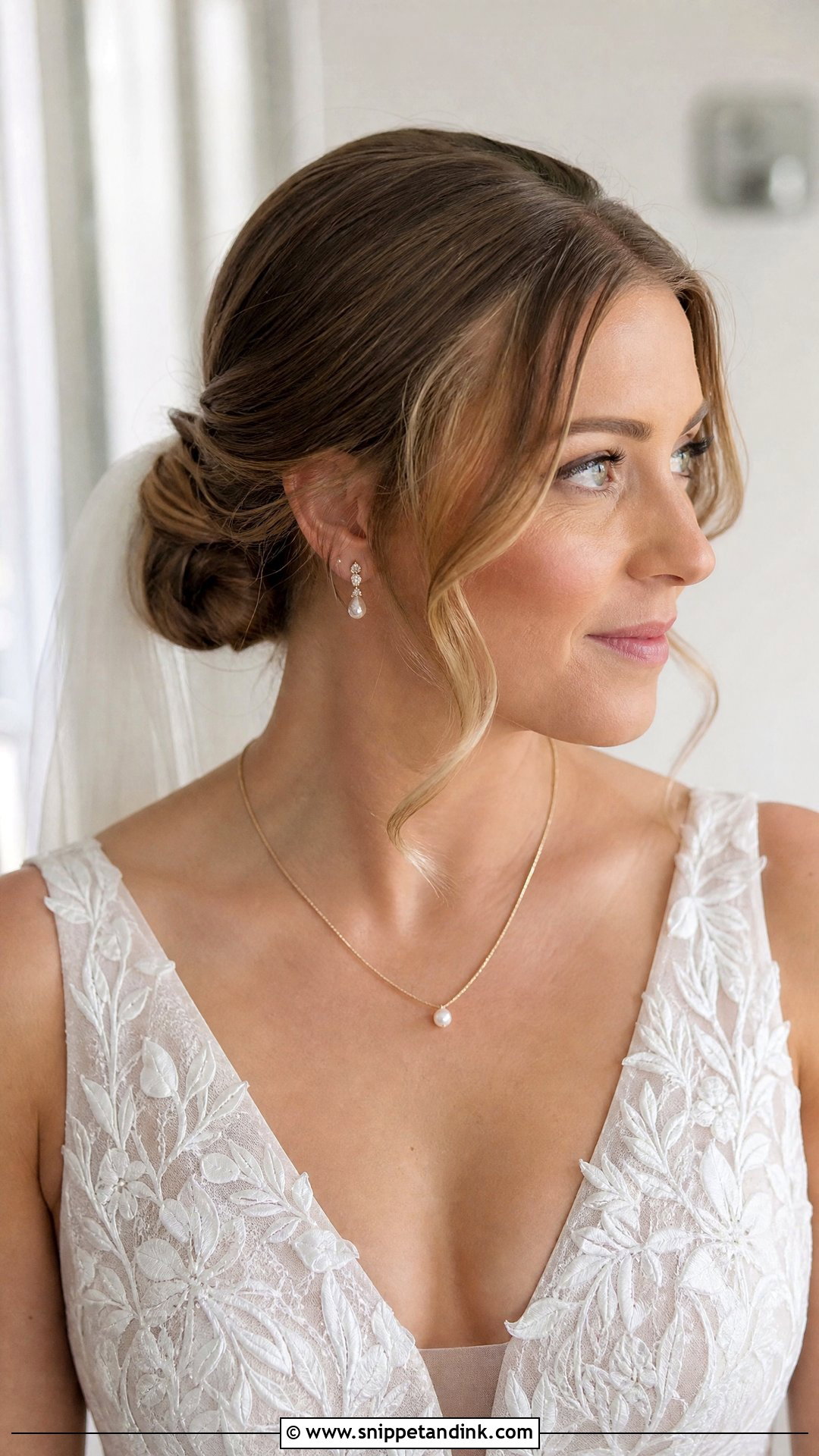
Face-framing pieces sound simple, and they are the part of a low bun most likely to fail. A loose strand left straight goes limp by lunchtime, so I curl each piece with a small barrel and pin it in a coil to cool before release. I leave them slightly longer than you’d expect, because they spring up as they set. The bun itself stays neat at the nape. It gives a balance between tidy and tousled, and it works especially well with a flowing veil and delicate earrings.
7. Sleek Bun With Center Part
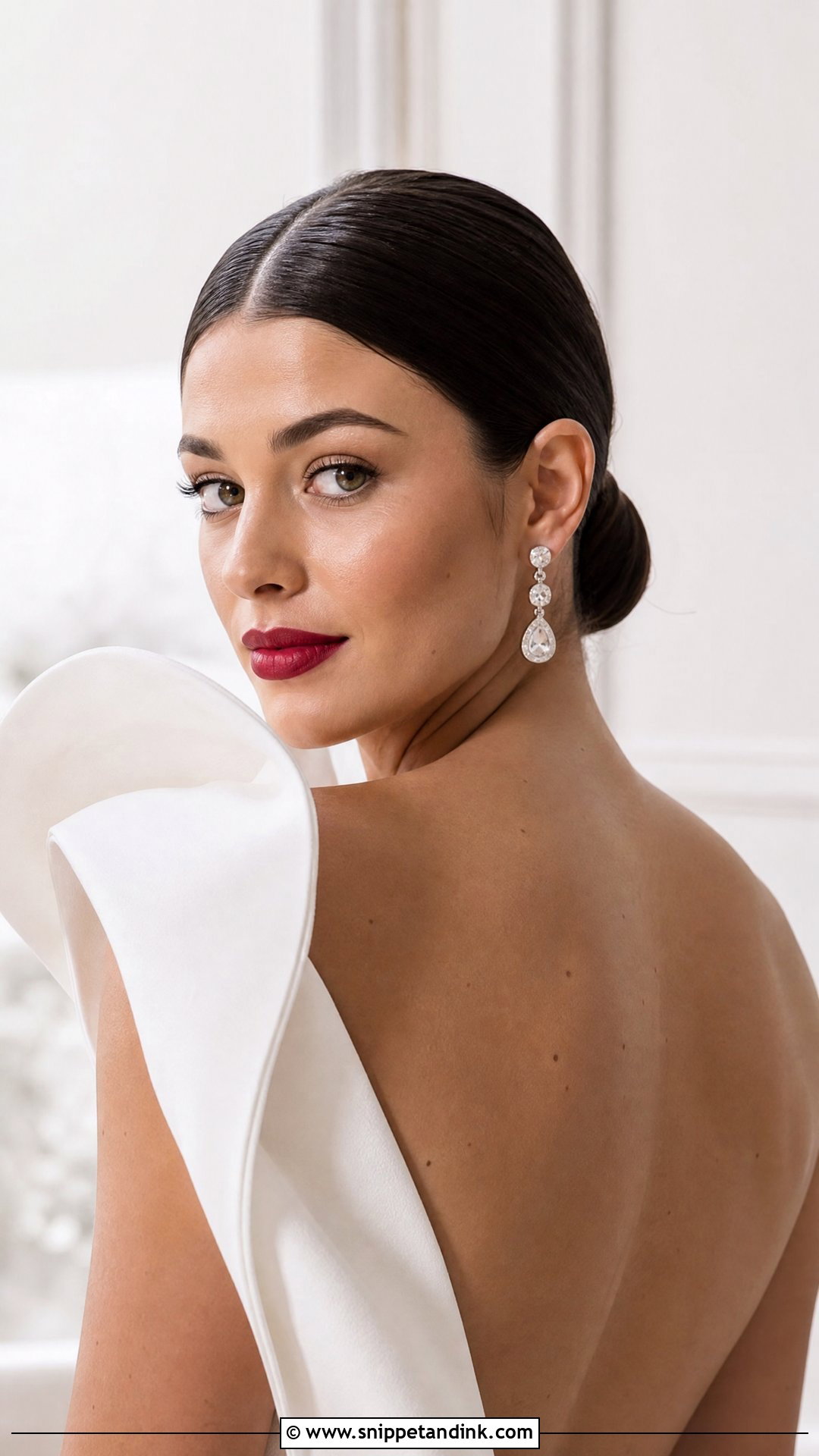
A centre part is honest: it shows your face evenly and leaves no room for a crooked line. I set the part with a tail comb first, then smooth both sides back with equal tension so the bun sits dead centre. Oval and long faces suit it most naturally. It pairs well with sculptural gowns and bold lip color, because the hair stays quiet while makeup and dress carry the look.
8. Messy Top Knot for Brides
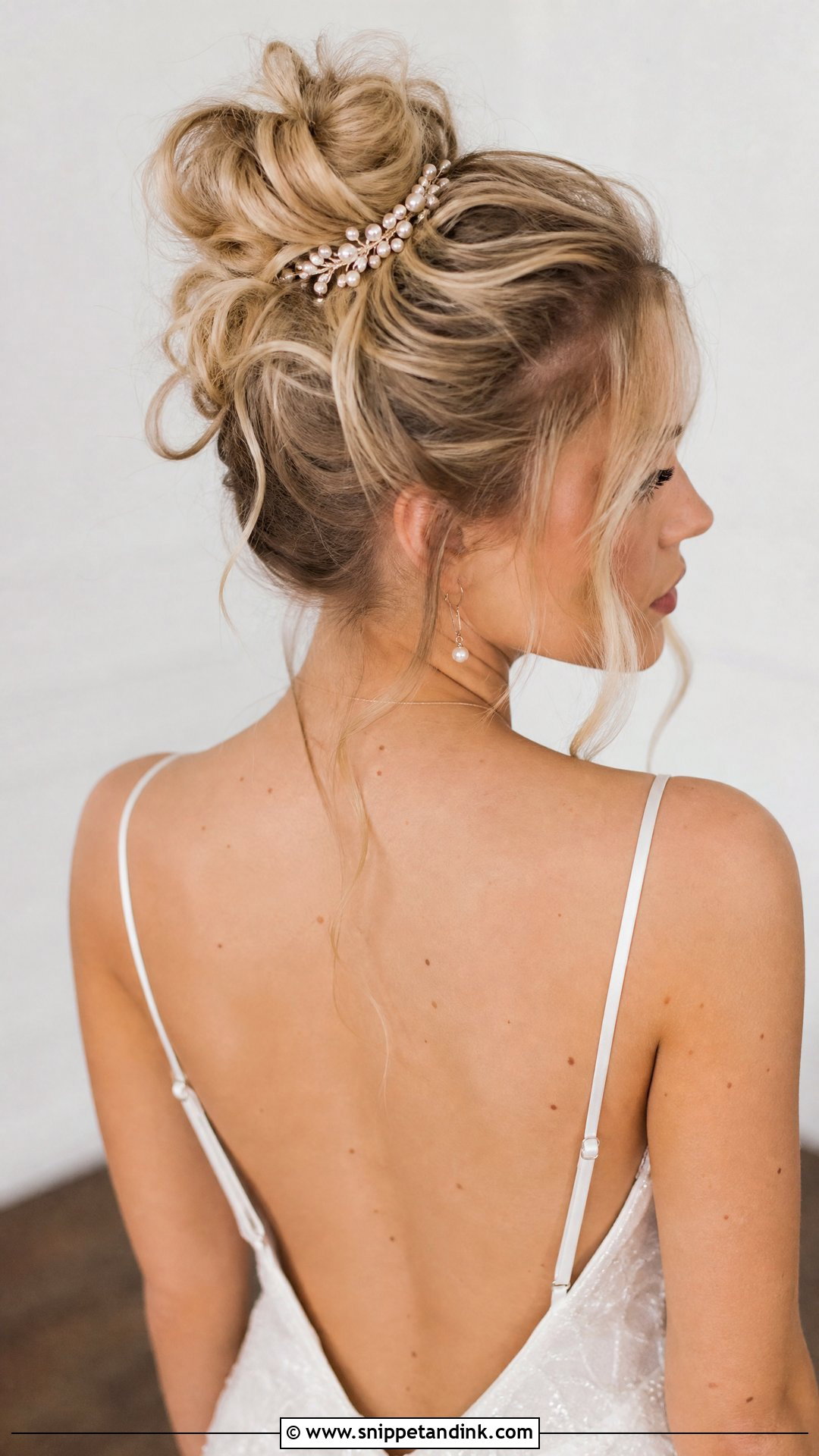
A top knot is young and playful, and it keeps your neck completely clear for summer. The loose, textured volume looks intricate but comes from backcombing at the base and pinning in loops rather than one twisted coil. Backless and halter gowns pair well with it. I’d skip it for a heavy veil, since a high knot doesn’t anchor a long veil securely. Pearl clips or a small floral pin keep it bridal.
9. Chignon Bun Wedding Hairstyle
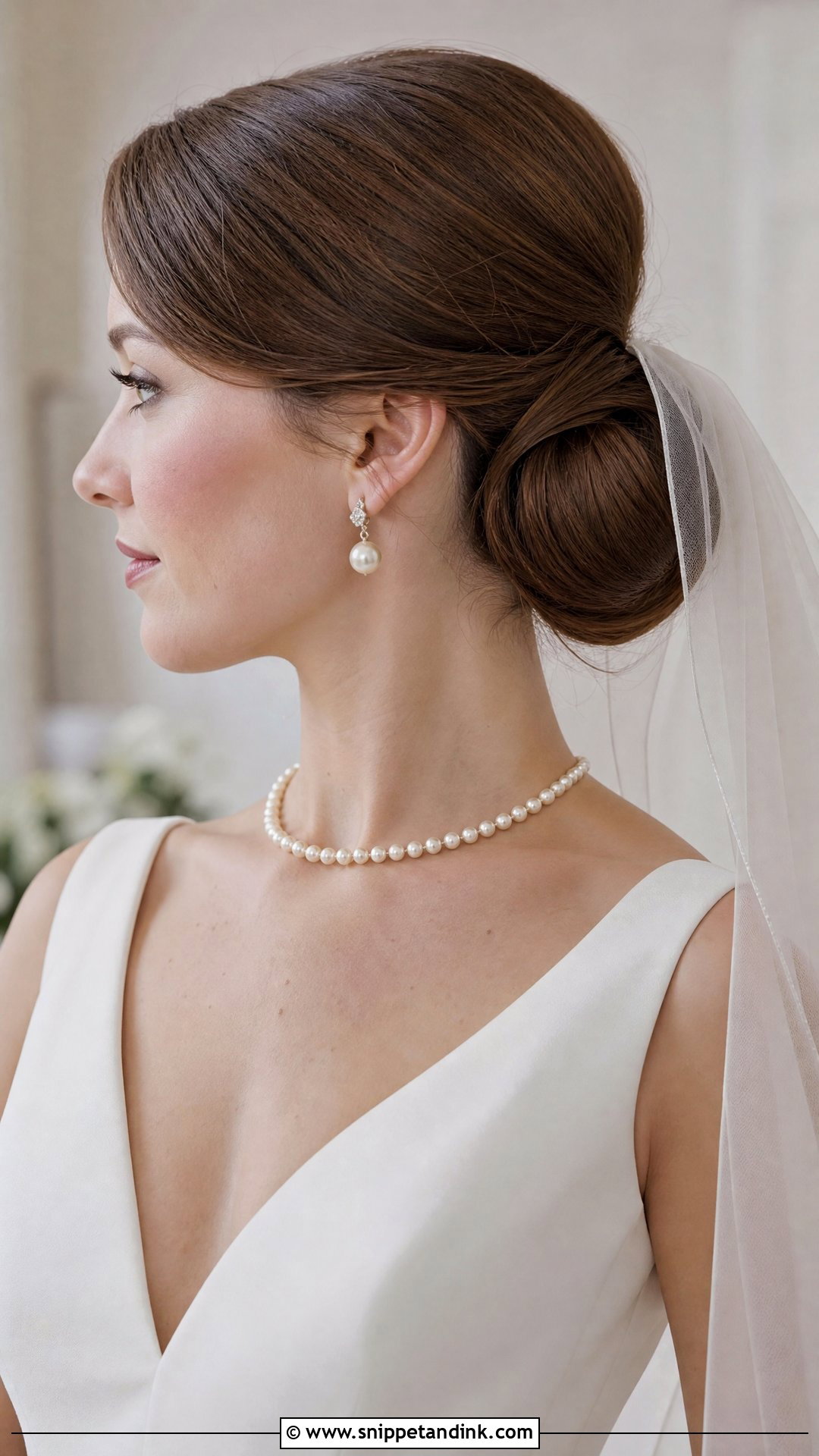
Classic for a reason. A chignon coils low at the nape in a smooth, rounded shape and takes a veil, a tiara or pearls without any fuss. It’s one of the buns I can do on shoulder-length hair, using a small padding roll inside if needed. Tight and polished suits a church or ballroom ceremony; with soft waves left on the surface it feels gentler. It photographs well from behind during the veil moment at the altar.
10. Twisted Low Bun for Brides
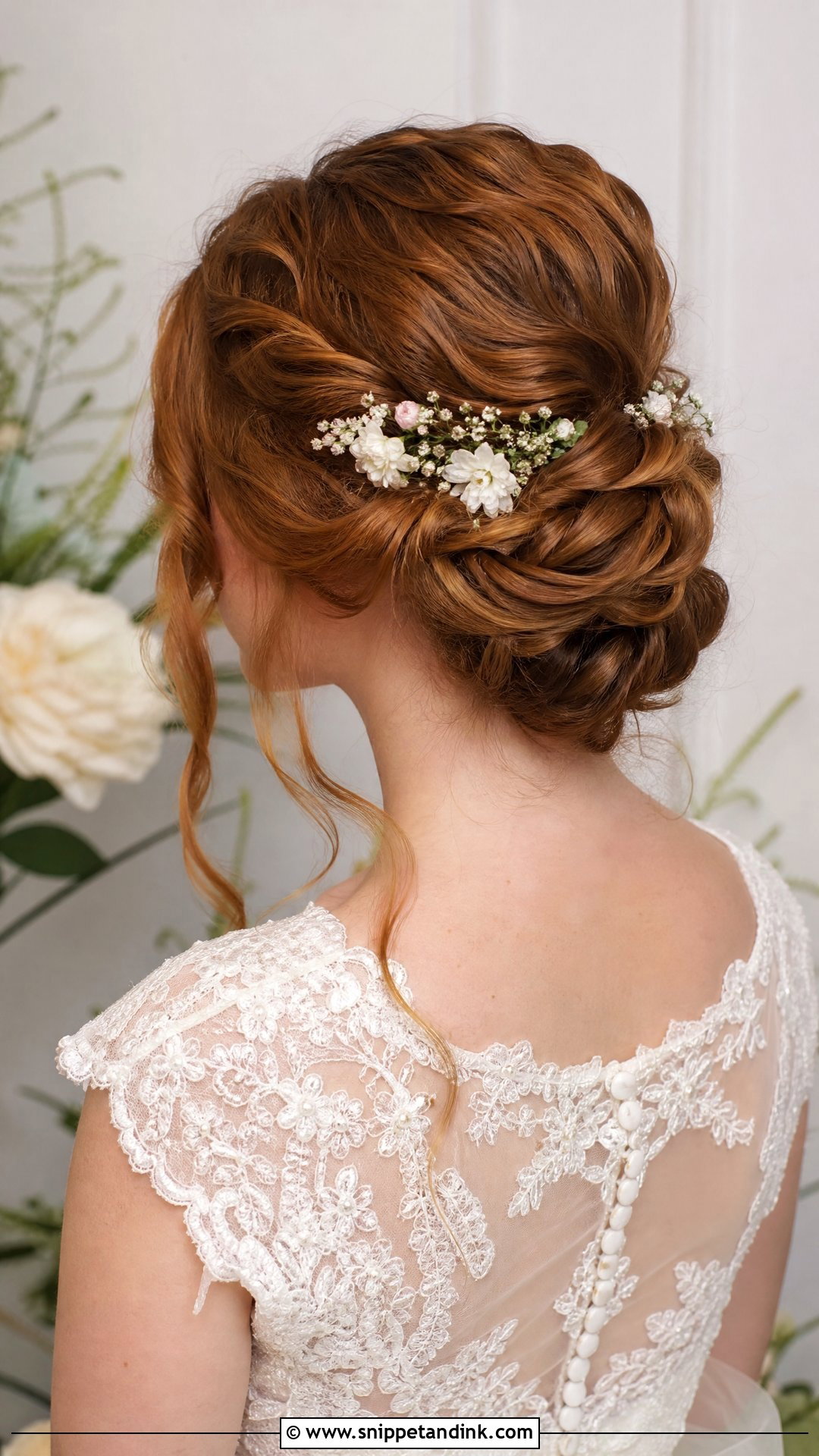
Twisted sections coiled together give texture without the time a braid takes. Twists hold volume well, and they show curl pattern clearly on wavy and curly hair. I’d pin small jewelled pins or flowers in the gaps between twists, where they sit securely. It suits boho and classic gowns alike and holds well through the day as long as each twist is pinned at its end.
11. Low Bun With Pearl Accessories
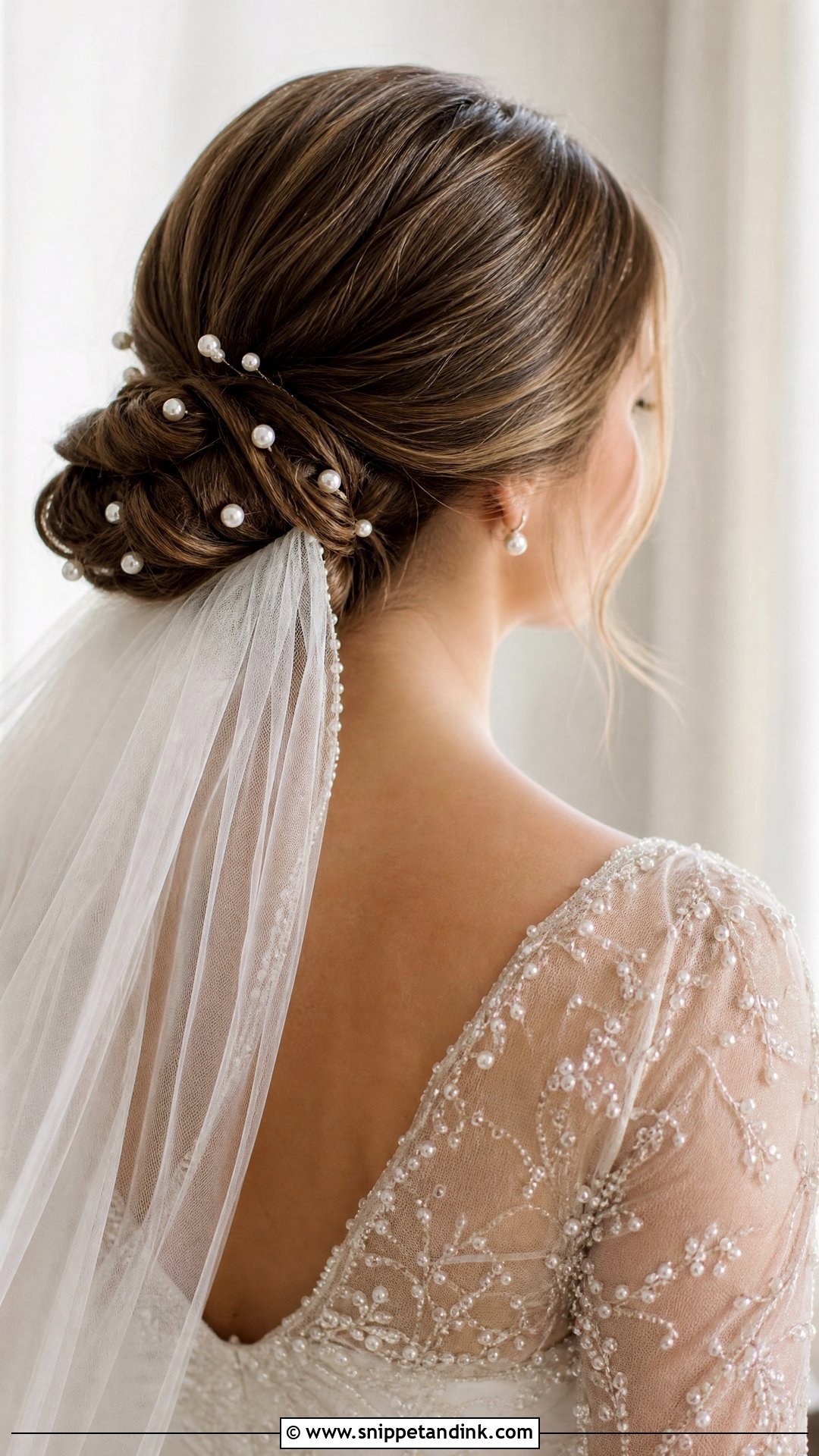
Pearls give a plain low bun the bridal detail without a full headpiece. I place pins in a scattered curve around the bun rather than in a straight line, which looks more natural. Match the pearl tone to your gown: bright white pearls can look grey next to ivory fabric, and ivory pearls look yellow beside pure white. A veil and a pearl-detailed dress make the whole look consistent.
12. Bohemian Bun With Flowers
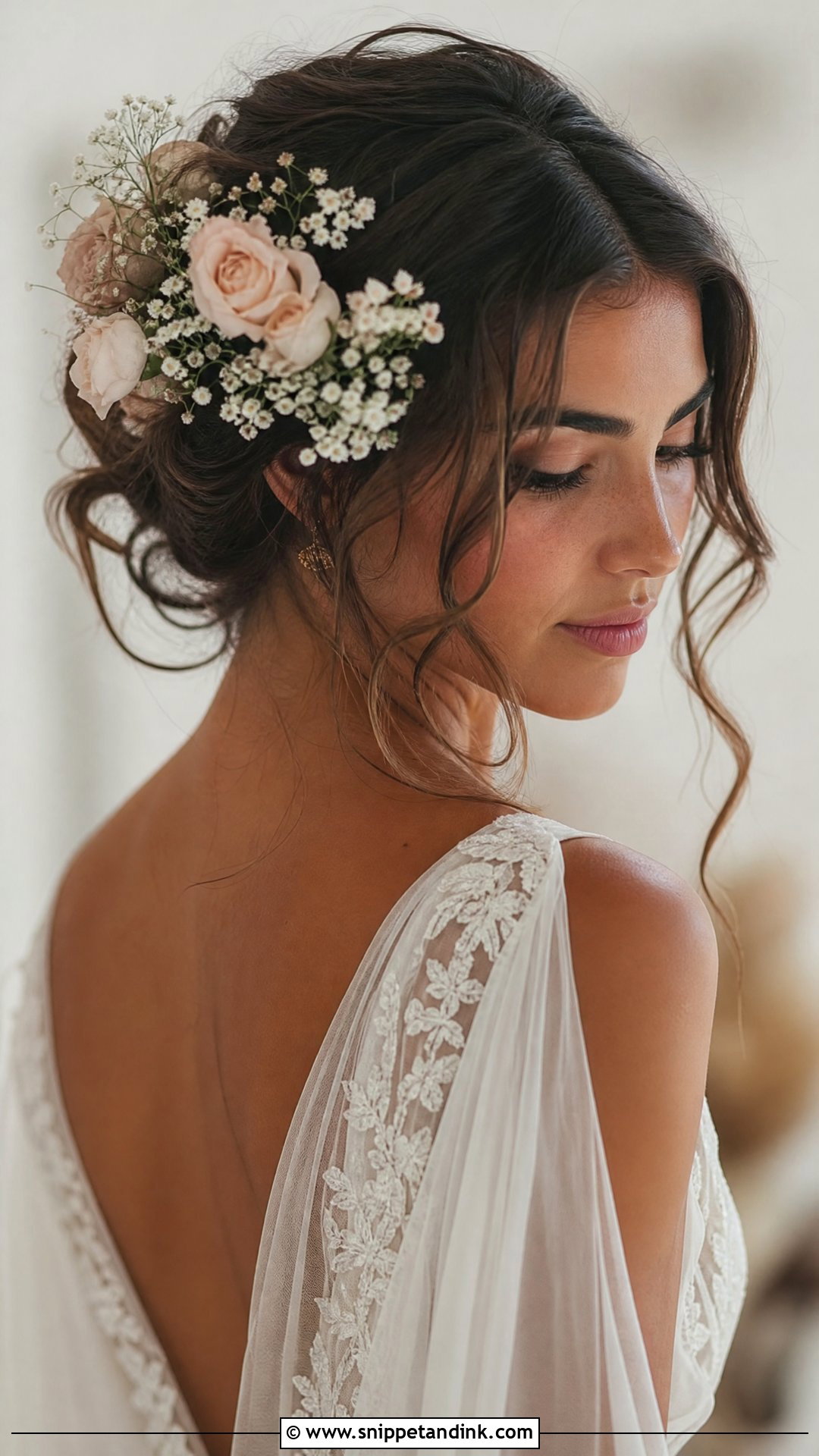
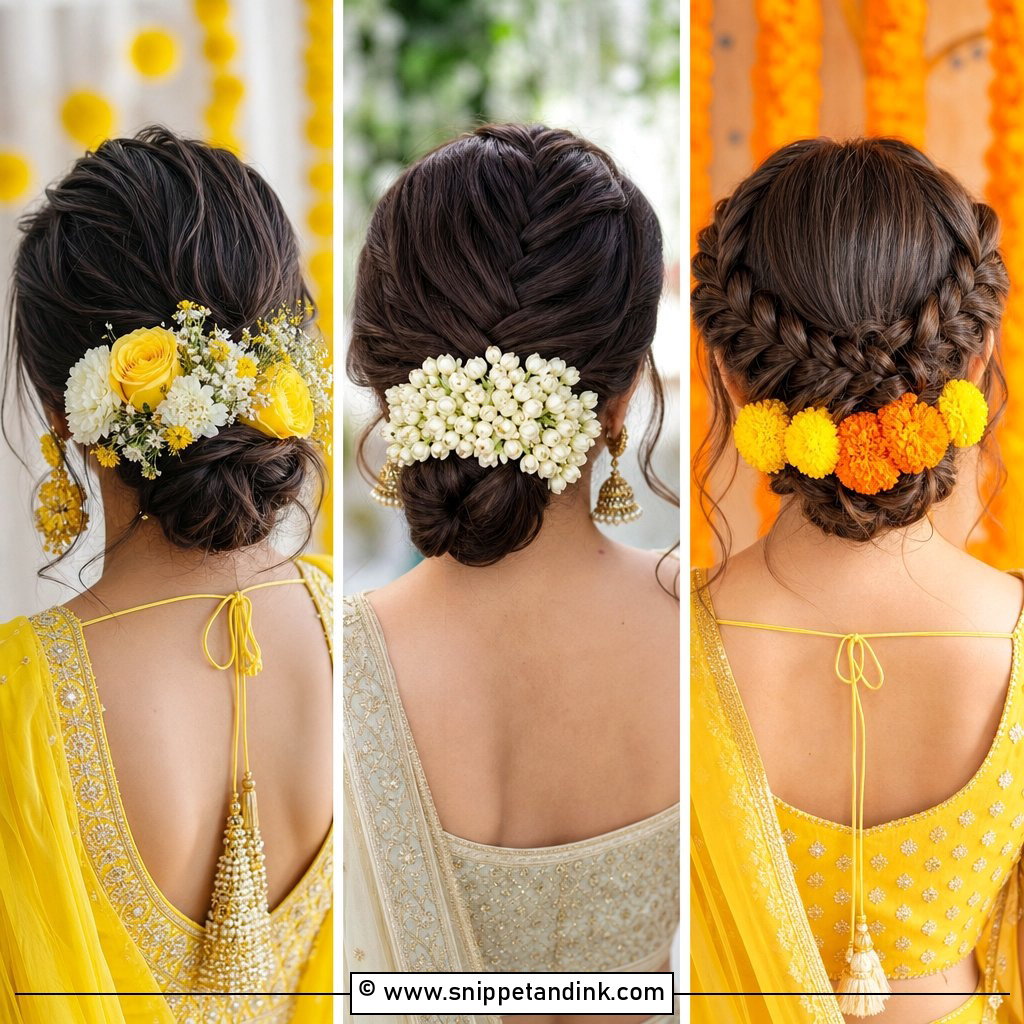
Fresh flowers make a bohemian floral bun what it is, but they need choosing with care. Baby’s breath, spray roses and wildflowers like waxflower last well; soft-petalled blooms brown quickly in the sun. I ask the florist for the hair stems wired, and I add them after spraying, since hairspray marks petals. Loose texture and tendrils suit flowing gowns and outdoor spring or summer ceremonies.
13. Sleek High Bun for Brides
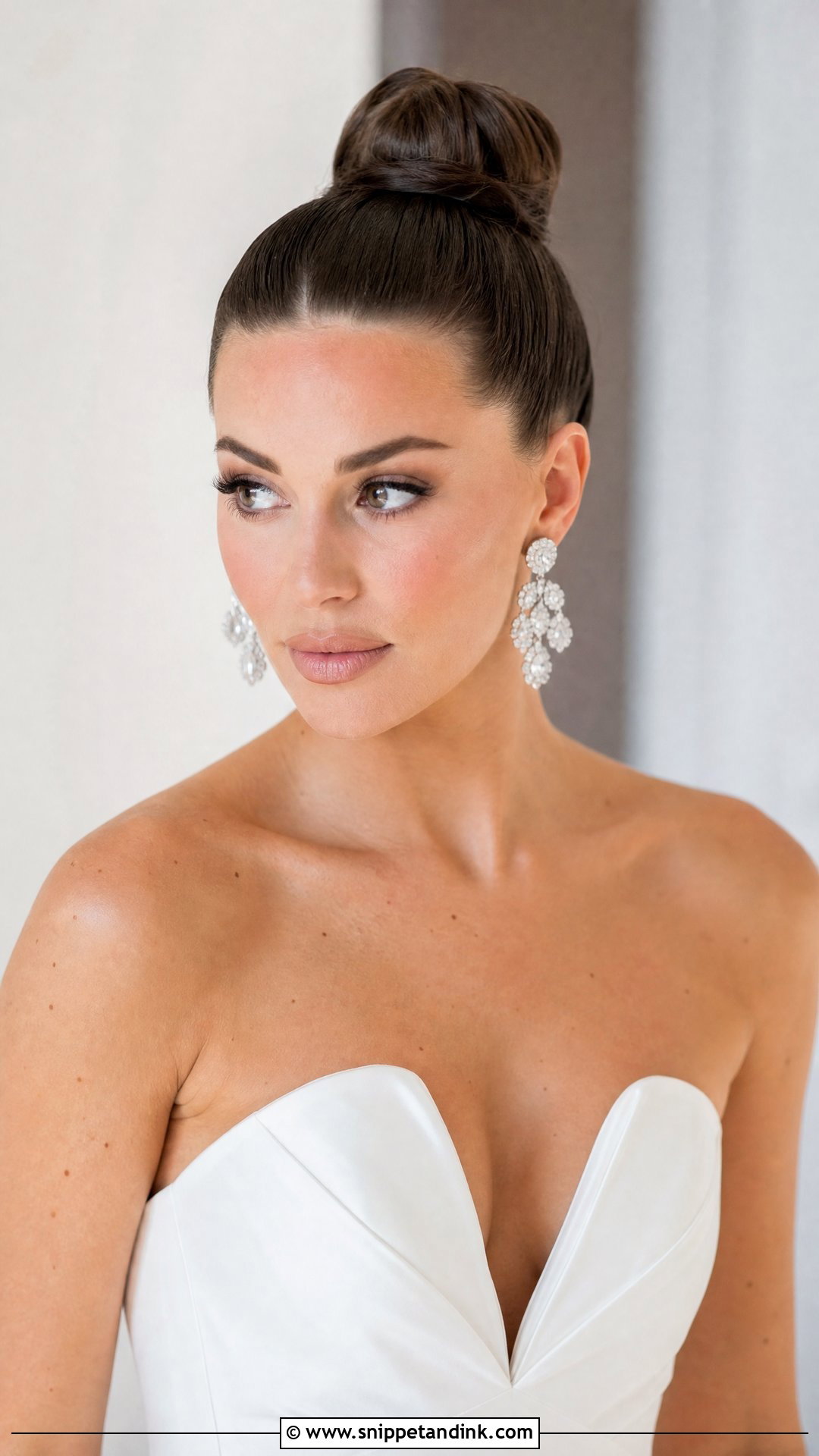
The sleek high bun is a fashion look first. Smoothed tightly and placed at the crown, it elongates the neck and shows the face and jewelry clearly. I’d warn anyone prone to headaches: the tension on a tight high bun builds over hours. It pairs with dramatic gowns and strong earrings, and suits a city wedding or a modern venue where minimal detail fits the space.
14. Braided Crown Bun Wedding
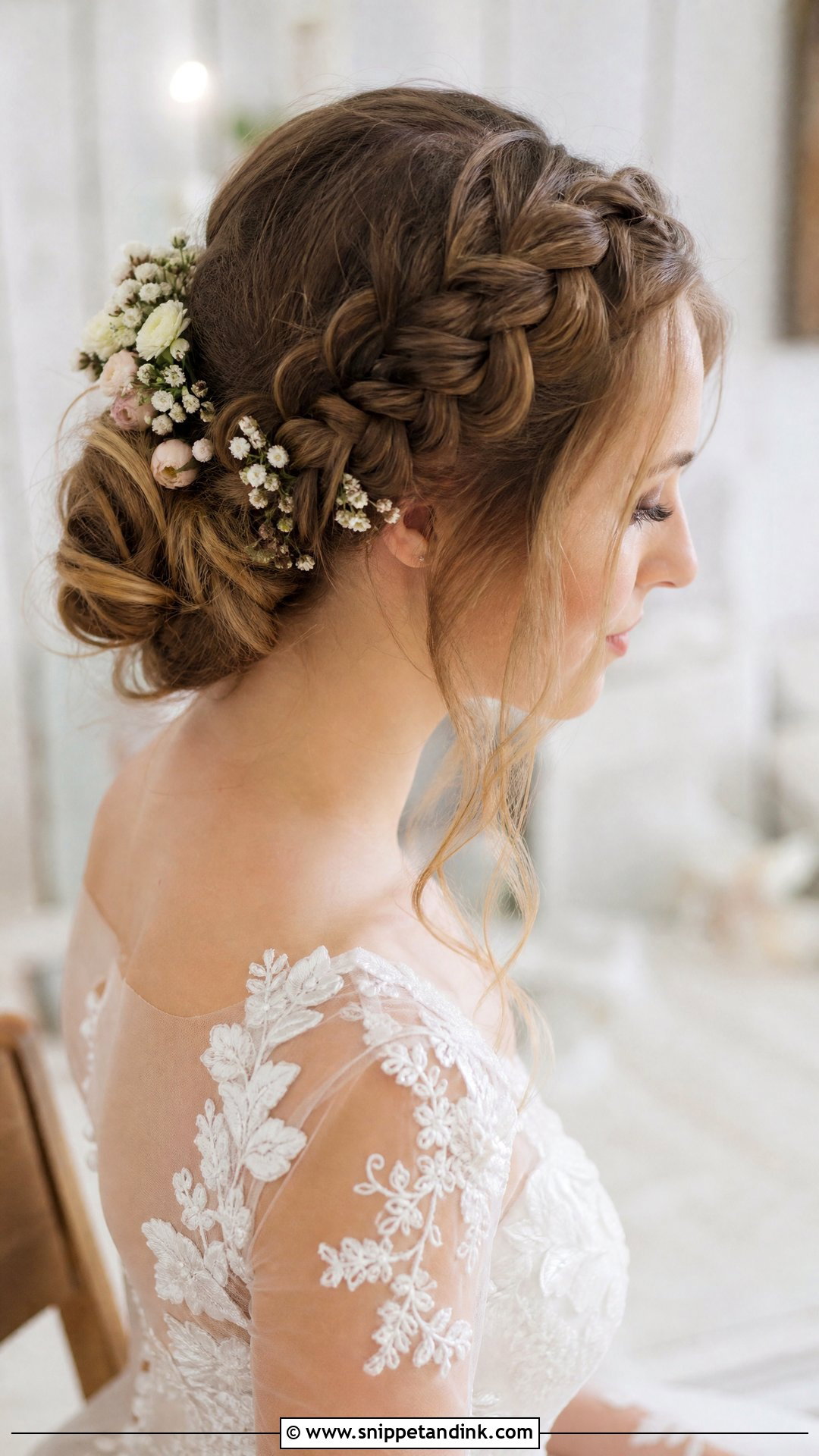
A braid wrapped around the head like a halo, finishing in a low or mid bun, combines two of the most secure shapes at once. You need enough length for the braid to travel around, so I’d add a weft if your hair is above the shoulders. I pin the braid with U-pins and leave room at the back for a veil comb below the bun. Small flowers or pearls along the braid suit both boho and classic dresses.
15. Low Messy Bun With Veil
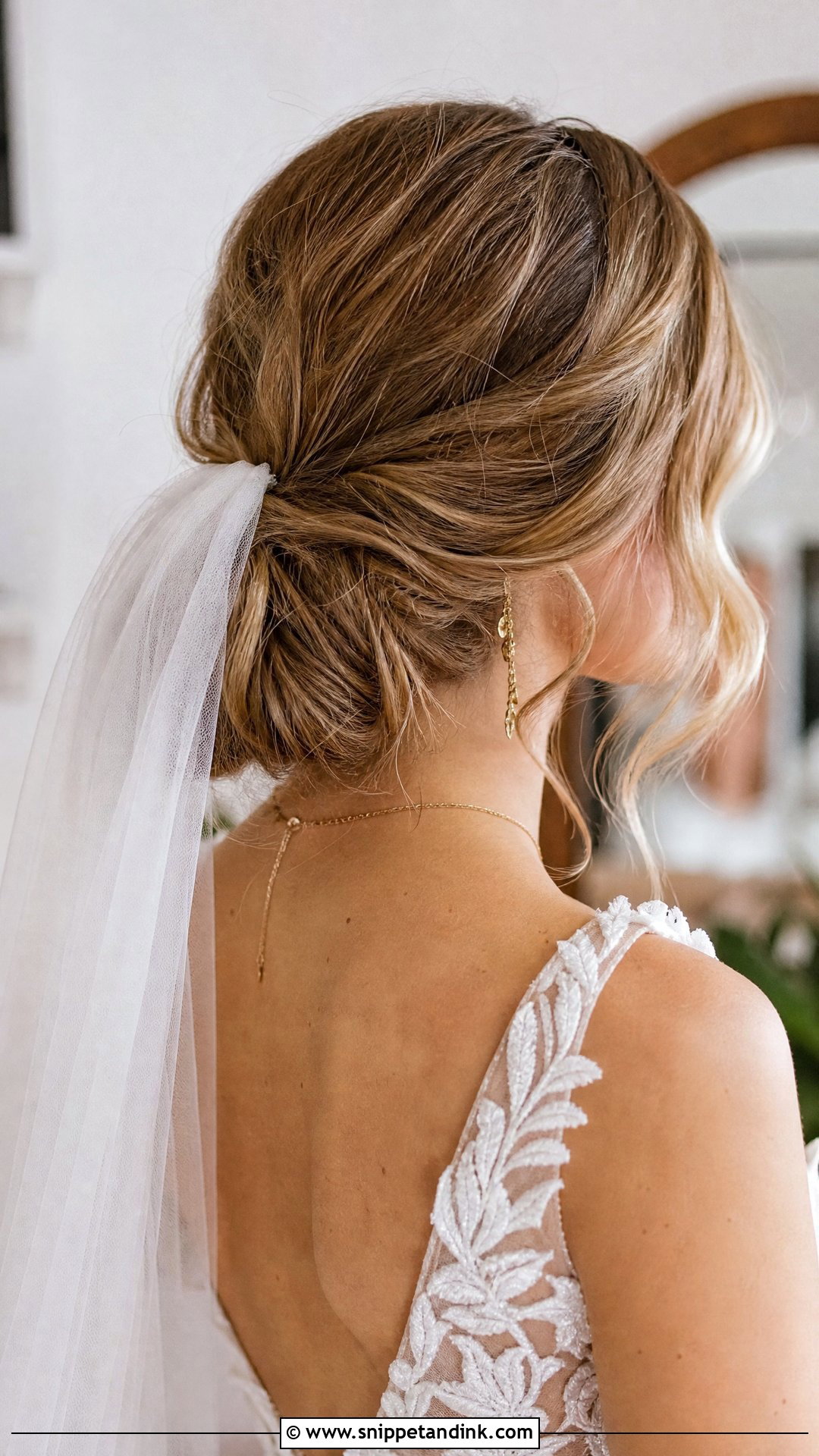
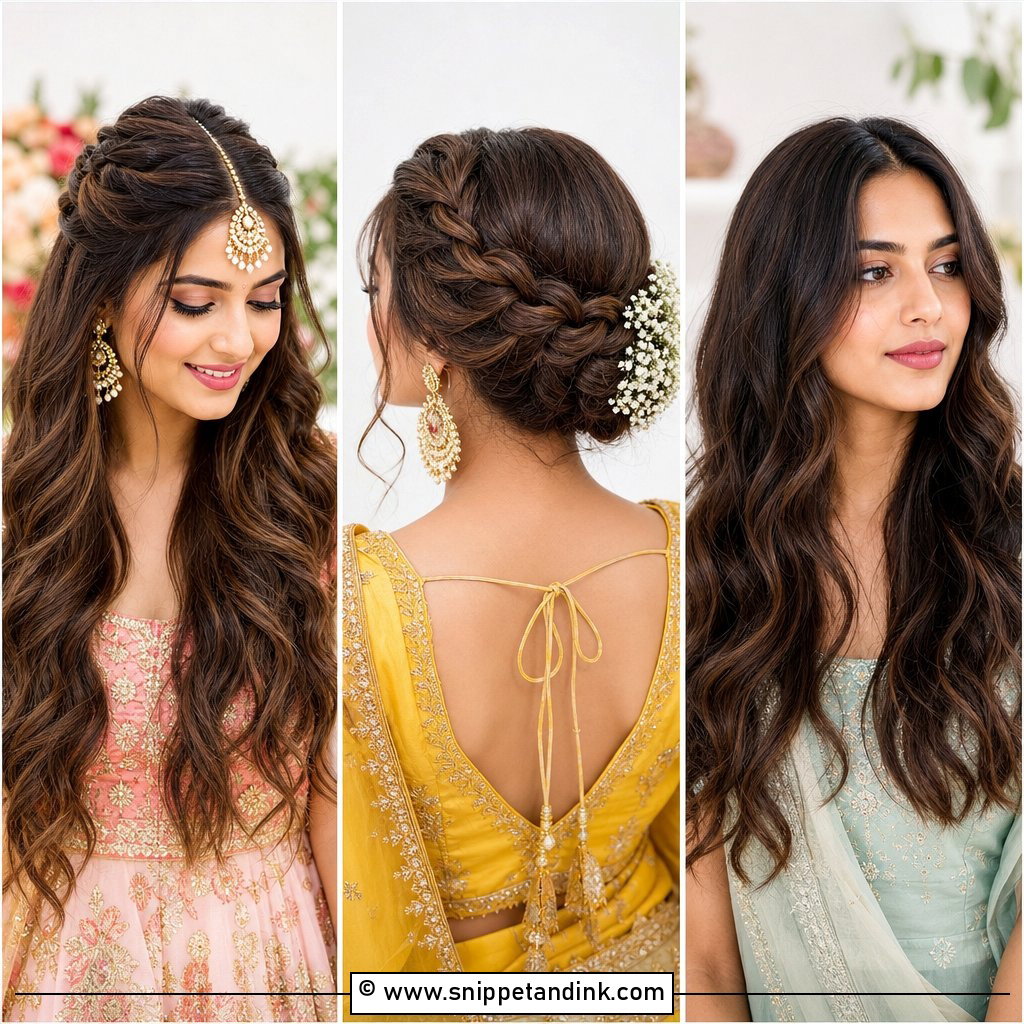
A low messy bun gives a veil a balanced base at the nape. The trick is anchoring the comb into the firm core of the bun, not the loose texture on the outside, or the veil drags it down. If you plan to remove the veil for the reception, I make sure the bun is finished underneath so it still looks complete. Soft tendrils near the face keep it romantic.
16. Fishtail Braid Bun for Brides
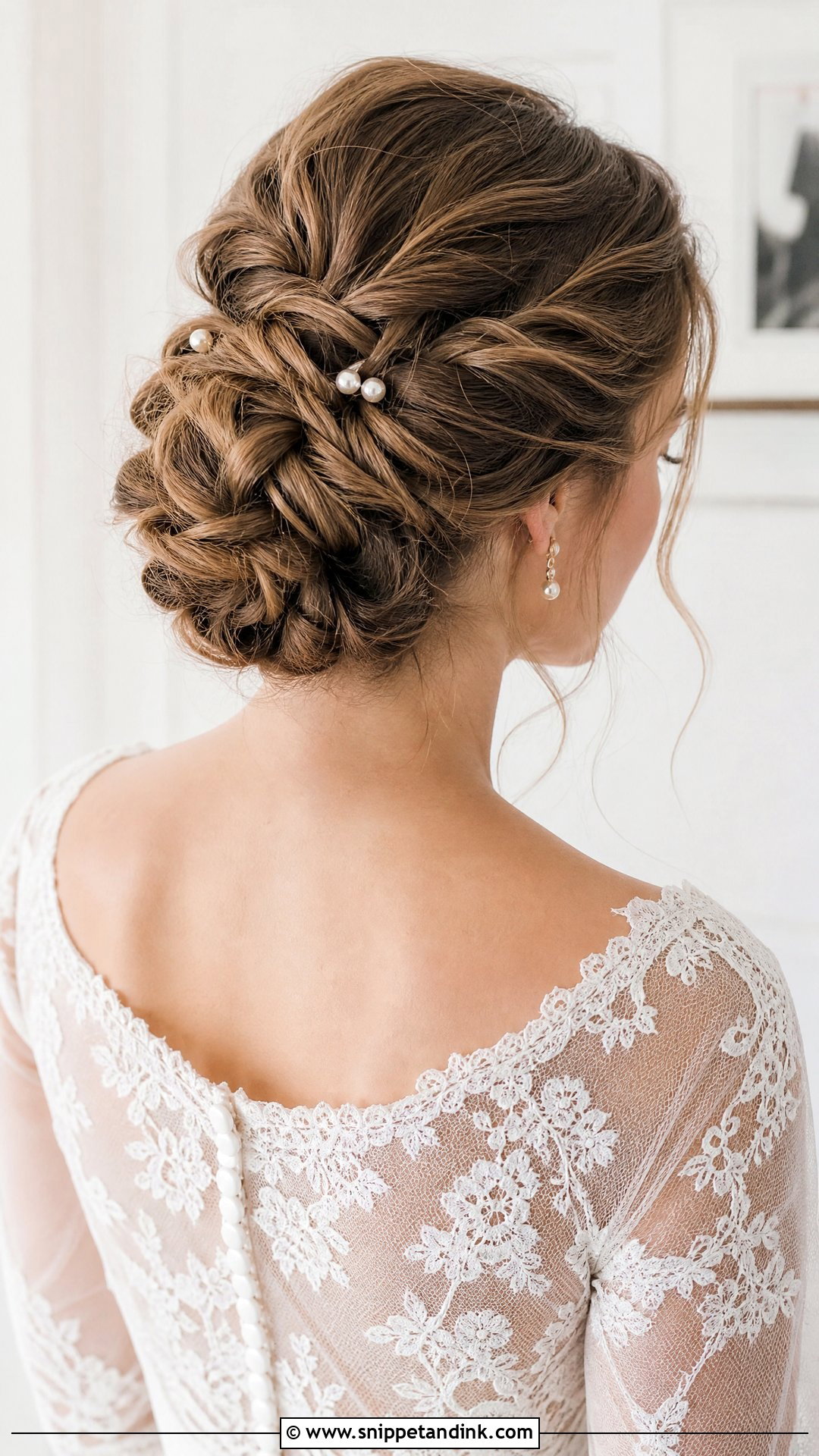
Fishtail coils have the finest texture of any braided bun. I braid the fishtail snugly before loosening it, since a loose fishtail coiled up tends to lose its pattern. It needs medium to long hair; on shorter lengths, the braid is too short to coil and looks unfinished. Tiny flowers or pearl pins sit well in the woven pattern.
17. Curly Bun for Natural Hair Brides
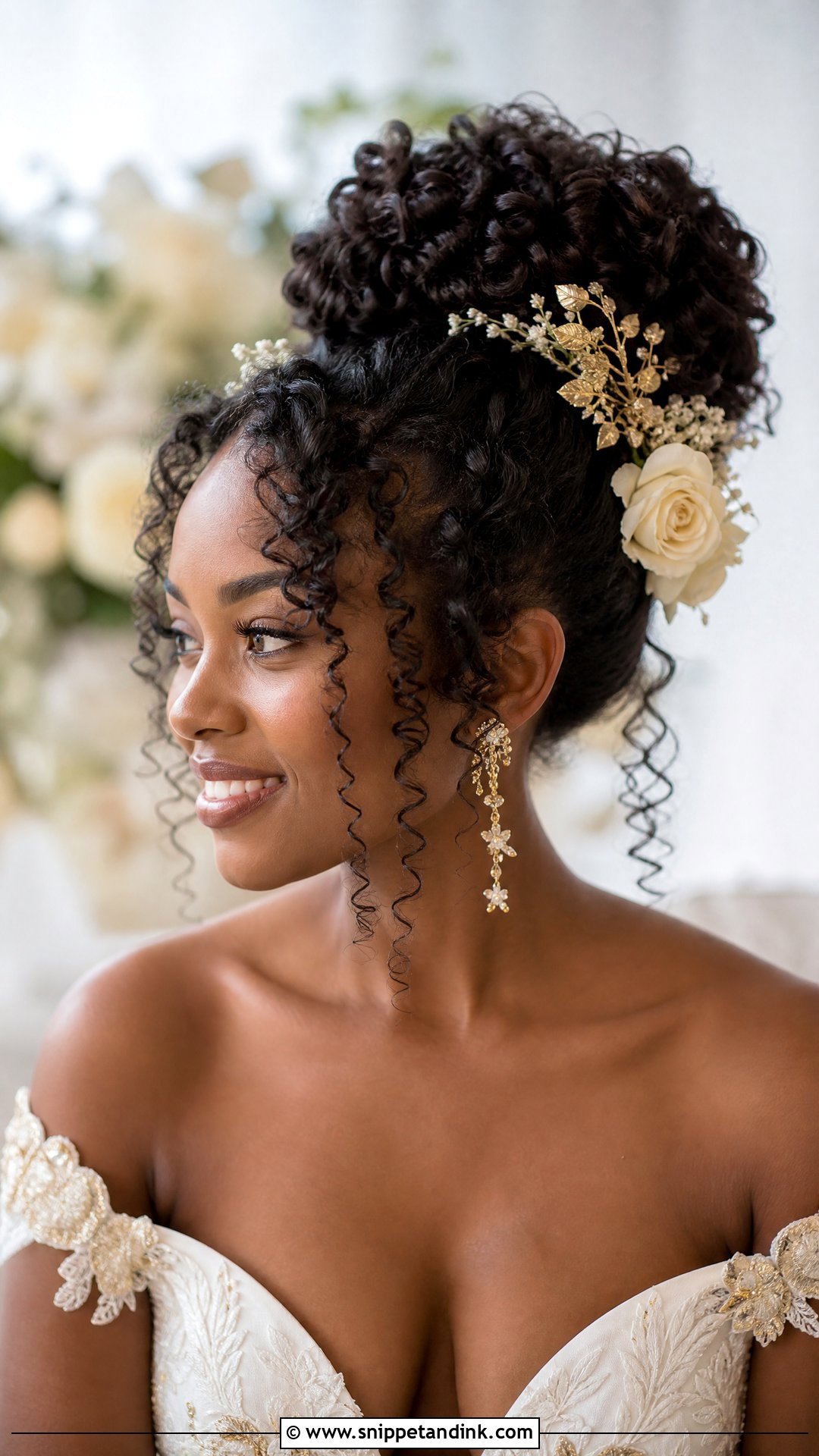
Natural curls make a full bun with very little teasing, because the texture holds itself. I work on hair that’s been moisturised the day before and stretched slightly, so the bun has volume without shrinking unevenly. I avoid brushing the curls, which turns them to frizz; instead I gather with my hands and a wide-tooth comb. Gold pins, pearls or fresh flowers personalise it, and loose curls at the face soften the shape.
18. Vintage Rolled Bun Wedding
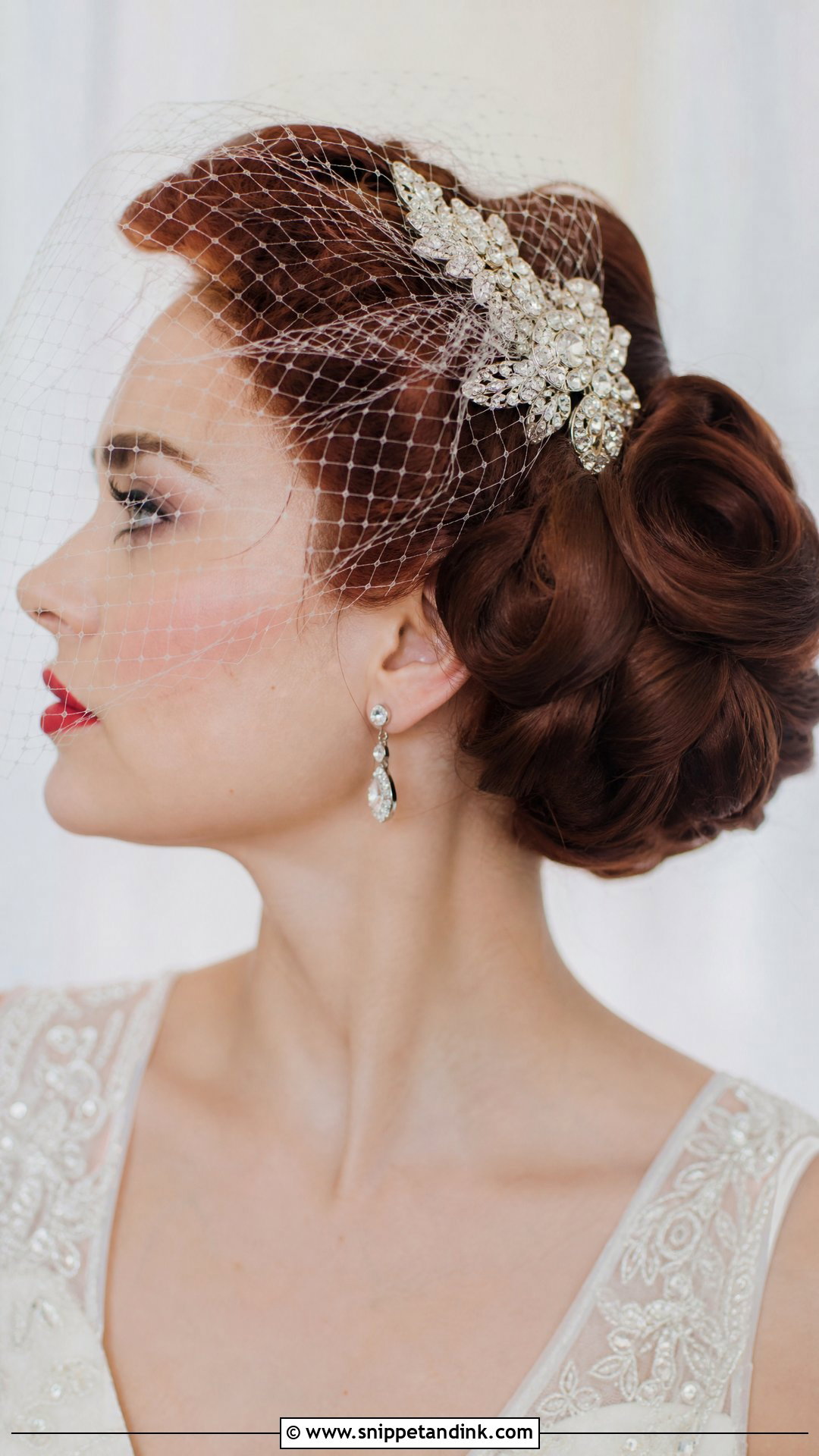
A vintage rolled bun is built from smooth, sculpted rolls inspired by 1940s and 1950s styles. Each roll is set and pinned on its own, so it takes time and needs hair that holds a set, ideally curled on hot rollers first. Fine hair works well with it; very heavy, slippery hair needs more pins. Pair it with a vintage gown, a birdcage veil or a jewelled comb.
19. Half-Up Bun for Brides
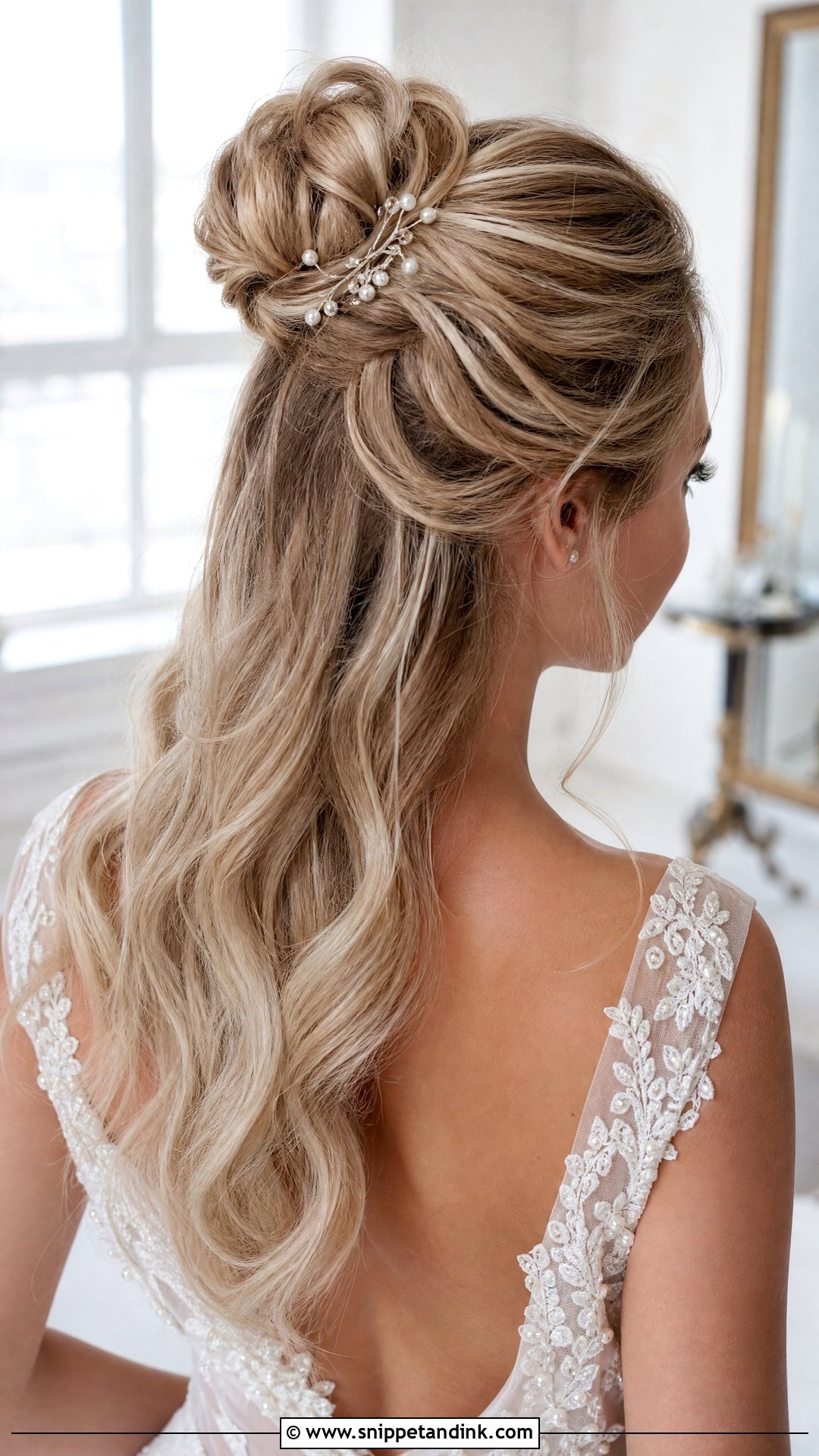
A half-up bun gathers the top section and leaves everything else loose, so it’s the most relaxed bun here. It does depend on the lengths below holding a curl. I curl them with a large barrel and set the curls before brushing them out. Flowers or pearls on the bun keep it bridal, and it works on most lengths from collarbone down.
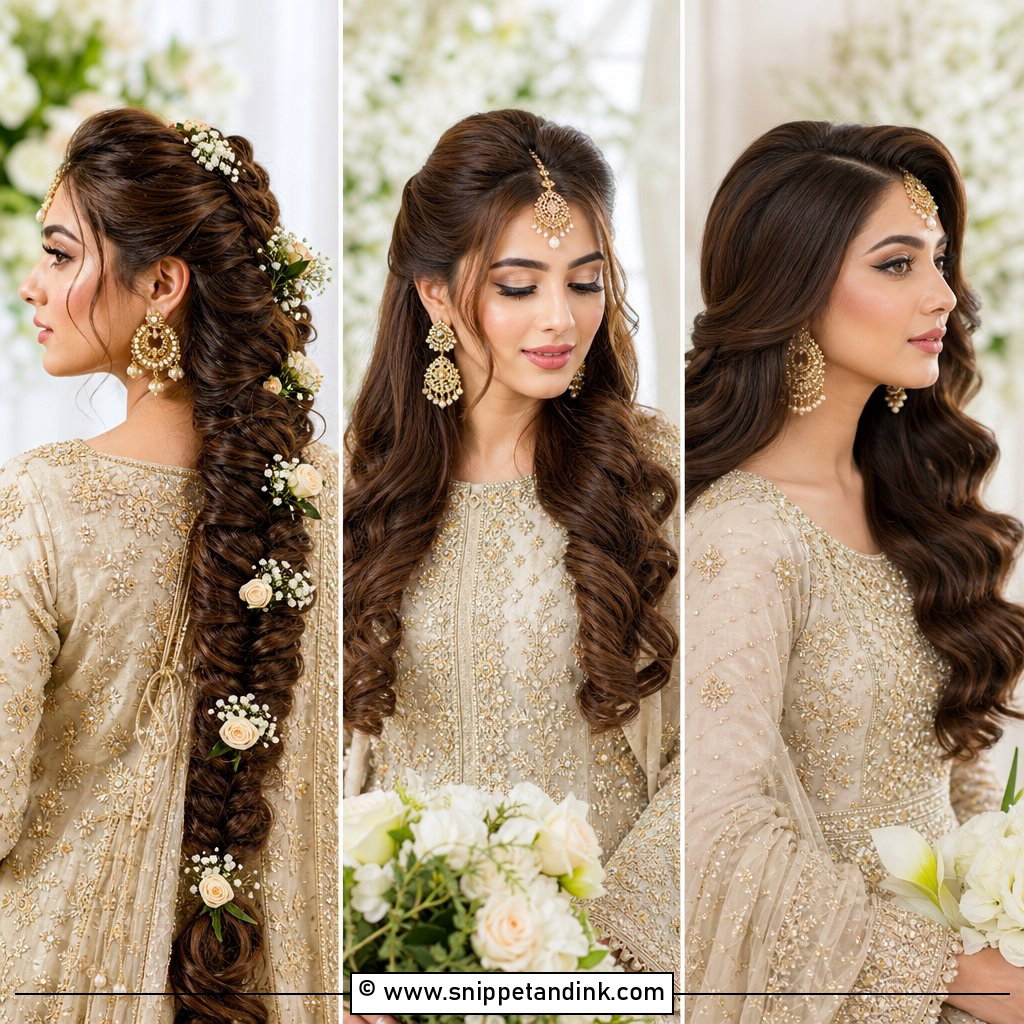
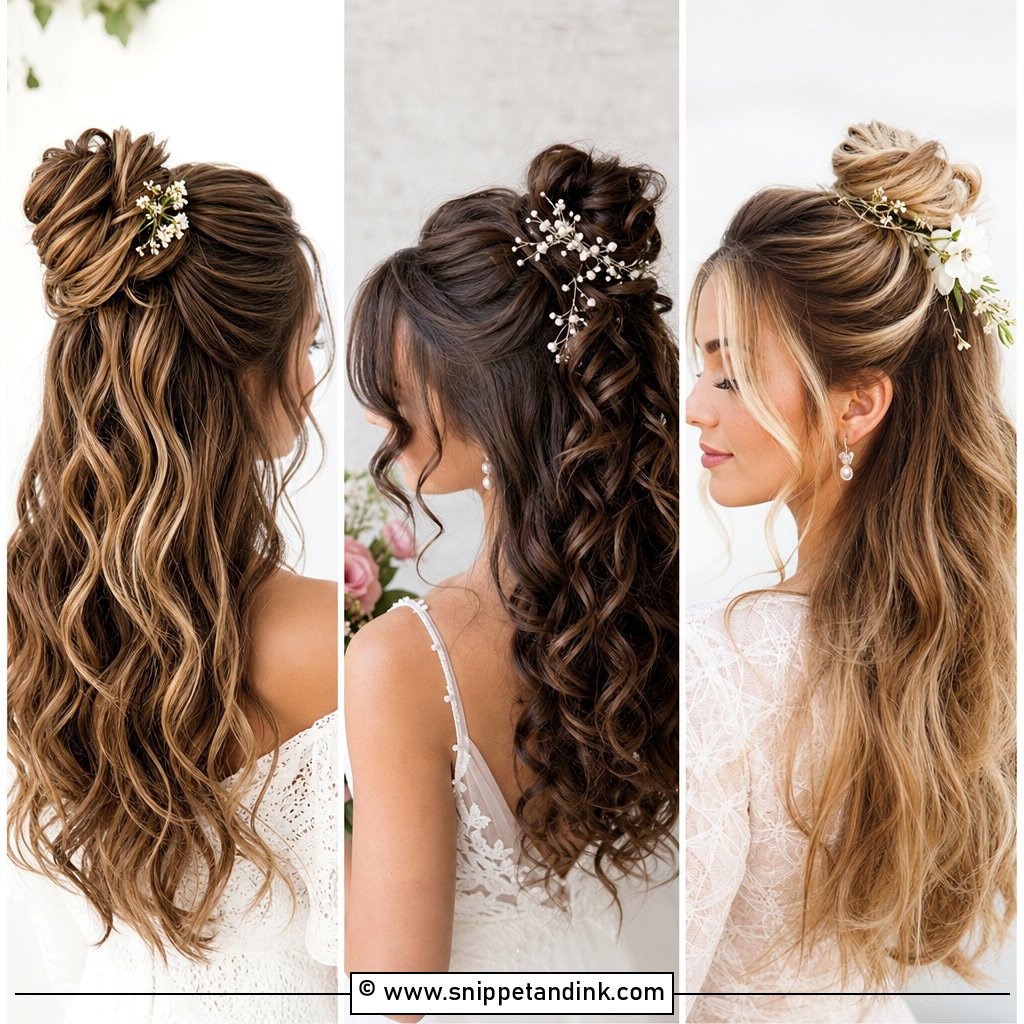
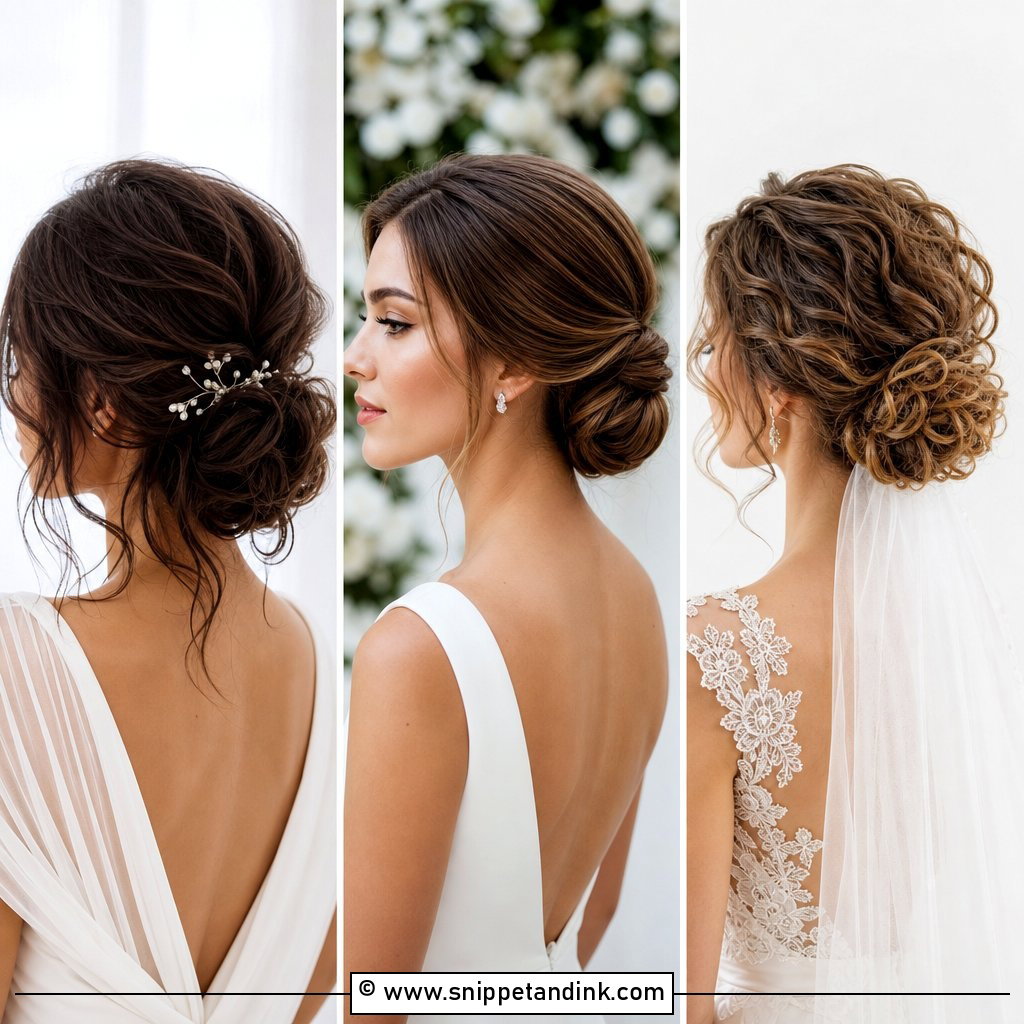
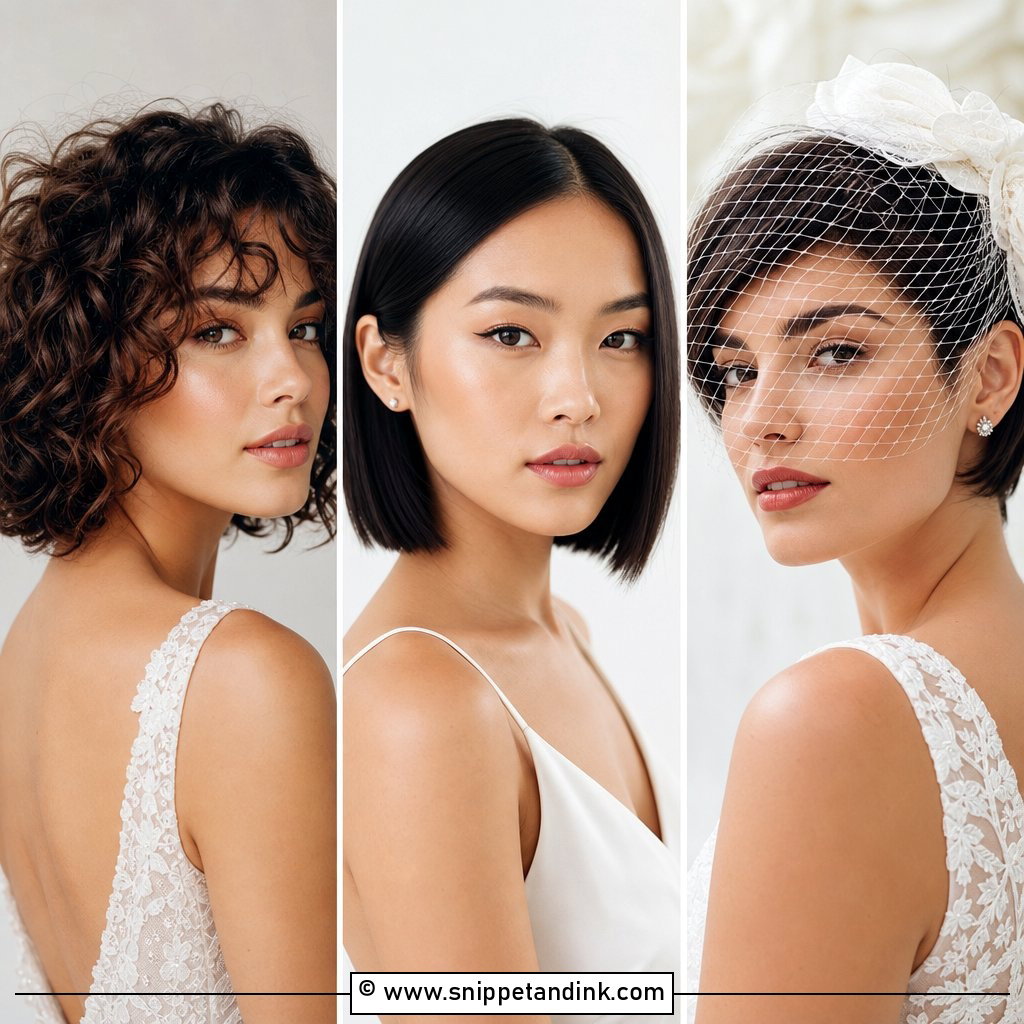
20. Sleek Bun With Statement Hairpiece
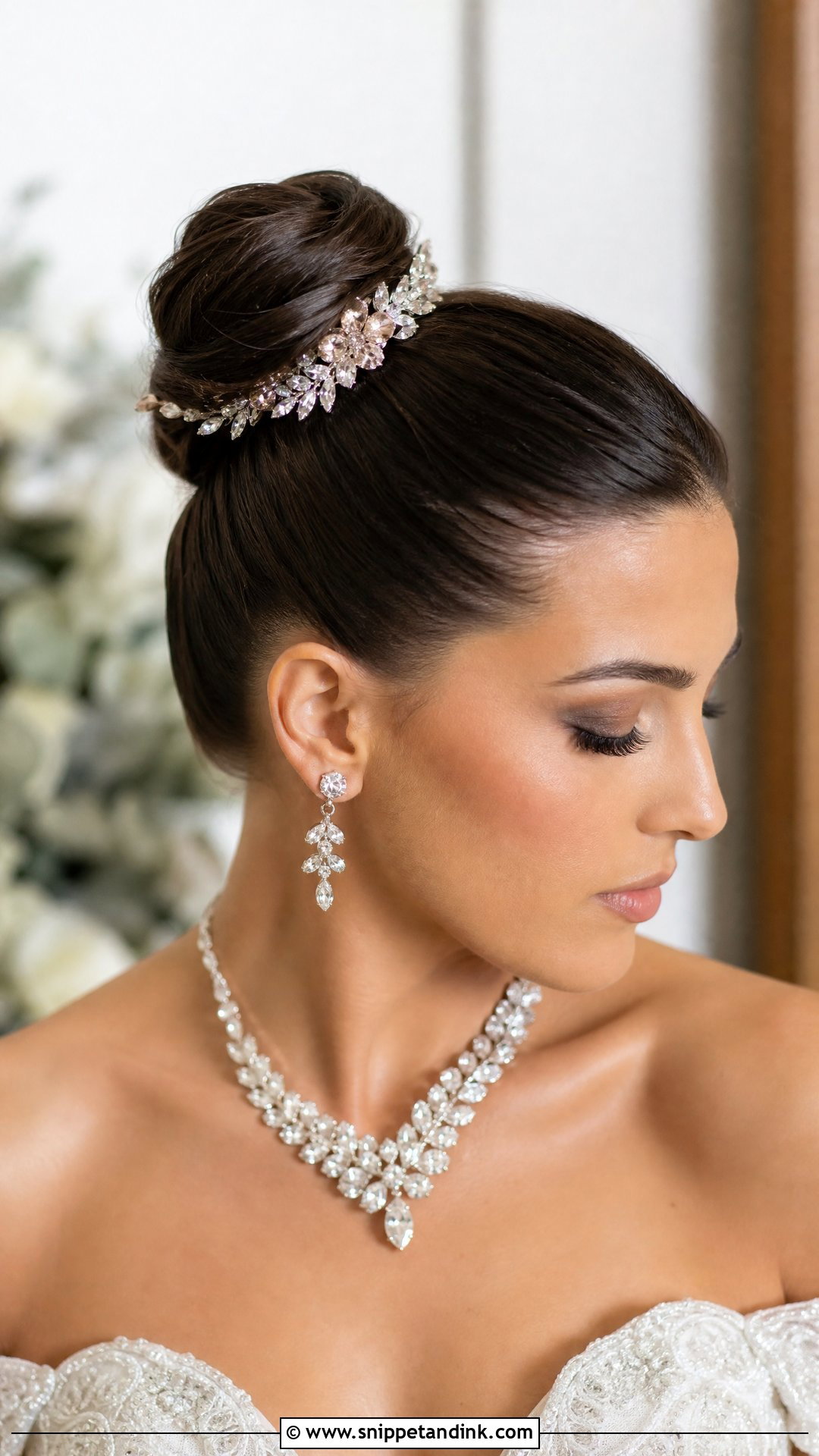
A sleek bun gives a bold statement hairpiece a clean backdrop. I decide where the piece goes before I place the bun, because a jewelled clip at the side needs a slightly offset bun to look balanced. Heavy pieces need sewing pins or bobby pins threaded through their frame, not just the clip they come with. Pair it with an elegant gown and minimal other jewelry so the hairpiece remains the focus.
Why Some Buns Sag by the Speeches
When a bun drops, it’s nearly always the foundation, not the bun. Freshly washed, silky hair gives pins nothing to hold, so I ask brides to wash the day before and come with hair clean but not slippery. I start with a secure ponytail or a criss-cross of bobby pins at the base, then build the bun over that anchor.
Heavy hair is the other cause. Very long or thick hair pulls downward all day, so I’ll split it into sections and pin each one separately, which spreads the weight. On fine hair, the opposite happens: the bun looks small, and padding such as a donut or a mesh roll matched to your colour gives it shape. Neither is cheating; it’s how most full bridal buns are made.
Taking It Down Without Wrecking Your Hair
At the end of the night, don’t pull. A bridal bun can hold thirty or more pins, and dragging a brush through them tears hair. I tell brides to remove pins one at a time in front of a mirror, loosen the shape with fingers, then work a detangling conditioner or oil through the lengths before brushing from the ends upward. Wash the next morning to get the product out, and give your scalp a day off from tight styles.
A Bun Should Feel Like Nothing by the Last Dance
A well-built bun is one you forget about after the ceremony. Choose its height by your dress and comfort, its texture by your hair, and its accessories by your veil and jewelry. From a classic chignon to a loose messy bun or a braided crown, every style above can be adapted to your length and density. Test it at your trial, wear it through an afternoon, and pay attention to whether it sags, pulls or slips. Those three things tell you more than any photo.
You'll Like These Ideas:



Leave a Reply