
Ask me which bridal style lasts best through a long day and I’ll usually point to a braid. Interlocked hair holds its shape through hugs, a veil being lifted and a few hours on the dance floor in a way that loose curls rarely do. What the inspiration photos hide is how much each braid depends on the hair underneath it and on the dress it sits above. Below are twenty braided looks, with my notes on how I build each one, what length and texture it needs, and where it tends to struggle.
Reading Your Neckline First, Then Picking the Braid
When a bride shows me her inspiration folder, my first question is about the dress, not the hair. The neckline decides where your eye wants to stop, and the braid should either fill that space or leave it clear on purpose.
- High neck or lace collar: a low braided bun or chignon, sitting just above the collar. Long loose braids crowd the neckline.
- Open back or low back: an updo or a braid placed to one side, so the back detail isn’t covered.
- Off-the-shoulder: a crown braid or halo works well, and a side braid can rest on the bare shoulder if the sleeves don’t snag it.
- Strapless or sweetheart: almost anything, but half-up braids with long waves are the most natural pairing.
- Heavy beading or embellishment: a cleaner braid with less loosening, so the hair doesn’t compete.
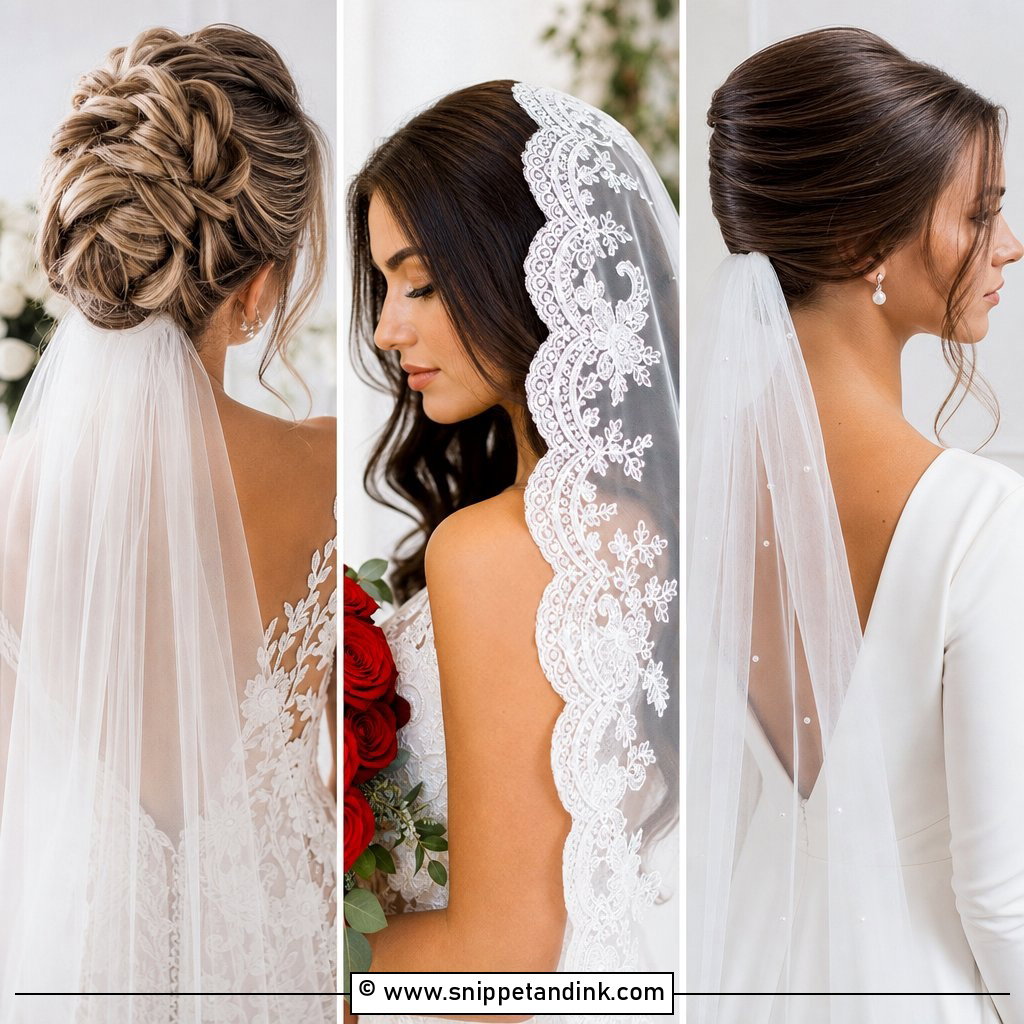
The veil matters nearly as much. A veil anchored at the crown hides the top of a halo or milkmaid braid, so for those I’d place the comb lower at the back. A veil anchored under a bun shows off a crown braid completely. I’d rather you know this before the trial than discover it on the morning.
1. Boho Waterfall Braid for Brides
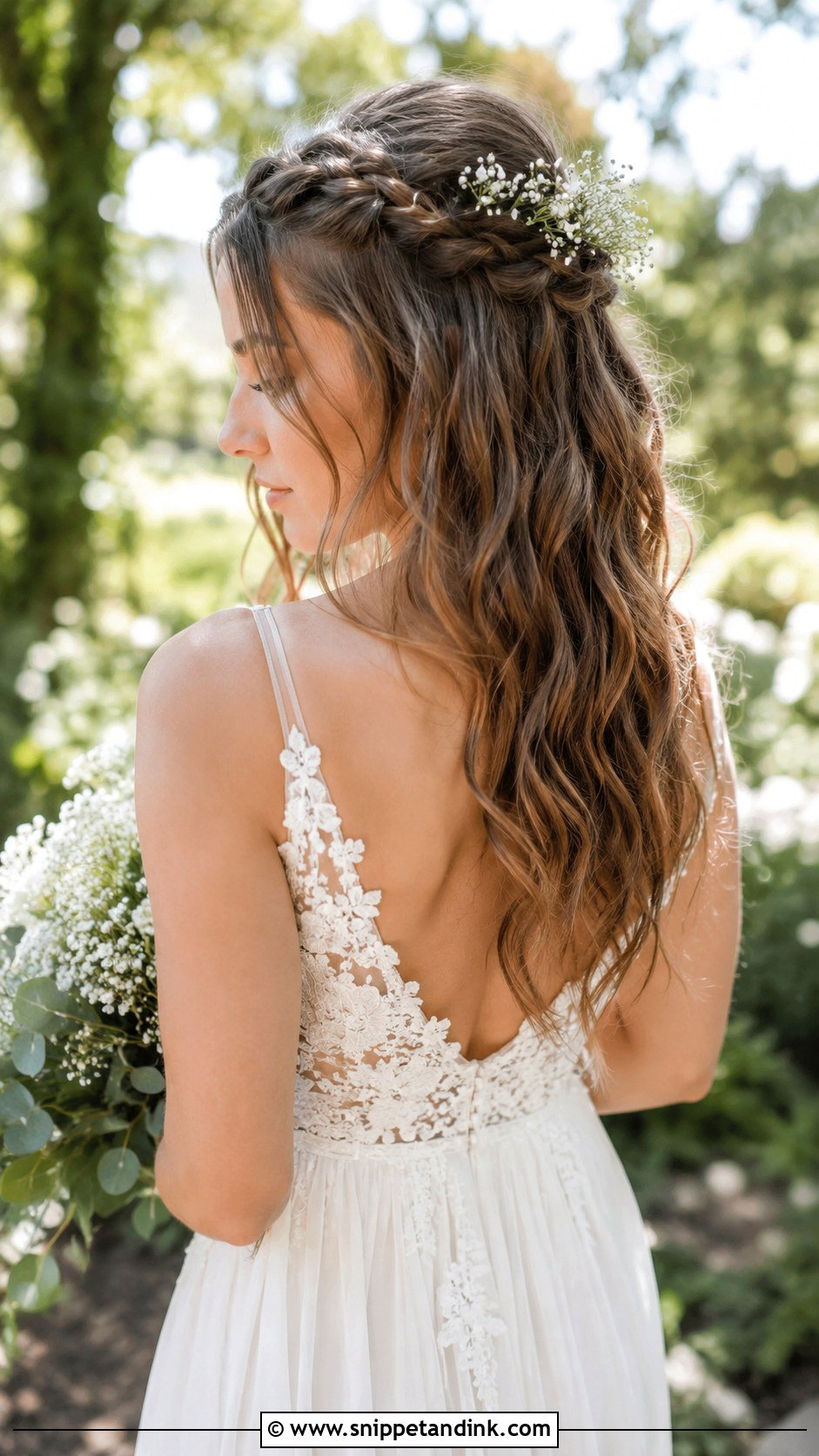
A waterfall braid runs across the crown and drops a strand at every pass, so the soft waves cascading below look like they’re falling through it. It’s one of the most delicate braids to wear outdoors. On straight hair the dropped strands slip out within an hour, so I curl everything first, let the curls cool fully, and only then braid. If your hair won’t hold a curl past lunchtime, I’d pick something more locked in from further down this list.
2. Crown Braid Wedding Updo
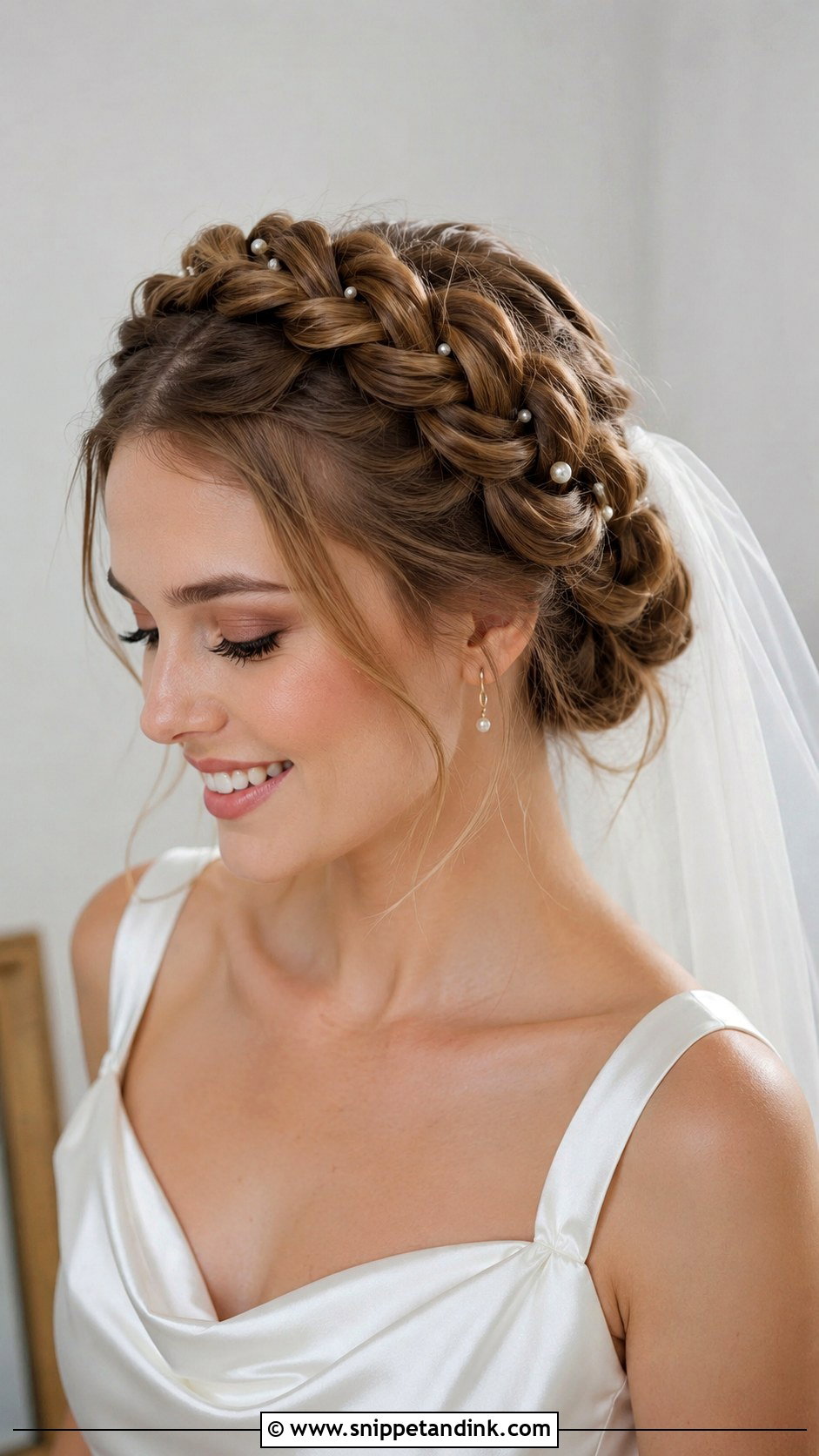
Wrapping a braid fully around the head is the closest thing to a tiara made of hair. It needs real length: if your hair stops above the shoulders, I’ll braid two sections and join them at the back, or add a clip-in weft so the halo doesn’t thin out behind the ear. I hold it with U-pins placed every few inches, which grip without flattening. Neat or softened with tendrils, it holds for a long day because nothing hangs free.
3. Fishtail Braid Half Up Half Down
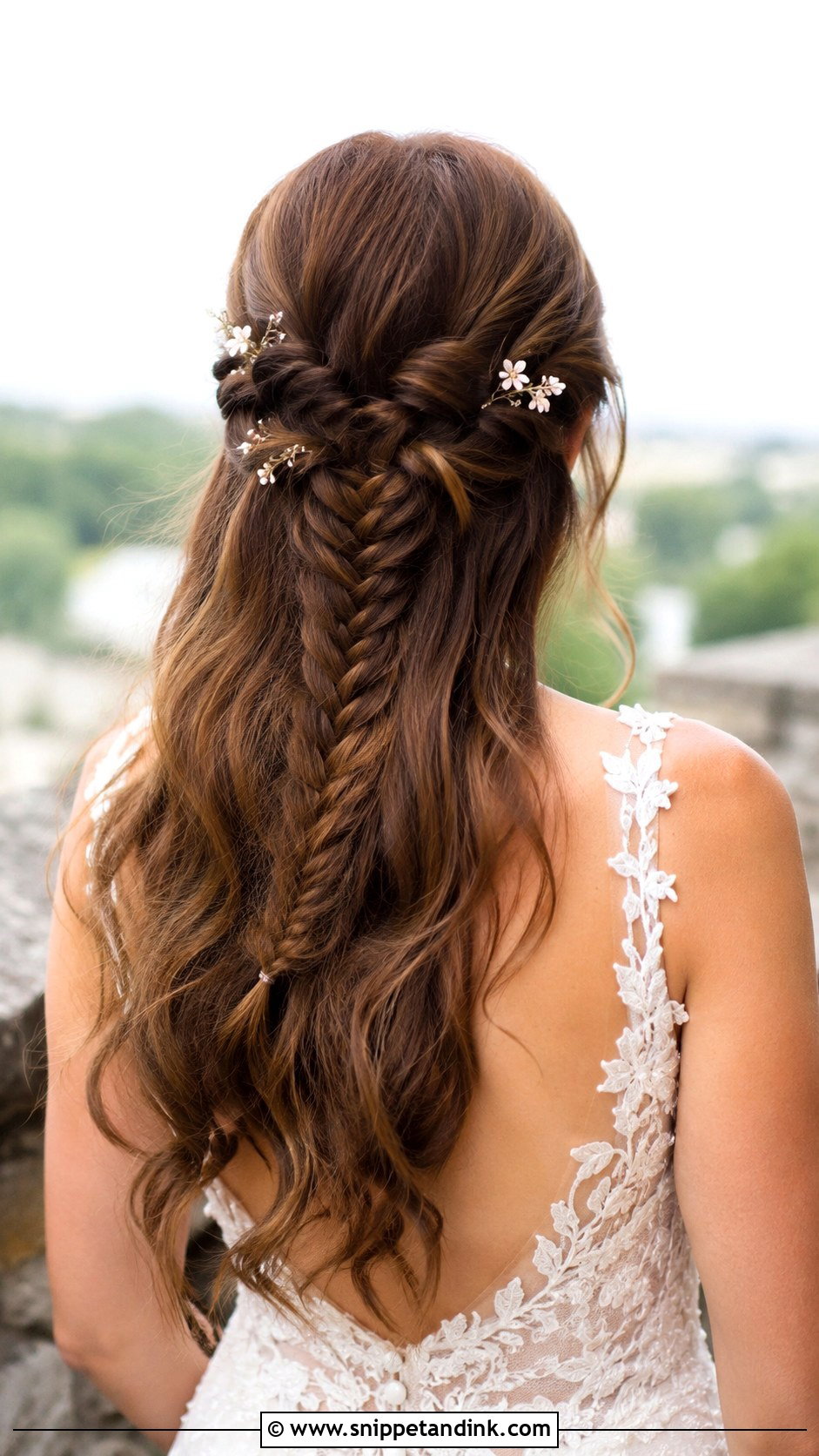
Half up, half down is the most-requested shape I see, and a fishtail is my favourite way to secure the top half. The two-strand weave looks intricate, but it’s quick to braid. My one caution: a fishtail on freshly washed, silky hair loosens fast, so I add texture spray before I begin. I leave room underneath the braid to anchor a veil comb, since pushing a comb into the braid itself pulls it apart.
4. Dutch Braid Bun for Brides
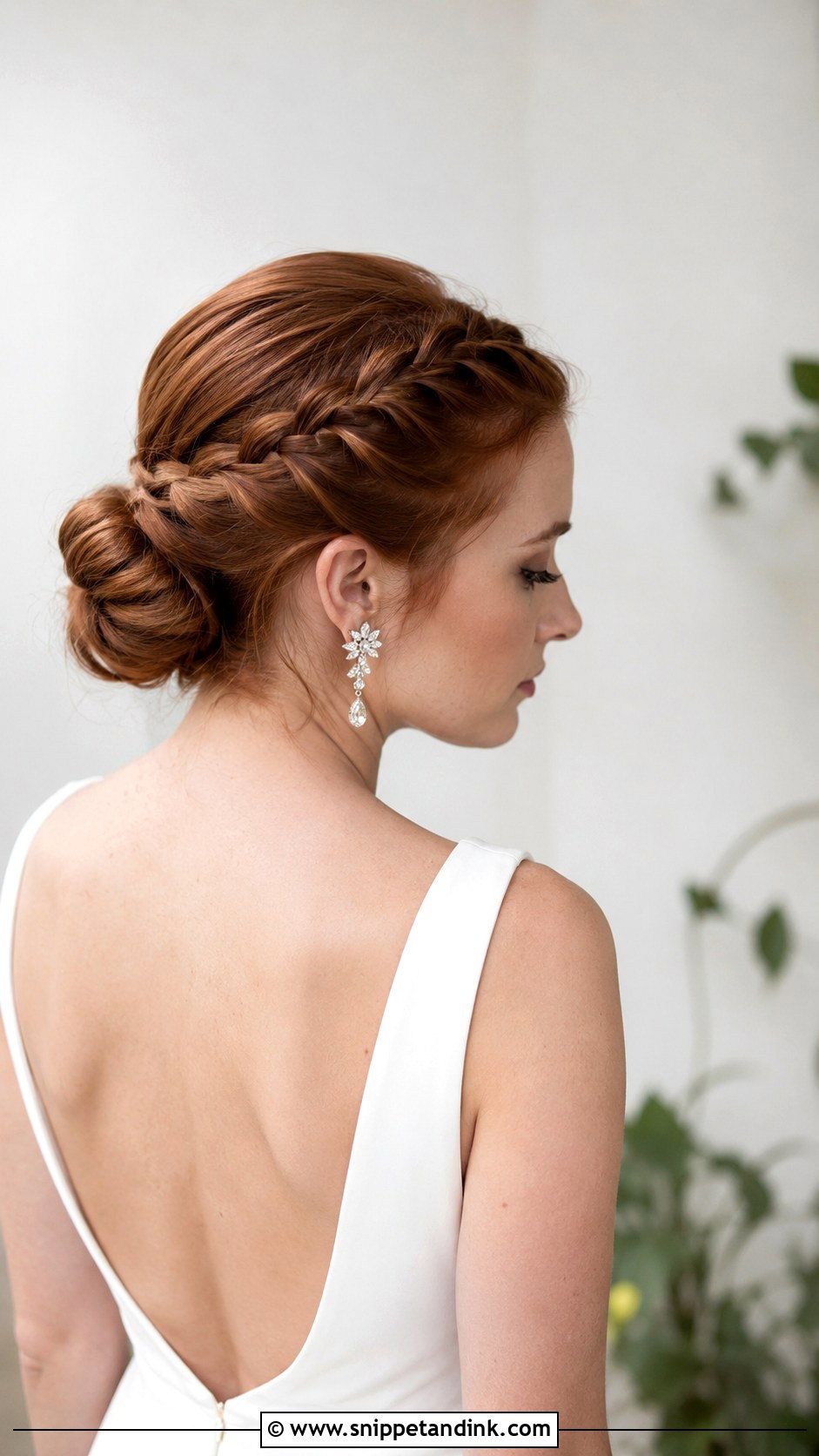
Here the Dutch braid does the visual work and the bun does the holding. Because a Dutch braid crosses strands underneath, it stands up off the scalp and leads the eye down to the nape. I keep the braid tight near the hairline and loosen it gradually towards the bun, which looks more natural than even pancaking from top to bottom. It’s among the most secure styles here, and it pairs well with a minimal gown and statement earrings.
5. Braided Crown With Loose Curls
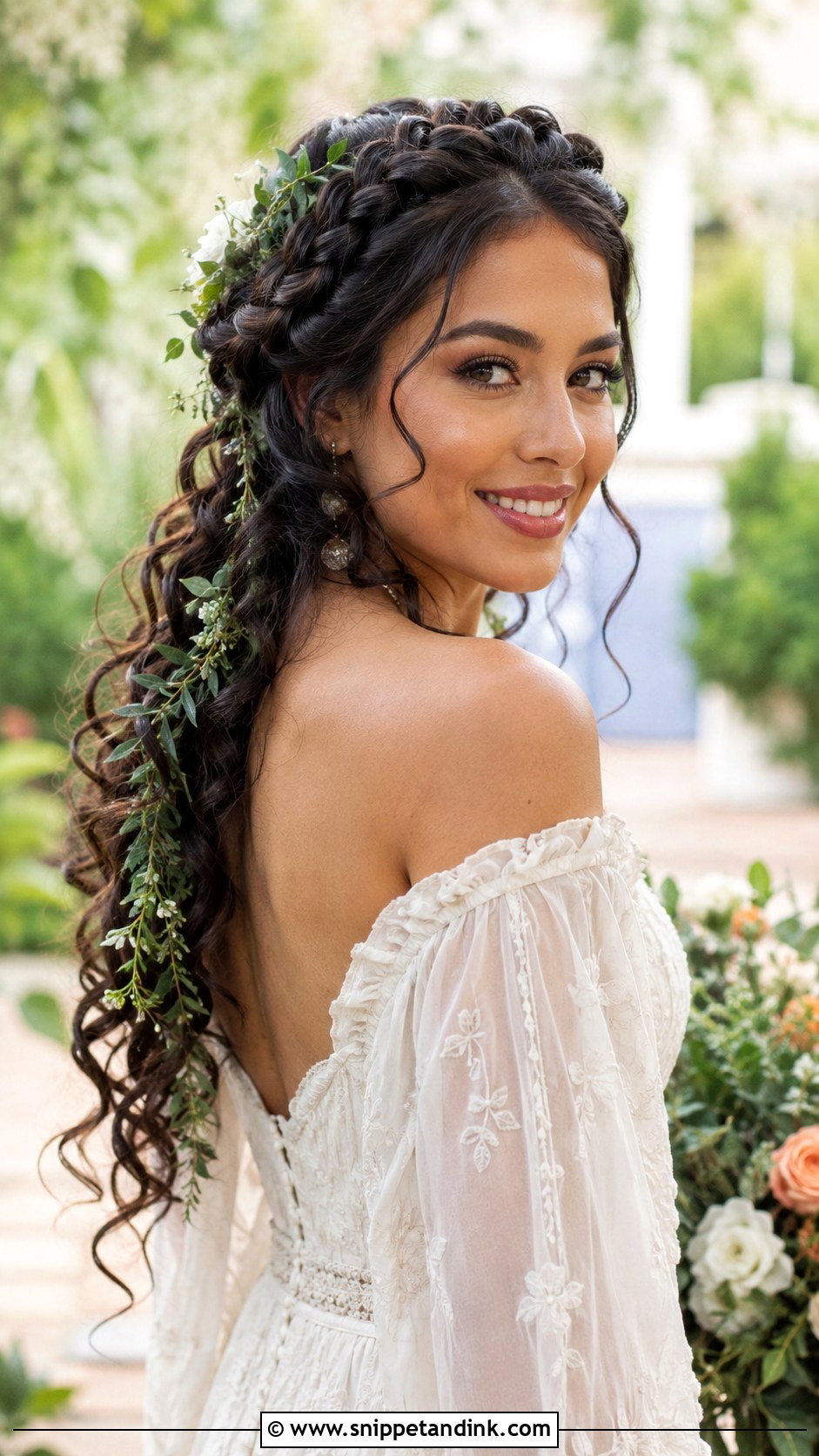
Mixing a braided crown with loose curls gives you hair down without the front pieces falling in your face during the vows. The braid acts as an anchor for the top section. That said, this one needs density: on fine hair, taking enough hair for a visible crown leaves the curls below looking thin. I’d add a couple of clip-in wefts in that case, and I’d use small blooms rather than chunky ones so the crown isn’t hidden.
6. French Braid Wedding Updo
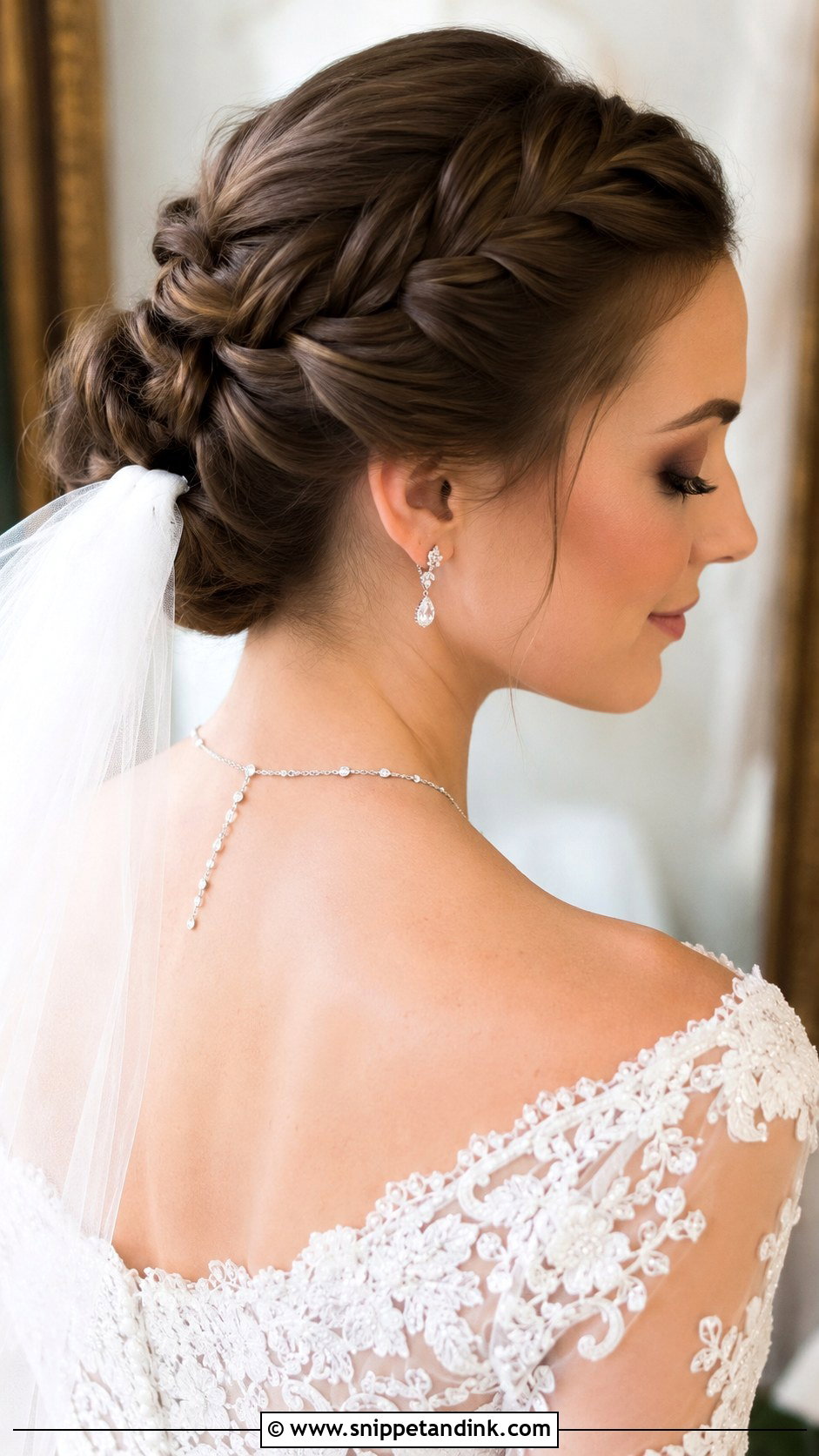
Quietly classic. A French braid tucked into an updo gives a clean silhouette that takes a headpiece or veil without any fuss. I braid it firmly, fold the tail under and pin it with crossed bobby pins, which is why it lasts so well into the evening. A very tight French braid can look stern on a soft face, so I usually pull the outer loops out a little and leave two wisps at the temples.
7. Halo Braid for Brides
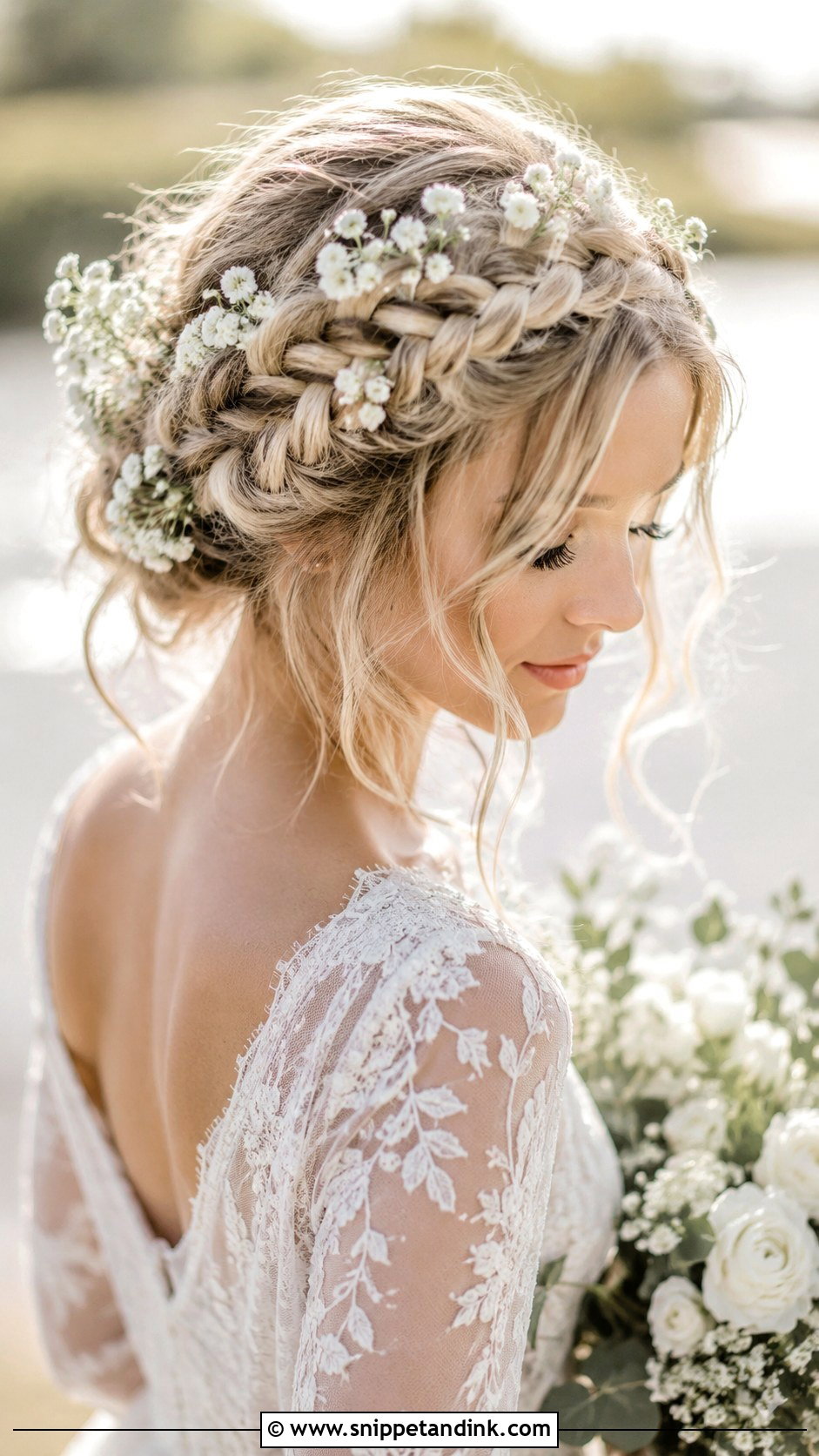
Angelic and ethereal when it’s softened and quite formal when kept neat, the halo braid is the summer bride’s friend. Hair is completely off the neck and face, so heat and wind barely touch it. I’d want hair at least past the shoulders for a full circle. Delicate pins or a few fresh flowers sit nicely along the band, but I’d keep them to one side so the braid still reads as a continuous ring in photos.
8. Side Braid Bridal Hairstyle
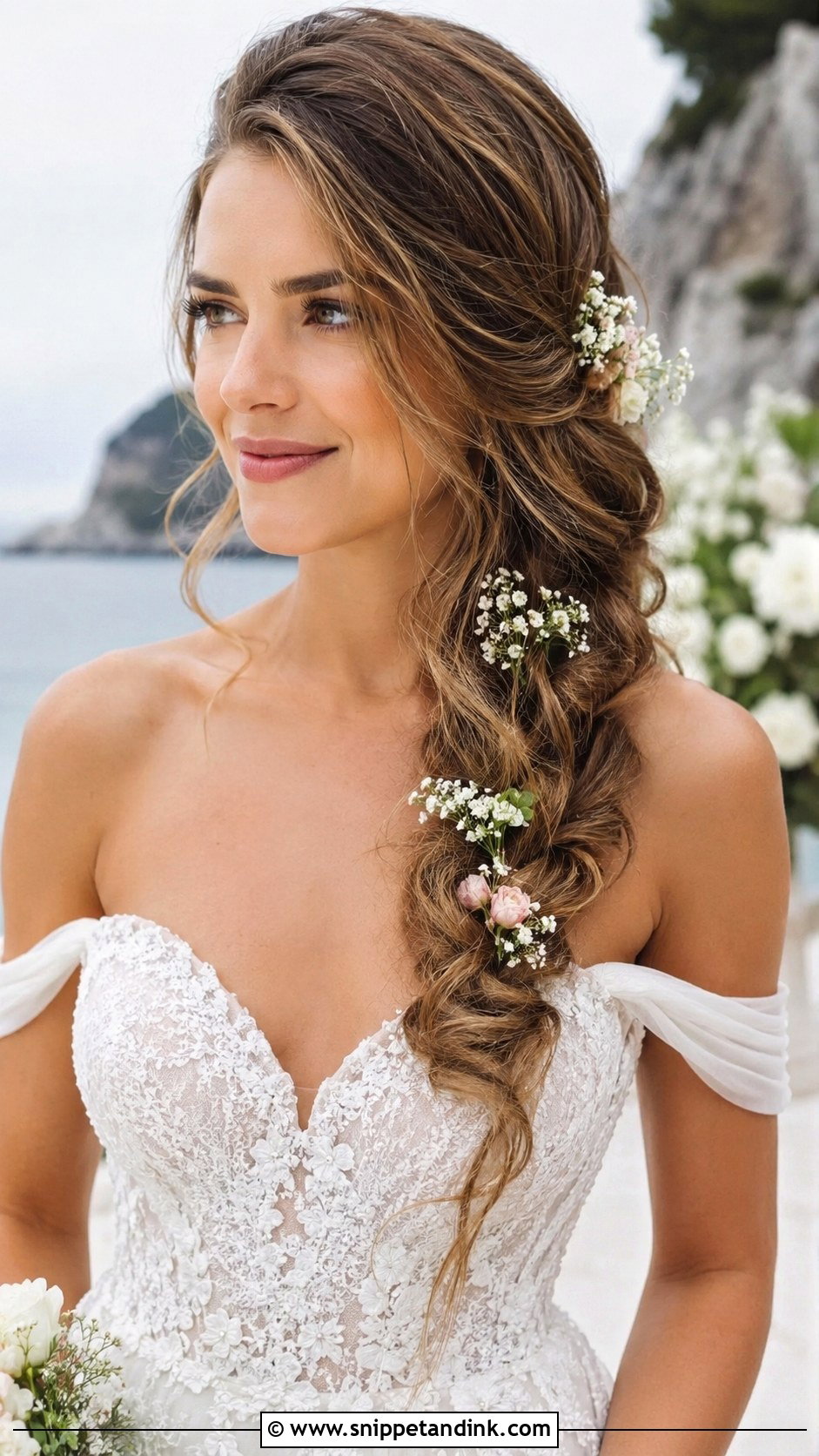
A side braid sounds simple, and it is, but where it starts matters. I begin it behind the ear rather than high on the head, so it drapes over the shoulder instead of pulling the part sideways. It shows off the neckline and earrings on the opposite side. Long hair is a must. Very thick hair can feel heavy on one shoulder by evening, and loose fishtail versions catch on lace sleeves, so I test it against the actual dress.
9. Braided Low Bun for Brides
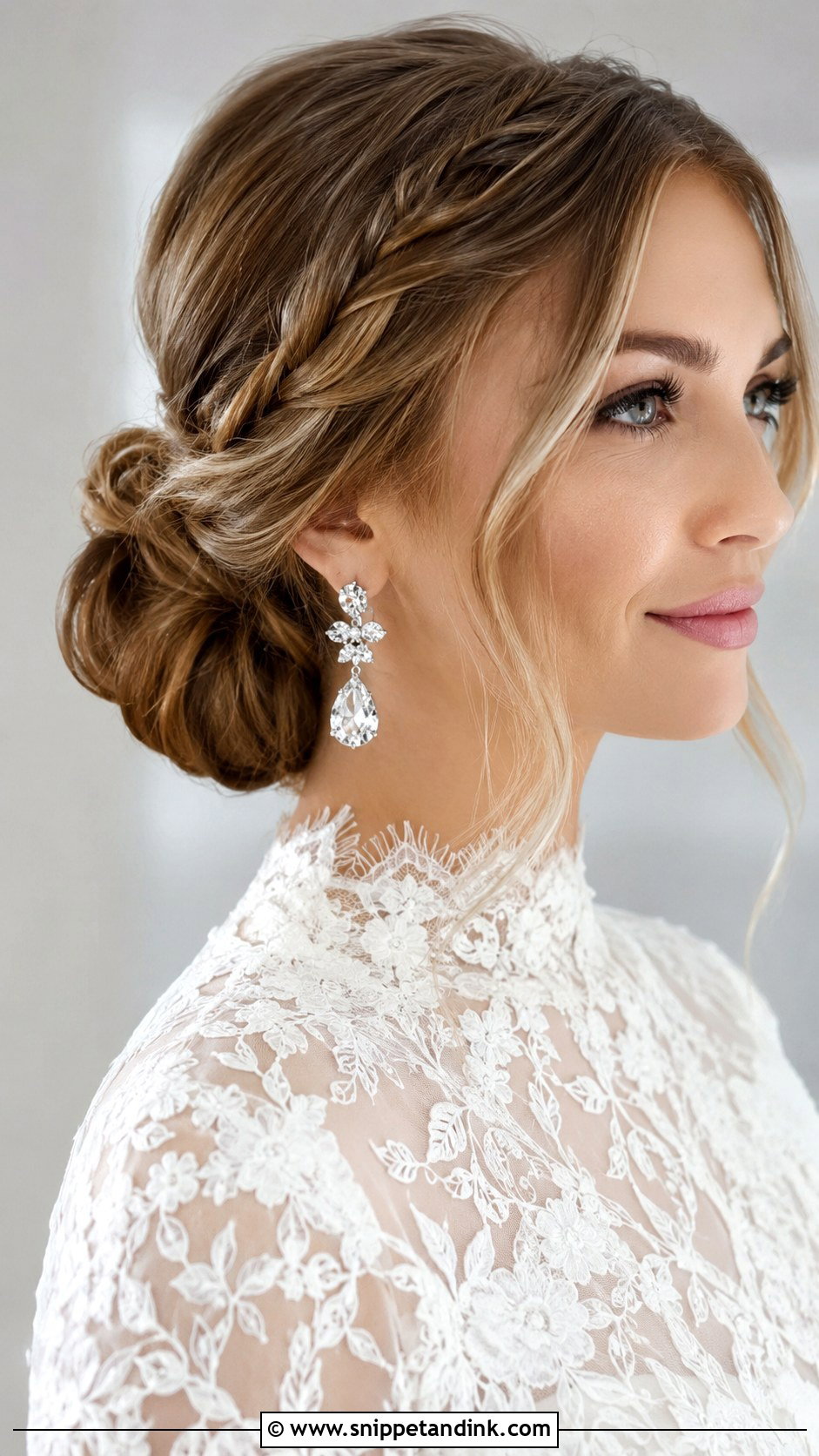
I recommend a braided low bun constantly for formal ceremonies. The low position leaves room for a tiara at the crown and a veil comb right above the bun, so you don’t have to choose. I braid two or three smaller sections and wrap them, which gives the bun more texture than a single coiled braid. It works with high-neck and backless gowns alike, since the nape stays visible either way.
10. Boho Braided Half Up With Flowers
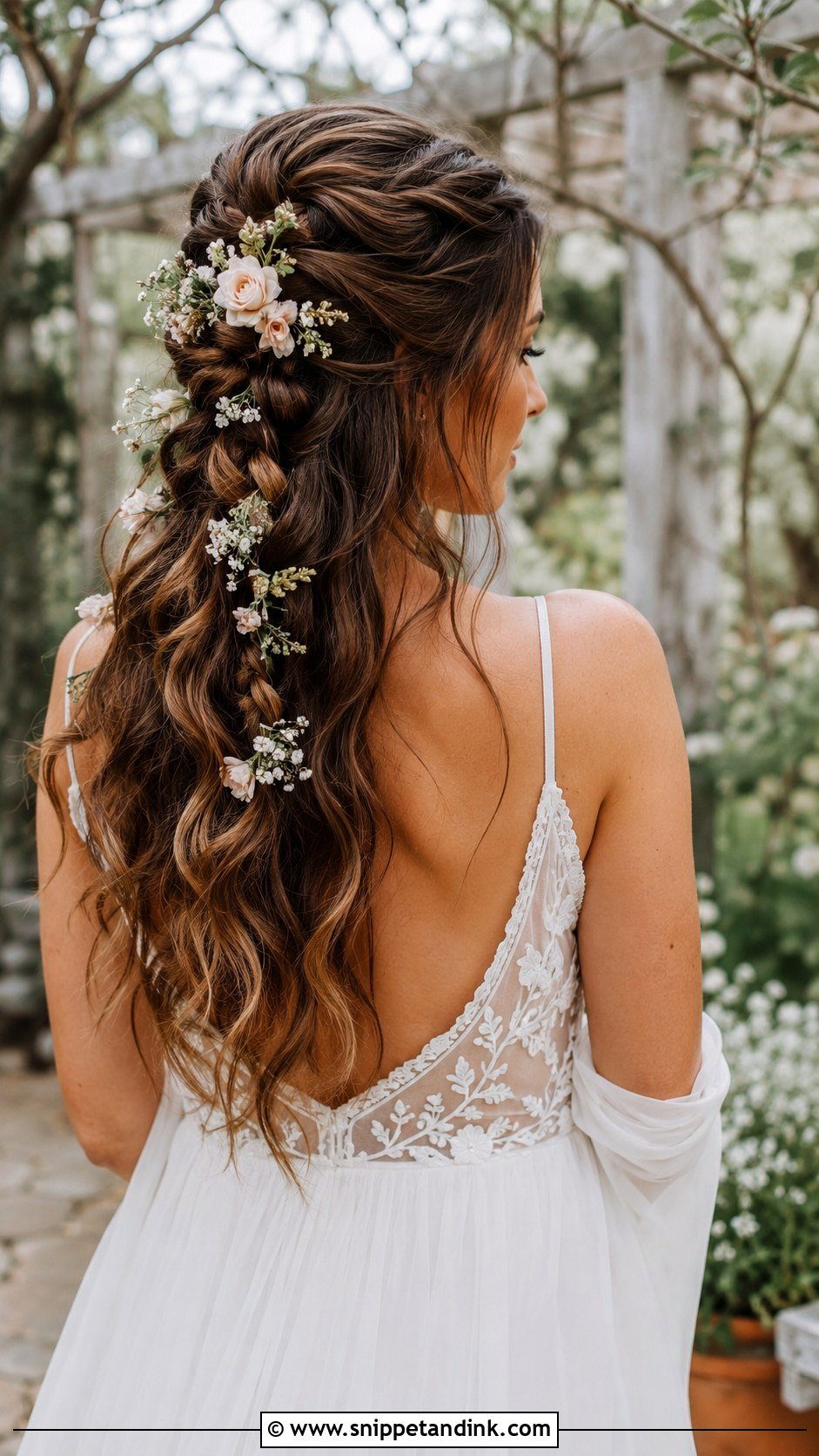
Flowers in a half-up braid have to match the wedding’s conditions, not only the bouquet. Fresh blooms wilt quickly in direct sun, so for an outdoor summer ceremony I’d ask the florist for hardier stems or use good silk or dried flowers. I add them last, after spraying, because hairspray marks petals. The braid holds the crown section firmly, and the waves below stay loose. Medium to long hair works best.
11. Milkmaid Braid Wedding Hairstyle
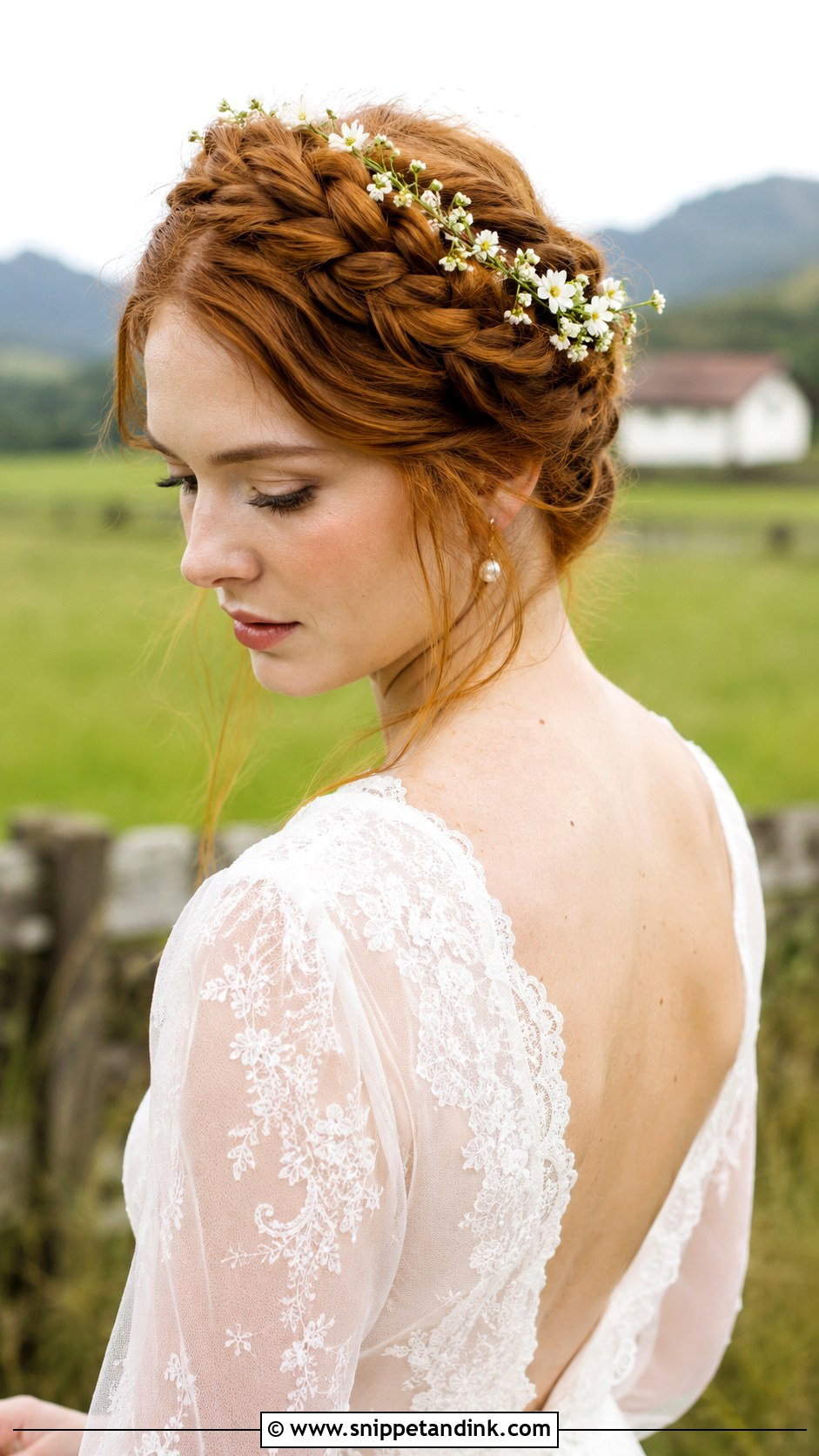
Two braids crossed over the top of the head give the milkmaid its vintage look, and they also keep everything secure and off your neck in hot weather. You need roughly shoulder-length hair or longer, since each braid has to reach over the head. I pin them down with U-pins along their whole length and tuck the ends out of sight. Pearls or tiny flowers add a sweet detail. It does tend to suit rounder and heart-shaped faces, because the height at the top balances width at the cheeks.
12. Fishtail Braid Updo for Brides
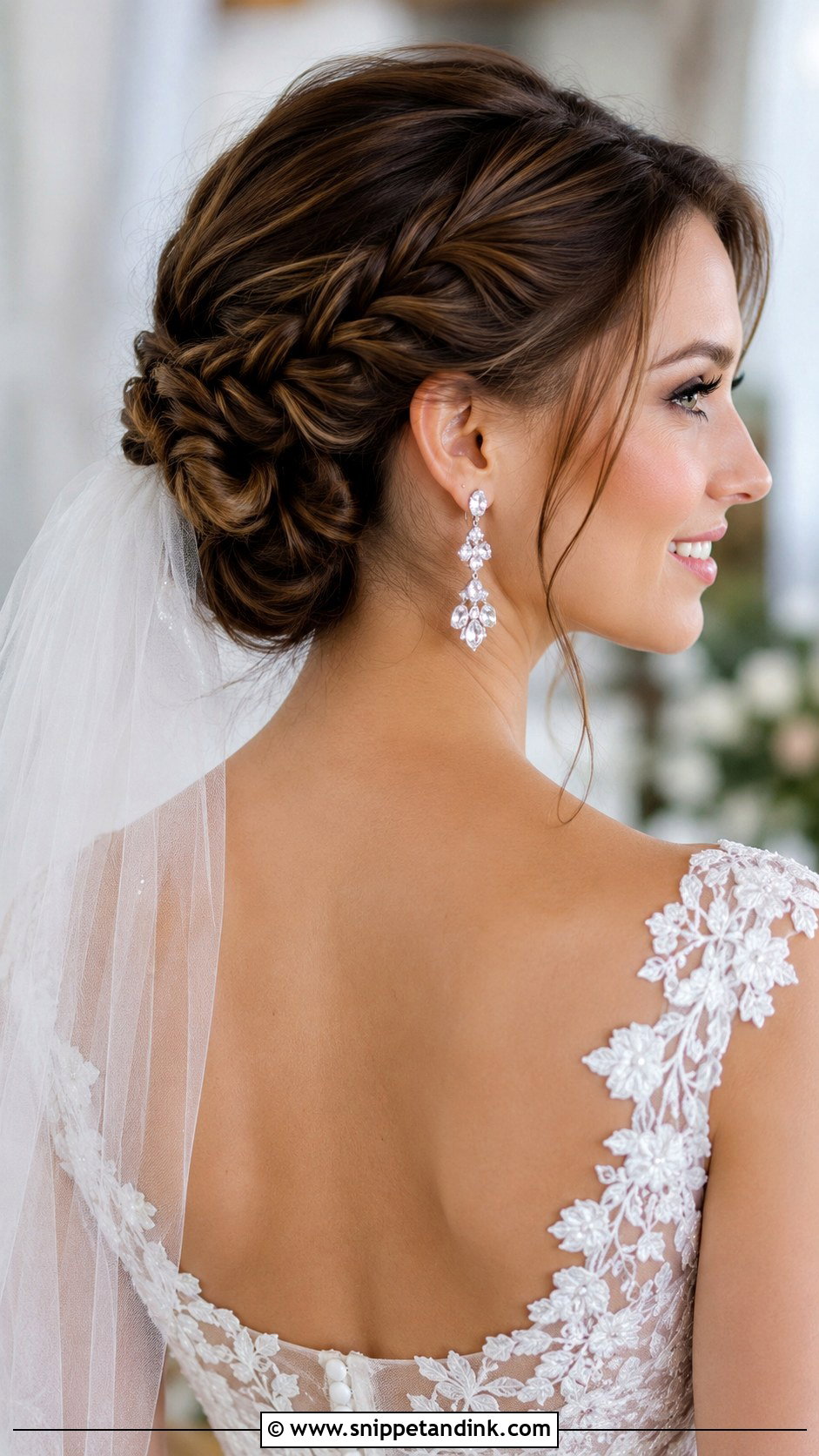
A fishtail coiled into an updo is a showpiece with real staying power. The fine weave hides pins well, which helps on a long day. I’d only suggest it for long, thick hair, since a short fishtail produces a tiny coil that looks unfinished. Anchor the veil under the coil, not through it, and keep the earrings strong so the face has as much detail as the back.
13. Braided Ponytail Bridal Hairstyle
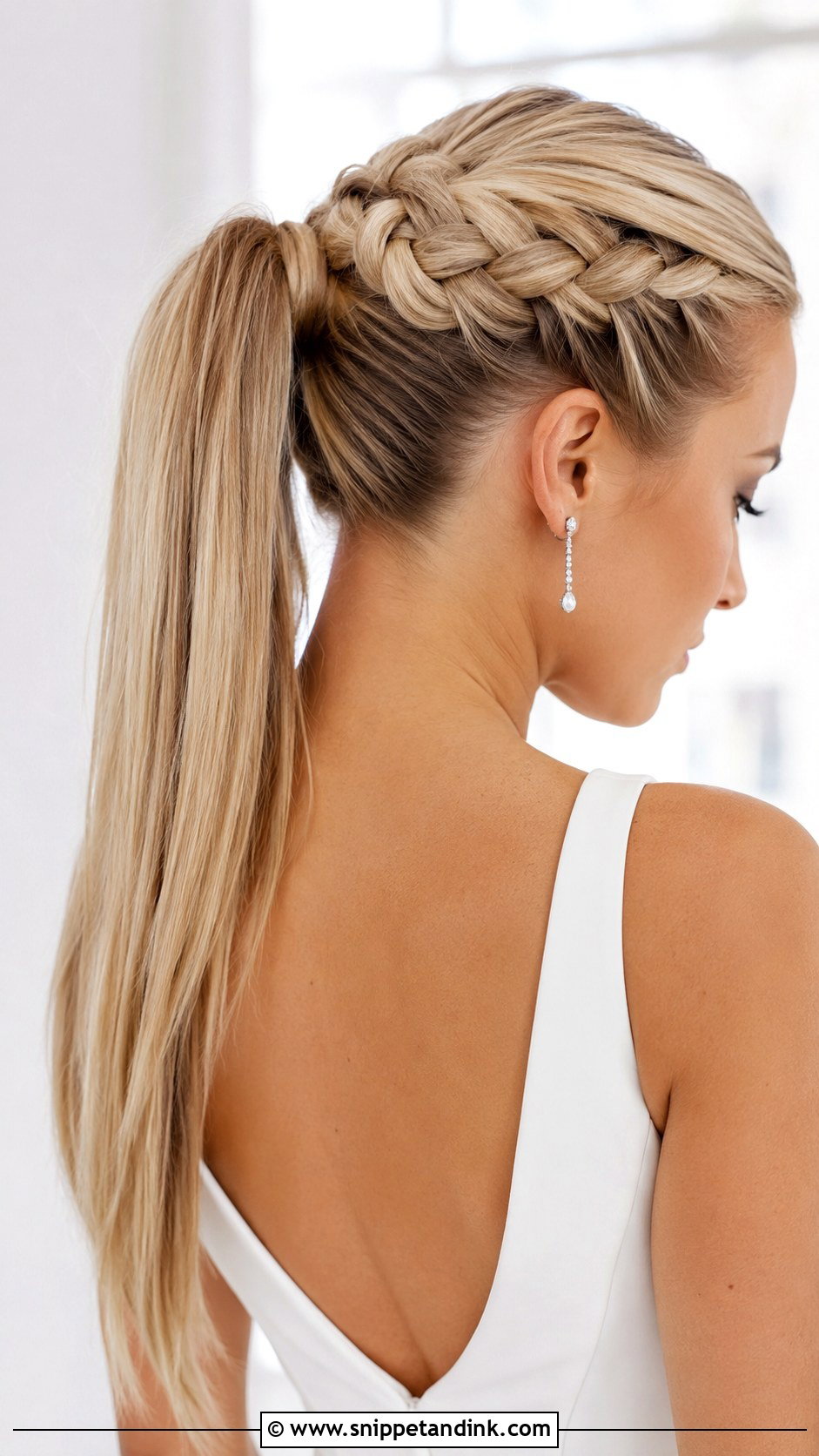
A braided ponytail is the most modern option on this list, and also the easiest to dance in. I set the base with a strong elastic, wrap a piece of hair around it and pin it upward to hide it. High ponytails look glamorous but can give you a headache after several hours, so I’ll usually place it at the crown’s midpoint for anyone sensitive. Low and soft, it’s calmer and more romantic.
14. Crown Braid With Veil
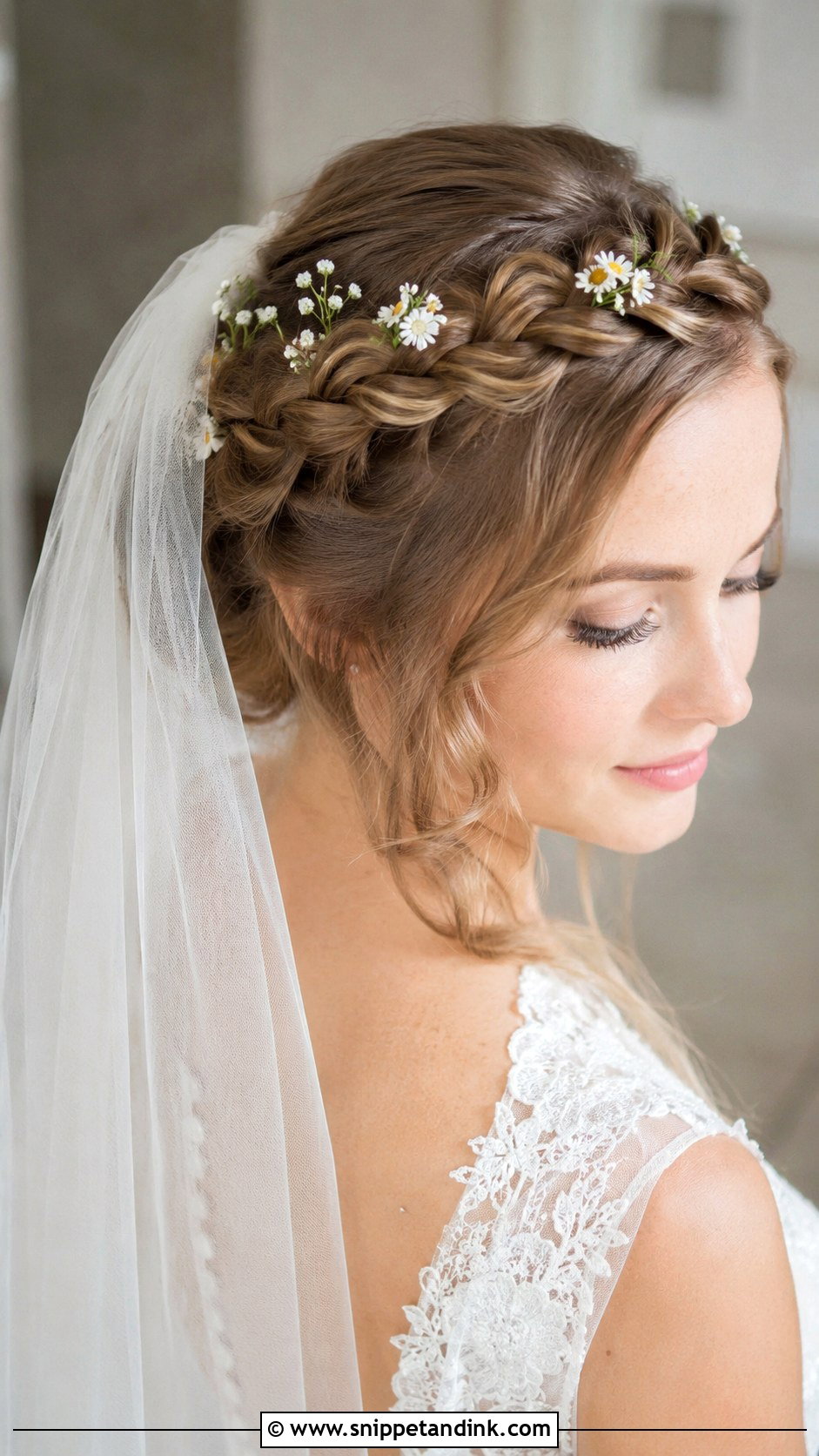
Pairing a crown braid with a veil is practical as well as pretty: the braid creates a firm ridge for the comb to grip. I tuck the comb right under the lower edge of the braid at the back, which keeps the veil from dragging the braid down. A light veil works best here; a heavy cathedral veil on a crown braid needs extra pins hidden beneath. Small flowers placed where the veil meets the braid hide the comb nicely.

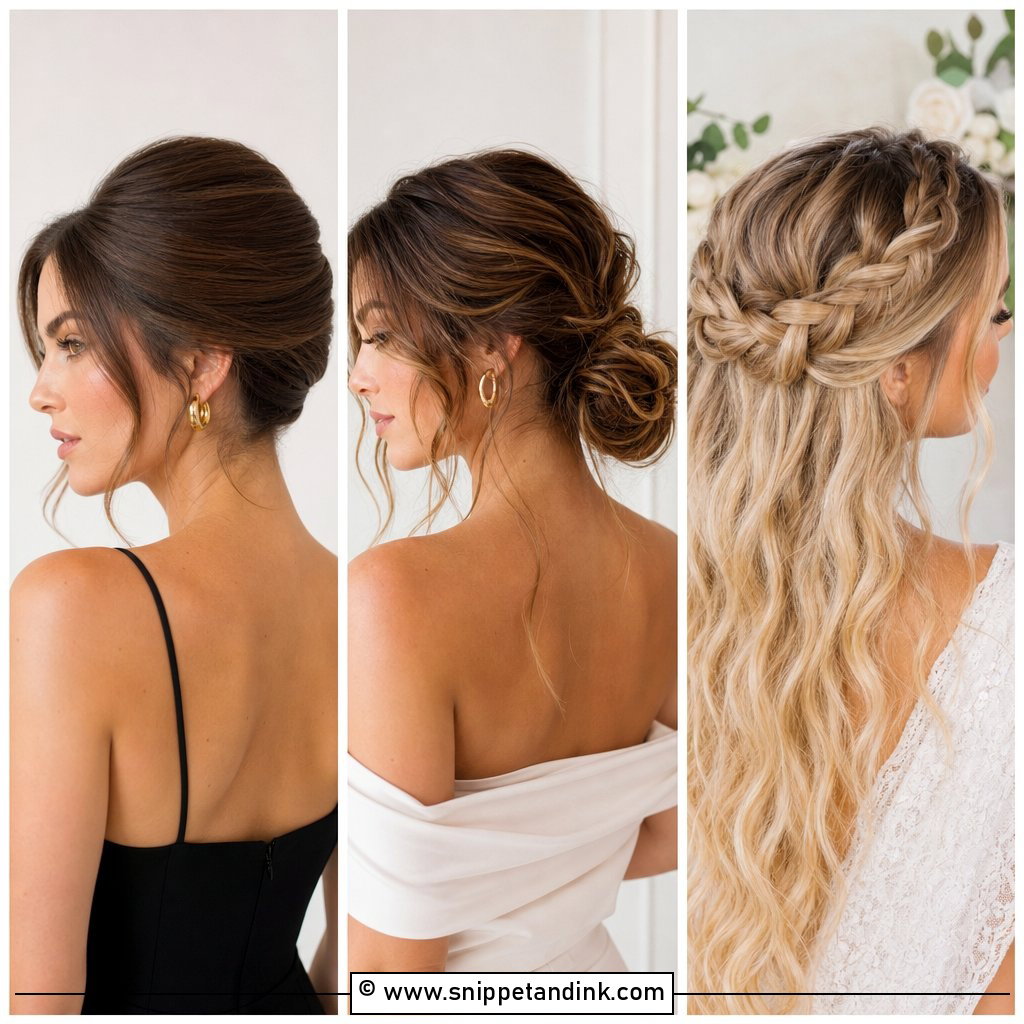
15. Twisted Braid Updo for Brides
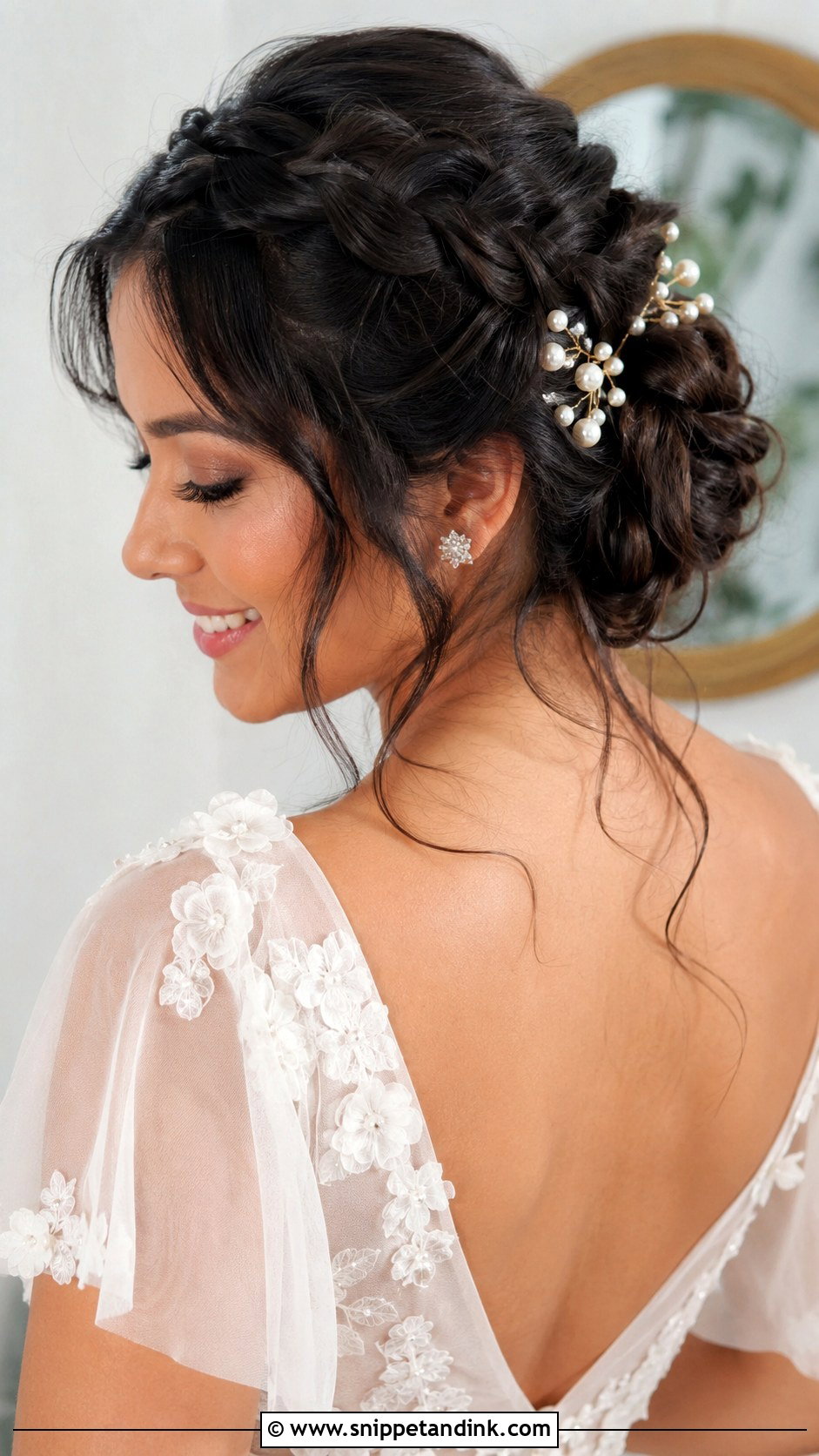
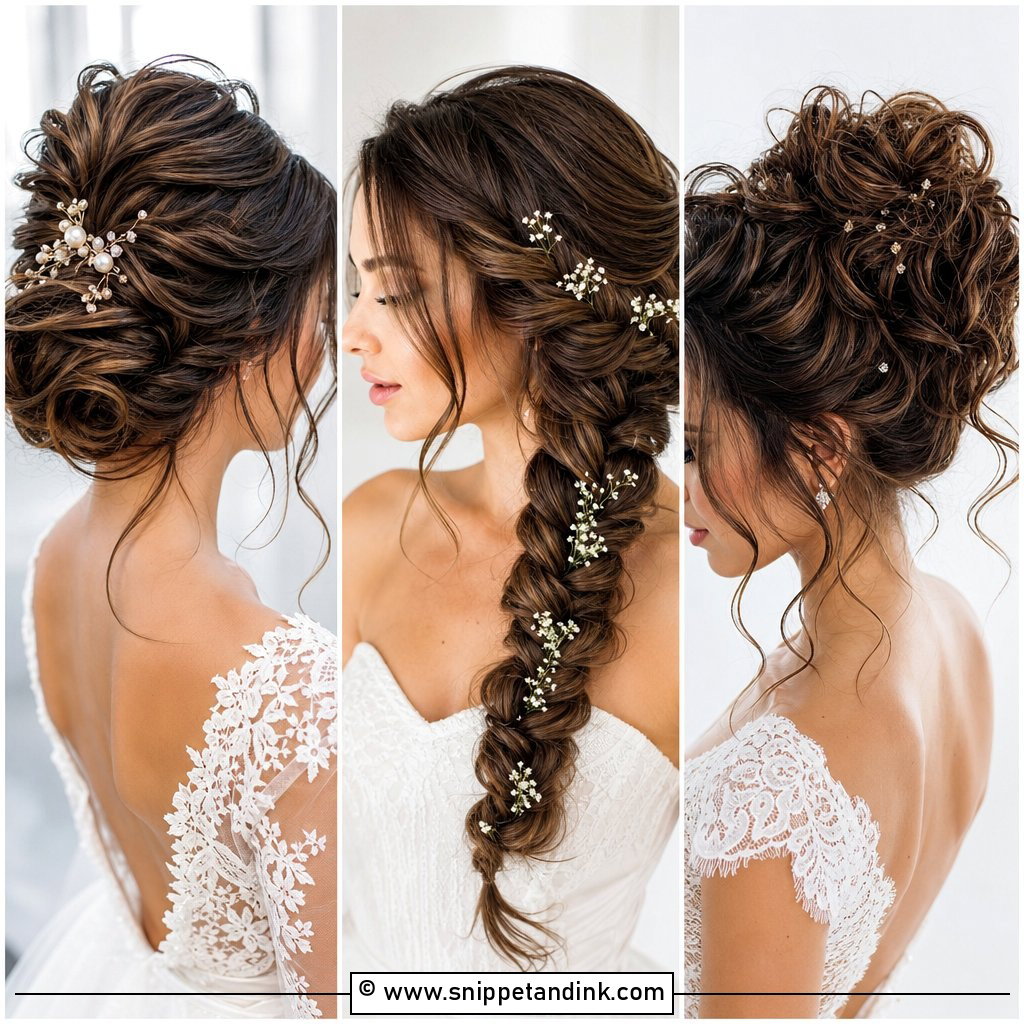
Twists hold volume, braids hold structure, and mixing the two in one updo gives you both. I use twists where I want fullness and braids where I need grip, usually at the base. It’s a relaxed, textured style, and very forgiving on curly hair, where twists show the natural pattern beautifully. Pearls or greenery fit either a modern or boho gown.
16. Braided Updo With Pearls
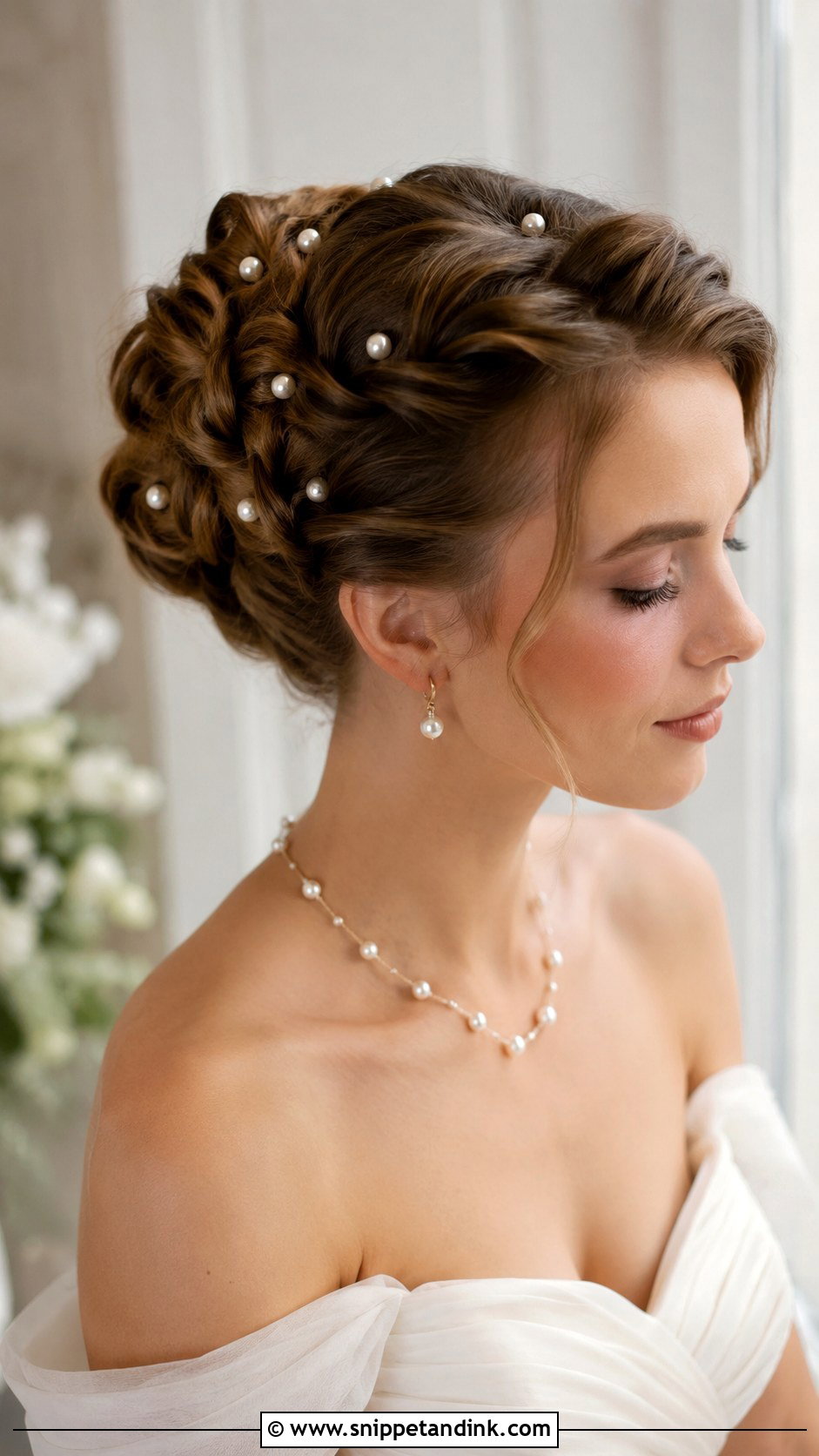
Pearl pins are my favourite way to add sparkle to a braided updo without a headpiece. I place them in the dips of the braid, where they sit securely and catch light from several angles. Too many pearls start to look busy, so I usually stop around seven to nine for an updo and match their tone to your earrings or necklace. Sleek or loosened, it suits both formal and modern gowns.
17. Boho Braided Crown With Tendrils
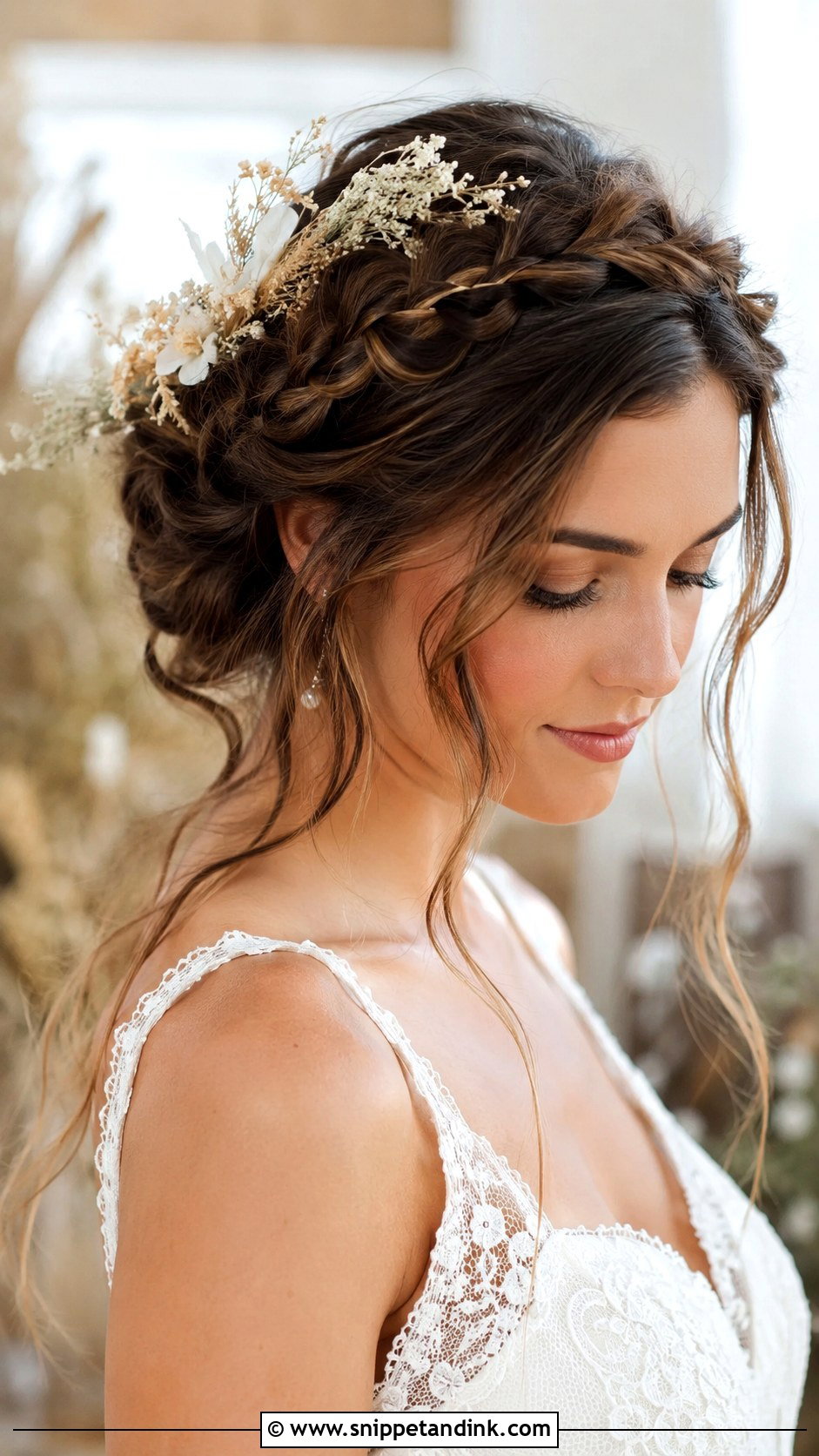
This braided crown leans on its tendrils, and the tendrils are where it can fail. The wispy face-framing pieces look great at 10 am and limp by 4 pm unless they’re curled with a small barrel and set while cooling. Dried flowers or greenery outlast fresh ones in warm beach or garden settings. On fine hair I’d keep the tendrils few and thin; on thick hair, they need to be slightly heavier to avoid looking puffy.
18. Double Dutch Braids Into Updo
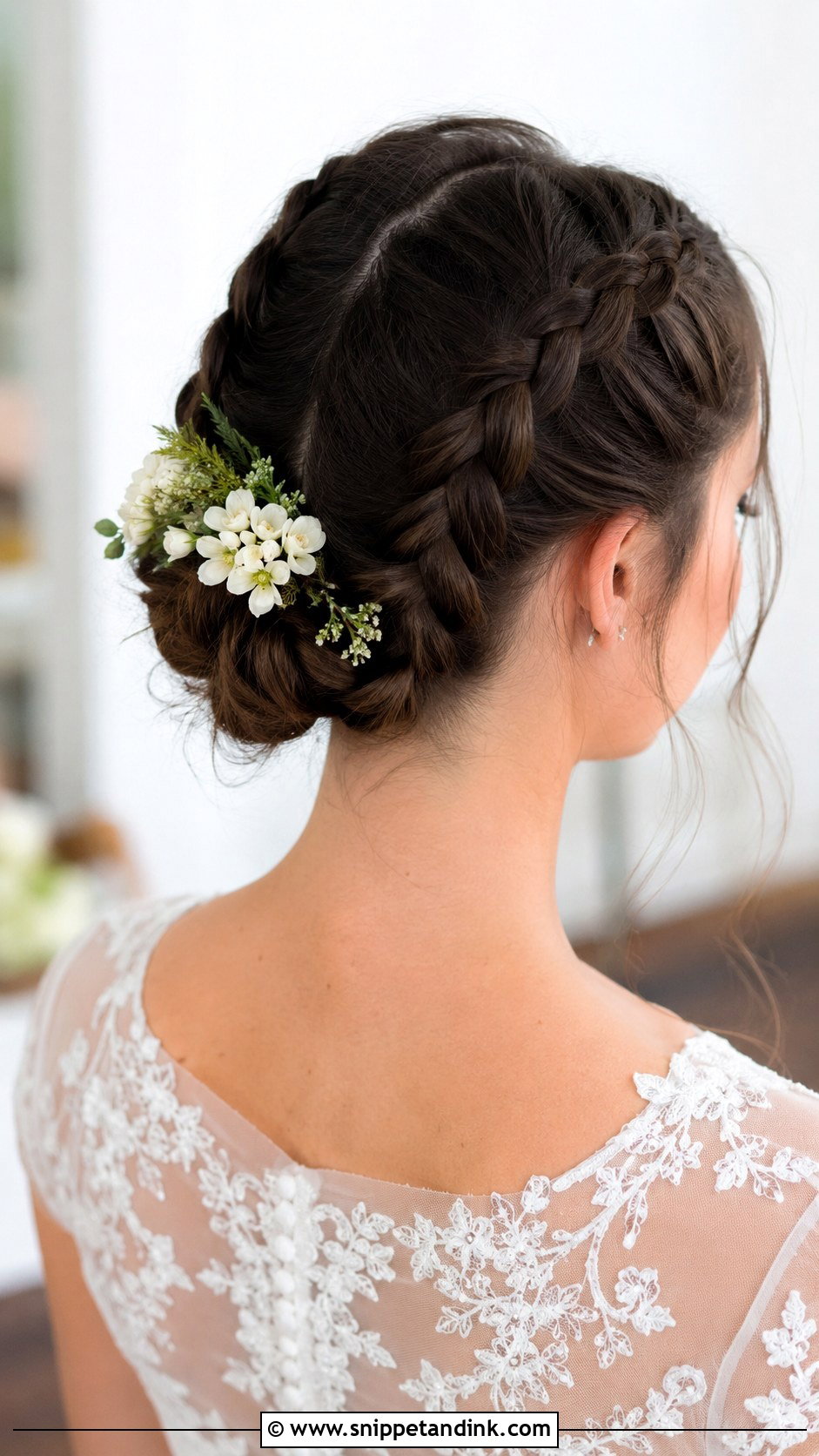
Two raised double Dutch braids running along the scalp into a bun give strong structure and lots of grip. I braid them tight at the hairline so they don’t loosen with movement, then pull them out more towards the back. It’s very secure and suits long, thick hair best. Shorter hair can still manage it if the bun is built with a padded base. Small pins along the braids add detail without softening the edge.
19. Braided Chignon for Brides
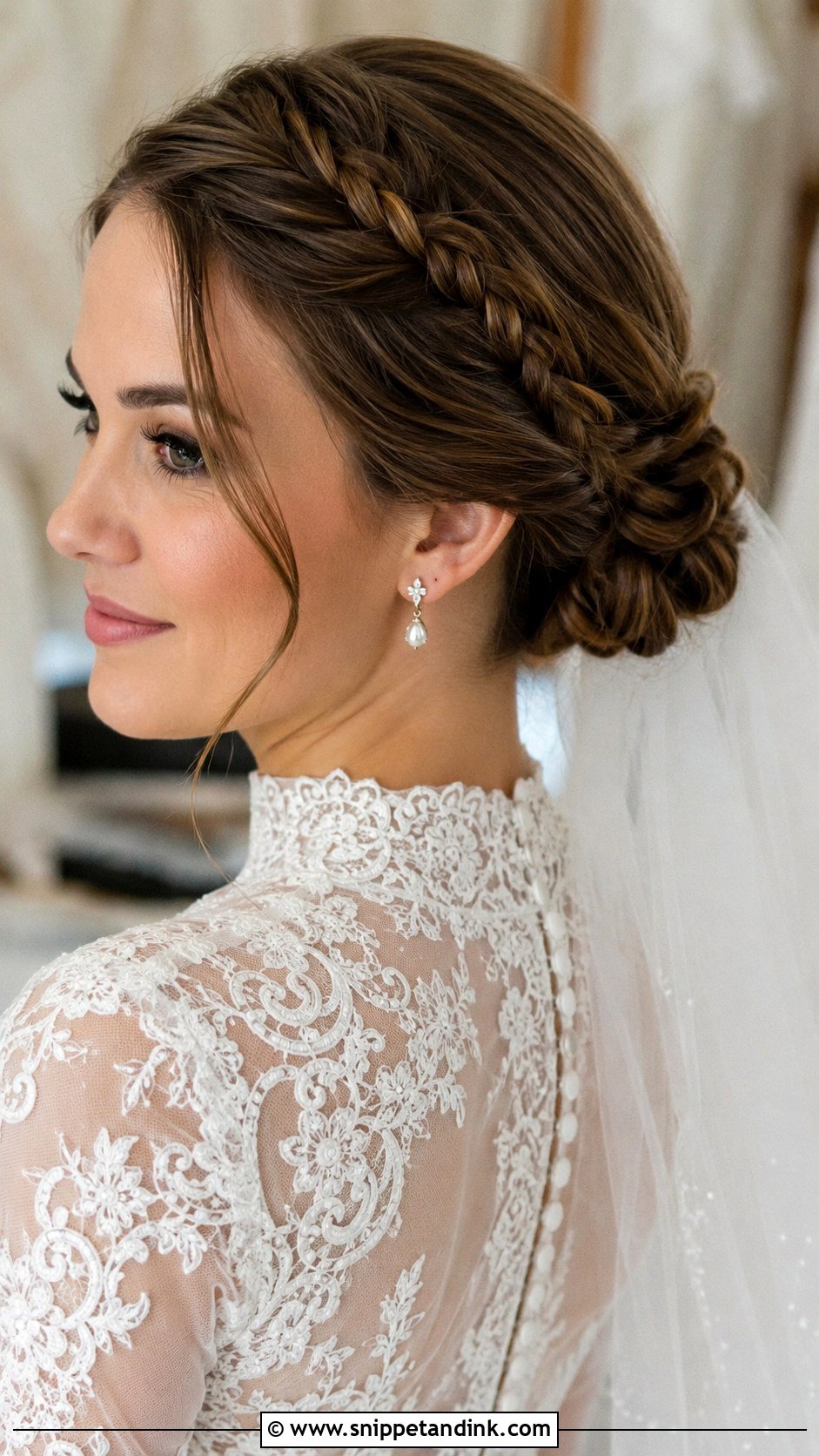
A braided chignon is one of the most reliable formal styles I do. The braid wraps into a low knot at the nape and holds the shape all day, with fewer pins than a plain chignon would need. It’s my first suggestion for high-neck gowns, since a low knot fills the space above the collar. Leave a strand or two loose only if your hair holds a curl; otherwise keep it sleek.
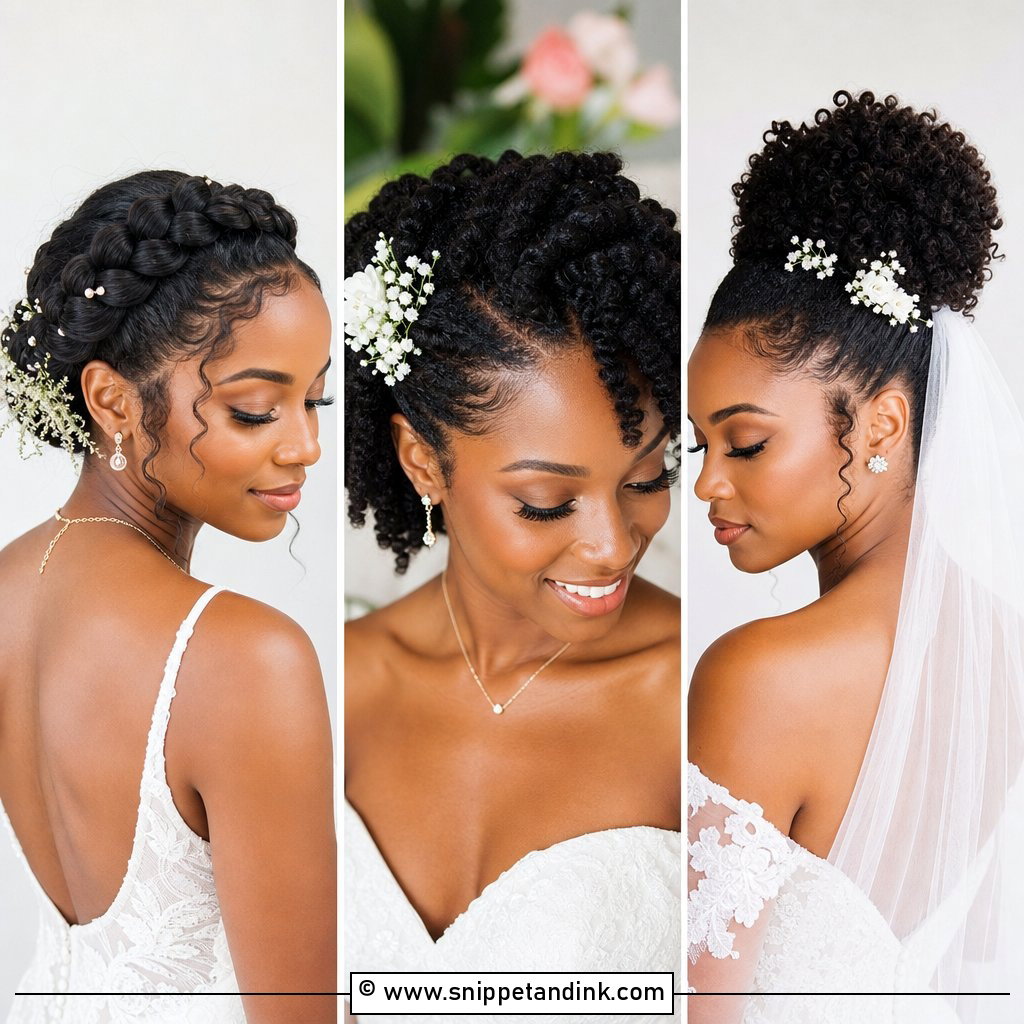
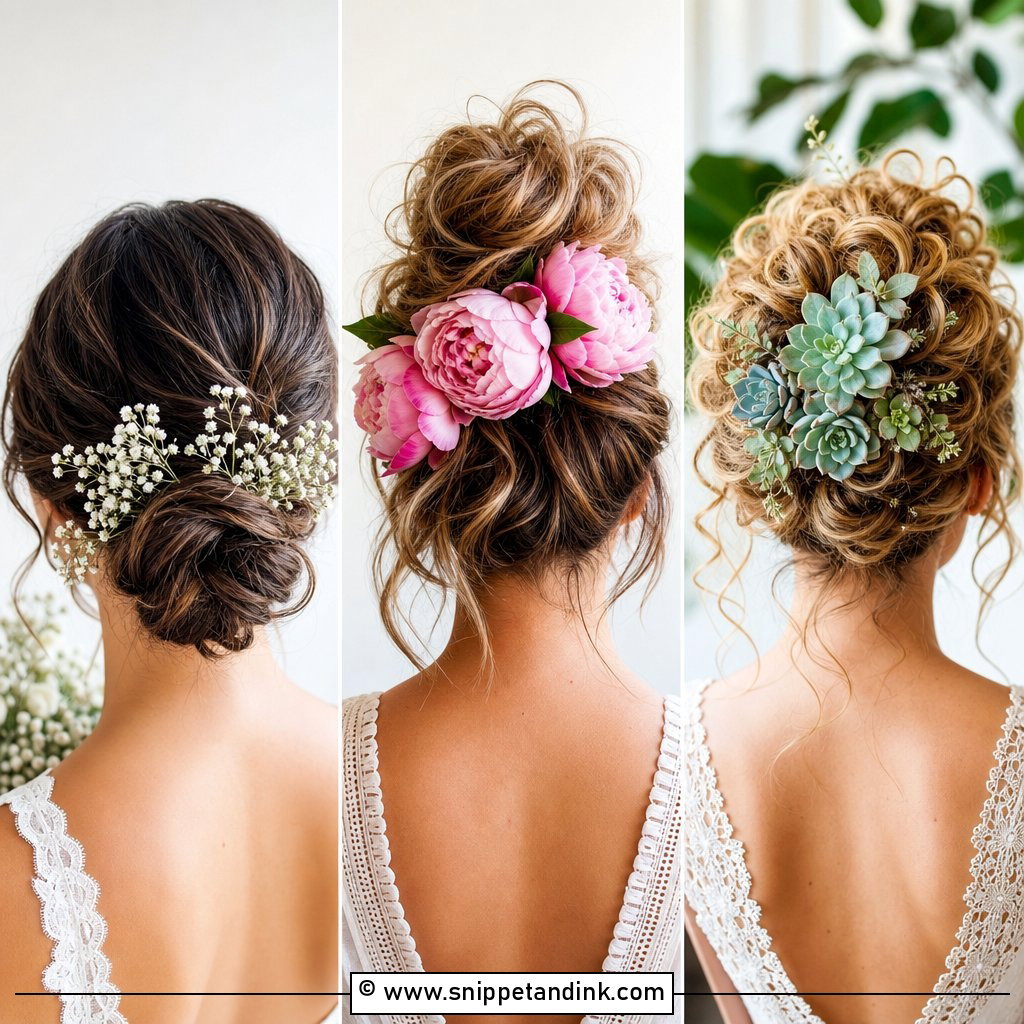
20. Cornrow Braids Bridal Updo
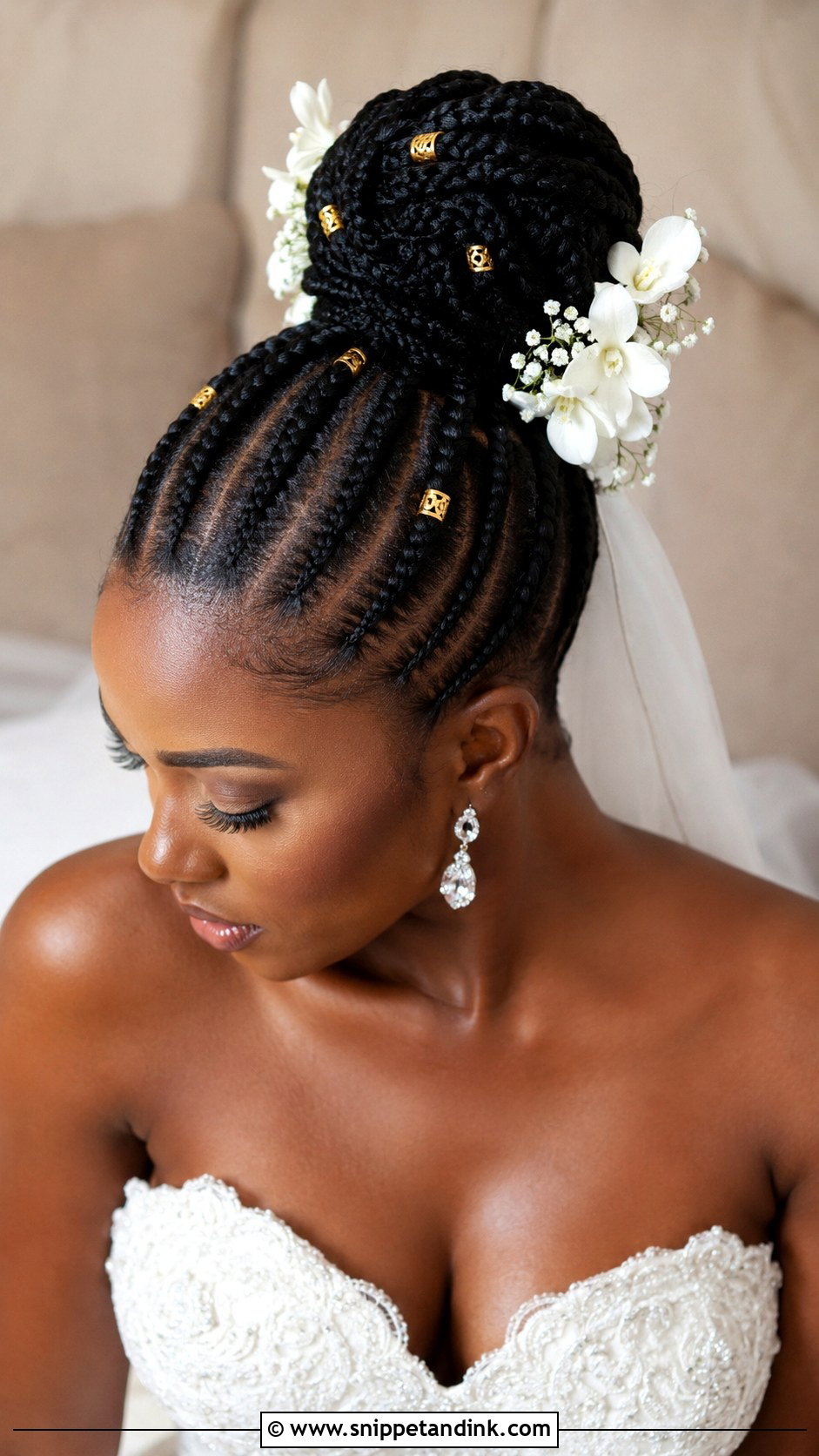
Sleek cornrow braids gathered into an updo are both secure and sculptural, and they carry cultural meaning for many brides. Cornrows are usually installed a day or two before the wedding, because detailed patterns can take hours. I make sure the tension is firm but not tight; braids that pull at the edges can damage the hairline. Gold cuffs, pearls or fresh flowers personalise it, and it holds through a long celebration without any touch-ups.
Chair Time, Install Days and Where You Sit in the Getting-Ready Schedule
Braids take longer than most brides expect, and that changes your morning. A simple half-up braid with waves might take forty-five minutes to an hour once the curling is included. A crown, milkmaid or double Dutch updo is usually closer to an hour to an hour and a half. Intricate cornrows are a different category altogether and are best installed in the days before.
If your braids go in ahead of time
Sleep in a satin scarf or bonnet and on a satin pillowcase, and avoid heavy oils at the roots, which can make the parts look shiny and greasy in photos. A light mist of water and leave-in on the lengths is enough to keep them fresh. I finish edges and any added flowers on the wedding morning.
On the morning itself
I prefer to do the bride’s hair second to last, not last. That leaves buffer time if a section needs redoing, and the braid has a little while to settle before the veil goes in. Ask your stylist to build in thirty minutes of spare time for the bride, and tell your photographer when the veil goes on so they can catch it.
Your Dress Decides More of This Than You Think
Most braid decisions come back to three things: your hair’s length and texture, your neckline, and where the veil or headpiece needs to sit. From dreamy waterfall braids to sculpted cornrow updos, every style above has a version that will work on you if those three line up. Bring your dress photos and accessories to the trial, wear the braid for a few hours afterwards, and adjust from there. Pearls and flowers are the finishing layer; the braid underneath has to hold first.
You'll Like These Ideas:


Leave a Reply