
Half-up half-down is the bridal style I reach for first when someone wants to film the process, because it moves. The lengths swing when she turns, the pinned crown gives the lens something to settle on, and almost every version breaks down into steps a viewer can follow: curl, section, twist, pin, add the accessory, reveal. That makes it easy to record for Reels, TikTok or a planning board, and easy for someone at home to copy. The ideas below suit brides, bridesmaids and stylists building a portfolio, and there are more wedding hair video ideas if you want to go beyond this one shape.
Pointing the Camera at the Back of the Head
Most half-up tutorials fail on video for one reason: the interesting work happens behind the head, and the phone is aimed at the face. Before I put the first curl in, I decide where the camera lives. A tripod set behind and slightly above the chair, about level with the crown, catches the twisting and pinning far better than a front-facing setup.
Light matters more than the phone. A window to one side gives curls and braids shadow and depth, while overhead salon lights flatten everything into one shine. In a dim room I set a ring light off to the side, never straight on, so glossy waves don’t turn into white glare.
- Shoot vertical for Reels or TikTok, and leave space above the crown so the pinned section isn’t cropped.
- Put a dark cape or towel over her shoulders so blonde hair doesn’t disappear against a white robe.
- Record the whole process and trim later. The best moments, like a braid being eased wider, last only a few seconds.
- Grab one slow-motion clip of the curls being brushed out. That shot usually carries the whole video.
If you’re the bride filming your own trial, ask your stylist before you start recording. I don’t mind, but some stylists prefer their hands kept out of the frame.
1. Half Up Half Down Wedding Hair With Curls
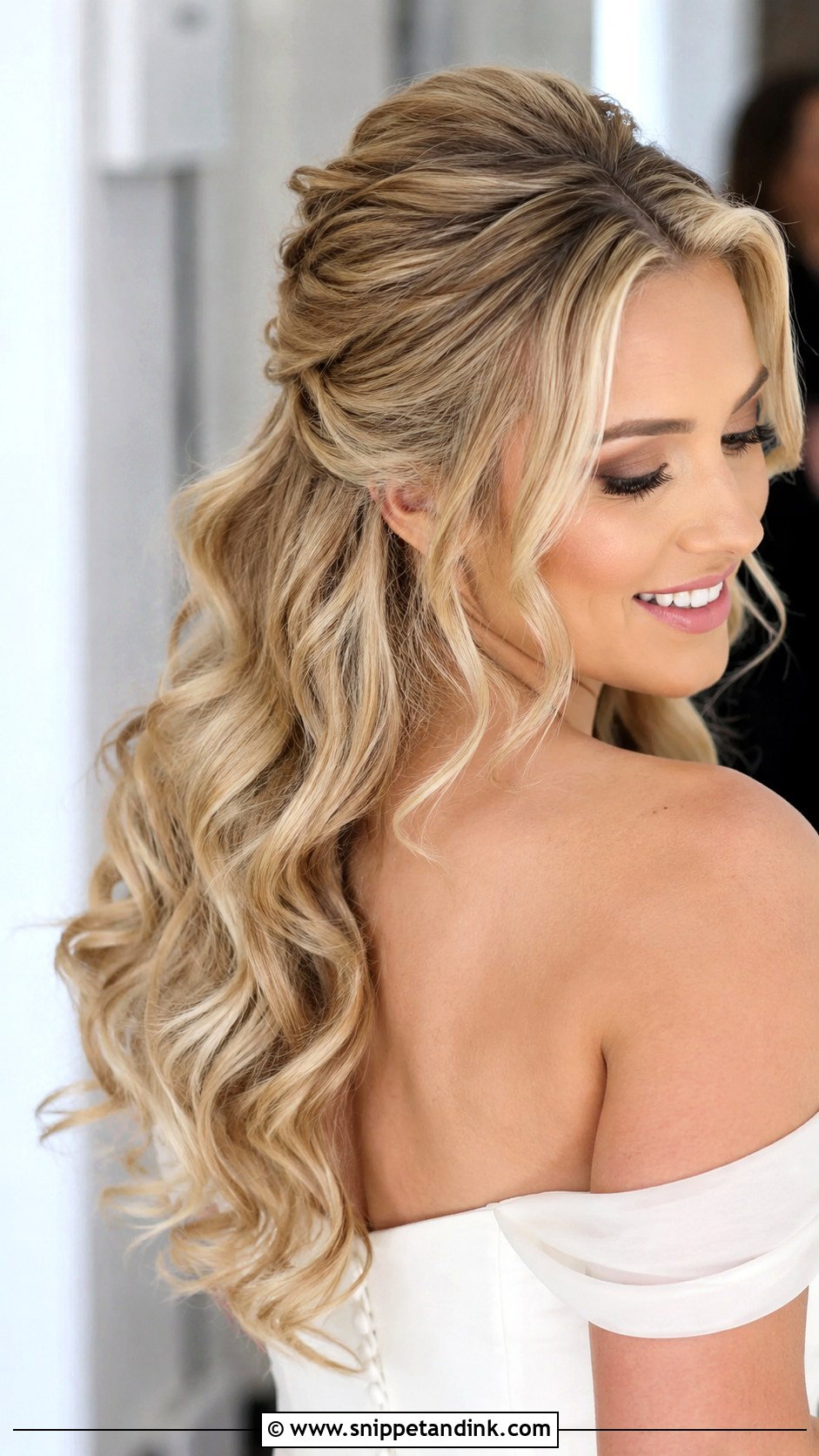
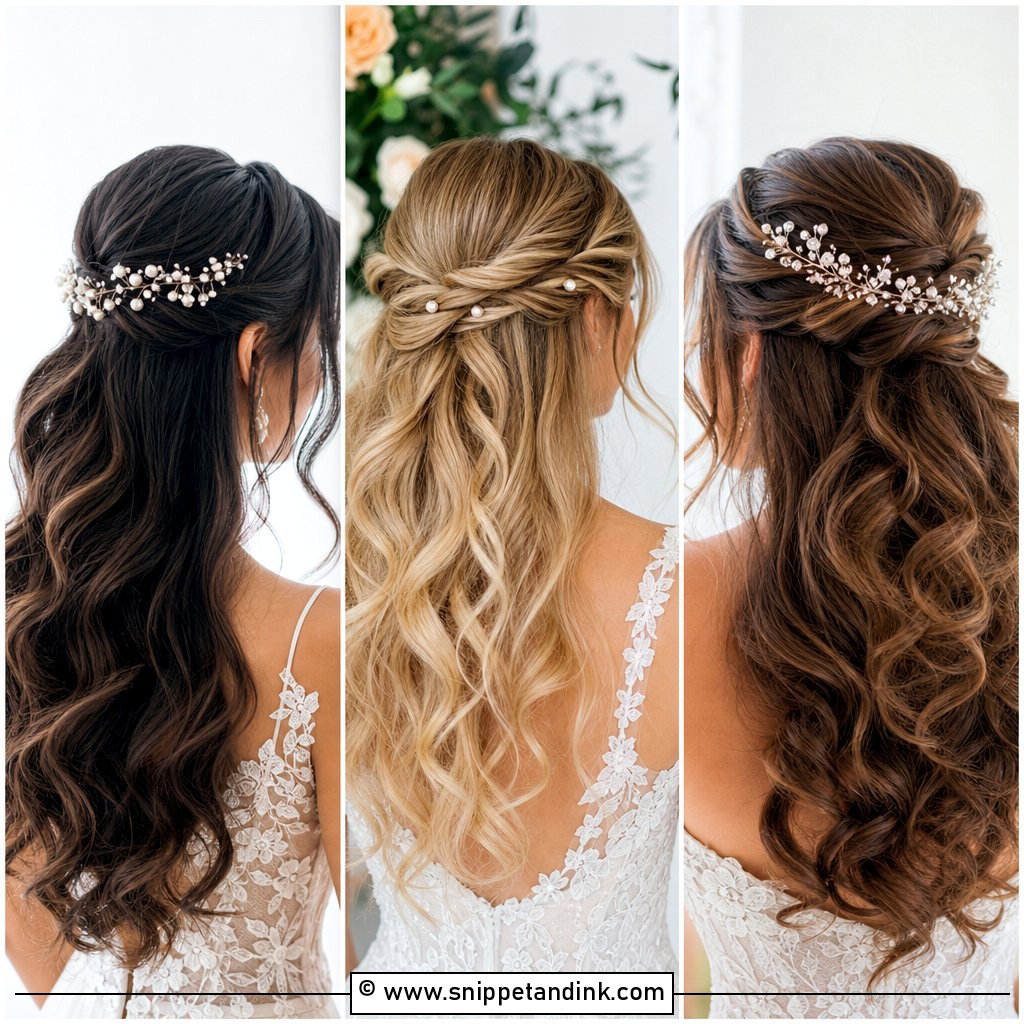
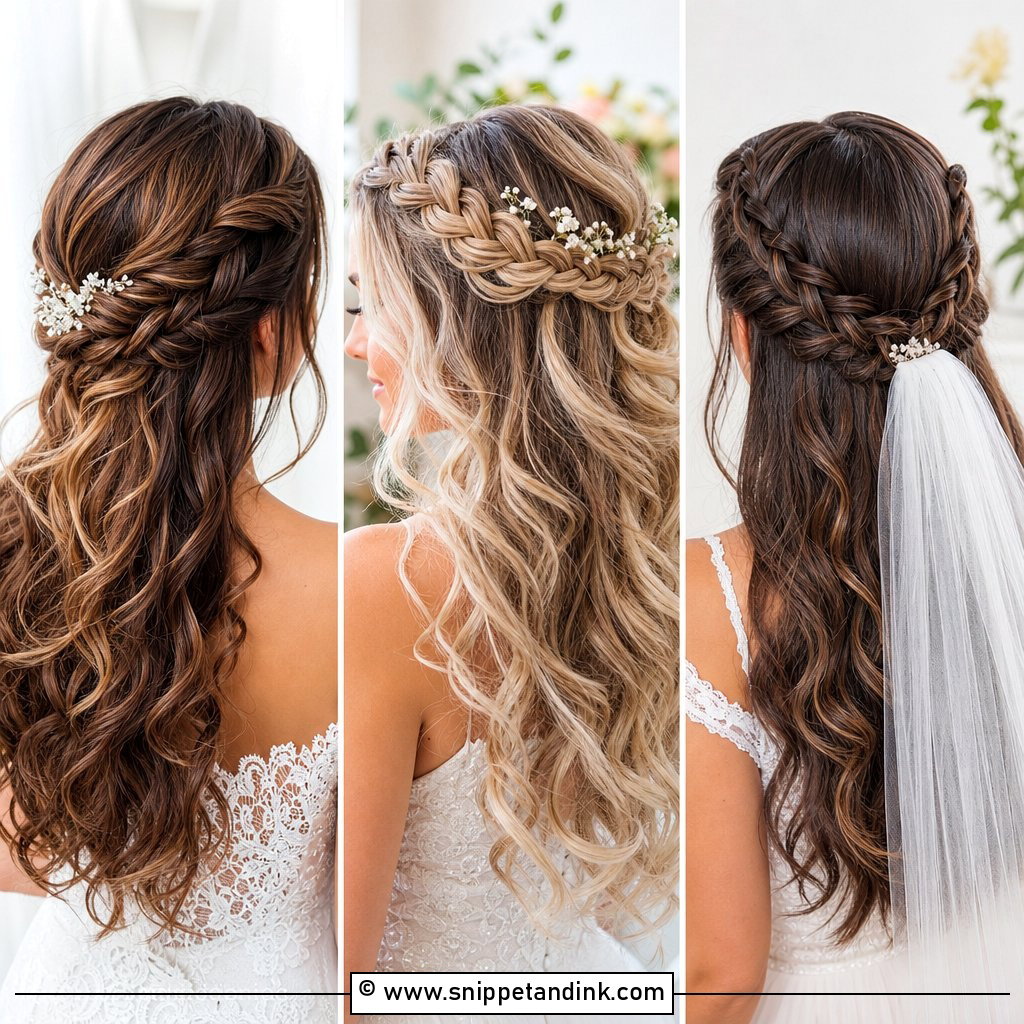
Large barrel curls are the starting point for most of the versions below, so this is the one I’d film first. I set each section on a 1.25-inch iron, pin the curl while it’s still warm and let the whole head cool before I brush anything out. Brush too early and the curl relaxes into frizz by the first dance. The crown gets a light lift rather than a hard tease, and I pull two face-framing pieces out before pinning so I’m not tugging them free later. On camera, a slow turn from the back into side profile shows the curl shape far better than a front shot, and strapless or off-the-shoulder necklines leave the most room for those curls to show.
2. Half Up Half Down Wedding Hair With Veil
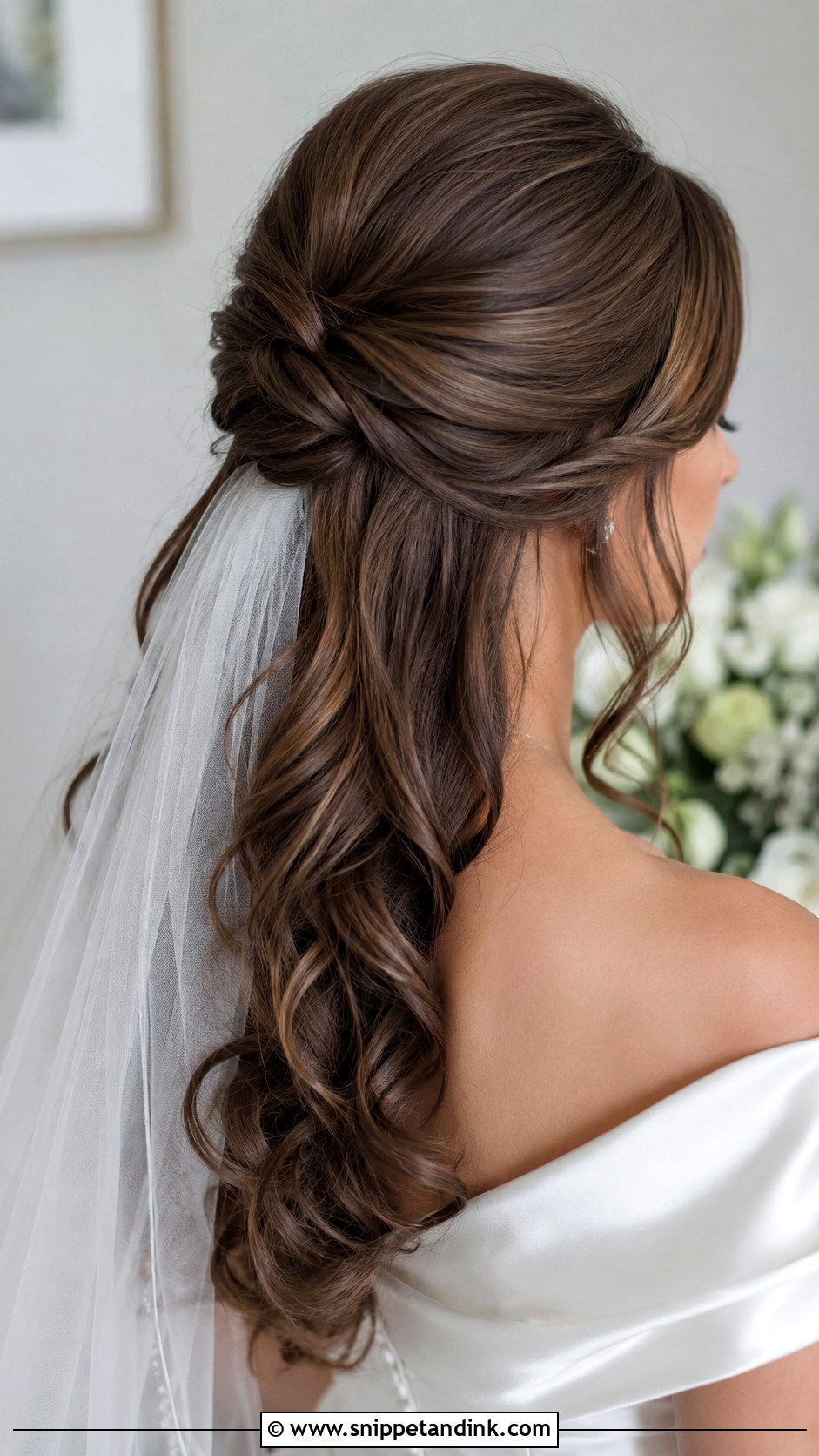
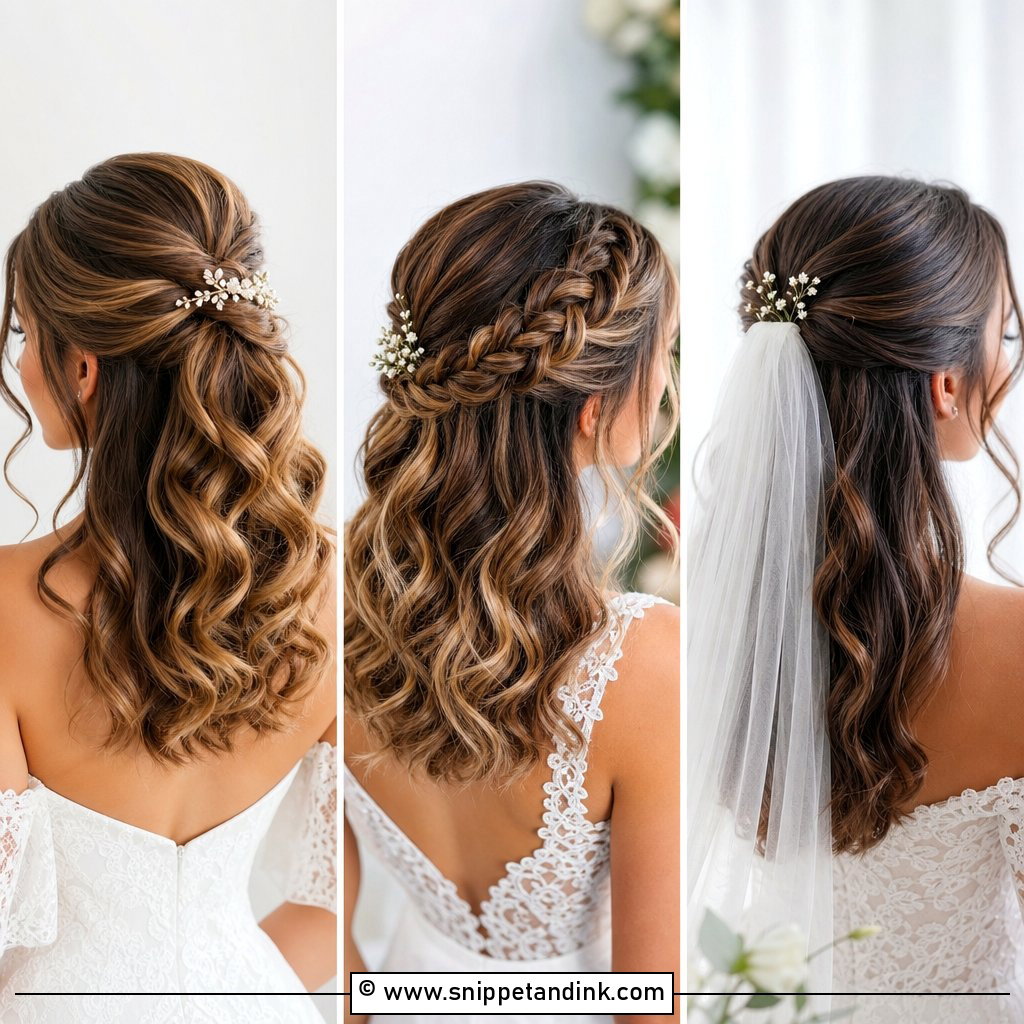
The veil is where half-up styles succeed or fail, so I build this one around the comb before anything else. A veil comb needs something dense to bite into, which means a small teased cushion at the crown with twists pinned crosswise beneath it. Slide the comb under the pinned section and the veil falls cleanly from beneath the twists. Set it above and you get height and a bigger reveal, though a heavy cathedral veil will drag the whole top section backward over a long day. Film the style with and without the veil; that comparison is the question most brides bring to their trial.
3. Half Up Half Down Wedding Hair With Braid
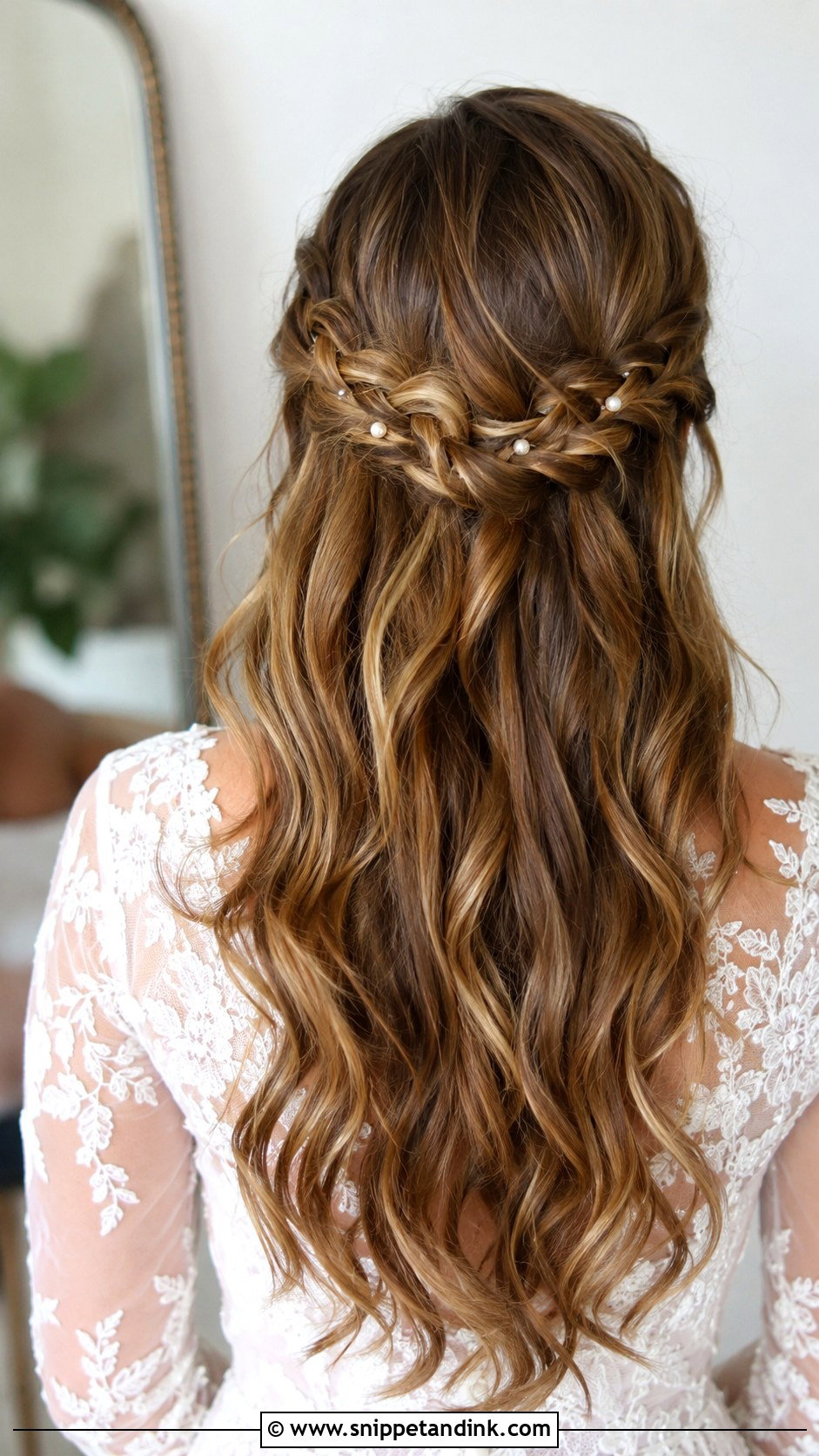
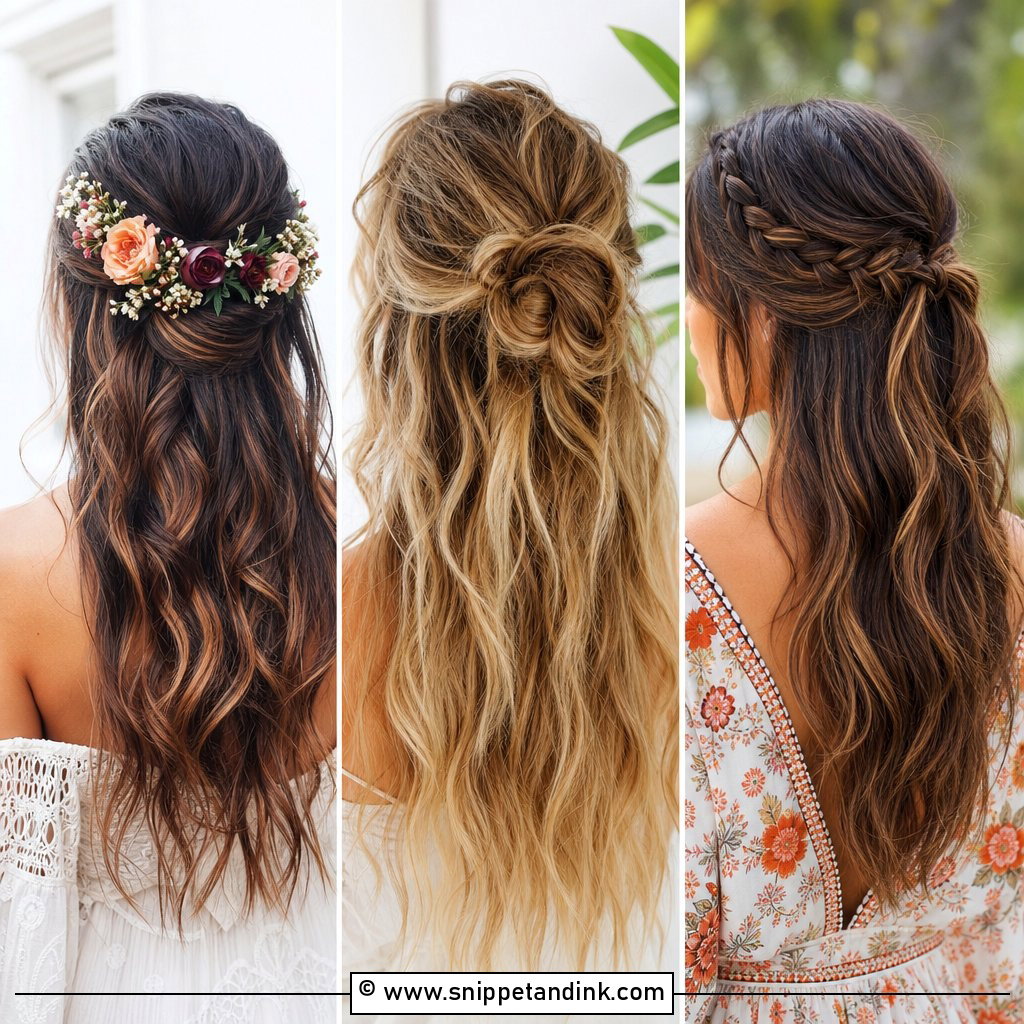
A braid brings texture and a romantic handmade feel on camera. I braid two small side sections over loose curls and join them at the back with an elastic hidden under a wrapped strand. The pull-apart step is what makes it bridal: I loosen each loop with my fingertips, working from the end toward the scalp, so the braid widens without coming undone. Pull too hard near the hairline and the close-ups will show scalp. It sits most naturally with garden venues and relaxed boho gowns, and a few tiny pearls or floral pins give the final close-up a focal point.
4. Half Up Half Down Wedding Hair With Twists
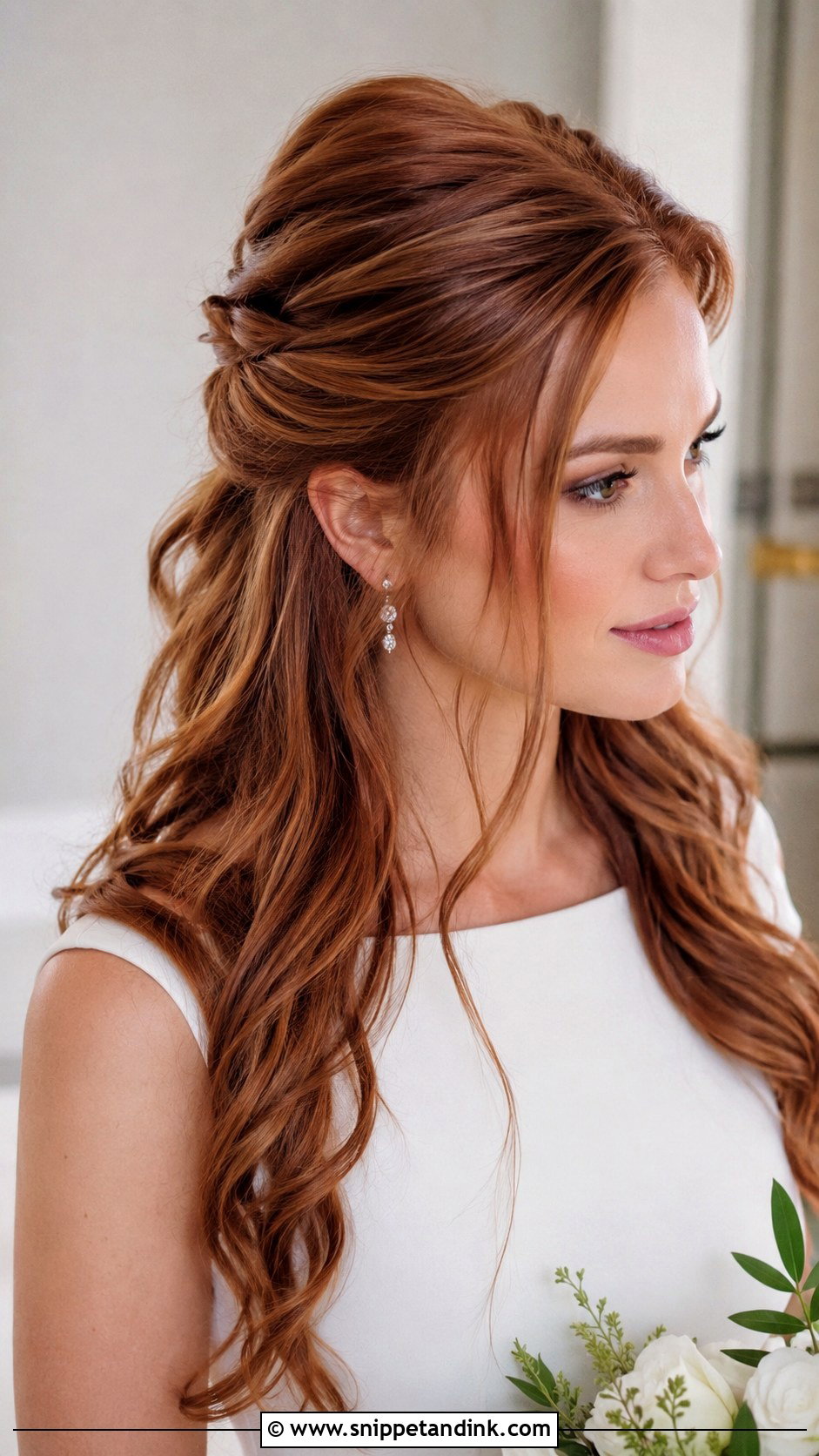
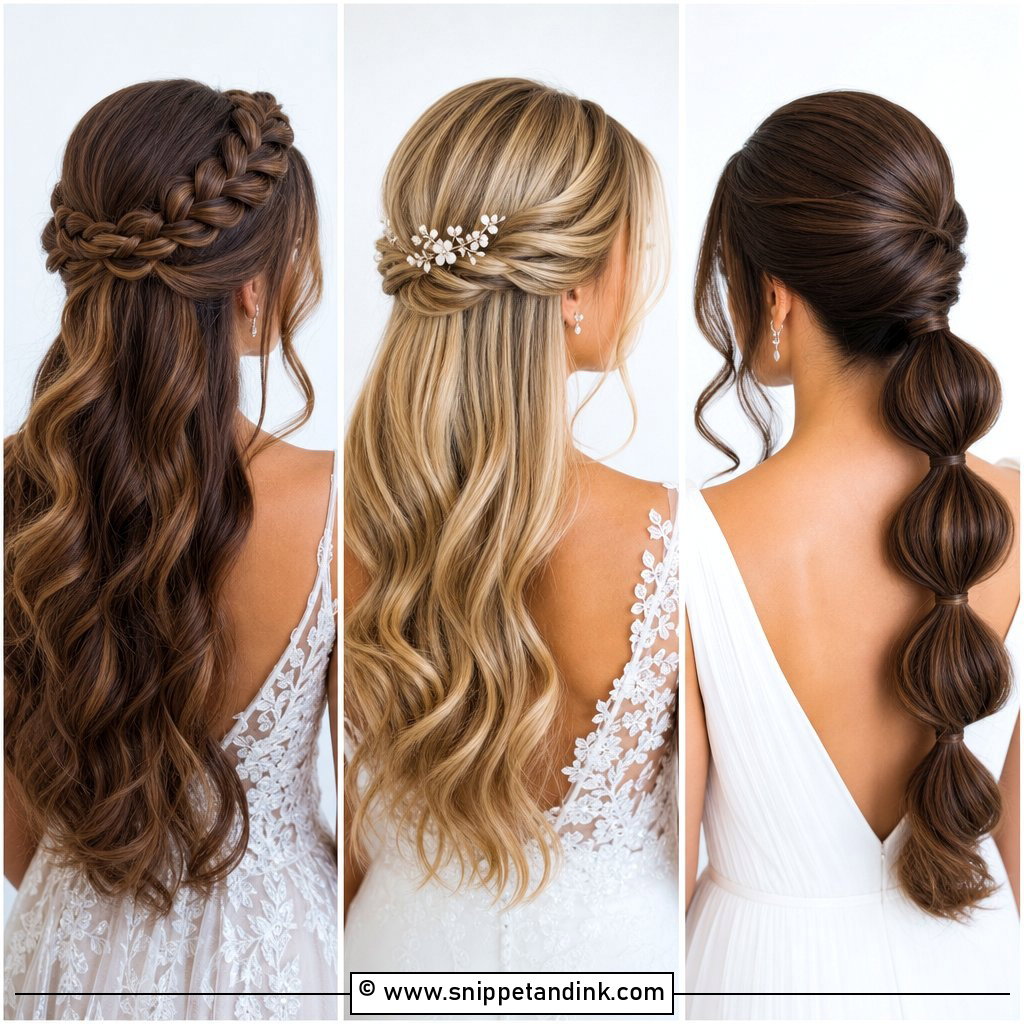
Twists are what I teach anyone who wants a version she can redo herself, since the whole style is two moves repeated. I curl first, separate the face-framing strands, then twist each front section away from the face and pin it at the crown with two pins crossed in an X so they lock. The usual mistake is twisting one side tighter than the other. Filmed from behind, that imbalance is obvious, so I check the back in a hand mirror before the last pin goes in. Medium to long hair suits it best, and it takes a pearl pin, a small comb or a light veil without any fuss.
5. Half Up Half Down Wedding Hair With Pearl Pins
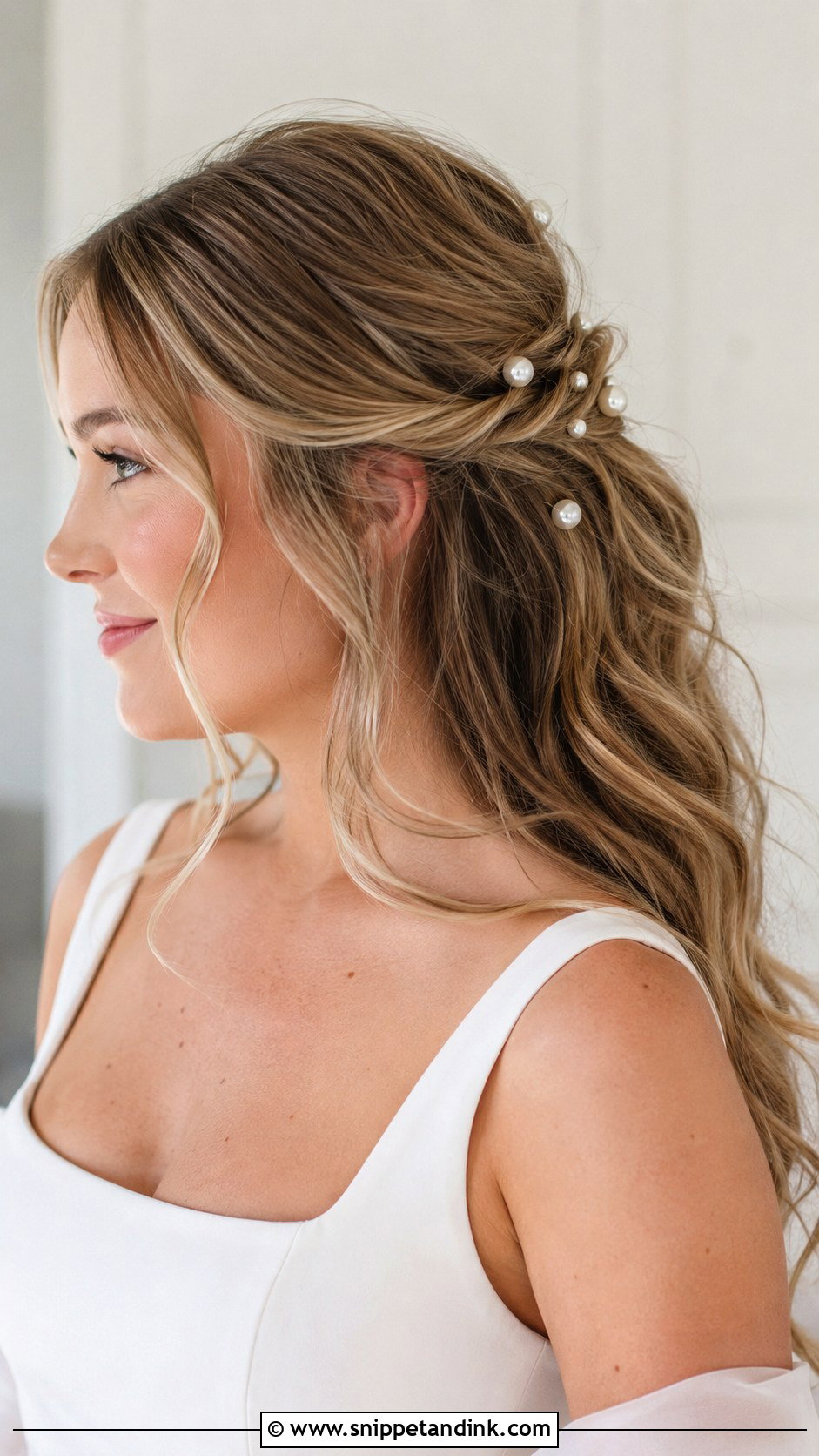
Pearl pins turn any of these bases into close-up material, but placement is where I see them go wrong. Lined up in a neat row, they look like a boxed accessory set. Scattered at slightly different heights through the pinned section, they look as if they belong to the hair. I push each one into a twist or a curl rather than into flat hair, because on smooth lengths they slide out within the hour. Backlight catches pearls, so film the back view first and finish with a slow pass from one side to the other. They sit comfortably with almost any gown, from heavy lace to plain crepe.
6. Half Up Half Down Wedding Hair With Flowers
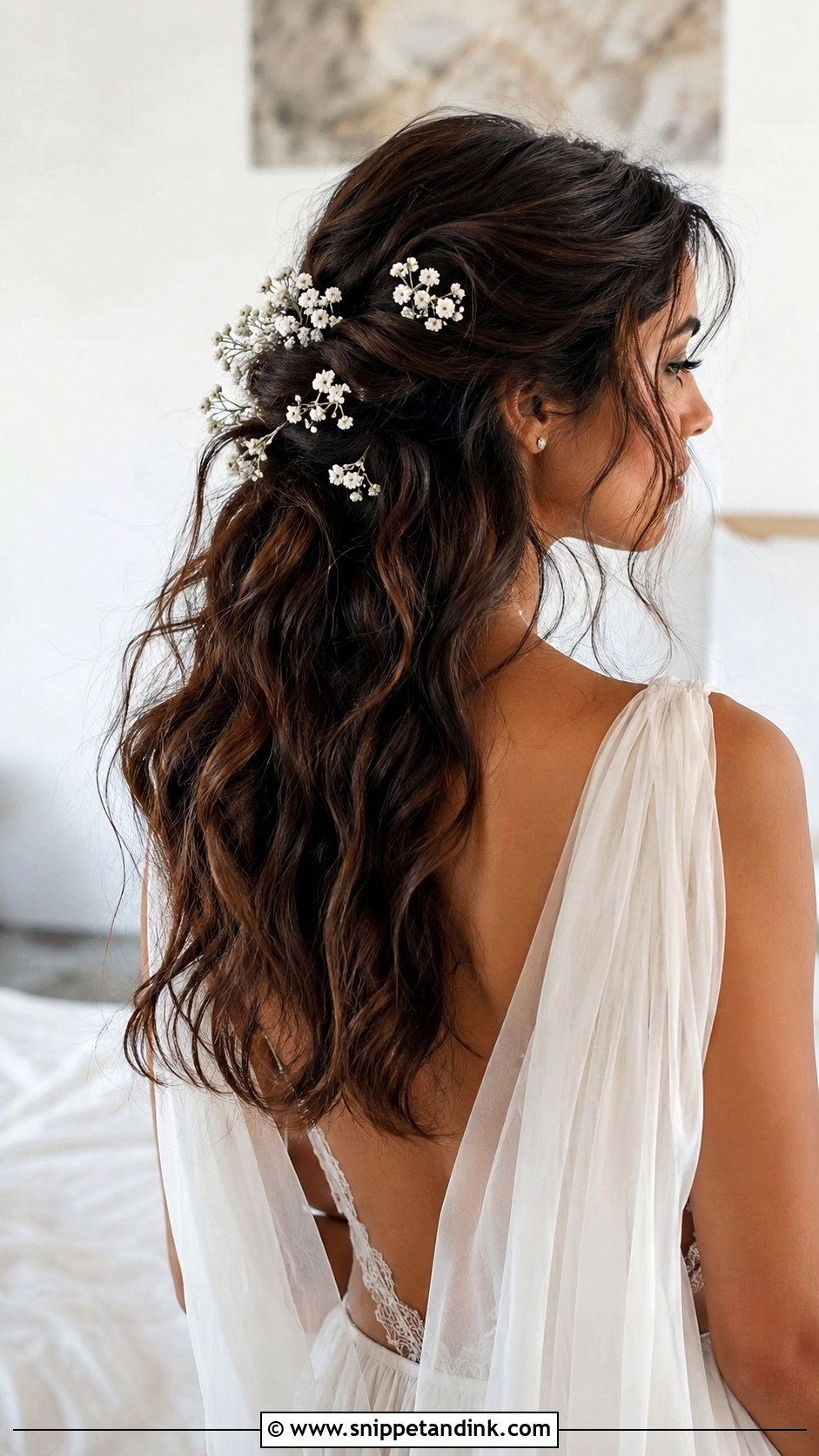
Fresh flowers in the hair take more planning than most brides expect. Small blooms, baby’s breath or soft floral pins stay put in a twist; anything with a heavy head tips forward by mid-afternoon. I ask the florist for hair pieces wired and taped individually and kept cool until the last minute, and I add them after the hairspray so the spray doesn’t spot the petals. Keep the placement airy, because too many flowers bury the twisting you worked on. Spring, summer, garden and beach weddings suit this best. For the video, add the pieces one at a time and finish outdoors, where natural light shows the petal color truthfully.
7. Half Up Half Down Wedding Hair For Long Hair
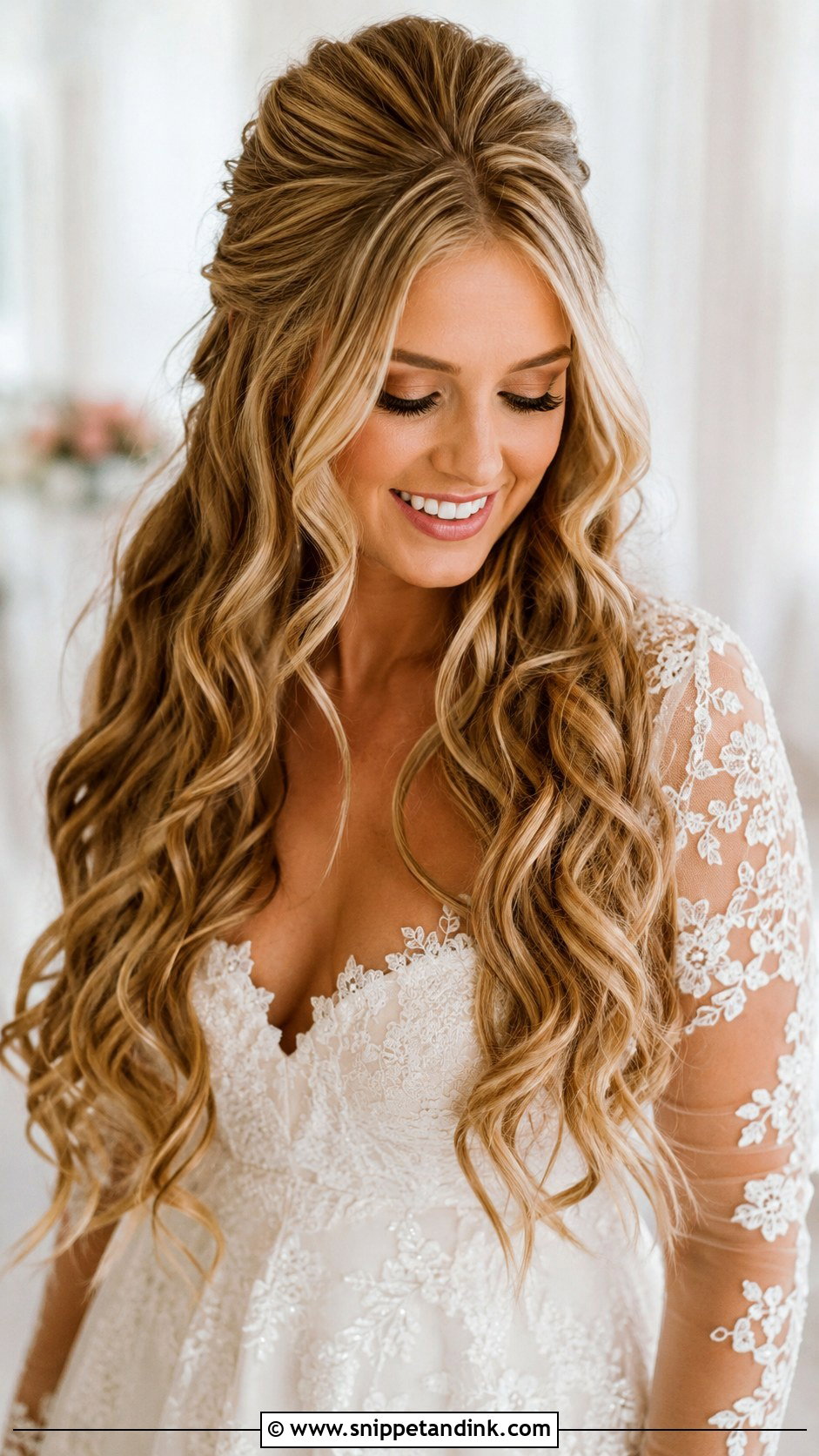
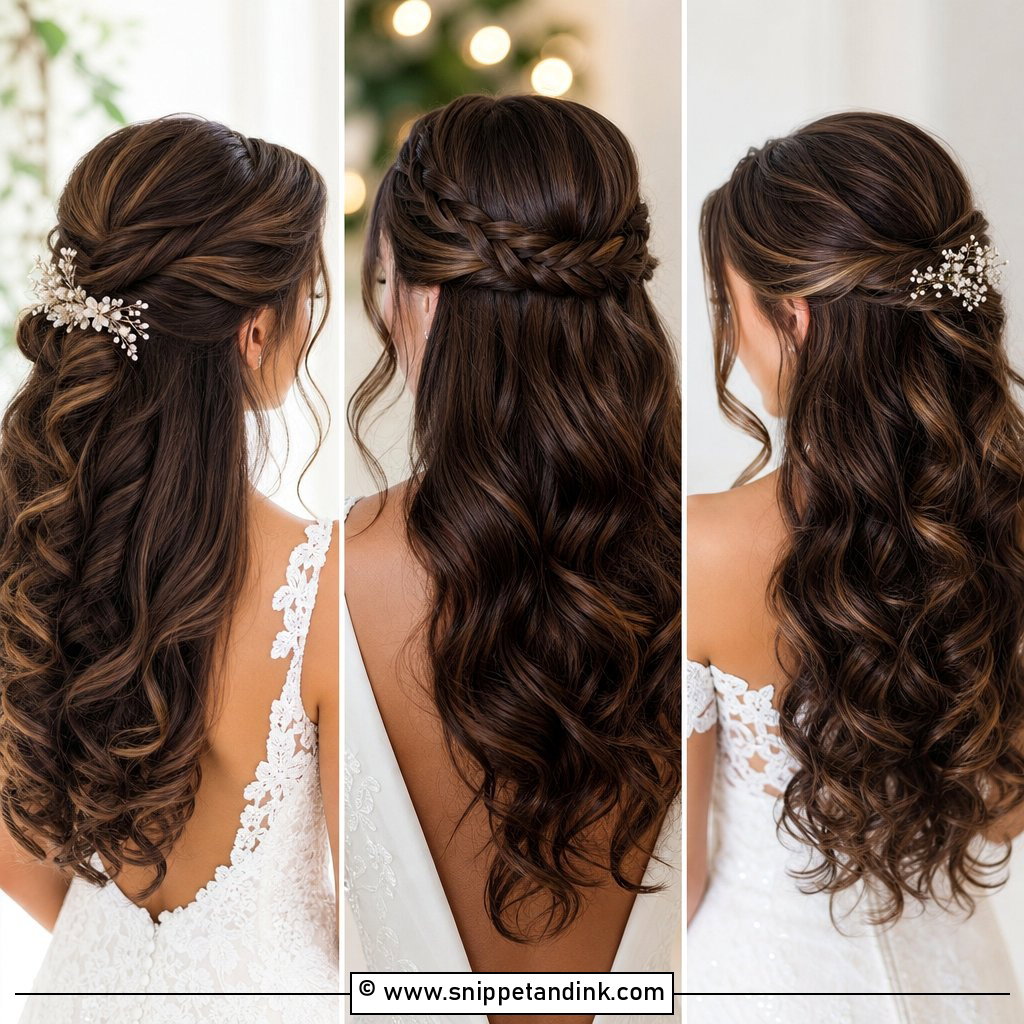
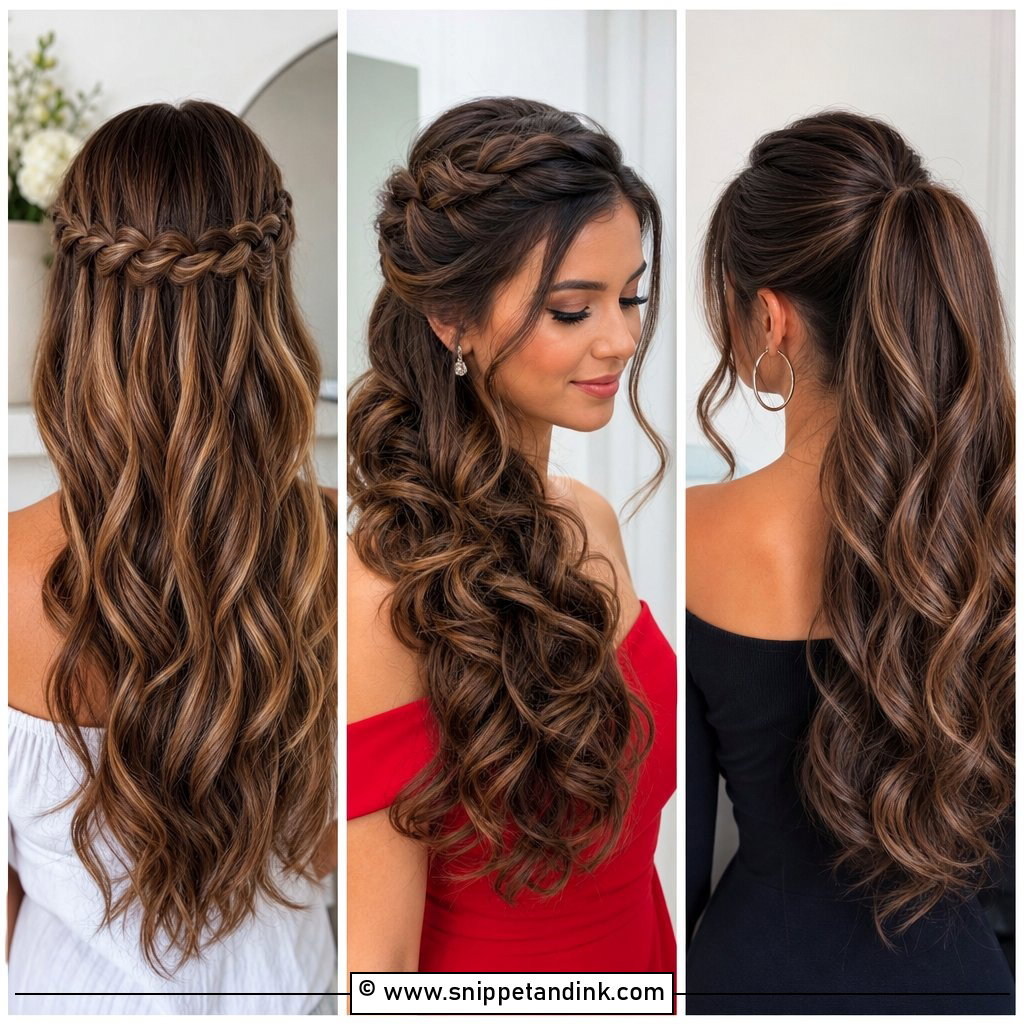
Long hair gives the most movement on film, and it’s also the hair most likely to drag the top section down. Weight is the whole problem. I curl the full head, brush the curls into waves, then build the half-up section on a small hidden elastic covered with a wrapped strand, which carries the load far better than pins alone. Viewers find that hidden base genuinely useful, so show it. If the hair falls past the mid-back, I trim the curling time on the bottom layer so the ends don’t clump into one heavy rope. A walking clip, a back shot and a shoulder turn let all that length swing.
8. Half Up Half Down Wedding Hair For Medium Hair
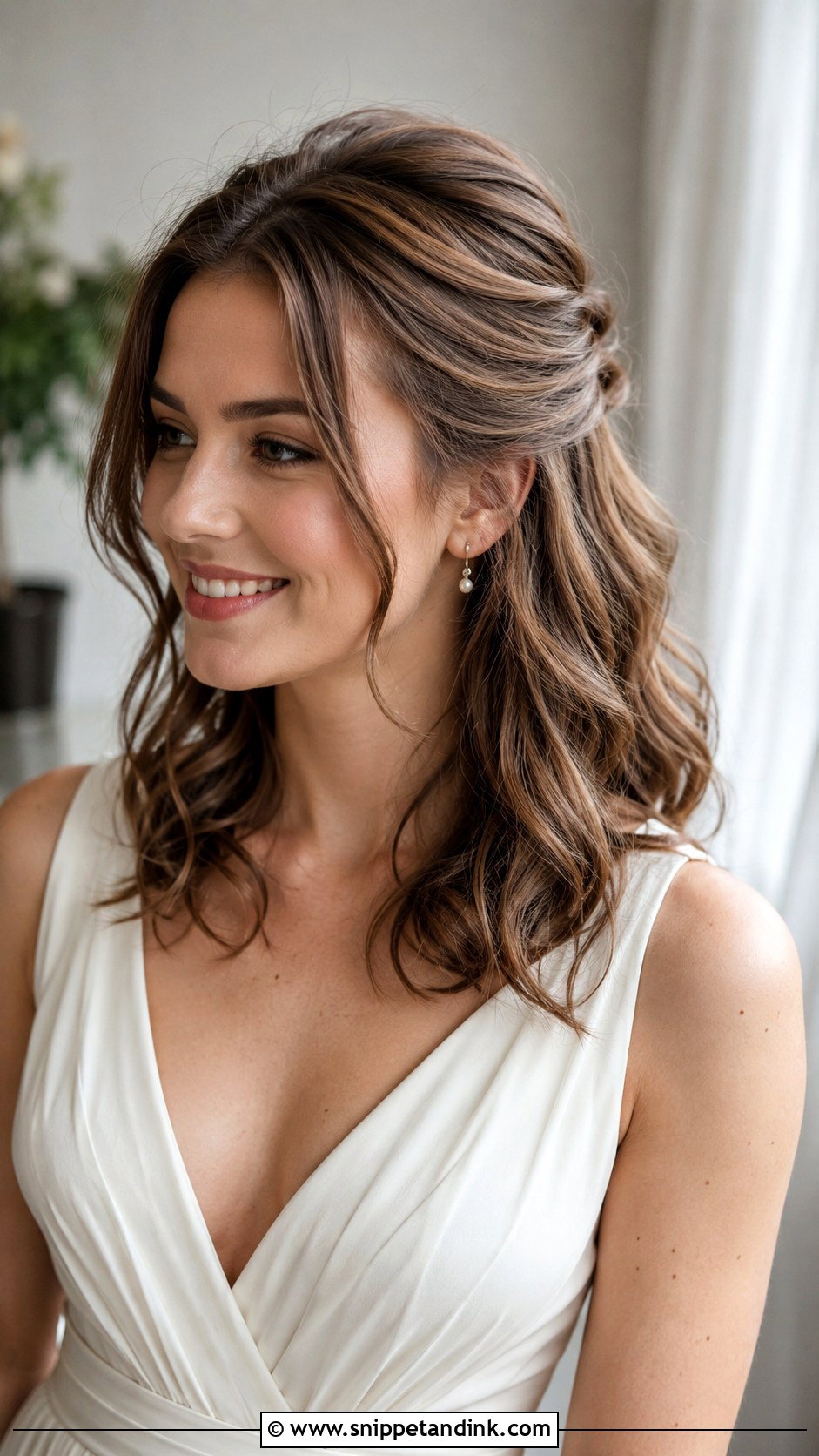
Medium hair gives the clearest before-and-after, which is why I like it for a transformation clip. The challenge is fullness without length to help. I add texture spray at the root before curling and keep the waves a touch tighter than on long hair, because they’ll relax through the day. Take back only the top third; take more and what’s left hanging looks thin. Twists, small braids or a simple clipped half-up shape all suit this length, and the same style translates easily to bridesmaids and guests.
9. Half Up Half Down Wedding Hair For Short Hair
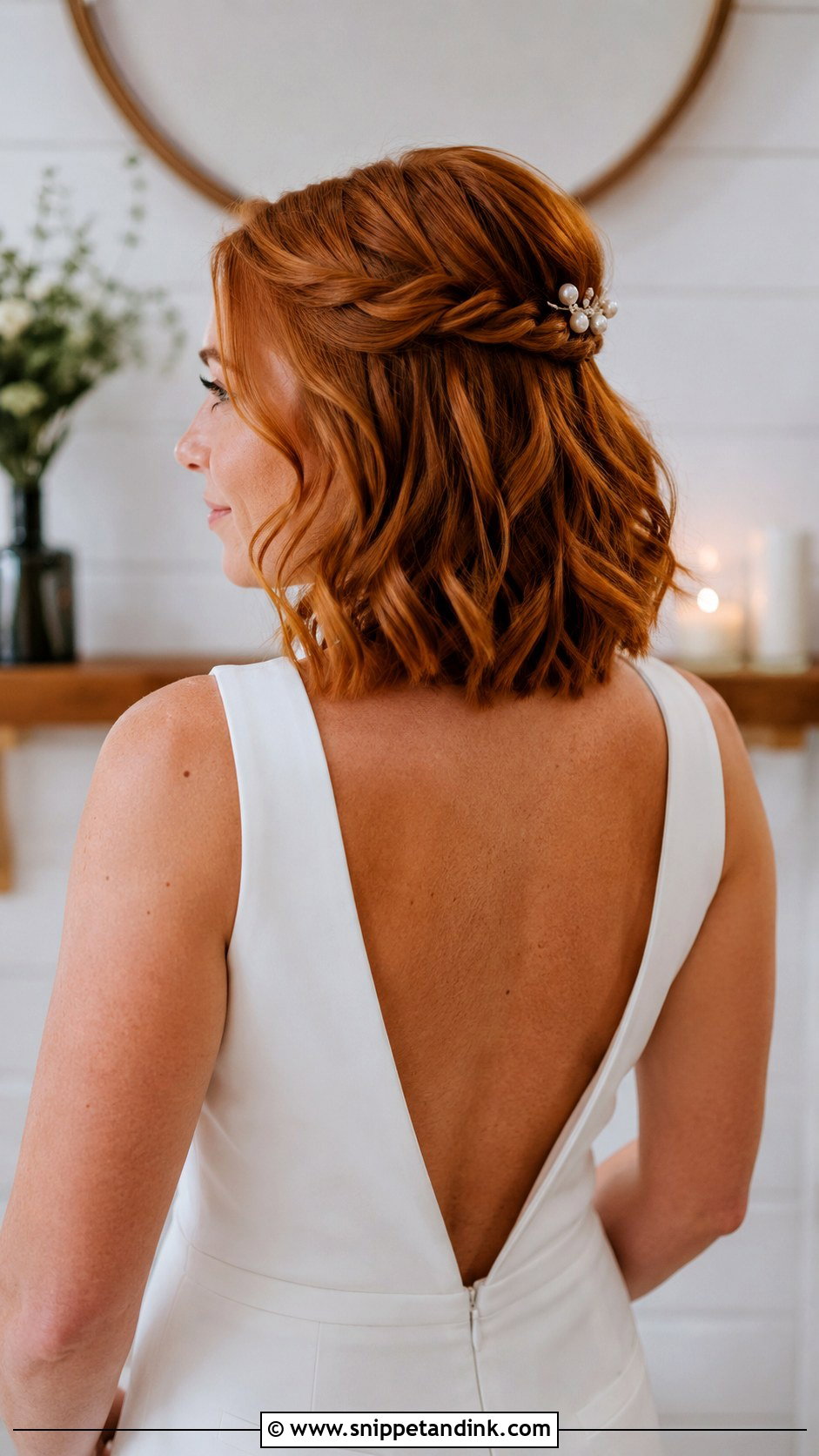
Short hair can carry a half-up look, but I’m honest at the trial: on a bob or lob the down part is short, so the style lives at the crown. I wave the lengths first, then pin the top layers back with small twists or a mini braid, using shorter bobby pins that disappear in less hair. Front layers cut much shorter than the rest may not reach the back at all, and that’s where a pearl clip or a small comb earns its place. Short-hair details are hard to see from the back, so I film the pinning from the side. Short hair shows every loose pin, so keep the finish tight and smooth.
10. Half Up Half Down Wedding Hair With Loose Waves
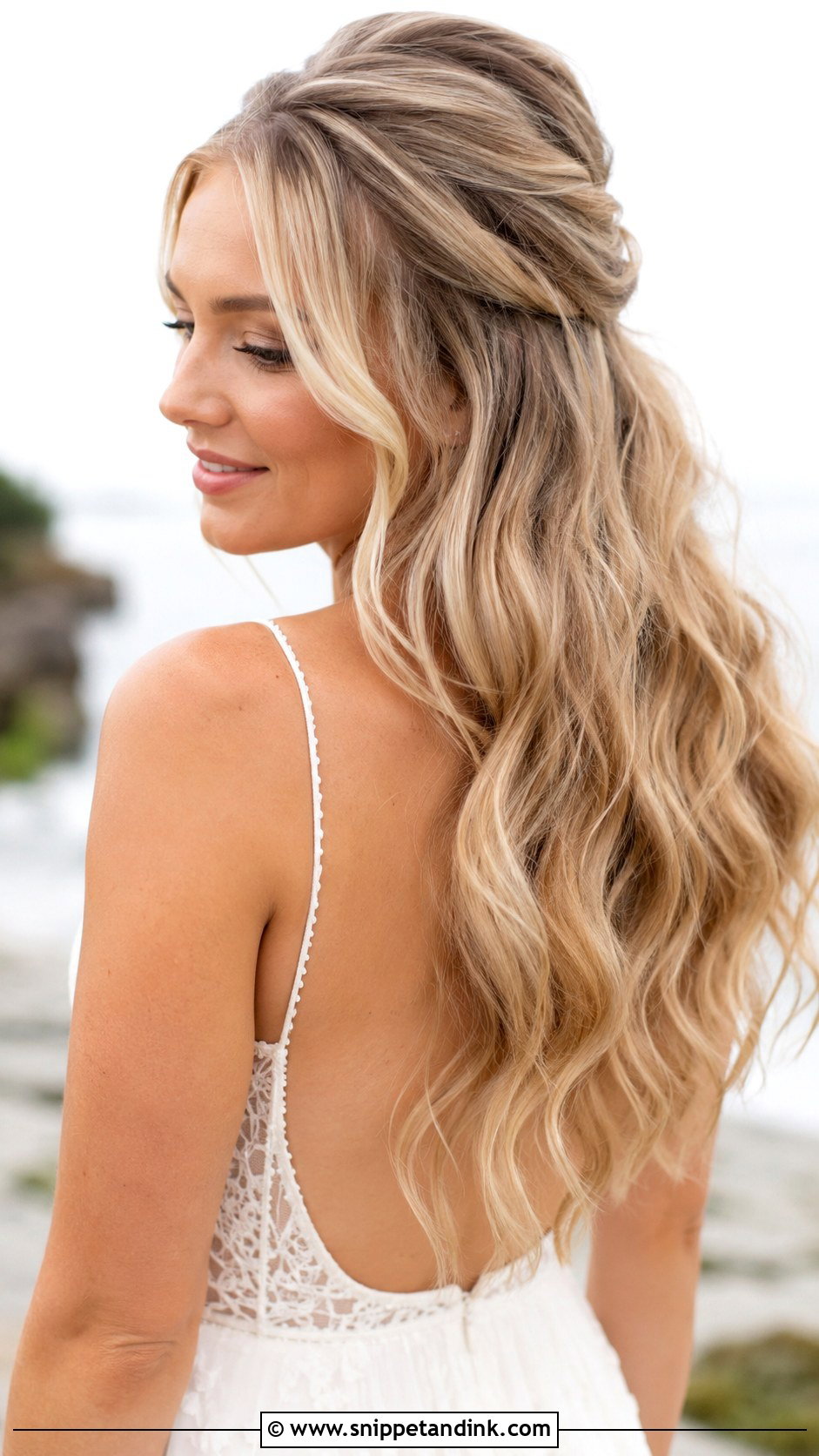
Loose waves are what I suggest to brides who dislike tight curls or a crunchy, sprayed finish. I use a larger wand, around 1.5 inches, wrap the hair away from the face, and brush the waves out once they’ve cooled so they merge into a soft S-shape. The trade-off is hold. On straight, fine hair, loose waves can be nearly gone by the reception, so I only promise them to hair that already keeps a bend. The top section gets a small twist or a smooth lift at the crown. Minimal gowns and beach or outdoor ceremonies suit the relaxed finish, and a side angle in daylight shows the wave pattern clearly.
11. Half Up Half Down Wedding Hair With Hollywood Waves
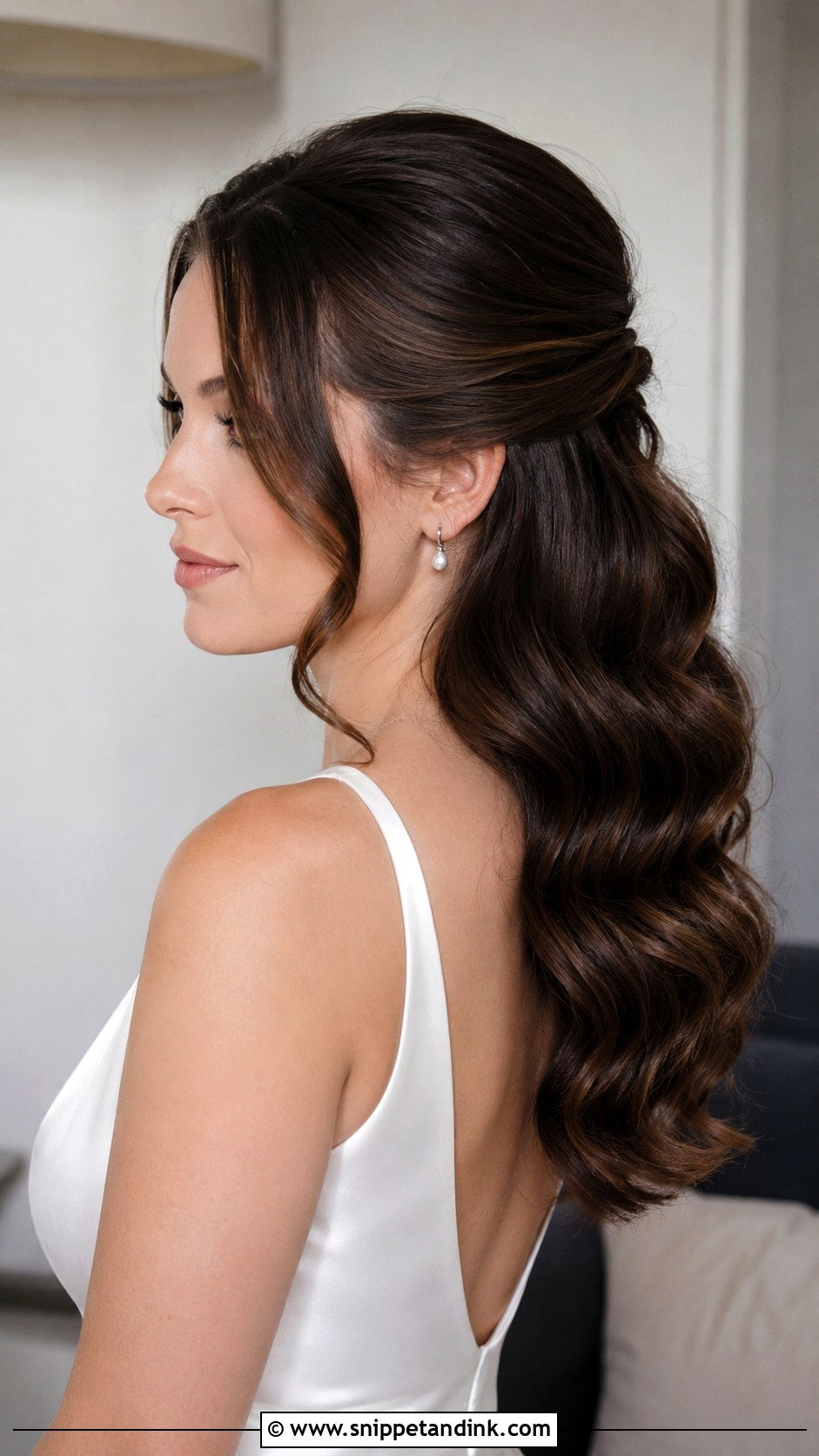
Hollywood waves are the most technical style in this list, and the brush-out is the part people love to watch. Every curl goes in the same direction, set firmly and cooled completely; then I brush with a boar bristle brush until the curls join into one continuous wave and pinch the crests with clips to sharpen them. The top section stays sleek, with lift at the crown and a clean pinned finish. It belongs with satin gowns, fitted silhouettes and vintage-inspired looks. I’d steer heavily layered hair away from it, since the layers break up the wave line. End the clip on a slow side profile.
12. Half Up Half Down Wedding Hair With Crown Braid
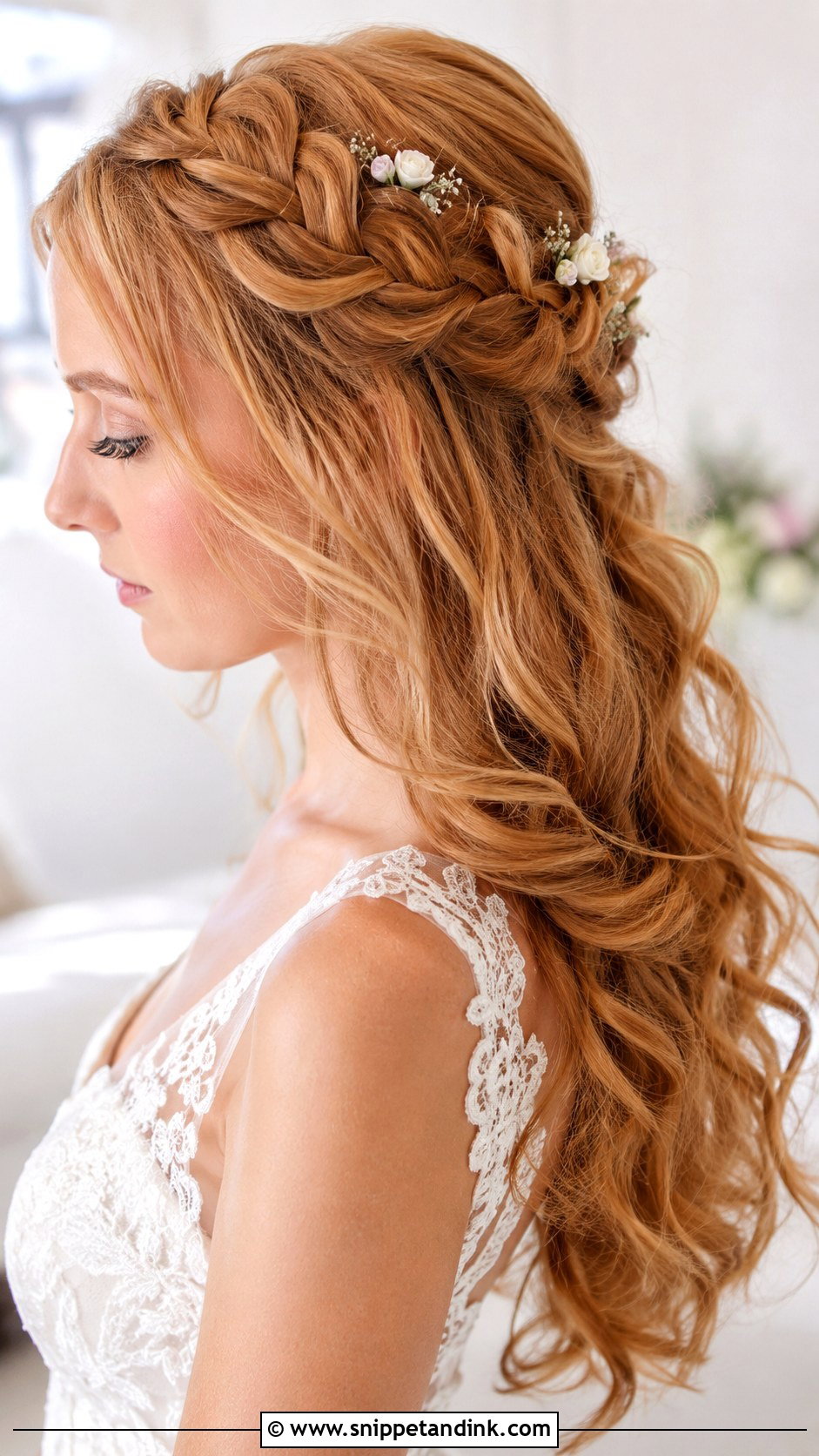
A crown braid looks like a halo when it works and like a stiff headband when it’s braided too tight. I section a horseshoe of hair around the top of the head, braid it close to the hairline and then ease each loop wider so it sits soft against the scalp. The rest falls in curls or waves, kept polished so the overall look reads bridal rather than festival. Very thick hair can bulk up at the back where the two ends meet, so I taper the last few inches and tuck them under. The construction makes a good video from first section to last pin. Small pins or tiny flowers suit a romantic or outdoor theme.
13. Half Up Half Down Wedding Hair With Hair Comb
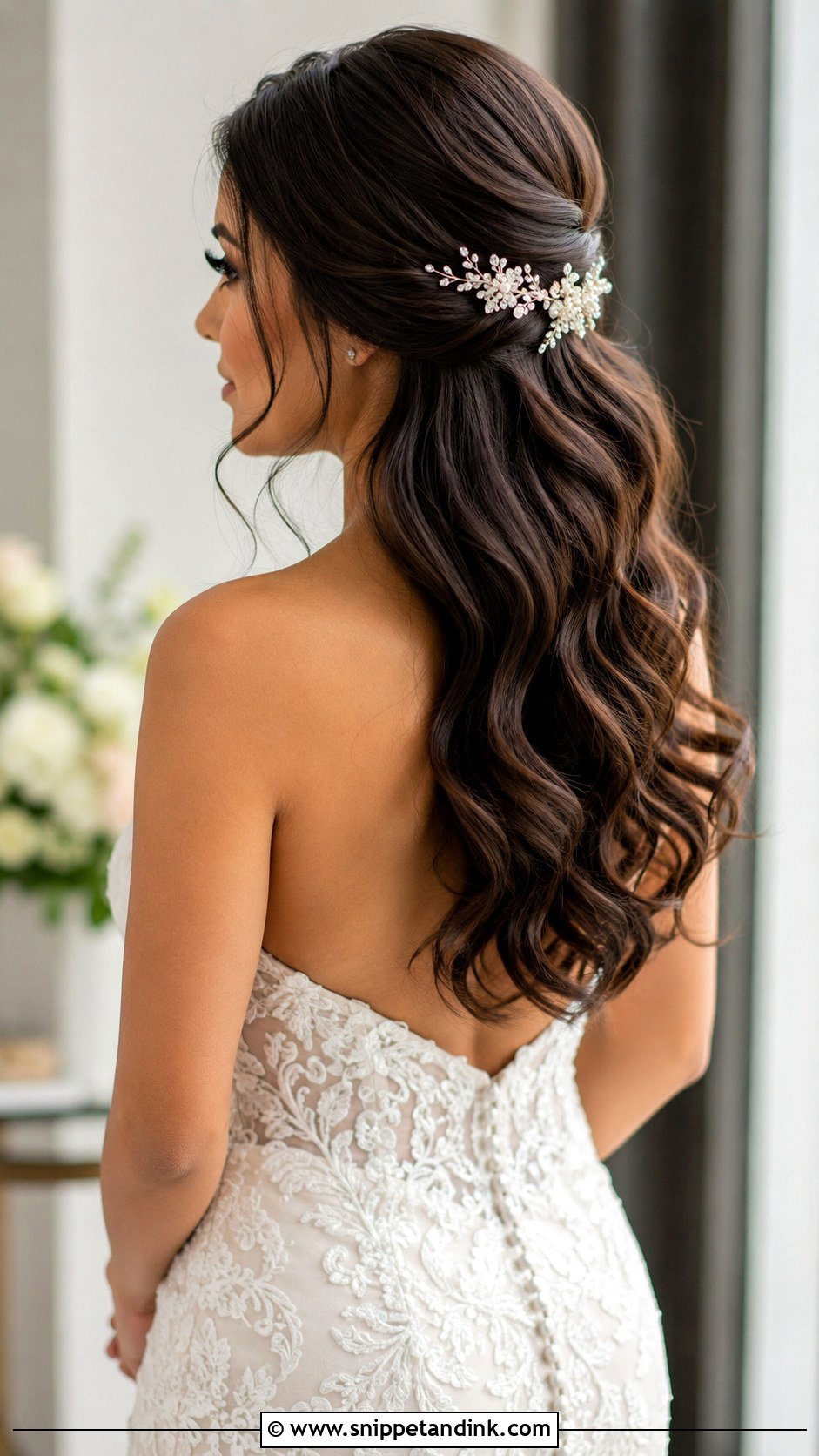
A comb is the simplest way to personalize this style, and the hair underneath can stay plain. I curl or wave first, pin the top section firmly, and only then decide where the comb goes: centered for a symmetrical gown, slightly to one side when the neckline or veil is asymmetric. Combs need a ridge to grip, so I tuck the teeth into the twist or the cross-pinned base, never into flat hair, and weave a bobby pin through the end teeth for extra hold. Film the style before the comb, then show it sliding in with one movement. That reveal is the clip people save.
14. Half Up Half Down Wedding Hair With Face Framing Pieces
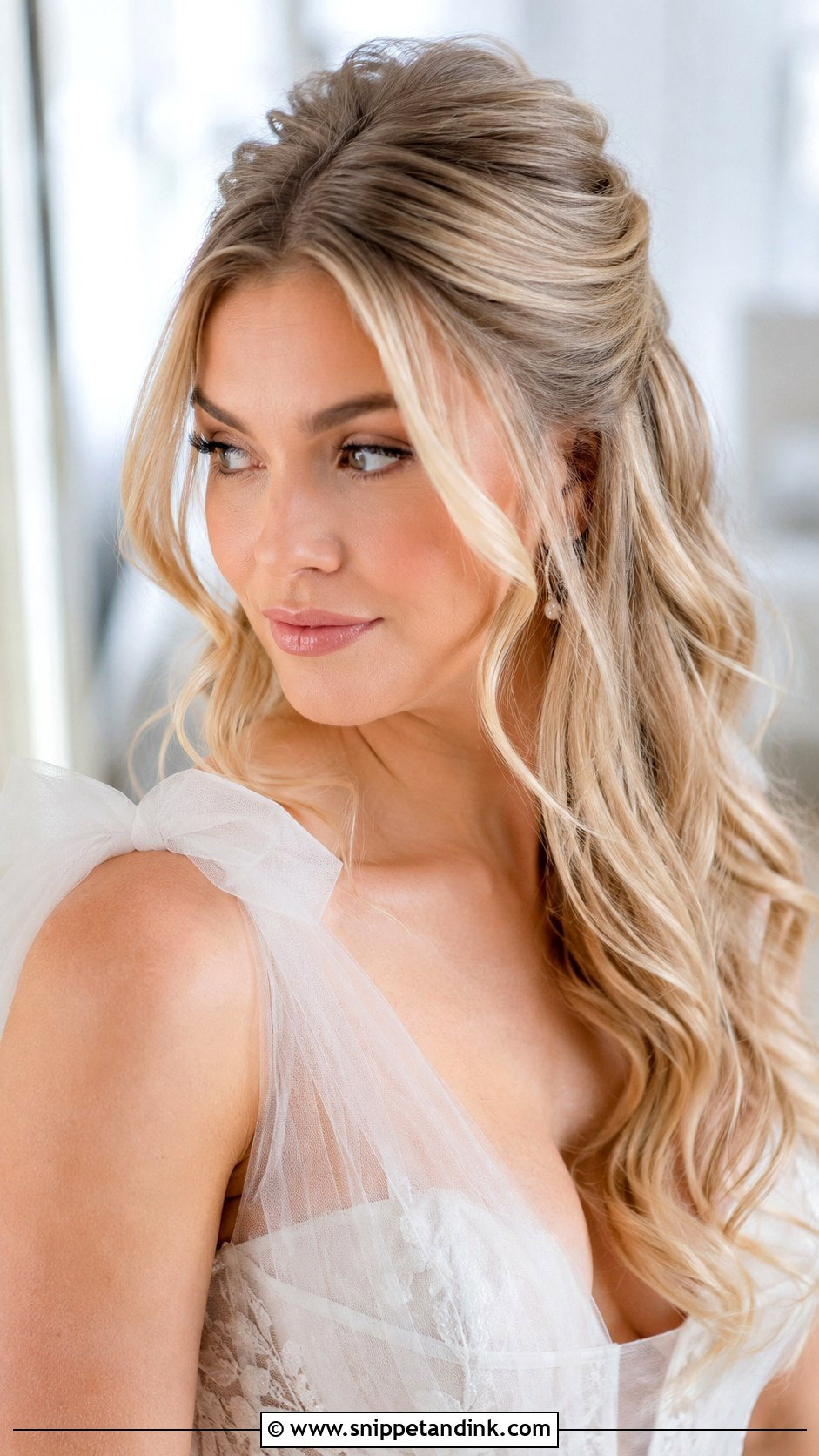
Face-framing pieces are the detail I’m asked for most, and the one most often handled badly. I separate them before pinning anything, then curl them away from the face so they don’t fall into the eyes or stick to lip gloss. Length matters here: very short pieces flick upward, while pieces that reach past the cheekbone swing nicely. They stop a half-up style from looking scraped back in photos. On a windy day, though, they blow straight across the face, so for outdoor ceremonies I keep them fewer and a little shorter. Film the front and side angles so the blend into the pinned crown shows.
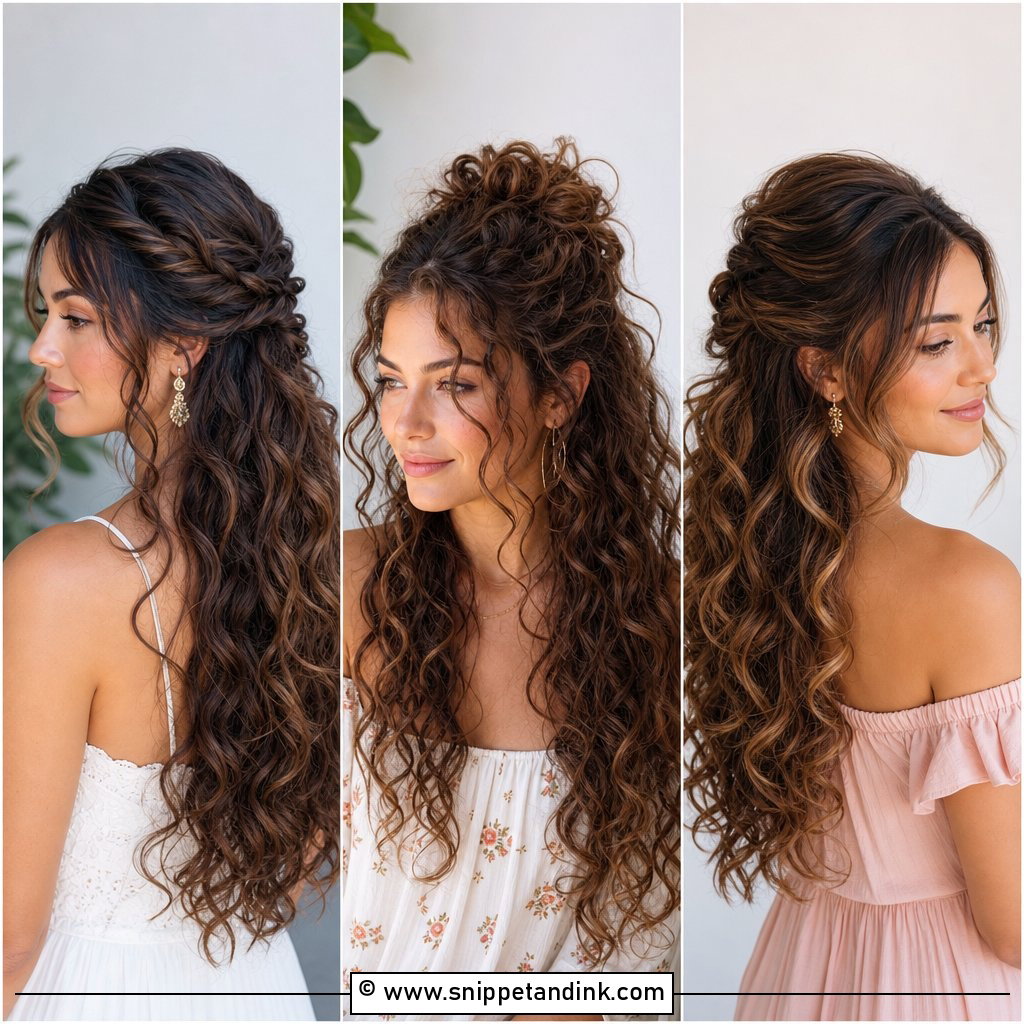
15. Half Up Half Down Wedding Hair With Natural Curls
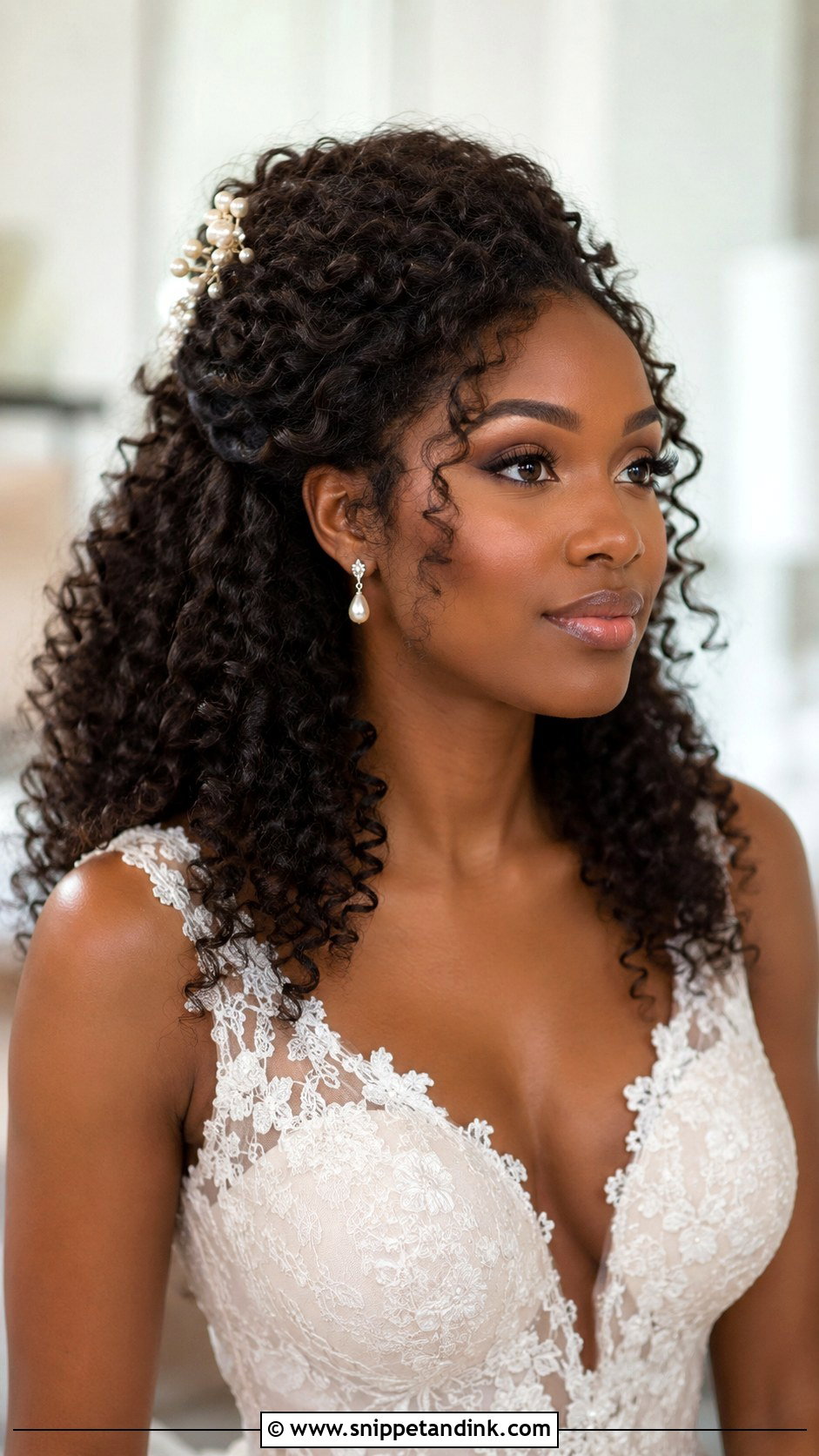
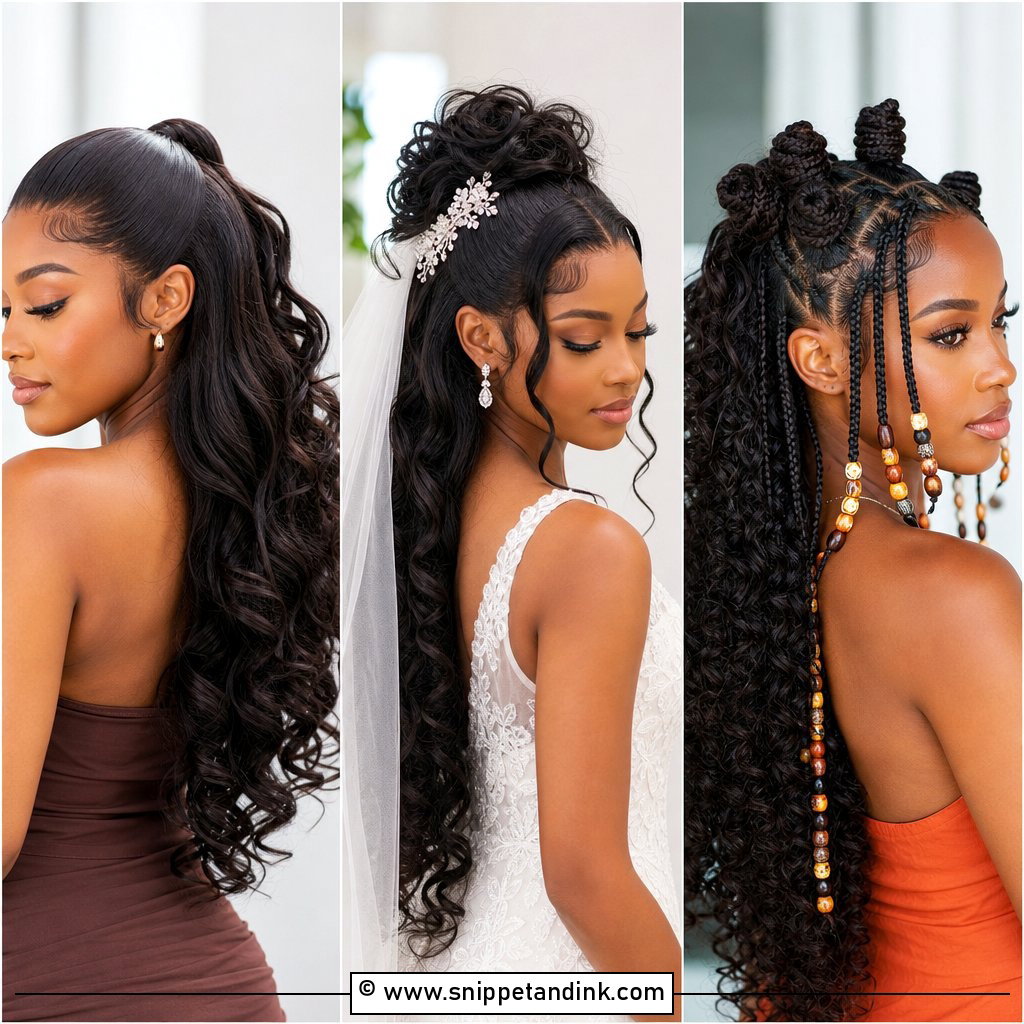
Natural curls need a different approach from everything above, because the aim is to keep the curl pattern, not replace it. I start with hydrated, defined curls set with a cream or gel, and I lift the top section with my fingers instead of a brush so the pattern doesn’t frizz apart. A twist, a small puff, decorative pins or a soft comb can form the top. Pinning too tight at the crown flattens the root and makes the lower curls look heavier than the top, so I leave a little slack there. Bright window light shows definition best; film the curls, the pinning and the final volume close to it.
Why the Pinned Crown Slips Before the Speeches
Half-up styles have one weak point. The pinned crown is holding hair that gravity pulls on all day, and the curls underneath usually drop before the twists do. A style that looked flawless at the trial can be flatter and looser by the toasts. The fix lives in the base, not in more spray.
Give the twists an anchor
I build a small hidden ponytail, or two bobby pins crossed at the crown, before any twist or braid goes in, so everything has something solid to grip. Ask at your trial whether your stylist does the same. Pinned straight onto loose, silky hair, the top section slides, especially on fine hair washed that morning.
Set the curl before the iron touches it
Curls last longest when each section gets a light mousse or setting spray before heat and then cools fully before anyone brushes it. Hair washed the day before grips better than freshly washed hair. On very straight, heavy hair I warn brides that the waves will relax by evening, and I pick a style that still looks intended once they do.
A two-minute fix after the veil comes out
A few matching bobby pins, a travel hairspray and a small comb fit in a bridesmaid’s clutch. Taking the veil out after the ceremony often loosens the crown anyway, so plan a quick re-pin at that moment rather than waiting for something to fall.
Which Version Suits Your Hair and Your Dress
What keeps half-up hair so popular with brides is the compromise it strikes. Her face stays clear for the vows and close portraits, and the length behind still moves on the dance floor. On camera that compromise turns into a dozen small moments worth a clip: a curl being brushed out, a braid pulled wider, a comb sliding in, a veil settling over the pinned section. My advice is to pick the version that suits your dress and the hair you actually have, test it once on film at your trial, and watch it back before the wedding. You’ll see straight away whether it reads the way you hoped.
You'll Like These Ideas:


Leave a Reply