
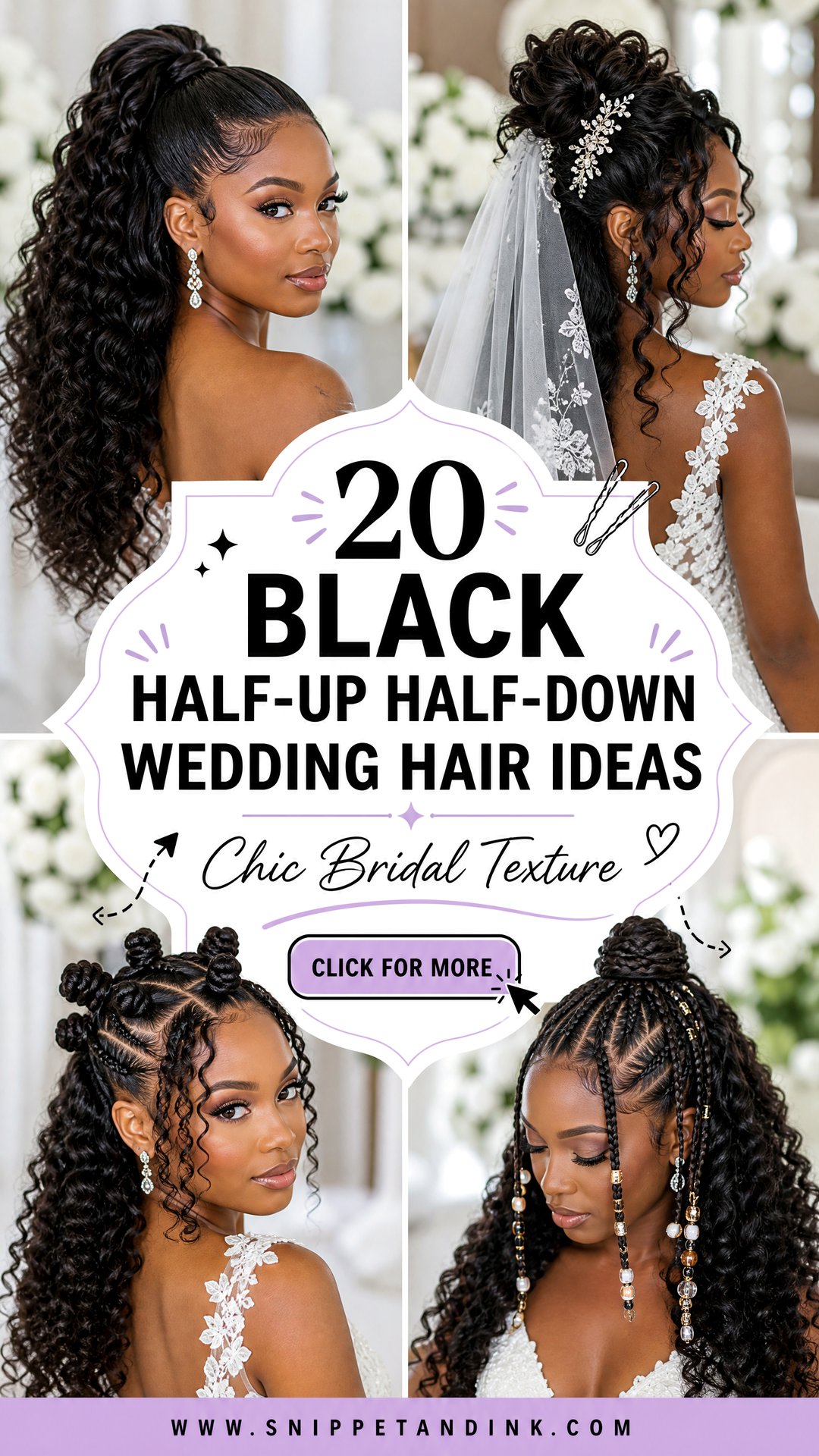
Half-up half-down is the style I suggest most often to Black brides who can’t decide between an updo and wearing their hair out. The top section gives you lift and keeps hair off your face for the vows, and the lengths stay free to show your curl pattern, your twist out or your silk press. It works on 4C coils and on a fresh blowout, and it gives a veil, a comb or a few pearl pins a solid base to sit in. Below are 20 versions I’d happily build, with notes on what each one asks of your hair and how it holds up from the ceremony to the last dance.
Prepping Coils, Twists and Presses So the Top Section Holds
Most half-up styles that fail on the day fail because of prep, not technique. The top section takes all the pinning, and on natural hair that section needs to be clean, moisturized and stretched to the right degree before I can sculpt it.
- Wash and deep condition two or three days before the wedding, not the morning of. Freshly washed coils are soft and slippery, and pins slide straight out.
- Decide early whether you want your curls shrunk or stretched. Shrinkage can take inches off your length, so a style planned on stretched hair looks very different on wash-and-go hair.
- If you’re having braids, cornrows or goddess braids installed, book that appointment two to four days before. Tension eases, the scalp settles, and any flyaways can be refreshed the night before.
- Sleep on satin or in a bonnet every night of wedding week. Friction against cotton dulls definition and frizzes your edges.
Bring your own products to the trial if your hair responds well to them. I’d rather work with the curl cream you know than guess, because some heavy butters stop pins gripping and some gels flake once they dry.
Go gently on your edges
A slick, tight half-up can put a lot of tension on the hairline. Ask your stylist to keep braids and the gathered top section firm but not pulling, and never accept a style that hurts when it’s finished. A sore scalp at noon will be pounding by the first dance, and repeated traction at the hairline can thin your edges over time.
1. Half-Up Bun With Natural Curls
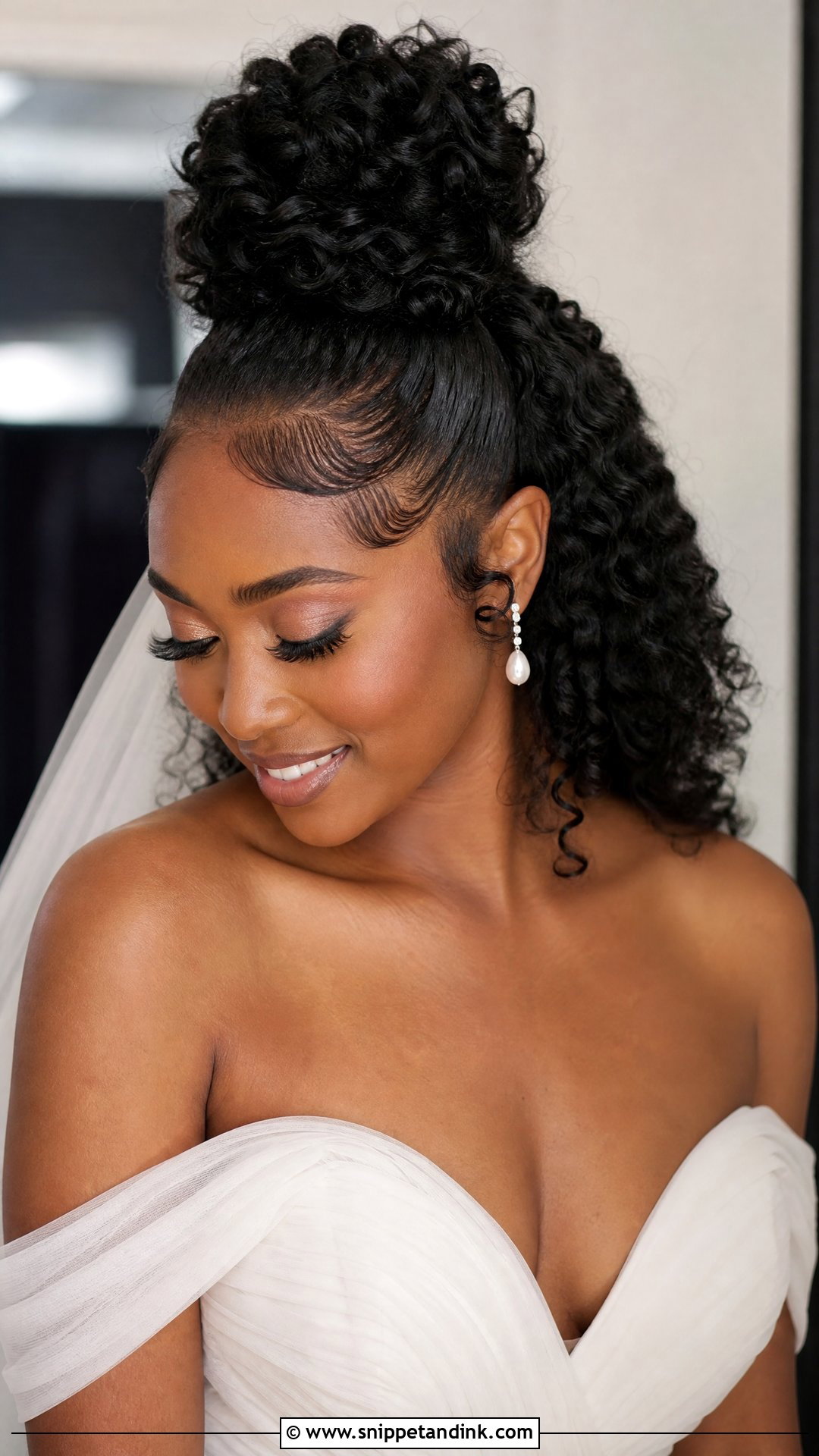
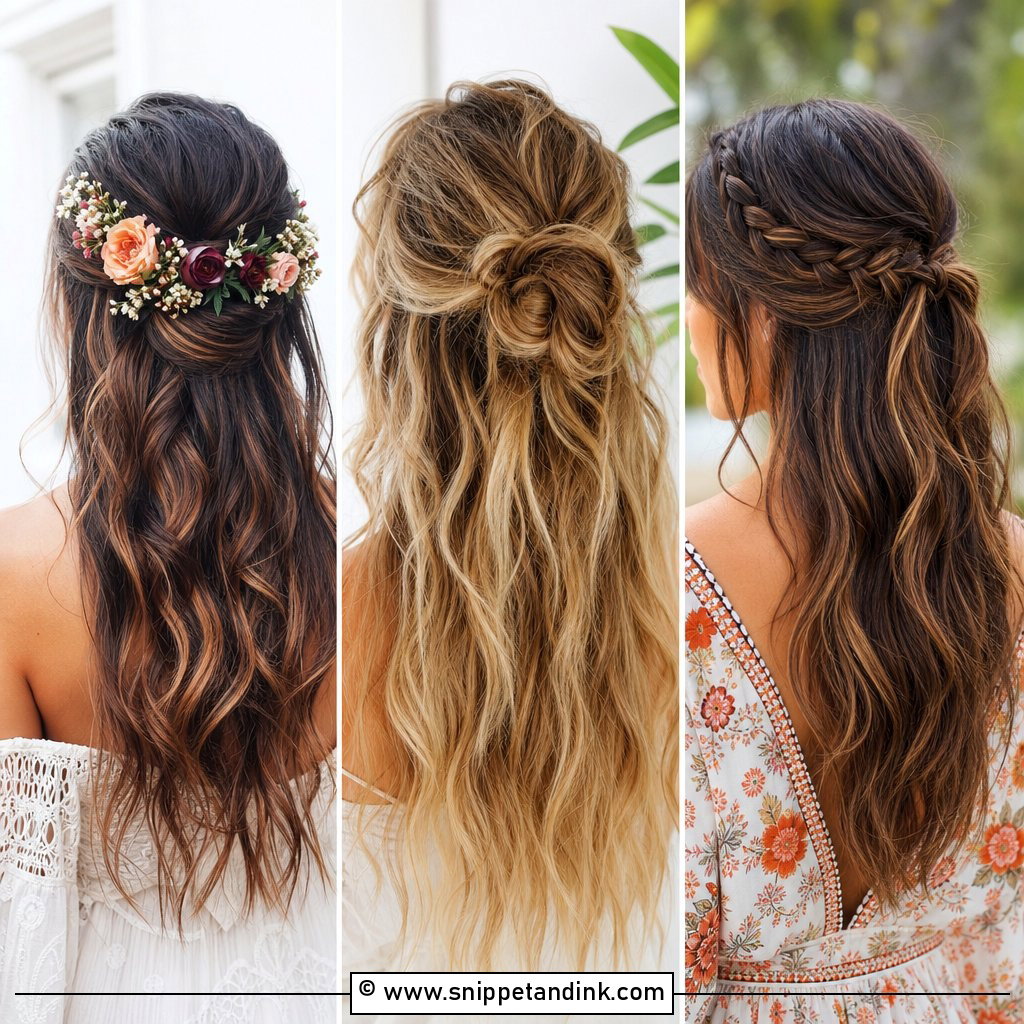
A half-up bun is the quickest way to get height without pinning every strand. I gather the top section above the ear line, twist it into a fluffy or smooth bun, and anchor it with crossed pins rather than one tight elastic, so it doesn’t drag on your scalp by evening. Lay a little edge control for polished baby hairs around your hairline, but keep it light; heavy gel flakes under a hot reception light. On very dense coils, split the bun into two stacked sections so it sits flat instead of mushrooming.
2. Half-Up Halo Braid Crown
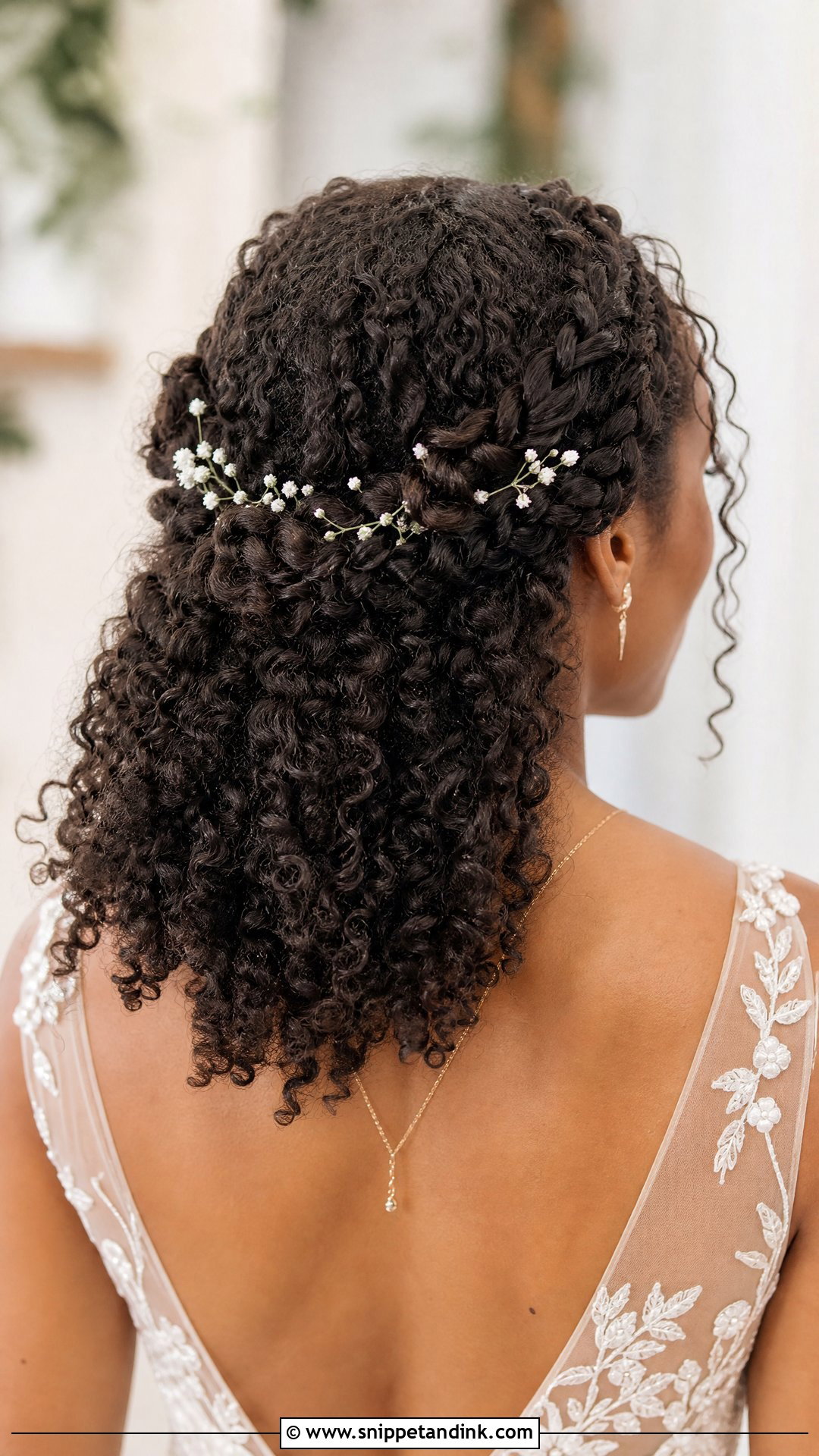
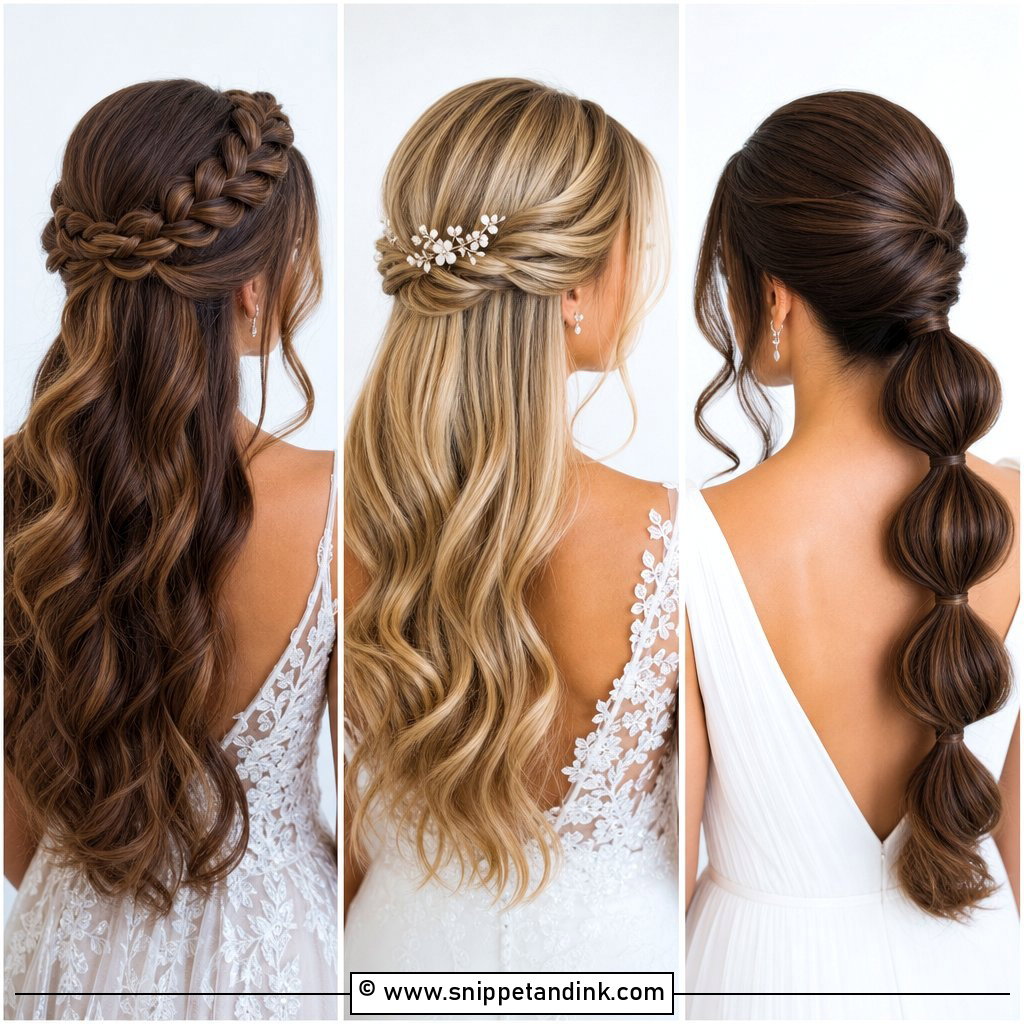
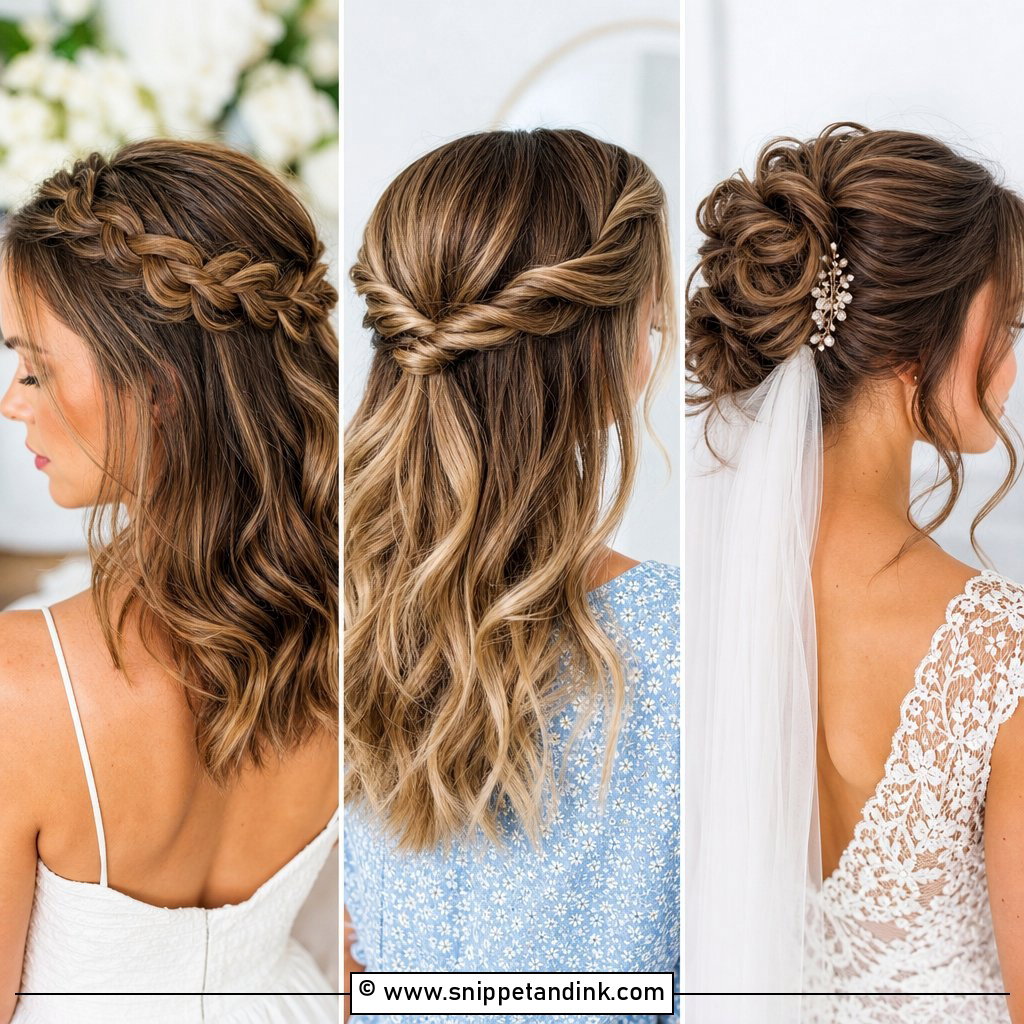
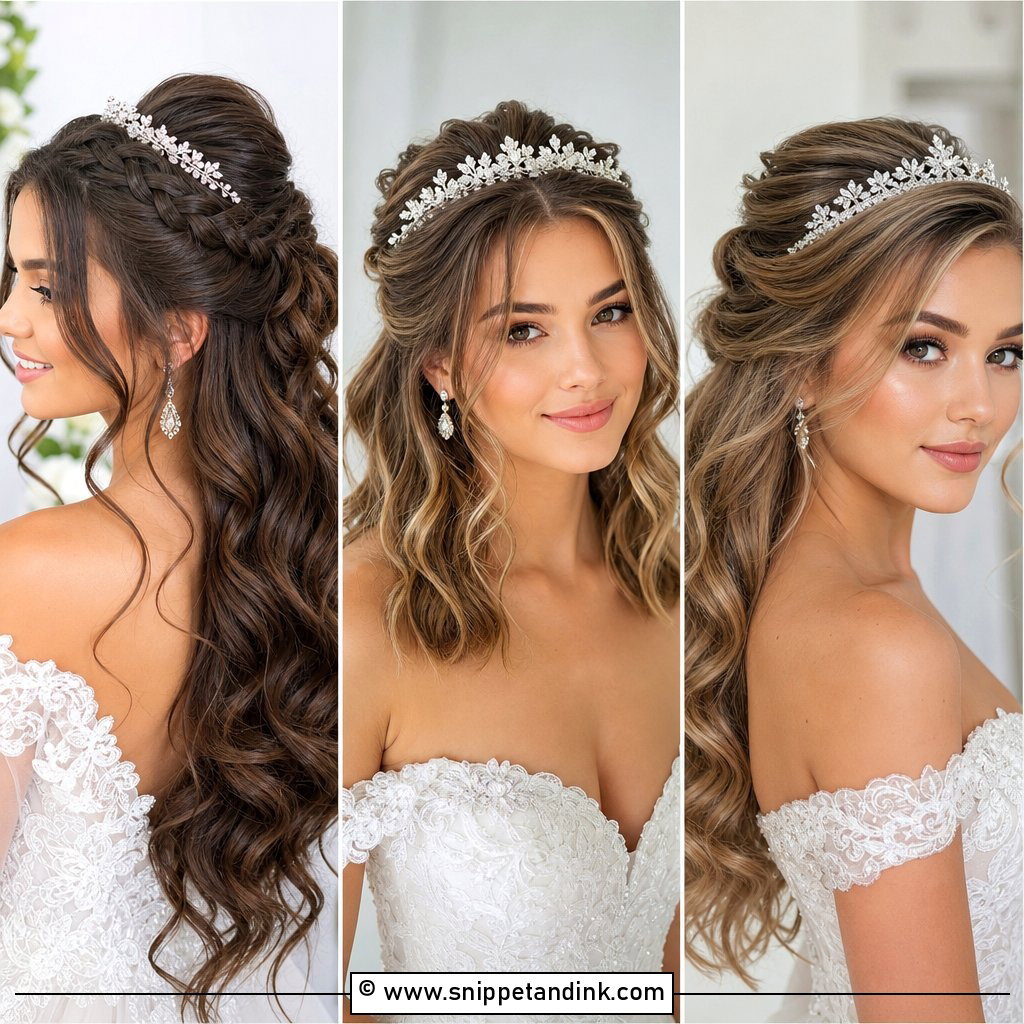
A halo braid crown wraps from one temple around the back and frames the face, with your curls falling underneath. I build it from flat twists or cornrows close to the scalp, because a loose Dutch braid on top of the head slides once you start dancing. Small fresh blooms can be tucked into the braid itself, where the plait holds the stems. My one warning: ask for this to be braided with moderate tension. A crown pulled tight along the hairline is the thing that leaves brides with a headache by the speeches.
3. Half-Up Twist Out With Loose Curls
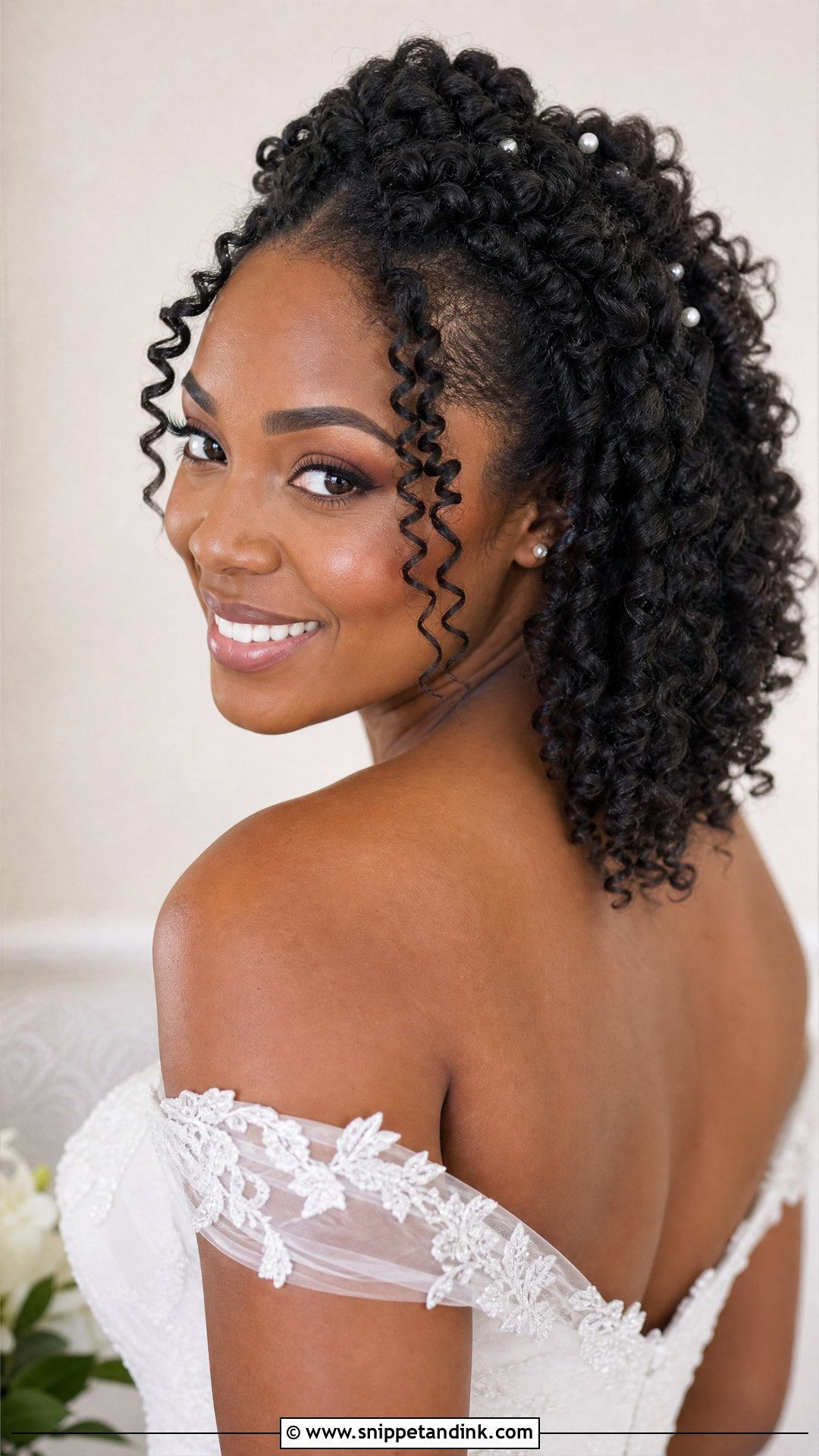
A twist out has to be set properly or it falls flat by lunch. Twist on damp hair with a curl cream the night before, sleep in a satin bonnet, and unravel in the morning with oiled fingers so the twists separate without frizz. Then I gather the crown loosely and secure it with a decorative clip or a few bobby pins pushed in against the direction of the twist. Don’t pick it out too much at the root. A little separation reads as definition in photos; too much reads as fuzz.
4. Half-Up Cornrows Into Flowing Curls
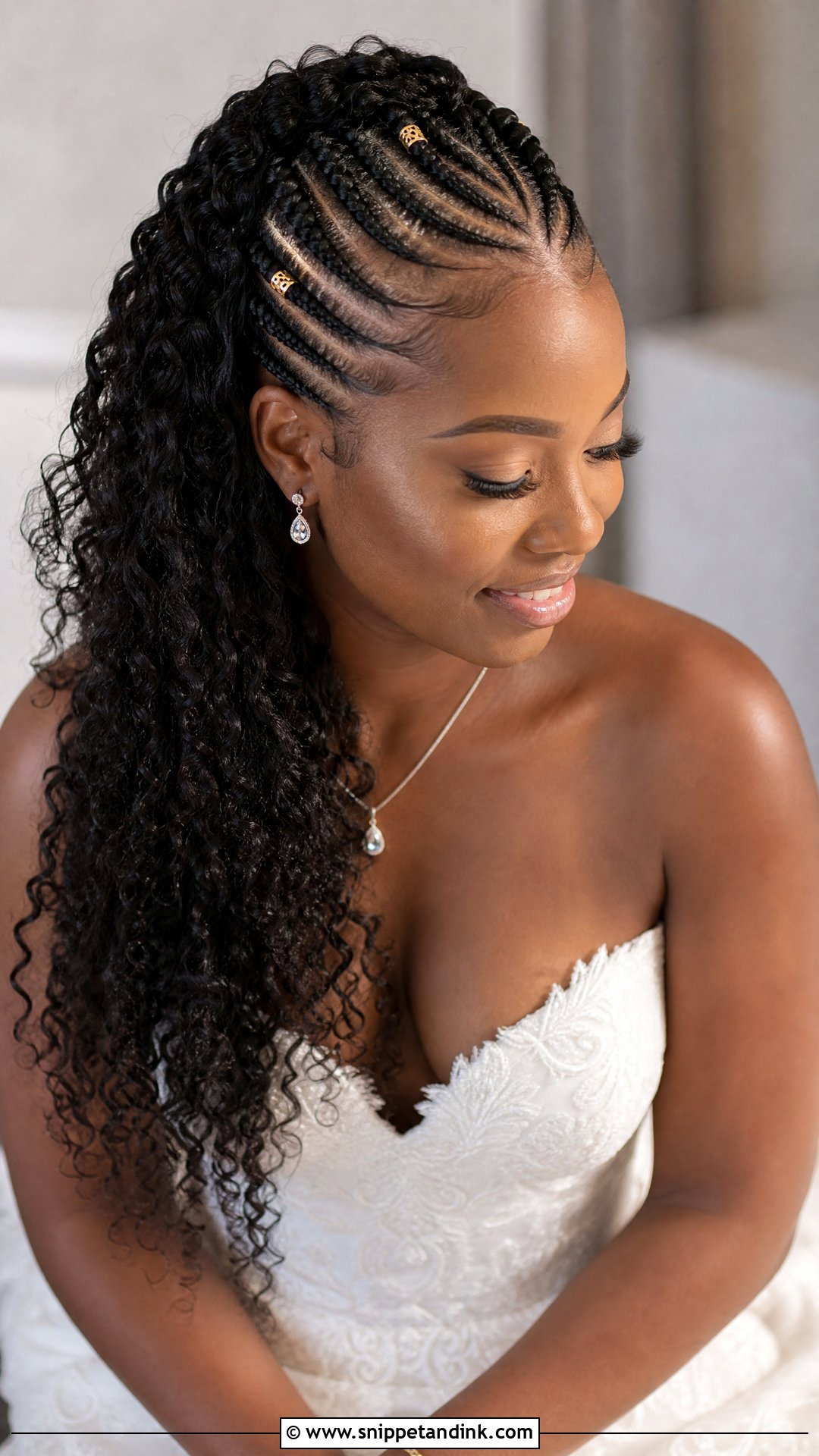
Cornrows feeding into loose curls give you clean lines at the front and movement at the back. I braid the front section toward the crown and release the ends into the cascade, so there’s no visible elastic where braid meets curl. Gold cuffs, pearls or tiny beads slide onto the rows easily, but space them out; a cuff on every braid gets heavy and clicks when you turn your head. Have the cornrows done two or three days before the wedding, not the morning of, so any tenderness along the scalp has eased.
5. Half-Up Sleek Ponytail With Curls
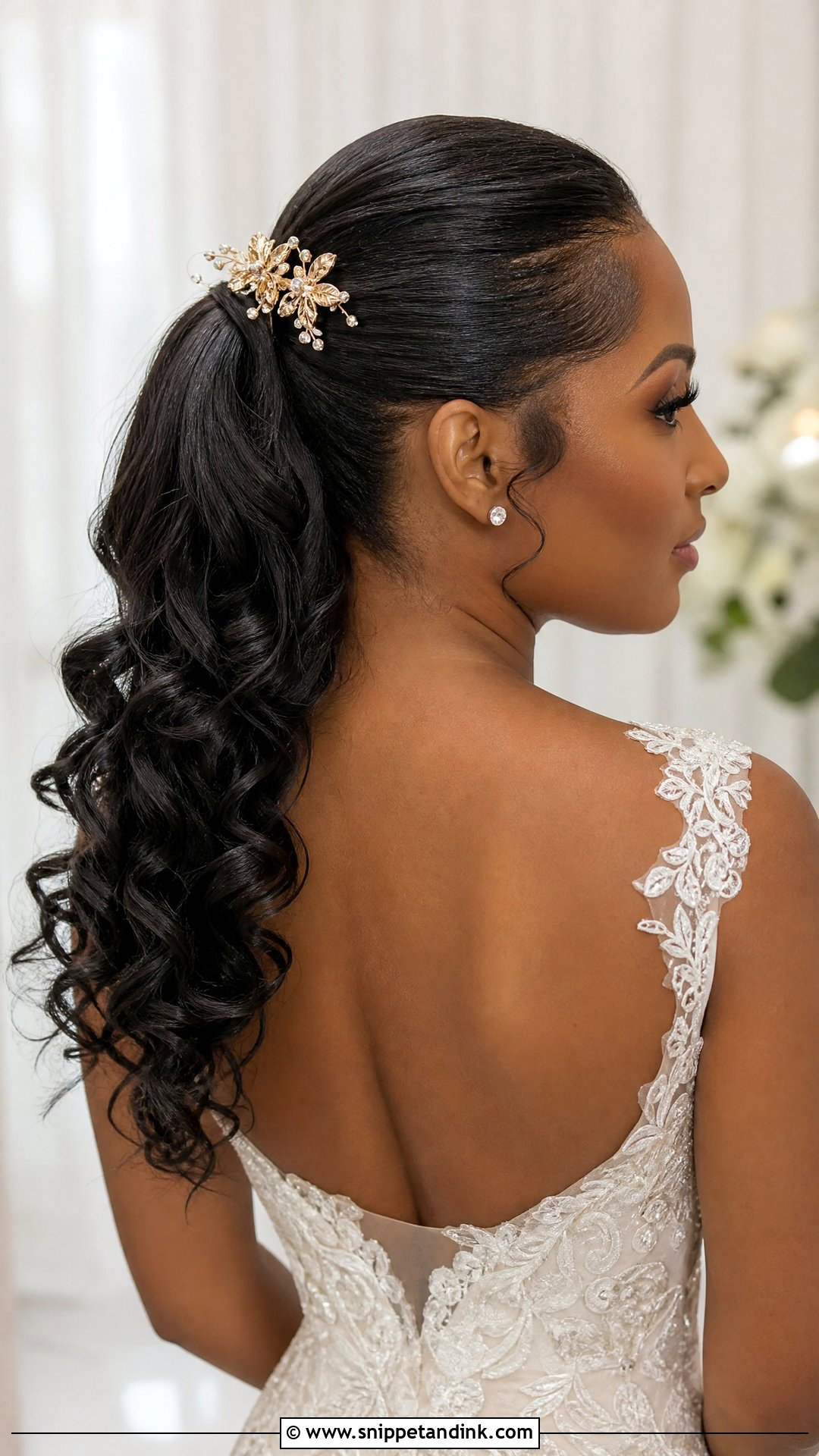
A sleek half-up ponytail is about the contrast between a glassy top and a textured bottom. I smooth the crown with a gel and a soft brush, tie it off, then wrap a small piece of hair around the base to hide the band. On natural hair, that smooth top will start to revert in humidity, so I set it with a scarf for ten minutes before the photographer arrives. A thin gold chain draped across the pony adds shine without competing with your earrings.
6. Half-Up Flat Twists With Curly Ends
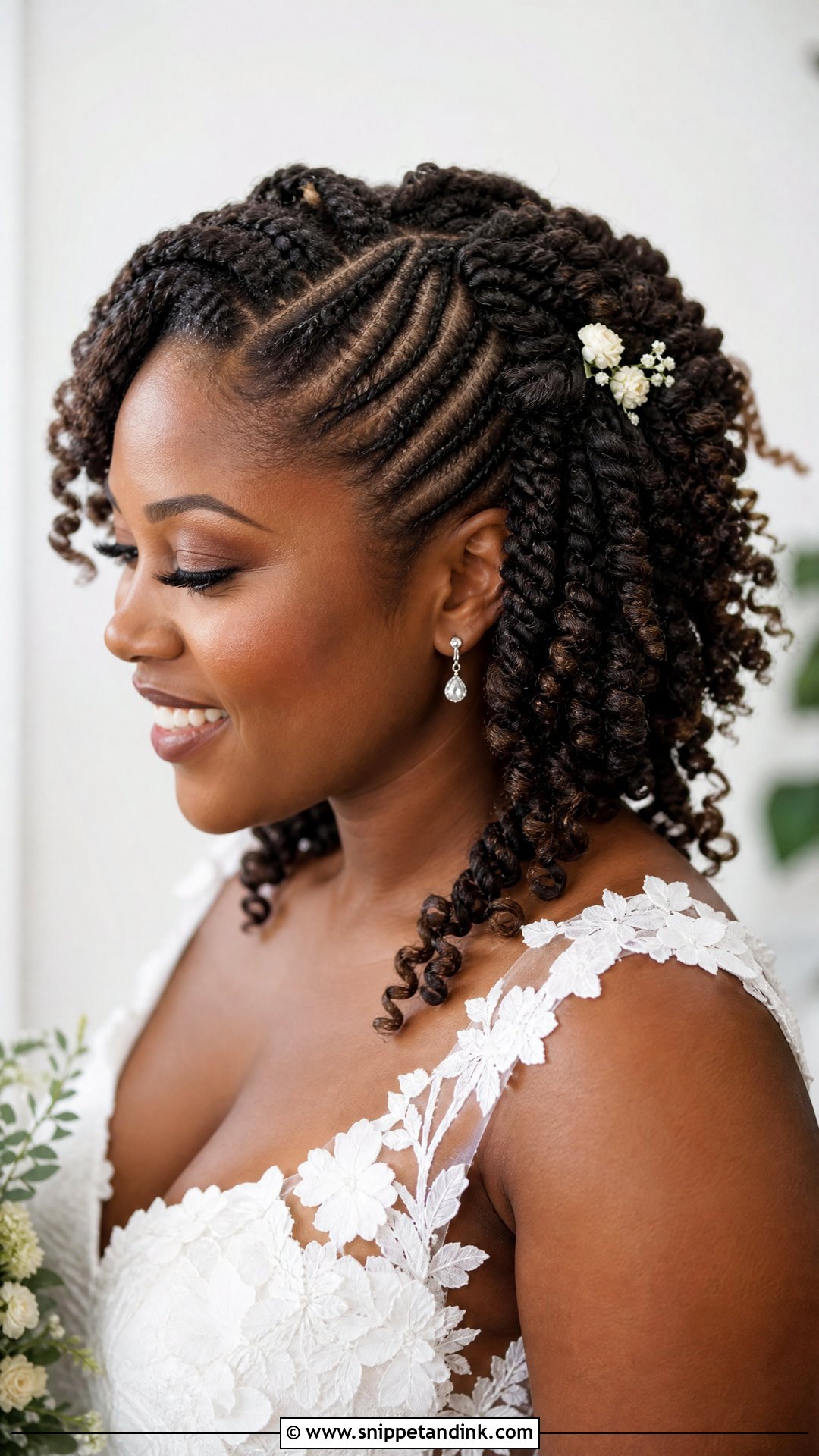
Flat twists are gentler than braids and quicker to do, which matters when there are five of you in the chair. Two strands twist along the scalp toward the crown and the ends are left to curl. They lie low enough that a veil comb sits right over them. Where they need care: flat twists can loosen at the nape on very soft hair, so I finish each one with a small pin pushed in at an angle. Tiny blooms can sit between the rows if you want color.
7. Half-Up Space Buns With Curls
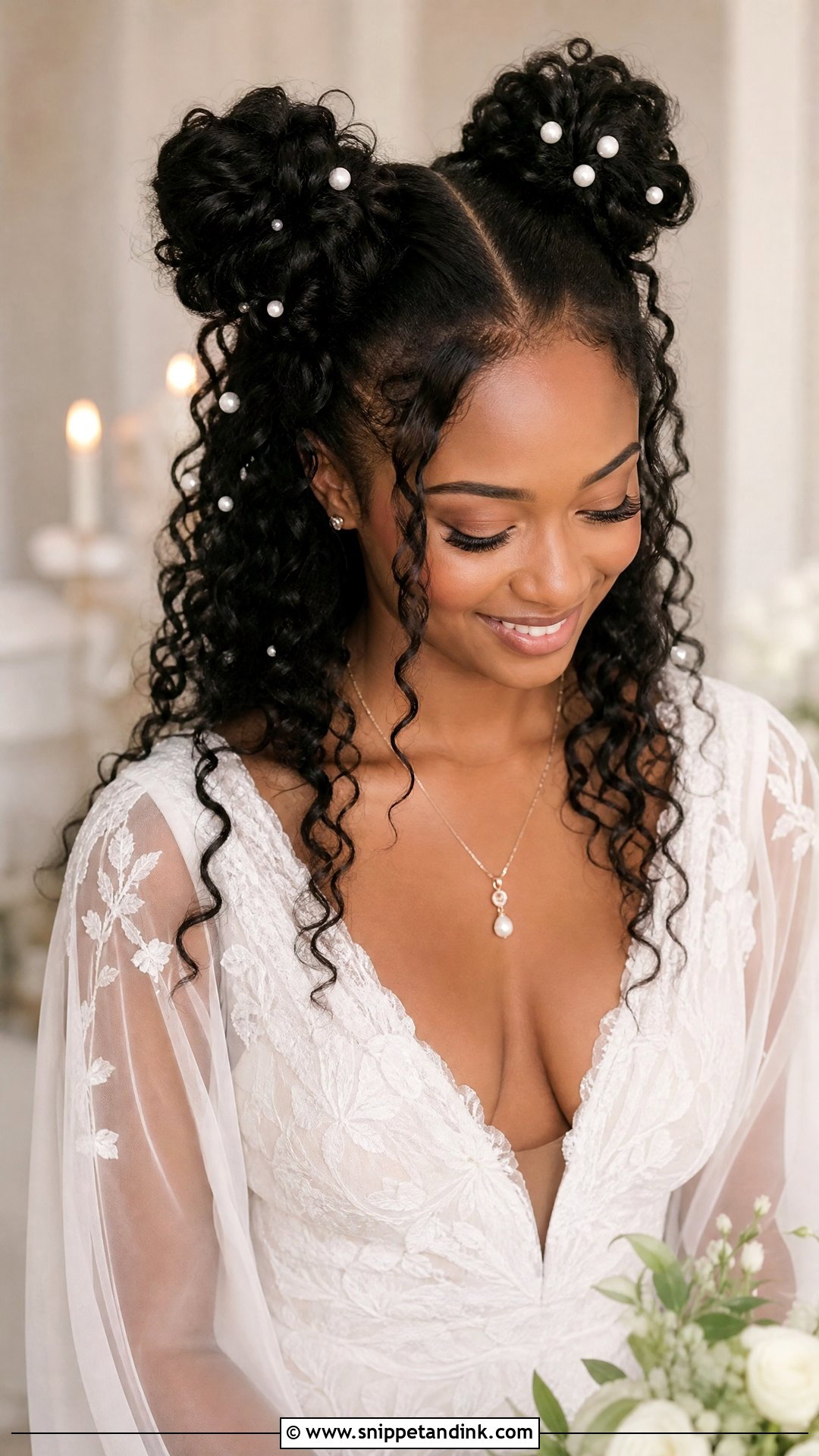
Two space buns with curls underneath is a playful choice, and it suits a relaxed backyard or brunch wedding more than a black tie ballroom. I part a clean center line, gather each side high, and keep both buns the same size by measuring the sections before twisting. Two half-up space buns leave nowhere obvious for a long veil, so if you want one, plan on a short birdcage or a single flower instead. Pearls or small pins work well around the base of each bun.
8. Half-Up With Curtain Bangs
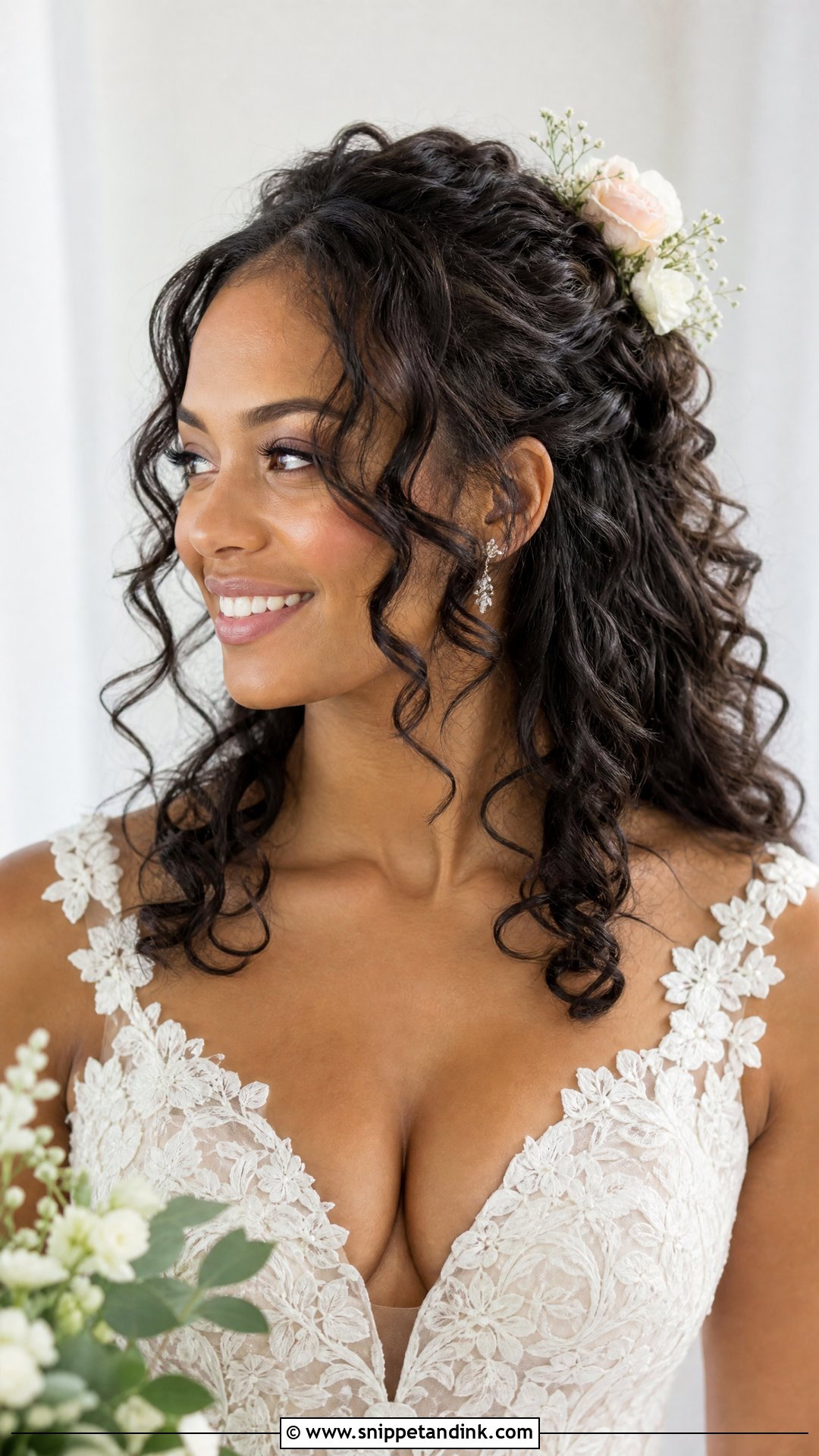
Curtain bangs soften the front of a half-up and pull attention to your eyes. With textured hair, I always cut or shape the fringe on hair styled the way you’ll wear it on the day, never on stretched hair if you’re wearing curls, because shrinkage will lift it by an inch or more. The crown is pulled back loosely behind the bangs and pinned. Do your trial with your makeup artist present; foundation and setting spray on the forehead can weigh a fringe down.
9. Half-Up Bridal Updo With Veil
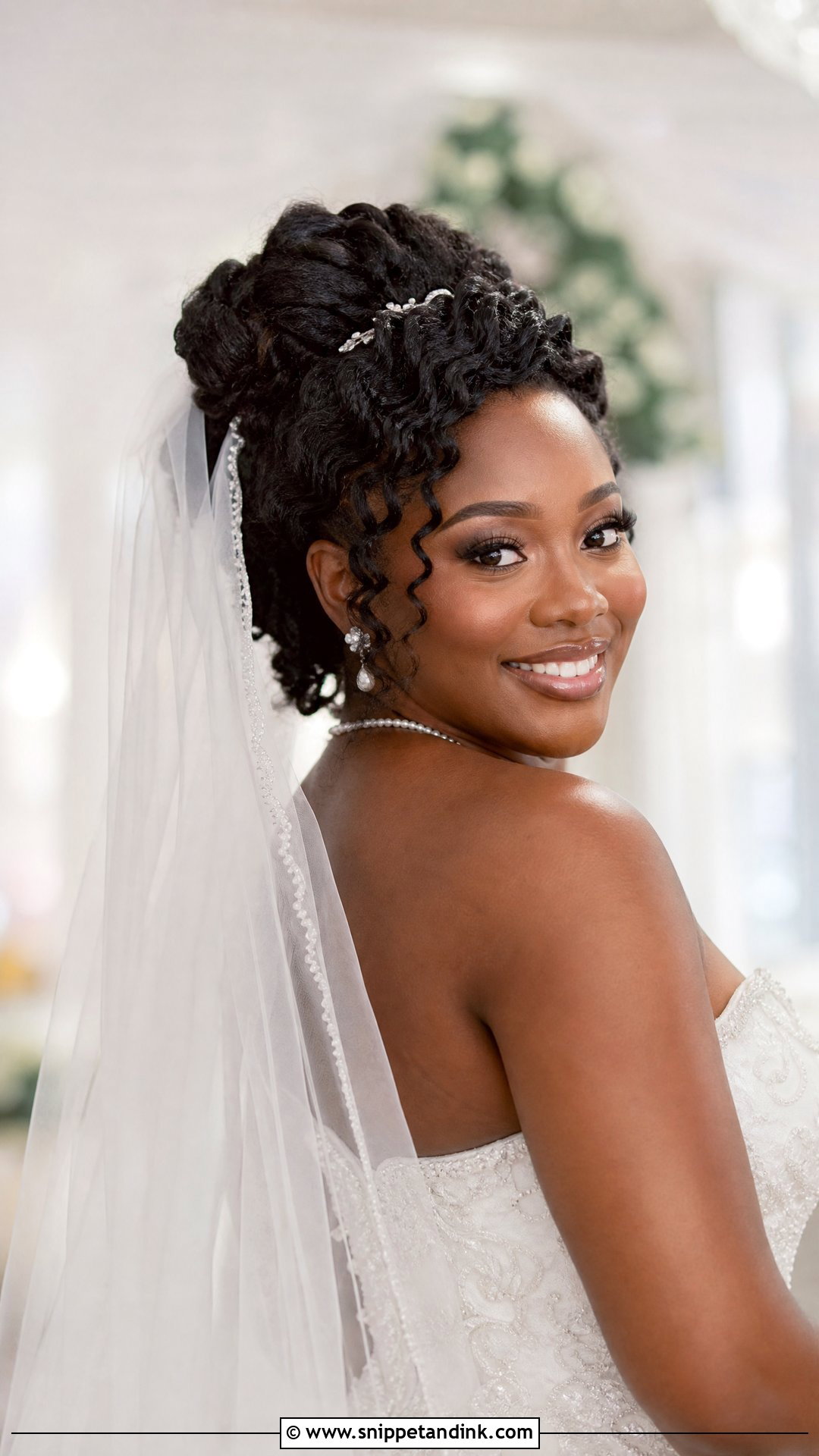
This is the half-up I build most for brides wearing a long veil. The top section gives the veil comb something firm to grip, and the curls frame the fabric at the back. I create a small base inside the half-up with crossed bobby pins, then slide the comb in under those pins, which stops it sliding out of coily hair. A cathedral veil needs more anchoring than a fingertip one, so tell your stylist the length in advance. After the ceremony the veil lifts out and the half-up stays intact underneath.
10. Half-Up Goddess Braids With Curls
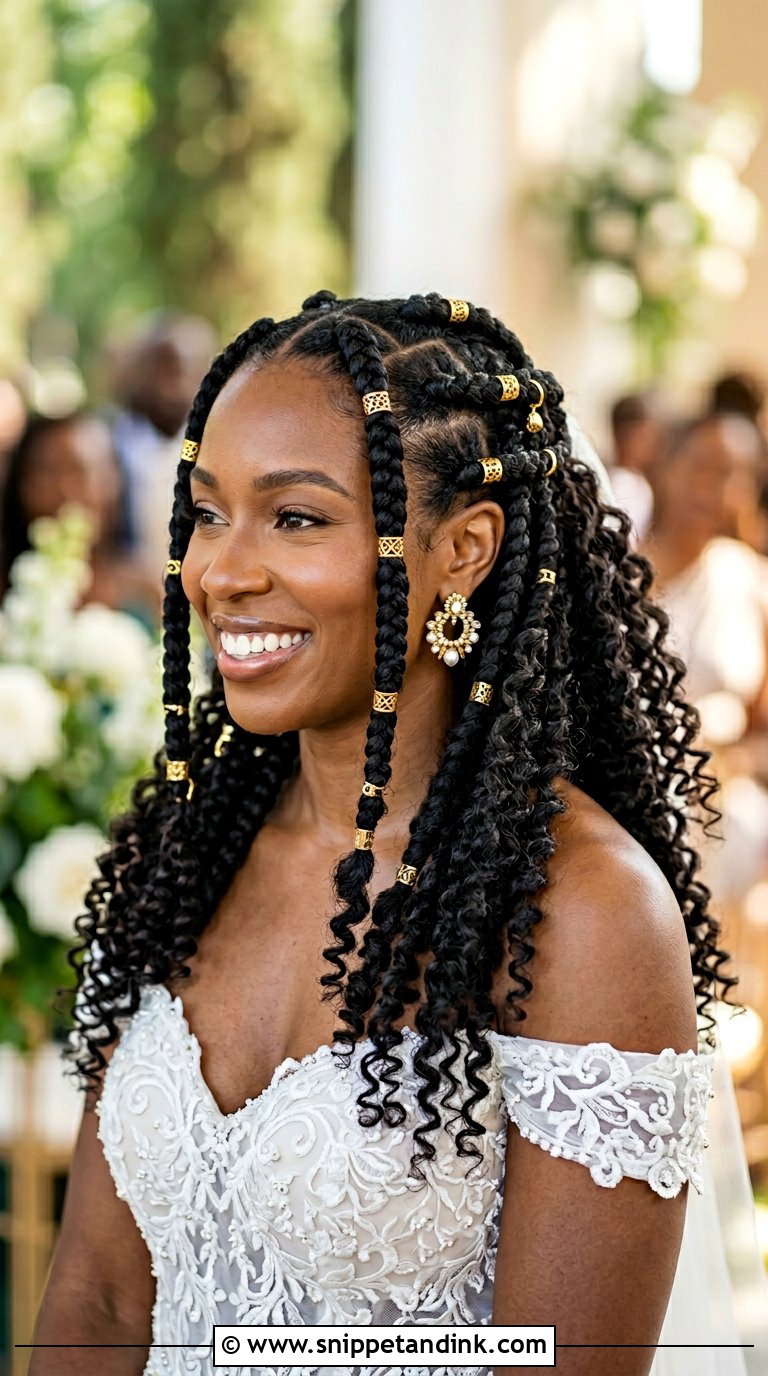
Goddess braids are thick, raised braids with loose curly hair left at the ends, and in a half-up they bring weight and presence to the crown. Because they’re deeply rooted in heritage, I treat the pattern as part of the design and ask the bride whether she wants straight-back rows or curved ones before I start. Accent with gold cuffs or a few fresh flowers. Added hair makes these heavier than they look, so I keep the braids to the top third of the head so your neck isn’t carrying the whole lot all night.
11. Half-Up With Fresh Flowers
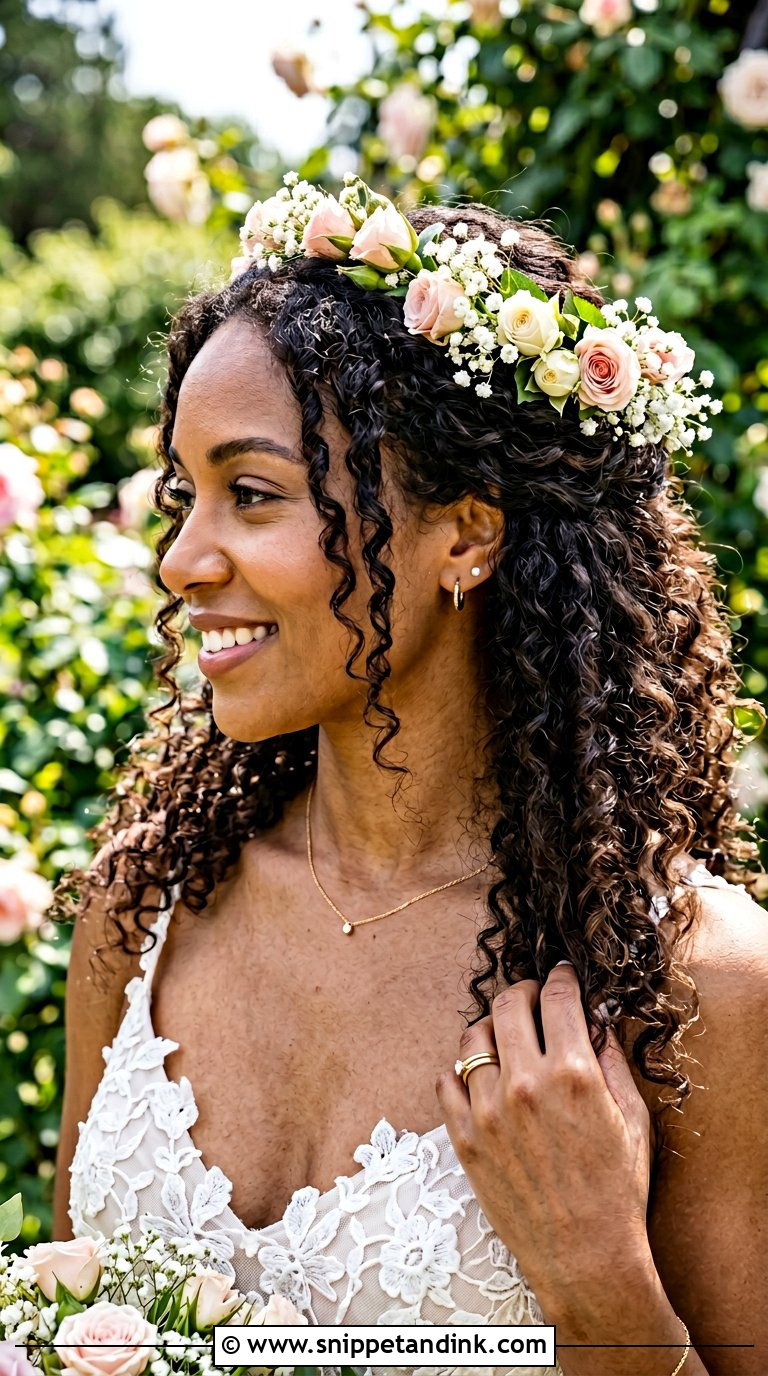
With real blooms tucked into a half-up crown you get softness and scent, but flowers wilt faster than people expect. I ask your florist for sturdy flowers like spray roses, wax flower or mini orchids, wired and taped, and avoid gardenias, which bruise brown the moment they’re touched. The blooms sit along the edge of the half-up section, where pins can catch the wires. Keep them in the fridge until the last ten minutes of styling, and match a few to your bouquet so the two read together.
12. Half-Up Bantu Knots With Curls
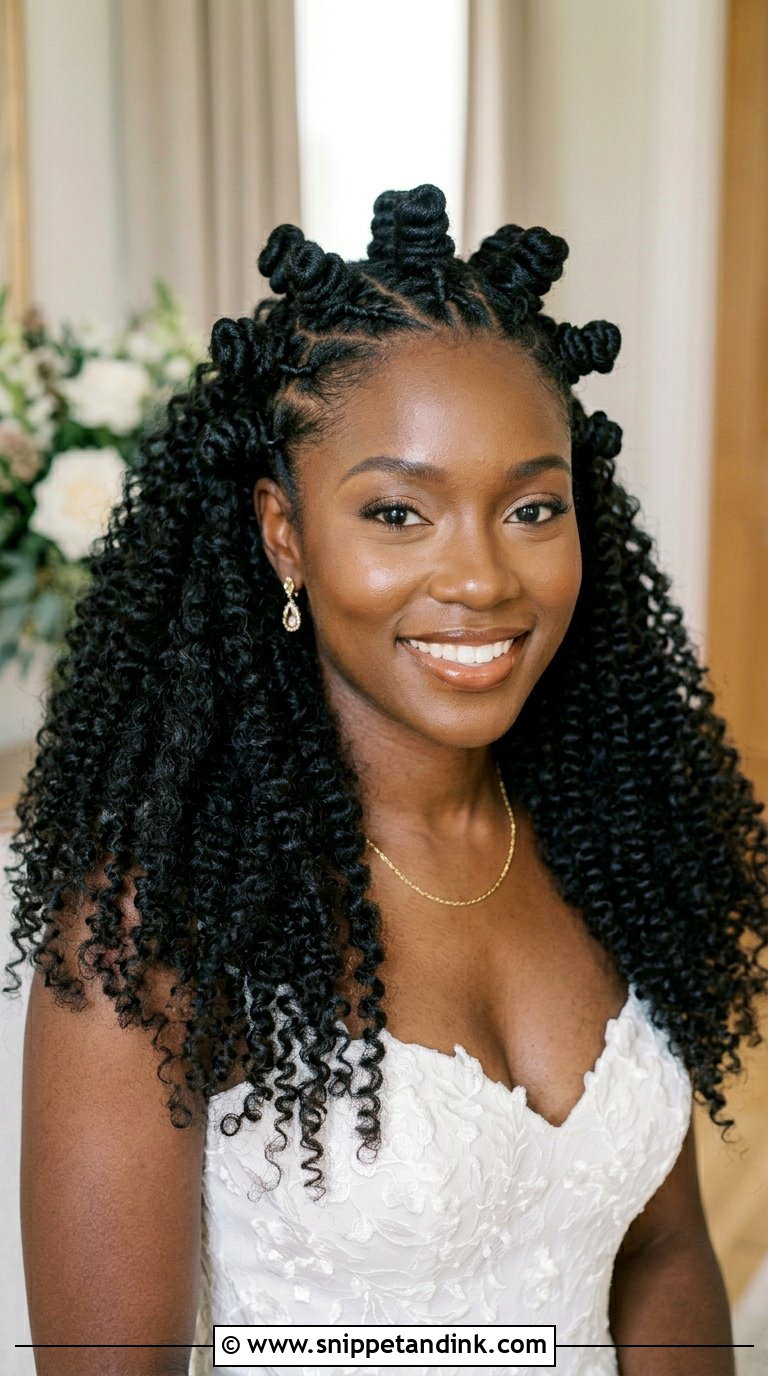
Bantu knots in a half-up are sculptural: small coiled knots across the crown with curls loose below. I section them in a deliberate pattern, usually staggered so the knots don’t line up like buttons, and wrap each one firmly at the base so it holds its shape without pins. They suit thick, coily hair best; on fine or loose waves the knots tend to unravel by evening. Pearls or small gold accents can sit in the gaps between them, and from the side the dimension shows up well on camera.
13. Half-Up With Pearl Hair Pins
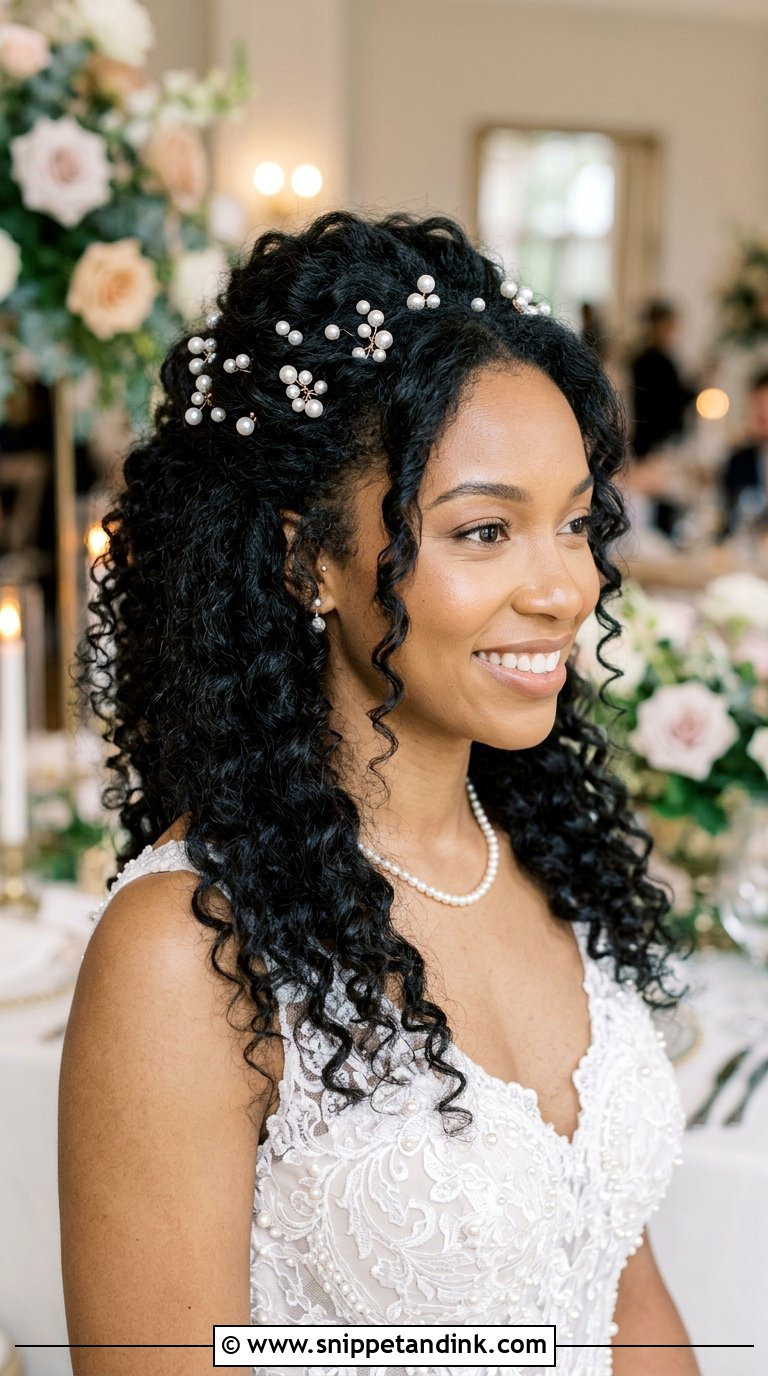
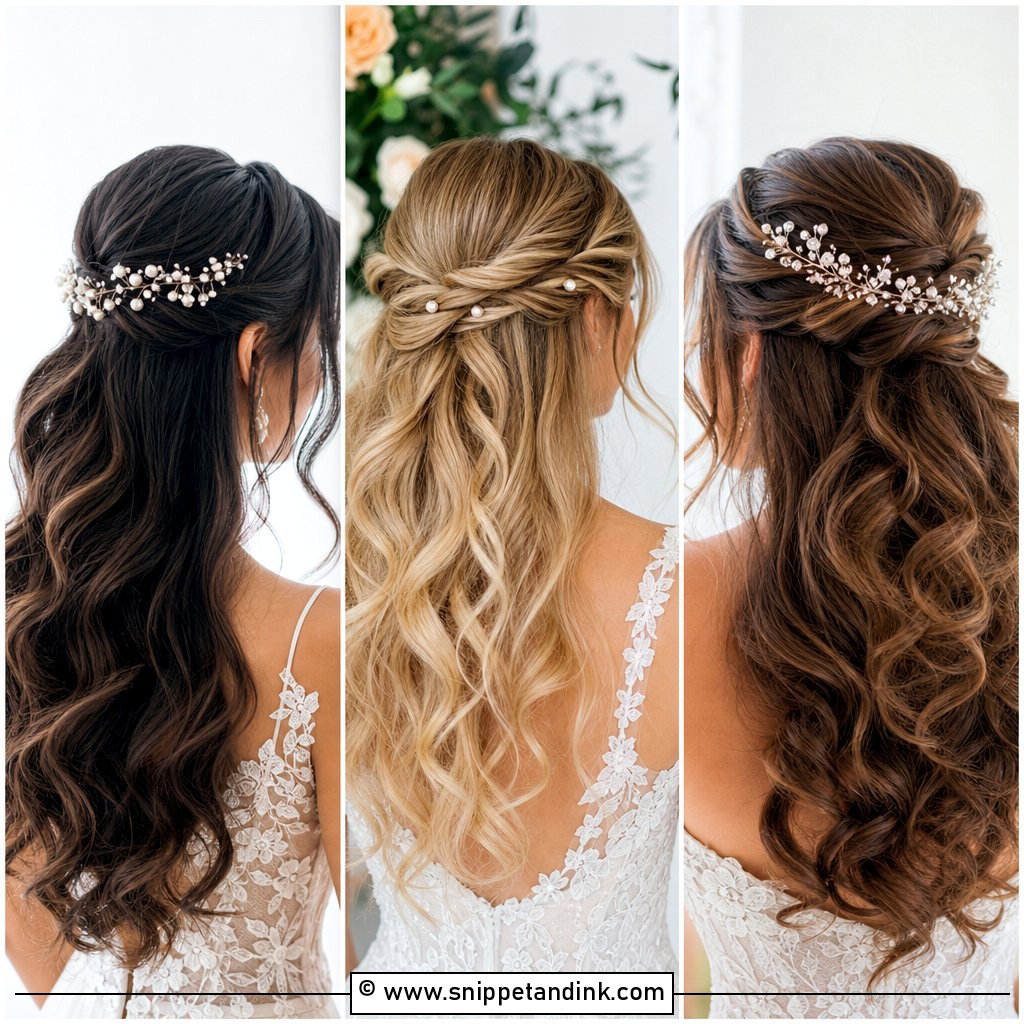
Pearl pins are the easiest accent to add and the easiest to overdo. I scatter them across the half-up section at slightly different heights, pushing each pin into a twist or a curl rather than flat hair, so it grips and doesn’t slip out. Seven to ten usually reads as a sprinkle; past that it starts to look like a pattern. They suit any texture, and if your dress has pearl buttons or beading, these tie your hair to the gown without adding weight.
14. Half-Up Faux Hawk With Curls
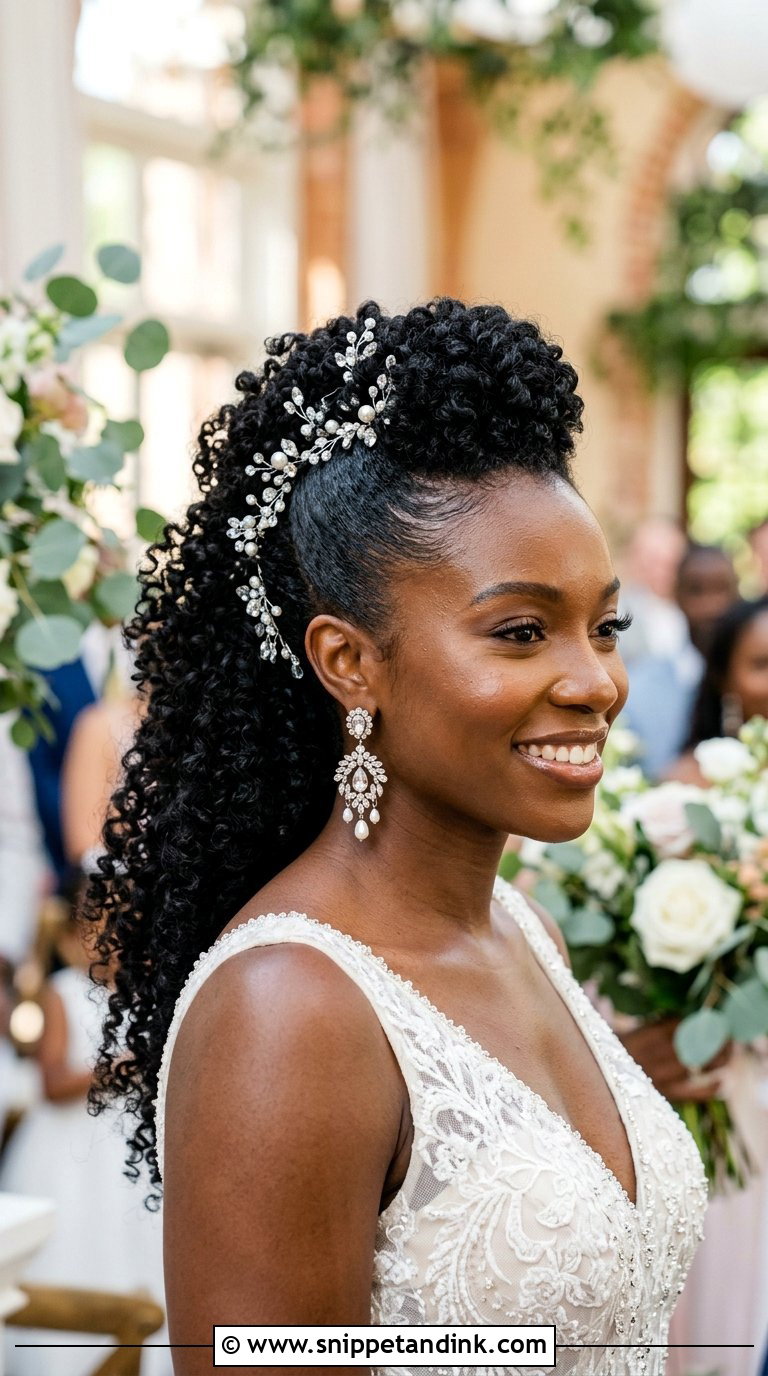
A half-up faux hawk raises the center of the crown and keeps the sides smooth, with curls falling at the back. I build it with a row of small sections pinned up the middle, each one slightly overlapping the last, so the shape looks like one ridge instead of a stack of puffs. This is a confident look and I’d skip it if you plan to wear a traditional veil, because there’s nowhere to set the comb without flattening the ridge. A thin chain or sparkling pins along the side add glamour.
15. Half-Up Twisted Crown With Waves
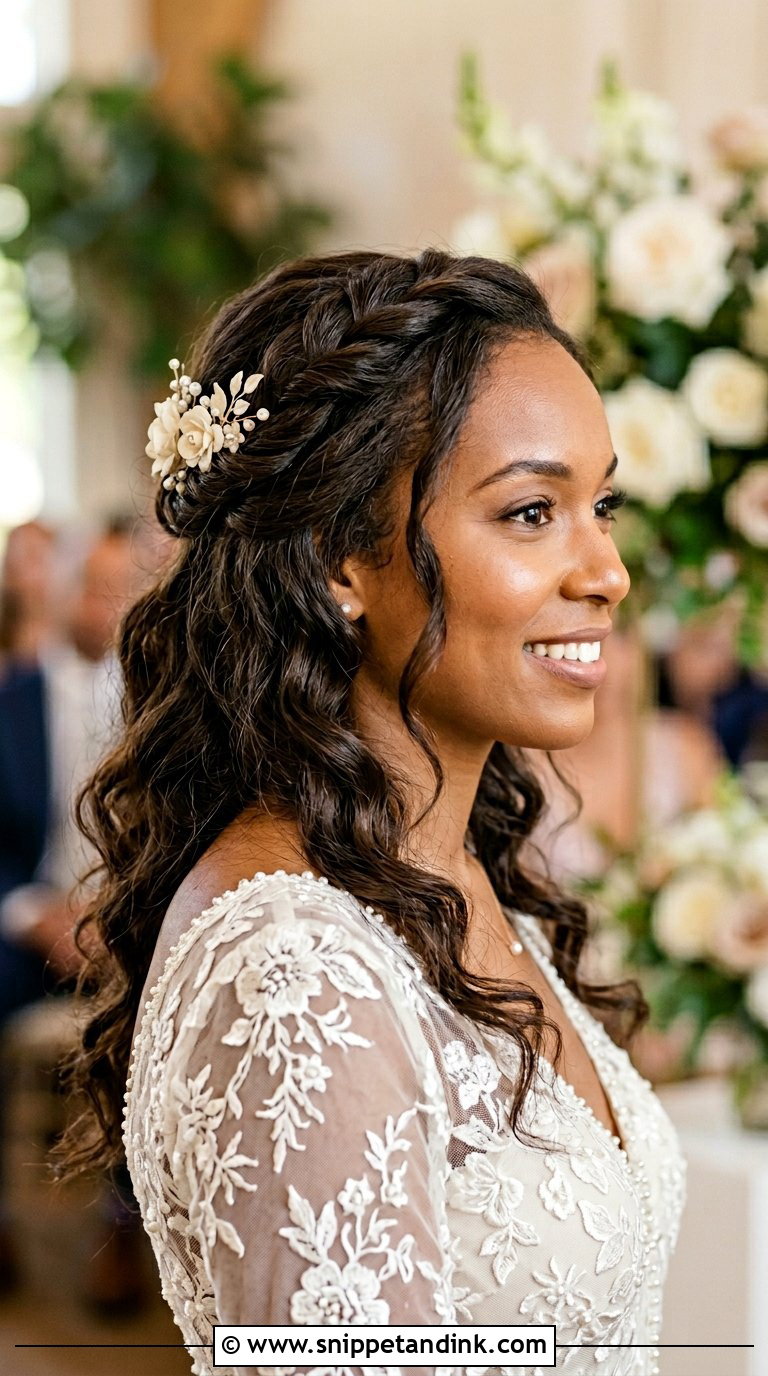
A twisted crown is a softer cousin of the halo braid: two front sections are rope-twisted back from the temples and meet at the crown, and your waves or curls hang below. It’s faster to do than braiding and easier to take down for a second look. The twist needs to be tight enough to hold, so I twist each strand in one direction and wrap them in the opposite one, which locks the rope. Small flowers or pearls slot neatly between the twists.
16. Half-Up Sleek Straight With Volume
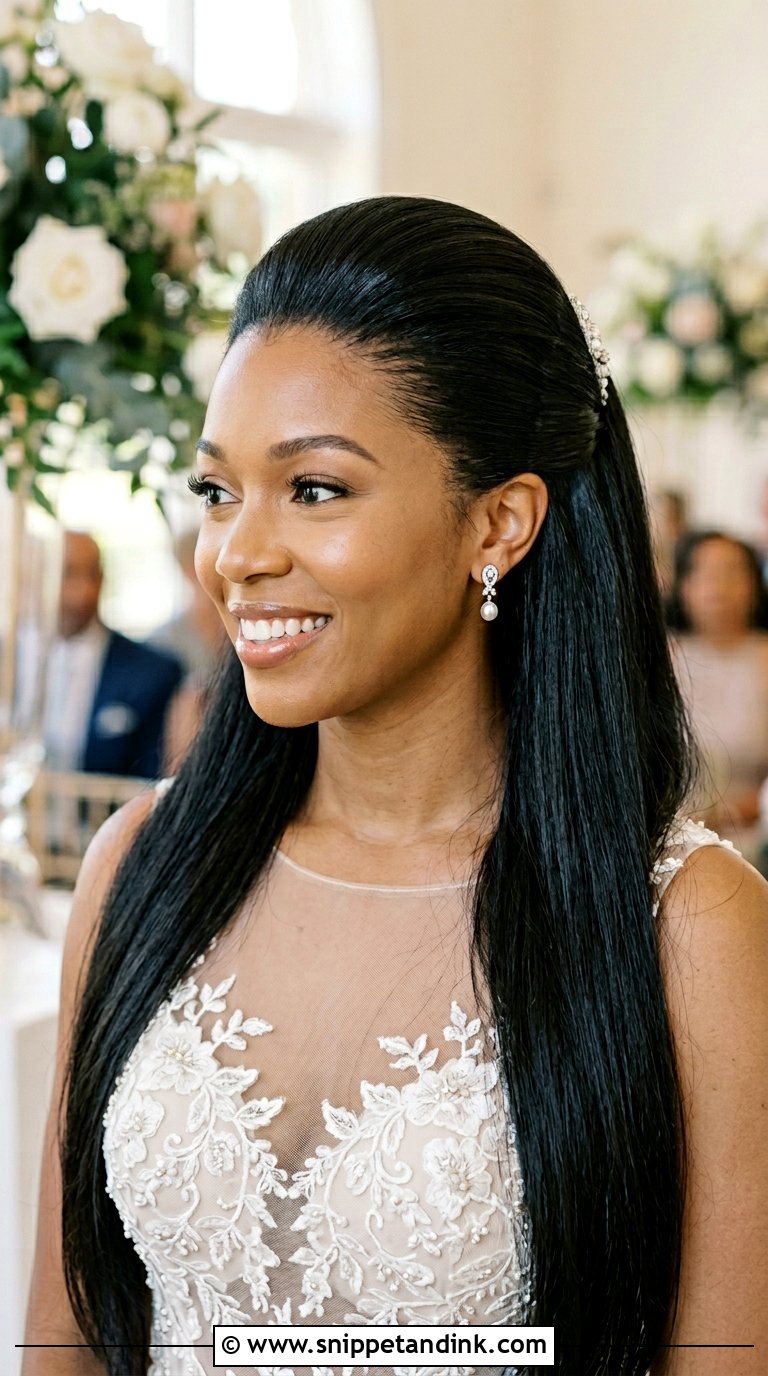
A sleek straight half-up shows off length and shine, with volume bumped at the crown. If you’re silk pressing natural hair for this, book the press a day or two before the wedding rather than the morning, and protect it overnight with a silk wrap. The danger here is weather: a humid outdoor ceremony will start to revert a press at the roots within an hour. I keep a light anti-humidity spray and a small flat iron in my kit for touch-ups at the reception. A crystal clip or slim headband adds sparkle.
17. Half-Up With Beaded Braids
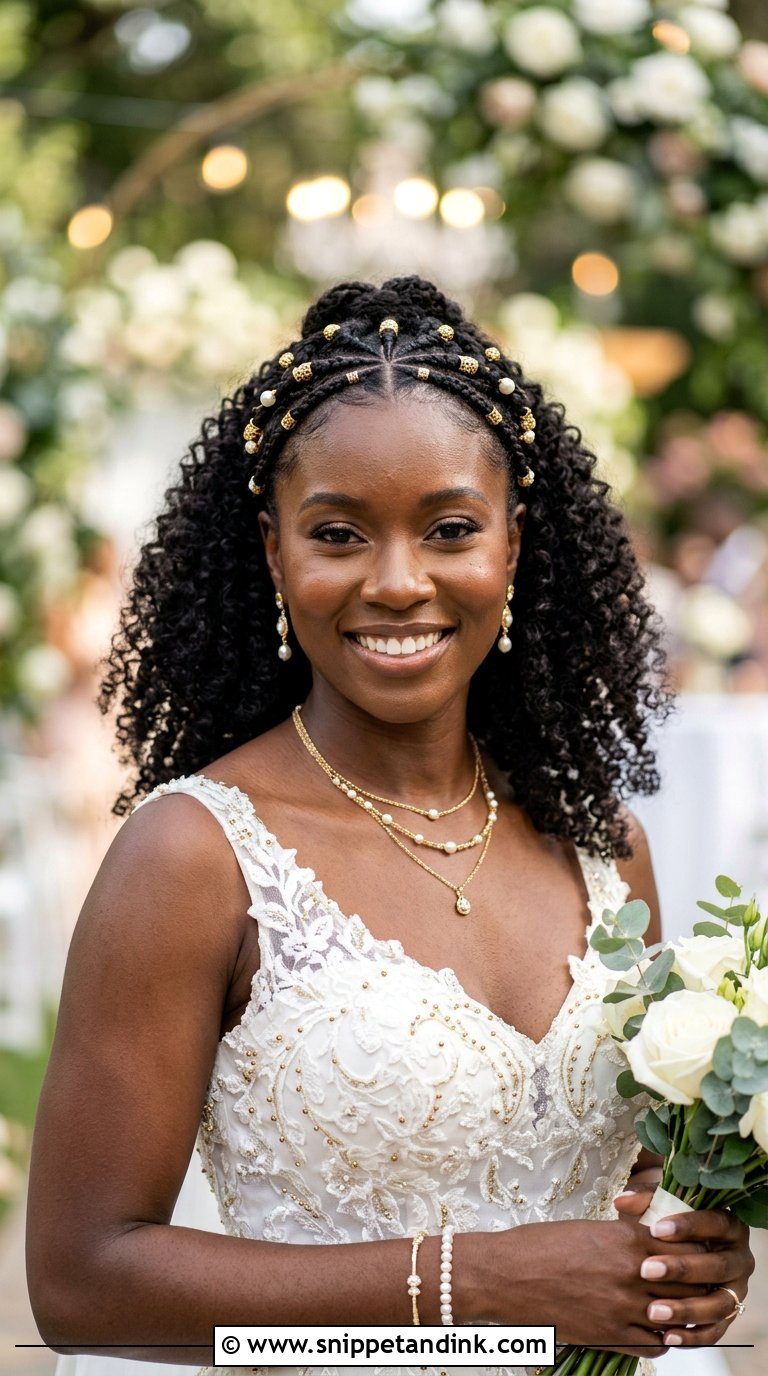
Beaded braids add color and sound: thin braids at the crown finished with beads that click softly as you move, and natural curls free below. I keep the beads on a handful of accent braids rather than every one, so the weight stays manageable and you can still lean back against a chair. Gold and pearl beads read as bridal; colored beads can pick up your wedding palette or a family tradition. Clear elastic under the last bead keeps them from sliding off mid-reception.
18. Half-Up Voluminous Afro With Twist
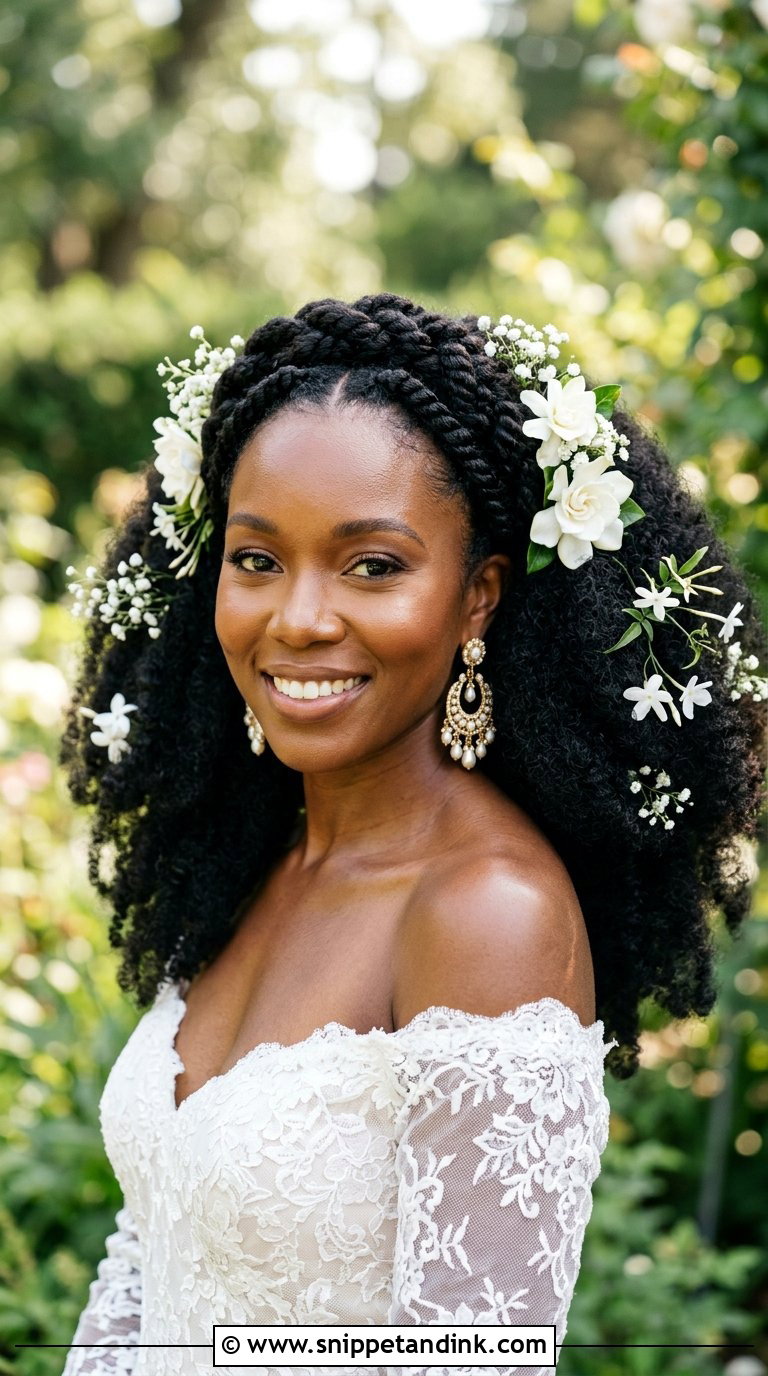
A full afro with a twisted crown puts your natural volume front and center. The top is twisted back to keep hair off your face, and the afro below is picked out for shape. I stretch the hair slightly with a blow dryer on low heat and a comb attachment before shaping, which gives a rounder silhouette and holds better than freshly washed coils. Keep the accent simple, a few fresh flowers or one large pin, so the shape of the afro does the talking.
19. Half-Up With Side-Swept Curls
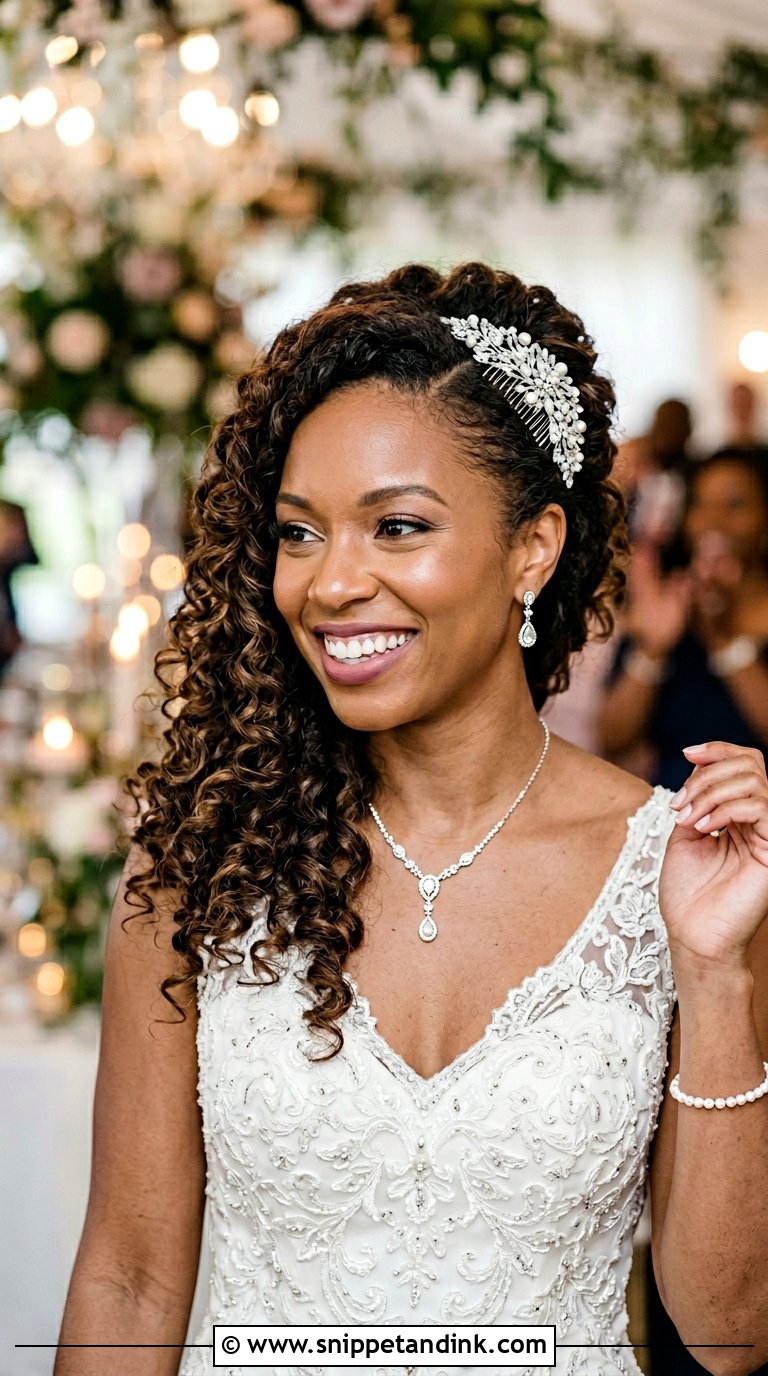
Side-swept curls give a vintage, old-Hollywood feel: the crown is gathered loosely and the curls are brushed over one shoulder. I pin the crown with a comb on the opposite side to balance the weight. Decide which side the curls fall on before the ceremony. Most brides choose the side away from their partner at the altar, so the sweep doesn’t hide their face in the vow photos. It’s flattering on round and oval faces, and it pairs well with an off-shoulder neckline.
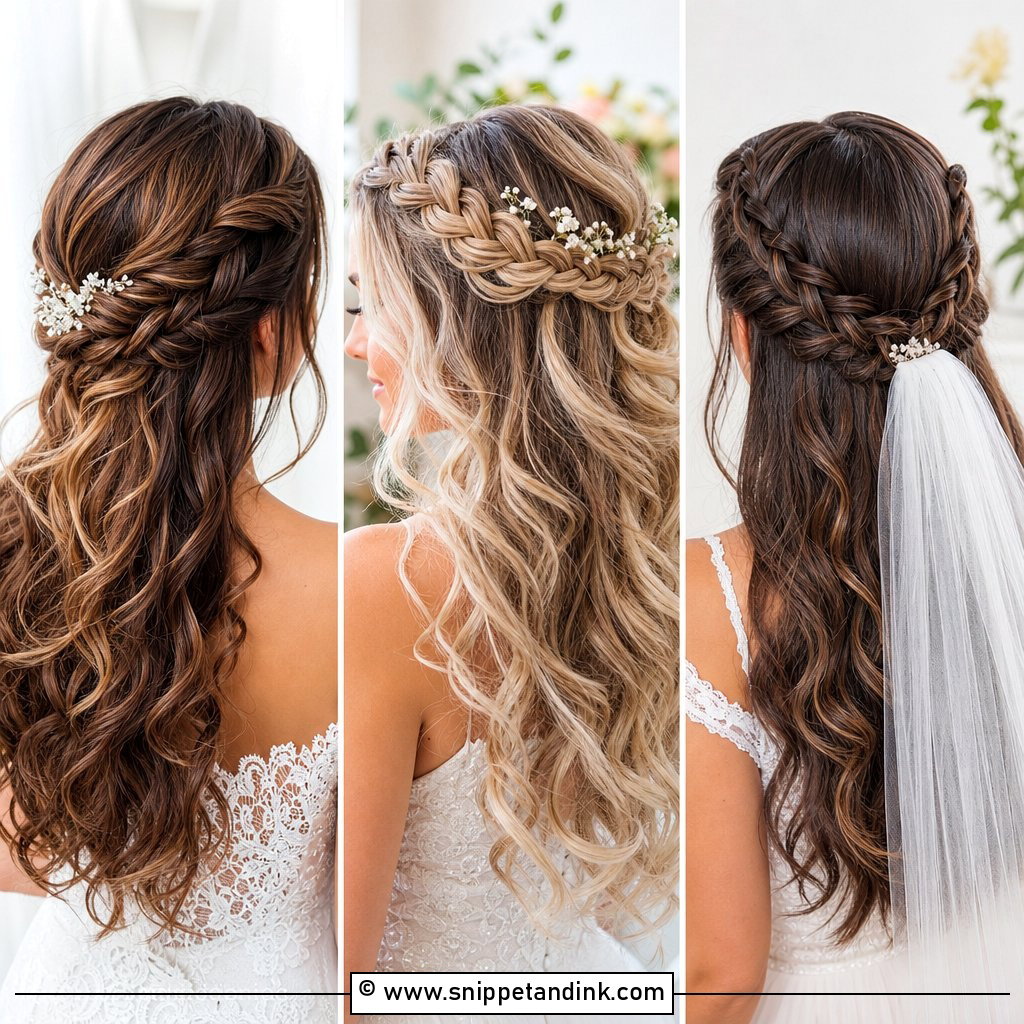
20. Half-Up Boho Braids With Curls
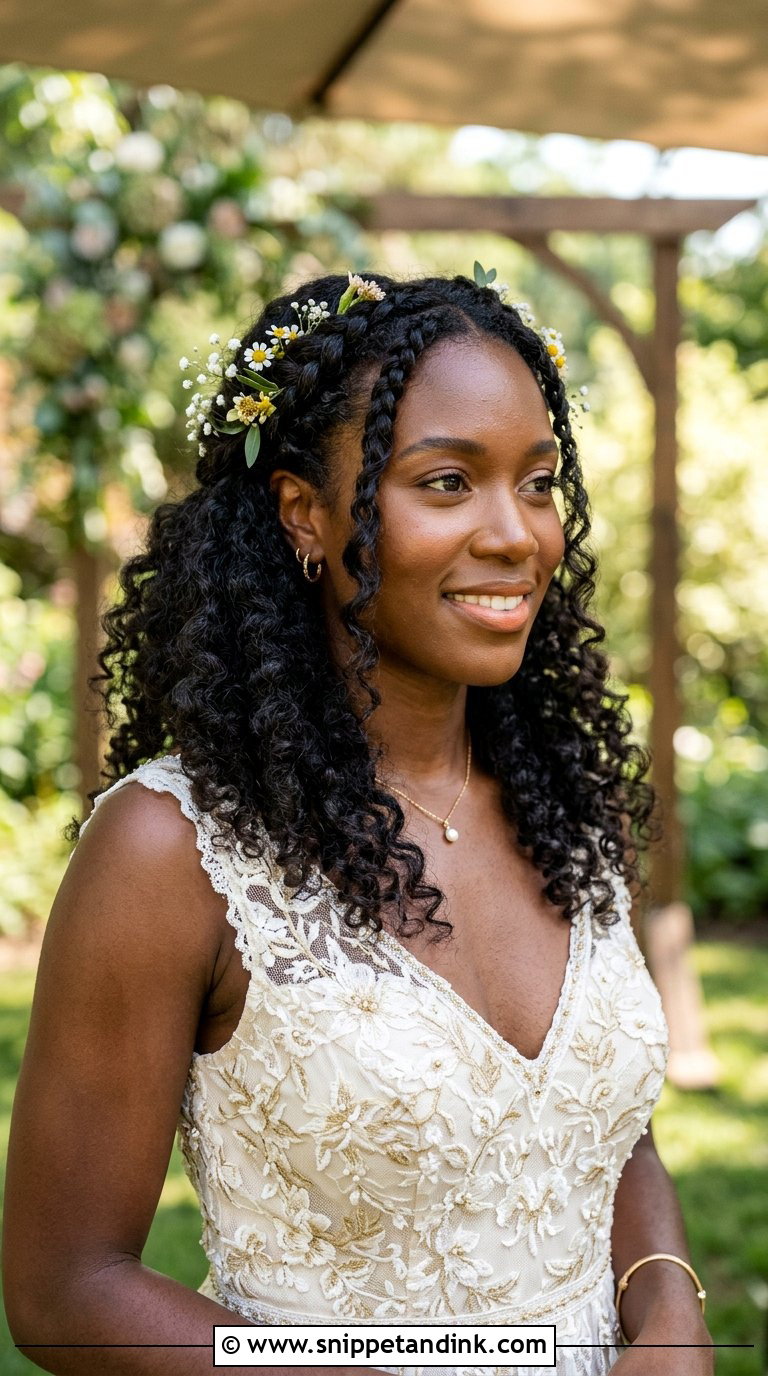
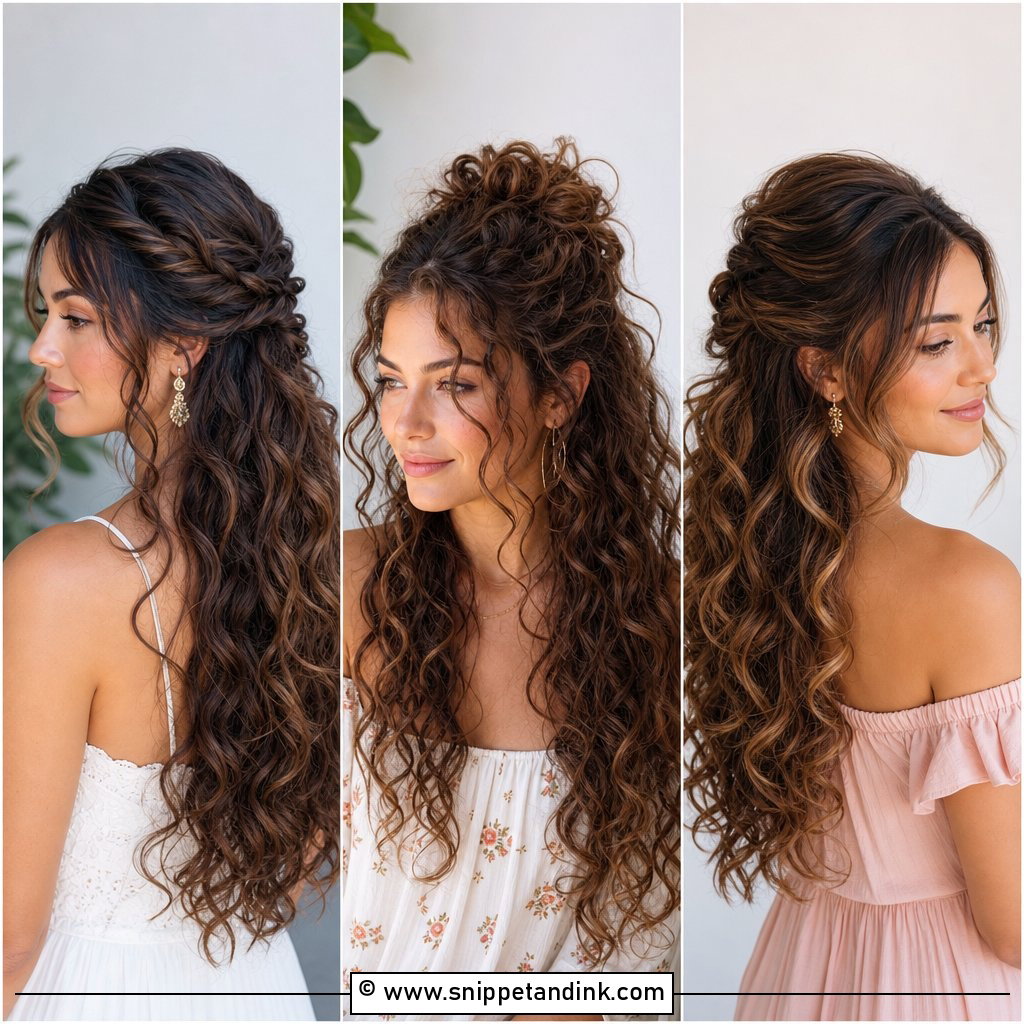
For the free-spirited bride, loose boho braids into natural curls give an undone, earthy feel. I braid the crown loosely and then pancake each braid, gently pulling the edges out with my fingertips to make it look fuller. Tiny wildflowers or gold accents tuck in last. This one does best outdoors at a garden or beach wedding, though in strong wind a loose braid will lose pieces, so I add a few invisible pins underneath to keep the shape.
Where the Top Section Sits Changes the Whole Style
The single decision that affects a half-up most is how high the gathered section sits. I talk this through with every bride at the trial, because it decides how the style works with your veil, your neckline and your face shape.
High at the crown
A high section adds height and opens up the face. It suits buns, faux hawks and space buns, and it lengthens a round face. The trade-off is that a veil comb has to go underneath the gathered hair rather than on top, so the veil sits slightly lower.
Level with the ears
This is the most forgiving height. It gives a veil comb a good anchor, it works with nearly every neckline, and it shows off both the half-up detail and the curls underneath from the side, which is where a lot of ceremony photos are taken.
Low near the nape
A low half-up is soft and romantic, and it suits twisted crowns and halo braids. It sits right where a high-neck or lace collar dress would rub, though, so check the back of your gown in the mirror at your fitting before you commit.
Wear your trial style for at least four or five hours after you leave the salon. Coily and curly hair shows its real behavior later in the day: whether the top section drops, whether the curls shrink, whether the pins start to poke. That’s information no mirror check can give you.
Making Your Half-Up Match the Hair You Actually Have
A half-up half-down gives Black brides a lot of room to work with: sleek or coily, braided or twisted, bare or dressed with gold, pearls and fresh flowers. Pick the version that suits your texture as it naturally behaves, test it at a trial in conditions close to your wedding day, and tell your stylist about your veil and your timings early. Do that, and the style you see at the start of the day is the one you’ll still be wearing on the dance floor.
You'll Like These Ideas:


Leave a Reply