
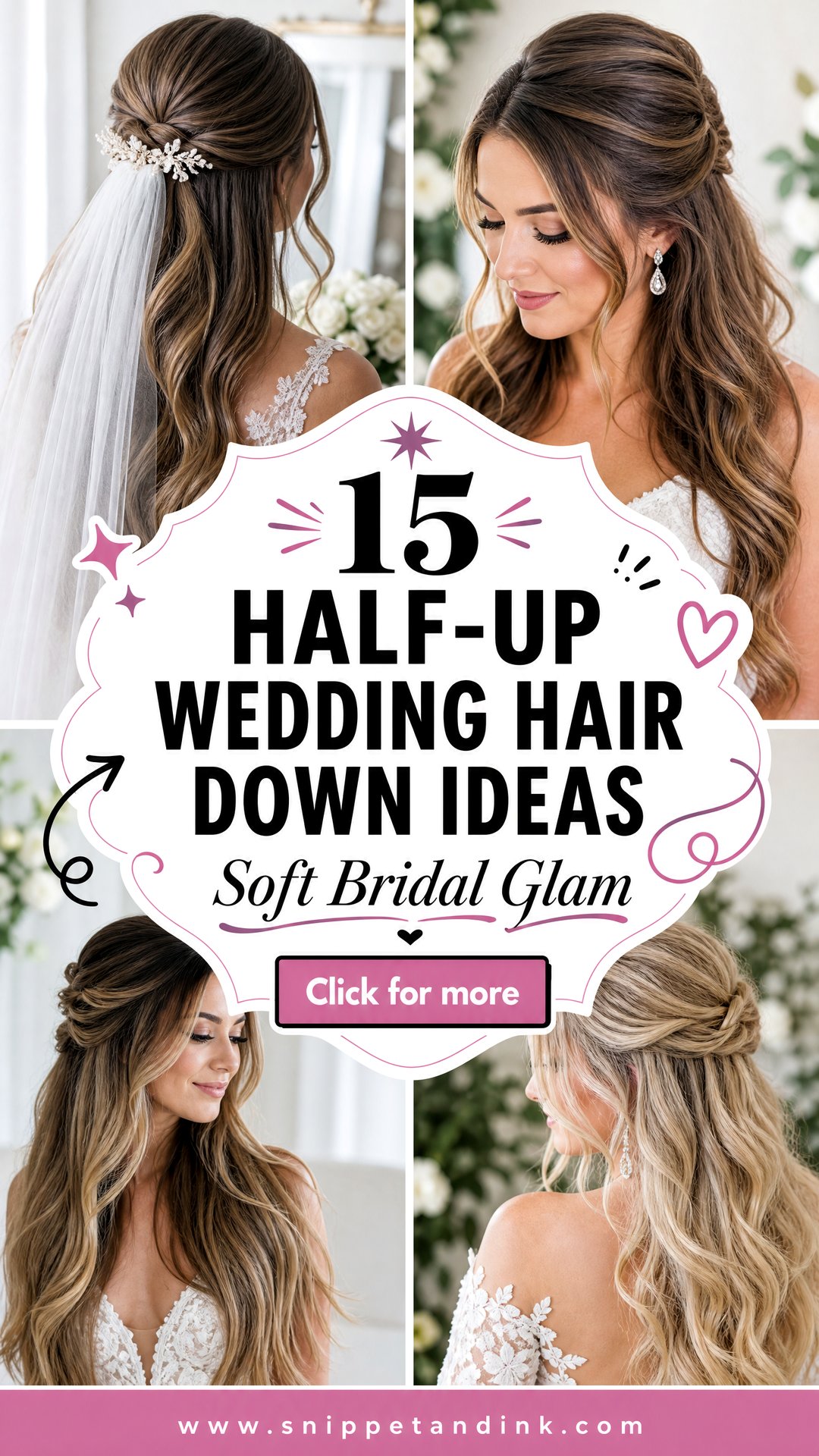
Half-up, half-down is the style I see brides settle on after they’ve tried a full updo at a trial and felt like someone else. The crown is lifted and tidy, the front stays out of your face for the vows, and the length still moves when you walk. It also gives a veil, a comb, a bow or a few pearl pins an obvious place to sit. The fifteen versions below range from glossy Hollywood waves to natural curls and braided crowns. In my experience, the right one has more to do with your neckline, your hair texture and the weather on the day than with whichever photo you saved first.
The Ratio of Up to Down Changes the Whole Look
Two half-up styles can look completely different just because of how much hair goes into the top section. I usually take something between the hairline and the tops of the ears, but that line can shift to suit your face and dress.
- A small top section (just the front and crown) keeps most of the length loose. It reads soft and relaxed, and it’s kindest to fine hair because the bottom stays full.
- A generous top section pulled back from ear level looks more polished and secure. It’s the better call for windy venues, long veils and anyone who touches their hair when nervous.
- The anchor point matters as much as the amount. Gathered high at the crown, the style feels youthful and lifted. Gathered lower, near the occipital bone, it looks calmer and sits better under a cathedral veil.
At a trial, I pin the top section at two different heights before finishing the curls and take a side photo of each. The difference in profile is usually obvious within seconds, and it saves a lot of second-guessing later.
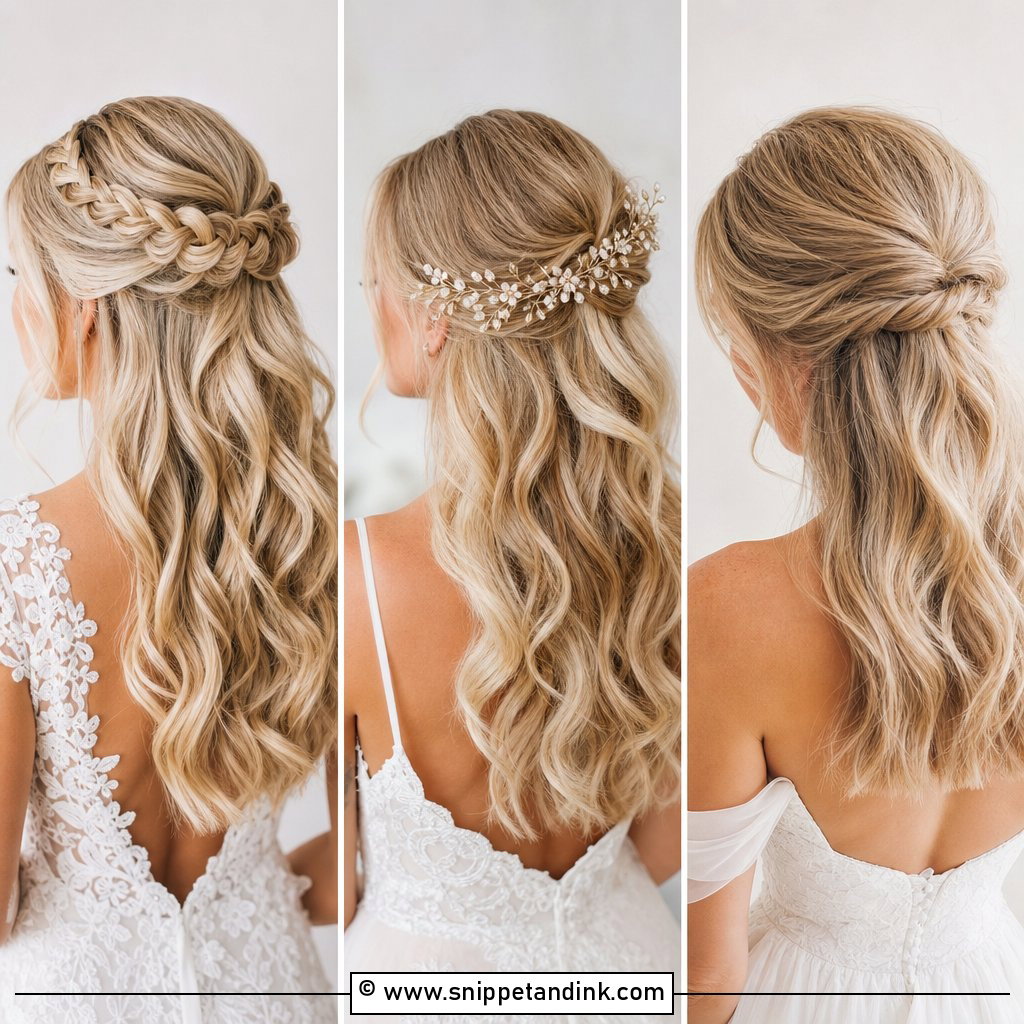
1. Half-Up Wedding Hair With Loose Curls
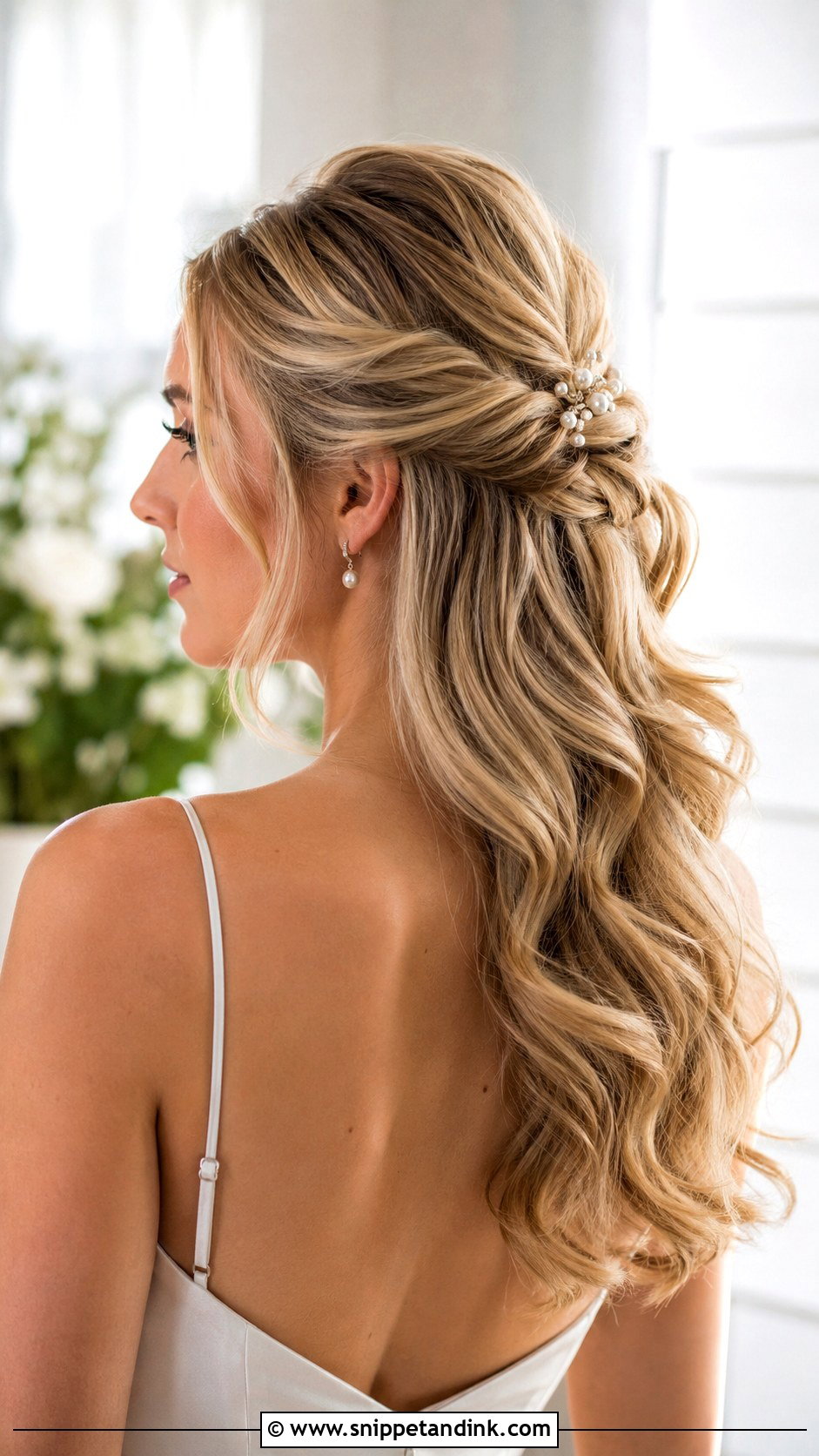
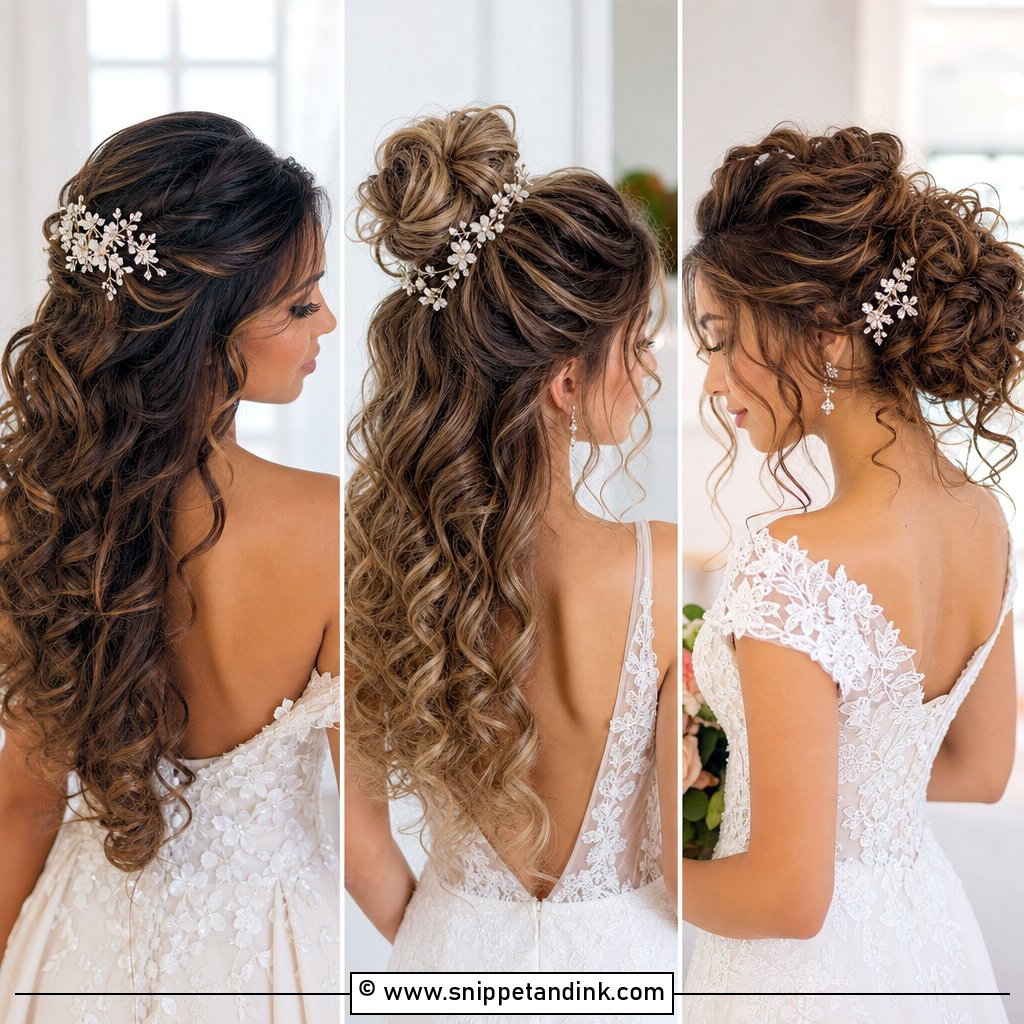
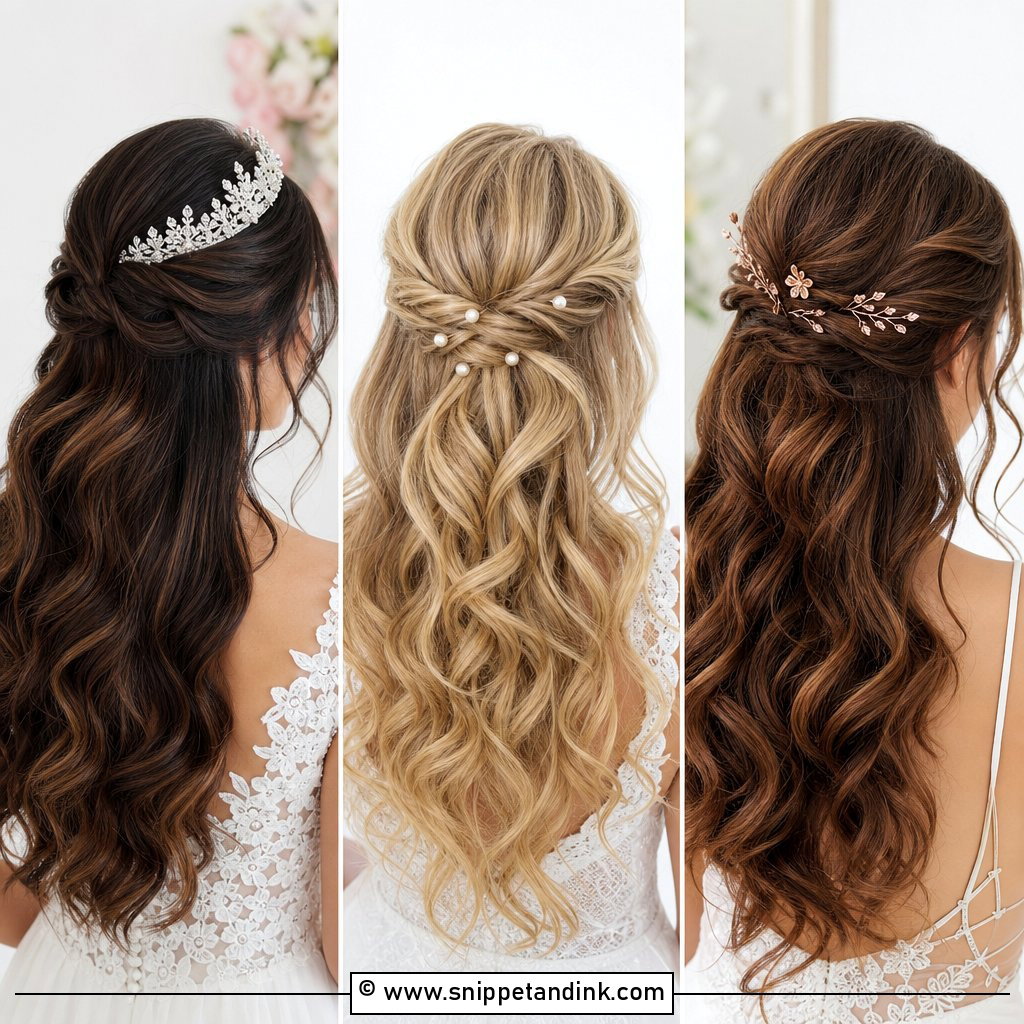
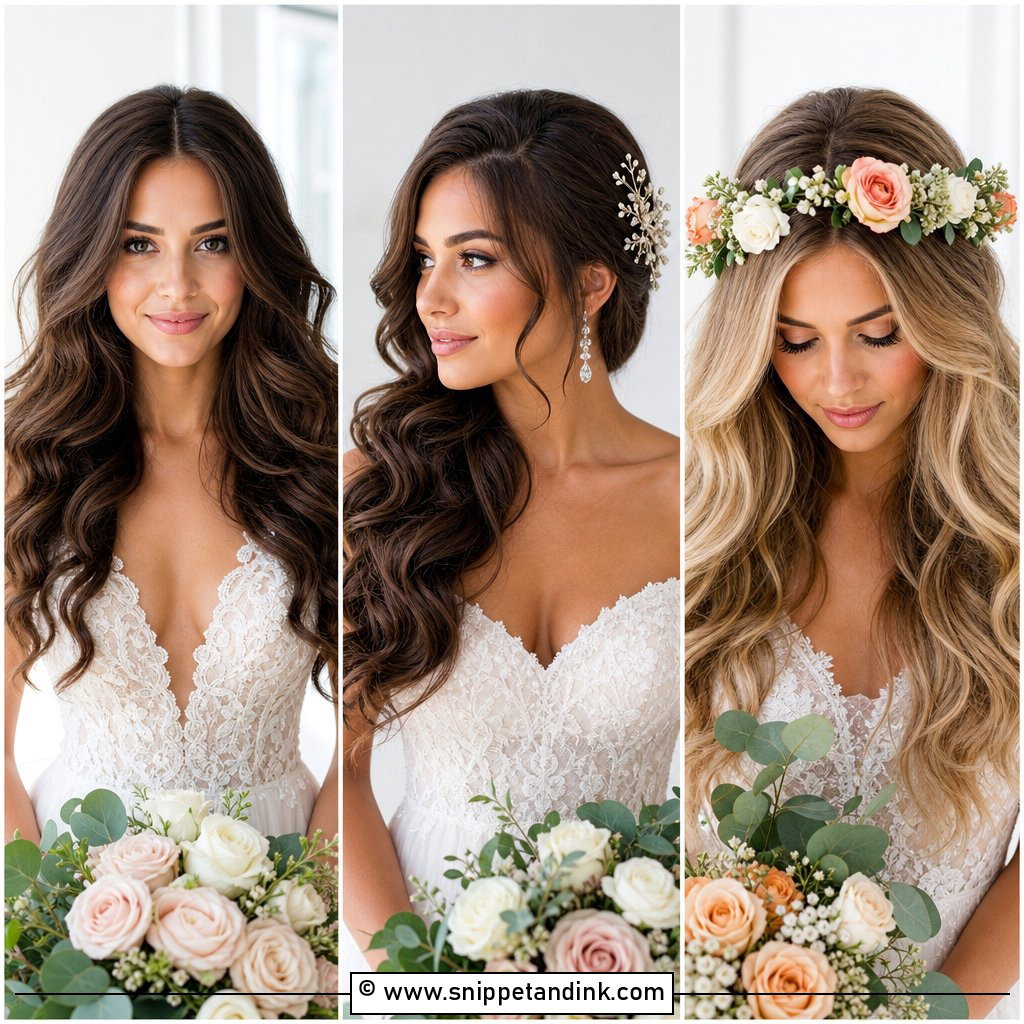
Loose curls are the half-up version I’m asked for most, and the reason is simple: it looks finished without looking set. I pull back only the top section and leave the rest full and touchable. On medium to long hair, I start the curl just below the cheekbone, because curls that begin at the root read tighter and older in photos. A little lift at the crown gives a veil something to rest against and balances the bare shoulders of strapless gowns. Add pearl pins, a small comb or a couple of face-framing pieces, but rarely all three.
2. Half-Up Wedding Hair With Hollywood Waves
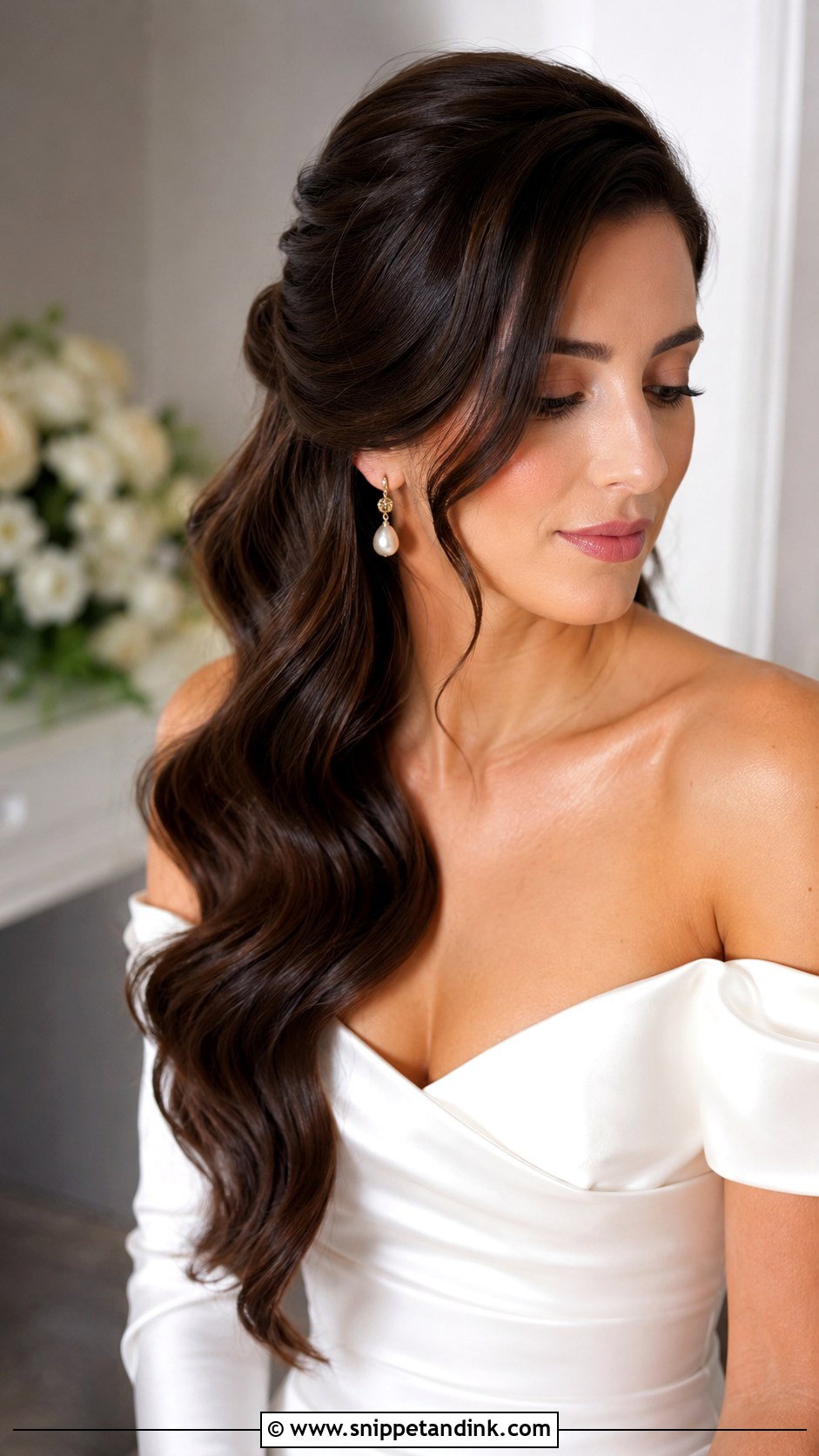
Hollywood waves are the most demanding style here. Every curl goes in the same direction, cools completely, then gets brushed into one continuous S-shape, which is what creates that red-carpet bridal finish. I keep the pinned section small and smooth so it doesn’t break up the wave. Satin and off-shoulder necklines suit it best. If your hair drops a curl within an hour, I’d add a few clip-in wefts underneath; they give the waves something to hold onto through the reception.
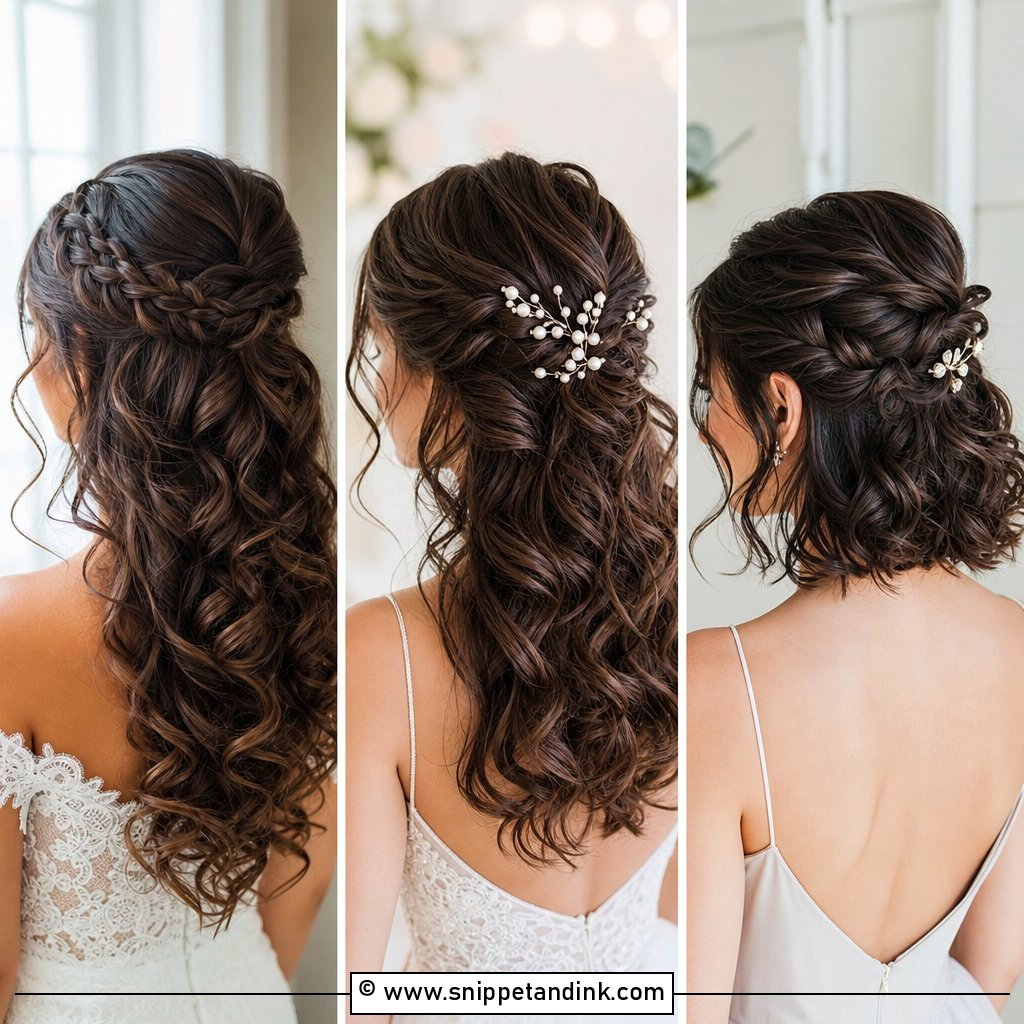
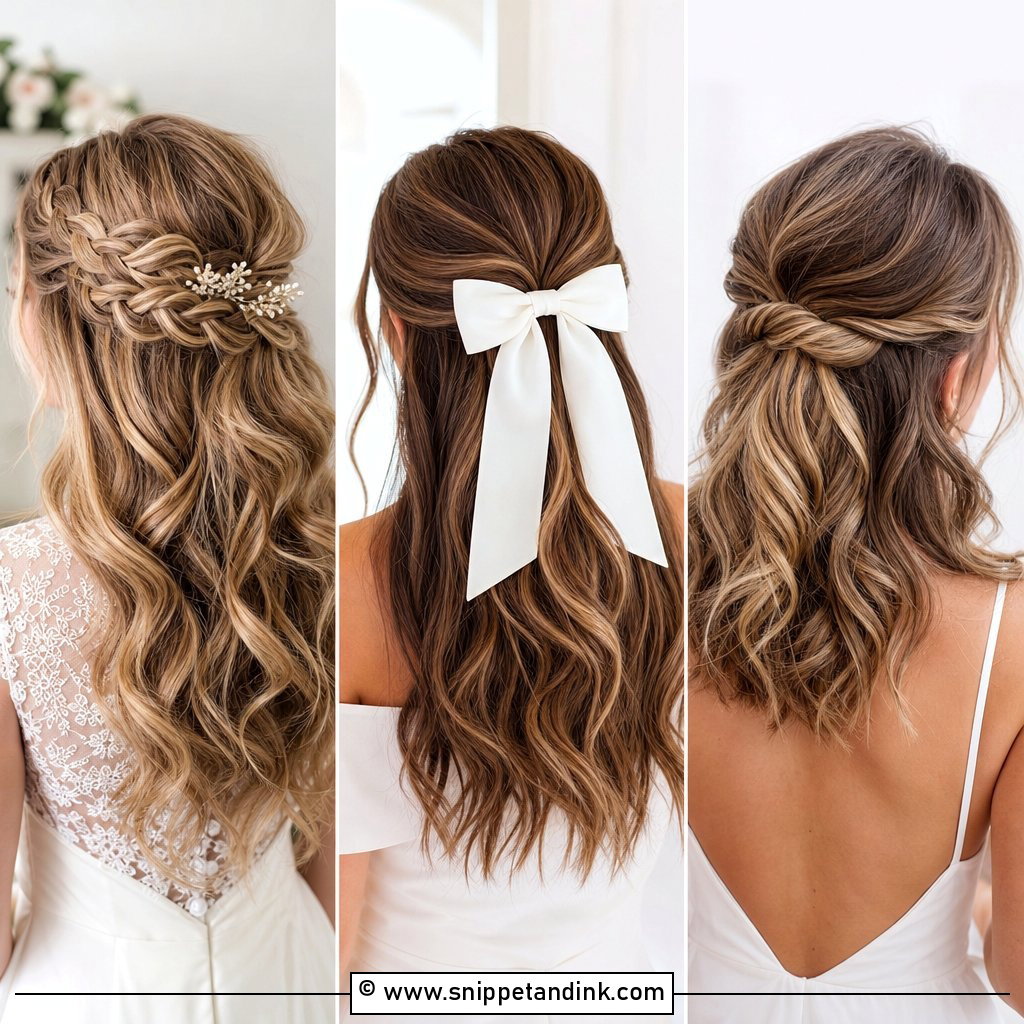
3. Half-Up Wedding Hair With Braided Crown
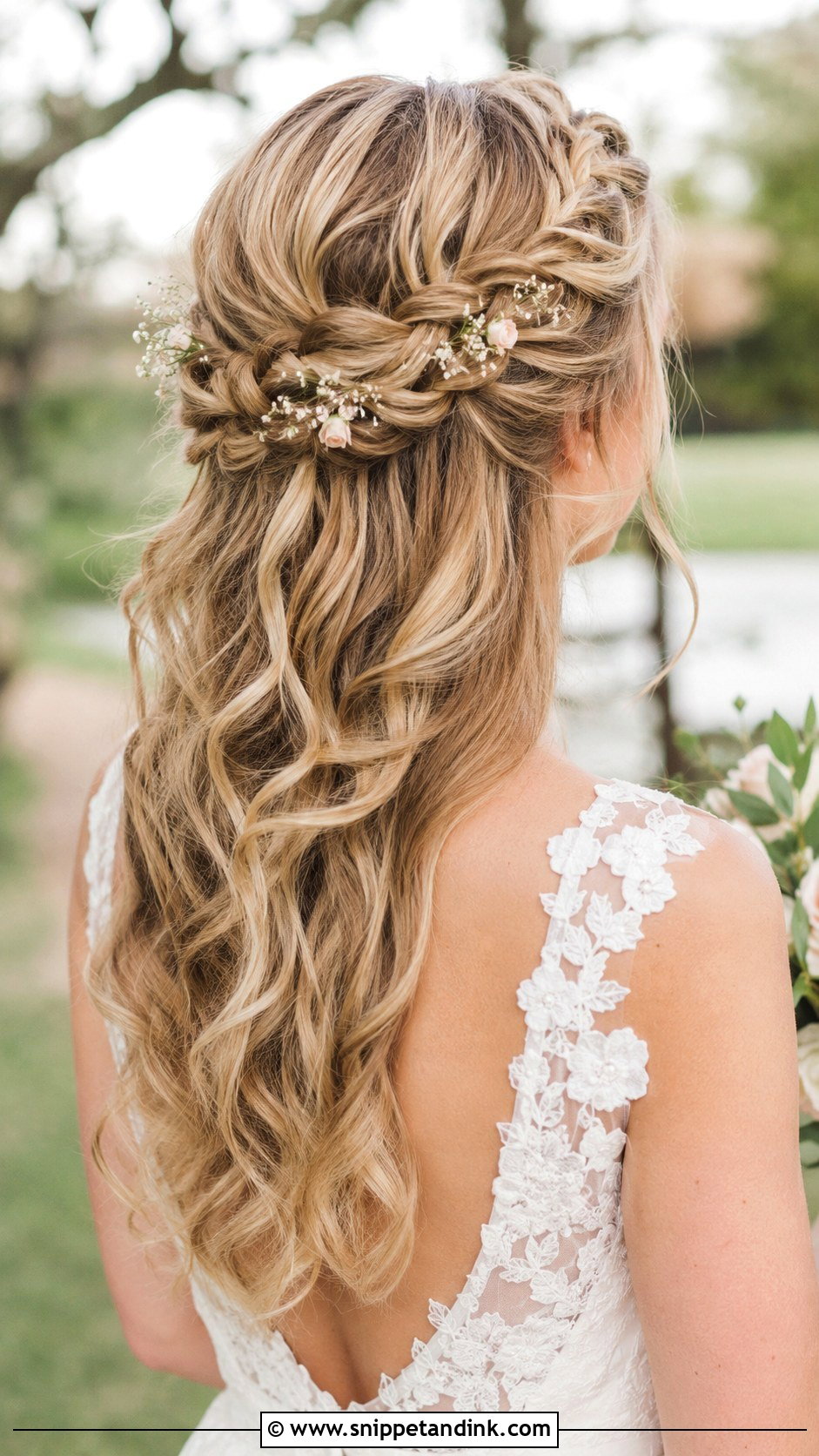
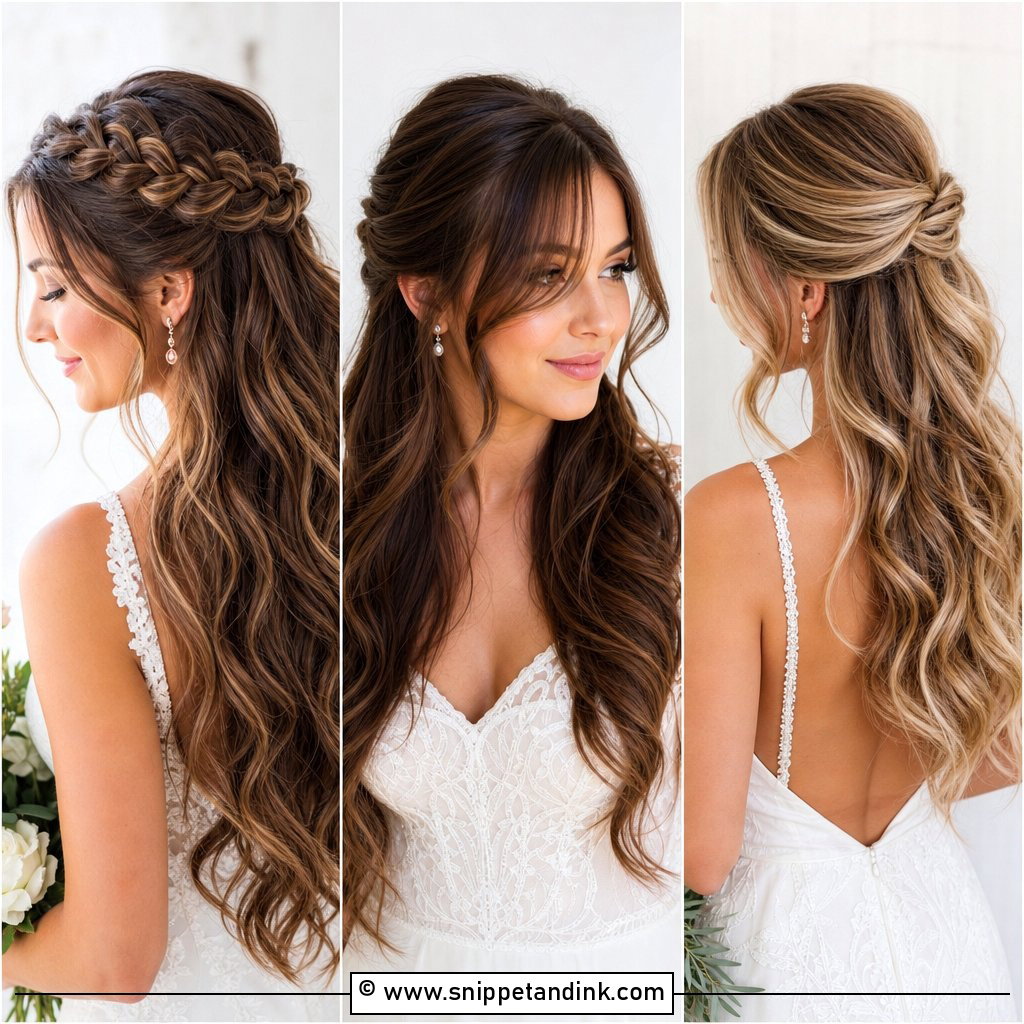
A braided crown gives the top section real structure, so I reach for it at outdoor ceremonies where wind is likely. The braid wraps across the back or sides and disappears into the loose curls. I always braid looser than feels right, then pull the edges out with my fingertips, because a tight braid shows up from behind as a thin flat line. Fresh flowers, tiny pearl pins or a fine vine slide straight into it. On very fine or freshly washed hair, texture spray goes in first, or the braid starts slipping by mid-afternoon.
4. Half-Up Wedding Hair With Twisted Back
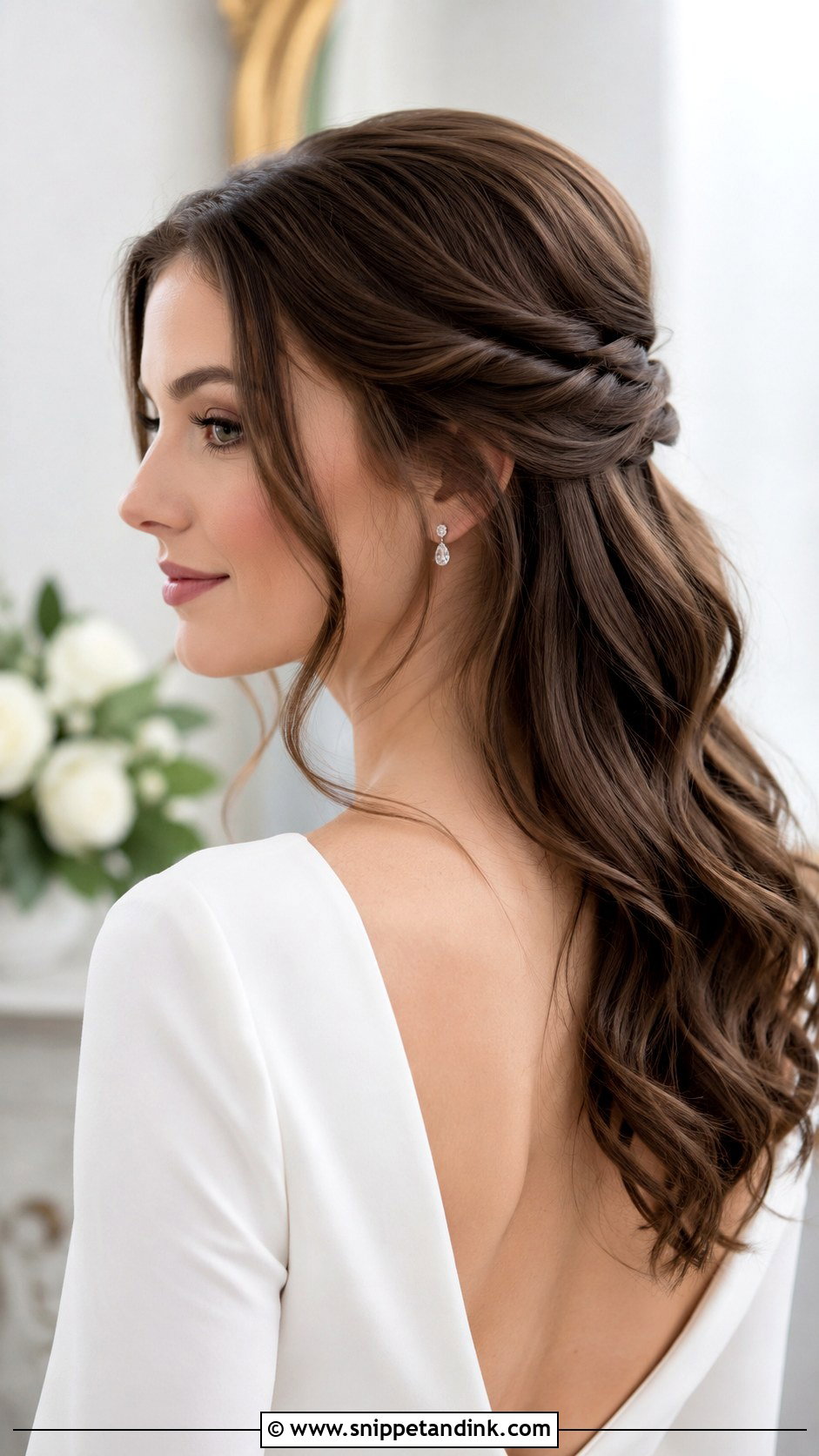
Twists are what I suggest when someone wants detail but finds braids too busy. I take a section from each side, twist it away from the face and pin the two together at the back. They’re fast, which counts on a crowded morning, and they hold well because the pins hide inside the twist. The length underneath can be curled, waved or brushed out to suit the dress. On heavily layered hair, short ends can poke out of a twist, so I smooth each one with a little cream. A jeweled comb above the join looks classic; leaving it bare looks quieter and more modern.
5. Half-Up Wedding Hair With Pearl Pins
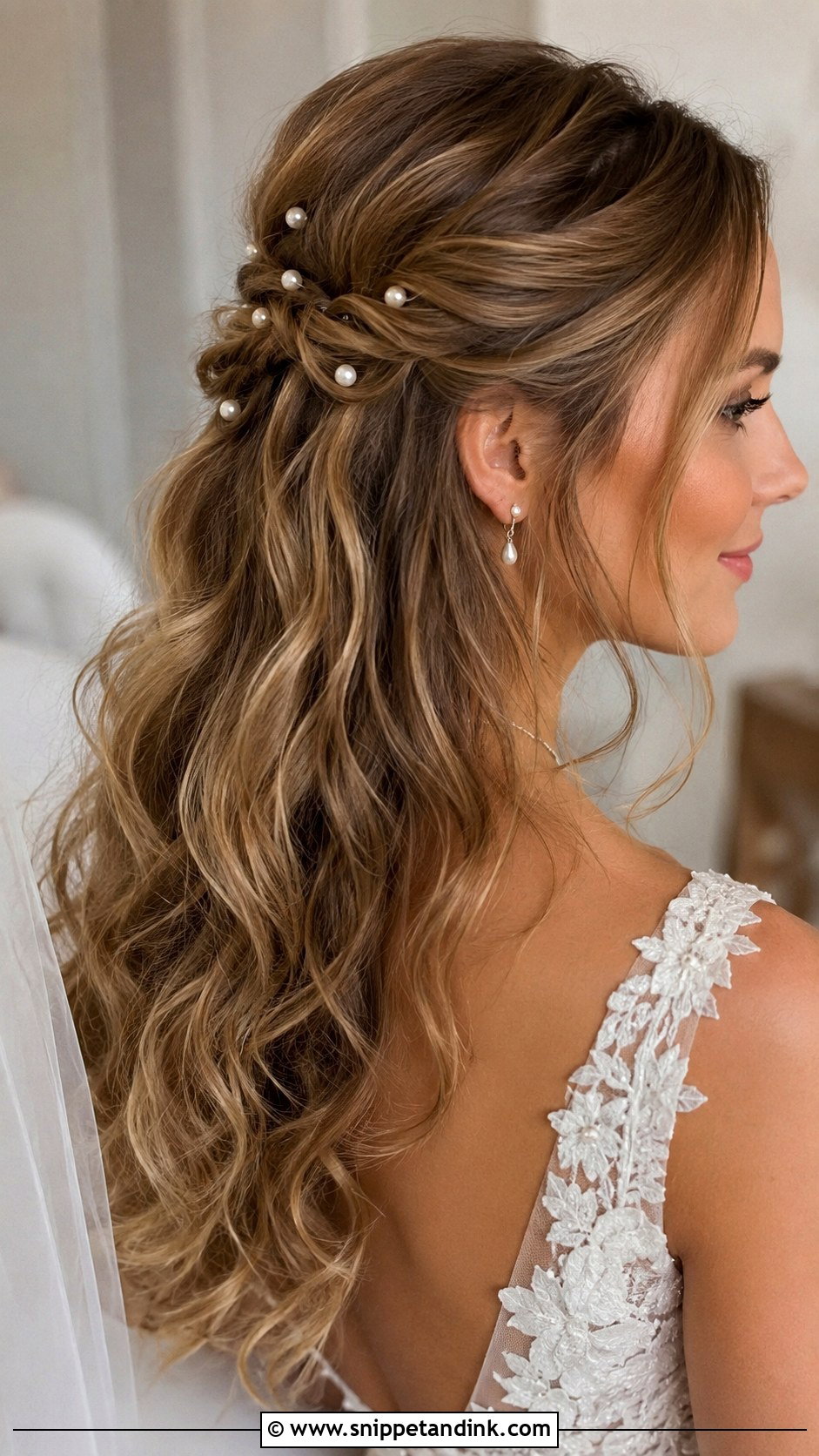
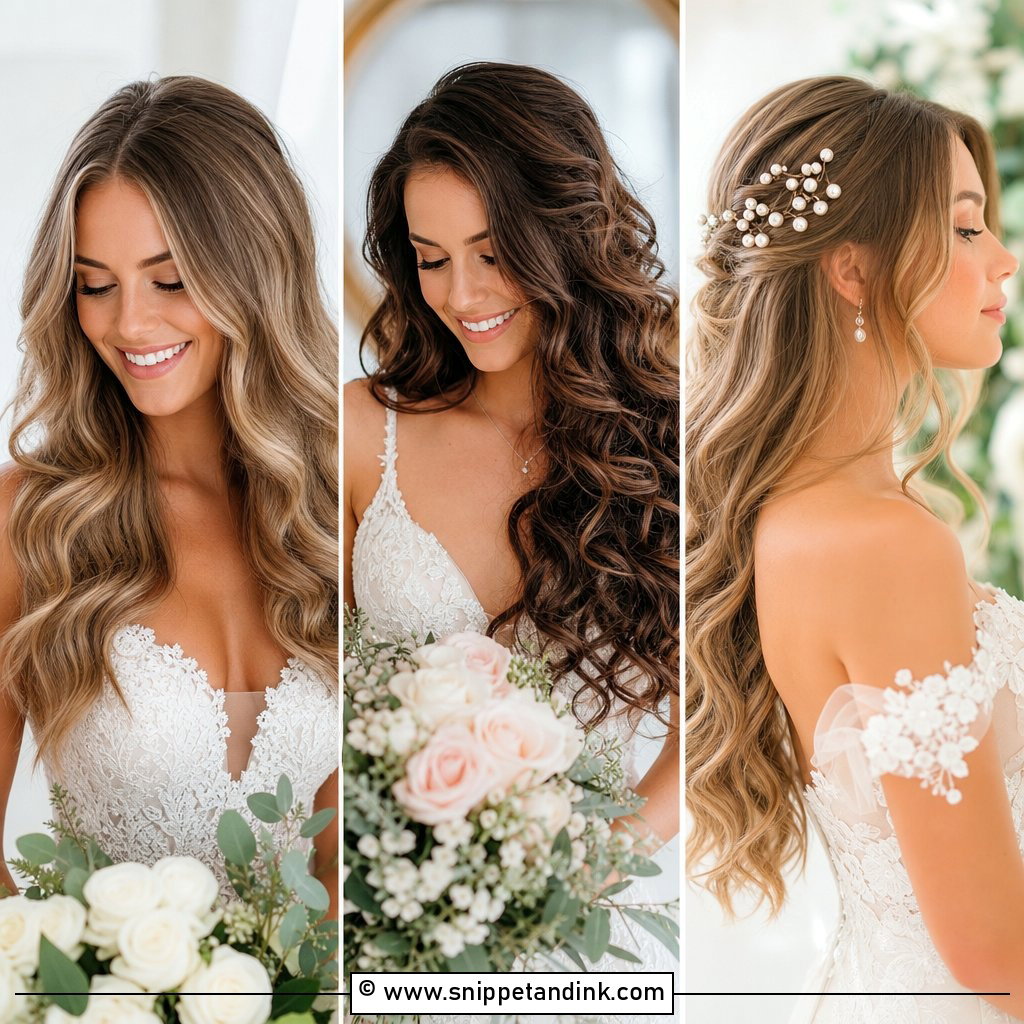
Pearl pins are the lightest way to add detail. I curl the hair, pin the top section, then place the pearls around the gathering point. Placement matters more than quantity: I cluster three or four where the light hits instead of spacing them evenly, which can look like a pattern rather than an accent. They sit naturally with lace gowns, pearl earrings, sheer veils and soft glam makeup. On very pale blonde hair, small pearls almost vanish, so I’d go a size larger or choose pins with a gold setting.
6. Half-Up Wedding Hair With Veil
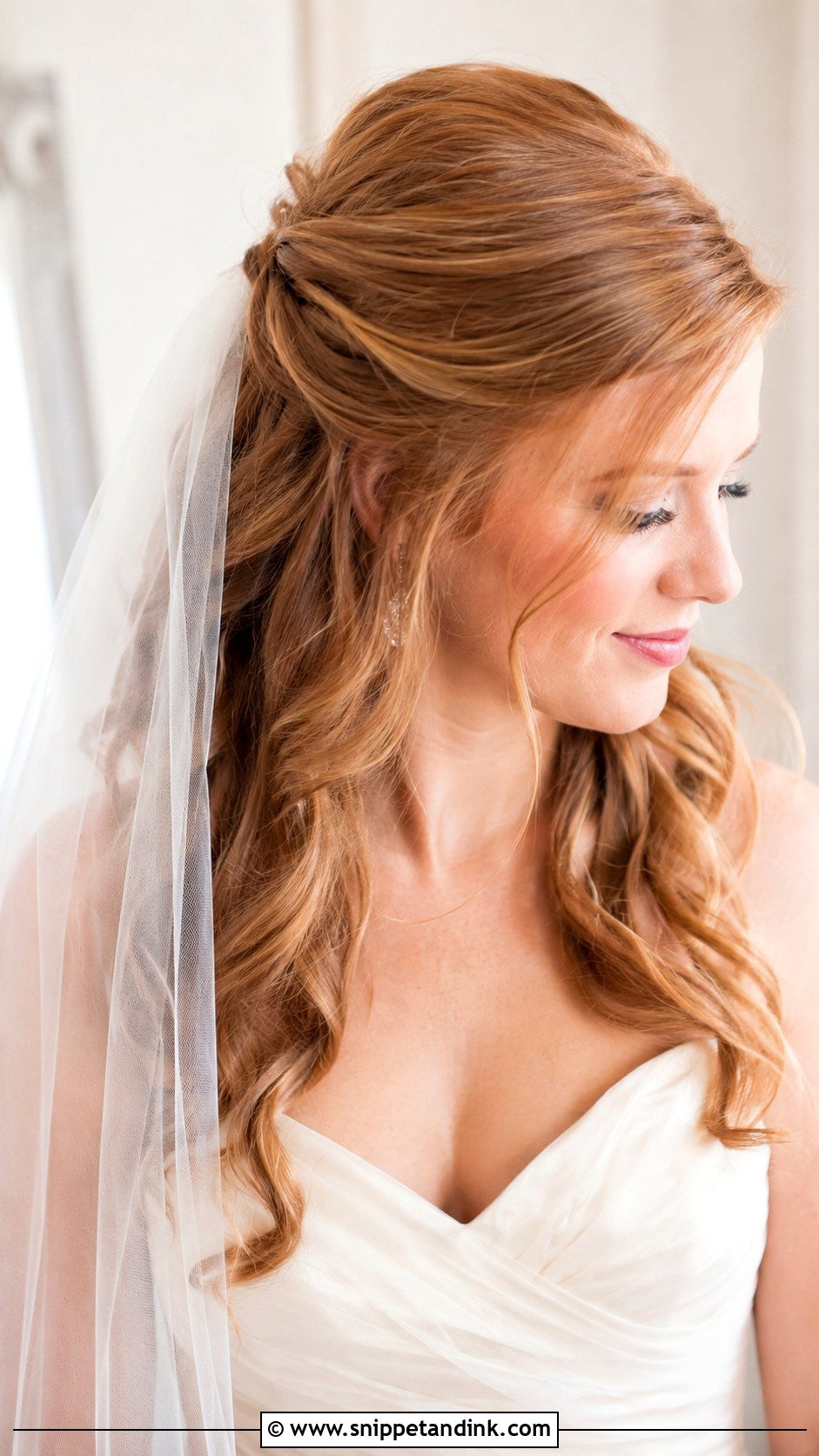
Half-up hair and a veil get along well because the pinned section gives the comb a firm base. Before the comb goes in, I build that base with crossed bobby pins; a comb pushed into loose hair works its way out within the hour. The crown can be teased, twisted, braided or simply gathered, depending on how much height you want. If the veil comes off after the ceremony, the hair still looks complete. At your trial, try the comb in both spots: tucked under the half-up section it looks soft and modern, while above the crown it reads more traditional.
7. Half-Up Wedding Hair With Flower Comb
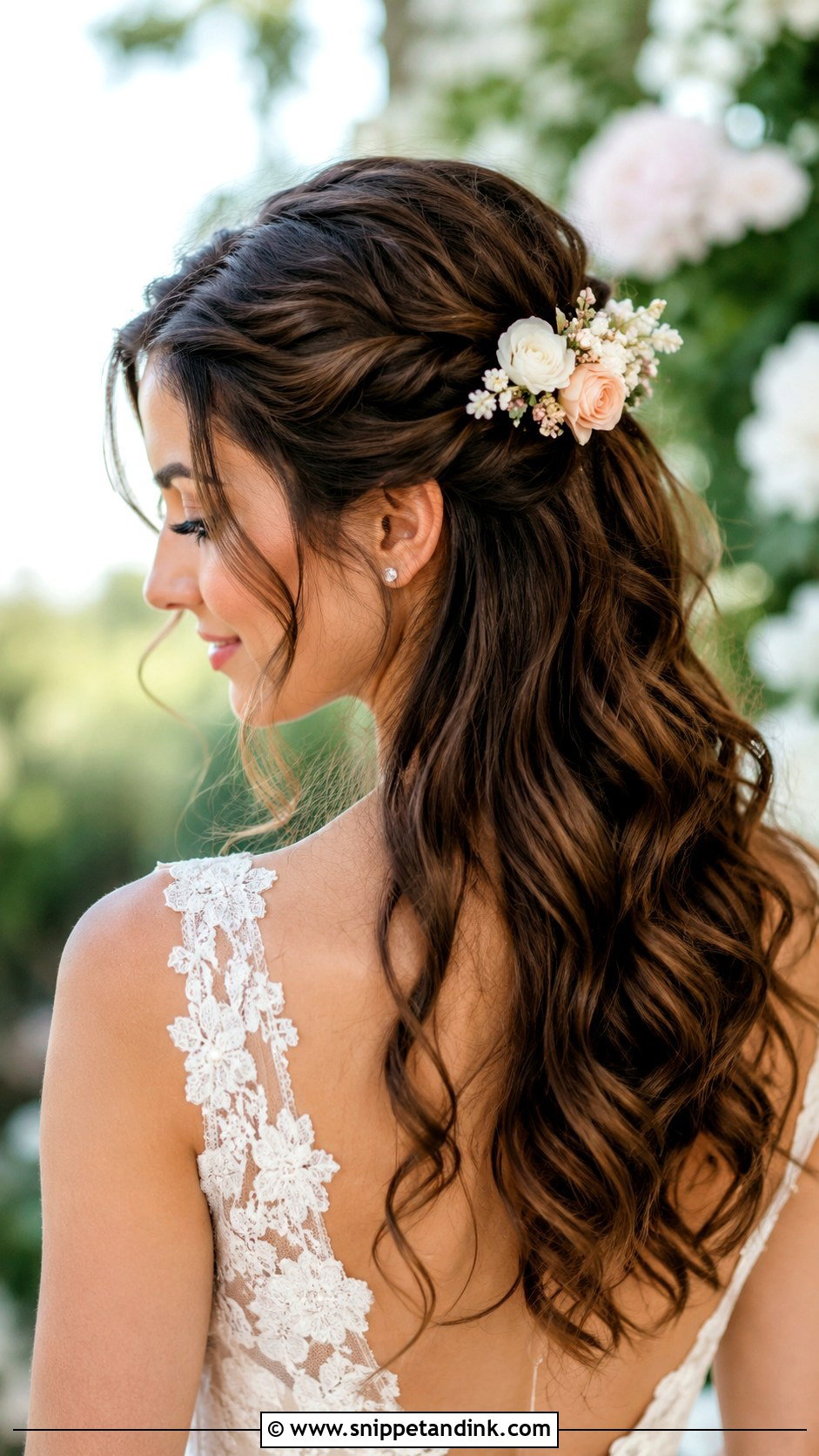
A flower comb gives the back of a half-up style a clear focal point, placed right where the hair gathers. I size it to the dress: smaller flowers if the gown has lots of lace or beading, larger blooms if it’s plain. Loose waves and natural texture suit it better than sleek hair, which can make the comb look stuck on. If you want real flowers, ask your florist for sturdy ones such as spray roses or wax flower. Gardenias and sweet peas tend to brown and droop within a few hours of summer heat.
8. Half-Up Wedding Hair With Bow
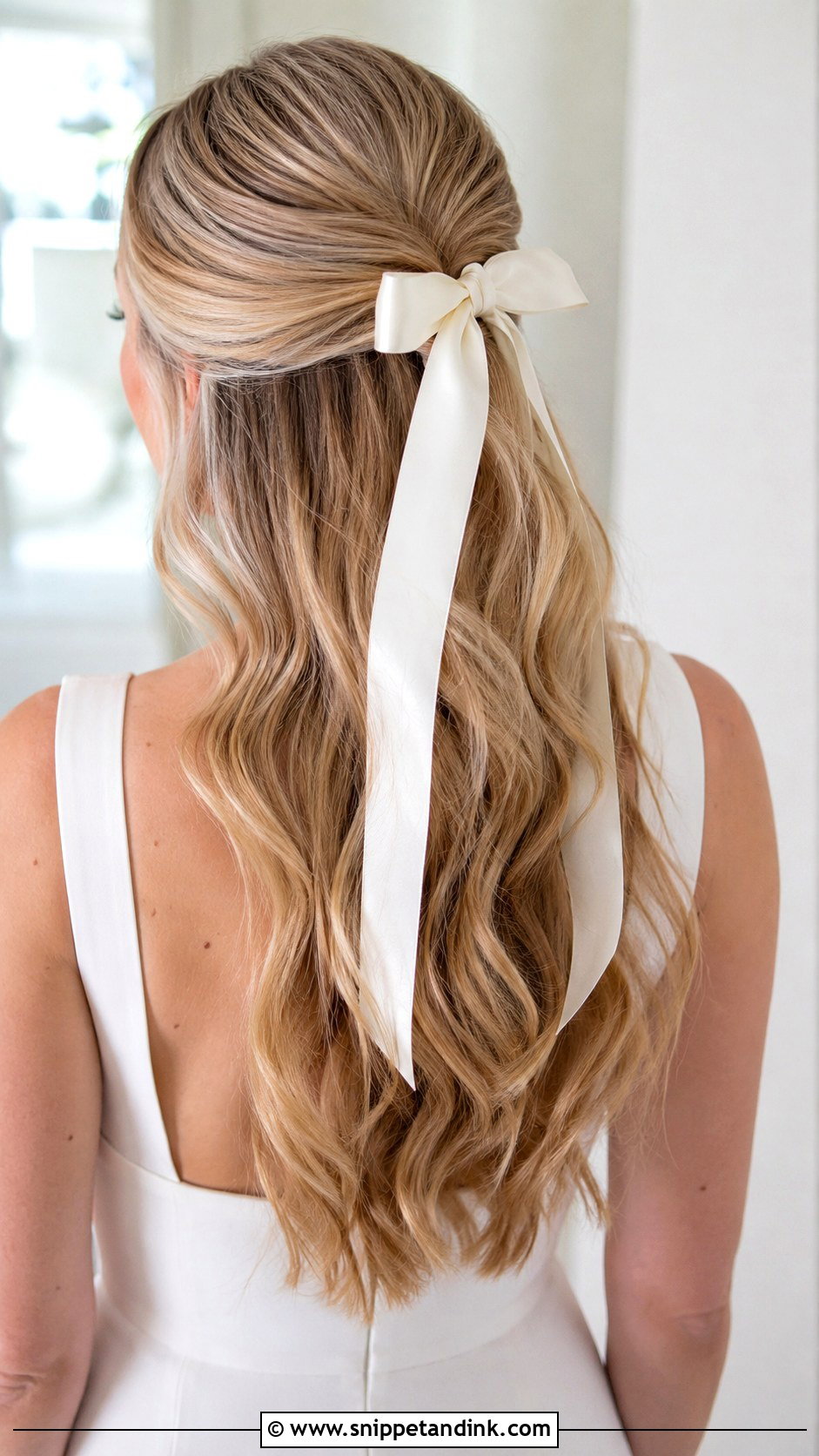
A bow is my suggestion for someone who wants a statement without sparkle. Satin holds its shape best, velvet suits a winter wedding, and organza or silk move more but crease if they’ve been squashed in a bag. A small bow reads neat; long ribbon tails add movement in the walking shots. I keep the crown smooth under a bow, because heavy texture underneath makes the two fight each other. Ivory, champagne, blush or a strip cut from your gown fabric will blend most naturally.
9. Half-Up Wedding Hair With Side Part
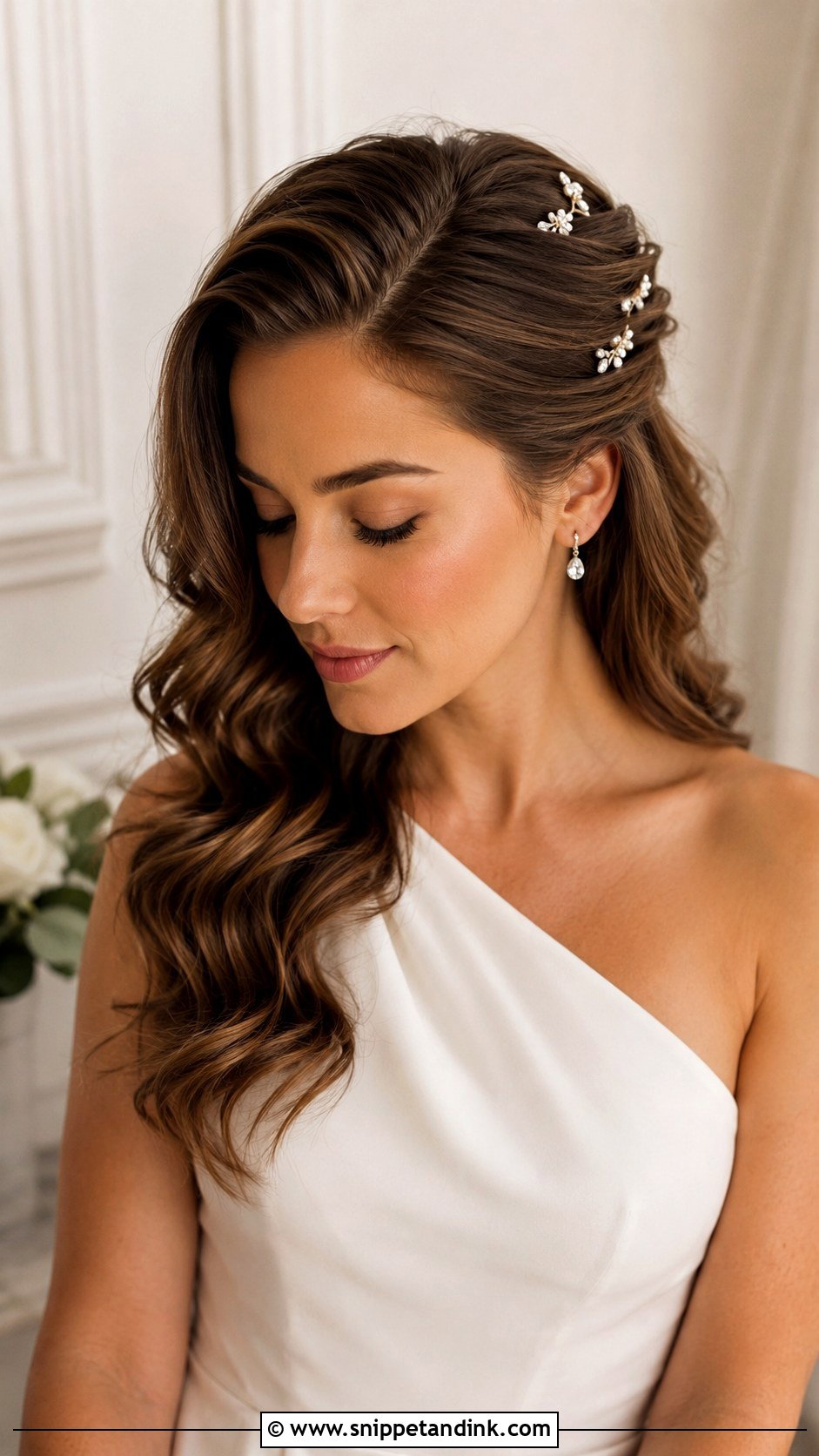
A side part puts more hair on one side of the face, which softens a strong jaw and makes fine hair look thicker at the crown. I wave the heavier side away from the cheek and pin the lighter side back, so statement earrings, one-shoulder dresses and dramatic veils all have room. If a centre part feels harsh on you, this is usually the fix. One thing I check first is whether you normally wear your part there. If you don’t, the hair keeps trying to flip back, so I set it in clips while it cools and ask you to start training it a week or two before.
10. Half-Up Wedding Hair With Middle Part
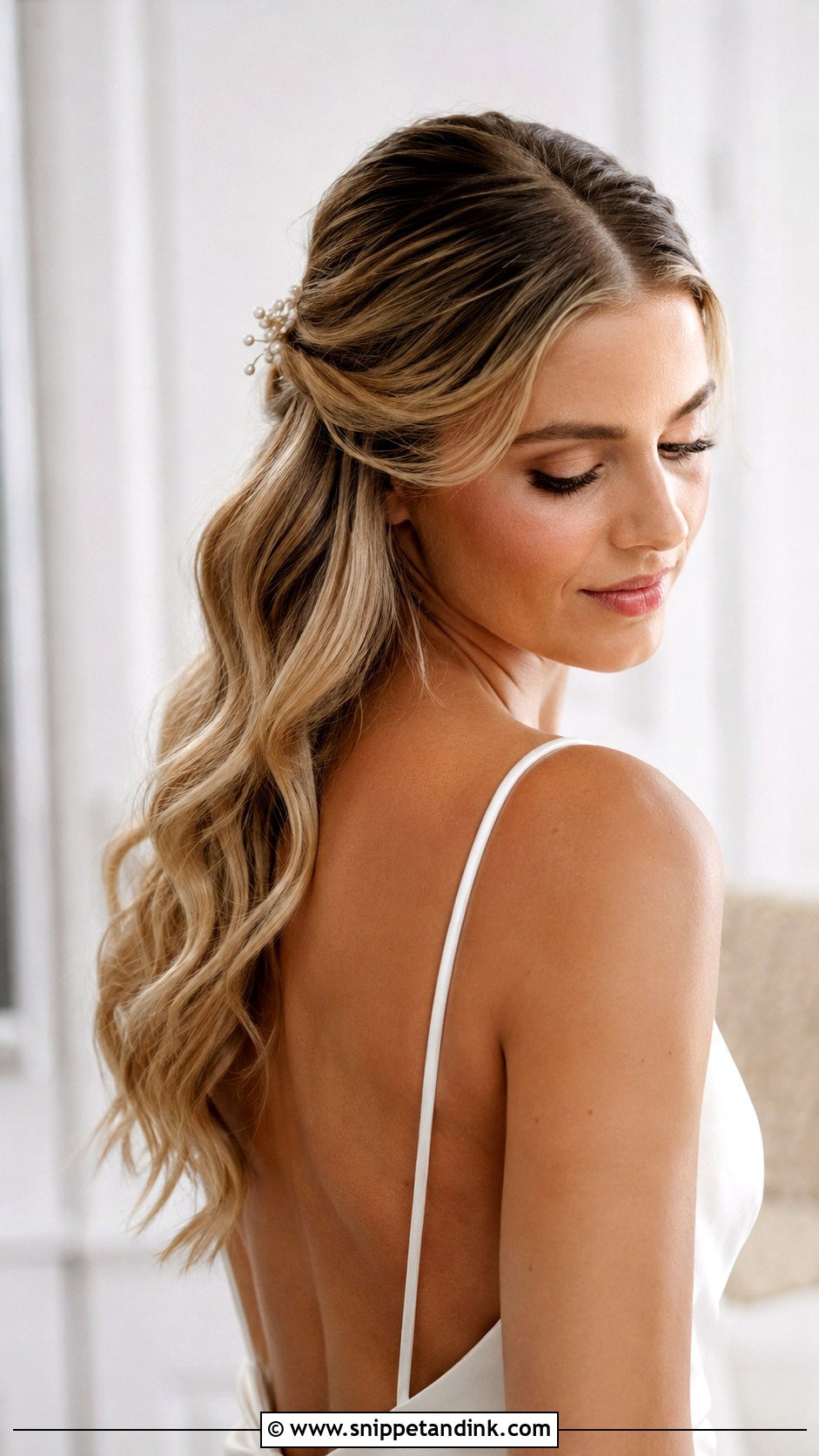
A middle part is the cleanest way to wear half-up hair. I part it dead straight, then either draw the front back softly or leave it loose around the face. With smooth waves, glossy curls and a minimal dress, it gives an editorial finish while the length keeps it romantic. The catch is that a centre part exposes any asymmetry, so I always look at the face straight on before committing. I’d also skip heavy backcombing here. Smooth lift looks modern; a teased bump above a centre part looks dated very quickly.
11. Half-Up Wedding Hair With Natural Curls
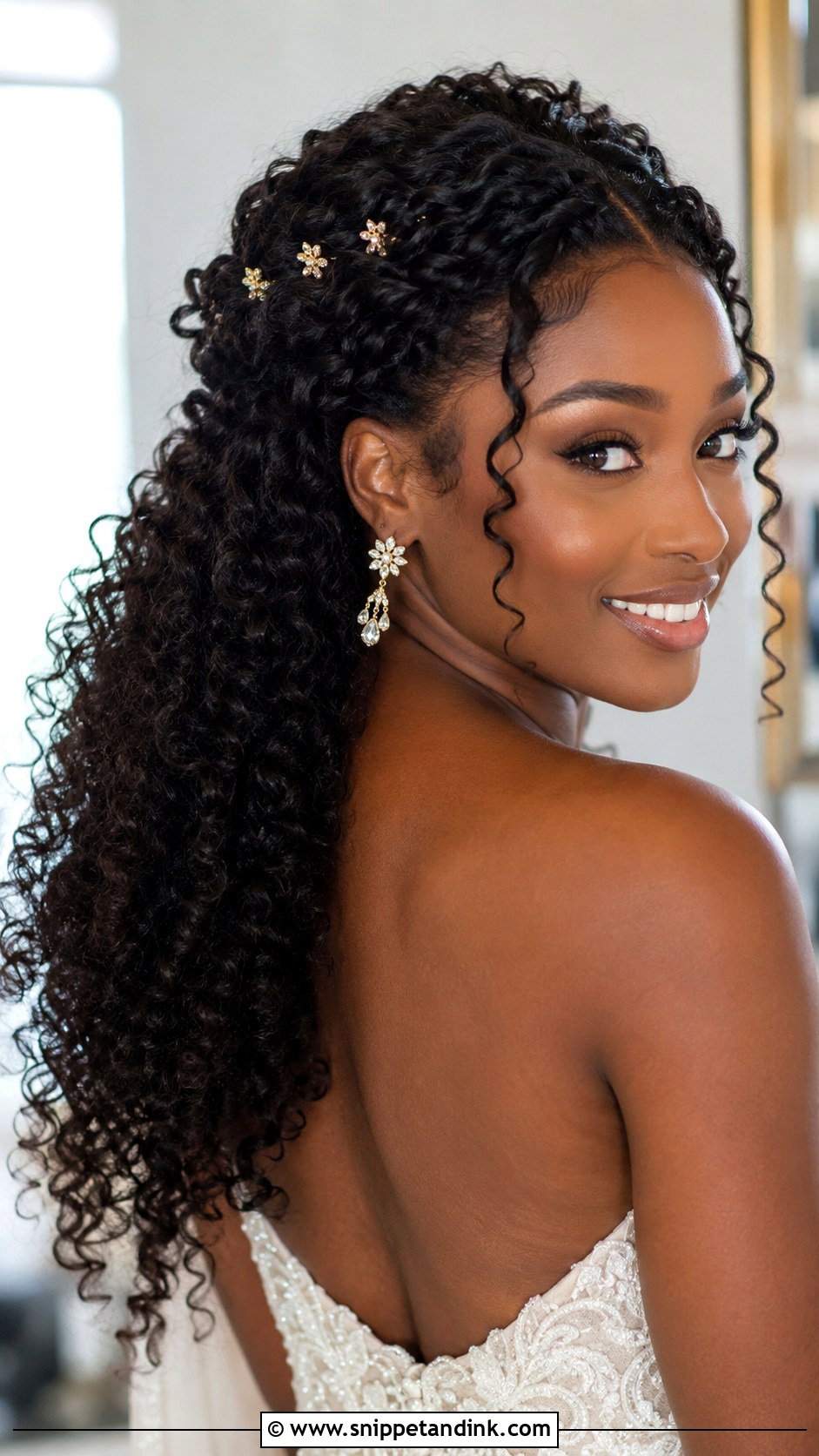
Natural curls need a stylist who works with curls regularly, not one who simply owns a diffuser. I gather the top section with pins tucked inside the curl clumps so the pattern stays intact. Prep starts the day before: hydration, a defining cream, a light gel and slow, patient diffusing. Shrinkage is what people forget. Curly hair can sit much shorter once dry, so we plan the shape on dry hair at the trial, not on wet. Gold pins, pearls or tiny flowers stand out well against curls, and you still look like yourself in the photos.
12. Half-Up Wedding Hair With Long Layers
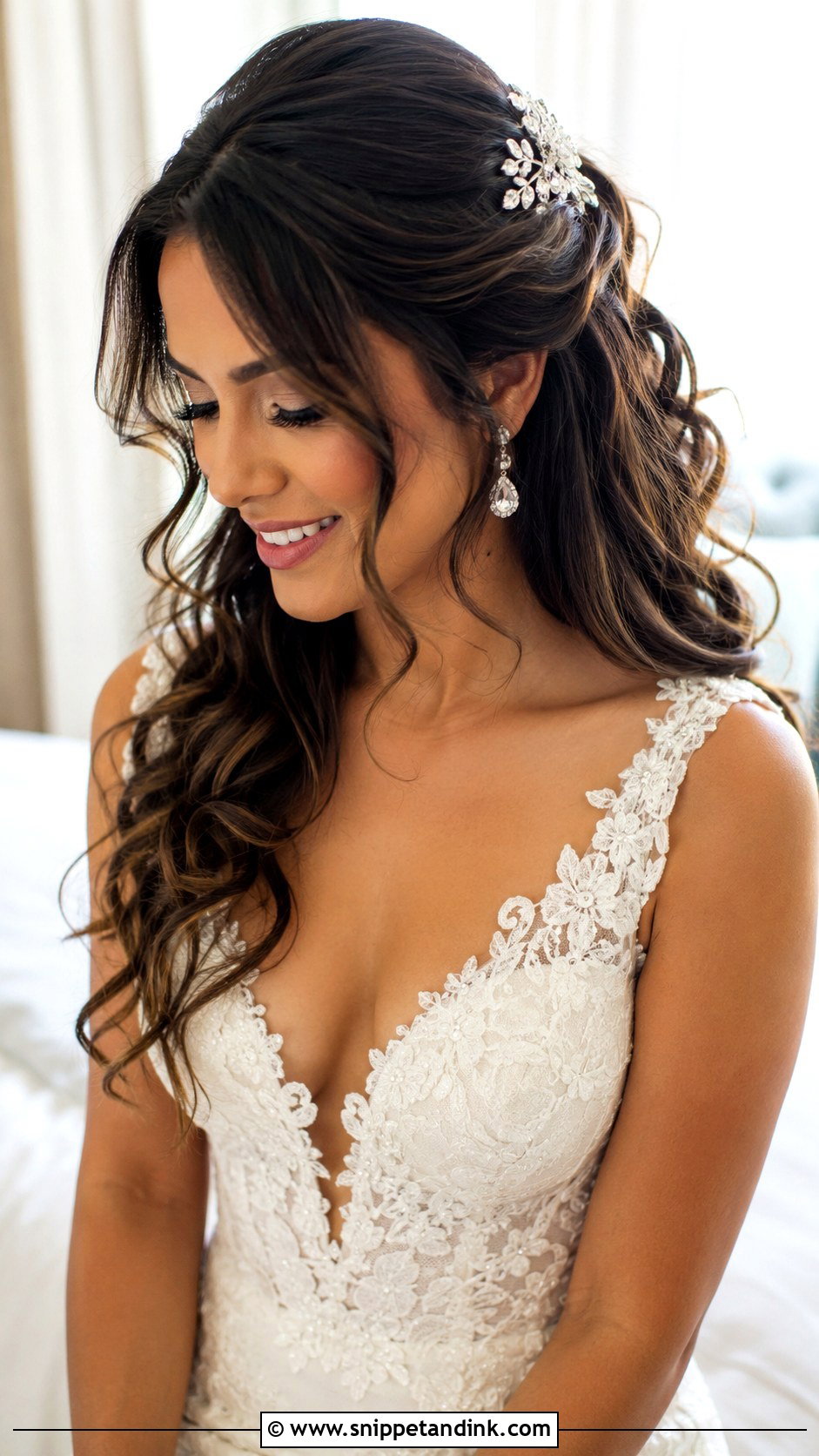
Layers are what make a half-up style move. Without them, long hair hangs in one heavy curtain and curls drop under their own weight; with them, the shorter pieces hold their shape and give the back some lift. Thick hair, very long hair and hair with extensions benefit most. I curl the layers in alternating directions so they don’t clump into identical ringlets. Face-framing layers carry the look from the front, so I’d avoid any dramatic cutting in the last month. A light shine spray at the end is plenty.
13. Half-Up Wedding Hair With Soft Waves
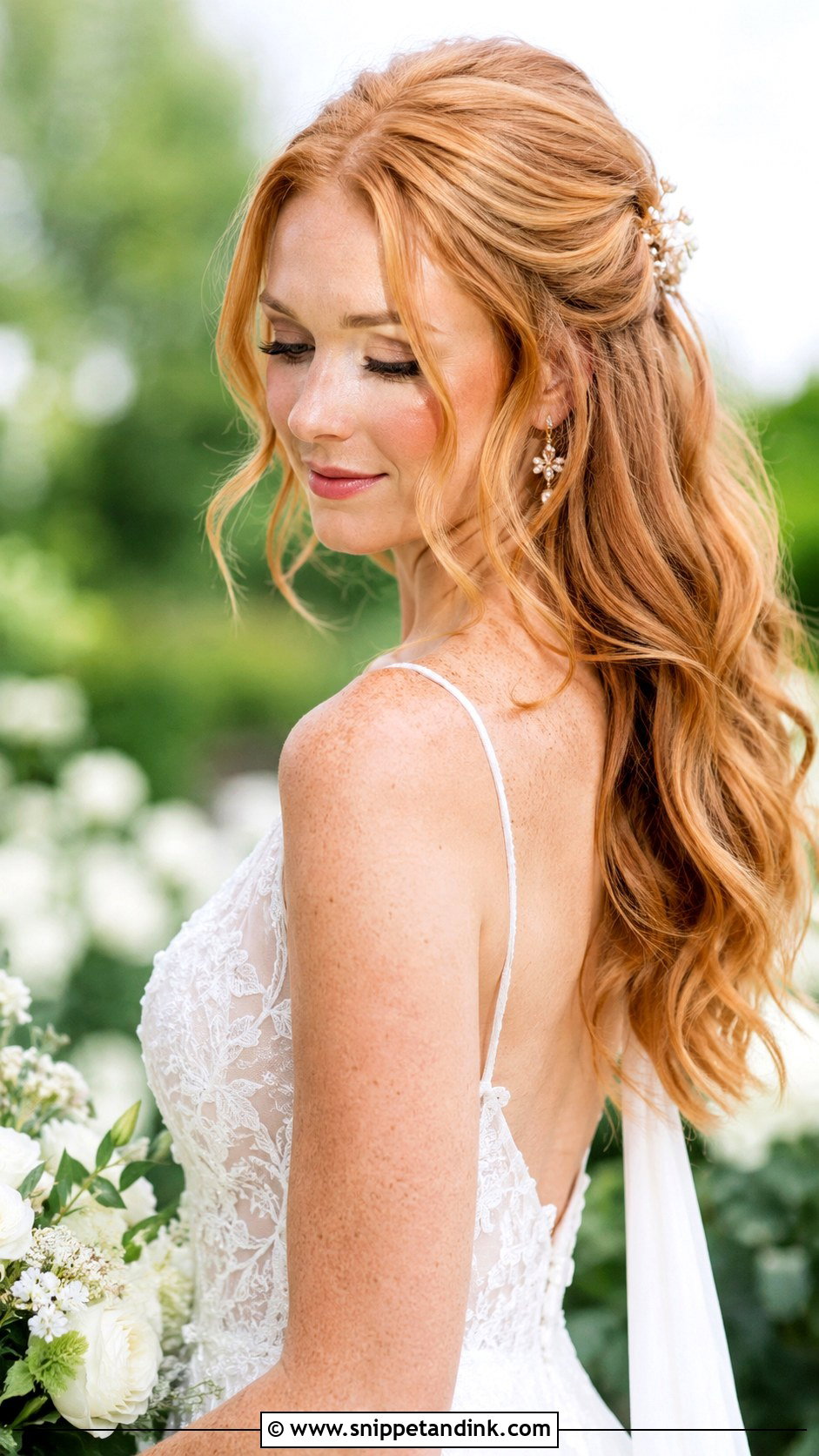
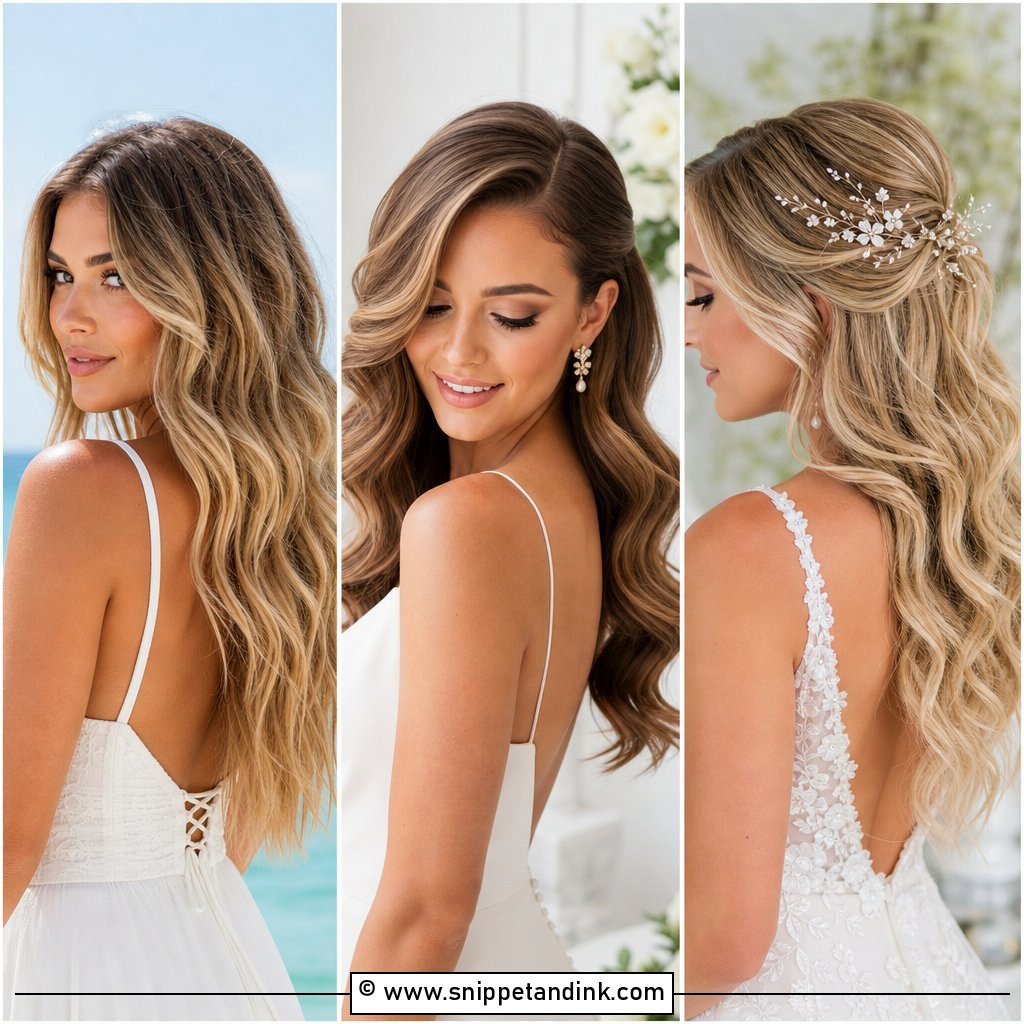
Soft waves are looser than curls and need far less product, which makes them comfortable for a long day at a beach, a backyard, a barn or a modern venue. I lightly twist or pin the top back and leave a couple of soft pieces at the front. Texture spray only goes where the hair needs grip, so it still feels like hair when someone hugs you. The trade-off is staying power. Waves this loose relax quickly in humidity, so for a humid outdoor wedding I’d drop one size on the curling iron.
14. Half-Up Wedding Hair With Volume Crown
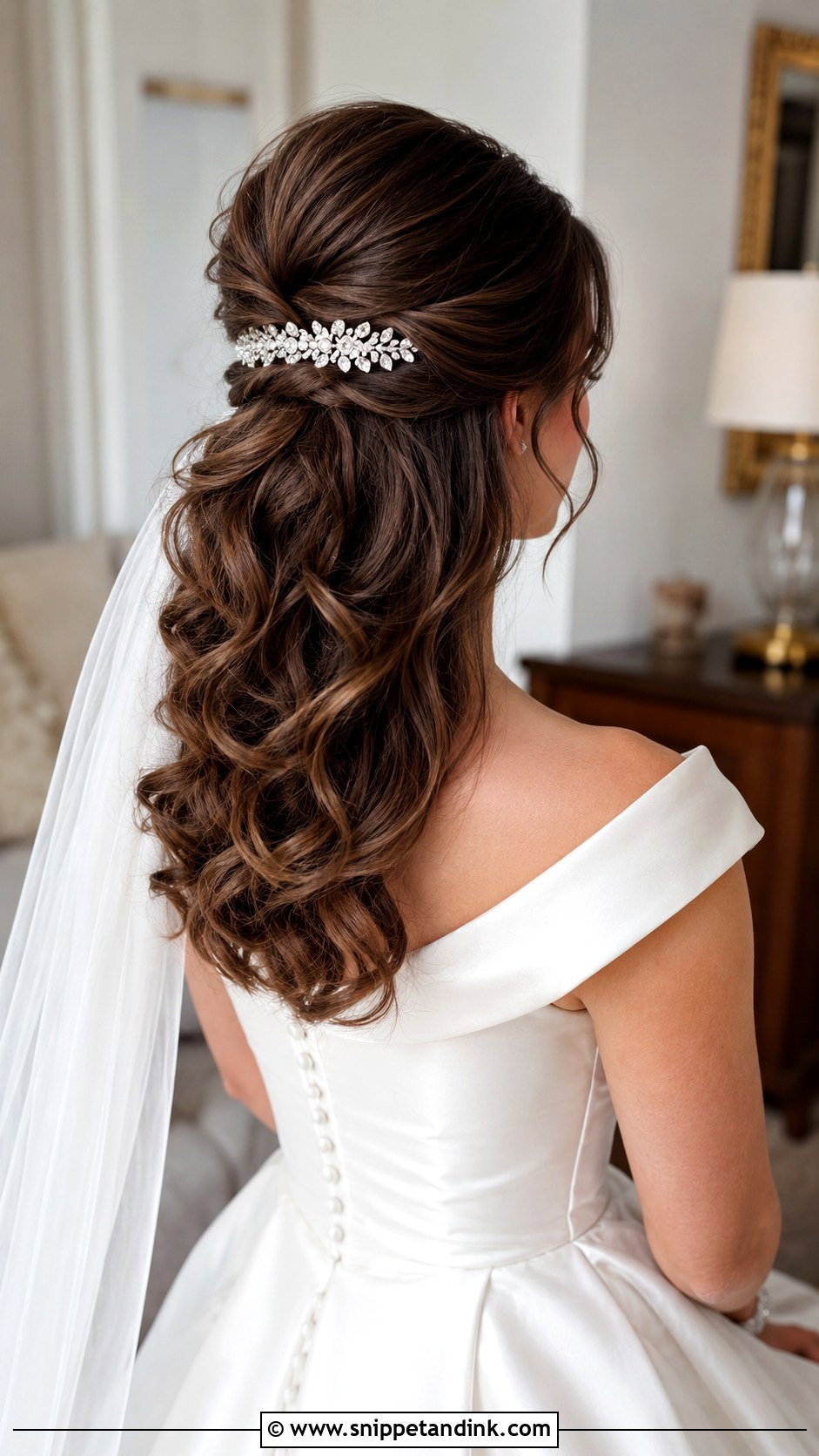
A volume crown turns half-up hair into something more formal. I backcomb at the root in small sections, smooth the top layer over it, then pin. The lift balances veils, ball gowns and structured dresses. The mistake I see most often is a rounded bubble of height; a gentle lift looks current, a dome looks like a throwback. Fine hair gains the most here, because the crown makes everything below it look fuller. A decorative comb just under the volume tidies the back.
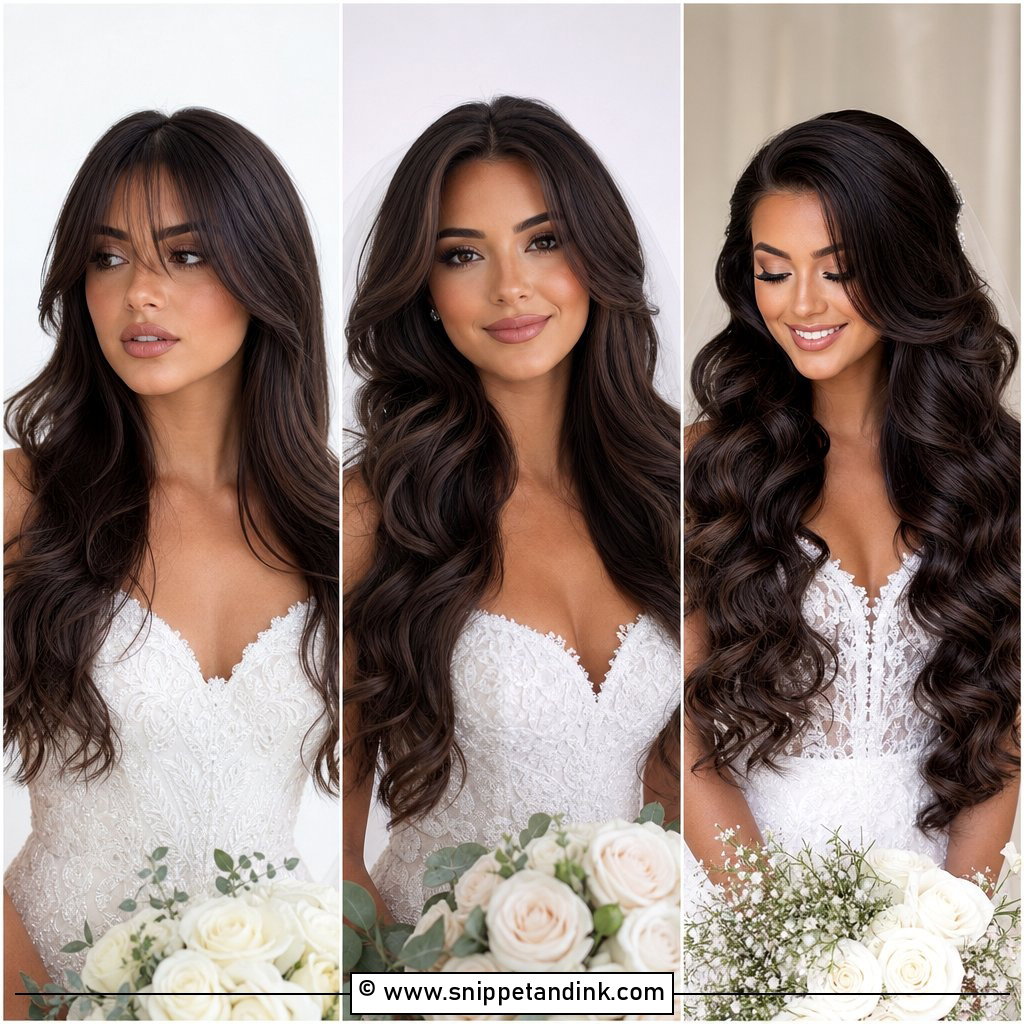
15. Half-Up Wedding Hair With Face Framing Pieces
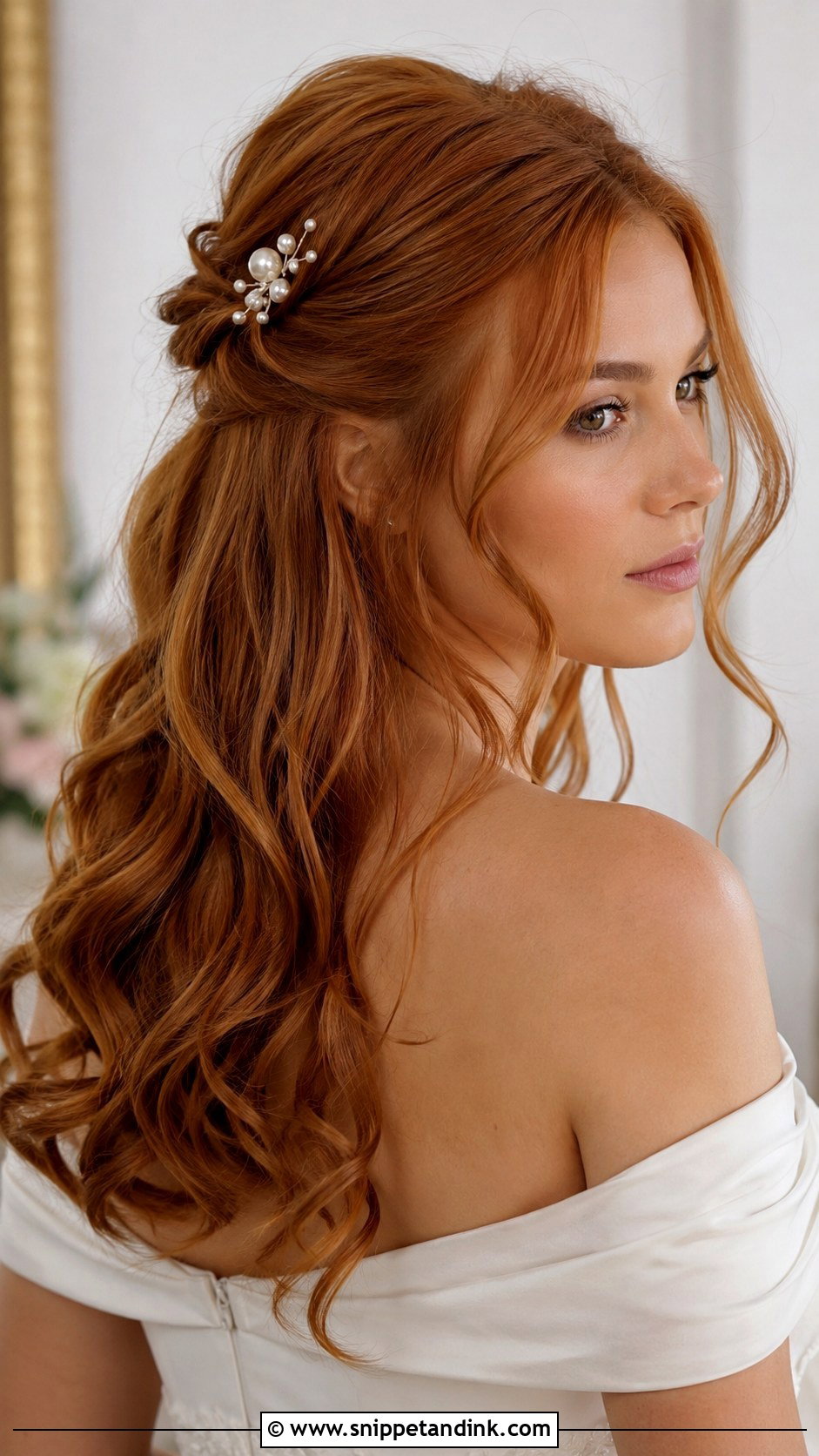
Face-framing pieces do a lot of work in close-ups. I leave the front sections loose or lightly bent and pin the rest of the top back. They’re especially flattering with strapless, sweetheart, square, and off-shoulder dresses, where a little hair near the collarbone softens a bare neckline. Keep them thin; thick pieces become curtains that hide your face in profile. I also prefer them slightly longer than the cheekbone, since short tendrils tend to stick to lip gloss by the speeches.
Why the Loose Lengths Fall Flat Before the Pinned Part Does
The pinned section rarely moves. The loose hair is a different story: it carries its own weight, brushes against your shoulders all day and soaks up any humidity in the room. That’s why a half-up look can photograph perfectly at the ceremony and look straight by the cake cutting.
- I set curls in pin curls or clips and let them cool completely before brushing out. Hot curls that are released straight away drop fastest.
- Hair that won’t hold a curl at all, especially very silky or freshly washed hair, usually behaves better washed the day before rather than the morning of.
- A few clip-in wefts in the bottom section add grip and body, which helps curls last even if you don’t need extra length.
- Pack a small brush, a travel hairspray and two spare pins. A quick finger-twist around the face and a light mist before the reception is often all the refresh it needs.
Open Backs, Beaded Straps and Loose Curls Don’t Always Mix
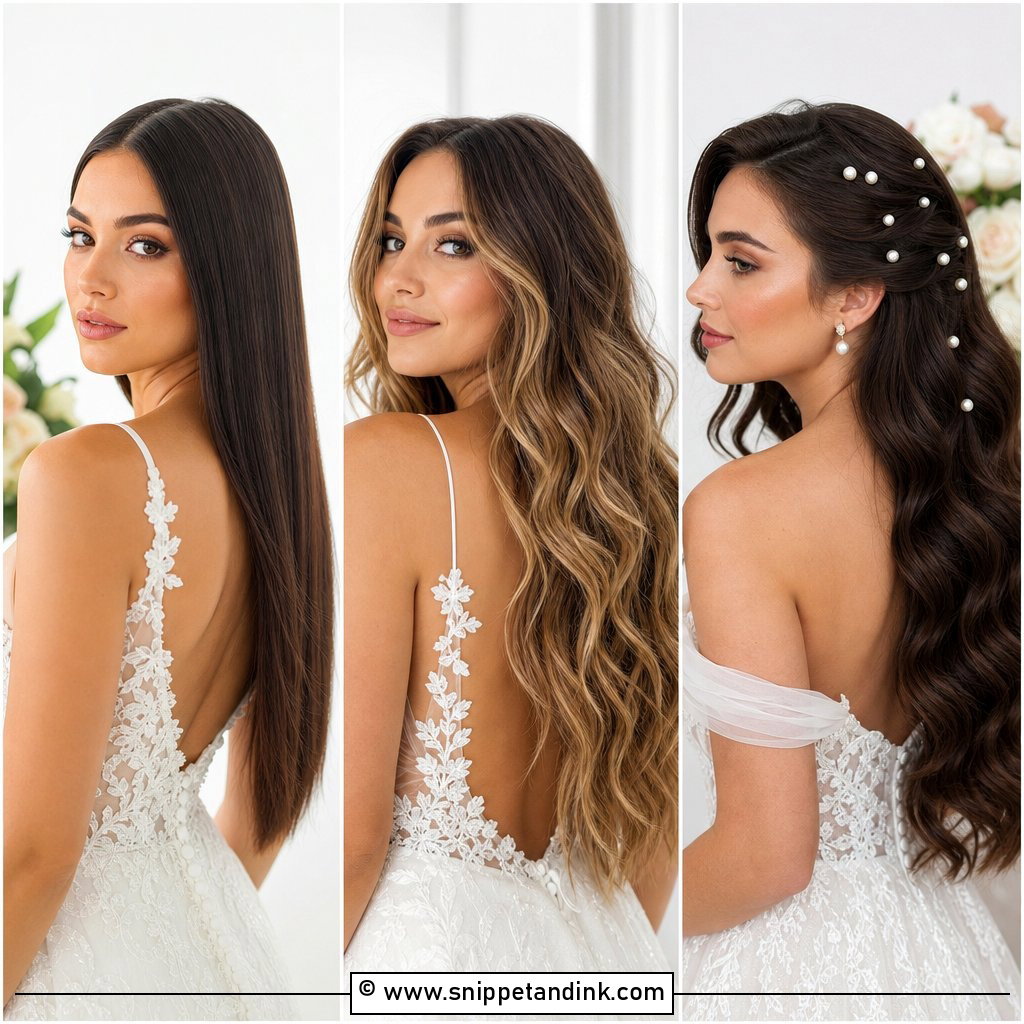
Hair worn down covers the back of your dress, so decide what you’d rather show. If your gown has an illusion back, a row of covered buttons or a low scoop, a half-up style with a lot of length can hide the very detail you fell for. Sweeping the loose hair over one shoulder for part of the photos is an easy compromise.
Texture is the other issue. Beaded straps, sequins and heavy lace snag curls, and by mid-evening you can end up with frizz along one side where the hair keeps rubbing. I always ask brides to wear the dress, or at least a similar fabric, during the hair trial and move around in it. If it catches, a smoother wave pattern or a slightly shorter loose section will behave much better than big, brushed-out curls.
A Trial Settles What Saved Photos Can’t
If you’re still undecided, sort by mood first. Loose curls are the classic, Hollywood waves bring glamour, a braided crown leans garden party, and pearl pins or a bow add a detail without much fuss. Then look at the practical side: how long your curls actually last, what the back of your dress looks like, and whether the day will be humid or breezy. Bring two or three saved photos to your trial and listen if your stylist says a shape won’t hold in your hair. The version I’d want you to pick is the one you forget you’re wearing by the second hour.
You'll Like These Ideas:


Leave a Reply