
Dressing curvy brides is mostly about engineering, and I mean that as good news. A gown that fits well isn’t hiding anything; it’s carrying the weight of the fabric in the right places so you can stop thinking about it. Corset bodices, basque waists, wide straps, crepe, lace, satin and separates all work when the structure inside is right. For each shape below, I’ve added what I check at a fitting: whether you can sit, hug, lift your arms and breathe after dinner.
Sample Sizes, Clips and Ordering From Your Largest Measurement
Most bridal shops carry their sample dresses in a narrow size range, and a lot of curvy brides walk out of a first appointment feeling like nothing fits. That’s a stock problem, not a body problem. Call ahead and ask which sizes the samples come in, or whether the shop has a plus-size collection on the floor. Many do, but you have to ask.
Bridal sizes run small
Bridal sizing is usually smaller than high-street sizing, so don’t be thrown by the number on the label. The shop will measure your bust, waist and hips, and I always order from the largest of the three. Taking a dress in is routine work; letting it out is limited by how much seam allowance the maker left, and often there’s very little.
Making a too-small sample useful
If a sample won’t close, the consultant can leave the back open and hold it with clips or a panel, and that still tells you a lot about the neckline, the skirt shape and the fabric. Look at those, not the zip. Then ask to see the same style in your size before you order, if the shop can arrange it.
1. Curvy A Line Wedding Dress
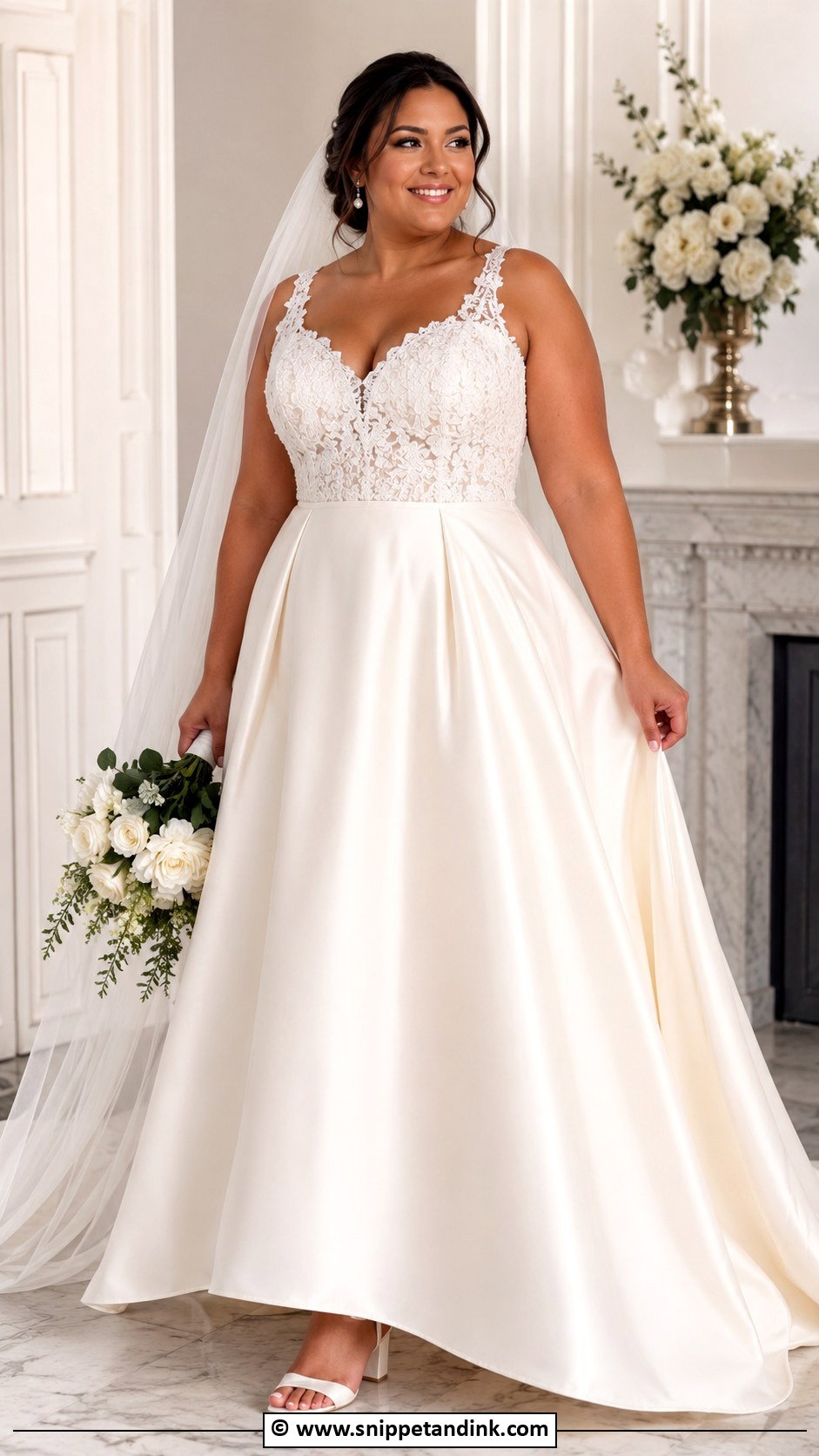
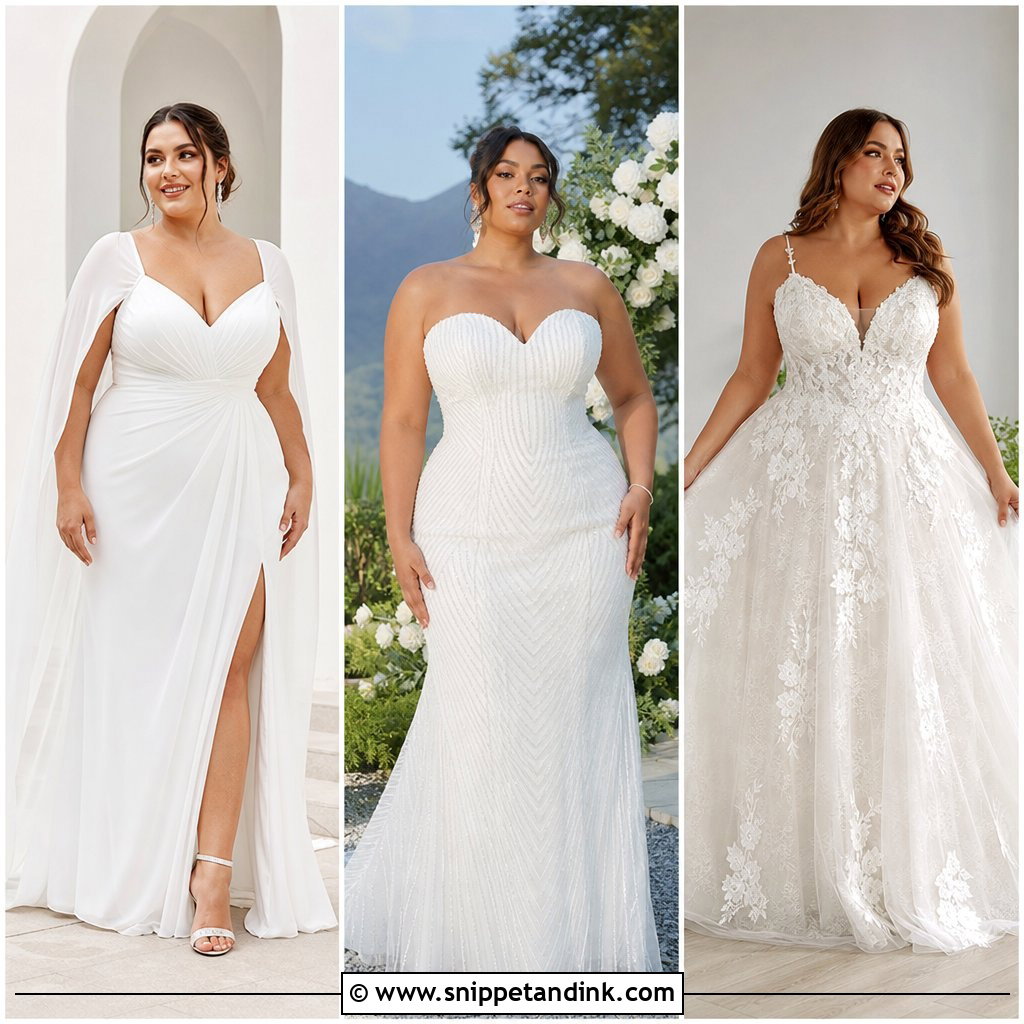
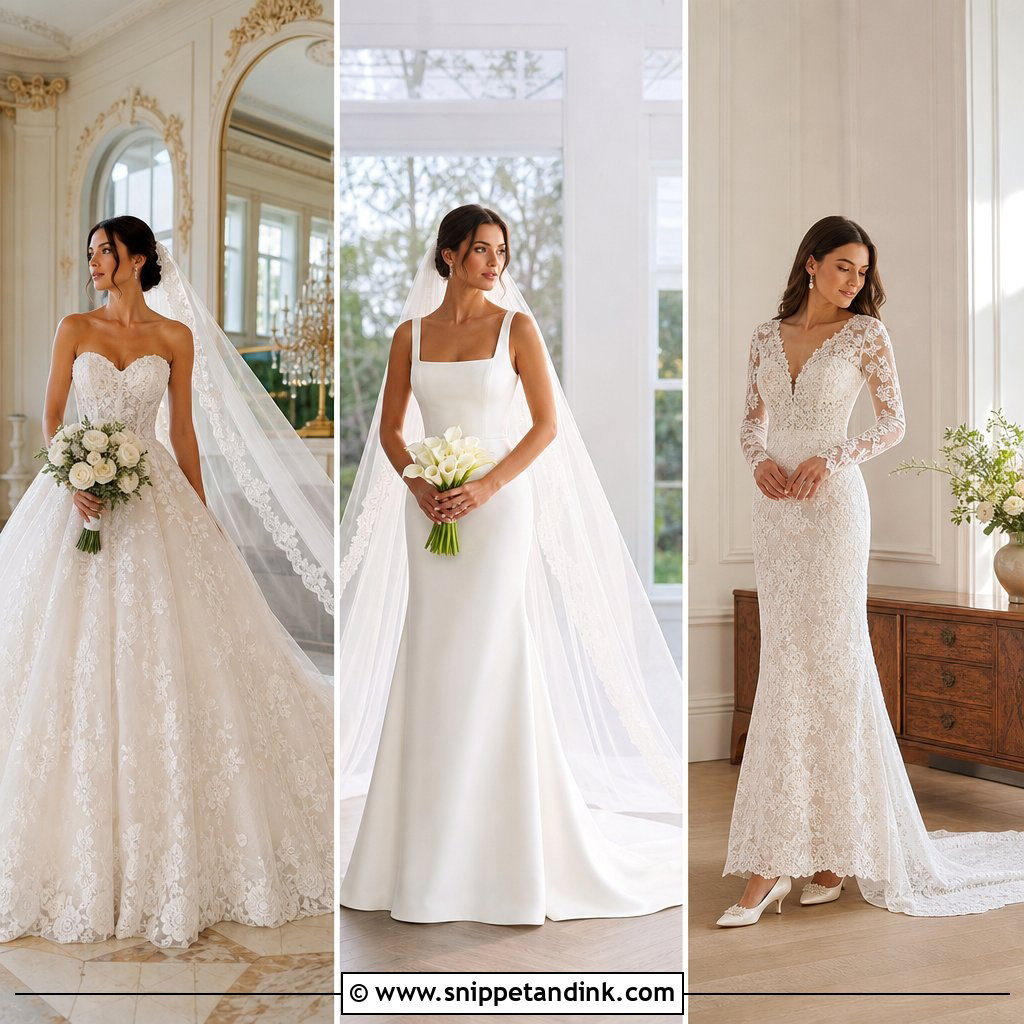
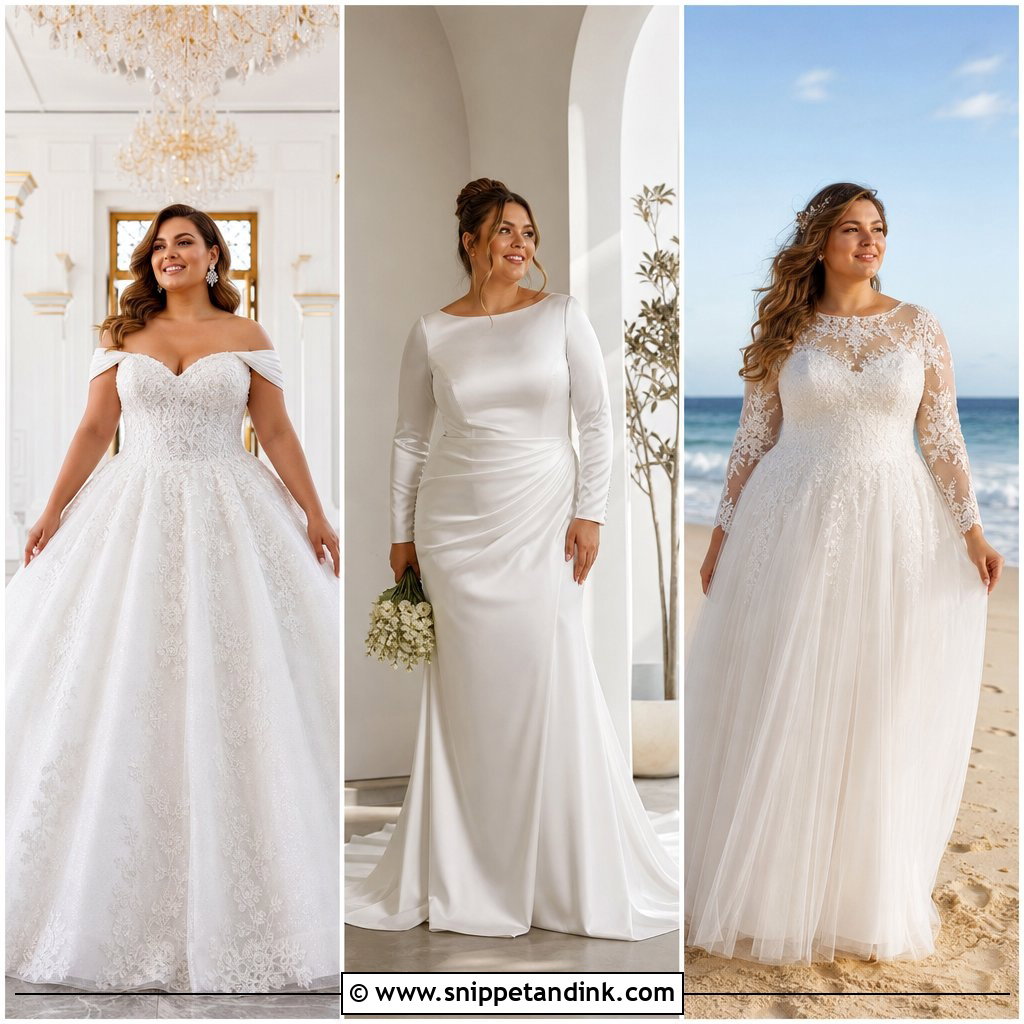
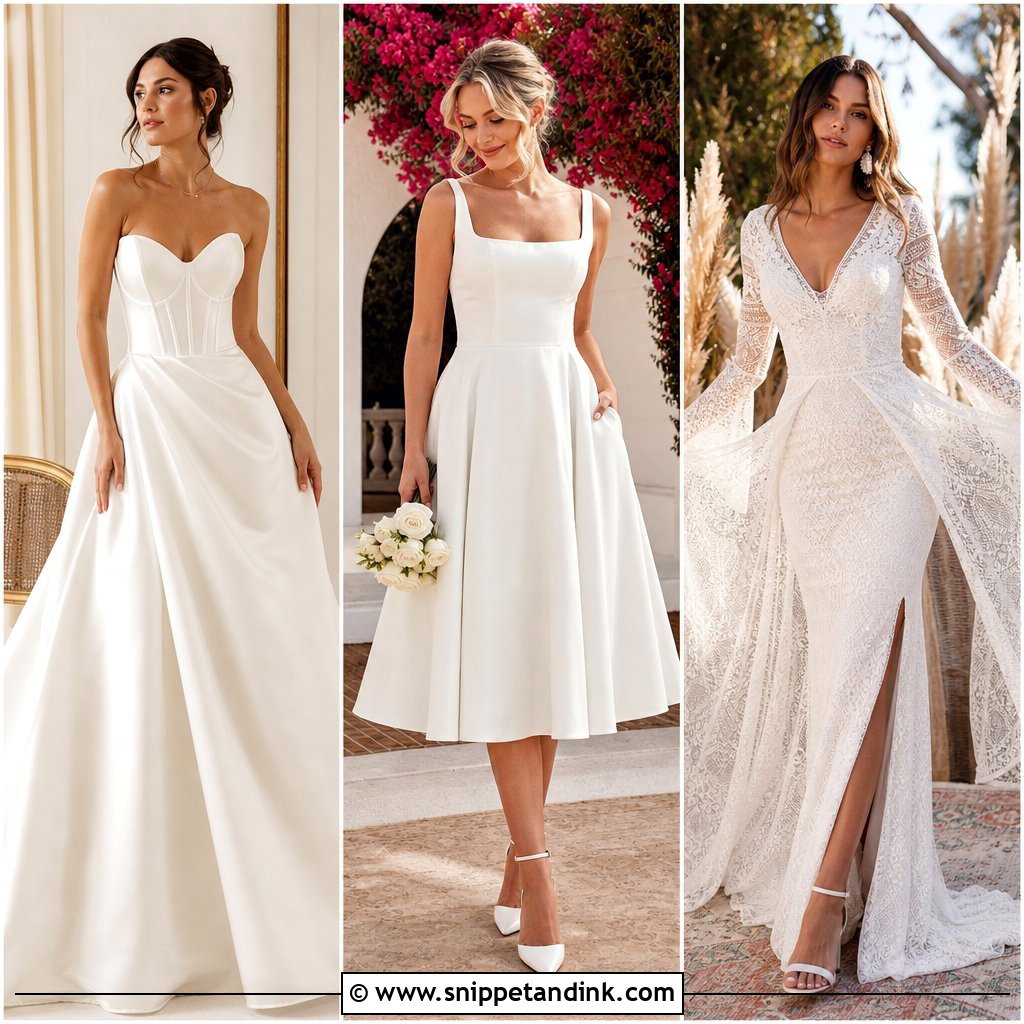
The A-line is where I start most curvy brides, not because it’s safe but because the skirt falls from the waist without clinging to the hip. That leaves the bodice to do the work. Wide straps or built-in boning take weight off the shoulders, and a sweetheart, scoop or V-neck opens up the chest. Satin, chiffon, lace, organza and tulle all hold the shape. Block heels, pearl earrings and a simple veil finish it.
2. Curvy Ball Gown Wedding Dress
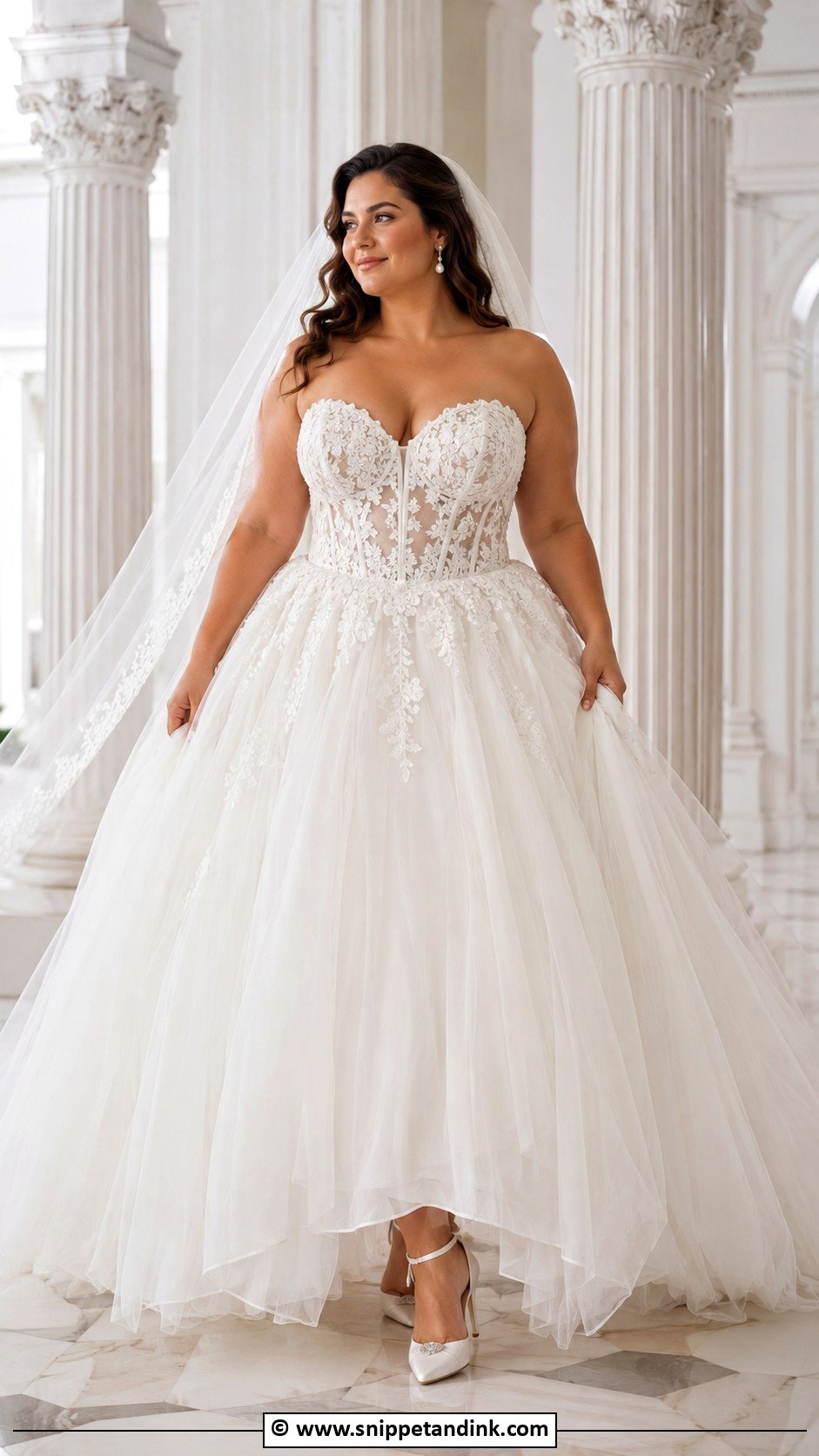
A full skirt can weigh a surprising amount, and all of it hangs from the waist. That’s why I want a corset back or inner bodice in any curvy ball gown, so the weight sits at the waist rather than dragging on the bust. Tulle, satin and mikado give volume that holds in photos. Choose medium-height heels you can stand in for hours, a soft updo and a chapel veil. With a skirt this big, smaller jewelry keeps the proportions right.
3. Curvy Mermaid Wedding Dress
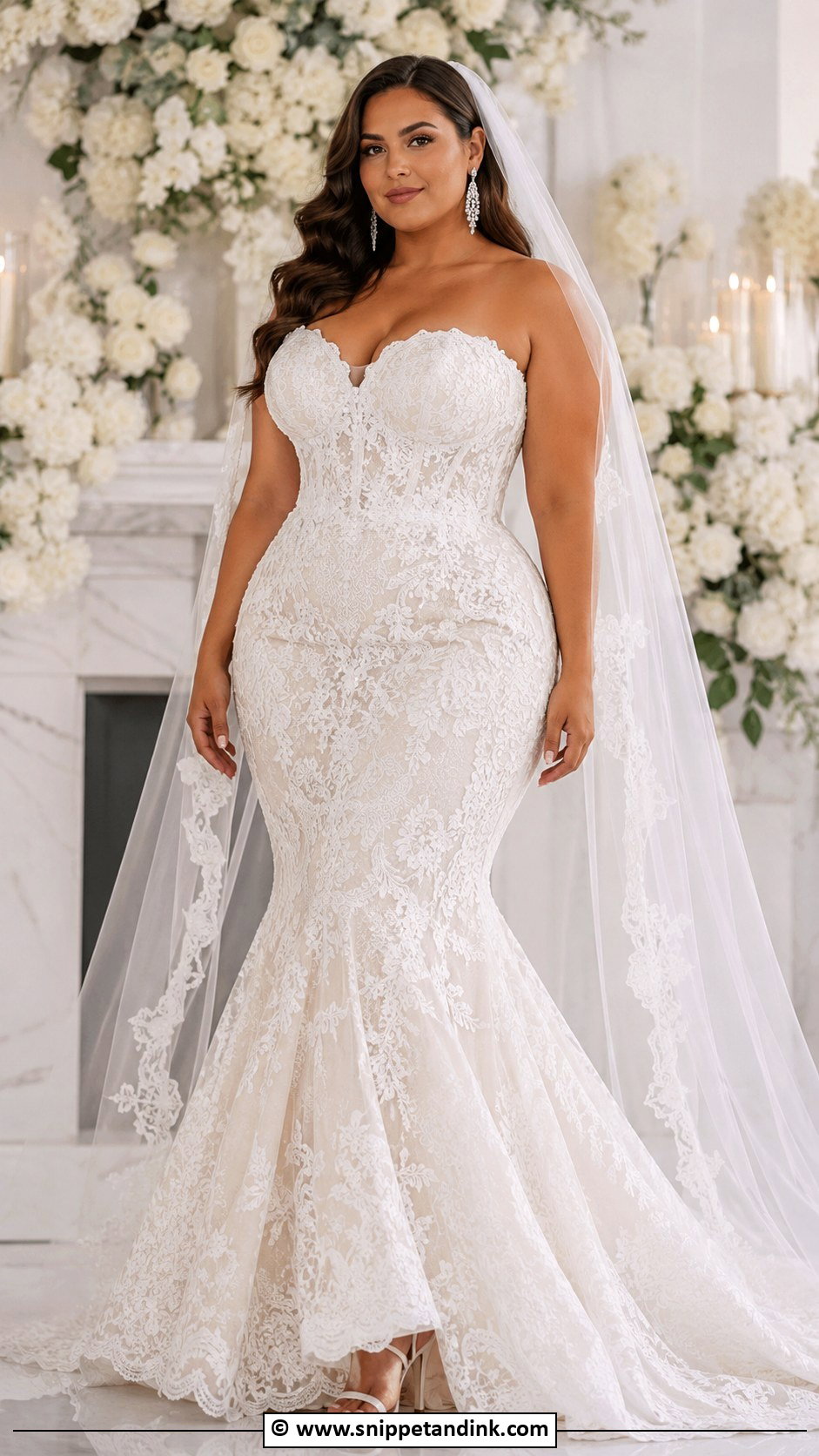
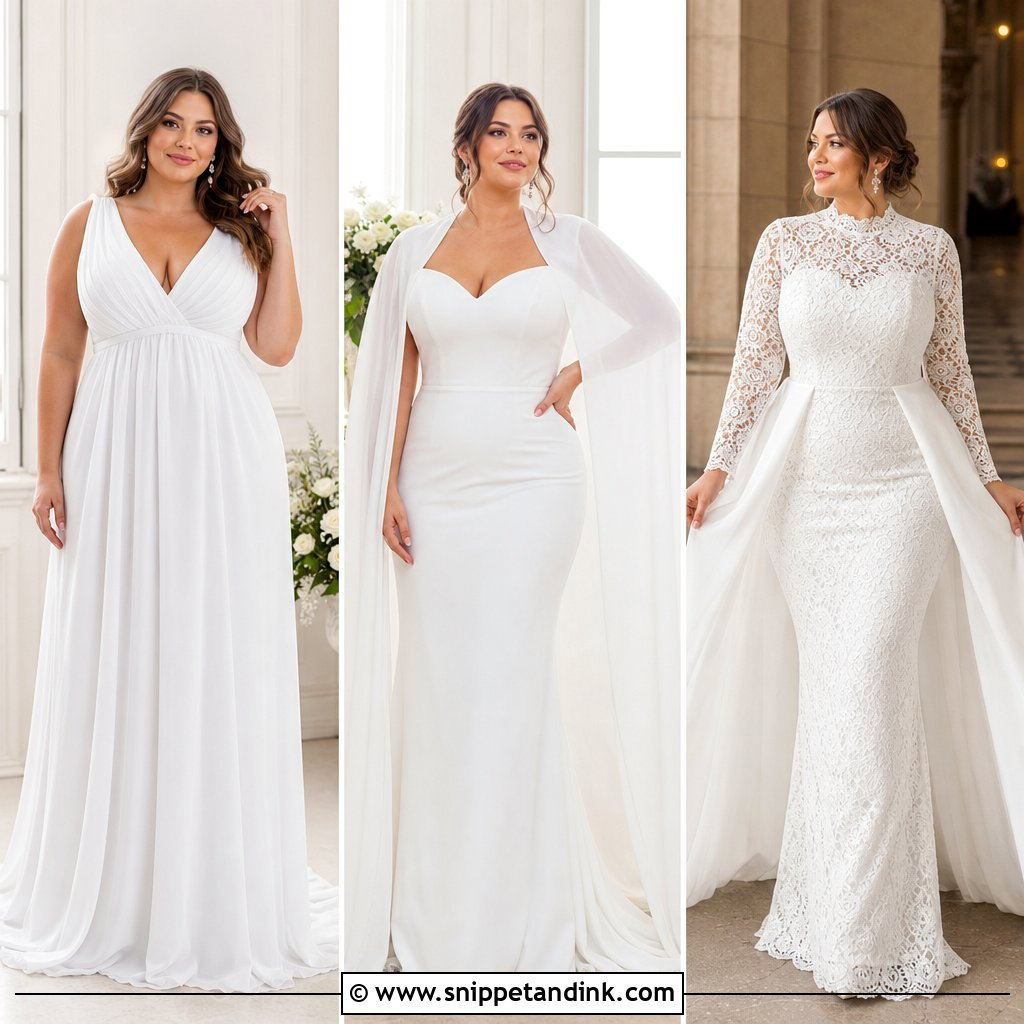
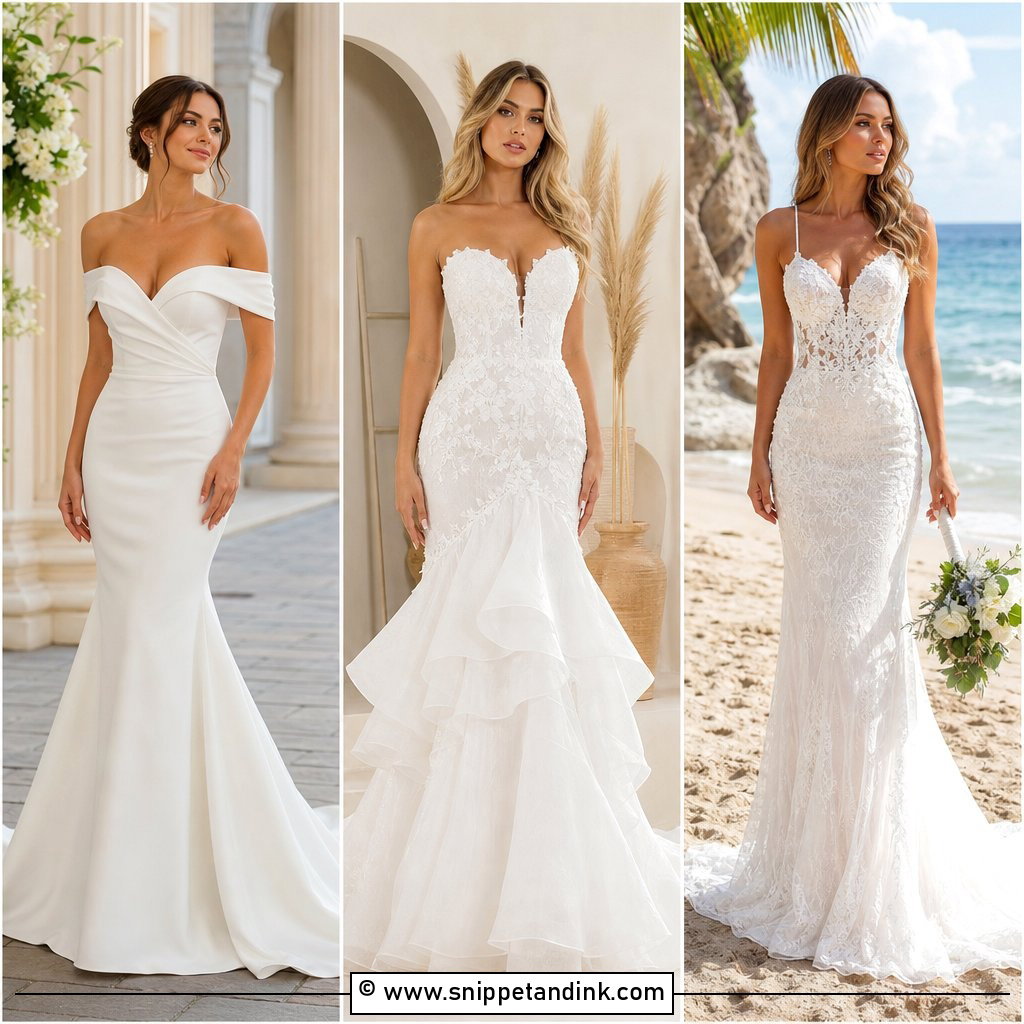
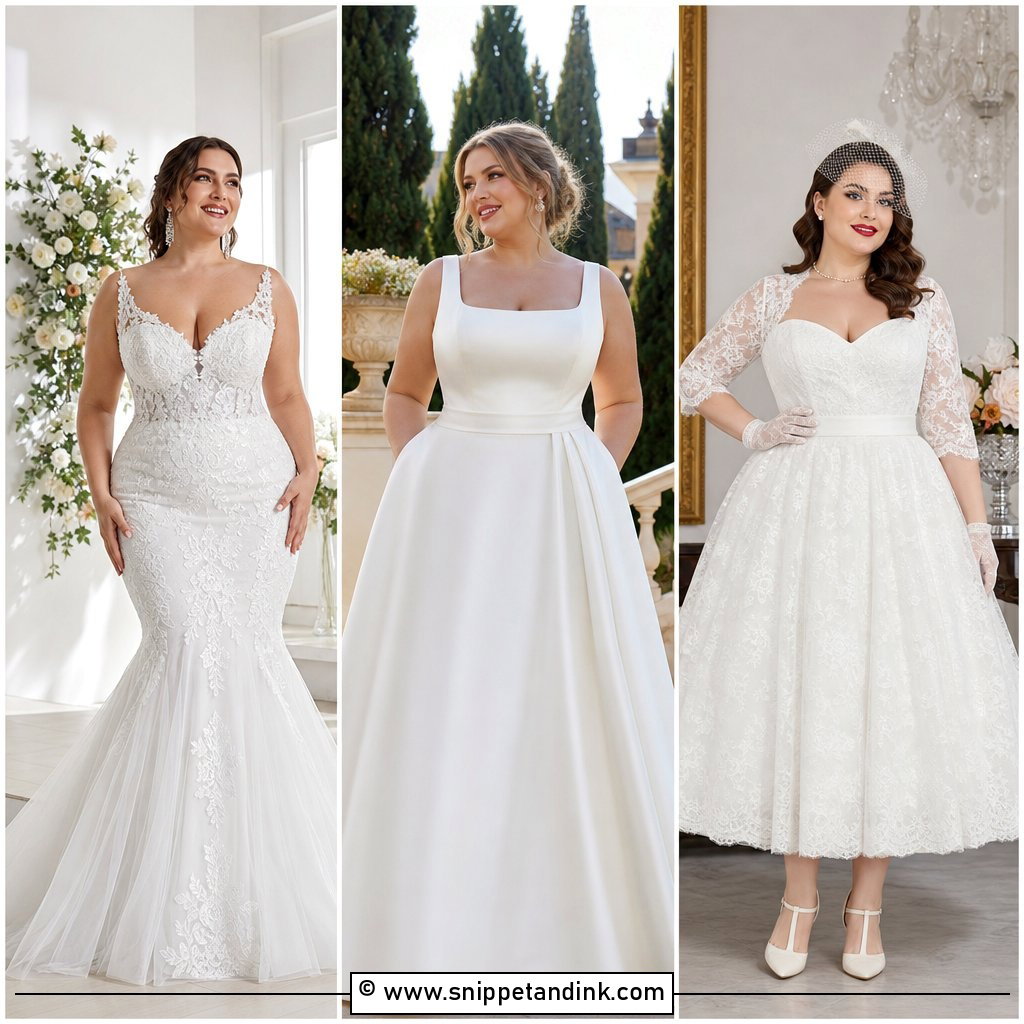
Mermaid gowns need a sitting test more than any other shape. The fit through the hips is tight by design, so I have brides sit in a chair for several minutes and then stand; if the seams strain or the skirt rides up, it needs more ease. Stretch crepe or lace over a firm lining moves best. The flare should start where your stride still feels free, usually around the knee. Sleek heels, drop earrings and a plain veil keep it glamorous.
4. Curvy Fit And Flare Wedding Dress
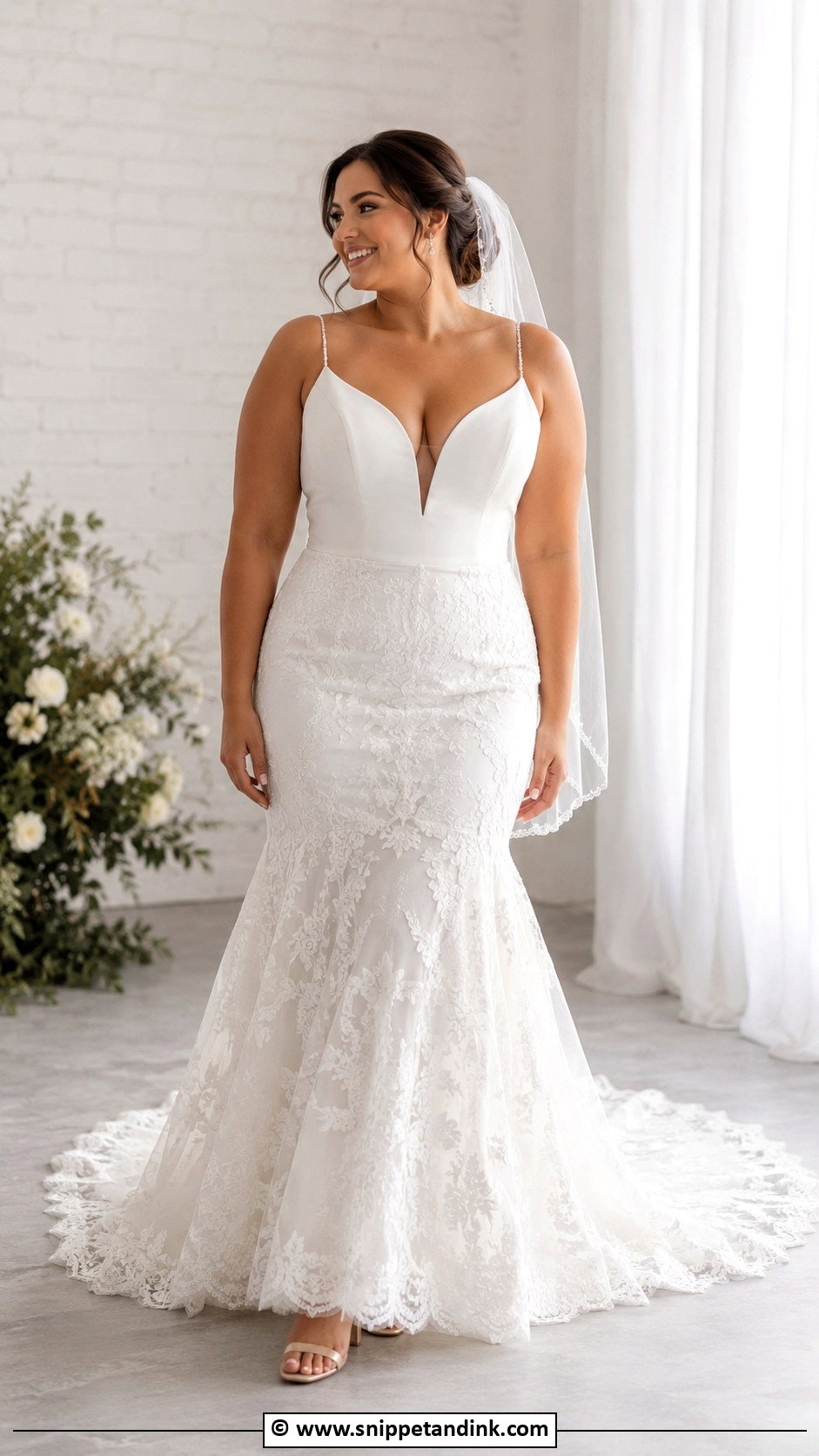
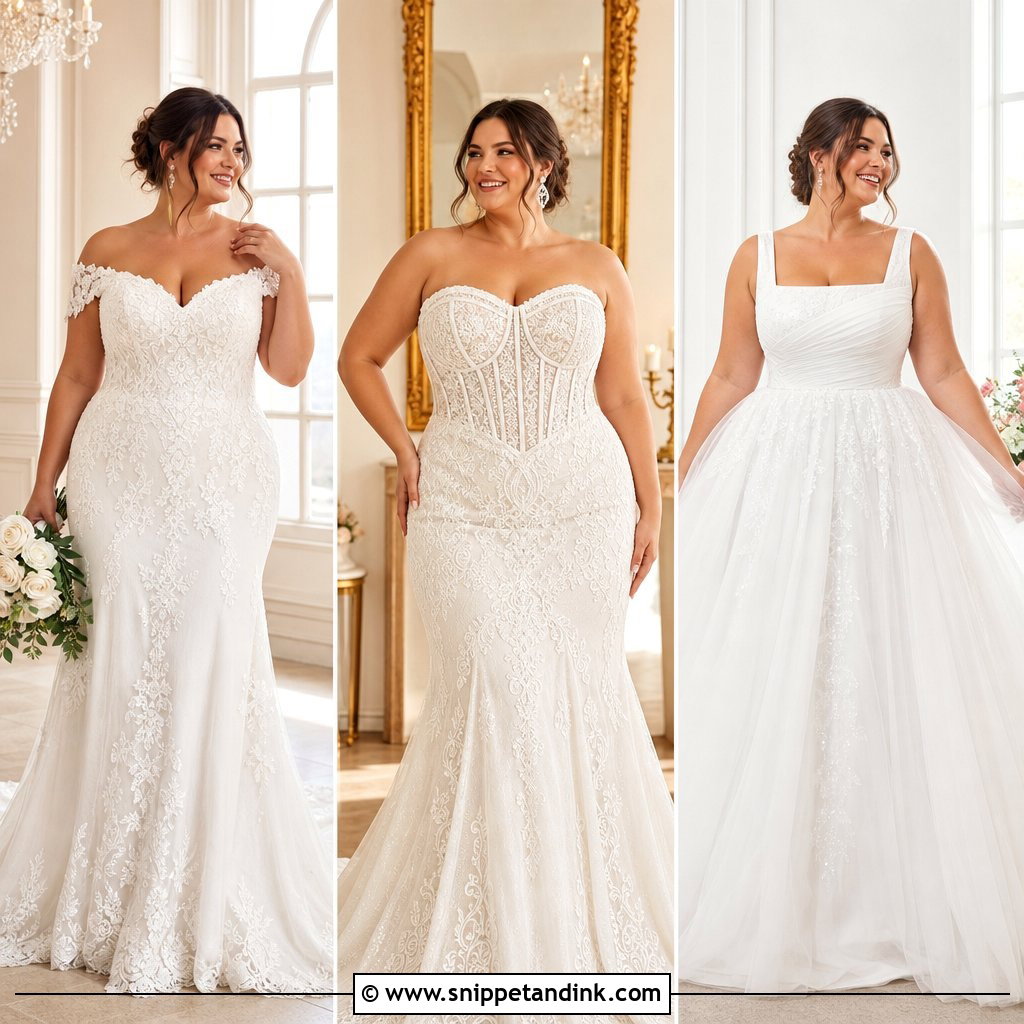
A curvy fit and flare wedding dress is the compromise I suggest to brides who love a mermaid but hate restriction. It hugs the bodice and upper hip, then opens higher than a mermaid, so you can walk upstairs and dance freely. Lace appliqué, clean crepe and beading all suit it. Illusion straps or cap sleeves add detail while the bodice holds the support. Comfortable heels and a fingertip veil keep it practical.
5. Curvy Empire Waist Wedding Dress
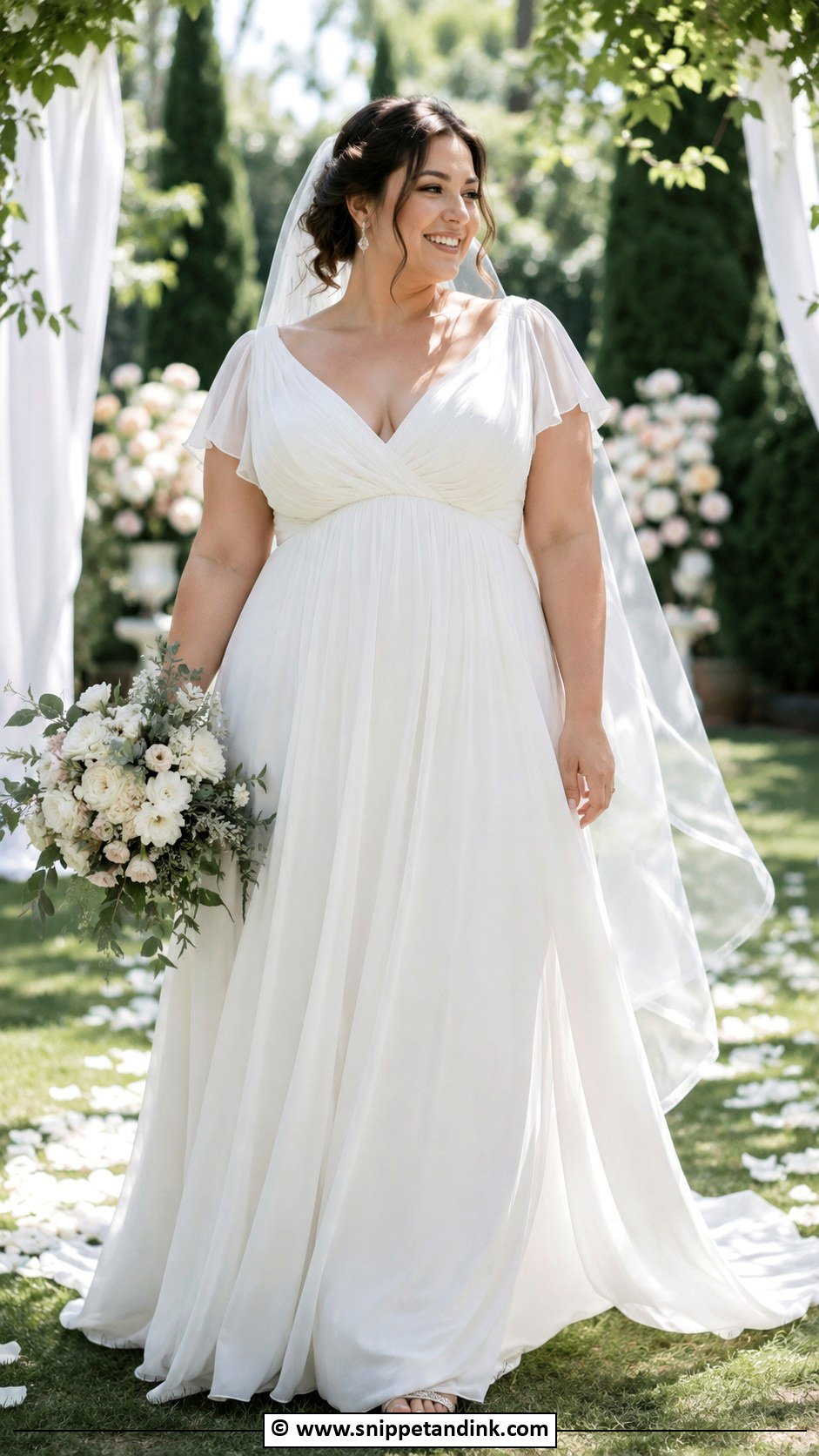
An empire waist sits under the bust and skims everything below it. The thing to watch is the bust seam: if it’s cut too high or too narrow, it digs in and pushes up uncomfortably. I always check it while the bride is seated. Chiffon, soft tulle and lightweight crepe move well for gardens and beaches. A V-neck or square neckline gives shape above, and flutter sleeves or wide straps add comfort.
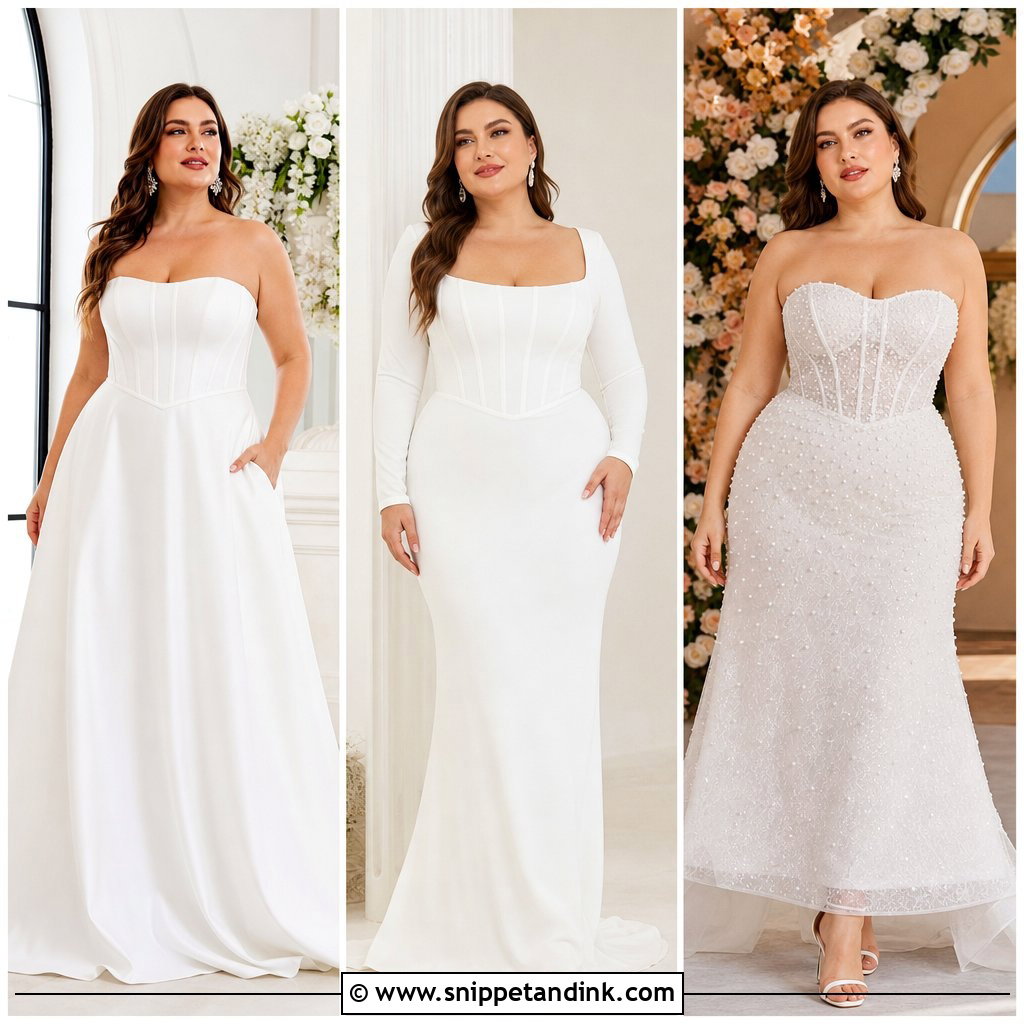
6. Curvy Corset Wedding Dress
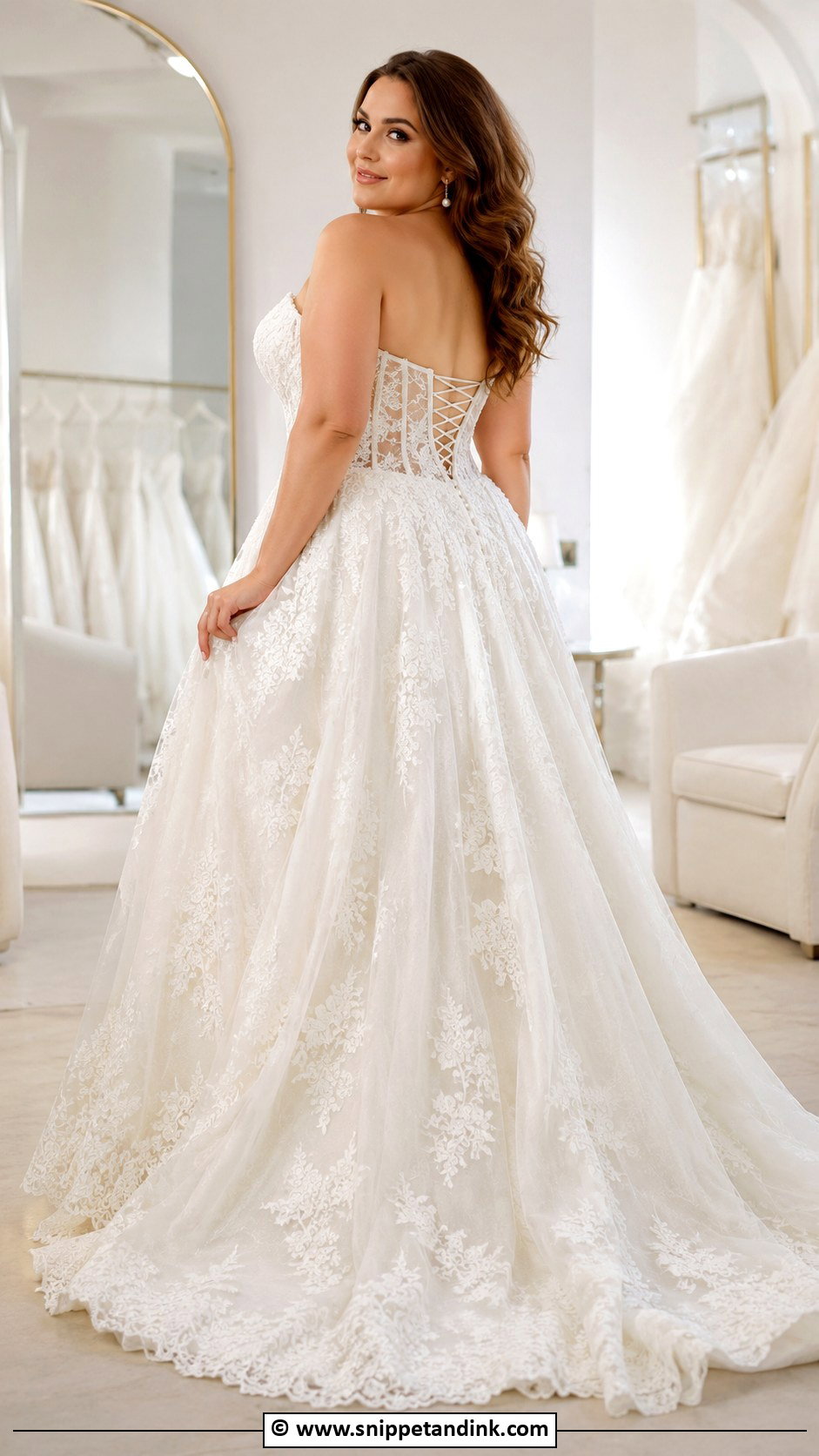
A properly fitted corset is one of the most comfortable bodices you can wear, which surprises a lot of brides. The structure carries the weight of the skirt so your shoulders don’t have to. I look for boning that follows the body and bends when you sit, not stiff panels that dig into the ribs or hips. Lace-up backs allow small adjustments on the day; hidden zips look cleaner. Pair it with A-line, ball gown or mermaid skirts, plus soft curls and secure heels.
7. Curvy Basque Waist Wedding Dress
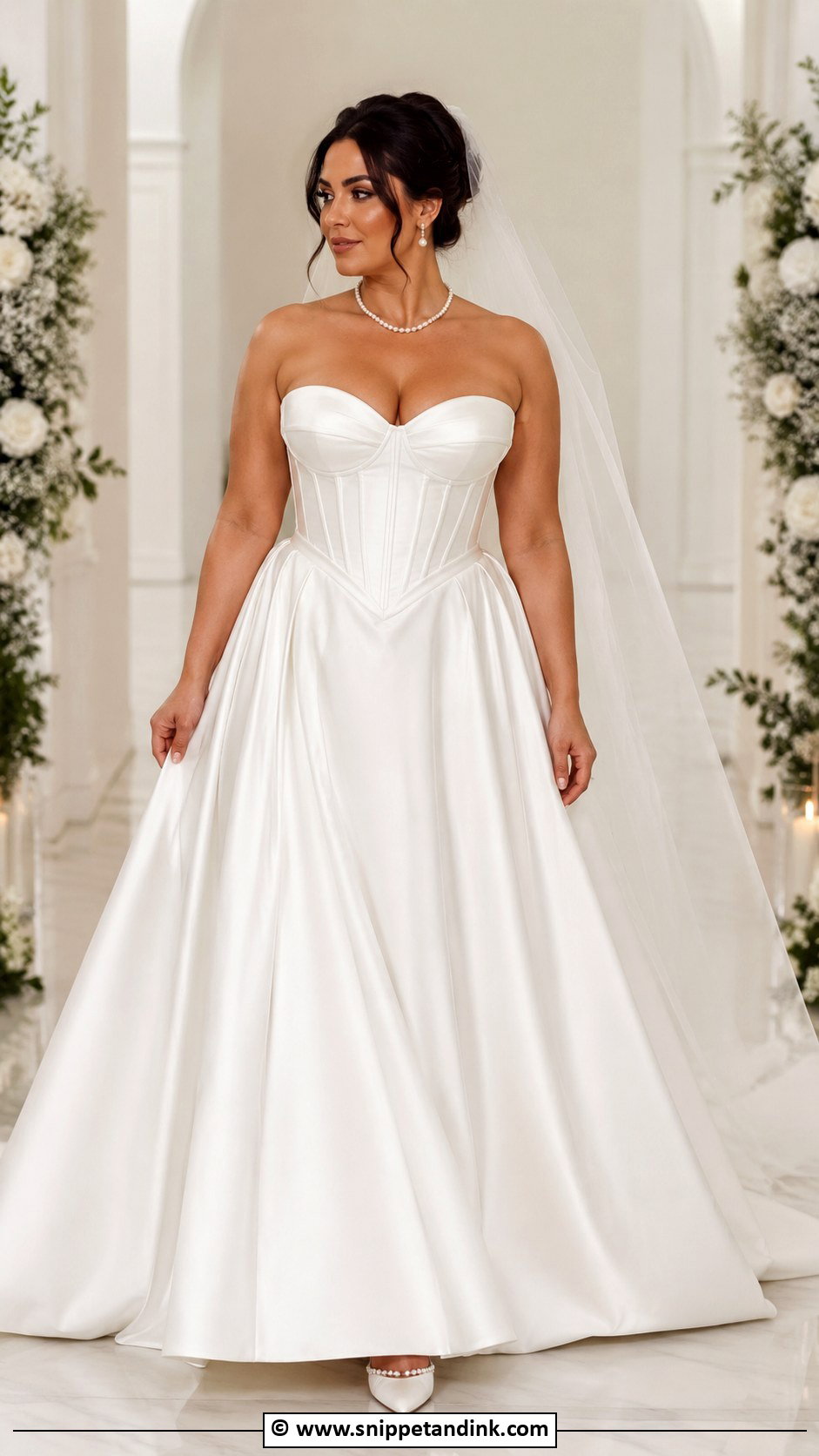
A basque waist dips into a soft V at the front, which lengthens the torso visually. On curvy figures, I check where the point of the V lands. It should sit just below your natural waist; too low and it presses into the stomach when you sit. Full skirts, structured satin and lace bodices all suit it. A clean neckline keeps it modern, lace sleeves or pearls make it romantic, and pointed heels with a long veil finish it.
8. Curvy Off Shoulder Wedding Dress
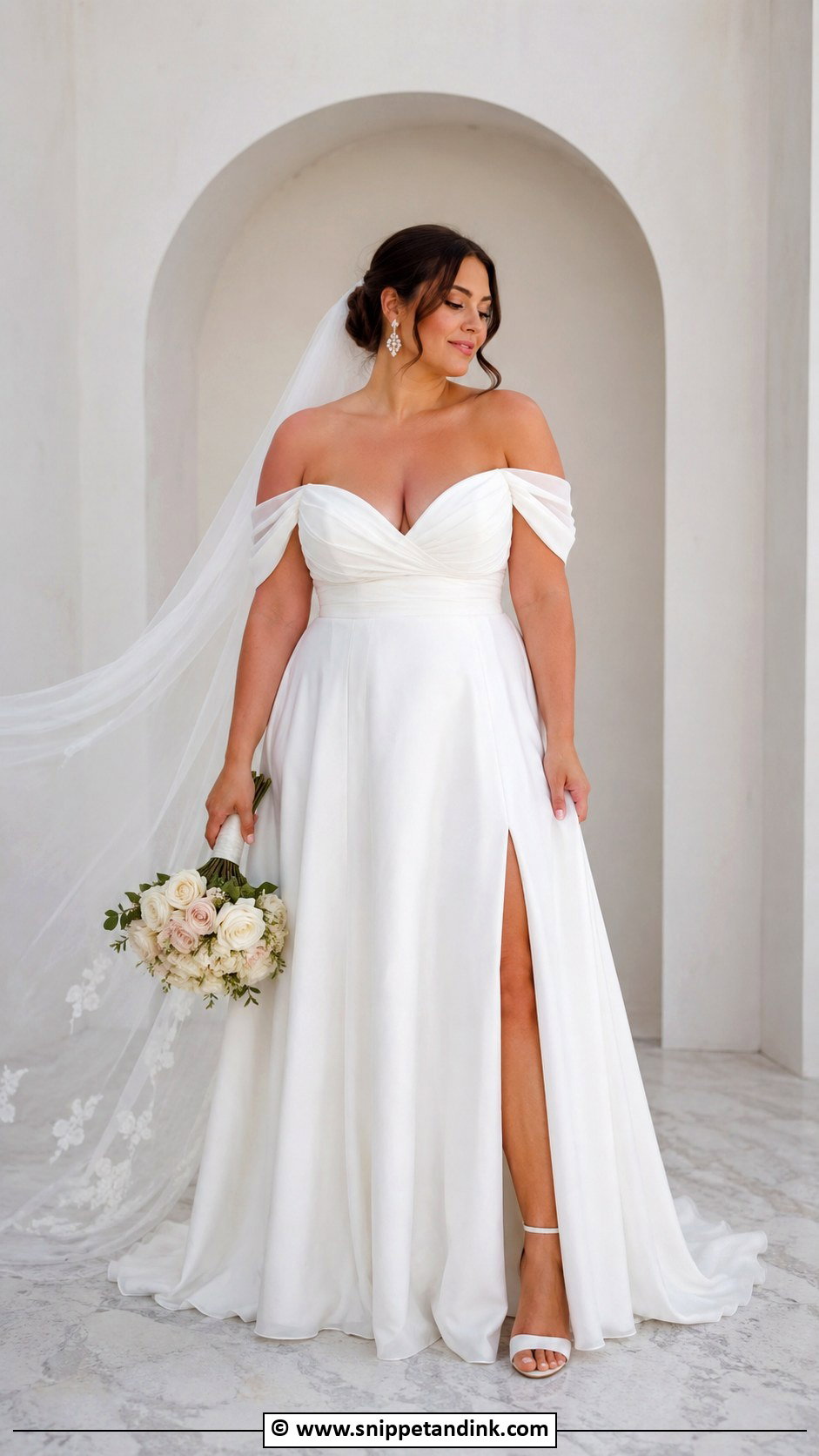
Off-shoulder sleeves cover the upper arm and show the collarbone, which is why so many curvy brides ask for them. They also slide down when you lift your arms or hug, unless the bodice is built to hold them. I test this at every fitting. A structured bodice with a grip band keeps everything in place for ball gowns, A-lines and fit and flare shapes. A low bun, statement earrings and a veil tucked at the back finish it.
9. Curvy Long Sleeve Wedding Dress
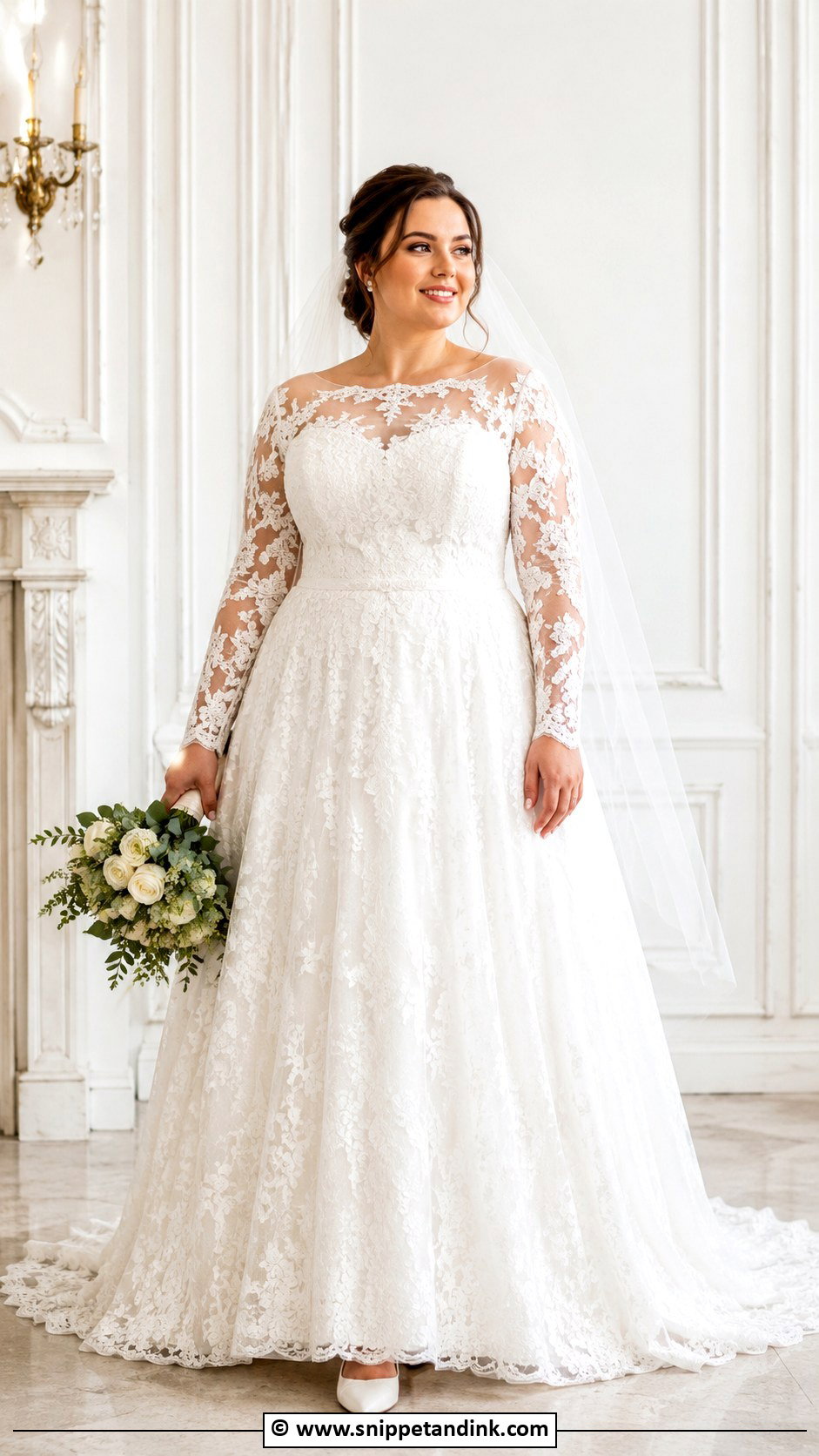
Upper-arm comfort is what makes or breaks a curvy long sleeve wedding dress. Sleeves with a little stretch, or a slightly fuller cut at the bicep, let you raise a glass and hug guests without the bodice pulling up. Sheer lace, fitted crepe, soft tulle and satin all work. A deep V, square or illusion neckline stops the dress feeling closed in. Classic pumps, pearl studs and a simple veil keep it refined for formal and cool-season weddings.
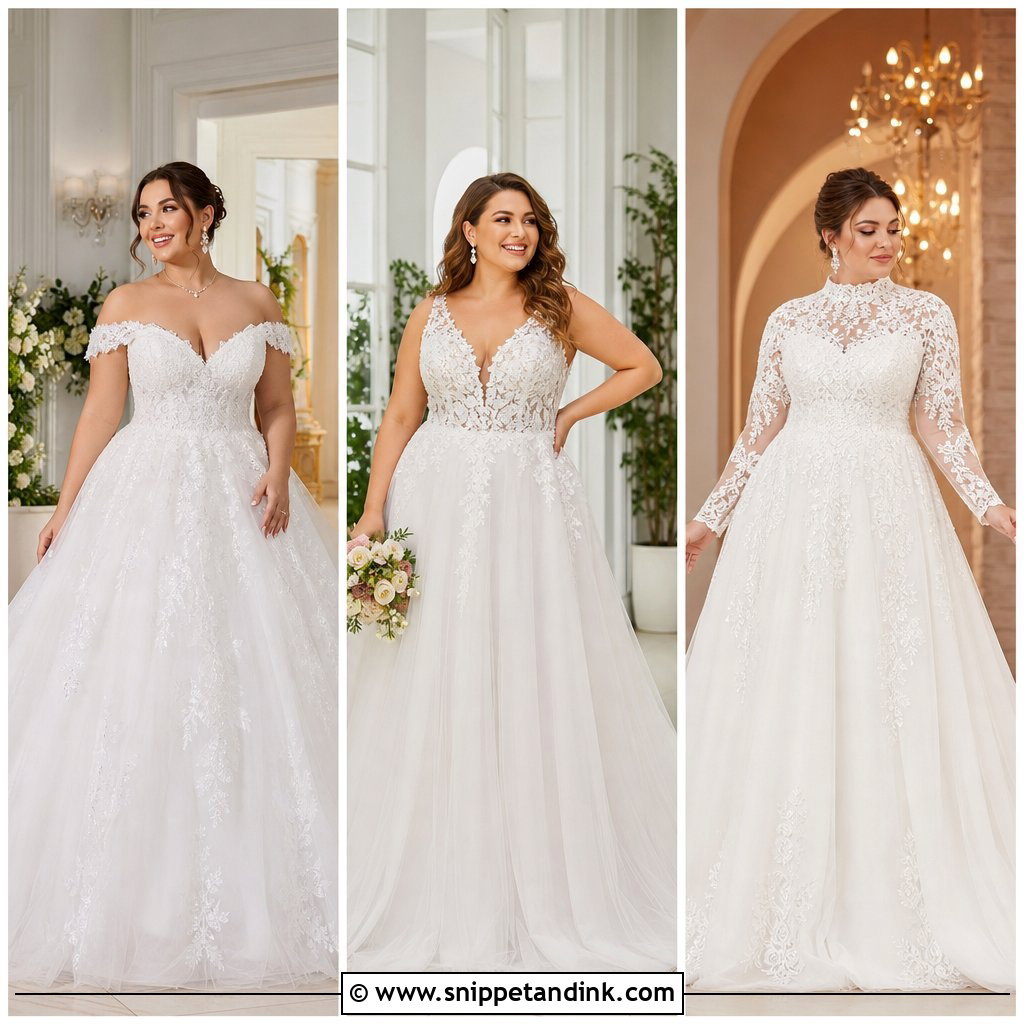
10. Curvy Lace Wedding Dress
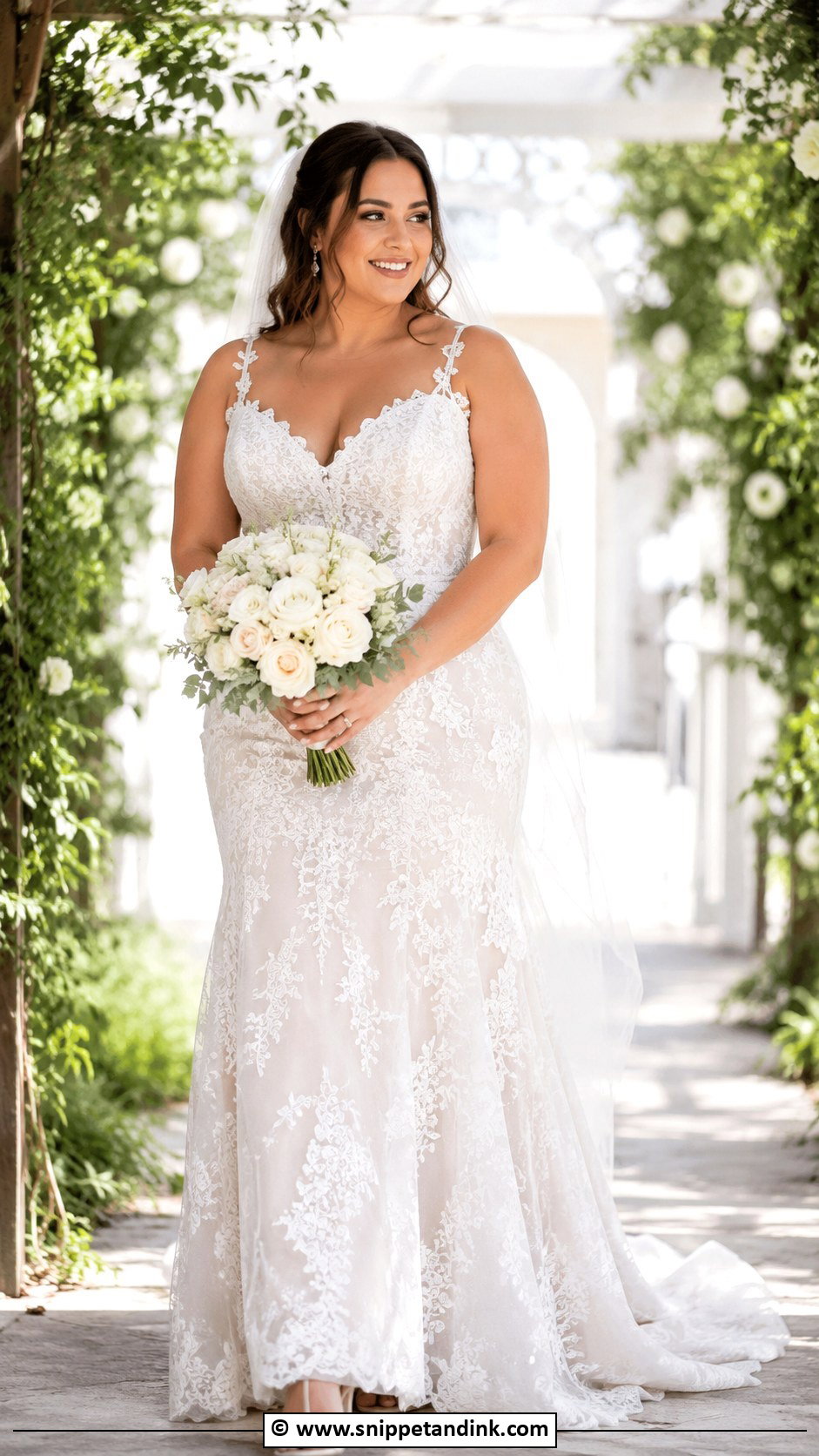
Where the lace sits matters more than which lace you choose. Appliqué placed along the waist, neckline or train draws the eye to the shape, while busy all-over lace can flatten it. A lined bodice gives more coverage, and illusion lace gives a lighter effect. A-line, fit and flare and sheath shapes all suit lace. Neutral heels, small earrings and a veil without heavy trim let the pattern lead.
11. Curvy Satin Wedding Dress
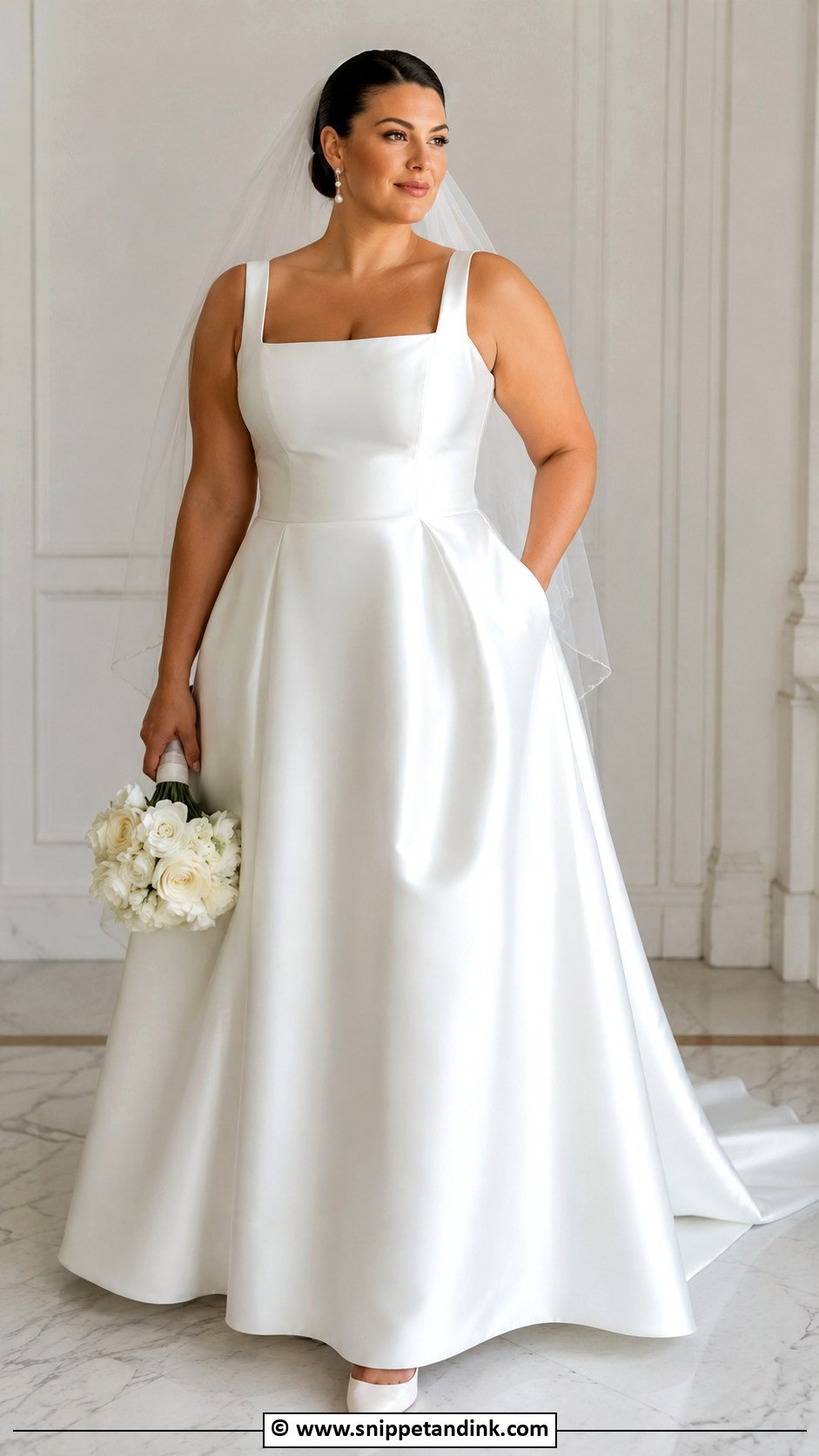
Satin hides less than people think. It reflects light, so every seam and every place the fabric strains shows up in photos. That’s why I look for strong seams, a quality lining and a heavier satin rather than a thin, high-shine one. A satin A-line reads classic; a satin fit and flare reads glamorous. A square neckline, basque waist or small bow adds a modern touch, with sleek heels and a structured bouquet.
12. Curvy Crepe Wedding Dress
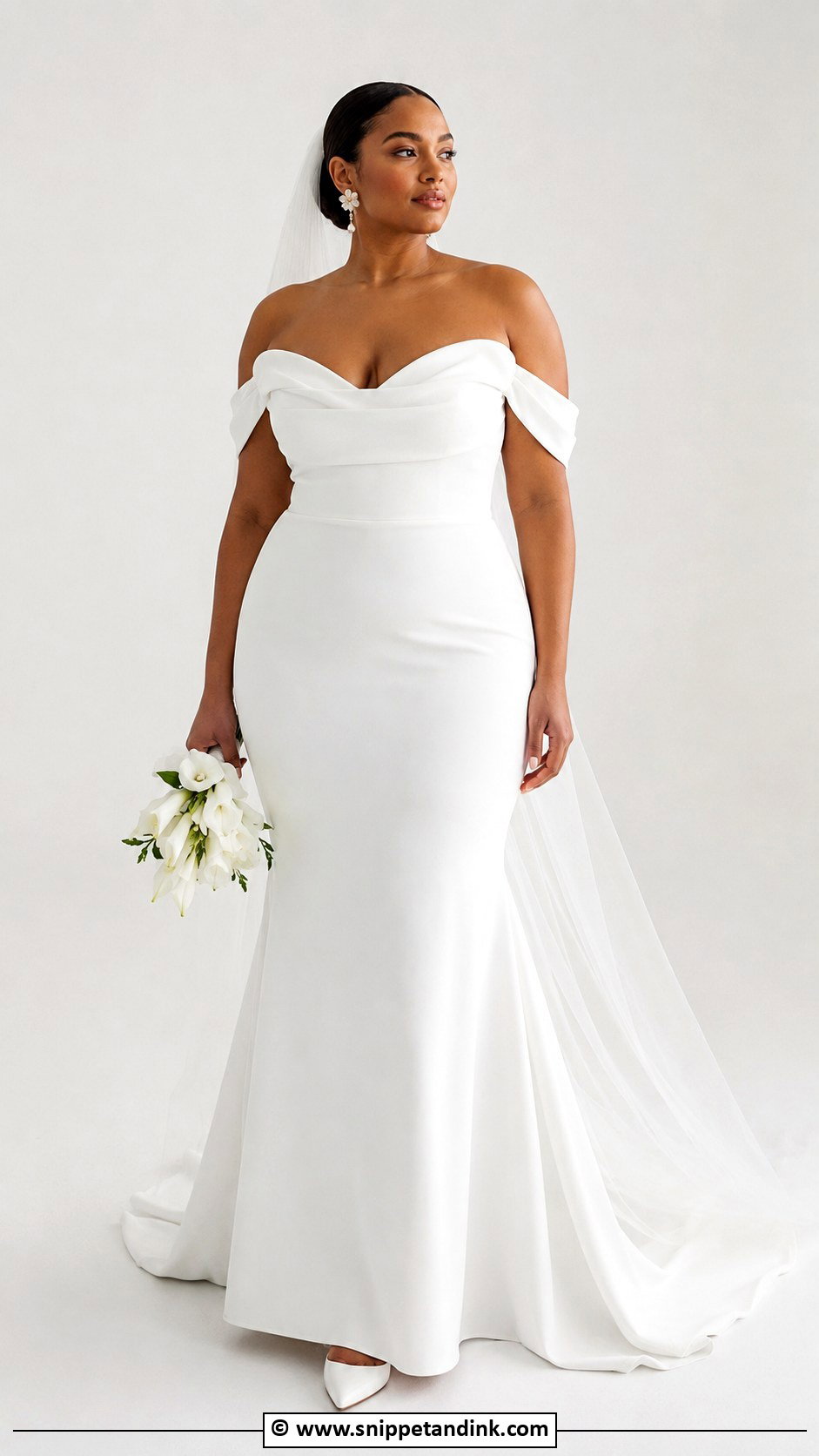
Crepe has enough weight to skim the body without clinging, which makes it my favourite modern fabric for curvy brides. Because it’s plain, fit is everything. Thoughtful seaming through the bust and a supportive lining matter more here than any trim. Sheath, fit and flare and minimal A-line shapes all suit it. Square, bateau and V necklines each change the mood. Pointed heels, a sleek veil and sculptural earrings finish it.
13. Curvy Tulle Wedding Dress
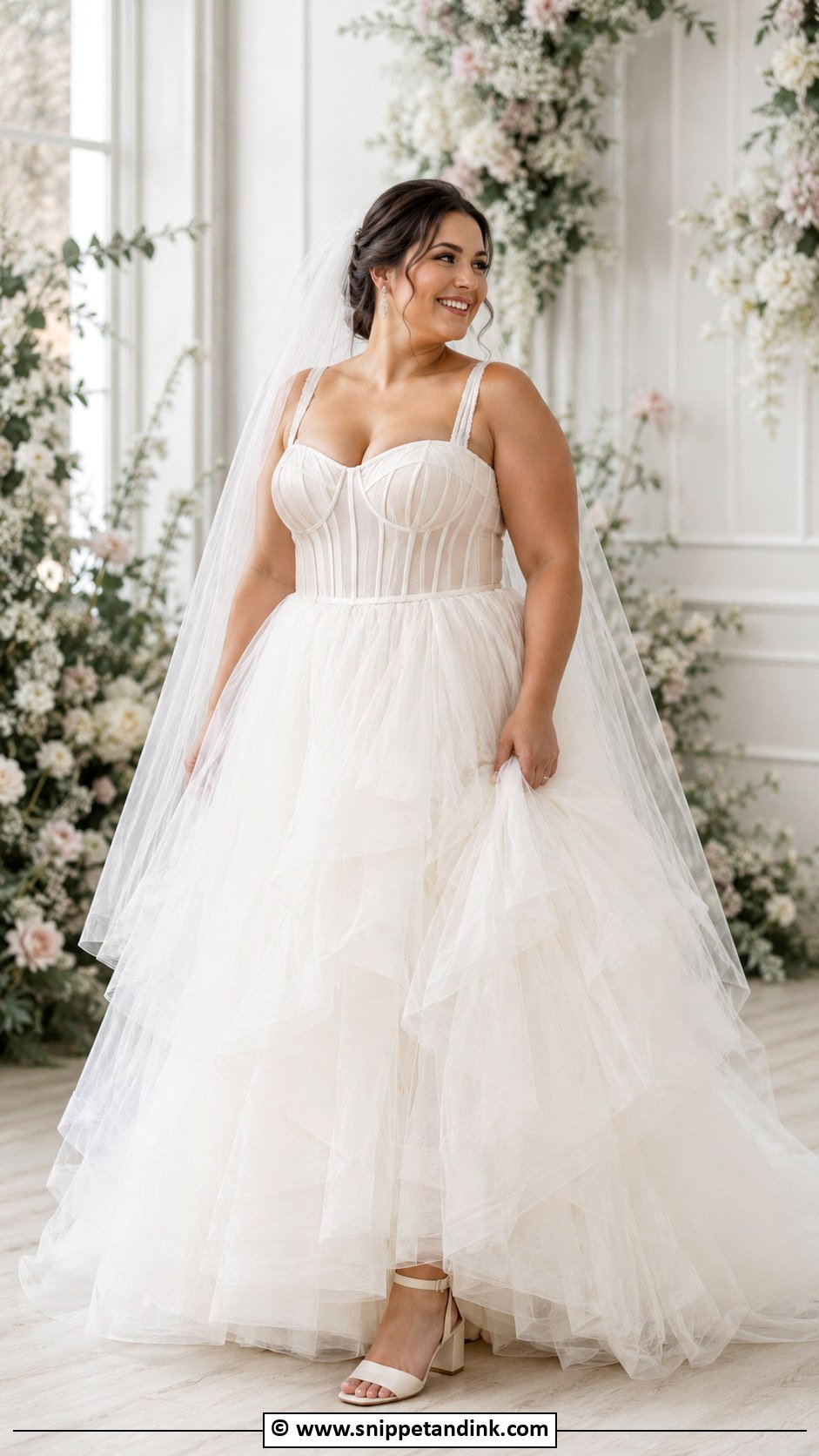
Tulle gives volume without much weight, so it’s comfortable for a long day. The best curvy tulle gowns have a structured bodice and a skirt that starts at the natural waist, which defines the shape before the volume begins. Plain tulle feels classic, glitter tulle adds subtle sparkle, and floral appliqué brings a garden feel. Delicate earrings, comfortable heels and a sheer veil keep it soft.
14. Curvy Chiffon Wedding Dress
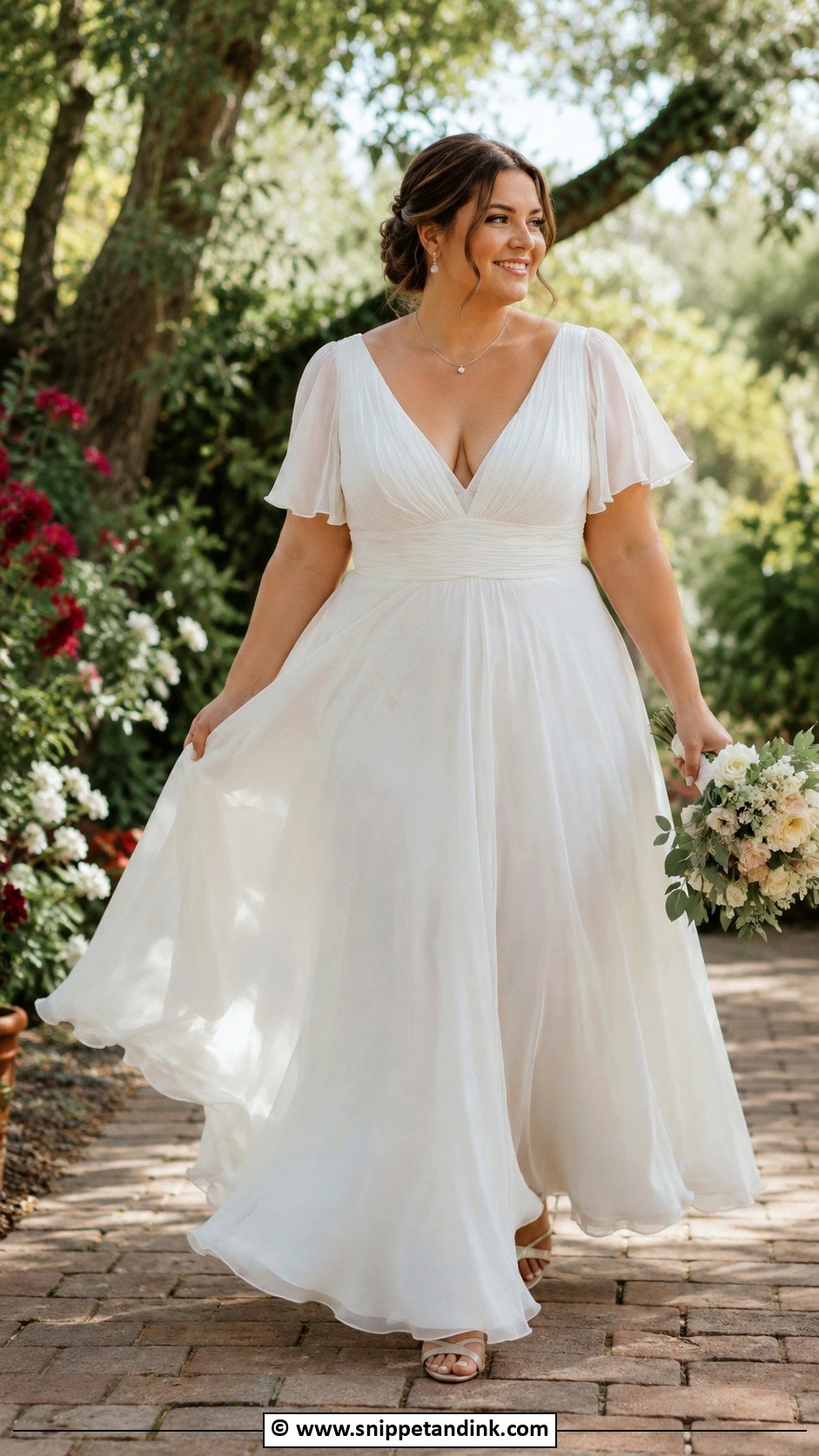
Chiffon is light and breathable, which is ideal in summer heat. It also has no structure of its own, so on a curvy bride the bodice underneath has to do everything. I look for wide straps, a ruched waist that’s stitched to a firm lining, or an empire seam. A chiffon A-line moves well outdoors, and flutter sleeves soften the arm. Low block heels, soft waves and fine jewelry suit destination and garden weddings.
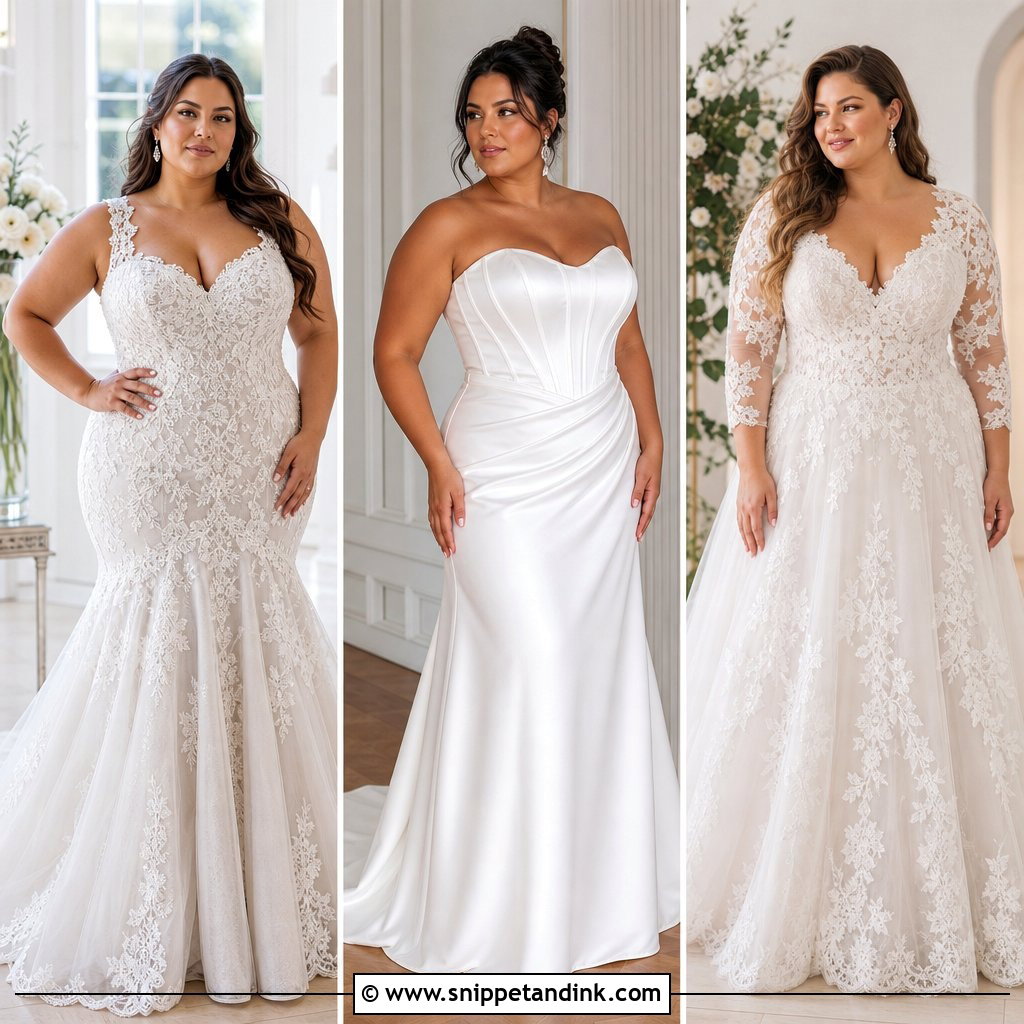

15. Curvy Square Neck Wedding Dress
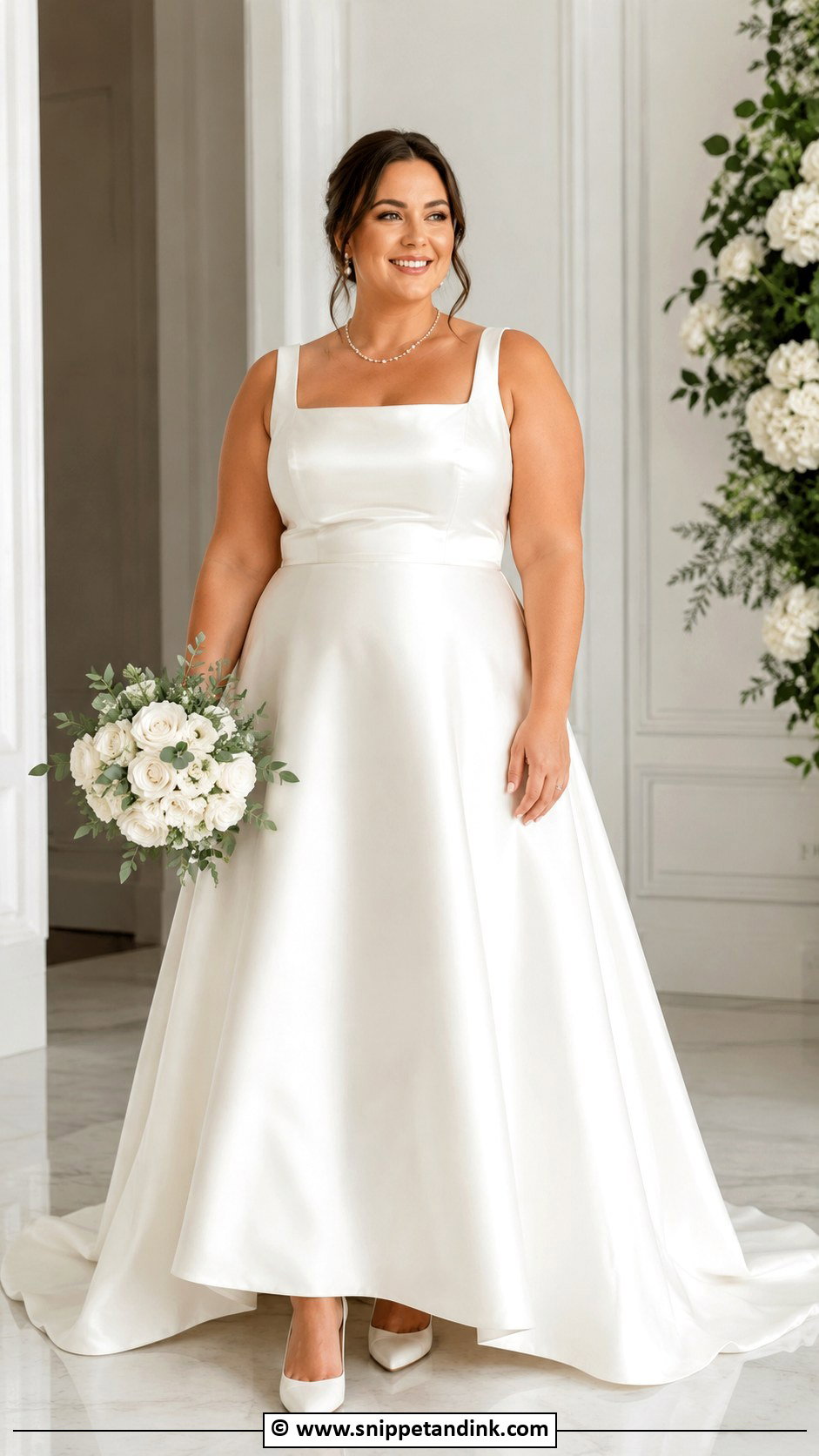
Square necklines frame a fuller bust well, as long as the bodice is structured enough to stop the neckline gaping when you lean forward. Thicker straps give more support; sheer sleeves soften it. It works with satin A-lines, crepe fit and flare dresses and lace bodices. I’d skip the necklace and wear statement earrings, or choose a short pendant that sits above the neckline. A smooth veil and a neat bouquet complete it.
16. Curvy V Neck Wedding Dress
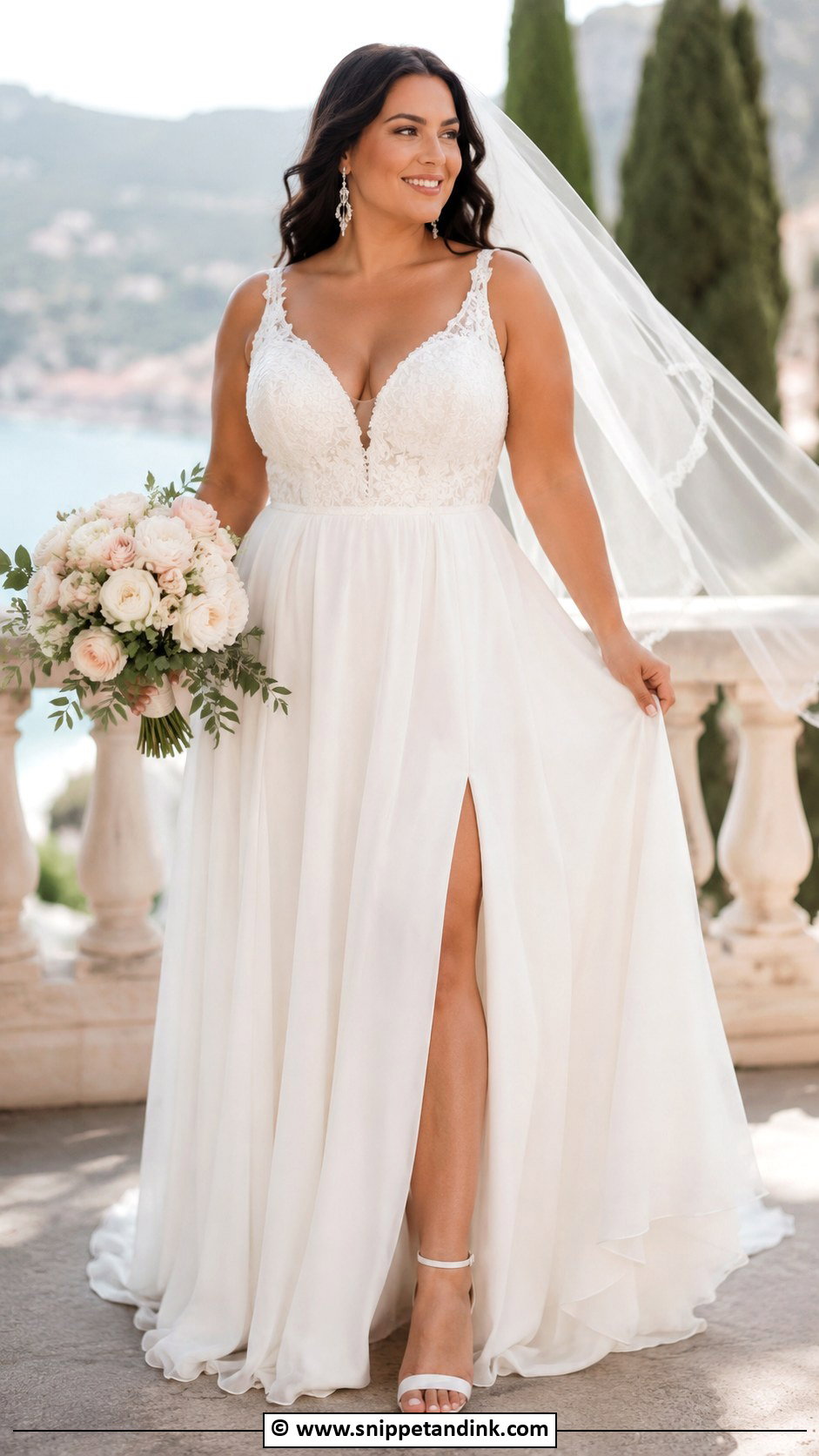
A V-neck creates a long vertical line, and its depth is adjustable. A shallow V, a wide V or a deep V softened with illusion mesh all suit different comfort levels. On a fuller bust, I look for built-in cups or side structure so the V stays in place without tape. Chiffon or tulle softens it; satin or crepe sharpens it. Drop earrings, a simple bracelet and secure heels finish the outfit.
17. Curvy Sweetheart Wedding Dress
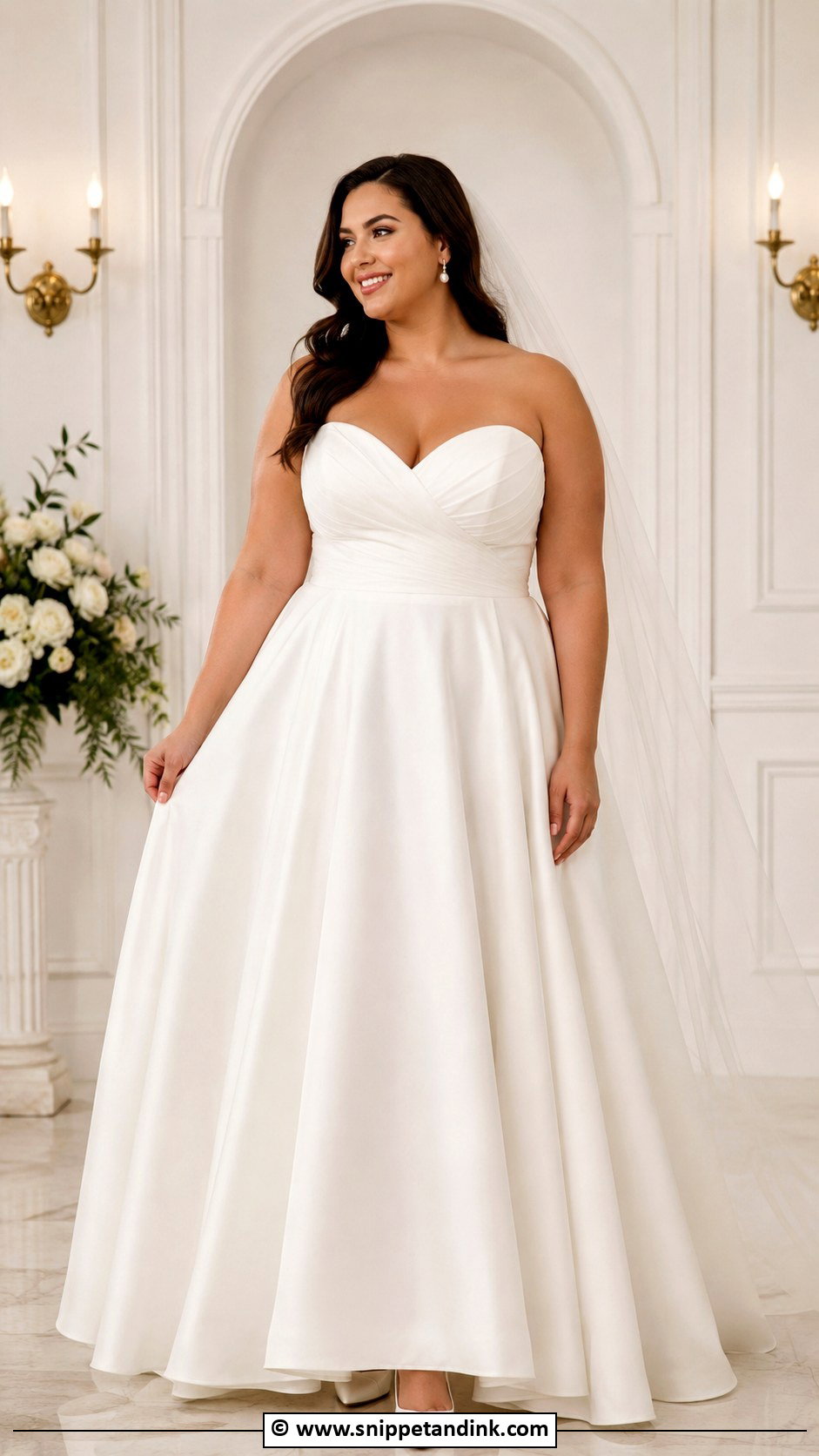
Sweetheart necklines are popular for a reason, but on curvy brides the bodice structure decides how they look. A boned sweetheart lifts and shapes; an unstructured one can flatten or gape at the dip. It can be strapless, with detachable sleeves, with lace straps or under an illusion overlay. Pair it with an A-line skirt for a classic shape or a mermaid for glamour. A veil, soft earrings and comfortable heels finish it.
18. Curvy Strapless Wedding Dress
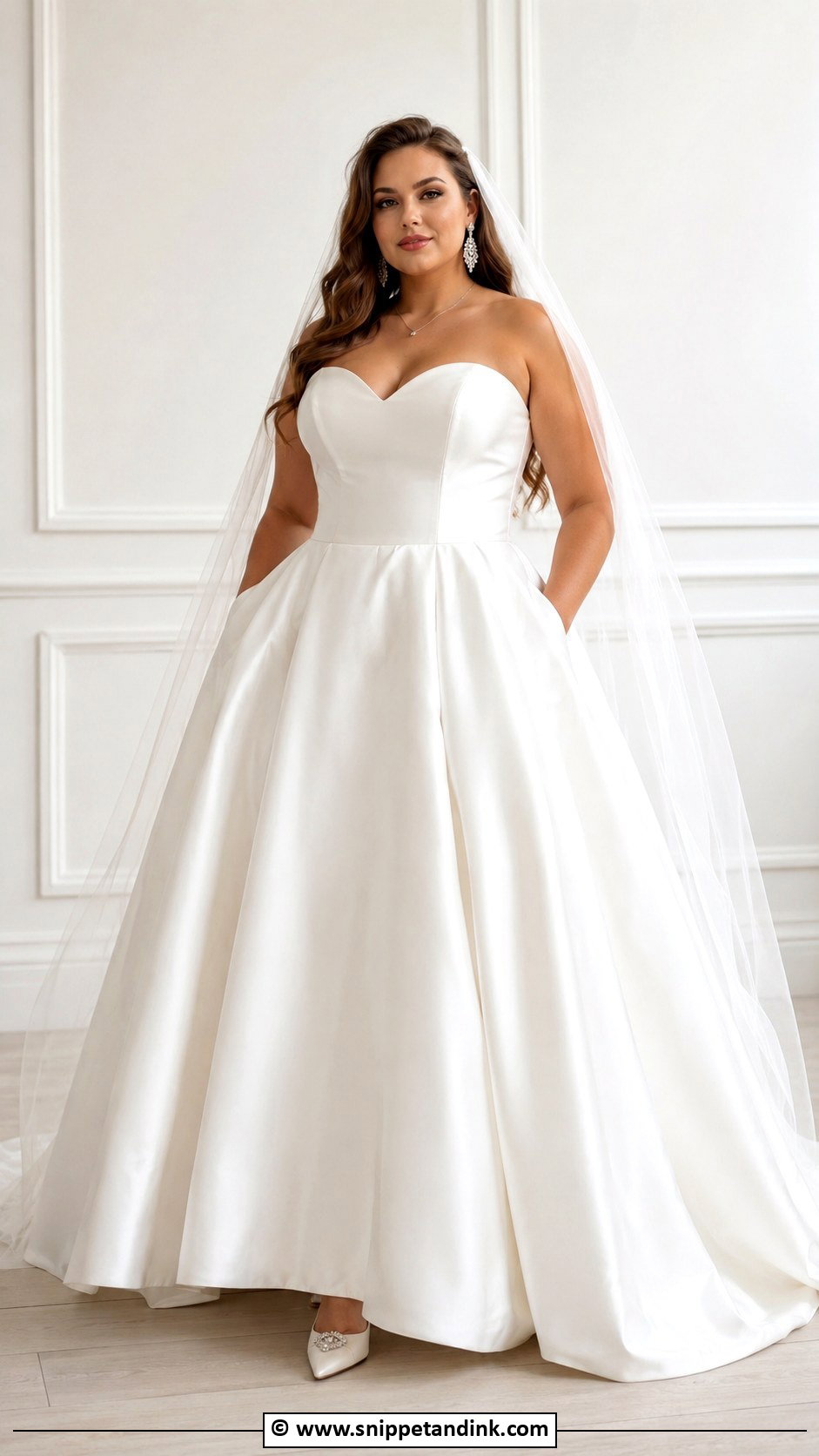
Strapless gowns work well on curvy brides when the internal support is right, and that matters more than the neckline itself. I want a waist stay, boning that reaches down to the hip, and a bodice that sits securely without pulling, slipping or squeezing. Small jumps and a few arm raises at the final fitting tell you if it holds. A straight neckline looks modern and a sweetheart softer. Wear a necklace with a plain neckline, or earrings if the bodice has detail.
19. Curvy Sheath Wedding Dress
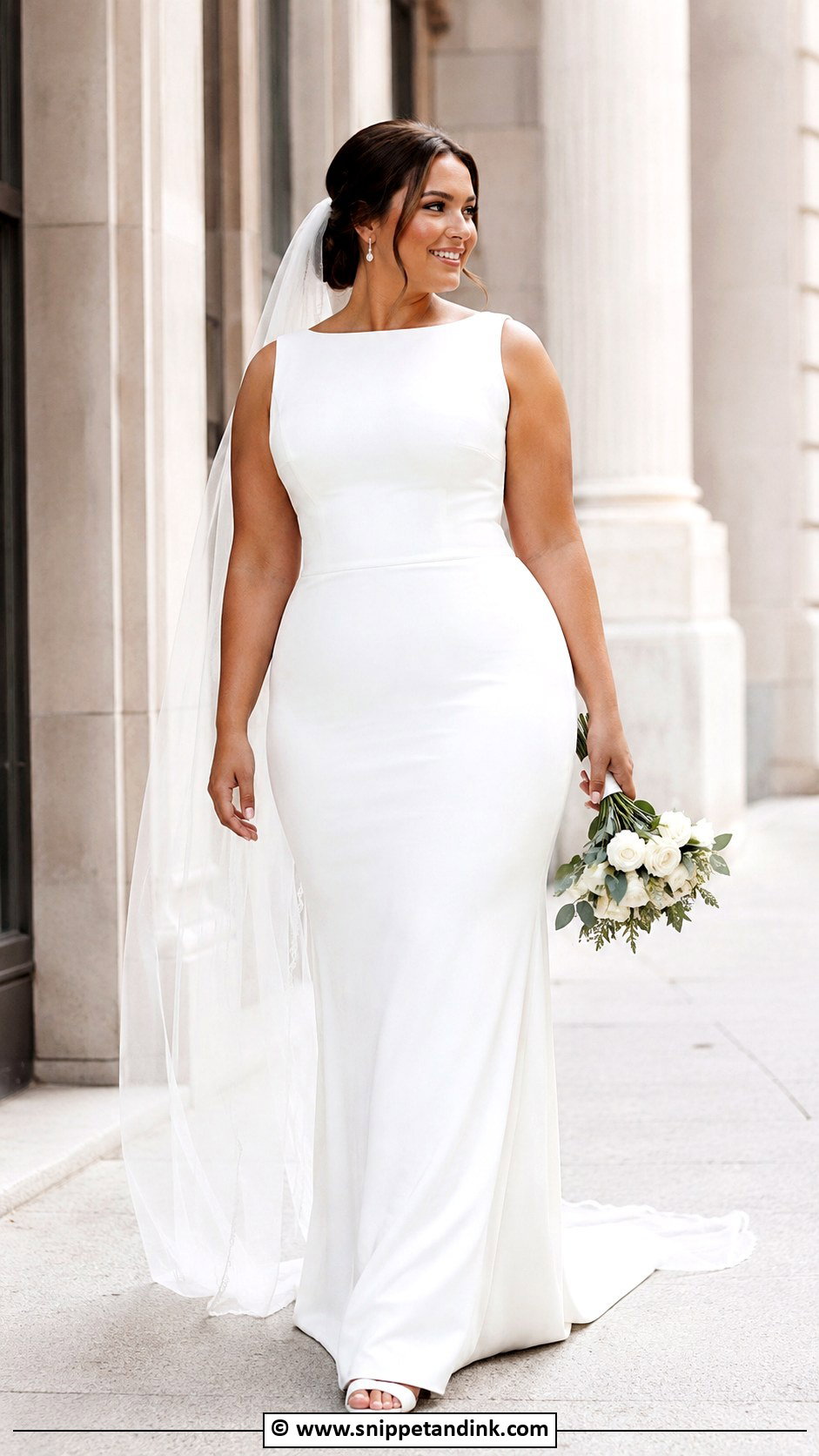
A sheath follows the body more gently than a mermaid and doesn’t flare, so the line runs straight from shoulder to hem. On curvy hips, a narrow skirt can restrict walking, so I ask for a small back slit or a kick pleat. A stretch lining, side seams and soft draping make it more comfortable. Crepe, satin, lace and chiffon all work. Low heels, sleek earrings and a simple veil suit city weddings and small ceremonies.
20. Curvy Tea Length Wedding Dress
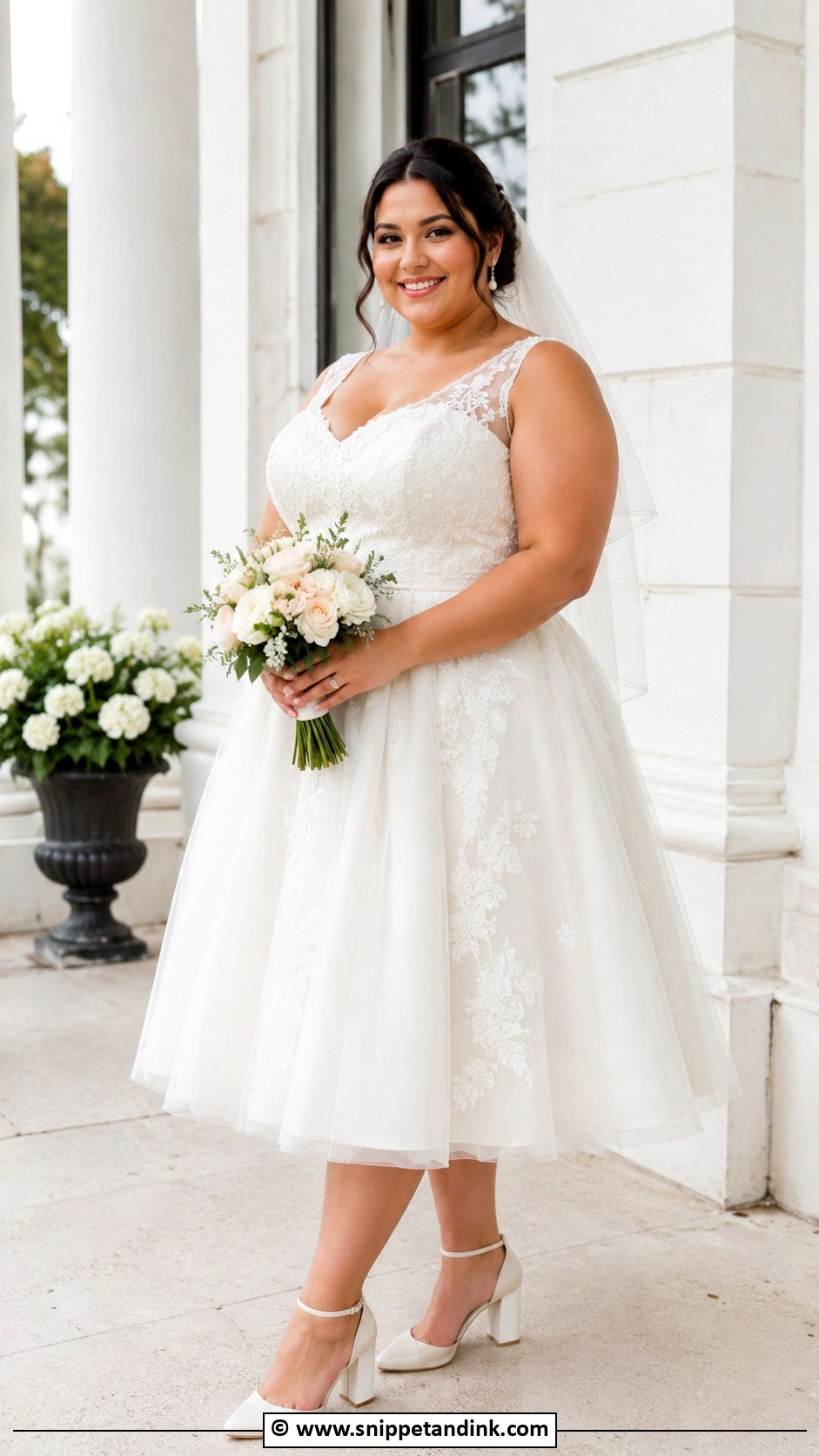
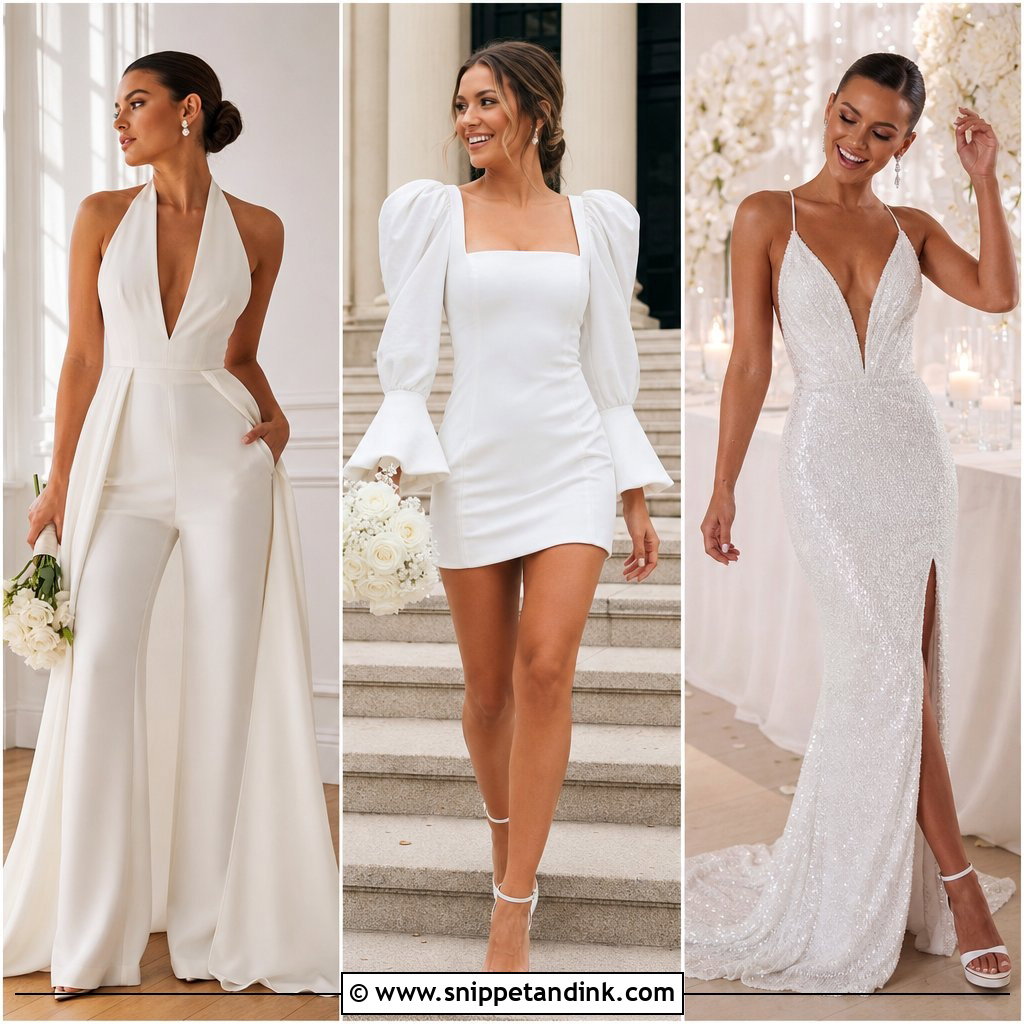
Tea length shows your shoes, so choose ones you’d happily wear again. The hem sits between the knee and ankle, which makes walking and dancing easy at garden ceremonies, courthouse weddings and brunches. A fitted bodice with a fuller skirt balances the shape well, and lace or satin keeps it bridal. Block heels, pointed flats or embellished pumps all work. Add pearl earrings and a short veil or hair bow.
21. Curvy Courthouse Wedding Dress
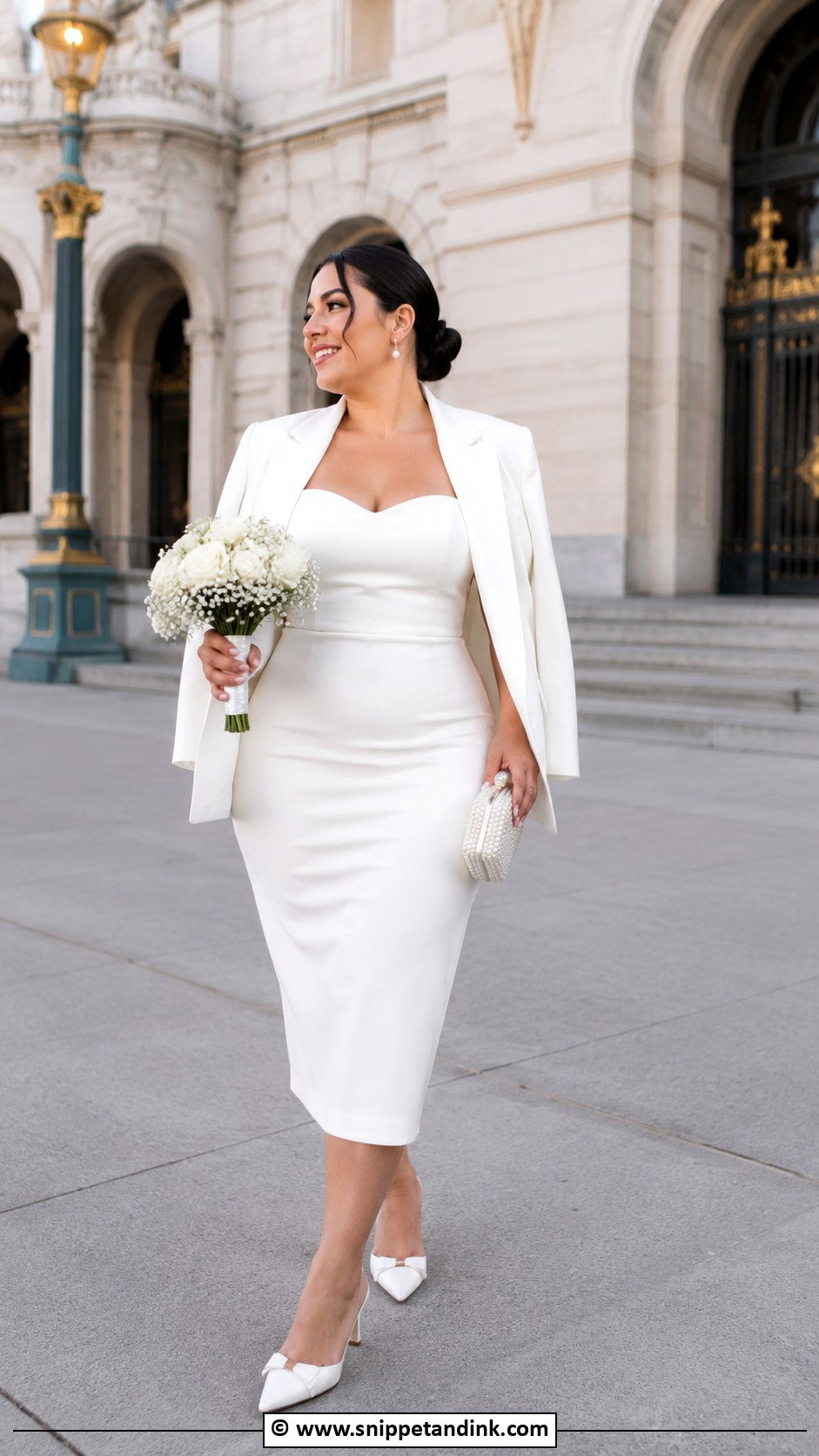
For a civil ceremony, structure gives a simple dress its polish. A midi, a tailored sheath, a satin wrap dress or a clean A-line all work. Wrap dresses are especially kind to curves because you can adjust the tie on the day. A white blazer adds shape for photos on city steps. Low heels, a small bouquet, pearl earrings and a neat clutch finish it, with a short veil or comb if you want a softer look.
22. Curvy Beach Wedding Dress
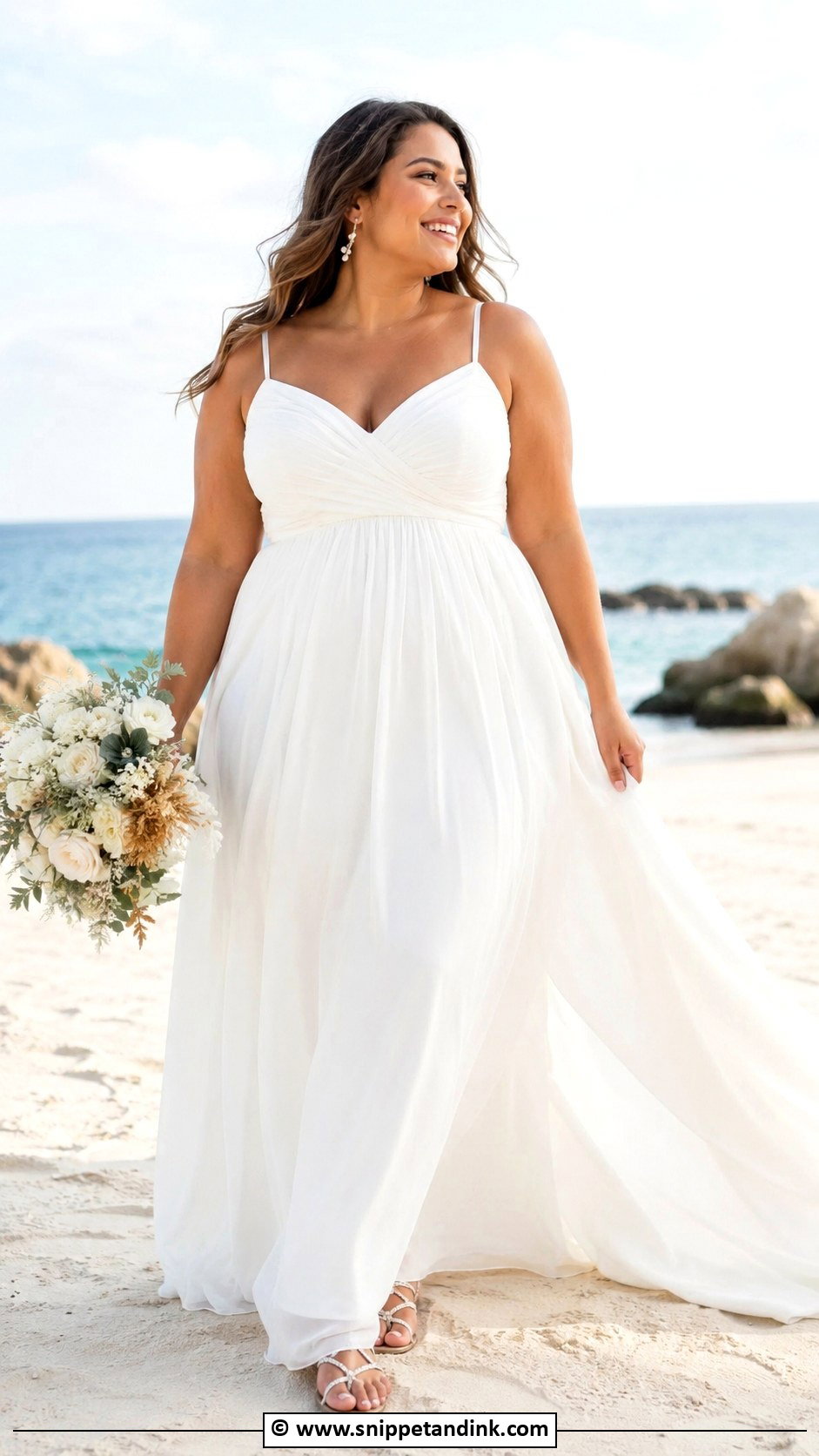
Sand and wind are the two things a curvy beach wedding dress has to handle. Stiff skirts drag through sand, while chiffon, soft tulle, light lace and flowing crepe move with it. An empire waist, A-line or relaxed sheath all suit a seaside ceremony. I’d choose straps or sleeves that stay put in a breeze rather than a strapless bodice. Flat sandals or wedges beat thin heels, with simple earrings and loose waves.
23. Curvy Garden Wedding Dress
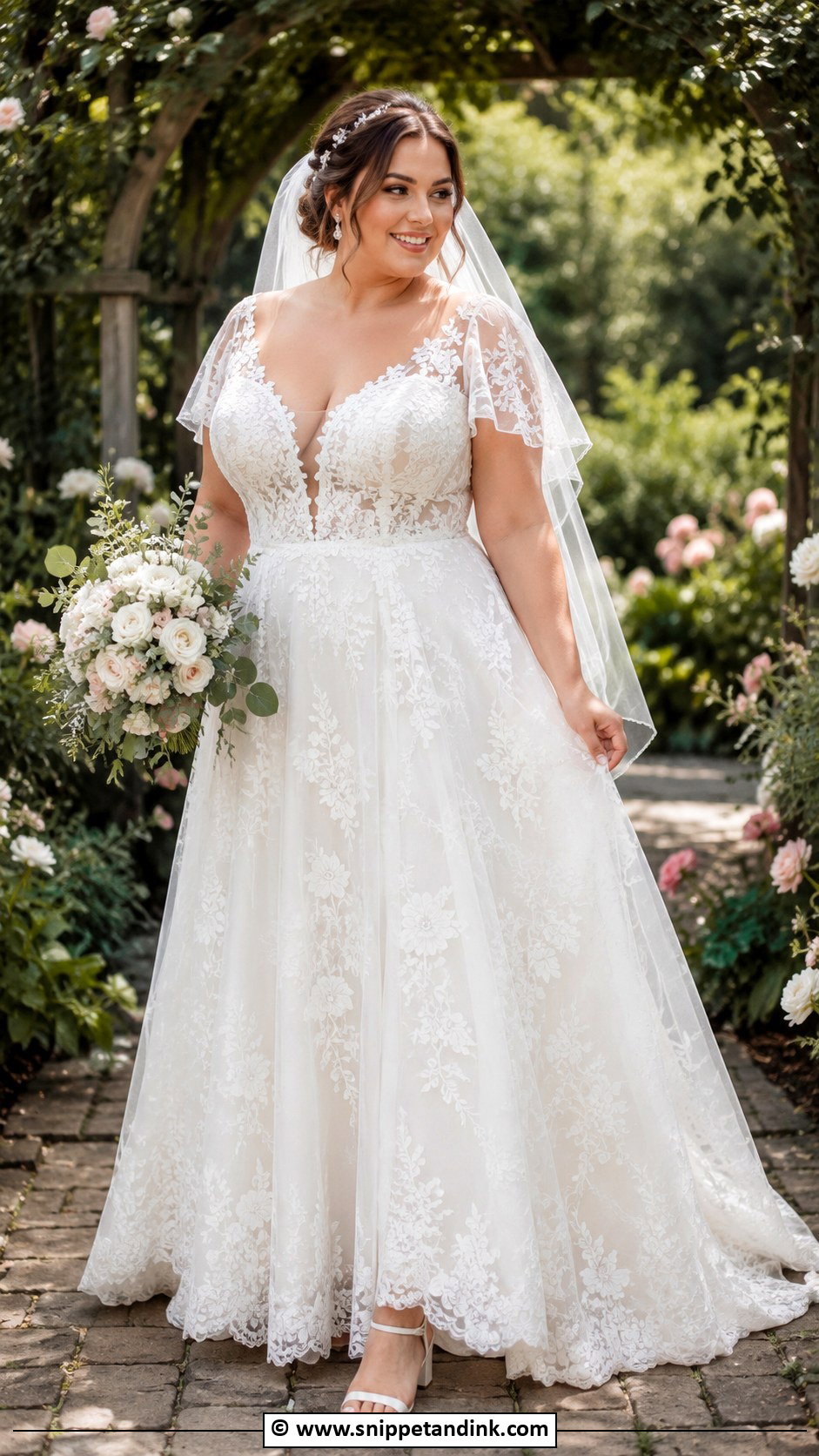
Garden ceremonies mean grass, gravel and often a long walk from ceremony to reception, so I steer brides toward skirts that don’t drag: A-lines and empire waists, hemmed just off the ground. Floral lace, embroidered tulle and chiffon layers suit the setting. In warmer months, choose a breathable lining and skip heavy beading. A soft V, square or off-shoulder neckline gives shape. Block heels won’t sink into lawn.
24. Curvy Winter Wedding Dress
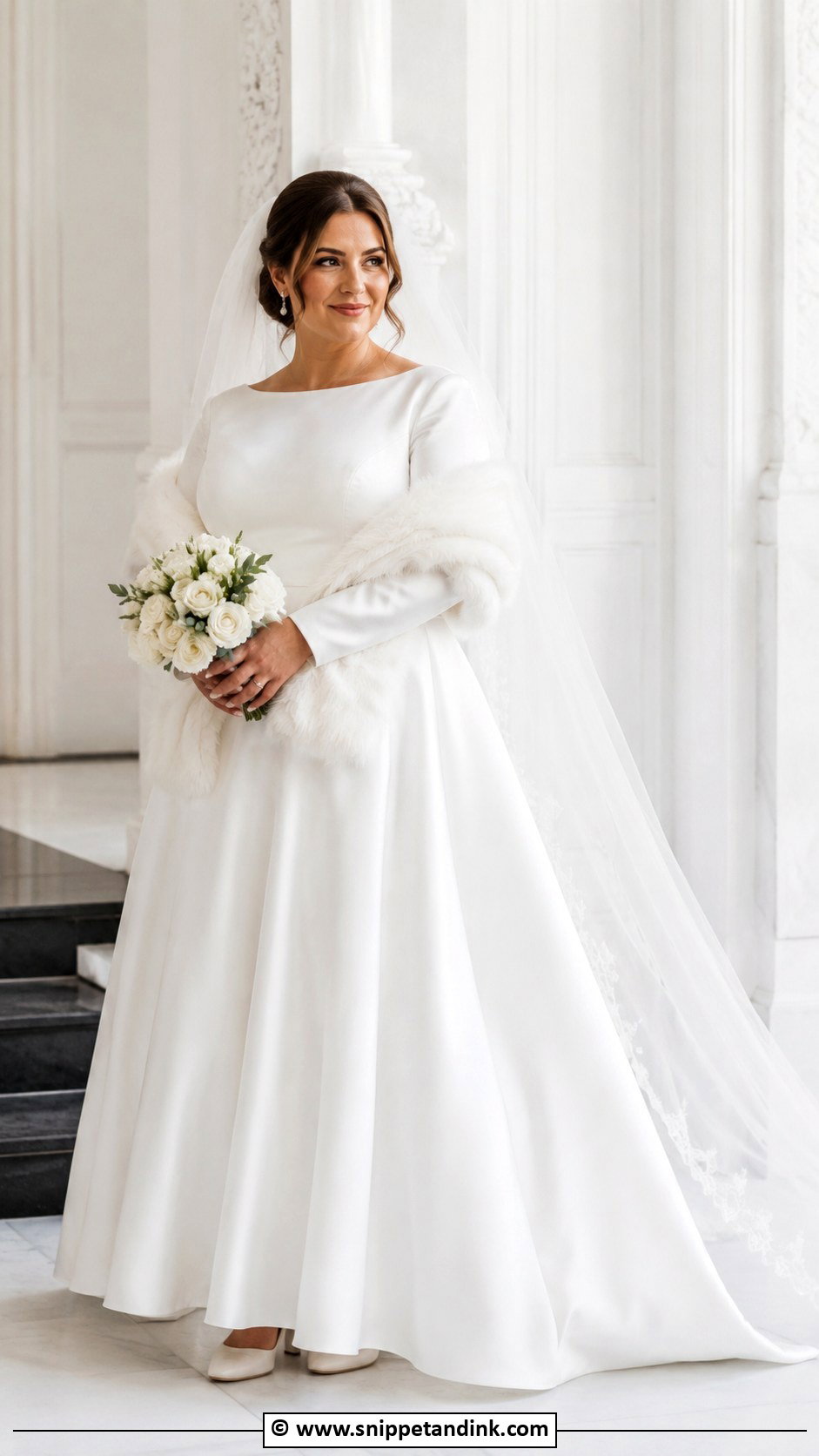
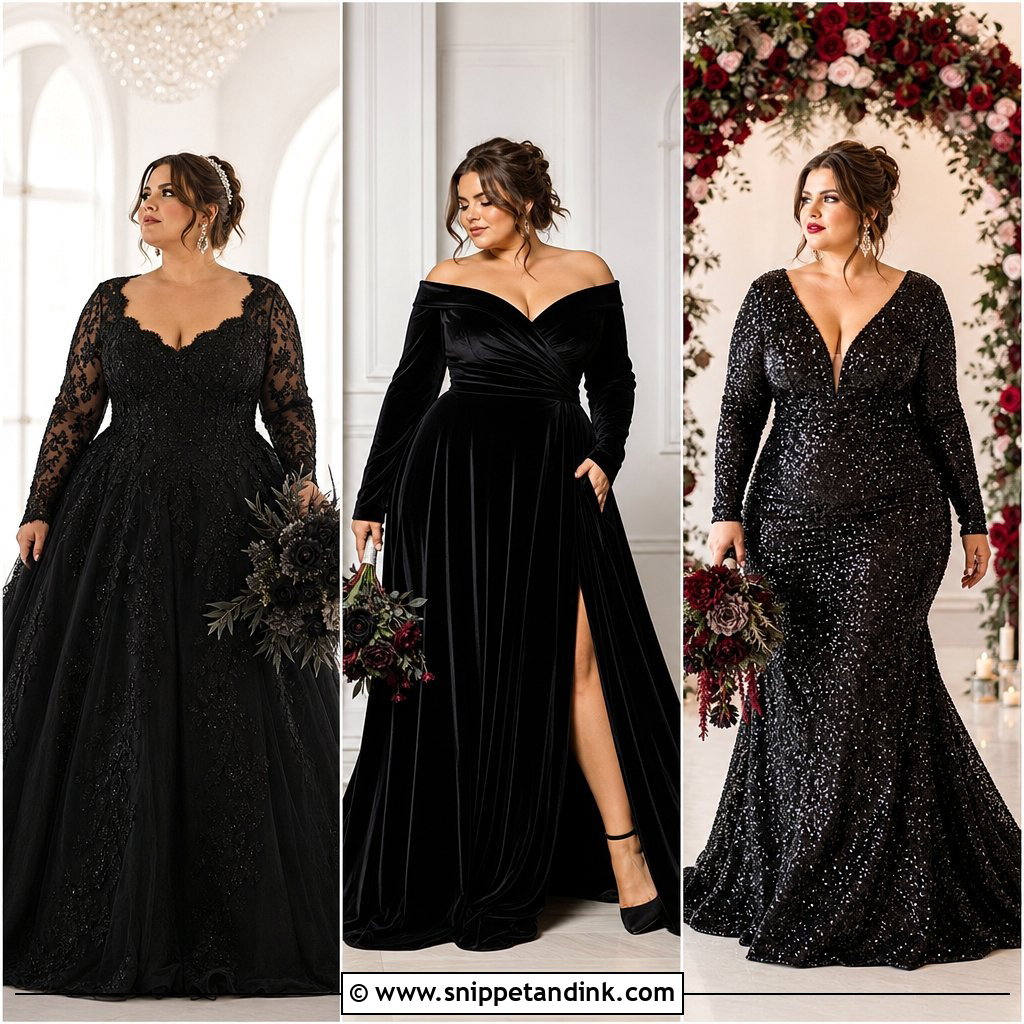
Heavier fabrics come into their own in winter. Satin, crepe, mikado and lace give structure and warmth, and long sleeves keep you comfortable between photos. A structured ball gown or A-line feels formal; a fitted crepe gown feels modern. Add a faux fur wrap, a cape or a tailored coat for outdoor portraits. Closed-toe heels, pearl earrings and a longer veil complete the outfit.

25. Curvy Boho Wedding Dress
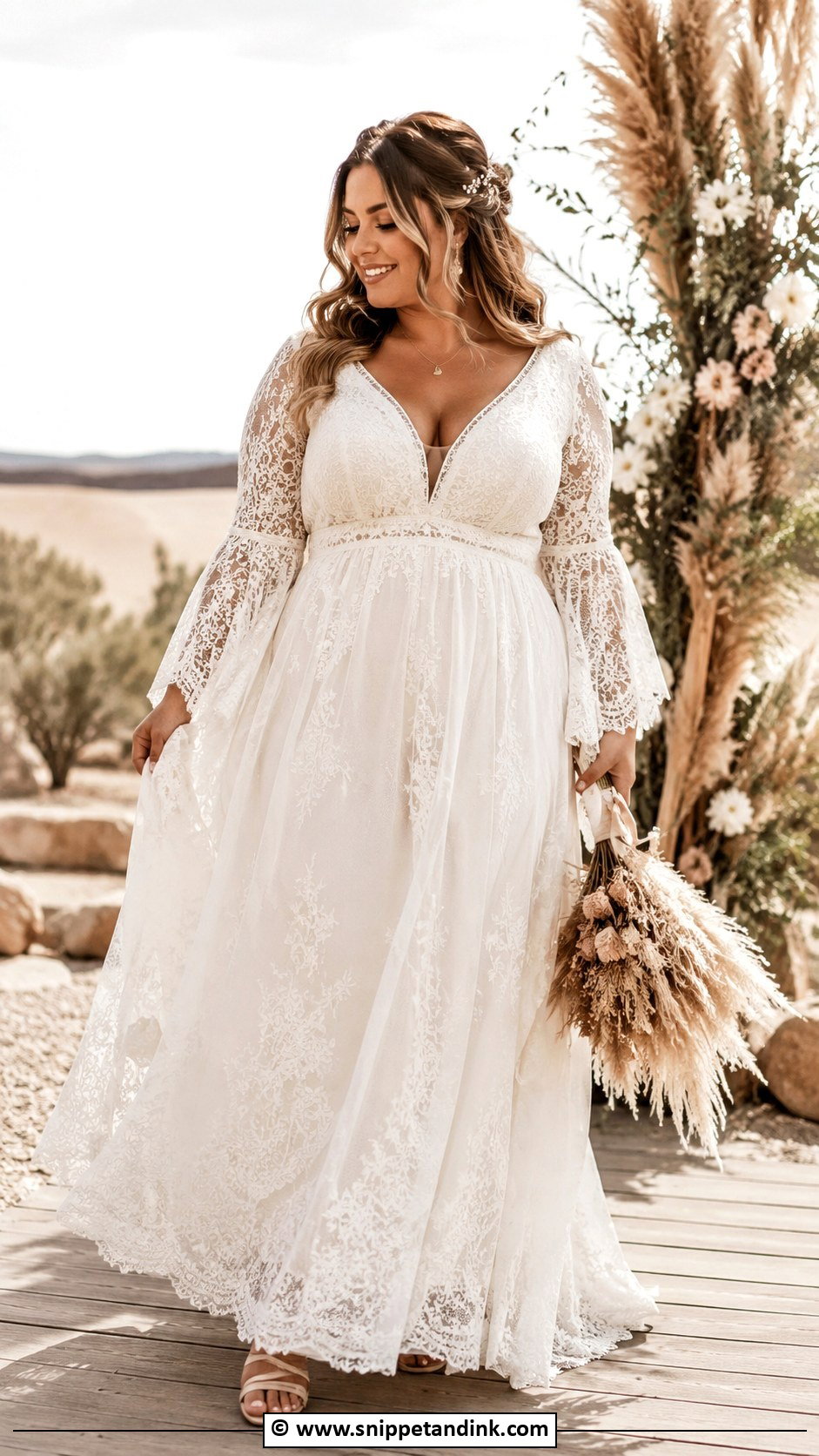
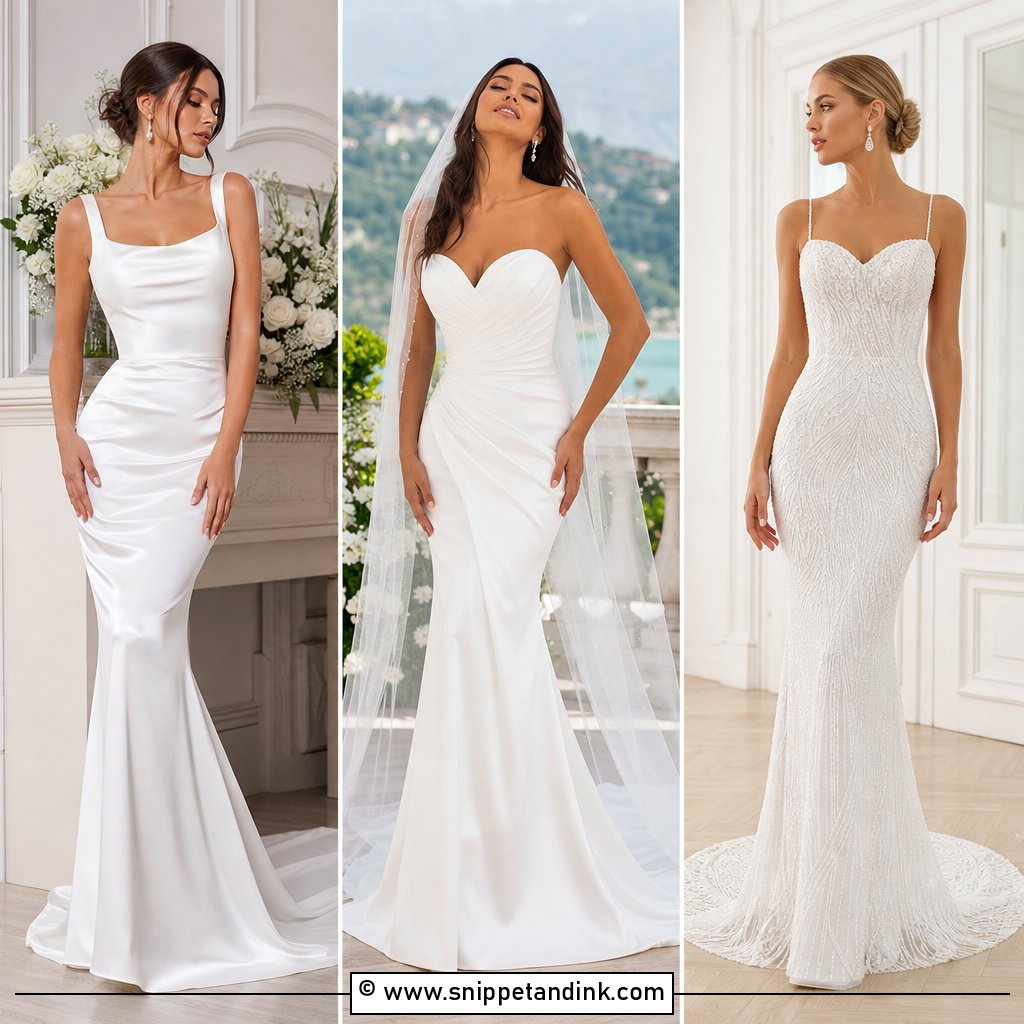
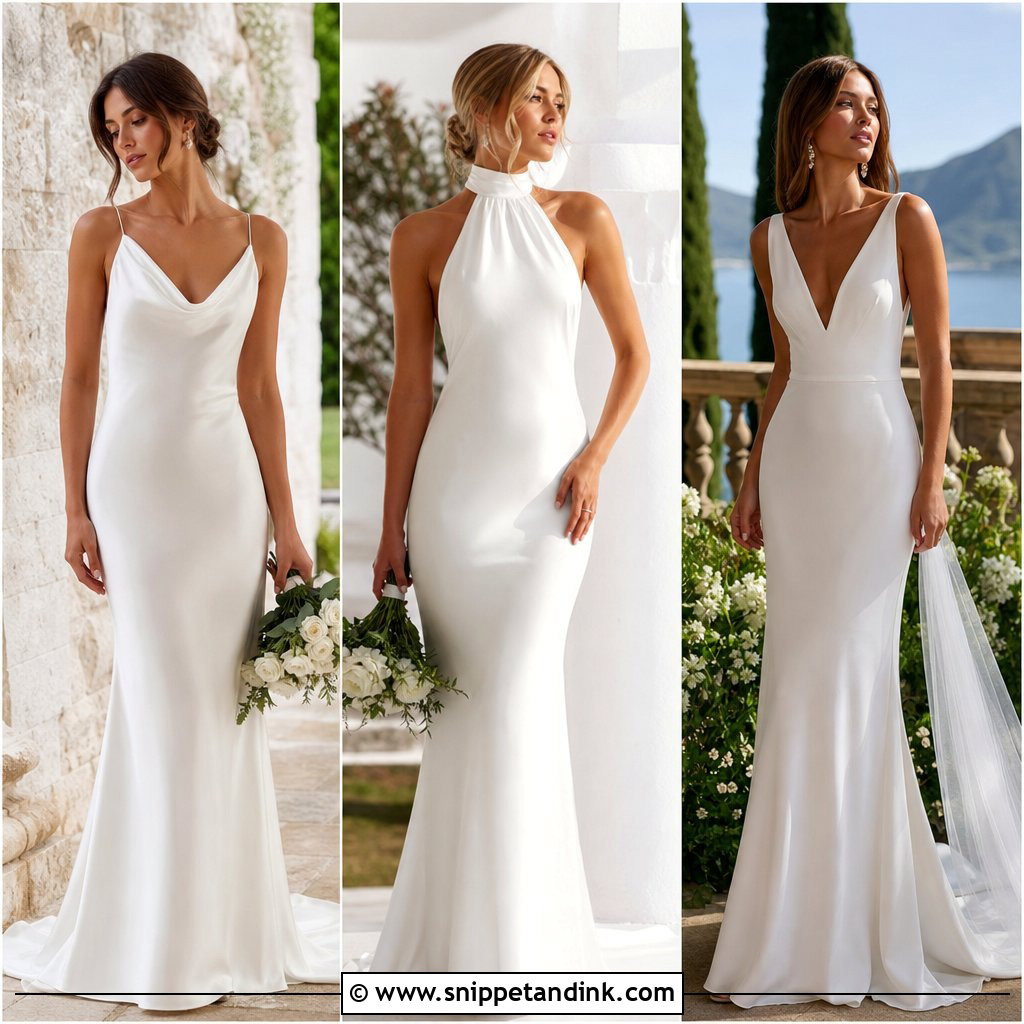
Boho gowns are often lightly built, which is my main concern for curvy brides. A flowing skirt is lovely, but the bodice still needs real support underneath the crochet lace or embroidery. Empire waists, A-lines and soft fit and flare shapes all work. I’d choose one feature, sleeves or lace, and let it lead. Neutral heels or flat sandals, loose waves and simple floral accessories complete it.
26. Curvy Minimalist Wedding Dress
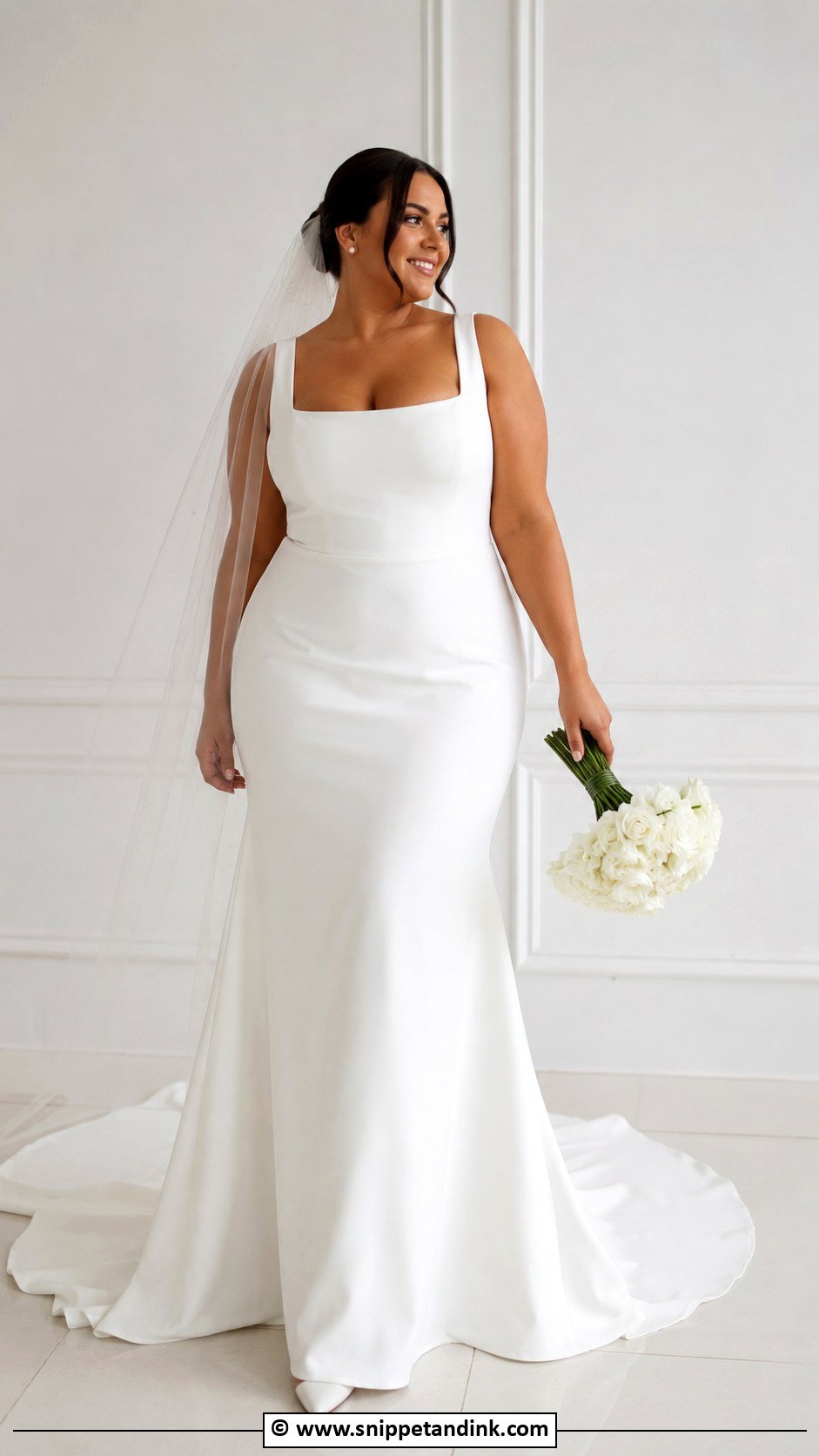
Minimal dresses depend entirely on cut. With no lace or beading to draw the eye, every seam is on show, and alterations need to be precise. Crepe, satin and mikado look smooth when they’re fitted well. A square-neck A-line, a sleek sheath or a structured fit and flare all suit curvy figures. Covered buttons, a clean train or a sculpted neckline add interest. Simple heels, pearl studs and a smooth veil finish it.
27. Curvy Vintage Wedding Dress
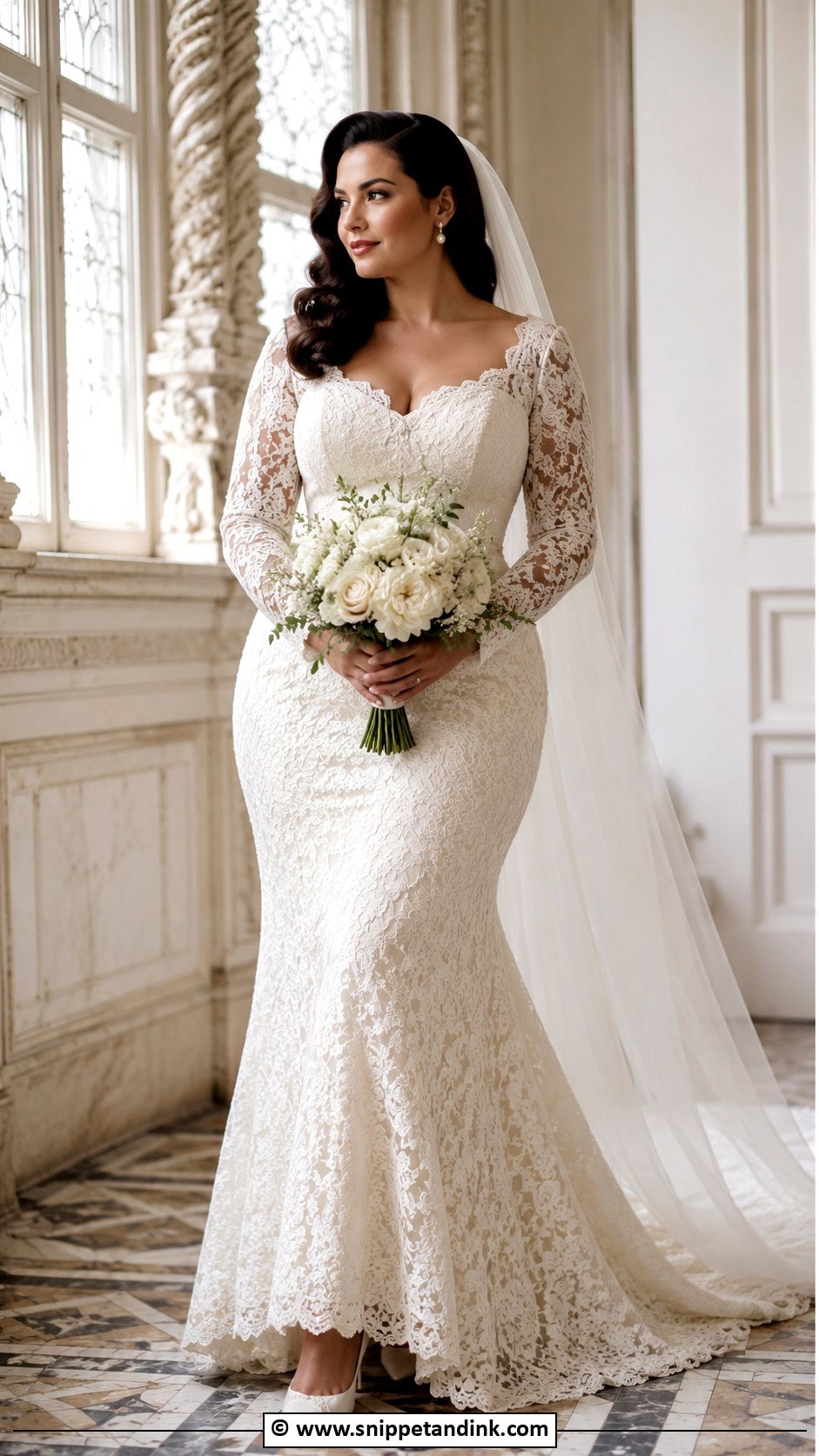
Vintage inspiration covers a lot of ground: old Hollywood, 1950s tea-length gowns, Edwardian lace and 1990s satin. I’d choose one era and commit, or the outfit starts to feel like a costume. A lace long-sleeve gown reads romantic, a bias-cut satin dress reads sleek, and a basque waist or full skirt adds a classic shape. If you’re wearing a family heirloom, plan the dress details around it.
28. Curvy Floral Wedding Dress
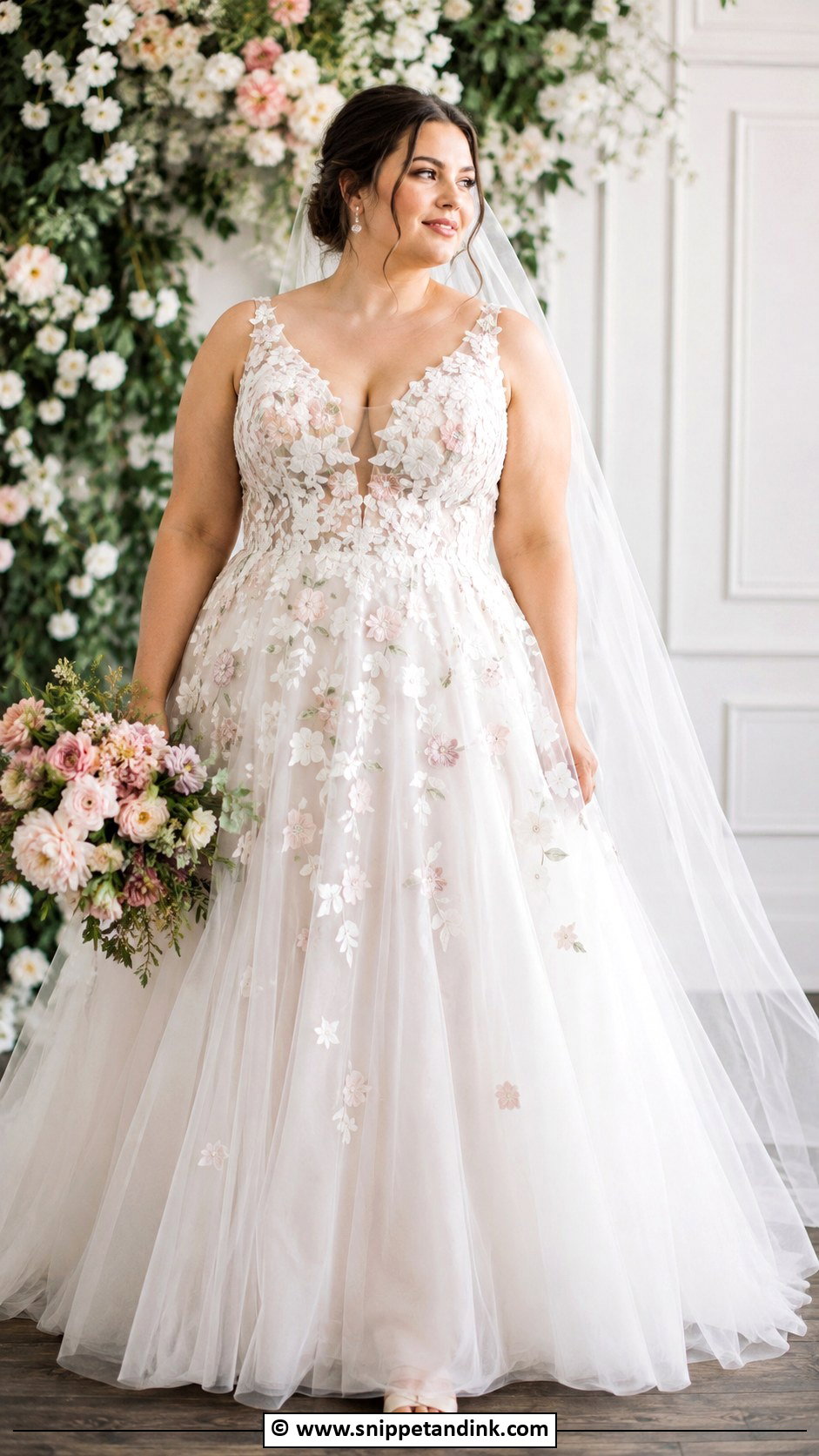
Floral detail can shape the body as well as decorate it. On a fitted gown, I’d place the flowers to draw the eye where you want it, along the waist or neckline, rather than scattered evenly. White-on-white lace keeps it subtle; blush, champagne or blue embroidery adds colour. A-line and ball gown skirts show floral detail well. Neutral heels, small earrings and a sheer veil suit spring and garden weddings.
29. Curvy Short Wedding Dress
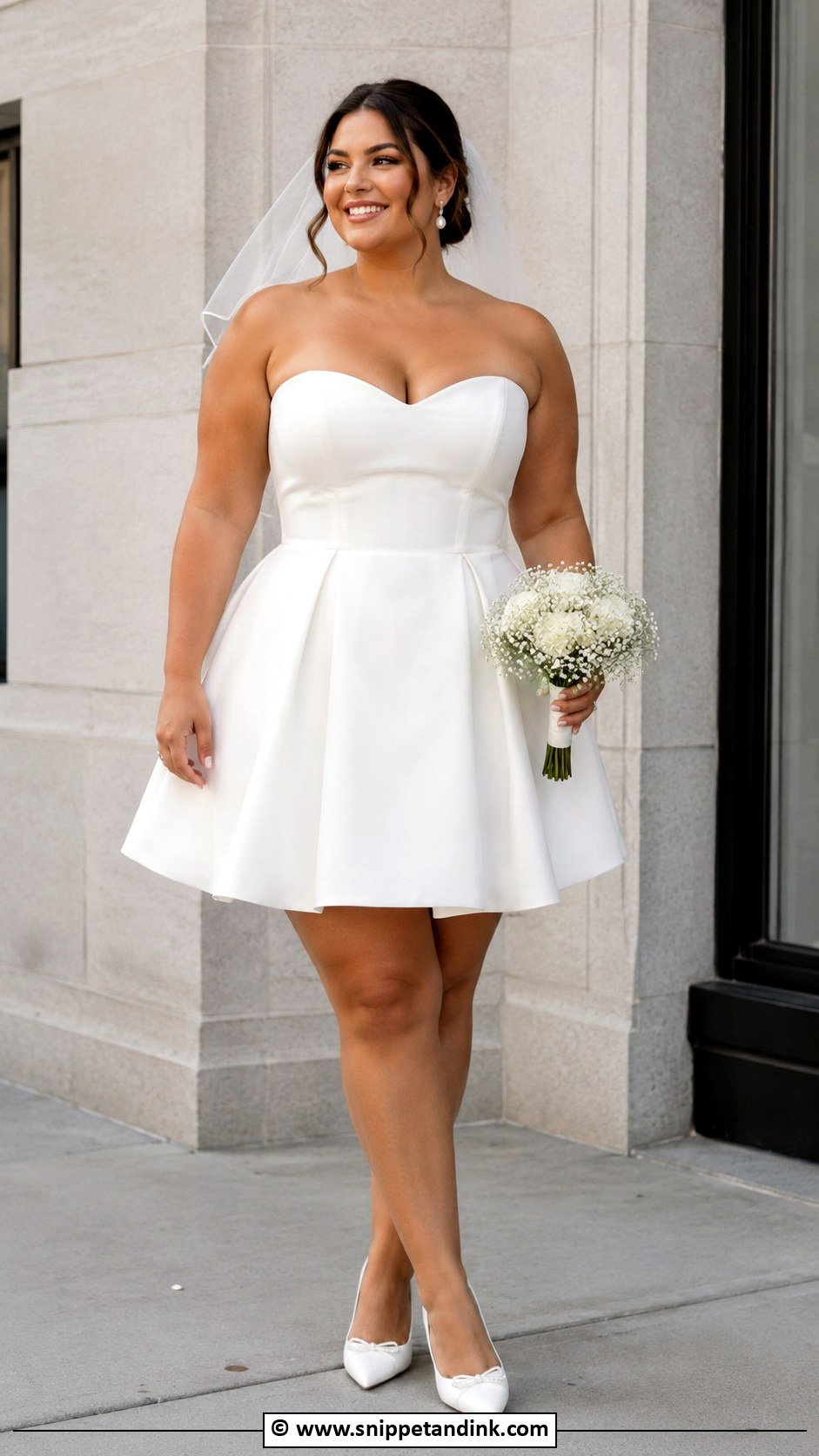
Short dresses suit courthouse ceremonies, elopements and after-parties, and the hem length is the fitting detail I fuss over. A hem that ends just above or just below the knee is easier to sit in than a very short one. A fit and flare mini gives shape; a tailored shift looks modern. Lace, satin, bows or pearl details keep it bridal. Your shoes will be on show, so block heels, pointed pumps or decorated flats all deserve some thought.
30. Curvy Bridal Jumpsuit
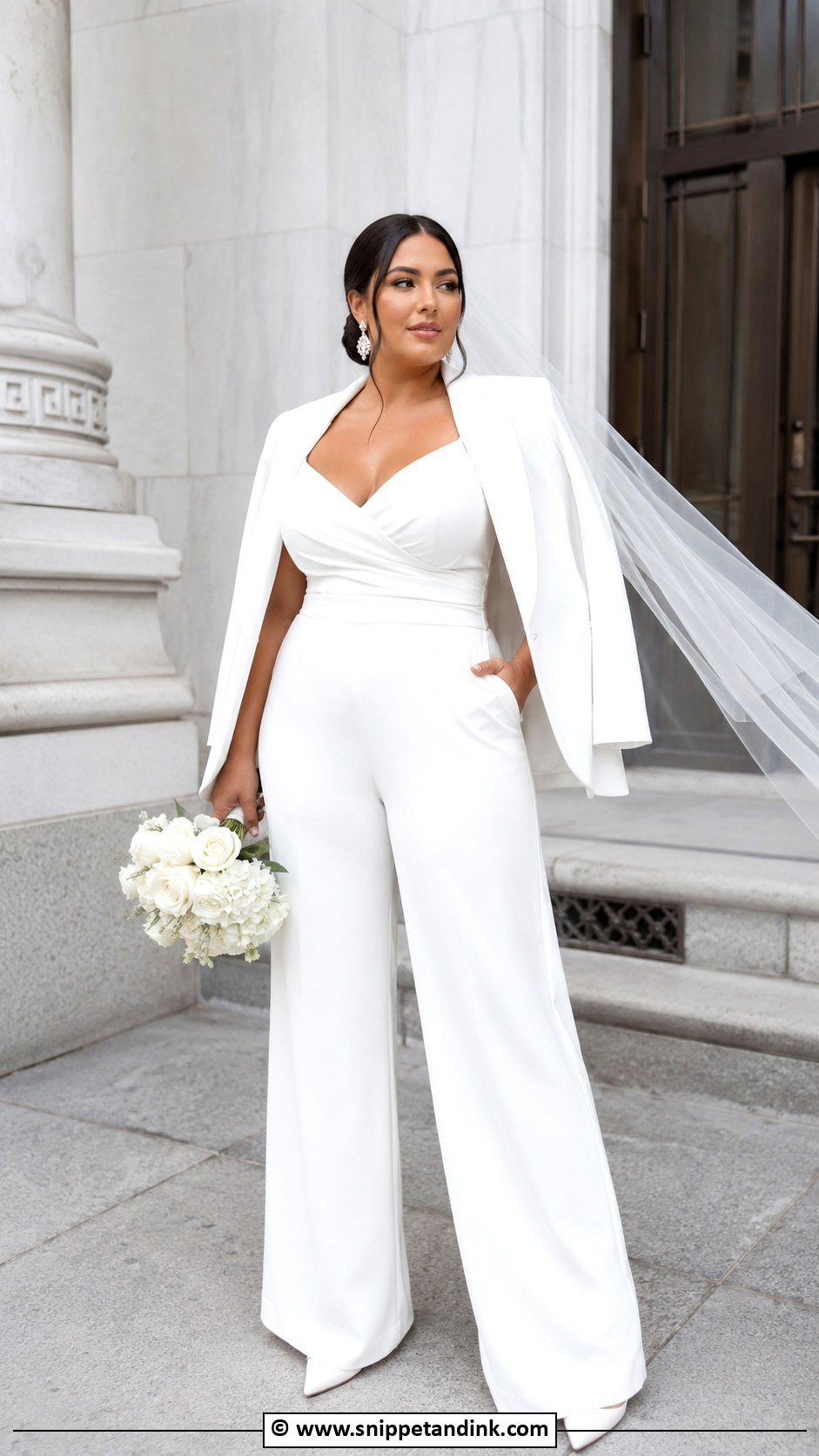
Jumpsuits need tailoring in more places than a dress: bust, waist, hips and the rise of the trouser. If the rise is too short, it pulls every time you sit, so I check that first. Wide legs move like a skirt and balance the hip. A wrap bodice, square neck or off-shoulder top keeps it bridal. Pointed heels, statement earrings and a veil or cape add ceremony polish, and a white blazer works for courthouse weddings.
Underwear, Chafing and the Long Hours in Between
A wedding day is long, often twelve hours or more in the dress. The problems I’m called over for late in the evening are rarely about the gown’s style. They’re about what’s underneath and where things rub.
- Decide on your bra or shapewear before the first fitting and wear it to every one. Changing underwear later changes the fit of the bodice.
- If the dress has built-in cups, check that they sit where your bust actually is. Cups can be moved by your seamstress.
- Inner-thigh chafing is the most common complaint under a long skirt. Lightweight anti-chafe shorts or a balm applied in the morning solve it.
- Tight shapewear is harder to manage in the bathroom, so think about that before you commit to a full-length body piece.
- Pack blister plasters, a spare pair of flat shoes, and a small towel for warm evenings. Satin and crepe show sweat marks, and blotting early helps.
I tell brides to eat a proper meal before the final fitting, not on an empty stomach. Your body will have dinner in it at the reception, and the dress needs to fit you then too.
Your Body Is the Brief, Not a Problem to Solve
A gown that supports you lets you forget about it, and that’s the goal. A-lines, ball gowns, corsets, lace sleeves, satin and jumpsuits all work on curvy brides when the fit is right. Forget old body-type rules and pay attention to how the dress behaves when you move. Can you breathe, sit, walk, hug and eat? Bring the underwear you’ll wear on the day to every fitting, choose your seamstress carefully, and let the dress suit your venue.
You'll Like These Ideas:




Leave a Reply