
Hair worn down is the request I hear most often from brides, and it’s the one I plan hardest for, because loose hair has nowhere to hide once it starts to drop. The finishes people bring me right now are glossy waves, small half-up details, pieces cut to frame the face, vintage curves and natural texture left to do what it does. Any of them can last from the first look to the last song, but only if it suits your neckline, your veil, the air at your venue and the hair you actually have. Save the ones you like below, then read each with your own texture in mind before you show it to your stylist.
Why Loose Curls Fall Faster Than Pinned Ones
An updo spreads its weight across dozens of pins. Down hair carries all of its own weight on the curl, so every long strand is slowly pulling the bend straight from the moment I set it down. Heat and damp air speed that up, and so does very clean, conditioned hair, which is smooth enough that a curl has nothing to grip.
That’s why most of my work on a down style happens before the curling iron comes out. These are the steps I’d ask you to plan for:
- Wash the day before rather than the morning of, and skip heavy conditioner on the lengths. Second-day hair holds a curl noticeably better.
- Arrive with hair completely dry. Even slightly damp roots go flat under the heat and drop within the hour.
- Expect me to curl smaller and tighter than the finished look, then pin each curl to cool. It looks too much at first and relaxes into the shape you chose.
- Very long or very thick hair gets a little extra texture spray at the roots so the weight doesn’t flatten the crown.
If your hair has never held a curl past lunchtime, tell me at the trial. A half-up version, or a few hidden pins under the top layer, can carry weight that loose curls can’t.
1. Wedding Hair Down With Hollywood Waves
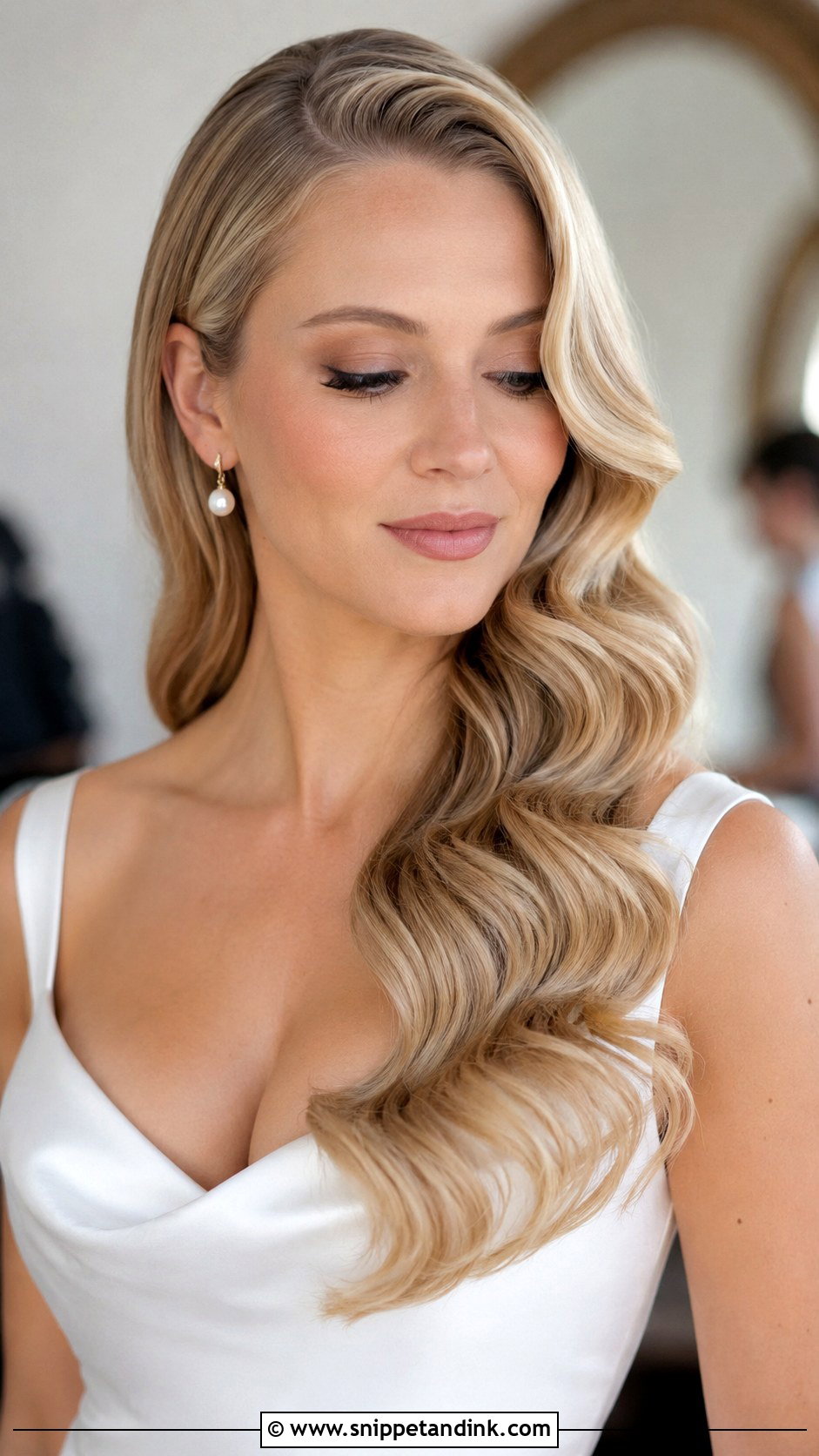
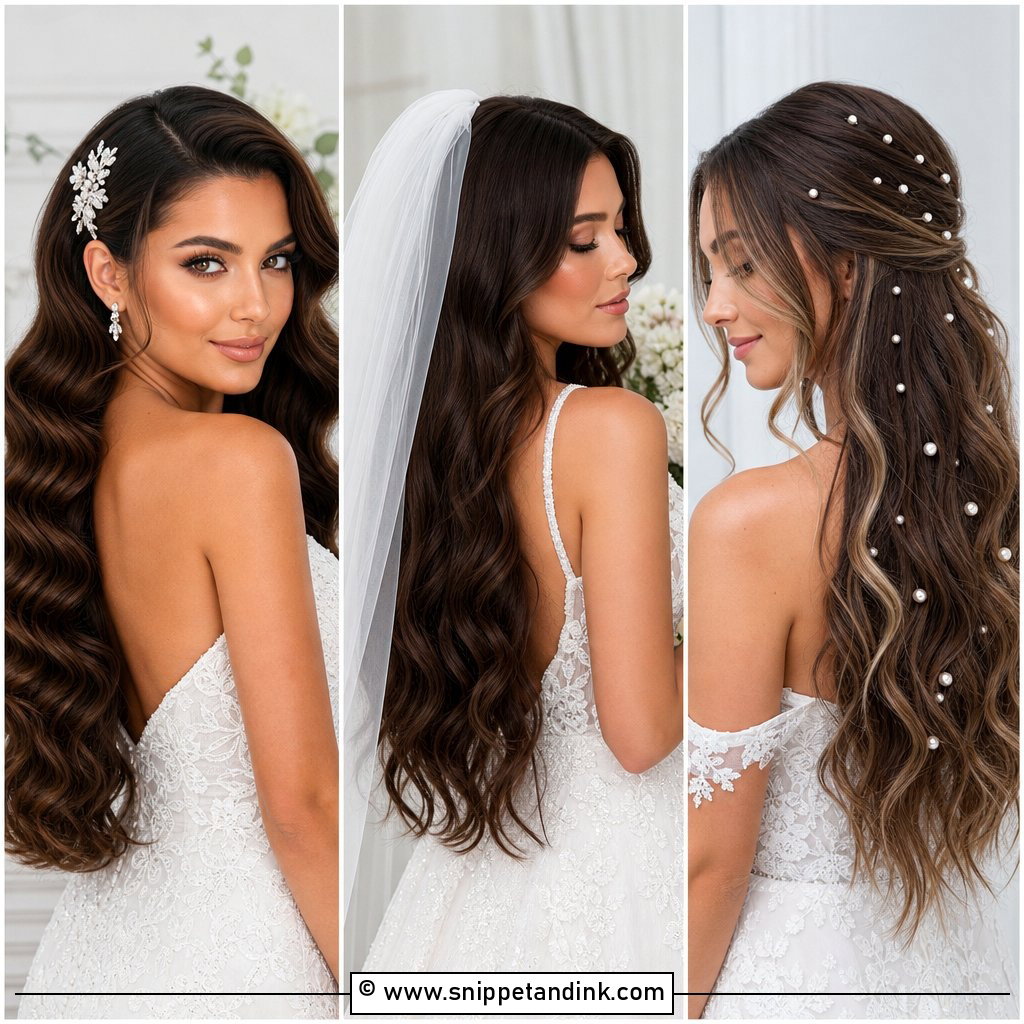
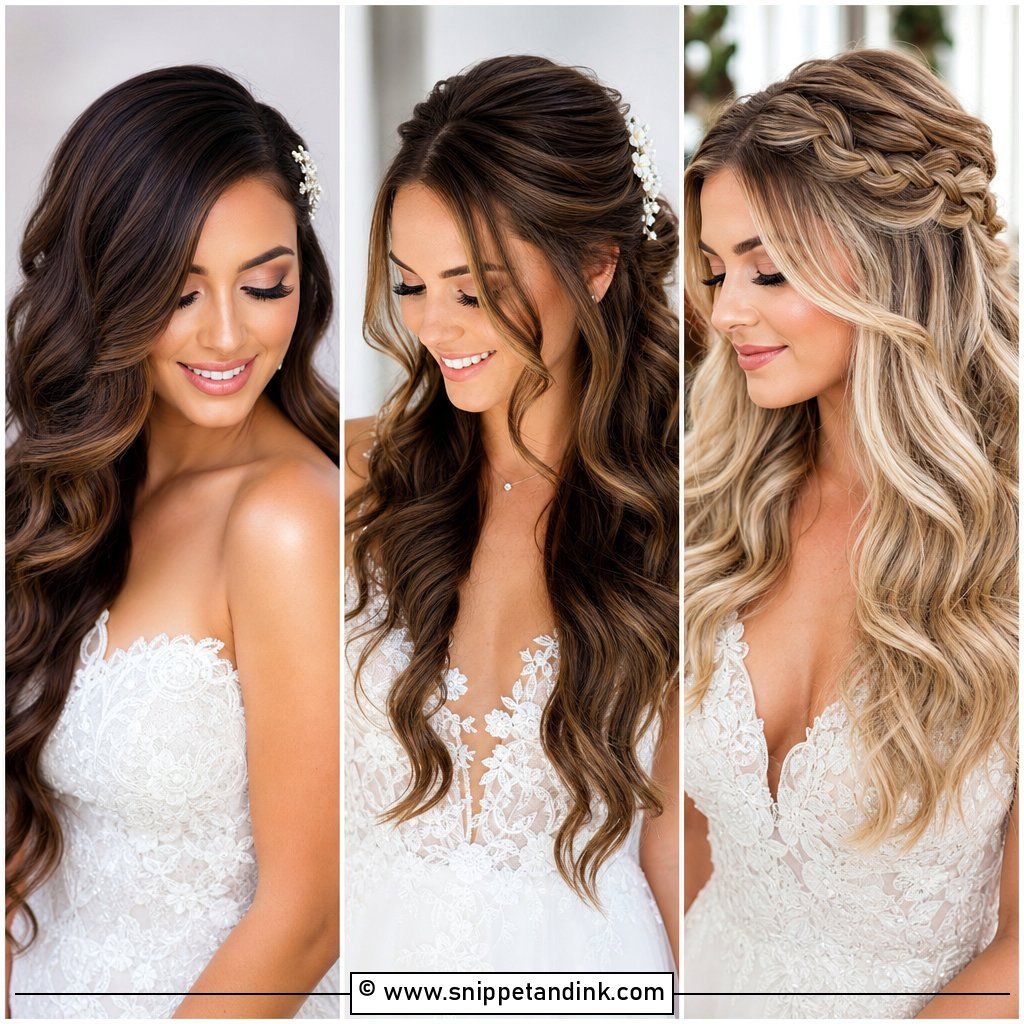
Hollywood waves are the most structured way to wear your hair loose, and they need the most planning. Every curl is wound in the same direction, then brushed until the sections merge into one continuous ripple, so an uneven curl shows immediately. I need at least shoulder length for the pattern to read, which is why extensions come up so often with this one. It sits best against a strapless or satin gown with pearl earrings and a plain veil. I pin each curl flat while it cools; that cooling time is what keeps the wave crisp through the ceremony and still touchable when you dance.
2. Wedding Hair Down With Soft Waves
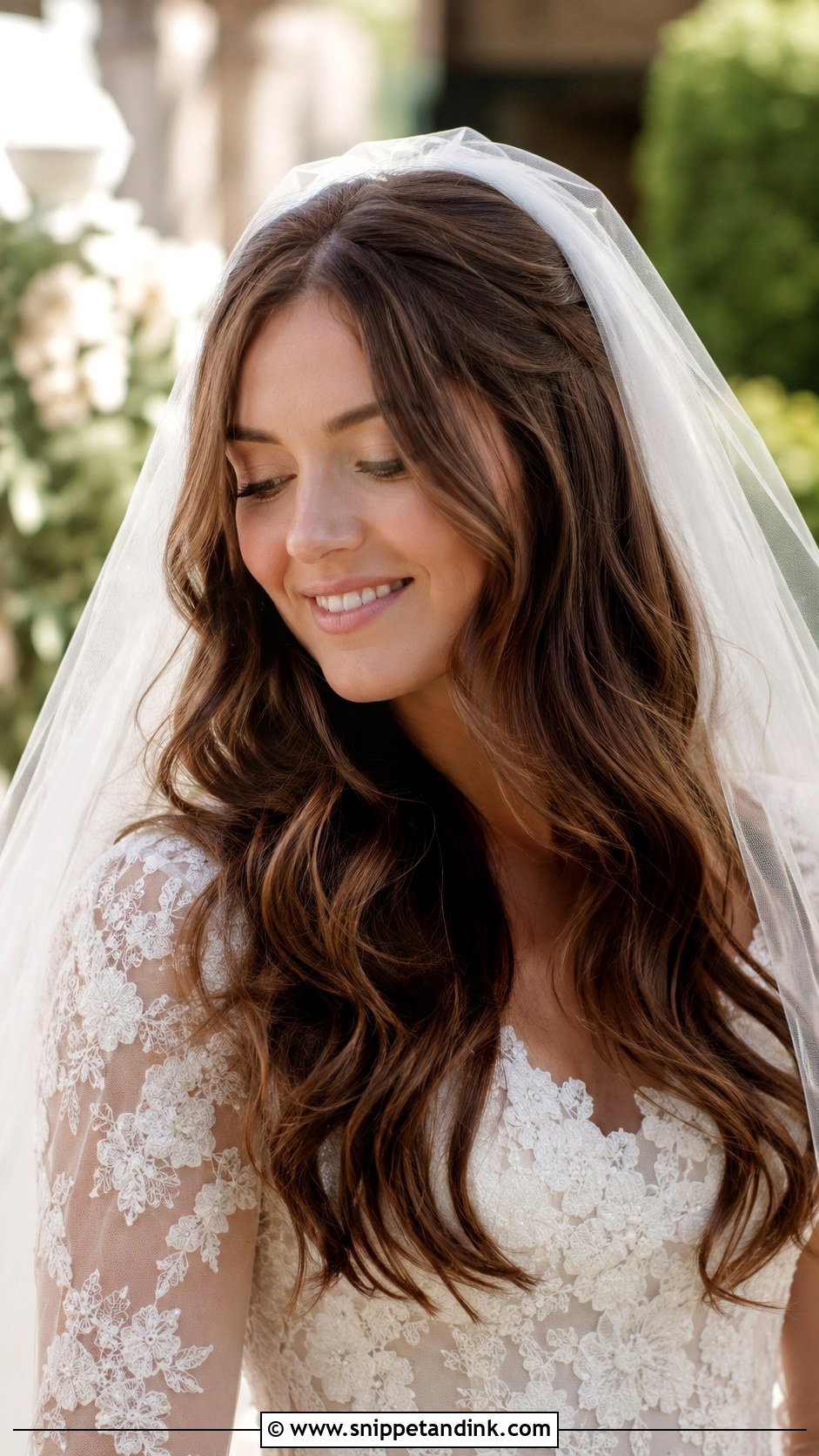
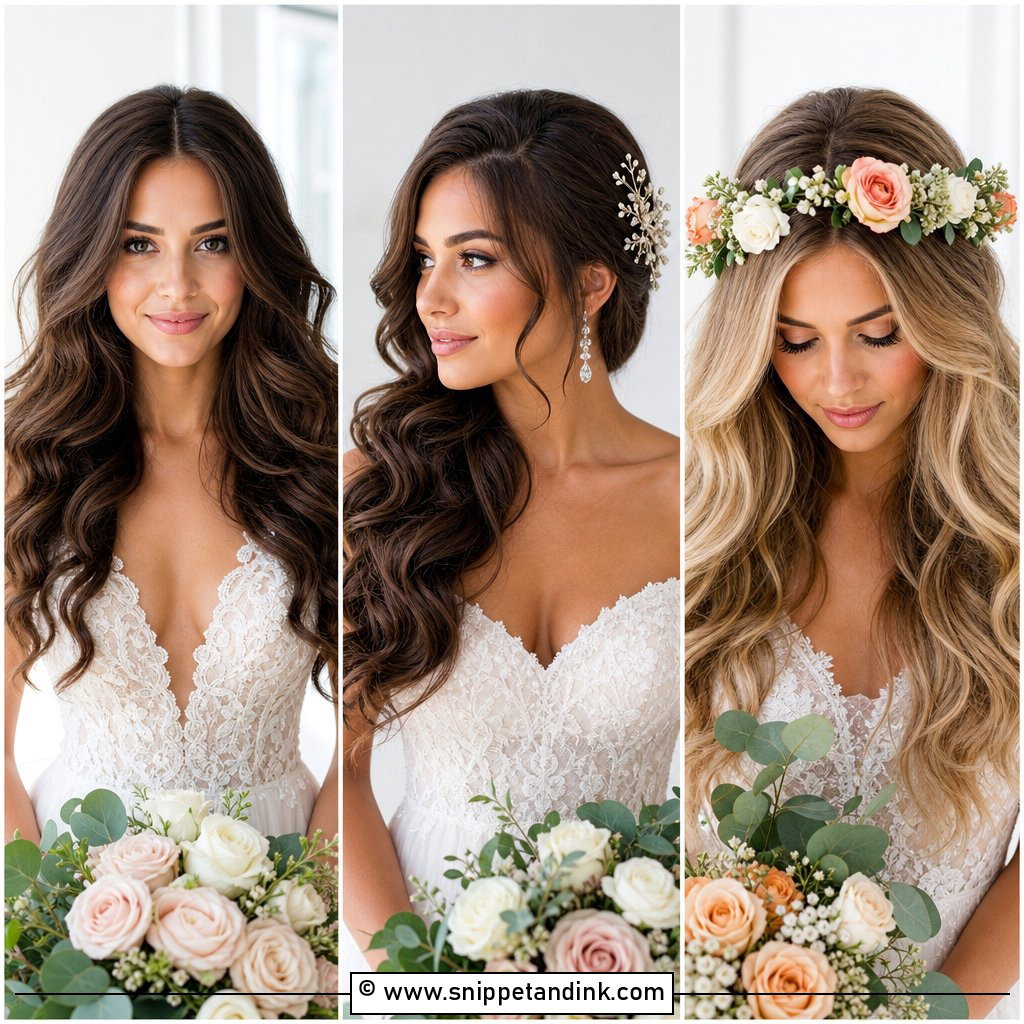
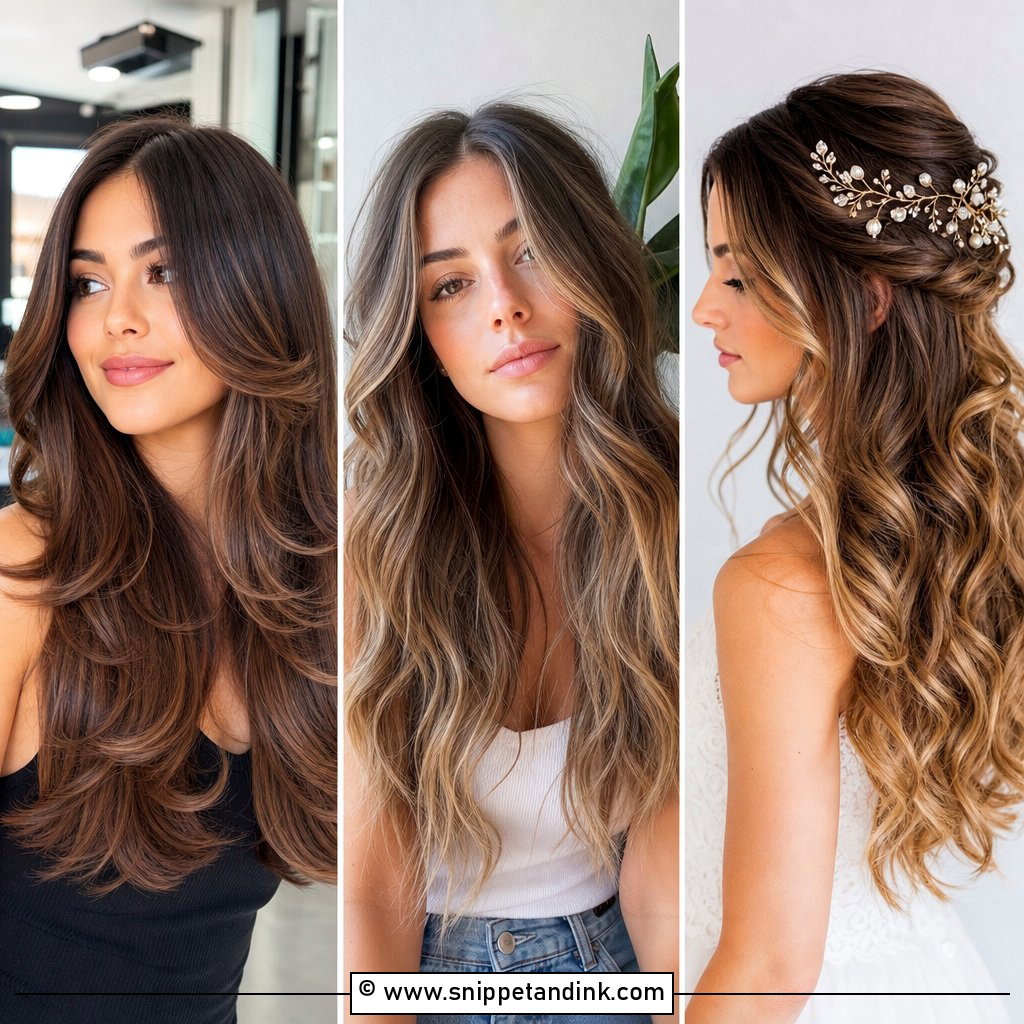
Soft waves are what I suggest when someone wants romance without anything that looks set. The curls get brushed out until they read as movement rather than ringlets, which is also why they fall faster than anything else here. Layered cuts take them well, since each layer gets its own bend and the whole cut looks fuller. Keep the crown smooth and the face-framing pieces soft so it reads bridal rather than weekend. For a garden or beach ceremony in warm months, I curl a little tighter than the finished look and use a humidity barrier under a flexible spray, so the drop lands where we want it by the vows.
3. Half Up Half Down Wedding Hair With Waves
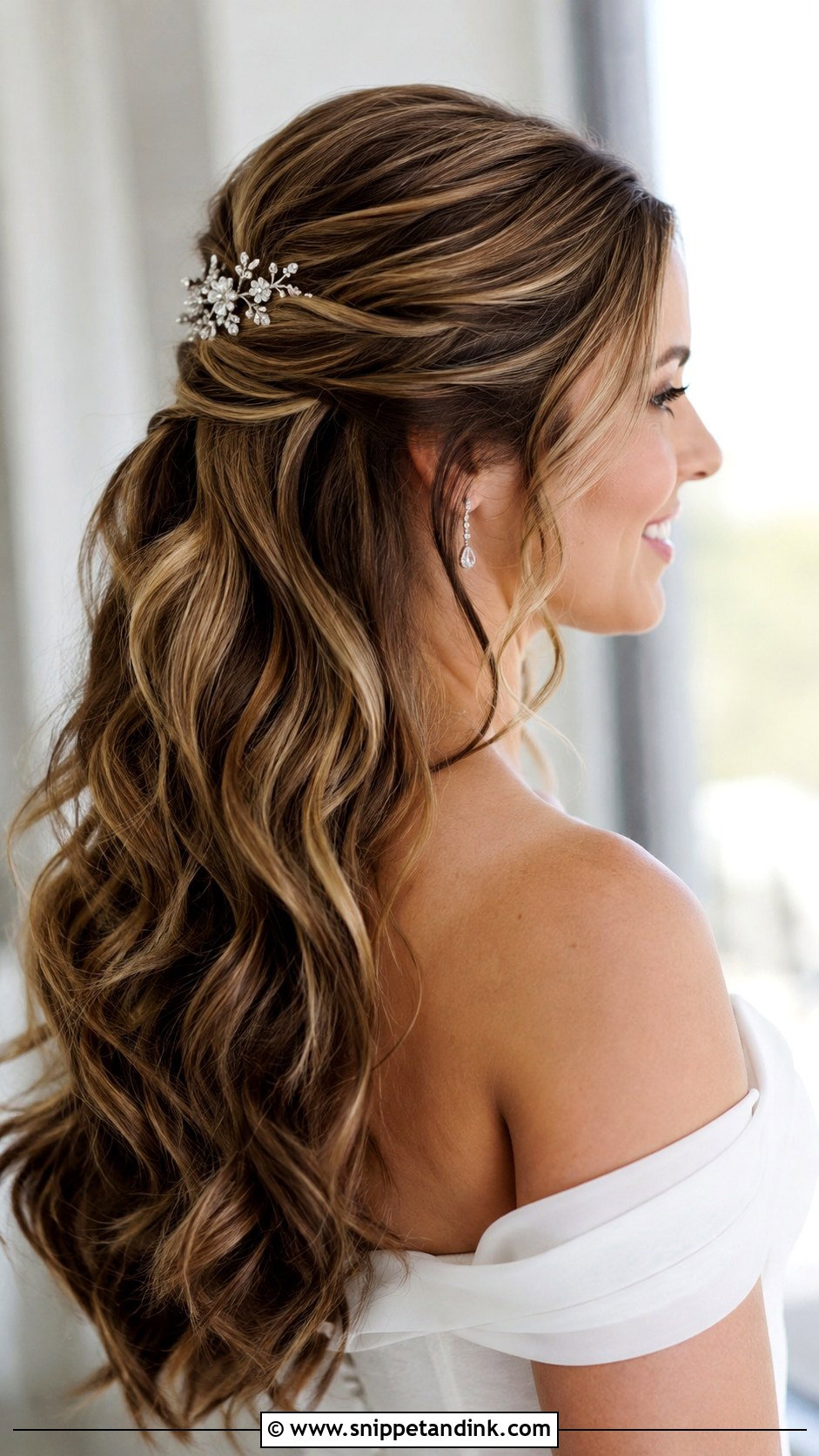
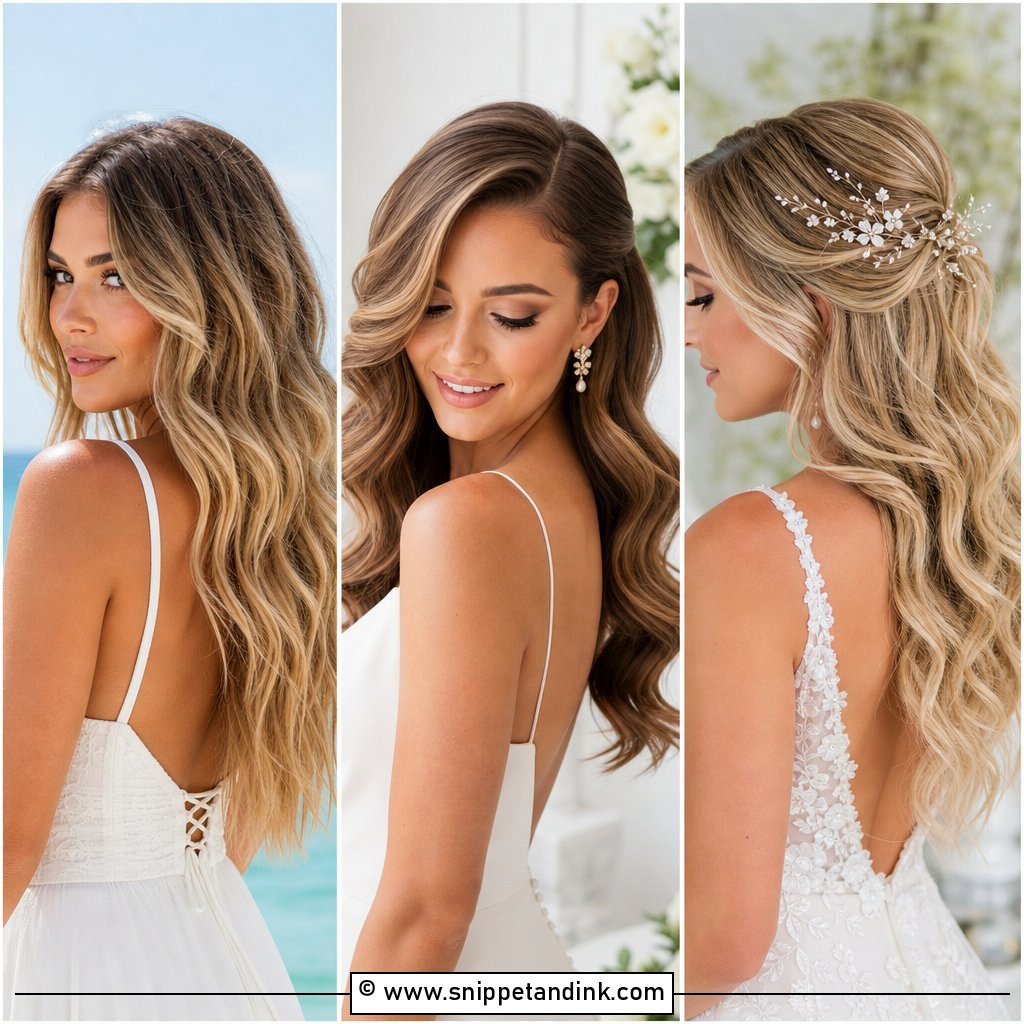
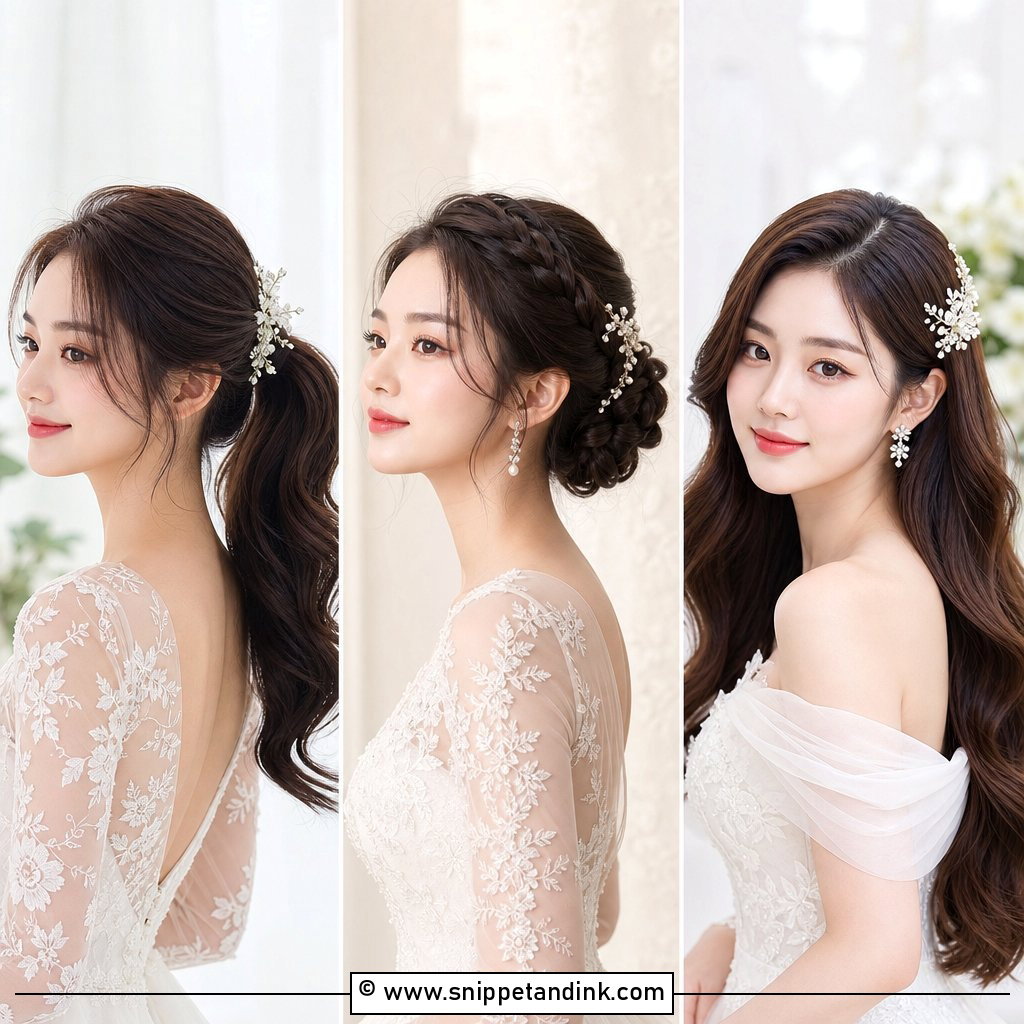
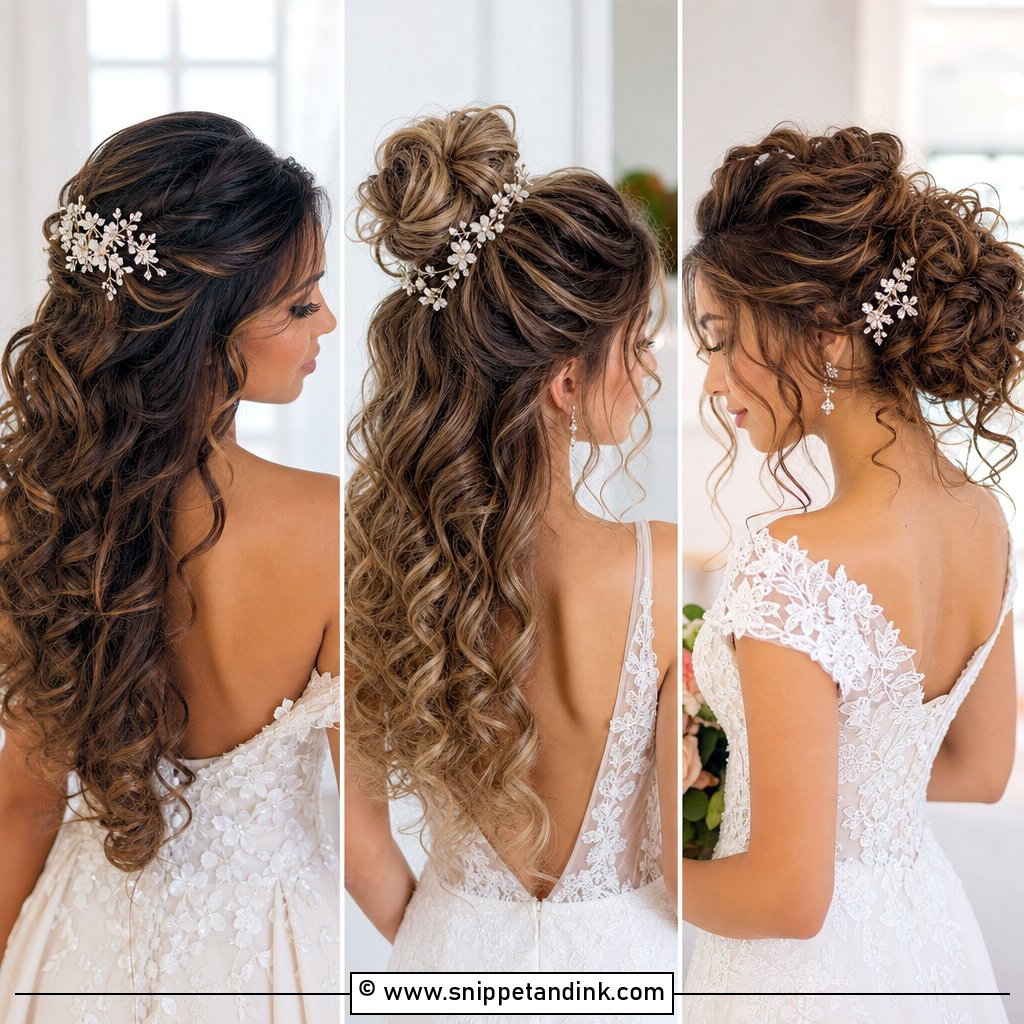
Half up, half down keeps the lengths loose but secures everything around the face, which is the part that misbehaves first. Pulling the top section back shows your earrings and gives me a solid base for a veil comb, something loose hair alone can’t hold. Below that, the lengths stay in soft waves or larger curls. The finish sets the mood: polish the top for something classic, or add a touch of crown height when the skirt is full so your head doesn’t look small against all that fabric. I lock the top with crossed bobby pins under the section rather than relying on a clear elastic, which slides once a veil adds weight.
4. Side Swept Wedding Hair Down
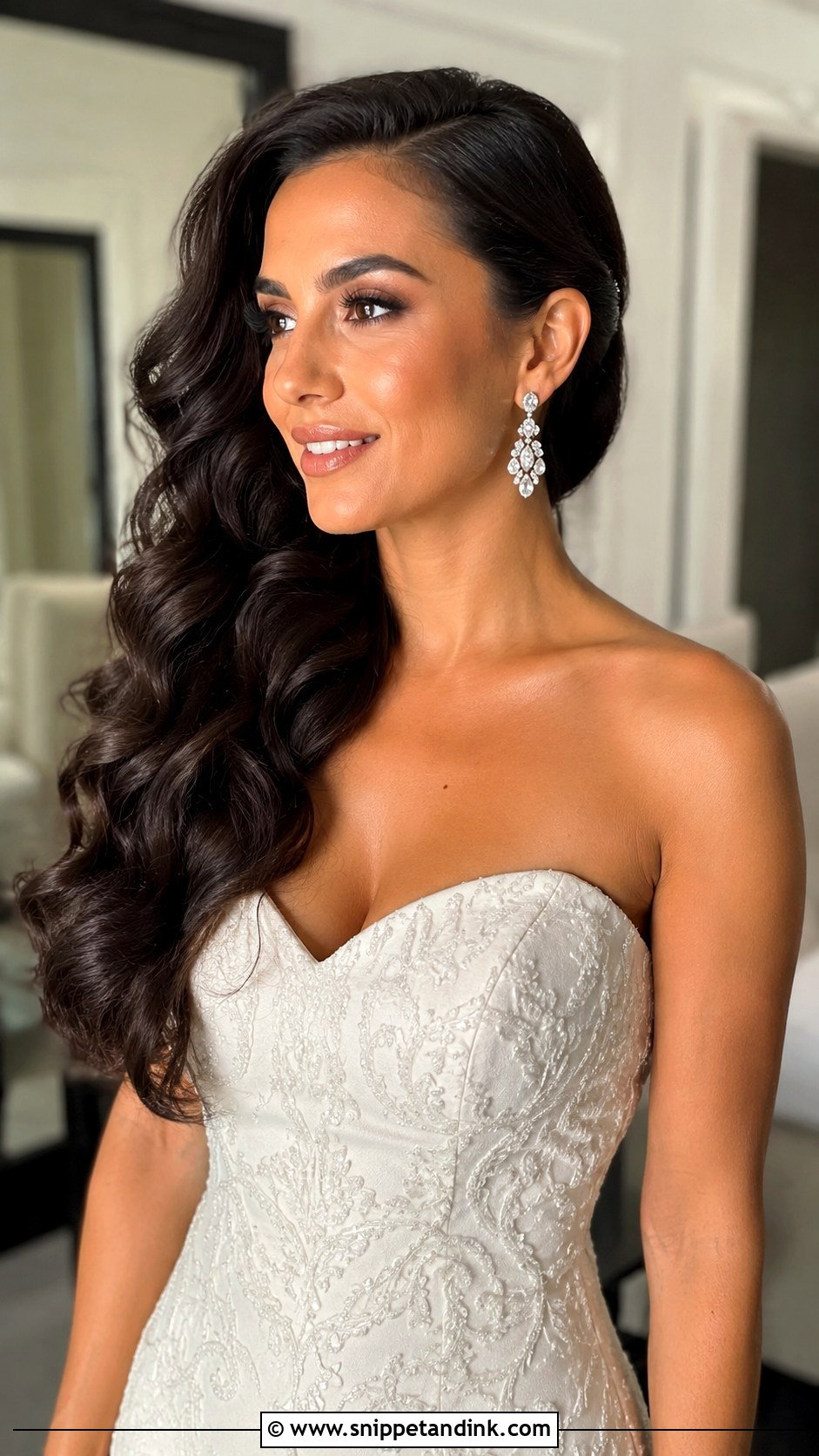
Sweeping everything over one shoulder gives you the drama of an updo while the hair stays down. One side is tucked or pinned behind the ear, and the rest falls across the opposite shoulder. It’s the natural partner for a one-shoulder or off-the-shoulder gown, and a statement earring finally gets room on the open side. The weak point is always the pinned side, because hair pushed against its natural part keeps trying to go home. I build a small anchor of crossed pins behind the ear and lock the swept hair into it. Sculpted waves read formal here; brushed-out bends read relaxed.
5. Wedding Hair Down With Loose Curls
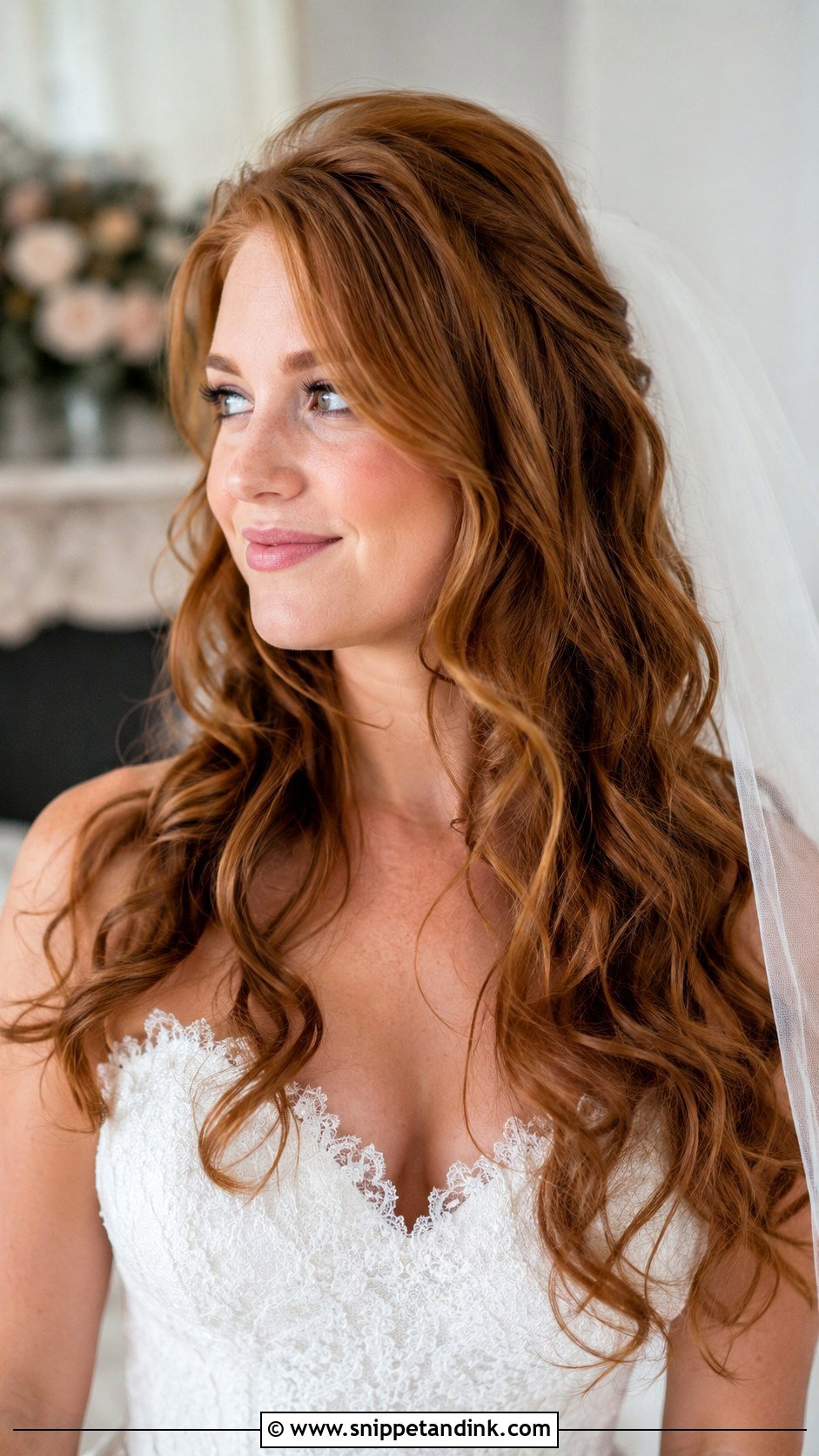
Loose curls give the most fullness of any down style, because the curl sits bigger than a ringlet and opens up toward the ends. Long, medium and layered hair all hold the shape, and it’s a natural match for lace or a sweetheart neckline. The trick is counterintuitive. I curl smaller sections than the curl you’ll end up with, let every one cool completely, then brush or split them apart. Curls brushed while they’re still warm lose their memory within the hour.
6. Wedding Hair Down With Curtain Bangs
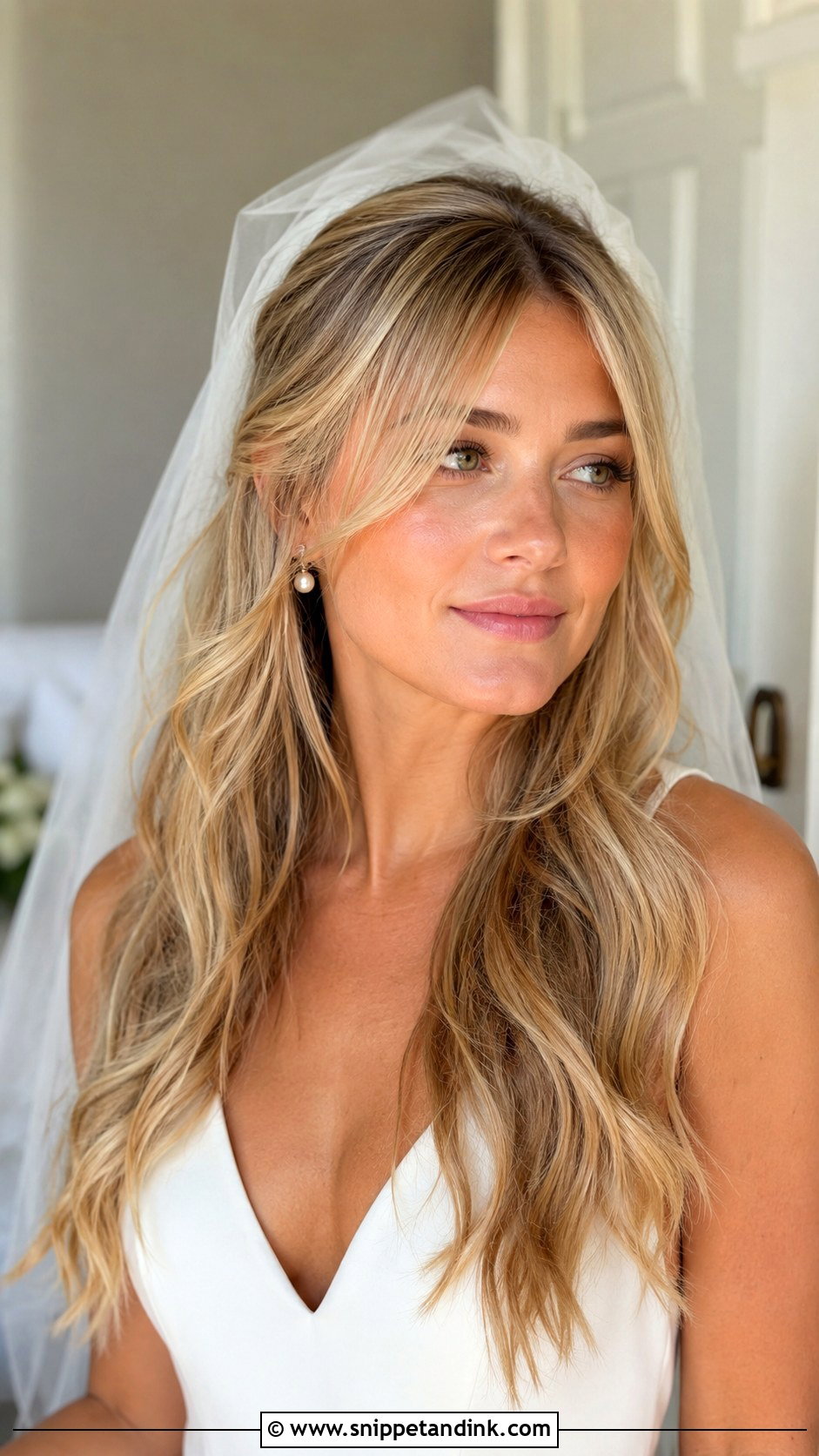
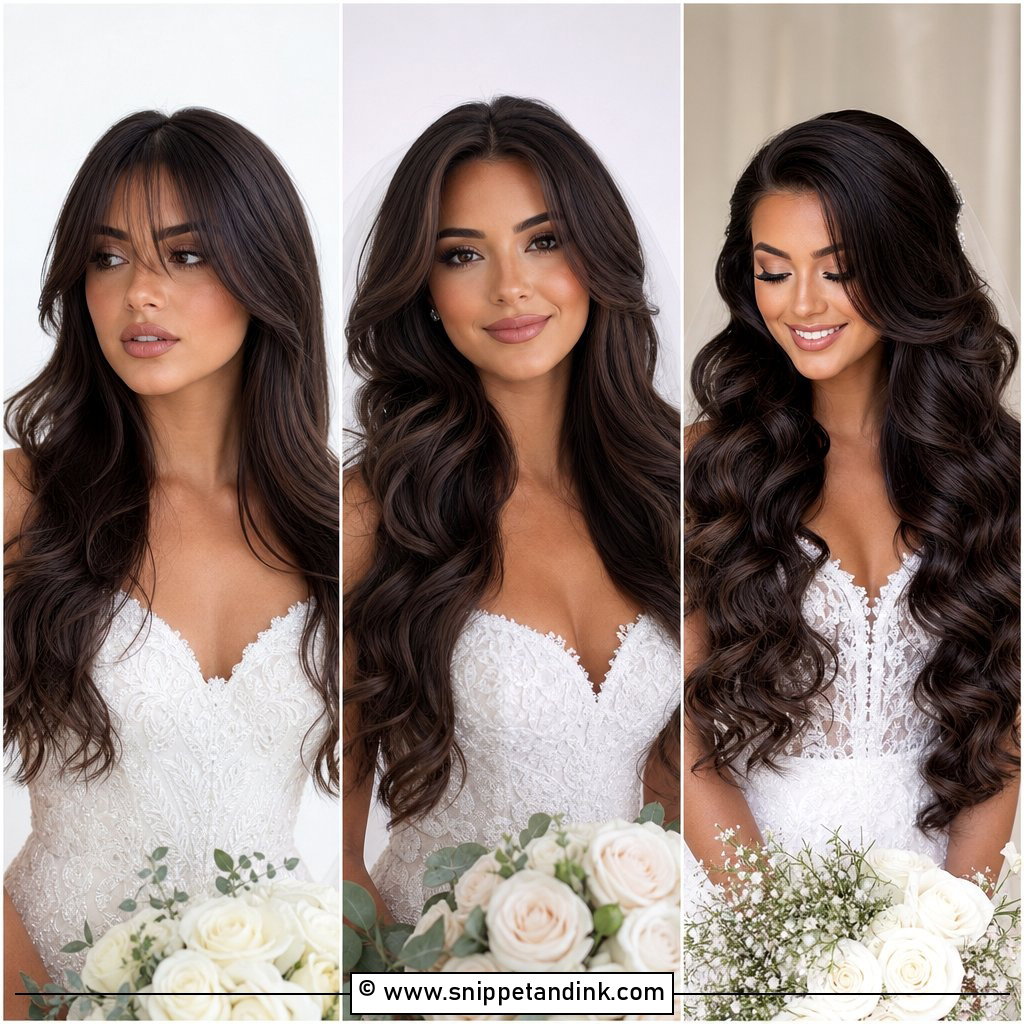
Brides who already wear a fringe often ask whether to grow it out first, and wearing your hair down with curtain bangs is usually the better answer. The bangs frame the cheekbones and blend into the lengths, so the face keeps some definition while everything else stays loose. They sit well with soft waves, layers, blowout curls or a half-up shape. I style them with a large round brush and a light bend, never a tight curl; short fringe pieces spring up and split apart by mid-afternoon if they’re curled hard. A veil can sit at the crown or tuck under a small half-up section to balance the front.
7. Wedding Hair Down With Pearl Pins
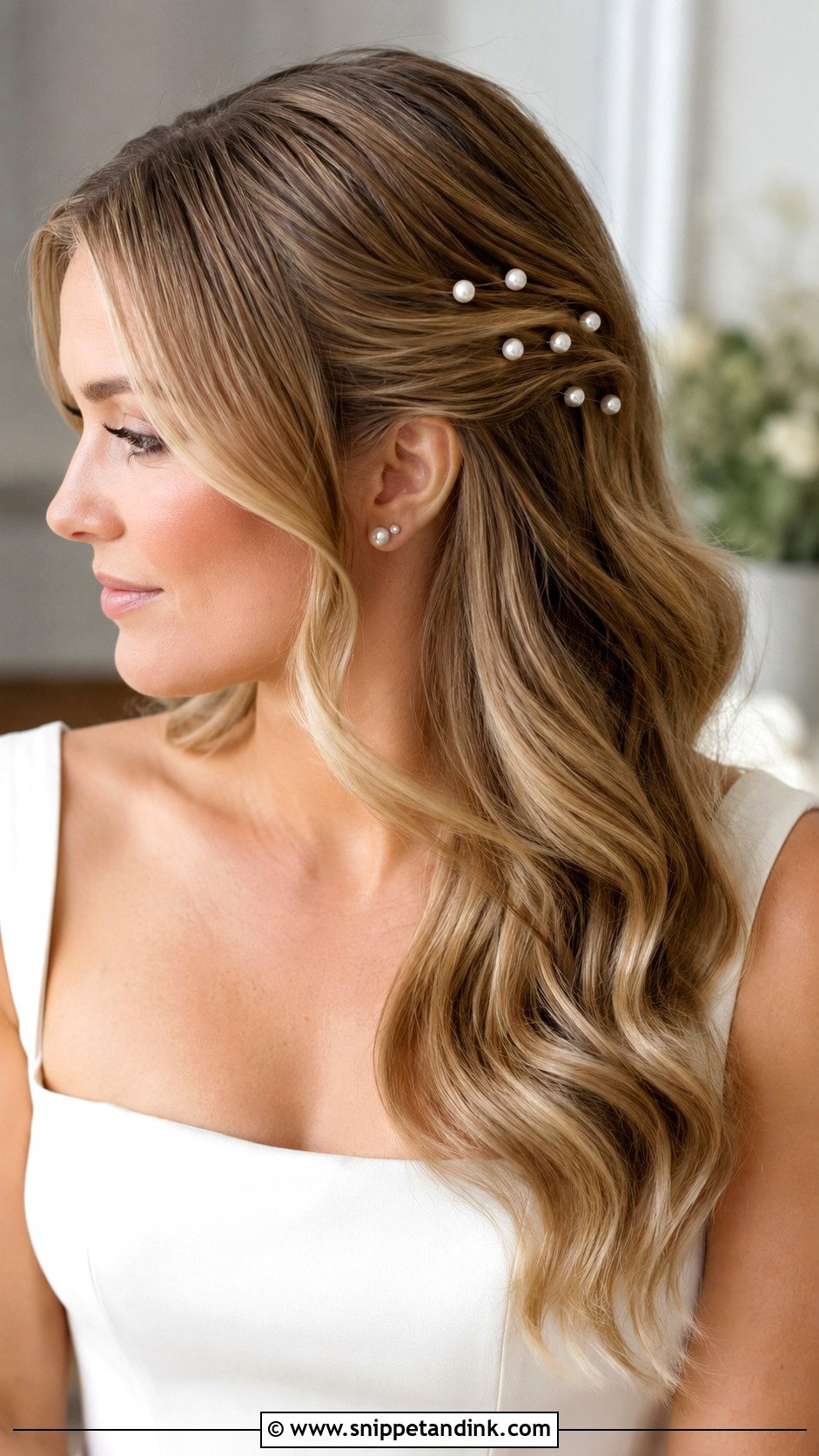
Pearl pins are the simplest way I know to make loose hair look like wedding hair, and any base works under them, from waves to sleek lengths. Put them on one side, scatter them through the waves, or use them to hold a small twist at the temple. I place them last, after the spray, and slide each one through a pinned section underneath; a pearl pushed into loose hair alone turns face-down by the toasts. Keep the placement deliberate, because a close-up shows every stray. They suit classic and courthouse weddings and plain gowns, and they’re my answer when a bride asks for an accessory without a tiara or a large headpiece.
8. Wedding Hair Down With Flower Crown
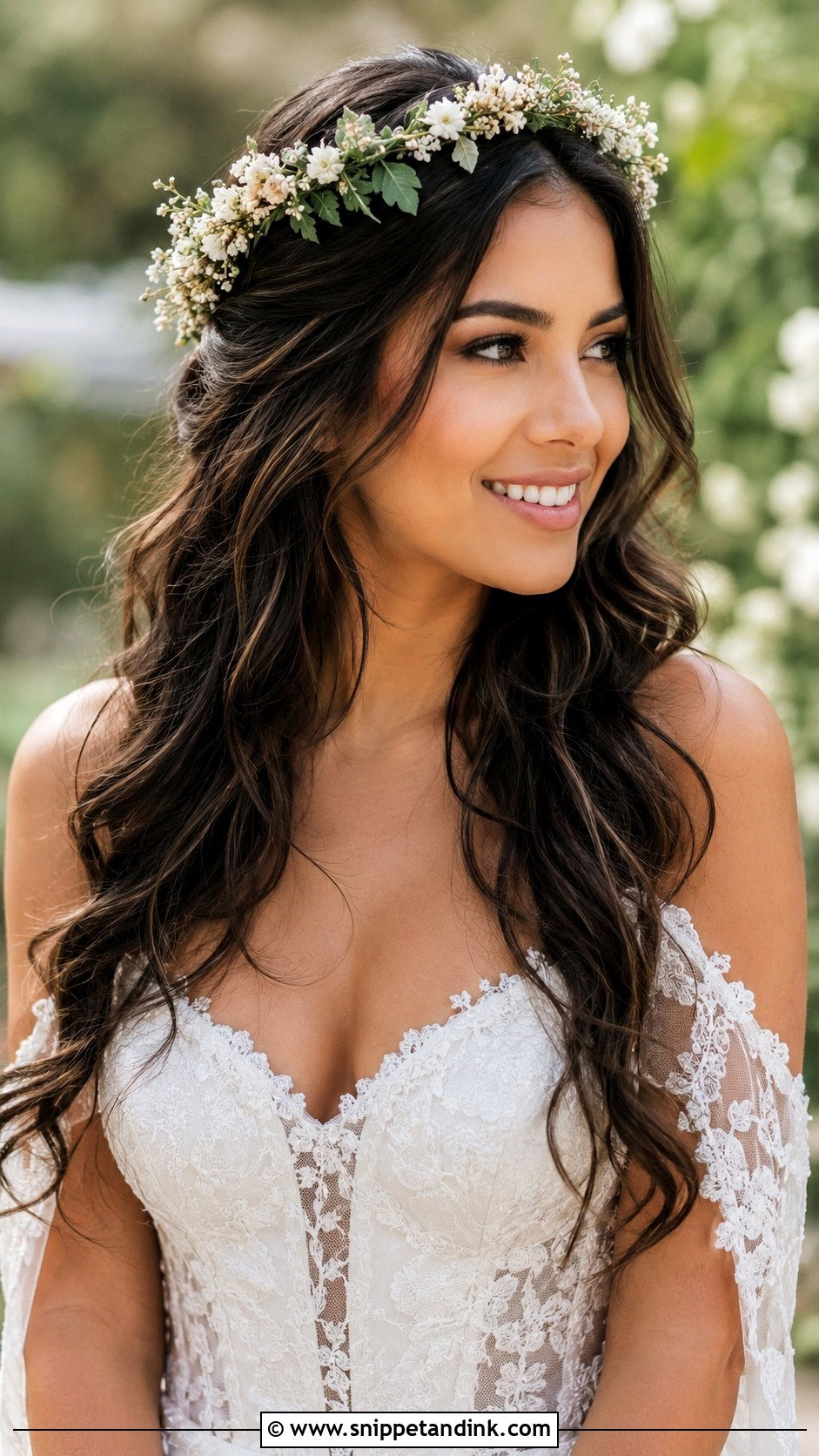
A flower crown belongs outdoors, in a garden or a woodland, and it wants loose waves or soft curls underneath; on sleek hair the flowers look stuck on. How full it gets depends on your dress and venue. Fresh flowers are where this goes wrong. Gardenias and other soft petals bruise and brown from handling, so I ask the florist for sturdier blooms like spray roses or waxflower, wired onto a band and kept cool until I place it. The florist and I should agree on size, color and placement well before the day. Keep the crown area flat so the ring sits snug and doesn’t ride up during hugs.
9. Wedding Hair Down With Braided Crown
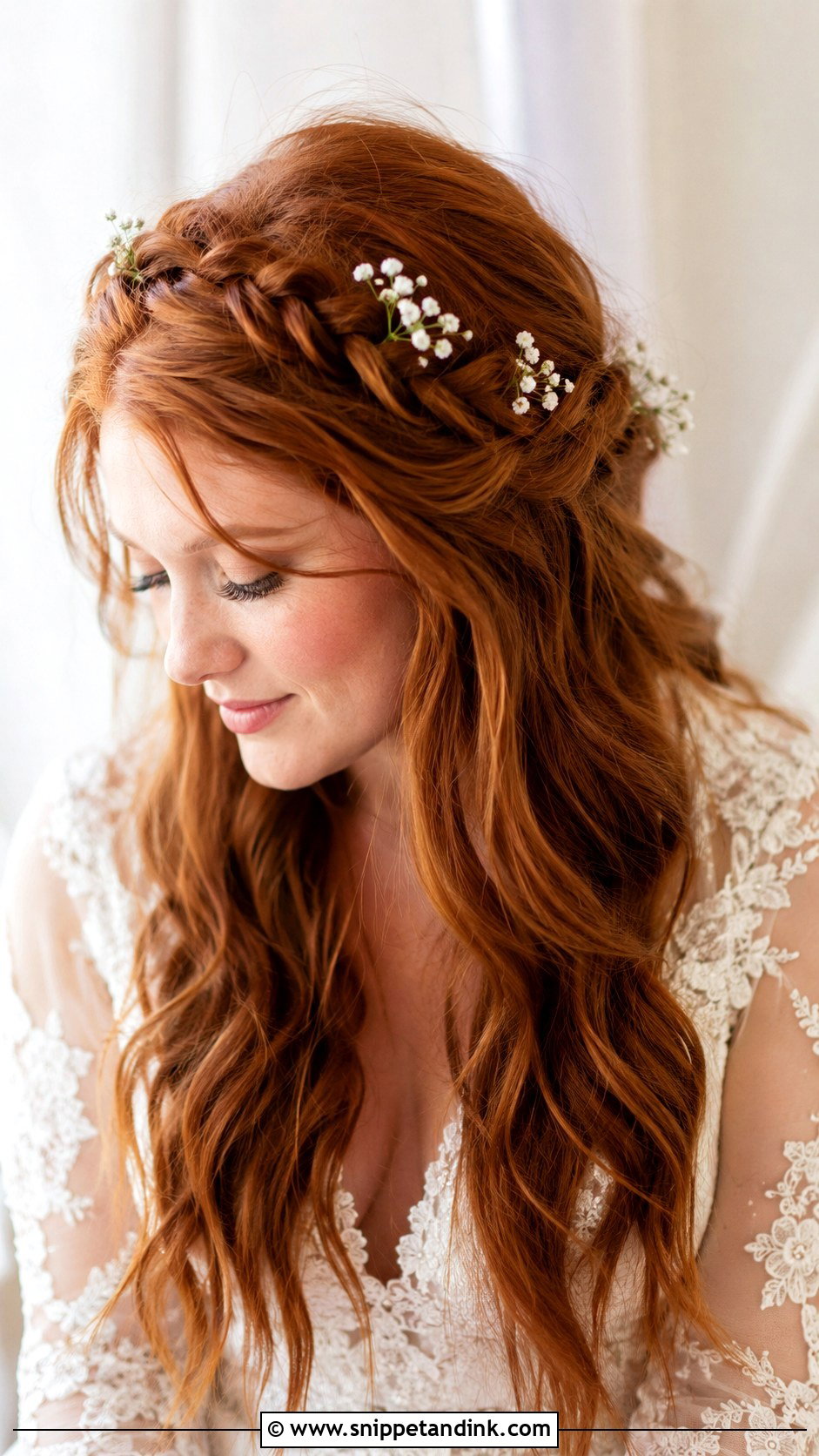
A braided crown gives loose hair just enough structure to look finished. The braid can wrap across the top like a halo or join two small side braids while the rest hangs free. It blends best into waves; on dead-straight hair a braid looks like a separate piece. I braid firmly, then gently pull the outer loops to widen it, but I never go so tight that it drags at the hairline, because a tight crown can give you a headache by the third hour. Lace and floral dresses at barn or garden venues are where I see it most.
10. Wedding Hair Down With Sleek Straight Hair
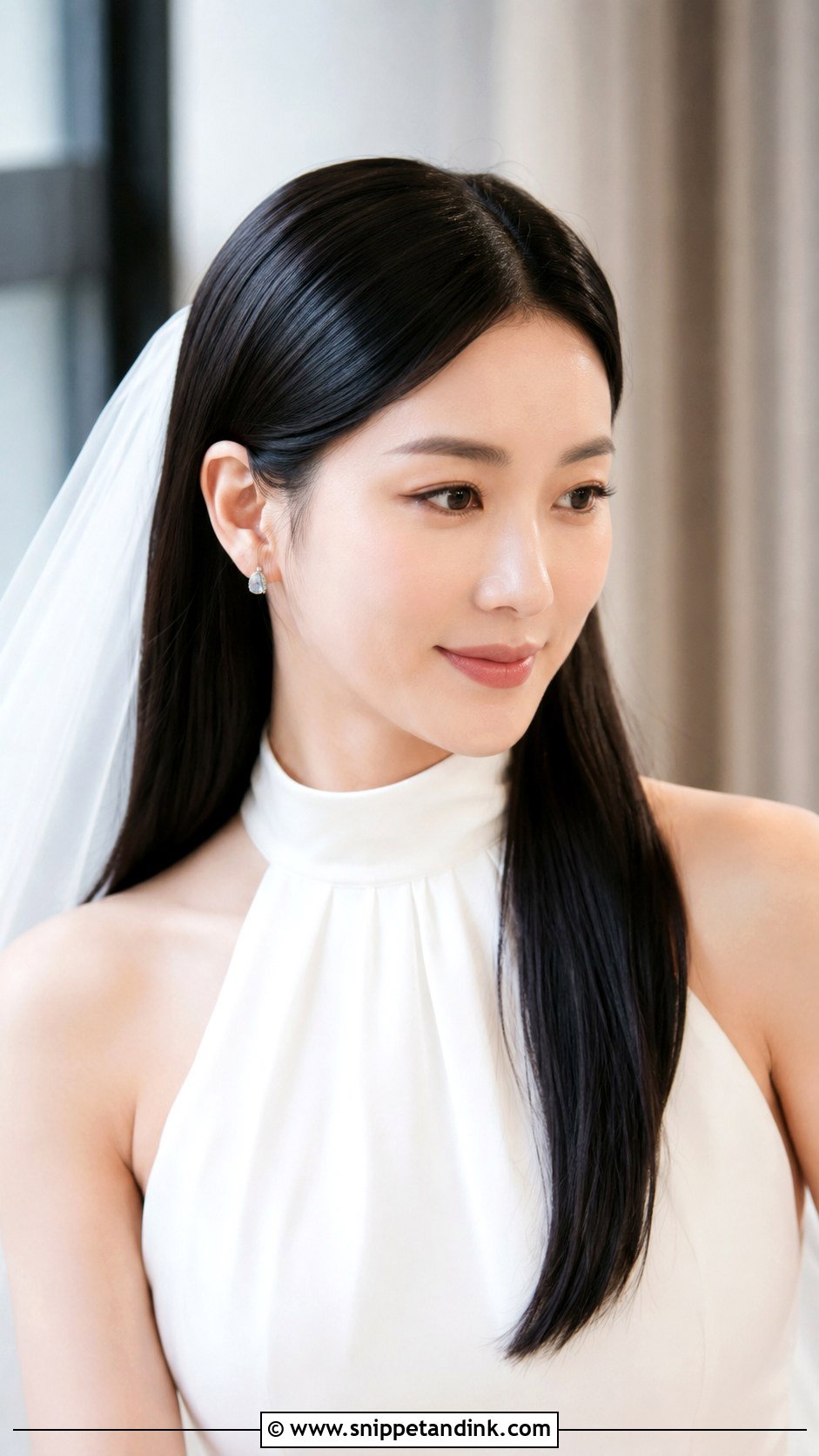
Sleek straight hair looks like the easy option and turns out to be the most demanding one. The finish is glassy, with a center or soft side part, and there’s no texture to hide a kink from a hair tie or a frizzy halo at the crown. It belongs with minimalist or high-neck gowns, square necklines and architectural shapes. Depending on your texture, I may need a smoothing product and a slow flat iron pass in thin sections. One warning for naturally wavy and curly brides: a humid room reverts straightened hair faster than it drops curls, so ask yourself honestly what the venue air will be like. A tuck behind one ear, a veil or a small comb is all the detail it needs.
11. Wedding Hair Down With Natural Curls
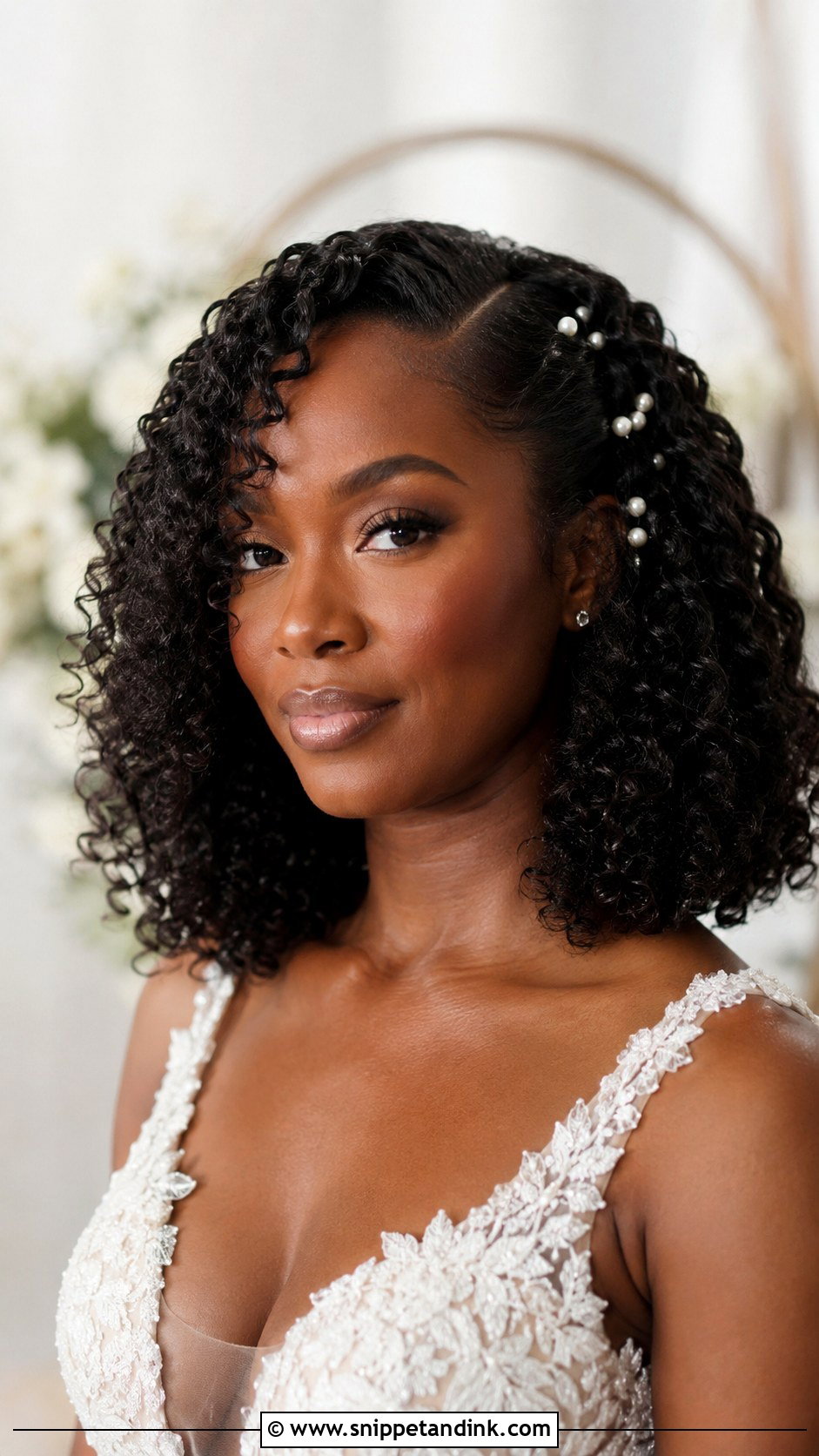
Natural curls ask me to define and shape what’s already there instead of forcing a new pattern, and that works for loose curls, tight curls, coils and mixed textures alike. Hydration comes first, then definition, then a silhouette that looks balanced from the side and back as well as the front. I’ll diffuse, refine individual curls, and place pins only where the shape needs lift. Curls keep expanding through the day, so I’d rather the shape look a little compact at ten in the morning than full-sized. A trial matters more here than anywhere else in this list, since product, volume and curl longevity vary so much from head to head. Floral pins and an open neckline frame them well.
12. Wedding Hair Down With Beach Waves
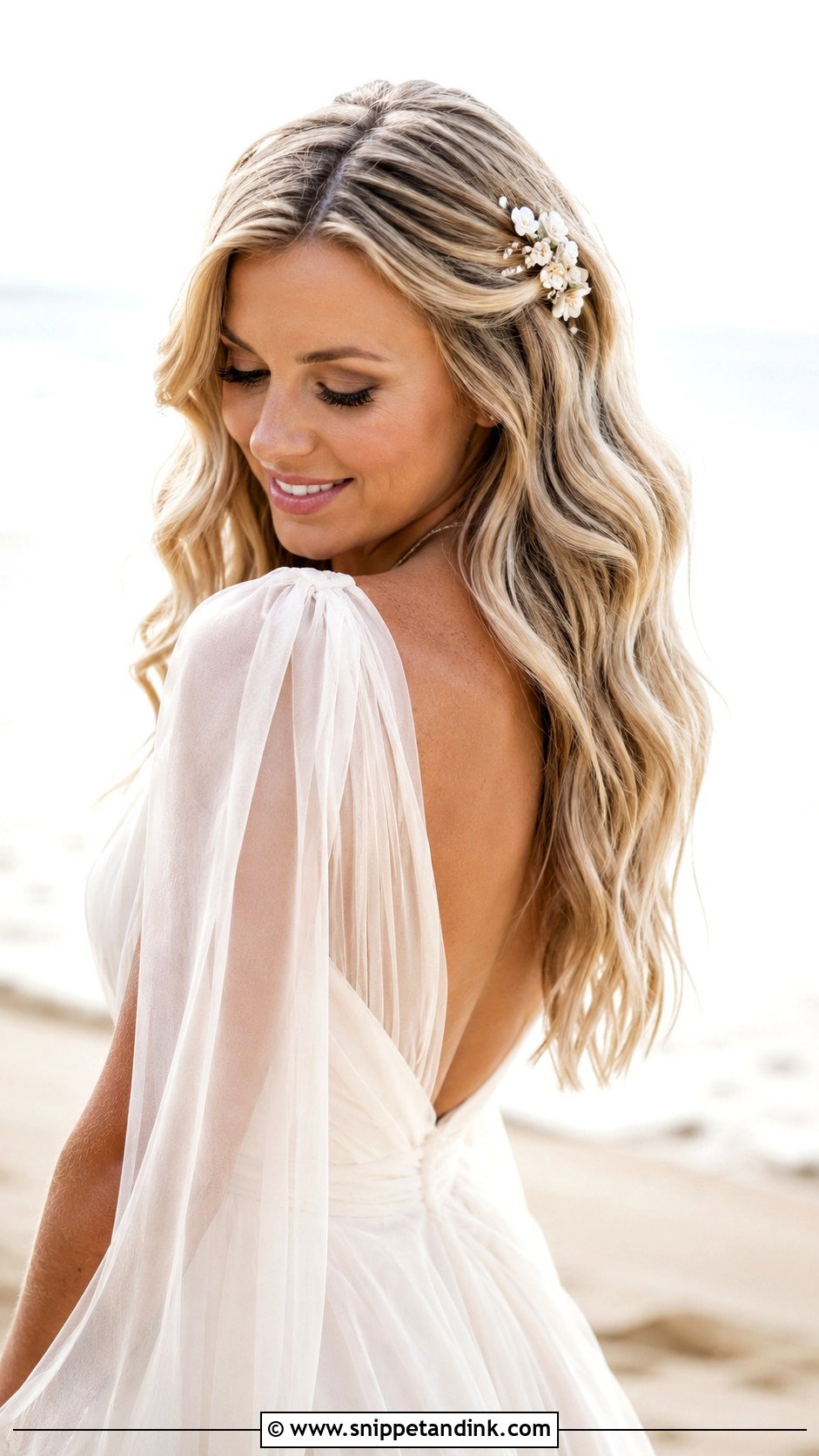
Beach waves are loose and slightly undone, with soft ends and no formal curl pattern, which suits coastal, destination and backyard weddings with an airy dress. To stay bridal, they still need shine and control; real mess reads unfinished on camera. Ask for polished texture and a little lift, with face-framing pieces that don’t fall forward over your eyes. Near water, salt air and humidity are the problem, so I apply a humidity-resistant product before any heat touches the hair, not after. A veil, comb or floral pin pulls it back toward a wedding finish.
13. Wedding Hair Down With Vintage Waves
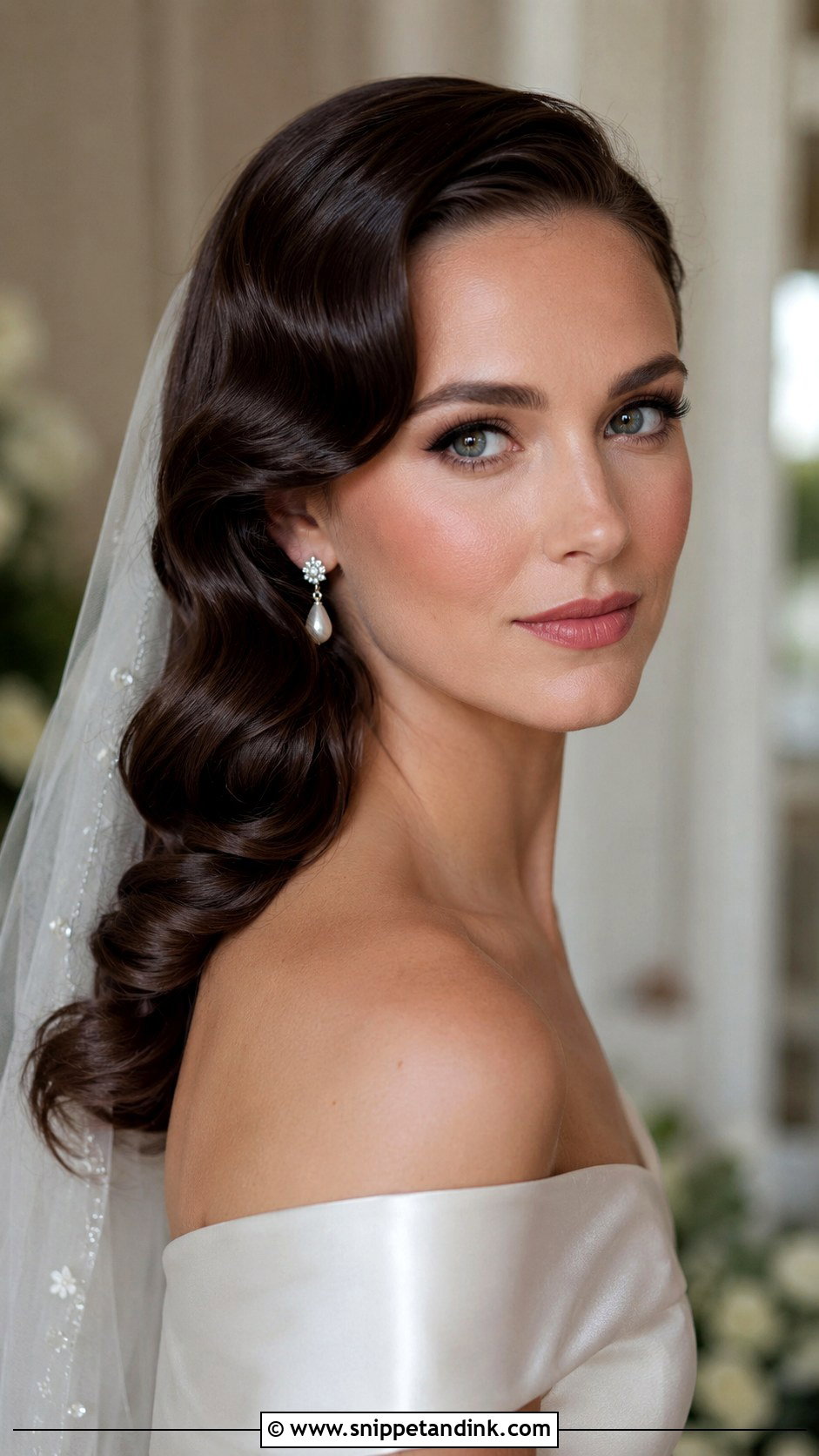
Vintage waves are smoother and more sculpted than modern soft waves, with a glossy, deliberate S-shape. Satin gowns, lace sleeves, red lips and pearls all suit them, and they belong in a black-tie room. You need enough length for the wave to run continuously, and a deep side part pushes it further toward old Hollywood. My method is a firm set, a smooth brush-out, then clips pressed into each ridge while the shine spray dries. That clip step is what keeps it polished without the helmet look.
14. Wedding Hair Down With Blowout Curls
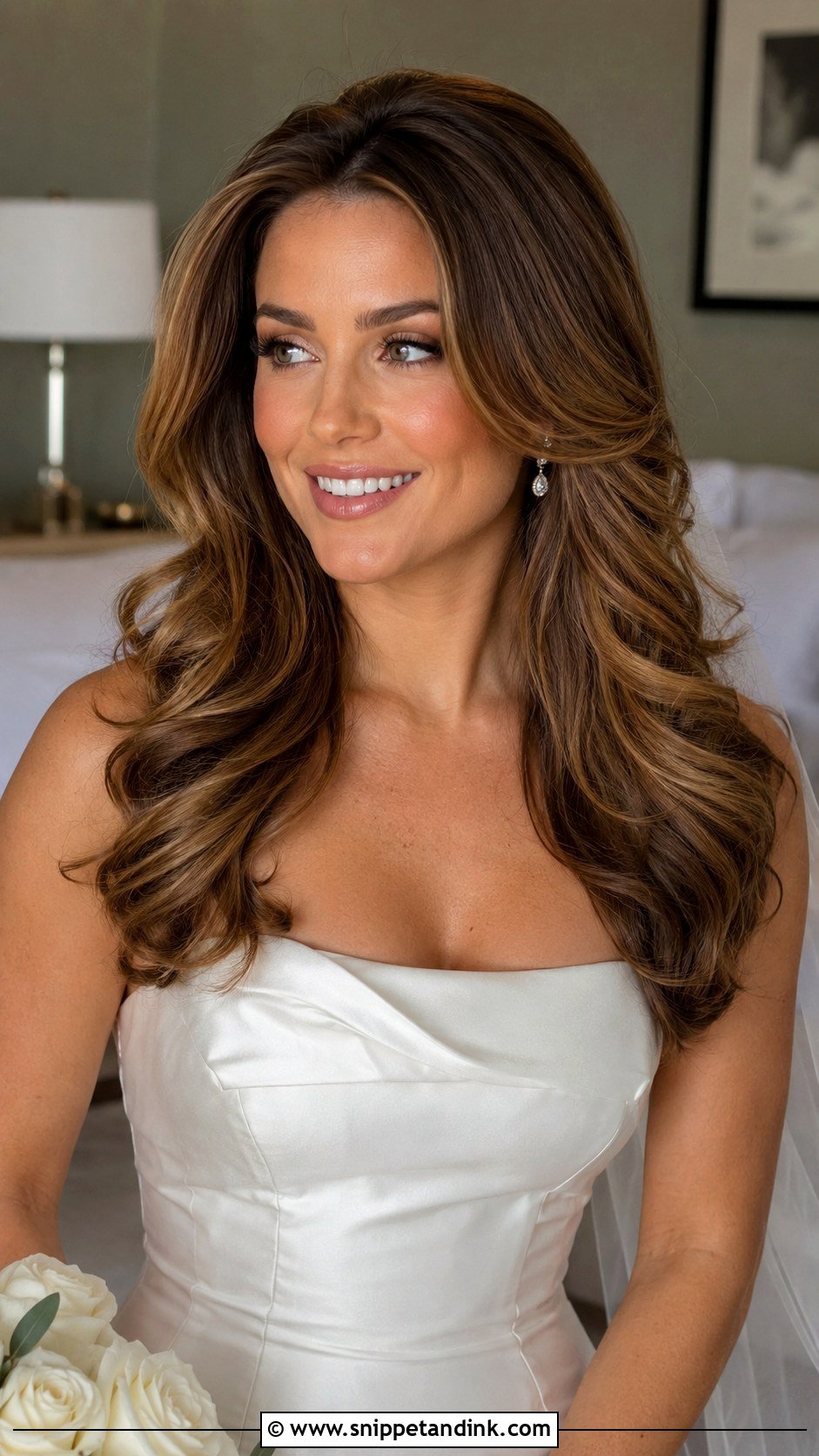
Hair worn down with blowout curls sits between the two extremes: less structured than Hollywood waves, smoother than beach waves. The roots get lift, the mid-lengths get body and the ends curve softly, and layered cuts catch that movement well on camera. Honestly, the base matters more than the curl. A proper round-brush blowout with volume at the crown holds shape far longer than curls put into air-dried hair, so I ask brides to arrive with clean, fully dry hair or book the blowout into the service. Extensions add fullness when the hair is fine.
15. Wedding Hair Down With Short Bob Waves
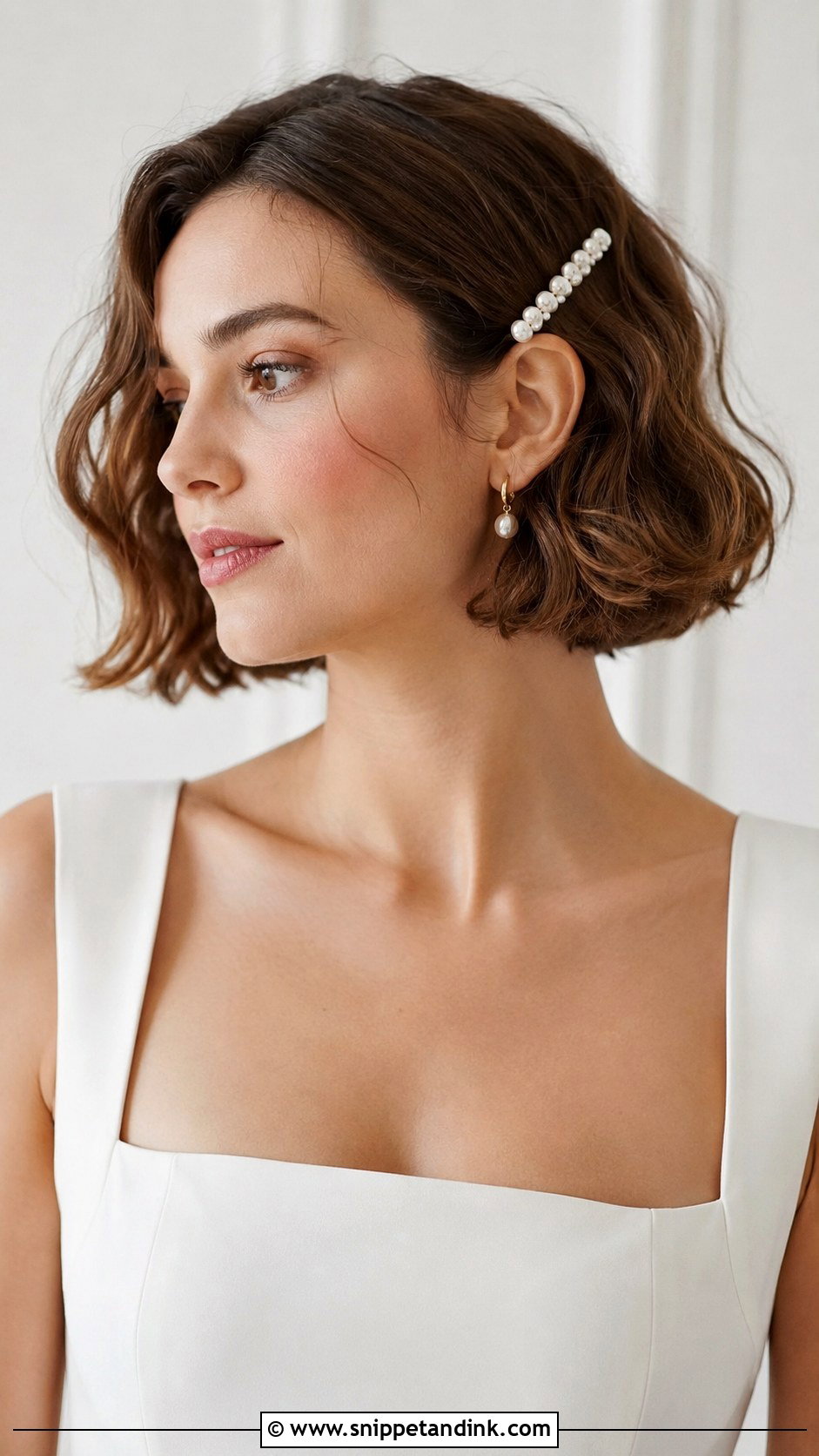
Bridal hair doesn’t need length to feel special, and short bob waves prove it. The waves add movement while the shape stays neat at the jaw and neck, and a veil, headband or side comb sits comfortably in short hair. I use soft bends here, not curls; a real curl lifts the whole bob and makes it noticeably shorter than the cut you know. A little texture at the ends keeps it relaxed with a strapless or high-neck gown in the city.
Hugs, Lip Gloss and Beaded Bodices Against Loose Hair
Down hair spends the whole day in contact with things an updo never touches. Heavy beading and sequins on the shoulders snag strands every time you turn your head, and lace can catch the ends of fine curls. If your bodice is heavily embellished at the back, I’ll usually suggest bringing the lengths forward over one shoulder or choosing a half-up style that lifts some weight away from it.
Lip gloss is the other quiet problem. Any breeze outdoors blows loose pieces straight into it, so a satin or matte lip is kinder to this kind of hair. Leaning back against a chair during dinner flattens and mats the back as well, which nobody notices until the evening photos.
A small kit for someone else to carry
- A wide-tooth comb for separating curls, never a brush
- Six or eight bobby pins matched to your hair color
- A travel can of flexible spray and a few blotting papers
- One clean, dry fingertip of smoothing cream for flyaways around the face
Give it to a bridesmaid and ask her to check the back of your hair before the reception entrance. That one look catches most of what the day does to loose hair.
Your Trial Photos Matter More Three Hours Later
Loose hair can be every bit as secure as an updo, provided it’s planned around your texture, dress, venue and accessories. Each style above sets a different mood while keeping the hair moving. Bring two or three saved photos to your trial, be honest about the forecast and how much hold you’ll tolerate, and wear the actual veil and pins that day. Take photos at the end of the trial and again a few hours later at home; the second set tells me more than the first.
You'll Like These Ideas:




Leave a Reply