
Soft lace, sculpted waists, floral appliqués, pearls, basque bodices and long trains are back in nearly every bridal salon, and a romantic dress can be any of them. Where brides go wrong is stacking all of it into one gown. In fittings, I usually find one feature carries the romance and everything else should support it. The looks below run from full ball gowns to a satin slip and a mini for a city ceremony, and each one comes with the veil, shoes and hair I’d put with it, plus the honest catch where there is one.
Ten Months Out Is Not Too Early for a Lace Gown
Romantic gowns are usually the slowest to make. Hand-placed lace, appliqués and pearl work all take time, and most bridal designers make each dress to order once you’ve chosen it. Lead times vary a lot by designer and season, so treat these as rough guides and confirm the exact dates with your shop.
- Start trying on around nine to twelve months before the wedding. This gives you time to compare silhouettes without rushing.
- Order by roughly seven to eight months out. Many made-to-order gowns take four to six months to arrive, and heavily embellished ones can take longer.
- Plan alterations to begin about two to three months before the date. Most brides need two or three fittings, more for corset bodices and bustles.
- Have the final fitting in the last two weeks, wearing the actual shoes and underwear you’ll wear on the day.
If you have less time, sample gowns and off-the-rack styles are a real option. Expect to spend a bit more on alterations, and check the sample for marks around the hem and underarms before you agree to buy.
1. Lace Ball Gown Wedding Dress
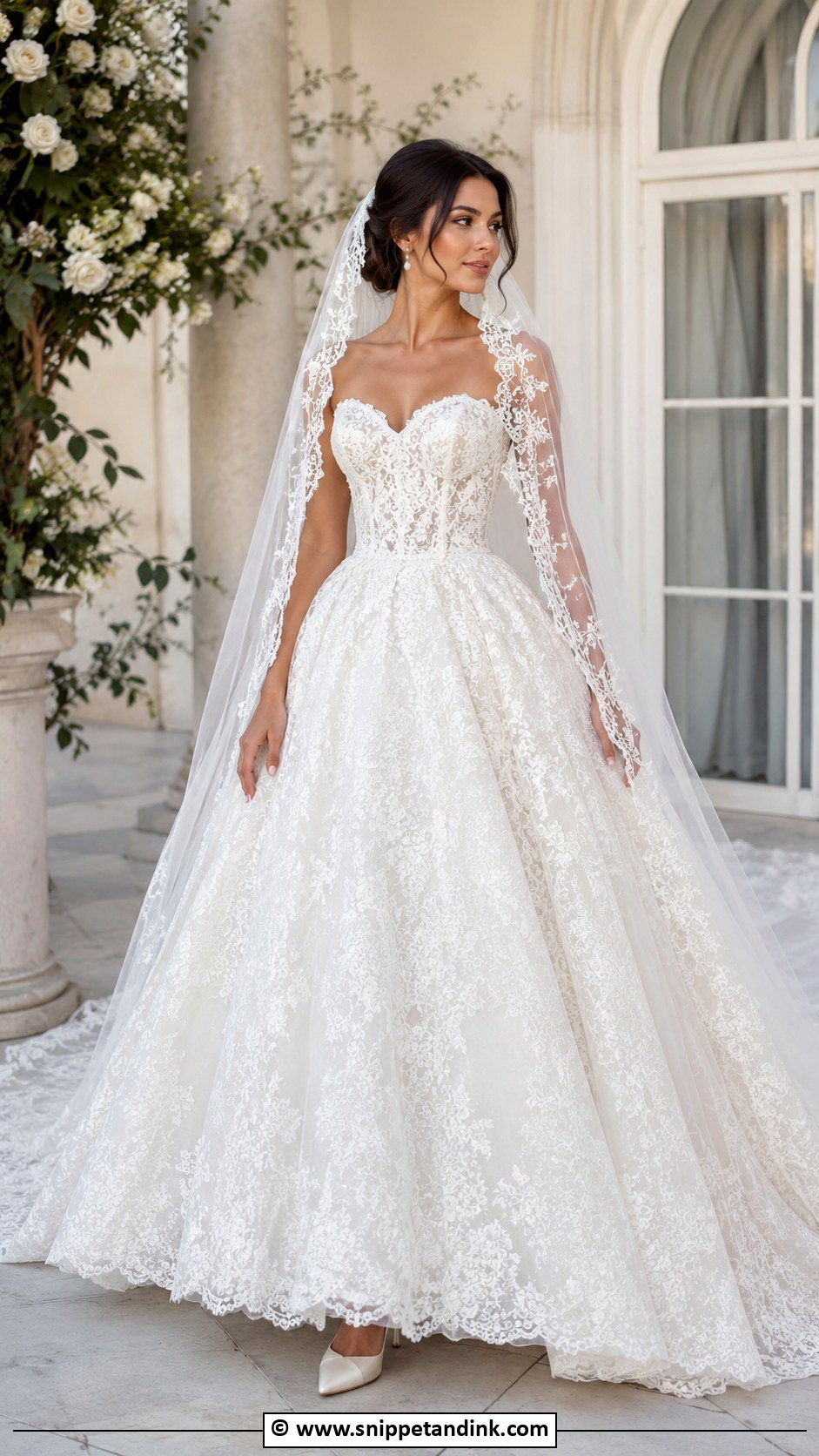
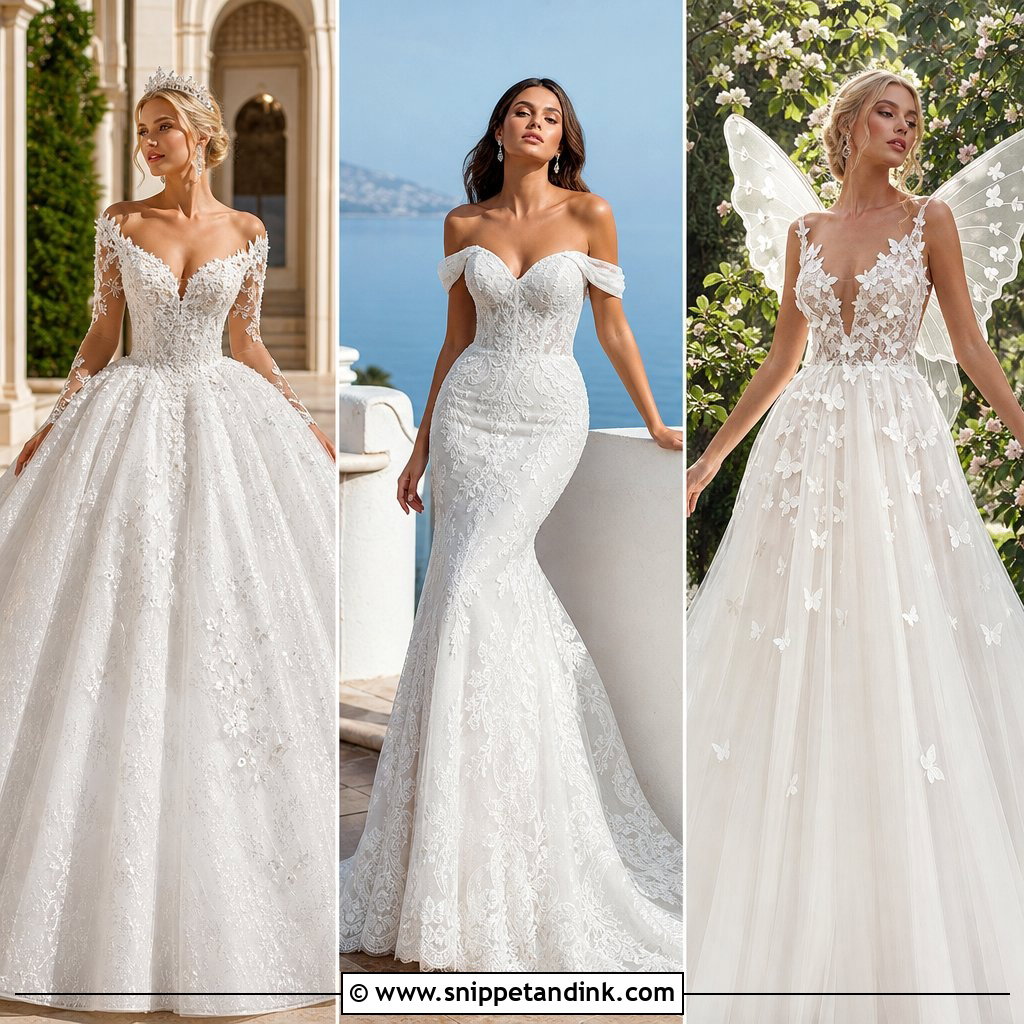
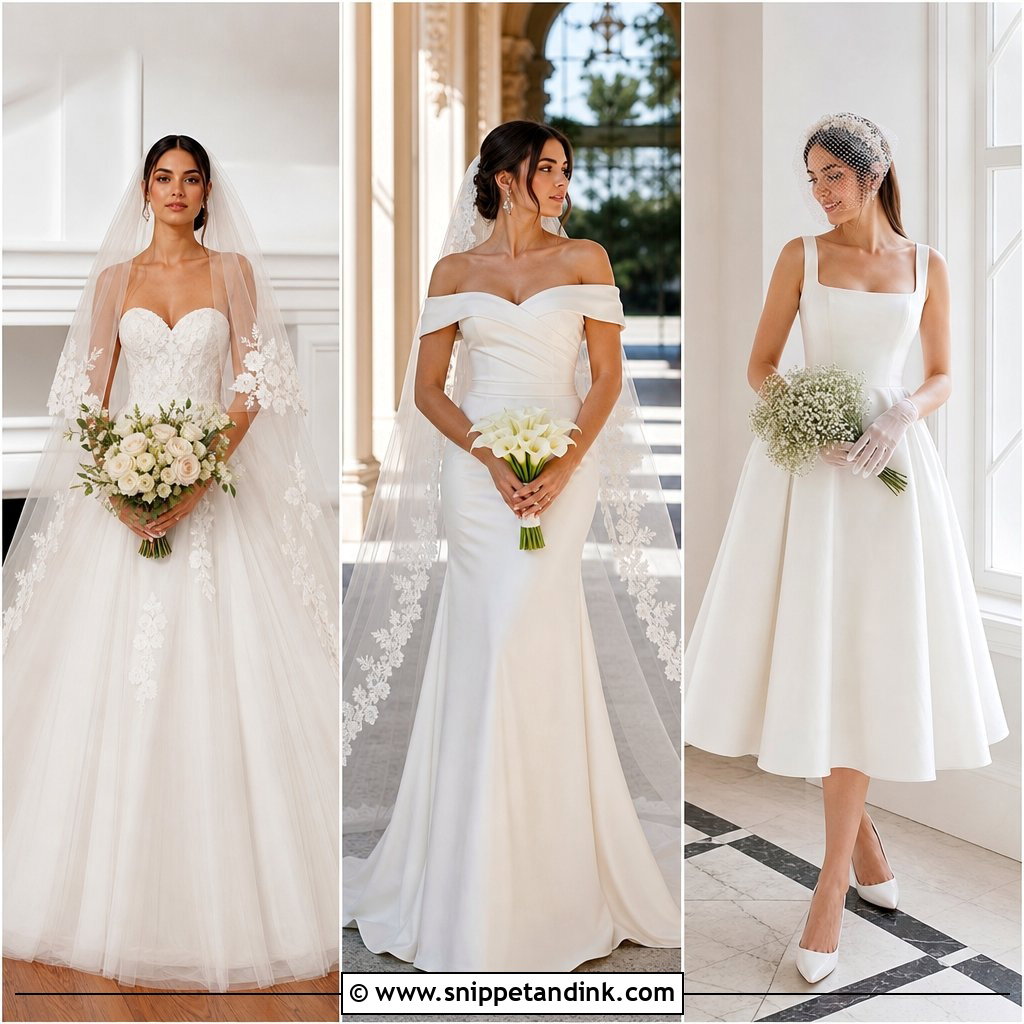
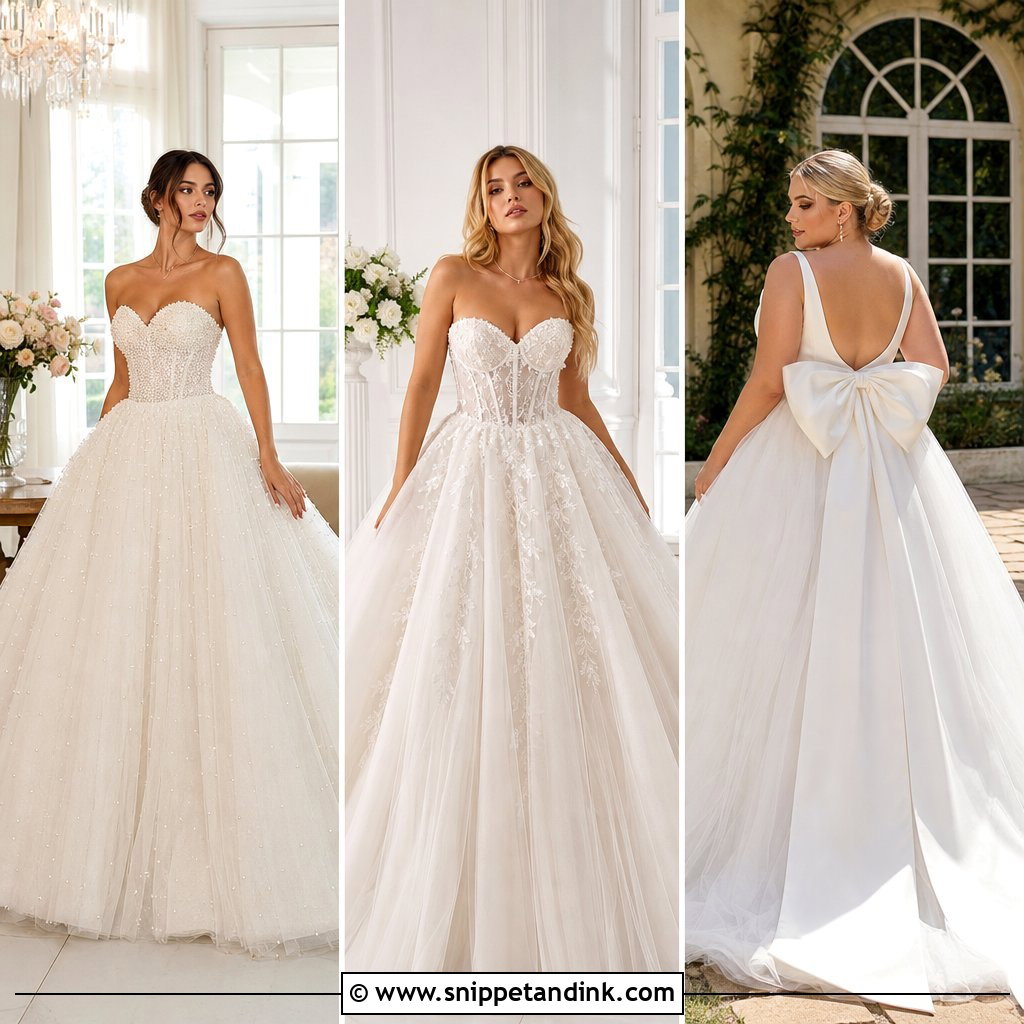
A lace ball gown is still the most traditional romantic silhouette, with a fitted bodice, a sweetheart neckline and a full skirt. The weight surprises people: layers of lace over tulle and a hoop can be heavy, so walk the length of the shop in it before deciding. A cathedral veil edged in matching lace, pearl drops and satin heels complete it. Leave the hair soft, in loose waves or a low bun, because a tight style looks severe against all that texture.
2. Off Shoulder Wedding Dress
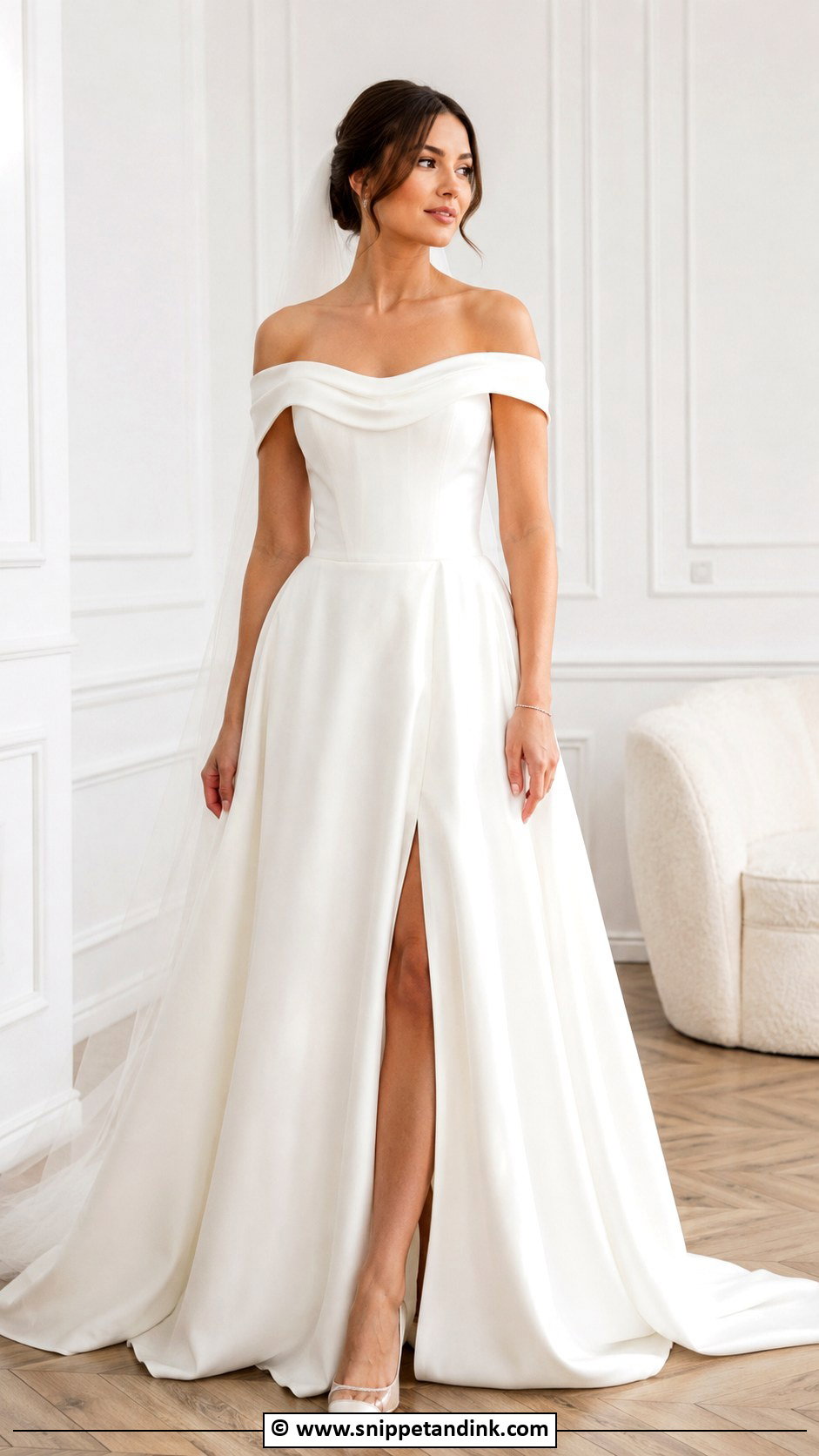
Off-shoulder necklines frame the collarbone and shoulders, which is why so many brides feel instantly romantic in them. They need an internal corset or boning, otherwise the sleeves creep up when you lift your arms to hug someone. Lace, satin and mikado all work. A soft updo keeps the neckline clear, and a fine bracelet is the only jewellery it needs.
3. Floral Applique Wedding Dress
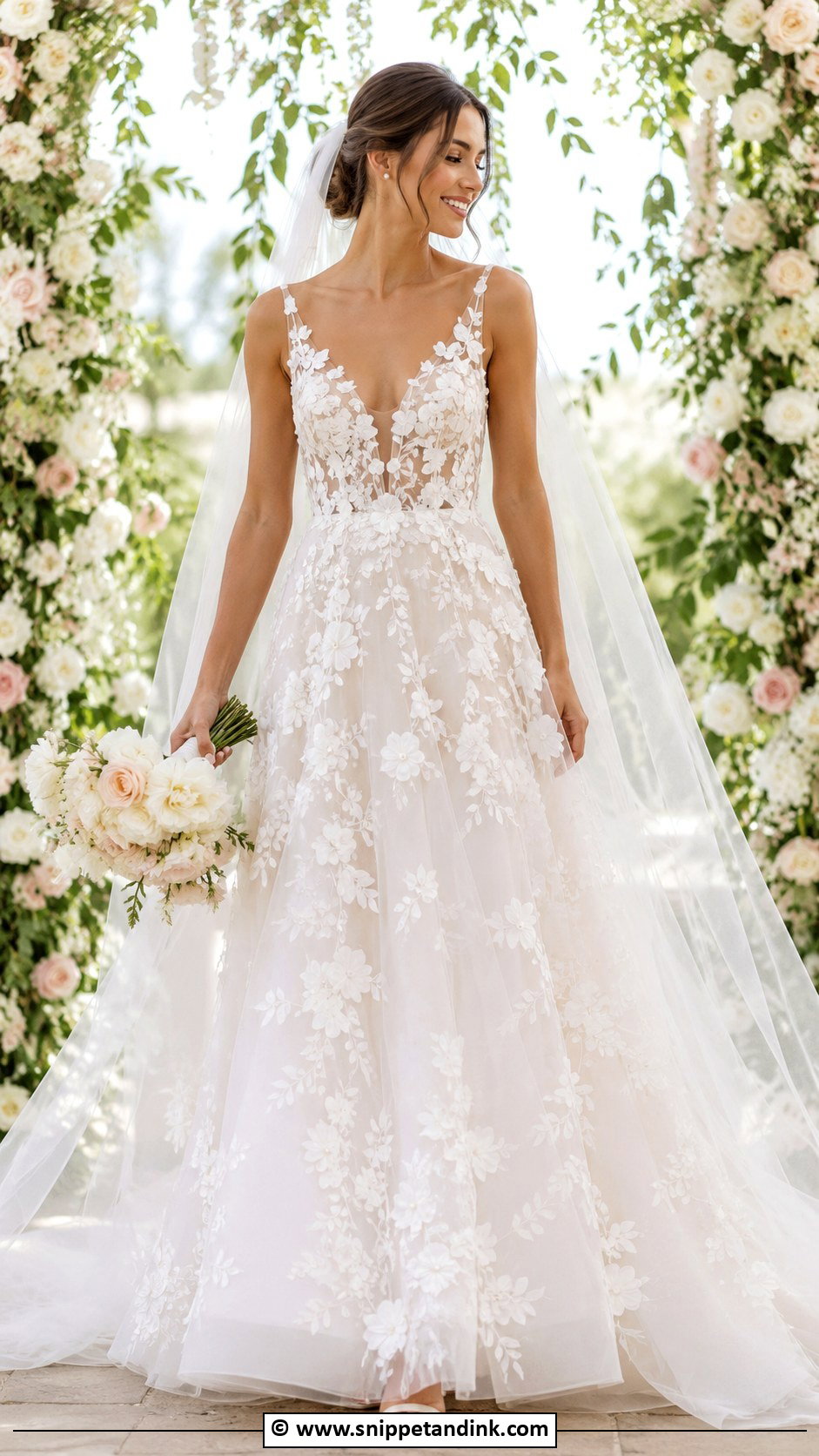
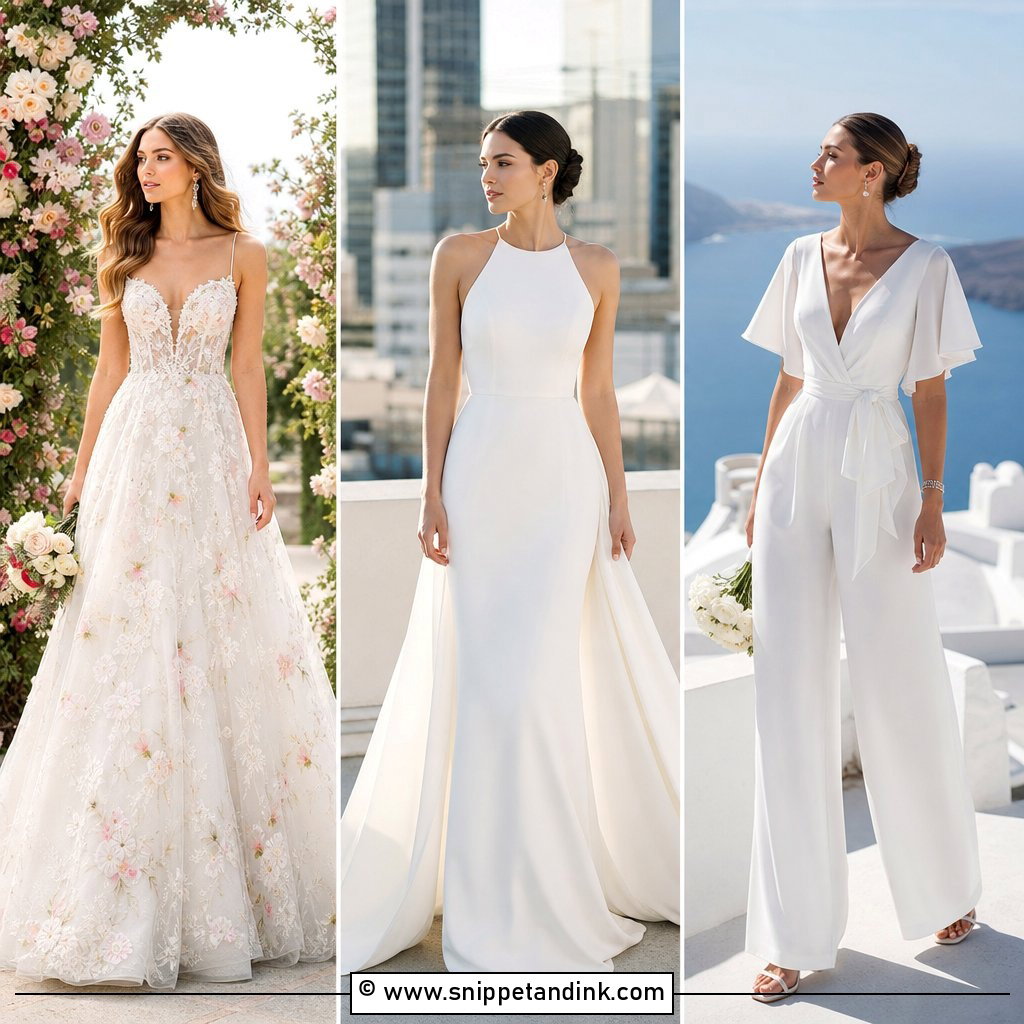
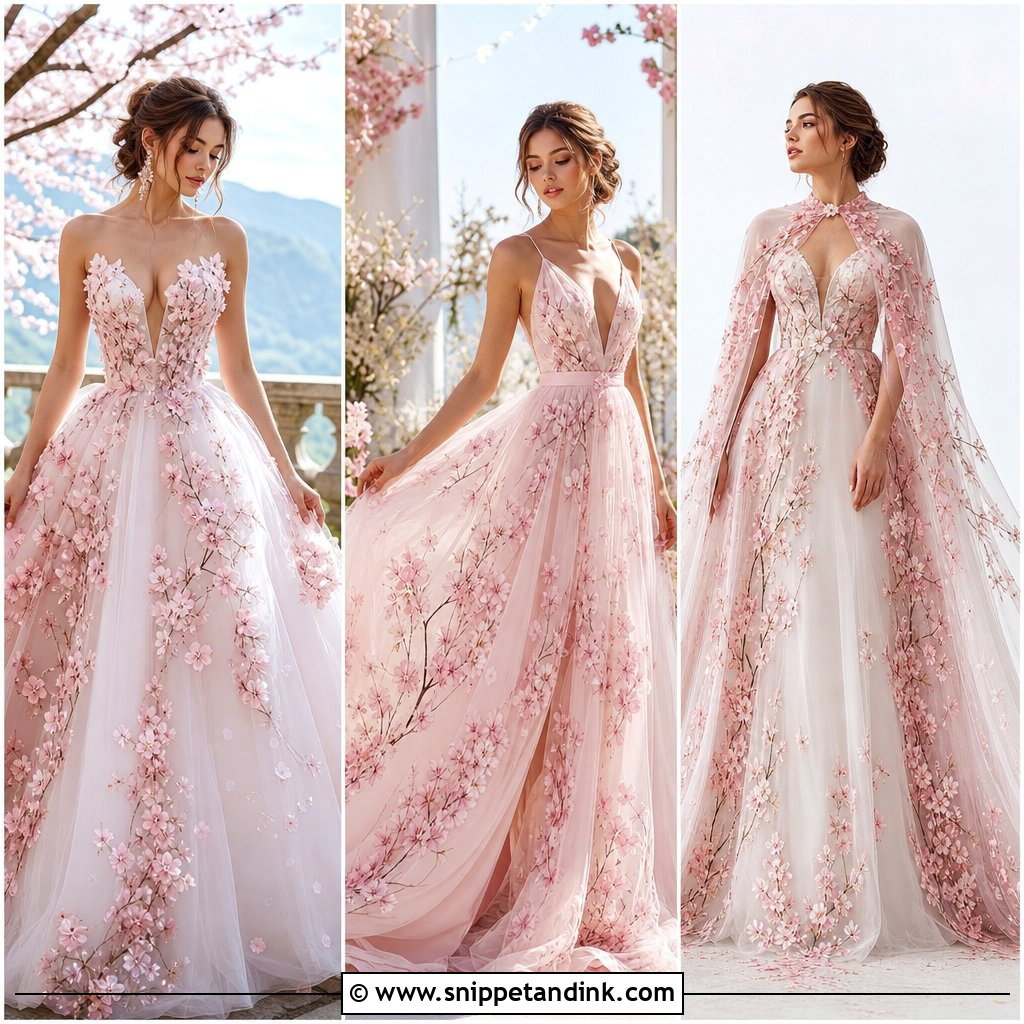
A floral applique wedding dress gets its romance from texture instead of sparkle. The 3D flowers sit best on tulle, organza or lace, where they look like they’re floating. Check how they’re attached before you buy: glued appliqués can lift at the edges after a long day, while hand-stitched ones hold. Pearl studs, sheer gloves and a low textured bun keep the flowers as the focus.
4. Long Sleeve Lace Wedding Dress
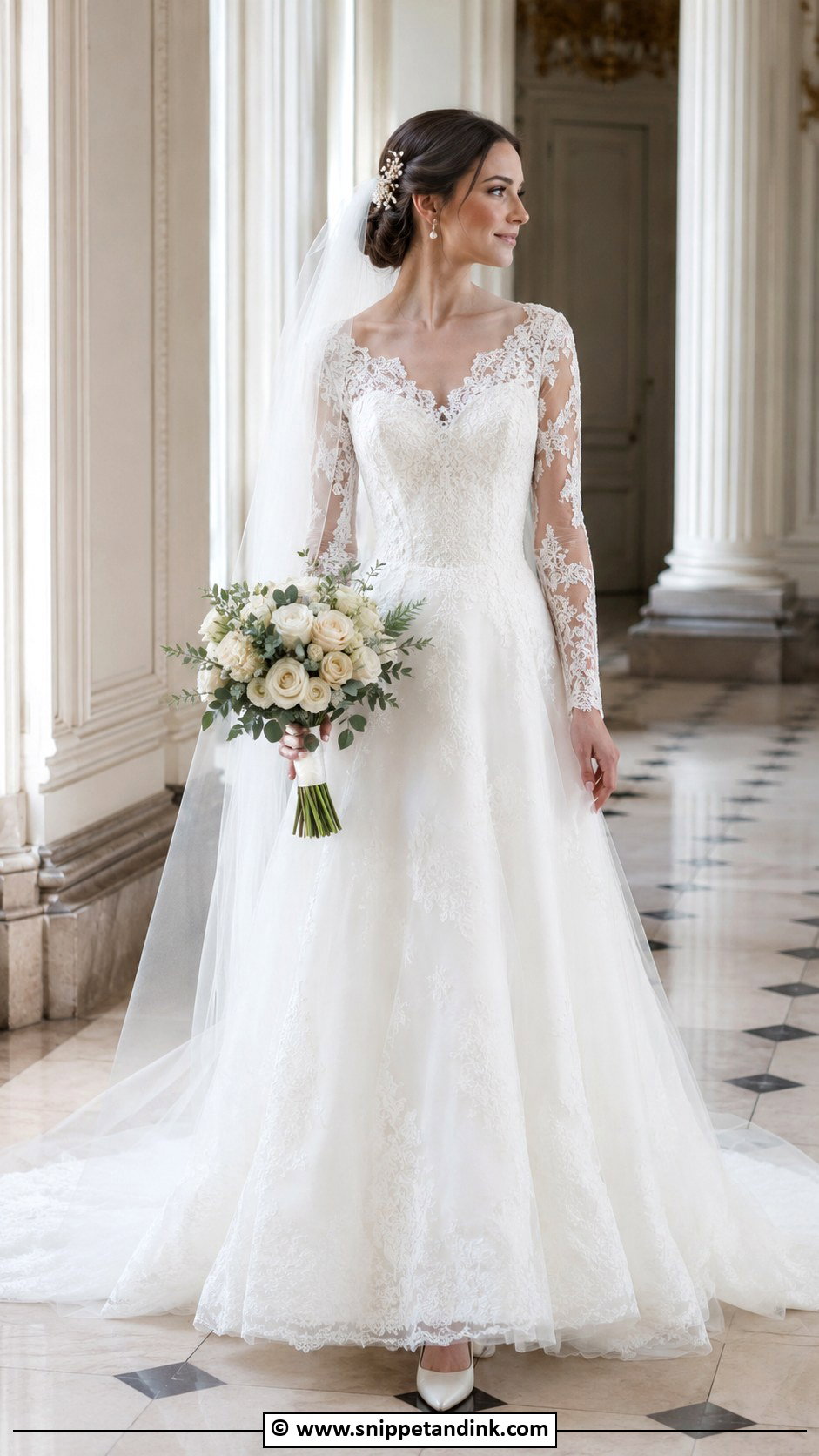
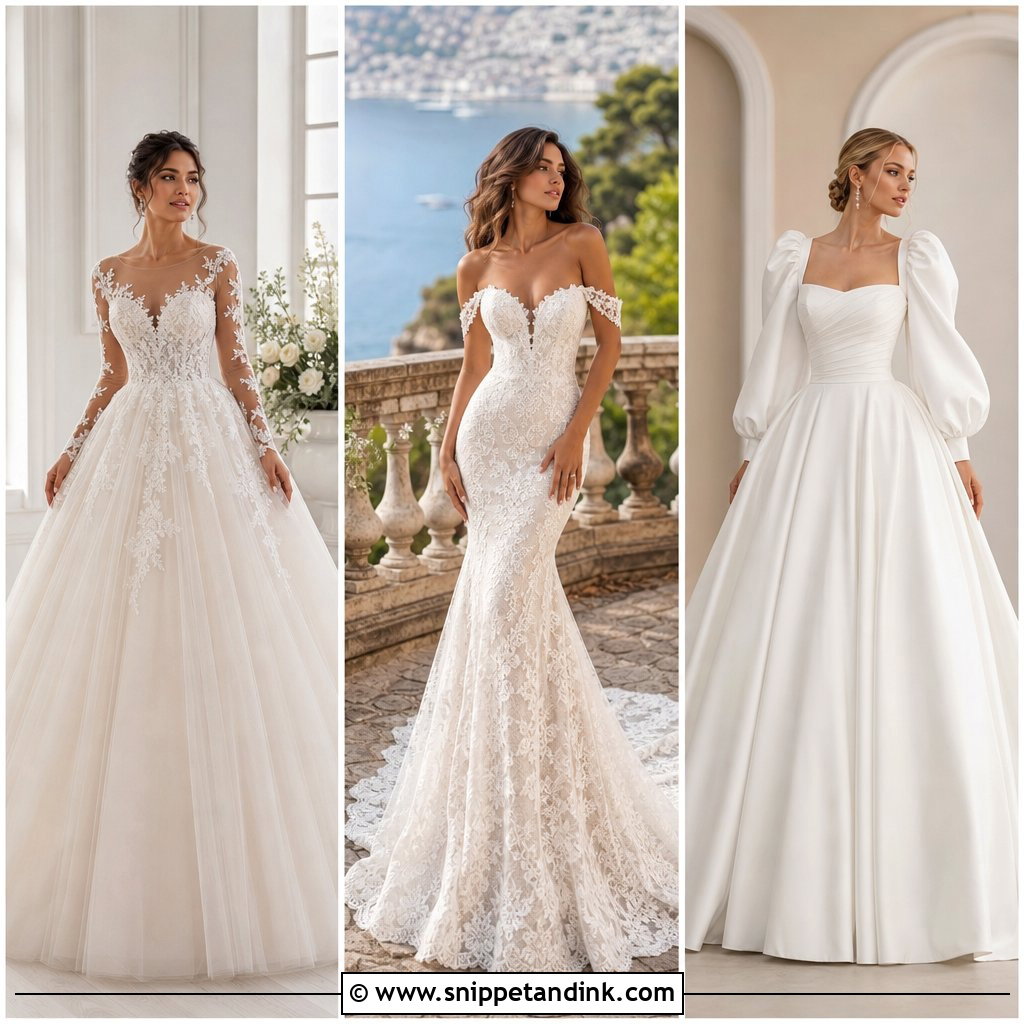
Sheer lace sleeves give coverage without weight, which makes them the first suggestion I make to brides in cooler months or traditional ceremony spaces. The fit at the armhole is everything. If lace sleeves are cut too close, you can’t raise your arms to dance, so ask the seamstress to check that movement at your first fitting. A long veil and a pearl comb keep it refined.
5. Corset Wedding Dress
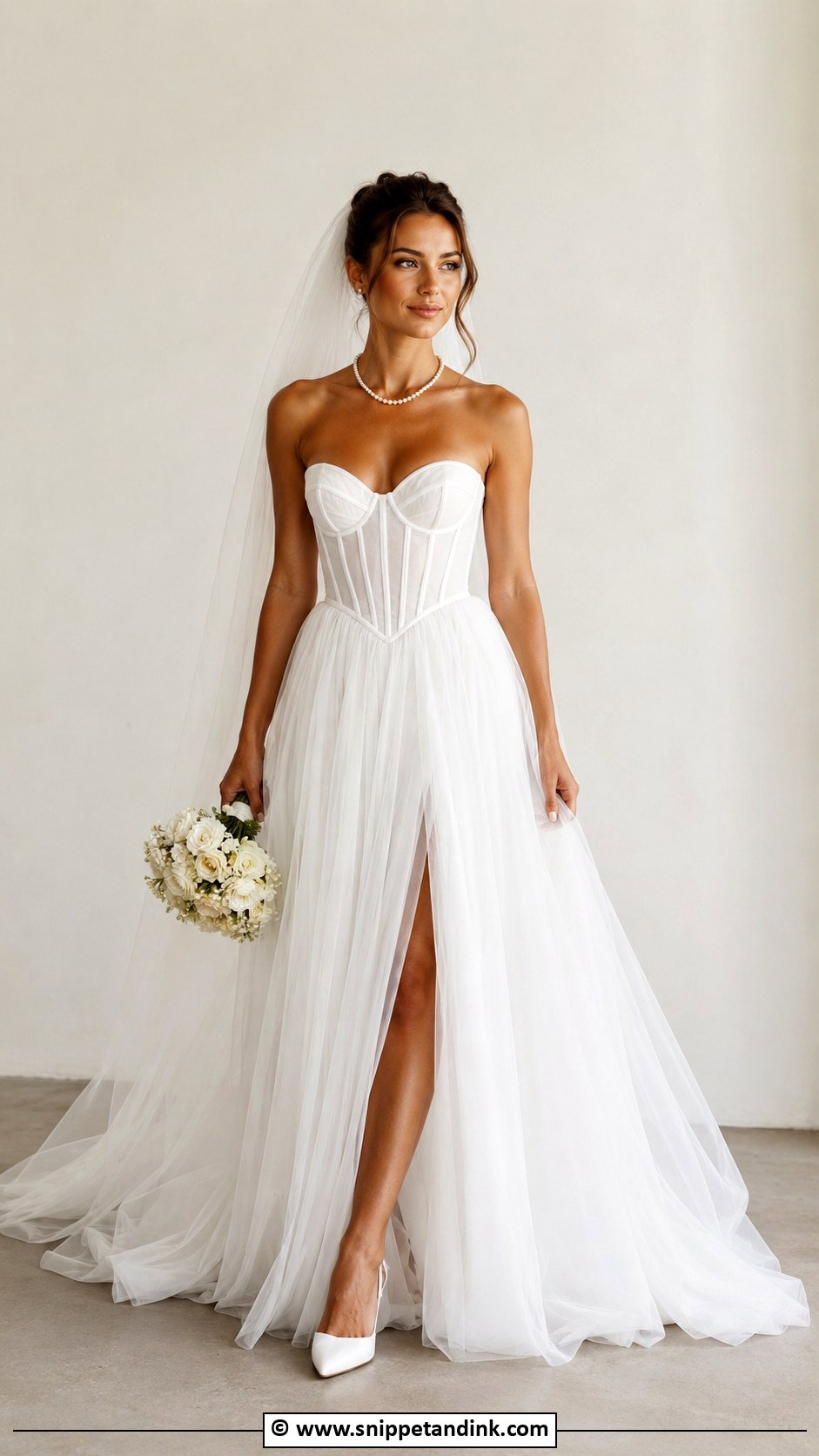
A corset bodice gives structure, and pairing it with a soft tulle, lace or organza skirt keeps the overall effect gentle. Visible boning and a basque or natural waist are the details to look for. Corsets are fitted closer than other bodices, so plan your fittings for the weight you expect to be on the day. If the bodice is heavily detailed, keep jewellery minimal and the hair clean.
6. Basque Waist Wedding Dress
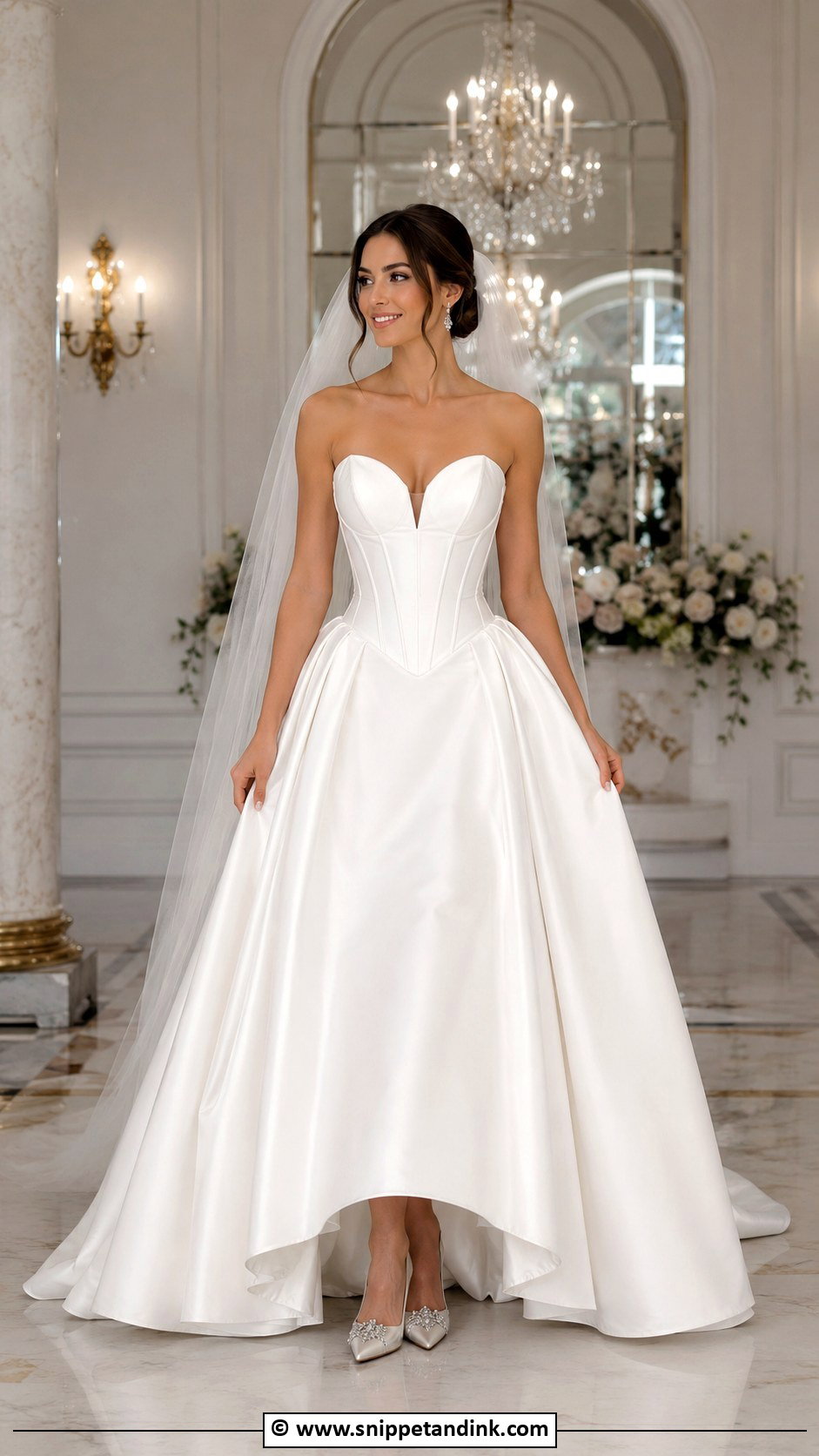
The basque waist drops into a V below the natural waistline, which lengthens the torso and suits brides with a shorter body. On long-waisted brides it can make the legs look shorter, so try it beside a natural-waist gown before deciding. Satin, lace and layered tulle all carry it. A low bun or polished half-up style shows off the bodice line.
7. Tulle A Line Wedding Dress
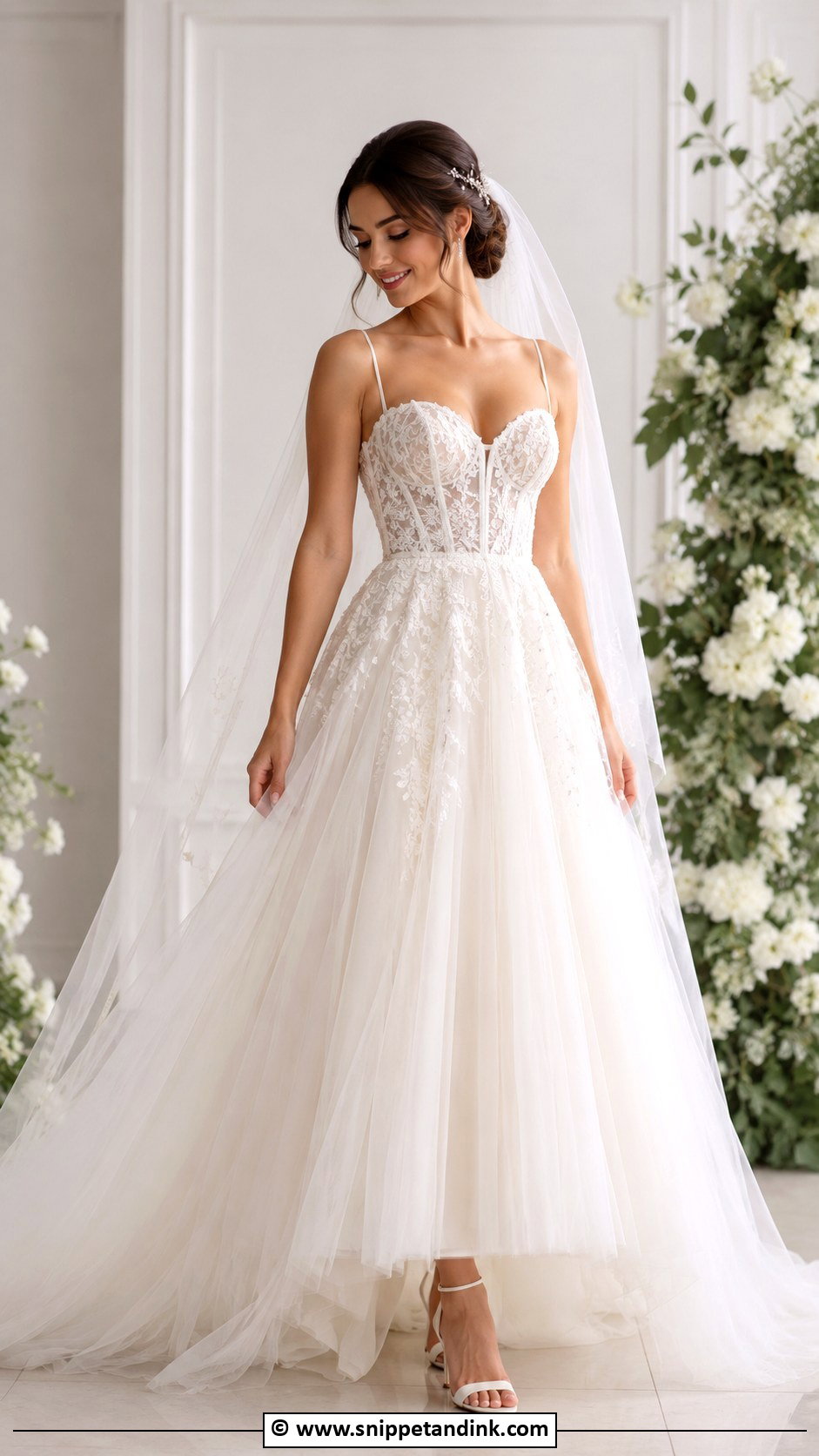
Tulle A-lines give you the floating skirt without the weight of a ball gown, so you can actually dance in it. A clean or lightly beaded bodice keeps it modern. Tulle does catch on things: bouquet wire, rough stone steps and Velcro on the groomsmen’s shoes. A fingertip veil, crystal pins and ankle-strap heels suit the lighter shape.
8. Satin Wedding Dress
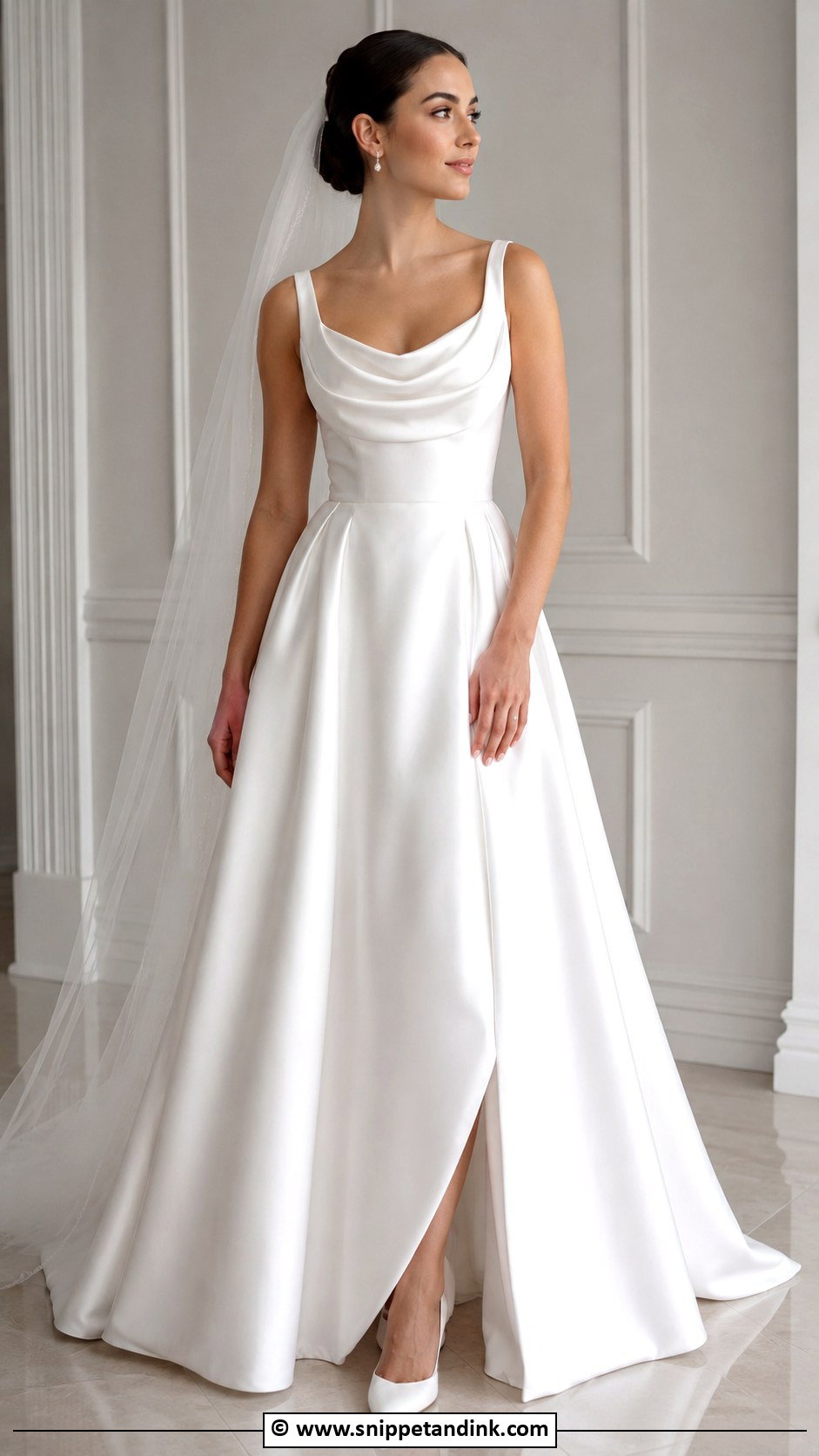
Satin is romantic through how it catches light, so even a simple cut looks special. The trade-off is that it shows every crease, especially across the hips once you’ve been sitting for dinner. Heavier satins such as duchess hold their shape better than thin ones. Pearl earrings, a plain veil and a sleek bun or soft waves suit it.
9. Pearl Wedding Dress
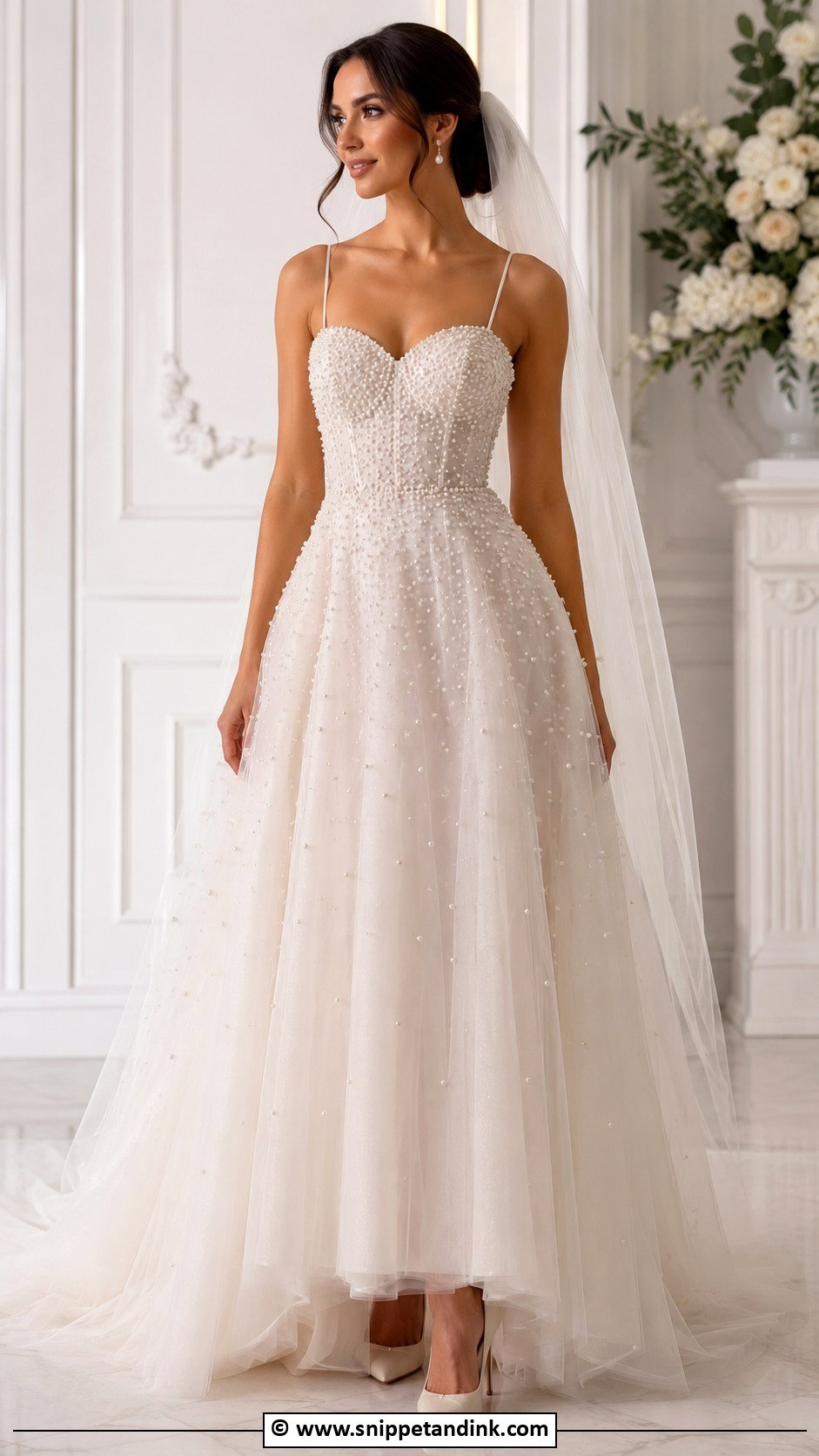
Scattered pearls across tulle or lace add a soft glow in photos without any sparkle. I prefer small, spaced pearls; large ones in dense clusters add weight and can pull the fabric. Pearl drop earrings and a simple veil are enough, since the dress is already the jewellery. Ask the bridal shop for spare pearls, because one or two often come loose by the end of the night.
10. High Neck Wedding Dress
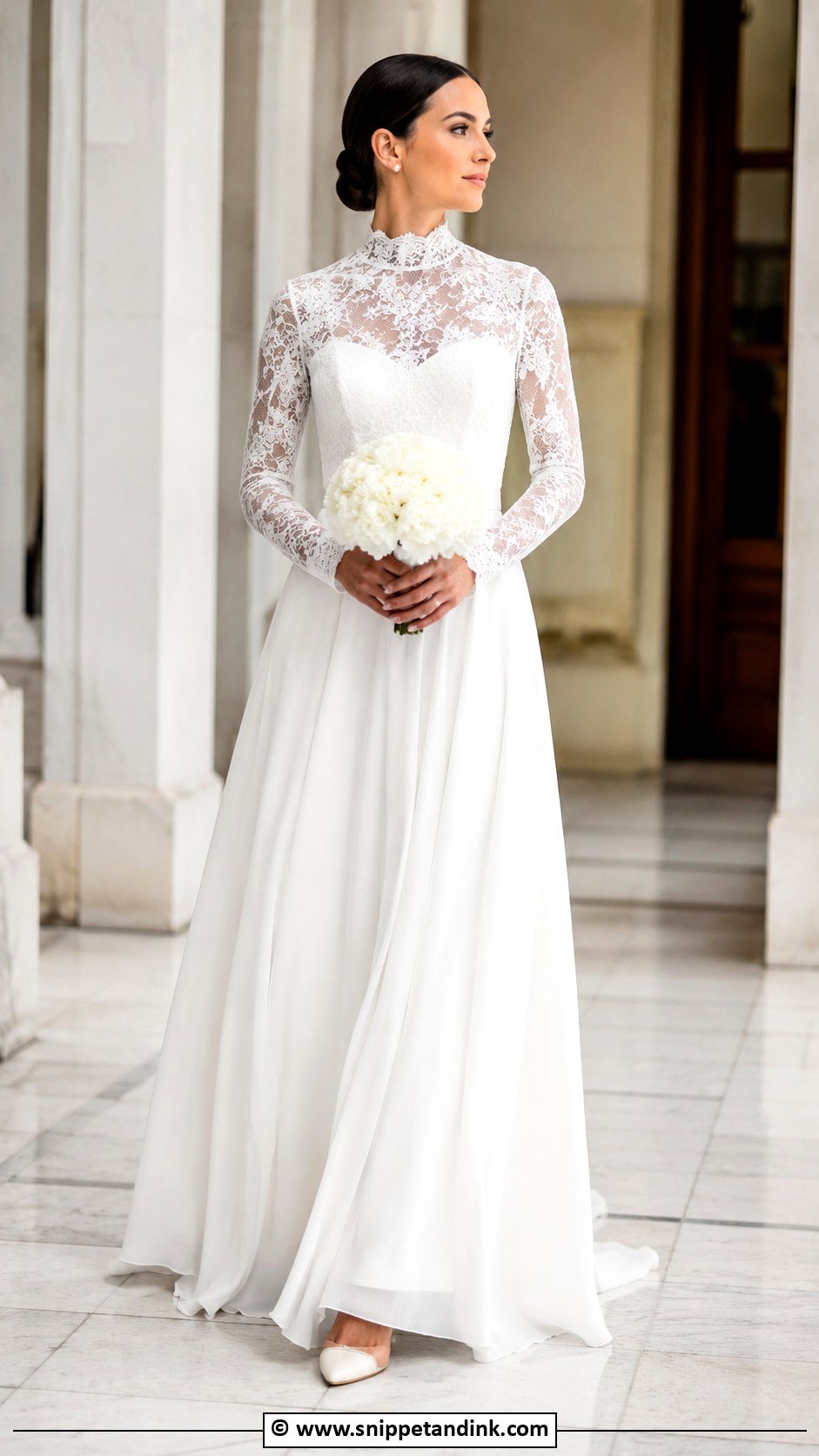
A high neckline in sheer lace, crepe or illusion fabric feels both vintage and refined. The neck edge must sit flat. If it’s even slightly tight, you’ll feel it every time you swallow, and it will gape if it’s too loose. Long sleeves suit a traditional ceremony, while a sleeveless version feels modern. Skip the necklace and pull the hair back.
11. Square Neck Wedding Dress
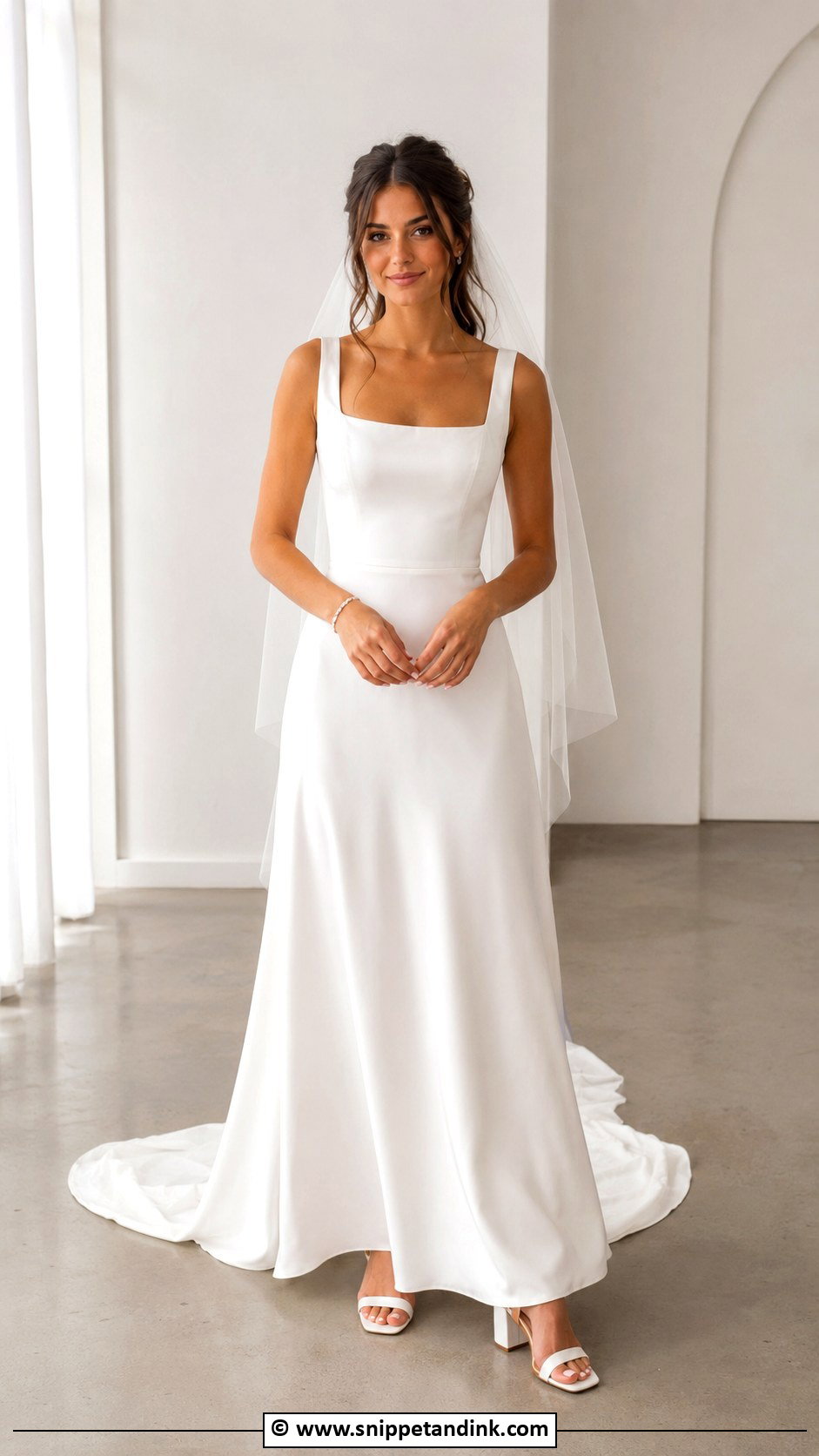
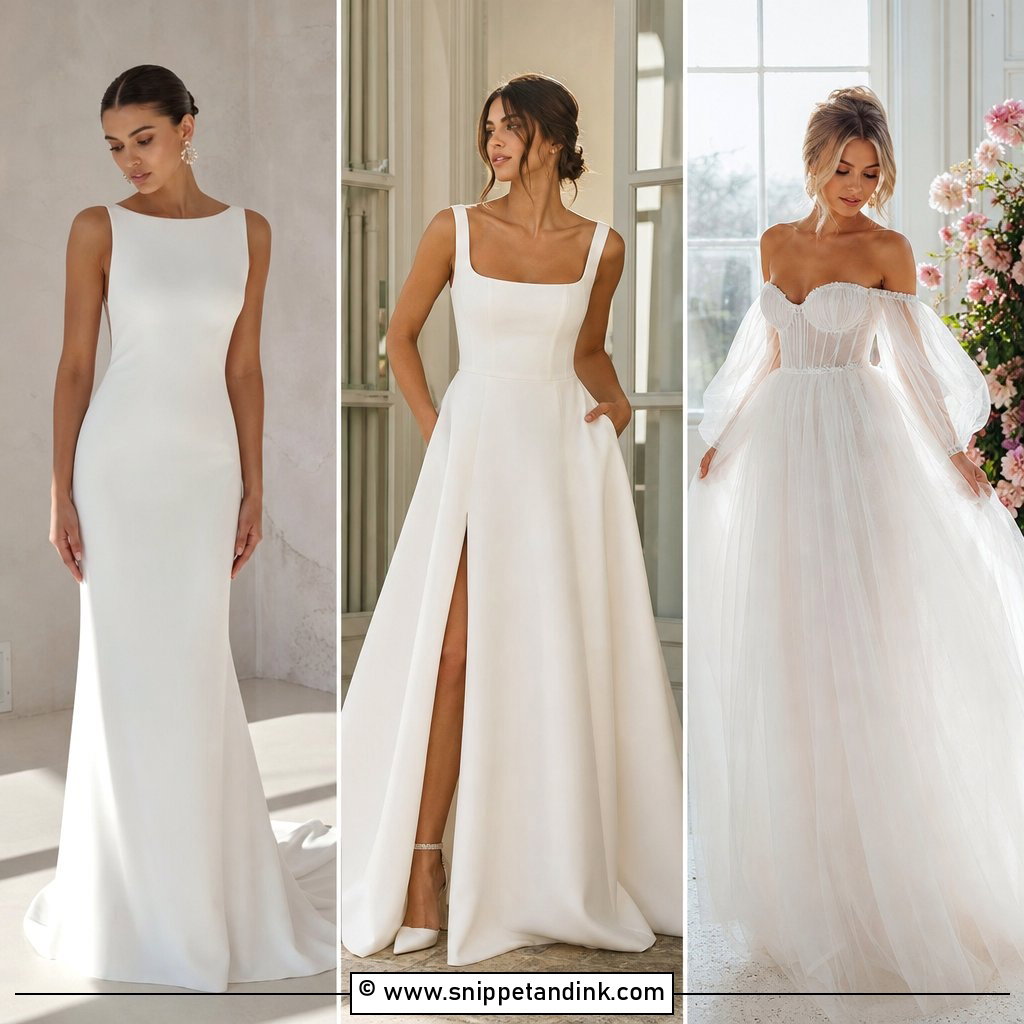
Square necklines frame the face and collarbone with a clean line that works on many figures. Lace leans vintage, satin classic and crepe minimal. Half-up hair softens the straight edges, and block-heel sandals keep you comfortable if the dress is floor length. It’s one of the easier necklines to wear a strapless bra under, which is a practical bonus.
12. Strapless Wedding Dress
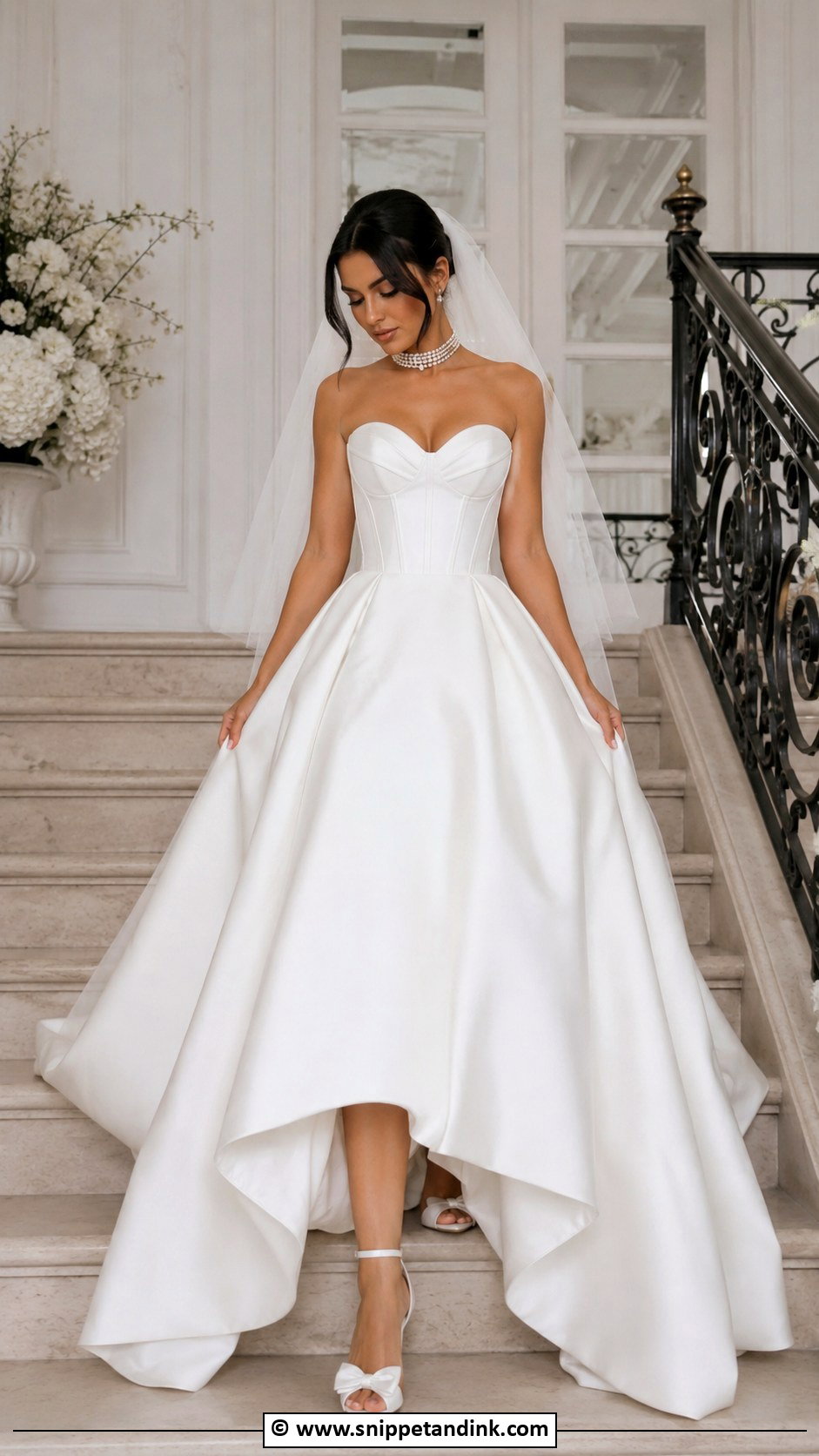
Strapless gowns are versatile, but they depend completely on fit. The bodice has to hold you up by itself, so a good tailor will build it to sit firmly without pressing into your skin. A sweetheart shape softens, a straight neckline reads modern, and a corset bodice adds structure. If you’ll spend the night hitching it up, it needs another fitting, not straps.
13. Sweetheart Neckline Wedding Dress
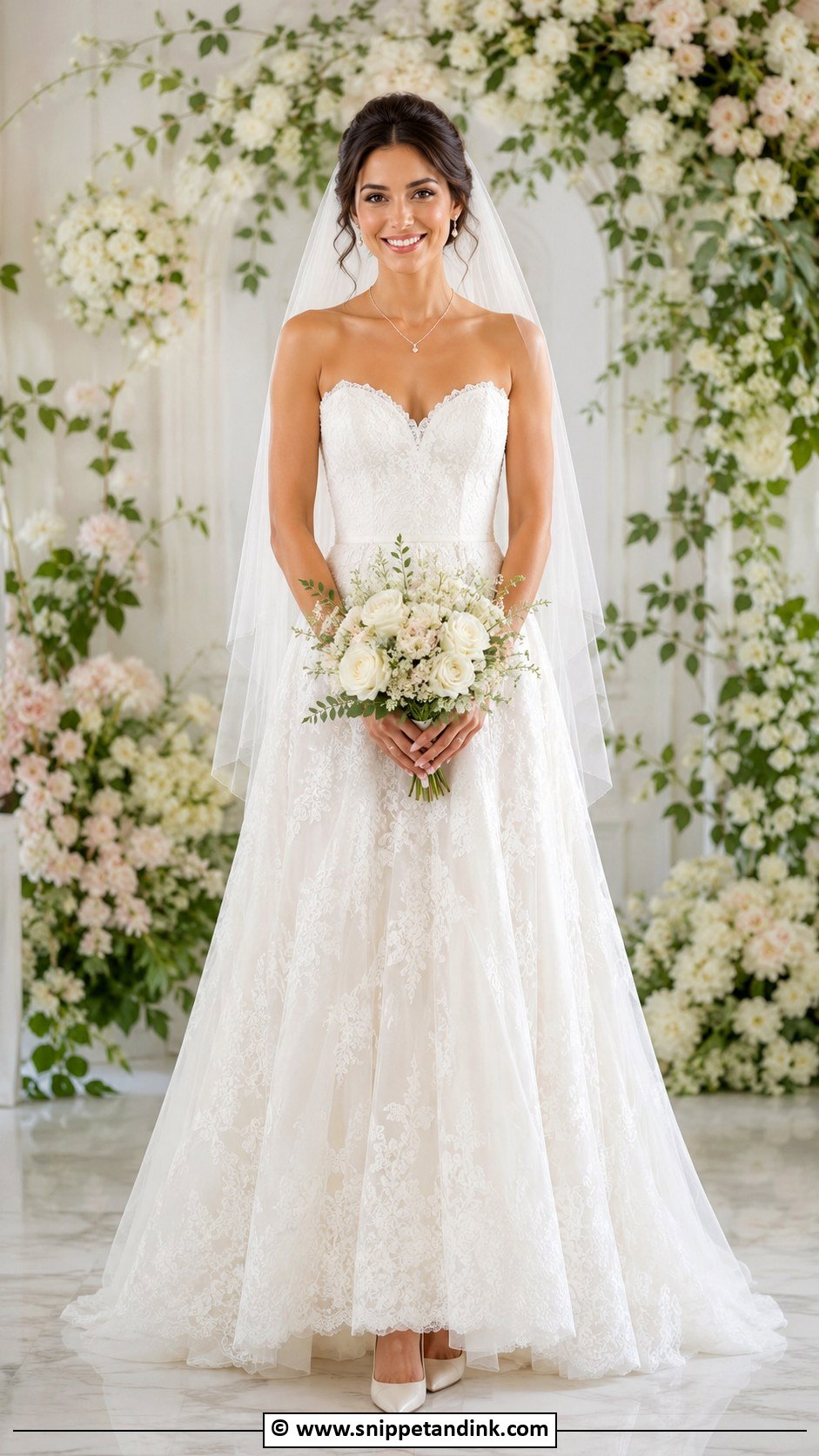
A sweetheart neckline softens the bust and works with ball gowns, mermaids, A-lines and corset bodices. The depth of the dip matters more than people expect: a deep sweetheart on a smaller bust can gape, and a shallow one on a larger bust can flatten. A veil matching the dress length, soft curls and small earrings are all the styling it needs.
14. Sheer Sleeve Wedding Dress
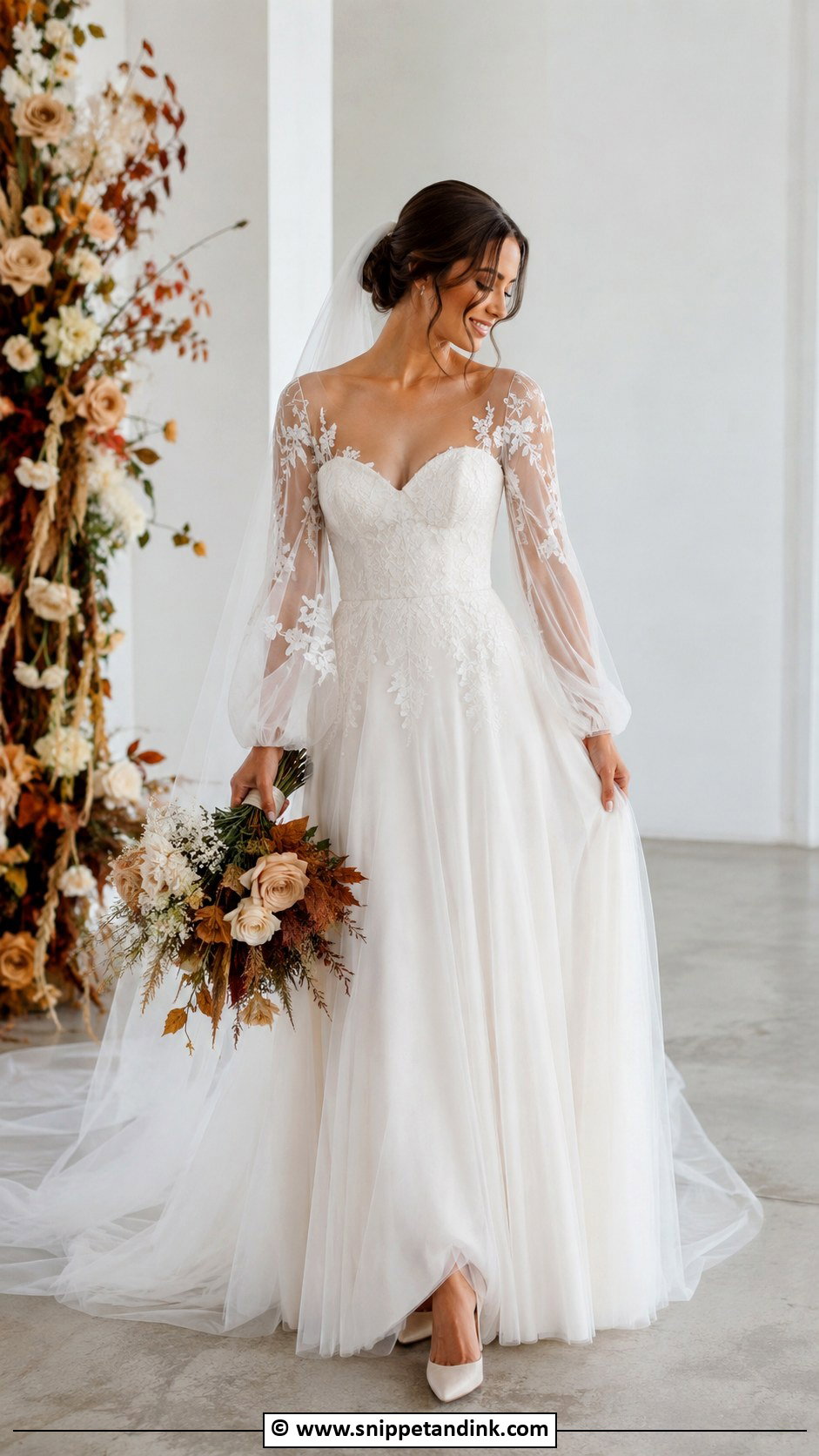
Sheer sleeves in lace, tulle or organza add warmth to the look without much warmth to the body. Embroidery and tiny florals should feel soft against the inner arm; scratchy lace there irritates quickly. A low bun or soft ponytail lets the sleeves show in photos. They suit spring, fall and winter weddings, where bare arms can feel exposed.


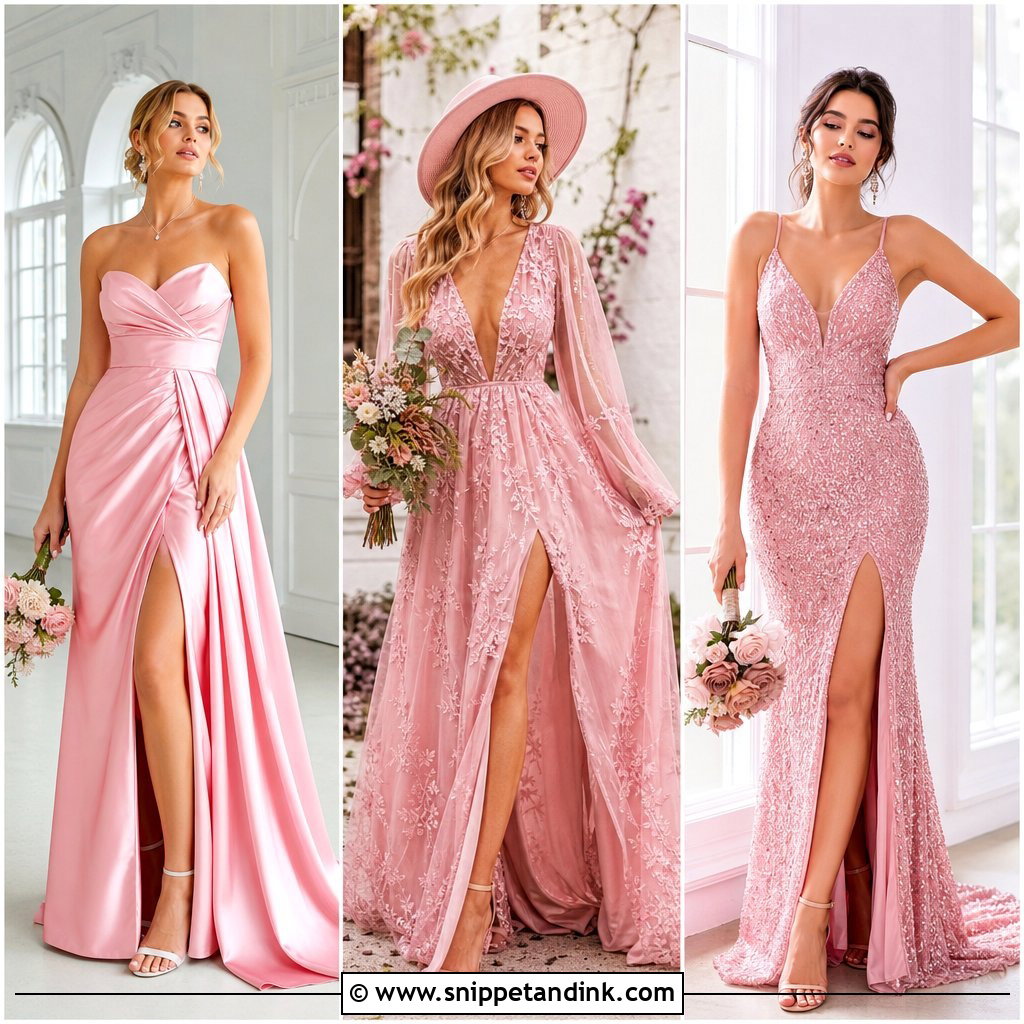
15. Puff Sleeve Wedding Dress
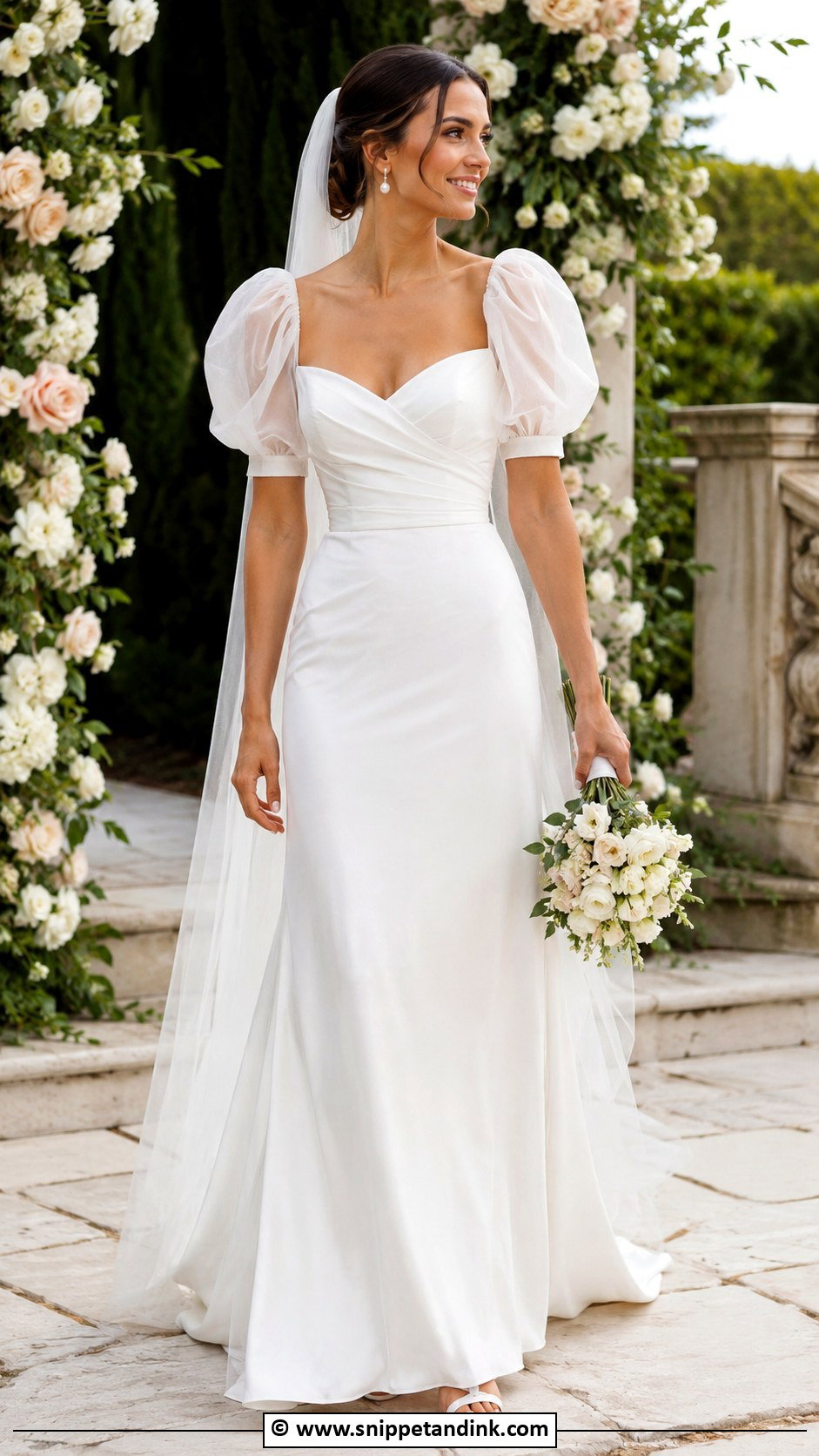
A puff sleeve wedding dress feels playful and a little vintage. Organza and tulle keep the volume light; thicker fabrics make the shoulders look wide. Detachable sleeves let you take them off for dancing. Keep the hair low and soft, because a high style competes with the sleeves for attention.
16. Ruffle Wedding Dress
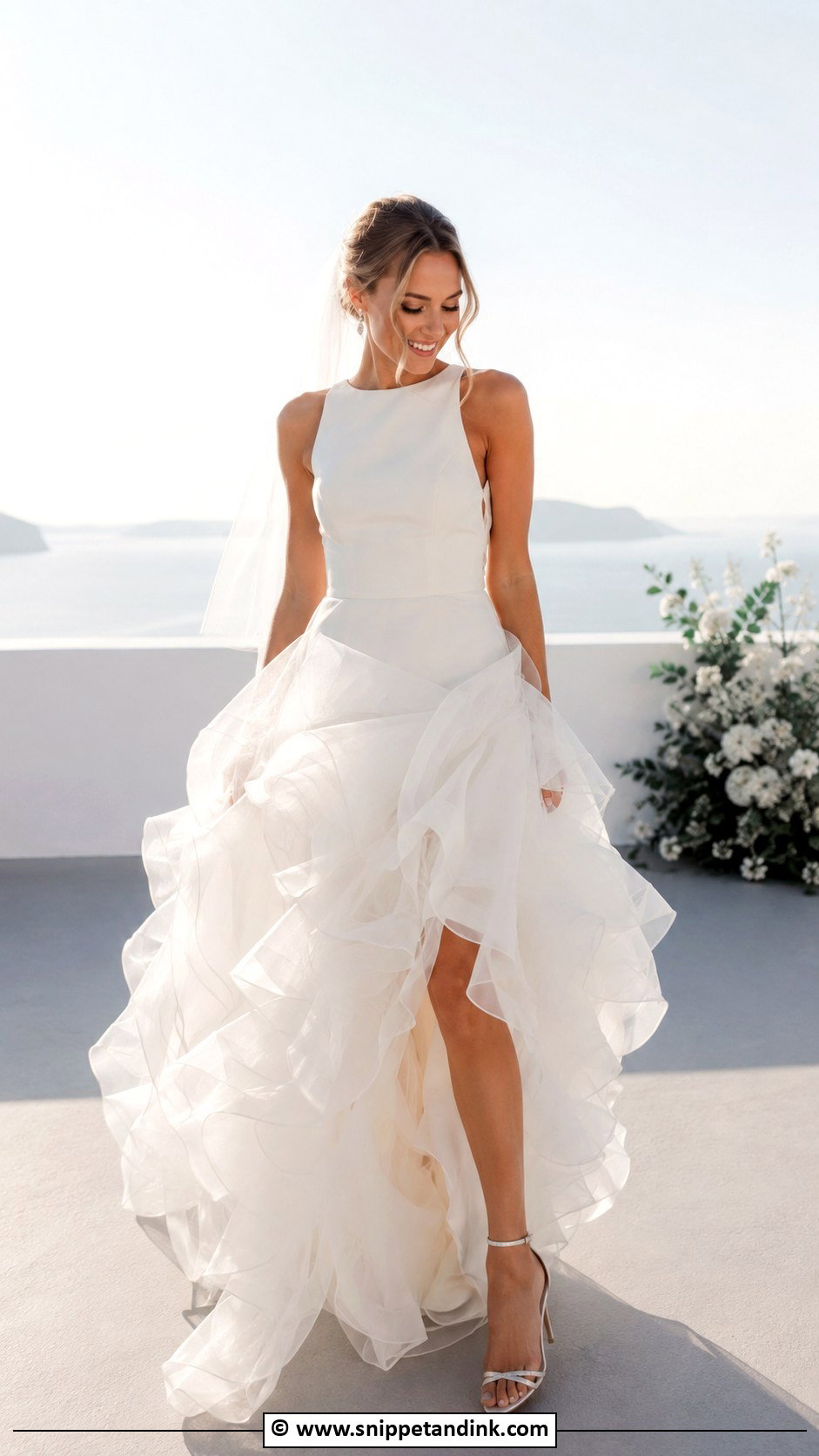
Ruffles bring movement, but only if one area does the work. If the skirt is full of cascading ruffles, keep the bodice smooth; if the neckline ruffles, choose a plainer skirt. Ruffles are also the hardest to bustle neatly, so ask the seamstress to show you the bustled version at a fitting. A loose updo and minimal jewellery keep the effect graceful.
17. Tiered Wedding Dress
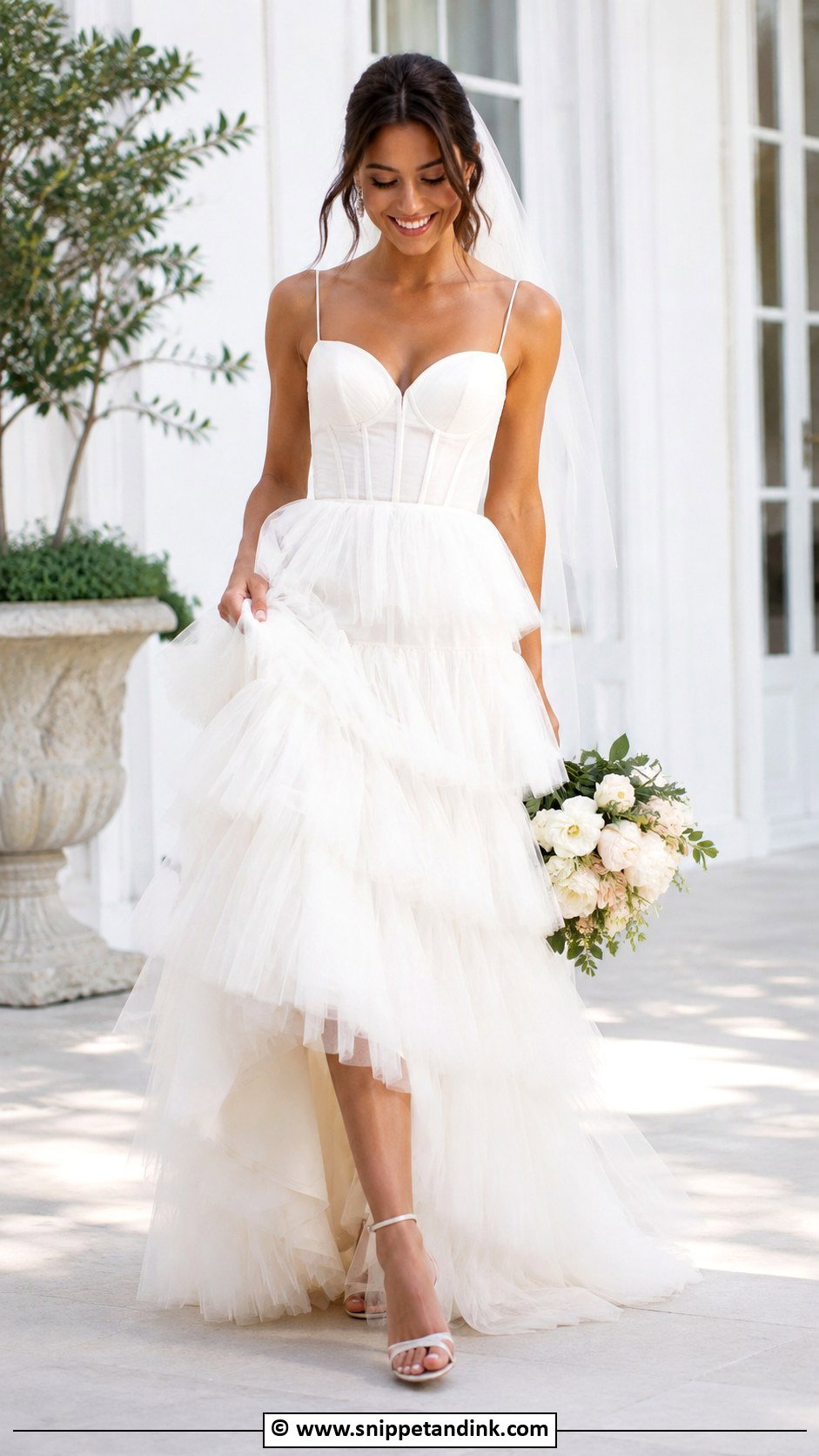
A tiered wedding dress gives volume through layers of fine tulle, organza or chiffon rather than a heavy petticoat. The fitted bodice keeps the tiers from swamping a smaller frame. Each tier hem is a separate edge that can catch dirt, so on grass or gravel, the bottom tier needs careful bustling or a slightly shorter hem.
18. Chiffon Wedding Dress
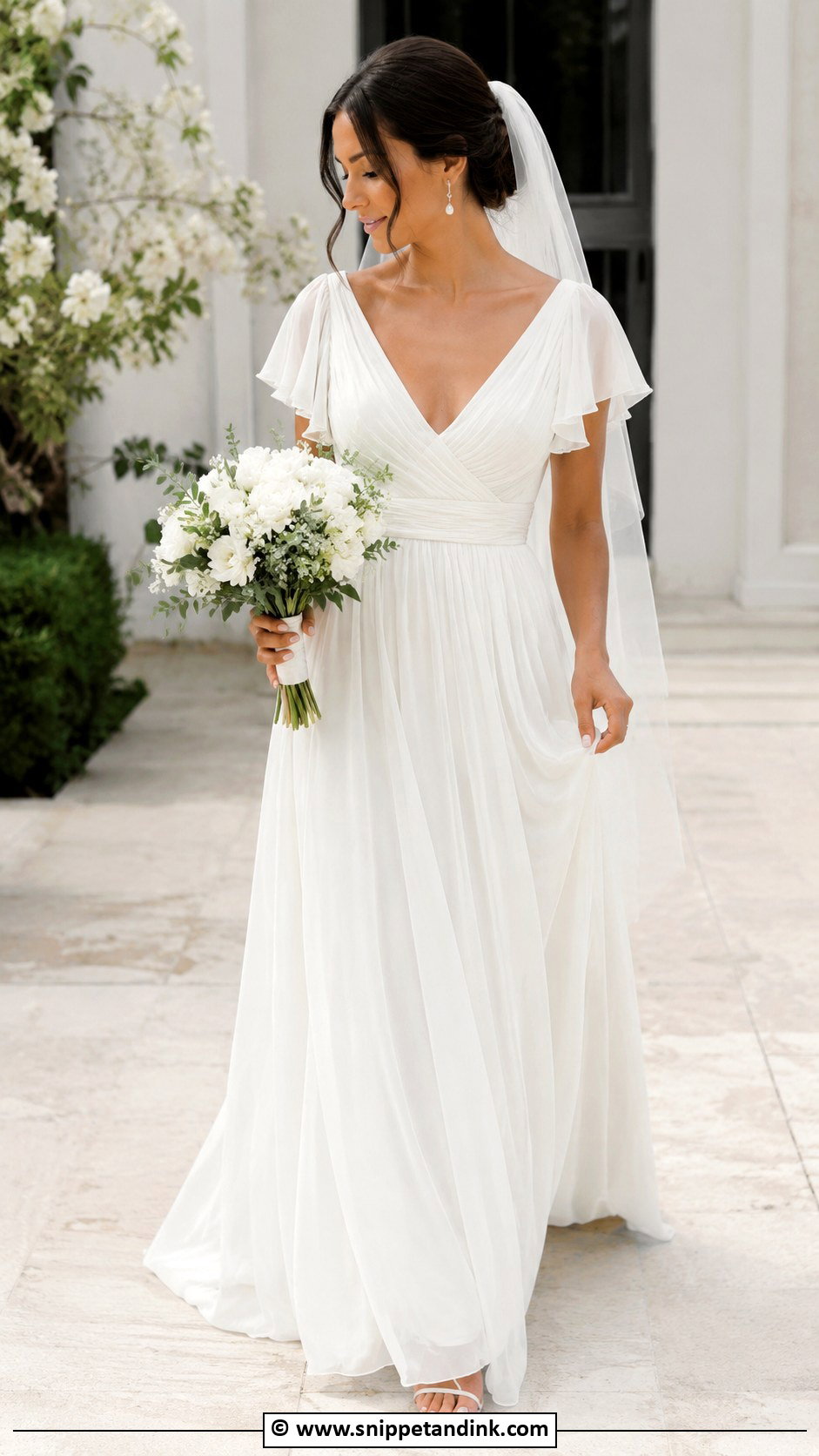
Chiffon is the fabric I suggest most for beaches and hot destinations because it breathes and drapes without structure. A draped bodice, flutter sleeves or an empire waist suit it. Chiffon frays and snags easily, and the hem picks up sand, so take a short hem for outdoor ceremonies. Flat sandals or low block heels keep you steady on grass.
19. Organza Wedding Dress
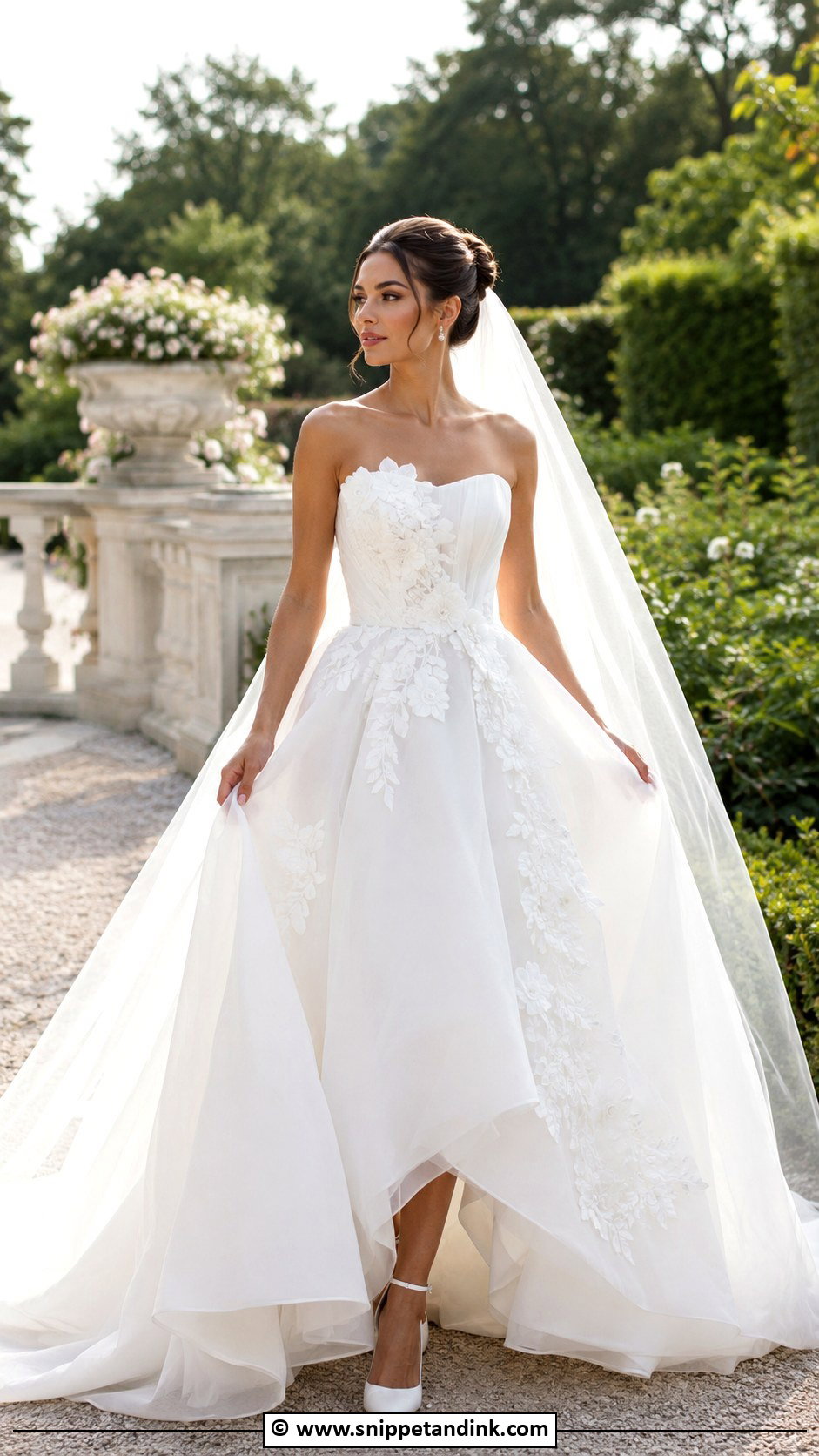
Organza is crisper than chiffon, so it holds a full skirt without needing as many layers. Floral appliqués or oversized bows sit well on it. It does crease in sharp lines if you sit on it in the car, so have someone spread the skirt behind you when you sit down. A long veil and satin heels suit formal gardens and indoor venues.

20. Vintage Inspired Wedding Dress
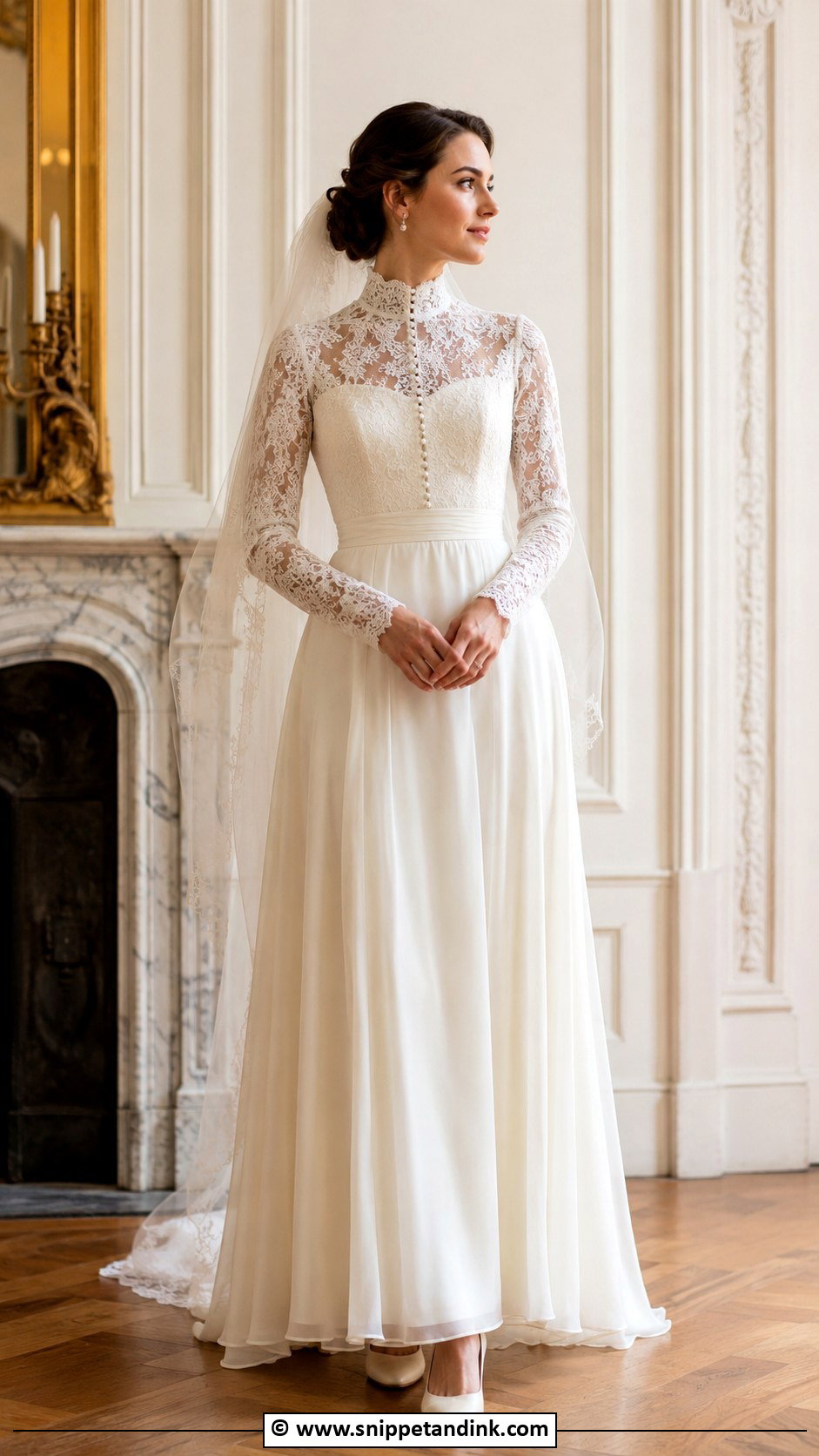
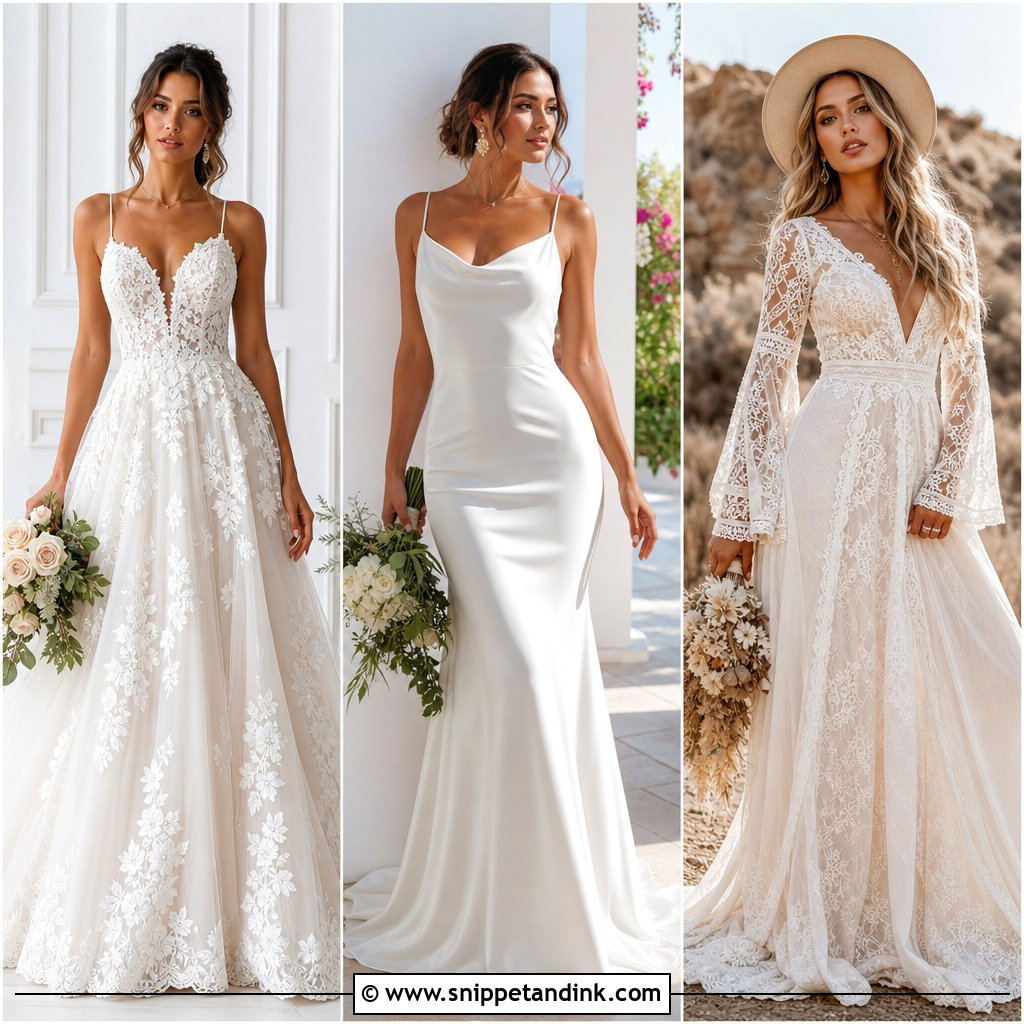
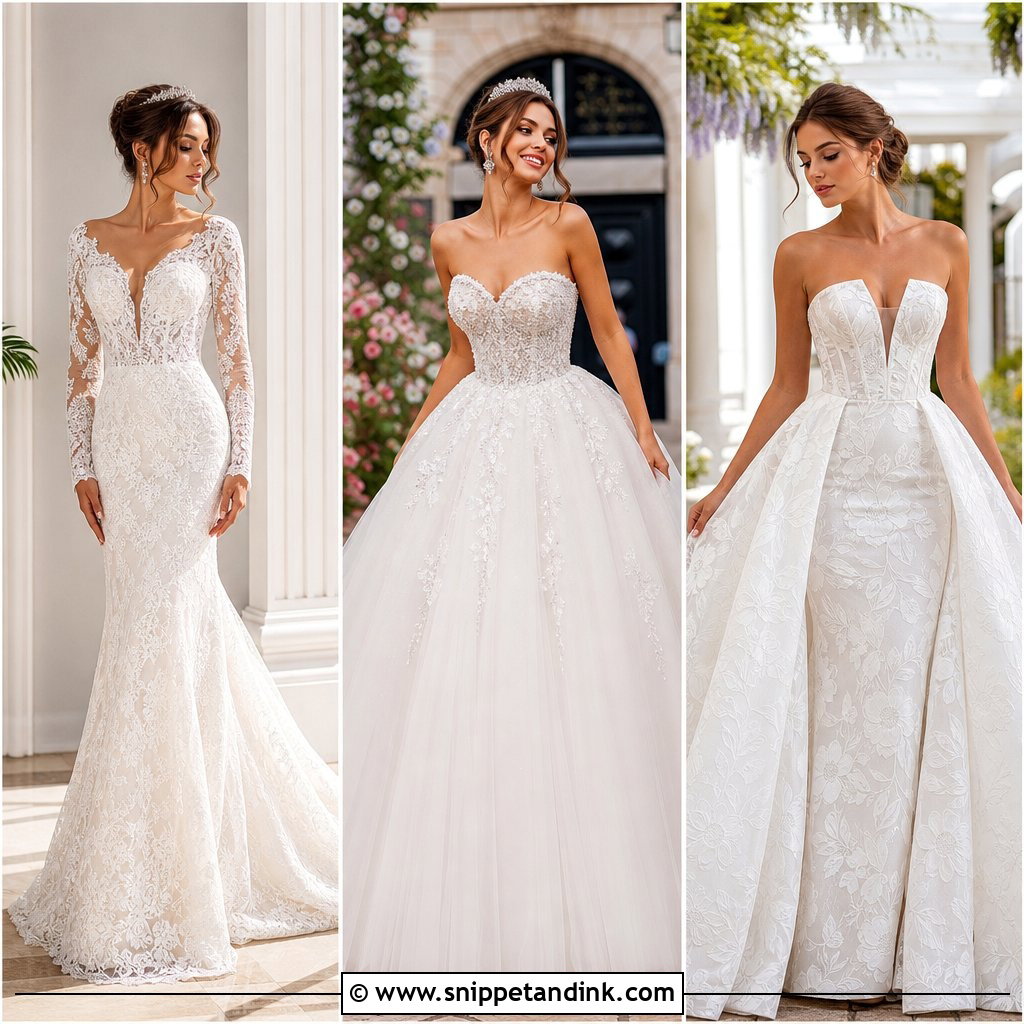
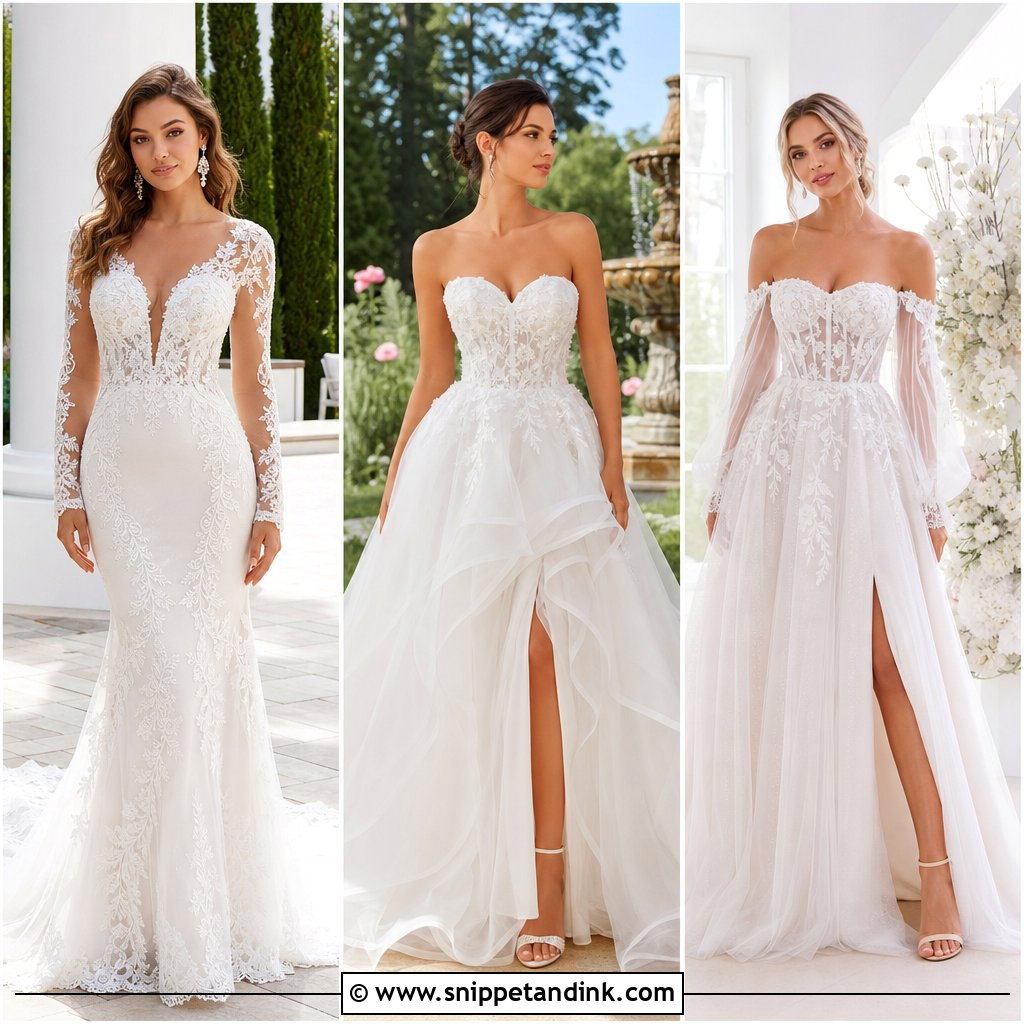
Vintage details such as lace collars, covered buttons, long sleeves and tea-length skirts feel personal, but too many together can look like a costume. I usually pick one or two and keep the fit modern. Covered buttons down the back look lovely and take a long time to fasten, so give whoever is dressing you a crochet hook and ten minutes. Pearl earrings and a soft veil suit historic venues and courthouse ceremonies.
21. Tea Length Wedding Dress
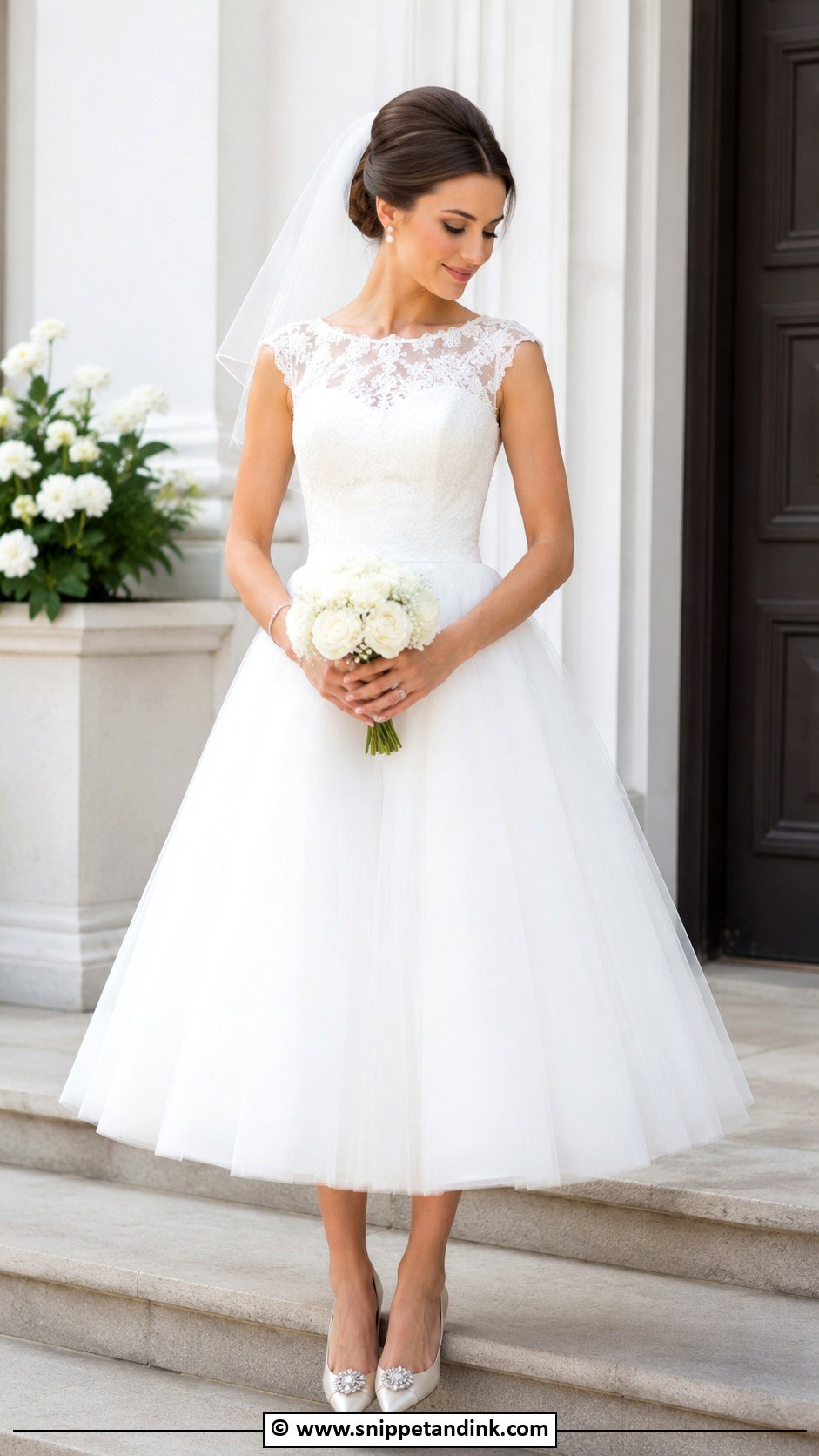
Tea length lands between the knee and ankle, so your shoes become part of the dress. Satin pumps, embellished flats or block heels all work, but they must be comfortable since everyone will see them. A fitted bodice with a full lace or tulle skirt keeps it bridal. Hem length is tricky to get right on shorter brides, so try it with the exact shoes you’ll wear.
22. Short Wedding Dress
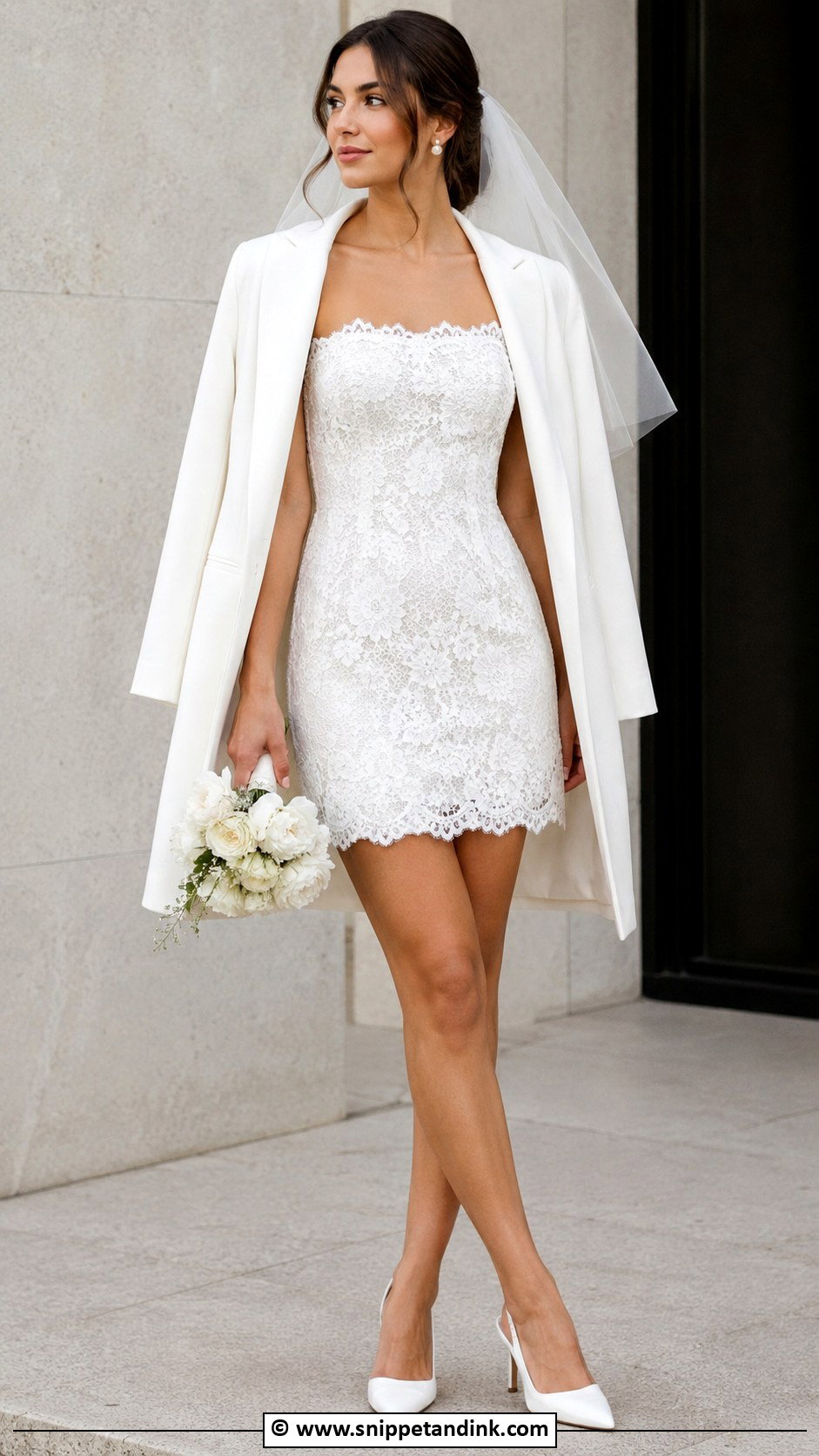
Short dresses read bridal when the fabric is good. Lace, satin, bows and puff sleeves keep a mini from looking like a party dress, and a short veil makes the intention clear. A tailored white coat or cape works for cooler city weddings. Short gowns are also popular for second looks, elopements and reception changes.
23. Slip Wedding Dress
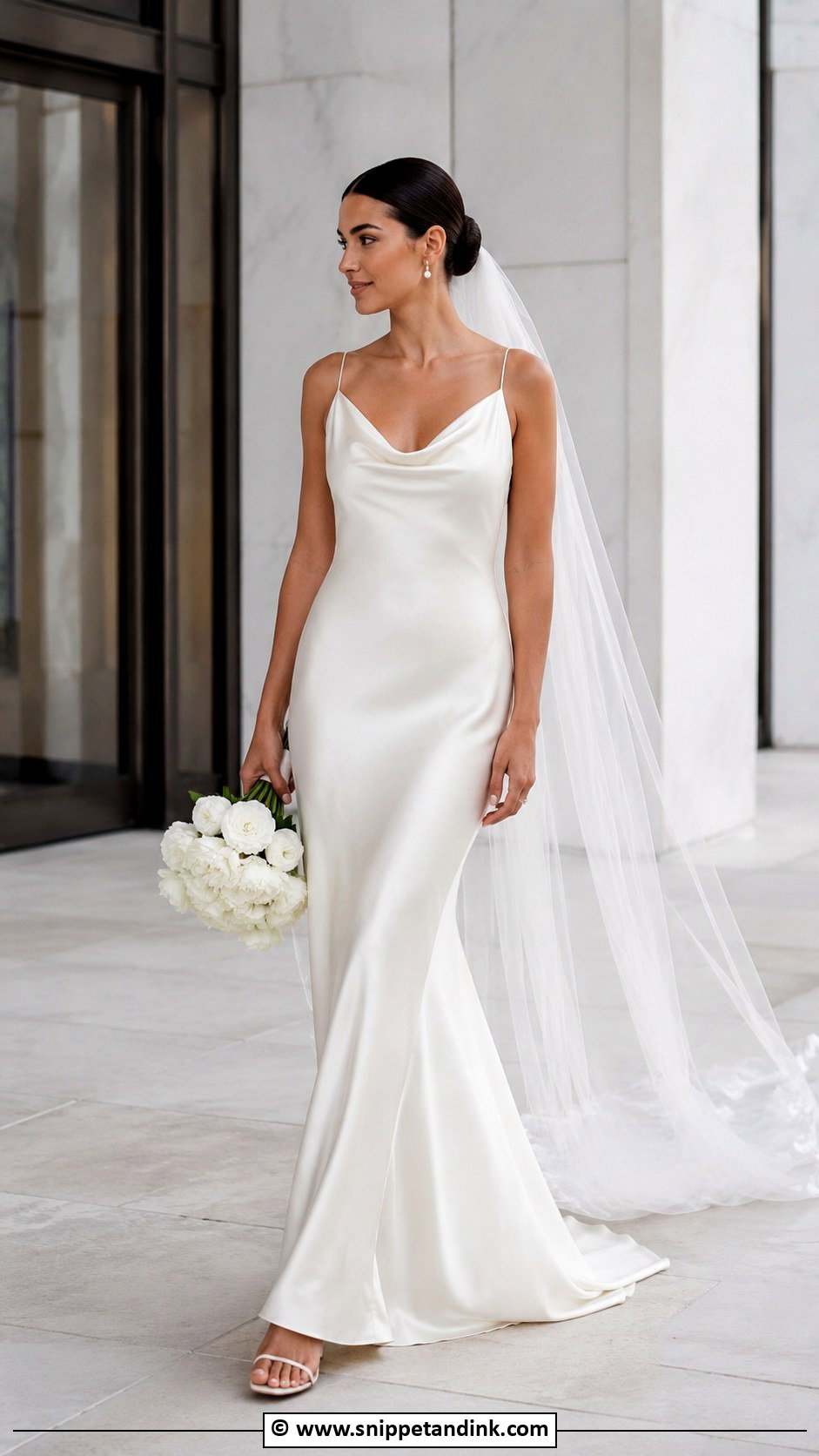
A slip dress relies on fabric and fit, with nothing hiding the body. Silk, satin and crepe with a cowl neck or low back look clean, but they show undergarment lines, so plan your lingerie at the first fitting. A long sheer veil and strappy heels suit it. City, beach and rooftop weddings work well for anyone who doesn’t want volume.
24. Mermaid Wedding Dress
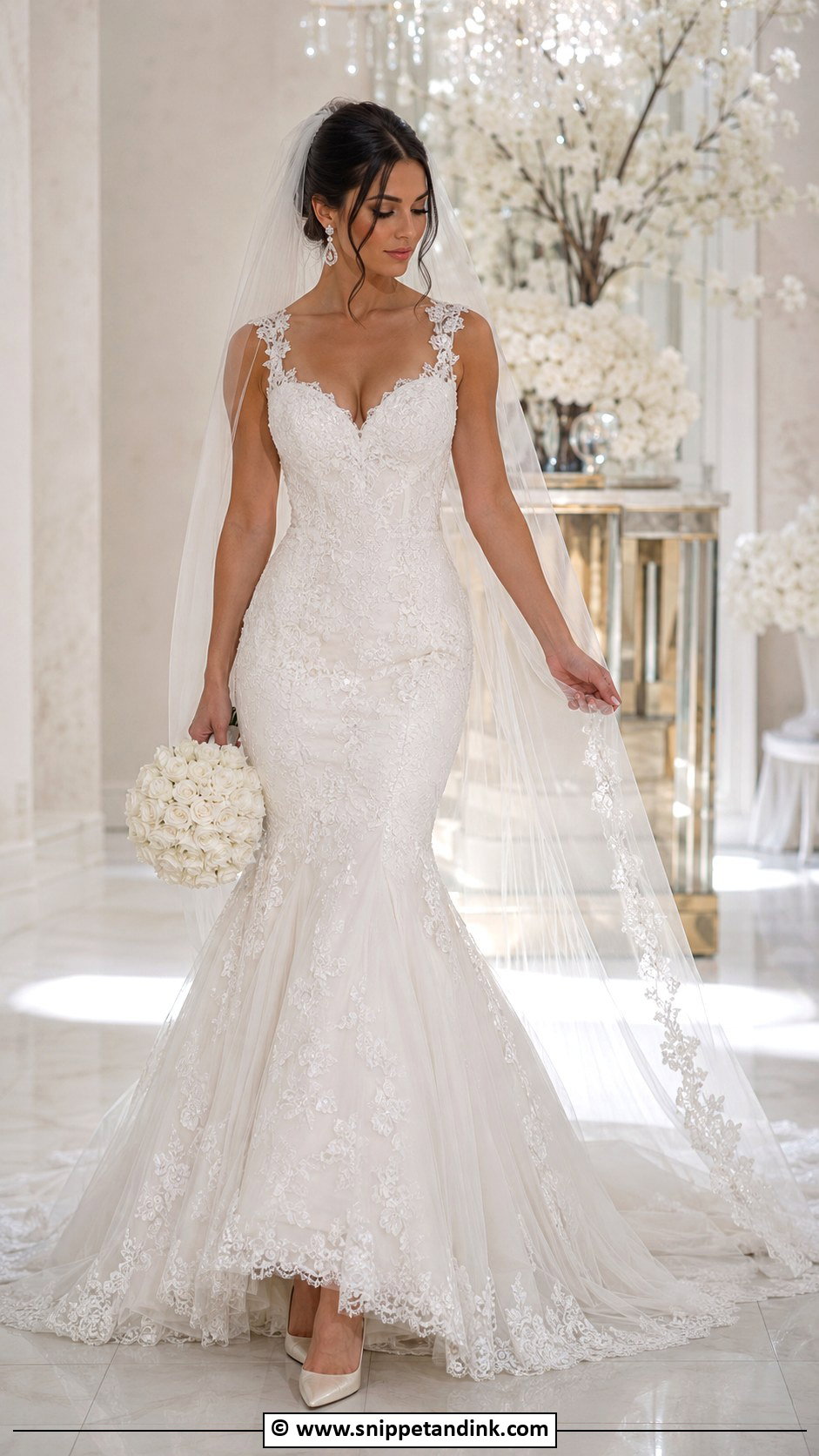
Mermaid gowns fit through the bodice, waist and hips and flare at or below the knee. The higher the flare starts, the easier it is to walk and sit. At fittings, I have brides sit down, climb a step and dance a few steps, because some mermaid cuts make all three hard. Lace softens it, satin and crepe sharpen it, and a cathedral veil adds romance.


25. Fit And Flare Wedding Dress
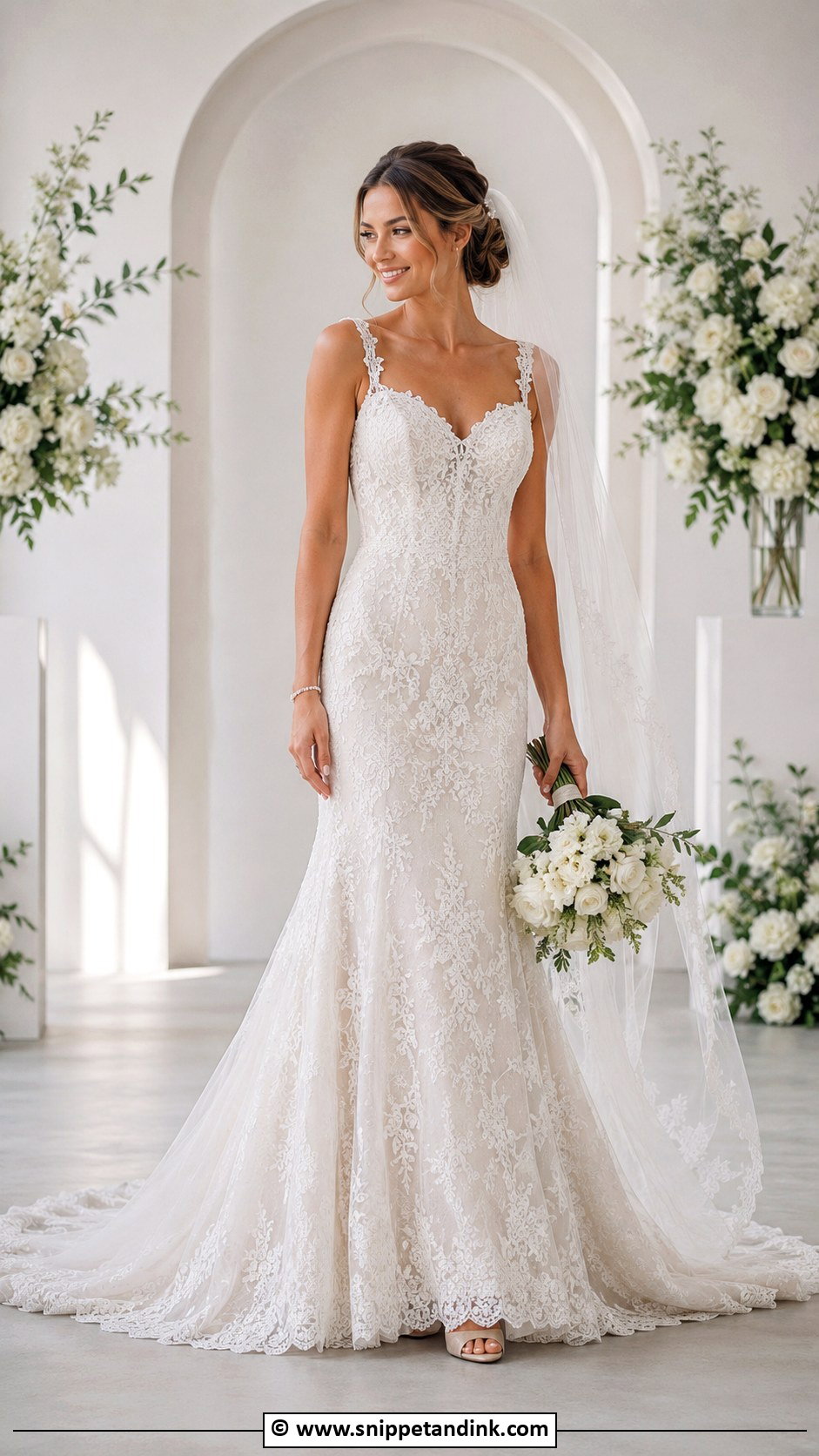
Fit and flare is the easier version of a mermaid, opening from the hips rather than the knee so you can walk normally. It shows curves while leaving the skirt free. Lace, crepe, satin and tulle all work. A fingertip veil and a low chignon keep it polished, and it rarely needs as much bustling as a fuller skirt.
26. Empire Waist Wedding Dress
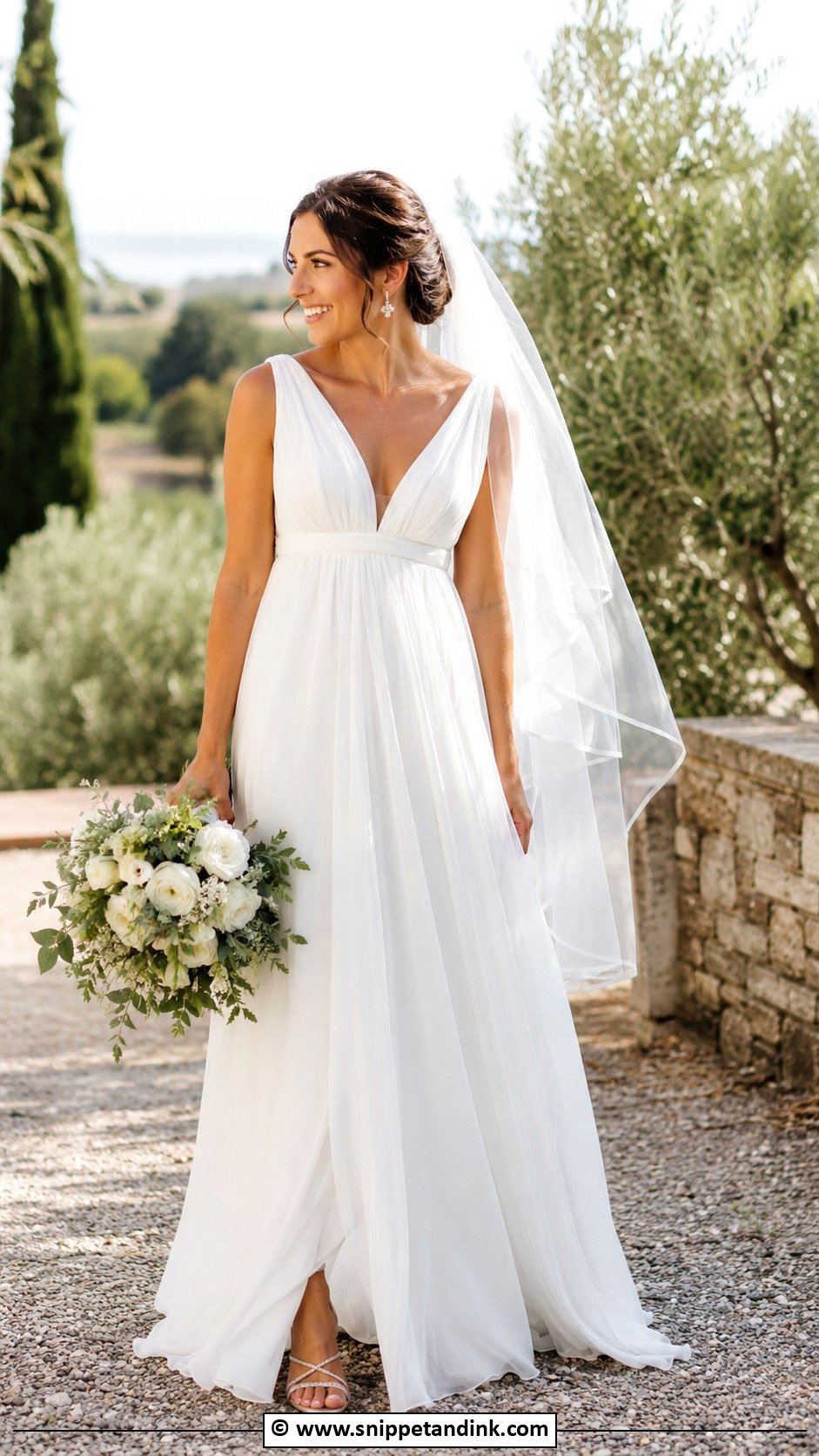
An empire waist sits just under the bust and lets the skirt fall loose, so nothing presses on the stomach all day. Chiffon, tulle and light lace give it the right drape. It’s also one of the gowns I’d suggest for pregnant brides, since the skirt allows room to grow between fittings. Sandals and half-up hair keep the relaxed feel.
27. Blush Wedding Dress
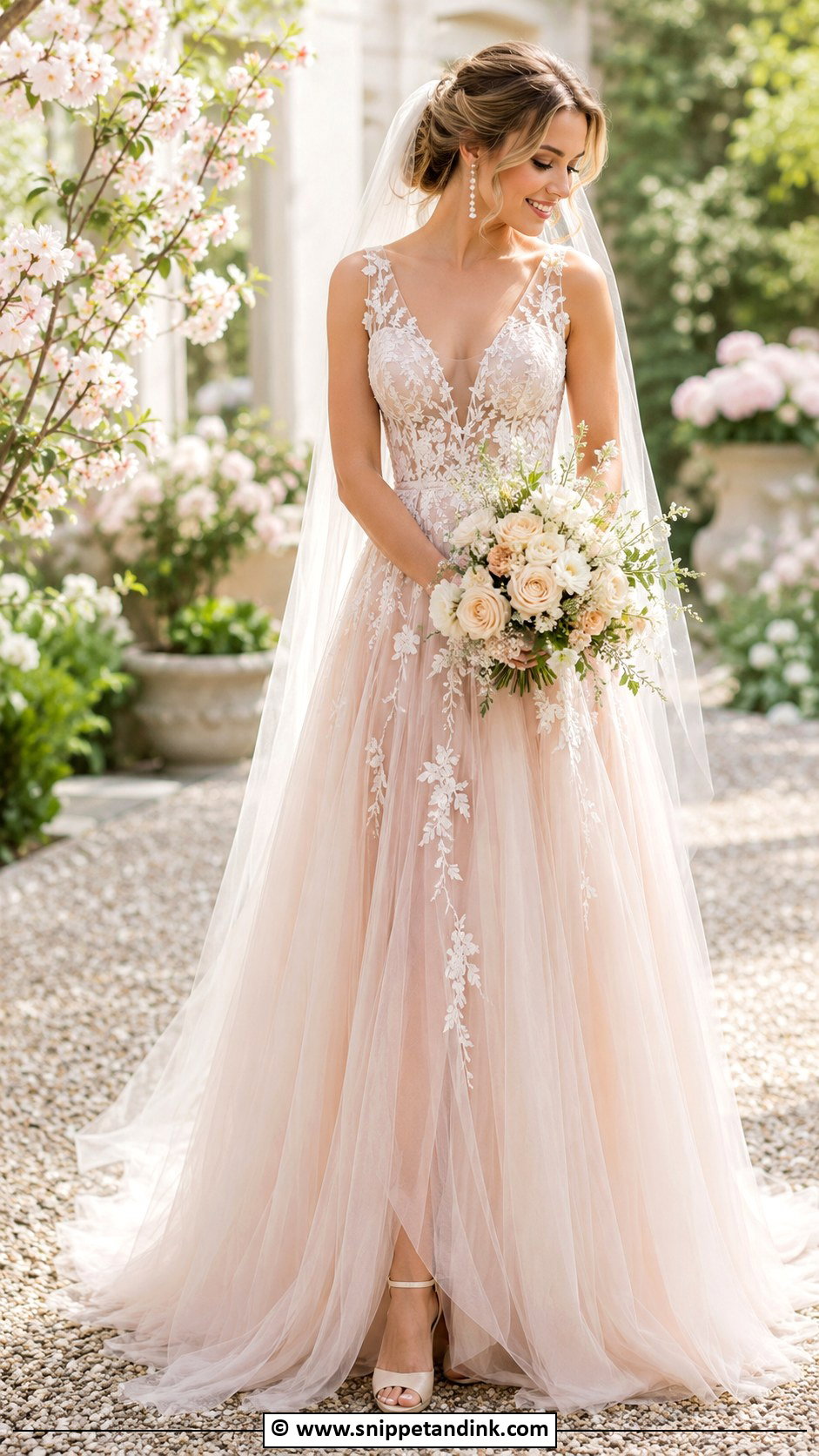
Blush covers anything from a barely visible pink to a muted rose, usually showing through lace, tulle or appliqués over a nude lining. Try it in daylight, because shop lighting tends to make blush look pinker than it photographs. Ivory heels, pearls and a sheer veil keep it bridal. A bouquet in cream and pale pink ties it together.
28. Champagne Wedding Dress
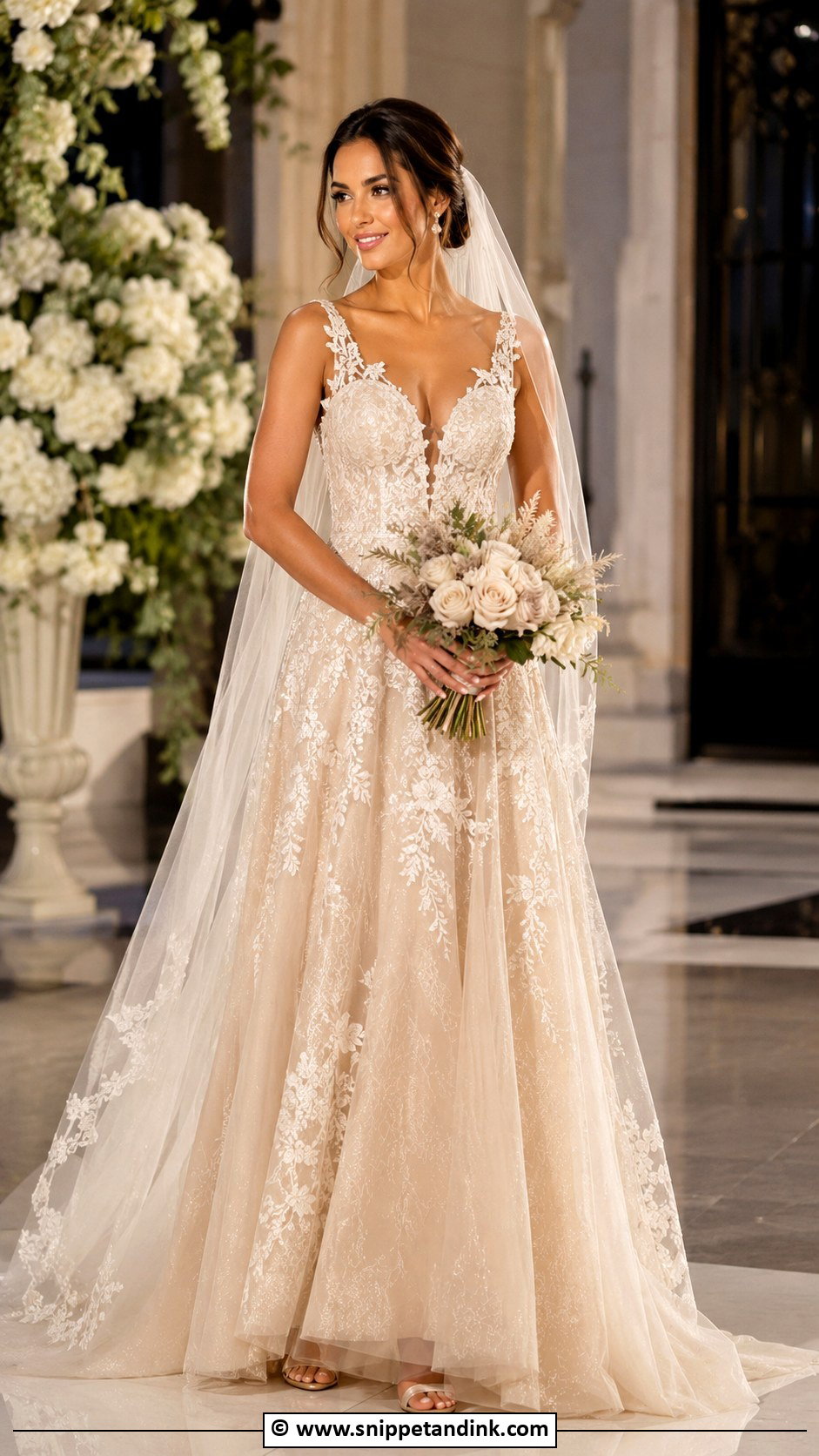
Champagne has a soft golden undertone that warms many skin tones more than bright white. Its main pitfall is clashing whites. A stark white veil next to a champagne gown looks grey, so match your veil and shoes to the gown’s undertone. Beading, satin and layered tulle all look rich in this colour, especially under warm evening light.
29. Bow Back Wedding Dress
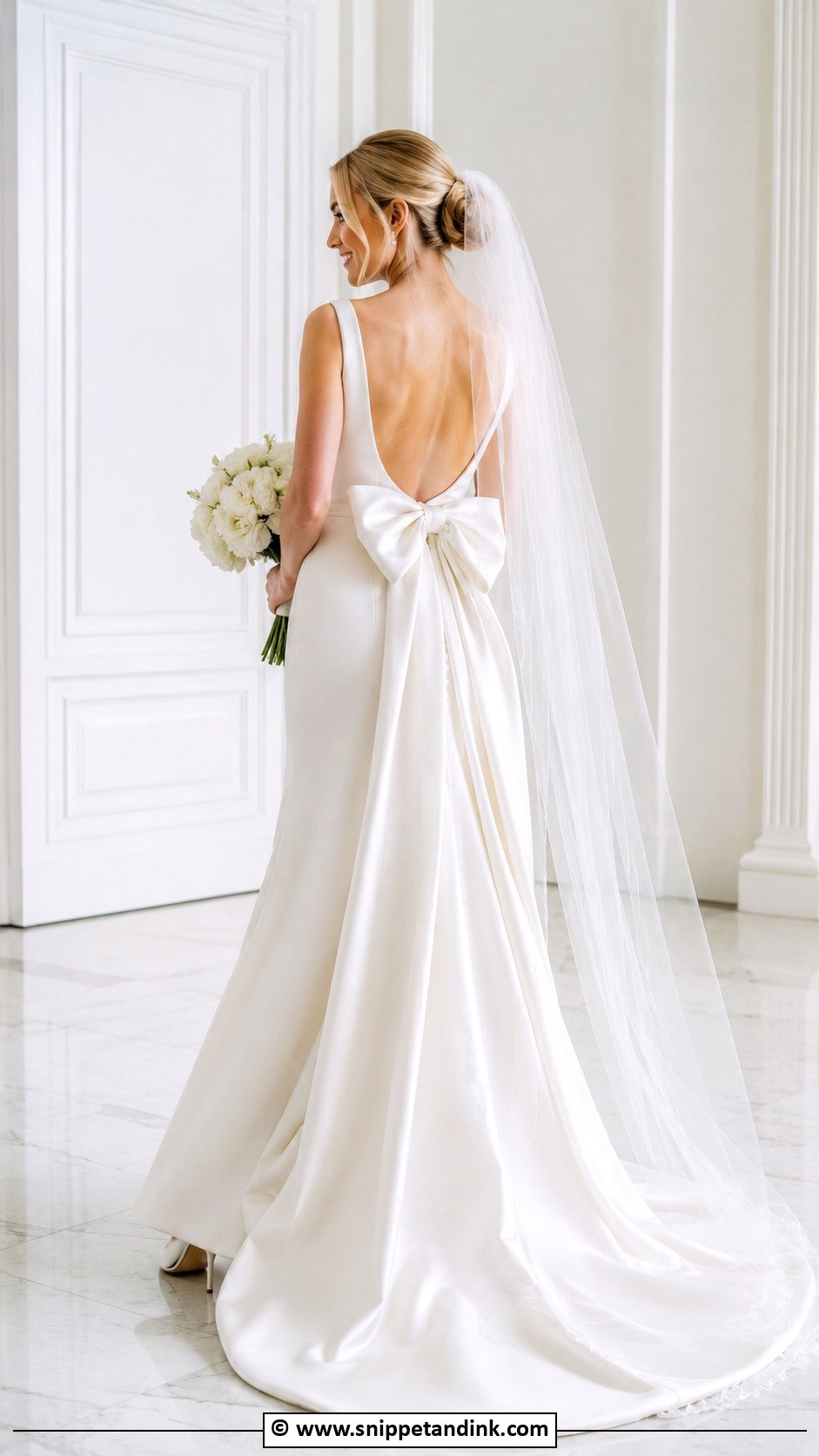
A bow at the back gives you a romantic detail for the aisle walk and ceremony, when everyone is behind you. Oversized satin bows look modern, small lace bows softer. If the bow sits high near the shoulder blades, wear your hair up so it doesn’t hide it. Large bows can crush when you sit, so ask your seamstress whether it’s stiffened or needs a light steam before photos.
30. Cape Wedding Dress
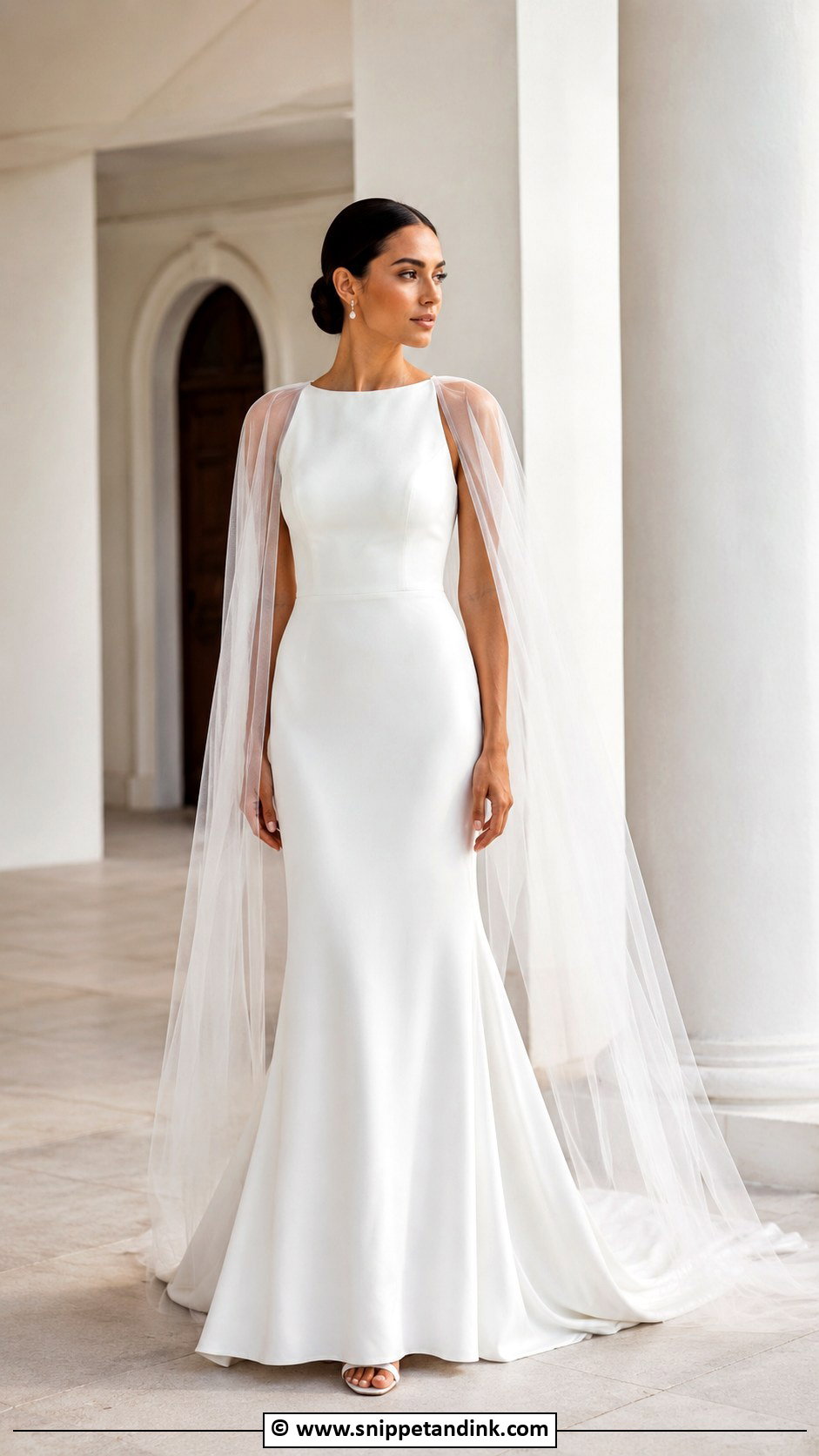
A cape can replace a veil, giving movement without anything pinned in your hair. Tulle, a lace capelet or a floor-length cape all work, over a simple gown such as a satin sheath, crepe fit-and-flare or clean A-line. It also suits brides who want drama without a heavy train or veil. Check that it fastens securely at the neck, since some capes pull backward when they catch the wind.
How Tulle, Satin and Lace Look by the Last Dance
Every fabric in this list behaves differently after a long day, and a dress that looked flawless at the ceremony can tell a different story by the end of the night. Knowing what to expect helps you choose, and it tells your bridesmaids what to watch for.
Satin and mikado
These crease across the hips and lap once you sit for dinner. A quick steam before evening portraits helps, or ask your photographer to schedule the main portraits before you sit down.
Tulle and chiffon
Tulle crushes flat when sat on but springs back after a shake. The real danger is snagging: jewellery, bouquet wire and shoe buckles all pull threads. Chiffon hems pick up grass and dirt quickly, so a good bustle matters more than people think.
Lace and appliqué
Lace holds up well, though the hem darkens on outdoor floors. Have your seamstress teach a bridesmaid how the bustle works, and ask her to tack loose appliqué edges at the final fitting. After the wedding, take the gown to a specialist cleaner within a few weeks, before stains set.
One Romantic Detail Is Usually Enough
Romance in a wedding dress can be soft, dramatic, simple, vintage or modern. The right gown is the one you feel comfortable and like yourself in. Think about your venue, season and how much you want to move, then look at how every detail works together. Lace, tulle, pearls, appliqués, bows, sleeves and full skirts each create romance differently, and you don’t need all of them. Choose the one feature you love most and let the rest of the look support it.
You'll Like These Ideas:





Leave a Reply