
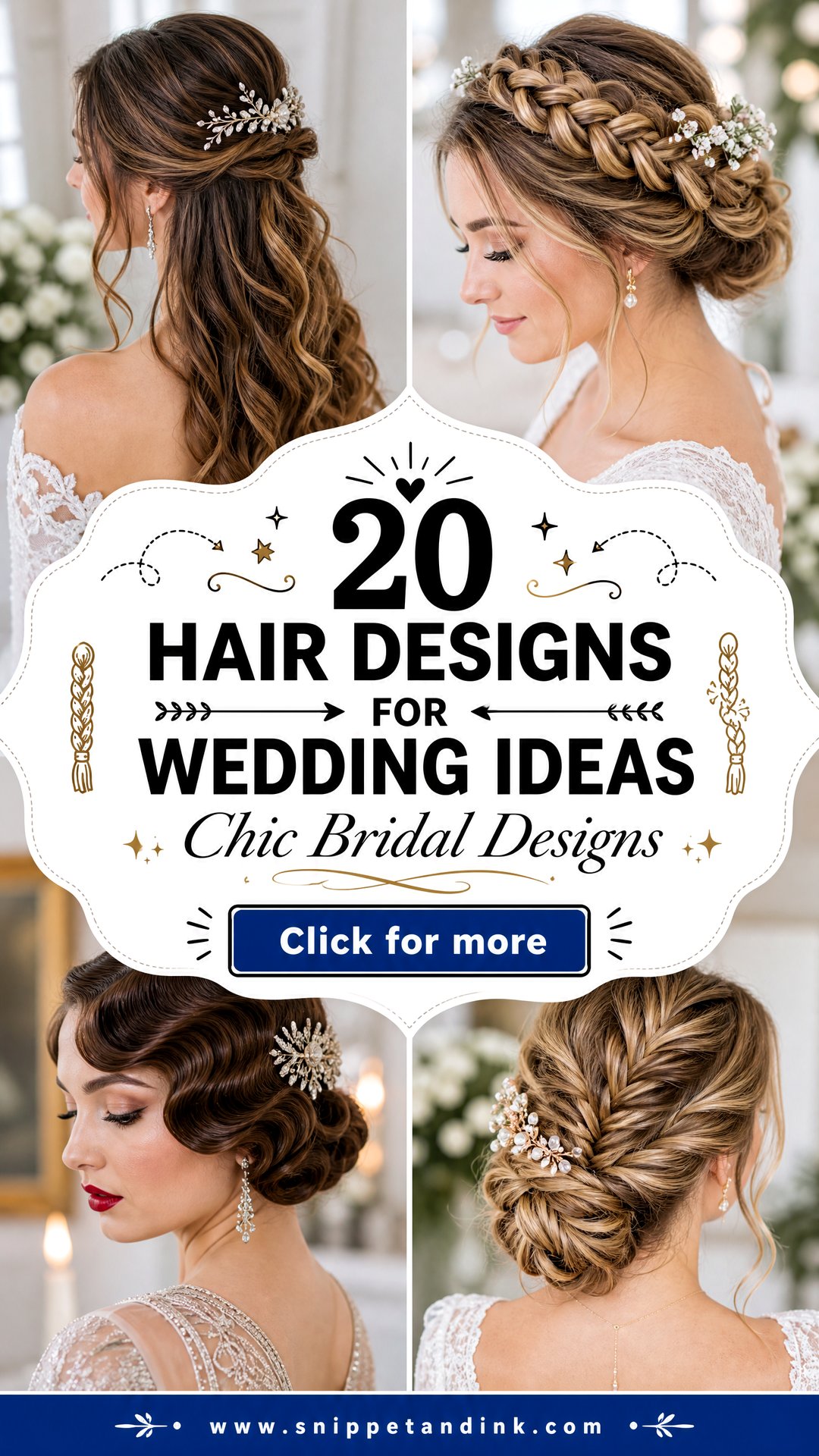
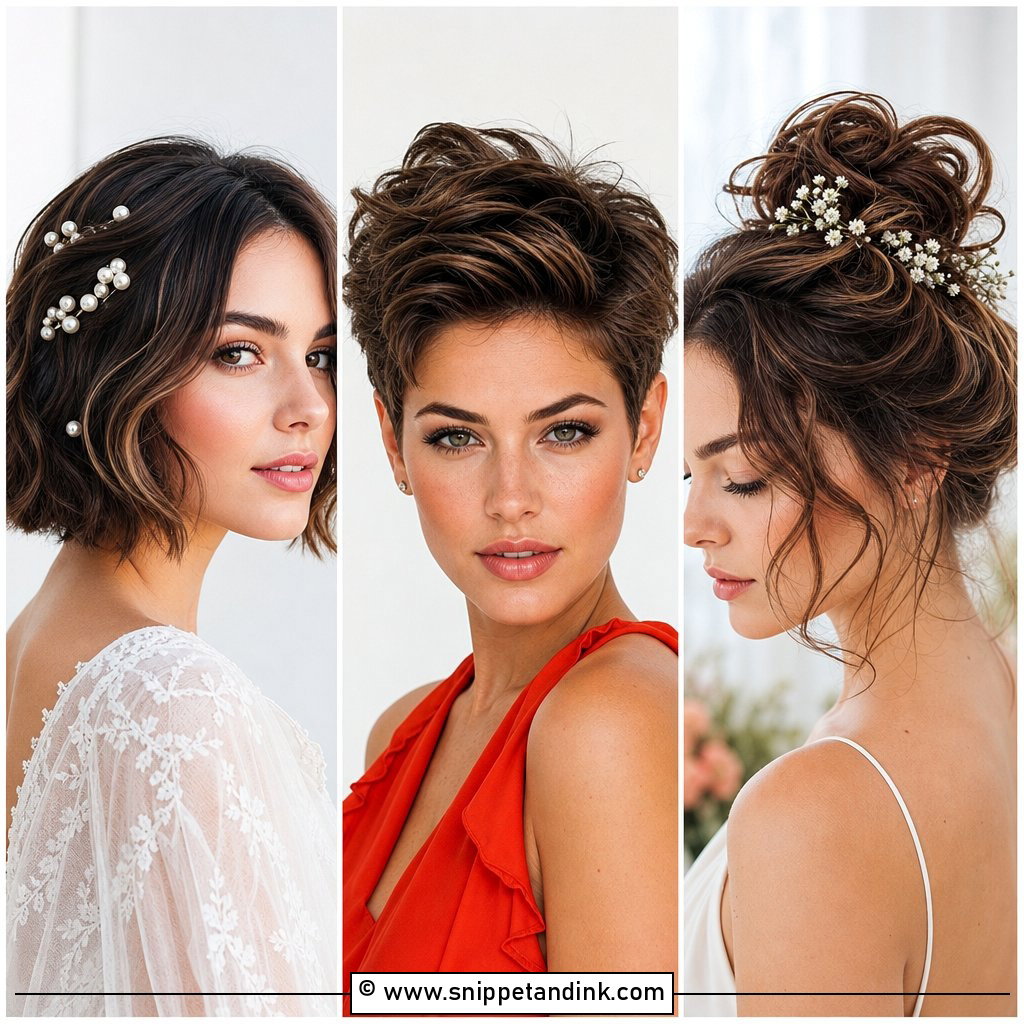
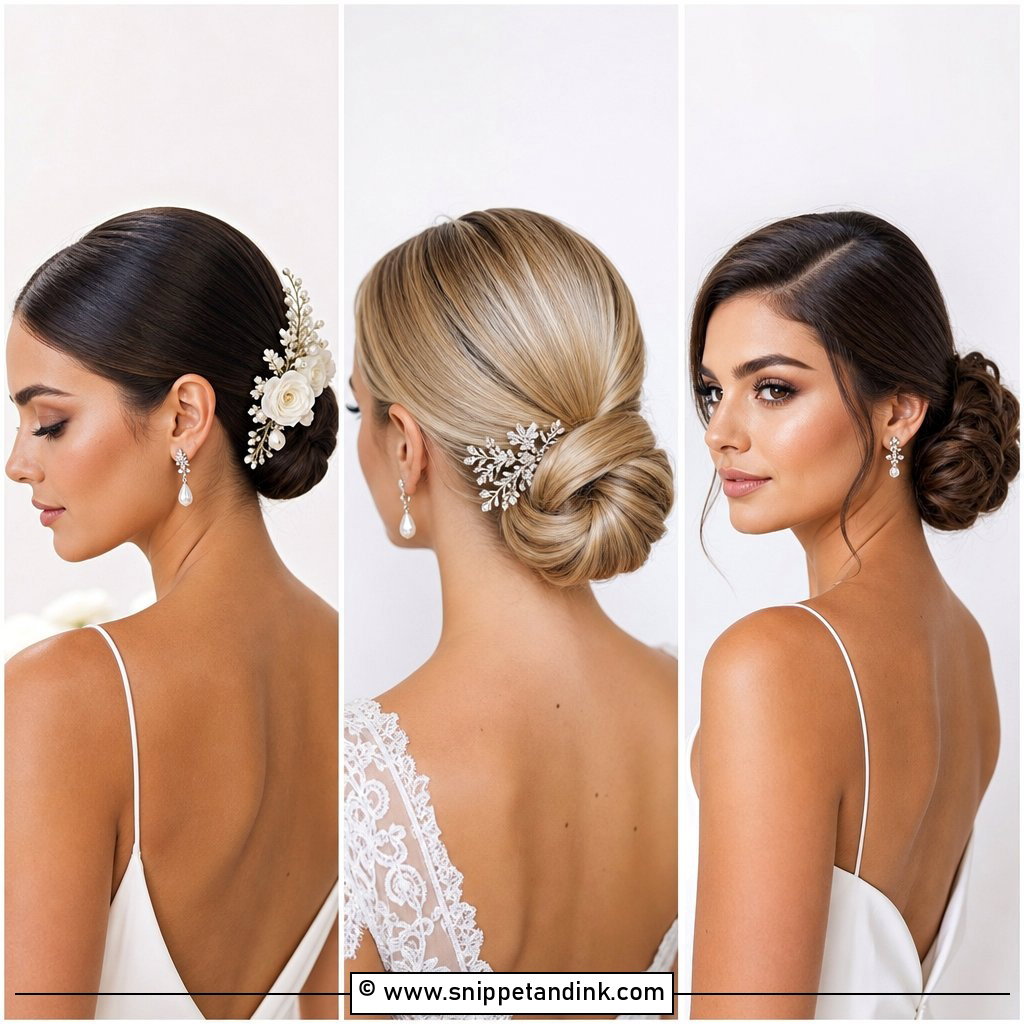
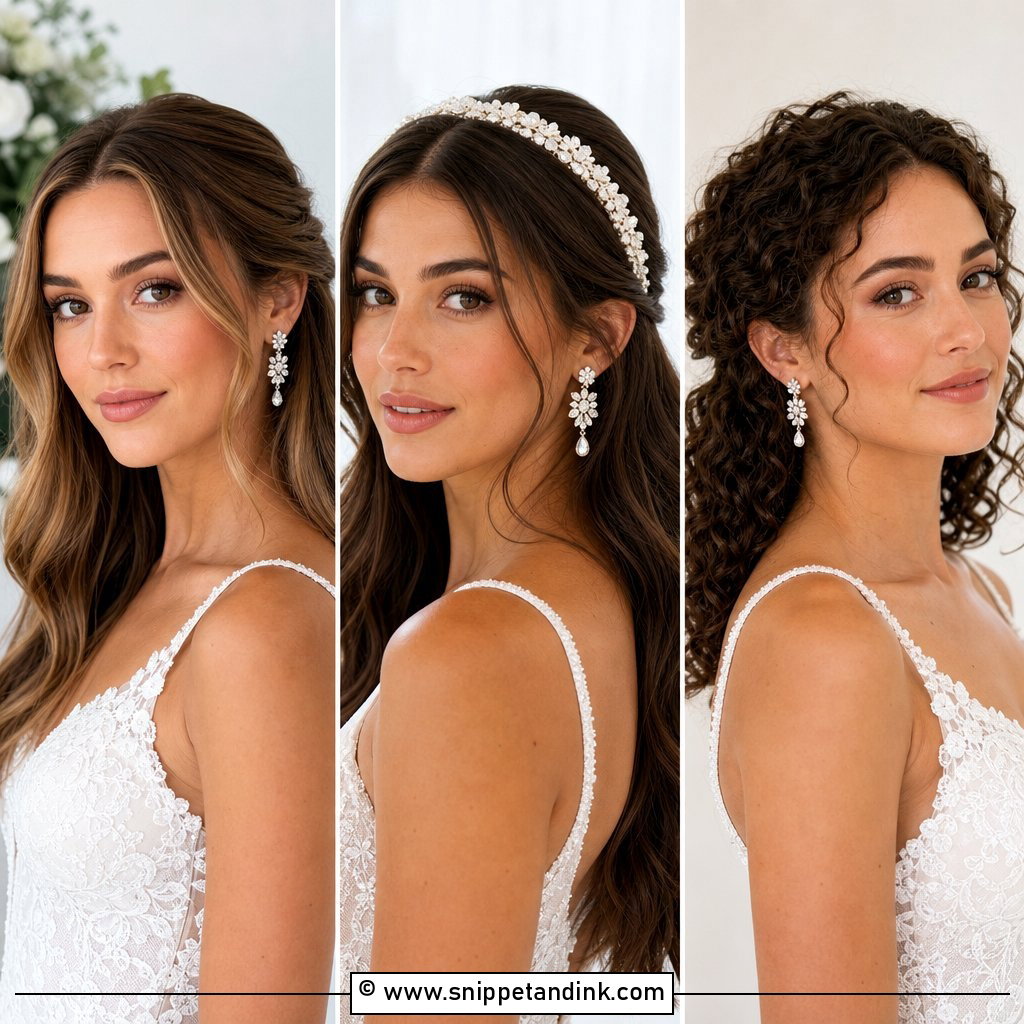
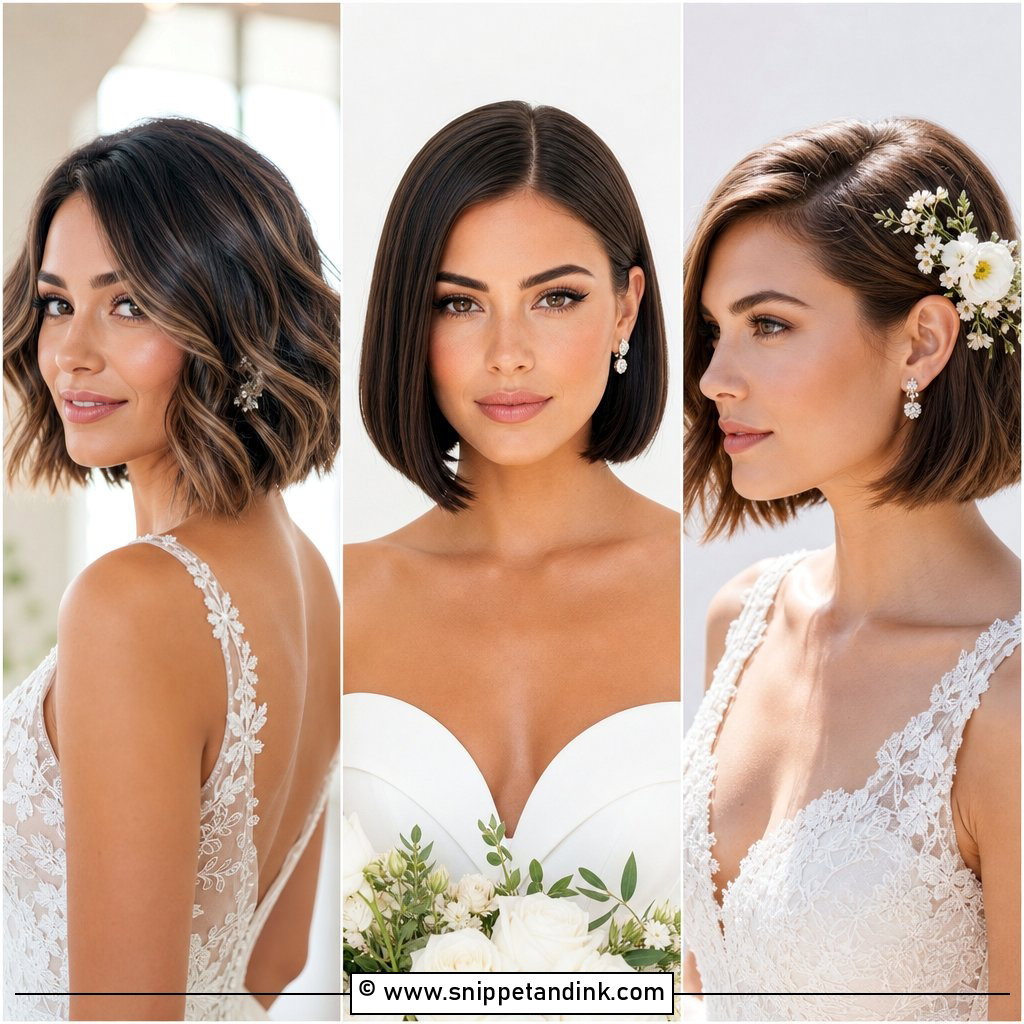
Bridal hair is a craft of compromise. The style has to suit your real texture and density, survive the weather and a full day of movement, and still look like you in close-up portraits. Below are 20 designs I’m asked for again and again, from sculpted finger waves to loose twists, each with notes on what it takes to build and who it genuinely suits. Treat the ones that catch your eye as the start of a conversation with your stylist rather than an exact order.
Why the Photo on Your Phone Might Not Match Your Hair
I love it when brides bring inspiration photos, but I always look at them with a working eye first. Many of the fullest updos and longest waves you see online were built with clip-in extensions or padding, and the model may have far more hair than you do.
Look for hair like yours
When you save a style, look for photos where the hair has a similar length, thickness and texture to your own. A braided crown on thick, wavy hair will look different on fine, straight hair. Adding your texture to the style name when you search helps a lot.
Notice the color
Highlights and balayage make twists and braids look more detailed, because each section shows a different tone. On solid dark hair, the same braid can read as one block in photos. That’s no reason to avoid it, but it’s worth knowing before you fall for a picture.
Bring one photo you dislike
Show your stylist something you don’t want. It often explains your taste better than five photos you love.
1. Low Chignon Wedding Updo
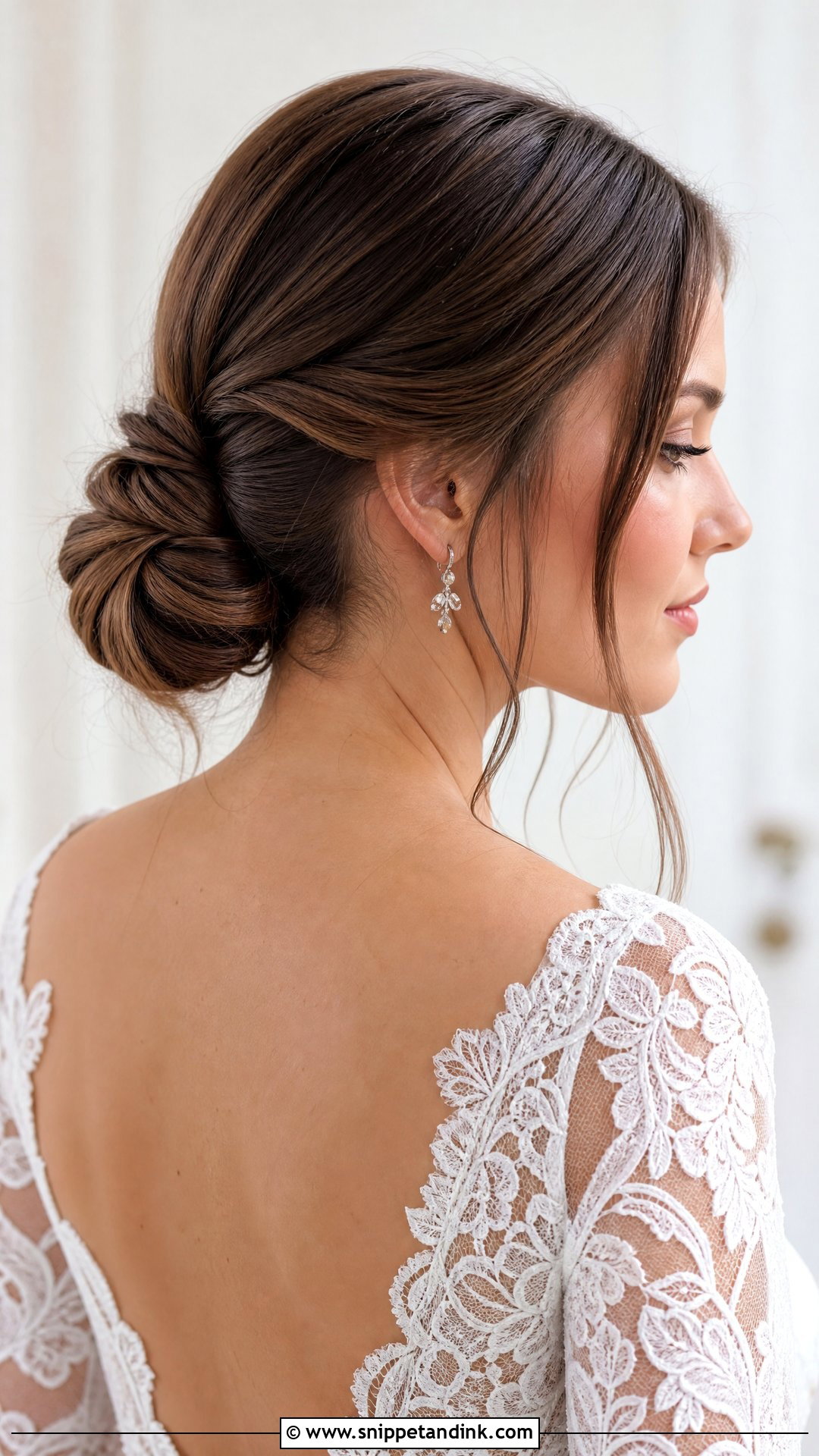
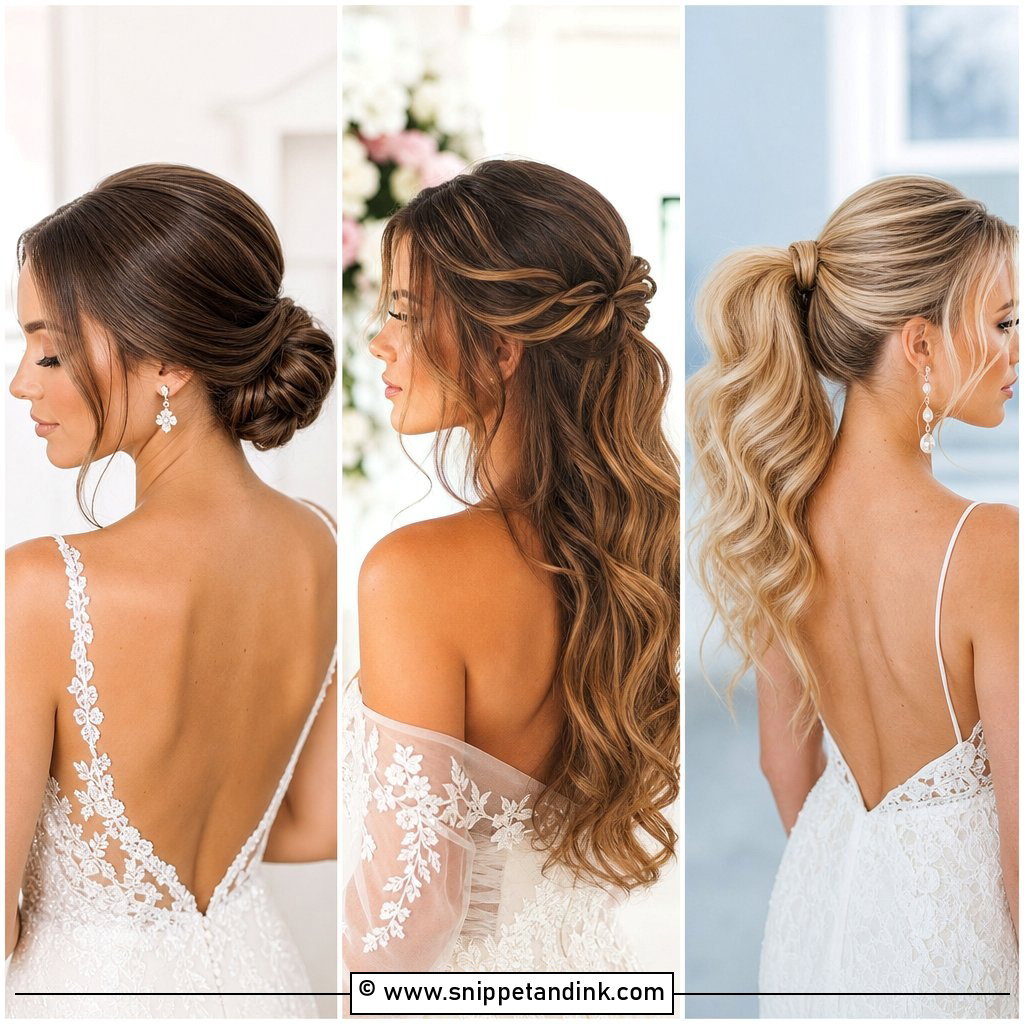
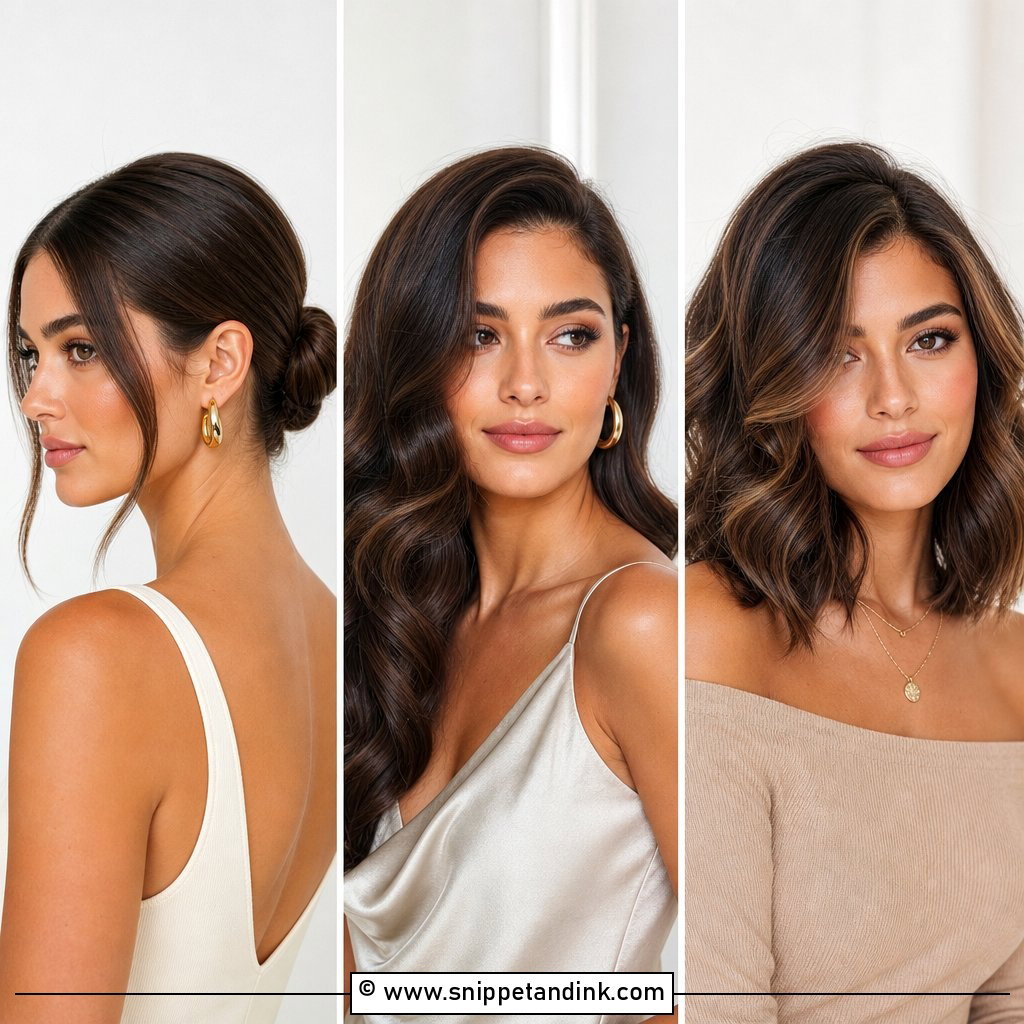
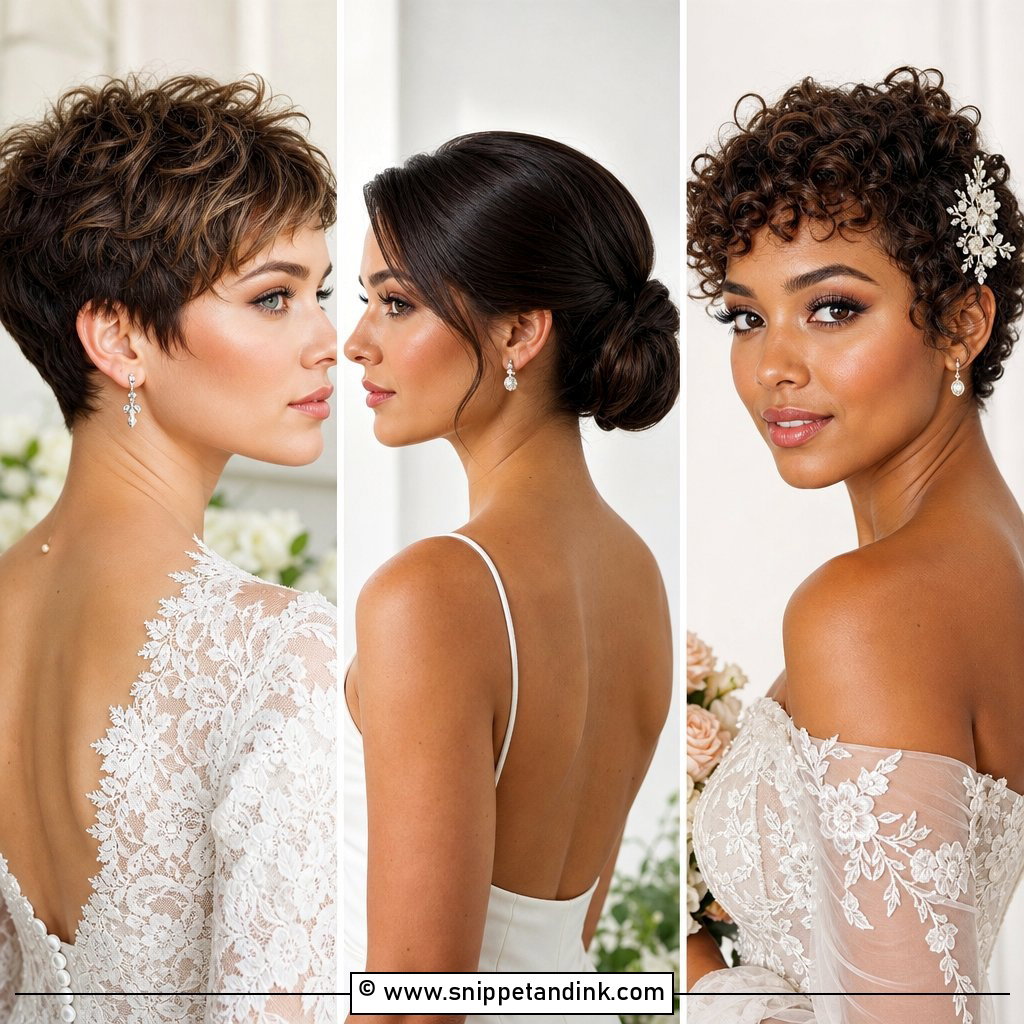
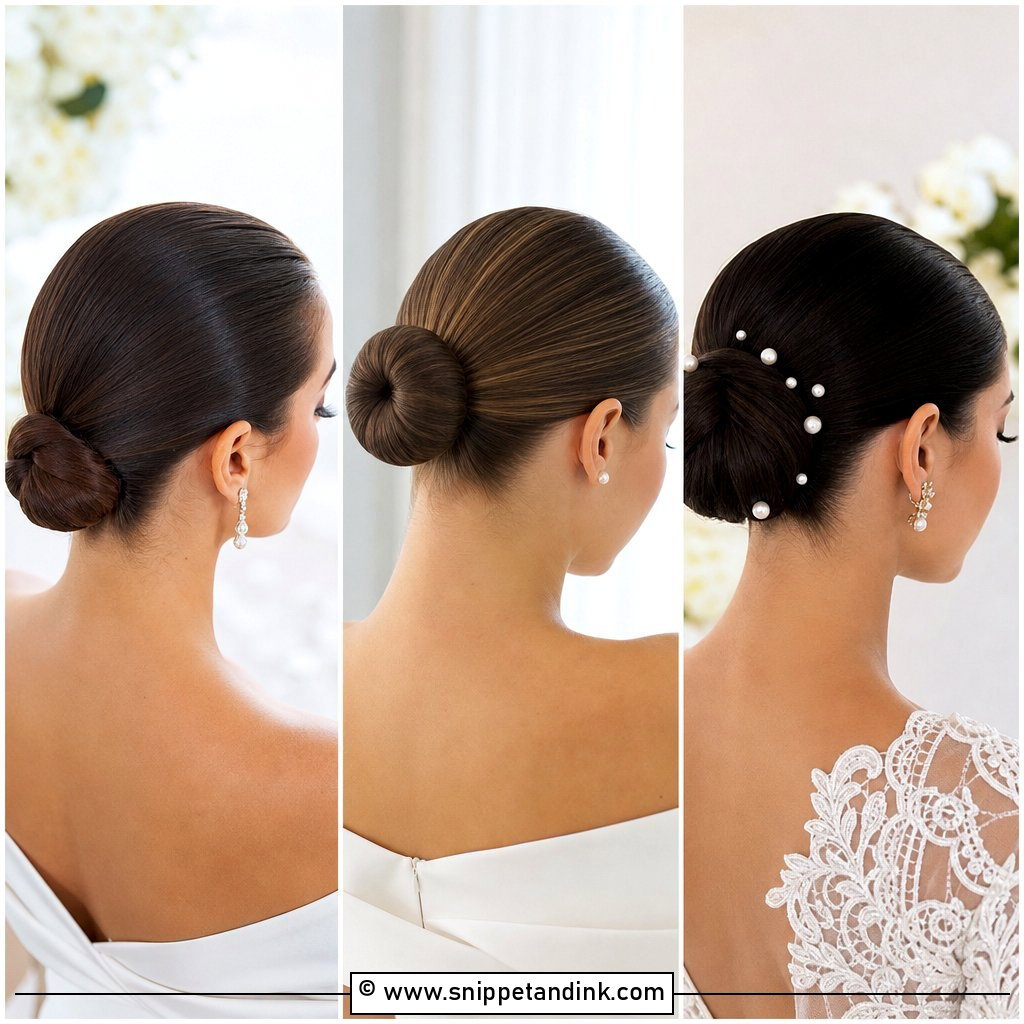
If I had to name one style that suits the widest range of brides, this would be it. A low chignon gathers the hair into a smooth, twisted knot at the nape, and because the weight sits low, it stays comfortable through a long day. Ultra-sleek gives an editorial finish, while a few face-framing pieces pulled loose soften it. The one thing I insist on is a solid anchor underneath, usually a small ponytail or braid, so the knot doesn’t loosen when the veil comes out.
2. Half-Up Half-Down Bridal Style
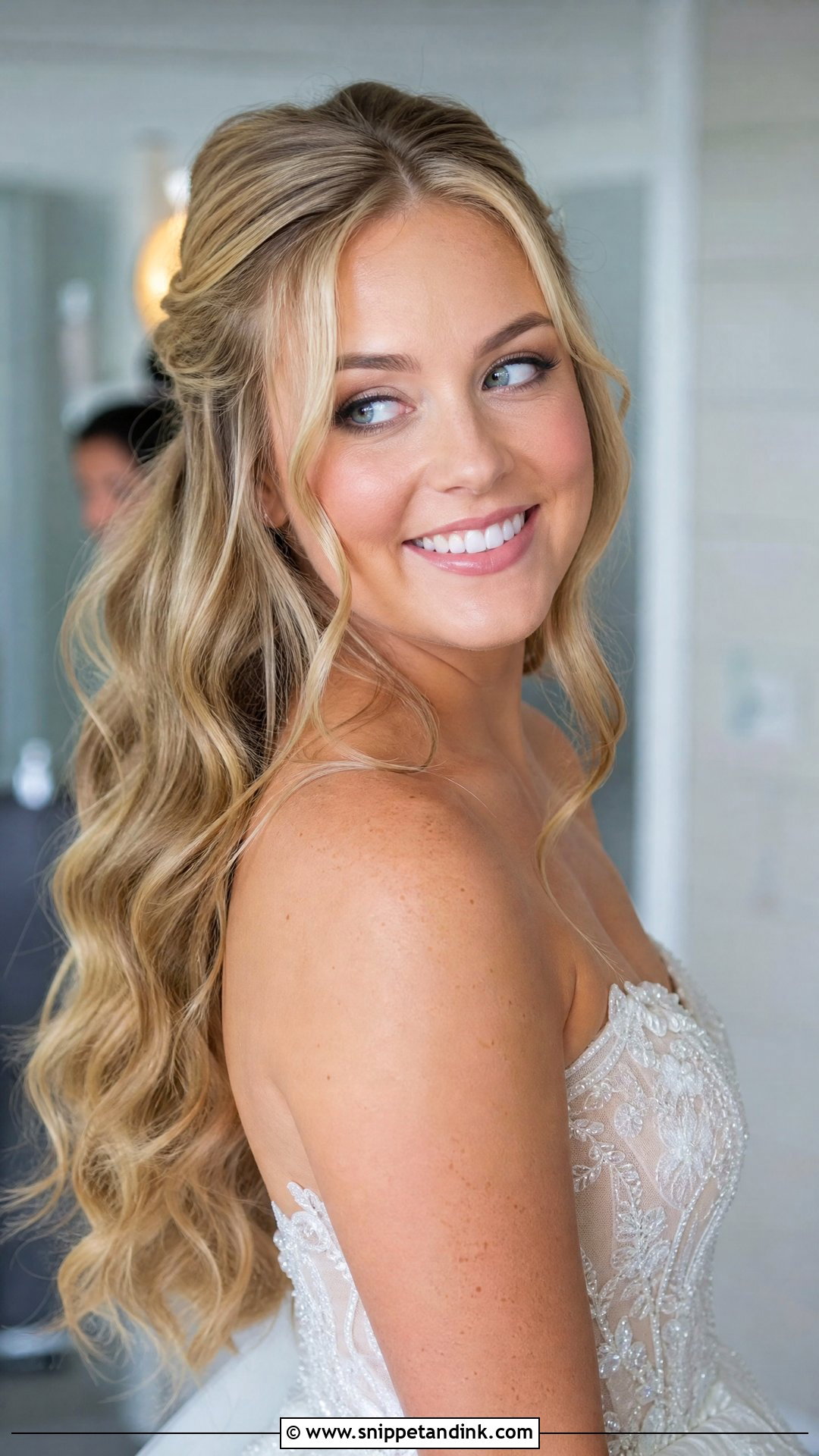
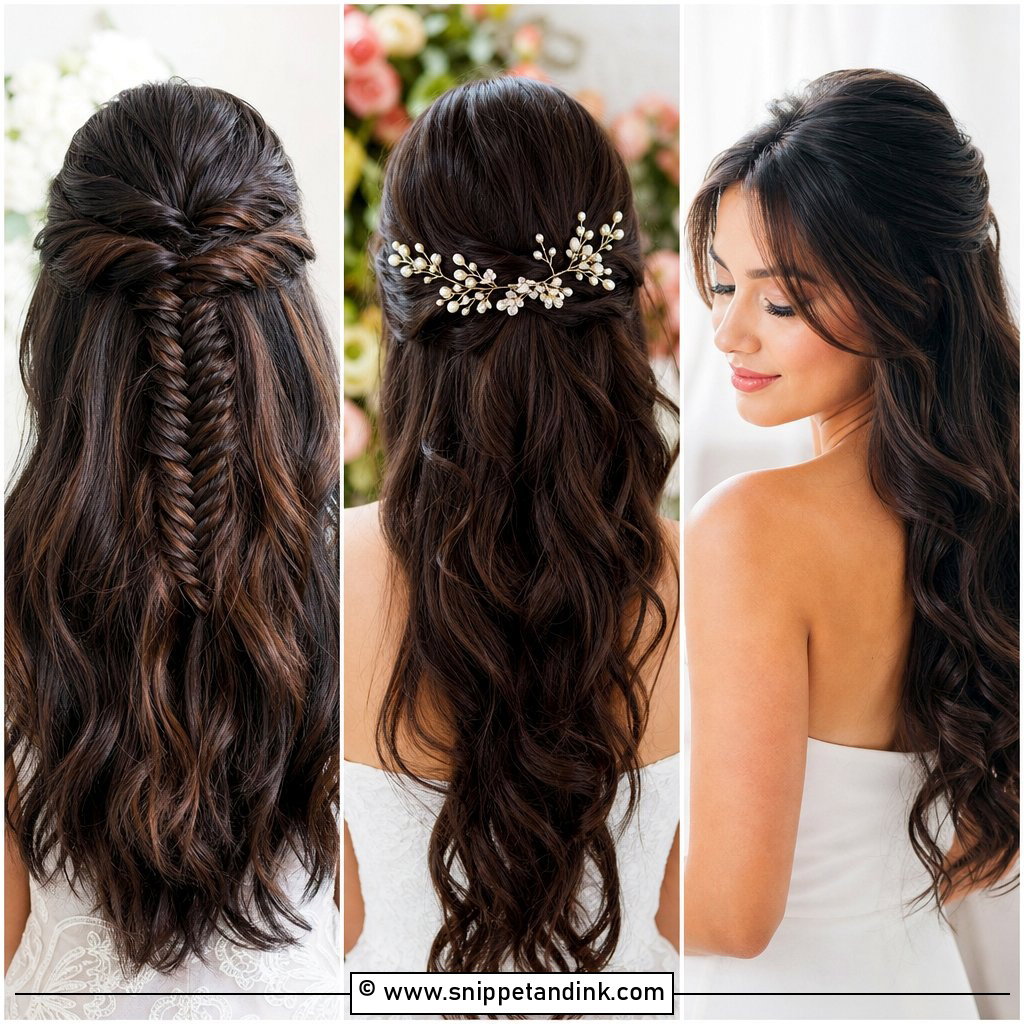
Half-up suits brides who want their length on show but don’t want hair in their eyes during the vows. The top section is pulled back and pinned, and the rest falls in curls. My honest caution: the loose half behaves exactly like down hair, so in humidity or wind it relaxes faster than an updo. A jeweled clip or tiny flowers at the back hide the pins. Very blunt, one-length cuts sometimes need curls in several sizes to look full.
3. Hollywood Glamour Waves
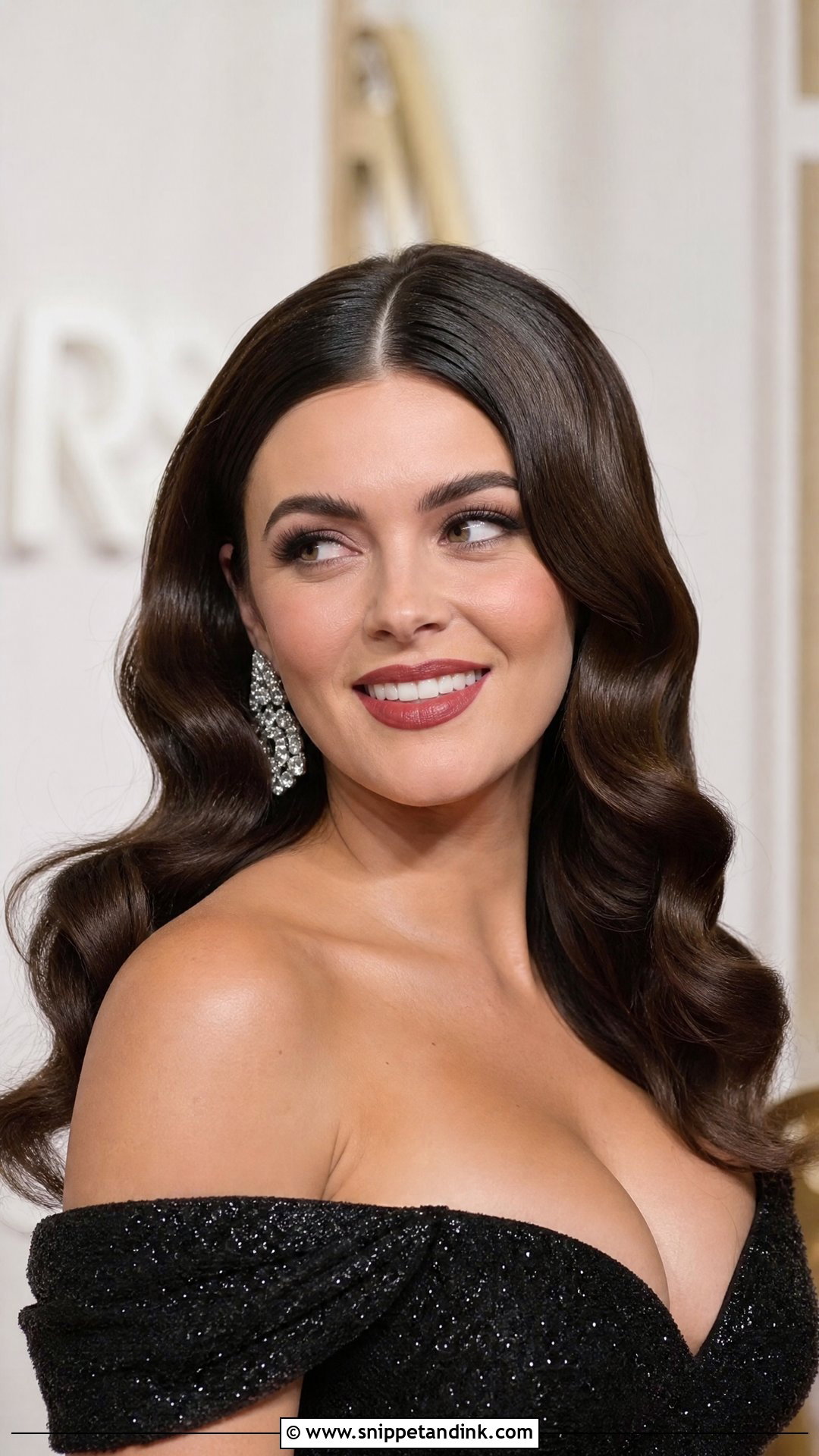
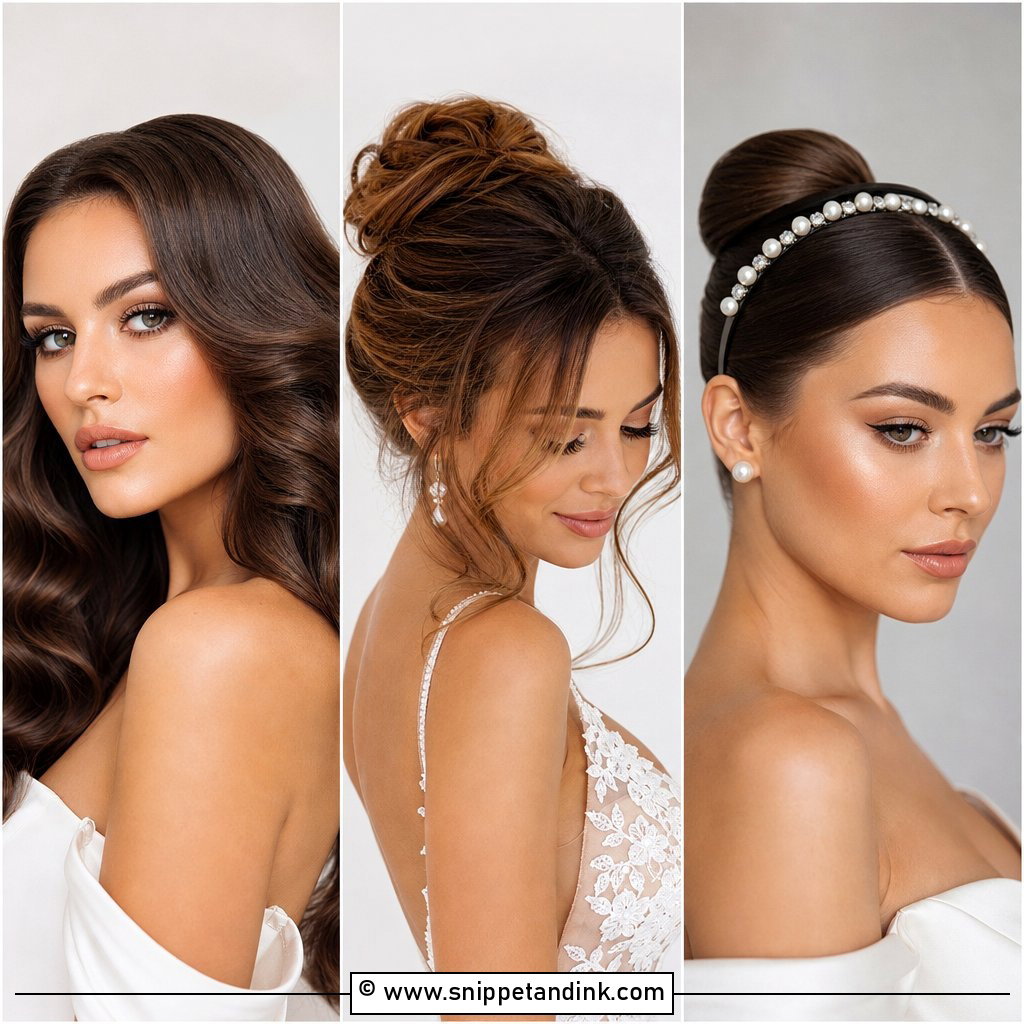
Hollywood waves are polished S-curls brushed into one sweeping ripple, usually falling down one side. They take patience. I set every curl in the same direction, let them cool completely, then brush and shape them, with a clip at each ridge while the spray sets. Long to medium hair suits them best. Vintage weddings are the obvious home, but they also work with a modern fitted gown and big earrings. I’d avoid them for an outdoor summer ceremony, because humidity flattens the ridges.
4. Messy Bun With Face-Framing Tendrils
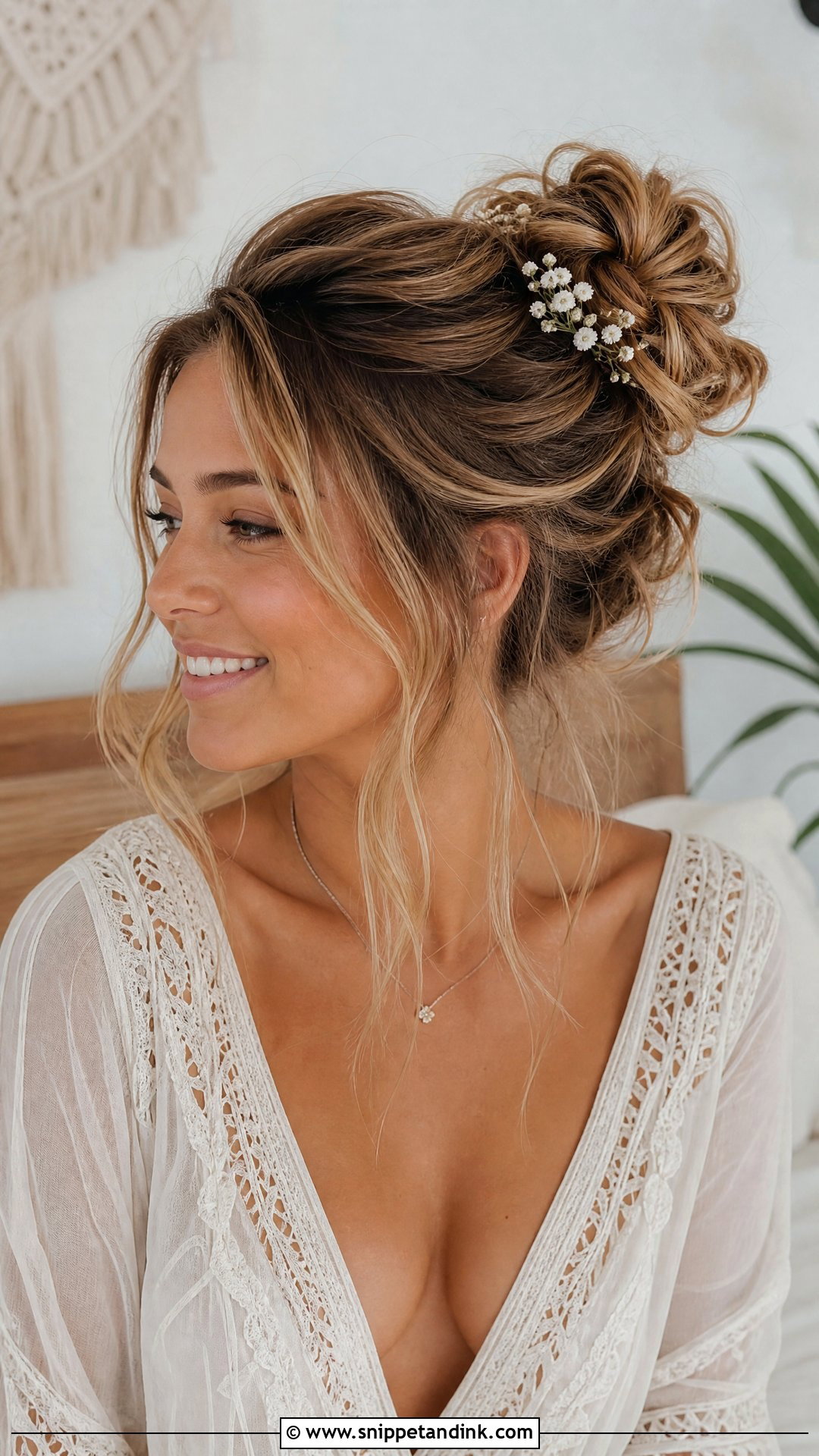
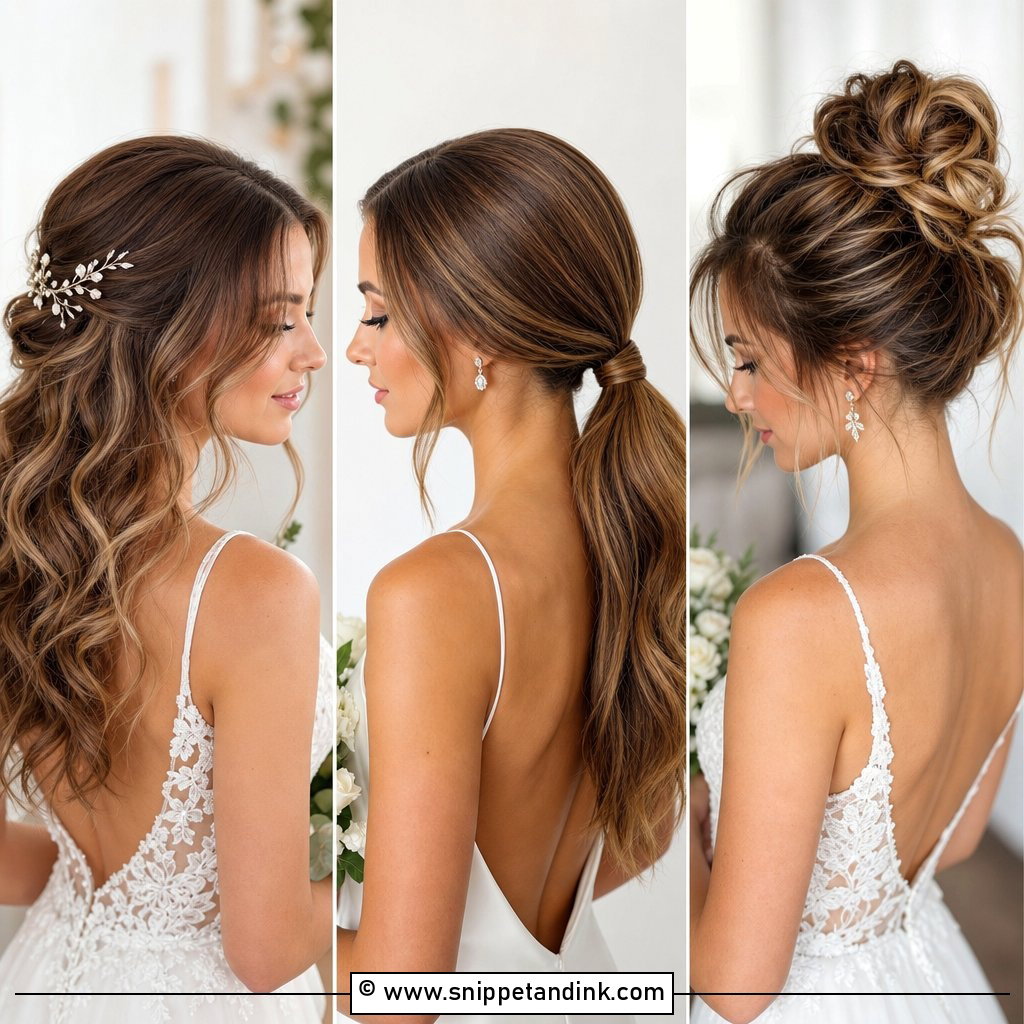
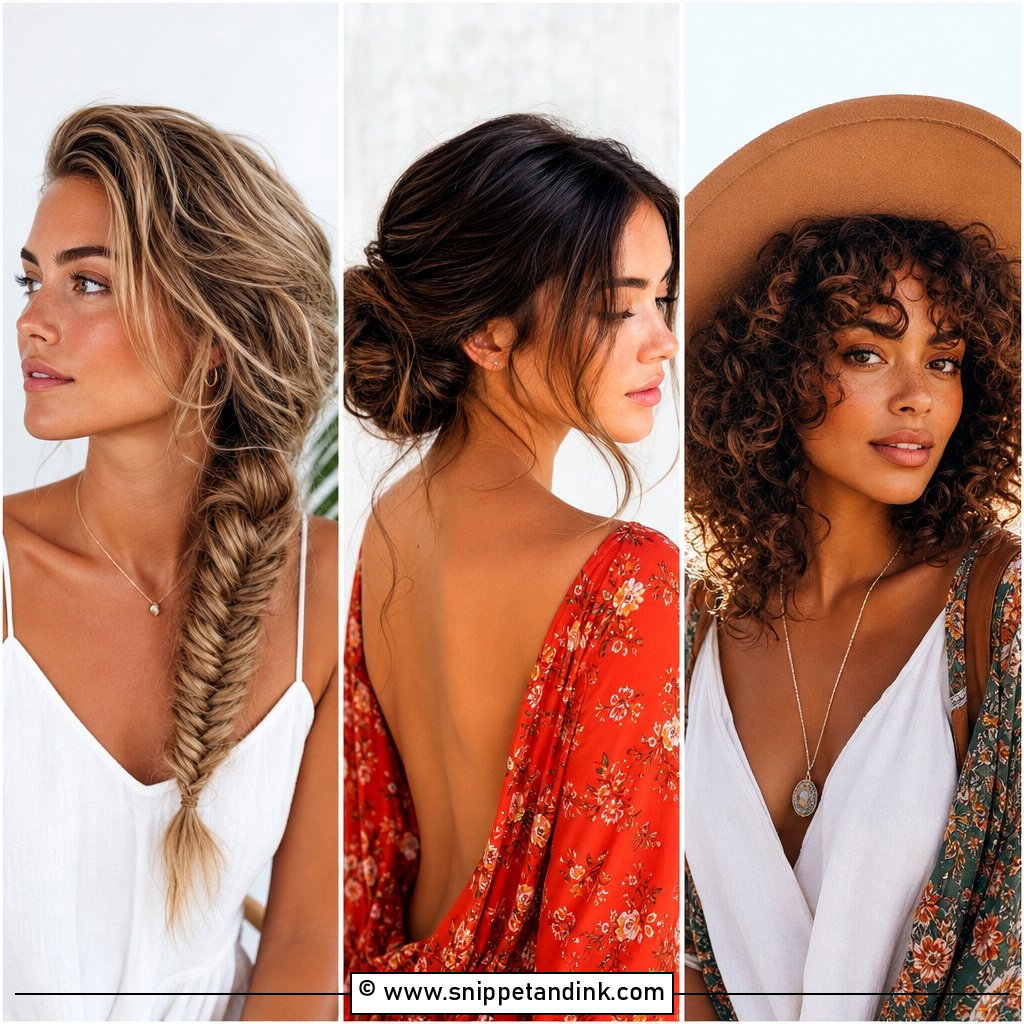
Under every good messy bun is a well-pinned one. The slightly tousled texture comes from curling and then loosening sections, not from leaving them unfinished. Wispy tendrils around the face look relaxed, though I keep them shorter than the jawline so they don’t stick to lip gloss. Bohemian and rustic weddings suit it, and baby’s breath or small wildflowers tuck in well. Since it’s meant to be loose, it actually improves as it softens through the evening.
5. Braided Crown Wedding Hairstyle
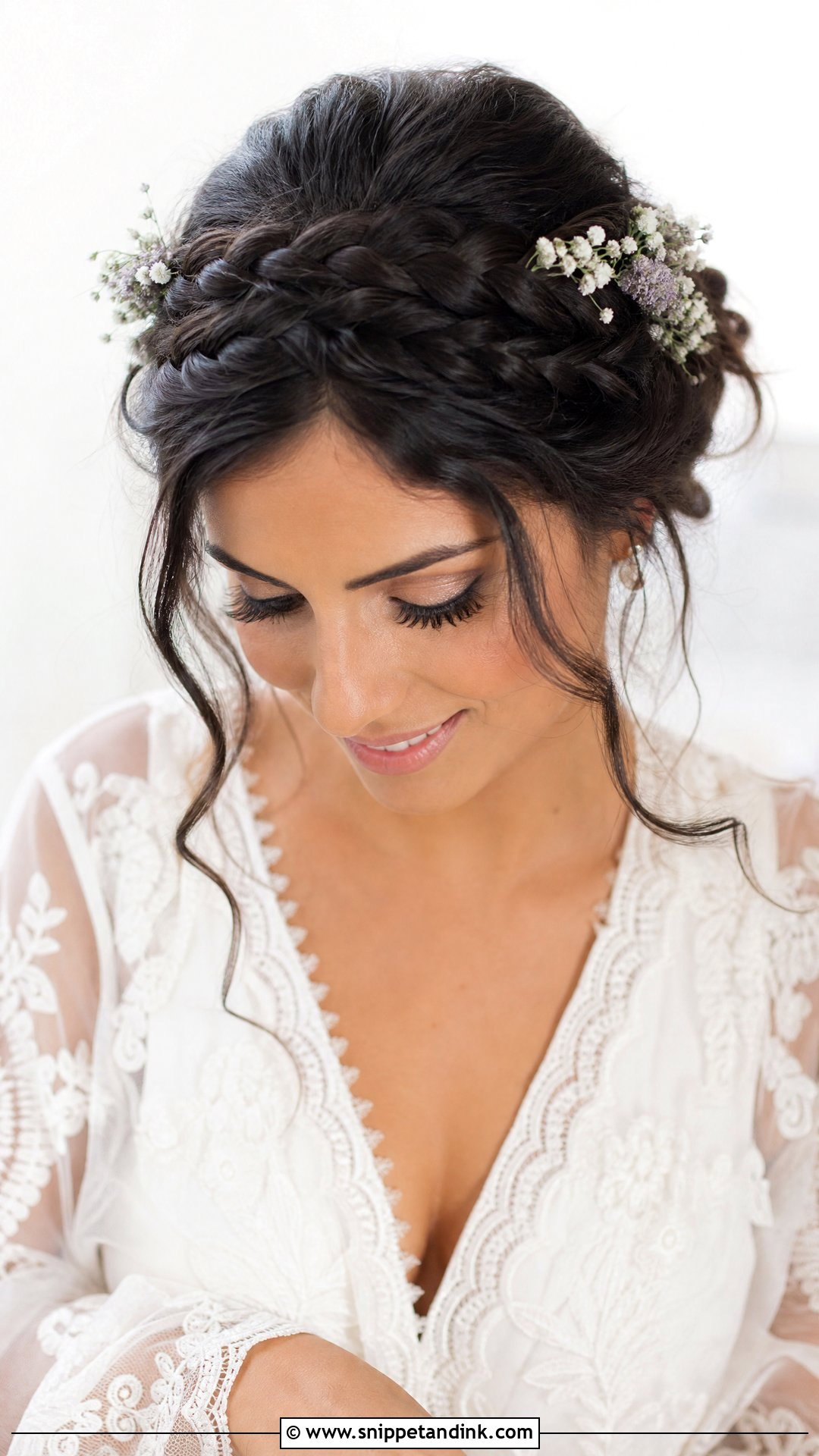
This bohemian-inspired design weaves a braid all the way around the crown and tucks the ends underneath. Thick and wavy hair braids into a fuller crown; fine hair benefits from pancaking each section wider or adding clip-ins. Flower accents slot into the plaits without extra pins. One practical point: a crown braid already sits where a tiara would, so pair it with flowers or a vine rather than a second headpiece.
6. Sleek Ballerina Bun
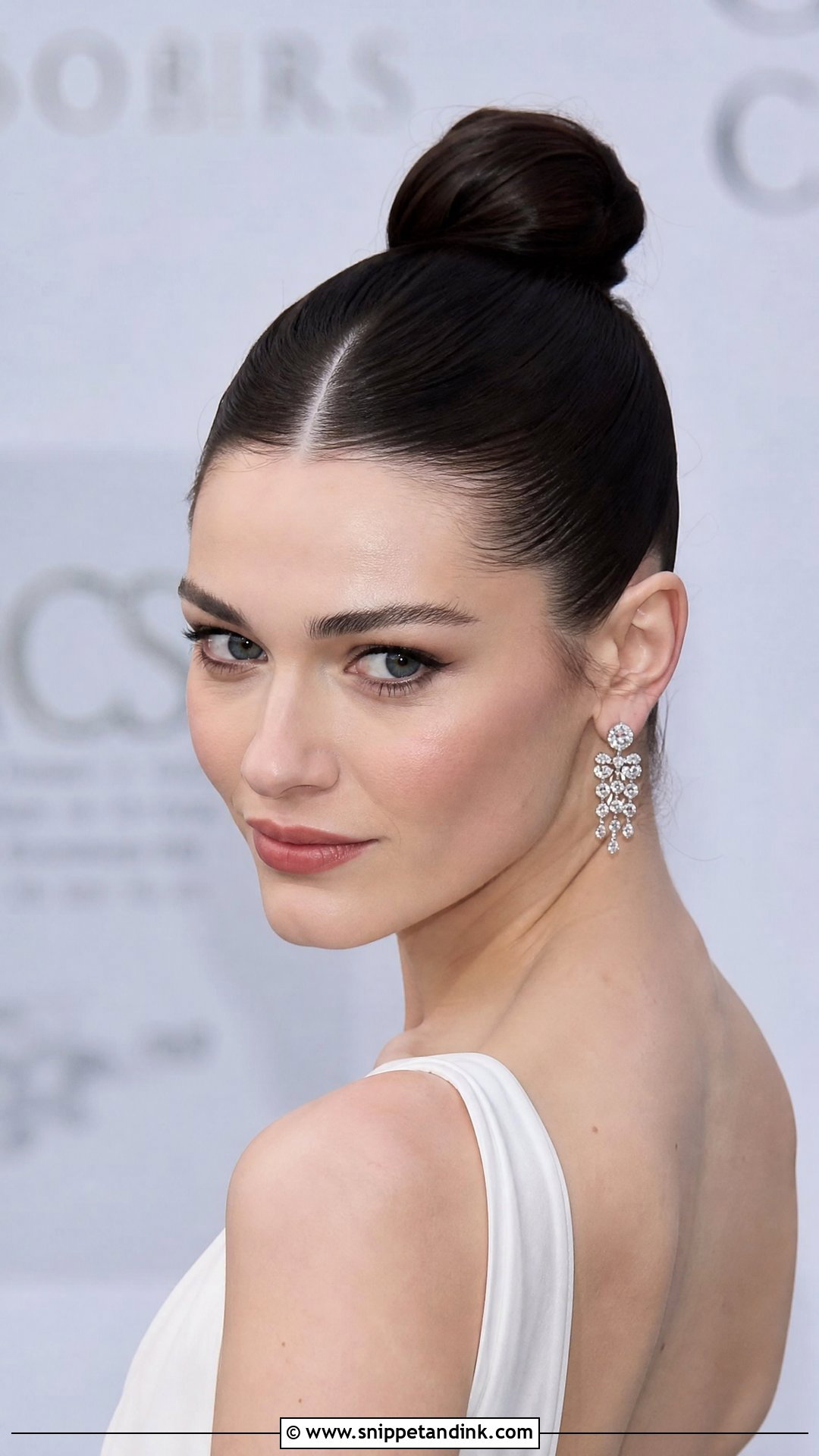
The sleek ballerina bun is tight, high and centered, with a crisp middle part. It’s an exacting style. A single bump at the crown shows in every photo, so the hair needs a thorough blow-dry before I even start. Minimalist city weddings, statement earrings and bold necklines suit it. If your hairline is fragile or you’ve had breakage from tight styles, I’d suggest a lower version, since high tension all day can hurt.
7. Loose Cascading Waves
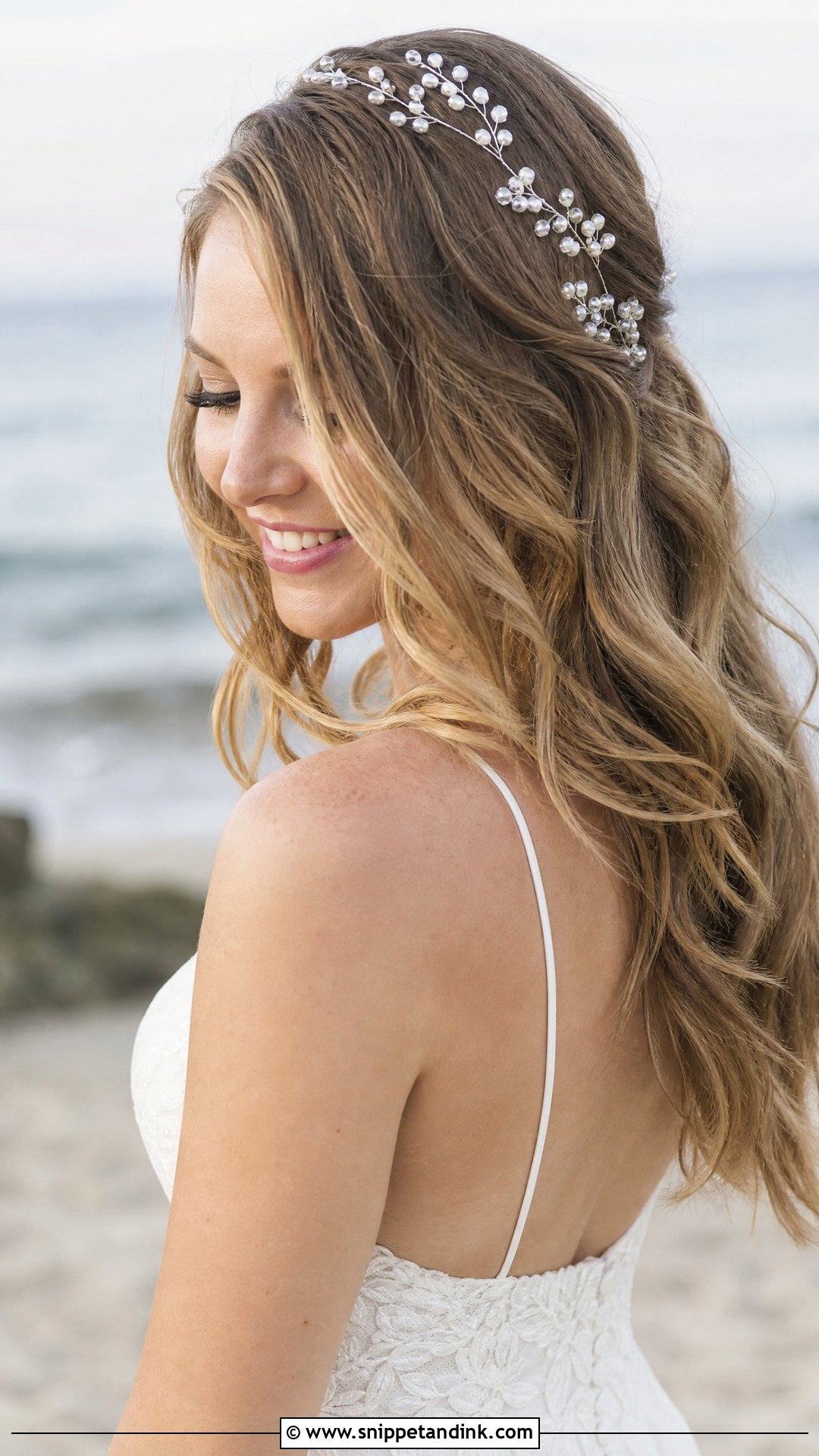
Loose waves are what most brides mean when they say they want to look like themselves. The trick is starting with more curl than you want, because waves loosen within hours. I use a large barrel, alternate the direction, and separate the curls with my fingers instead of a brush. A delicate hair vine or a flowing veil adds detail. Medium to long hair works best; on short hair, waves tend to read as a curled bob rather than flowing lengths.
8. French Twist Updo
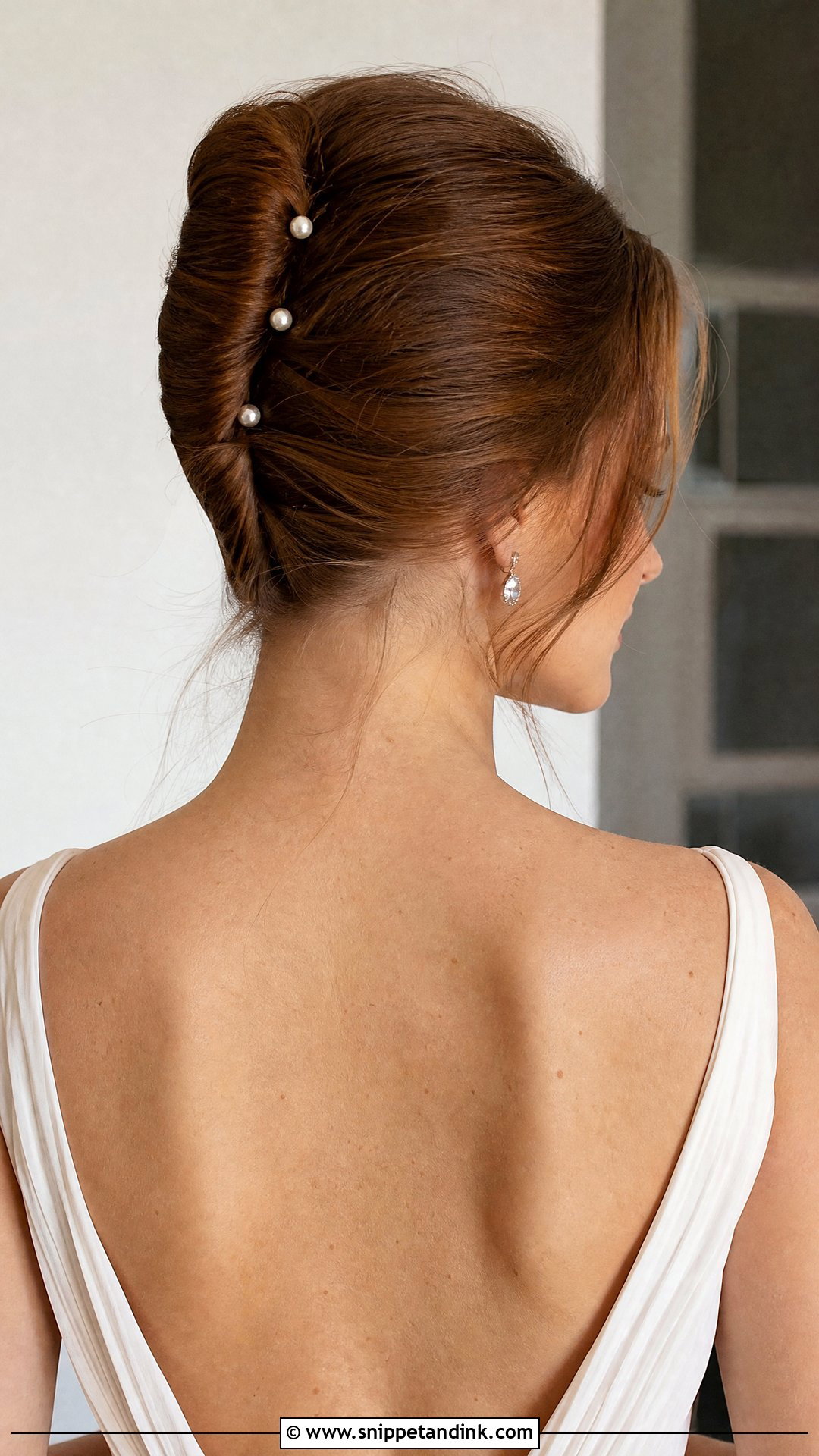
A French twist rolls the hair vertically up the back of the head, so it shows off an open-back gown or bare shoulders very well. I lightly backcomb the inside of the roll to give the pins something to grip, then hide U-pins along the seam. Structured suits formal ceremonies; a few loose strands soften it. A decorative comb or pearl pins fit neatly along the edge of the fold. Very slippery hair holds the roll better a day after washing.
9. Boho Braided Updo
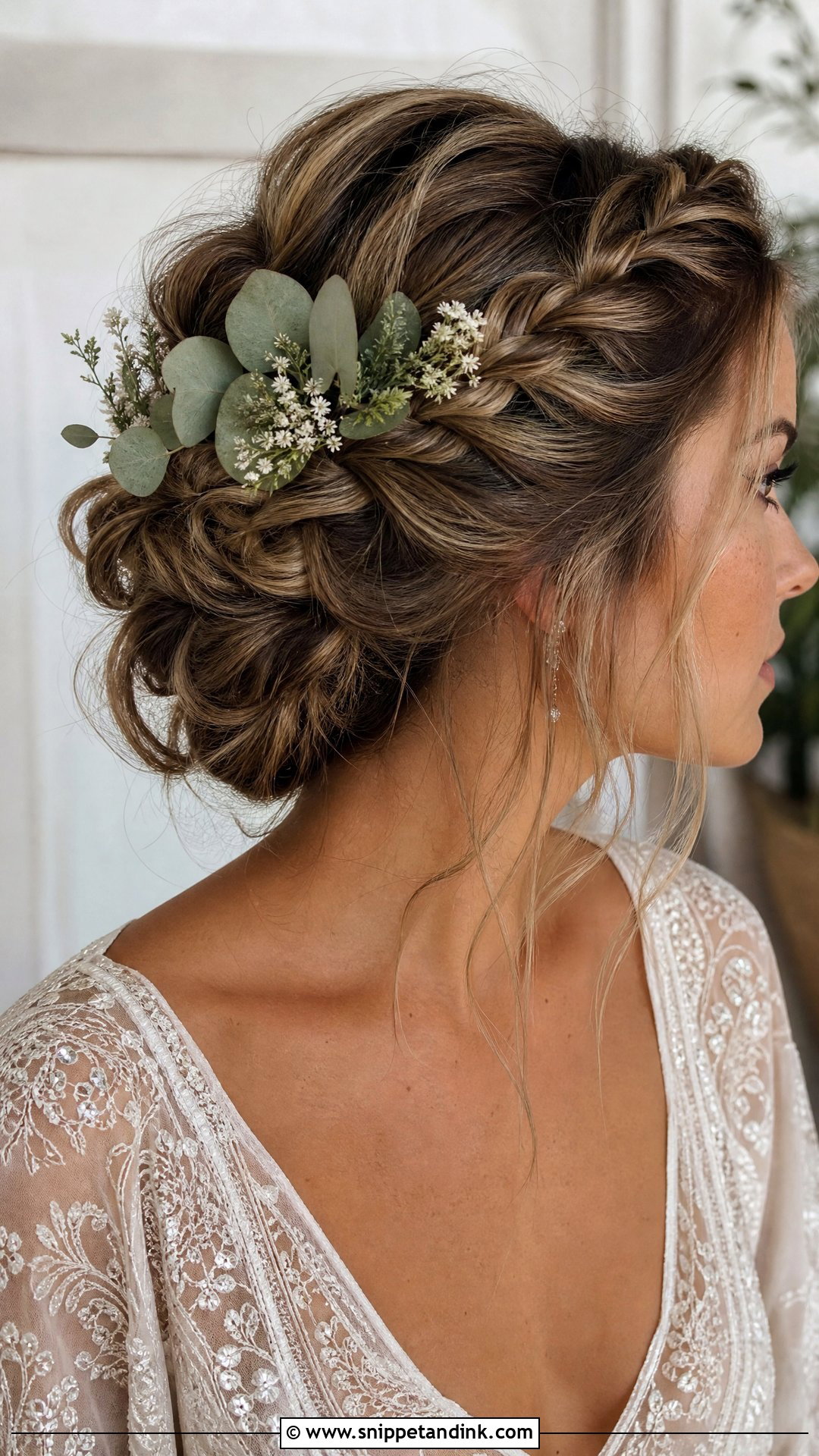
Loose braids and soft twists pinned into a relaxed shape, with wispy pieces at the face, make this updo. Thick and wavy hair carries it best, because the texture hides where the pins go. Eucalyptus sprigs and dried flowers are smart choices here, as they don’t wilt in warm weather the way fresh blooms can. Expect more time in the chair than a simple bun, since every braid is built separately.
10. Sleek Low Ponytail
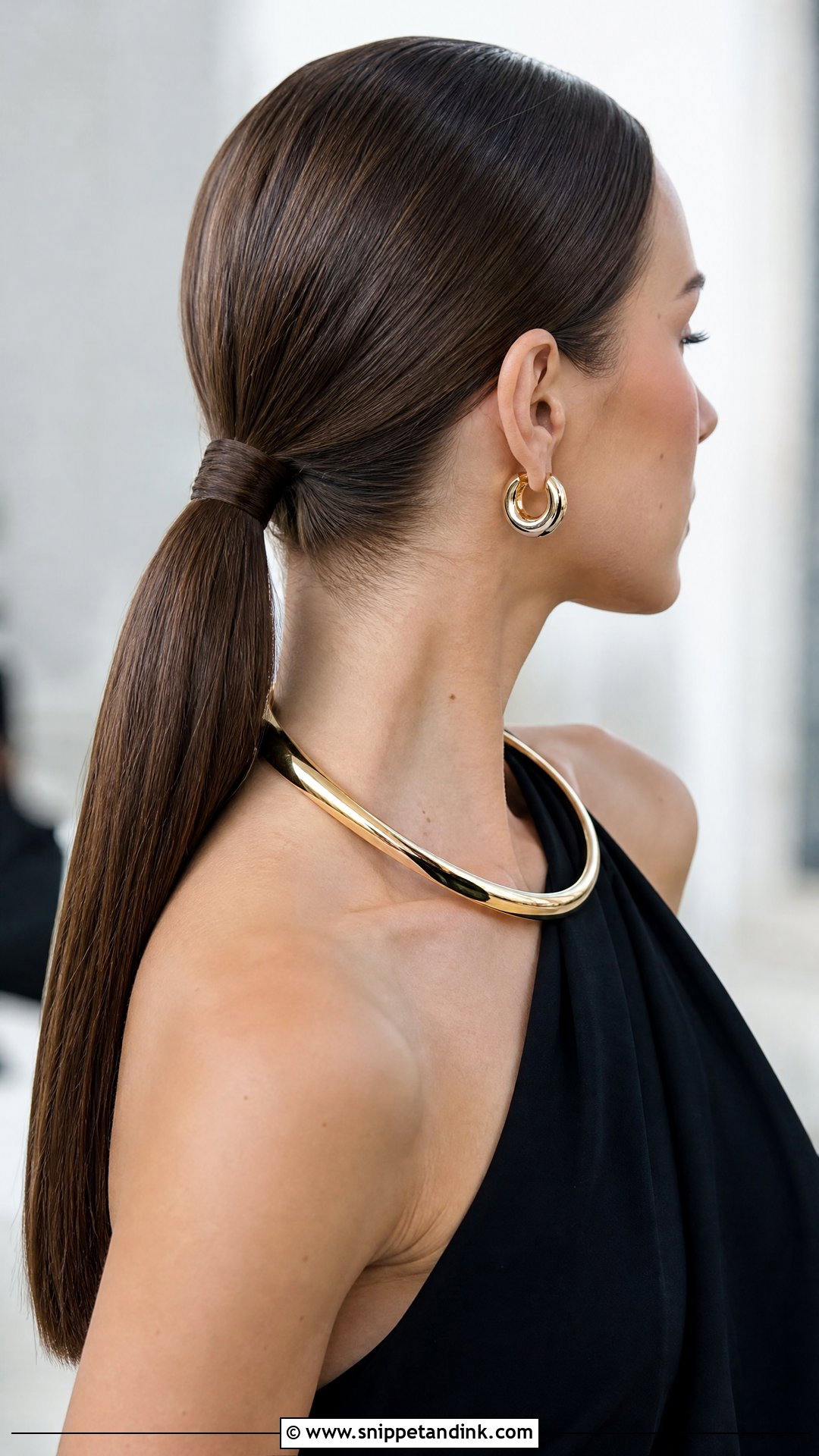
A sleek low ponytail is the most underrated bridal style I do. It’s quick and comfortable, and it suits minimalist gowns and bold jewelry. I smooth the hair back with a gel or cream, secure it at the nape, and wrap a strand around the base to hide the elastic. Thin hair can look sparse in a ponytail, so I’d add a clip-in weft underneath for fullness. A glossy finish keeps it crisp in photos.
11. Curly Updo for Natural Hair
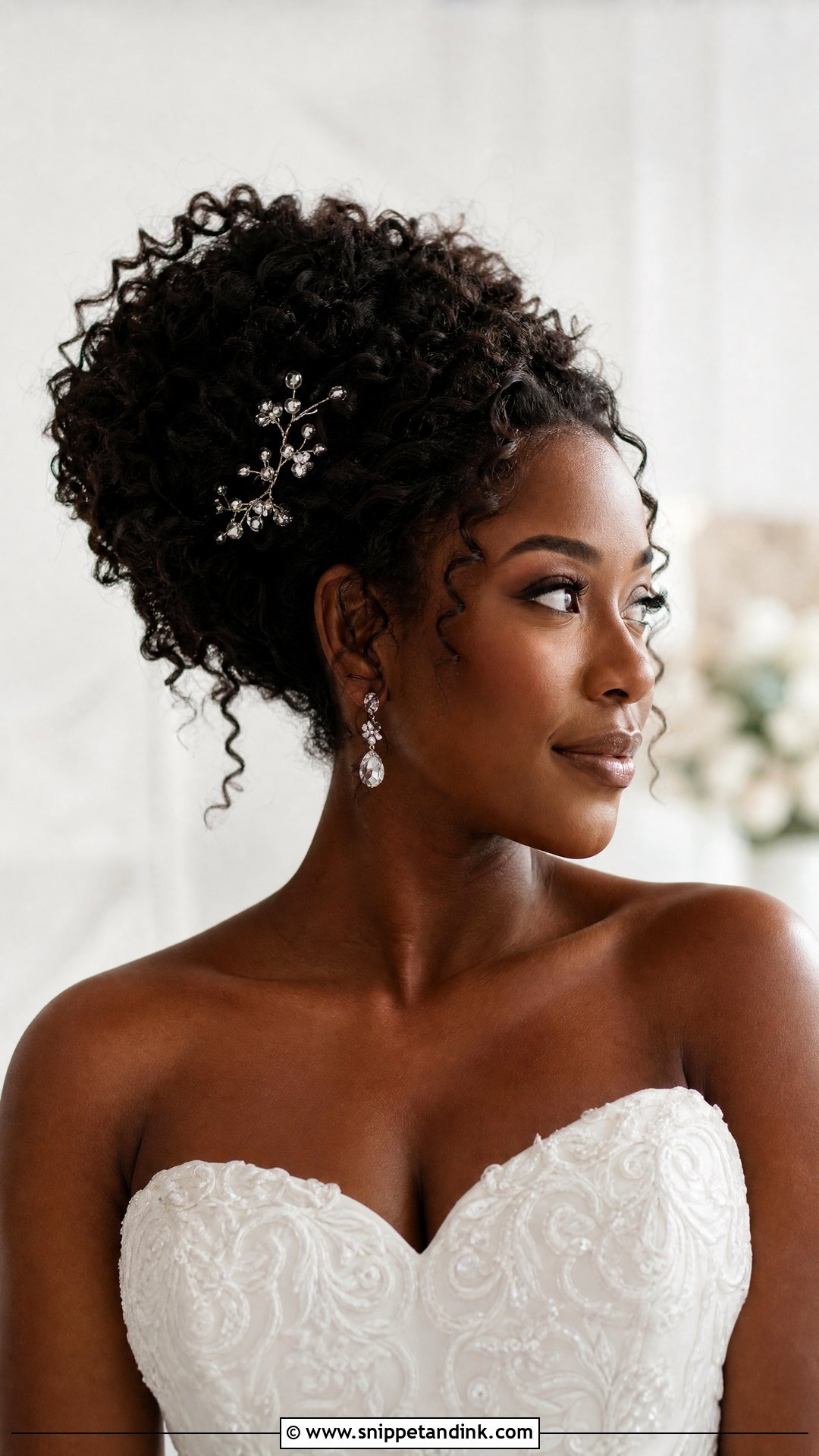
Natural curls look best defined and moisturized, not stretched straight. I gather them into a soft, voluminous bun or twist and pin pieces to build height. Coily, kinky and curly textures all suit this, though each needs different products. I skip fine bobby pins, which slide out of coils, and use larger pins or spin pins instead. A jeweled pin or fresh flowers add detail. Protect the edges with a gentle product rather than heavy gel, which can flake by evening.
12. Romantic Side Swept Curls
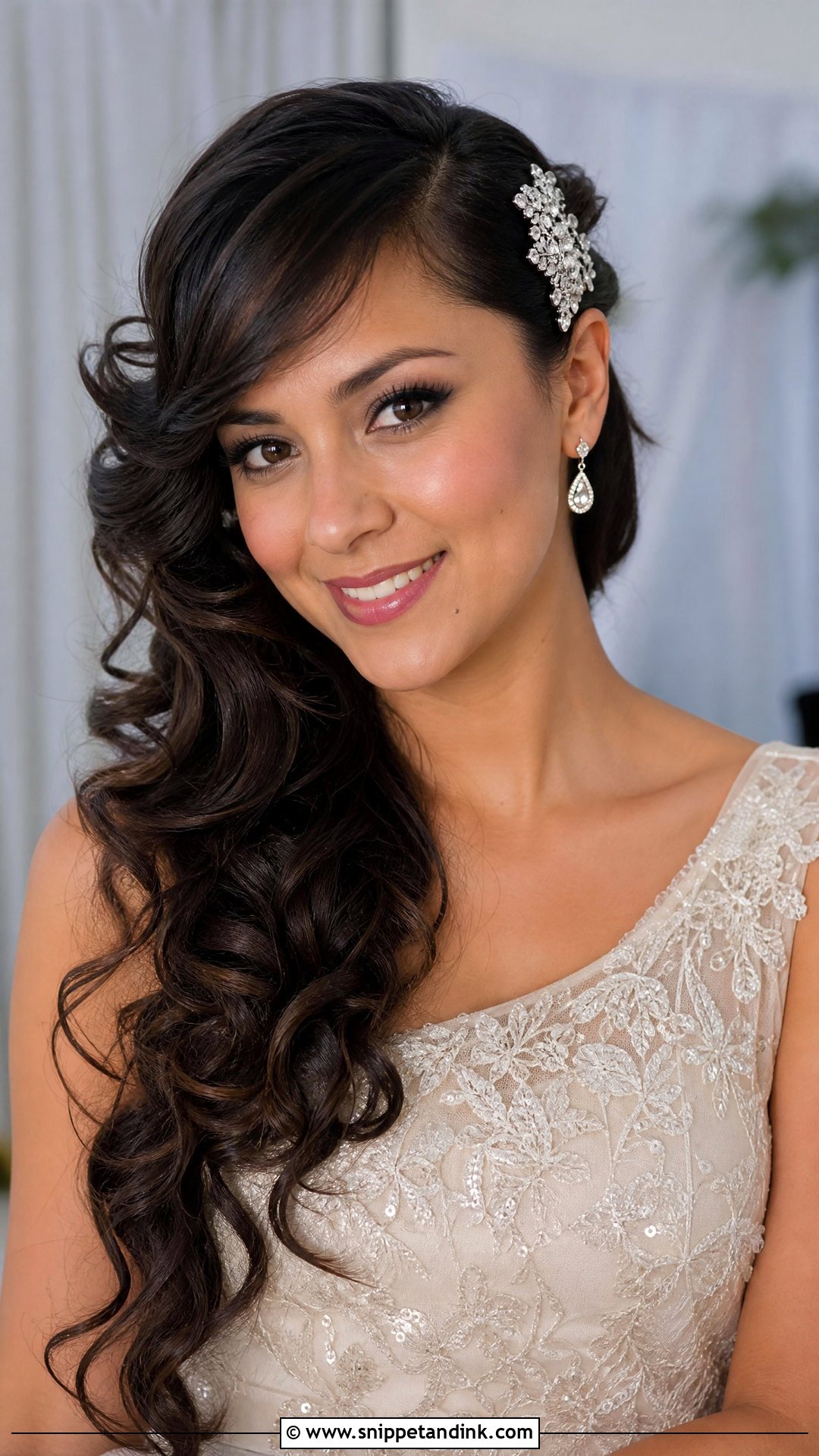
All the curls go over one shoulder, leaving the other ear and side of the neck clear for a statement earring. One-shoulder gowns and vintage-inspired dresses pair well with it. The challenge is stopping the hair from creeping back over the shoulder, so I pin the back section firmly behind the ear before curling the length. A sparkling clip can hide those pins. You’ll need medium to long hair for it.
13. Floral Crown Bridal Hairstyle
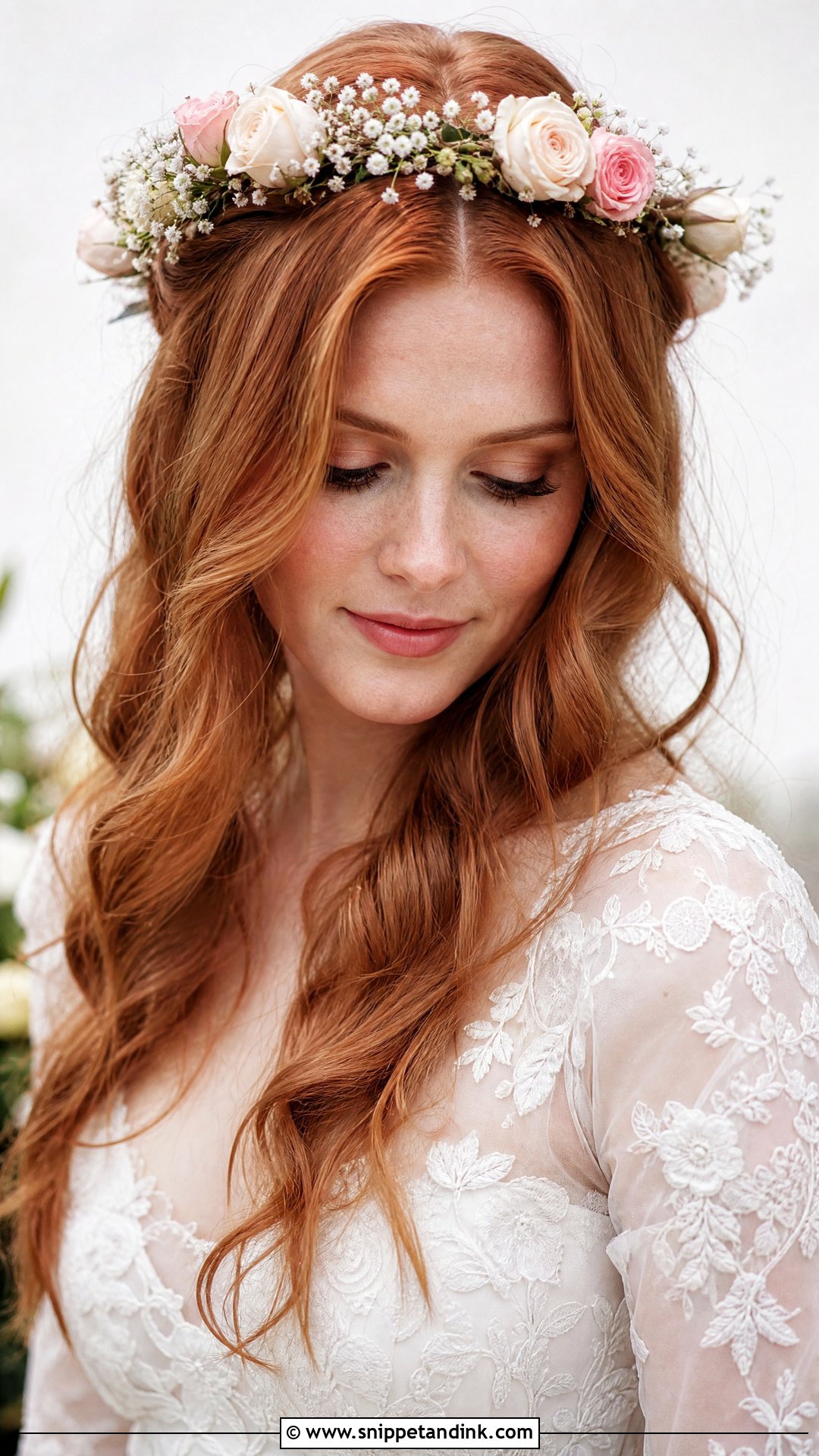
A floral crown pairs loose waves, a half-up or a soft braid with a ring of fresh blooms. Match the flowers to your bouquet and ask your florist for sturdy varieties. Baby’s breath, roses, or wildflowers all hold up reasonably well, while very soft petals bruise quickly. I pin the crown to hidden anchor sections so it doesn’t slide backward over the day. Garden and boho weddings are the natural fit.
14. Twisted Low Bun
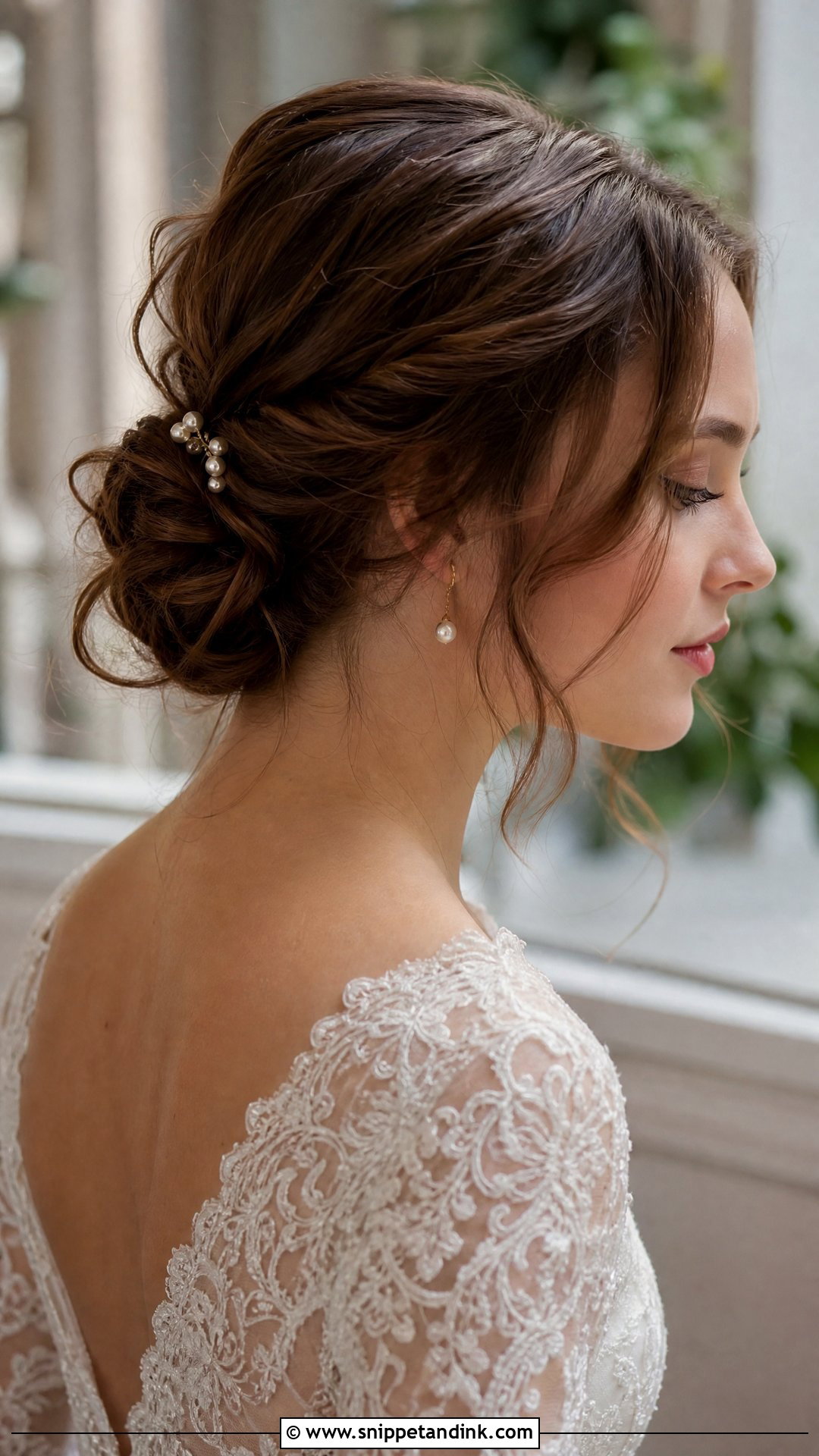
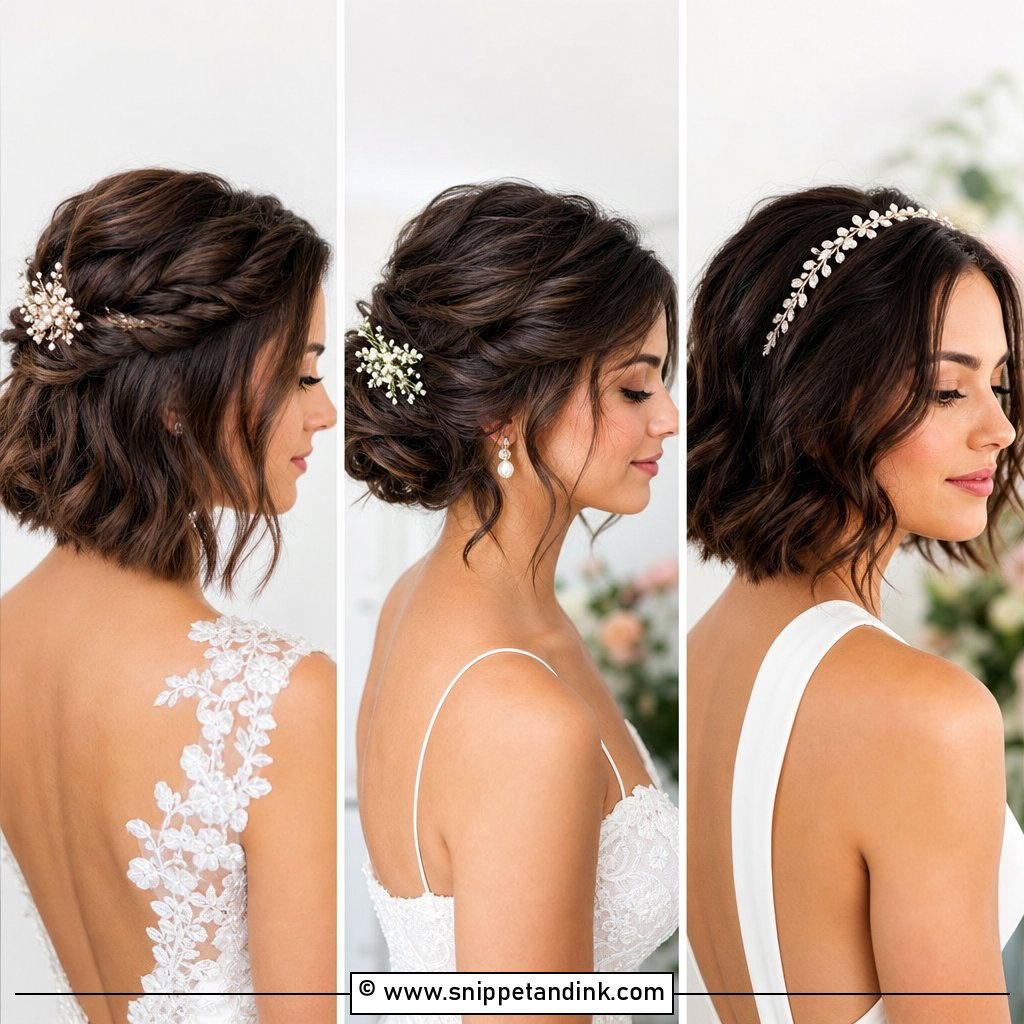
Twisting hair before pinning it adds dimension and hides pins at the same time. The twists gather into a soft bun at the nape, finished with pearl pins or a decorative comb. It’s one of the most practical styles for layered hair, because short ends tuck into the twists. Pull out any face-framing pieces before the twisting starts, not after.
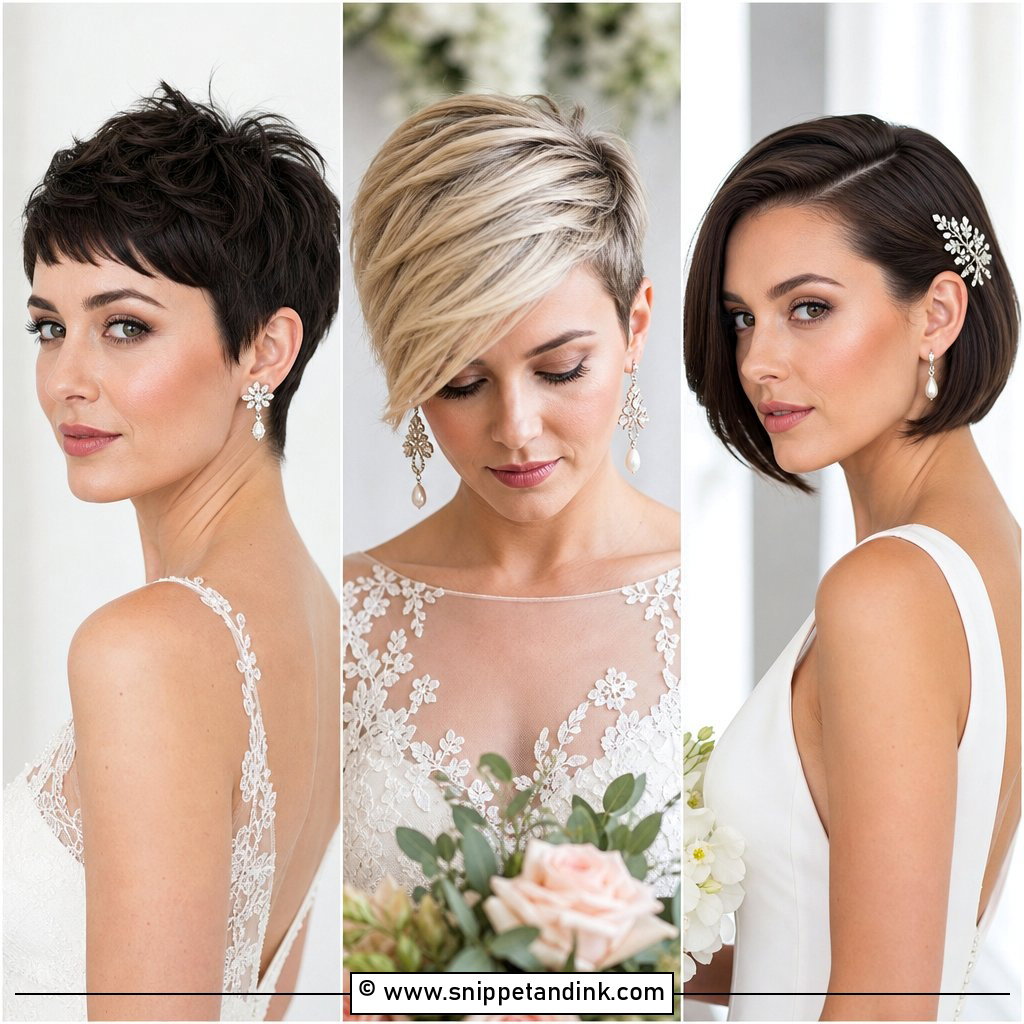
15. Vintage Finger Waves
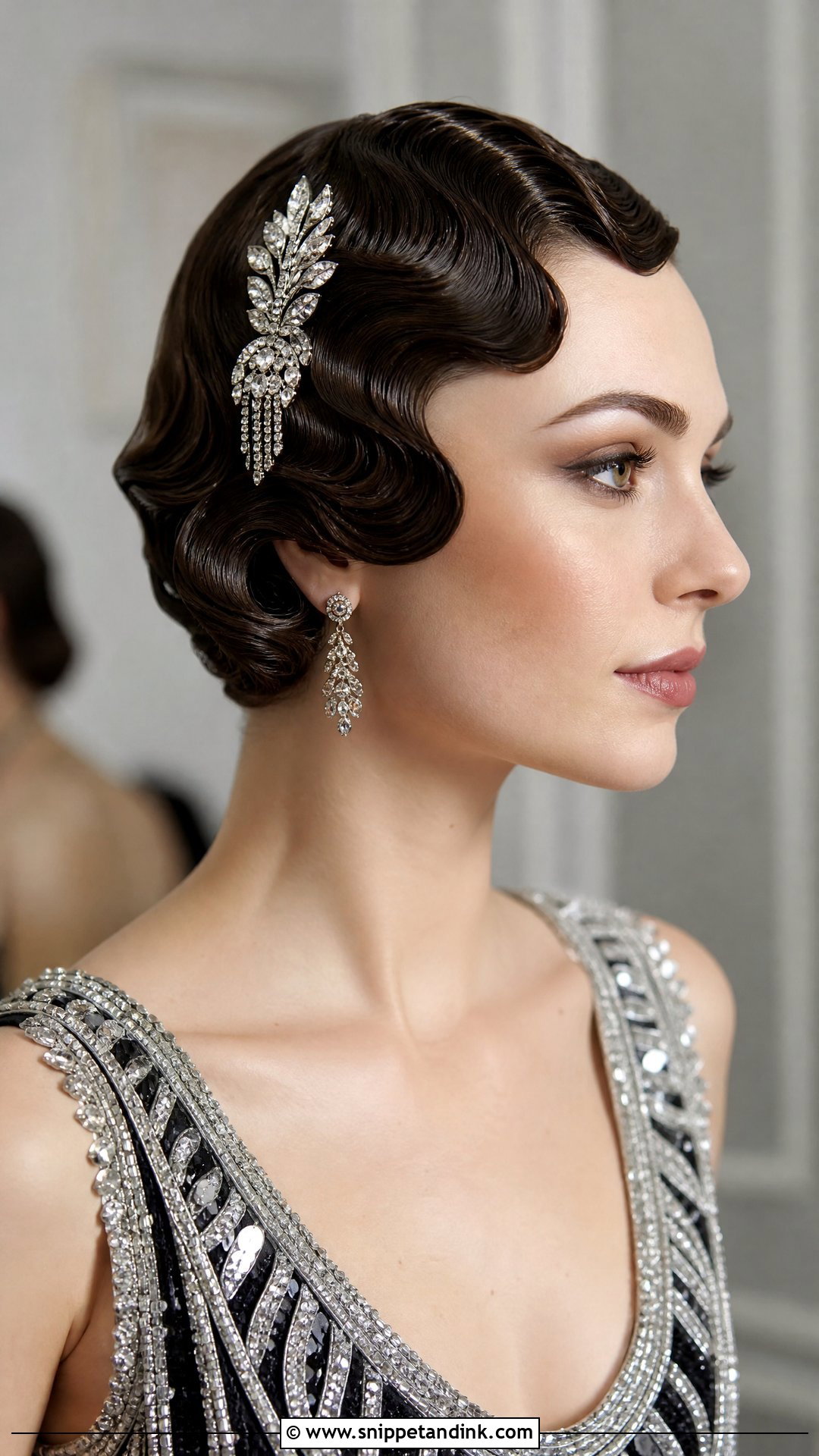
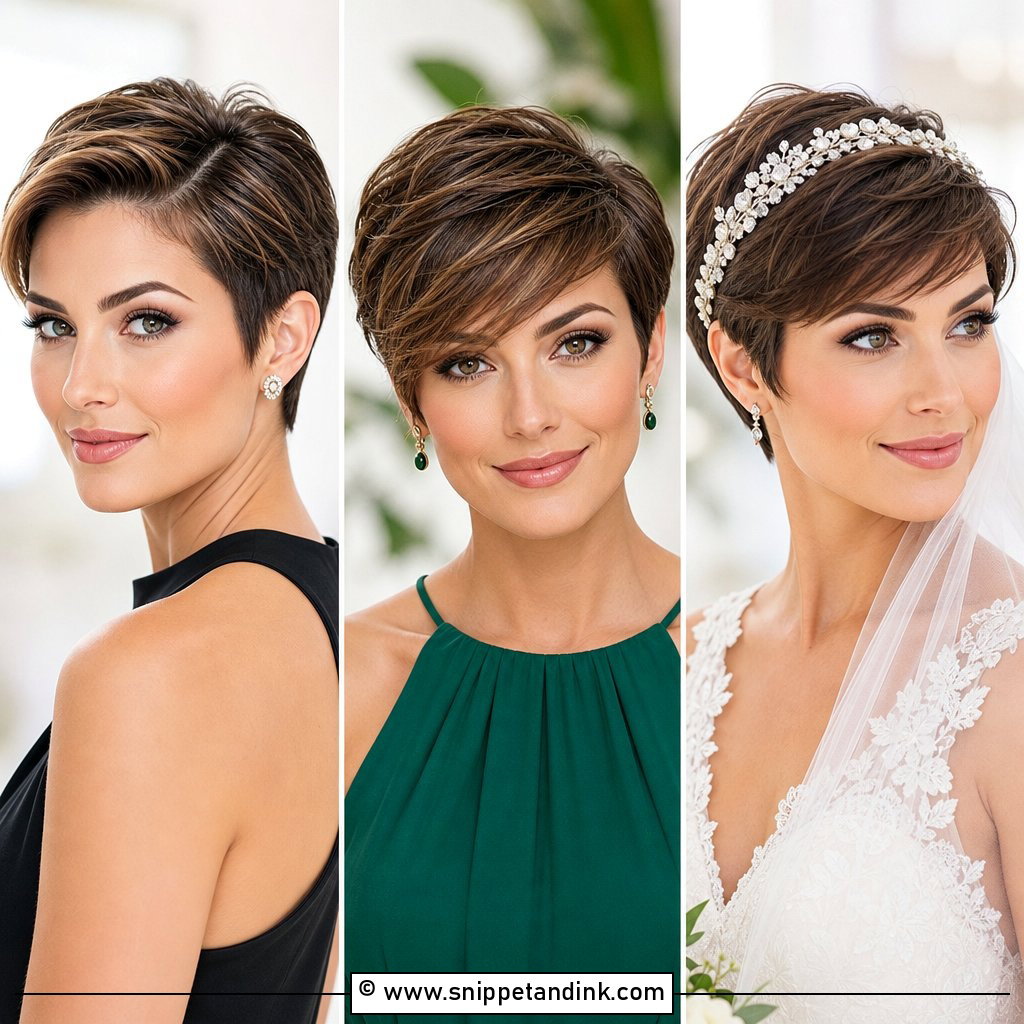
Finger waves are sculpted ridges set close to the head, and they’re a specialist skill. Not every stylist does them well, so ask to see their own work. They suit short to medium hair, especially bobs, and Gatsby or art deco themes. The waves are set wet with a strong gel and dried in place, which takes time, so book a longer slot. A vintage comb or jeweled headpiece completes the look.
16. Pulled Back Bridal Updo With Veil
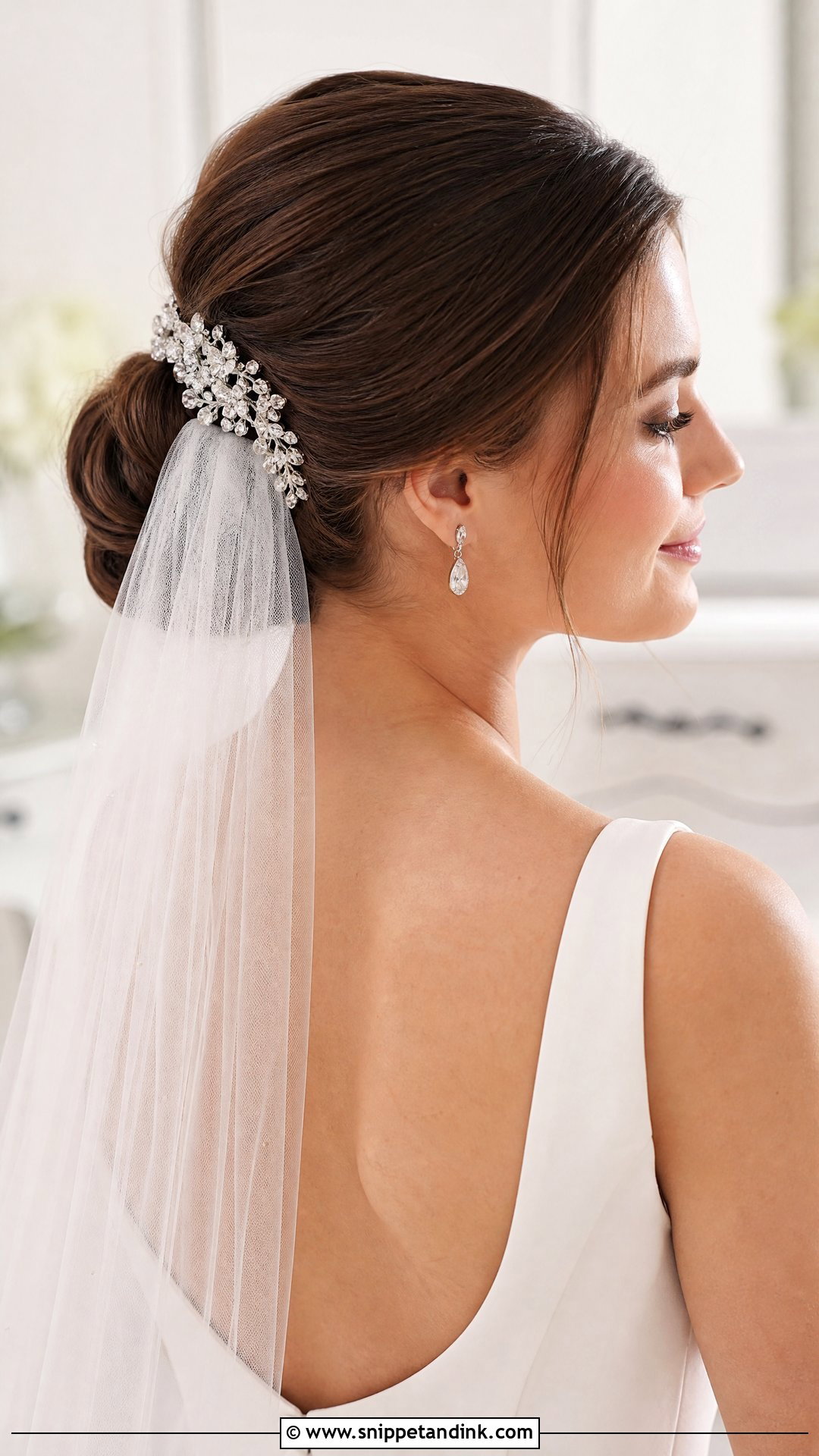
This style smooths the hair back into a bun or chignon built specifically to carry a veil. I place a strong anchor exactly where the comb will go, and the comb slides into that rather than into surface hair. When the veil comes off for the reception, the updo has to look complete on its own, so I check it from behind at the trial. A decorative pin or jeweled comb can cover where the veil sat.
17. Soft Waves With Hair Vine
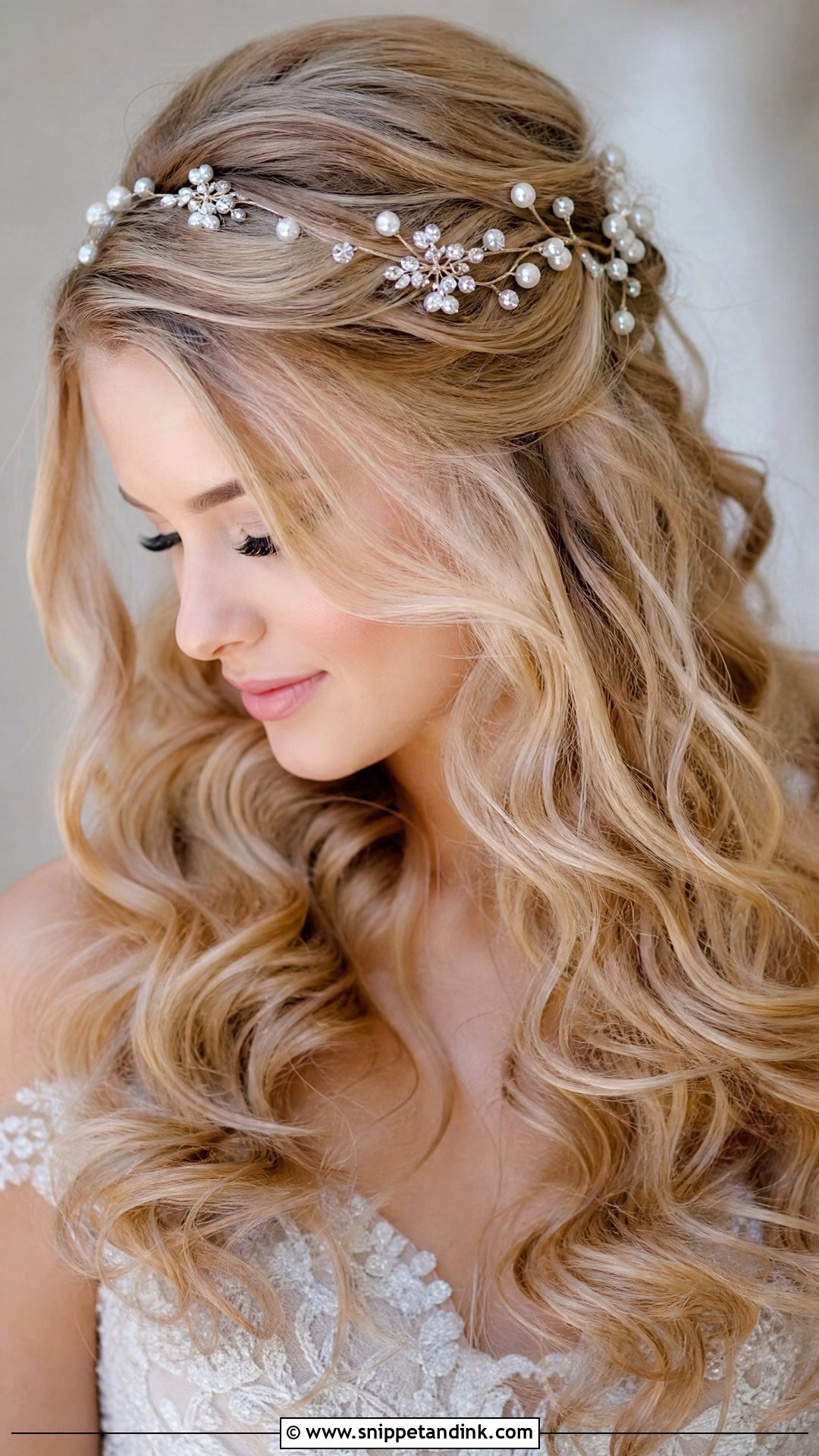
A hair vine is a thin wire threaded with pearls or crystals, worn through soft waves. I secure it at intervals with small bobby pins crossed over the wire, so it stays put without crushing the curls. It gives you sparkle without a heavy headpiece, worn down or half-up. On very fine hair a heavy vine can drag, so choose a light one.
18. Fishtail Braid Updo
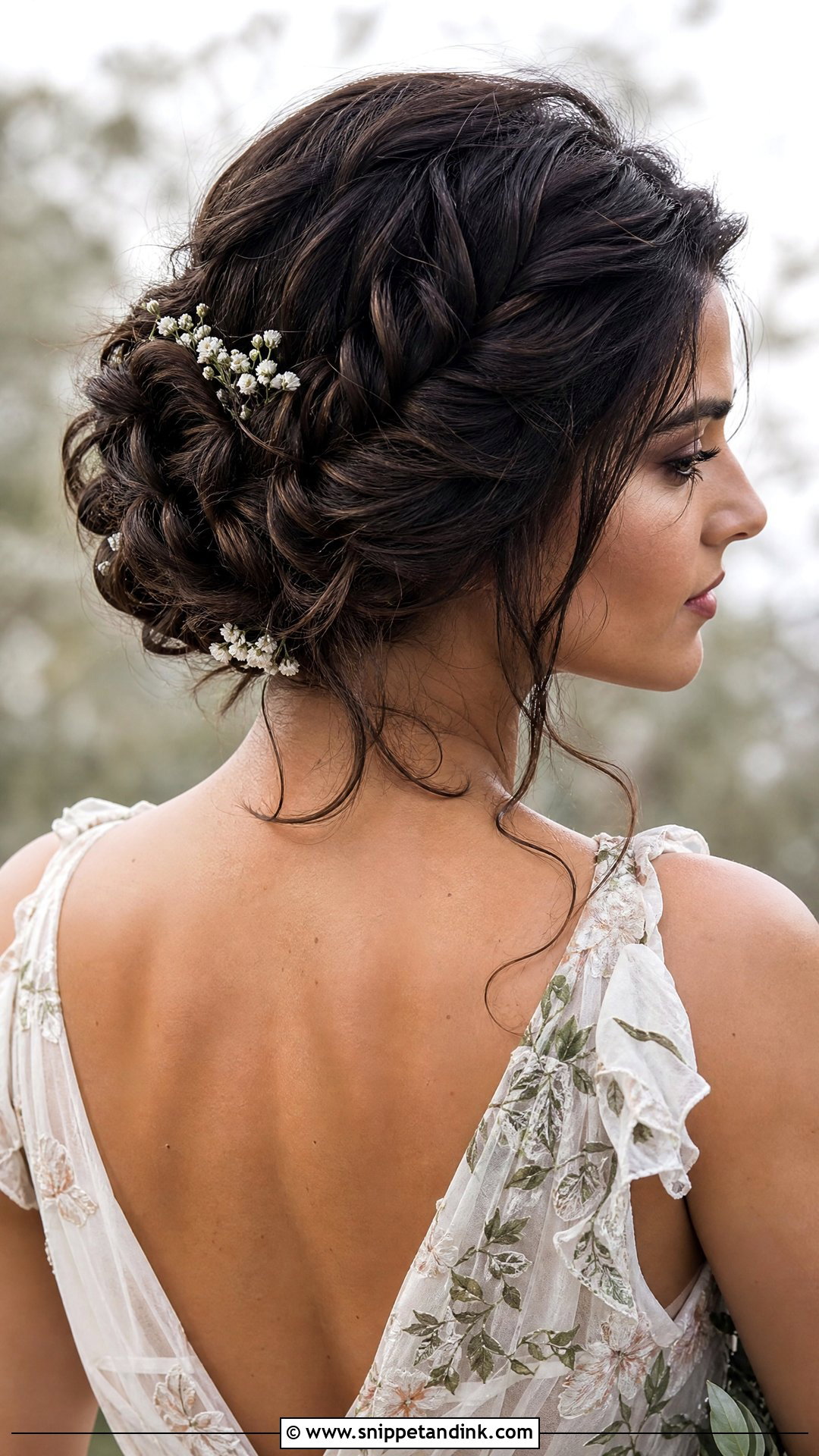
A fishtail pinned into an updo gives a detailed woven texture. I braid it tight first, then gently loosen it to widen the pattern before pinning it up. Long, thick hair gives the best result; fine hair can work with extensions woven in. Rustic and outdoor weddings suit it, and tiny flowers or pearl pins sit neatly in the weave.
19. Sleek Center Part With Low Bun
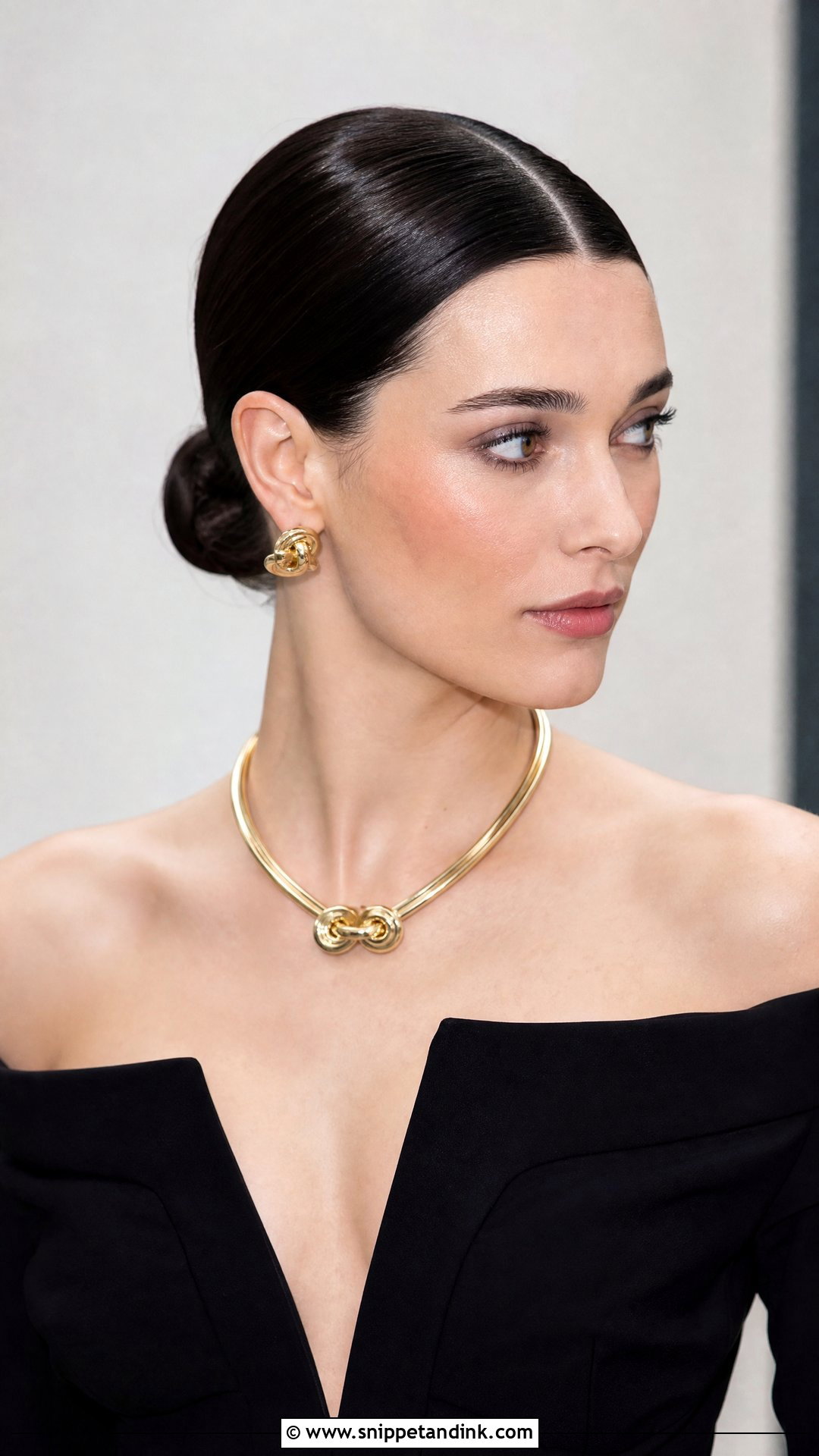
A center part and a low bun is the cleanest bridal style there is, and precision is everything. I draw the part with a fine tail comb and smooth everything back with gel so it lies flat. City and minimalist weddings suit it, as do statement earrings. Shine spray adds gloss, though too much looks greasy under flash. Check where your natural part falls first, because forcing a dead-center line can leave a ridge.
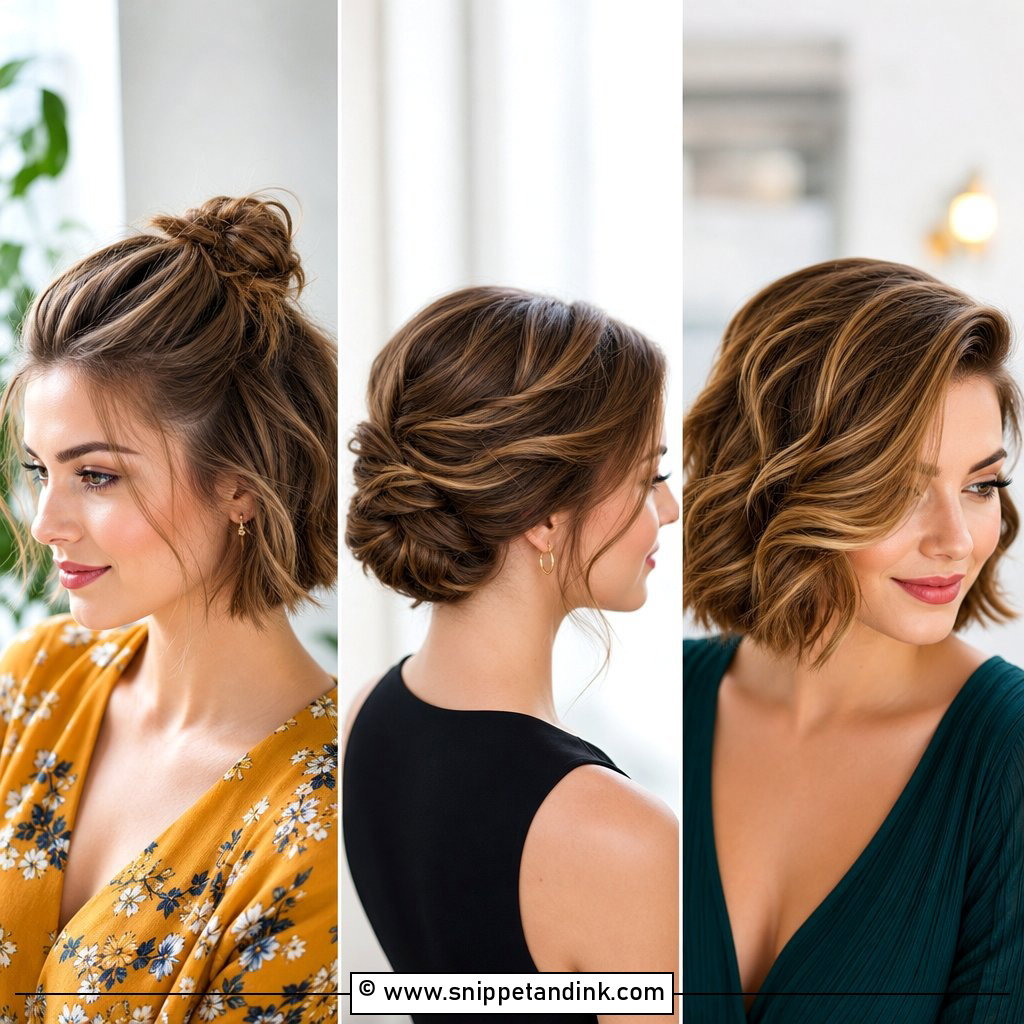
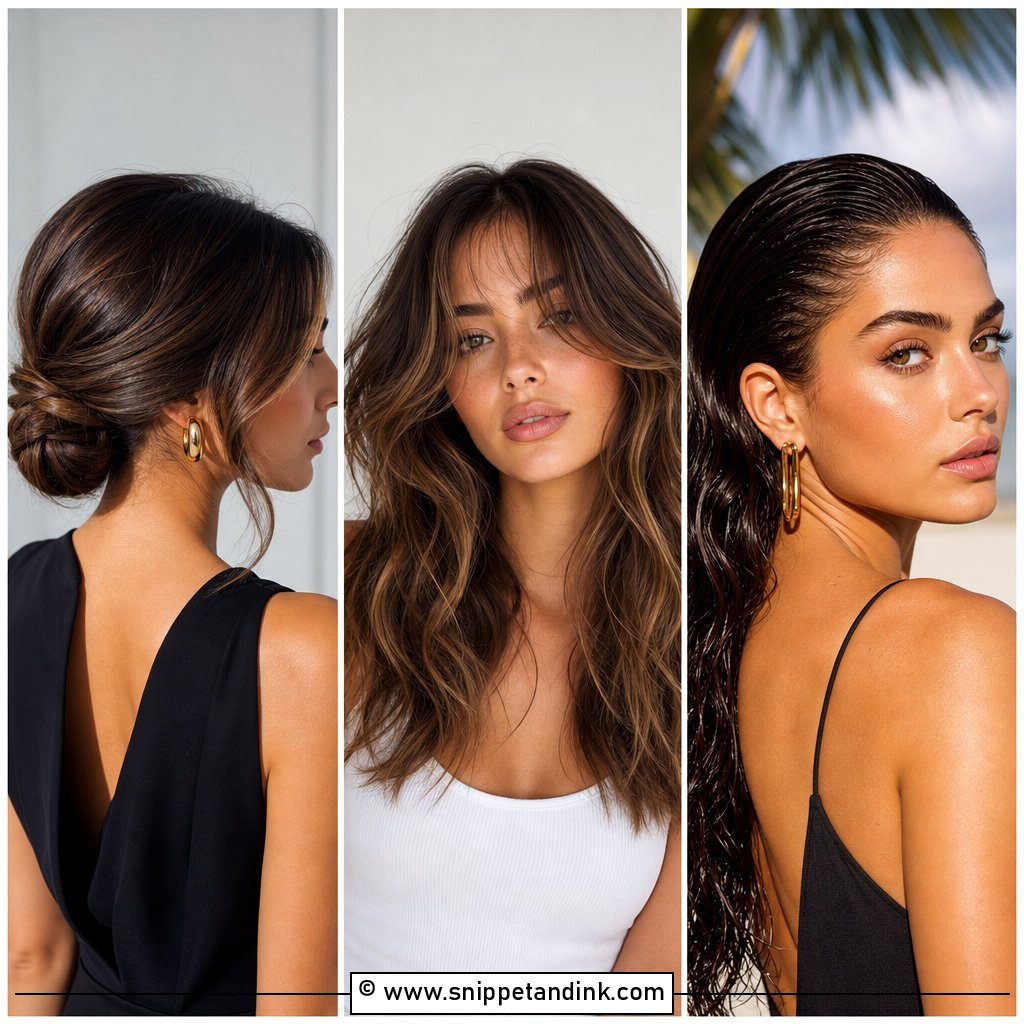
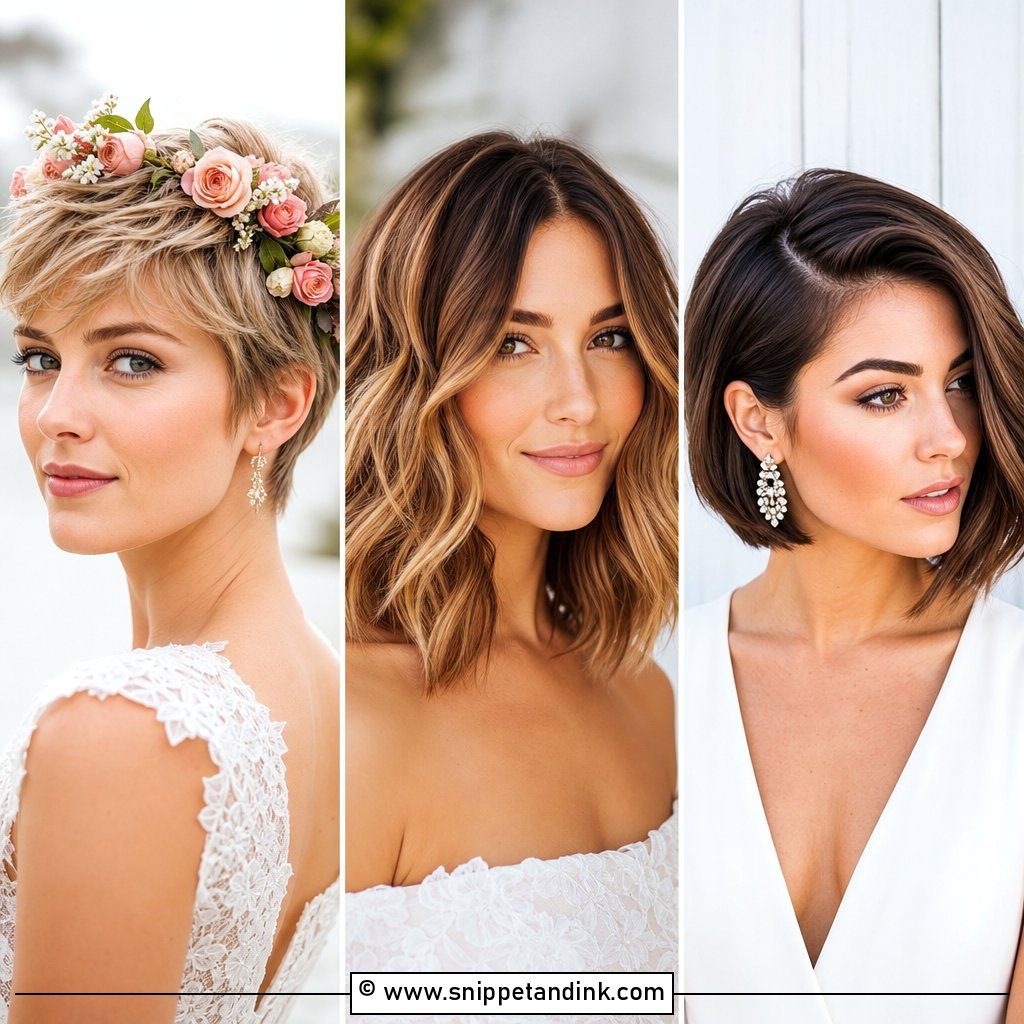
20. Tousled Half-Up With Twists
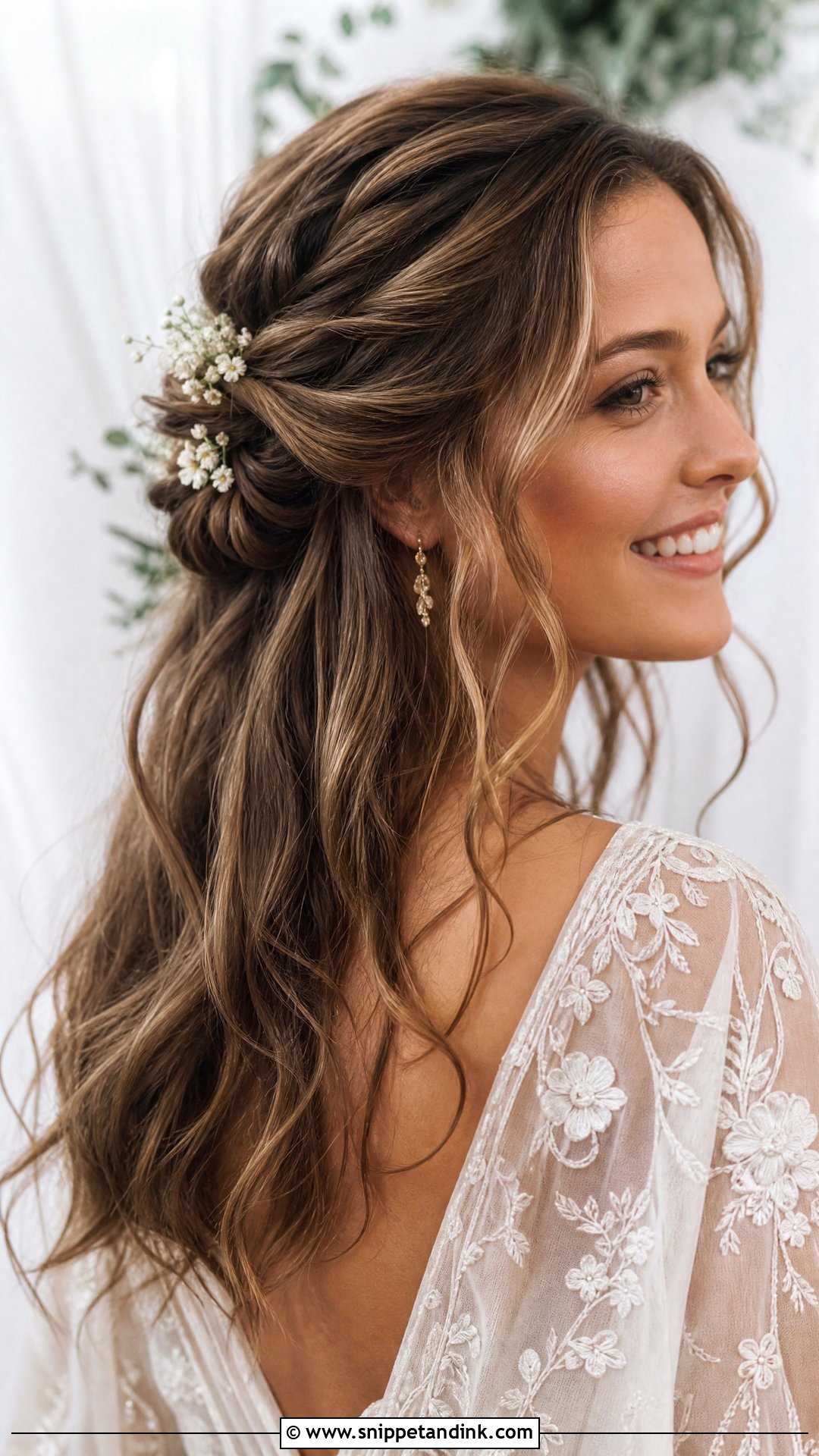
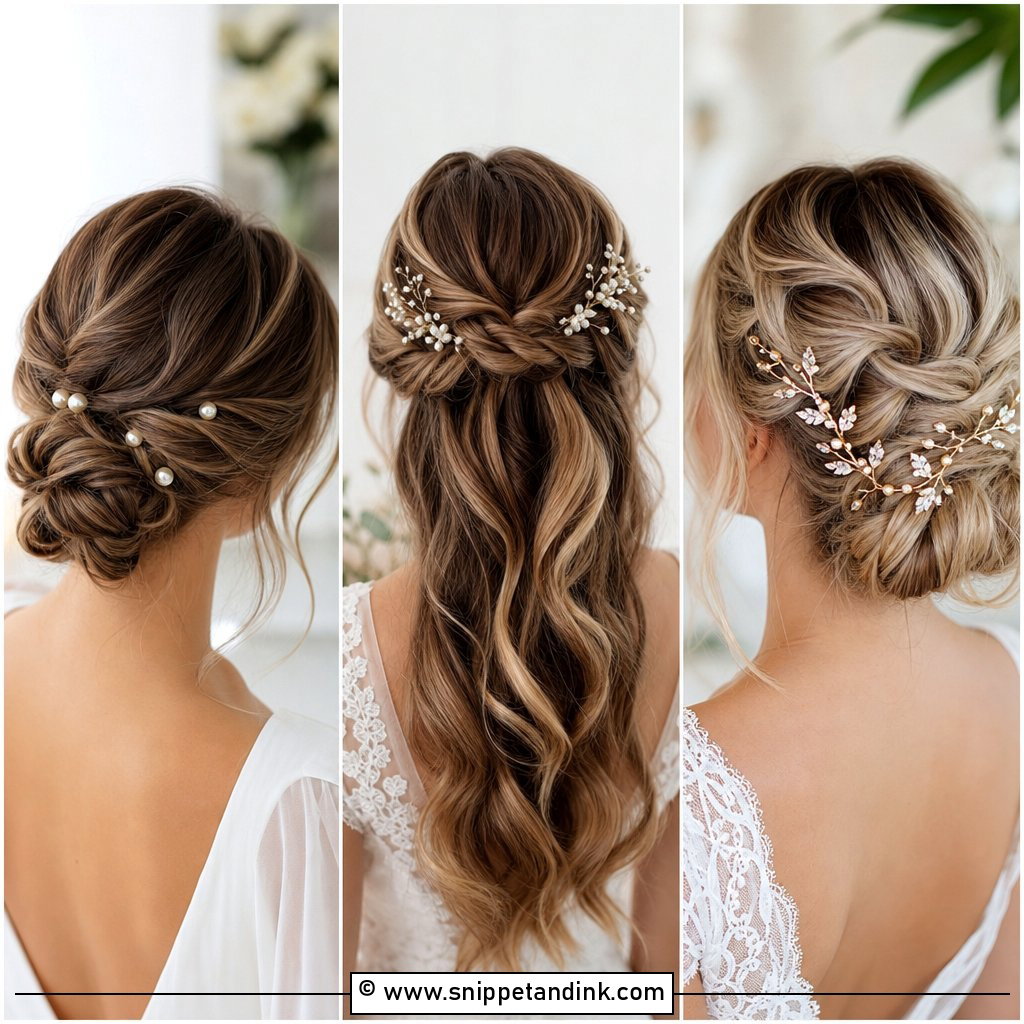
The tousled half-up with twists pulls back the top sections in loose twists and leaves the rest in soft waves. The twists keep hair out of your face while the lengths move freely. Small flowers or a sparkling pin can cover the point where the twists meet. On very thick hair I use three or four twists rather than two, so each one holds.
The Month Before: Color, Cuts and Wash Routine
Hair prep starts well before the morning itself. What you do in the last few weeks decides how well the style holds.
- Color one to two weeks ahead, so the tone settles and any brassiness can be corrected in time.
- Trim the ends a few weeks out, not a couple of days before. A fresh blunt cut can be harder to curl and blend.
- Avoid trying new treatments close to the date, such as keratin smoothing or an unfamiliar conditioning mask, since they can leave hair too slippery to hold pins or curl.
- Wash the day before. Day-old hair grips pins better than freshly washed hair, though a very oily scalp may need a morning wash with a light shampoo and no conditioner at the roots.
If you’re wearing extensions, have them blended at your trial so the color and texture match your own hair. And on the morning, wear a button-up shirt or robe, so nothing has to be pulled over your finished style when you change into the dress.
Your Hair Texture Is the Real Starting Point
A wedding hairstyle should reflect your personality, but it also has to work with your hair as it really is. Length, texture and density, plus your dress and venue, matter more than any trend. Mix a current look with a classic shape if that feels like you. Bring the styles you like to your stylist, book a trial, and go with the design you’d be comfortable wearing from the first photo to the last dance.
You'll Like These Ideas:


Leave a Reply