
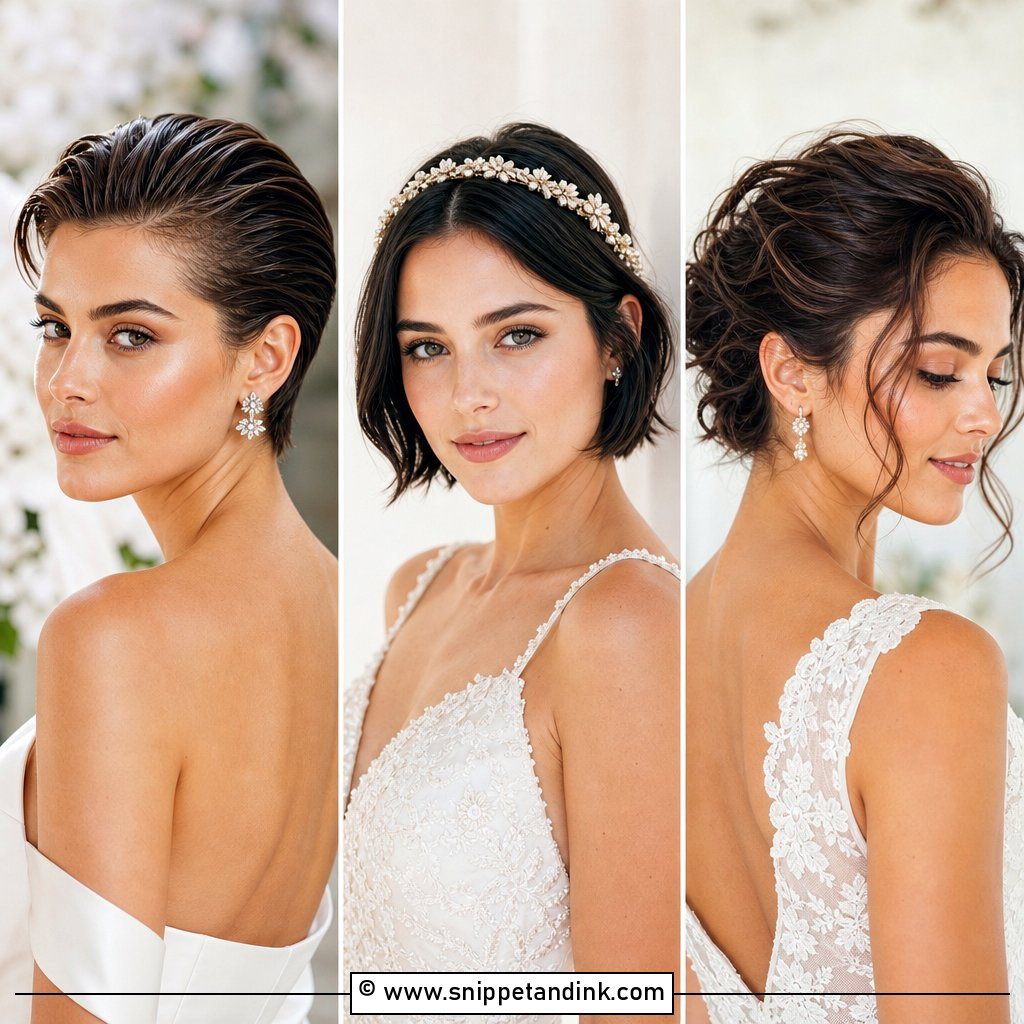
Brides with short hair often walk into a trial apologizing for it. They shouldn’t. A crop, bob, lob or pixie shows the jawline and earrings in a way long hair never does, and a veil looks crisp against it. Where short hair goes wrong is when someone tries to make it imitate a long style with fake buns and too many pins. I work with the cut instead: shine, movement or a clean shape, and one detail at most. Every idea below keeps the length you already have.
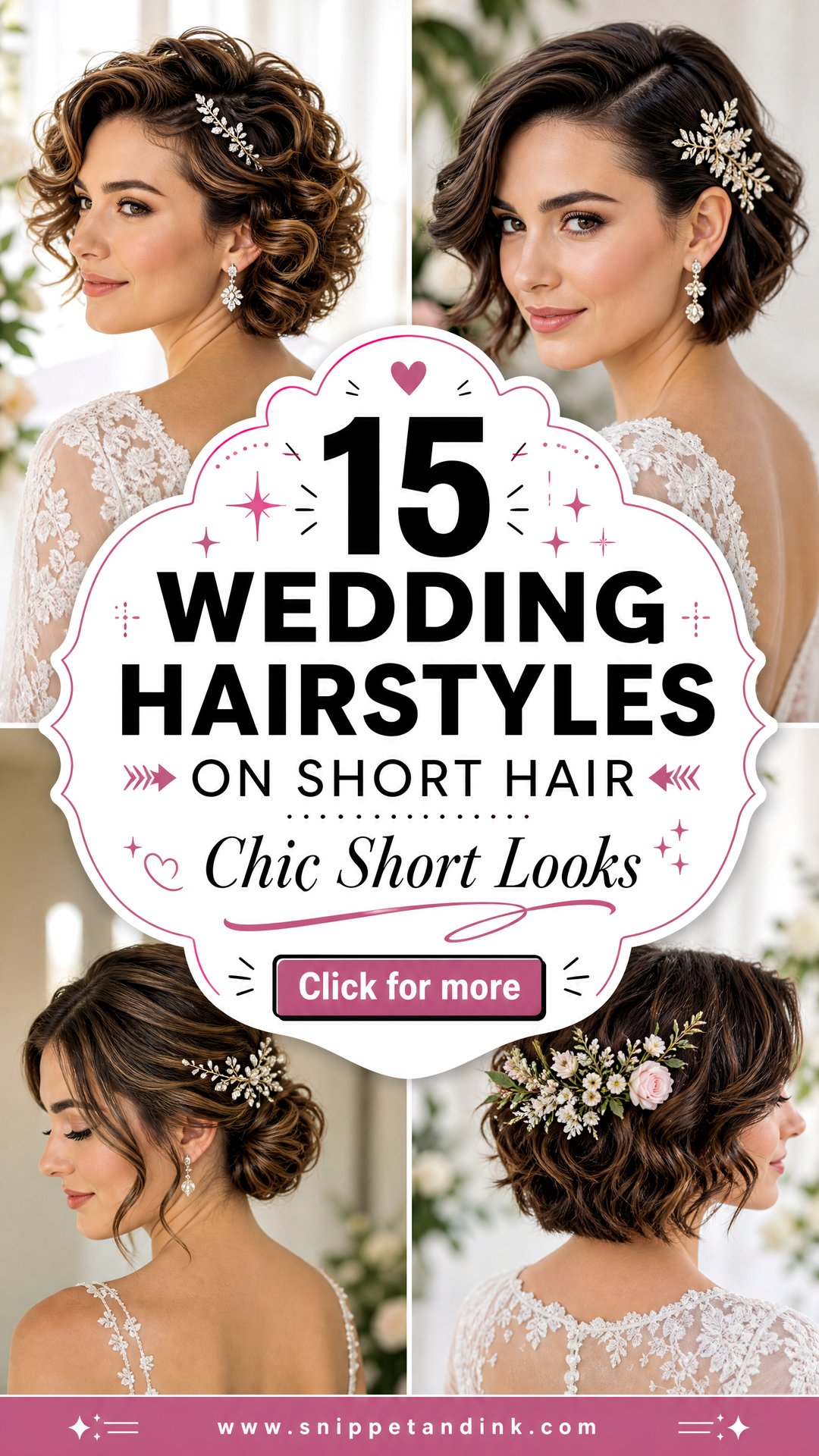
The Cut Matters More Than the Styling
With long hair, the styling hides a lot. With short hair, the cut is most of the look, so its timing matters. I’d plan your final trim about a week or two before the wedding for a bob, which gives sharp lines time to soften. A pixie grows out of shape faster, so keep its trim closer to the day.
Stick with the stylist who already knows your cut, and ask for a tidy-up rather than a change. Wedding month is not the time for a new shape, new bangs or a dramatic color shift. If your trial is weeks before the wedding, tell your stylist your cut date so they style the trial on the length you’ll actually have.
Bring a photo of the dress to that final trim. A stylist can keep a little extra length at the nape if your style is going to be pinned, or take weight off the sides if you’ll wear it tucked behind the ears.
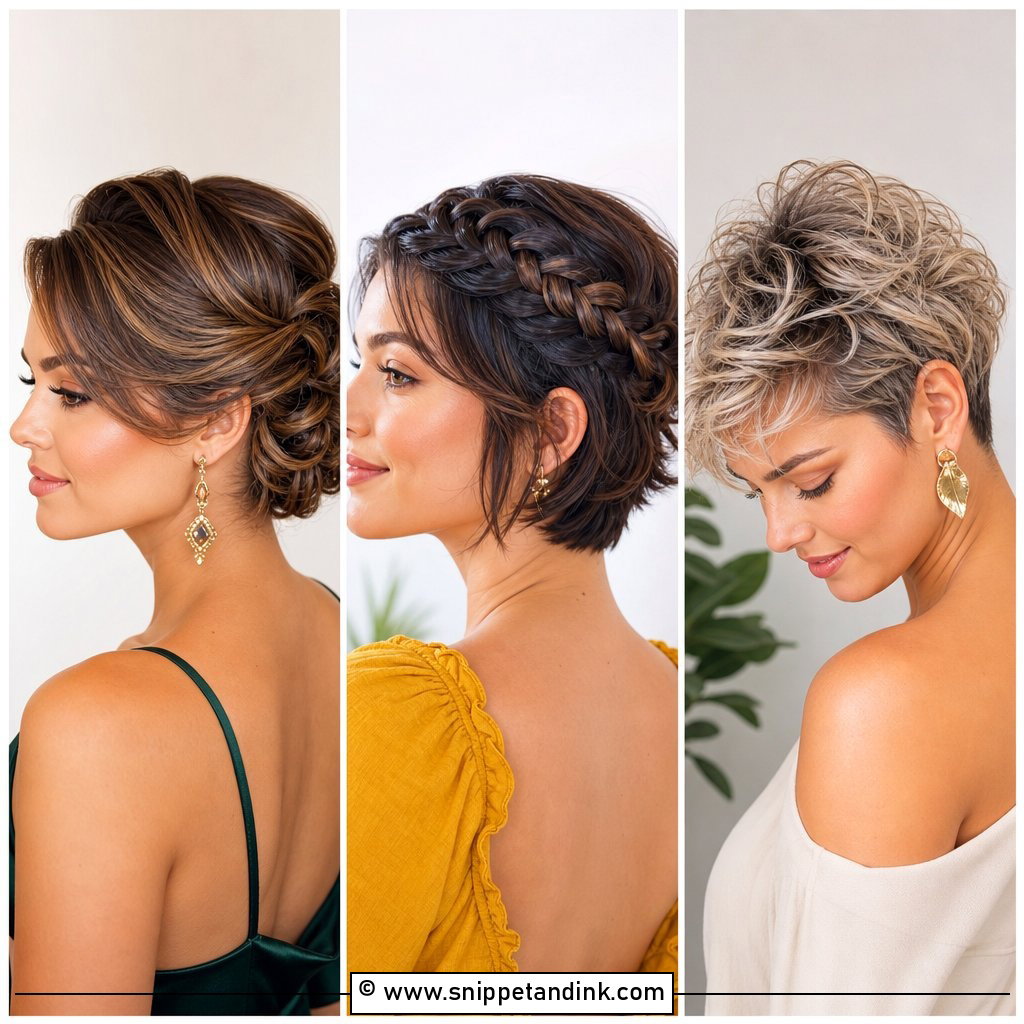
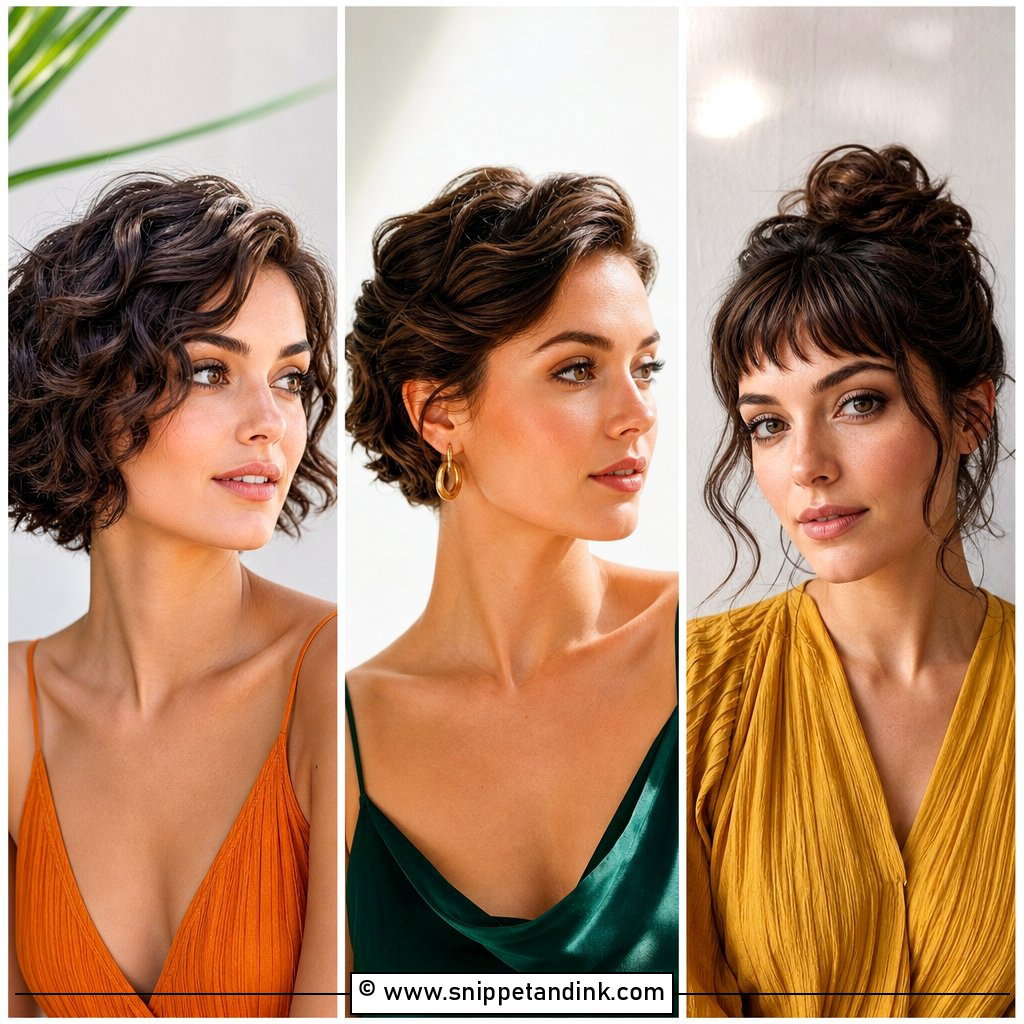
1. Short Hair Wedding Waves
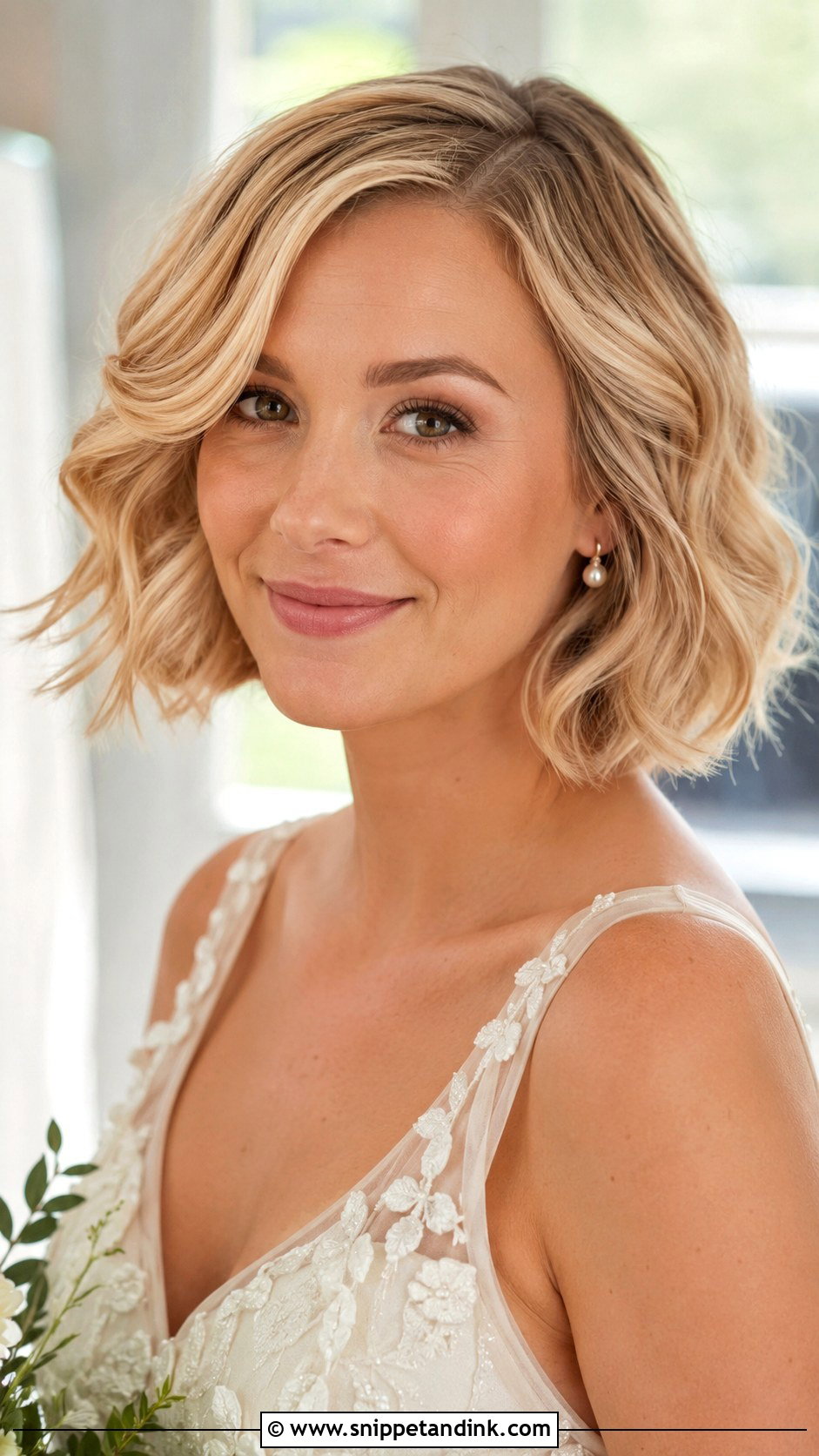
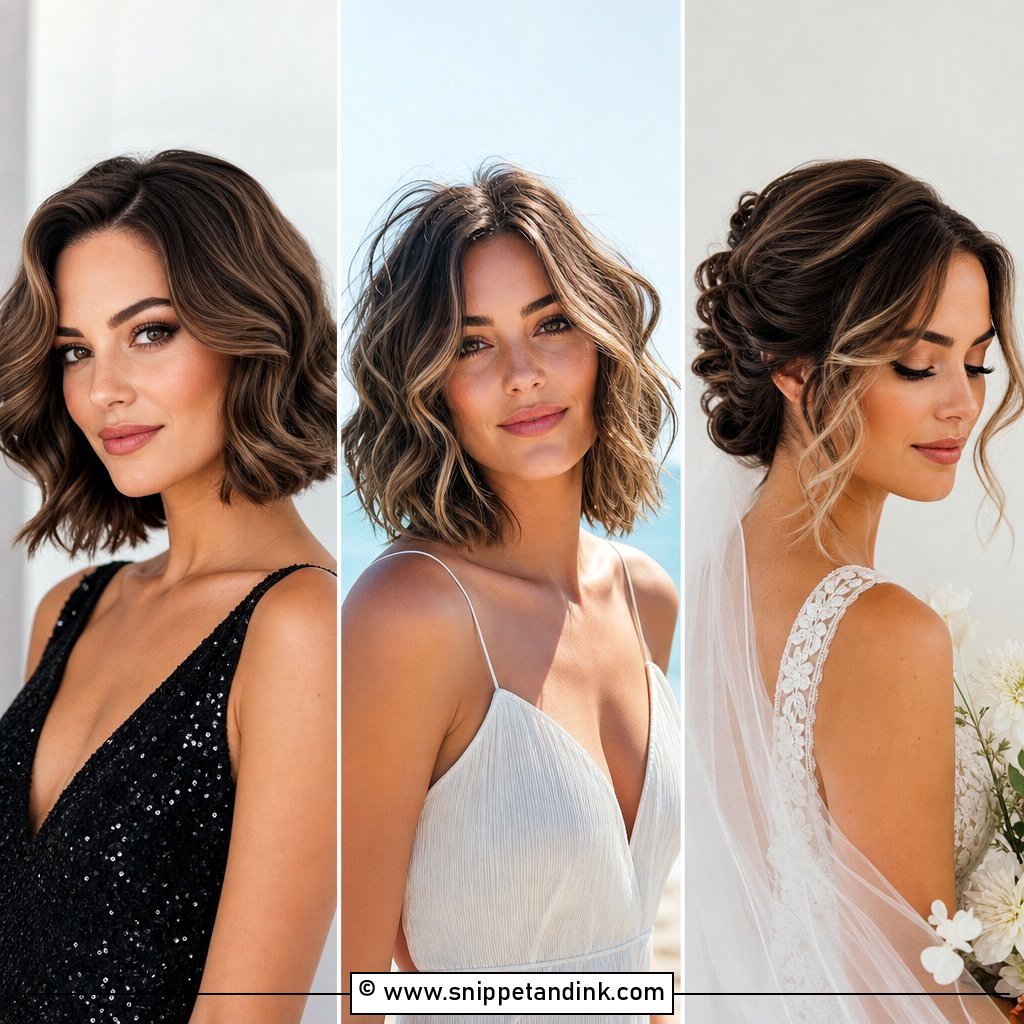
On a bob, waves should be loose bends, not ringlets. Tight curls on short hair spring up and make the cut look half its length. I use a one-inch iron, leave the last inch of each section straight, and brush through once the hair has cooled. That straight end keeps the look current. Side part for classic, middle for modern. I’d skip accessories here unless you’re wearing a veil.
2. Short Hair Wedding Updo
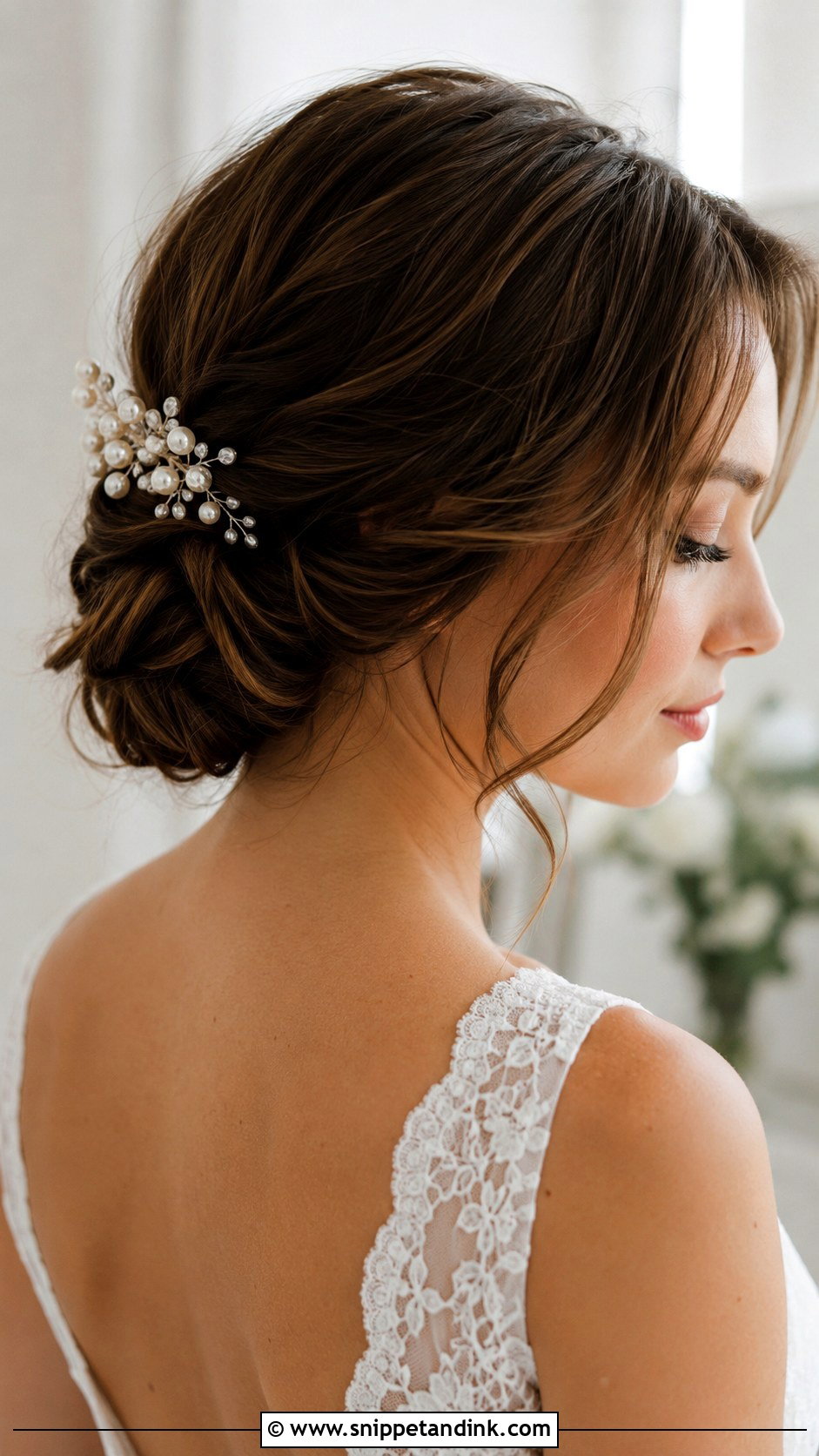
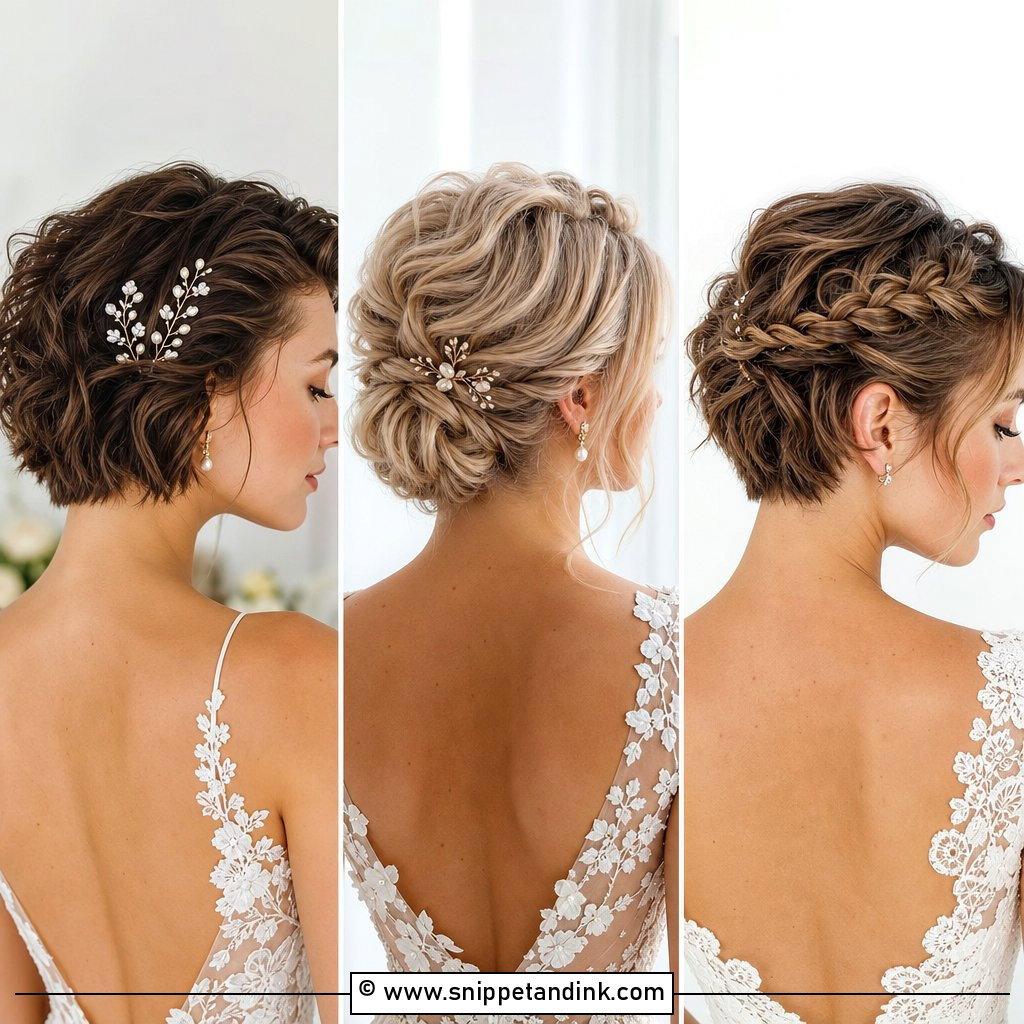
Short updos are possible down to about chin length, but they’re built differently from a long-hair updo. I can’t wrap, so I twist small sections and pin each one flat against the head, starting from the nape and working up. Texture spray first is essential; clean, silky short hair slides straight out of pins. The front stays soft around the face. If your nape hairs are very short, a small comb or floral pins at the back hides the spots that won’t reach.
3. Short Hair Wedding Bob
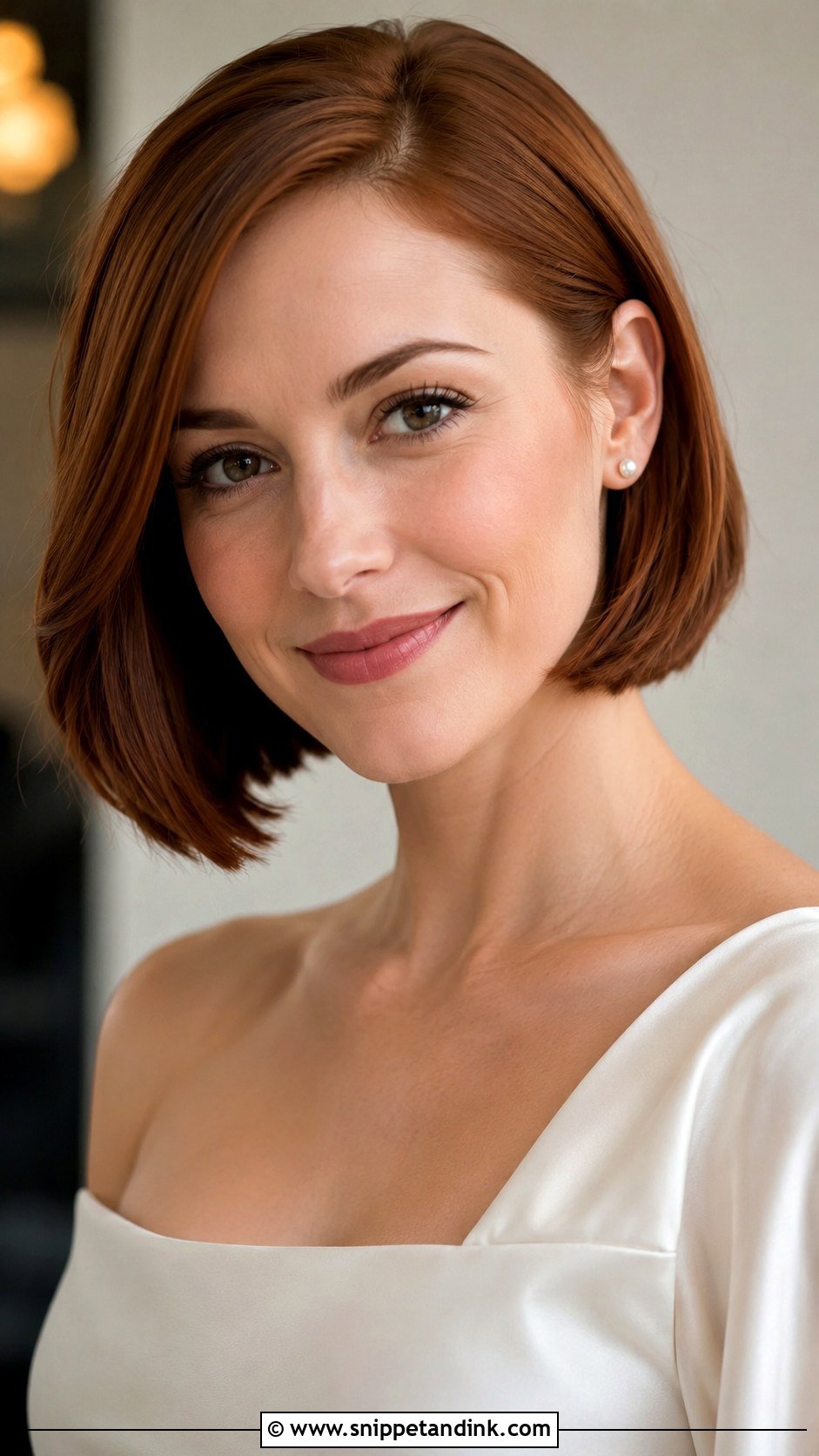
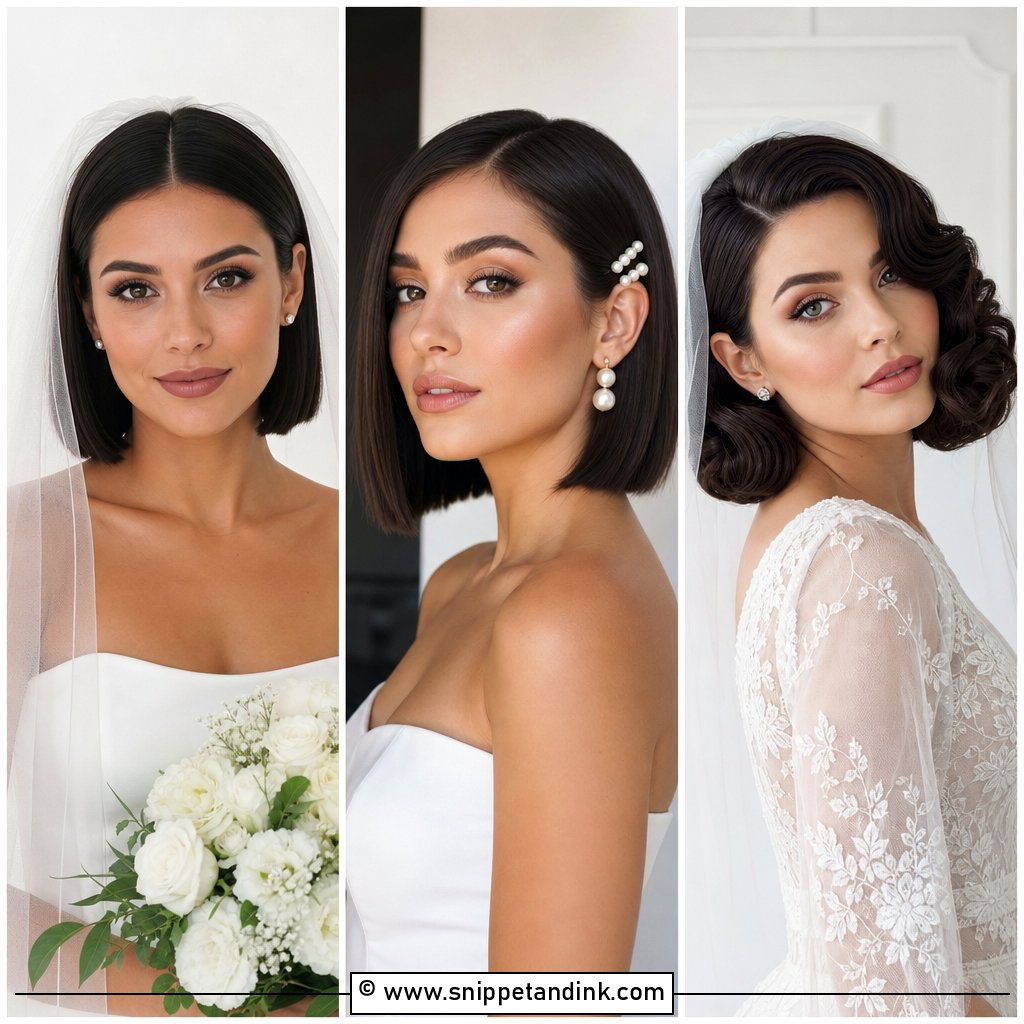
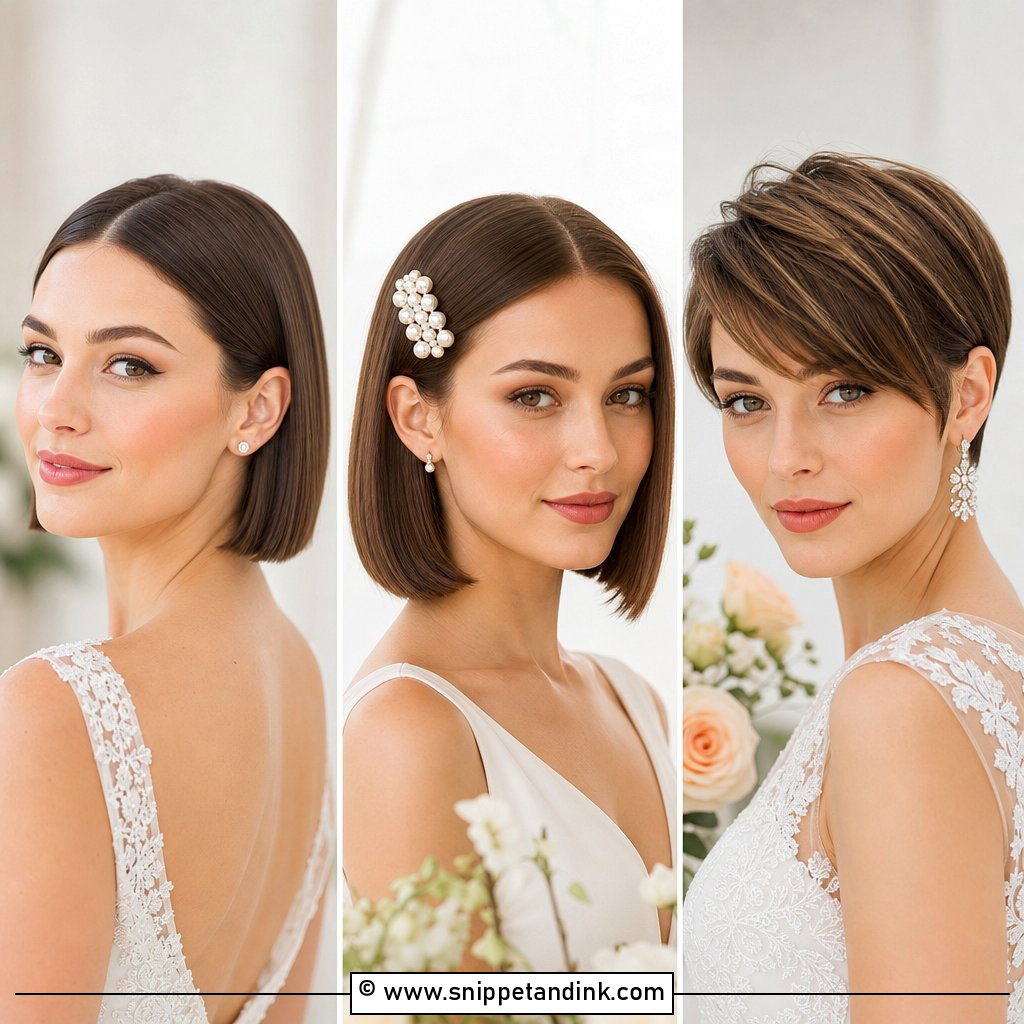
The best wedding bob is usually just a very good blowout. I use a round brush to bend the ends under, then polish with a little serum on the lengths only. Worn tucked behind one ear, it shows off an earring; with a deep part, it reads more formal. If your bob has a sharp line, check it in profile at the trial. Hair that curves inward can look different from the side than from the front.
4. Short Hair Wedding Pixie
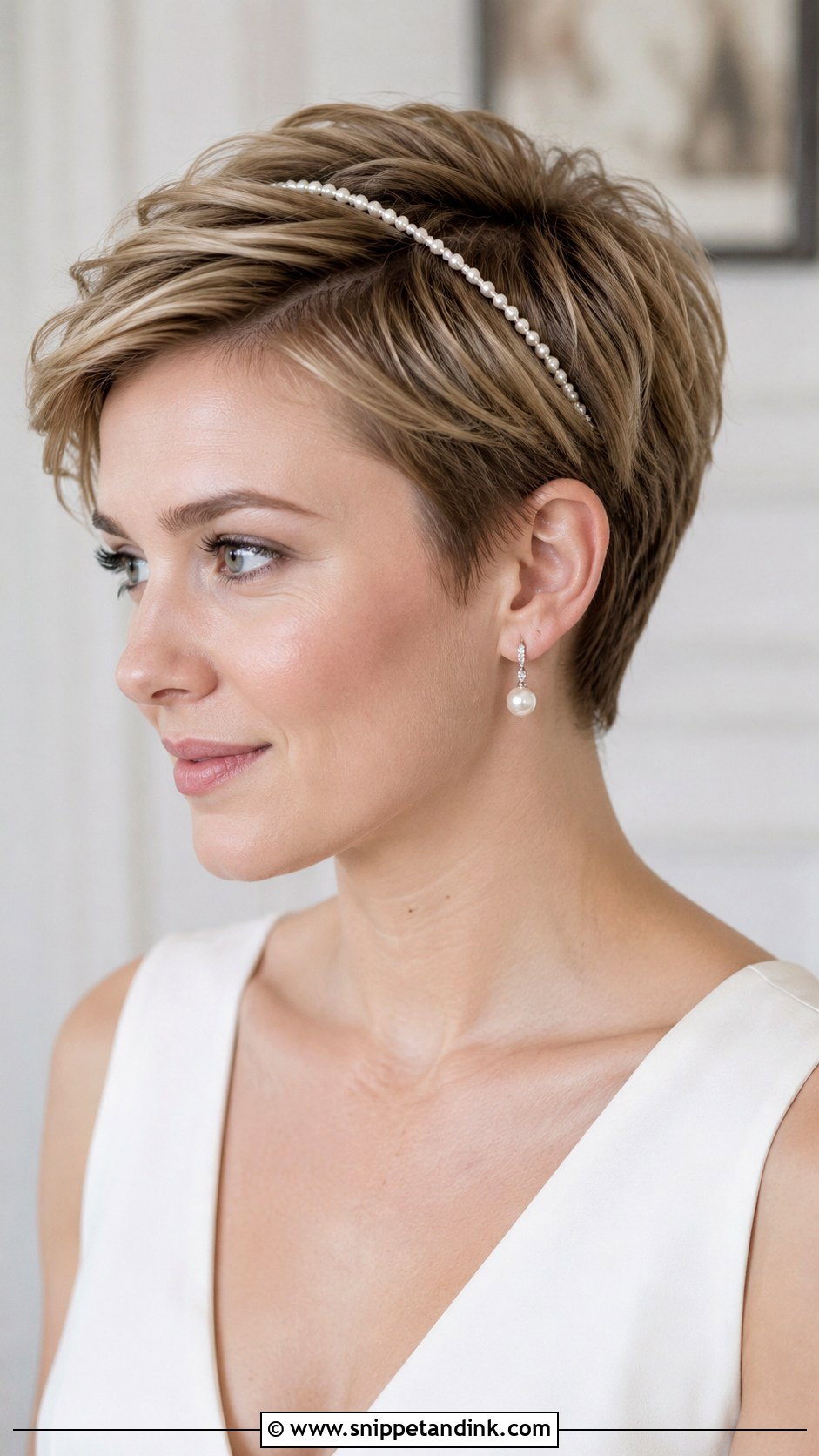
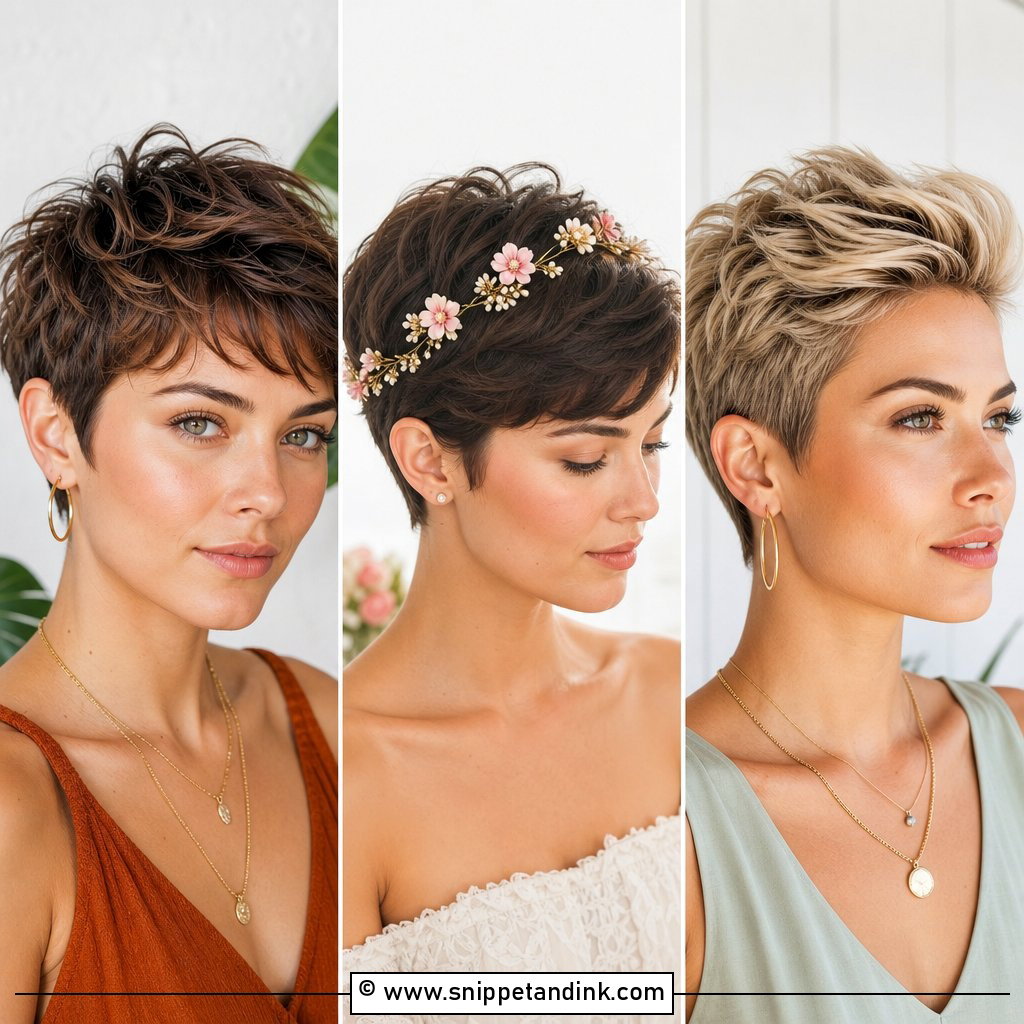
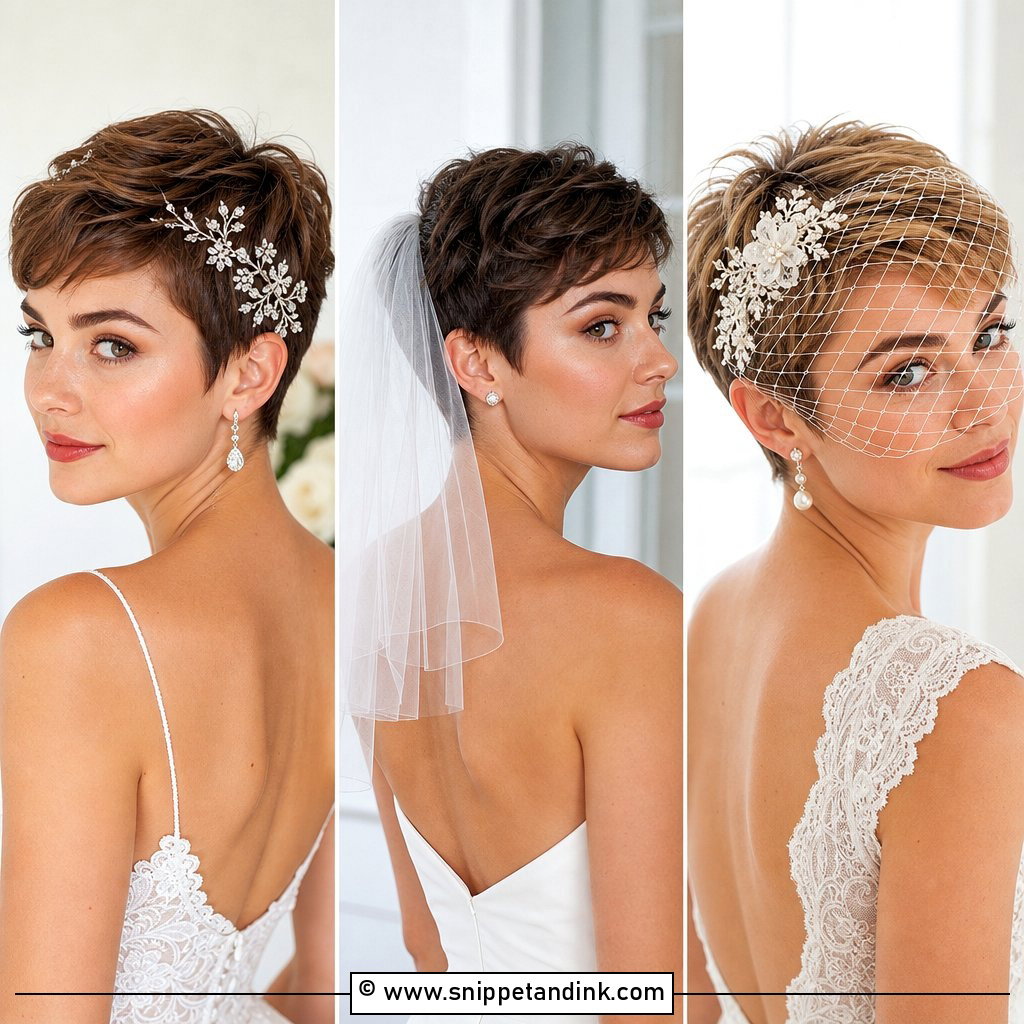
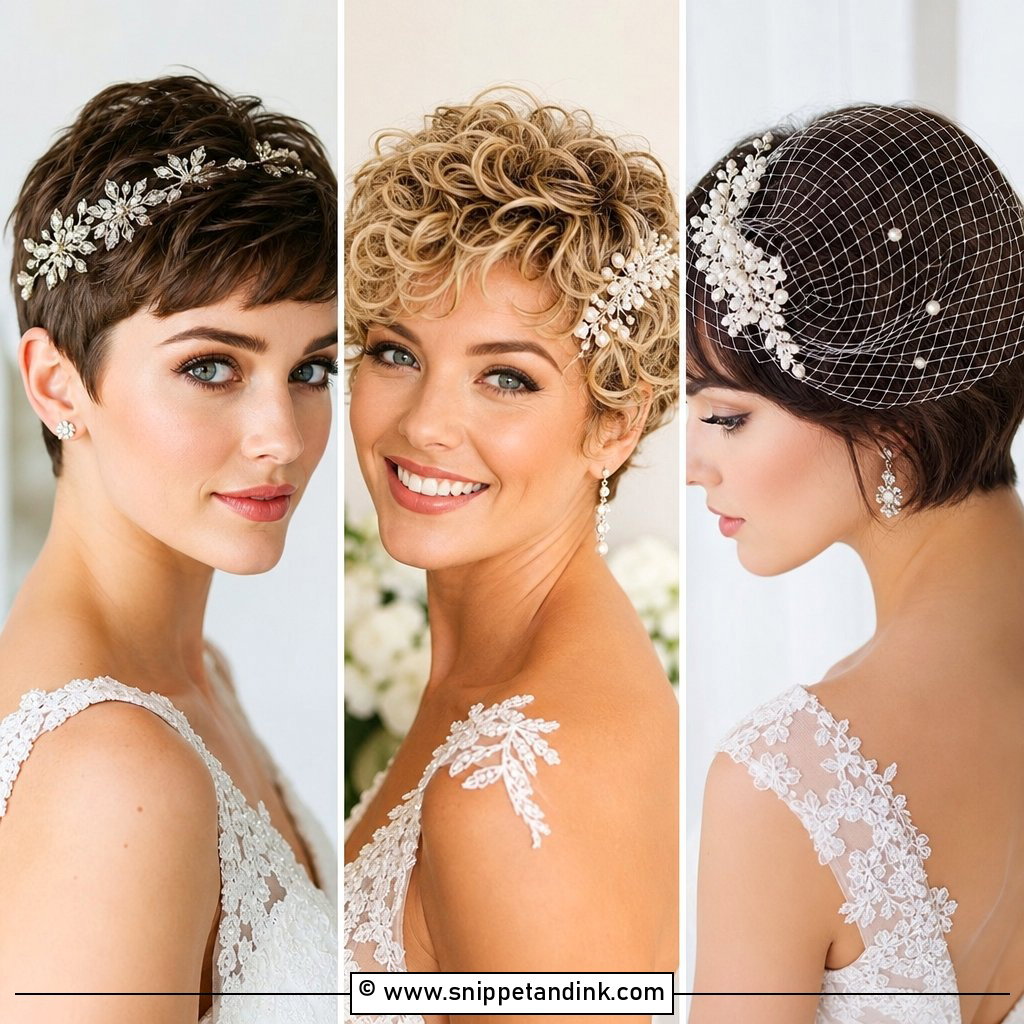
Pixies are the hardest short cut to fuss with, so I don’t. A pea-sized amount of pomade or cream, worked through with fingers, gives shape and separation. A softer pixie can go forward with airy pieces; a longer one sweeps to the side. Lift at the crown makes it feel dressed up. If you want an accessory, a slim headband or one pearl clip is plenty. Anything bigger sits on top of a pixie rather than in it.
5. Short Hair Wedding Curls
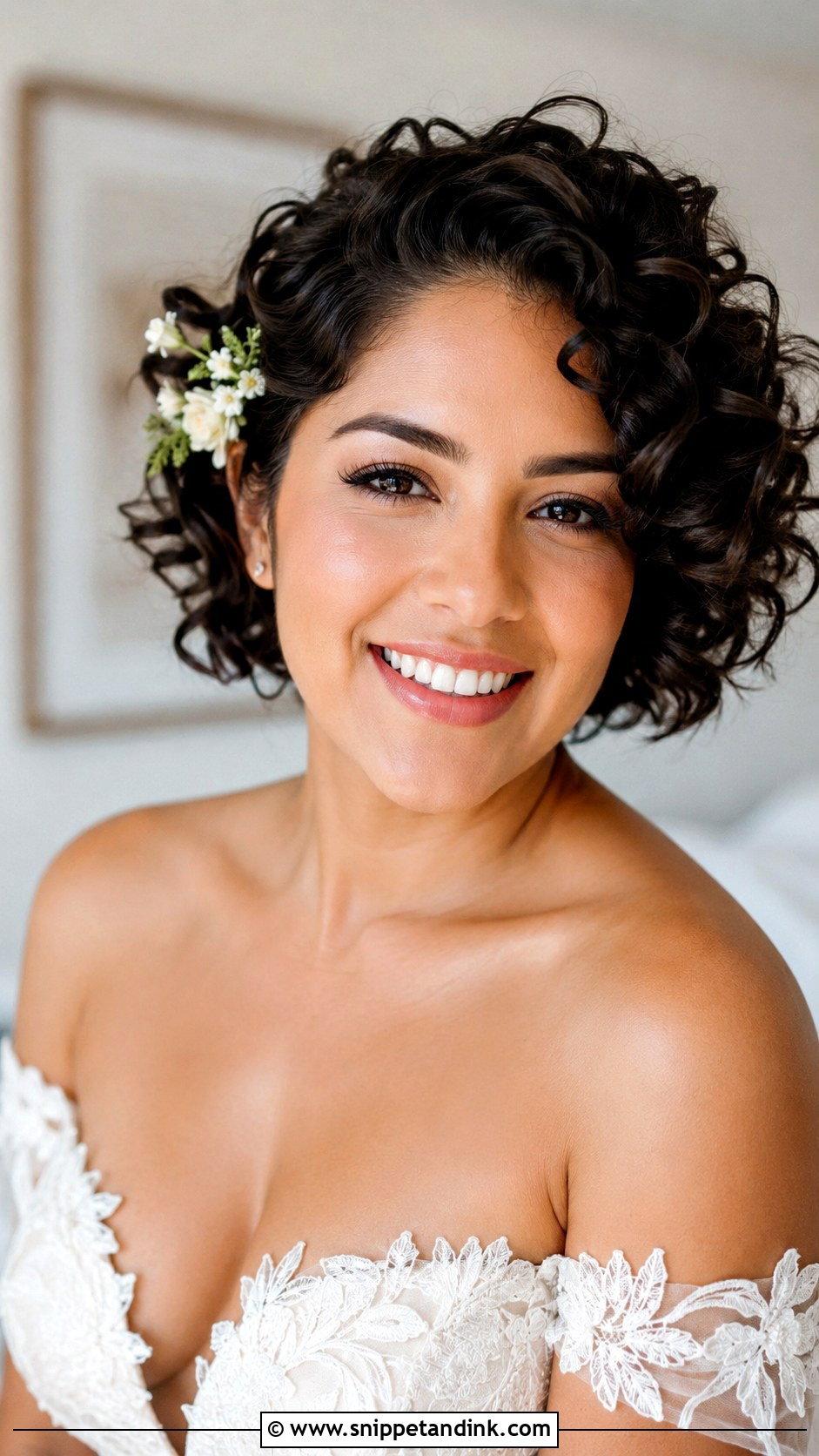
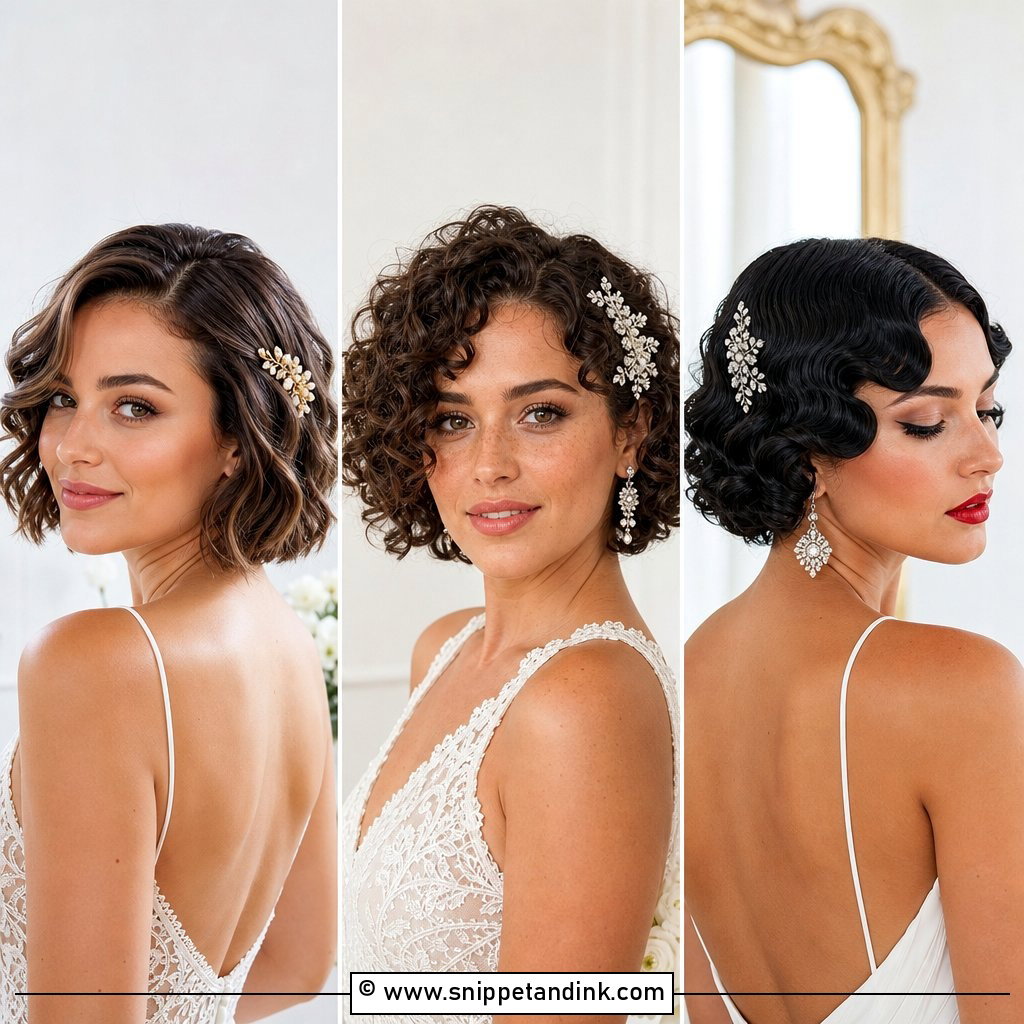
Short natural curls look best when they’re left alone after defining. I apply curl cream or a light gel to soaking wet hair, scrunch, and let it dry without touching. Diffusing on low is fine if time is tight. Lifting the roots with a pick once dry keeps the shape from flattening in photos. The thing I warn against is restyling curls with a brush on the morning; on short hair, you’ll lose your pattern and can’t hide the frizz. A single comb on one side finishes it.
6. Short Hair Wedding Half Up
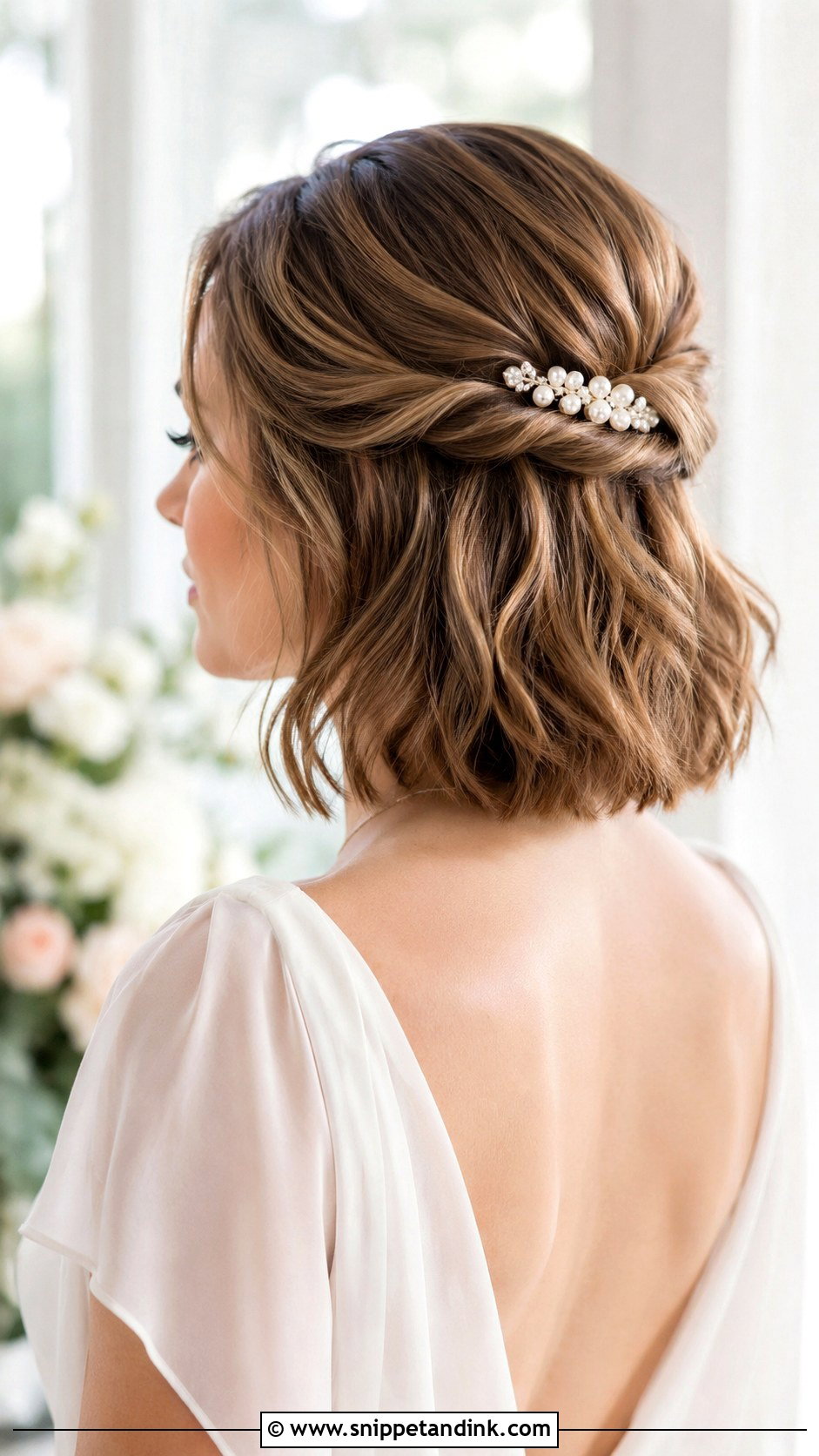
Bob and lob lengths are the shortest I’d do a half up on. The top section has to reach the back of the head, so a chin-length bob with short layers often won’t work. I twist the front pieces back and secure them with crossed pins, then cover the meeting point with a small bow, pearl barrette or comb. It’s the most practical choice if your hair falls forward when you look down at your bouquet or vows.
7. Short Hair Wedding Side Part
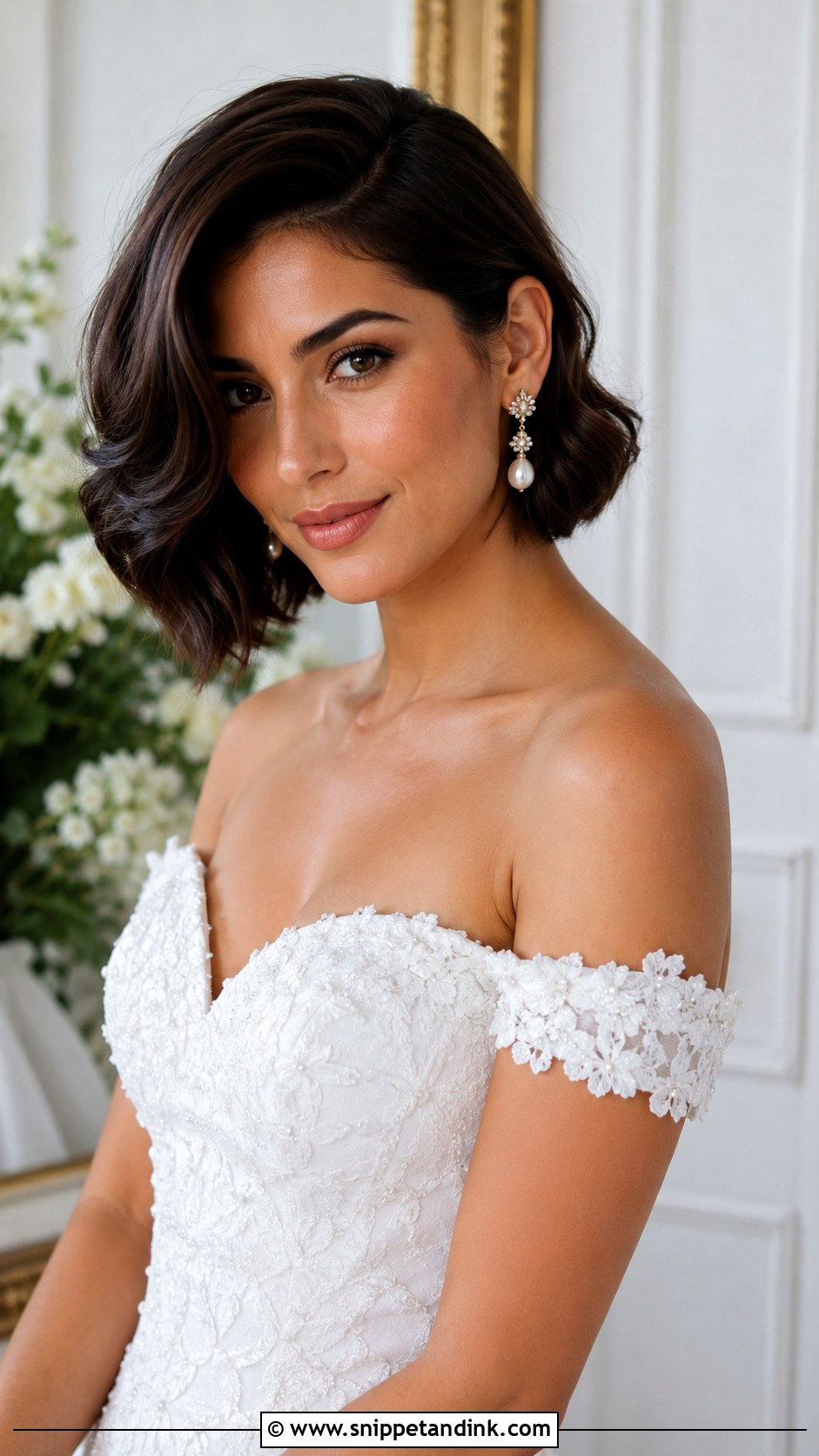
A deep part is the single fastest change you can make to short hair. Moving the part an inch or two toward one side adds lift at the root and creates a sweep across the forehead. I blow-dry the hair in the new direction while it’s damp, because a part that’s just combed over will flip back within the hour. The smaller side tucks behind the ear, leaving room for earrings or a sparkling clip. It holds well, which makes it reliable for a long day.
8. Short Hair Wedding Headband
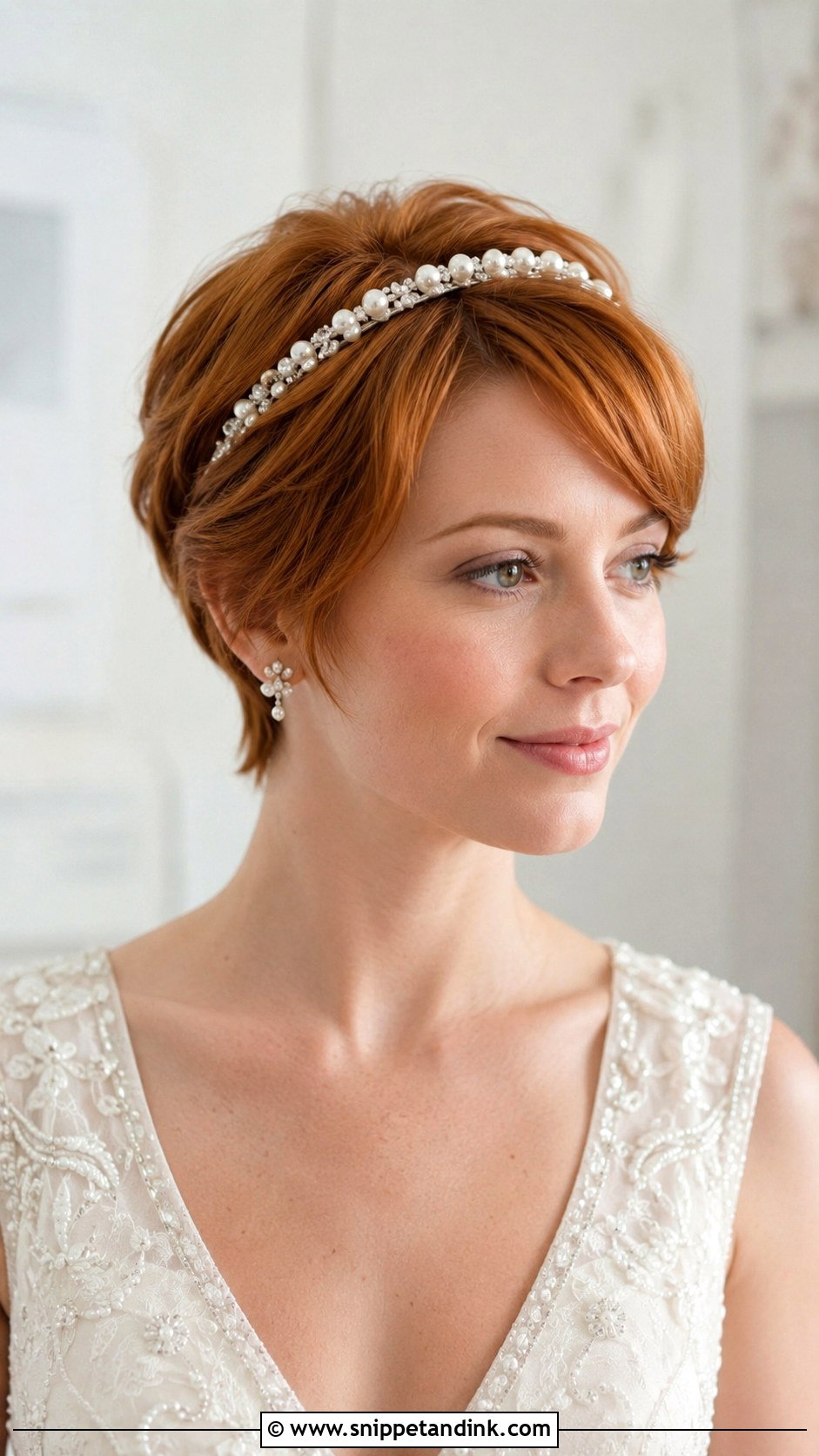
Headbands are made for short hair, but they slip on smooth, freshly washed cuts. I spray a little texture spray where the band sits and, for a pixie, use a band with small combs on the underside. On a bob, two bobby pins crossed under each side keep it in place. A little volume at the crown balances the band so it doesn’t look flat. Pearls read classic, satin modern, and floral suits a garden ceremony; pick one and keep the rest of the hair simple.
9. Short Hair Wedding Veil
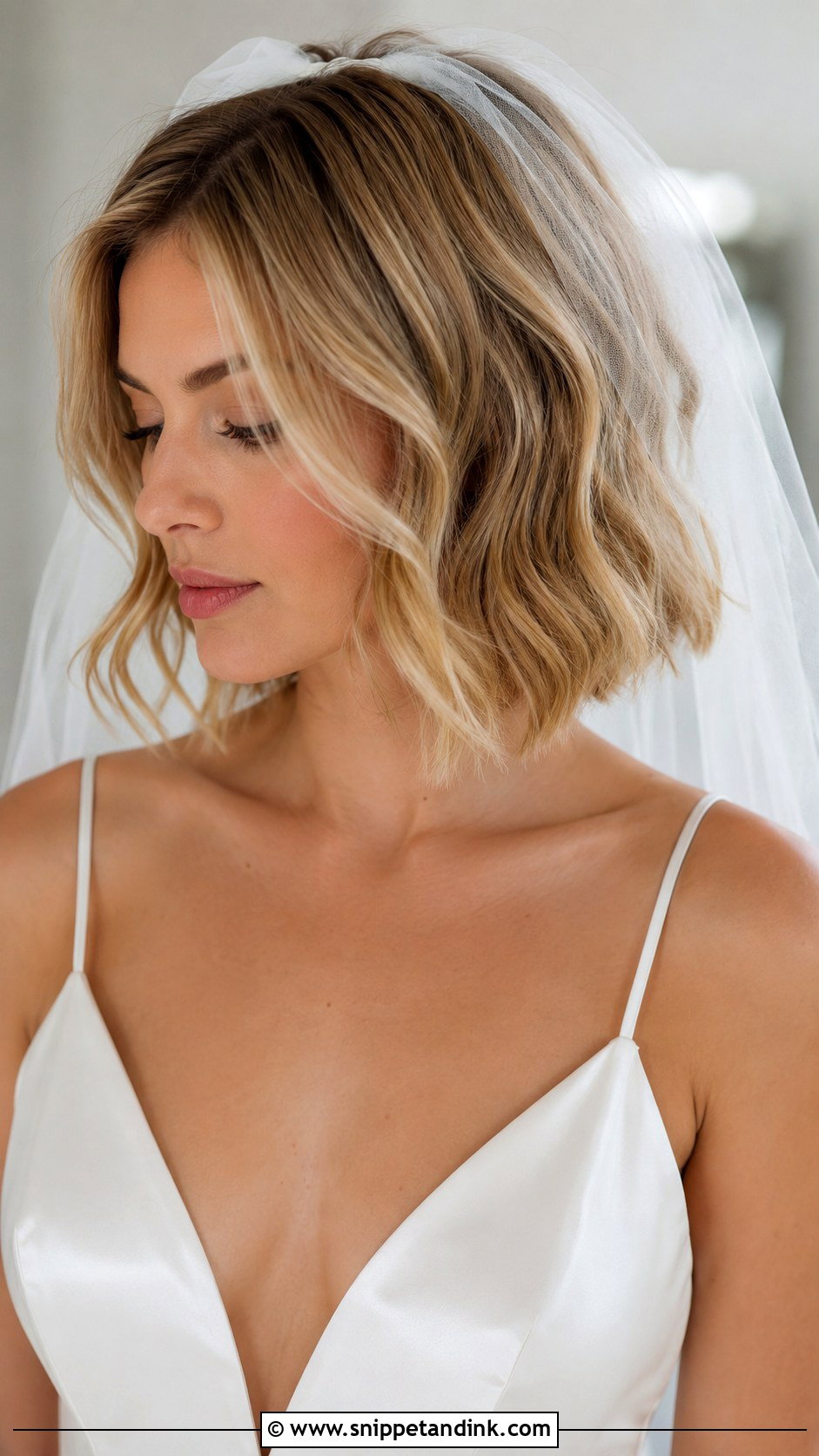
Veils look especially clean against short hair, since nothing competes with the tulle. The challenge is the anchor. With a bob, I put the comb either at the crown over a little teased volume or just above the nape. On a pixie, there’s little to grip, so I make a small flat pin base underneath, two pairs of bobby pins crossed in an X, and slide the comb into that. Fine hair benefits from a small braid under the comb. Ask for a lightweight veil if your hair is very short; a heavy cathedral veil pulls on any anchor.
10. Short Hair Wedding Finger Waves
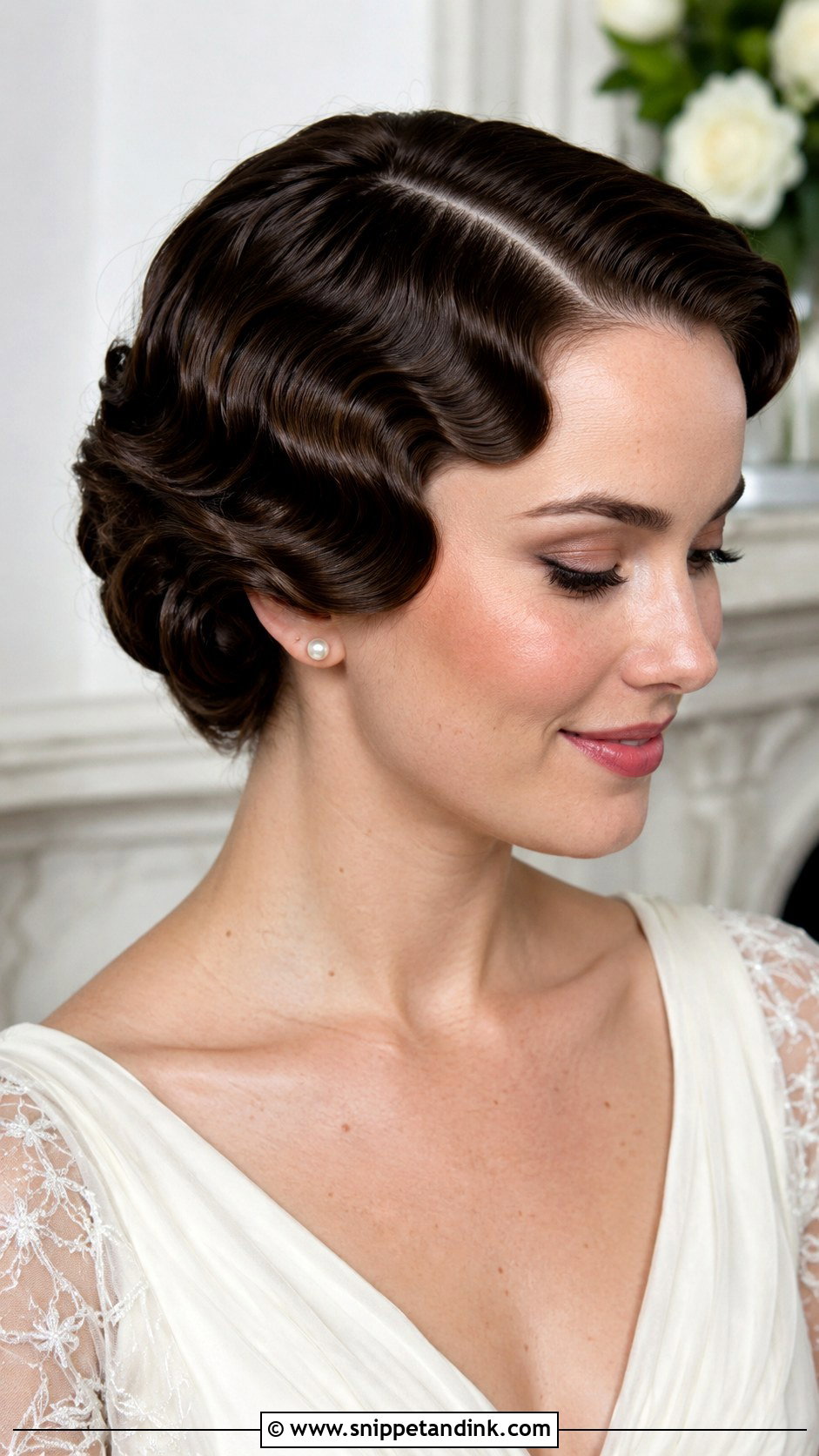
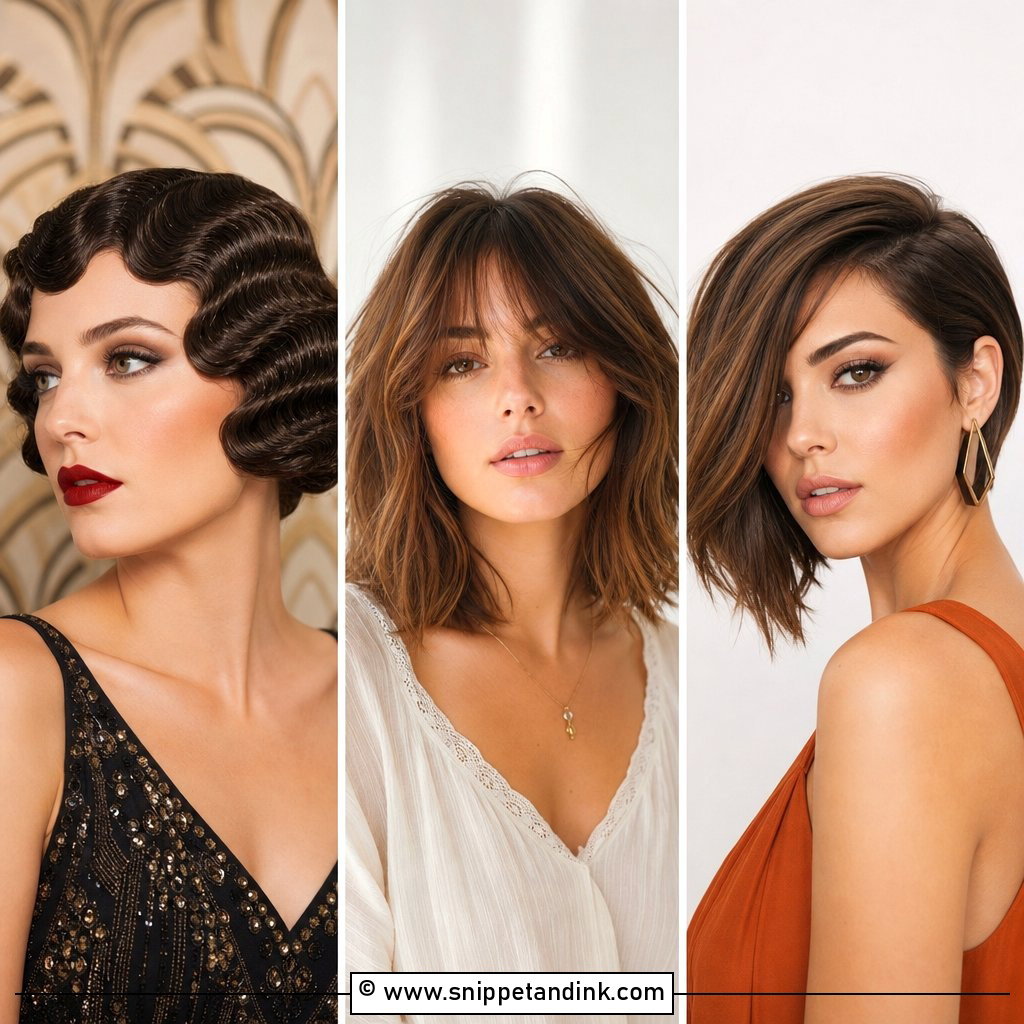
Finger waves were designed for short hair, so pixies and crops wear them better than long hair does. I set the wave on damp hair with a firm gel, pressing the ridges in with my fingers and a comb, then leave it to dry fully without touching it. On a wedding morning, that drying time is the part people underestimate. The shape sits close to the head and pairs naturally with a satin dress and a strong lip. Done well, it holds better than almost any other short style.
11. Short Hair Wedding Braids
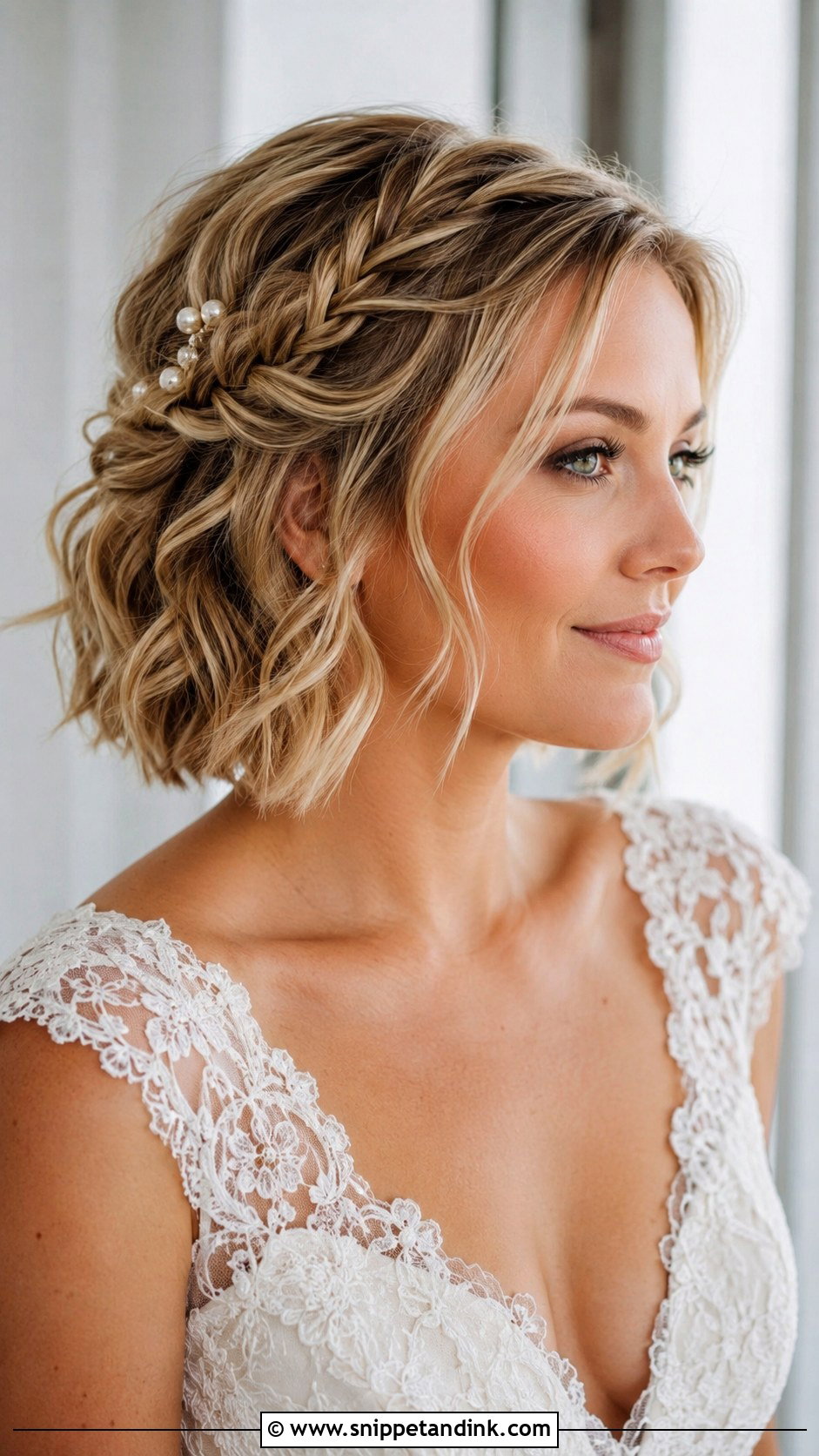
Braids on short hair should be small accents, not the main structure. A thin braid along the part or across the front catches short layers and gives a veil comb something to grip. I use a Dutch braid for this, since it sits on top of the head and shows more on short lengths. The rest stays waved or curled. Keep the braid loose; tight braids on short hair tend to show the scalp.
12. Short Hair Wedding Bun
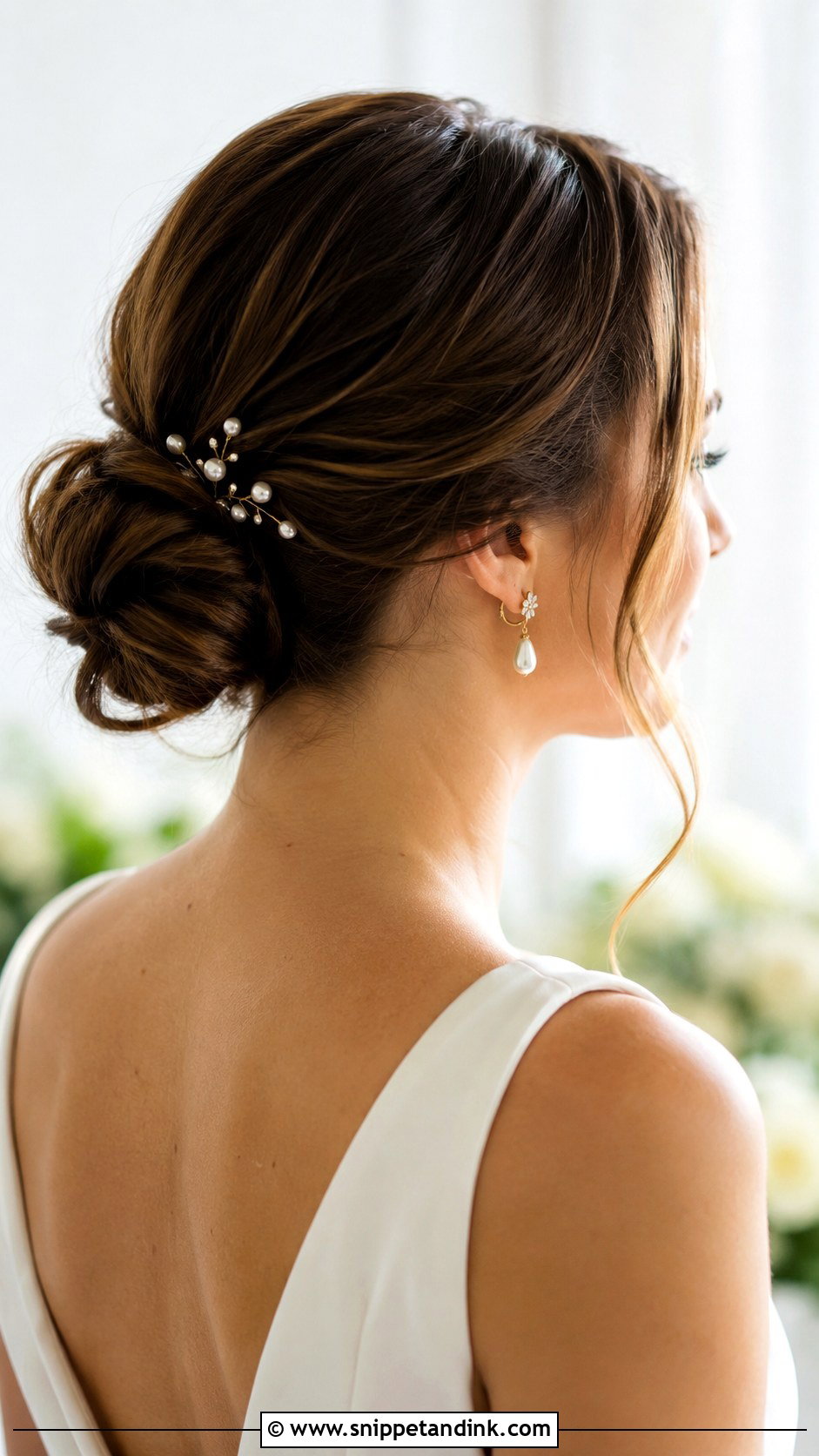
You need at least enough length to gather a small ponytail at the nape for a short-hair bun, so this is for long bobs and lobs. I add texture spray, gather the hair, twist it into a small knot, and pin the shorter pieces that escape into the bun. A few face pieces keep it from looking pulled. Some short nape hair will always fall; pin it flat or leave it out on purpose. A comb or veil sits just above.
13. Short Hair Wedding Slick Back
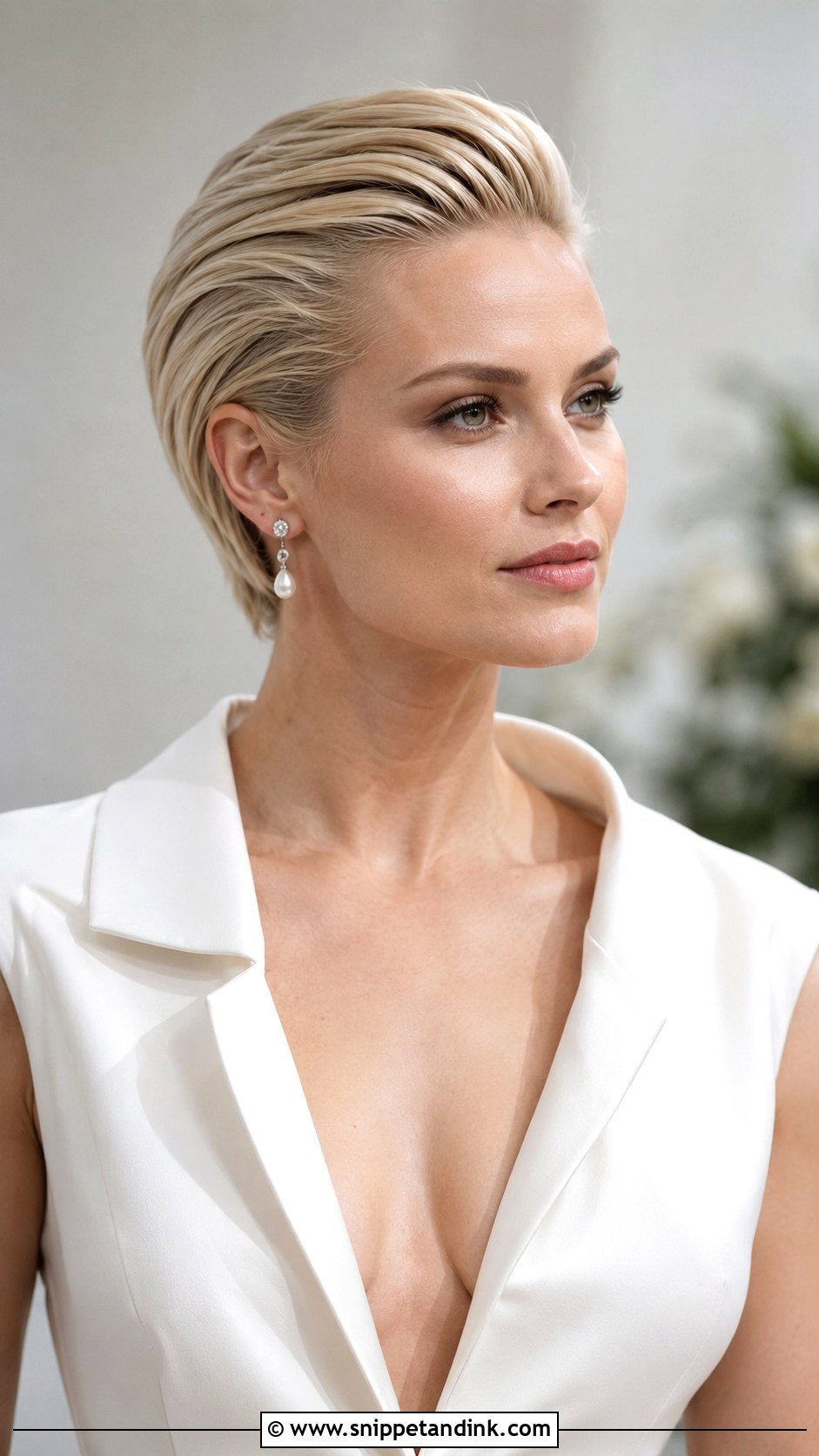
A slick back wedding hairstyle is all about the product. I use a cream or gel with flexible hold and smooth it back with a fine-tooth comb, then brush through lightly so it looks glossy instead of wet. It puts every bit of attention on your features and earrings, so your makeup needs to be ready for that. If you have cowlicks at the hairline, test this at the trial; some won’t lie flat for a full day. It suits minimal gowns and high necklines.
14. Short Hair Wedding Floral Hair
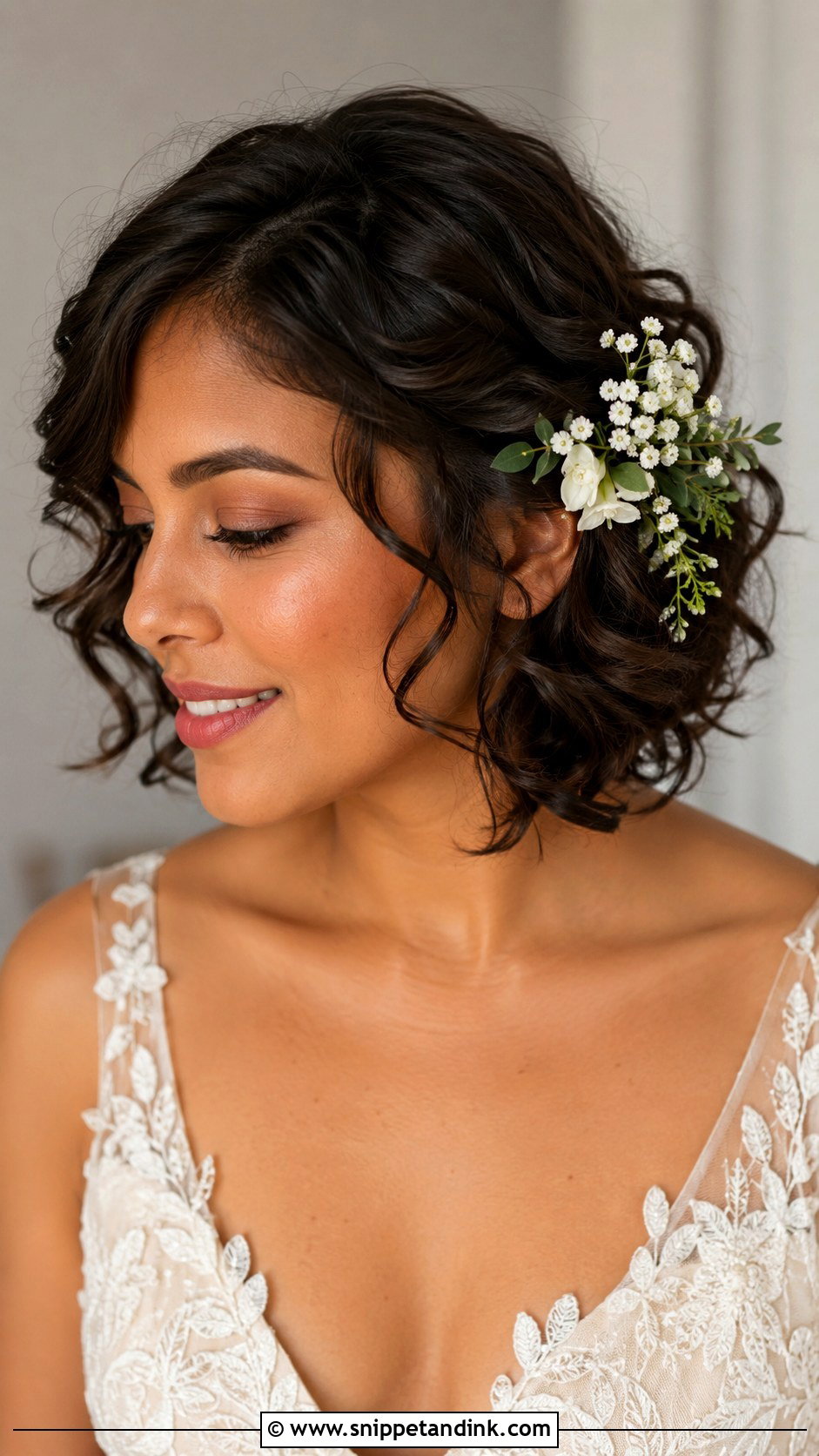
Scale matters more for flowers on short hair than anything else. Fresh flowers kept small and pinned near one ear look right on a bob; a large rose sitting above a pixie overwhelms the cut. I wire each stem and pin it into a small braid or twist so the flower doesn’t slide. Baby’s breath and small roses hold up well, while delicate blooms like gardenias bruise and brown quickly against warm skin. Match them to your bouquet.
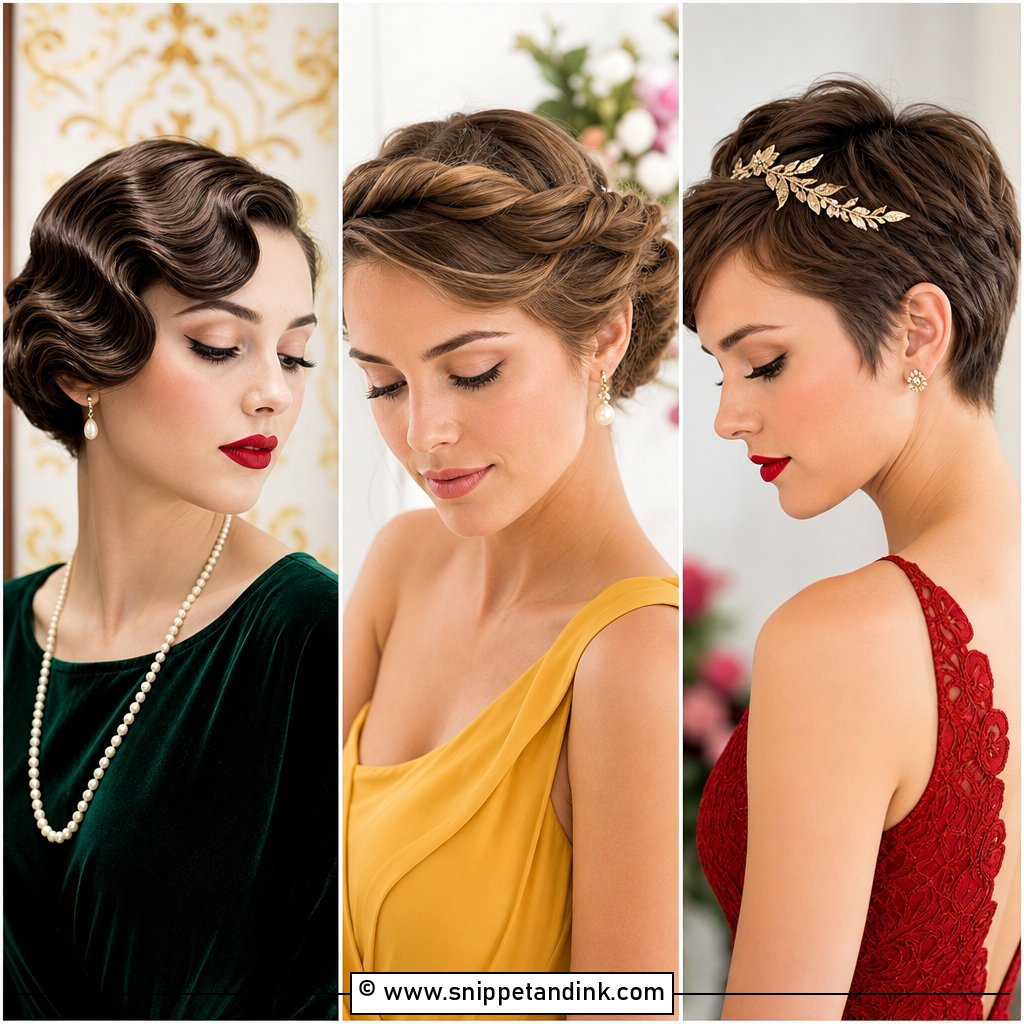
15. Short Hair Wedding Hollywood Waves
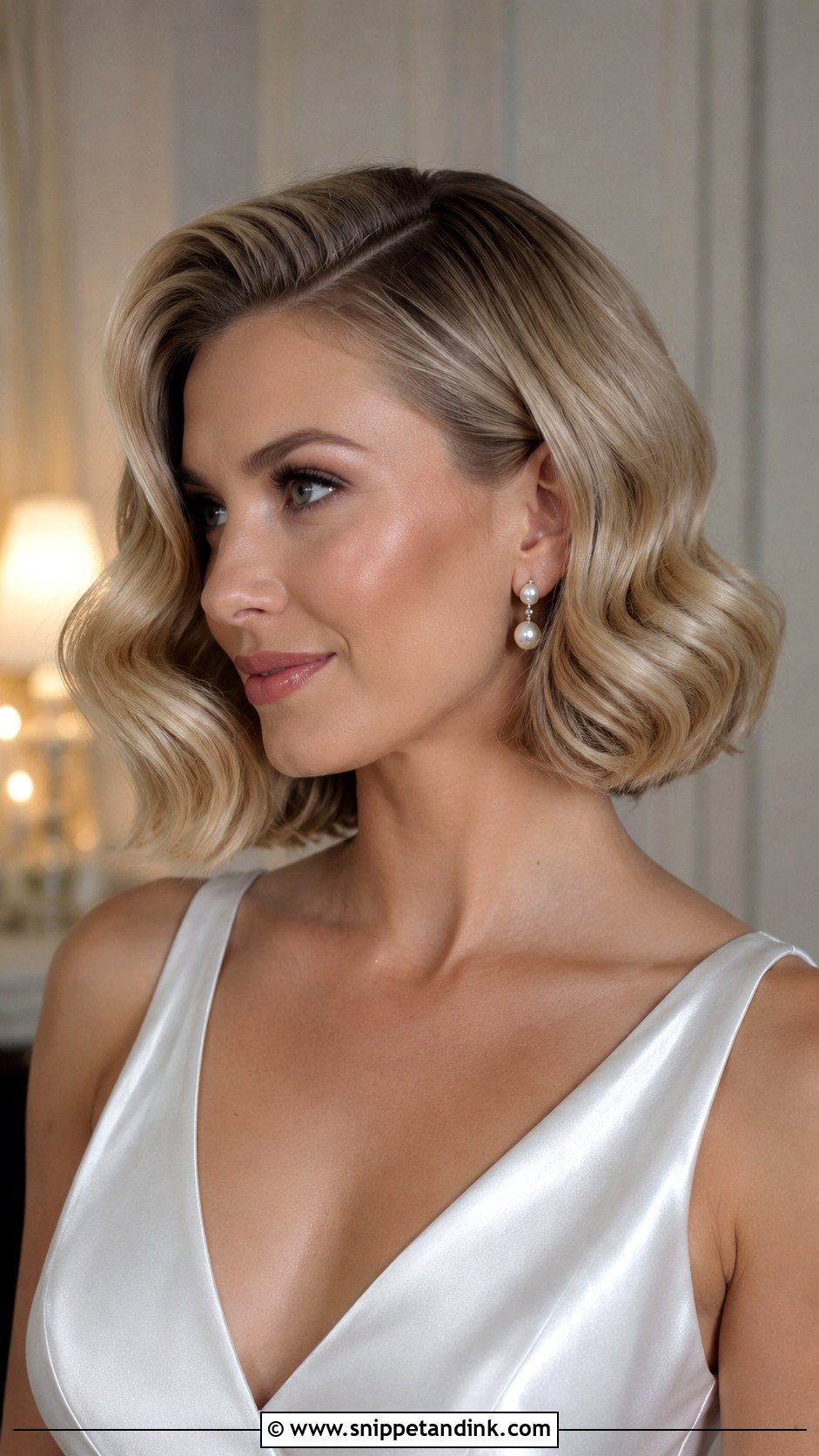
Hollywood waves on a chin-length bob need a uniform pattern. I curl every section away from the part in the same direction, pin each curl to cool, then brush into one smooth wave. A deep side part gives the classic shape. The ends should finish polished and turned, not fluffy, which is where a little smoothing cream helps. It pairs naturally with satin, pearls and a simple veil, and needs no accessories to look finished.
Anchoring Accessories When There’s Nothing to Pin Into
Most bridal accessories are designed for long hair, so short-haired brides often find their veil or comb slides out an hour in. It can be fixed with a little structure underneath.
- Start with grip. Texture spray or dry shampoo at the spot where the accessory will sit gives freshly washed hair the friction it lacks.
- Build a base. Two pairs of bobby pins crossed in an X, or a tiny flat braid, give a comb or clip something to lock into.
- Choose small teeth. Combs with short, closely spaced teeth hold better in short hair than the long combs made for buns.
- Use snap clips for pixies. On very short hair, small snap clips on the accessory’s underside hold better than combs.
- Test it moving. At the trial, shake your head and hug someone. If the accessory shifts, add another pin before the day.
If you’re attaching a veil to very short hair, ask your veil maker about lighter fabric and a smaller comb. A heavy veil is the one thing short hair can’t support for long, no matter how well it’s pinned.
A Bob, a Pixie or a Crop Can Carry the Whole Look
Short hair has as many bridal options as long hair, and often more reliable ones, since there’s less weight to fall. Soft waves read relaxed, a slick back reads fashion-forward, and a good blowout on a bob can be the whole statement. Start from your cut and texture, then the dress, and add one detail at most. At your trial, wear the style through a long afternoon, and pay attention to how your accessories feel by evening.
You'll Like These Ideas:


Leave a Reply