
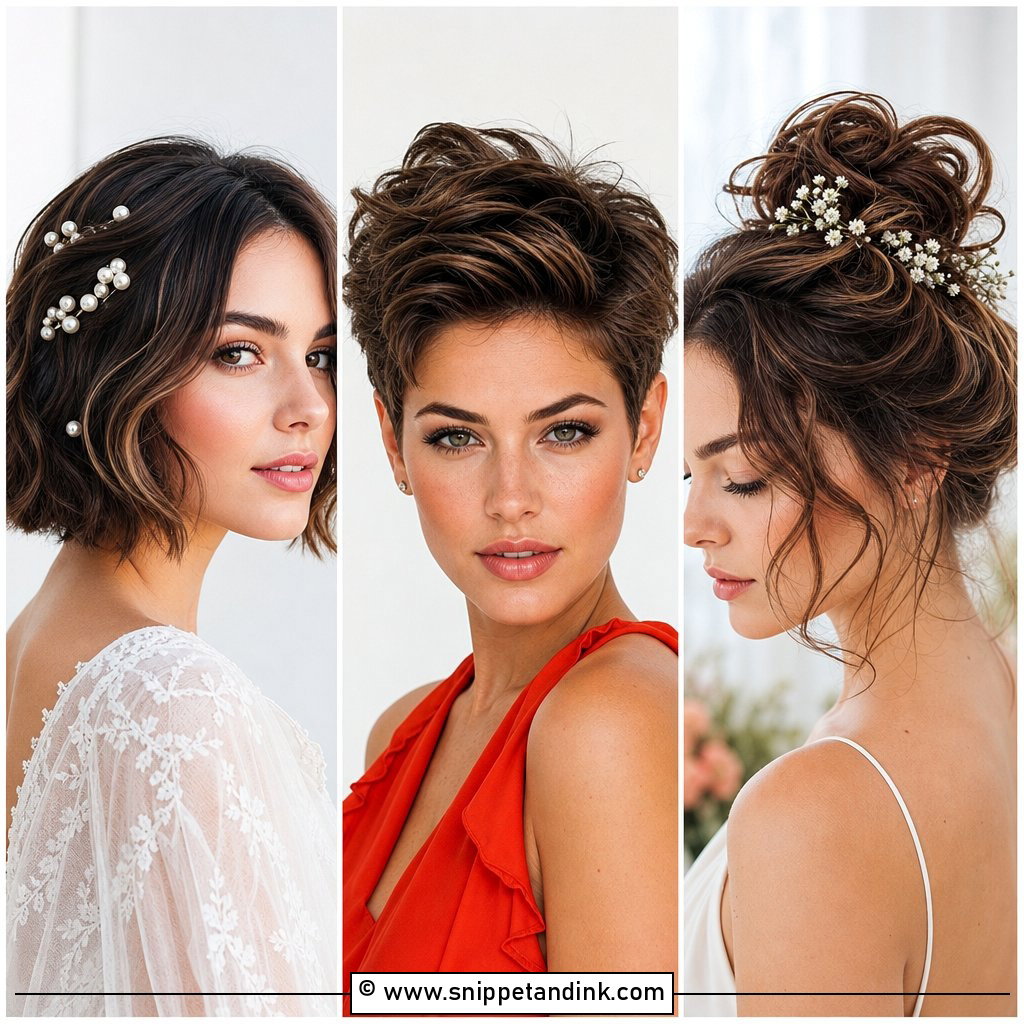
Short hair can absolutely go up for a wedding. It just goes up differently. Instead of one big bun, I build updos on shorter hair from small sections, braids and tucked curls, with a lot of careful pin placement. With a pixie, bob, or lob, you can twist, pin or braid your way to anything from a soft tousled bun to a sleek braided crown. Below are 20 wedding-ready looks, with notes on how much length each one really needs and how it holds a veil, flowers or a sparkling clip.
Pixie, Bob or Lob? Matching Your Length to the Styles Below
The question I hear most from short-haired brides is what their length can actually do. Here’s a rough map before you start saving photos.
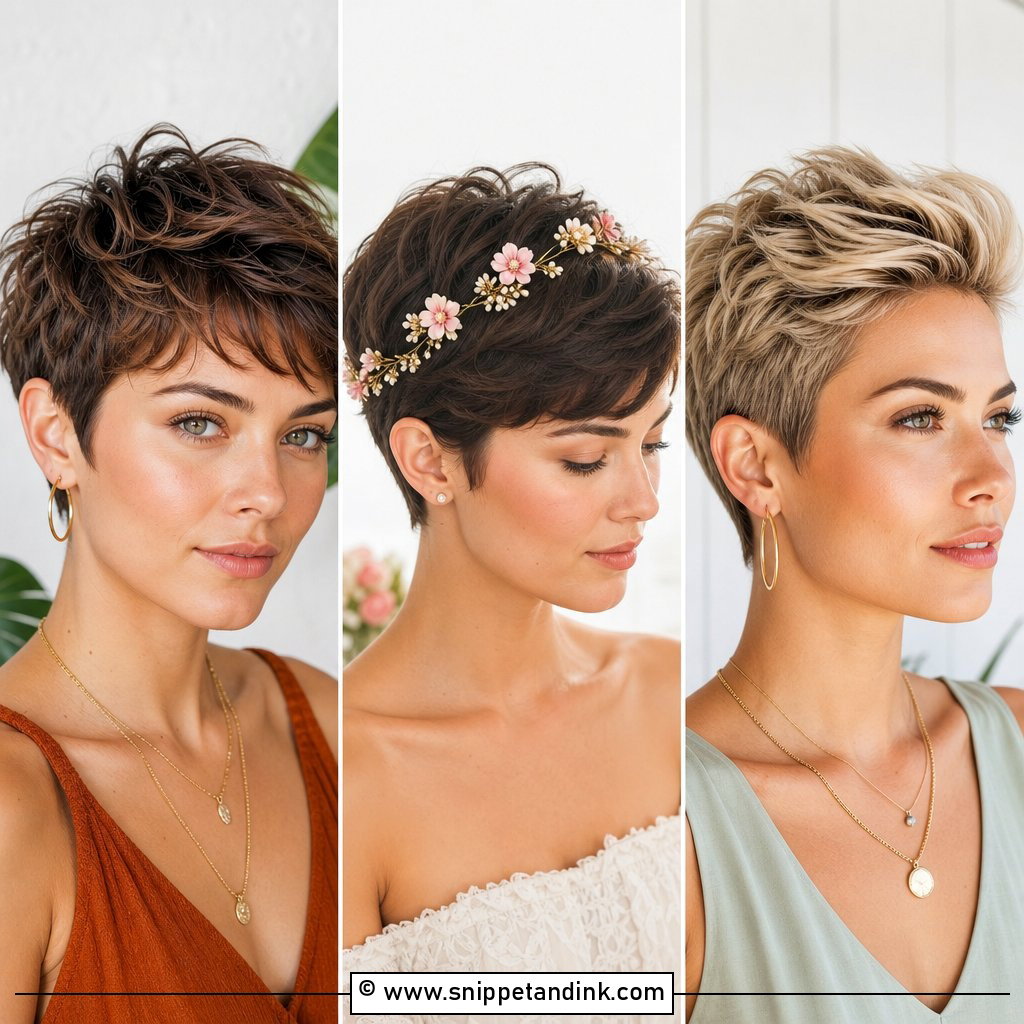
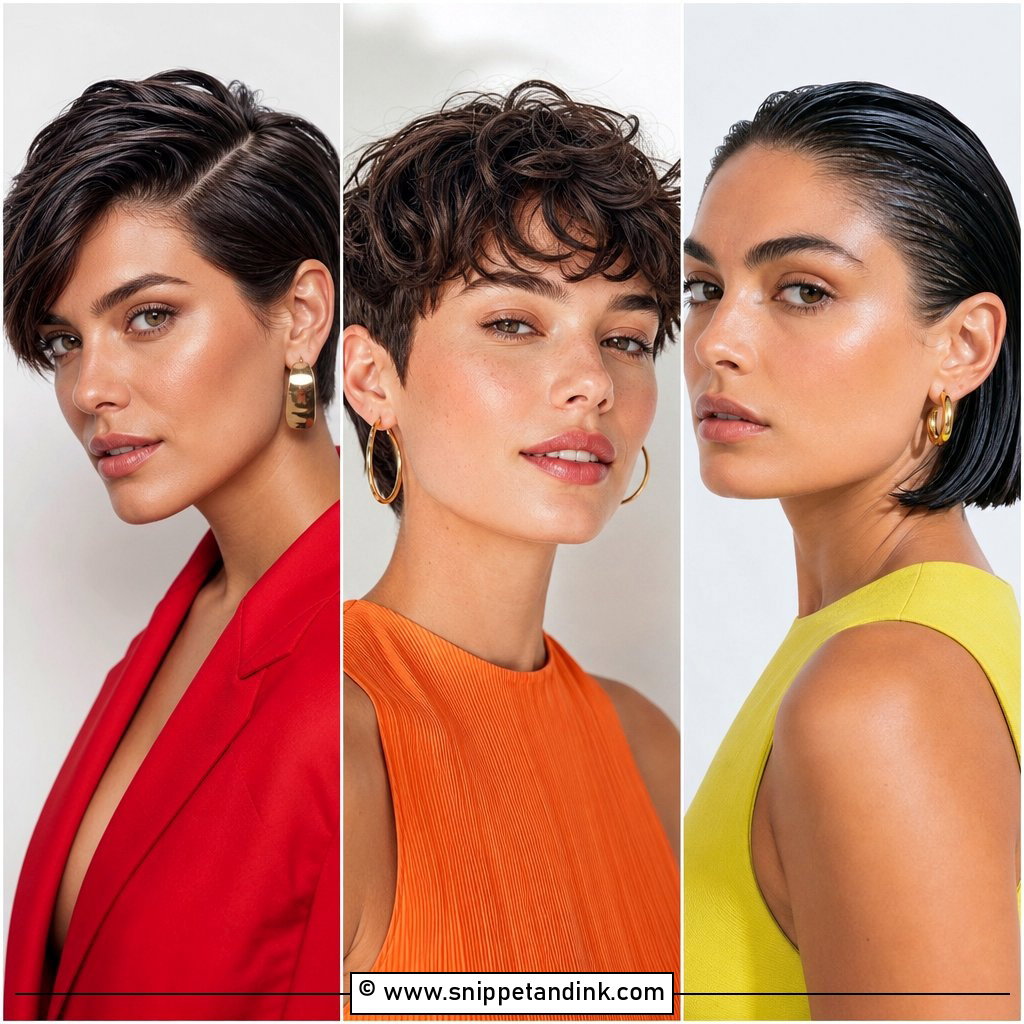
- Pixie or crop: texture and sculpted looks, like the tousled pixie, finger waves and side-swept pins. A true bun isn’t possible, so accessories carry more of the look.
- Chin-length bob: the twist and roll, half up, side-swept styles, the curly faux bun and a crown made from two small braids.
- Collarbone bob or lob: nearly everything here, including a French braid into a bun, the rolled chignon and fuller low buns.
Layers matter as much as length. A blunt bob tucks neatly. A heavily layered cut has short pieces that spring loose, which is fine for a soft, undone style and frustrating for a sleek one.
1. Twist and Roll Updo for Short Hair
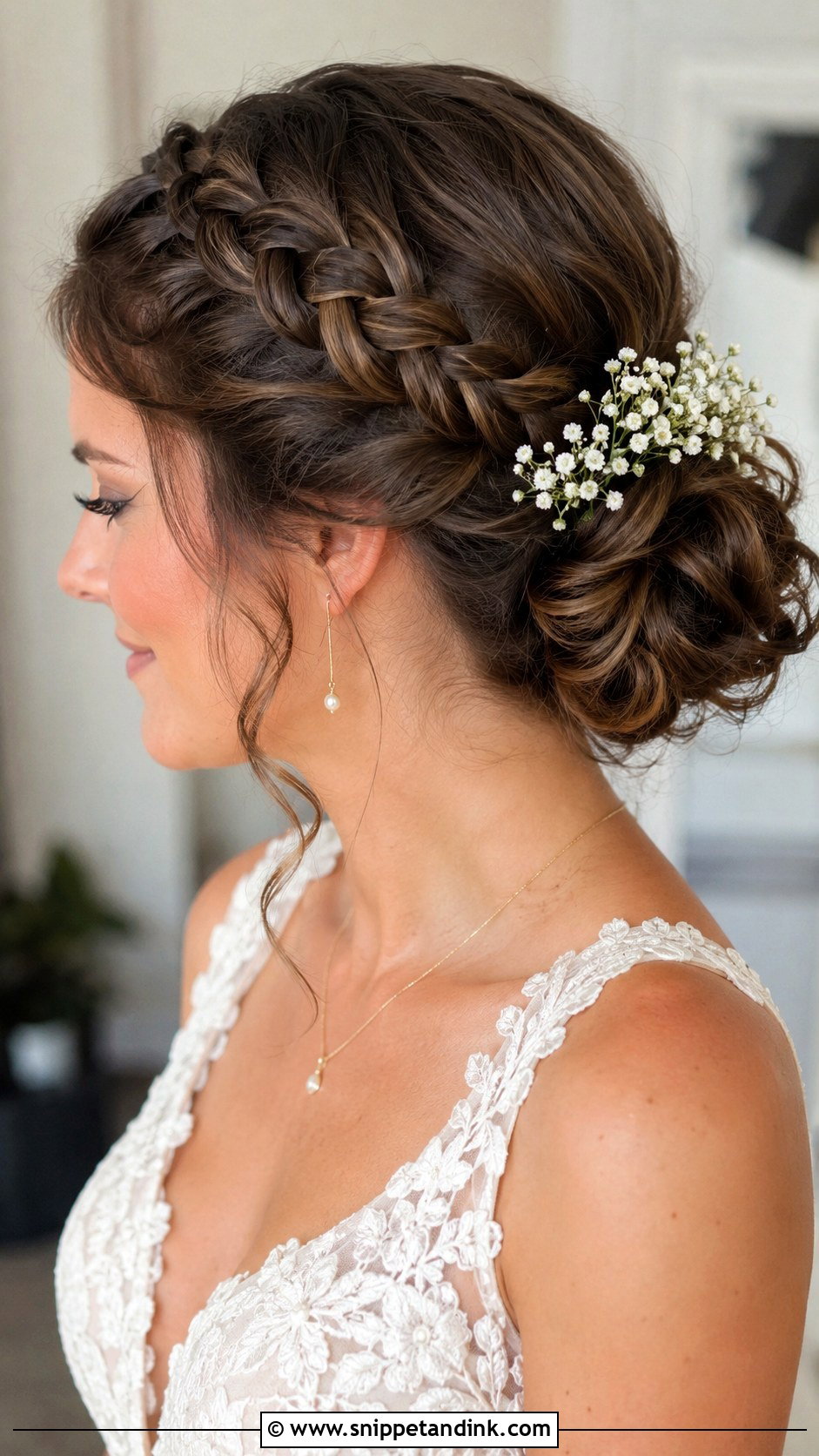
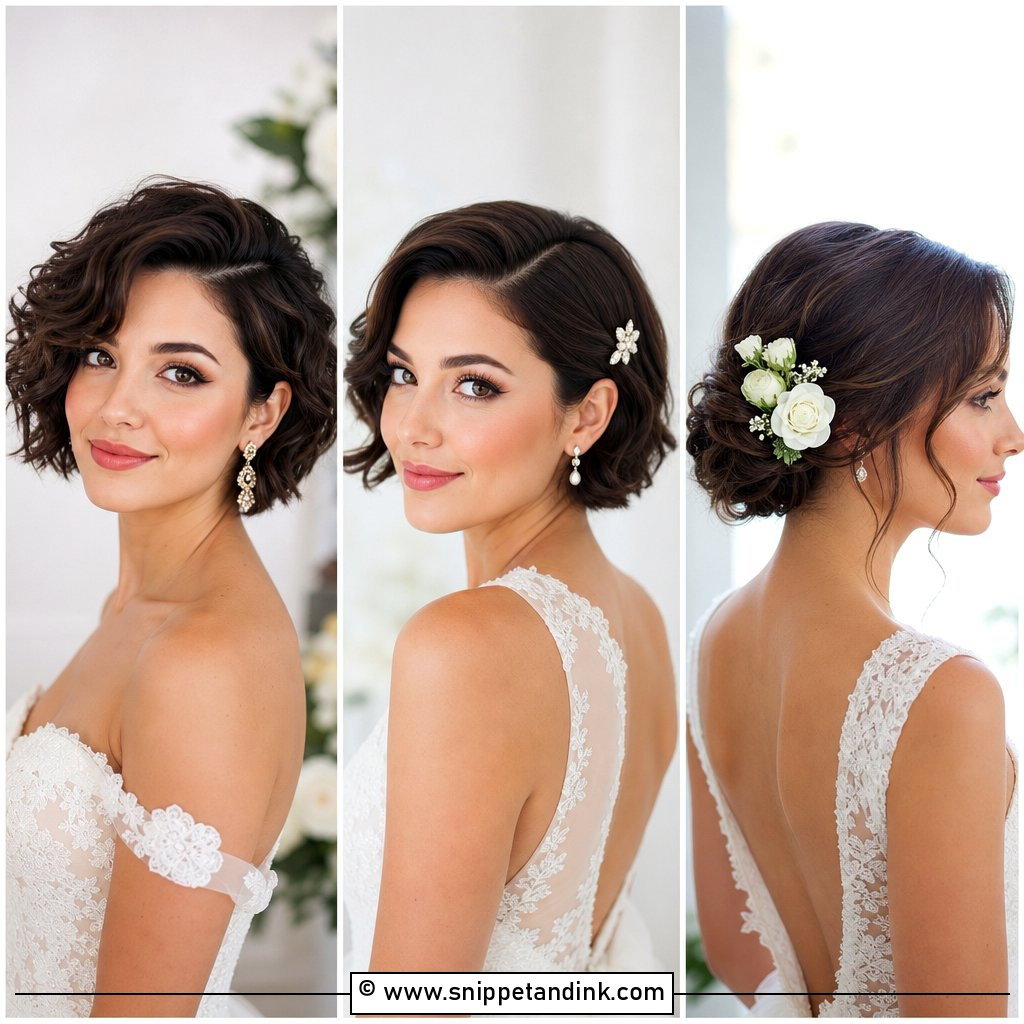
A twist and roll is the first updo I try on a bob, because it asks for so little length. Sections are twisted toward the back, then rolled and pinned, giving a clean, structured shape that still looks soft on bobs and lobs that need a bit of control. If your hair is dark, a white headband or a tiny pearl clip stands out against it and echoes an ivory gown. I pin each roll with two crossed pins, which is why it holds through the dancing.
2. Classic Low Curly Updo
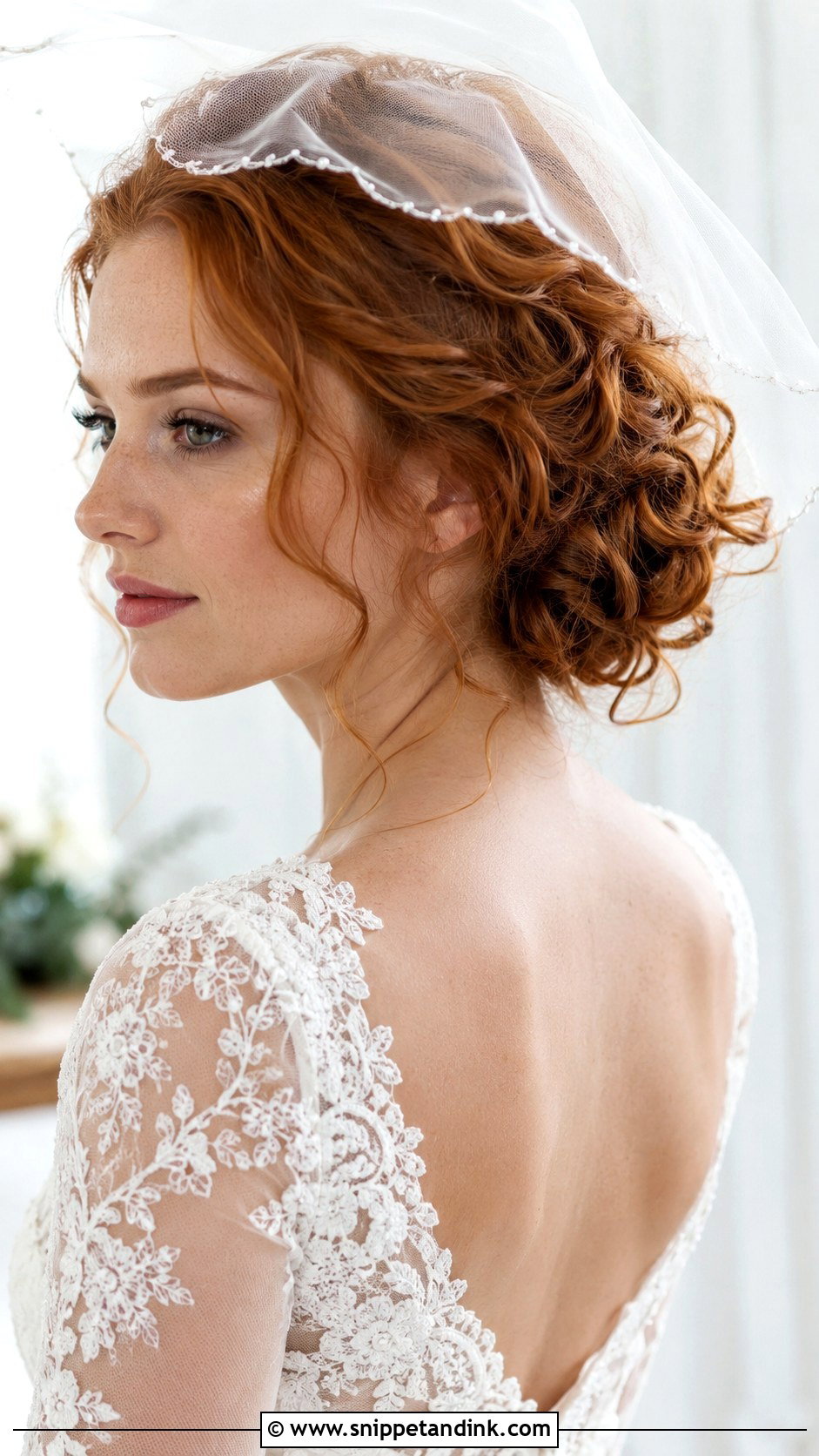
Curls are the short-hair secret. Each bend shortens the hair so it tucks more easily, and the bounce adds volume that length alone can’t. Here soft curls are gathered toward the nape and pinned, with a few strands left loose near the ears and cheeks to frame your face. Naturally wavy hair recreates it easily, and a fingertip veil or delicate combs sit well with it. Curl with a slightly smaller barrel than the finish you want, since curls relax over the day.
3. French Braid Into a Curly Bun
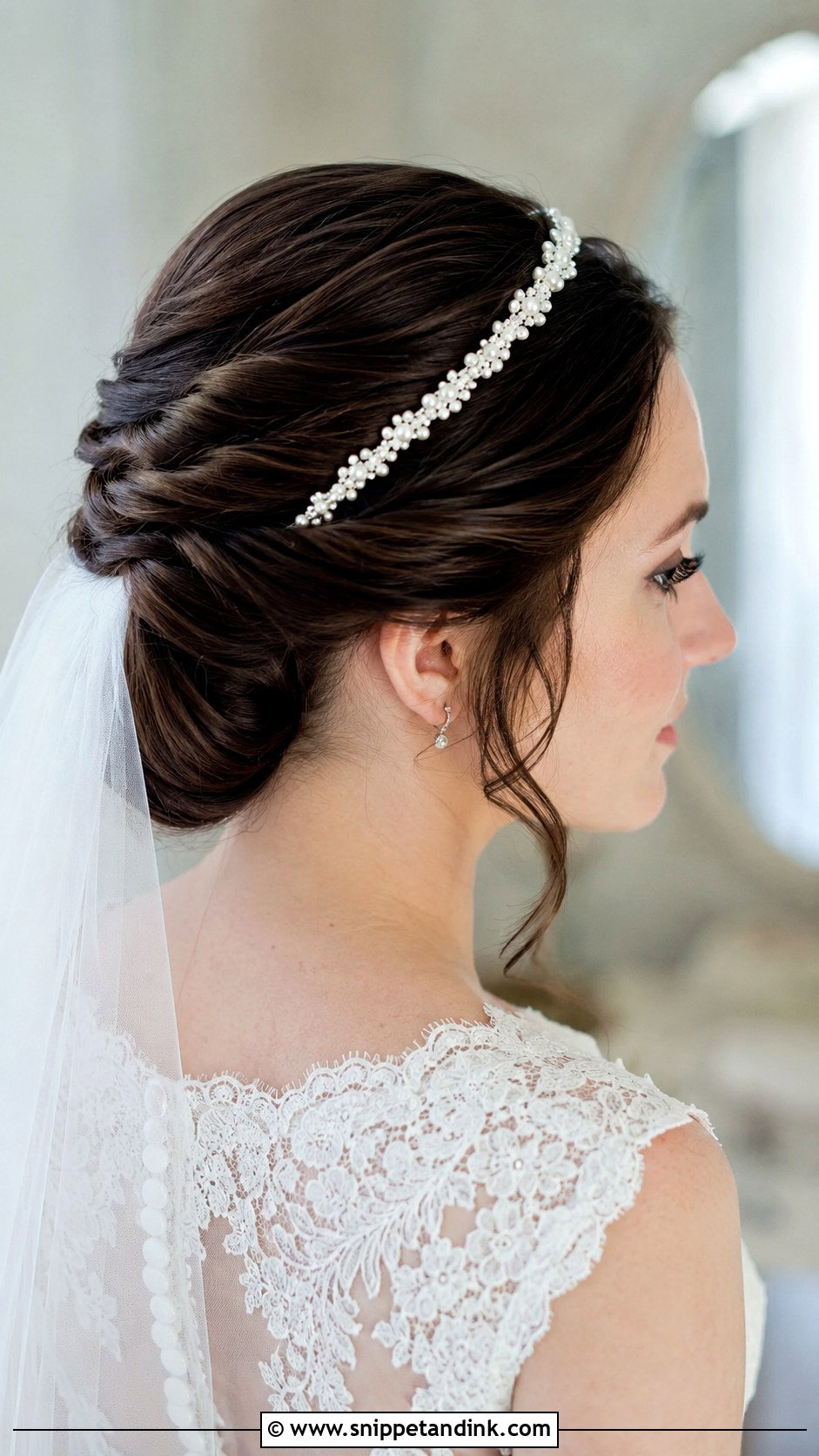
A French braid needs a bit of length at the nape to catch, so this suits a lob or longer bob better than a short crop. The braid starts at the crown and travels down, then gathers into a curled bun at the back, tucking shorter pieces away neatly. It’s relaxed enough for outdoor and rustic weddings, and a sprig of baby’s breath fits right in. If your layers are very short, braid with a little texture paste on your fingers so the ends grip instead of springing out.
4. Slicked-Back Bun for Short Hair
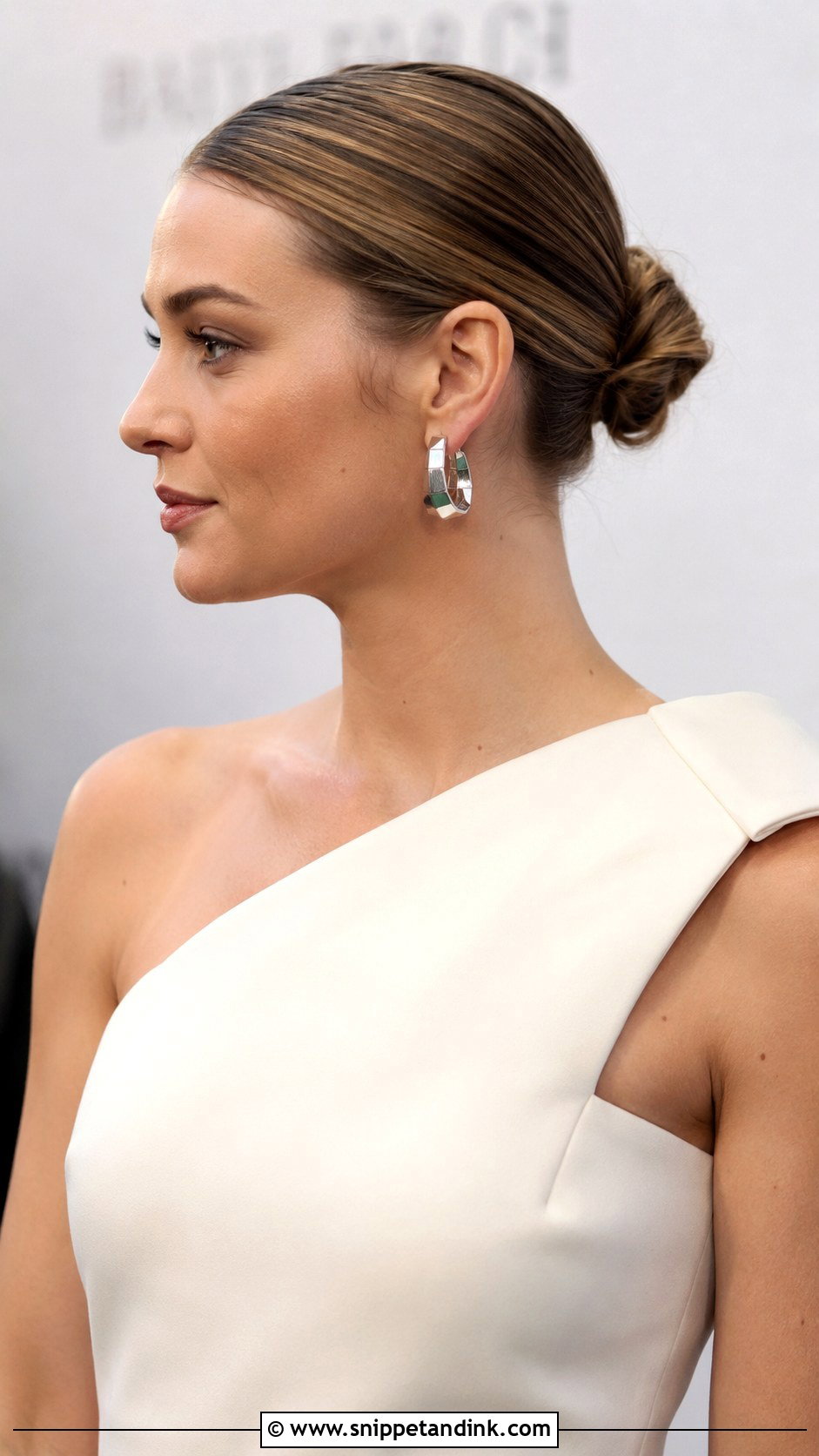
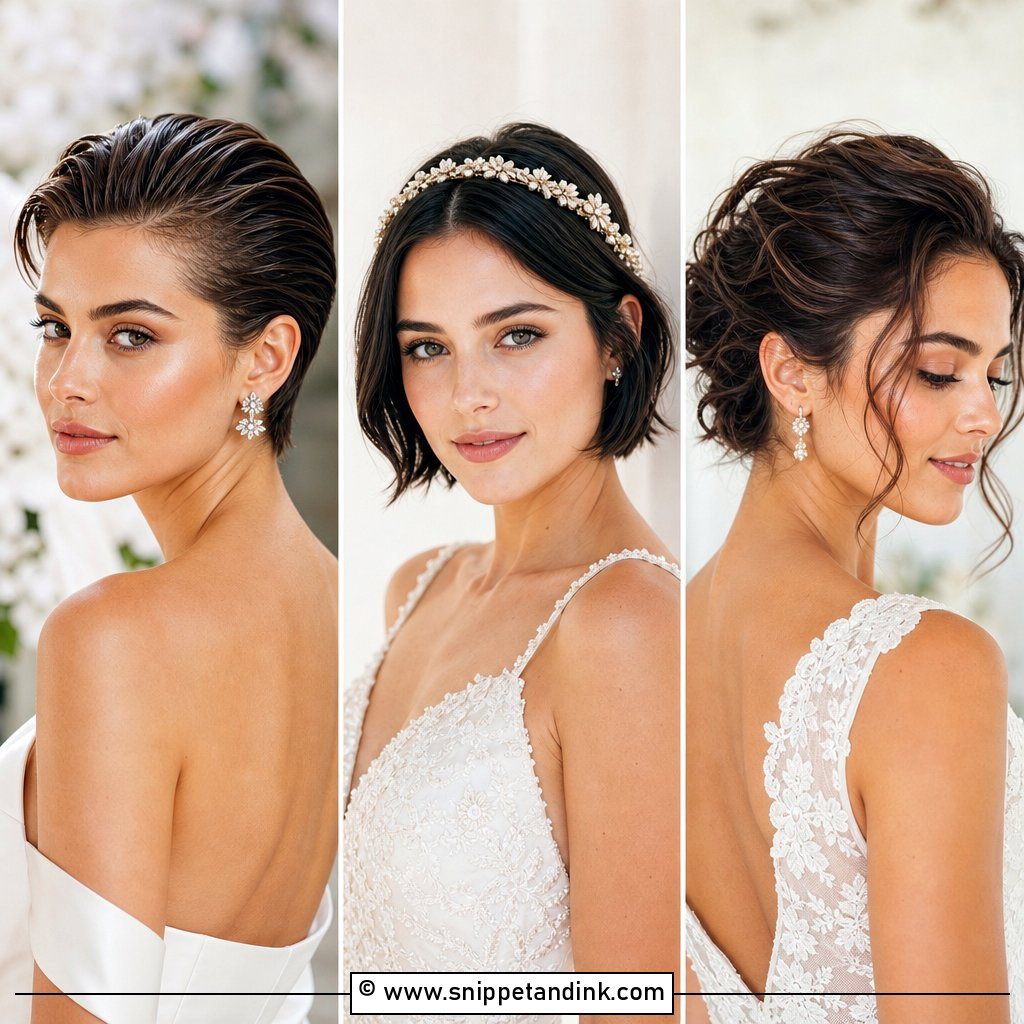
A slicked-back bun pulls every strand away from the face into a tidy knot. On short hair the knot is small, and that’s fine; the look is about the clean line, not the bun. Gel or a styling cream tames flyaways, and I set the hairline with a soft brush rather than a comb so there are no tracks. Your jewelry and makeup get all the attention, which suits statement earrings and a minimalist gown. If the back is too short to reach, two small clear elastics and a tucked section will fake it.
5. Messy Low Bun With Loose Tendrils
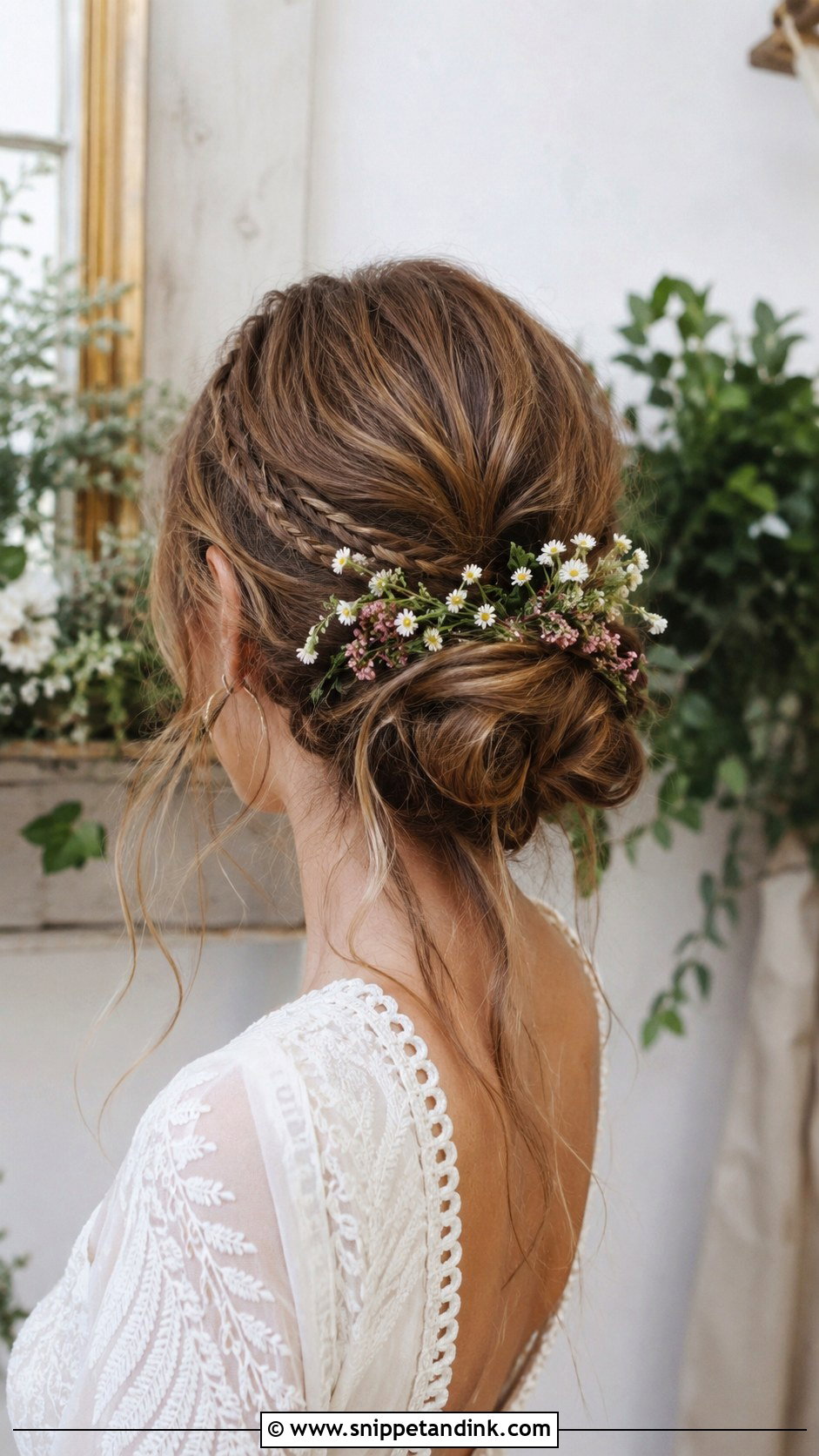
Front layers on a bob are usually a nuisance in an updo. Here they’re the point: the hair goes into a loose knot at the nape and the front pieces fall around your face. Bobs and lobs with a little natural wave do it best. Pull pieces free after the bun is pinned, not before, so you control where they land. A delicate hairpin or small flower suits a bohemian dress and an outdoor setting. It’s the least formal style on this list, so I’d skip it for a black-tie evening.
6. Twisted Low Bun With Volume
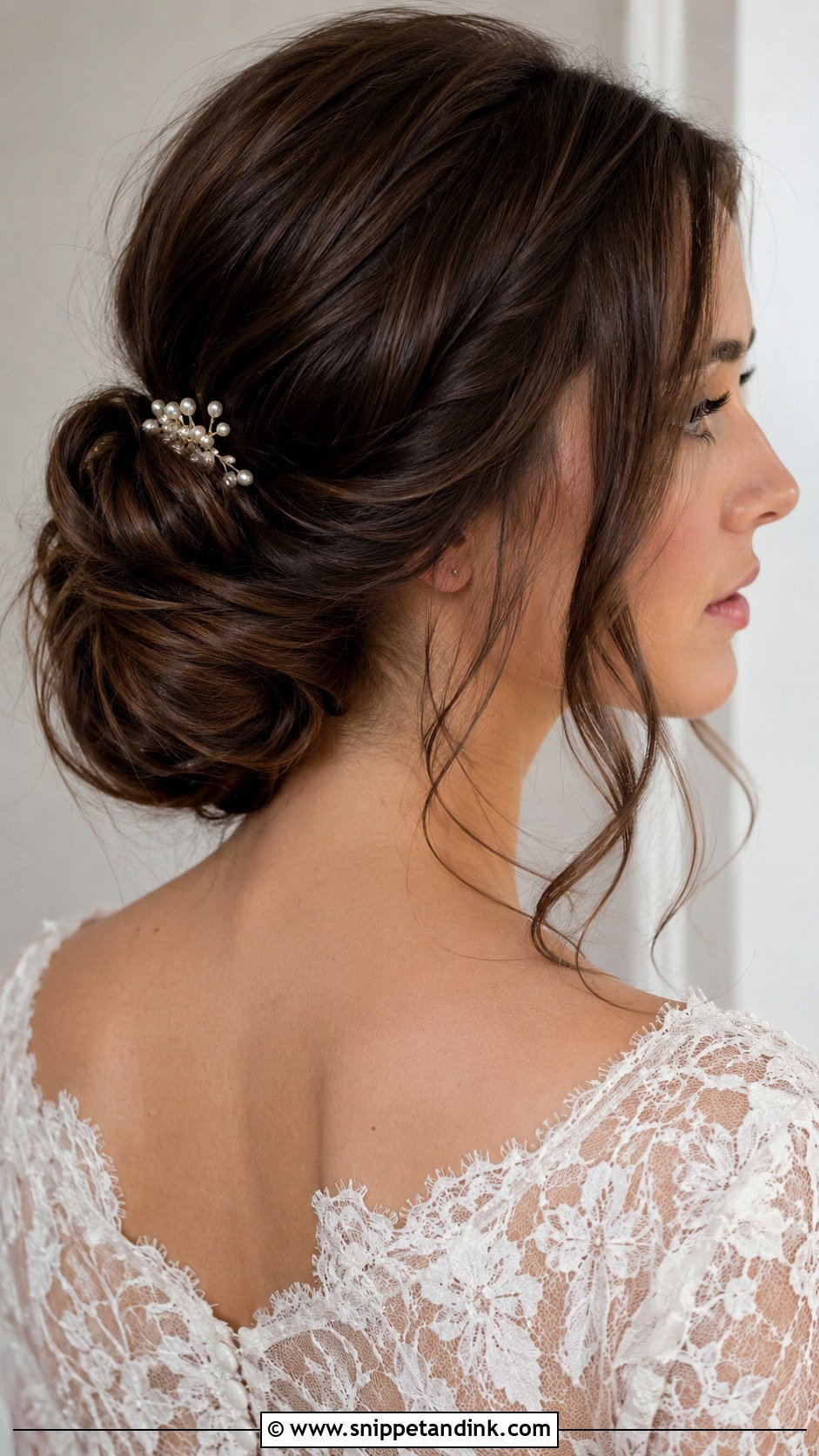
Fine or cropped hair benefits most from this one. Gently twisted sections are gathered into a full knot at the nape, and the twisting adds bulk, so the finished bun looks thicker than the hair really is. Loose tendrils at the face pick up lace details on the gown. I backcomb lightly inside each twist before pinning, which keeps the volume from collapsing by evening. A vintage comb or pearl pins finish it for a formal ceremony or a small celebration.
7. Half-Up Half-Down for Short Hair
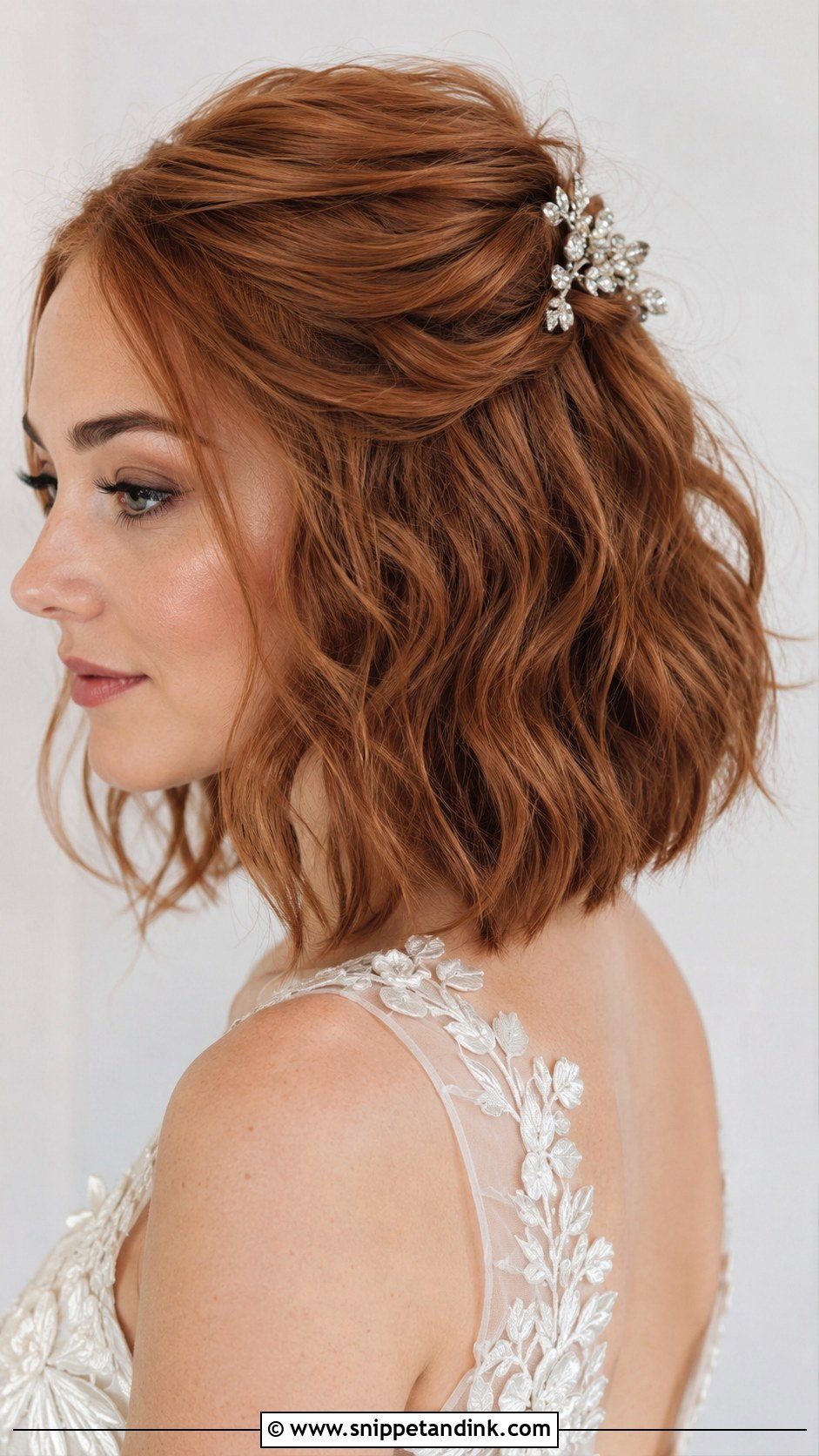
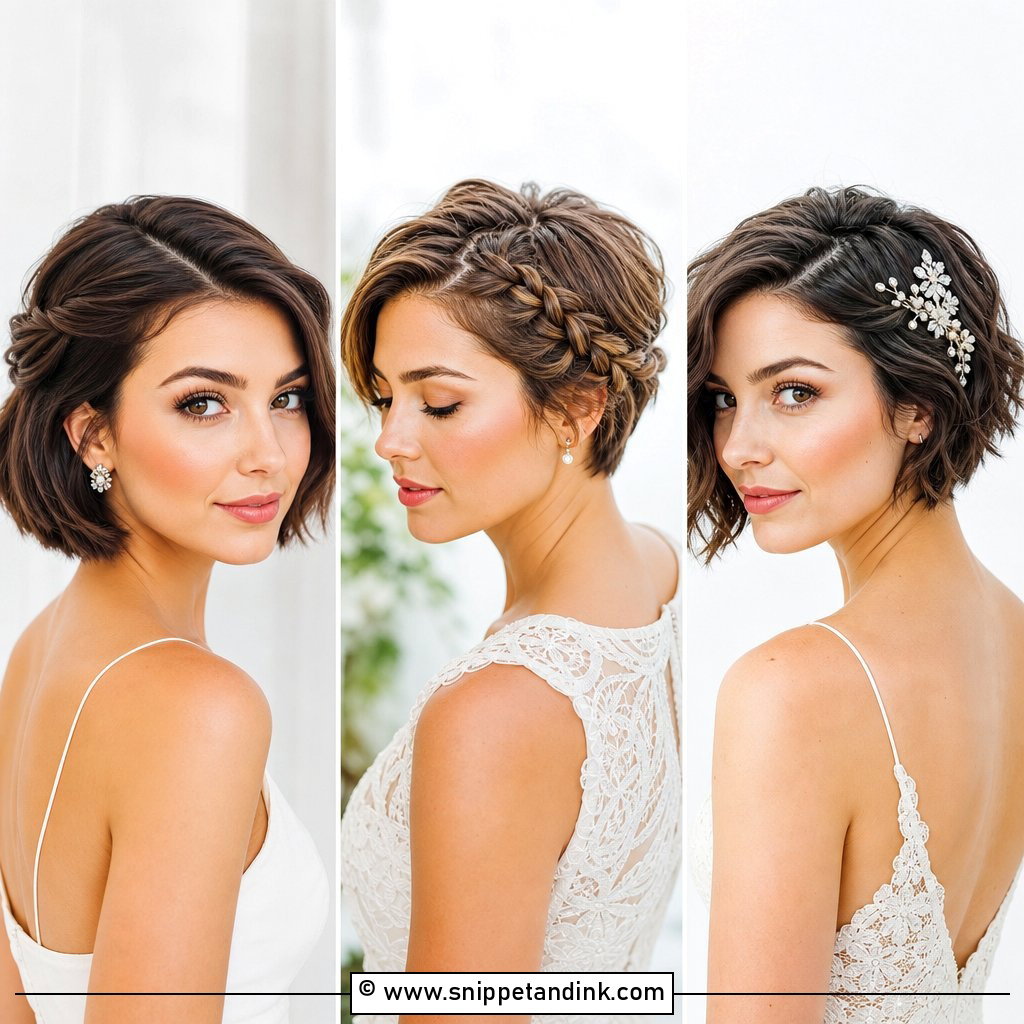
Pinning or braiding the top section and leaving the rest in soft waves is often the easiest choice for short hair, since nothing has to reach the nape. Bobs and lobs with some curl or wave suit it, and pinning one side only gives an asymmetric version. A sparkling clip or a few blooms at the part dresses it up. One quiet advantage of a bob: short waves carry little weight, so they hold their bend longer than long hair does.
8. Flat Twists With Natural Curls
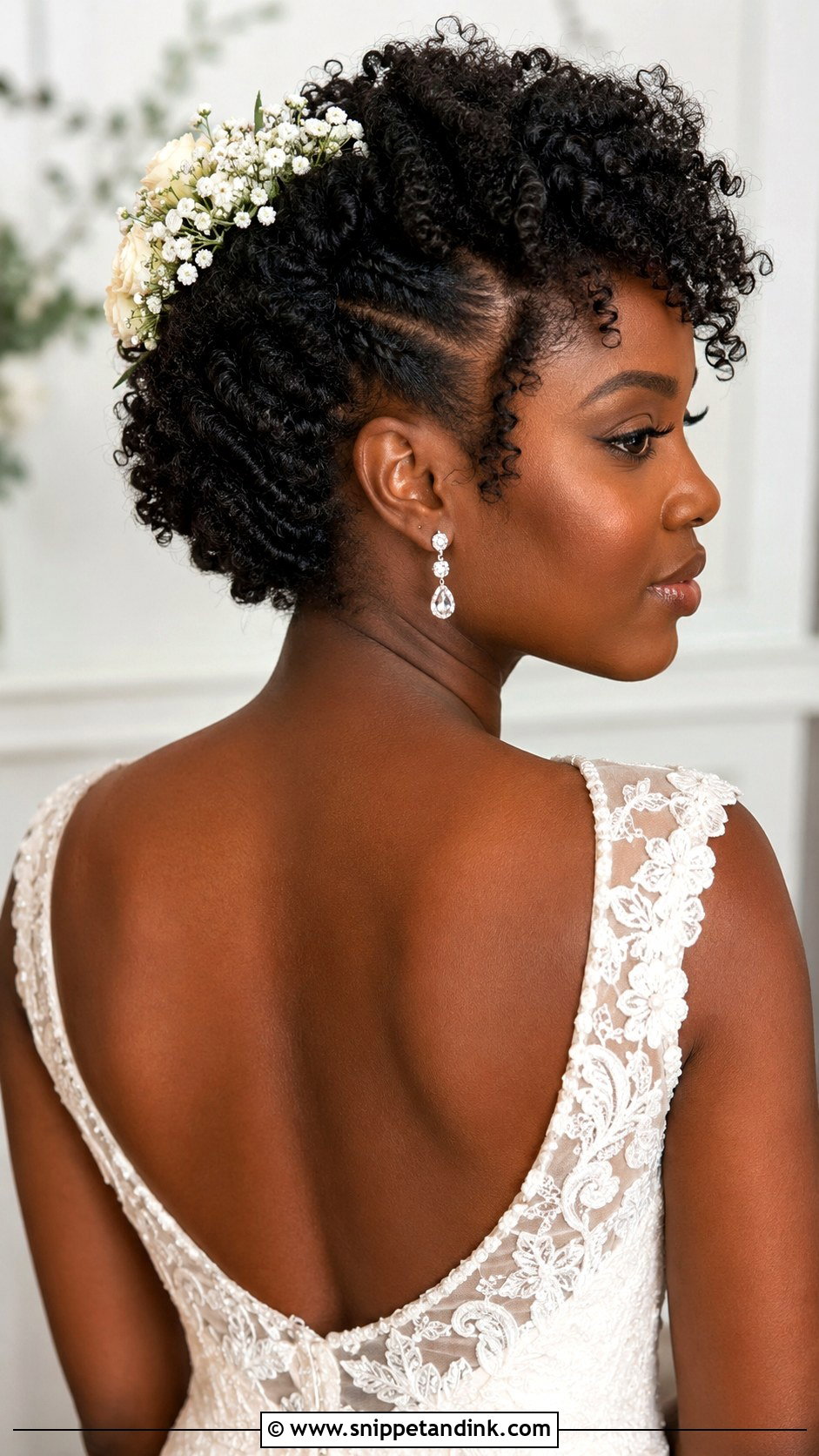
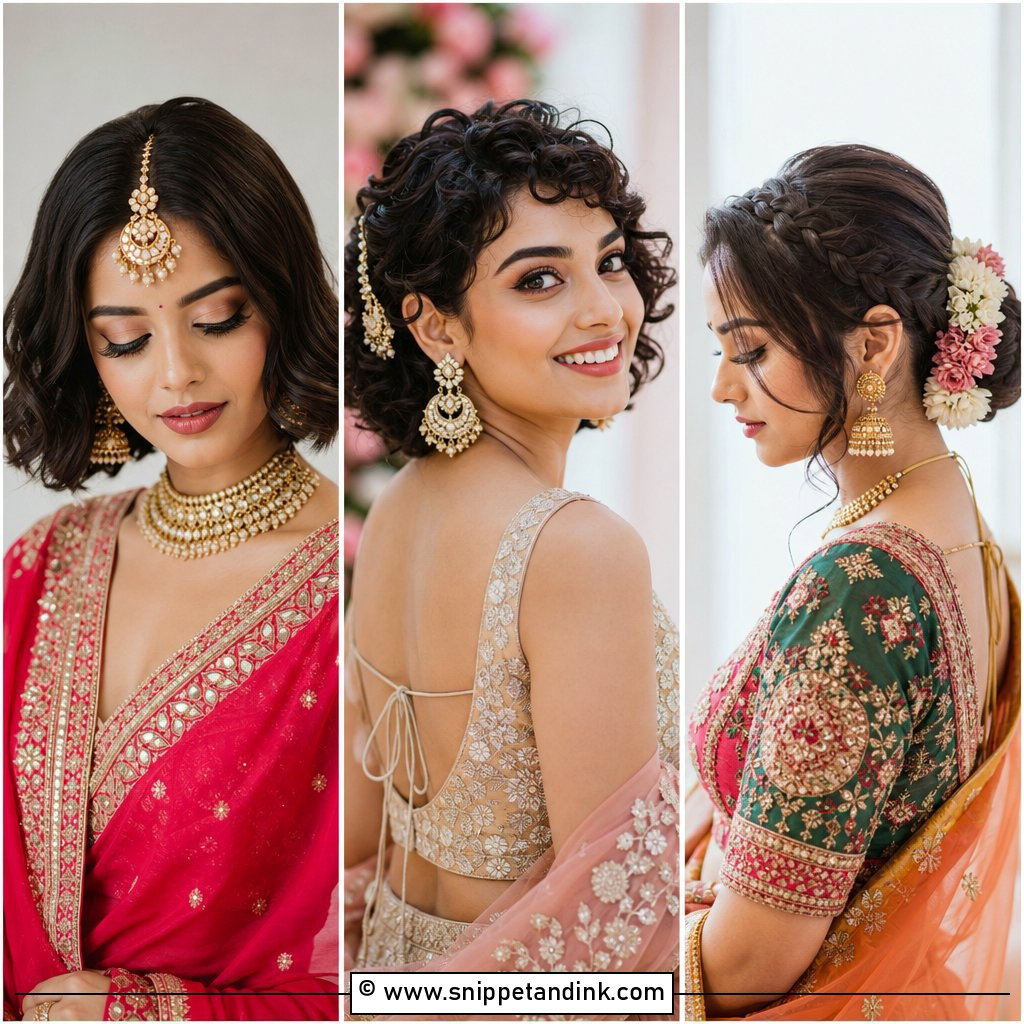
Flat twists along the back with natural curls loose on top give you a polished base and your own pattern on show. I put the twists in first, firm but not tight at the nape, then refresh and define the curls on top last so they’re at their best for the ceremony. Fresh flowers tucked between the twists add a bridal touch. It suits outdoor weddings and cultural celebrations, and the contrast between flat twists and springy curls shows up clearly in photos.
9. Reverse Fishtail Braid Updo
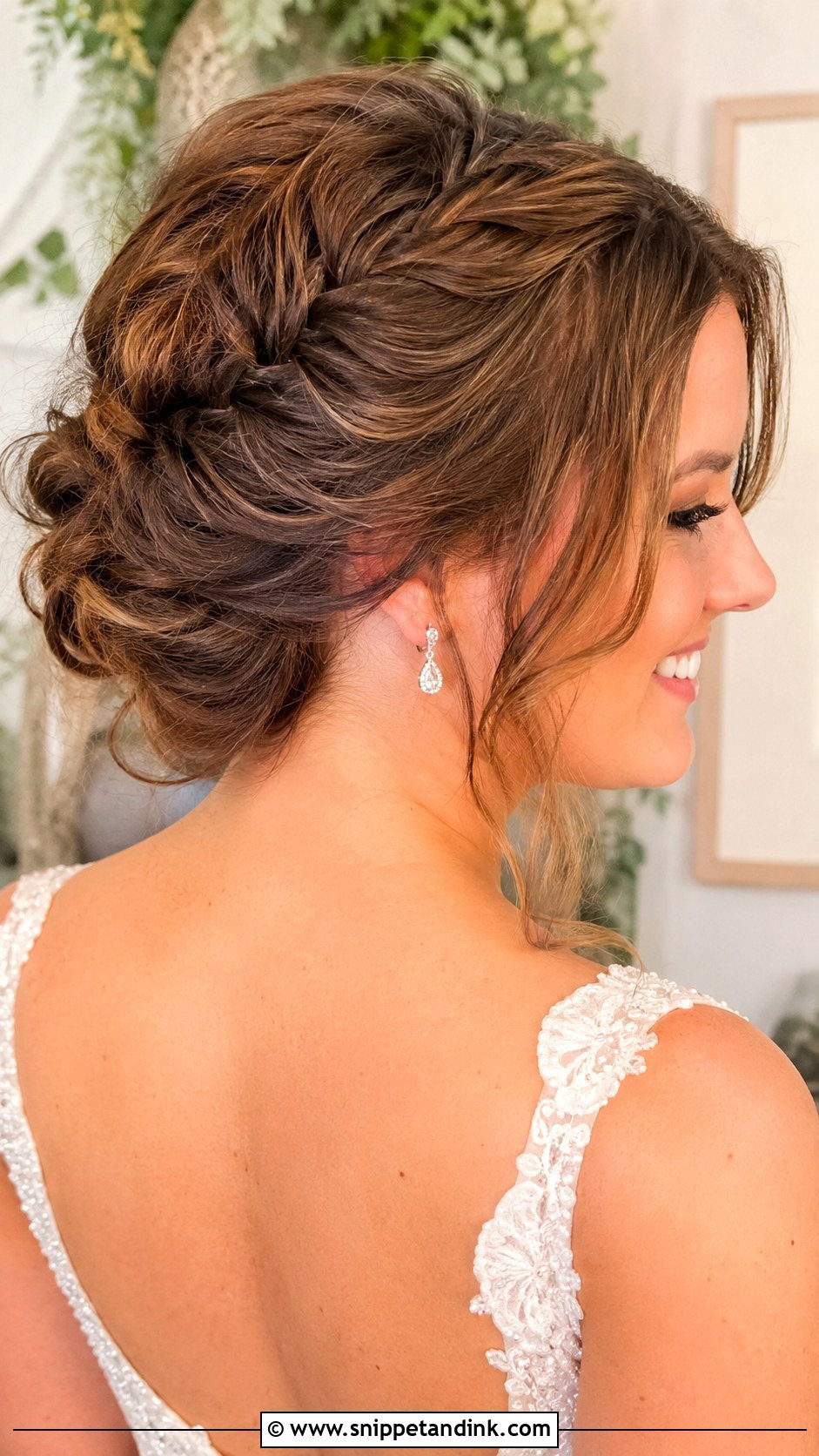
A reverse fishtail crosses the sections underneath instead of over, so the braid rises off the head with a raised texture. It’s then tucked and pinned into a soft updo at the back, which keeps shorter strands secure. Allow extra time for it: fishtails on short hair use tiny sections and take a while. Leave it bare or add delicate accessories. The weave reads best in close-up portraits, so ask your photographer for one from behind.
10. Low Bun With Bohemian Touches
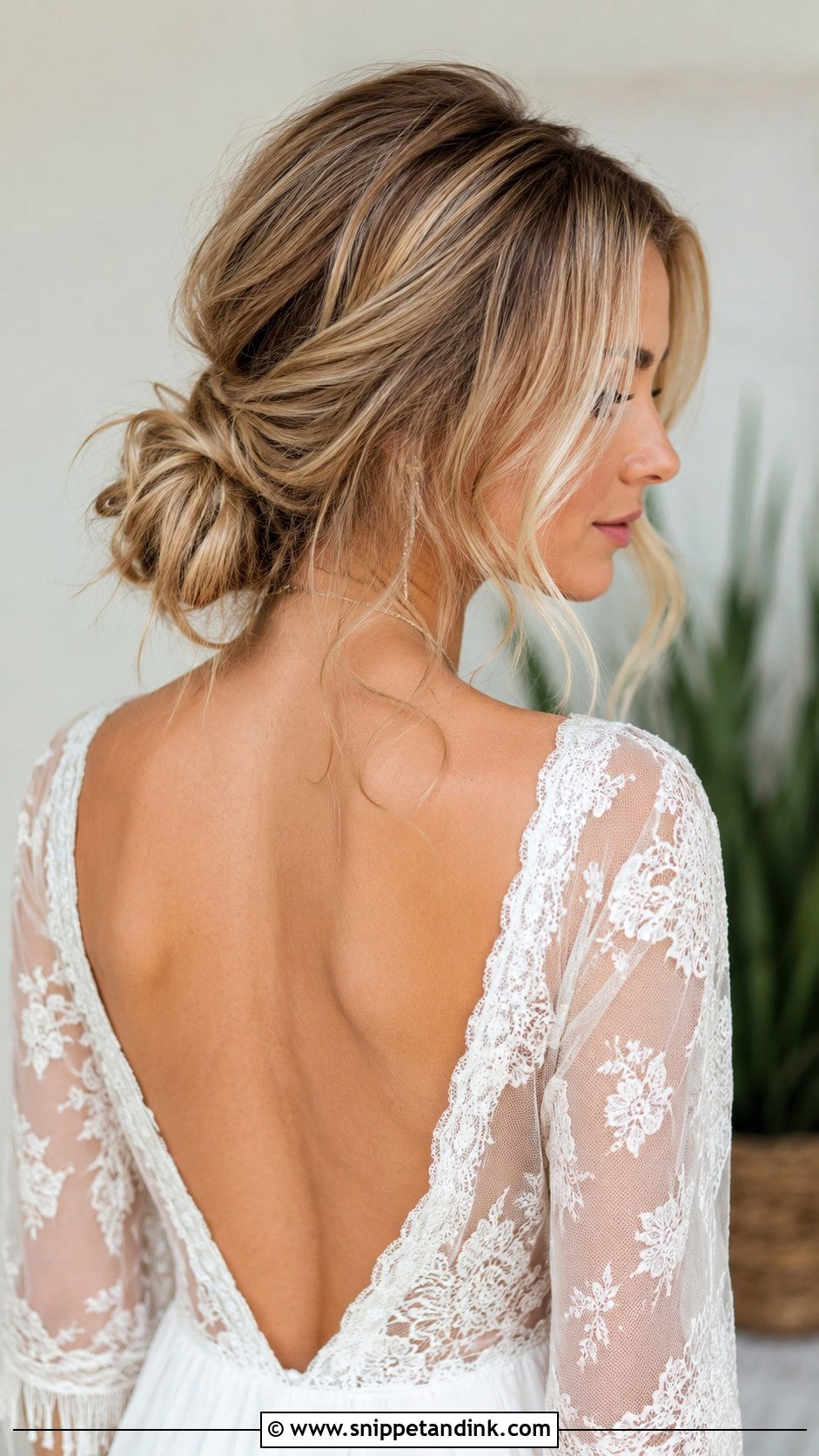
This relaxed knot sits at the nape, dressed with small braided strands, tiny flowers or loose face-framing pieces. On short hair those extras do a real job, adding fullness where the bun itself is small. Flowing gowns and garden venues suit it, and wildflowers or a thin gold chain fit the mood. Use fewer extras than you think. Two braided strands and a few flowers look intentional; six look busy on a small bun.
11. Vintage Finger Wave Updo
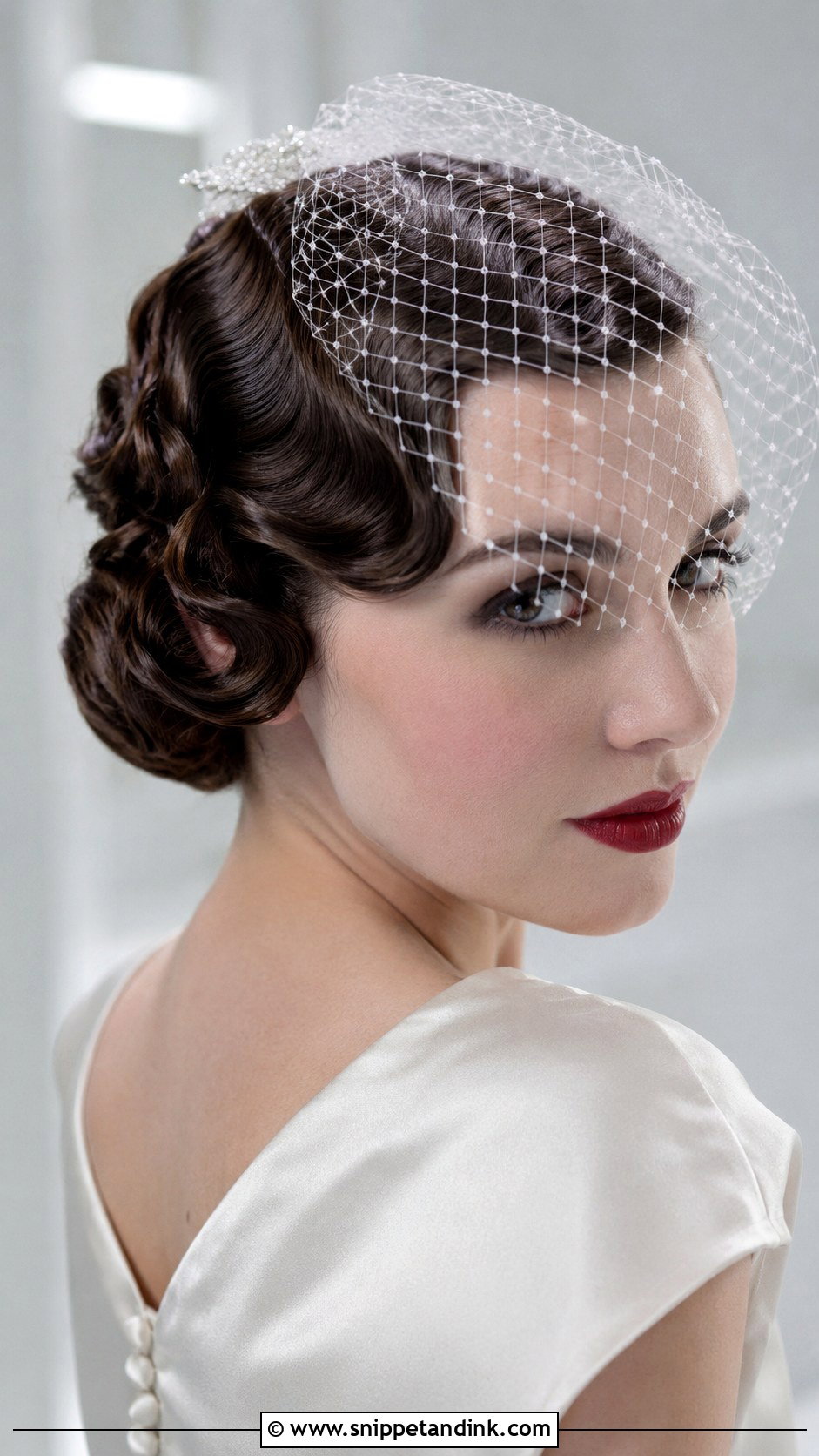
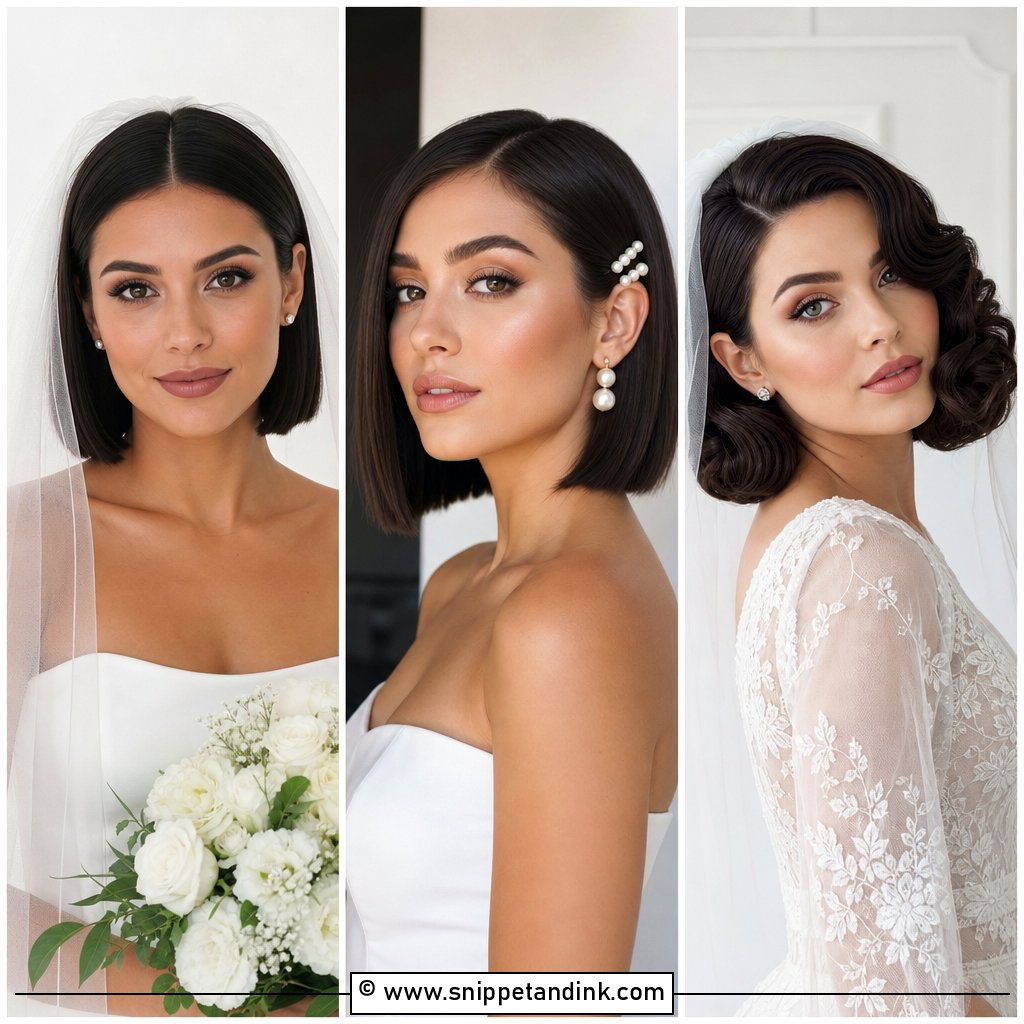
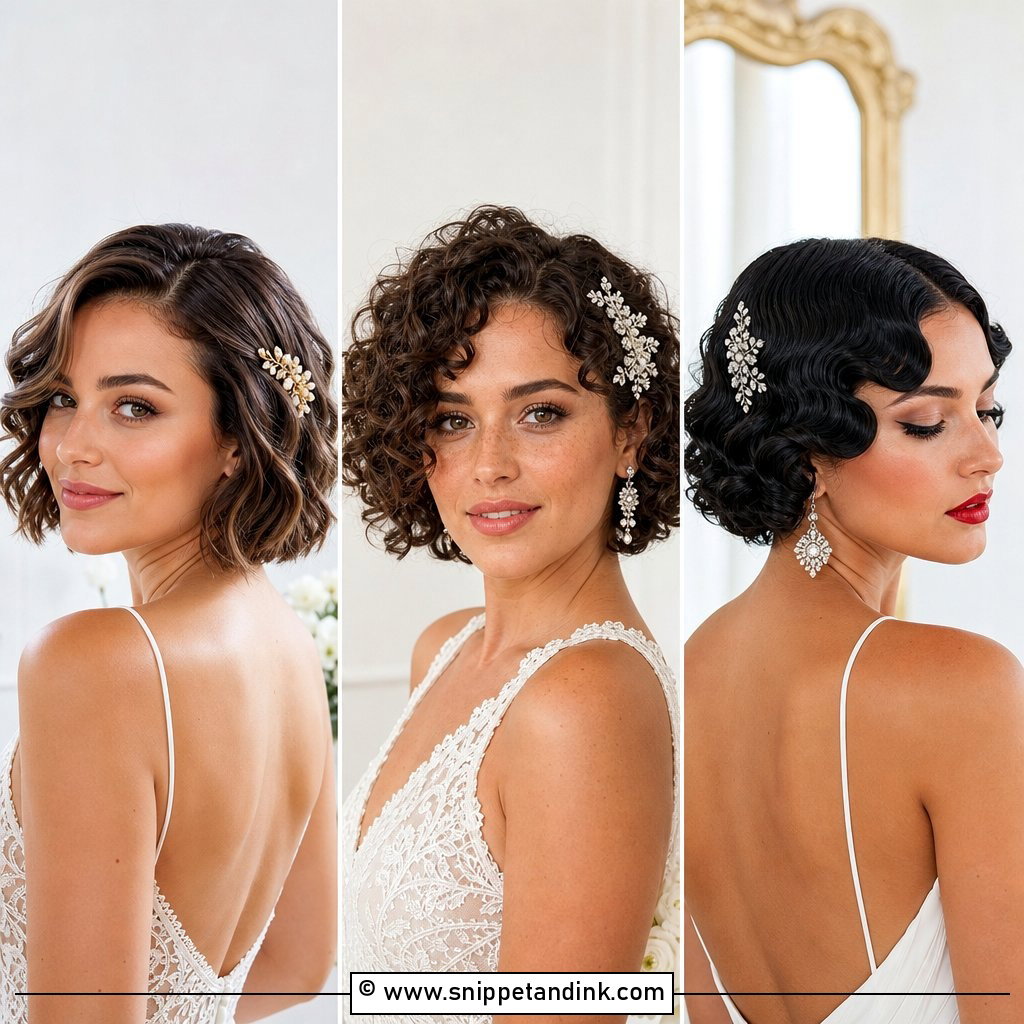
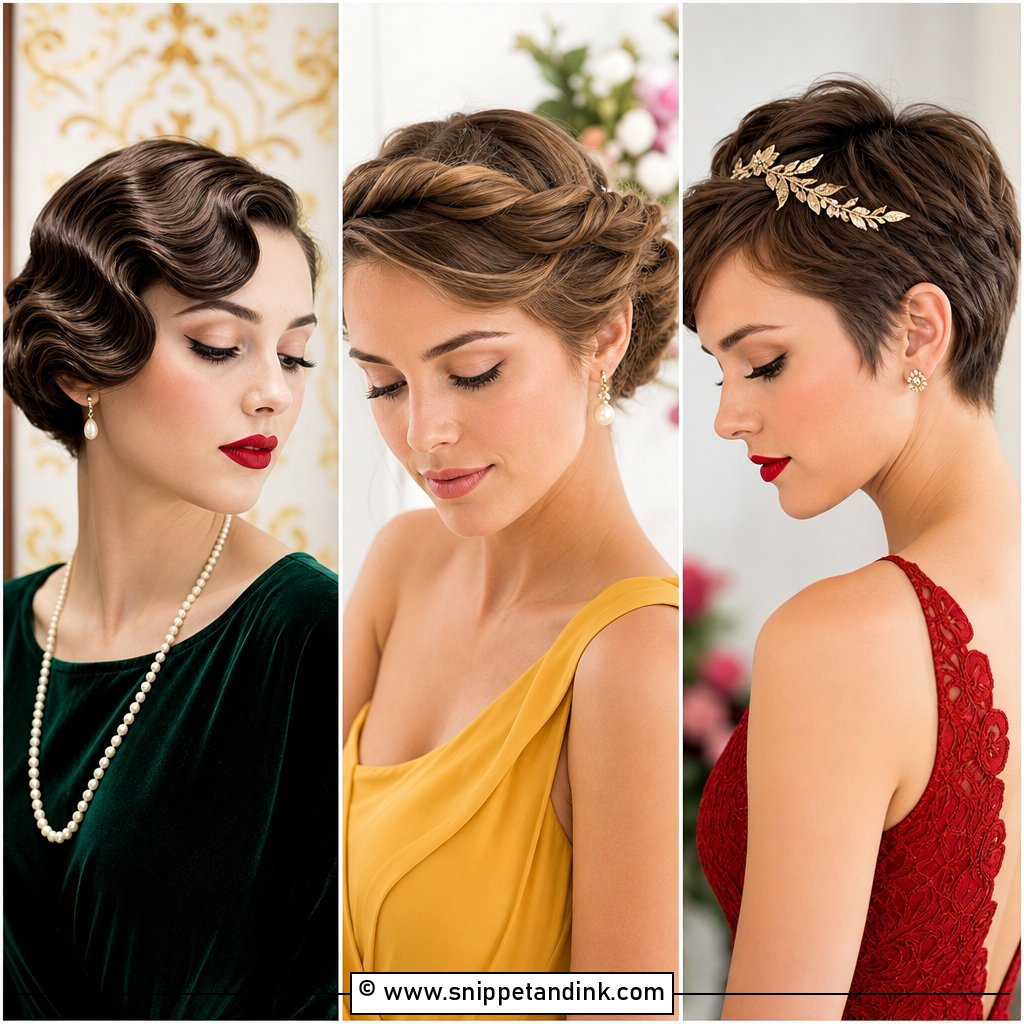
A vintage finger wave updo sculpts the hair into smooth S-shaped waves that hug the head. Bobs and pixies are actually the easiest lengths for it, because the waves don’t need weight to hold. I set each ridge with firm gel and duckbill clips and let it dry without heat, and nobody touches it until it’s fully set. A birdcage veil completes the retro feel at a classic, formal wedding.
12. Pinned Curls With a Flower Crown
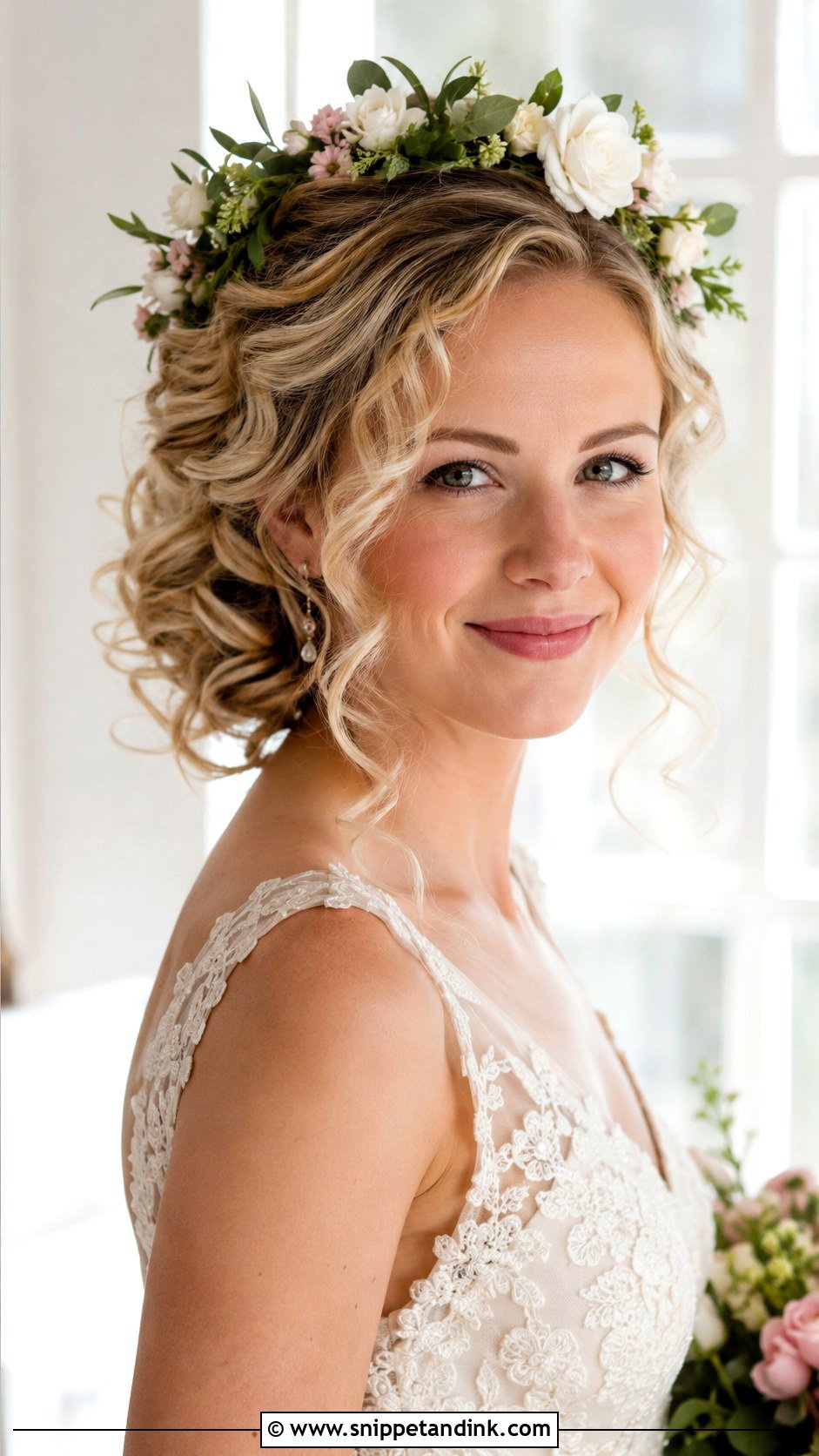
Oversized curls made with a large-barrel iron are pinned back gently, and a flower crown sits on top. On short hair the curls build volume and the crown hides the pins at the same time. Outdoor, spring and bohemian weddings suit it. Fresh and silk blooms both work, but a fresh crown gets heavy and can wilt by evening, so for a long outdoor day I’d go silk or keep the crown light. I pin it at four points through the curls so it doesn’t slide forward.
13. Sleek Side-Swept Updo
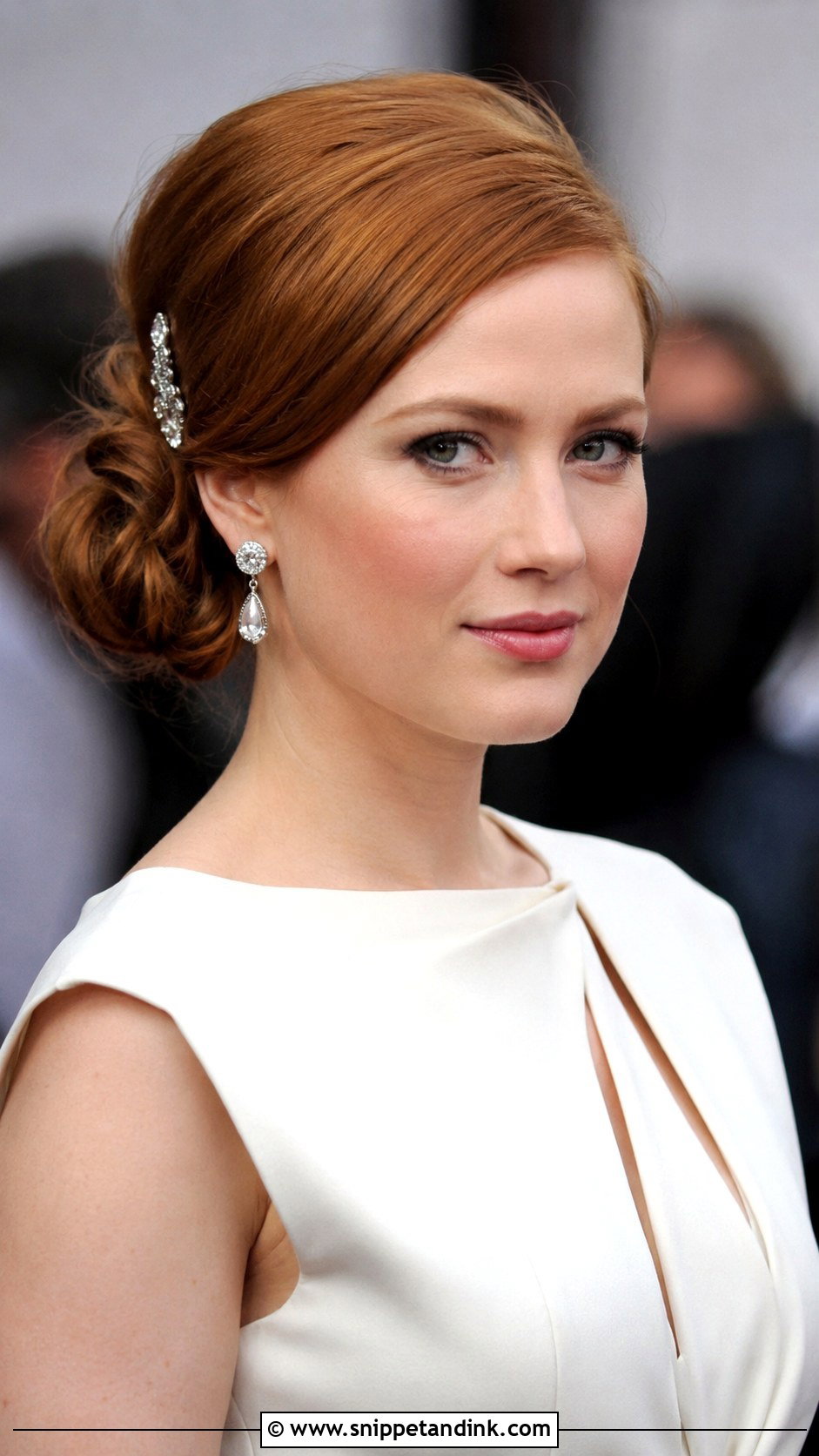
Hair is swept to one side and pinned neatly behind one ear, giving a smooth asymmetric line and showing off a statement earring on the open side. Bobs and lobs that want a put-together look suit it, along with structured gowns. Short hair sits flat behind the ear easily, but the nape pieces on the swept side tend to spring out, and a few pins hidden under the top layer stop that. A jeweled clip adds sparkle, and the clean line looks best in profile.
14. Braided Crown Updo for Short Hair
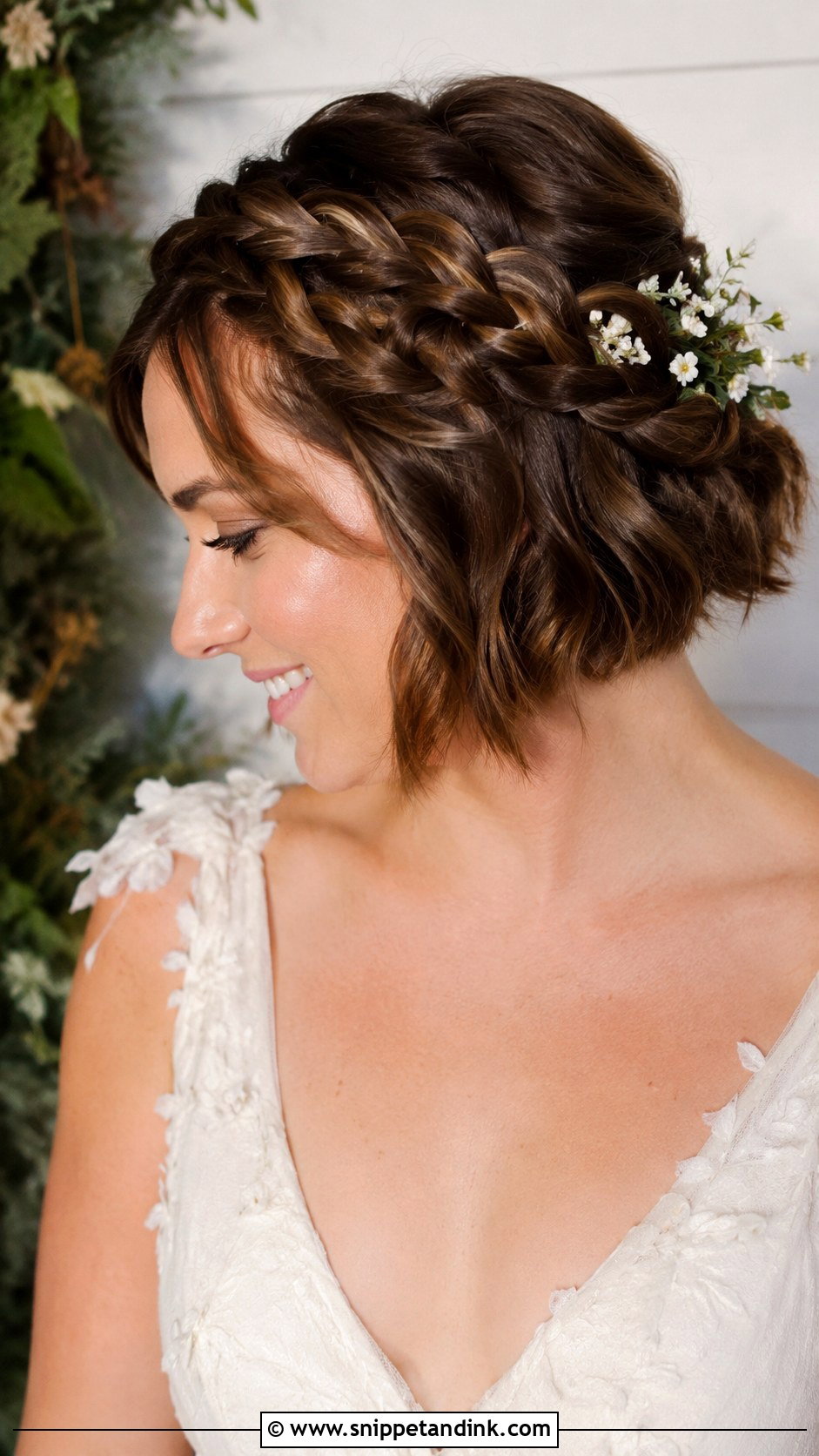
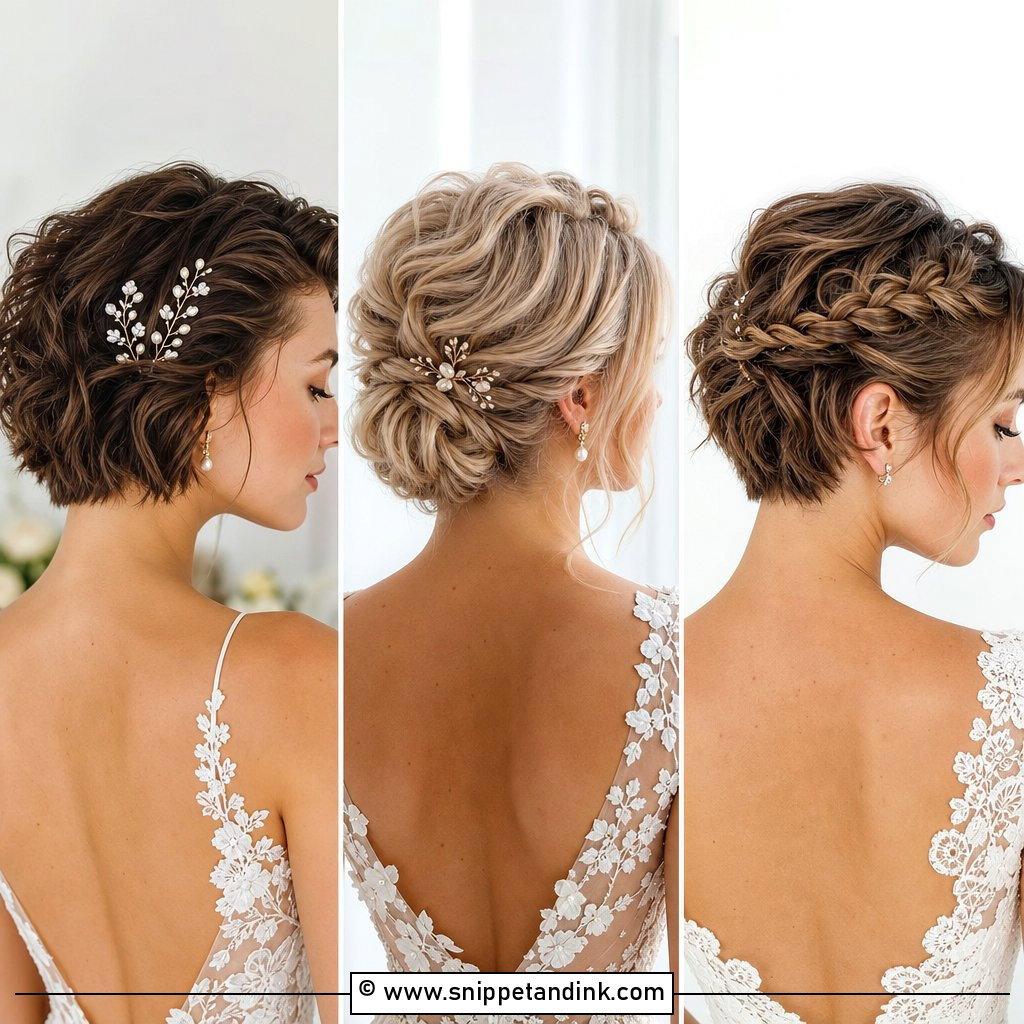
A braided crown wraps the head like a delicate halo, built from braided sections pinned across the crown. On short hair I braid a small section from each temple instead of one long braid, then pin the two where they meet at the back. The braids keep shorter strands tucked and frame the face, and small flowers or baby’s breath suit outdoor and rustic weddings. You’ll need at least chin-length hair for it.
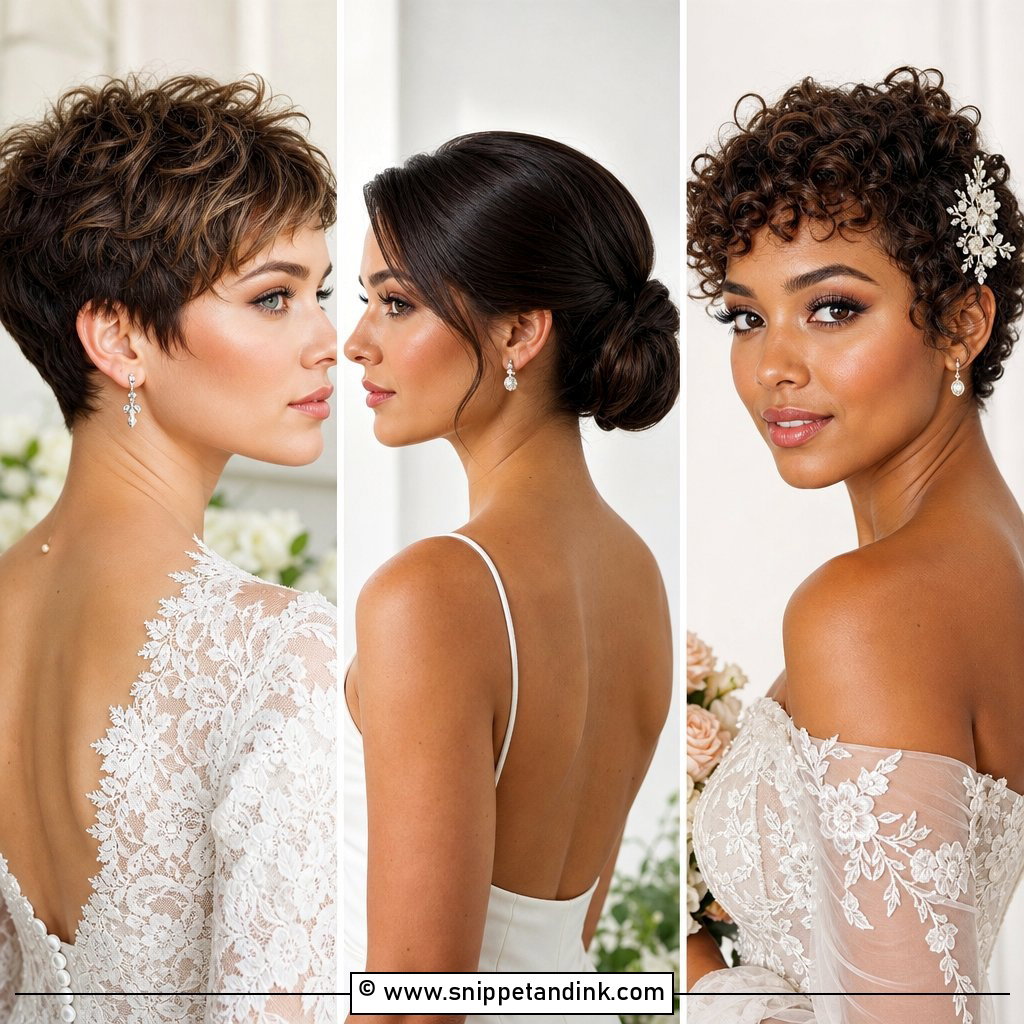
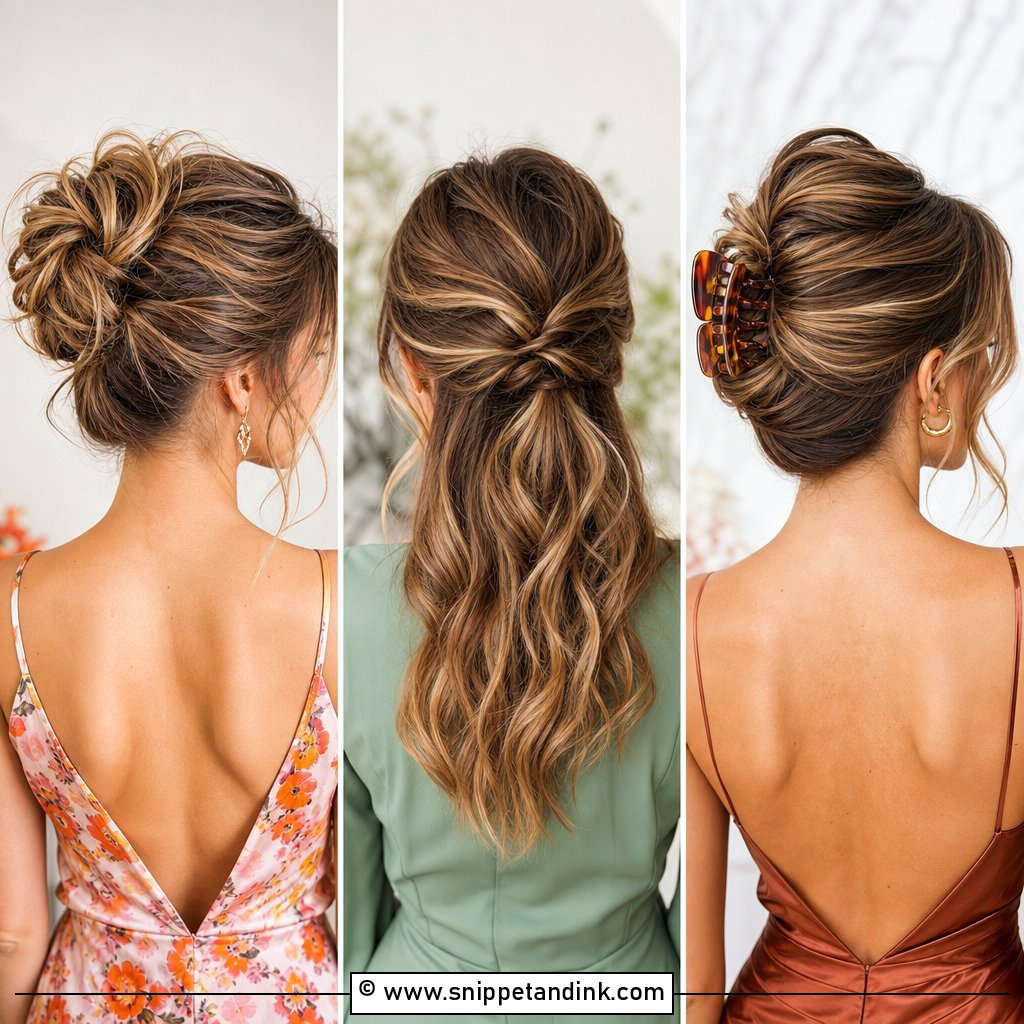
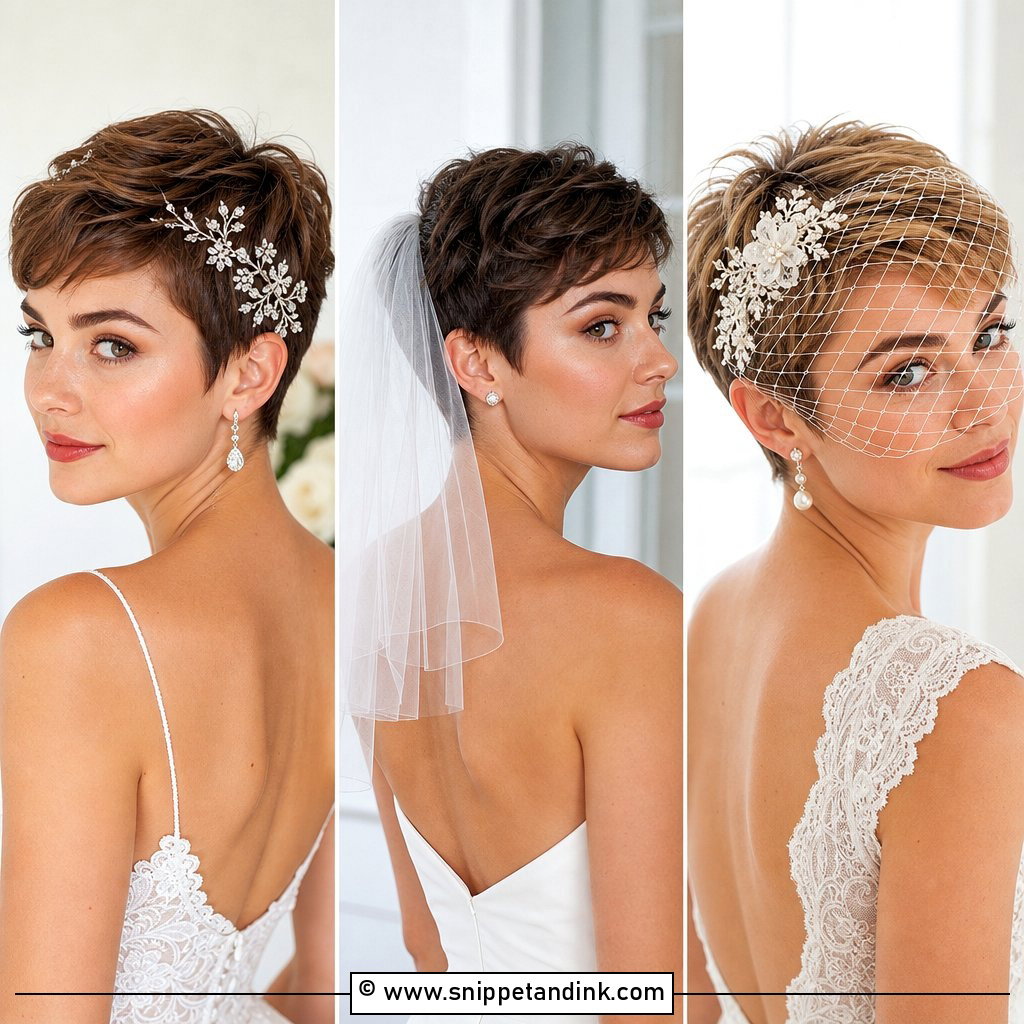
15. Tousled Pixie Updo
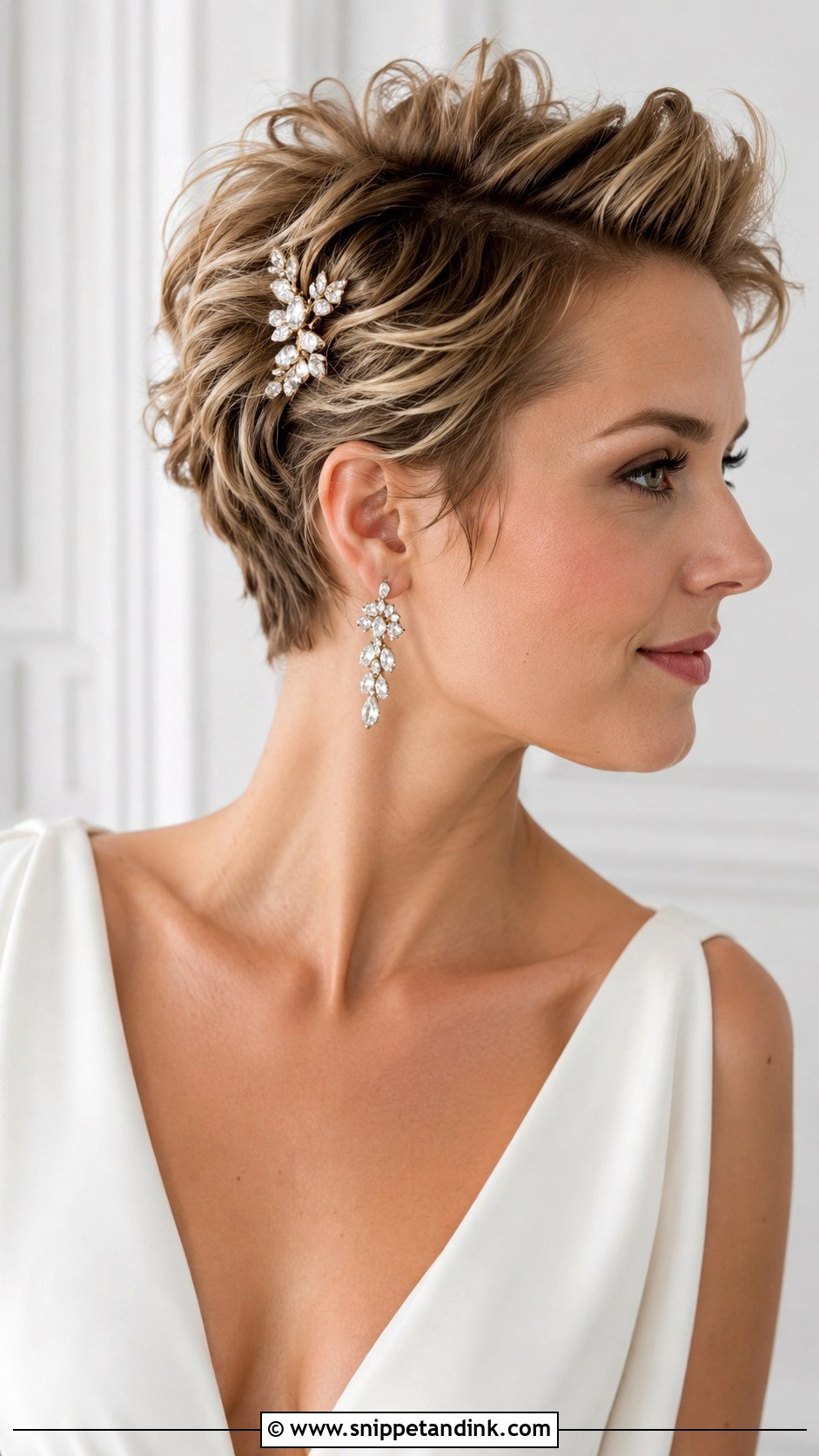
A tousled pixie updo isn’t really an updo. It’s texture, direction and a few pins. I work a little paste through for piecey definition, then sweep and pin sections back so the shape looks deliberate. A sparkling pin or small clip near the temple brings the bridal touch, and bold makeup or statement earrings suit a confident crop. Tiny pins in your hair color are essential, since standard bobby pins look bulky in very short hair.
16. Textured Low Bun With Baby’s Breath
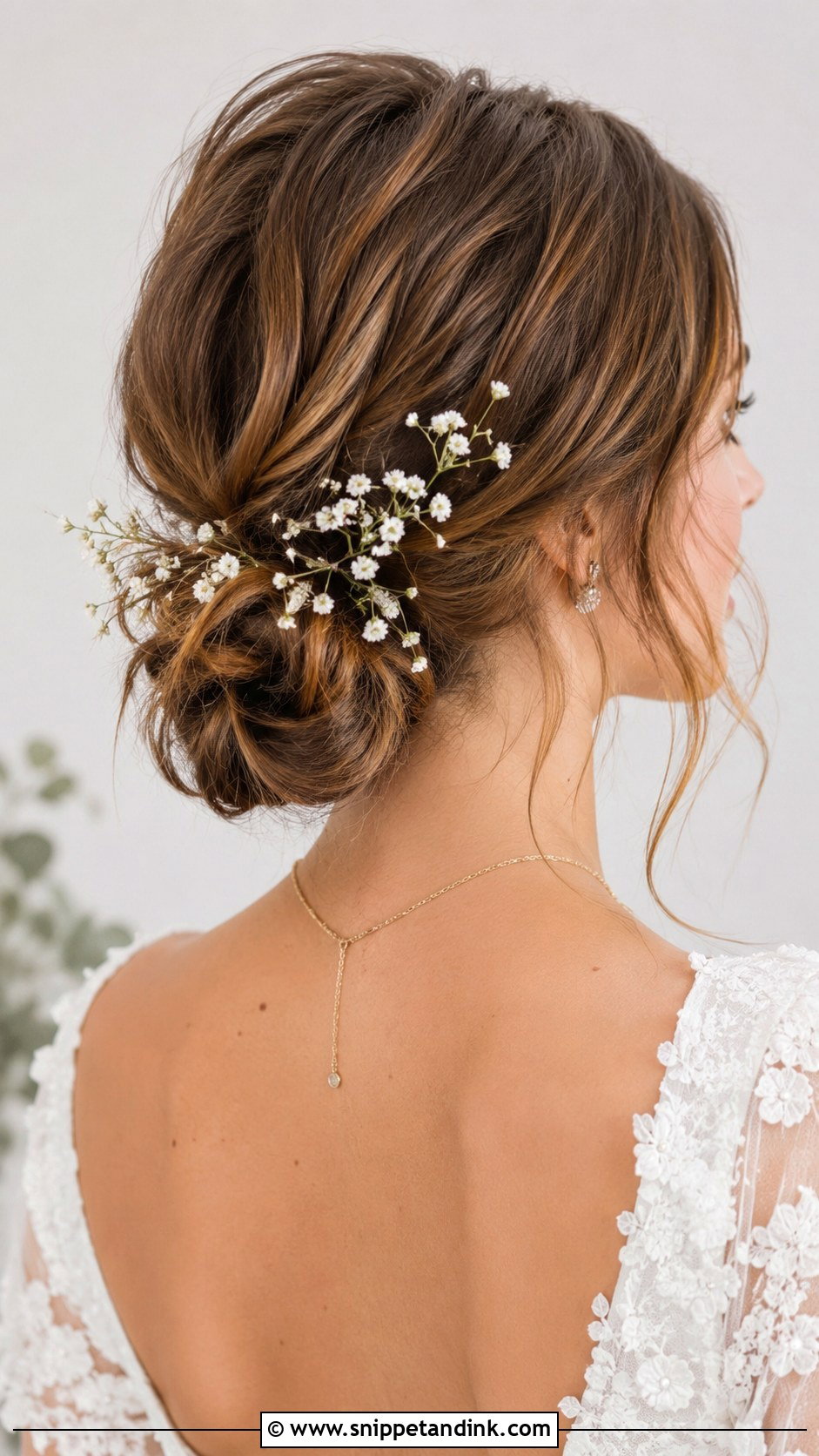
The bun sits low at the nape with pieces gently pulled out, and tiny sprigs of baby’s breath are tucked throughout. The texture gives short hair the fullness and movement it needs, and the white flowers suit outdoor, rustic and springtime weddings. Baby’s breath is a sensible hair flower because it’s light and holds up out of water for hours. I tuck it in small clusters rather than single sprigs, which can look like lint from a distance.
17. Knotted Updo for Short Hair
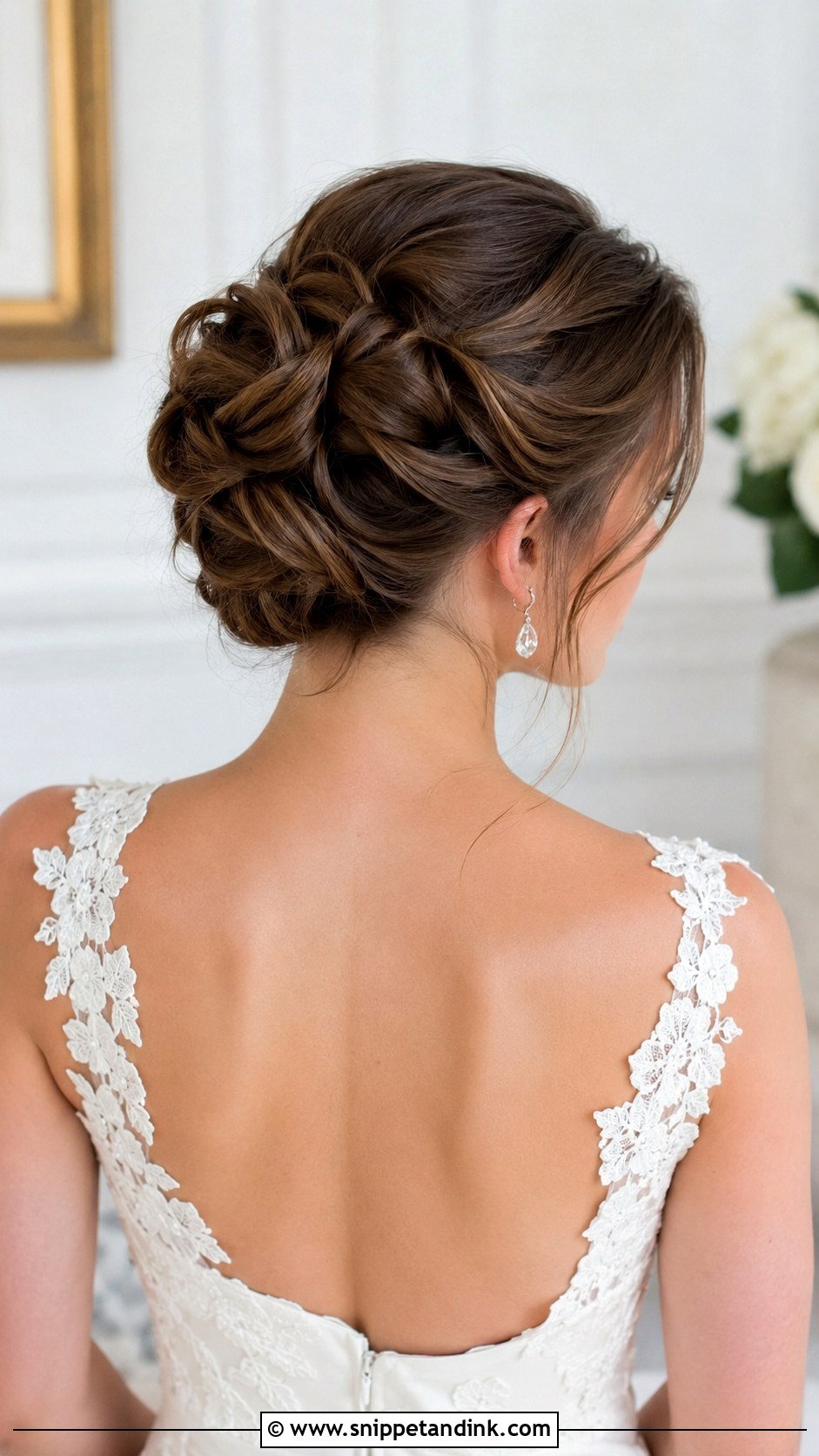
Pieces of hair are tied or knotted together and pinned into an arrangement at the back, so the structure comes from the knots rather than from length. That makes it surprisingly good on bobs. The knots give close-up texture and keep short strands secure; keep accessories simple so the design stands out. Very slippery, freshly washed hair won’t hold a knot, so come with day-old hair or let your stylist add texture spray first.
18. Curly Faux Bun for Short Hair
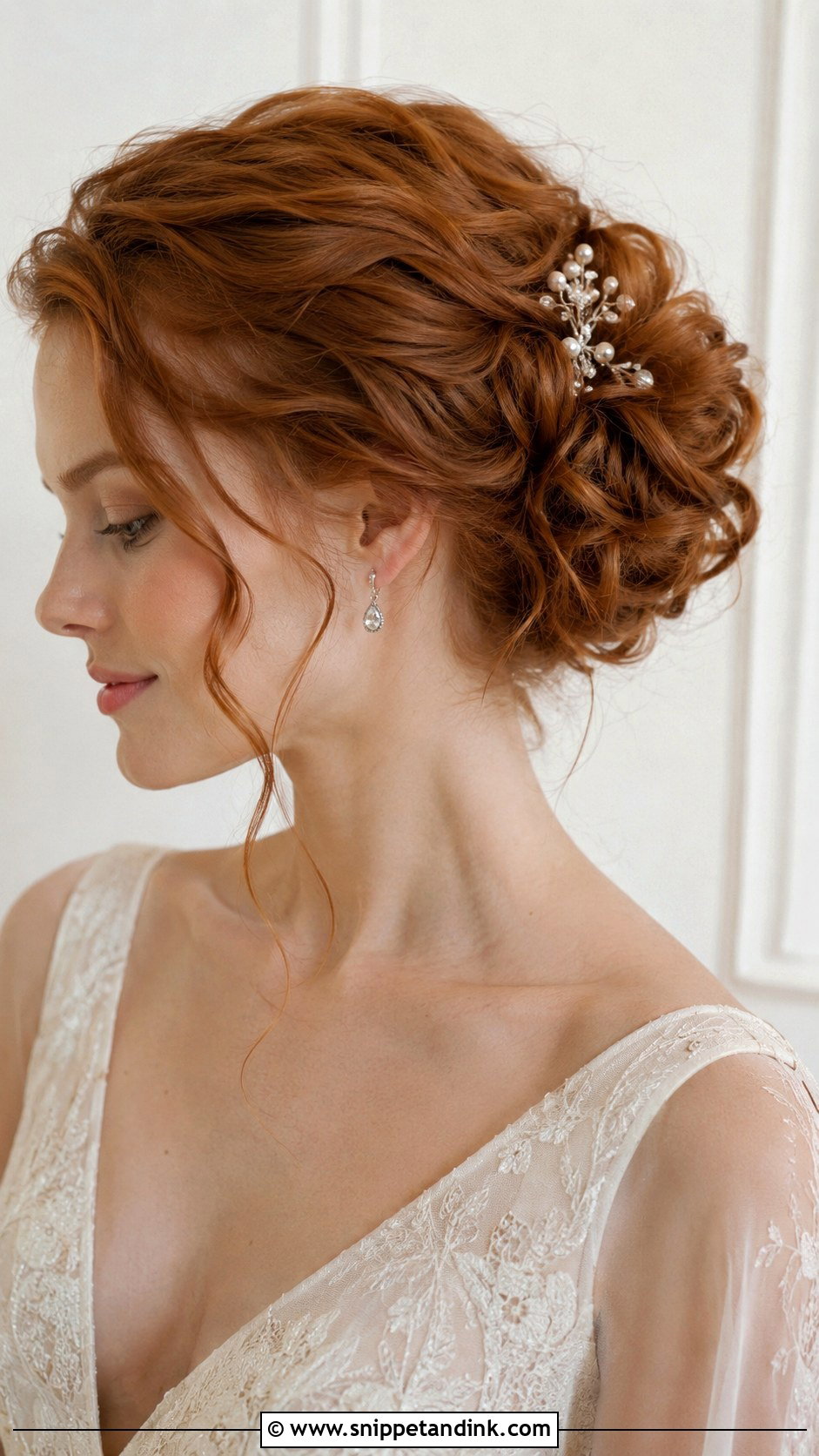
Curl the hair, then pin and tuck the curls together so they mimic a full bun. It’s the most convincing way to get a classic bun on a bob or lob. I gather the curls toward the center from all sides, pinning each one into the curl beside it, so the shape builds up rather than out. A decorative comb or flowers add charm, and loose face pieces stop it looking stiff.
19. Elegant Rolled Chignon
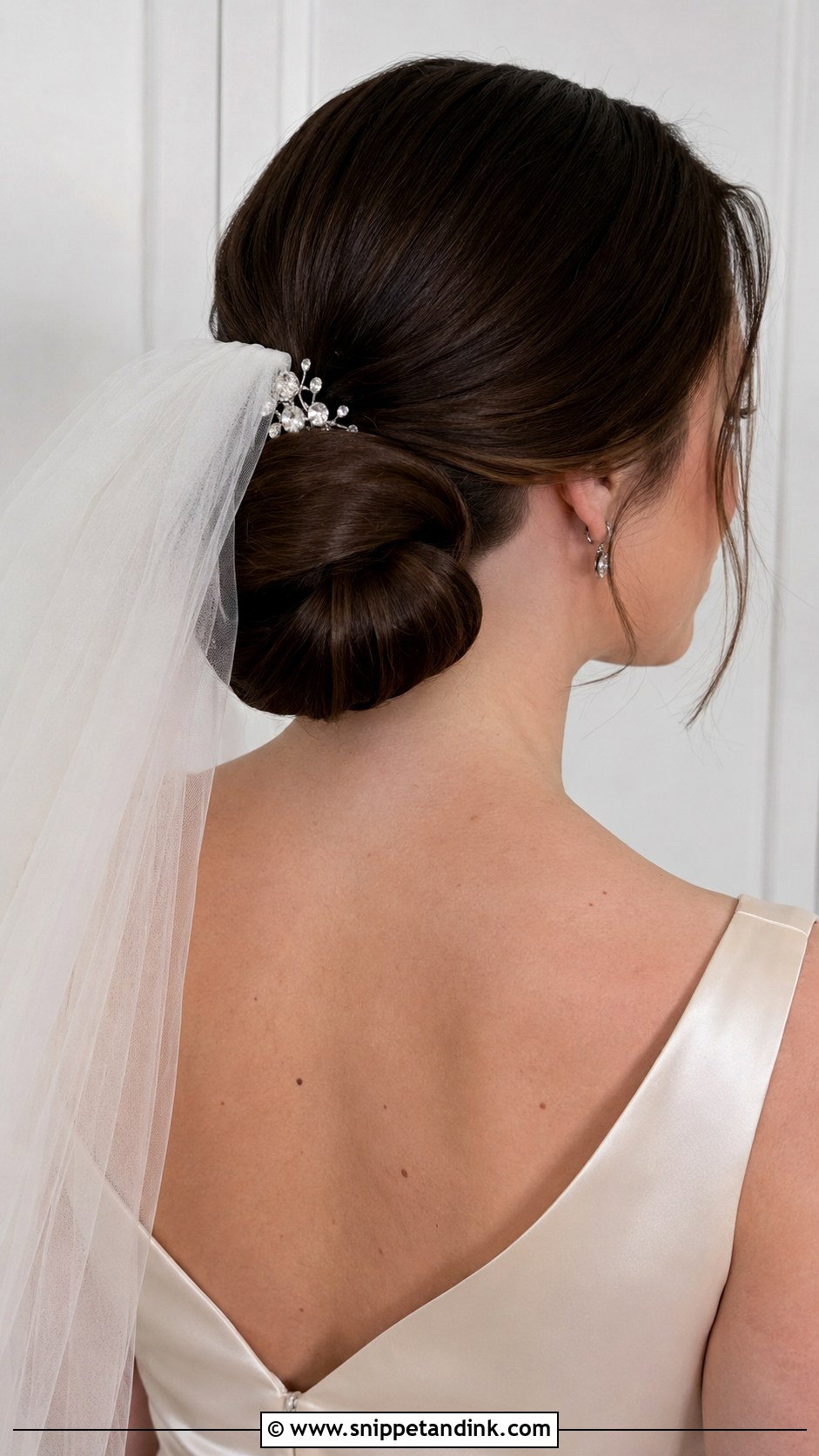
The hair is rolled and tucked under into a smooth, looped knot at the nape. On short hair the roll is shallow, so I tease the inside lightly to give it something to grip and use more pins than usual. The clean silhouette works with veils, statement jewelry and structured gowns, and a jeweled pin adds sparkle for a formal ceremony. A lob is the ideal length; a short bob may need a small padding piece inside the roll.
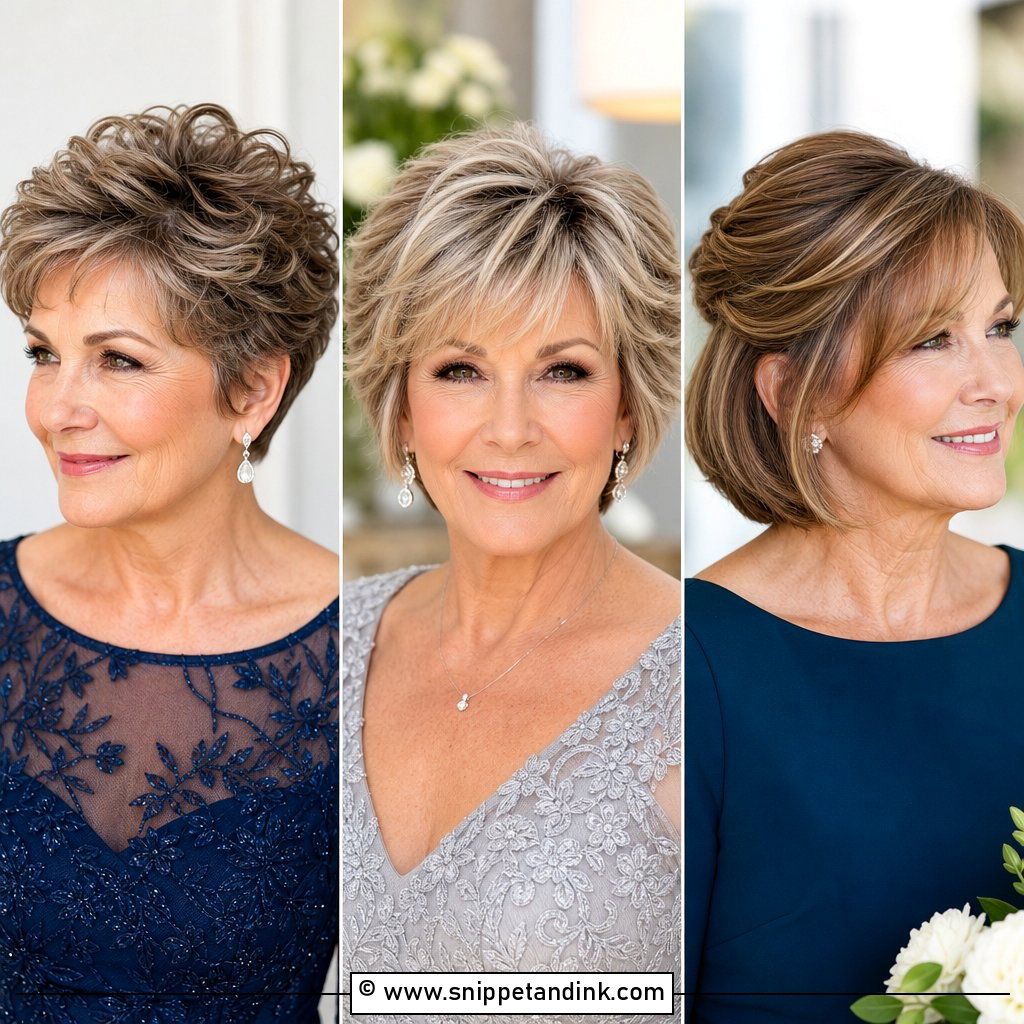
20. Accessorized Updo With Statement Clip
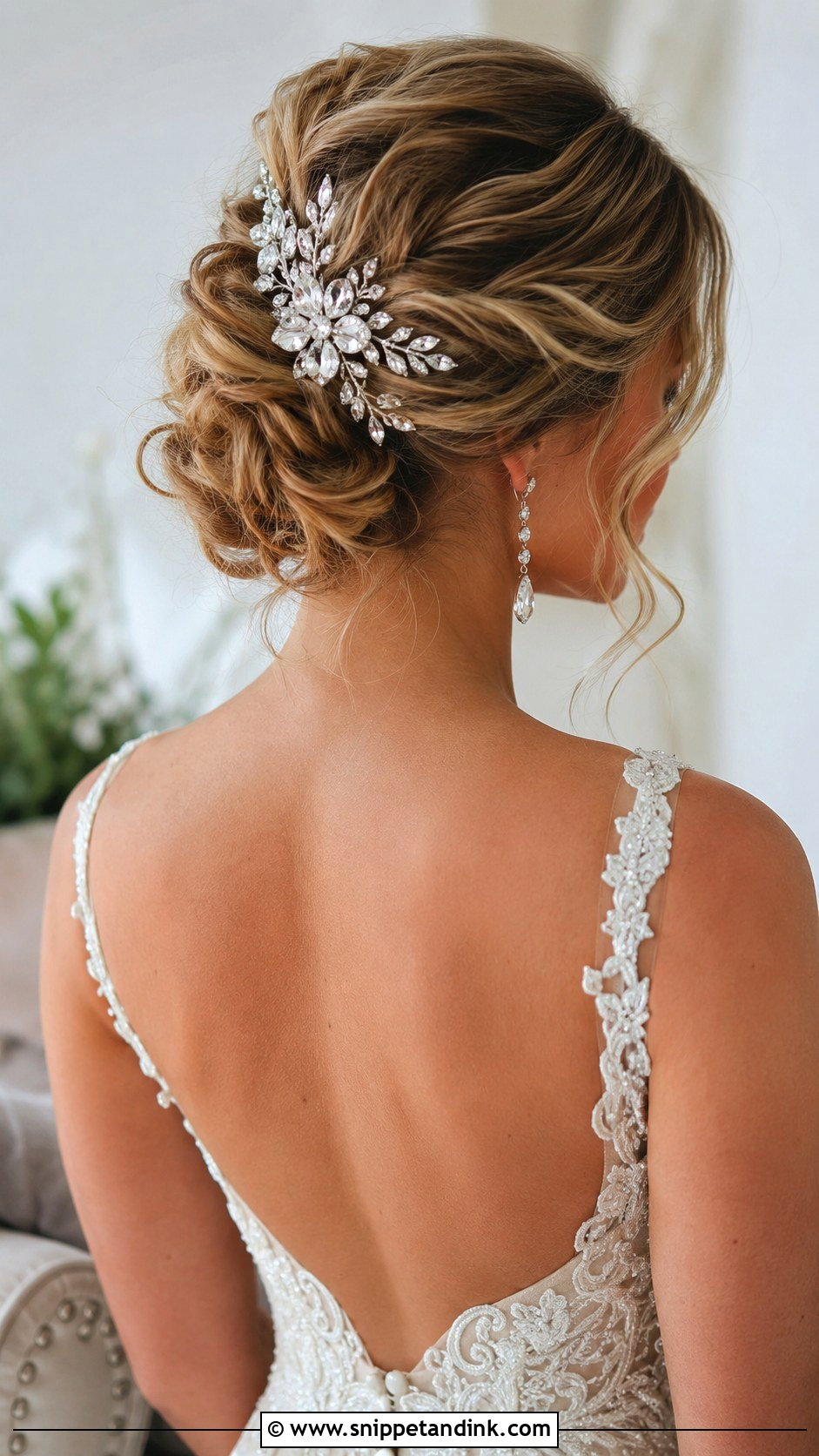
One strong accessory does a lot of work on short hair, where the updo itself is small. A soft twisted or pinned style pairs with a bold statement clip in pearl, crystal or a floral design. Weight is the thing to check. A heavy clip in short hair tilts and slides, so hold it in your hand first and choose one lighter than it looks, or have your stylist anchor it to a small hidden braid.
Your Last Haircut Should Happen Earlier Than You Think
A fresh cut the day before the wedding is the most common short-hair mistake I see. Newly cut ends are blunt and springy, and they pop straight out of pins. I ask brides with a bob or lob to have their final trim two to three weeks before, so the ends soften and the shape settles. Pixies look shaggy sooner, so a tidy-up about a week out usually works better. And tell your hairdresser you’re planning an updo, so nobody takes off the length you need for tucking.
A Little Borrowed Hair for a Fuller Bun
If you love a classic bun but your bob won’t stretch to one, clip-in pieces fill the gap. A small clip-in bun, a couple of wefts placed at the nape or a mesh donut can all hide under your own hair.
- Match the color in daylight, and blend two shades if your hair is highlighted.
- Bring the pieces to your trial so your stylist can trim or curl them to match your texture.
- Synthetic hair can melt under a hot iron. Human hair pieces can be curled just like your own.
- Curly and coily textures have matching pieces too, so a natural-hair bun can be filled out the same way.
Your Length Is a Starting Point, Not a Limit
Sleek slicked-back buns, soft braided crowns and curly chignons all work on short hair. What makes them work is building with your texture and length rather than against them, then adding a veil, flowers or a clip to make the style yours. Take a few of these ideas to your stylist along with photos of your current cut, and ask her honestly which ones your hair can hold. A trial will show you the rest.
You'll Like These Ideas:


Leave a Reply