
Tucking hair behind the ear sounds like nothing, and that’s exactly why brides underestimate it. That one small move opens the face, shows the earrings you chose so carefully, and stops pieces from swinging forward during the vows and every hug afterward. I use it on sleek straight hair, vintage waves, buns, ponytails and even pixie cuts. What I’ve learned from doing it over and over is that a tuck only looks casual when it’s been built properly underneath, so below I’ve written about how each version actually holds, not just how it looks.
What Keeps a Tuck Behind the Ear for Twelve Hours
Hair tucked behind the ear by hand stays there for about as long as it takes to walk down the aisle. A tuck that lasts is pinned, and how it’s pinned decides whether anyone sees the work.
- Pins go in pairs, crossed in an X, just above and slightly behind the ear where the hair bends. A single pin acts like a hinge and lets the section swing forward.
- The section gets a light mist of spray before it’s tucked, not after. Spray gives the hair grip against the pin; spraying the finished tuck just makes it shiny.
- Match pins to your hair color and slide them in under a top layer. On blonde hair, black pins show in every close-up.
- Check the ear itself. If the tuck presses on the cartilage, it will ache by the reception and you’ll pull it out. I leave a finger’s width of slack over the top of the ear.
Length matters too. The front sections need to reach comfortably past the ear, so if you’re growing out a fringe, talk to your stylist about it a couple of months before the wedding rather than the week of.
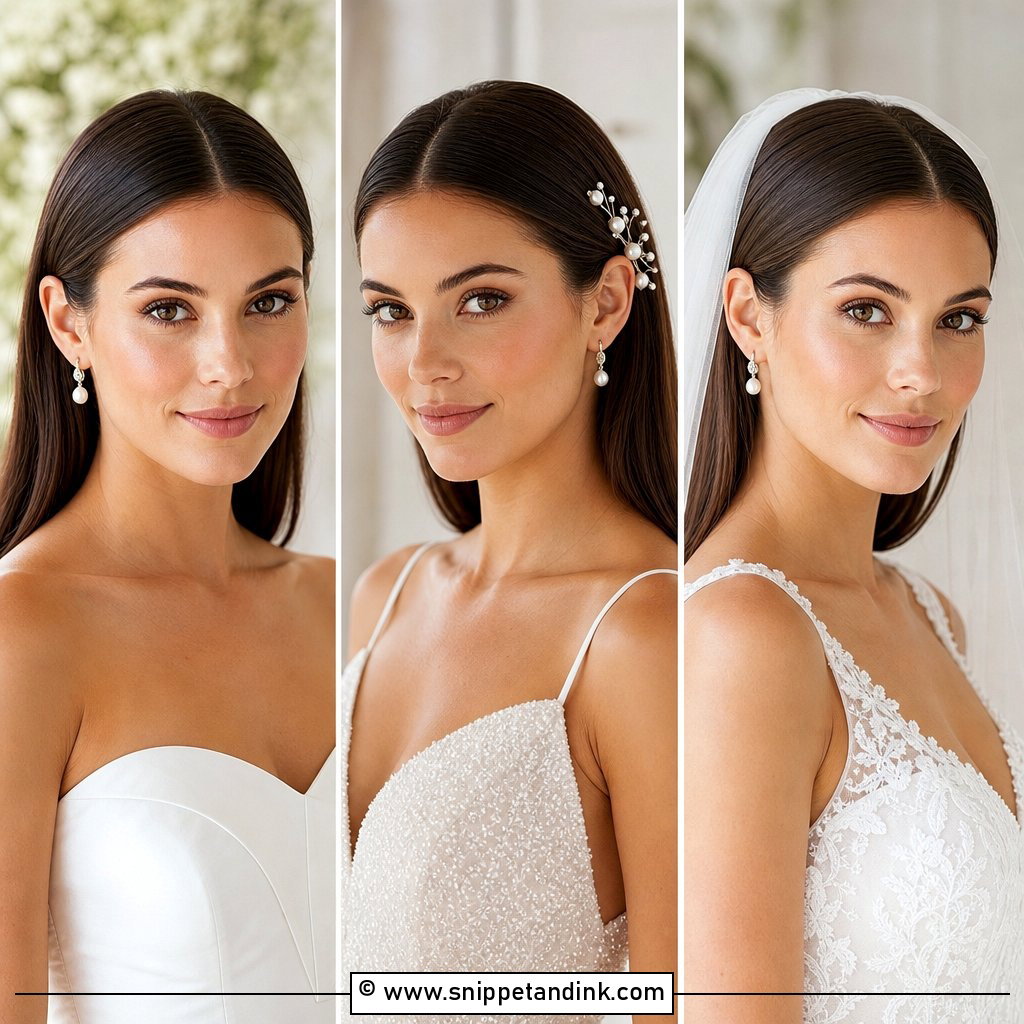
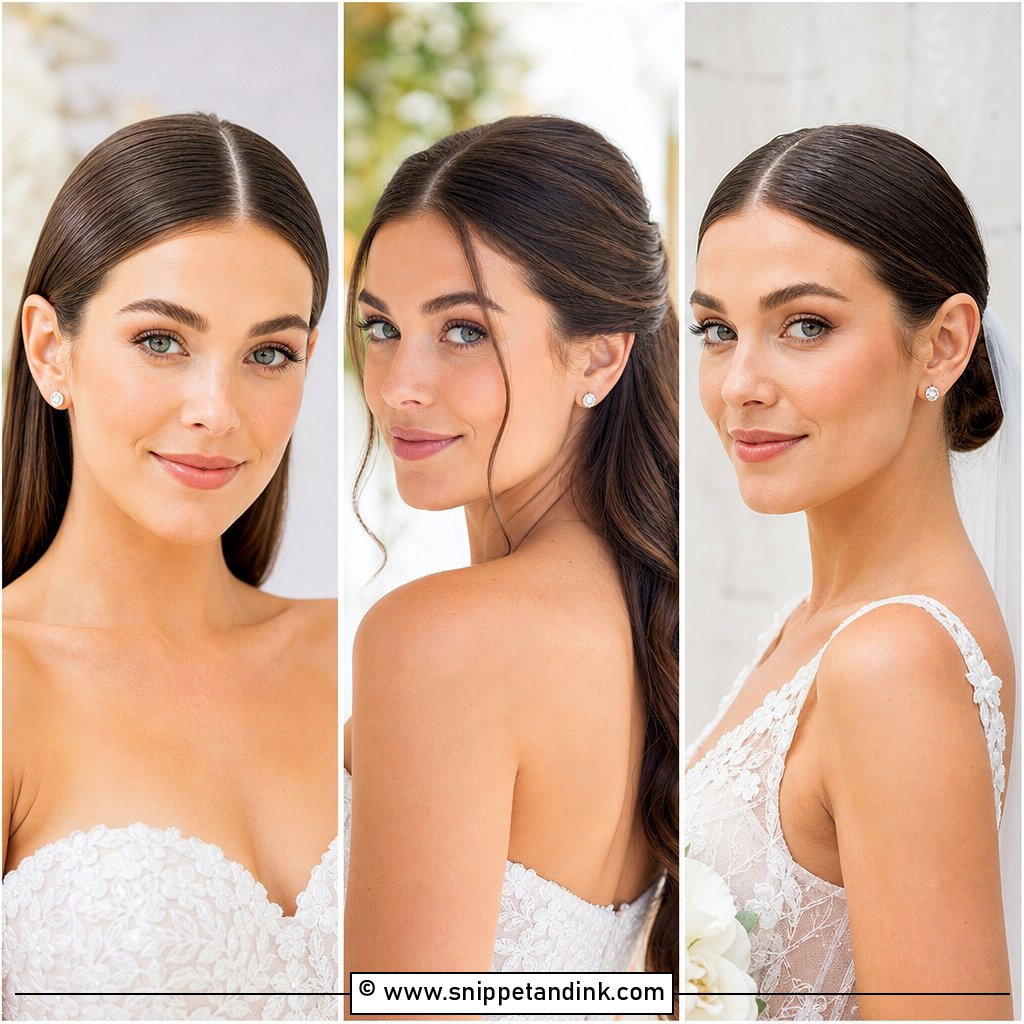
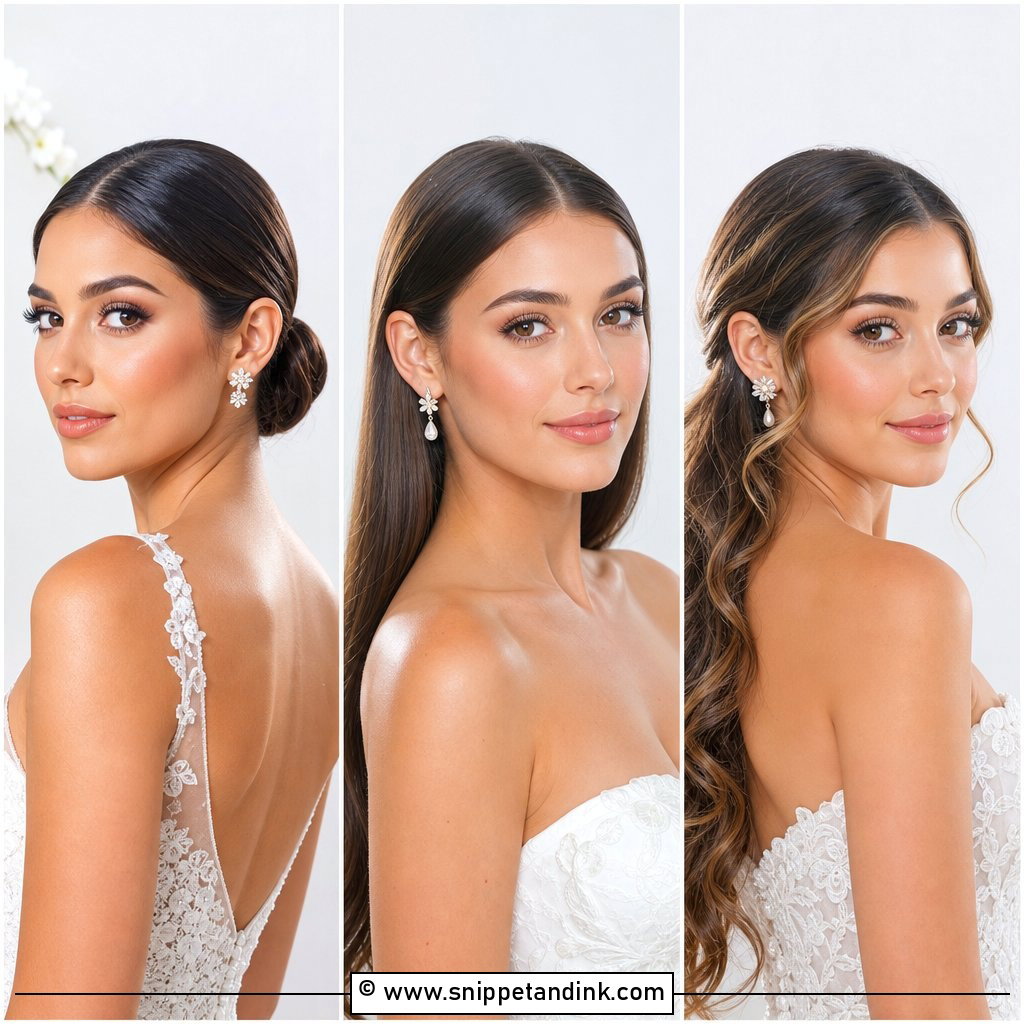
1. Bridal Hair Tucked Behind Ear With Sleek Straight Hair
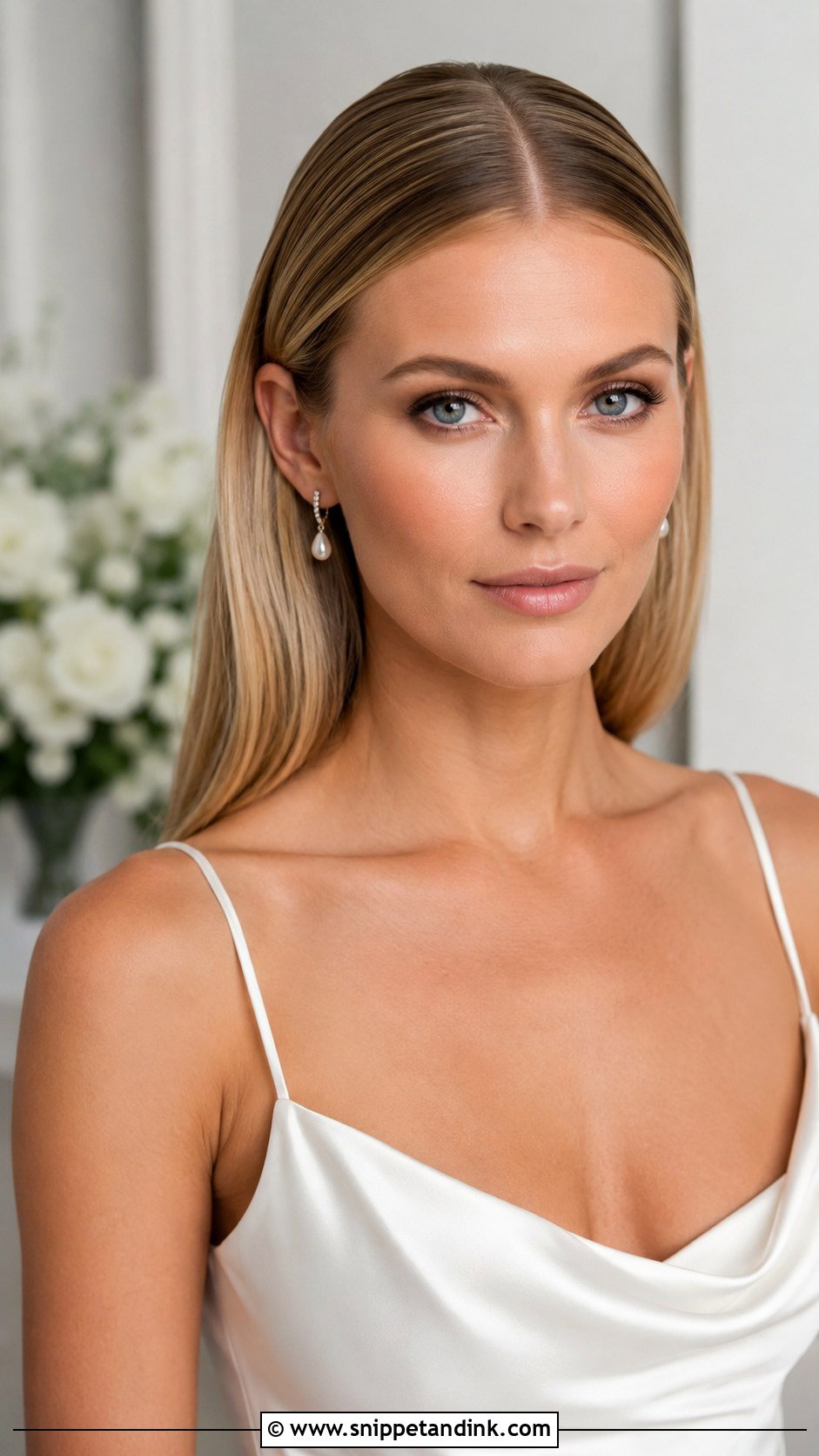
Sleek straight hair is the least forgiving version of this look, because any kink from a pin or an elastic shows. I smooth the front sections behind both ears and anchor them under the back layers, never on top, so the hardware disappears. A center part keeps it balanced. Before I start, I flat iron the front sections with a little tension pulled toward the ear, which pre-trains the hair to bend the right way. Anti-frizz cream goes on damp and shine spray only at the very end, from a distance.
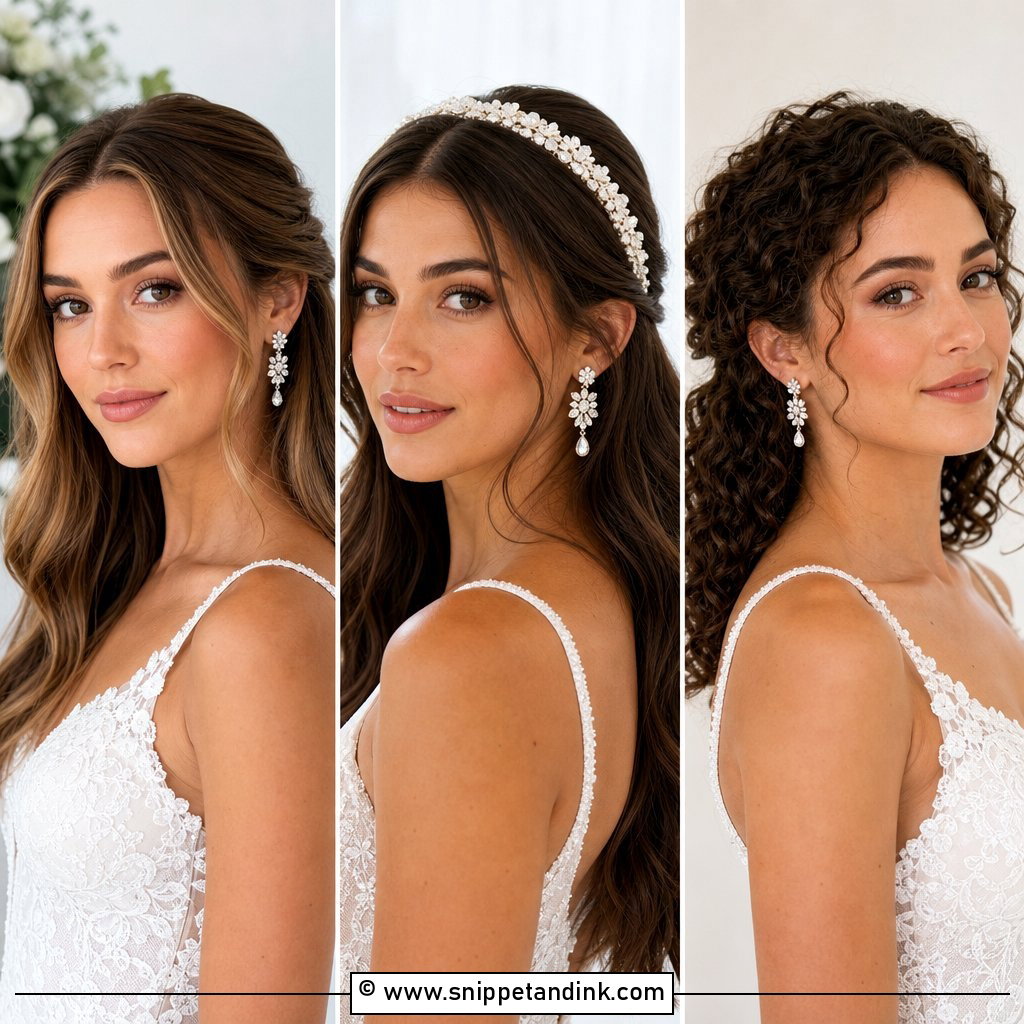
2. Bridal Hair Tucked Behind Ear With Side Part Waves
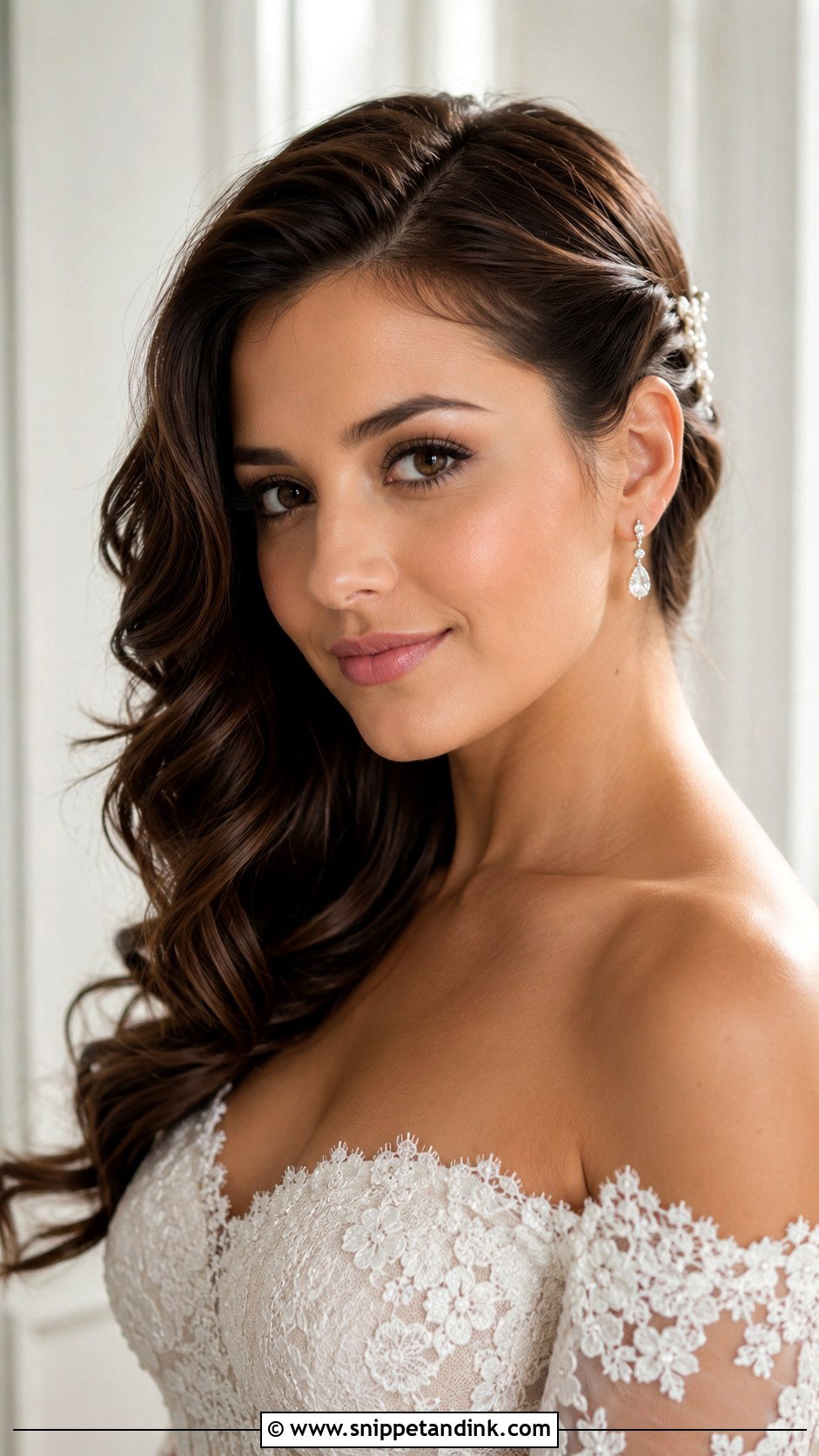
A deep side part with waves, tucked on the lighter side only, is the version I suggest most to brides who want their hair down but hate it touching their cheeks. The heavy side carries the movement; the tucked side does the work of keeping the face clear. I usually start the waves just below the ear on the tucked side so the curl doesn’t fight the pin. A small comb or pearl clip holds it, and with a one-shoulder dress I put the tuck on the bare-shoulder side so the line runs clean down the neck.
3. Bridal Hair Tucked Behind Ear With Hollywood Waves
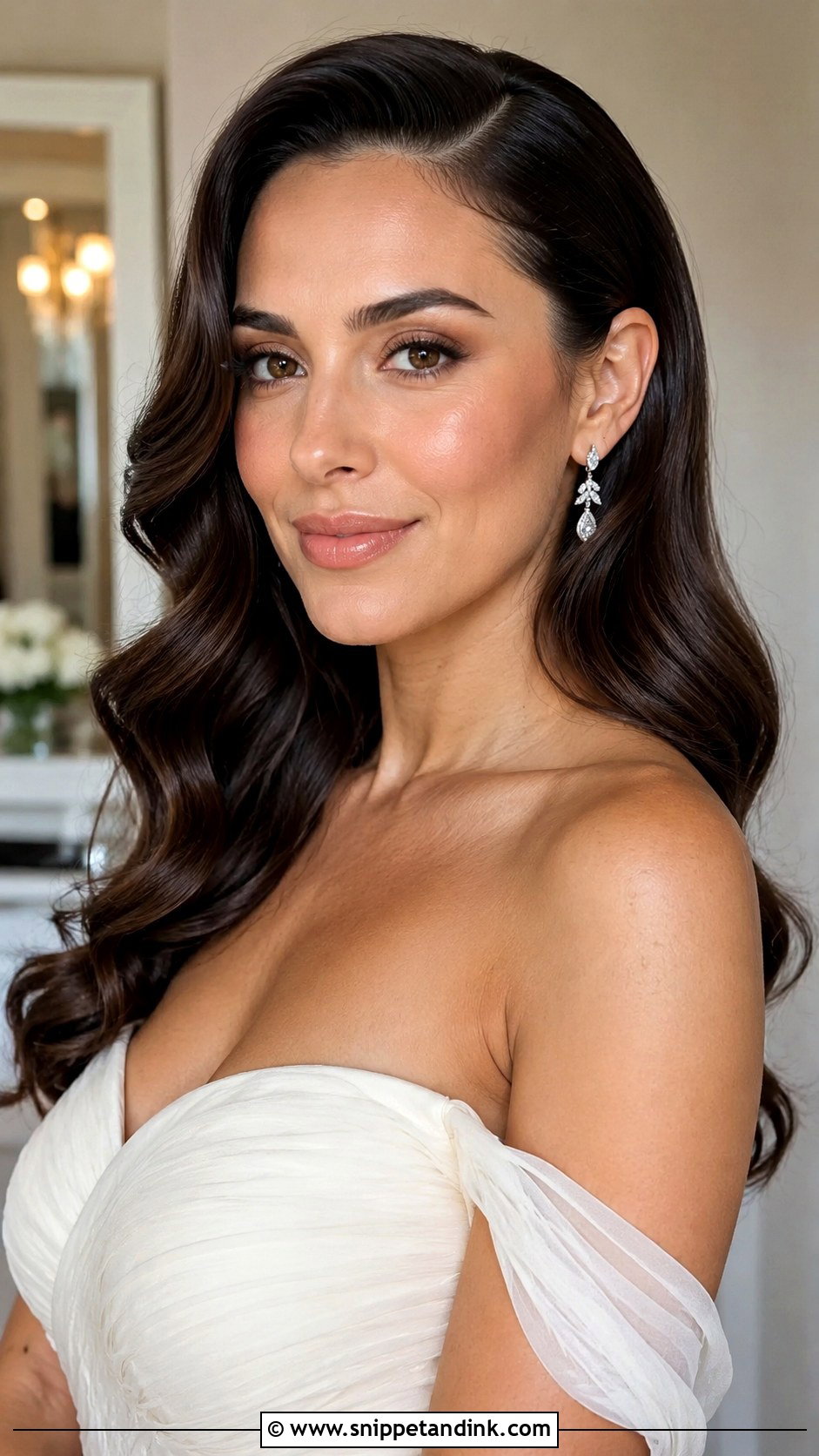
Hollywood waves need to be set, cooled and brushed out as one piece, so I curl everything in the same direction and clip each curl flat while it cools. Only after brushing do I tuck one side back, and I tuck it with the wave, not across it, or you break the pattern right where the camera looks. The tuck should still have curve and shine at the front. If it looks pressed flat against the head, it’s been pinned too tightly. A flexible spray keeps the ridges soft enough to move.
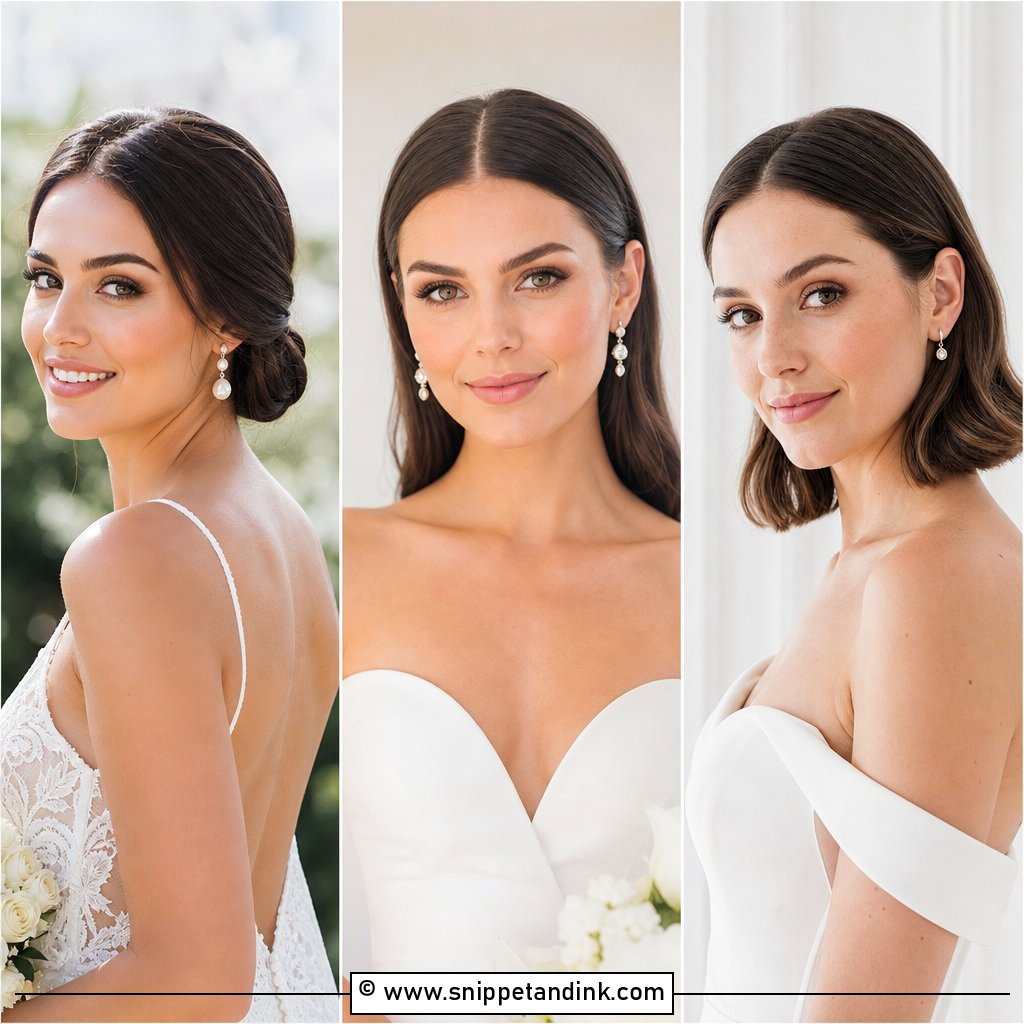
4. Bridal Hair Tucked Behind Ear With Low Bun
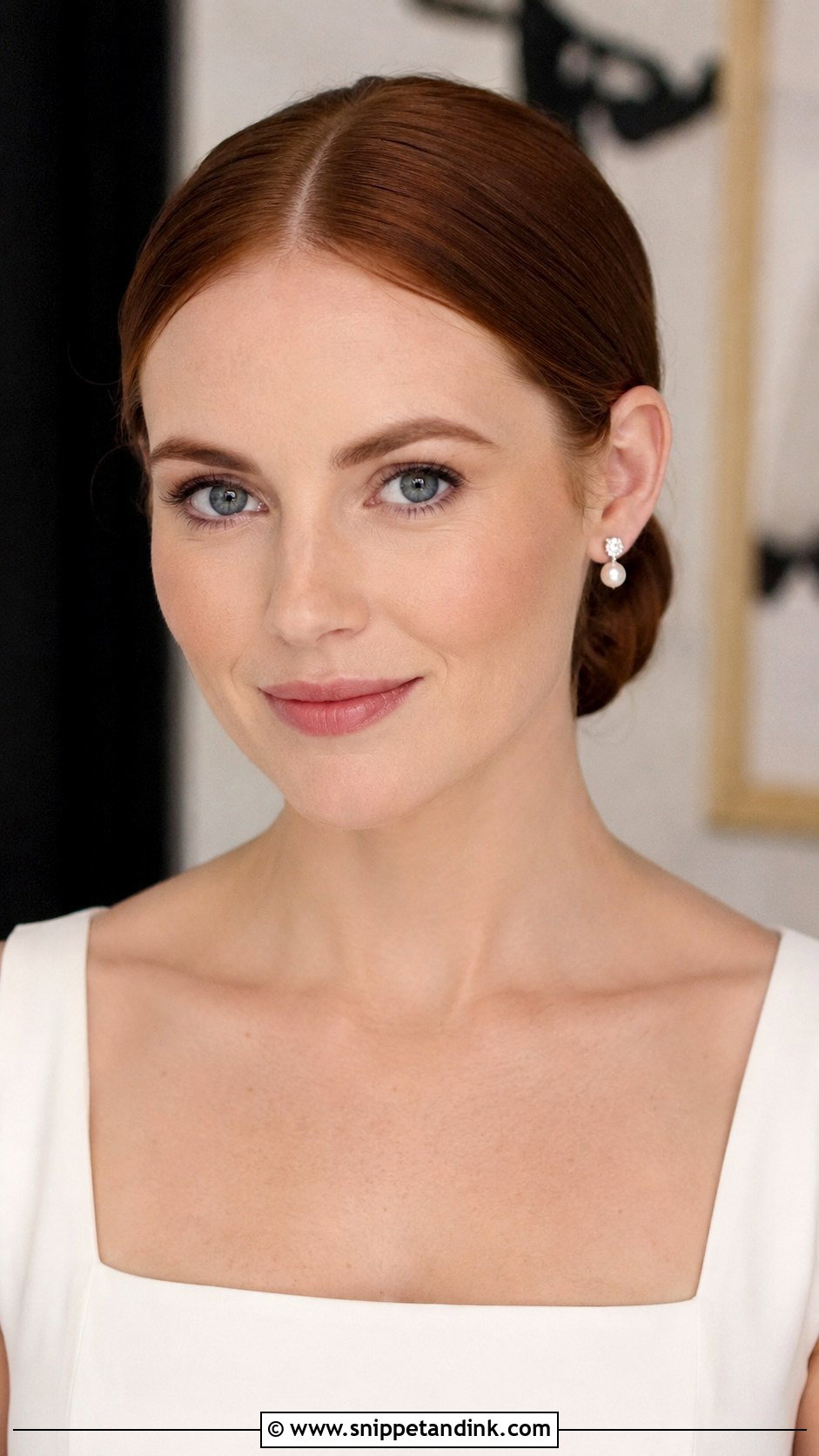
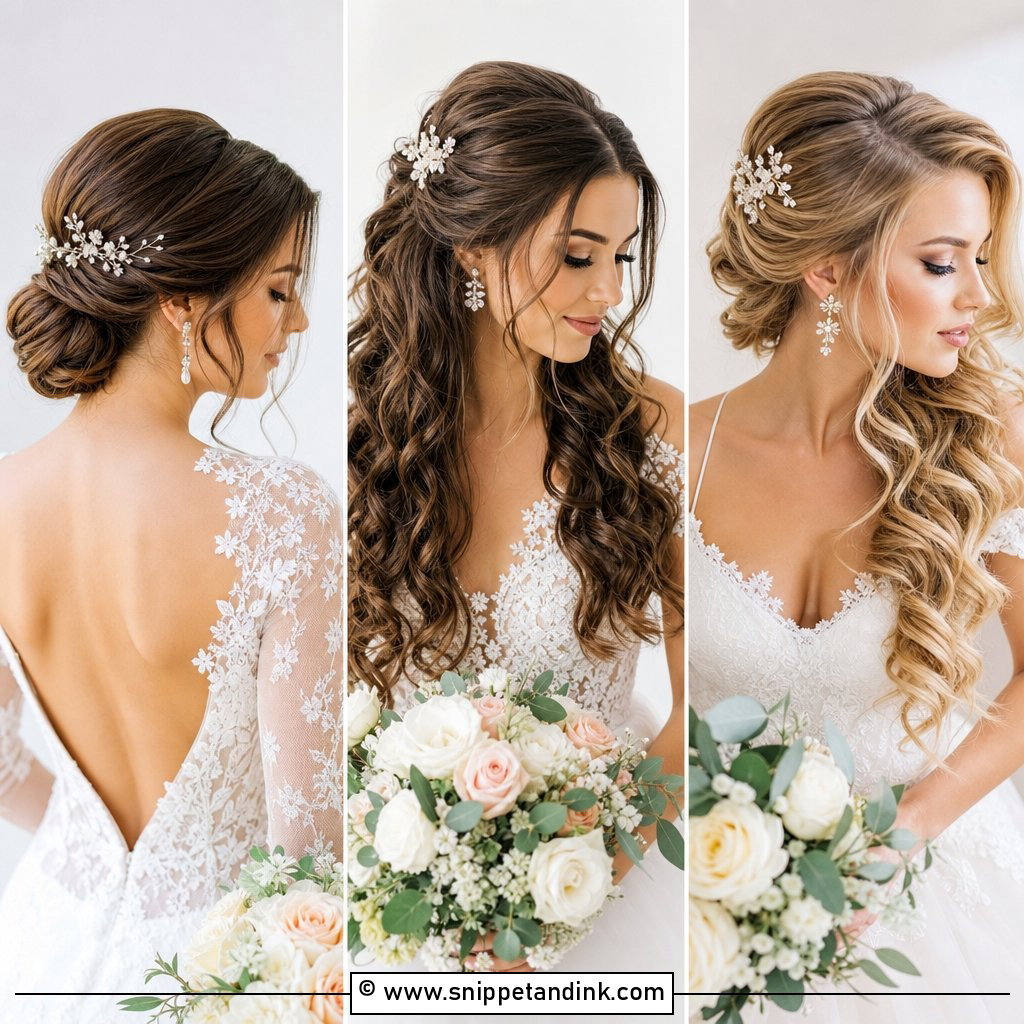
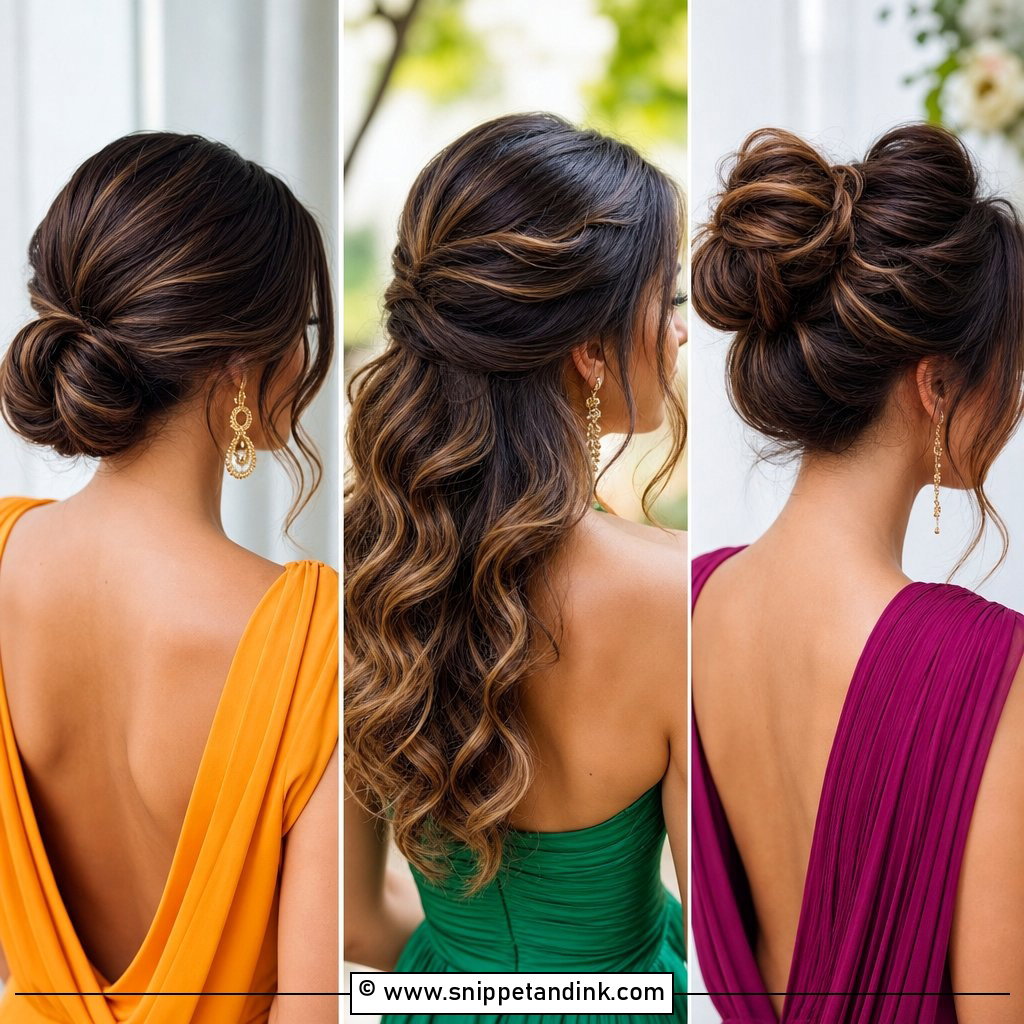
With a low bun, the tuck is really about the path the hair travels from the hairline to the nape. I smooth the front sections back so they pass over the top of the ear rather than pressing on it, then gather everything at the nape. That one detail matters for comfort by hour six. Center or slightly off-center parts both work. A low bun also gives a veil comb two choices, above or tucked under, and I’ll show you both at the trial so you can see which sits better with your dress.
5. Bridal Hair Tucked Behind Ear With Low Chignon
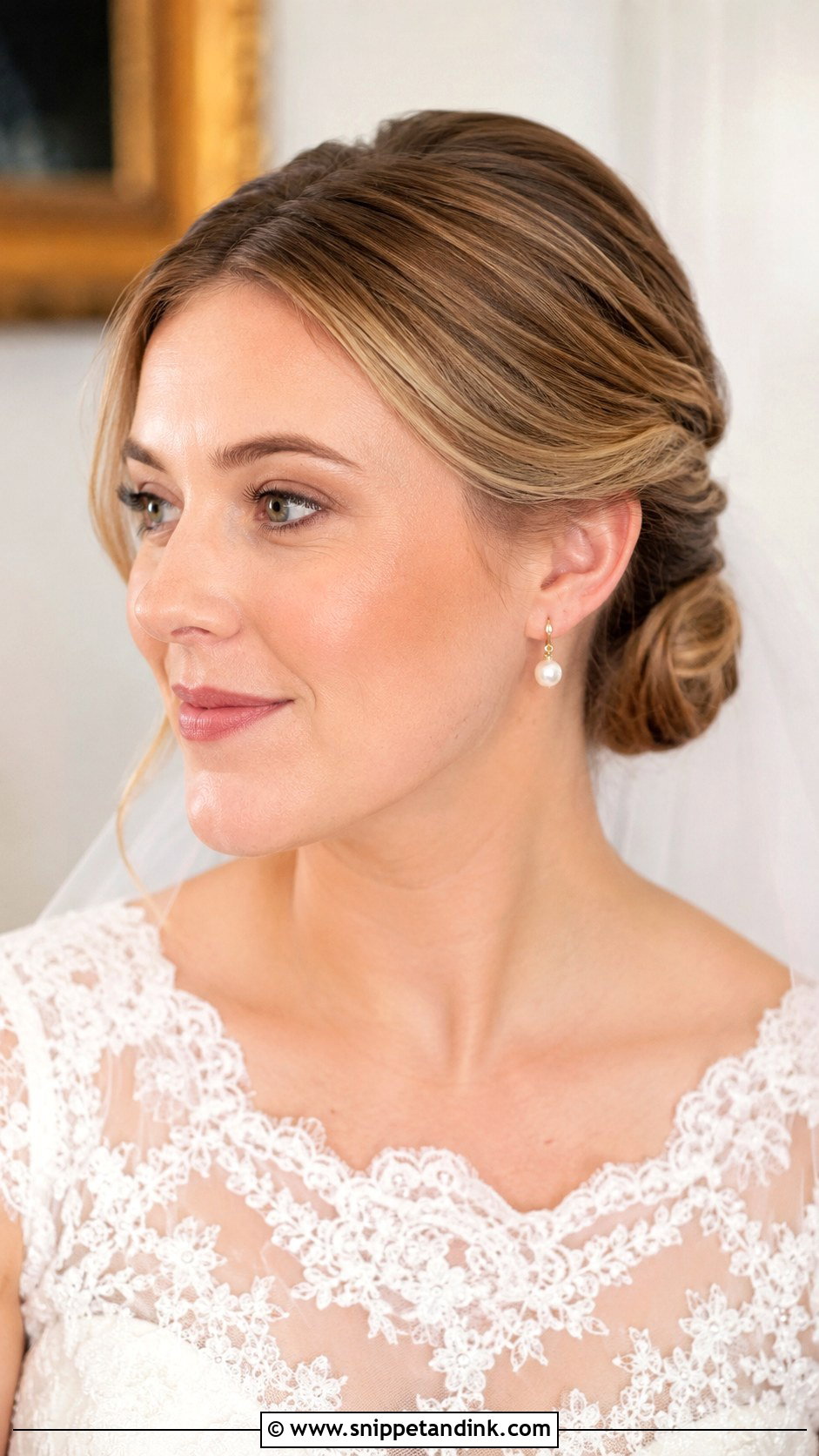
A chignon is softer than a bun because the hair is rolled and folded rather than wound tight, and the tuck gives it a cleaner outline at the cheeks. I build a small ponytail or crossed-pin base first so the chignon has something to grip. Leave a little lift at the crown; a chignon pulled flat from the forehead back can look severe, especially with a classic lace gown. Ask your stylist to pin into the base, not just through the roll, or it will sag by the reception.
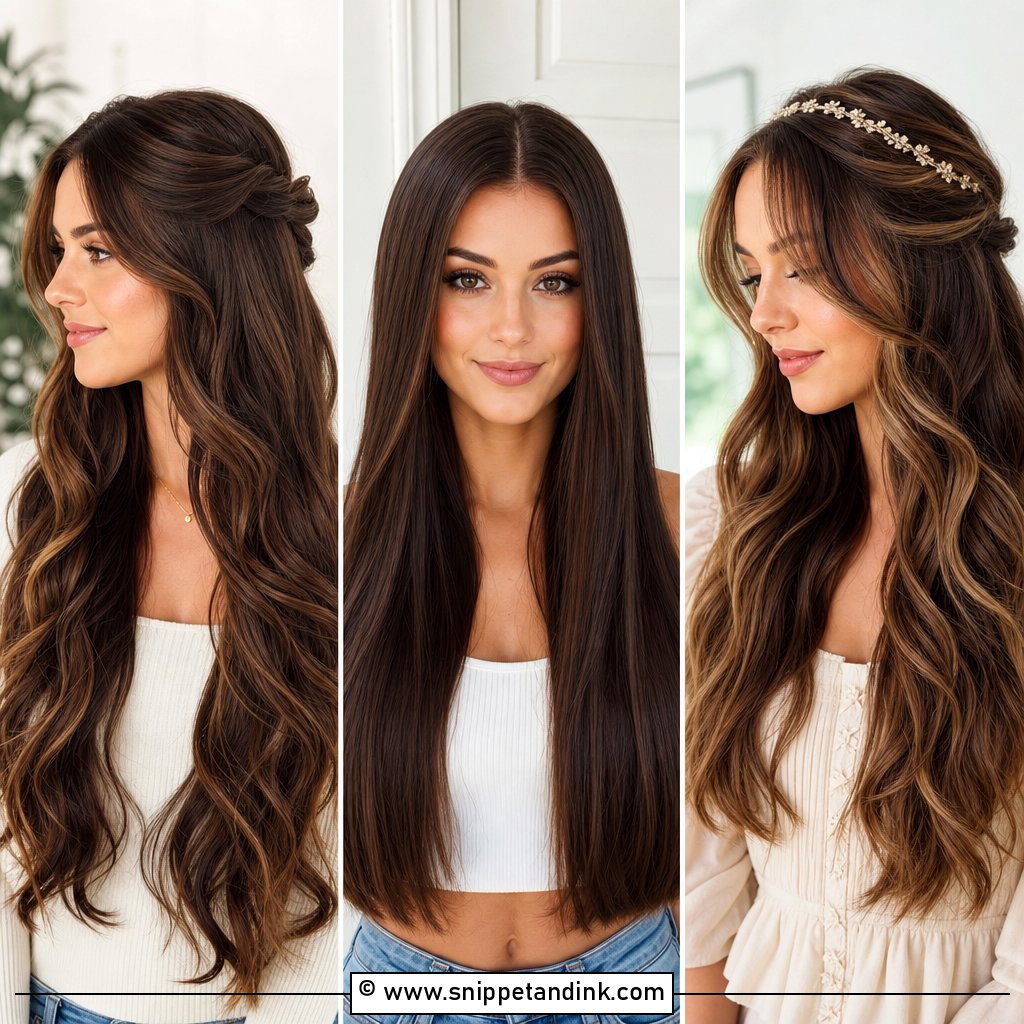
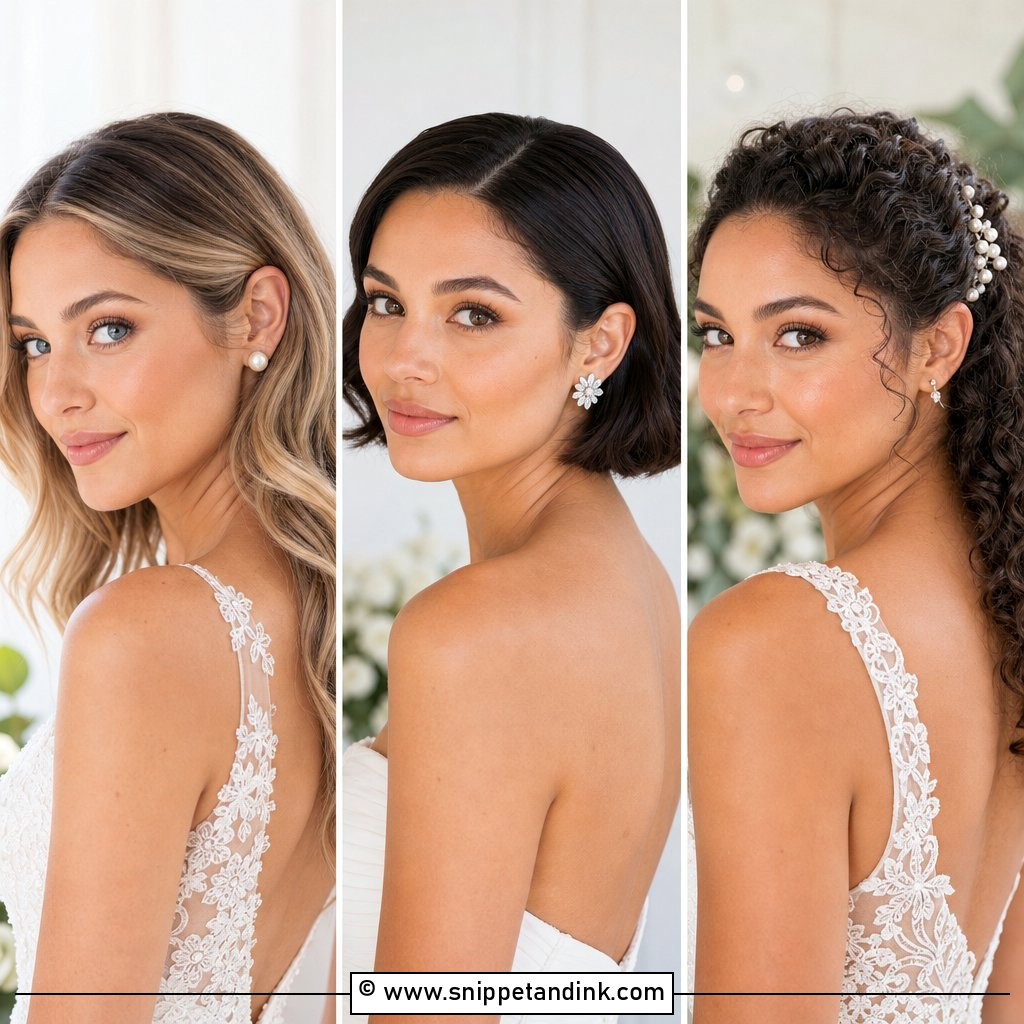
6. Bridal Hair Tucked Behind Ear Half Up Half Down
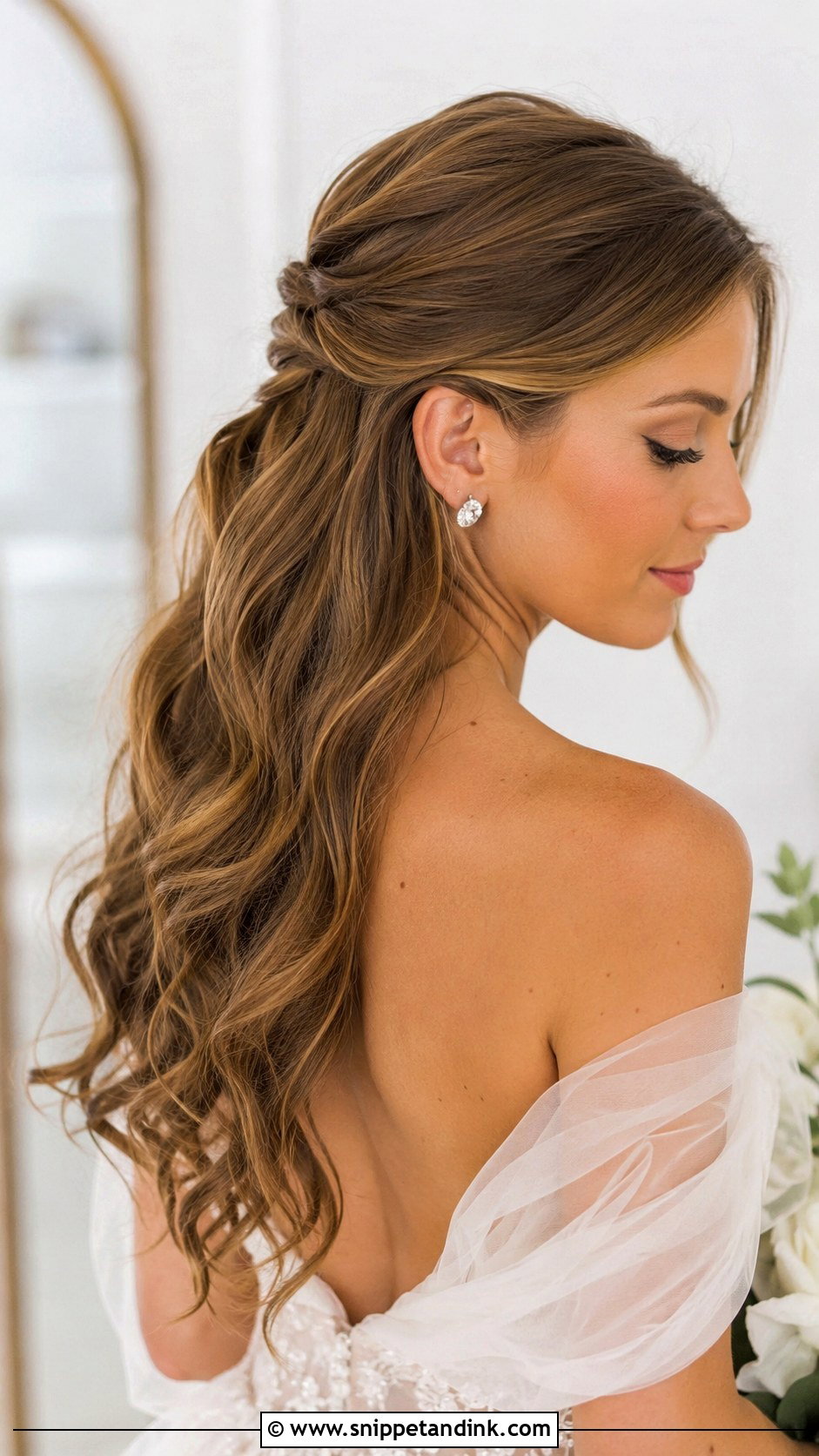
Half up with the front tucked is a good compromise for brides who’d rather wear their hair loose but don’t trust it to behave. I lift the crown slightly, pin the top section at the back, and then tuck the front pieces so they meet that pinned section rather than floating on their own. That connection is what stops the tuck popping loose. The waves below should be brushed out until they’re airy; tight ringlets under a half-up shape tend to look dated in photos.
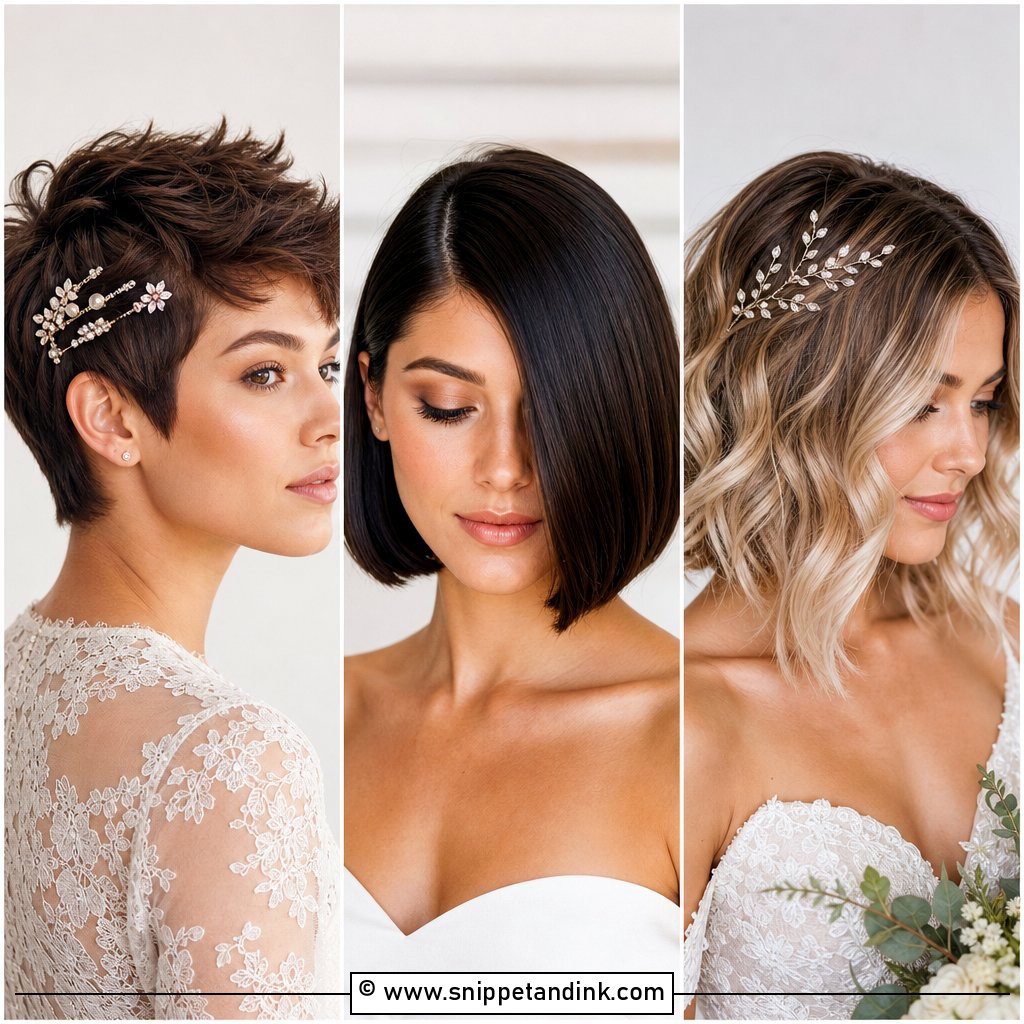
7. Bridal Hair Tucked Behind Ear With Bob Haircut
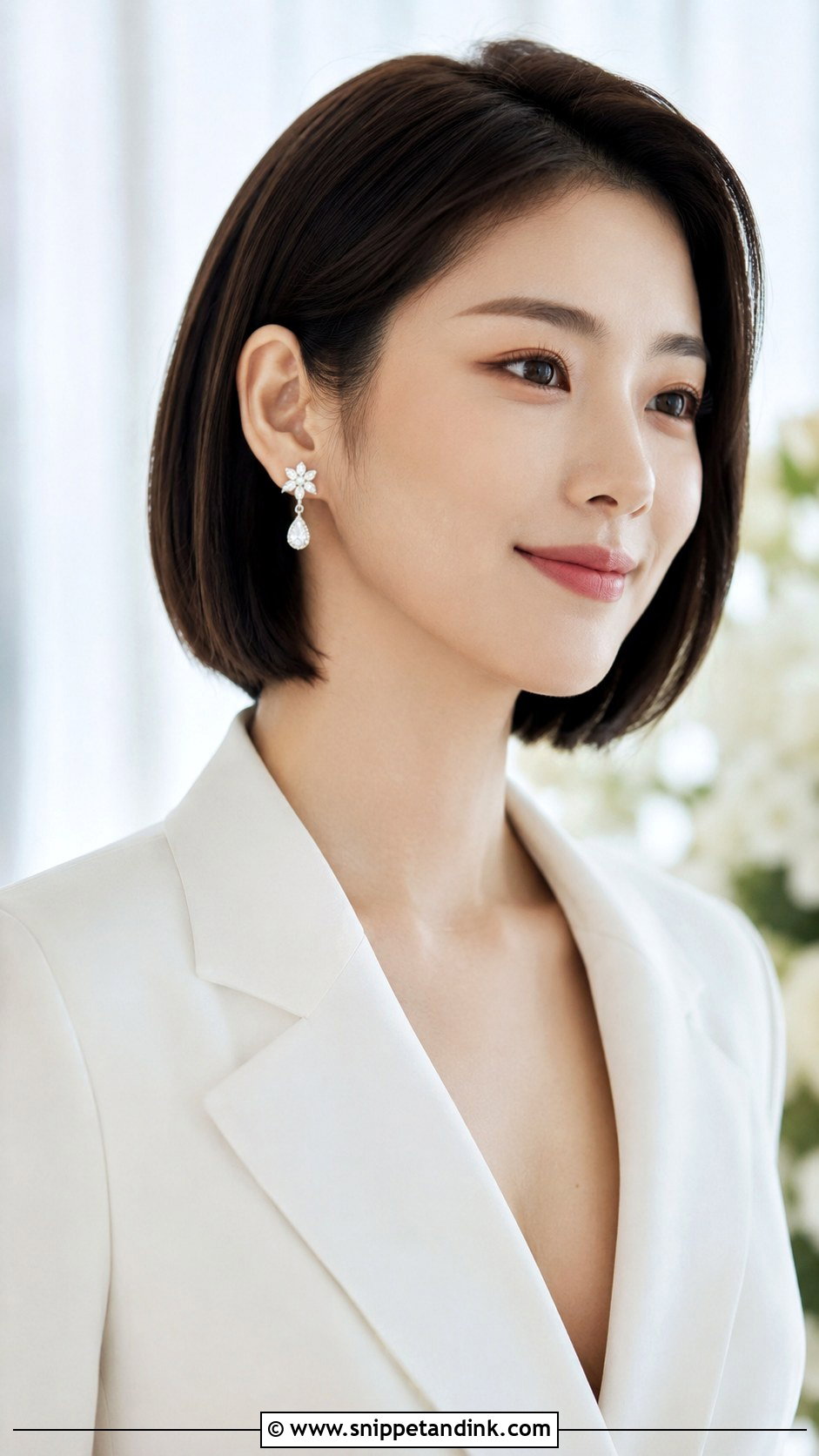
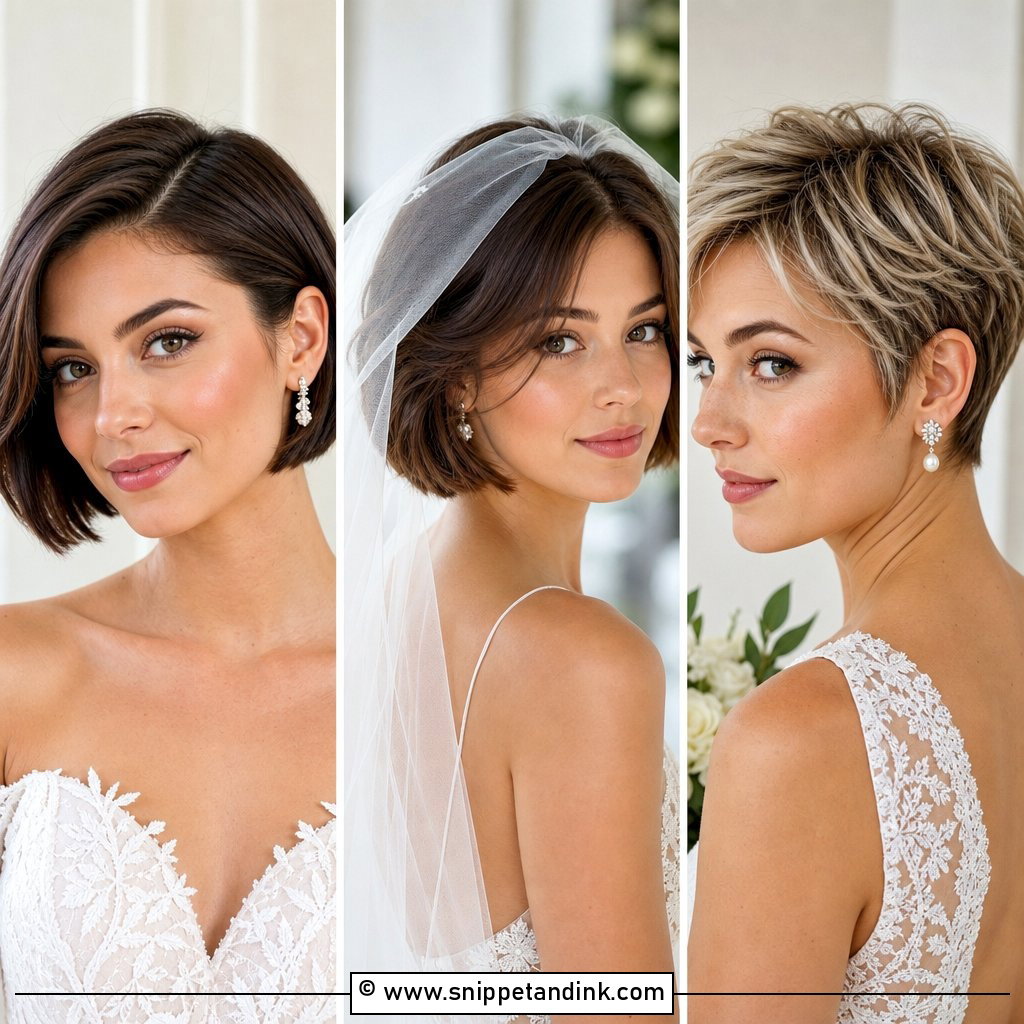
A bob haircut tucked behind the ear works when there’s enough length to actually stay there. On a blunt chin-length bob it usually does; on a very short bob the ends can spring forward the moment you turn your head. I test this at the trial by having you shake your head gently. If it holds, I tuck just one side for a bit of asymmetry and leave the ends straight or curved under. If it doesn’t, a tiny clip behind the ear solves it without anyone seeing it.
8. Bridal Hair Tucked Behind Ear With Lob Haircut
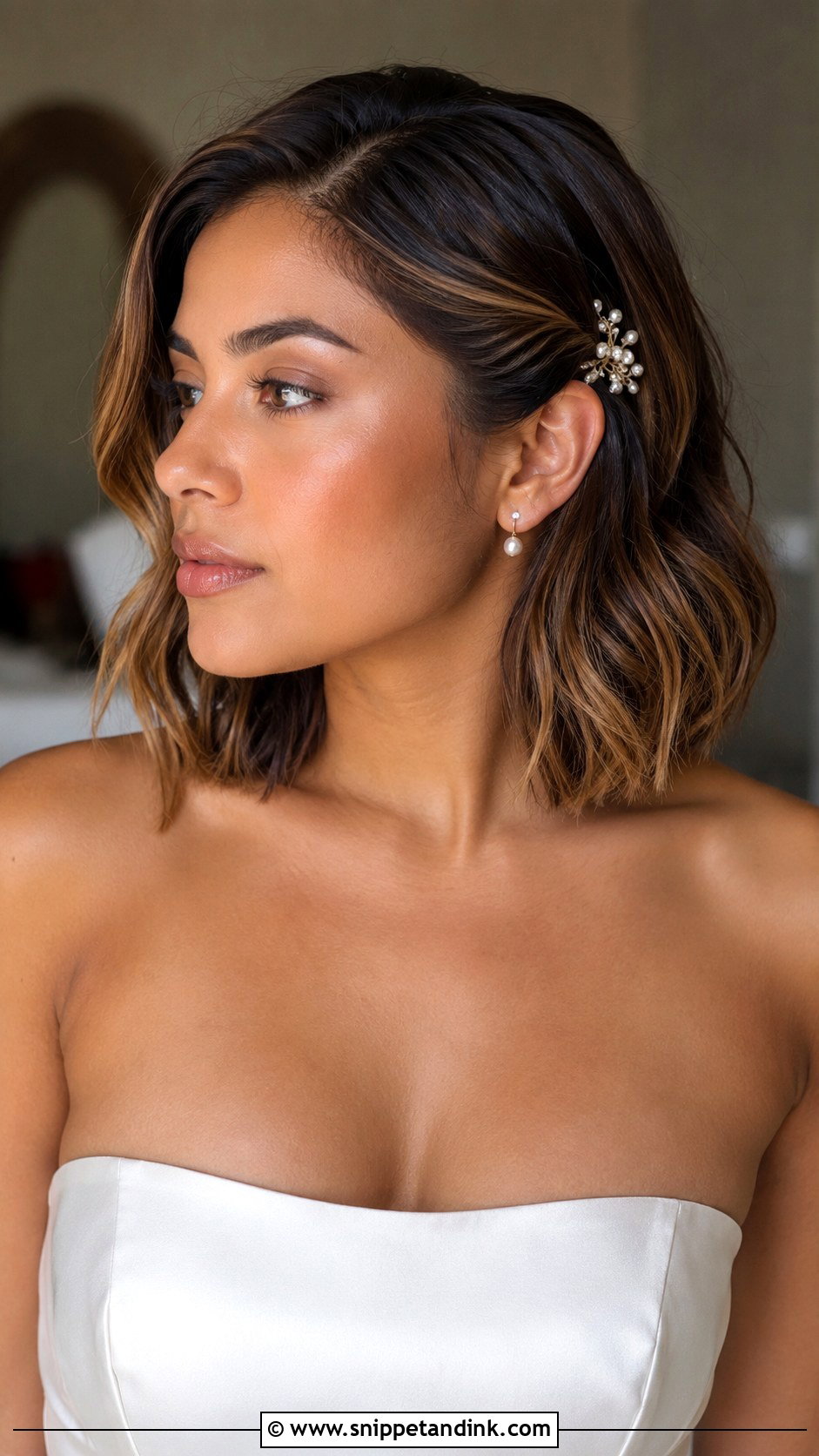
A lob tucked behind the ear sits right at the collarbone, which is the ideal length for strapless and off-shoulder necklines because nothing covers the shoulder line. I put soft bends through the mid-lengths and leave the last inch straighter, so the ends don’t flip outward on the shoulders. The tuck shows your profile, which is where most of the candid photos will catch you. A light texture spray worked in with the fingers keeps it full without making it crunchy.
9. Bridal Hair Tucked Behind Ear With Pearl Clip
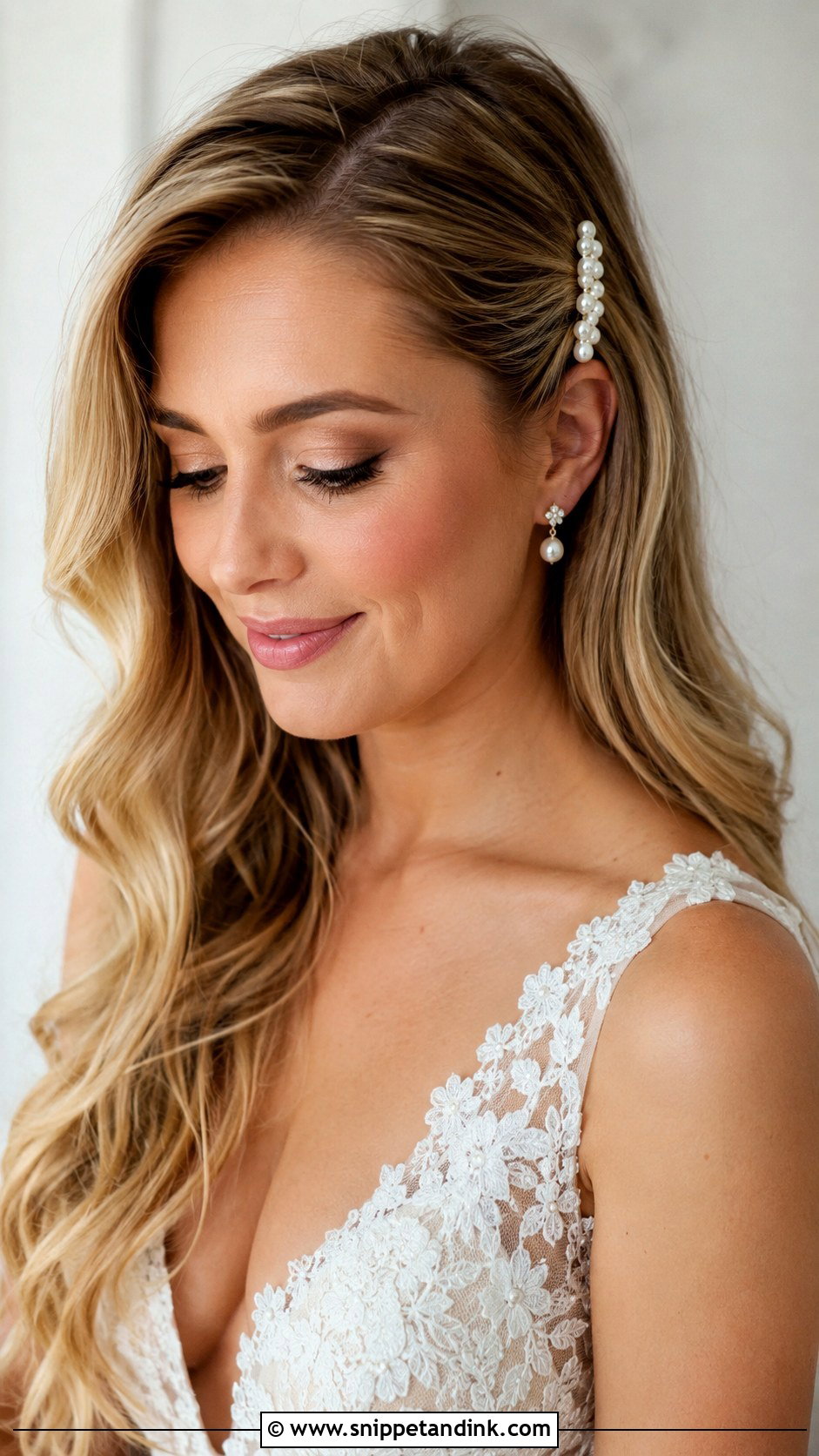
A pearl clip is the most honest way to secure a tuck, because the hardware is the decoration. I place it just above and behind the ear, sliding it in against the direction the hair wants to fall so it grips. Go with a small pearl barrette if the gown is plain and a larger pearl comb if there’s lace or beading to echo. One thing I always check: some barrettes are too heavy for fine hair and slide down within an hour. Bring the actual clip to your trial, not a photo of it.
10. Bridal Hair Tucked Behind Ear With Veil
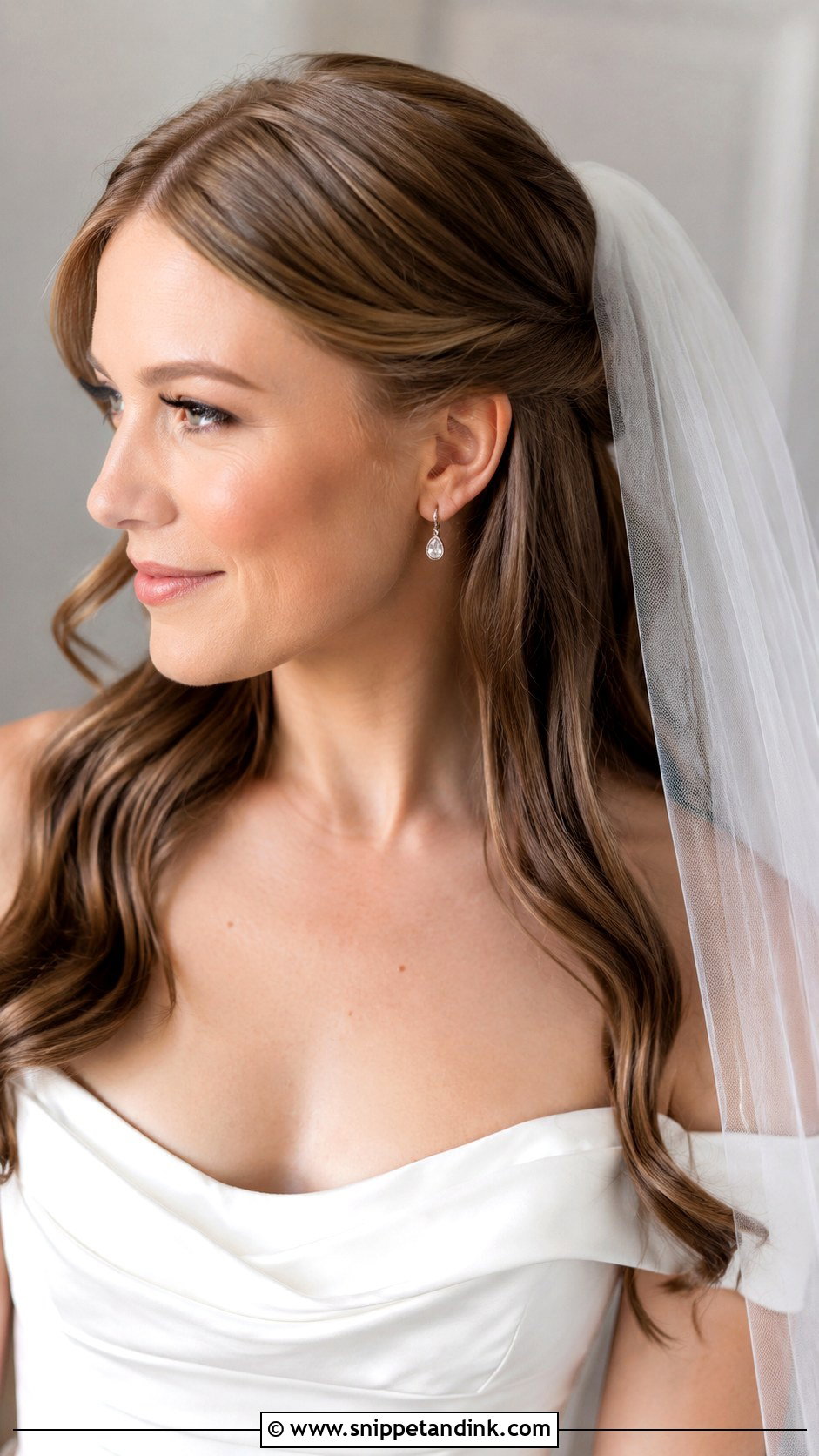
Veils and tucks get along well, provided the back of the style is built to take the comb. For hair worn down, I make a small hidden pin anchor at the crown and slide the veil comb into that, so the weight doesn’t drag the tucked sections out from behind the ears. For buns and chignons, the comb goes above or beneath the updo. Cathedral veils are the heaviest, so they need the firmest anchor. Wear the veil for at least twenty minutes at your trial and walk around in it; that’s when a weak tuck shows itself.
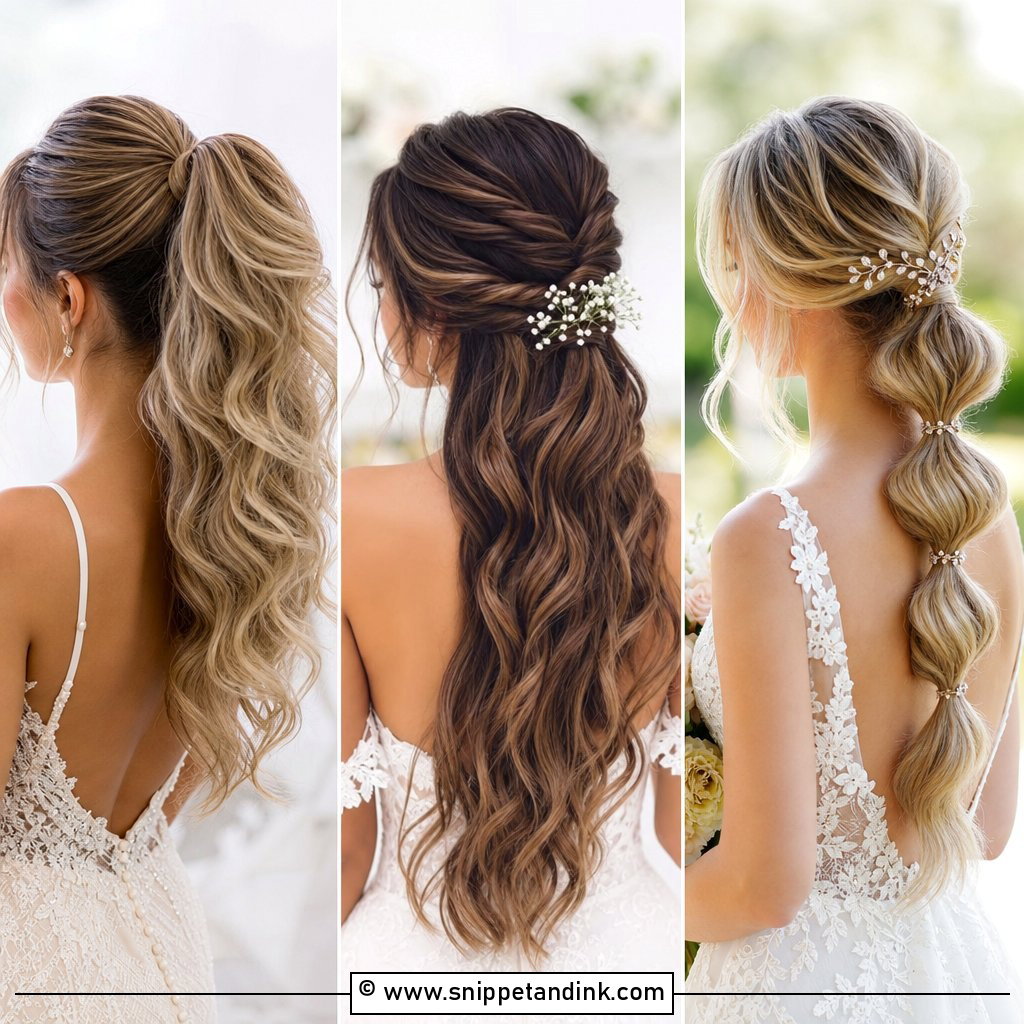
11. Bridal Hair Tucked Behind Ear With Low Ponytail
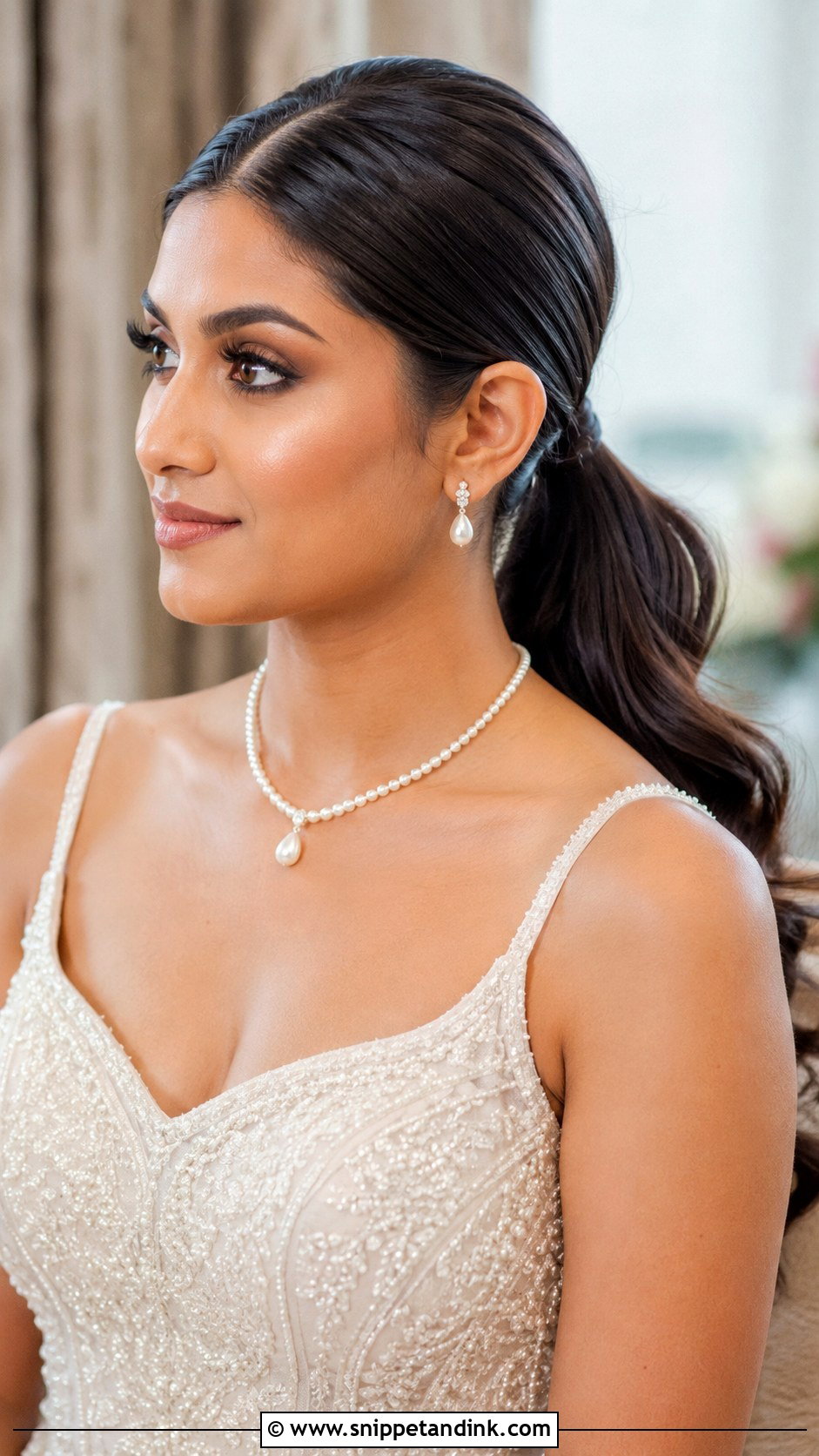
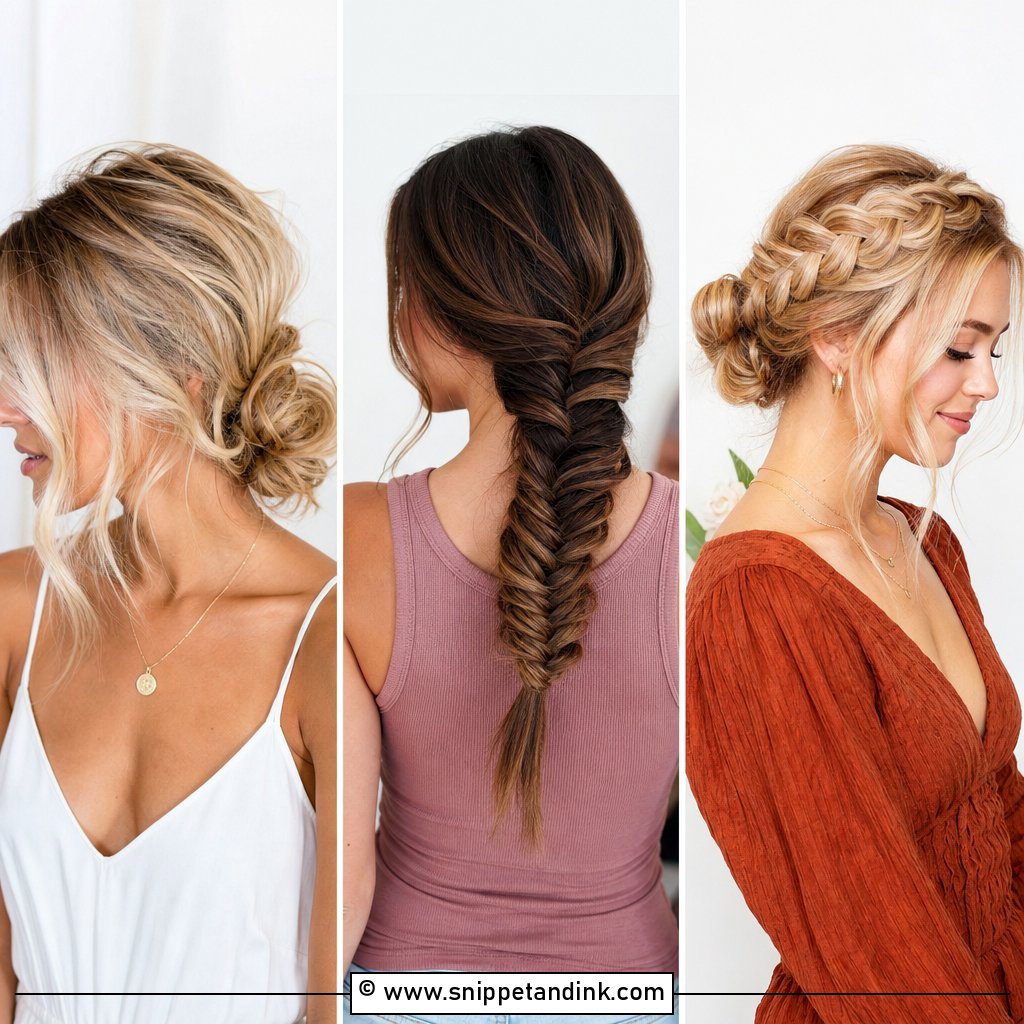
A low ponytail is the quiet workhorse of this list. I smooth or softly wave the front, tuck it behind the ears and gather it at the nape, then wrap a strand around the elastic and pin it underneath. In summer heat it keeps hair off the neck, which matters more than people expect during outdoor photos. With an open-back dress, keep the ponytail length above the lowest point of the back so the two don’t compete. Ribbon or a few pearls on the wrap is plenty.
12. Bridal Hair Tucked Behind Ear With High Ponytail
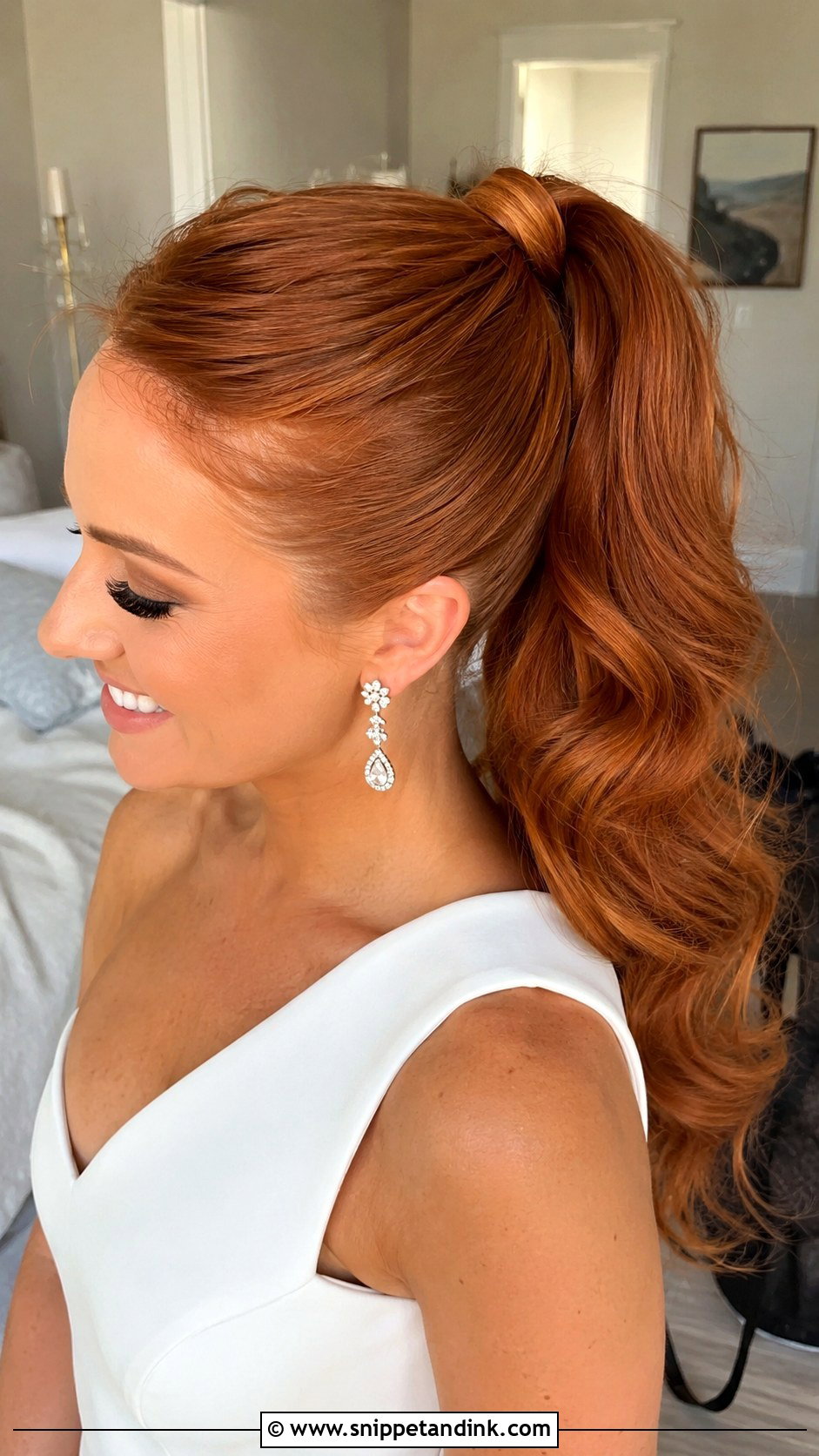
High ponytails put the most strain on a tuck, since the sides are being pulled up and back at an angle. I brush the side sections up toward the ponytail base and place crossed pins just above the ear where the hair changes direction. A wrapped base turns it from gym ponytail into bridal. It’s my favorite reception change, but I’d steer you away from wearing it all day if you get tension headaches easily; a high ponytail held for ten hours is heavy on the scalp.
13. Bridal Hair Tucked Behind Ear With Braided Crown
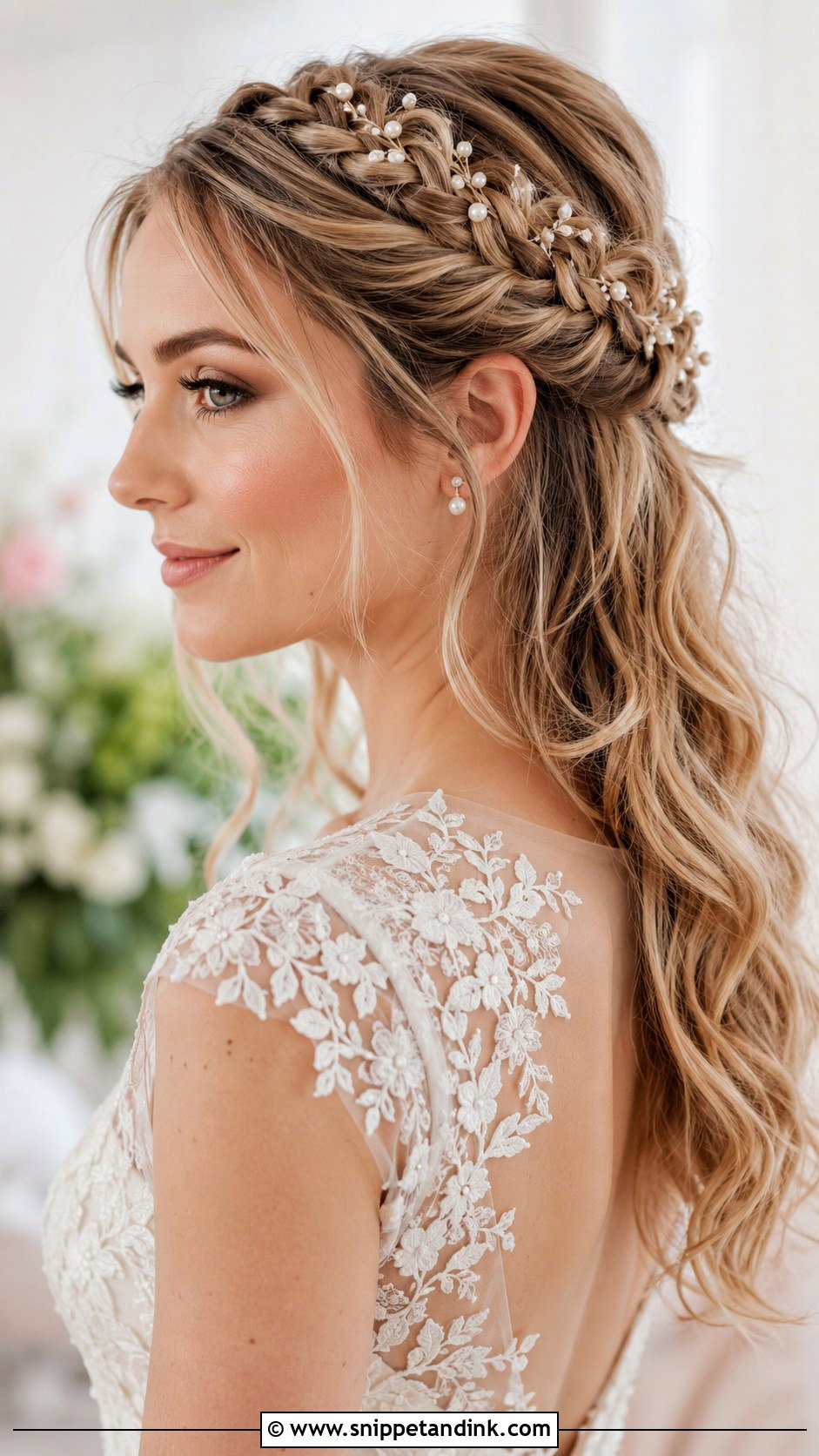
With a braided crown, the tuck is what keeps the braid from looking like it’s sliding off the head. I braid first, pin the braid along the hairline, and then tuck the side sections back so they tuck under the braid’s tail. That hides the join. On very layered hair the short pieces will poke out of a braid, so I braid loosely and pancake it out, which lets those ends sit inside the texture. Small pearl pins or a few tiny flowers along the braid are enough.
14. Bridal Hair Tucked Behind Ear With Textured Updo
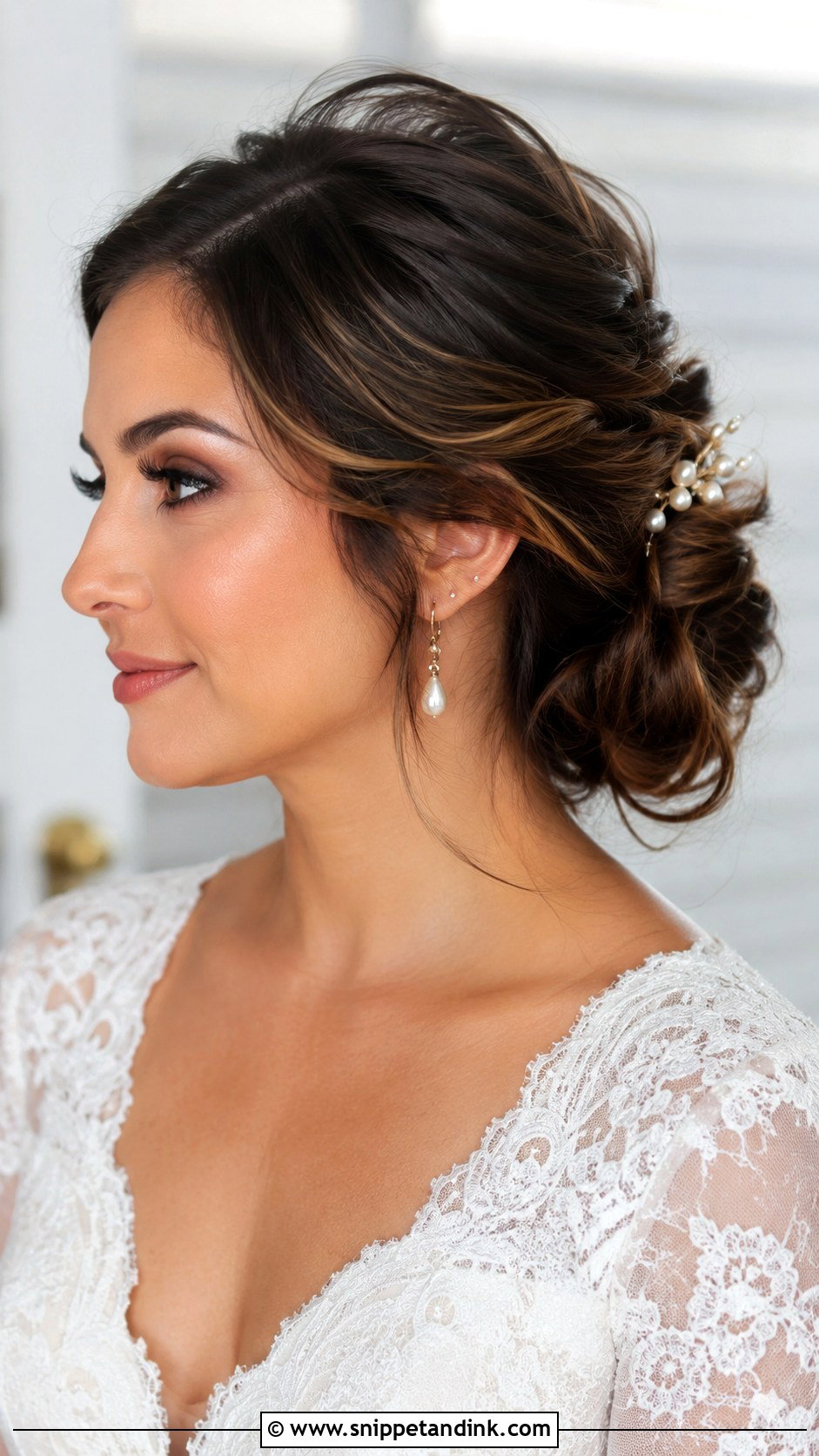
Layered hair actually suits a textured updo better than a sleek one, because the shorter pieces can be pinned into the shape as part of the texture. I guide the front sections behind the ears, then let them blend into an updo at mid or low height with plenty of air in it. A floral comb sits nicely at the side where the tucked hair meets the updo. Ask for flexible hold, not helmet spray, so the updo still looks touchable but survives the dance floor.
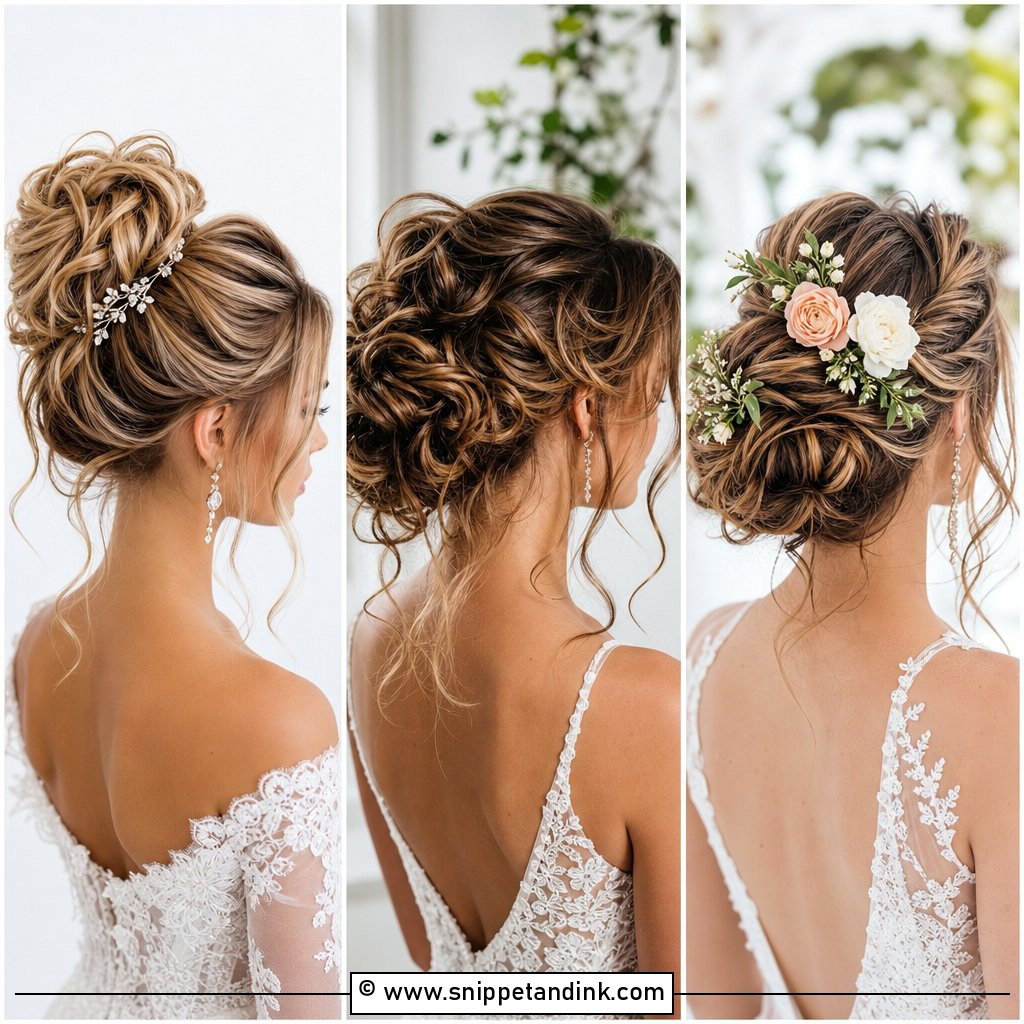
15. Bridal Hair Tucked Behind Ear With Curly Hair
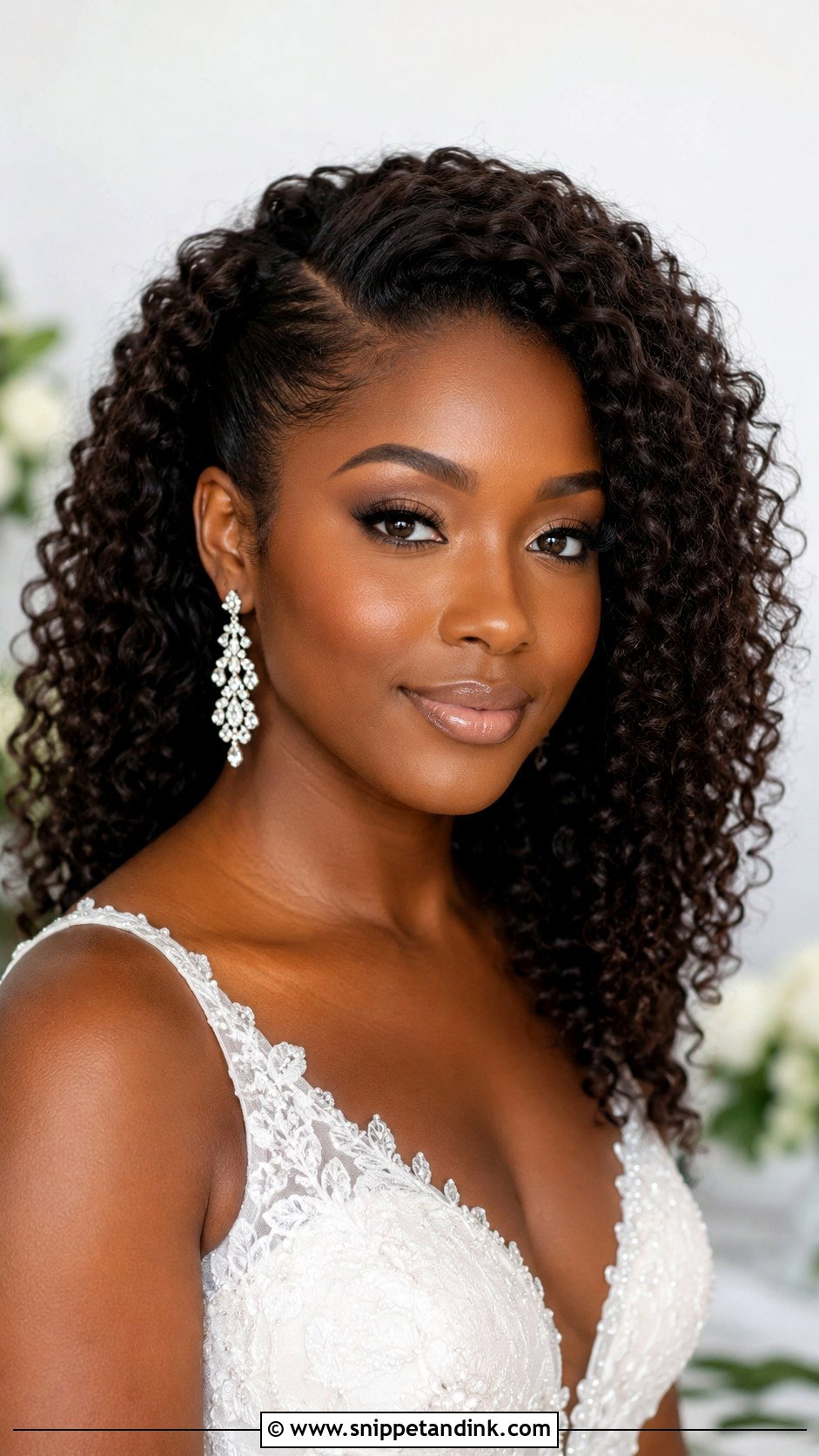
Curly hair is where I see the most mistakes with this look, mostly from stylists brushing the curls out to make the tuck easier. I define the curls first, let them set, and only then tuck one side, sliding pins under the curl pattern rather than through it. That keeps the texture intact. A side part lets the fuller side fall forward while the tucked side shows the earrings. Hydrating curl cream, a gel with real hold and a humidity-resistant spray are what keep definition through a long, warm day.
16. Bridal Hair Tucked Behind Ear With Pixie Cut
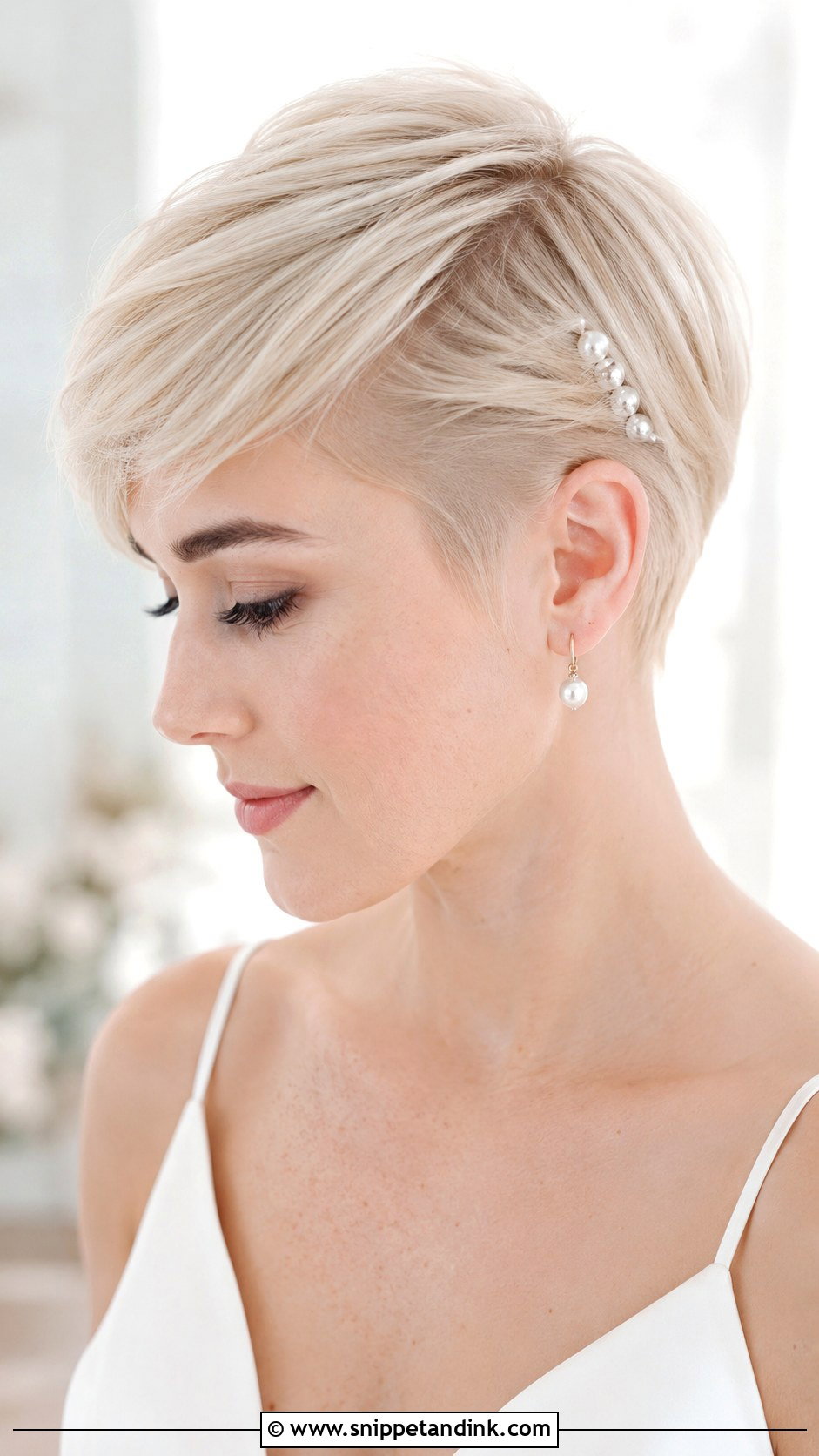
With a pixie, the tuck is about length at the front: you need roughly enough fringe to reach the top of the ear. The front can be swept, waved or smoothed back and then placed behind the ear with a touch of pomade. Short hair puts accessories front and center, so pearl pins, crystal clips or bold earrings carry a lot of the look. I add a little lift at the crown so the head shape doesn’t look flat in profile. Keep the product light; stiff pixie hair reads as sprayed in close-ups.
17. Bridal Hair Tucked Behind Ear With Loose Curls
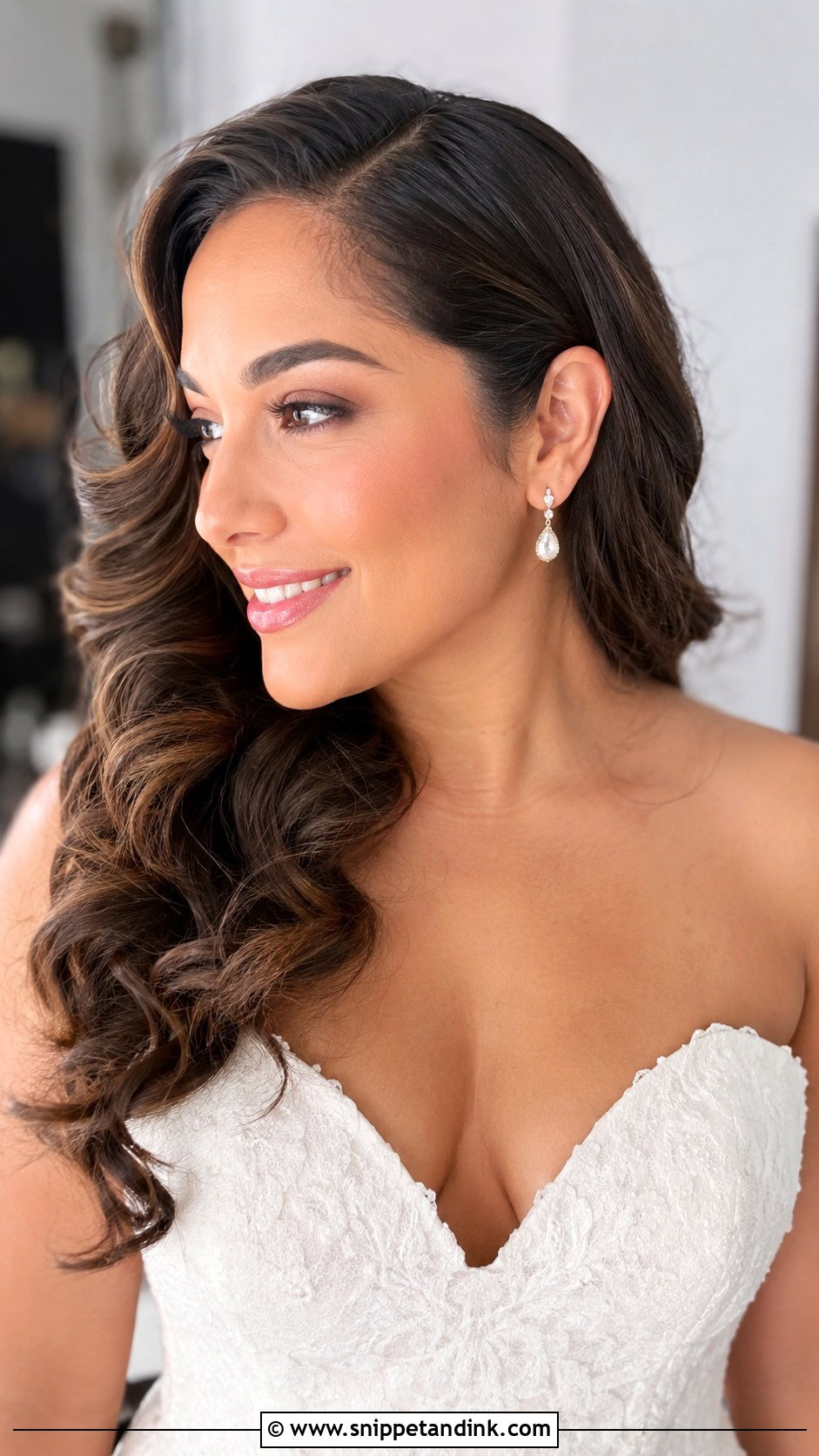
Loose curls should be brushed slightly so they join into a flowing shape, otherwise the tucked side looks like separate sausage curls. I curl in alternating directions, let every curl cool completely before touching it, and then tuck one side to keep curls off your face during the ceremony. Medium to long hair works best. If your hair drops curl quickly, tell your stylist at the trial so they can set it with a stronger mousse before curling rather than piling on spray afterward.
18. Bridal Hair Tucked Behind Ear With Side Swept Bun
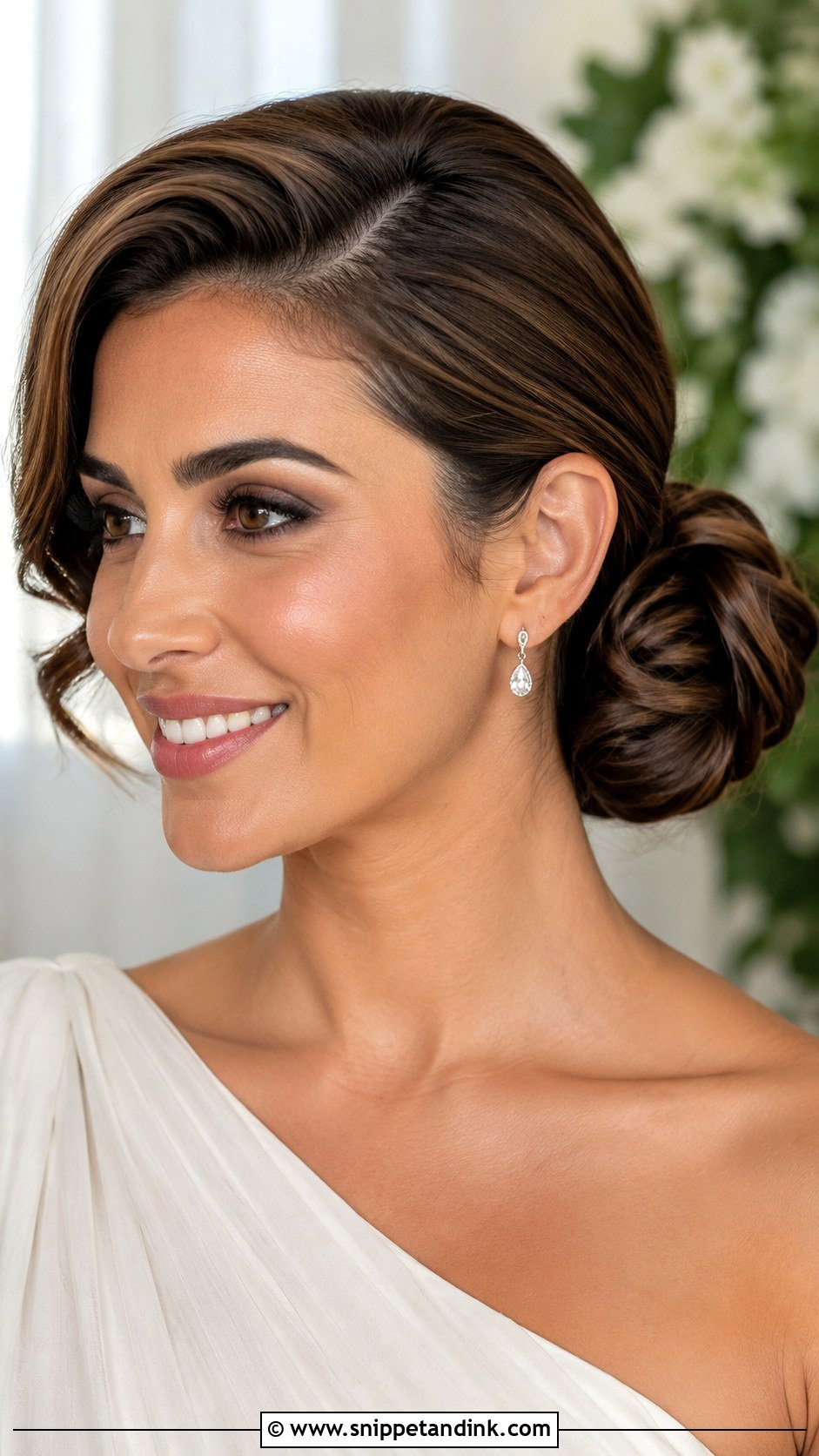
A side-swept bun is built off-center on purpose, so the part and the sweep have to agree with each other. I part on the side opposite the bun, sweep the hair across, tuck it near the ear and gather it low, slightly toward the opposite shoulder. With an asymmetrical or one-shoulder dress, place the bun on the side of the bare shoulder so the neckline isn’t crowded. Smooth or textured both work. Pin the tucked section on its own before the bun goes in, or the bun’s weight pulls it loose.
19. Bridal Hair Tucked Behind Ear With Glam Blowout
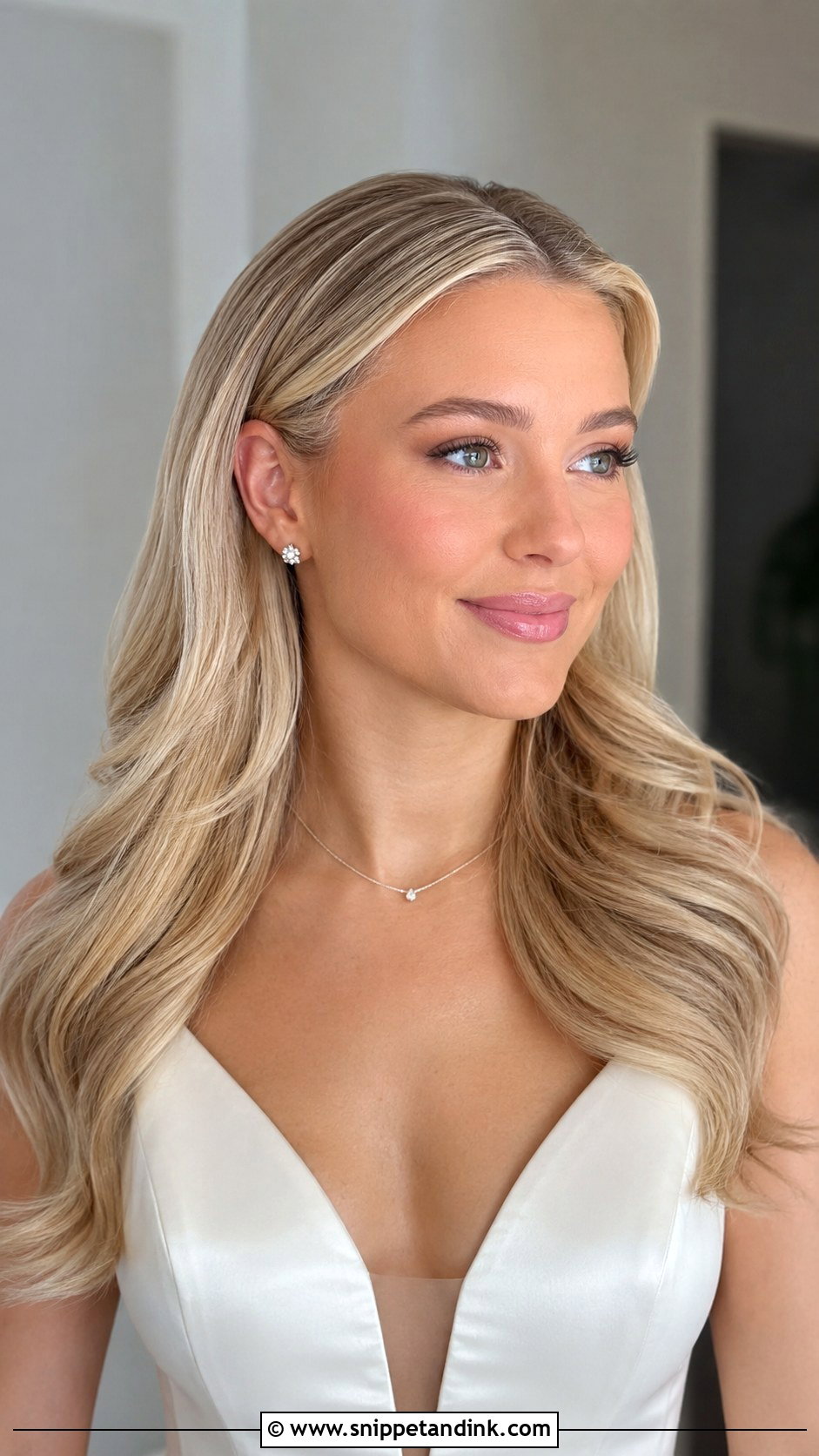
A glam blowout tucked behind the ears lives or dies on the crown. I blow the roots up with a round brush, keep the crown smooth and put a soft curve into the ends, then tuck the front back. A center part reads more editorial; a side part softens it. This is a common pick for rehearsal dinners and reception changes because it needs no pins beyond the tuck. Lightweight hairspray only; heavy spray collapses a blowout faster than humidity does.

20. Bridal Hair Tucked Behind Ear With Minimalist Knot
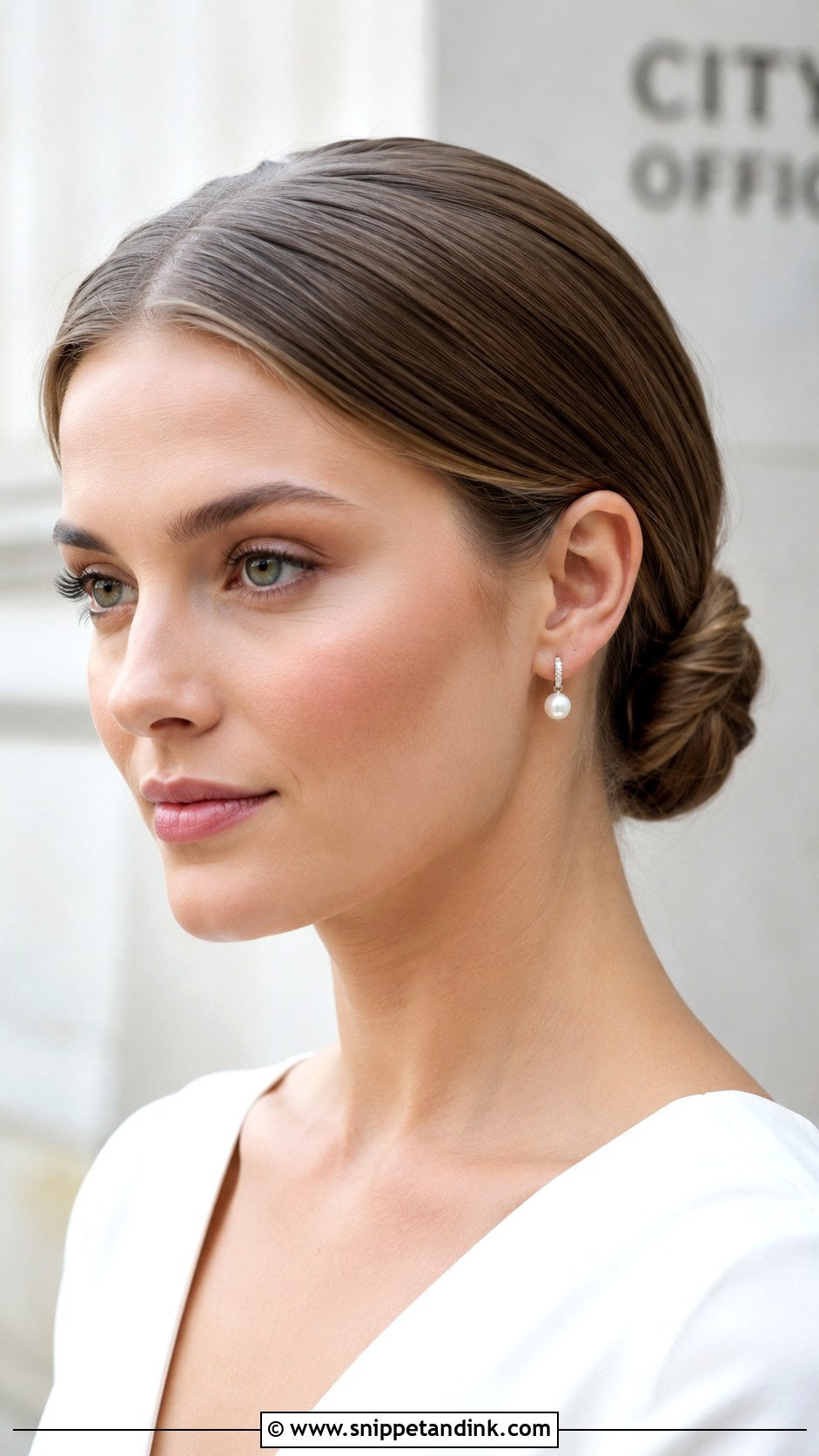
The minimalist knot is a small twisted knot at the nape with the hair smoothed back and tucked cleanly at the ears. It’s simple, but simple shows every flaw, so the brushing has to be thorough without looking scraped. I usually loosen the hairline a touch after pinning so it doesn’t pull at the temples. A soft middle part feels modern; a slightly off-center part is gentler on a longer face. It suits sleek gowns and pearl studs. A drop of shine serum and pins pushed into the knot’s base keep it neat from every angle.
Who Should Think Twice About Showing the Ears
This look puts your ears on display all day, and that isn’t right for everyone. I always ask about it at the consultation, because a bride who feels self-conscious about her ears will keep untucking her hair in photos without noticing.
- If your ears stick out a little, tuck only one side and let the other fall forward. The asymmetry draws the eye to the hair, not the ear.
- If you wear hearing aids, a tuck can press against them or cause whistling. Tell your stylist early so the hair can be routed above or around the device.
- If you’ll wear glasses, the arms of the frames sit exactly where the tuck goes. I tuck the hair over the arm, then pin, so the frames don’t push it loose.
- Heavy statement earrings can pull a tuck forward as you move. Try the real earrings at the trial.
Fixing a Slipped Tuck Without a Mirror
Even a well-pinned tuck can work loose after hours of dancing. Ask your stylist to leave you four or five matching bobby pins and a small travel spray. To fix it, smooth the loose section back with your fingertips, hold it flat above the ear, and slide a pin in from behind toward your face, then cross a second one over it. Give a maid of honor the job of checking your profile before the speeches; she’ll see what you can’t.
Why a Small Tuck Changes the Whole Bridal Look
A tuck is one of the smallest decisions in a bridal style and one of the most noticeable. It keeps hair off your face through the hugs and the dancing, shows your earrings and neckline, and works with waves, curls, buns, bobs and pixies alike. Pick the version that suits your length and your dress, then test it properly at your trial, veil and accessories included. If it still sits where we put it after you’ve moved around for half an hour, it will hold on the day.
You'll Like These Ideas:


Leave a Reply