
A pixie on a wedding day does something long hair can’t. Nothing hides the earrings, nothing flattens the neckline, and nobody spends the reception tucking strands behind her ears. The catch is that short hair shows every decision, so the finish has to look chosen rather than left as it was on Tuesday. Some of the short-haired brides I style go soft with waves and a few pearl pins; others want a hard side part, a tiny birdcage veil or a sculpted vintage wave. Each finish below says something a little different about the bride wearing it, and I’ve added what I watch for when I actually do them.
Timing the Last Cut So It Doesn’t Look Freshly Shorn
A pixie changes shape faster than any other cut. Two weeks makes a visible difference at the nape and around the ears, and a cut done the day before can look sharp in an unfriendly way, with pink skin showing at a clipped neckline. I plan the schedule backward from the date with my brides instead of squeezing a trim in at the end.
- Two to three months out: settle the shape. If you want longer top layers for waves or a sweeping fringe, stop cutting the top now and let only the sides and back be tidied.
- Around six weeks out: do your hair trial on hair close to wedding length, with your accessories, and note exactly how much length the stylist wants on top.
- Seven to ten days out: the real wedding cut. The lines settle, the edges lose that blunt just-cut look, and you have time to get used to the shape.
- Two or three days out: a quick neckline and around-the-ear clean-up only, if your hair grows fast. No new length decisions this week.
If you color your hair, book the color with the main cut, not after it. Fresh color on a fresh cut looks deliberate. A root touch-up squeezed in two days before the wedding is how brides end up with a stain along the hairline in close-up photos.
1. Bridal Pixie Cut With Pearl Headband
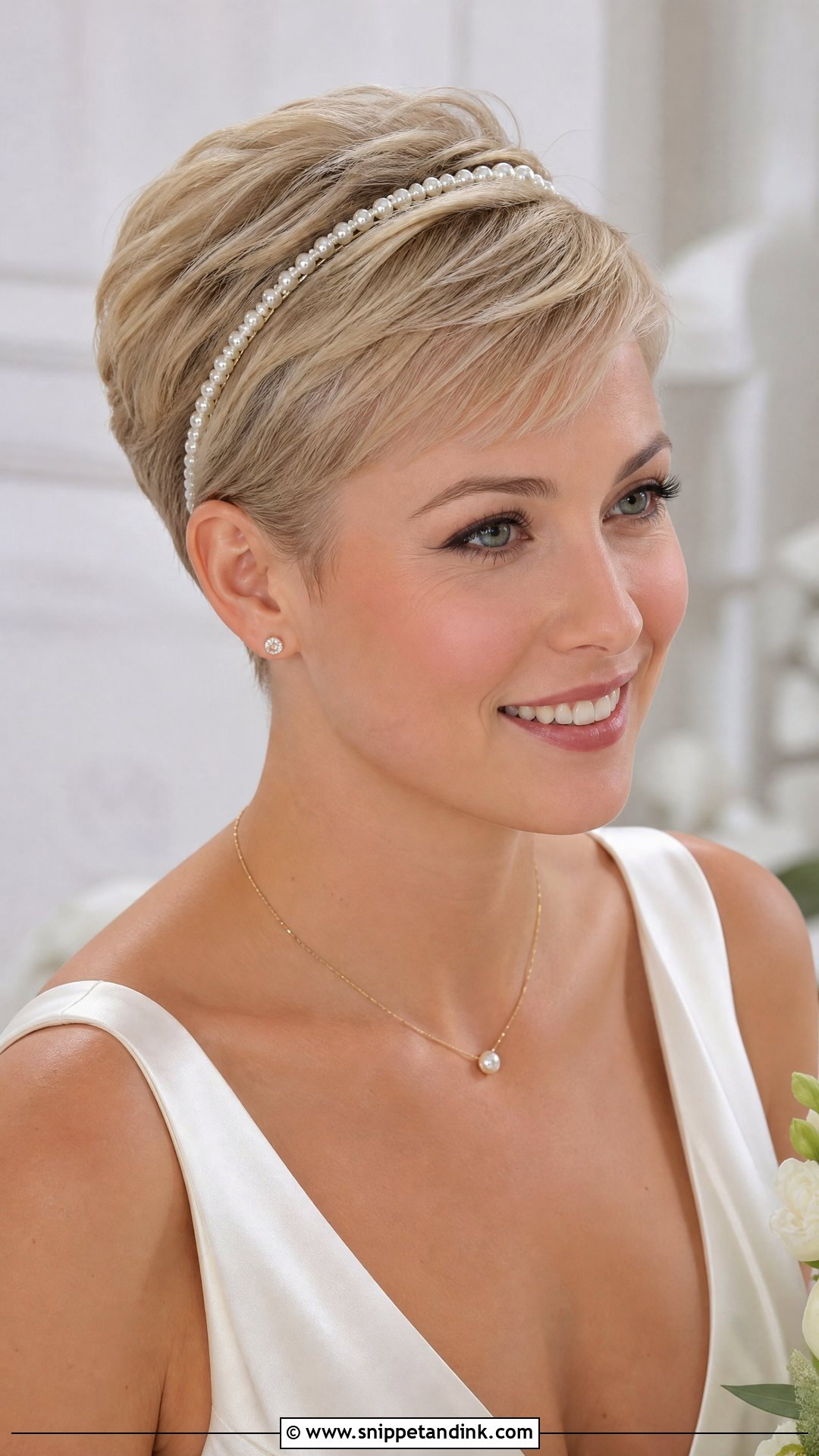
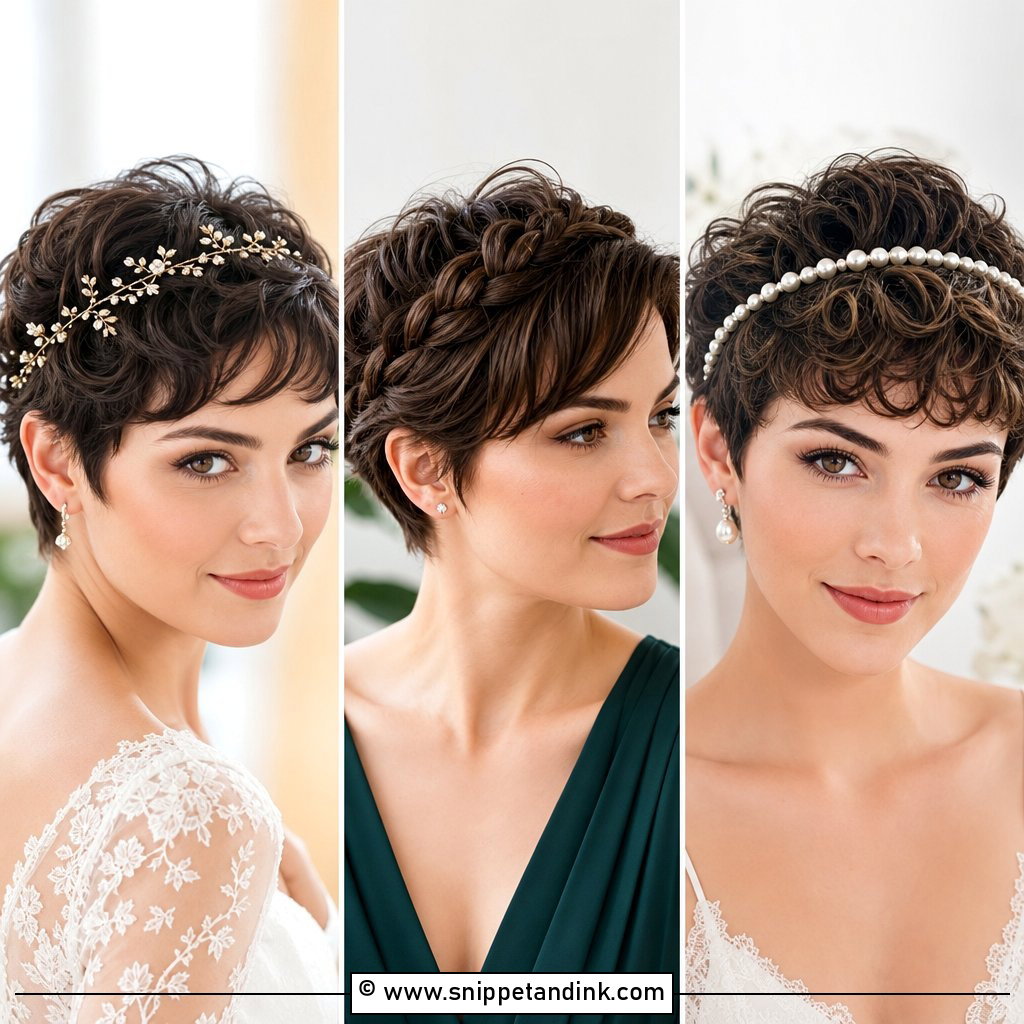
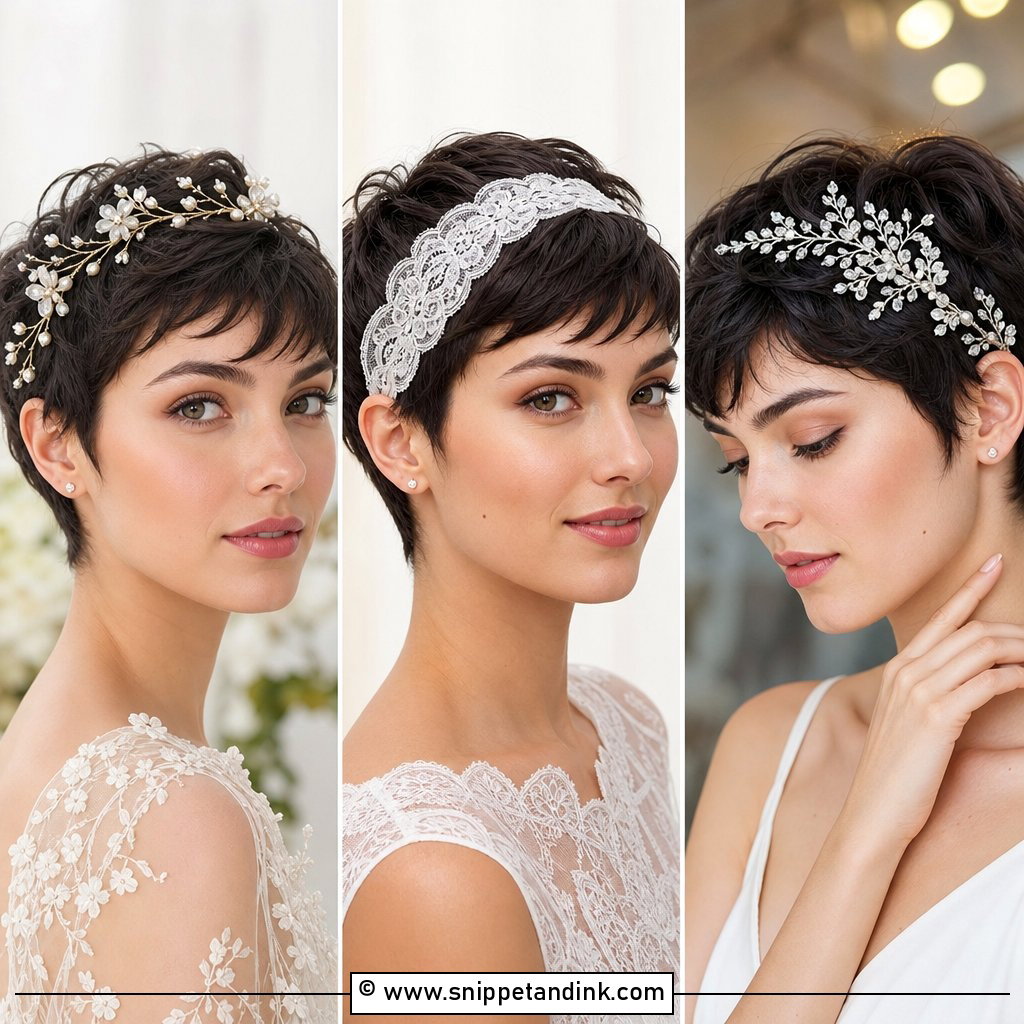
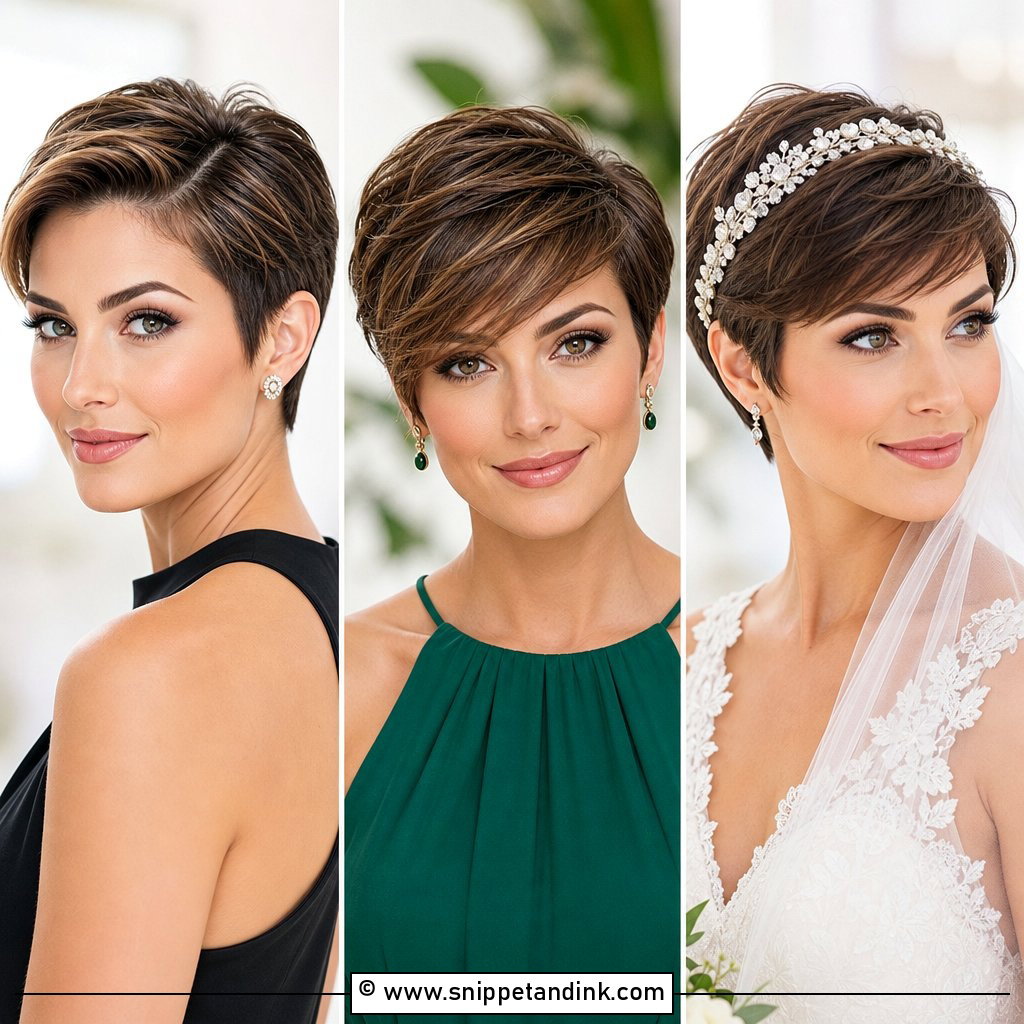
Short hair looks bridal fastest with a pixie cut with a pearl headband, because the band supplies the ceremony feeling that length usually would. Underneath, the cut can be smoothed, lightly waved or lifted at the crown. Simple satin gowns, square necklines and pearl earrings sit naturally with it. The detail I fuss over is the front: I leave a few soft pieces over the forehead so the band doesn’t look like it’s holding back a schoolgirl fringe. Many headbands pinch behind the ears after a few hours on a small head, so I bend the ends out slightly at the trial. A light shine spray and flexible hairspray finish it.
2. Bridal Pixie Cut With Side Swept Bangs
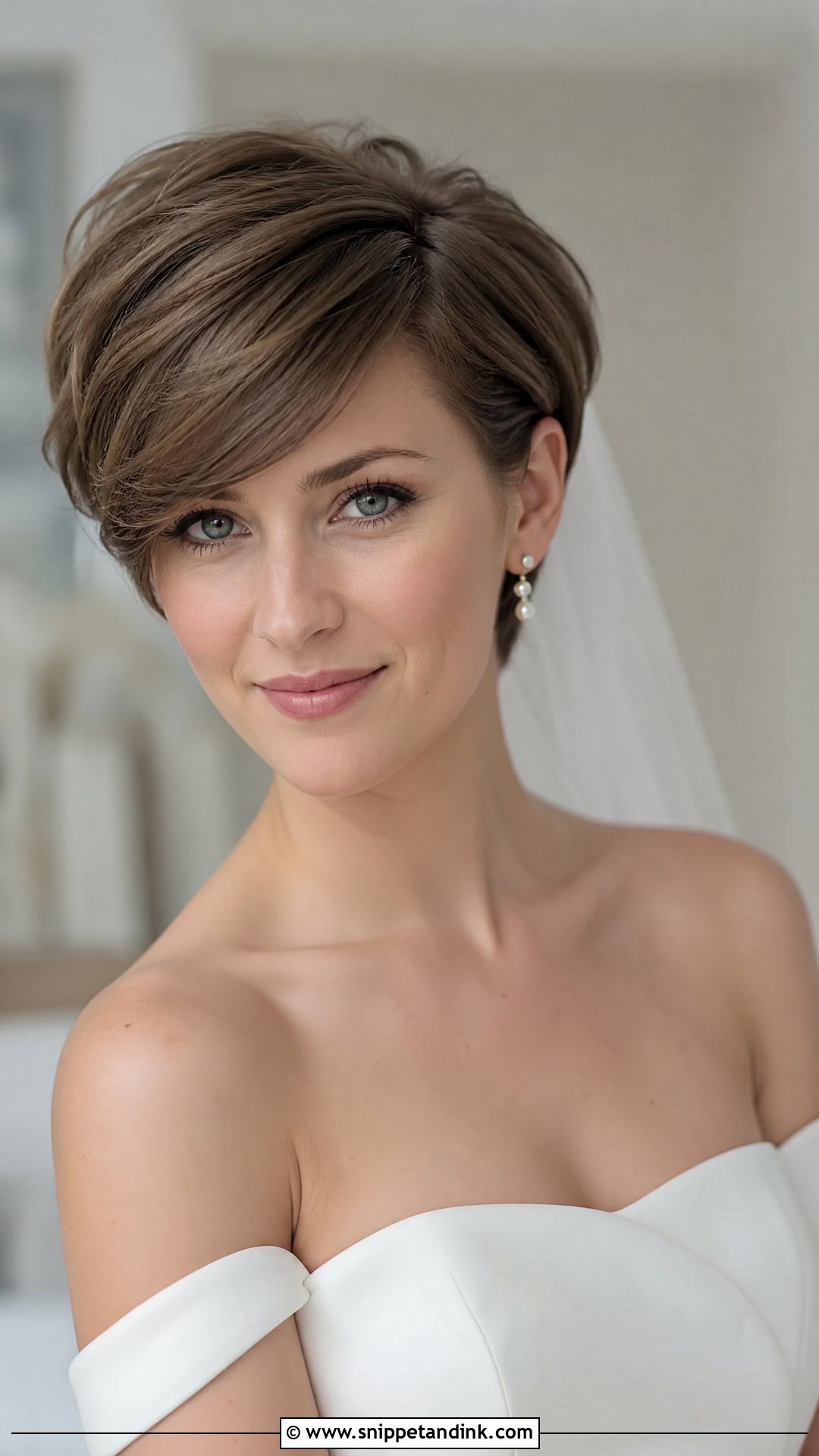
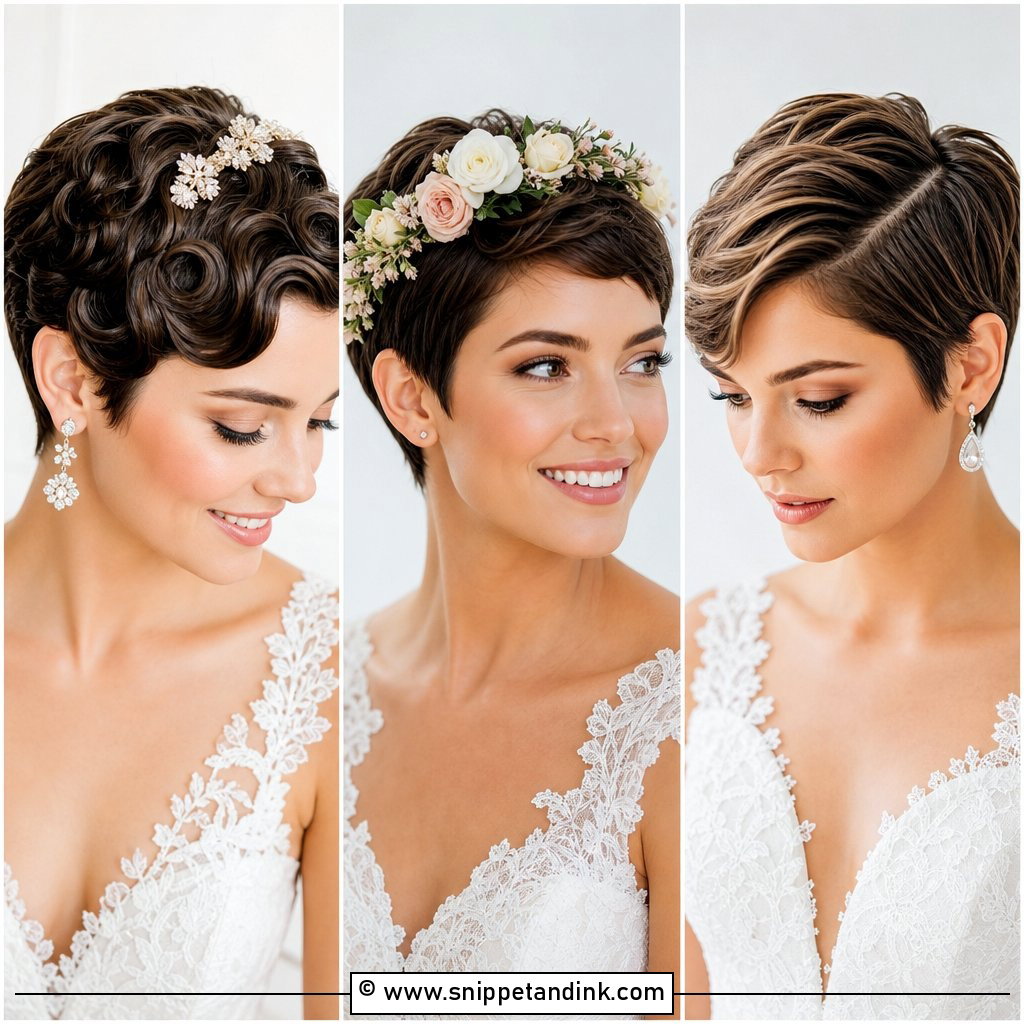
Side-swept length at the front is the softest way to wear a crop. Styling the longer section across the brow, as with these side swept bangs, frames the eyes and balances a high forehead. Drop earrings or a small crystal comb on the shorter side complete it. My biggest note is to avoid ironing the fringe flat. I blow-dry it over a round brush for a little root lift and a gentle bend, so it moves when she turns her head and doesn’t sit on her lashes in the ceremony photos.
3. Bridal Pixie Cut With Finger Waves
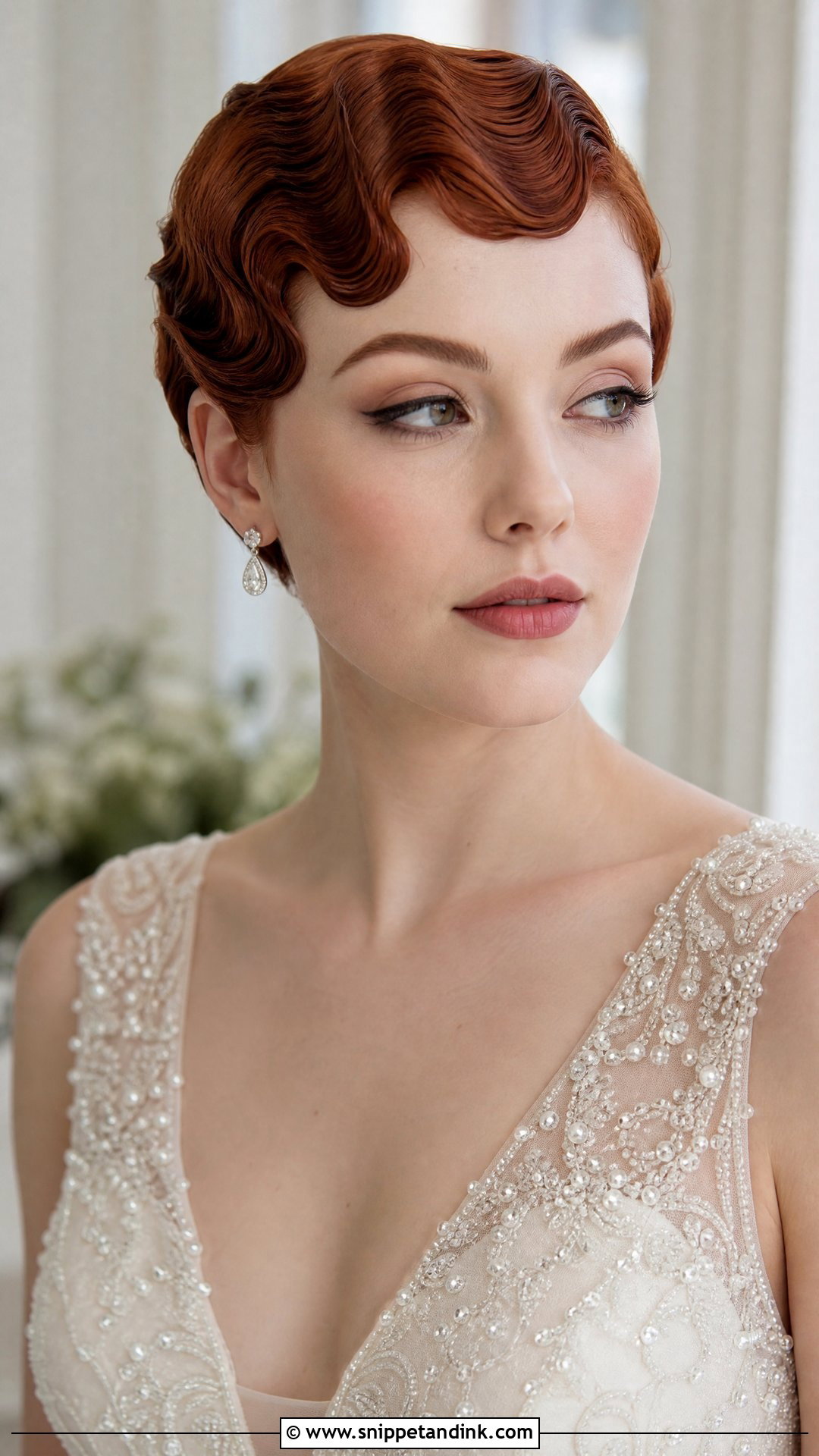
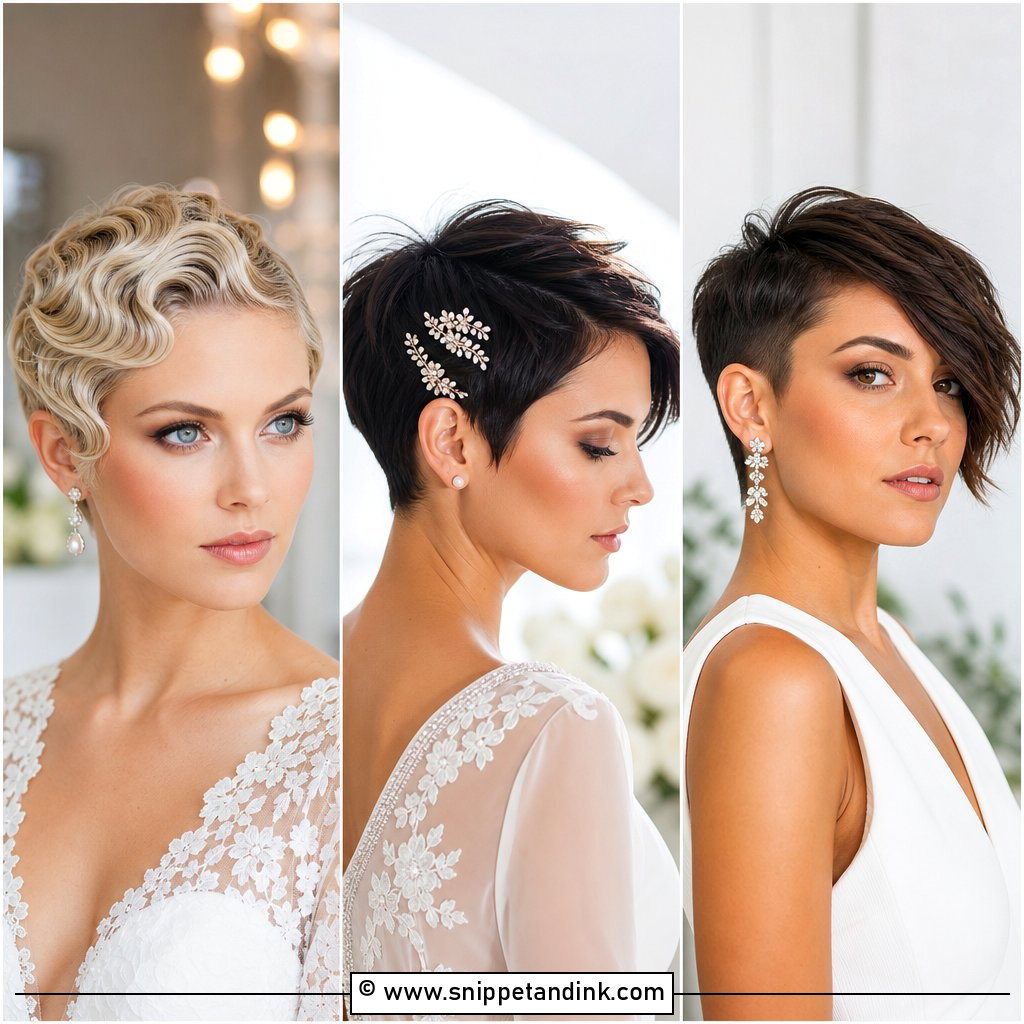
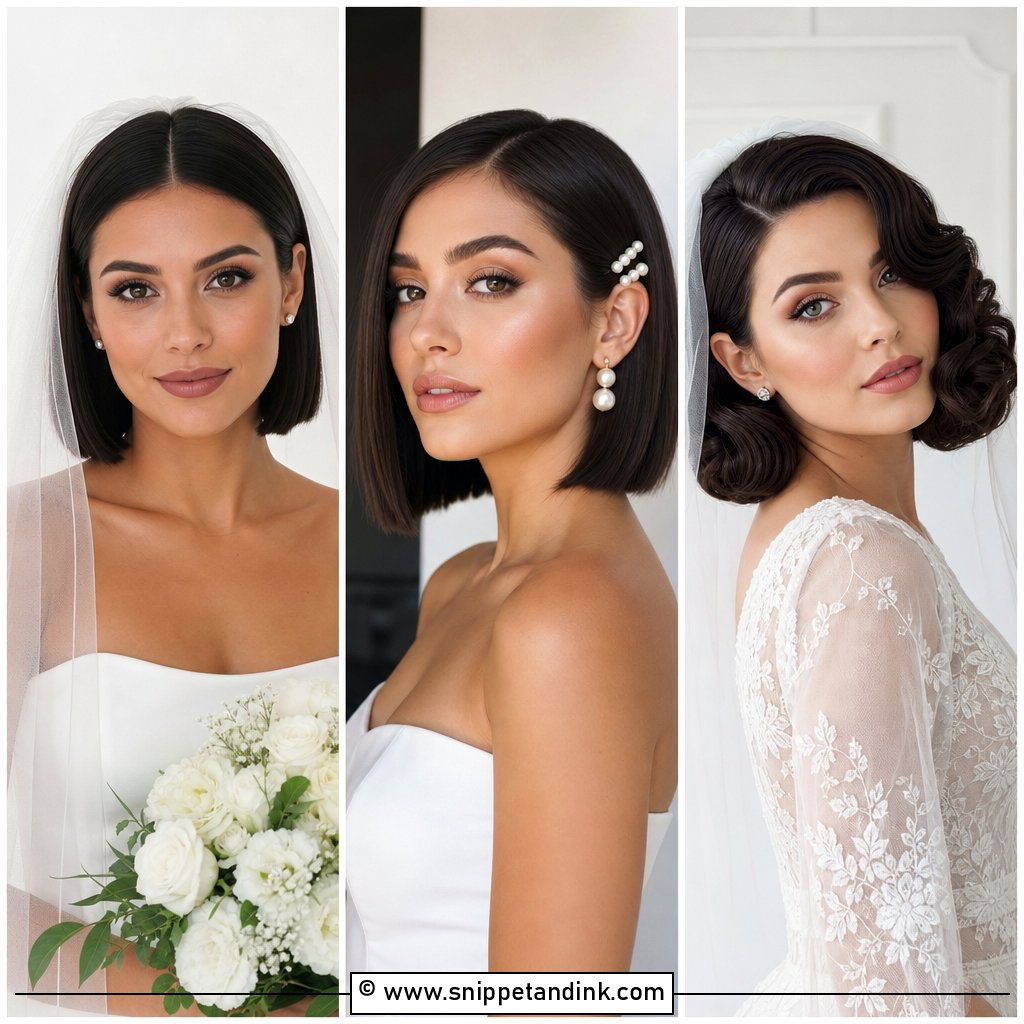
Finger waves are a set, not a styling trick, and a pixie cut with finger waves needs real length on top, usually at least three inches, to carve the S-shape. I comb strong-hold gel through damp hair, press each ridge with my fingers and a fine-tooth comb, clip it, and then let it dry completely before touching it. That drying time is what brides underestimate; rushed waves collapse. Beaded gowns, old-Hollywood makeup and a sleek slip dress all suit it. I keep accessories to one small piece at most, since the waves already carry the decoration.
4. Bridal Pixie Cut With Crystal Hair Pins
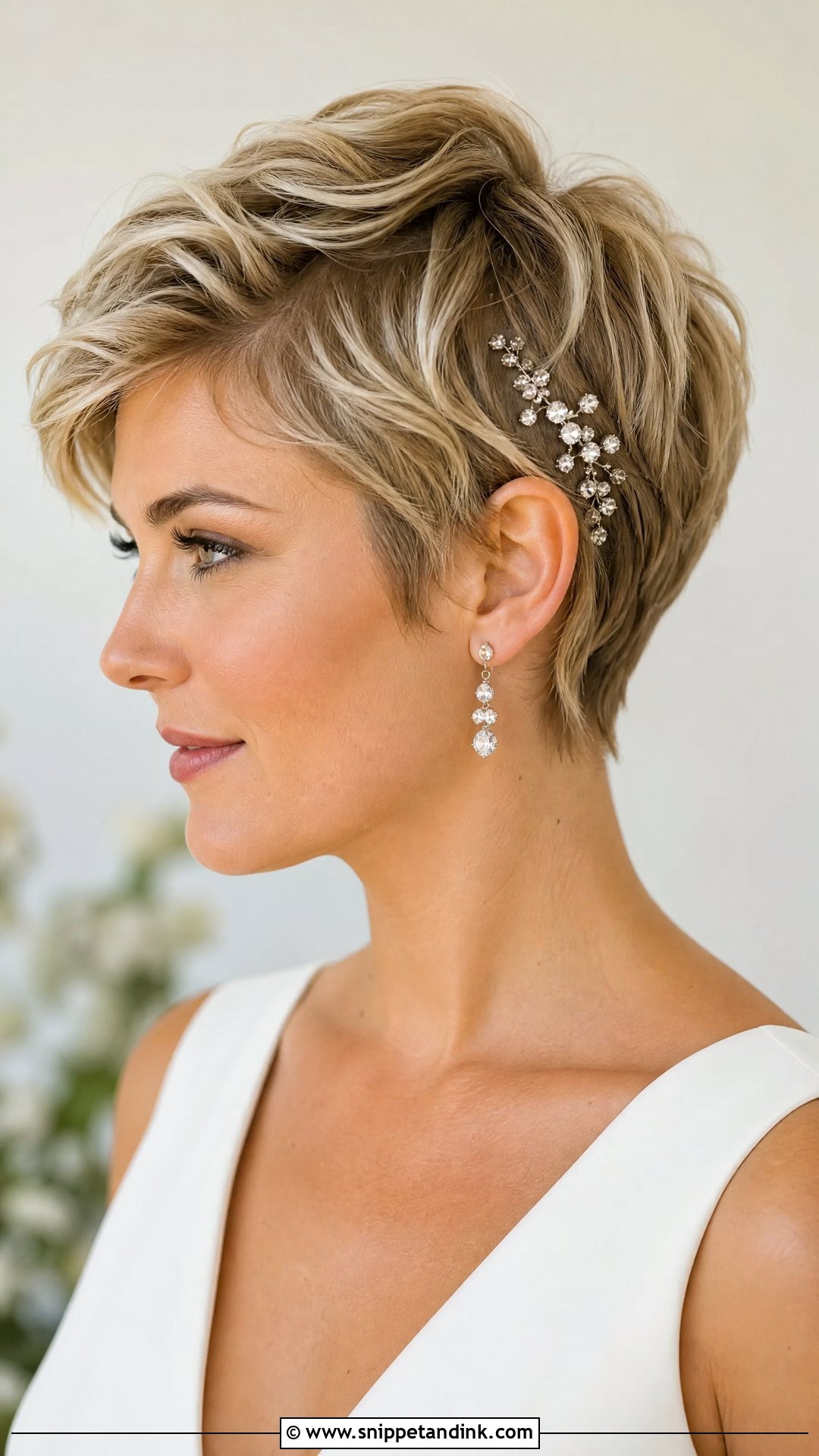
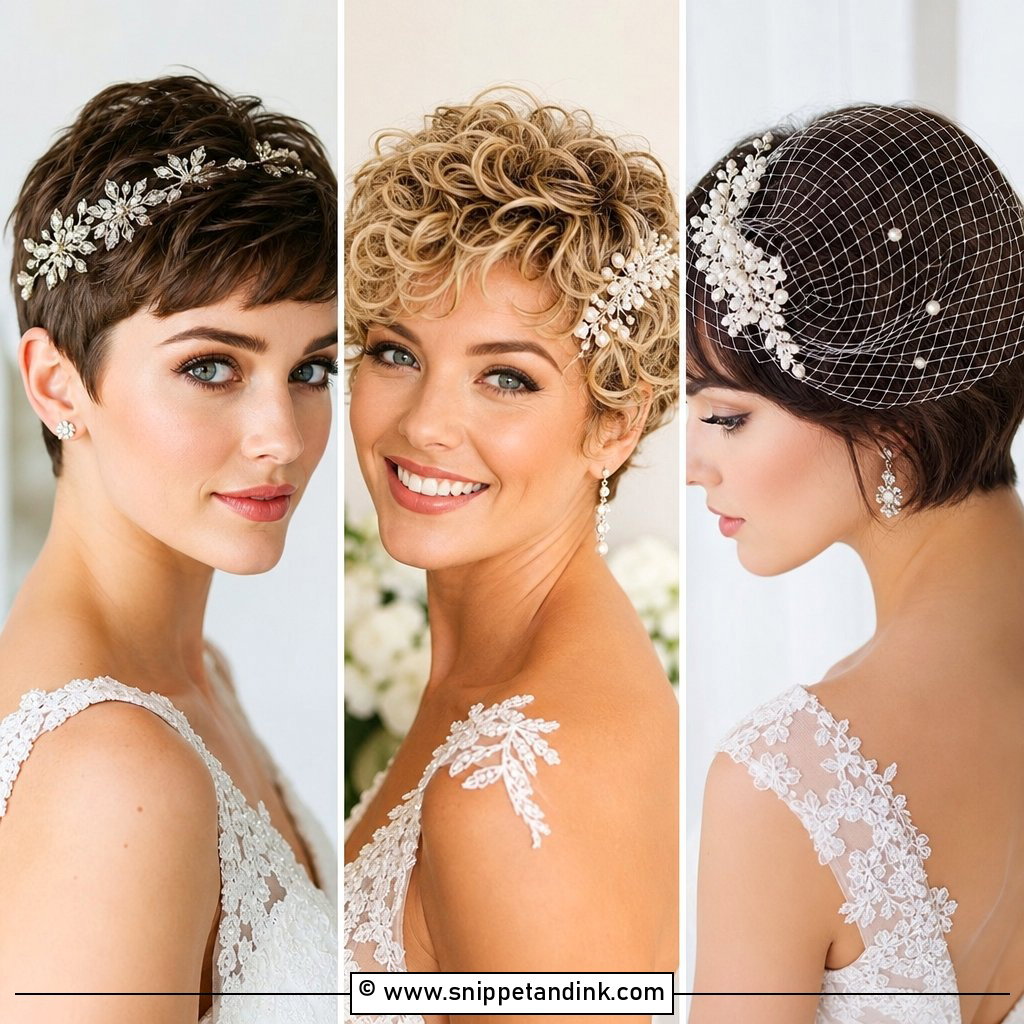
Crystal pins let you add sparkle without covering the haircut at all. I place them along one side, above an ear, or scattered lightly through textured pieces at the crown. For brides skipping the veil, this is often my first suggestion, since there’s nothing to tug at the scalp through the reception. The cut underneath can be smooth, tousled or waved. Placement is everything on short hair: a pin has to go into the densest patch, usually above the ear or at the crown, or it slides out. I cross a plain bobby underneath each one as a hidden anchor.
5. Bridal Pixie Cut With Short Veil
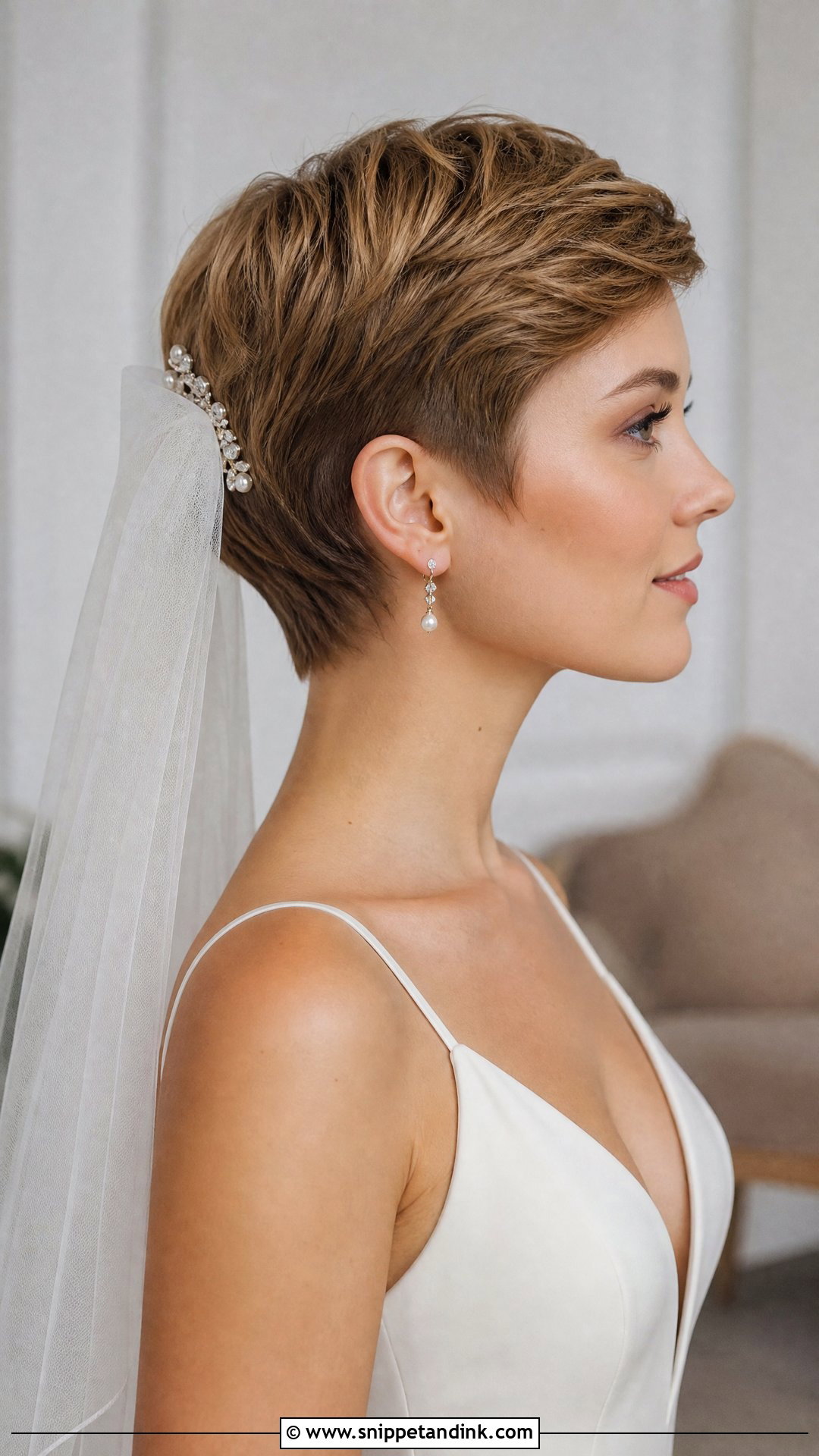
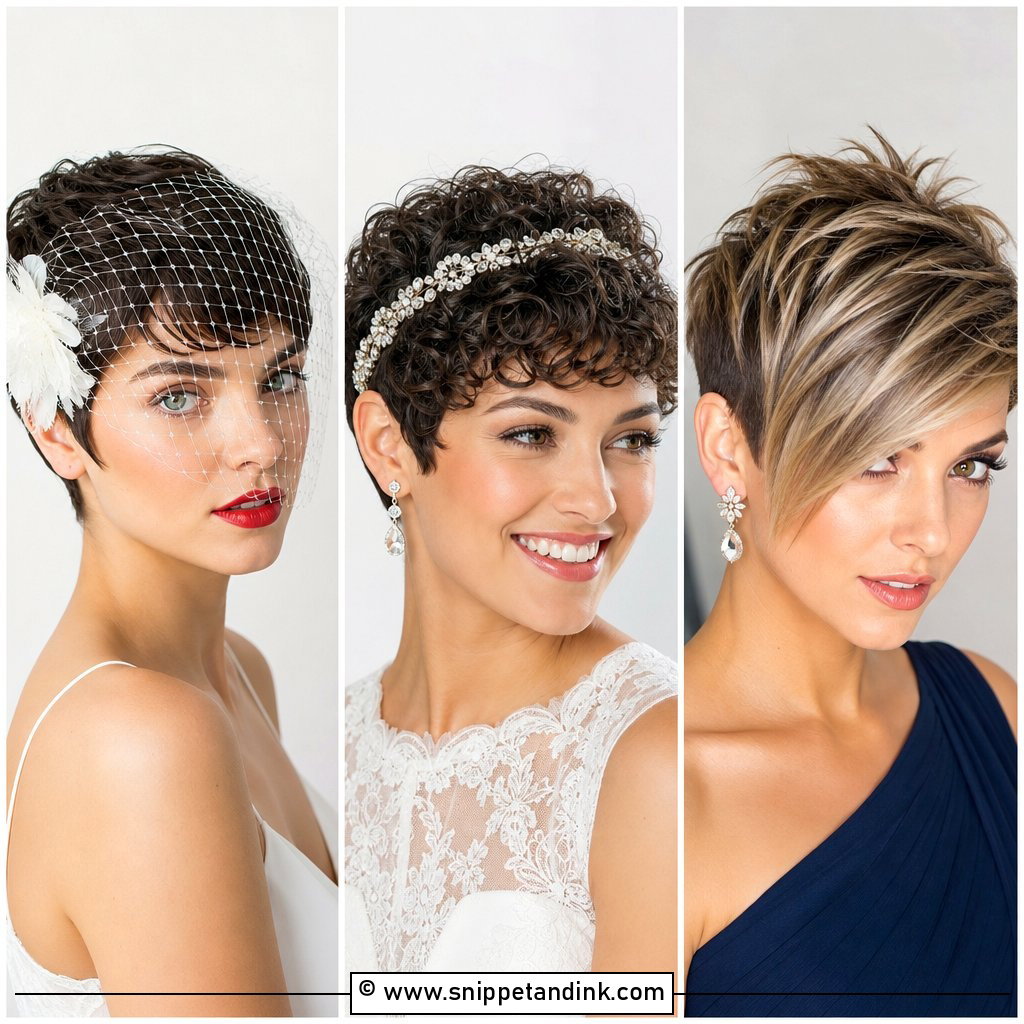
A short veil on a pixie is chic and easy to wear, and it suits courthouse dresses, tea-length gowns and bridal suits. Since cropped hair has so little grip, the veil needs a comb, a headband, a crown or a small clip to hang from. Shoulder or elbow length keeps the proportions right; anything much longer starts to drag a small head backward. I keep the sides smooth and add a touch of lift at the crown, which gives the attachment something to sit on.
6. Bridal Pixie Cut With Floral Hair Comb
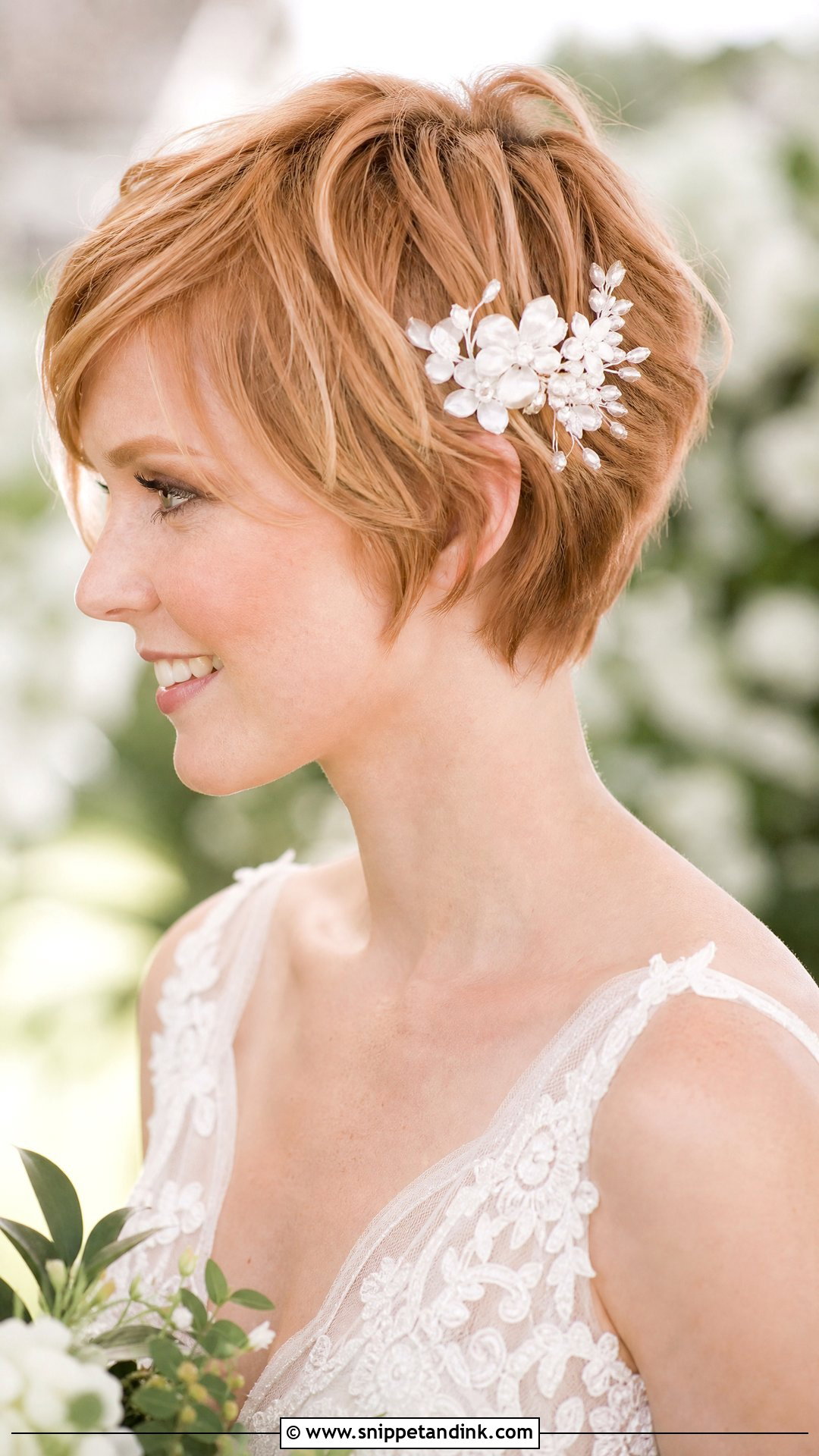
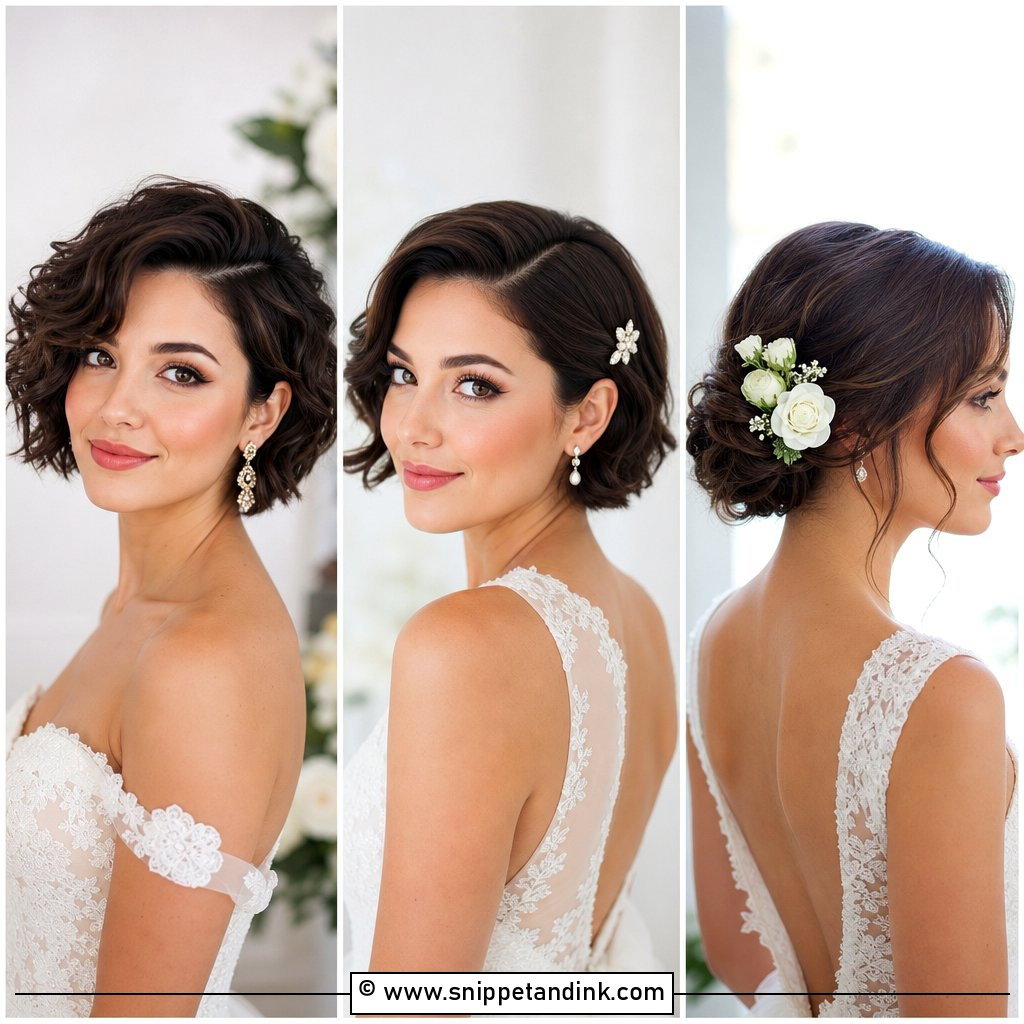
A floral comb takes the edge off a cropped shape. It can sit above one ear, at the temple or slightly toward the back. Fresh flowers suit gardens and beaches, but silk ones survive heat, hugs and dancing with no drooping. On a pixie I rarely use the comb teeth alone; I wire the stems onto a flat clip so it grips short hair properly. Keep the texture underneath airy, with a few soft bends on top, or the flower ends up looking pinned to a helmet.
7. Bridal Pixie Cut With Crown
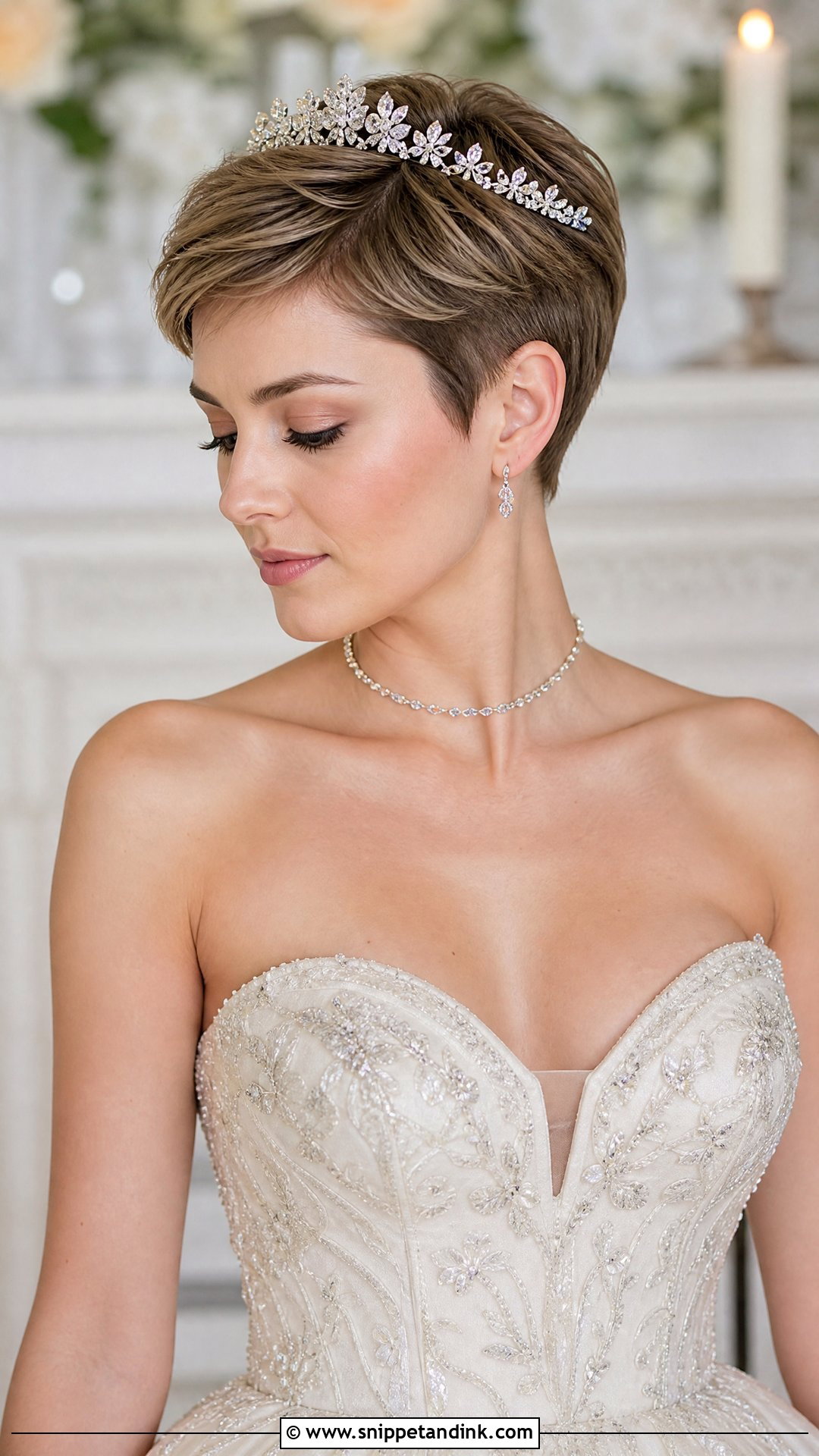
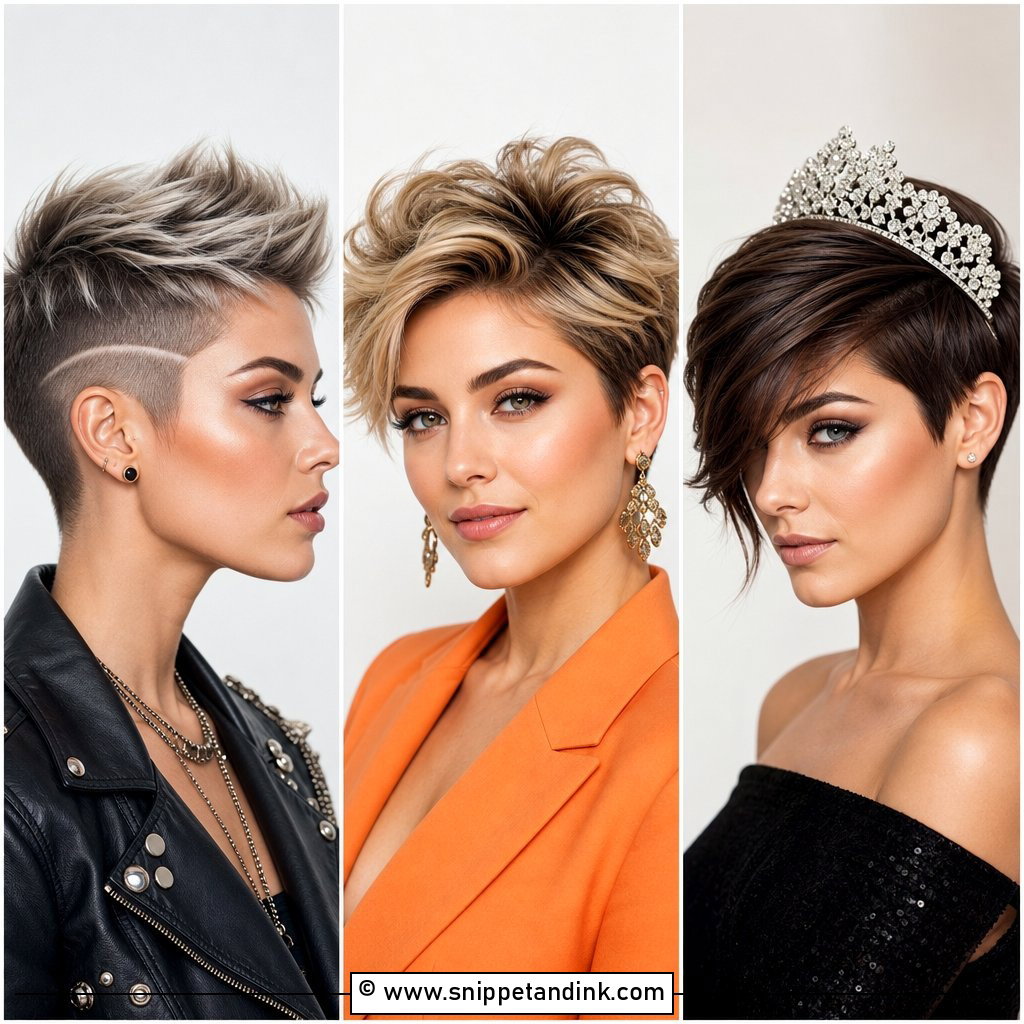
Crowns sit surprisingly well on short hair because the face, the neckline and the piece itself all stay in view. The pixie can be sleek and tucked, softly waved or built up at the crown to balance the headpiece. Ball gowns, cathedral veils and structured bodices are its natural partners. I’d steer you away from heavy metal crowns, though. They have nothing to rest on and press straight into the scalp. A light piece with small loops at each end lets me pin it through to the hair, and it stays level all evening.
8. Bridal Pixie Cut With Textured Volume
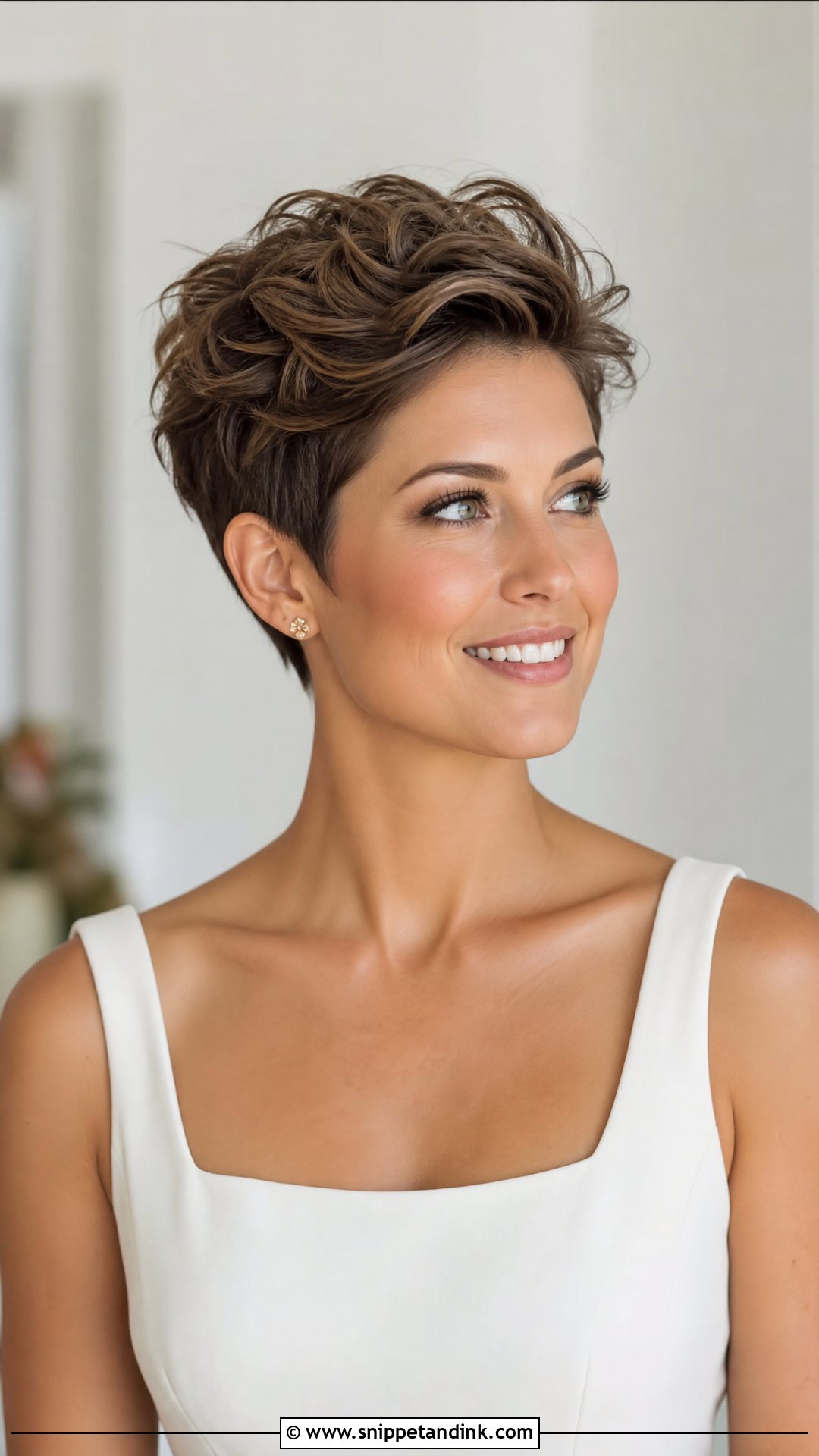
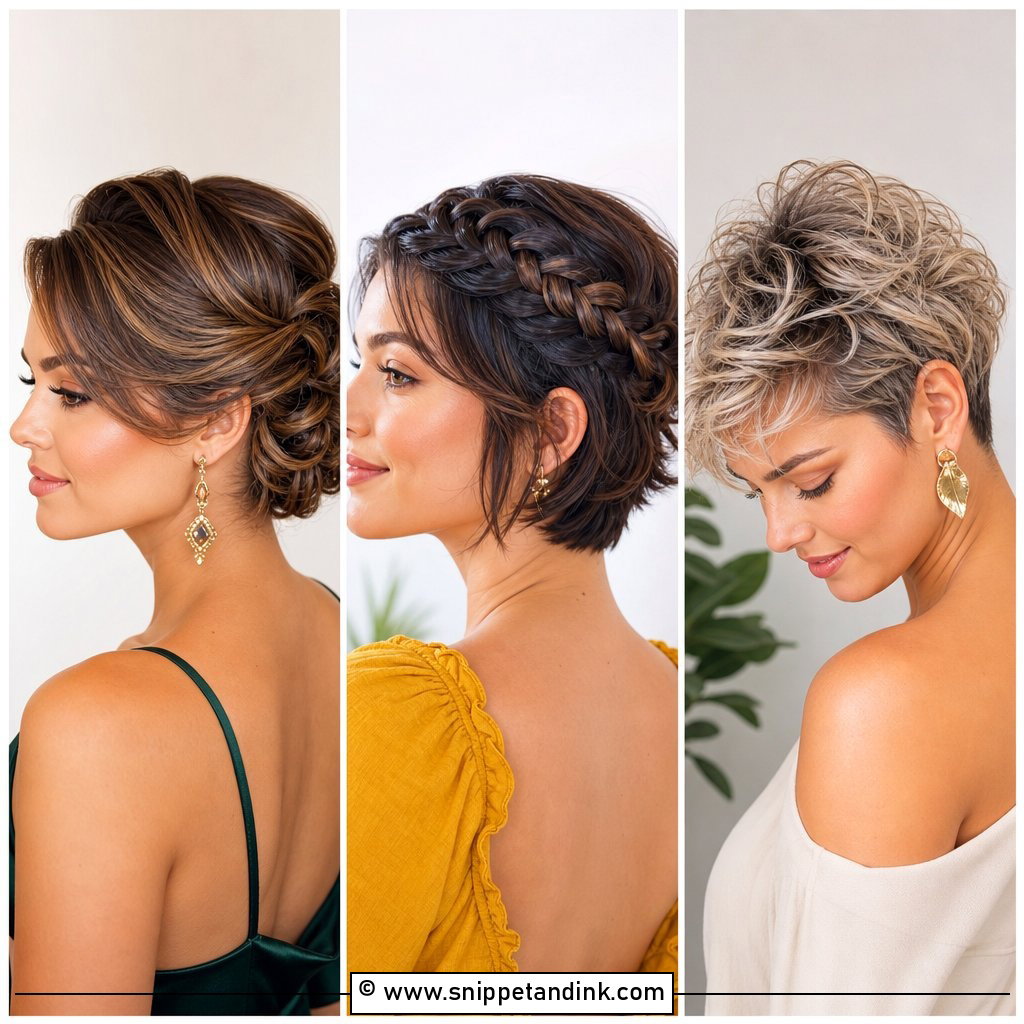
Textured volume trades polish for lift and movement. The top is pulled into piecey separation while the sides stay neat, so the outline still reads bridal from across the room. Fine and medium hair look noticeably fuller in photos this way. I work a volumizing mousse in before the blow-dry, then a tiny amount of light paste through the ends only. If you can see the product or hear it crunch, there’s too much. It should look like hair you could run a hand through, beside a simple veil, bold earrings or a modern gown.
9. Bridal Pixie Cut With Deep Side Part
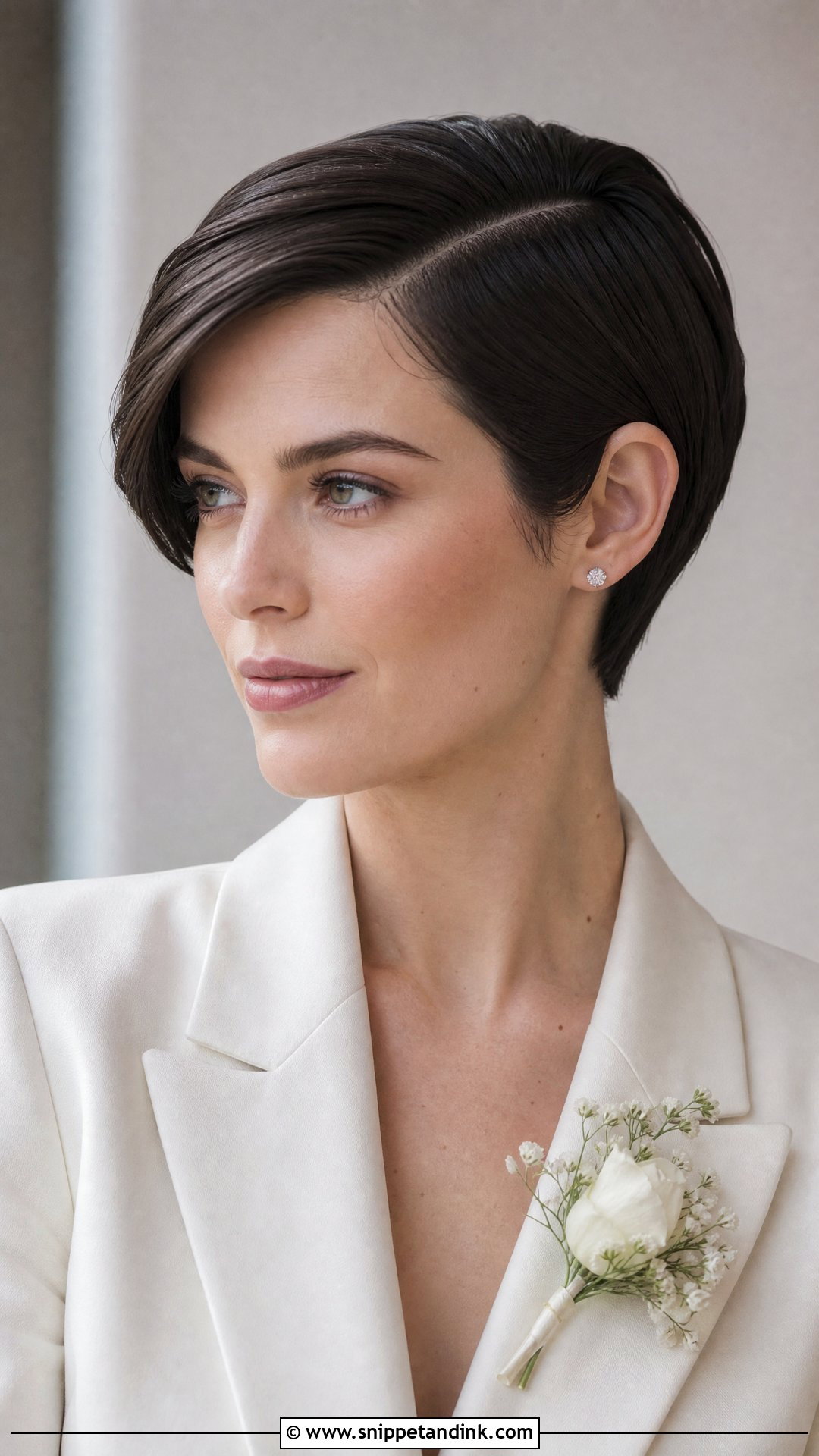
Nothing makes short hair look styled quicker than a deep side part. The line itself gives structure, so it barely needs accessories, and it sits well with clean makeup, tailored gowns and bridal suits. The longer side sweeps across the forehead; the short side tucks behind the ear. I set the part with the hair damp, because a part moved on dry hair springs back toward its natural line within an hour. A smoothing cream and a light mist of spray keep the flyaways down without any stiffness.
10. Bridal Pixie Cut With Soft Curls
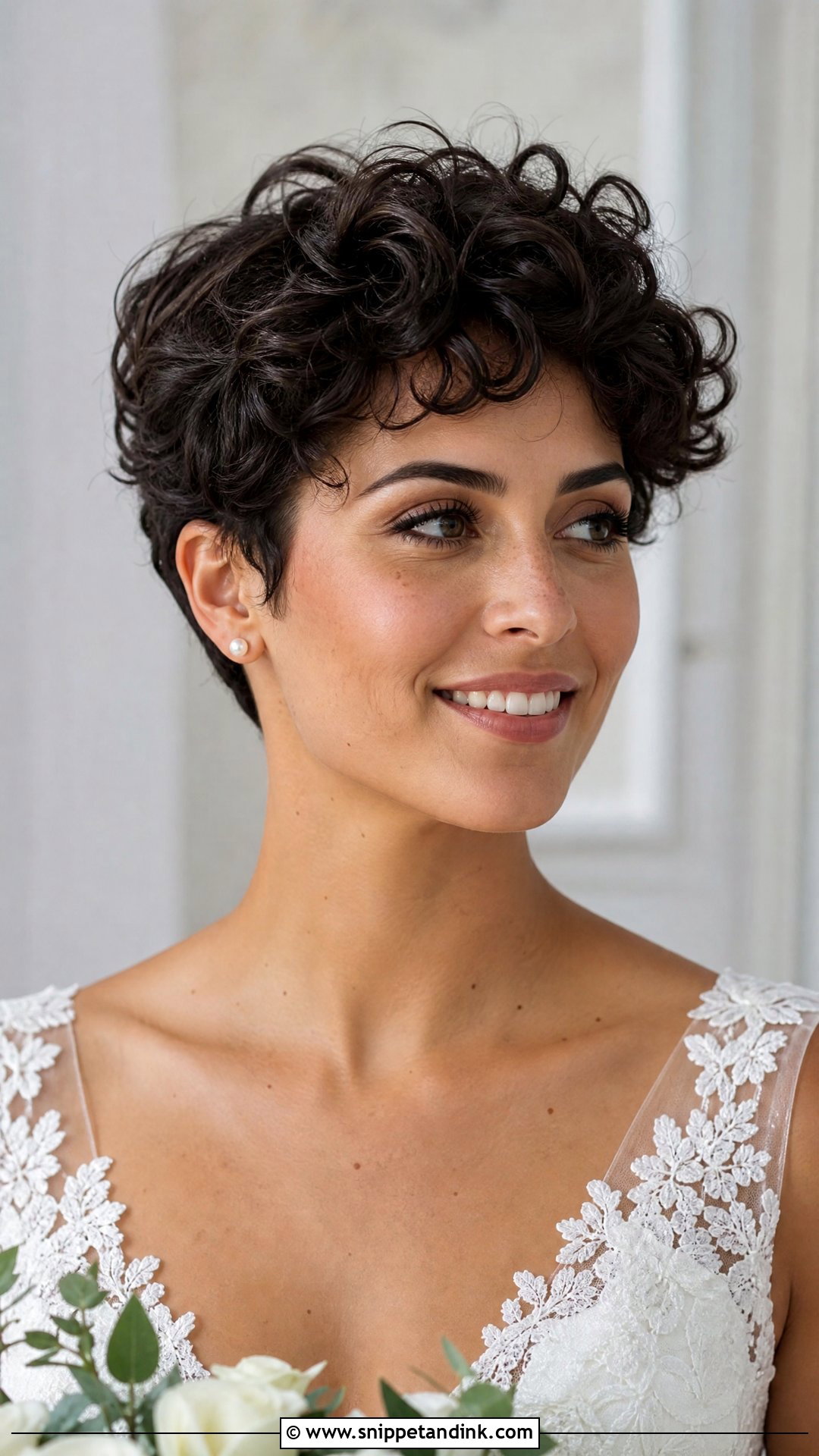
A bridal pixie cut with soft curls is the gentlest version on this list. Depending on her natural pattern, the curls can be loose, defined or brushed out a little. Lace, floral combs and pearl pins all belong with it. On straight hair I use a small wand, only where the shape needs it; on natural curls I define with cream and diffuse on low heat rather than re-curling. The sides have to stay controlled or a curly crop starts looking round, so I smooth those with a little cream.
11. Bridal Pixie Cut With Birdcage Veil
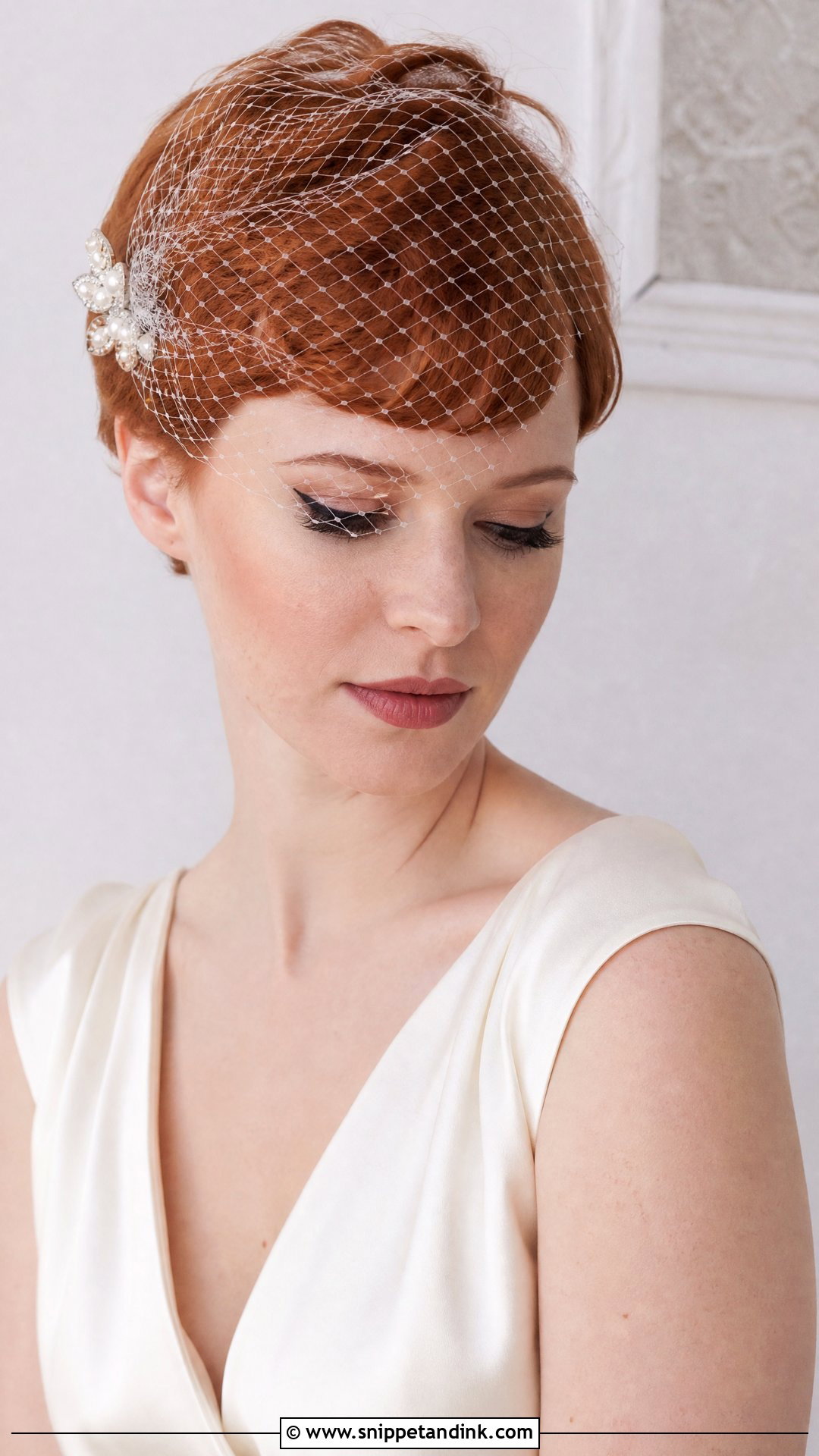
The birdcage veil was practically made for a crop. It frames the face, needs only a small attachment point, and it reads instantly vintage with red lipstick, pearl studs and a satin dress at city hall. Whatever is underneath, whether sleek, waved or curled, the front has to be neat because the netting sits right over it. I angle the veil slightly to one side, which flatters most faces more than dead center. Netting can catch on lashes, so we check the length against her face at the trial.
12. Bridal Pixie Cut With Slicked Back Hair
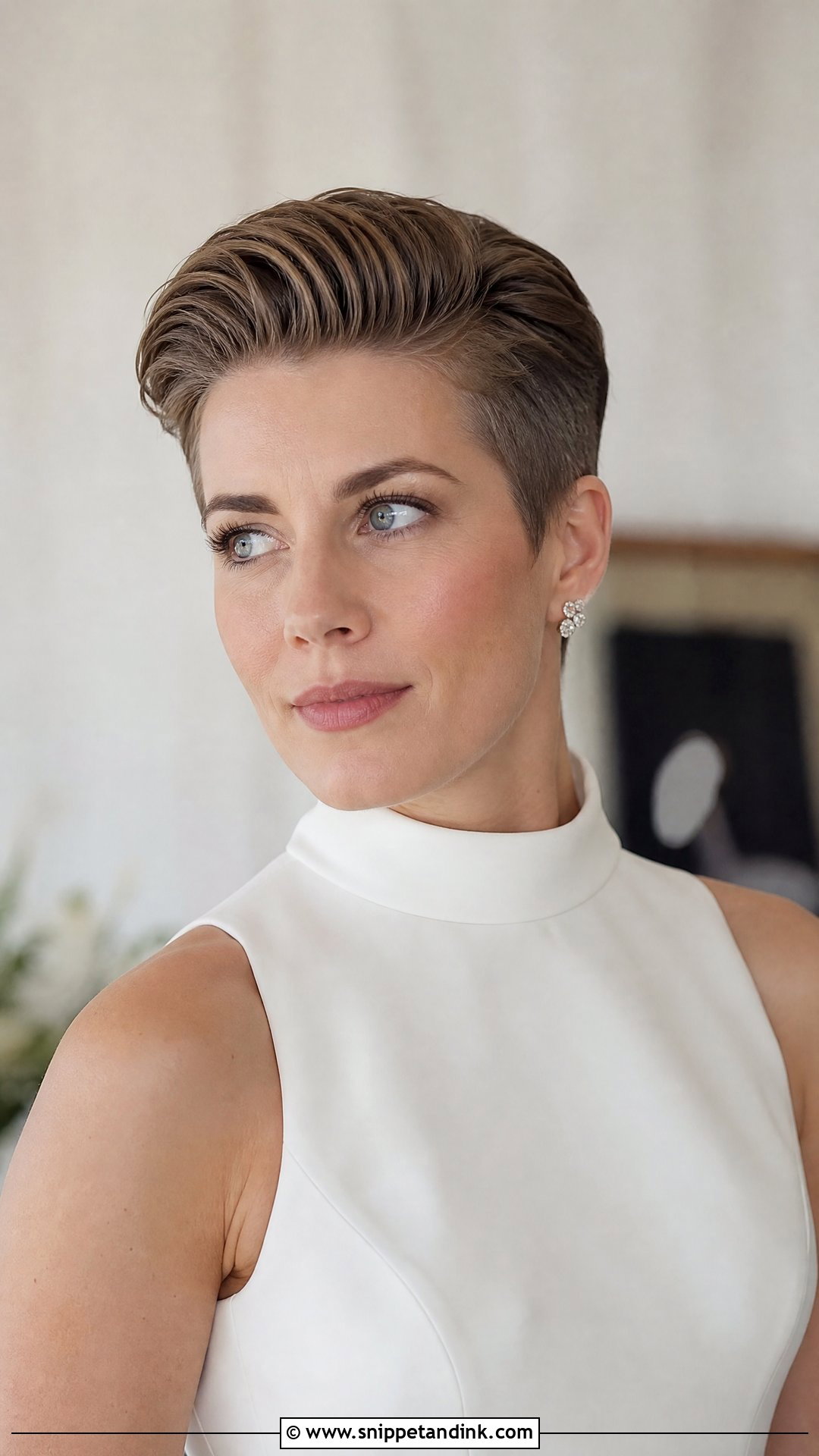
Going fully slicked back hair on a pixie is bold and modern, and it puts everything on show: cheekbones, jewelry, neckline. Minimalist and structured dresses suit it. Shine is the whole look, so I prep with a smoothing serum and use a flexible gel that won’t flake white in flash photos. The downside is honesty: there’s nowhere to hide a tired complexion or an uneven hairline. I talk to the makeup artist before the day so the skin stays fresh rather than heavy.
13. Bridal Pixie Cut With Hair Vine
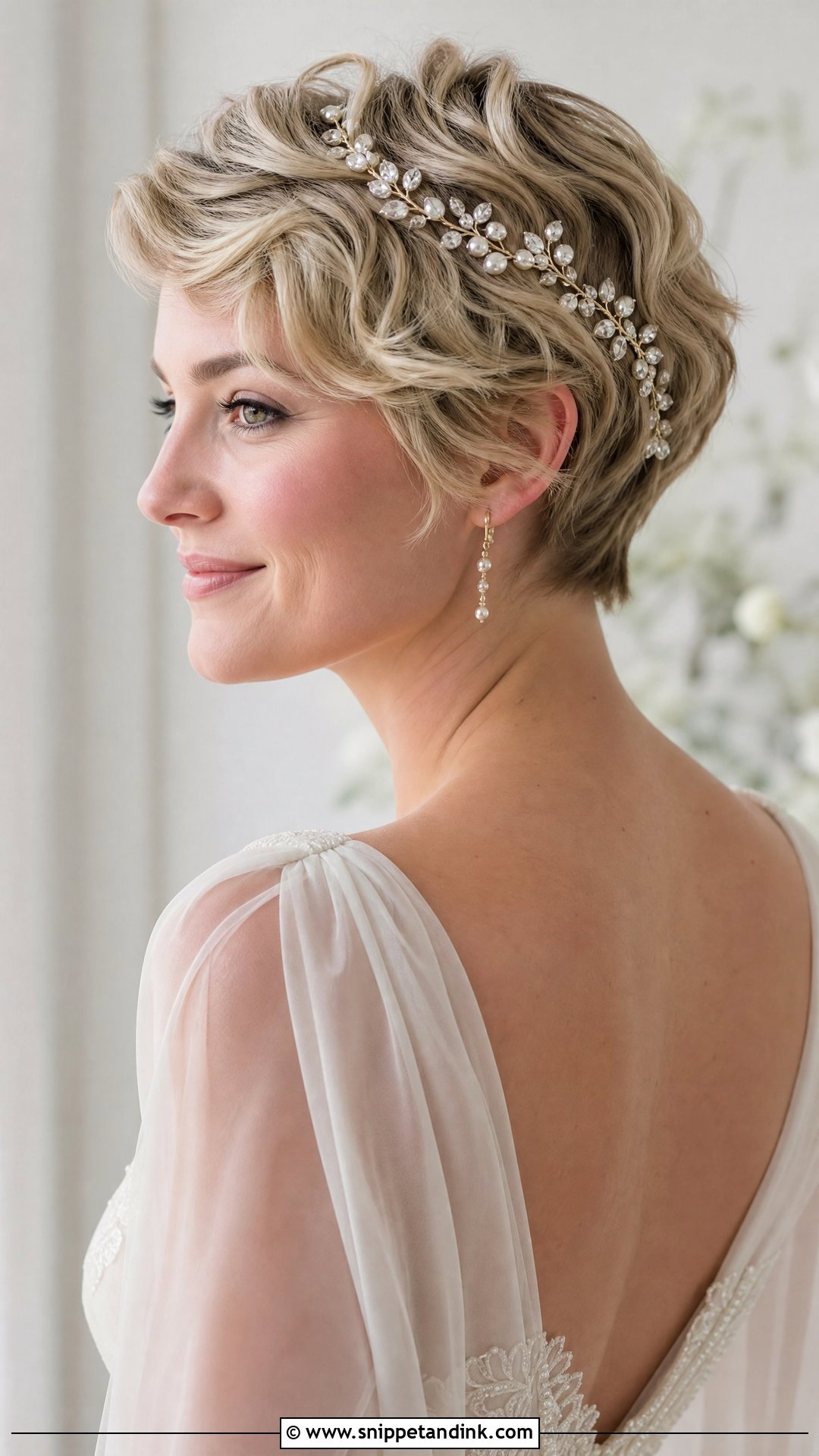
Unlike a rigid crown, a hair vine bends to follow the curve of a small head. I run it along one side, across the back or near the hairline. Garden, woodland and boho weddings suit it best, and lightly waved or textured hair helps the wire disappear into the style. Pick one with small pearls, crystals or tiny flowers. Most vines come with ribbon or wire ends, and on a pixie I ignore those and pin through the wire every couple of inches with hidden bobby pins instead, which stops it lifting when she laughs.
14. Bridal Pixie Cut With Asymmetrical Fringe
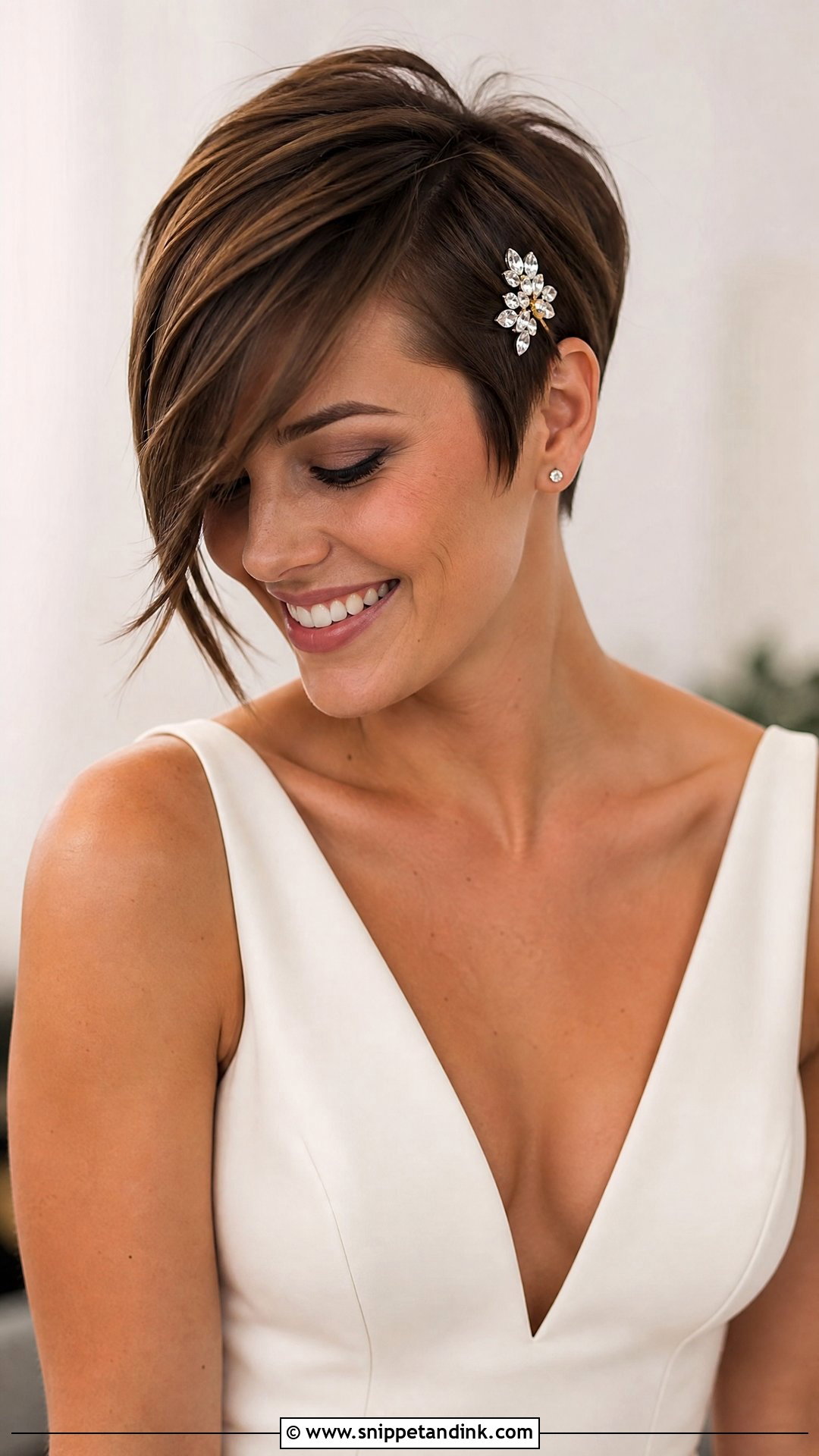
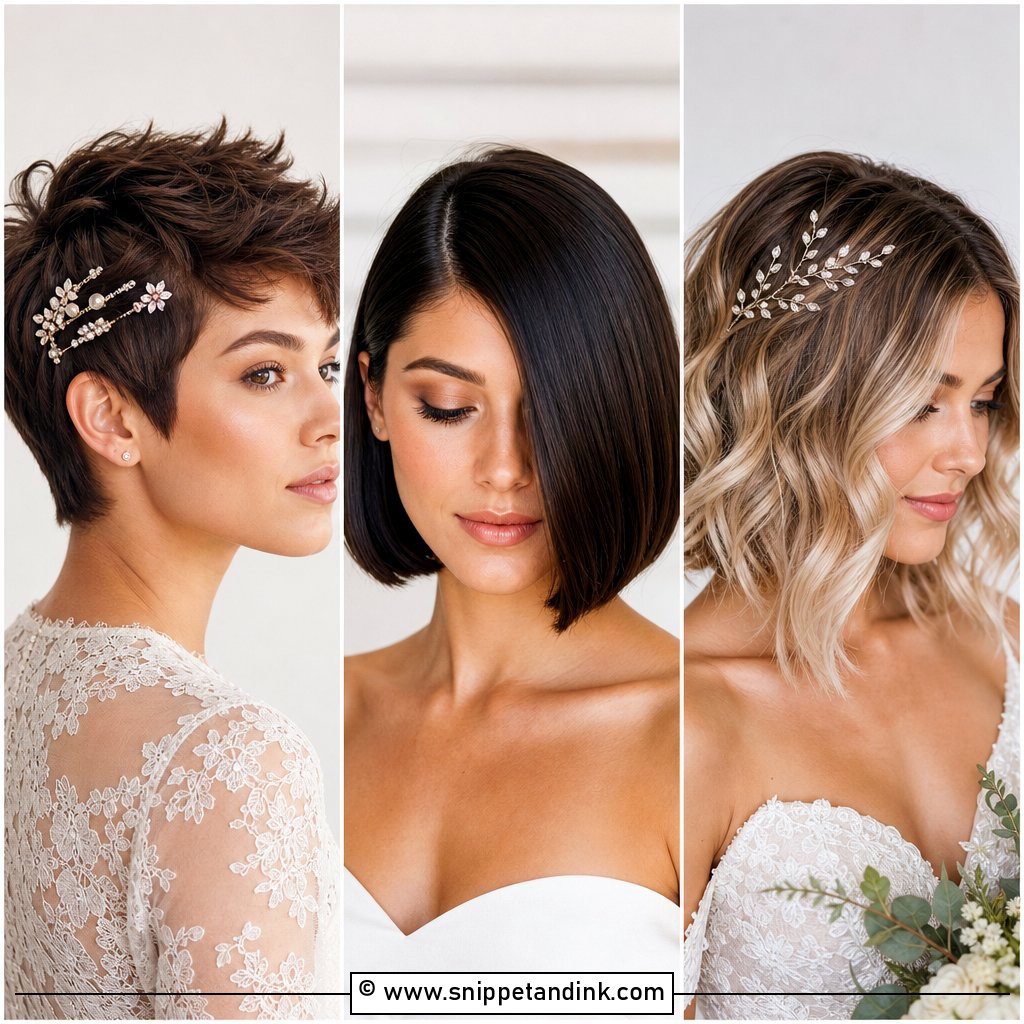
A pixie cut with asymmetrical fringe is the most fashion-led option here. The long front gives drama and the short side keeps the line sharp. The fringe can be smoothed, curved or given light texture, and a small clip on the short side adds a bridal note. This cut lives or dies on its line, so I ask brides to have it cut no more than about ten days before the wedding; a grown-out asymmetric shape loses its point fast.
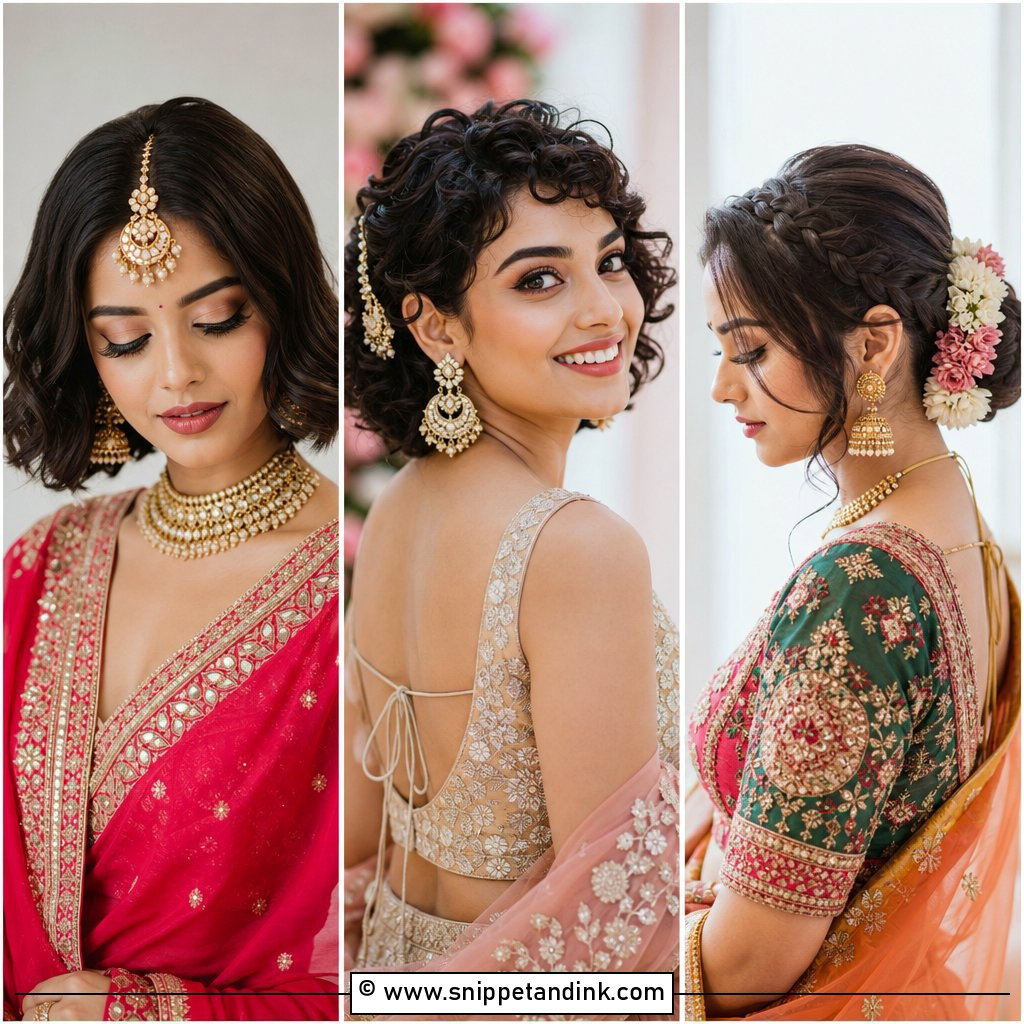
15. Bridal Pixie Cut With Natural Texture
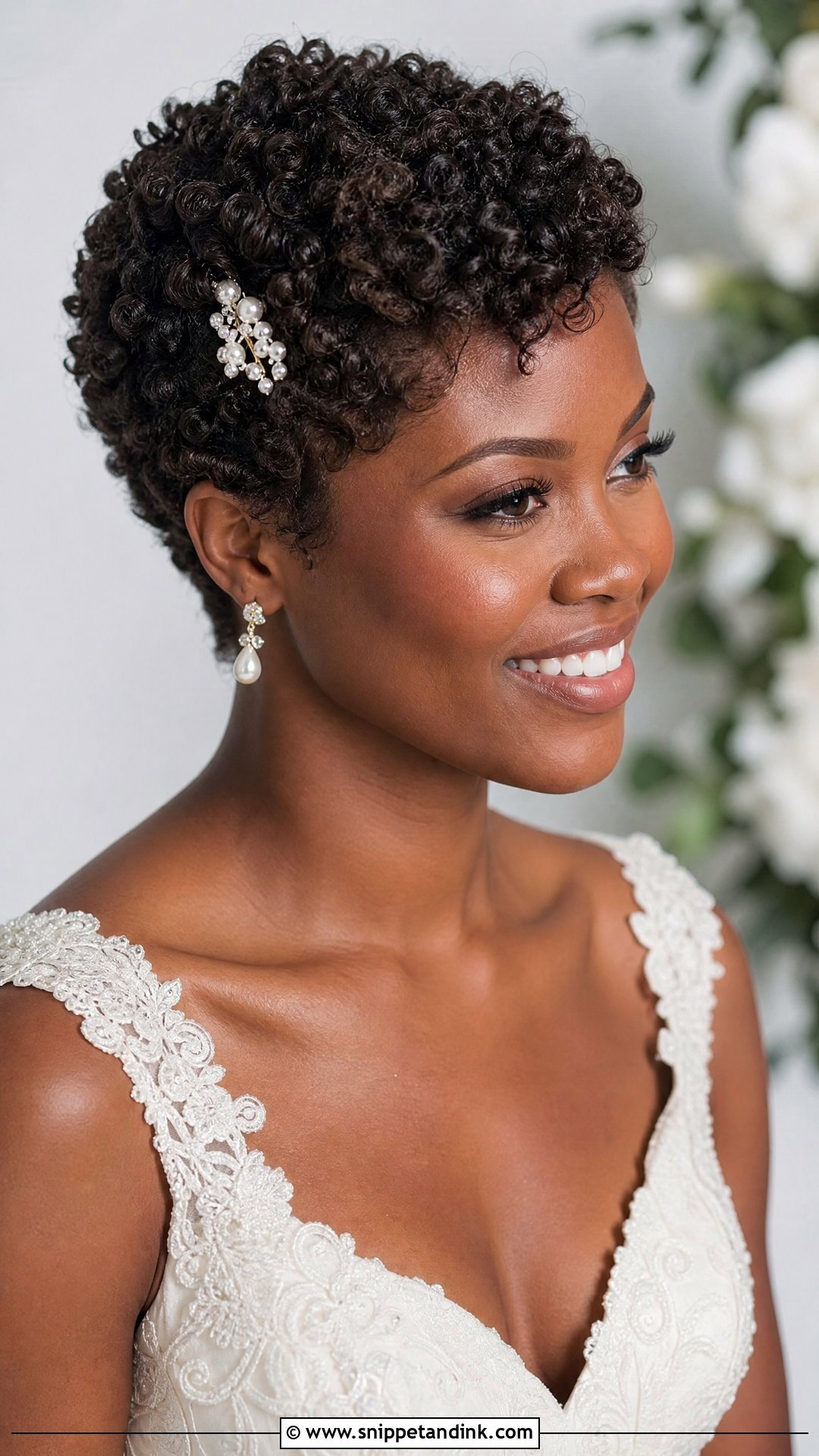
Natural texture lets a bride look like herself on her wedding day, only more finished. Curls, waves, coils and soft bends all qualify. What I focus on is definition, hydration and shape: a leave-in, a curl cream or gel matched to the pattern, then diffusing or air-drying rather than re-styling with heat. Crunch and heaviness are the two things to avoid. A small floral pin or a simple veil adds the ceremony detail. It’s my favorite option for relaxed outdoor weddings because there’s nothing in it to fail.
Anchoring a Veil on Hair This Short
The honest problem with pixie accessories is grip. A standard veil comb is designed to slide into a bun or a mass of hair, and on a crop it has nothing to bite into. By the first dance it will have crept backward unless it’s anchored properly. I usually combine two of these methods.
- Crossed bobby pins as a base. Two pins set in an X at the densest patch, usually the crown, give a comb or clip something solid to hook under.
- A tiny hidden anchor braid. Even an inch of length on top can be braided into a small flat section that sits under the veil and holds it.
- Velvet or silicone-lined combs. They grip short hair far better than bare metal, and a seamstress can add one to a veil you already own.
- Small snap clips instead of combs. Sewn to the veil edge, they clip straight onto short sections and don’t need depth to hold.
- A headband or wire vine as the attachment point. The veil hangs from the band rather than from the hair, often the most secure route for a very short crop.
Weight matters too. On a pixie, a long cathedral veil pulls on whatever it’s attached to, and you’ll feel it all afternoon. If you love the drama, plan to remove it after the ceremony. At the trial I have the bride walk, turn her head quickly and hug someone. If it shifts in the salon, it will shift at the venue.
A Two-Inch Crop Can Carry a Tiara
Short hair holds romance just as well as long hair does. It just does it with shape and detail instead of length. Your cut, your texture, the dress and the one accessory you love will narrow the field quickly: a pearl headband softens, finger waves go full vintage, a short veil reads classic, and natural texture reads like you on a very good day. Book a trial, bring the actual pieces you plan to wear, and have someone photograph the back and both profiles, not just the front. Then go with the version you’d still want to see in the album in twenty years.
You'll Like These Ideas:


Leave a Reply