
Western wedding hair lives or dies on what the day throws at it: a felt hat pressing on the crown, wind across an open pasture, a barn floor that turns into a dance floor by nine. The styles below are the ones I reach for when I’m working at ranches and farm venues, from loose waves that sit under a brim to low buns that survive line dancing. I’ve written them for brides first, but most translate easily for bridesmaids, mothers of the bride and guests who want to look dressed up without competing with the bride.
Sizing a Cowboy Hat Over the Hairstyle, Not Your Bare Head
The most common problem I see at Western weddings isn’t the hair, it’s a hat that was bought to fit a bare head on a Tuesday afternoon. Once hair is curled, pinned or braided, it adds bulk at exactly the line where the sweatband sits, and suddenly the hat perches on top or presses a dent into the crown.
- Measure for the hat with your hair roughly in the style you plan to wear, or at least pulled back into a low bun. Measure around the forehead and just above the ears, where the brim will rest.
- A low bun or ponytail must start below the back of the brim. If it starts at the crown, the hat will tilt forward all day.
- Felt hats are warmer and hold their shape; straw breathes better for a summer ceremony but crushes more easily in a car. Either way, wear it for an hour before the wedding so the sweatband softens.
- Bring the hat to your trial. I won’t finalise a hat style without seeing where the brim lands, because a centimetre of difference decides whether face pieces show or get pinned flat.
If the hat feels loose once your hair is down, a strip of foam hat tape inside the band fixes it far better than extra pins. Pins through felt pull the hair every time you adjust the hat.
1. Western Wedding Loose Waves
I set these with a large barrel, around an inch and a quarter, and brush them out once they’ve cooled so they read as bends rather than ringlets. Keep the crown smooth and put the lift slightly behind it; volume right on top gets crushed the moment a hat goes on. On long or medium hair this holds its shape well, while very fine hair usually needs a mousse base or it falls straight by the reception. Finish with a flexible spray you can still run fingers through, not a lacquer.
2. Western Wedding Half Up Half Down Hair
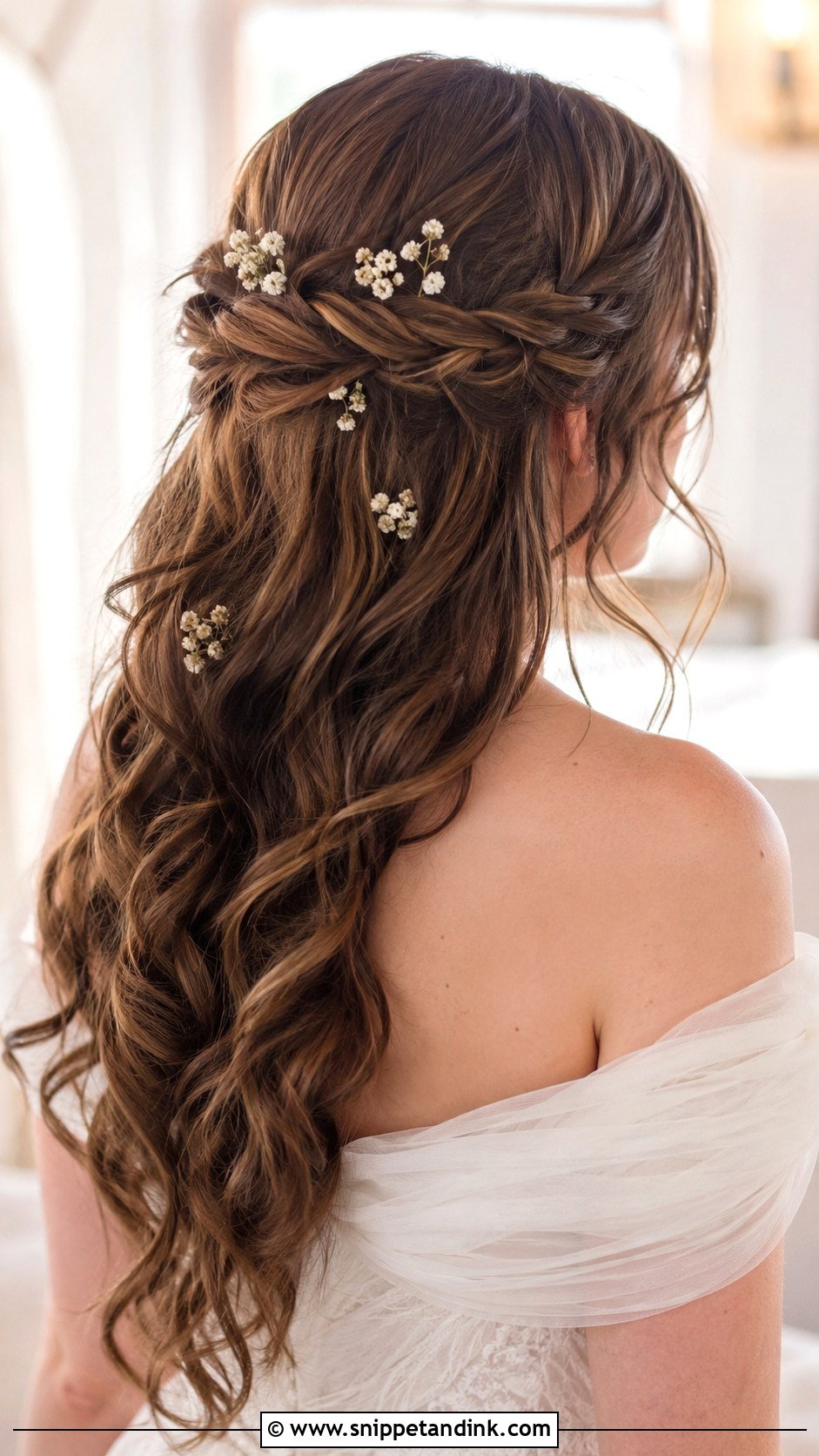
Half up is my go-to for outdoor ceremonies because the pinned section keeps hair off your lip gloss when the wind picks up, and you still show your length. The top section can be a twist, a small braid or simply curls gathered at the back. I anchor it with two crossed bobby pins under the gather rather than relying on a clip alone, since clips slide on silky hair. It’s also an easy one to give a group of bridesmaids, because each of them can wear it a little differently without anyone looking mismatched.
3. Western Wedding Low Bun
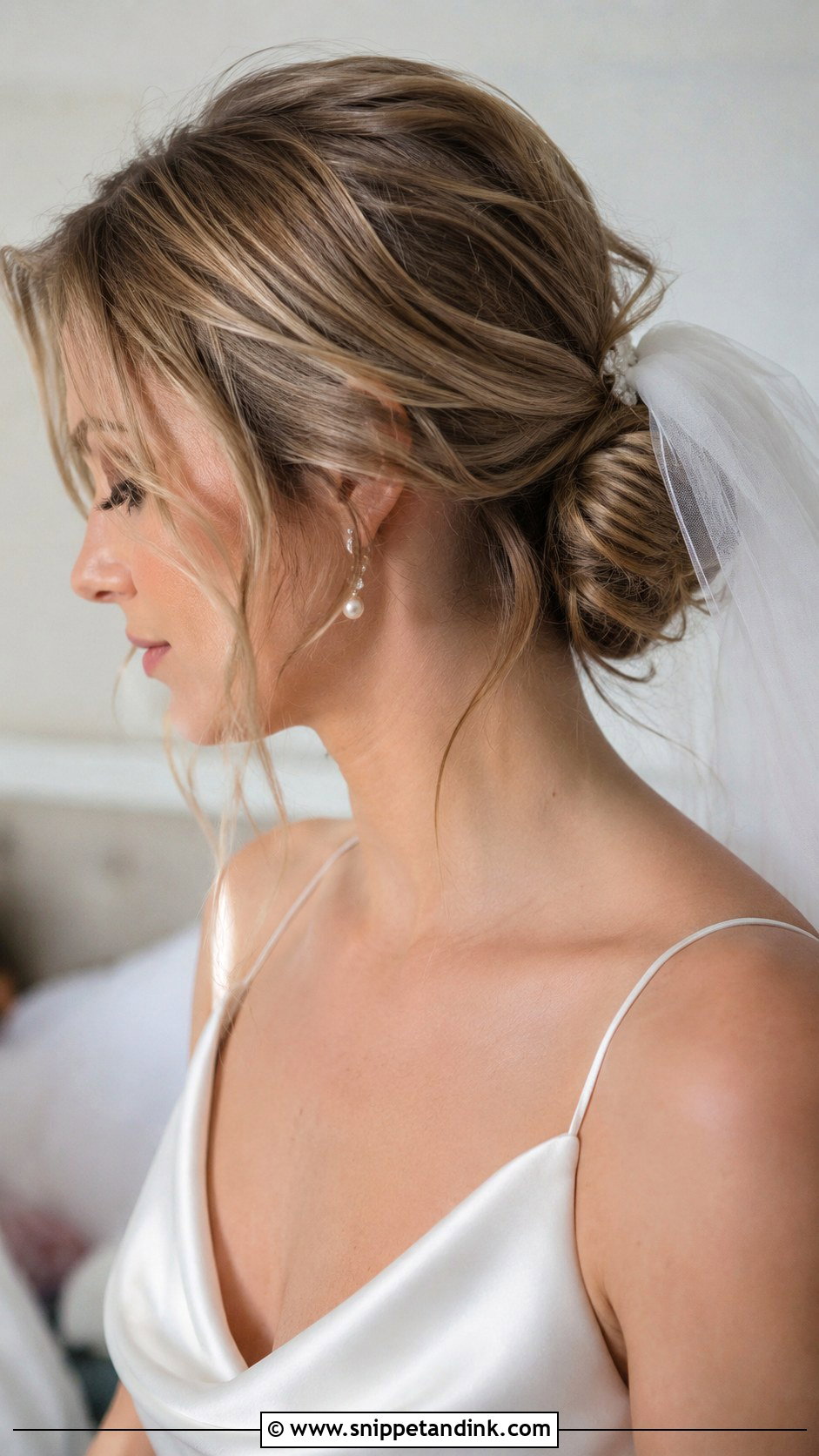
A Western wedding low bun sits at the nape, which means a hat brim clears it and a veil comb has somewhere solid to grip. I prefer a slightly loose wrap here with a few face pieces pulled free, because a tight, glossy bun looks out of step with lace and leather. Thick hair goes into this shape easily. Fine hair needs a small padding or a backcombed base inside the bun, otherwise it shrinks to the size of a walnut and the pins start to show.
4. Western Wedding Braided Crown
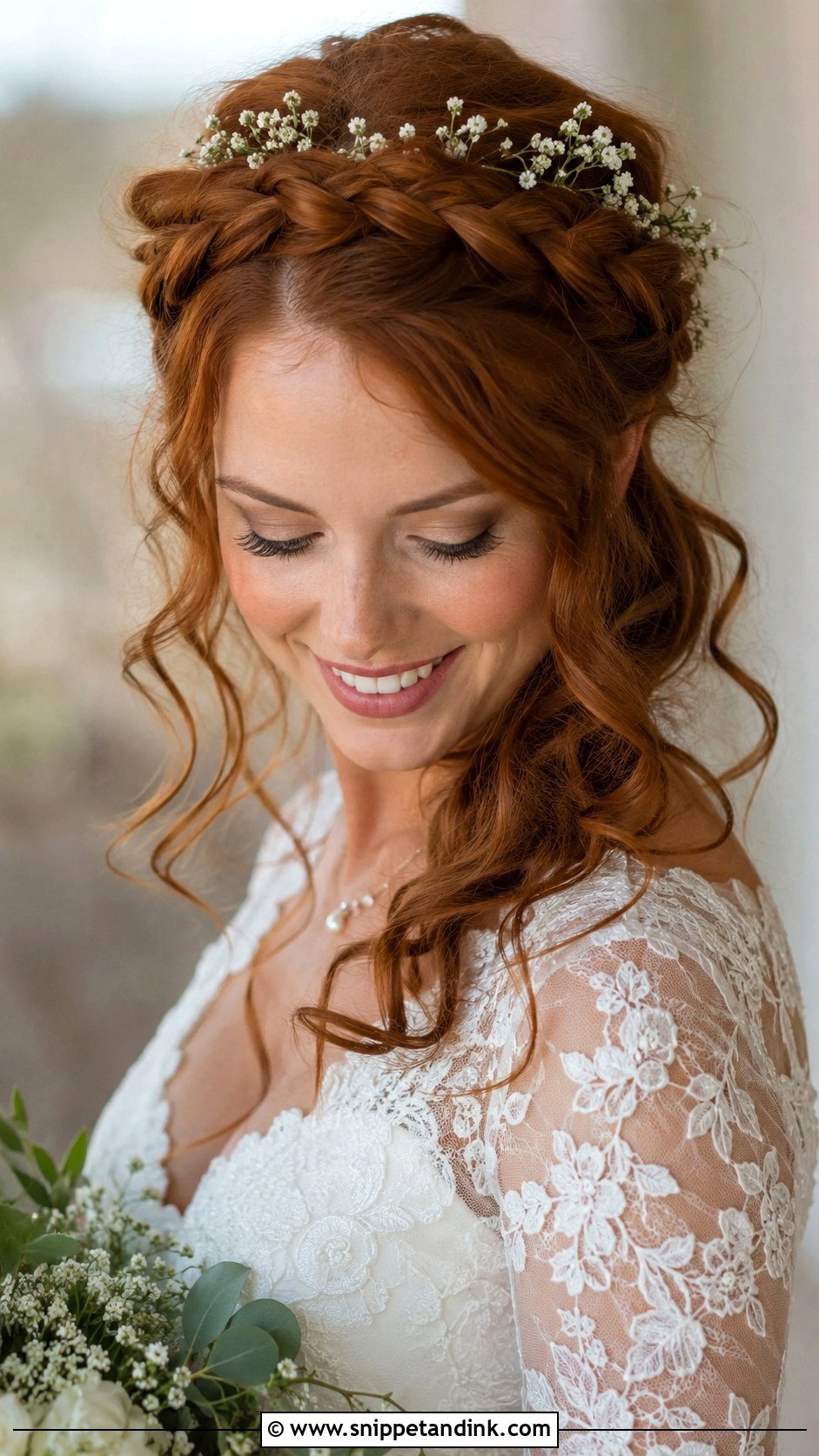
Crown braids hold through almost anything, which is why I trust them at windy venues. You can wrap the braid across the top like a band or drop it lower toward a halo; the lower version leaves room for a hat if you plan to switch later. I pancake the braid slightly so it looks fuller, then weave in tiny flowers or pearl pins only after it’s secured. On shorter or thinner hair, a couple of clip-in wefts braided into the base make the crown look even all the way round.
5. Western Wedding Side Braid
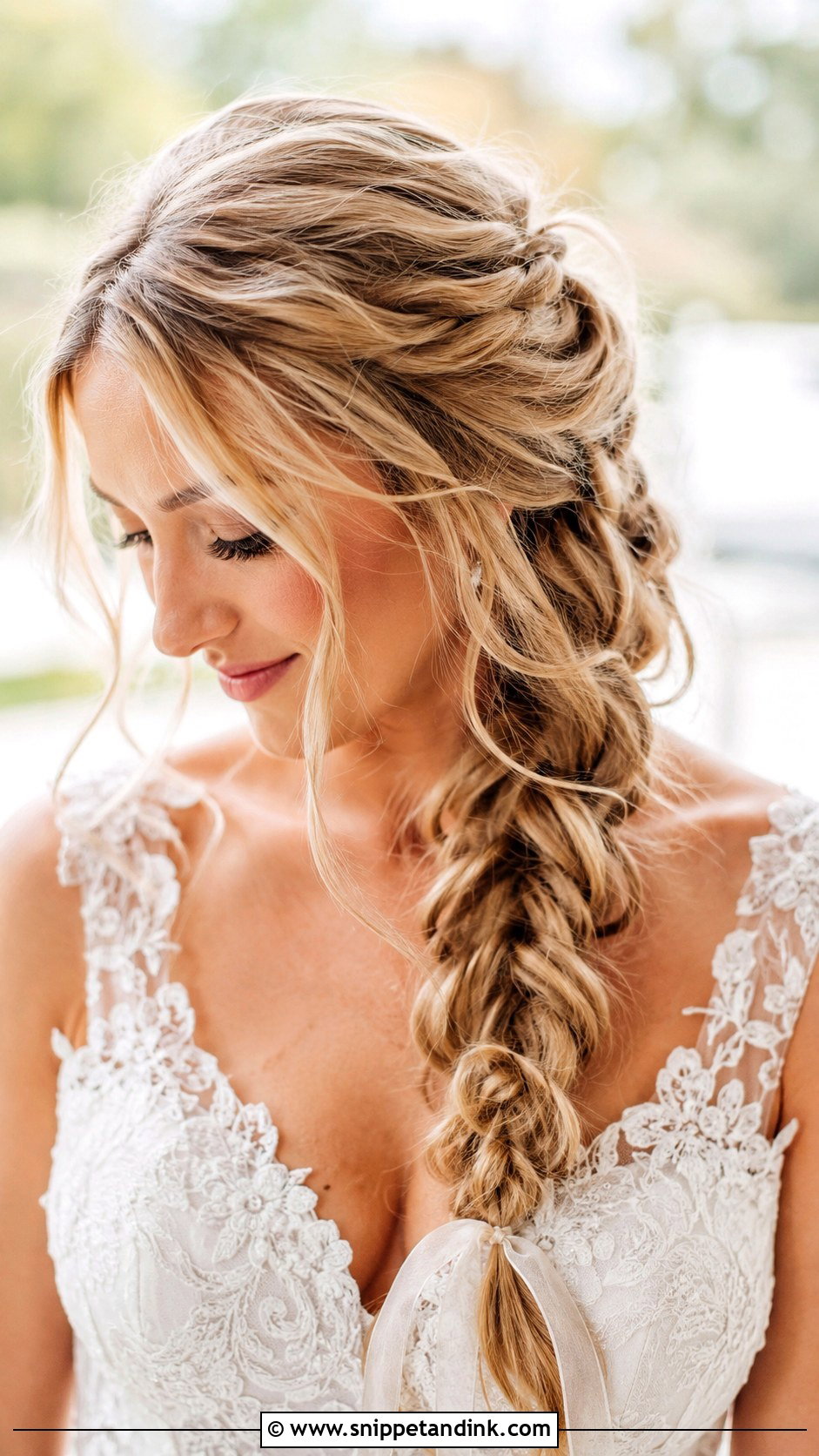
A side braid over one shoulder pairs naturally with lace and off-the-shoulder necklines. I curl the lengths before braiding so the braid has body, then loosen it by hand. The thing to watch is which shoulder it sits on: choose the side your partner won’t be standing on during the vows, or the braid ends up hidden in most ceremony photos. It also keeps hair gathered in wind, and a ribbon or small clip at the tail finishes it more neatly than a plain elastic.
6. Western Wedding Ponytail
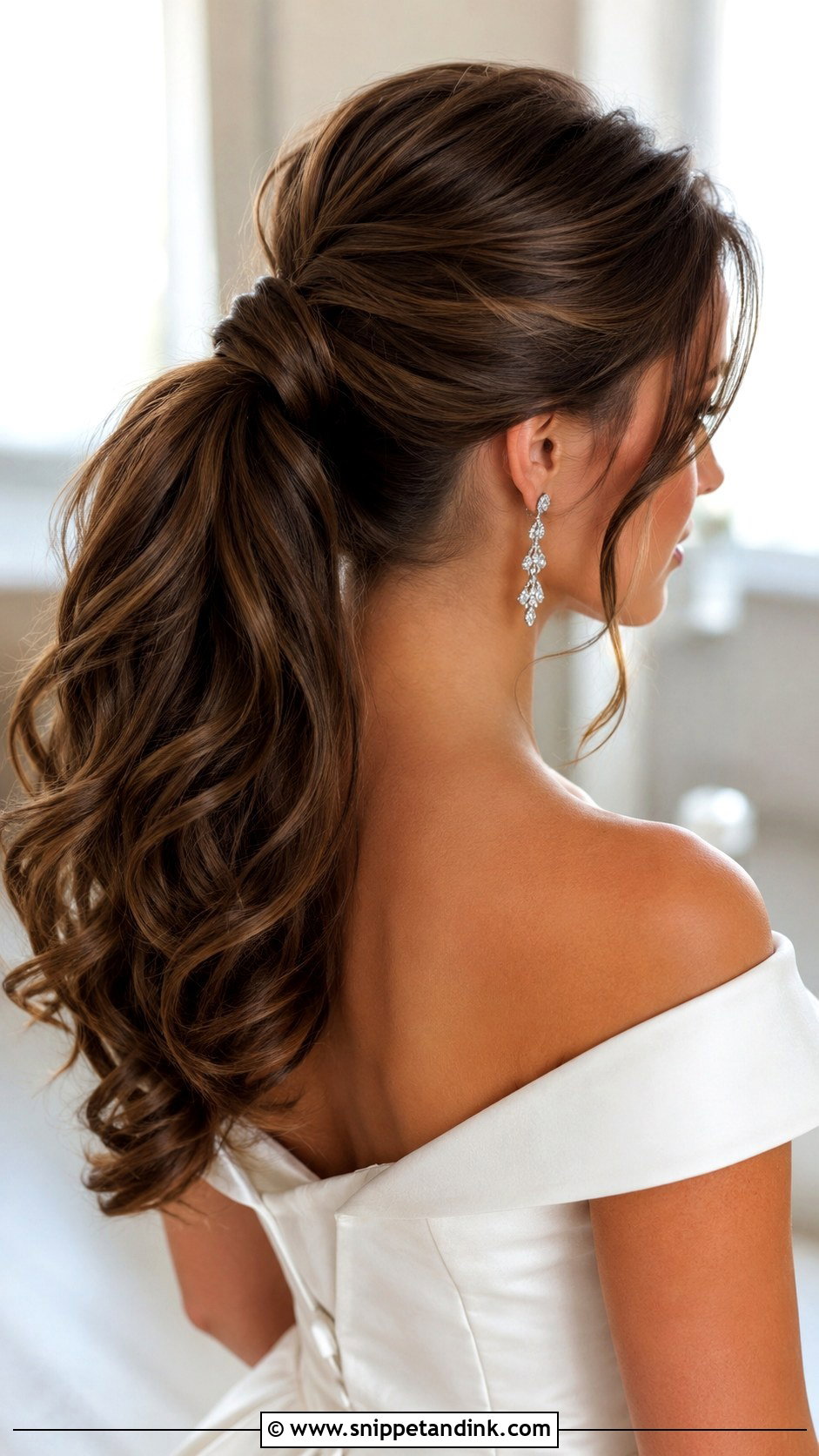
A ponytail only looks wedding-ready with real preparation behind it. I ask for lift at the crown, curl the tail, then wrap a strip of hair around the elastic and pin it from underneath. Put a little smoothing cream on the top section so flyaways don’t catch the light. Low sits closer to a romantic mood, mid-height feels younger and lighter; both leave the face open for a high neckline or big earrings, and both slide under a hat if the ponytail starts below the brim line.
7. Western Wedding Hollywood Waves
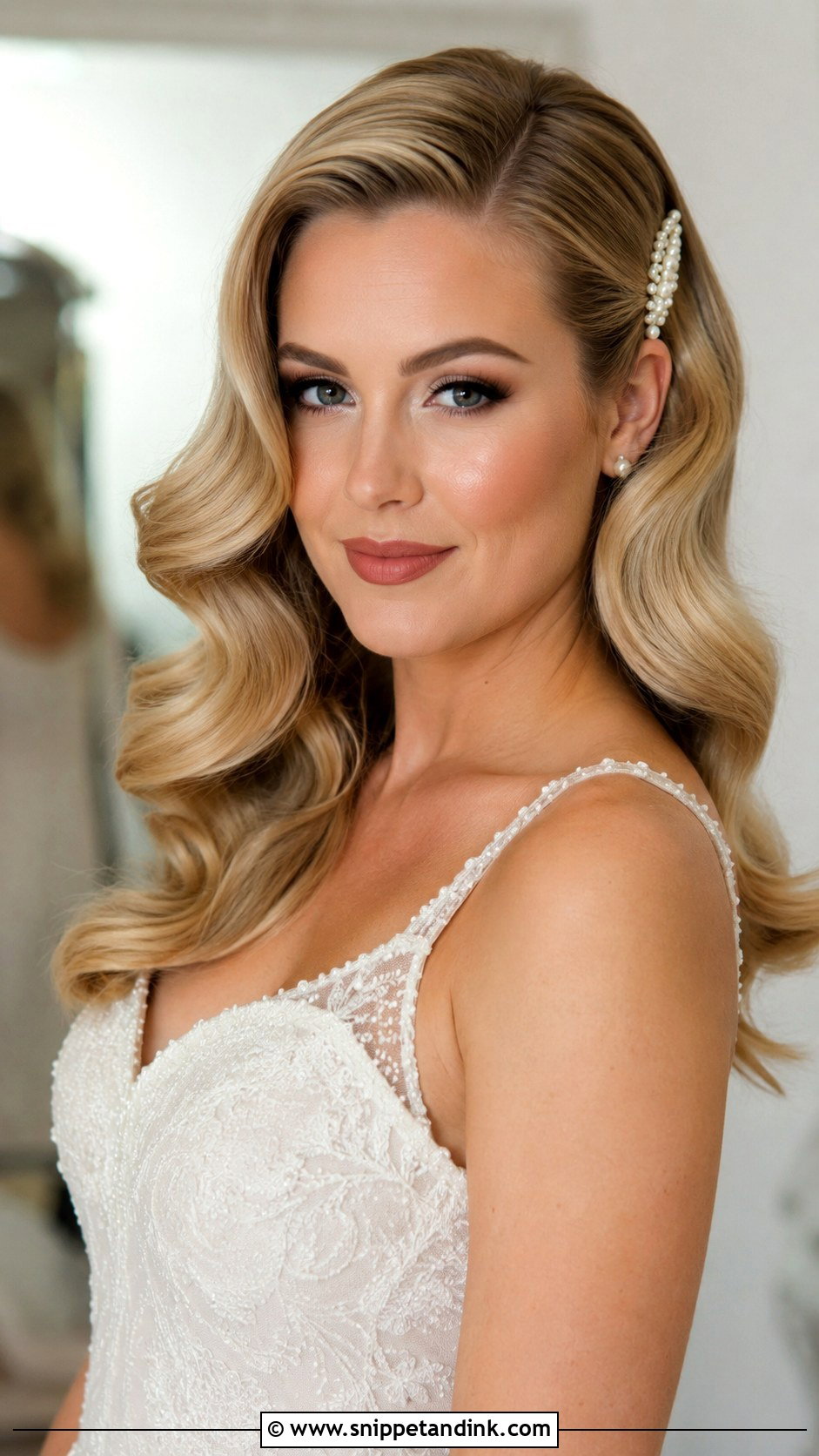
Hollywood waves need the most prep of anything on this list. Every section is curled in the same direction, pinned to cool, then brushed and pressed into one sculpted S shape, so a heat protectant and a firm setting spray aren’t optional. They suit long hair with a deep side part and look right with strapless or fitted wedding dresses. Humidity is the weak point: in a damp barn they relax within a few hours, so I’d only commit to them for a dry climate or an indoor reception.
8. Western Wedding Messy Bun
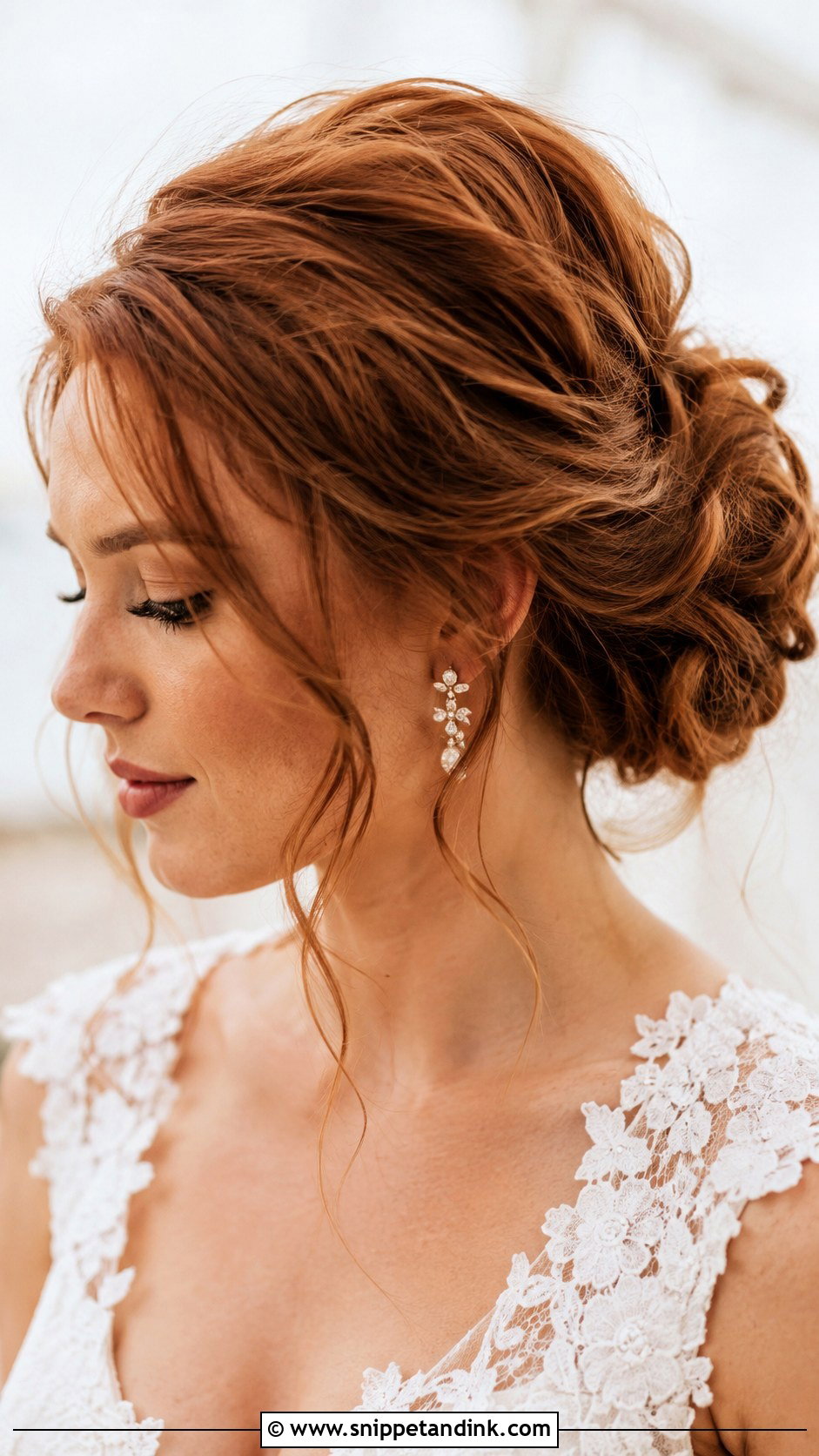
The difference between a messy bun and an unfinished one is the curl underneath. I curl everything first, then pin sections loosely into the bun, leaving a few tendrils at the face and nape. Those tendrils should be curled separately, or they hang limp by the speeches. This bun suits barn and ranch weddings, takes a veil comb well, and is forgiving if a piece comes loose on the dance floor because nobody can tell.
9. Western Wedding Waterfall Braid
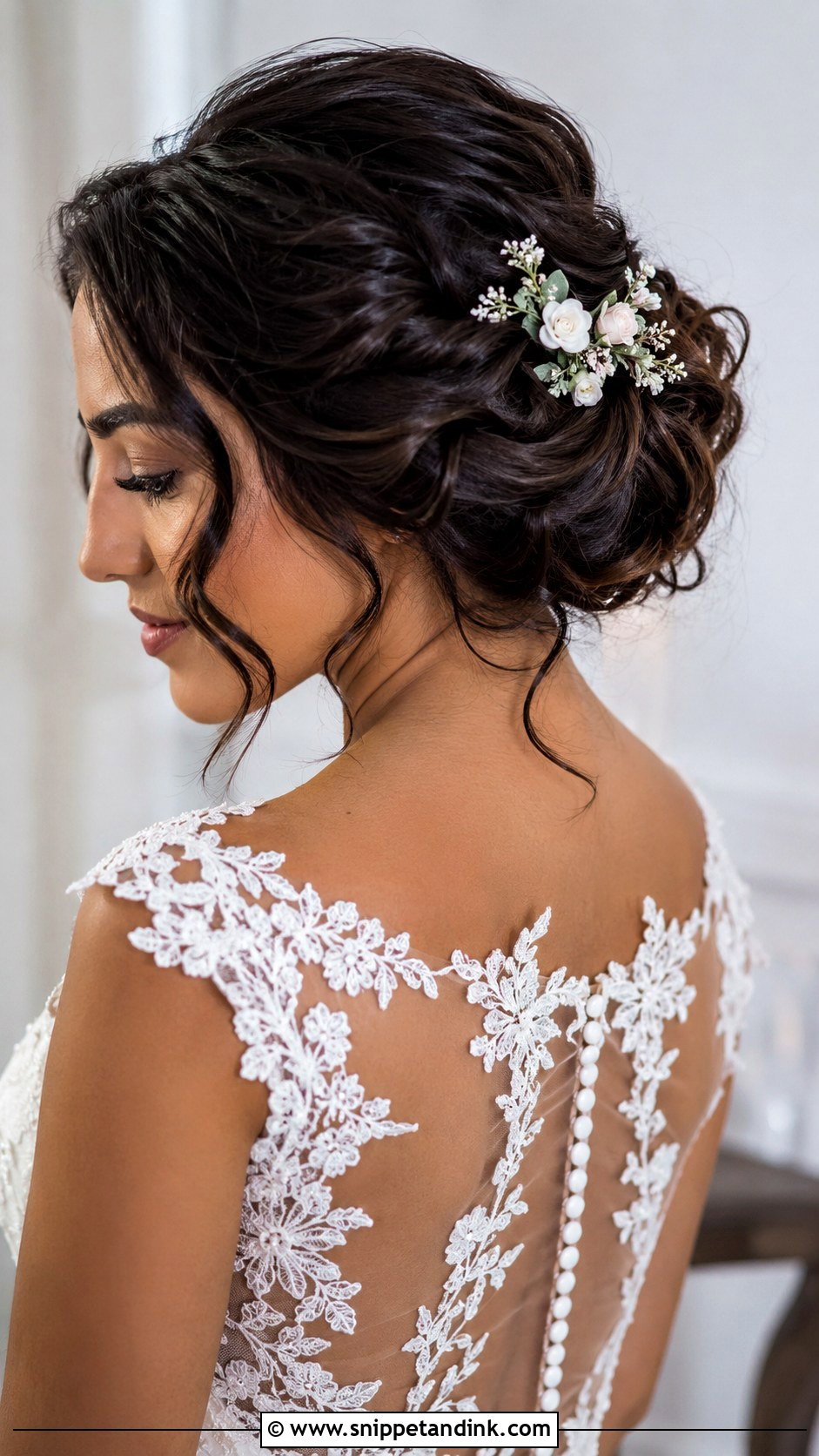
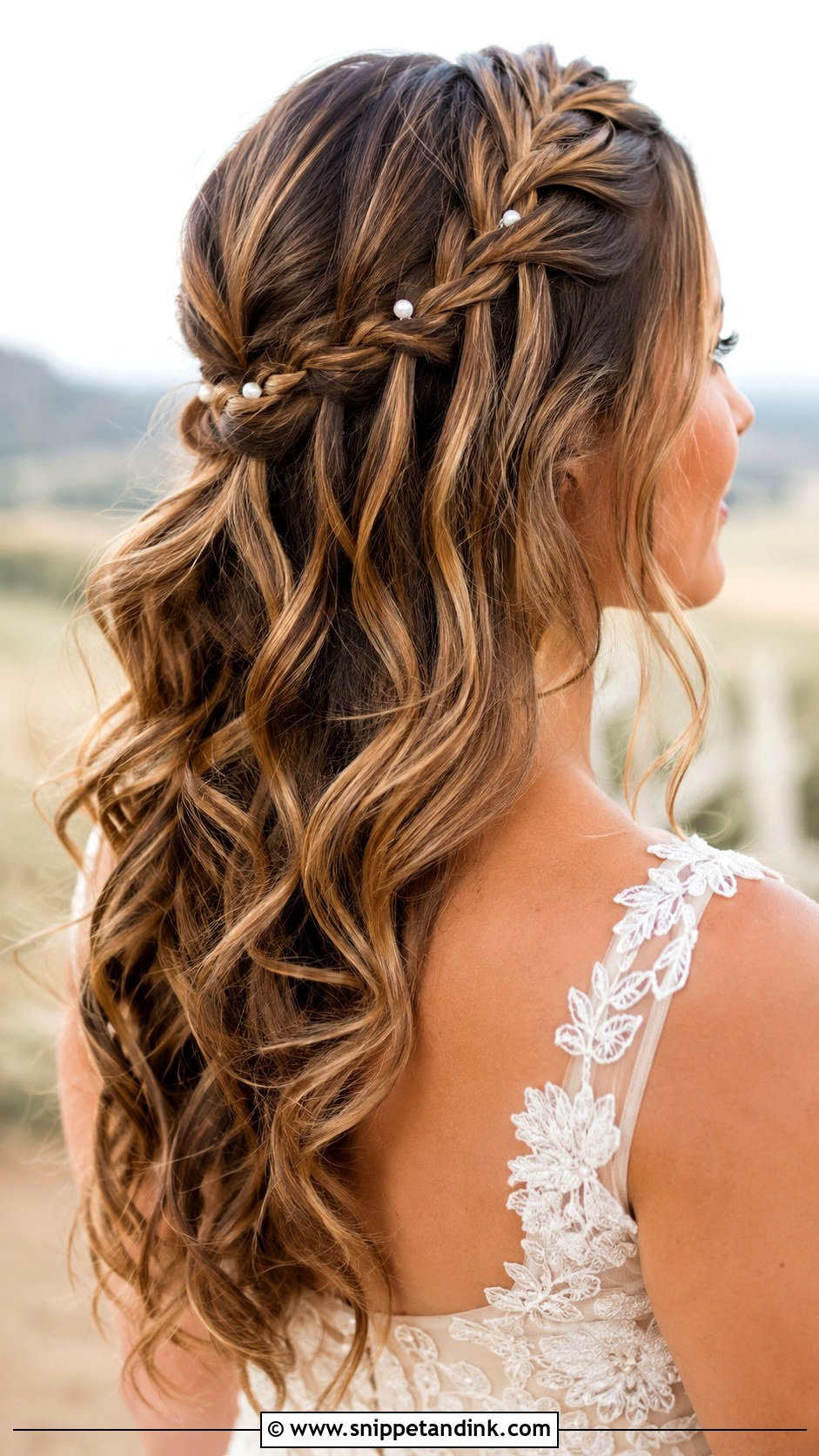
A Western wedding waterfall braid runs across the back or side of the head while curls drop through the gaps, so you get detail without putting all the hair up. It shows off highlights and balayage particularly well because each strand catches the light at a different angle. You need at least shoulder length for the dropped strands to fall properly. I keep the curls loose and finish with a single pearl pin or a few blossoms at the end of the braid.
10. Western Wedding Textured Updo
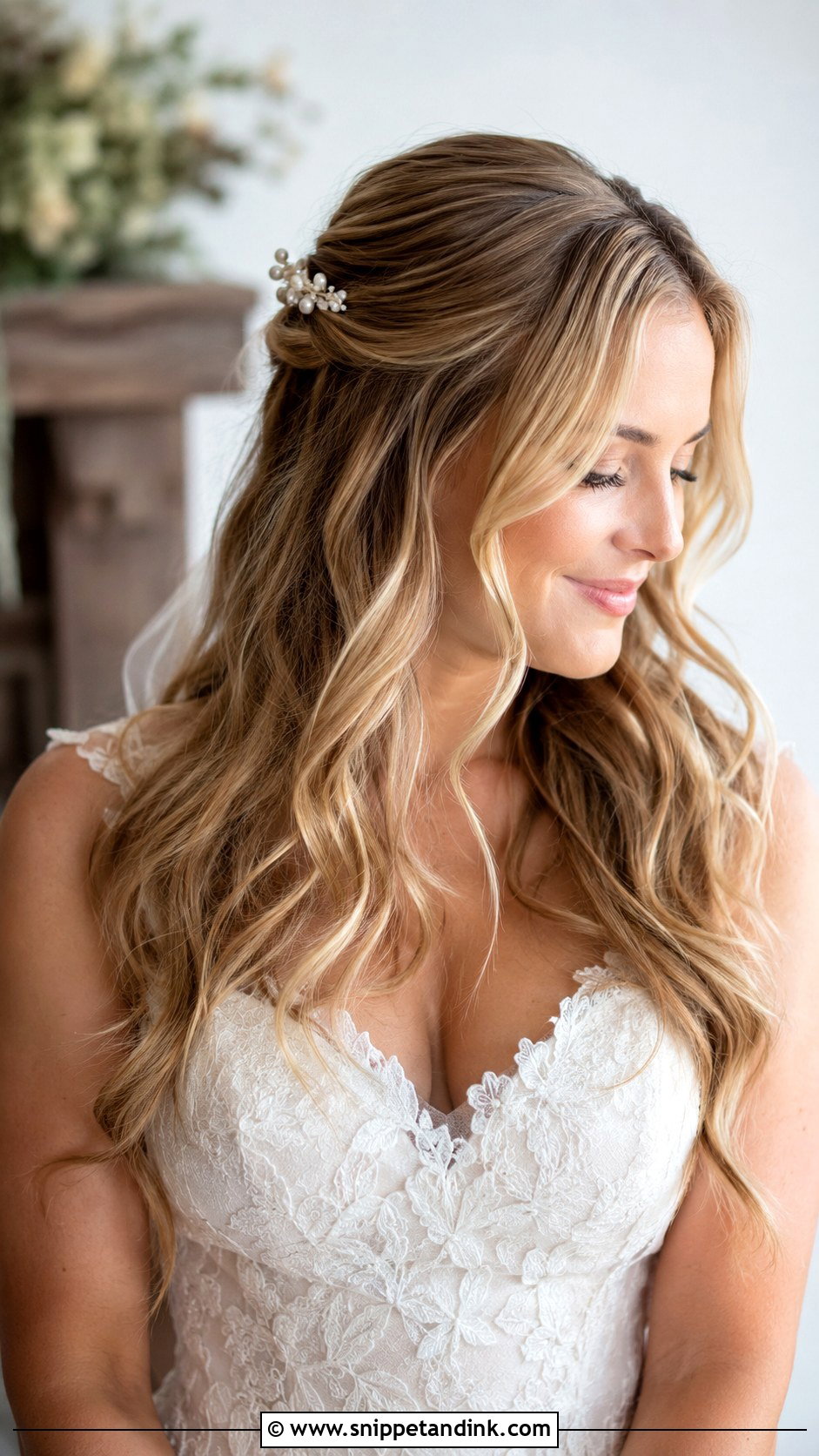
Somewhere between a sleek bun and hair down sits the textured updo: loose twists, pinned curls and a bit of volume through the crown. Because it’s built in small pinned sections, it flatters most face shapes and hair types, and I can adjust the height after seeing the dress. Outdoors it’s one of the safest bets. A veil, floral comb or small Western accessory finishes it, and it pairs well with an open back because the neck stays clear.
11. Western Wedding Long Curls
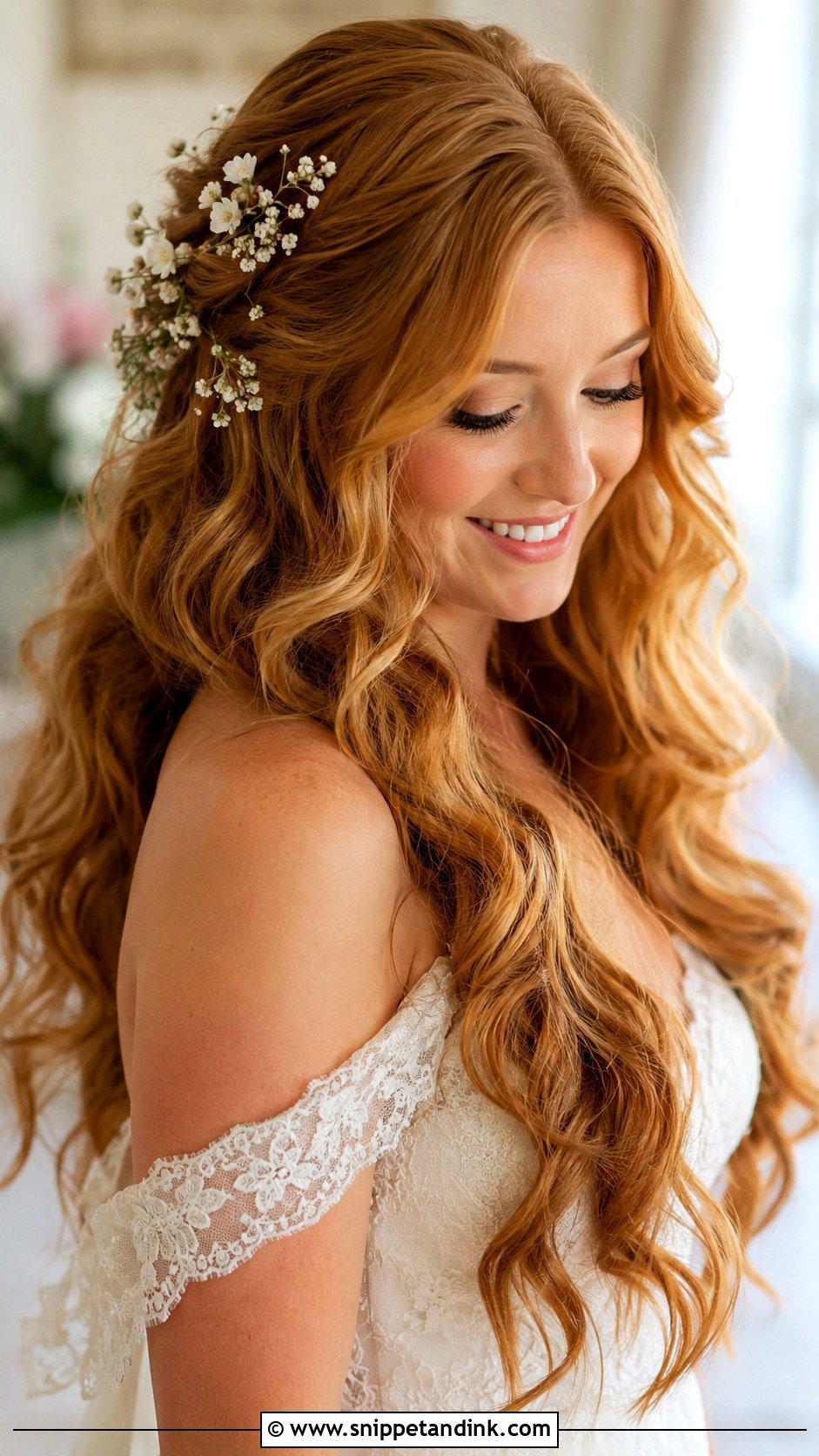
Long curls worn down are simple, but they’re also the style most likely to drop. I prep with mousse at the roots, curl in small sections and let each curl cool fully in my hand or in a pin before touching it. Layers help a lot; one-length heavy hair pulls curls straight within an hour. They look right with a lace veil or small floral pins, and if you love wearing your hair down day to day, this will feel the most like you.
12. Western Wedding Short Hair
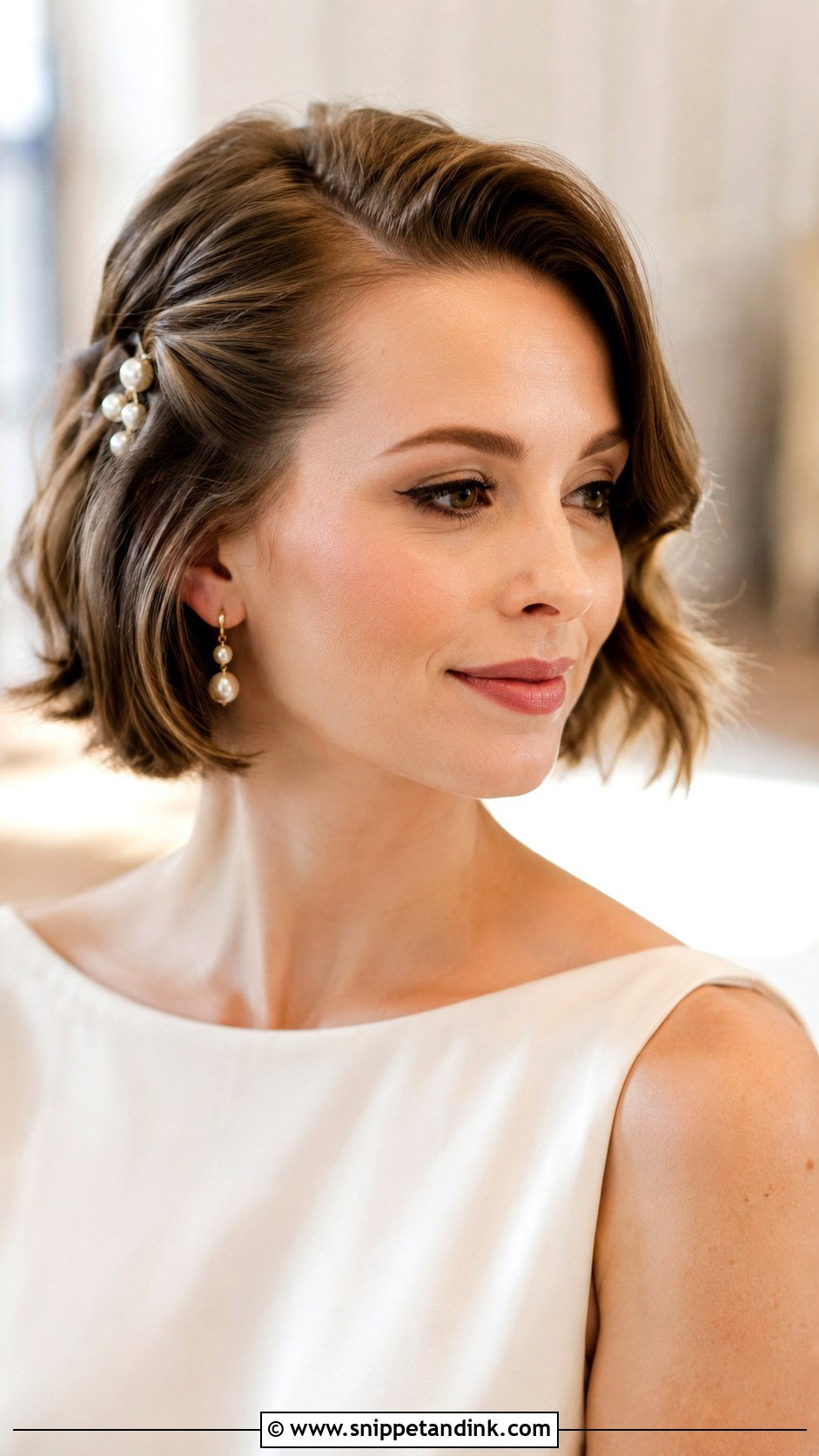
Short hair can look every bit as bridal when it’s shaped with care. A softly waved bob, a tucked pixie or a curled lob all work, and the prep is mostly root lift plus a shine product through the ends. Accessories do more work on short hair than on long, so I’d bring options to the trial: pearl pins, a thin headband, a small comb or a mini veil. Statement earrings and detailed necklines show up far more because nothing hides them.
13. Western Wedding Hair With Hat
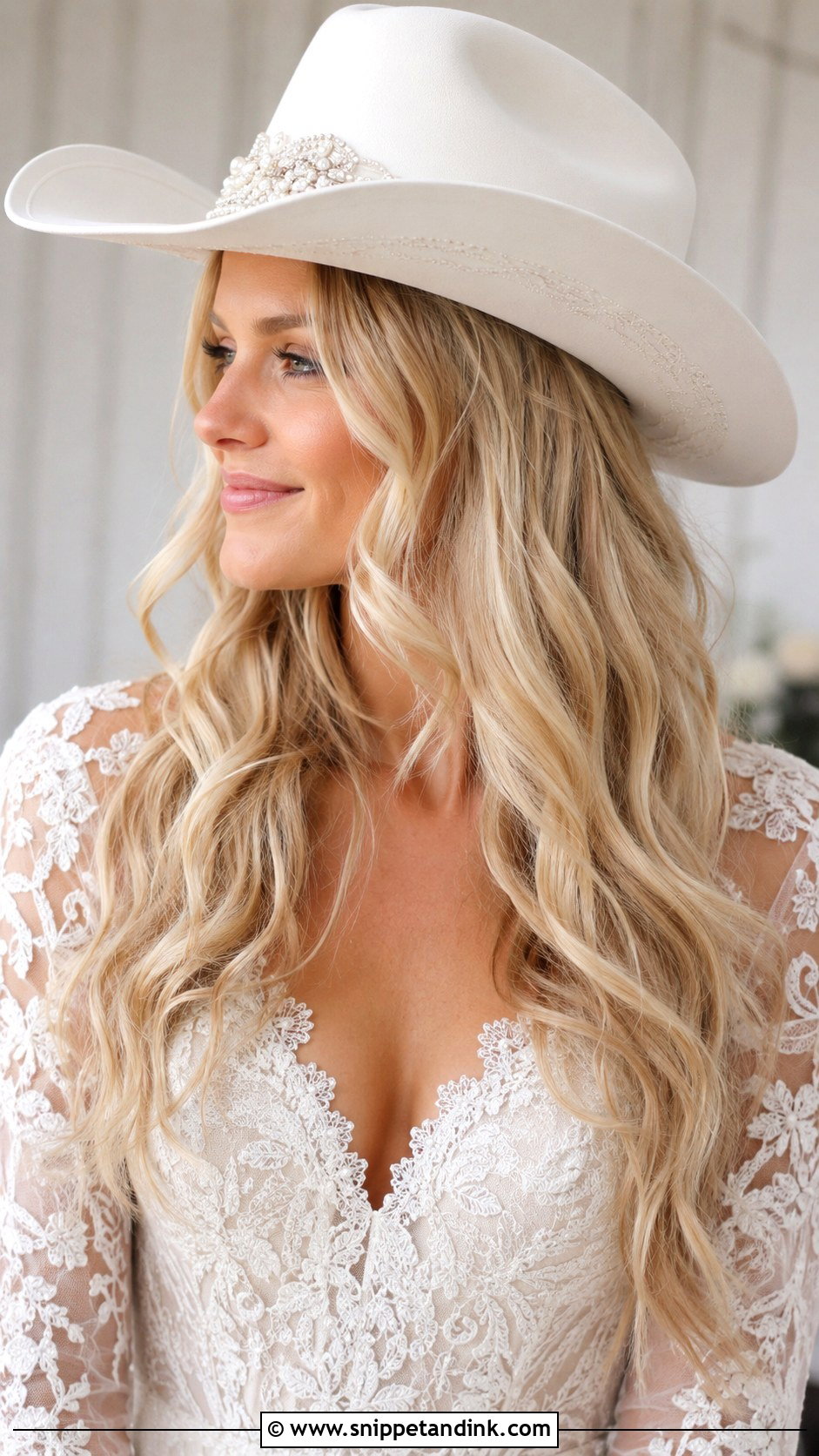
A hat changes how I build everything underneath it. The crown has to stay low and flat so the hat sits at its true depth, and any volume goes to the sides and the lengths instead. Loose waves, low curls, a relaxed braid or a nape bun all work; anything with height on top doesn’t. Leave two face pieces out to soften the brim line. This is the most recognisably Western look here, and it carries over to engagement photos and the rehearsal dinner too.
14. Western Wedding Hair With Flowers
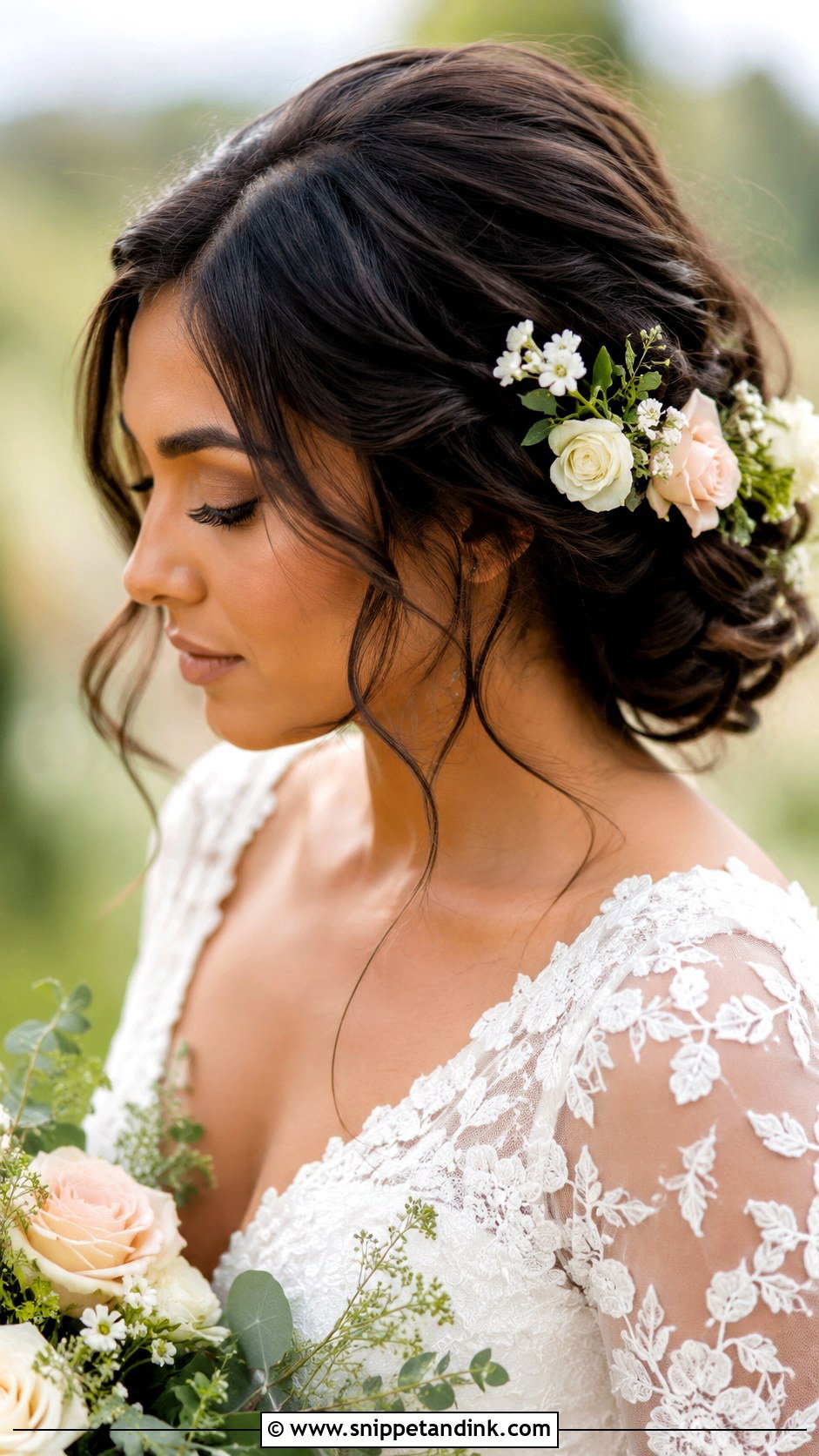
Fresh flowers in the hair suit outdoor ceremonies, tucked into a braid, around a low bun or scattered through waves. Small blooms blend in; large heads look stuck on and drag pins down as the day goes on. I ask the florist for sturdier stems such as spray roses or wax flower, wired and taped, because delicate blooms wilt against warm hair within a couple of hours. Match the bouquet colours and keep the shape textured so the flowers look grown into the style.
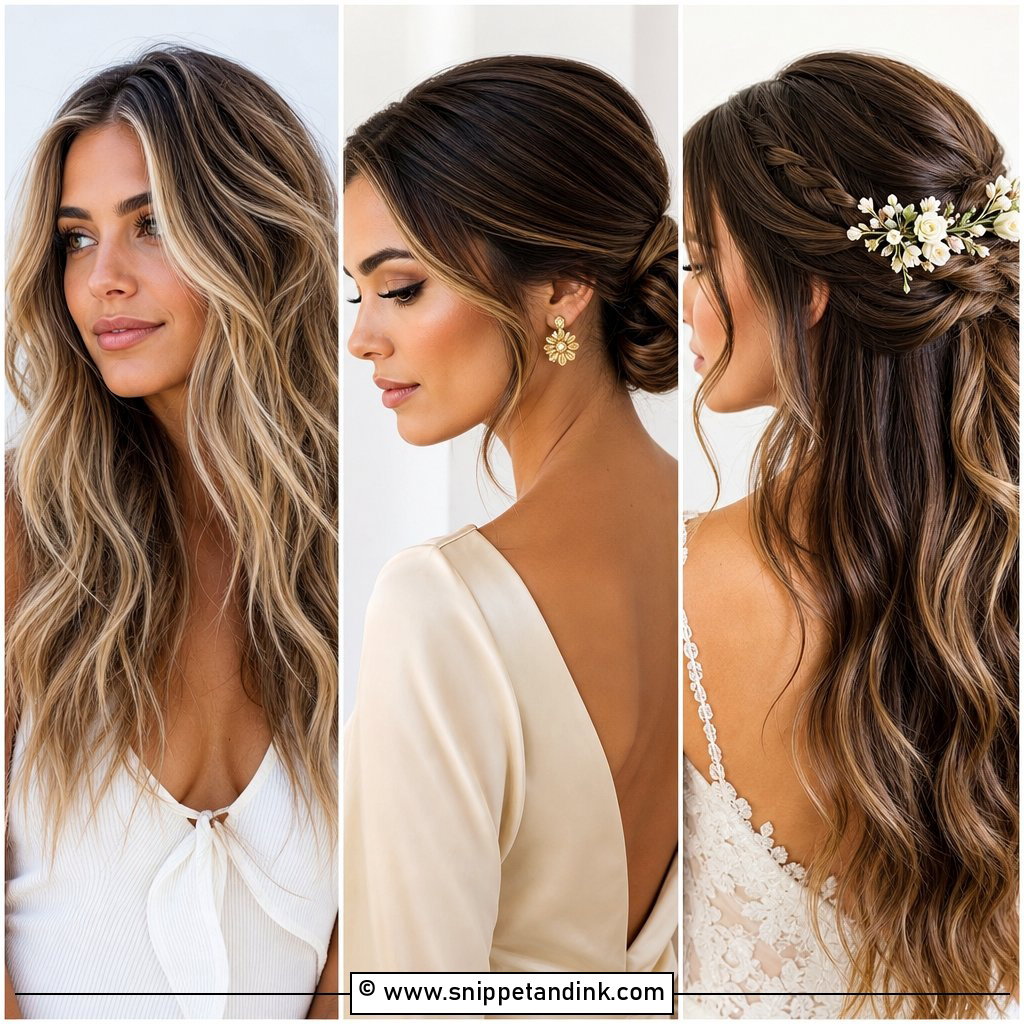
15. Western Wedding Hair With Veil
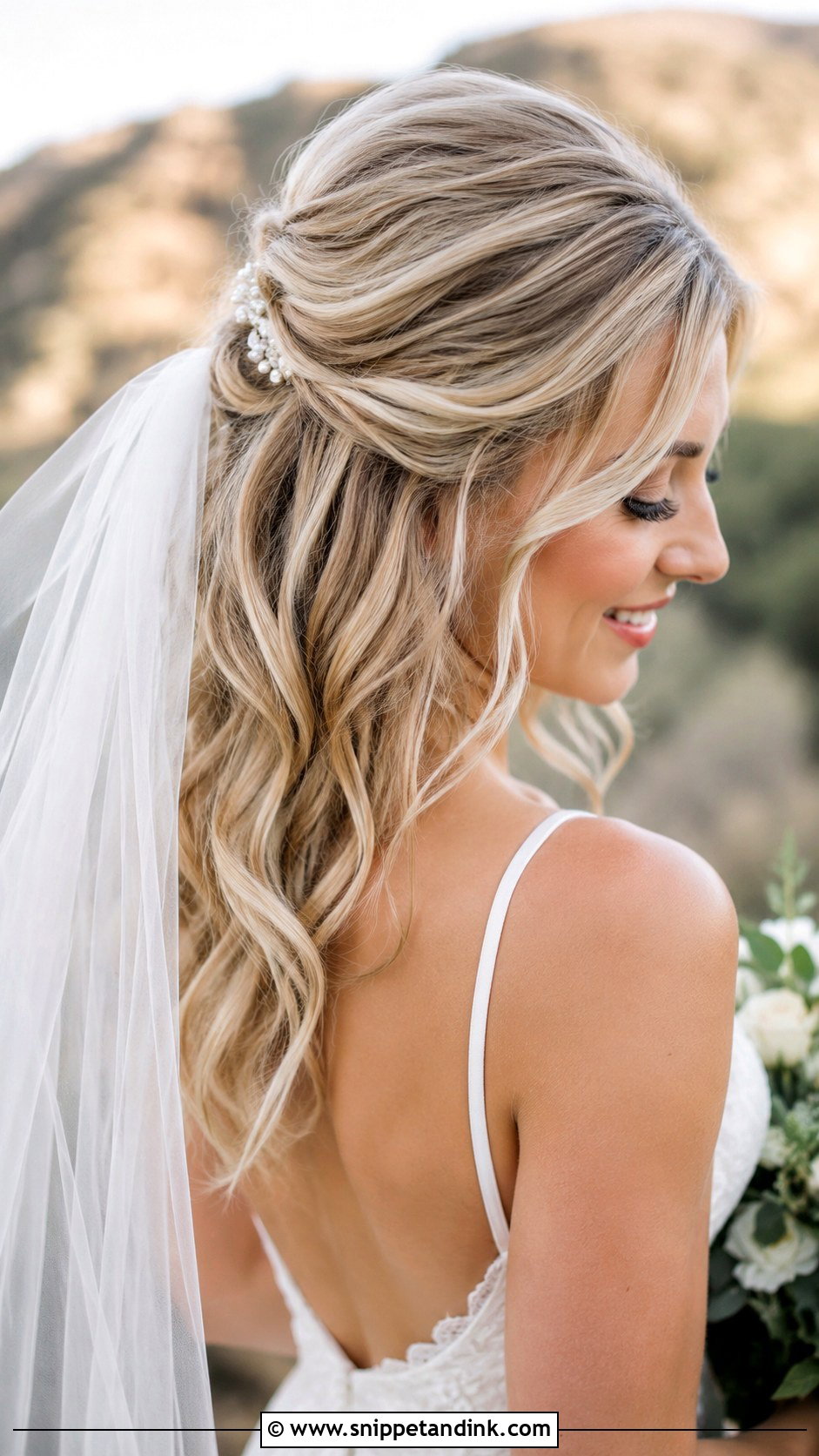
Veils come down to placement. Pinned above a bun reads classic; slid in underneath reads softer and more current. I always test the veil at the trial with the bride walking and turning her head, because that’s when a comb slips or drags the hair flat. Low buns, half-up curls, textured updos and soft waves all hold a veil well. At a Western wedding many brides lift the veil off after the ceremony and switch to a hat, so the style has to look finished both ways.
Barn Dust, Pasture Wind and Late Golden Light
Ranch and farm venues are harder on hair than a hotel ballroom, and I plan for that from the first consultation. Open fields mean steady wind, barns hold dust and hay that cling to hairspray, and evening portraits often happen with the sun low and straight into your face.
What I change for an outdoor Western venue
- I use a lighter finishing spray. Heavy, tacky hold catches dust and loose hay, and you’ll see every speck in close-up photos.
- Wind pushes hair across the face from one direction, so I check the forecast and secure the face pieces on the windward side a little more firmly.
- Under a wide brim the eyes go into shadow. Photographers will ask you to tilt the hat back for portraits, so the hair at the hairline needs to look tidy when the brim lifts.
- Curls drop faster in the heat of a packed barn. If your reception runs late and warm, a half up or updo will look closer to the morning version than hair worn fully down.
Wearing These as a Guest Without Mirroring the Bride
Guests can borrow almost any style here, but I’d steer away from the most bridal combinations: a veil-friendly low bun with a fresh flower crown, or a white hat with waves. Pick one Western detail instead, such as a braid, a felt hat in a darker shade or a single leather clip, and keep the rest simple.
If you’re doing your own hair, a side braid or a half up twist is the most forgiving to do in a hotel mirror. Both hold through dancing and need nothing more than a curling iron, bobby pins and a light spray.
Settle the Hat Question Before Your Trial
None of these needs to be stiff or complicated to look bridal. What matters is building the shape around what you’ll actually wear and where you’ll be standing: the hat or veil, the wind on the hill, the hours of dancing. Let your dress narrow the list, then bring the real accessories to your trial and move around in them before you decide.
You'll Like These Ideas:


Leave a Reply