
Western weddings put hair through more than most: open fields, barn heat, dust, wind and sometimes a hat. When I style for a ranch or rustic venue, I plan the hold first and the look second, because a soft wave that survives a breezy pasture ceremony is worth more than a perfect one that’s flat by the portraits. A chapel ceremony can carry a sleek chignon; a barn reception usually wants waves, braids or a relaxed updo. These Western bridal hair looks each come with notes on how they handle those conditions.
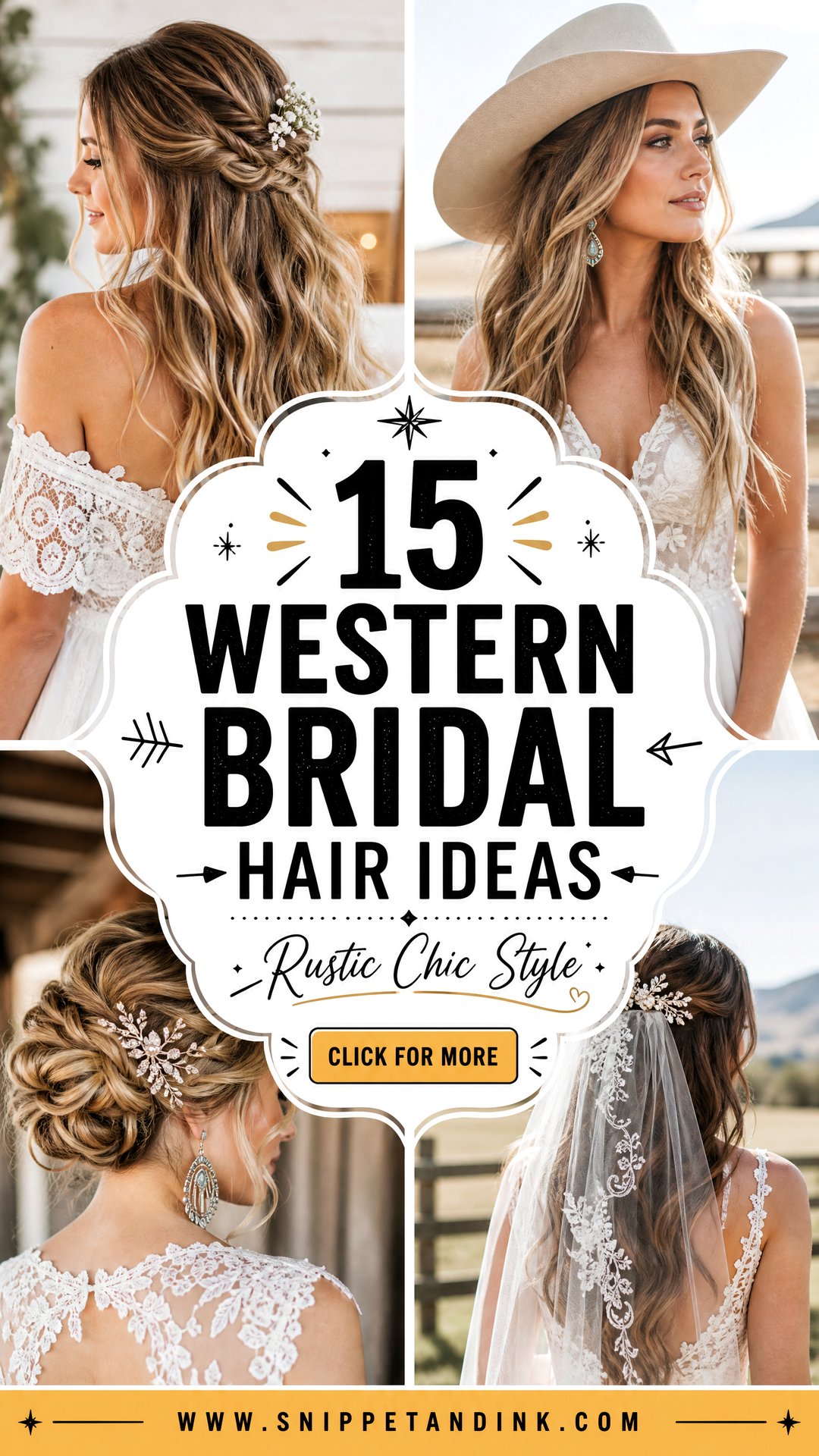
Ranch Dust, Sun and Barn Heat
Outdoor Western venues bring conditions a hotel ballroom never does. Dust from a dirt path or arena clings to tacky hairspray, so for brides walking across open ground I use a lighter-hold spray on the surface and keep the heavy products for the hidden base.
Sun is the other factor. Scalps burn along a center part during a long afternoon ceremony, and a side part or a hat helps. Barns trap heat, and heat plus dancing makes curls drop and edges frizz, so ask the venue about fans or open doors, and pick a pinned style if the reception is likely to run warm.
Wind on an open ceremony site
Fields and hilltops rarely have shelter, and wind is what ends most loose styles early. At the trial, step outside or stand in front of a fan for a minute and watch where the hair goes. If the front blows into your lip gloss, have it pinned back; if the veil lifts the whole style, the base needs anchoring. It takes two minutes and tells me more than any mirror.
None of this means giving up loose hair. It means choosing where it’s loose, and saving the free-flowing waves for the reception, when you’re indoors or the evening air has settled.
1. Western Bridal Low Chignon
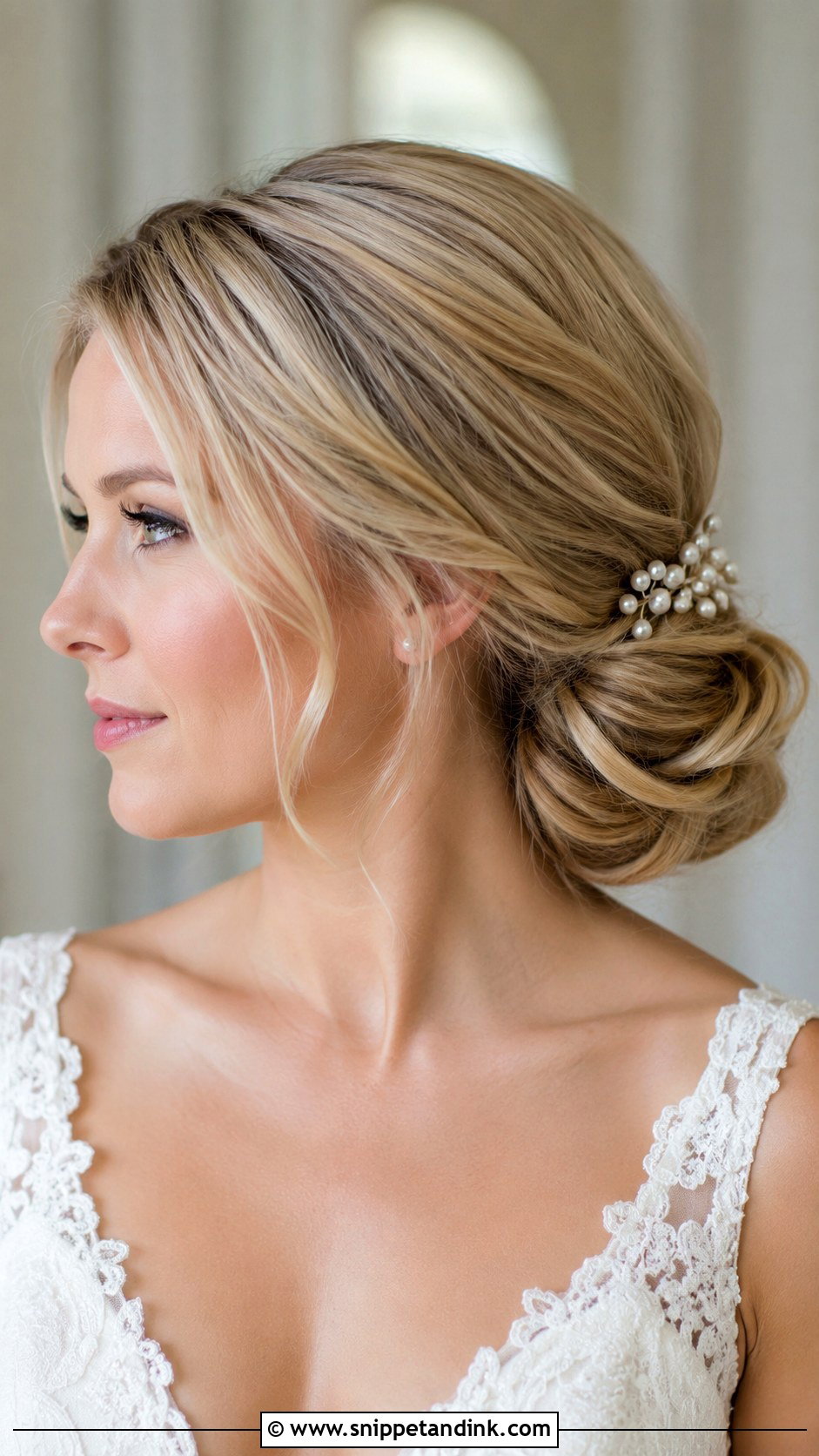
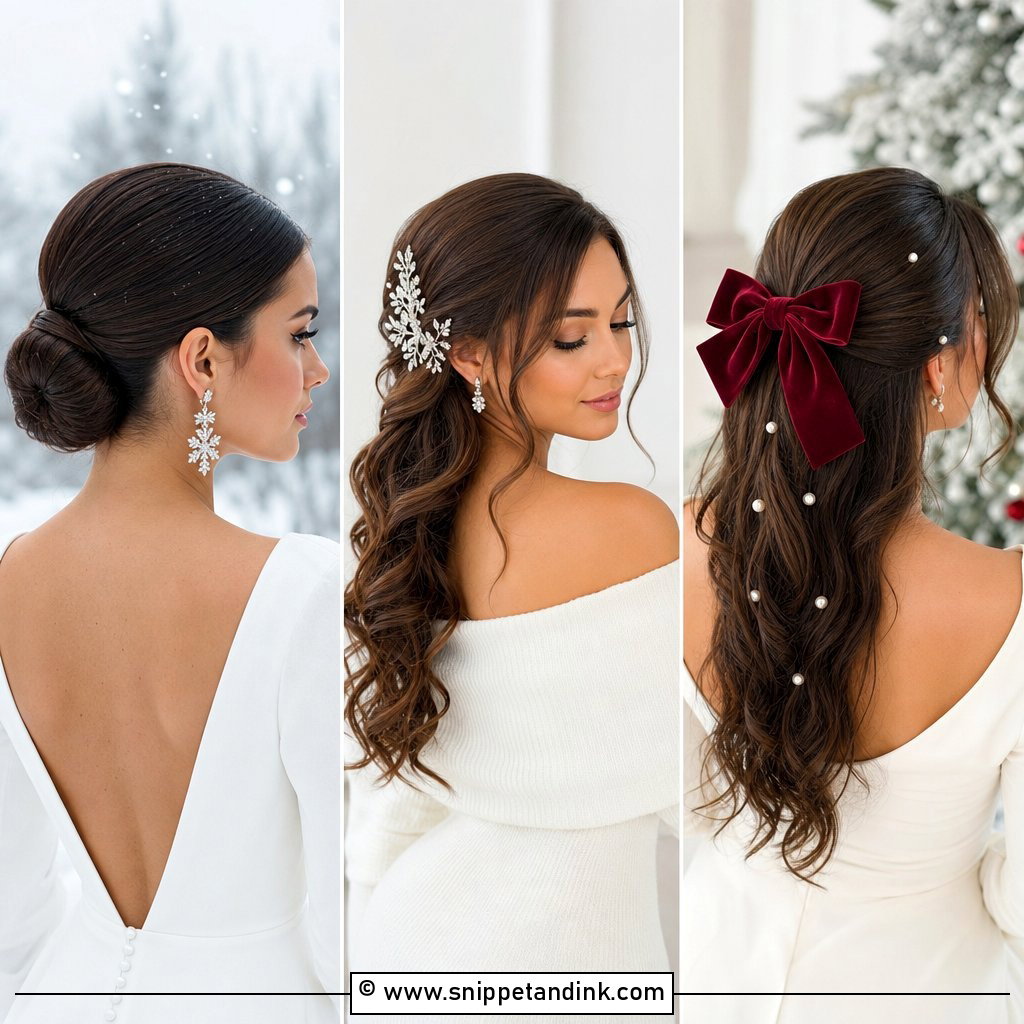
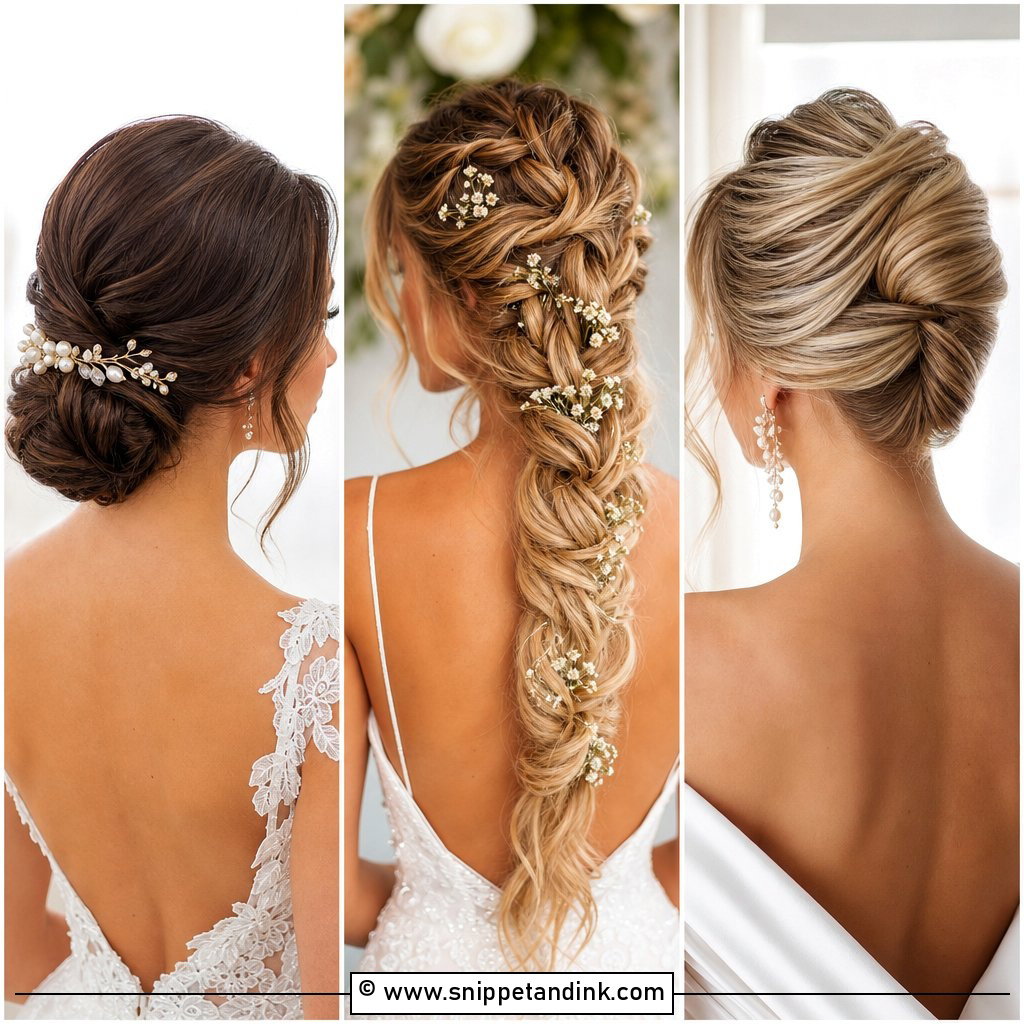
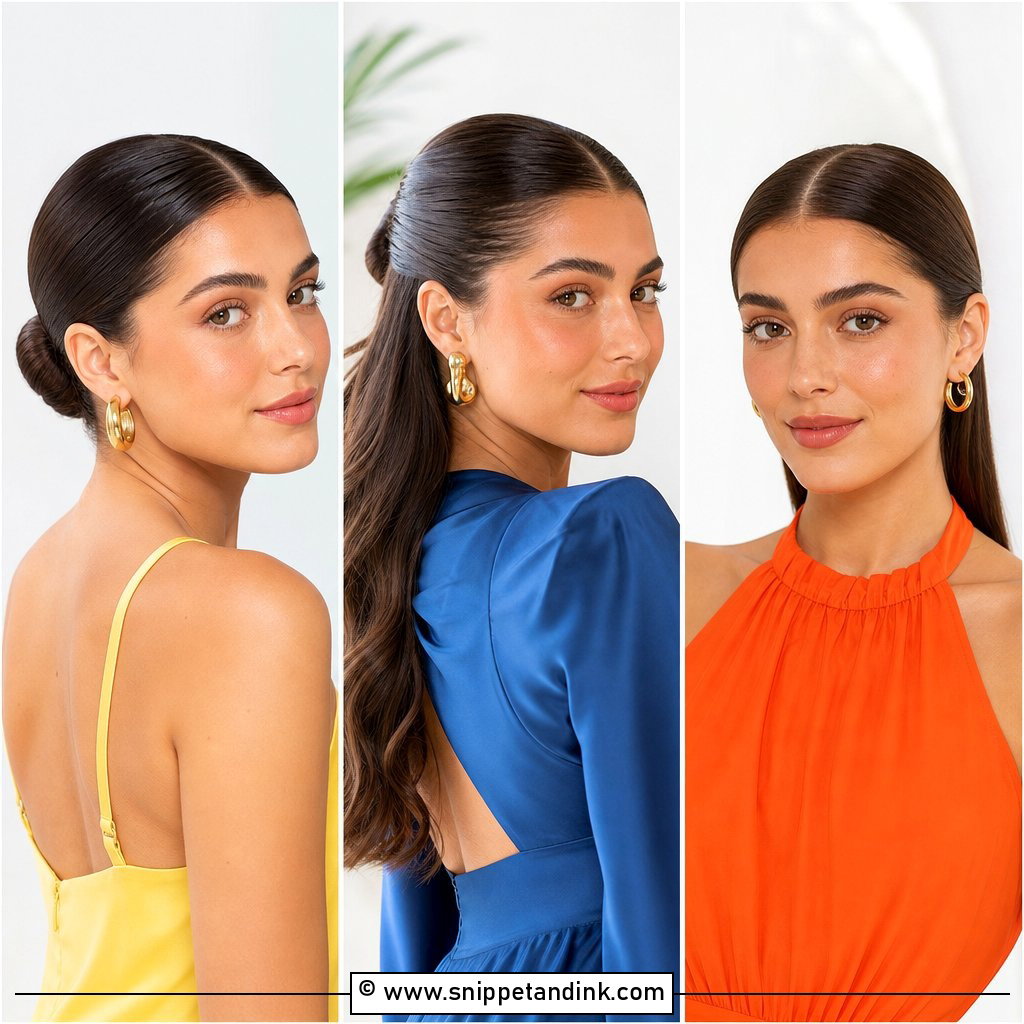
If I had to pick one style for an unpredictable outdoor ceremony, it would be the low chignon. The bun sits at the nape, out of the wind’s reach, and nothing at the crown gets in the way of a veil, pearl pins or a bridal hat. Square necklines, lace sleeves and high necks all leave room for it, since it keeps the shoulders and face open. A little crown volume softens it; a center part makes it modern. It’s also the style that comes back from a gust looking exactly as it went in.
2. Western Bridal Half Up Hair
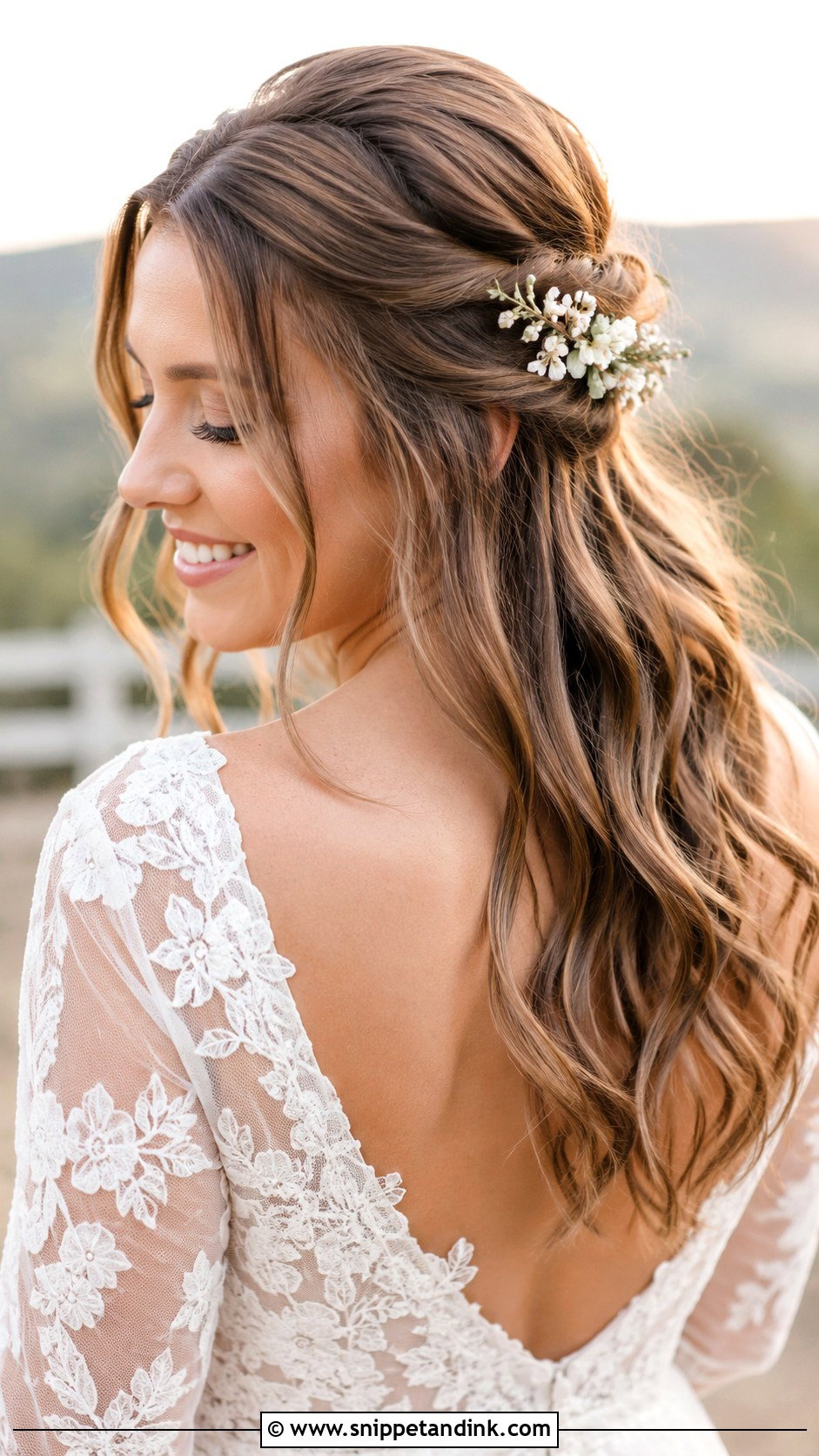
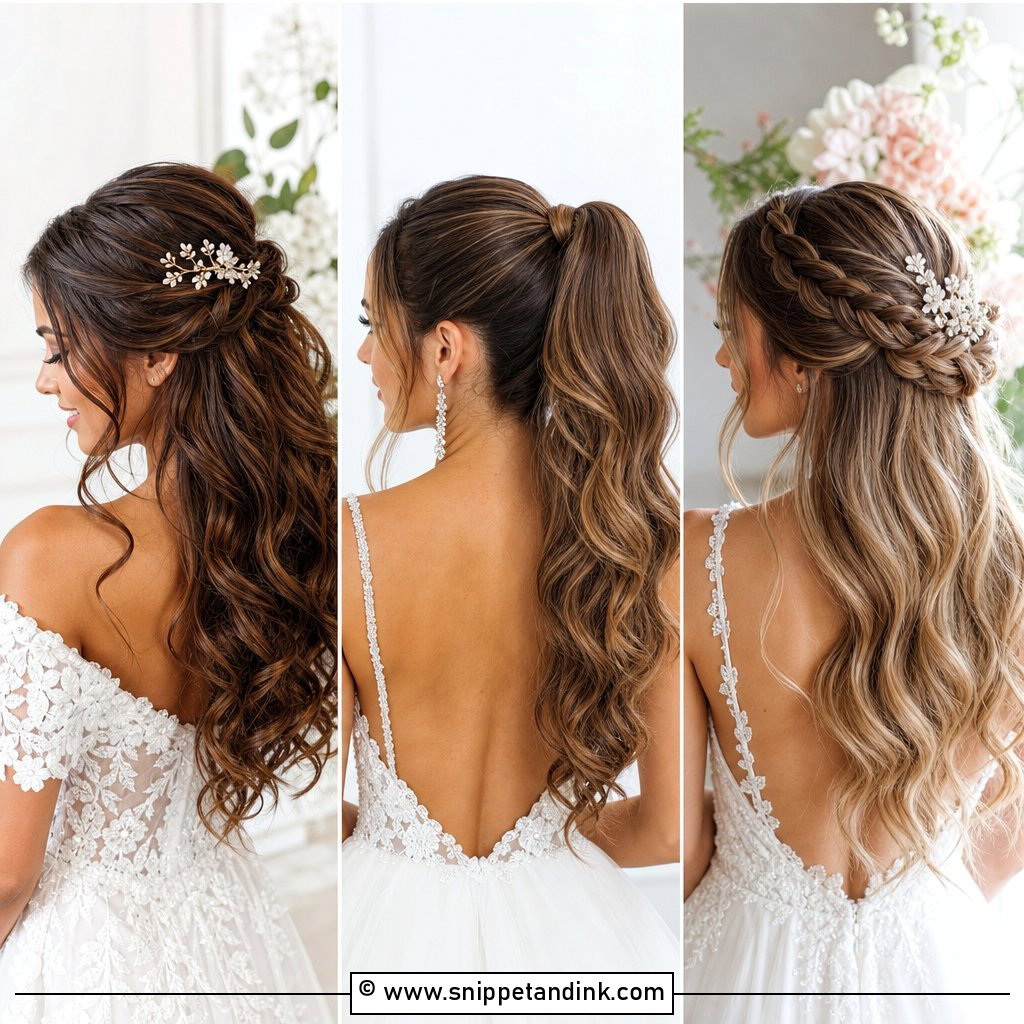
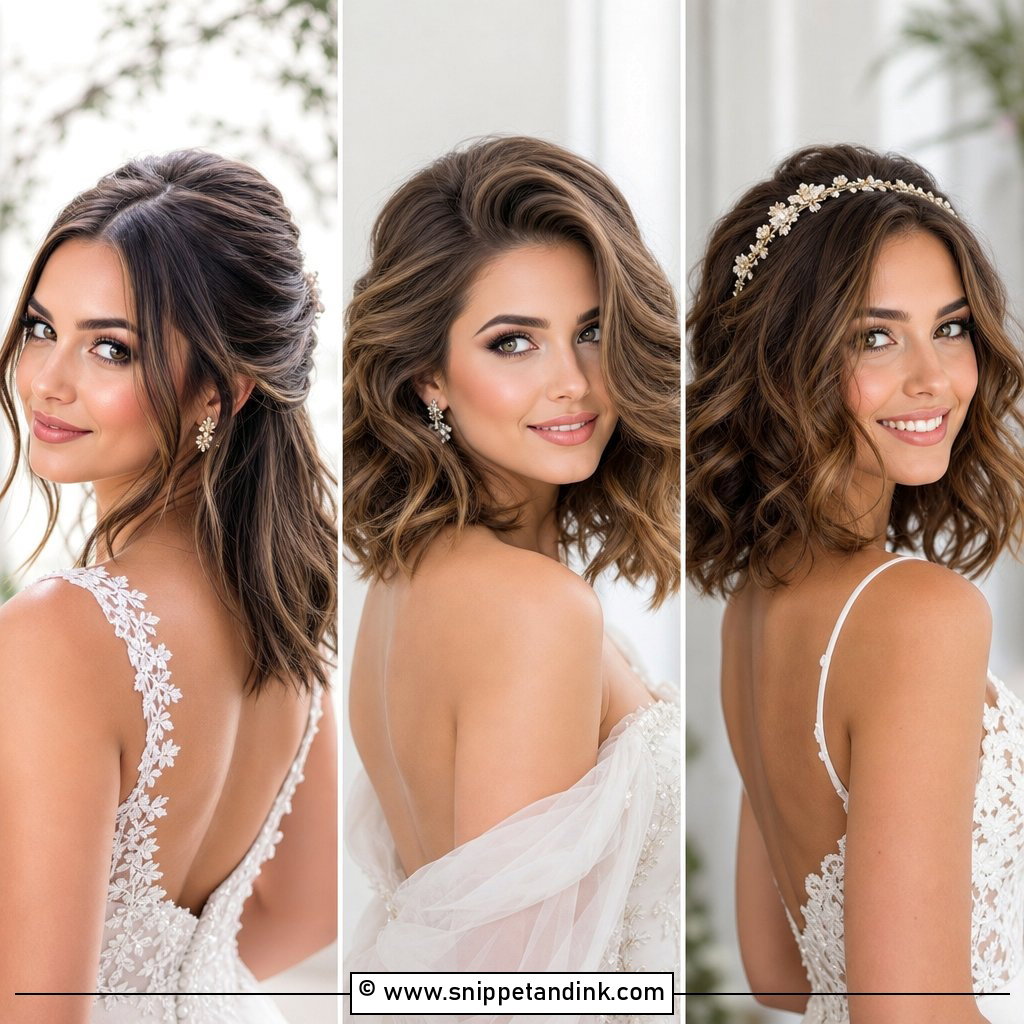
The softness of hair worn down with the security of a pinned top section is what Western bridal half up hair is about. The rest falls in curls, waves or natural texture, on medium or long hair, with face-framing pieces if they suit you. I anchor the top section with crossed pins under the twist rather than trusting a clip, because a barn dance floor will test it. A small floral comb or a lace bow sits neatly at the join. In strong wind the loose length will blow around, so for an exposed ceremony site I’d lean toward a fully pinned style.
3. Western Bridal Loose Waves
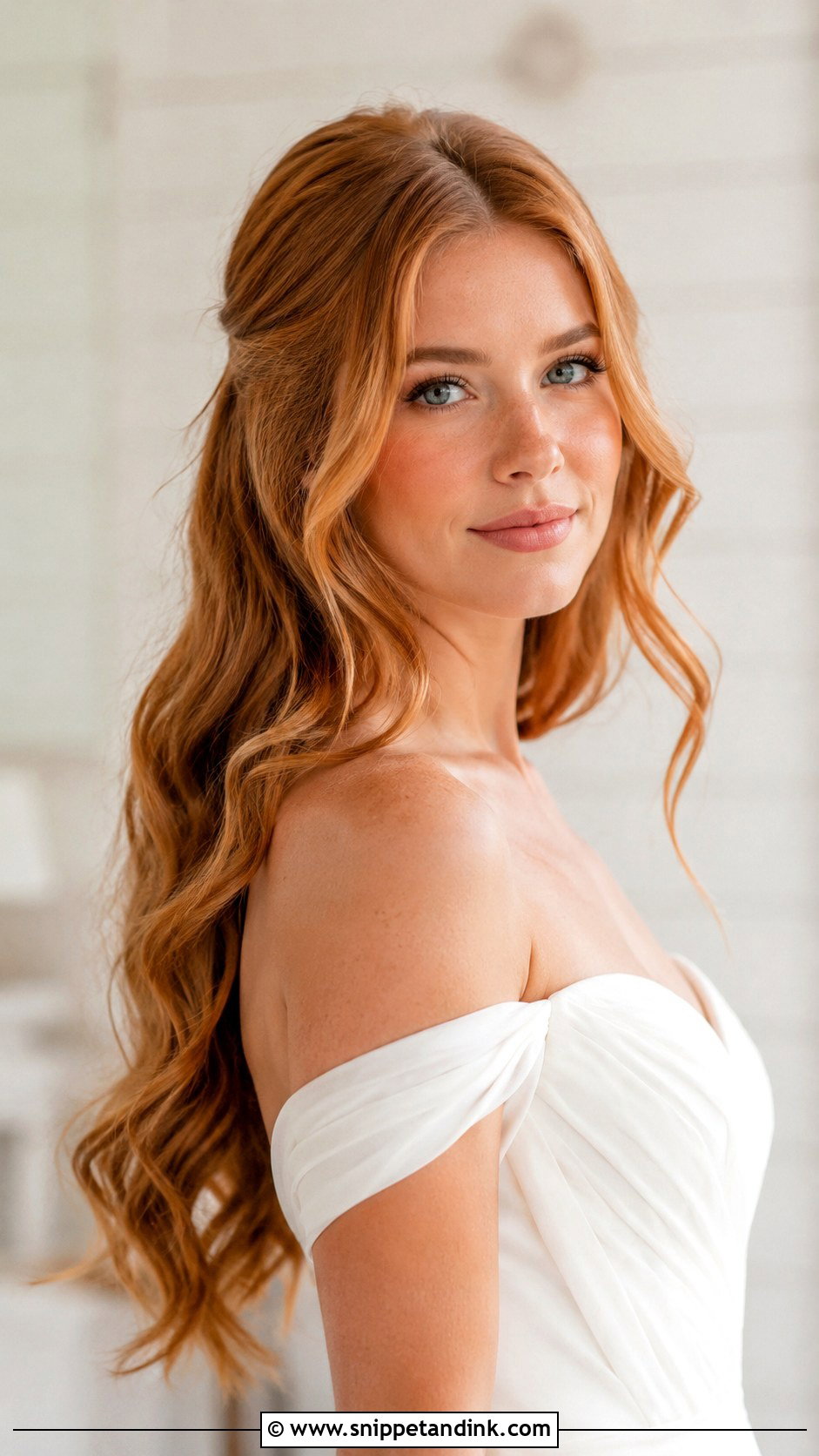
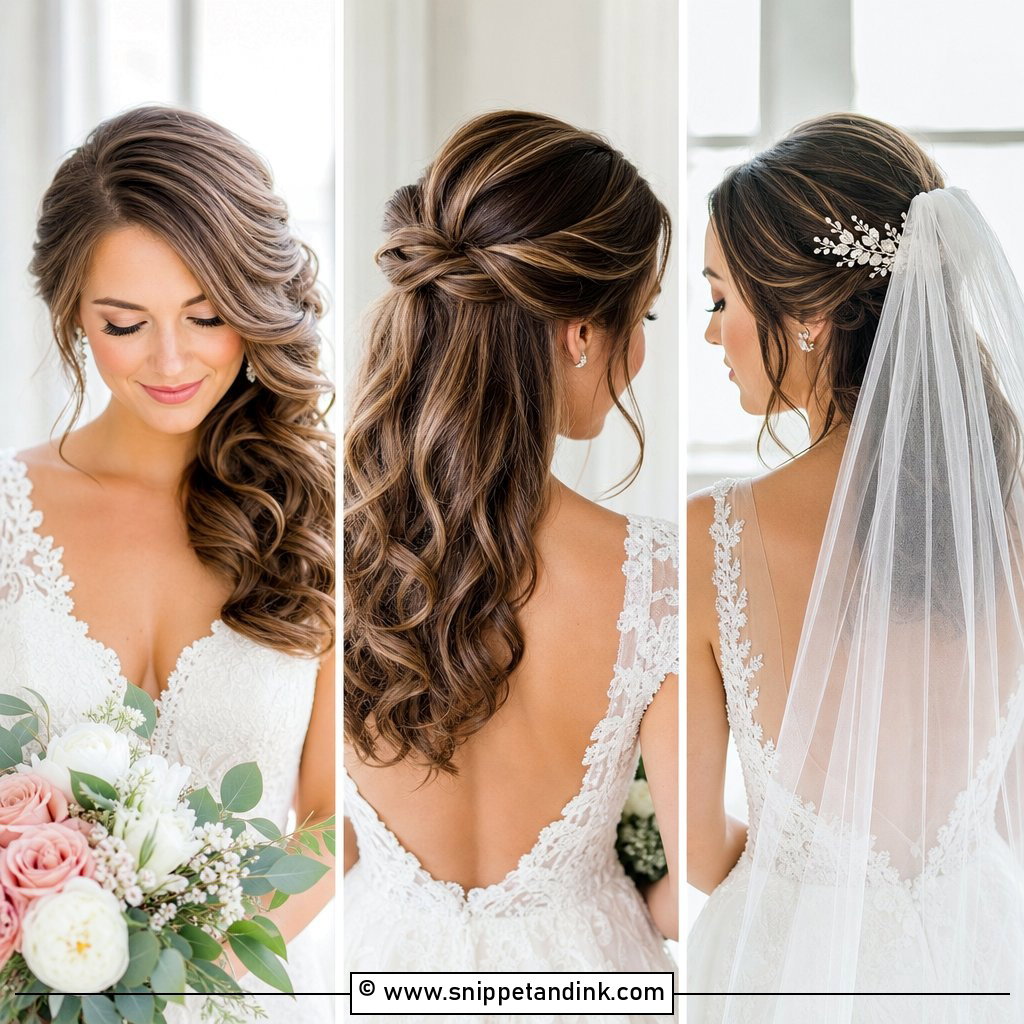
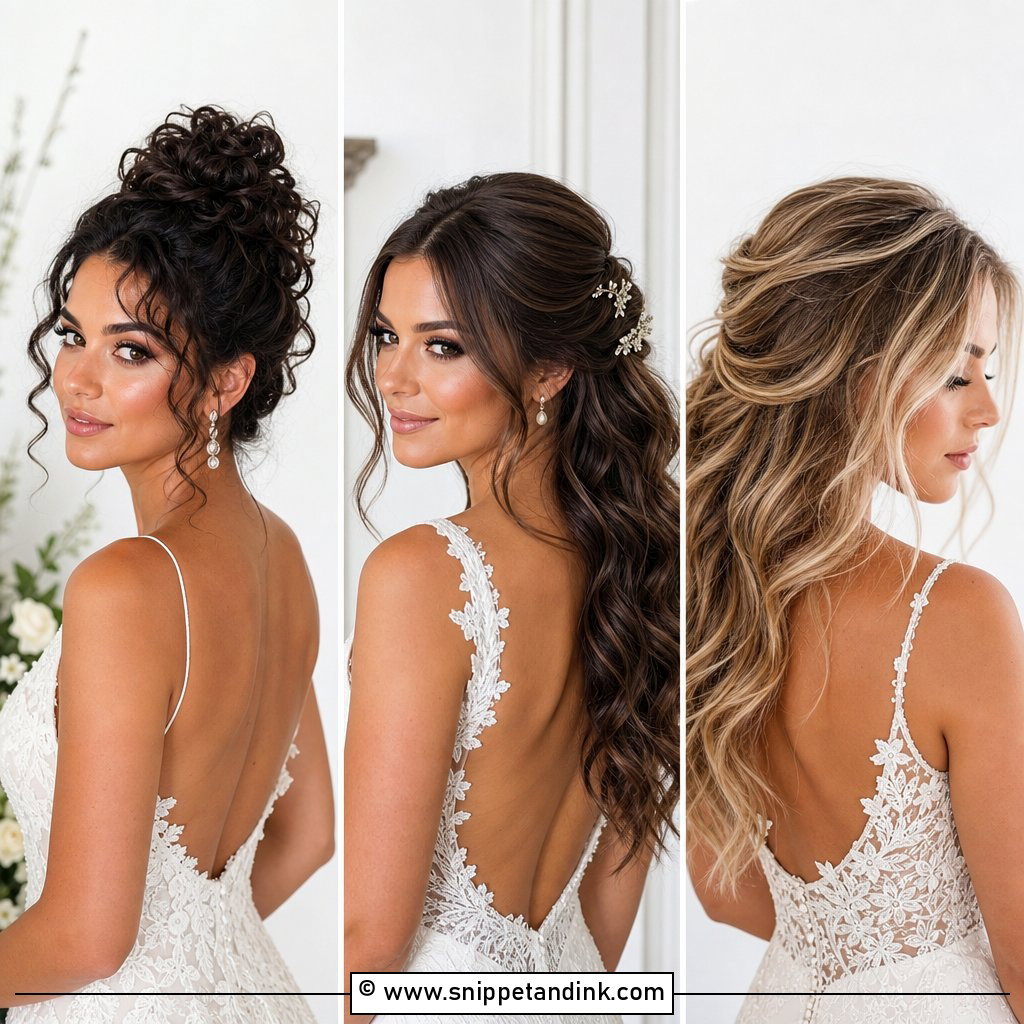
Brushed-out waves are what most brides picture for a relaxed Western wedding, and they’re also the style most likely to drop. I curl with a medium barrel, pin each curl to cool and brush out only once everything has set, then finish with a flexible spray rather than a stiff one. Off-the-shoulder gowns, fitted lace and plain satin all suit them, and the movement shows through a veil without weighing it down. Fine hair often needs clip-in wefts for fullness. Keep the front pieces polished, and a light shine spray will catch the outdoor light.
4. Western Bridal High Bun
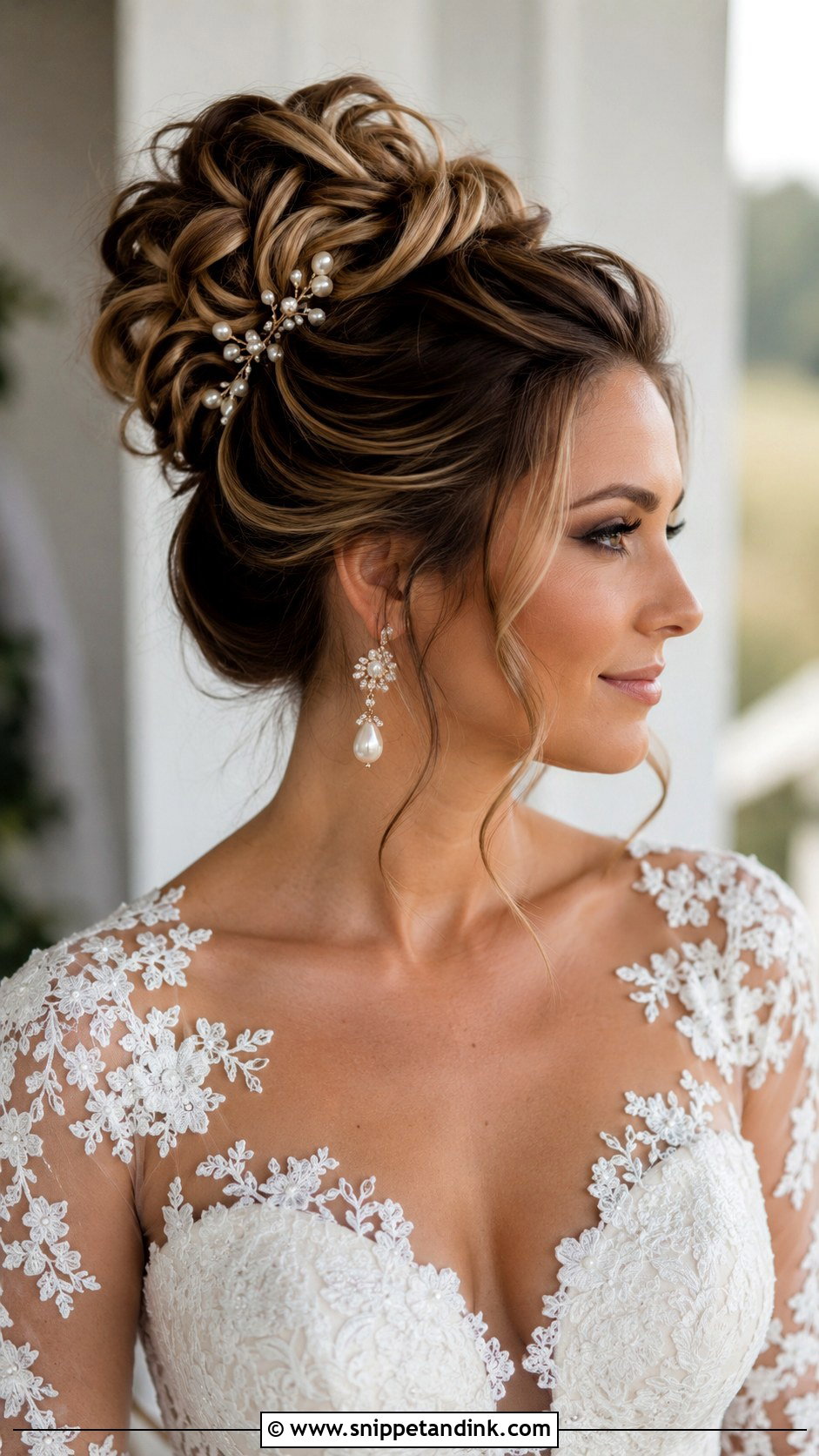
A high bun keeps hair entirely off the neck, which matters at a summer ranch wedding where the afternoon sun hits hard. It can be smooth, textured or slightly undone. Statement earrings, lace collars and detailed dress backs all show around it, and it frames curtain bangs or a few tendrils nicely. One limit: a high bun and a cowboy hat don’t mix, so if a hat is coming out for portraits, choose something lower. A small braid wrapped around the base gives it a Western note without any props.
5. Western Bridal Side Braid
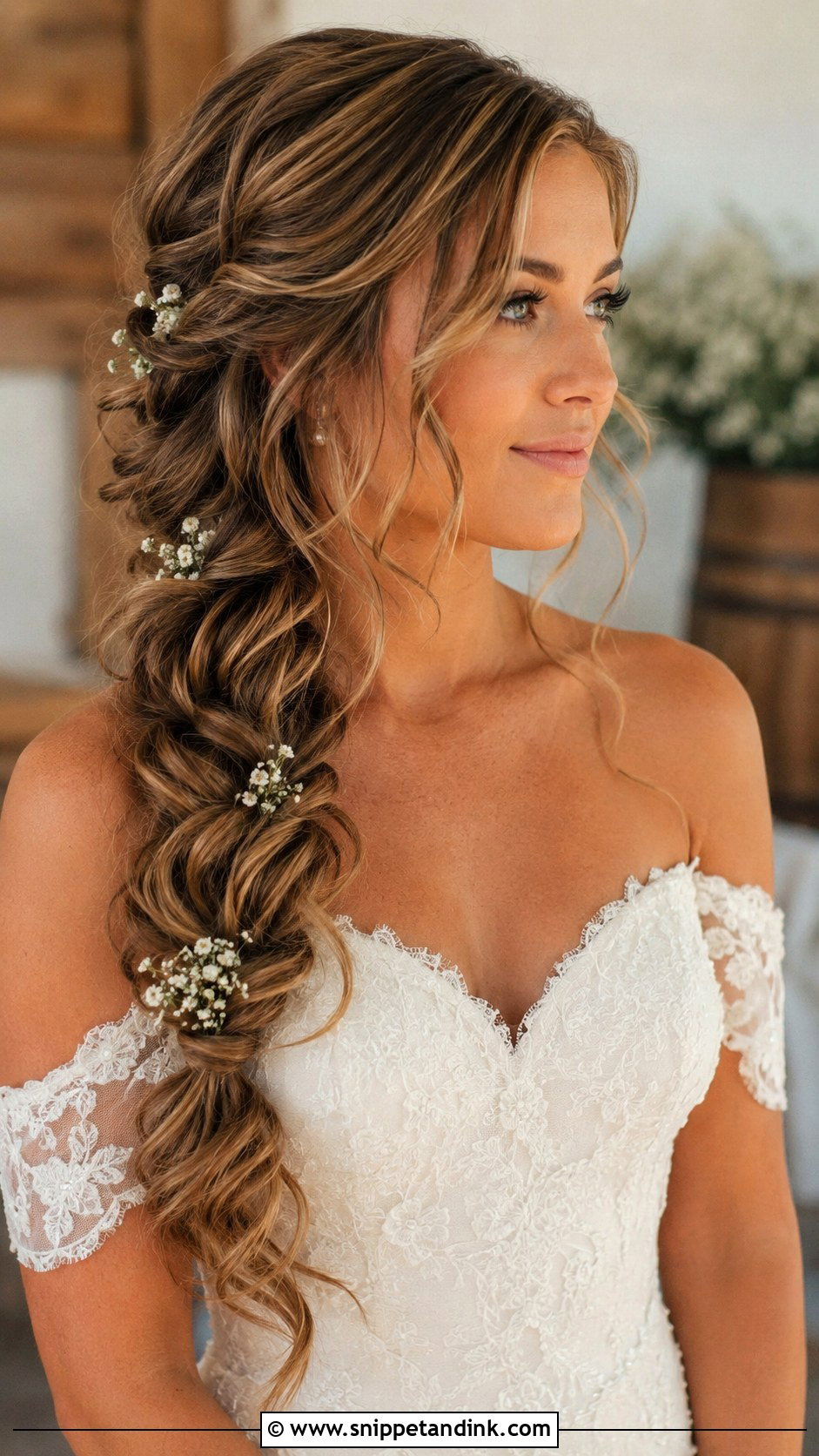
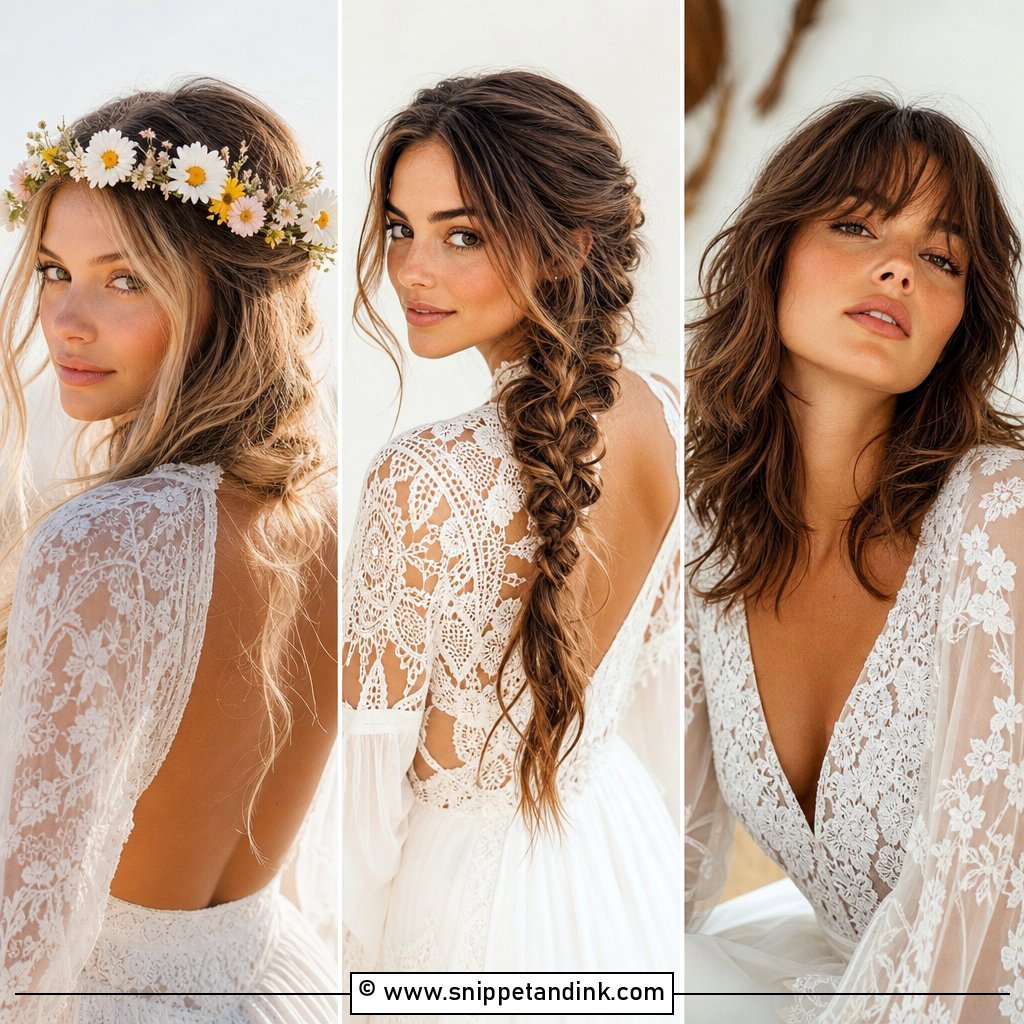
Side braids hold up in wind better than loose hair and still look relaxed. I gather soft waves to one side and braid loosely, then pull the edges for fullness; layered hair and added wefts both help it look thicker. It leaves the other side clear for a veil, a hat or a jeweled comb. Lace and boho gowns pair naturally with it. Keep it soft at the hairline so it frames the face instead of dragging it back.
6. Western Bridal French Twist
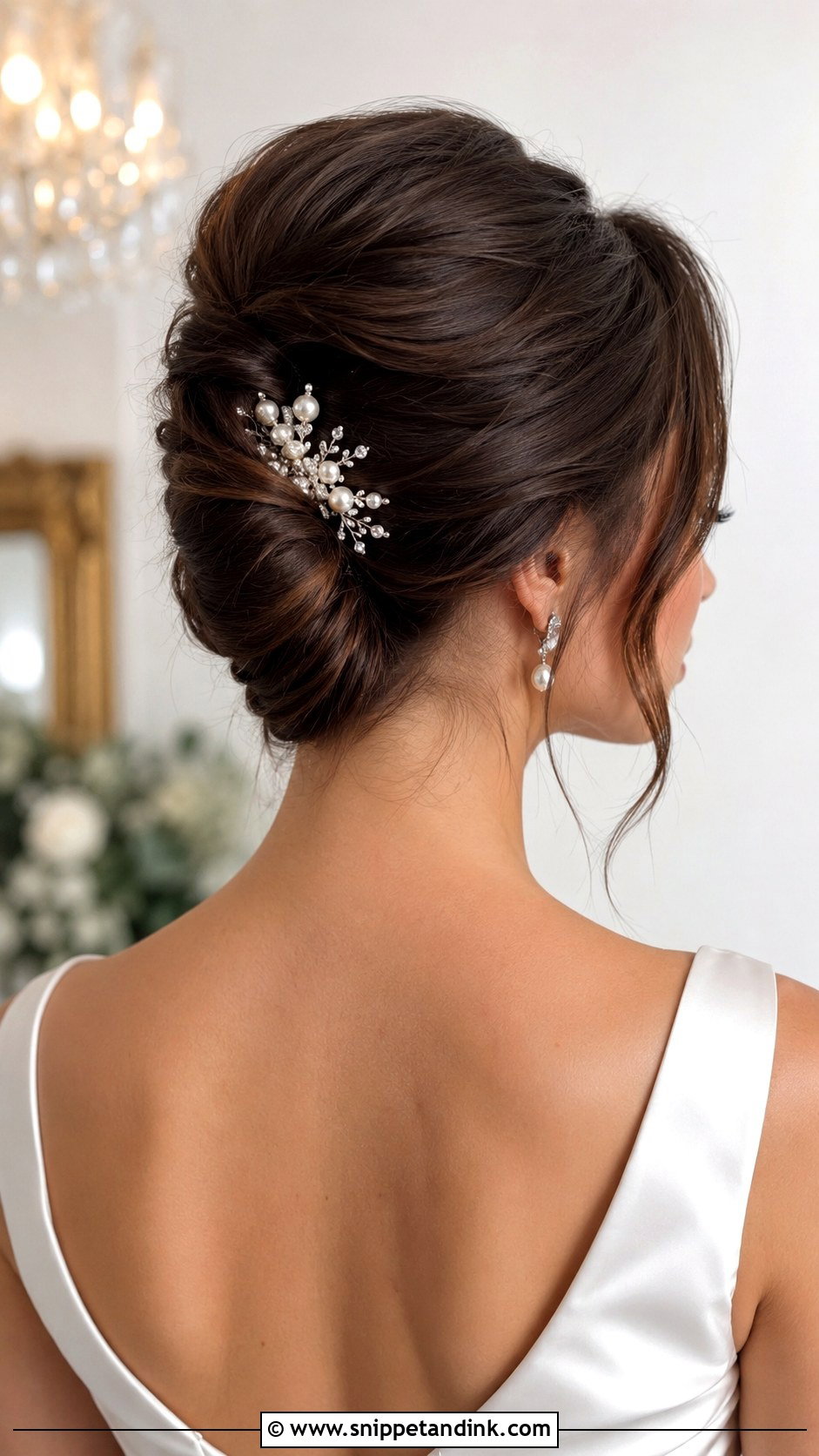
The French twist reads vintage, which suits a chapel or a more formal Western venue. The hair is swept up and pinned into a vertical roll, and for a softer version I loosen the crown slightly and leave a couple of face-framing pieces. Pearl accessories, satin and structured dresses all sit well with it. Medium-length hair is actually easier here than very long hair, since there’s less to tuck inside the roll and it stays slim. A flexible spray keeps it from looking lacquered.
7. Western Bridal Ponytail
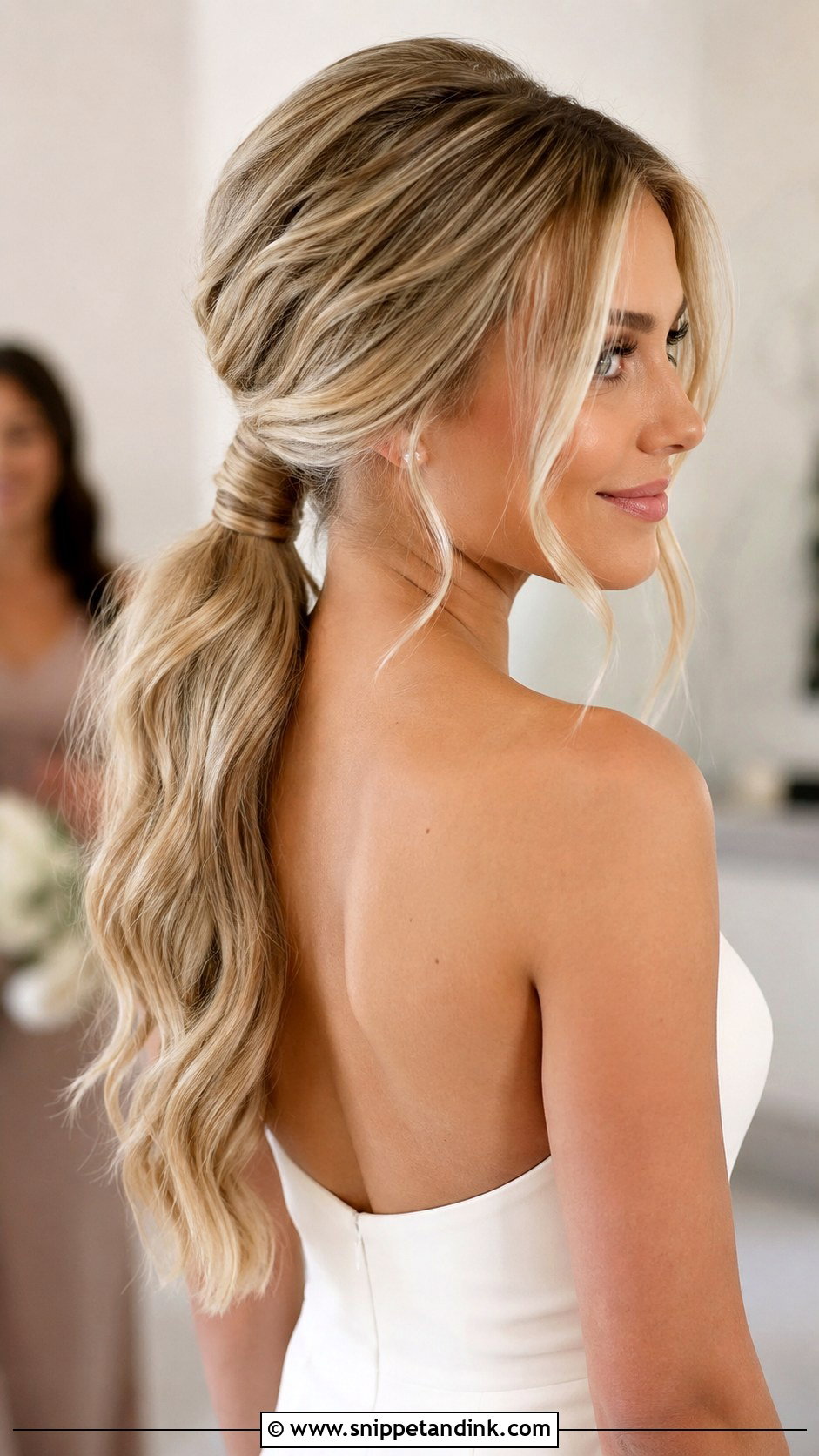
Of the Western styles, the ponytail is the one I find most comfortable for a long reception. Low feels softer; higher feels more glamorous but carries more weight at the crown. Waves through the length keep it bridal, wrapped hair at the base finishes it, and a ribbon or small comb at the tie adds a country detail. Simple gowns and square necklines show it well because it adds movement without covering the dress. Secure the base with a couple of crossed pins, or it will sink by the first line dance.
8. Western Bridal Braided Updo
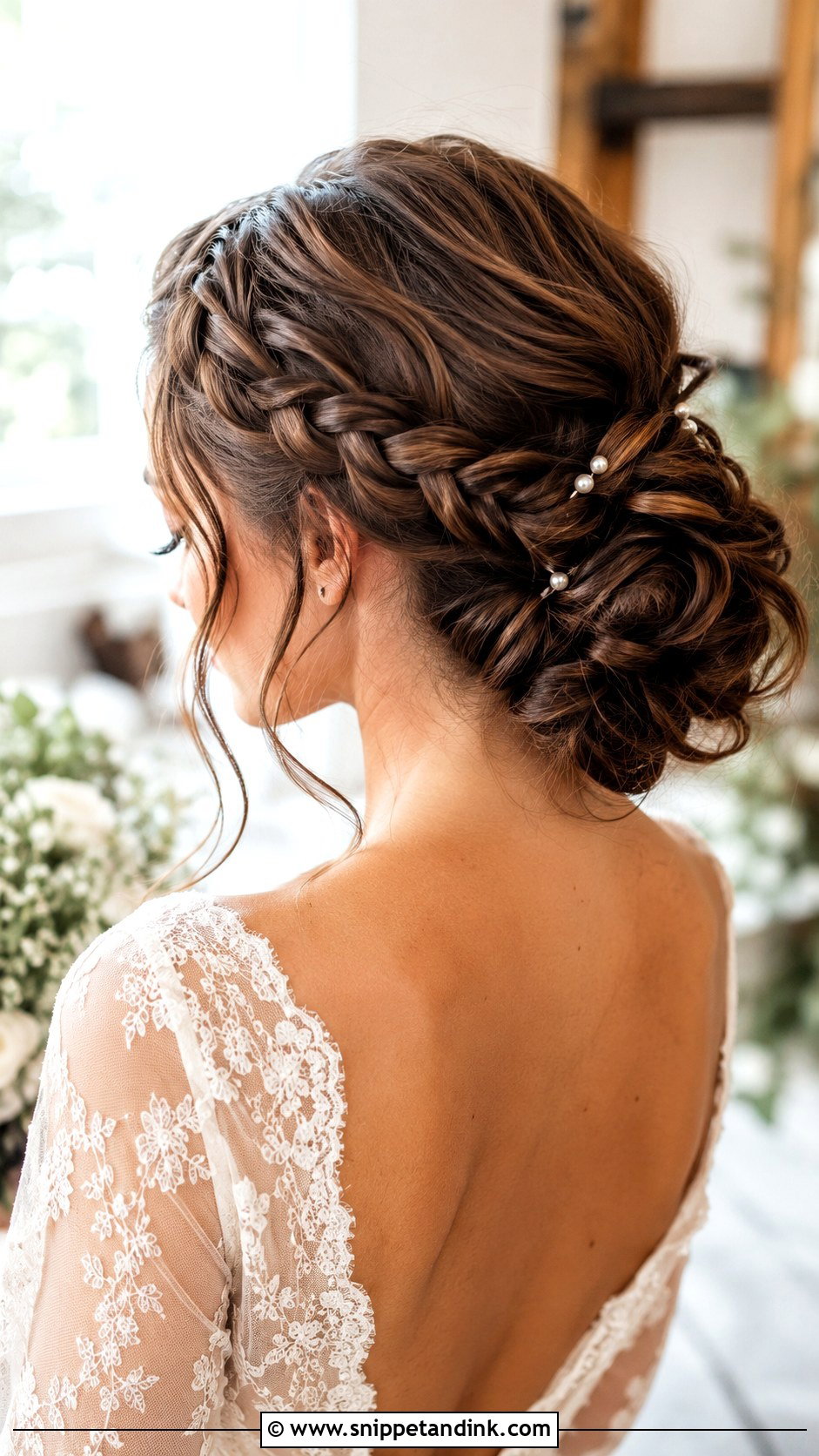
Braids woven into an updo give the hair grip from the inside, which is why braided styles survive outdoor weddings so well. I weave them into a low bun, wrap them around the crown or run them along the sides. Lace gowns and rustic venues suit the texture, and since the braid does the decorating, accessories can stay minimal. Keep the bun slightly loose for a modern feel. A few tiny flowers tucked along the plait are enough.
9. Western Bridal Hollywood Waves
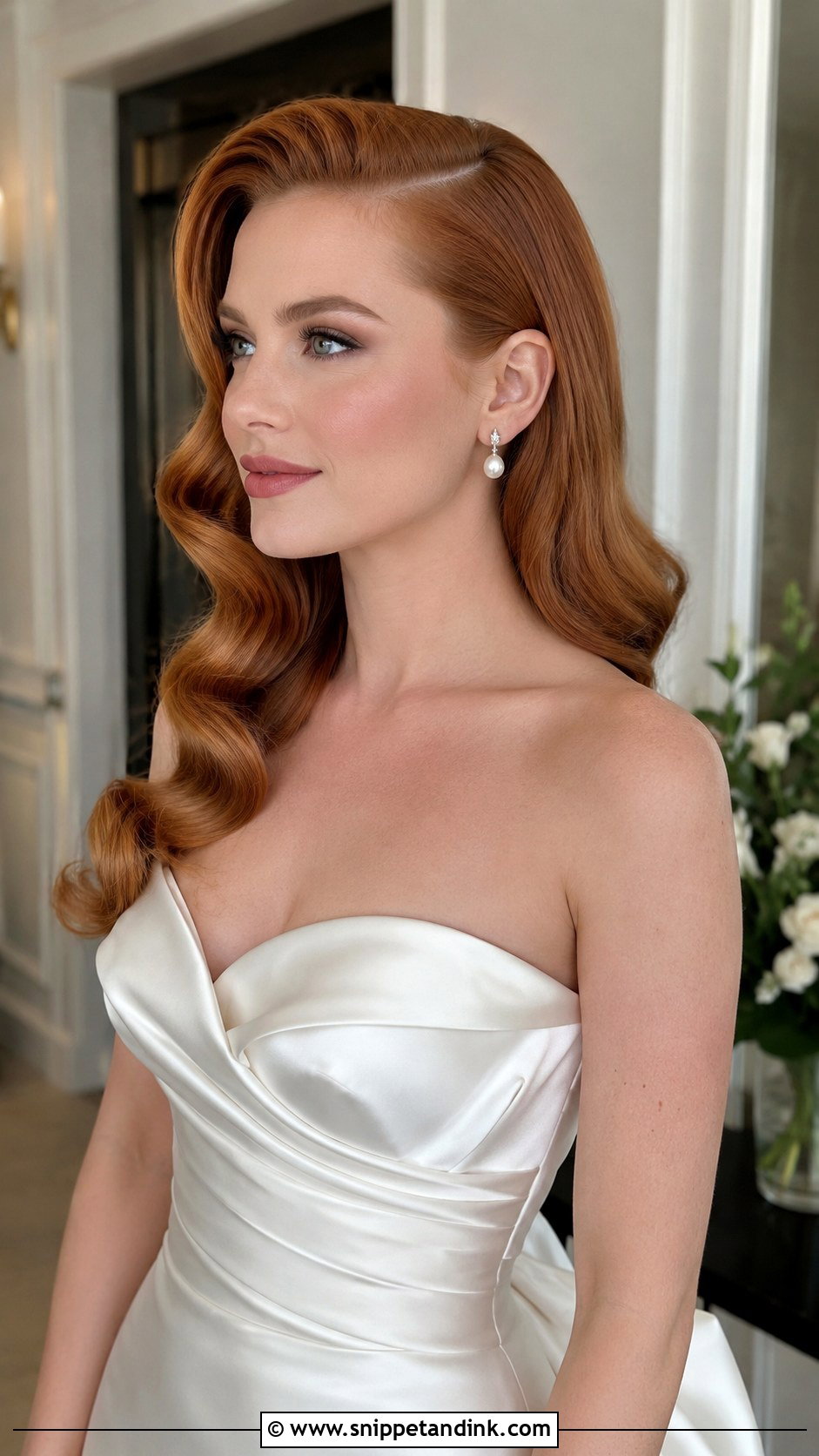
Hollywood waves bring polished glamour to a Western wedding, and they look especially sharp with strapless gowns, sweetheart necklines and satin. The waves are curled in one direction, brushed into continuous curves and set with shine. They need medium to long hair with some density, or extensions, to hold the pattern. I’m cautious about them outdoors: dry heat is fine, but humidity and wind soften the ridges quickly. Ask for soft structure, never crunchy curls.
10. Western Bridal Messy Bun
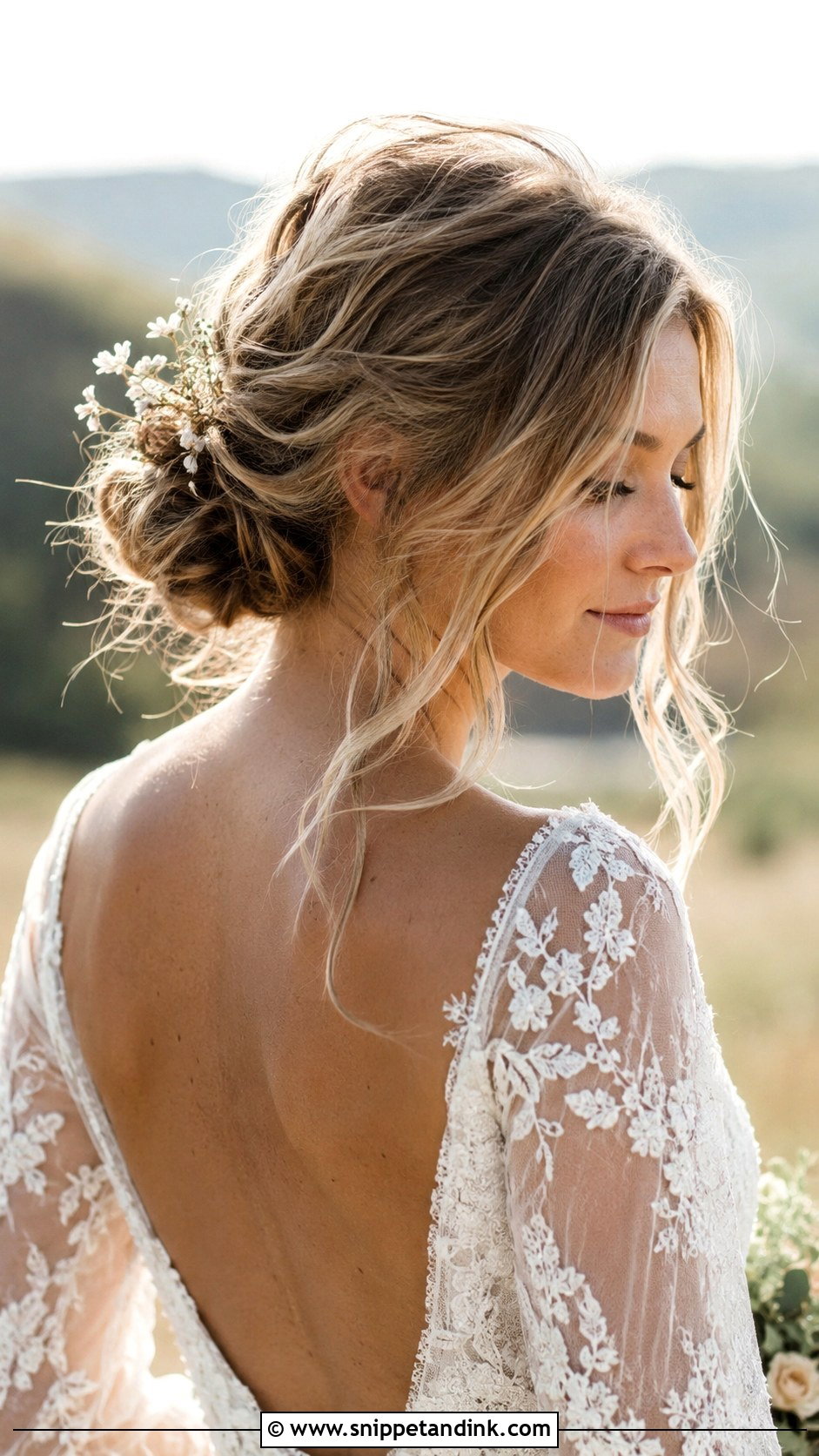
Flowing lace and outdoor venues suit a messy bun, where a sleek updo might feel too formal. It usually sits low or mid-height, with loose texture and soft pieces around the face. Messy still means planned: I build a firm base and pull texture out of it, rather than pinning loose hair and hoping. Naturally wavy hair is the easiest to work with because the texture is already there. Small pearls or dried florals add detail, and dried flowers have the advantage of not wilting in the heat.
11. Western Bridal Hair With Veil
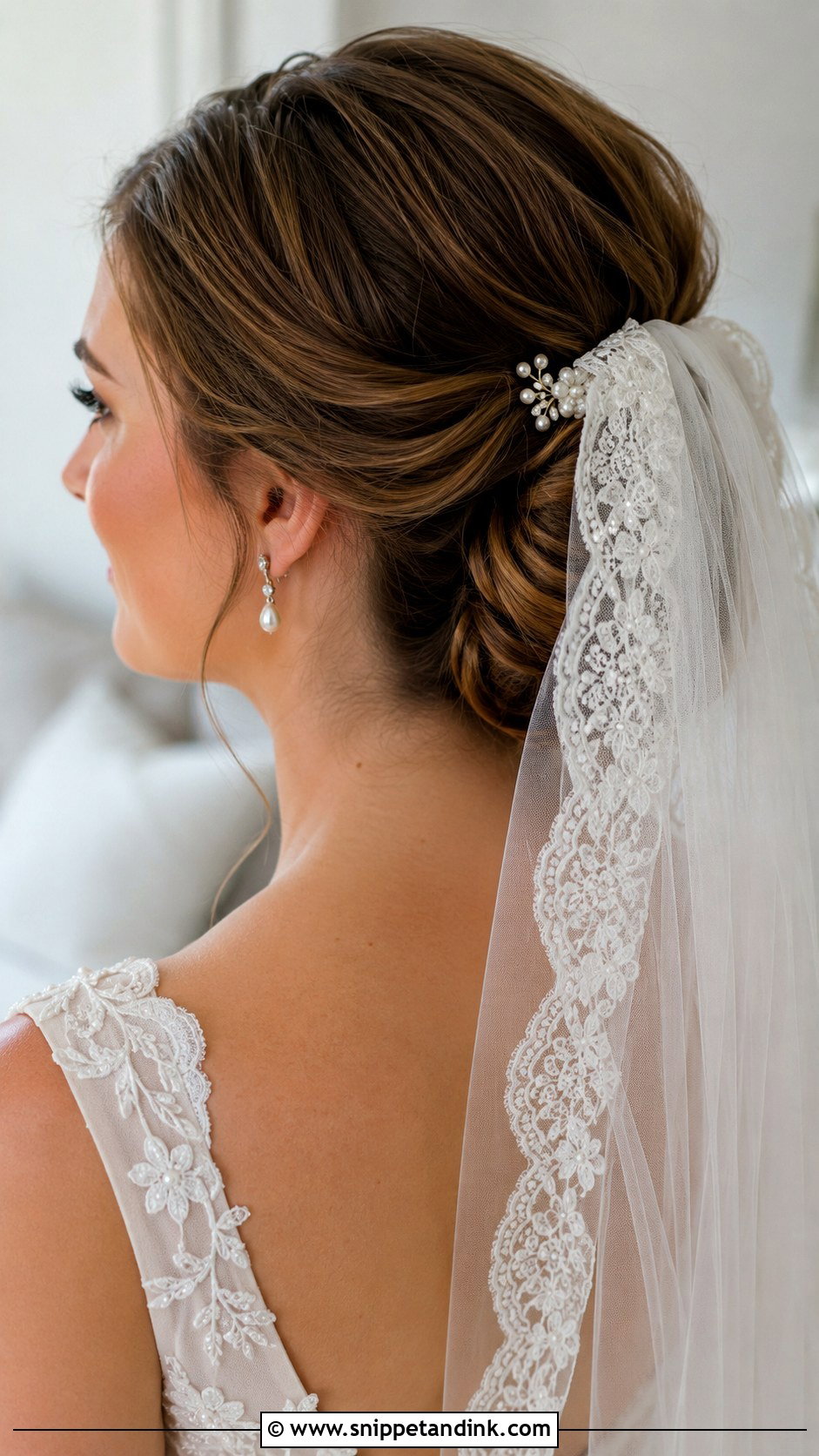
A veil has to be planned into the hairstyle from the start, not added at the end. A low bun, half up, waves or a braided updo can all hold one if the pins are anchored in the right spot, usually under the crown or just above the bun. For a rustic ceremony, a fingertip or lace-edged veil shows the hair rather than hiding it. Heavier veils need a base built for them; I’ll often make a small braid or pinned anchor that nobody ever sees. Keep the front pieces polished for close-ups.
12. Western Bridal Hair With Hat
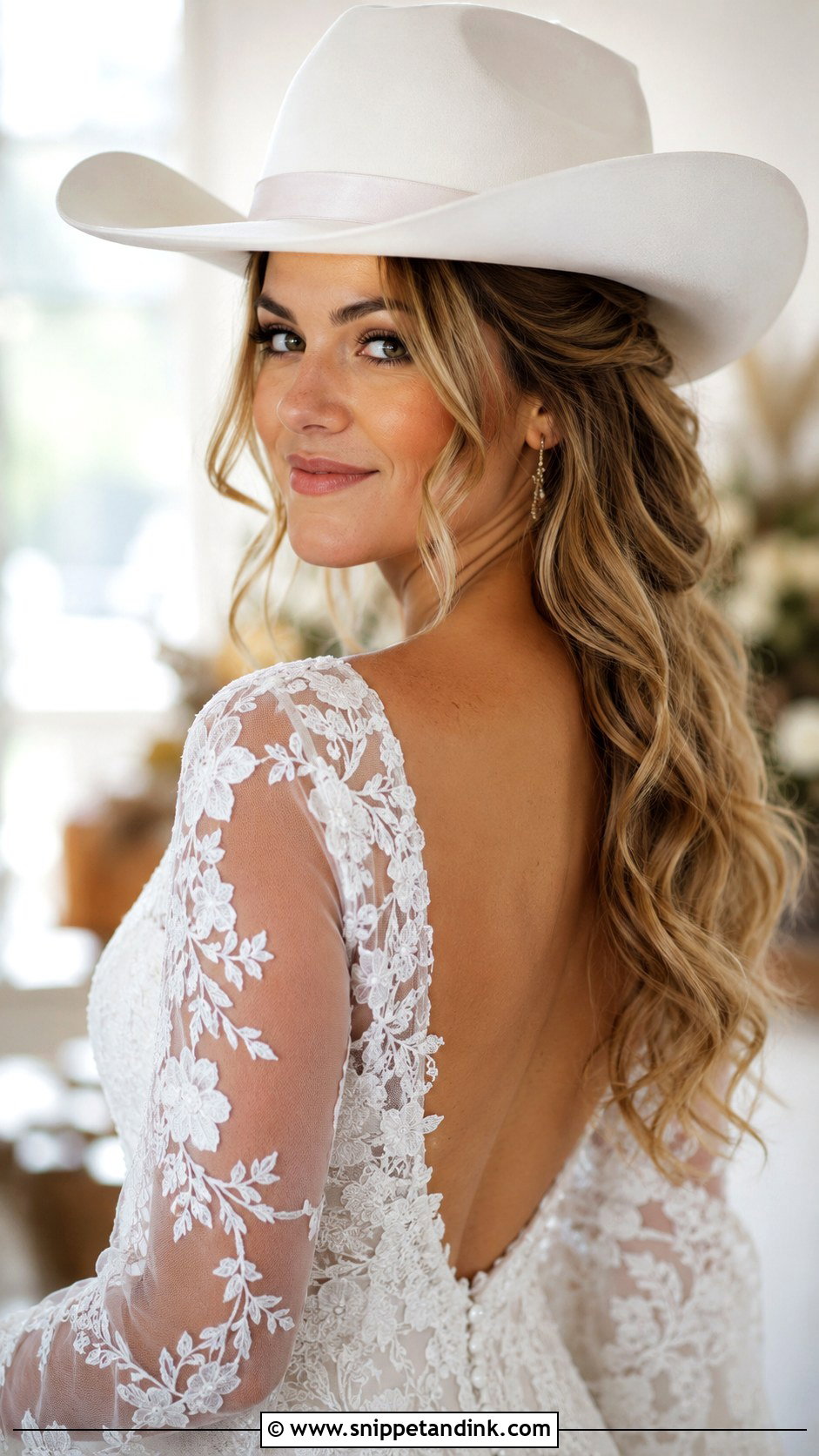
A hat gives ranch weddings and outdoor ceremonies a true country bridal touch, but it changes what the hair underneath can be. The crown has to stay flat, so loose waves, low ponytails, low buns and half up styles work, and anything with height on top won’t. Soft curls through the ends keep it romantic. A veil, ribbon or flower can be attached to the hat itself rather than to the hair. Most brides wear the hat for portraits and take it off for the reception, so I plan hair that looks right both ways.
13. Western Bridal Hair With Flowers
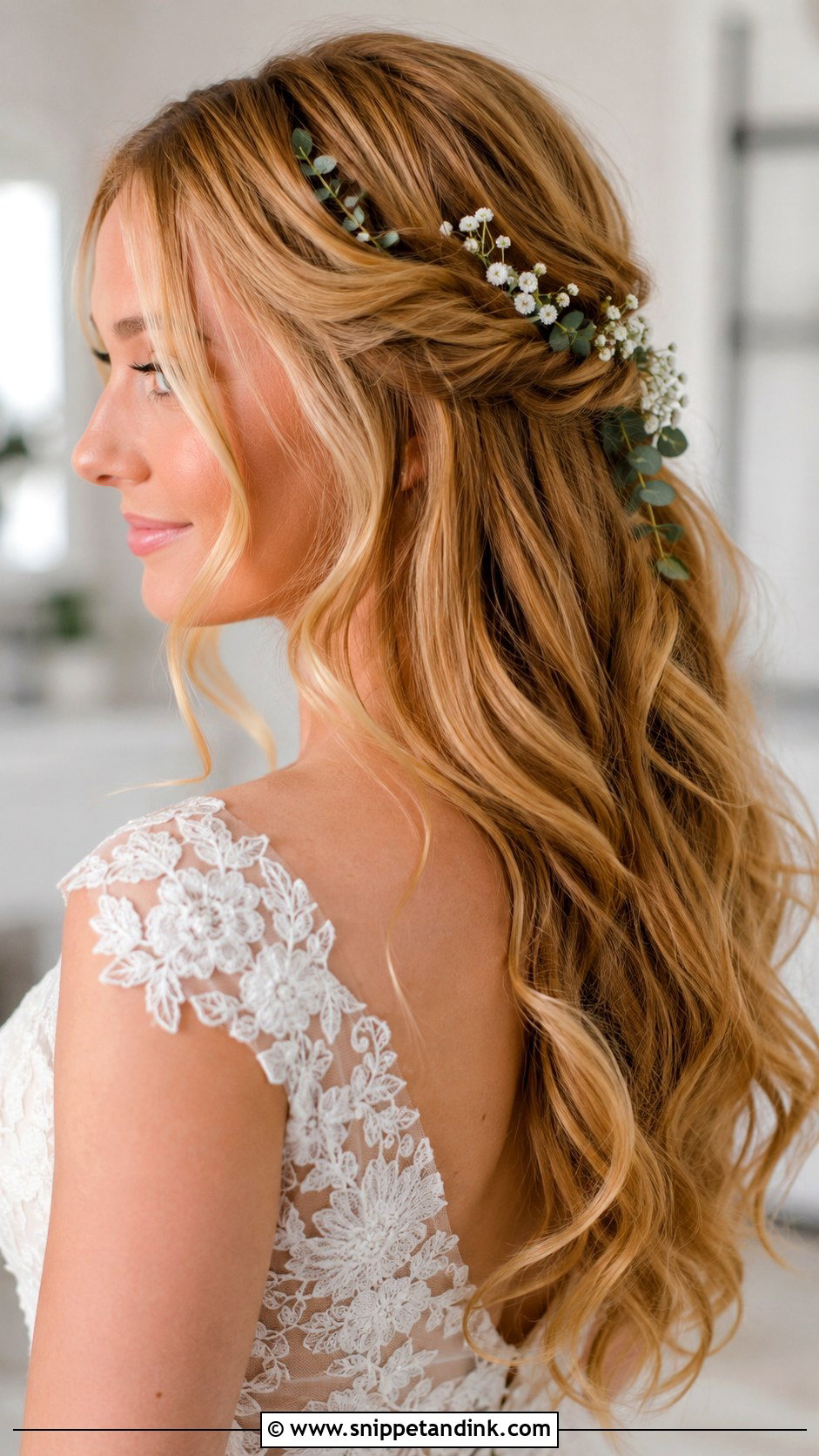
Flowers in Western hair work best when they’re small and match the venue as much as the bouquet: tiny white blooms, sprigs of greenery or dried accents. Scale decides it. Large flowers swallow the hairstyle and look heavier in photos than they feel. They tuck into waves, braids, buns or half up styles, and in summer heat dried or faux pieces outlast fresh ones by hours. Every stem gets its own hidden pin.
14. Western Bridal Short Hair
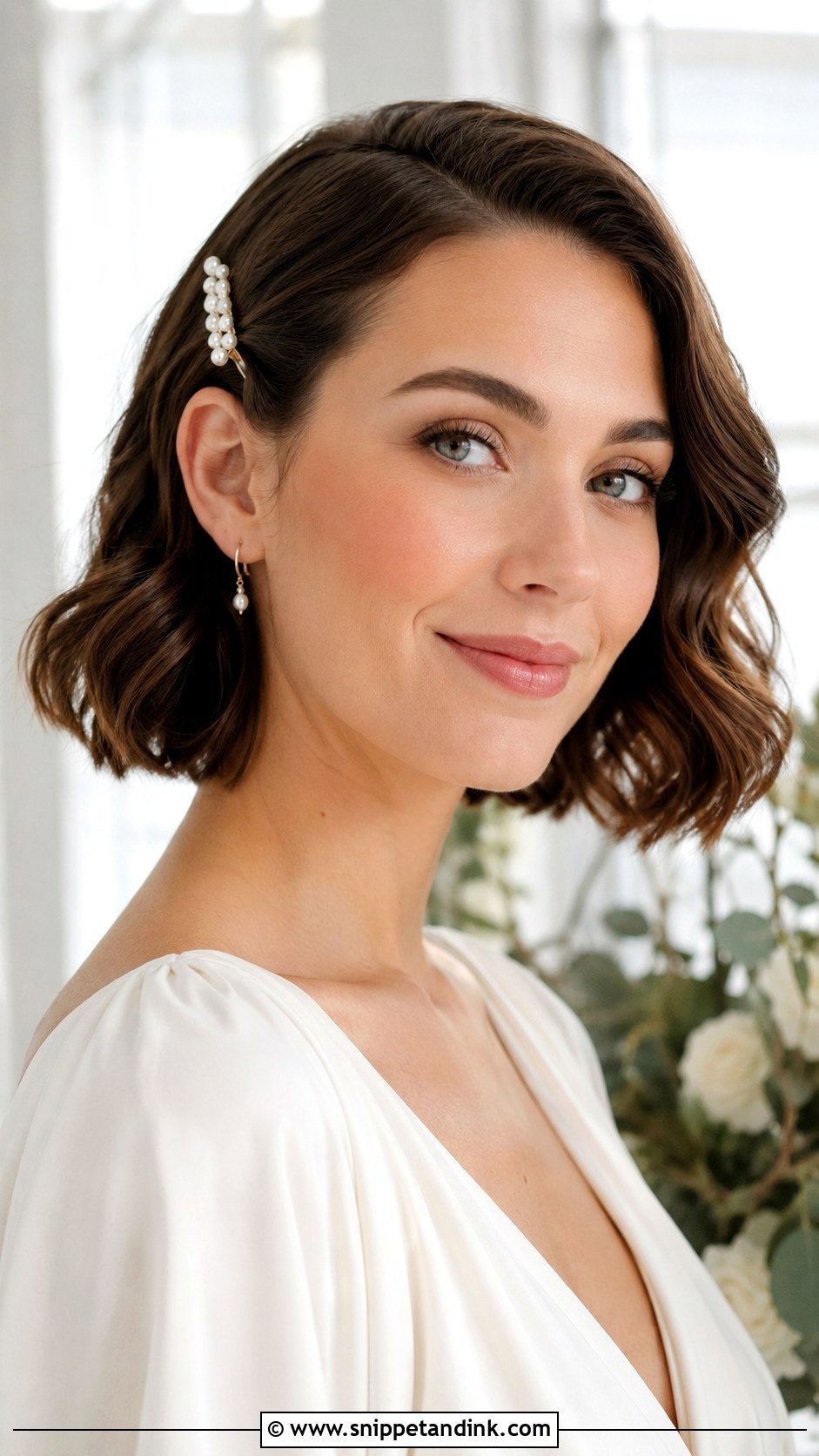
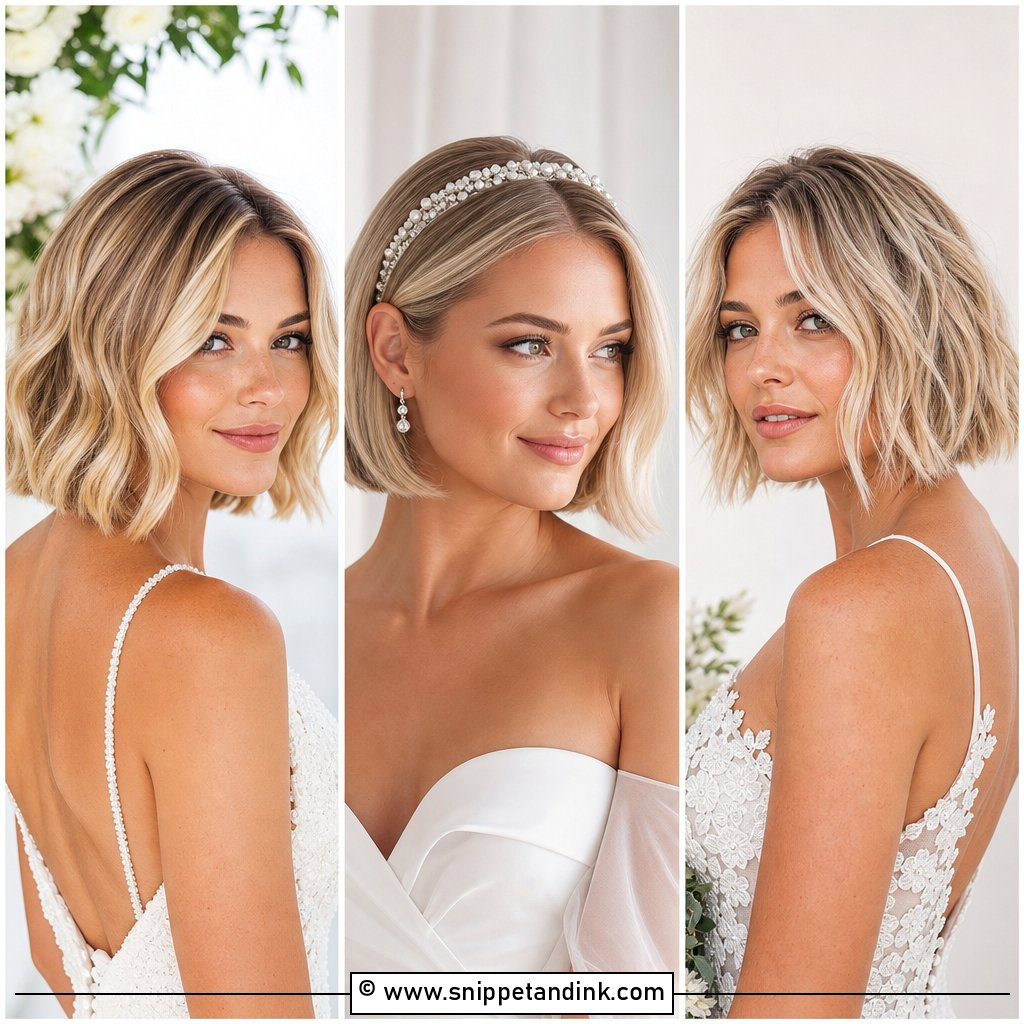
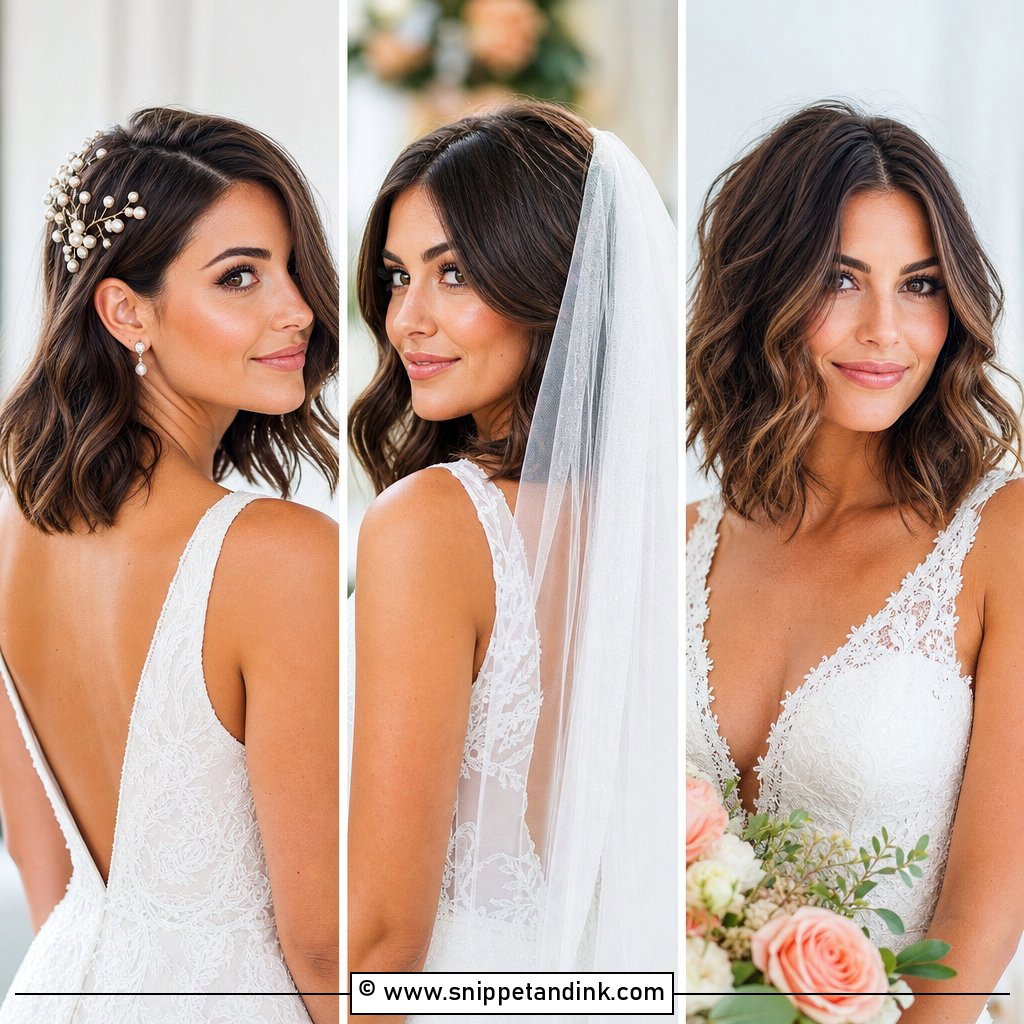
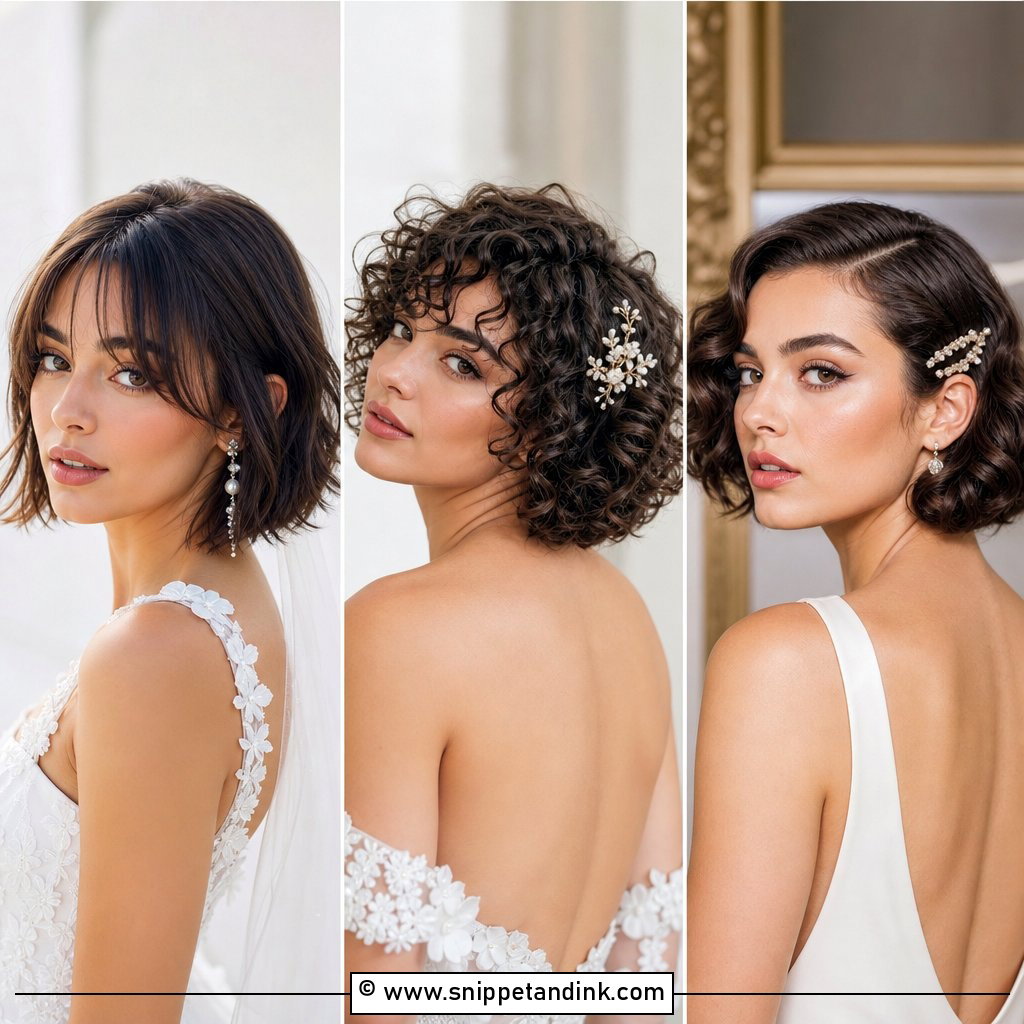
Short hair doesn’t need to borrow length to look bridal. A wavy bob, a softly curled lob or a pinned-back pixie looks finished with one good accessory, a pearl clip or a small comb. Texture matters more than shape: I add bend and shine so the hair looks deliberate rather than simply dried. Hats sit easily on short hair, too, with no bun to work around. Keep it soft around the face, and you’ll look like yourself on a day you’ll see in photos for years.
15. Western Bridal Curly Hair
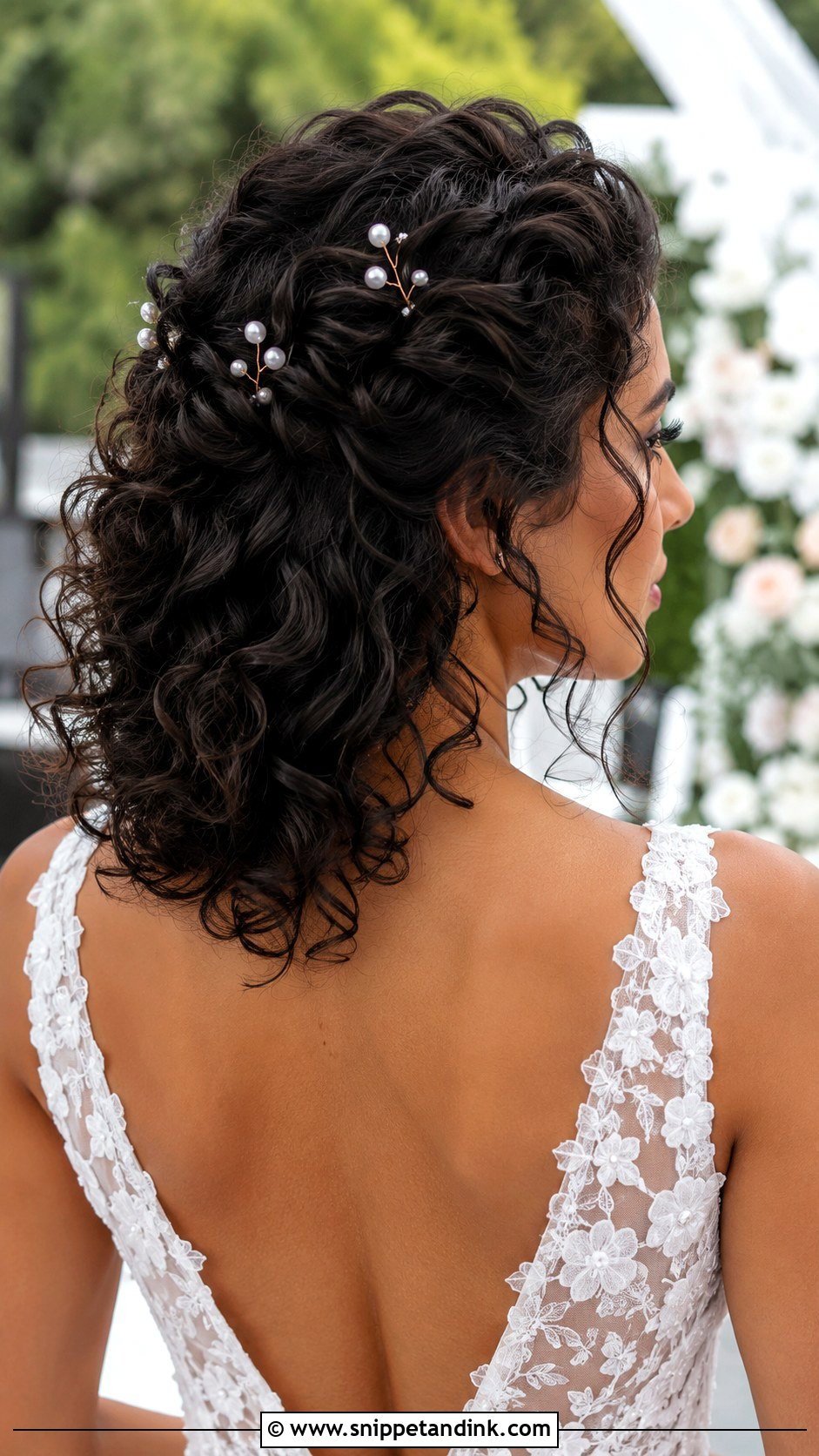
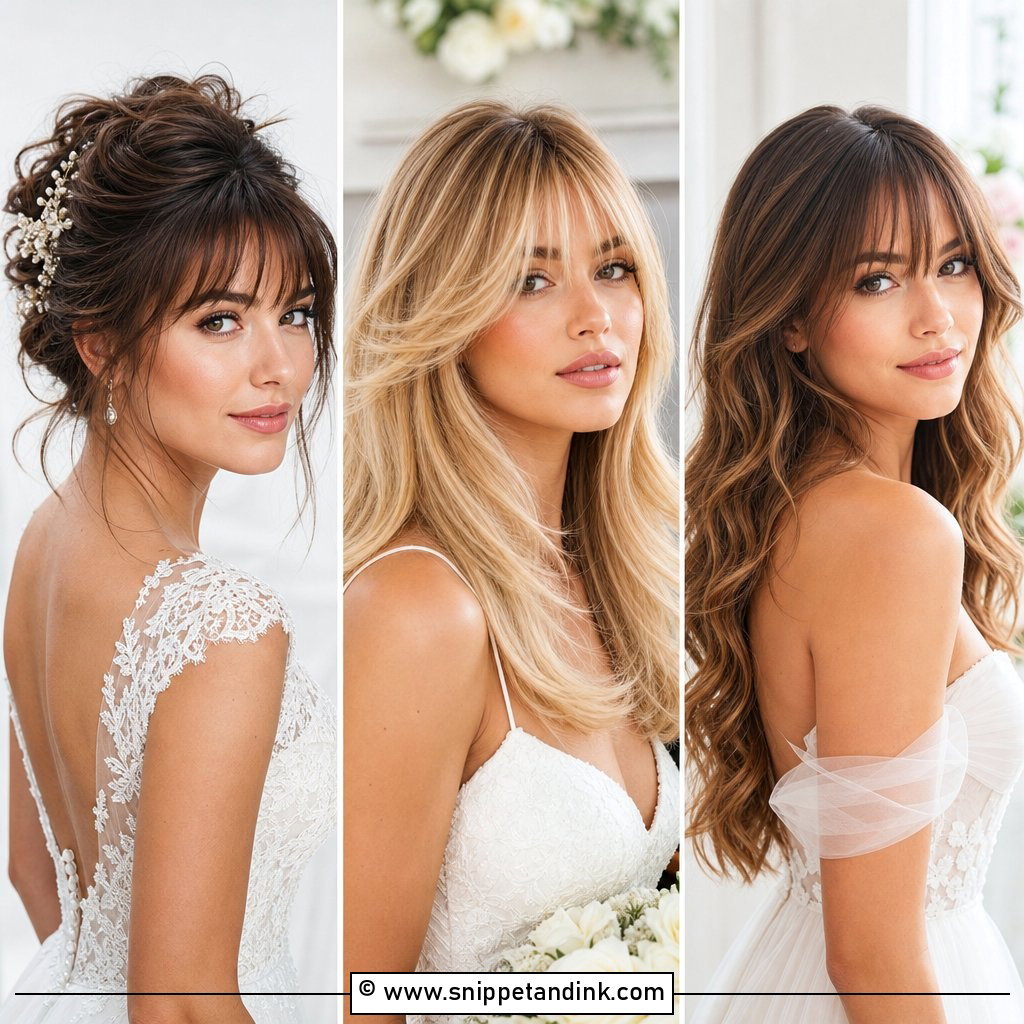
Curls look best at a Western wedding when the pattern is enhanced, not smoothed away. Defined curls can be worn down, half up or pinned into a low curly bun. They suit outdoor weddings because a little frizz in open air reads natural rather than untidy, as long as the base is well defined. Hydration and prep matter most: condition well in the days before, define the curls the day before, and test the hold at a trial. Face-framing curls soften the look, and pins or flowers add the bridal detail.
A Cowboy Hat Over Your Wedding Hair
Hats are where Western bridal hair most often goes wrong, usually because the hat was never tried with the finished hairstyle. A few steps prevent most of the trouble:
- Buy the hat early and bring it to the trial. Styled hair adds bulk, so a hat that fits your bare head may perch on top of a finished style.
- Keep volume below the hat line. Curls and texture should start around ear level; anything teased at the crown just gets crushed.
- Put the hat on and take it off once during the trial. Look for a dent from the band and for front pieces that get flattened.
- Decide when it comes off. Most brides wear it for the ceremony or portraits only, so the style underneath has to stand on its own afterward.
Once the hat is off, lifting the roots with your fingertips and a quick mist of dry texture spray at the crown usually brings the shape back. Both fit in a small bag.
Rustic Without Tipping Into Costume
Western bridal hair works when it suits the setting without tipping into costume. A low chignon gives you security, waves give you softness, and braids, flowers, hats and veils supply the Western detail. Bring your veil and any hat to the trial so the whole look is tested together, and tell your stylist exactly where the ceremony is, open field, barn or chapel. That one detail changes my plan more than the dress does.
You'll Like These Ideas:


Leave a Reply