
Indian weddings ask a lot of guest hair. There may be three or four functions across a weekend, heavy jewelry pinned into the hair, a dupatta draped over it, and hours of dancing in heat. You don’t need a salon for any of it, but you do need styles that can carry weight and last. Below are twenty guest-friendly hairstyles you can do at home with sarees, lehengas and fusion outfits, from braids to buns to open hair, with notes on what each one needs to stay in place.
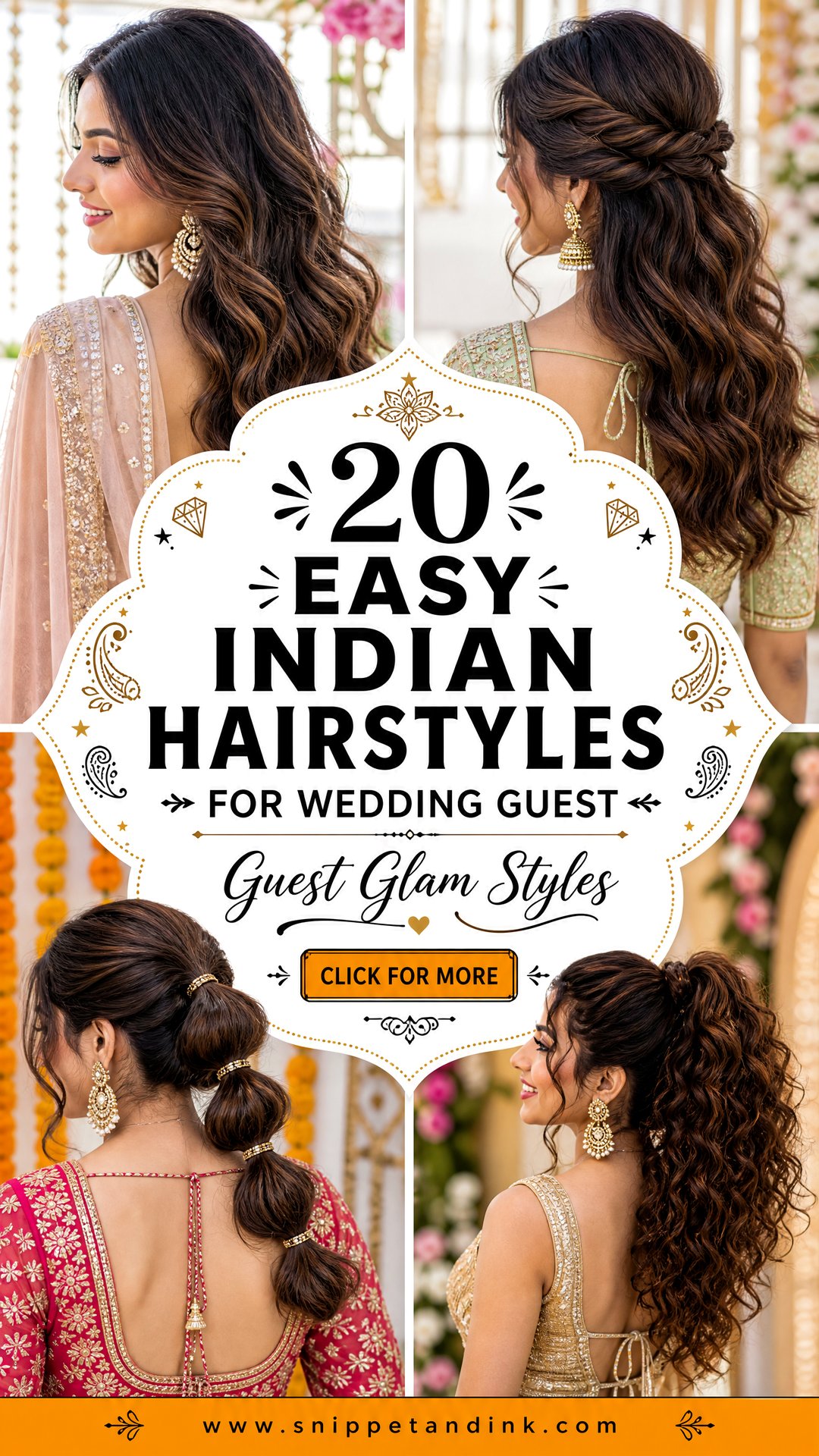
One Wedding, Four Functions, Four Different Hairstyles
An Indian wedding is rarely one event. If you’re attending mehendi, haldi, sangeet and the wedding itself, plan the hair across all of them, not just the big day.
- Mehendi: you’ll be sitting for a long time while the henna dries. Choose something off the face, such as a braid or a low bun, so you’re not pushing hair back with wet hands.
- Haldi: turmeric paste stains light and color-treated hair. A tight braid or a bun is safest, and many guests skip heat styling entirely for this one.
- Sangeet: this is the dancing night. Ponytails, bubble braids and curls all suit it, as long as they’re secure.
- Wedding and reception: the most formal looks, buns with gajra, sleek ponytails or waves with a maang tikka.
Back-to-back curling dries the hair out. If you’re heat styling on consecutive days, I’d alternate: curls one day, a braid or a sleek bun the next. Braid damp hair overnight before a function and you’ll get soft waves the next day with no heat at all.
One habit to drop before a function: oiling the hair the night before. Oil makes pins slide and stops curls holding. Oil after the wedding weekend instead.
1. Low Messy Bun With Gajra
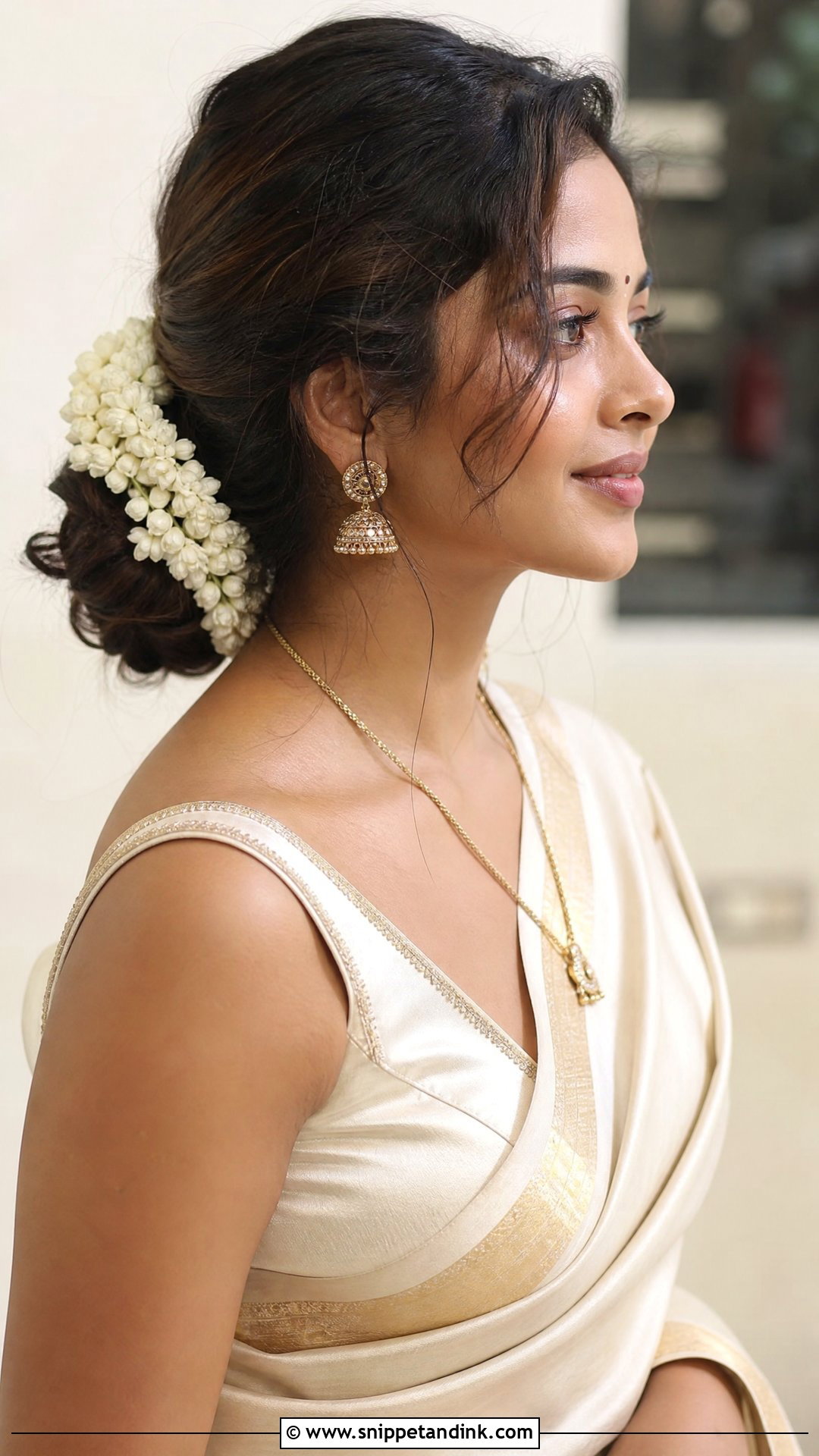
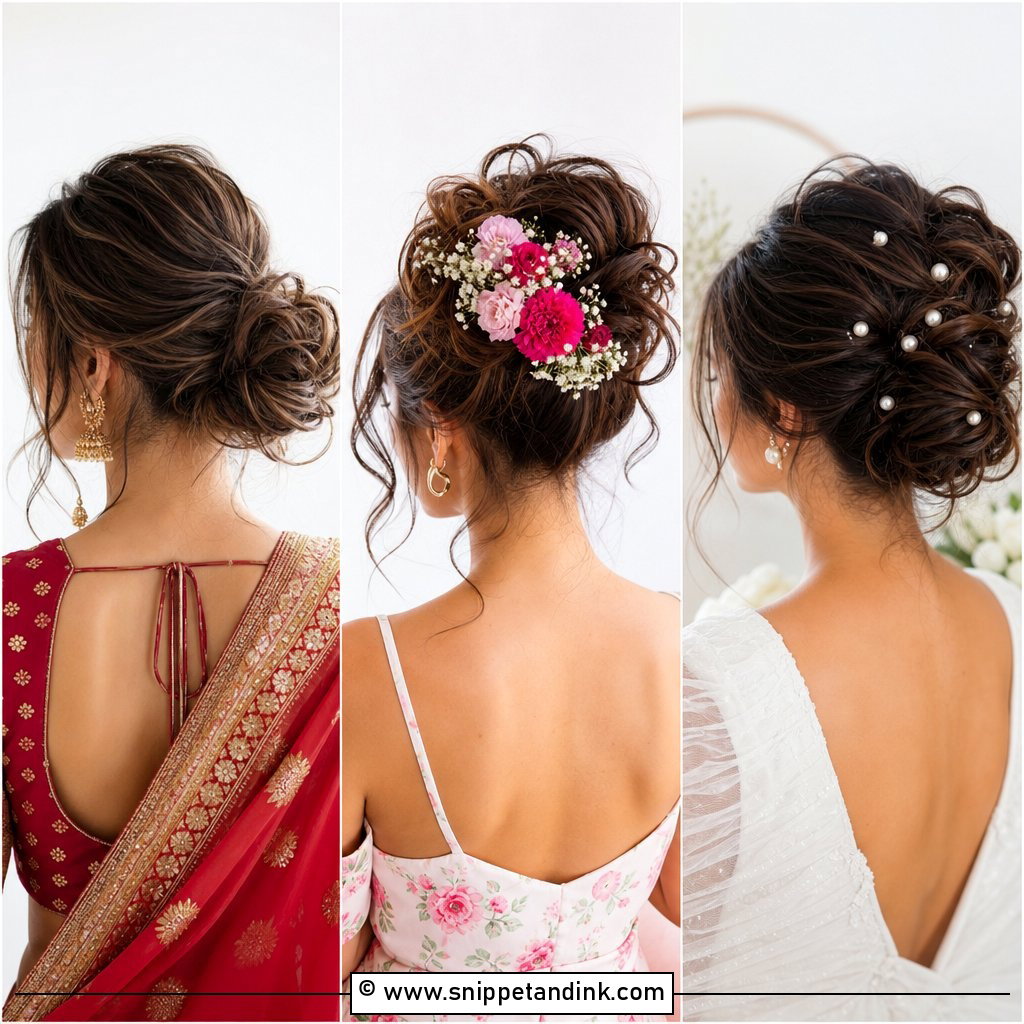
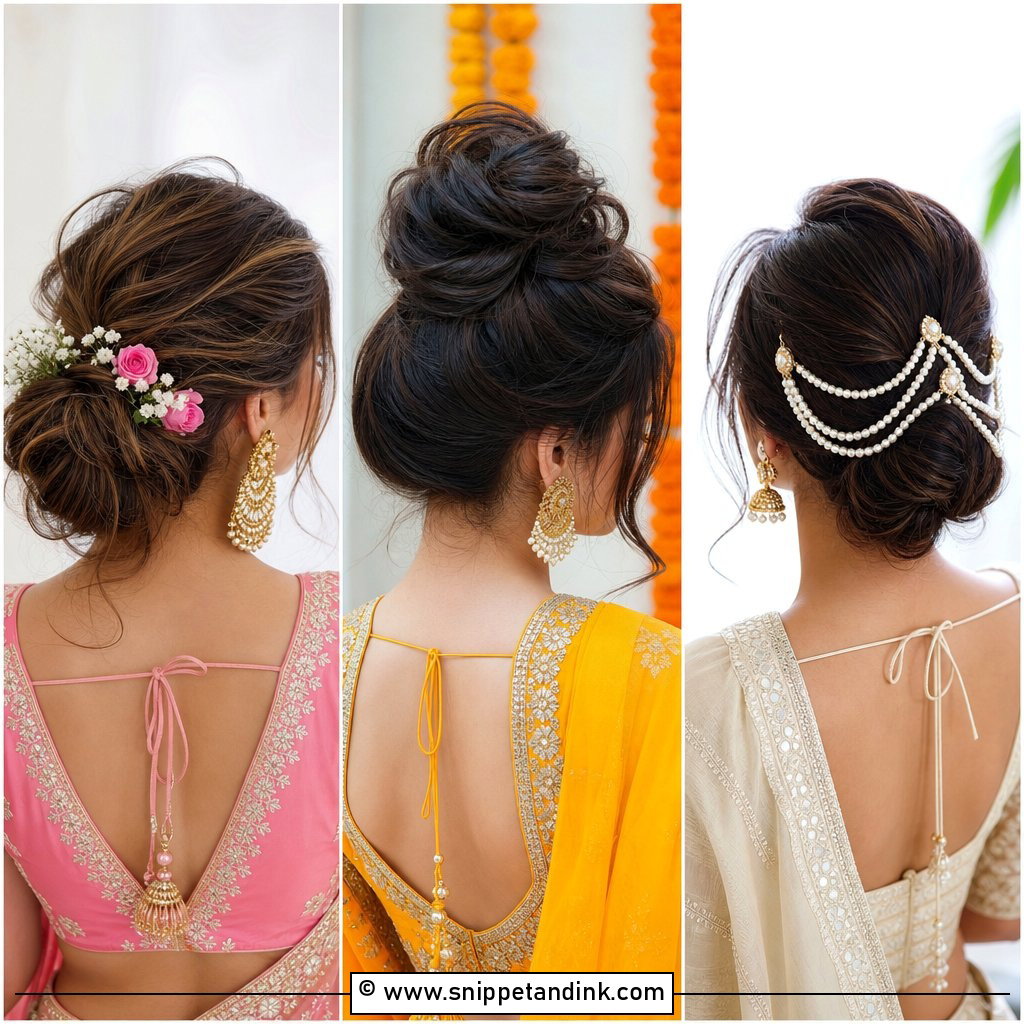
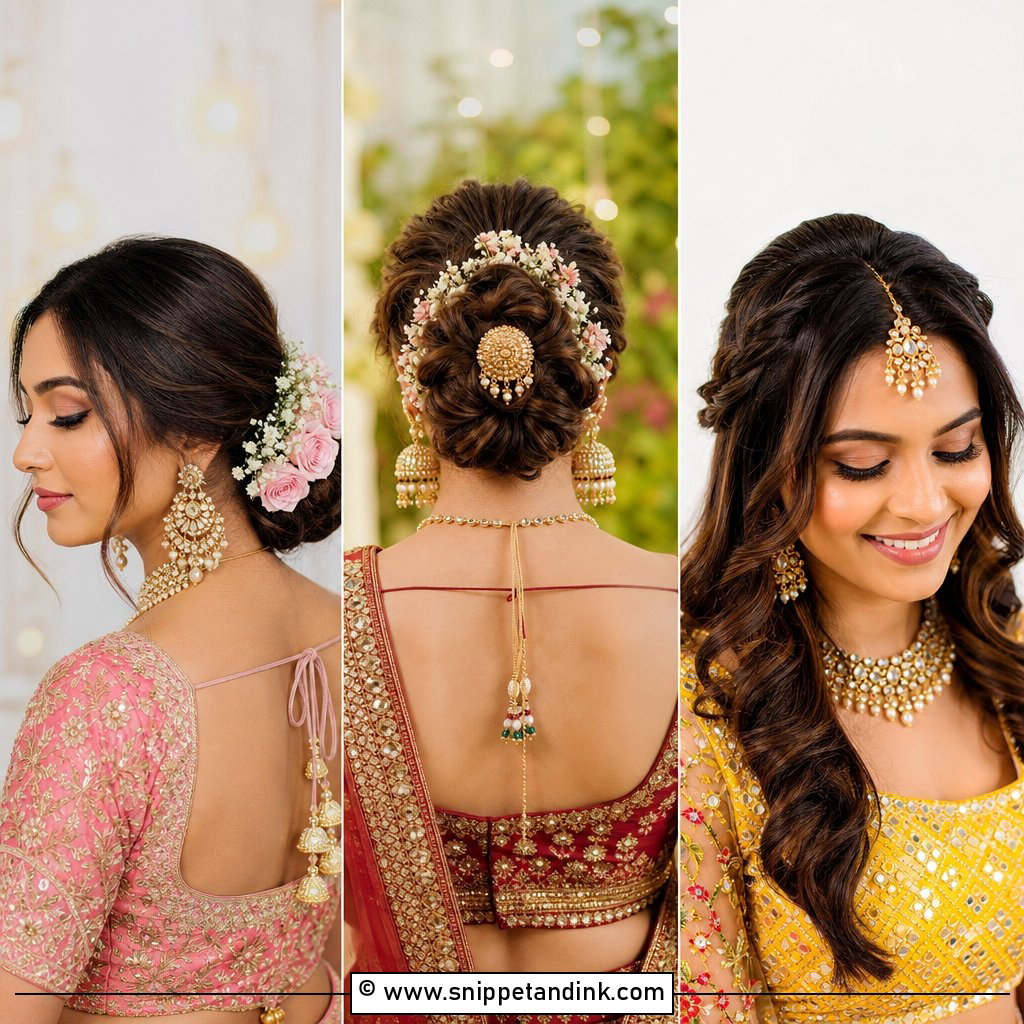
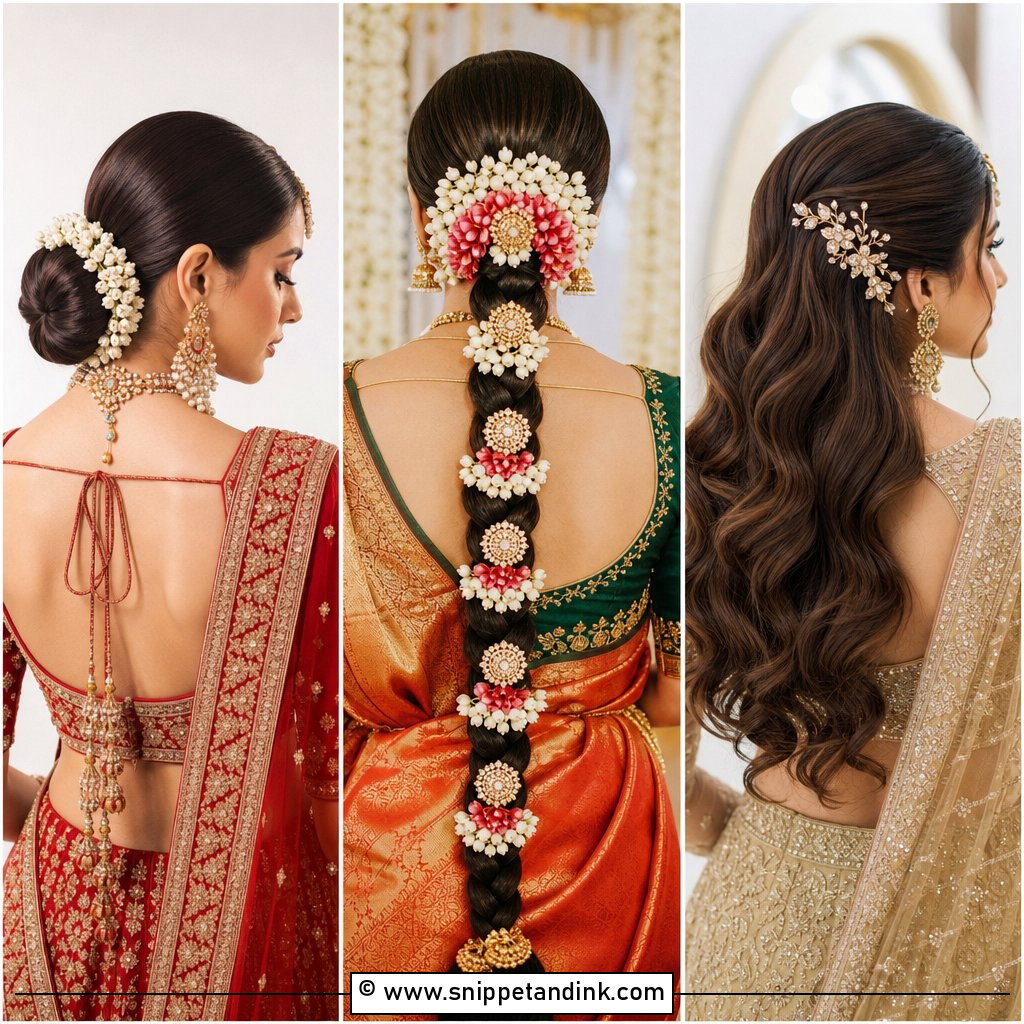
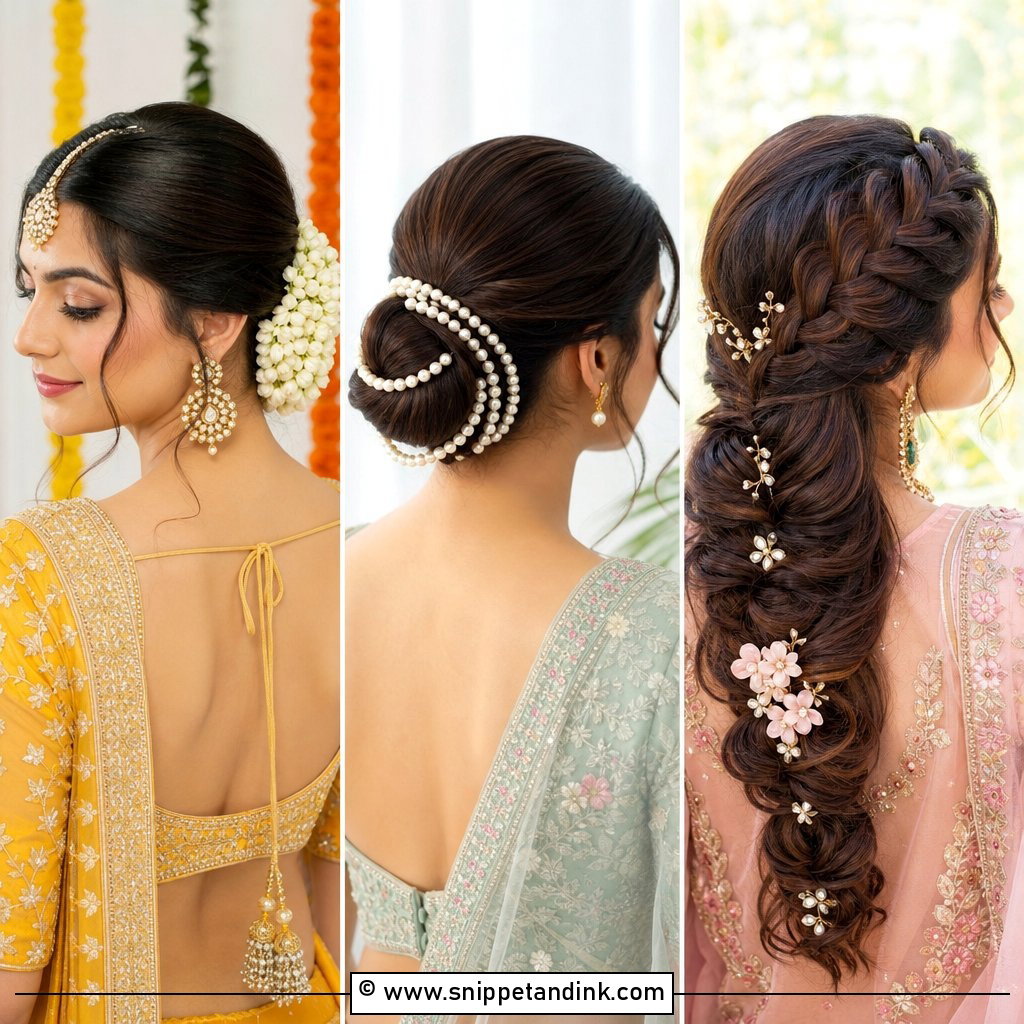
A low messy bun is my first suggestion for any guest planning to wear flowers. Gather the hair at the nape, twist it loosely and pin it into a soft bun, then pull out a few face-framing strands. Wrap a fresh gajra of jasmine flowers around the base and secure it with U-pins pushed through the string into the bun every few inches. A gajra is heavier than it looks, and a bun pinned only on the surface sags under it. It suits a silk saree or a heavy lehenga equally well.
2. Side Swept Curls
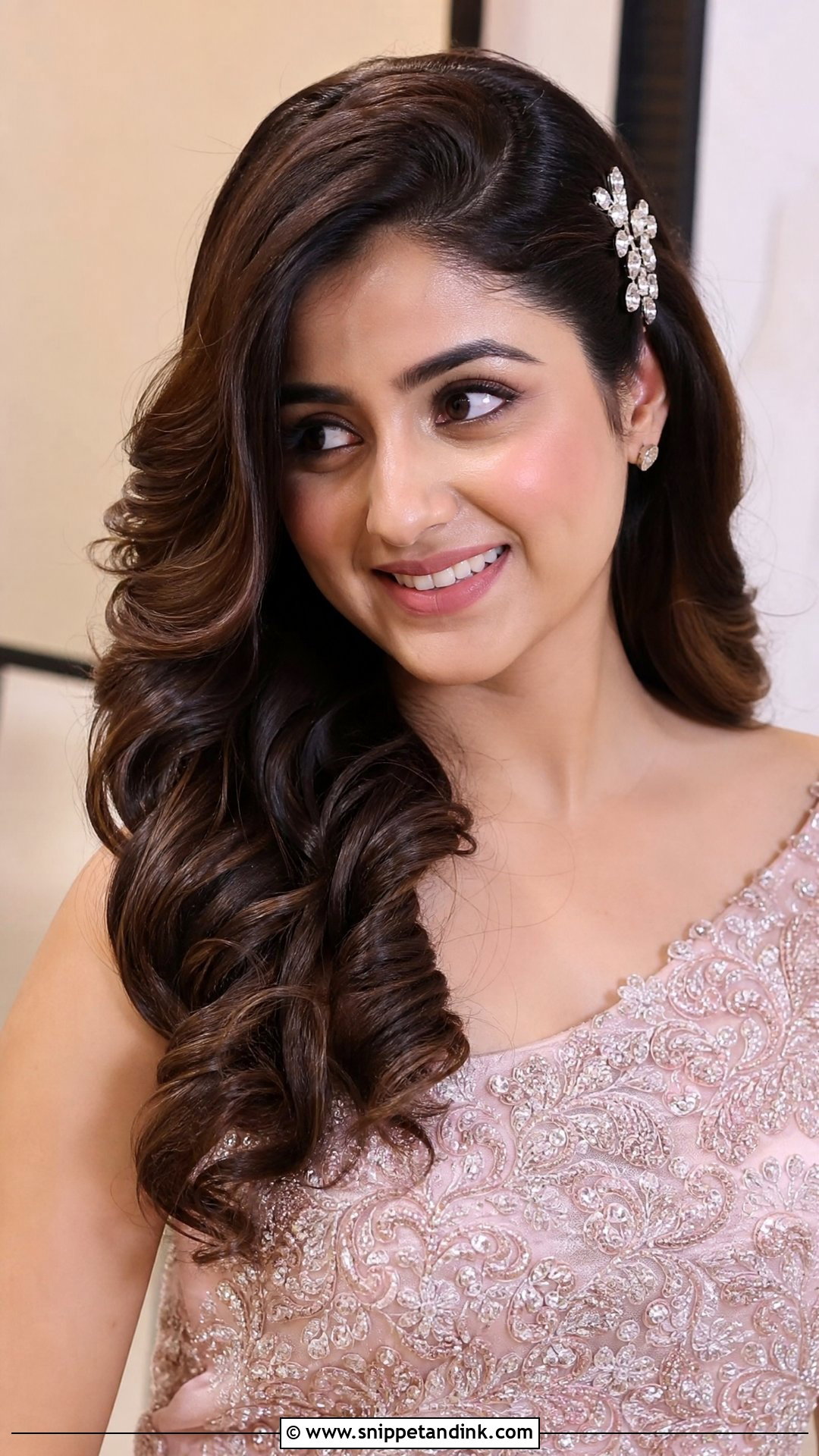
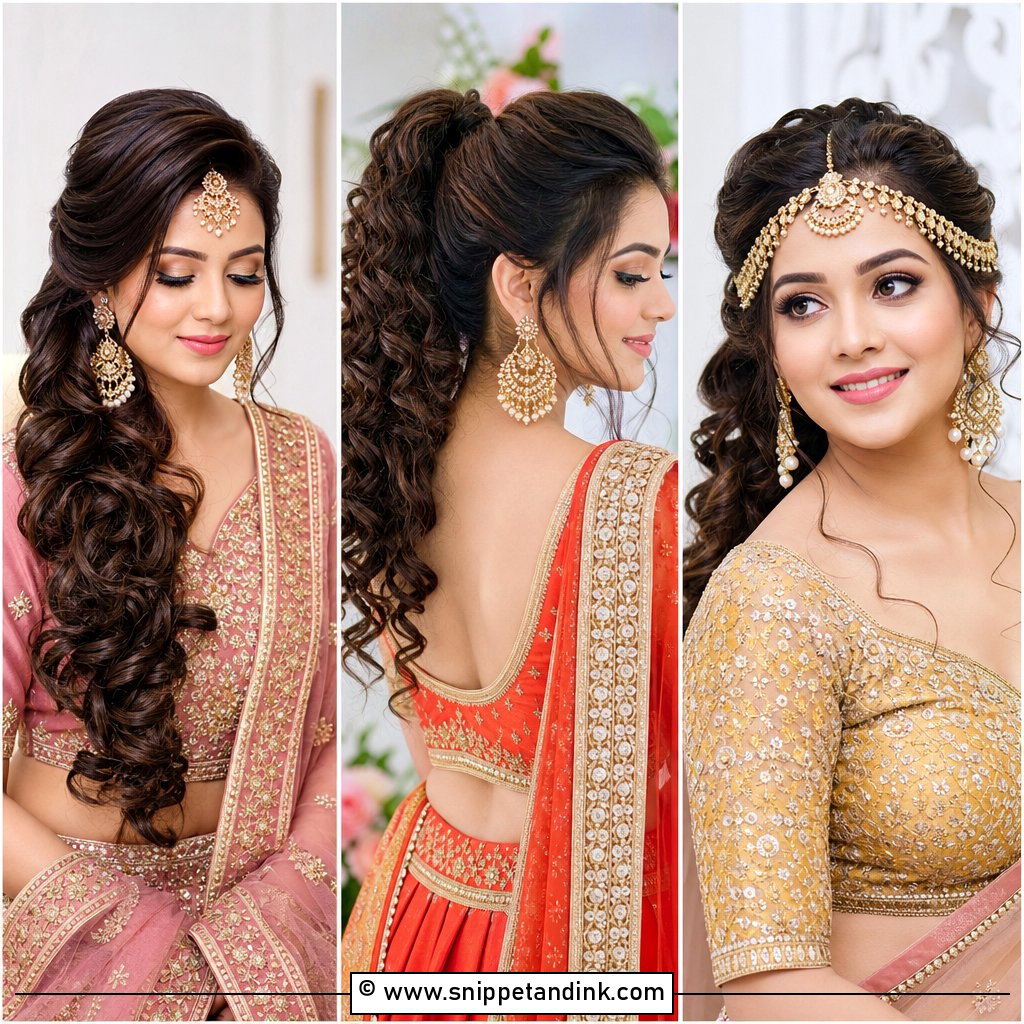
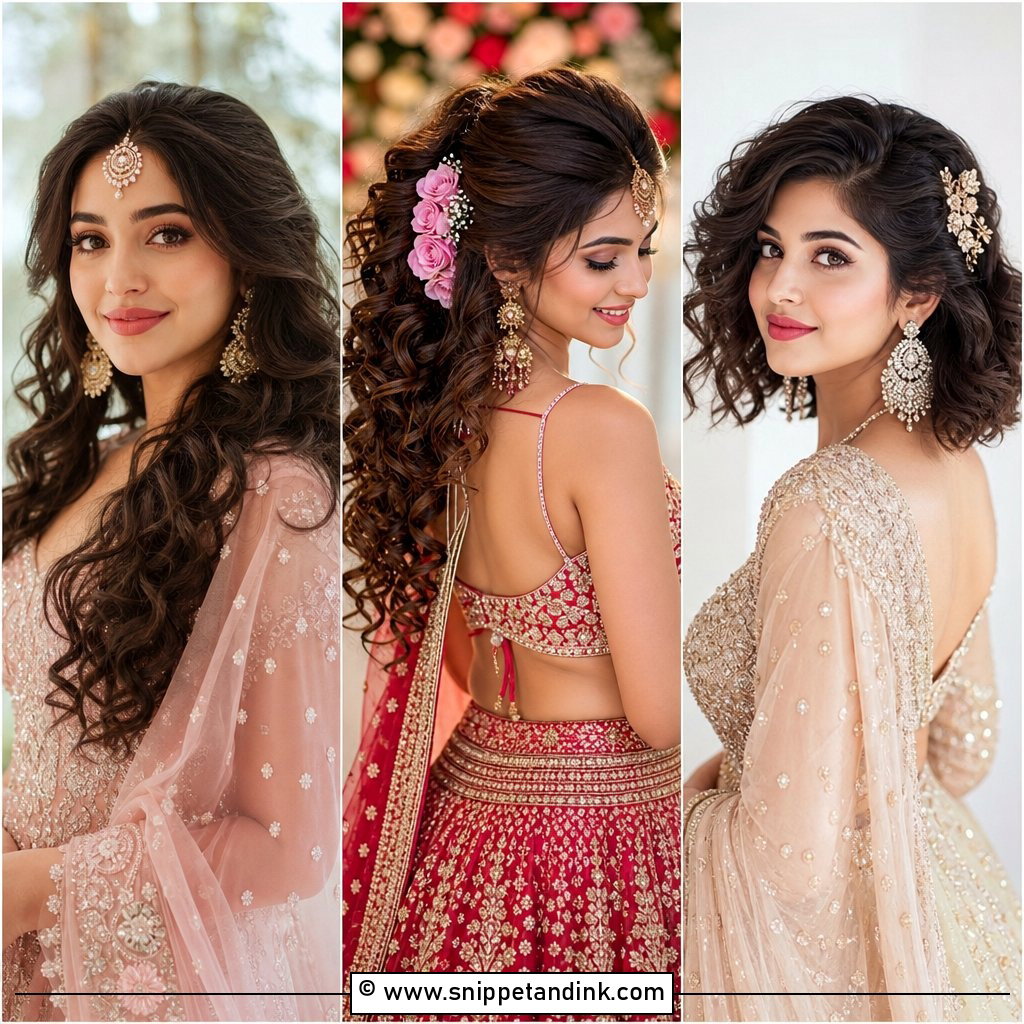
Side-swept curls work best with a one-shoulder blouse or a strapless gown, where the open side shows. Curl with a wide-barrel tong, let the curls cool, then break them up with your fingers. Sweep everything over one shoulder and anchor the far side with two crossed pins behind the ear. Heavy earrings on the swept side will catch in the curls all night, so I’d put the statement earring on the open side. A jeweled pin near the part adds shine for evening receptions and sangeet nights.
3. Fishtail Braid
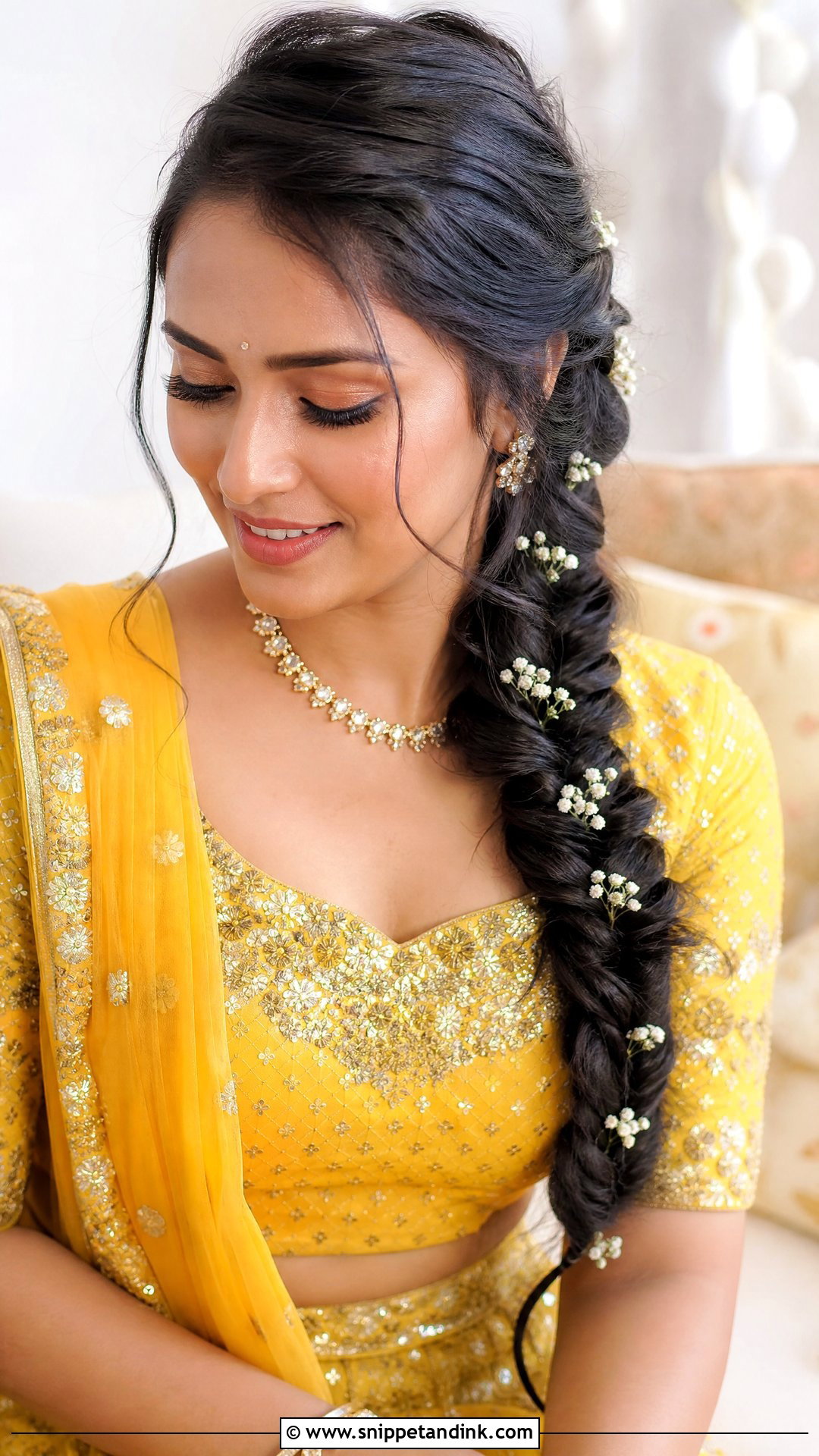
Once you get the rhythm, the fishtail is quicker than it looks. Split the hair into two sections and pass a small strand from the outside of one to the inside of the other, alternating until you reach the ends. Secure with a clear elastic and pancake the edges. Long and medium hair suit it. Drape it over one shoulder and tuck in tiny flowers or pearl pins for mehendi or haldi. For haldi I’d keep the braid tight; turmeric paste gets everywhere, and a loose braid traps it.
4. Half Up Half Down With Curls
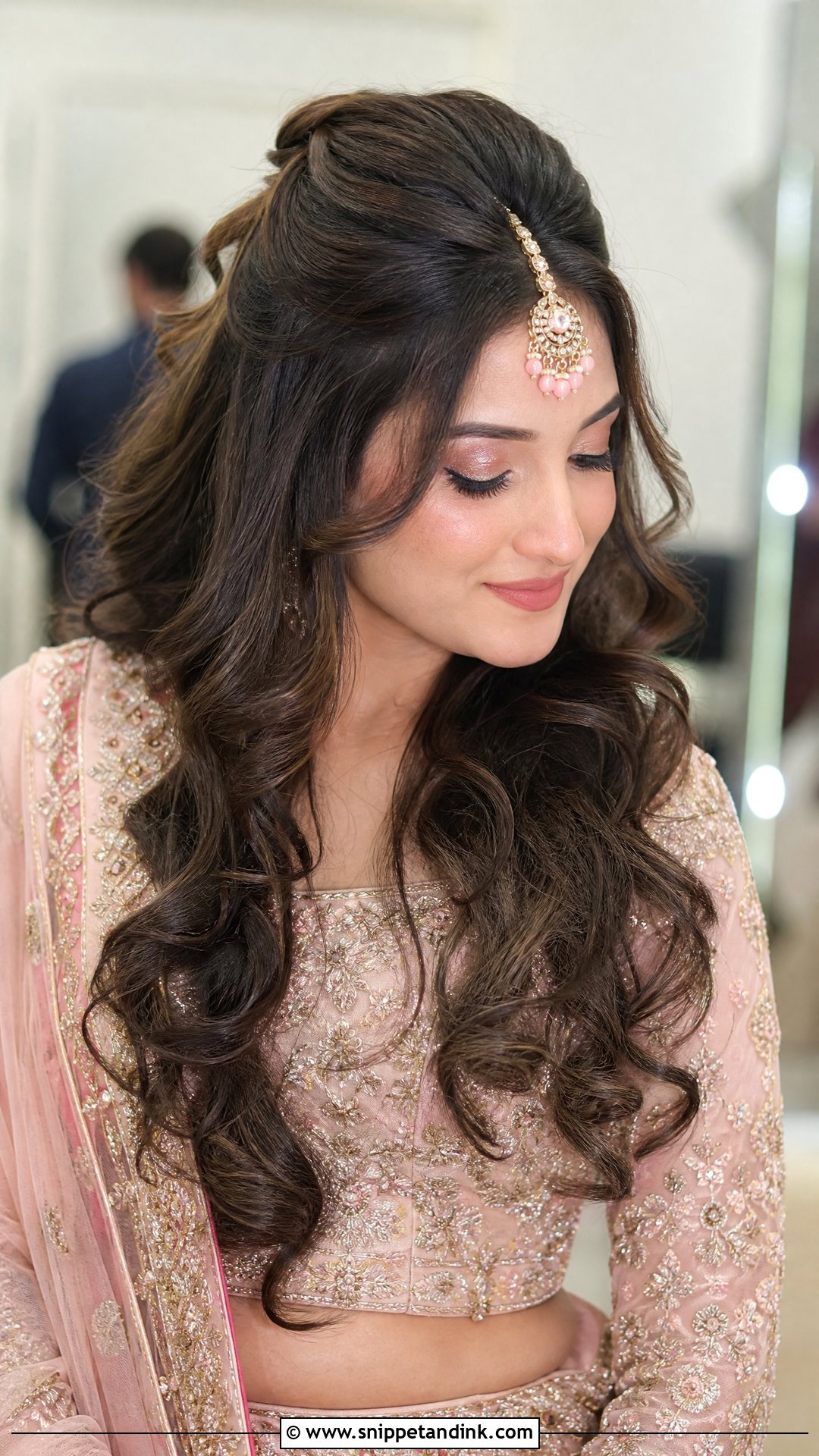
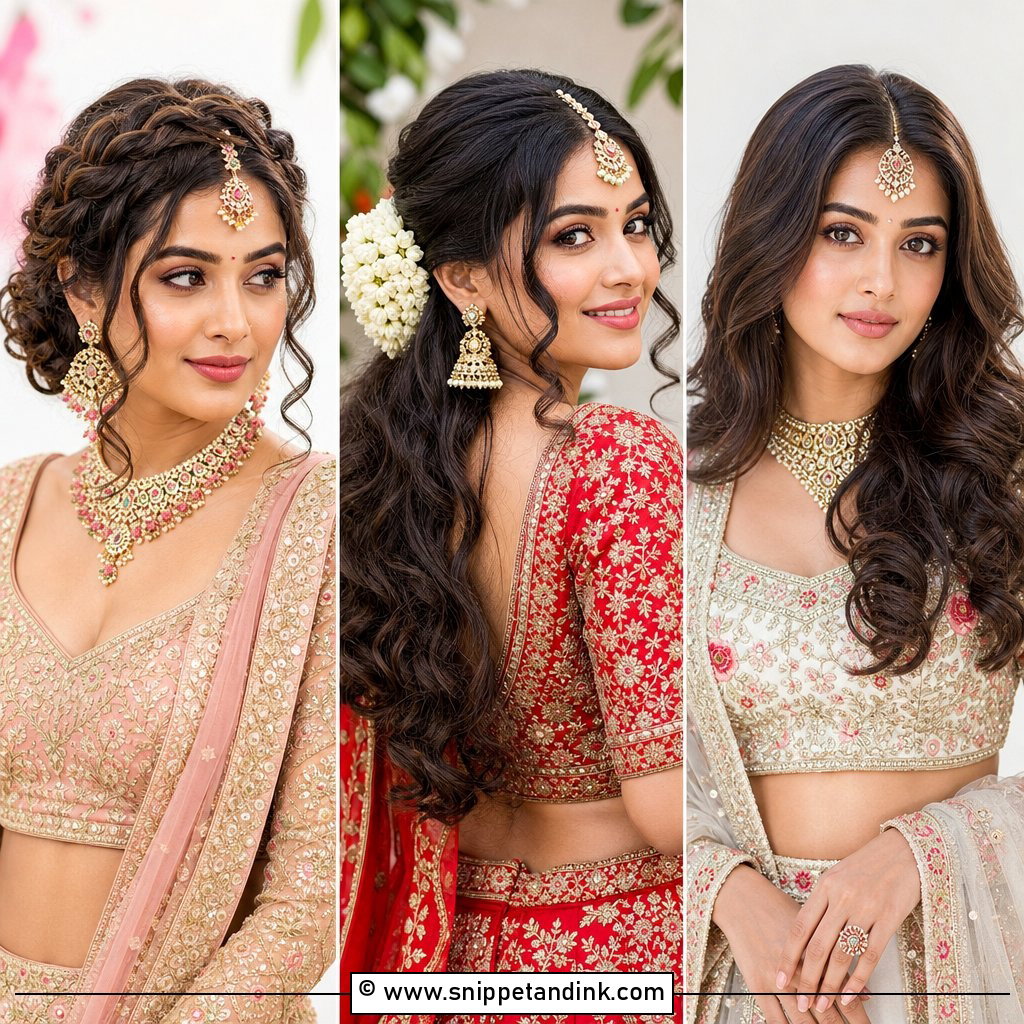
Curl the whole head first, then pull back the top section and secure it with a decorative clip or a small bun at the crown. A maang tikka sits along the center part, so if you plan to wear one, make the part before you section and keep the top section split evenly either side of it. The rest of the curls fall down the back. It suits engagement parties and evening receptions, with statement earrings.
5. Sleek Low Ponytail
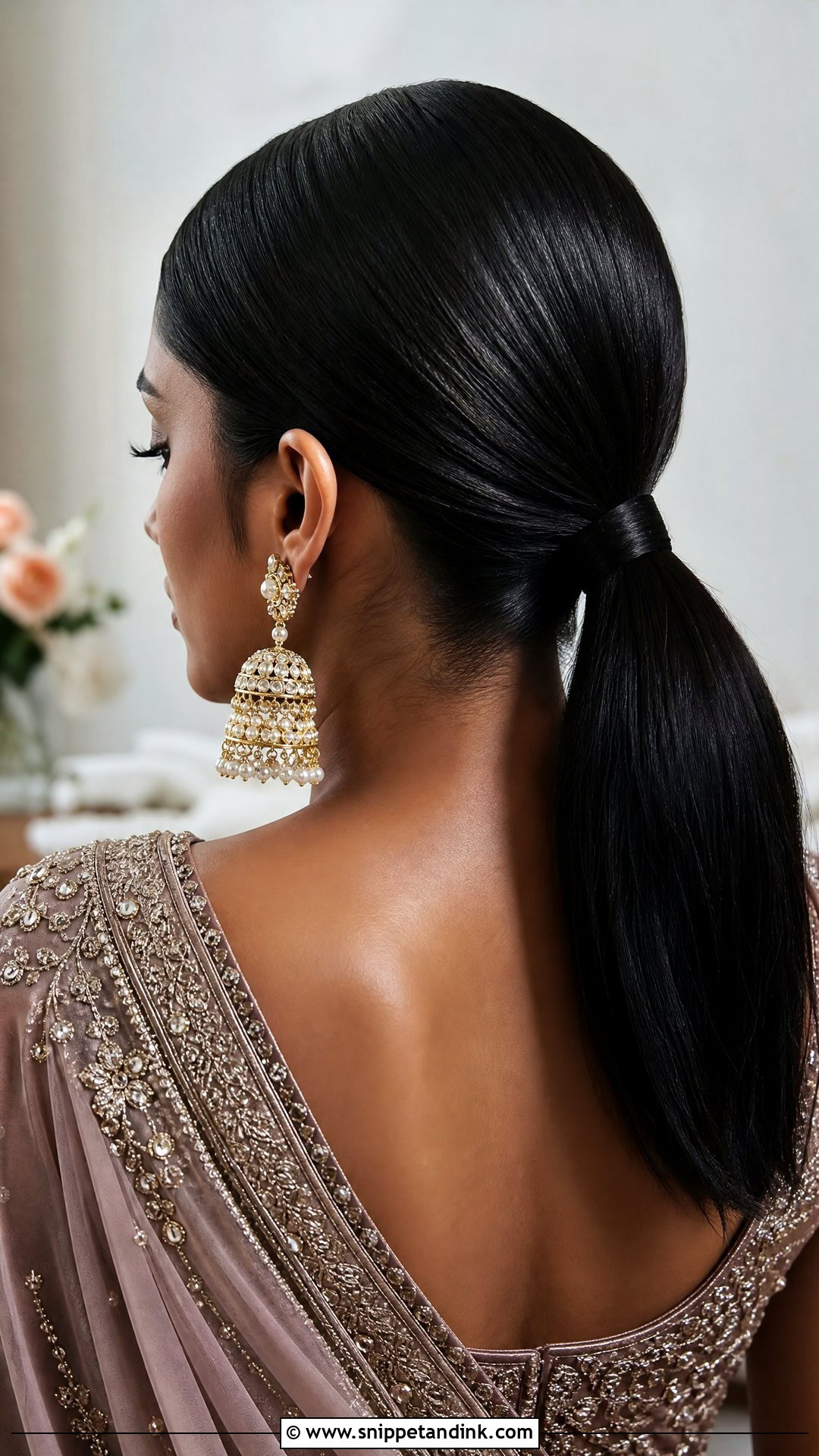
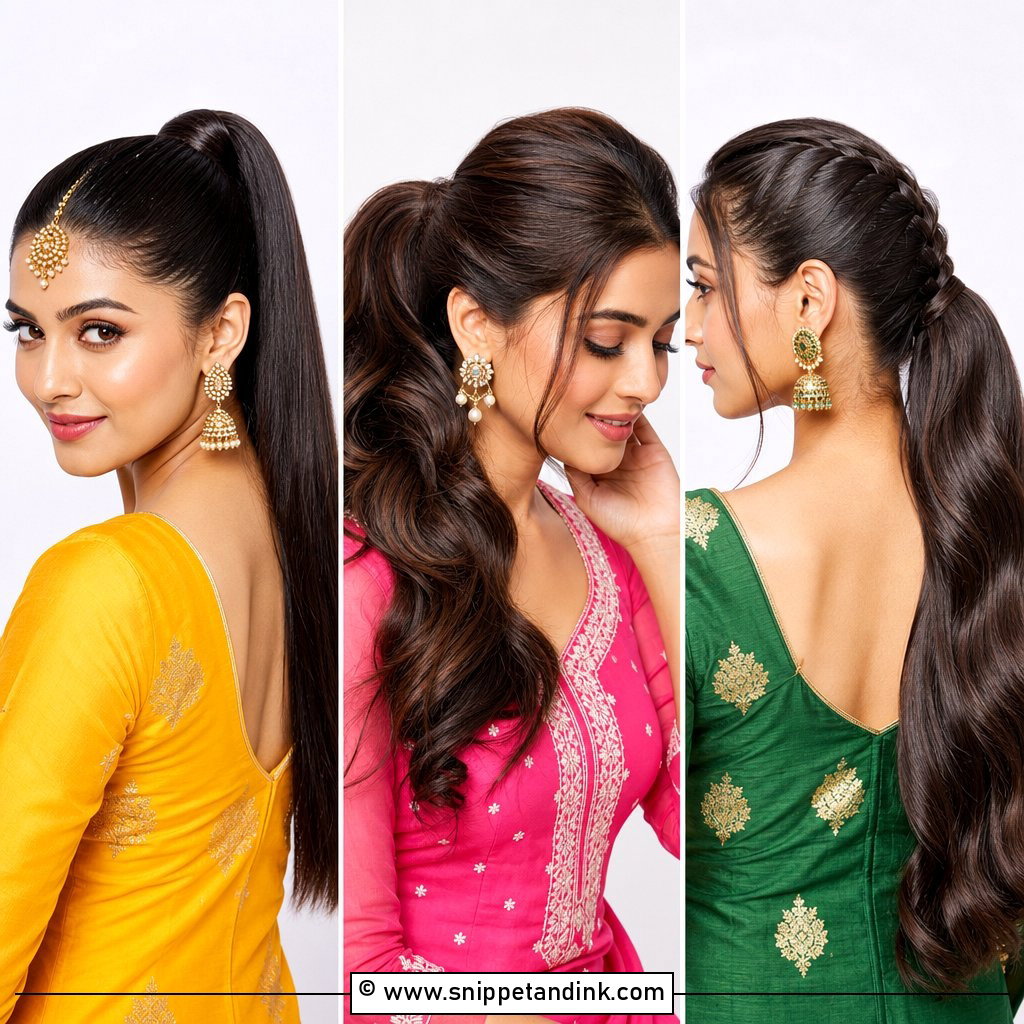
A sleek low ponytail lets heavily embellished outfits do all the talking. Brush the hair back with a little serum, gather it low at the neck and secure it with an elastic, then wrap a small section around the band. Serum goes on the surface only; too much at the root and the pony slides down by evening. It’s practical in warm weather and on long days, and oversized jhumkas show clearly with it. It suits every age at a wedding.
6. Braided Bun
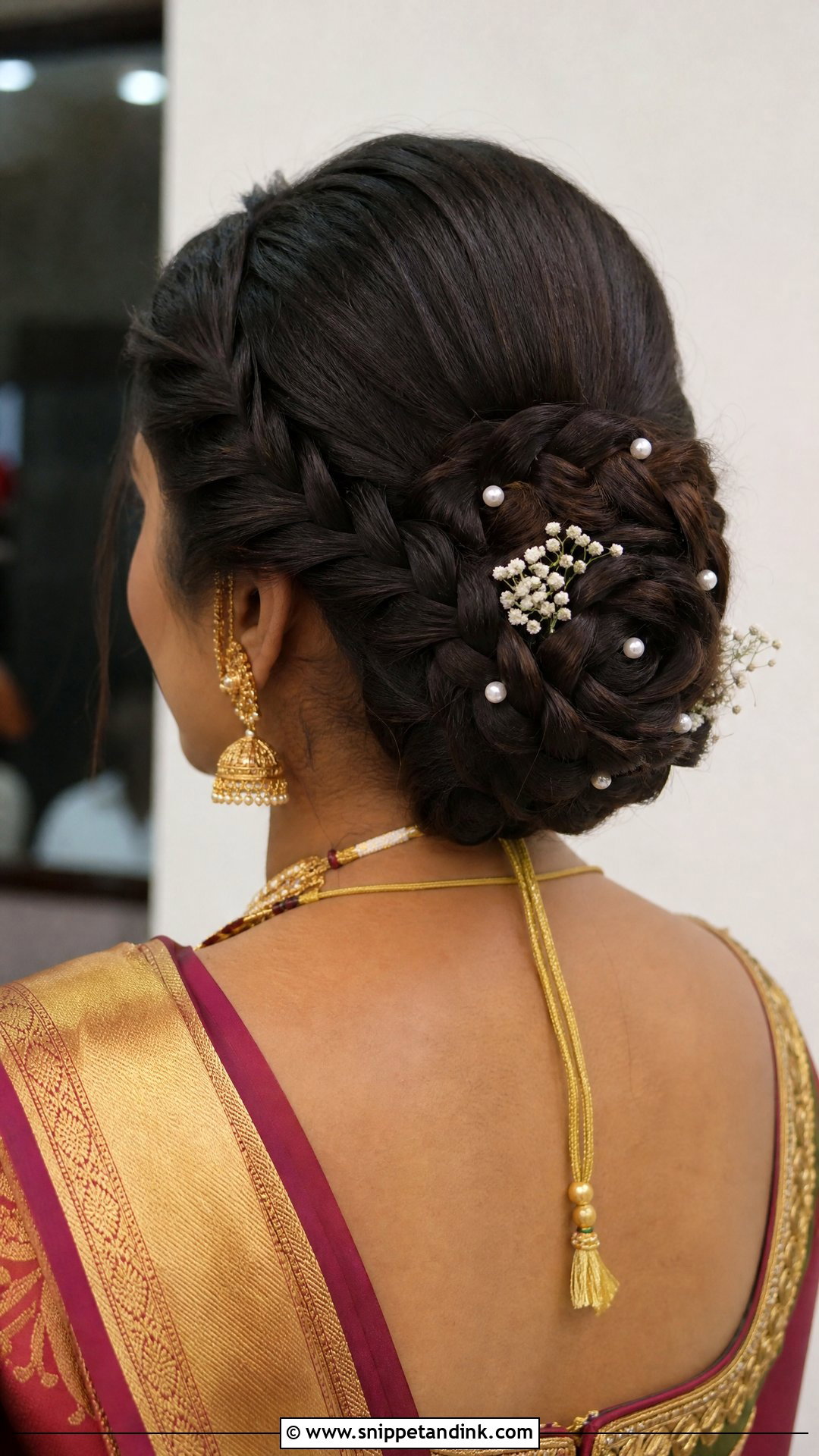
A braided bun is the most secure updo here for a guest wearing a heavy dupatta over the head. Braid the hair loosely, coil the braid into a bun and pin it at the back, pinning through the braid itself rather than just around it. It reads traditional, so it sits well at the ceremony or a reception. Decorate with small flowers, pearl pins or a hair vine. It holds for hours and keeps hair off the neck under silk.
7. Loose Beach Waves
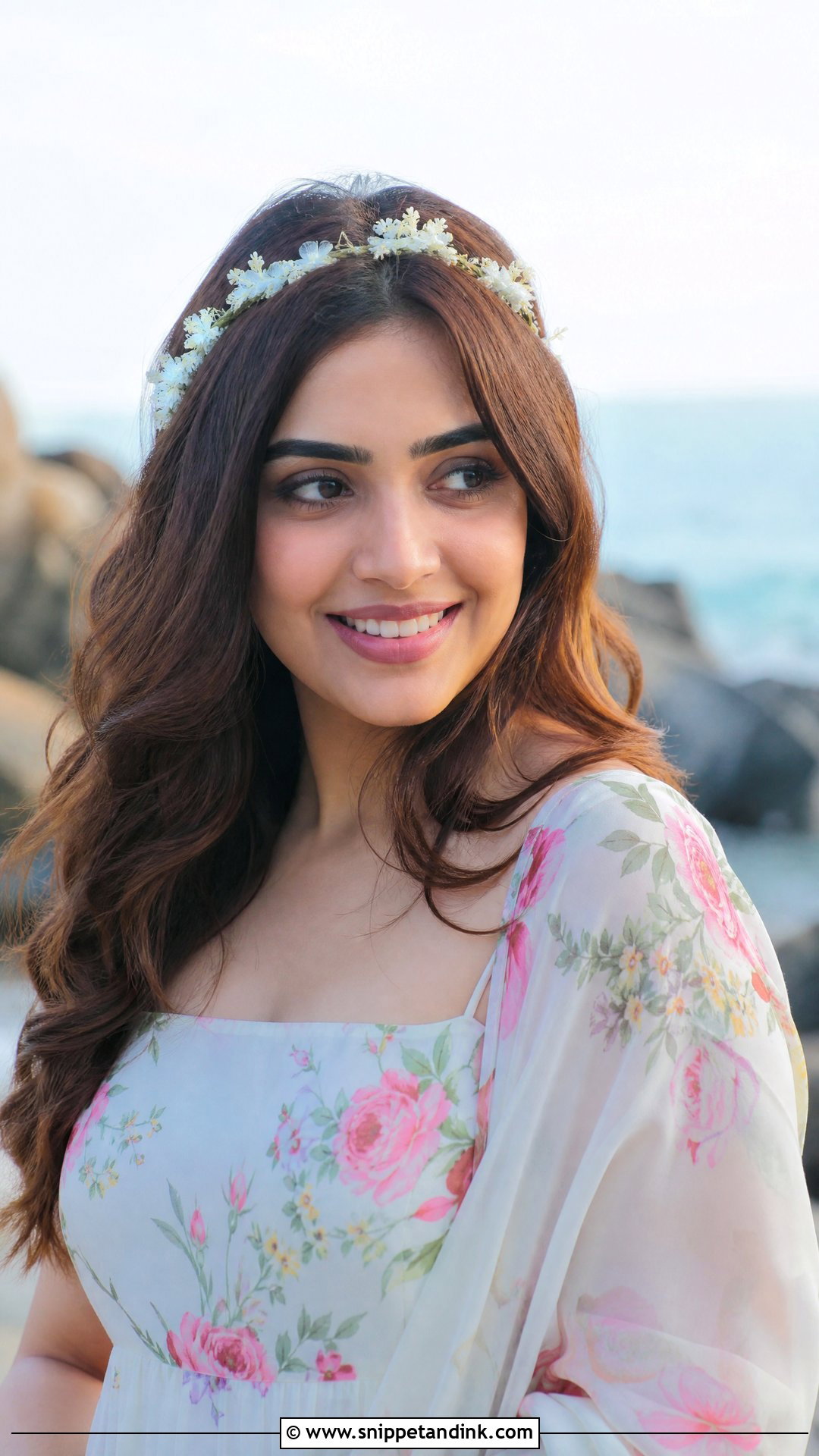
Loose beach waves suit daytime functions and lighter outfits. Create soft bends with a flat iron or wand, then rake through them with your fingers. Waves on Indian hair, which is often thick and heavy, drop faster than people expect, so I set them with a texture spray before curling and use a slightly smaller iron than the look suggests. They’re comfortable for mehendi or a brunch function. A thin floral headband or a single bloom behind the ear is enough.
8. Front Braid Crown
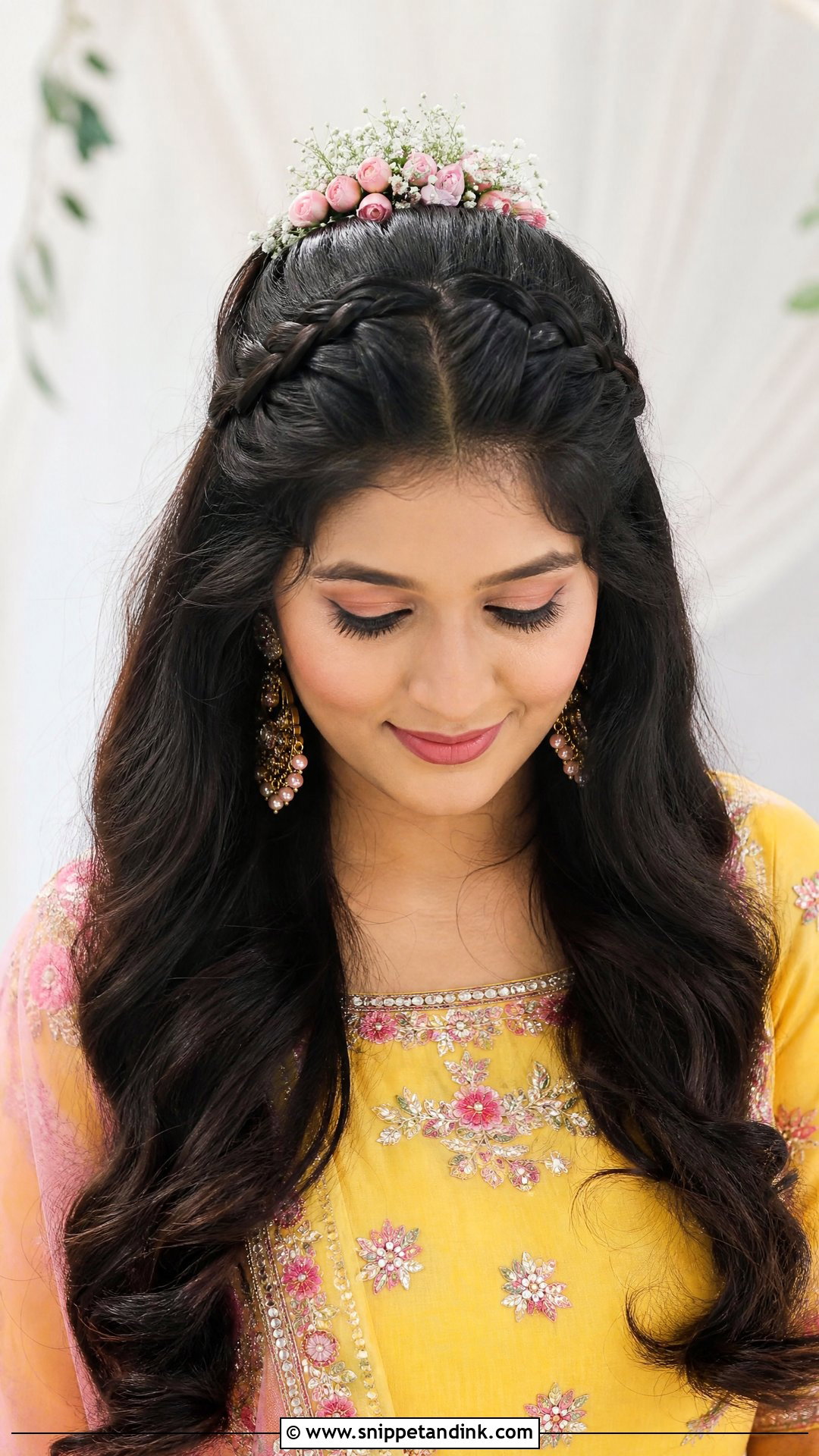
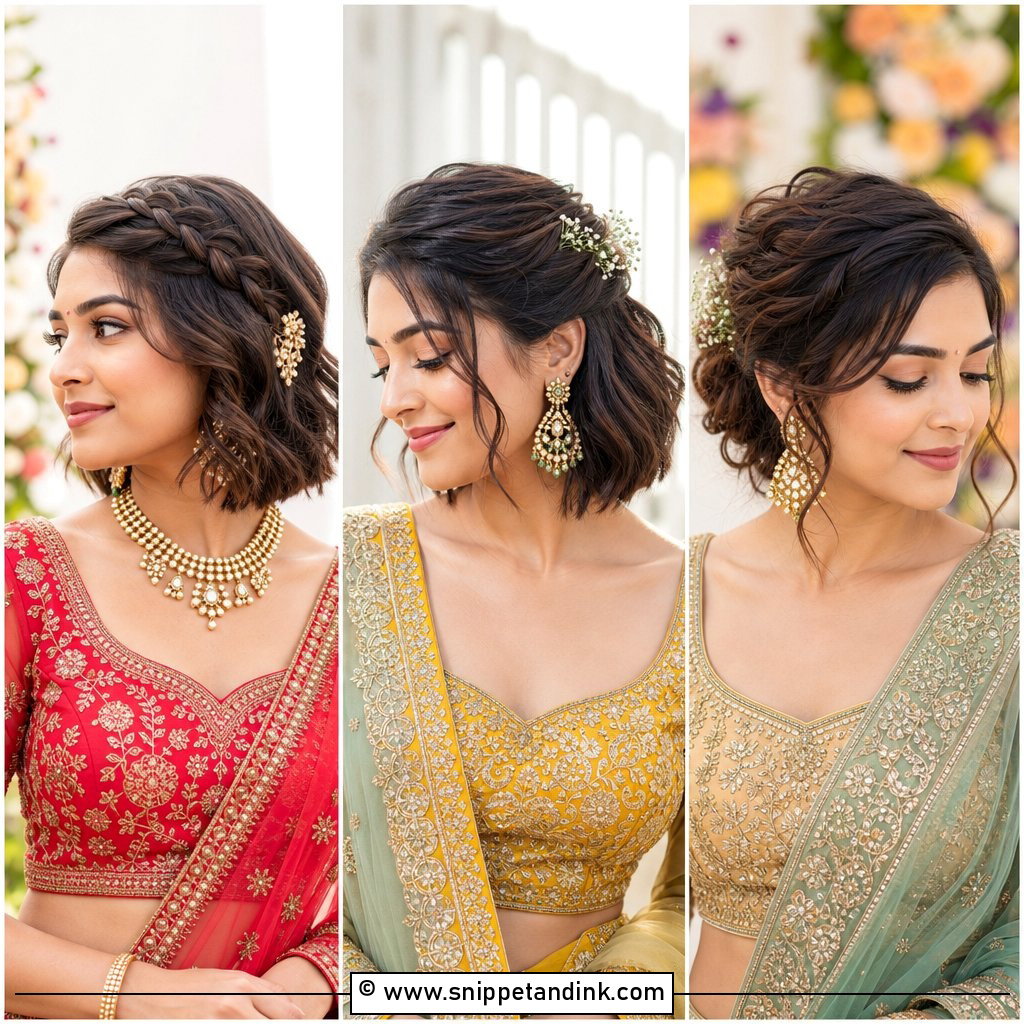
Two small braids from the front, joined at the crown with a pin, keep hair off your face and add detail on top. The rest stays loose or curled. Fresh flowers tucked along the braid line suit daytime events such as haldi or mehendi with an anarkali or lehenga. Braid tight near the face; loose front braids slip as soon as you start dancing.
9. Classic French Braid
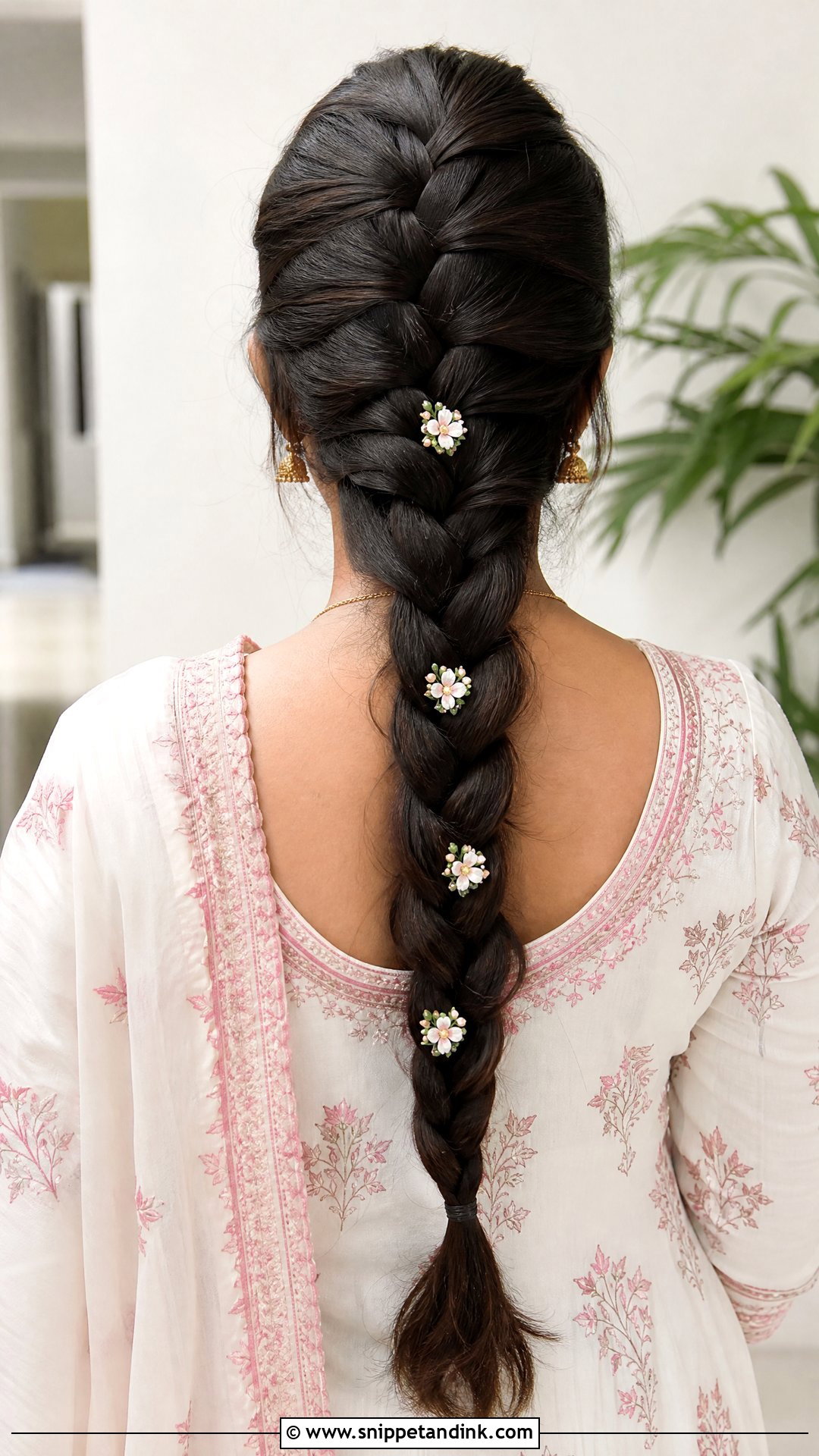
The French braid stays neat through anything, which is why I suggest it for guests who’ll be dancing at the baraat. Braid from the top of the head, adding small sections, and secure the end. Loosen it slightly for fullness. Wear it down the back or to one side, finished with tiny floral pins or a sparkly tie. It’s fuss-free for a full day, and it doesn’t fight a dupatta.
10. Sleek Top Knot
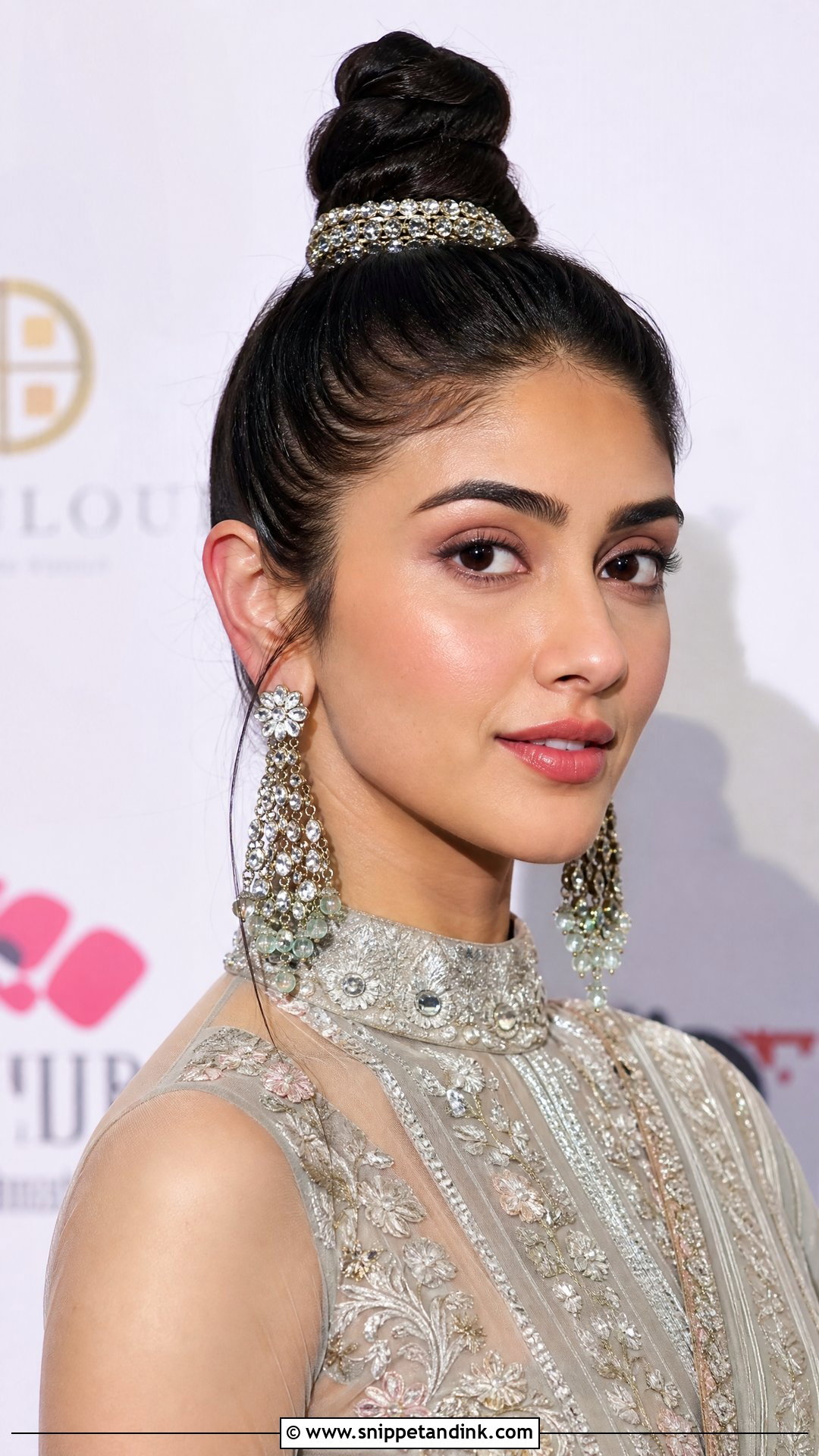
Pull all the hair high, twist it tightly and wrap it into a smooth bun. Gel or serum keeps it sleek. A high bun shows off a long neck and statement earrings and suits fusion outfits and structured gowns at a reception. It isn’t the style for a dupatta over the head, which sits awkwardly on top of the bun. In summer it’s one of the coolest options. A jeweled accessory or small flower cluster at the base adds sparkle.
11. Twisted Half Updo
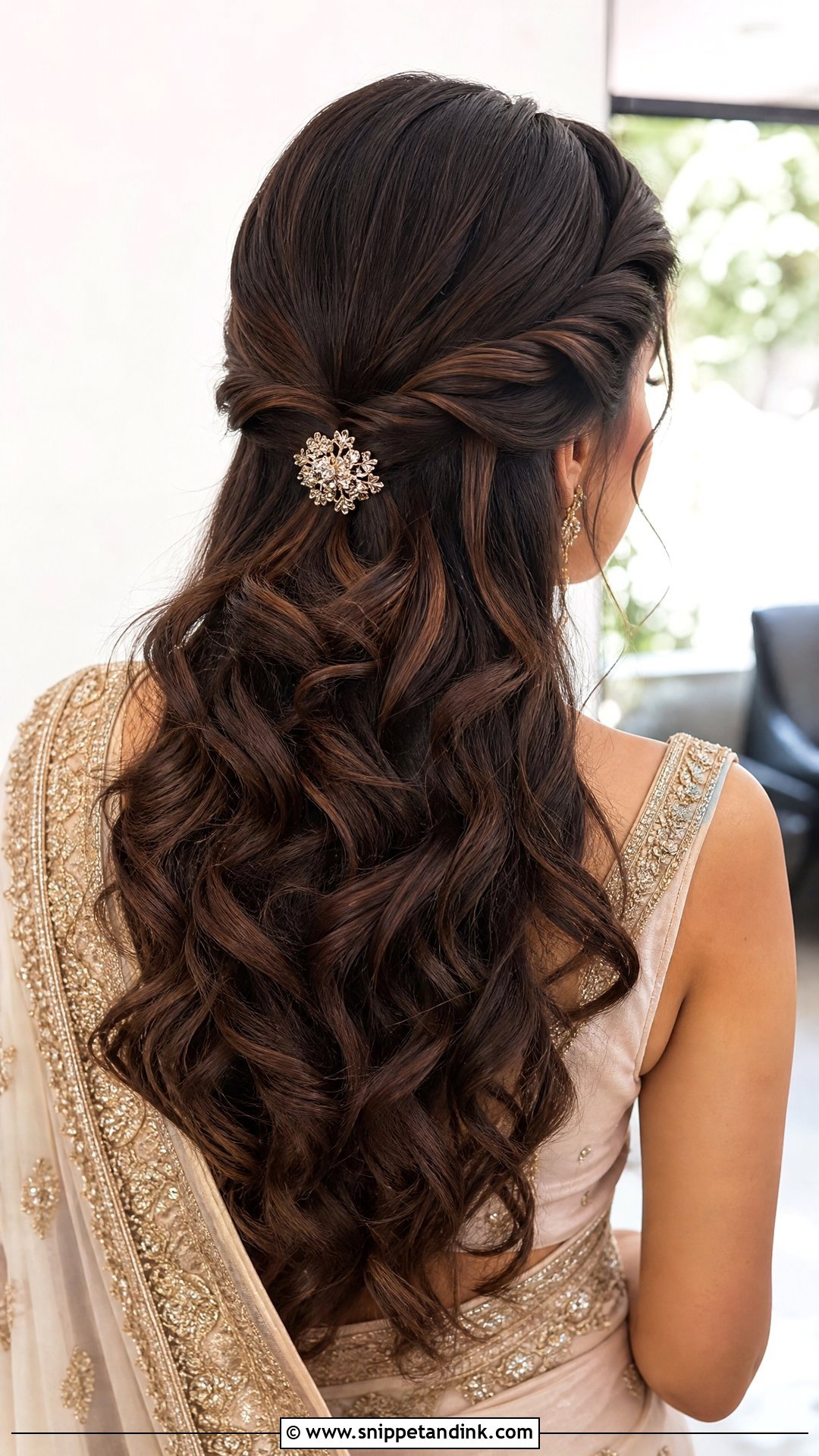
Twist two sections back from each side and pin them where they meet. The rest falls in loose waves. Twist away from the face or they’ll unwind. Leave a couple of curtain-style pieces out at the front; they soften the look. A decorative clip or fresh flowers over the join hides the pins. It suits most outfits for evening functions.
12. Bubble Ponytail
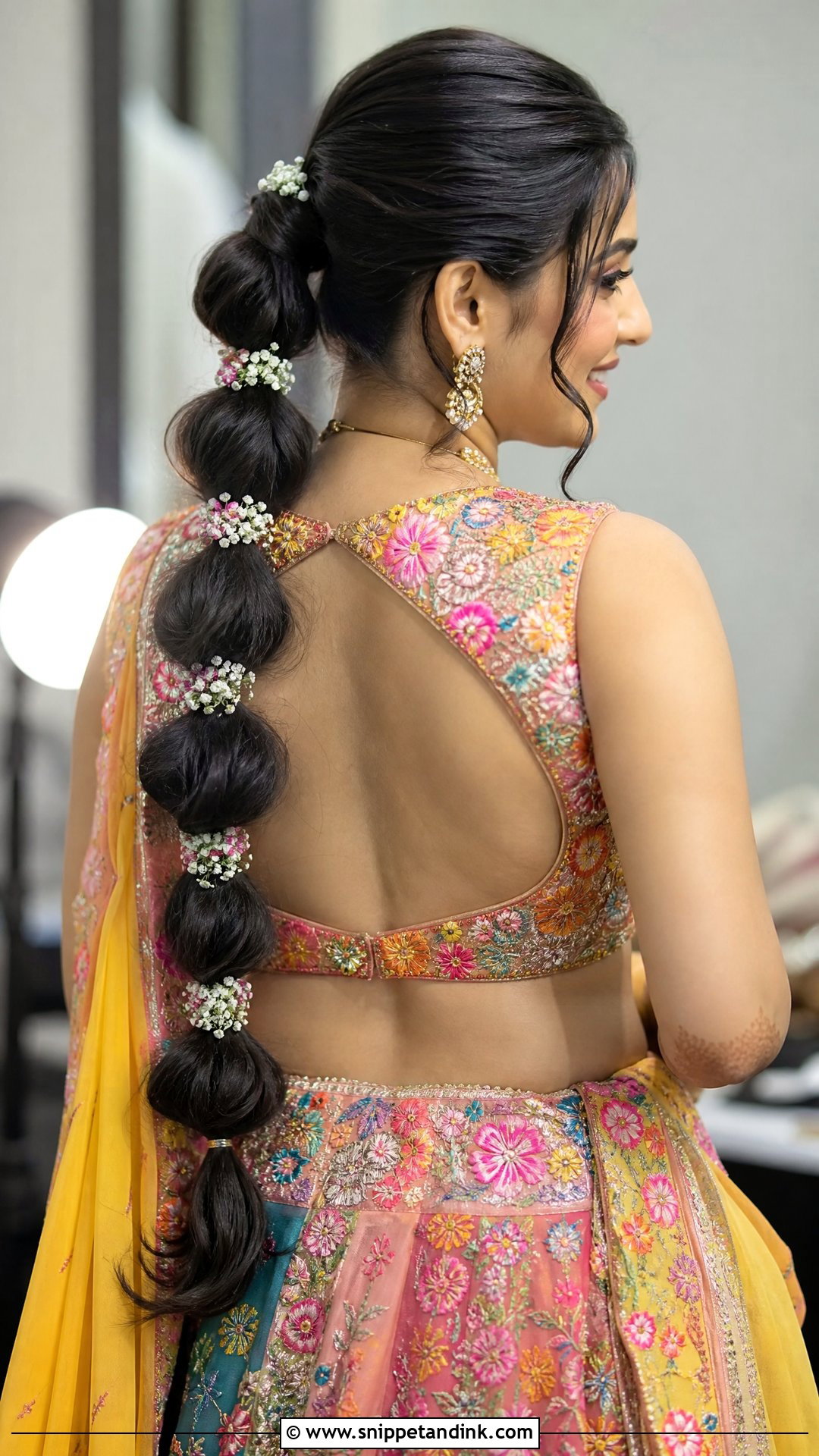
Start with a regular ponytail, then add small elastics down the length every few inches and puff out each section. It’s playful, which makes it fit for sangeet and mehendi with bright outfits and less so at the ceremony itself. Tiny flowers or pearl pins in each bubble look sweet. It’s quick and holds well while dancing, since every elastic is another anchor.
13. Floral Side Bun
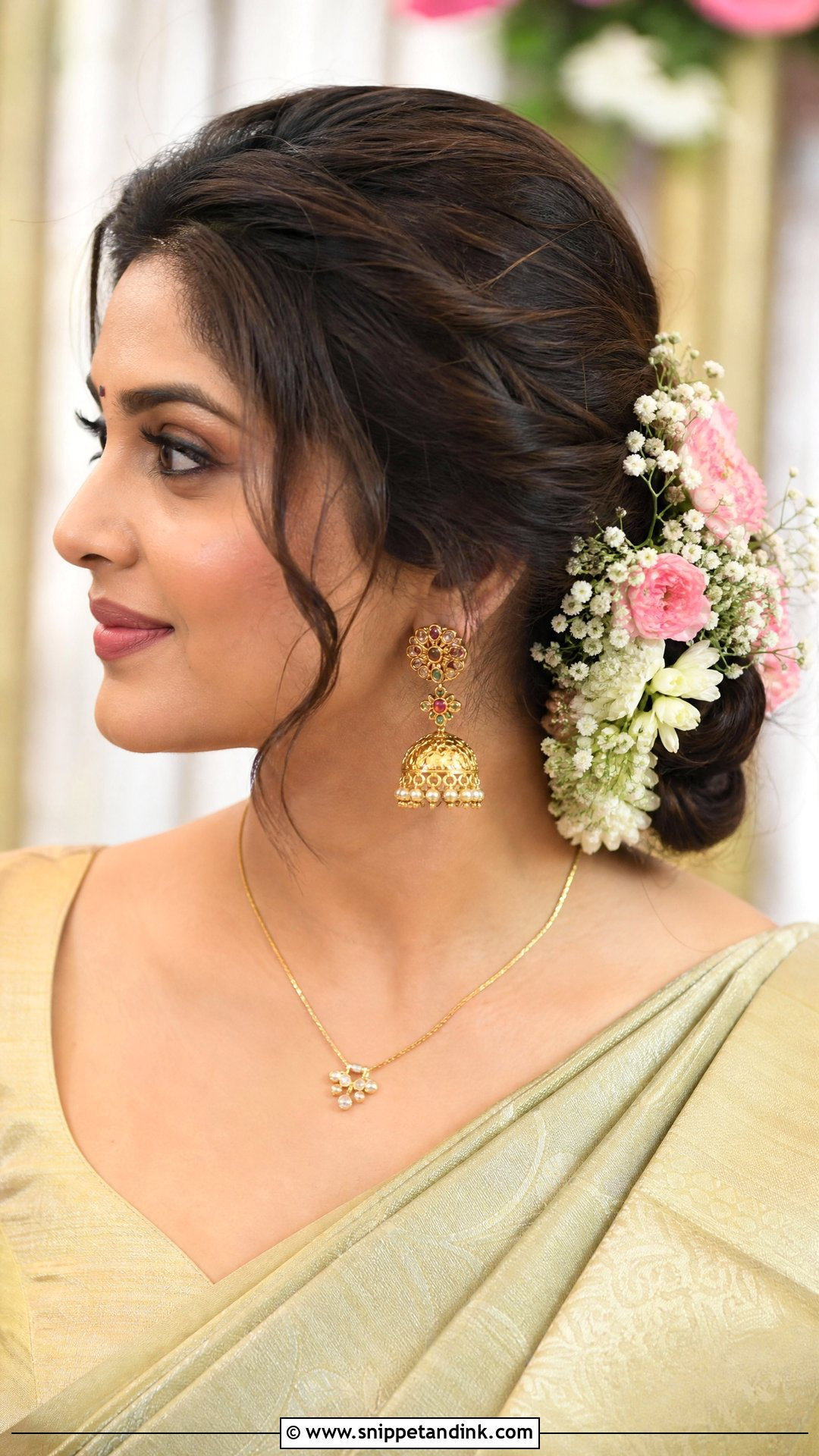
Gather the hair to one side at the nape and twist it into a loose bun just behind one ear. Then tuck fresh flowers or a small gajra around it. With a saree, place the bun on the side opposite the pallu, so the drape doesn’t catch the flowers. It’s comfortable for long celebrations and the off-center placement suits daytime and evening events.
14. Curly High Ponytail
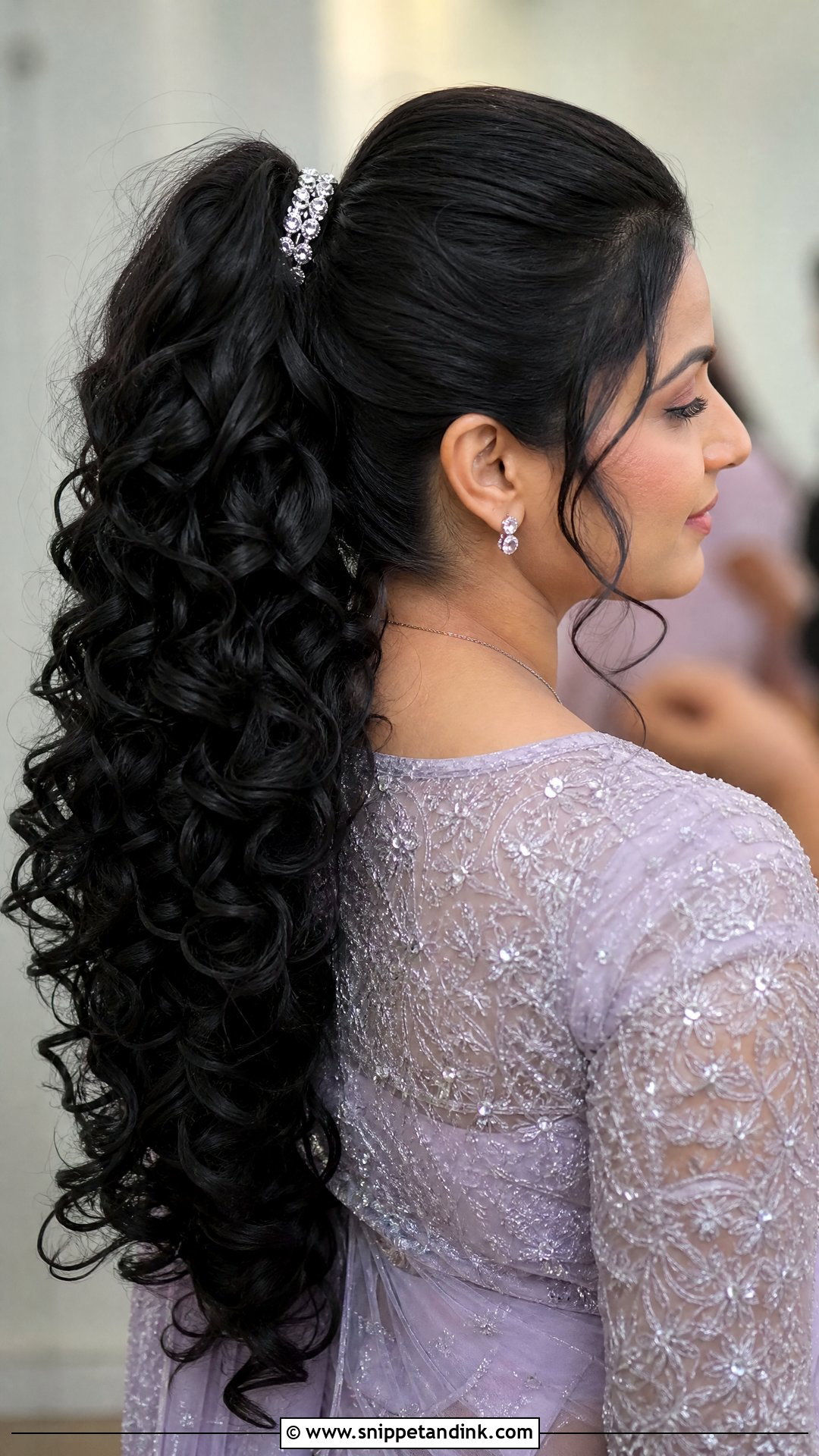
Gather everything high, secure it tightly and curl the length into full spirals with a wand. Wrap a strand around the base to hide the elastic. It’s made for dancing at a sangeet or a reception, and the movement looks lively under lights. Heavy hair pulls a high pony down, so I add two pins pushed upward into the base. A sparkly hair tie or small flowers finish it. If you get headaches from tight ponytails, choose a mid height instead.
15. Dutch Braid Bun
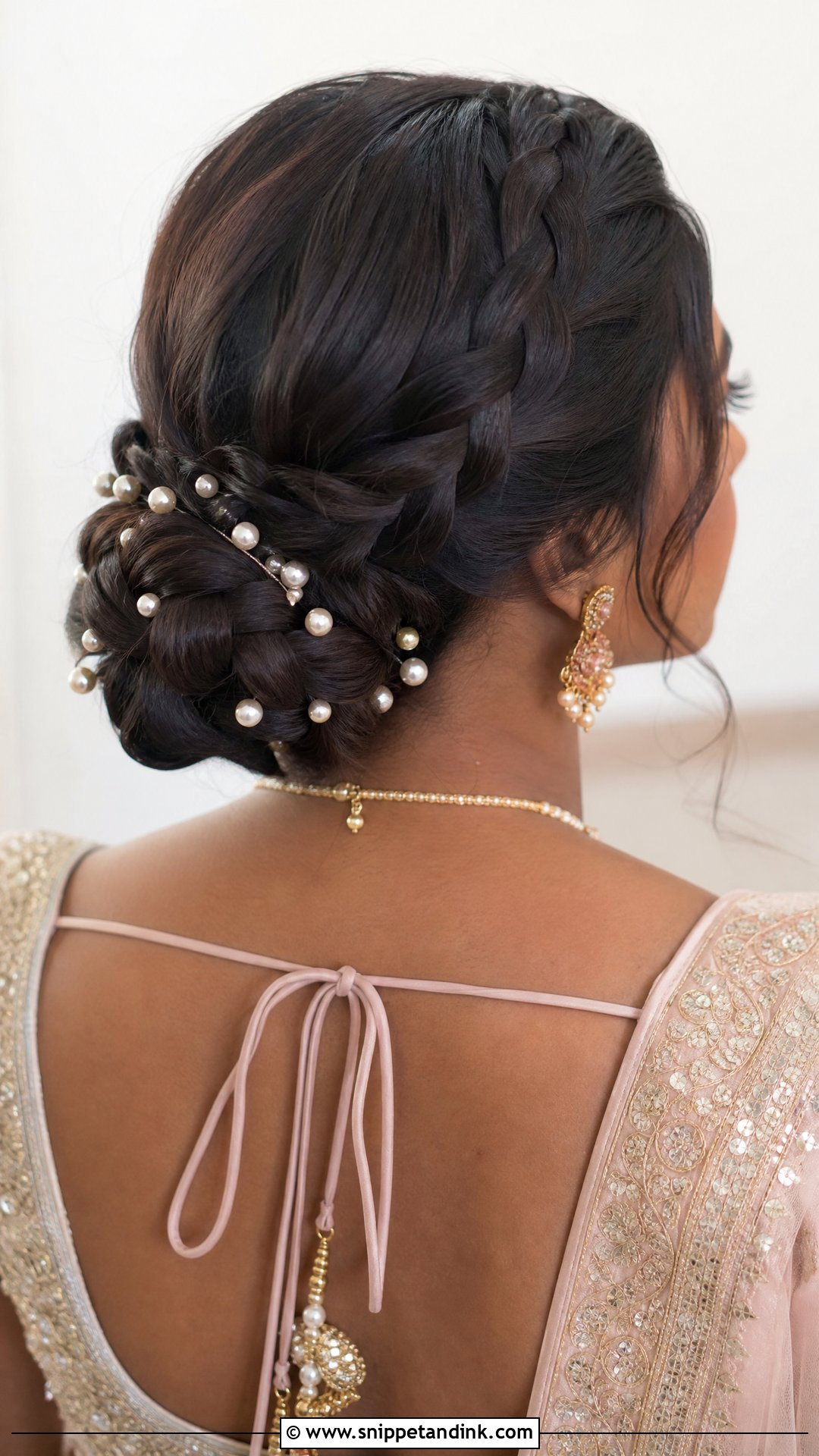
A Dutch braid crosses sections under instead of over, so it sits raised on the head. Braid from the front back to the crown, then gather the rest into a low or mid bun. That raised braid shows clearly from behind during the pheras, when guests are mostly looking at the back of each other’s heads. It’s secure for hours and works with traditional outfits. Decorate the bun with pearls or fresh blooms.
16. Soft Waves With Maang Tikka
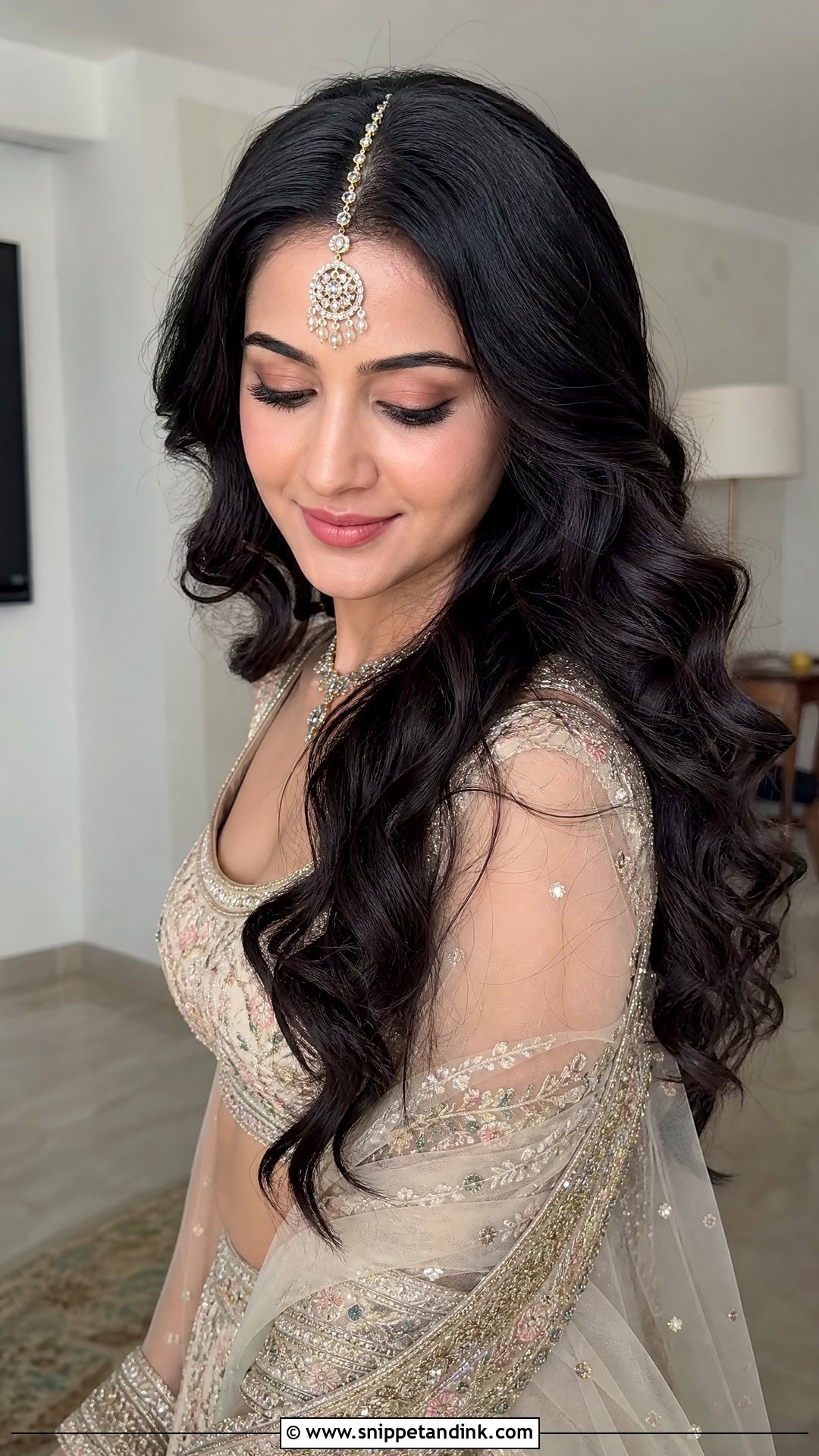
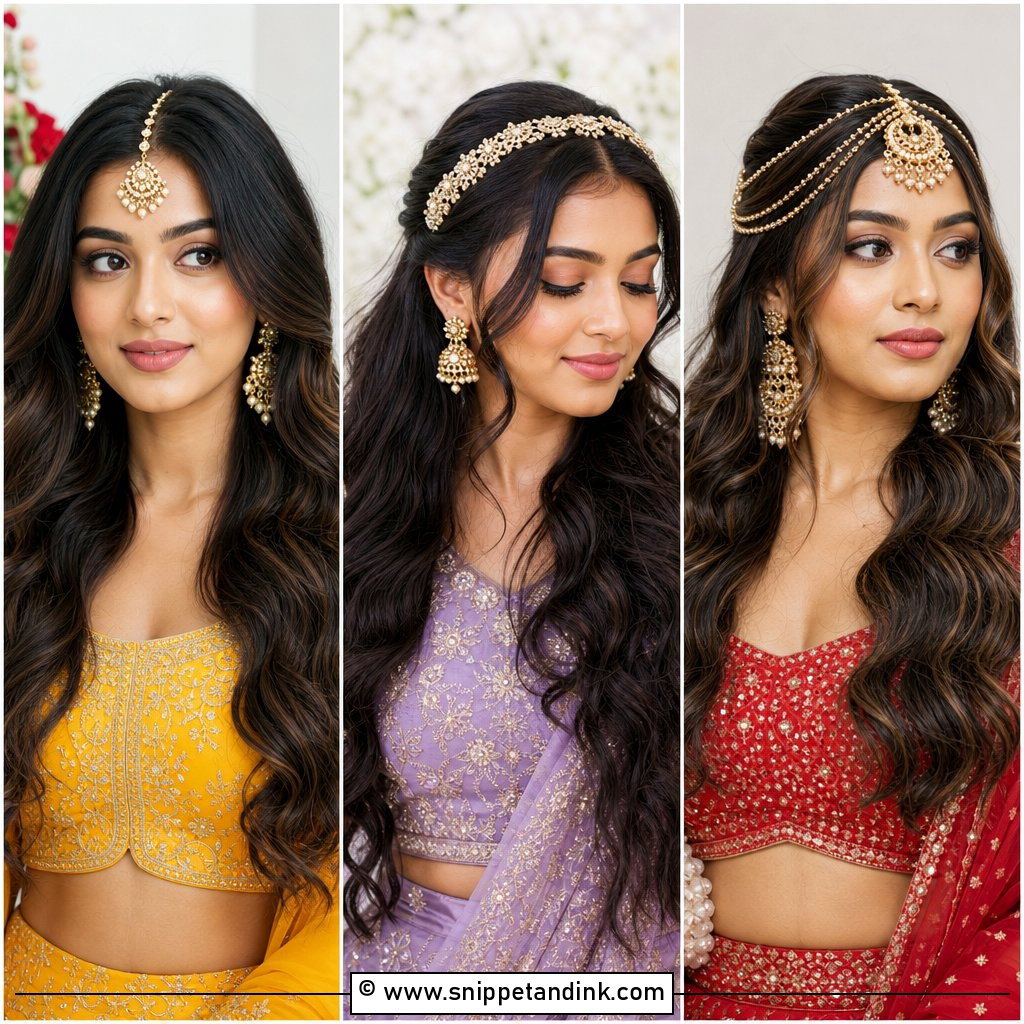
Pairing soft waves with a maang tikka turns open hair into a festive look. Curl the hair into loose waves and leave it down the back or over one shoulder. Then place the tikka along the center part: hook it to a bobby pin and slide the pin under a small section of hair at the crown, so the chain lies flat and doesn’t swing. It works with sarees and lehengas at engagement parties and receptions.
17. Rose Bun
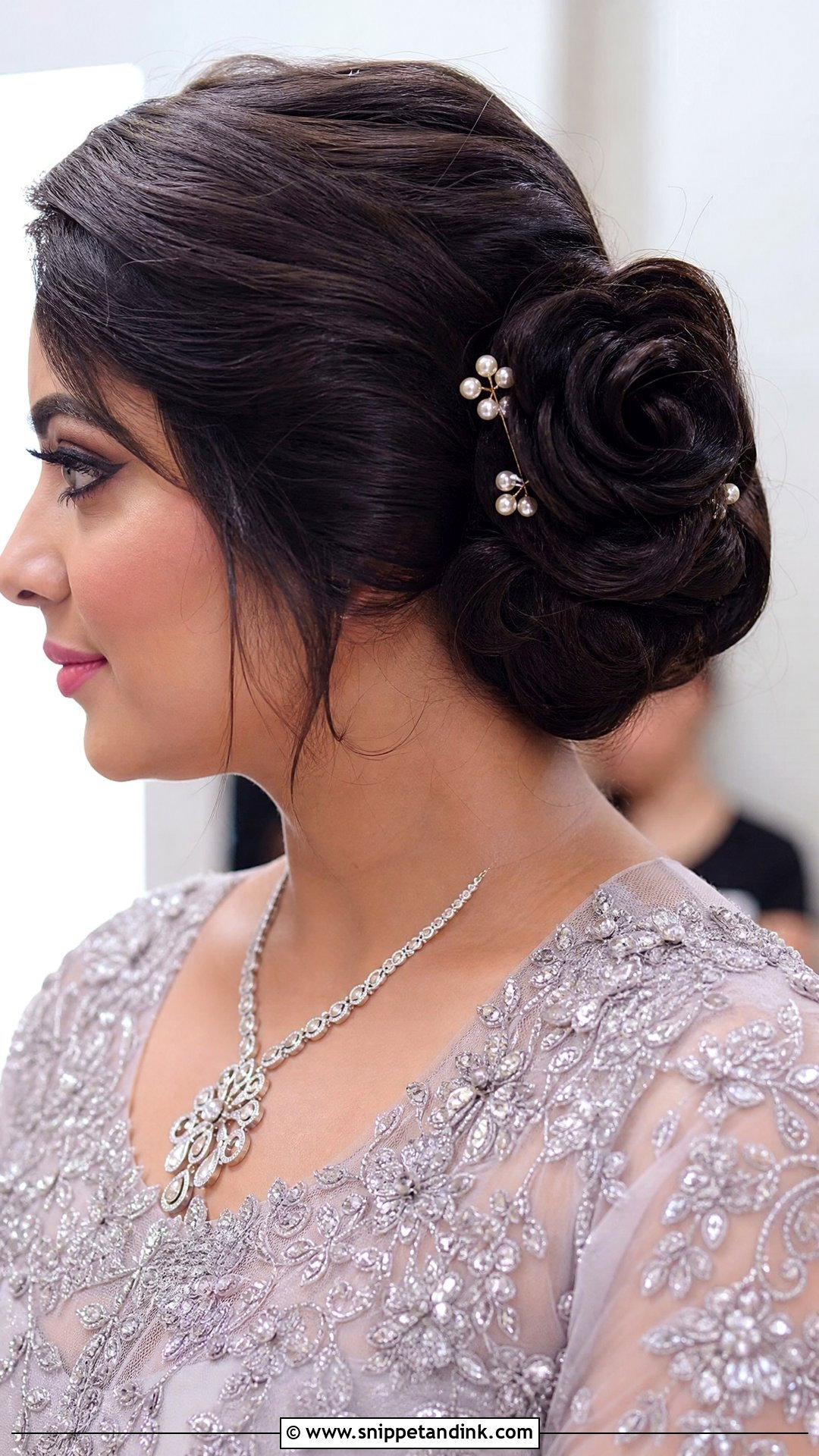
The rose bun is a twisted rope coiled into a flower shape. Twist the hair into a loose rope, coil it around itself petal by petal and pin as you go, not just at the end. Leaving all the pins to the end lets the coil unwind. Place it at the back or the side of the head. It suits sarees and gowns at receptions, with tiny pearl pins if you want more detail. Very thick hair makes a large rose, so on long, heavy hair I’d split it into two smaller ones.
18. Waterfall Braid
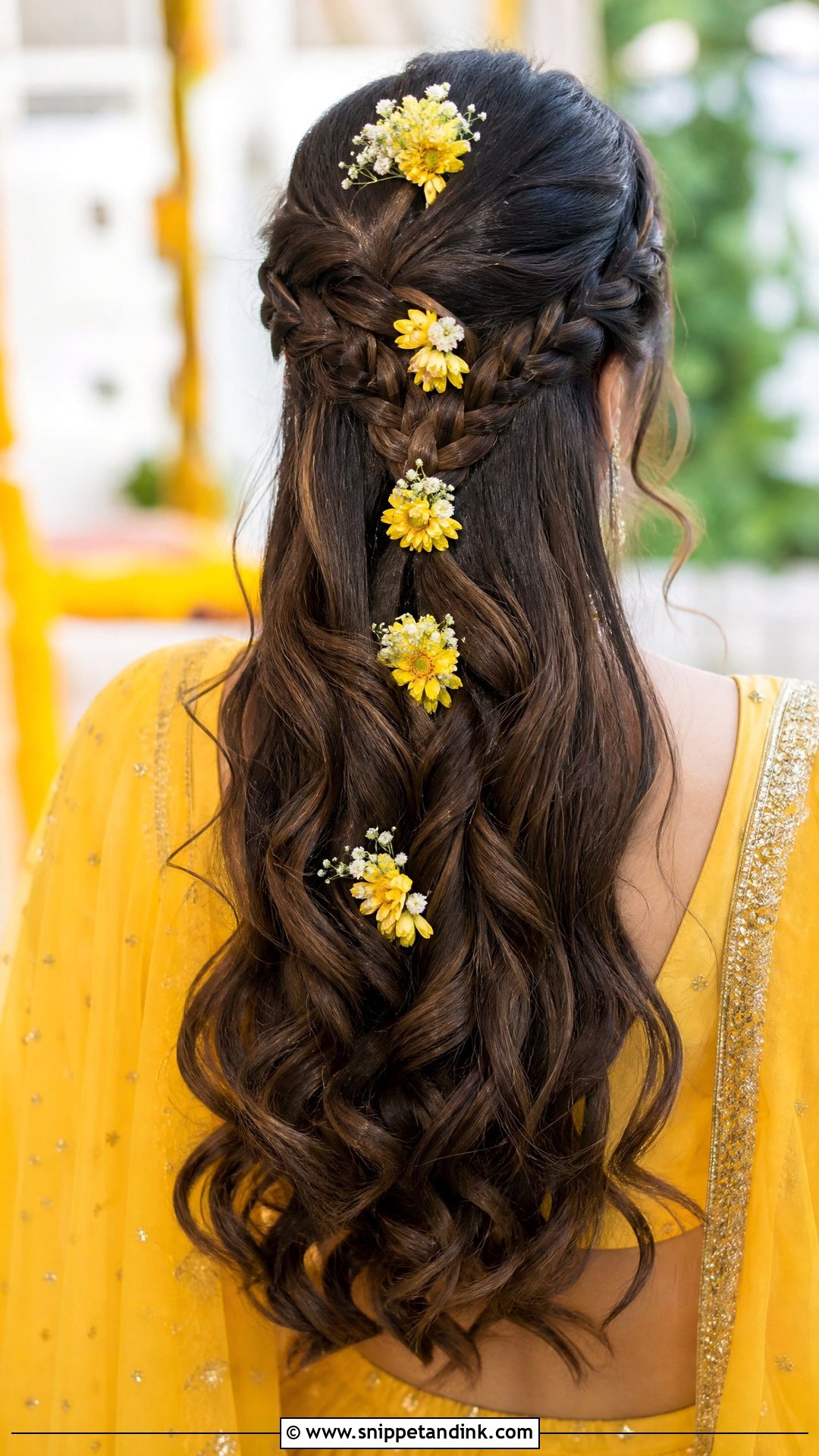
Start a braid at the temple and drop one section each time you cross, picking up a new one. The dropped strands make the waterfall. Continue across the back of the head and secure the end. The rest stays loose and wavy. It suits mehendi and haldi, with small flowers tucked along the braid. Fine hair makes the dropped strands hard to see, so add a little wave first.
19. Wrapped Low Bun
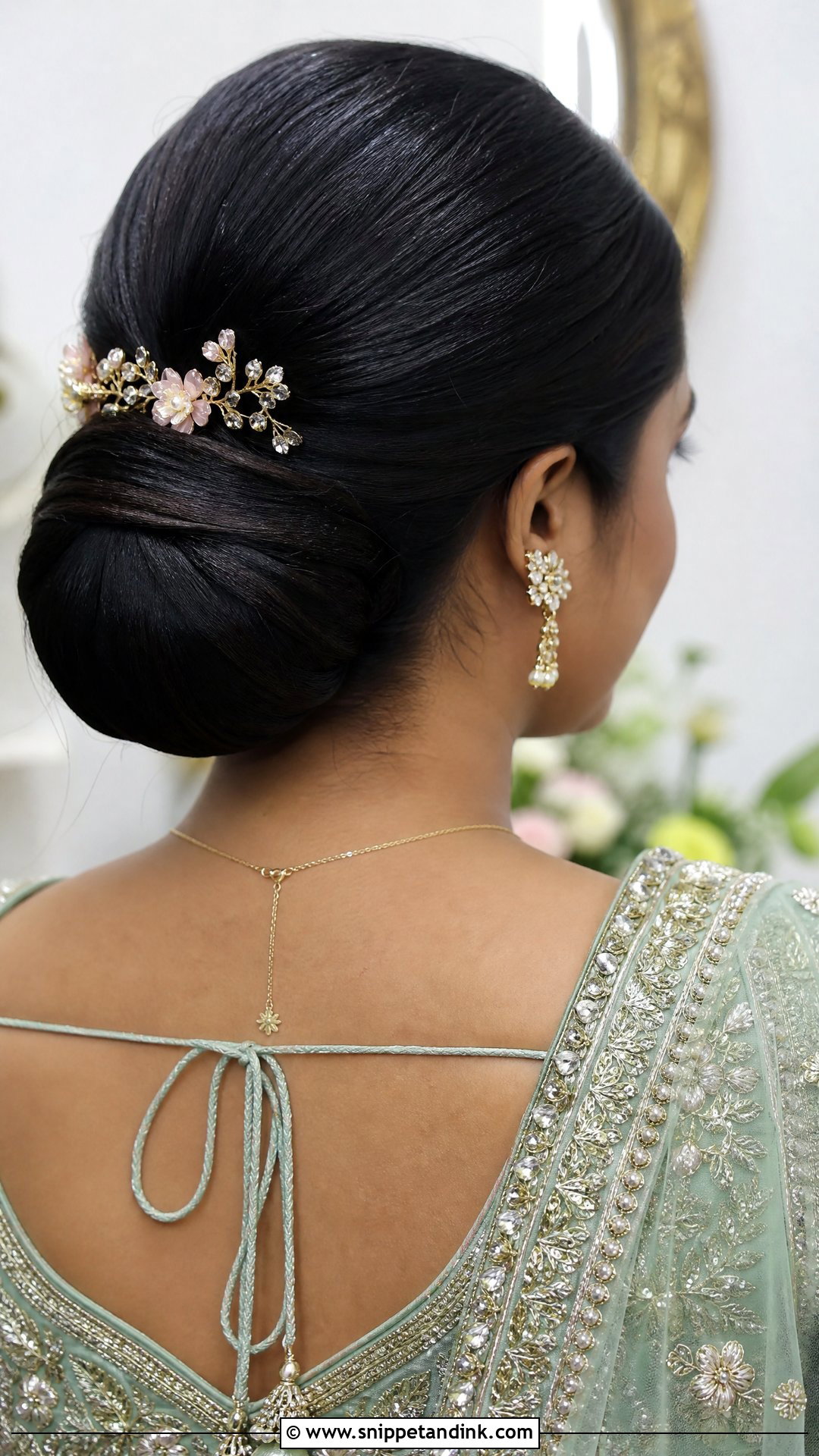
Pull the hair into a low ponytail, twist the length and wrap it around the base into a smooth bun. Tuck the ends under and pin. It keeps the focus on heavily embellished sarees and jewelry and stays neat through long functions. A decorative pin or small floral accent adds a festive touch. It’s comfortable all day and suits formal functions like the wedding ceremony or the reception.
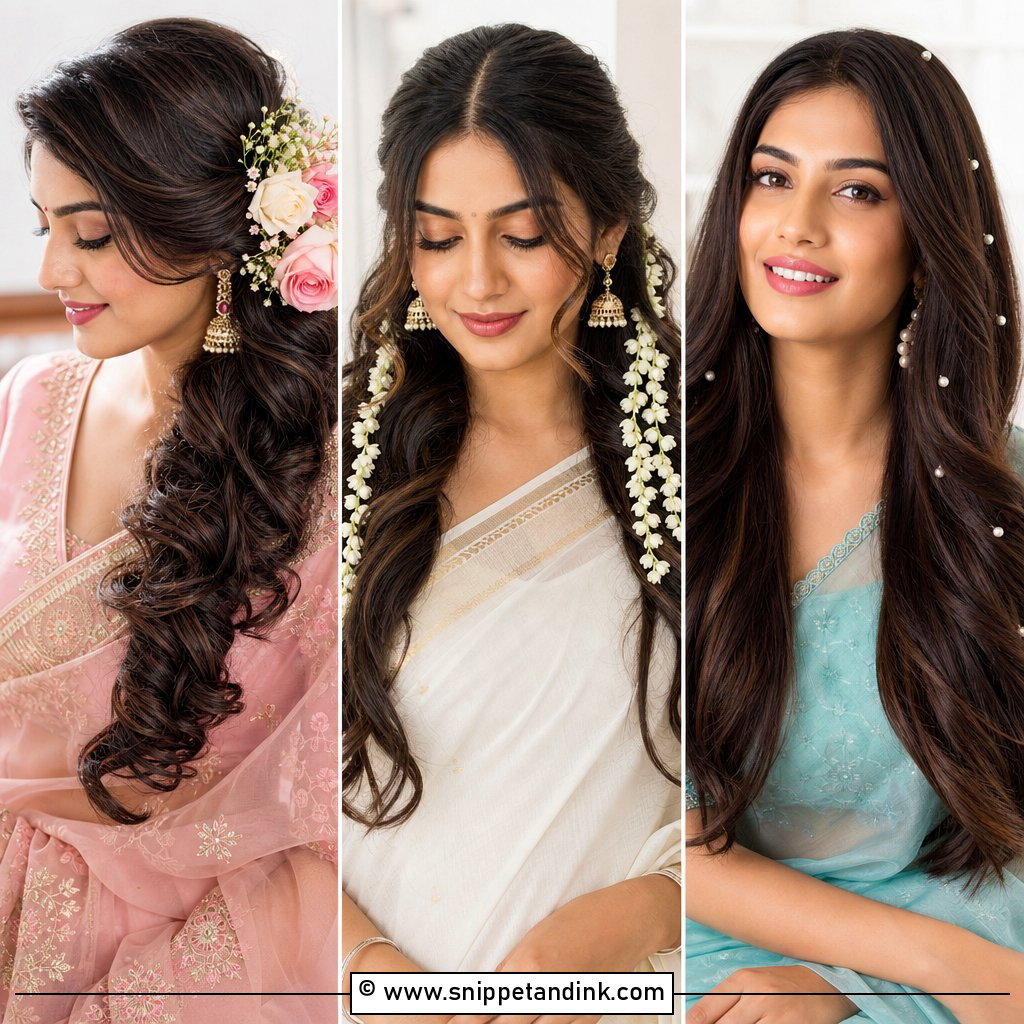


20. Open Hair With Hair Accessories
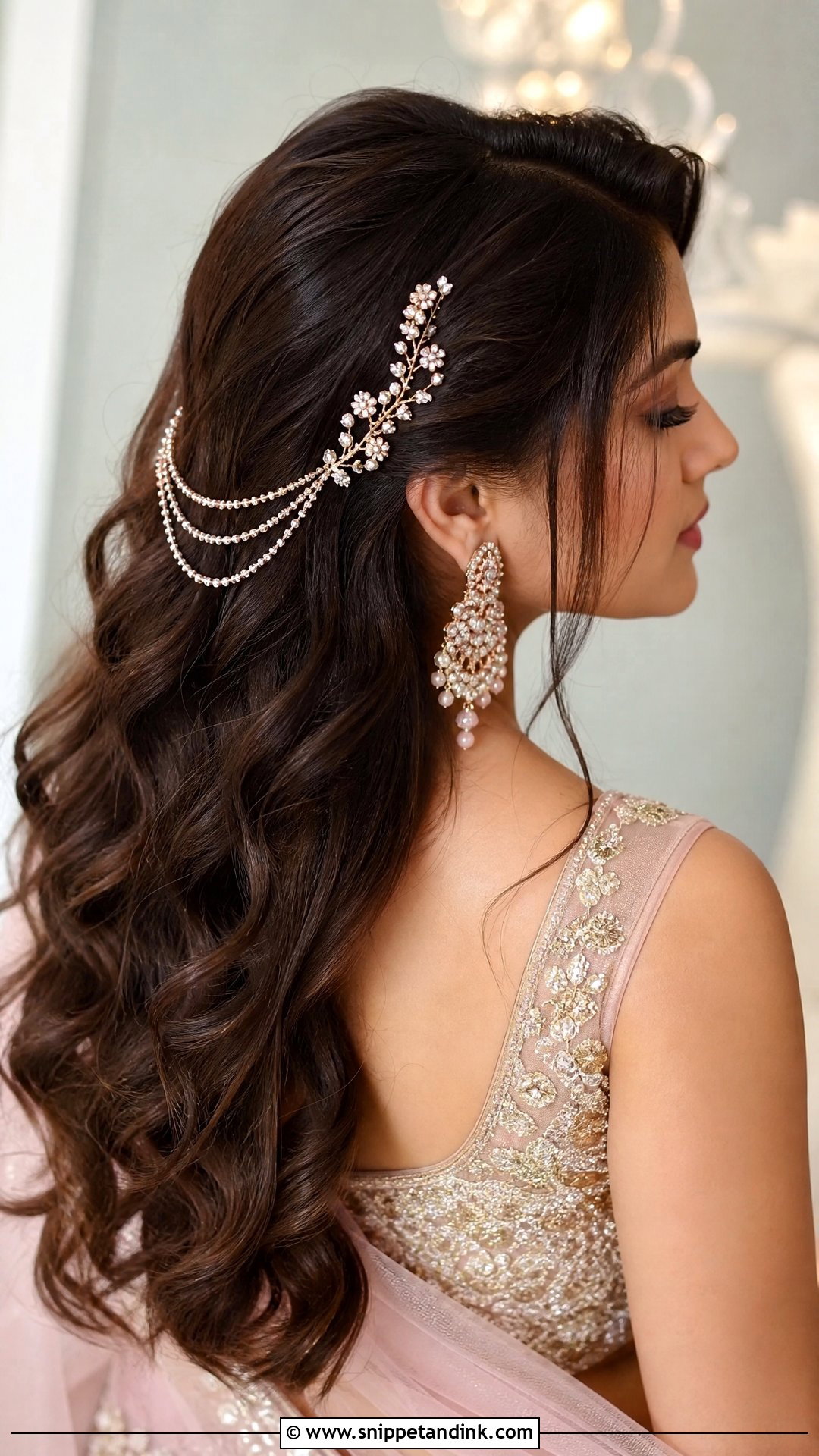
Open hair works at most functions if the accessories are secured properly. Style it with soft curls or straighten it, then add a jeweled hair chain, decorative pins or a flower vine along one side. Anchor each accessory to a small hidden braid or twist rather than loose hair, which won’t hold the weight. It suits traditional and fusion outfits. Place the sparkle where it catches the light, usually just above the ear.
Gajra, Tikka and Dupatta Without the Constant Readjusting
The extras in Indian guest styling are what pull a hairstyle apart over an evening, so it’s worth knowing how to anchor each one.
Fresh jasmine
Jasmine opens and starts to brown within a few hours once it’s in your hair. Buy the gajra as late as you can, and keep it wrapped in a damp cloth in the fridge until you leave. Pin it through the string, not the petals, into the bun with U-pins every few inches.
Maang tikka
Slide a bobby pin through the hook and pin it under a small section of hair at the crown, then cover it with the hair on top. If the tikka is heavy, a second pin crossed over the first stops it slipping toward one eye.
A dupatta worn over the head
A dupatta on top of the head drags the hairstyle back every time you move. Pin it to the hair, not just the blouse, using two or three bobby pins at the crown, through the fabric and into a section of hair beneath it. Low buns and braids sit under a dupatta much better than high ponytails or top knots.
Hair That Lets You Dance at the Sangeet and Still Look Neat at the Pheras
None of these styles needs a salon trip. Flowing waves, buns and braids all have a place, depending on the function and what you’re wearing. Choose a look that works with your saree or lehenga, then add flowers, pins or a maang tikka to make it festive. Most of all, pick something secure enough that you can stop thinking about your hair and dance.
You'll Like These Ideas:





Leave a Reply