
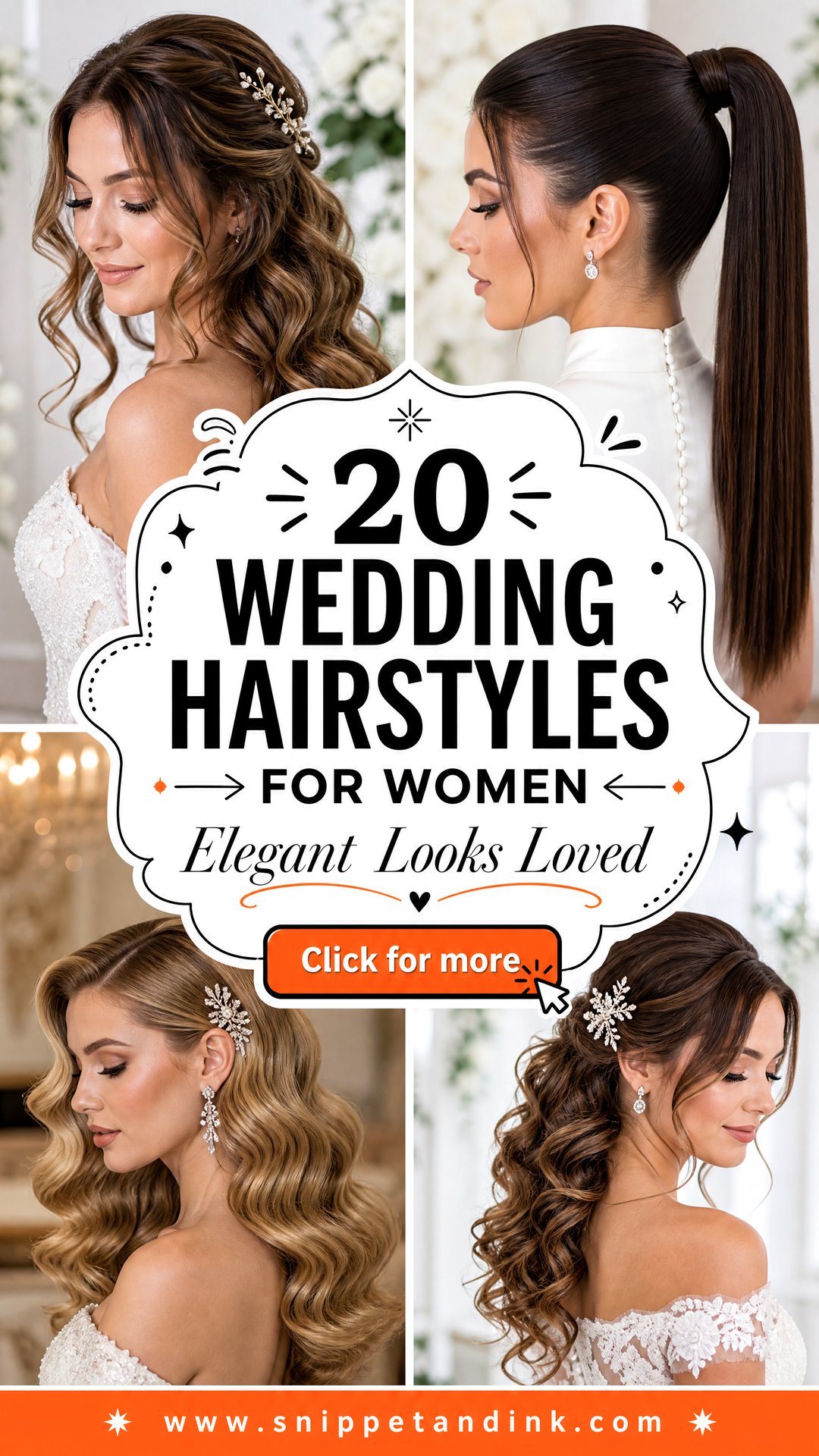
Most of the brides who sit in my chair arrive with a folder of photos and one worry: will this actually work on my hair? That question matters more than the picture. A ballroom and a sunny garden ask different things of a style, and so do fine hair, thick hair and natural curls. Below are 20 wedding hairstyles I’d happily put on a bride, with notes on how each one behaves, who it suits and where it tends to go wrong, so you can walk into your trial knowing what to ask for.
Does Your Hair Hold a Curl? Start There
Before I look at a single inspiration photo, I want to know how your hair behaves on an ordinary day. That tells me more about which of these styles will survive a wedding than any picture can.
Fine, slippery hair
Fine hair drops curls fast and lets pins slide. It does best in braids, twists and textured buns, where the hair grips itself. I prep it with a volumizing mousse and dry texture spray, and I’d usually talk you out of loose curls worn fully down unless the wedding is short.
Thick or heavy hair
Thick hair holds shape but can feel heavy by evening, and one big bun can give you a headache. Splitting the weight into several smaller twists or a chignon built on a hidden ponytail makes a real difference to comfort.
Curly and coily hair
Natural texture is a strength. The mistake is straightening it the night before and then expecting it to set in curls on the day; that rarely works. Tell me how your curls react to humidity and which products they like, and I’ll build the style around them.
- Bring a photo of your hair on a normal day, not only your inspiration shots.
- Mention any sensitive spots on your scalp so I can avoid pinning there.
- Tell me about extensions or clip-ins you already own; they change the pin plan.
1. Sleek Low Bun
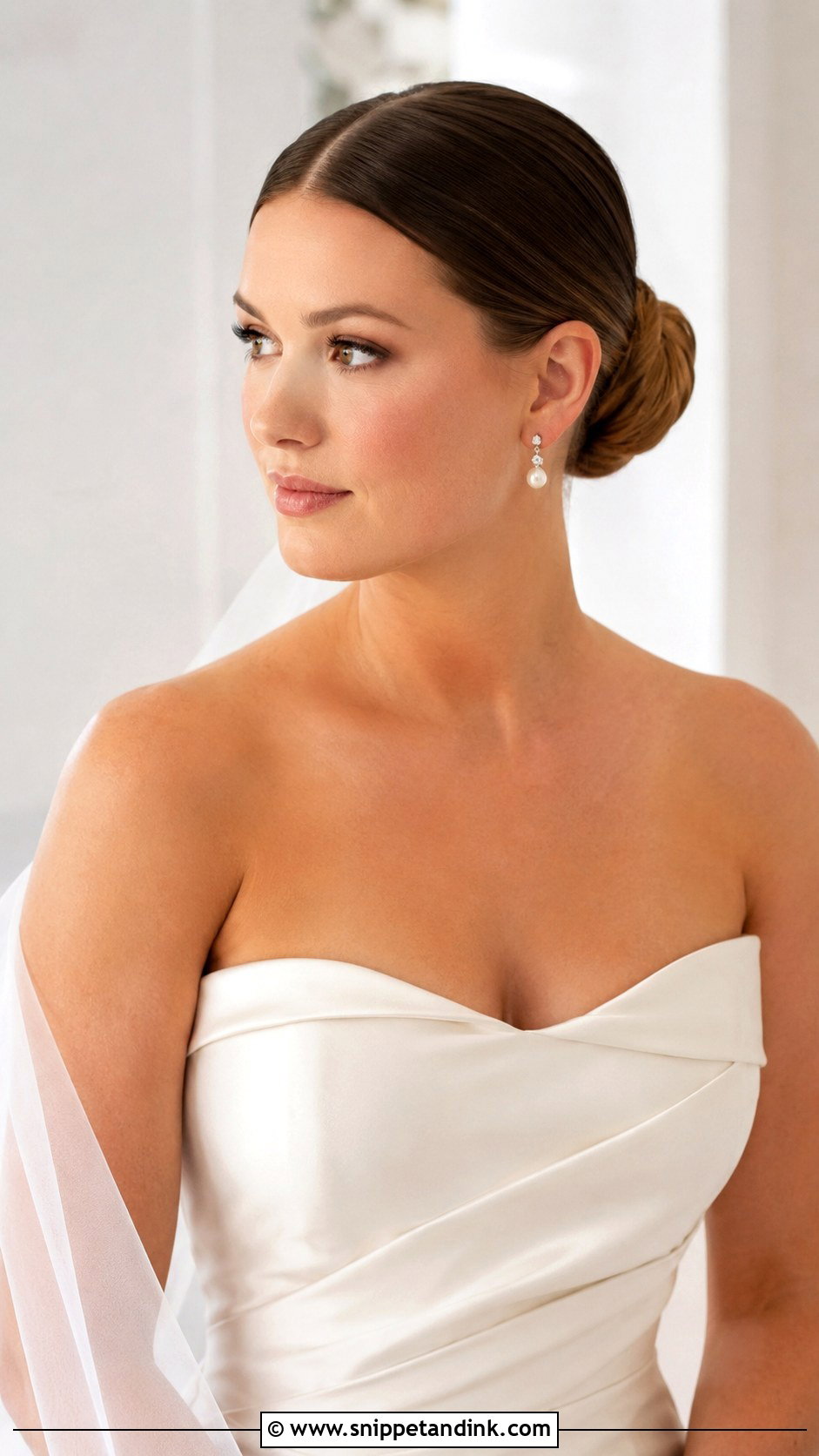
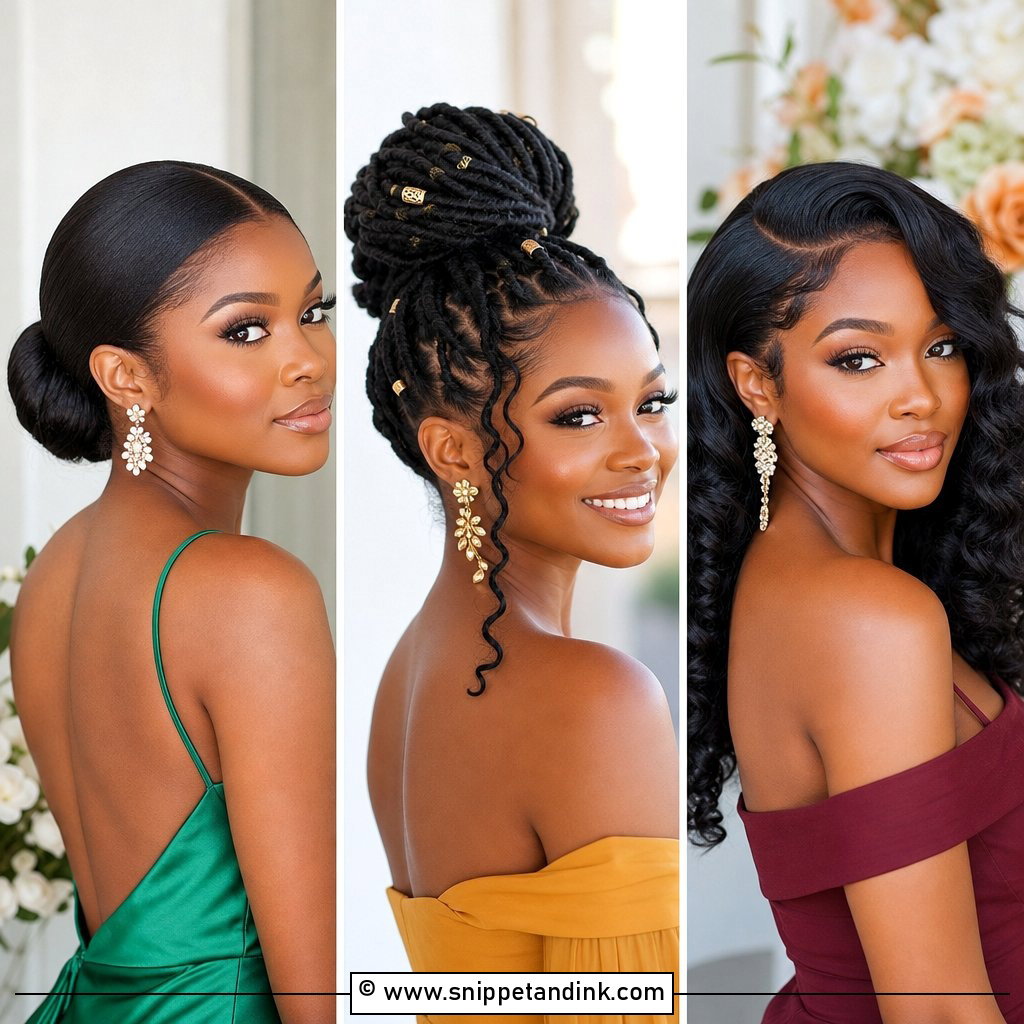
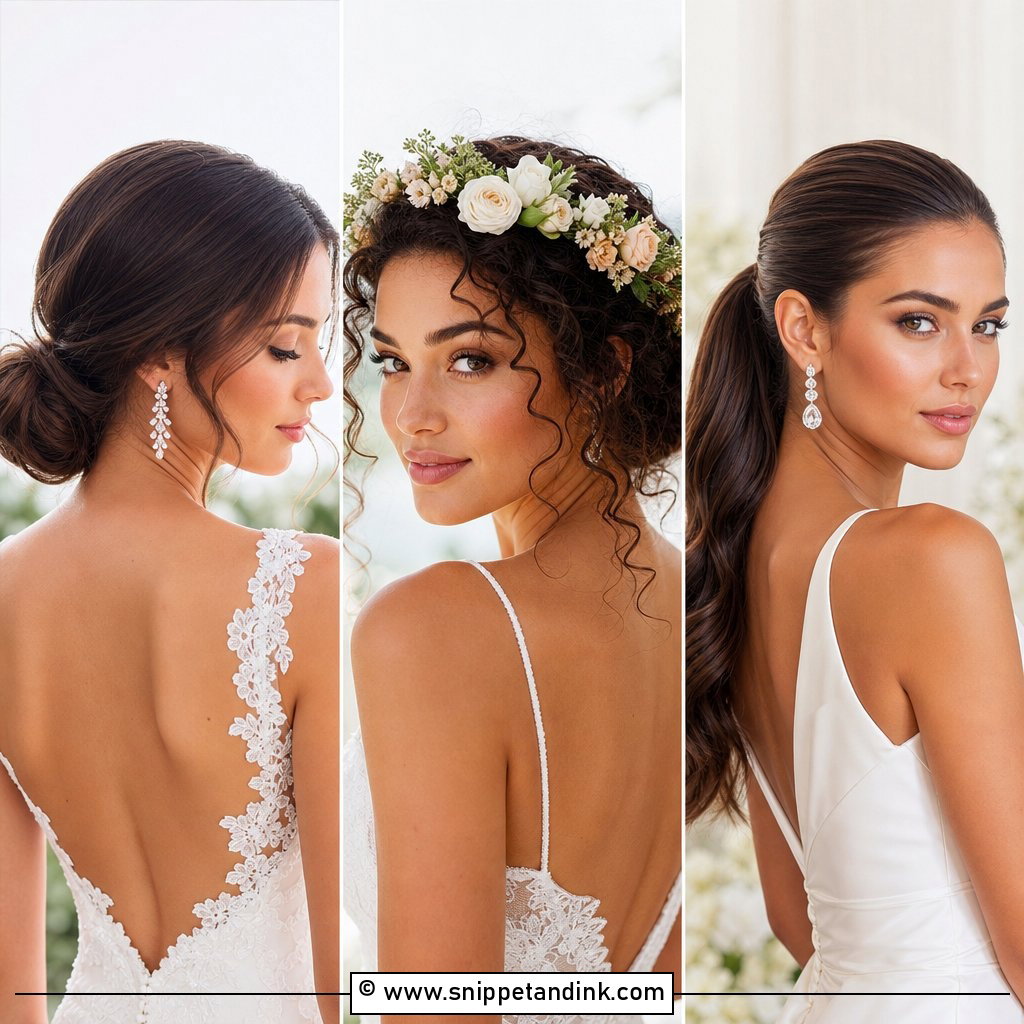
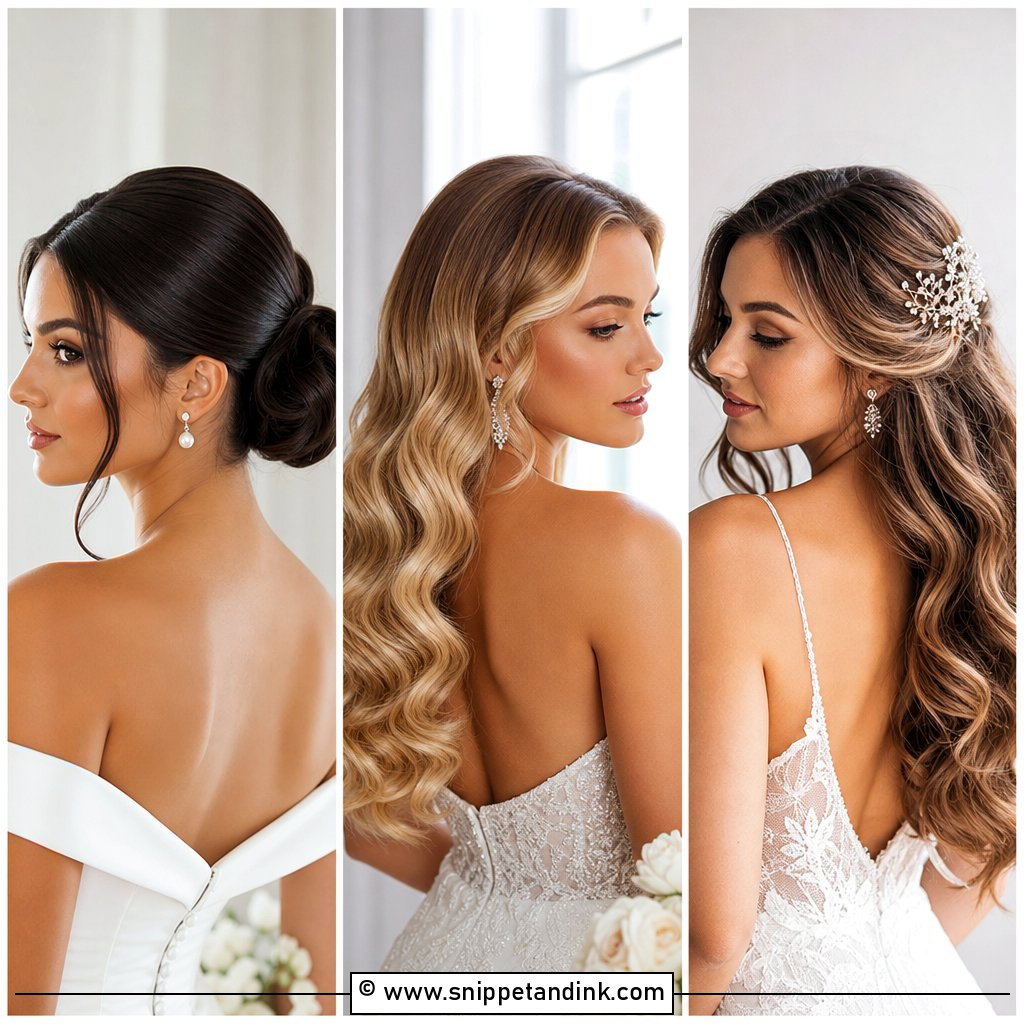
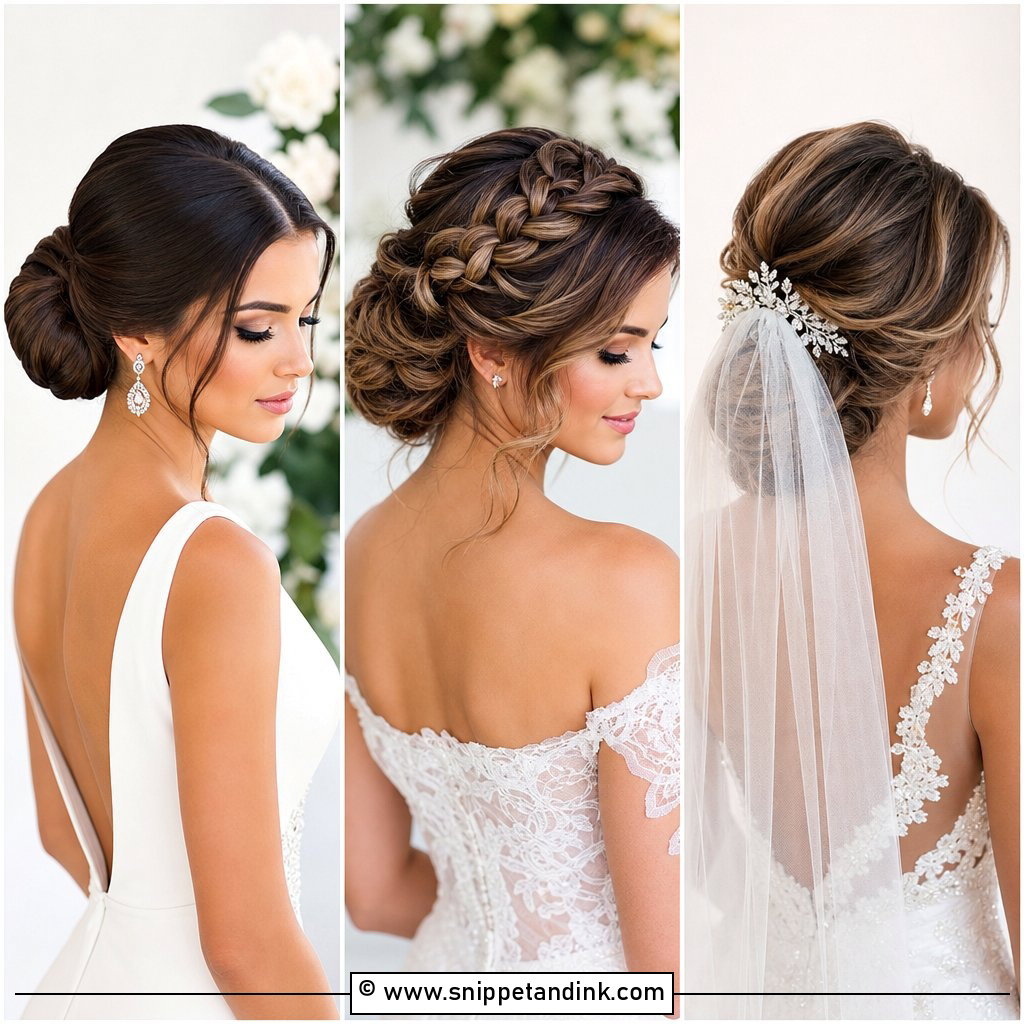
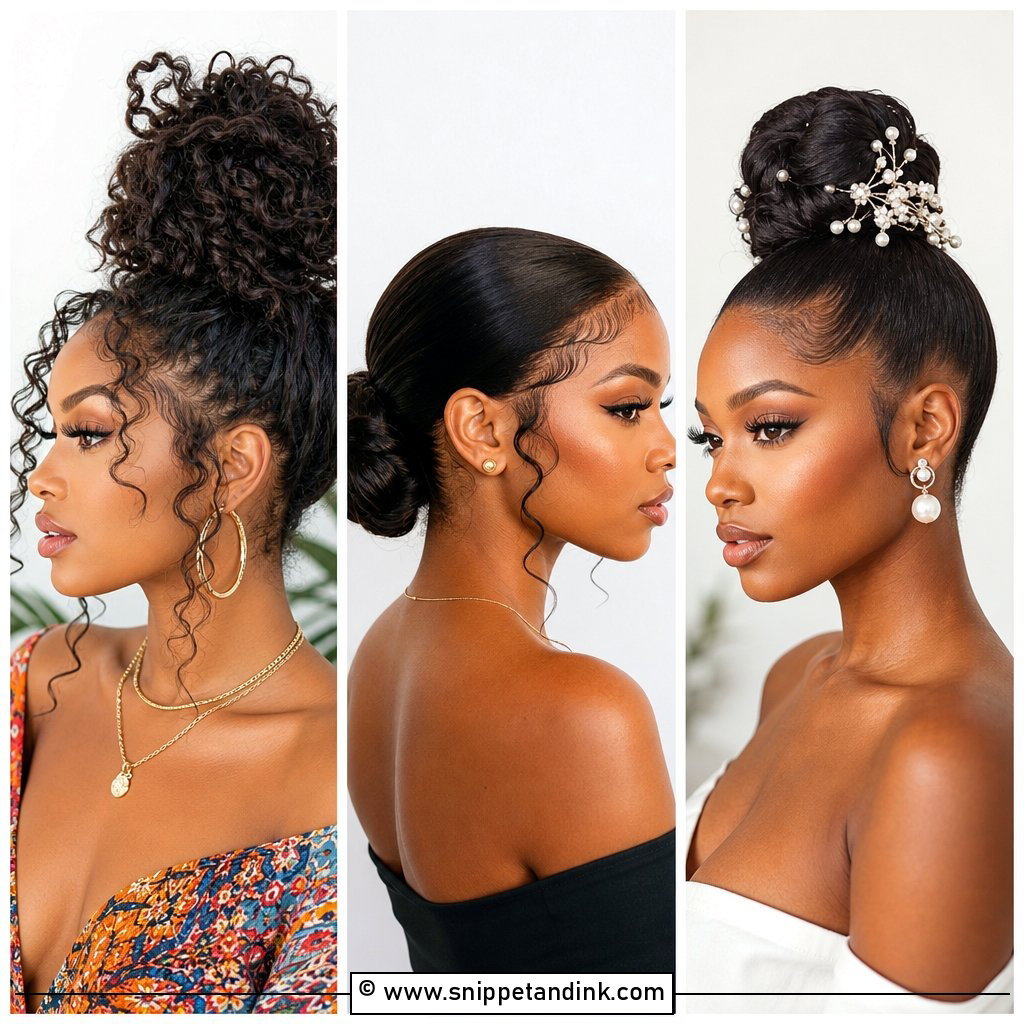
A sleek low bun looks simple, and that’s exactly why it’s unforgiving. Every bump and flyaway shows, so I smooth the hair with a boar bristle brush and a little cream before I ever tie it, then secure the elastic just above the nape so it doesn’t dig in when you turn your head. It sits comfortably under a veil comb and leaves room for statement earrings. On very fine hair I add a small padded donut inside so the bun doesn’t look like a walnut in photos taken from behind.
2. Half-Up Half-Down Waves
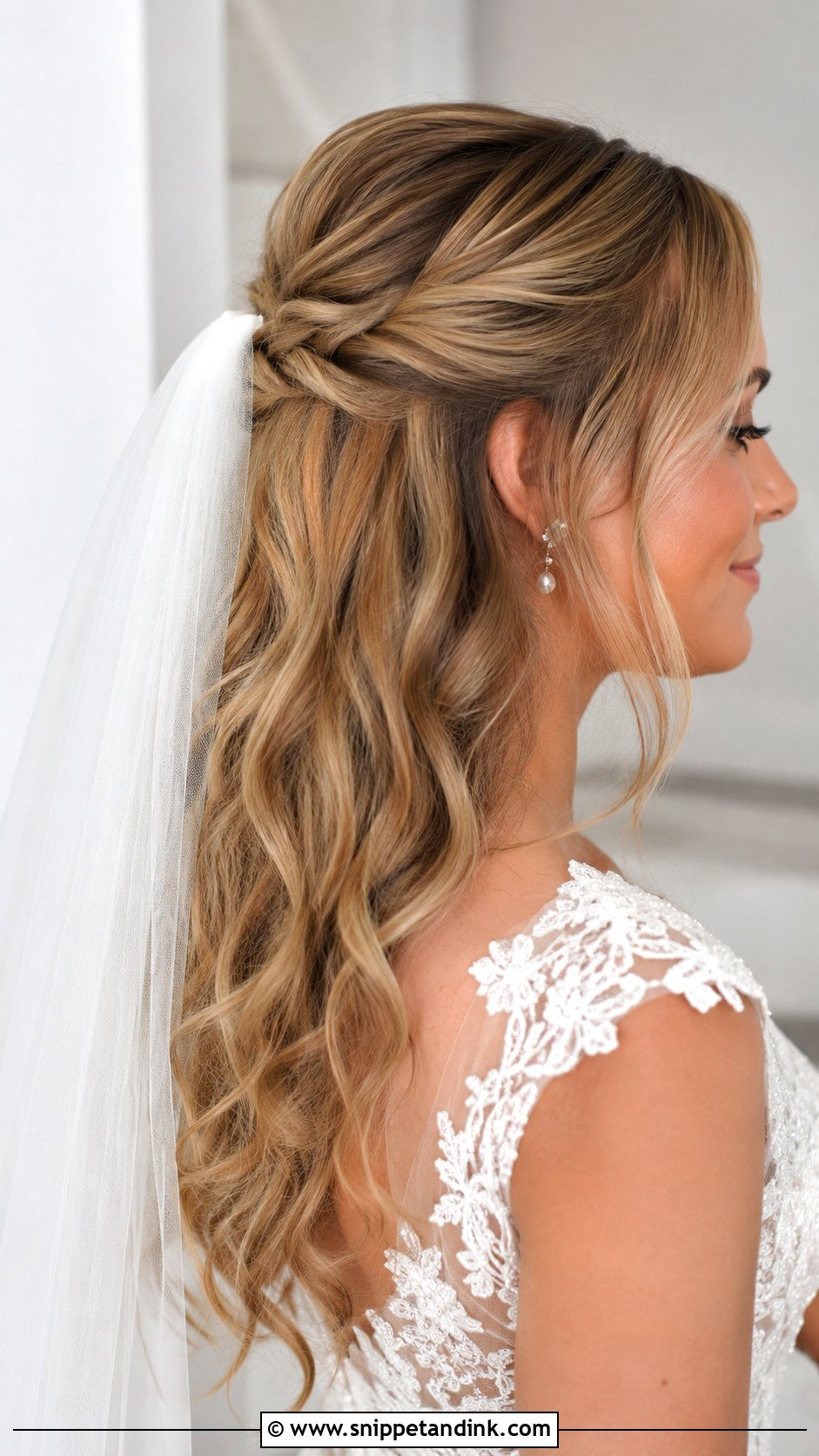
Half-up half-down is the style I’m asked for most when a bride can’t commit to an updo. The top section is pulled back and pinned while waves fall over the shoulders. The catch is that the loose half carries all the risk: curls drop, and hair that’s down gets caught in necklace clasps and bouquet ribbons. I curl with a 1.25-inch iron, pin each curl to cool, and only brush them out right before the dress goes on. A small braid at the crown hides the pins that hold the back section.
3. Romantic Loose Curls
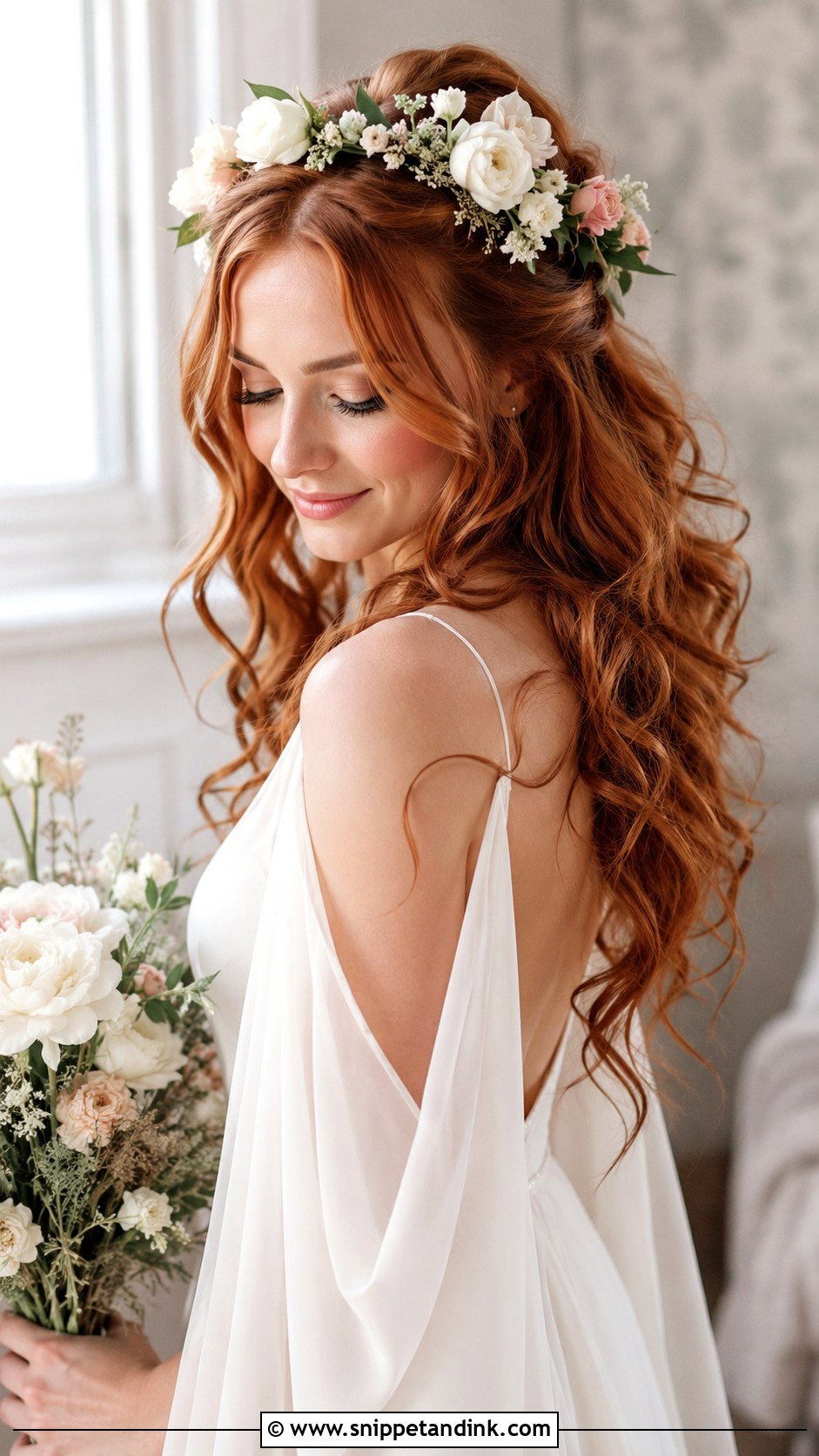
Loose curls down the back show off length better than anything else here, which is why they suit long and medium hair with some density. They are also the style that changes most between 9 a.m. and the first dance. Humidity relaxes a curl, and heavy hair pulls it straight under its own weight, so I set them tighter than the finished look and expect them to open up. Leave them tousled for a bohemian feel or brush them into smooth ribbons; just don’t add a flower crown on very slippery hair without grip at the roots.
4. Classic French Twist
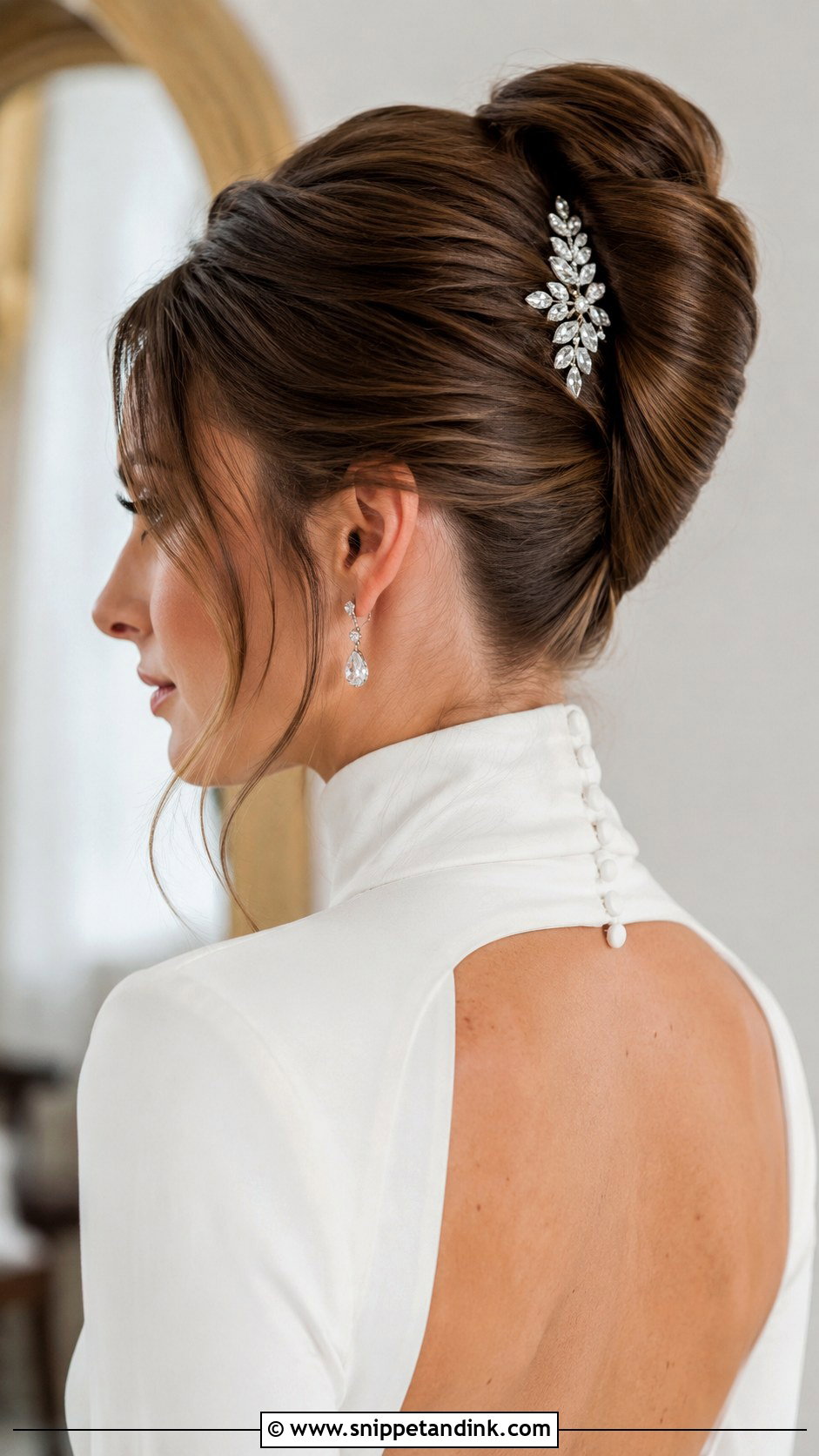
The French twist sweeps the hair up into a vertical roll at the back, and when it’s done well you can’t see a single pin. I backcomb the inside of the twist lightly so the pins have something to bite into, then lock it with a row of crossed pins hidden in the fold. It sits neatly above a high neckline and gives a jeweled comb or a veil a firm place to anchor. I’d steer you away from it if your hair is shorter than shoulder length; the ends tend to poke out at the top.
5. Boho Braided Updo
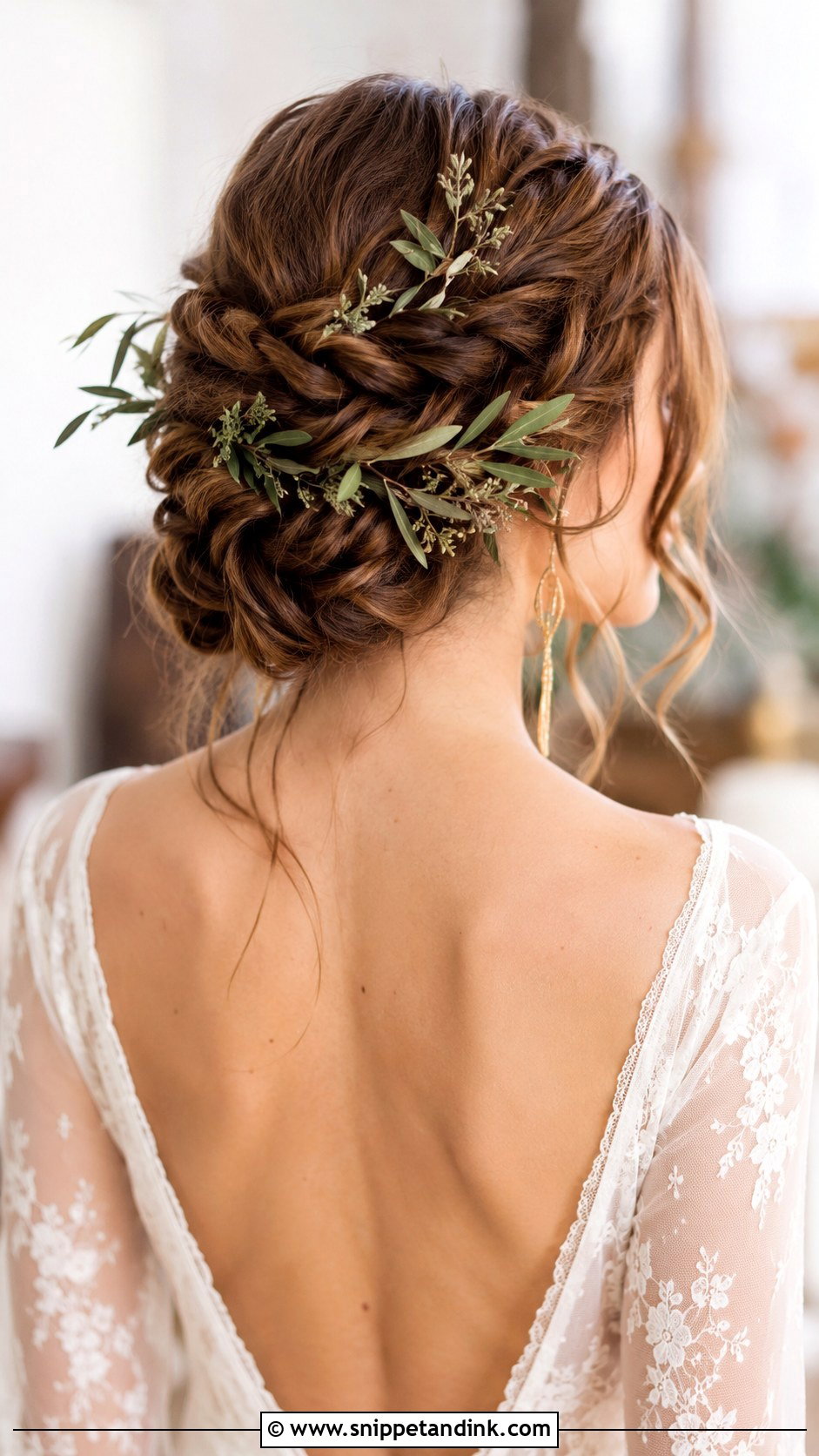
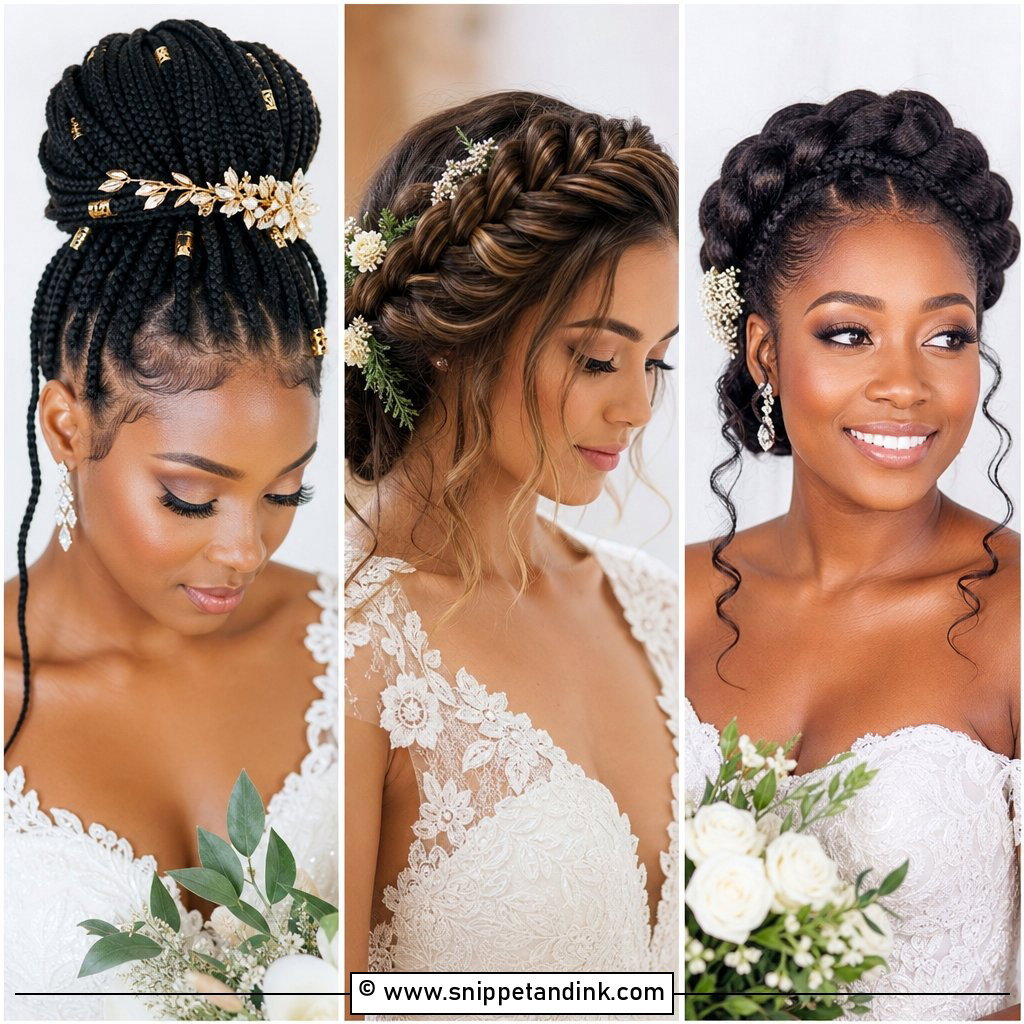
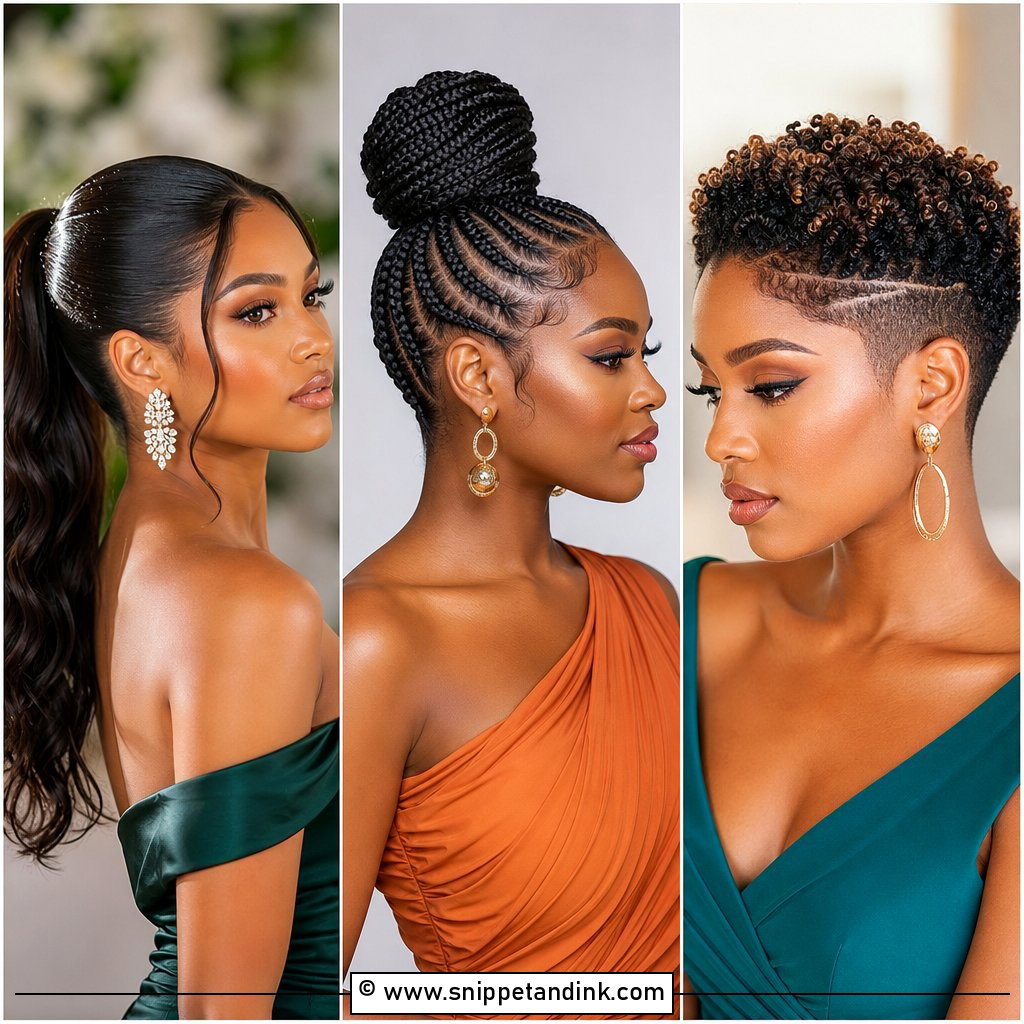
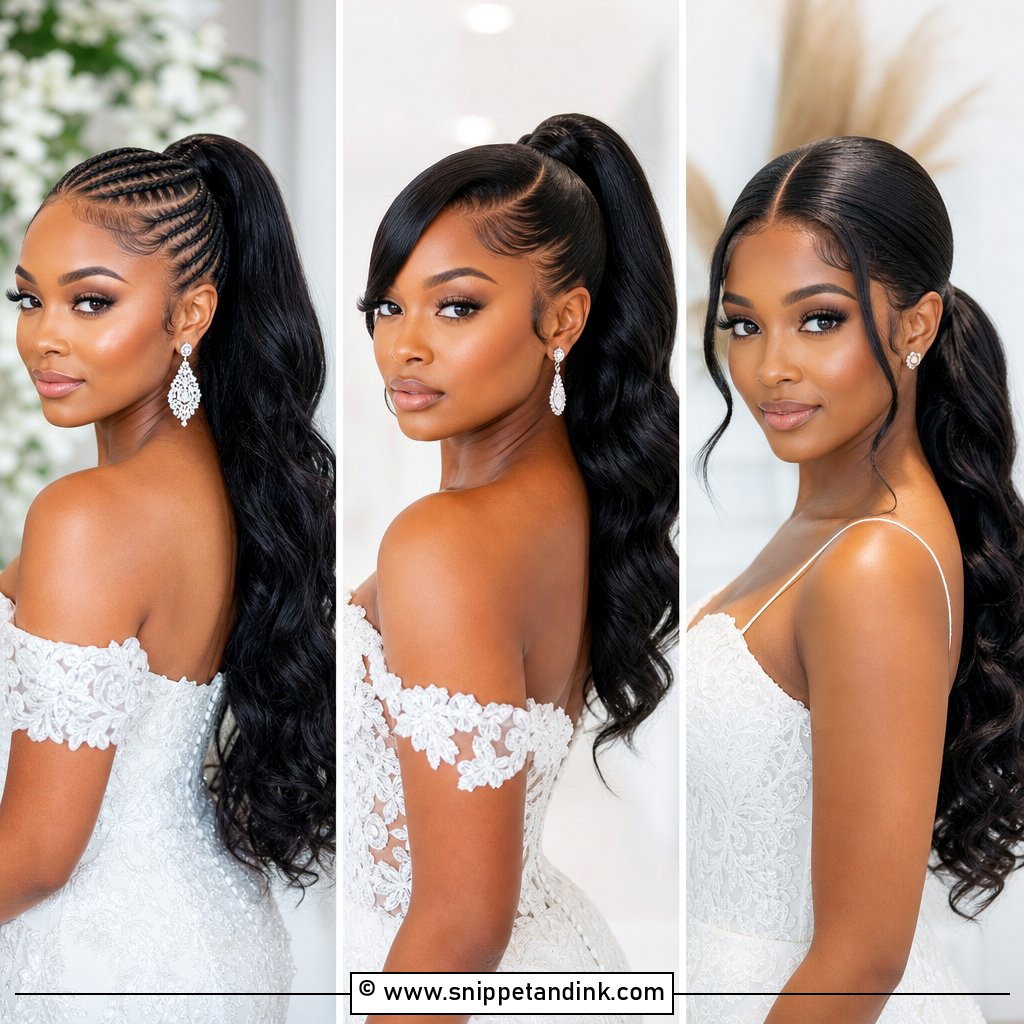
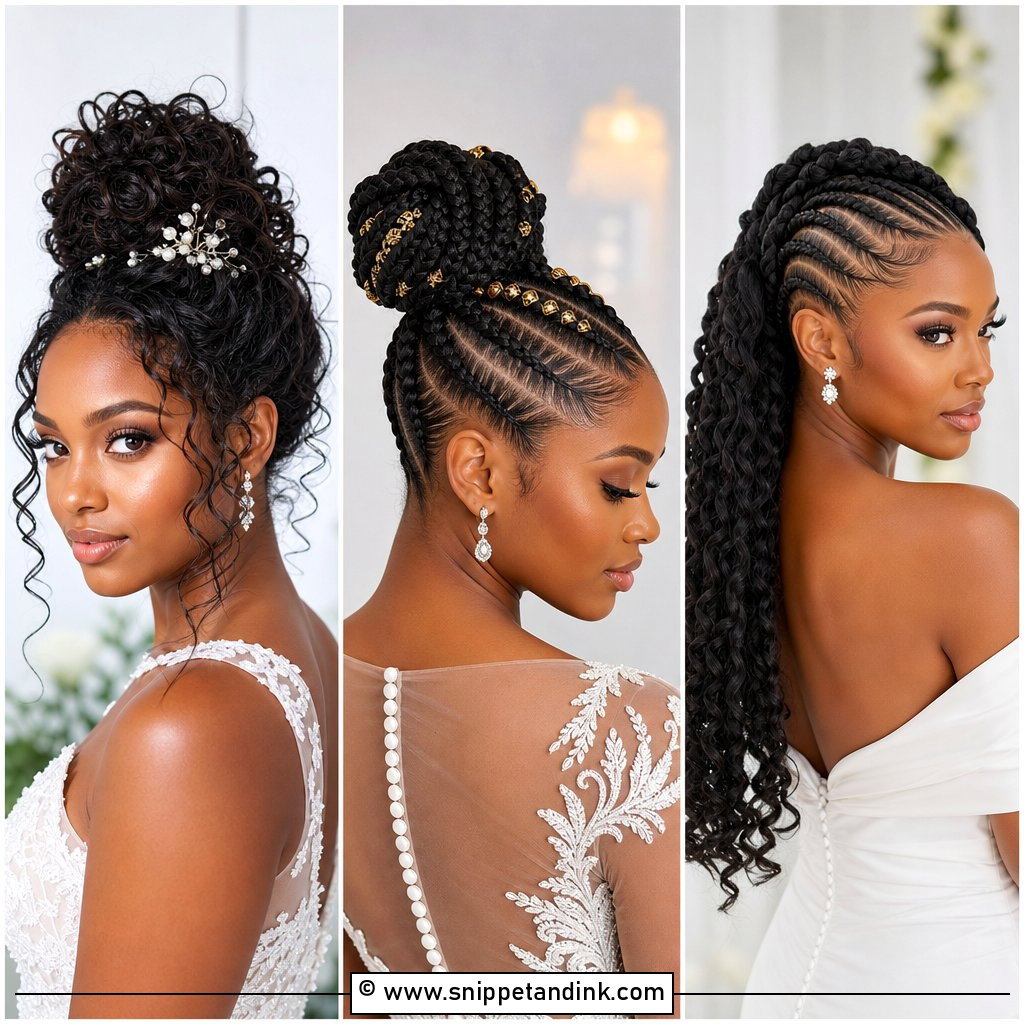
A boho braided updo is several loose braids wound into a soft bun, with wisps pulled free around the face. Outdoor and rustic weddings suit it, and it handles wind far better than hair worn down. The braids are what make it last: they grip each other, so the pins hold firmly even when the shape looks relaxed. If you want fresh flowers or greenery tucked in, I ask the florist for wired stems so they stay put and don’t weigh down one side.
6. Sleek High Ponytail
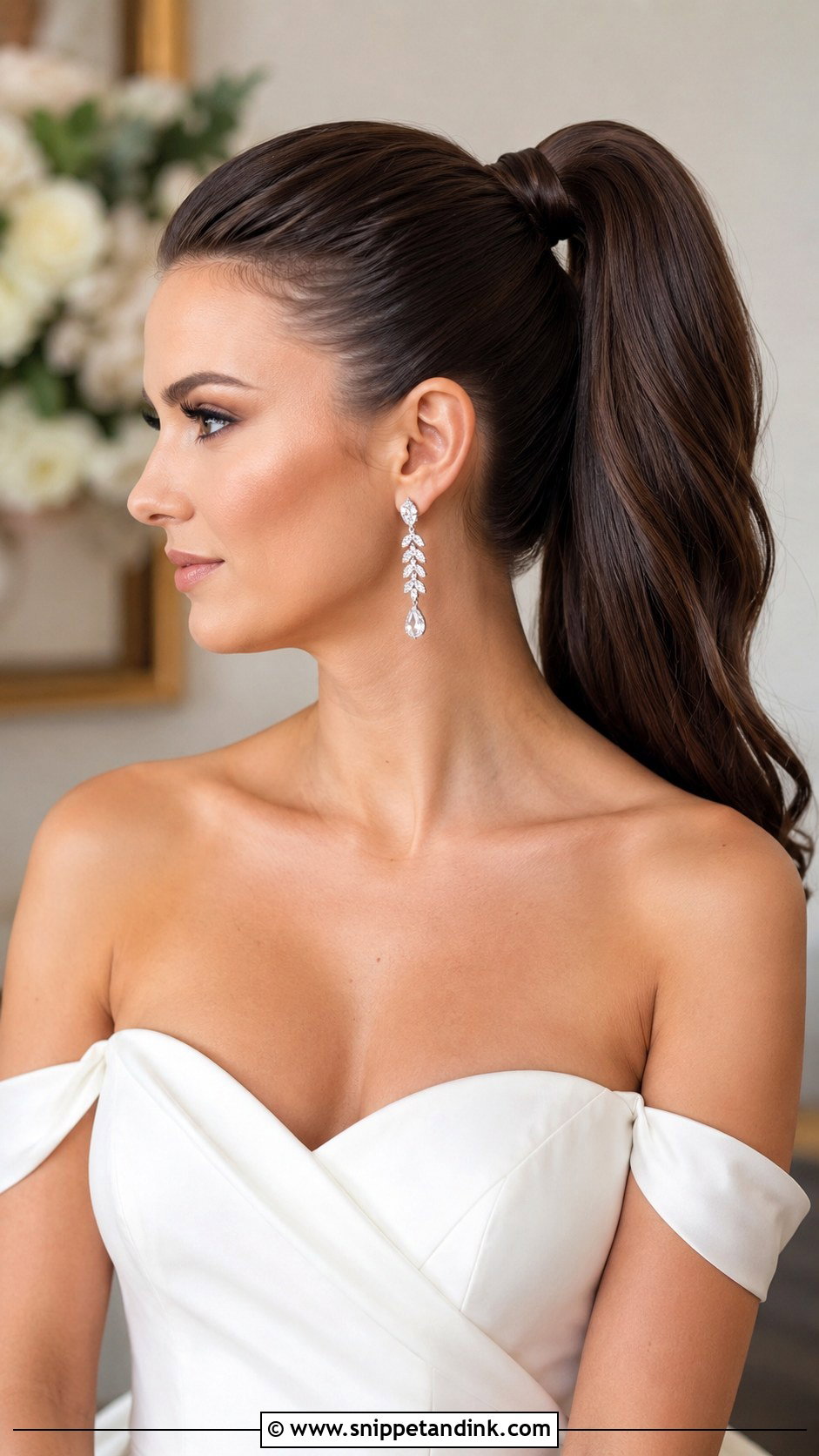
The sleek high ponytail pulls everything up into a smooth pony at the crown, and it puts your earrings and neckline front and center. Placement is the whole job. Too high and it pulls on the scalp by the reception; I usually sit it just below the crown and wrap a strand around the base to hide the elastic. A tiny bump of volume at the front keeps it from looking flat. Be honest with yourself about headaches: if ponytails bother you on a normal day, they’ll bother you at hour eight.
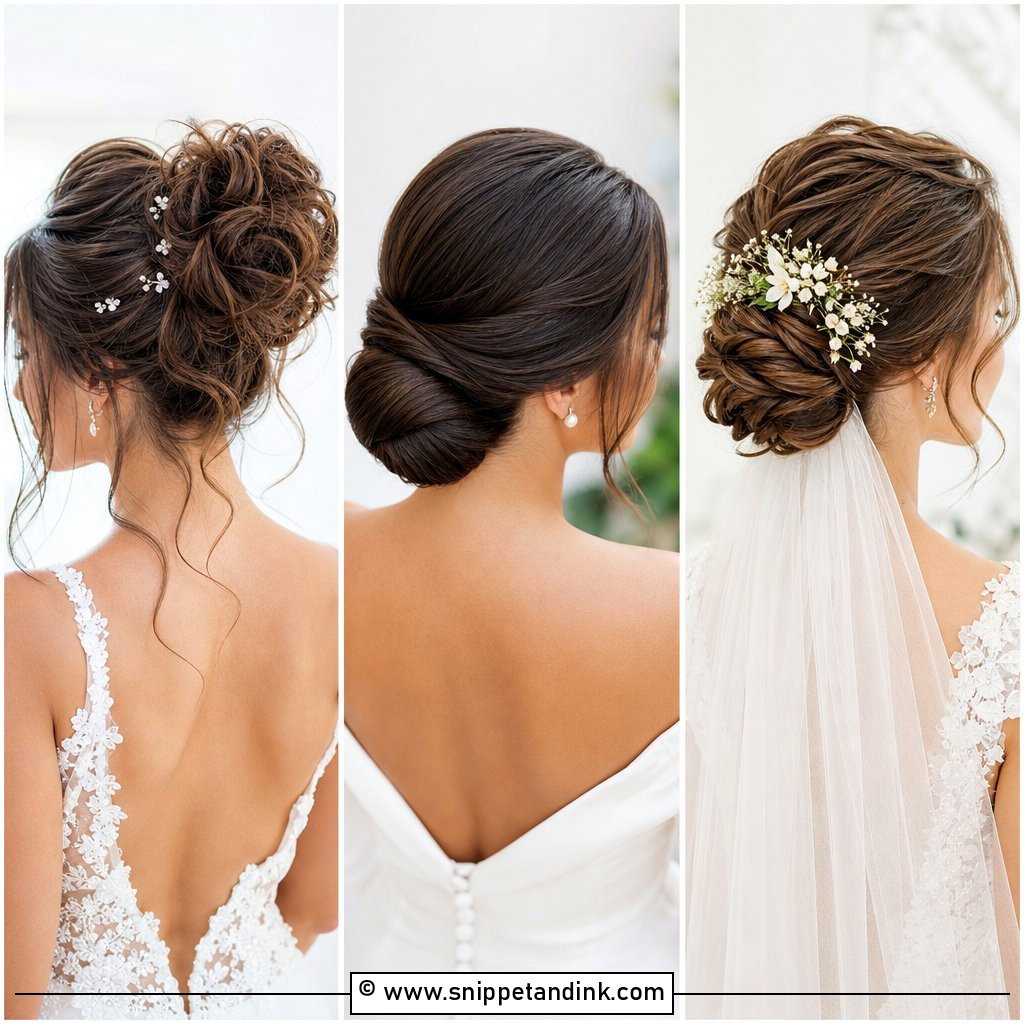
7. Messy Bun With Tendrils
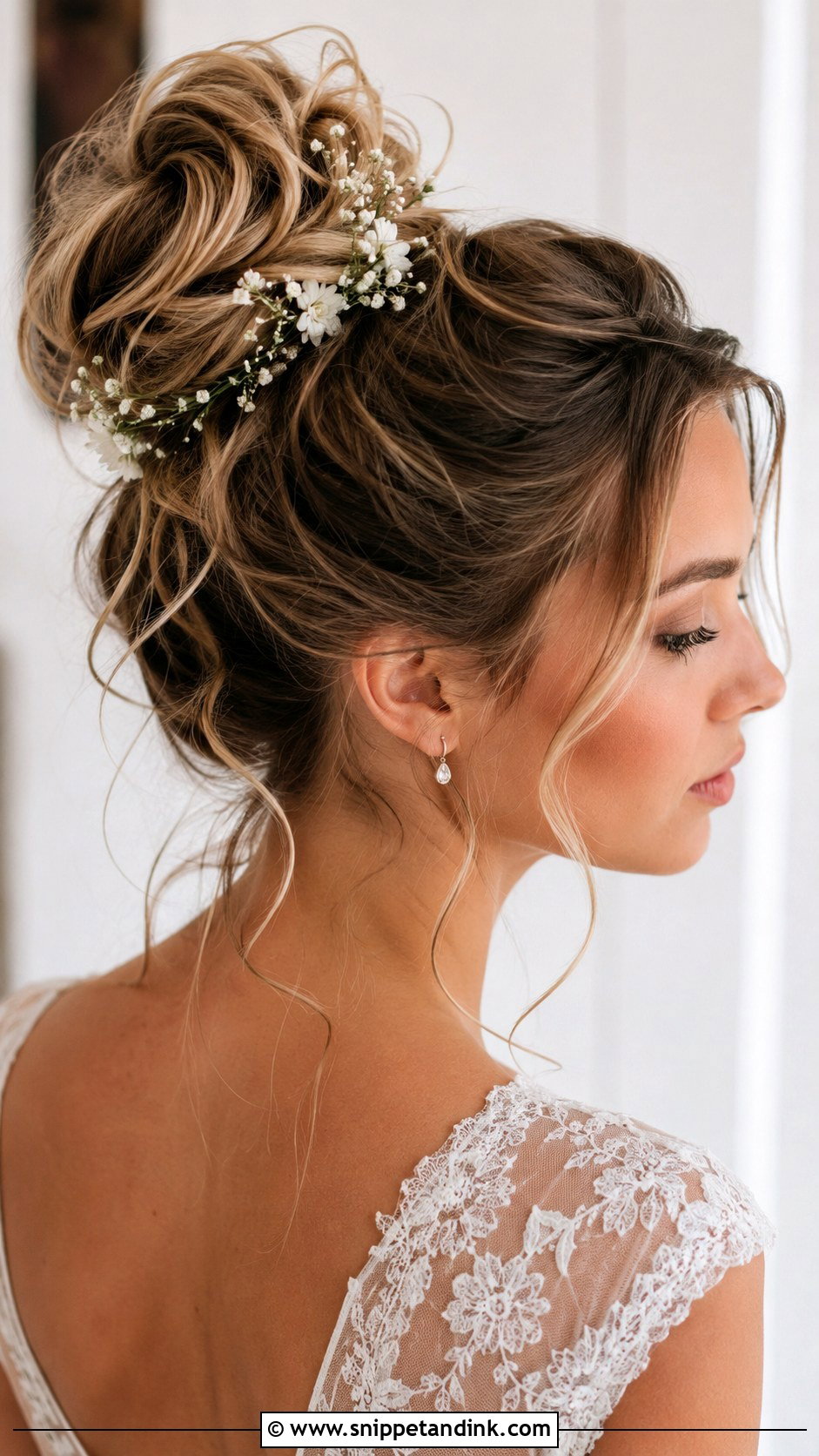
A messy bun takes more planning than it looks. It’s a high, textured bun with face-framing tendrils, and the texture has to be built in with a curling iron and a dry texture spray before anything gets twisted. Pulled pieces should be chosen, not random: I leave out two at the temples and maybe one at the nape. It’s light, it doesn’t pull, and it’s a good match for a relaxed outdoor wedding. Clean, silky hair fights this style, so second-day hair is your friend here.
8. Vintage Hollywood Waves
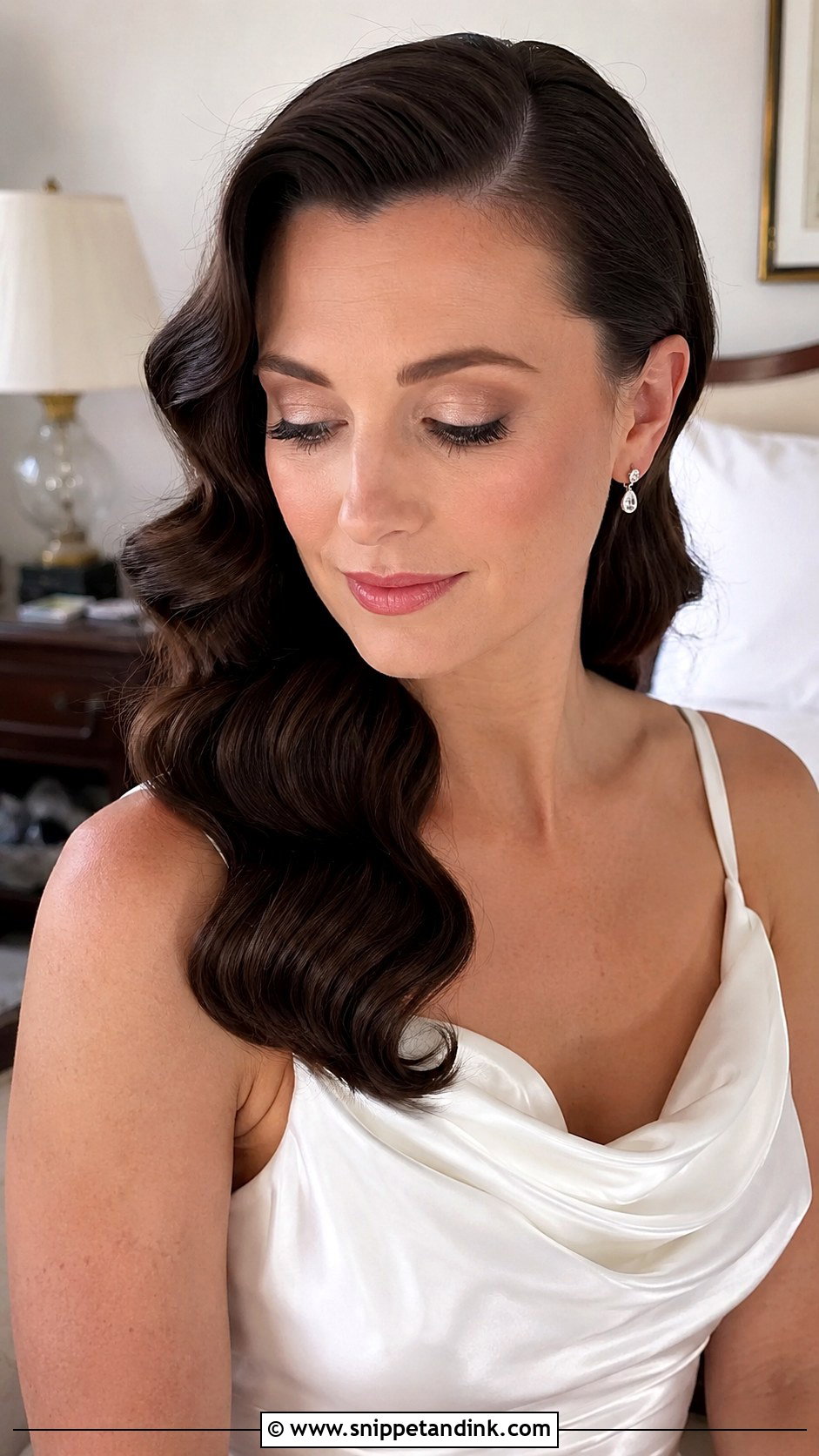
Vintage Hollywood waves are deep, glossy S-shapes swept to one side, borrowed straight from old film glamour. I set the curls all in one direction, brush them out with a paddle brush and then clip the ridges in place while they cool; the clips come out only after the hair is fully set. A deep side part makes the shape work, and a little shine spray gives that polished finish. Medium to long hair with some weight holds the pattern best. Very layered cuts break the wave into pieces.
9. Braided Crown Updo
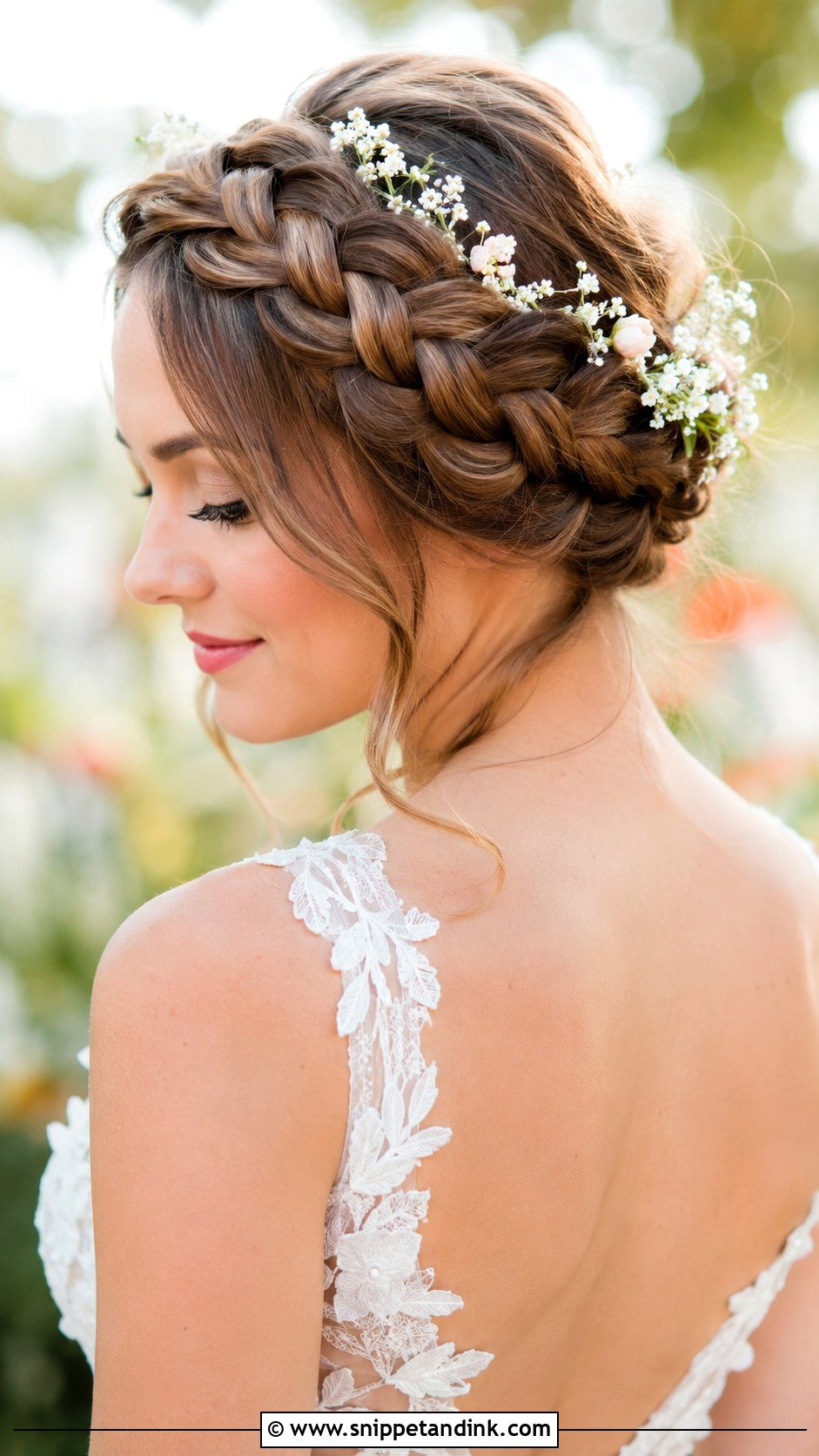
A braided crown circles the head like a halo, and it holds its shape all day because the braid itself does the work. On long hair I braid from one ear around the back to the other; on shoulder-length hair I use two braids and hide the ends under each other, and a clip-in piece can fill gaps on short hair. I pancake each braid gently so it looks fuller in photos. It’s a natural fit for garden and bohemian themes, and small flowers tuck right into the plait without extra pins.
10. Side-Swept Curls
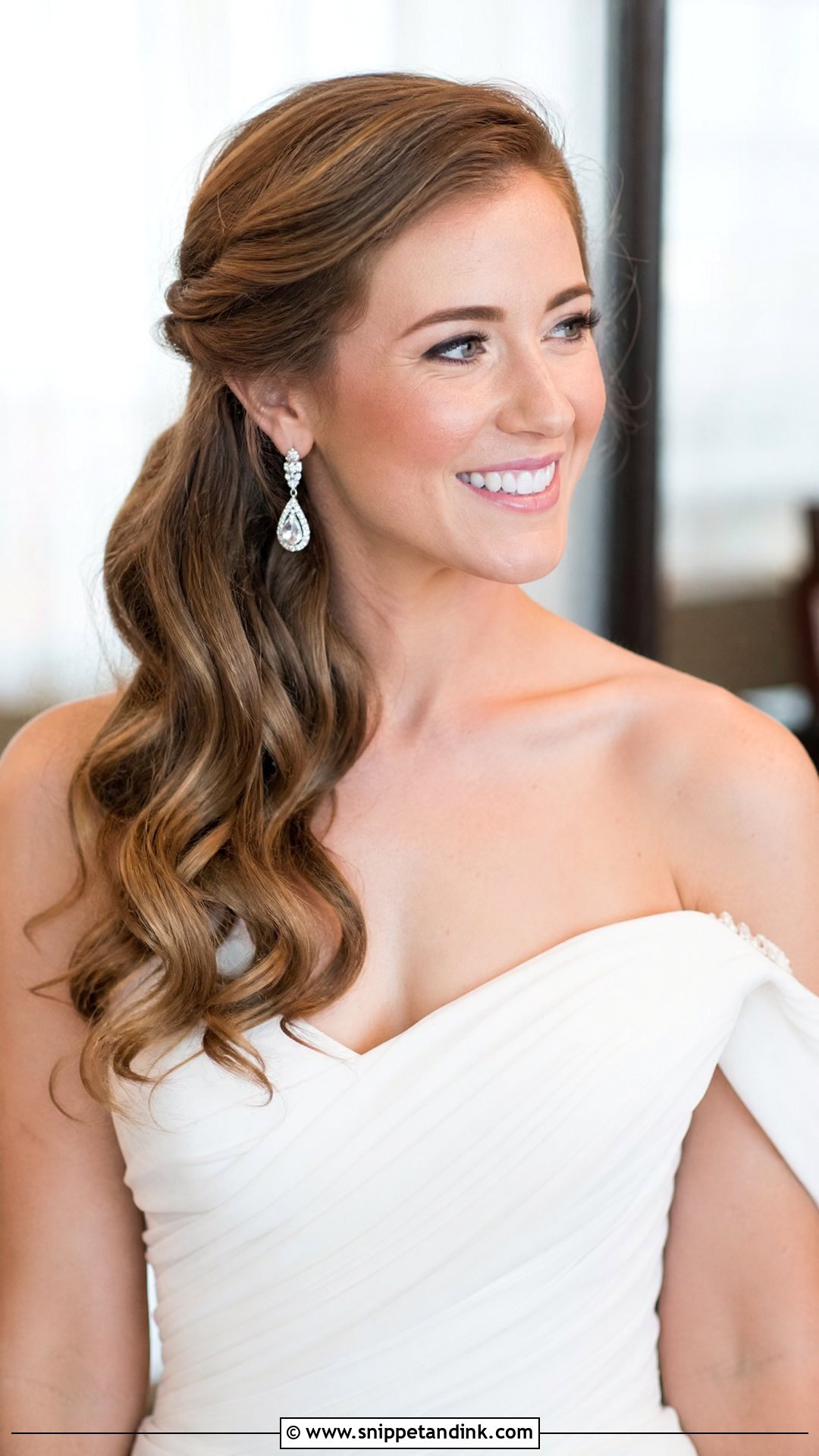
Side-swept curls gather everything over one shoulder, which puts the focus on the opposite collarbone and any shoulder detail on the dress. The side that’s pinned back needs real structure: I crisscross bobby pins behind the ear so the weight of the curls doesn’t drag them loose. Medium to long hair with volume suits it best. One practical thing to think about is your groom’s side: plan which shoulder the curls fall on so they’re not hidden in your ceremony photos.
11. Sleek Center-Part Bun
Parting hair straight down the middle and smoothing it into a low bun gives a clean, editorial look, and it suits simple gowns and bold earrings. The parting is the bit I spend longest on, because a crooked line shows in every front-on photo. I’d be careful if your hair is very fine at the temples; a center part with tight smoothing can show scalp, and a soft side part may flatter more. A veil comb slides in just above the bun with no extra work.
12. Textured Updo With Flowers
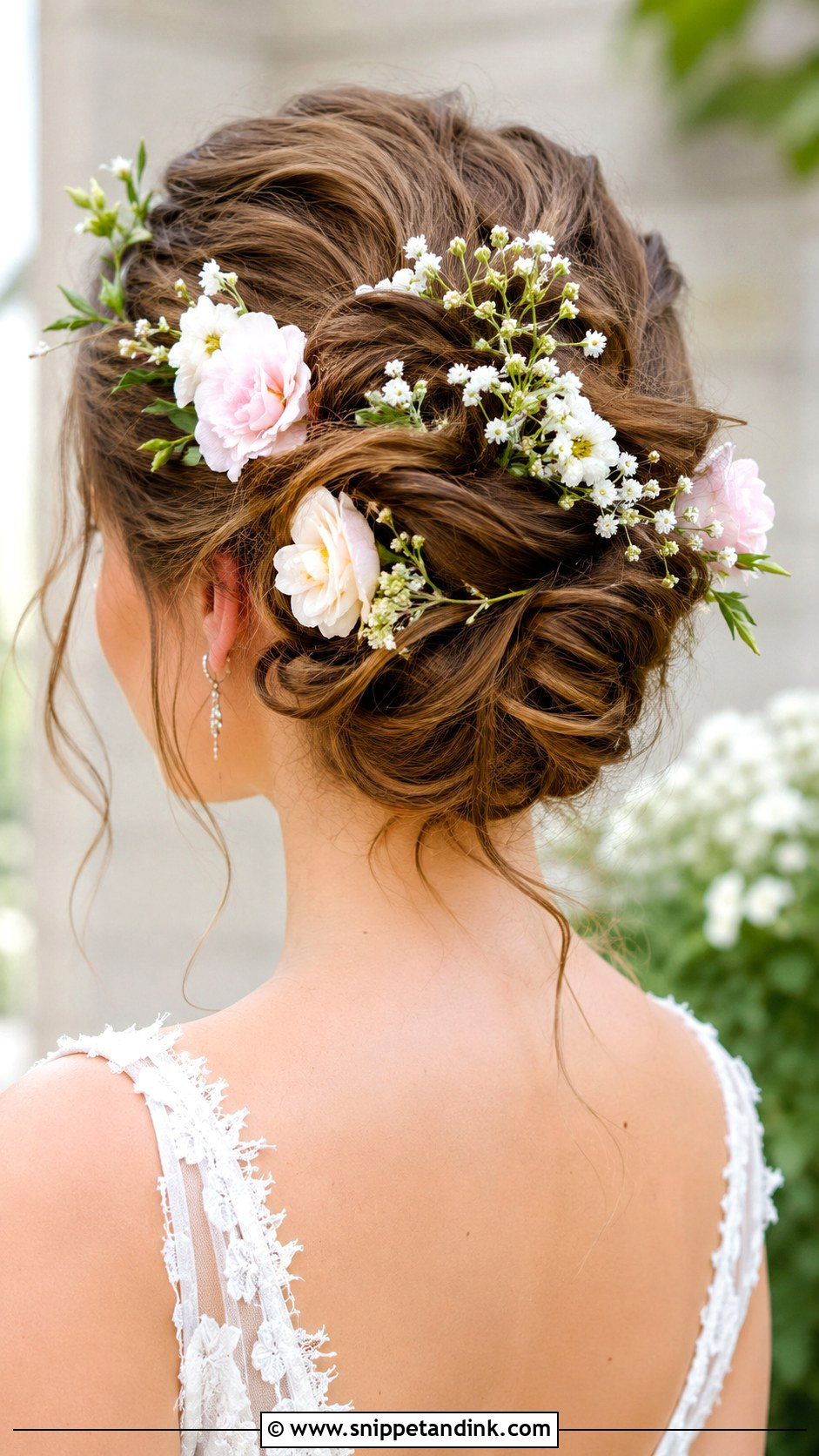
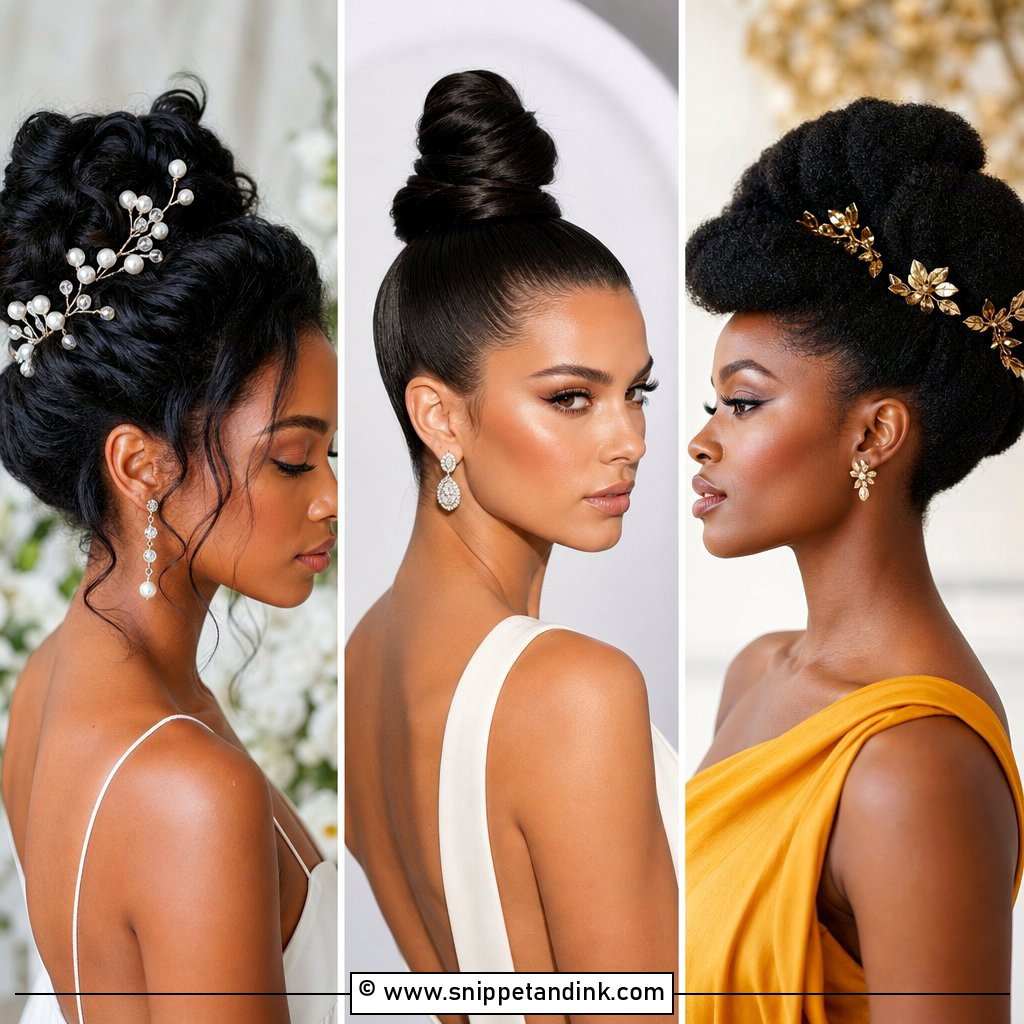
Fresh flowers turn a textured updo into something that matches the bouquet. The base is a loose, twisted style with pieces left free, and the blooms are added last. Here’s the part people forget: not all flowers survive hours out of water. Spray roses, wax flower and baby’s breath hold up; gardenias brown at the edges and peonies droop. I coordinate with the florist on which stems will be wired for hair, and then decide whether to scatter them through the twists or cluster them on one side.
13. Low Chignon
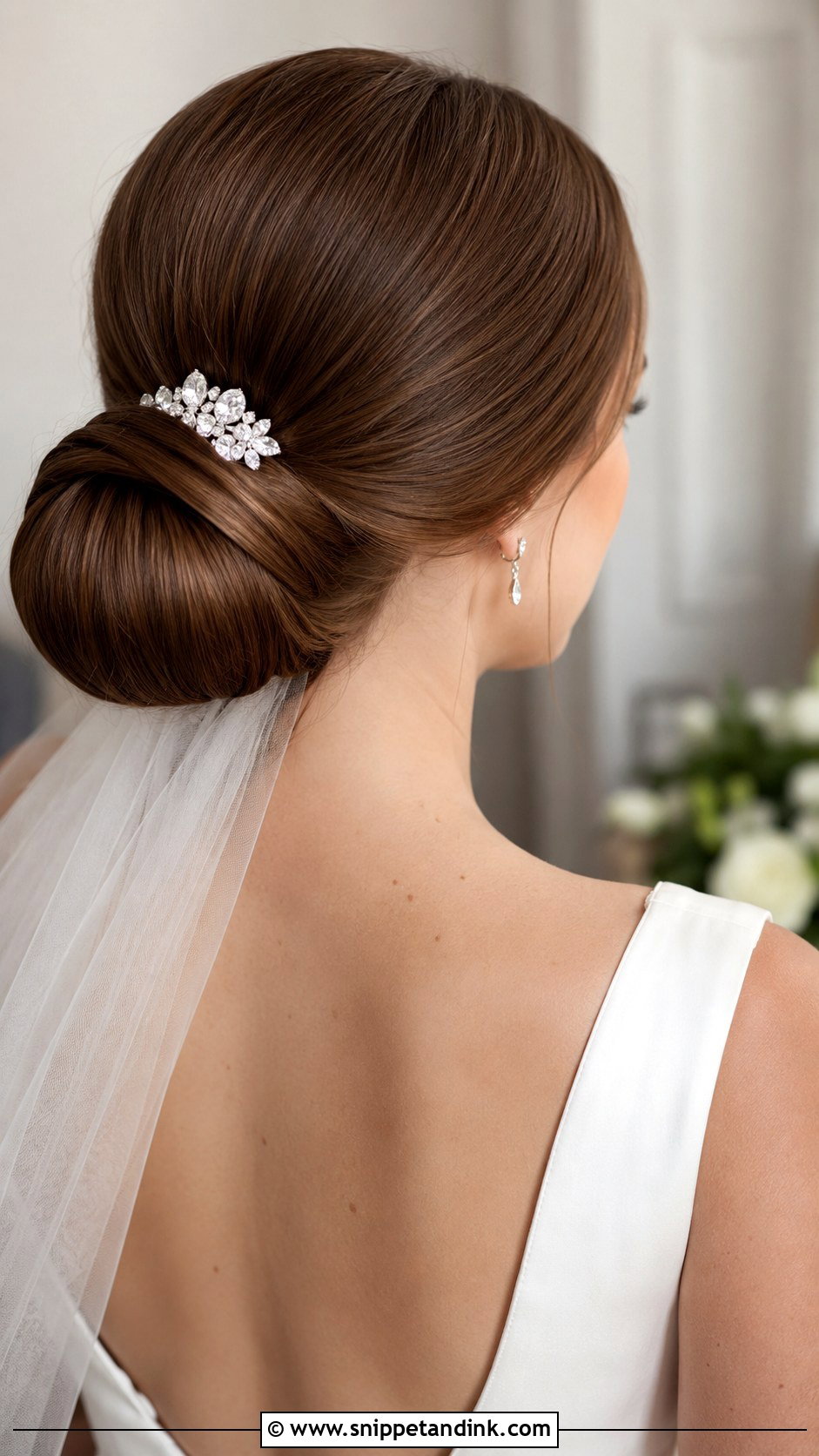
The low chignon is a rounded knot at the nape, and it’s the style I’d call the safest bet for a formal or traditional wedding. It sits under a veil without fighting it, it holds for a long day, and it rarely needs touching up. I build it around a hidden ponytail so it can’t slide, then add a jeweled pin or comb. A few soft tendrils around the face stop it from feeling too strict. It flatters almost every face shape, which is why I suggest it to brides who are stuck.
14. Half-Up Braided Style
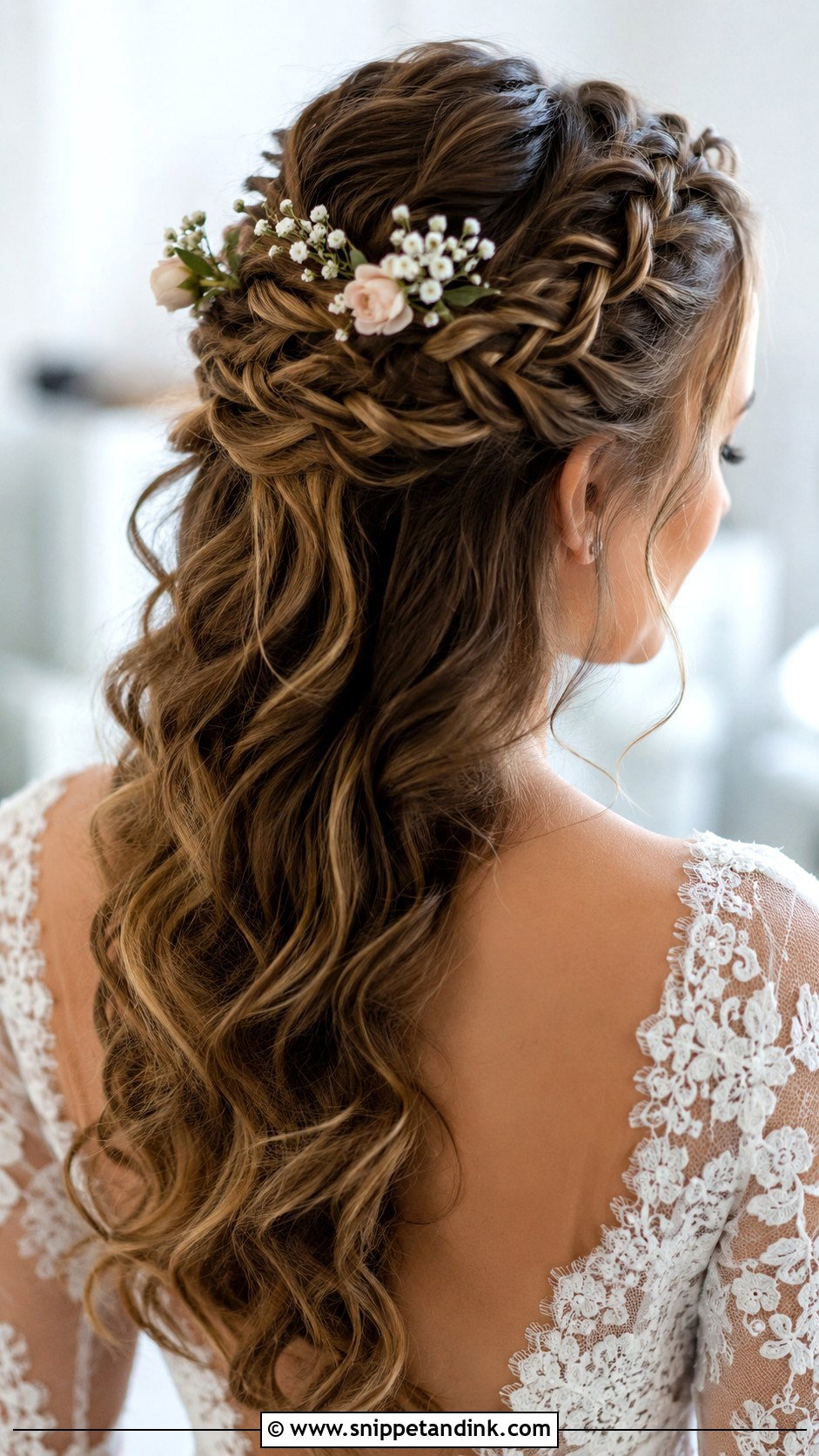
A half-up braided style pulls the top section back with braids and leaves the rest cascading down. You get detail at the back of your head, which is where the camera sits during the vows, and length over the shoulders. Waves in the loose hair add movement, though they’re the part that will relax first. I braid slightly looser than you’d expect and pin underneath each braid, so it doesn’t loosen when you hug guests. Small flowers or pins finish it.
15. Sleek Straight Hair
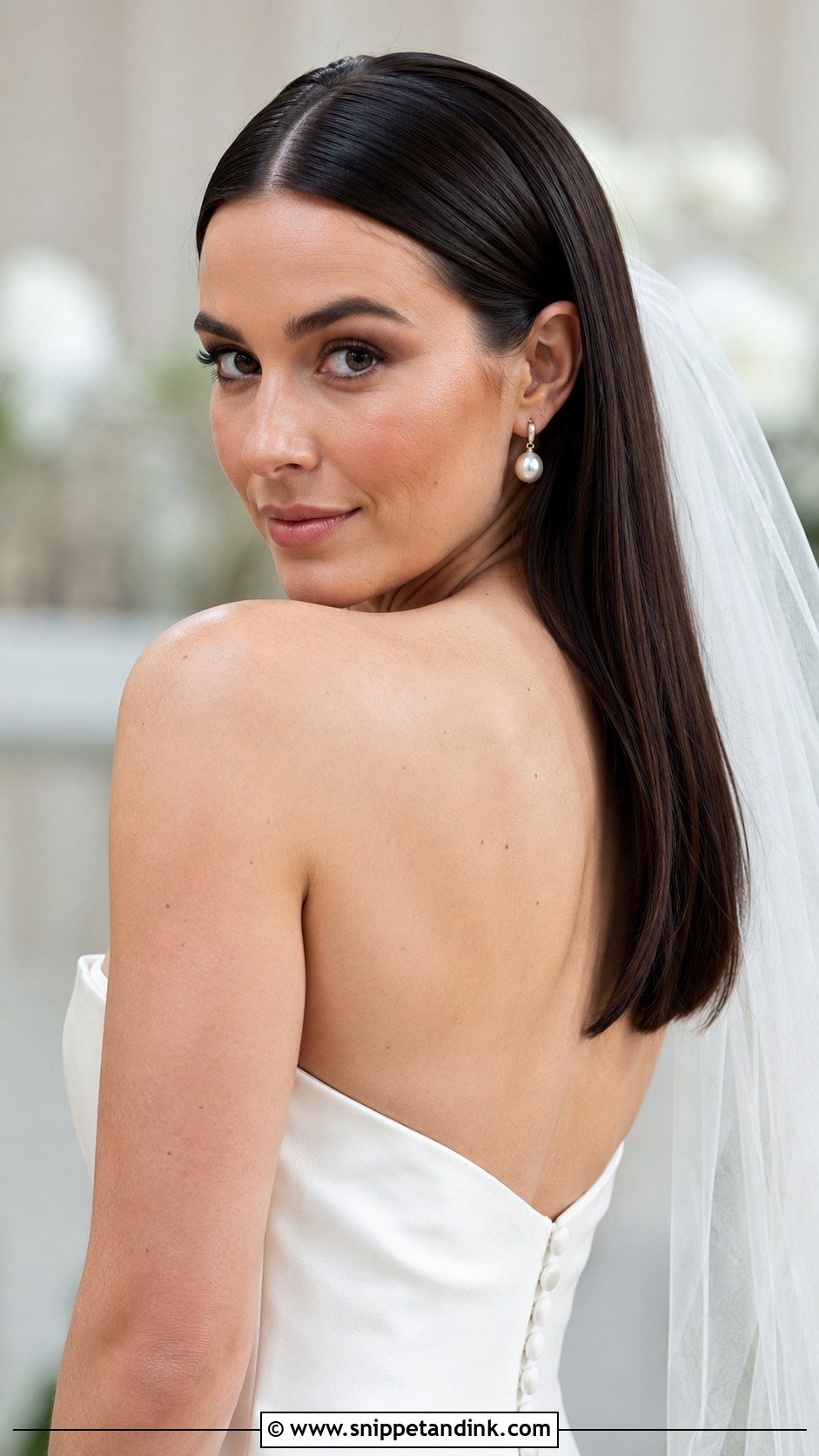
Sleek, straight hair is the least fussy look on this list, and also the one most affected by weather. Glossy, flat-ironed lengths suit a minimalist gown, and a center or side part shifts the whole mood. The risk is frizz: straight hair shows humidity in minutes. I finish with a light anti-humidity spray and keep the ends slightly bent, never pin straight, so they don’t flick out. Tucking one side behind an ear shows off an earring.
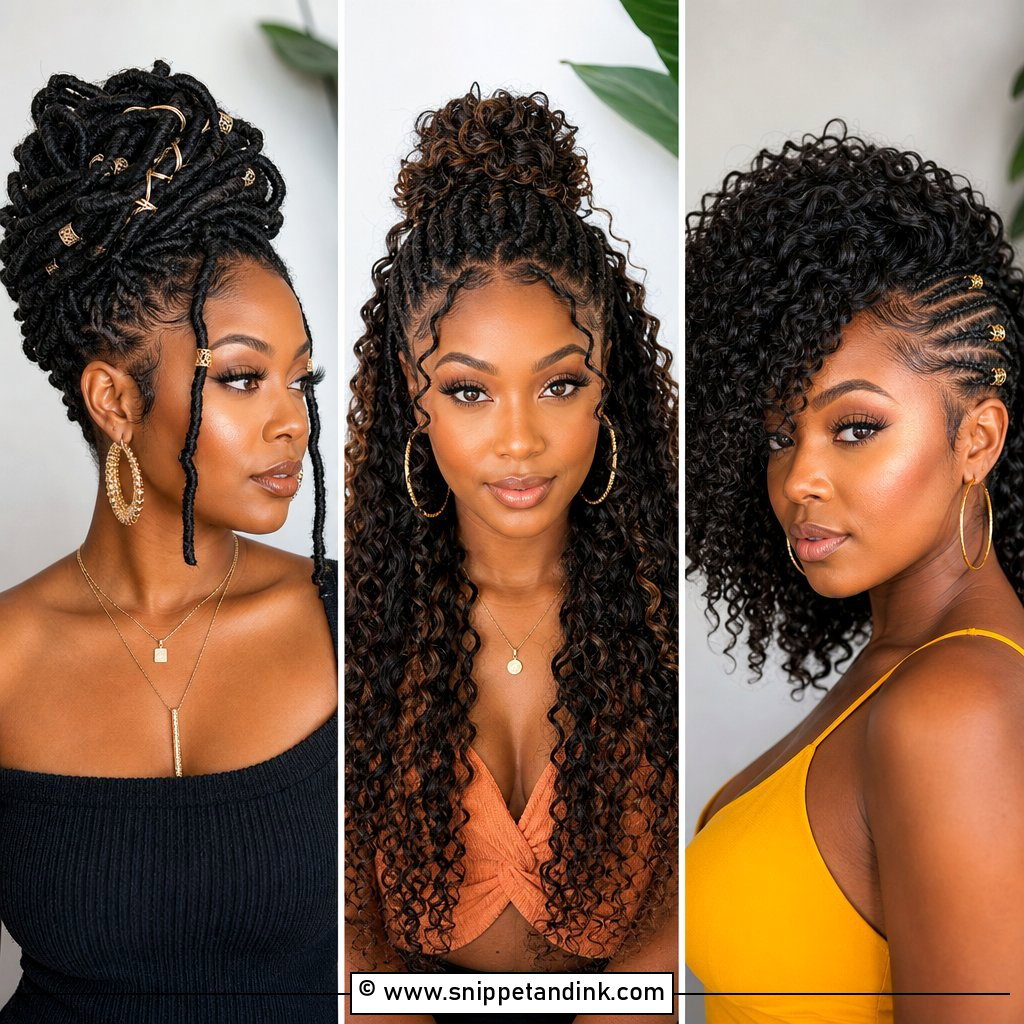
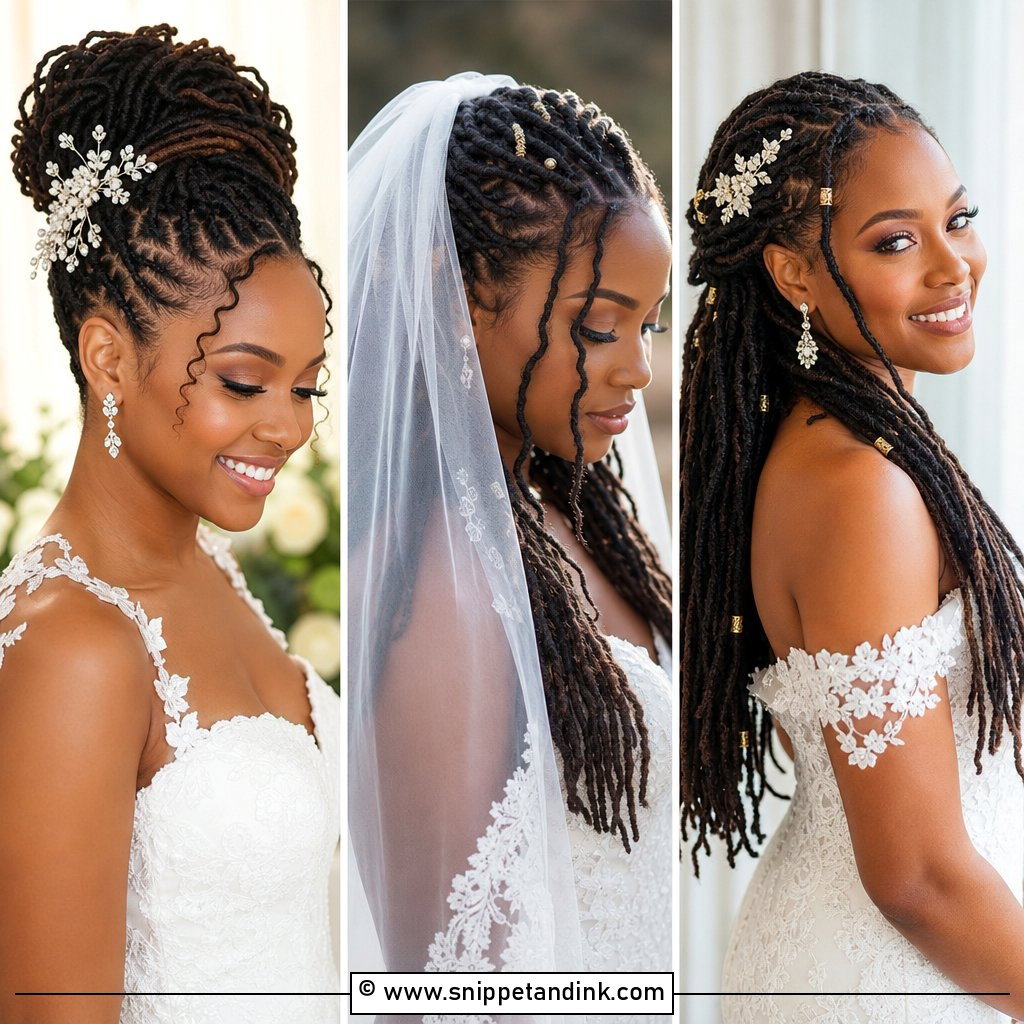
16. Curly Natural Updo
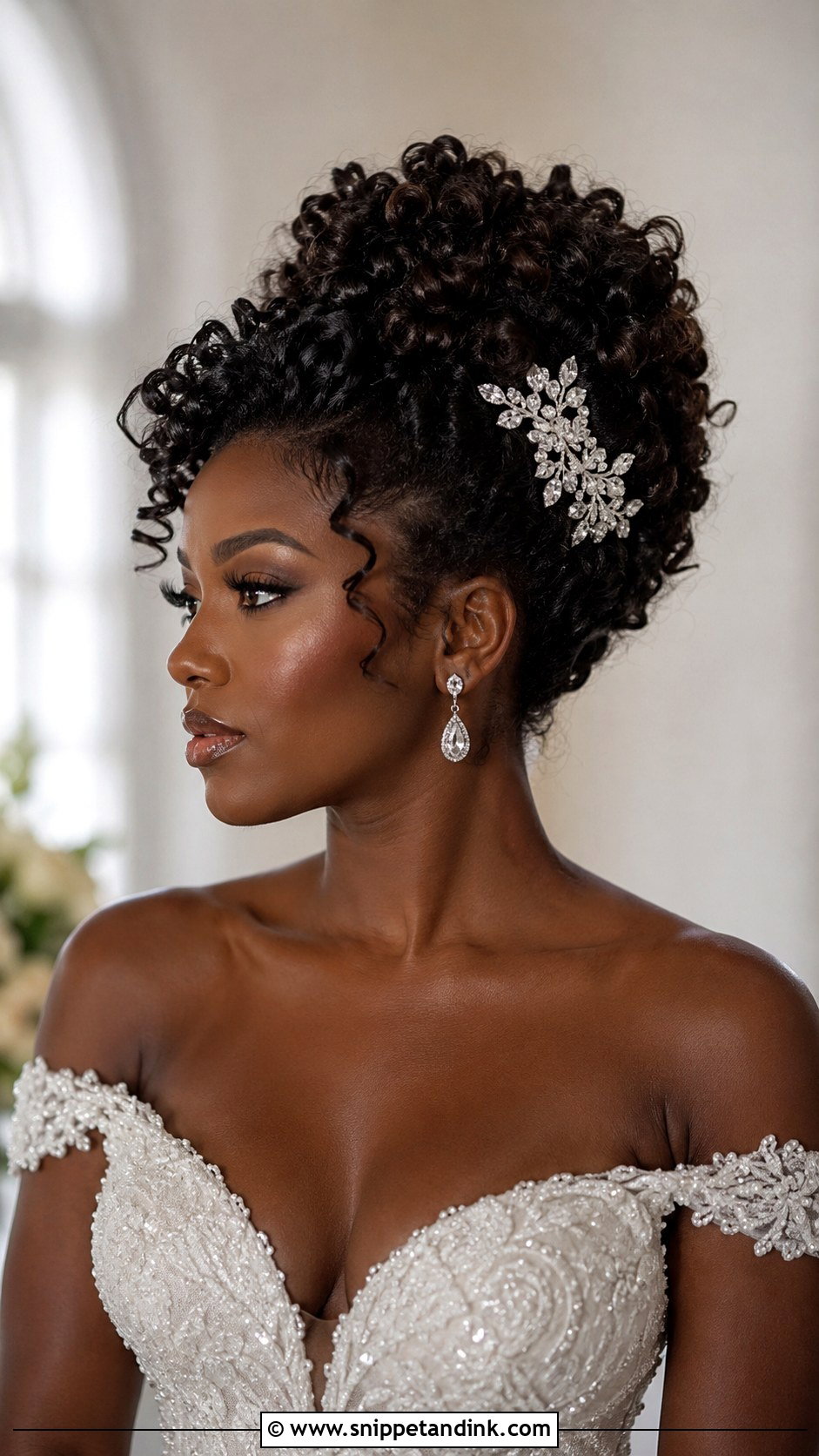
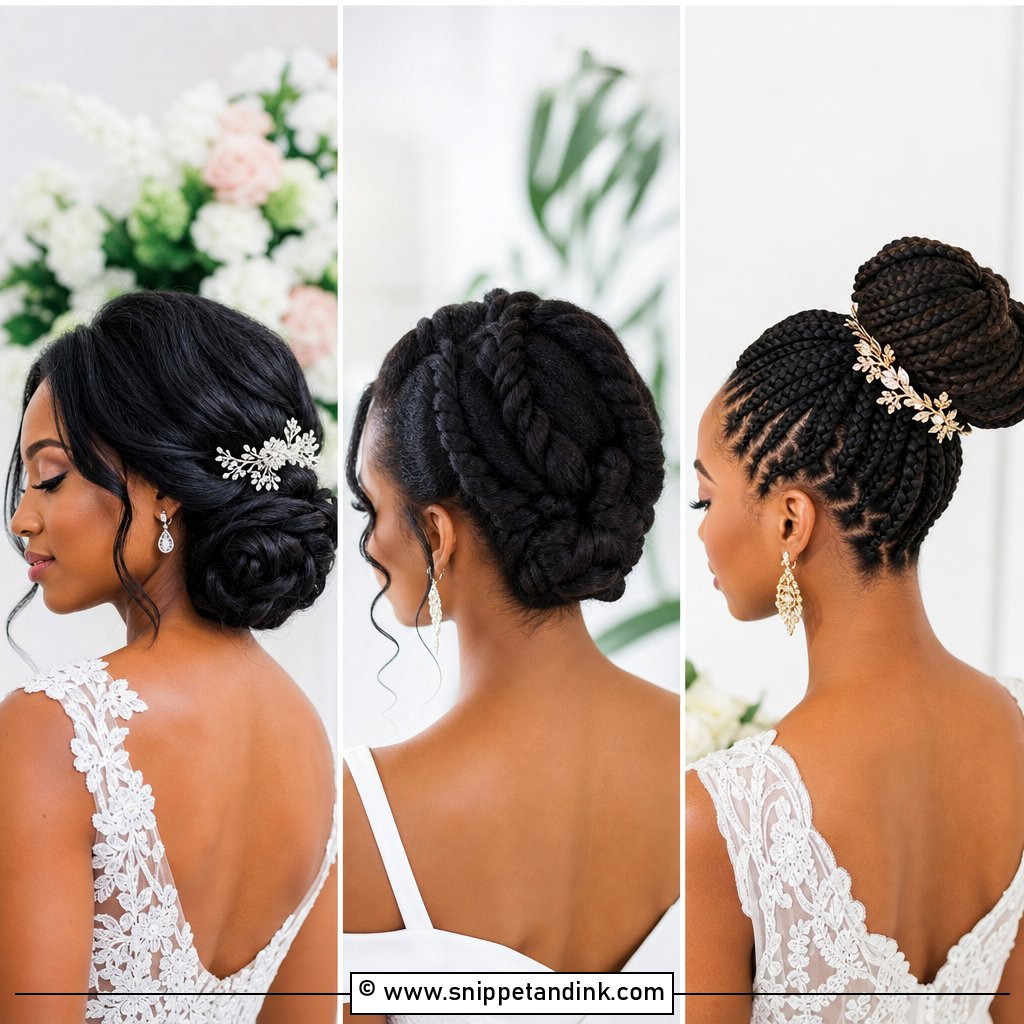
A curly updo keeps your natural pattern and shapes it into a full, sculpted silhouette. Showing off beautiful curls and coils means working with your texture, not against it. I style curly hair damp or with a leave-in, never brushed dry, and I use U-shaped pins because they hold volume without flattening it. Wash and define your curls a day or two before, so they’ve settled. A decorative pin or a few fresh flowers can then nest right into the volume.
17. Twisted Low Updo
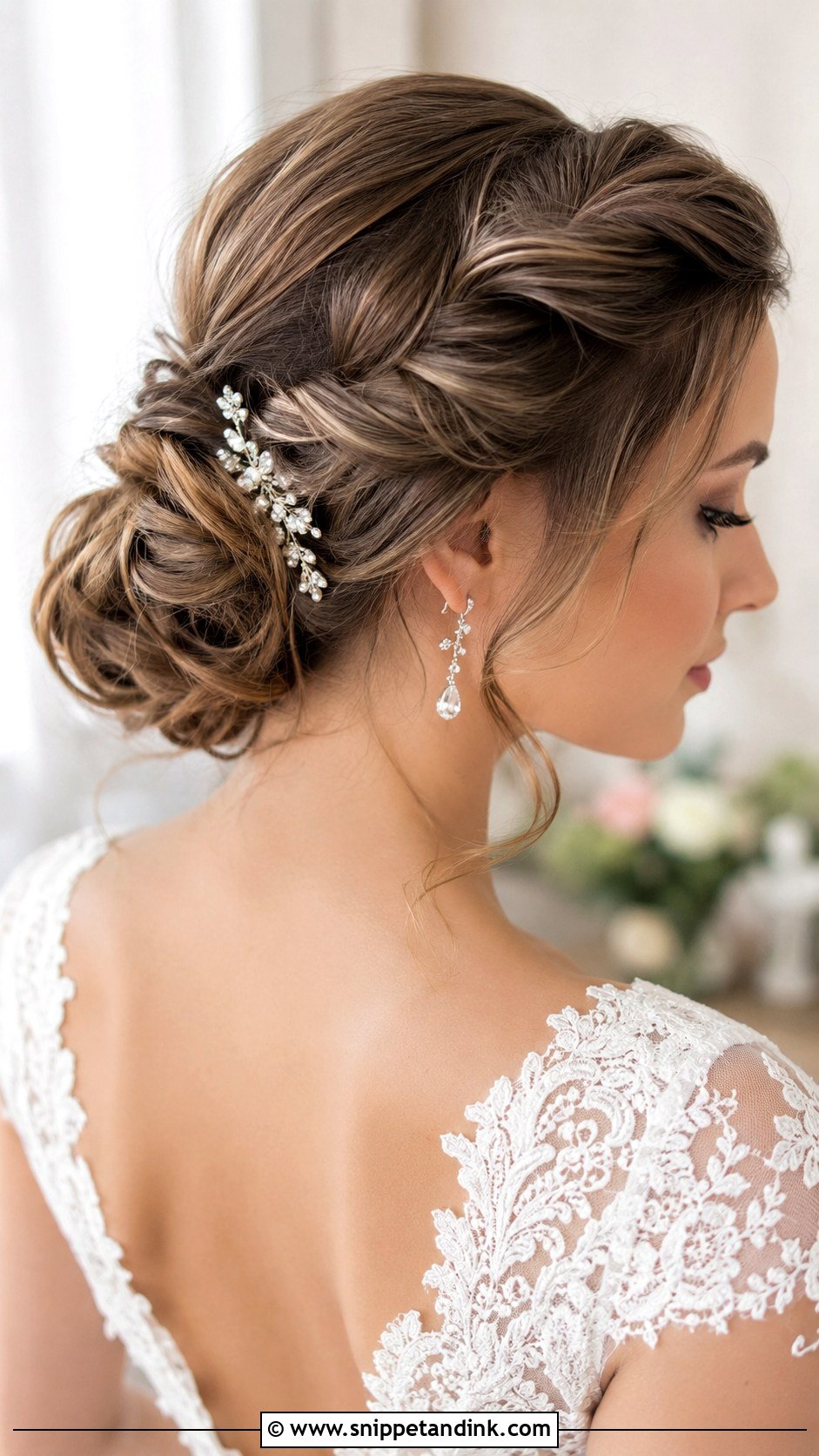
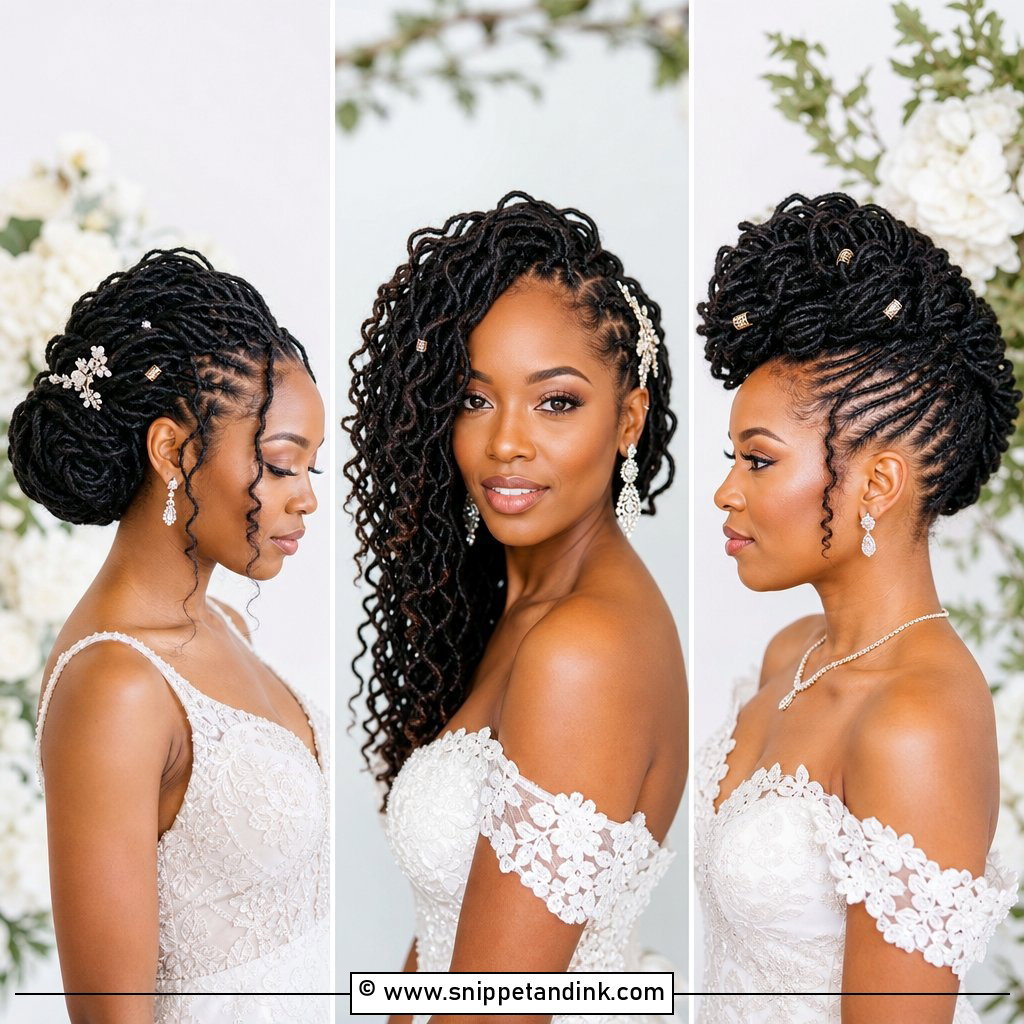
A twisted low updo gives you more detail than a plain bun without the effort of braids. Each section is rope-twisted and pinned into place at the nape, and the twists themselves lock the hair, so it stays secure through hugs and dancing. It suits formal and bohemian weddings alike. I’d leave a few face-framing pieces loose and add a delicate hairpiece on one side. On thick hair, this is one of my favorite options because the weight is spread across several small twists instead of one heavy bun.
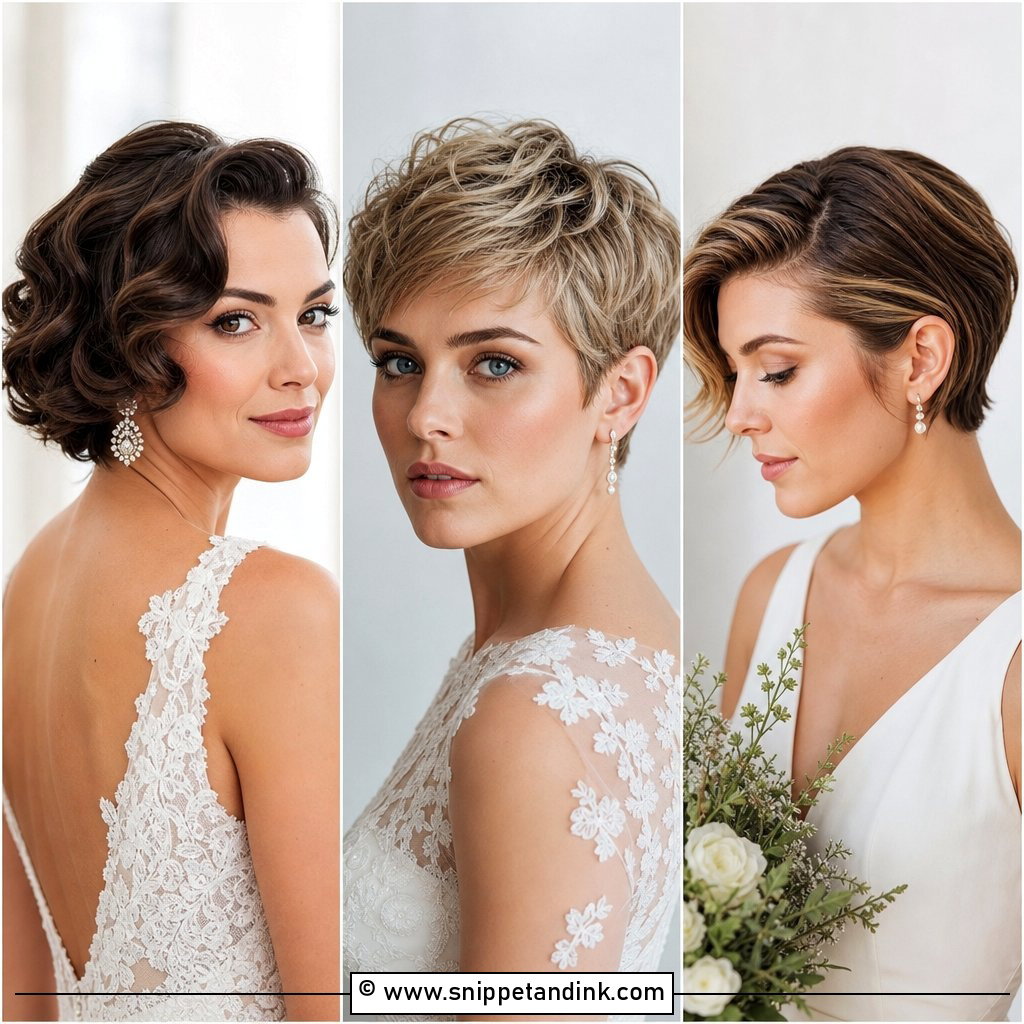
18. Bridal Pixie Cut
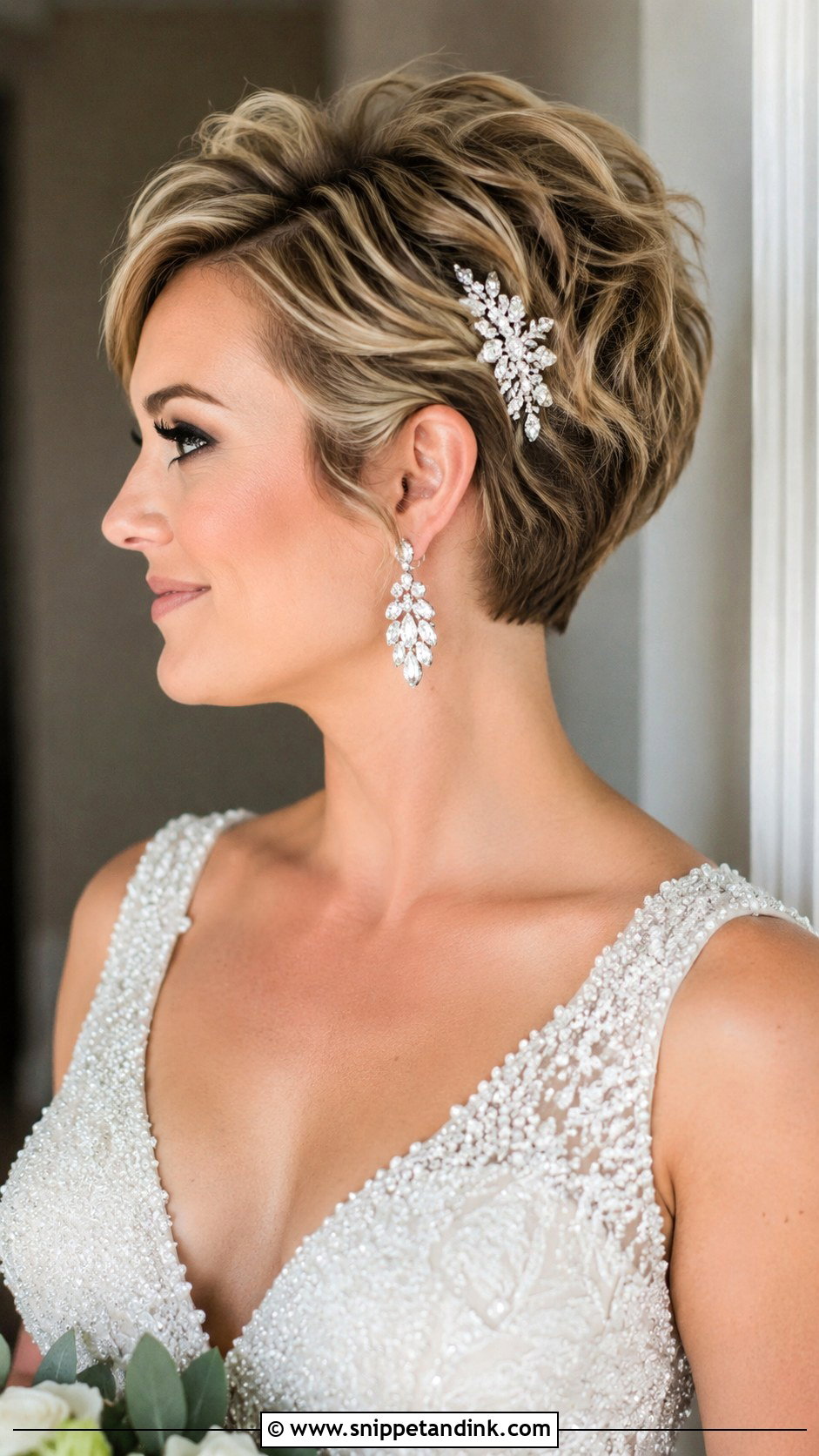
Short hair is easy to style for a wedding and a pleasure to work with. A styled pixie cut shows off your face and earrings in a way long hair can’t. I add texture with a small flat iron and a light paste, then decide on the parting at the trial. Book your last trim about a week before the wedding; a fresh cut can look sharp and severe on the day. A sparkly clip or a slim headband adds a bridal touch without much fuss.
19. Soft Waterfall Braid
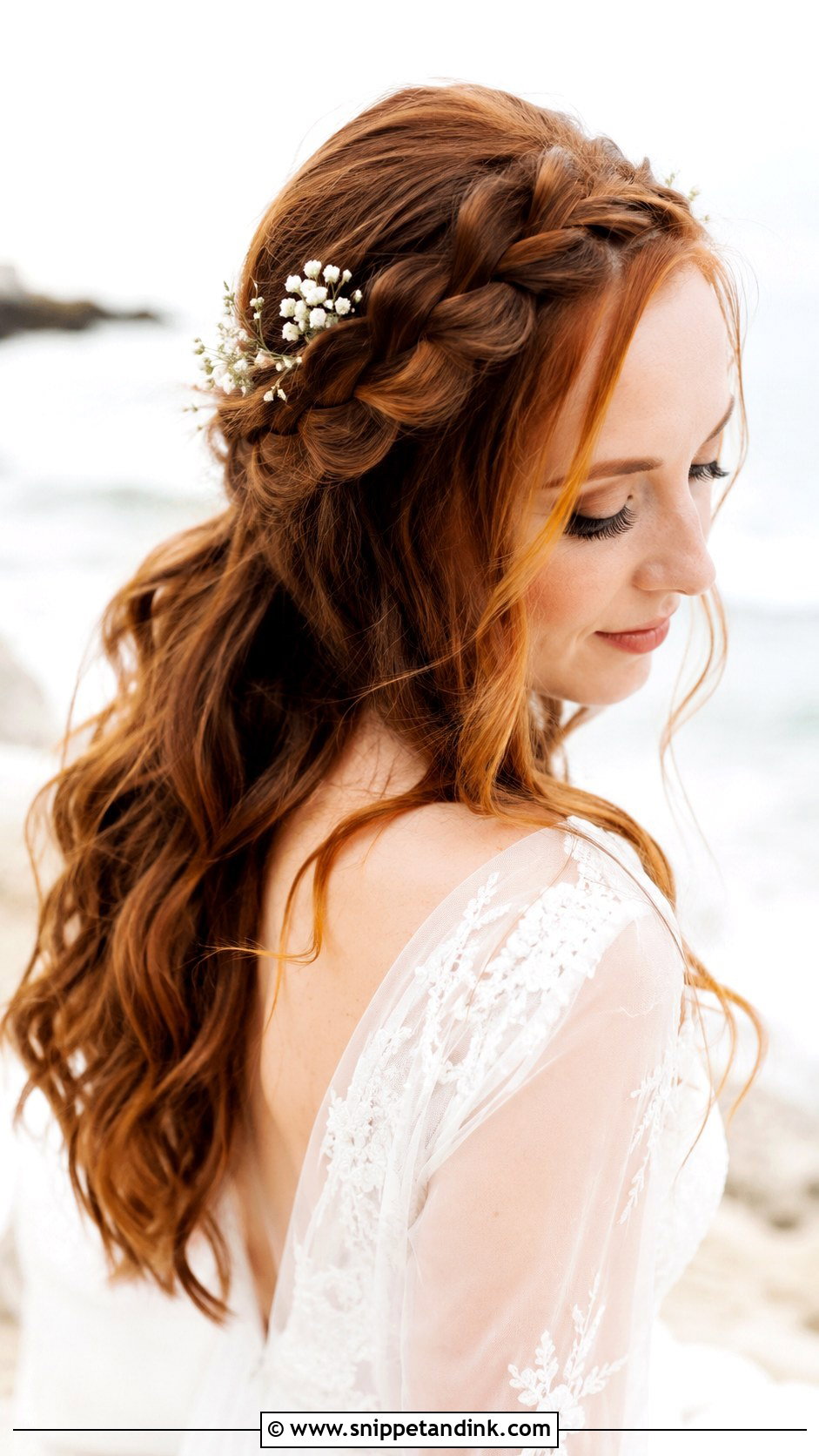
A waterfall braid runs across the head while strands drop through it, so the hair below falls loose. It’s soft and romantic, and it’s at home at a garden or beach wedding. The dropped pieces are the delicate part: if they aren’t curled, they disappear into the rest of the hair. I curl everything first, braid second, and pin the braid end hidden behind the opposite ear. Small flowers tucked into the braid hold well because the plait grips their stems.
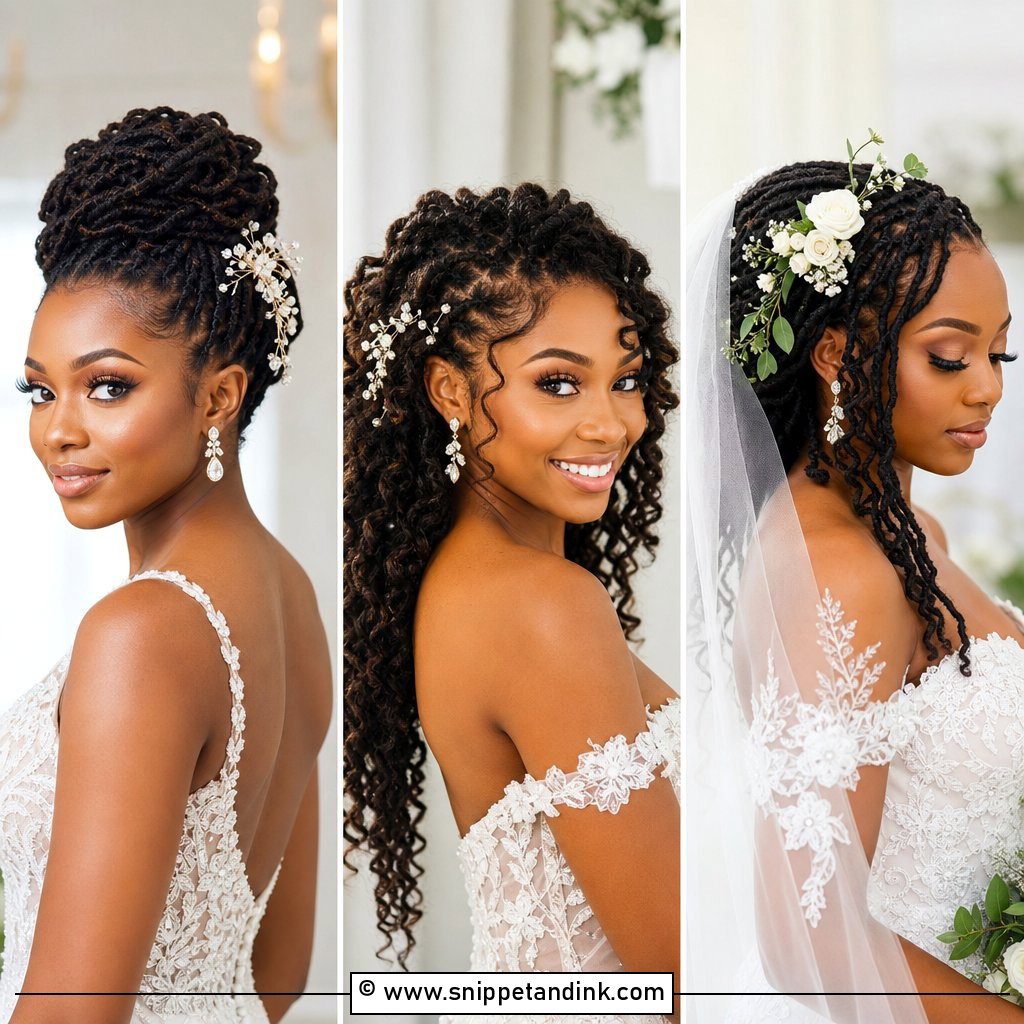
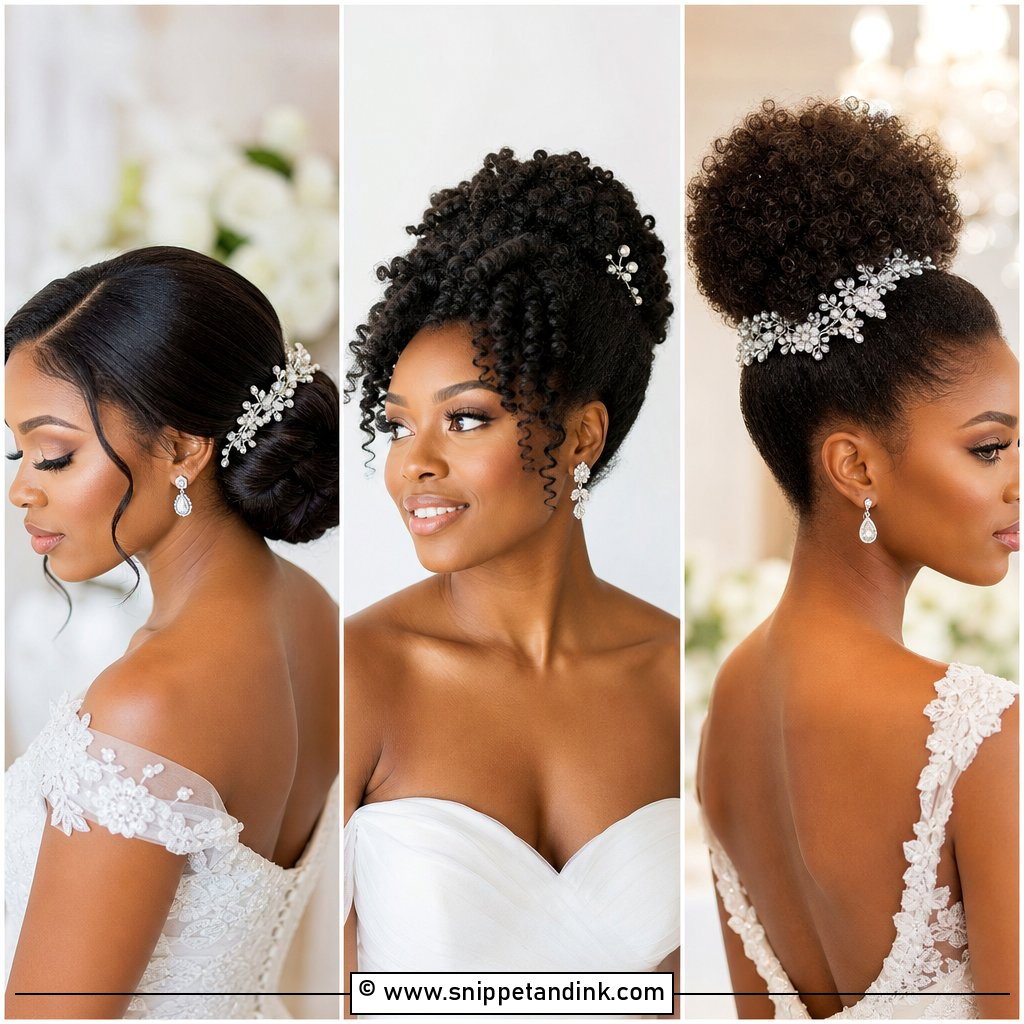
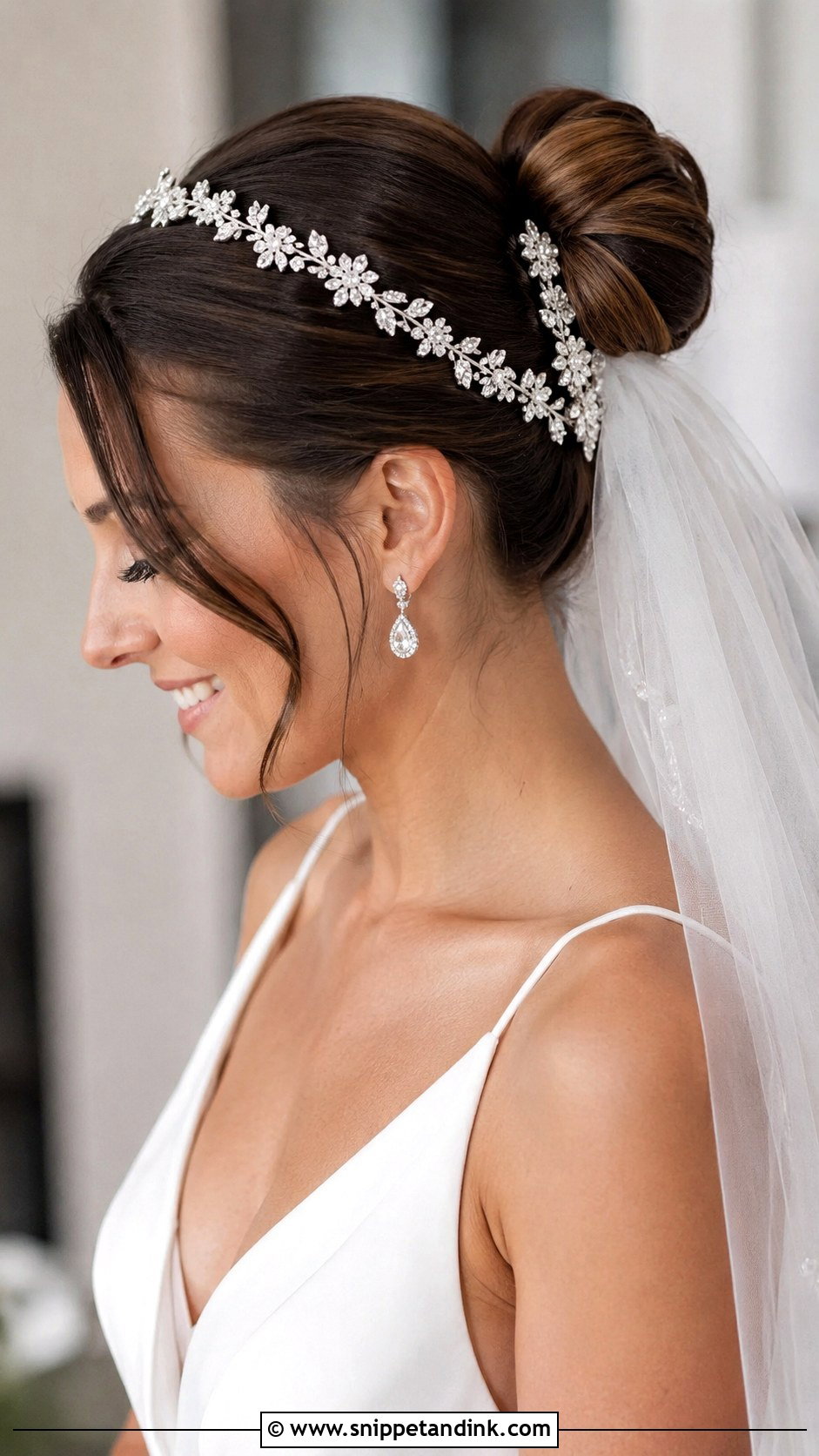
20. Accessorized Sleek Bun
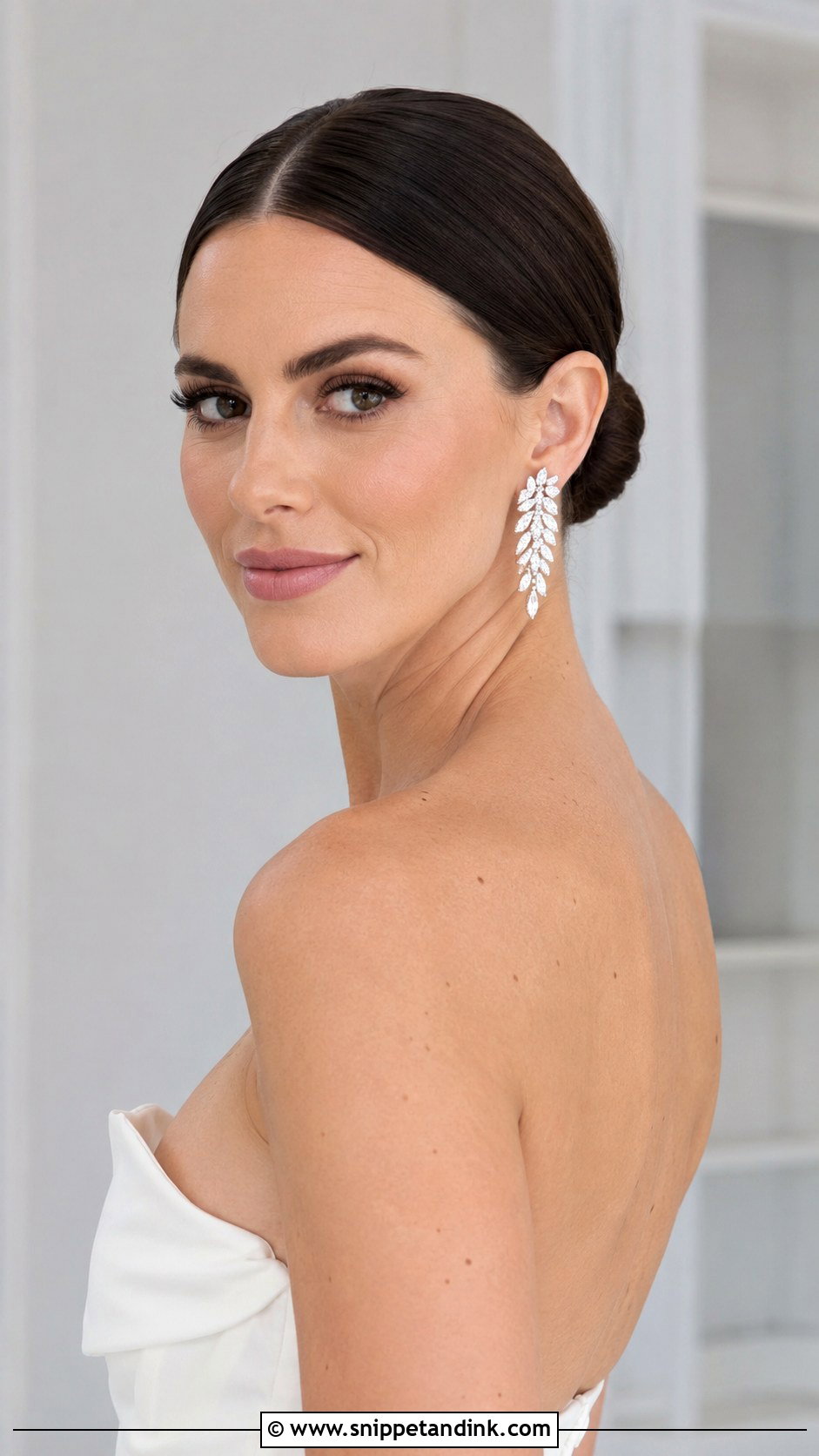
A sleek bun is a blank canvas, and accessories do the talking: sparkling pins, combs or a jeweled headband. Match metals to your jewelry so the eye reads them as one set. I always ask brides to bring their accessories to the trial, because a heavy comb needs a different pin layout than three small slides. It holds well and suits formal and modern weddings. Add a veil for ceremony and take it out for the reception without disturbing the bun.
A Hair Trial Worth Paying For
A trial is not a fancy rehearsal. It’s my chance to see how long your hair takes, how it holds and how the style looks with your veil and earrings. Book it roughly two to three months before the wedding, after any color change, so we’re working with the hair you’ll actually have.
- Arrive with hair washed the day before, unless I’ve asked otherwise.
- Wear a top with a neckline close to your dress, so we judge proportions honestly.
- Bring the veil, comb or headpiece; I need to know where it anchors.
- Leave the style in for the rest of the day and note where it loosens or pulls.
- Take photos front, back and side, both indoors and outside.
The Night Before and the Morning Of
Most updos grip better on hair washed the day before than on freshly washed hair. Skip heavy conditioner on the roots and avoid oils at night. If your hair gets greasy quickly, wash that morning and I’ll add texture spray to give it grip.
On the day, I’d rather finish your hair before makeup is fully set, so hairspray doesn’t land on fresh foundation. Wear a button-up shirt so nothing goes over your head. And keep a small kit for later: a few matching bobby pins, a travel hairspray and a comb. Most fixes during the evening take one pin and thirty seconds.
So Which One Will Last Until the Last Dance?
Every style above can look right on the day, but only some will suit your hair, your dress and the venue. Think about length, how your hair holds curl, what the weather will do and how much pinning you can tolerate for twelve hours. Add flowers, sparkle or a veil once the base is right. And book a trial: it’s where I find out what your hair really does, and it’s the best way to walk into your wedding morning calm.
You'll Like These Ideas:


Leave a Reply