
Sparkle on a wedding cake is harder to get right than it looks. Crystal bands, sugar gems, silver shimmer, pearl borders and mirrored stands all catch light, but put too many on one cake and it starts to look like a costume jewelry counter. The bling cakes I’m proudest of keep the sparkle in a few deliberate places and let clean tiers do the rest. Some lean modern, some royal or vintage. Below are 25 diamond-inspired designs, with notes from my side of the counter on what’s edible, what has to come off before cutting, and what each style asks of your baker.
Edible Shine, Removable Shine and the Kind That Should Never Touch Icing
Every bling cake I design starts with a quiet sorting exercise. Some sparkle is food, some is decoration that can sit on food with a barrier, and some shouldn’t be on a cake at all. Knowing which is which changes how a design is built.
- Edible: isomalt gems, sugar pearls, edible glitter and lustre labeled as edible, edible gold and silver leaf. These can be eaten.
- Decorative, with a barrier: rhinestone banding, metal brooches, crystal toppers. They sit on ribbon, acetate or a food-safe pick and come off before cutting.
- Not for cakes: craft glitter and dusts labeled only “non-toxic” or “for decoration”. Non-toxic means it won’t poison you, not that it’s meant to be eaten.
When you ask for a quote, ask for this split in writing. A good baker will list it without hesitation, and it tells the venue staff exactly what to remove before slicing.
Lead time for hand-placed sparkle
Sequin tiers, quilting with a gem at every point and long crystal cascades are all placed by hand. That adds hours, and sometimes an extra day, so I’d book a heavily embellished cake earlier than a plain one. Expect the price to reflect the labor; it varies a lot between bakers and regions.
1. White Diamond Wedding Cake
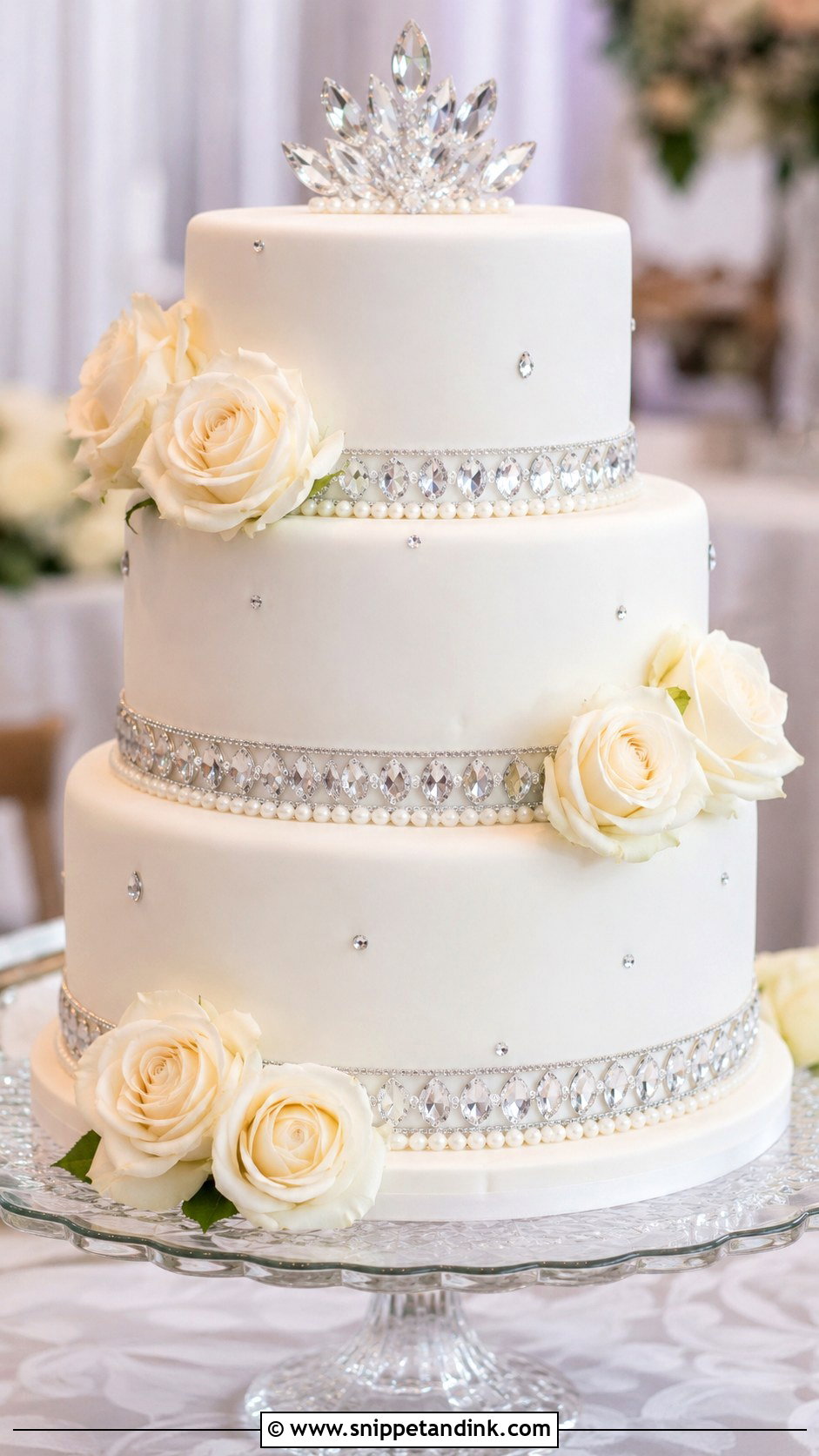
White on white is the safest start for a sparkly cake, because clear gems read brightest against a pale surface. I usually suggest three or four tiers here; the height gives the sparkle space instead of crowding it onto one or two. Clear sugar diamonds, crystal-style piping or a rhinestone band go at the tier bases, on one statement tier, or in a light diagonal down one side, never all three. White roses, orchids or pearls soften it if it feels cold. Fondant gives the sharper edge for banding; buttercream works too, but bands sit less crisply on it.
2. Silver Bling Wedding Cake
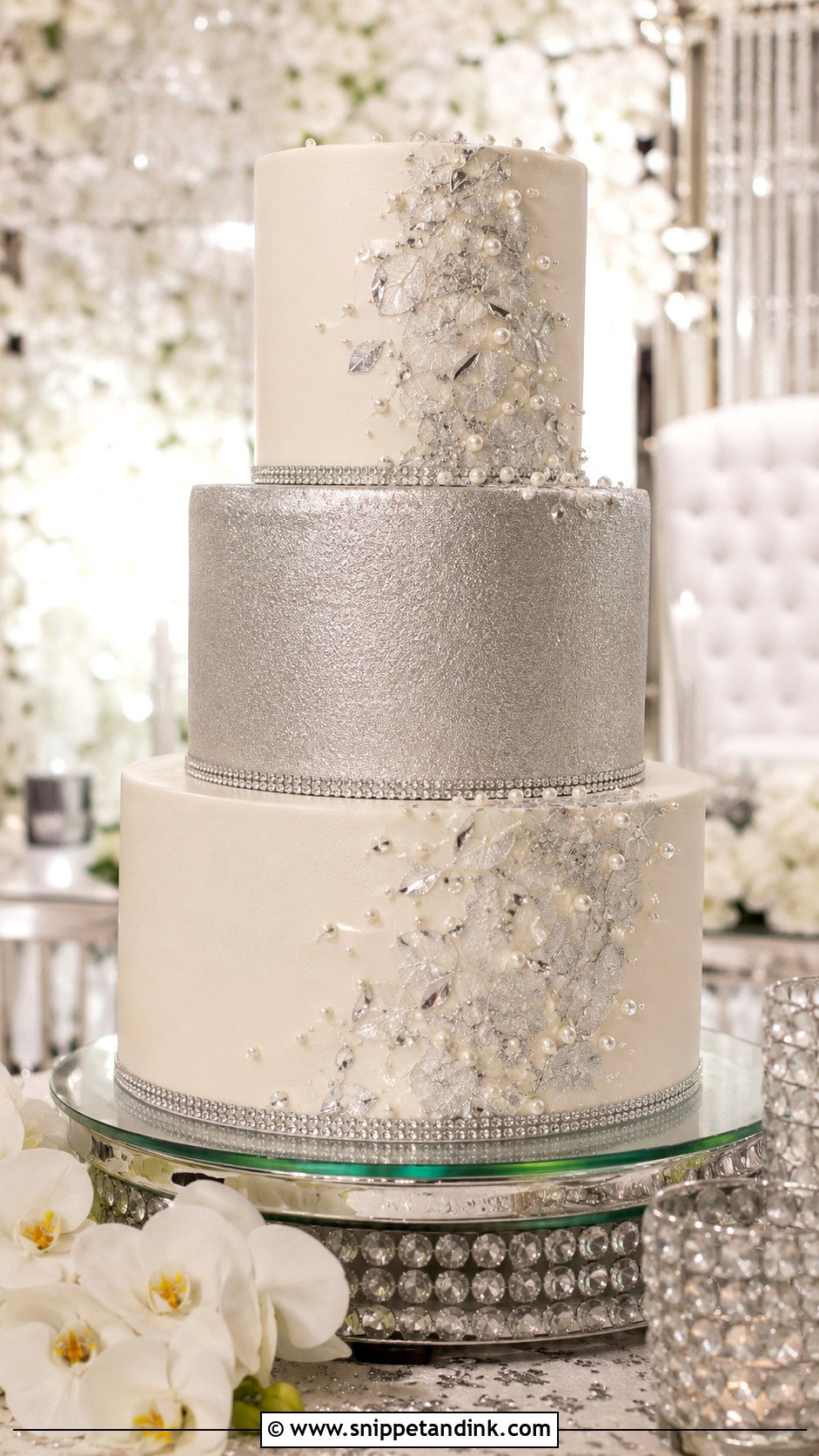
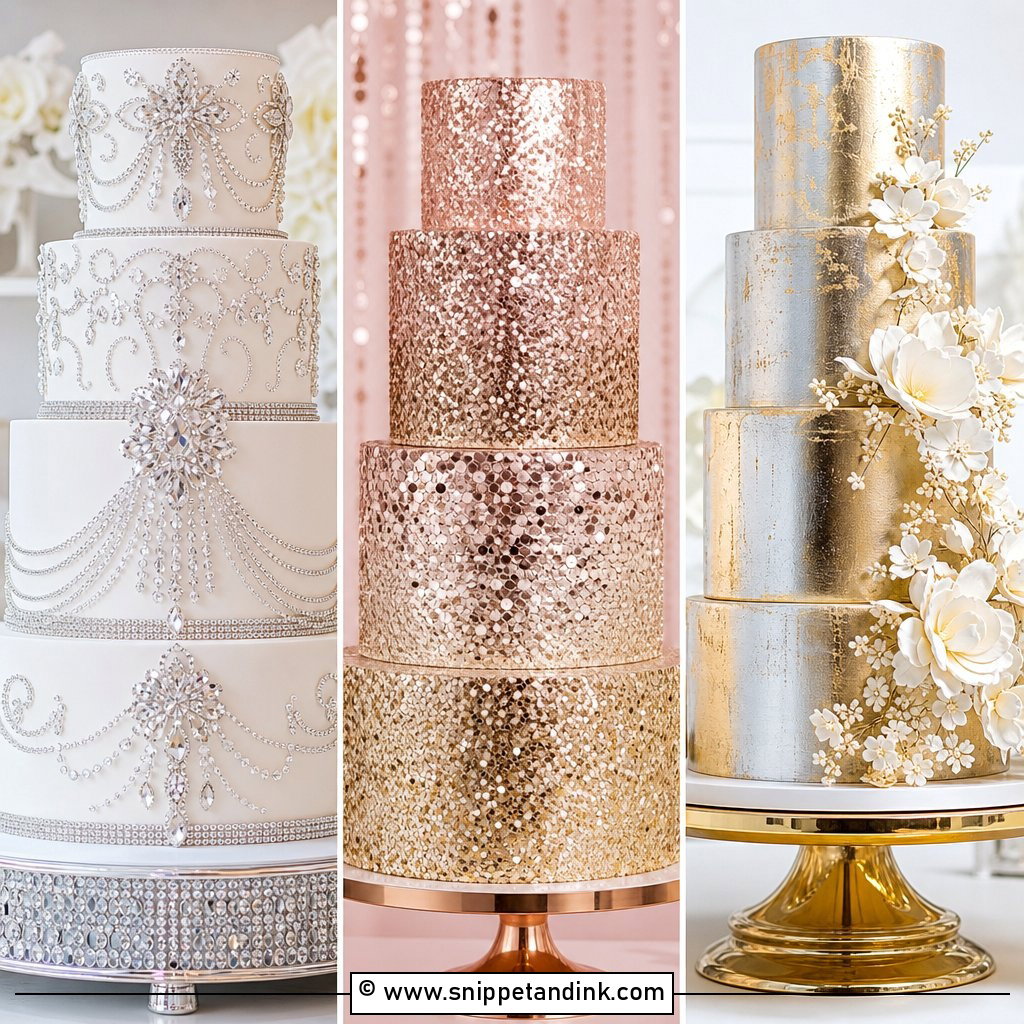
Silver reads cool and bright, and it pairs naturally with white, ivory, pale grey or soft blue palettes. My rule is to layer the shine: one sequin tier, a little metallic brushwork, a crystal band and a jeweled topper, with smooth tiers between them to rest the eye. Candlelit ballrooms and black-tie evenings show silver at its best. Edible silver leaf, silver dragées or removable crystal wraps can all work, though I’ll always tell you which pieces are decoration only, since some silver finishes are sold as non-edible and have to come off before slicing.
3. Gold Diamond Wedding Cake
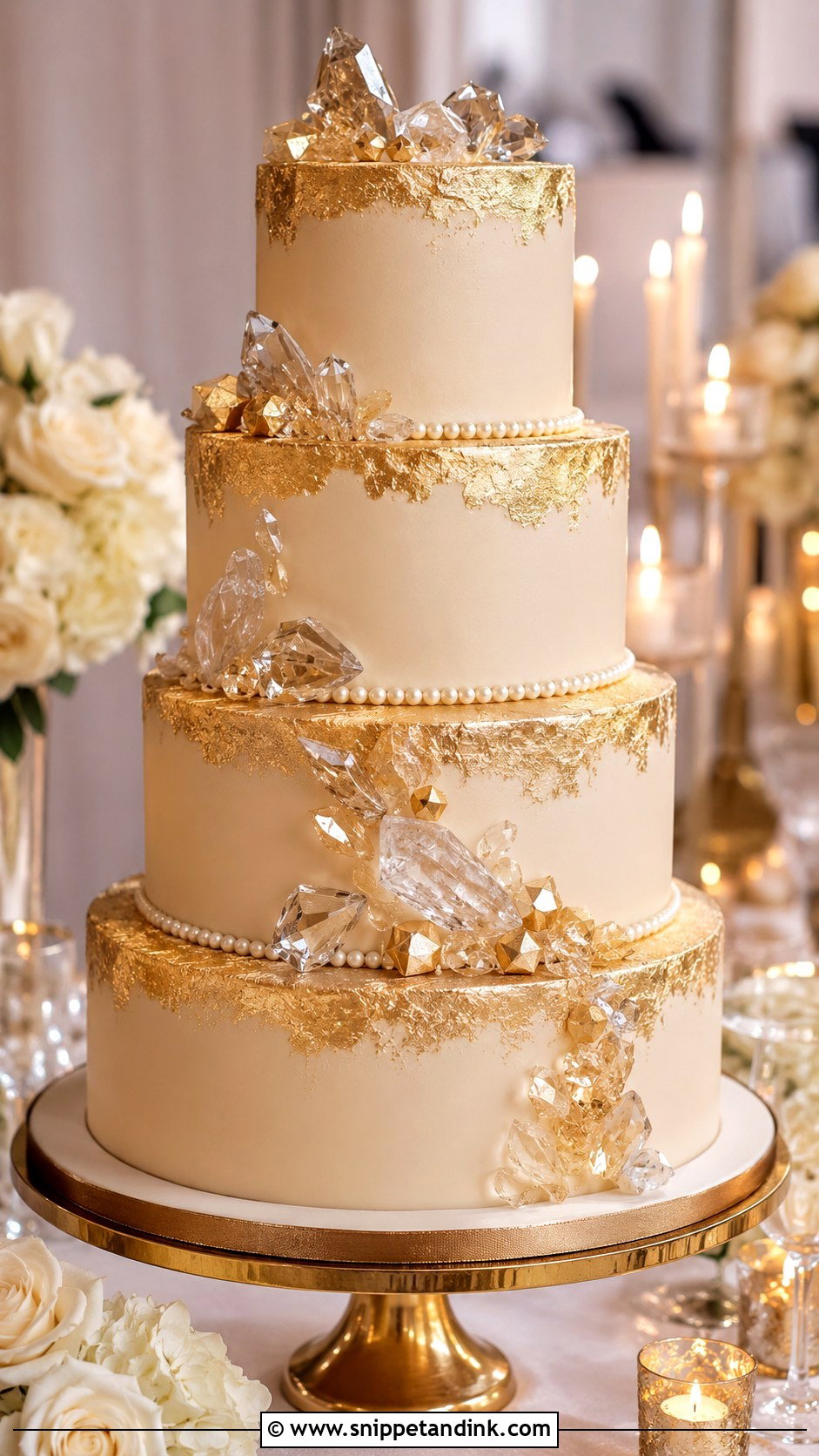
Gold warms a cake in a way silver can’t, and a gold diamond wedding cake sits easily with ivory icing, champagne tones and blush flowers. I apply gold leaf with a soft brush onto a slightly tacky surface; on a dry surface it flakes off, and on wet buttercream it wrinkles. One gold statement tier with smooth tiers around it looks modern. Gold lattice with clear gem points at each crossing feels richer and more formal. Cream flowers and a mirrored stand finish it without any extra color.
4. Rhinestone Wedding Cake
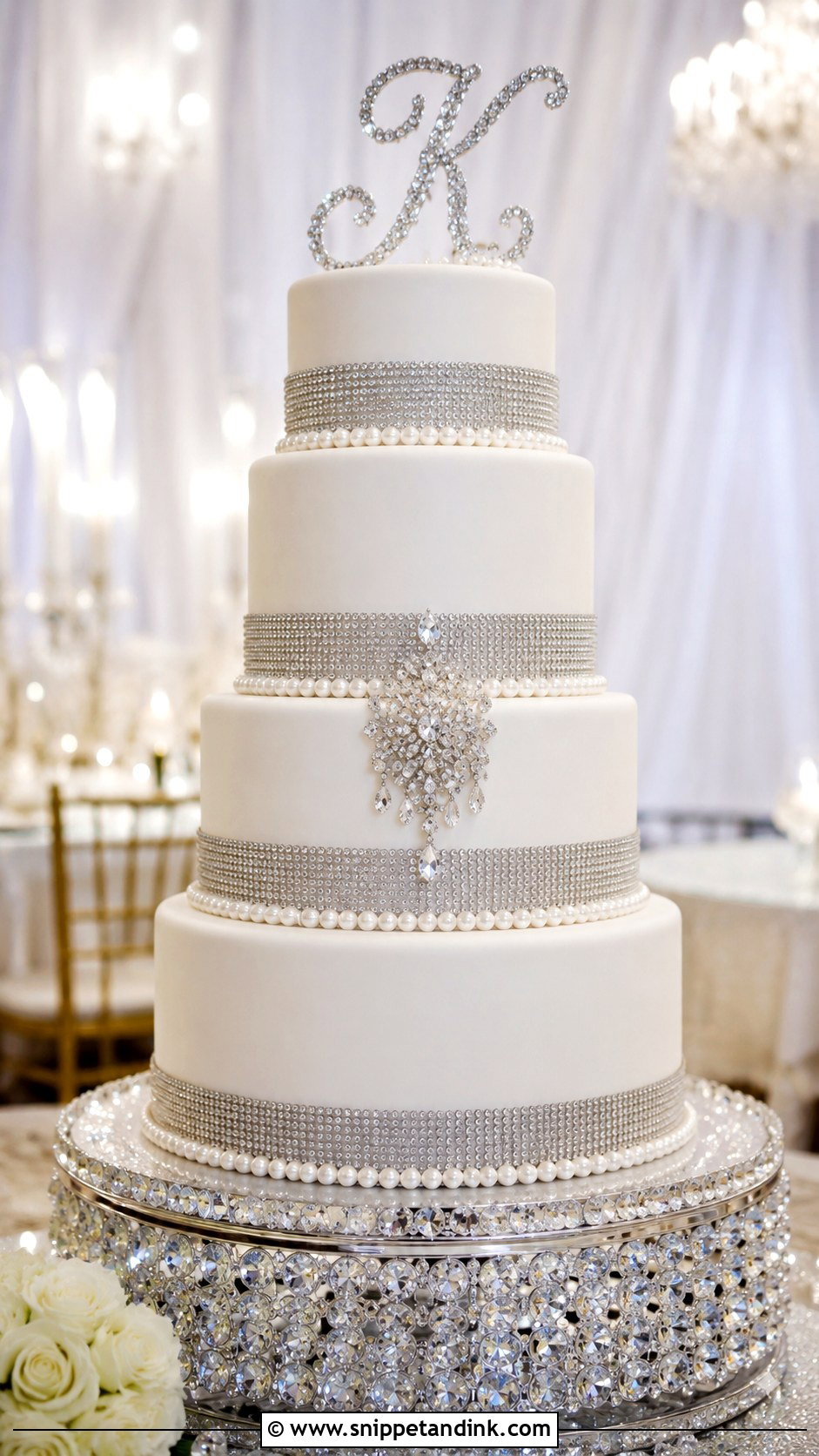
Most rhinestones are not food, and that shapes the whole design. When I use rhinestone ribbon I back it with a strip of satin or acetate so the metal mesh never touches the icing, and it comes off cleanly before the cake is cut. Bands around the base of each tier give a neat, high-impact line. Brooches and monogram toppers go on with a food-safe barrier too. Keep the icing smooth; stones on textured buttercream look accidental. This one suits glam rooms with crystal centerpieces and dramatic lighting.
5. Crystal Wedding Cake
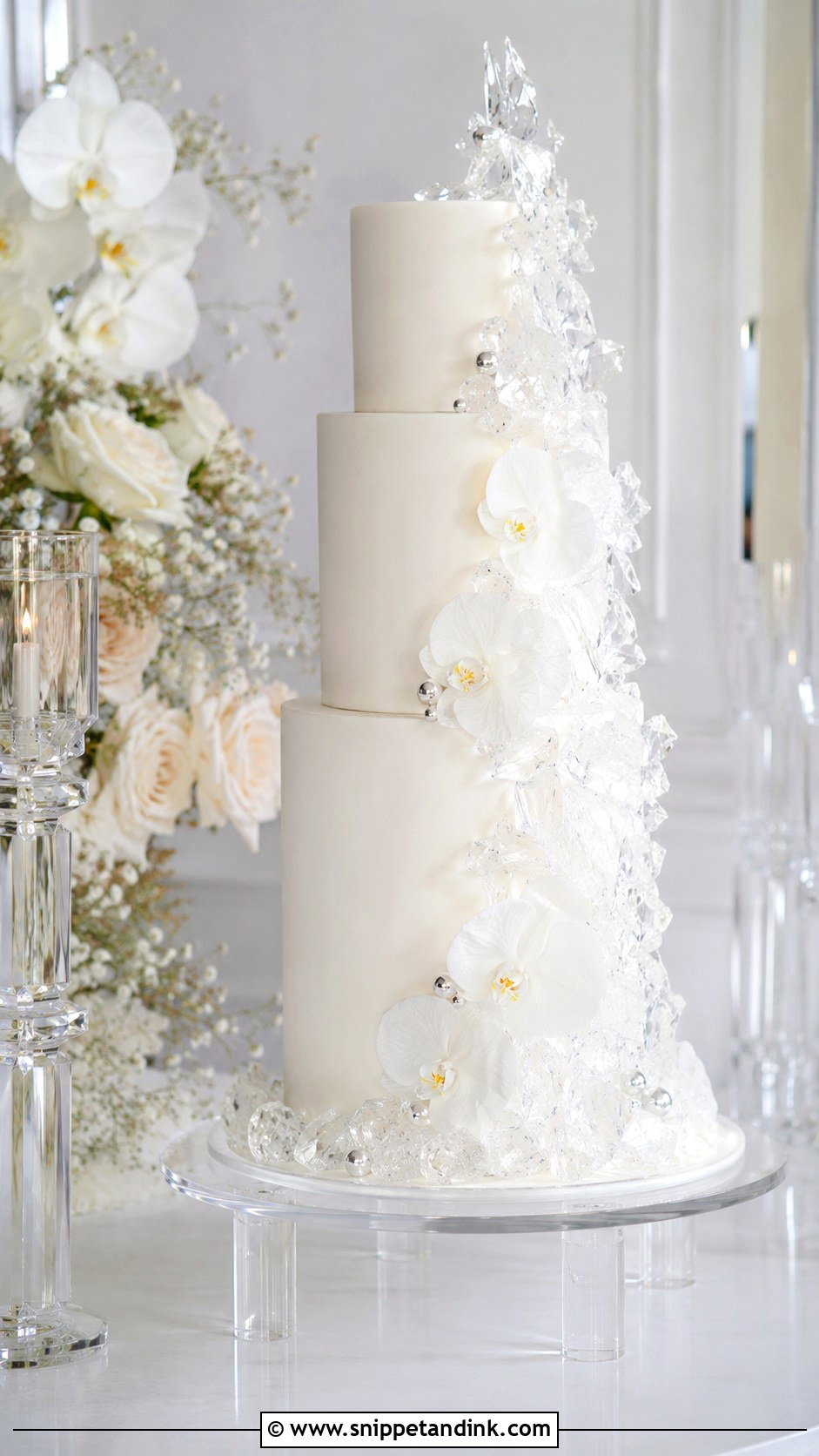
Crystal cakes can go soft and magical or sharp and high-fashion, depending on how the gems are placed. I make clear crystals from isomalt, which sets glass-hard and stays clear, and sometimes mix in rock candy for a rougher texture. A cascade running down the tiers is the classic layout; a fully crystal-covered middle tier between plain white tiers is the bolder one. Keep flowers minimal so they don’t hide the work. A clear acrylic or mirrored stand throws extra light back up through the crystals.
6. Diamond Drip Wedding Cake
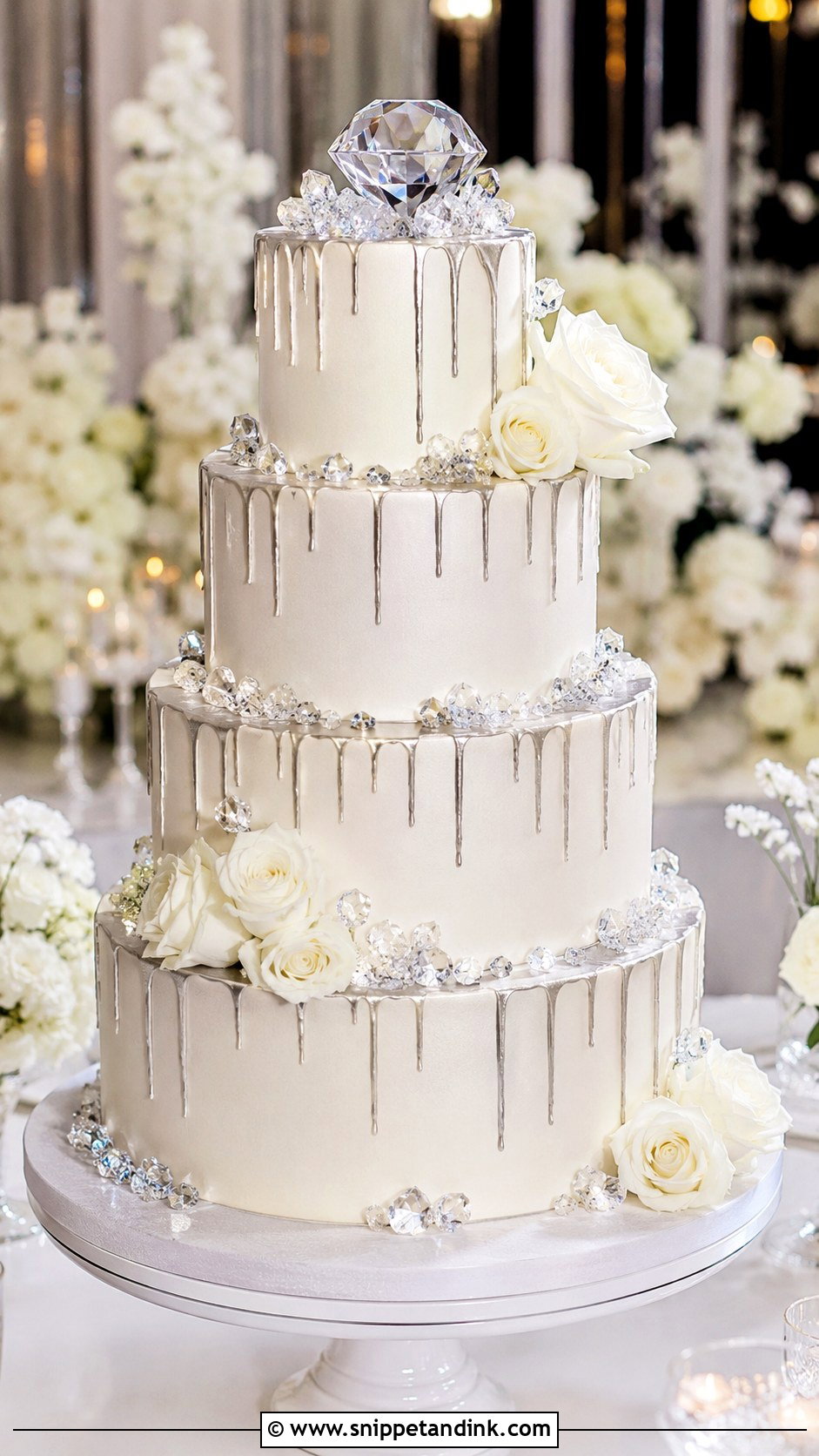
A drip cake looks casual until you dress it in wedding colors. Instead of chocolate I’ll pour white chocolate ganache tinted pearl, silver or champagne, and the trick is temperature: too warm and it runs to the board, too cool and it stops in thick blobs. I test a single drip on the back of the cake before doing the front. Clear sugar gems placed along the drip line make it look like melting diamonds. Tall round tiers with smooth icing show the drips best.
7. Pearl And Diamond Wedding Cake
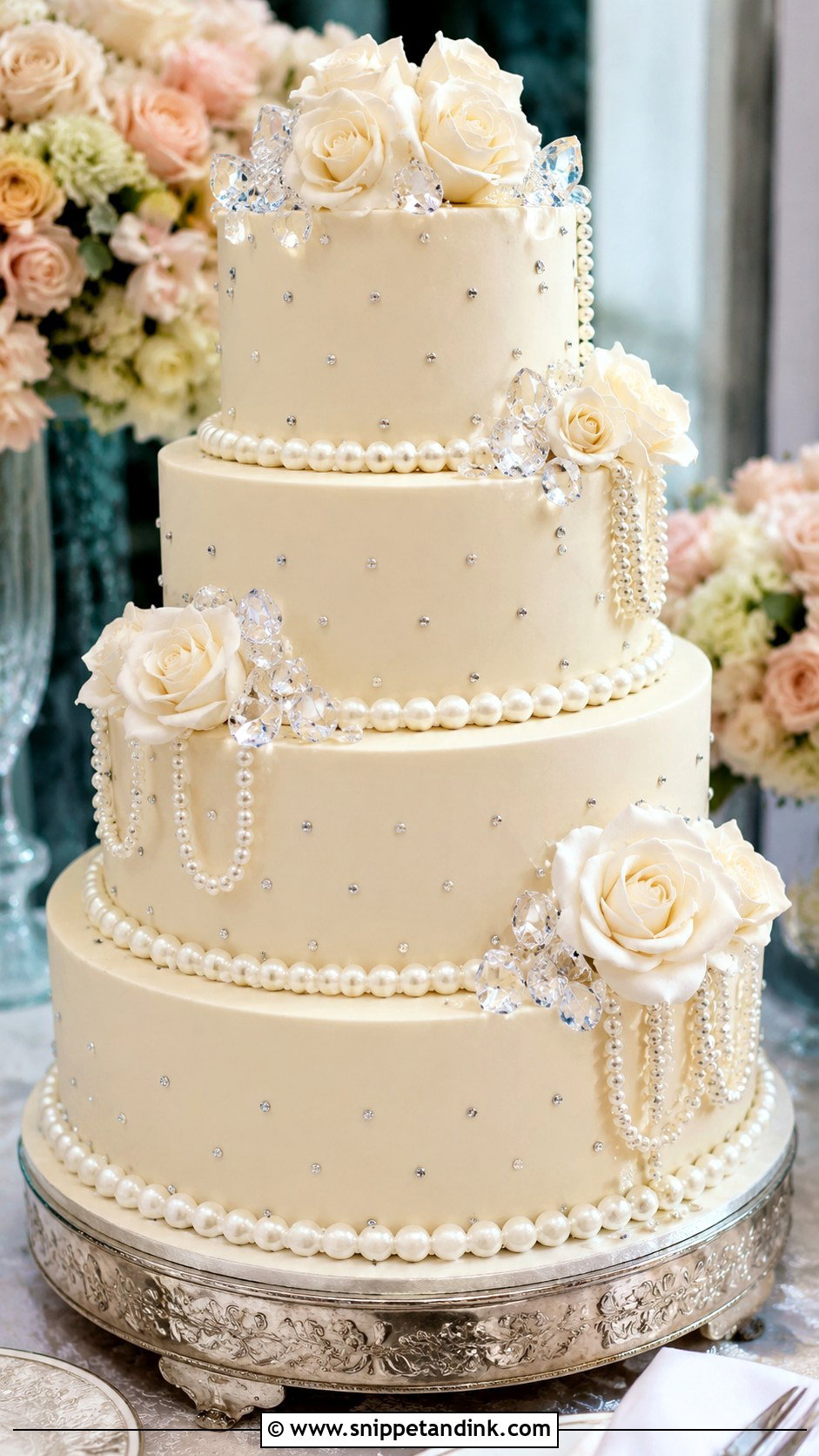
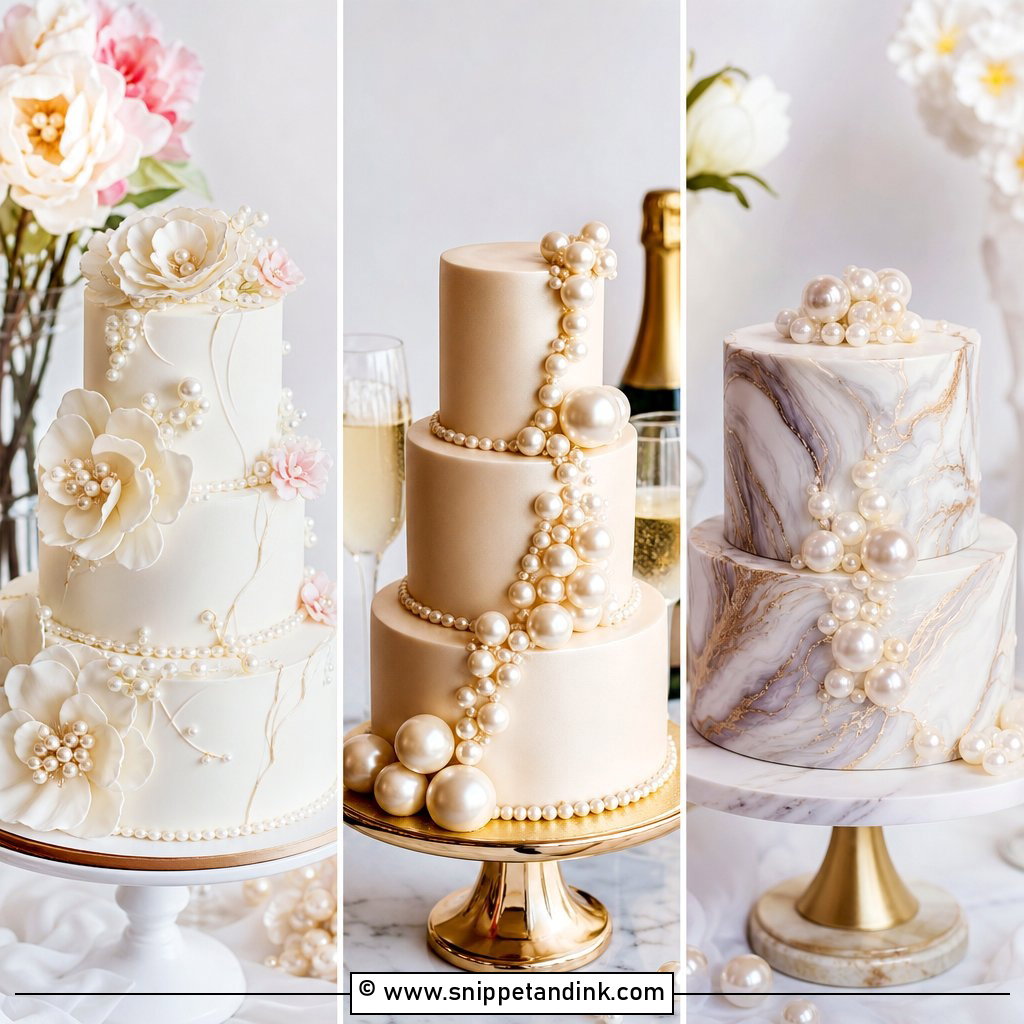
Pearls slow the sparkle down. Paired with diamond accents, they give a cake light without making it flashy, and they sit well on ivory, white, blush or champagne icing. My favorite way to combine them is a quilted fondant tier with a sugar pearl or gem at each crossing point, then pearl borders on the plain tiers. A pearl-and-crystal topper ties it together. This is the bling cake I’d point classic brides toward, especially for garden or formal receptions.
8. Diamond Geode Wedding Cake
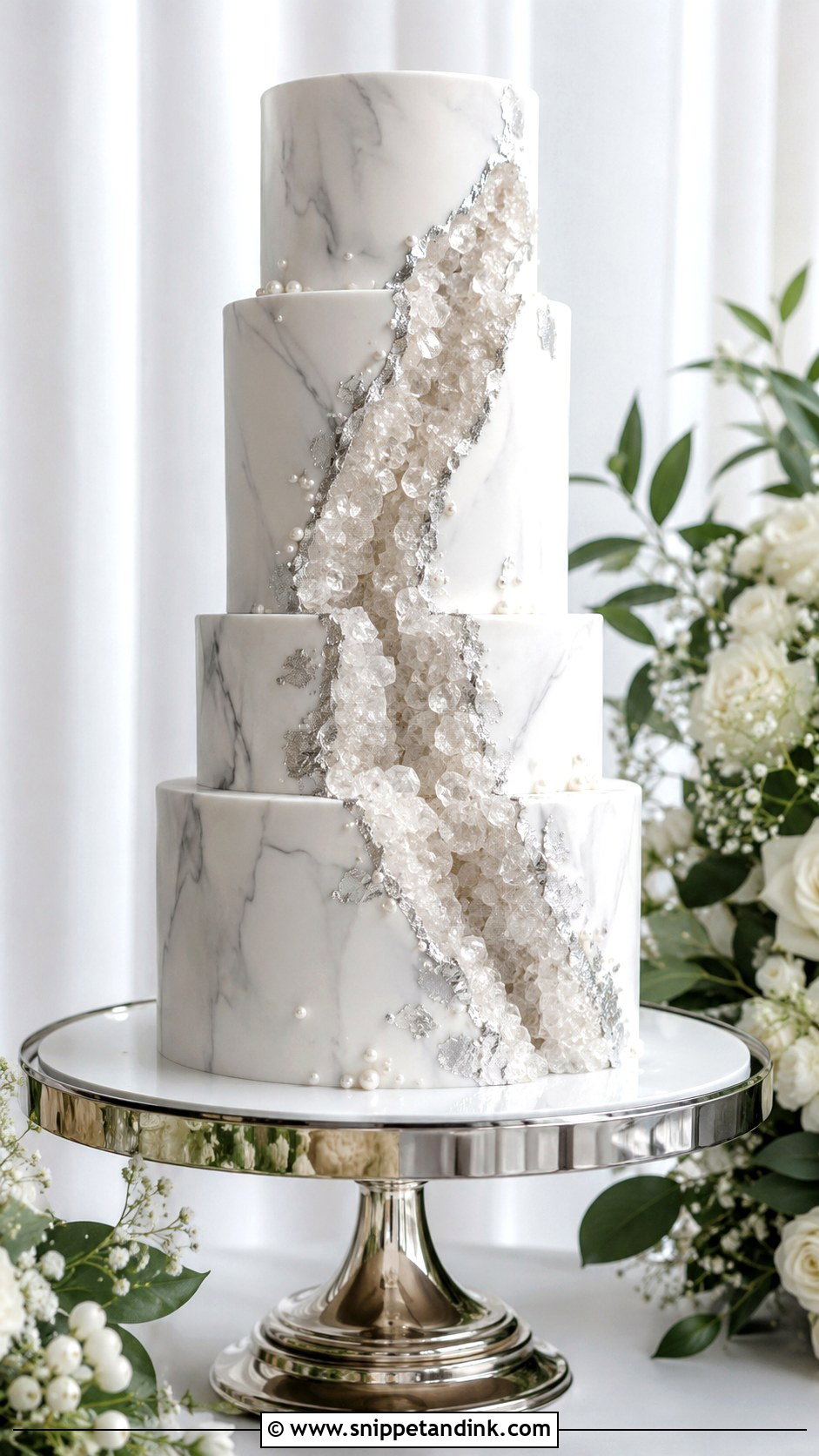
A geode cake is carved, not just decorated. I cut a channel into the chilled tiers, line it with clear, white or pale champagne isomalt and rock candy crystals, and then paint the rim with silver leaf so the opening looks like it broke open naturally. It reads best running diagonally across two or three stacked tiers. A smooth white or marbled exterior keeps the focus on the crystals. One caution: the carved section means a little less cake in that tier, so I factor that into serving numbers.
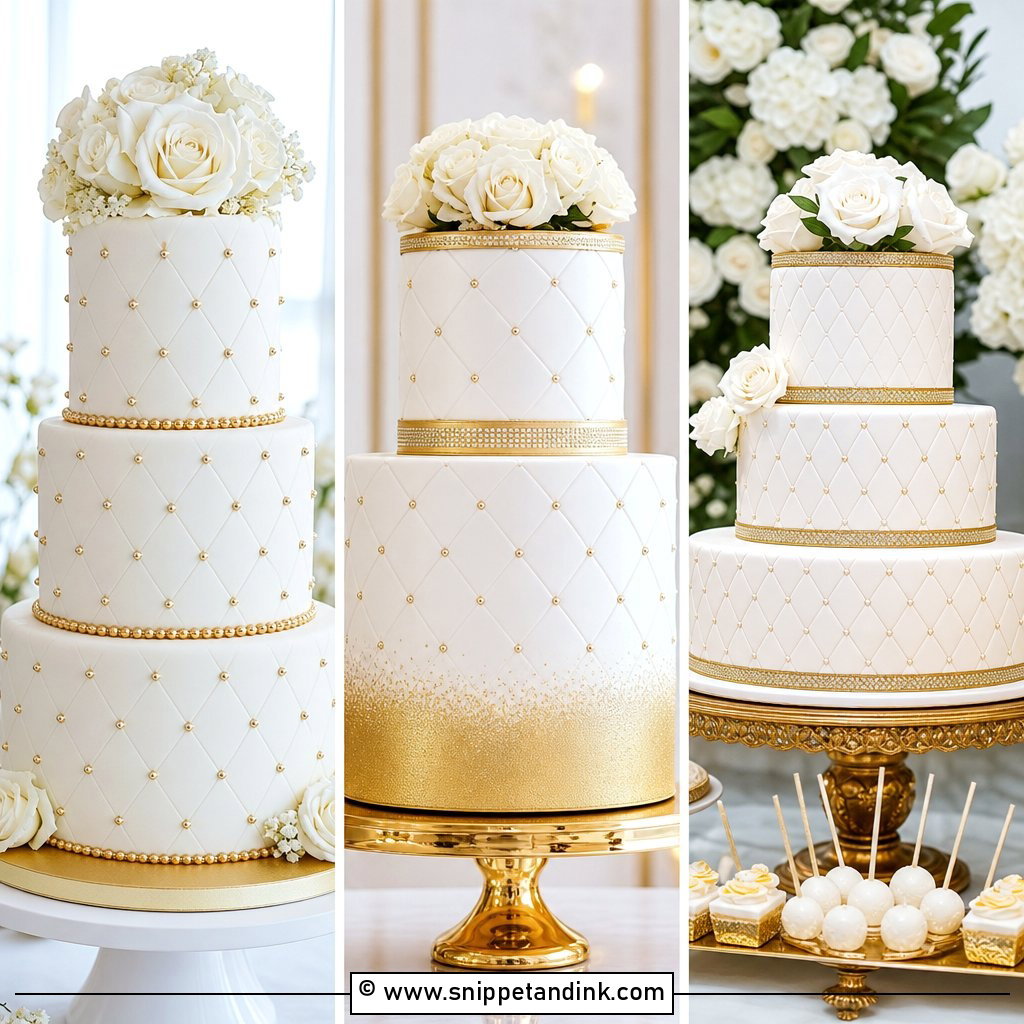
9. Diamond Quilted Wedding Cake
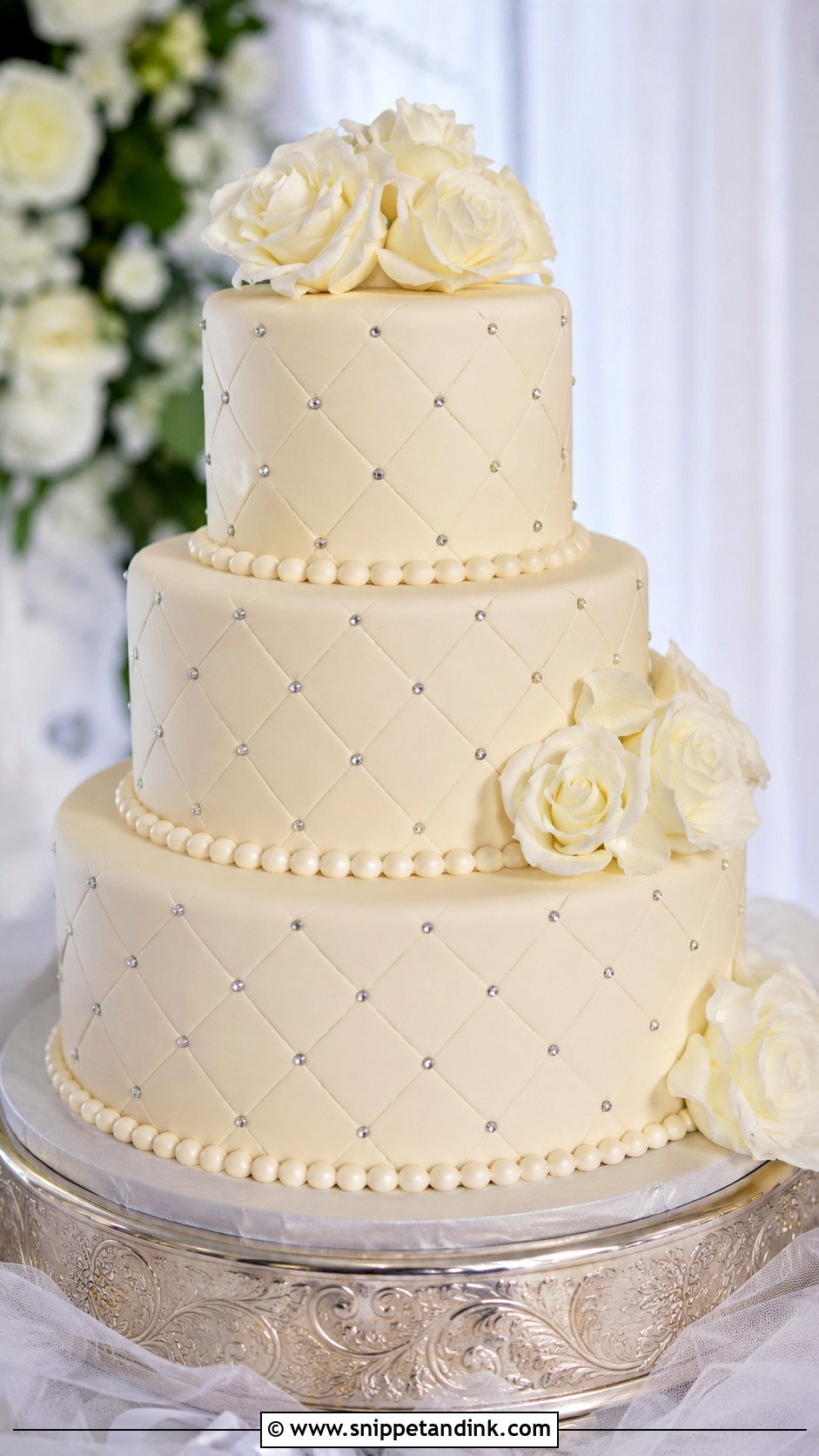
Quilting borrows straight from bridal fashion. I press a diamond pattern into fondant with a ruler or quilting tool while it’s still soft, then set a tiny pearl, sugar gem or silver dot at every crossing. The result shimmers in an orderly way, which is why it suits brides who like classic style with a little bling. One quilted tier between smooth ones is plenty; a fully quilted cake can look like upholstery. White, ivory and champagne keep it soft.
10. Bling Wedding Cake With Flowers
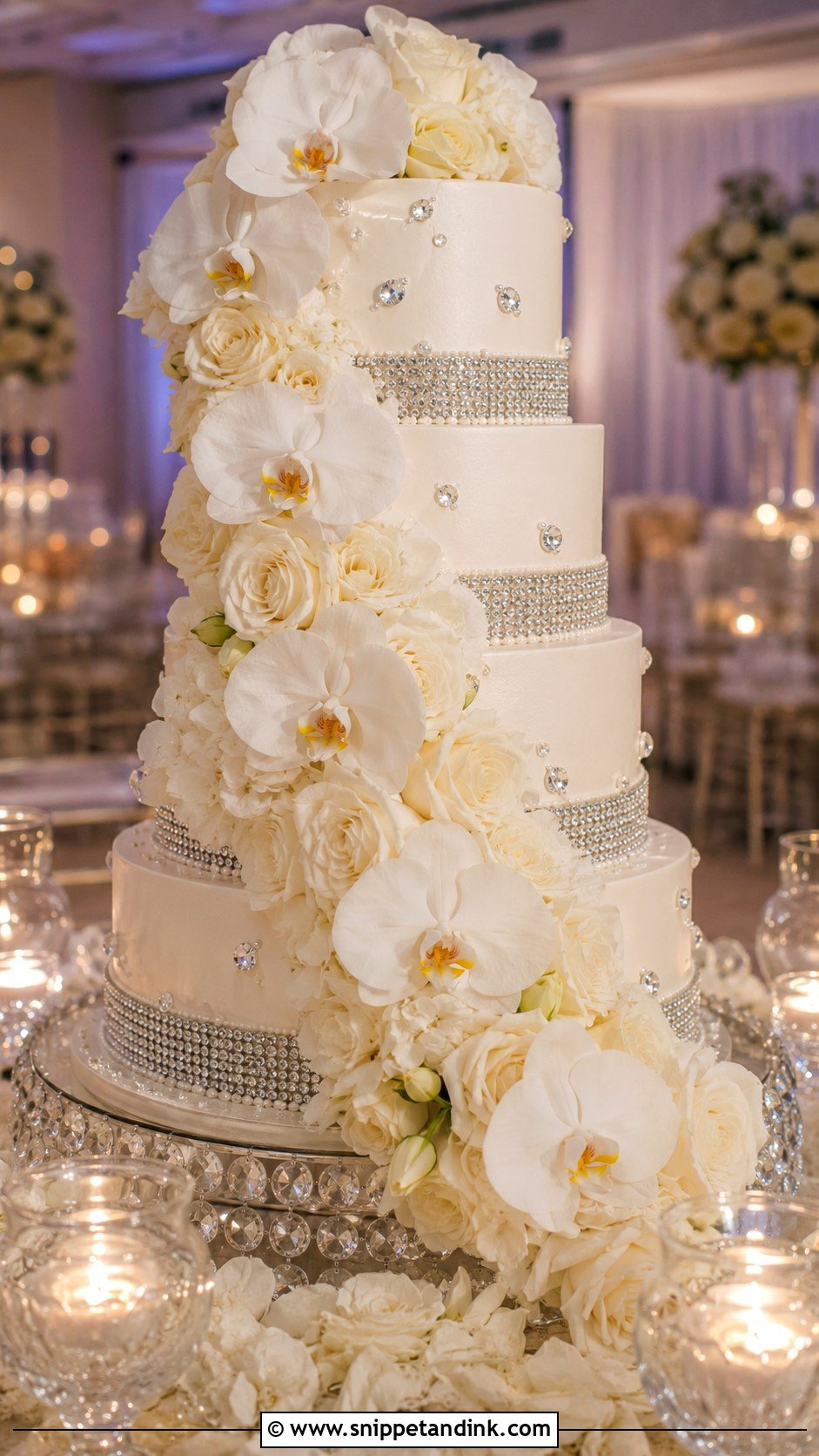
Flowers and crystals balance each other: the petals soften the shine, and the shine keeps the flowers from looking garden-casual. White roses, orchids, peonies and hydrangeas all pair well with rhinestone bands or sugar diamond clusters. I place the flowers in one diagonal cascade and keep the bling to the tier bases so the two never fight for the same space. Fresh stems need wrapping or a food-safe pick before they go into the cake, and hydrangeas wilt quickly without water, so I’d use them only near the top.
11. Diamond Wedding Cake With Crown Topper
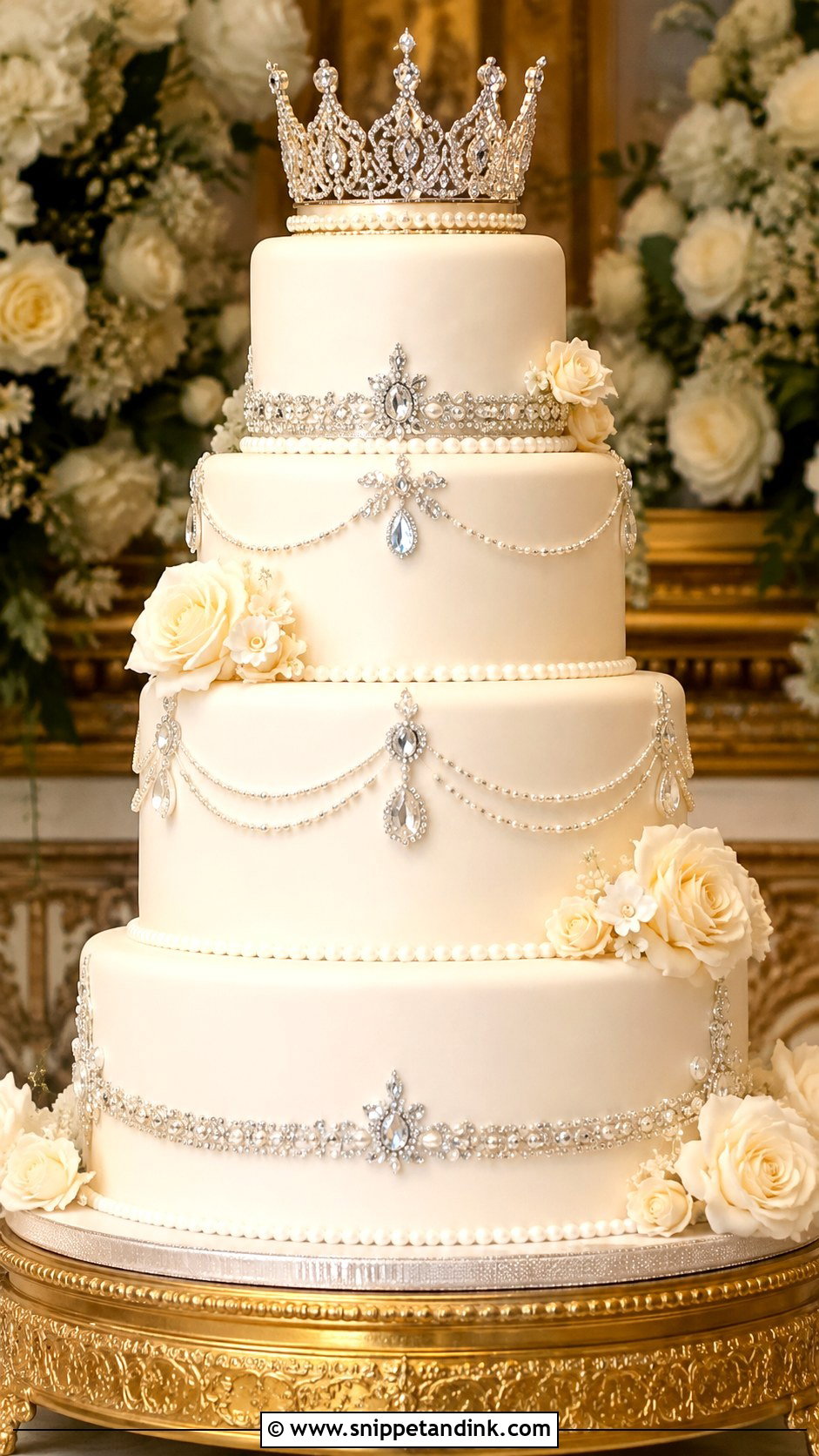
A crown topper turns the whole cake into a stage for one object. That only works if the tiers stay clean and tall underneath. I keep supporting details to pearl borders, a crystal band or one quilted tier, and ivory icing so the cake still reads bridal. The crown itself can be metal, crystal or sugar; a sugar crown is fragile and I’d only make one if the cake isn’t travelling far after it’s placed.
12. Black And Diamond Wedding Cake
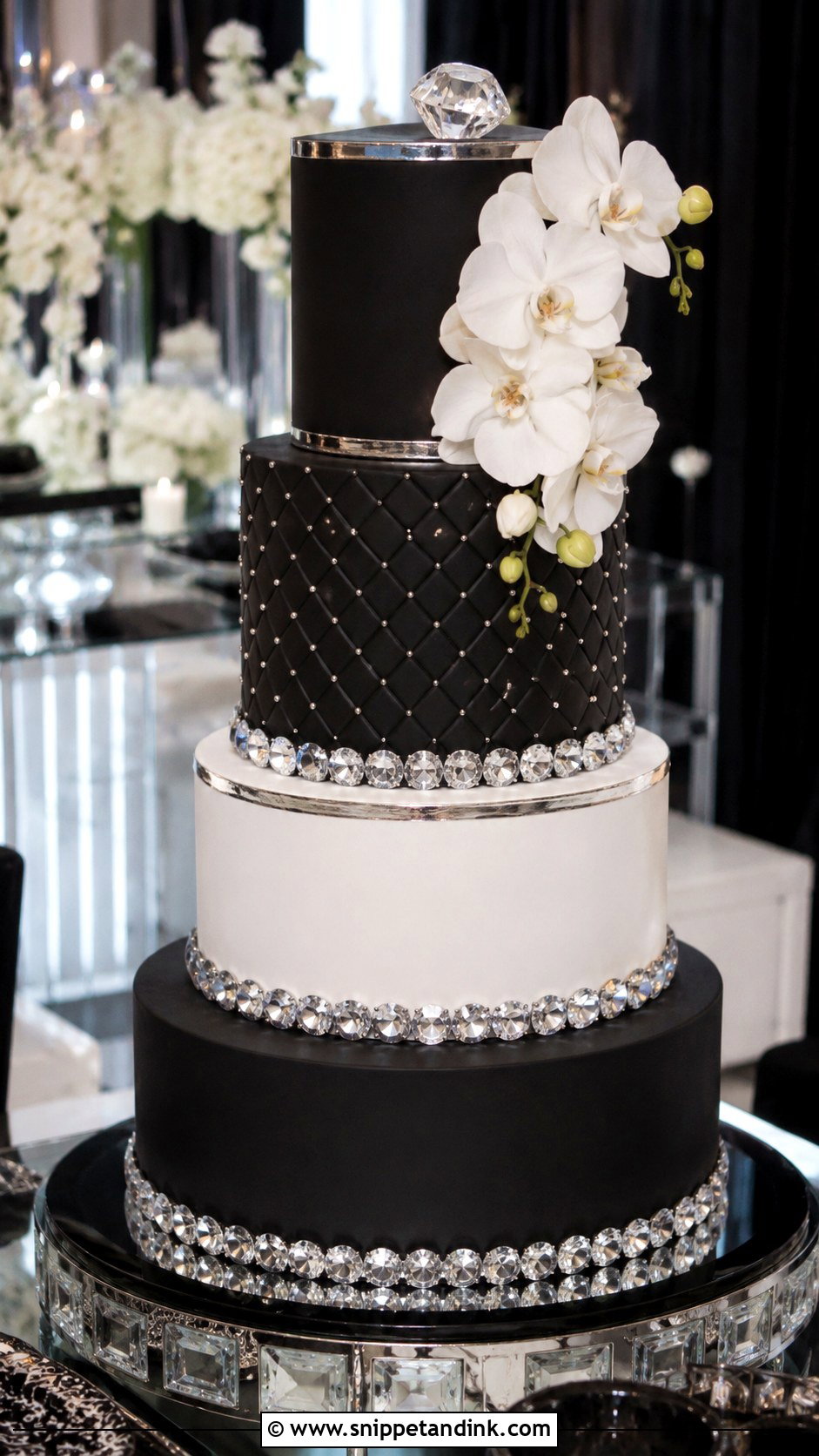
Black icing makes every crystal look brighter, which is the whole point of this design. I use black sparingly: one black tier, a black marble effect or a full matte black cake with crystal trim. Achieving a true black in fondant or buttercream takes a lot of coloring, and very dark buttercream can stain lips and teeth, so I usually steer couples toward black fondant or a black outer tier that guests don’t eat. White orchids or roses soften it. Evening weddings and modern venues suit it best.
13. Blush Diamond Wedding Cake
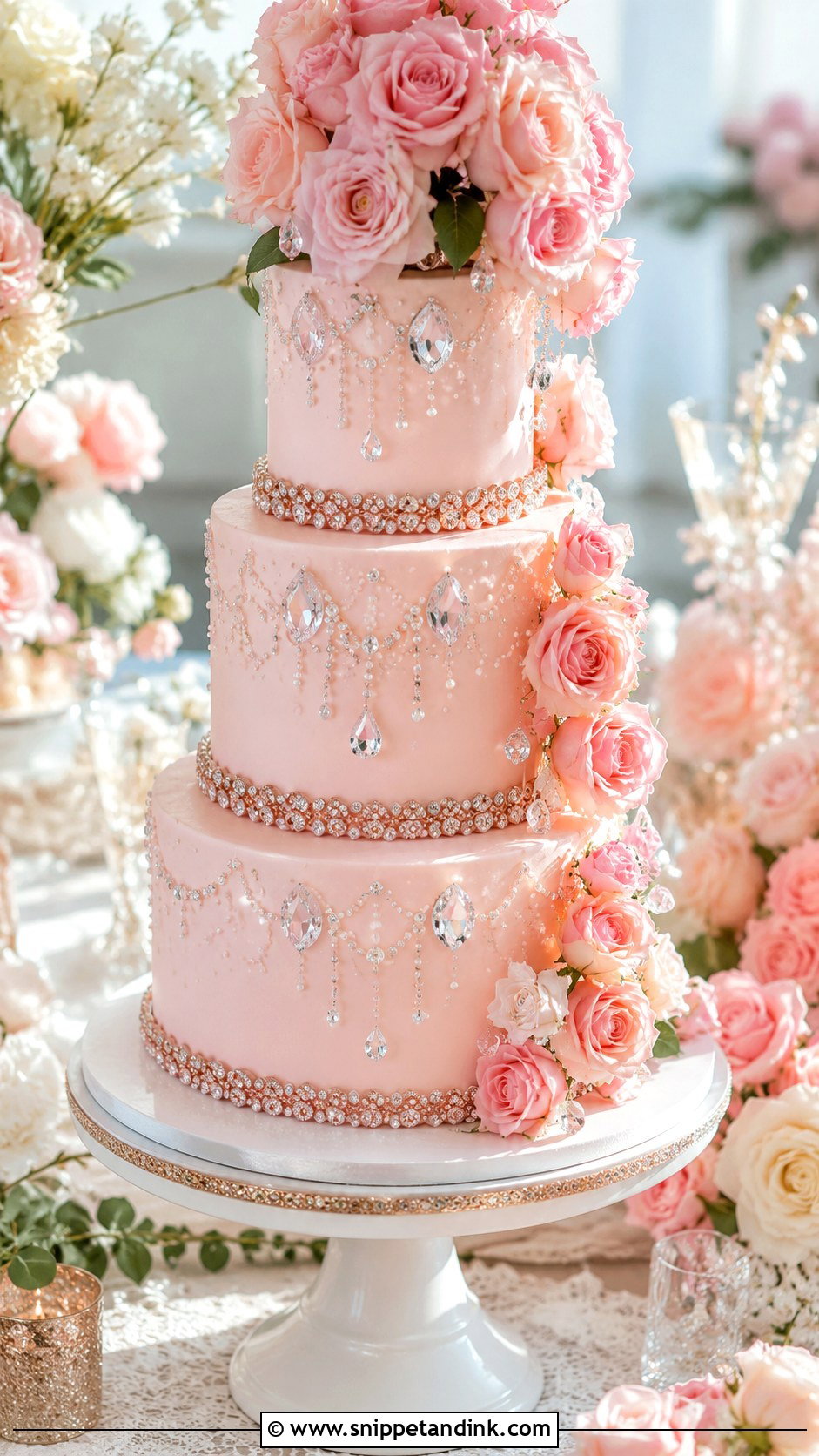
Blush icing with clear gems and pearl trim gives sparkle a gentle, spring-like feel. I’m careful with pale pink: it can fade under strong daylight or bright display lights, so I keep the cake out of direct sun until it’s served. An ombré effect across the tiers makes the cake look lighter. Use the diamond accents sparingly here; crystal bands on one or two tiers are often enough. Fresh blush roses or sugar peonies finish it.
14. Champagne Bling Wedding Cake
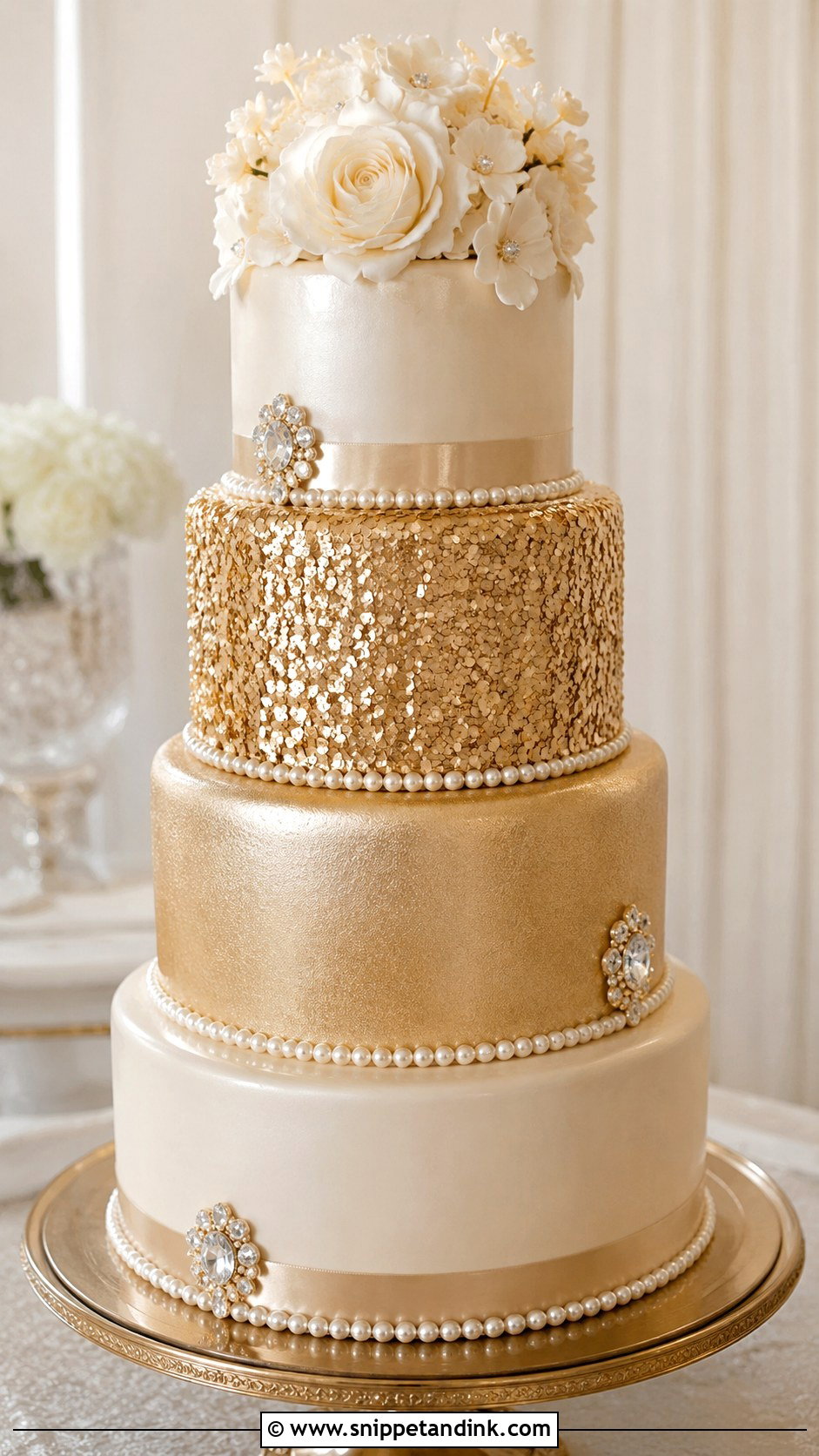
Champagne sits between gold and ivory, so it glows rather than shines. I mix a pale champagne icing, brush it with edible shimmer, and add gold accents and a few clear diamonds. A sequin-style tier works well beside smooth buttercream or fondant tiers. Neutral palettes with taupe, beige or soft gold decor are where this cake fits most naturally. A crystal topper or sugar pearls add a final detail under warm reception lighting.

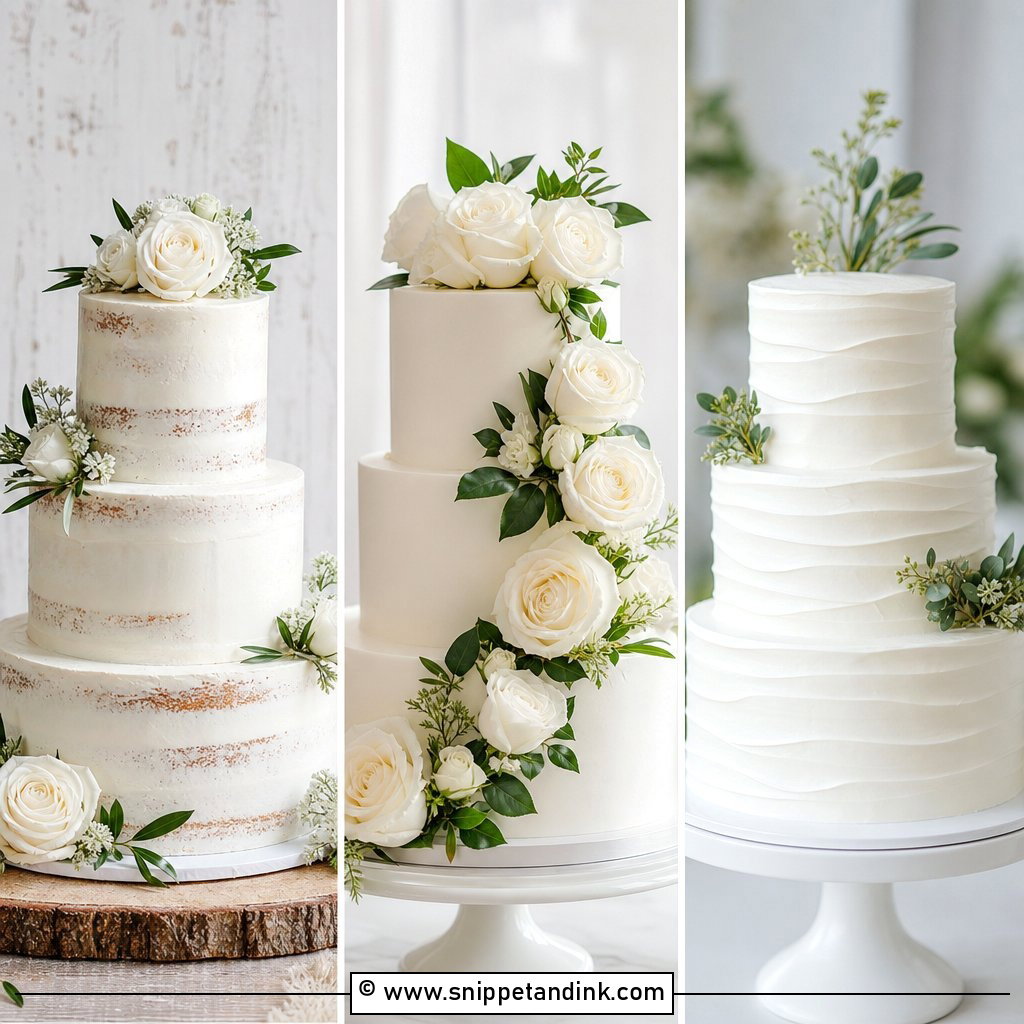
15. Diamond Sequin Wedding Cake
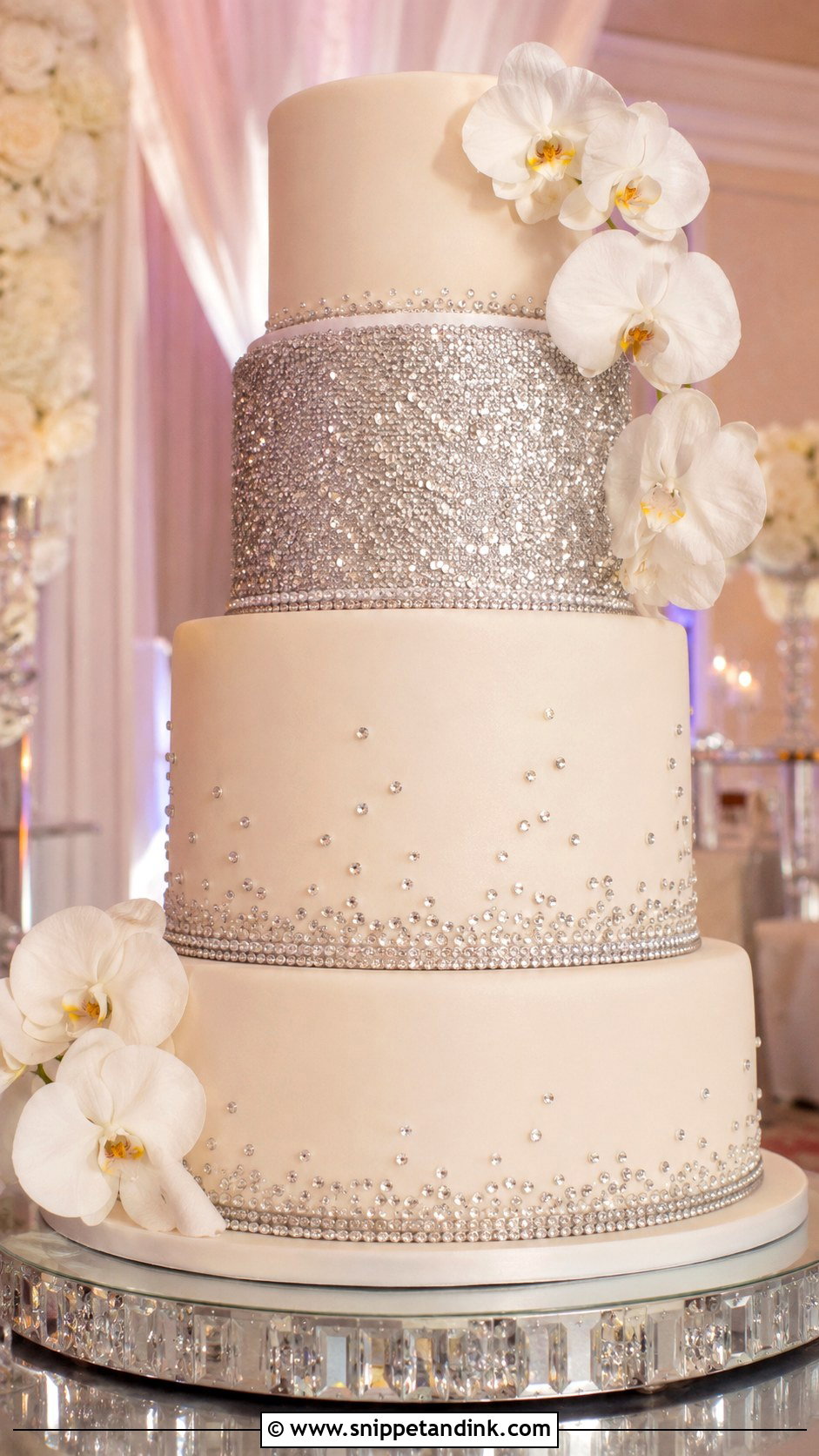
Sequin tiers are slow work. Each edible sequin or silver sugar disc is placed by hand, usually overnight, so this design needs extra lead time on your order. The effect mimics a beaded gown and catches light from every angle. I pair a sequined tier with smooth white or ivory tiers so the cake still looks like a wedding cake rather than a party prop, and frame it with pearl borders or a few clear diamond accents. Bright lights and mirrored decor make it photograph especially well.
16. Mirror Bling Wedding Cake
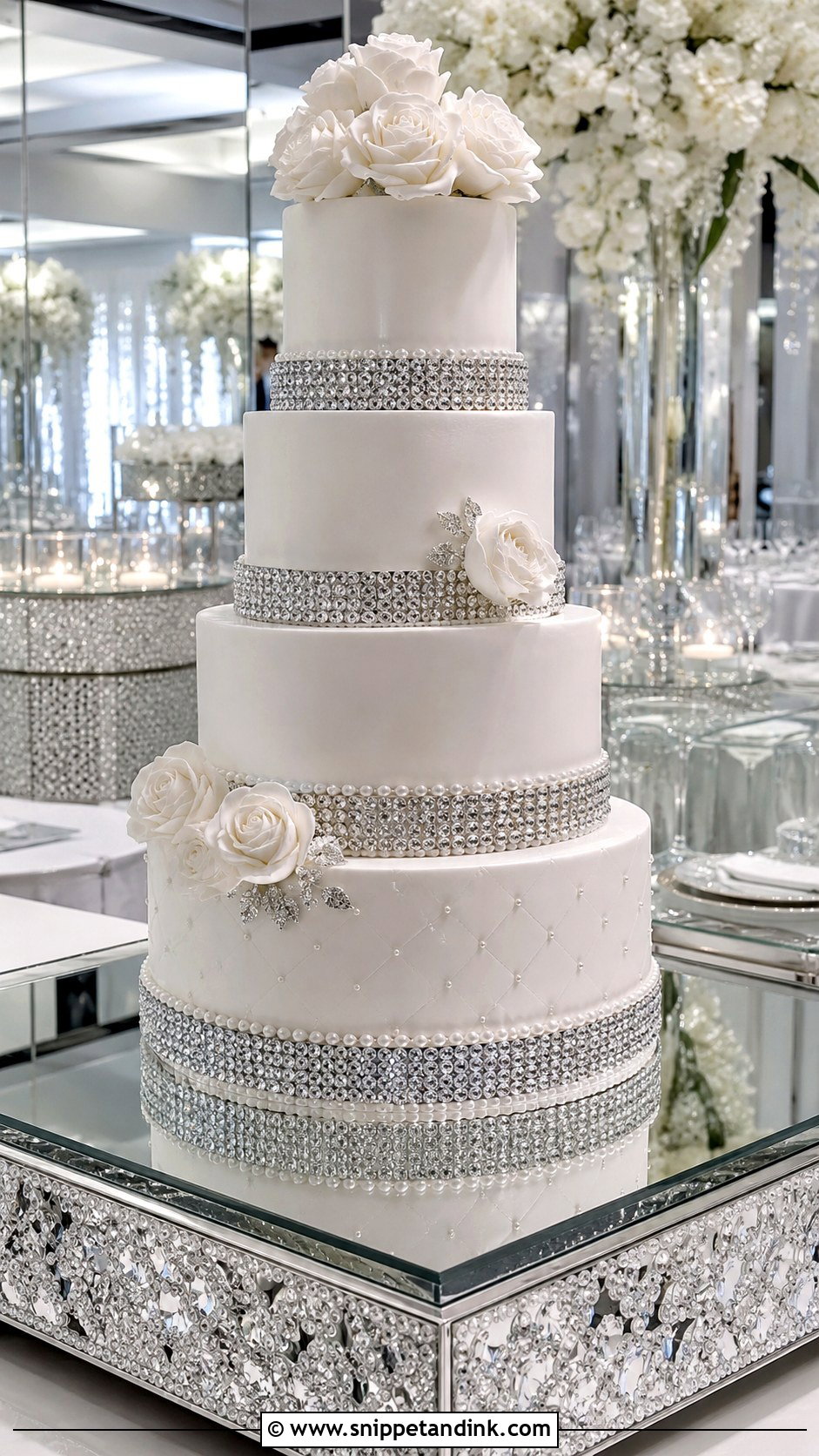
Here the stand does as much work as the cake. A mirrored stand or reflective table doubles every silver detail, crystal band and pearl. I’d keep the cake itself clean: glossy white icing, a few metallic accents and simple flowers. Tall tiered cakes reflect best from top to bottom. One practical note: mirrors show every crumb and fingerprint, so I bring a cloth to polish the stand after setting the cake.
17. Diamond Lace Wedding Cake
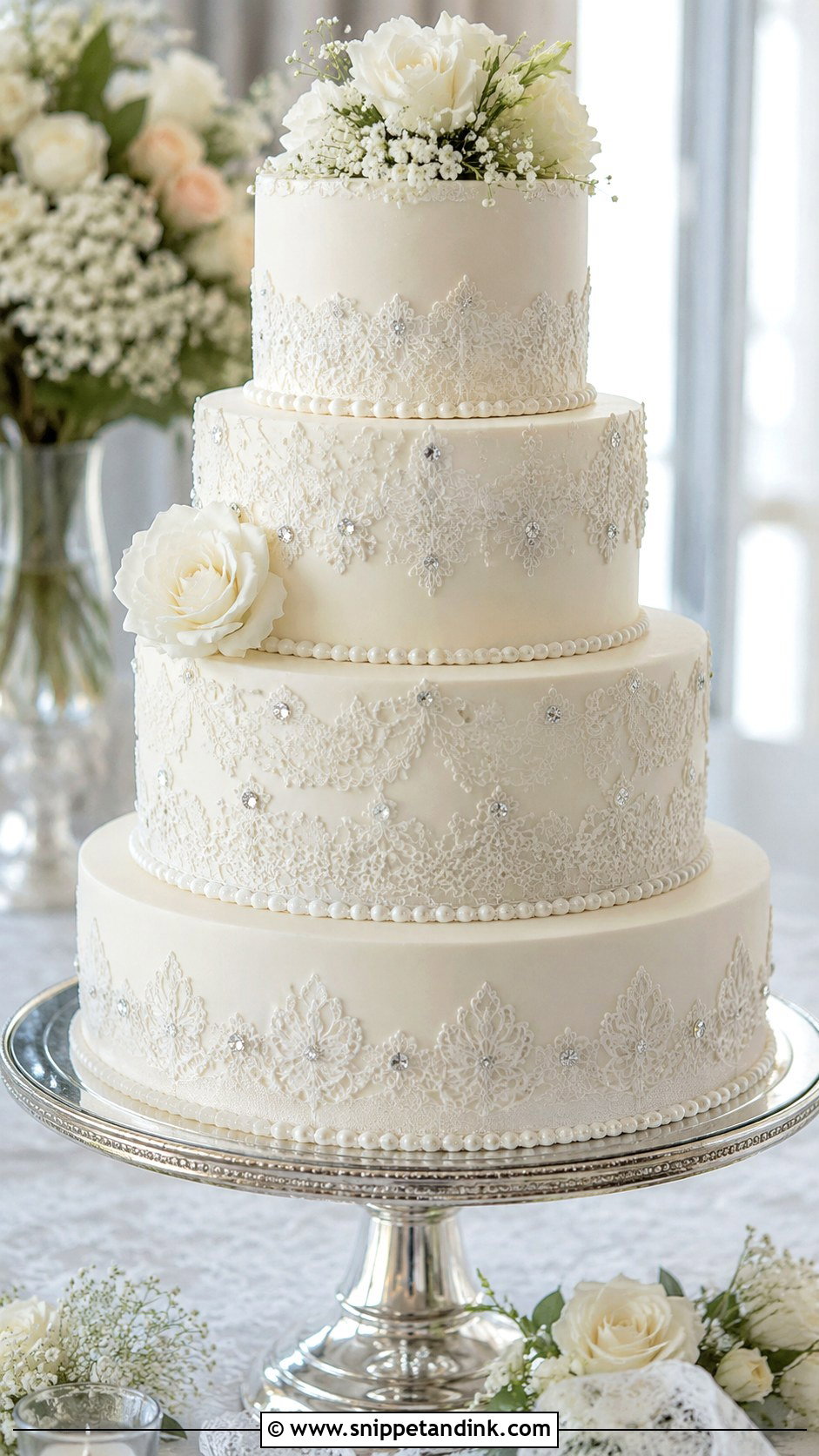
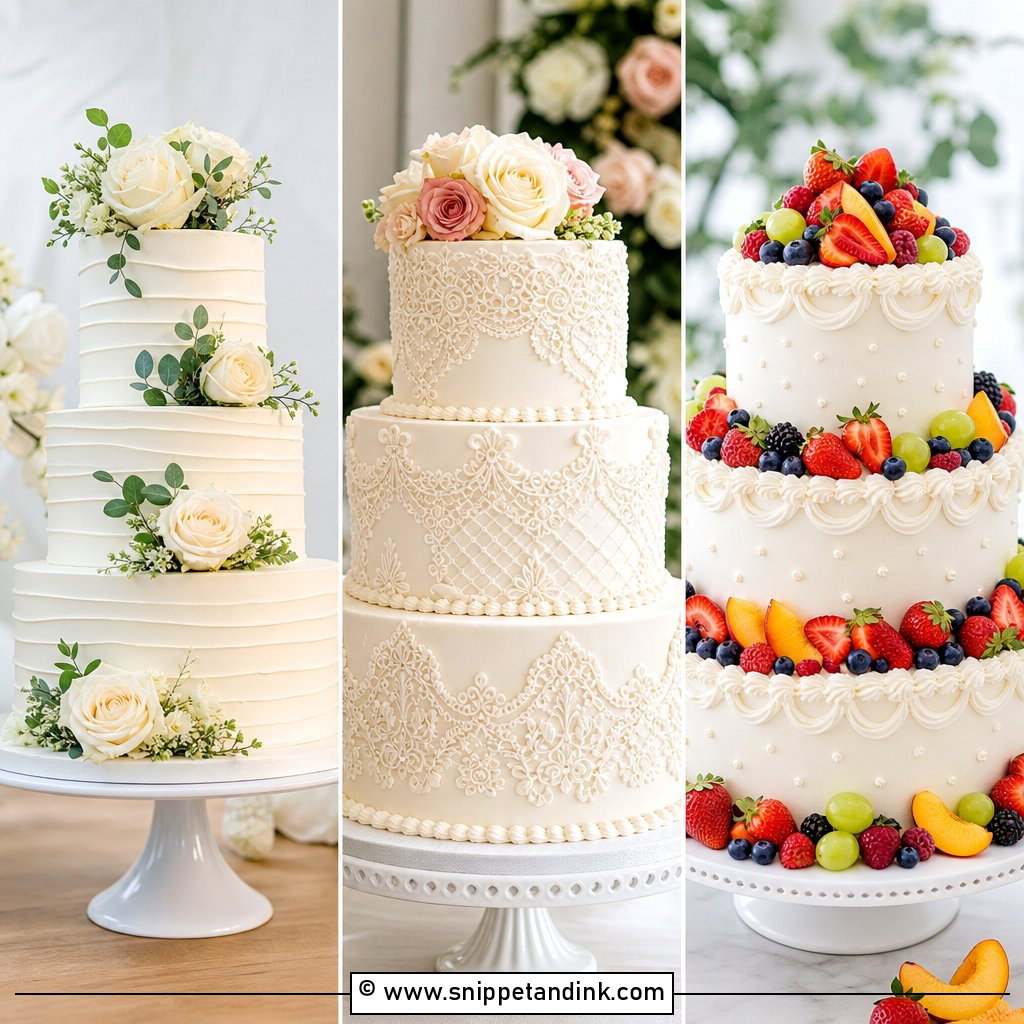
Lace piping or fondant lace gives tiers a fabric texture that sparkle can sit inside. I often place tiny sugar diamonds or pearls exactly where the lace pattern has a flower or knot, so the shine looks woven in rather than scattered on. White-on-white lace is the classic version; ivory lace with silver crystals feels warmer. One crystal brooch or a single diamond band is enough to highlight the pattern. If you bring a photo of your gown’s lace, I can often echo it.
18. Tall Diamond Wedding Cake
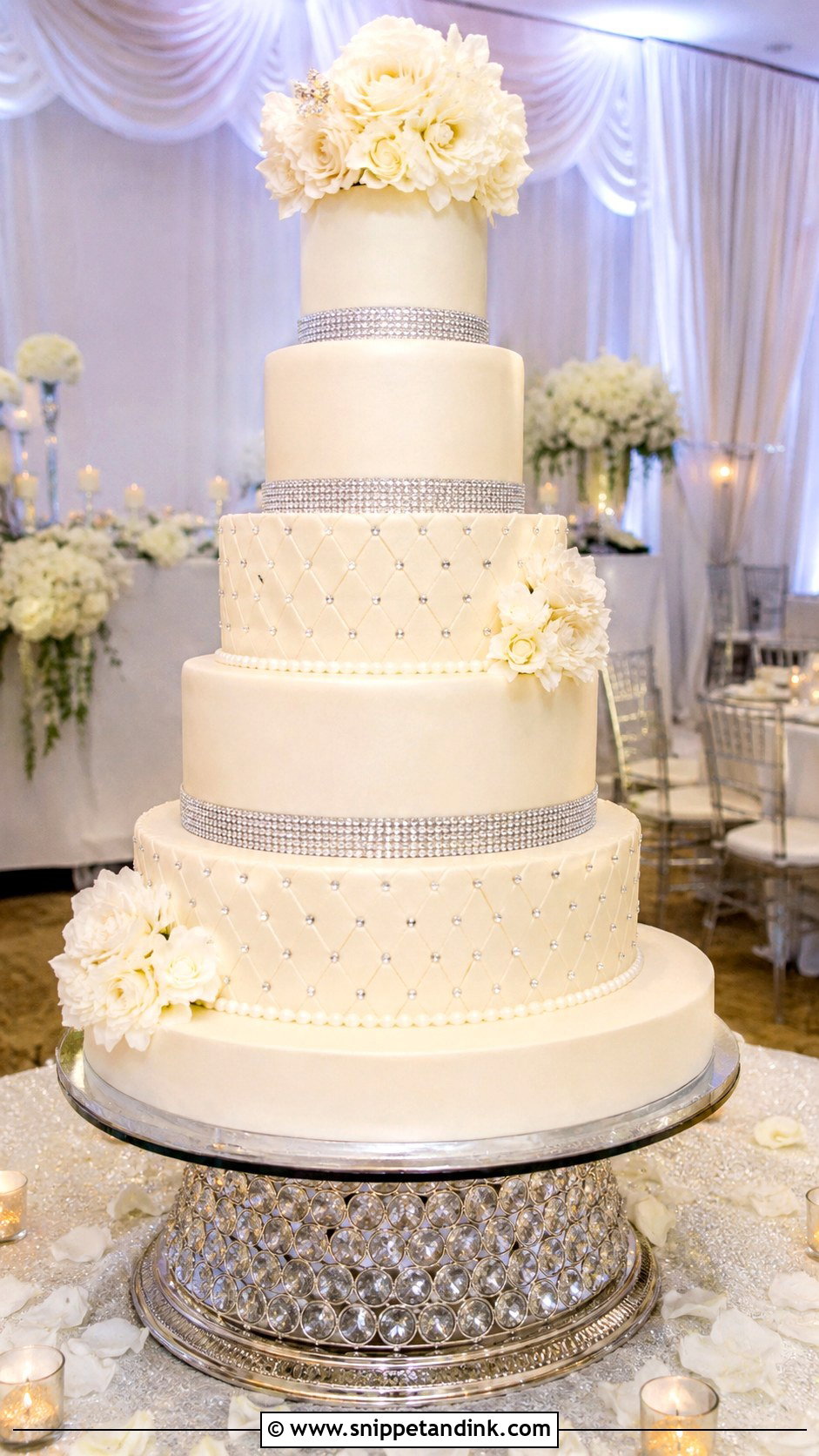
A tall diamond wedding cake gets its drama from height, so every extra tier needs internal support: dowels in each tier and a central rod for anything over four tiers. Five or six tiers give room for crystal bands, quilting, smooth tiers and flowers, but I repeat the sparkle in a pattern, like trim on every other tier or one crystal-covered focal tier. A raised stand makes the cake part of the room. Not every tier has to be cake; dummy tiers can add height without adding servings you don’t need.
19. Square Diamond Wedding Cake
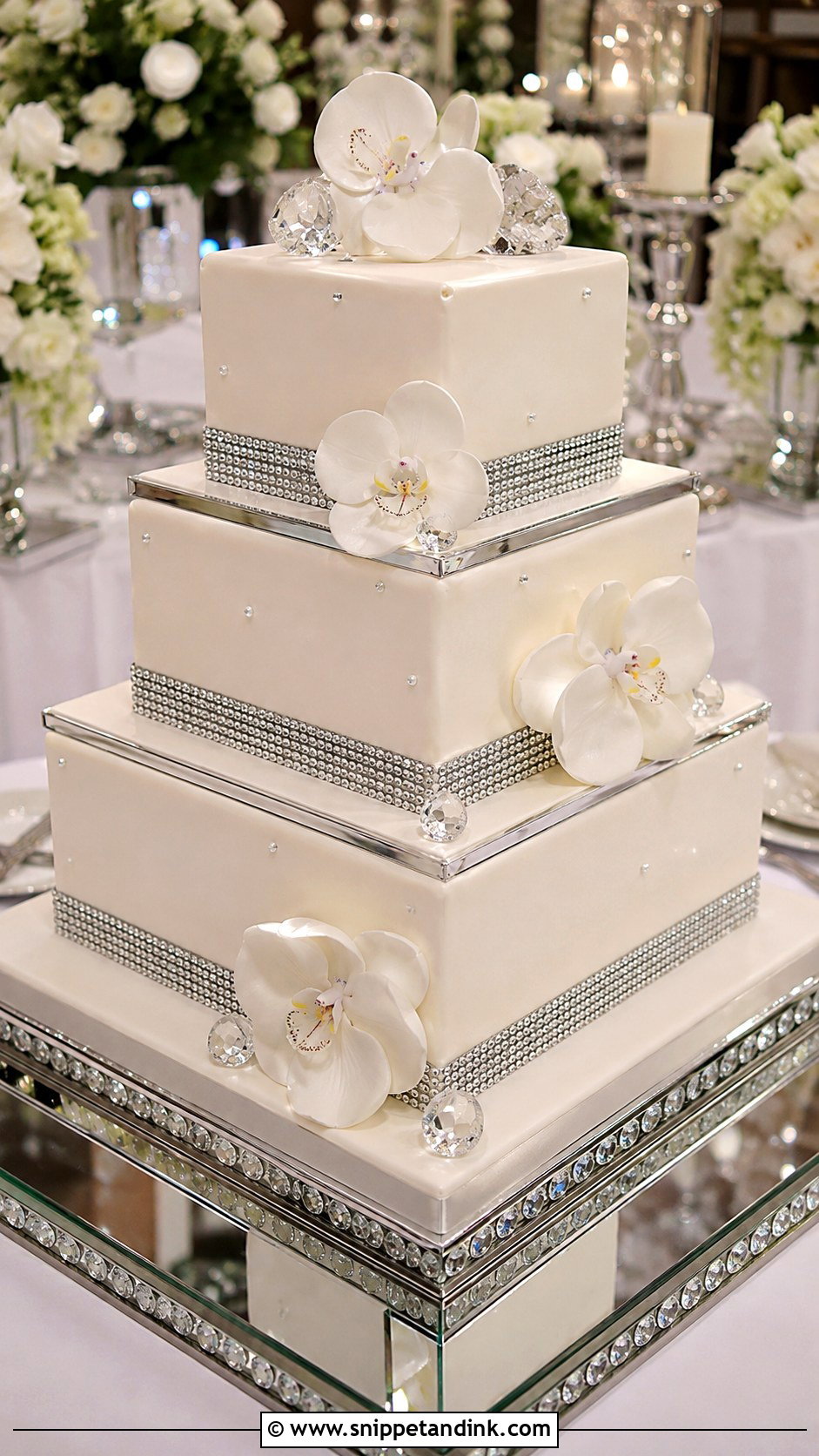
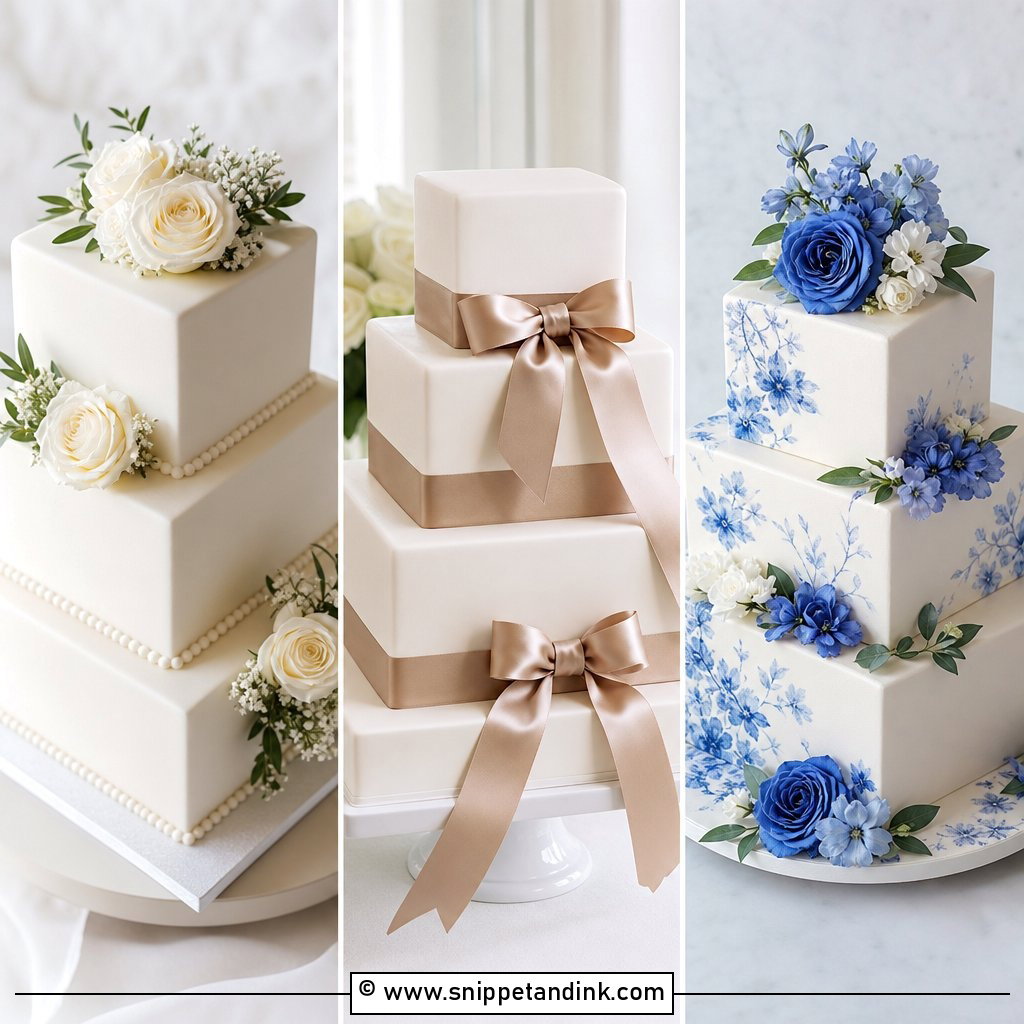
Square tiers make every edge visible, so crystal bands, metallic borders and quilting look extra precise on them. They’re also harder to finish sharply; I need clean corners in the icing, which is easier in fondant than buttercream. Stack them evenly for a formal look or rotate the tiers slightly for something more contemporary. Clear gems along the edges frame the shape. White icing, silver accents and simple flowers keep it balanced.


20. Diamond Monogram Wedding Cake
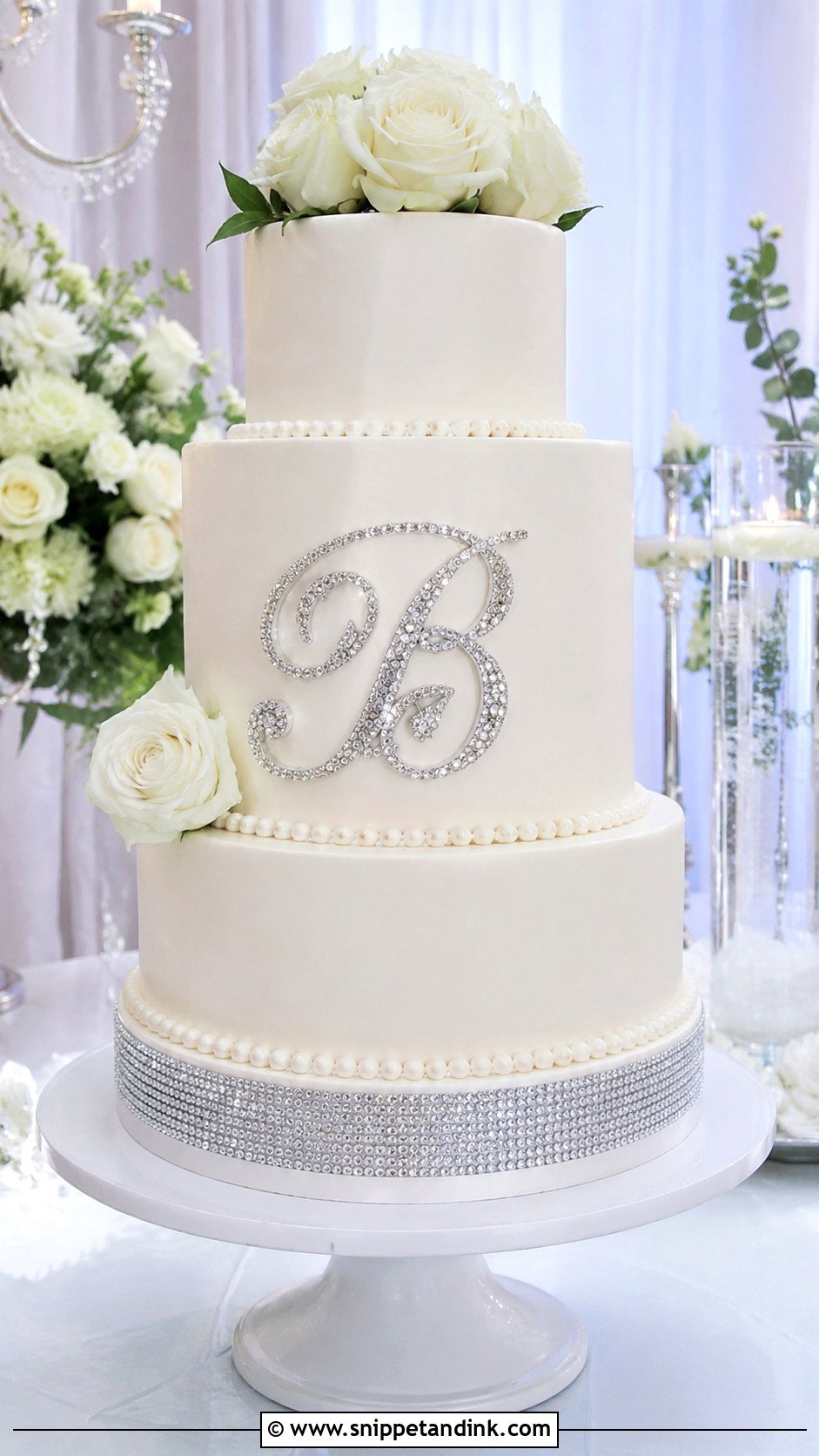
A monogram makes a sparkly cake personal. It can sit on top, on the front tier or inside a crystal brooch frame. I keep the tiers smooth and white so the initials read clearly from a distance, and add pearl borders, rhinestone ribbon or small sugar gems at the base. If the monogram is a metal piece, it needs a barrier behind it just like rhinestones. Keep everything else simple so the initials stay the focus.
21. Diamond Waterfall Wedding Cake
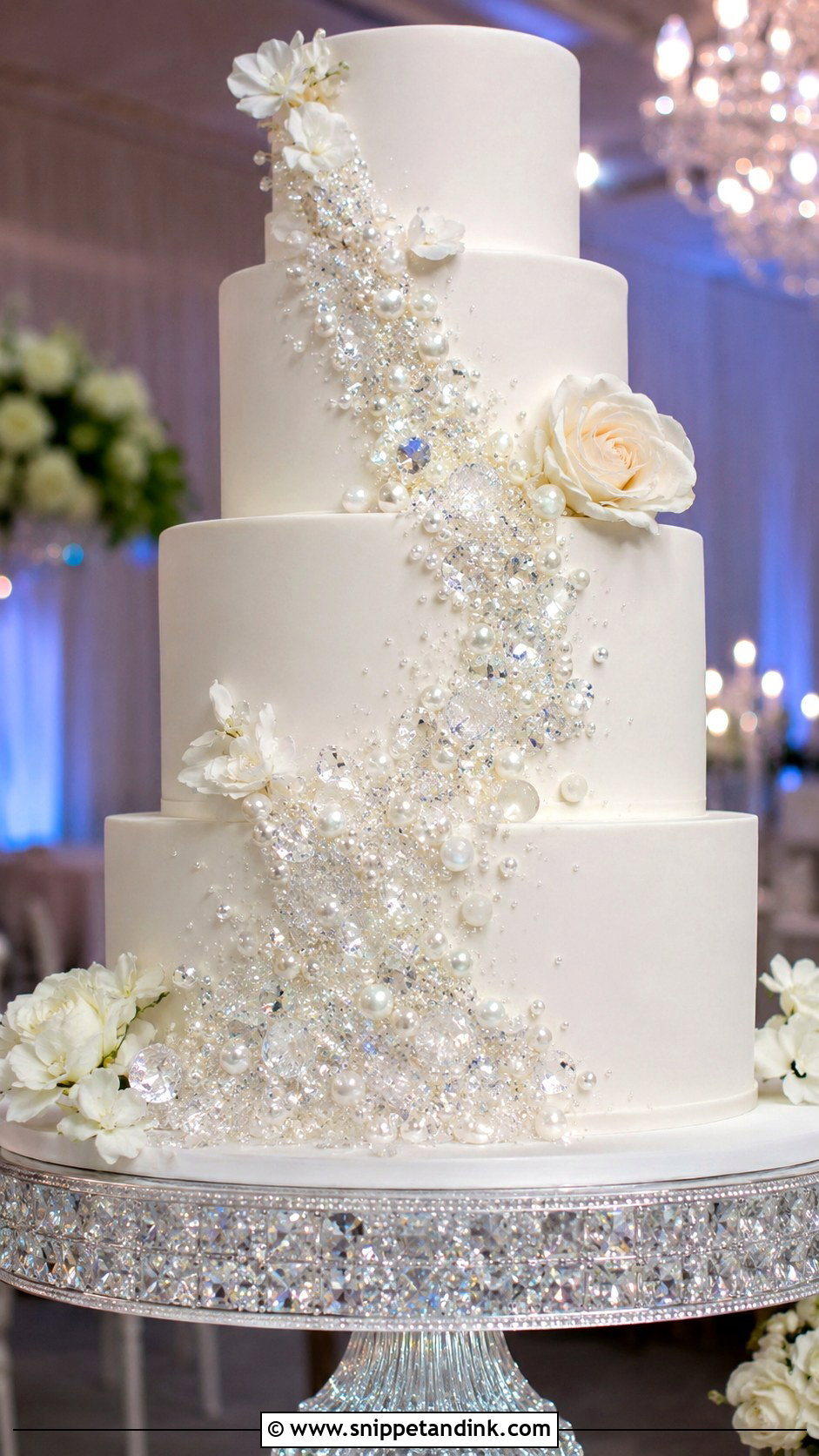
In a waterfall design, crystals travel down the tiers in a diagonal, a curve or a straight vertical cascade. I map the path with a toothpick before placing anything, because once gems are pressed into icing they leave marks if moved. Clear sugar gems, isomalt crystals, pearls and tiny silver accents all mix well. Smooth icing is essential for the cascade to look intentional. Taller cakes give the waterfall room to travel.
22. Rose Gold Diamond Wedding Cake
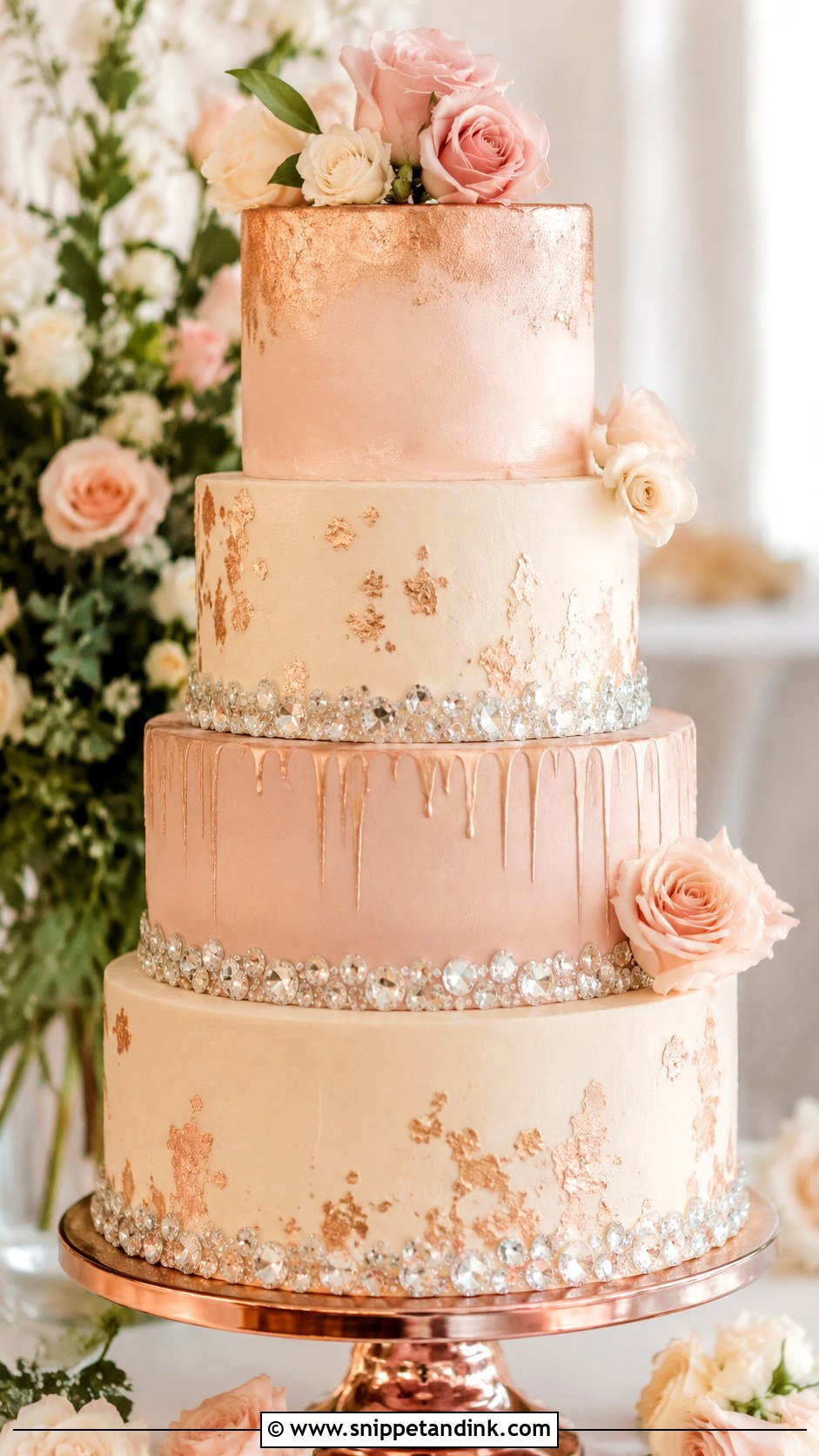
Rose gold softens metallic shine, which is why it pairs so easily with blush, ivory, white and champagne icing. I mix rose gold from gold and pink lustre and brush it on, or use rose gold leaf for a solid band. Clear diamonds are important here; without them the metallic can look flat. A blush flower cascade or sugar roses make it softer still. It suits modern romantic decor without feeling harsh.
23. Diamond Bow Wedding Cake
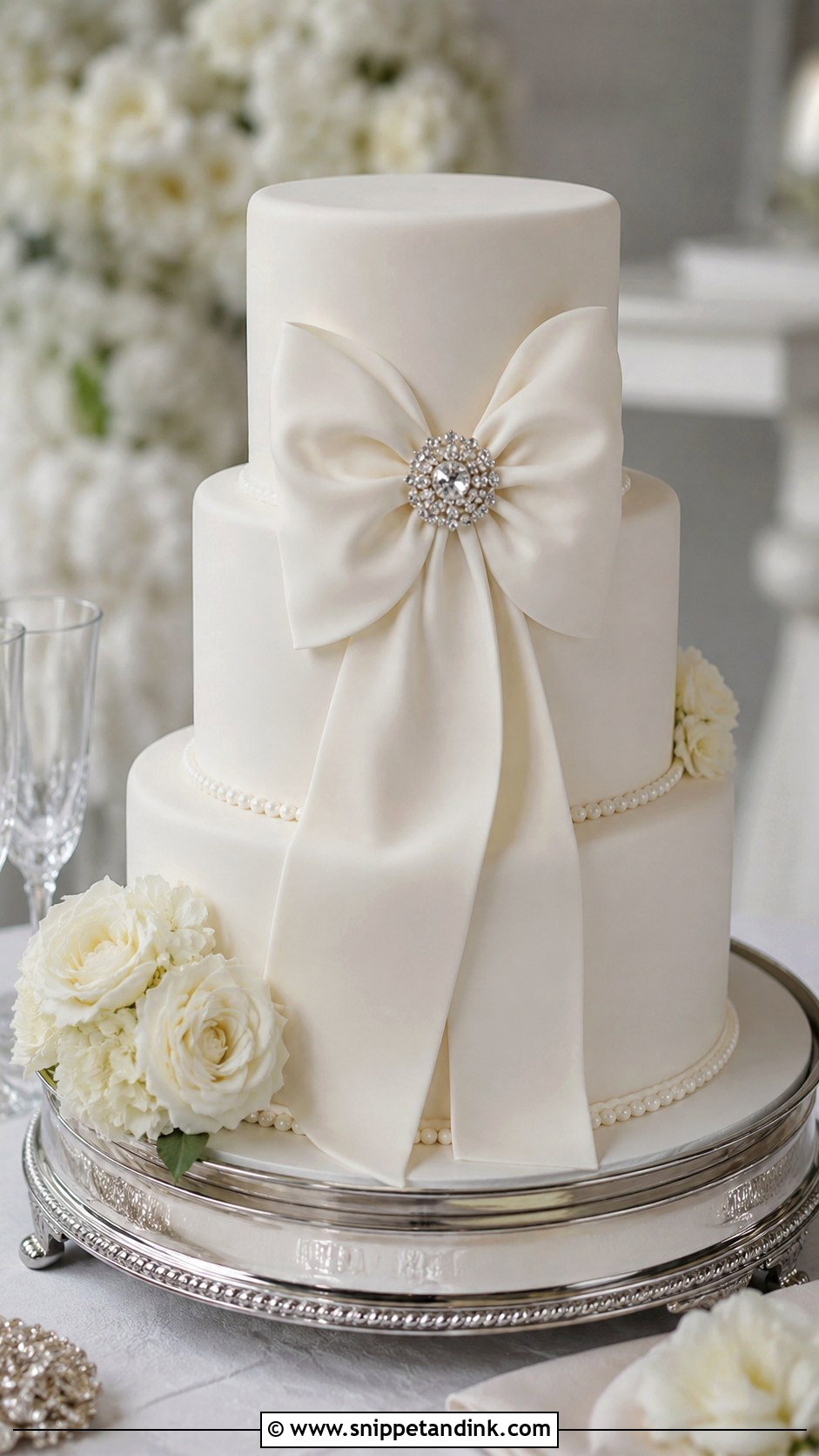
A bow turns a tier into a wrapped gift. I make it from fondant mixed with a little gum paste so it holds its loops, and I make it a few days ahead so it dries firm. A crystal brooch at the centre adds the bling. Smooth square or round tiers with clean edges show it best. White, ivory, silver or blush keep the bow elegant; strong colors make it look like a birthday cake.
24. Diamond Buttercream Wedding Cake
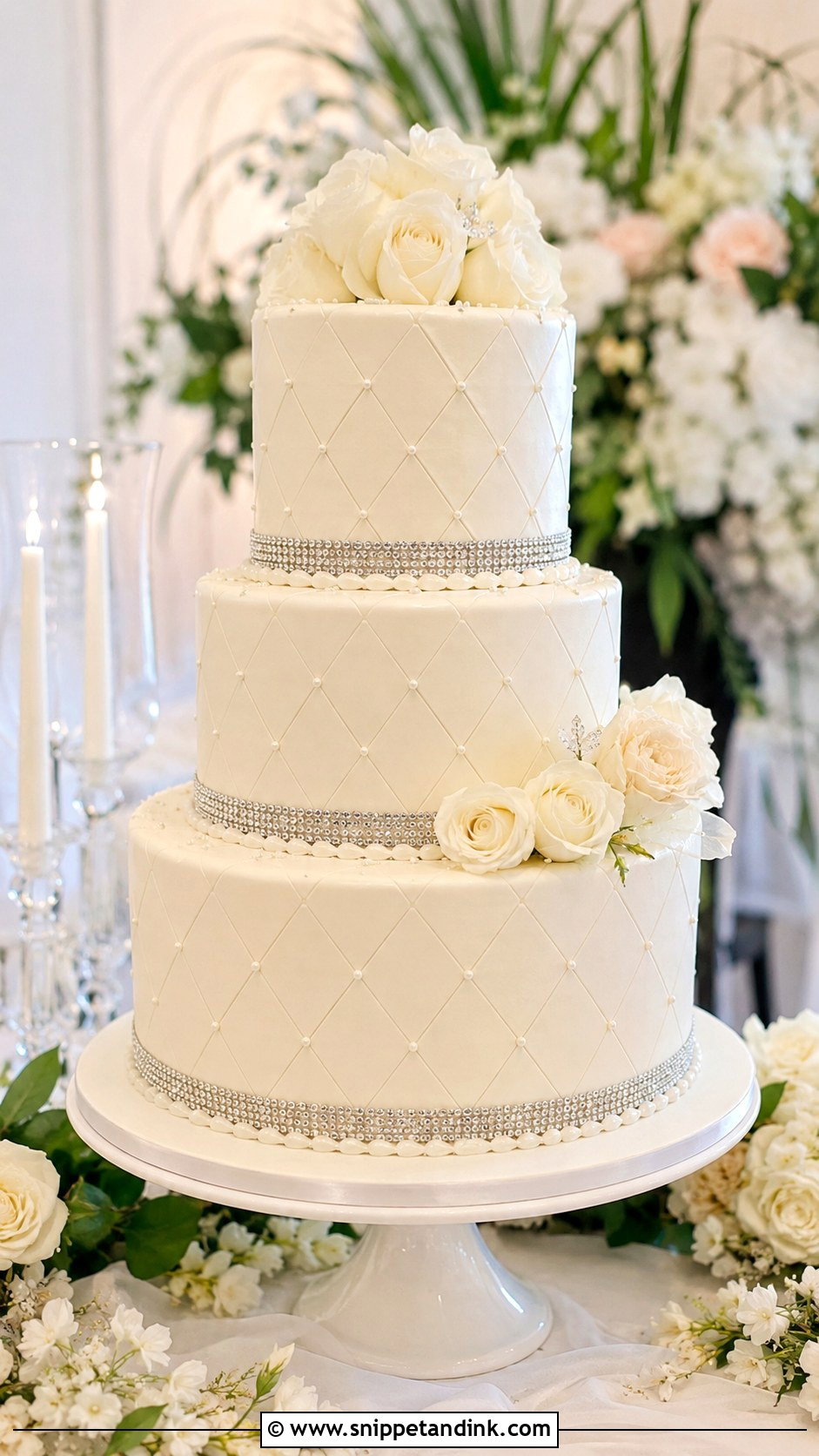
Buttercream gives a softer, more relaxed finish than fondant, and it can still take crystal bands, edible shimmer, pearl borders and sugar gems. The catch is temperature. Buttercream softens in a warm room, and heavy gems can slide or sink, so I keep embellishments light and add them as close to display time as possible. Fresh flowers, a jeweled topper or one sparkling tier keep it balanced. It’s the most approachable cake here, and many guests prefer how it tastes.




25. Luxury Diamond Wedding Cake
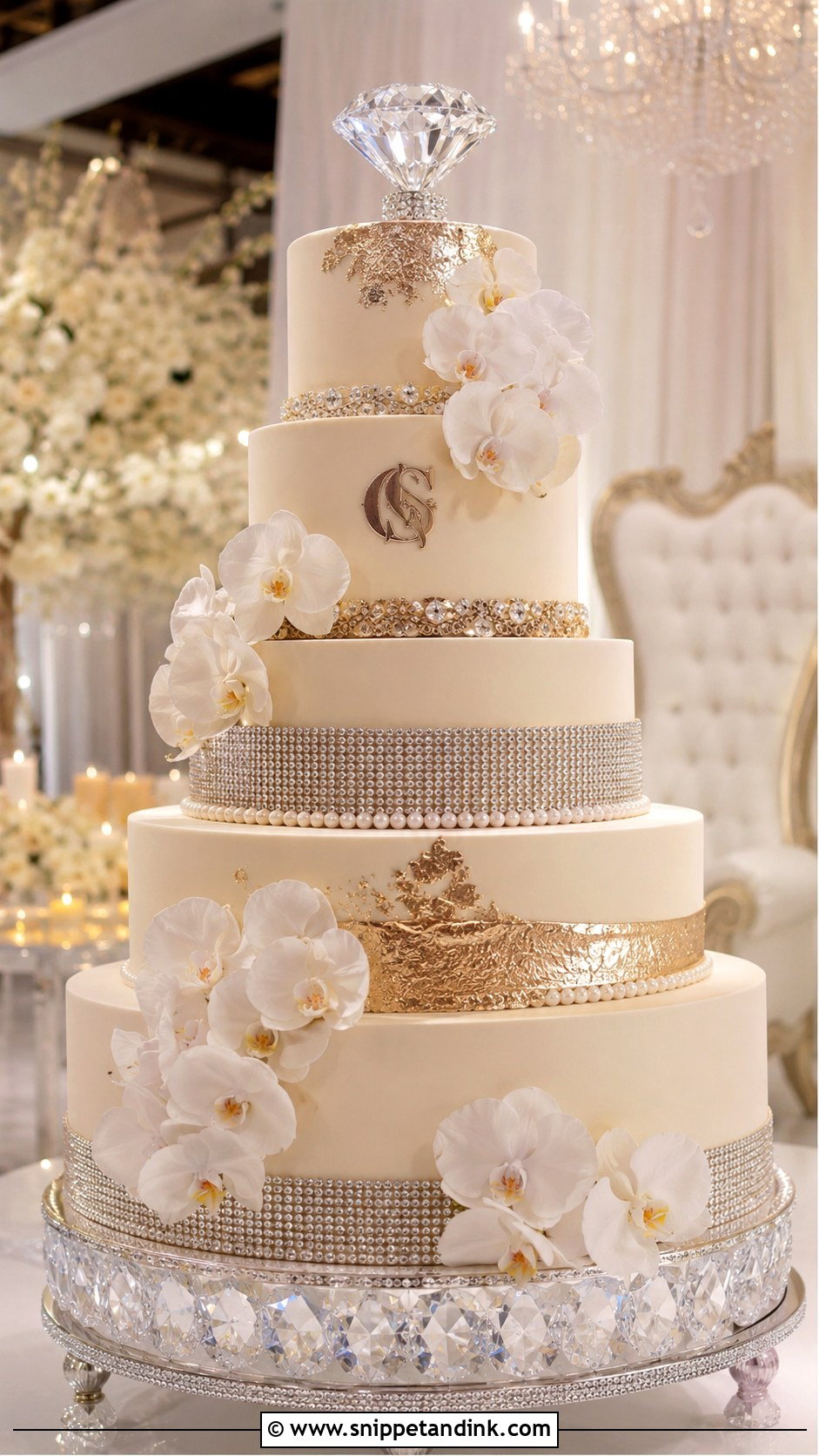
A truly luxurious cake is about restraint more than quantity. Height, sparkle, texture and flowers all come together, but within one color story: white and silver, ivory and gold, or blush and rose gold. Mixed metals and too many colors look cluttered. I plan each tier so it adds one thing, a band, a quilted surface, a cascade, and leave space between. Clean lines and careful spacing are what make it look expensive.
Humidity, Delivery Vans and Sugar Gems That Go Cloudy
Isomalt is the material behind most clear sugar diamonds, and it draws moisture from the air. In a humid room it turns sticky, then cloudy, and in a really muggy marquee the gems can start to weep. I make crystals in advance, store them airtight with a silica gel sachet, and place them at the venue rather than at the bakery when the weather is damp.
Heavy embellishment also changes delivery. A cake carrying crystal bands and a metal topper travels with the topper boxed separately, and anything that could shift is added on site. Moving a cake from a cold van into a warm room can make fondant sweat; tiny beads of moisture form and can dull shimmer and make lustre streak. I leave it to settle before touching it, and never wipe it.
Where the cake should stand
- Out of direct sun, which softens buttercream and fades pale colors.
- Away from heaters, uplights placed right next to the table, and candles placed under tiers.
- On a level, sturdy table; tall bling cakes are heavier than they look.
- Somewhere with space behind it, so whoever removes bands and toppers can reach without leaning on the cake.
Sparkle That Still Lets the Cake Be Cut and Served
The best sparkly cakes use diamonds, crystals, pearls and metallics to support the rest of the wedding rather than compete with it. A single well-placed crystal band can look as good as a whole sequin tier. Before you sign off on a design, ask your baker which pieces are edible, which come off before cutting, and who removes them on the day. Getting those answers early means the cake looks right on the table and is safe on every plate.
You'll Like These Ideas:









Leave a Reply