
When a couple asks me for sparkle, the first question I ask back is where it should land. Diamond wedding cakes work when the shine sits in one or two deliberate places, on a quilted tier, inside a geode, along a single band, and fall flat when gems are scattered everywhere. Underneath, the cake still has to hold up: fondant or buttercream, the room temperature, how the crystals are made. Below are 30 designs, from quilted fondant to black tiers and cupcake towers, with notes on how each one is built and where it can go wrong.

Which Sparkle You Can Eat, and Which Comes Off First
Not everything that glitters on a wedding cake is food. Before I sketch a sparkle design, I go through each element with the couple so nobody at the reception ends up biting into a rhinestone.
- Sugar gems, isomalt crystals and rock candy: edible, but very hard, so they’re usually removed from slices served to children.
- Glitter: only products labeled edible are food. Ones marked non-toxic or for decoration only are not meant to be eaten.
- Rhinestone mesh ribbon, diamanté bands and decorative ring toppers: never edible, always removed before cutting.
- Silver dragées, some lustre dusts and metallic paints: often sold for decoration only, so check each one.
- Fresh flowers: pesticide-free, with stems wrapped or placed in picks.
Then tell whoever is cutting the cake. Caterers cut fast, and if they don’t know a crystal band is wrapped round the middle tier, it ends up on a plate. I leave a short written note with the cake listing what must come off.
1. Diamond Quilted Wedding Cake

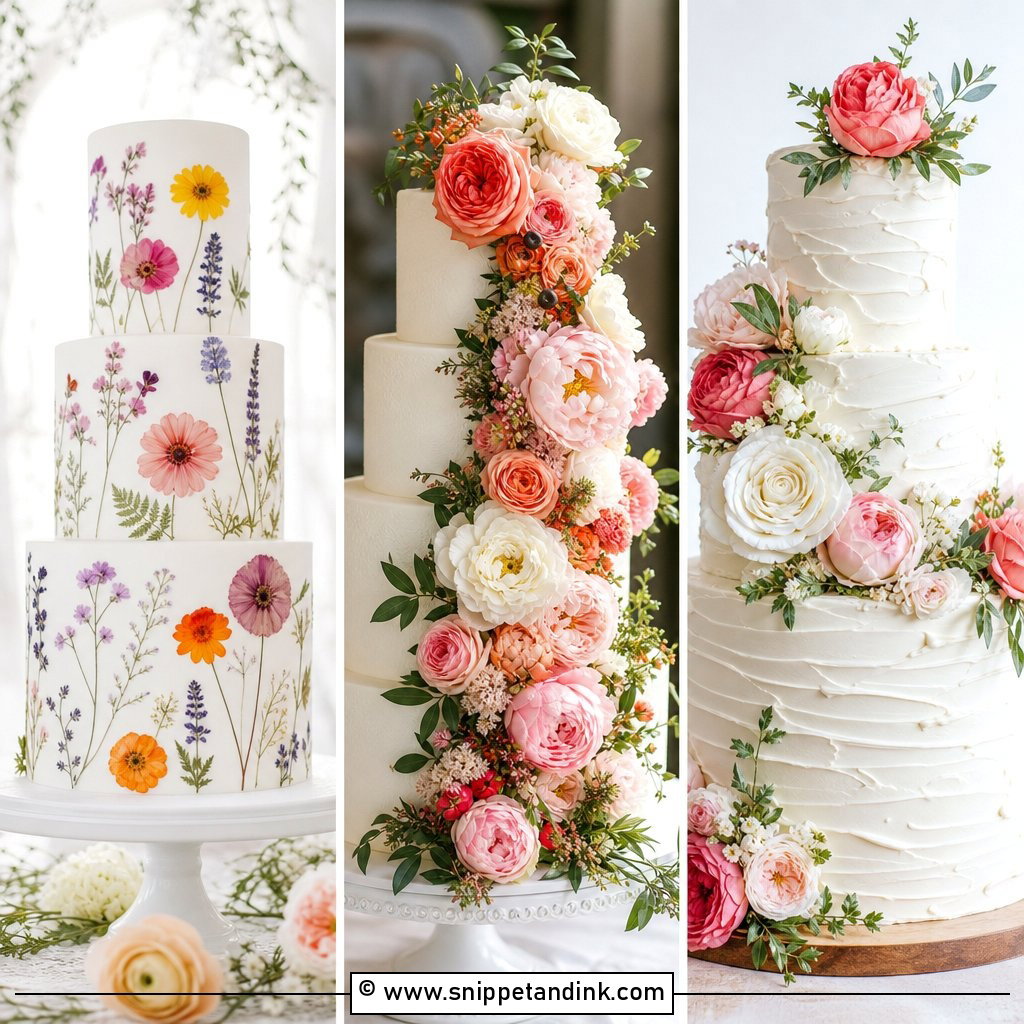
Quilting is the most classic way to bring sparkle into a cake without busy decoration. I press the pattern into fondant with a ruler or impression mat while it’s still soft, so each diamond puffs slightly like padded satin, then set a small sugar pearl or gem at every crossing point. The lines only read in soft light if the color is pale: ivory, white, champagne or blush. I keep the top tier smooth with a simple floral topper so the quilting has somewhere to rest the eye.
2. Diamond Ring Wedding Cake

A diamond ring wedding cake needs restraint, or it starts to look like a novelty cake. The ring itself is usually a sugar or isomalt topper, sometimes a decorative non-edible one, with a metallic band and a few small gems. Round tiers echo the ring’s shape. Ivory buttercream or pearlized fondant keeps it bridal, and soft roses or orchids at the base pull it away from a party-store look. It also translates well to an engagement party cake.
3. Diamond Geode Wedding Cake

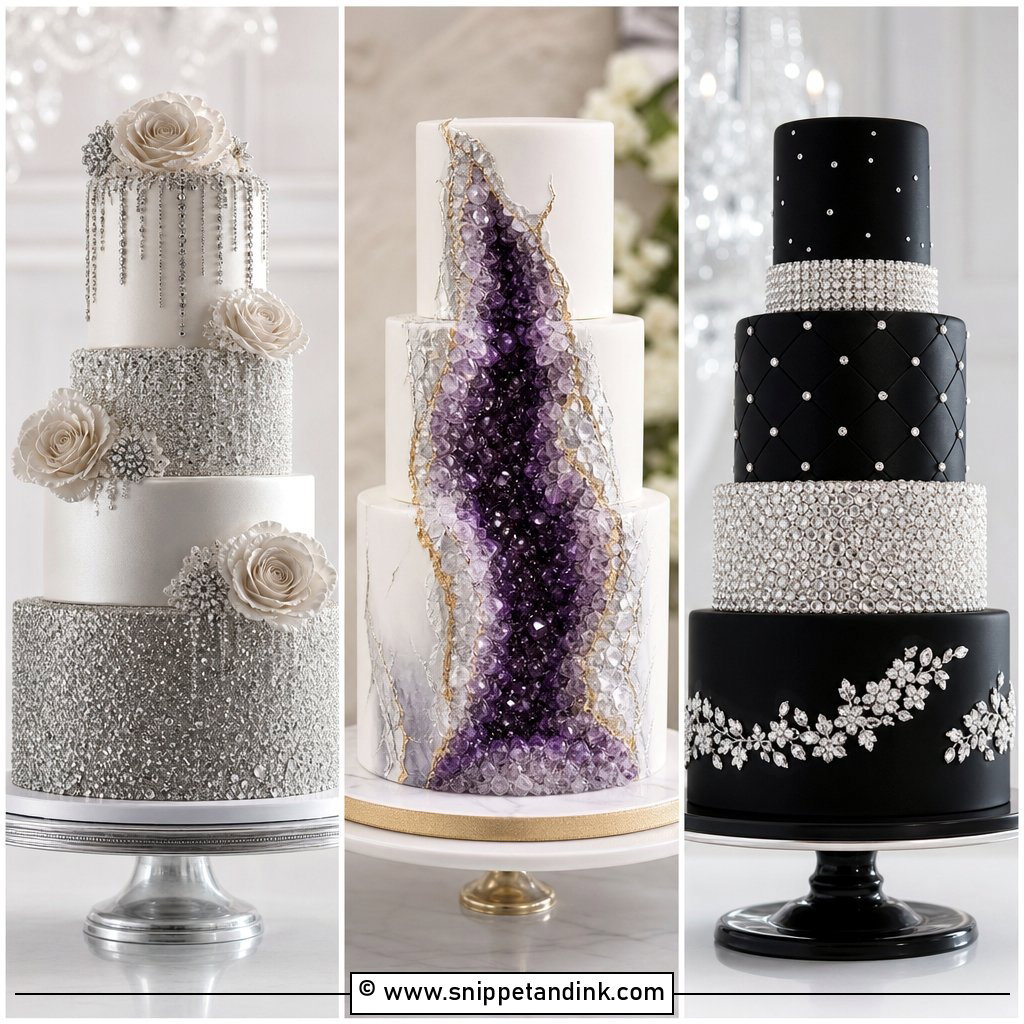
A geode tier is carved, not just decorated. I cut a cavity into the side of a chilled tier, line it with buttercream, then pack it with rock candy or isomalt crystals in clear, white, blush or pale blue, deepening toward the center. Edible gold or silver paint along the edge makes it look like split stone. Keep the rest of the cake smooth so the opening stands out. Be aware that these crystals are hard sugar and react badly to humidity, which I cover further down.
4. Diamond Drip Wedding Cake

A drip on a formal cake should look controlled, not homemade. I use white chocolate ganache tinted pearl or champagne, test its temperature on the side of a cold cake before committing, and keep the drips even in length. Too warm and it runs to the board; too cool and it sits in blobs. Small edible gems placed along the drip line catch light, and a floral cluster at the top or base finishes it for a modern reception.
5. Diamond Pearl Wedding Cake

Pearls soften what diamonds sharpen. I pipe or place pearl borders around each round tier, add scattered edible pearls, and slip a few sugar diamonds between floral details. White or ivory buttercream, fondant or a satin-finish fondant all suit it. Sugar pearls in heavy rows can slide on a soft buttercream in a warm room, so on buttercream I keep the rows lighter. White roses and silver trim make it classic; blush flowers and champagne accents make it warmer.
6. Diamond Fondant Wedding Cake

Fondant gives the crispest surface for crystals, embossing and metallic details, which is why I choose it for intricate sparkle work. A white cake with an embossed diamond pattern on the middle tier, a gem border and a satin ribbon at each base looks tailored. Fondant also holds its shape better than soft frosting in a warm room. The trade-off is taste: many guests peel it off, so I keep it thin over a good buttercream layer underneath.
7. Diamond Buttercream Wedding Cake

Buttercream suits couples who want sparkle without fondant’s firmness. I smooth it for a modern finish or texture it lightly for a handmade one, then add diamond details as borders, removable ribbon bands or small sugar gems around floral clusters. Gems need a well-chilled, crusted surface to grip; on soft buttercream they sink or slide. Ivory, vanilla or champagne-colored buttercream keeps it warm, and it adapts to rustic, garden or ballroom settings.
8. Diamond Lace Wedding Cake

Lace on a cake can echo the gown directly. I pipe it in royal icing, press edible lace sheets onto the tiers, or use molded fondant appliqués, depending on how fine the pattern needs to be. Diamonds look best tucked into the lace motif rather than scattered, so they read like beading. White on white is traditional; ivory lace with champagne shimmer feels vintage. Bring a photo of your dress lace and I’ll match the scale of the pattern to it.
9. Diamond Cascade Wedding Cake

A cascade puts sparkle in motion, flowing from the top tier to the base. I build it with edible diamonds, sugar pearls, clear isomalt pieces and small flowers, curving it like a waterfall instead of covering every inch. Smooth white fondant or buttercream gives it a clean background. Three or four tiers give the cascade room to travel. Since it’s designed to be seen from the front, it suits a cake placed against a wall or at the reception entrance.
10. Diamond Floral Wedding Cake

Flowers keep sparkle romantic. White roses, peonies, orchids, ranunculus and hydrangeas all pair well with crystal accents placed near flower centers, along borders or between petal clusters. Any fresh flowers on the cake have to be pesticide-free, and stems are wrapped or placed in picks so they never touch the sponge. Sugar flowers avoid that issue completely but take longer to make. An ivory base is classic; blush or champagne lets the flowers stand out more.
11. Diamond Square Wedding Cake

Square tiers create sharp, architectural lines with flat sides that suit quilted fondant and geometric sparkle. Sharp fondant corners take time and skill, and they show every bump, so this is a design to give your baker enough lead time for. White and silver is the classic palette, with black and white or ivory and champagne as alternatives. Fresh flowers at one corner of each tier soften the geometry.
12. Diamond Hexagon Wedding Cake

Hexagon tiers echo the facets of a cut stone, so crystal accents feel built into the concept. Smooth fondant, sharp edges and metallic trim around each tier give the cleanest result. One geode panel or one diamond-patterned tier adds detail without crowding it. Clear sugar crystals, silver leaf or pearl highlights bring out the faceted effect. It works as a sculptural centerpiece at gallery venues and contemporary receptions.
13. Diamond Marble Wedding Cake

Marbled fondant already carries a lot of movement, so the diamonds should be minimal. I fold gray, ivory, blush or champagne colors into white fondant without fully kneading them, so the veins stay distinct, then roll it once. Overworked, it turns uniformly muddy. A thin metallic edge, a few crystals at the base or a sugar diamond topper is enough. It suits modern venues with clean tablescapes and neutral flowers.
14. Diamond Gold Wedding Cake

Gold works best in controlled amounts: thin bands, brushed texture, painted edges or delicate leaf. Clear edible diamonds against gold add sparkle without changing the color story. A white or ivory base keeps it bridal, and champagne buttercream gives a softer glow. Gold leaf sold for food use is pure enough to eat, but metallic paints and dusts vary, so ask which ones your baker uses and whether they’re edible. White orchids or sugar flowers with crystal centers finish it.
15. Diamond Silver Wedding Cake

Silver gives a cool, crisp look. Silver ribbon, edible metallic paint, pearlized fondant or small silver dragées go around the tiers, with clear sugar diamonds lining the base or highlighting a quilted pattern. Silver dragées are often sold as decoration only, so I treat them as something to pick off rather than eat. White flowers keep it fresh; dusty blue or lavender ones make it more romantic. Smooth frosting keeps the silver details clean for a ballroom or evening reception.
16. Diamond Black Wedding Cake

A black cake is the boldest choice here and needs a few practical decisions. Matte black fondant or deep charcoal buttercream takes a lot of coloring, which can stain mouths and taste bitter, so I start from a dark cocoa base to need less dye. The contrast makes every sparkle visible, so only a few gems are needed. Sharp edges, white orchids or roses and a simple stand keep it wedding-ready at a formal evening reception.
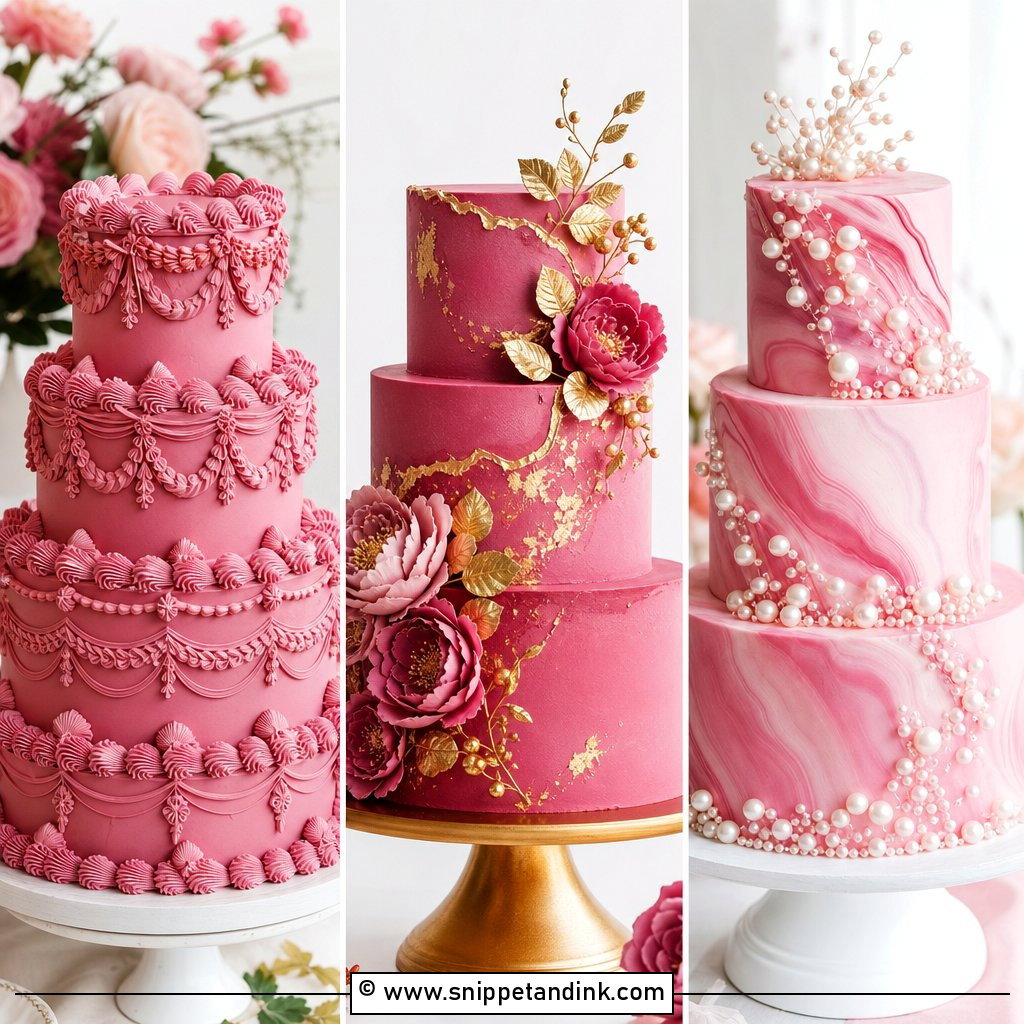
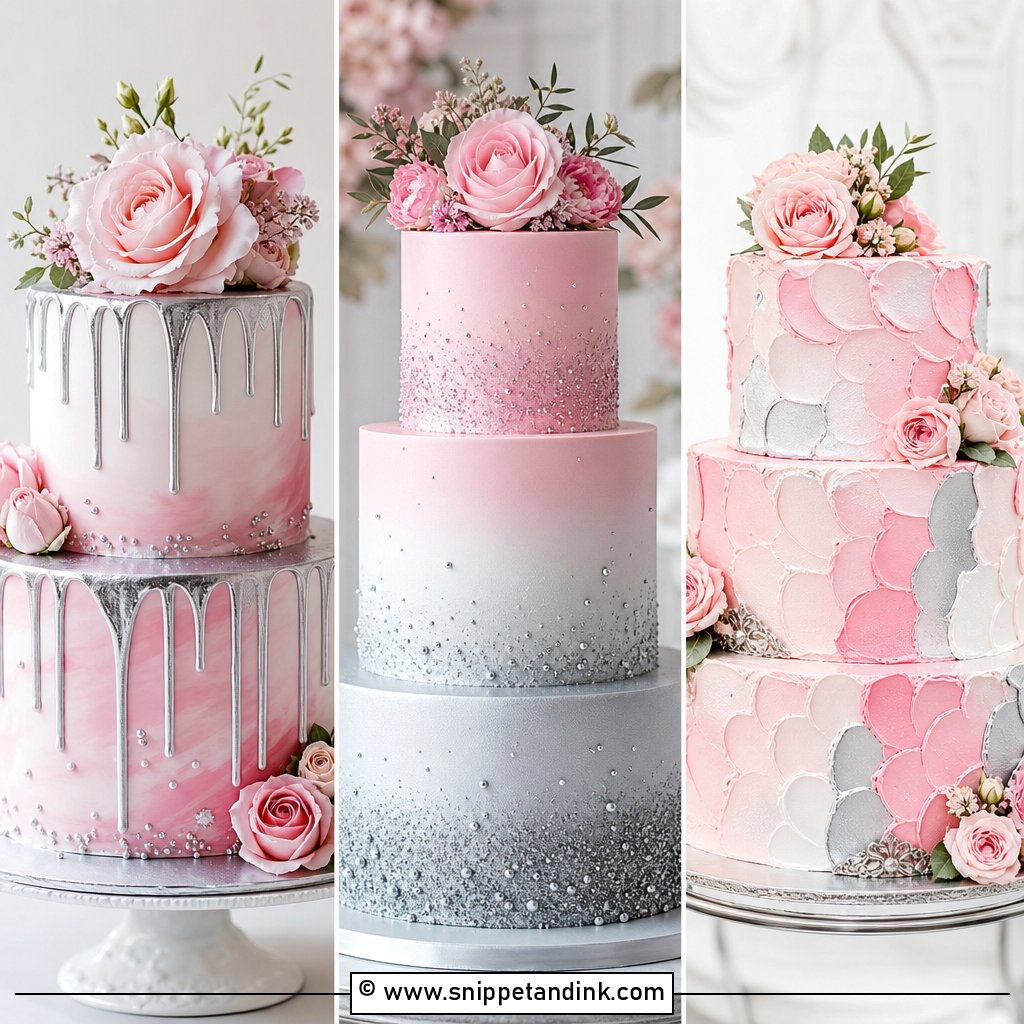
17. Diamond Blush Wedding Cake

Blush frosting gives warmth without being bright, and it flatters skin tones in photos standing next to the couple. I tint it lightly; pink deepens slightly as buttercream sits, so I aim a shade lighter than the final target. Roses, peonies, ranunculus and pearl details pair with it, and a white lace overlay, champagne trim or crystal band around one tier adds refinement. Keep diamond details light and spaced out.
18. Diamond Blue Wedding Cake

Blue already feels like a gemstone, so the decoration can stay simple. Pale, dusty or icy blue frosting with clear sugar diamonds and silver accents, a quilted middle tier or a pearl border is enough. Bright blues look artificial next to clear crystals; muted shades make them look more expensive. White flowers keep it bridal for coastal weddings or classic blue-and-white palettes.
19. Diamond Green Wedding Cake

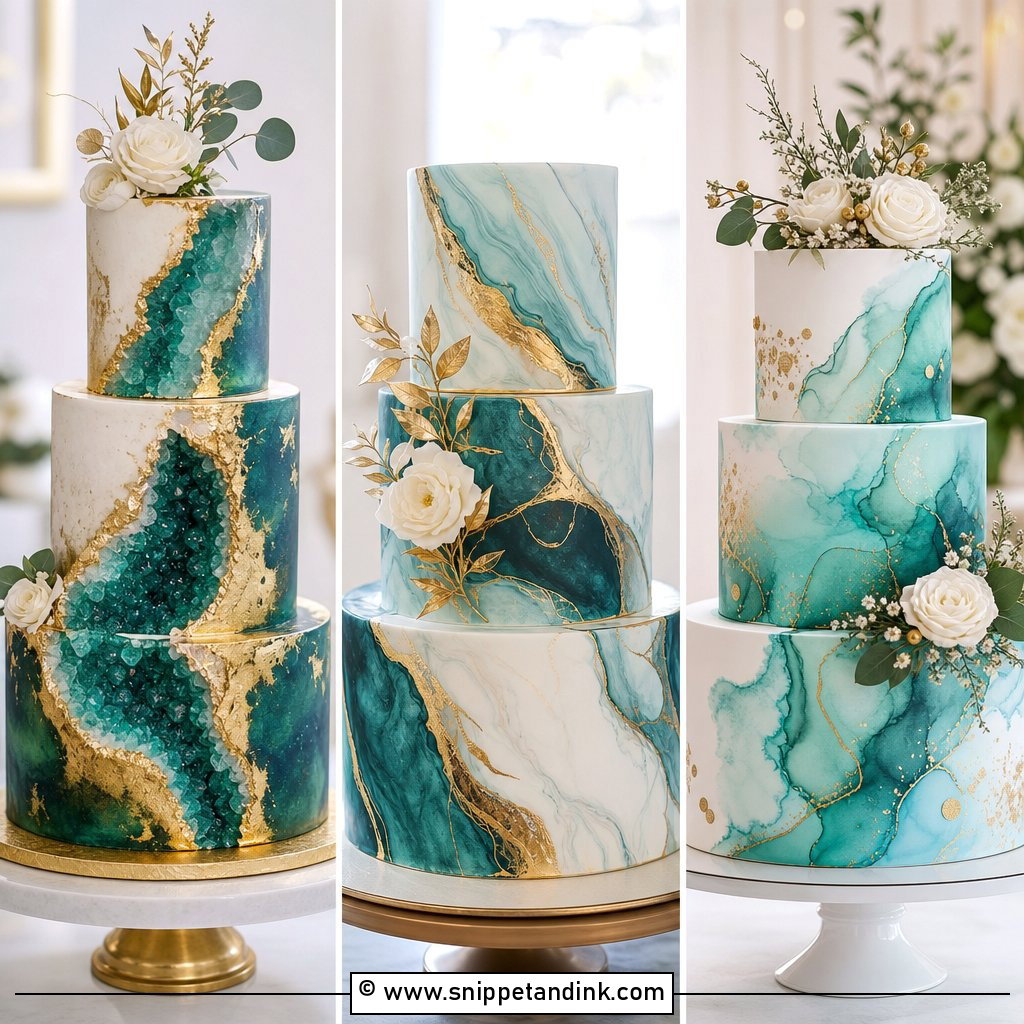
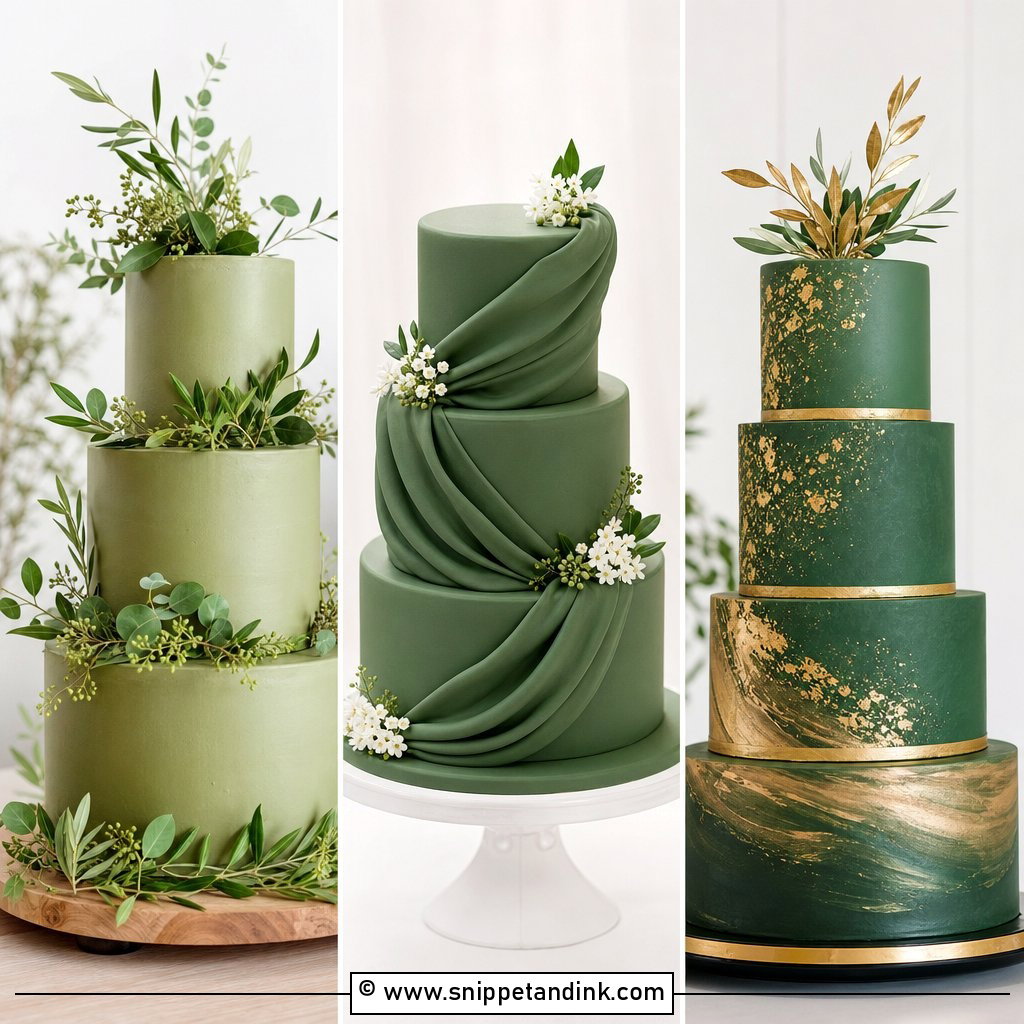
A diamond green wedding cake can lean botanical or regal. Smooth sage with white flowers and a few sugar crystals gives a modern garden look; deep emerald with gold trim and clear diamonds is more dramatic. Emerald takes a lot of coloring to reach, much like black, so a fondant covering is often the more reliable route for that shade. Green cakes look natural surrounded by greenery and white linens in daylight.
20. Diamond Purple Wedding Cake

Purple runs from soft lavender to deep plum, and each shade carries sparkle differently. Lavender with white flowers feels like a garden; plum with silver accents feels formal. Purple coloring can fade toward grey under strong light or sunlight, so I keep a purple cake out of windows and away from hot display lighting. Diamond details work as a border, a cascade or small highlights around piped flowers. It pairs well with lemon, almond or berry fillings.
21. Diamond Champagne Wedding Cake

Champagne-colored frosting has a soft golden-beige tone that sits between ivory and gold, so it works with clear gems, pearls and pale flowers without the starkness of white. Satin fondant, smooth buttercream or brushed metallic highlights all suit it. A crystal band around the center tier gives a jewelry-like finish, and ivory roses or sugar blossoms keep it romantic. Because the color is subtle, it fits most palettes.
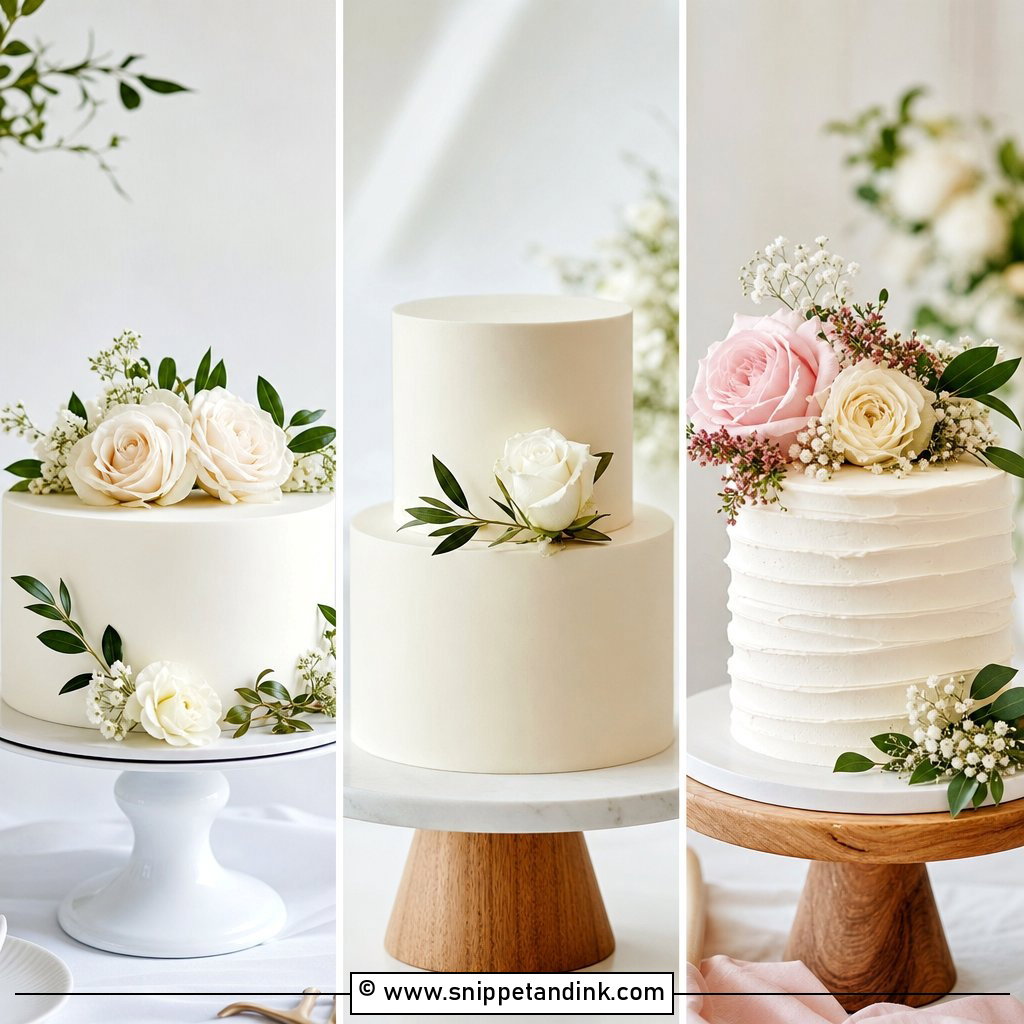
22. Diamond Minimalist Wedding Cake

Restraint is the whole design. Smooth white buttercream or fondant, sharp edges and one carefully placed diamond detail: a crystal topper, a thin gem border or a single sparkling tier. Plain space is what makes it look expensive, which also means every flaw in the finish shows, so the smoothing has to be excellent. One flower stem or a small cluster softens it without breaking the minimal mood.
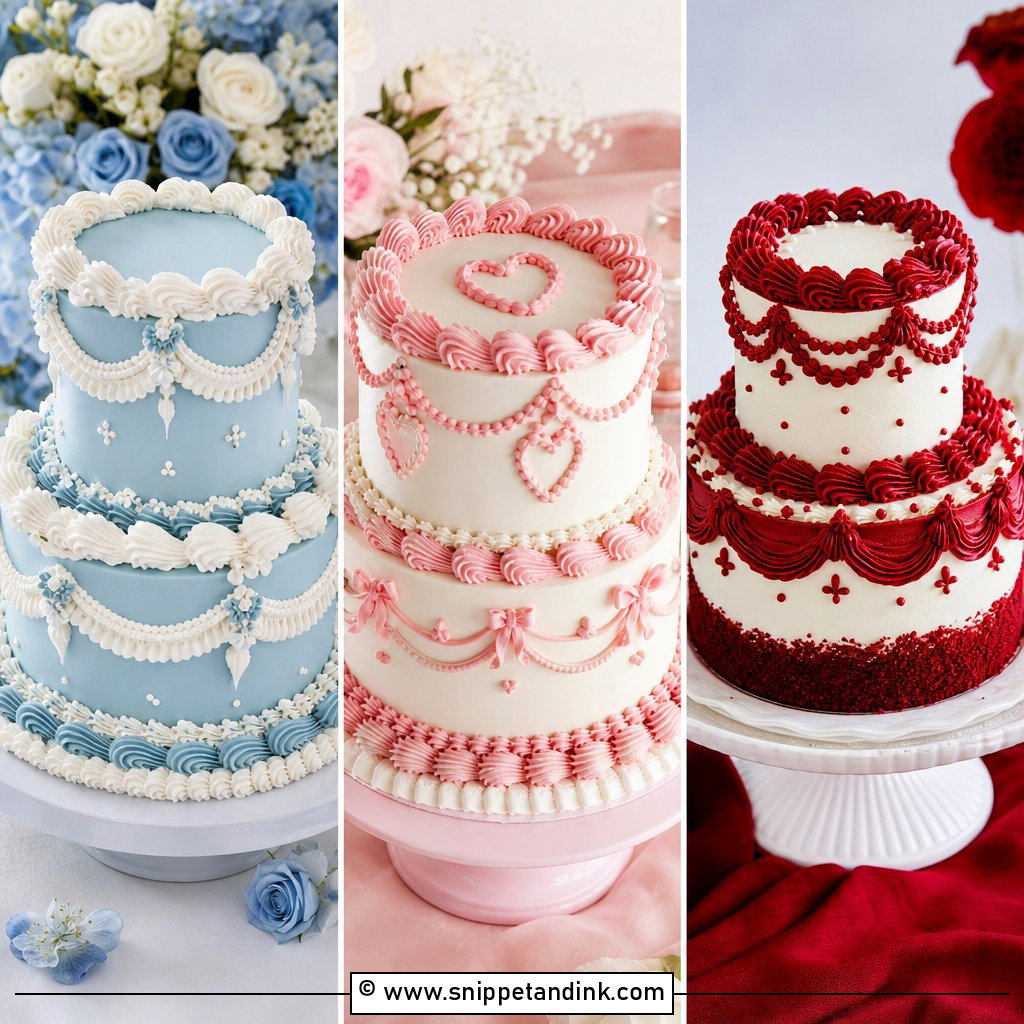
23. Diamond Vintage Wedding Cake

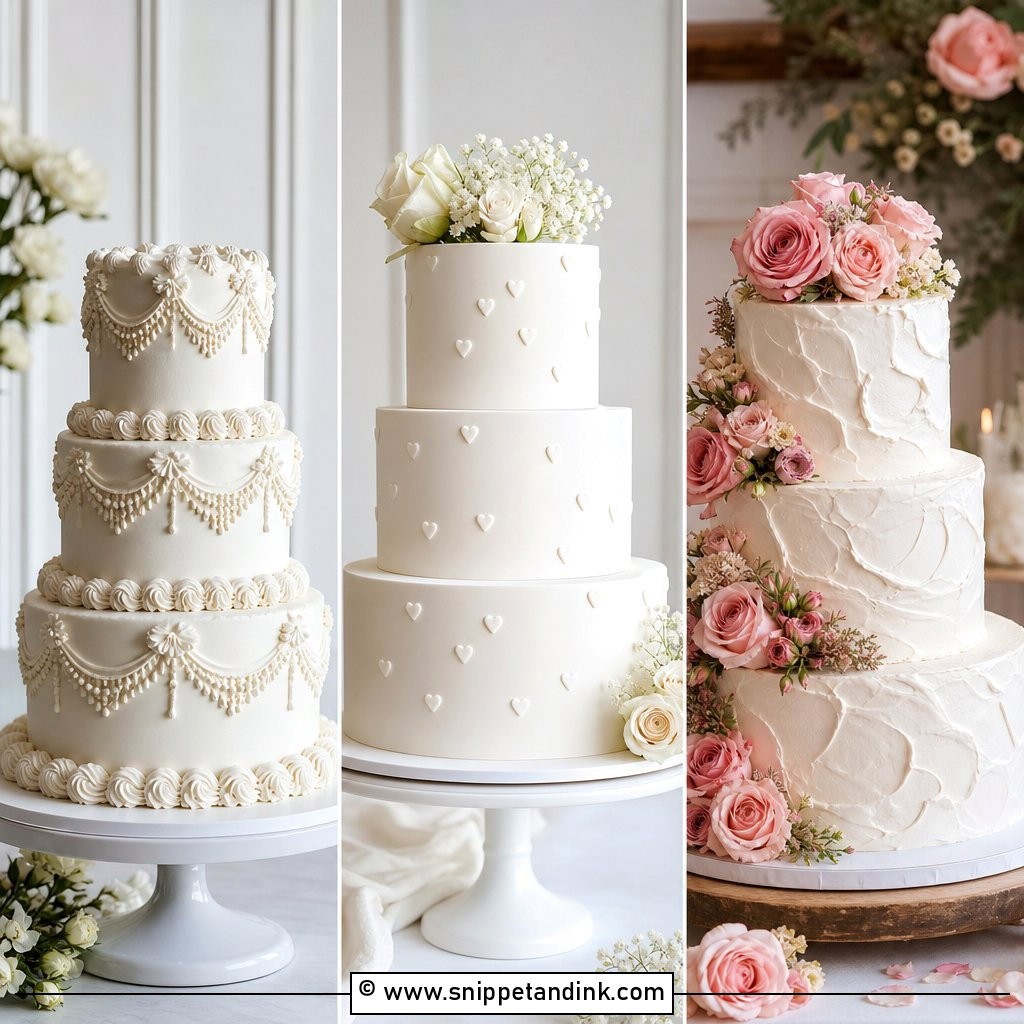
Vintage piping and sparkle meet in Lambeth-style borders, scallops, pearl rows and small crystals tucked between buttercream swags. That layered over-piping is slow, careful work, so it needs a baker who actually does Lambeth, not just someone who has seen it online. White, ivory, blush or pale blue frosting suits it. The diamonds should look like beading on a vintage gown, not random decoration.
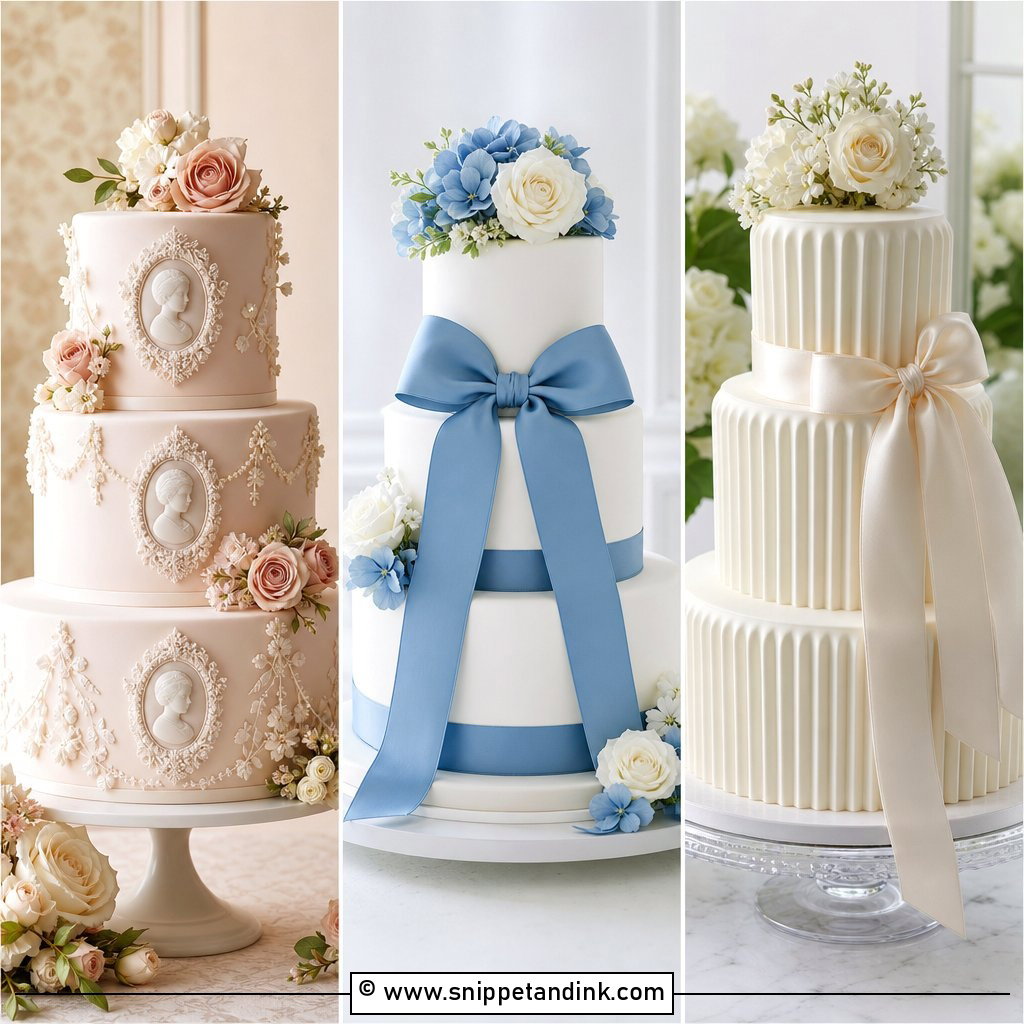
24. Diamond Tall Wedding Cake

Height draws the eye. Tall or double-barrel tiers give more space for quilting, crystal bands, cascades or smooth panels. A double-barrel tier is two cakes stacked with a support board and dowels between them, and tall cakes are usually stacked at the venue rather than driven fully assembled. Keep the decoration balanced across the tiers so it doesn’t look top-heavy, and place flowers at different levels to guide the eye upward in a grand venue.
25. Diamond Two Tier Wedding Cake

With only two tiers, every detail matters. A quilted bottom tier with sugar diamonds and a smooth top tier with flowers balances well, or a crystal band around one tier adds quick shine. It fits on a smaller table, and a taller stand or slim cake base adds presence. For smaller weddings, it’s also an easy cake to supplement with a kitchen sheet cake if the guest count grows.
26. Diamond Three Tier Wedding Cake

Three tiers give room for a statement without overwhelming the table. I often make one tier quilted, one smooth and one floral, then repeat one detail, pearls or metallic trim, across all three so they read as one cake. Edible diamonds can outline the tiers or sit inside a geode panel. White and silver feels classic; blush and champagne warmer.
27. Diamond Cupcake Wedding Cake

Cupcakes serve sparkle in individual portions. A small cutting cake on top with matching cupcakes below keeps a centerpiece for the cutting moment. Each cupcake can carry pearl sprinkles, small sugar diamonds or a piped rosette, but only glitter labeled edible should go on food. White, ivory, blush and silver coordinate easily. A crystal band or diamond topper on the top cake ties the display together.
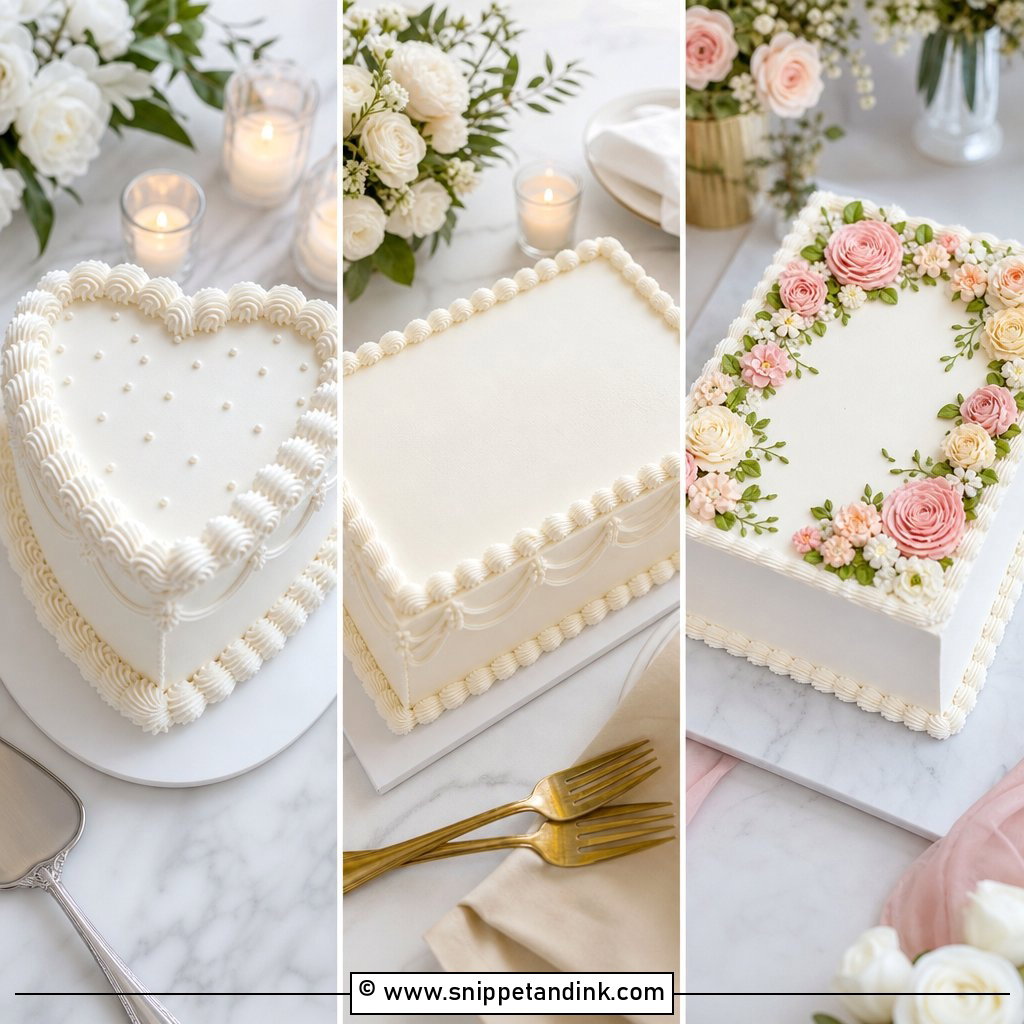
28. Diamond Sheet Wedding Cake

Sheet cakes save money and make slicing fast, and the top surface can still carry a quilted pattern, piped borders, edible pearls and sugar diamonds. A white or ivory buttercream base keeps it classic. Because the top is the whole display, the pattern has to be neat and symmetrical. Many couples pair one with a small display cake for the cutting moment and serve guests from the sheet in the kitchen.
29. Diamond Dessert Table Wedding Cake

A dessert table wedding cake anchors a larger sweet display. The cake carries the sparkle; cookies, mini cakes, macarons or cake pops echo the colors. A white three-tier cake with crystal bands, pearl borders and soft flowers anchors the table, with clear stands and mirrored trays. Repeat the diamond detail in small ways across the display so it feels connected, and give guests variety without losing the cutting moment.
30. Diamond Anniversary Wedding Cake

Anniversary and vow-renewal cakes can be more symbolic: ring details, a crystal topper, silver accents or a diamond-shaped monogram. A sixtieth is traditionally the diamond anniversary, which makes the theme fit naturally. White, ivory, champagne and silver are classic, and blush or soft blue can make it personal. A small tiered cake suits an intimate dinner; a taller one suits a larger party. Sugar flowers or pearl borders finish it.
Getting Sugar Crystals Through a Warm Reception Room
Isomalt and rock candy are the materials that make a cake look like it’s covered in diamonds, and they are also the first to suffer in a warm, humid room. Moisture makes them sticky and cloudy, and a geode that sparkled at delivery can look dull by the speeches.
What I plan for at delivery
Fondant cakes come out of the fridge cold, and moving them into a warm room causes condensation on the surface. That moisture streaks lustre dust and softens sugar crystals. I let the cake come up to room temperature in its box before setting any isomalt pieces, and on humid days I add the most delicate gems at the venue rather than in the kitchen.
Where the cake sits
Keep the table out of direct sunlight, away from windows and well clear of heat from uplighting or candles. Ask your venue to set the cake out as late as is practical, especially for outdoor or summer receptions. Buttercream softens in warmth, and gems pressed into it can slide.
Sparkle Placed on Purpose Reads as Luxury
A quilted ivory cake feels classic, a geode modern, a black cake bold and a blush floral one soft. What they share is sparkle used with purpose. Decide on one main diamond detail, then support it with the right frosting, flowers, color and shape. And before the day, get a clear list from your baker of what on the cake is edible and what has to be removed before serving.
You'll Like These Ideas:


Leave a Reply