
An African wedding is often the most dressed-up event a guest will attend all year, and it can also be the longest. Some celebrations hand out aso ebi fabric to relatives and friends; others leave you free to wear Kente, Ankara, kitenge, shweshwe, lace or plain formalwear. Traditions vary so much between countries and communities that my first advice never changes: read the invitation, and if a ceremonial garment is involved, ask the hosts before you wear it. The outfits below cover wrapper sets, beaded bridal looks, jumpsuits and tailored suits, and for each I’ve added what I’d check in the fitting room so it lasts from the ceremony to the end of the party.
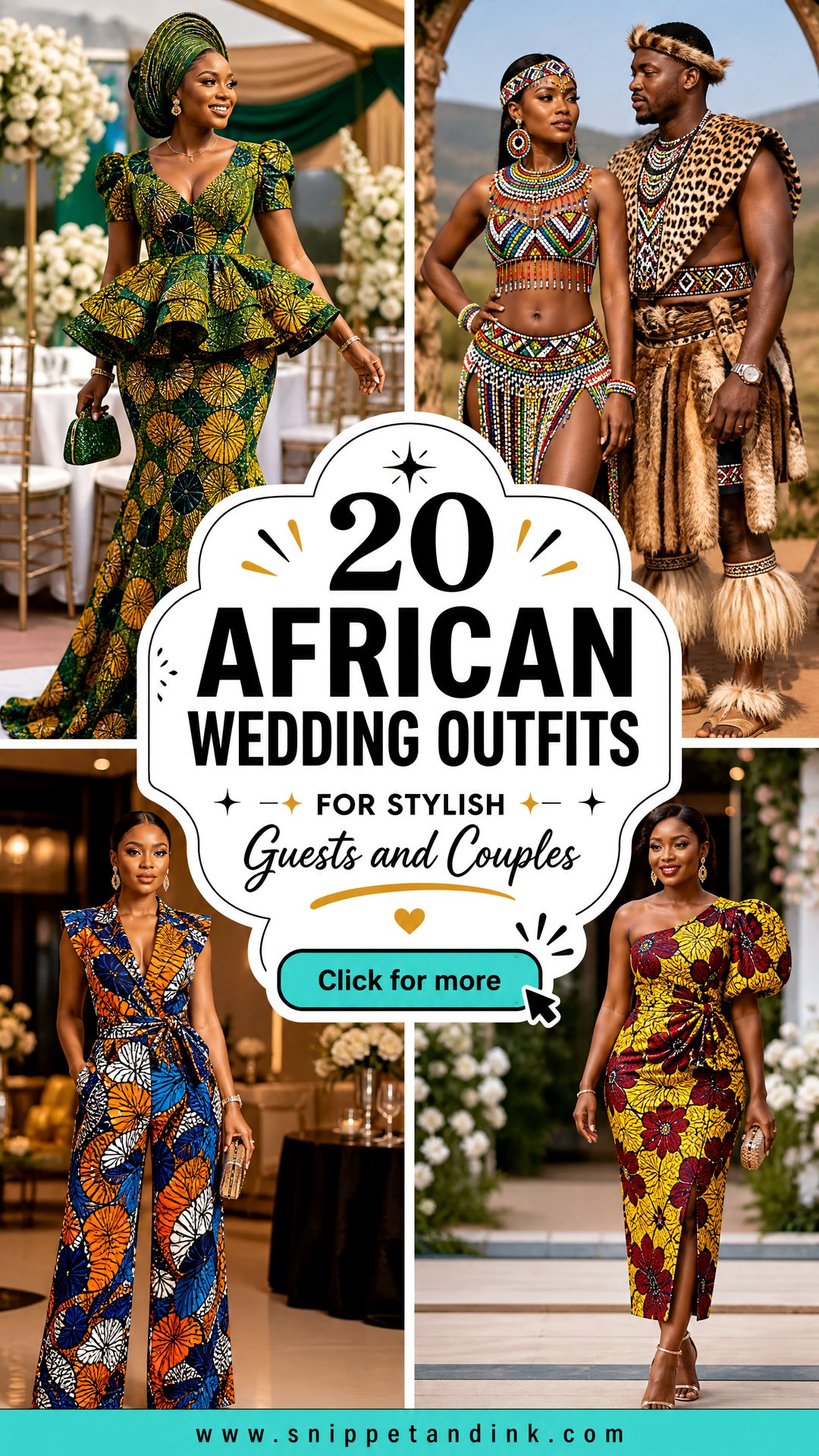
Gele, Headwraps and the Hair Underneath
Many of the outfits below are finished with a gele or headwrap, and that changes how you plan your hair. A stiff gele needs a flat, compact base. A big curly blowout or a high bun underneath pushes the wrap up and off balance, and it will start slipping within the hour.
- Go for cornrows, a low flat bun or hair smoothed close to the head before the wrap goes on.
- Choose a gele tier: book a gele artist for the morning, buy a pre-tied auto-gele that sits on like a hat, or practise your own with a few tutorials beforehand.
- Bring a few bobby pins in your clutch. A pin at the back of the wrap fixes most lifts in seconds.
- If you plan to take the gele off for the party, keep the hair underneath neat enough to be seen.
For a guest who doesn’t usually wear one, a softer headwrap in the same fabric as your outfit is a perfectly good choice. It still looks coordinated, it’s lighter, and you can retie it yourself.
1. Ankara Maxi Dress Wedding Outfit
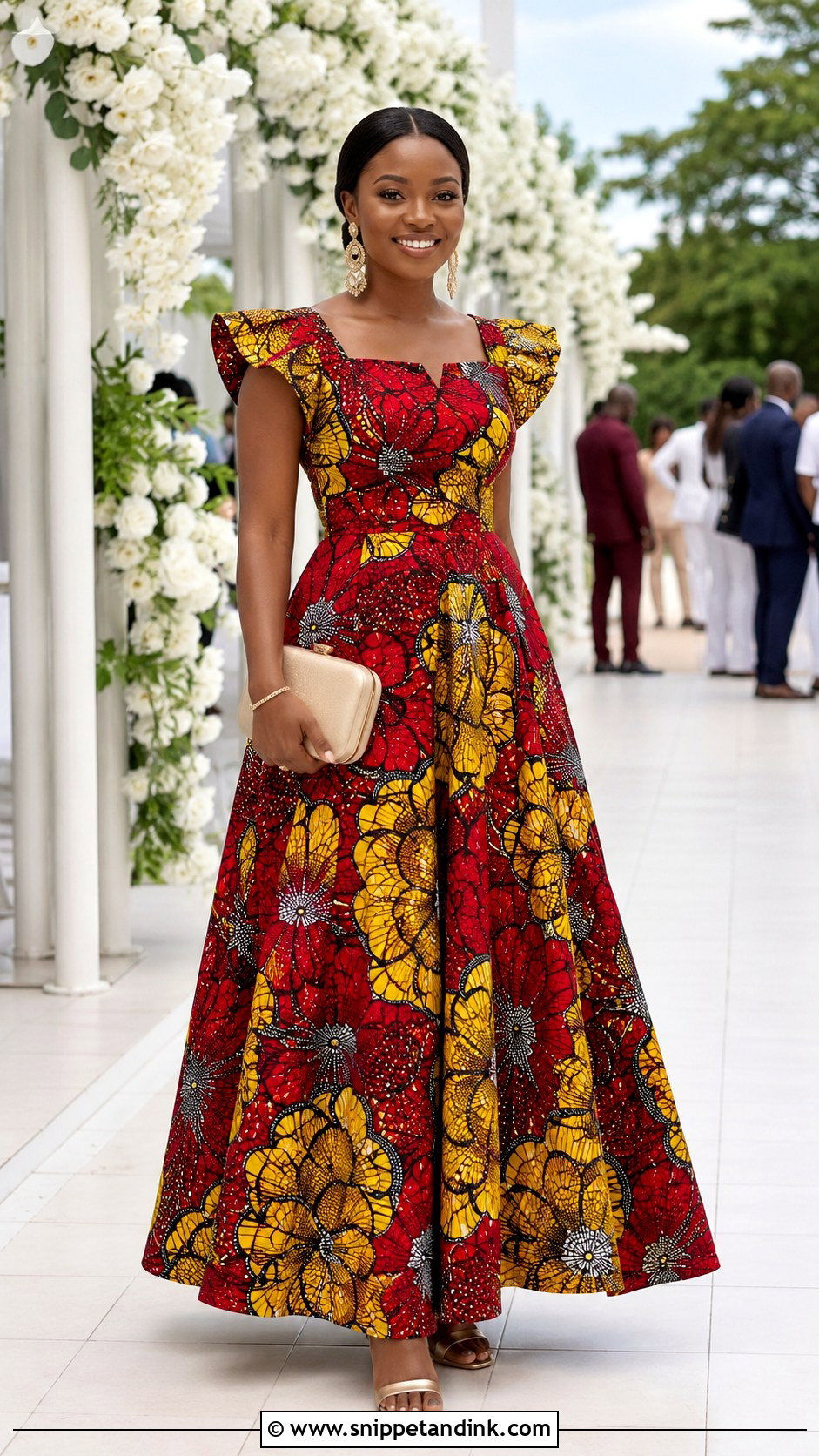
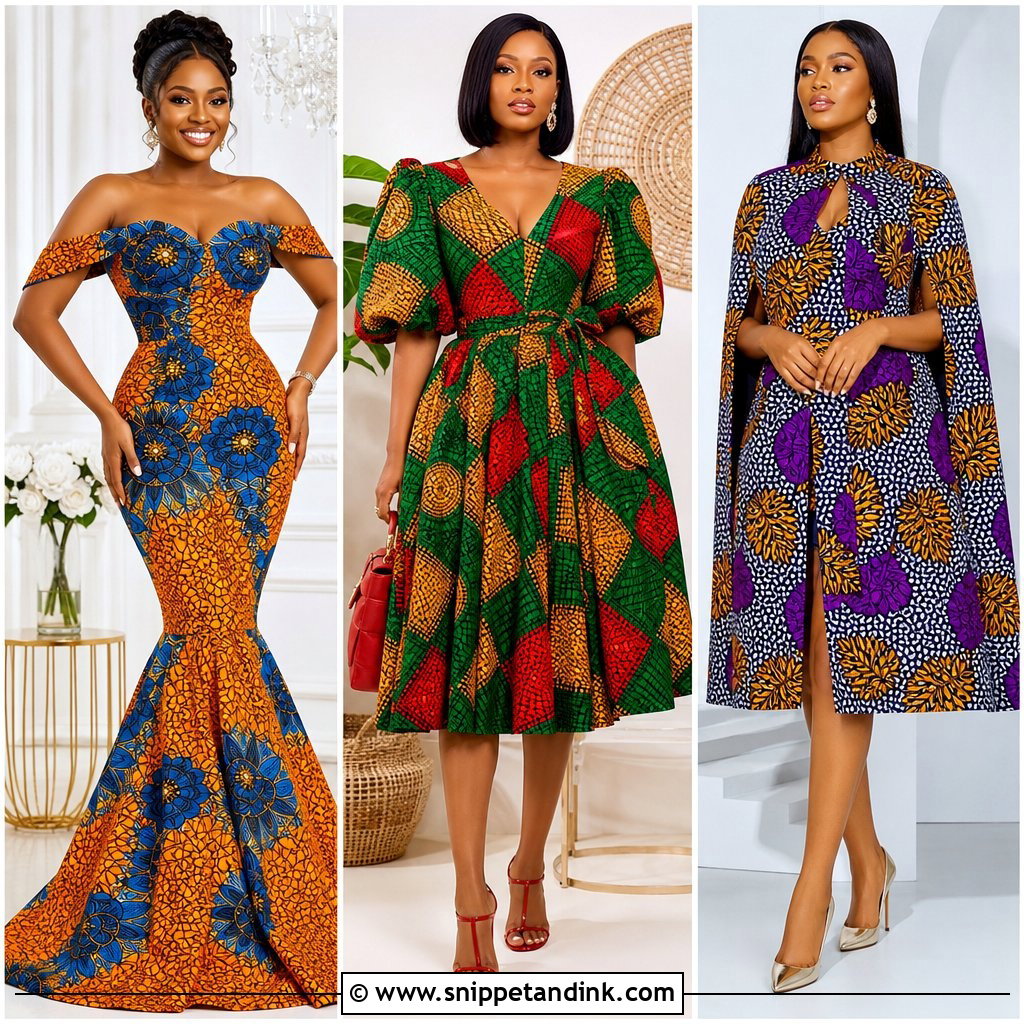
An Ankara maxi is the easiest outfit here to get right. Ask for a fitted bodice and a defined waist, then an A-line or softly gathered skirt; gathers add width at the hip, so if you’d rather not, choose the A-line. A V-neck, square neckline or modest off-shoulder balances a big print. Pull one colour from the fabric for block heels, a compact clutch and gold drops, and stop there. Wax print cotton breathes well, which is why I like it for outdoor ceremonies. A sleek bun or braided updo shows the neckline.
2. Aso Ebi Lace Gown With Gele
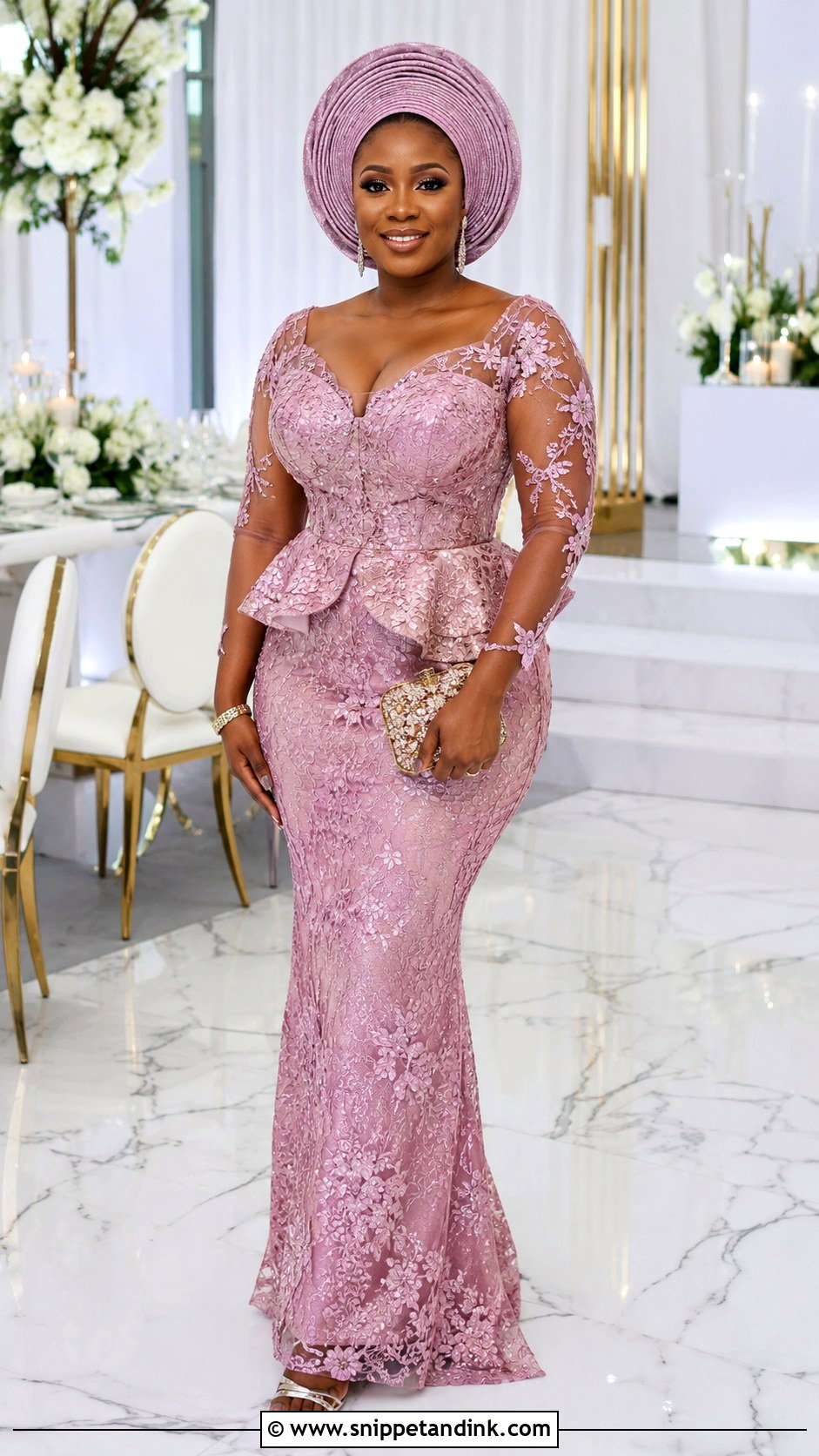
An aso ebi lace gown with a matching gele is the classic look at a formal Nigerian wedding. Aso ebi marks you as part of a group connected to the couple, so if you’ve been given a fabric, wear it and wear the colour you were asked to. You still choose the shape. Sheer sleeves, a peplum waist or a gently flared hem add shape without making the gown hard to sit in. The tailor is the real decision here, because lace placement and lining make or break the finish, and every guest is booking the same tailors in the weeks before. Get your order in early. With a structured gele, metallic sandals and a beaded clutch, one bracelet and statement earrings are plenty.
3. Kente Mermaid Gown Outfit
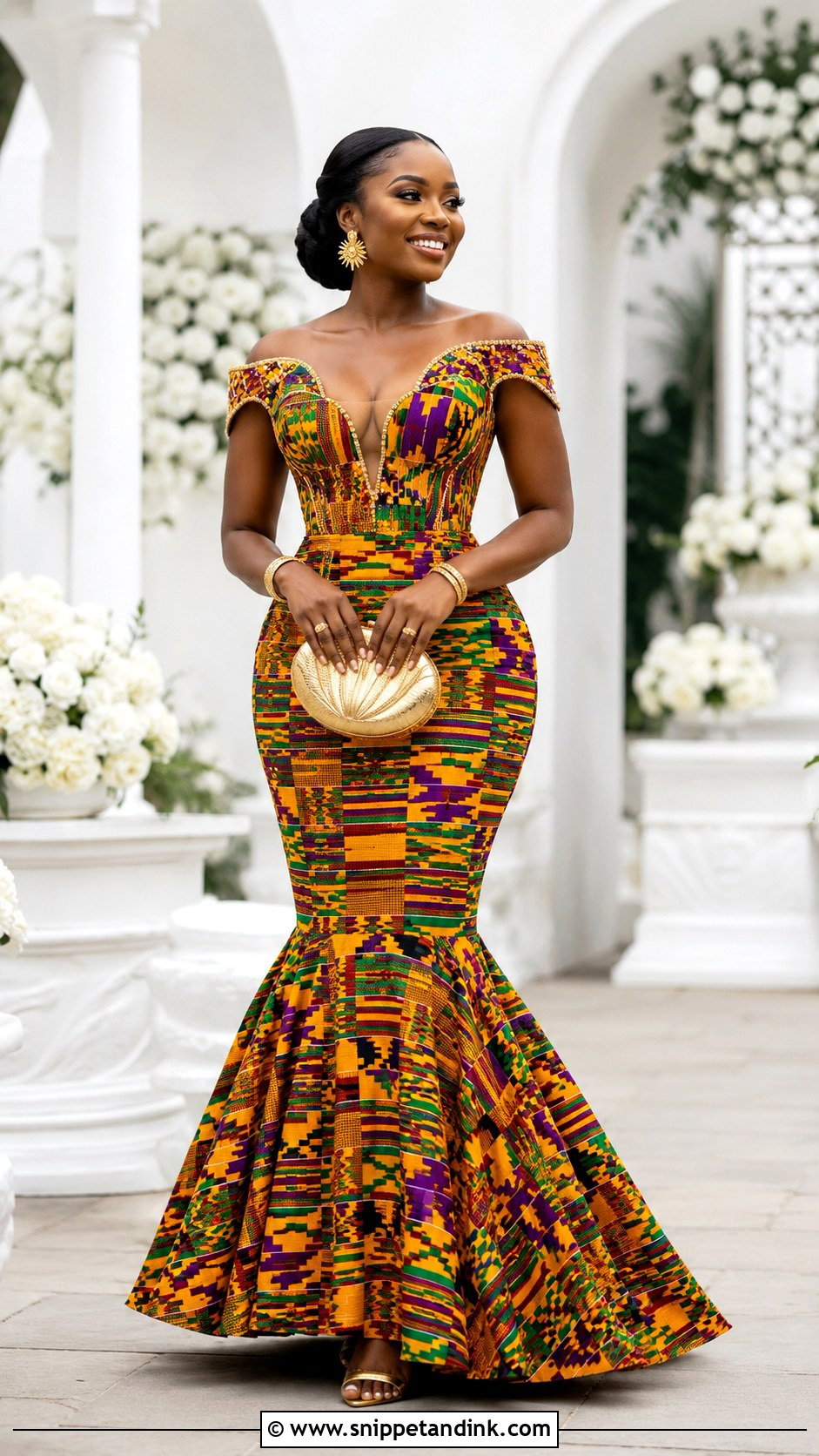
Kente cut as a mermaid gown has a smooth fitted bodice and a flare below the knee. The pattern placement is what separates a well-made one from a rushed one: the stripes should run evenly down the body, matching at the side seams, not appear wherever the cloth happened to fall. Ask for a supportive neckline and enough room through the knees to walk. Gold heels, a small metallic bag and sculptural earrings suit the woven cloth. As a guest, wear authentic Kente thoughtfully, confirm the dress expectations, and steer clear of anything that copies the bride’s look.
4. Aso Oke Iro And Buba Outfit
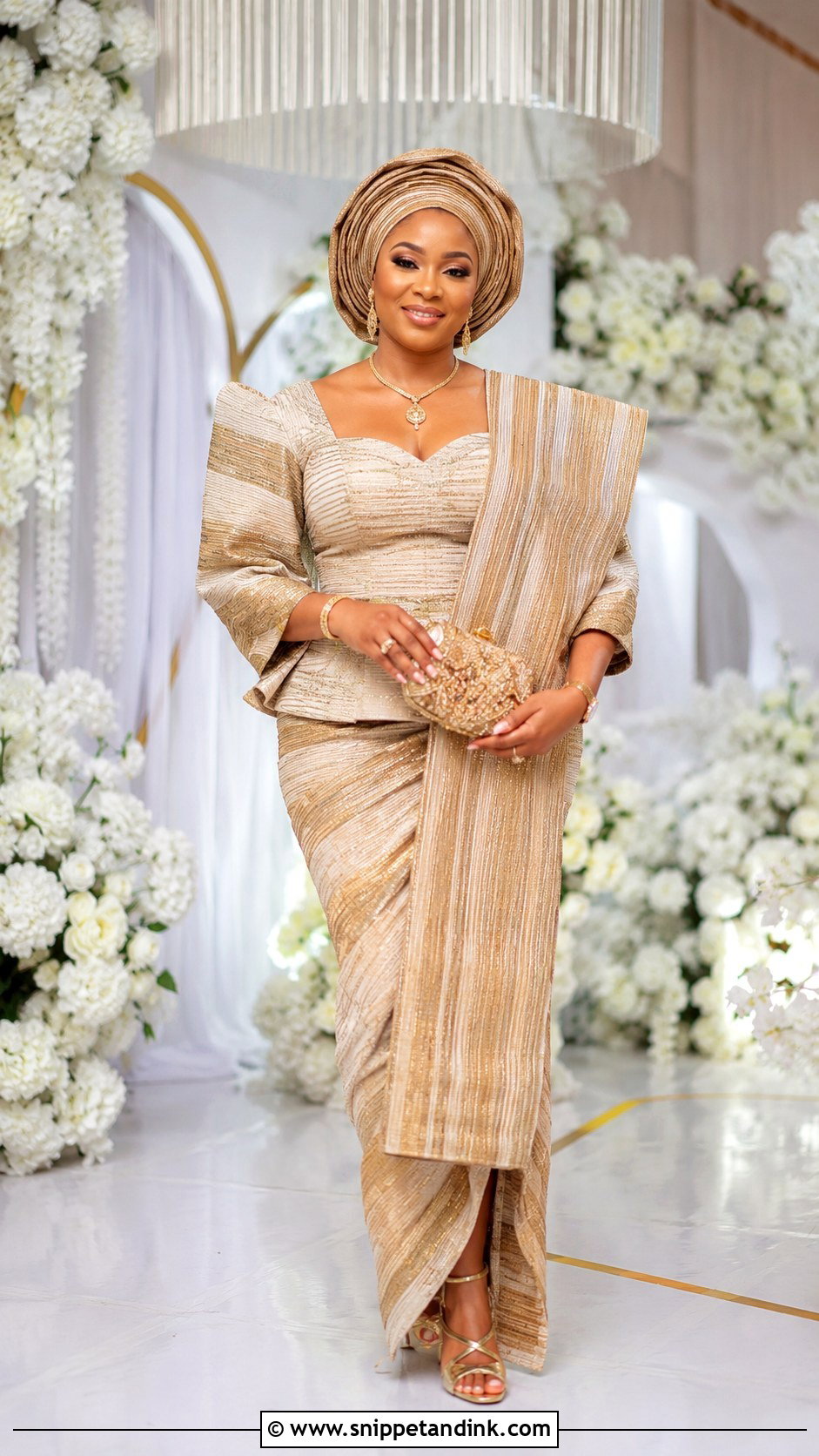
For a Yoruba traditional wedding, the aso oke iro and buba set is the most distinguished thing you can wear: wrapped iro skirt, buba blouse, gele, and the ipele sash over one shoulder. Follow the wedding palette. A structured buba looks more contemporary; a looser one is easier to move in. The wrapper needs tying properly, ideally with a short underskirt or a hidden fastening, because aso oke is slippery enough on the inside to loosen while you dance. With the gele and sash already making an impact, drop earrings and one bracelet finish it, plus metallic heels and a small purse.
5. Shweshwe Midi Dress Outfit
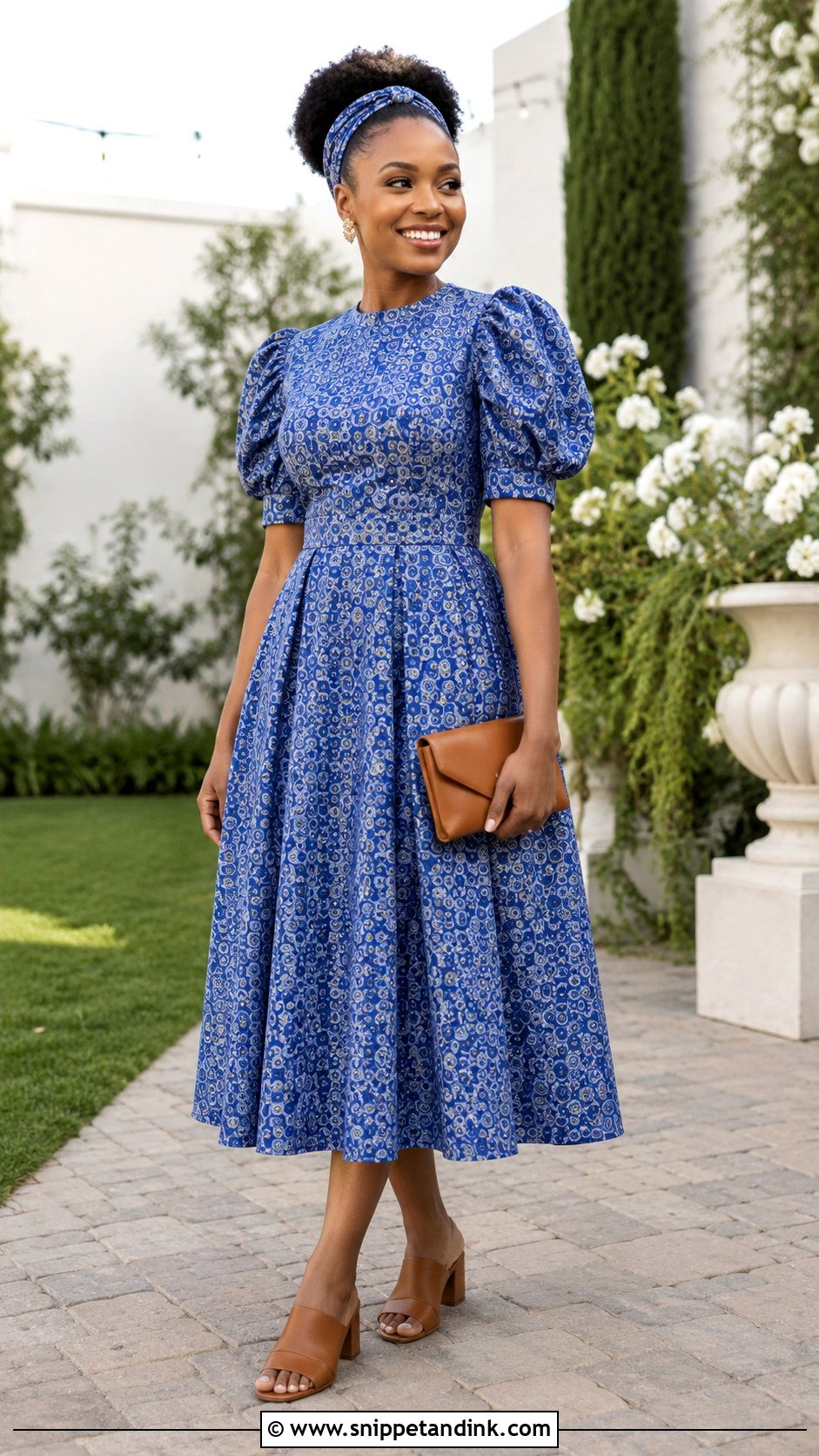
I’d send a guest to a daytime wedding on a farm or a lawn in a shweshwe midi without hesitating. The crisp printed cotton holds an A-line shape with a fitted waist, softly puffed sleeves and a full calf-length skirt, and the length stays clear of wet grass. Some modern shweshwe dresses borrow a higher neckline and shaped sleeves from older styles, which gives a pretty, slightly vintage line. Low block heels won’t sink into a lawn. Add a solid leather clutch and small earrings, plus a narrow belt in one of the quieter colours if you want more waist.
6. Kitenge Peplum And Maxi Skirt Outfit
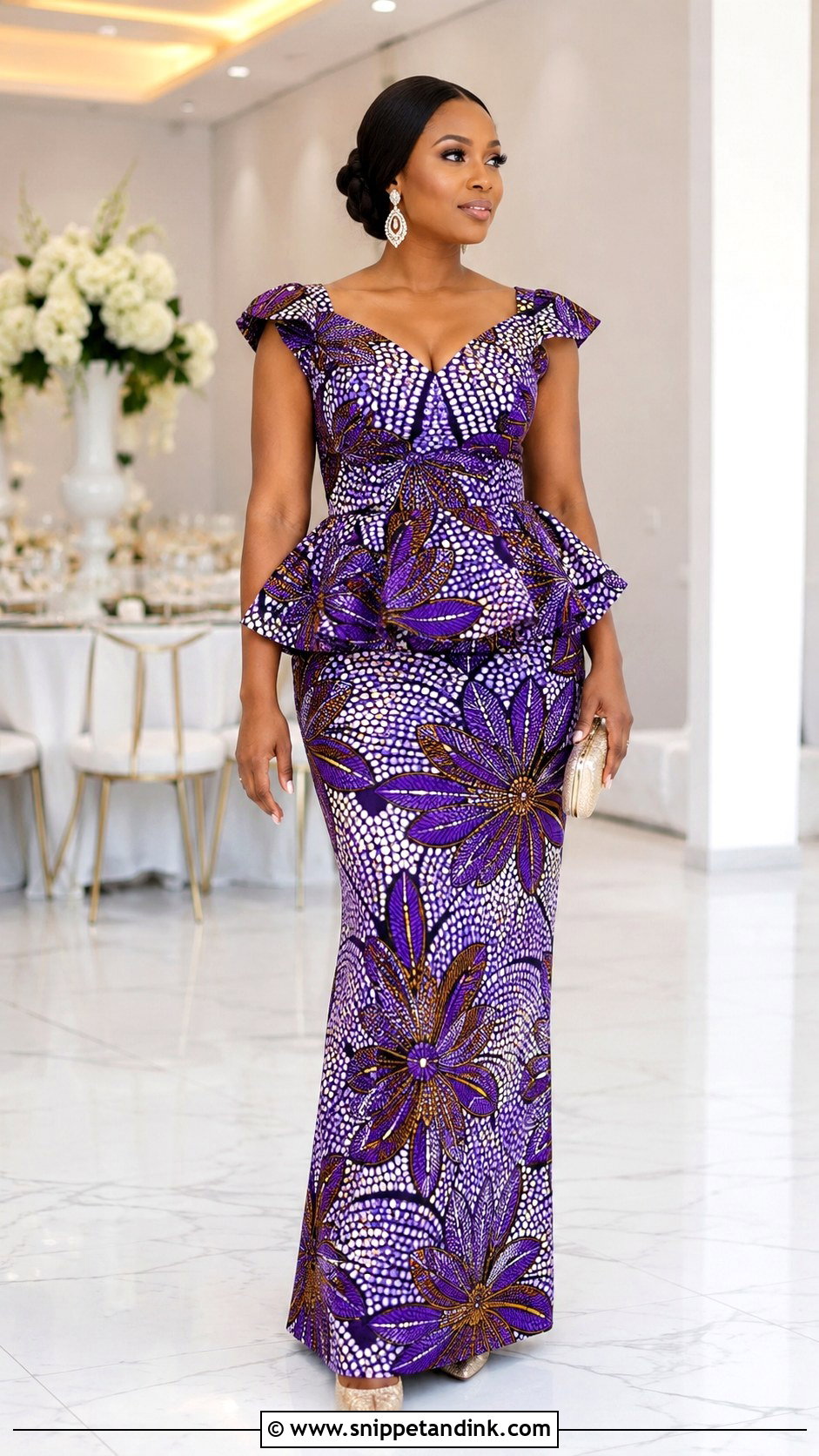
A matching kitenge peplum top and maxi skirt looks like a dress from across the room and gives you two pieces to wear separately later. The peplum must sit exactly at the natural waist; a front, side or back slit in the skirt makes walking easy. For more coverage, skip the slit, choose a gently flared skirt and add flutter sleeves to the top. The fit issue I see most is the skirt waistband rolling under a heavy peplum, so ask for a firm interfaced waistband. Pointed pumps, a slim clutch and earrings picking up one print colour finish it, and a high braided bun or smooth ponytail shows the neckline. No other prints.
7. Habesha Kemis Wedding Outfit
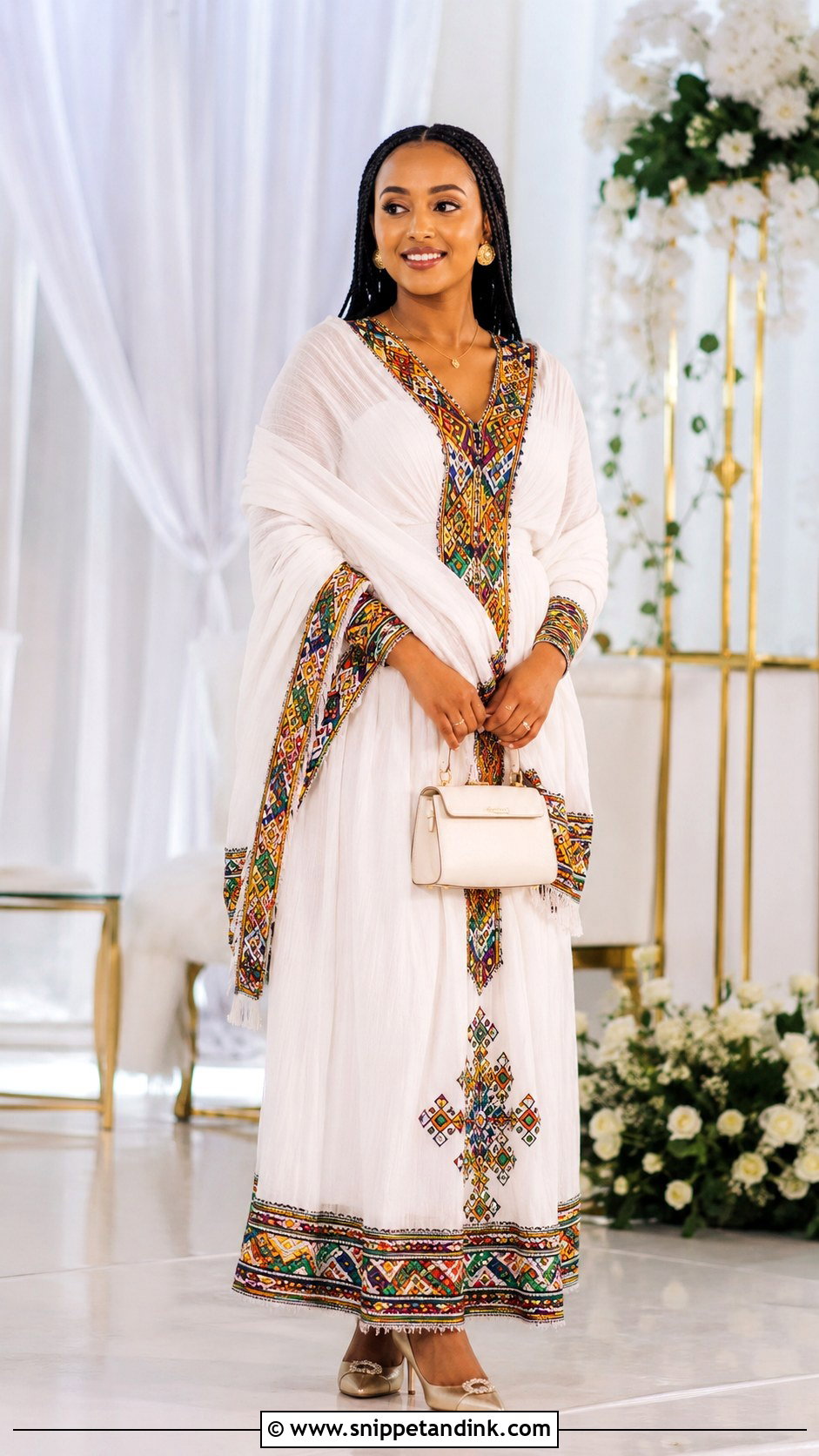
A Habesha kemis suits an Ethiopian or Eritrean wedding with its long, light silhouette and woven or embroidered borders. White or a pale colour with tibeb-style detailing at the neckline, cuffs and hem is the familiar look. The netela wrap belongs only where it’s appropriate, worn the way the community wears it. The cotton is fine and creases easily, so pack a travel steamer if you’re changing at the venue. Low metallic pumps, delicate earrings and a small structured bag keep the line clean. If you’re not from the community, check the dress code with the hosts first.
8. Igbo George Wrapper And Blouse Outfit
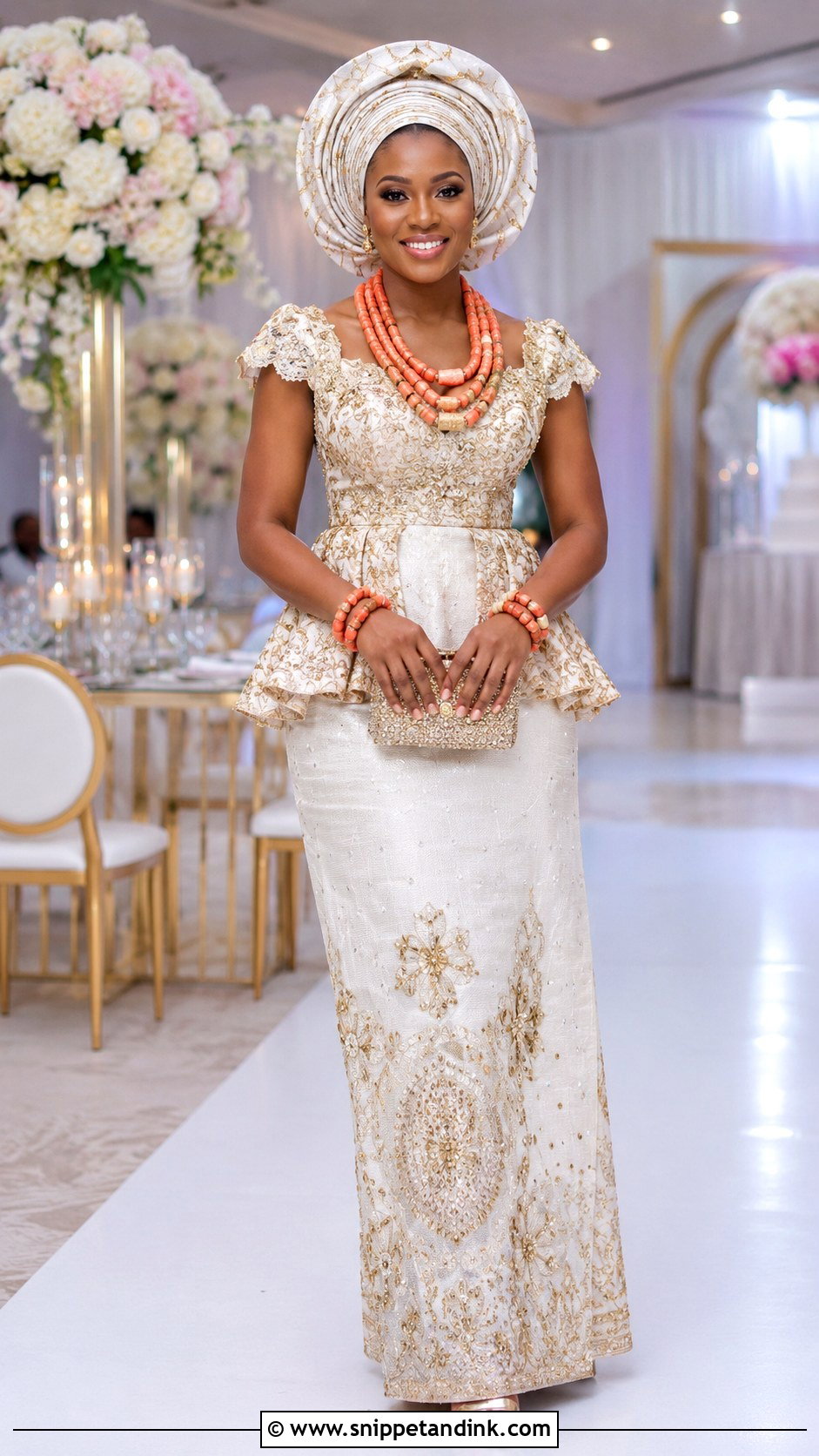
At an Igbo traditional wedding, a George wrapper and fitted blouse makes a rich family or bridal ensemble. The wrapper should fall smoothly to the floor and the blouse can have a shaped sleeve or a subtle peplum. Add a head tie, coral-coloured beads where culturally appropriate, and a small embellished clutch. George is heavy and often densely embroidered, so try the whole outfit sitting, walking and dancing before the day; a wrapper that’s fine standing can bunch at the knee once you sit. With heavy blouse embroidery, skip the necklace. Guests should follow family guidance, since some colours, beads and details mark out the bride.
9. Edo Velvet Dress With Coral Beads
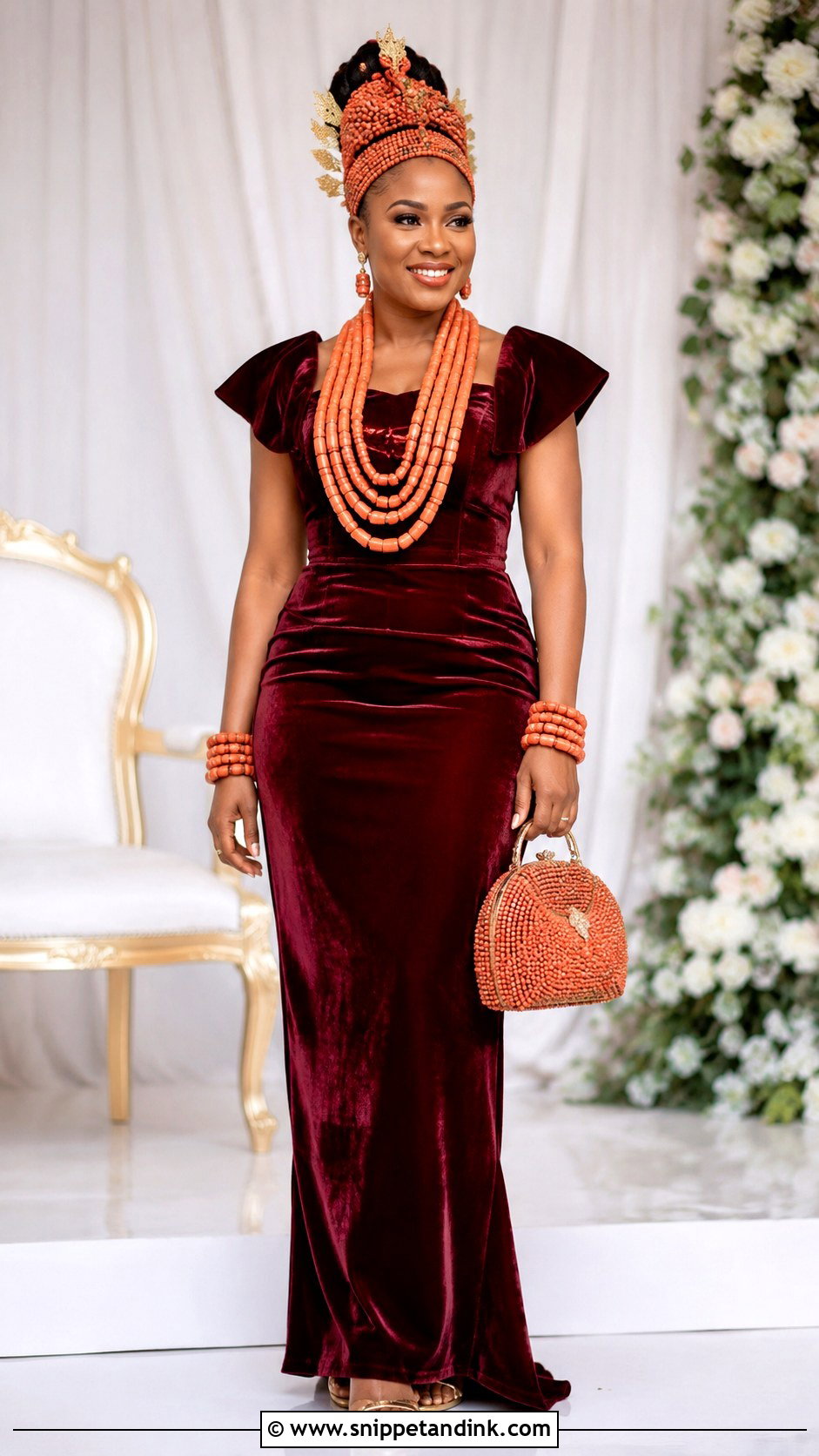
Coral beadwork and deep red velvet belong to the Benin tradition, and this outfit is really bridal dress for a bride honouring Edo heritage. Keep the gown simple, in a fitted column, a shaped bodice with a long skirt or a modest mermaid, so the beads lead. The weight is the thing to plan around. A full set of coral necklaces, bracelets and the beaded headpiece is physically heavy, and velvet is warm, so book fittings with the actual beads on and practise sitting and turning your head. Gold or neutral heels and a small structured bag work for the reception. Non-Edo guests shouldn’t copy the ceremonial details without a clear invitation to.
10. Xhosa Black And White Wedding Dress
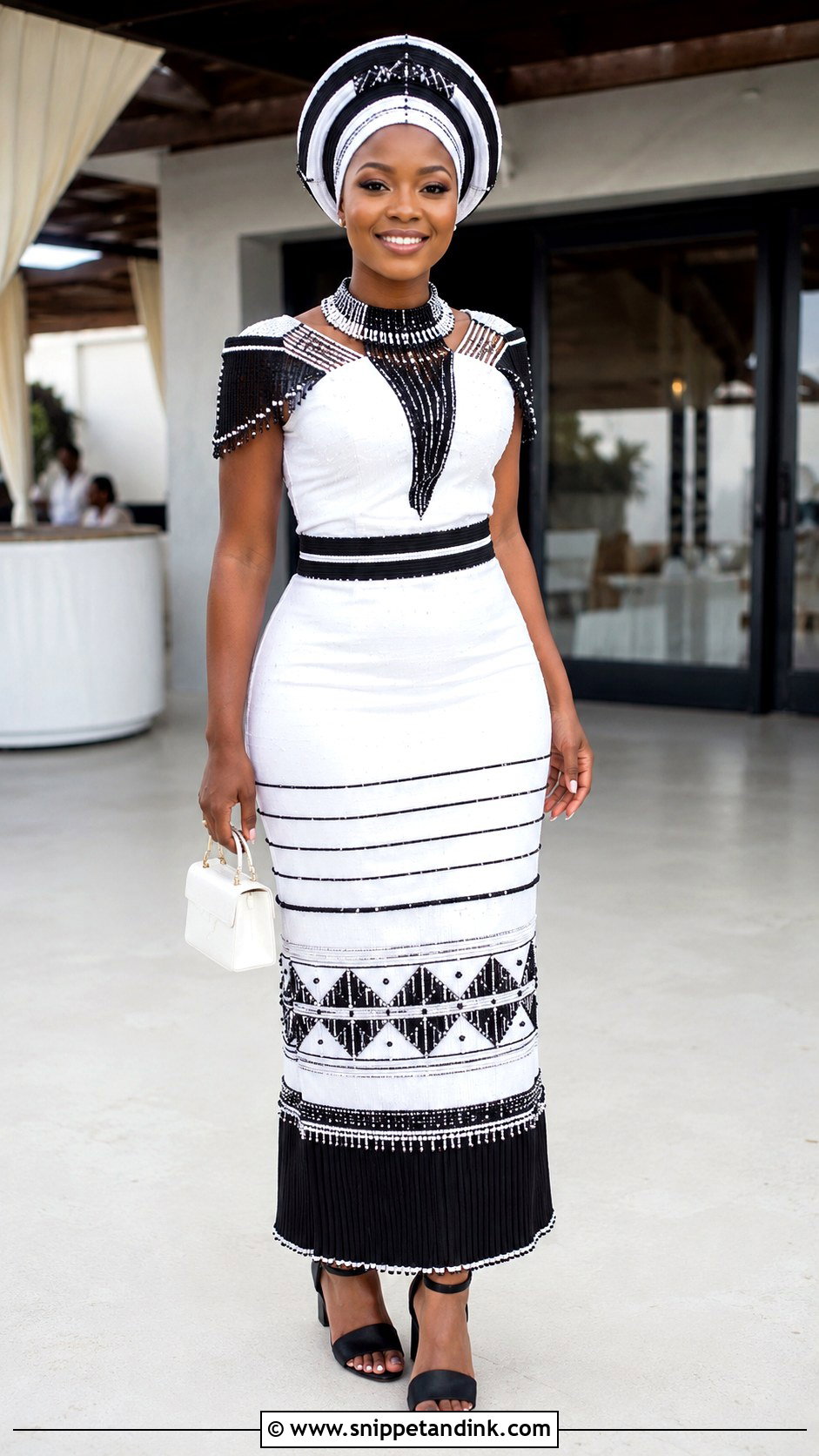
Black and white is the visual signature of Xhosa dress: a long skirt and fitted top, or a floor-length dress, with carefully placed bands, piping and beadwork. Add a headwrap, beaded necklace and bracelet where appropriate, black pumps or low block heels, and a small white or monochrome bag. A tailored waist stops the layers from looking bulky. If the outfit is made for a particular family ceremony, work with a designer who knows it. Guests who haven’t been asked to wear traditional dress can still nod to the theme with a contemporary black-and-white formal dress carrying a subtle textile accent.
11. Zulu Beaded Skirt And Top Outfit
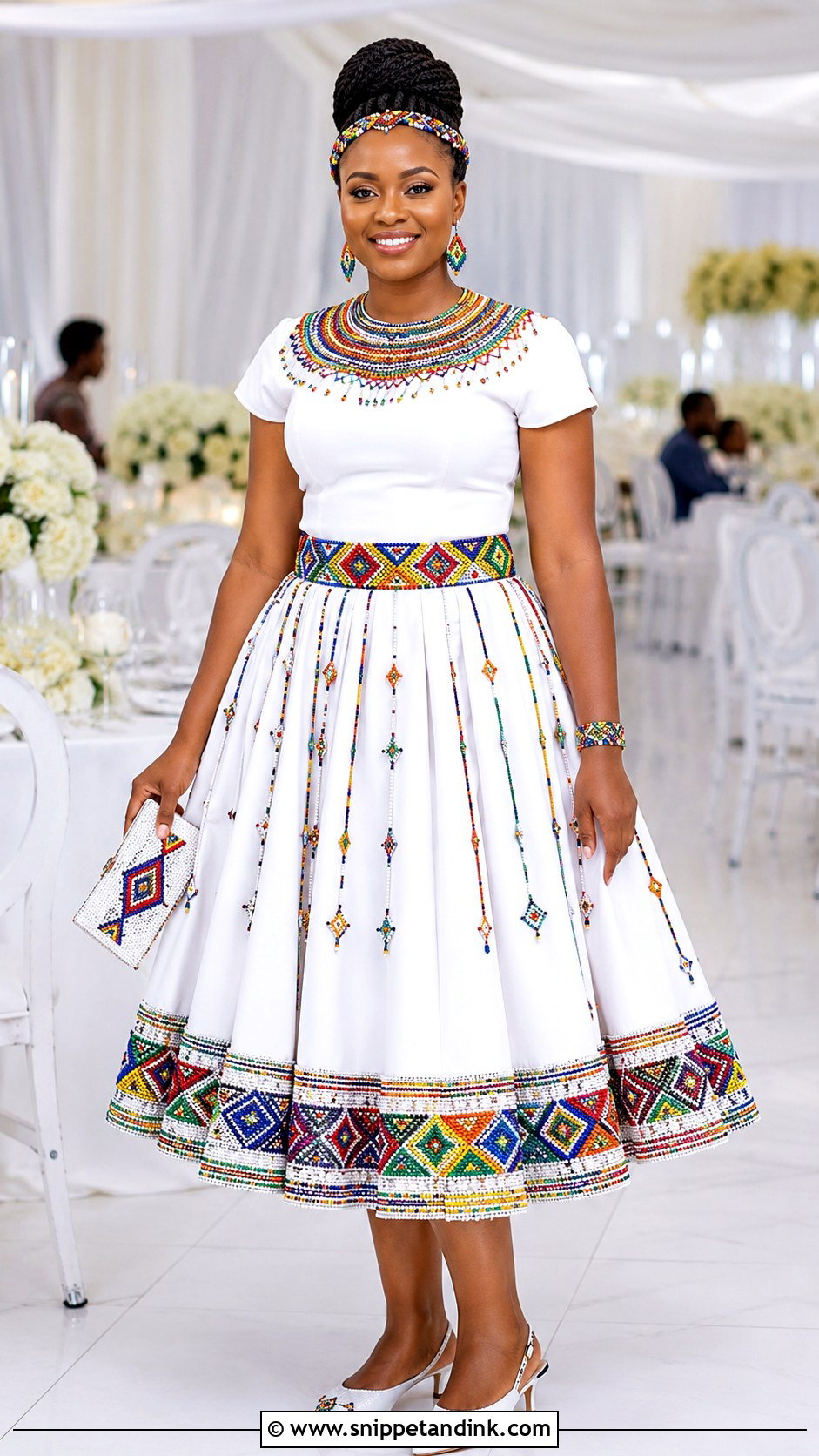
This is a look where the accessories come first. Start with a solid fitted top and a full midi or maxi skirt so the beadwork stands out, then add a beaded collar, belt, bracelet or headpiece chosen with guidance from the couple or family. Zulu beadwork can signal identity, status and community, so guests who don’t know what a piece means should ask the hosts rather than wear it as decoration. A modern alternative is a formal dress with beadwork sewn at the neckline and waist. Low heels, a compact clutch and neat braids keep it clean.
12. African Print Jumpsuit Wedding Outfit
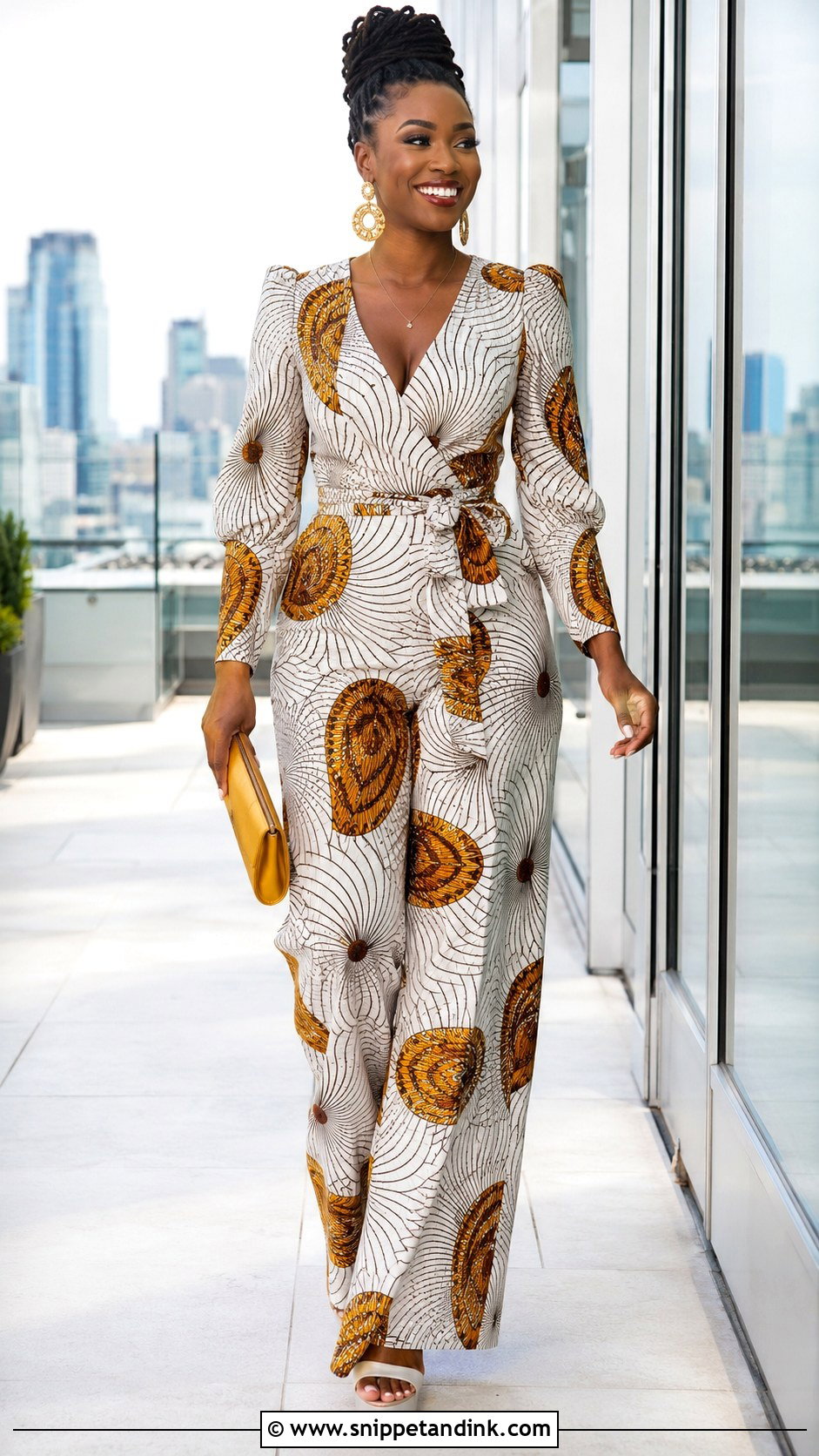
Want the impact of a gown and the freedom of trousers? A wide-leg print jumpsuit does both. Look for a defined waist, shoulders that fit properly and a leg long enough to nearly cover the shoe without touching the floor. One-shoulder, wrap-front or sleeveless bodices all read formal. Fit the torso length while sitting, because a jumpsuit that’s even slightly short in the body pulls uncomfortably every time you sit. Platform sandals or block heels, a solid clutch and bold earrings in one metallic finish keep a busy print in order. For a guest moving between two venues or planning to dance all night, it’s the most practical choice here.
13. Ankara One-Shoulder Midi Dress Outfit
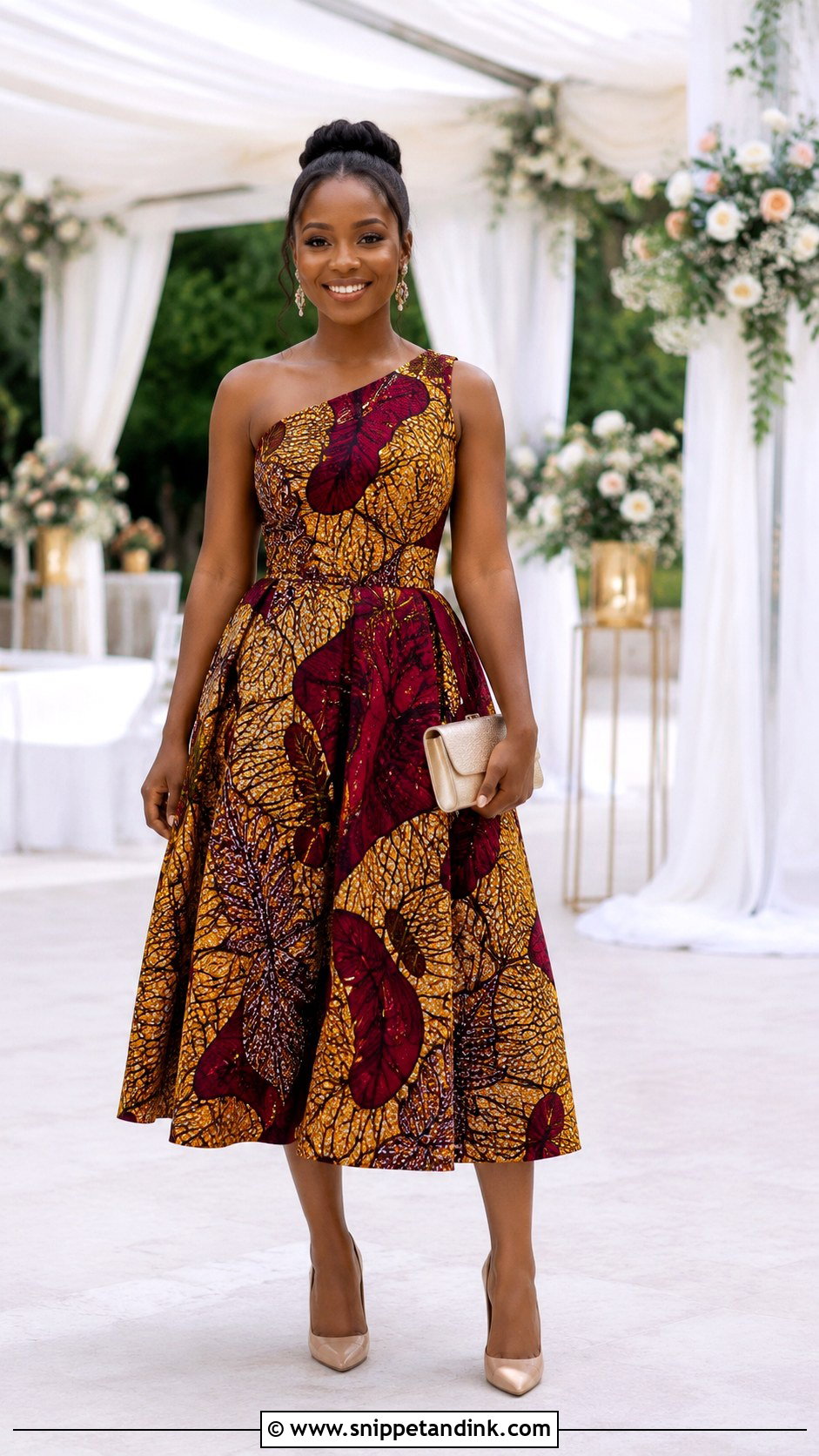
The one-shoulder neckline is the detail, so everything else stays simple. An A-line skirt moves easily; a softly draped pencil looks more formal for an indoor wedding. Pick one statement earring or a pair of medium drops, block heels and a small envelope clutch, with a smooth ponytail or side-parted updo that leaves the shoulder bare. Ask for internal support on the single strap side, since it carries the whole bodice and slips first when you dance. A midi hem sits nicely between cocktail and floor-length. Follow the couple’s colour instructions and avoid prints that are mostly white unless the invitation says it’s fine.
14. Kente Two-Piece Skirt Set
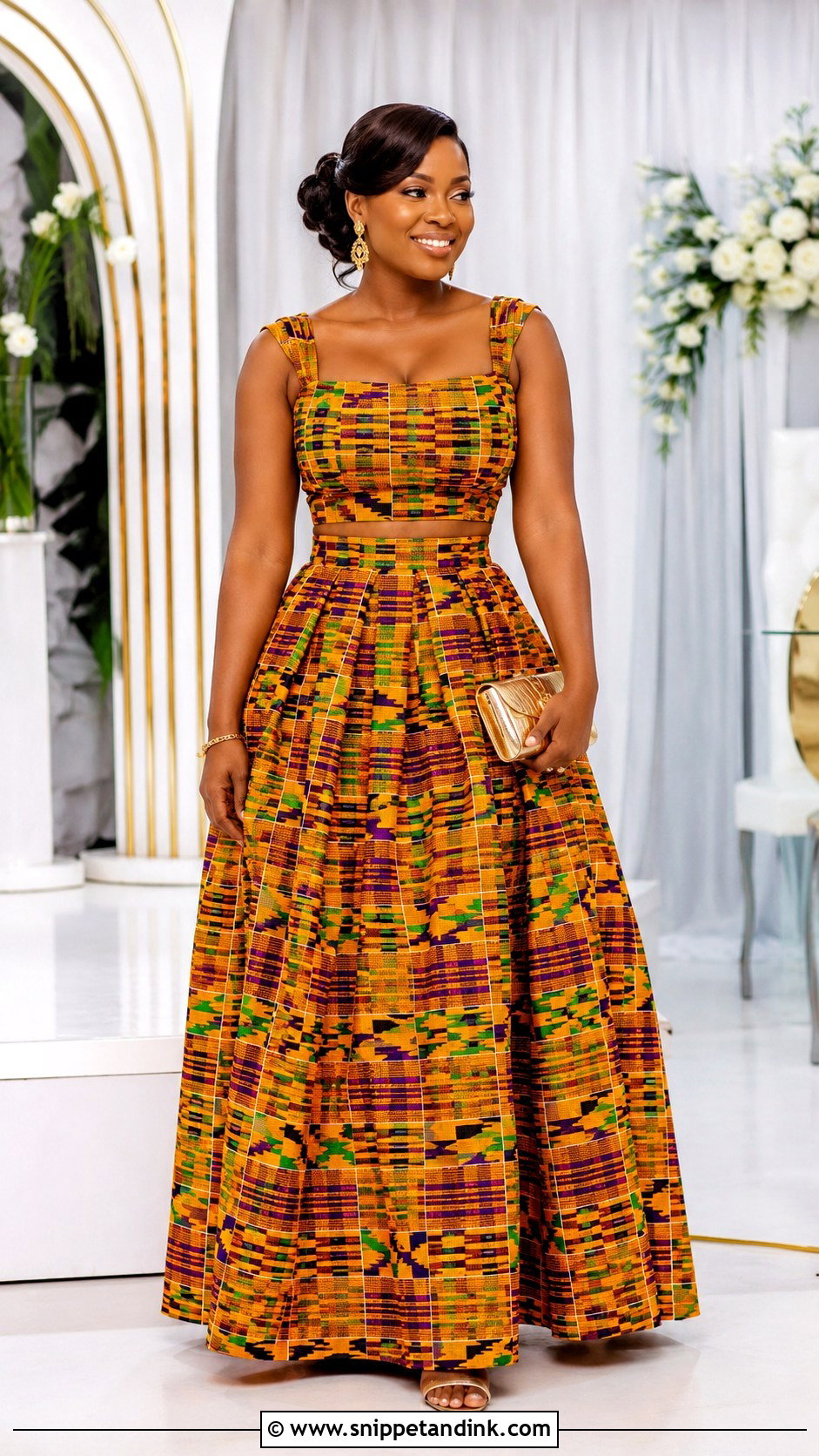
A Kente two-piece gives you the richness of the cloth with a lighter, modern shape. Pair a structured cropped top with a high-waisted maxi skirt so only a narrow line of waist shows, or choose a longer peplum blouse that overlaps the skirt for full coverage. A square neckline, short sleeves or a draped one-shoulder top all balance a full skirt. Gold sandals, a metallic clutch and polished earrings finish it, and sleek hair keeps the pattern in charge. Woven Kente is an investment, and two separates get worn again. For ceremonial use, ask the hosts whether certain colours or arrangements are reserved for the wedding party.
15. Adire Wrap Dress Wedding Outfit
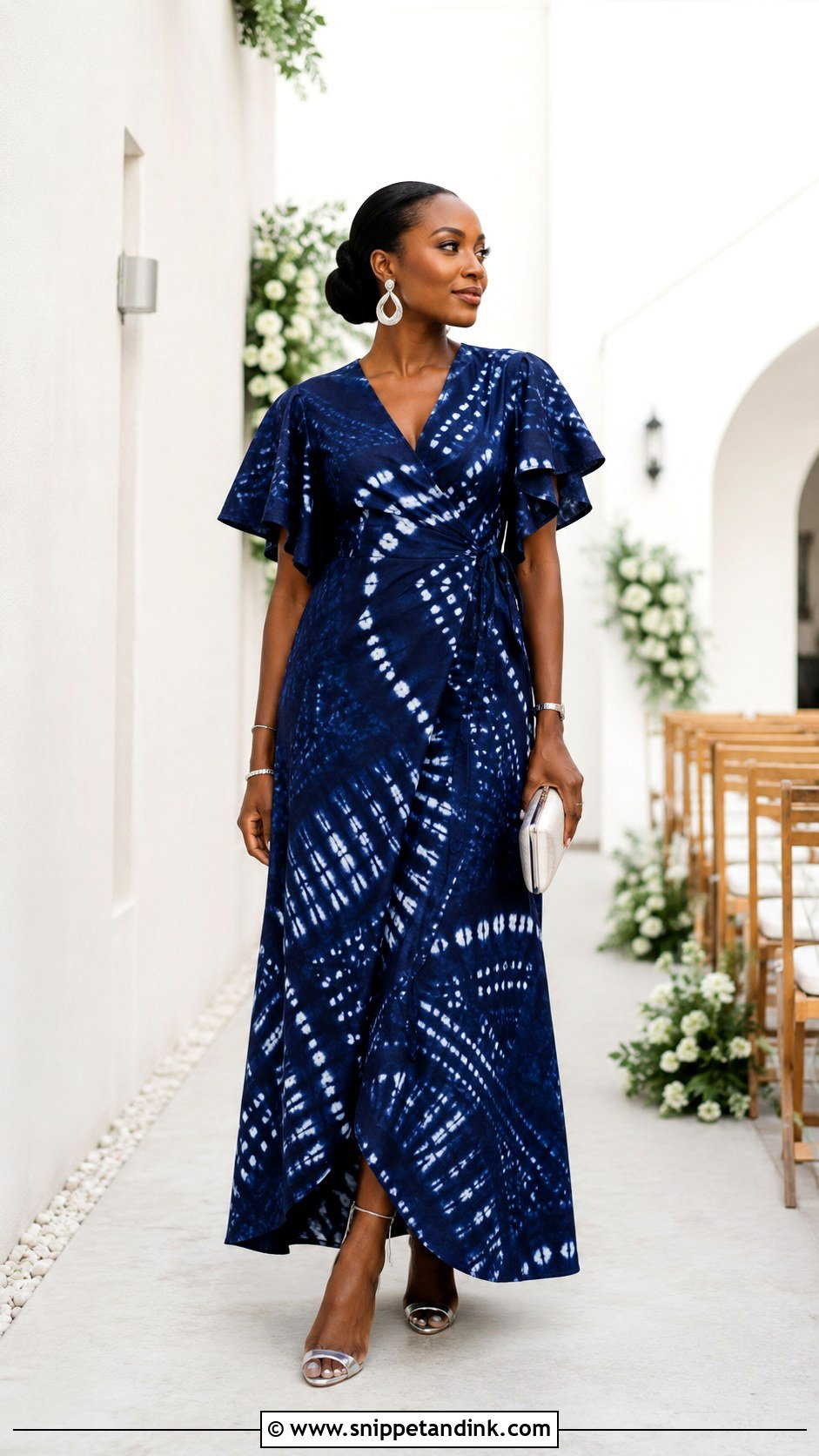
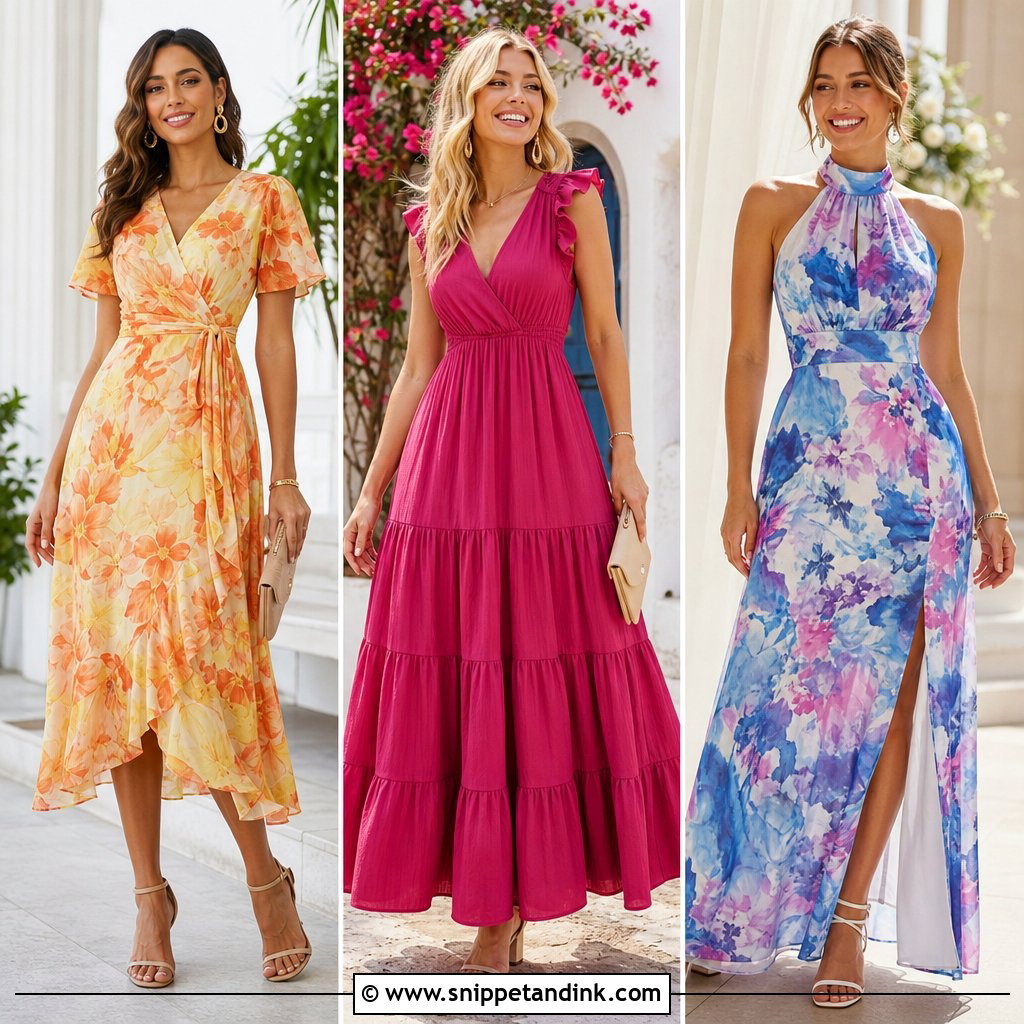
Indigo adire is calmer than multicoloured prints, and in a wrap dress it looks quietly smart. Choose a true wrap or a secure faux-wrap with a defined waist and a midi or ankle hem. Flutter sleeves move; long fitted sleeves feel more formal. Hand-dyed indigo can transfer onto pale fabric and skin when you’re warm, so I’d pick a navy clutch over a white one for an outdoor summer wedding. Silver heels and sculptural earrings suit the blue, with a delicate necklace if the neckline is open. Adire translates well into modern occasion wear for a guest who wants a textile focus and clean lines. Sit down in it before you buy to check the overlap holds.
16. Senegalese Boubou Wedding Outfit
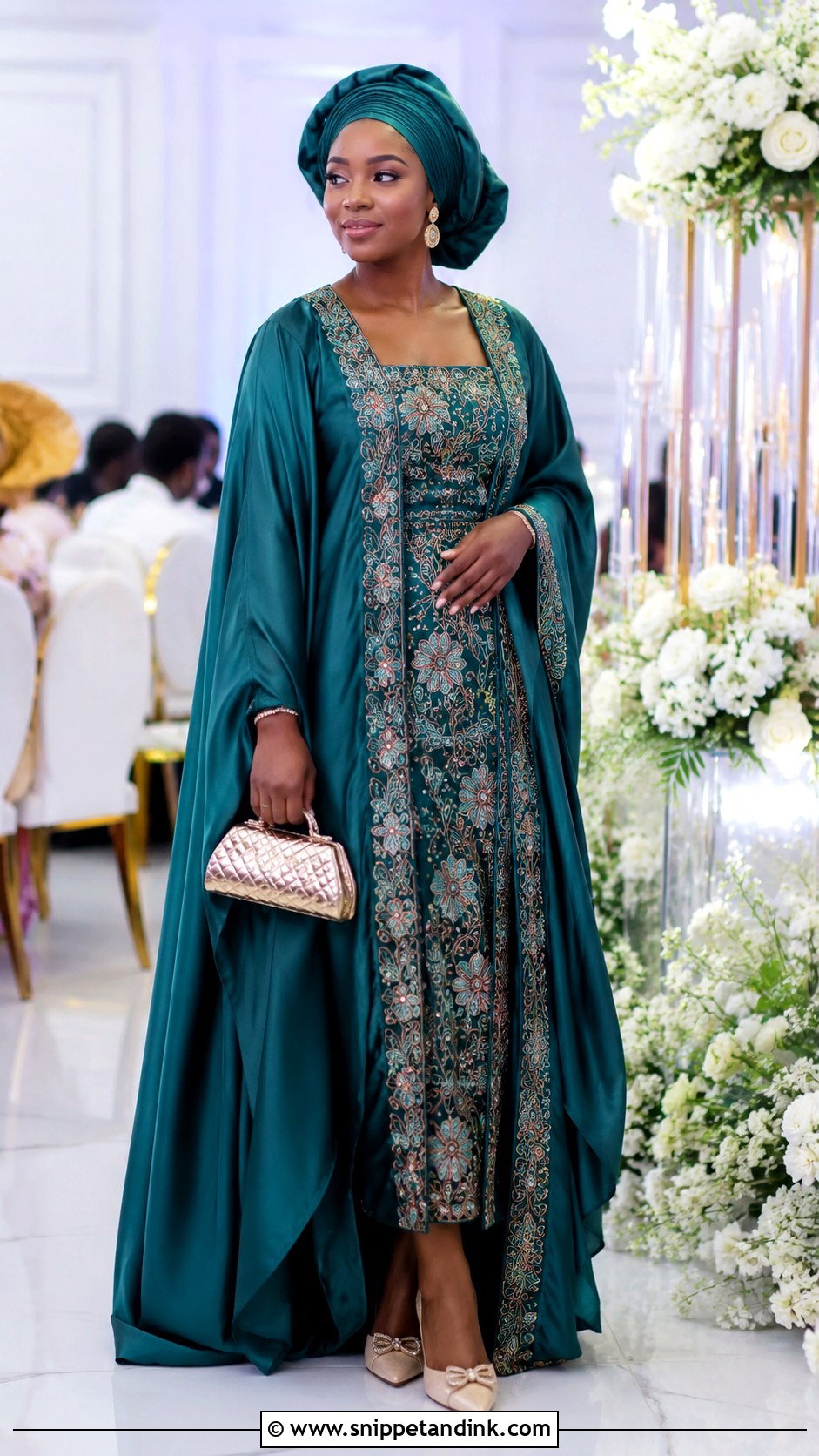
A boubou is airy and generous, which makes it one of the most comfortable things you can wear to a long wedding. Choose a floor-length embroidered gown with a matching inner slip or fitted underdress, and make sure the two layers work together; an underdress in a slightly different shade shows at the side openings. Jewel tones, pastels or neutrals all suit, depending on the palette. Pointed flats or low heels, a small metallic handbag and good earrings are enough, since the outer layer already has so much volume. A matching headwrap gives a traditional finish; sleek uncovered hair looks more contemporary. Check the hem in your shoes, and press the embroidery from the back so it stays raised.
17. African Print Pantsuit Wedding Outfit
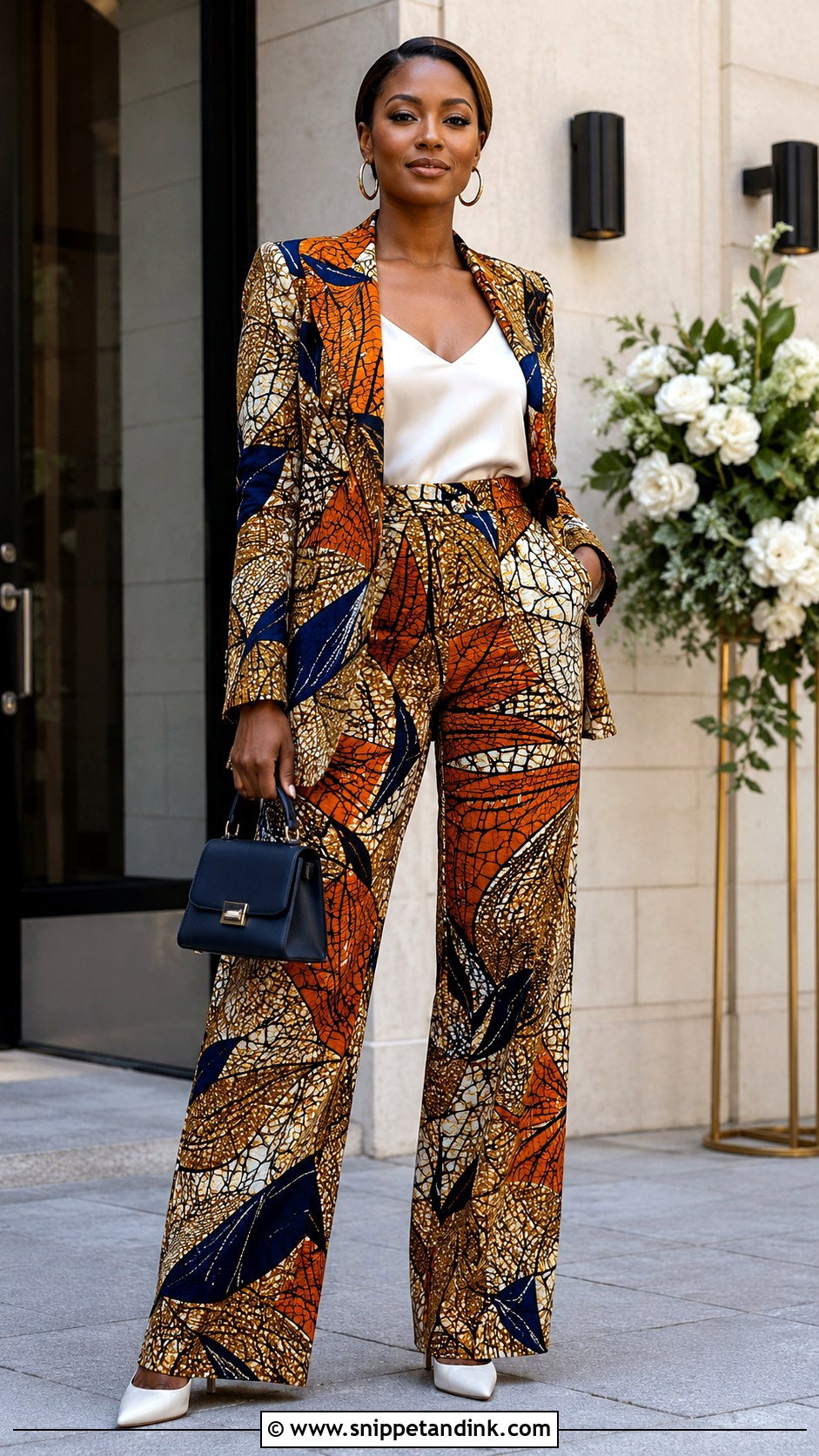
A tailored African print pantsuit is my suggestion for guests who feel more like themselves in structure than in a skirt. Build it around a blazer that fits at the shoulder and high-waisted straight or wide-leg trousers, with a solid silk camisole or a modest fitted shell underneath. Shoulder seams that sit past your own shoulder make even a good print look casual, so that’s the first alteration I check. If a full print suit feels too much, wear a printed blazer with solid trousers in a matching shade. Pointed pumps, a structured mini bag and hoops keep it modern. Ask for a breathable lining, since you’ll likely keep the jacket on through a long ceremony.
18. Ankara High-Low Dress Outfit
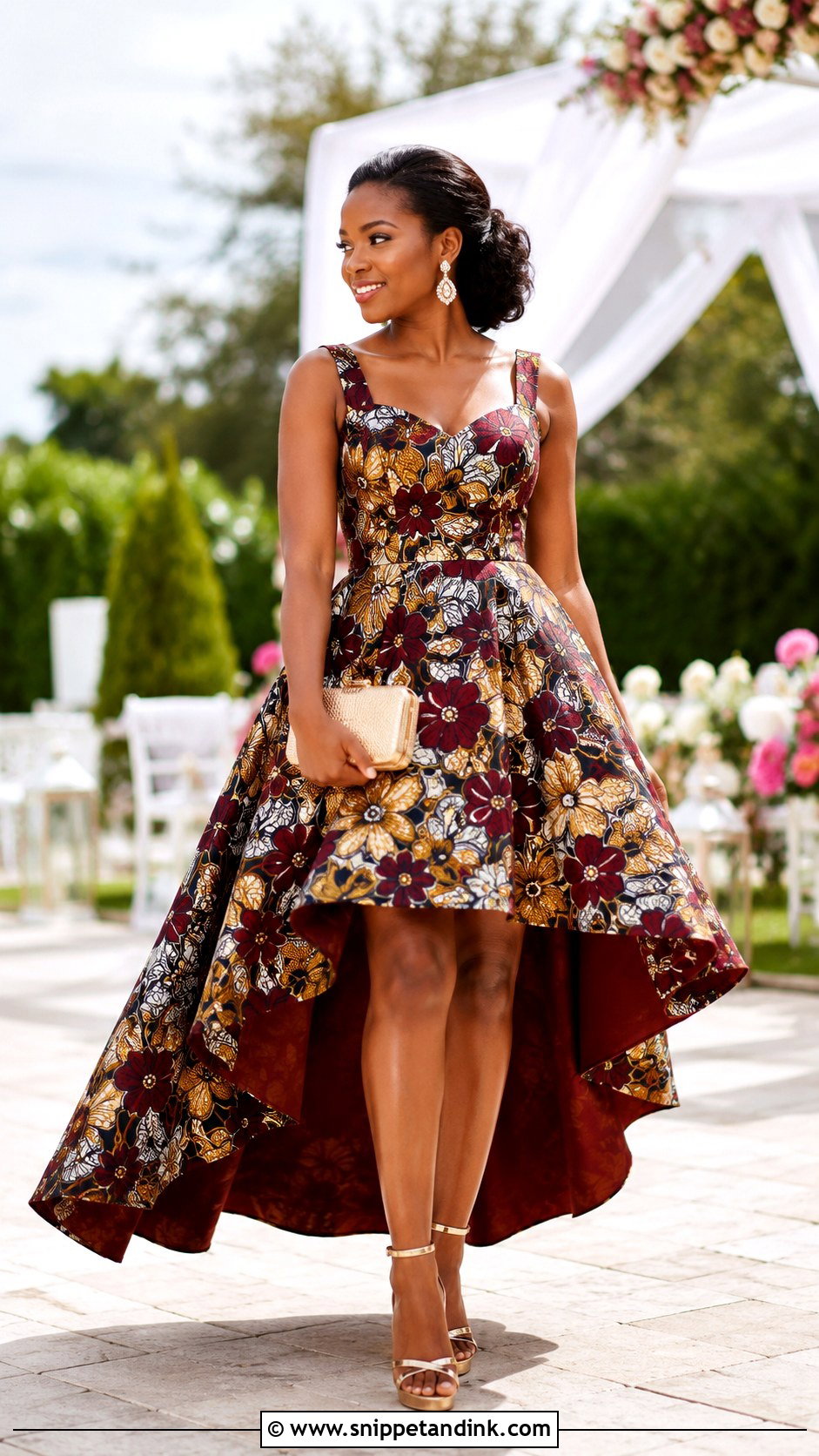
The front stops near the knee, the back falls to the ankle or floor, and your shoes become part of the outfit. A fitted bodice and structured waist balance the movement, with short sleeves or a modest off-shoulder neckline. Don’t go too short at the front; the long back already does plenty. Since your shoes are on show all night, they need to look polished and feel stable on grass or a dance floor. Metallic heels, a solid clutch and medium earrings finish it. Ankara holds a crease along the hemline curve if it’s packed folded, so hang it, and steam it before you leave.
19. Moroccan Caftan Wedding Outfit
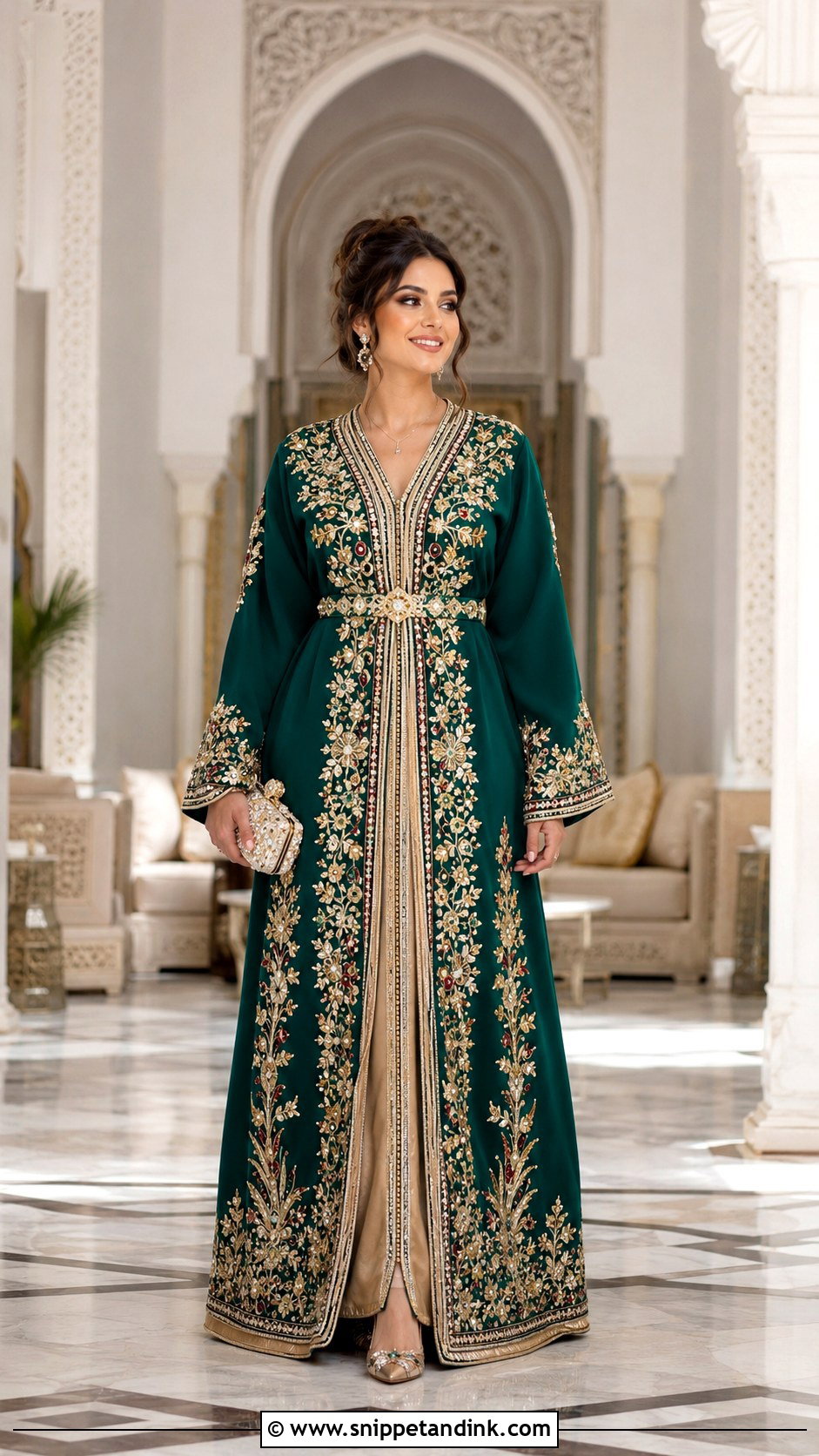
A Moroccan caftan gives full coverage and real structure, with embroidery or trim along the neckline, front opening, cuffs and waist. The belt is what stops it looking like a robe, so wear it at the narrowest point of your waist. Pointed metallic shoes, a small jewelled clutch and drop earrings that complement rather than repeat the trim are all it needs, with a low bun or soft waves near the neckline. Check that it allows sitting and walking without going baggy. Moroccan wedding dress has its own traditions and construction, so buy authentic pieces or use a knowledgeable maker for a Moroccan event, and ask whether a very ornate caftan suits your role as a guest.
20. African Print Bridesmaid Dress Outfit
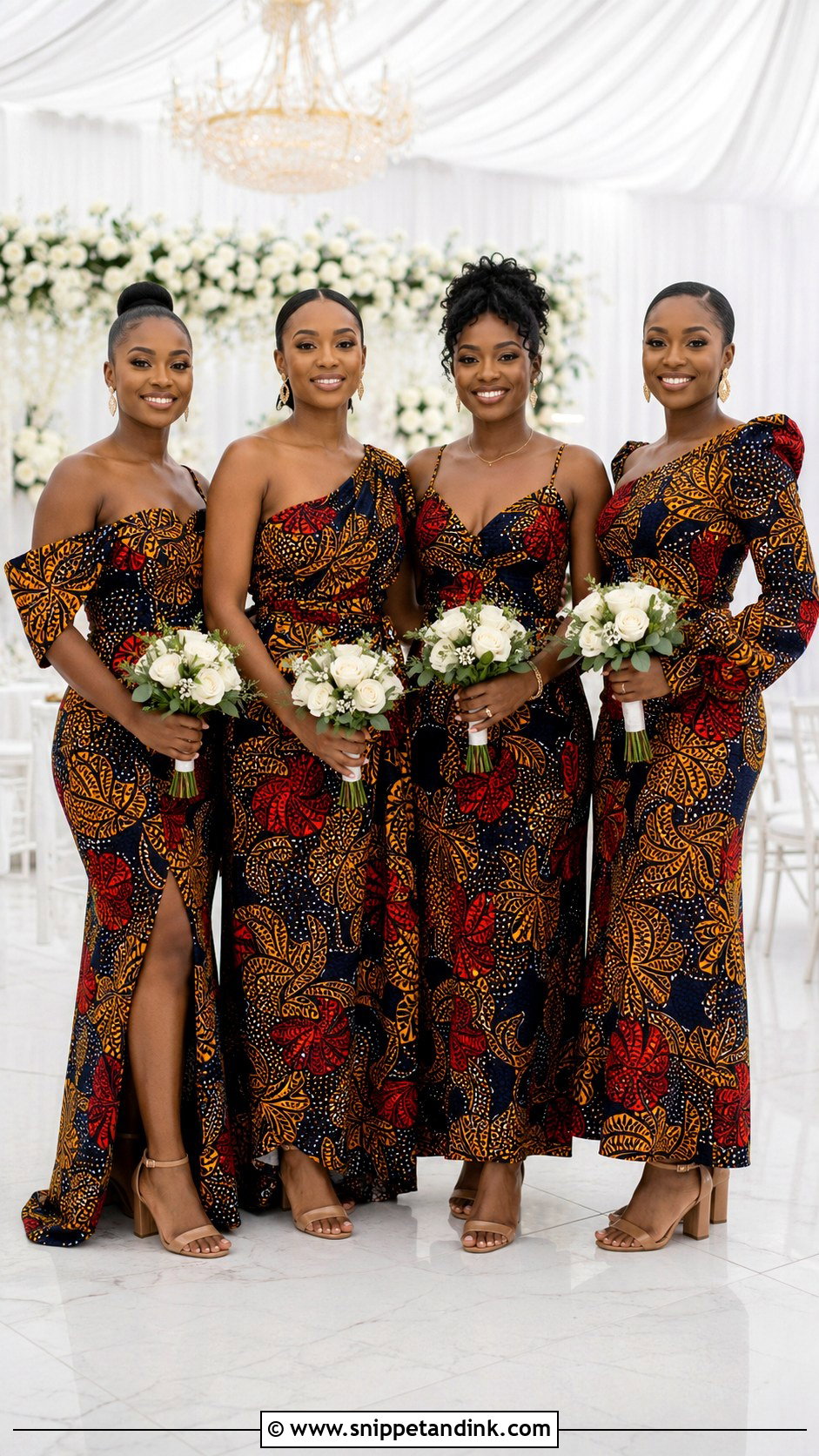
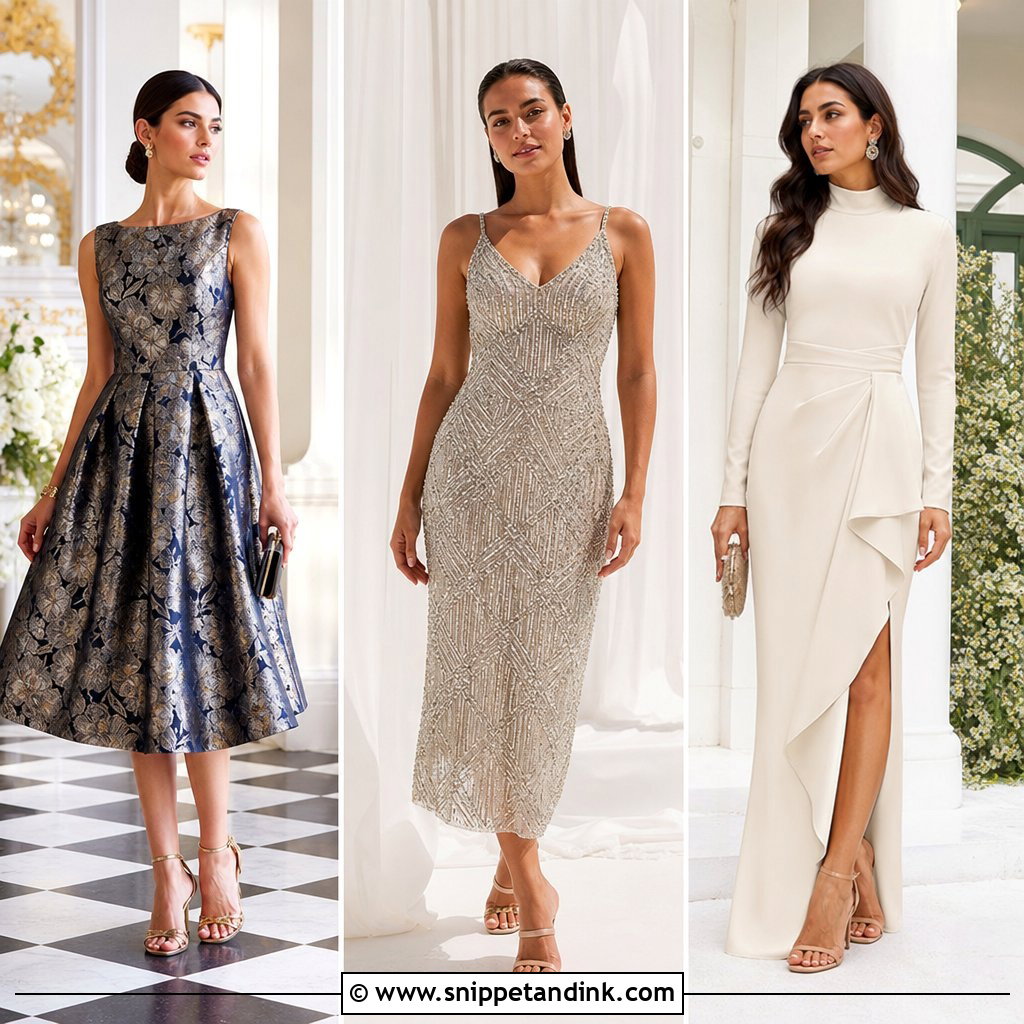
Bridesmaids in one shared African print can look unified without forcing everyone into the same cut. Agree on the fabric or palette, then let each woman choose her neckline, sleeve or skirt shape: an A-line maxi for one, a wrap bodice or a softly fitted column for another. Tie it together with matching shoes, bouquets, jewellery or headwraps. Neutral block heels last far longer than thin stilettos through outdoor photos. With different tailors involved, ask everyone to pre-wash the fabric before cutting, or the shrinkage will vary from dress to dress. Book fittings early so print placement, hems and bodice support can be corrected, and let the bride and cultural expectations have the final word.
Spraying, Dancing and Heat Will Test Your Outfit
At many West African weddings, guests dance up to the couple and shower them with money, and the dance floor stays busy for hours. That’s the part of the day that exposes weak tailoring. A strapless bodice that’s fine standing slips when your arms go up, and a wrapper loosens after two songs.
In the final fitting, raise both arms, sit low, and turn quickly. If anything shifts, ask for boning, a gripper band or a hidden hook. Carry a clutch with room for crisp notes if spraying is part of the celebration, and choose a fabric that won’t show sweat marks in heat: printed cotton and lace hide damp far better than plain satin.
Flying to the Wedding? Pack the Outfit Like This
- Carry the outfit and gele in your hand luggage. Checked bags get lost, and tailored aso ebi can’t be replaced overnight.
- Roll lace and printed cotton in tissue rather than folding, which leaves fewer hard creases.
- Pack the gele flat between two pieces of card so its folds survive.
- Bring a small travel steamer and test the hotel’s power sockets.
- Hang everything the night you arrive, so most creases relax before morning.
Ask the Hosts, Then Dress for the Last Dance
The best outfit at an African wedding respects the people, the textiles and the traditions being celebrated. Start with the invitation, the dress code and any fabric the couple has chosen. Then build the whole look: shoes you can stand in, accessories that don’t compete, tailoring that holds and hair that survives a gele or a long day. Ankara, Kente, aso oke, shweshwe, kitenge, lace, adire and embroidered cloth all work in the right setting. Don’t treat a ceremonial garment as a costume or assume one tradition speaks for the whole continent. If you’re unsure, ask the hosts or a designer who knows the garment.
You'll Like These Ideas:


Leave a Reply