
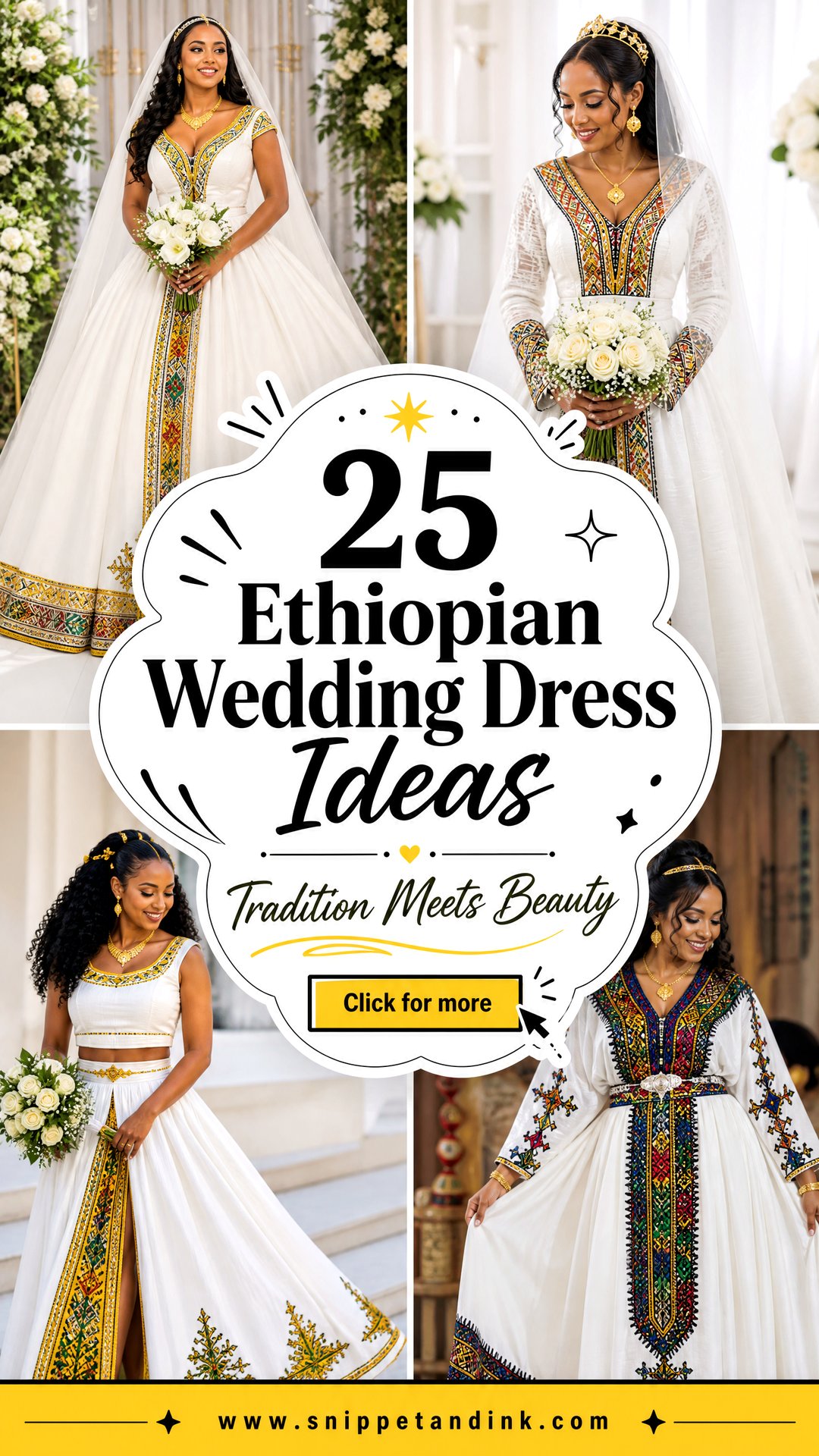
Most Ethiopian brides I dress end up wearing two or even three outfits across the wedding, and the handwoven Habesha kemis is nearly always one of them. What gives it character is the tibeb, the woven border pattern that runs along the neckline, cuffs, hem and front panel, and the choice of tibeb colour, width and placement shapes the whole look far more than the cut does. Plenty of couples pair a traditional dress for the cultural ceremony with a modern gown for the reception, and families often coordinate bridesmaids, mothers and guests around the same thread colours. Below are 25 looks for brides and everyone standing near them, with notes on how each one actually wears over a long day.
Ordering a Handwoven Kemis From a Weaver
A handwoven kemis is made, not pulled off a rail, so the calendar matters more than with a shop gown. Weavers often have long queues before the main wedding season, and if the dress is coming from Ethiopia to a bride abroad, shipping and a local alteration add more weeks. I tell brides to place the order several months ahead and to treat any quoted date as a best case.
The order itself goes more smoothly when you send the weaver the right things:
- Full measurements taken by someone else, including shoulder to floor in the shoes you’ll wear, not just bust, waist and hip.
- A clear photo of the tibeb pattern you want, and a note of exactly where it should run: neckline, cuffs, hem, centre panel or all four.
- Whether you need the bodice lined and a slip made, because the open cotton weave is often sheer in daylight.
- The netela and any groom’s trim on the same order, so the thread colours match.
When the dress arrives, check it in daylight before anything else. Indoor bulbs make yellowed cotton and mismatched gold look fine. Then book the local tailor straight away for hemming, since a handwoven border can’t be shortened from the bottom without losing the pattern; the length usually comes out at the waist or shoulder instead.
1. White Habesha Kemis Wedding Dress
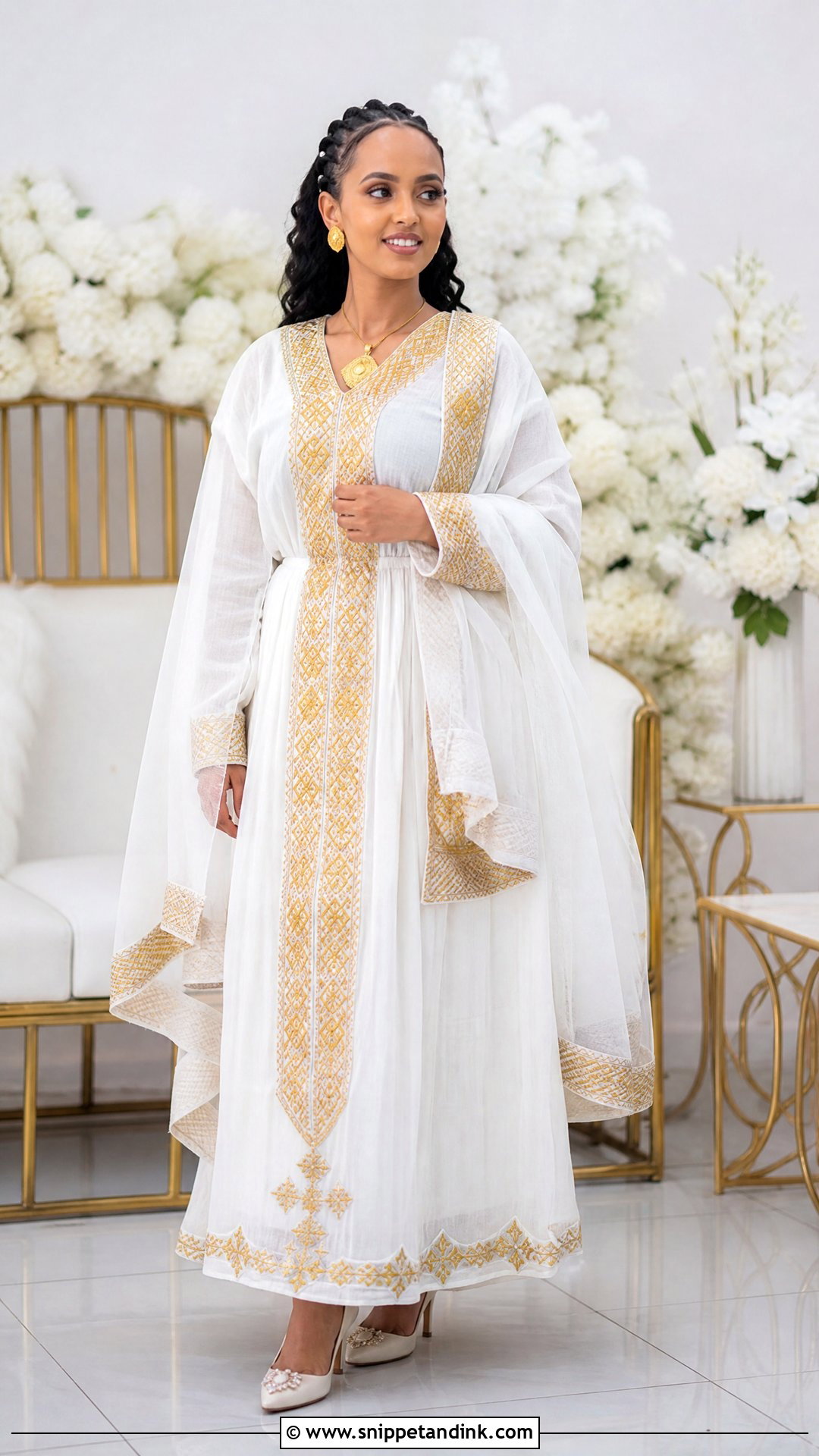
The white kemis is where I start every fitting, because it tells me how a bride carries handwoven cotton. The base cloth is soft and slightly open in weave, so the first thing I check is sheerness: stand her by a window and you’ll often need a fine cotton slip underneath. Tibeb on the neckline, sleeves, hem and centre panel does all the decorating. A matching netela, gold jewellery, low heels and either neat braids or soft curls finish it. If she wants it to read more bridal, I ask the weaver for a wider border in gold, ivory or a soft green rather than adding extra embellishment.
2. Gold Habesha Kemis Bridal Dress
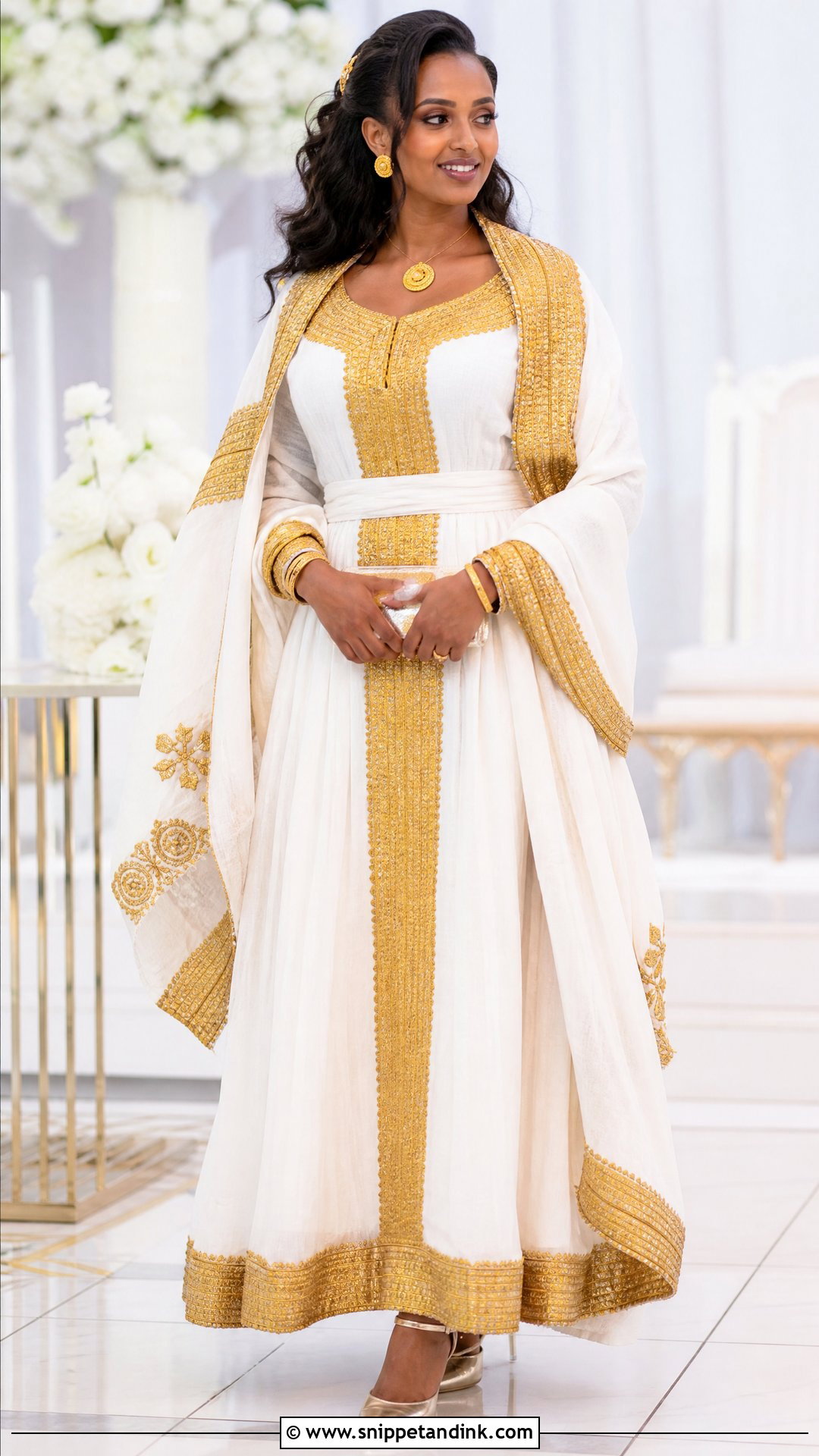
Gold-only tibeb on ivory or white is the formal version, and it’s the one I suggest when the groom is wearing white and gold too, since matching one metallic is far easier than matching five colours. Expect the metallic thread to feel stiffer than cotton tibeb. At the cuffs that’s fine; at the neckline it can scratch, so I have a soft facing stitched behind it before the day. Gold earrings, a fine bracelet and metallic sandals or closed-toe heels are enough, along with a shawl trimmed in the same gold.
3. Modern Ethiopian Wedding Dress
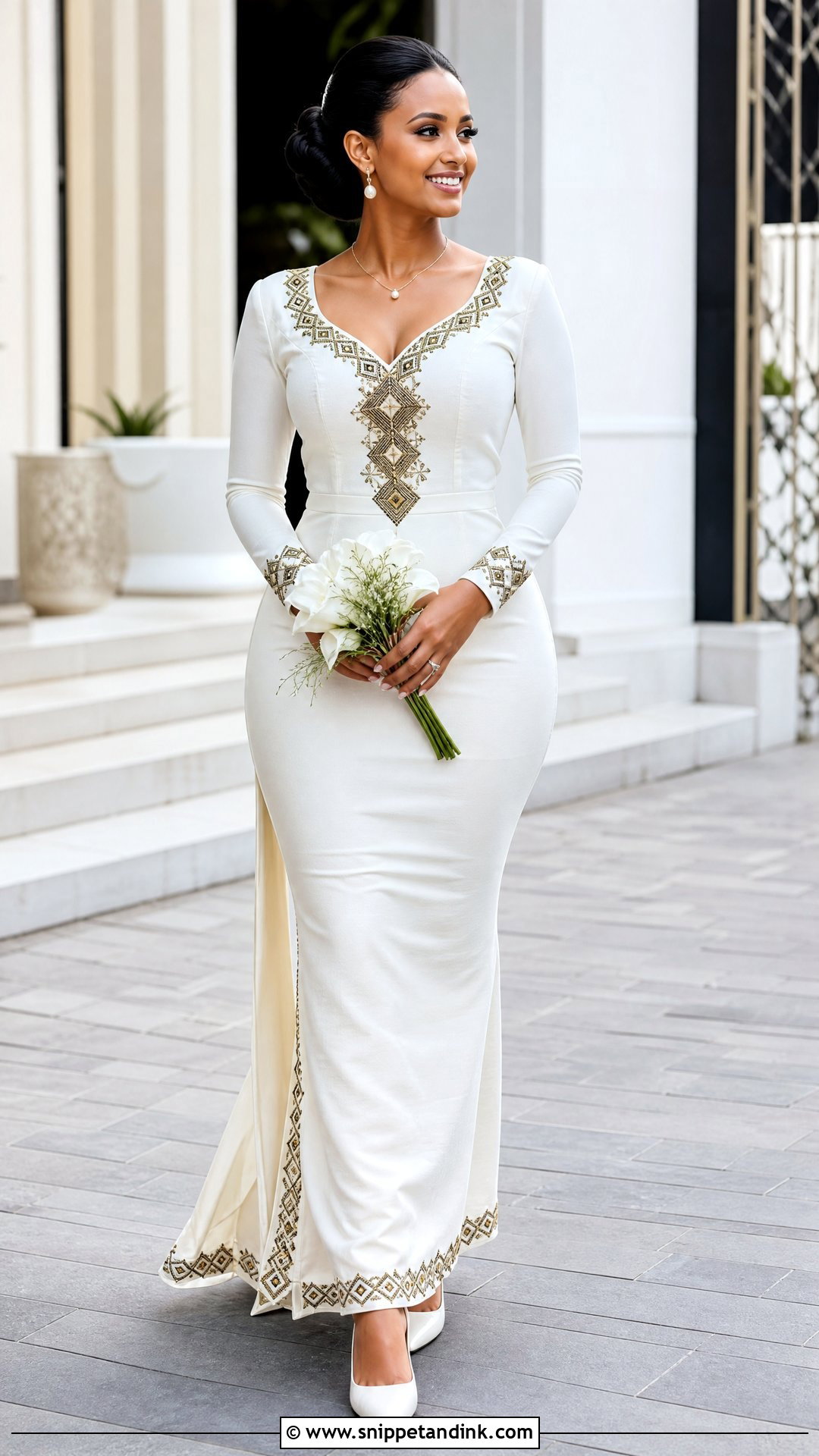
A modern cut gives the diaspora bride a fitted bodice, a defined waist and a mermaid or A-line skirt, with tibeb placed where a designer would put lace: framing the neck, running down the front, or edging the sleeves. My rule here is restraint with placement. One strong band reads intentional, while borders on every edge of a structured gown start to look like a costume. Pearl earrings, white heels and a smooth updo keep it bridal.
4. Ethiopian Wedding Dress With Netela
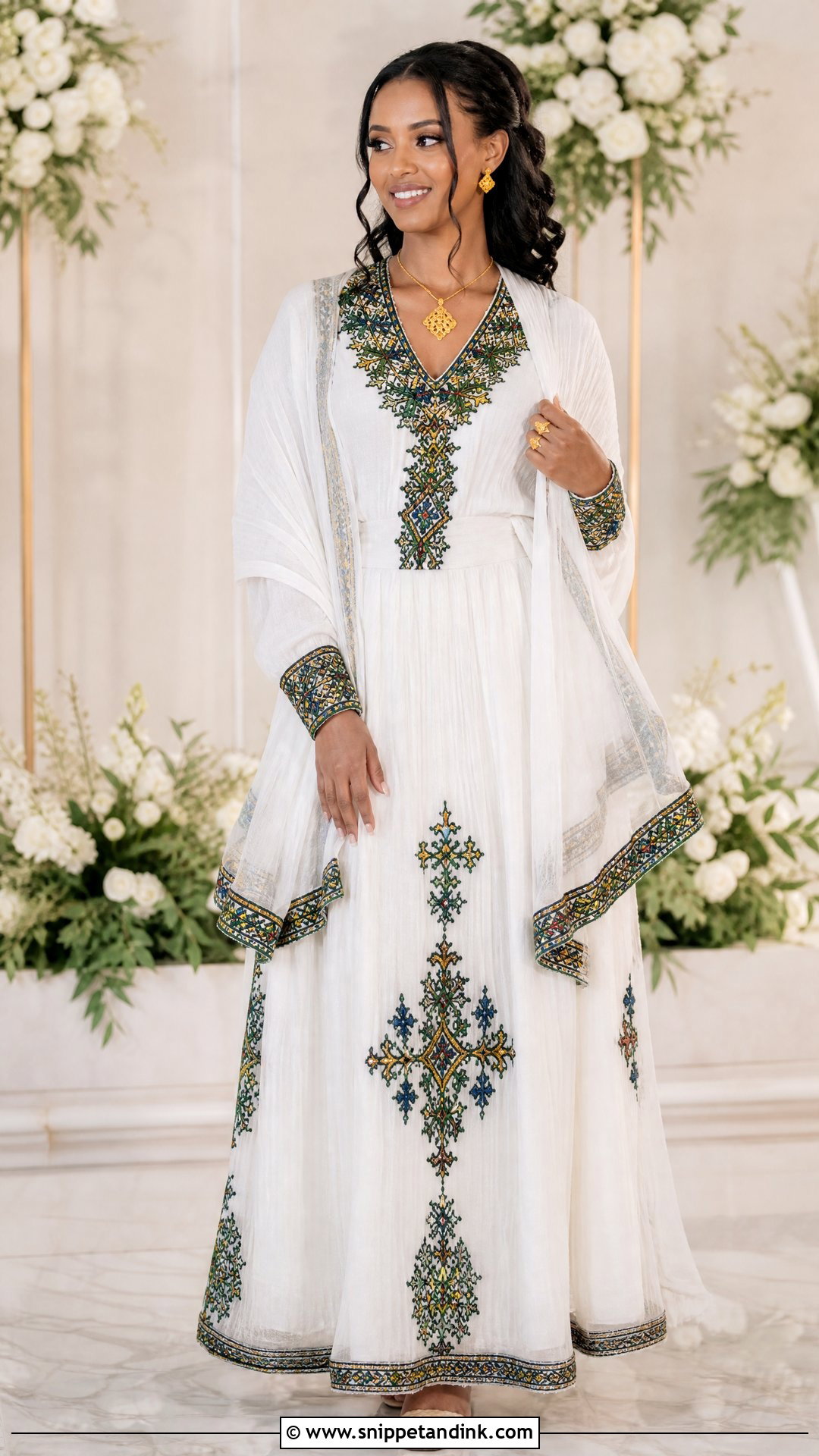
The netela is a light gauze shawl, and how it’s worn matters to many families. It can rest over the shoulders, wrap the arms, or cover the hair, so I always ask the bride what her mother or grandmother expects before the church ceremony. Choose one whose border repeats the dress tibeb; a white kemis with gold, green or burgundy edging and a matching shawl looks planned rather than borrowed. Because netela gauze slips on smooth fabric, I tuck a small safety pin under the fold at the shoulder. Keep the shoes plain, ivory heels or metallic flats.
5. Ethiopian Wedding Dress With Kaba
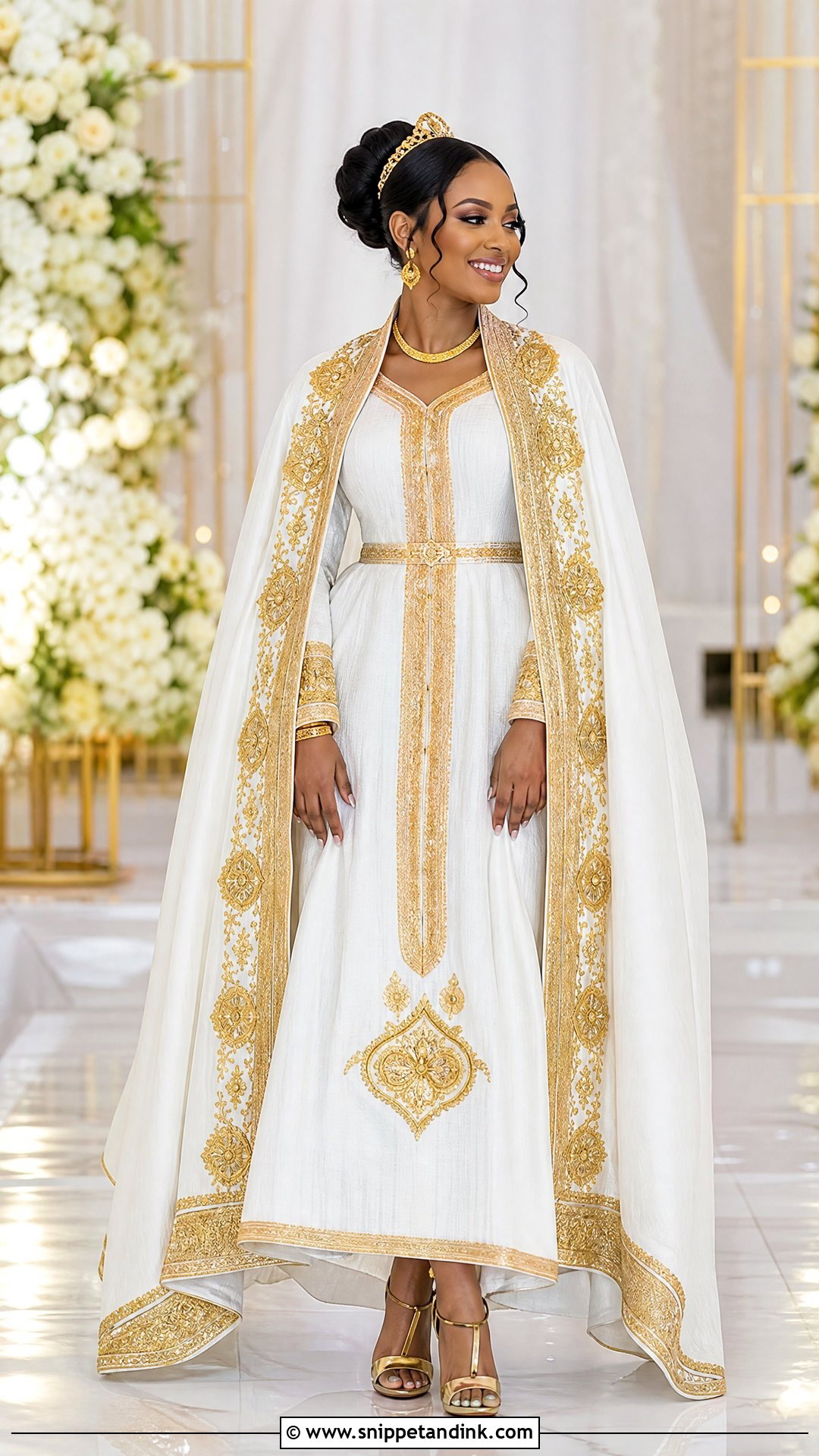
The kaba is a cape-like outer layer, often richly embroidered, worn by the couple for the entrance or a key ceremonial moment. It adds real weight and volume across the shoulders, so the kemis under it needs to be clean and well fitted, or the two layers bunch at the back. Over white or ivory with gold tibeb it reads regal, and the groom can match in a white traditional suit with the same trim. I’d plan when it comes off: most brides wear it for the entrance and portraits, then remove it before eating or dancing. Keep jewellery refined and hair smooth so the cape stays the focus.
6. Ethiopian Lace Wedding Dress
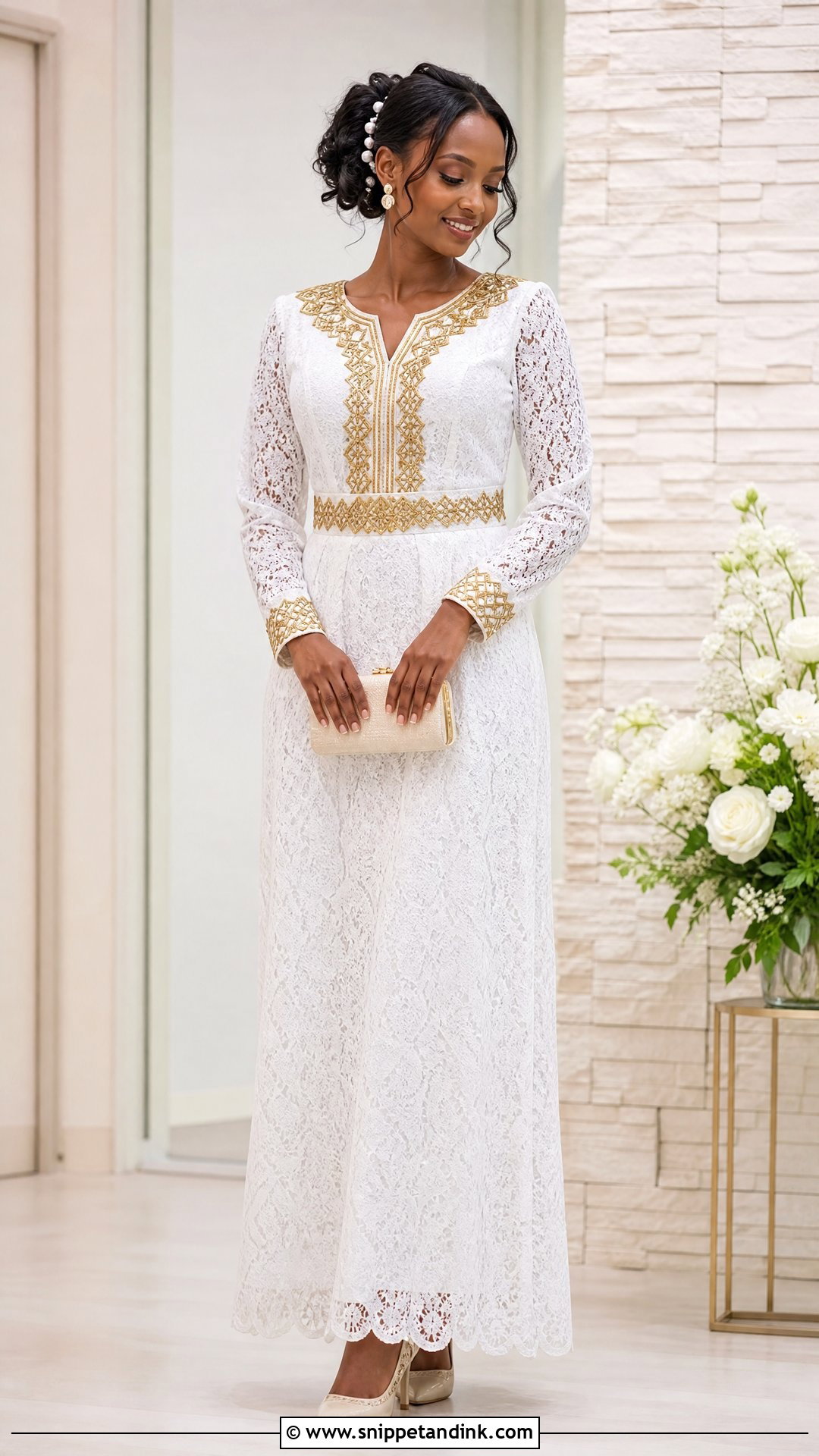
Lace and tibeb can work together, but they compete if both are busy. I use lace either as an overlay on the bodice or sleeves of a kemis, or as the main fabric of a gown with tibeb set at the cuffs, waist or train. White lace with gold or silver tibeb keeps the cultural link clear. Indoors, lace picks up light in close-ups. The thing I warn about is snagging: metallic tibeb thread and open lace catch on each other and on bracelets, so I keep wrists bare and add pearl pins in the hair instead.
7. Ethiopian Mermaid Wedding Dress
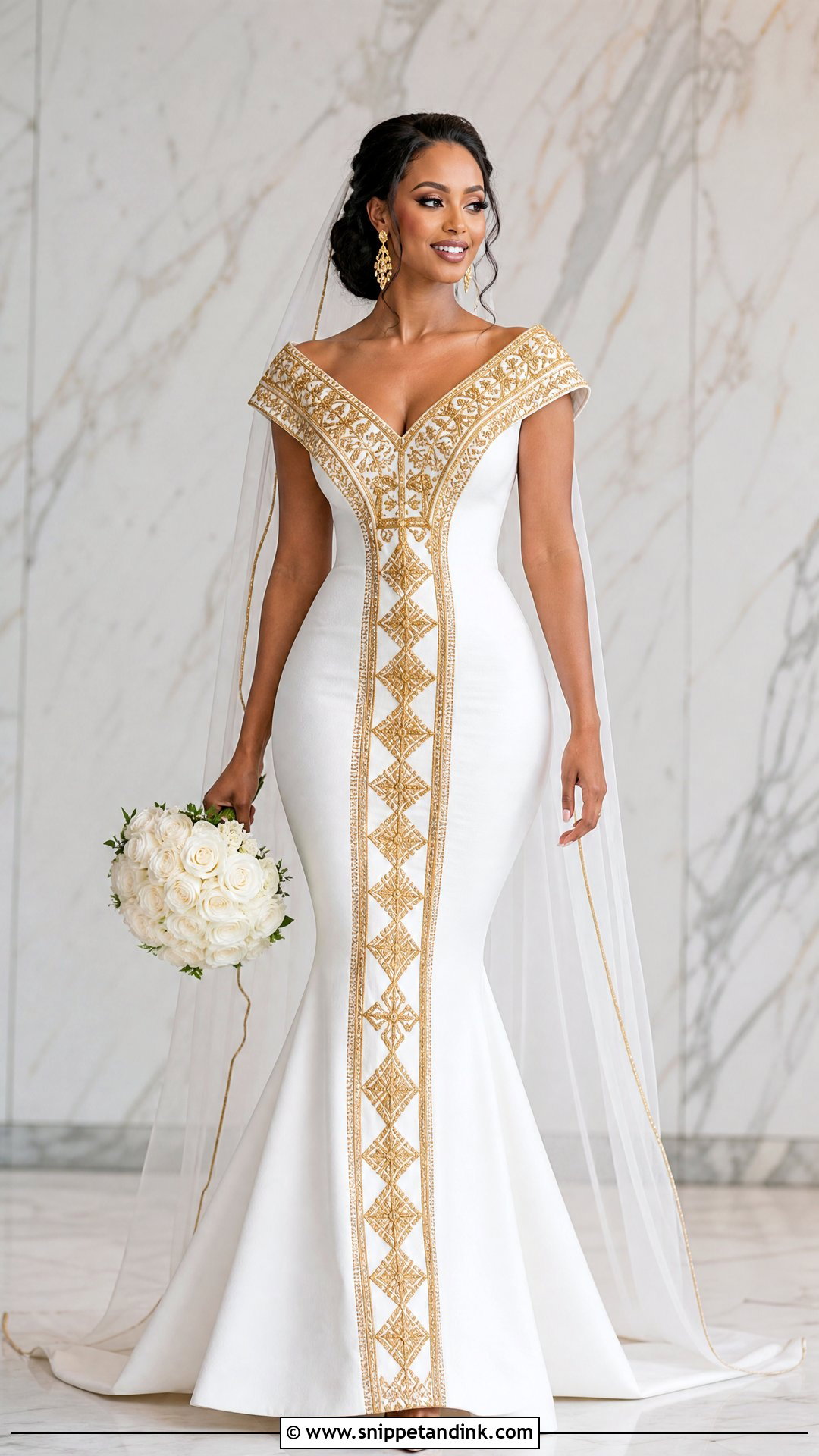
Mermaid shapes fit through the bodice and hips and open below the knee, so tibeb at the neckline, sleeves, waist or front panel keeps it Ethiopian without fighting the line. Sit down in it at the fitting. A tight knee plus a long ceremony on a low church bench is uncomfortable, and handwoven cotton has less stretch than bridal crepe, so I ask for a little more ease than a standard mermaid. White with gold detailing, a neat veil and slim heels suit it.
8. Ethiopian A Line Wedding Dress
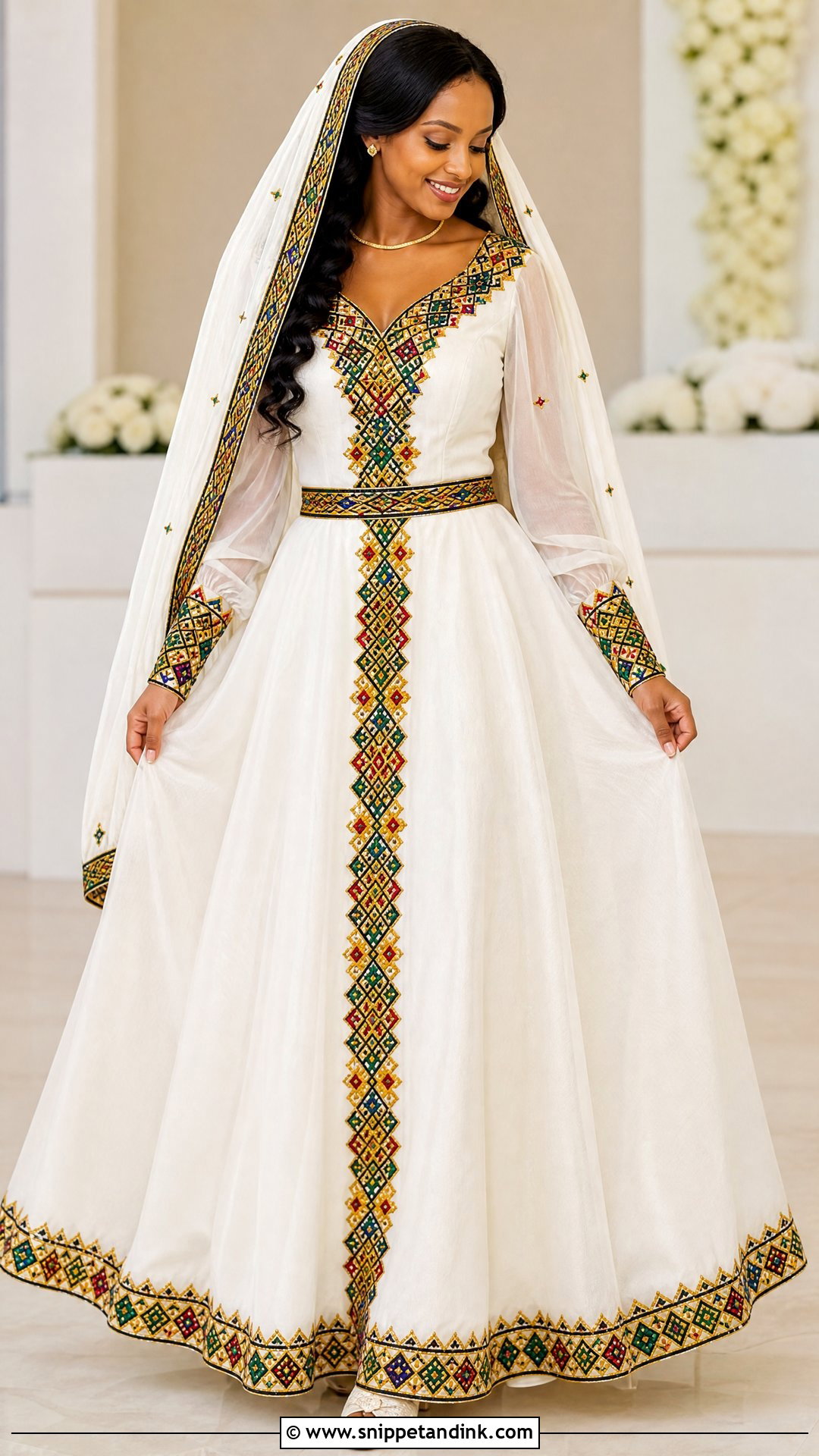
An A-line defines the waist and skims the hips, which is why I reach for it when I don’t yet know a bride’s figure or comfort level. It forgives a big lunch and long hours on your feet. Put the tibeb on the bodice, sleeve edges and hem, or keep the skirt plain and let the embroidery live on the upper half where the camera looks. A matching shawl adds tradition without weight, and medium heels with a structured bouquet keep the proportions even.
9. Ethiopian Ball Gown Wedding Dress
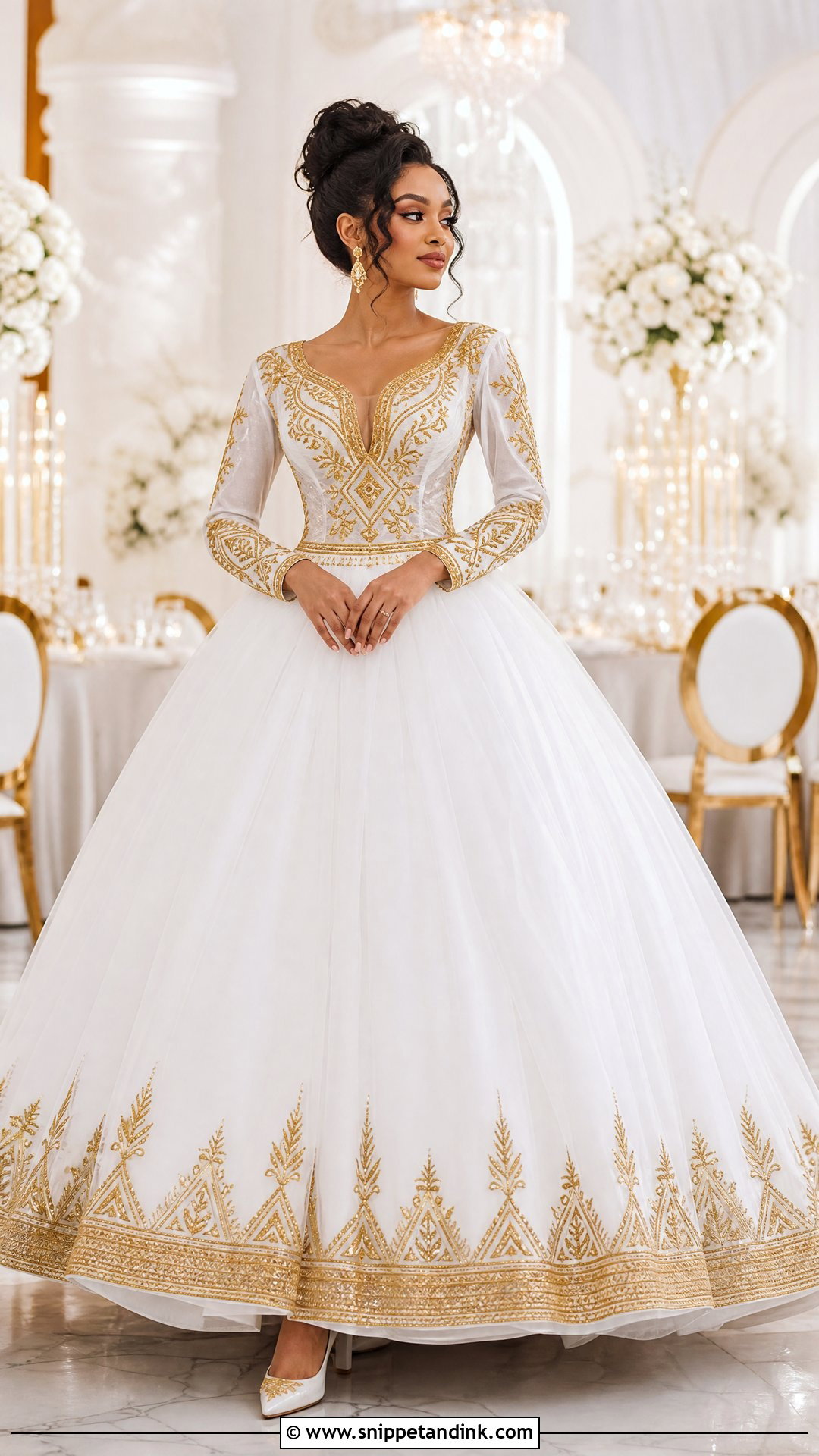
A ball gown with tibeb is pure entrance. The full skirt carries the drama, so I keep the bodice fitted and put the gold or coloured border there, plus a second band near the hem where it shows as she walks. Modest necklines such as bateau, round or high neck balance the volume. Two practical notes: a full skirt and a netela together get heavy and warm, and doorways, cars and church aisles get narrow. I’d save this one for a large reception hall and choose a lighter kemis for the ceremony.
10. Ethiopian Long Sleeve Wedding Dress
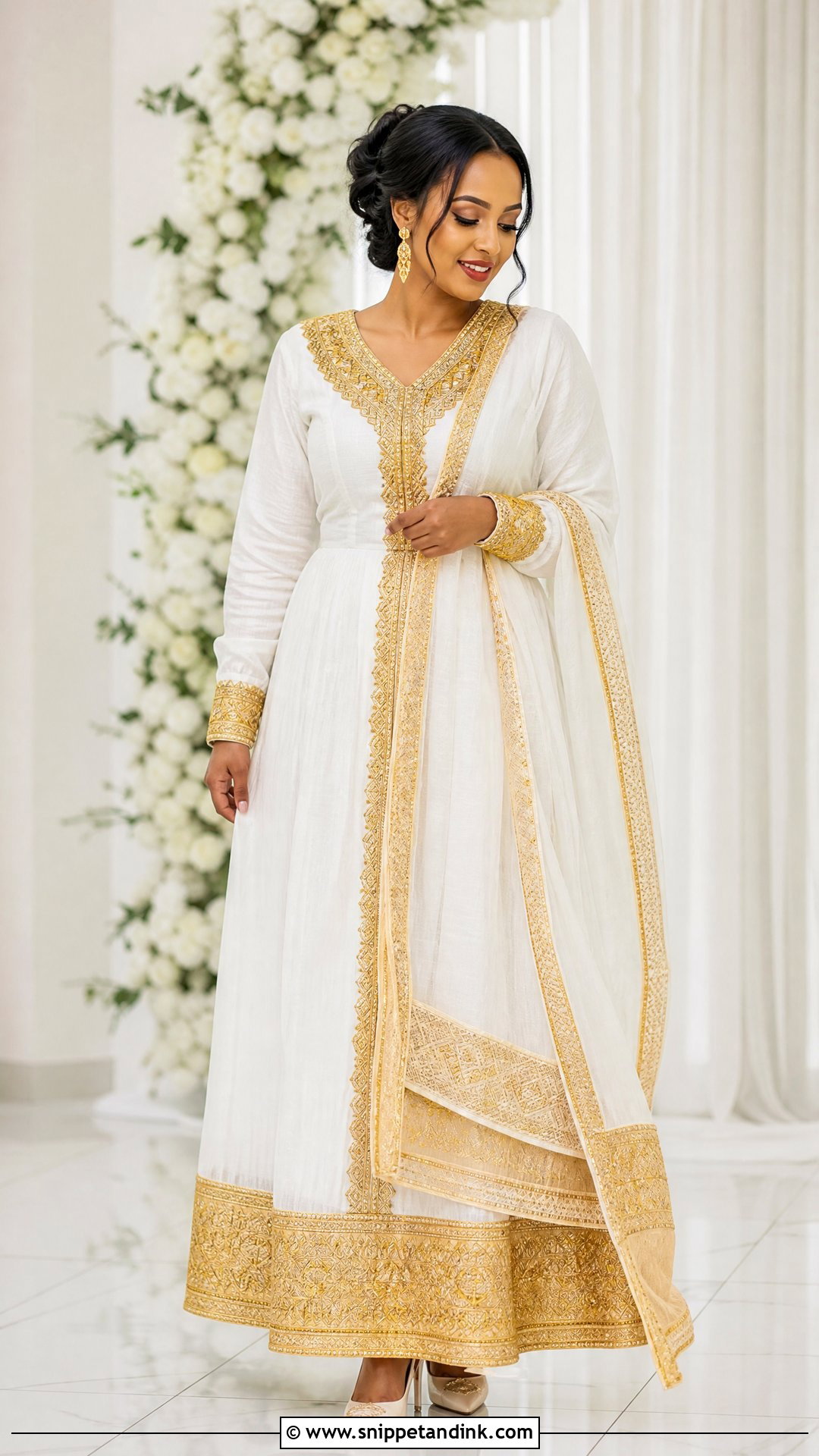
An Ethiopian long sleeve wedding dress gives coverage for church and for older relatives, and cuffs are an easy home for tibeb. Sleeves can be cotton, chiffon, lace or sheer fabric. The detail I check most is the armhole: long fitted sleeves cut too high or too narrow stop you lifting your arms to hug, dance or eat. Ask for a slightly lower armhole with a small gusset. Then add the netela, a low bun, drop earrings and comfortable heels. Cooler seasons and formal family settings suit it best.
11. Ethiopian Off Shoulder Wedding Dress
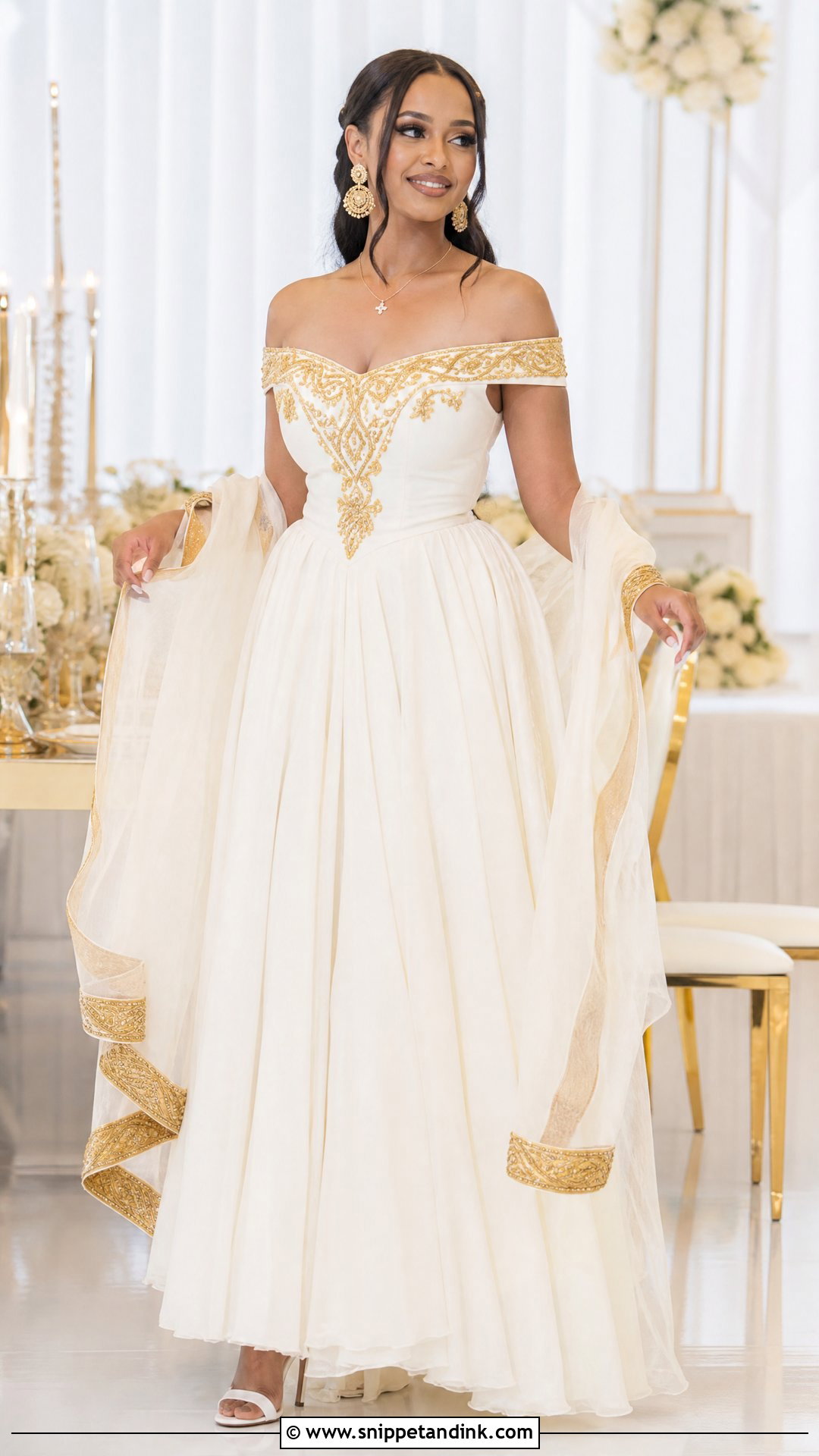
Off-shoulder necklines bring a reception feel, with tibeb along the edge or across the bodice. The catch is movement: an off-shoulder band rides up every time you raise your arms, so I add a little silicone grip inside the band and keep a matching shawl nearby for coverage when elders are present. A long, slit-free skirt keeps it modest. White with gold, silver or soft blue embroidery, statement earrings and smooth waves make it a fashion-forward second look rather than a ceremony dress.
12. Ethiopian High Neck Wedding Dress
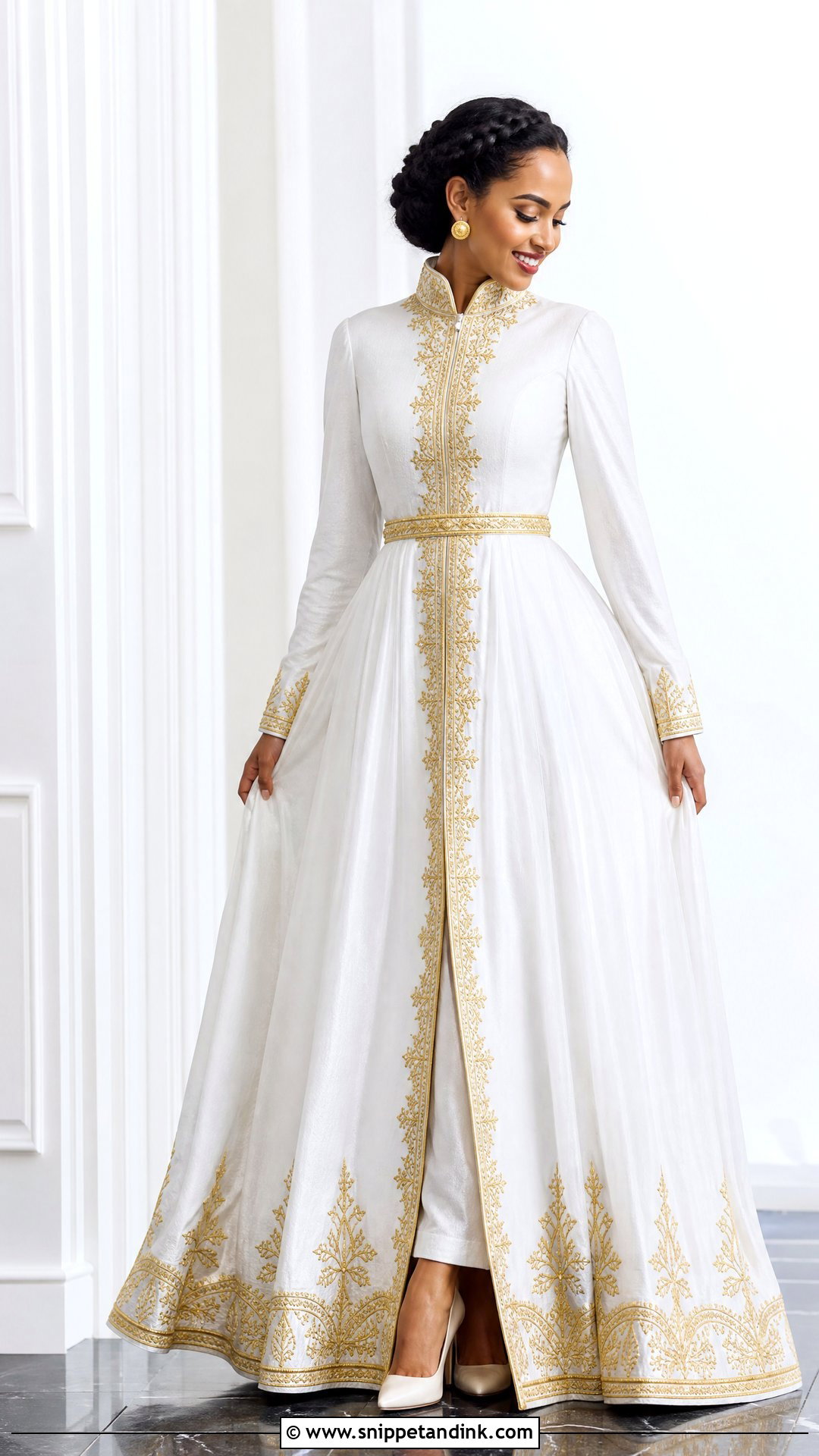
A high neck gives the widest canvas for tibeb, beading or woven trim, and that’s exactly why I tell brides to skip the necklace entirely. Earrings carry the jewellery. A low bun or a braided updo keeps the neck clear so the embroidery isn’t hidden by hair. Slim columns, A-lines and long sleeves all pair well. One fit check: a high, embroidered collar can feel tight once you’re warm, so make sure two fingers slide in comfortably before the final stitch. White and gold is classic; ivory with soft green or burgundy trim is a quieter alternative.
13. Ethiopian Two Piece Wedding Dress
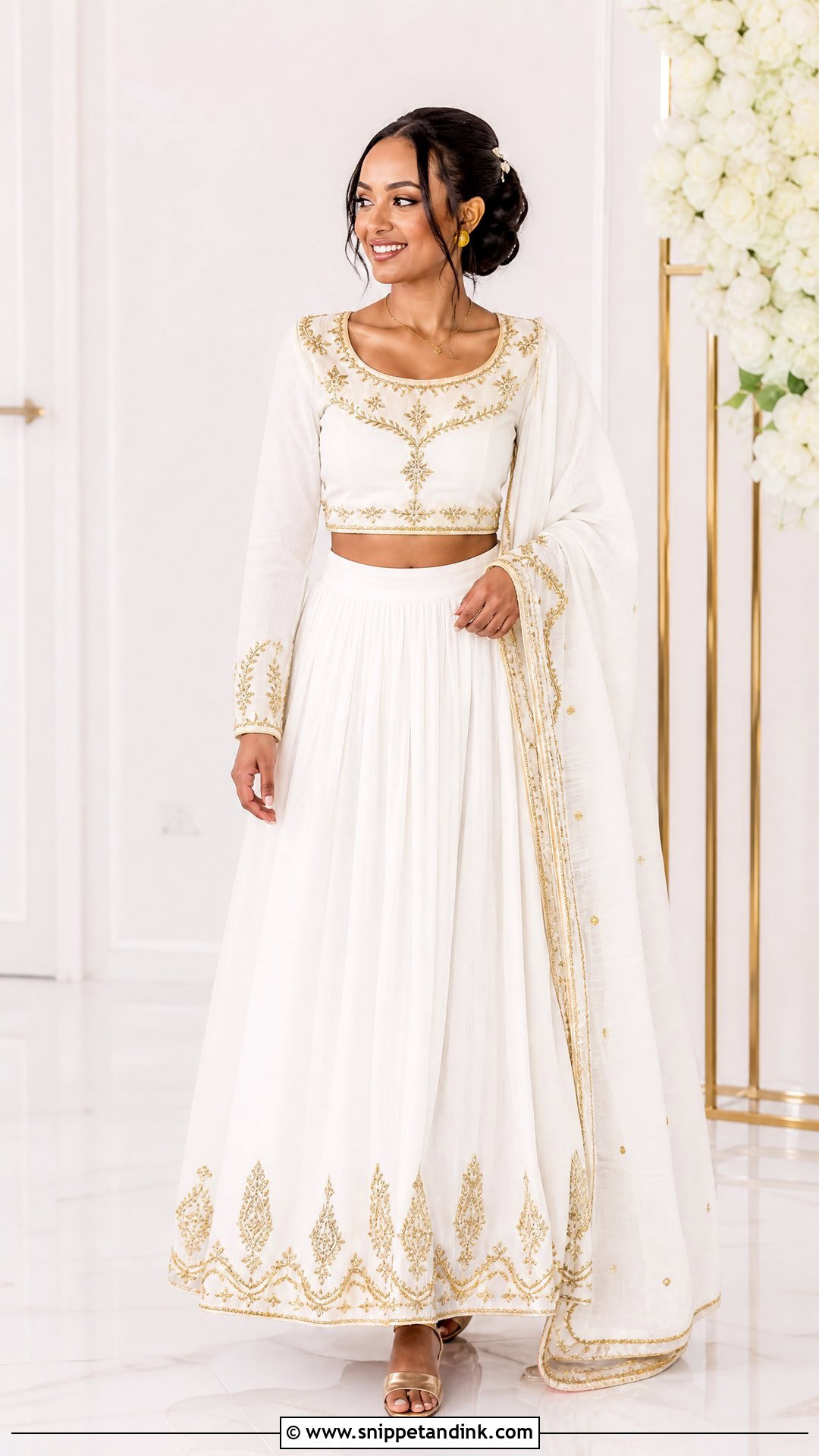
Separates make alterations far simpler, which is the real reason I like them for brides who can’t get to a fitting easily. An Ethiopian two piece wedding dress might be a fitted embroidered top with a full skirt, or a cropped blouse over a high-waisted flowing skirt. White, ivory or cream with gold or coloured tibeb keeps it bridal. Make sure the top overlaps the waistband a little; when you dance, a gap appears at the back faster than you’d expect. Finish with a matching netela, simple heels and coordinated jewellery.
14. Ethiopian Reception Dress
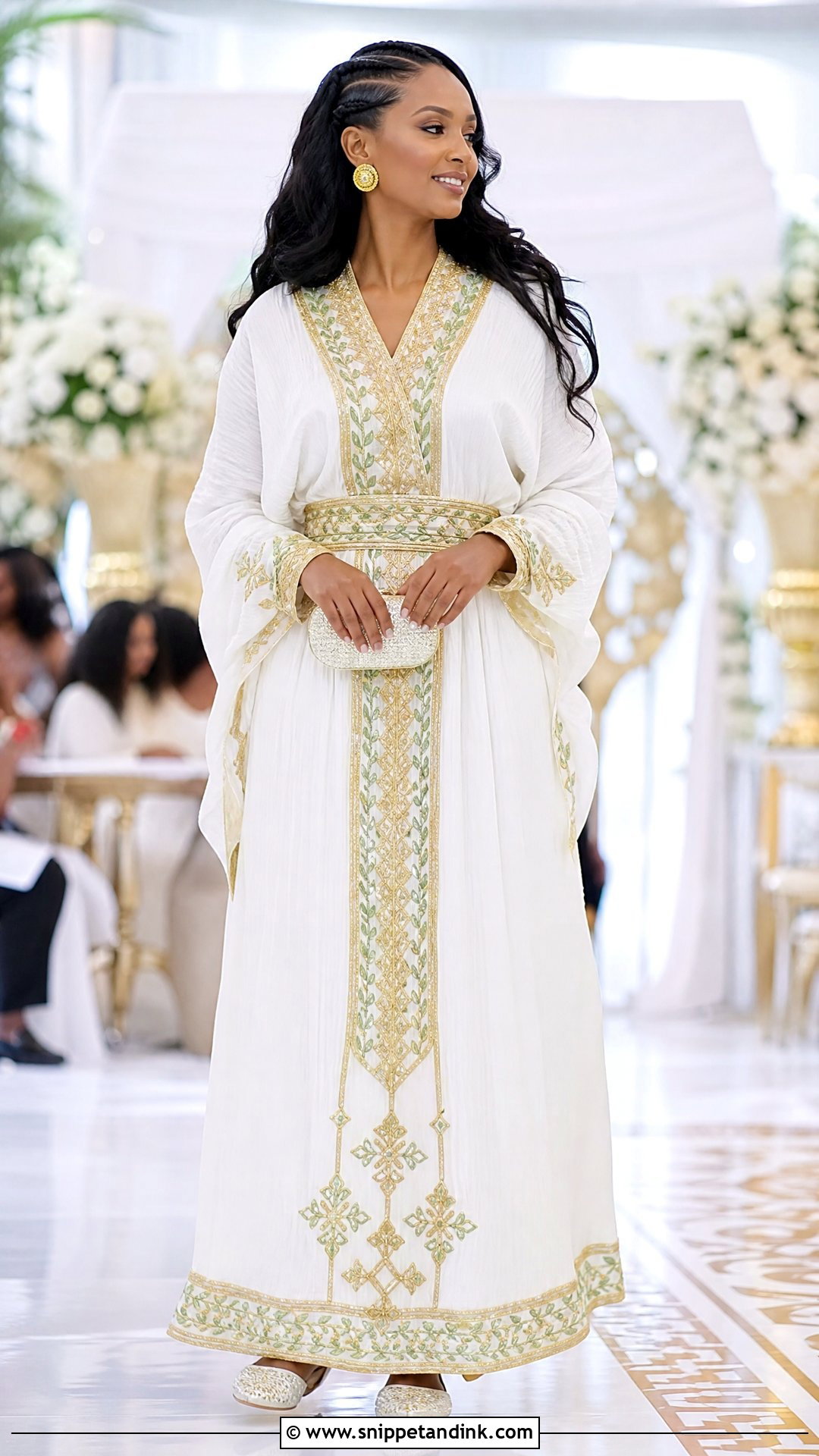
By the reception most brides are ready for something lighter. I look for breathable cotton, a skirt you can walk in without lifting, and tibeb that’s festive but not stiff. White with gold or bright borders is usual, though blush, champagne or pale blue also feel special after a white ceremony. Swap to lower heels or embellished flats for the eskista dancing. Choose jewellery with smooth backs; prongs and open settings catch the handwoven threads and pull loops in the cloth.
15. Ethiopian Melse Dress
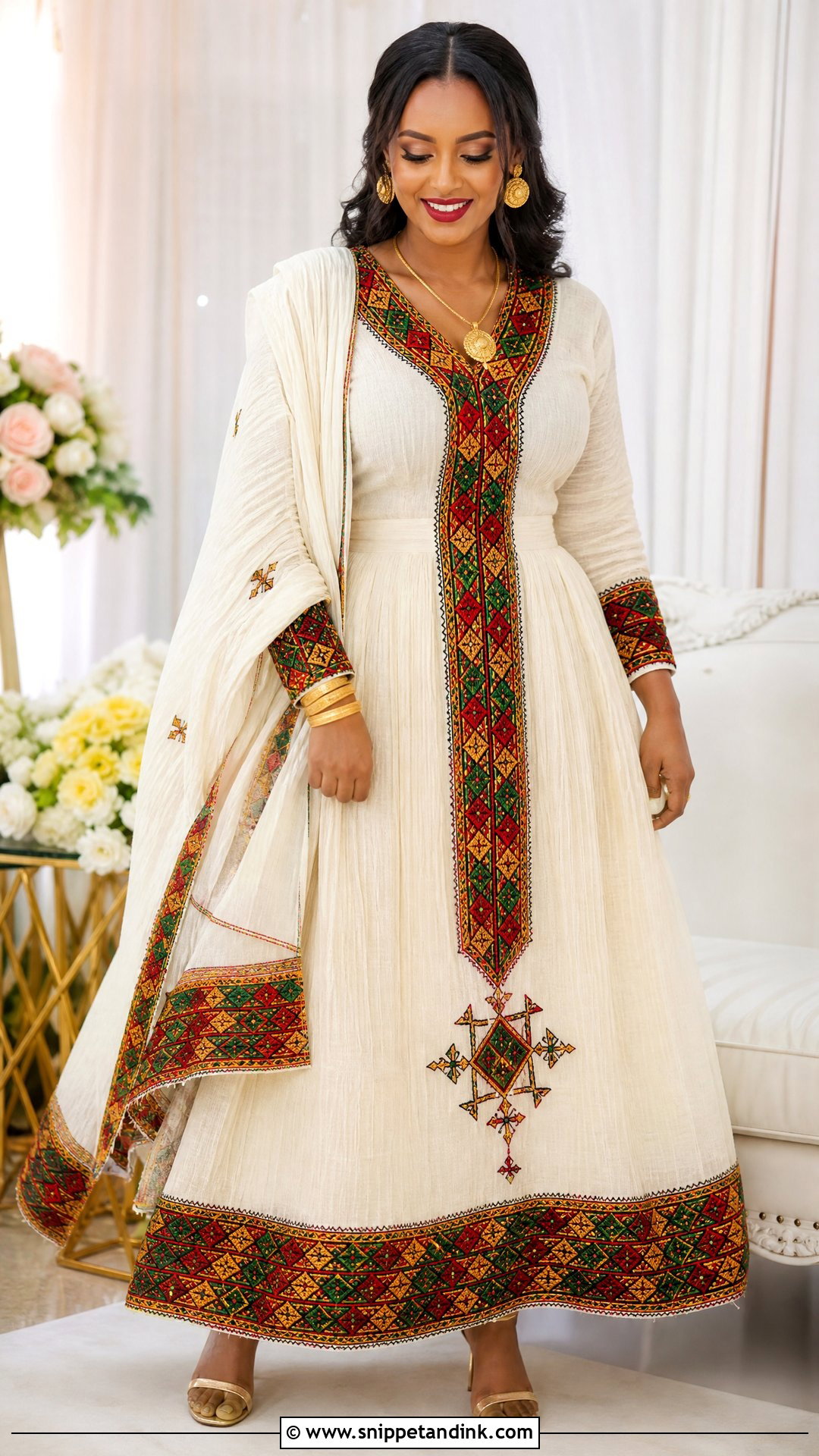
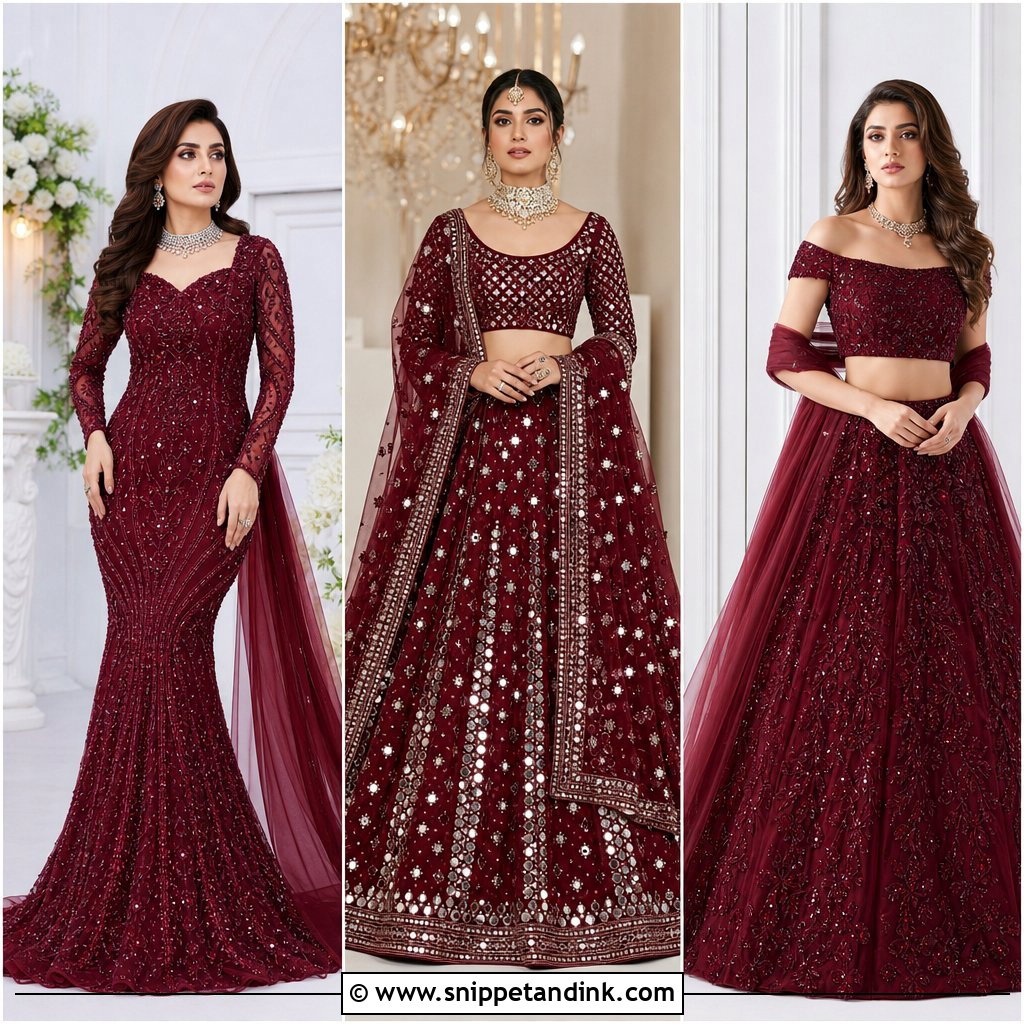
The melse is the celebration after the wedding, and it’s often where a bride’s personality comes out in colour. Richer embroidery, brighter borders or a second traditional look all fit here. A white or cream kemis with red, green, gold or royal blue tibeb reads festive and meaningful. I usually suggest a slightly lighter fabric than the wedding kemis because the day is long, with greetings, photographs and dancing. Statement earrings, comfortable shoes and a matching shawl complete it.
16. Ethiopian Engagement Dress
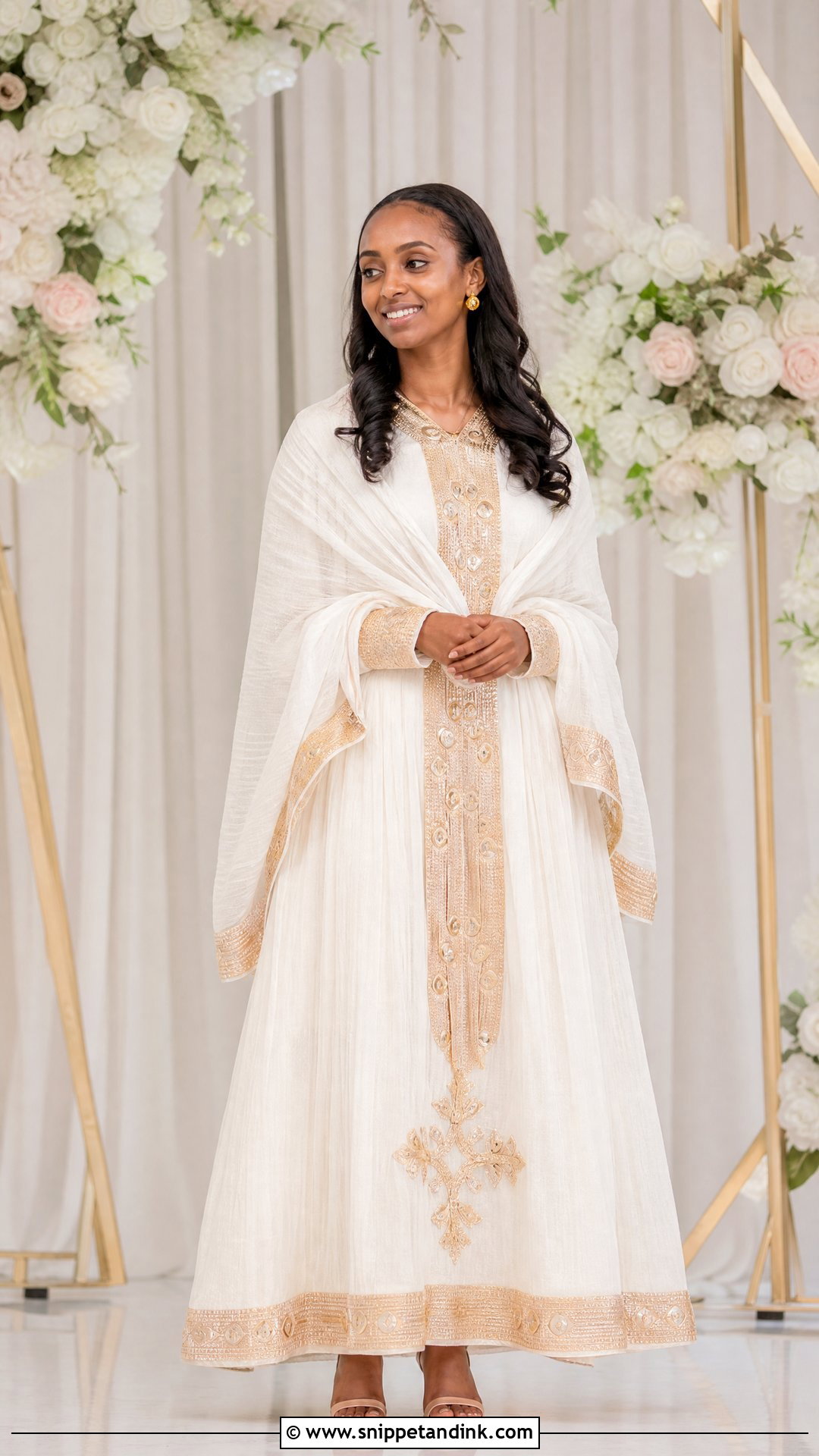
For an engagement I keep the embroidery at a medium weight so the wedding kemis still feels like the big reveal. Soft white, ivory, blush or champagne works. A simple handwoven dress with a matching netela is plenty for a smaller family gathering, while engagement photos can take a little more gold. Low heels, delicate jewellery and a neat hairstyle keep it relaxed. If you’re ordering both dresses from the same weaver, ask for different tibeb patterns so the photos from each event don’t look identical.
17. Ethiopian Bridesmaid Dress
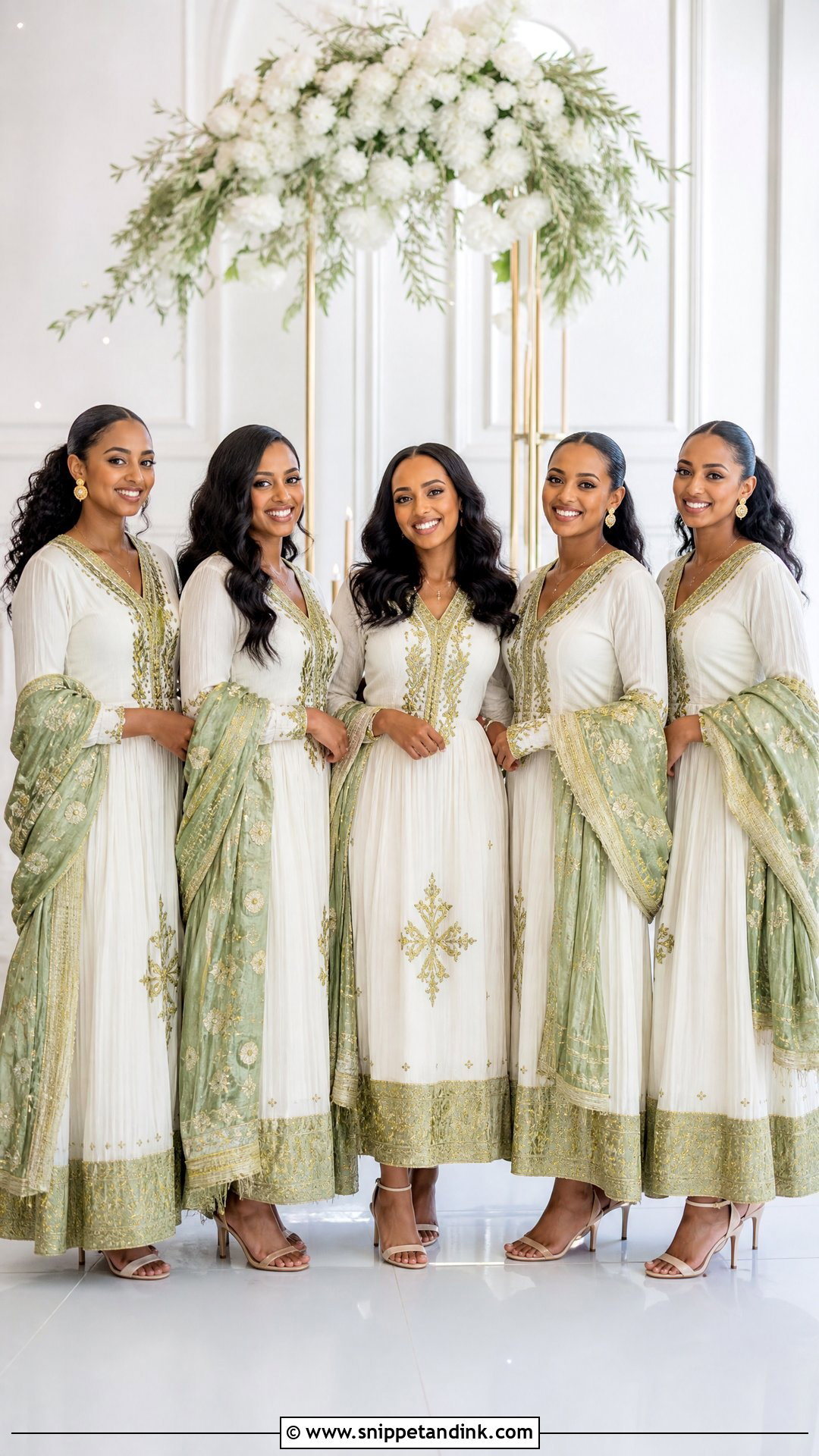
Bridesmaids don’t need identical dresses, but the tibeb should match. That’s the element the eye reads in a group photo. I pick one colour story first, white and gold, sage and ivory, burgundy and cream, or soft blue and silver, and let each woman choose a neckline and sleeve that suits her. Ordering all the borders from one weaver keeps the dye lots consistent; two workshops’ ‘gold’ rarely match. Comfortable shoes are worth insisting on for a long celebration, and matching shawls pull the line-up together.
18. Ethiopian Maid Of Honor Dress
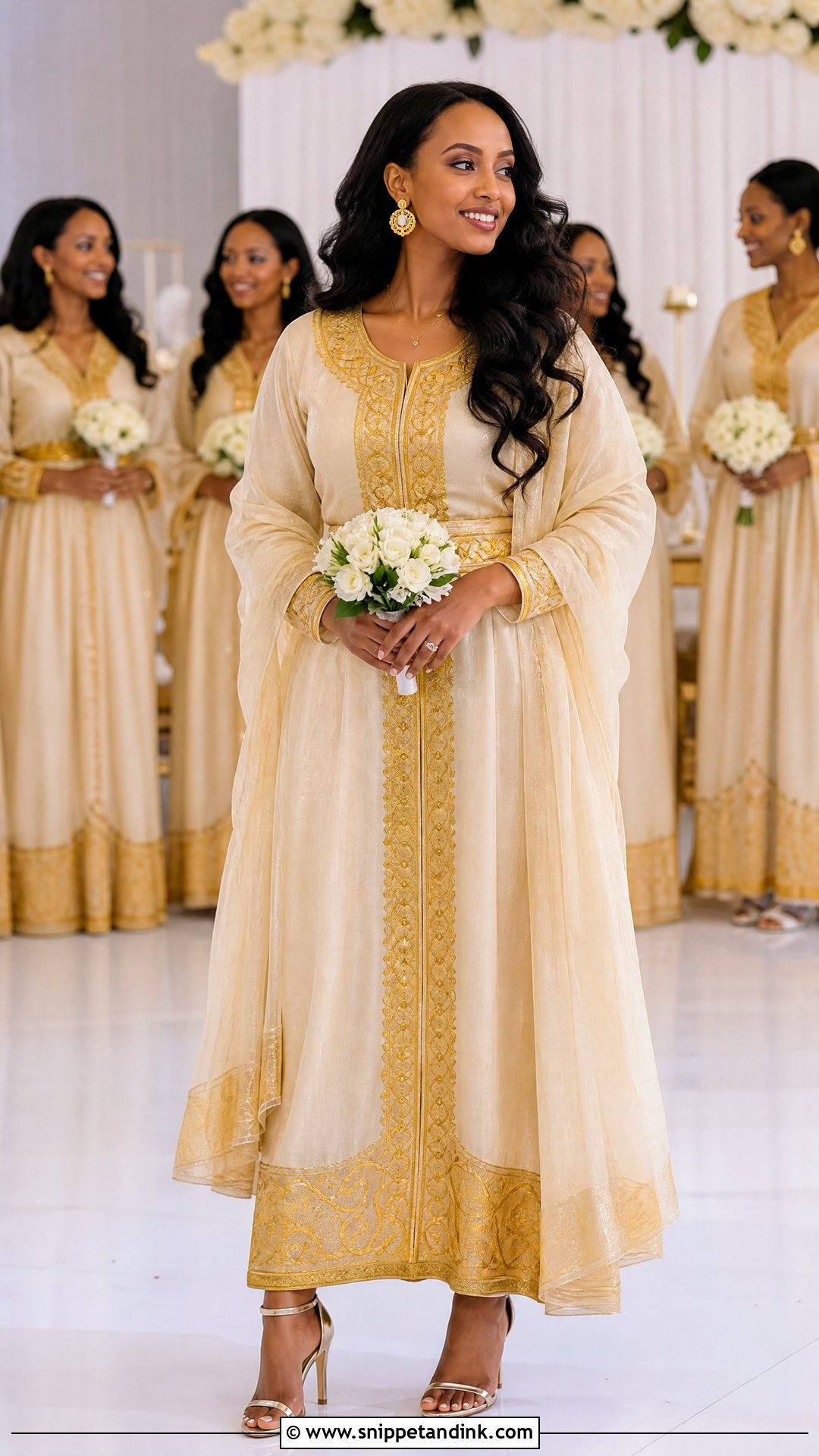
An Ethiopian maid of honor dress should stand slightly apart without competing with the bride. My usual move is to shift the base colour, not the pattern: if bridesmaids wear white and gold, she wears champagne with deeper gold tibeb; if the group wears soft green, she wears ivory with green and gold. A wider border, a more detailed neckline or a richer shawl does the rest. Keep the silhouette modest, a long fitted dress, an A-line kemis or an embroidered maxi, with coordinating heels.
19. Ethiopian Mother Of The Bride Dress
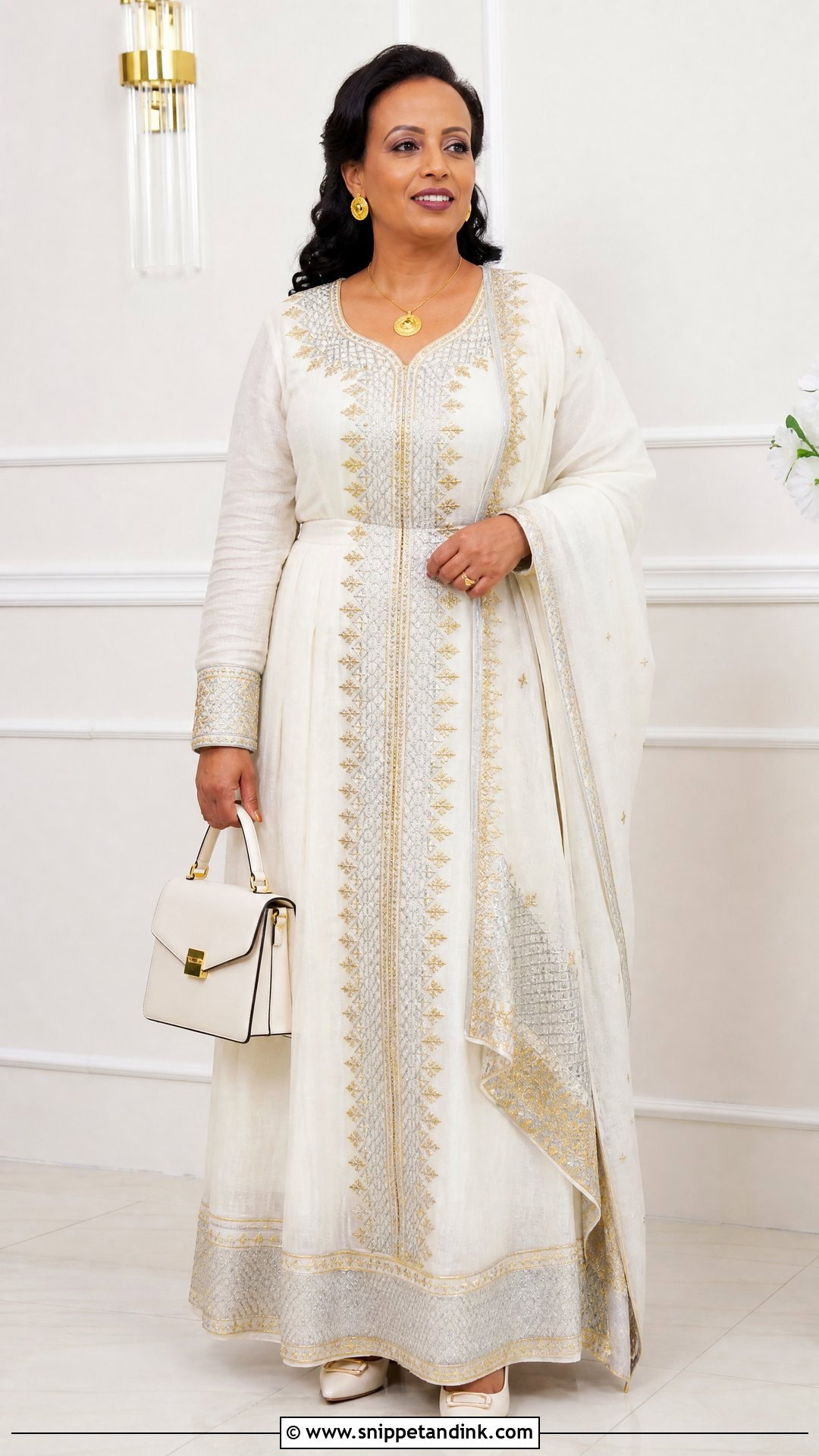
Mothers spend the day greeting, hosting and standing, so comfort comes before drama. A refined kemis in ivory, cream, gold, silver or a soft pastel suits, with embroidery richer than a guest’s but quieter than the bride’s. Long sleeves and a matching shawl look polished in family portraits. I always ask a mother of the bride what shoes she’ll actually stand in for eight hours, then have the hem cut to that height, since a kemis hemmed for heels drags on flats. Gold jewellery and a structured bag finish it.
20. Ethiopian Wedding Guest Dress
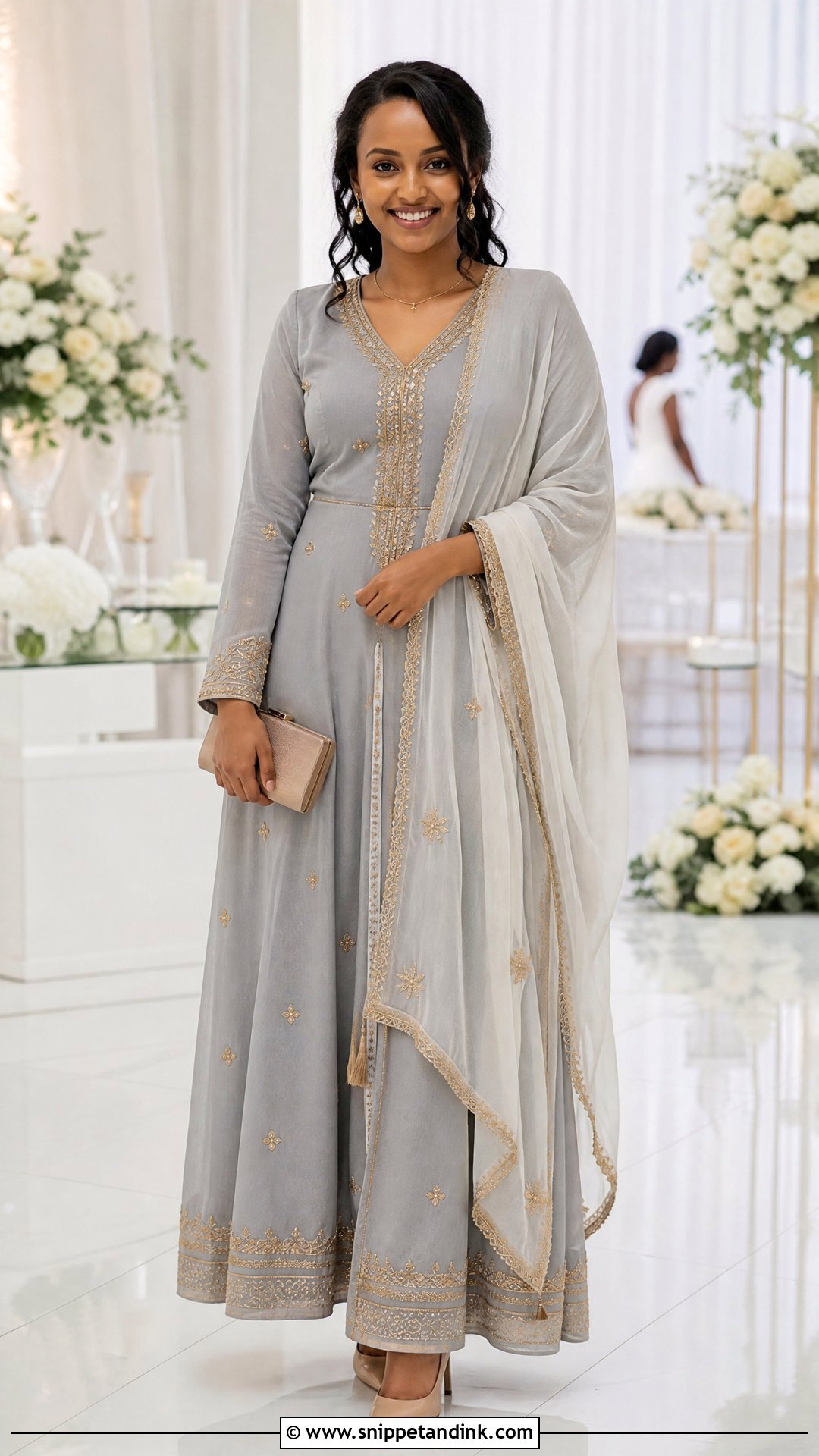
If the invitation asks guests to wear traditional clothing, a Habesha kemis in cream, soft grey, pale blue, blush or light gold is a gracious answer. Keep the embroidery moderate. A guest’s tibeb should never look wider or more metallic than the bride’s, and if you’re unsure, ask someone in the family what she’s wearing. Pair it with comfortable heels or flats, simple jewellery and a small bag. A netela adds coverage for church and keeps the focus where it belongs: on the couple.
21. Ethiopian Plus Size Wedding Dress
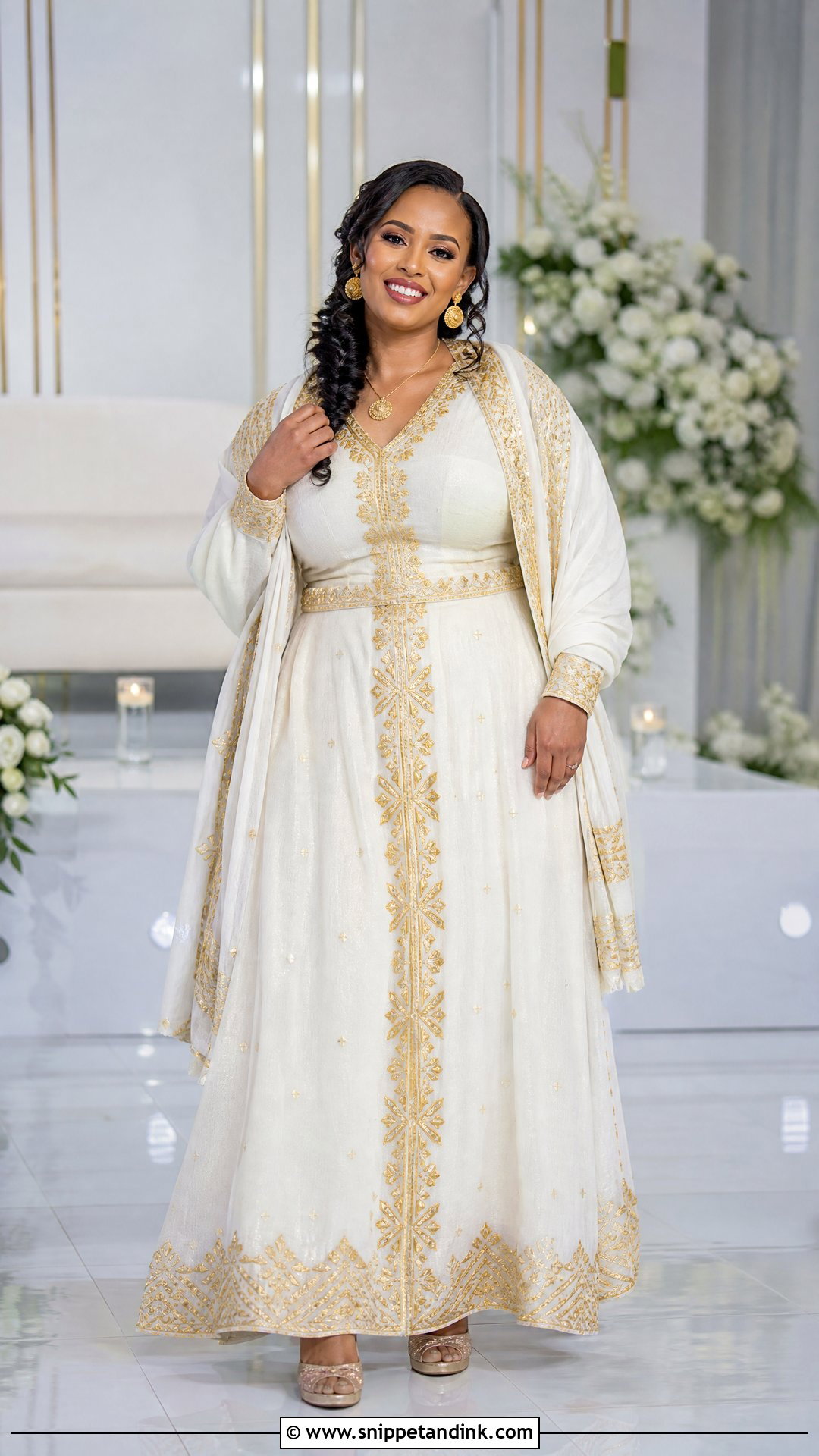
Made-to-measure is the strength of the kemis for plus size brides, because a weaver works from your measurements instead of a standard size chart. A-line, empire waist, wrap-inspired and softly fitted columns all wear well. Put the tibeb where you want the eye to go, the neckline, sleeves or centre panel. I’d ask for the bodice to be lined in cotton, because handwoven cloth on its own shows every seam and fastening underneath. Choose breathable fabric with room to move, a shawl that frames rather than hides, supportive shoes and earrings you love.
22. Ethiopian Modest Wedding Dress
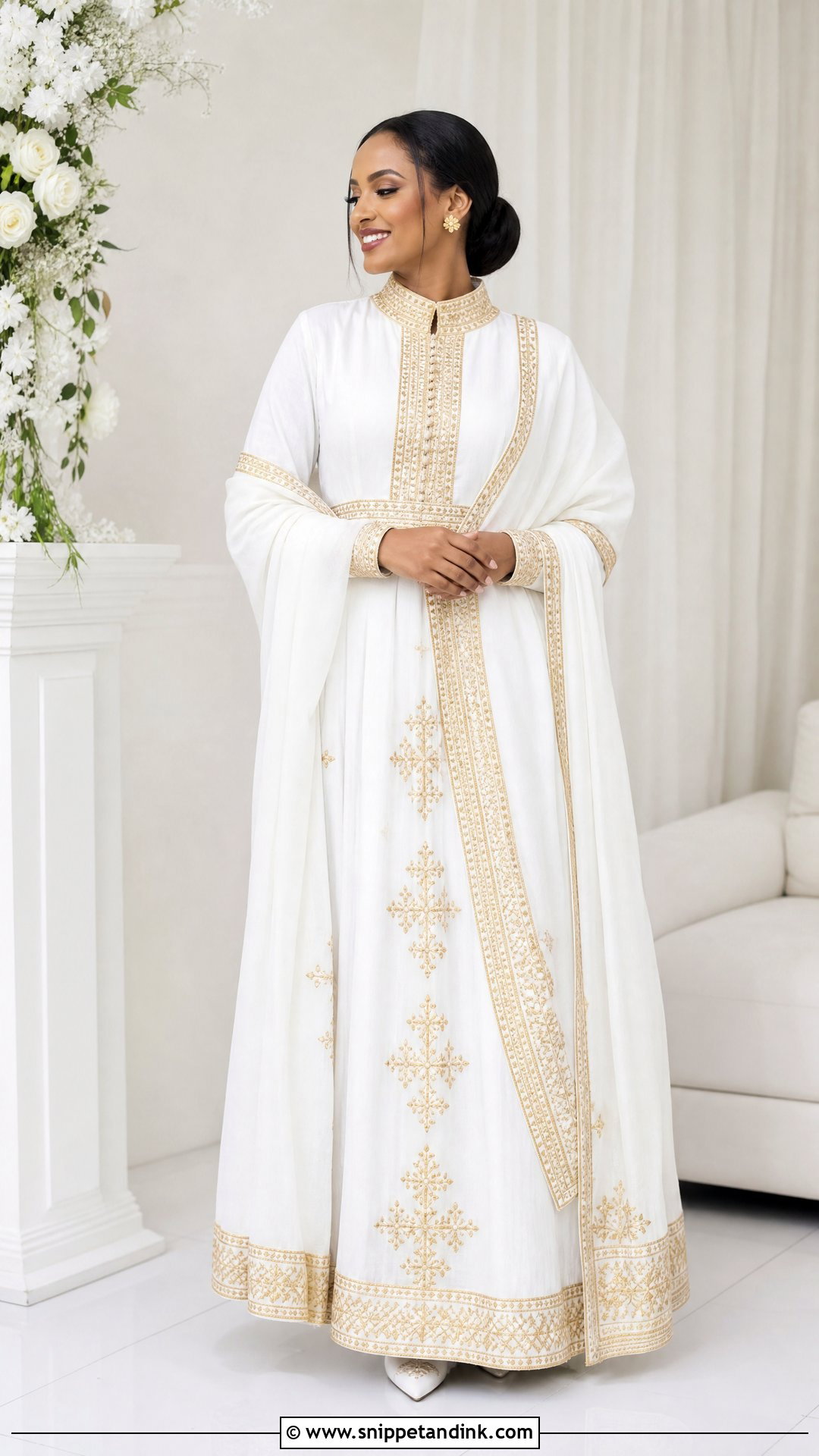
Modesty comes naturally with the kemis: long sleeves, a high neckline and a full-length skirt are already part of the tradition, and the netela adds another layer. White cotton with gold or coloured tibeb is classic, while lace sleeves or sheer overlays bring a modern touch. Watch the fit around the hips and bust. A modest dress that’s too tight undoes the point once you sit down. Closed-toe heels or flats, a low bun, delicate earrings and soft makeup complete a respectful look that photographs well.
23. Ethiopian Simple Wedding Dress
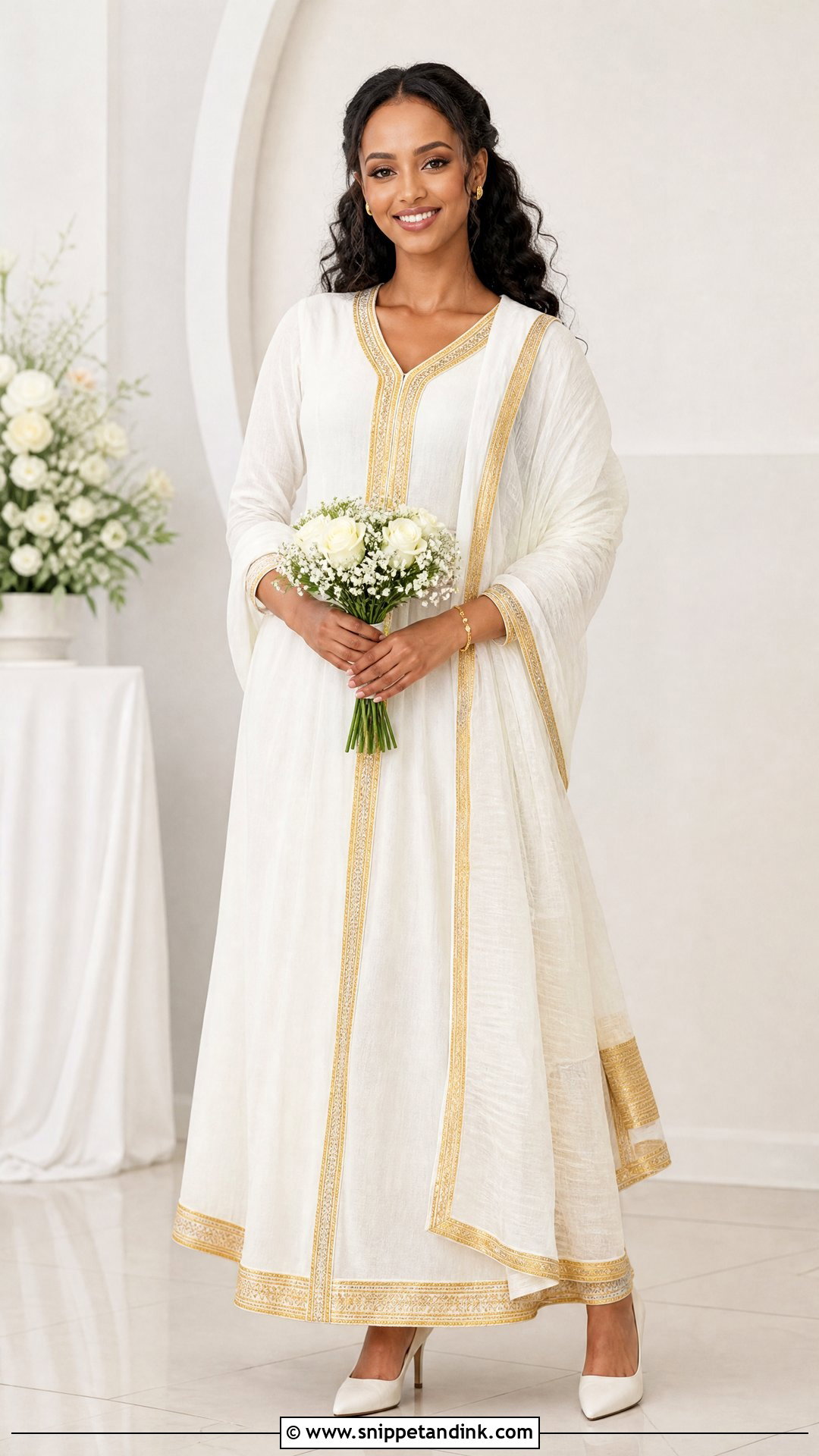
A simple kemis is where weaving quality shows most, so I’d spend the budget on the cloth rather than trim. Choose clean white or ivory with narrow tibeb at the neckline, sleeves and hem, perhaps a plain centre panel. Small gold earrings, a thin bracelet and classic heels are enough, with a lightweight netela for movement. It suits smaller weddings, civil ceremonies or a relaxed second look, and it’s the dress brides tell me they actually wear again.
24. Ethiopian Colorful Wedding Dress
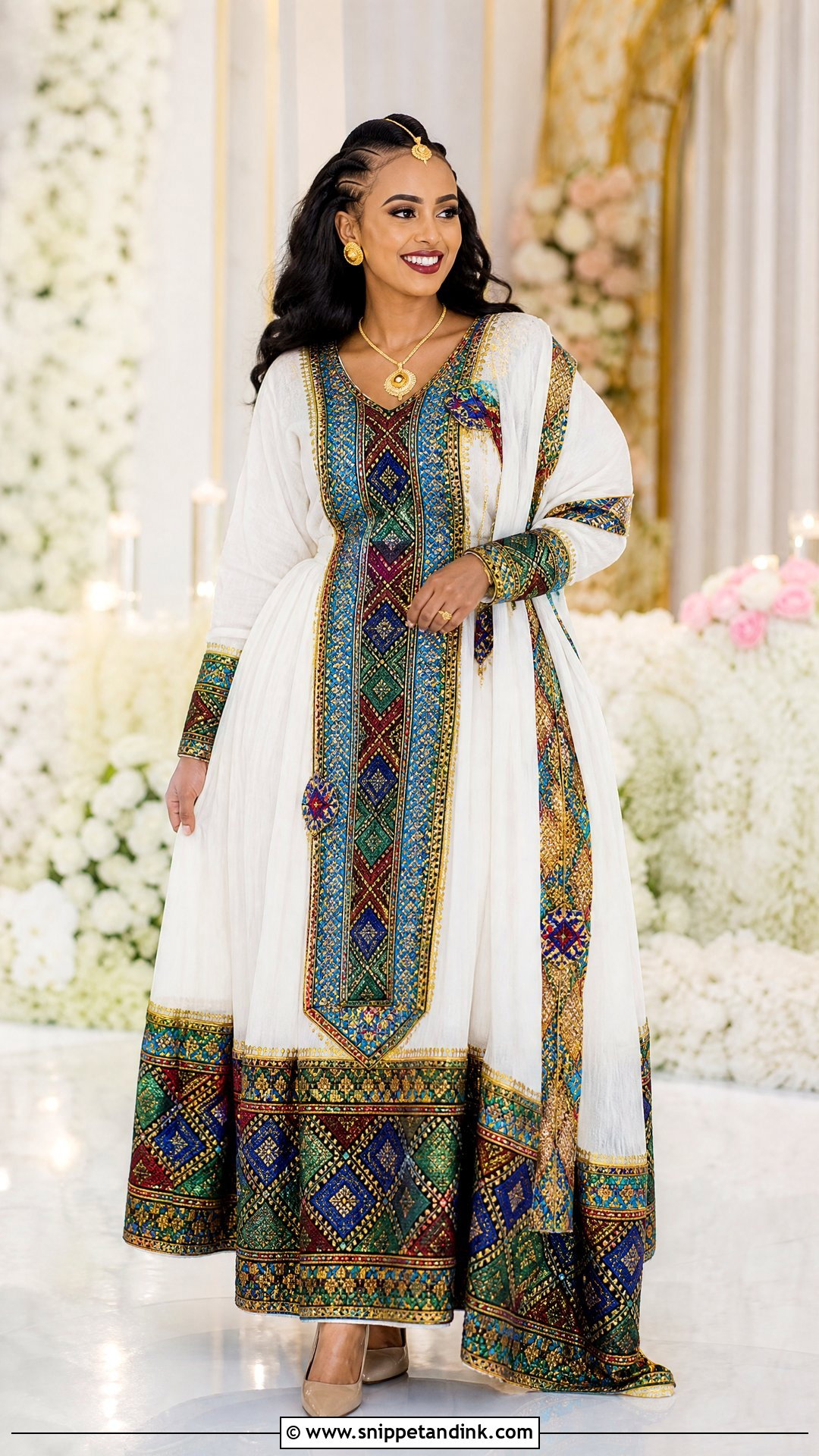
An Ethiopian colorful wedding dress keeps the white base and lets the tibeb carry red, green, yellow, blue, burgundy or purple at the hem, sleeves, neckline and shawl border. To stay bridal I limit it to one colour family plus gold. Several strong shades at once tend to fight in photographs. Bright dyed threads can also bleed the first time the dress is washed, so ask the weaver whether the colours are fast and test a hidden seam. Gold jewellery and neutral shoes balance it, and it suits receptions, melse celebrations and cultural photo sessions.
25. Ethiopian Traditional Couple Outfit
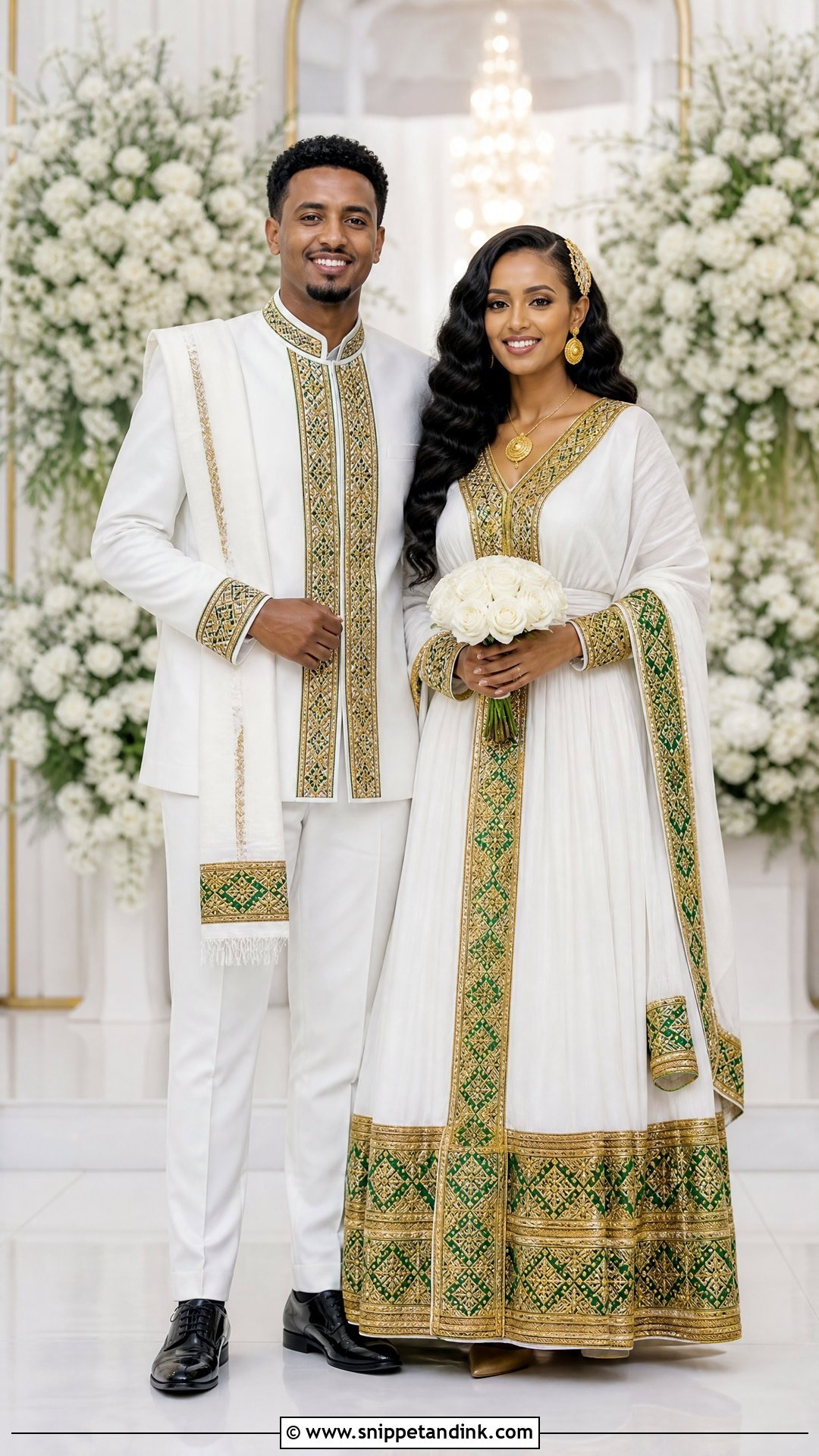
An Ethiopian traditional couple outfit links the bride’s kemis and the groom’s white traditional suit through the same tibeb colours. The details don’t need to be identical. If her trim is gold and green, his collar or chest panel can repeat those tones in a narrower band. I prefer ordering both from one weaver for that reason, so the thread colours come off the same spools. Coordinated shoes and simple accessories keep the pair clean in portraits and at the entrance.
Washing and Storing a Kemis So the Tibeb Lasts
Many of these dresses are heirlooms, worn again for holidays and passed to a sister or daughter, so the first wash after the wedding matters. Handwoven cotton shrinks and metallic thread tarnishes if they’re treated like ordinary laundry.
After the wedding
Spot clean food or makeup marks as soon as you can, before they set. For a full wash I’d use cool water and a gentle detergent by hand, never bleach, and never wring the cloth; press the water out in a towel instead. Dry it flat or on a wide hanger out of direct sun, which yellows white cotton. Iron on the reverse with a pressing cloth over the tibeb so metallic threads don’t flatten or scorch. If the colours aren’t known to be fast, a dry cleaner who handles hand embroidery is the safer route.
Between wears
Store the kemis folded loosely or rolled in clean cotton or acid-free tissue, never sealed in plastic, where trapped moisture leads to spots. Pad the folds so creases don’t fall in the same place along the border every time. Take it out once or twice a year, air it, and refold it a different way. A shawl kept with it should be stored the same way, since a netela’s fine gauze tears easily once it yellows.
Start With the Tibeb and Build Every Outfit From It
Start with the tibeb colour you love, then build the ceremony kemis, the melse look and the bridal party around it. Fit, cloth quality and how freely you can move through a long day matter more than how much embroidery you add. Order early, try everything on with the shoes and shawl you’ll wear, and leave room in the plan for a lighter second dress. Simple, dramatic, traditional or modern, a well-made kemis will carry you through every part of the celebration.
You'll Like These Ideas:


Leave a Reply