
A good kurta set carries a guest through most of a wedding week, from a turmeric-splashed haldi morning to a formal reception. The range is wide now: silk sets, pastel anarkalis, embroidered shararas, velvet for winter and modern jacket layers. When I put together a guest wardrobe, I start with the schedule, not the clothes, because a light cotton-silk set that’s right for a noon function will look underdressed under reception lights, and a heavy floor-length kurta is miserable in a garden at midday. Below are 25 complete looks, with notes on fabric, fit and which function each one actually suits.
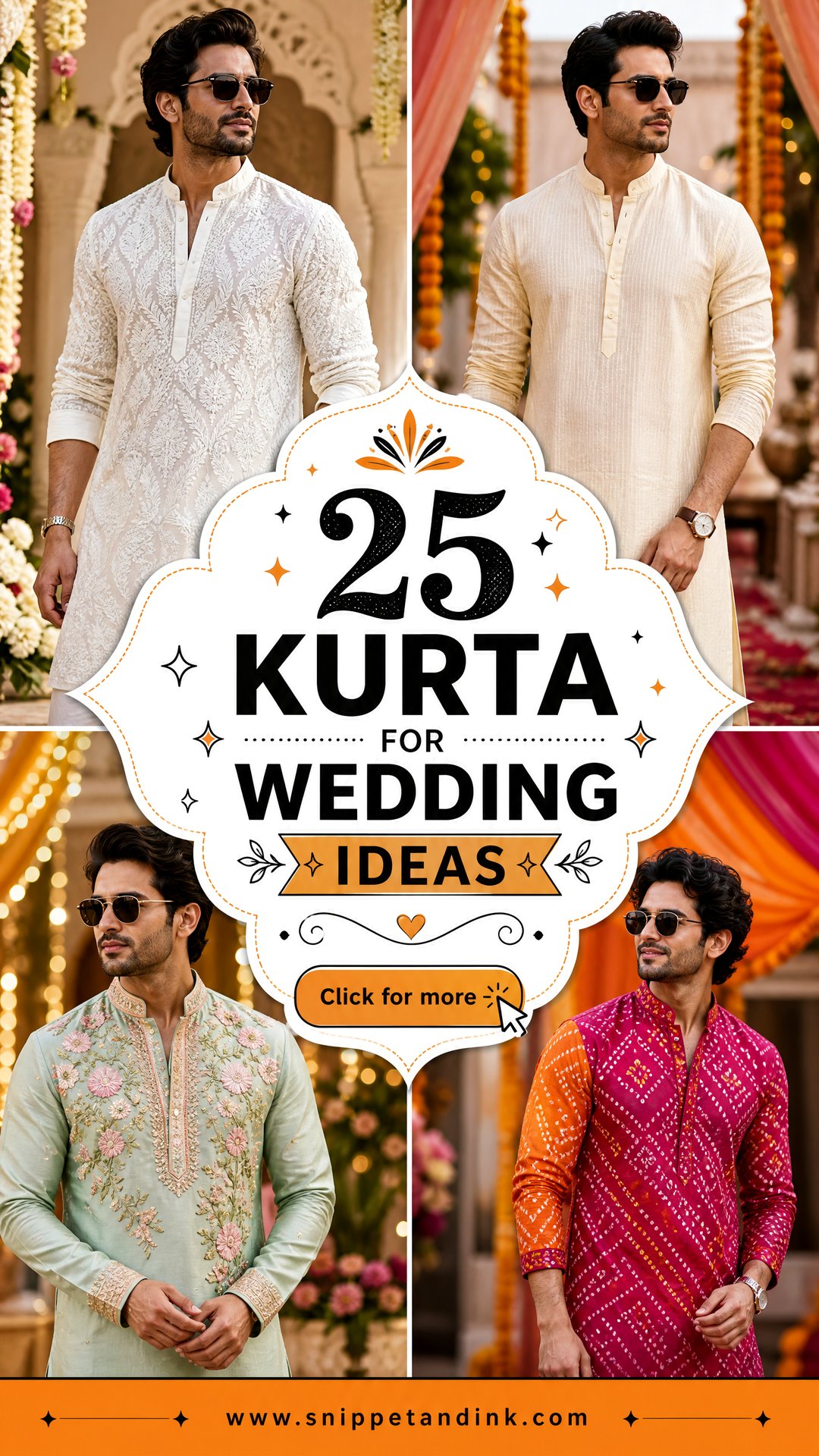
Packing Kurtas for Haldi, Mehendi, Sangeet and the Reception
Indian weddings often run over several functions, and each one asks something different of your clothes. This is roughly how I’d split a guest wardrobe:
- Haldi: wear something washable you don’t mind staining. Turmeric paste gets on everyone. Yellow, cotton or a cotton blend, and nothing silk.
- Mehendi: short or three-quarter sleeves, since you may be getting henna yourself and wet paste ruins fabric. Bright colors, gota and mirror work fit the mood.
- Sangeet: a sharara, palazzo or anarkali you can dance in, with a dupatta you can pin or remove.
- Wedding ceremony: rich but comfortable. You may sit for a long time, sometimes on the floor, so avoid tight cuts and stiff fabric at the waist. Leave red and heavy bridal styling to the bride.
- Reception: the dressiest look, often velvet, silk or heavy embroidery under evening lights.
If you only want to buy two sets, pick one light daytime set and one evening set, then change the dupatta and jewelry to stretch each across two functions.
1. Anarkali Kurta For Wedding
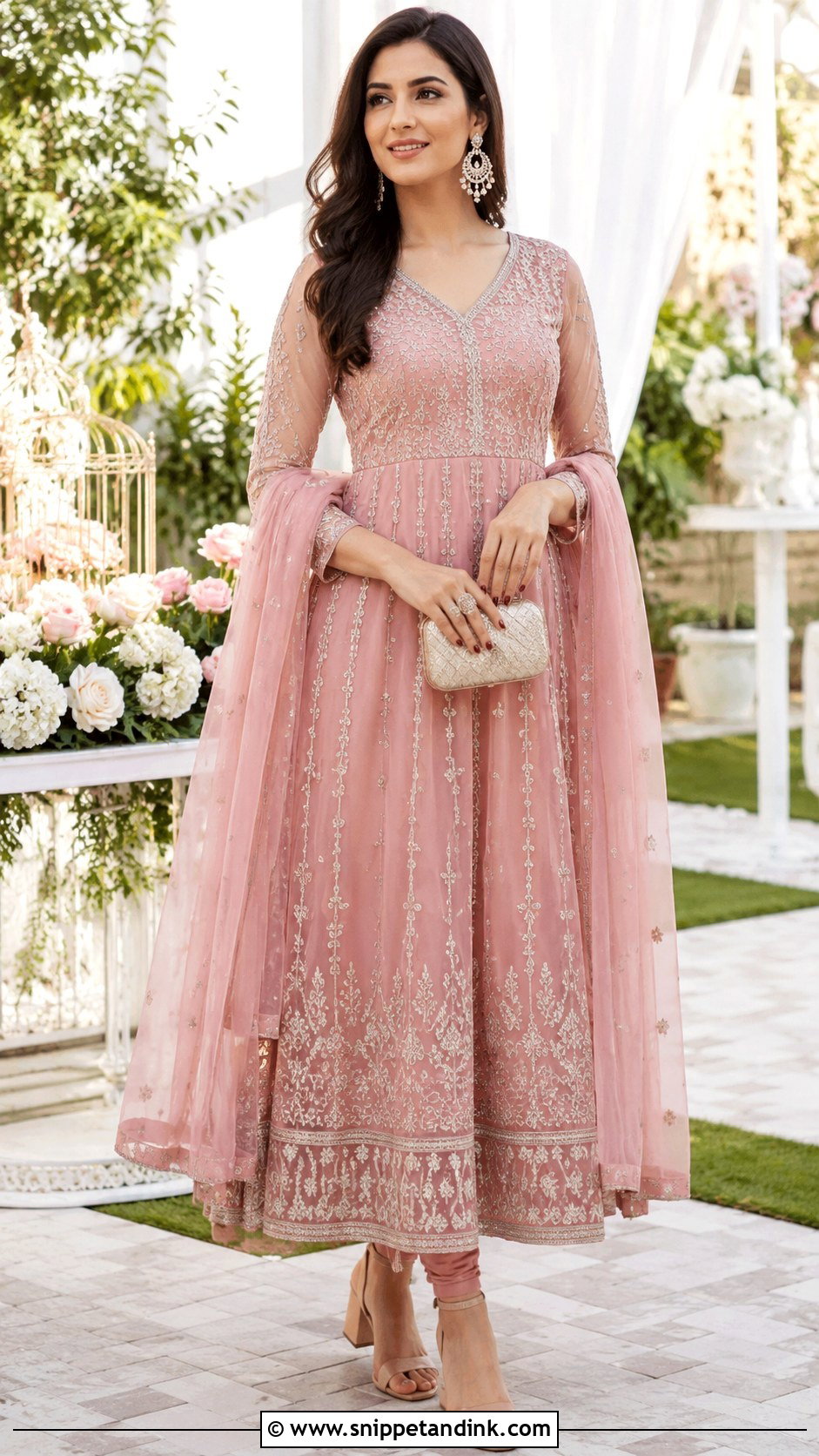
The anarkali moves beautifully because the skirt is cut in panels that flare from a fitted bodice. Floor or calf length both work, in silk, georgette, organza or a soft blend. Blush, sage, powder blue and ivory read fresh by day; emerald, ruby, navy and wine suit the evening. Pair it with churidar or slim cigarette pants so the flare doesn’t fight the bottoms. I check the panel count before buying: a cheap anarkali with too few panels hangs flat instead of swinging. Add a light dupatta, block heels, statement earrings and a sleek bun.
2. Sharara Kurta For Wedding
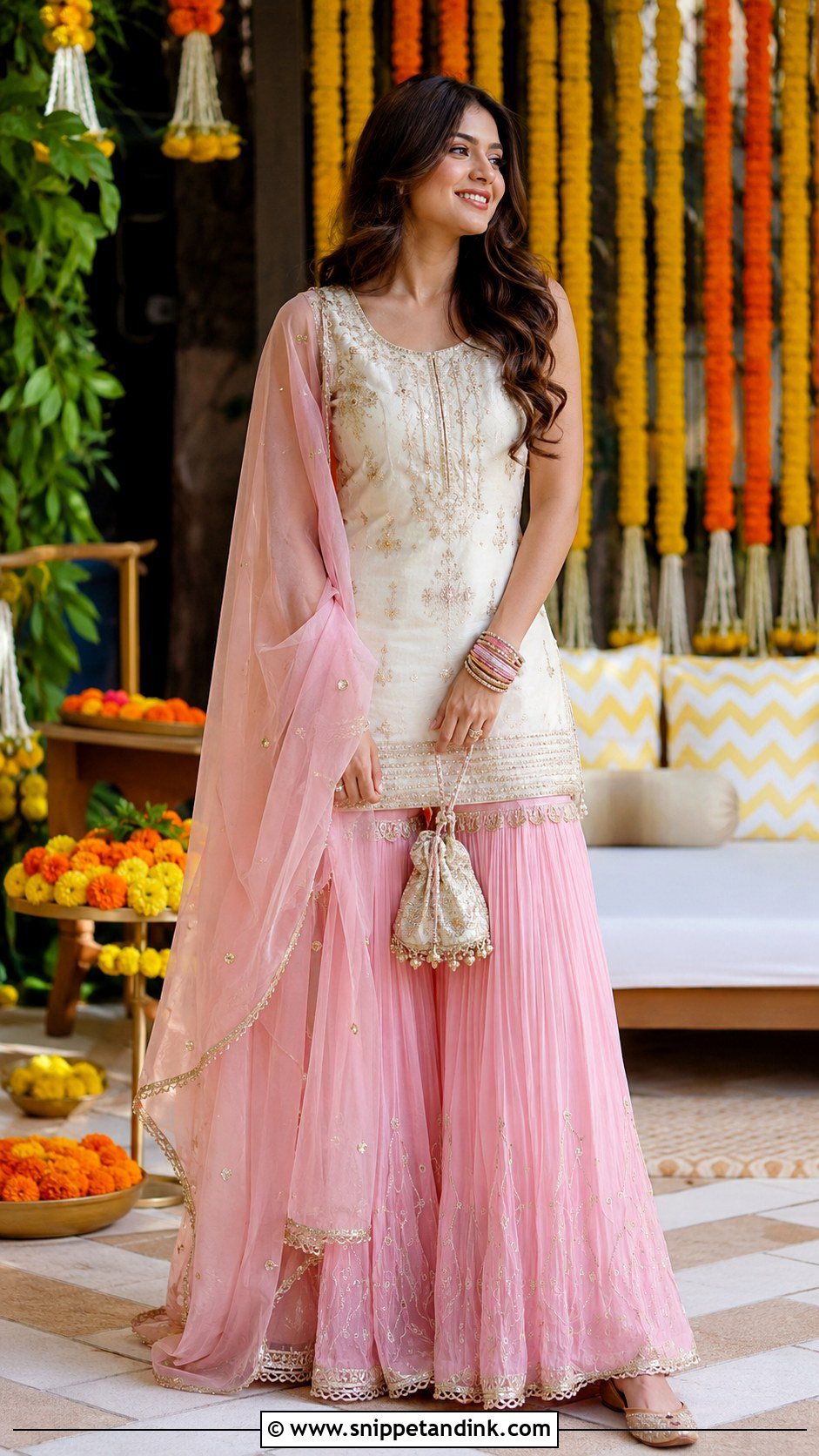
Shararas give you volume without a heavy skirt, and the short or mid-length kurta on top keeps the proportions right. Zari, mirror work, gota patti, sequins or thread embroidery all bring the festive feel. Pastel shararas suit mehendi and daytime ceremonies; jewel tones suit the evening. The one thing I always check is the hem length. Shararas pool at the ankle, and on stairs or a dance floor you will step on the flare unless it clears the floor in your actual shoes. A sheer dupatta, juttis or block heels and a potli bag finish it.
3. Silk Kurta For Wedding
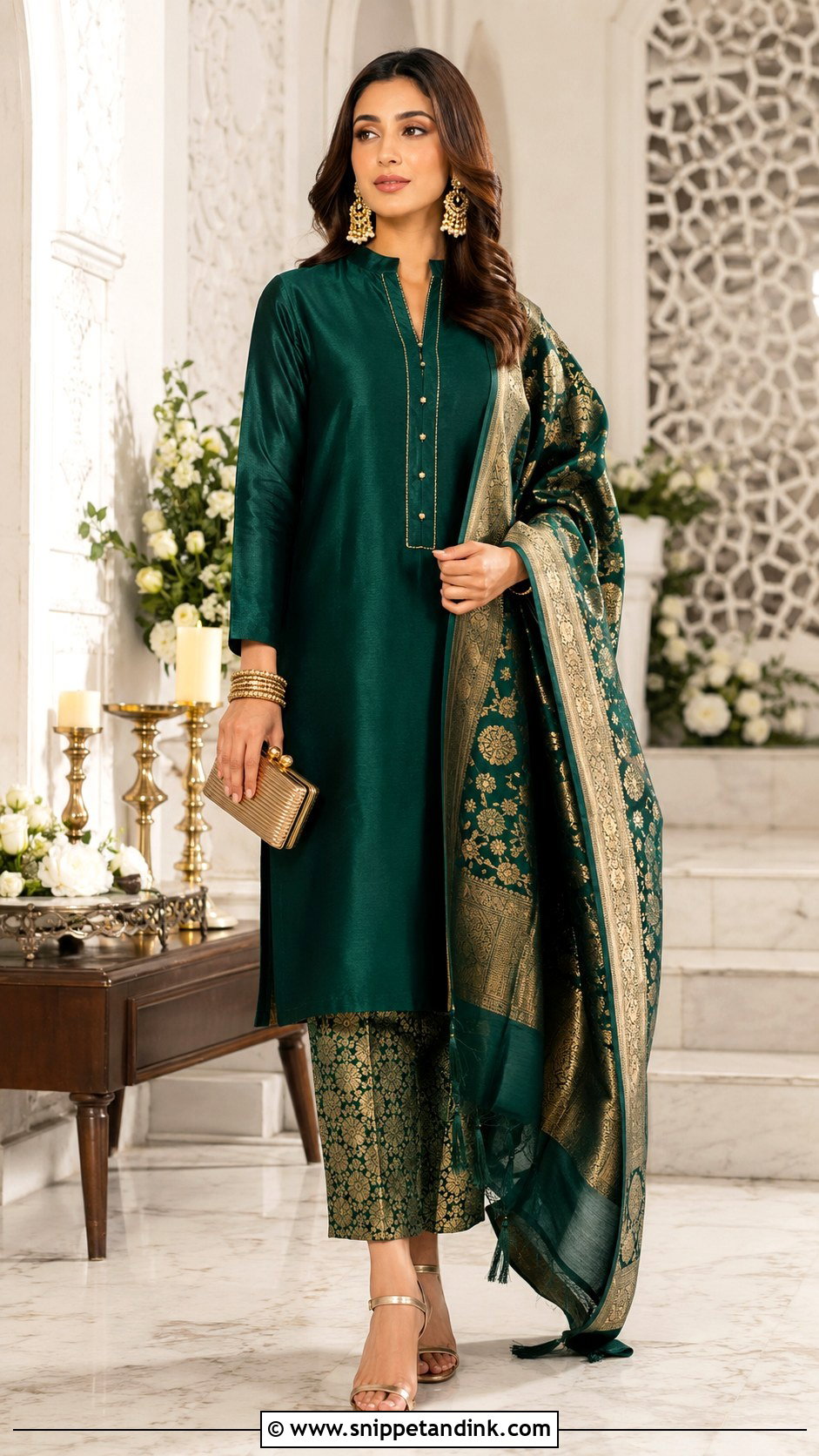
Silk looks dressed even when the cut is plain, thanks to its natural sheen. A straight silk kurta with brocade pants, cigarette trousers or a matching silk palazzo is refined and easy. Gold, champagne, teal, maroon, mustard, and deep purple are strong wedding colors, and a banarasi dupatta adds tradition. Silk marks with water and sweat, so I’d skip it for haldi or an outdoor summer function. Gold-toned earrings, bangles, a structured clutch and comfortable heels complete it, and you’ll wear it again at festivals.
4. Chikankari Kurta For Wedding
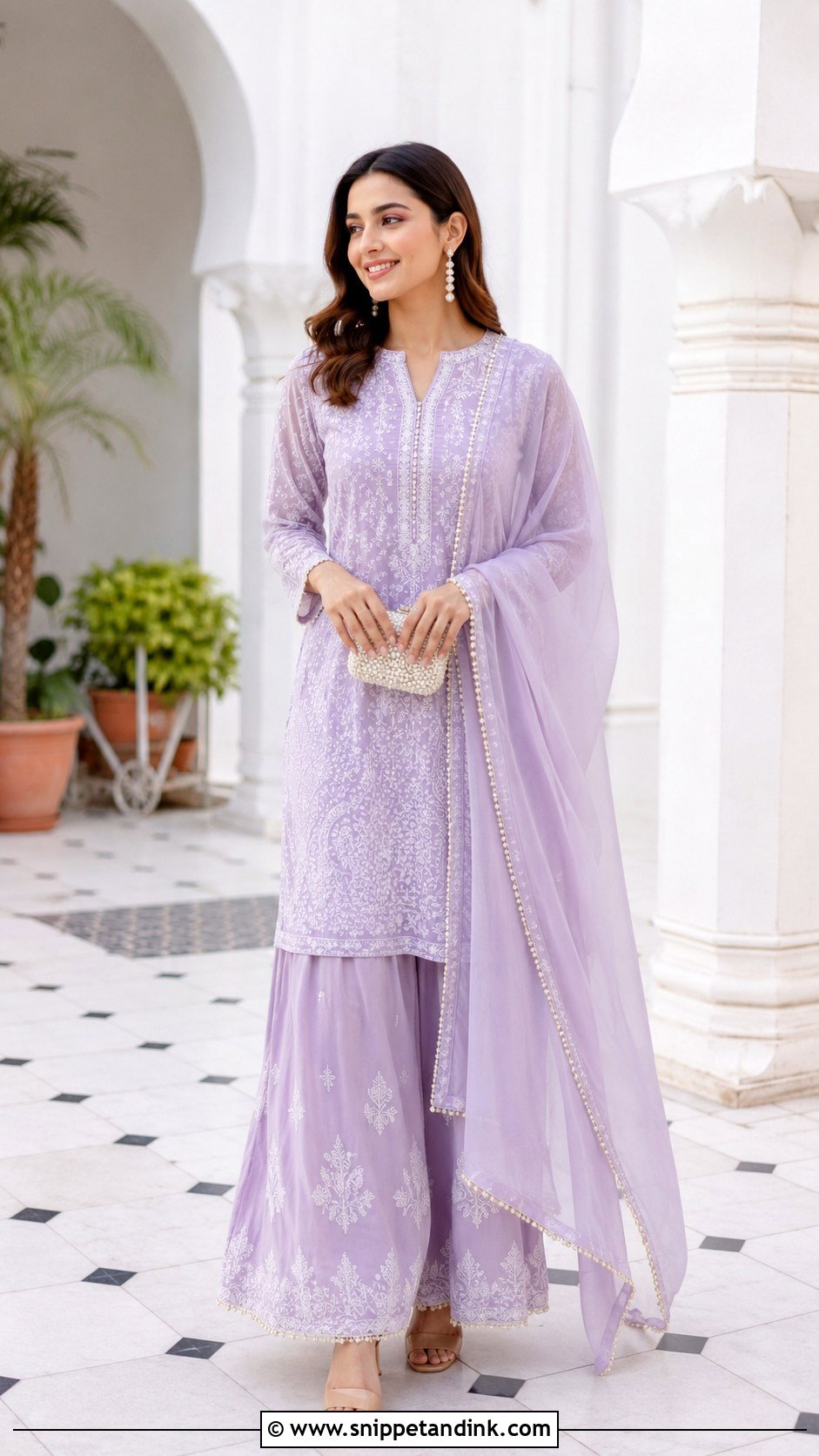
Chikankari is delicate shadow-work embroidery, traditionally white thread on fine fabric, and it suits daytime events, roka functions and summer weddings. Mint, peach, lavender, ivory and powder blue keep it fresh. Pair it with palazzos, straight trousers or a light sharara depending on formality. Most chikankari is worked on sheer cotton or georgette, so check the lining; an unlined kurta can look see-through in sunlight. A pearl-edged dupatta, metallic sandals and fine jewelry finish it, plus a statement bag if the embroidery is very subtle.
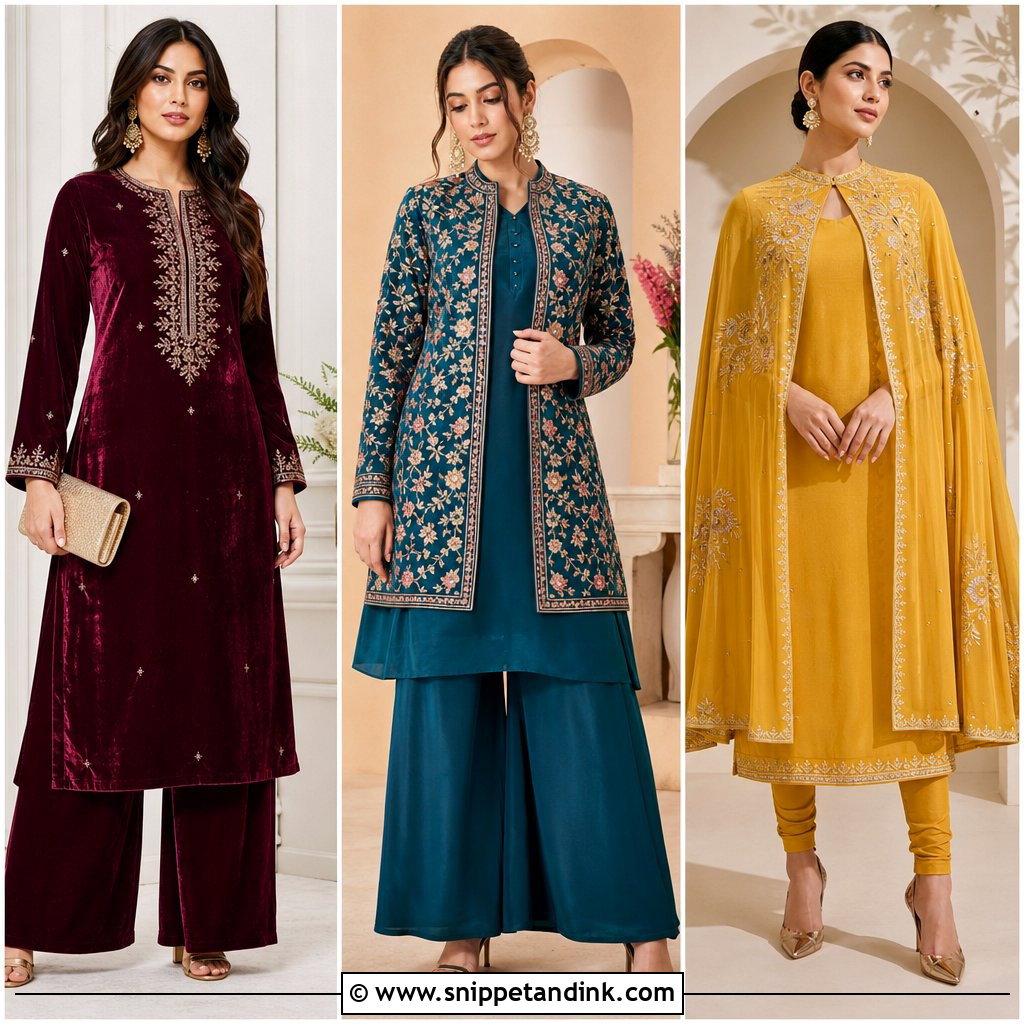
5. Velvet Kurta For Wedding
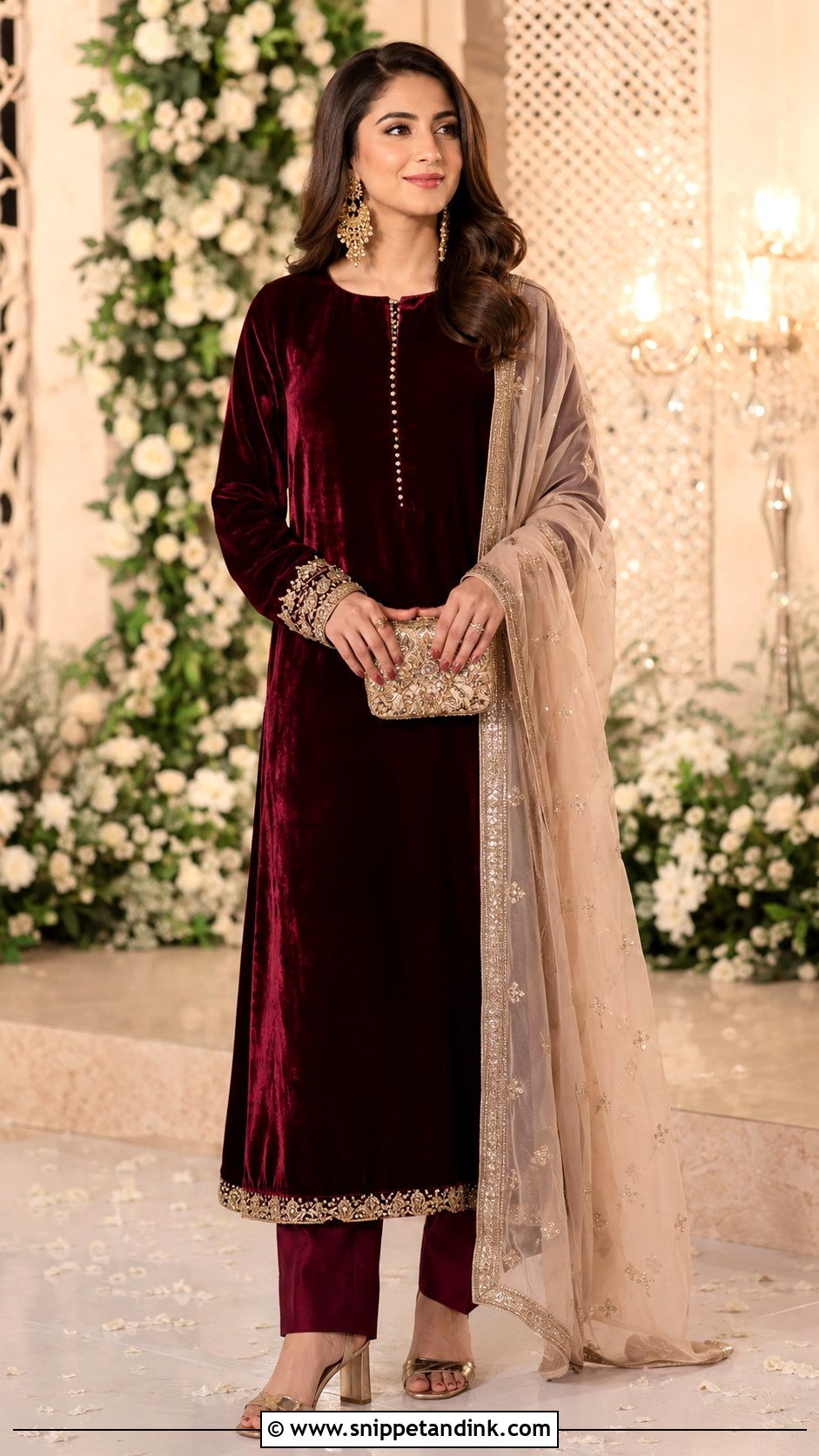
Velvet is my answer for winter weddings and cold marquees. Emerald, navy, burgundy, plum and black look richest, with zari borders, subtle embroidery or antique gold detailing. Pair it with silk or brocade pants or a velvet palazzo. Velvet already has weight, so the dupatta should be light: net, organza or chiffon. Steam velvet from the inside only, never press it flat, or the pile crushes into shiny patches. Statement earrings, a clutch and block heels complete it for evening receptions and sangeet nights.
6. Palazzo Kurta For Wedding
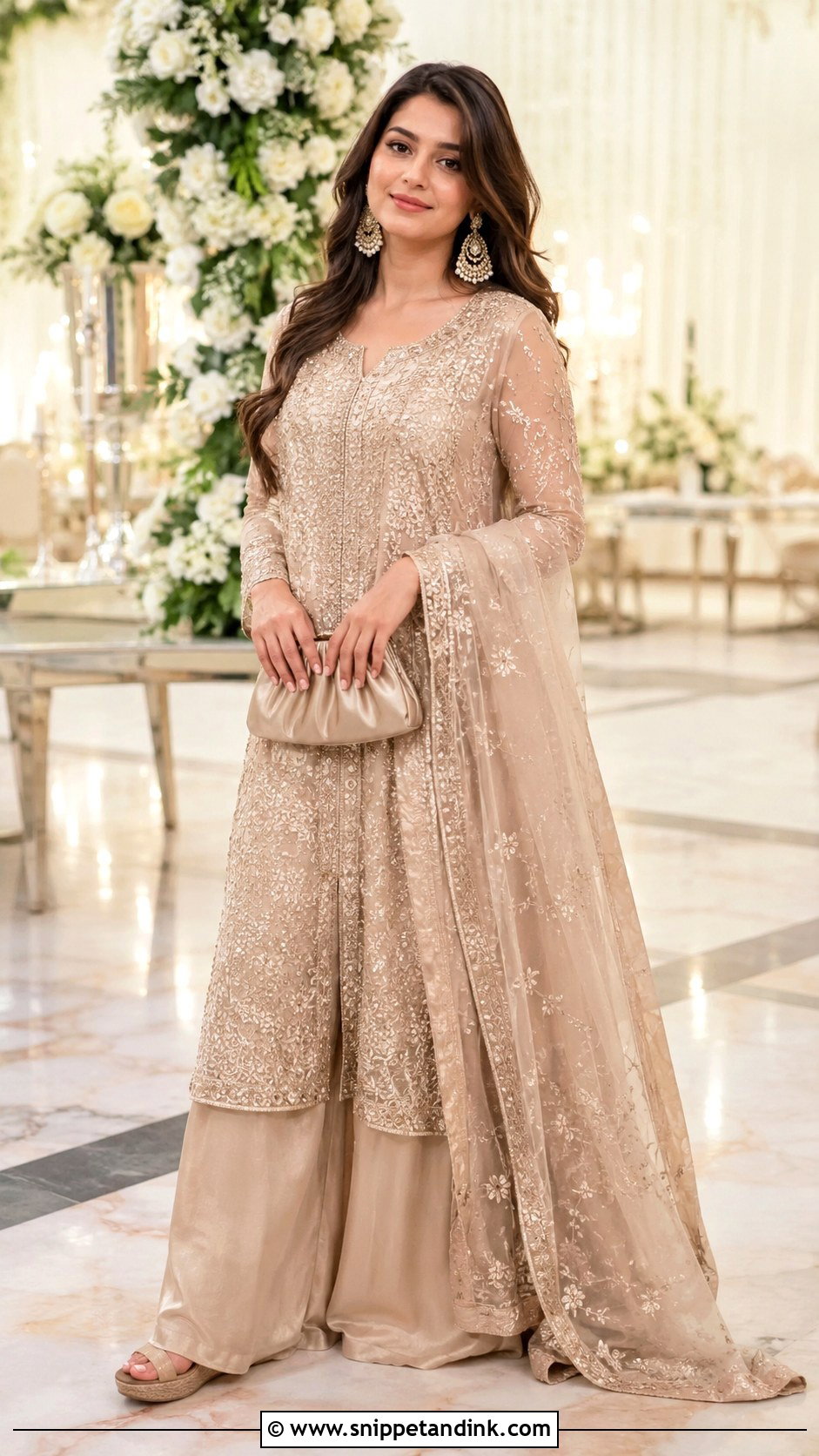
Palazzos are the comfort pick for long ceremonies and dance-heavy nights, since wide legs move with you. Choose a straight or slightly flared kurta with embroidery at the neck, sleeves or hem. A matching palazzo looks clean; a printed or brocade one adds personality. Silk blend, crepe, georgette and chanderi all drape well. If the kurta has side slits, I make sure the palazzo is opaque, because a sheer one shows through every step. Add a soft dupatta, wedges and layered earrings for daytime or semi-formal events.
7. Straight Kurta For Wedding
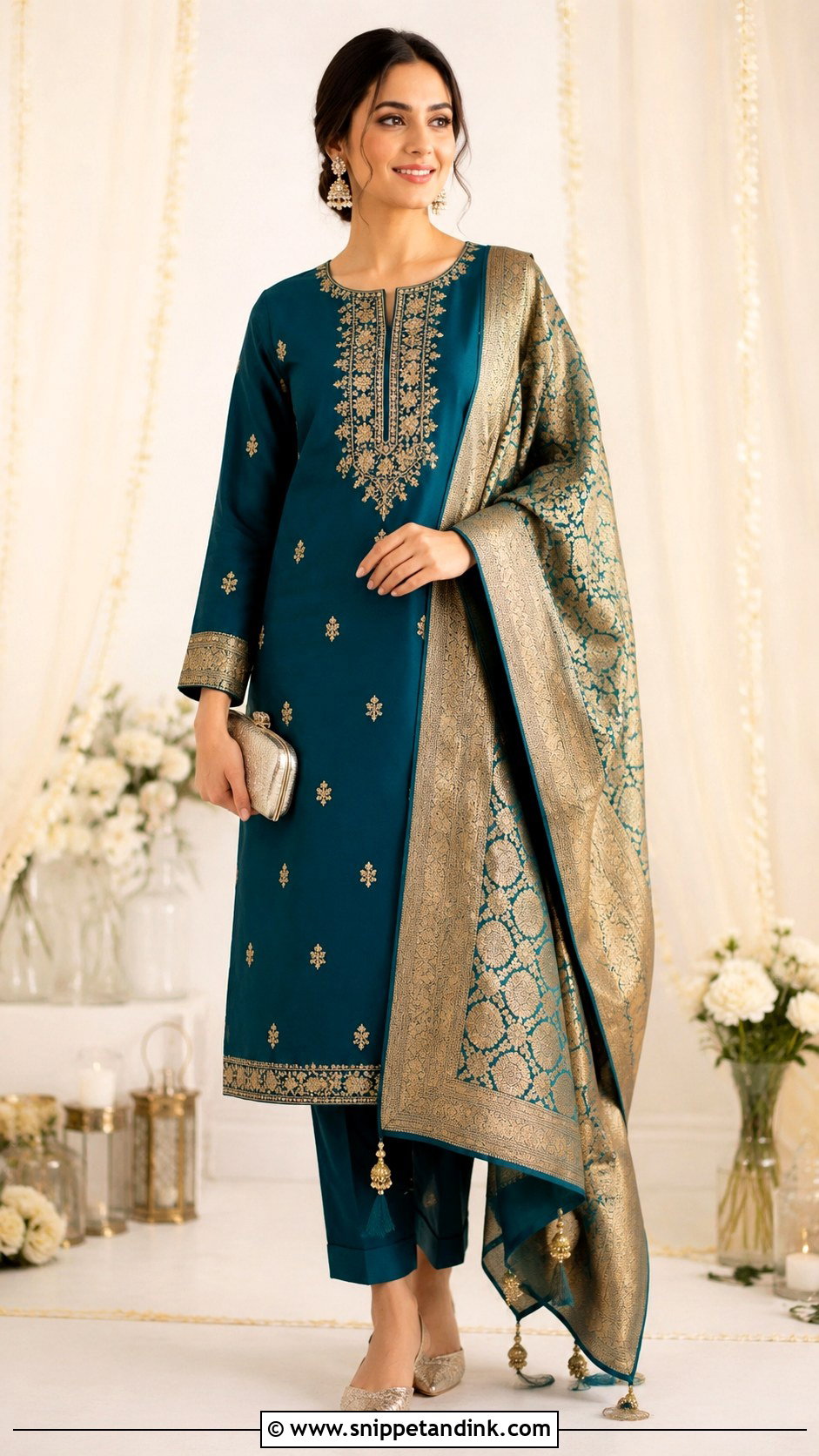
A straight kurta is the most forgiving cut I know. It suits most body shapes and can go simple or formal depending on what you pair with it. Choose knee or calf length with embroidery, sequins, zari or woven detail, and keep the bottoms narrow: cigarette pants, slim trousers or a narrow palazzo. The dupatta does the heavy lifting here, so pick a banarasi weave, embroidered organza or a scalloped border. Pointed flats, low heels or metallic sandals, a clutch and polished jewelry finish it.
8. Jacket Kurta For Wedding
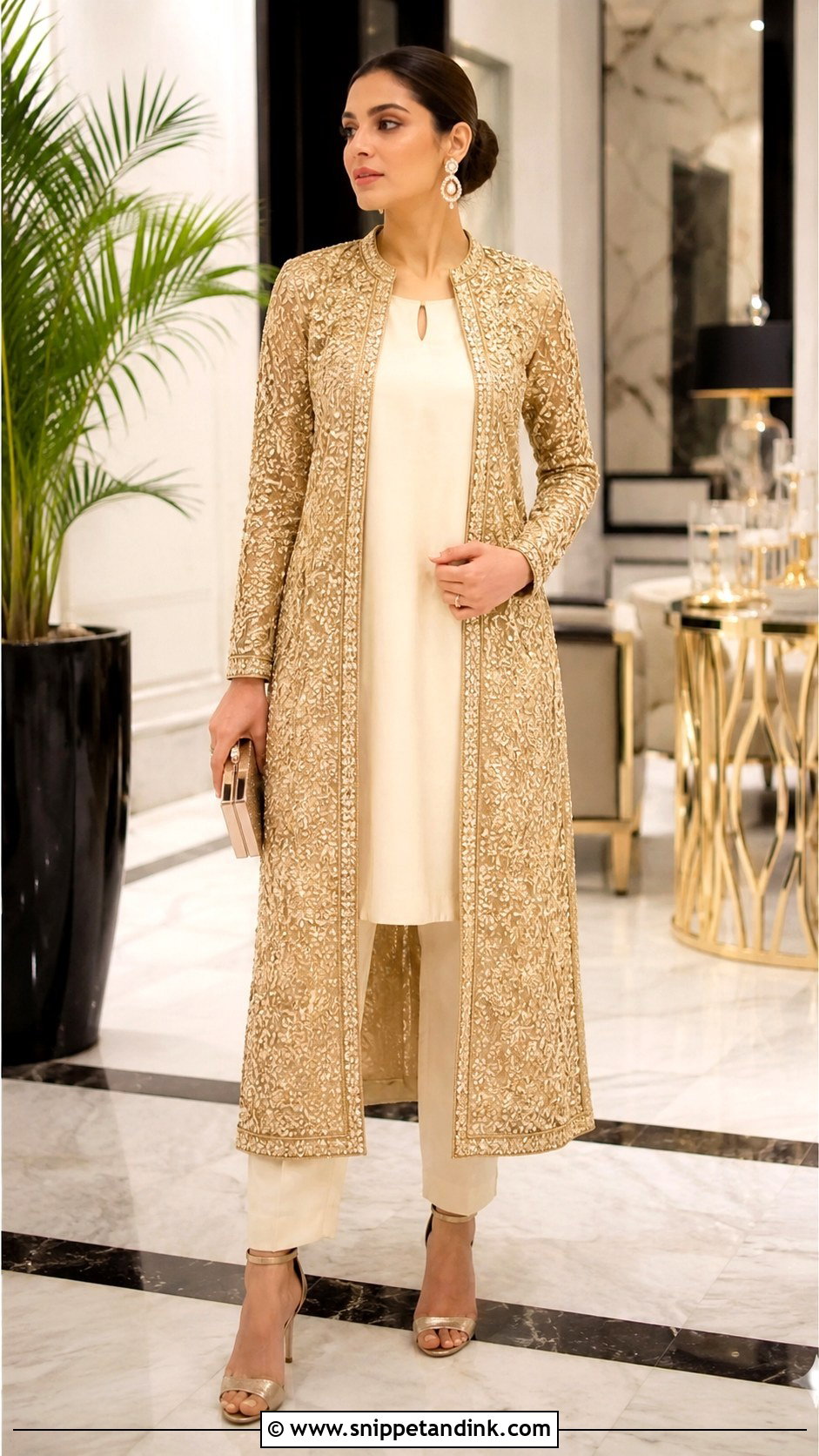
A jacket over a kurta adds structure without weight. Start with a plain or lightly embroidered kurta and add a long embroidered jacket, a brocade overlay or a cape. Match the bottoms to the jacket length: straight pants under a long jacket, a skirt or palazzo under a shorter one. It suits sangeet, cocktail-style functions and receptions, with metallic embroidery, mirror work or tonal thread. I’d leave the dupatta at home with this one; a jacket plus a dupatta is a lot of fabric to manage while eating. Heels, sleek earrings and a small clutch are enough.
9. Organza Kurta For Wedding
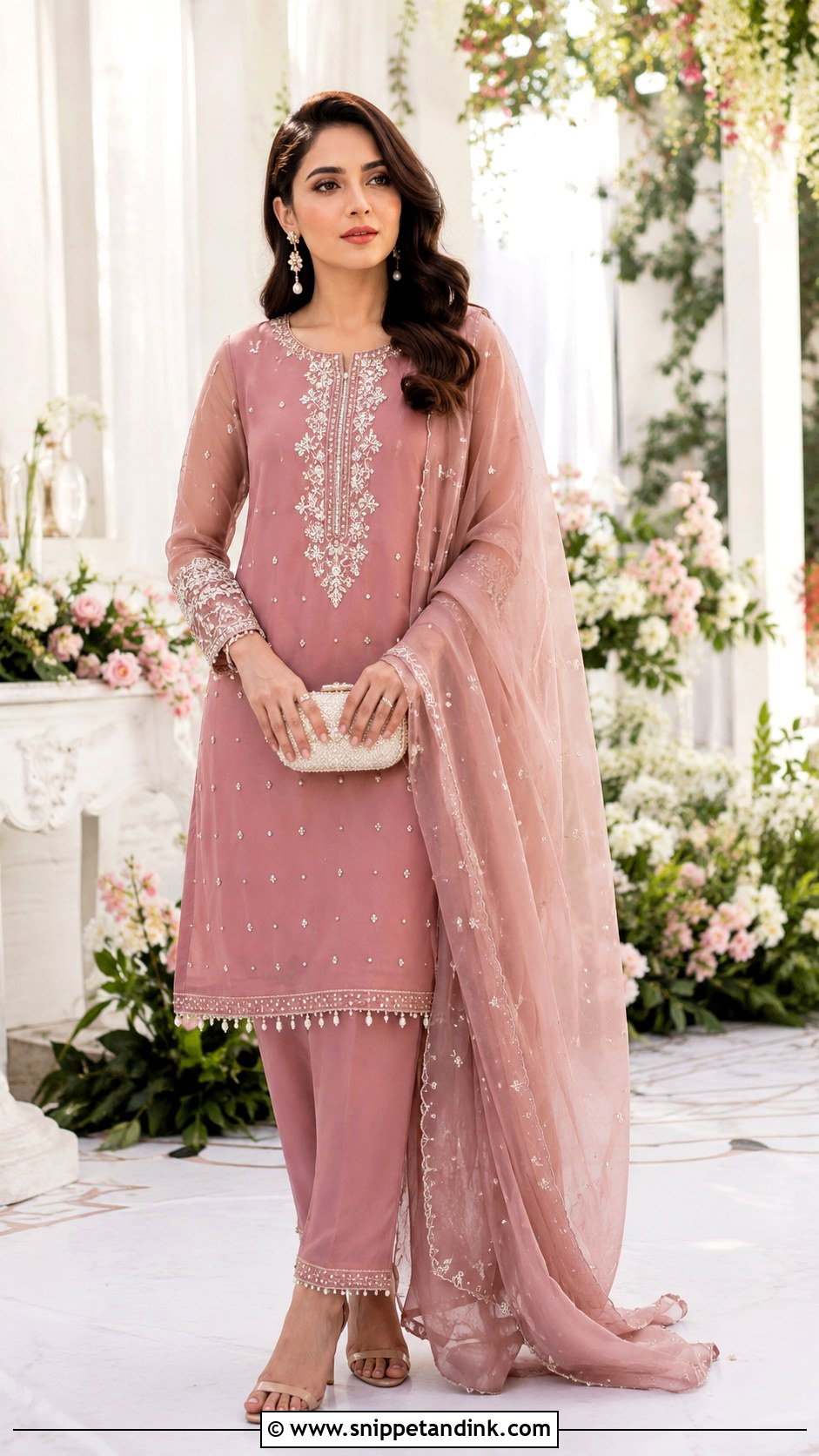
Organza is crisp and sheer, so it holds a soft structure and catches light without shine. A sheer organza dupatta or overlay lifts even a plain kurta. Floral embroidery, pearl work or subtle sequins suit it, in pastels, ivory, champagne, lilac or dusty rose. Organza creases sharply when you sit, and it can feel scratchy on bare arms, so I look for one with a soft inner lining at the sleeves. Pair it with straight pants or a flowy palazzo, pearl earrings and glass bangles for daytime weddings and engagements.
10. Banarasi Kurta For Wedding
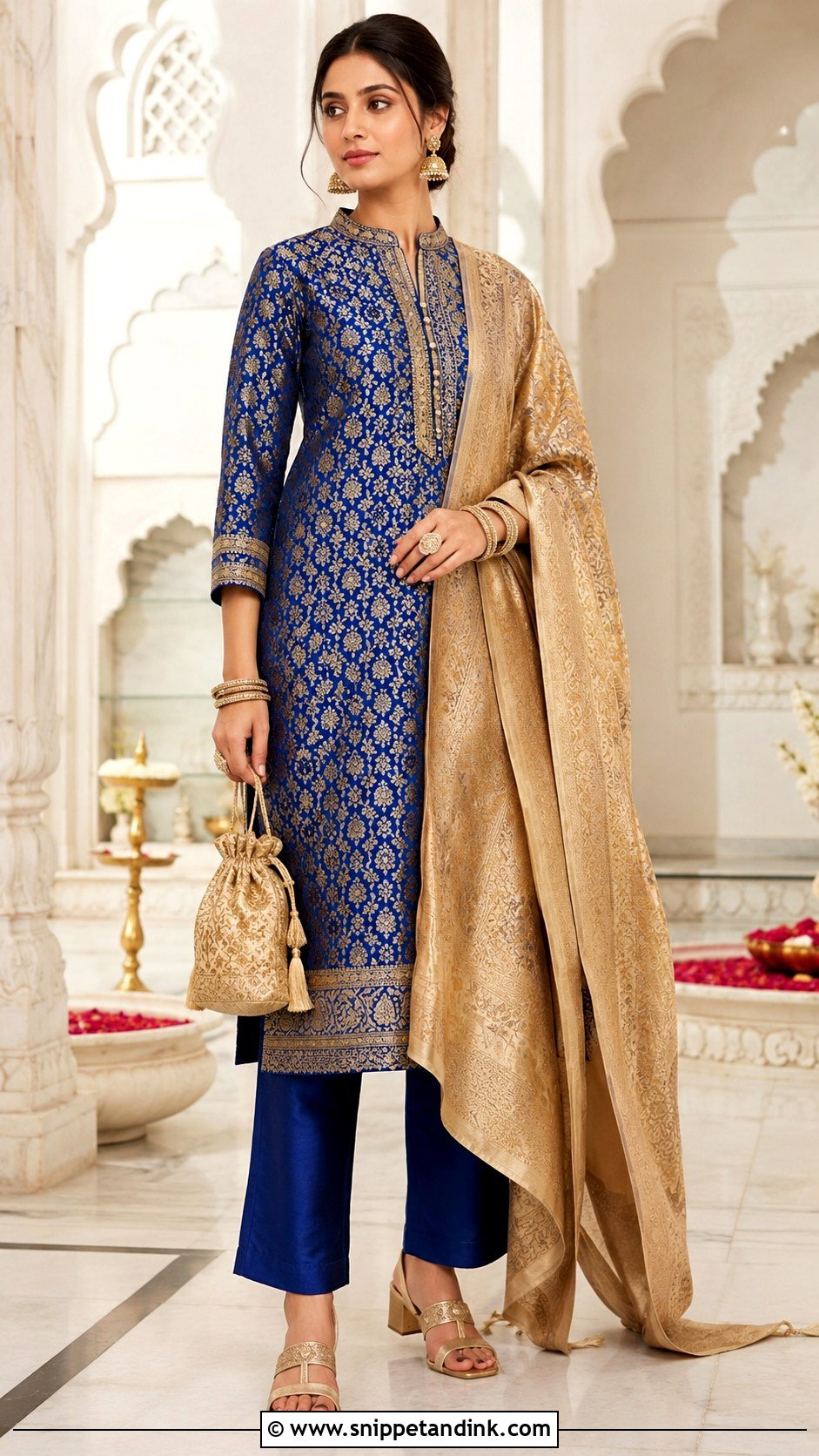
Banarasi brocade is woven, not embroidered, so the metallic motifs are part of the fabric itself, which is why it reads so rich. Wear a banarasi kurta with plain silk pants to balance it, or flip it: a simple silk kurta with a banarasi dupatta for a lighter version. Royal blue, maroon, emerald and magenta look especially rich in brocade. The fabric is stiff, so I’d choose a straight cut rather than anything gathered. Gold earrings, bangles, an embroidered clutch and block heels or juttis finish it for traditional evening functions.
11. Gota Patti Kurta For Wedding
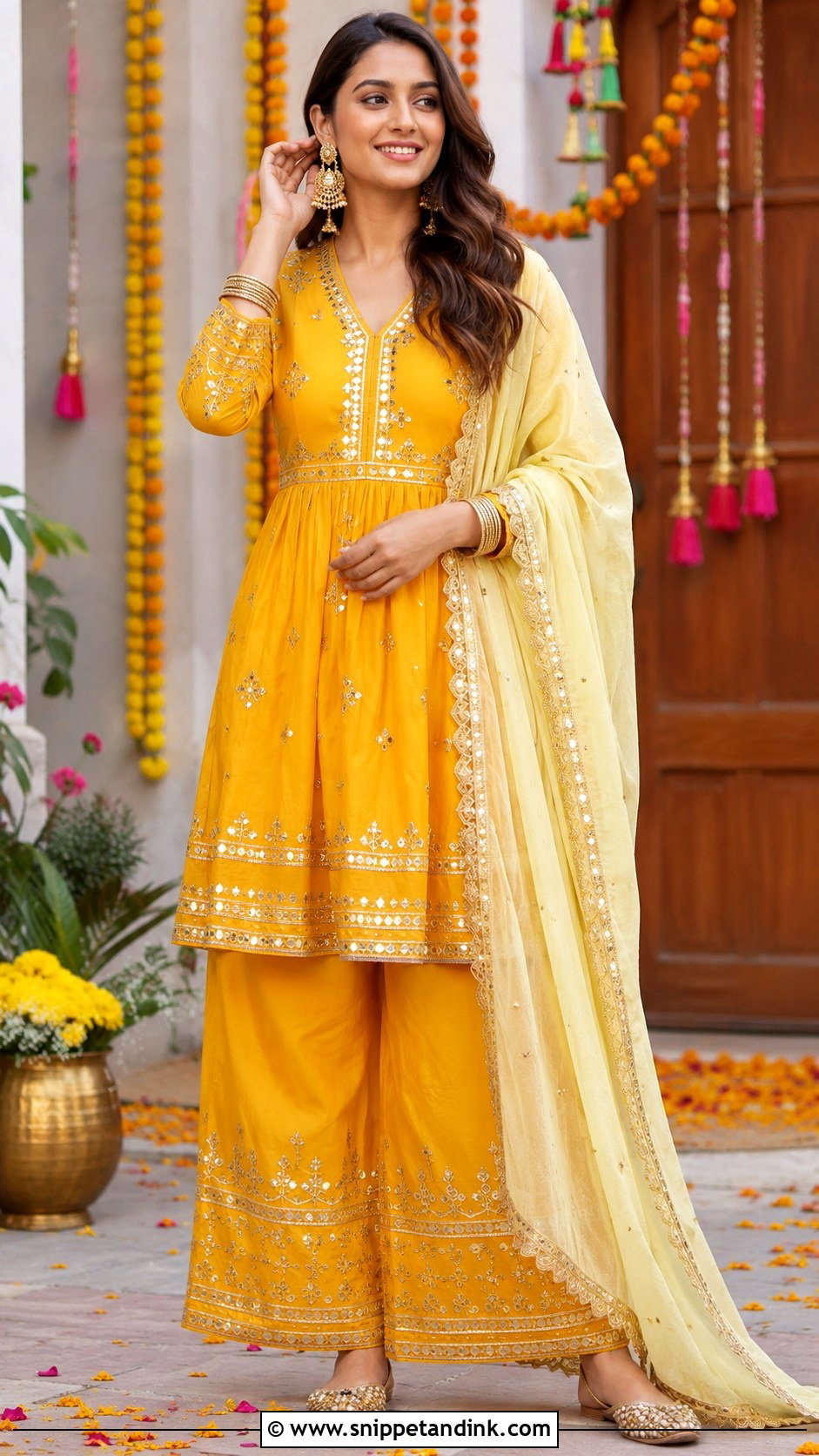
Gota patti is metallic ribbon appliqued onto fabric, a Rajasthani technique, and it catches light in a way thread never does. Bright yellow, rani pink, orange, turquoise or lime suit haldi, mehendi and sangeet; deeper shades with antique gold gota suit the evening. Pair it with a sharara, palazzo or slim pants depending on how much volume you like, and a light dupatta with gota borders. Real gota tarnishes if stored damp, so wrap it in muslin after the event. Jhumkas, bangles and comfortable footwear complete the look.
12. Mirror Work Kurta For Wedding
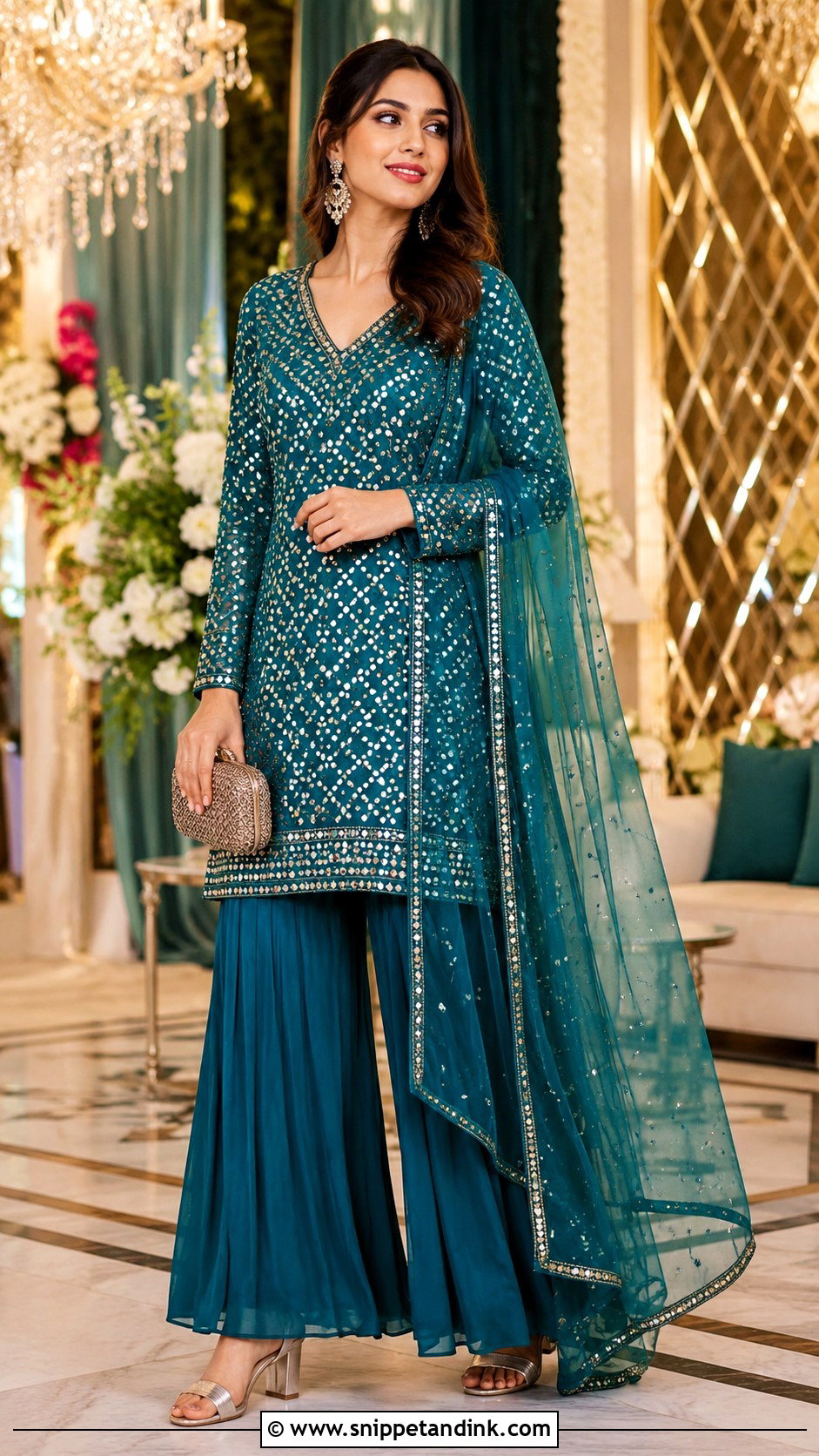
Mirror work belongs at mehendi nights, sangeet parties and outdoor events, where it throws light around as you move. Keep the mirrors to the neckline, sleeves or hem and pair them with solid palazzos, shararas or straight pants so they stand out. Teal, hot pink, orange, white and royal blue all suit it. I check that the mirrors are firmly stitched with no sharp edges at the underarm, since a loose mirror can scratch during dancing. Keep the jewelry small: earrings, a few bangles, a compact bag. Juttis or block heels finish it.
13. Pastel Kurta For Wedding
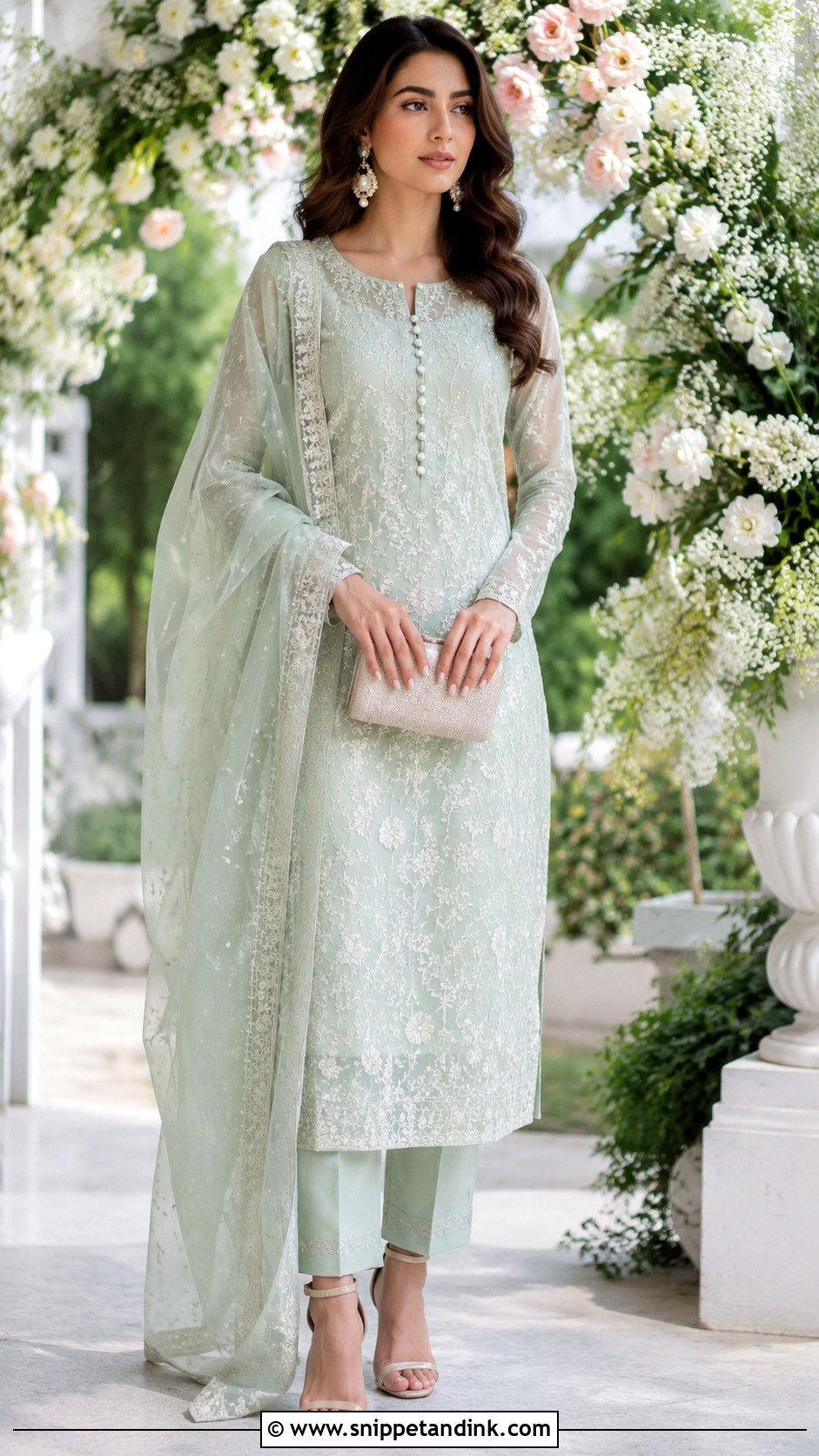
Pastels are made for daytime weddings, garden events and destination celebrations. Blush, mint, lavender, powder blue, pistachio and peach feel fresh in georgette, organza, chanderi or a silk blend, with pearl details or tone-on-tone thread. Matching trousers or a flowy palazzo keep it clean, and a sheer dupatta adds softness. Be careful with very pale pastels on fair skin in direct sun; they can wash you out in photos, so I’d go one shade deeper than you think. Pearl earrings, nude heels and a delicate clutch complete it.
14. White Kurta For Wedding
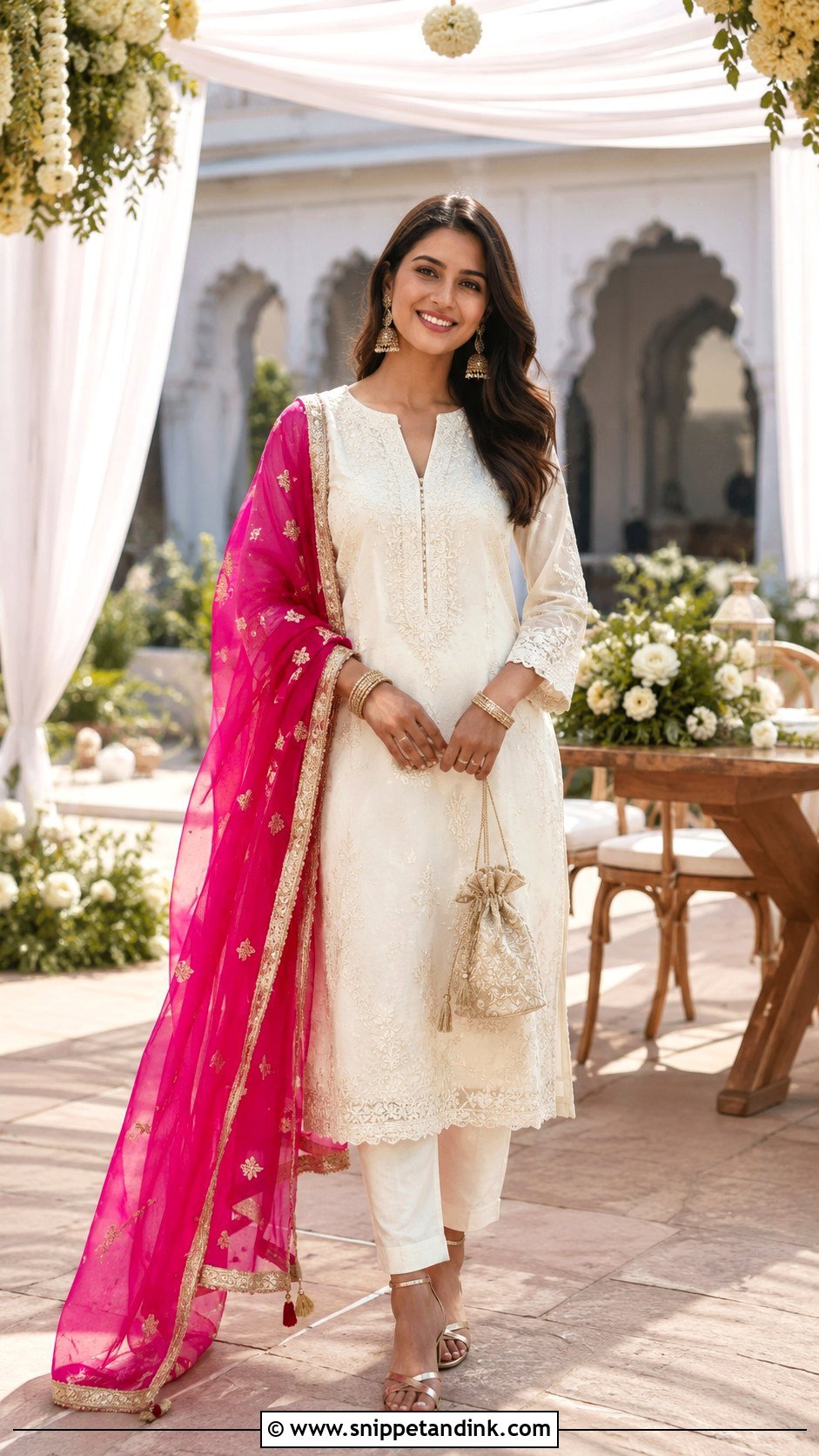
White can work well at pre-wedding functions if it’s styled festively and the family is comfortable with it. In some communities white is linked with mourning, so ask before you wear it to the main ceremony. Ivory, cream and off-white look softer than stark white. Add color with a fuchsia, emerald, mustard or royal blue dupatta, or richness with gold embroidery, mirror work, chikankari or pearls. Straight pants, palazzos or a sharara all suit it, with metallic heels, jhumkas and a potli bag for haldi, mehendi, welcome lunches. At haldi, expect yellow stains.
15. Black Kurta For Wedding
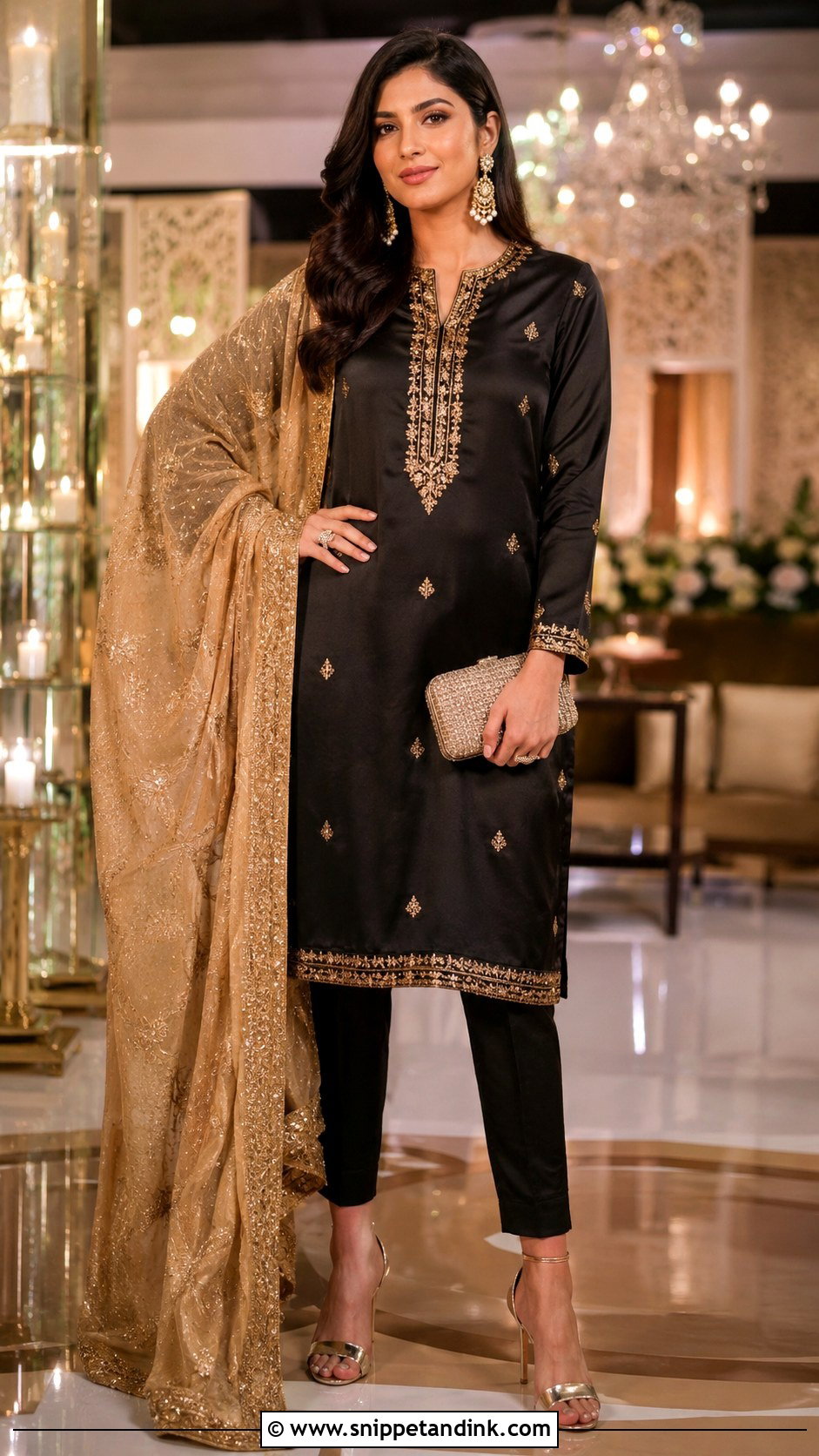
Black looks sharp at evening events, though some families avoid it at weddings, so it’s worth a quick check. Rich fabrics like velvet, silk, crepe or georgette keep it from looking flat, and gold, antique, silver or mirror embroidery makes it festive. Wear it monochrome with matching pants or add a gold dupatta for contrast; wide palazzos add drama, cigarette pants keep it sharp. Black shows lint and dust under flash, so I pack a lint roller. Statement earrings, a metallic clutch and heels finish it for receptions and sangeet nights.
16. Floral Kurta For Wedding
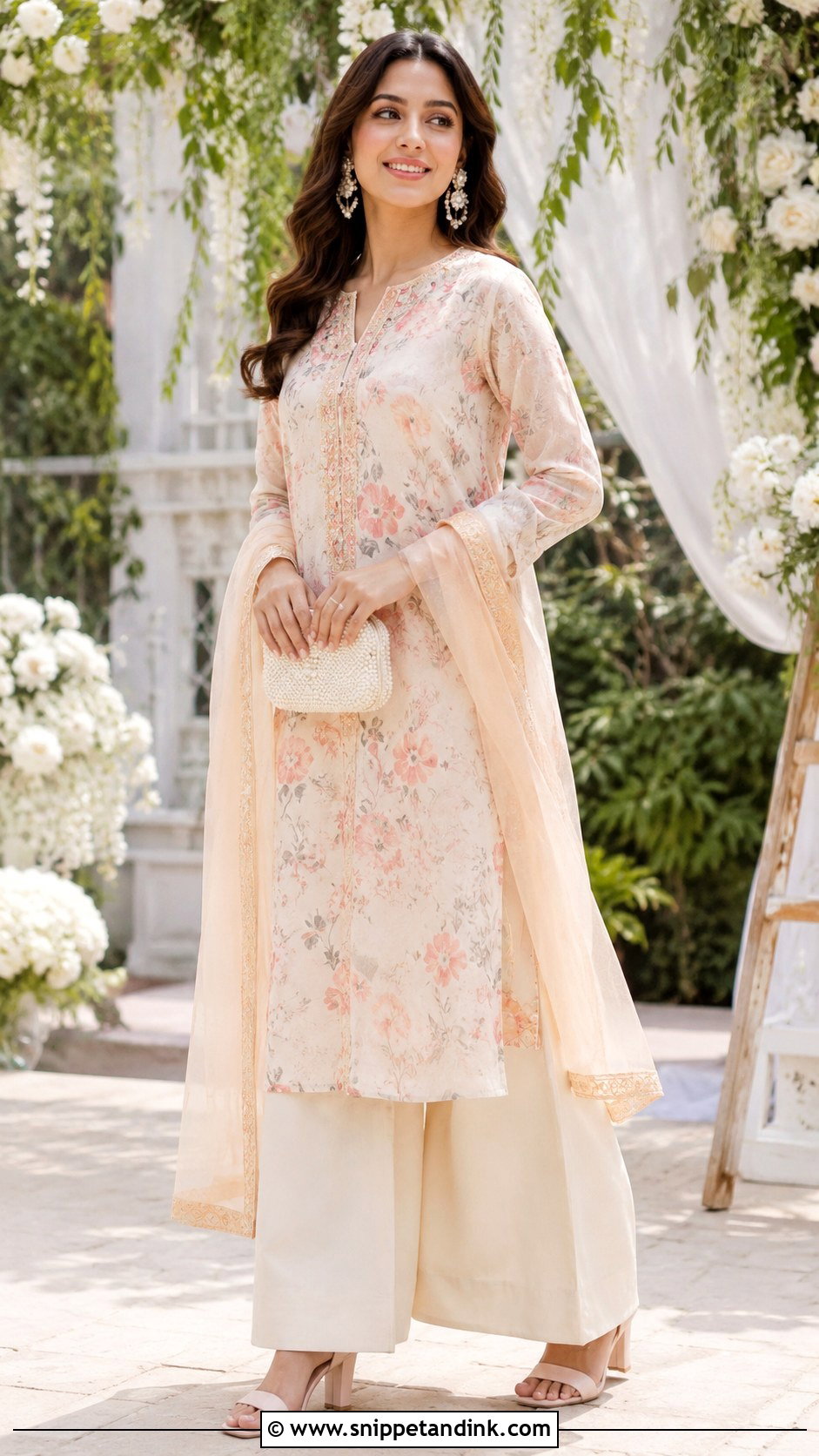
Florals feel cheerful at daytime events. Printed silk, organza, chanderi or georgette looks dressier than cotton. Small prints read soft; large motifs read bold. Pair the kurta with solid pants or a matching palazzo so the outfit doesn’t get busy, and add a sheer dupatta with light border work. Look at where the print falls on the body before buying, because a large flower placed right across the bust or hip draws attention there. Pearls or floral jewelry and block heels or embellished flats complete it for garden weddings and brunch functions.
17. Embroidered Kurta For Wedding
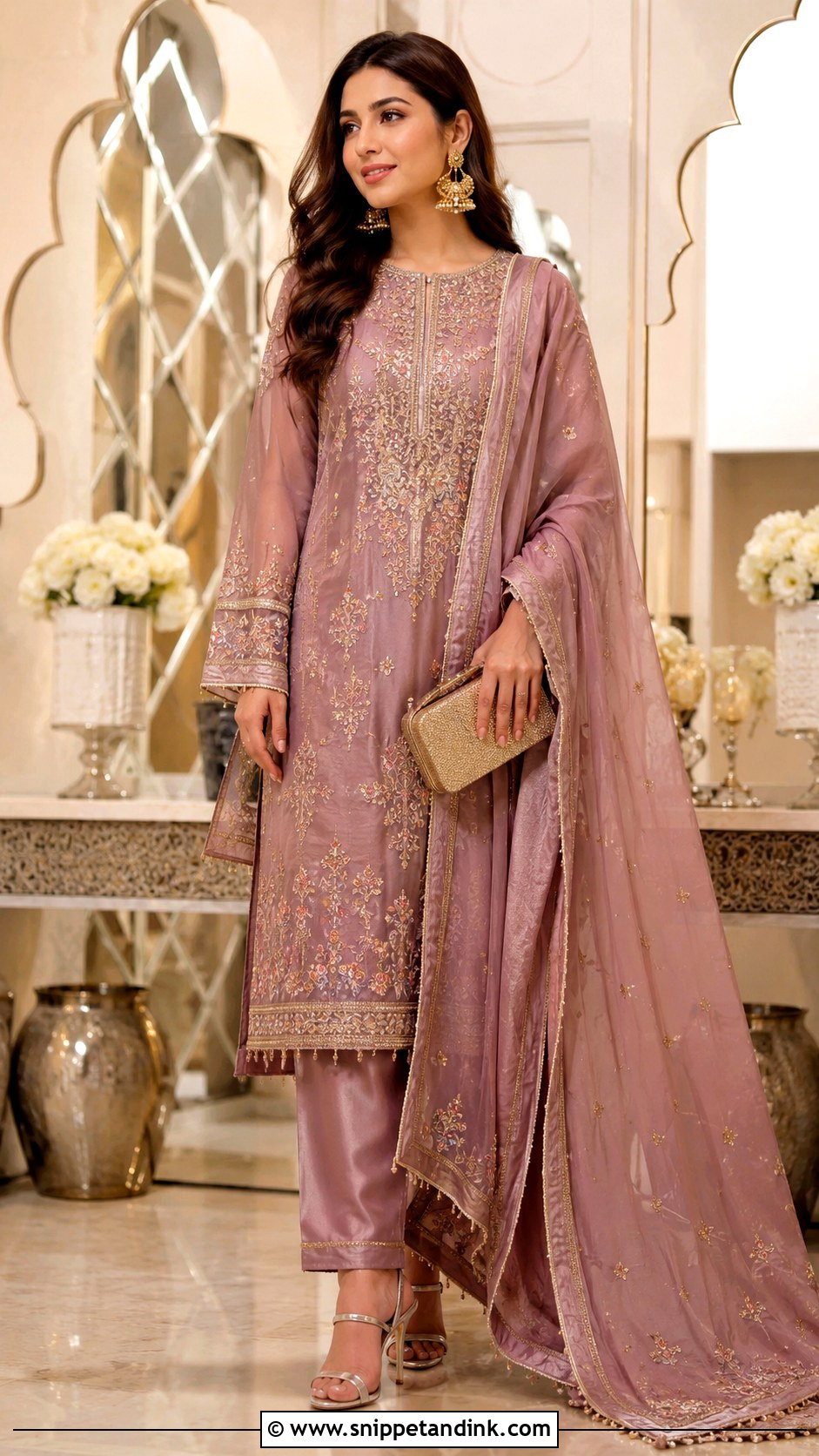
Embroidered kurtas are the most flexible piece in a guest wardrobe. Threadwork, zari, sequins, beads, pearls or resham can be chosen to match how formal the event is. My rule is to balance weight: heavy embroidery with simple pants and a lighter dupatta, light embroidery with a statement dupatta and jewelry. Mauve, teal, champagne, olive and maroon all read as wedding colors. Heels, a structured clutch and earrings in the same metal as the embroidery finish it, and you can restyle it for later events with different accessories.
18. Kurta With Skirt For Wedding
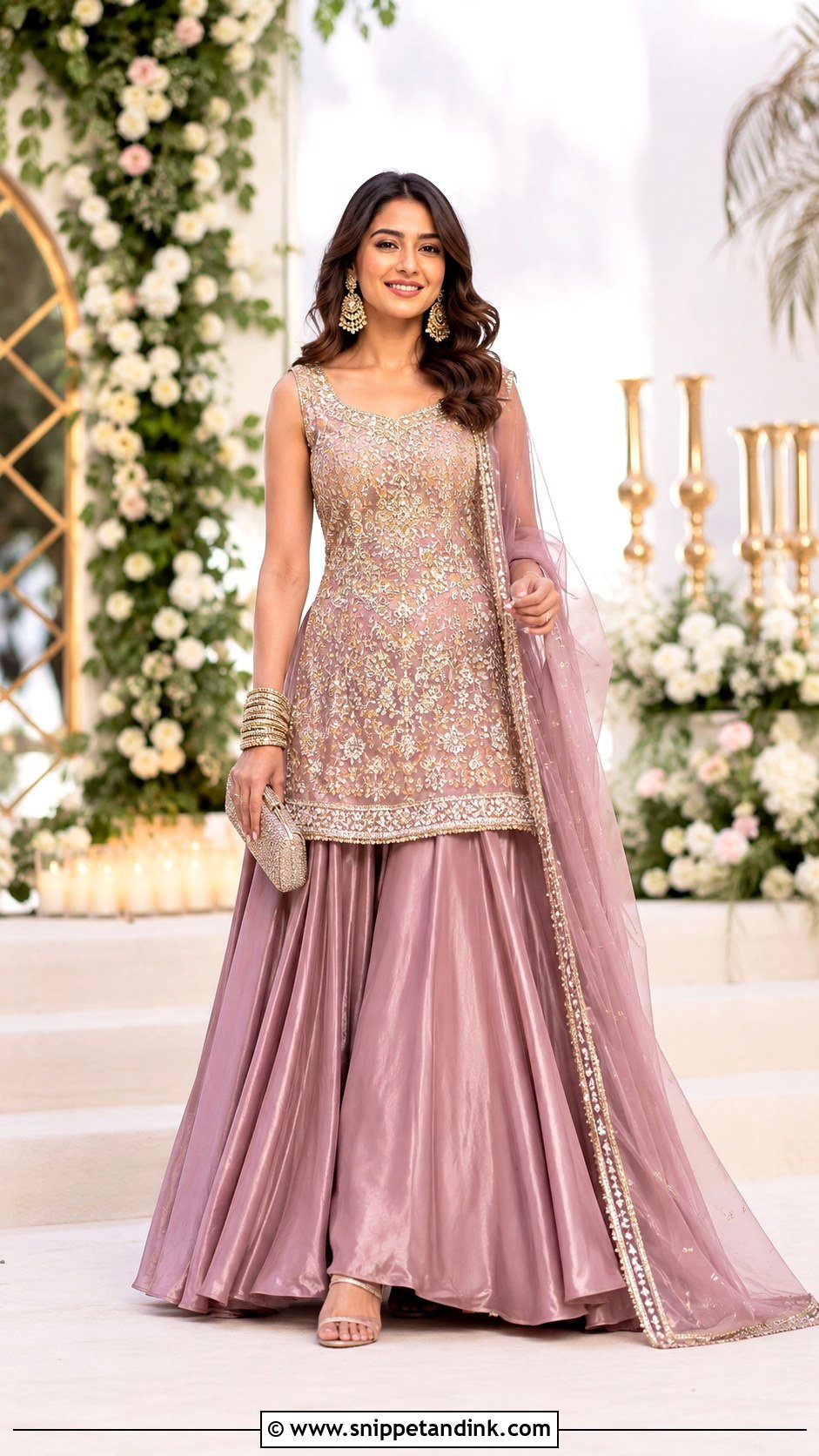
A kurta with a skirt gives a lehenga feel without the weight of a full lehenga. A short or mid-length kurta over an embroidered flared skirt keeps the balance; a long straight kurta over a flowing skirt looks more formal. Silk, georgette, brocade, organza and cotton silk all work. Drape the dupatta over one shoulder and pin it at the back so it doesn’t slide when you lift your arms. Statement earrings, stacked bangles and comfortable heels finish it for mehendi, engagements and sangeet.
19. Kurta With Dhoti Pants For Wedding
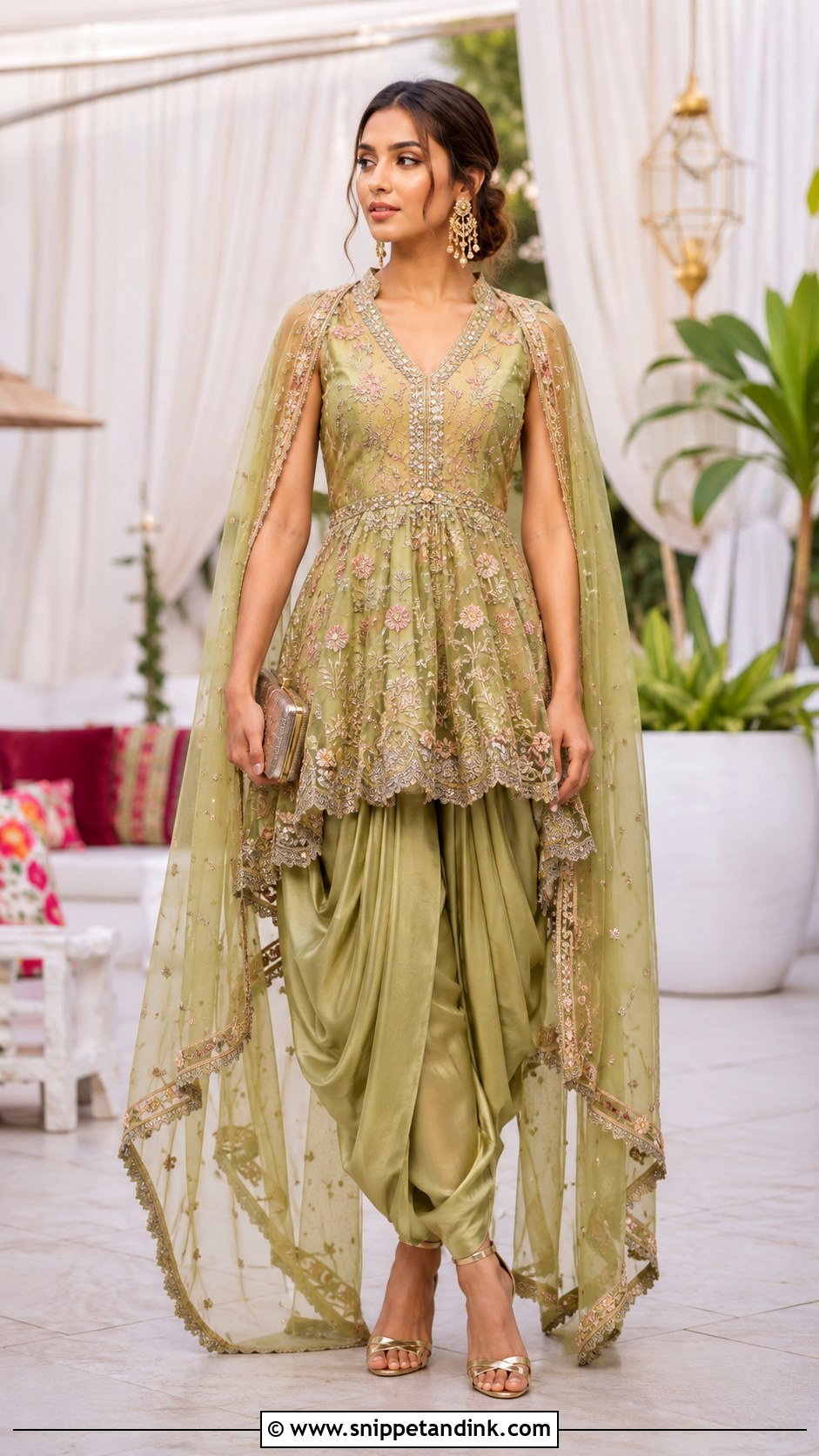
A kurta with dhoti pants suits women who like fusion. The draped pants add interest while the kurta keeps the outfit traditional. Short, asymmetrical or peplum kurtas balance the drape best, in silk blend, crepe, georgette or satin, which hold folds well. I’d avoid this on a very hot day, since dhoti pants use more fabric than you’d guess. Add a cape, dupatta or embroidered jacket for more formal events, and finish with statement earrings, heels and a small clutch for mehendi, sangeet or destination weddings.
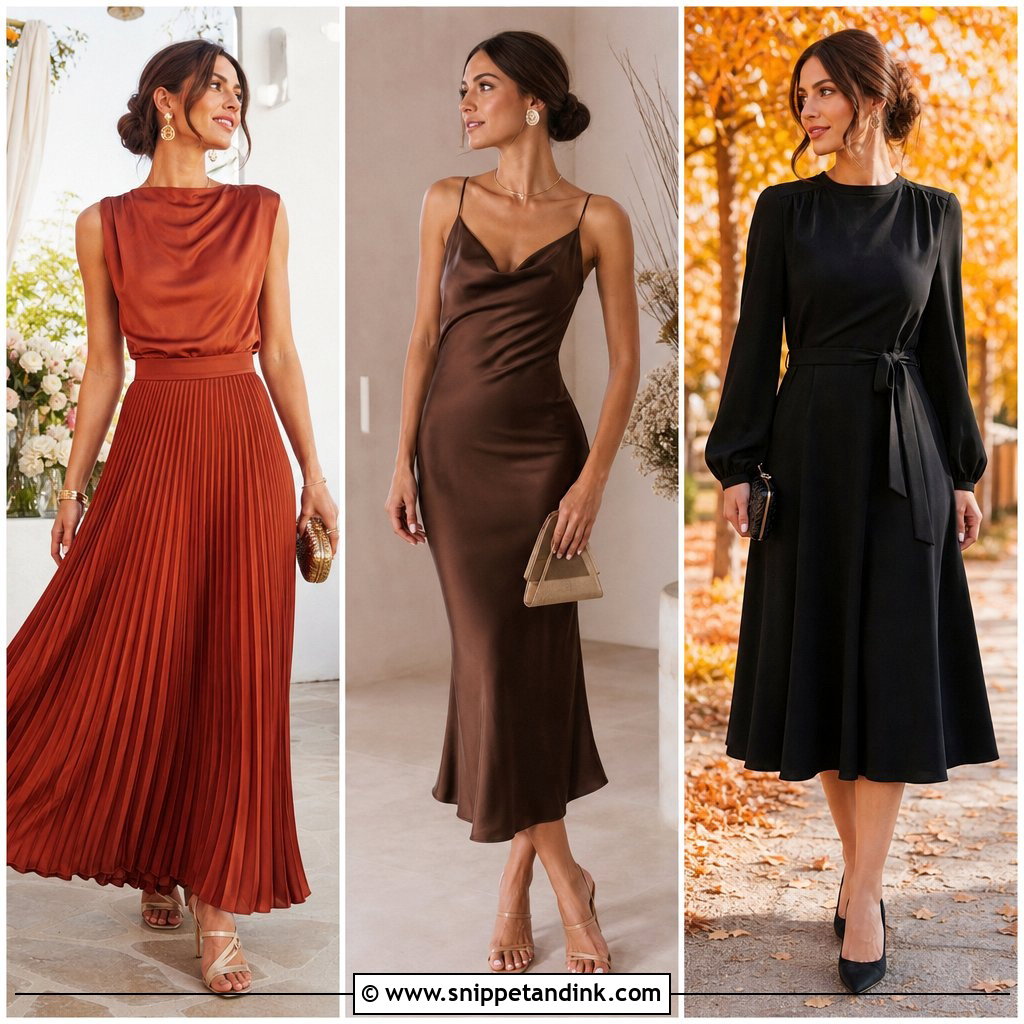
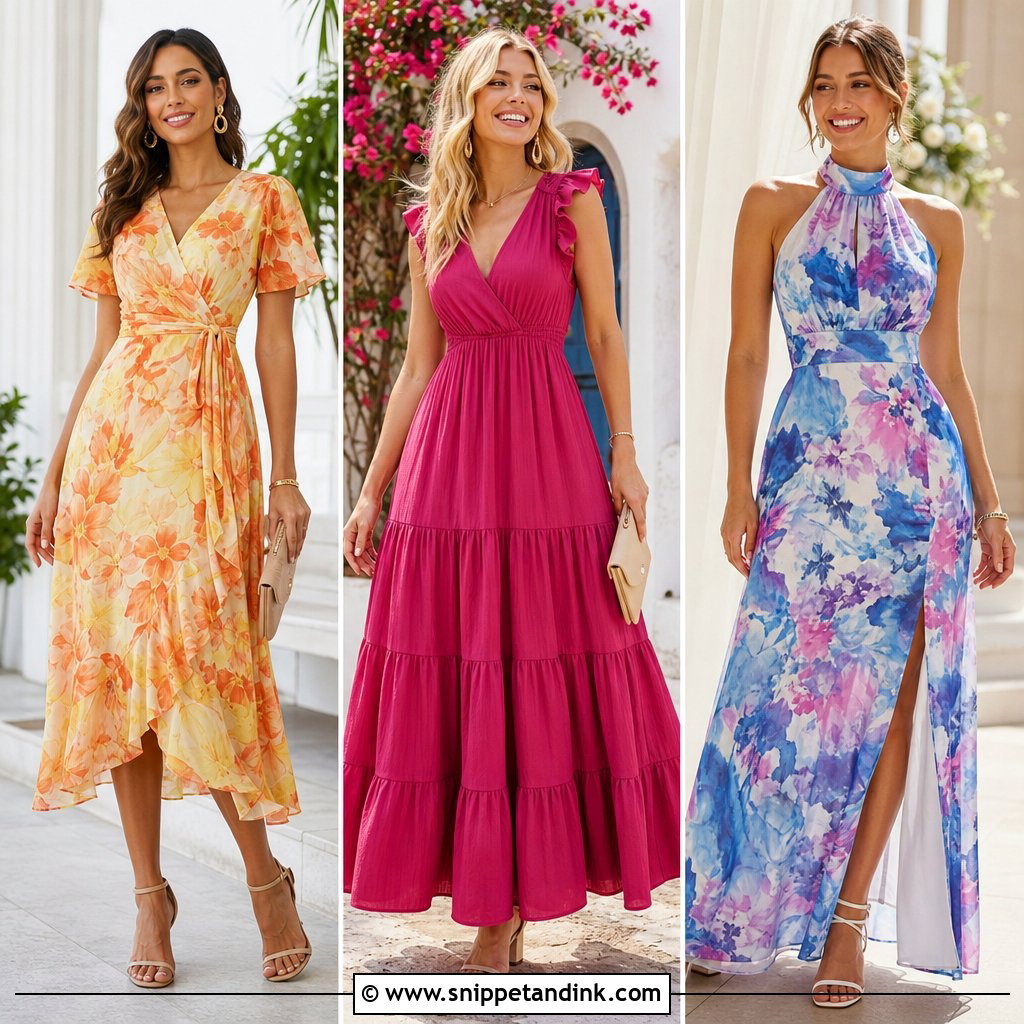
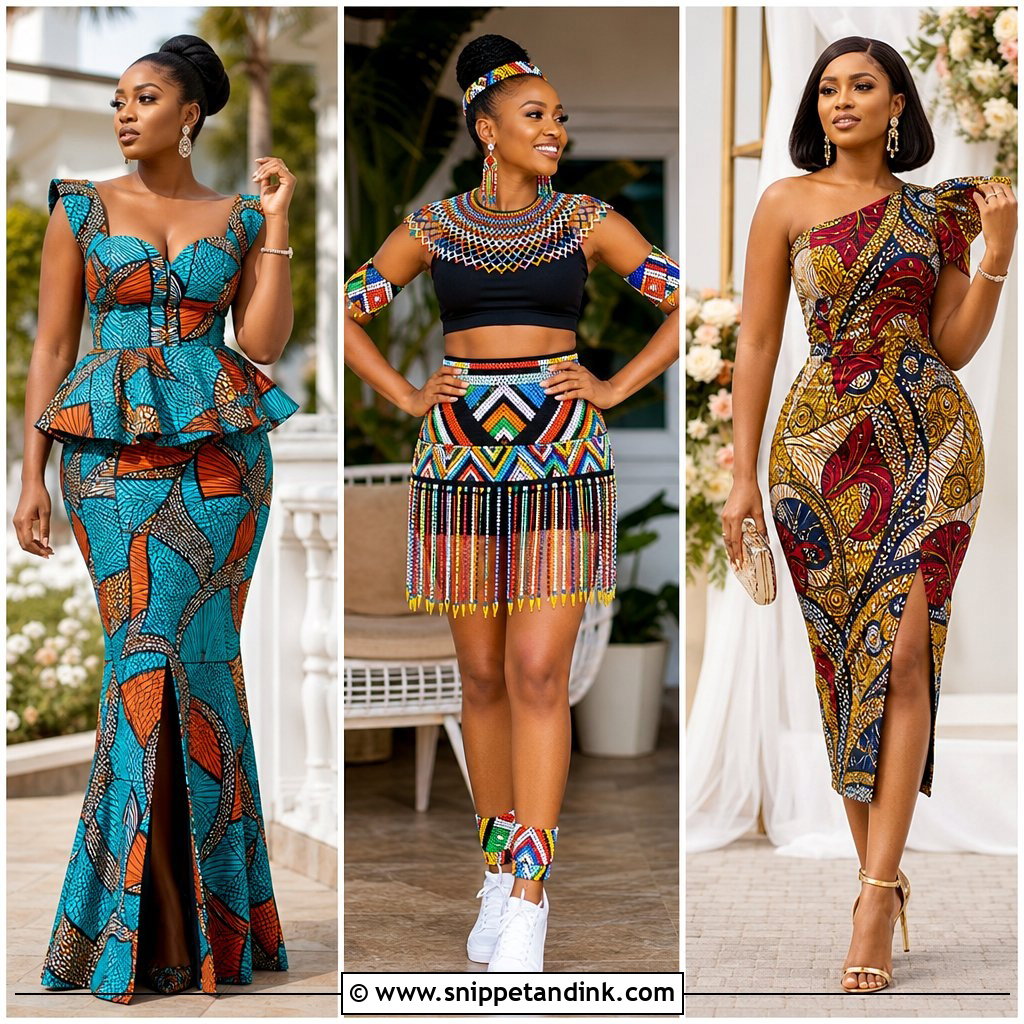
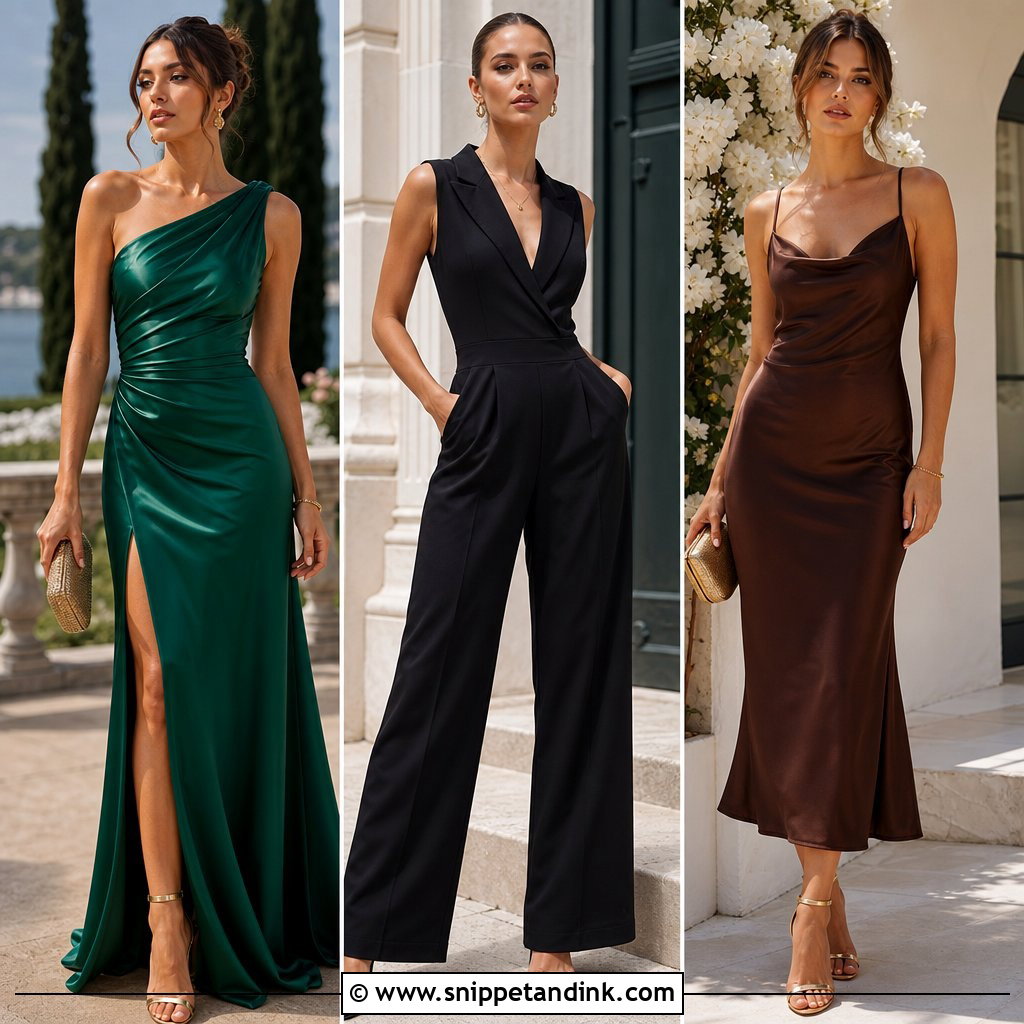
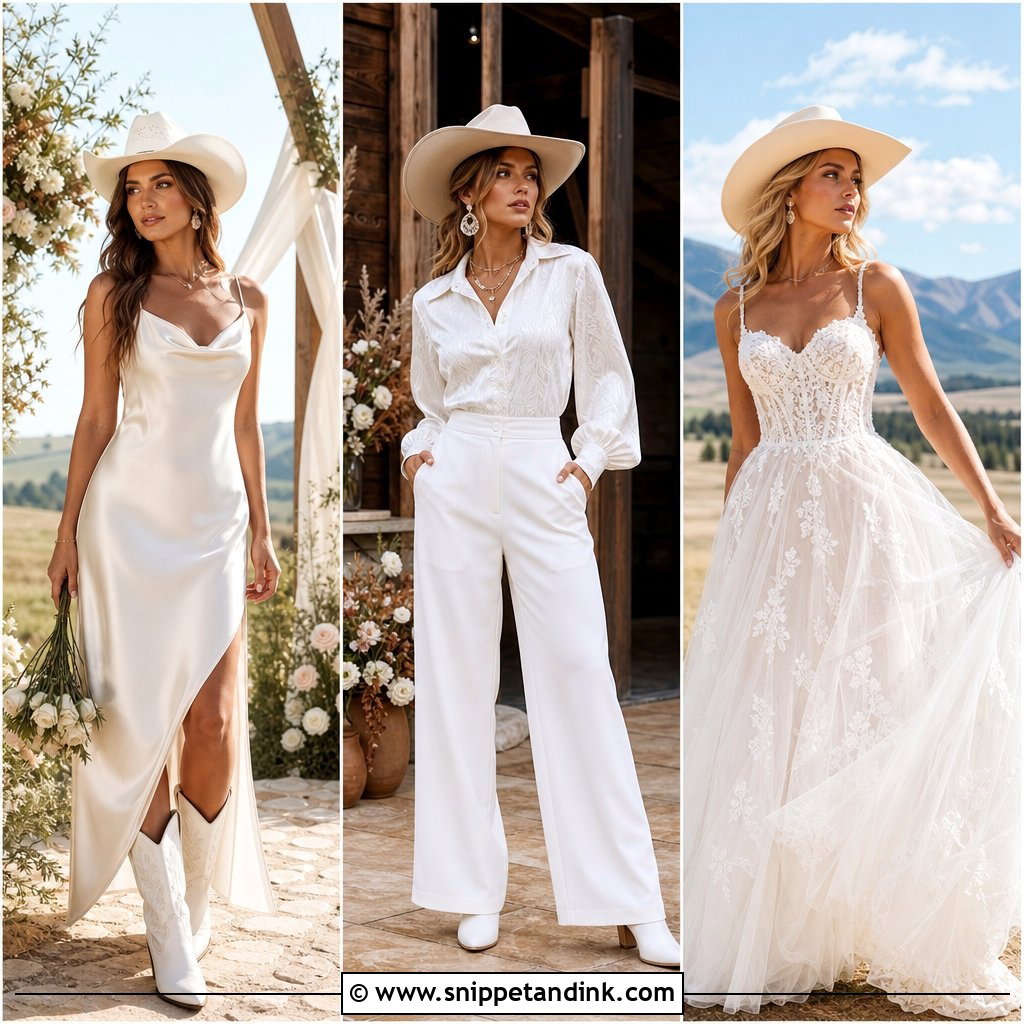
20. Kurta With Cigarette Pants For Wedding
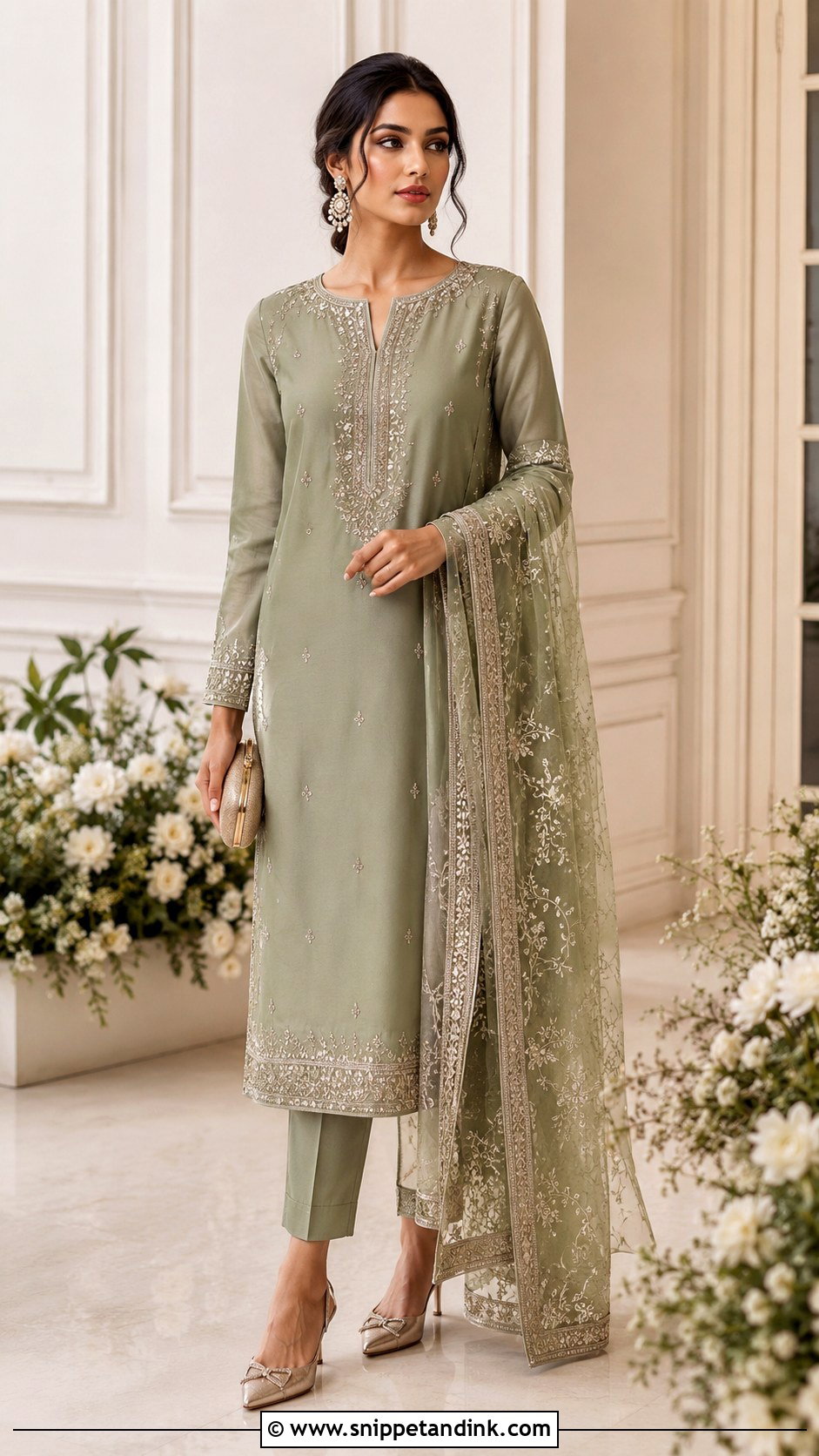
Cigarette pants keep the whole outfit tailored and crisp. Choose a straight or A-line kurta with embroidery at the neckline, sleeves or side panels, and cigarette pants in silk, satin or crepe. A dupatta with a decorative border adds the festive detail. Pointed flats, kitten heels or block heels suit it. Let the kurta decide the jewelry: heavy embroidery, simple earrings; a minimal kurta, a statement necklace. Get the pant length right, ending just above the ankle bone, or the look turns sloppy.
21. Kurta With Dupatta For Wedding
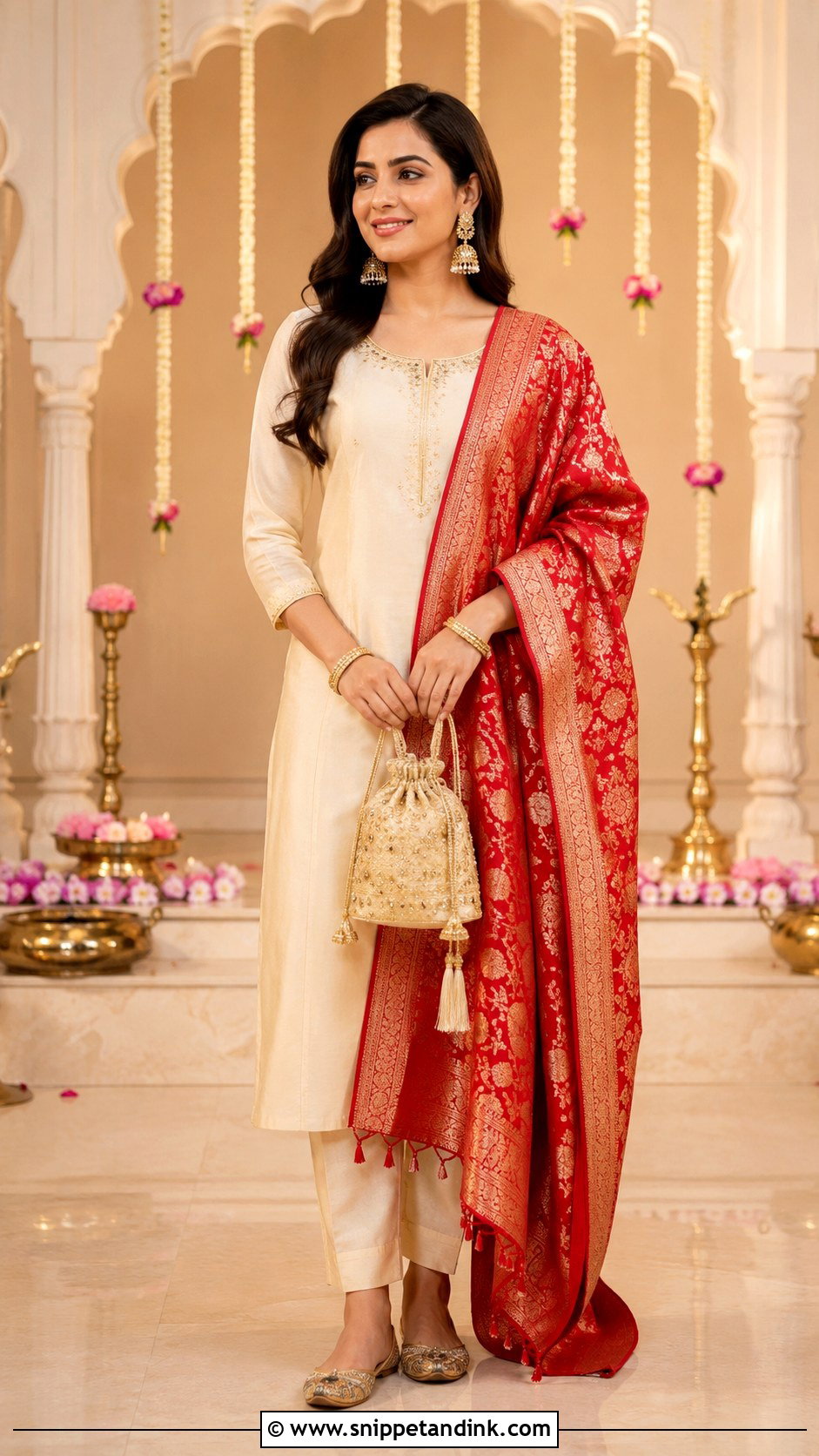
A plain kurta with a strong dupatta is the cheapest way to look dressed up, and the easiest outfit to repeat. Start with a plain or lightly embroidered kurta in silk, chanderi, georgette or cotton silk. Then add a statement dupatta in banarasi, organza, phulkari, bandhani or embroidered net. Pair it with straight pants, palazzos or churidar. Heavy dupattas slip off the shoulder constantly, so I use two small safety pins on the inside at the shoulder seam. Match earrings to the dupatta details.
22. Short Kurta With Sharara For Wedding
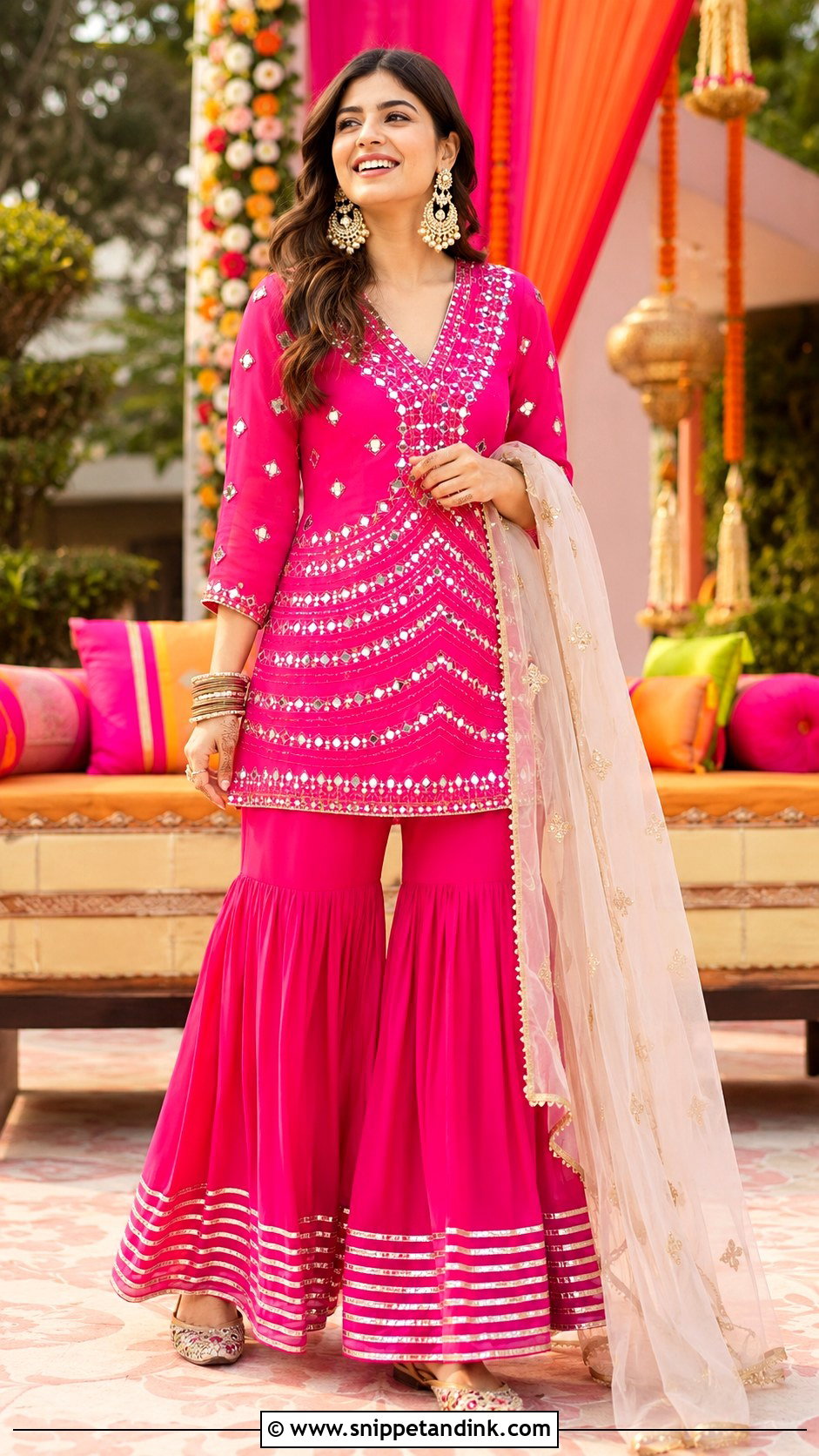
The short kurta with sharara pants looks young and festive, and the short top balances the wide flare well. Embroidery, mirror work, sequins or gota patti all suit it. Bright shades work for mehendi and haldi, jewel tones for sangeet and evening. Keep the dupatta light so it doesn’t compete with the volume below. A short kurta shows the waistband when you raise your arms, so check that the sharara sits high enough. Jhumkas, bangles and flats or block heels complete it.
23. Long Kurta With Palazzo For Wedding
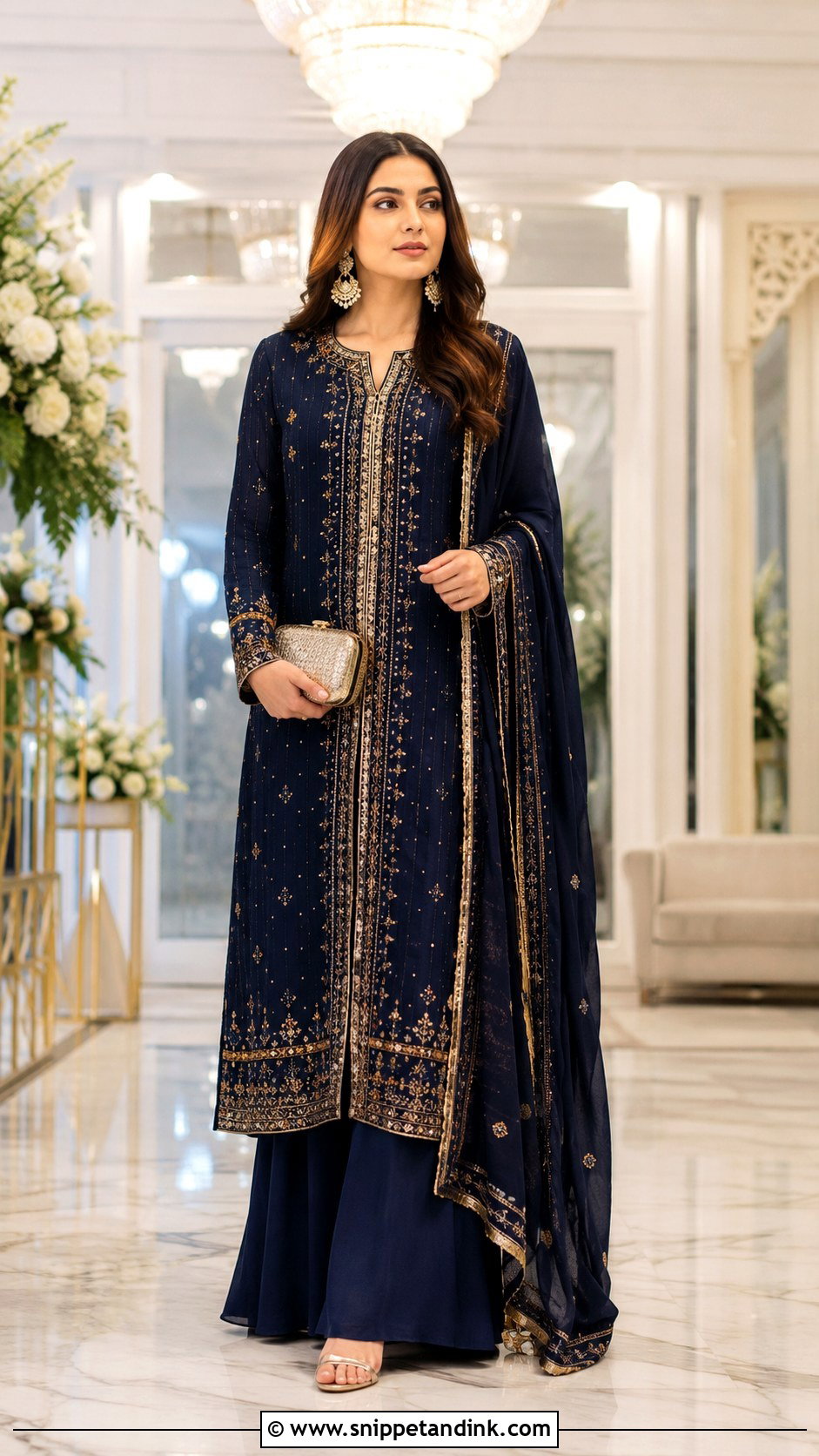
Length gives a long kurta a strong vertical line, and the palazzo adds movement underneath, so it reads modest and graceful. Side slits, embroidery or woven detail keep it festive, in silk blend, georgette, chanderi or crepe. Matching palazzos look coordinated; contrast bottoms add interest. I’d have the side slits checked when seated: if they ride up past the hip, ask a tailor to close them an inch or two. A dupatta with light border work, heels and a small clutch suit ceremonies, family dinners and semi-formal events.
24. Bandhani Kurta For Wedding
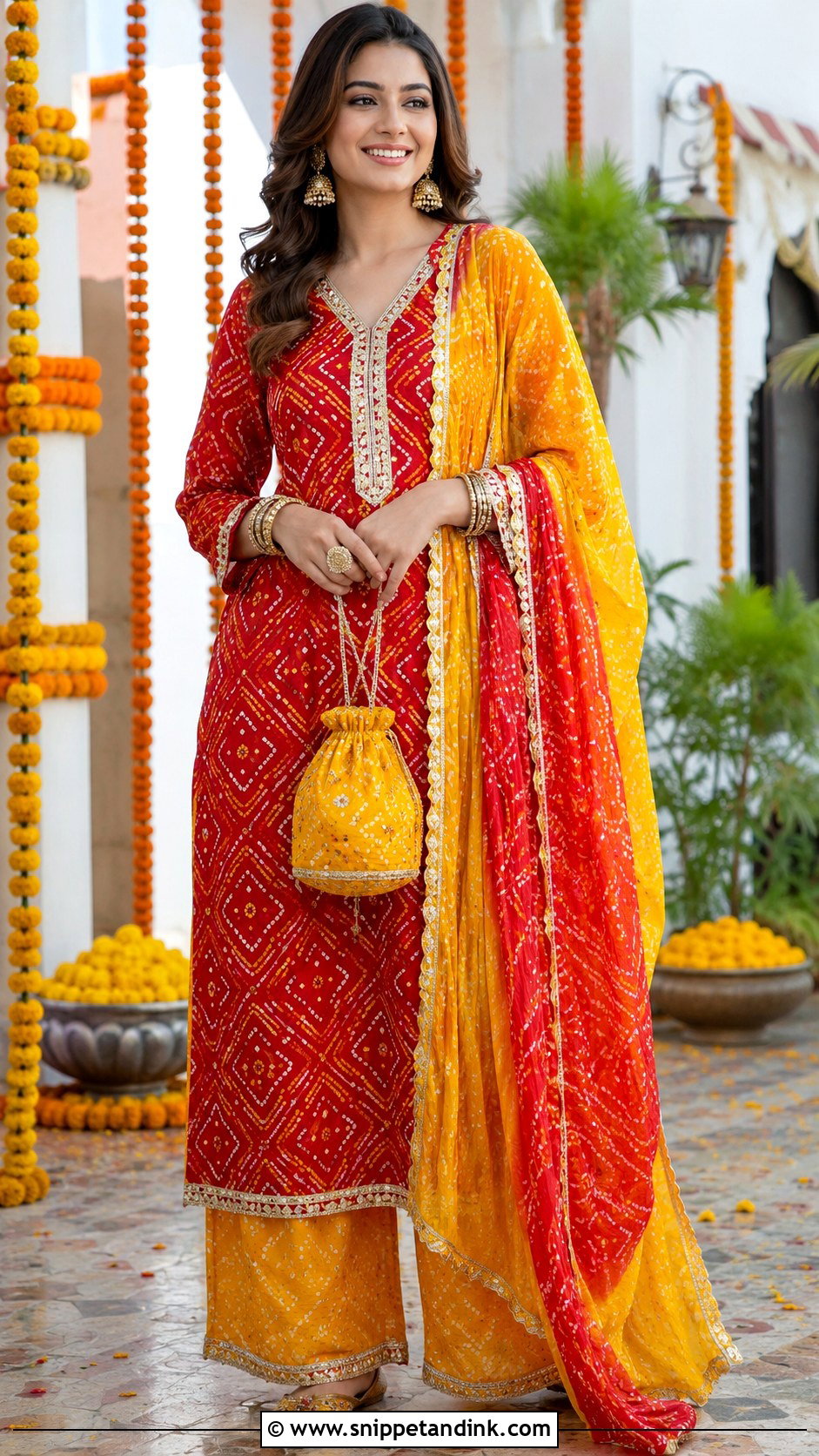
Bandhani is tie-dye made by binding tiny points of cloth before dyeing, which leaves that raised dotted texture. Red, yellow, pink, orange, green and purple suit haldi and mehendi; gota borders, zari accents or a silk dupatta make it more formal. Pair it with palazzos, shararas or straight trousers. Real bandhani can bleed in the first wash, so dry-clean it or wash it alone in cold water. Oxidized jewelry keeps it relaxed, gold dresses it up, and juttis and a potli bag finish it.
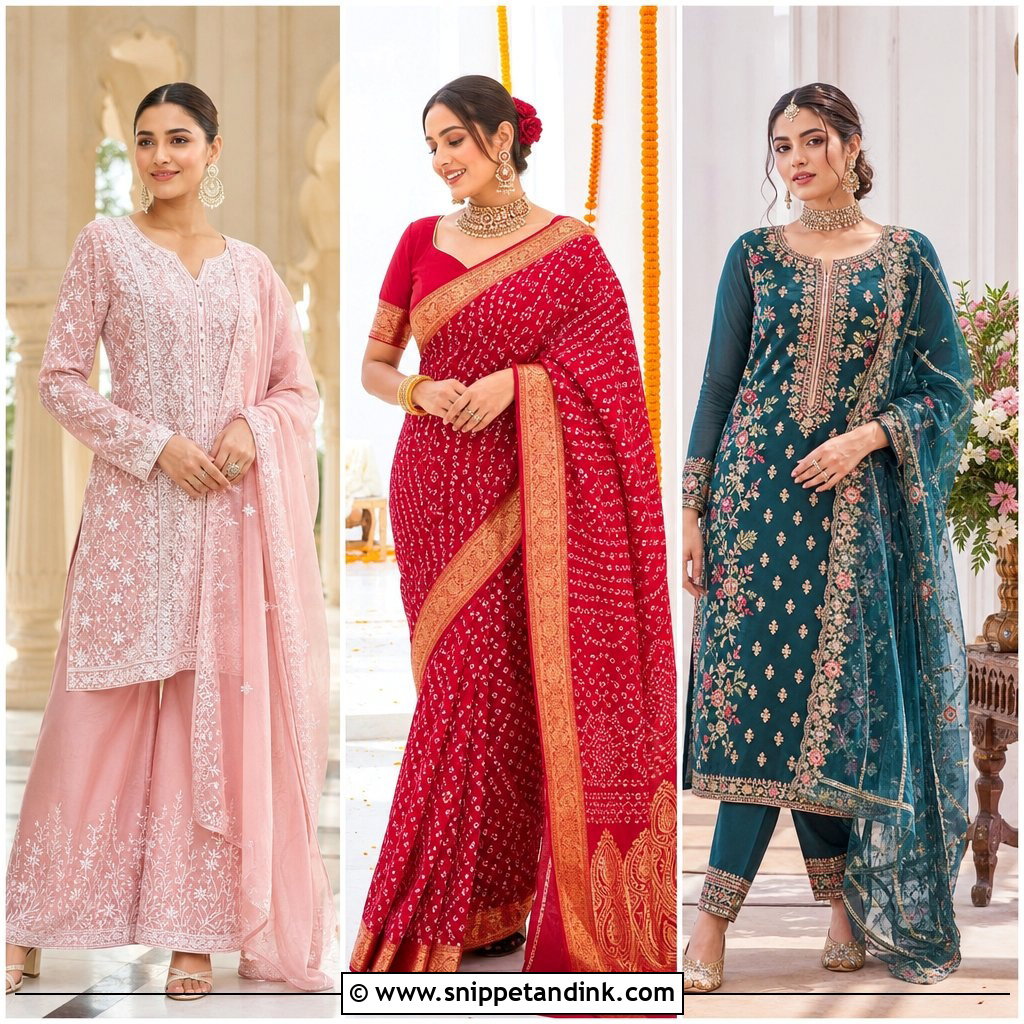
25. Designer Kurta For Wedding
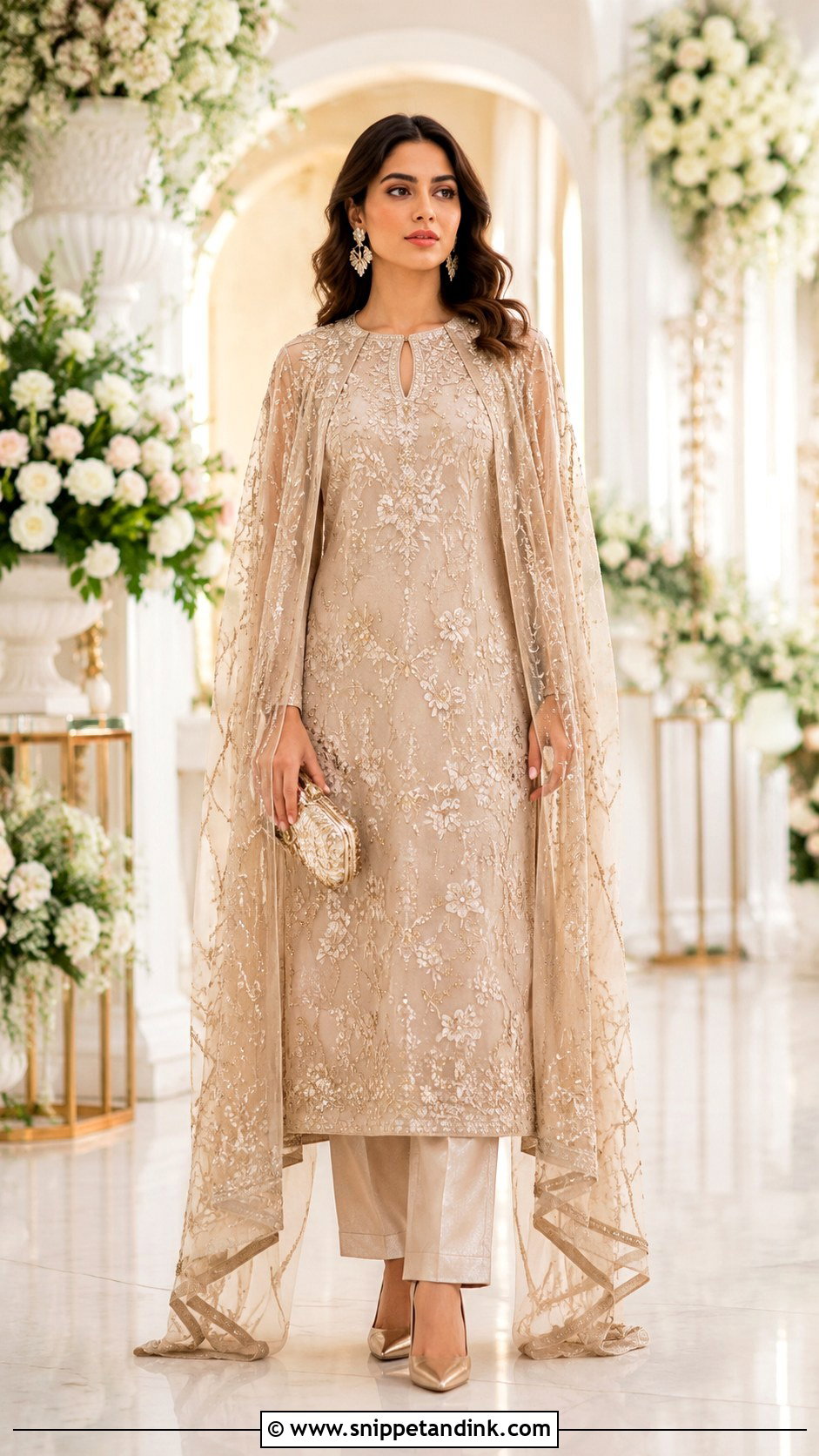
Designer pieces earn their price through cut, fabric and hand embroidery: cape sleeves, layered hems, structured jackets, artistic prints. The outfit should still be wearable for the event. If the kurta has heavy work, keep the pants simple and the jewelry minimal; if it’s subtle, add a statement dupatta or bold earrings. Soft champagne suits engagements, emerald or ruby the evening reception. Before you buy, I’d sit, bend and raise your arms in the trial room, because some designer cuts look great standing and pull badly when seated.
Alterations Worth Paying For on a Ready-Made Set
Most guests buy ready-made, and a ready-made kurta rarely fits perfectly out of the bag. A tailor can fix the things that make an outfit look cheap, usually in a week or two, but not during peak wedding season. Leave yourself a month.
Sleeves and armholes
Sleeves cut too long bunch at the wrist with bangles. I take them to just above the wrist bone. Tight armholes are the main reason a kurta feels uncomfortable after an hour, and a tailor can often let them out if there is seam allowance.
Length and slits
Set the kurta length and the bottom hem with the shoes you’ll actually wear. Side slits can be raised or closed depending on how you sit.
Lining
Hold the kurta up to daylight. If you can see your hand through it, ask for a lining or wear a matching slip. Event lighting and camera flash show far more than a mirror does.
If turmeric gets on your outfit at the haldi, rinse it in cold water as soon as you can and skip hot water, which sets the stain. Drying the garment in sunlight helps fade turmeric marks on cotton, but keep silk out of strong sun.
Dress for the Function First, the Photos Second
The right kurta suits the function, lets you move and still looks dressed. Pastels, florals, chikankari, bandhani and organza belong to daytime; silk, velvet, banarasi, heavy embroidery and designer pieces belong to evenings. Your bottoms (sharara, palazzo, skirt, dhoti or cigarette pants) set the mood and the comfort level. Then check the outfit against the camera: does the dupatta stay put, does the color hold up in flash, and does anything ride up when you sit? Accessories should support the outfit, not compete with it.
You'll Like These Ideas:


Leave a Reply