
Nigeria doesn’t have one wedding outfit. It has dozens, and each carries a family’s history in its fabric, beads and the way it’s tied. These twenty Nigerian Wedding Outfits run from traditional bridal sets to aso ebi gowns, modest options and modern guest looks: Yoruba aso oke, Igbo george, Edo coral beadwork, Hausa embroidery, Efik ceremonial dress and contemporary lace. When I style a bride in a tradition that isn’t my own, the first conversation is never with the tailor. It’s with her mother or an aunt, because details like how many wrappers, which beads and who wears what vary from family to family. Guests have an easier brief: find out whether there’s aso ebi or a colour palette before buying anything.
Below, each outfit comes with the accessories I’d pair with it and the one fitting or cultural point I’d raise before it’s made.
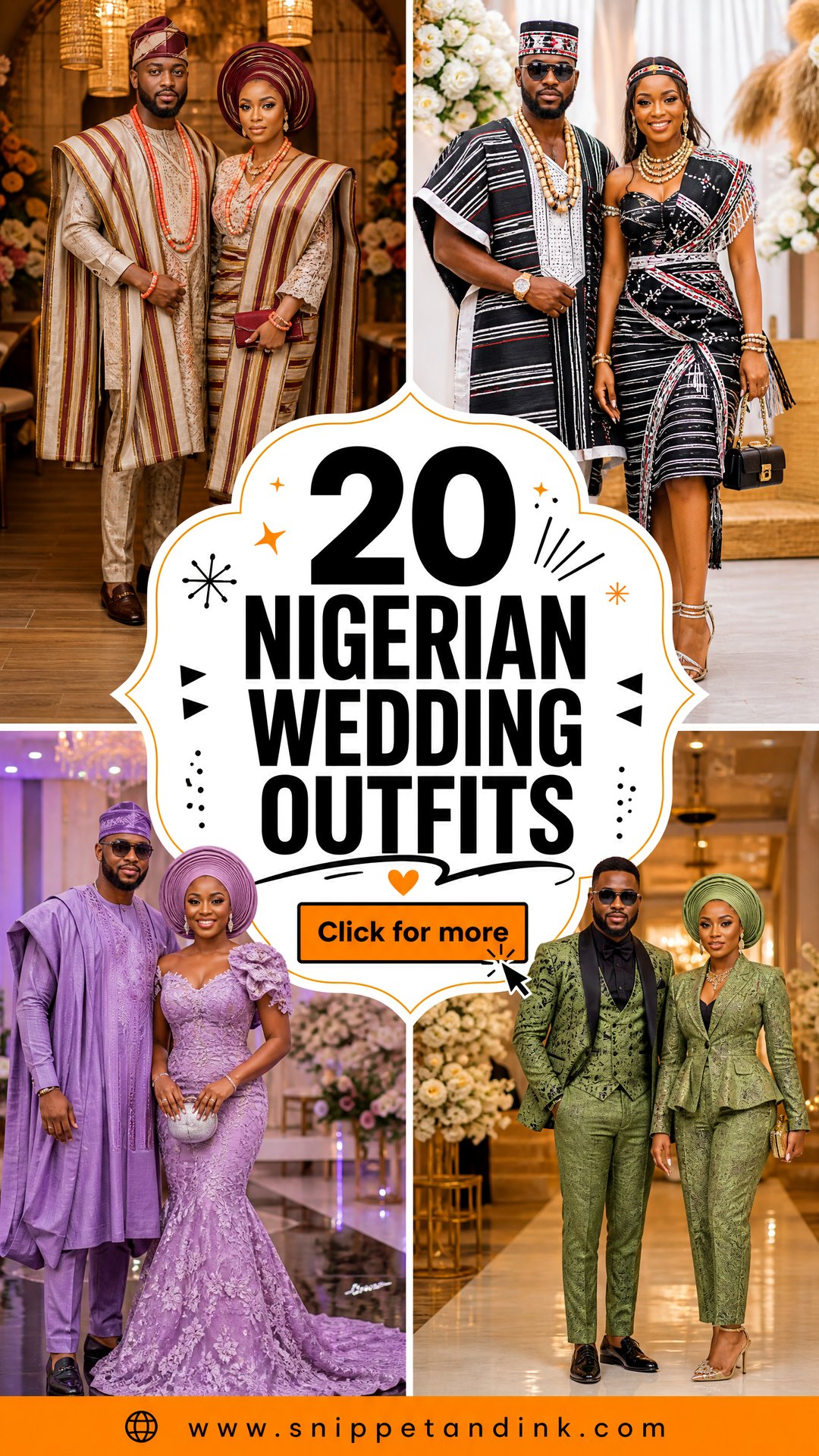
Two Families, Two Dress Traditions, One Weekend
Many of the brides I dress are marrying into a different ethnic group, and that often means wearing two sets of traditional attire. A Yoruba bride marrying an Igbo groom might wear aso oke at one ceremony and george with coral at another. It’s a lovely way to honour both families, and it needs planning.
- Ask each family which ceremony is theirs and what the bride is expected to wear at it. Don’t assume the groom’s side wants the bride in their dress at every event.
- Find out early whether beads, crowns or wrappers will be lent by the family. Heirloom pieces dictate the colours and neckline of the outfit around them.
- Allow enough time between outfits. Changing from a full gele and aso oke into george, coral and a new hairstyle can take well over an hour.
- Use one hair plan that works for both looks where possible, such as a sleek low base that takes a gele and later beaded ornaments.
- Brief the photographer on which outfit belongs to which family so the album reflects both.
Guests at a mixed wedding may also be sent two aso ebi fabrics, one from each family. Wear the one that matches the side that invited you, or ask the person who sold it to you.
1. Yoruba Aso Oke Iro And Buba Wedding Outfit
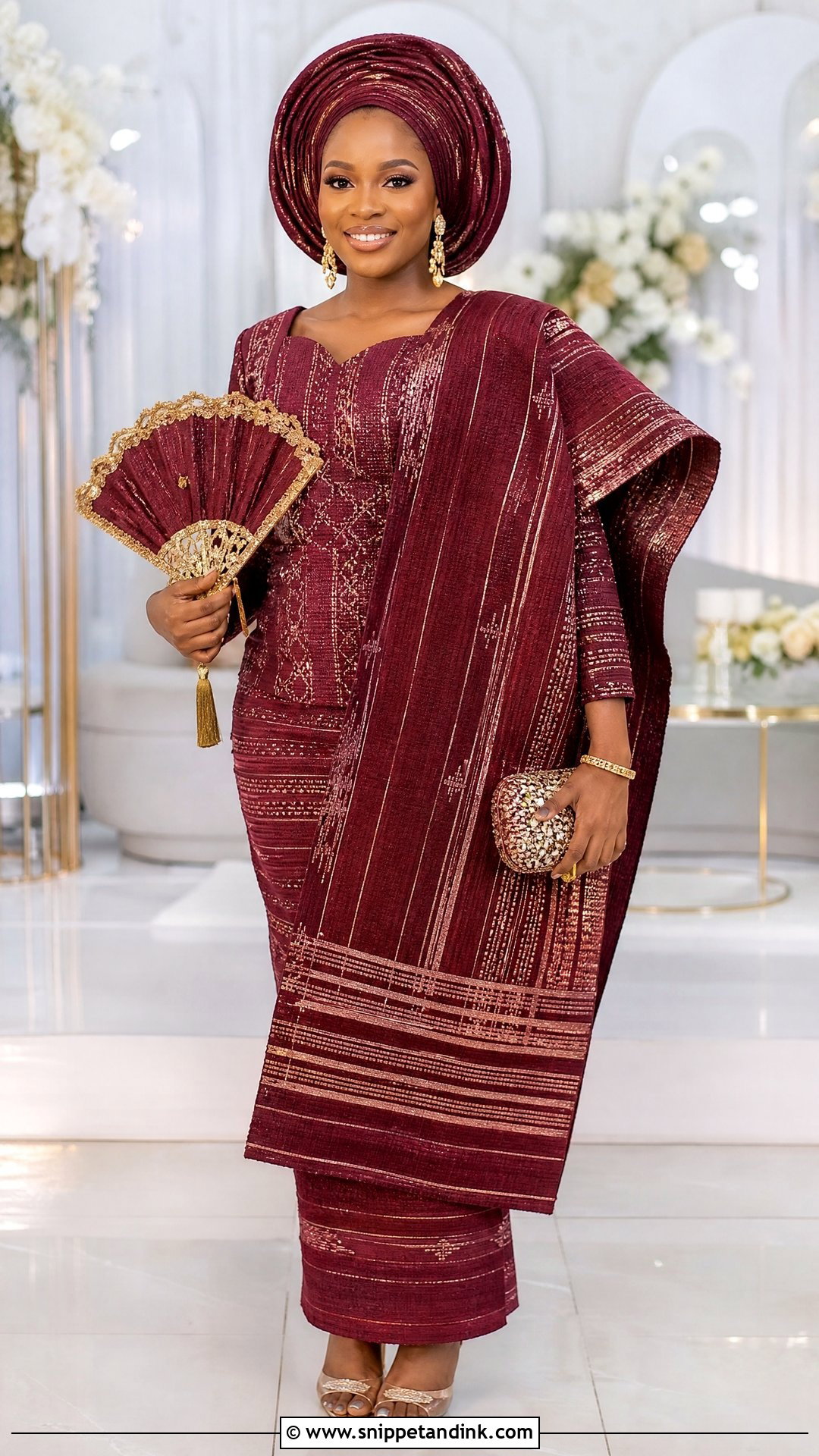
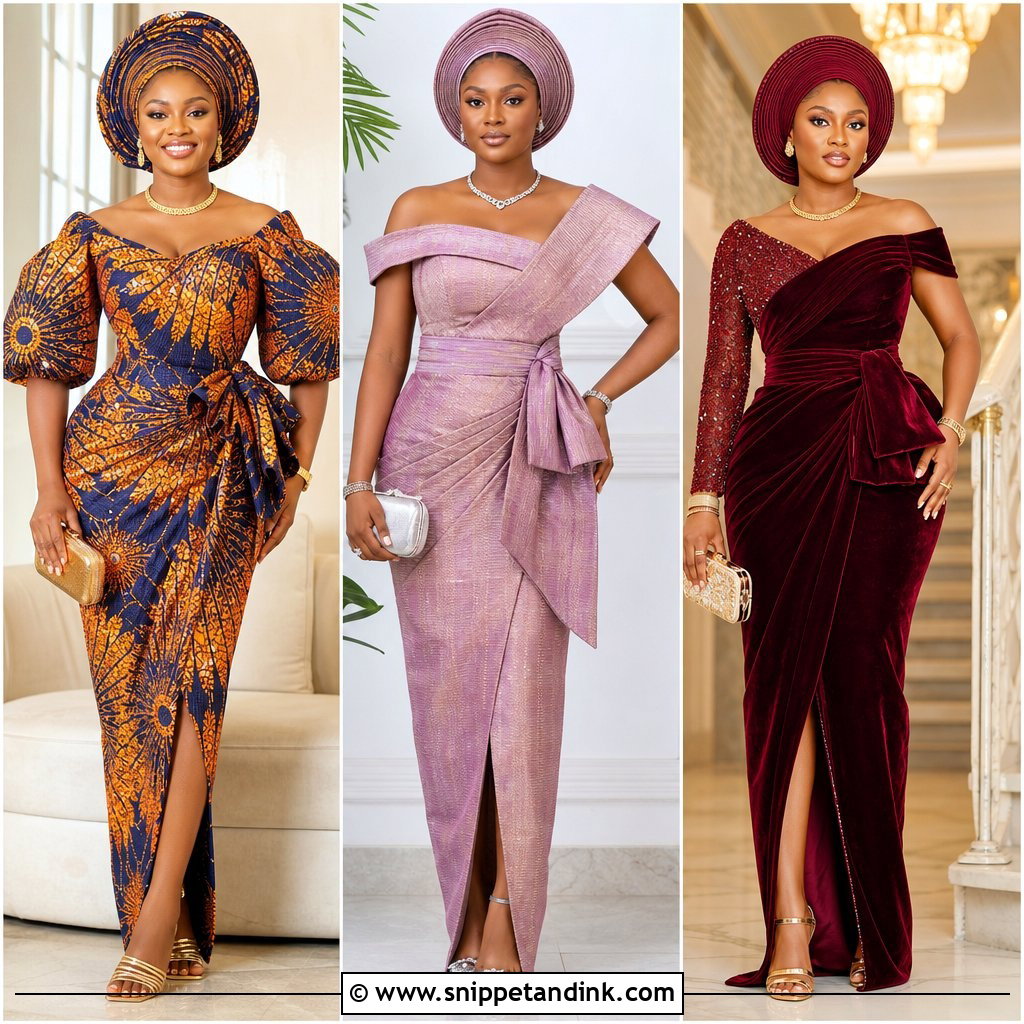
Nothing says Yoruba bride quite like Yoruba aso oke made into iro and buba: woven wrapper, matching blouse, a structured gele and the ipele draped over one shoulder. Maroon, champagne, coral, emerald and royal blue are all common bridal choices; guests follow the palette. Aso oke is stiff and hand-woven, so the buba should define the waist without fighting the fabric’s body. Metallic heels add height, though embellished low sandals are kinder over a long day. A small beaded clutch, gold earrings and a hand fan finish it. Brides often add extra embroidery so their set stands apart from the guests’ simpler versions. The real skill is the gele: a tall, crisp aso oke gele takes practice, and I’d book someone experienced to tie it on the morning.
2. Yoruba Aso Oke Corset Gown Wedding Outfit
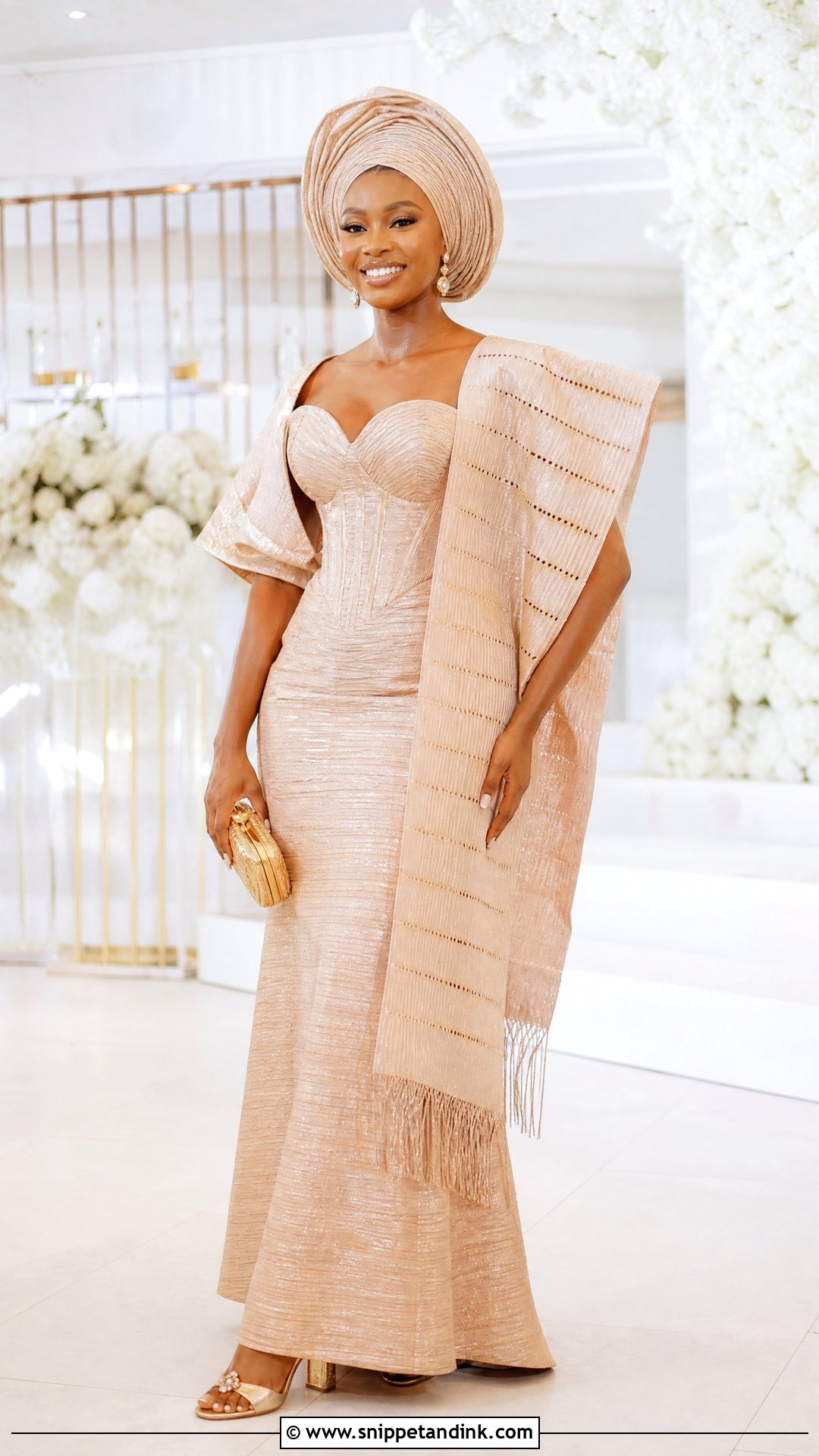
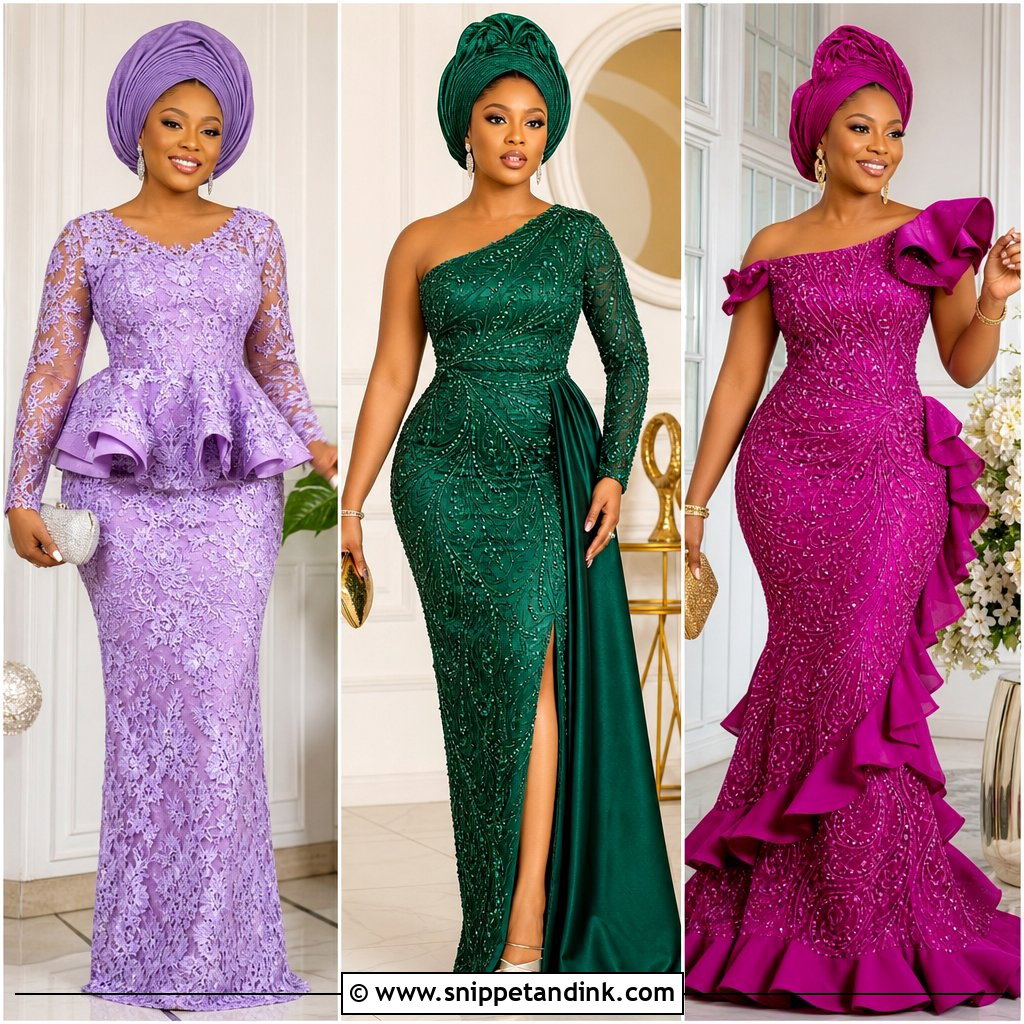
Brides who want aso oke but not the wrapper often go for a floor-length corset gown with a fitted waist and a gently flared skirt. The weave keeps the tradition; the single-piece cut feels modern. Square, sweetheart or soft curved neckline, so the face isn’t competing with a sculptural gele. Keep the ipele as a shoulder sash, side drape or detachable train. Crystal earrings, a small gold bag and block heels. Woven aso oke doesn’t stretch and frays at cut edges, so the corset has to be fitted precisely and every seam bound. Put the detail in the bodice and leave the skirt cleaner; beading everywhere on a woven fabric looks heavy fast.
3. Igbo George Wrapper And Lace Blouse Wedding Outfit
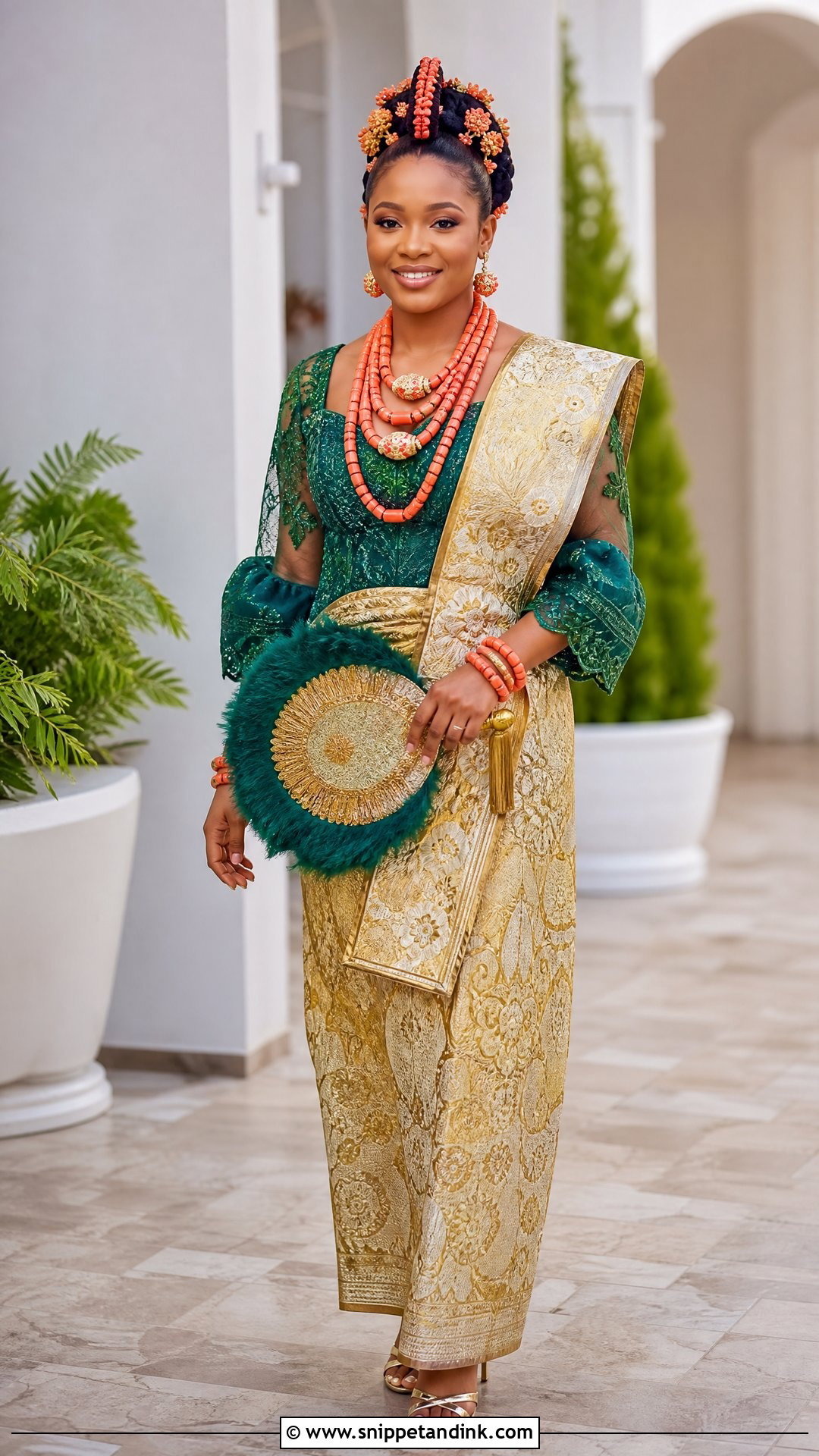
George wrappers bring instant ceremony, and getting the layering right is where Igbo families have firm opinions. Some brides wear one wrapper, some two, depending on family custom, so ask first. A fitted lace blouse with elegant sleeves goes on top. Burgundy, orange, emerald and gold look rich beside coral beads. The hair can carry coordinated beadwork or a carefully tied headwrap, whichever the family prefers. Metallic sandals, a structured mini bag and a decorative fan. If the blouse neckline is dramatic, space the beads so both show. George fabric, wrappers and coral are central to Igbo traditional bridal dressing, though practice differs between regions. Real george is heavy; tie the wrapper firmly over an underskirt or it slips by the second dance.
4. Igbo Isi Agu Gown Wedding Outfit
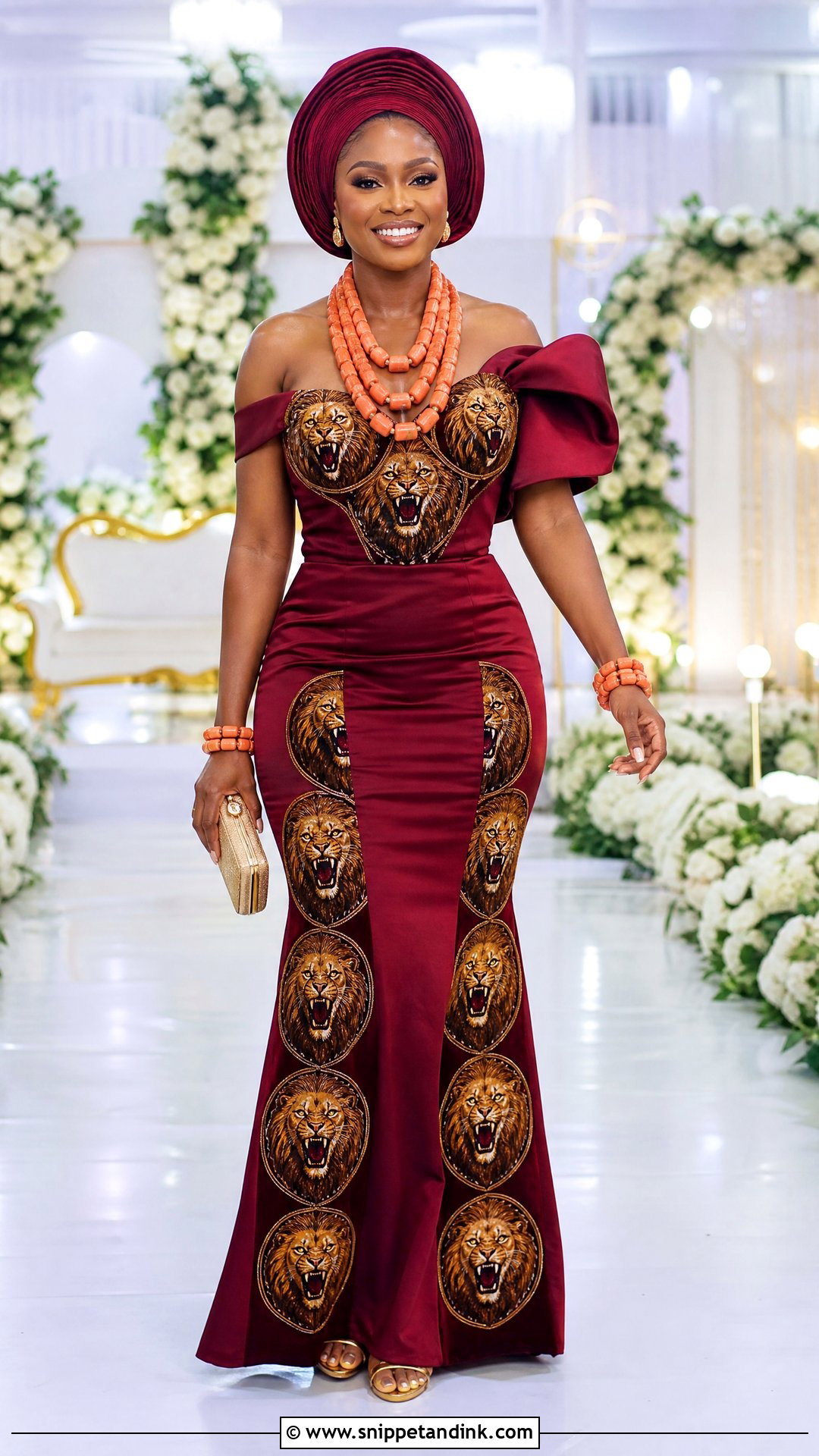
Isi agu, the lion-head print, makes a bold second look for an Igbo bride, or a heritage outfit at a family celebration where it’s appropriate to wear. The motif needs careful placement. A lion’s face cut in half at a seam looks careless, so lay out the fabric with your tailor before cutting the bodice, sleeves or skirt. A fitted waist and modest mermaid hem keep the print polished. Coral necklaces, bracelets and hair ornaments add richness; gold heels and a simple clutch tie it together. Isi agu panels pair well with velvet, lace or plain crepe in a jewel tone. Some brides also choose a shorter maiden-inspired cut where their customs allow it.
5. Edo Velvet Wrapper And Coral Bead Wedding Outfit
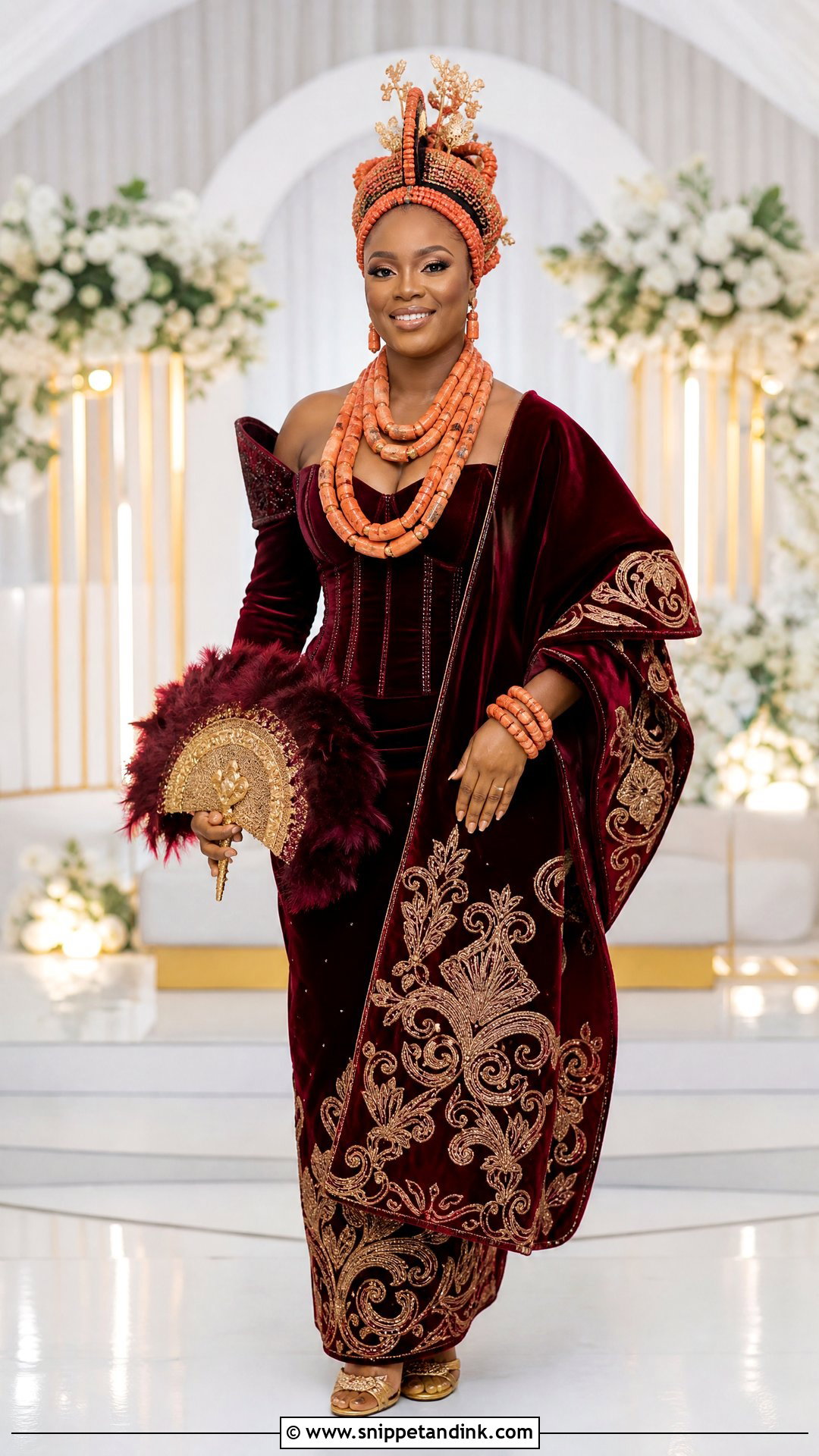
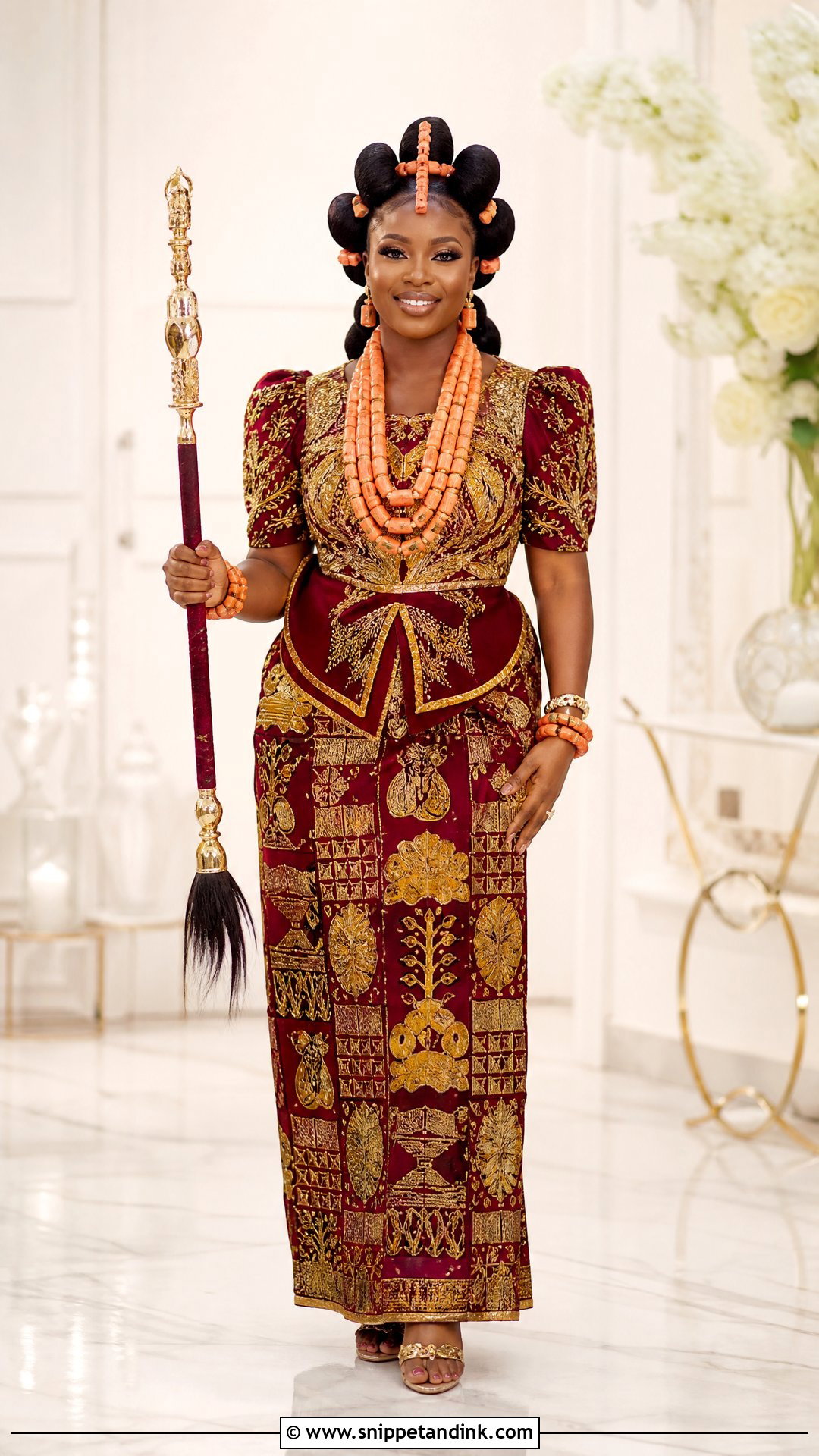
Coral leads the Edo bridal look, with the wrapper secondary. Start with a red, oxblood or deep burgundy velvet wrapper and a fitted blouse or corset, then the elaborate coral crown with layered necklaces, bracelets and often a beaded chest piece. All that jewellery is heavy and visually loud, so I keep the tailoring clean and the fabric embellishment sparse. Gold sandals or low heels for comfort, and a matching fan. Arranging the crown and beads is a job for family members or a stylist who knows Edo dress. These pieces carry heritage meaning, and they’re worn in a particular way for a reason; they aren’t decoration you style however you like.
6. Hausa Embroidered Silk Gown Wedding Outfit
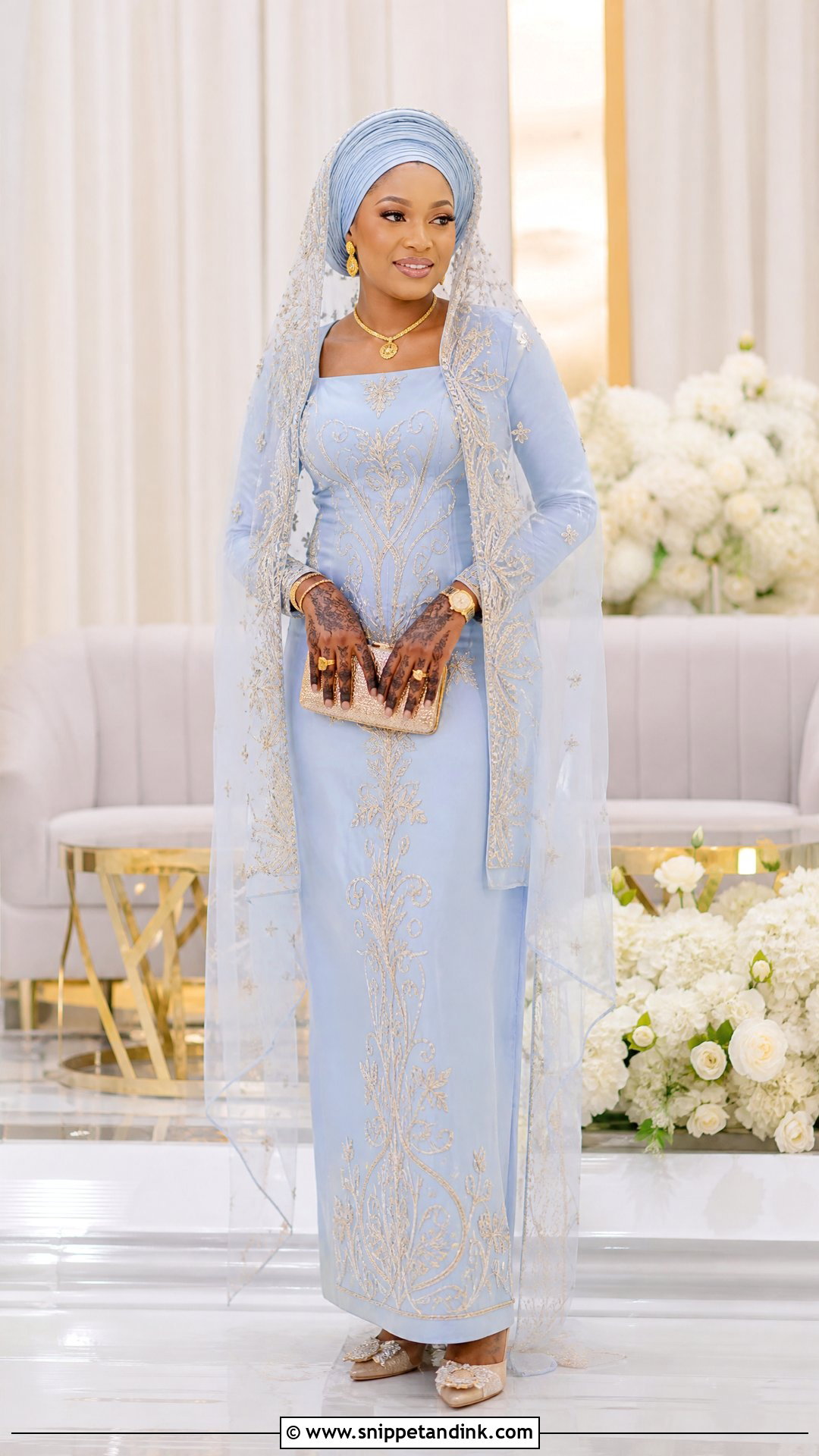
For a Hausa or Hausa-Fulani bride, coverage and embroidery come first. Silk, lace or brocade with long sleeves, a high neck and a relaxed floor-length skirt, worked heavily around the neckline, cuffs and front panel. There’s no need for a fitted silhouette; the embroidery supplies the richness. A coordinated headscarf or veil, pointed flats or low heels and a refined metallic clutch. Earrings sit under the head covering, so choose small, secure ones that won’t catch on the scarf. Henna on the hands adds another layer. Powder blue, olive, champagne, plum and rose are sophisticated colours. Pin the scarf to an under-cap so it stays put through hours of greetings.
7. Efik Onyonyo Wedding Outfit
The Efik Onyonyo is unmistakable: a fitted upper body over a vast floor-length skirt in red, purple, blue, green or gold, with embroidery tracing the neckline and bodice. It needs a full petticoat underneath to hold the shape, and I’d test walking and sitting in that petticoat well before the day. Traditional hairstyle with decorative combs, layered beads, dress shoes and an embellished ceremonial staff. For formal portraits, drop the handbag so the staff stays the focal point. The skirt already has huge volume, so the jewellery should frame the face rather than cover the bodice. Doorways and car doors are the practical challenge in a skirt this wide; plan the route from house to venue.
8. Efik Ofod Ukod Anwang Wedding Outfit
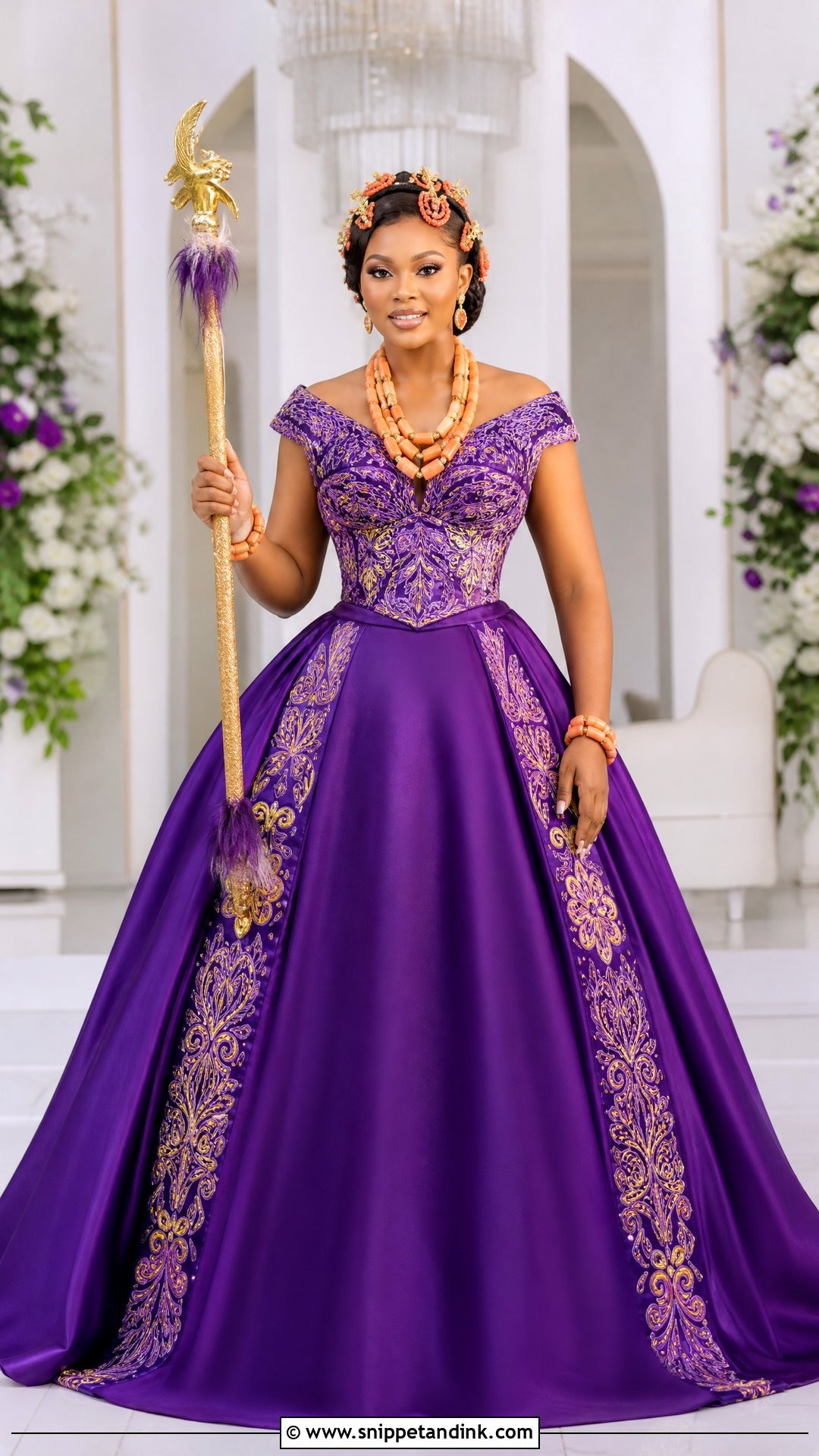
An Ofod Ukod Anwang outfit is the more body-revealing Efik bridal look: a shorter wrapper or skirt, a fitted top, an adorned hairstyle, beadwork and an ornamental staff. Richly patterned fabric, panels secured so you can move with confidence. Embellished sandals or heels lengthen the legs; bracelets and necklaces add shine. Since the waist may show, talk through coverage and construction before sewing starts. A lined bodice, stable fastenings and a fitted underlayer make it far easier to wear for a whole ceremony. This is culturally specific dress, so plan it with relatives or a specialist who knows it, not from a photo alone.
9. Tiv A’nger Wedding Outfit
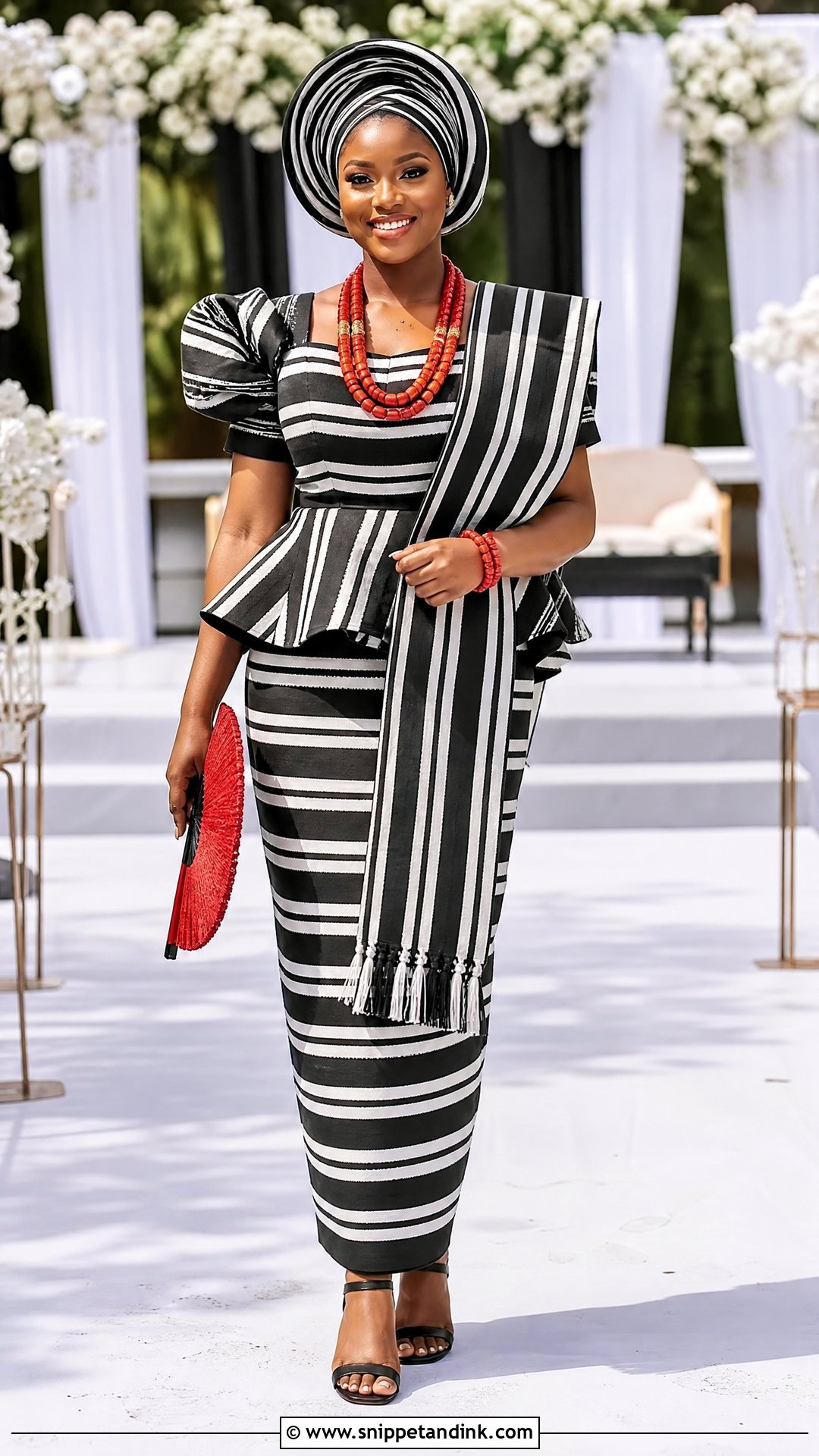
Tiv A’nger cloth, with its bold black and white stripes, is graphic enough that it needs very little help. Traditionally it’s styled as a coordinated wrapper and fitted top, with a matching head tie or careful braids. Red beads give a sharp accent against the stripes. Black or red sandals, a compact bag and a simple fan. A contemporary version might be a tailored peplum top with a floor-length wrapper skirt, as long as it respects the cloth and the occasion. Stripes are unforgiving at seams; I always ask the tailor to match them across the side seams and centre front, because misaligned stripes are the first thing the eye catches. Avoid adding other patterns.
10. Idoma Apa Wedding Outfit
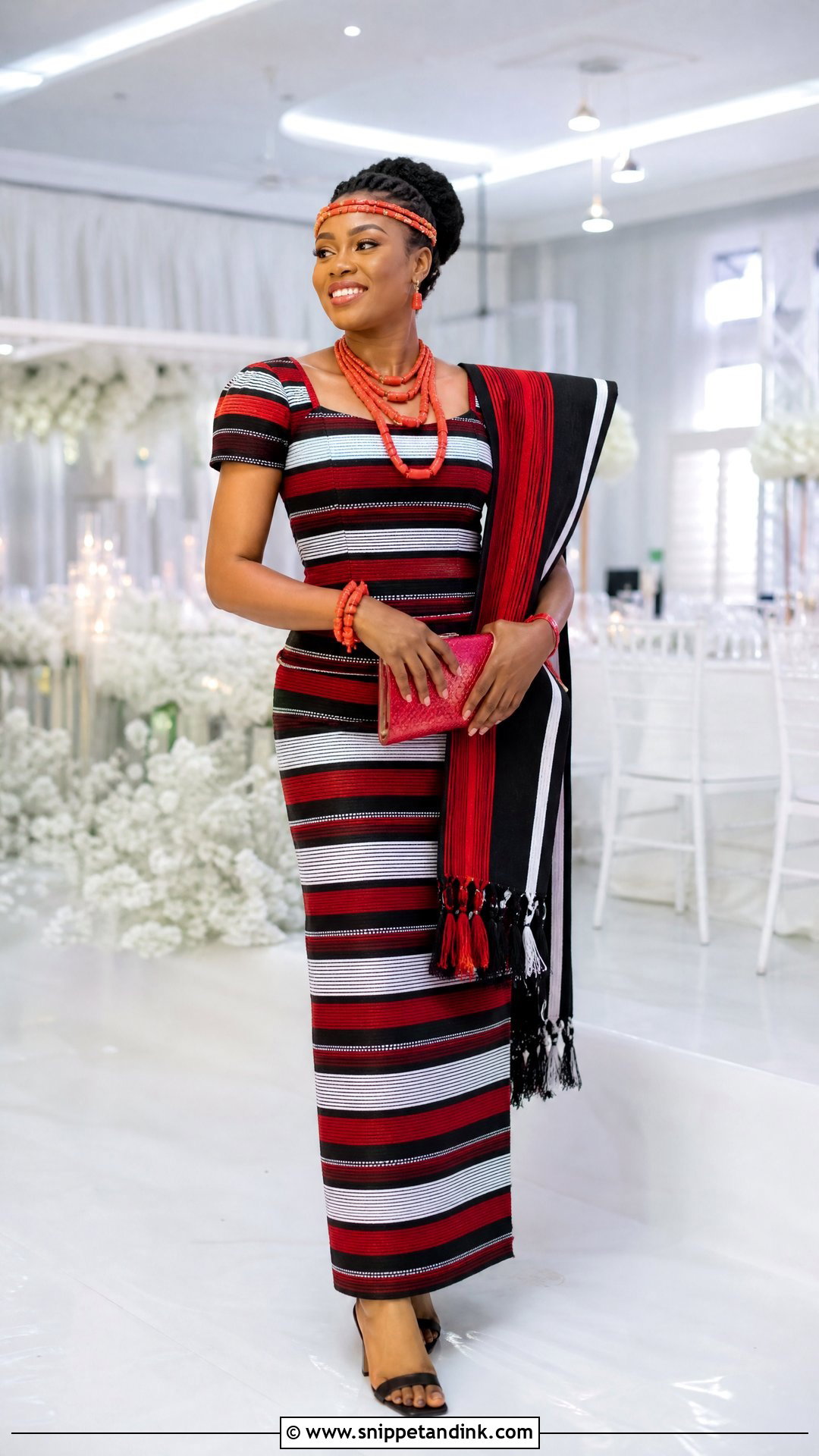
Red, black and white stripes make Idoma apa cloth instantly recognisable. Wrap it as a long skirt with a matching blouse, or have it tailored into a structured floor-length dress. In a two-piece, a smooth waistband or subtle peplum defines the waist. Red bead necklaces, matching bracelets, a headband or crown, and black heeled sandals. A plain red or black clutch keeps things calm. If you add sequins, keep them to one area such as the neckline or sleeves. The stripes need to stay clearly readable, so I’d avoid heavy gathers or tight pleating that break them into noise.
11. Urhobo George Wrapper Wedding Outfit
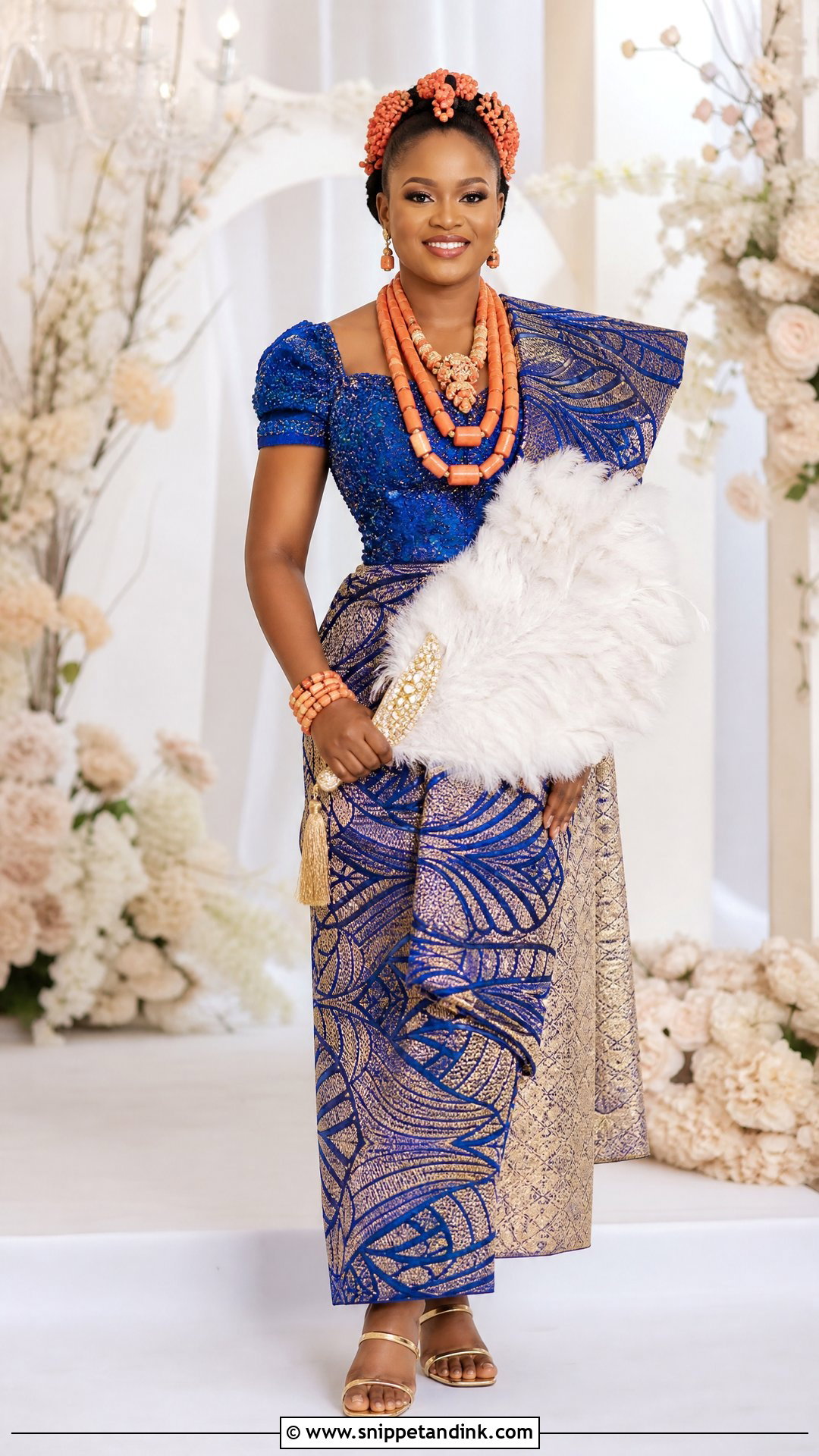
Urhobo brides often pair a luxurious george wrapper with a fitted blouse and coral. Sapphire, magenta, turquoise or gold george with embroidery that catches the light without hiding the weave. A double wrapper gives traditional volume; a wrapper skirt is easier to manage. Layered coral necklaces, matching bracelets, a beaded hair arrangement or suitable headpiece, metallic sandals. A feather fan or another accessory the family approves for entrances and portraits. If the blouse has sheer sections, match the lining carefully. Beads and their arrangement can signal family tradition and status, so ask relatives how specific pieces should be worn before the final fitting.
12. Ijaw Double Wrapper Wedding Outfit
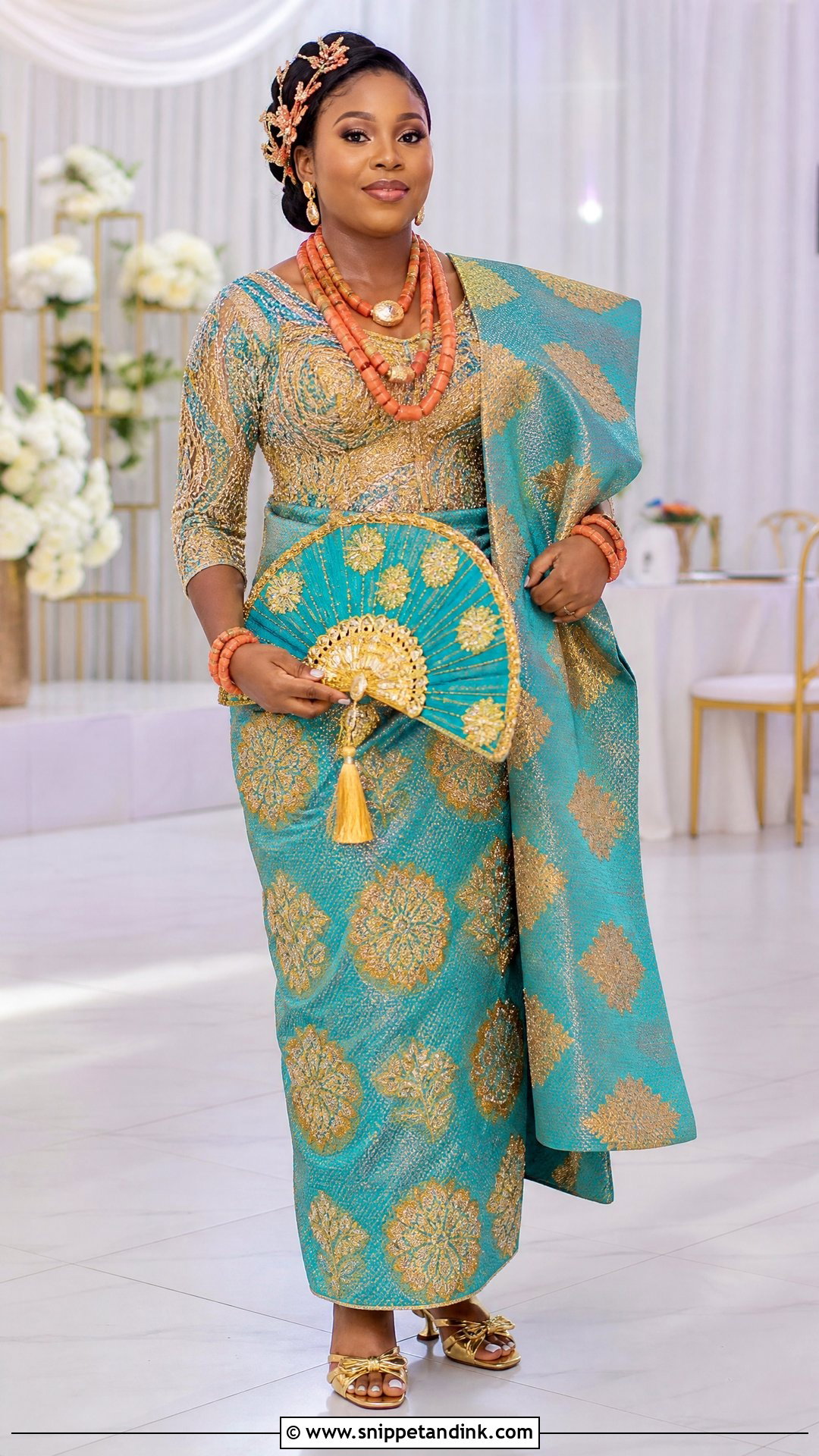
In an Ijaw double-wrapper outfit, the long wrapper sits at the ankles and a shorter one is tied above it, usually in richly patterned george. An embroidered blouse that fits securely at the shoulders and waist balances the volume of two wrappers; a structured sleeve adds presence without extra bulk. Coral necklaces, bracelets, decorative hair accessories and a coordinated fan complete it. Low gold heels or embellished sandals sit comfortably under the long fabric. Two layers of george get warm, so plan a few minutes somewhere cool between events. Traditions vary between Ijaw communities, so confirm the wrapper arrangement, beads, colours and any extra garments with family before commissioning.
13. Lace Mermaid Aso Ebi Wedding Outfit
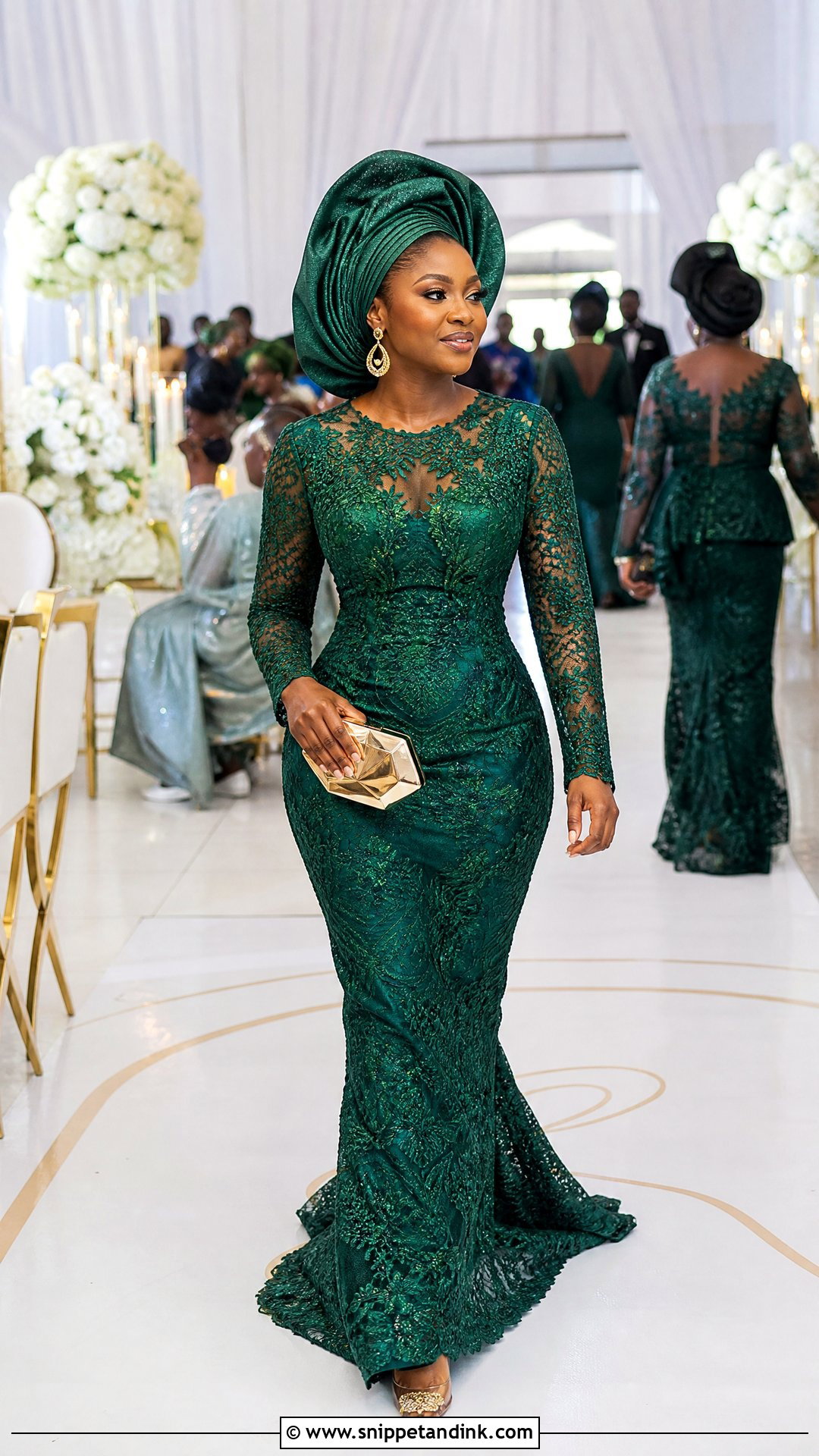
When the couple sends aso ebi lace, a lace mermaid gown is the safest bet: fitted on top, flared at the hem, with enough texture for a formal wedding. Ask the tailor for a supportive lining, comfortable boning and room at the knee for walking and dancing. A coordinating gele, drop earrings, metallic clutch and pointed heels. Emerald, wine, royal blue, burnt orange and lilac all suit it. In a crowded hall, keep any train short; it will be stepped on. Stick to the assigned colour and steer clear of anything that could read as bridal. Wearing the couple’s aso ebi shows you’re part of their circle, which is the whole point.
14. Beaded Corset Aso Ebi Gown Wedding Outfit
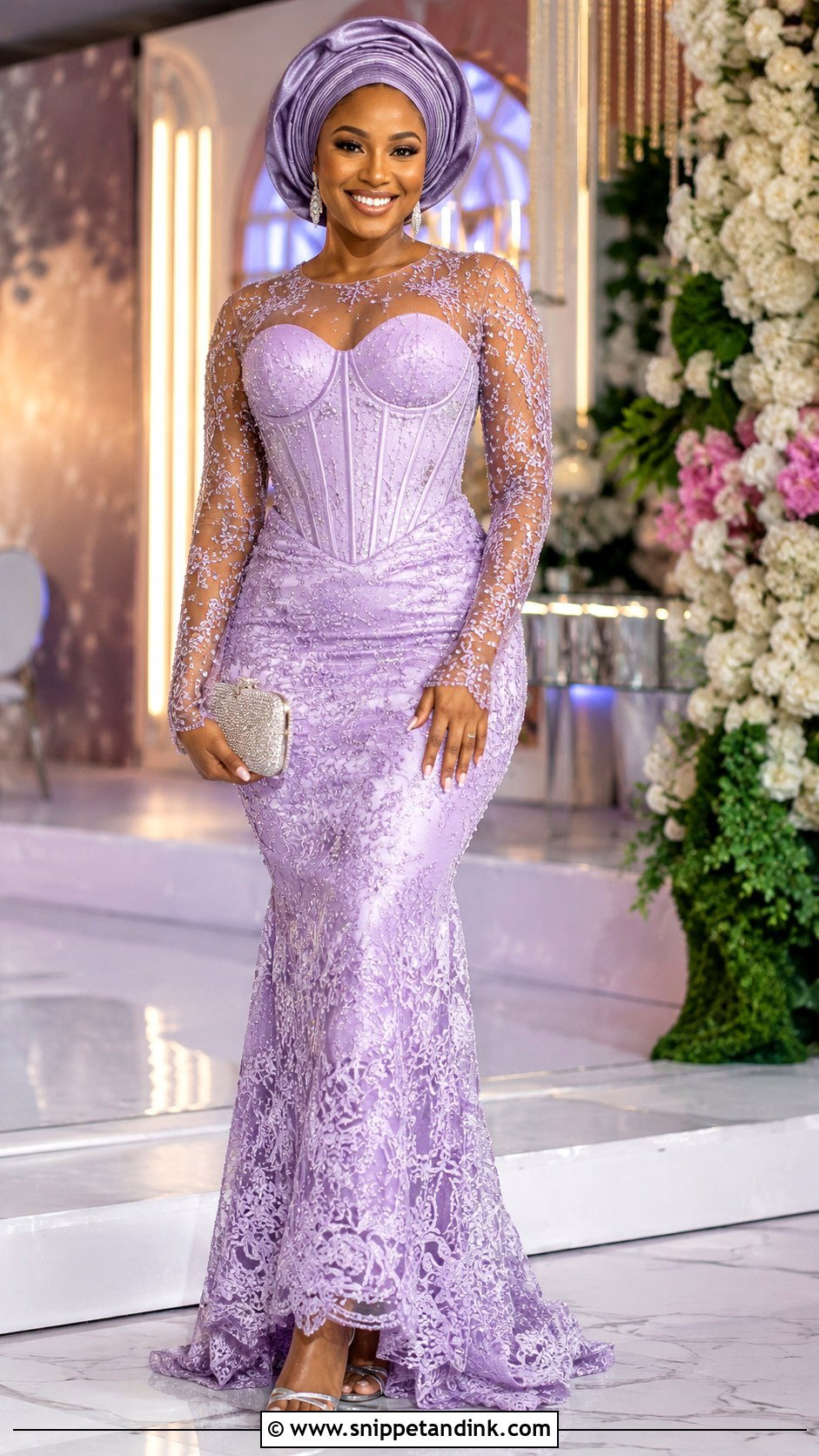
Beading plus corsetry is the reception look when the dress code leans upscale. Build it on a lined corset bodice, then a straight, mermaid or softly flared lace skirt. Sheer sleeves give cover and still show the embroidery. A matching gele or sleek hair with statement earrings, depending on the dress code. Crystal clutch and comfortable metallic heels. Corsets, mesh panels, jewel tones and softer shades like sage and dusty lilac are all popular in aso ebi right now. My rule for a gown like this is two features at most: a beaded corset and a sculptural sleeve need a plain skirt, while a worked skirt wants a simpler neckline.
15. Ankara Peplum And Wrapper Wedding Outfit
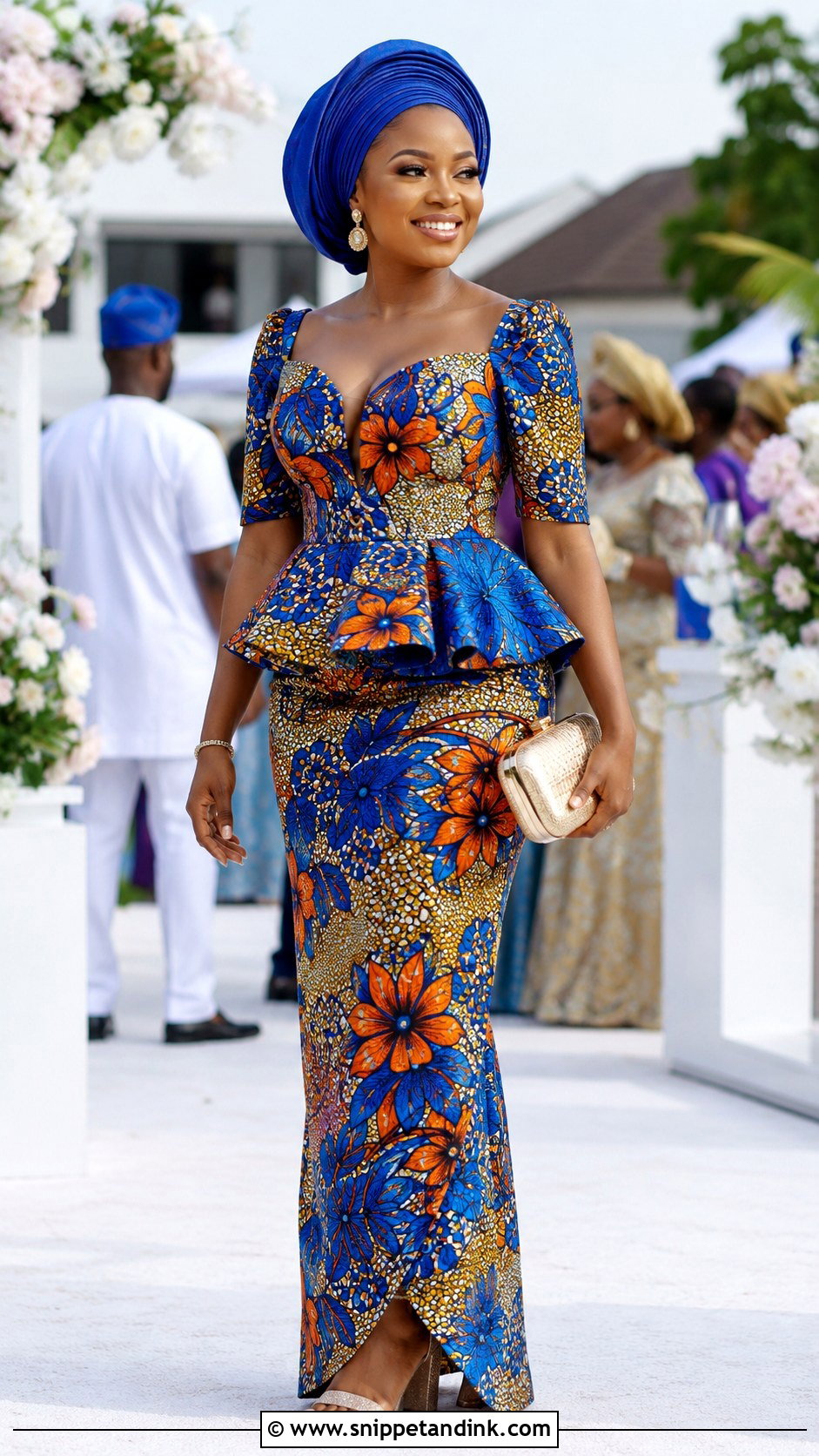
Ankara earns its place at daytime ceremonies, where lighter cotton is welcome. A defined peplum top with a long wrapper skirt suits family guests and anyone who’d rather not wear heavy lace. Put the boldest part of the print at the neckline, waist or hem, wherever you want the eye to go. The gele can be a solid fabric or a carefully matched piece of the Ankara. Gold earrings, a simple clutch, block-heel sandals. Lining the peplum helps it hold its flare, and a smooth waistband keeps the skirt from rolling. A side slit helps you walk, but keep its height suited to the event. Petite, tall and plus-size figures all adapt to it easily.
16. Bubu Kaftan Nigerian Wedding Outfit
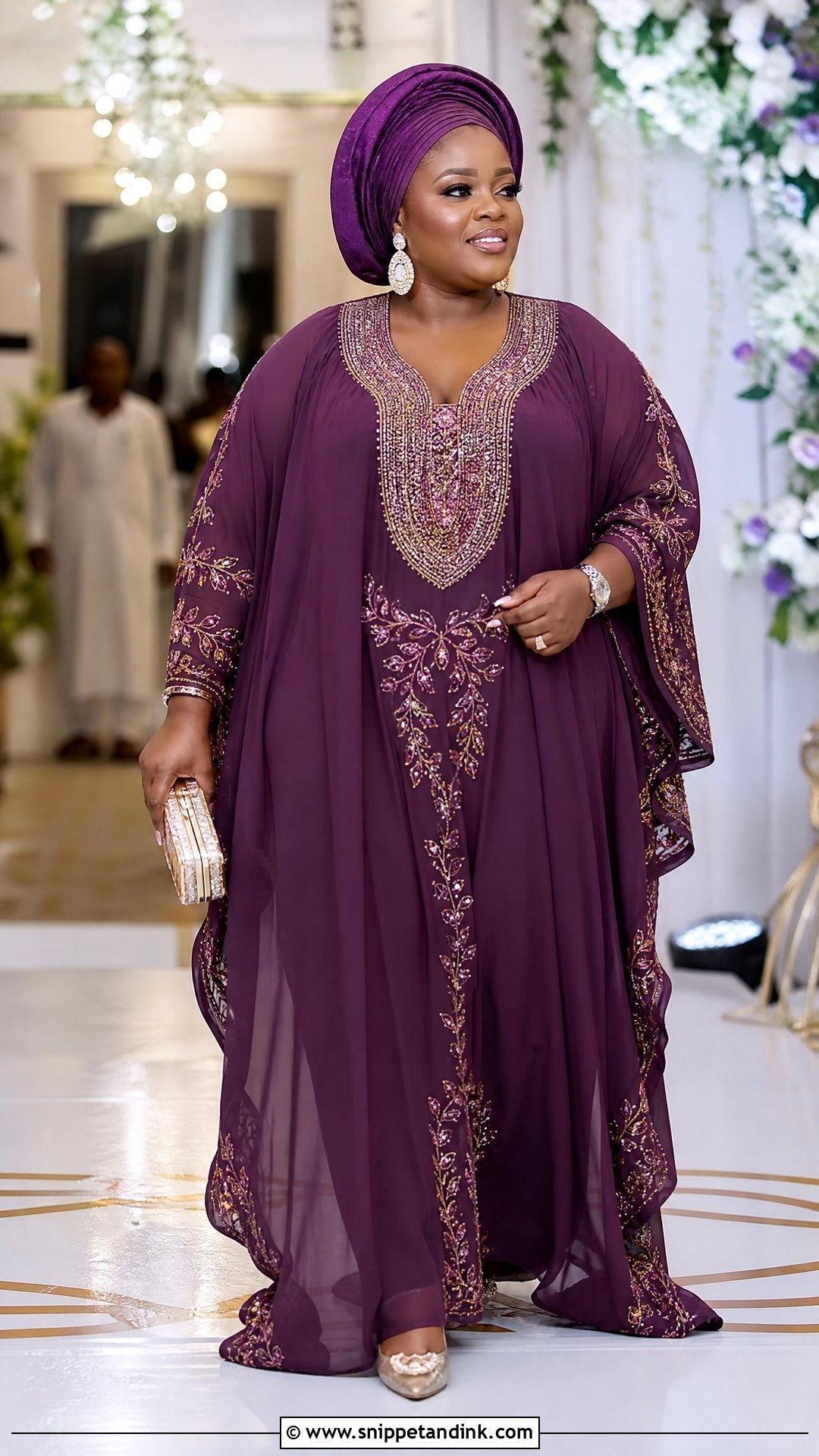
A bubu kaftan proves drama doesn’t need a tight fit. Lace, jacquard, silk or embroidered crepe in a jewel tone or a luminous pastel. The wide shape should skim, not swamp, with a defined neckline or a central panel of embellishment giving it structure. A matching gele or turban, depending on the event and culture. Statement earrings, a box clutch, embellished low heels; the kaftan hides most of the shoe, so choose comfort. On petite women I narrow the cut and set the hem just above the floor so it doesn’t drag. For plus-size guests, vertical embroidery and fluid fabric create a long, easy line.
17. Aso Ebi Trouser Suit Wedding Outfit
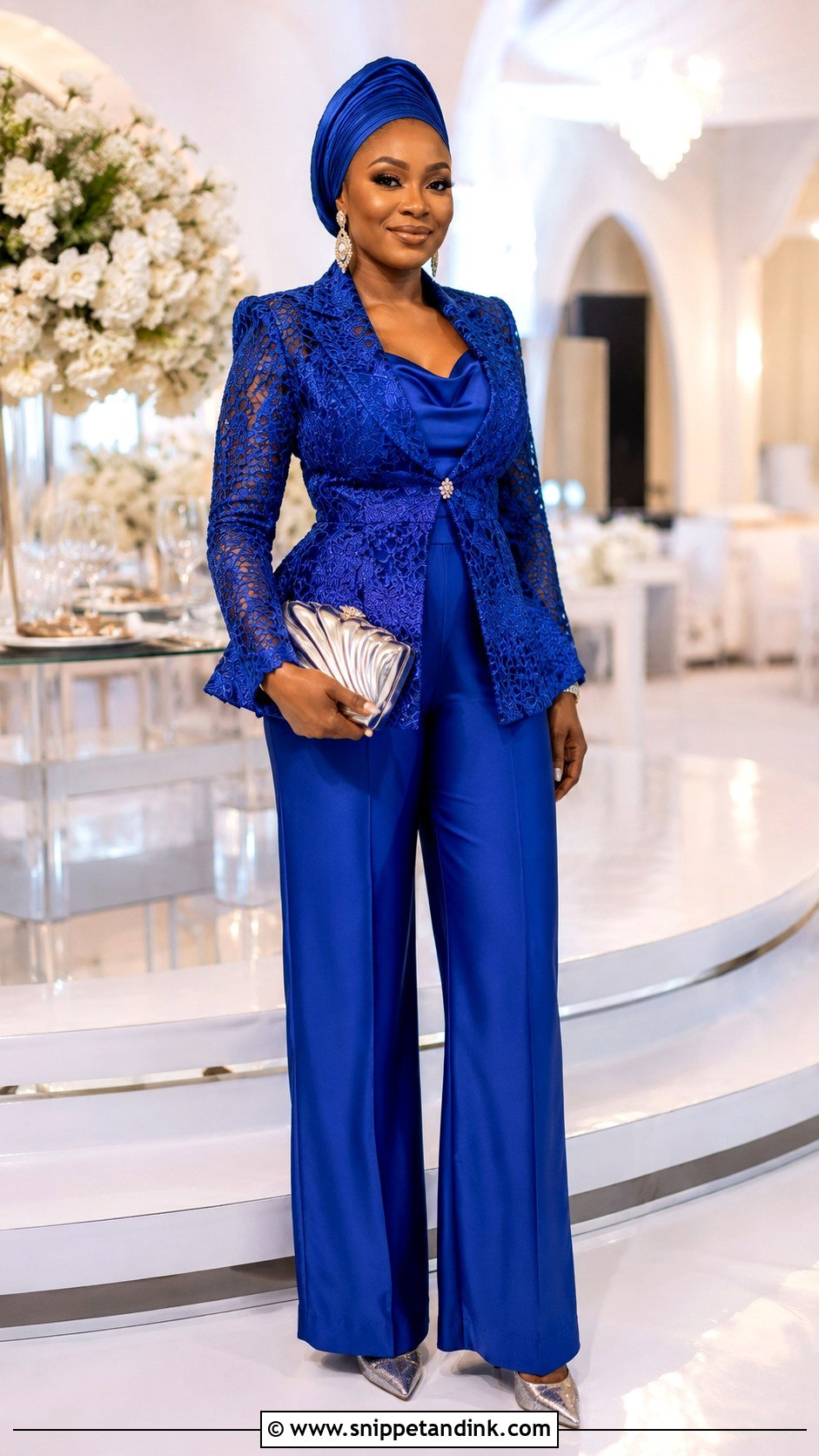
Not everyone wants a gown. A tailored aso ebi trouser suit in the assigned lace, Ankara or brocade is sharp and modern: a structured blazer or peplum jacket over high-waisted wide-leg trousers. Lace trousers need a full lining or they cling and scratch. Underneath, a satin camisole or a lined corset top, depending on coverage. Pointed pumps, a sculptural clutch and bold earrings. A small gele, turban or polished hair balances the strong tailoring. Hem the trousers in your actual shoes so they break cleanly over the foot without pooling. Guests who want to move freely, and older women after something comfortable but polished, often love this.
18. Peplum Top And Slit Skirt Wedding Outfit
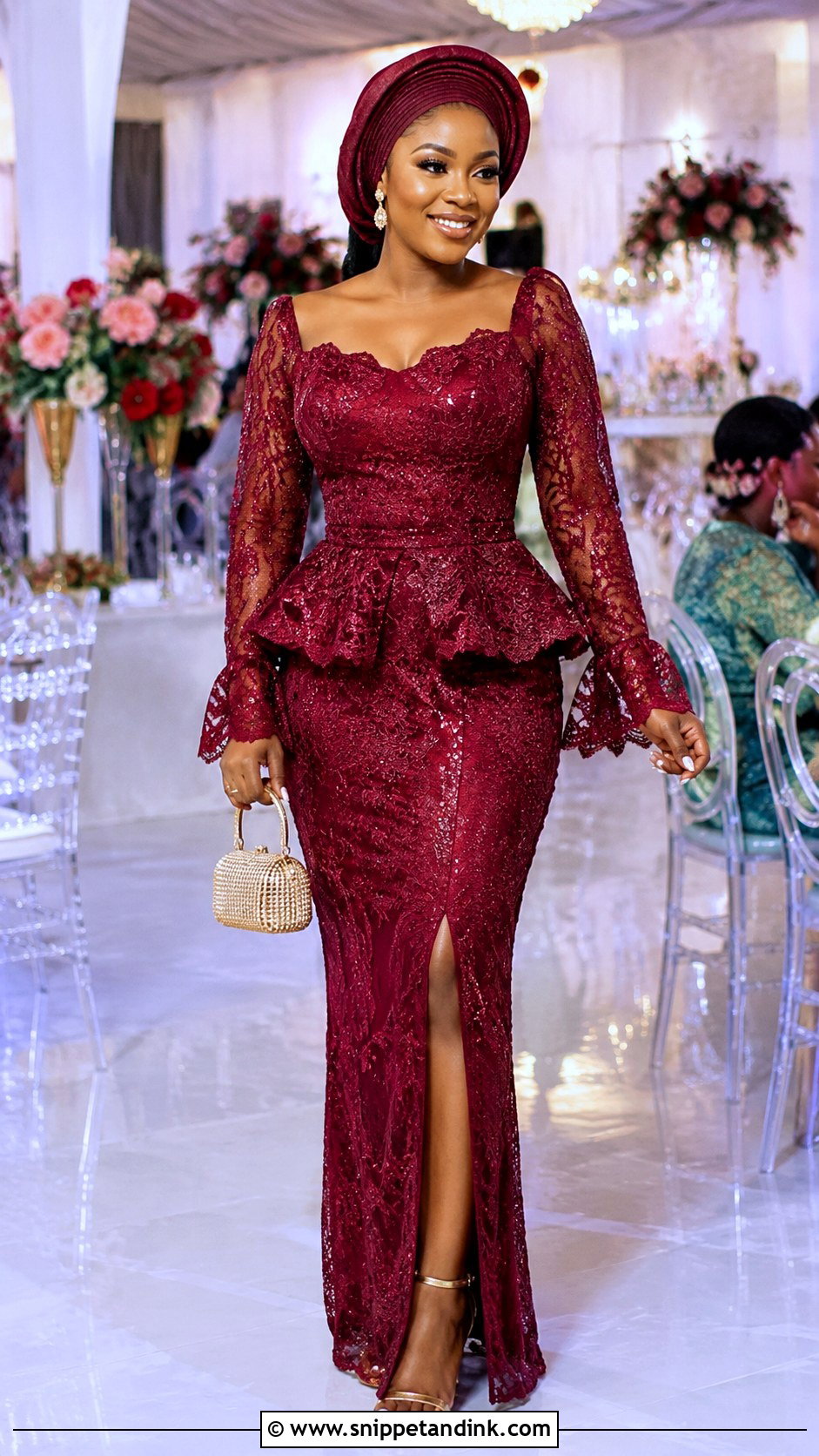
Peplum top, long slit skirt: definition up top, movement below, and coverage you can adjust. Lace or jacquard for both pieces, with satin at the waistband or neckline for contrast. A structured peplum balances the hips; a soft asymmetric one adds movement. The skirt should be fitted without gripping, and the slit placed where sitting doesn’t expose more than you intended. Check that in a chair, not standing at a mirror. Coordinated gele, drop earrings, a metallic mini bag, heeled sandals. Big sleeves call for a simpler headwrap and cleaner skirt. A back vent replaces the slit for more coverage. Both pieces restyle later with other separates.
19. Satin Column Gown With Gele Wedding Outfit
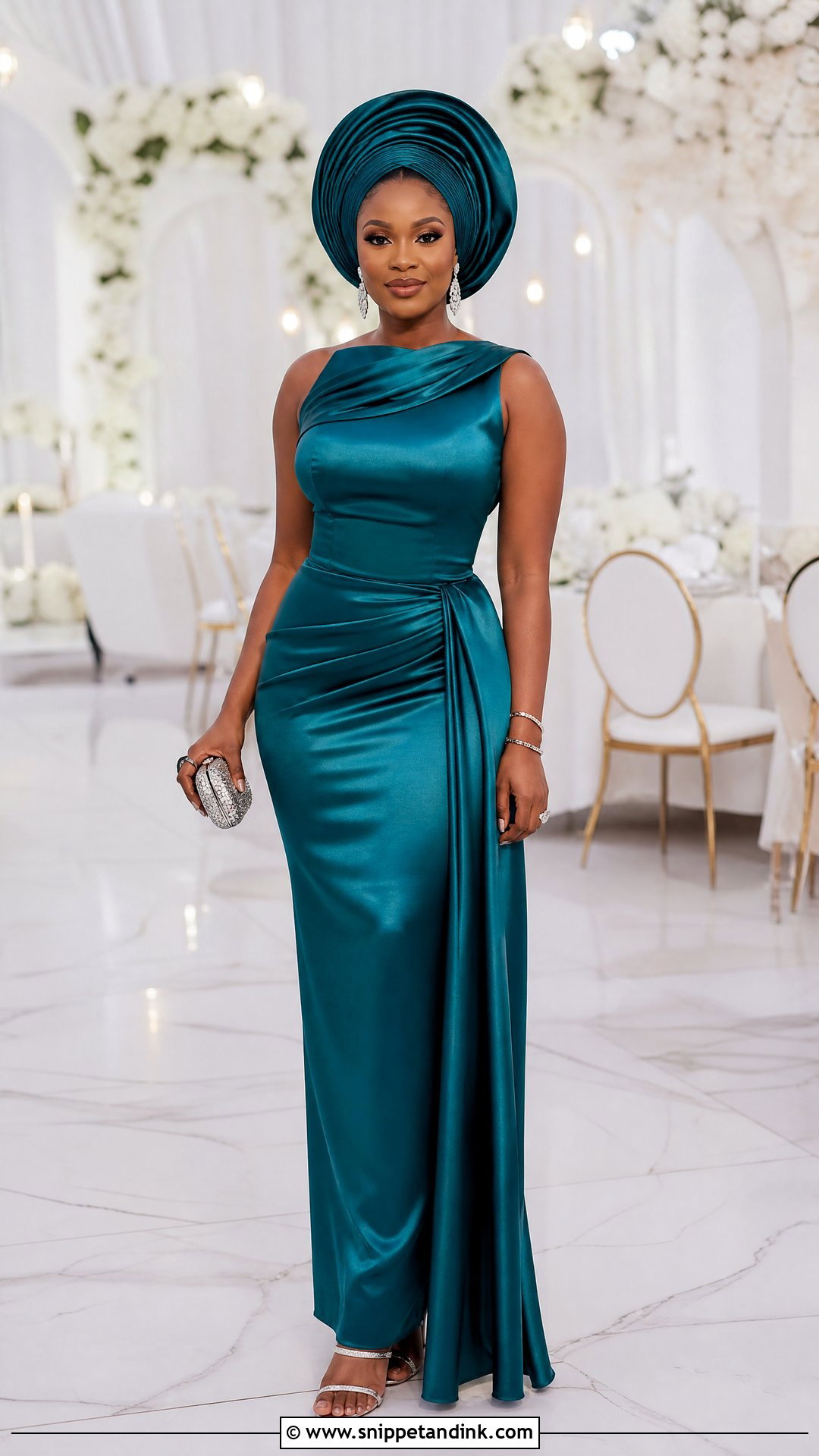
Satin is the contrast to all that lace and embroidery, and it’s my pick for a guest at a formal reception without assigned aso ebi. A floor-length column in teal, plum, copper, magenta or midnight blue, with a coordinating gele tying it to Nigerian occasion dress. An asymmetric neckline, a waist drape or a detachable cape adds drama without hiding the sheen. Crystal earrings, a hard-case clutch, strappy metallic heels. Satin shows every seam and every line underneath, so a proper lining and an exact fit matter. Don’t take it in too tightly at the hips or knees. A slightly draped column moves better on the dance floor and creases less when you sit.
20. Cape Sleeve Lace Nigerian Wedding Outfit
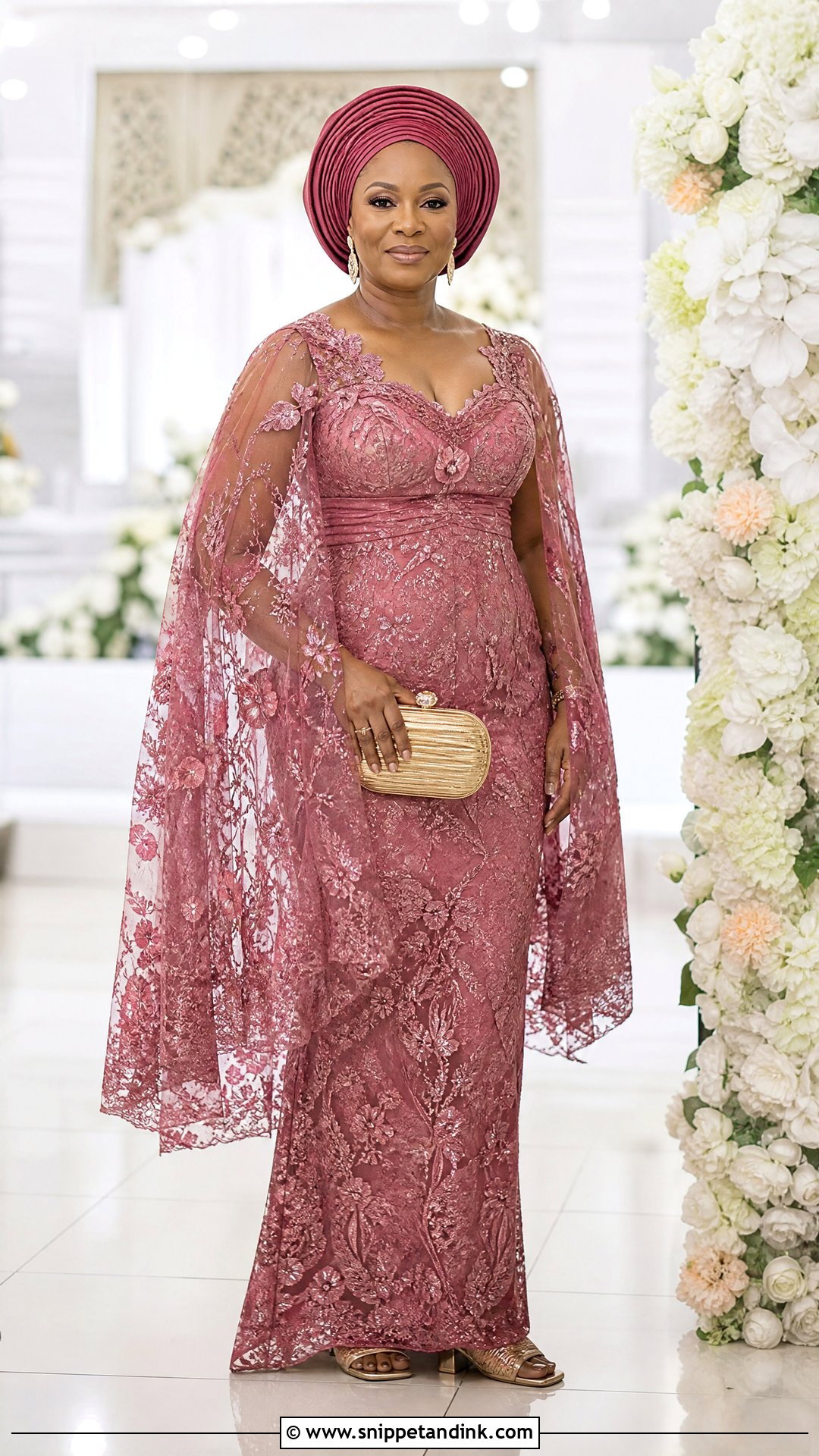
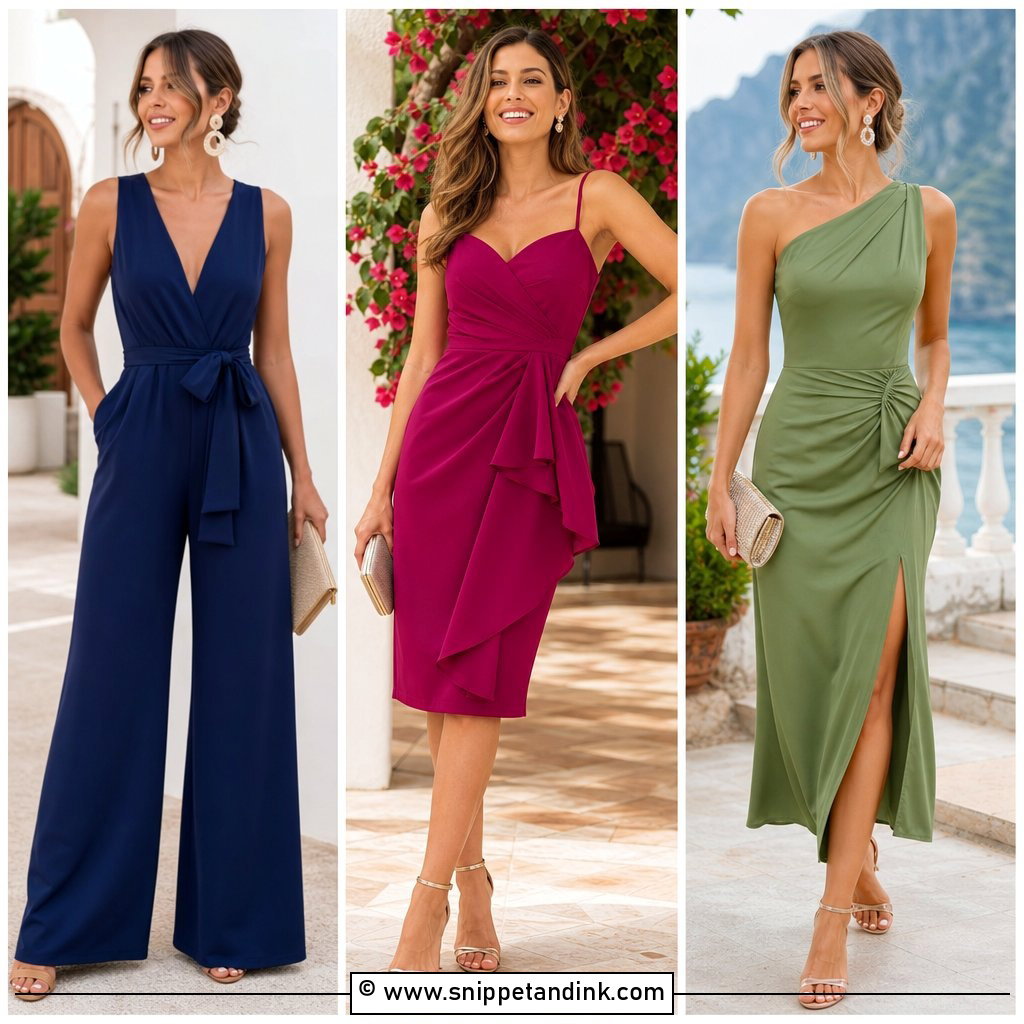
Cape sleeves give arm coverage without the stiffness of a fitted sleeve. Start with a fitted or softly tailored floor-length lace gown, then add sheer lace cape panels from the shoulders. A defined waist keeps the shape balanced, especially when the cape reaches the elbow or the floor. Sleek gele, crystal studs, structured clutch, low block heels. Champagne, mauve, emerald, cobalt and deep rose all suit it. If the cape carries embroidery or appliqué, leave the skirt clean. Heavy lace on a long cape pulls the neckline back, so lighter lace is the better choice for the panels. It adapts to almost any age and figure.
Coral, Crowns and Heirloom Beads Over a Long Ceremony
Several of these looks depend on coral beads, and real coral is heavier than most brides expect. A full set with a crown, layered necklaces and bracelets can leave your neck and scalp aching by mid-afternoon if it isn’t fitted properly.
Fitting the crown
A beaded crown needs a firm base. Braids or a smooth wig cap underneath give pins something to grip, and padding at the pressure points spreads the weight. Try the crown on at a rehearsal, not for the first time on the morning.
Looking after real coral
- Put perfume, hairspray and body oil on before the beads, and let them dry. Coral is porous and dulls when chemicals soak in.
- Wipe the beads with a soft, barely damp cloth after wearing, then let them dry flat.
- Check the stringing and clasps before the day. Old thread snaps, and scattered coral is hard to recover in a crowd.
- If the beads are borrowed, agree beforehand who keeps them between ceremonies and where they’re stored.
Take the crown off for a few minutes whenever there’s a break with no photographs. Your head will thank you at the reception.
Ask the Aunties First, Then Call the Tailor
The outfits that stay with people combine cultural respect, excellent tailoring and enough comfort to last the day. Brides can honour their heritage through aso oke, george, Edo coral, Hausa embroidery, Efik dress or the textiles of any other Nigerian community. Guests have strong options too: lace aso ebi gowns, Ankara sets, kaftans, trouser suits and cape dresses. Before ordering, confirm the ceremony type, family customs, colour palette and aso ebi plans. Book fittings early and check that you can walk, sit and dance. Then make the look your own with colour and accessories that honour the occasion.
You'll Like These Ideas:


Leave a Reply