
Wedding makeup gets judged three ways in one day: up close by the people you hug, through a camera lens in mixed light, and by you, twelve hours in, when you either still feel like yourself or don’t. The looks below cover the full range I’m asked for, from bare skin with a bit of glow to a full red lip and winged liner. With each one I’ve noted how it wears, what tends to go wrong and which skin it suits, so you can walk into your trial knowing what to ask for.
Your Skin Picks the Finish Before You Pick a Color
Brides usually arrive talking about color: rose, bronze, a red lip. The first thing I actually look at is the skin, because the finish (dewy, satin or matte) decides how the makeup lasts far more than the shade does.
Oily skin needs a mattifying primer in the T-zone, and it usually does best with a satin or matte foundation; a dewy base on oily skin starts sliding by mid-afternoon. Dry skin is the opposite. It needs a good moisturizer and a hydrating base, and powder only in tiny amounts. Combination skin often gets two primers, one for the center of the face and one for the cheeks. Mature skin generally looks best with less powder and cream products that move with the face.
Start your skincare routine well before the wedding, ideally a couple of months ahead, and avoid trying a new facial, peel or retinoid in the final weeks. Fresh irritation is much harder to cover than an old blemish.
1. Natural Bridal Makeup
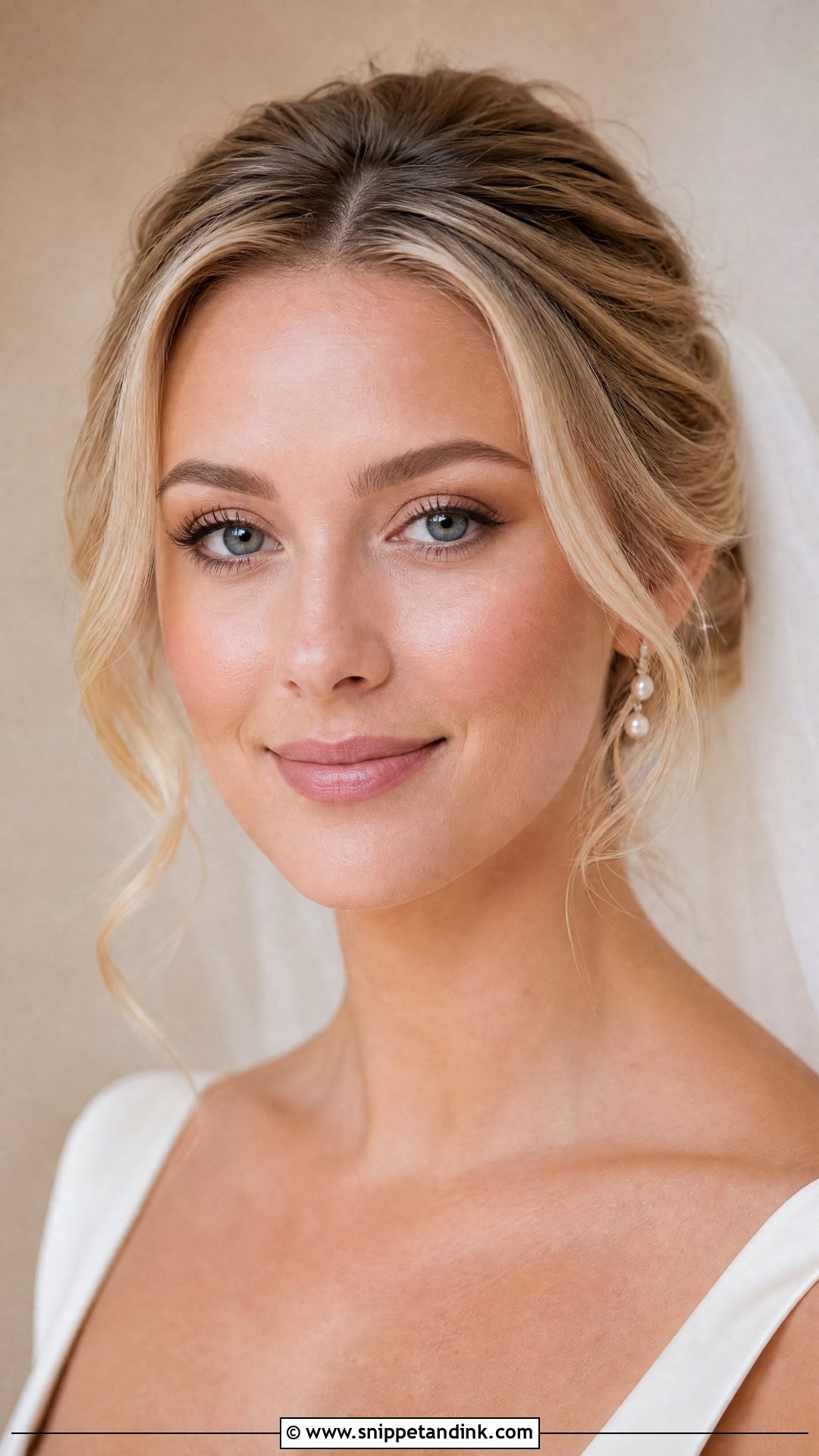
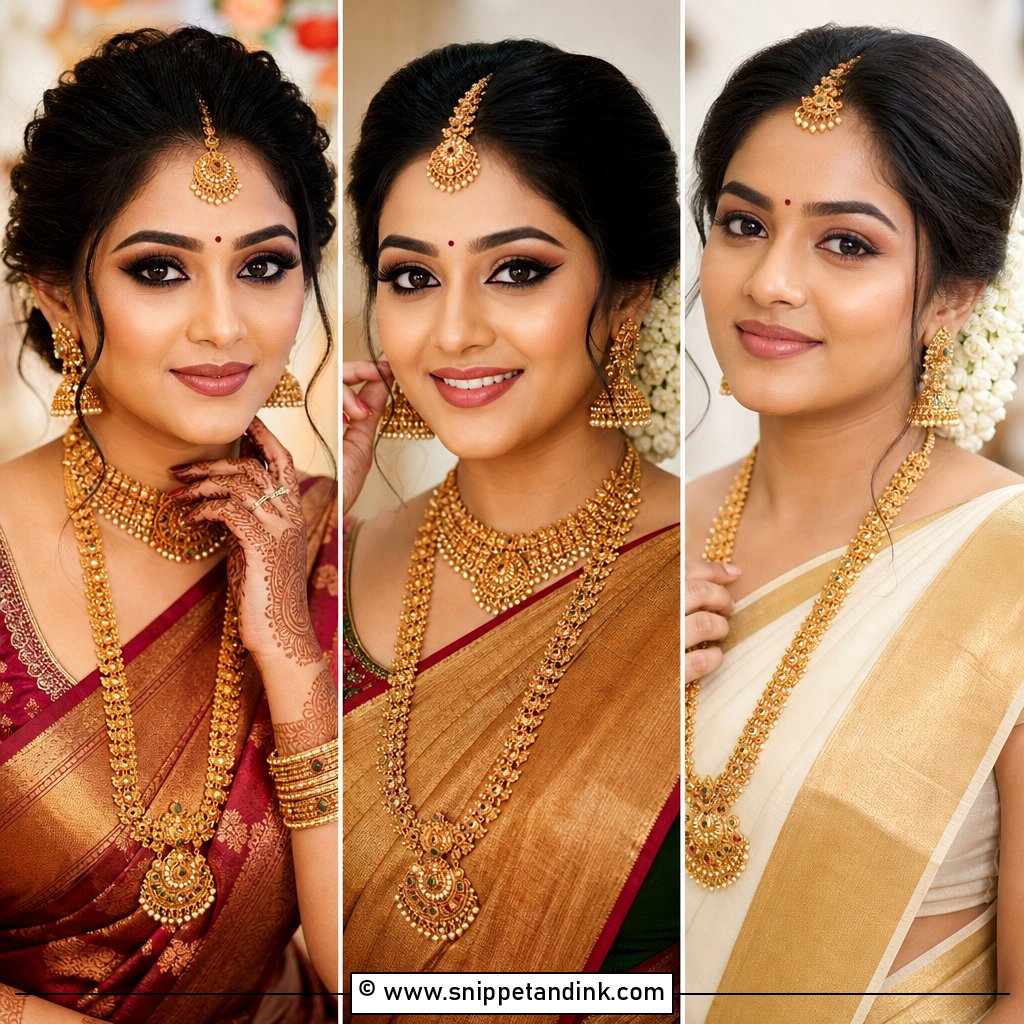
Most brides who ask for natural makeup actually want their own face on a very good day, and that takes more planning than it sounds. I use a lightweight foundation only where the skin needs evening out, then spot conceal around the nose and under the eyes. Cream blush and a soft champagne highlight on the high points of the face stop it looking flat in photos, which is the usual failure of a too-bare base. Eyes get a taupe or soft brown shadow, a thin line and fluttery lashes; brows are brushed up and lightly filled. A peachy or pink nude lip finishes it. It holds up best at daytime and outdoor weddings, where strong makeup reads harder.
2. Soft Glam Bridal Makeup
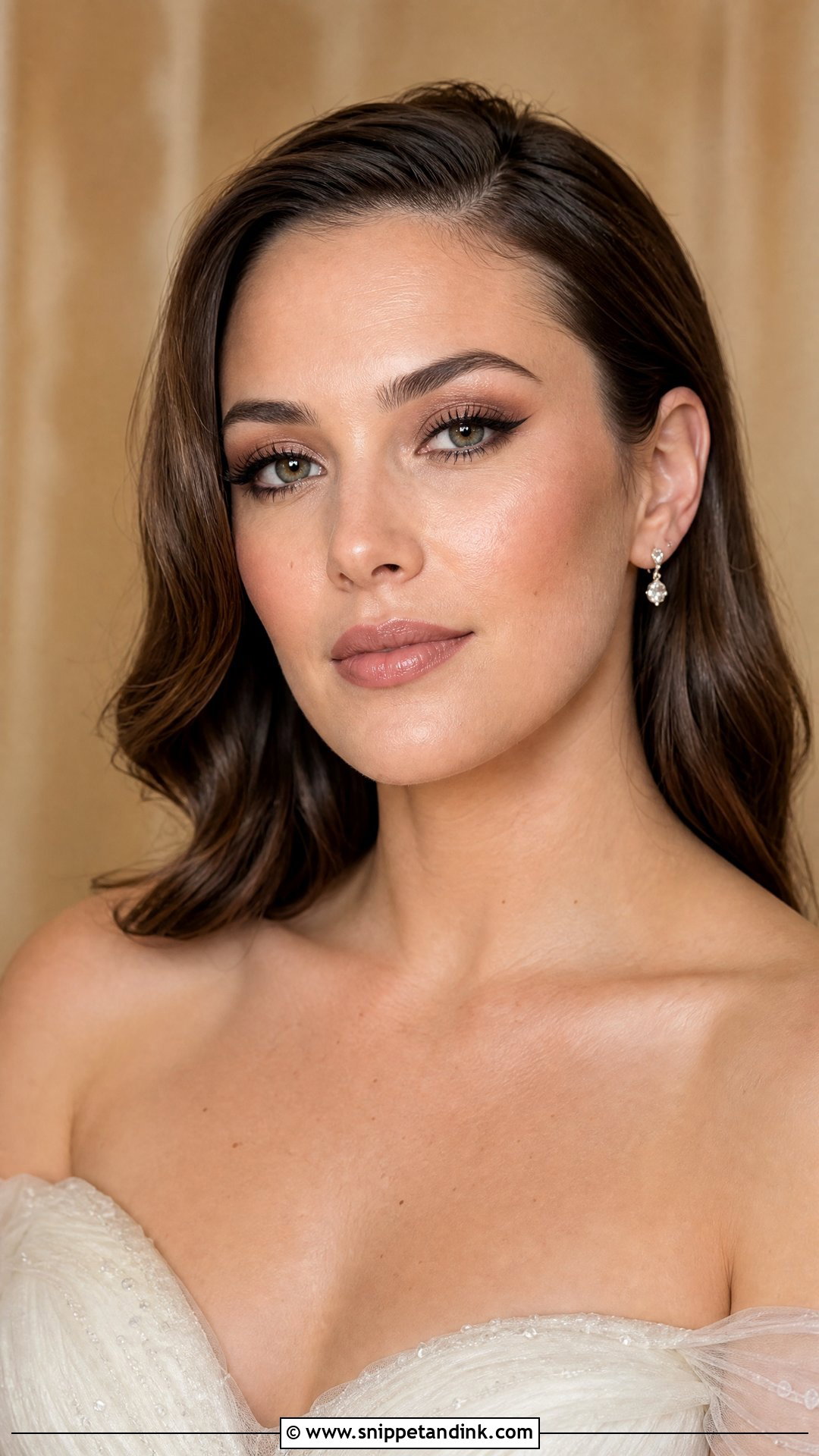
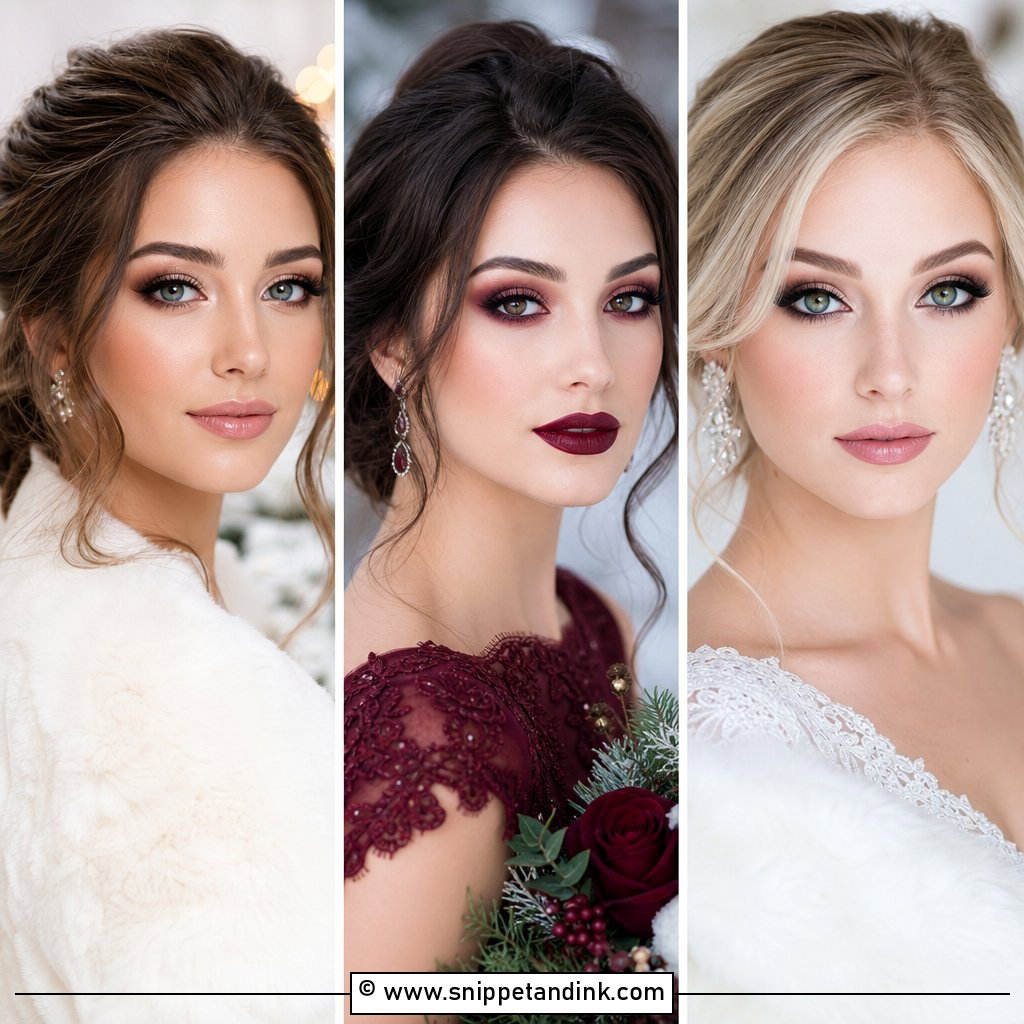
Soft glam bridal makeup is the look I apply most, because it gives definition in photos without looking heavy at the dinner table. The base is satin rather than matte, so the skin still has life. On the eyes I blend a warm neutral into the crease, put a little shimmer on the center of the lid and finish with wispy lashes. Blush goes slightly higher than you’d wear it day to day, with a gentle contour under the cheekbone. A rosy nude lip with some shine pulls it together.
3. Dewy Bridal Makeup
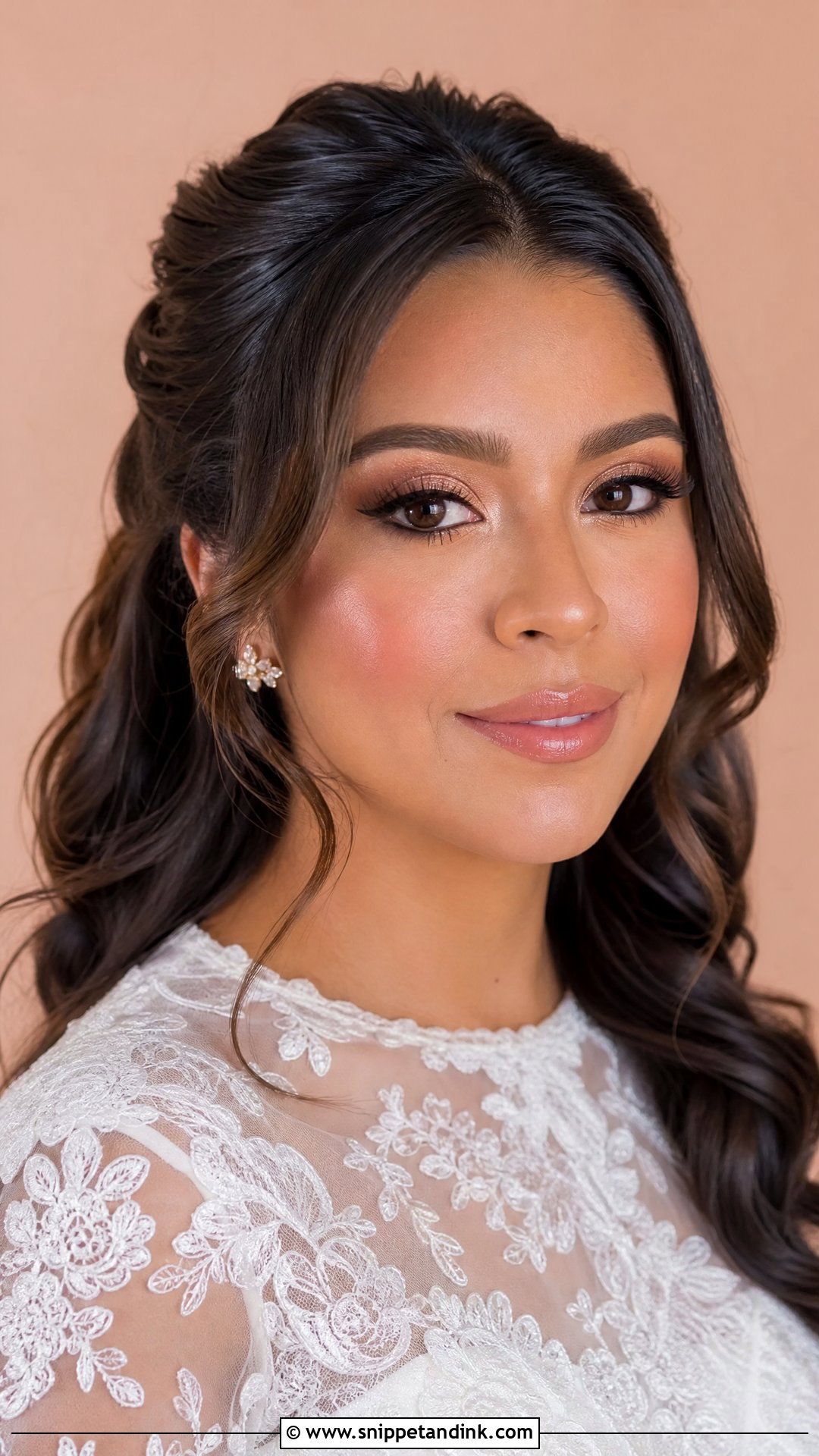
Dewy makeup is about controlled shine: glow on the cheekbones, brow bones and the bridge of the nose, and nothing on the forehead or around the nostrils. I prep with a hydrating moisturizer and let it sink in fully, then use a radiant foundation, cream blush and liquid highlighter. Powder goes only where the skin creases or gets oily. I’d hold back on this finish for very oily skin in summer heat, because by the speeches the glow and the oil are hard to tell apart. On the eyes, soft bronze or champagne shadow works well with curled lashes and brown liner, and a glossy pink lip keeps it fresh for spring and garden weddings.
4. Matte Bridal Makeup
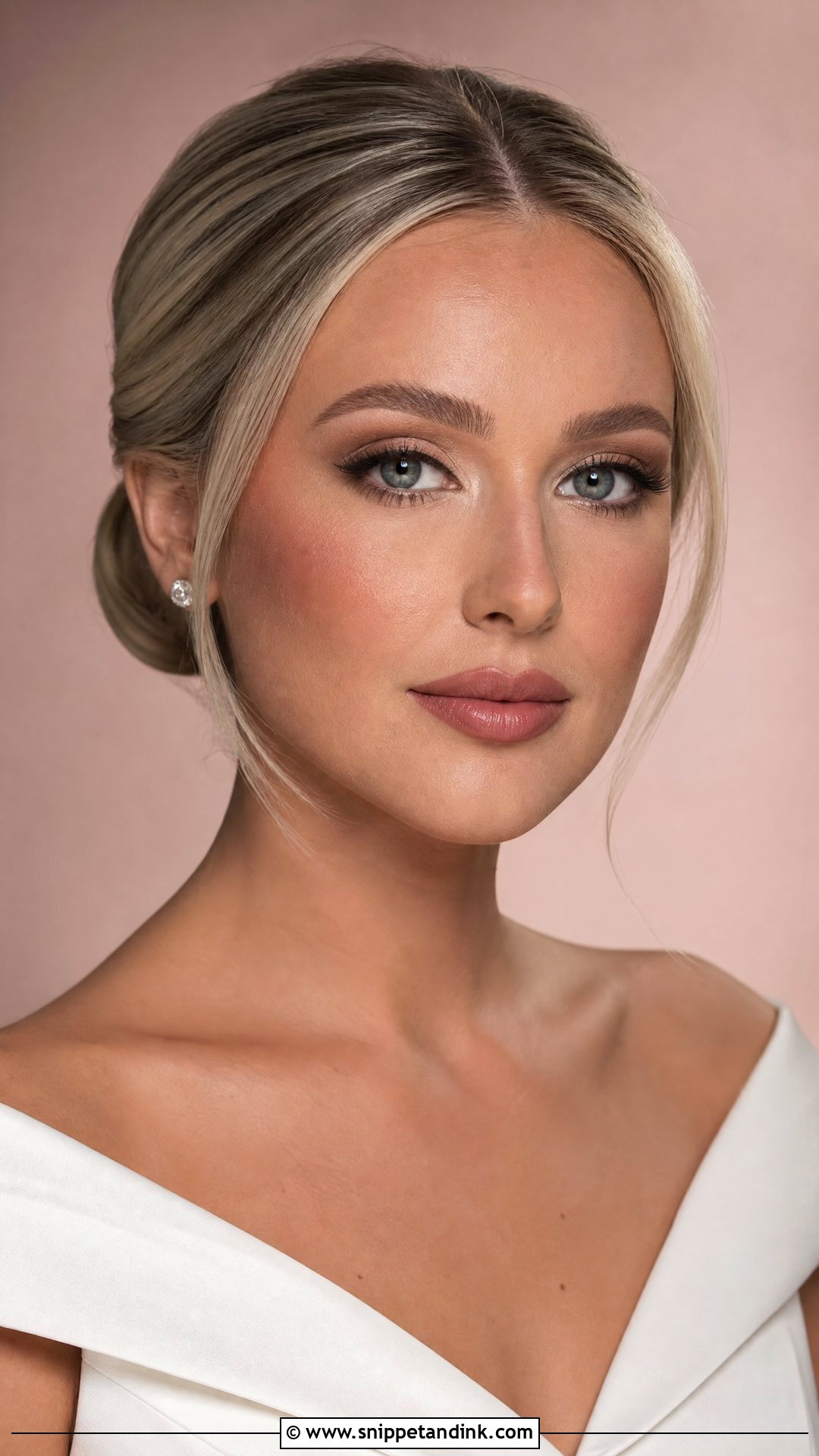
Matte makeup is the safest choice for humid weather and long days, but only when the skin underneath is properly moisturized first. A matte foundation over dry or flaky skin catches on every patch and looks older in close-ups. I start with a blurring primer, then use a soft matte foundation that still lets the face move. Taupe or cocoa eyeshadow gives quiet definition, with a diffused contour and powder blush. A velvet rose or nude lip keeps it from looking flat. Oily skin and long ceremonies are where this finish earns its place.
5. Classic Red Lip Bridal Makeup
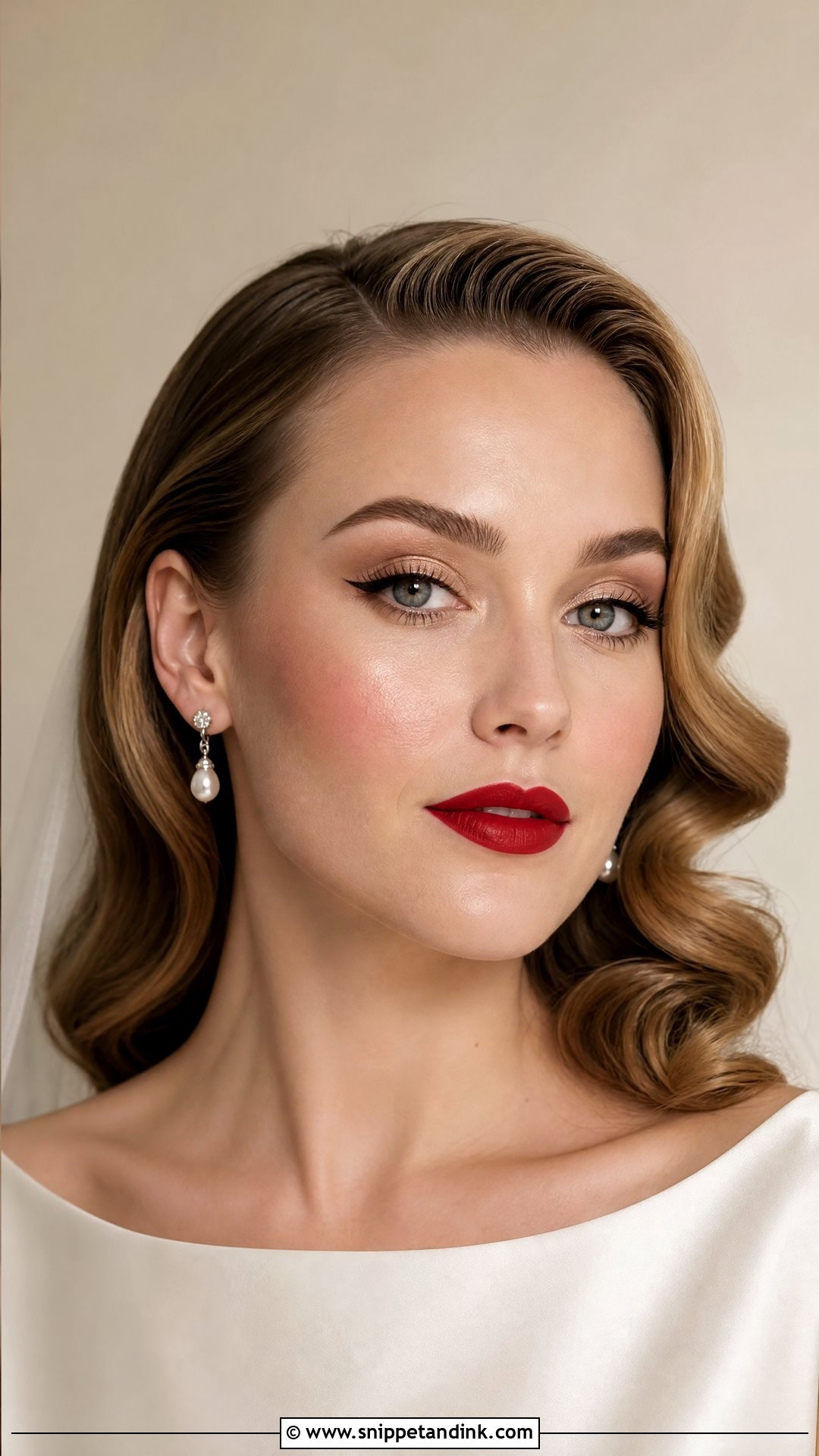
A red lip is a confident choice, and the rest of the face has to step back to let it work. I match the red to undertone: blue-reds for cool skin, true reds for neutral, brick or tomato for warm. The application matters most. Line the whole lip, fill it in with the liner, apply the lipstick, blot and apply again; that layering is what keeps it in place through a toast and a kiss. Eyes stay simple with champagne shadow and a thin liner, and the blush stays soft but present. Sleek hair, vintage-style dresses and simple jewelry suit it well.
6. Pink Bridal Makeup
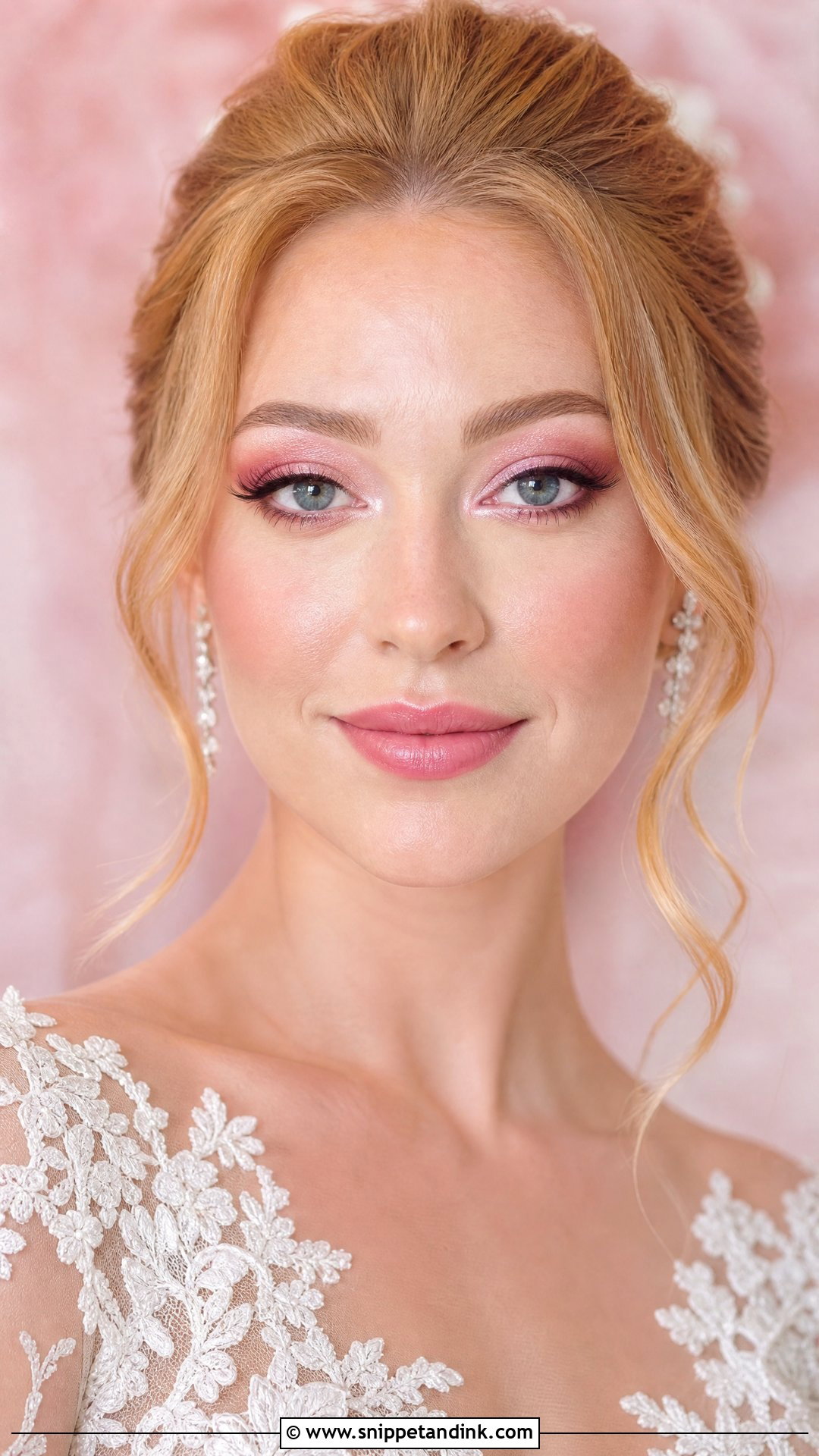
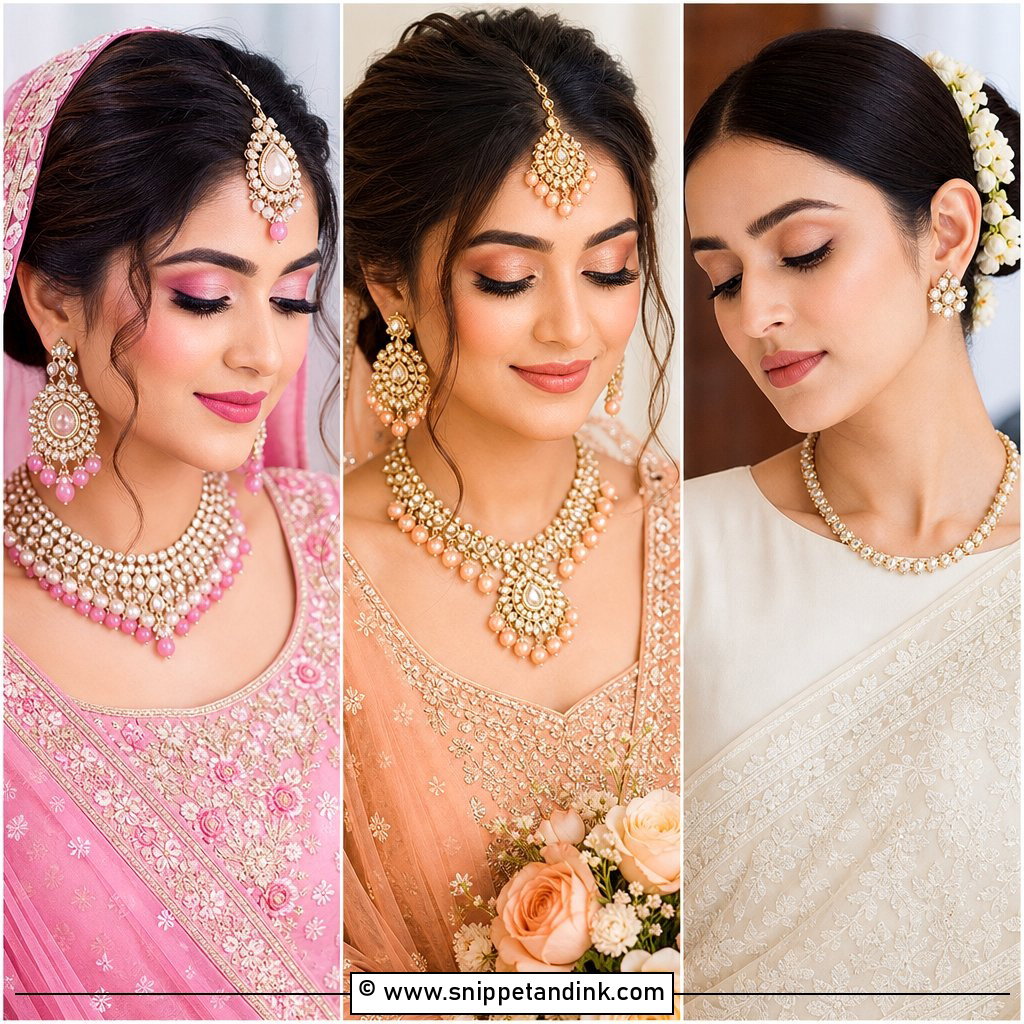
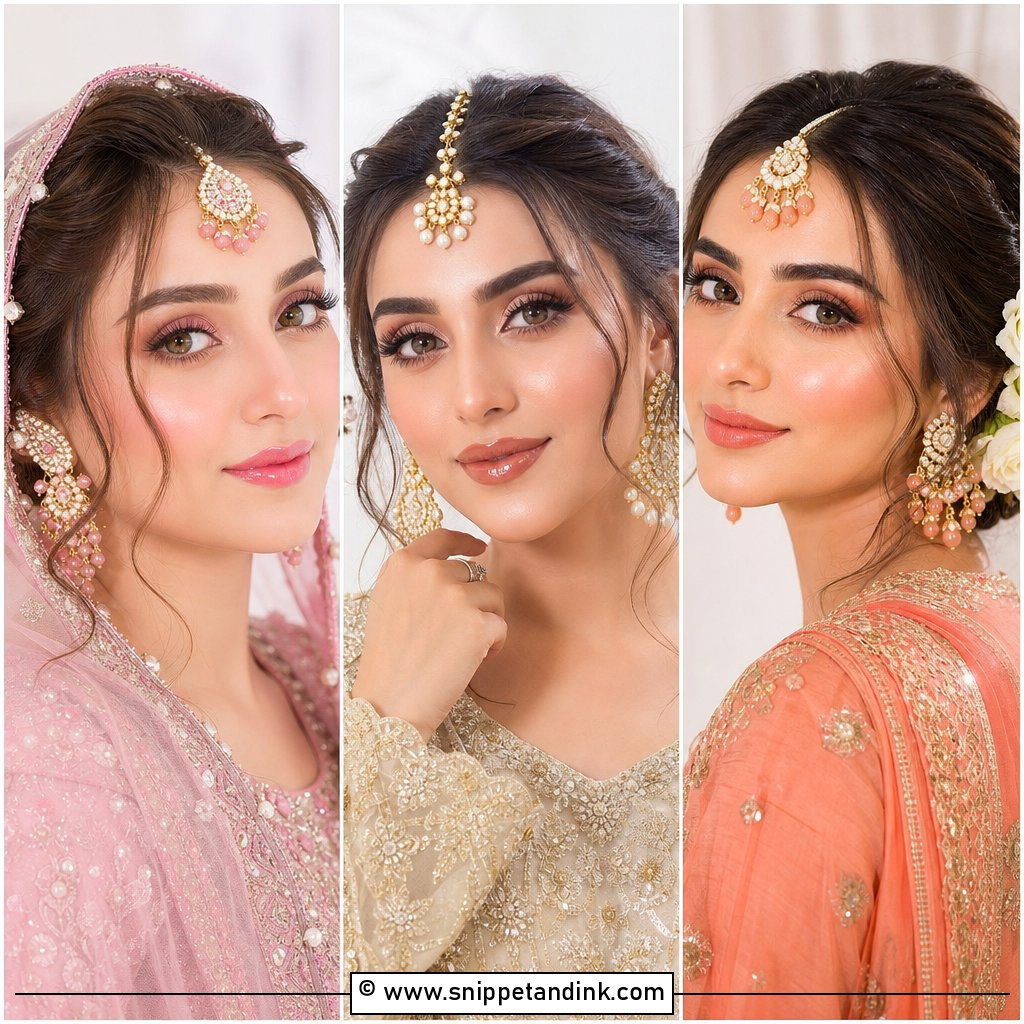
Pink makeup can tip into looking too young if the shades are too bright or too cool for the skin. I look for rose or petal pinks that blend into the cheek without sitting on top of it. Pink-beige eyeshadow, brown liner instead of black and wispy lashes keep the eyes soft. A rosy satin lipstick or a tinted gloss on the lips. It sits nicely with lace and tulle, and it reads especially well in soft spring daylight.
7. Bronzed Bridal Makeup
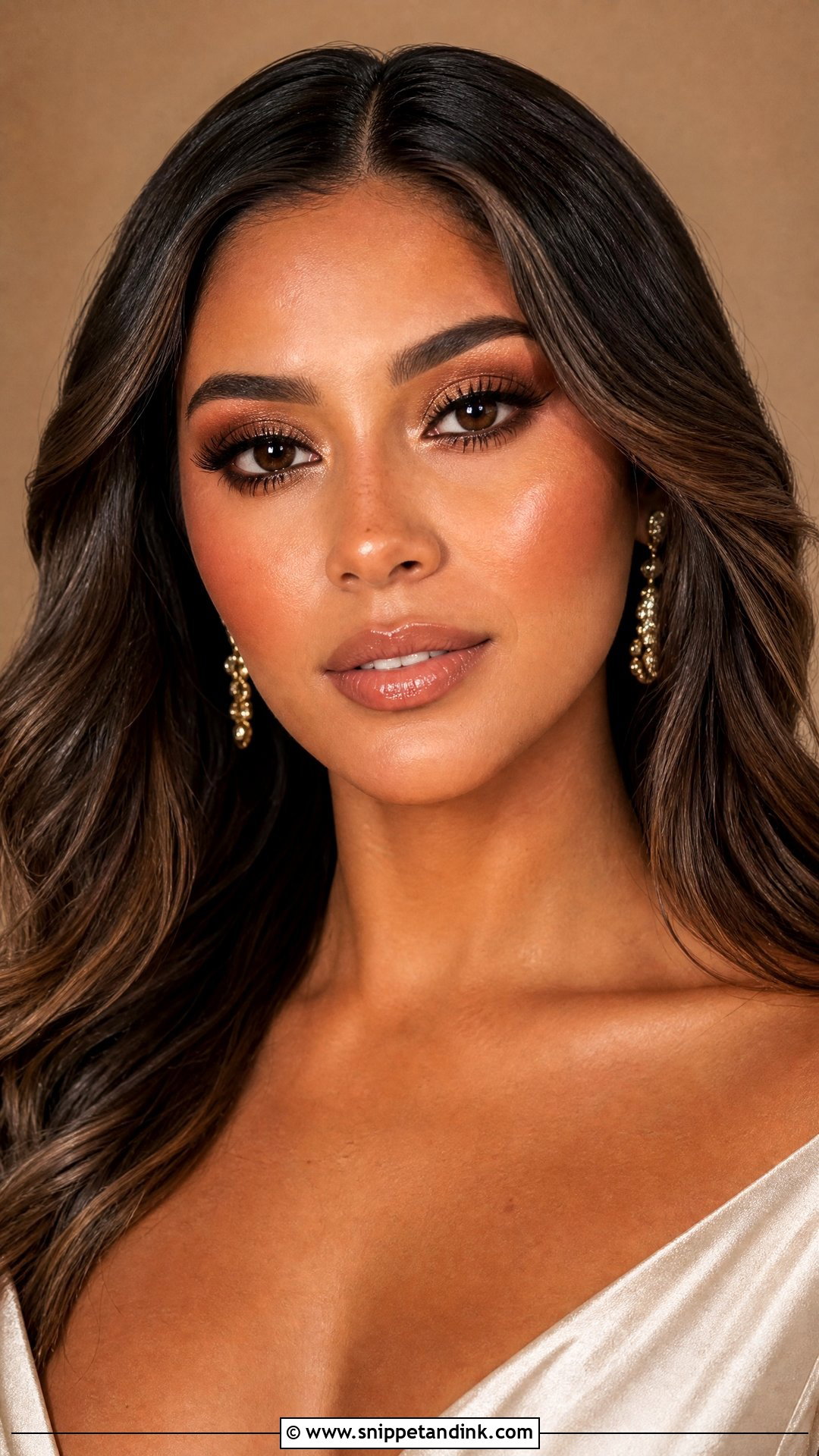
Bronzed makeup needs a light hand with the bronzer, otherwise it turns muddy in flash photos. I place it around the temples, under the cheekbones and along the jaw, where the sun would naturally hit, and blend until there are no edges. Warm brown or copper shadow on the eyes, or golden shimmer shadows if you want some light there, with brown liner and soft lashes. Peach or terracotta blush keeps the cheeks alive. A caramel nude lip finishes it, and the highlighter should be golden and subtle so it doesn’t flare in photos. Beach and summer weddings suit it best.
8. Smokey Eye Bridal Makeup
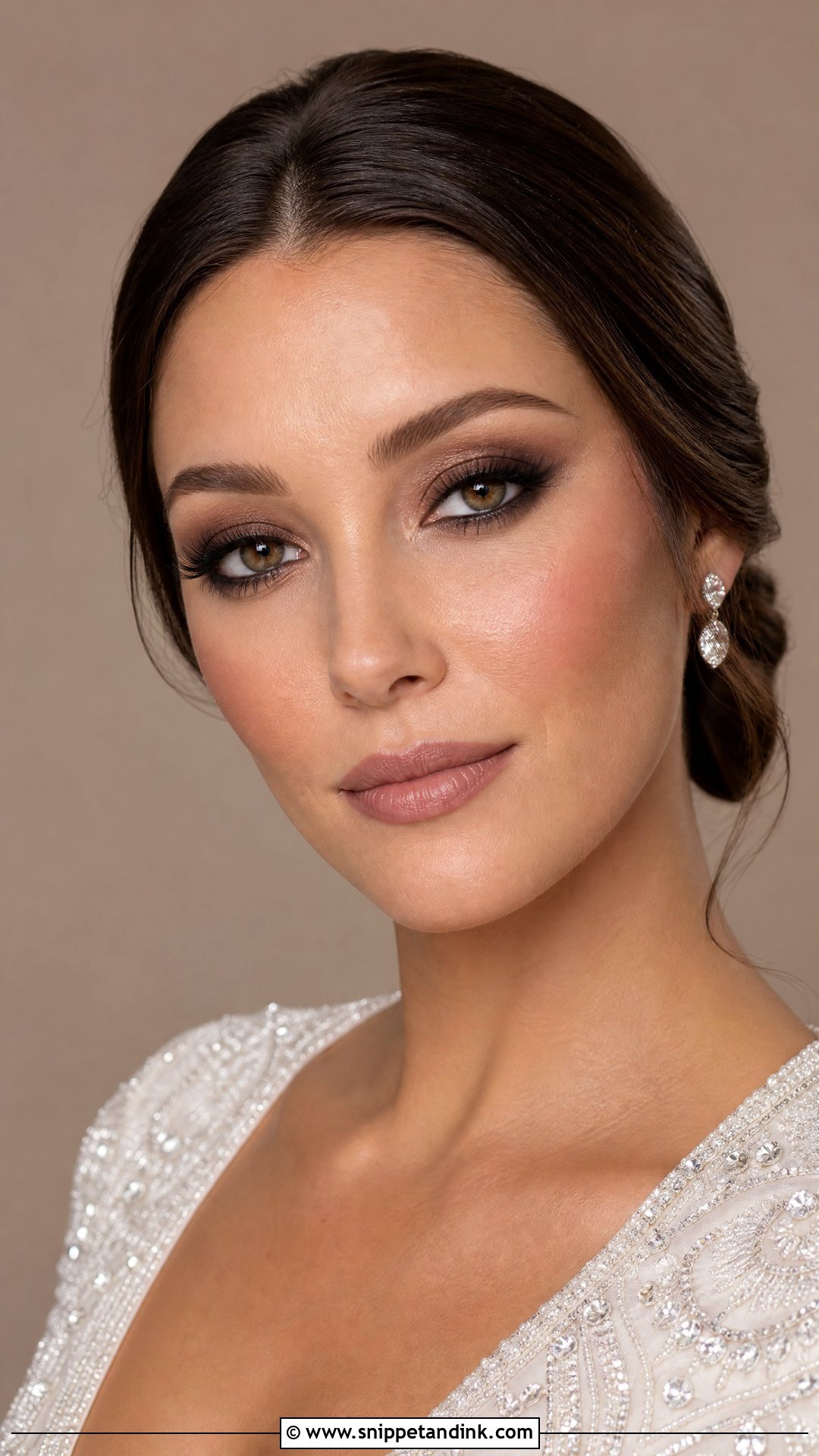
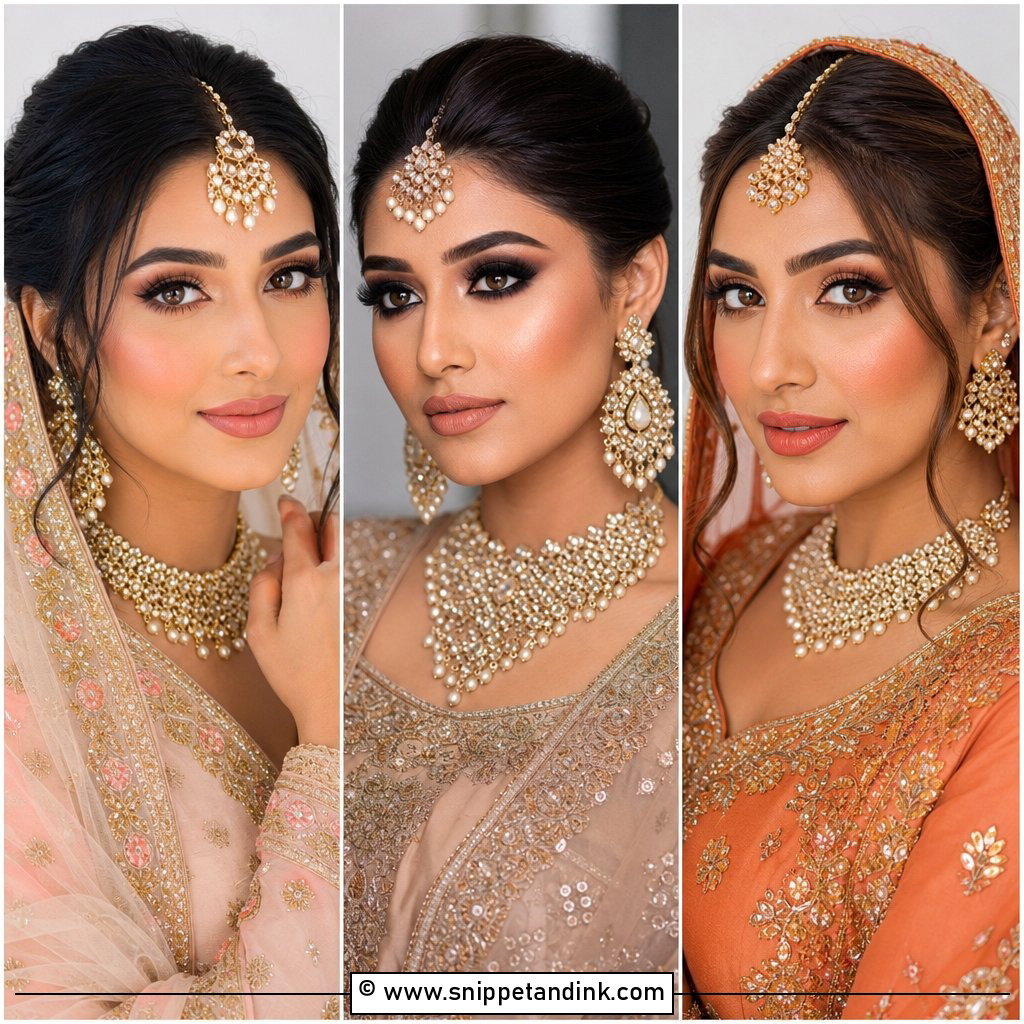
Smokey eye bridal makeup doesn’t need black shadow. Warm brown, bronze, plum and charcoal give the depth without the heaviness, and they’re more forgiving when you cry. I blend outward and slightly upward to lift the eye, then smudge a liner close to the lash line. With a smoky eye I always do the eyes first and clean up any fallout before the foundation goes on. The face stays balanced with soft contour and a neutral blush, and the lip should be nude, rose or mauve. It suits evening receptions and formal venues best.
9. Brown Bridal Makeup
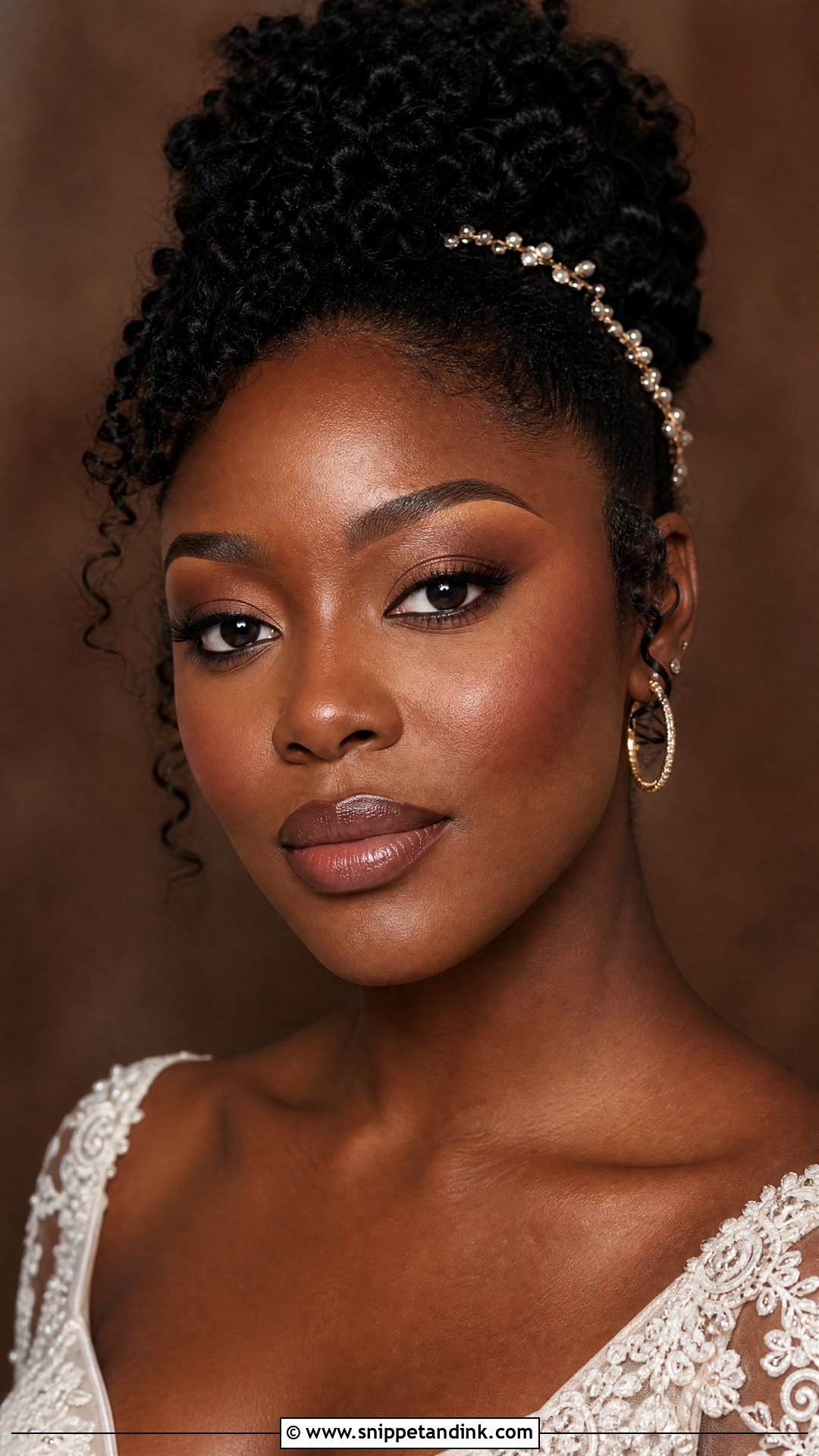
Brown makeup is probably the easiest look to adapt across skin tones, since brown shades range from pale beige to espresso. I choose the eye shades by the client’s depth: lighter browns for fair skin, deep chocolate for deeper skin. Brown liner defines without the sharp edge of black. A neutral bronzer and a soft brown-pink blush warm the face, and a rose-brown or mocha lip ties it all together. If you rarely wear color, this is often the look you’ll feel most at ease in.
10. Rose Gold Bridal Makeup
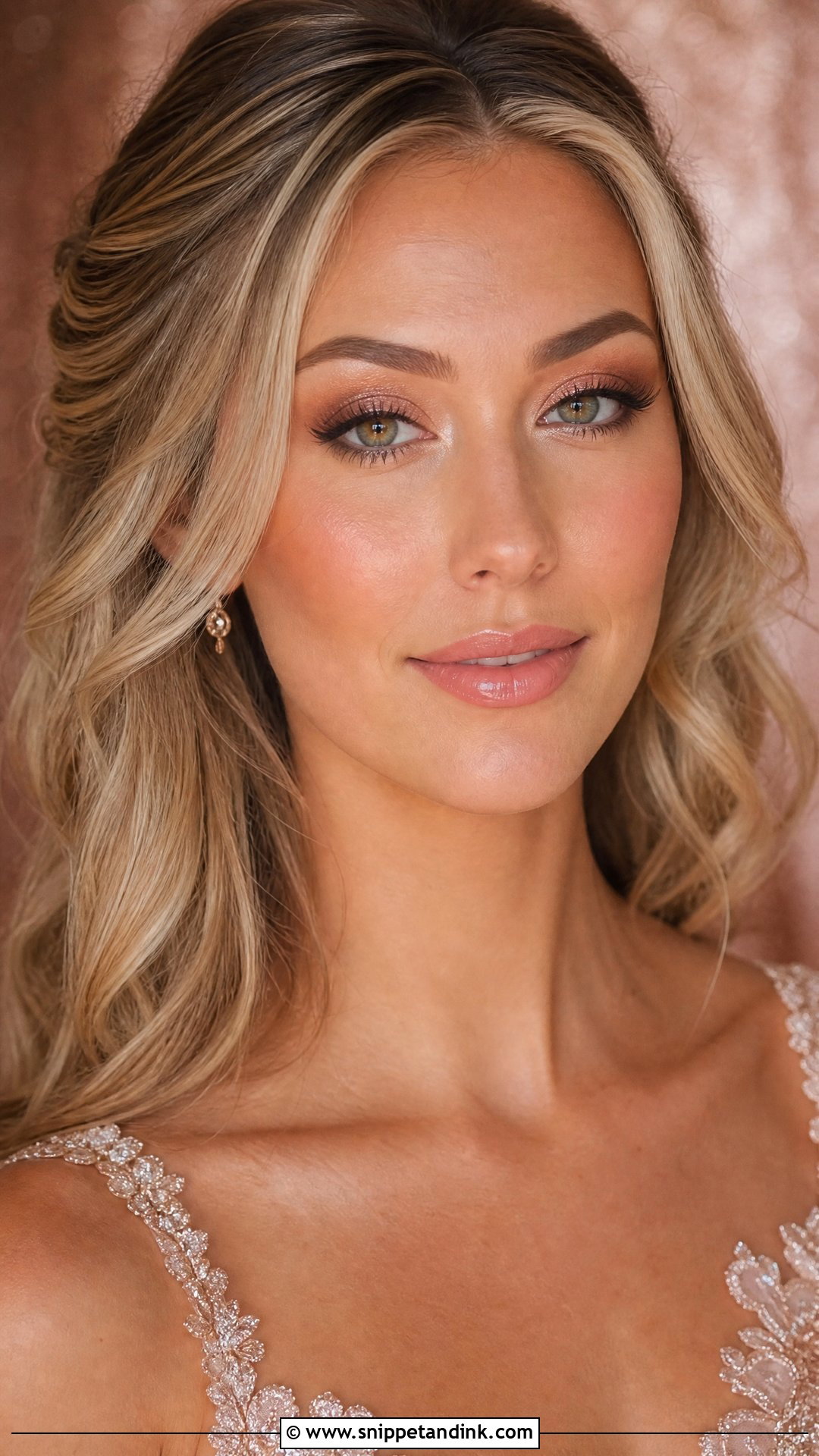
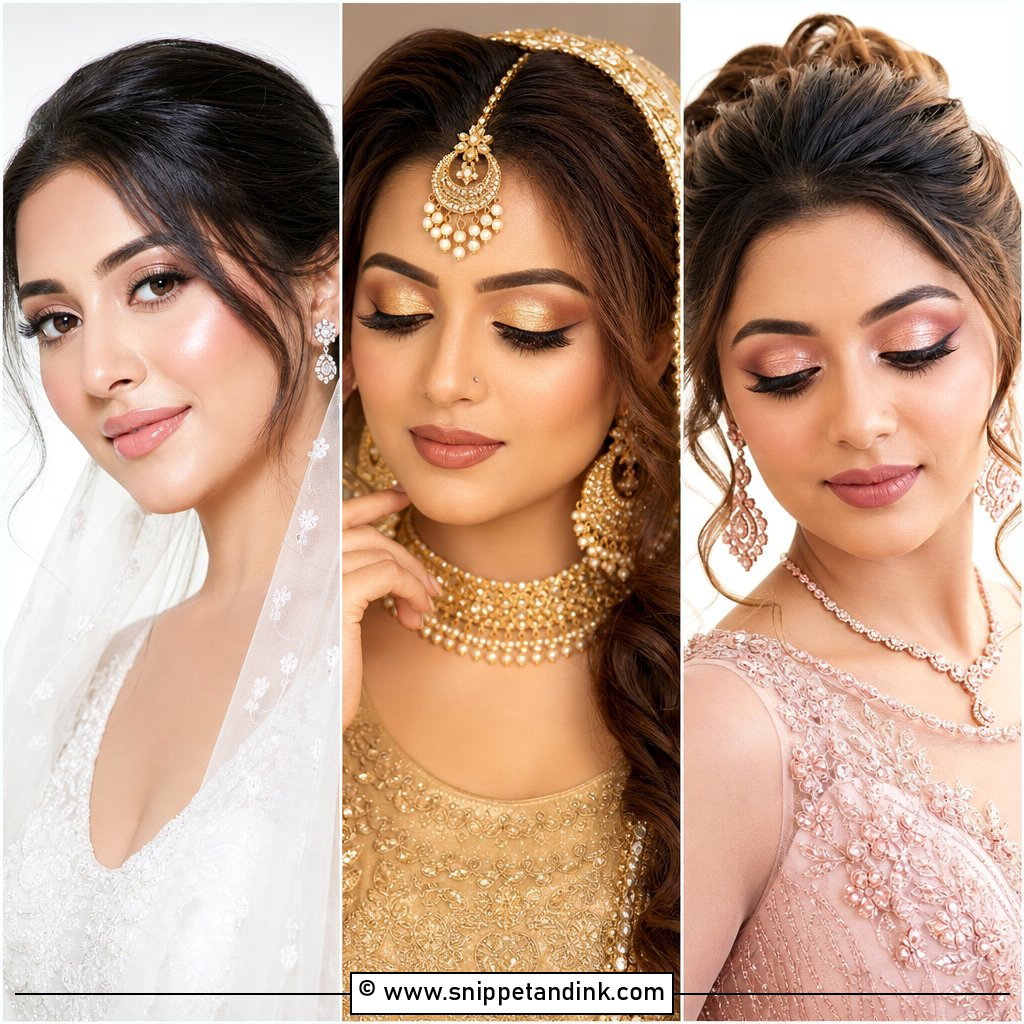
Rose gold puts the focus on the eyes. Shimmer on the lids, soft matte brown in the crease and a little champagne on the inner corners. The shimmer can look busy if the liner is heavy, so I keep it thin and the lashes lifted. The skin is smooth and fresh with a peachy pink blush and soft golden highlight. A pink nude or rose gloss completes it without competing with the eyes. It looks especially good with warm-toned jewelry and candlelit receptions, and it suits most eye colors.
11. Full Glam Bridal Makeup
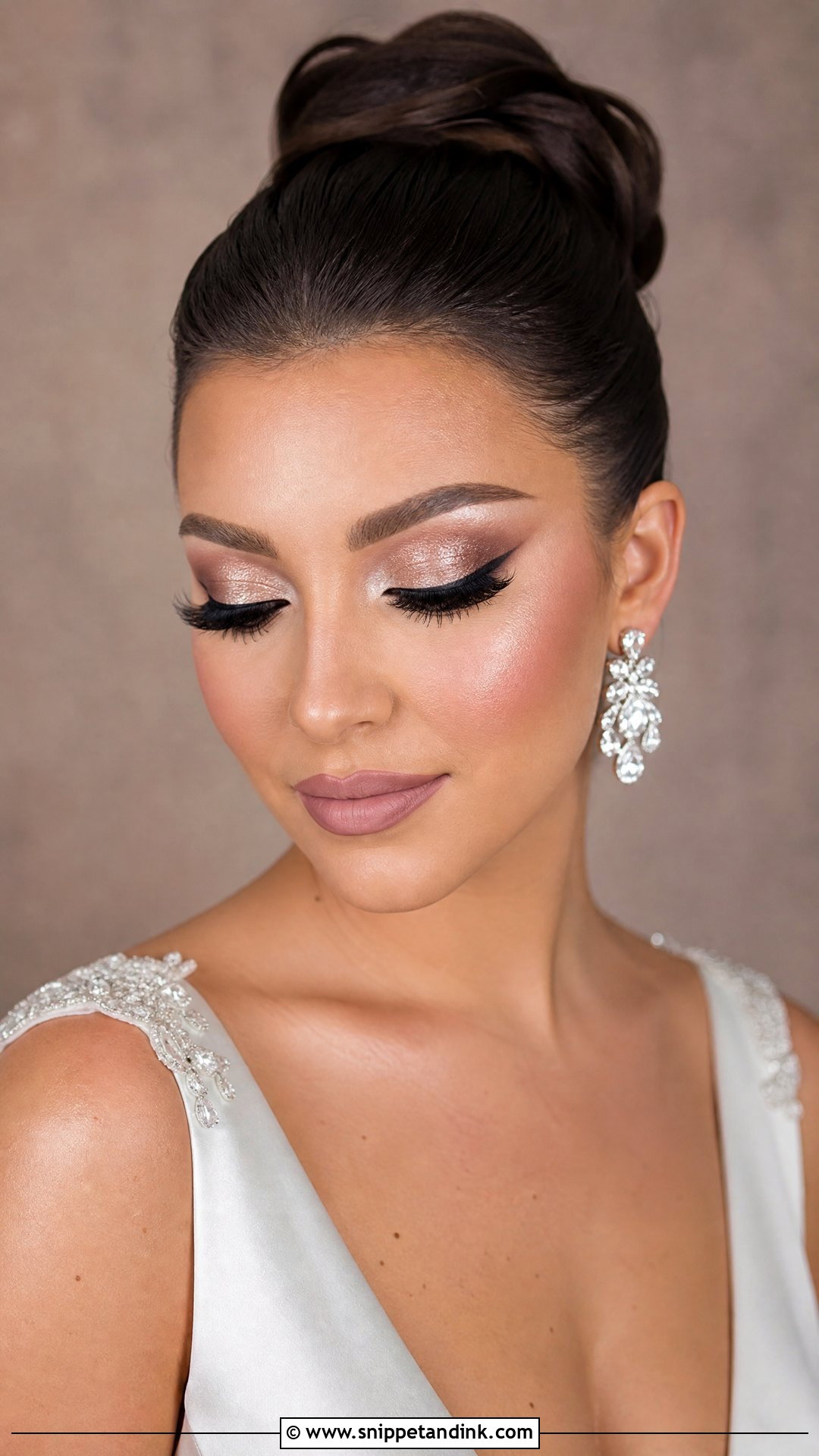
Full glam is the most work and the most structure: full-coverage foundation, careful concealer, setting powder and a long-wear setting spray. Contour adds shape, and then blush and highlight bring warmth back so it doesn’t look flat. The eyes can take a cut crease, a shimmer lid, winged liner and fuller lashes. Blending is what separates bridal full glam from stage makeup, so I spend most of the time there. Keep the lip soft against a strong eye. I’d recommend it mostly to brides who already wear a full face often; if you don’t, it can feel like a mask by the evening.
12. Minimal Bridal Makeup
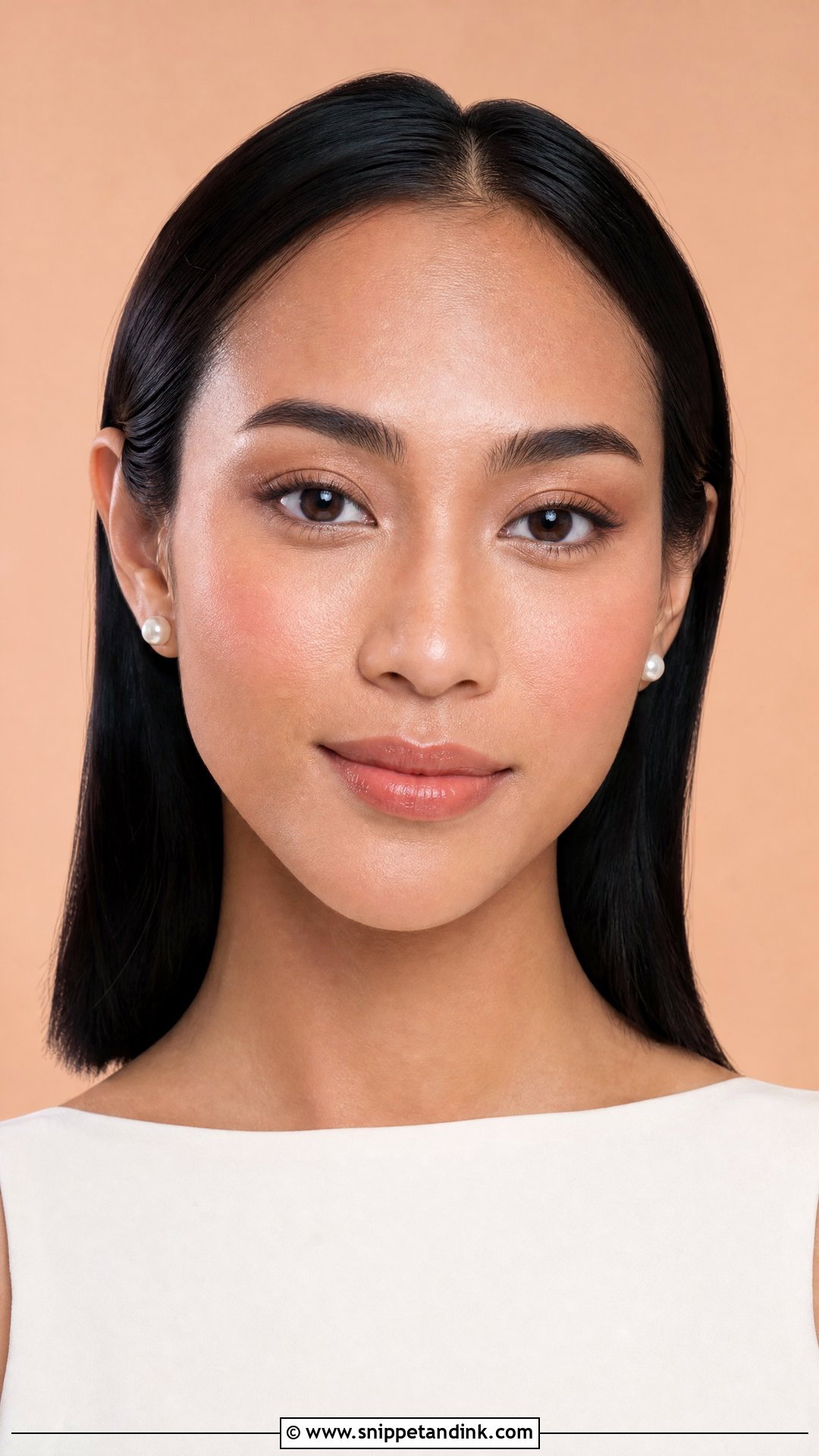
Minimal makeup looks simple but every placement shows, so it takes as long as a fuller look. I use a skin tint or sheer foundation only where needed, then spot conceal to keep the face looking real. Cream blush adds life without heaviness. One neutral eyeshadow, curled lashes and maybe a brown tightline. A tinted balm or sheer lipstick. Courthouse weddings, beach ceremonies and smaller gatherings suit it, and so do brides who’d hate the feeling of a full face.
13. Champagne Bridal Makeup
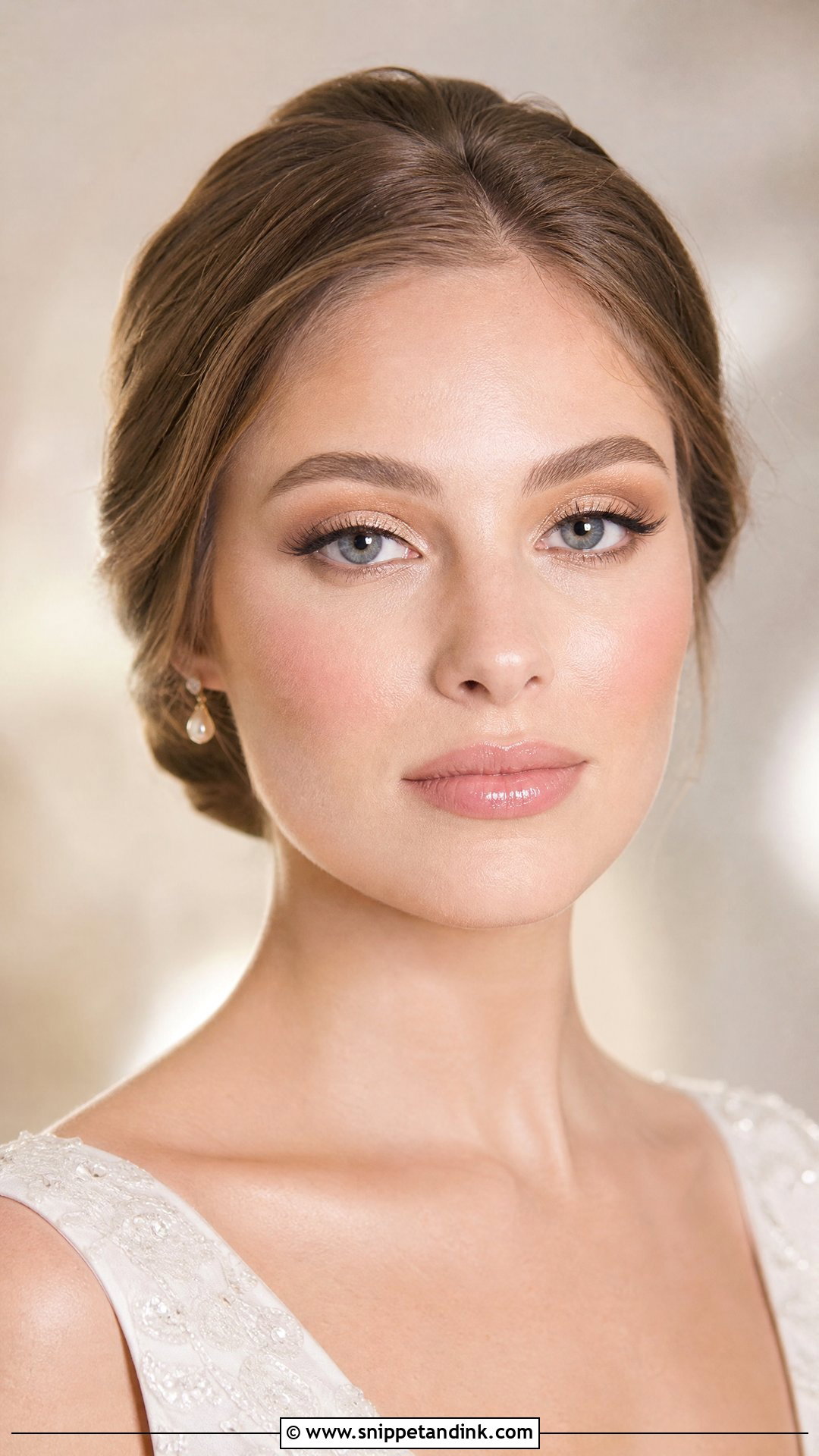
Champagne tones bounce light back toward the camera, which is why they look so good with ivory gowns. I put a champagne shimmer on the lid, taupe in the crease for shape, a thin liner and well-separated lashes. The skin has a satin finish with soft peach blush and a delicate highlight on the cheekbones. A nude pink or beige satin lip balances it. Pearl details and classic hairstyles suit it, and it is formal enough for an evening wedding while still soft.
14. Peach Bridal Makeup
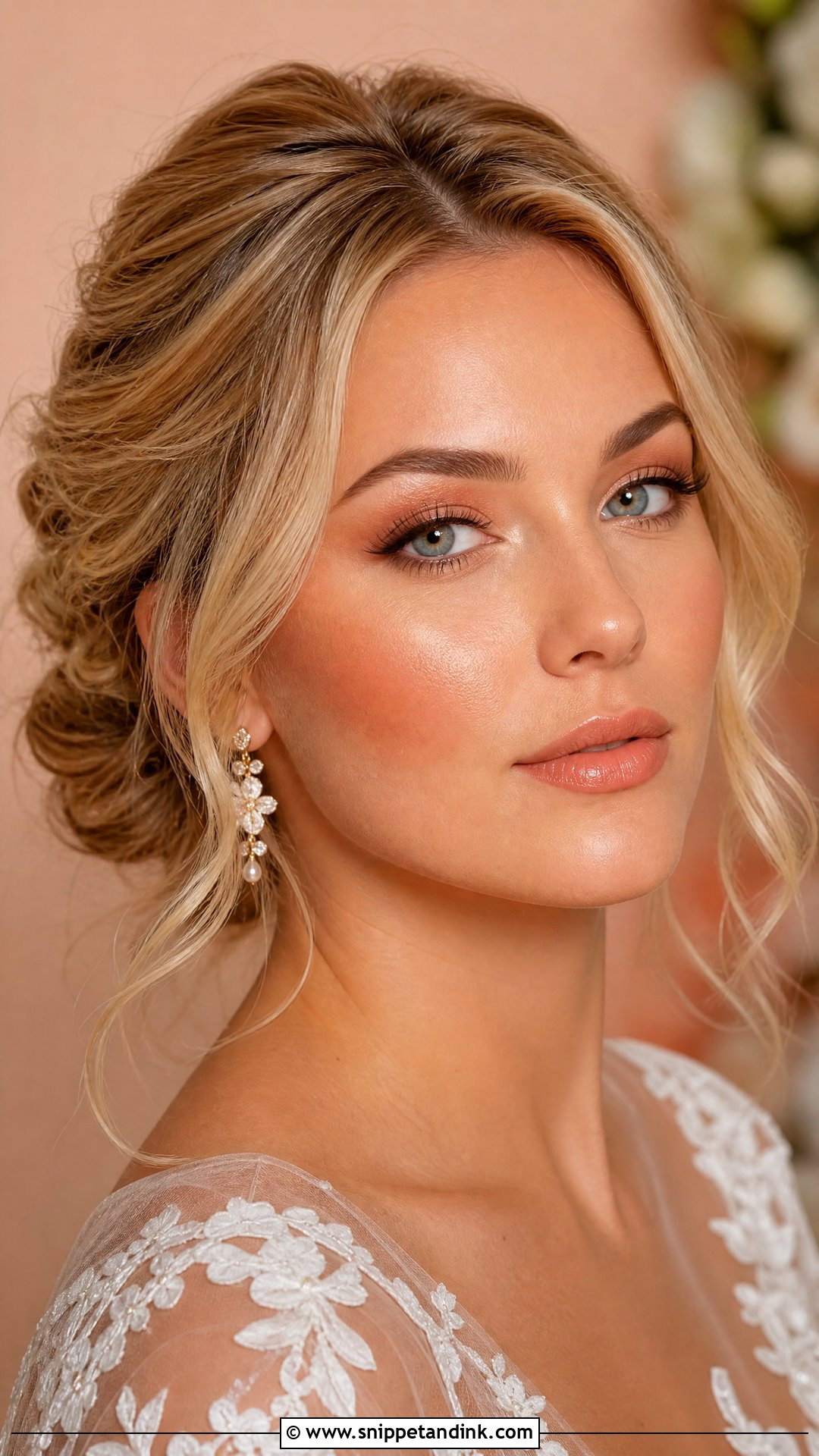
Peach brings warmth and freshness without any real risk. I put peach blush on the apples of the cheeks and sweep it up toward the temples for lift. The eyes take peach-beige or warm tan shadow with brown liner. The skin should look bright and healthy, with a golden highlight if it suits the undertone. A peachy nude lipstick or gloss finishes it. It’s most at home in spring and summer, but blended softly it works any time of year.
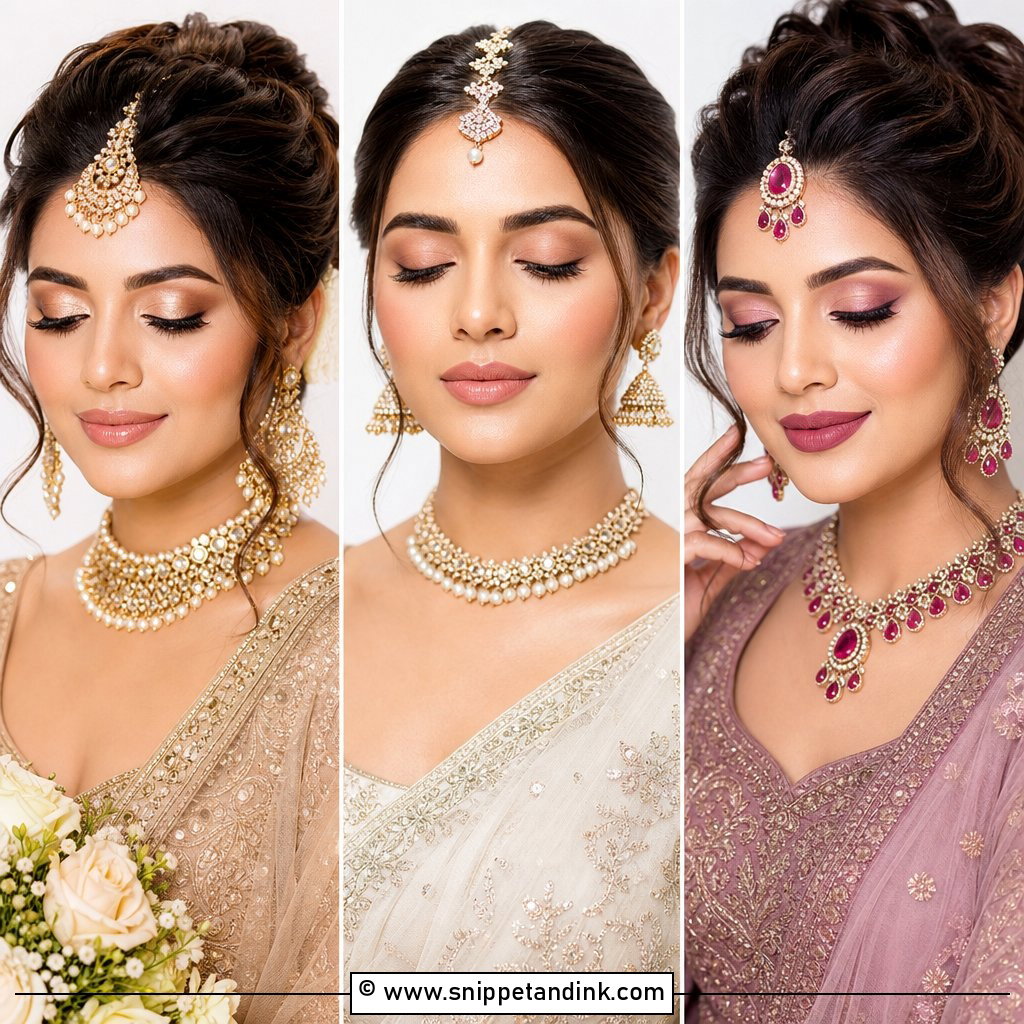
15. Mauve Bridal Makeup
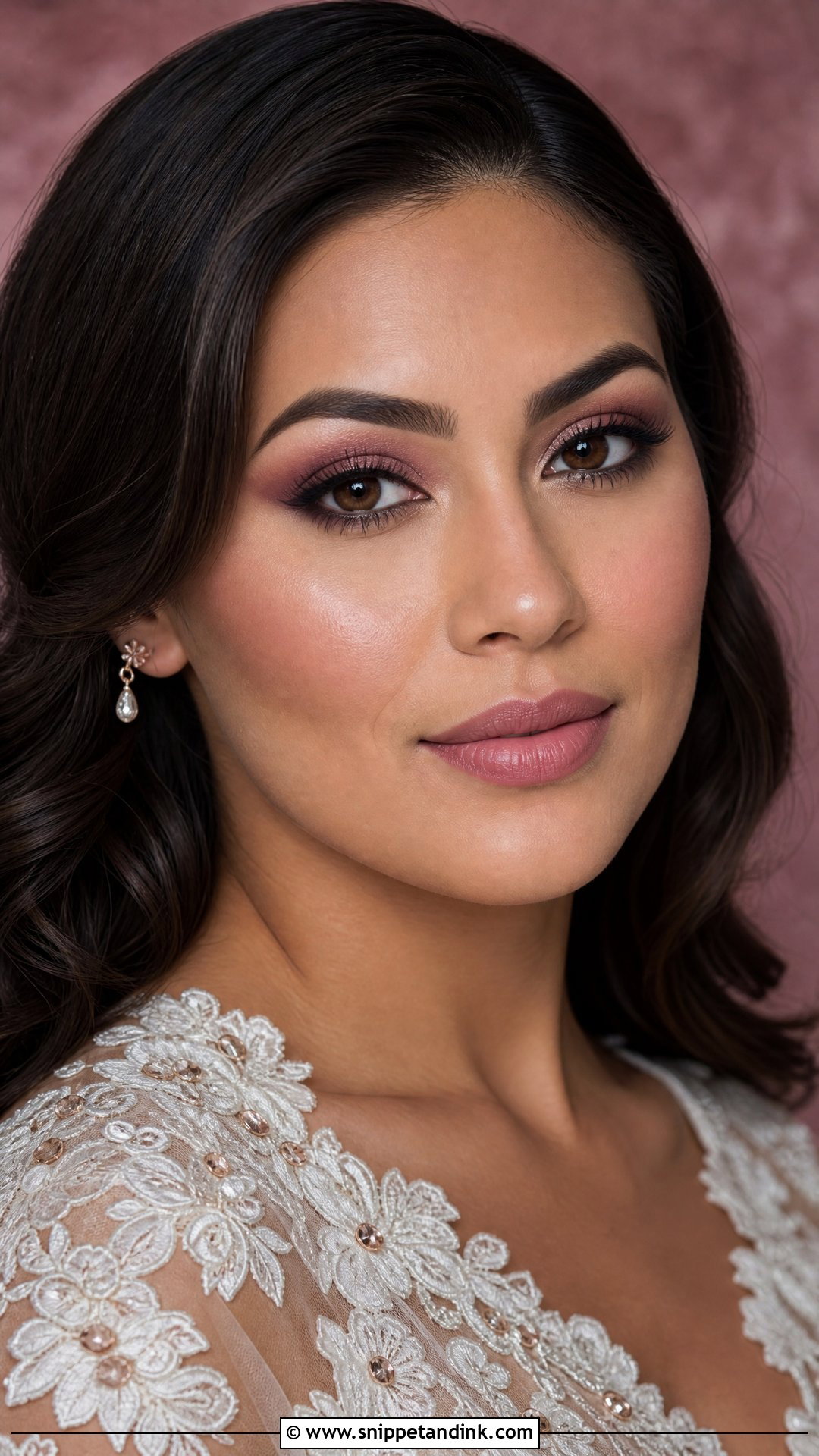
Mauve sits between pink, purple and brown, which gives it a slightly moody quality without being dark. I use mauve or dusty rose shadow on the lids and deepen the outer corners with plum-brown or taupe. Soft liner and separated lashes. The cheeks take a muted rose blush, and the lips work best in a mauve nude or rosewood. The base should be satin, not shiny. Mauve shines in fall and suits cool-toned palettes; it can look grey on very warm, olive skin, so test it in daylight at your trial.
16. Winged Liner Bridal Makeup
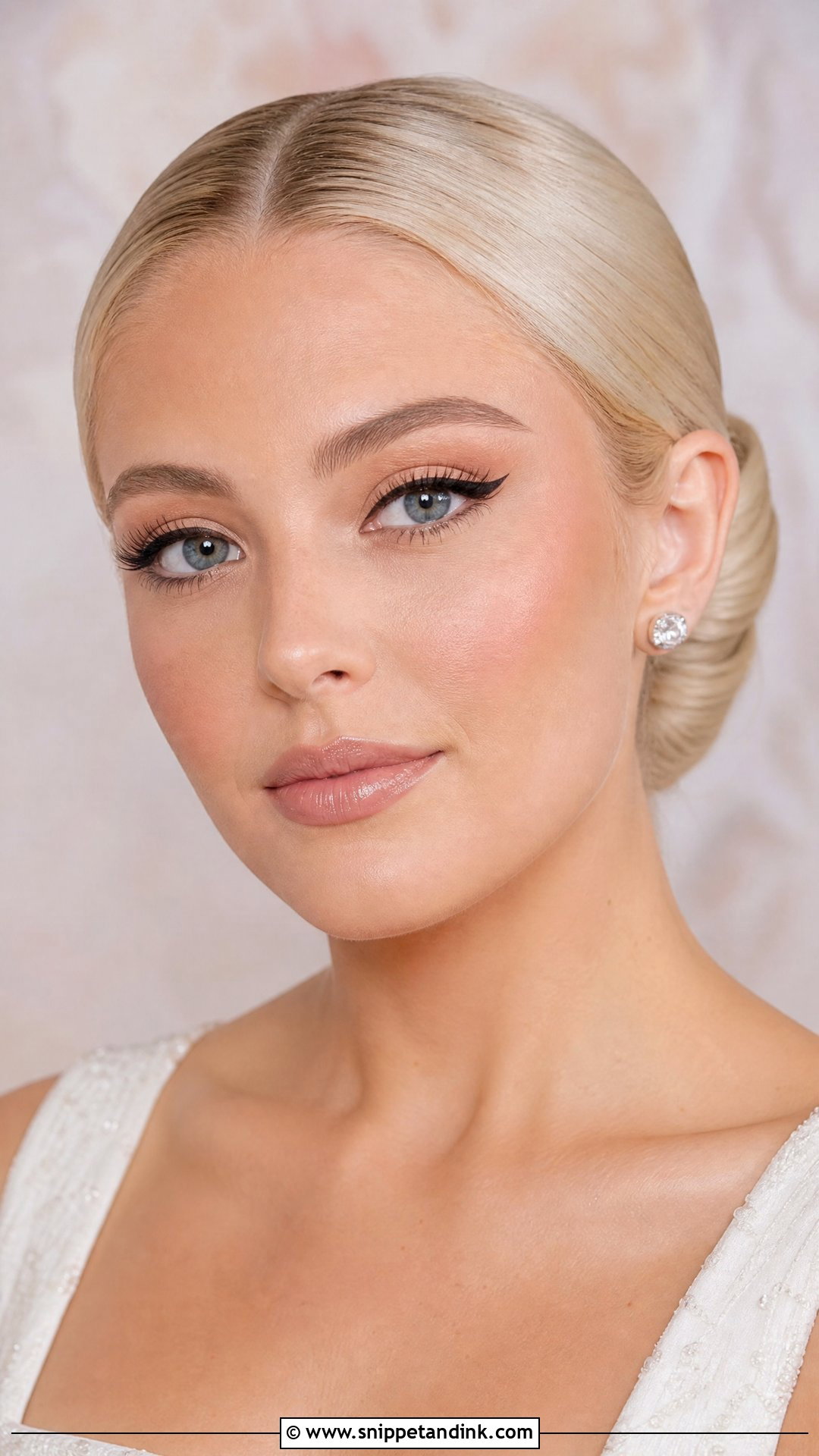
Winged liner depends on eye shape more than any other look here. A wing drawn with the eye open, following the lower lash line upward, sits correctly on hooded lids; drawn with the eye closed, it often disappears into the fold. I pair it with soft neutral shadow, curled lashes and clean brows so the eye isn’t crowded. Soft contour and blush balance the strong line. A nude pink or a classic red lip both work, depending on the dress, and the clean edge reads clearly in every photo.
17. Berry Lip Bridal Makeup
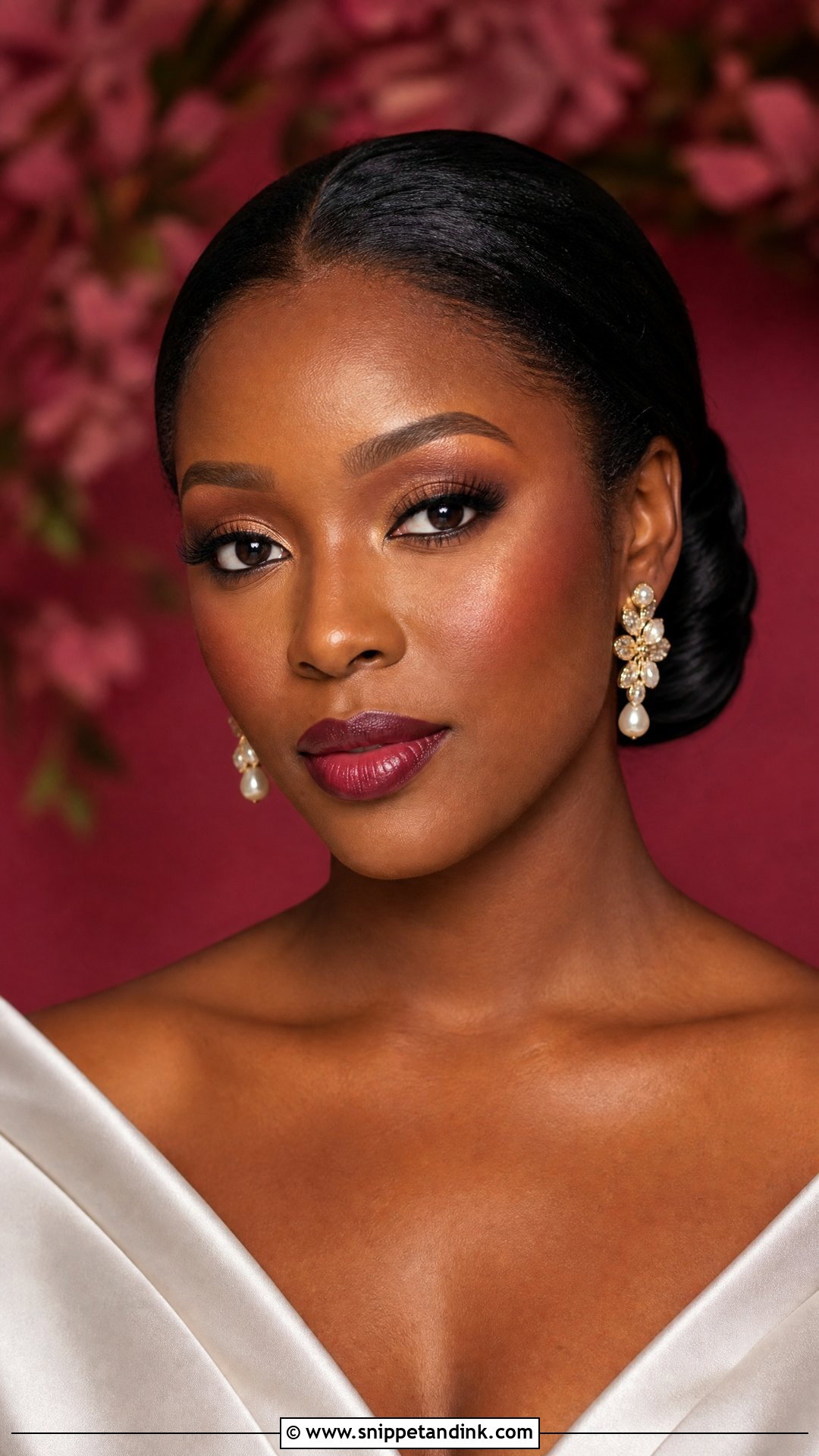
Berry lips give you color without committing to red. Raspberry, cranberry and soft wine shades all work, and they tend to be more forgiving on a wide range of skin tones. I keep the edges clean but not harsh, especially if you want a softer finish, and I’d use a lip liner that matches exactly, since berry stains bleed visibly when they wear off. Neutral eyeshadow with subtle shimmer and defined lashes, a rose blush that echoes the lip, and a satin base complete it. It suits fall and winter weddings with deeper floral colors.
18. Gold Bridal Makeup
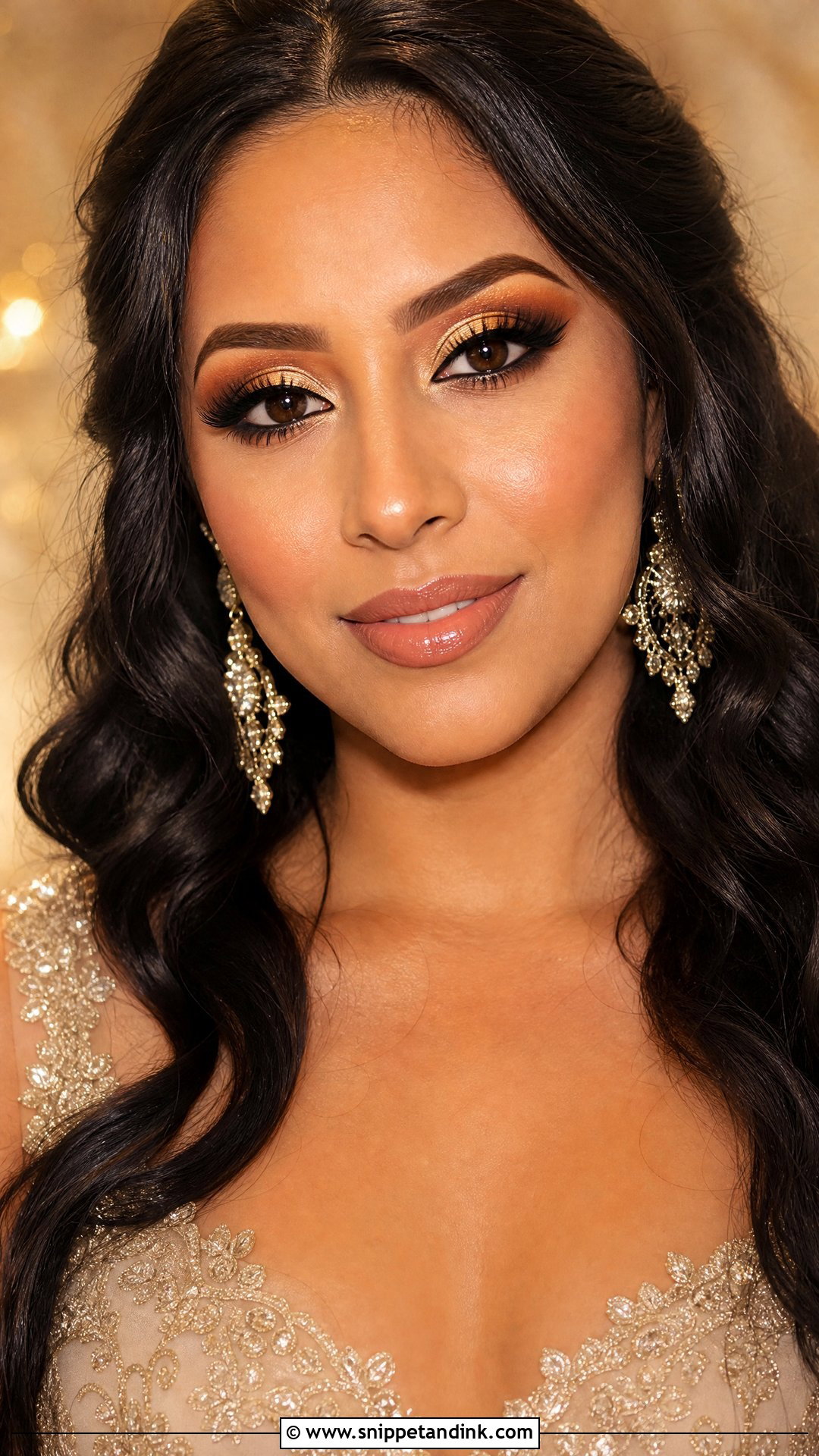
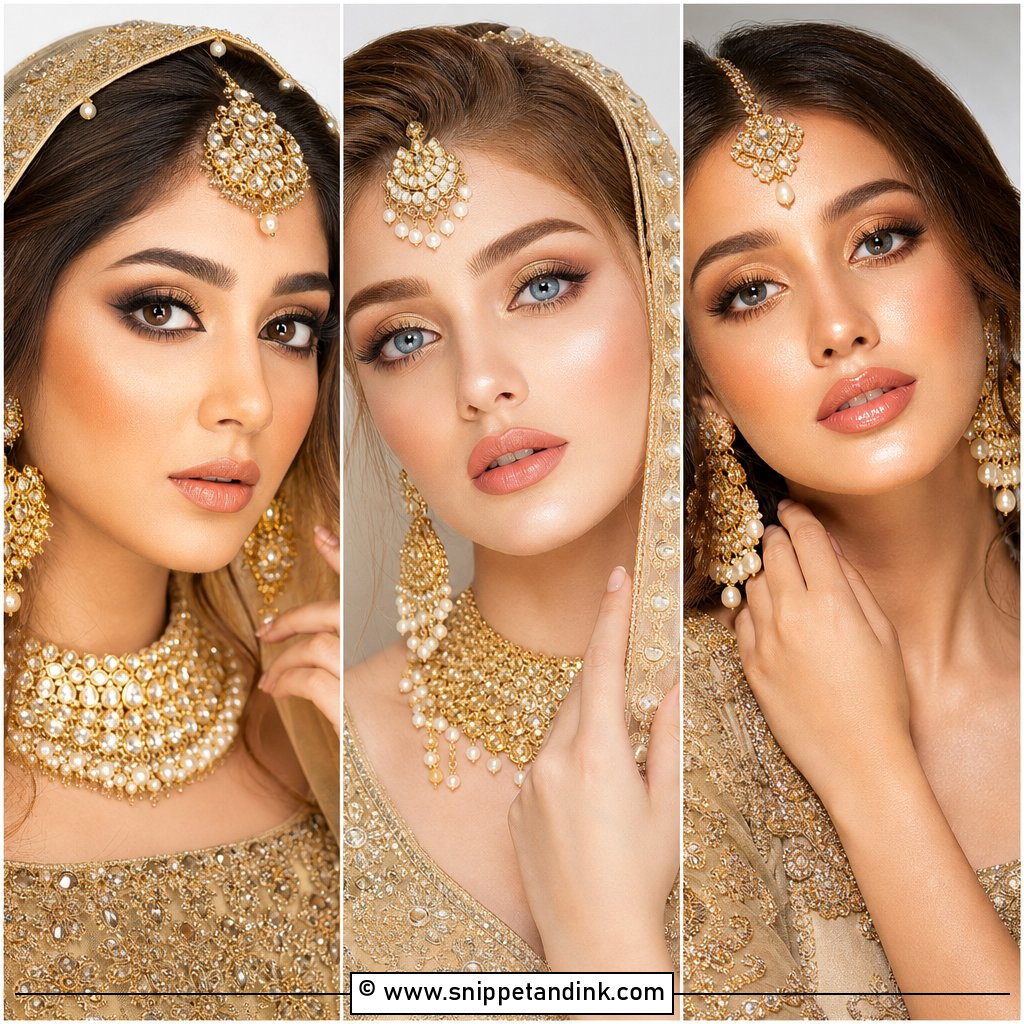
Gold makeup warms the whole face. On the eyes I use gold shimmer on the lids, warm brown in the crease and deep brown liner along the lash line. For a softer version, pale or antique gold looks better than bright yellow gold, which can look brassy in photos. The skin is warm with bronzer, peach blush and a golden highlight placed carefully. A caramel or warm rose lip. Warm skin tones, brown eyes and gold jewelry are where it’s at its best.
19. Vintage Bridal Makeup
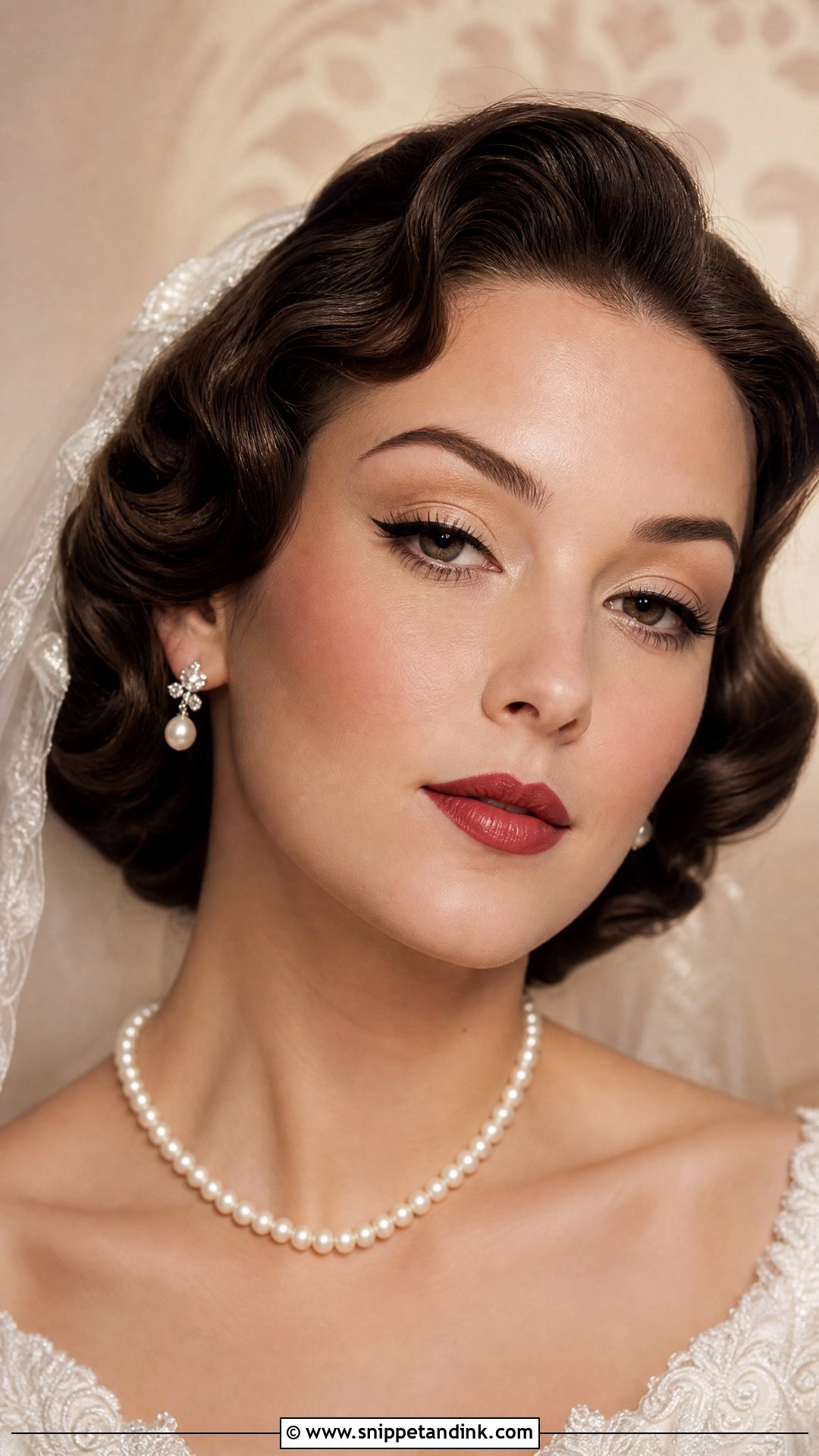
Vintage makeup borrows from classic film looks: smooth satin skin, softly arched brows, clean liner and a defined lip. The brows matter most here, because the arch sets the era, so I shape them before anything else. Red, rose or muted berry lipstick, depending on how bold you want to go. The eyes stay neat with matte beige or taupe shadow and a small wing. Blush is softly sculpted. It goes well with structured gowns, birdcage veils, pearls and Old Hollywood waves.
20. Modern Bridal Makeup
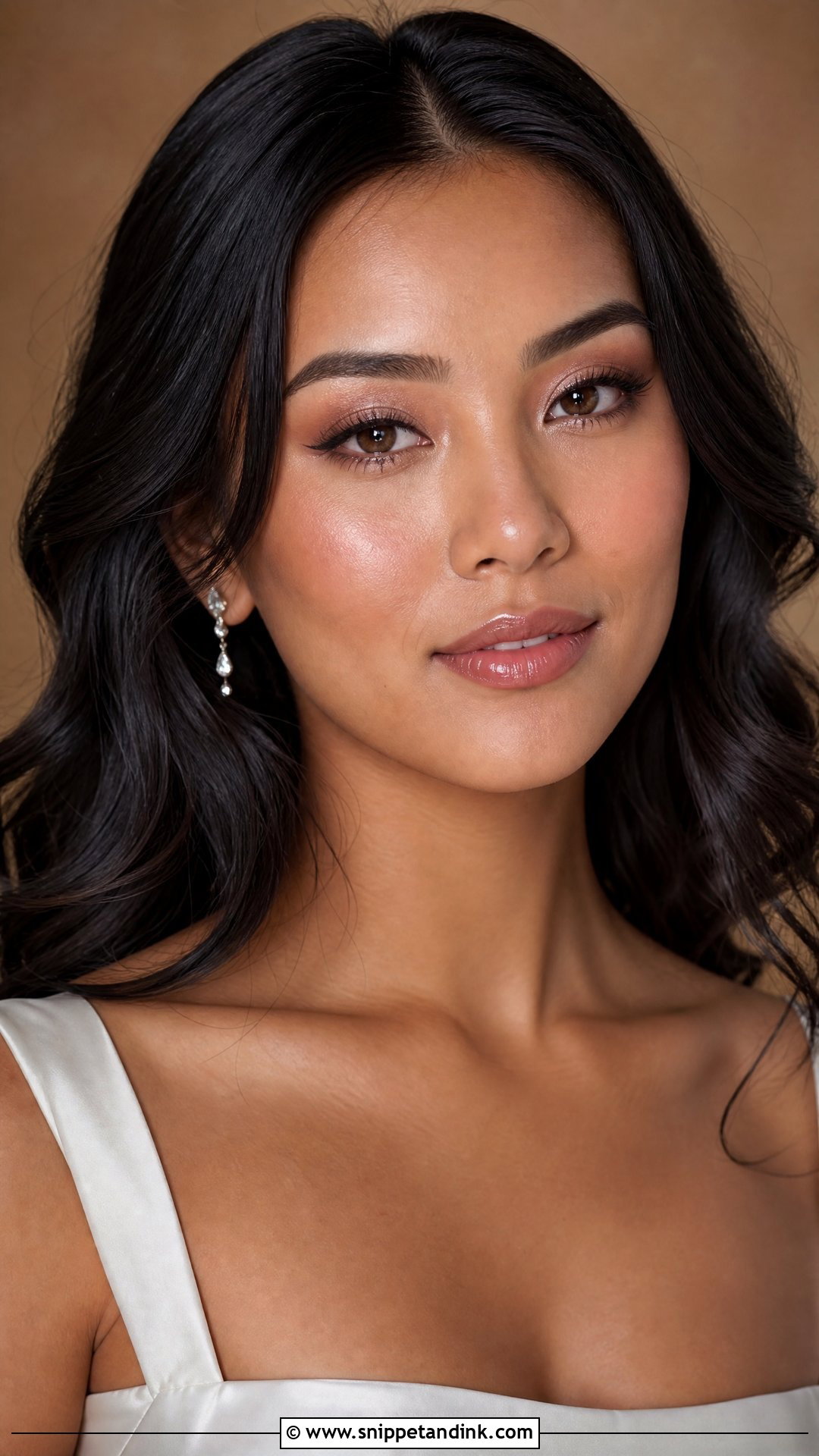
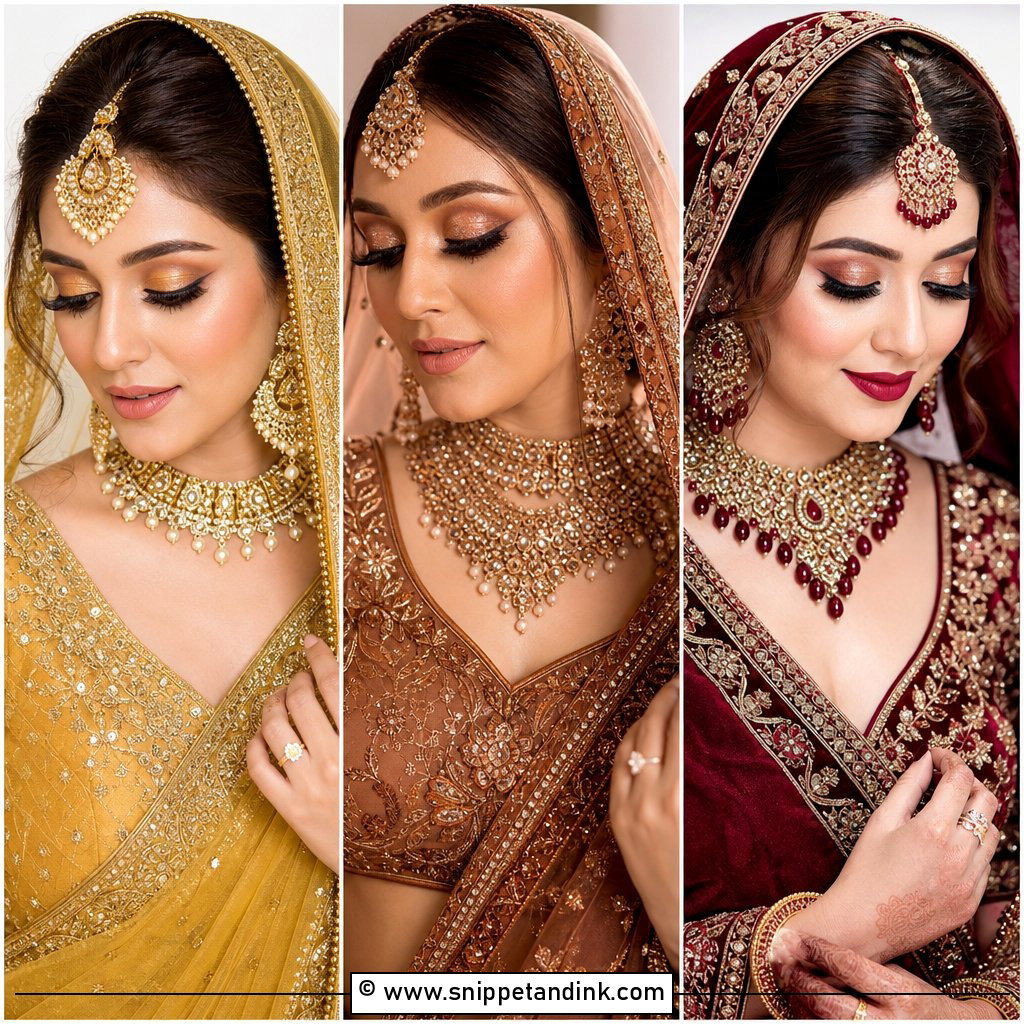
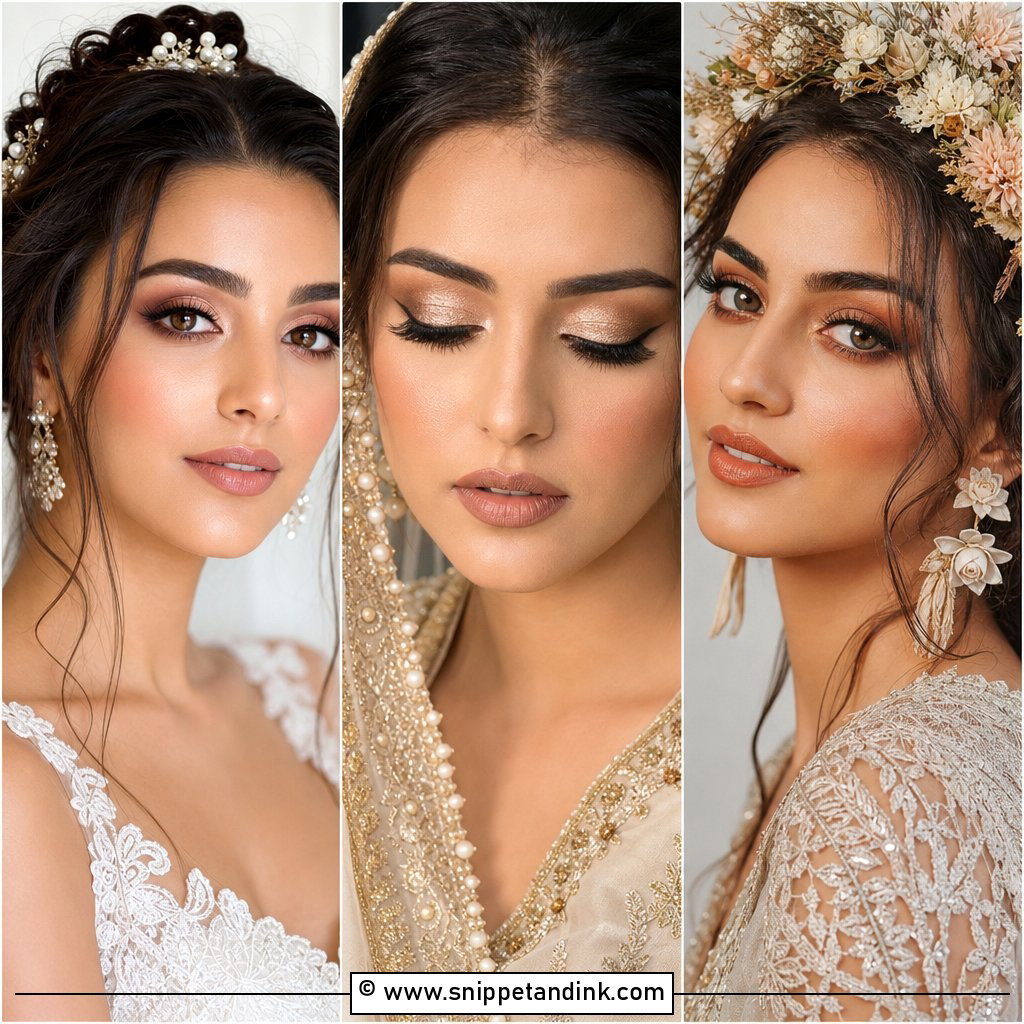
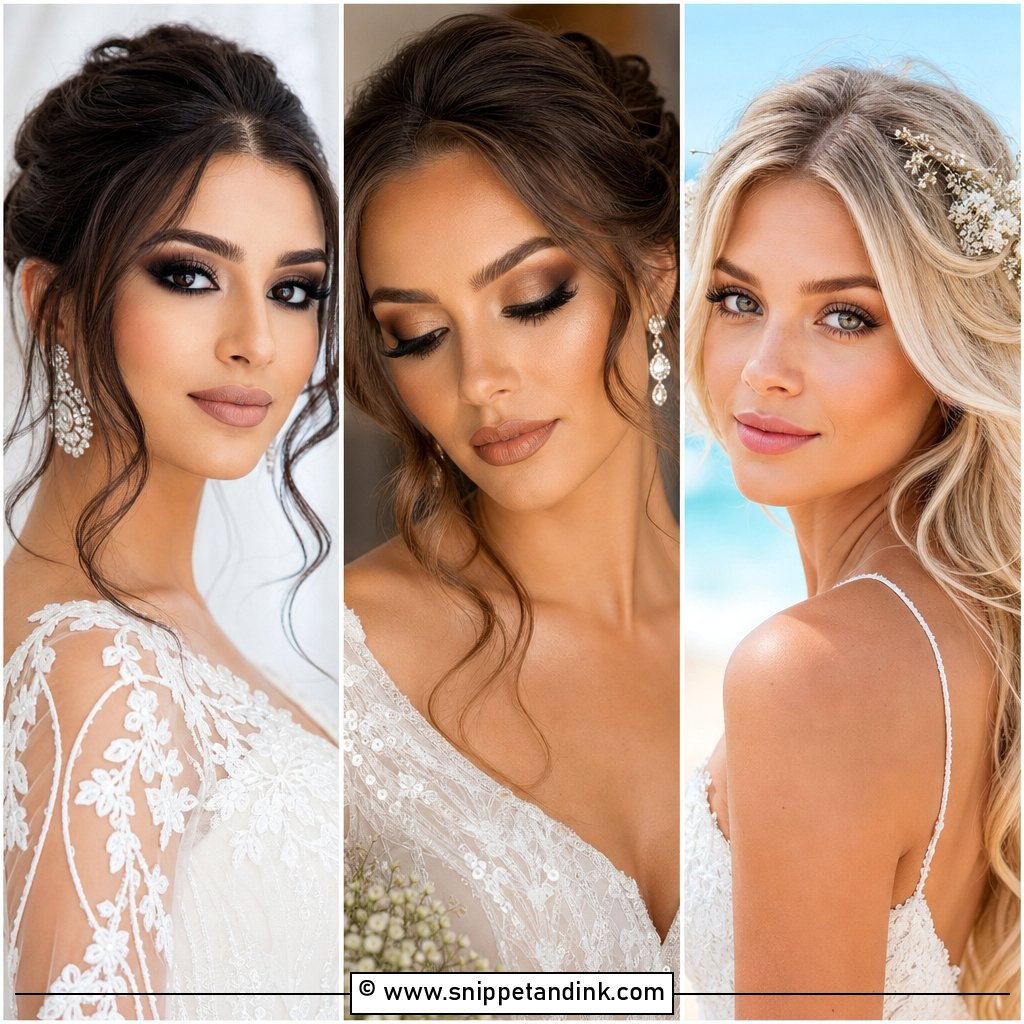
Modern bridal makeup means less of a set formula and more building around what you like about your face. Real-skin foundation, lifted blush, soft sculpting, a glossy lip and airy lashes are common pieces, but you pick what matters to you. Maybe that’s glowing skin and fluffy brows, or a blurred rose lip, or a soft brown wing. Whatever you choose, the textures should still be long-wearing, since a glossy lip and a light base both need more touch-ups over a long day than a classic satin finish.
Flash, Phone Cameras and Window Light See Different Faces
A face can look balanced in the mirror and wrong in photos. The most common surprise is flashback: a white cast around the eyes and nose in flash photos. It comes from some setting powders and from mineral sunscreen filters such as zinc oxide and titanium dioxide, which reflect the flash. I avoid heavy amounts of those products near the camera-facing areas, and I test with a flash photo at every trial.
Warm indoor bulbs make makeup look softer; daylight shows every edge. I check each face beside a window before I’m done, since that is the harshest light it will meet all day.
Holding Up Through Tears and Kisses
- Waterproof mascara on the lower lashes at least, even if you don’t expect to cry.
- Individual or cluster lashes rather than a full strip if your eyes water easily; they lift less at the corners.
- A setting spray between layers, not only at the end.
- Lip liner over the whole lip under any color, so what’s left when the lipstick fades is still an even shade.
- A small kit for the evening: blotting papers, a powder, the lipstick and its liner, and a cotton swab.
If your artist isn’t staying all day, ask her to show you how to retouch the lip and press powder on the nose without disturbing the base. It takes two minutes at the trial and saves the evening photos.
Trusting the Face You See in Daylight
The look you choose should match your features, your venue, your dress and how much makeup you usually wear, because nothing feels worse than a face that doesn’t feel like yours. Soft glam, matte skin, a red lip or a smoky eye can each be right on the right person. Book a trial, wear the makeup for several hours afterward, and check it in daylight, under indoor lights and in a flash photo before you decide.
You'll Like These Ideas:


Leave a Reply