
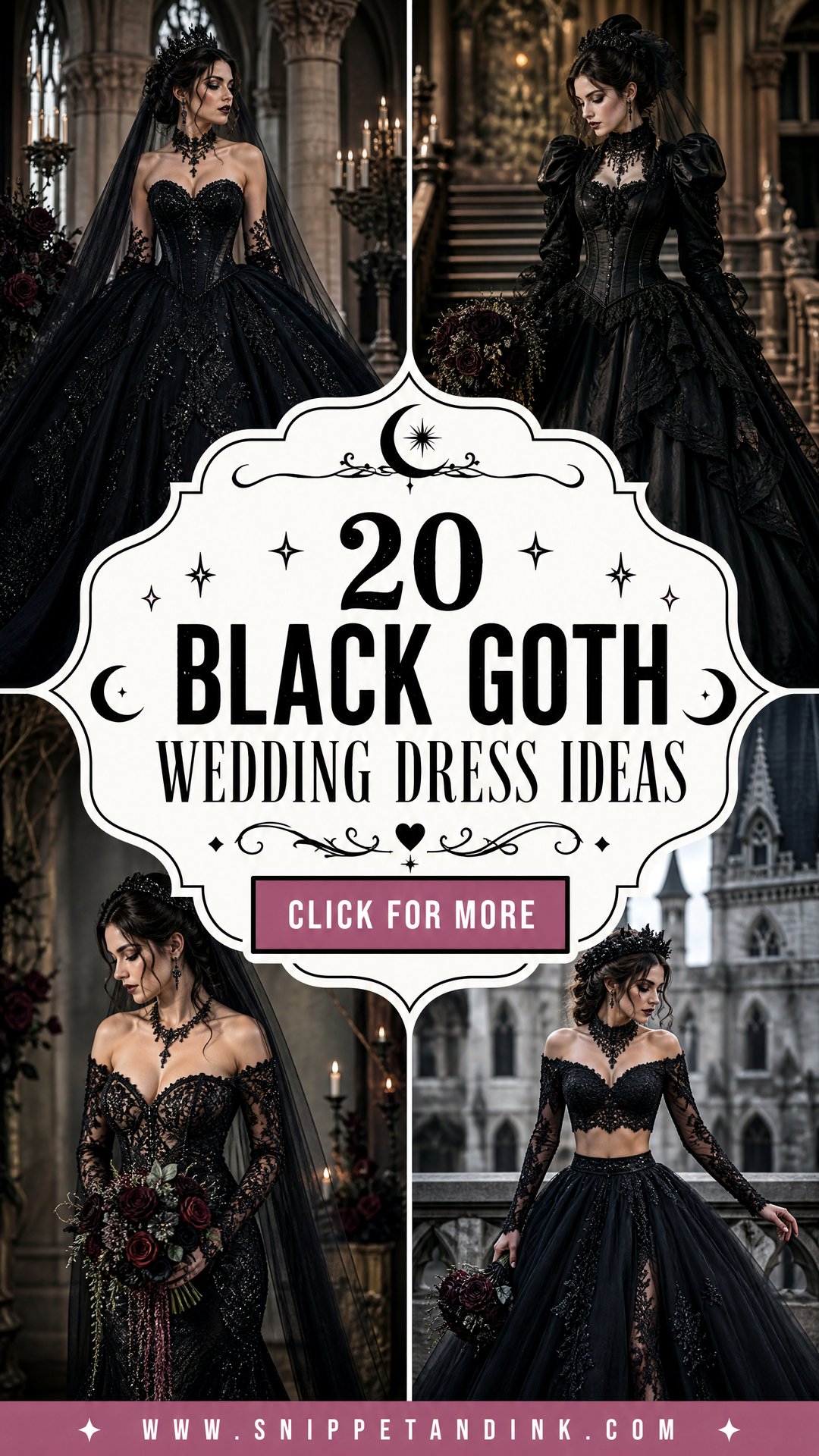
A black wedding gown asks more of its details than an ivory one does, because black flattens anything that isn’t cut well and rewards anything that is. Lace, corsetry, velvet, sheer sleeves, long trains and layered tulle all suit gothic bridal fashion, but each behaves differently once it’s on a moving body under venue lighting. When I style a dark bride, I start with the silhouette she can sit, dance and breathe in, then let the season and the room decide the fabric. Below are twenty directions, from full Victorian drama to a plain satin slip, with notes on what each one needs from shoes, veil and bouquet to read as one finished outfit.
Not Every Black Is the Same Black
The first thing I do with a dark-gown bride is hold her fabric swatches side by side near a window. Black dye varies far more than people expect. Some blacks lean blue, others lean brown or green, and the difference only shows when two pieces sit next to each other, which is exactly what happens with a bodice, a veil, a cape and a pair of shoes.
Matching the pieces
- Buy the veil tulle from the same maker as the dress when you can, or bring a cutting of the skirt to the veil appointment.
- Check shoes and gloves against the dress in daylight and again in warm indoor light. Satin and velvet shift the most between the two.
- Matte crepe and shiny satin will never look identical, so treat them as a deliberate contrast rather than trying to match them.
How black reads on camera
Black absorbs light, so texture is what the camera picks up: lace pattern, beading, the pile of velvet. A gown with no texture at all can come out as a flat silhouette in a dim church. Tell your photographer early that you’re wearing black. Most will expose for the dress and bring more fill light, and a test frame at the venue during your walk-through takes the guesswork out of it.
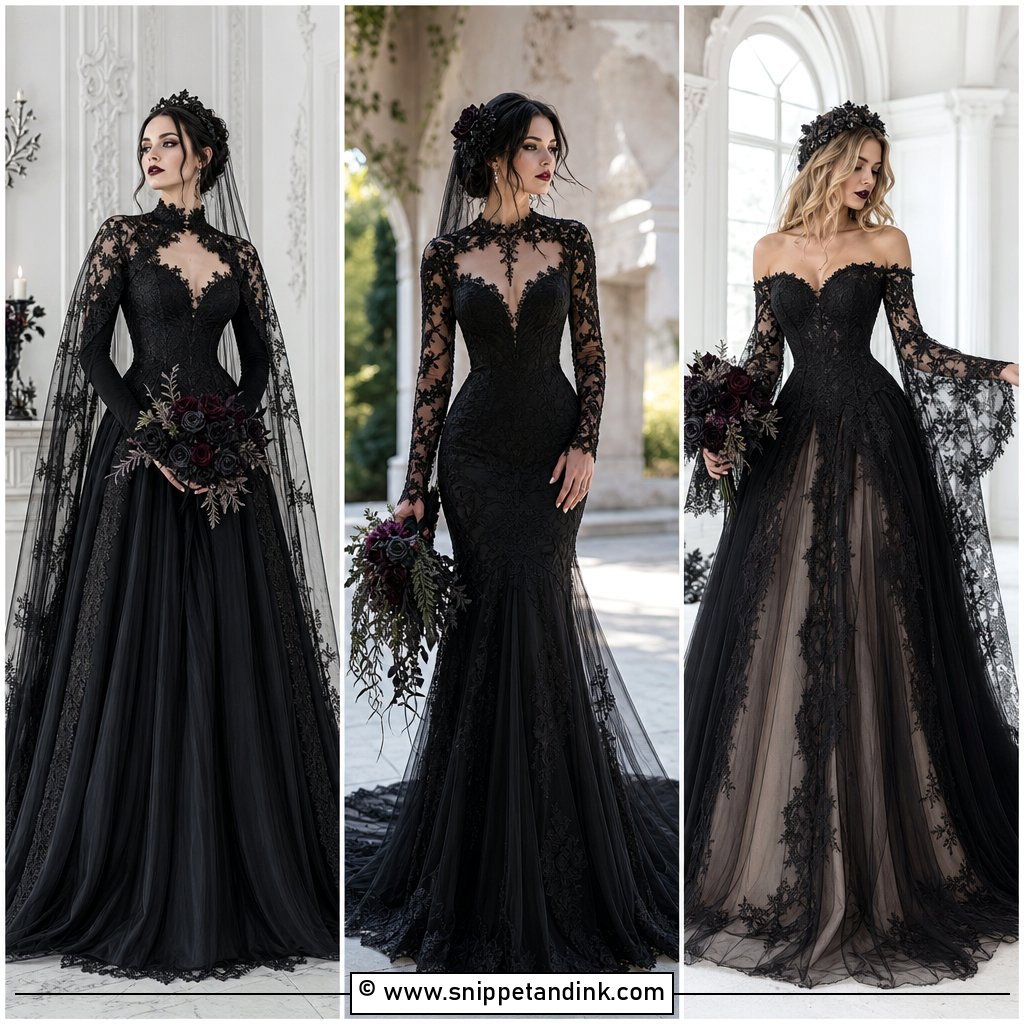
1. Black Lace A-Line Goth Wedding Dress
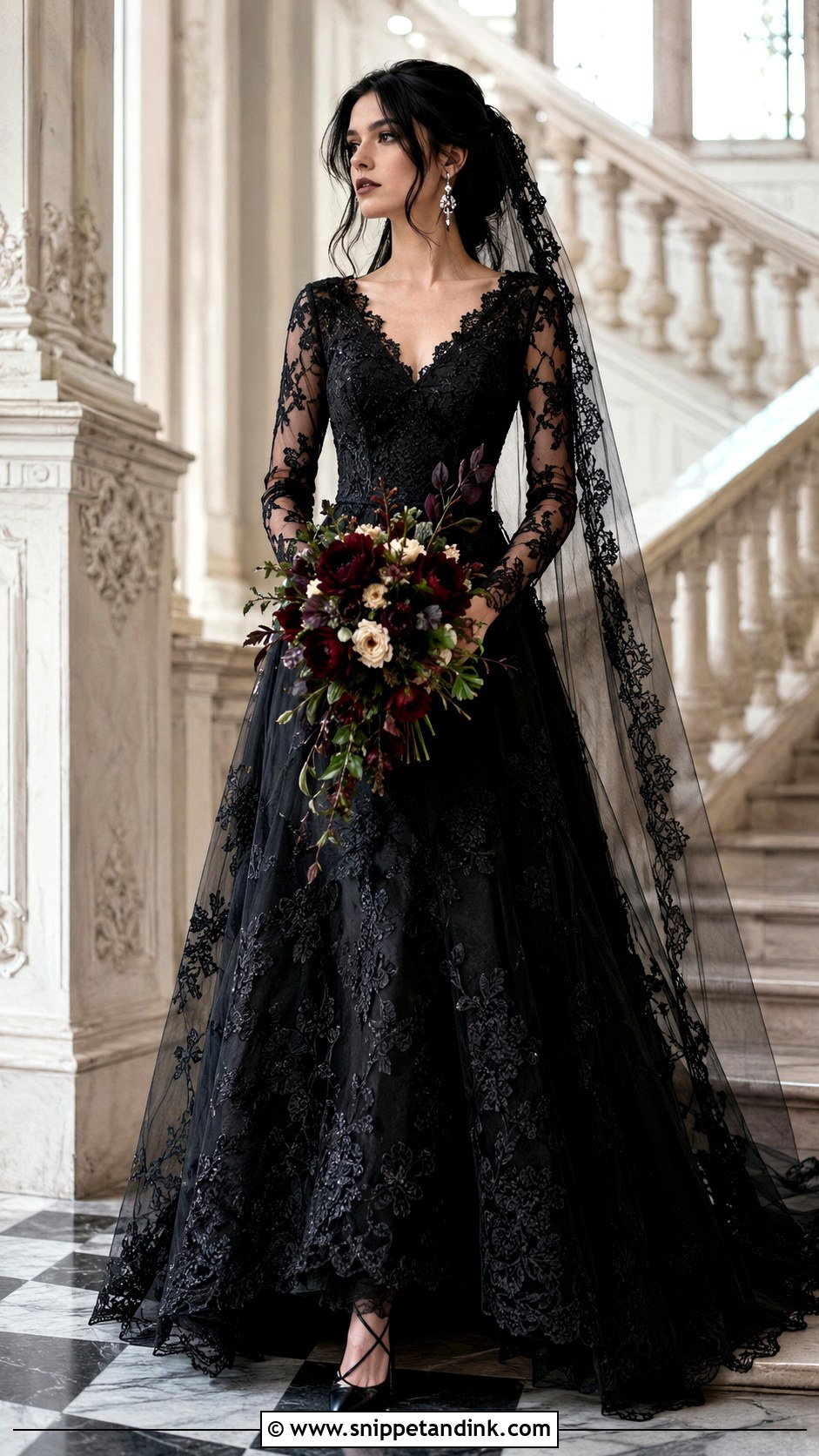
Lace over an A-line skirt is the gentlest route from classic bridal into gothic character. I look for a fitted floral lace bodice, a seam sitting at the natural waist, and a skirt that skims the hips rather than gripping them, which is why this shape suits so many figures. Sheer lace sleeves give coverage without weight. One thing I check on black lace in particular is the lining. A nude lining makes the lace pattern read clearly in photos, while a black lining turns it into a solid dark mass from more than a few feet away. Pointed black heels, silver drop earrings and a lace-edged tulle veil finish it, and burgundy, plum and ivory flowers give the camera some contrast to hold onto.
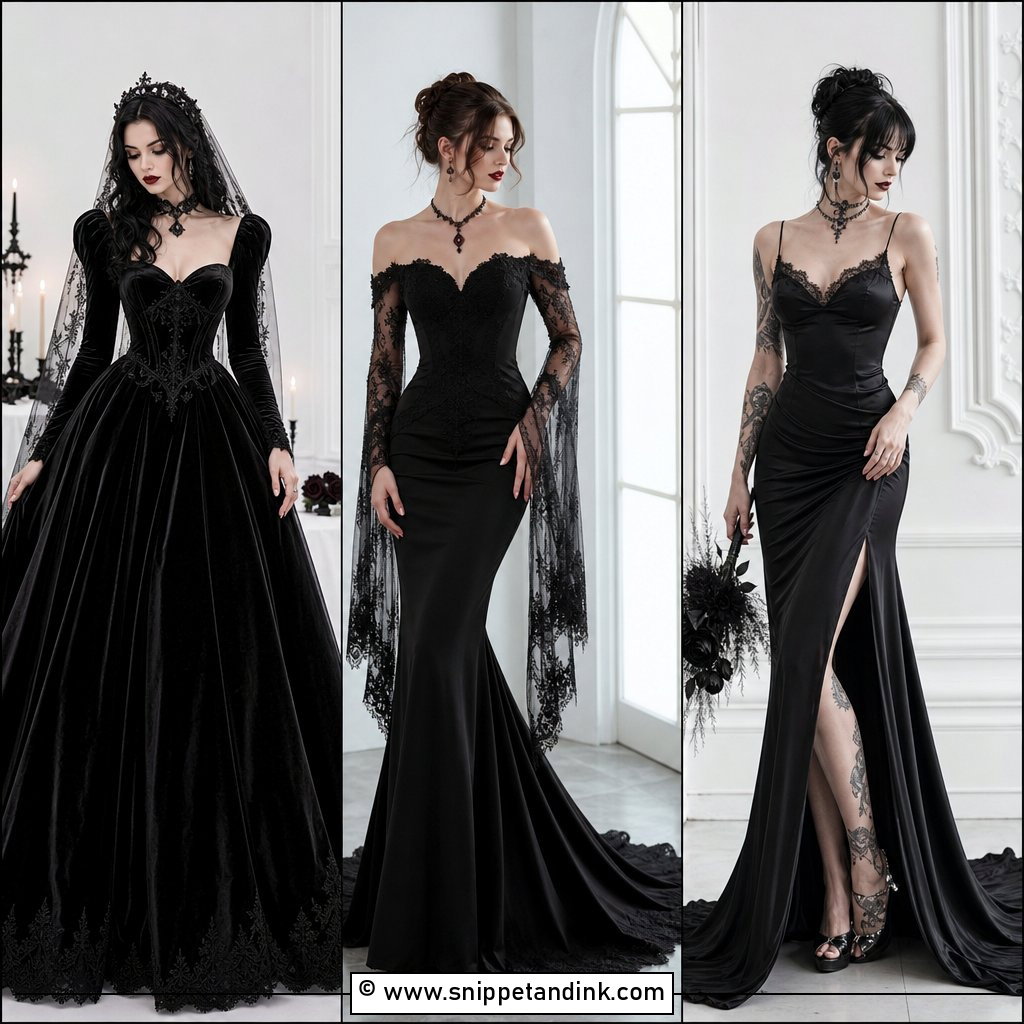
2. Black Corset Ball Gown Wedding Dress
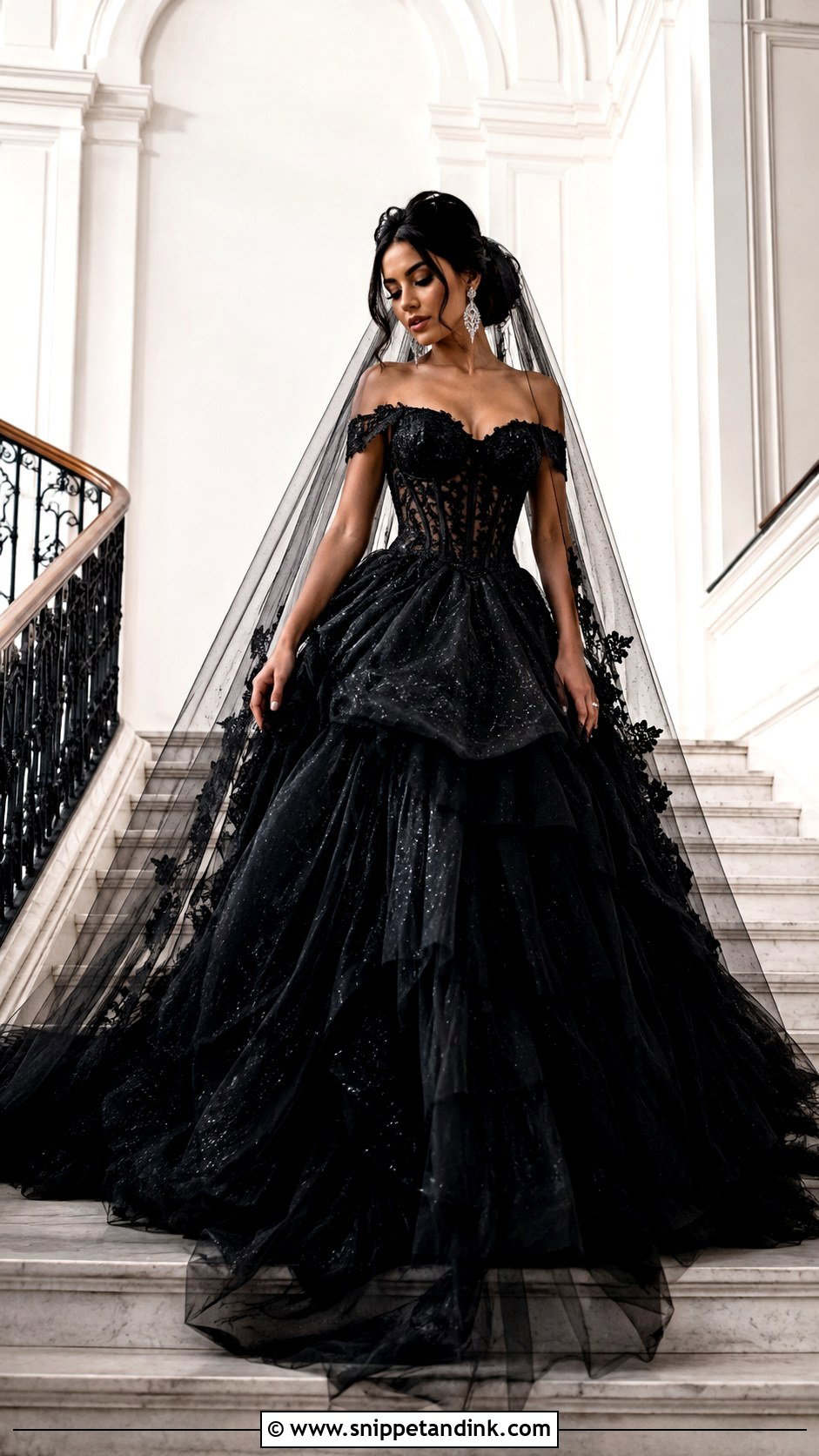
A boned black ball gown makes the grandest entrance on this list, and it’s also the one that lives or dies in alterations. Look for visible boning, a lace-up back and a full tulle or satin skirt. I always have the bride sit down at her final fitting, because a corset fitted only while standing tends to dig at the hip bones and push up at the bust once she’s seated for dinner. An off-the-shoulder neckline softens the structure. Keep the bouquet small so it doesn’t fight the skirt, and pair a cathedral black veil with crystal earrings and platform heels hidden under the hem. Detachable sheer sleeves are an easy add for ceremony coverage. Big rooms and grand staircases give this shape the space it needs.
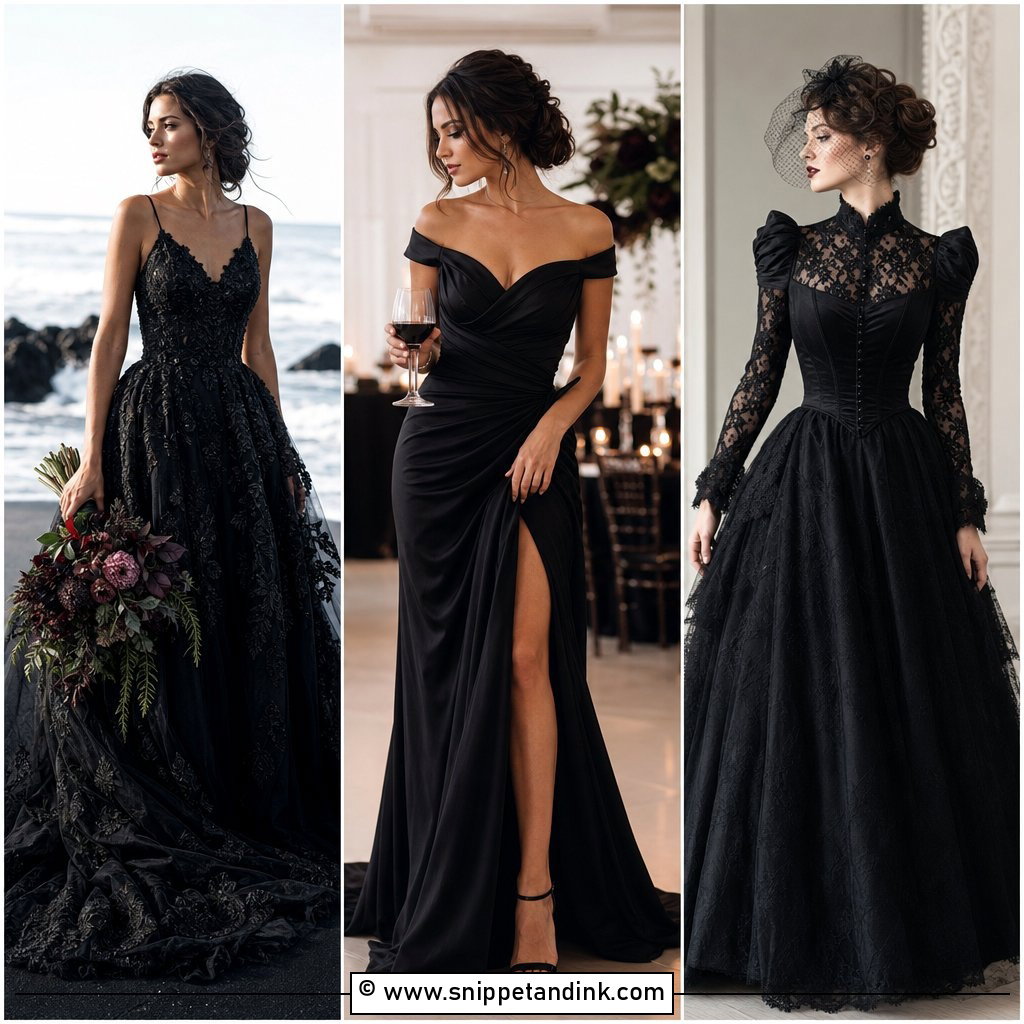
3. Black Victorian Goth Wedding Dress
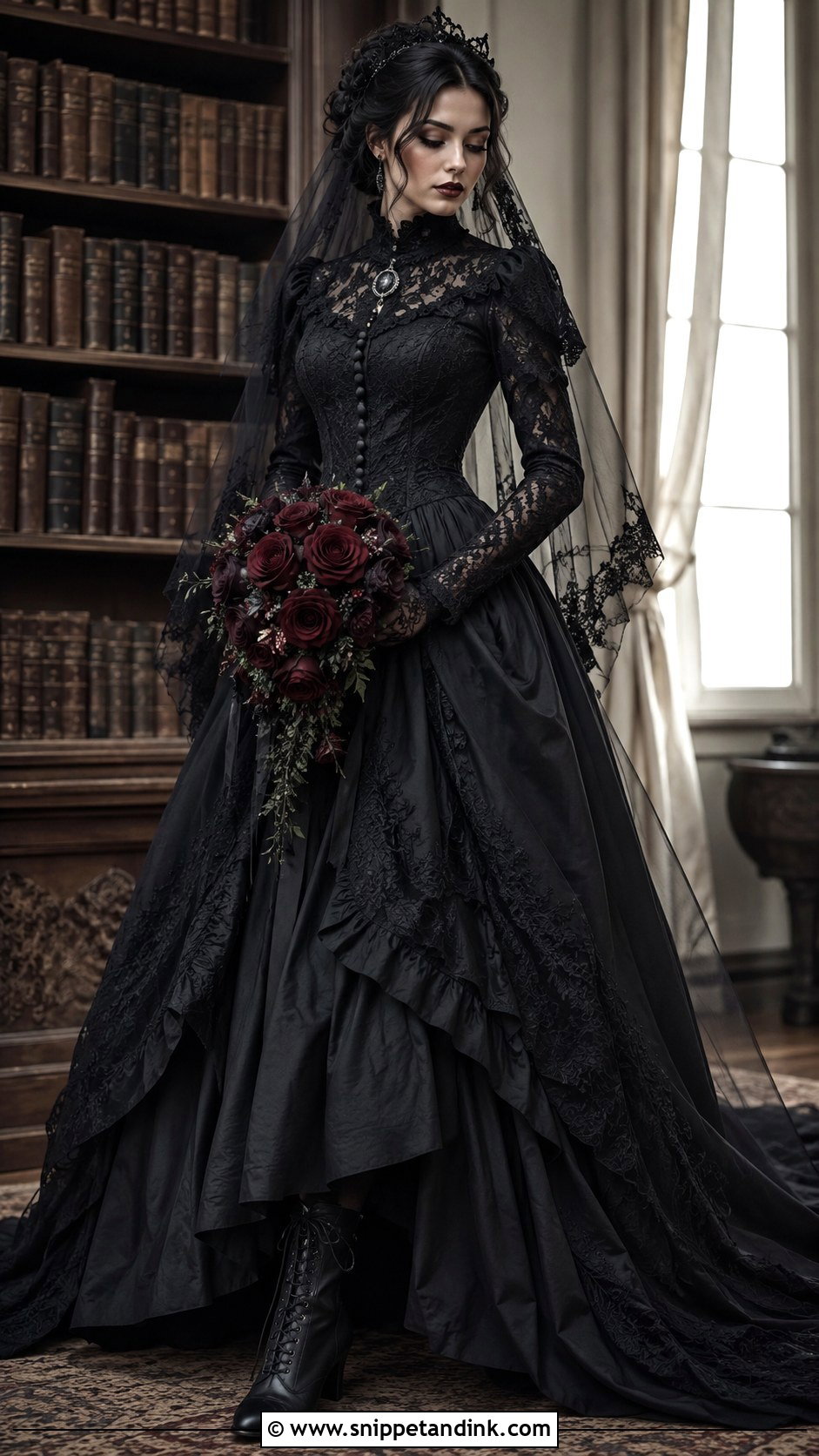
Victorian details are where black gowns most easily tip into costume, so restraint does the work here. A high lace neckline, long sleeves, a fitted bodice and a floor-length skirt with modest volume carry the period on their own; covered buttons, scalloped cuffs and a little ruching are enough extra detail. I usually suggest lace-up ankle boots and one antique-style silver pendant rather than a stack of cameos. With a high neck, the veil should sit under a polished updo so the collar stays visible. Dark red roses with trailing greenery and small ivory blooms soften the formality, and defined eyes with a muted berry lip keep the face from disappearing above all that black. Libraries, old theaters and conservatories suit it.
4. Black Velvet Goth Wedding Dress
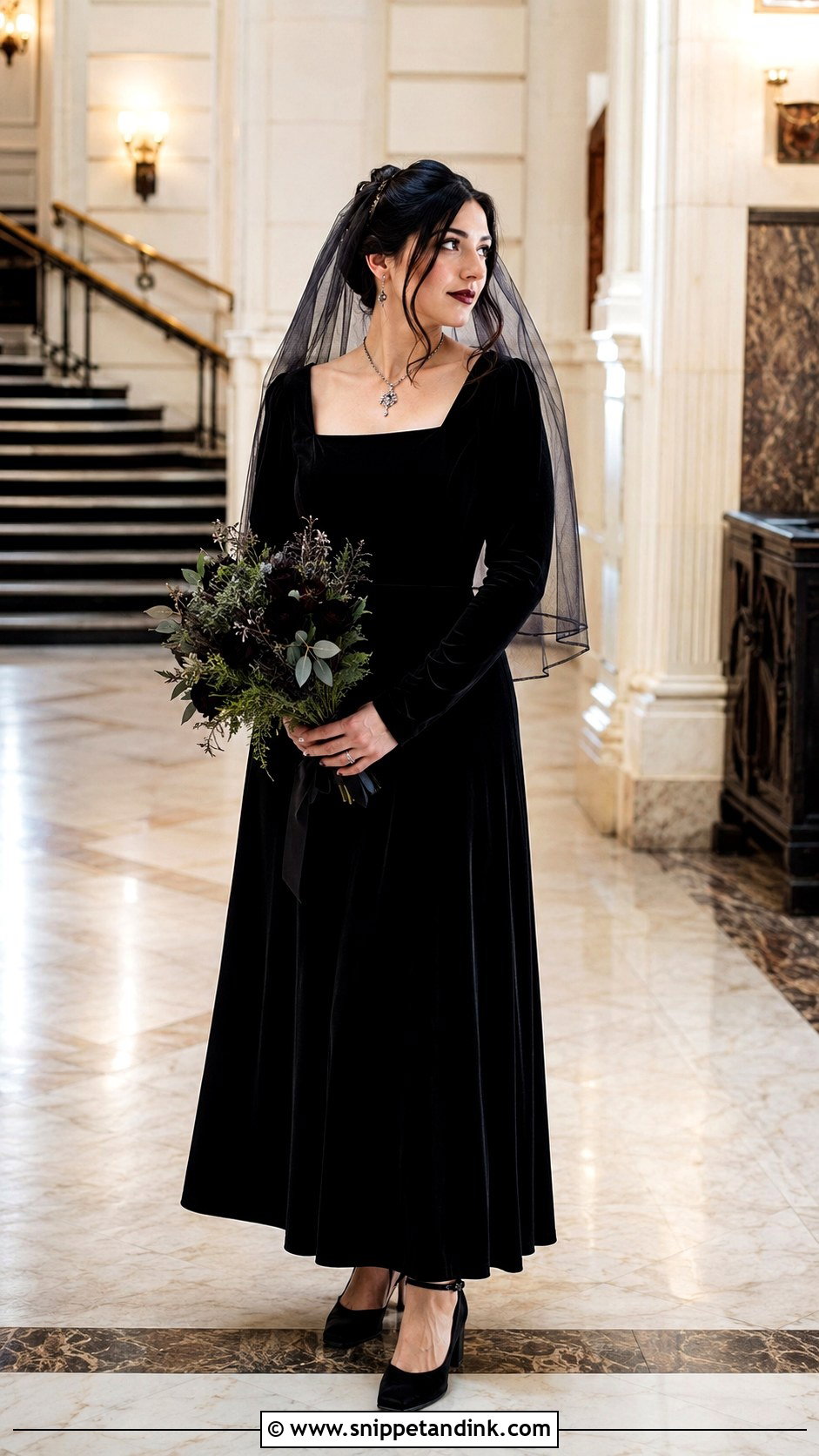
Velvet is the fabric I steer winter brides toward and summer brides away from. It holds heat, and its deep pile makes even a plain cut look formal. It also has one quirk worth knowing: the pile reflects light differently depending on direction, so a skirt with panels cut the opposite way can look like two shades of black in photos. Ask the maker whether every panel follows the same nap. A fitted bodice, long sleeves, a gently flared skirt and a modest train keep it wearable, and a square or sweetheart neckline stops the dense fabric looking heavy. Silver earrings, block heels and a fine tulle veil are enough, with burgundy flowers echoing the depth. Mountain lodges and old hotels in late fall are its natural home.
5. Black Satin Mermaid Wedding Dress
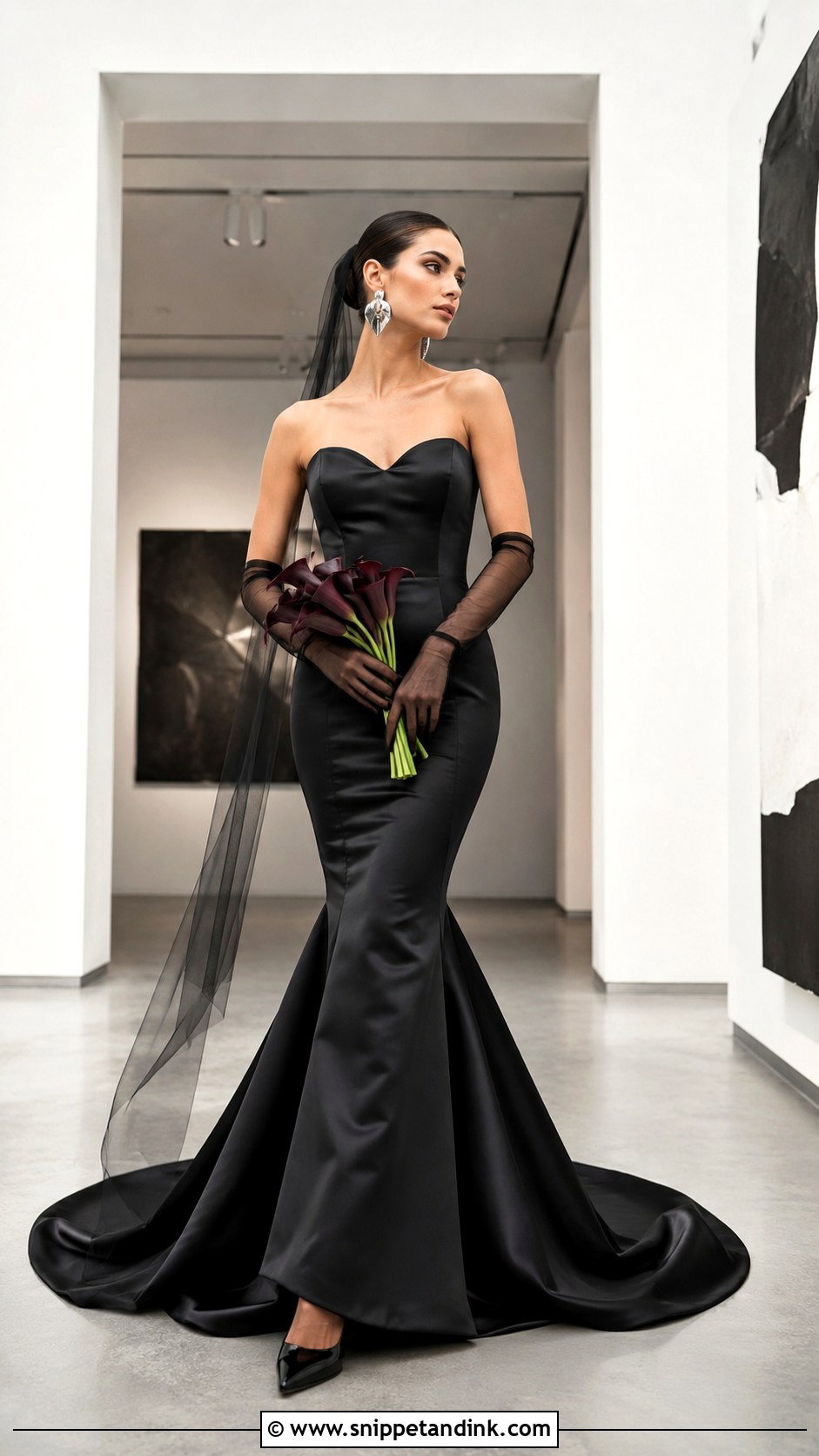
Satin mermaid gowns are sleek and unforgiving in equal measure. The smooth surface shows every seam and undergarment line, and because satin reflects light, black satin can look almost grey where the highlights hit. Keep jewelry sculptural and sparse: long sheer gloves, pointed heels, silver earrings and a narrow black veil. Deep red calla lilies or burgundy roses repeat the long line of the dress. The fitting step I never skip with a mermaid is the sit-and-walk test, since a knee flare cut too tight turns every staircase into a sideways shuffle. Formal evening weddings and modern architecture show it off best.
6. Black Tulle Ball Gown Wedding Dress
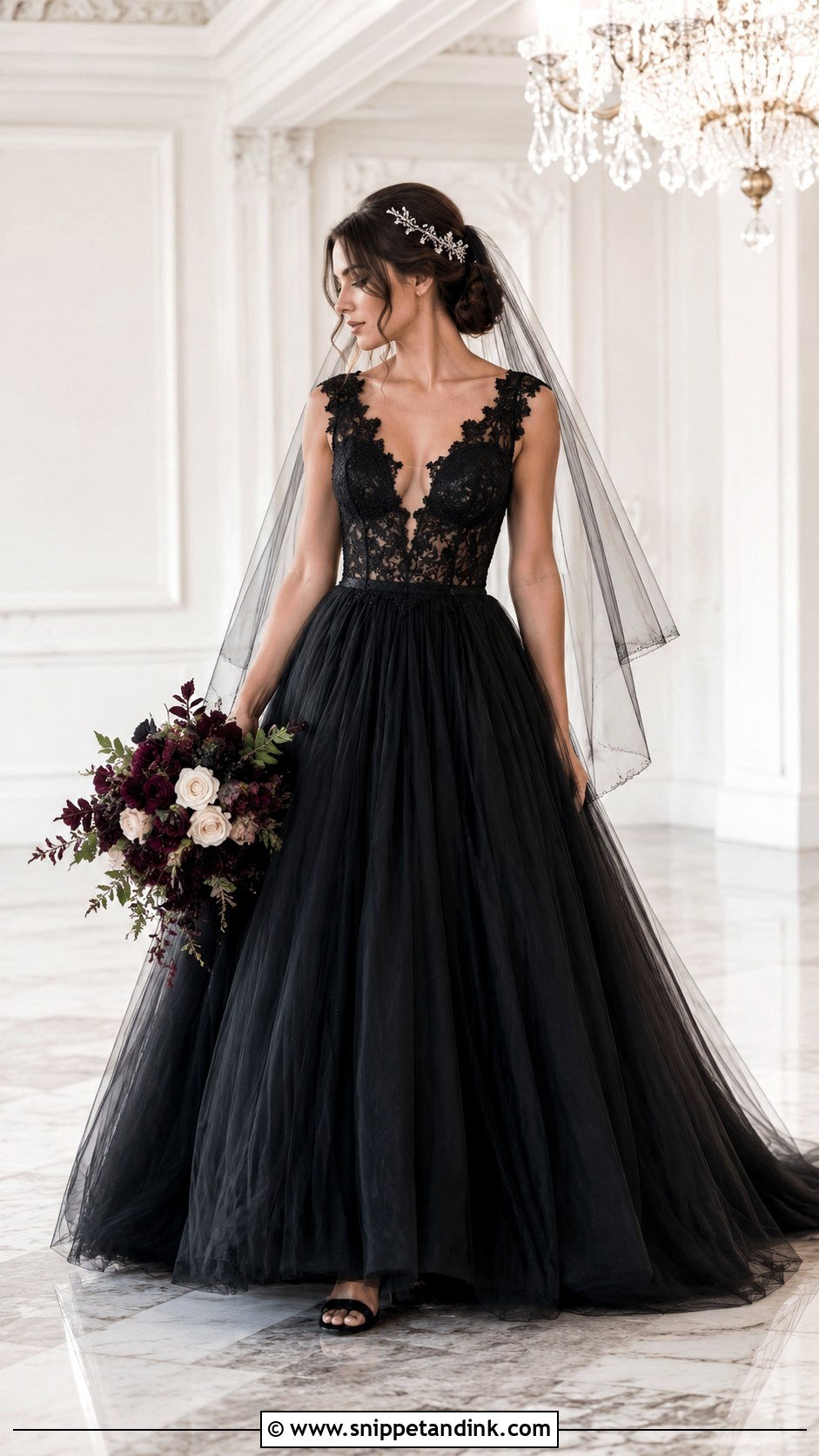
Black tulle gives you volume without the weight of satin or velvet, which matters across a twelve-hour day. A fitted lace bodice, defined waist and gathered skirt create the fairytale shape in an alternative palette. A faint shimmer layer under the tulle catches light nicely, but I’d skip extra sparkle on top of an already dramatic skirt. Black tulle also shows lint, pet hair and confetti far more than ivory does, so a lint roller belongs in the emergency bag. Add a fingertip veil, a crystal comb, small silver earrings and block heels, and carry ivory anemones, plum flowers and eucalyptus so the bouquet doesn’t vanish against the skirt. Walk the layers at your fitting; long tulle almost always needs a bustle for dancing.
7. Black Off-the-Shoulder Lace Wedding Dress
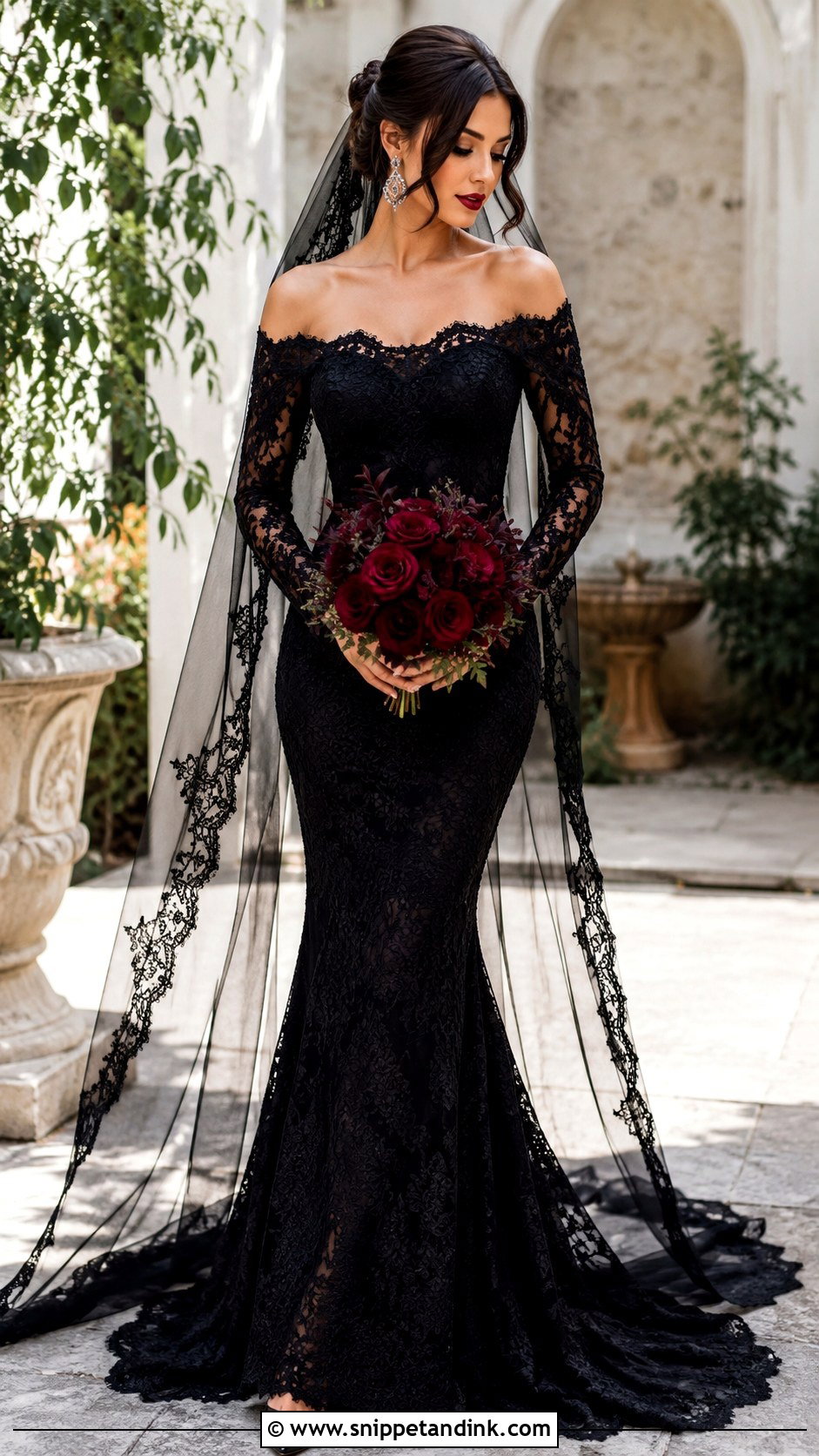
An off-the-shoulder neckline is the softest way into gothic bridalwear, framing the collarbone with black lace. The detail I care about most is invisible: a firm inner bodice with silicone gripper along the top edge, because off-the-shoulder lace creeps upward every time you raise your arms to hug someone. Detachable straps are worth having as backup. Scalloped edging adds texture at the neckline, and an A-line or gently flared skirt keeps the shape romantic. Loose waves or a low textured bun leave the shoulders on show. A short pendant, drop earrings, a lace-trimmed veil and closed-toe heels complete it, with burgundy roses, dark foliage and a few pale blooms in hand. Gardens, old houses and ballrooms all suit it for most of the year.
8. Black High-Neck Goth Wedding Dress
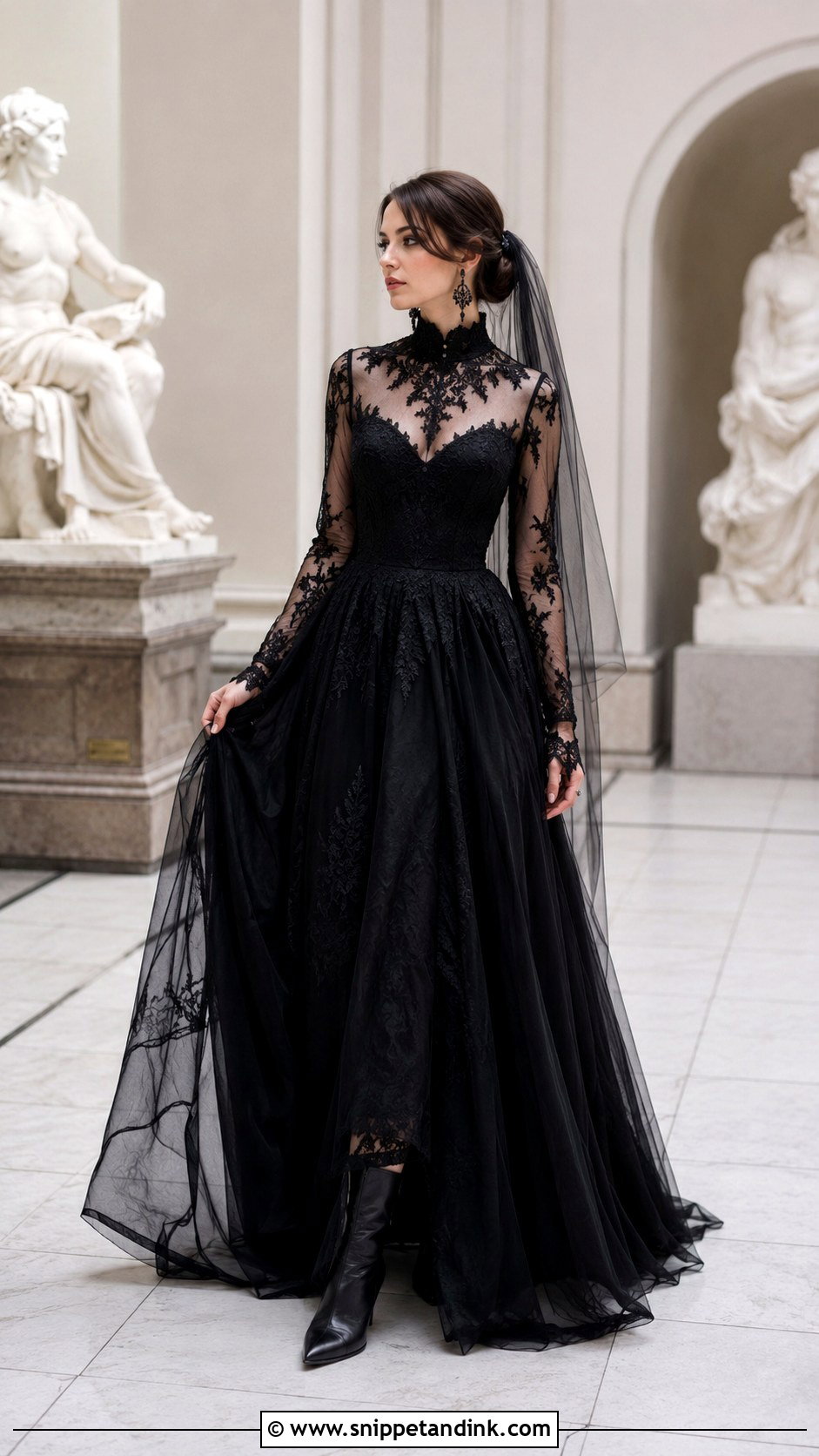
With a high neck, I tell brides to drop the necklace entirely. The collar is already the jewelry, so statement earrings carry the sparkle. Look for a fitted lace or crepe bodice, long sheer sleeves and a flowing skirt that balances the structure up top; an illusion yoke makes lace look as if it floats across the shoulders while staying secure. A low bun keeps the neckline clear, and the veil should attach below it. Sleek ankle boots or pointed heels both work, and a narrow bouquet with trailing greenery follows the vertical line. It’s a practical pick for cool weather and conservative ceremonies. Check the collar closure carefully, though: a high neck that’s even slightly tight becomes unbearable by the speeches.
9. Black Cape Sleeve Wedding Dress
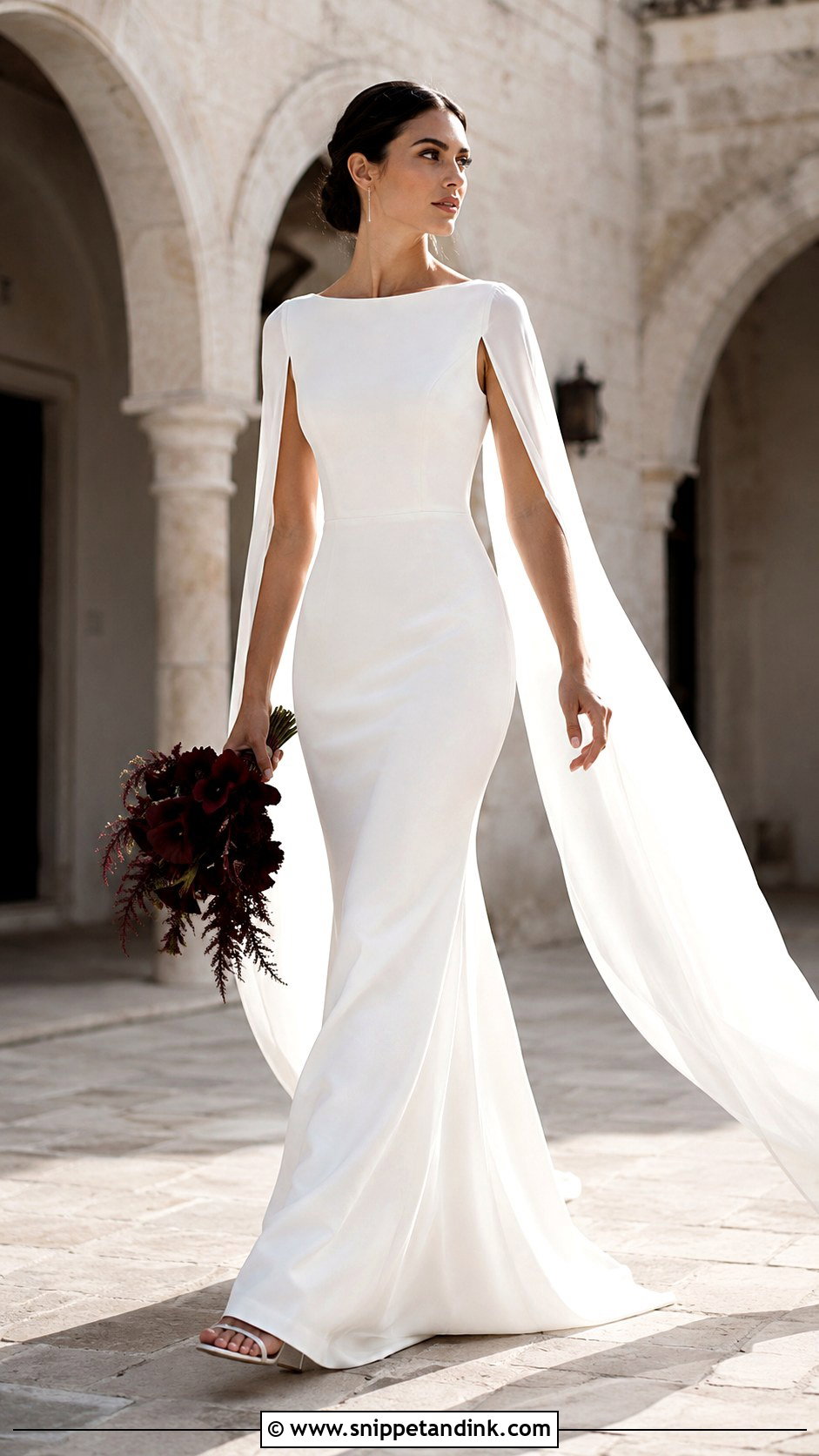
Cape sleeves bring movement from every angle, and a long cape can stand in for a veil entirely. Underneath, keep the dress simple, an A-line or a column, so the cape stays the statement. Wear your hair up to show how it attaches at the neckline and shoulders. Chiffon floats in a breeze and suits warm weather; crepe or velvet hangs heavier for cooler months. The practical problem is that long cape panels get stepped on, by you and by everyone walking behind you, so rehearse walking, turning and sitting before the ceremony. Polished heels, minimalist silver earrings and a structured burgundy and ivory bouquet complete it, and courtyards and outdoor aisles let the fabric move.
10. Black Wedding Dress With Cathedral Train
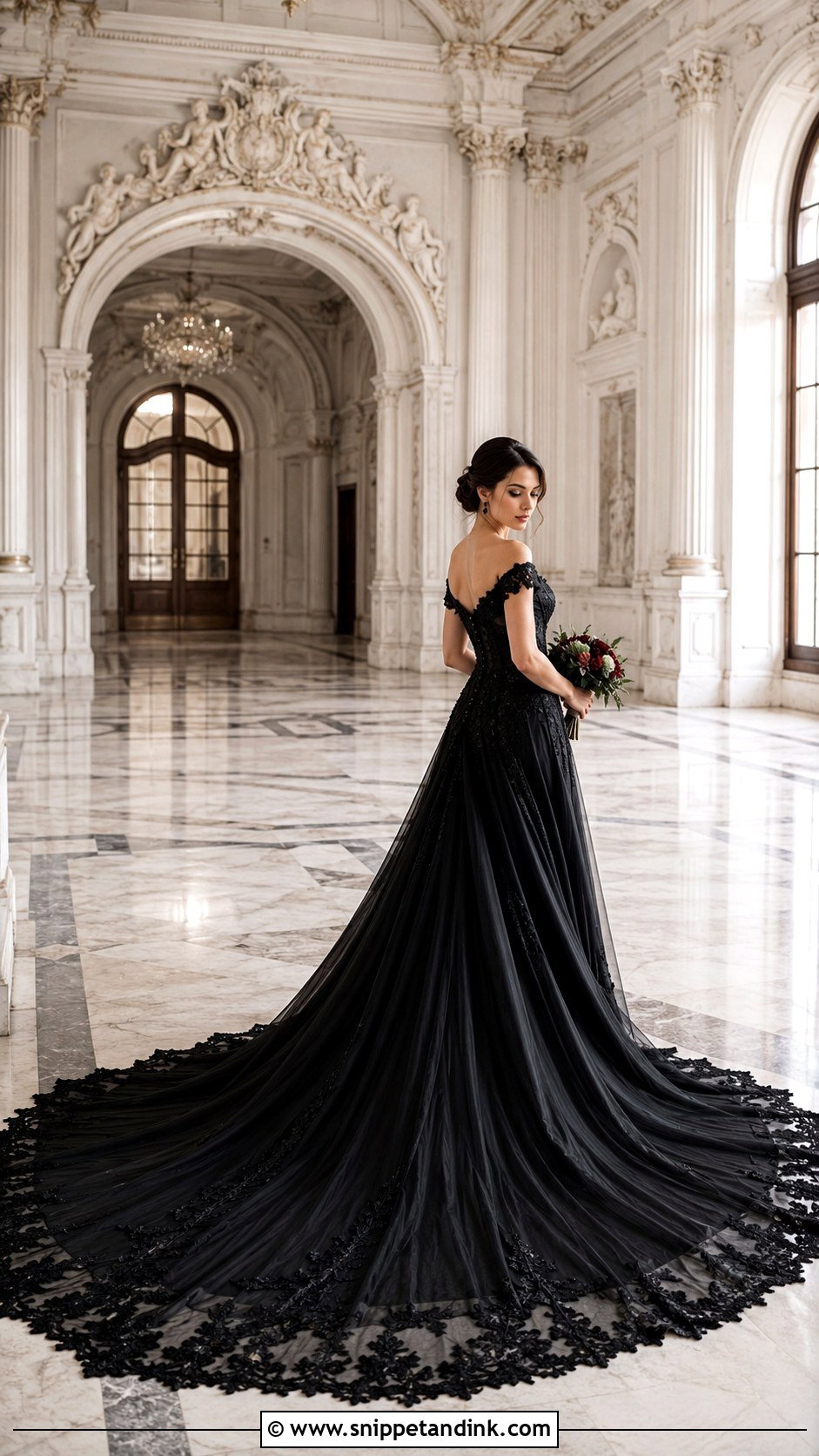
A cathedral train turns a fairly plain black gown into a formal statement, so the bodice can stay clean: fitted top, simple waist, smooth skirt running into the train. Lace appliqués scattered along the hem are worth paying for, since they’re what shows in wide shots. I keep the veil shorter here so it doesn’t pile on top of the train, and the bouquet compact. Two things I insist on are a sturdy bustle sewn in before the wedding and one rehearsal with whoever will arrange the train. A black train dragged over gravel or dry grass picks up pale dust that shows instantly. Long aisles, large halls and venues with smooth floors suit it best.
11. Black and Red Goth Wedding Dress
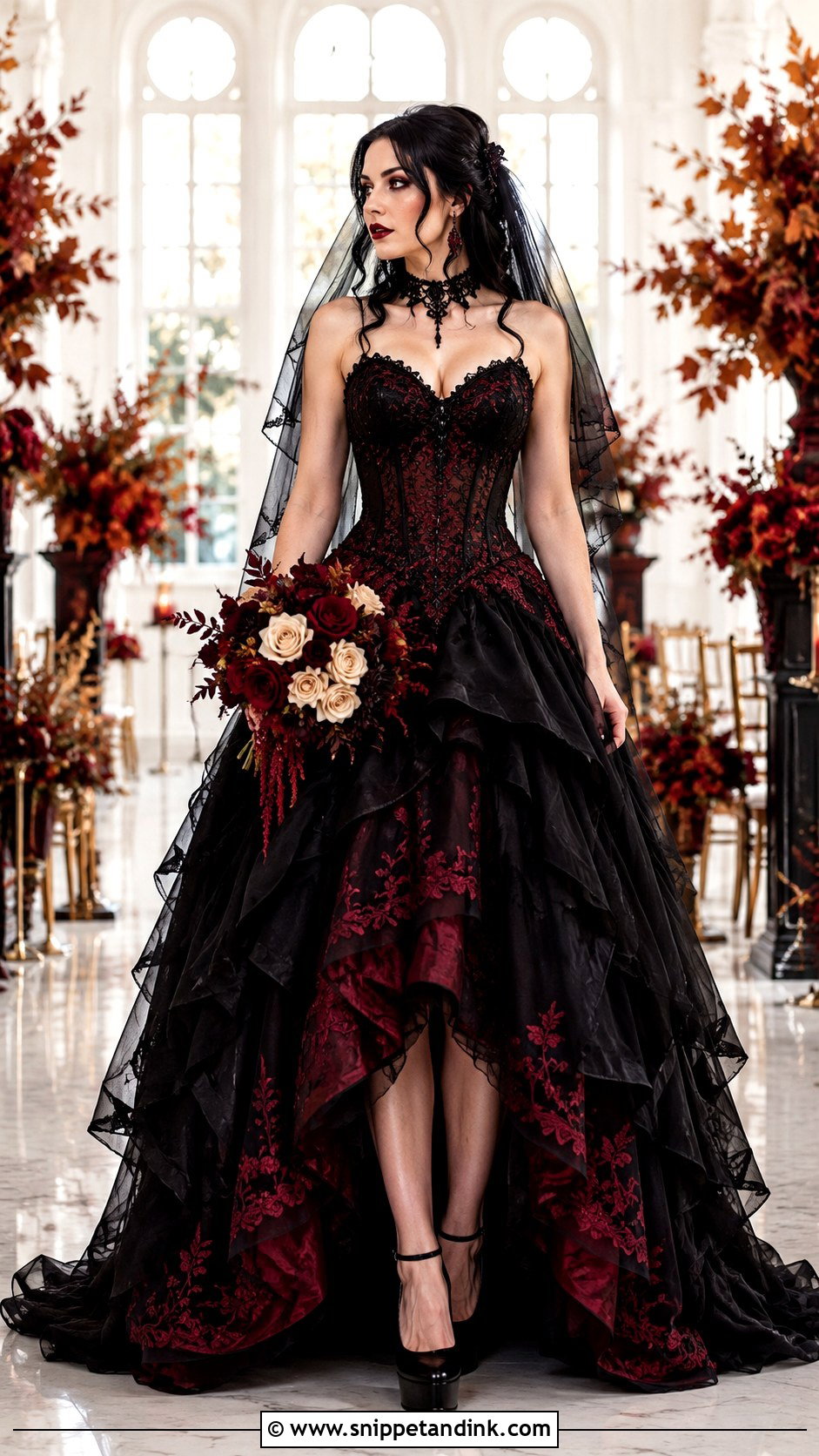
Red works on a black gown when it’s placed, not scattered. A black corset bodice with burgundy embroidery, a layered black skirt and a touch of red at the waist or hem looks deliberate; so does a deep red lining glimpsed through black lace. Repeat red in the shoes, earrings and veil as well, though, and it starts to look like a theme costume. Garnet earrings, black heels, a plain black veil and burgundy roses with dark greenery and a few ivory flowers are plenty. If bright red feels loud against your skin, oxblood and wine shades sit more quietly next to black. Fall and evening weddings in historic venues are its season.
12. Black and White Goth Wedding Dress
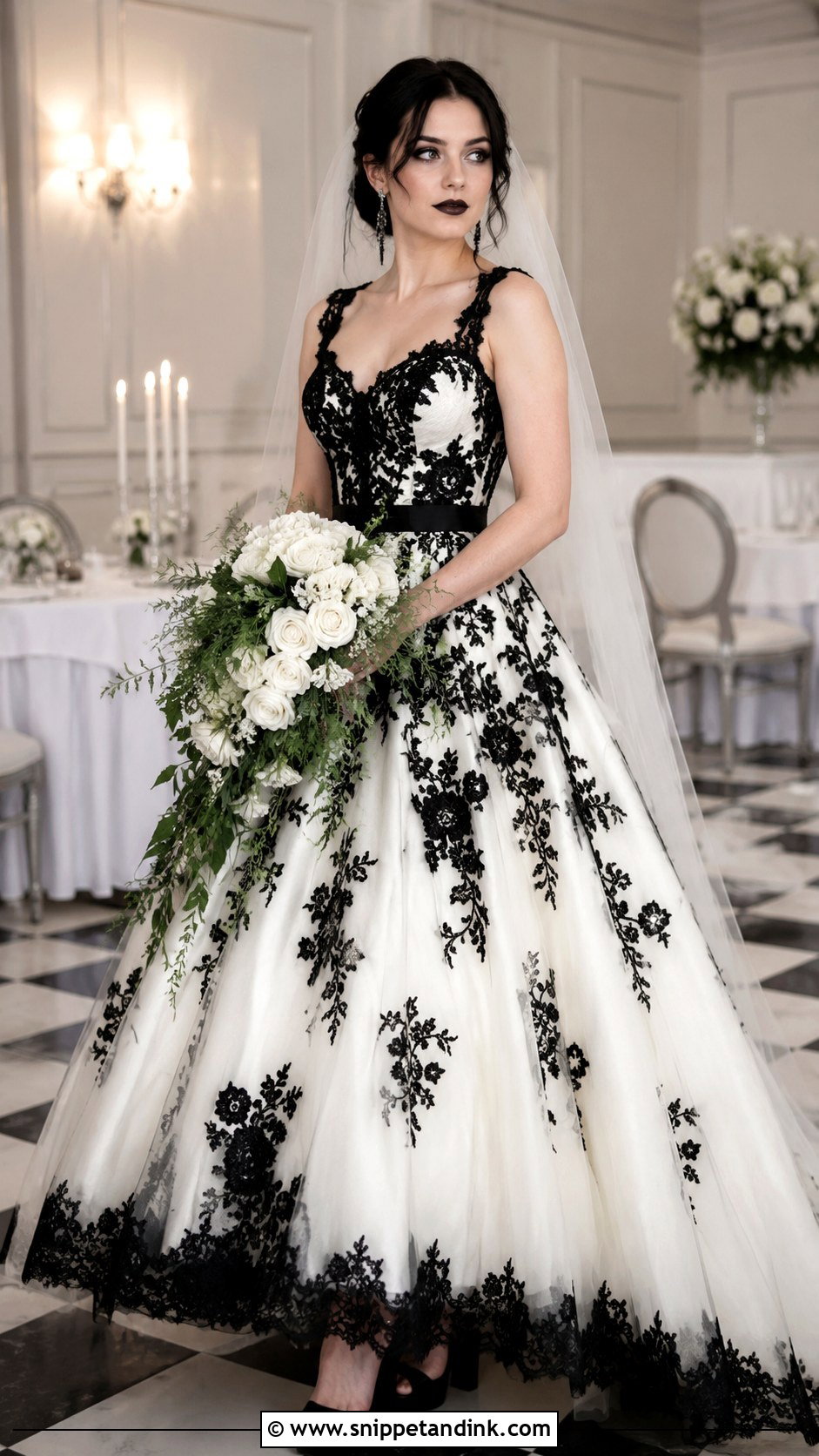
Black and white gives gothic contrast without going fully dark. It can be an ivory base under black floral lace, a white skirt with a black corset, or a black gown with pale appliqués. Whichever you pick, let one color dominate; a dress split evenly reads as two garments stitched together. I match the veil to the lighter part of the dress so it ties back to the gown instead of floating as a separate piece. Black heels and pearl or silver earrings finish it, and an ivory bouquet with deep greenery keeps the palette crisp. Photographers like this combination because the contrast holds up in almost any light, and it sits easily alongside traditional decor in a ballroom, gallery or garden.
13. Black Beaded Goth Wedding Dress
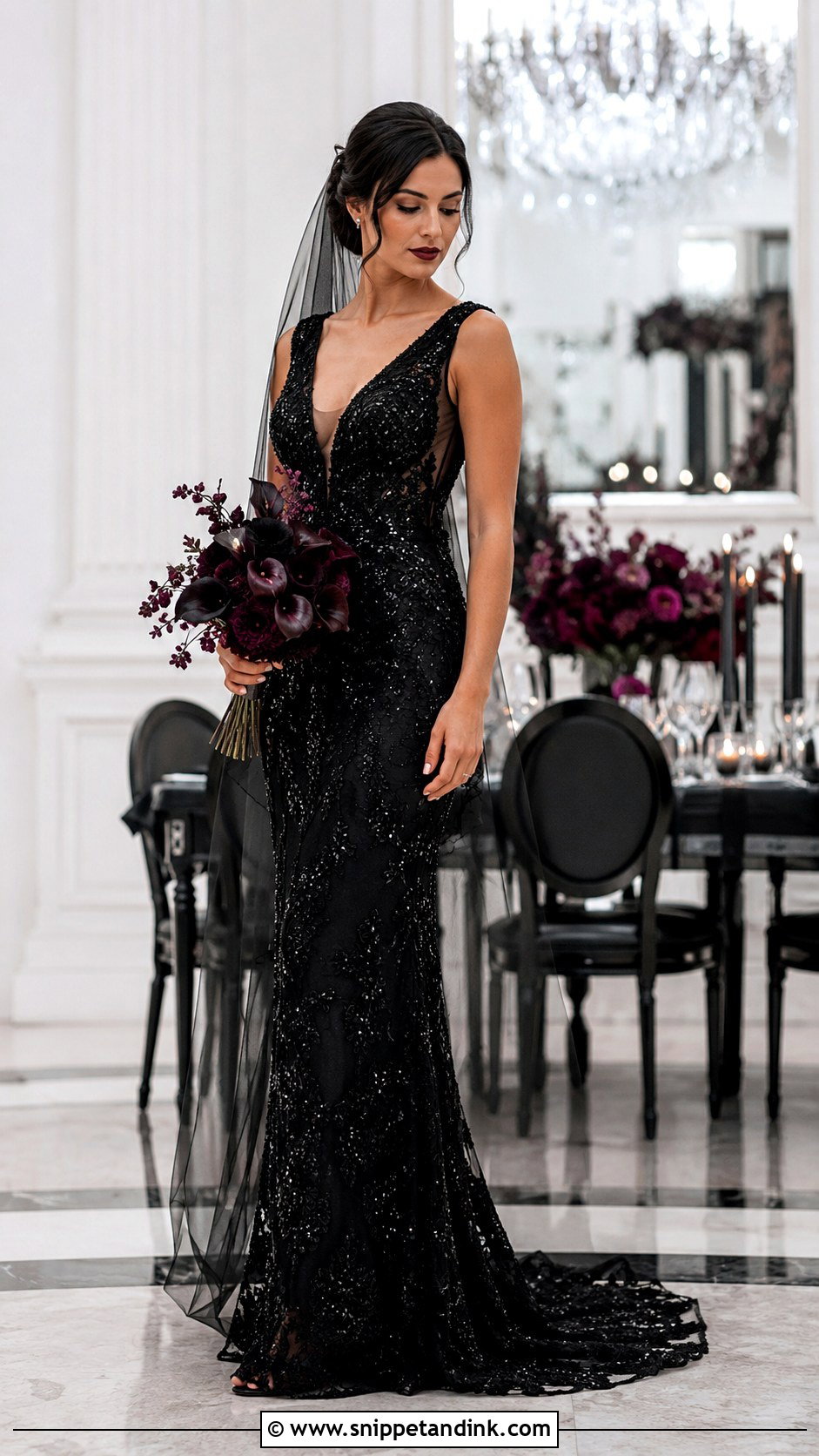
Beading gives black depth and controlled sparkle. I prefer tonal black beads, dark crystals or silver work concentrated on the bodice and thinning toward the skirt, on a fitted column or gently flared shape. With that much surface, one extra focal accessory is the limit: plain heels, small studs and a plain tulle veil. Smooth greenery and deep plum flowers give the eye somewhere calm to rest. Before buying, turn the sleeves inside out and run a hand along the armholes and inner arm. Beads stitched near those seams scratch for hours, and tulle veils snag on them. Indoor evening receptions make the most of the shine.
14. Black Celestial Goth Wedding Dress
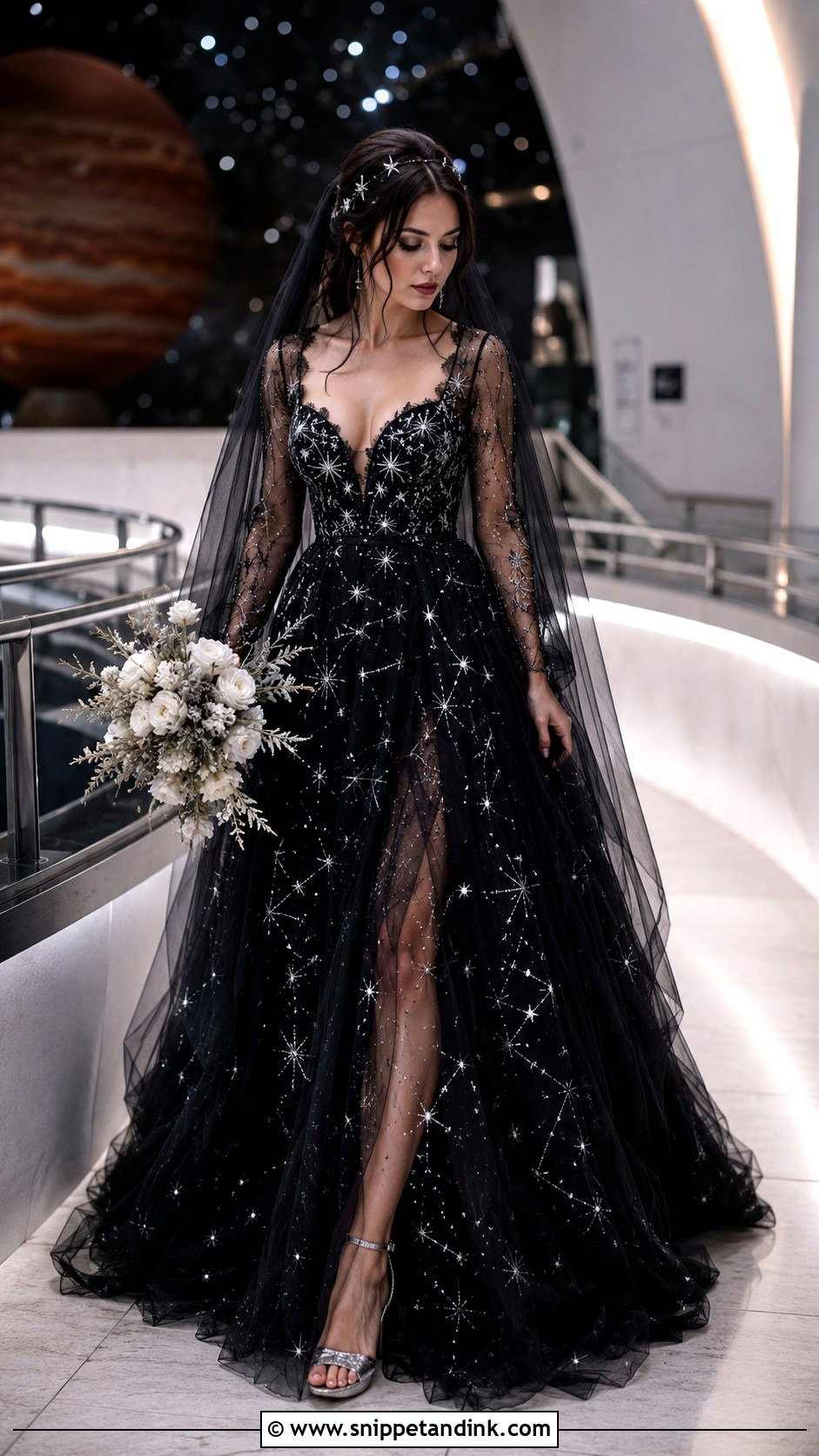
Stars, moons and scattered constellations in silver thread turn black tulle into a night-sky gown. Embroidery spread across bodice, sleeves and skirt shows best on a fitted waist and flowing A-line. Keep themed accessories to a few: star-shaped hairpins, silver heels, small drop earrings and a plain black veil. Once moon earrings, a star necklace and a constellation bouquet wrap all join in, the result gets childish fast. White flowers, silvery foliage and a little deep blue suit the palette. I always ask whether the embroidery sits on the outer layer, because thread stitched onto a lower layer turns muddy behind black mesh. Metallic thread on top reads crisply under flash, which helps at planetariums and evening ceremonies outdoors.
15. Black Tea-Length Goth Wedding Dress
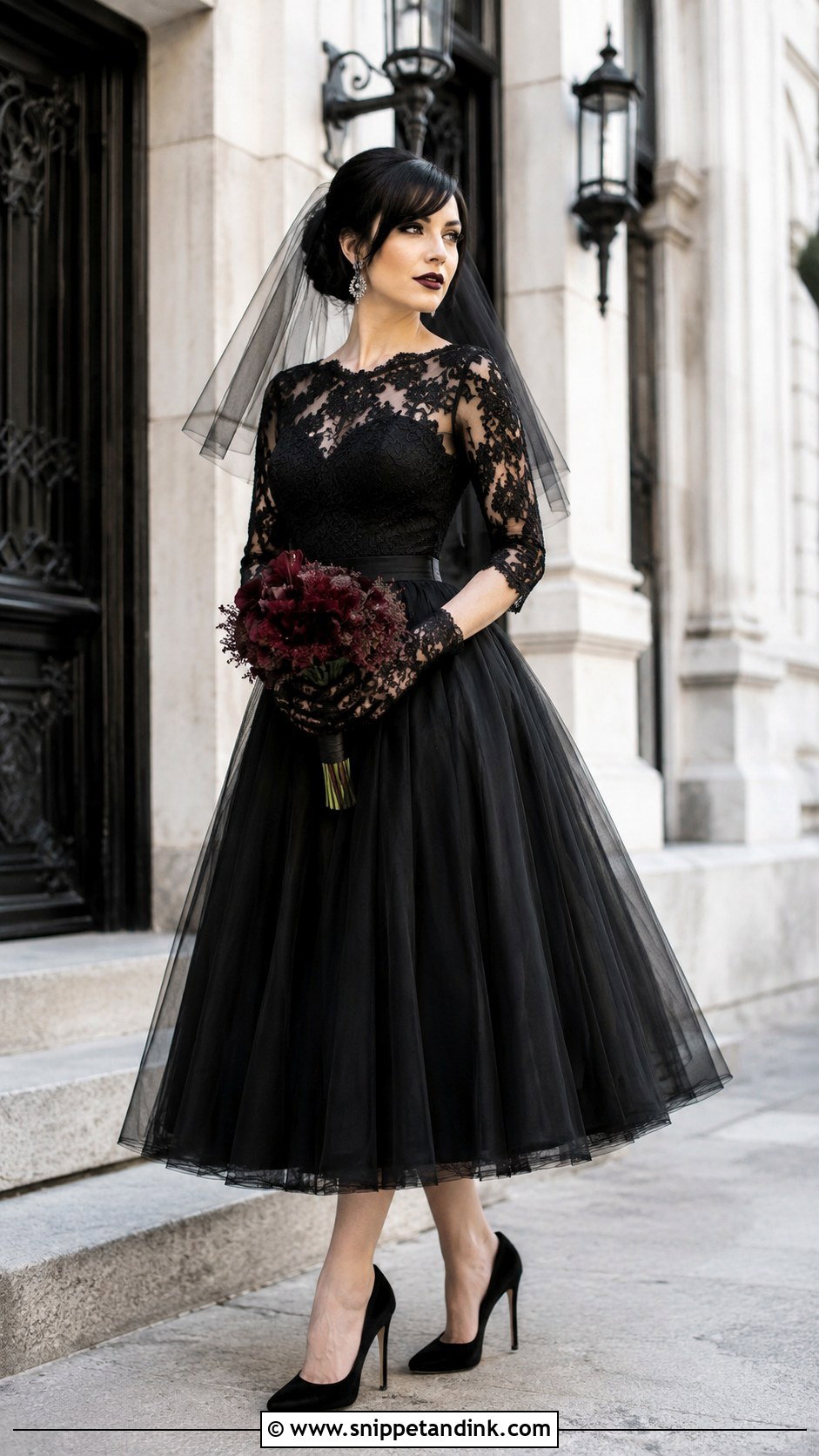
Tea-length is the most playful shape here, and the one where the shoes become half the outfit. A fitted lace bodice, defined waist and full skirt ending between knee and ankle put velvet pumps, lace-up ankle boots or platform heels on full view, so I’d plan the shoe budget accordingly. A short veil, delicate gloves and small statement earrings give it a vintage gothic note, and a compact bouquet keeps the proportions right. The easy movement suits courthouse weddings, restaurant receptions and small garden ceremonies, and it doubles as a reception change. A tulle petticoat underneath adds volume without lengthening the hem.
16. Plus-Size Black Corset A-Line Wedding Dress
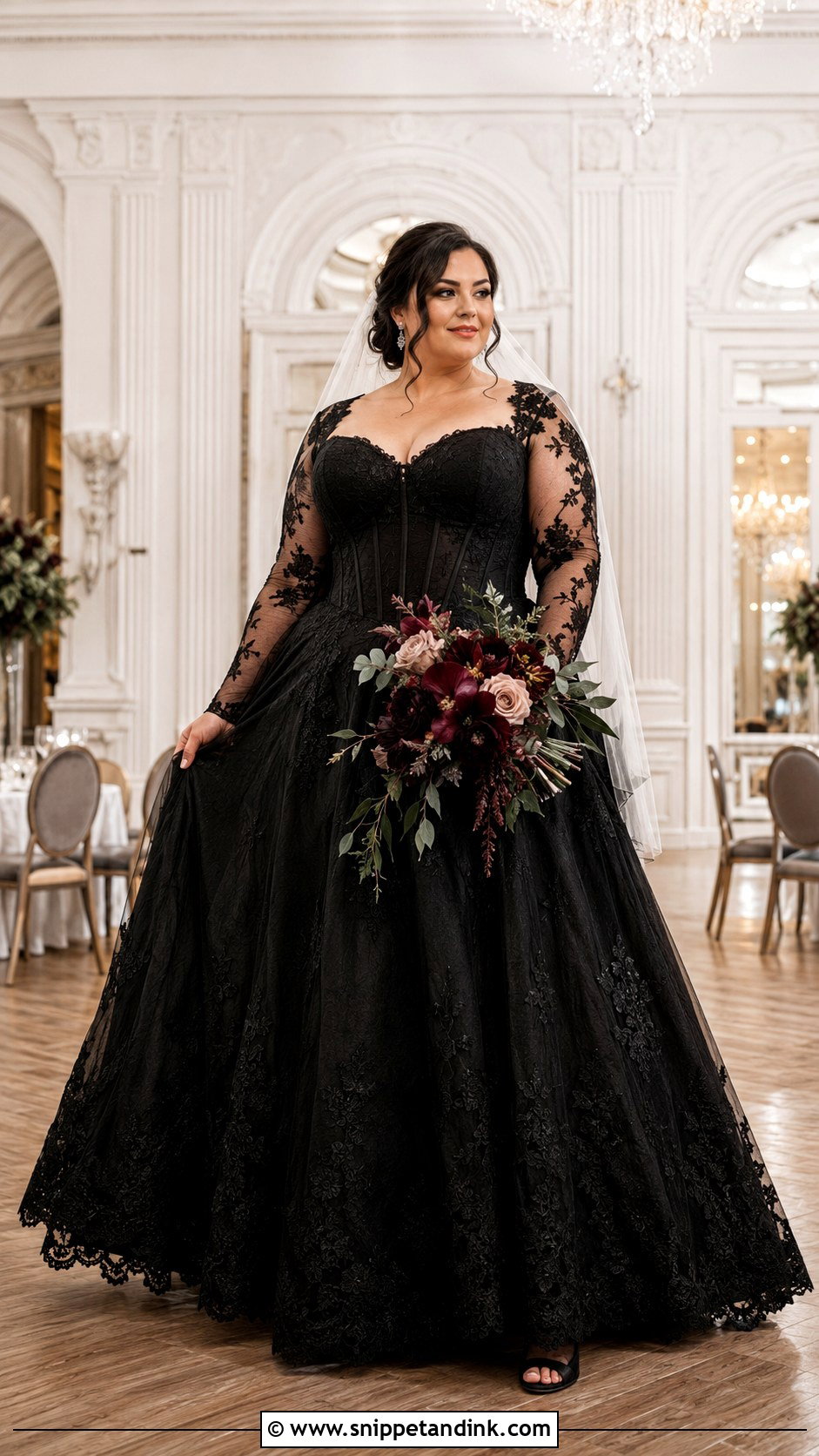
For a plus-size bride, a corset A-line can give real support and a defined waist, but only with the right engineering inside. I look for adjustable lacing, flexible spiral steel boning rather than rigid plastic, wide straps or sleeves, and a skirt that falls freely over the hips. The test is simple: you should be able to take a deep breath and sit down without the bodice pinching or flattening you. Black floral lace over charcoal or nude lining adds dimension and shows off the construction. Stable block heels, silver earrings, a soft veil and a bouquet scaled to your height finish it. Your alterations matter far more than the size on the label, and with the right fabric this shape works in a ballroom or a woodland ceremony.
17. Black Minimalist Slip Wedding Dress
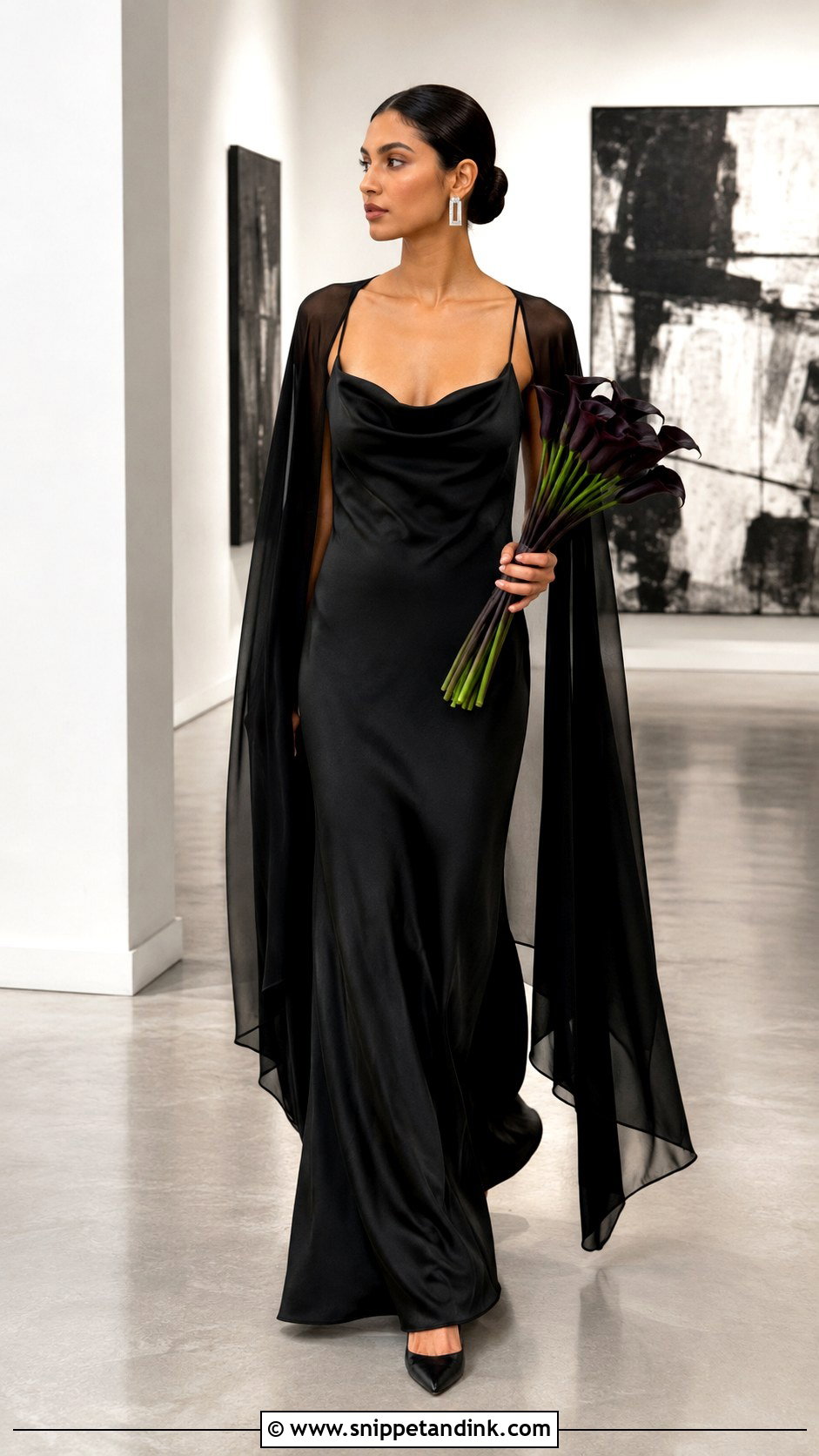
Not every gothic look needs lace or a structured skirt. A bias-cut black satin slip with supportive straps, a draped neckline and a small train is the quiet, modern option. Bias cut is also the least forgiving cut I work with: it clings and shows every line underneath, so no-line underwear and a careful tailor are non-negotiable. A sheer black cape or fitted mesh top adds coverage for the ceremony. Pointed heels, geometric silver earrings and a sleek low bun keep it clean, and a narrow bouquet of dark calla lilies or white orchids follows the same restraint. City ceremonies, galleries and rooftops suit it.
18. Black Bell Sleeve Goth Wedding Dress
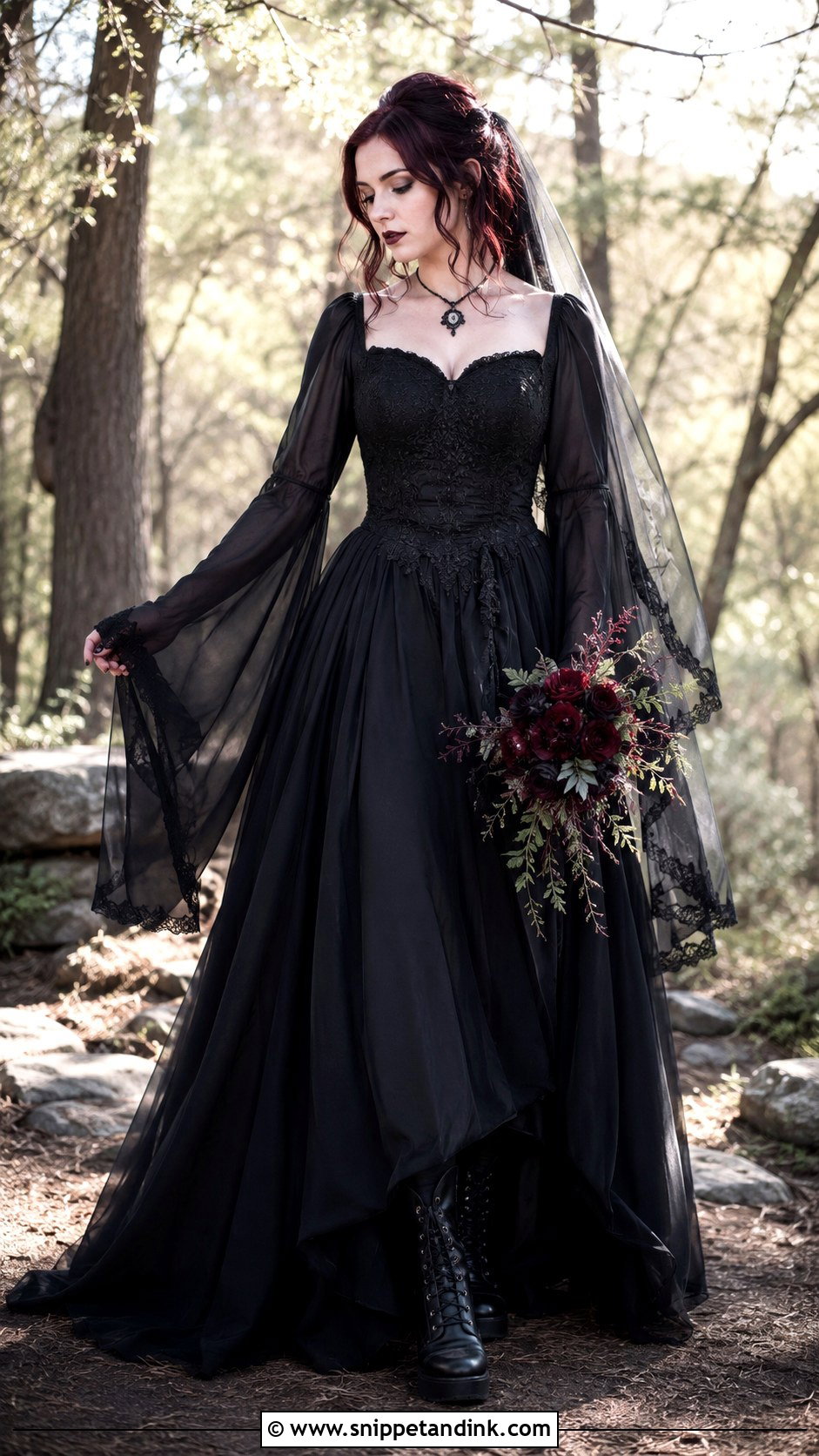
Long bell sleeves add movement to a black gown, fitting through the upper arm and widening below the elbow in lace or light chiffon. A structured bodice and A-line skirt keep the shape balanced. My rule is that the sleeve ends above the fingertips. Any longer and it drags through the bouquet, dips into dinner and gets in the way of the ring exchange; detachable sleeves solve the reception problem completely. Ankle boots, a silver pendant, a simple veil and a loose bouquet of burgundy flowers suit the romantic mood. Woodland settings and rustic estates in spring or fall, when a little coverage is welcome, show it best.
19. Black Medieval Goth Wedding Dress
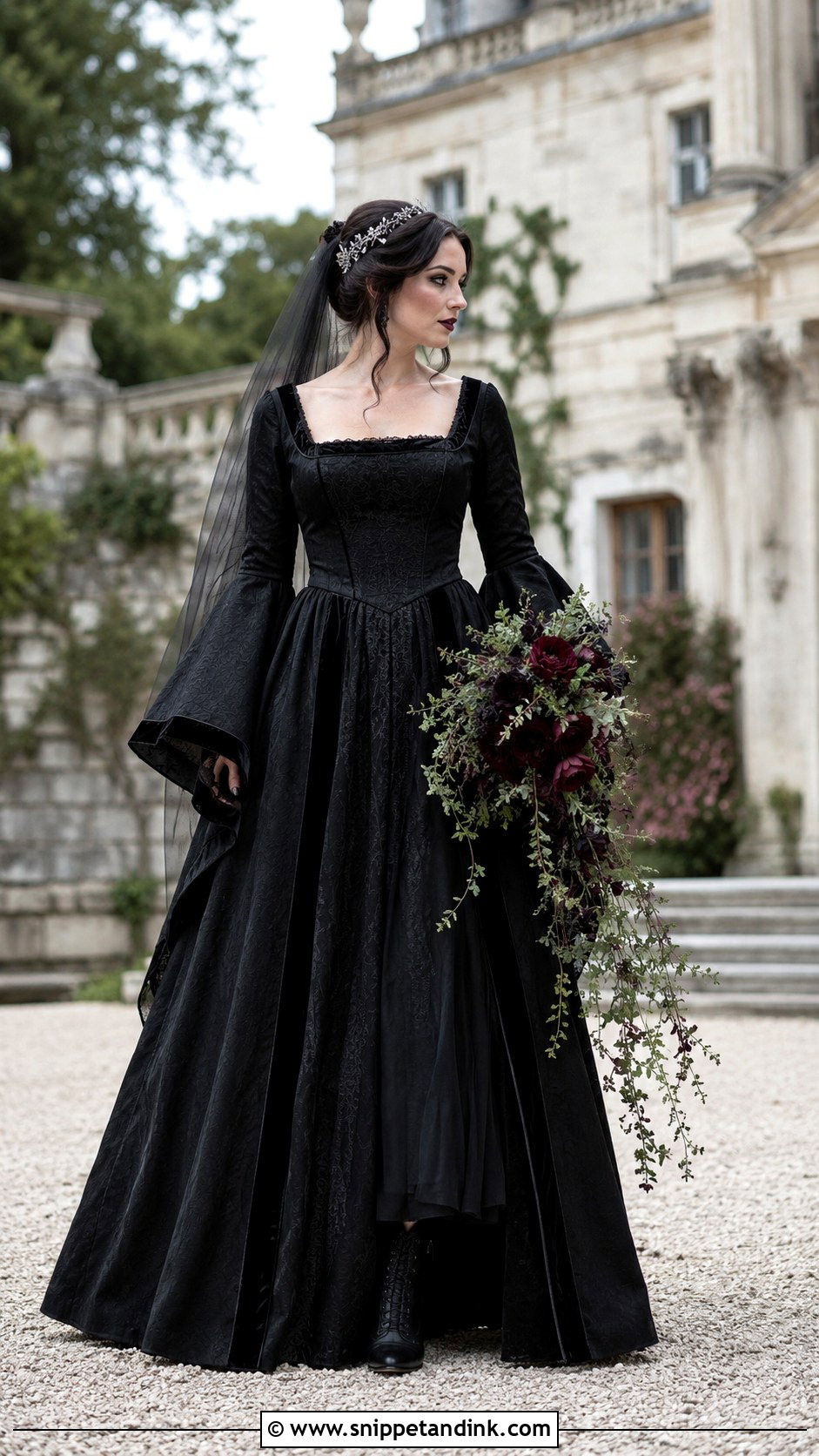
A medieval-inspired black wedding gown relies on line more than ornament: a square neckline, fitted bodice, floor-length skirt and sleeves widening near the wrist. Velvet trim, lacing or a little embroidery is enough to carry the theme. Fabric is what separates this from a costume. Stiff polyester satin holds creases and stands away from the body, while a good crepe or velvet drapes and moves as you walk. Low lace-up boots, a silver circlet or decorative comb and a light veil worn behind the hair complete it, with trailing greenery, burgundy flowers and ivory accents in the bouquet. Stone buildings and forest clearings are where it looks most at home.
20. Black Gothic Two-Piece Wedding Dress
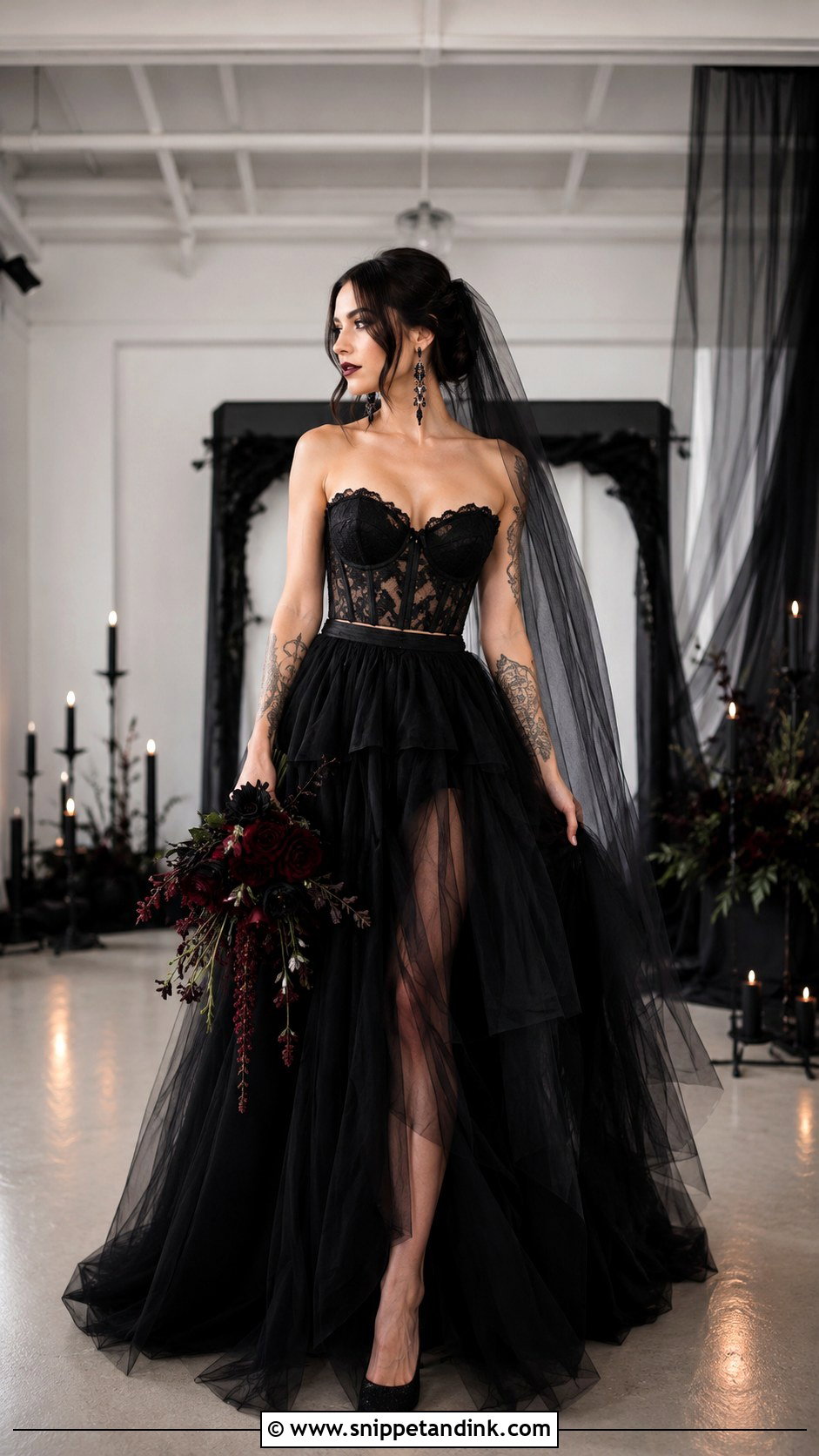
Two pieces give you more control over fit, because the top and skirt are altered independently, which is often simpler than reworking a one-piece gown. A structured lace corset top over a high-waisted satin or tulle skirt is the classic pairing. My caution is about the blacks: two pieces from different makers rarely match, since one black leans blue and another brown, so view them together in daylight before committing. A strip of skin between them is fine, or let the skirt overlap the bodice for coverage. A black veil, silver earrings, pointed heels and dark red flowers complete it, and you can wear either piece again long after the wedding.
Lint, Deodorant Streaks and Fading on Dark Fabric
Black hides a spilled drink but shows everything pale. White deodorant, face powder on a neckline, confetti, pet hair and dust from an outdoor aisle all stand out against dark fabric in a way they never would on ivory. I pack a different emergency bag for a black gown than for a white one.
- A sticky lint roller and a couple of clean microfiber cloths for tulle and velvet.
- Clear gel deodorant, applied well before dressing, and a thin scarf over the face while the dress goes on over your head.
- Black safety pins and a small spool of black thread, since silver pins glint in close-ups.
- Wipes are fine on crepe and satin, but never rub velvet. Blot, then brush lightly with the nap.
After the wedding
Black dye fades in light, and a gown left hanging near a window can pick up a brownish or reddish cast along the shoulders. Have it cleaned by a gown specialist within a few weeks, because perspiration and makeup marks set over time. Store it folded with acid-free tissue in a breathable cotton bag, away from sun. Keep velvet out from under other boxes too; crushed pile is very hard to bring back.
A Black Gown Is Only as Good as Its Last Fitting
Start with the silhouette you can breathe, sit and dance in, then let season and venue decide between lace, velvet, satin, tulle, embroidery and corsetry. Pick one or two details to repeat in your accessories and let everything else stay quiet. A veil, shoes you can stand in for hours, matched jewelry and a bouquet sized to the dress are what turn a black gown into a finished bridal look. Book alterations early, and wear every layer at least once for a full walk, sit and stand rehearsal. Victorian, celestial, minimalist or medieval, the gown should feel like yours the moment it’s fastened.
You'll Like These Ideas:







Leave a Reply