
Garden ceremonies ask more of a dress than most venues do. There’s grass, gravel, sun, sometimes a breeze that catches a veil, and a long walk from the ceremony lawn to wherever dinner is served. The gowns that suit them tend to share a few things: floral appliqués, airy tulle, botanical lace, a little shimmer, sleeves with some romance, and soft color or dimensional flowers. None of that matters if the dress doesn’t feel like you, so I’ve styled twenty complete looks, from ball gowns to relaxed boho lace to clean satin, with shoes, veils, jewelry and bouquets that cope with being outside.
Walk the Venue Before You Walk Into a Bridal Shop
I always ask brides for photos of the exact ground they’ll stand on. A clipped lawn, a gravel path, a stone terrace and a wildflower meadow each change which hem, train and shoe will survive the day.
- Soft grass: avoid stilettos entirely, and favor tulle or lace over satin, which shows green marks.
- Gravel: long trains drag stones along with them. A shorter train or a bustle you’ll use right after the ceremony helps.
- Steps and slopes: fit-and-flare and mermaid shapes limit your stride, so try climbing in the sample.
- Full sun at midday: lined long sleeves and heavy beading get hot quickly; chiffon, cape sleeves or sheer lace breathe.
Season matters too. A spring garden can turn cold after sunset, so plan a wrap. In high summer, look at the ceremony time and where the shade falls, since you may be standing still in direct sun for twenty minutes or more.
1. Floral Appliqué A-Line Wedding Dress
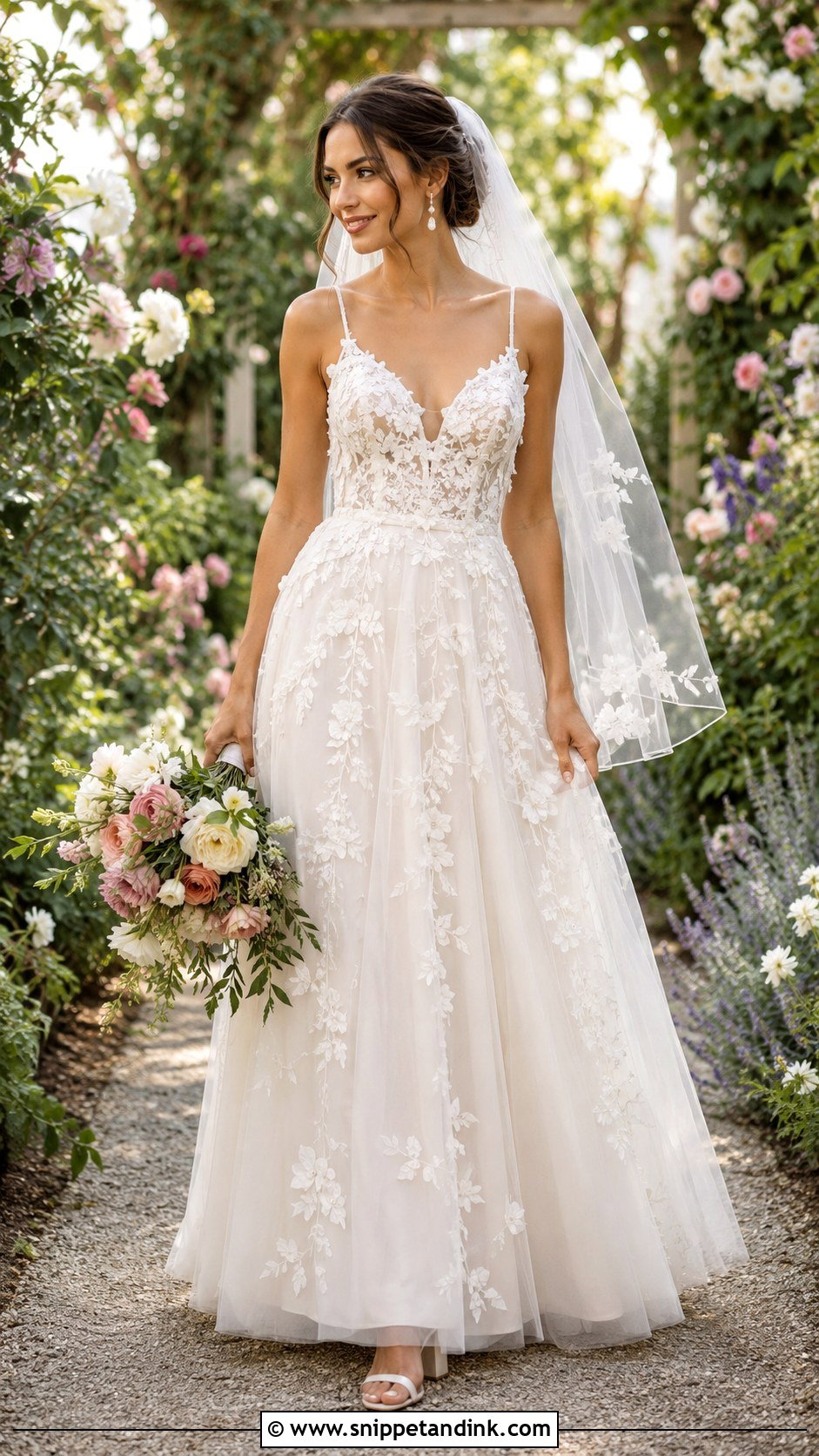
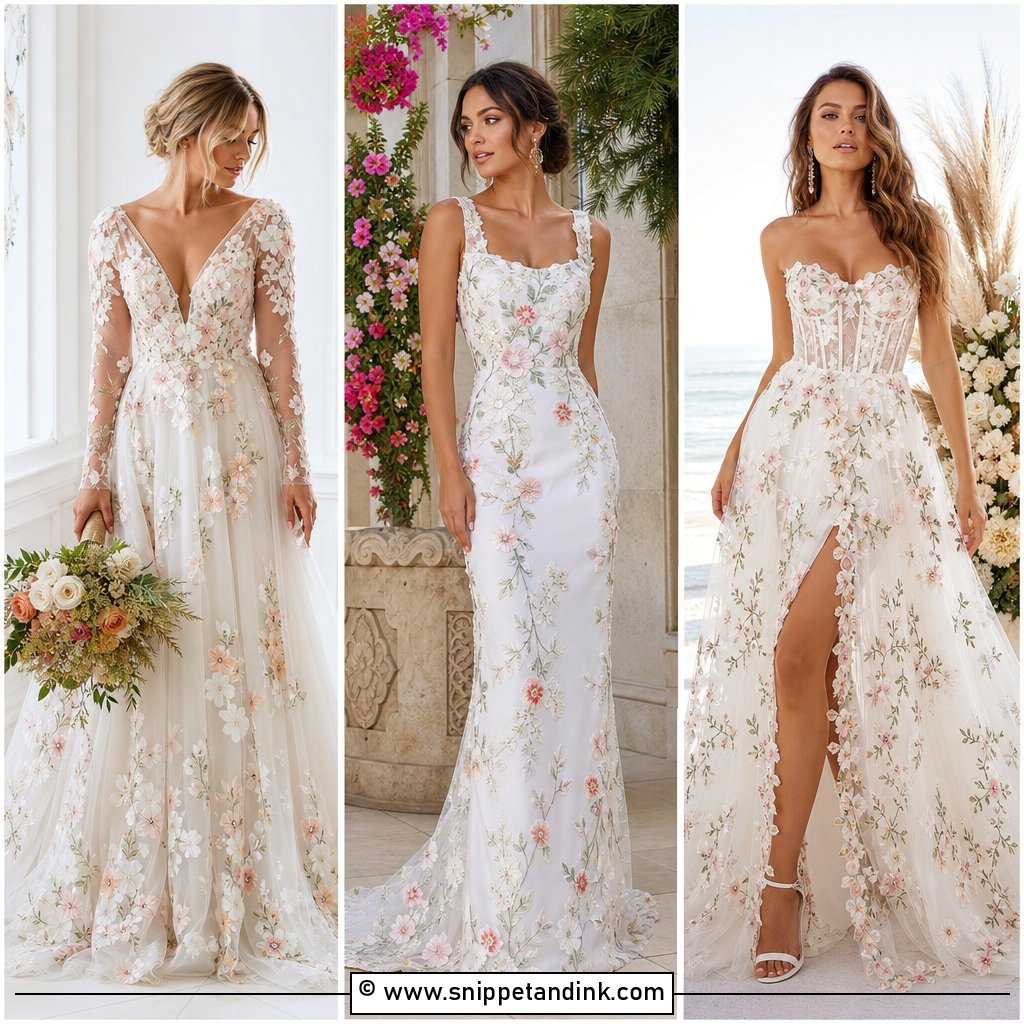
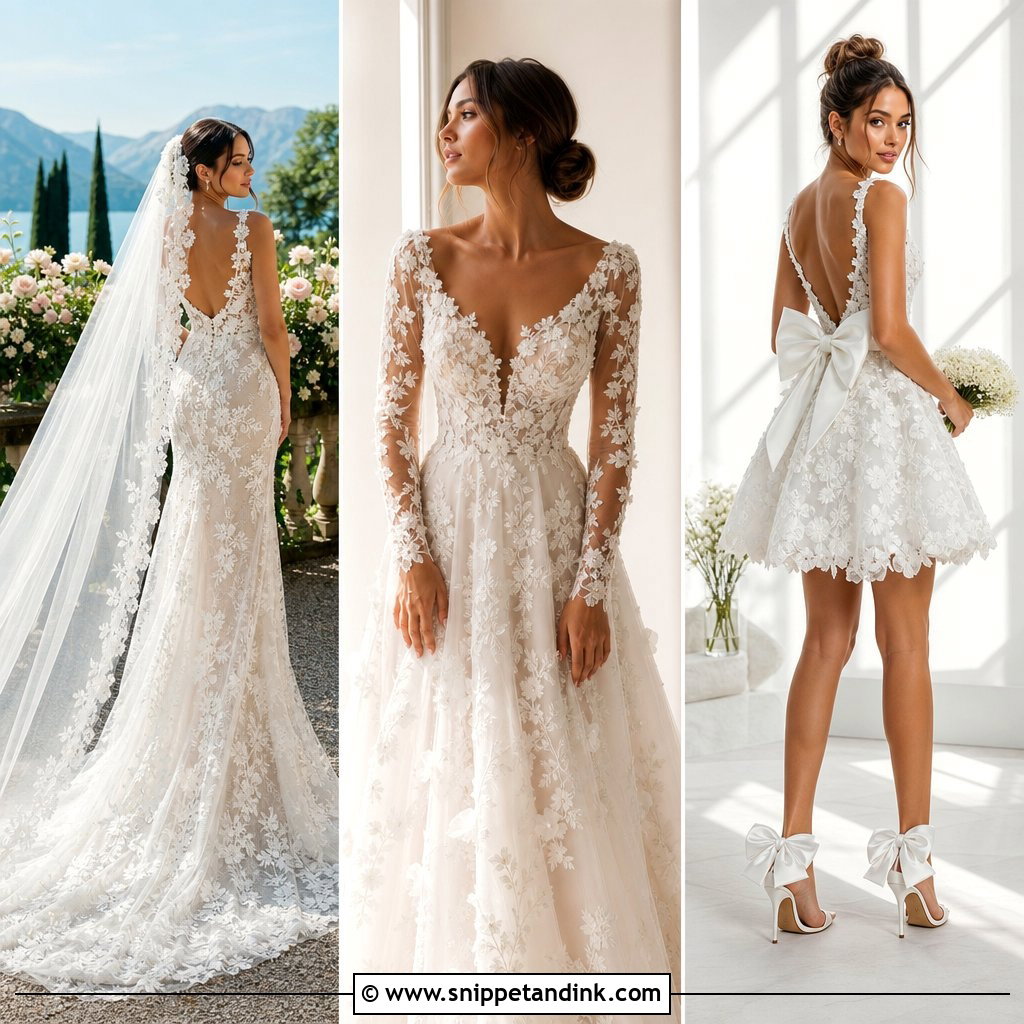
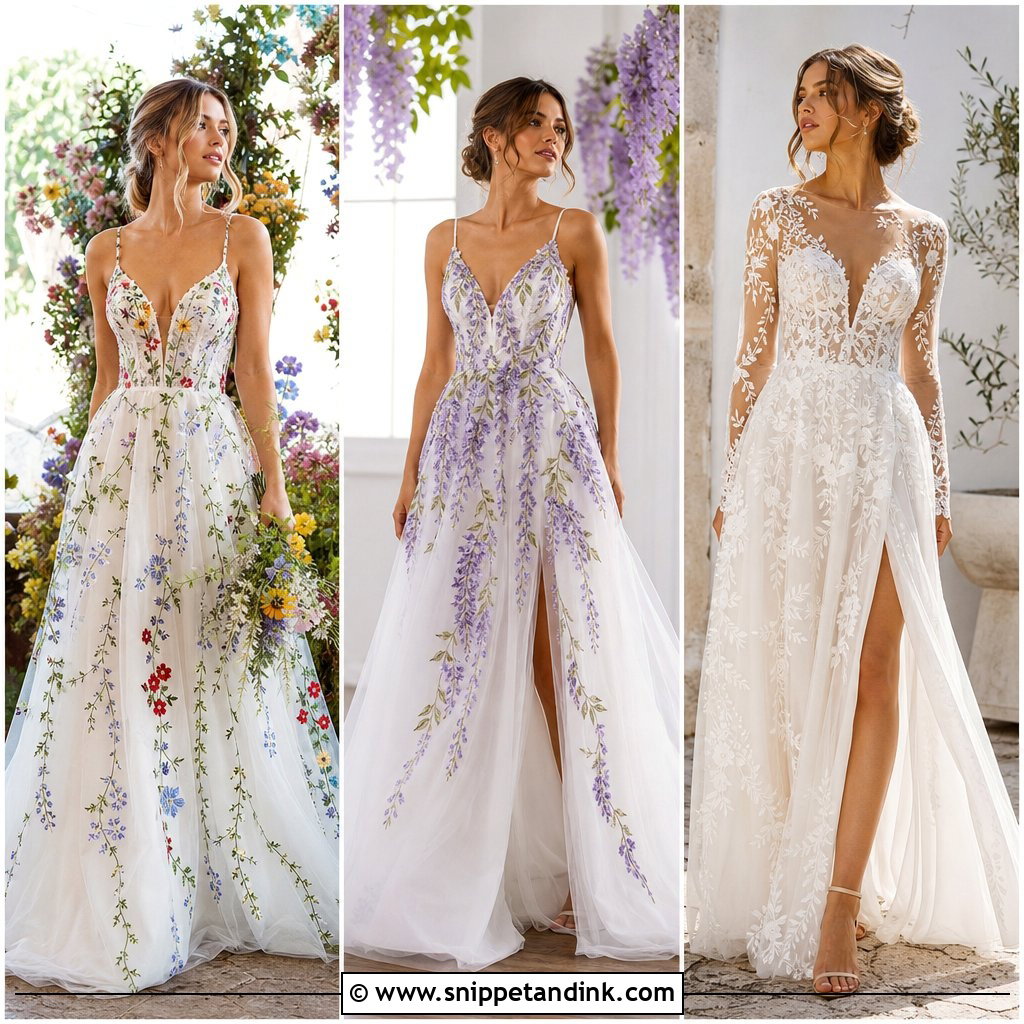
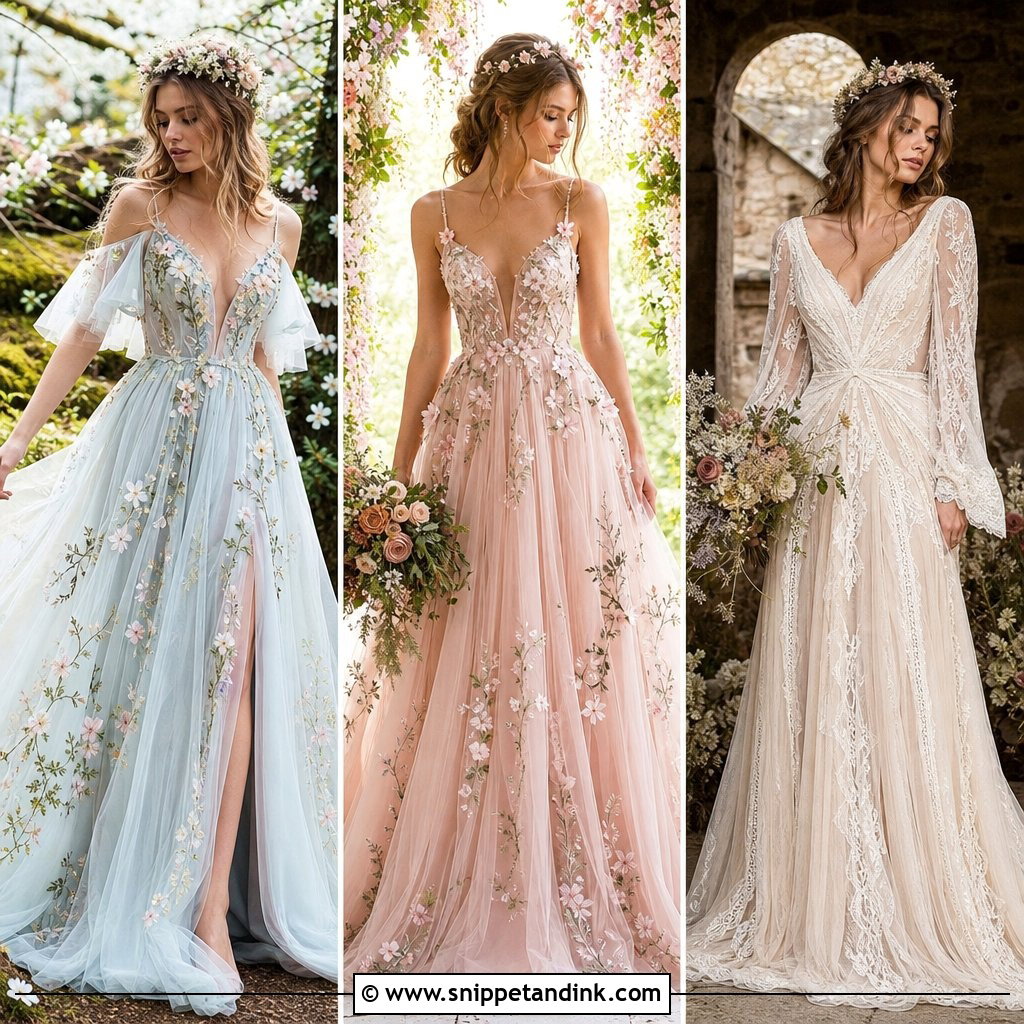
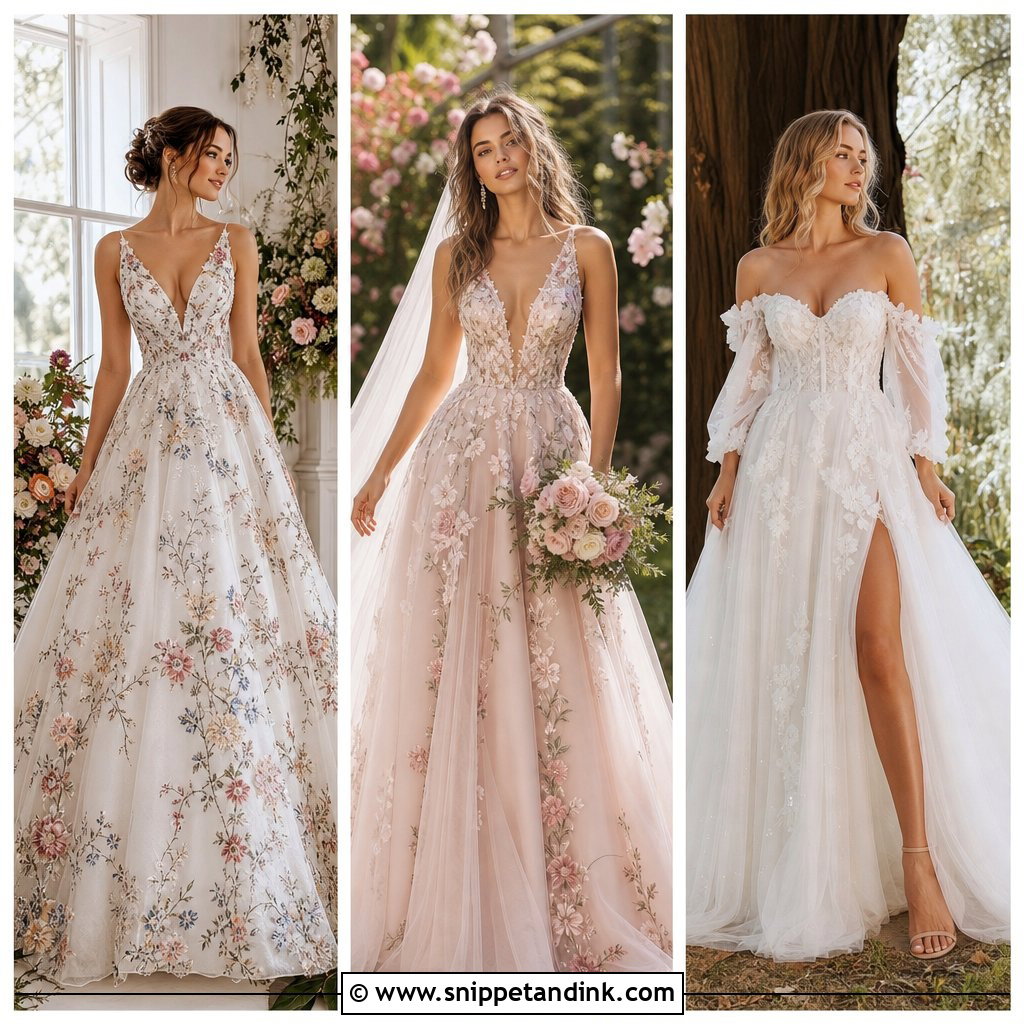
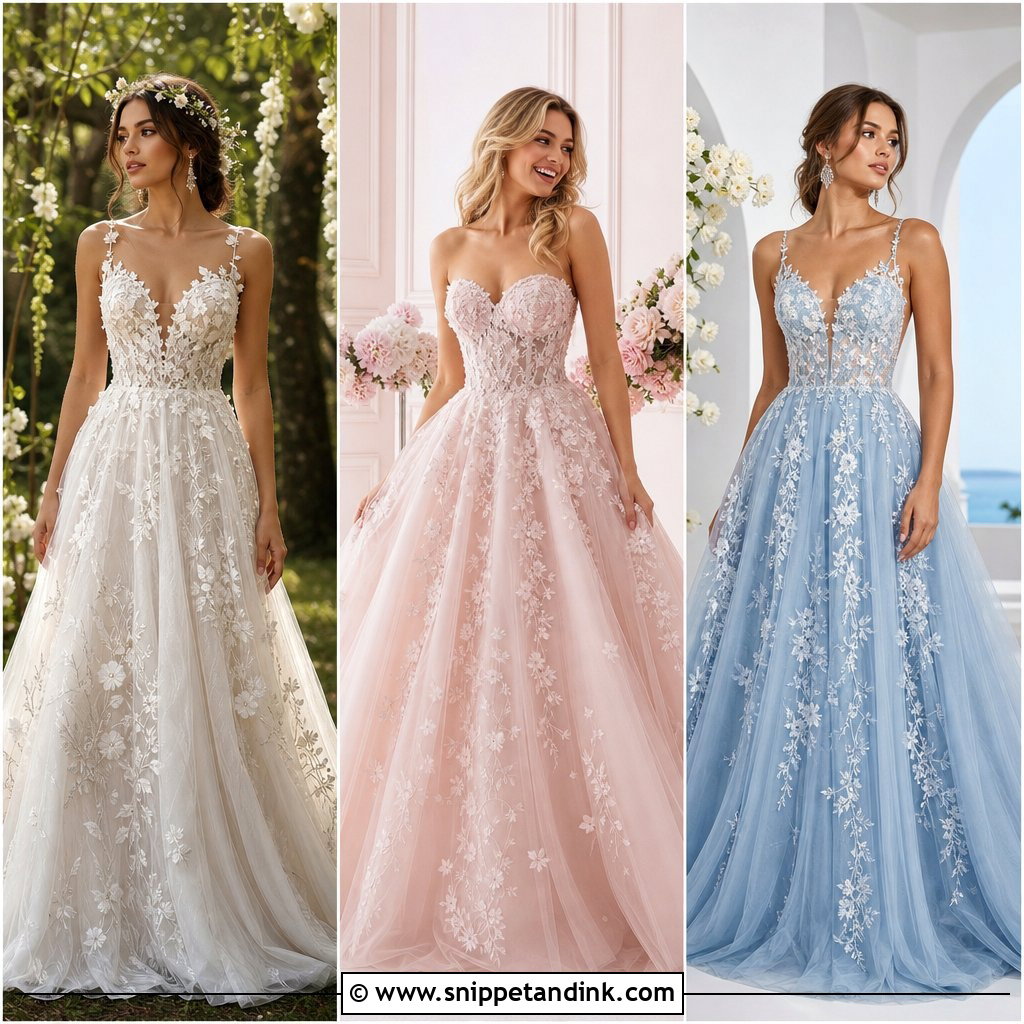
If I had to send one gown to an unknown garden, it would be this one. An ivory tulle A-line with a fitted bodice and embroidered flowers trailing onto the skirt moves well and skims rather than clings, so it suits most figures. Tulle also hides grass marks far better than satin. A sheer neckline gives extra support without looking heavy. Block-heel sandals, a fingertip veil, pearl drops and a loose bouquet of garden roses keep it relaxed, with a low bun or soft waves.
2. 3D Flower Tulle Wedding Dress
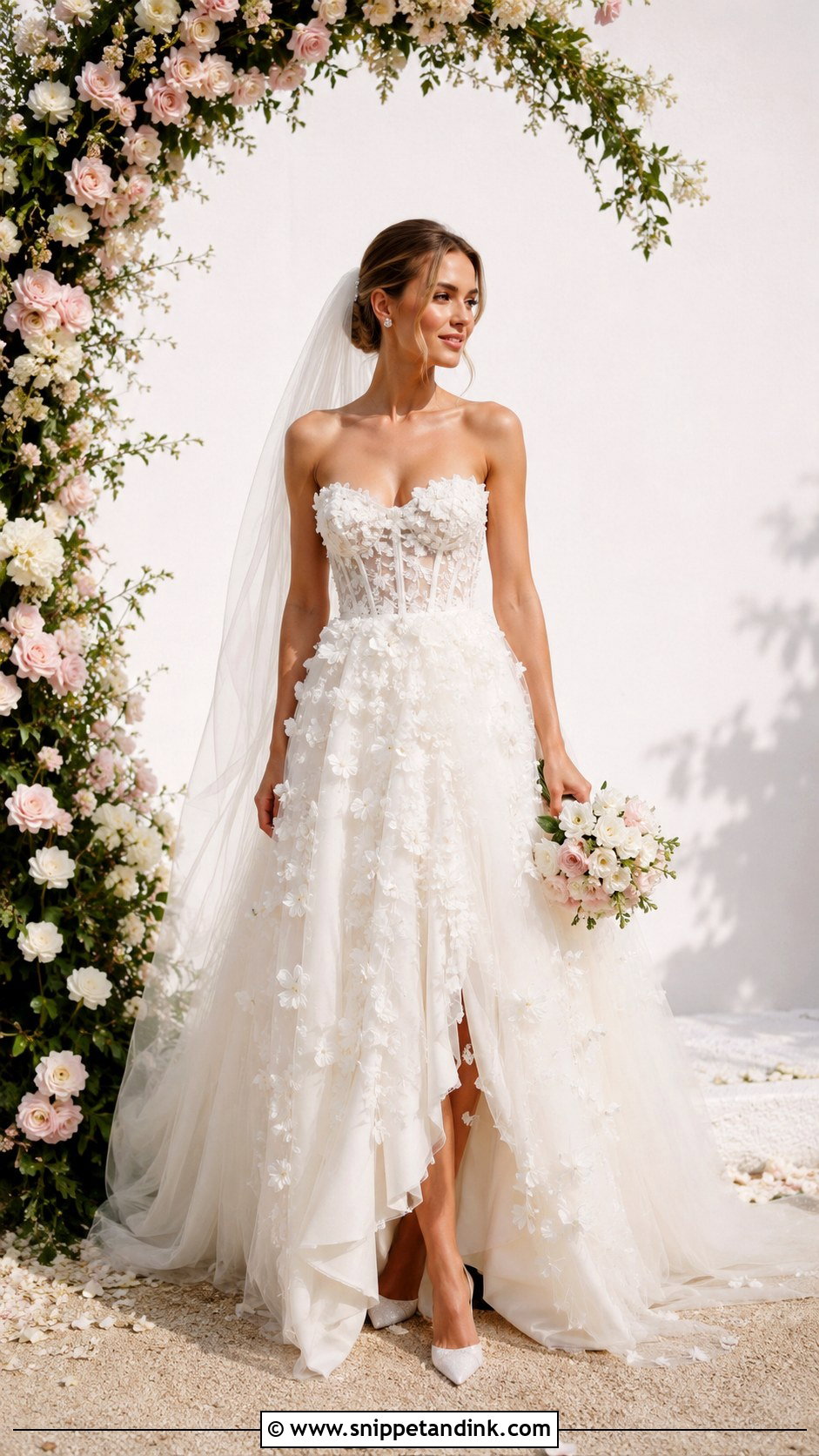
Dimensional flowers make a gown look grown in place, but spacing is everything. Petals covering the dress from neckline to hem get crushed in the car and when you sit; carefully spaced 3D flowers keep their shape. A structured corset bodice gives the soft skirt something to contrast with. Wear pointed ivory flats or low heels if there’s lawn or uneven paving, and skip the necklace since the flowers already frame the neckline. Crystal studs, a translucent veil, a small bouquet of sweet peas and pale roses and a clean updo let the appliqués stay the focus. Sweet peas wilt quickly in sun, so ask your florist to keep the bouquet in water until the last minute.
3. Long Sleeve Lace Wedding Dress
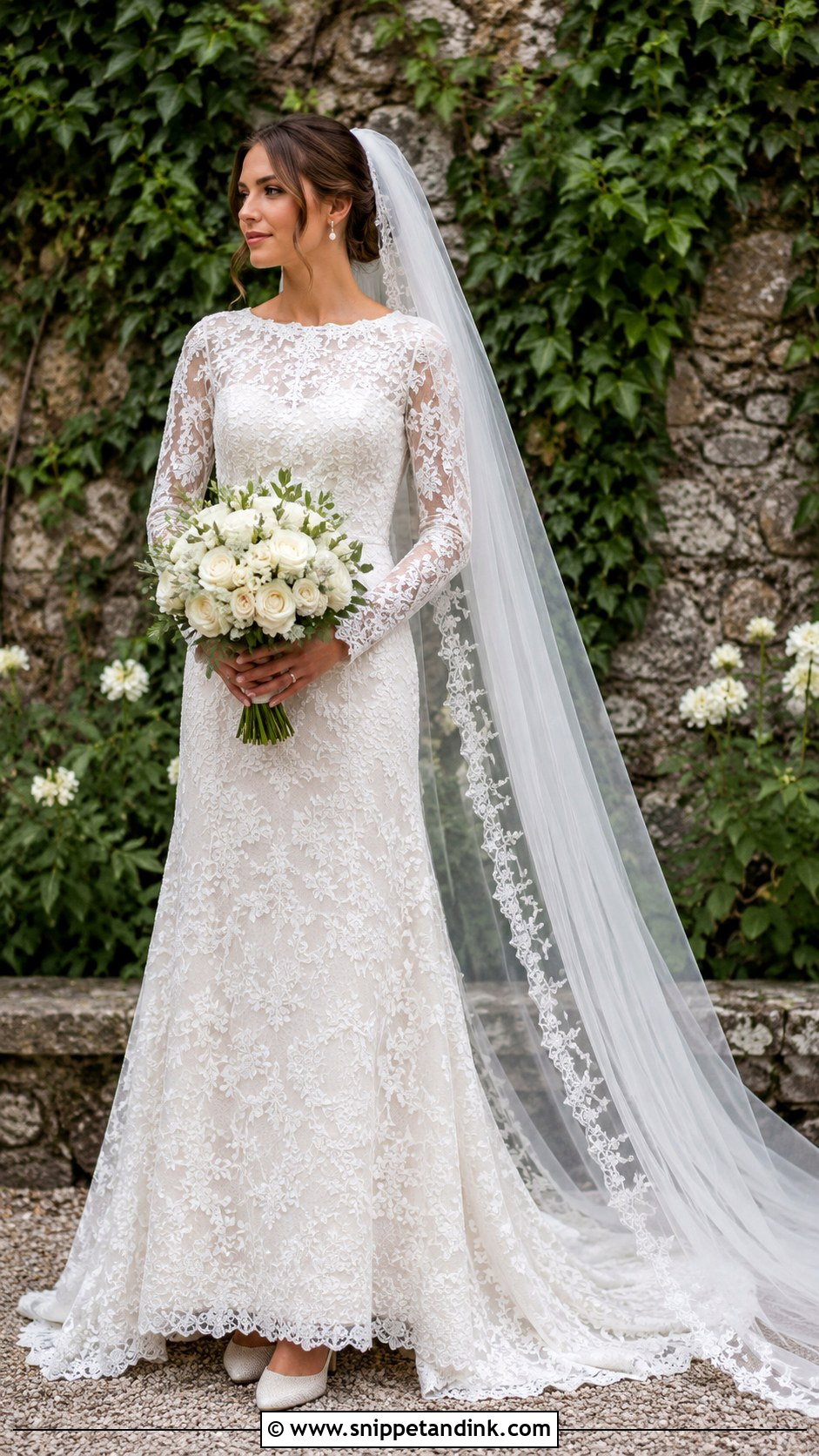
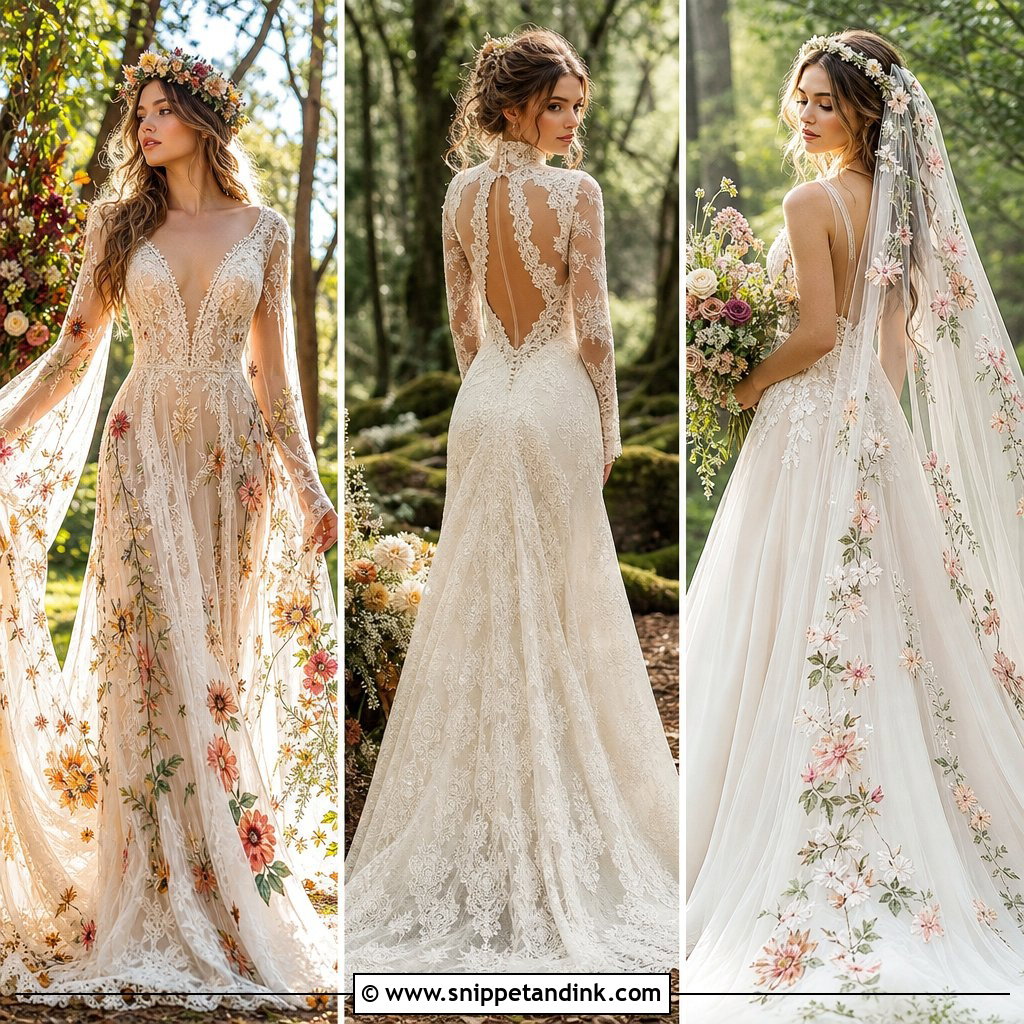
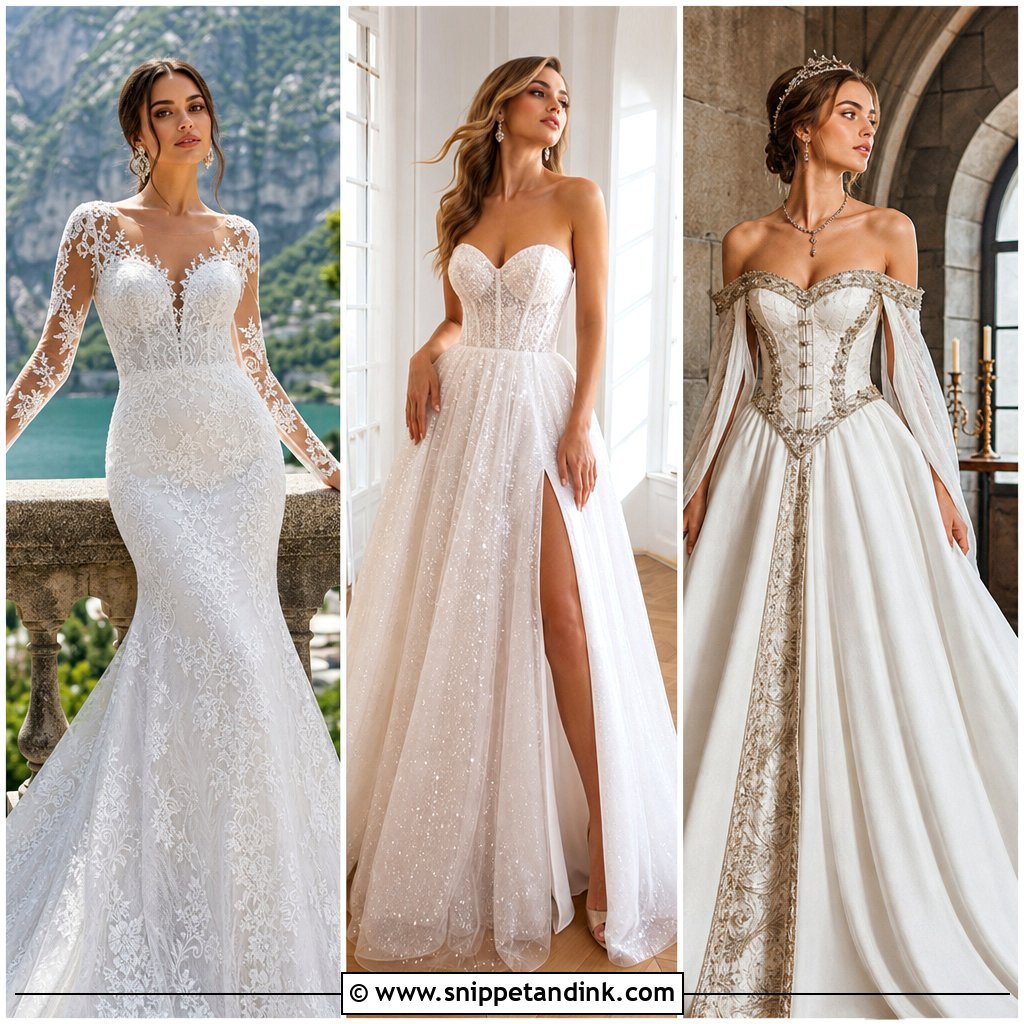
Long lace sleeves suit ivy walls and old trees. What I check first is the lace weight: botanical lace on a light net breathes, while corded lace on a heavy base gets hot fast under a summer sky. Sheer sleeves look lighter; lined ones give coverage on a cool day. Closed-toe block heels, a cathedral veil with a narrow lace edge and small pearl earrings suit the gown, with white roses and trailing greenery in the bouquet. Carry a light ivory wrap for evening. It looks best when the lace pattern resembles leaves, vines or small flowers; bold geometric lace fights the garden around it.
4. Off Shoulder Ball Gown Wedding Dress
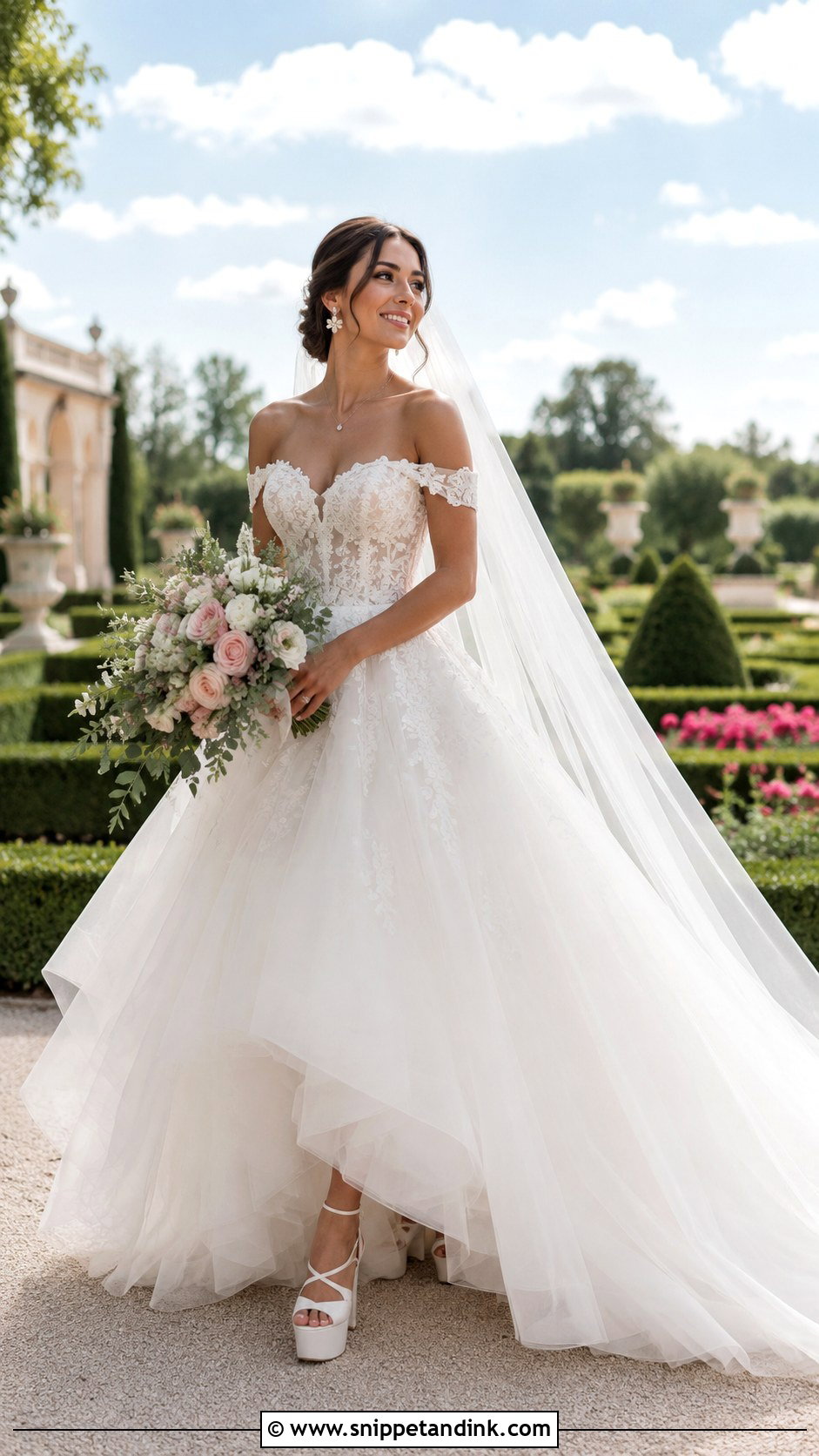
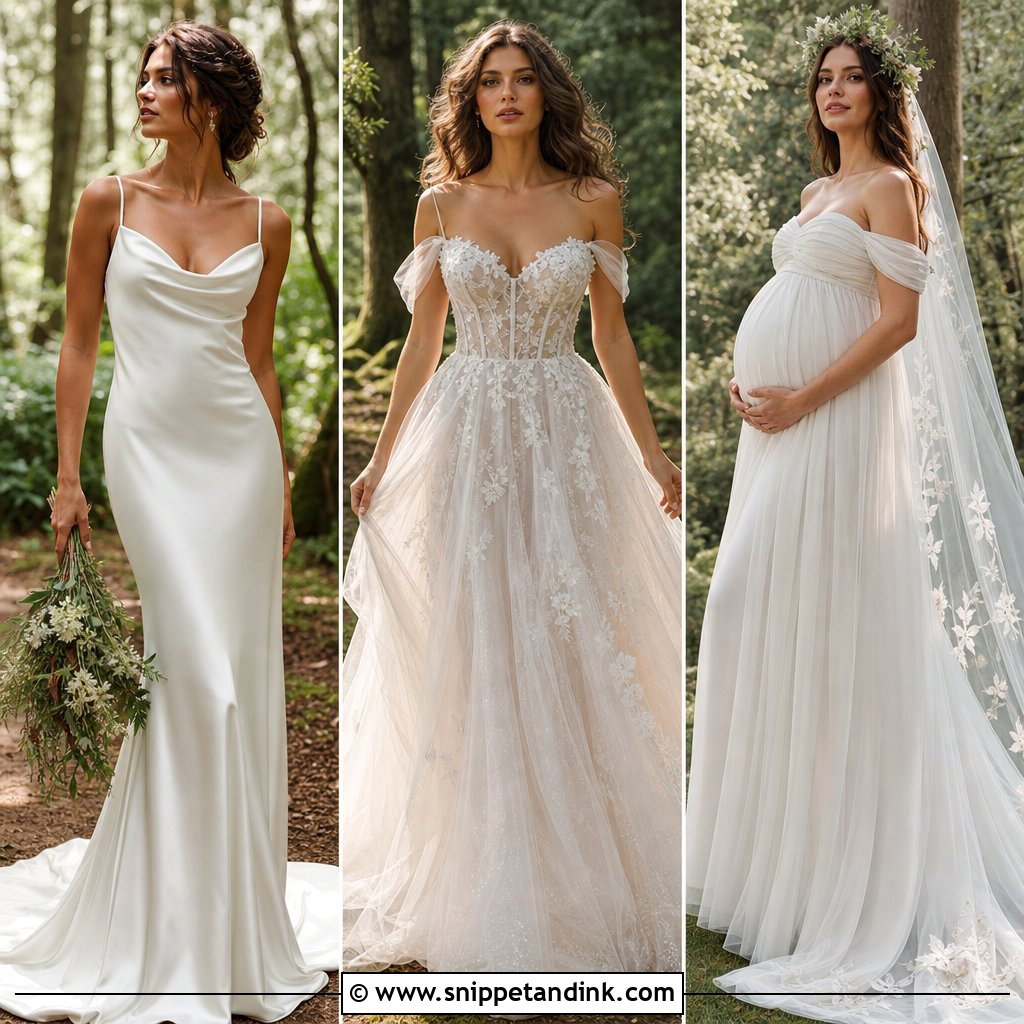
An off-shoulder ball gown makes the grandest entrance, and it needs the most planning outdoors. A full tulle skirt drags across a lawn and picks up grass and petals, so ask about a secure bustle before you buy. The bodice needs real internal structure so the neckline stays put while you hug guests. Floral lace at the neckline links it to the setting. Under all that skirt, platform or wide block heels stop you sinking. A simple pendant, floral earrings, a long plain veil and a low bun finish it. Only choose it if the garden is spacious; narrow paths and a full skirt don’t mix.
5. Blush Floral Wedding Dress
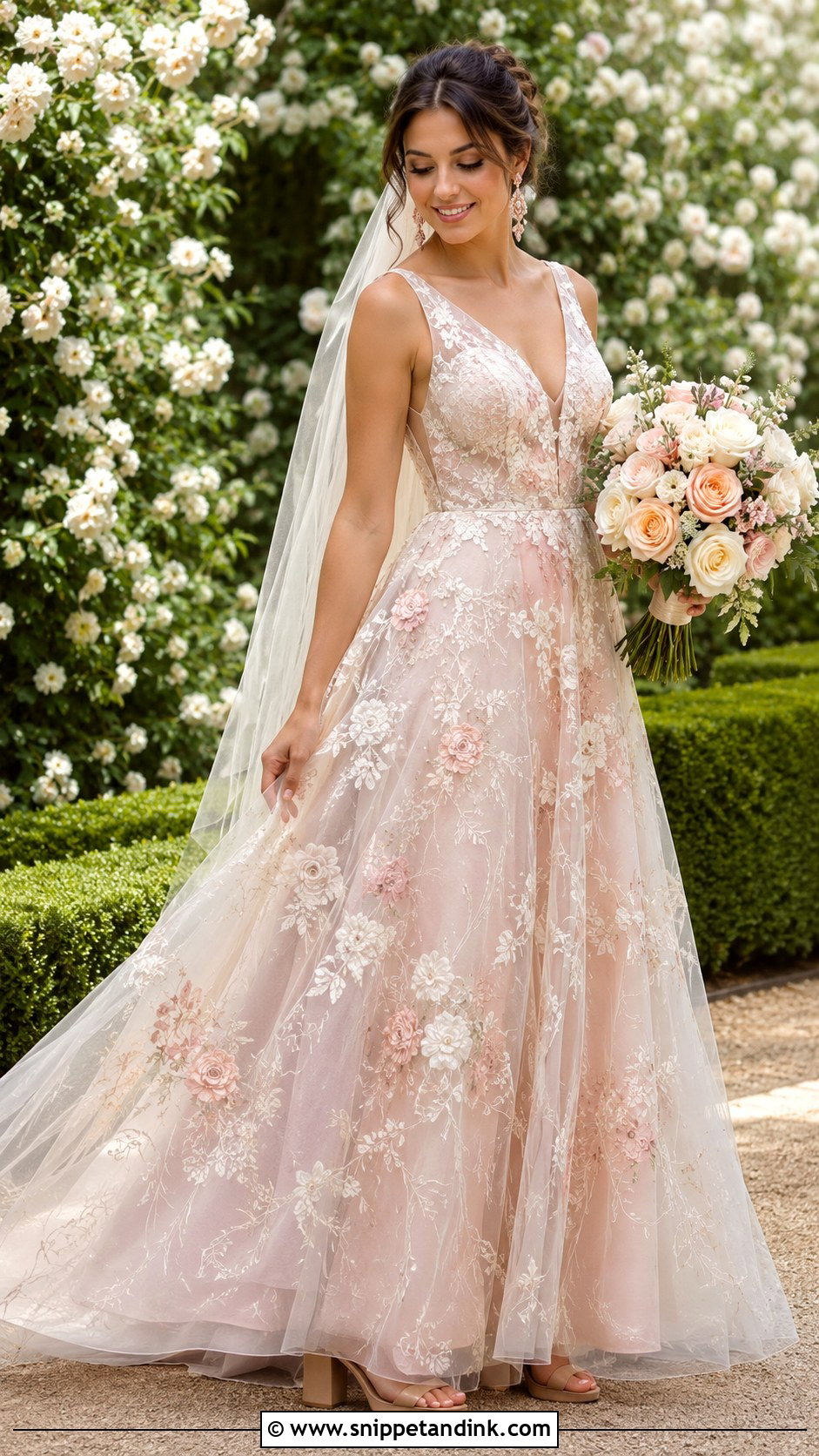
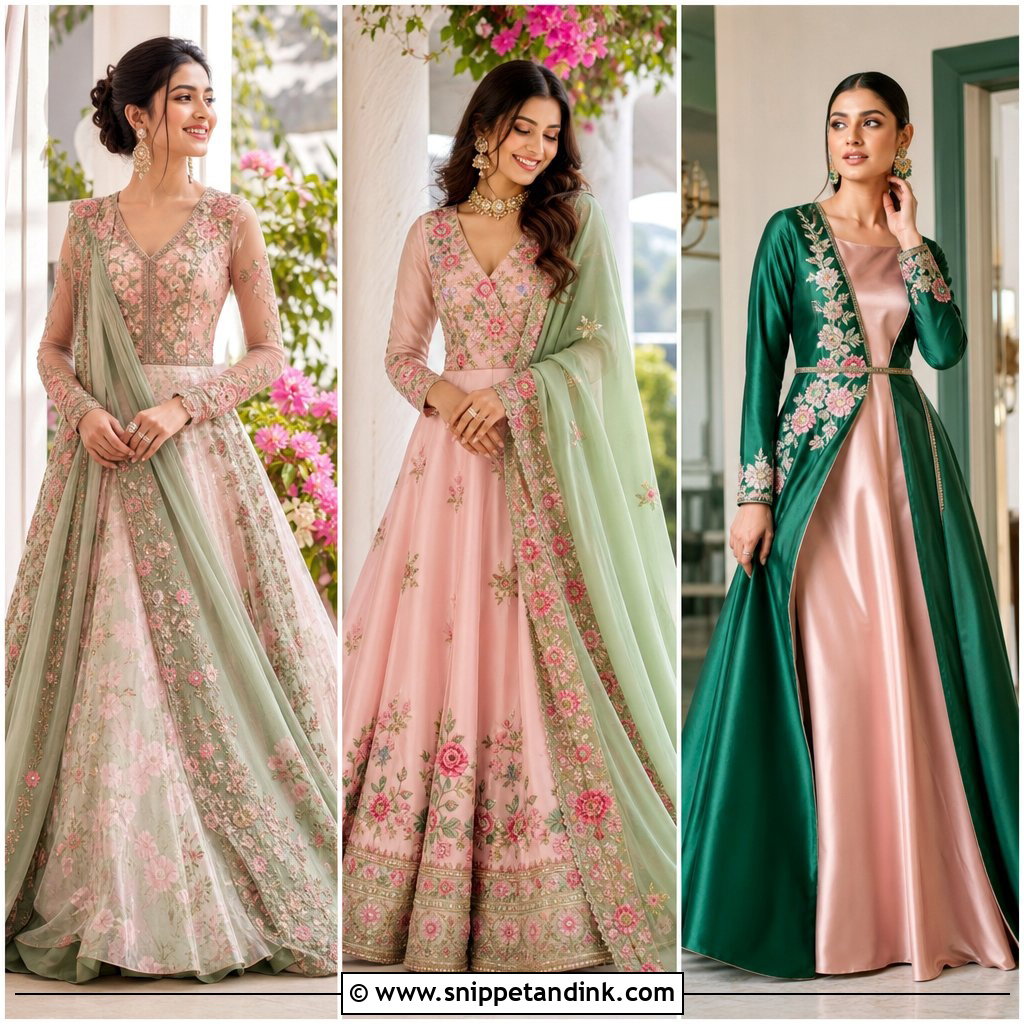
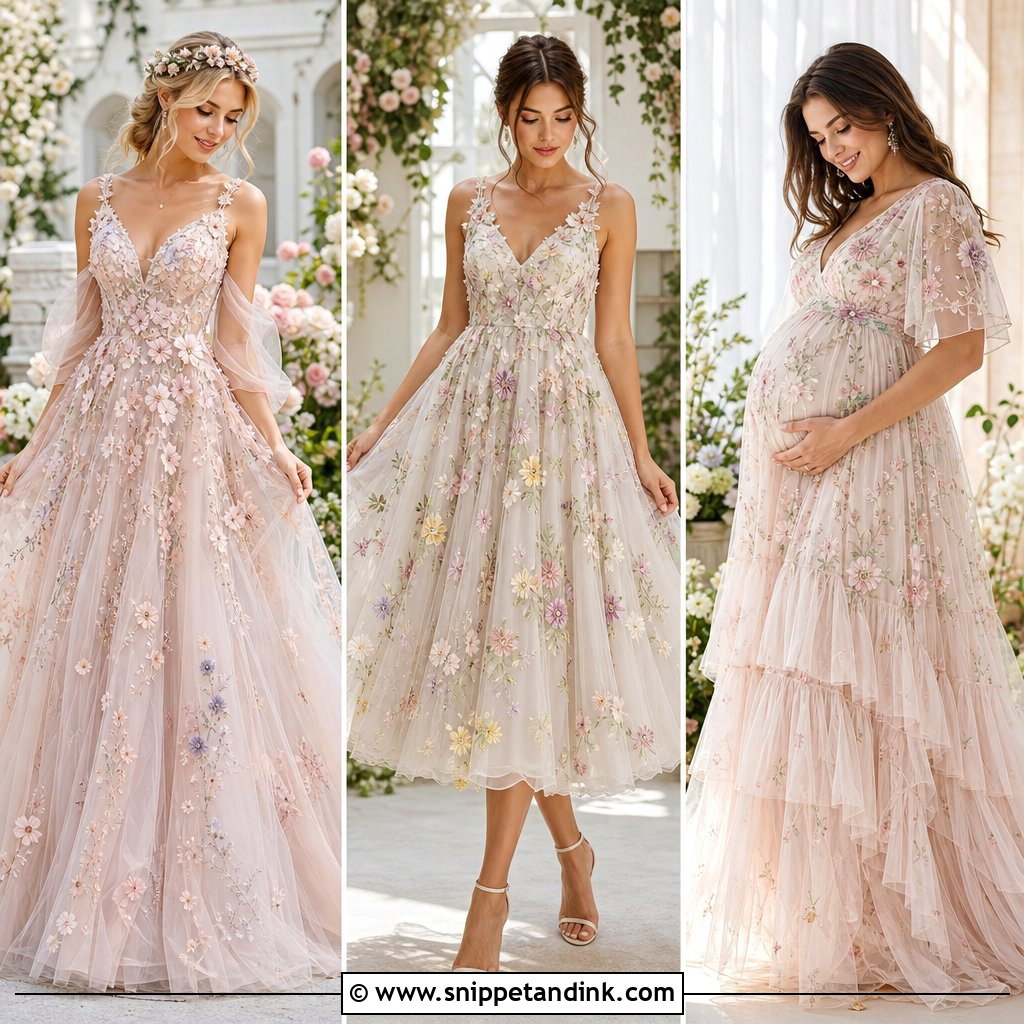
Blush gives color while staying bridal, and it works best as an underlay beneath ivory embroidery so the pink glows through rather than shouting. A V-neck bodice and flowing A-line skirt keep it light. Champagne block heels, rose-gold earrings and a sheer ivory veil that doesn’t hide the color suit it. I’d bring a fabric swatch to the florist; cream, peach and dusty pink flowers bridge the dress and the garden. Among white blossoms and green hedges the color stays visible in photos without overwhelming the scene.
6. Sage Green Wedding Dress
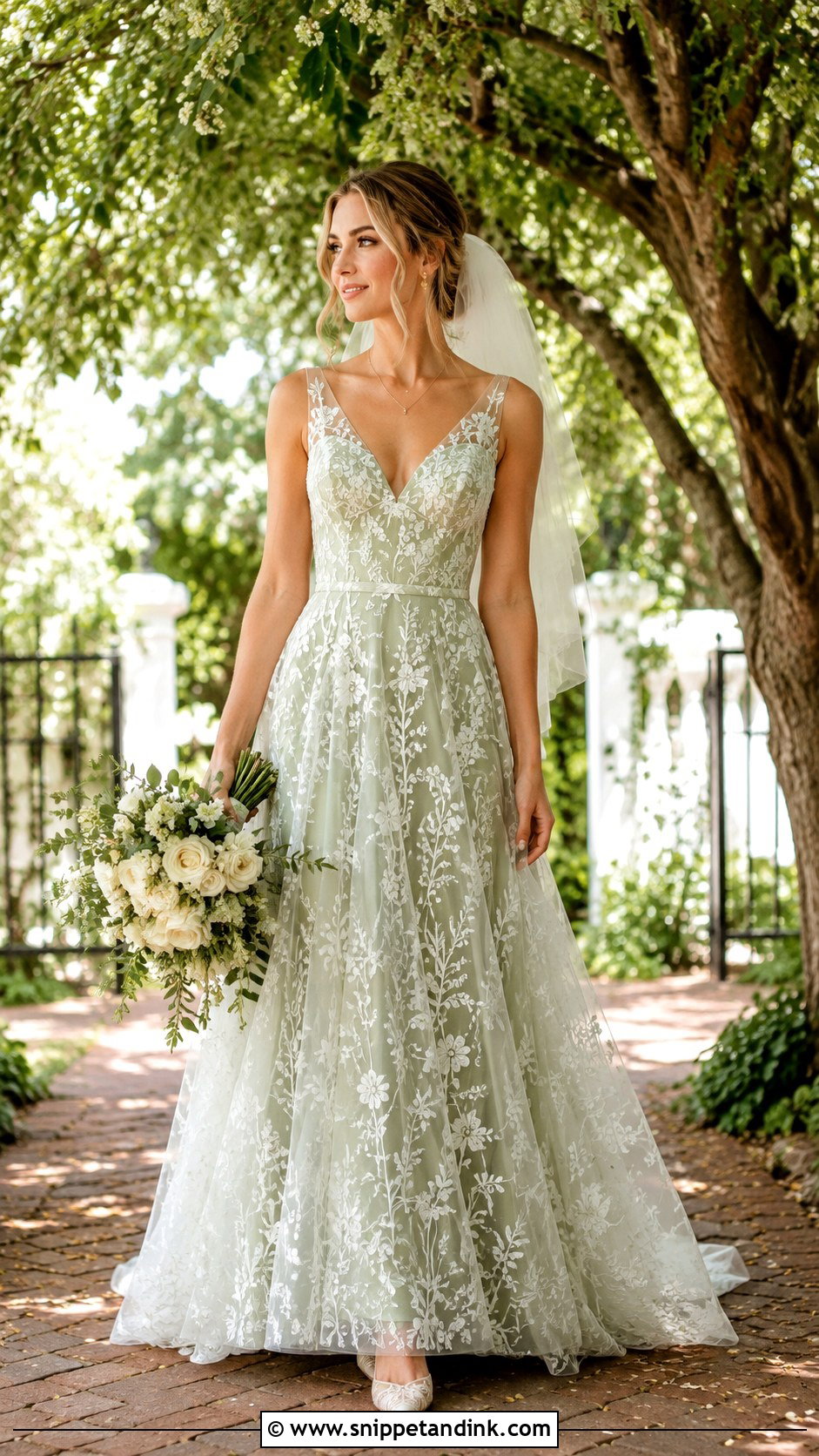
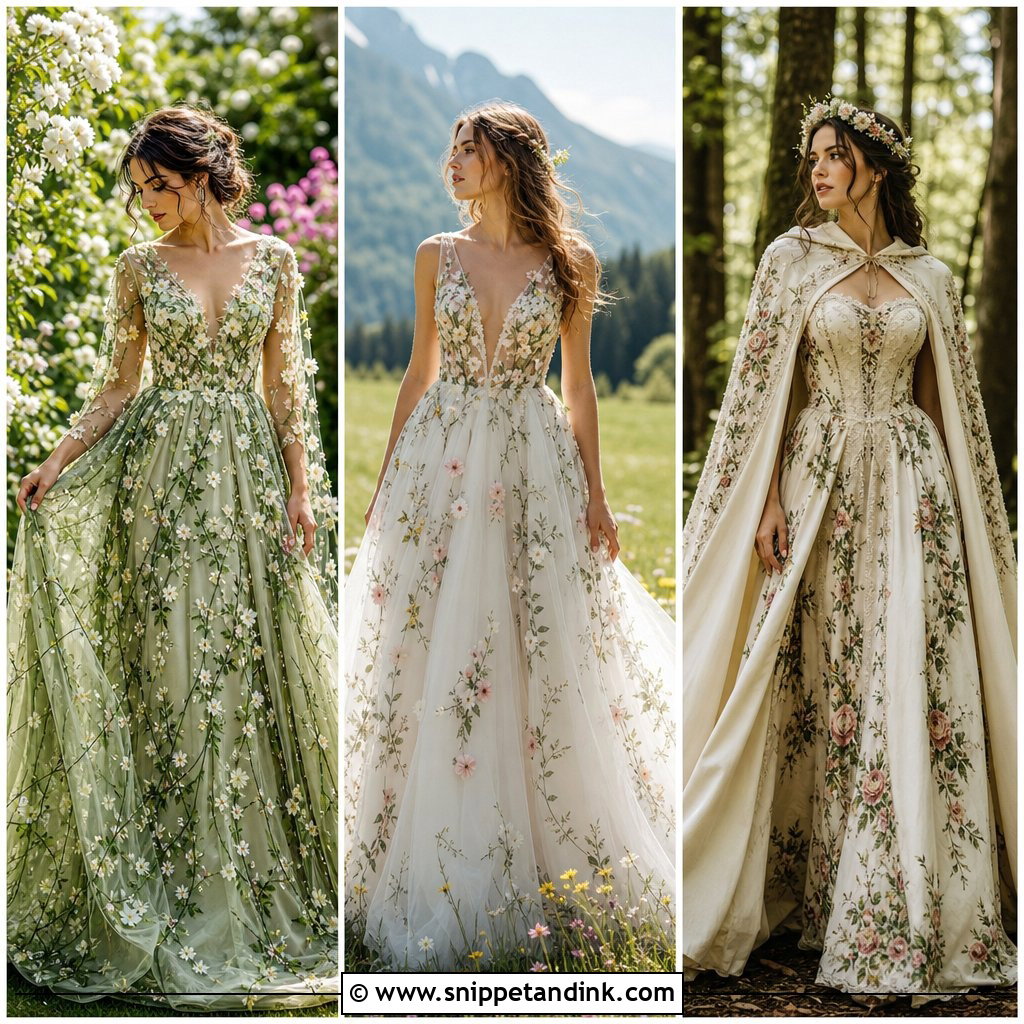
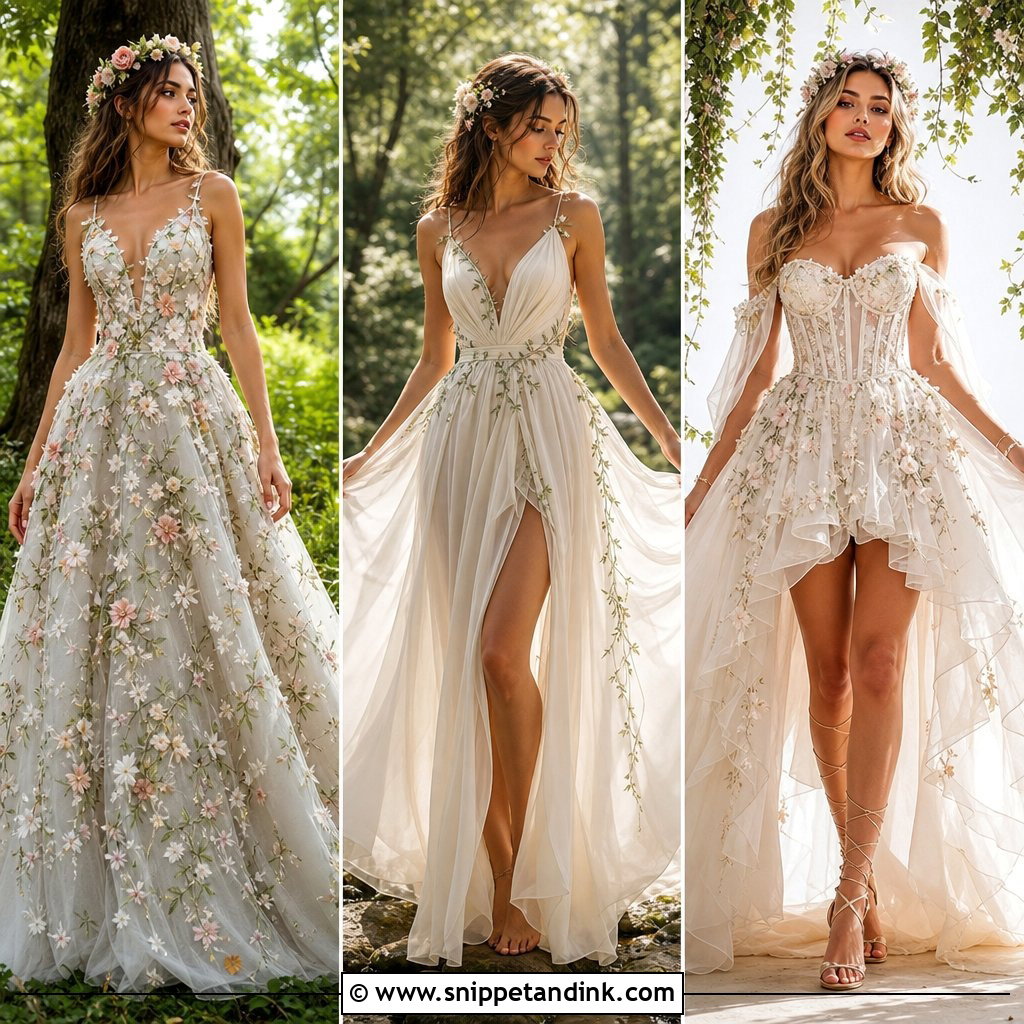
Sage green is the most nature-led alternative to ivory, and the wearable version uses a muted sage lining beneath ivory lace or sheer tulle. That gives depth instead of a block of color. A fitted waist, flowing skirt and botanical embroidery keep the garden mood. Look at the fabric outdoors before committing; green undertones shift a lot between daylight and indoor lighting, and some sages turn grey in shade. Ivory shoes, fine gold jewelry and a simple veil under a loose updo suit it, with a cream bouquet of eucalyptus and pale foliage.
7. Butterfly Appliqué Wedding Dress
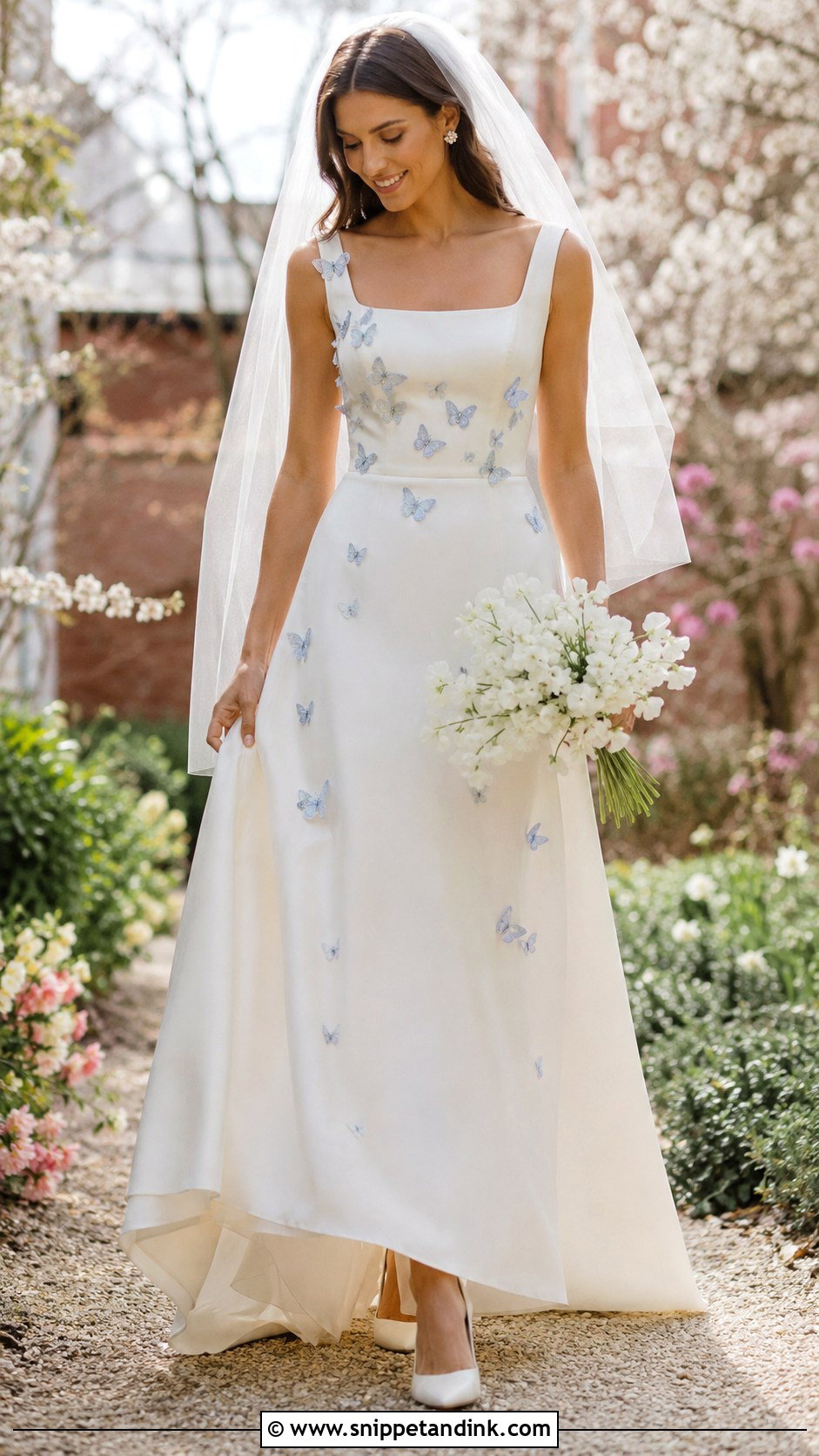
Butterflies are fun in small numbers. Scatter them across the bodice and upper skirt of a slim A-line or fit-and-flare, and resist putting them on the veil, shoes and earrings too. Ivory-on-ivory feels subtle; a few pale blue or blush wings add personality. Satin pumps, crystal studs and a plain chapel veil keep the rest quiet, and a bouquet of white ranunculus and sweet peas supports the airy idea without repeating the motif. A breeze moves the skirt and veil nicely in candid shots, so don’t fight it with too much hairspray on the veil.
8. Corset Bodice Tulle Wedding Dress
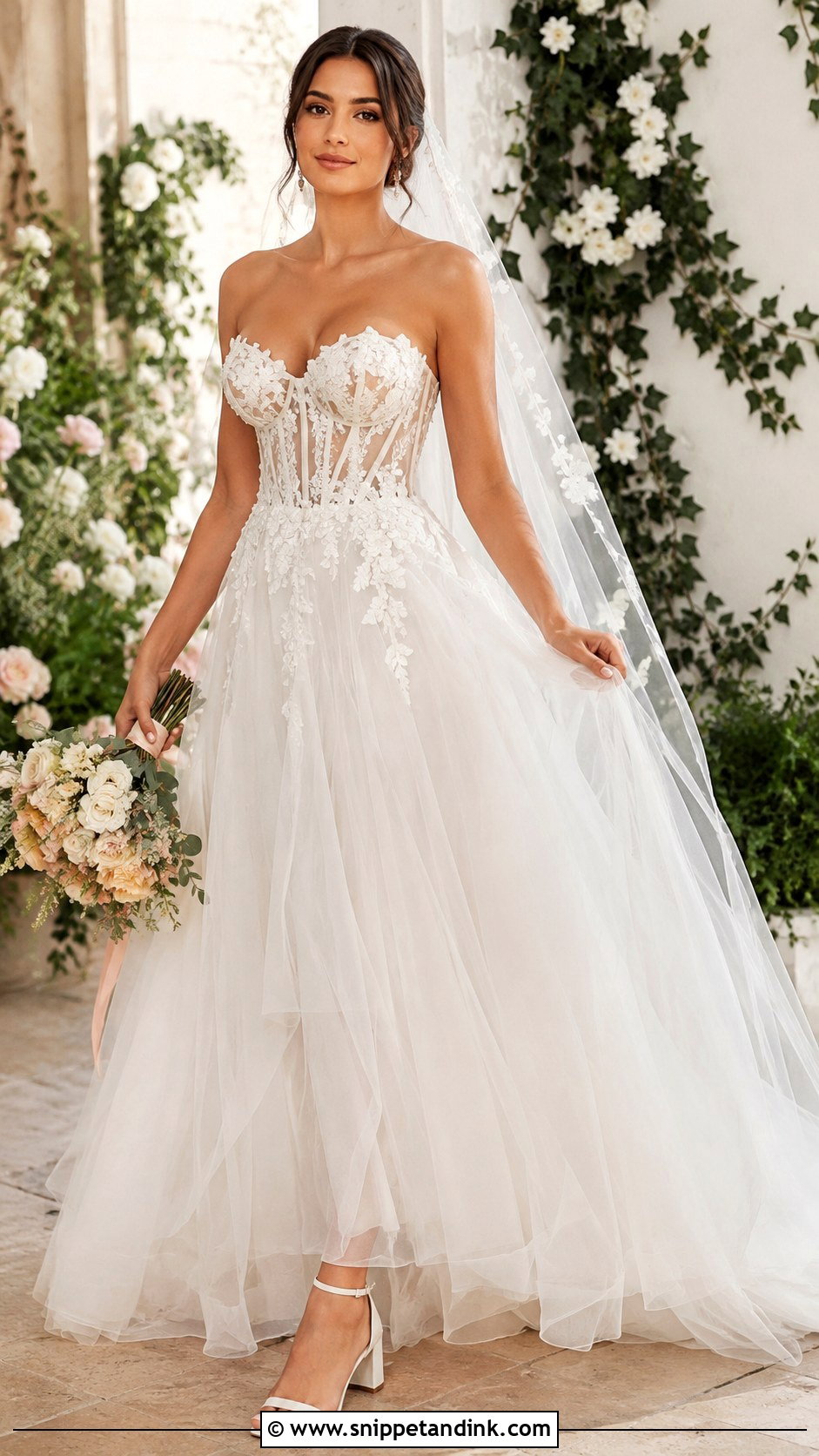
A corset bodice over a soft tulle skirt gives you support and movement together. Look for visible boning, a softly curved neckline and appliqués around the cups and waist, with the skirt falling smoothly from the natural waist rather than puffing out. In the fitting I ask brides to sit, walk and raise their arms, then sit again for five minutes; corsets that feel fine standing can dig in at the hip when seated. Custom cups, straps or a slightly higher neckline adapt it to most bust sizes. Ankle-strap block heels, a fine tennis bracelet, drop earrings and a lightly floral veil pair well with a half-up style.
9. Chiffon Cape Sleeve Wedding Dress
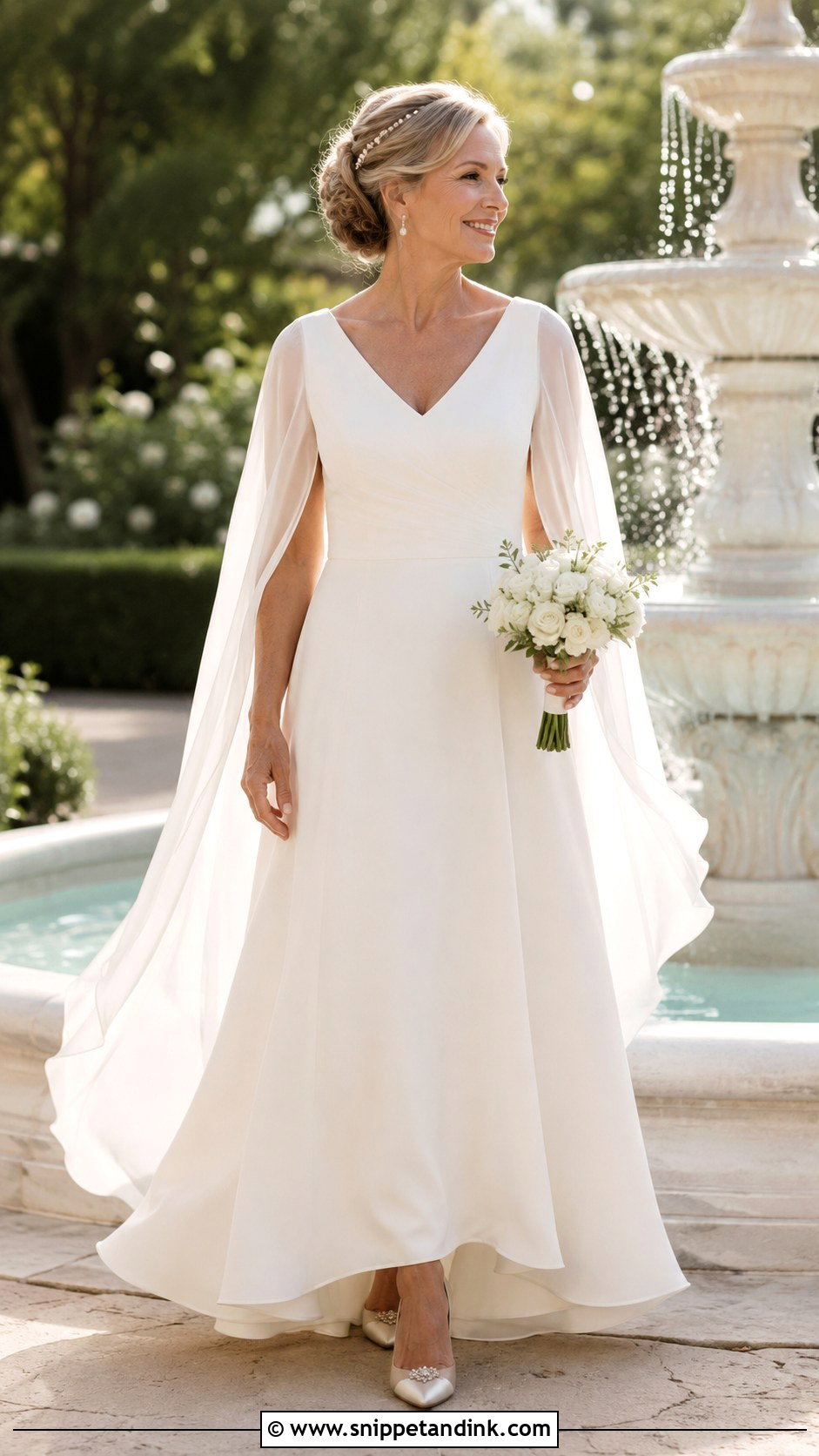
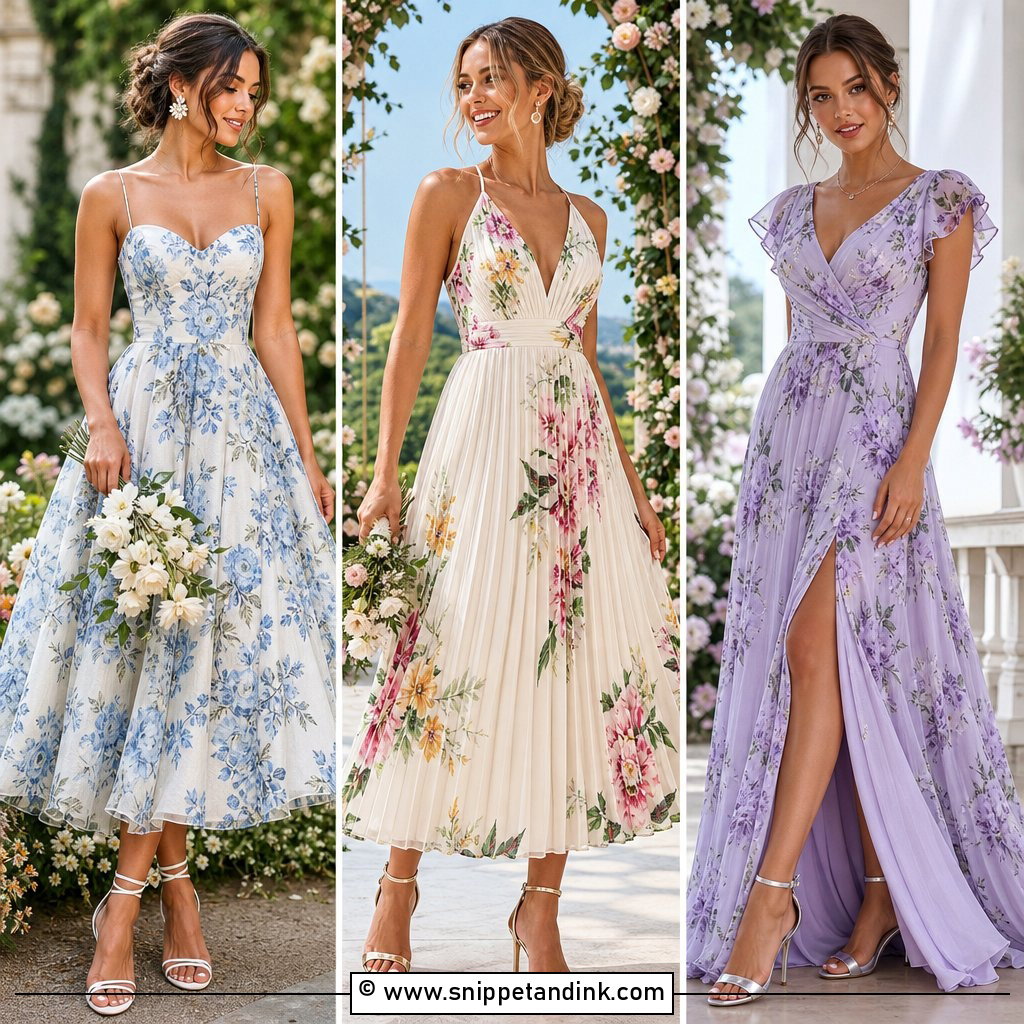
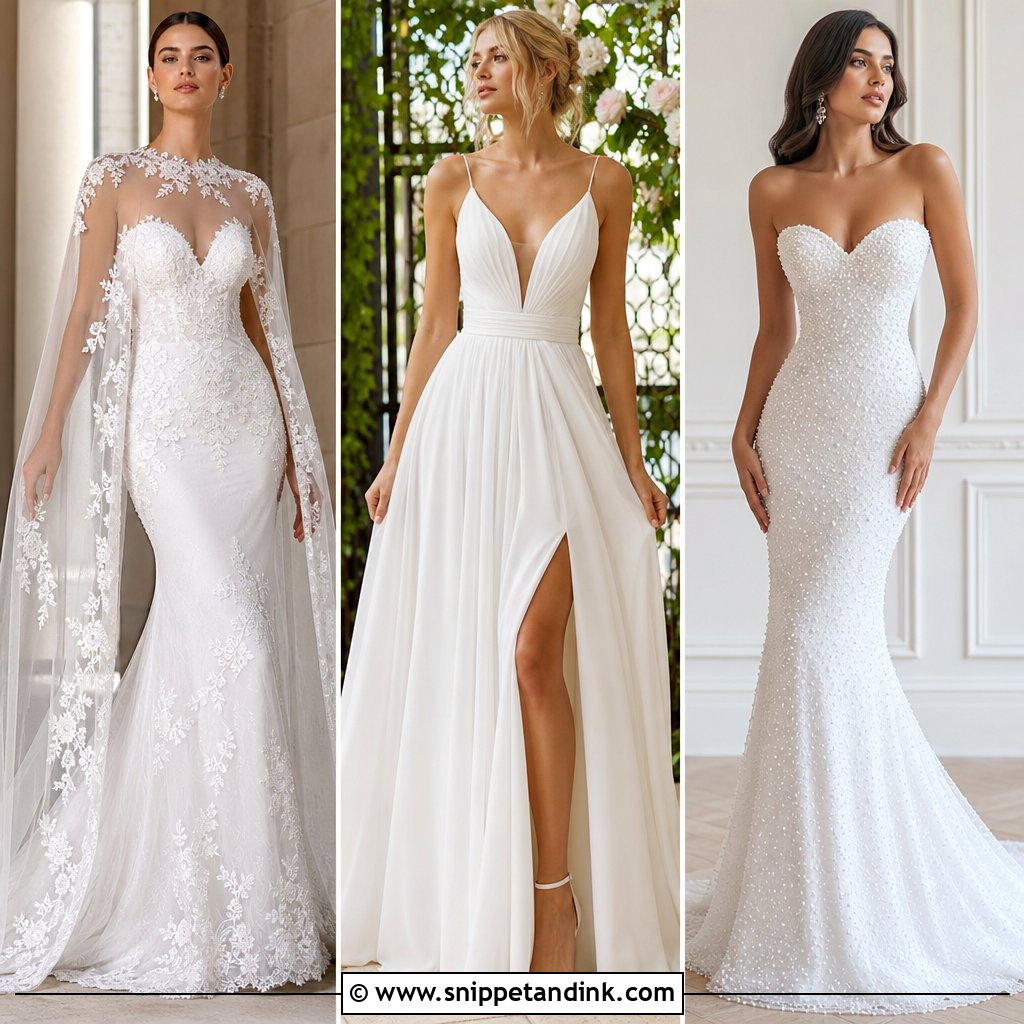
Cape sleeves give arm coverage that breathes, which makes them one of my favorite answers for a warm garden. Chiffon panels attach at the shoulders and fall to the elbow, wrist or floor over a clean A-line, with small appliqués at the neckline. If the cape reaches the floor, skip the long veil; two layers of sheer fabric overlap and hide the cape. A slim pearl hairpiece or a short veil works instead. Low pointed heels, understated earrings and a compact white bouquet finish it. On a windy day, have your planner check the capes aren’t wrapping around the bouquet before the processional.
10. Vintage Tea Length Wedding Dress
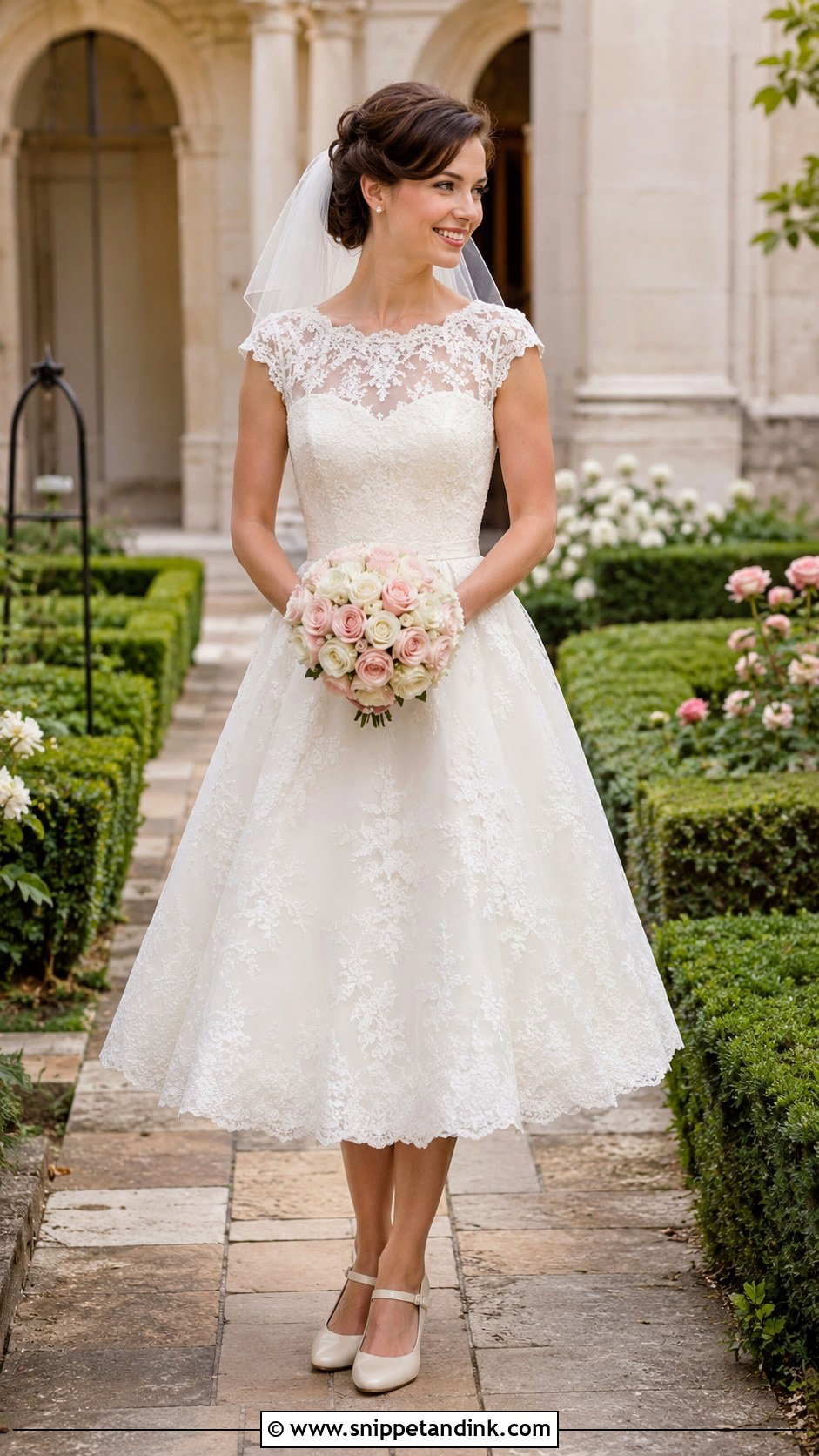
Tea length is the practical garden choice. A hem between knee and ankle stays out of the grass entirely, and you’ll feel the difference on the dance floor. A fitted lace bodice, defined waist and small covered buttons or floral embroidery bring a vintage feel. Because shoes show, they matter: ivory pumps, embellished flats or Mary Janes. Pearl studs, a short veil and a round rose bouquet keep it cohesive, with a neat chignon or shoulder-length waves. Daytime and intimate weddings suit it well.
11. Boho Bell Sleeve Wedding Dress
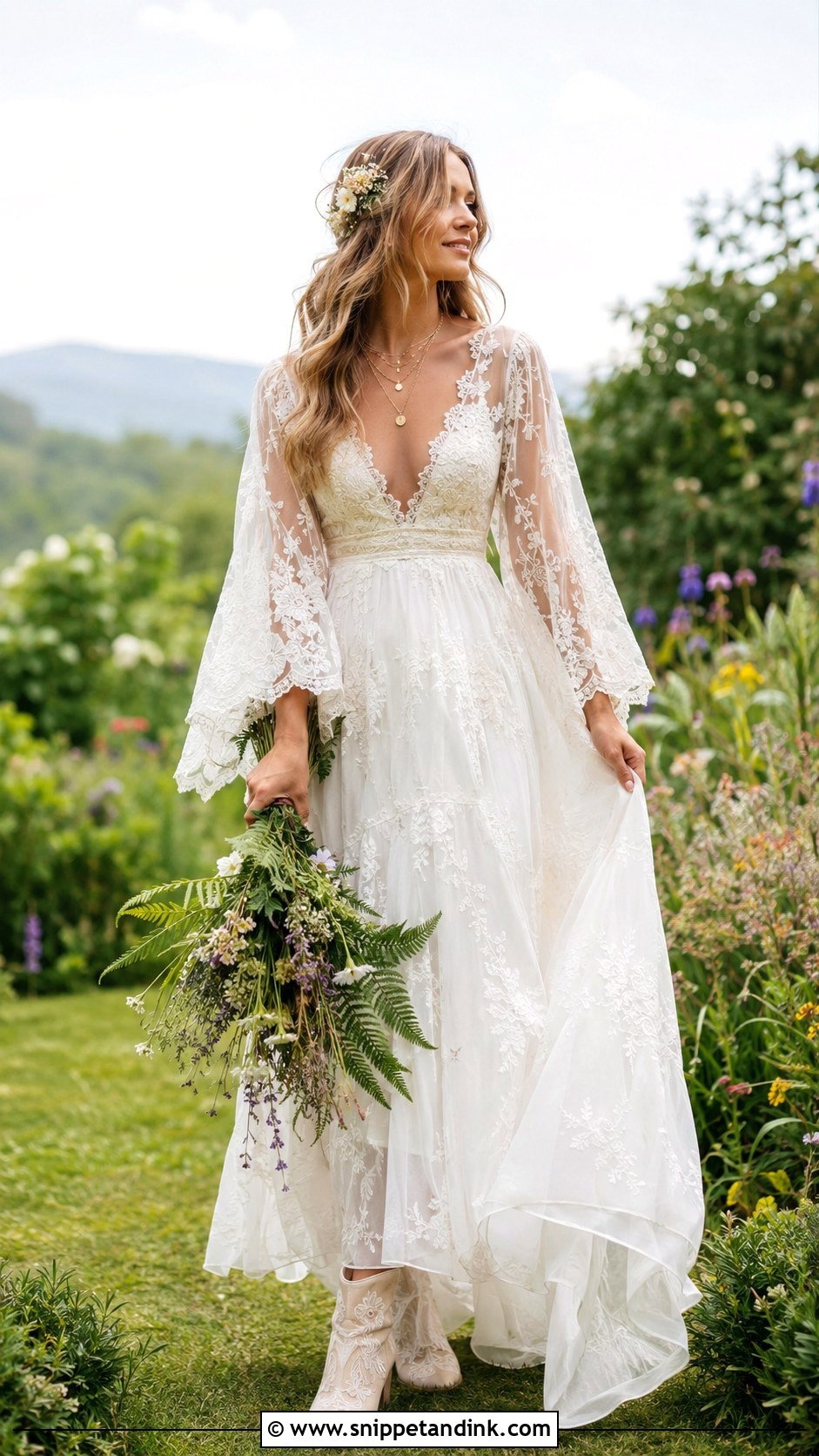
Bell sleeves and soft lace feel at home in a woodland garden. Look for an empire or fitted waist, a flowing skirt and sleeves that widen below the elbow. The lining matters: a smooth nude lining stops sheer lace looking see-through in strong backlight, which is common in outdoor photos. Embroidered ankle boots or low block-heel sandals manage meadows, and a flower comb with fine layered necklaces suits the neckline. A loose bouquet of wildflowers and ferns pairs well. A cape veil or a simple ribbon in the hair is more in keeping than a long cathedral veil.
12. Sparkly Tulle Wedding Dress
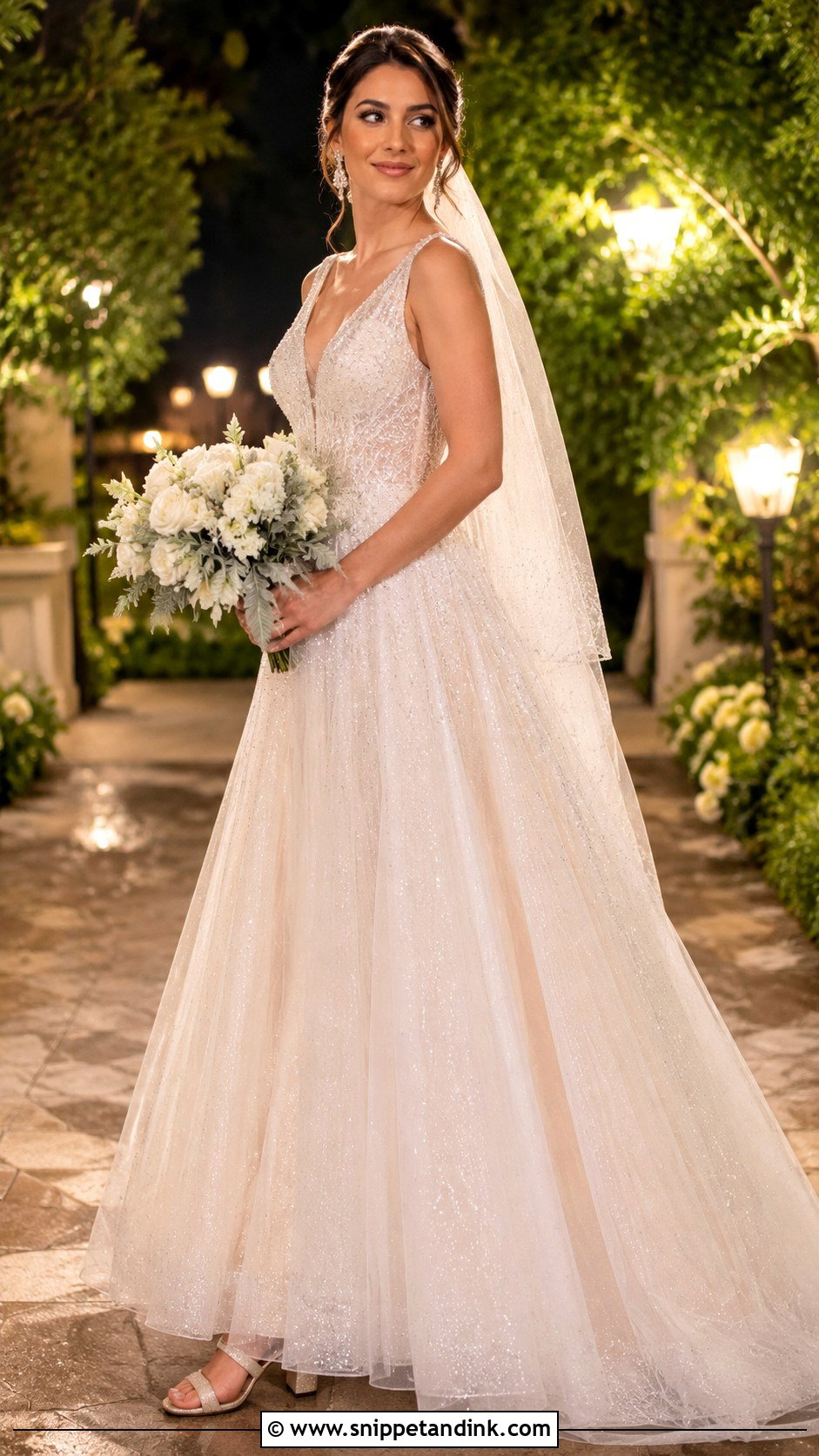
A sparkly tulle wedding dress comes alive once the string lights go on. Fine glitter tulle, tiny sequins or scattered crystals read softer than large stones. Keep the skirt A-line and the bodice fitted and sleeveless so the shimmer leads. Ask the bridal shop how the glitter is bonded; cheaper glitter tulle sheds onto your partner’s suit and every hug. Silver or champagne shoes, crystal earrings and a plain sheer veil suit it, with white flowers and silvery foliage. Keep makeup radiant rather than glittery. It’s best for ceremonies that run past sunset.
13. Square Neck Floral Wedding Dress
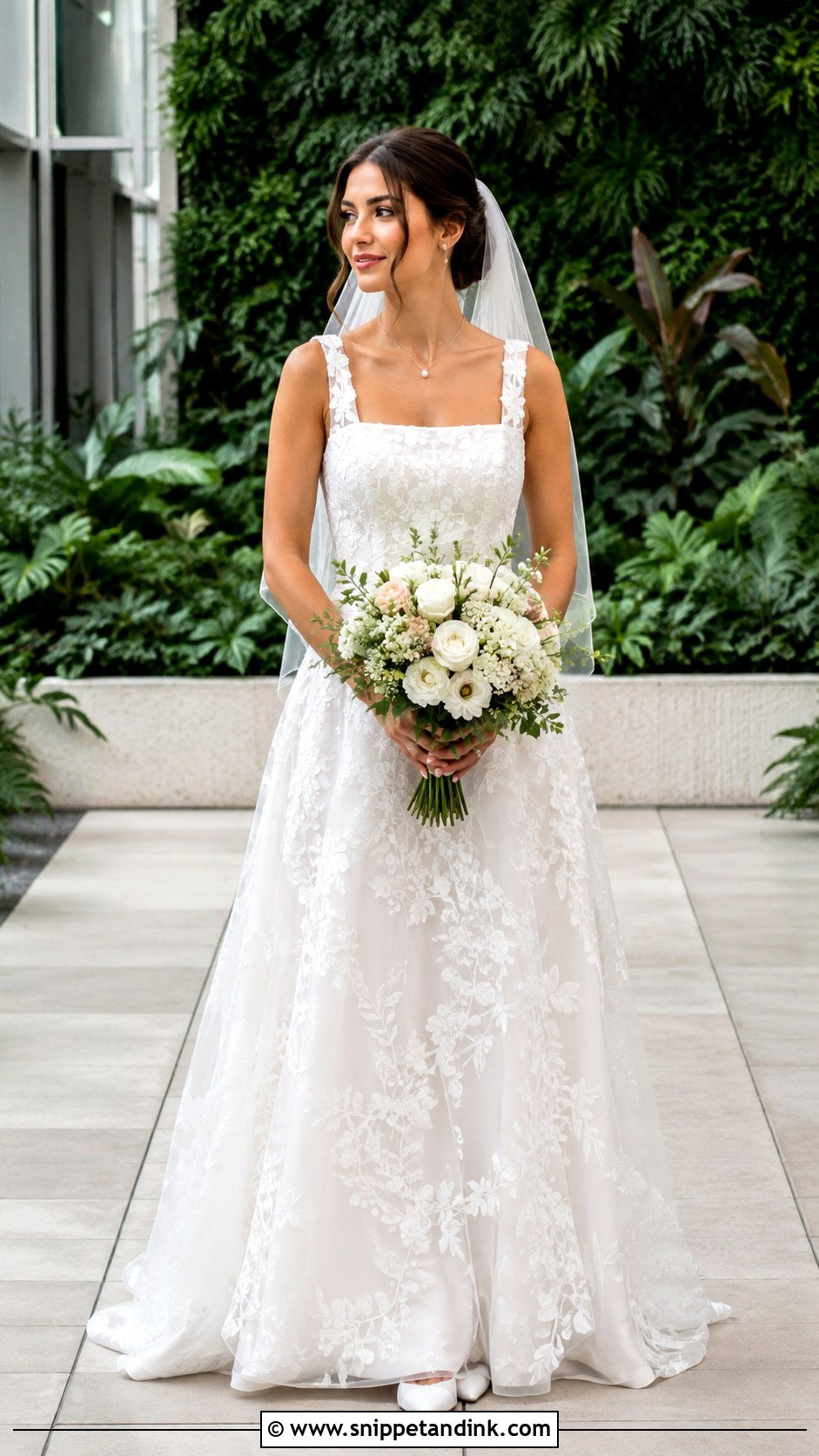
The square neckline brings a clean modern shape to floral fabric. A fitted bodice on supportive straps and an A-line or column skirt in vine lace keep it romantic. That neckline frames the collarbone, so a short pendant or delicate pearl strand is enough. Wider straps give more coverage and more security than strapless, which matters if you’ll be hugging guests in a breeze for an hour. Pointed block heels, a light veil, a structured seasonal bouquet and a polished low bun match its geometry. It suits formal parterres and modern gardens equally.
14. High Low Garden Wedding Dress
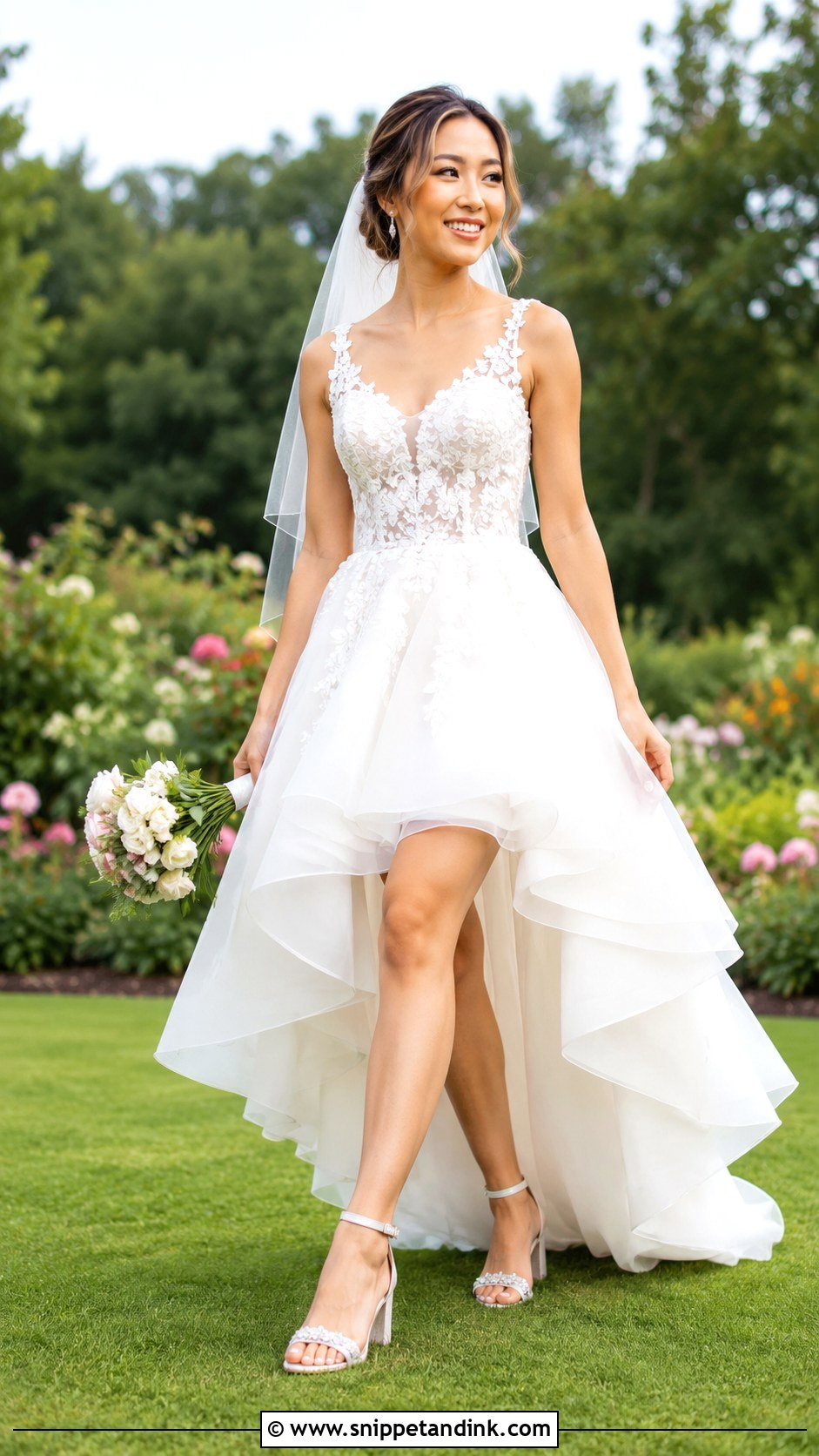
High-low hems are about the curve. A gentle dip from front to back reads graceful; an extreme difference looks like two dresses. Floral lace, organza or layered tulle move well as you walk. Since your shoes are on full show, choose embellished block-heel sandals or bridal flats meant for outdoor ground. A fitted top balances the skirt, with simple earrings, a short veil and a small bouquet that doesn’t cover the bodice. Petite brides do well here because the shorter front shows the leg. It also works for a courthouse ceremony followed by garden portraits.
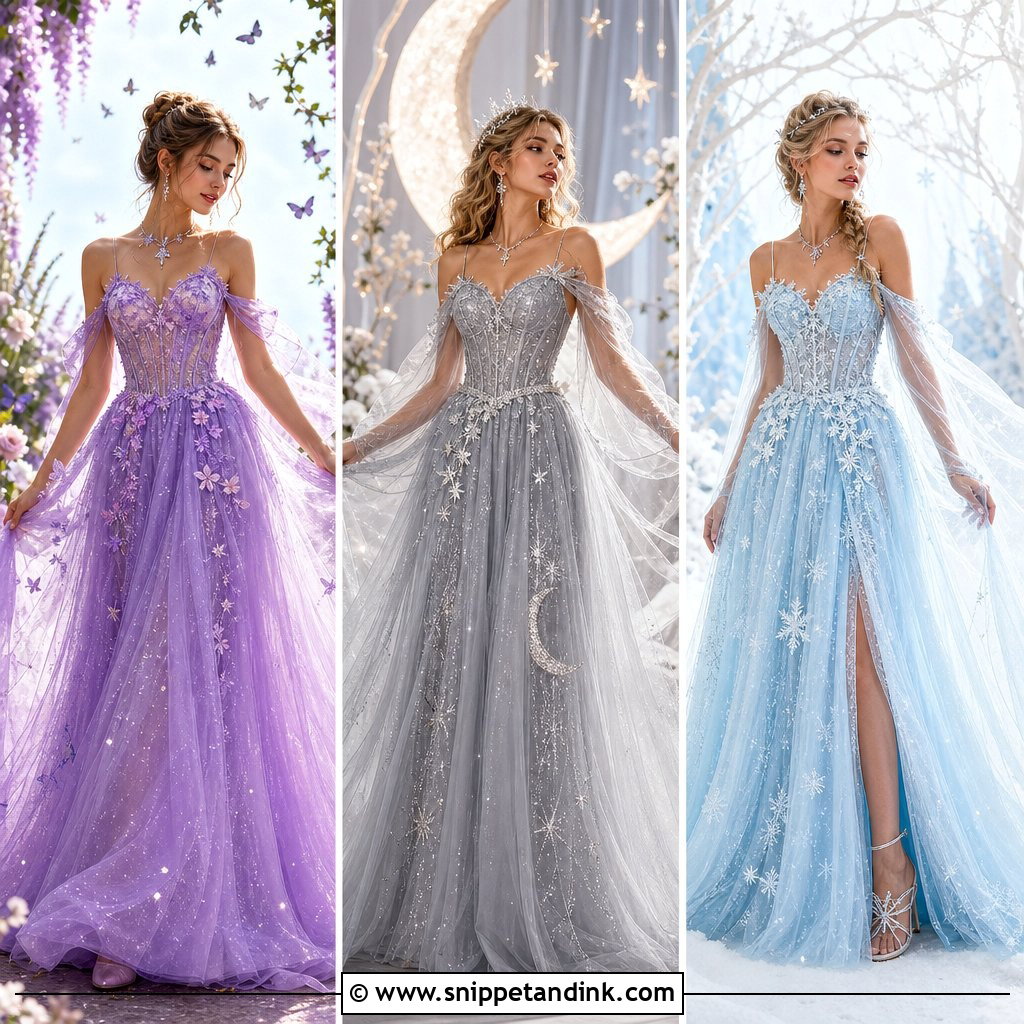
15. Fit And Flare Lace Wedding Dress
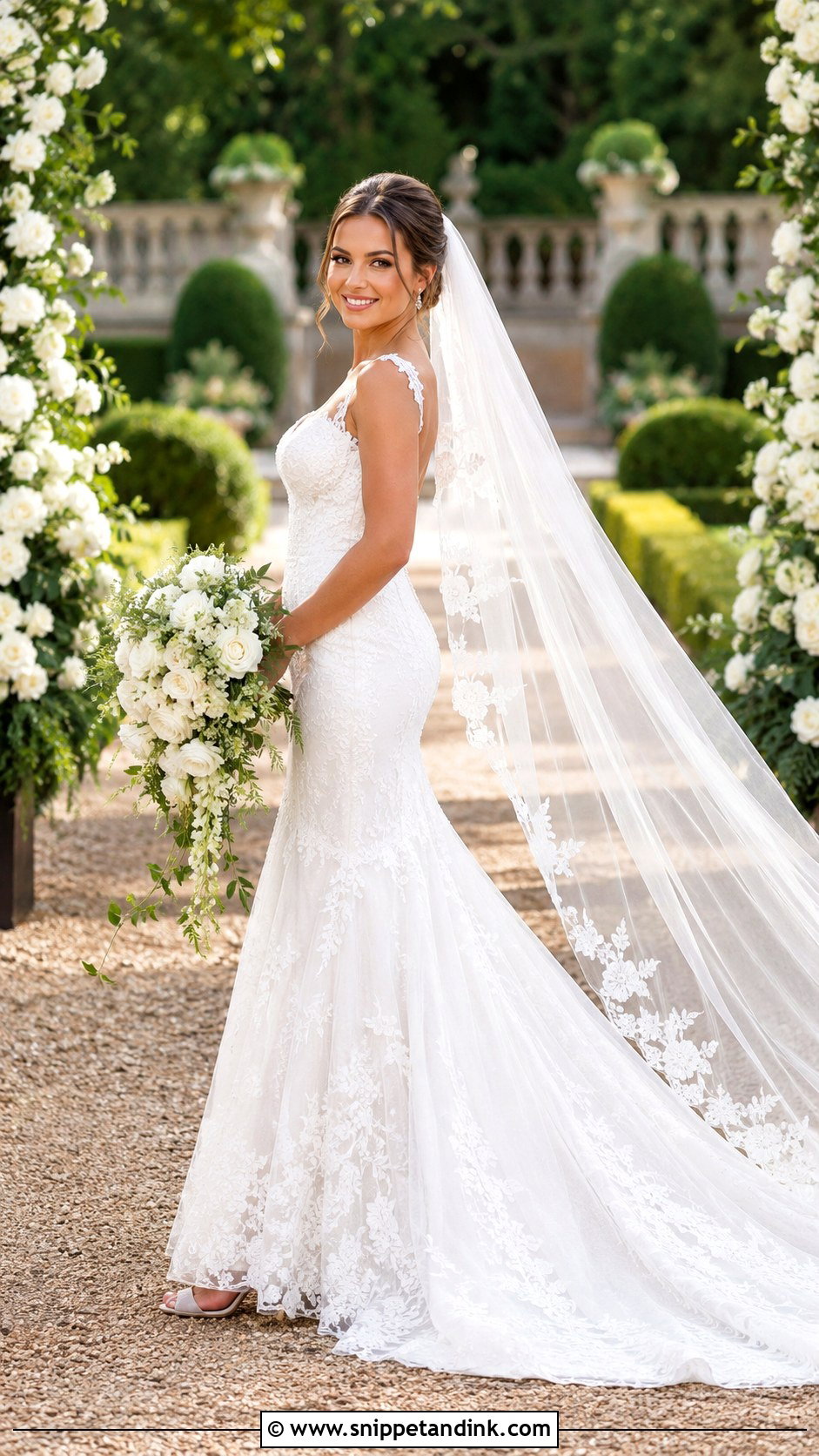
Fit-and-flare gives shape without the restriction of a true mermaid. The gown should fit through the bodice and hips and widen above or around the knee, and where that flare starts decides whether you can walk up garden steps. I have brides climb a step or two in the shop. Stretch lining and light lace make it easier to wear outside than rigid fabric. Stable block heels, a floral-edged veil, pearl drops and a restrained cascading bouquet suit it, with a side-swept style or low bun showing off the back.
16. Pastel Embroidered Wedding Dress
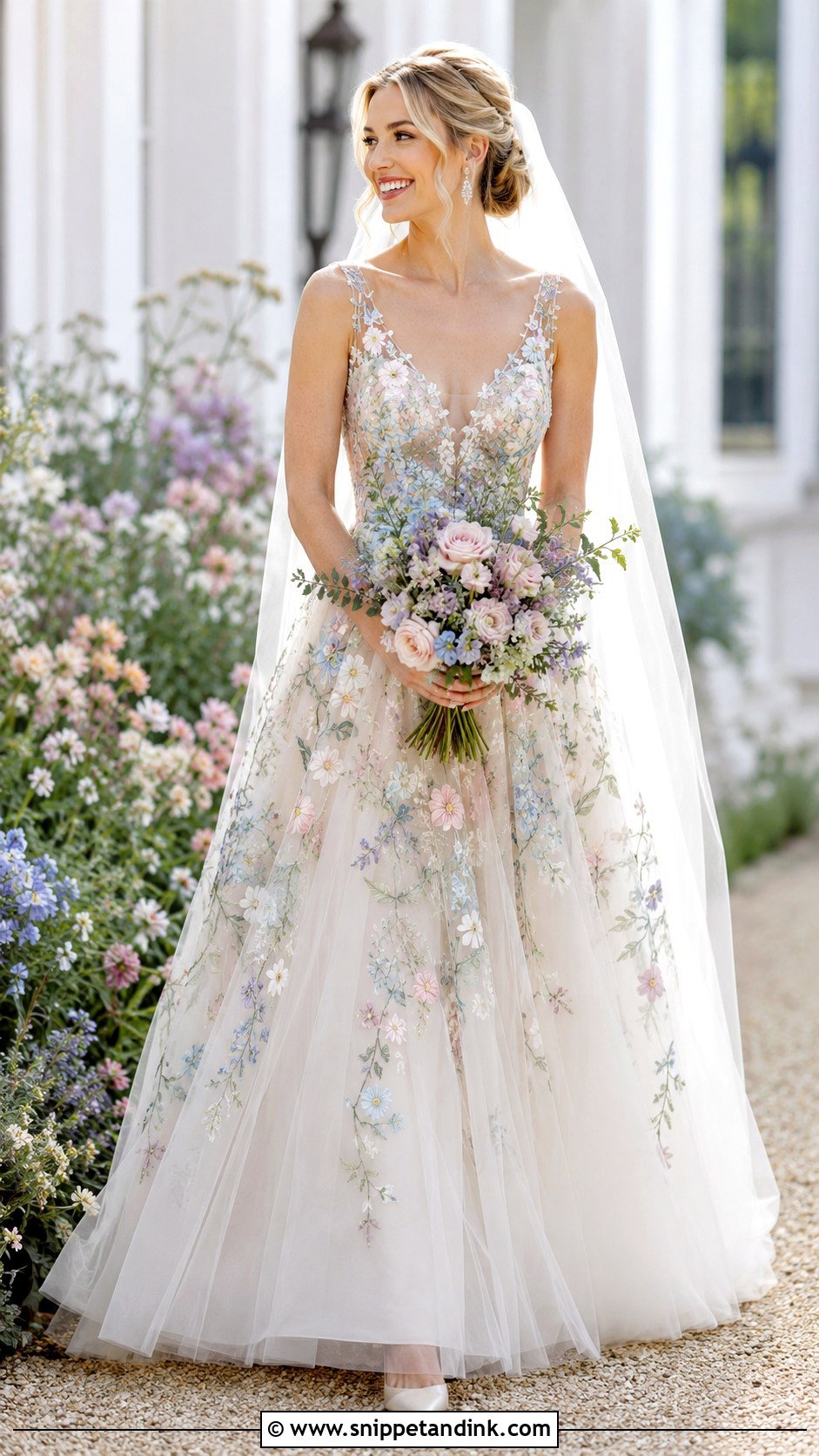
Pastel embroidery puts the garden right into the gown. An ivory or soft nude base with pale pink, blue, lavender and green flowers stays sophisticated if the palette is muted. Ask your florist to pick up only two or three shades from the dress; matching every color makes the bouquet look like a swatch card. Neutral ivory heels, small gemstone earrings and a plain veil keep the embroidery visible. On tulle A-lines the motifs seem to float across the skirt. Spring and early summer suit it best.
17. Detachable Sleeve Wedding Dress
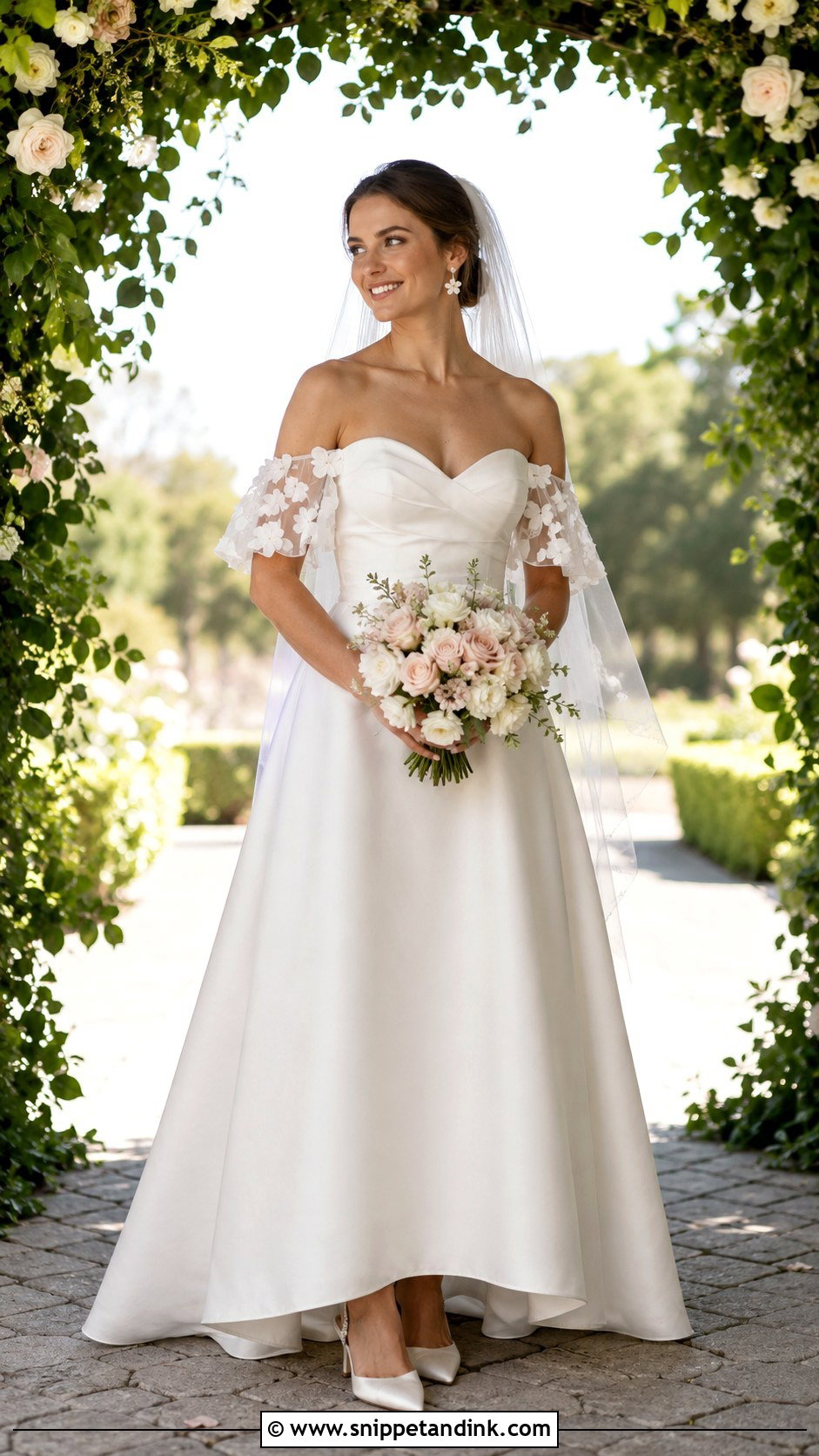
Detachable sleeves give you two outfits from one dress. Start the ceremony in an ivory A-line with floral off-shoulder or sheer fitted sleeves, then take them off for a strapless or sleeveless reception look. Check the fastenings from the side and back in a three-way mirror; visible hooks spoil the effect in portraits. Satin heels, floral earrings and a fingertip veil you can also remove pair well, and a smaller second bouquet makes dancing easier. This setup also helps when the afternoon cools and you want the sleeves back on.
18. Minimalist Silk Wedding Dress With Floral Veil
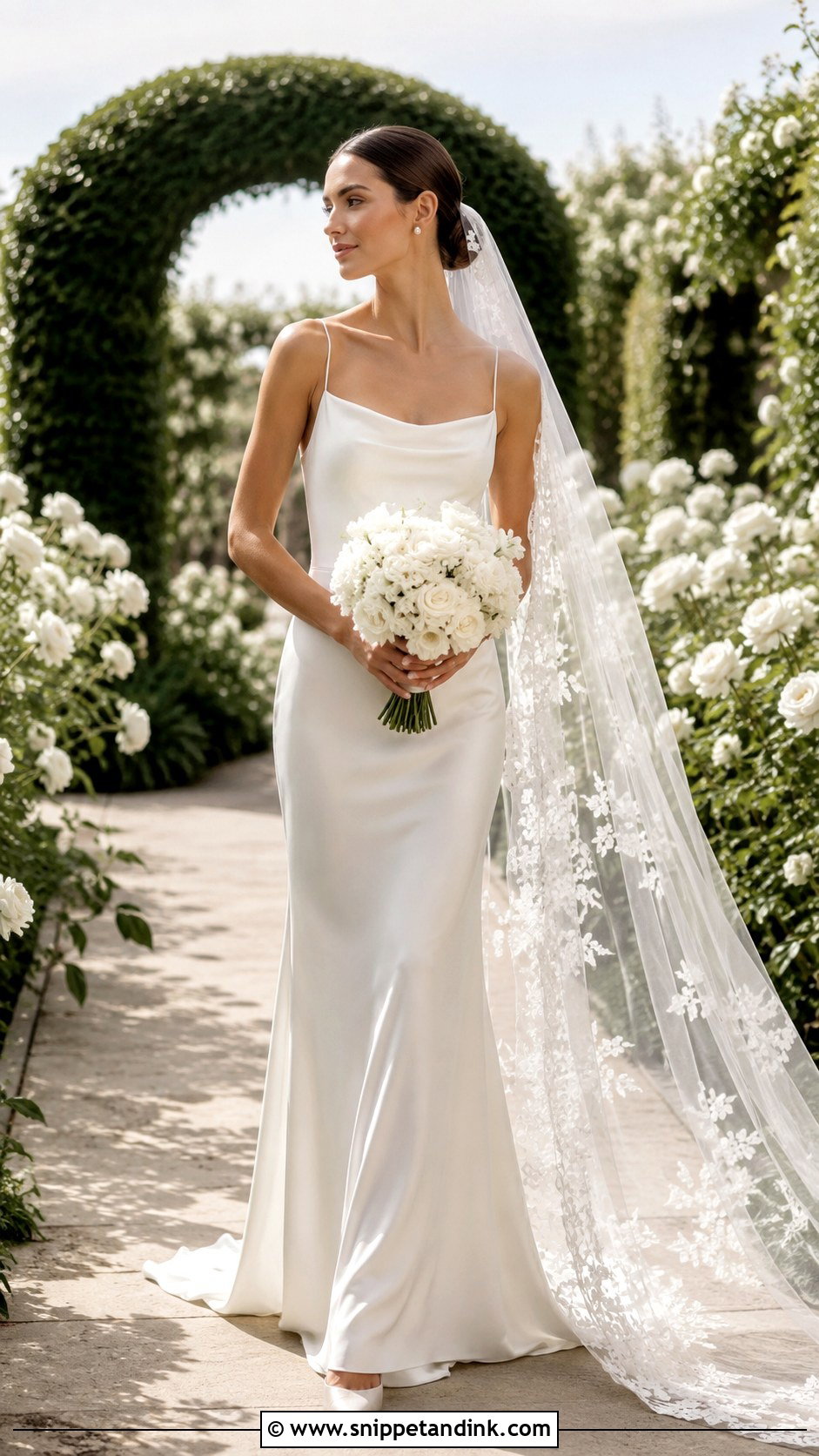
Minimal silk gives one accessory the job of carrying the garden theme. A smooth A-line or column dress with a clean neckline and a restrained train is the base, and an embroidered veil with delicate vines, petals, or scattered blossoms does the rest. A long embroidered veil is heavier than plain tulle, so it needs a sleek low bun and a comb anchored with crossed pins to stay put. Silk also shows water spots, so keep it away from sprinklers and damp benches. Pointed ivory heels, pearl or diamond studs and a single-color bouquet keep things calm, and removing the veil later leaves a streamlined reception look.
19. Plus Size Floral Ball Gown Wedding Dress
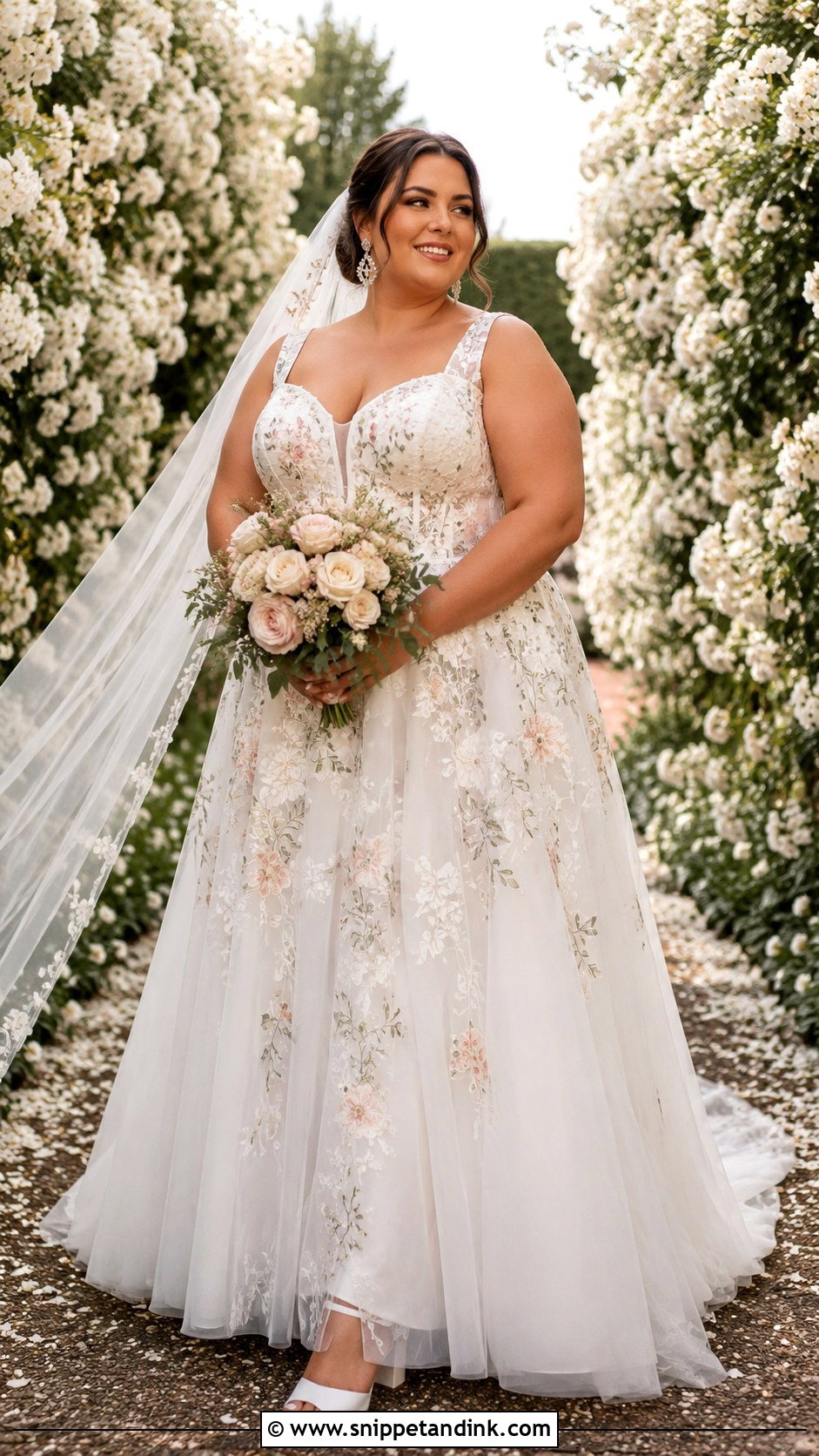
For a plus-size bride, a floral ball gown starts with support. Choose correctly sized cups, wider straps or an illusion neckline depending on how much hold you want. A defined natural waist and lightweight layered skirt give volume without stiff, heavy fabric. Appliqués concentrated at the bodice and upper skirt draw the eye up. Comfortable block heels, a chapel veil, statement earrings and a bouquet scaled to the gown finish it. Professional alterations make the biggest difference here; get the waist, neckline and hem set while you sit and walk, so you aren’t adjusting the dress all afternoon.
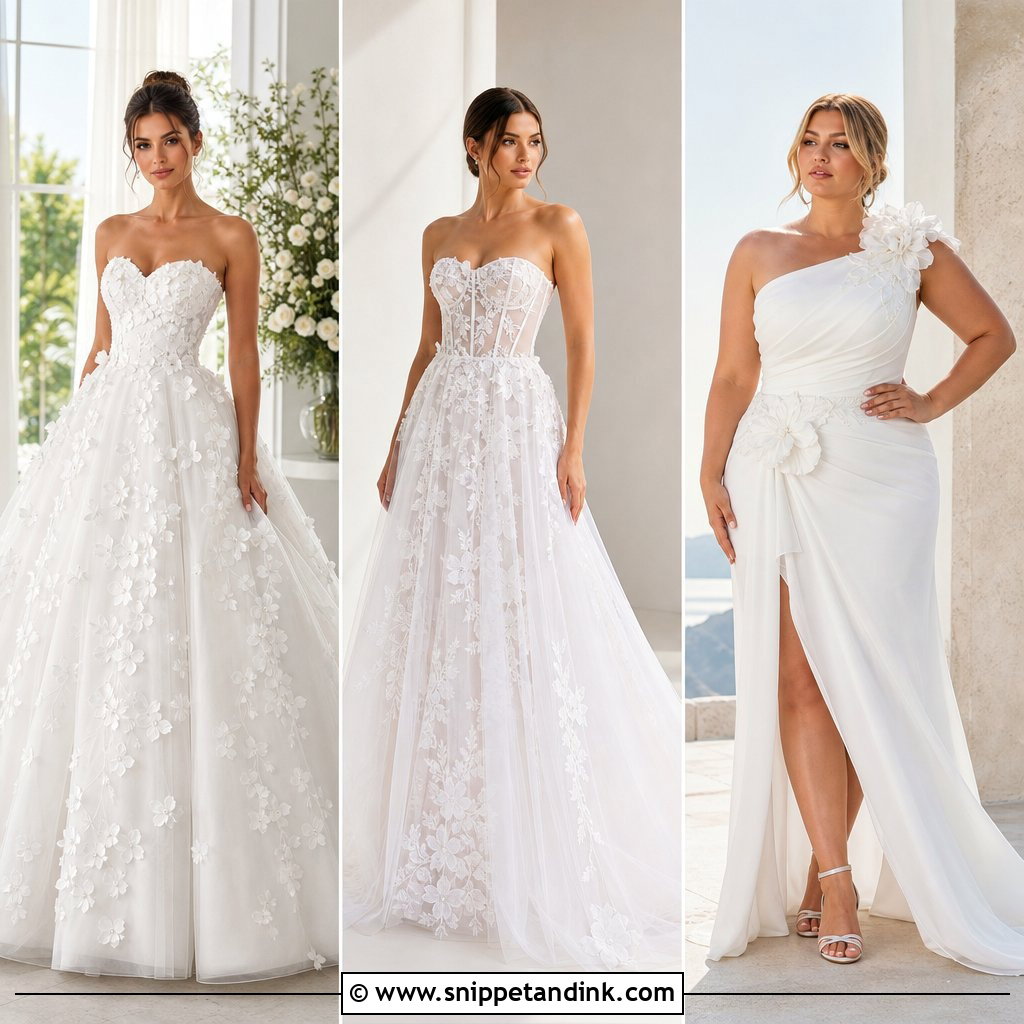
20. Empire Waist Chiffon Wedding Dress
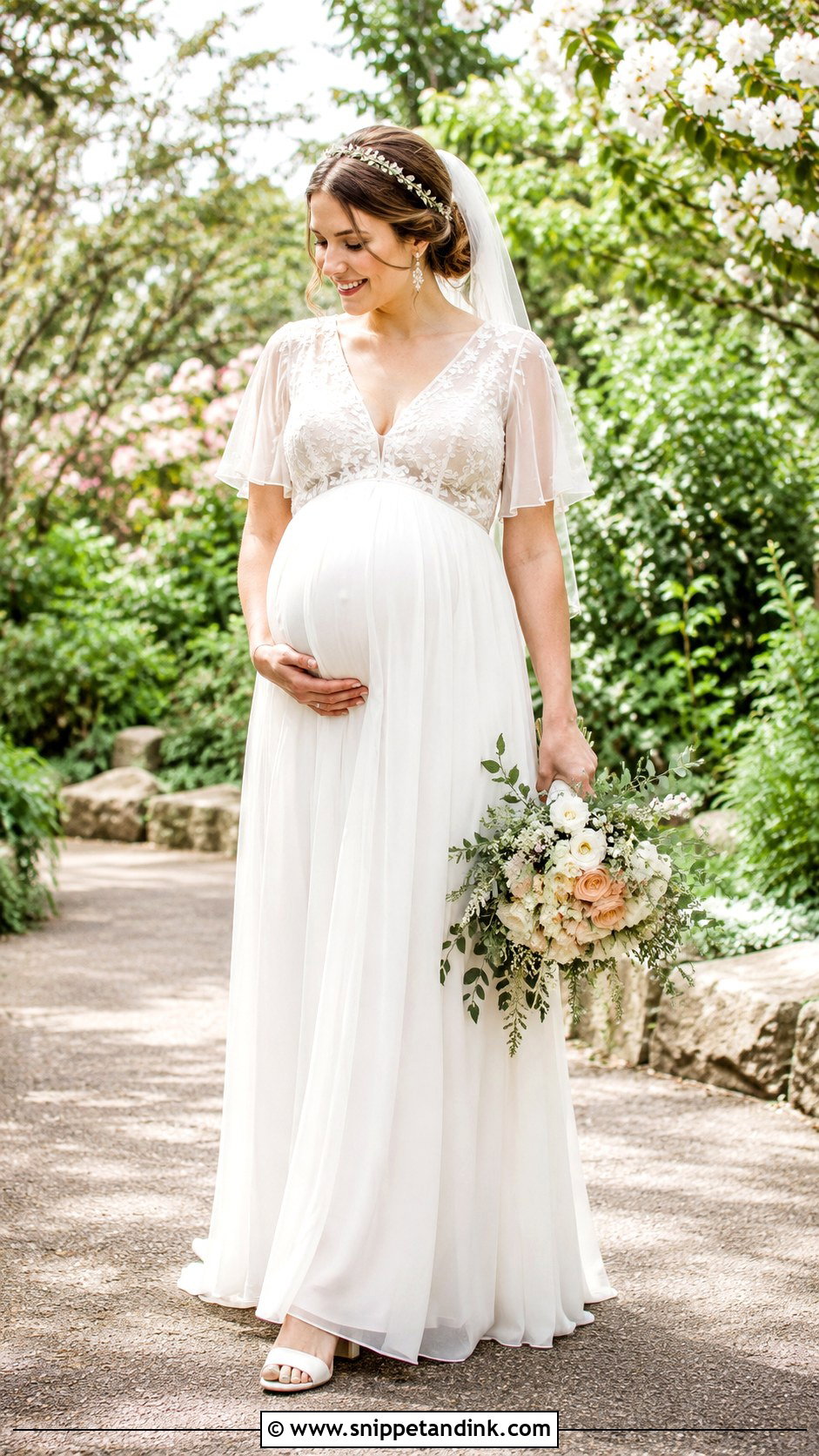
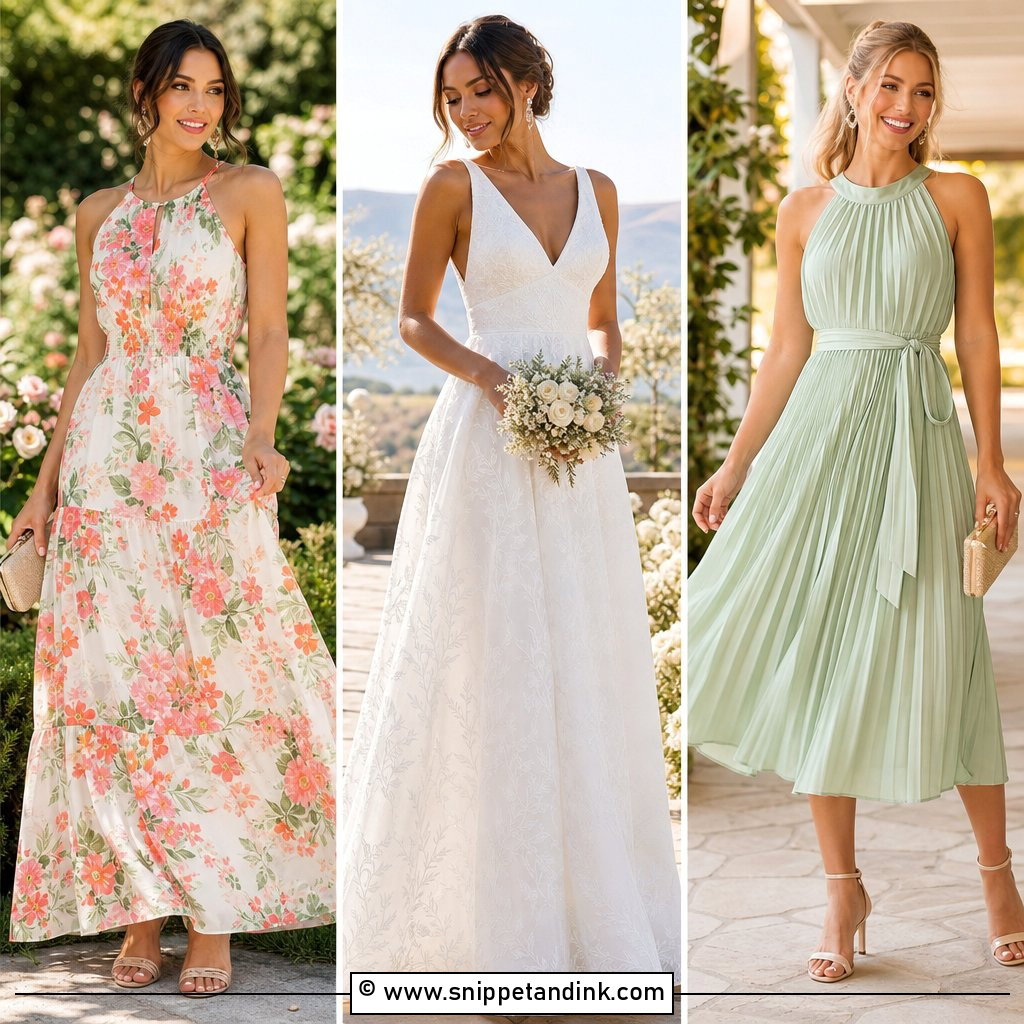
Empire waists are the most forgiving fit on the list. The seam sits under the bust and the chiffon falls loose from there, which suits pregnant brides, hot days and anyone who doesn’t want a tight waist. If you’re expecting, schedule the final fitting as late as your seamstress allows. Floral embroidery, flutter sleeves or supportive straps bring in the garden idea. Hold the lining up to bright daylight to make sure it’s opaque. Low block heels, a vine hairpiece, drop earrings and an airy seasonal bouquet suit it, with a short veil so layers don’t pile up at the shoulders.
Grass Stains, Pollen and Damp Hems After the Day
Almost every garden gown comes home with a dark band at the hem. That’s normal, and the way you treat it in the first few days decides how well it cleans.
On the day
Lily pollen is the worst offender on ivory fabric. Ask your florist to remove the stamens from any lilies, and if pollen lands on the dress, lift it with a piece of tape or a soft brush. Never rub it or wet it, because that pushes the stain into the fibers. Keep a small kit with tape, white chalk and tissues for minor marks.
The week after
Hang the dress loosely in a breathable bag, not plastic, so any dampness in the hem dries. Take it to a specialist wedding gown cleaner soon rather than months later, and point out every grass, wine and makeup mark. Sugar stains from cake or champagne are invisible at first and turn brown with time, so mention where anything was spilled even if you can’t see it.
For storage, keep it in acid-free tissue in a cool, dark, dry place. Attics and basements swing in temperature and humidity, which yellows ivory fabric over the years.
A Dress That Can Handle the Lawn
The gowns here range from romantic and modern to boho, colorful, minimal and size-inclusive. Start with a silhouette that feels secure, then add botanical lace, embroidery, color or a bit of sparkle. Outdoors, practical details carry more weight than usual: stable shoes, breathable lining, a manageable train and a bustle that holds. Let accessories support the gown; a plain veil balances a detailed dress, while an embroidered one lifts a simple one. Walk, sit and move in each look before deciding, and the garden wedding dress you end up with will feel like yours at the end of the day as much as the start.
You'll Like These Ideas:


Leave a Reply