
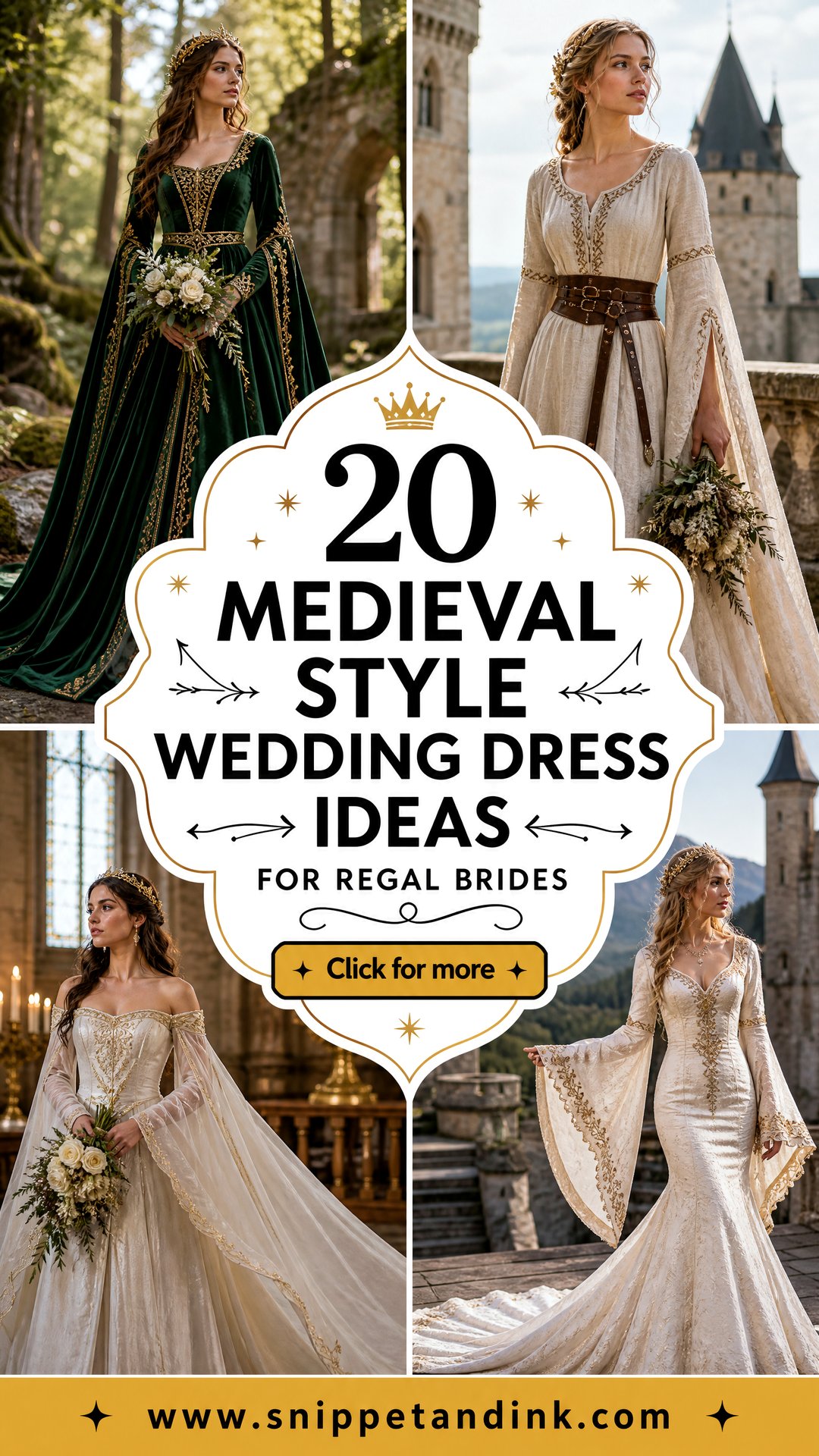
Medieval bridal fashion is one of the few wedding styles where the sleeves, the belt and the cloak matter as much as the gown itself. I love dressing for it because a bride can choose how far back in time she goes: a full corseted bodice and a hooded cape, or a plain crepe dress with one long flared sleeve that only hints at the period. Colour is open too, and forest green, burgundy and deep blue all read as bridal once the trims and veil are right. Below are twenty complete looks, each with the shoes, jewellery and hair I would pair with it, plus the fitting and fabric points that decide whether a gown like this is comfortable by the evening.
Long Sleeves, Heavy Cloth and What Goes Underneath
Medieval styles are heavier than most modern gowns, and the weight sits in places a bride is not used to: the forearms, the shoulders and the back of the skirt. I start every fitting for this style by asking what the day involves. A woodland ceremony followed by a long dinner and dancing calls for different sleeves and a different fabric than a forty-minute castle ceremony followed by photos.
Sleeves are the first thing I adjust. A bell or trumpet sleeve should finish at the knuckles when your arm hangs, not at the fingertips, or it will trail through everything you reach for. If you love a floor-length sleeve, ask for a hidden finger loop or a small snap at the wrist so it can be held back while you eat.
The layers no one sees
- A soft petticoat, not a hoop. Medieval skirts fall in folds rather than a bell, and a hoop makes the gown look Victorian.
- A cotton or silk lining under velvet, wool and brocade, so the fabric does not cling or itch through a long day.
- A cape or cloak that clips to the gown at both shoulders with hooks, so it does not pull the neckline back every time you turn.
- Flat or low shoes chosen before the hem is cut. These skirts are hemmed to just brush the floor, and two centimetres of heel changes everything.
In summer, I suggest keeping the period details in the trims and sleeves and taking the body of the gown down to chiffon, linen or light crepe. Velvet and brocade in July is a long afternoon.
1. Ivory Medieval Wedding Dress With Bell Sleeves
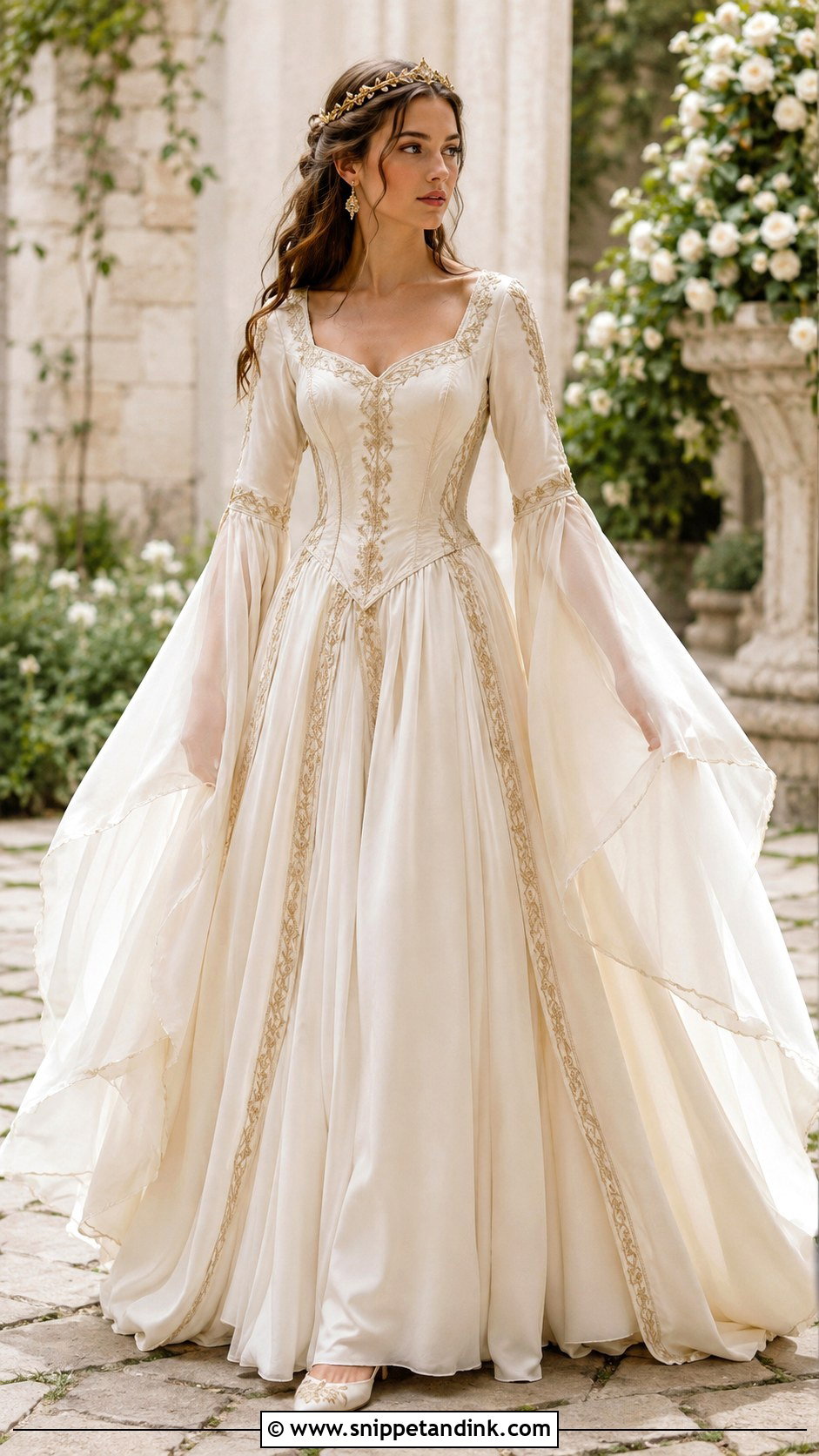
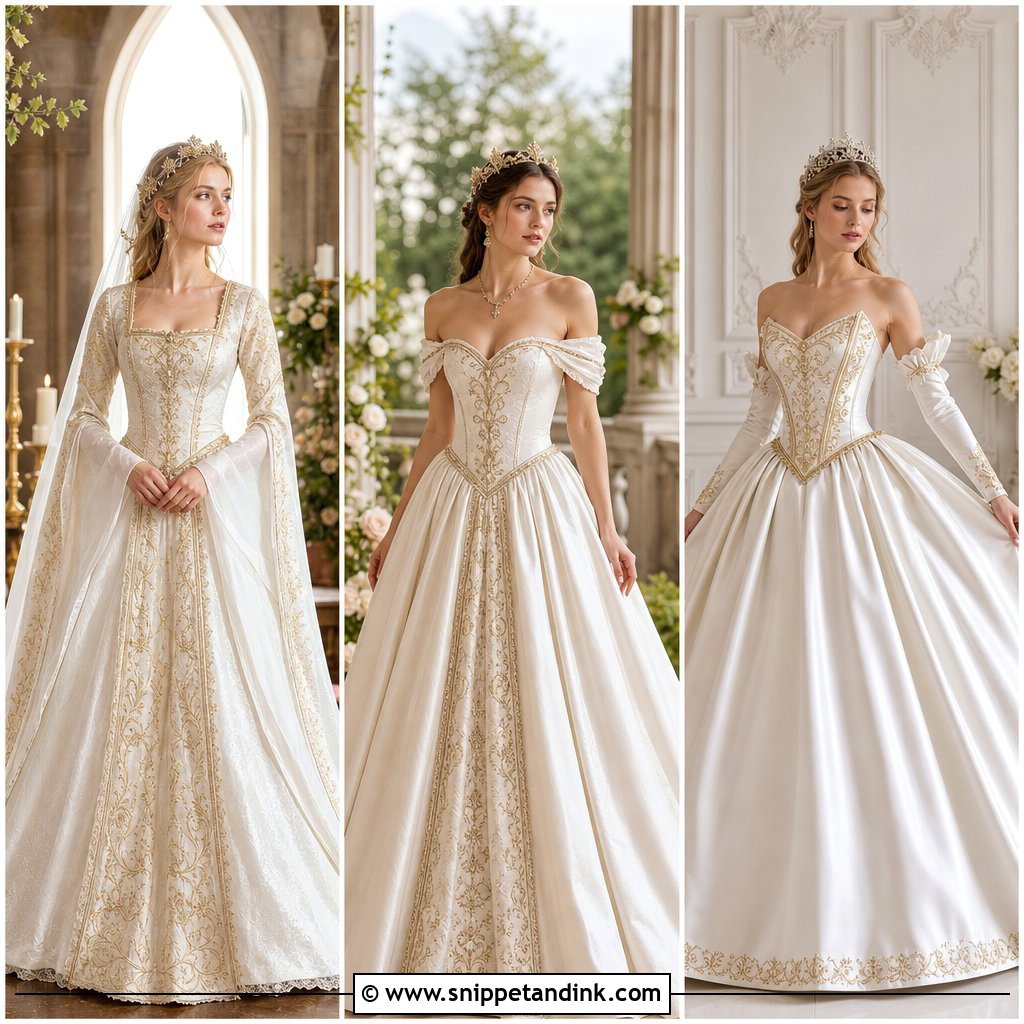
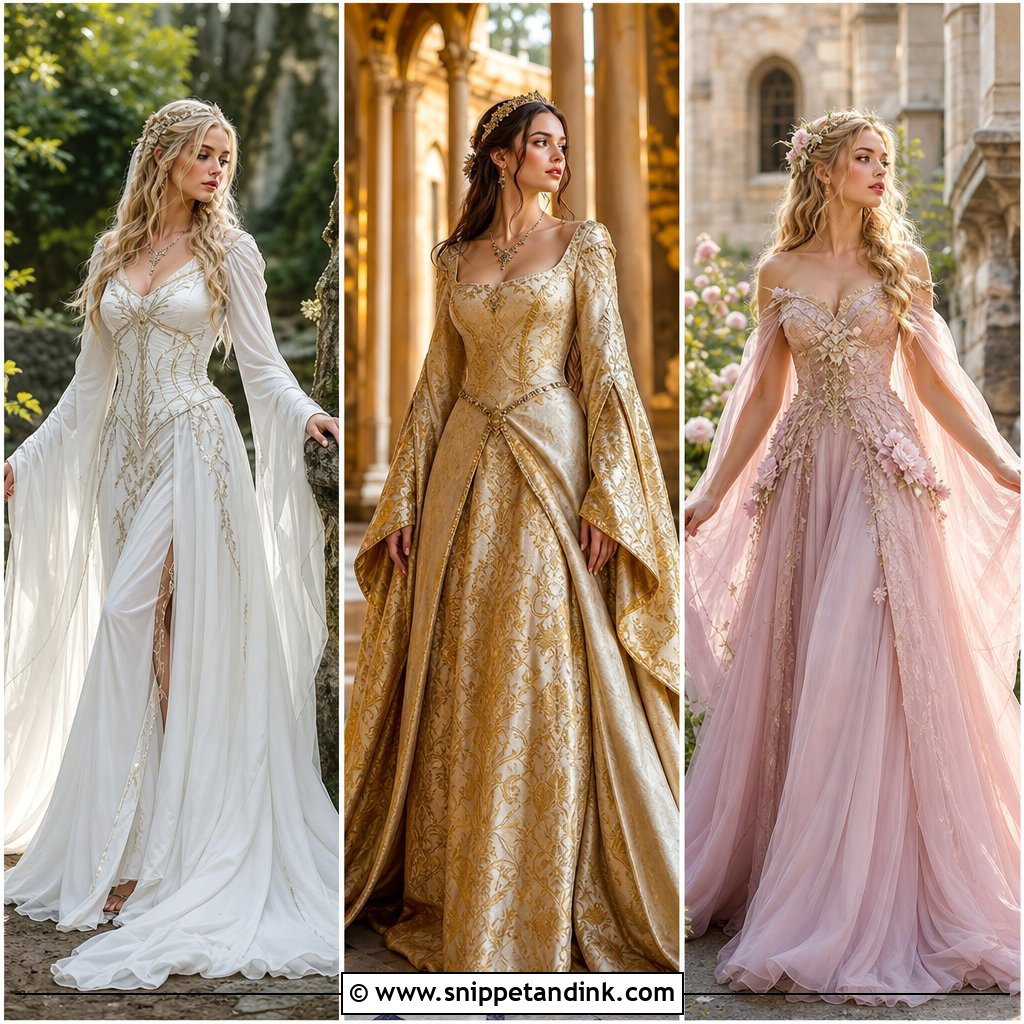
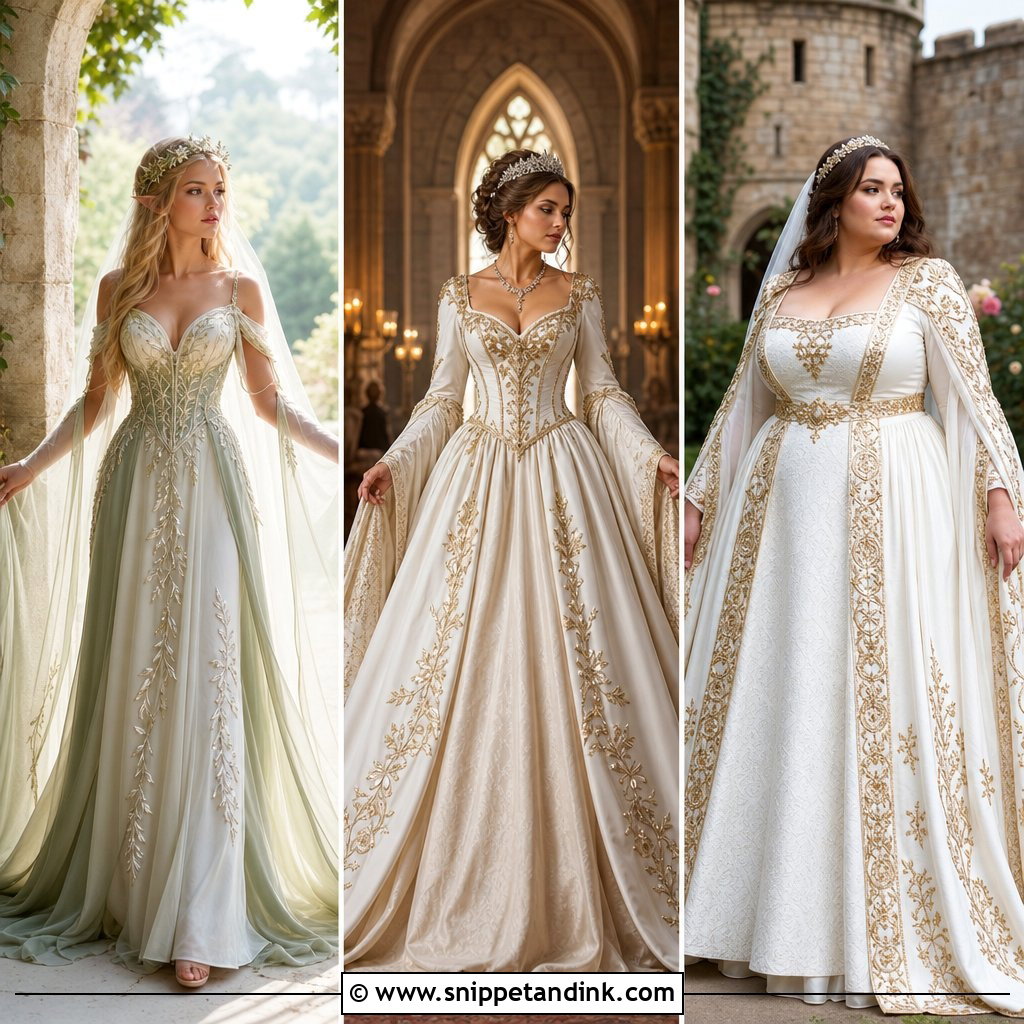
Bell sleeves are the quickest way to say “medieval” without anyone thinking costume. Keep the bodice softly fitted with a scoop, square or shallow V neck, and let an A-line skirt run into a modest train. The sleeve fabric changes everything: chiffon floats and moves when you walk, while velvet edged in lace hangs heavier and reads more regal. I always have brides lift a glass and hold a bouquet in a sleeve like this at the fitting, because a bell that opens wider than about the width of your forearm will drag through candle tables and cake. Add ivory pointed flats, a fine gold circlet, drop earrings and loose braids, and let a narrow embroidered belt mark the waist.
2. Corset Medieval Wedding Dress With Full Skirt
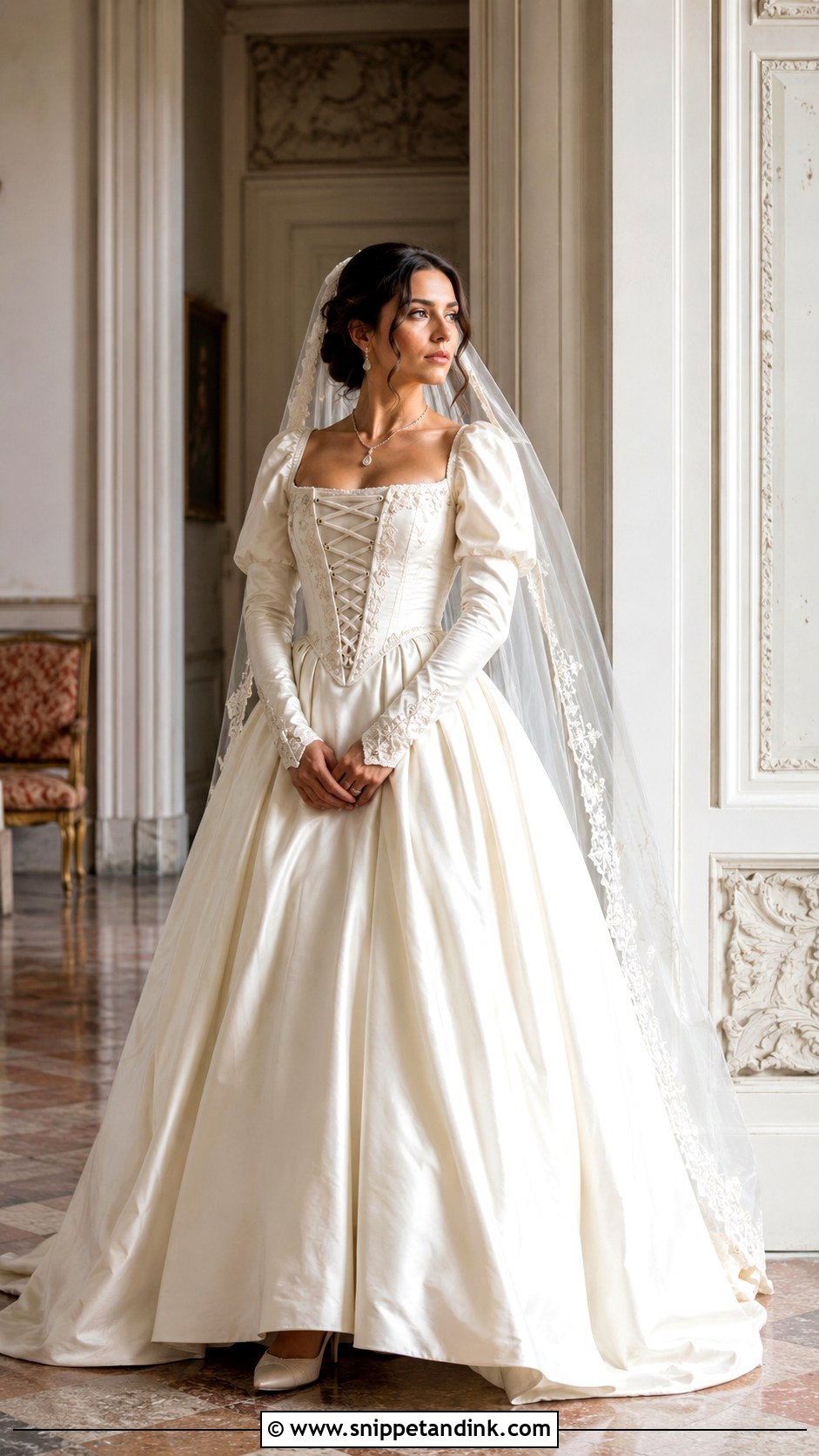
A laced corset bodice over a full skirt gives the strongest shape in this list. Look for visible lacing, decorative boning or embroidered panels rather than a smooth modern bustier, and pick wide straps with a square neckline so the support does not depend on the bodice alone. Under the skirt, layers of satin, tulle or brushed cotton keep the volume soft. What I check first is the lacing gap at the back: it should close evenly with a finger or two of space, because a corset laced fully shut at the fitting has nowhere to go after a three-course dinner. Low block heels, a pendant and a floor-length veil tucked under a braided updo finish it, and detachable fitted sleeves give coverage for the ceremony.
3. Square Neck Medieval Wedding Dress With Long Sleeves
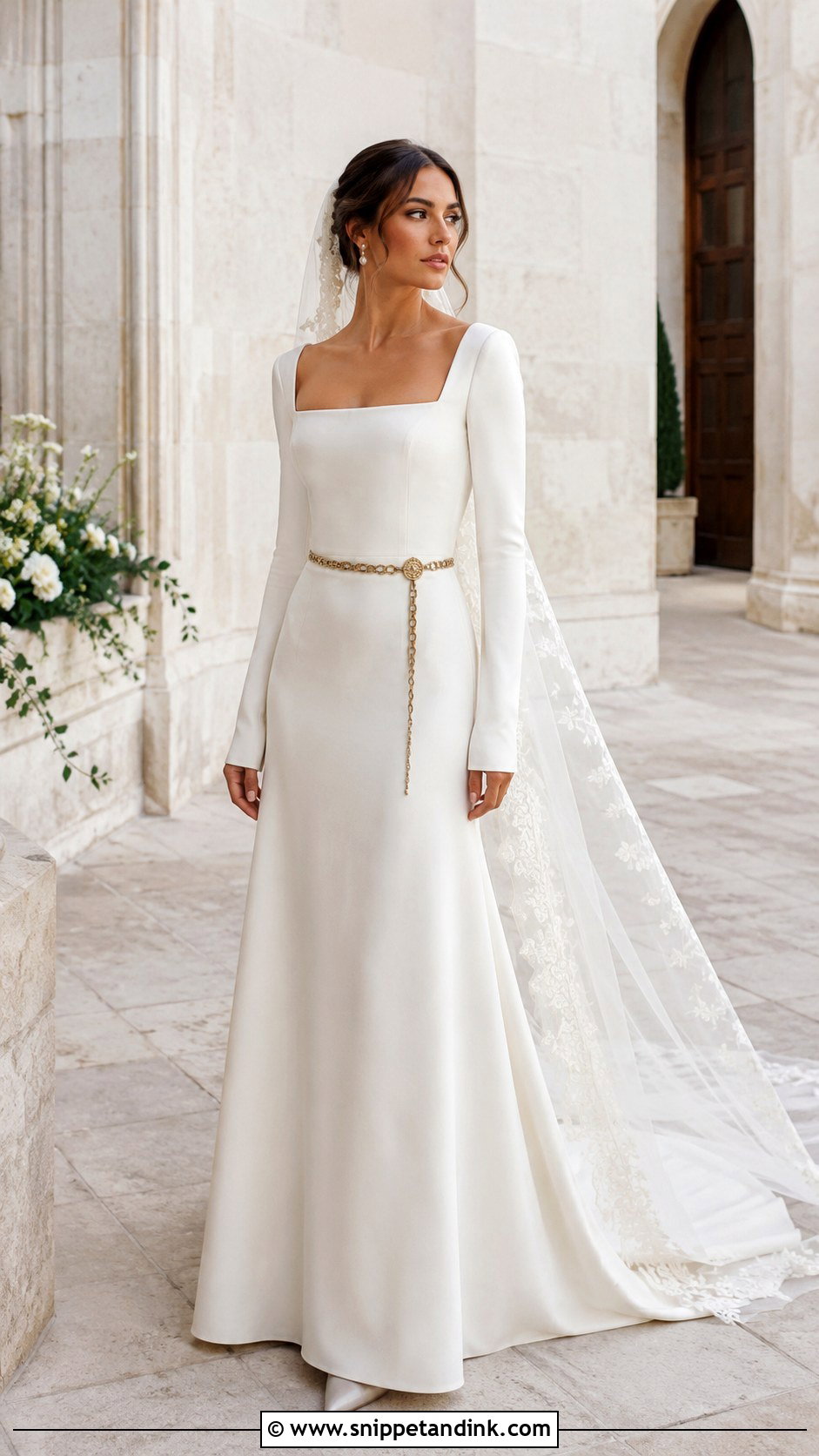
A square neckline is the most flattering medieval detail on a wide range of shoulders, and it pairs naturally with fitted long sleeves and a gently flared floor-length skirt. Matte crepe keeps the gown modern; brocade or embroidered satin pushes it toward the period. A low square back adds interest without much exposure. The fitting point that matters here is the neckline corners, since a square neck that gapes even slightly shows every time you lean forward to sign the register, so I have it tacked to a bra cup or taped with a soft strip. Pearl drops, a fine chain belt, pointed ivory shoes and a veil with a whisper of embroidery suit it, and a crown braid keeps the neckline clear.
4. Velvet Medieval Wedding Dress With Cape
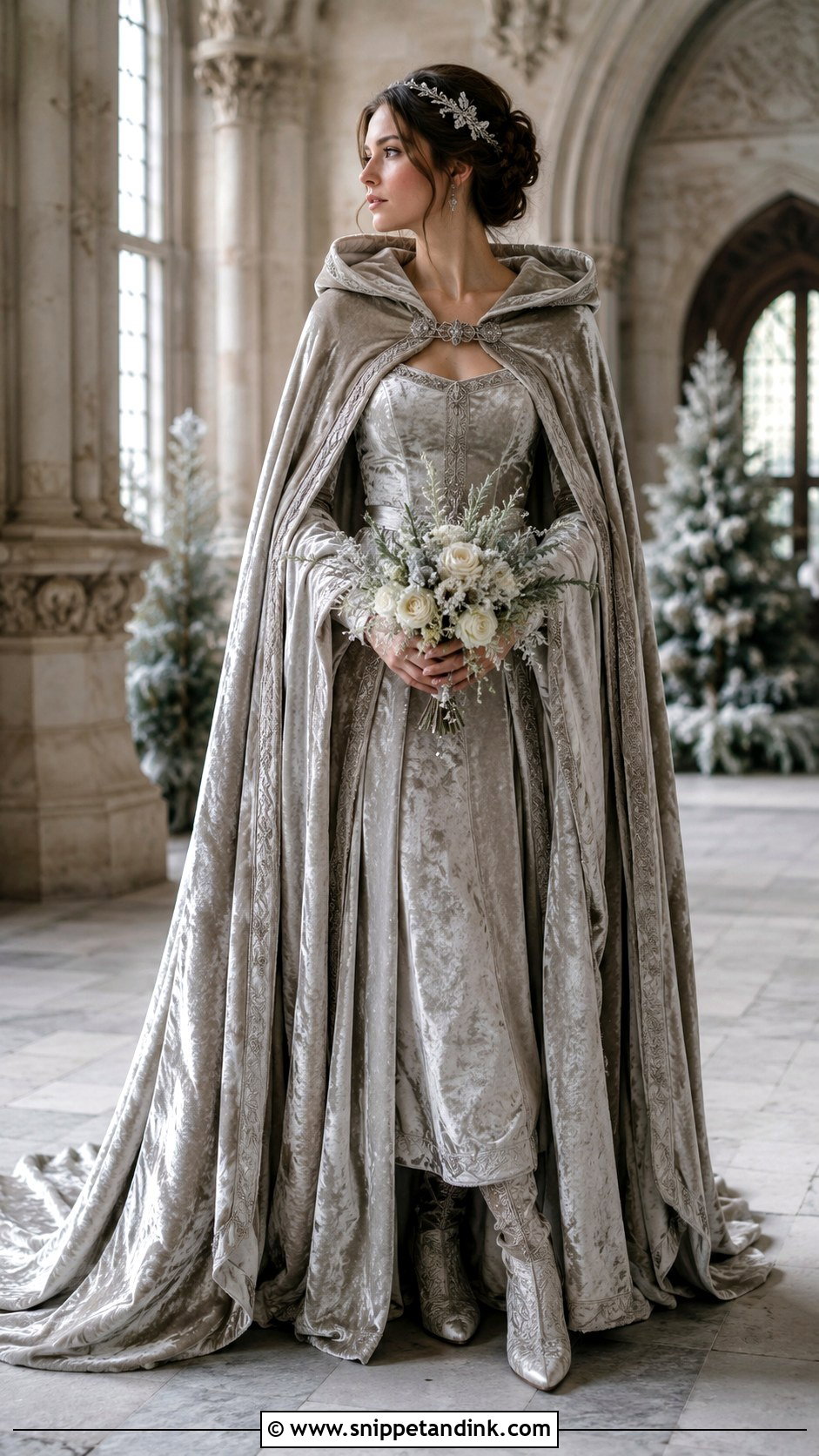
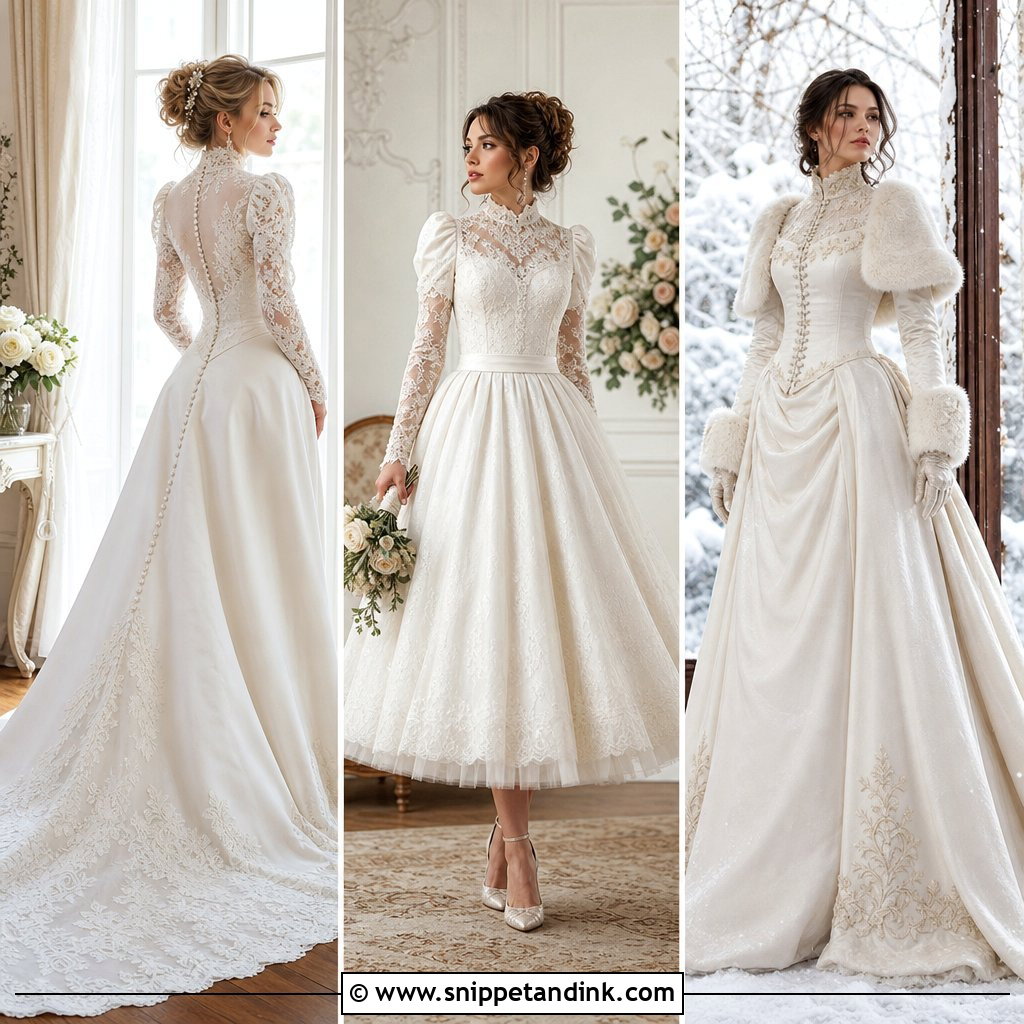
Velvet is the fabric I steer cold-weather brides toward, because it holds warmth and colour in a way satin never does. An ivory, silver, deep green or burgundy gown with a close bodice and slightly flared sleeves, then a hooded cape fastened with a metal clasp at the collar, makes a complete winter outfit. Two cautions: velvet crushes where you sit, so a long car ride leaves marks across the back of the skirt, and its pile looks a shade darker from one direction, which is why the cape and gown should be cut from the same bolt if they are meant to match. Ankle boots, a jewelled comb and a small velvet pouch are plenty; skip big necklaces against all that texture. Stone halls, winter gardens and candlelit receptions are where it belongs.
5. Celtic Medieval Wedding Dress With Embroidery
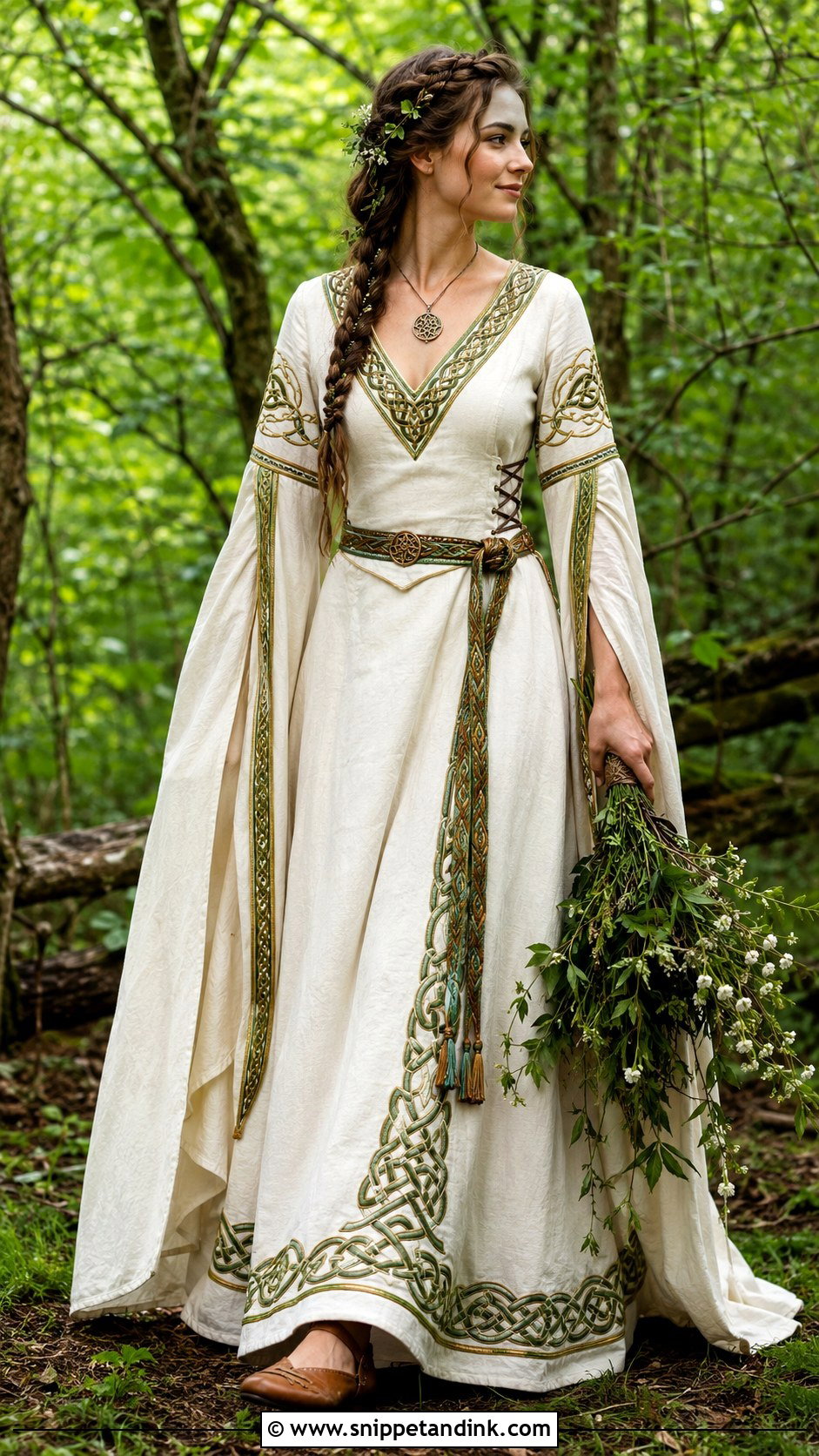
Intricate Celtic-inspired embroidery gives the gown meaning without changing its silhouette. Choose an A-line dress with knotwork at the neckline, waist, cuffs or skirt border, worked in gold, green or silver thread on ivory. I like flowing sleeves and a lace-up back with it, but I keep the underskirt plain so the knotwork has room. Ask how the embroidery is backed: dense thread on a light fabric can pucker and pull the hem unevenly if there is no stabiliser behind it. Leather ballet flats, a slim woven belt, a knot pendant and a few sprigs of greenery in loose braids finish it, with a small capelet for cool evenings. It sits naturally at a handfasting or a woodland ceremony.
6. Hooded Medieval Wedding Dress With Long Train
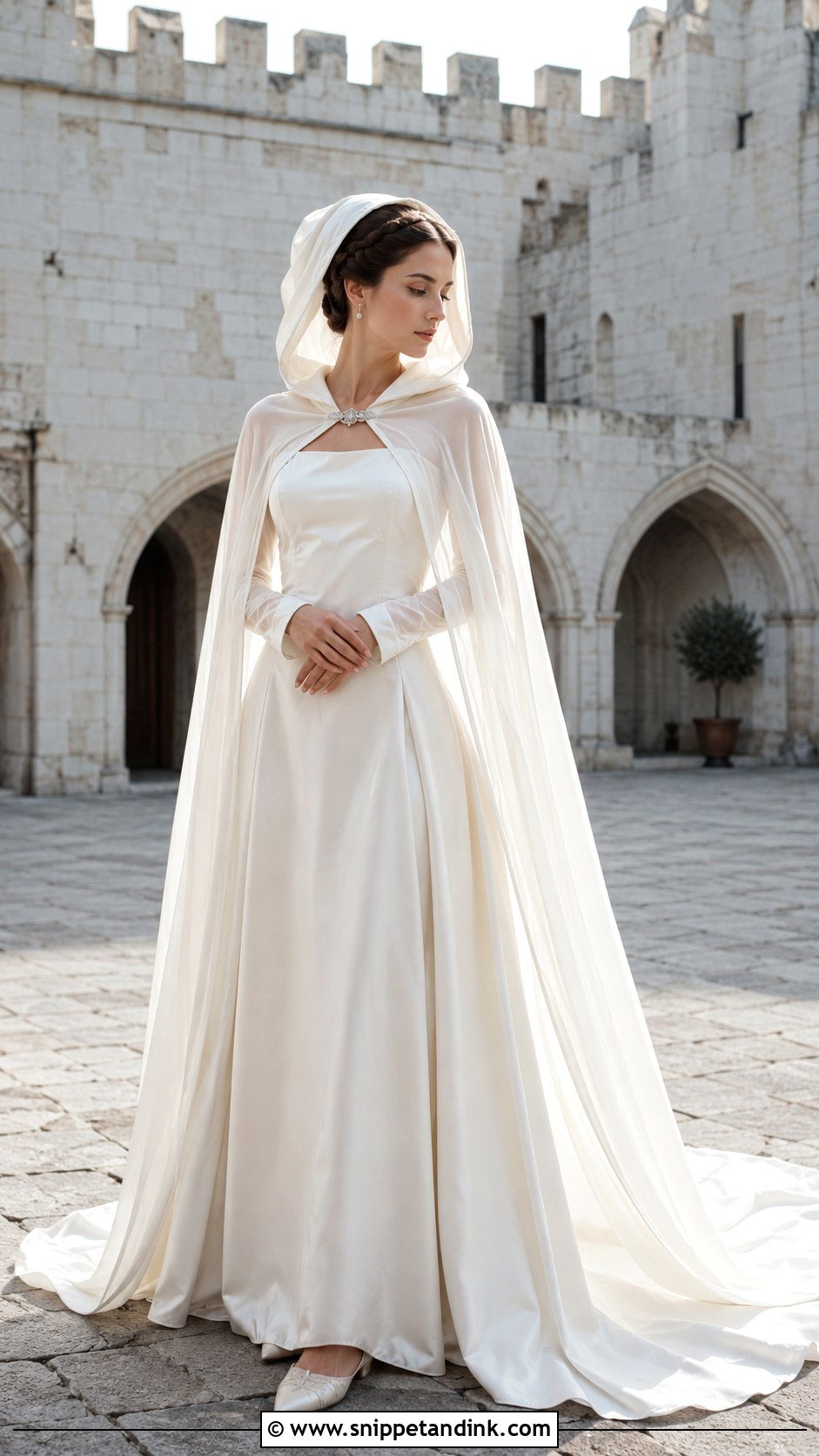
A hood is pure drama, so the gown under it should be quiet: plain ivory crepe, satin or soft velvet. Make the hooded cape sheer for spring or lined for autumn and winter, and fasten it with a brooch, pearl clasp or embroidered ties. Here is what usually goes wrong: a hood pulls backward on the neck all day, so the clasp needs to sit on the collarbone rather than the throat, and the cape should be lighter than it looks. Wear small earrings that will not snag on the hood, flats under the skirt, and soft waves or a low braided bun that sits underneath without lifting it. The cape comes off for dinner and dancing, which makes this more practical than it first appears.
7. Royal Brocade Medieval Wedding Dress
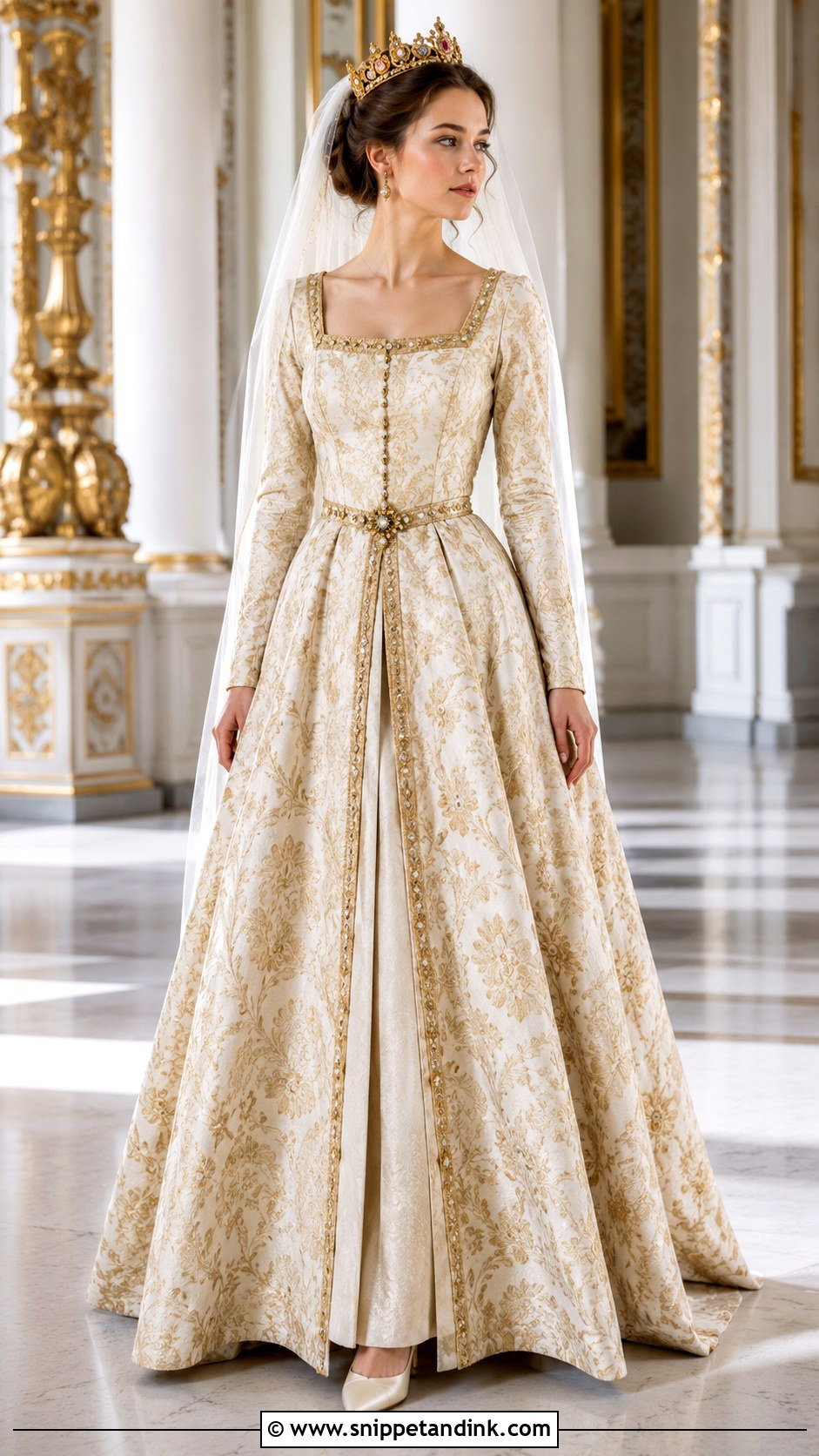
Brocade does the decorating for you. A structured gown with a square neckline, fitted bodice, long sleeves and full skirt gives the woven pattern space, and ivory with gold is the classic bridal pairing; silver, pale blue or muted rose read softer. Resist adding lace or beading on top. Brocade is stiff and unforgiving at the seams, so I ask the maker to match the pattern across the centre front, because a motif that jumps at the bodice seam is the first thing a camera picks up. A narrow metallic belt, pointed satin shoes, a small jewelled crown, a plain light veil and a smooth braided updo are all it needs. Bright ballrooms and historic halls show the weave best.
8. Forest Green Medieval Wedding Dress
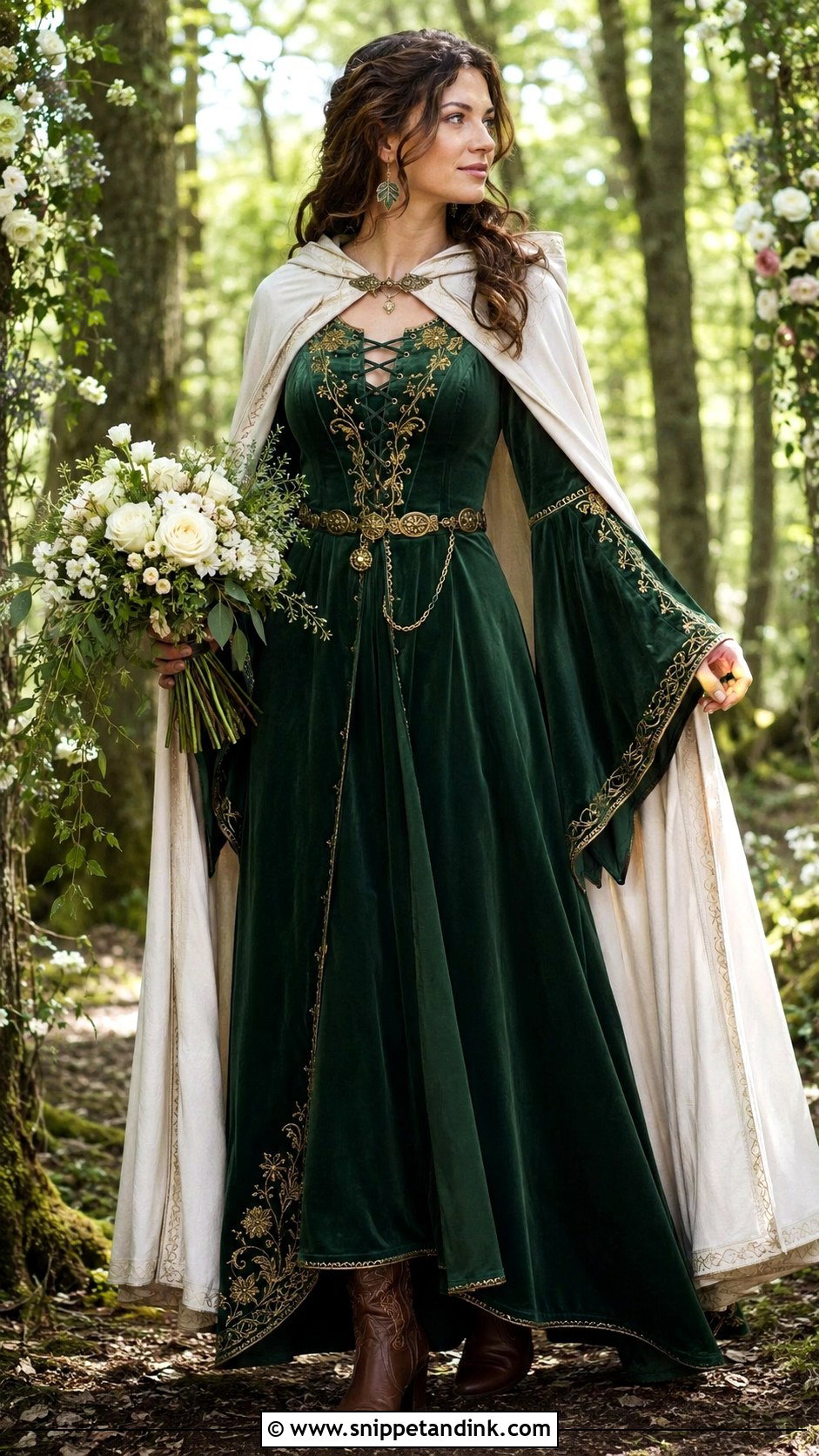
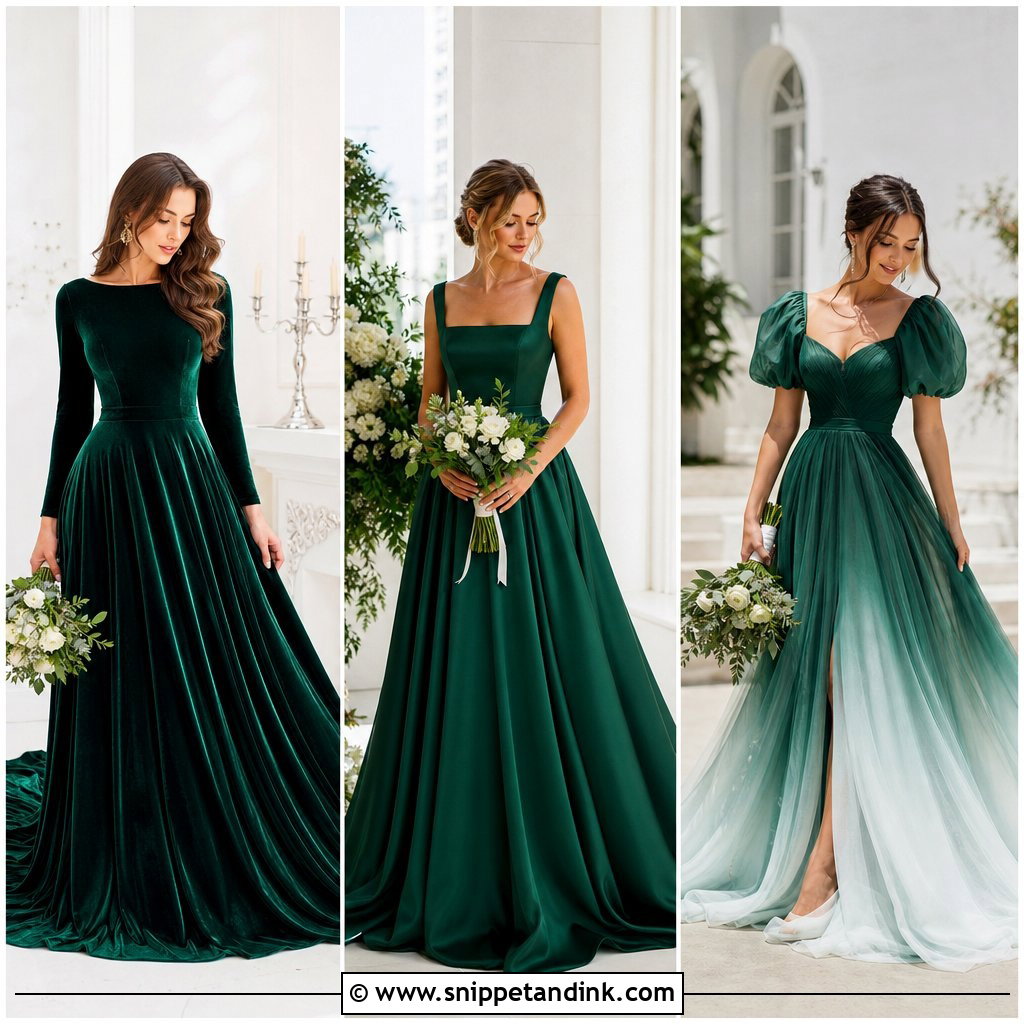
Forest green is the colour I see brides fall for when they try it, and it holds well in velvet, linen, satin or layered chiffon. A floor-length gown with a lace-up bodice, flowing sleeves and an A-line skirt gives a romantic woodland silhouette, and gold embroidery at the neckline and cuffs adds rank without fighting the colour. Deep green swallows light indoors, so if the reception is dim, pick a fabric with some sheen or you will lose the shape in photos. Brown leather ankle boots, an antique-style gold belt, leaf earrings and braids threaded with small white flowers suit it, and a cream cloak gives contrast and warmth.
9. Burgundy Medieval Wedding Dress With Gold Trim
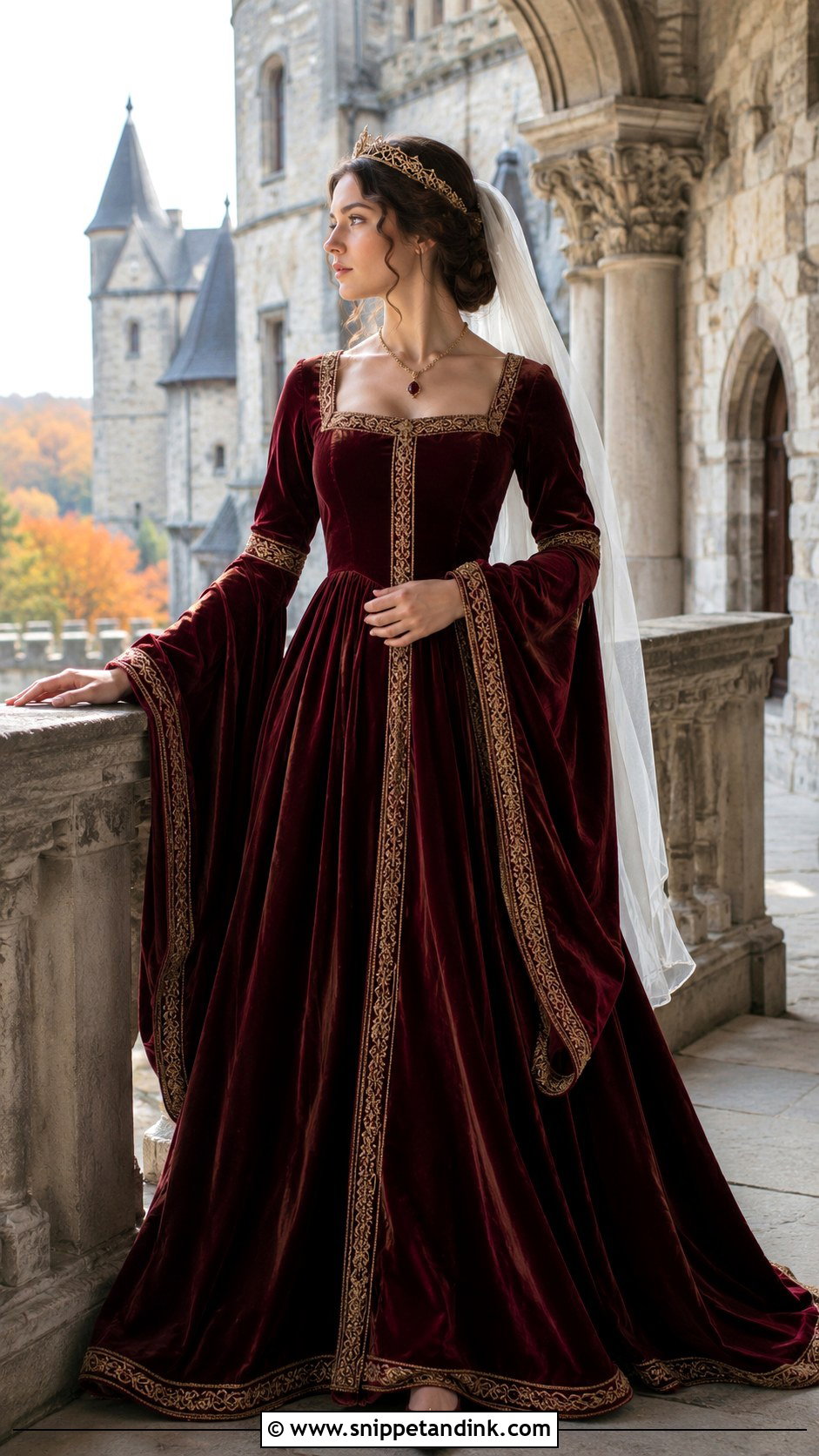
Deep burgundy with antique gold is a warm, rich pairing for a medieval wedding outfit. Choose velvet or satin with a fitted bodice, long trumpet sleeves and a sweeping skirt, and keep the gold trim to the square neckline, cuffs and waist. Red dyes vary more than any other colour between batches, so I order shoes and any trim swatches only after the gown fabric arrives and can be held against them. Burgundy flats or low boots, a gold pendant and a delicate circlet over soft waves work well. A sheer ivory veil under the circlet and cream flowers keep it unmistakably bridal, which matters to brides who still want to look like the bride rather than a guest in red.
10. Blue Medieval Wedding Dress With Silver Details
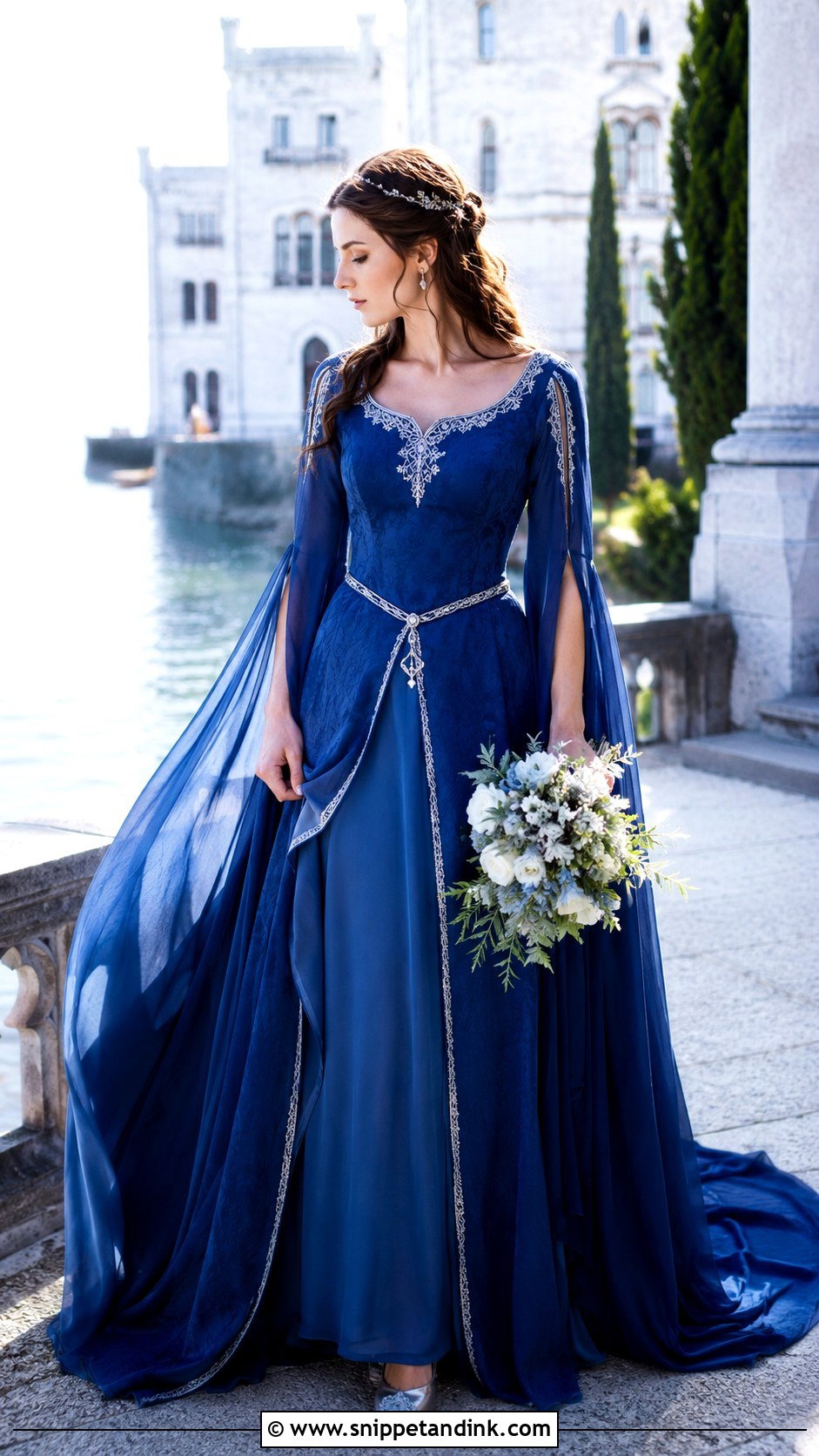
Blue has deep roots in bridal tradition, so this gown sits closer to history than most people expect. Dusty blue looks soft; sapphire or midnight blue reads royal. I would choose a flowing gown with a fitted waist and loose angel sleeves, with silver embroidery, beading or trim along the neckline and cuffs. Silver thread can tarnish slightly over time if the gown is stored damp, so it needs a breathable bag afterwards. Silver pointed flats, moonstone earrings, a slim metallic belt and a pale grey cape for cooler weather complete it. A half-up braid with a few crystal pins adds just enough sparkle for an evening or waterside ceremony.
11. Gold Embroidered Medieval Wedding Dress
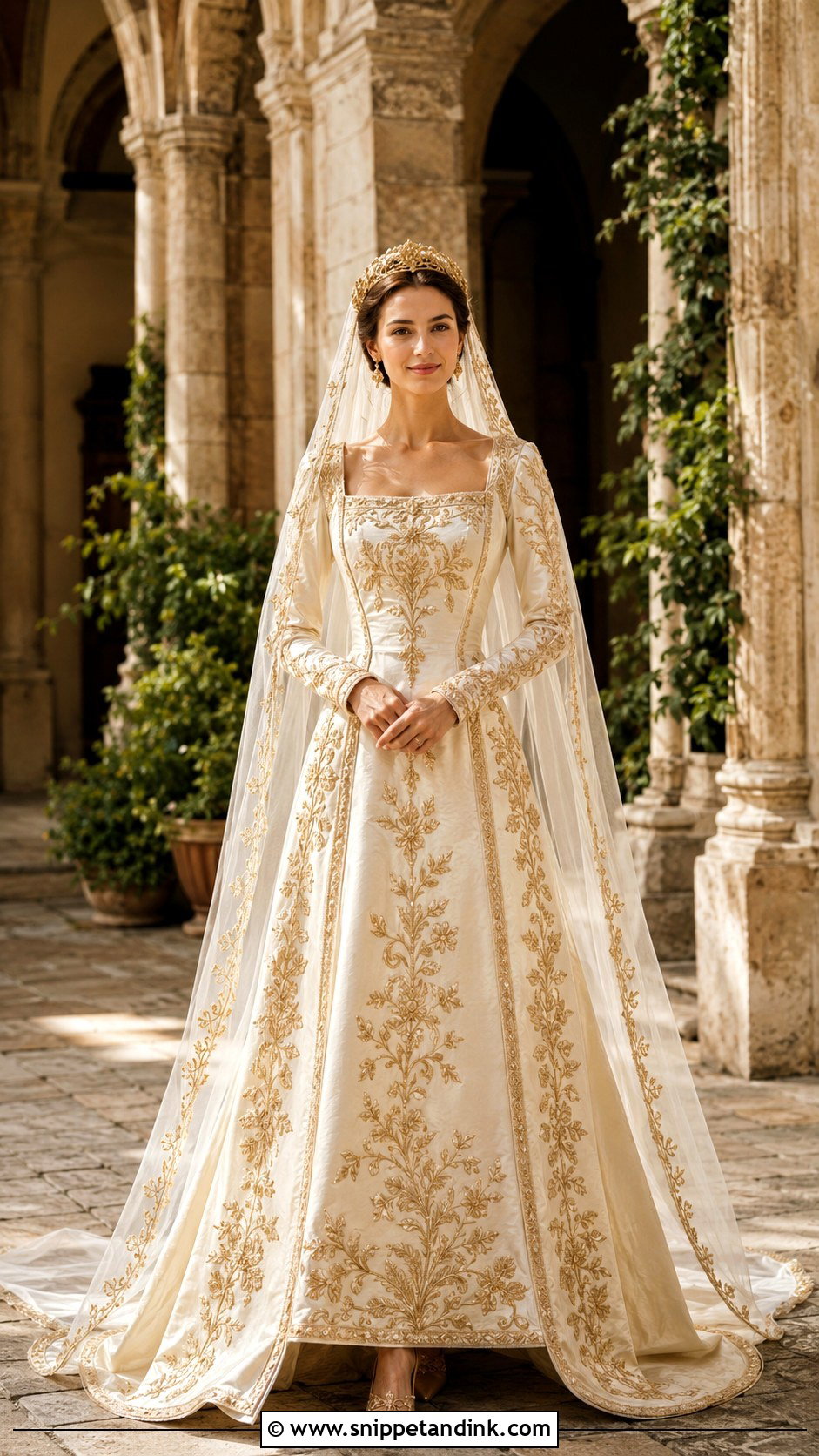
Gold embroidery can turn a plain ivory gown into the most formal dress in the room without adding weight. Place vines, florals or geometric work at the neckline, bodice, cuffs and hem, and leave the main skirt clear so it does not look busy. A long A-line with fitted sleeves and a square neckline is the right base. Metallic thread is scratchy on the inside of a cuff, so I always ask for a soft lining behind sleeve embroidery; brides notice it by the second hour otherwise. Champagne shoes, small gold earrings, a slim circlet and a sheer veil with a narrow gold border carry the detail from head to hem.
12. Lace Medieval Wedding Dress With Layered Skirt
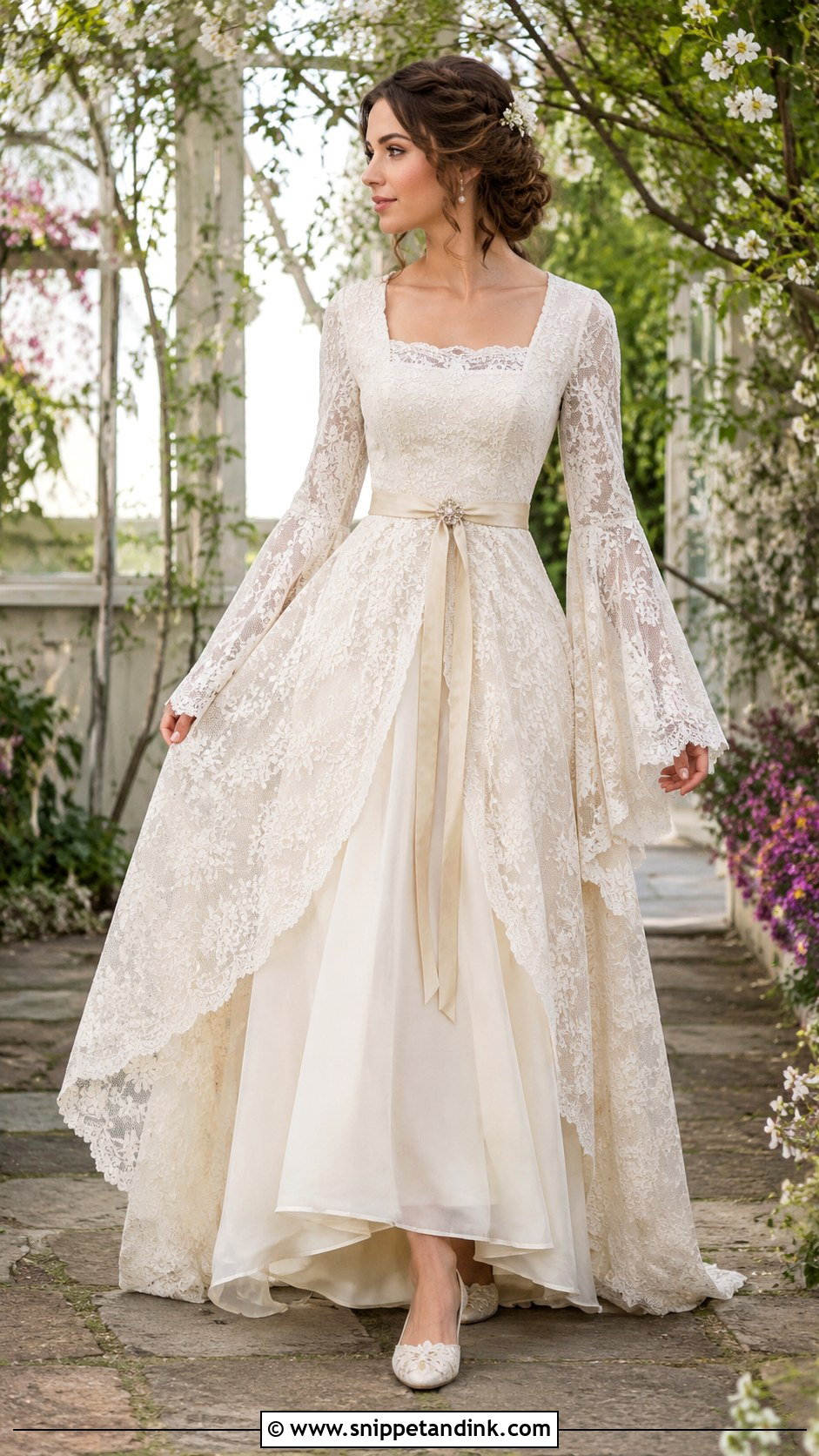
Lace over a simple underdress is the lightest way to wear this style. Start with an ivory slip, then add a lace overdress with long bell sleeves and an open or laced front, keeping the layered skirt smooth rather than puffed. Floral lace feels woodland; geometric lace looks more structured and historical. The weak spot is the sleeve edge: lace bell sleeves snag on bouquet wire and chair backs, so I ask for a finished scalloped border rather than a cut edge. Embroidered flats, a narrow ribbon belt, pearl studs and a floral comb above a loose braid suit it, with a short sheer capelet for cover. Spring and summer gardens are where it shines.
13. Linen Medieval Wedding Dress With Leather Belt
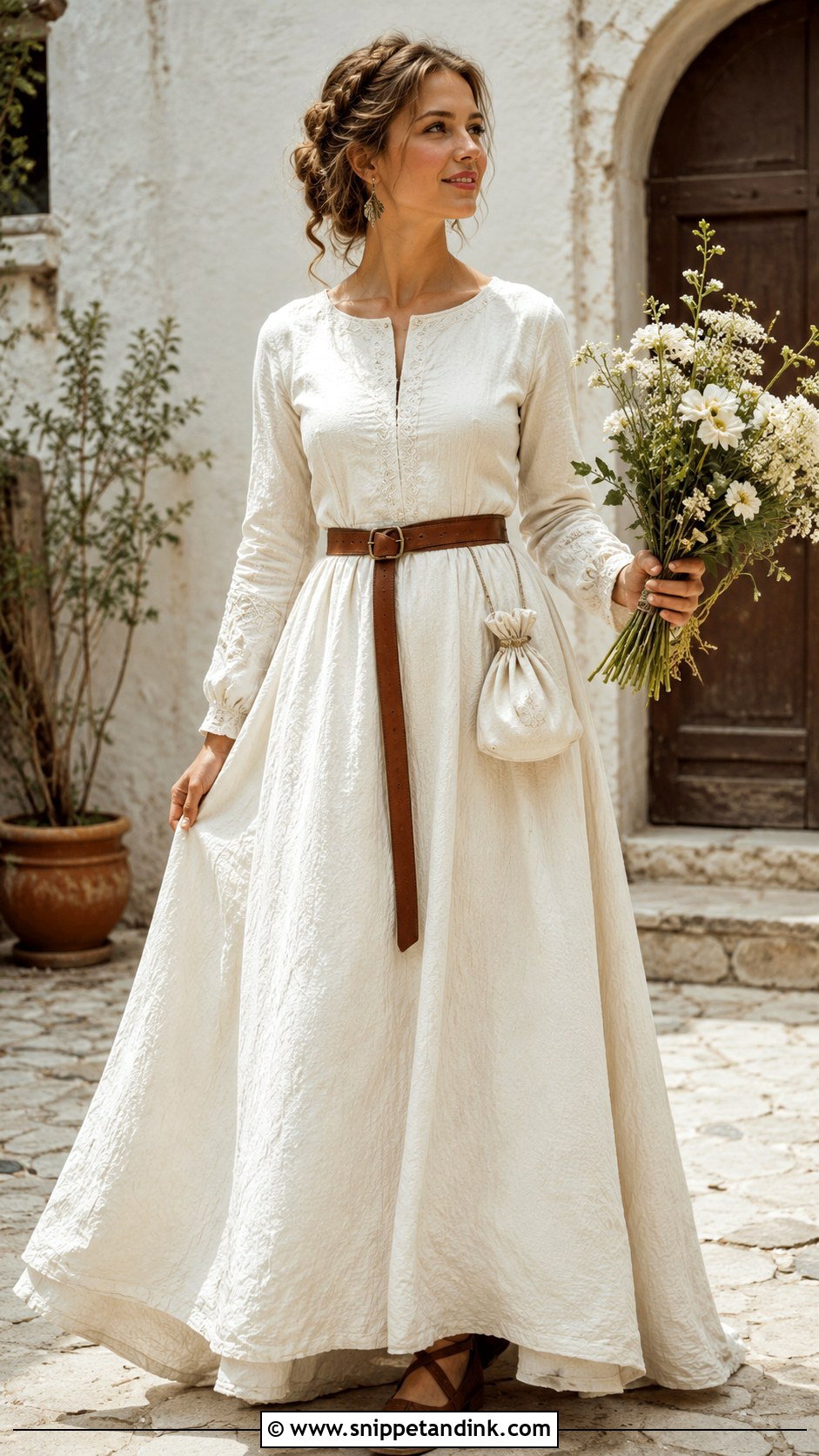
Linen is the honest choice for a relaxed medieval wedding, and it breathes better than anything else on this list. Pick an off-white or cream gown with a softly fitted bodice, modest neckline, long sleeves and a flowing skirt, and cinch it with a narrow brown leather belt and a simple buckle. Linen will crease from the moment you sit down, and I tell brides to treat that as part of the look rather than fight it; a heavier, slightly washed linen creases more softly than a crisp one. Leather flats, a fabric pouch, botanical earrings and a loose braided updo finish it, and a lightweight wool or linen cloak covers the evening chill. Farms, forest clearings and small courtyard ceremonies suit it best.
14. High Waist Medieval Wedding Dress With Flowing Sleeves
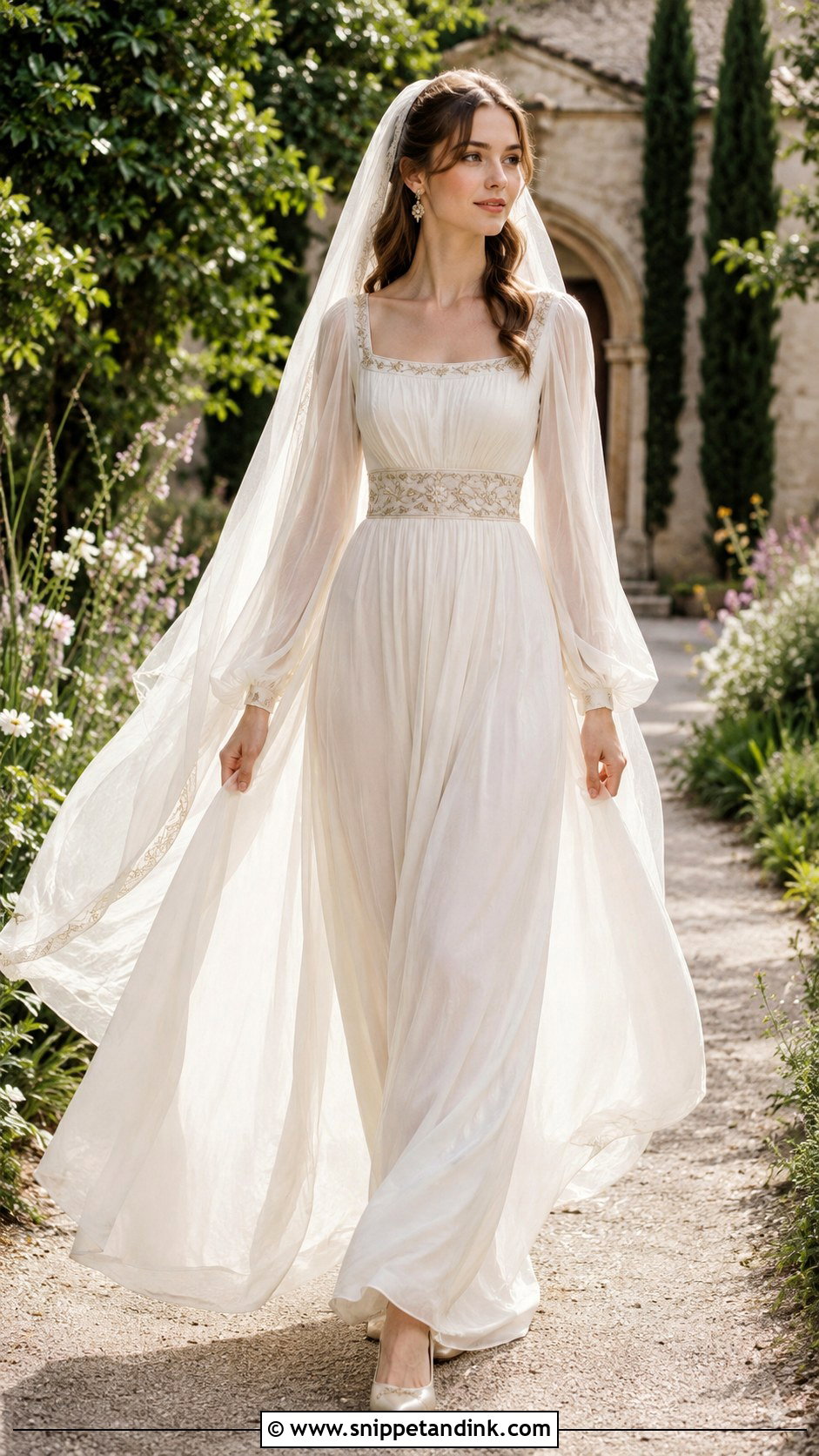
A raised waist makes the body look longer and leaves the stomach completely free, which is why I suggest it to anyone who dislikes boning. The bodice ends just under the bust, then a softly gathered skirt falls away with long flowing sleeves for movement. Ivory chiffon, silk or light crepe keeps it from looking like a costume. Check that the underbust seam sits on the ribcage and not on the bust itself; if it rides up, the whole gown looks short-waisted in photos. Add a narrow embroidered band at the waist, drop earrings, satin flats and a chapel veil, with soft waves and two small side braids meeting at the back. Warm-weather weddings are where it makes the most sense.
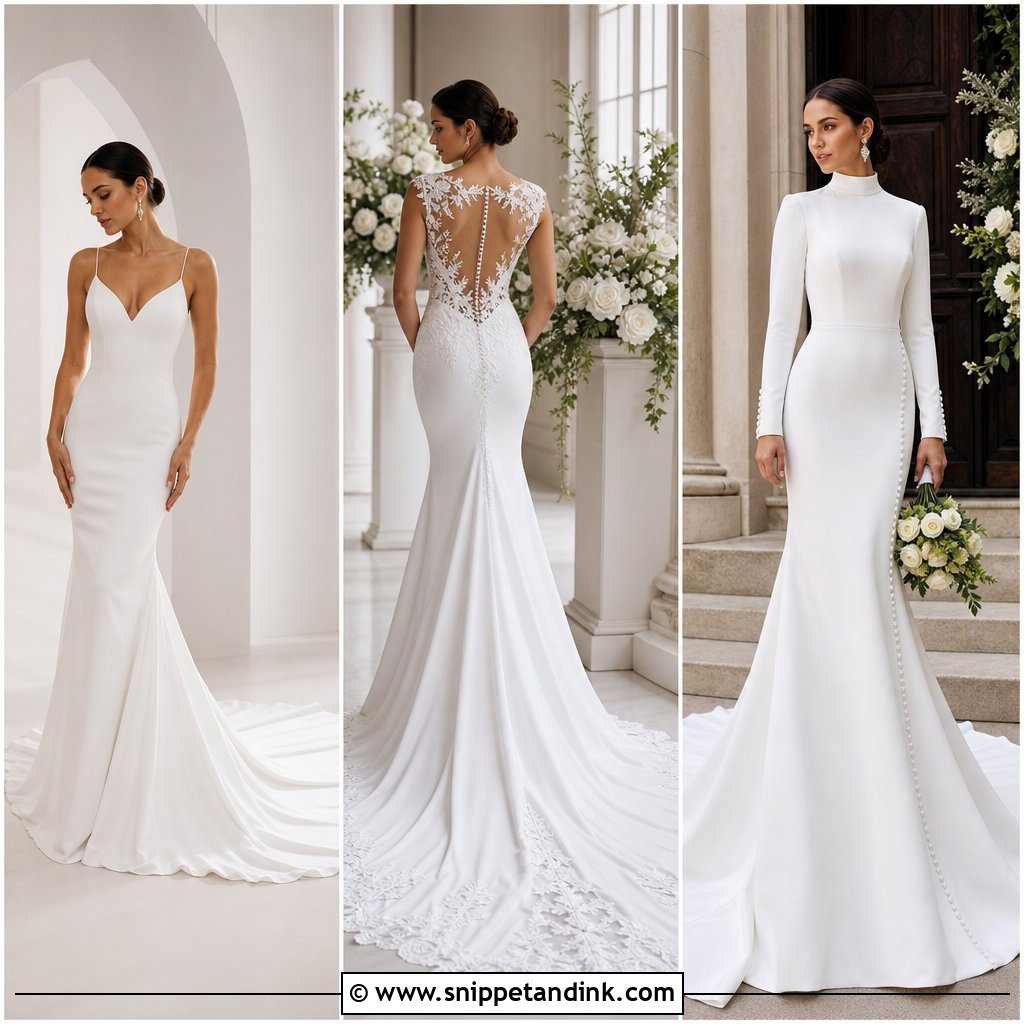
15. Drop Waist Medieval Wedding Dress With Train
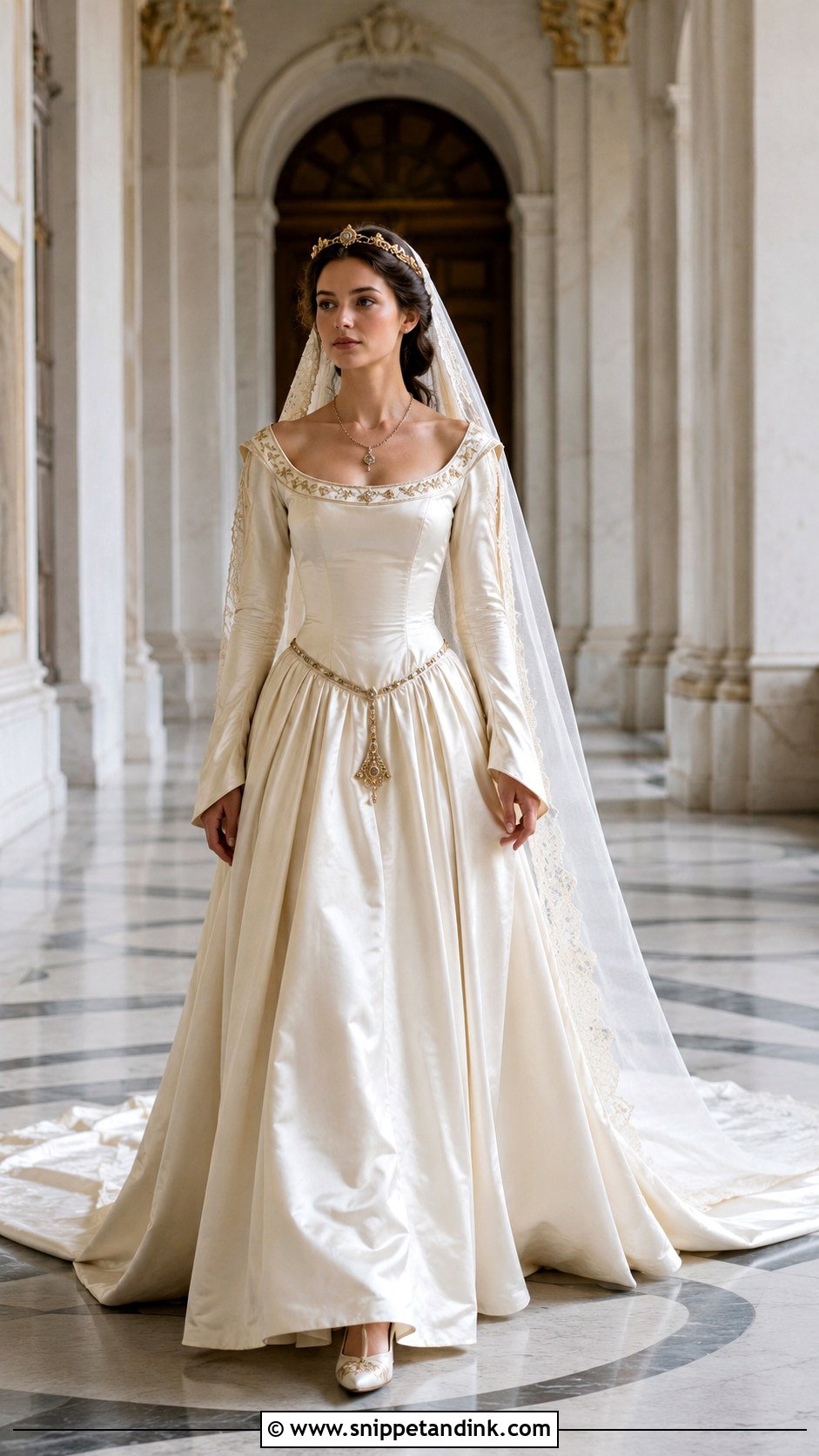
A dropped, curved waist is the silhouette most people picture as medieval royalty. The bodice runs below the natural waist and opens into a full skirt and long train, and a softly pointed seam stretches the torso. Pair it with a wide neckline and fitted sleeves that flare a little at the wrist. Satin, velvet and heavier crepe hold this shape; chiffon collapses. This is the hardest cut in the list to sit in, because the long bodice presses into the hips, so I have brides sit on a hard chair for a full five minutes at the fitting before I approve it. Pointed shoes, a waist chain, a jewelled circlet and a veil under a braided bun finish it. Keep embroidery to neckline and cuffs.
16. Off Shoulder Medieval Wedding Dress With Cape Sleeves
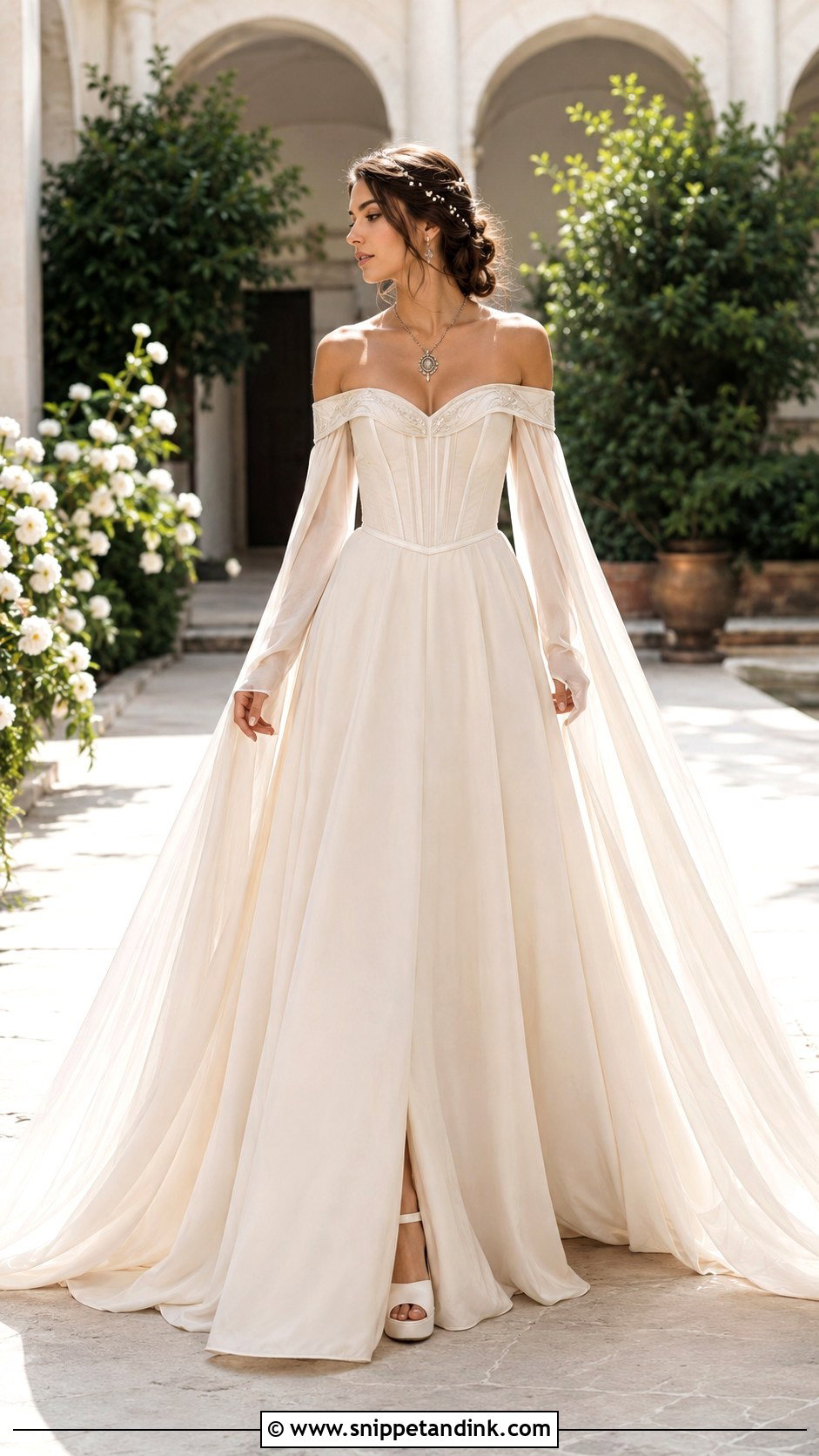
Taking the shoulders bare softens medieval styling for a modern bride. A structured bodice with a gently draped neckline, defined waist and sweeping A-line skirt carries detachable cape sleeves that fall from the upper arm to the floor, in sheer chiffon for float or lace for coverage. Off-shoulder necklines limit how high you can raise your arms, so try a hug and a first-dance hold at the fitting; if the neckline slips, it needs elastic or silicone grip along the inside. Ivory block heels, a pendant, pearl pins and a low twisted updo suit it. Skip a heavy veil, which hides the sleeves the moment they move.
17. Mermaid Medieval Wedding Dress With Trumpet Sleeves
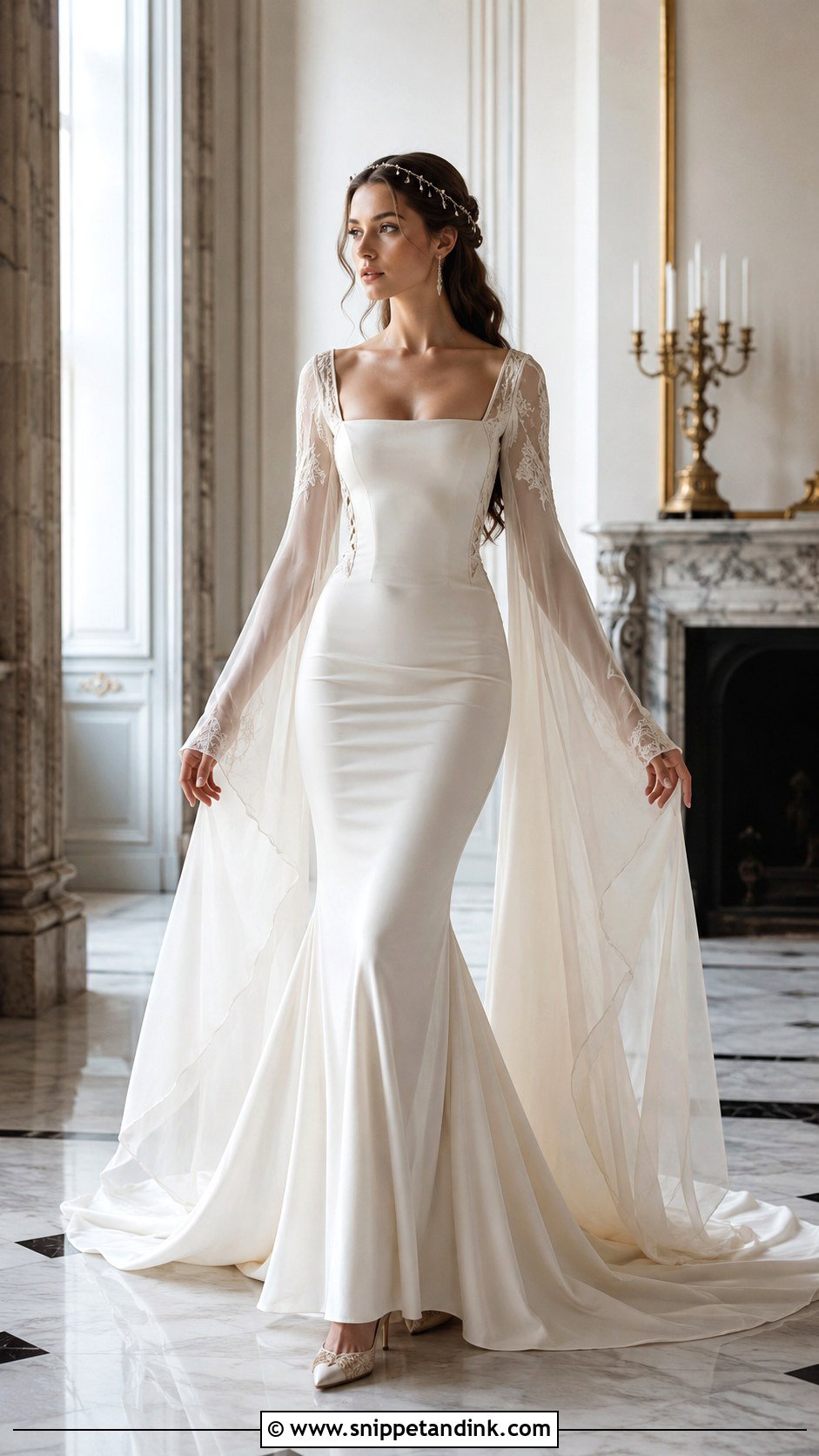
A mermaid cut can still read medieval if the sleeves and details do the work. Choose satin or crepe that follows the body to below the knee and flares, then add lace or chiffon sleeves fitted at the upper arm and widening below the elbow. A square neckline, corset back or embroidered waist panel strengthens the period link. Walking is the trade-off: the knee flare decides your stride, so if it is set too high you will be taking small steps all night, and stairs become a negotiation. Low pointed heels, long drop earrings and a chain circlet over centre-parted waves finish it, with a simple train to balance the wide sleeves.
18. Medieval Overdress With Contrasting Undergown
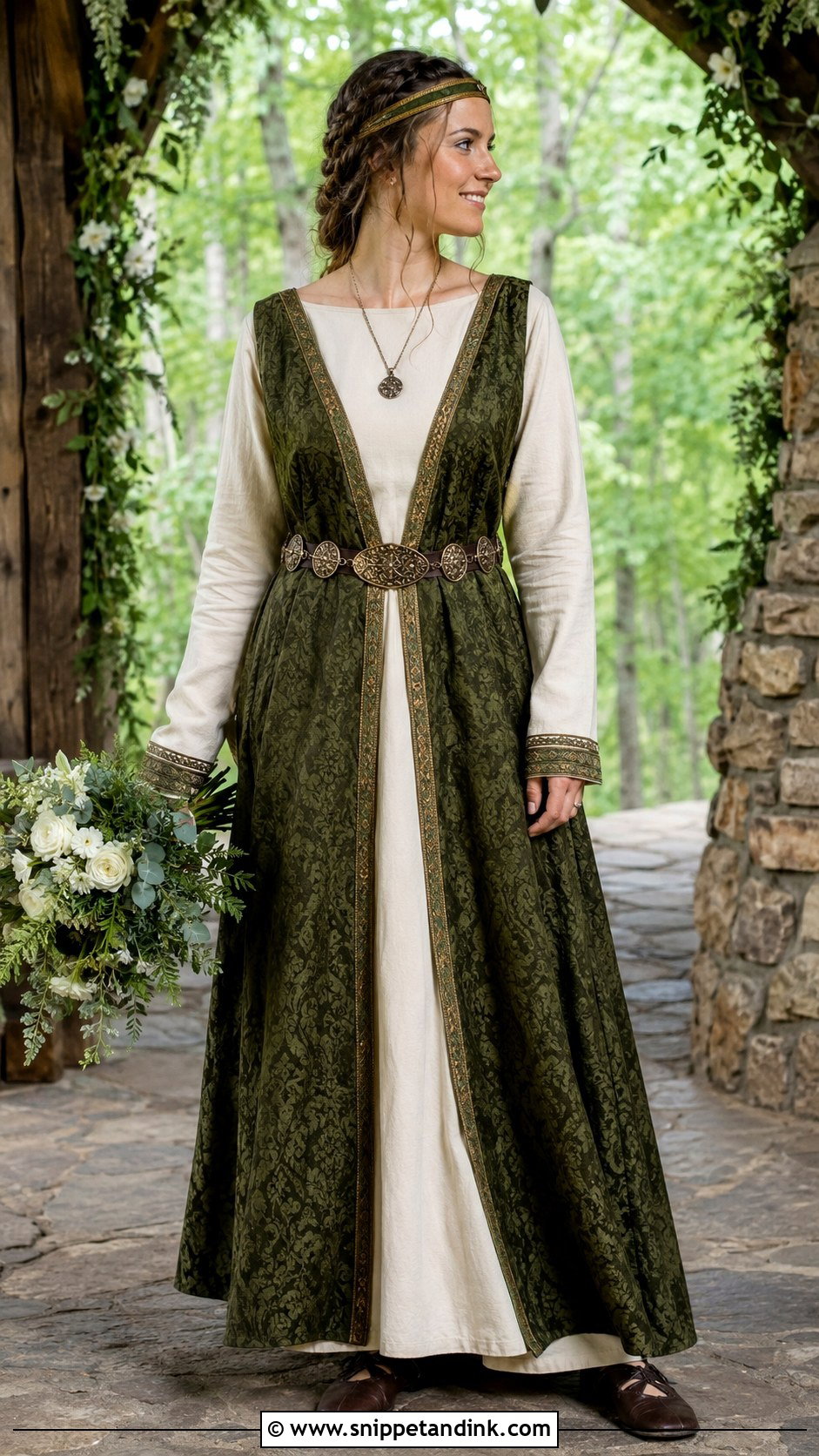
Layering an overdress on a contrasting undergown gives depth and the most authentic medieval character here. Start with a plain cream underdress with fitted sleeves and a modest neckline, then add a sleeveless or open-front overdress in green, blue, burgundy or gold brocade, shaped by lacing, a belt or seams. Two layers mean two waistlines, and I fit the underdress first and then the overdress over it, because altering them separately almost always leaves the outer layer pulling. Keep to two or three related colours. Leather flats, an engraved metal belt, a small pendant and a fabric band over braids complete it, and the fabric choice alone tips it rustic or royal.
19. Plus Size Medieval Wedding Dress With Corset Back
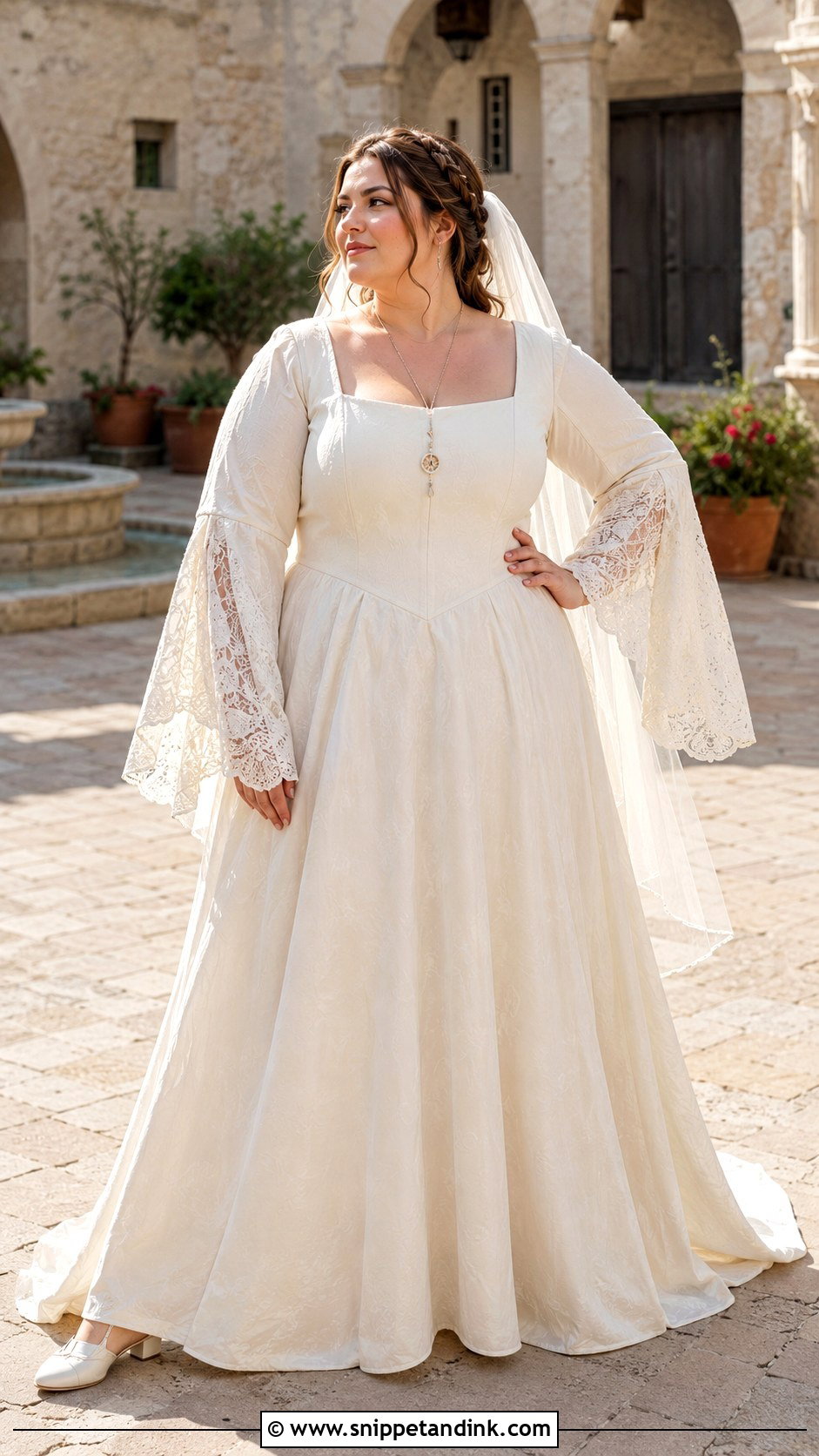
A corset back is the most adjustable closure there is, which is why it suits so many sizes and body shapes. Choose wide shoulder straps, a square or sweetheart neckline and internal structure that bends rather than digs, then a curved waist seam into a flowing A-line skirt. Bell sleeves in lace or chiffon add drama while keeping proportions balanced. In curvier bodices I look closely at where the boning ends at the hip, because a bone that stops at the wrong point presses in when you sit. Embroidery at the neckline and waist draws the eye to the face. Stable block heels, a long pendant, a light veil and a braided crown finish it, and good alterations matter more than the label.
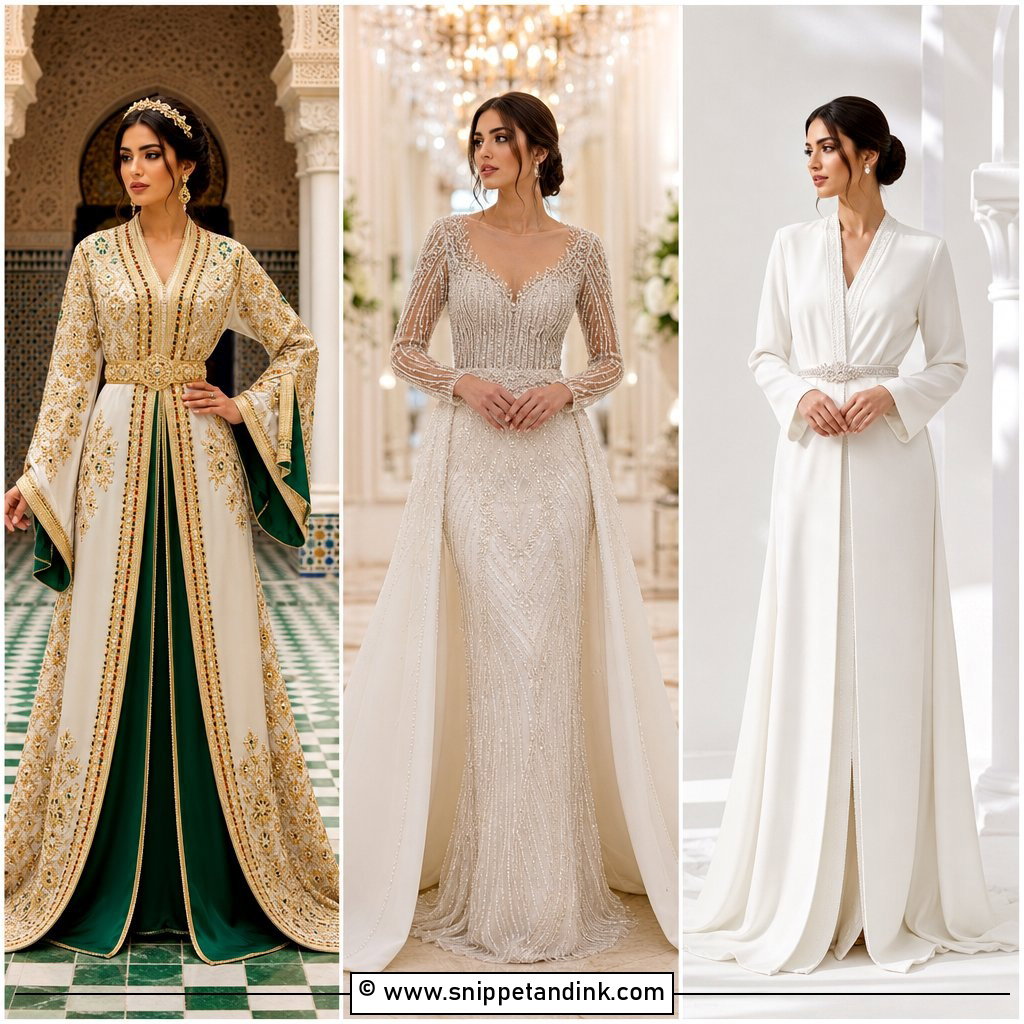
20. Simple Modern Medieval Wedding Dress
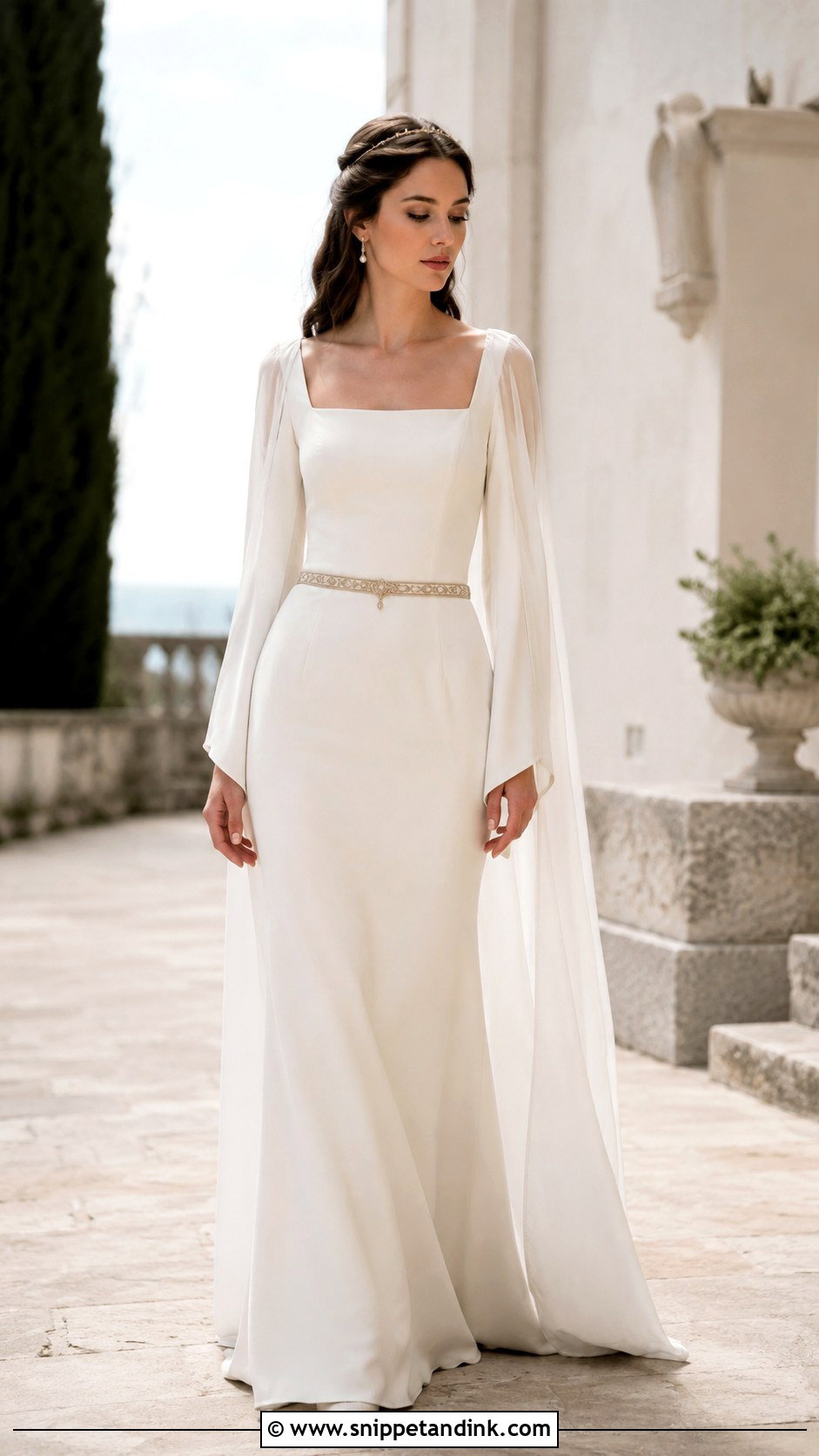
You do not need brocade or a crown to make the medieval point. A plain ivory crepe gown with a square neckline, shaped waist, long flared sleeves and a fluid skirt does it quietly, and clean seams and good drape count for more than decoration here. Plain crepe shows every pull, so the fit across the back has to be exact. Pointed flats or low heels, a fine metallic belt, small drop earrings and a narrow circlet keep the accessories honest, and a sheer cape fixed at the shoulders can stand in for a veil. A polished low braid or relaxed half-up style finishes the look for a modern venue or a small outdoor ceremony.
Costume Makers, Bridal Salons and a Realistic Order Date
Most of these gowns come from one of three places: a bridal designer with a romantic or historical line, an independent maker who builds period or fantasy clothing to measure, or a standard gown altered with added sleeves and a separate cape. Each one asks different questions of you.
A bridal designer works to set sizes and will alter from there; ask early whether sleeves can be lengthened, because there is often little spare fabric in them. An independent maker will cut to your measurements, which is ideal for corsetry and layered gowns, but check that they have made bridal-weight pieces before, ask to see the inside of a finished garment, and agree on how many fittings are included. Adding sleeves and a cape to a simple gown is the most flexible option of all, and the cheapest to adjust if you change your mind.
Timing I work back from
- Order or commission the gown eight to ten months ahead; custom corsetry and hand embroidery can take longer, so ask the maker for their current queue.
- Buy shoes, belt and outer layer before the first fitting so the hem and sleeve lengths are set with them on.
- Plan two or three fittings starting about three months out, with the final one two to three weeks before the wedding.
- Do a full dress rehearsal at home with the cape, circlet and veil together, because that is when you find the hook that catches your hair.
One Sleeve or the Whole Court? Knowing Where to Stop
You do not have to wear every medieval detail at once. Pick the one feature you keep coming back to, whether that is the bell sleeve, the laced back, the hood or the green velvet, and build the shoes, jewellery, hair and outer layer around it. Let your season decide the fabric weight and your venue decide the train. Then wear it to a long fitting, sit in it, lift your arms in it, and only sign off when it still feels like yours after an hour.
You'll Like These Ideas:


Leave a Reply