
Long sleeves and delicate lace are a pairing most brides think they already understand, until they try on ten of them and find that no two feel alike. Lace sleeves now come fitted and sheer, attached to high vintage necklines, detachable, finished with dramatic cuffs or covered in oversized flowers. What separates them in practice is how the lace sits on your skin, whether the sleeve lets you lift your arms and how the dress looks from behind as well as in front. Your venue and season matter too. Below are twenty lace gowns I’d show a client, from classic and boho to modern, modest and close-fitting, with the fitting detail I’d check on each.
Lace Feels Different on Bare Arms Than on a Hanger
On a bodice, lace sits over a lining. On a sheer sleeve it often touches your skin directly for the whole day, so I ask brides to feel the inside of the sleeve before they fall for the outside. These are the laces you’ll meet most often in long sleeves.
- Chantilly is a fine net lace with detailed patterns. It is soft and light, drapes well on a fitted arm and is the most fragile, so it snags on jewelry and rough fingernails.
- Alençon has a corded outline around each motif, which gives the pattern definition. The cord can feel slightly firm at the edge of a sleeve, so check the cuff.
- Guipure is heavier, with motifs joined without a net. It holds its shape well but has little give, so sleeves need more ease to let you bend your elbows.
- Embroidered tulle is sheer tulle with thread or beaded embroidery. It is often the lightest option for summer and the coolest on the arms.
- Stretch lace has elastane in the net, and it is my first suggestion for close-fitting sleeves on any bride who wants to move freely.
Lay the sleeve over your forearm and rub it gently for a few seconds. If it prickles now, it will be worse after eight hours of hugs and warm rooms, and a fine mesh backing may be worth asking about.
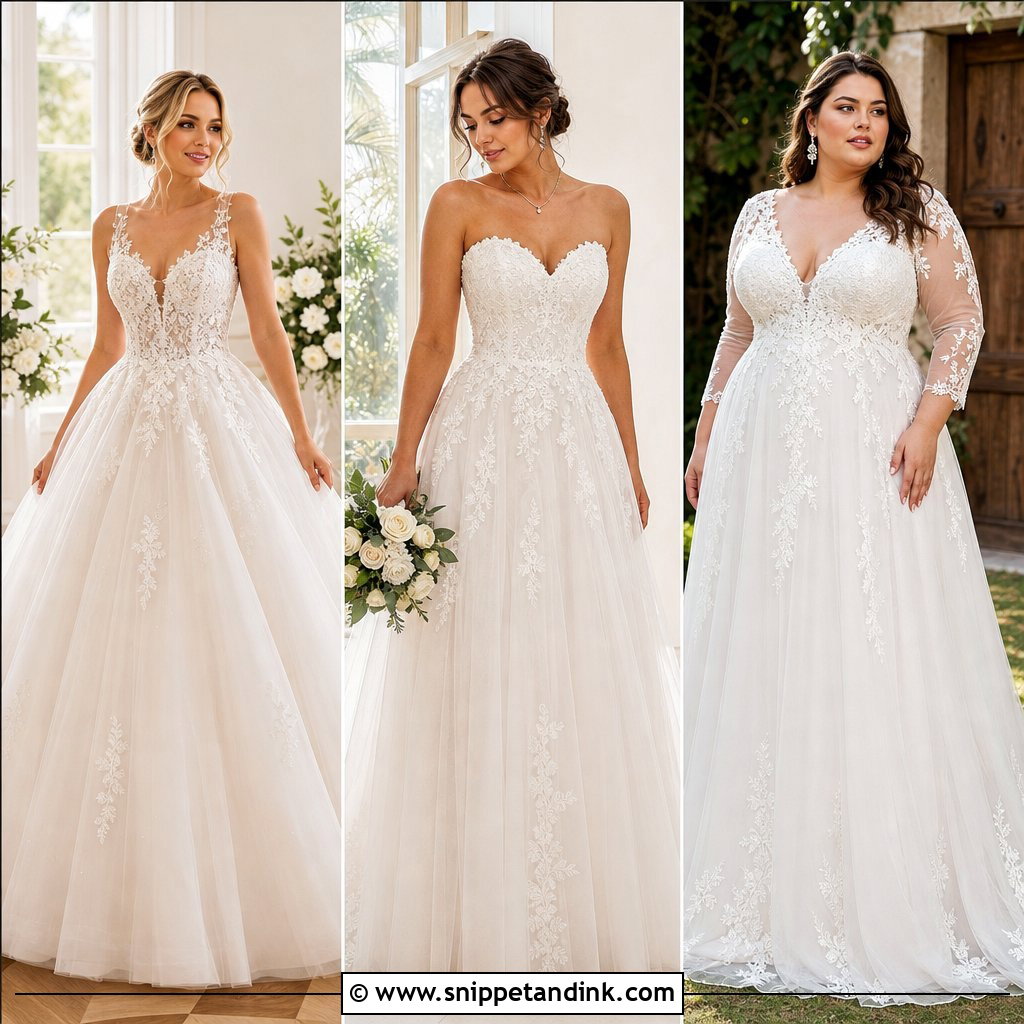
1. Long Sleeve Lace A-Line Wedding Dress
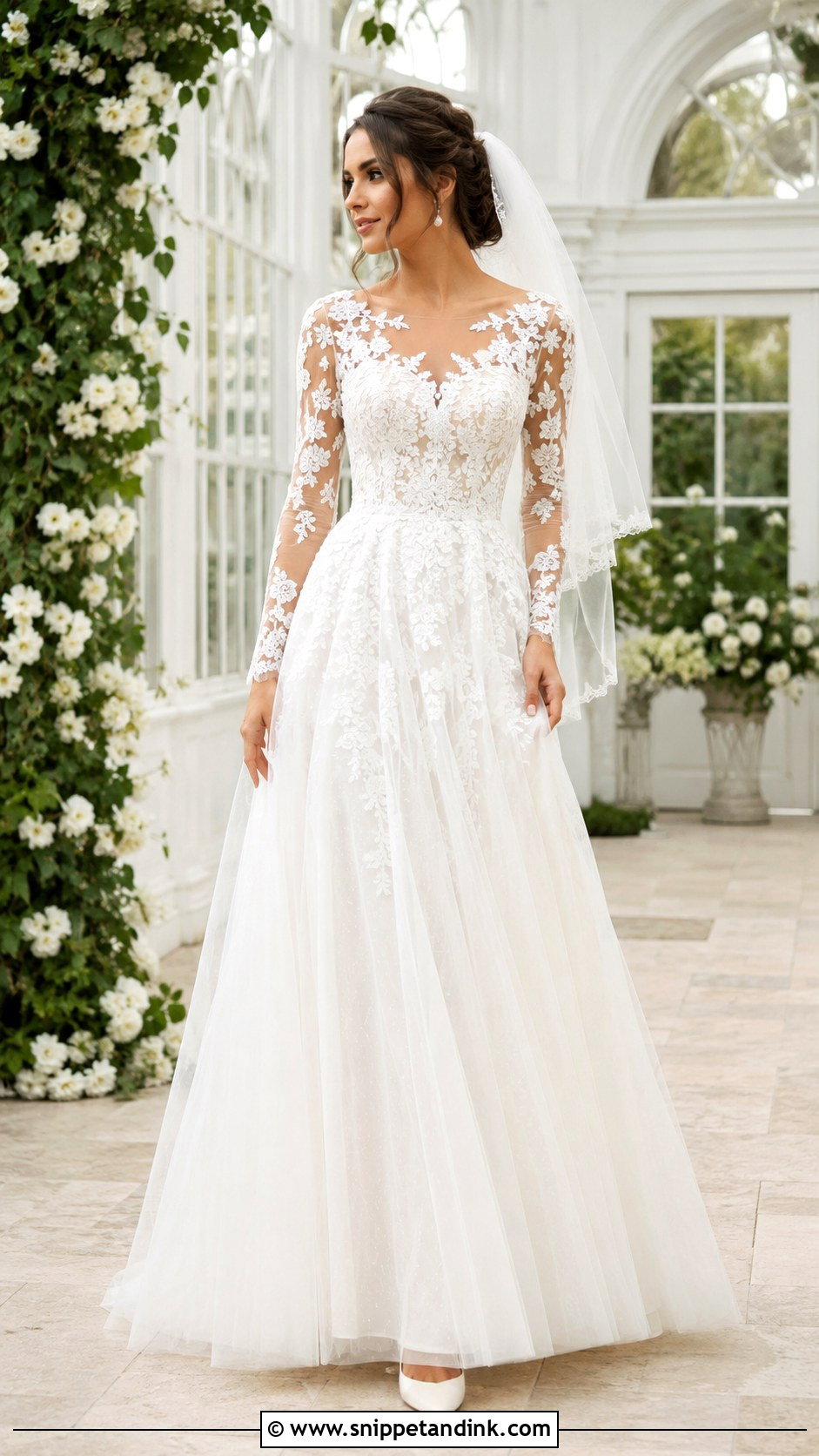
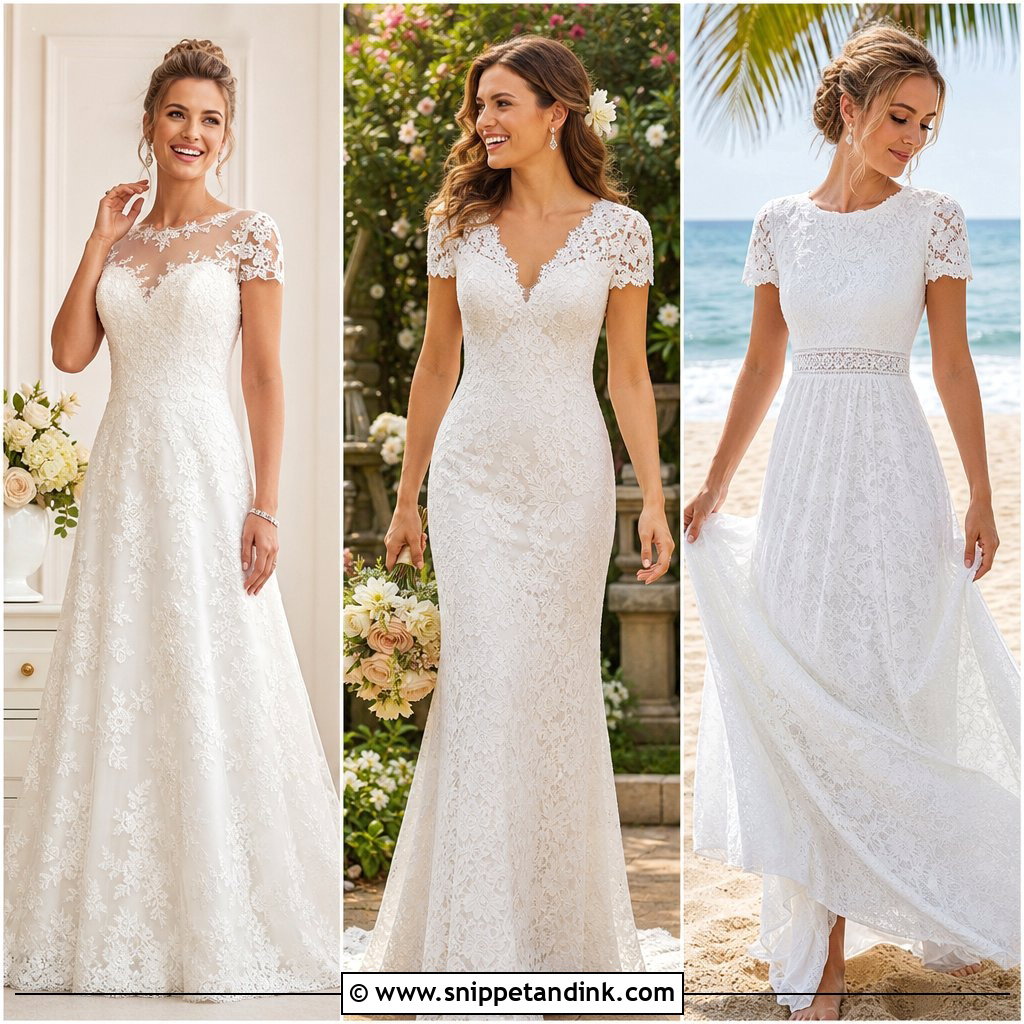
An A-line is where I start most lace appointments, because it shows the lace without asking much of your body. A fitted lace bodice with sheer illusion sleeves and a skirt falling from the natural waist is graceful rather than formal. When the floral motifs carry on from bodice into the tulle skirt, the dress reads as one piece instead of top and bottom. Pointed ivory pumps, pearl drops and a fingertip veil edged in matching lace finish it, with a low bun. It suits a garden, a ballroom or a bright hall equally. One thing I look for: a motif placed right at the waist seam. It hides the join and makes the torso look longer.
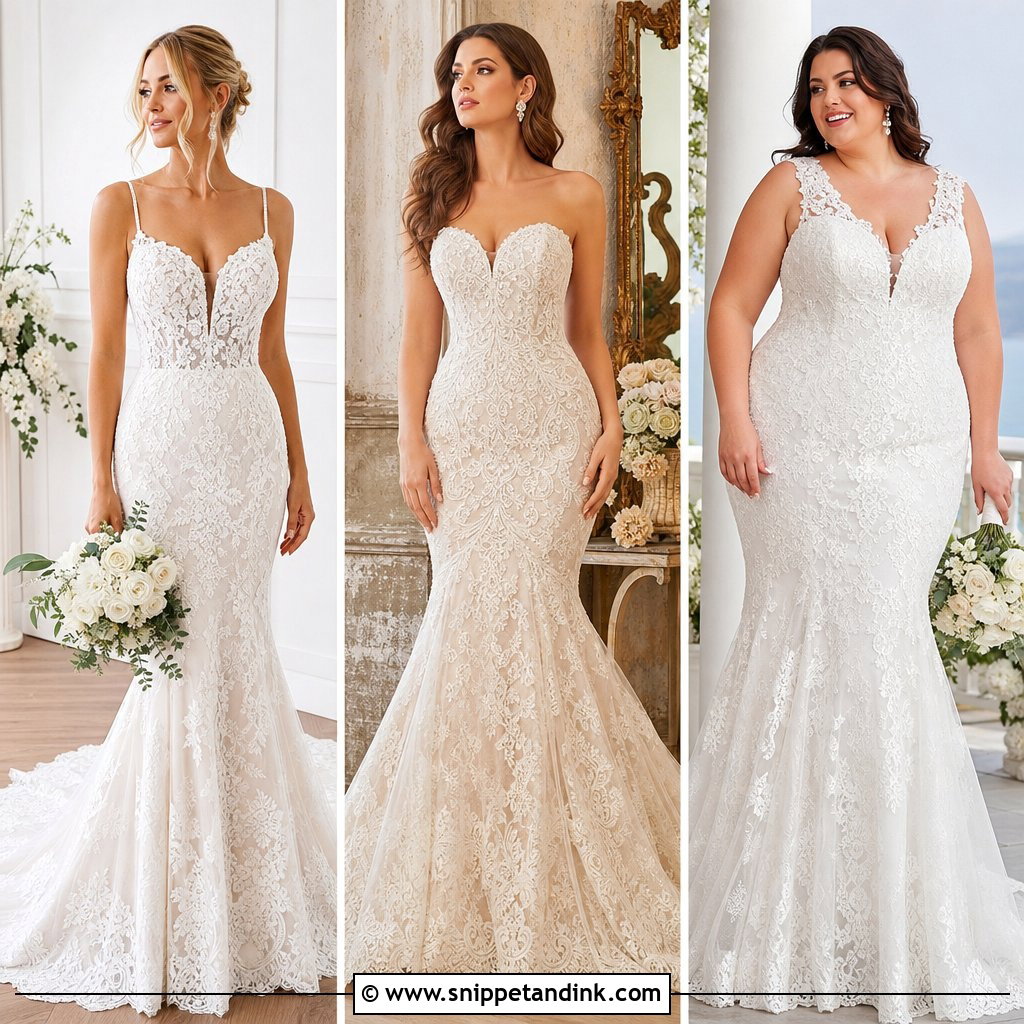
2. Long Sleeve Lace Mermaid Wedding Dress
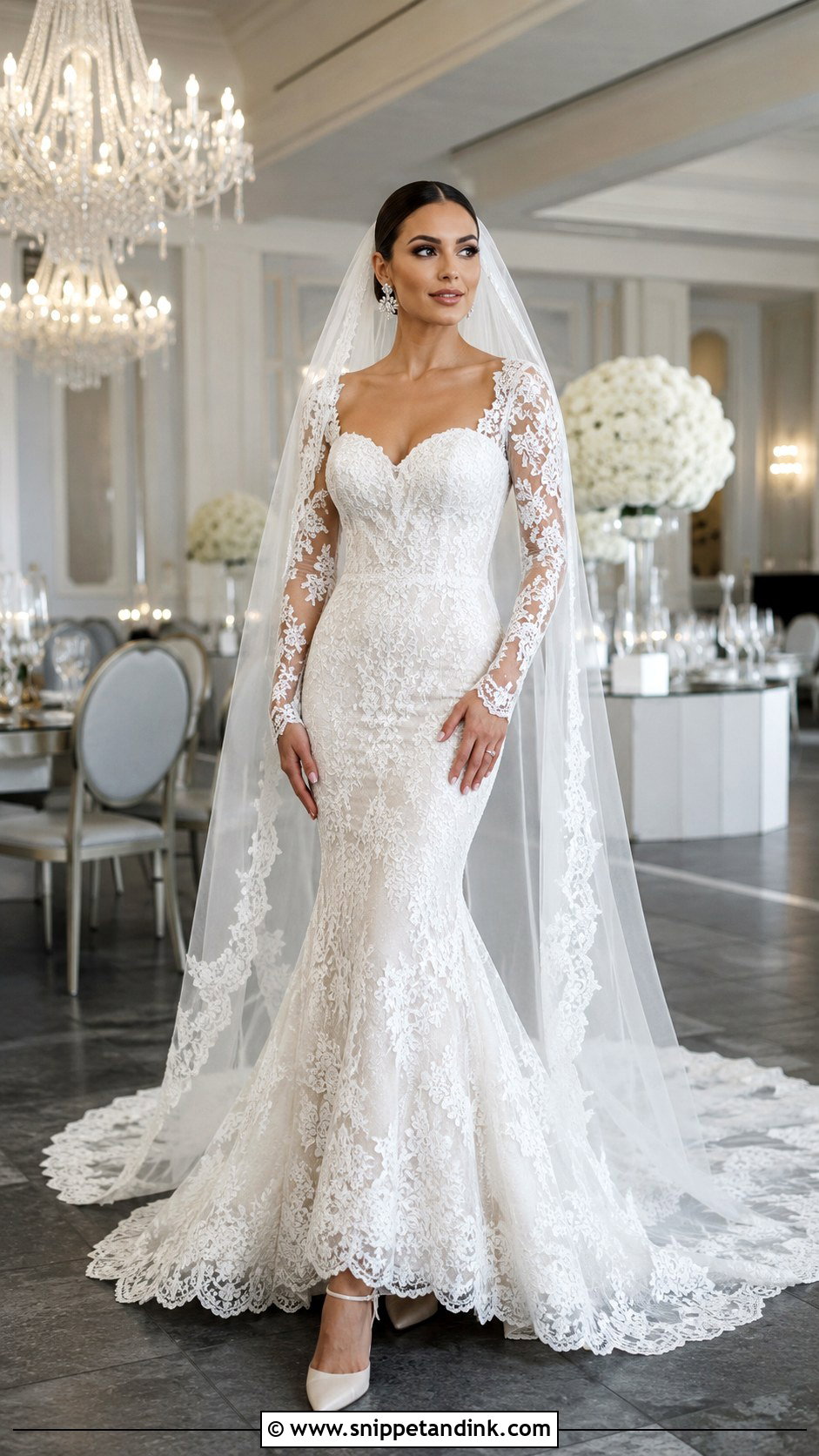
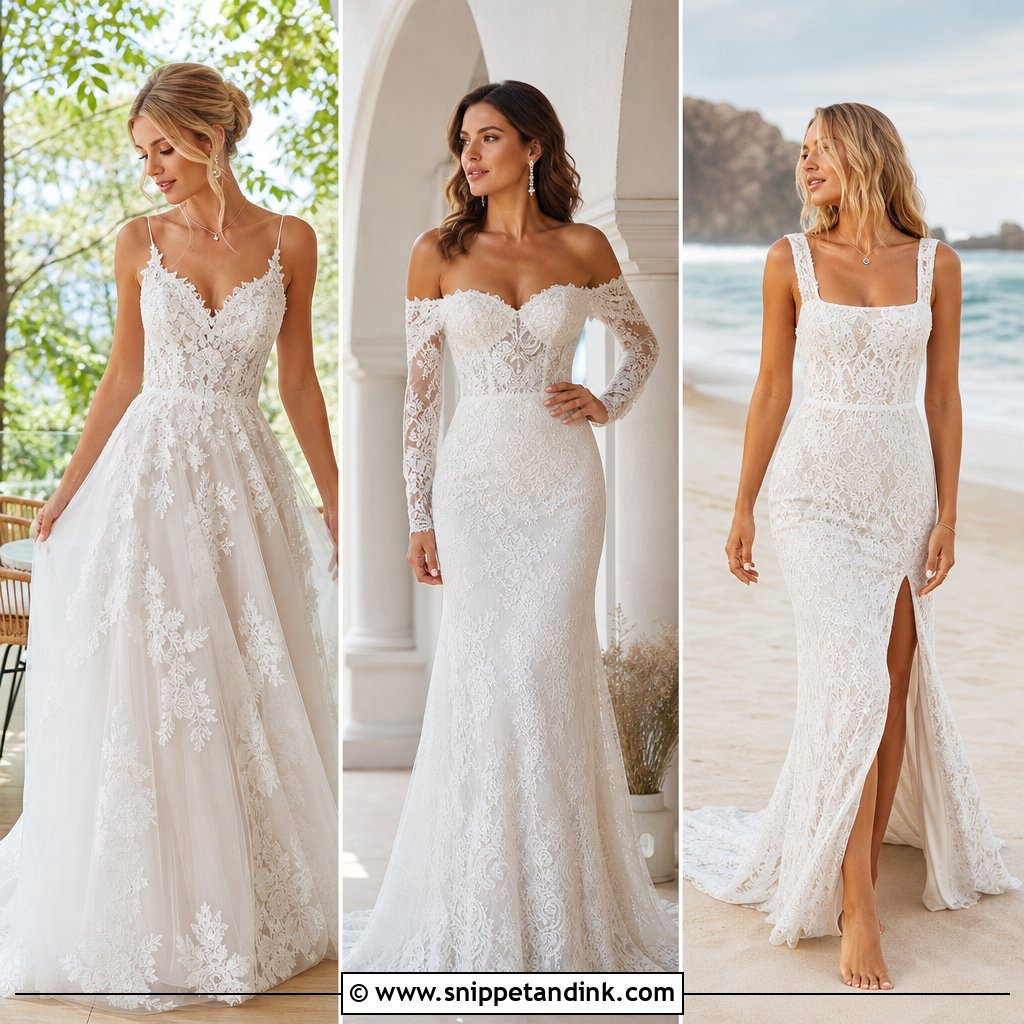
A lace mermaid hugs the bodice, waist and hips and only releases near the knee, so comfort depends almost entirely on the lining. A stretch lining under the lace makes walking possible; a rigid one makes every step a negotiation. A sweetheart under a sheer lace overlay softens the top. I’d style it with crystal earrings, sleek ivory heels and a simple cathedral veil, and keep the bouquet structured and medium so the waist stays visible. If you plan to dance, test your stride and sit down at each alteration appointment. A removable overskirt is worth asking about: you get the drama for the ceremony and your legs back for the reception.
3. Long Sleeve Lace Ball Gown Wedding Dress
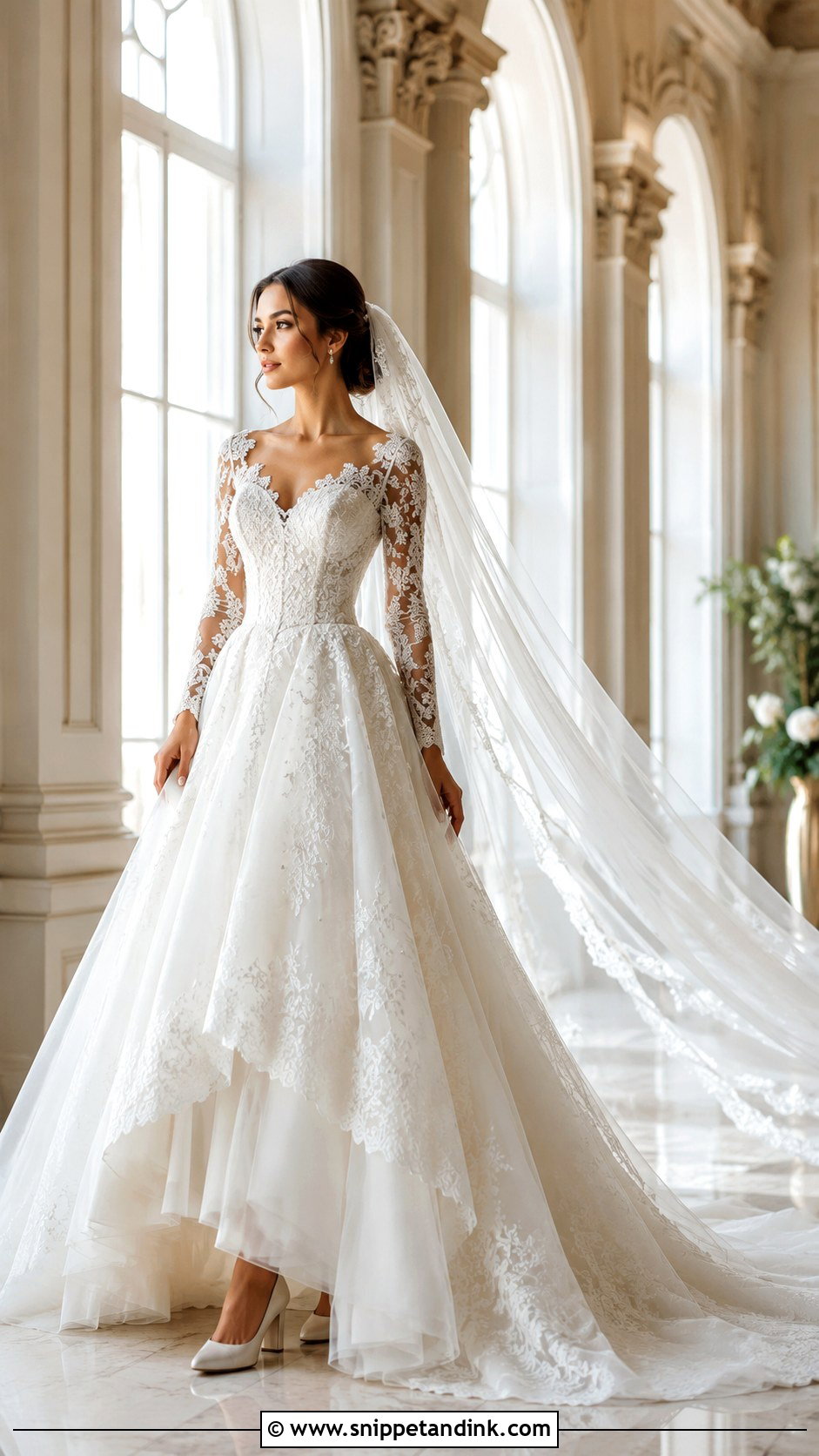
The full skirt does the talking on a lace ball gown, so the lace’s job is to frame the face. Look for a structured bodice, fitted sleeves and layers of tulle or organza, with appliqués gathered at the neckline and waist that thin out as they travel down the skirt. A long veil, small diamond or crystal studs and comfortable block-heel pumps under the hem are all it needs, with a neat chignon. Keep jewelry small. Ask about the bustle before you buy, not at the last fitting. Lace trains often need several bustle points, and the person doing it on the day should be able to manage them quickly in a dim corridor.
4. High Neck Long Sleeve Lace Wedding Dress
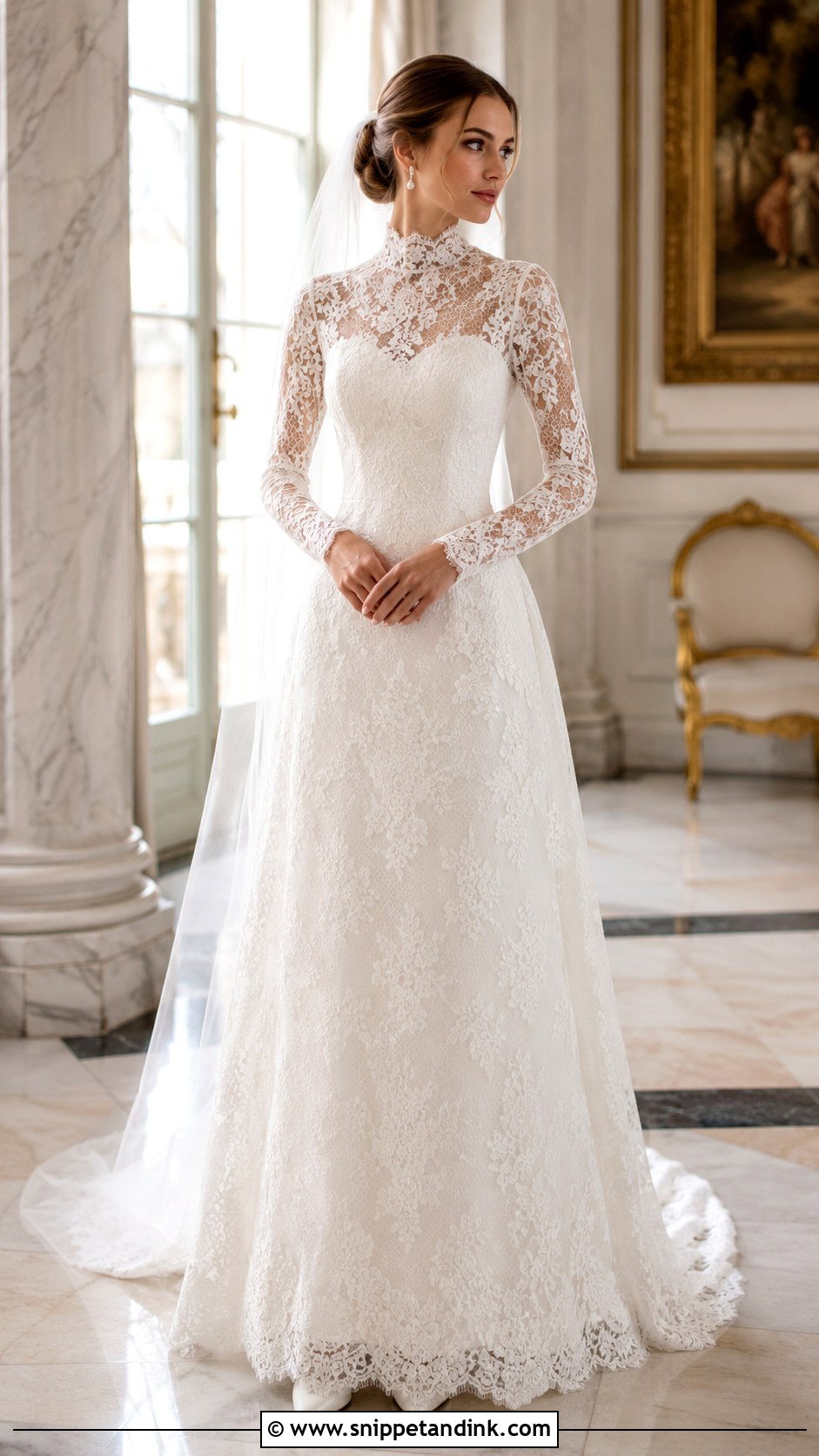
Lace that climbs to the throat feels quietly vintage. A softly lined bodice, lace across the collarbone, slim sleeves ending at the wrist and either a flowing A-line or a column skirt keep the high neck from feeling heavy. Pearl earrings, a low twisted bun and pointed satin shoes are enough, and a necklace would only fight the collar. Attach the veil below the bun so the back of the neck stays visible. In the fitting room I watch brides turn their heads. Raw lace edges at the neck can prickle, and a soft binding or a fine mesh backing makes a real difference by the evening.
5. V-Neck Long Sleeve Lace Wedding Dress
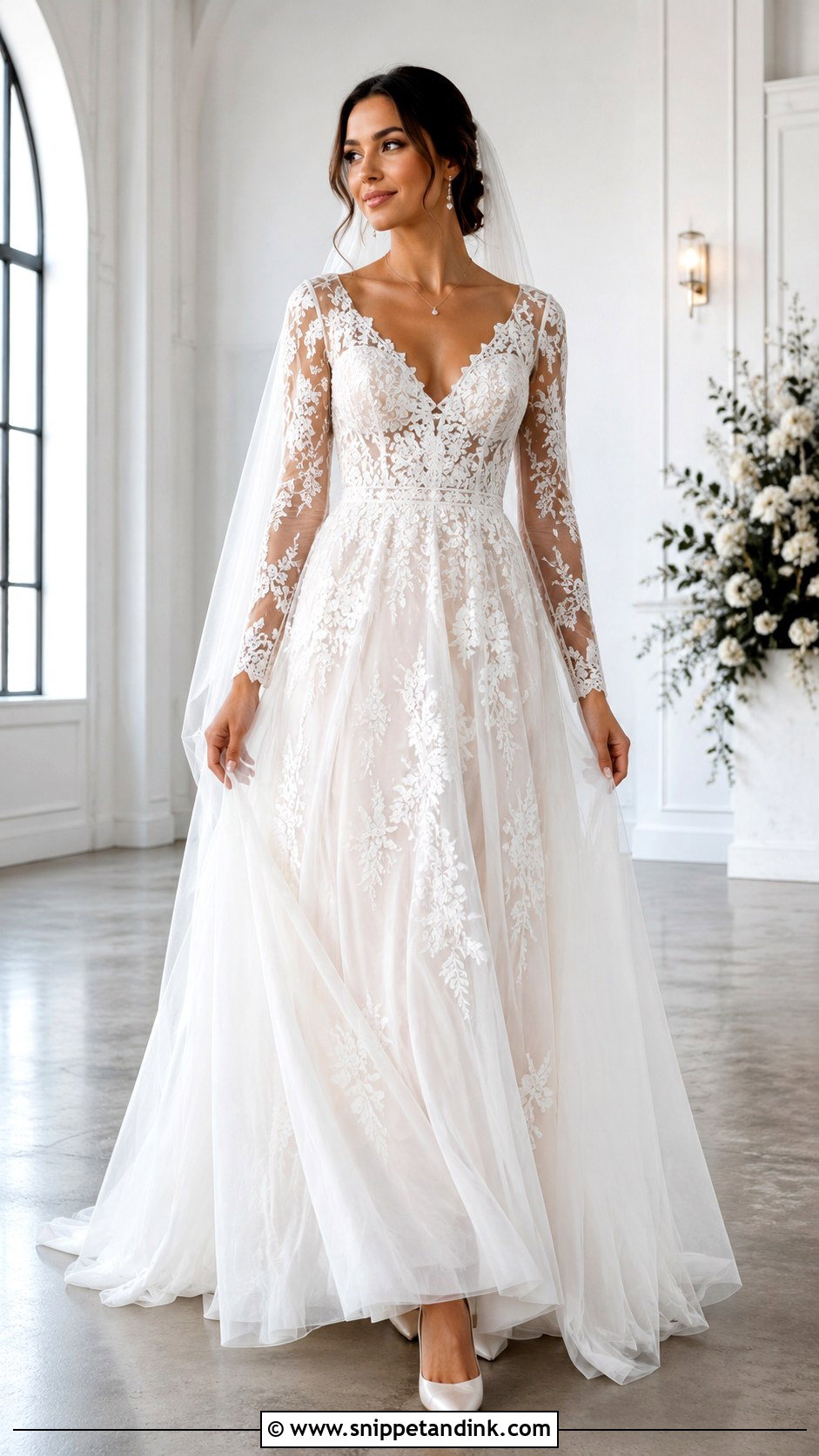
A V in lace gives you the open line at the neck without giving up the sleeves. It can be shallow and understated, or deeper with a supportive illusion panel underneath. Pair it with a defined waist and whichever skirt you move best in: A-line, sheath or fit-and-flare. A delicate pendant, drop earrings, pointed pumps and a soft tulle veil suit it, with loose waves or a low ponytail. Lean forward, hug someone and lift your arms; the bodice should stay where it is. I like lace motifs placed along the edge of the V. They add a little coverage and soften the change from the lined bodice to the sheer lace sleeves.
6. Square Neck Long Sleeve Lace Wedding Dress
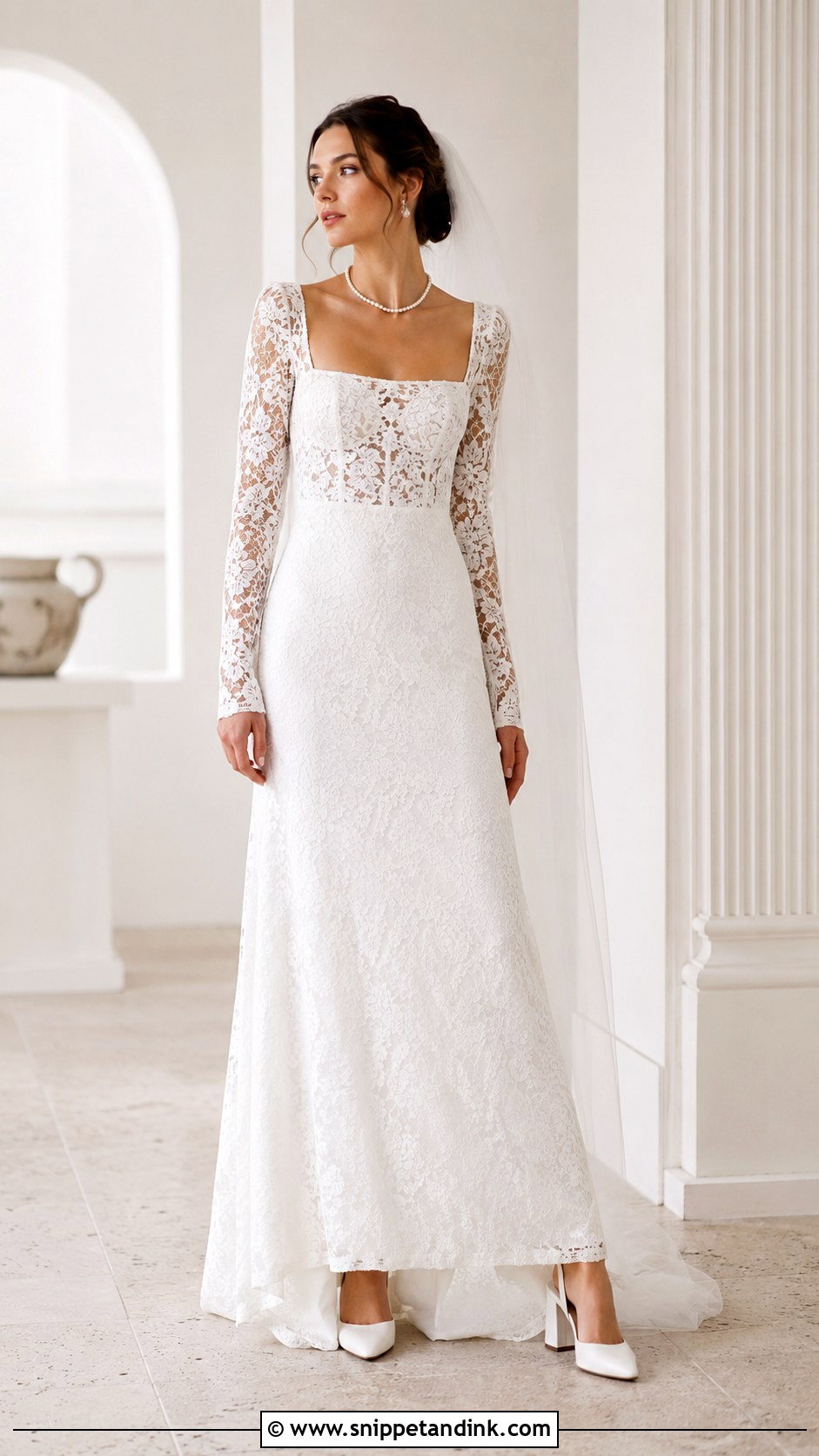
Square necklines and lace look classic but fresh, partly because the straight edge contrasts with the curves in the lace. A structured square frames the collarbone and works best with fitted sleeves and a tailored bodice. A slim A-line keeps it understated; a fuller skirt makes it formal. A short pearl necklace, simple earrings, block heels and a plain veil suit it, finished with a center-parted bun. The lace itself changes the mood. Soft floral lace eases the geometry, while corded lace makes the dress look architectural. At alterations, check that both corners lie flat and that the sleeve seam meets the shoulder where it should.
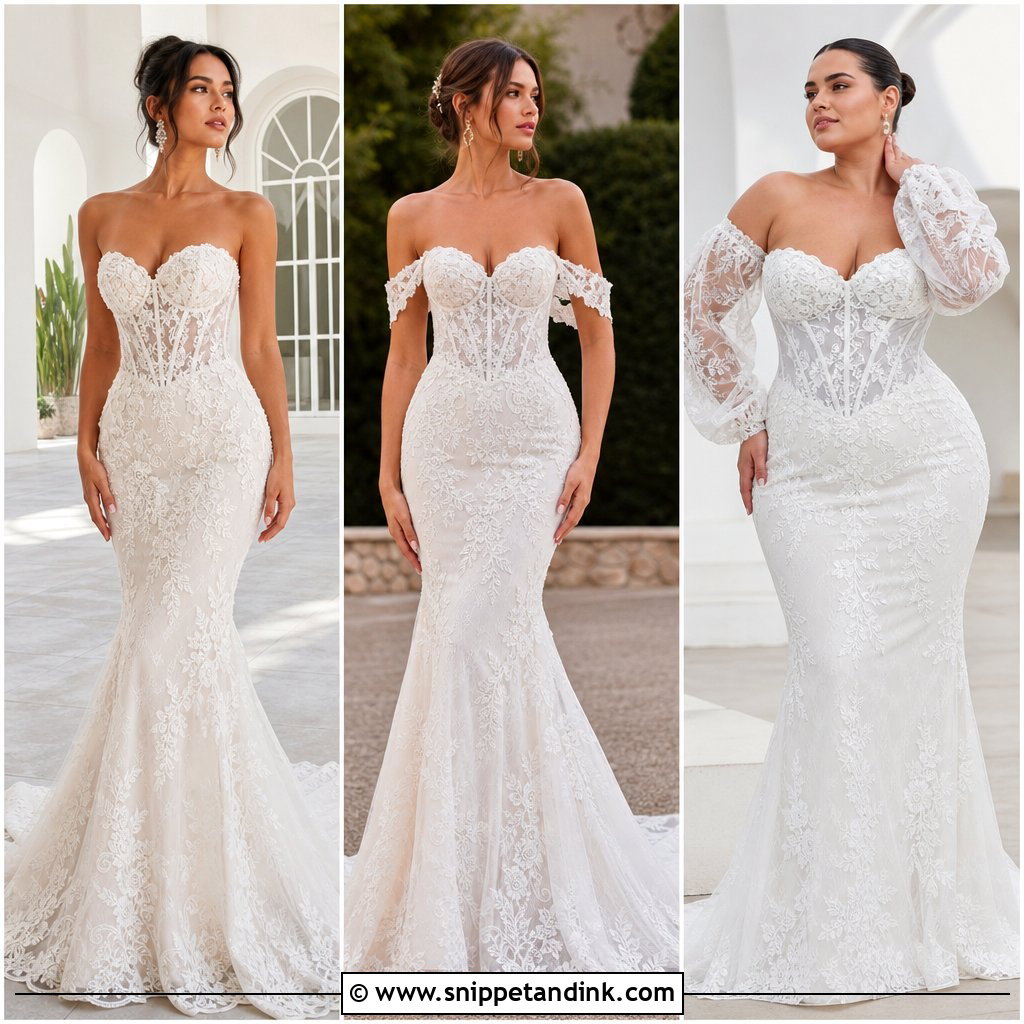
7. Off Shoulder Long Sleeve Lace Wedding Dress
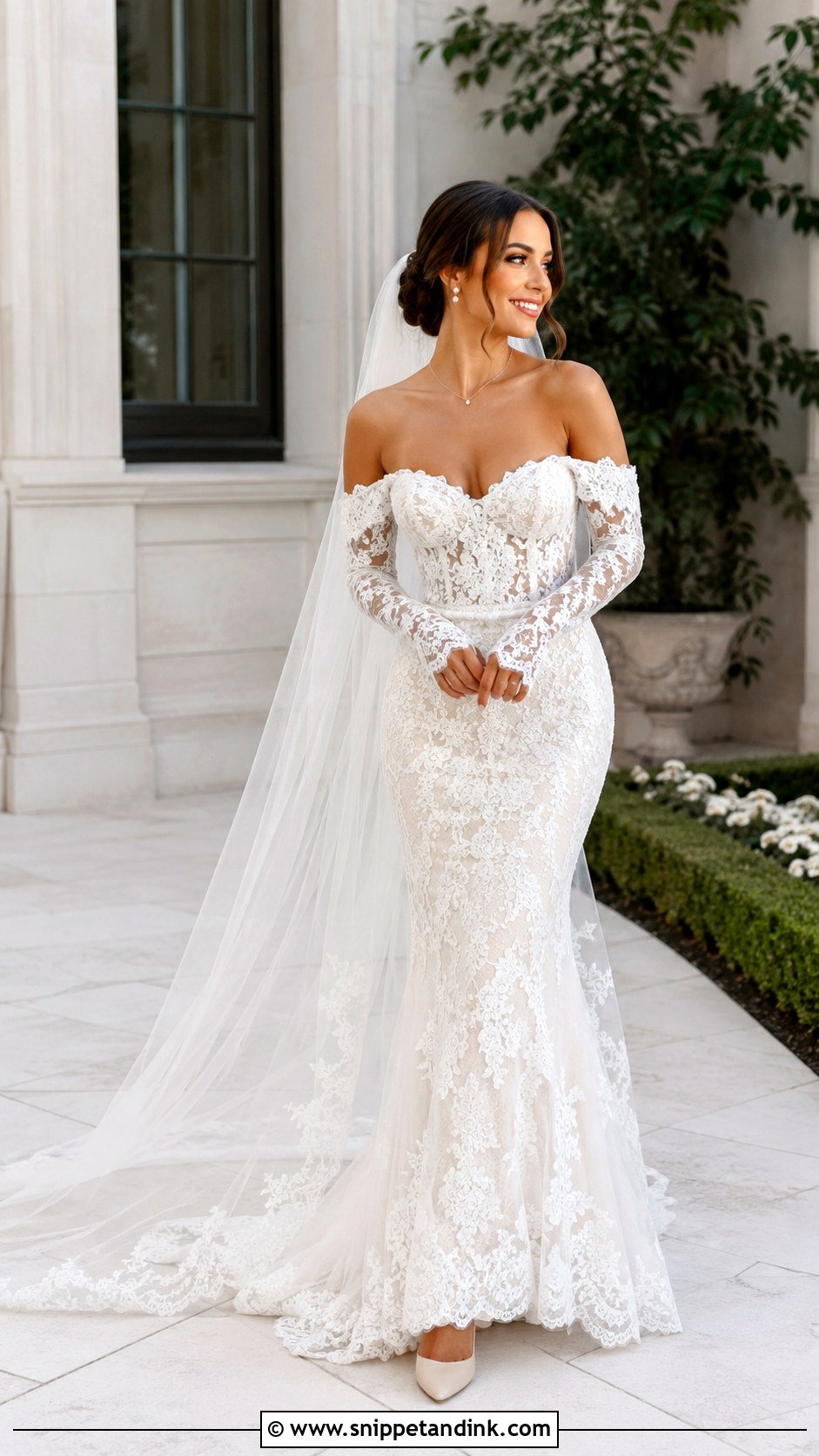
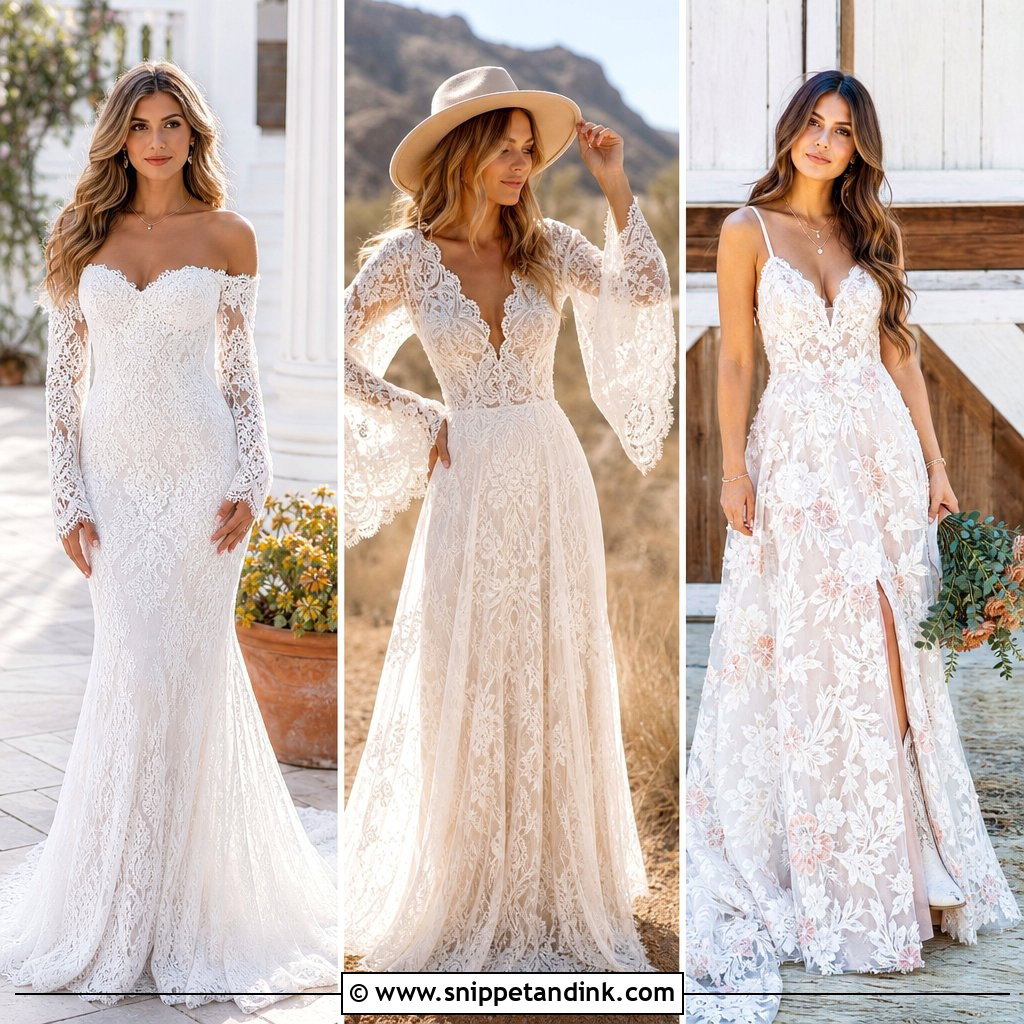
An off-shoulder lace neckline frames the collarbone and still covers the arms, but only if the bodice underneath does the holding. Look for a supportive internal bodice, so the dress stays up on its own rather than hanging from the sleeves. A fit-and-flare skirt keeps it sleek; an A-line makes it softer. A collarbone-length necklace, pearl earrings, ivory heels and a veil set behind a low bun are plenty. I’m honest with brides about this cut: it limits how high you can raise your arms. Hold a bouquet and pretend to hug guests at the fitting. If it feels tight, detachable off-shoulder sleeves give the same look with more freedom after the ceremony.
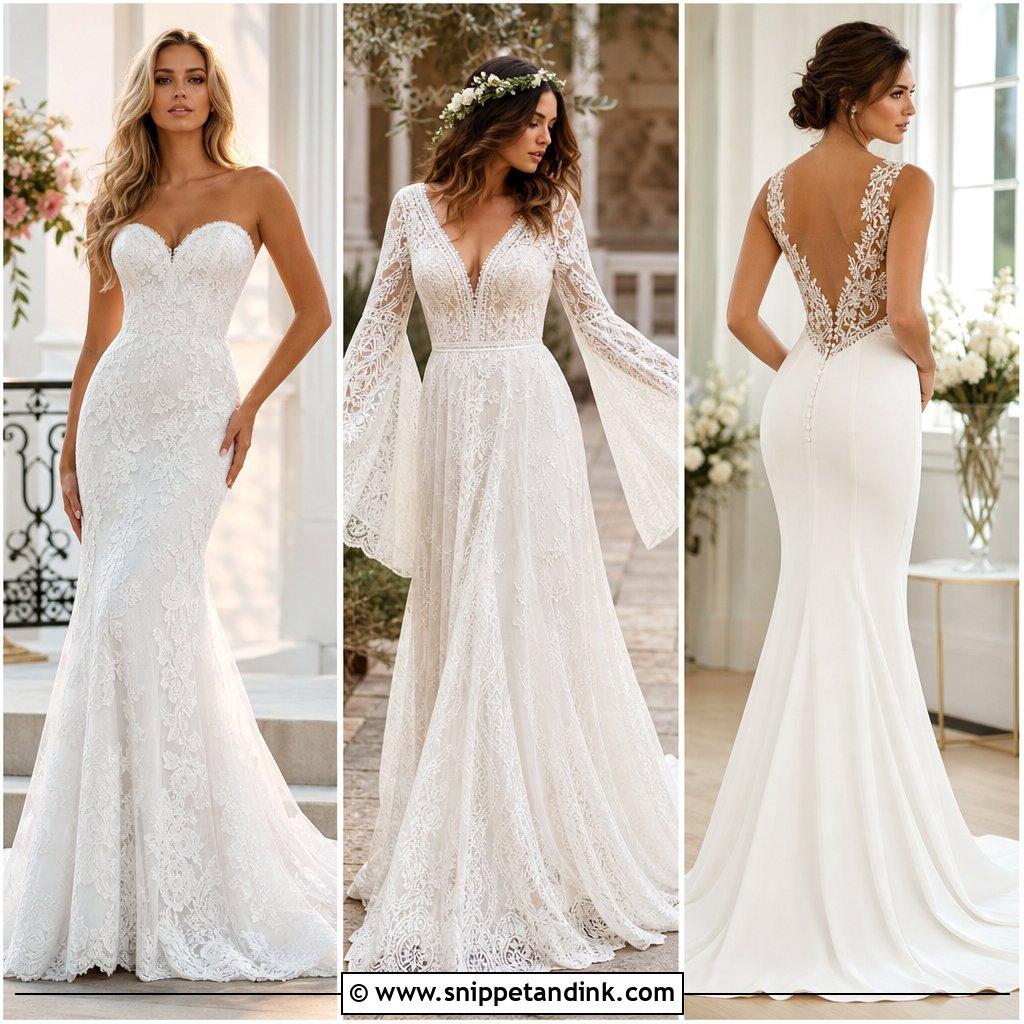
8. Boho Long Sleeve Lace Wedding Dress
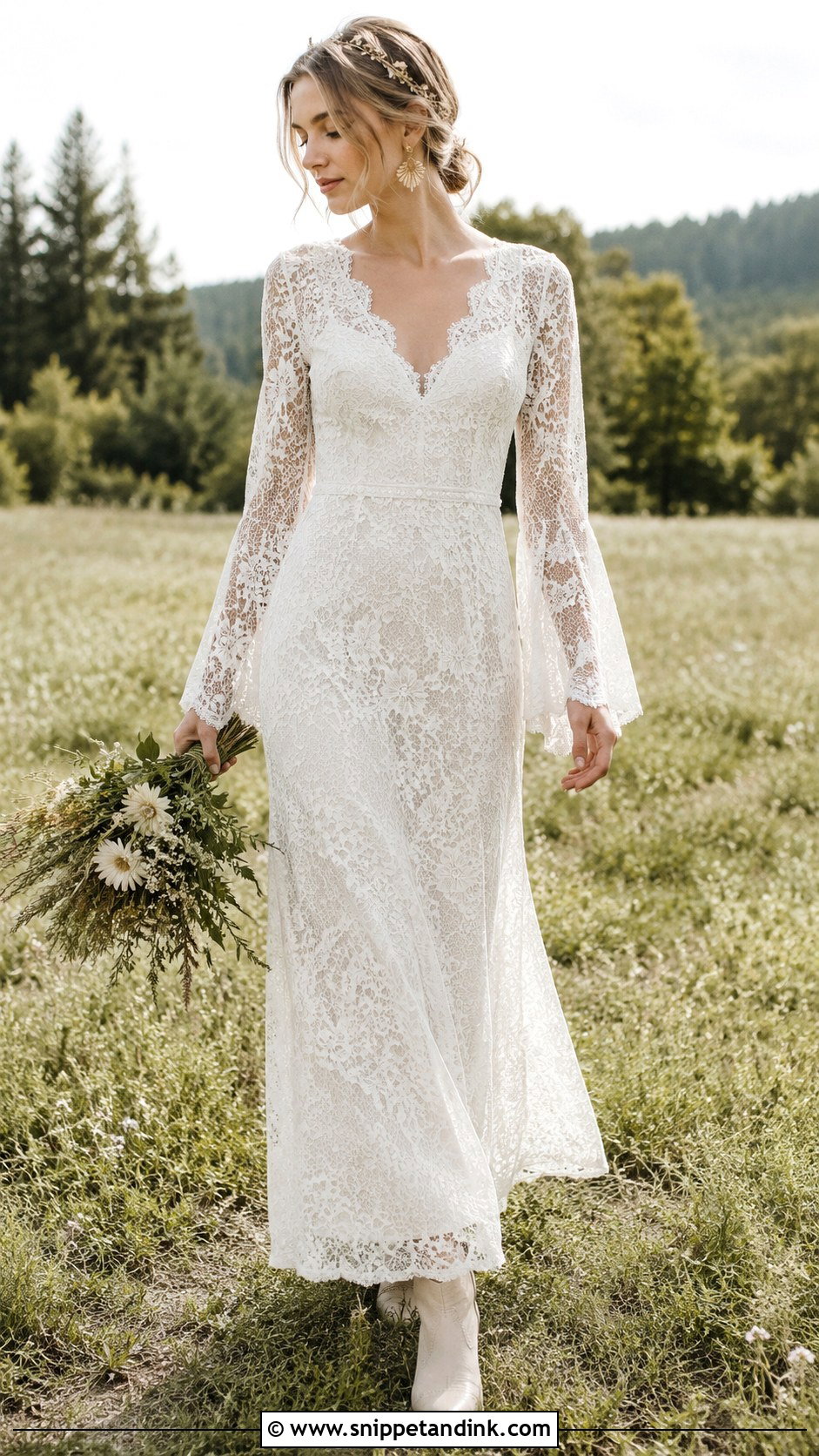
Boho lace should look like it moves, never like it’s holding you in. An unstructured sheath or gentle A-line with botanical lace, a comfortable lining and lightly flared sleeves is the shape I’d look for, with a skirt that skims instead of standing away. Ivory ankle boots or low block heels, textured gold earrings and a simple veil or a delicate hair vine suit it, and a loose braided updo fits woodland or coastal settings. Choose a lighter lace for a warm day. Match the train to the ground: a sweep train glides over grass and sand, while a long one picks up every twig. A natural bouquet keeps it relaxed.
9. Bishop Sleeve Lace Wedding Dress
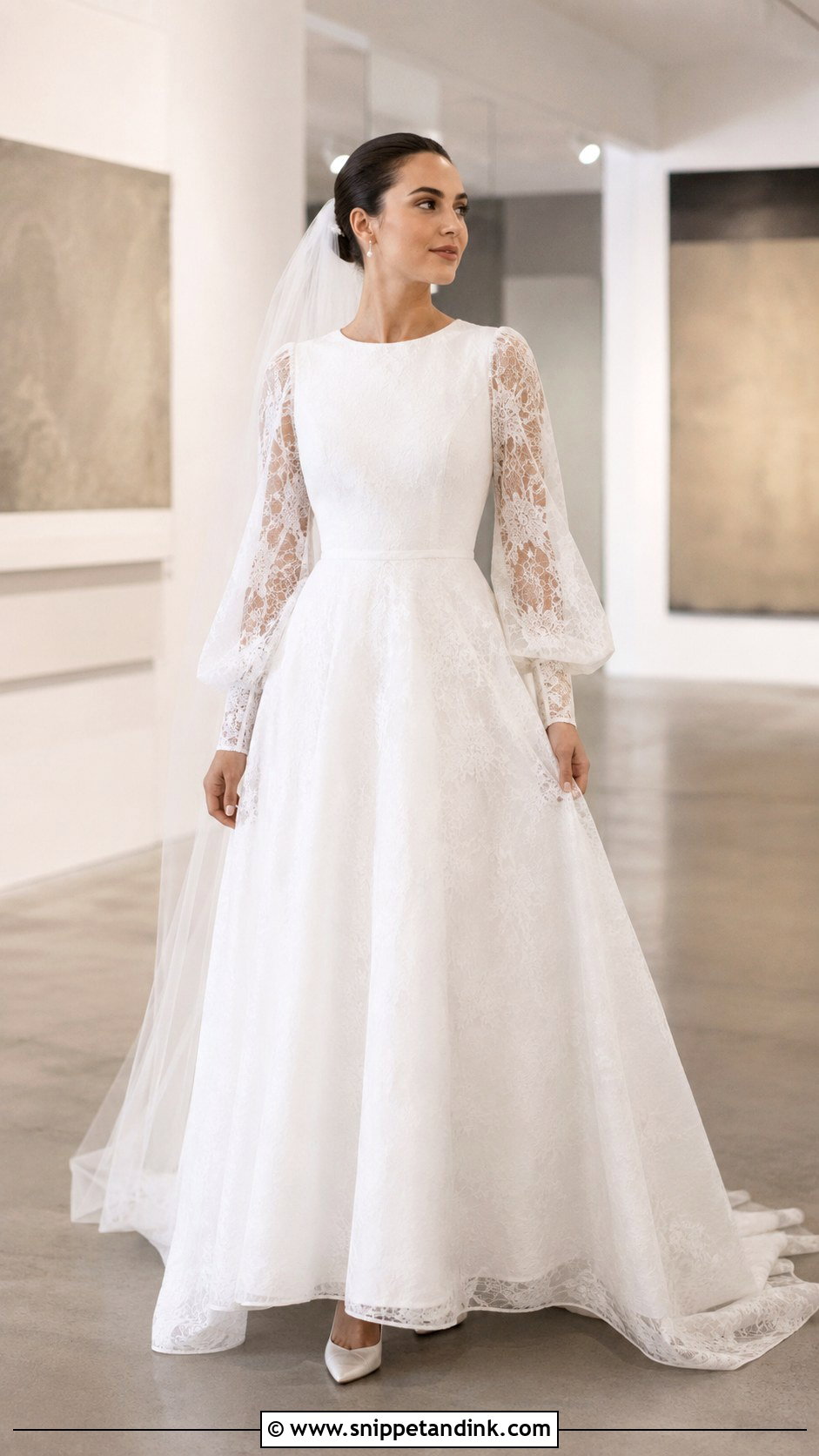
Bishop sleeves fit neatly at the shoulder, widen along the arm and gather into a structured cuff. On a lace dress they add movement, so the bodice and skirt should stay simple: an A-line, a column or a softly fitted shape. Minimal earrings, sleek pumps and a plain veil let the sleeve shape lead, and a polished low ponytail keeps it modern. Lightweight lace or embroidered tulle stops the sleeves from feeling bulky. Fasten the cuffs yourself at the fitting. If you need help with tiny loops, consider hidden snaps, and make sure the cuff sits at the wrist rather than over your hand. Detachable bishop sleeves are another option if you want two looks.
10. Floral Long Sleeve Lace Wedding Dress
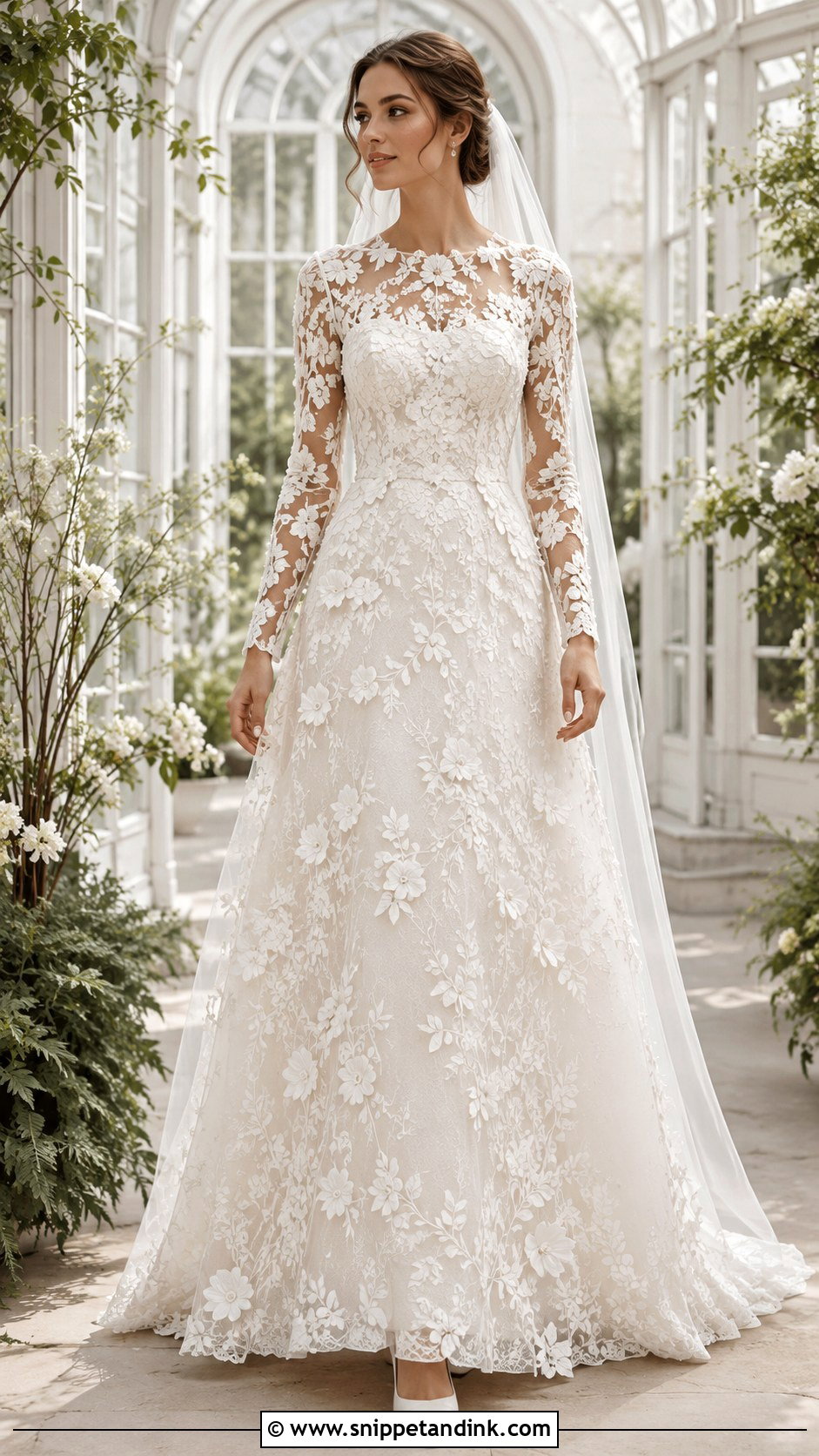
Oversized floral lace is the modern take on a traditional fabric. The motifs are big enough to see across a room, so placement matters. I look for flowers spaced carefully over bodice, sleeves and skirt, running across the seams instead of stopping short at the waist. A clean A-line or fitted silhouette lets the pattern lead, with small earrings, plain ivory pumps, an unembellished veil and a smooth bun or a waved bob. Ignore rules about lace scale and your height; pick the pattern you like seeing on yourself. Then look at it by a window and through a phone camera. Raised flowers cast small shadows, and a smooth lining under them keeps the surface even.
11. Chantilly Lace Long Sleeve Wedding Dress
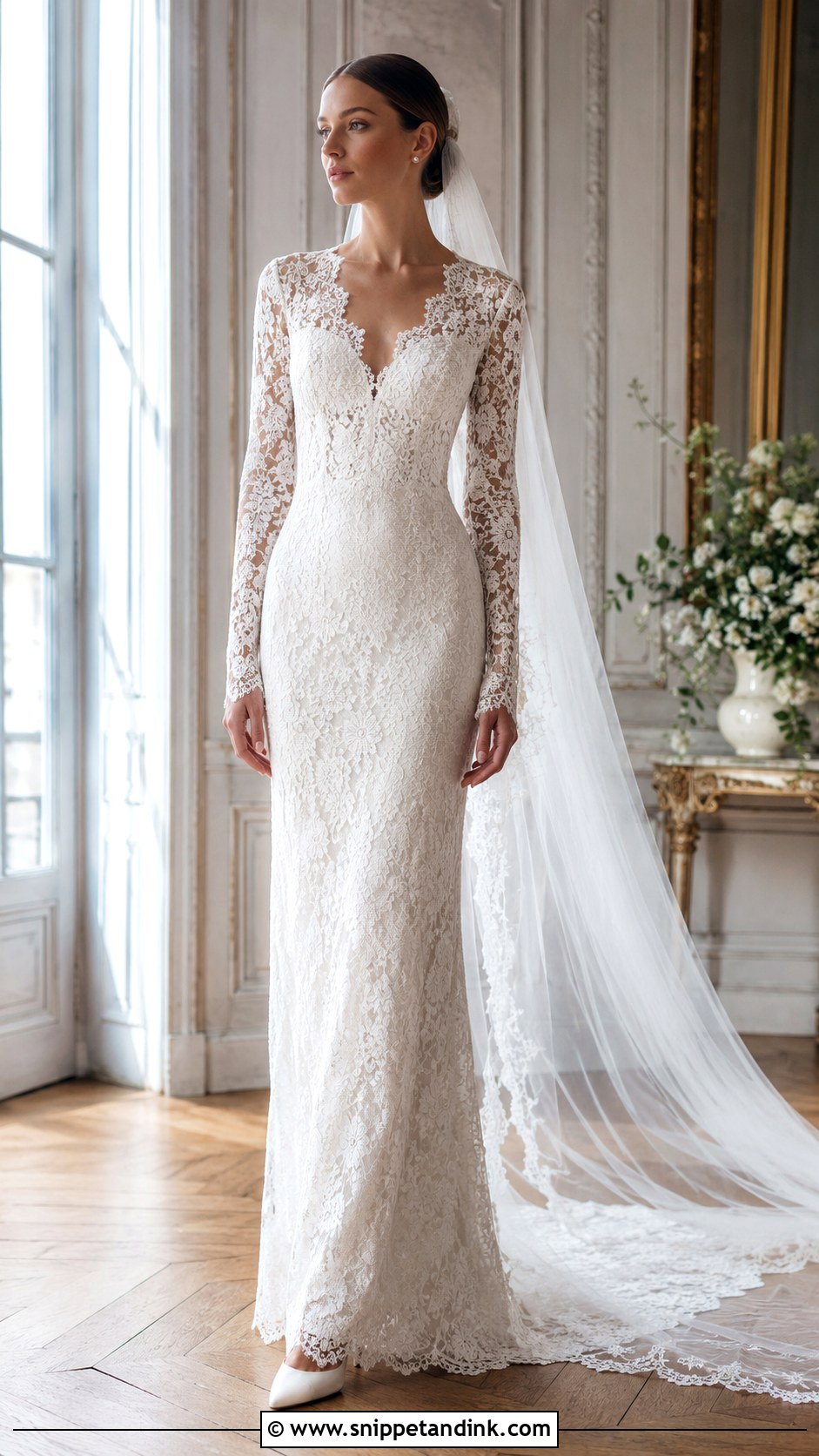
Fine Chantilly lace is a light, net-based lace with very detailed floral patterns, which makes it soft enough to lie flat on a fitted sheath, a gentle A-line or a sheer sleeve. A subtle scalloped neckline and narrow cuffs show off the pattern. Pearl studs, pointed satin pumps and a soft cathedral veil without heavy edging suit it, with a classic chignon. Chantilly is fragile. I look closely at it near the cuffs, fastenings and hem, which are the places it catches, and I ask the shop how they want it stored and handled before the day. A smooth ivory or neutral lining behind it shows the pattern clearly and keeps coverage reliable.
12. Guipure Lace Long Sleeve Wedding Dress
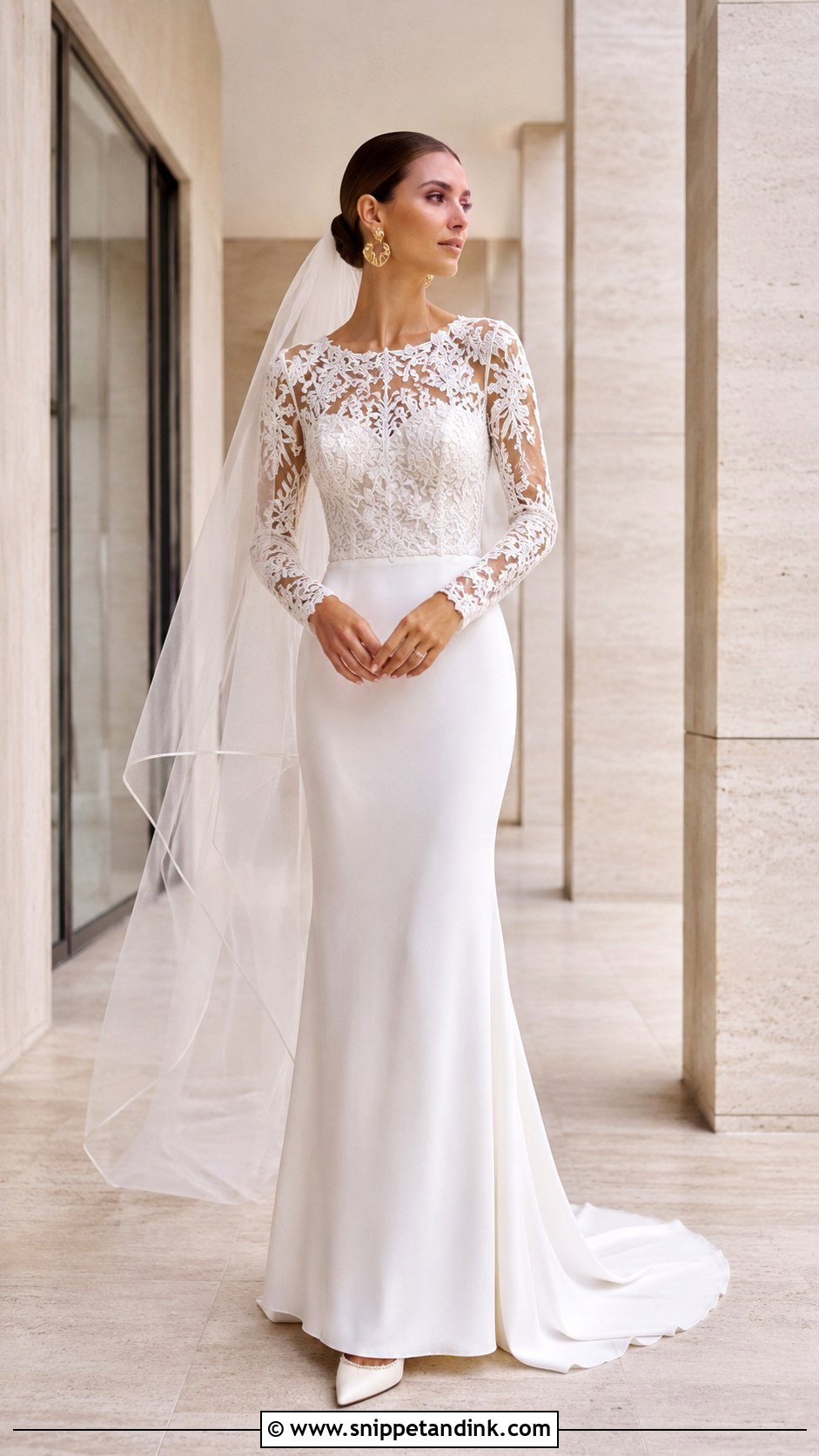
Guipure has no net backing; its motifs are joined directly to each other, so it is bolder and more sculptural than Chantilly. That weight suits a fitted bodice with clean sleeves over a simple crepe or satin skirt, or a structured fit-and-flare made of guipure all over. Sculptural earrings, smooth ivory heels, a clean-edged veil and a sleek bun keep it crisp. Before buying, I bend the sleeve and feel the inside of the arm. Guipure can be stiff and slightly rough where the motifs meet, so a soft lining at the arms and neck helps. Look at how the motifs are joined at the shoulder, waist and center back; that is where quality shows.
13. Modest Long Sleeve Lace Wedding Dress
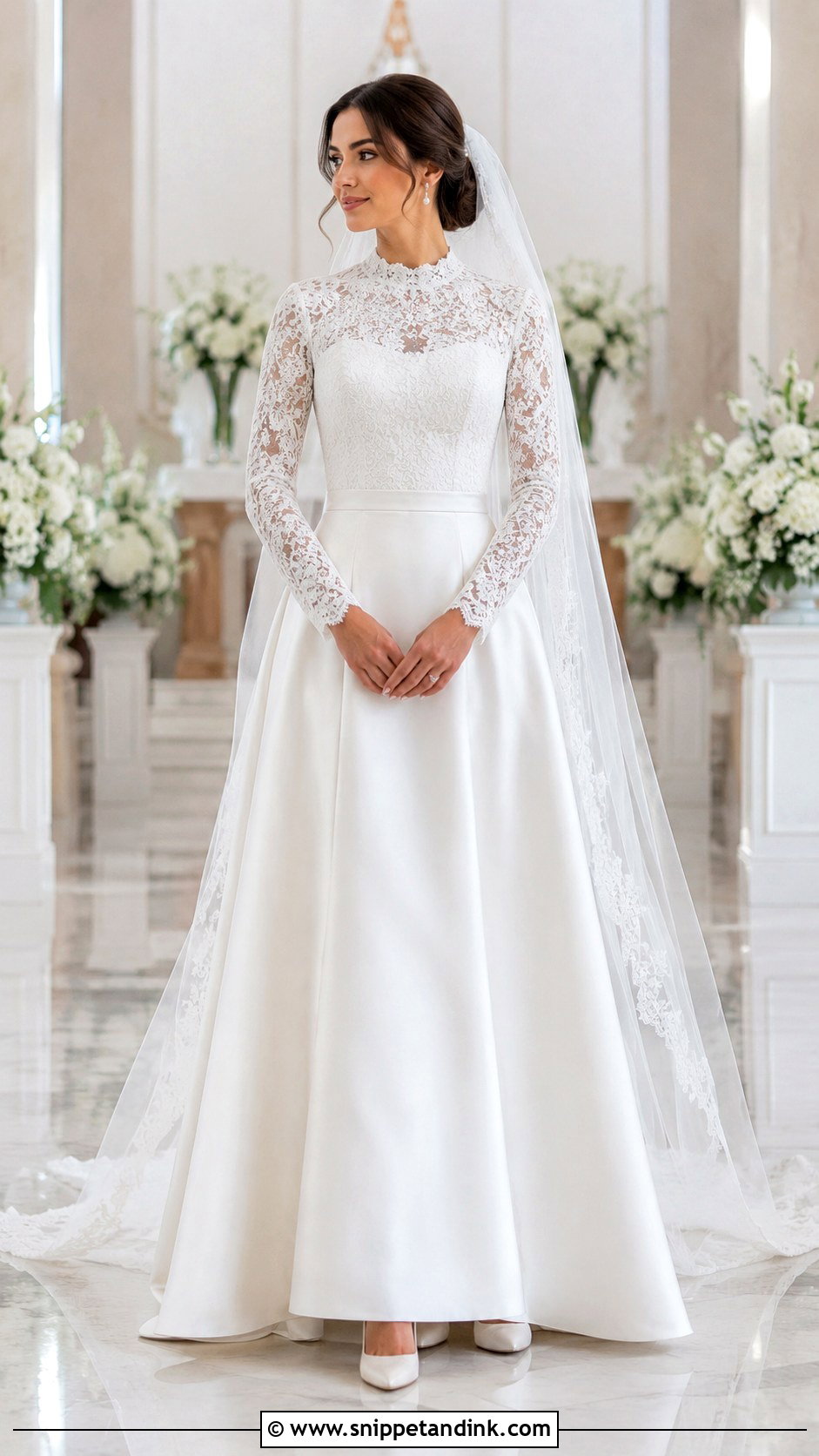
Full coverage in lace can still feel light. A lined high neck, opaque sleeves, a structured waist and a flowing A-line skirt are the base, and tonal lace over smooth satin gives depth without showing skin. Pearl earrings, closed-toe pumps and a long veil set beneath a neat bun suit it, and small covered buttons down the back add a classic finish. Satin linings can get warm, so ask for a breathable one if your wedding is in spring or summer. I always have modest brides raise their arms and bend their elbows during fittings. A seamstress can often add ease at the shoulder and underarm without changing the covered look at all.
14. Open Back Long Sleeve Lace Wedding Dress
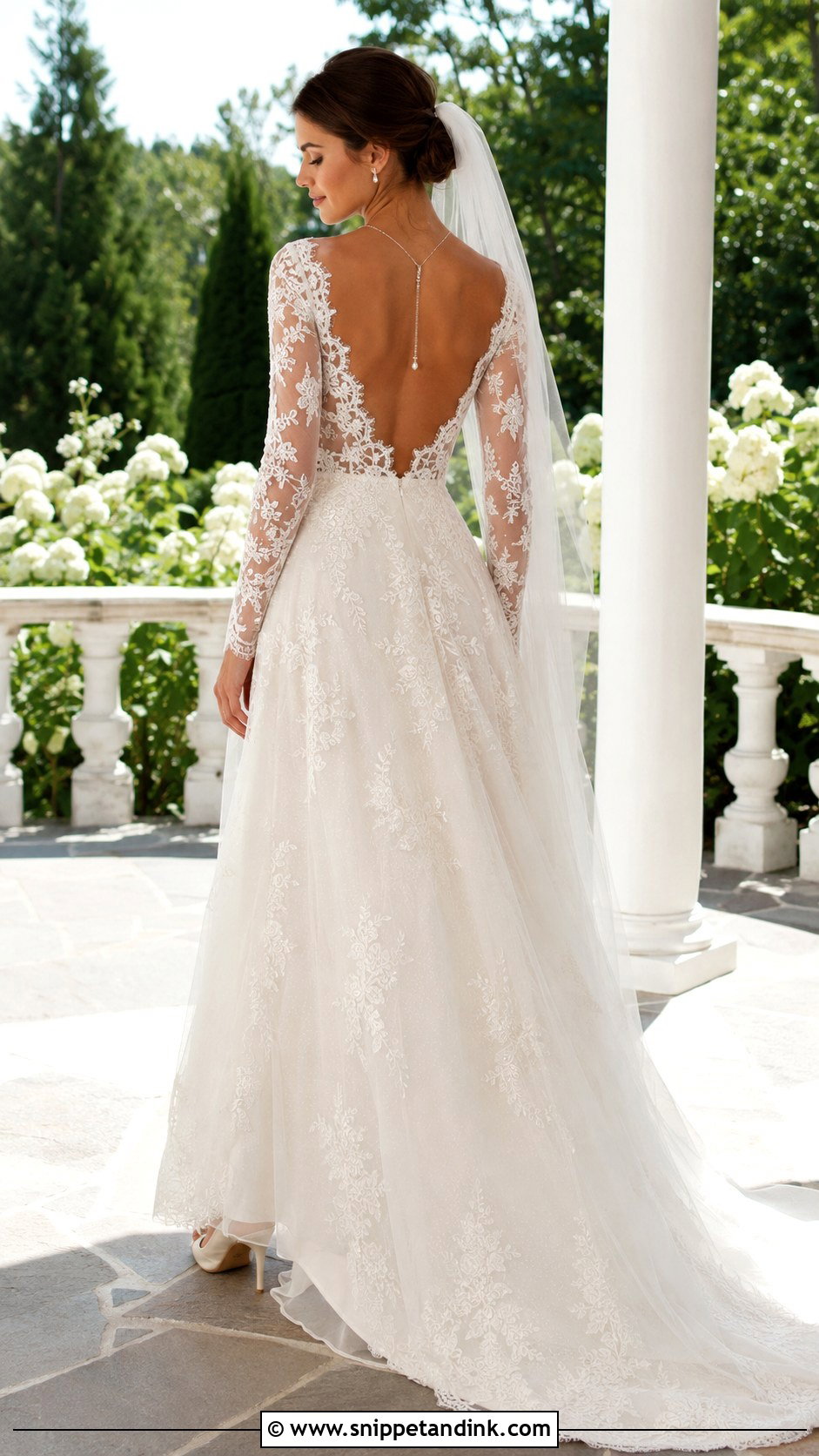
The open back is the surprise in this dress: covered lace sleeves at the front, then a dramatic reveal as you walk down the aisle. The opening needs to be secure, with firm lace edging, an illusion panel or support straps hidden in the design. A fitted sheath or flowing A-line keeps the shape balanced. Back-drop jewelry, small earrings, ivory heels and a veil set below the hairstyle keep the back visible, and a low bun or side-swept waves suit it. Sort your underwear early, since a normal bra band will show. At the fitting, sit, walk and turn; the edge of the opening should lie flat throughout.

15. Corset Long Sleeve Lace Wedding Dress
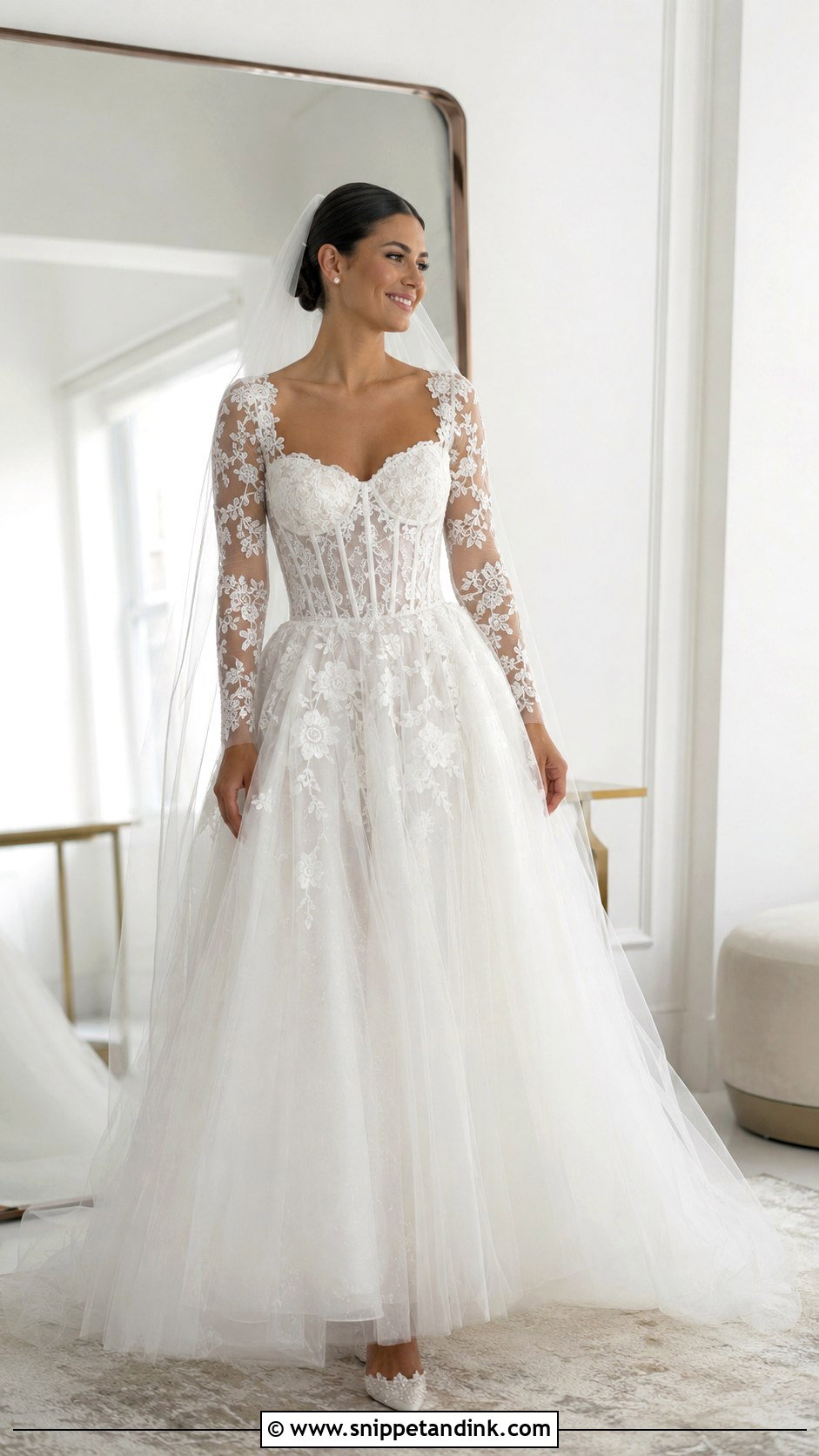
A corset bodice gives a lace dress structure and a defined waist. Newer versions often show the boning through the lace, with a curved neckline, sheer sleeves and a full or fitted skirt. A tonal lining keeps it understated; a slightly deeper neutral one brings the lace pattern forward. Crystal studs, pointed pumps, a plain veil and a soft updo balance the firm bodice. The test I use: sit down and take a deep breath. A corset should support, not squeeze. Check that no bone presses into your waist or ribs, and if the bodice is sheer, ask whether appliqués can be placed for more coverage.
16. Basque Waist Long Sleeve Lace Wedding Dress
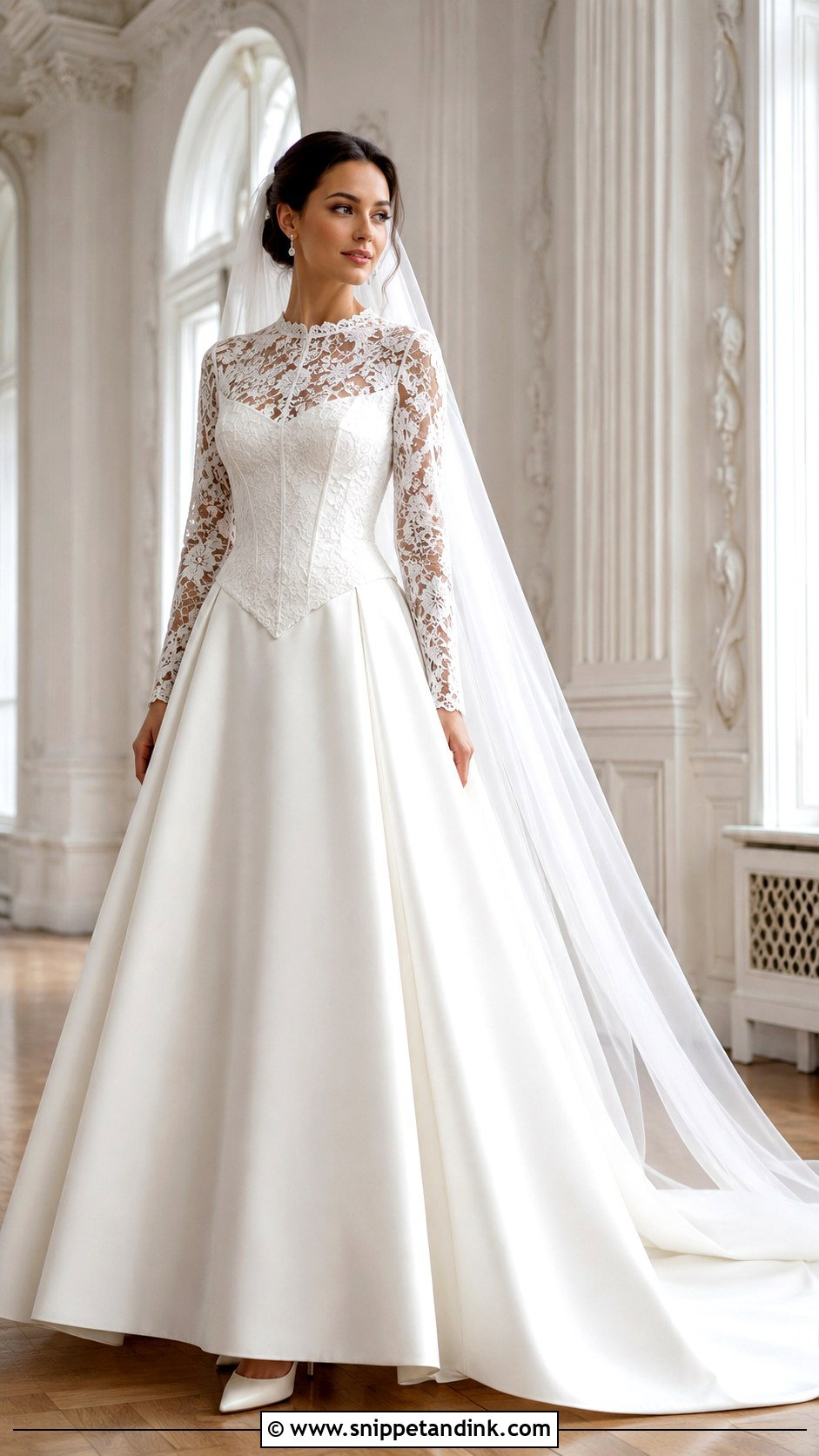
A basque waist dips into a V at the front, which makes the bodice look longer and gives the dress a formal, vintage line, especially with long lace sleeves. A structured bodice over a full tulle or satin skirt gives the most impact; a softer A-line with appliqués fading below the point is a lighter version. Drop earrings, classic pumps and a long plain veil suit it, with a smooth bun. Fit is everything here. The point must sit dead center and the bodice must stay level, so I have the seamstress check it from the front, side and back. A basque that tilts by even a little looks crooked in the ceremony photos.
17. Detachable Long Sleeve Lace Wedding Dress
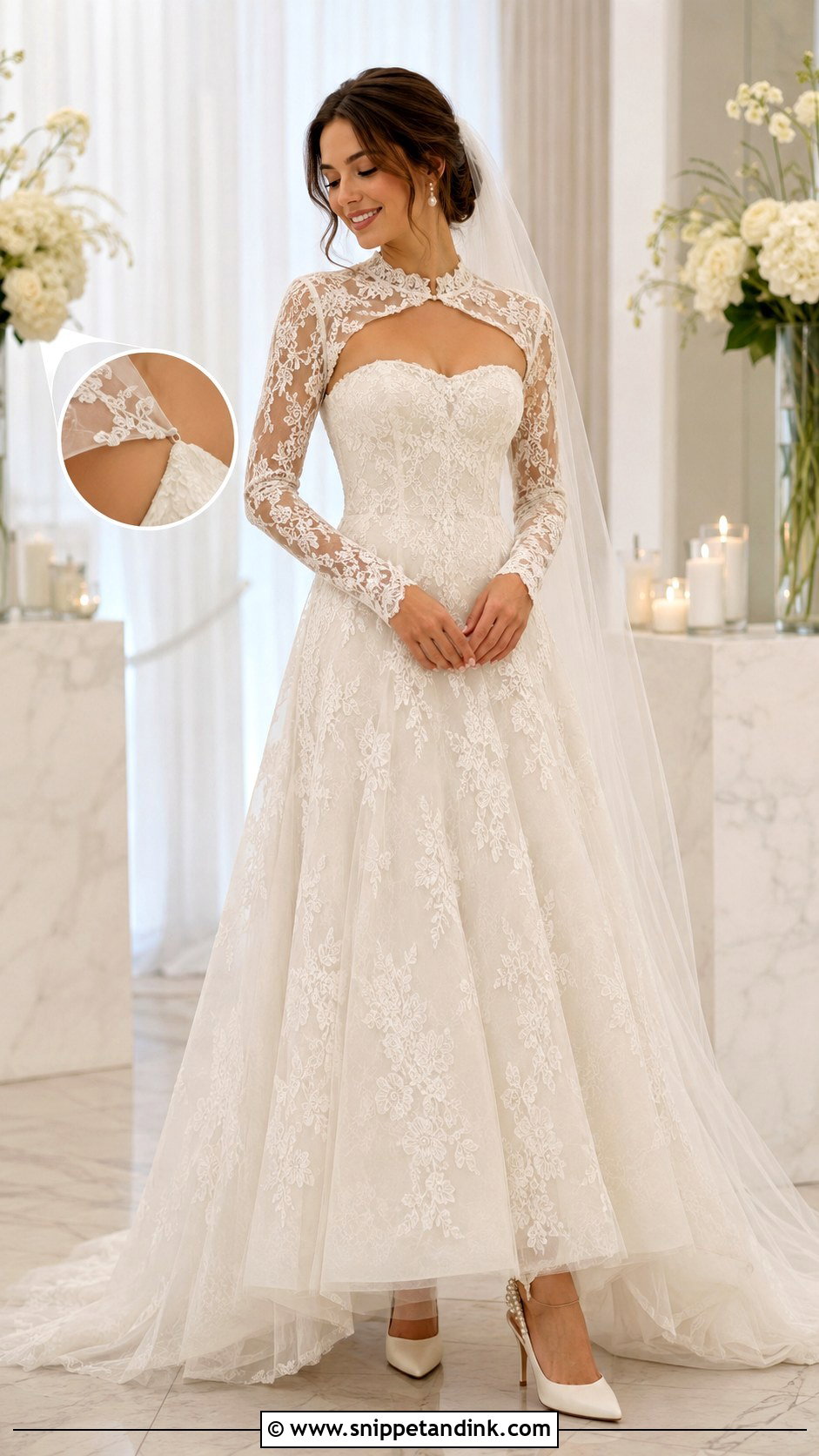
Removable lace sleeves give you a covered ceremony look and a lighter one for dancing. The base needs a secure strapless or sleeveless bodice; the sleeves might be fitted illusion sleeves, a lace topper or off-shoulder sleeves. The lace should match the gown or deliberately echo its motifs. For the ceremony, add a veil, pearl earrings and ivory heels; after the sleeves come off, swap in statement earrings or a hair piece. Ask how the sleeves attach, and practice removing them with your helper before the day. A well-made convertible gown should look complete in both versions, with no visible hooks or bare patches at the shoulder once the sleeves are off.
18. Plus Size Long Sleeve Lace A-Line Wedding Dress
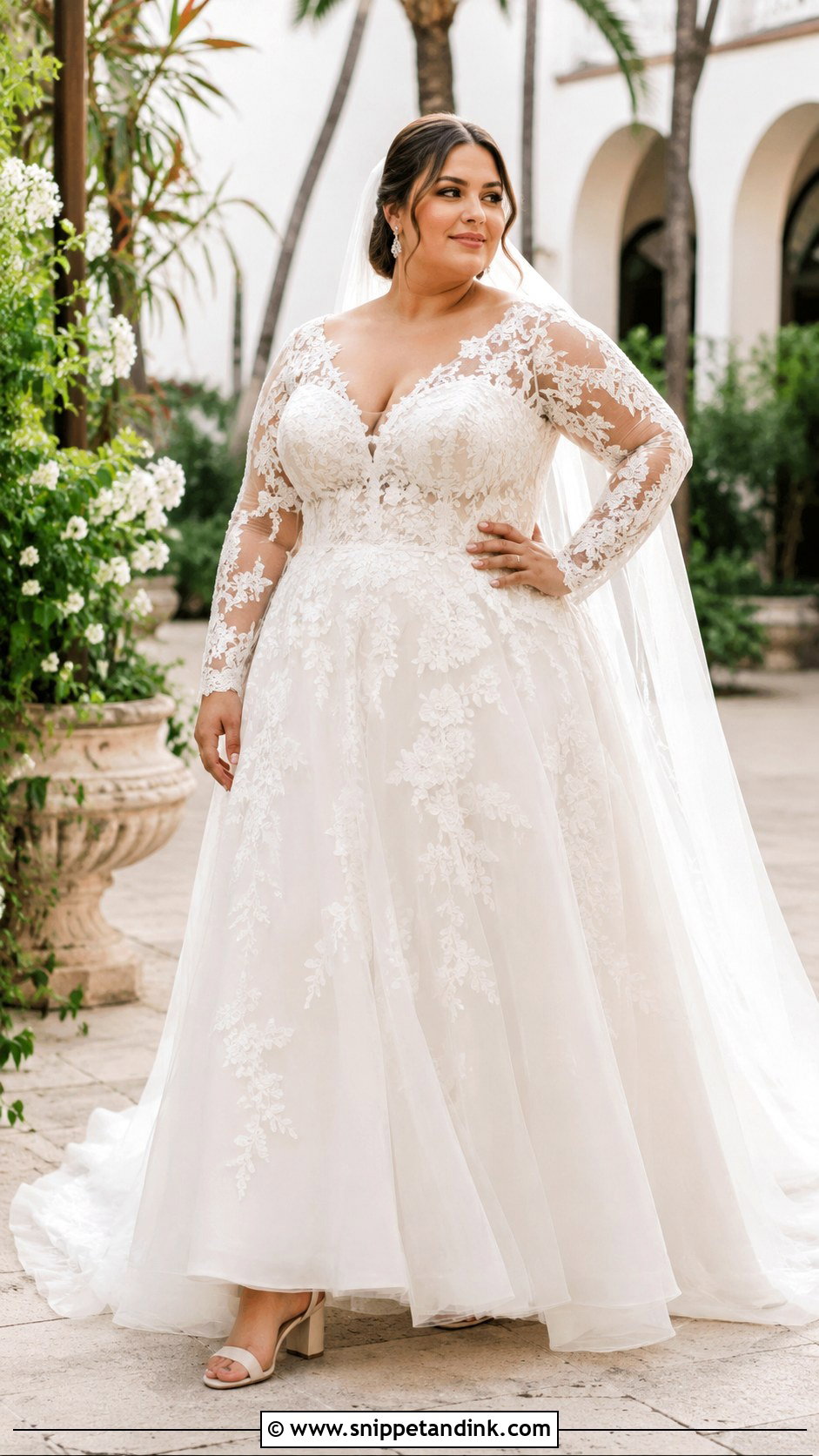
For a plus-size bride, good construction does more than any figure rule. A supportive bodice, flexible lace sleeves, a secure neckline and a skirt that flows from the waist give you a defined shape without squeezing. Well-placed seams and appliqués make the dress look cohesive. Supportive block heels, drop earrings and a veil that matches the gown’s level of detail finish it. Wear the neckline and silhouette you enjoy. At fittings, sit, walk and lift your arms, and raise questions about cups, boning and sleeve adjustments early. Lace sleeves with no stretch are what I’d watch most, since upper-arm tightness is hard to fix once the lace has been cut.
19. Petite Long Sleeve Lace Column Wedding Dress
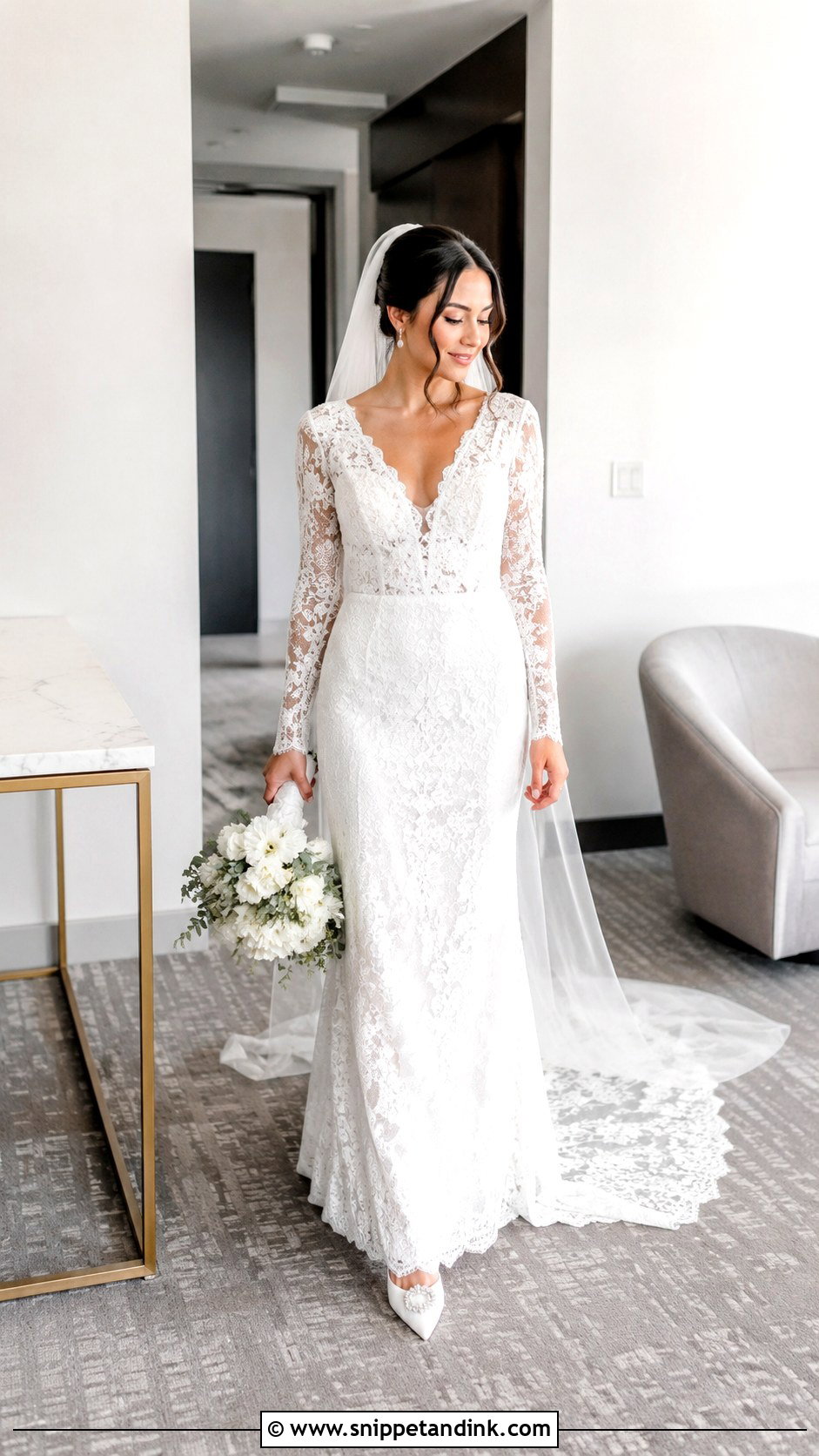
A column gown keeps a petite bride’s line long and clean. Fine lace, a defined natural waist, fitted sleeves and a skirt that falls close to the body work well, with a V or open square neck to keep the top light. Pointed heels, small drop earrings, a narrow veil and a compact bouquet all respect that vertical line. Hemming is where I’d be careful. Shortening a lace column can cut through the motifs or the scalloped border at the hem, so ask whether the border can be lifted and re-applied. Choose a sweep or chapel train over a cathedral one, which can swamp a smaller frame and is harder to manage.
20. Winter Long Sleeve Lace Satin Wedding Dress
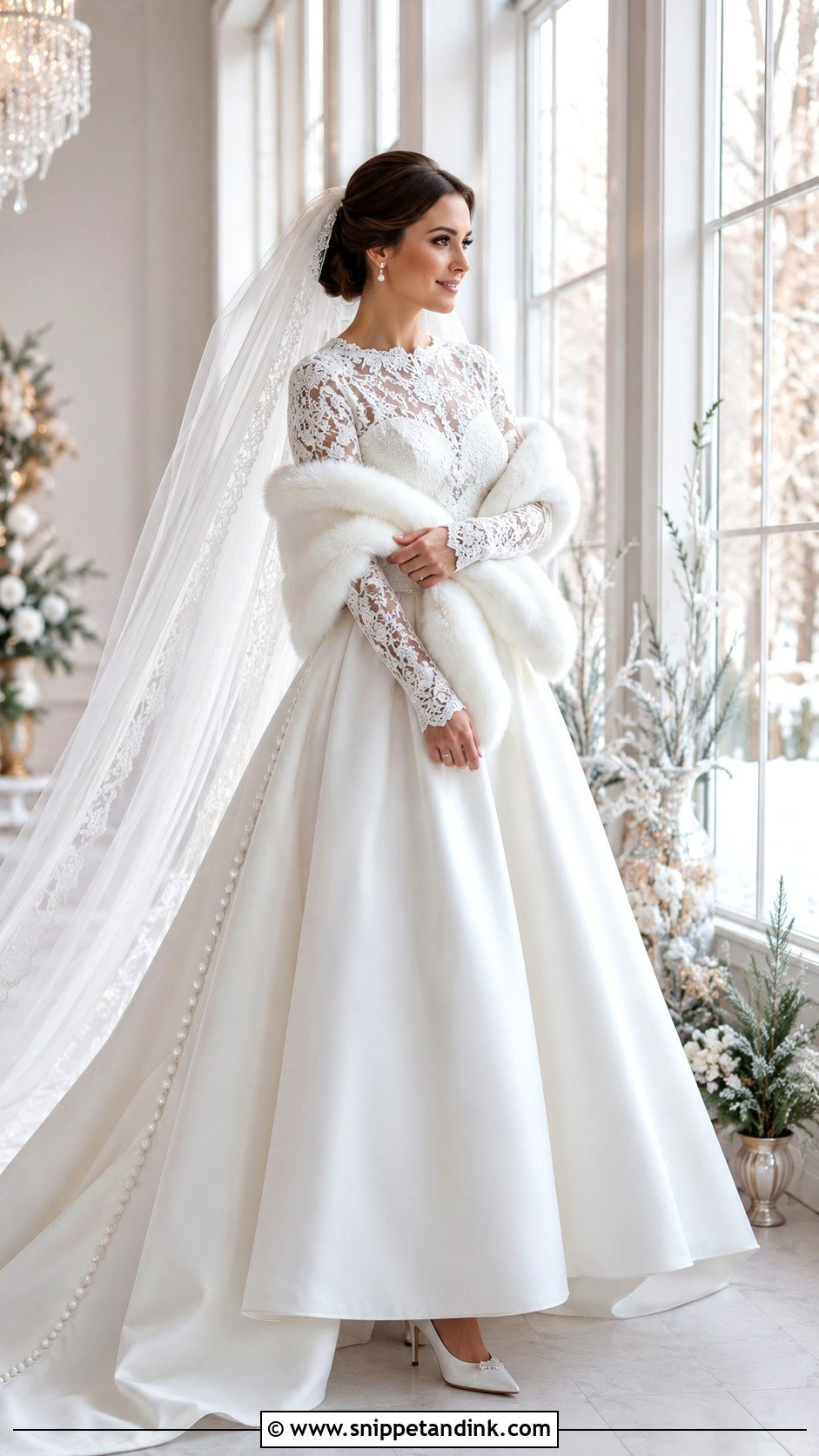
Winter is when lace sleeves can sit beside heavier fabrics. A satin ball gown or A-line with a lace bodice, lined sleeves and covered buttons down the back puts the lace near the face and lets the satin catch the light below. Closed-toe pumps, pearl earrings, a cathedral veil and a faux-fur wrap for outdoor photographs suit the season, with a polished bun. Lace sleeves give coverage, not warmth. I’d choose a comfortable lining and plan a proper extra layer for any time outside. A secure bustle also keeps a satin train off wet steps and paths when moving between indoors and out.
Shortening Lace Without Losing the Scalloped Edge
Lace hems and cuffs often finish with a scalloped border, and simply cutting the dress shorter cuts that border off. A good seamstress will remove the scallop, shorten the dress and sew the border back on by hand, following the motifs so the join can’t be seen. The same applies to sleeves that need shortening at the wrist.
That work takes longer than a standard hem and usually costs more, though prices vary a lot by area and by how complex the lace is. I tell brides to ask about it at the first fitting so they aren’t surprised later. If the sleeve is too long and has a lace cuff, the seamstress may shorten it from the shoulder instead, which also affects the fit of the bodice.
A Small Repair Kit for Snags and Loose Motifs
Lace sleeves are the part of the dress most likely to catch on something: a bracelet, a chair back, a groomsman’s cufflink. A snag is rarely a disaster if someone has the right things to hand.
- A needle threaded with thread matched to the lace, already knotted, to tack down a lifted motif.
- Small sharp scissors to trim a pulled thread instead of tugging at it, which only makes a run longer.
- Safety pins in two sizes, placed on the inside of the sleeve where nobody sees them.
- Clear fashion tape for an edge that has curled up at the neck or cuff.
Give the kit to one person and tell them where it is. In my experience the problem on the day is rarely the damage itself; it’s that nobody can find the needle.
Lace Type, Sleeve Build and How You Move
Lace on the arms can look romantic, modern, modest or bold, and the difference comes down to the lace type, how the sleeve is built, the neckline, the lining and the silhouette. Try some options that don’t match your mood board; a fitted mermaid can surprise you, and a relaxed A-line or boho dress may give you the movement you need. Test the sleeves and bodice at every alteration appointment, and look at the gown in daylight from every side. Let accessories sit back so they don’t compete with the lace. Keep the details that make you feel like yourself and let the rest go.
You'll Like These Ideas:




Leave a Reply