
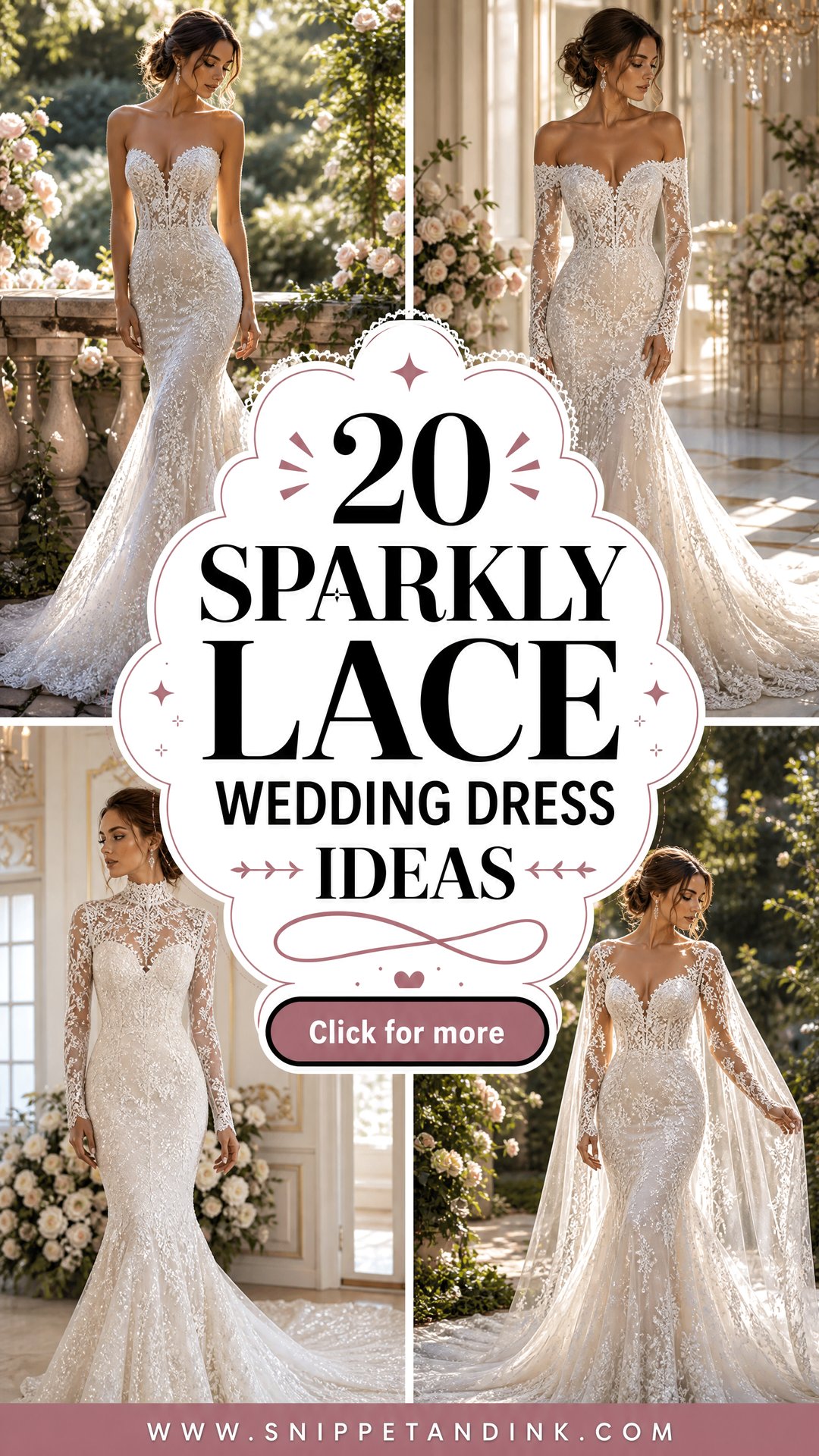
Lace is the most traditional bridal fabric there is, and a little sparkle sewn into it changes how it reads from across a room. Today’s gowns pair lace with corseted shapes, raised flowers, basque waists, glitter tulle, pearls and crystal appliqués, so the combinations are wide. In daylight the shine stays soft; under evening lights it can turn dramatic. What I look at first with any sparkly lace gown is where the embellishment sits on the pattern, how much it weighs, and whether you can move freely in it. The ideas below go from airy A-lines to fitted mermaids, each with its veil, shoes and fitting checks.
Chantilly, Alençon and Guipure Each Take Sparkle Differently
The type of lace decides how much sparkle can sit on it before it stops looking like lace. I ask brides to touch samples of each before we look at gowns, because the feel tells you as much as the look.
- Chantilly is fine and flat, with delicate patterns on a sheer net. It drapes softly and suits light sparkle only: a scattering of tiny sequins or a shimmer lining beneath. Heavy beading drags it out of shape.
- Alençon has a raised cord outlining each motif. Beads and sequins sewn along that cord are the classic sparkly lace look, and it holds the weight well.
- Guipure has no net background; the motifs join directly to each other. It is heavy and sculptural, so it needs only a few crystals or pearls, often at the flower centers.
- Embroidered tulle is technically not lace, but many modern sparkly gowns use it: sequins and thread stitched straight onto mesh. It’s light and shines evenly, though it can feel scratchier on bare skin.
If you love lace for its pattern, choose Alençon or guipure with restrained sparkle. If you mostly want the glow, Chantilly over glitter tulle is the gentler route.
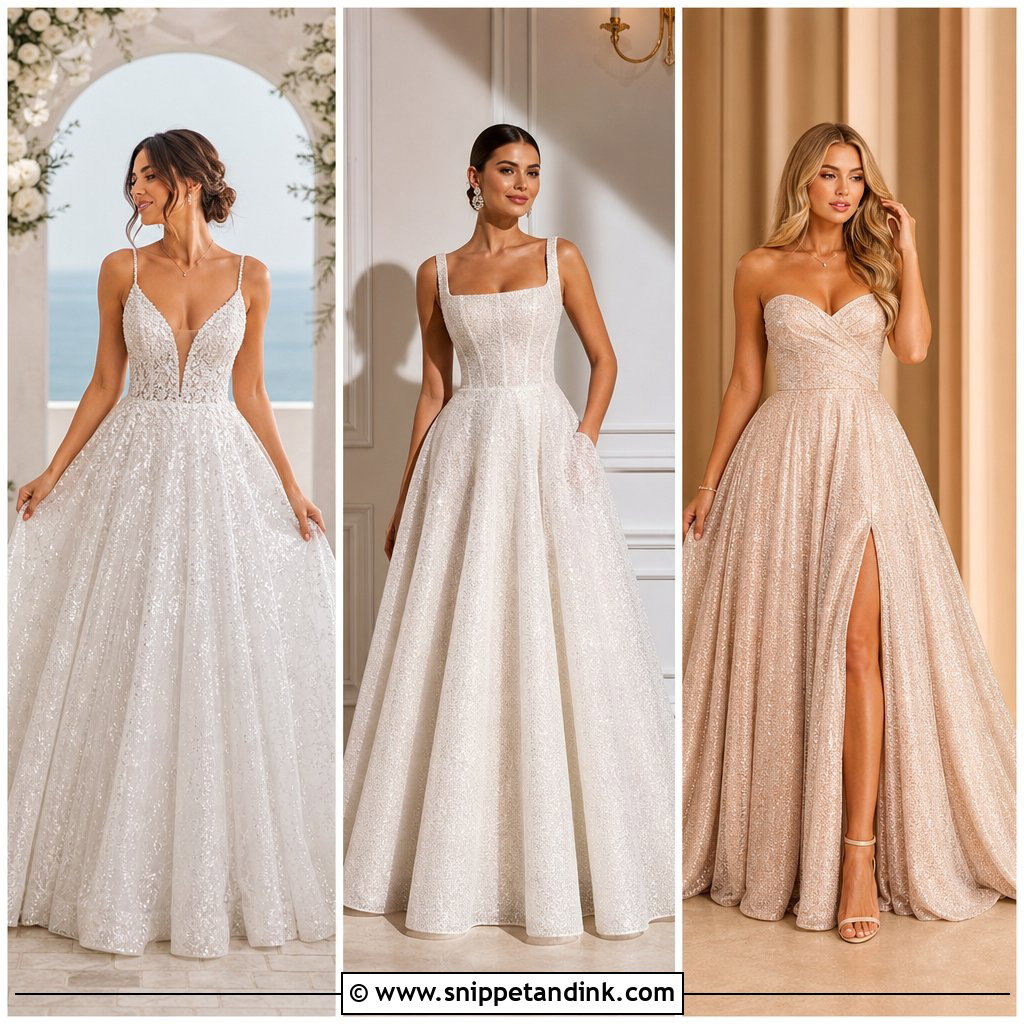
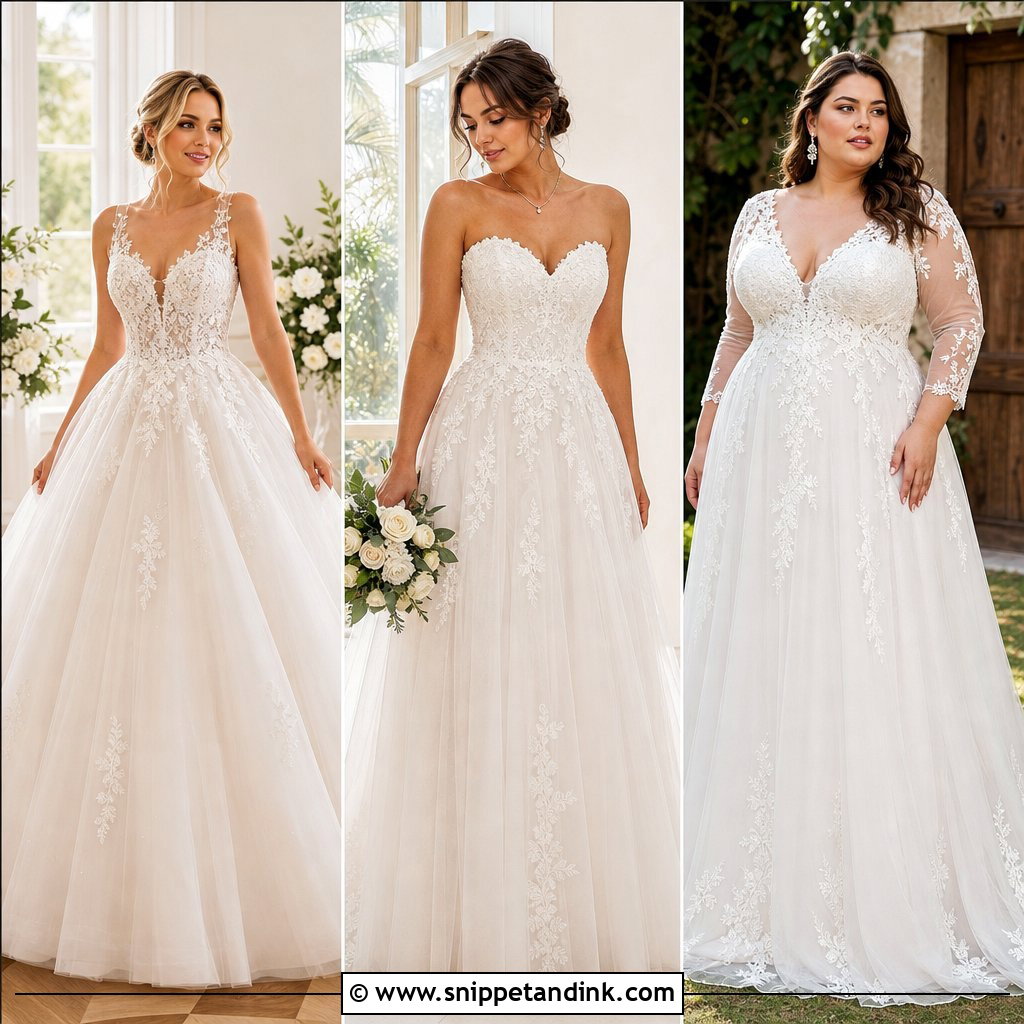
1. Sparkly Lace A-Line Wedding Dress
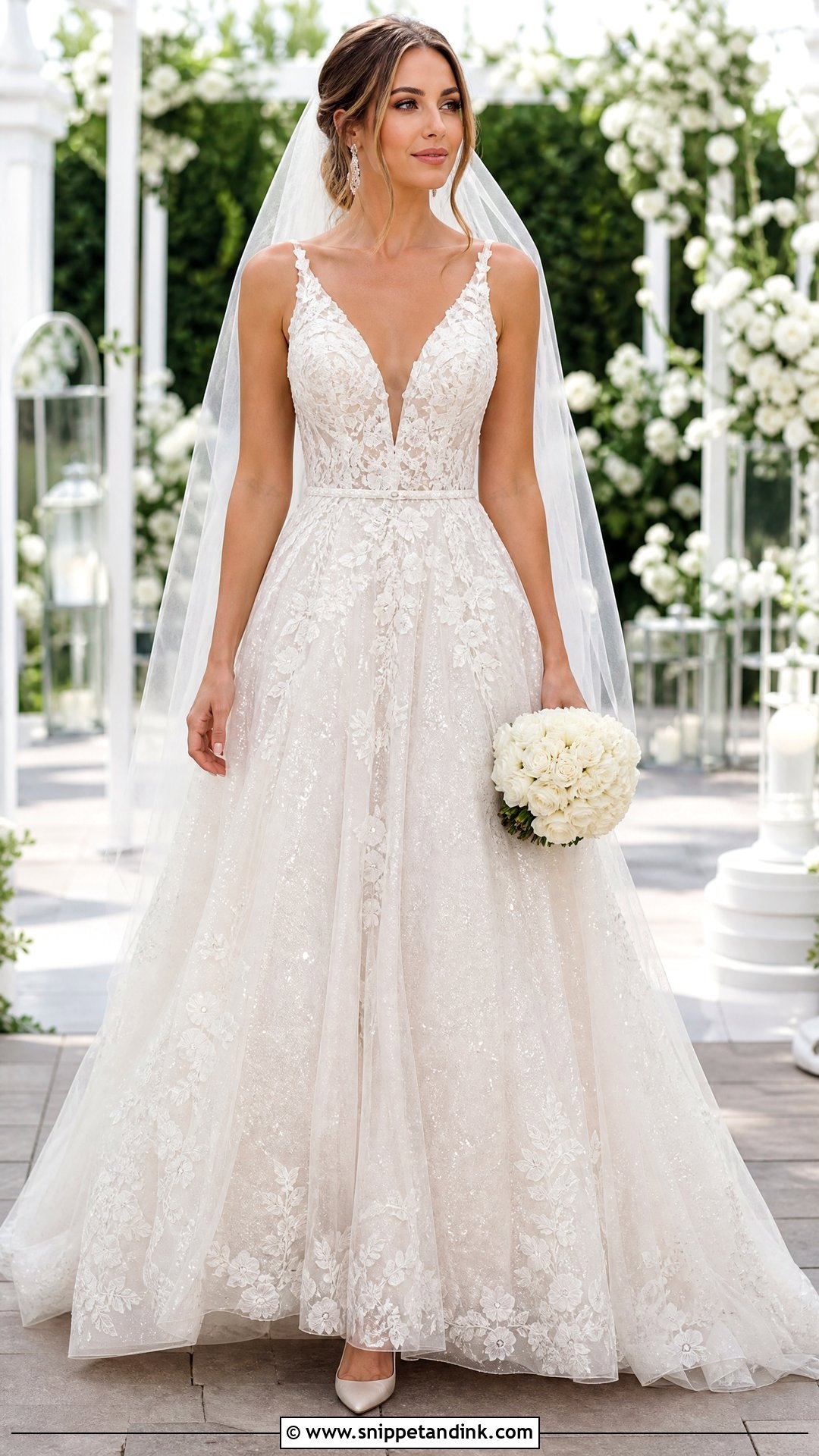
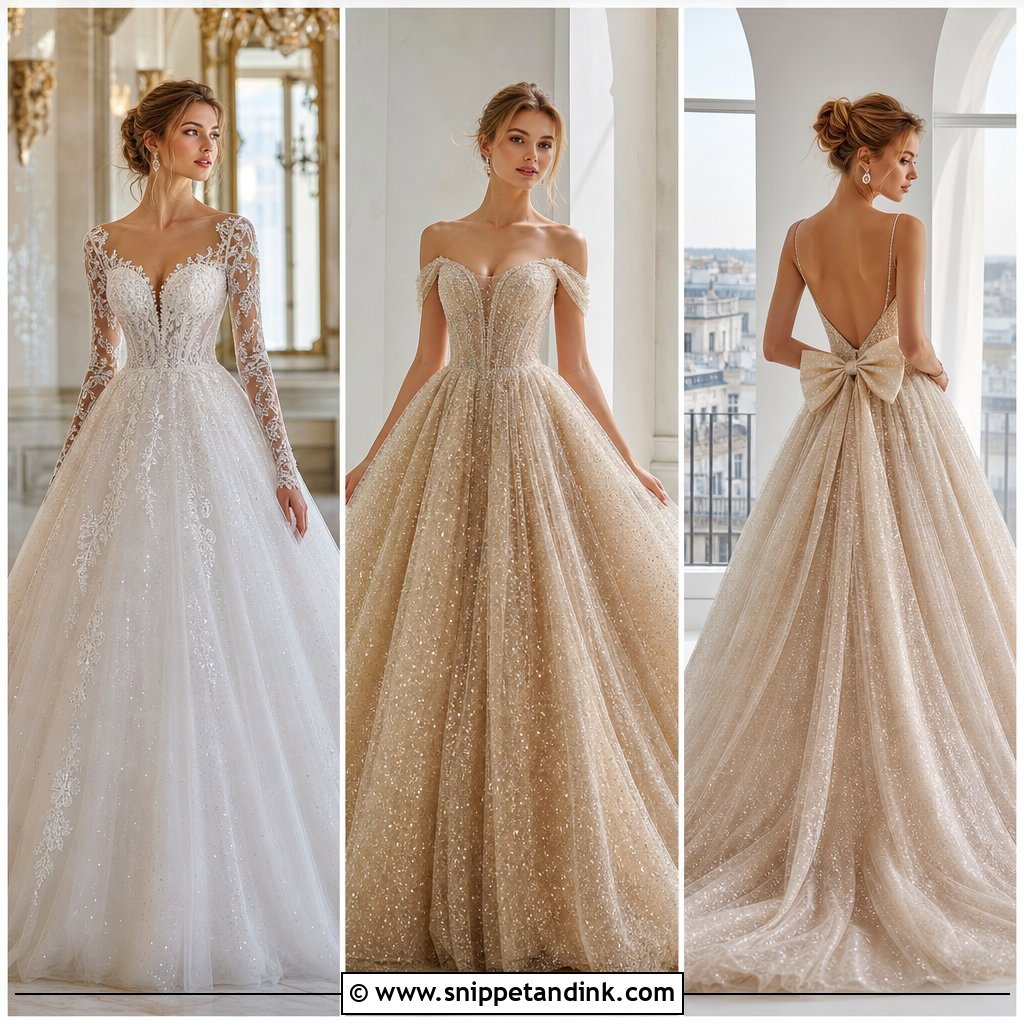
Floral appliqués that start dense on the bodice and thin out as they drift onto a glitter tulle skirt are the version I’d show a bride who isn’t sure about sparkle at all. The glitter does the work in the gaps; the lace stays readable. A V or soft scoop neck with supportive straps keeps it comfortable through a long day. Fingertip veil, crystal drops, pointed pumps. At the fitting, turn quickly and watch the hem: it should float, not wrap around your shoes.
2. Sparkly Lace Ball Gown Wedding Dress
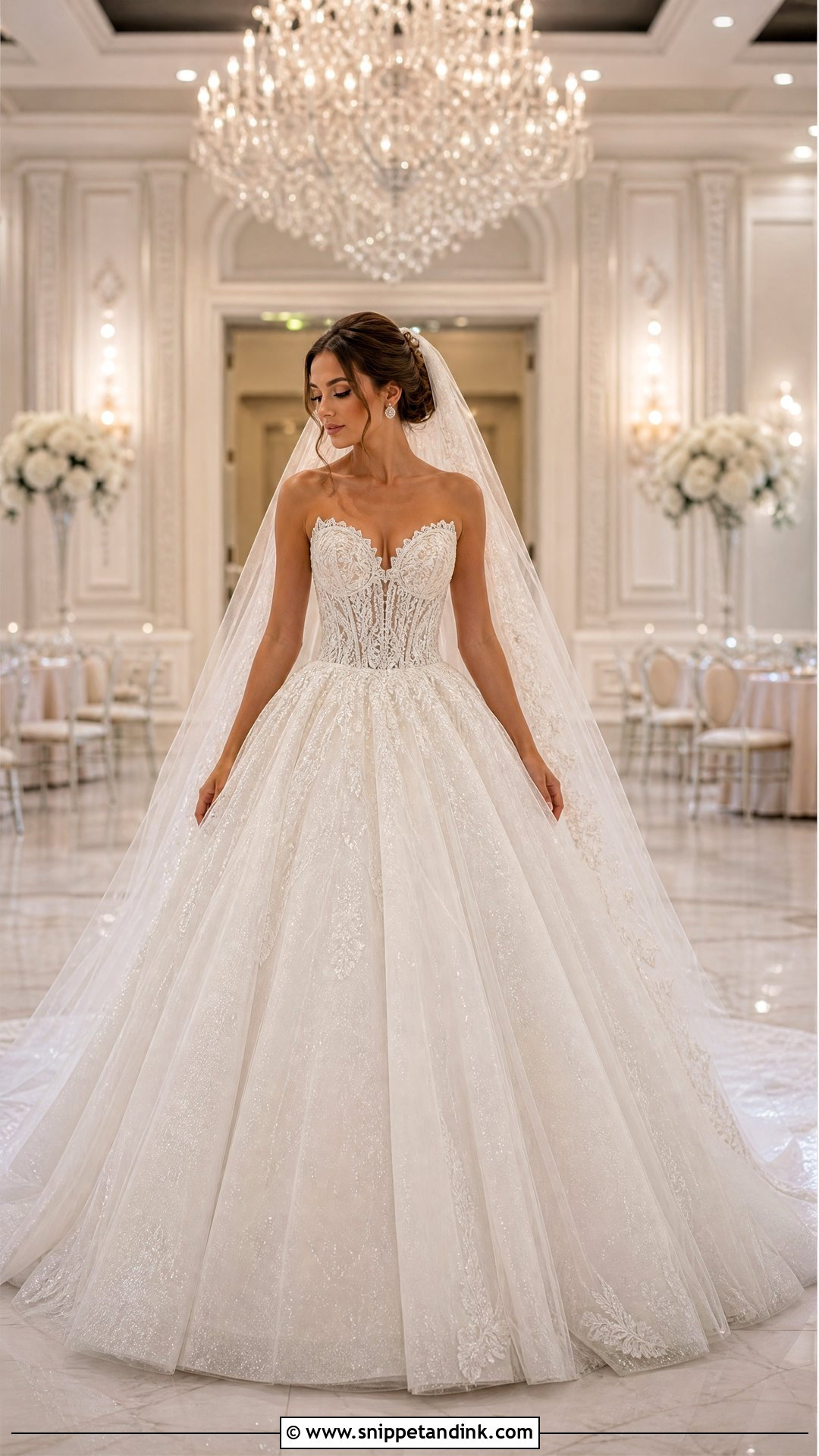
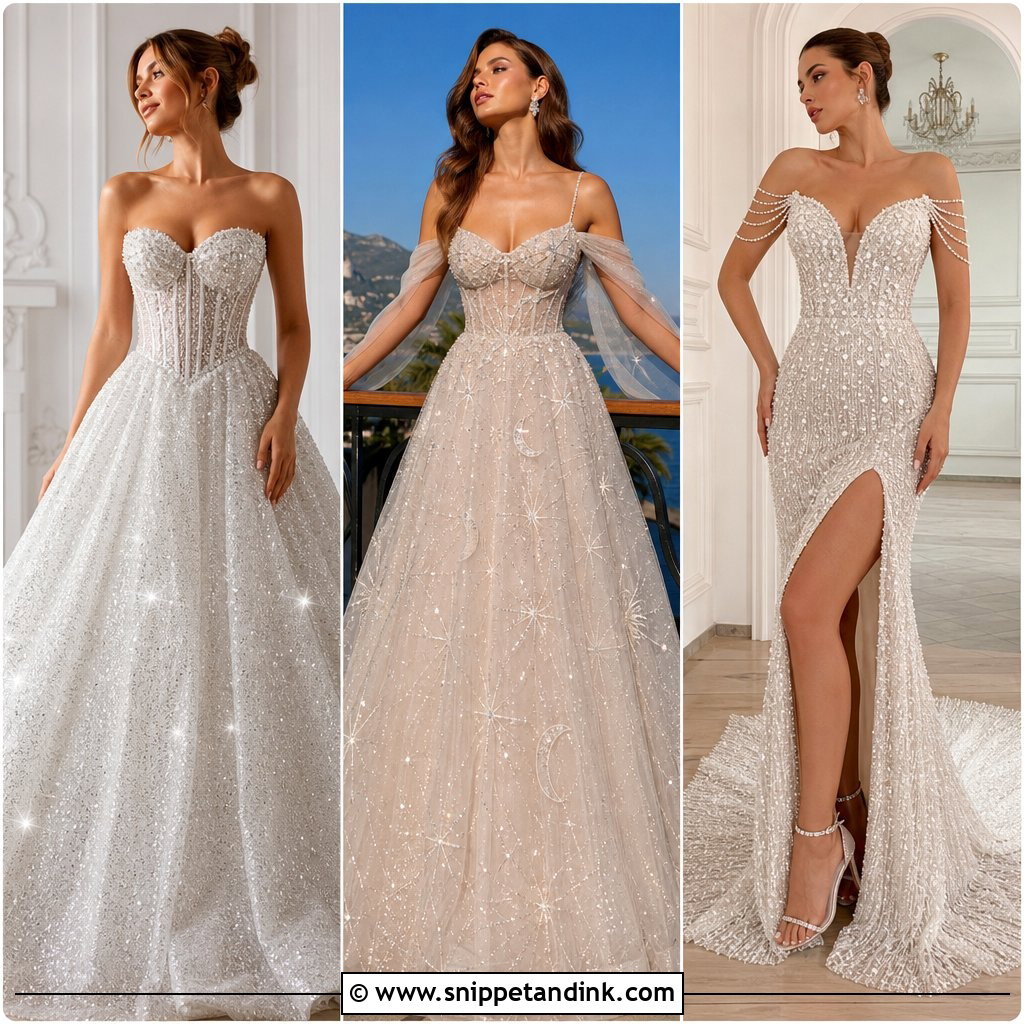
Most of the weight in a lace ball gown sits in the tulle layers underneath, not the lace itself. That is why I ask about lining weight before anything else. Internal boning and a natural waist carry the skirt, and embellishment kept to the bodice and upper skirt brings the eye up toward your face. A cathedral veil with a narrow lace edge, small studs, and block heels hidden underneath. For the train, a multi-point bustle spreads the load; a single hook on heavy lace will tear the netting by midnight.
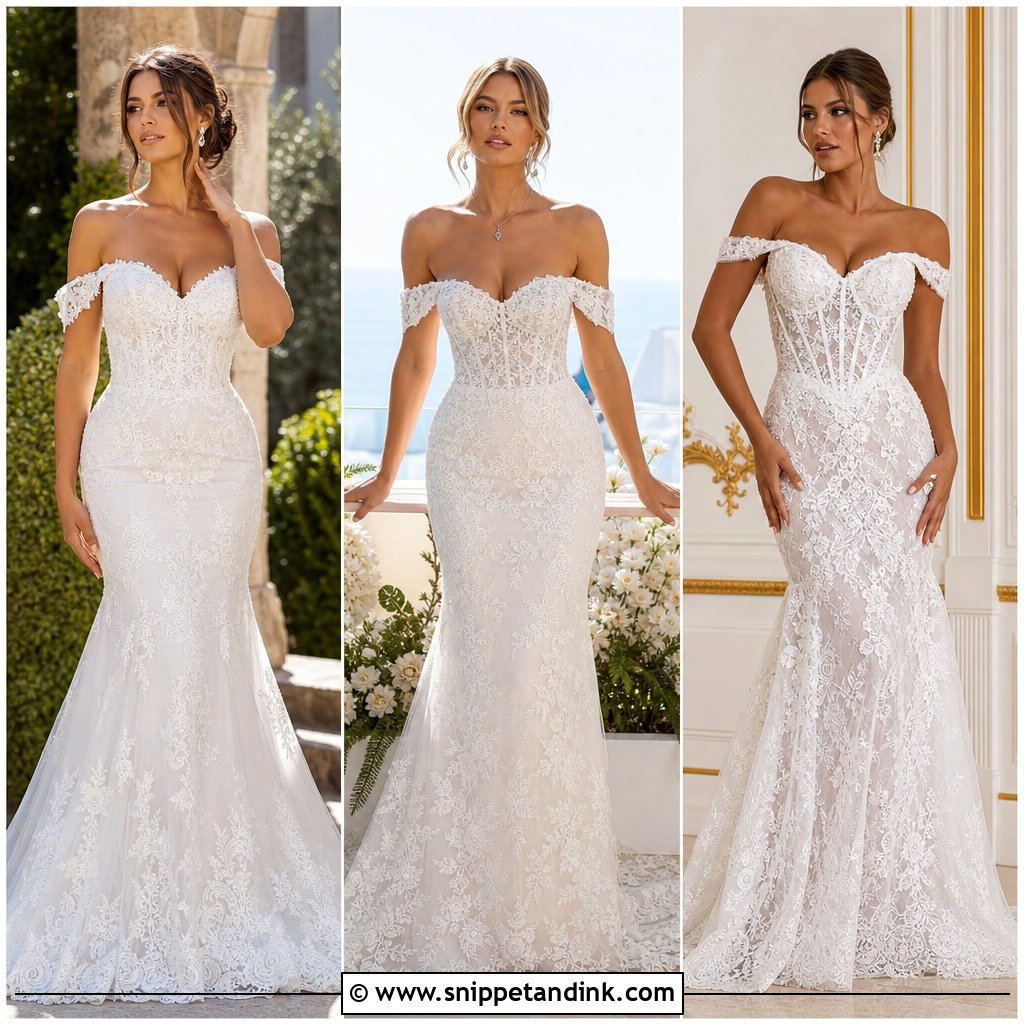
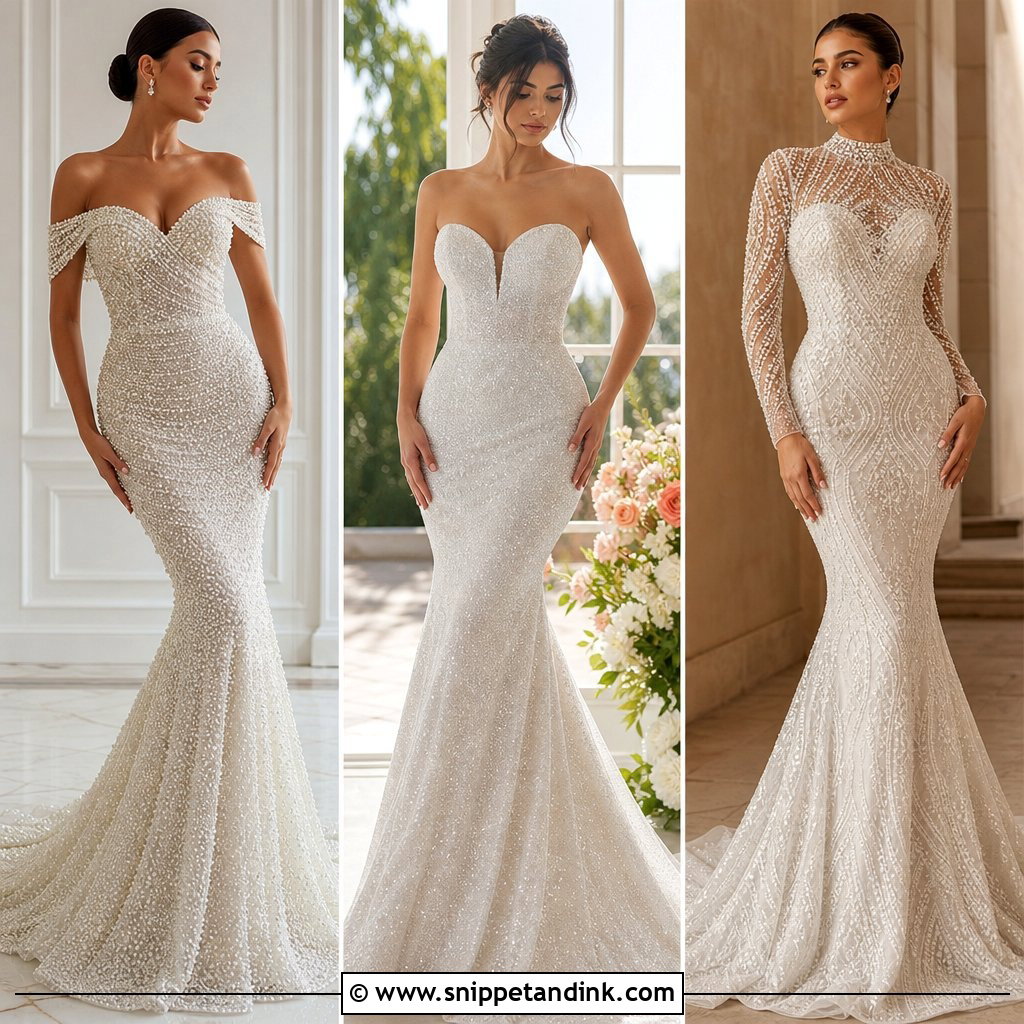
3. Sparkly Lace Mermaid Wedding Dress
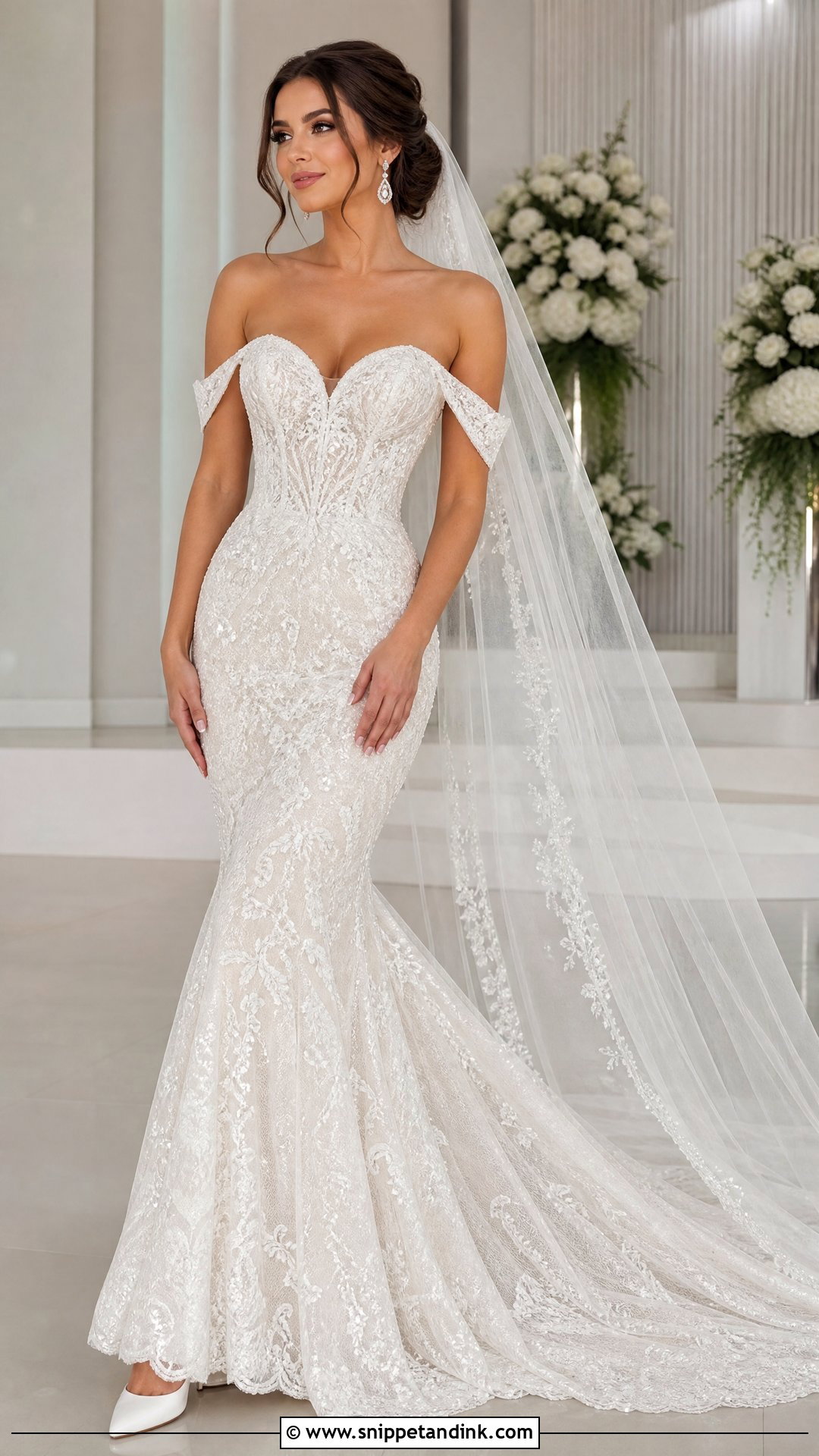
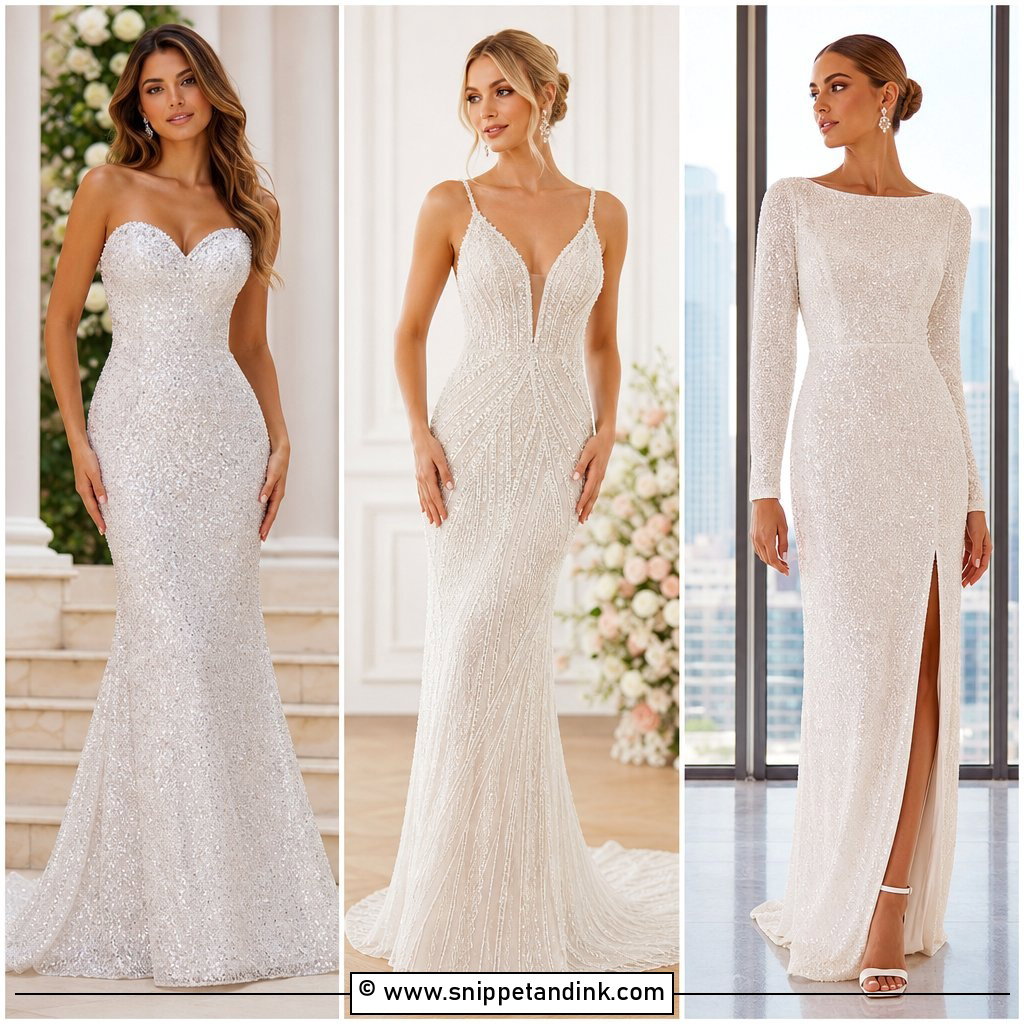
Sequined or beaded lace over a stretch lining is the only way I’d wear a mermaid for a full day. Rigid lace with no give pins the knees together. A sweetheart neckline shows off the shape, and detachable off-the-shoulder straps soften it for the ceremony. Skip the necklace. When you try it on, take a full step and sit down; if the flare starts too high, you’ll shuffle. Smooth shapewear that doesn’t squeeze helps the lace lie cleanly over the hips.
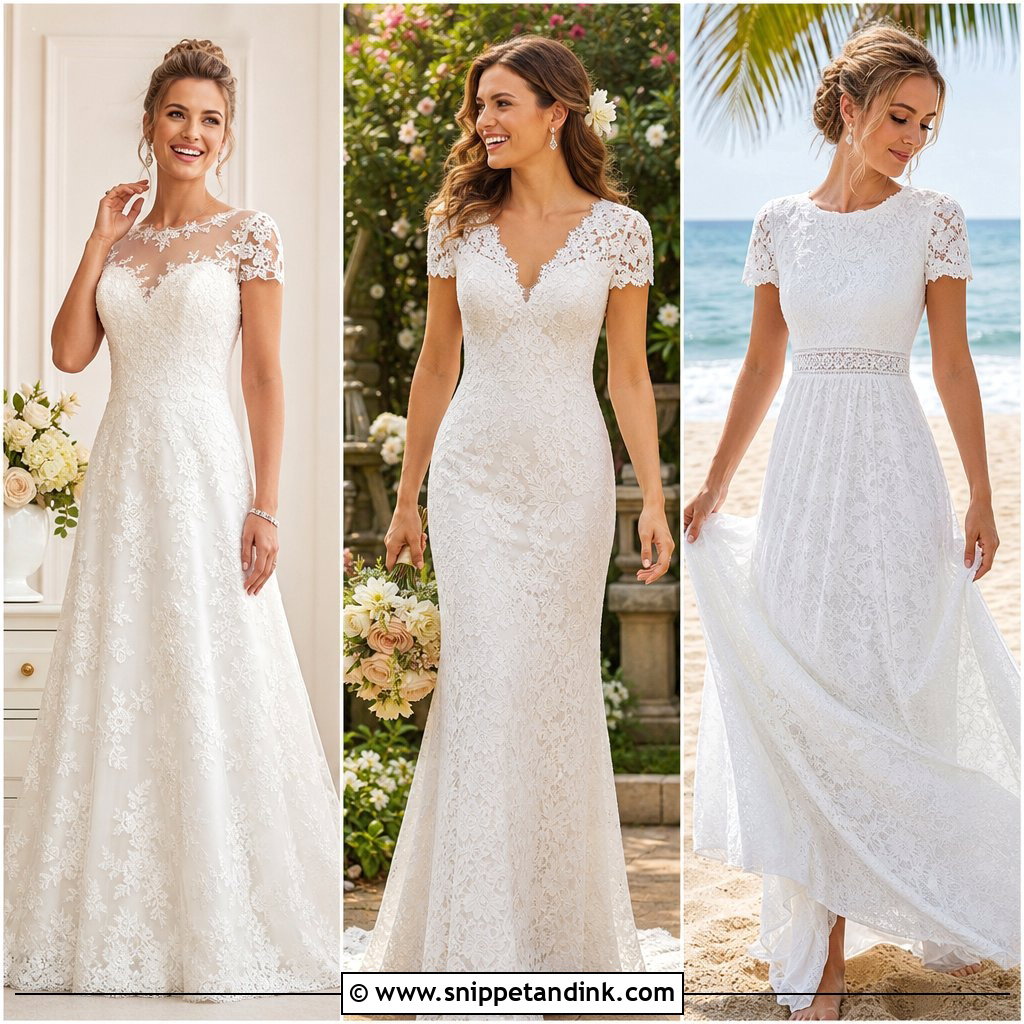
4. Sparkly Lace Fit-And-Flare Wedding Dress
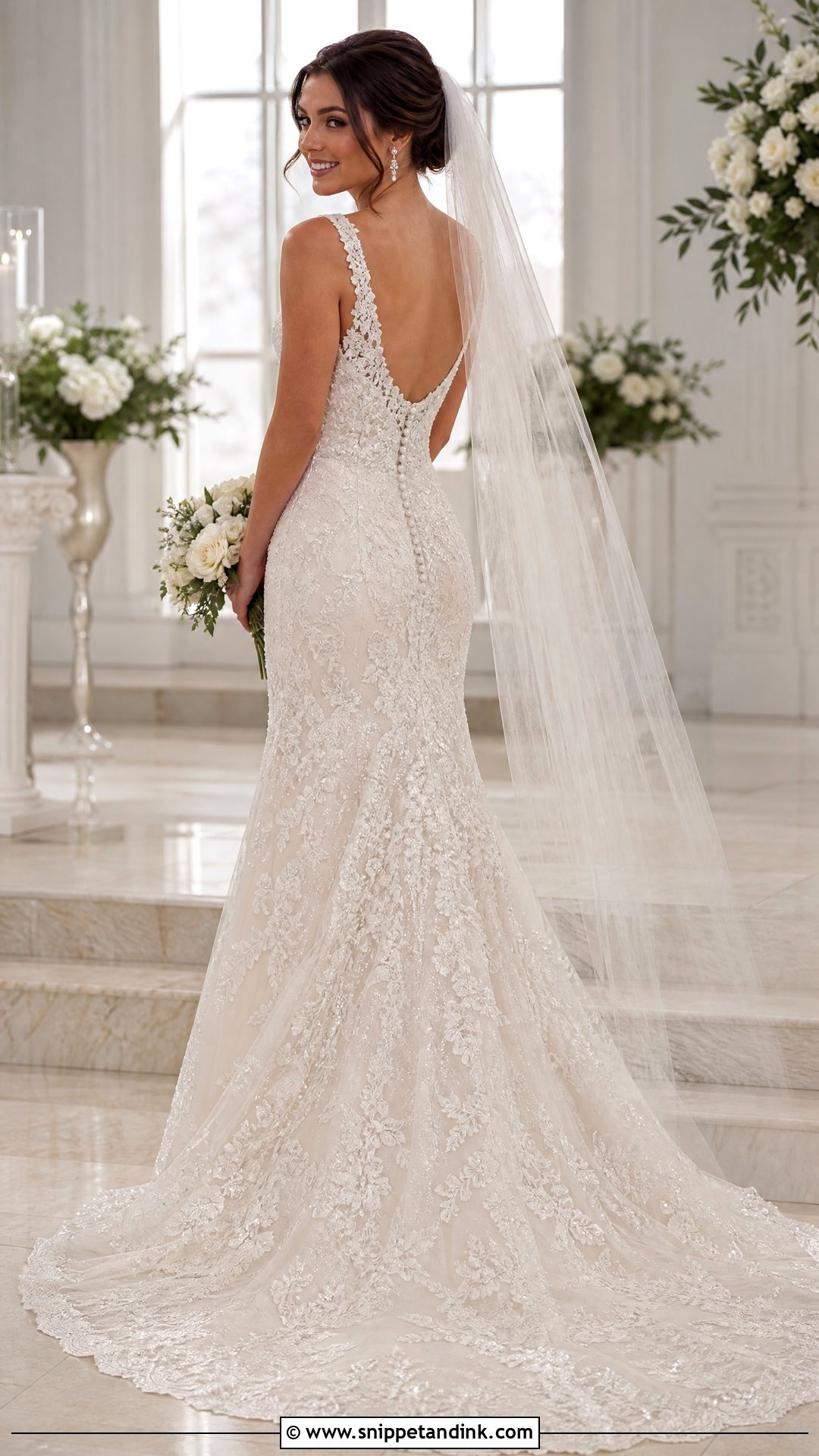
If a mermaid feels too tight at the knee, this is where I steer brides next. The fit-and-flare follows the hips and opens gradually, so you can walk and sit normally. Embroidered lace with tiny clear sequins over a faint shimmer lining gives a layered glow without much weight. Look at the back: a low scoop with covered buttons and a chapel train is a strong view for the ceremony. Watch the side seams in the mirror. Twisting or horizontal creases mean the waist or hips need taking in or letting out.
5. Sparkly Lace Long Sleeve Wedding Dress
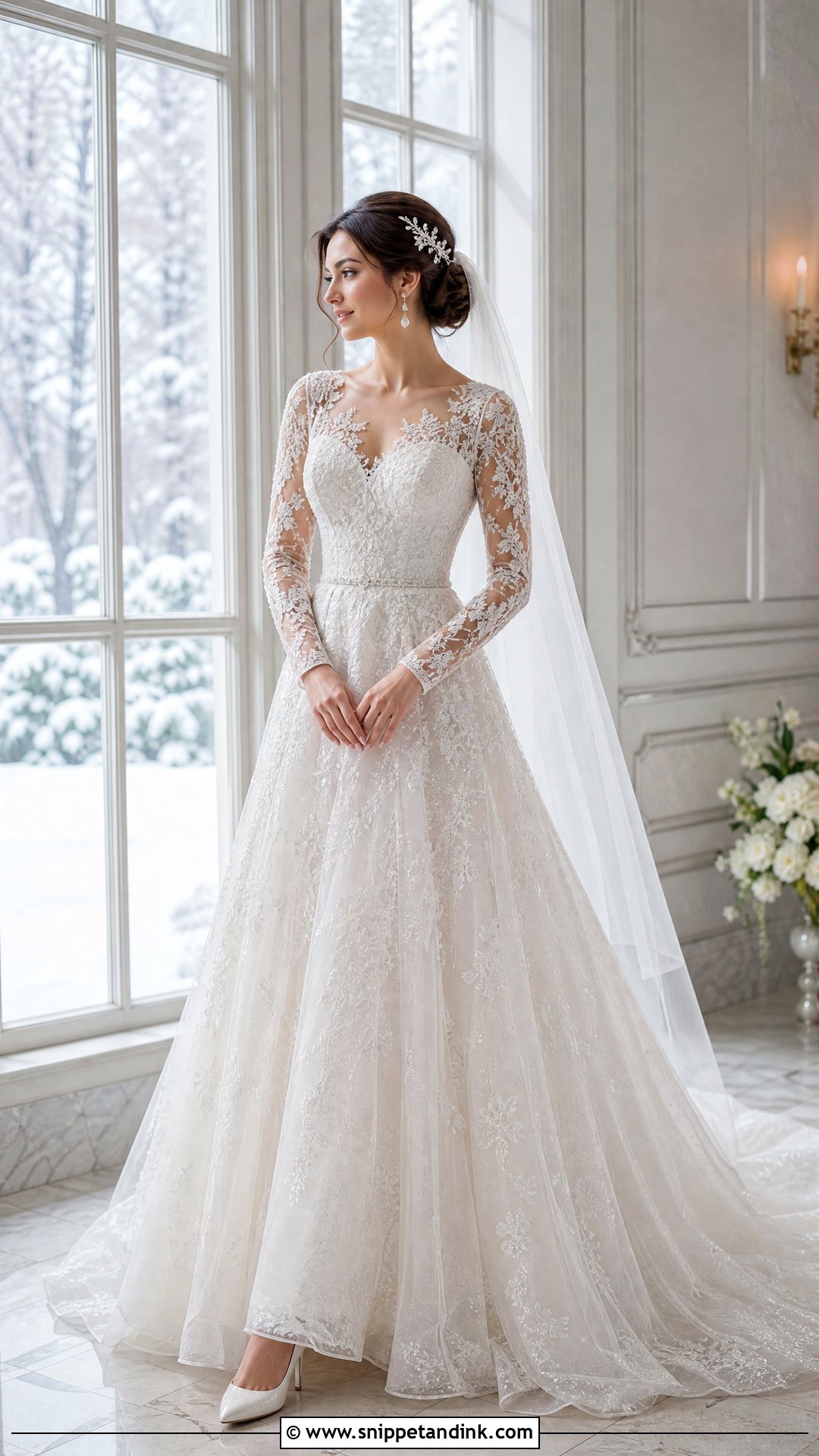
A sparkly lace long sleeve wedding dress works best when the appliqués flow from bodice onto the sleeves instead of stopping hard at the shoulder seam. Illusion sleeves with beaded lace give coverage but stay light. Cuffs should close snugly while still letting you turn your wrist to sign the register. I always ask brides to bend their elbows and lift their arms; that is where lace sleeves usually pull. If the lace scratches, a seamstress can line the inside with soft tulle.
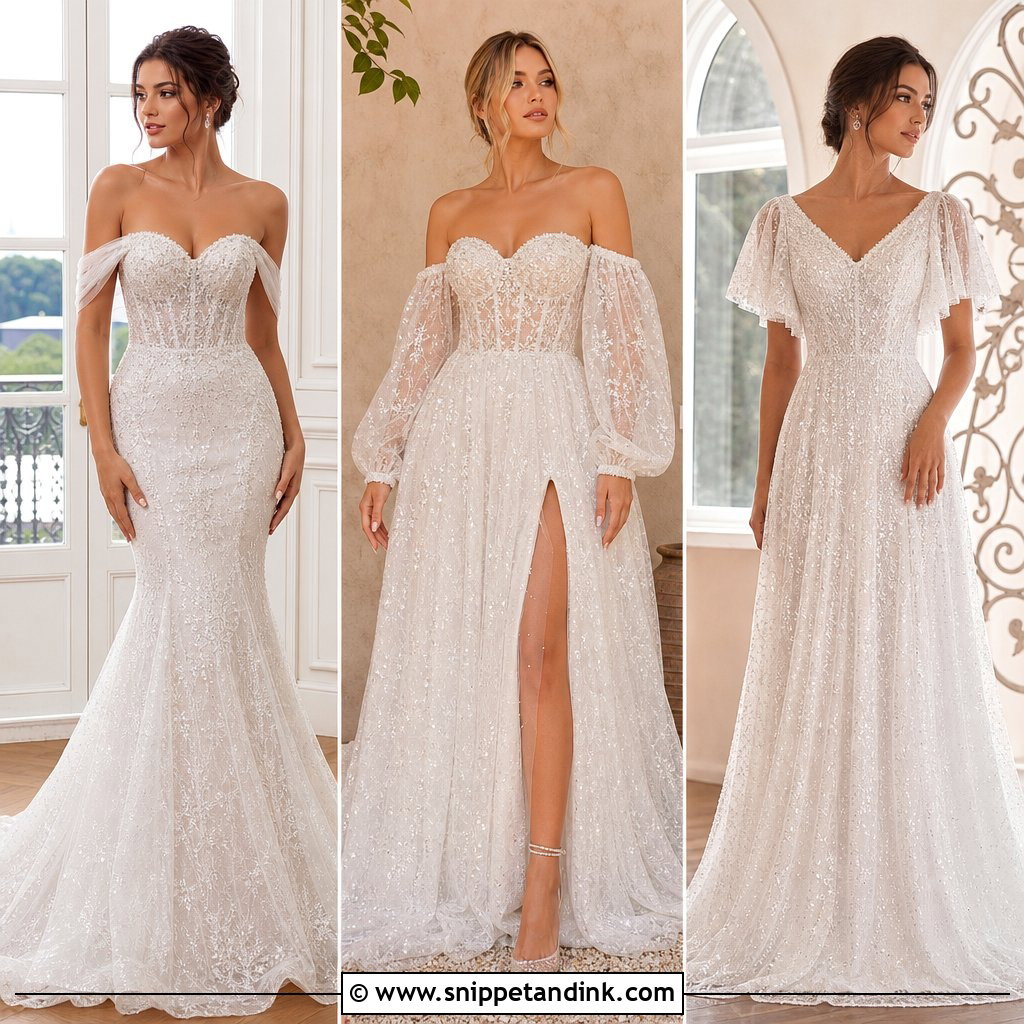
6. Sparkly Lace Off-The-Shoulder Wedding Dress
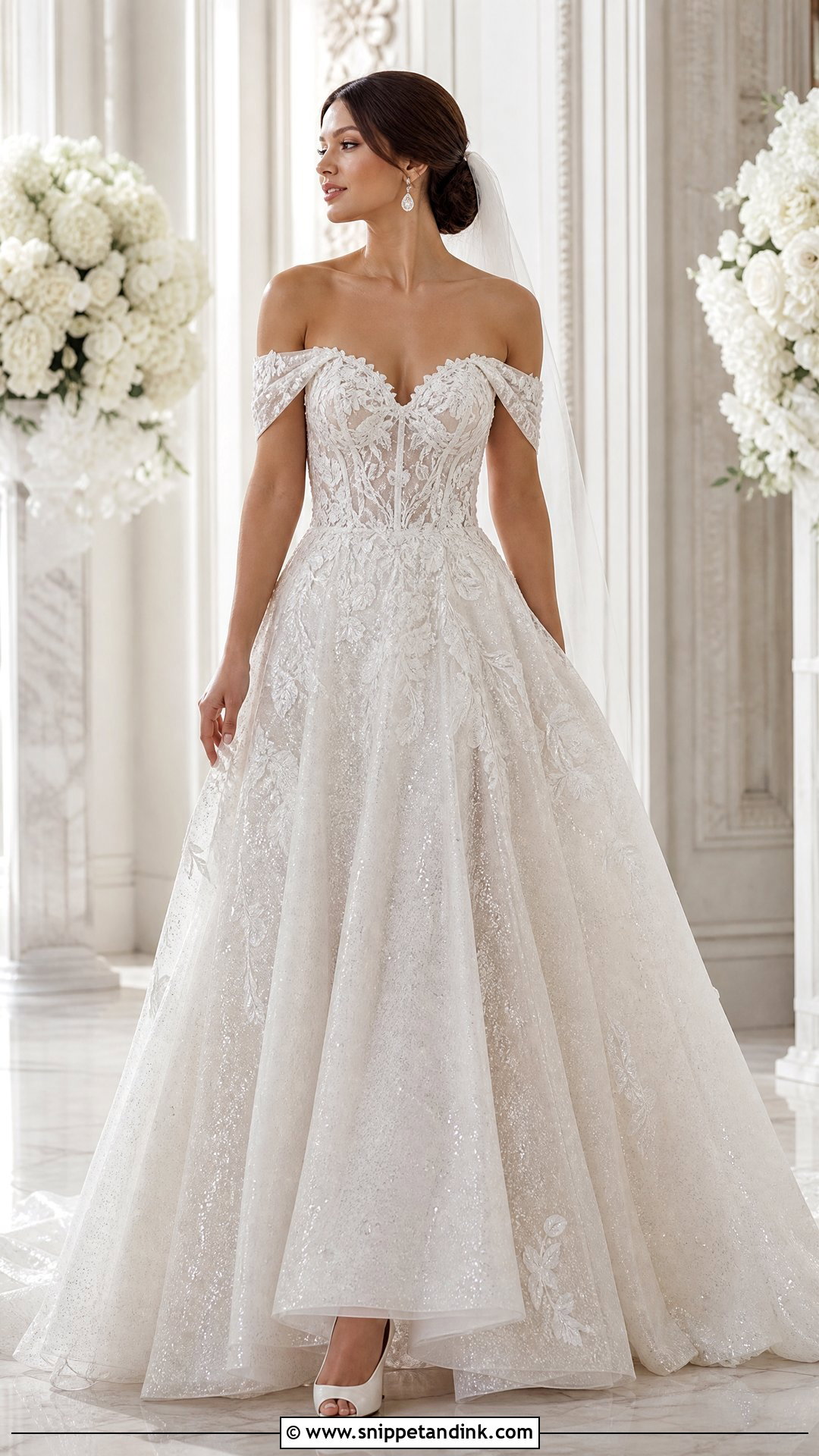
The draped sleeves on an off-shoulder gown are decoration. A corset underneath has to hold the dress up, or the neckline sinks every time you lift a glass. Crystal beading along the neckline throws light onto the face, while lighter sequins on the skirt keep it calm below. Teardrop earrings, a low chignon, no necklace and a lace-free veil. Hug someone during the fitting. If you can’t, look at styles with detachable straps you can take off after the formal photos.
7. Sparkly Lace Strapless Corset Wedding Dress
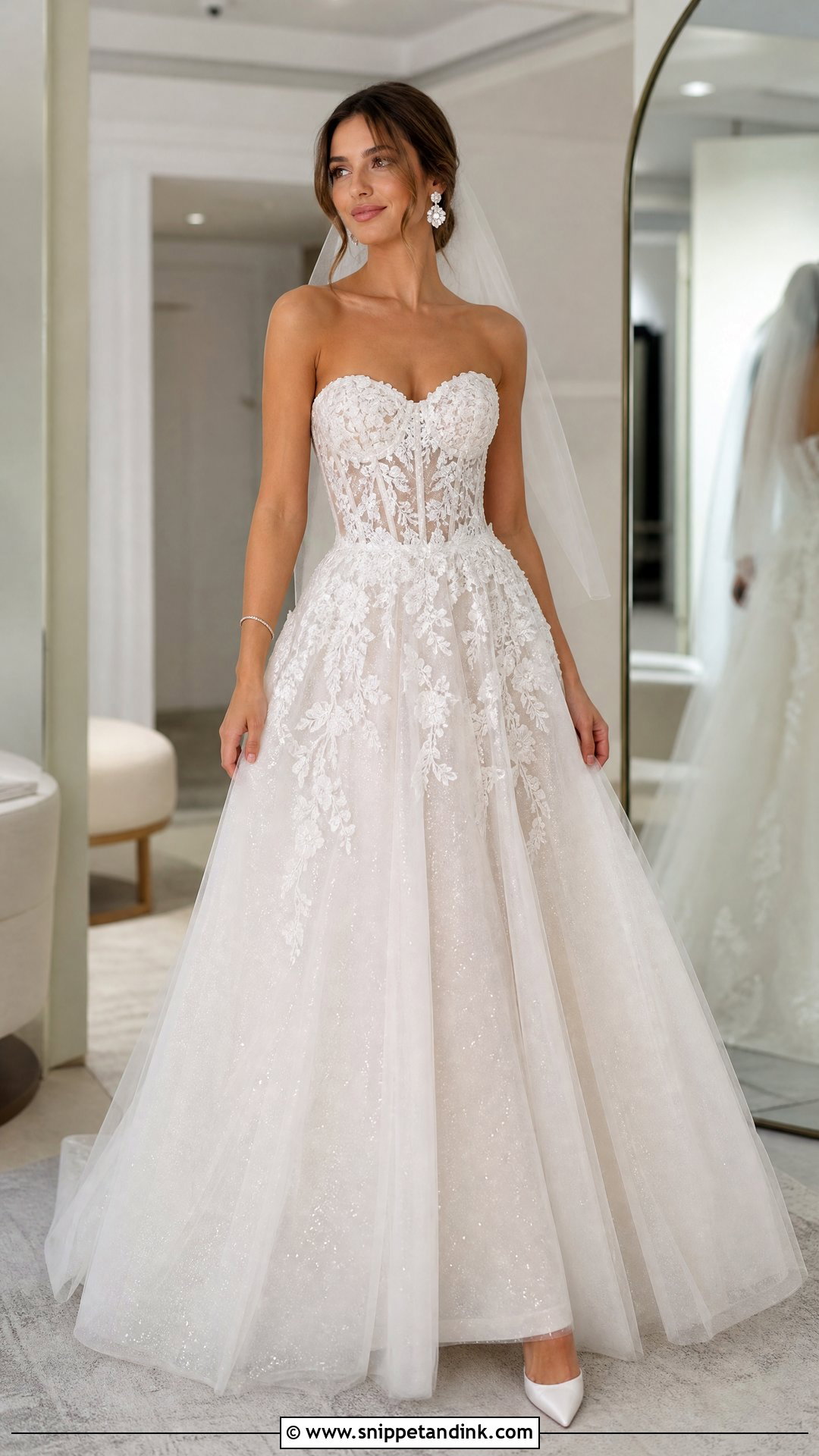
A corset with lace laid over it should still show the lines of the boning faintly through the lace; that tension between structure and softness is the appeal. Check the back closure stays flat when you sit, and take three deep breaths in it. A straight or gently curved neckline is current, with glitter tulle underneath adding shine without crystal everywhere. A shoulder-length veil, statement earrings and satin pumps. If you want cover for a religious ceremony, a detachable lace bolero solves it.
8. Sparkly Lace Sweetheart Wedding Dress
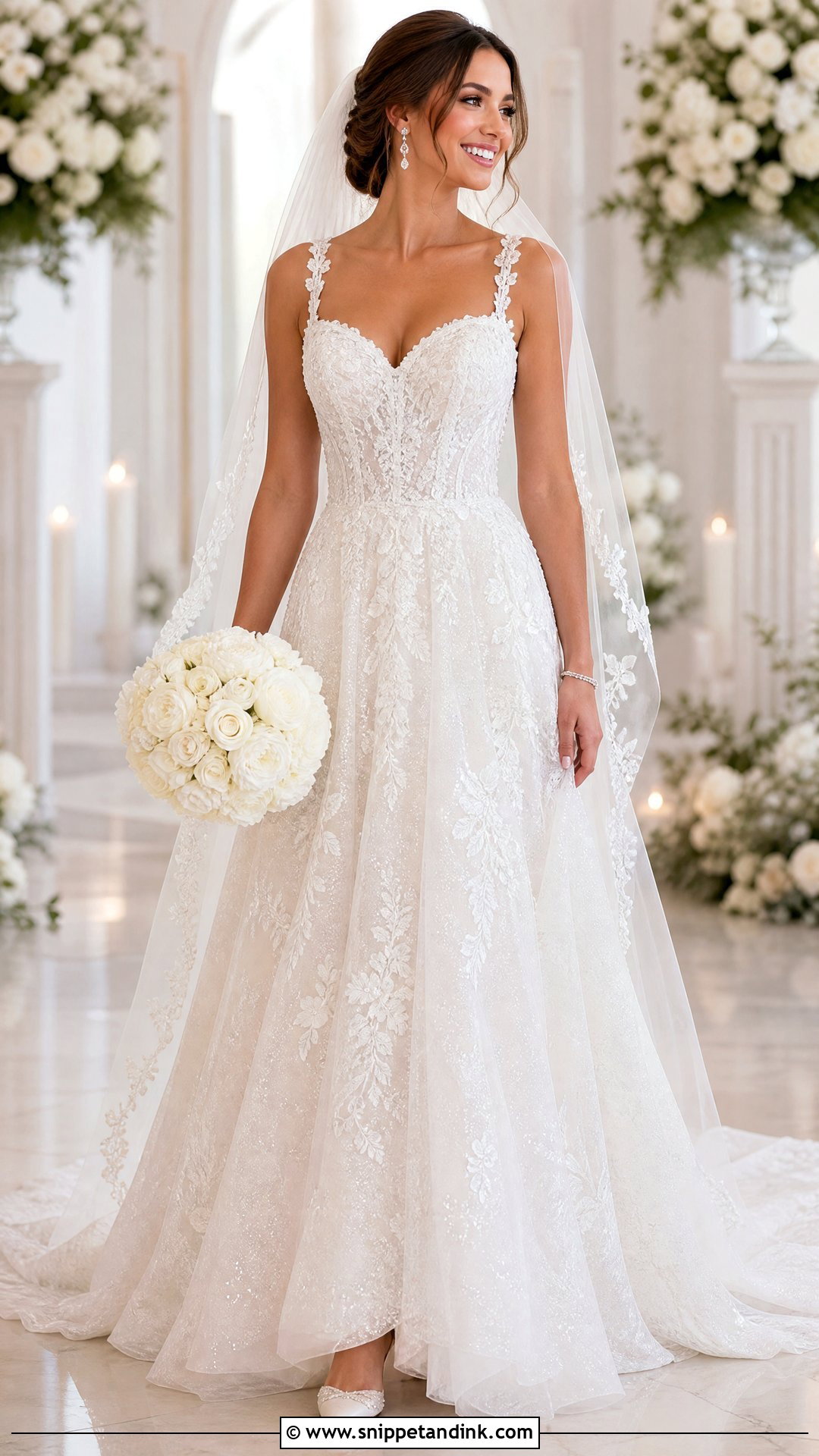
Gaping at the top edge is the most common sweetheart problem I fix. The curve should sit flat against you when seated and not roll outward when you lean in. Beaded floral lace on the bodice with motifs scattered more lightly down the skirt keeps attention at the neckline. Removable lace straps give you two looks and extra support. If you wear a necklace, a very fine pendant that follows the curve, nothing that crosses it.
9. Sparkly Lace Square Neck Wedding Dress
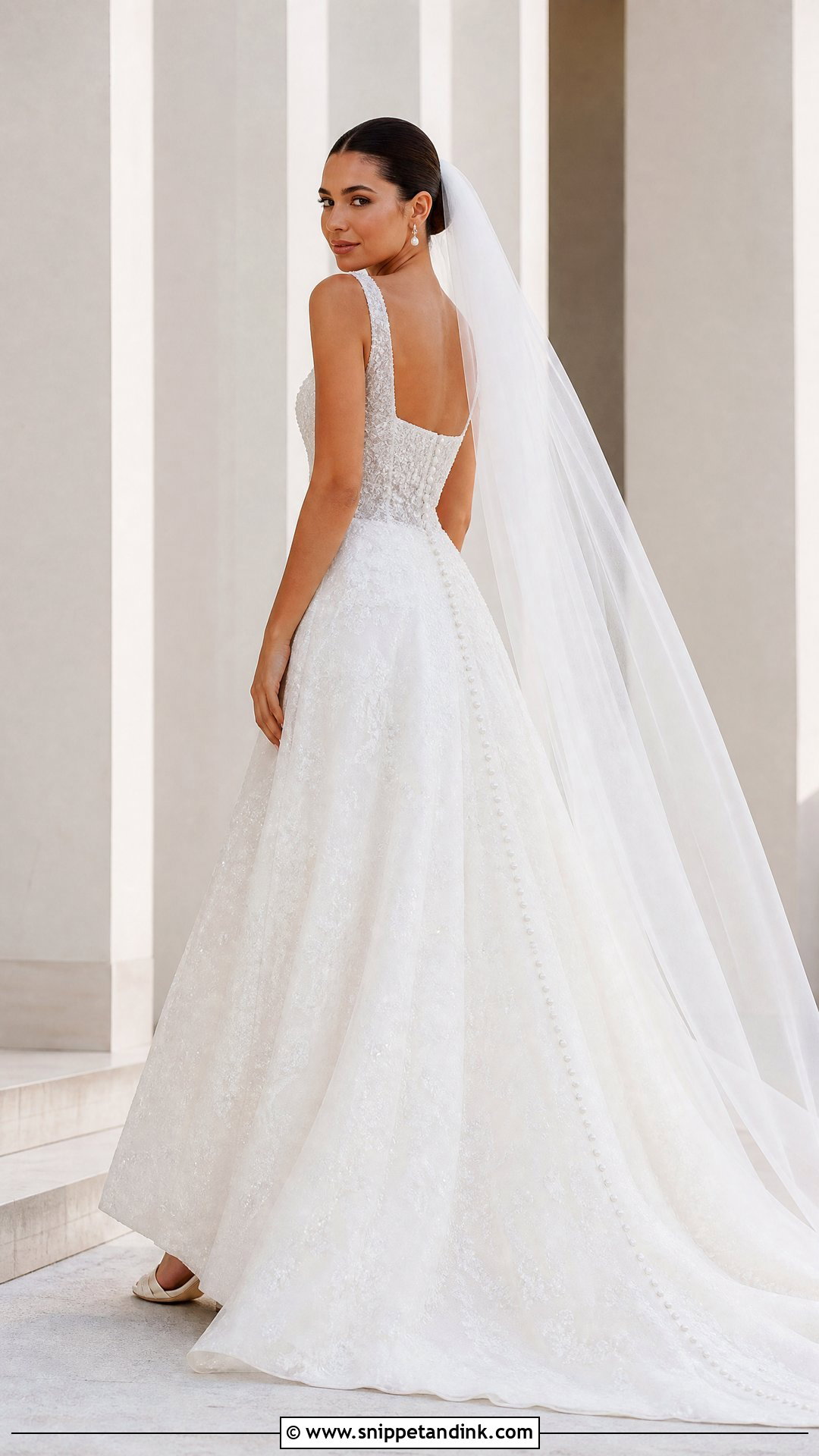
Pearl-beaded lace over a soft shimmer underlayer softens the hard corners of a square neck. Wide straps or fitted illusion sleeves both frame it well. An A-line or column skirt with covered buttons down the back keeps the whole gown neat. I check the corners first at every fitting, because a square neck that gapes at the corners looks unfinished in photos. Pearl drops, a low bun, plain cathedral veil and ivory block heels.
10. Sparkly Lace High Neck Wedding Dress
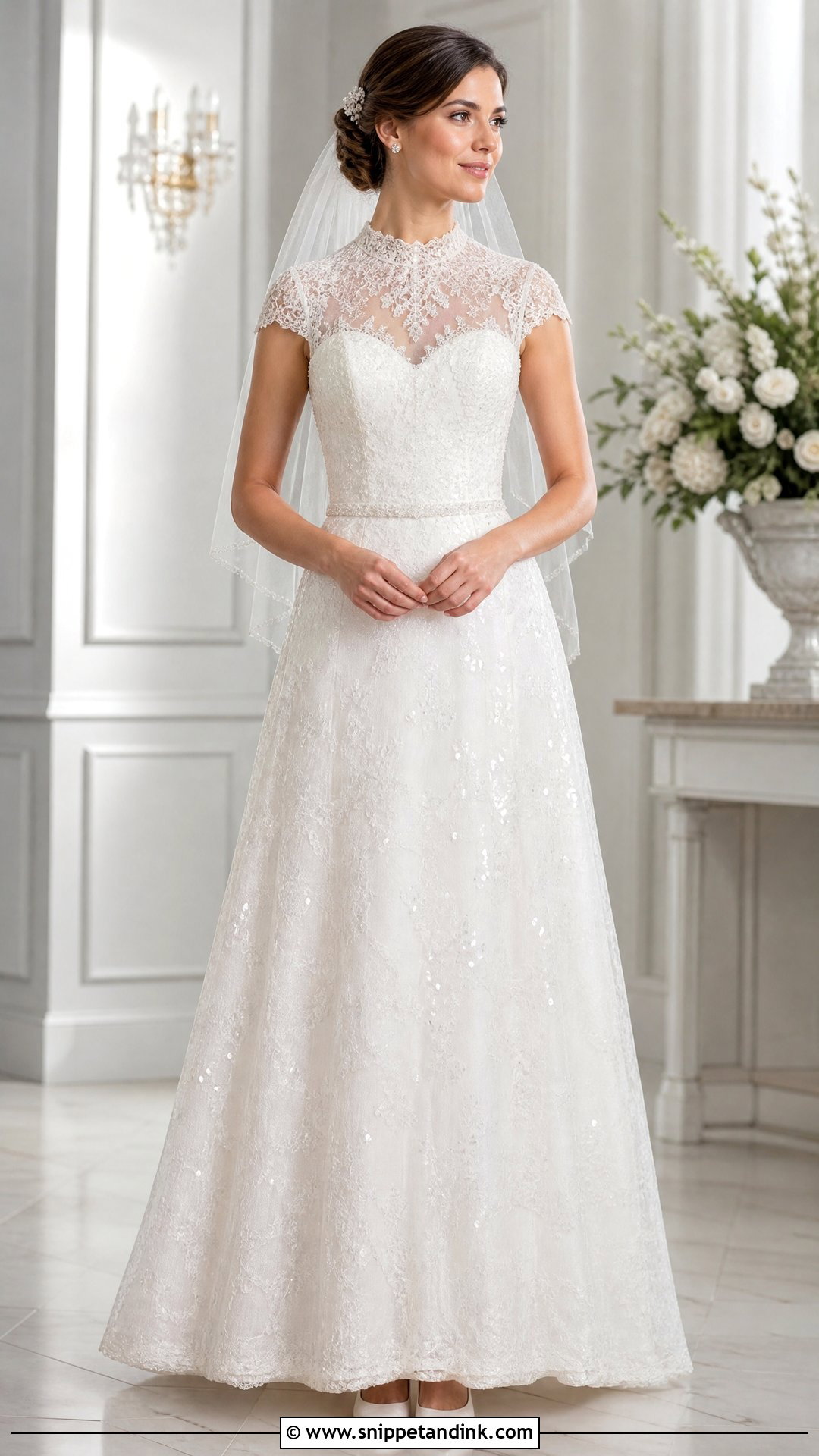
Close-up detail is the reason to choose a high lace neck, and it’s also the risk: beads right under your jaw are what you’ll feel most. Sheer lace with tiny beads or sequins on the pattern keeps it light; a plain A-line skirt stops it getting busy. Cap sleeves and long illusion sleeves both suit the line. No necklace. Turn your head and look down at the fitting. If the collar folds or rubs, ask for soft edging inside.
11. Sparkly Lace Boho Wedding Dress
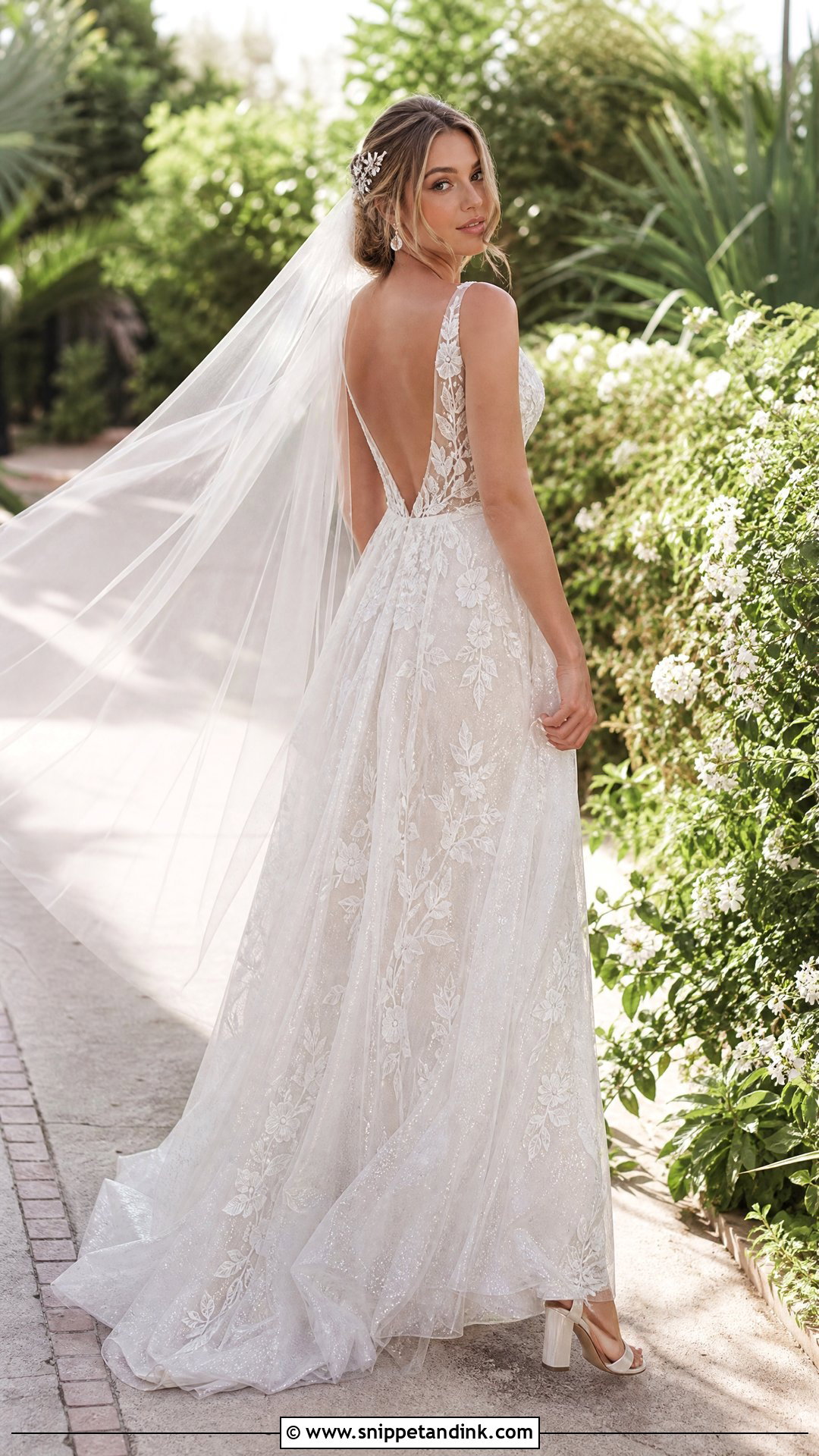
Boho lace should look relaxed but not casual. Lightweight botanical lace over soft glitter mesh moves well outdoors, and a V-neck with an open or illusion back gives shape without stiffness. Loose waves and a floral comb are plenty, with understated drops and block-heel sandals for lawns and paths. For grass or sand, plan the bustle before the day. Long lace trains pick up seeds and twigs, and lace netting snags far more easily on rough ground than satin does.
12. Sparkly Lace Basque Waist Wedding Dress
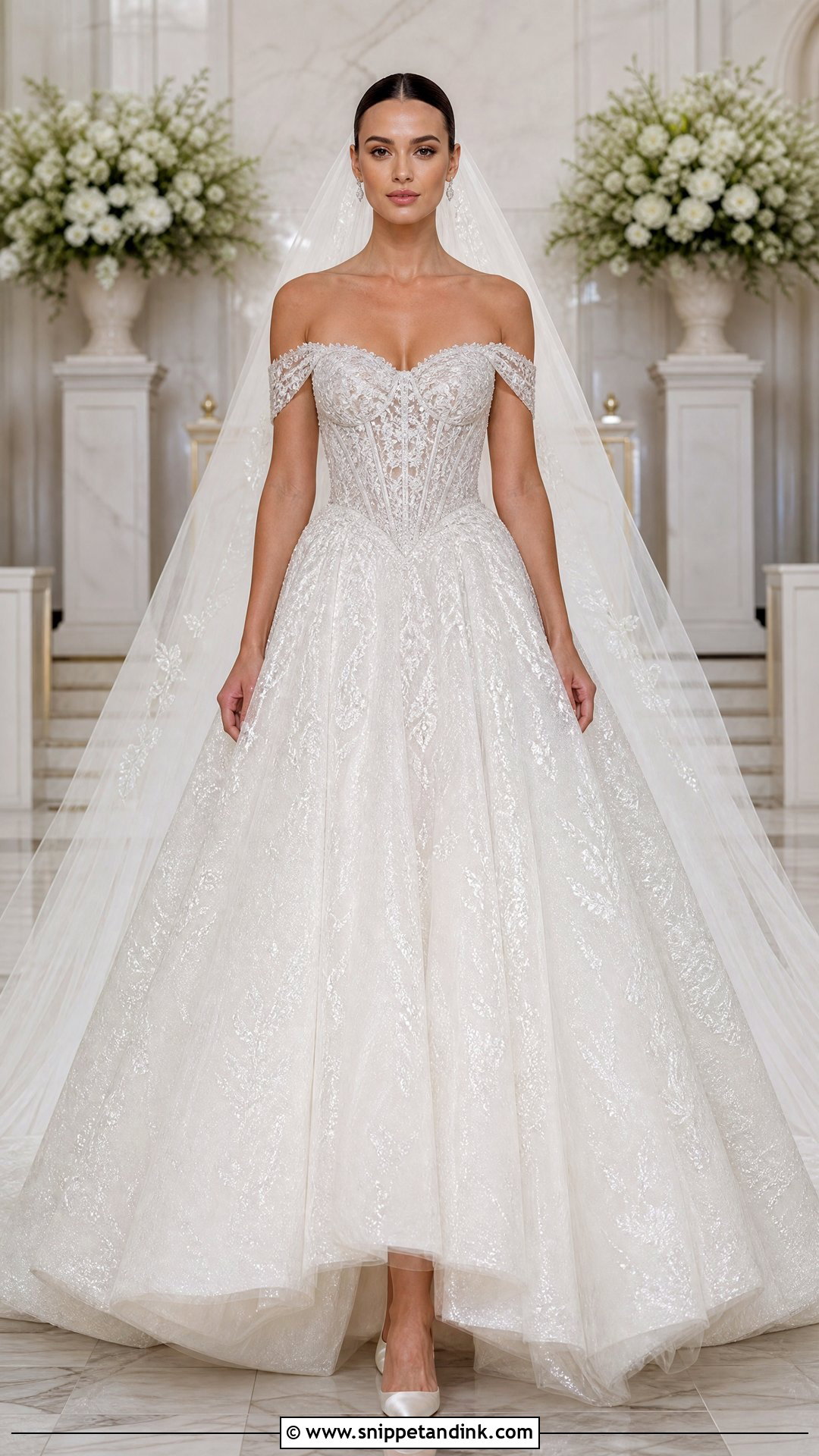
A basque waist dips to a point at the front, lengthening the torso before the full skirt opens out. Because the bodice runs longer than a natural waist, sitting feels different, and I make brides practise it in the fitting room. The point should stay flat, not fold upward when you bend. Beaded lace on the bodice and fine shimmer through the skirt emphasise the shape. Strapless or off-shoulder necklines suit it; add a cathedral veil, crystal earrings and a sleek bun.
13. Sparkly Lace Satin Wedding Dress
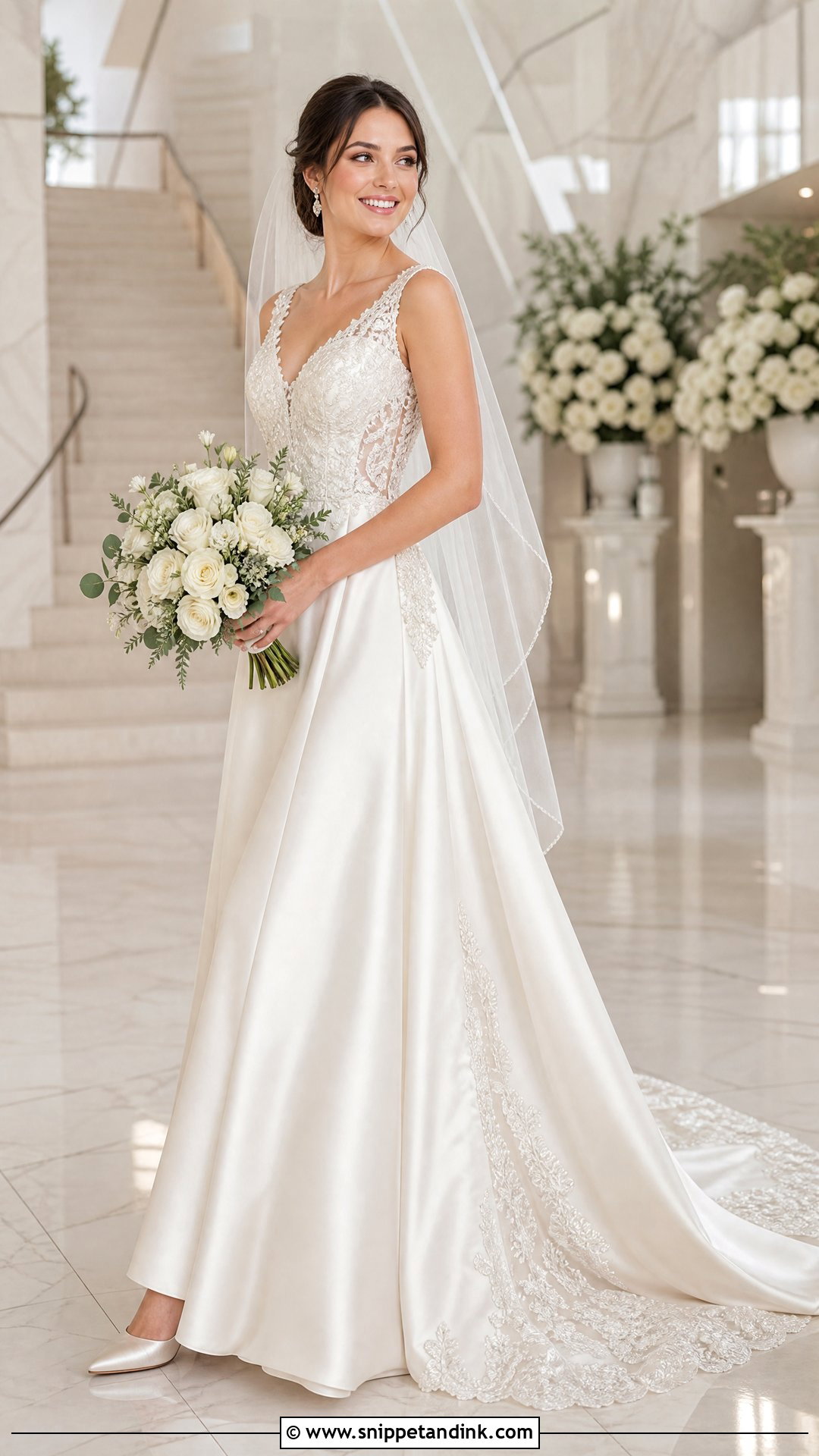
For restrained detail, start with a clean satin gown and add sparkly lace only at the bodice, side panels, neckline or train. Each fabric makes the other look richer. Placement is everything, though. A well-placed appliqué marks the waist; a badly placed one breaks the long line of the satin and makes it look patched. Satin reflects light differently than tulle, so check the gown under a few kinds of light. A lace-edged overskirt can add ceremony drama over the plain base.
14. Sparkly 3D Floral Lace Wedding Dress
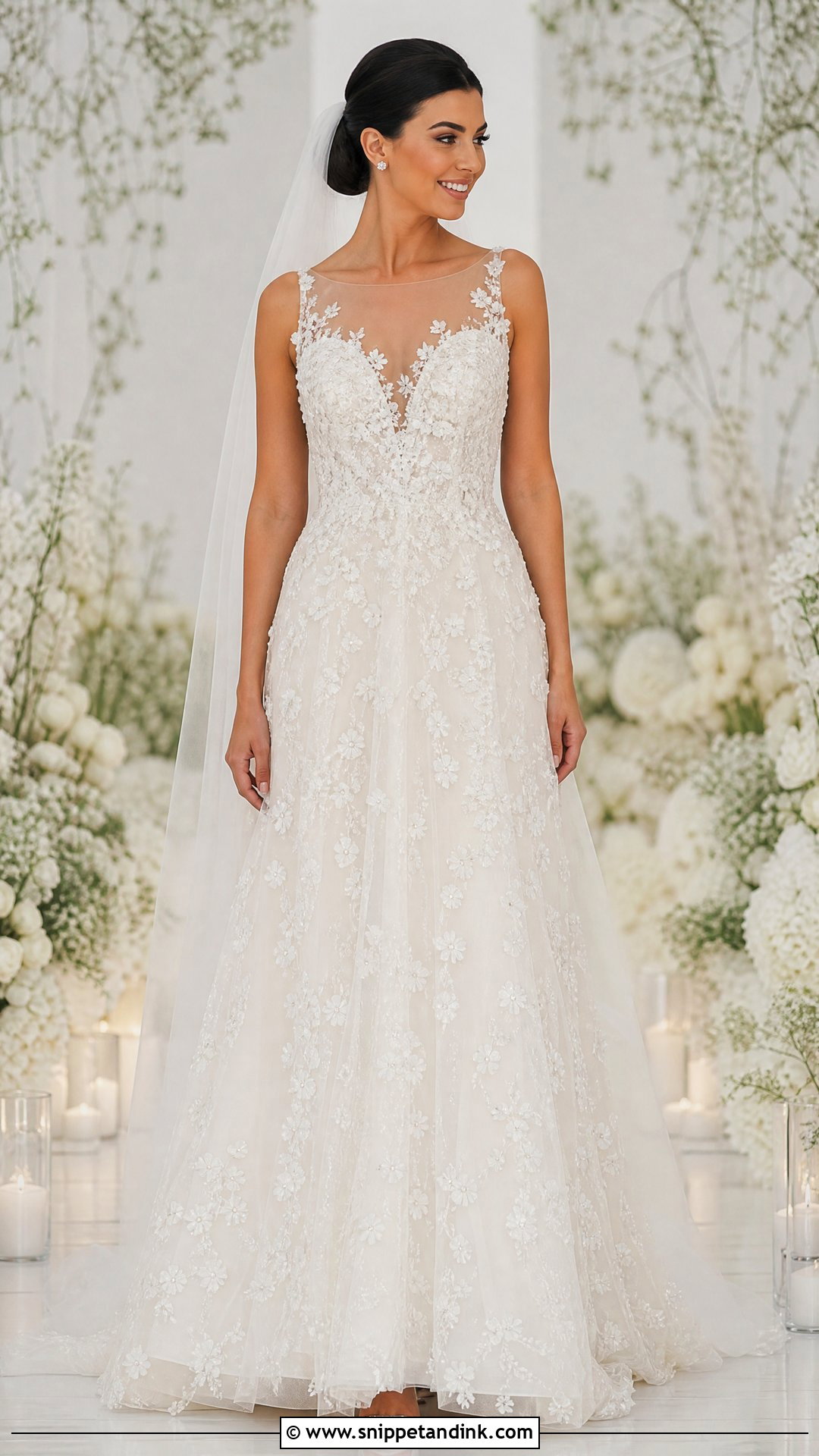
Raised petals, beads and tiny sequins give this lace real depth, best when concentrated at the bodice and lighter toward the hem. On an illusion neckline, the flowers look like they float on the skin. Skip floral jewelry or it tips into a theme. These gowns are fragile. I check every petal is stitched, not glued, and I’d store it in a roomy garment bag with tissue so the flowers aren’t crushed before the wedding.
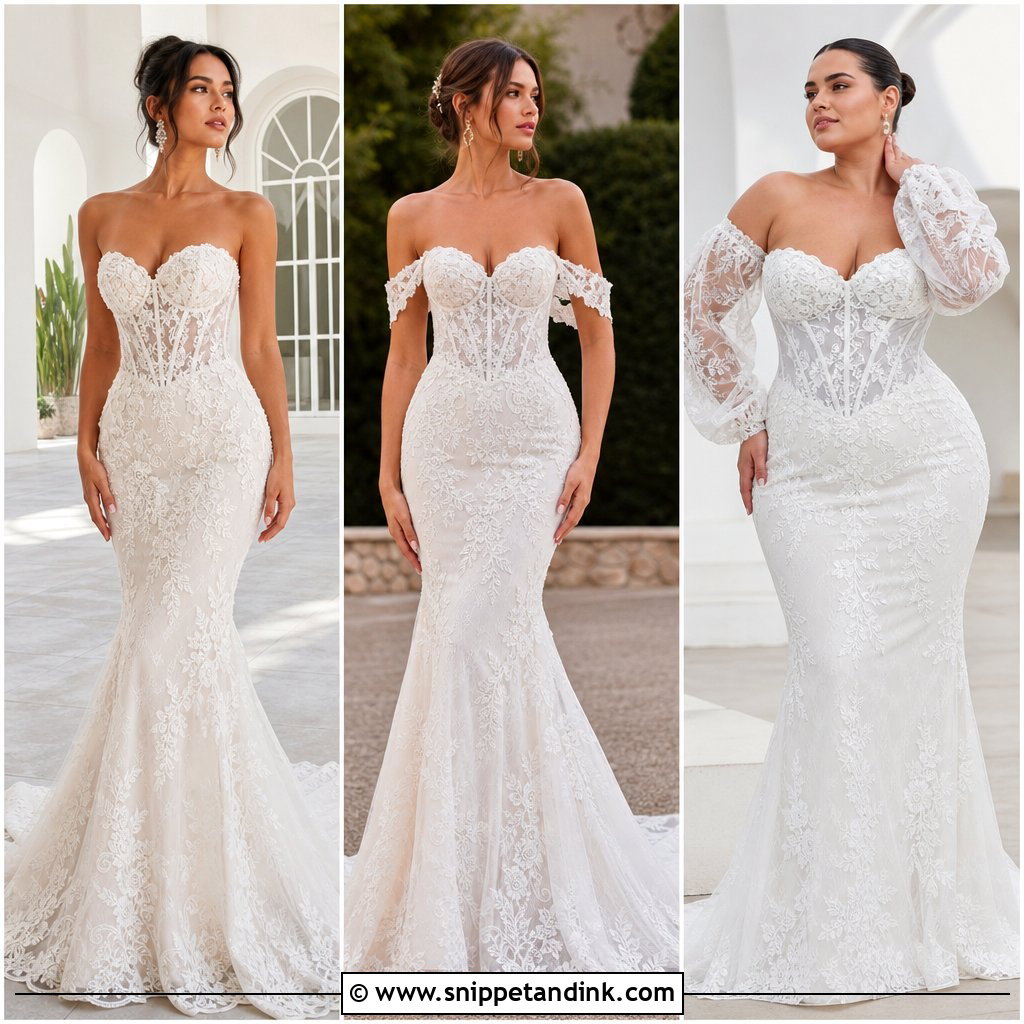
15. Sparkly Lace Cape Sleeve Wedding Dress
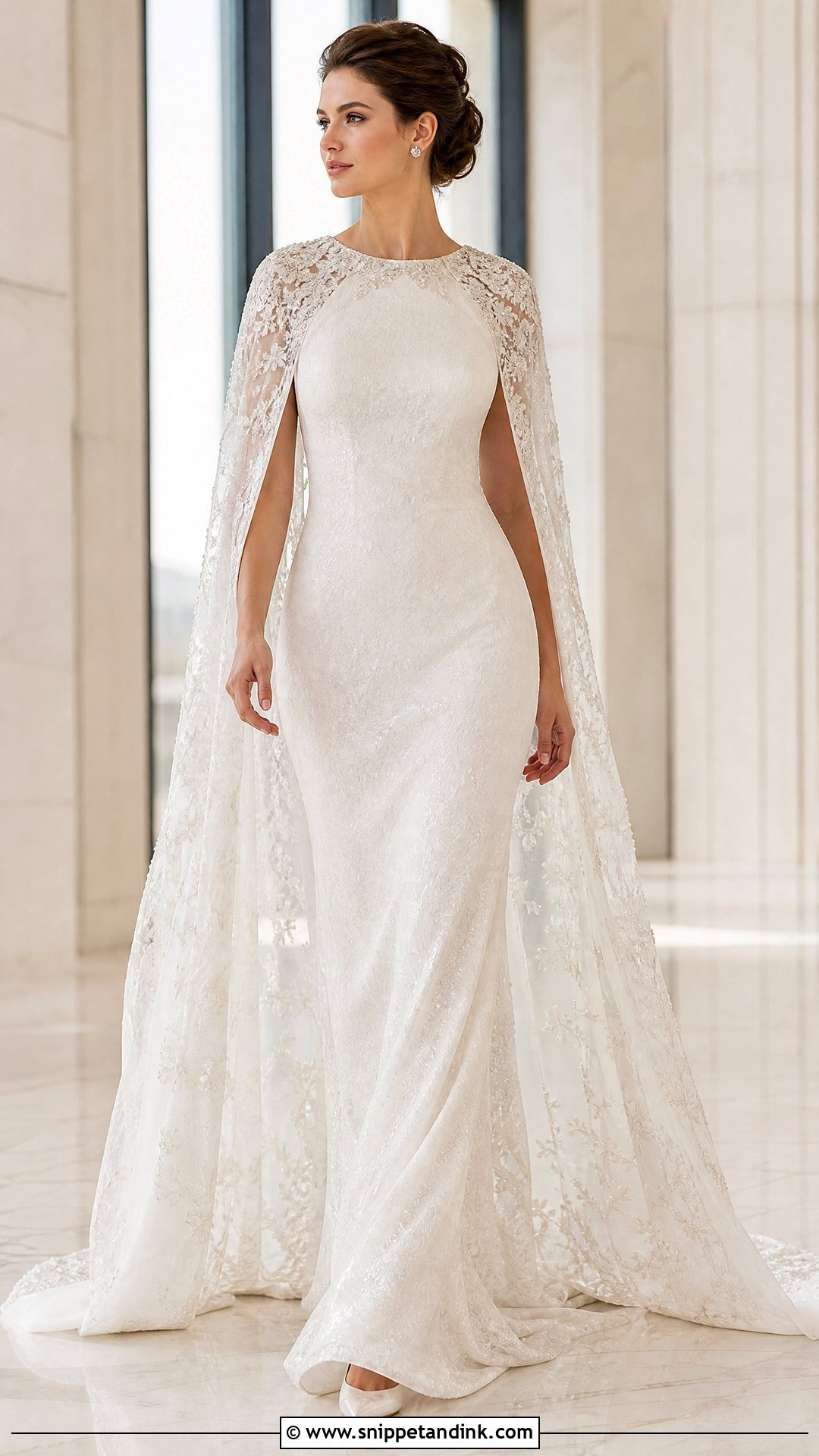
Cape sleeves fall from the shoulders to the elbow, wrist or floor, and they need a simple gown underneath, a column or soft A-line. Beaded lace at the shoulders catches the light; the skirt stays quiet. Often you won’t need a veil if the cape trails. Walk and turn in the full outfit at your fitting. Long capes can wrap around the arms or tangle with the skirt in wind, and a small hand loop sewn into the hem helps.
16. Sparkly Lace Detachable Overskirt Wedding Dress
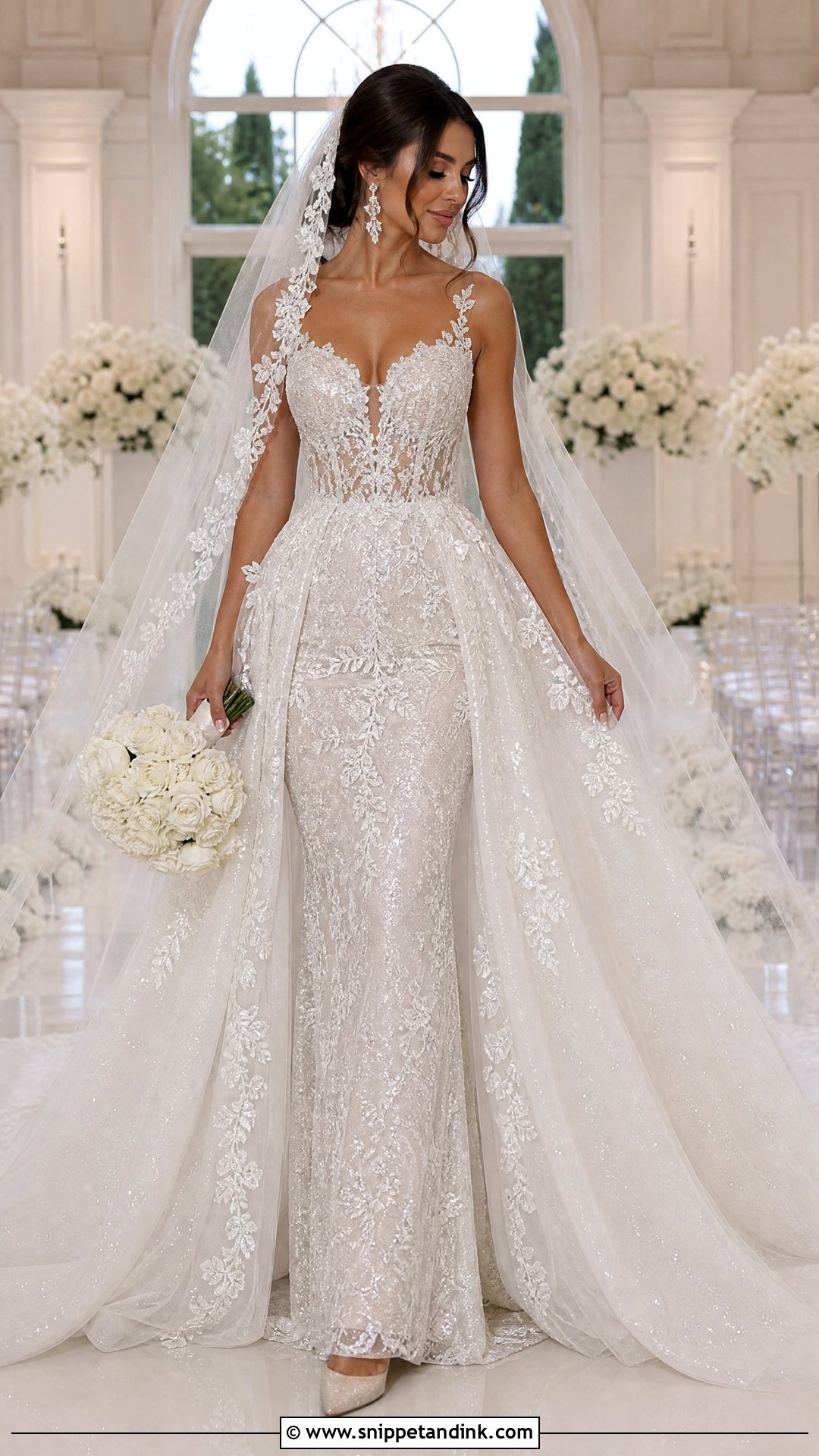
Start with a fitted lace gown carrying light sequins or crystal beading, then add a voluminous glitter tulle overskirt for the ceremony. The waistband should be clean, with secure fastenings and lace that coordinates with the gown beneath. Cathedral veil and drop earrings for the vows; swap the veil for a sparkly comb once the overskirt comes off. I’d give one attendant the job of removing it and bring a hanger and garment bag for the overskirt so it isn’t left in a heap.
17. Sparkly Lace Tea-Length Wedding Dress
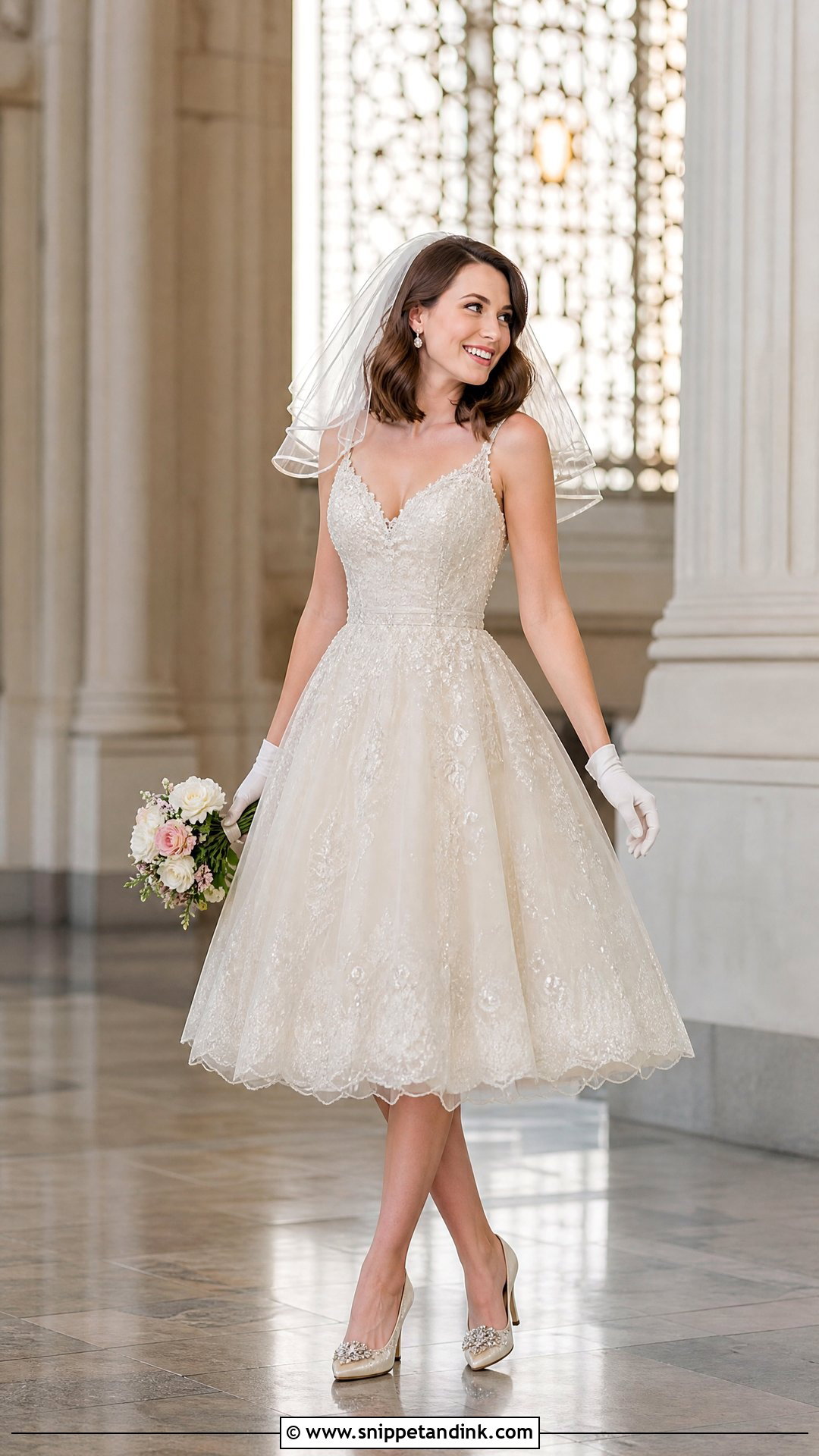
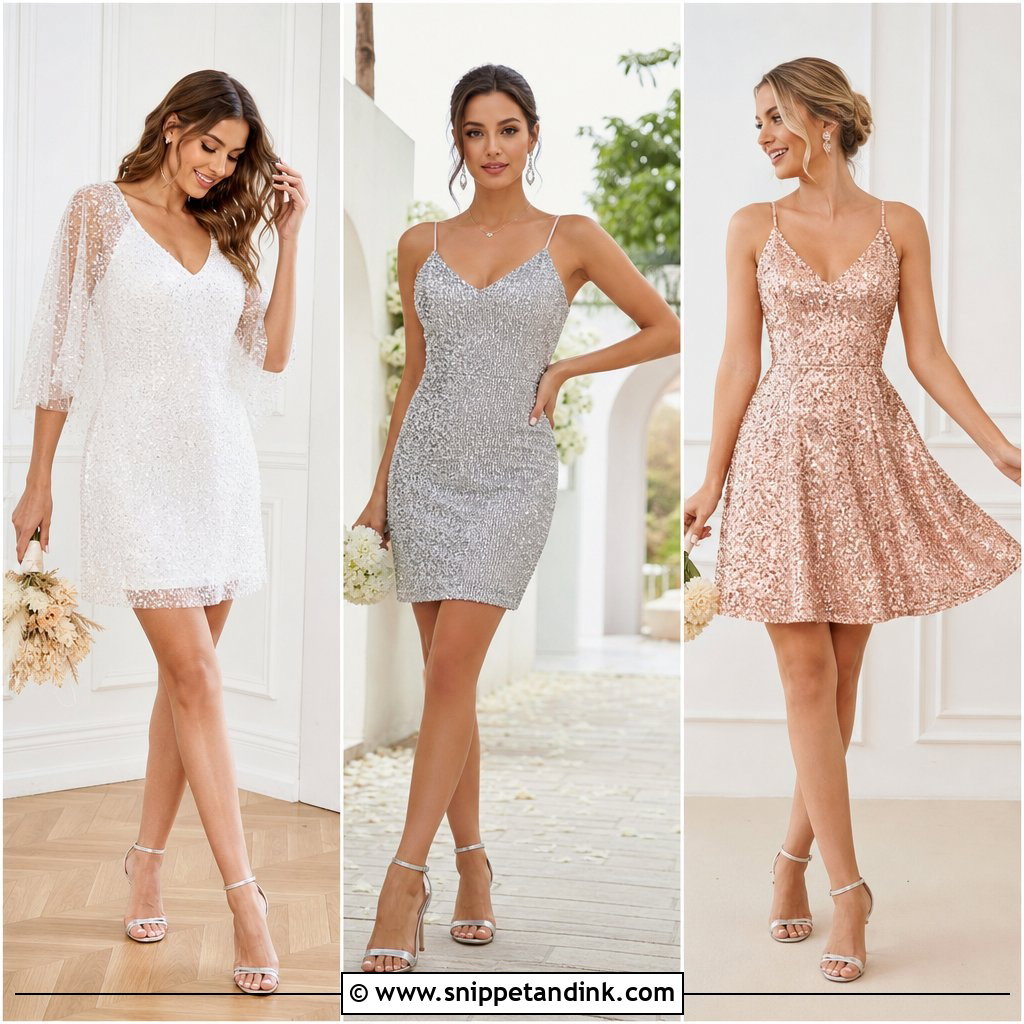
Tea length makes your shoes part of the outfit, so treat them like an accessory, not an afterthought. A fitted bodice with sequined lace over tulle gives volume without a train’s weight. Shoulder-length veil, pearl earrings, maybe short gloves. Hem level is critical here, since any dip is obvious at this length. Bring your exact wedding shoes to every alteration; even a small change in heel height shifts where the hem falls.
18. Sparkly Lace Plus-Size Wedding Dress
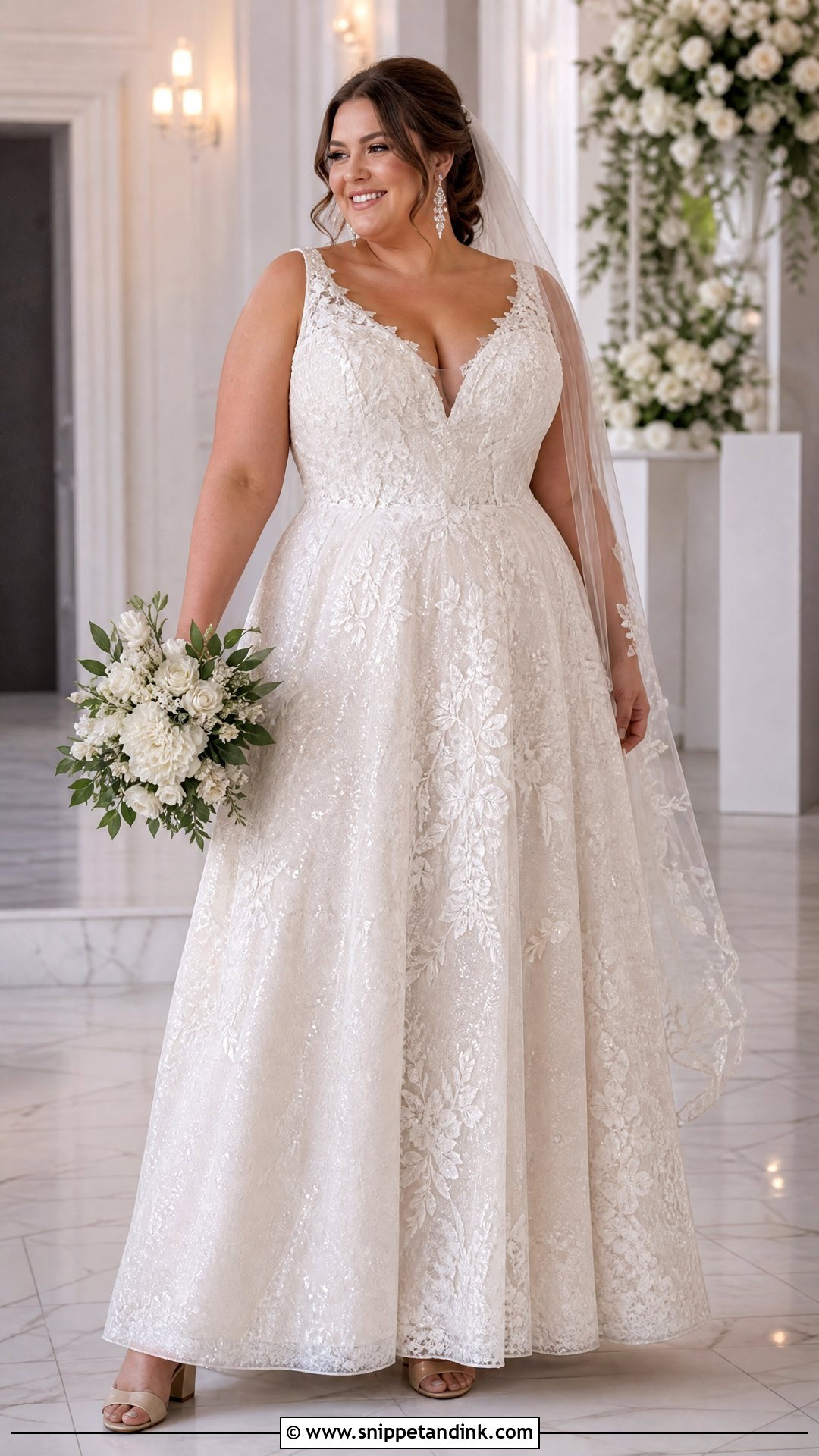
Fit before label, every time. Bridal sizing runs small and inconsistently between designers, so I ignore the tag and look at the bodice. Structure is the priority: an A-line or fit-and-flare with a firm bodice defines the waist and lets the skirt move. Lace motifs that cross seams continuously look intentional, and sequins concentrated where you want emphasis guide the eye. Wide straps, a supportive V and a higher back give security. Bring your undergarments and shoes to every fitting, and sit and breathe deeply each time.
19. Sparkly Blush Lace Wedding Dress
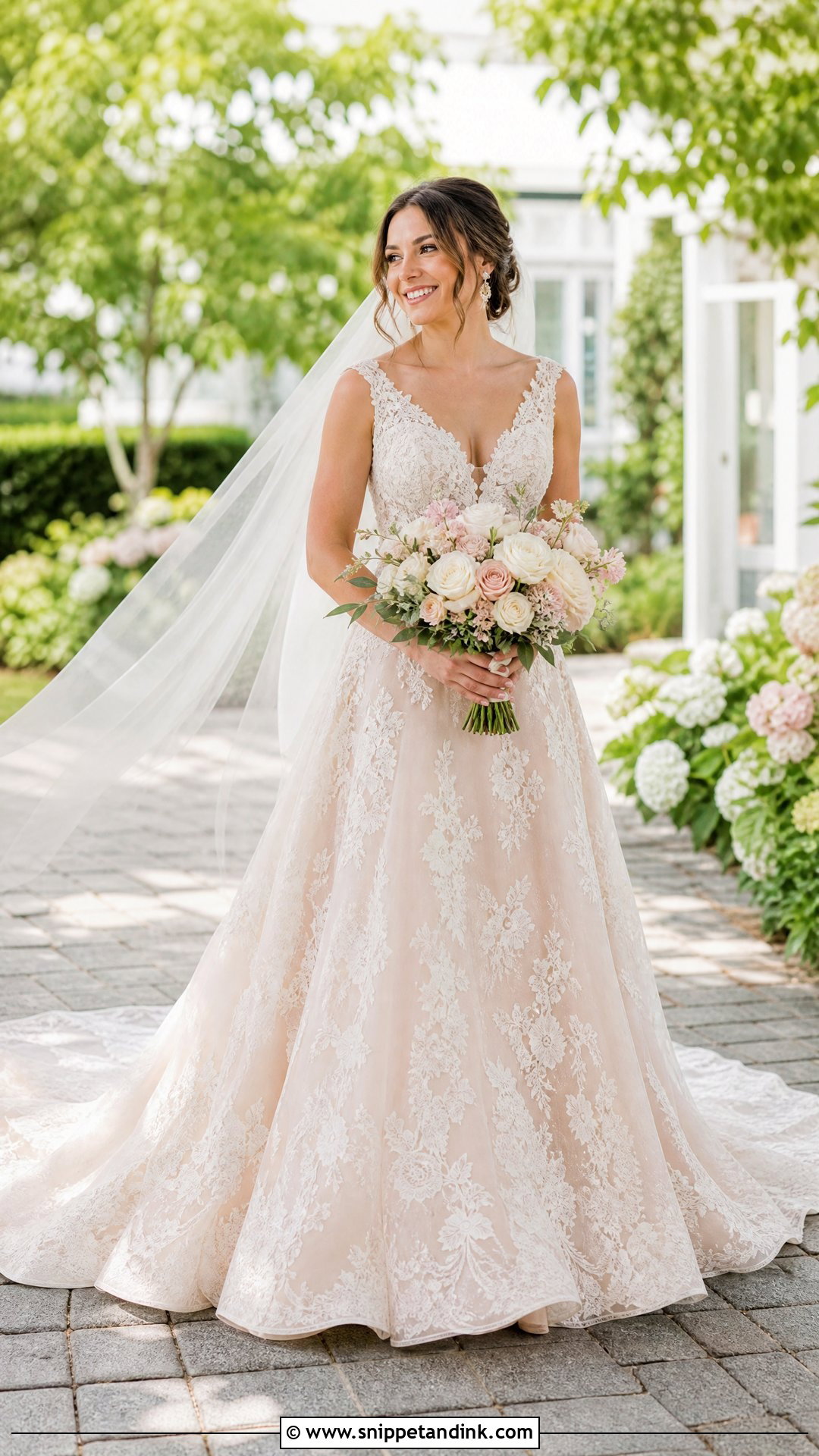
Ivory lace over a blush, nude or pale pink lining makes the lace pattern show up more clearly than ivory on ivory. Clear sequins and small crystals add light without hiding the color underneath. I always compare lining swatches against the bride’s skin in daylight and indoor light, because blush can read pink, peach, beige, or mauve depending on the setting. Pick the one that gives gentle contrast. Rose-gold earrings and a cream-and-pink bouquet complete it.
20. Sparkly Lace Cathedral Train Wedding Dress
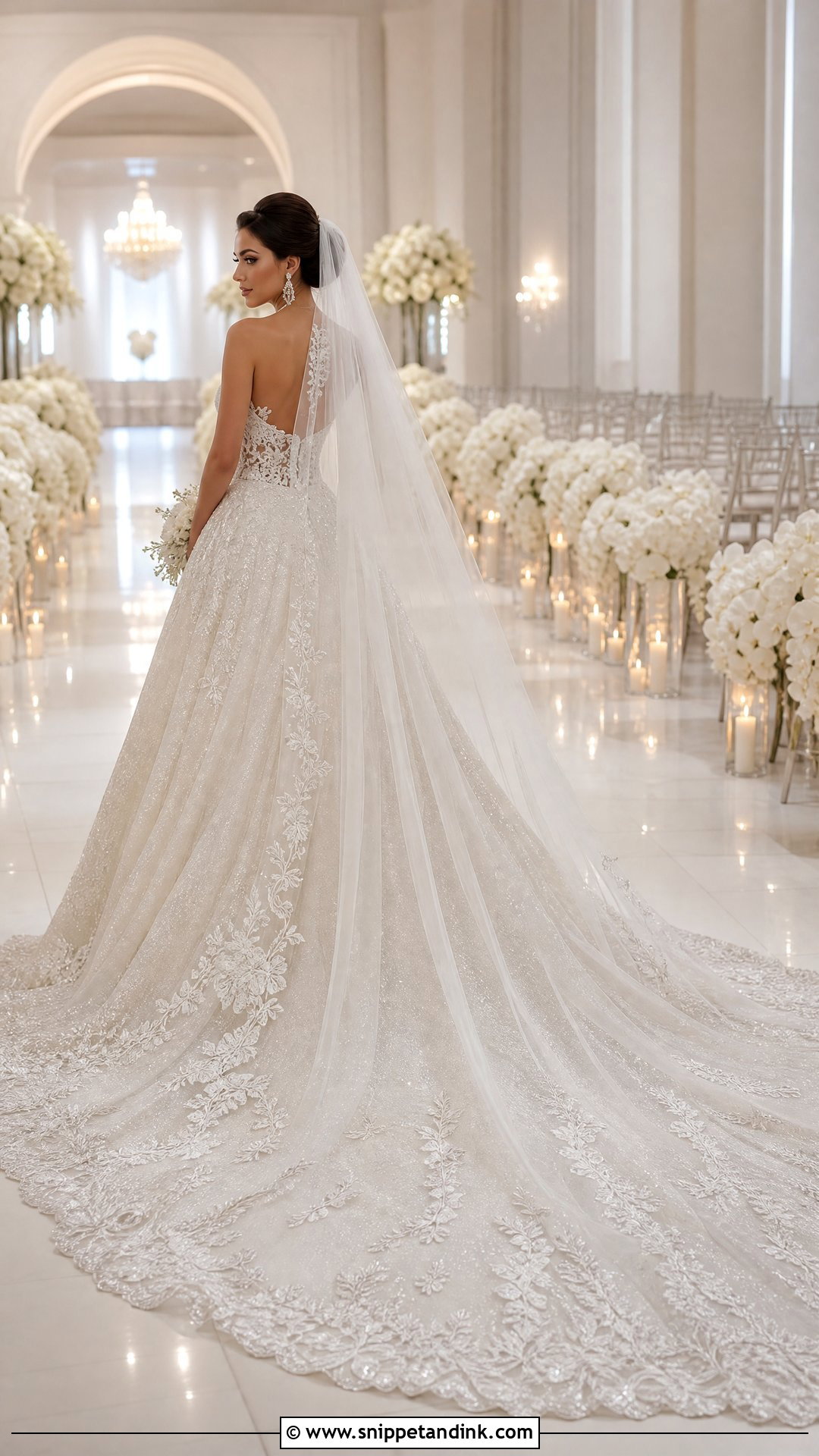
Cathedral trains need space: a long aisle, a wide altar, steps that aren’t too narrow. Lace appliqués should continue unbroken from the bodice down the full train, with sequins or glitter tulle catching the light as it spreads behind you. A sheer veil lets the lace show through. The bustle on a heavy lace train needs several points so the weight isn’t hanging off one hook. Practise walking, turning and bustling before the day, and assign one person to arrange the train before photos.
Why the Lace on the Sample Won’t Sit the Same on Your Gown
Sample dresses in boutiques are usually one size, clipped to fit whoever is trying them on. When your own gown is cut to your measurements, the lace motifs land in slightly different places. A flower that sat neatly at the sample’s waist might fall a little higher or lower on yours.
This is usually fixable. Lace appliqués on most bridal gowns are hand sewn, so a good seamstress can lift a motif and move it to cover a seam, fill a gap left by taking in the side, or rebalance the neckline. I’d raise it at the first fitting, not the last, because moving beaded appliqués is slow handwork.
- Ask whether the boutique received any spare lace with your gown. Offcuts are useful for patching, edging a veil or covering an altered seam.
- Check the lace at the back as carefully as the front; motifs over a zip or button placket are the ones most often misaligned.
- If the beading near the hem has to be removed for shortening, ask for the loose beads back so they can be reused.
For the veil, a matching lace edge only works if the lace genuinely matches. A slightly different ivory or a different motif scale looks worse than a plain cut edge, so if the boutique can’t offer the gown’s own lace, I’d go plain.
Is the Sparkle Following the Lace or Fighting It?
A sparkly lace gown should feel as good on the body as it looks on the hanger. Start with the silhouette, then decide how much shine you want, from scattered sequins and pearls to dense crystal beading. Think about the venue’s light, the weather and how much you’ll be moving; a cathedral train suits a big indoor space, while lighter lace and a manageable hem are kinder outdoors. Try the gown with your shoes, undergarments, veil and jewelry before final alterations. Classic, boho or glamorous, the right one is where the sparkle supports the lace instead of burying it.
You'll Like These Ideas:





Leave a Reply