
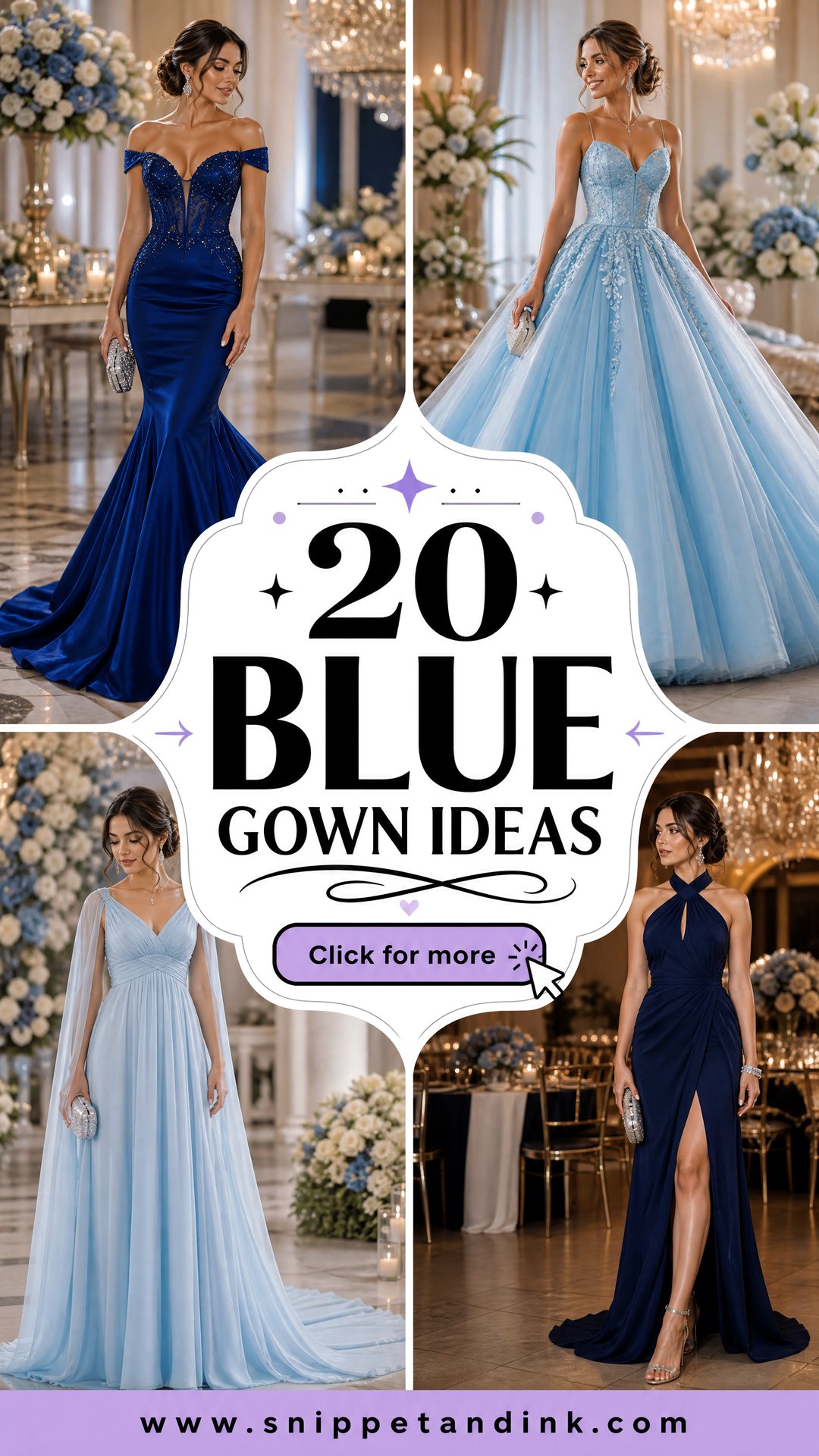
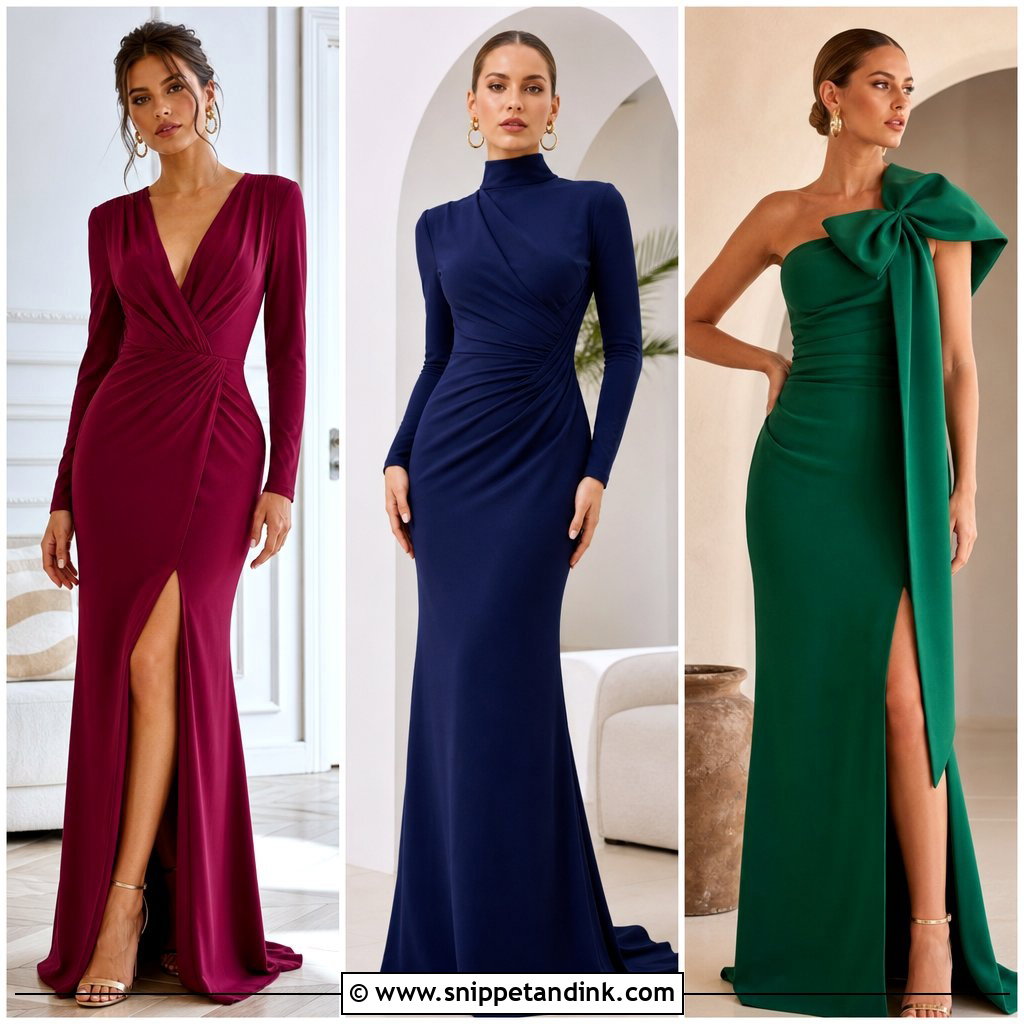
A floor-length gown is the one guest outfit where the fabric does most of the talking, and blue gives you more range in fabric than almost any other color. Pale powder blue reads light and daytime, while navy, sapphire, and royal blue carry an evening room. The cut matters as much as the shade: an A-line moves easily, a mermaid shows the figure but limits your stride, and a structured ball gown takes up real space. I always look at the gown’s finish before choosing a single accessory, because shine on shine rarely works. Below are twenty complete looks, from chiffon to satin to tulle, each with the practical catch I’d warn a client about.
Is a Full-Length Gown Too Much for a Wedding Guest?
Sometimes, yes. A floor-length gown is right when the invitation asks for it and wrong when it doesn’t, and the wording on the card tells you which. I read it with clients line by line.
- Black tie: a floor-length gown is expected. Any of the twenty below will fit, from navy A-line to an embroidered ball gown.
- Black tie optional or formal: a long gown is welcome, though a sleek column or A-line sits better than a full ball skirt.
- Cocktail or semiformal: skip the gown. A midi in the same blue will look right, where a floor sweep looks overdressed.
- No dress code given: check the venue and the start time. An evening reception in a hotel ballroom leans formal; a farm at noon does not.
There’s also the bride to think about. I steer guests away from long trains, anything with a veil-like cape, and very pale ice or baby blue that reads white in photos. Volume needs care too. A huge tulle skirt in a small restaurant venue crowds the tables and the people sitting at them, so match the size of the gown to the size of the room.
1. Royal Blue Satin Gown
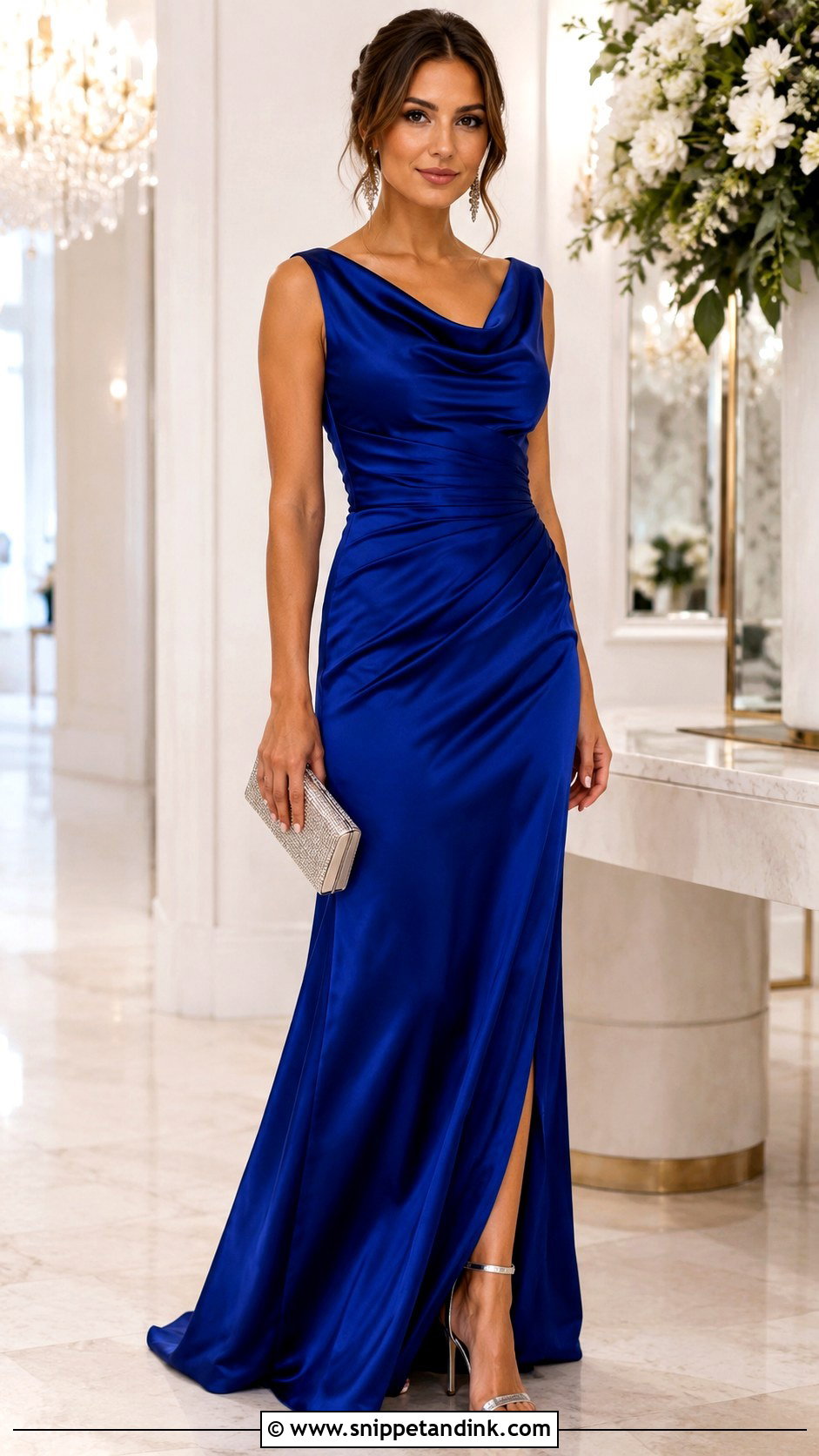
Satin reflects light, which means it also reflects every lump underneath it. That’s the first thing I check on a royal blue satin gown: does the fabric lie smooth over the hips, or does it need smooth, no-line underwear and a steam? Choose a floor-length design with a fitted waist, a softly draped neckline and a fluid skirt, then keep the rest simple: silver ankle-strap heels, crystal drops and a compact metallic clutch. A sleek low bun leaves the neckline visible. For more coverage, wide straps or a matching satin wrap do the job. Thin satin sometimes needs professional alteration to hang well, so try it on in both window light and indoor light.
2. Navy Blue A-Line Gown
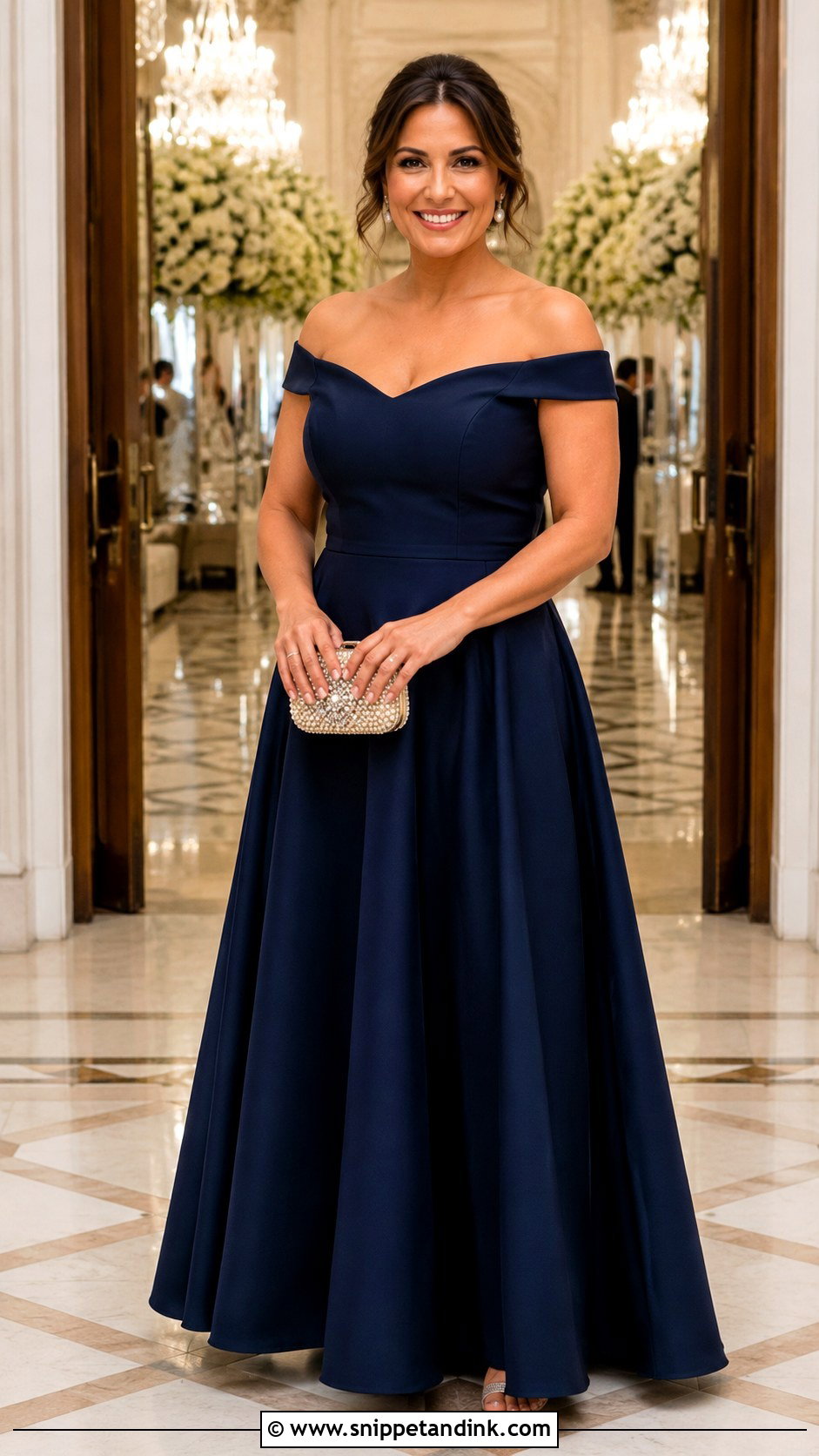
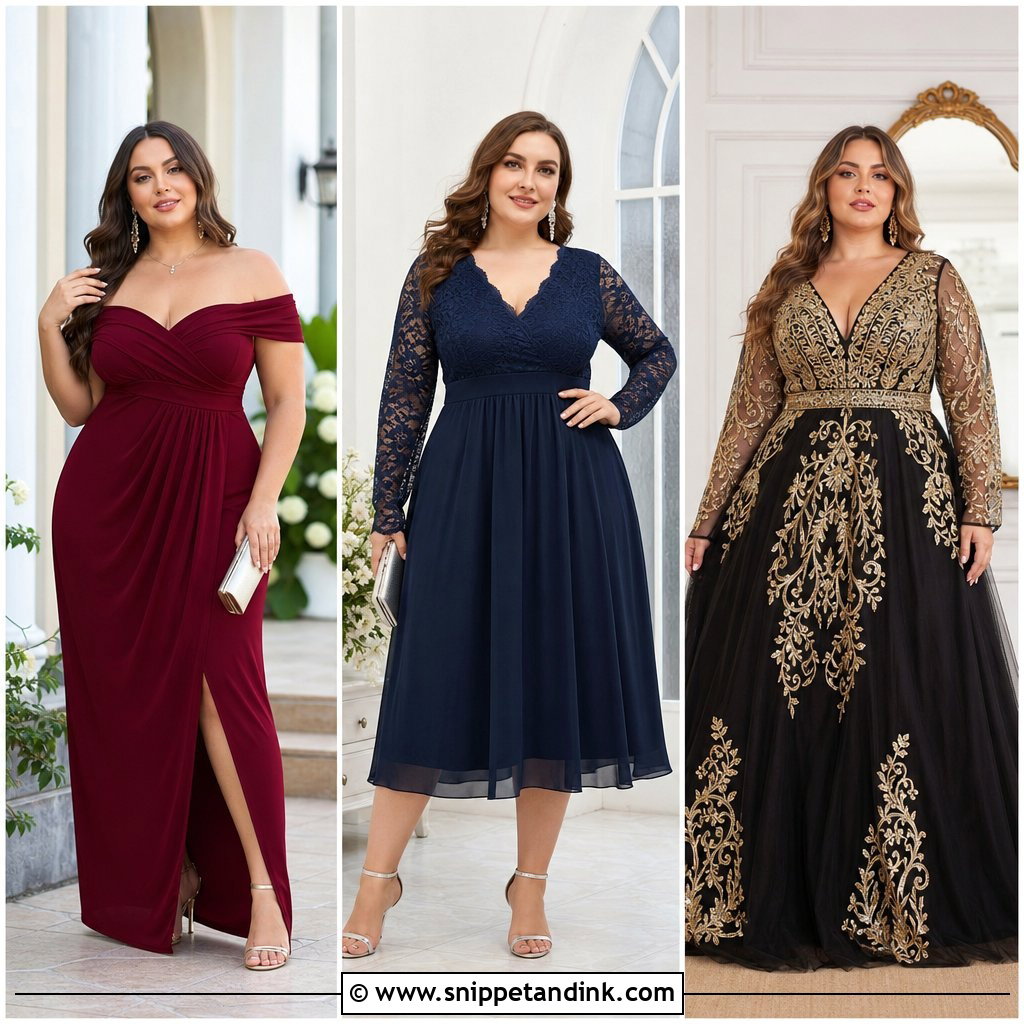
Navy A-line is the gown I suggest when someone tells me they want to sit, eat and dance without thinking about their dress once. A structured bodice defines the waist, and the skirt opens enough to let you move freely, which is why the shape suits most figures. Champagne heels, pearl earrings and a small beaded clutch finish it, with a soft side-swept style. Navy is entirely at home at black-tie weddings, galas and formal dinners. In cooler months, add a tailored wrap or a cropped evening jacket. Have the hem set so it just clears the floor in your shoes; a gown that touches the ground gets stepped on at the first staircase.
3. Light Blue Chiffon Gown
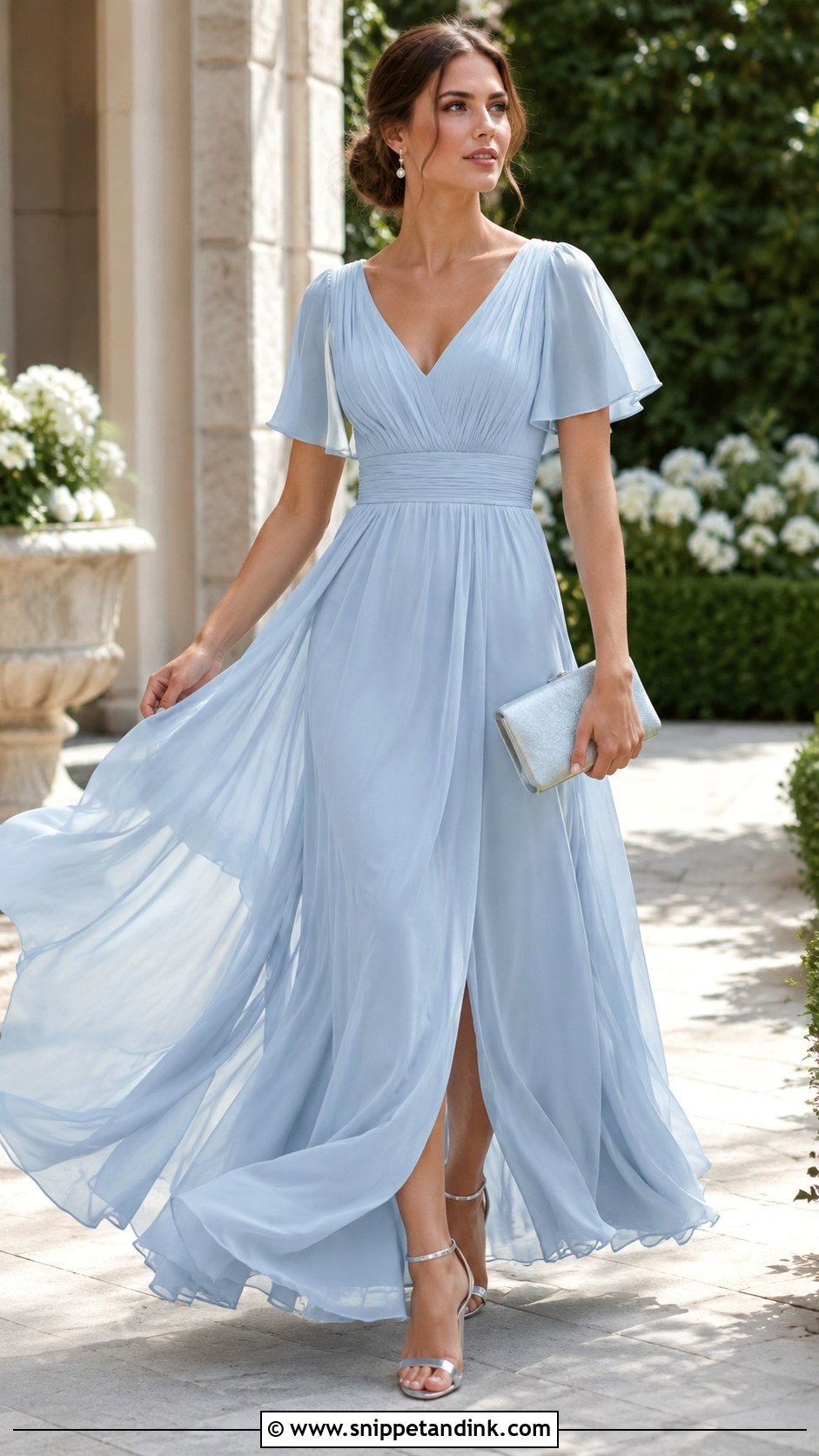
Light blue chiffon is airy, but unlined chiffon is the most common sheer-fabric surprise I see at weddings. Stand in front of a bright window or under a phone flashlight before you commit, and choose a fully lined gown. Look for a gathered waist, flutter sleeves and a floor-skimming skirt. Nude or silver heels keep the color story delicate, and small pearl earrings are enough. Carry a pale gray or icy blue clutch rather than a strong contrasting color. Paler blues sit most naturally in bright, open settings, so this belongs at a spring garden wedding, an outdoor formal ceremony or a daytime reception.
4. Sapphire Blue Mermaid Gown
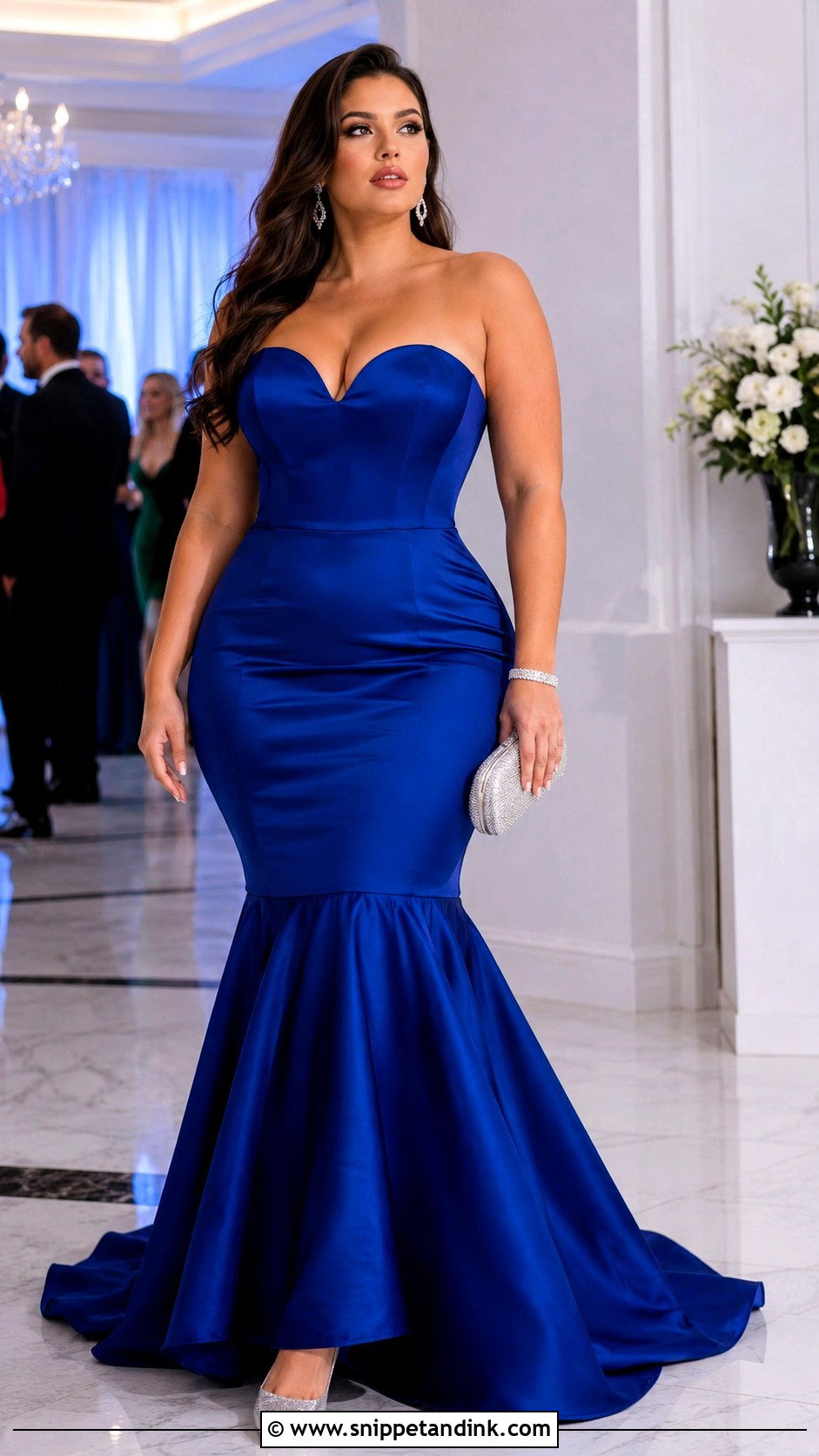
Mermaid gowns are fitted through the hips and flare at or just below the knee, and where that flare sits decides whether you can walk. If it’s too high, you shuffle; if it’s too low, you can’t climb steps. A sapphire mermaid with internal boning and an off-the-shoulder or sweetheart neckline holds itself up without constant tugging. Keep accessories understated: pointed silver heels, a slim bracelet and a structured clutch. Polished waves or a side-parted updo suit the sculpted shape. At the fitting, sit down, walk across the room and take a stair if there is one, and ask the tailor to move the flare if your stride feels restricted.
5. Dusty Blue Lace Gown
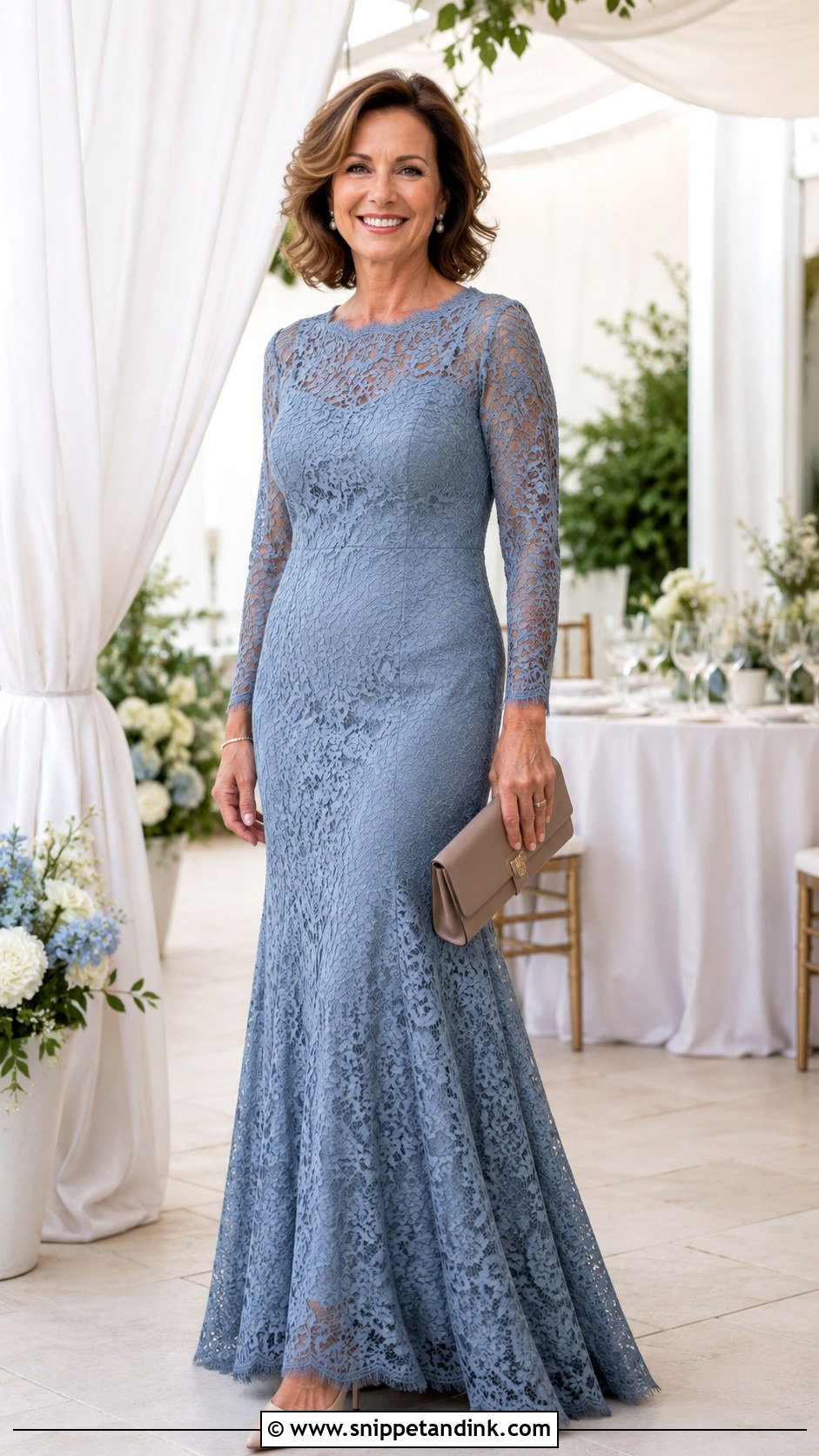
Lace catches on things: bracelet clasps, beaded bags, the Velcro of someone’s coat. With a dusty blue lace gown I keep jewelry smooth and the bag plain. Look for a lined floor-length design with lace sleeves, a defined waist and a gently flared skirt, worn with nude heels, pearl studs and a taupe or silver clutch. If the bodice is heavy with lace, skip the necklace altogether. A loose low bun with a few face-framing pieces suits the soft color. The lining should match either your skin tone or the lace itself, so any contrast looks deliberate. A light wrap adds coverage without hiding the pattern.
6. Midnight Blue Velvet Gown
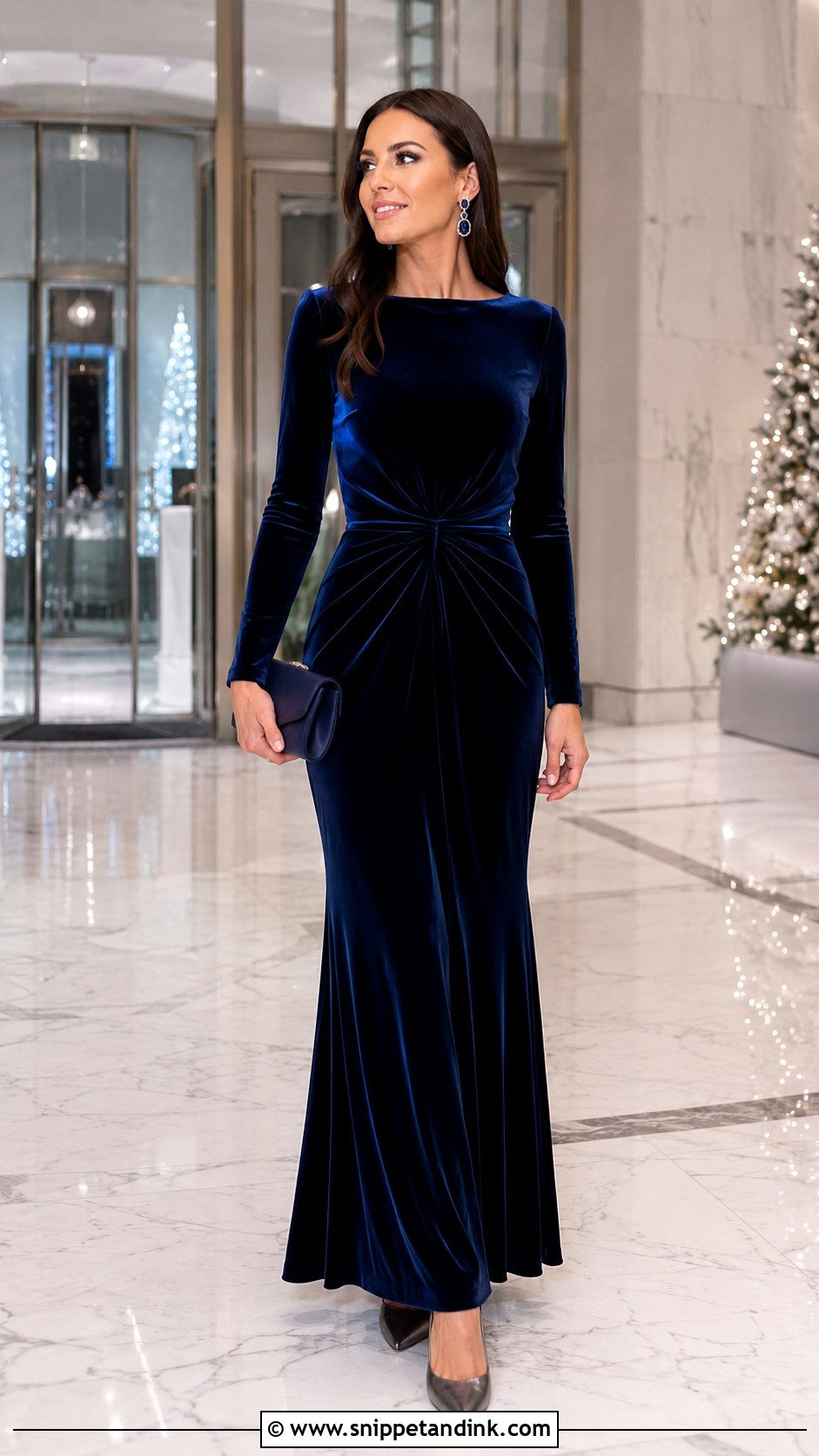
For a winter evening wedding, midnight blue velvet gives depth and real warmth at the same time. A gown with long sleeves, a defined waist and a straight or softly flared skirt provides practical coverage and still looks formal. Black or pewter heels, sapphire earrings and a compact satin clutch are all it needs; velvet is rich enough that sequins or layered statement jewelry start to look heavy. A smooth chignon suits it. Stretch velvet moves far more easily than the rigid kind. Brush the pile in one direction before you leave the house, and choose a tailored coat that won’t press the texture flat.
7. Sky Blue Tulle Ball Gown
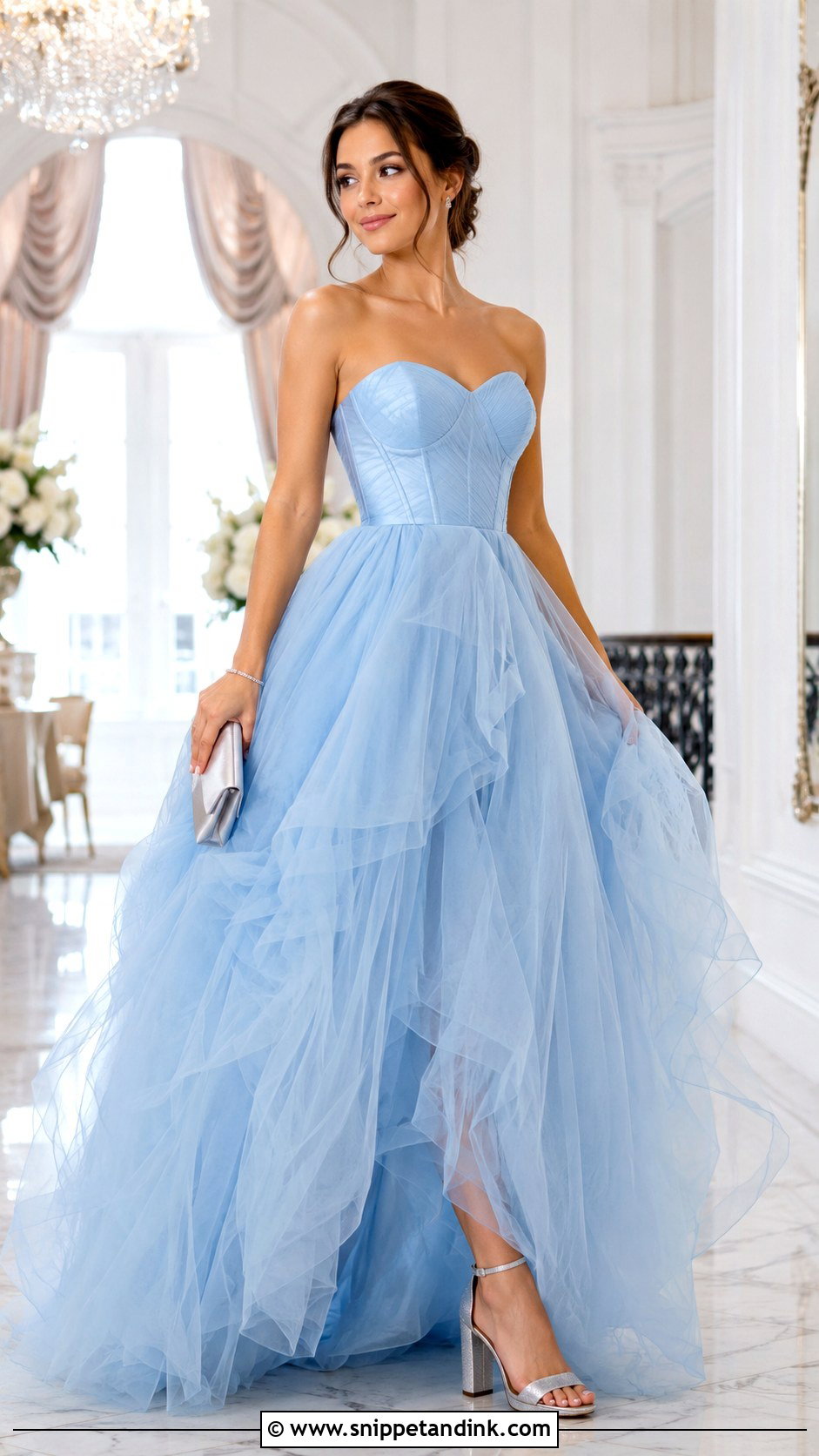
A sky blue tulle ball gown takes up space, in the aisle, in the car and at your seat at dinner. Before buying, check that the skirt’s layers sit evenly and that the bodice supports itself, since a heavy skirt pulls a weak bodice down by the end of the night. Silver block heels or comfortable pumps make sense because they’ll barely show. Crystal studs, a slim bracelet and a small satin clutch are plenty, with a neat updo to balance the volume. Grand formal dances suit this kind of drama. Hem it while wearing your chosen shoes, and practice lifting the skirt to climb stairs before the event.
8. Cobalt Blue One-Shoulder Gown
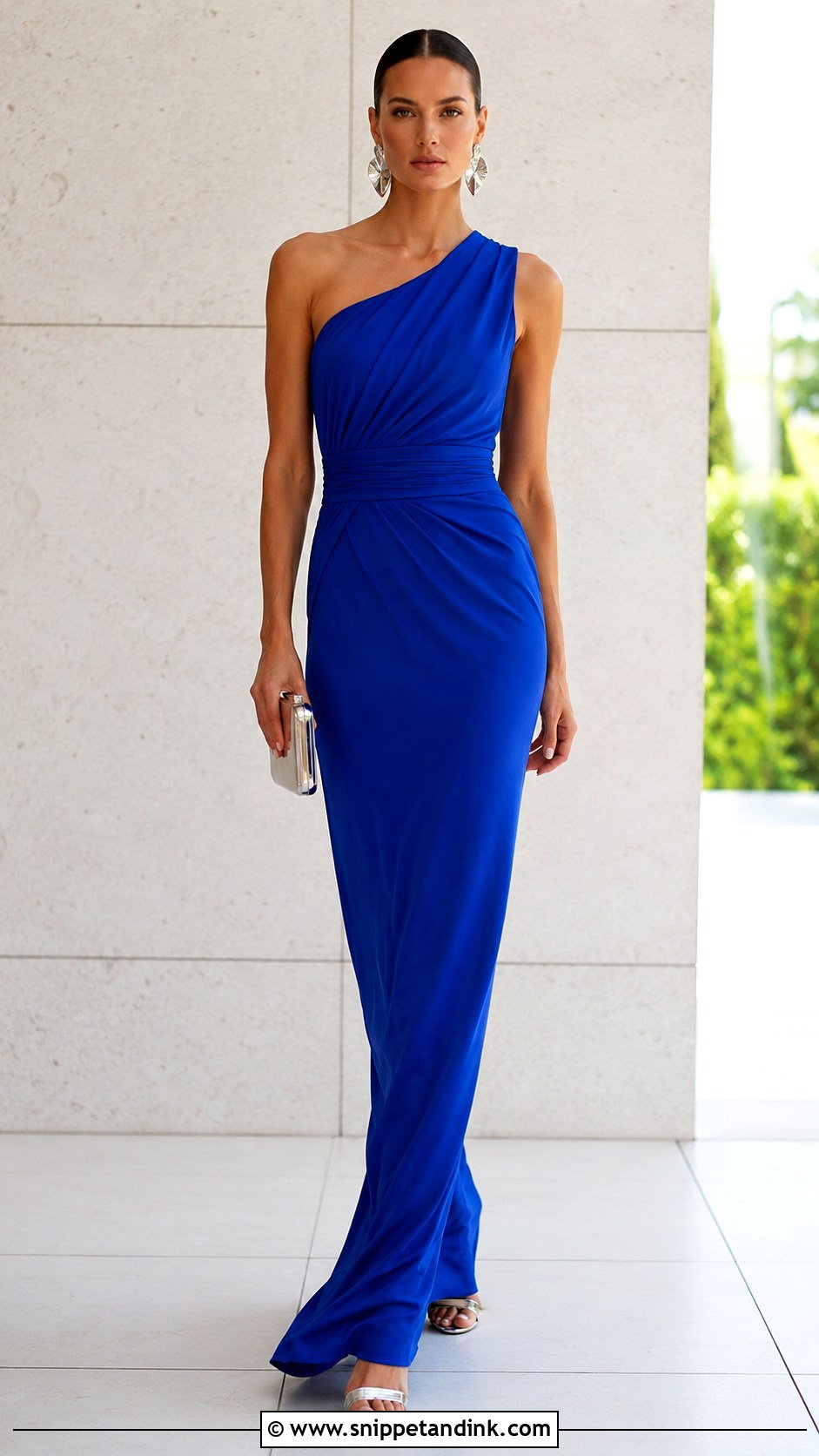
Raise your arm in the fitting room. A one-shoulder gown that pulls across the back when you reach up will pull all night, and fashion tape can only do so much. Once the shoulder panel fits securely, cobalt’s brightness does the rest. Choose a fitted waist and a long, streamlined skirt, keep the bare shoulder free of necklaces and wear sculptural silver earrings, metallic heels and a simple hard-shell clutch. Put a low side bun on the bare-shoulder side, or wear a sleek ponytail. Contemporary galas and formal dinners suit it. If the skirt is narrow, a back slit improves your stride.
9. Navy Blue Sequin Gown
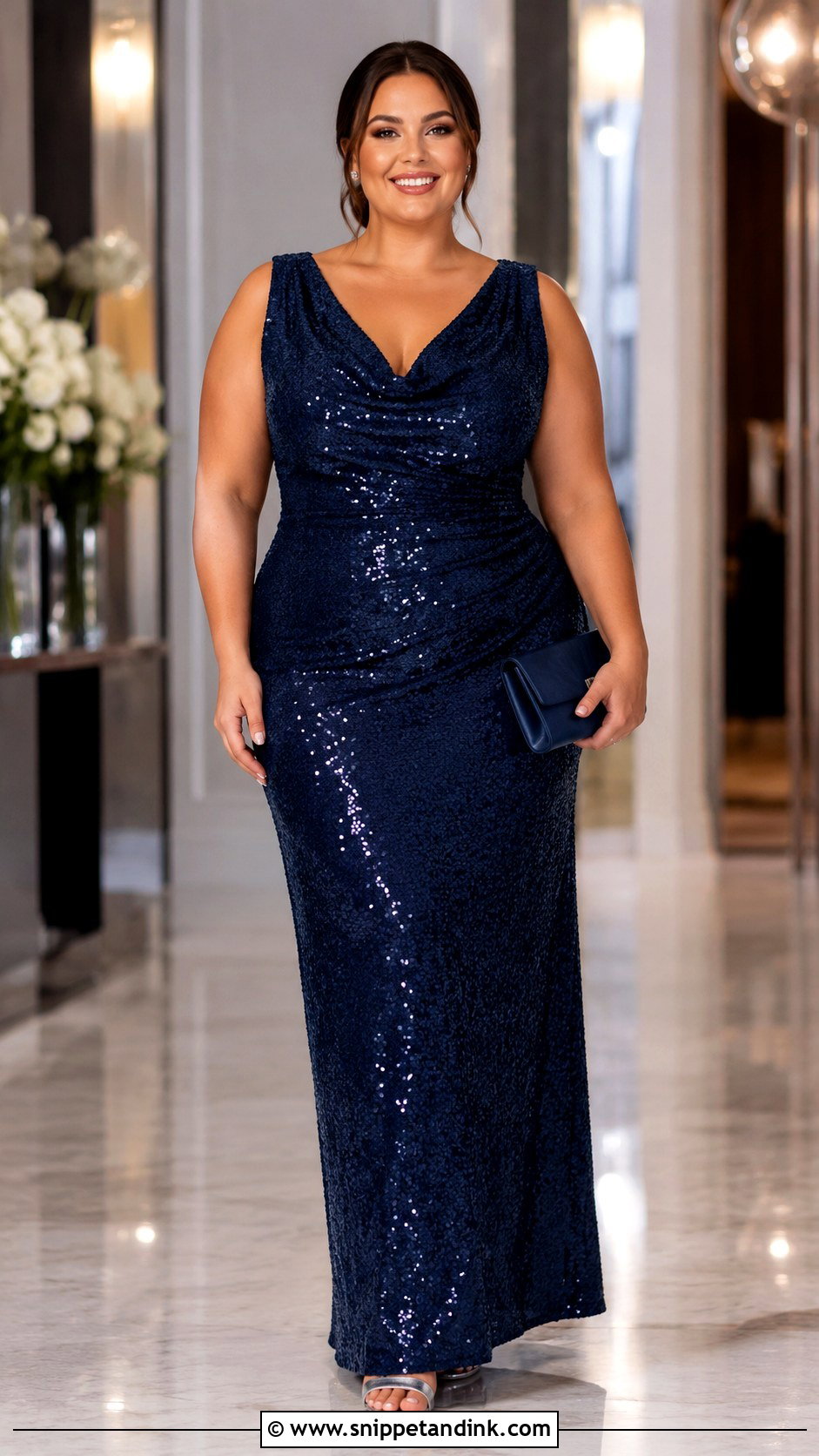
Sequins are lovely from a distance and scratchy up close, so I always turn a navy sequin gown inside out to check the lining before anything else. If the seams and inner arms are lined smoothly, you can wear it for hours. A clean column or gently flared shape keeps the surface the focus. Plain navy or silver heels, small studs and an unembellished satin clutch are the right level; skip the necklace if the neckline is high or heavily sequined. A sleek bun or glossy waves finish it. Bring a light wrap, and avoid delicate bags that snag on the sequins.
10. Powder Blue Off-Shoulder Gown
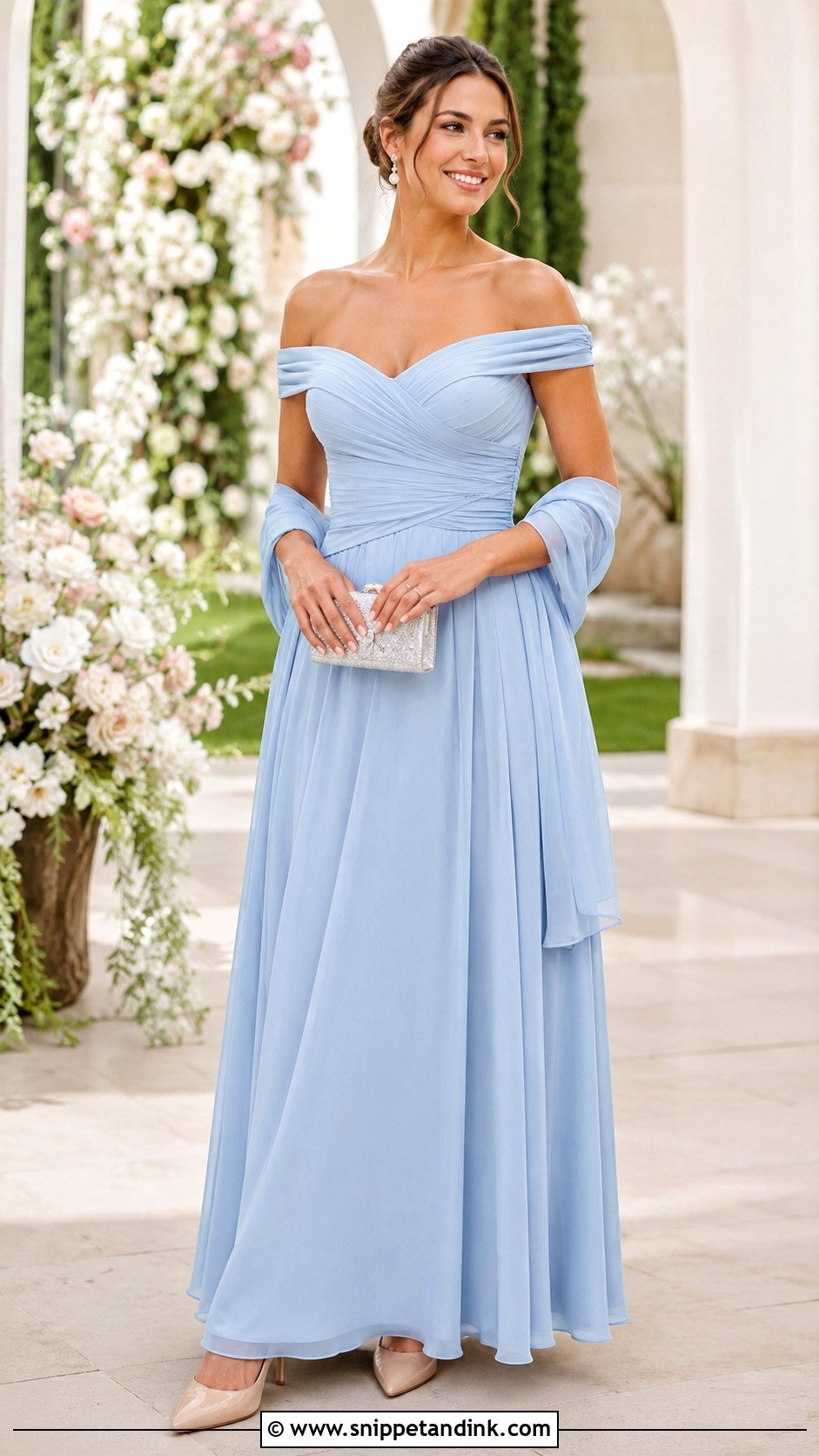
Off-shoulder necklines slip when you lift your arms or sit back in a chair, so test exactly that. A powder blue off-shoulder gown with a supportive bodice and a flowing A-line skirt is soft and bright, made for spring and summer events held outdoors or during the day. Nude pointed-toe heels, pearl drops and a small silver clutch complete it. Because the shoulders are bare, a delicate pendant can work if the bodice is otherwise plain. Wear your hair loosely up or swept to one side so the open shape stays visible. A matching chiffon wrap adds coverage and keeps the pale palette intact.
11. Steel Blue Pleated Gown
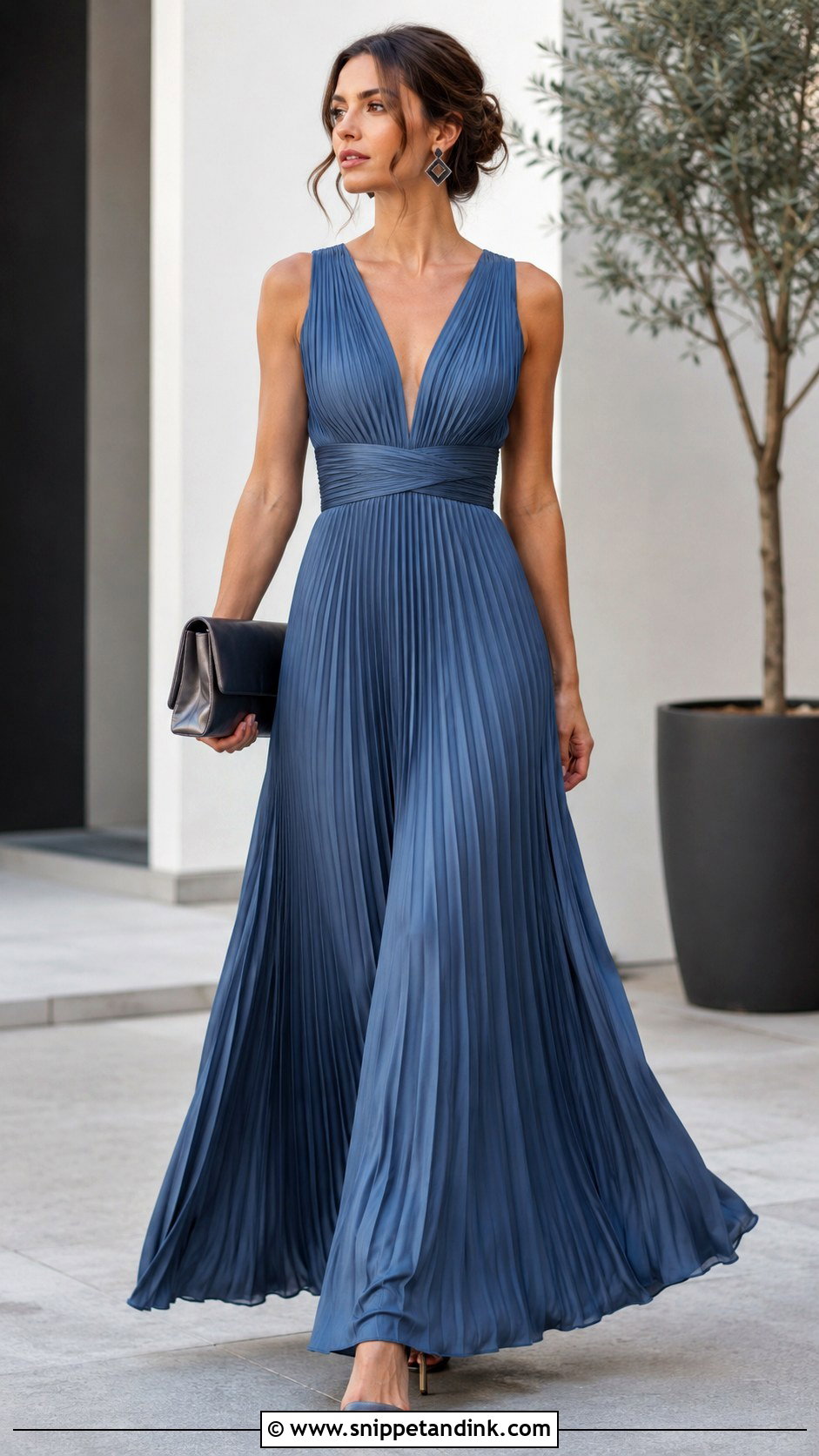
Pleats should fall straight down from the waist. If they splay open across the hips, the gown is either too tight there or poorly pressed, and that’s an alteration conversation before it’s a styling one. A floor-length steel blue gown with a defined waistband and a V-neck bodice looks long and moves well. Pewter heels, geometric earrings and a charcoal satin clutch suit the muted color, and a low ponytail repeats the clean lines. Steel blue sits between summer pastel and winter navy, so it covers transitional months. Store it hanging with space around it, and add a cropped tailored jacket for warmth.
12. Teal Blue Cape Gown
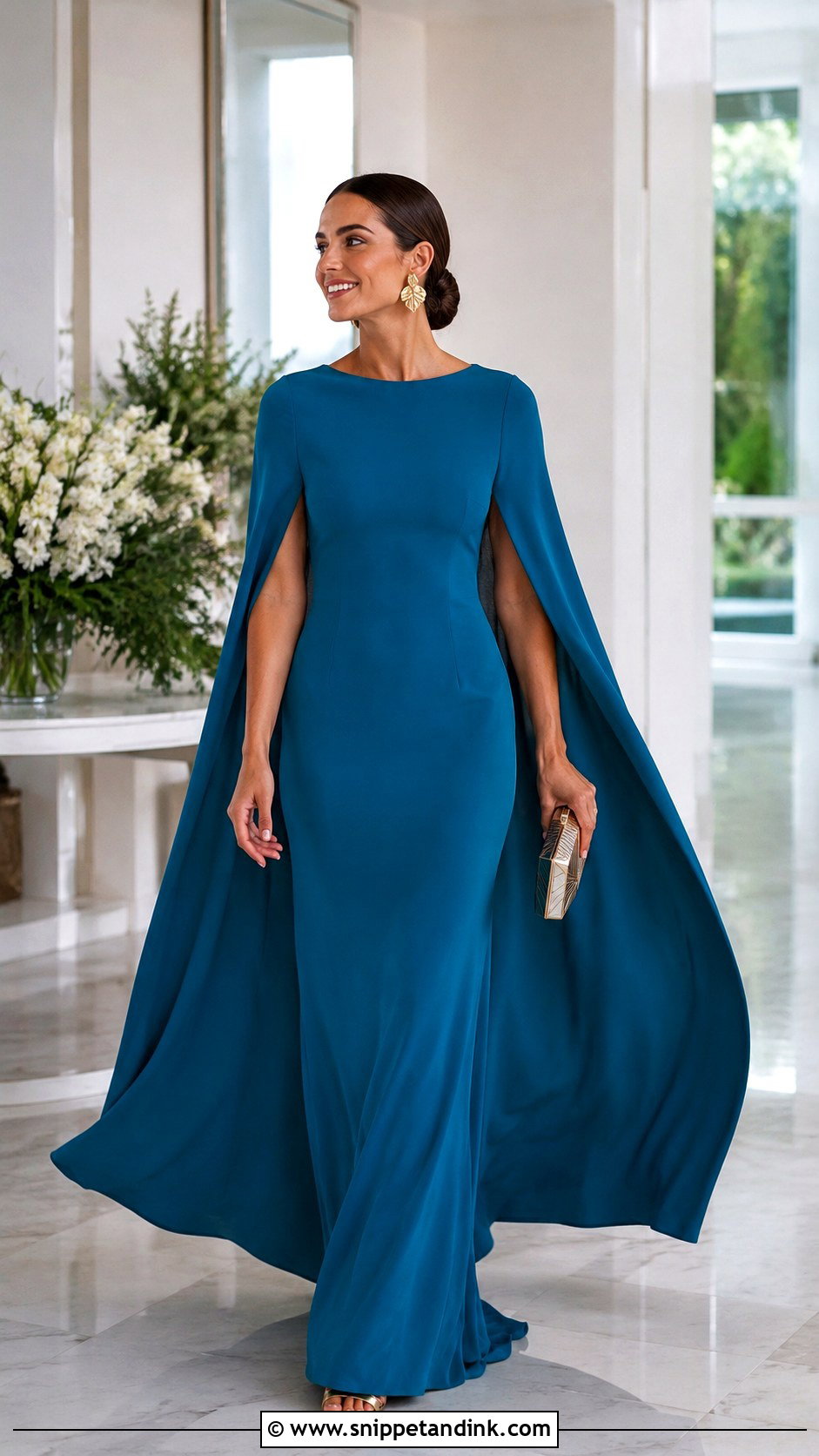
I always check where a cape attaches. Fixed at the shoulders, it frames you; fixed too low on the back, it drags and pulls the gown backward when you sit. A teal cape gown should be streamlined and floor length, with the cape flowing behind rather than covering the whole silhouette. Gold earrings, metallic heels and a structured clutch bring warmth to the blue-green. Keep your hair sleek so it doesn’t tangle with moving fabric, and skip long necklaces and bulky bracelets for the same reason. During alterations, confirm both the hem and the cape lengths are safe to walk in. A detachable cape can come off for dancing.
13. Cornflower Blue Floral Gown
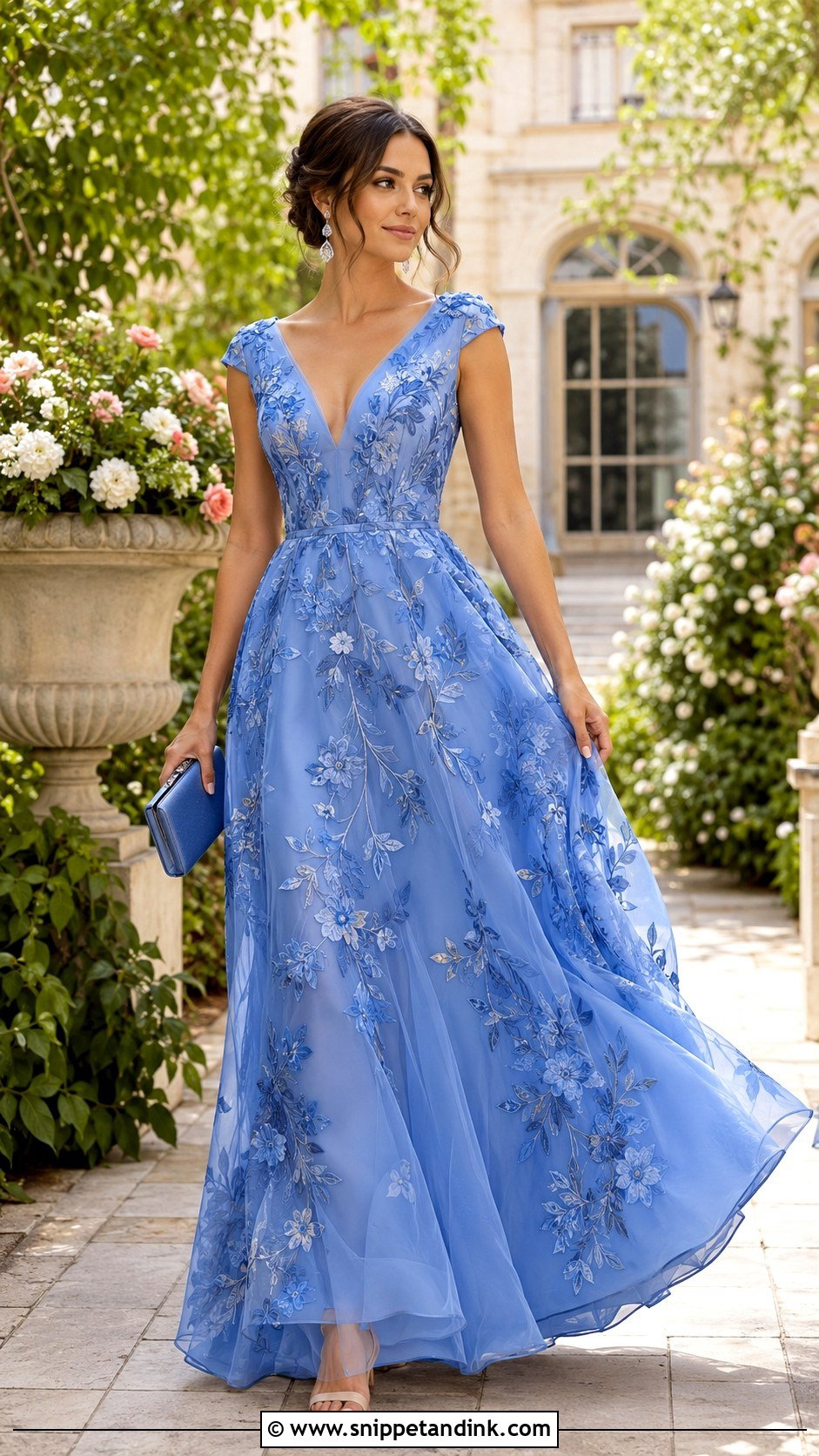
Pattern on a formal gown works best when it’s tonal. Choose a cornflower floor-length chiffon or organza with blue-on-blue flowers rather than a busy multicolor print, and check how the print lines up at the seams; mismatched flowers at the side seam look cheap even on an expensive dress. A softly defined waist and flowing skirt keep it easy to wear. Nude heels, delicate silver earrings and a plain blue clutch are enough. Loose curls or a low braided bun suit the garden feel of a daytime formal wedding or spring event. If the flowers are embroidered or appliquéd, simplify the accessories further, and carry a pale blue wrap.
14. Ice Blue Beaded Gown
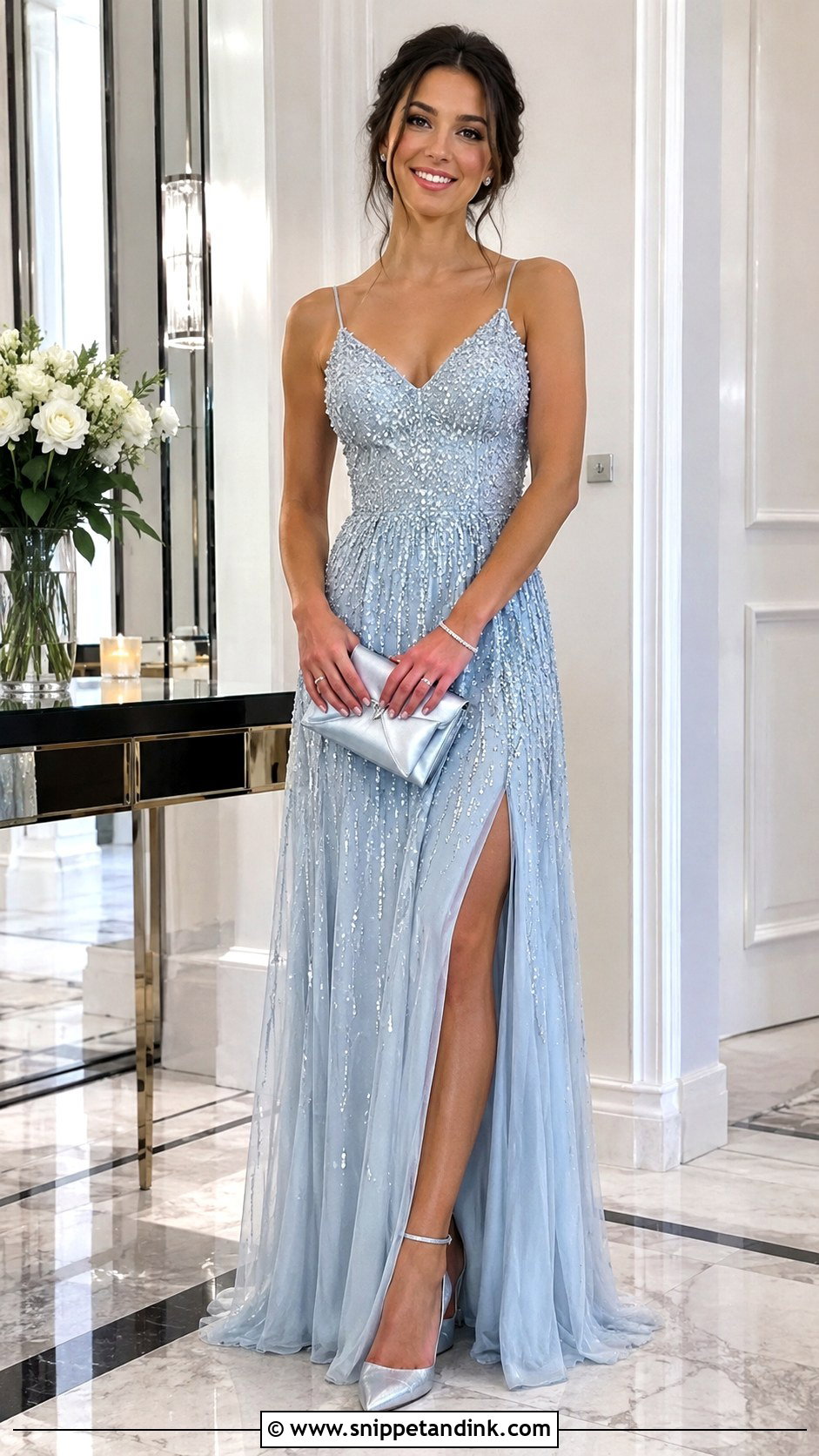
Heavy beadwork changes how a gown should be stored. An ice blue gown with dense beading on the bodice can stretch at the shoulders if it hangs for weeks, so lay it flat or use the hanging loops sewn into the waist. I prefer beading concentrated at the bodice and fading toward the skirt, which lets the skirt move. Silver pumps, crystal studs and a cool-toned satin clutch suit it, with a simple updo so hair doesn’t catch on the beads. Ice blue is pale enough to photograph near white, so look at it in daylight before wearing it to someone’s wedding. Check every bead is secure and that the lining covers the thread ends.
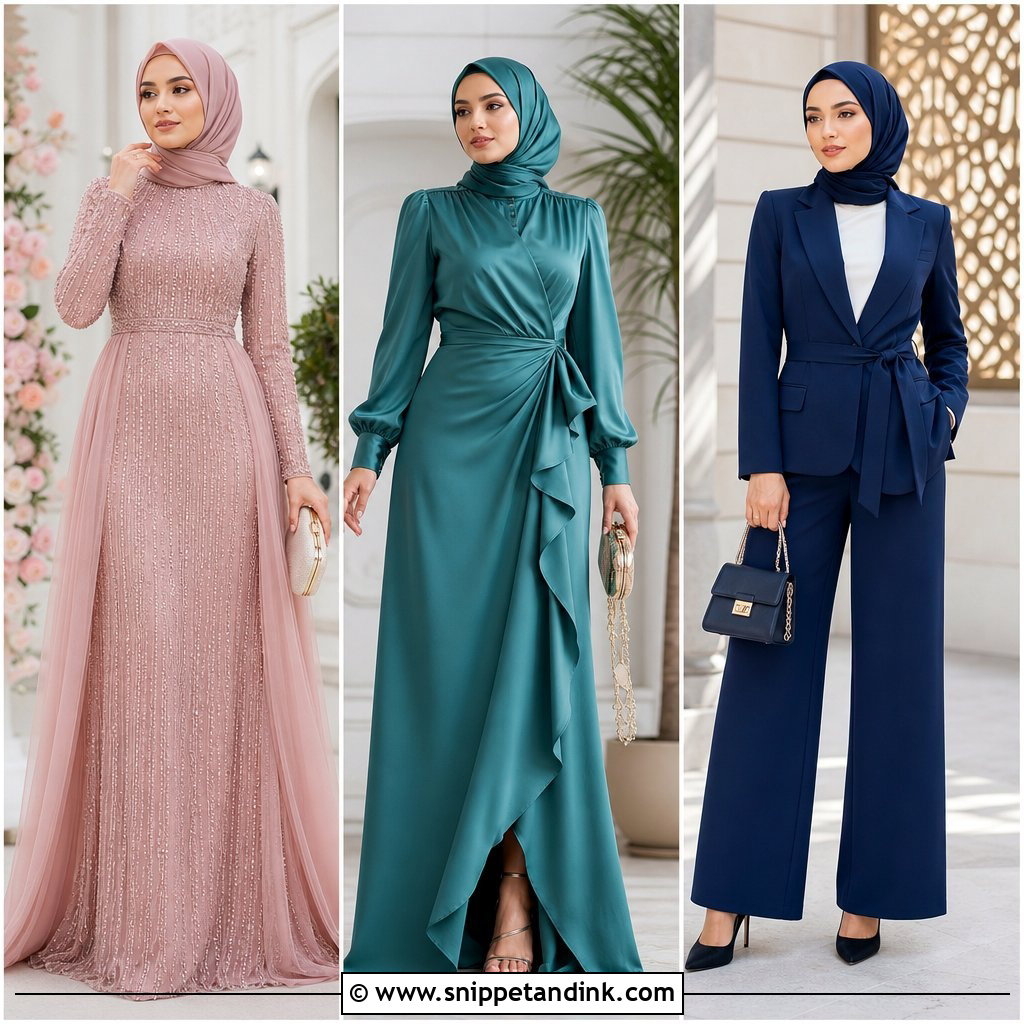
15. Royal Blue Long-Sleeve Gown
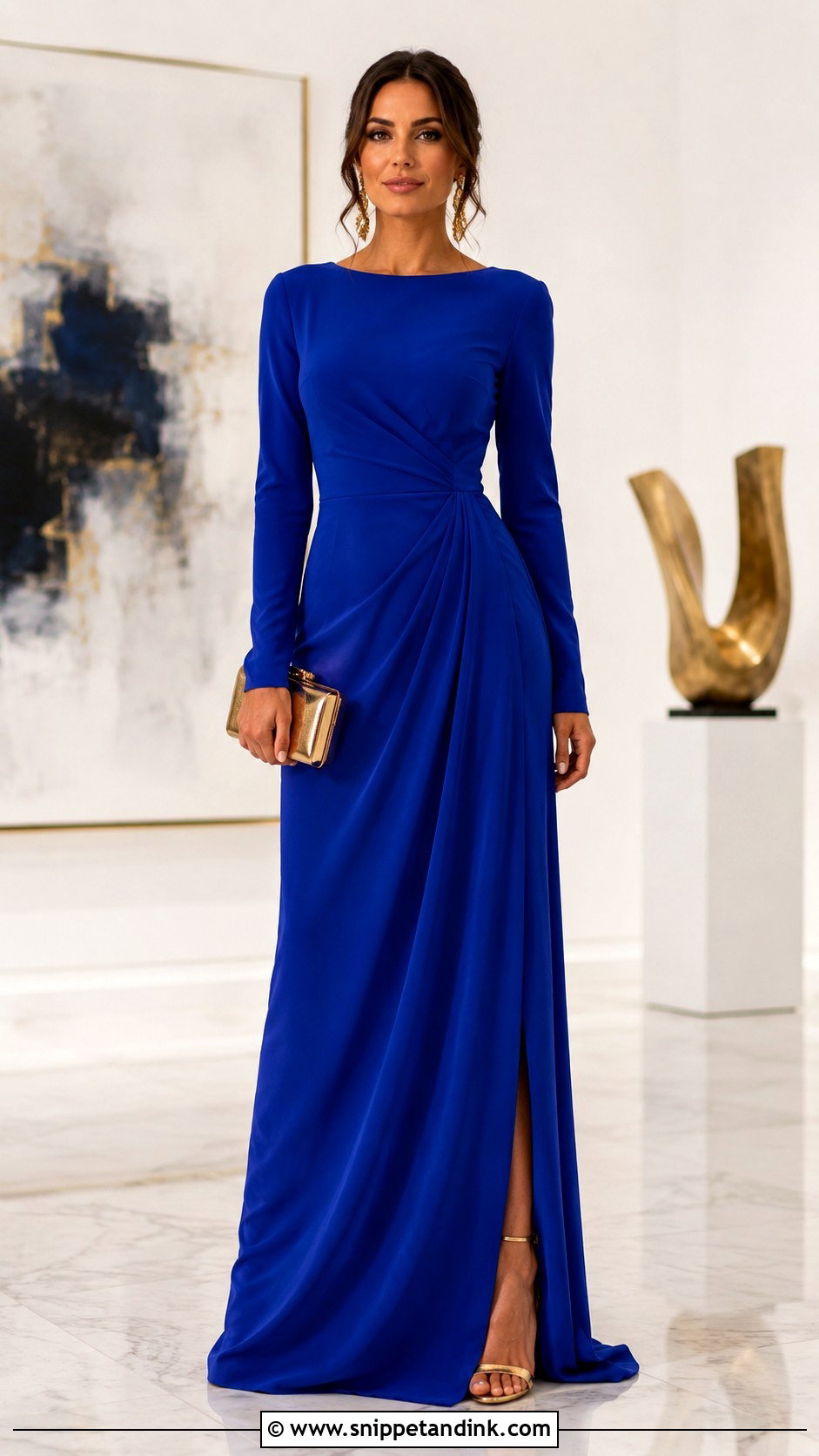
Long sleeves are where a gown most often fails the reach test. If lifting your arms pulls the whole bodice up, the sleeves are set too low, and it’s very hard to alter that later. A royal blue long-sleeve gown in crepe or stretch jersey avoids the problem better than stiff fabrics do. Pick a defined waist and a fluid floor-length skirt. Gold heels, small hoops or drops and a structured metallic clutch keep it current, with a sleek ponytail or center-parted bun. It suits cooler seasons, indoor evening events and weddings where more coverage is expected. With a high neckline, use statement earrings instead of a necklace.
16. Baby Blue Empire Waist Gown
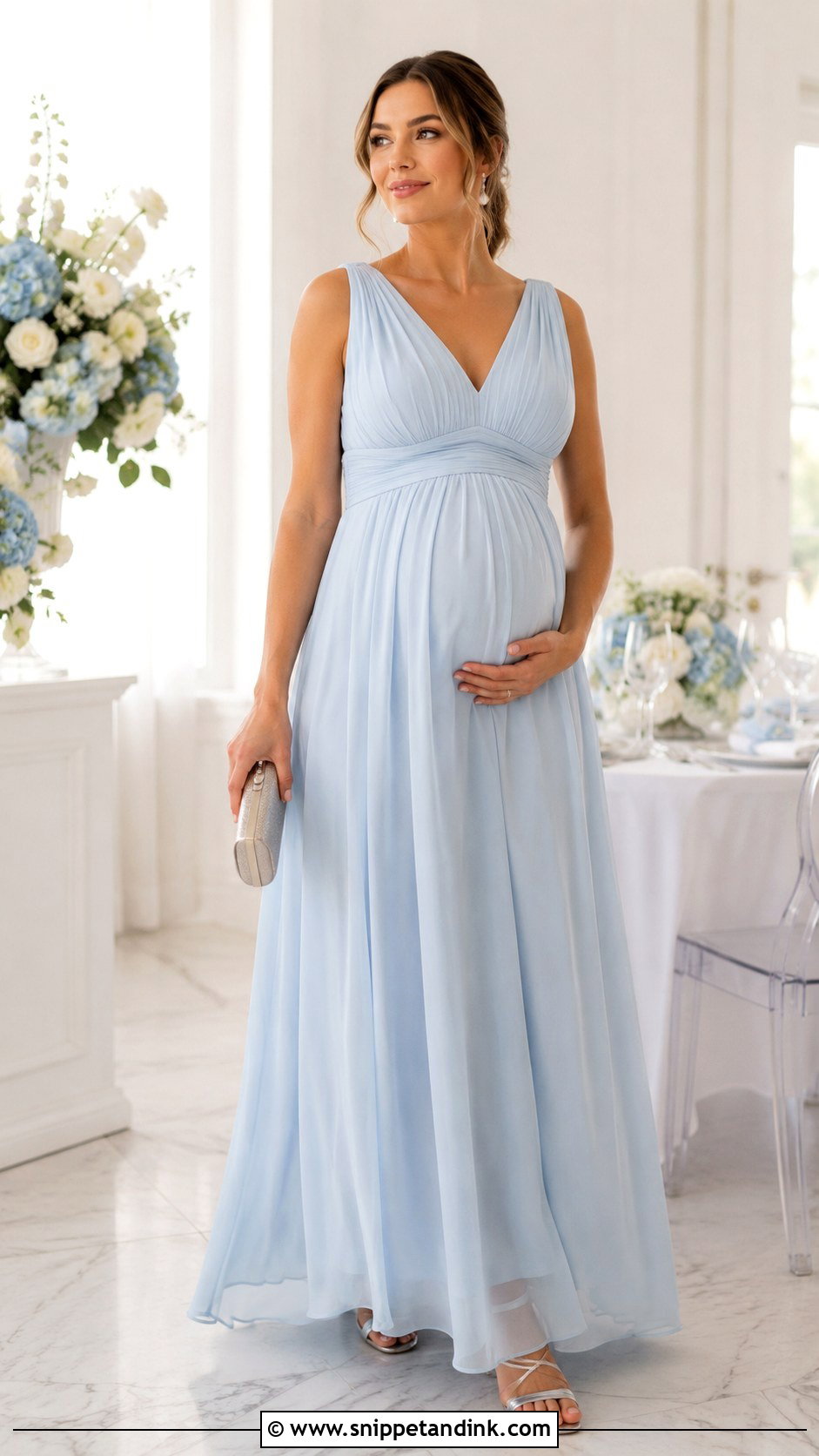
An empire waist is comfortable for long events because nothing presses on your natural waist through dinner. A baby blue empire gown in lightweight chiffon or georgette, gathered gently rather than piled with volume, falls freely from under the bust. It’s also one of the easier shapes to wear while pregnant, provided there’s room and the bust is properly supported. Silver sandals, pearl earrings and a small white-metal clutch keep it delicate, and a half-up style or loose low bun suits the movement. Have the straps and hem adjusted by a professional so it hangs correctly. Baby blue shifts under artificial light, so check your accessories against it indoors too.
17. Navy Blue Halter Gown
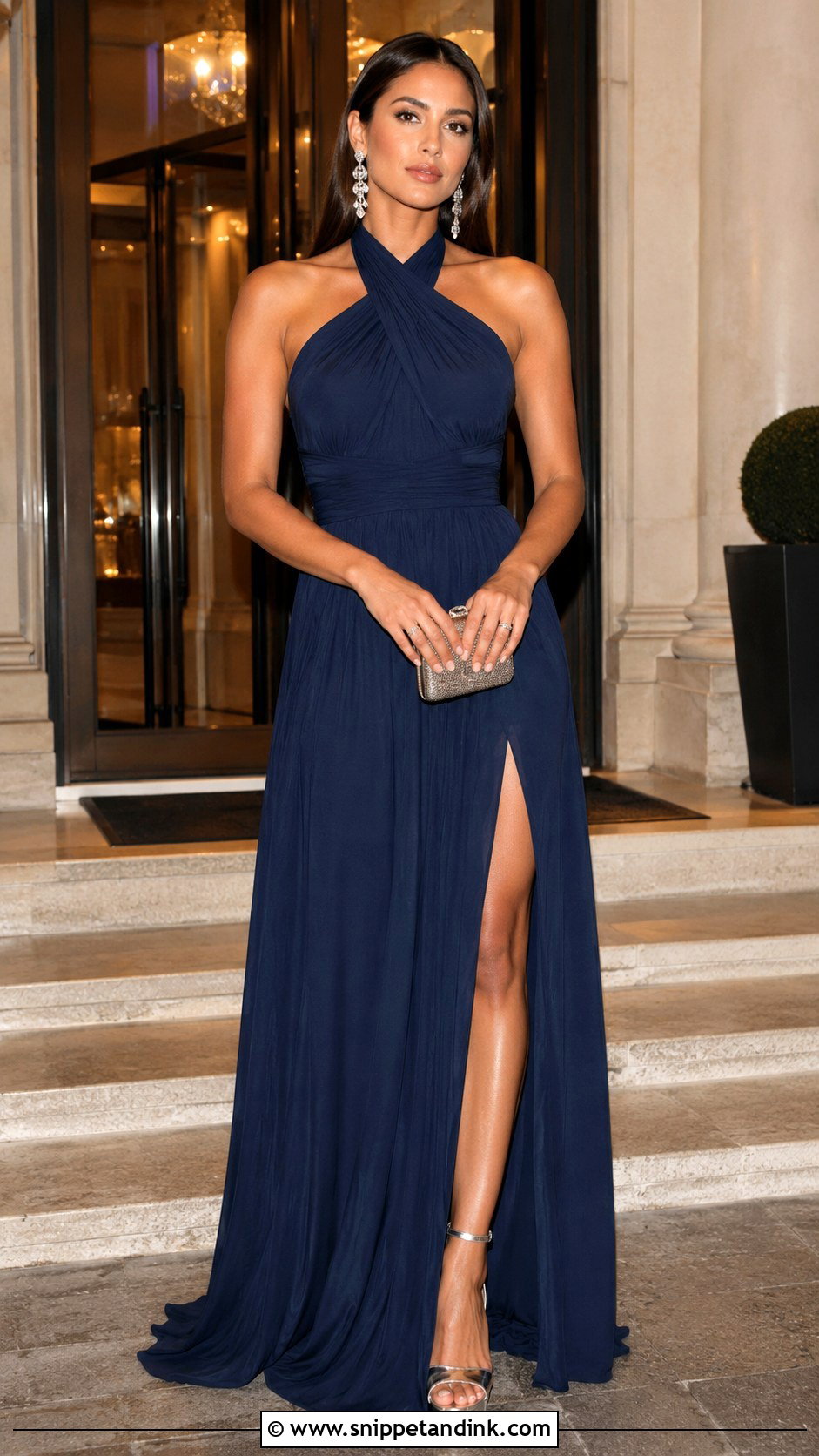
A halter strap that presses on the back of the neck gives most people a headache by the speeches. Before buying a navy halter gown, wear it for twenty minutes in the fitting room and check that the armholes lie flat. With a supportive neckline, a fitted waist and a flowing skirt, it makes a clean, confident evening silhouette. Metallic platform sandals, bold earrings and a compact silver clutch suit it, and the halter itself replaces a necklace. Wear your hair up. An open back may need adhesive cups or other specialized support, so trial your undergarments well ahead of formal dances or black-tie dinners.
18. Turquoise Blue Ruffle Gown
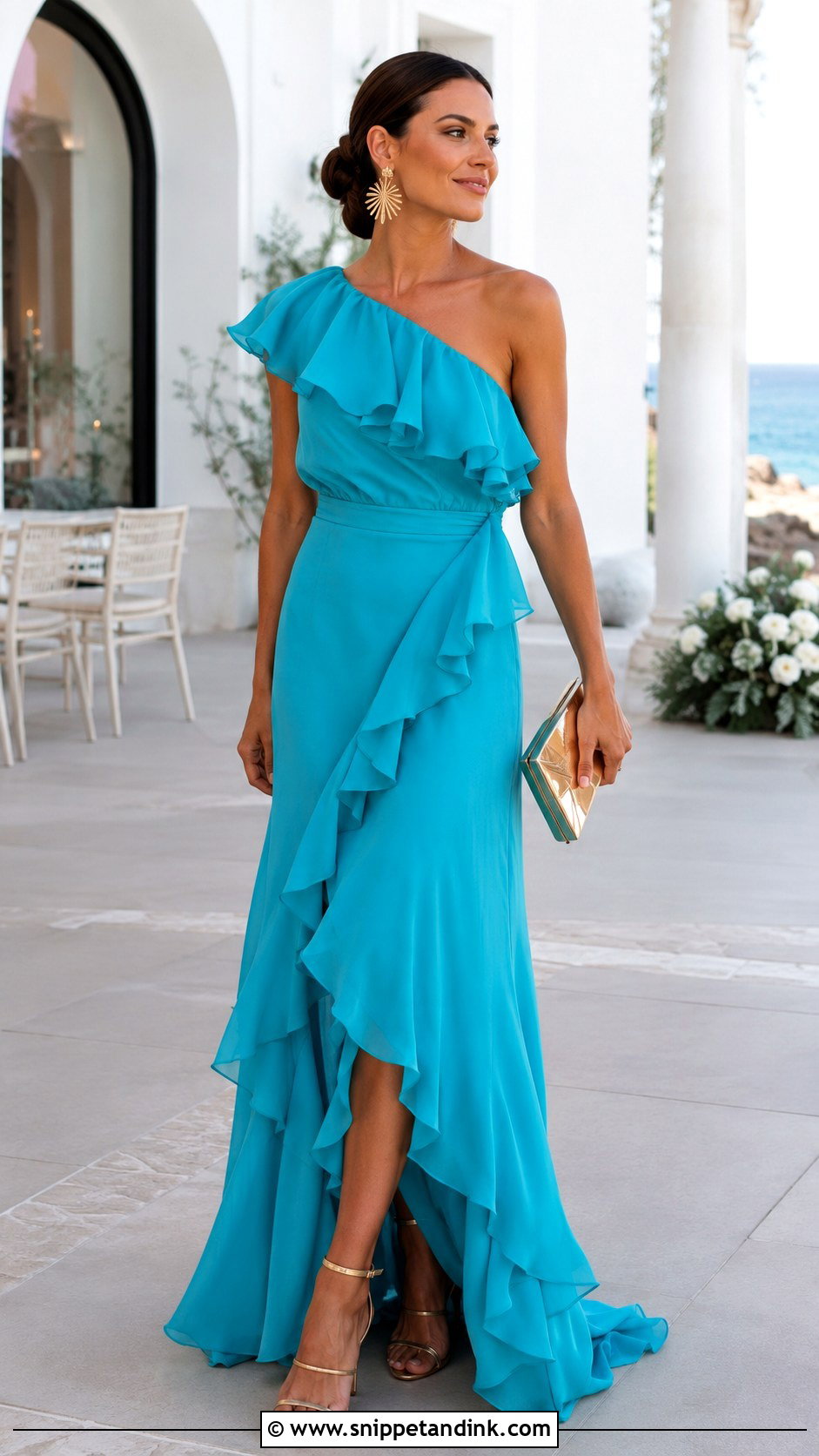
Ruffles go limp in a suitcase and need steaming back into shape, so plan time for that on arrival. On a turquoise gown, one ruffled shoulder is enough of a focal point; large ruffles everywhere make the silhouette harder to read. Pair it with a defined waist and a long skirt with controlled movement, plus gold sandals, sculptural earrings and a simple metallic clutch. A side-swept style balances the asymmetric shoulder. Turquoise suits destination weddings, summer formal events and bright evening venues. With a leg slit, make sure your sandals fasten securely, and keep makeup neutral so the saturated color stays the feature.
19. Blue Ombre Chiffon Gown
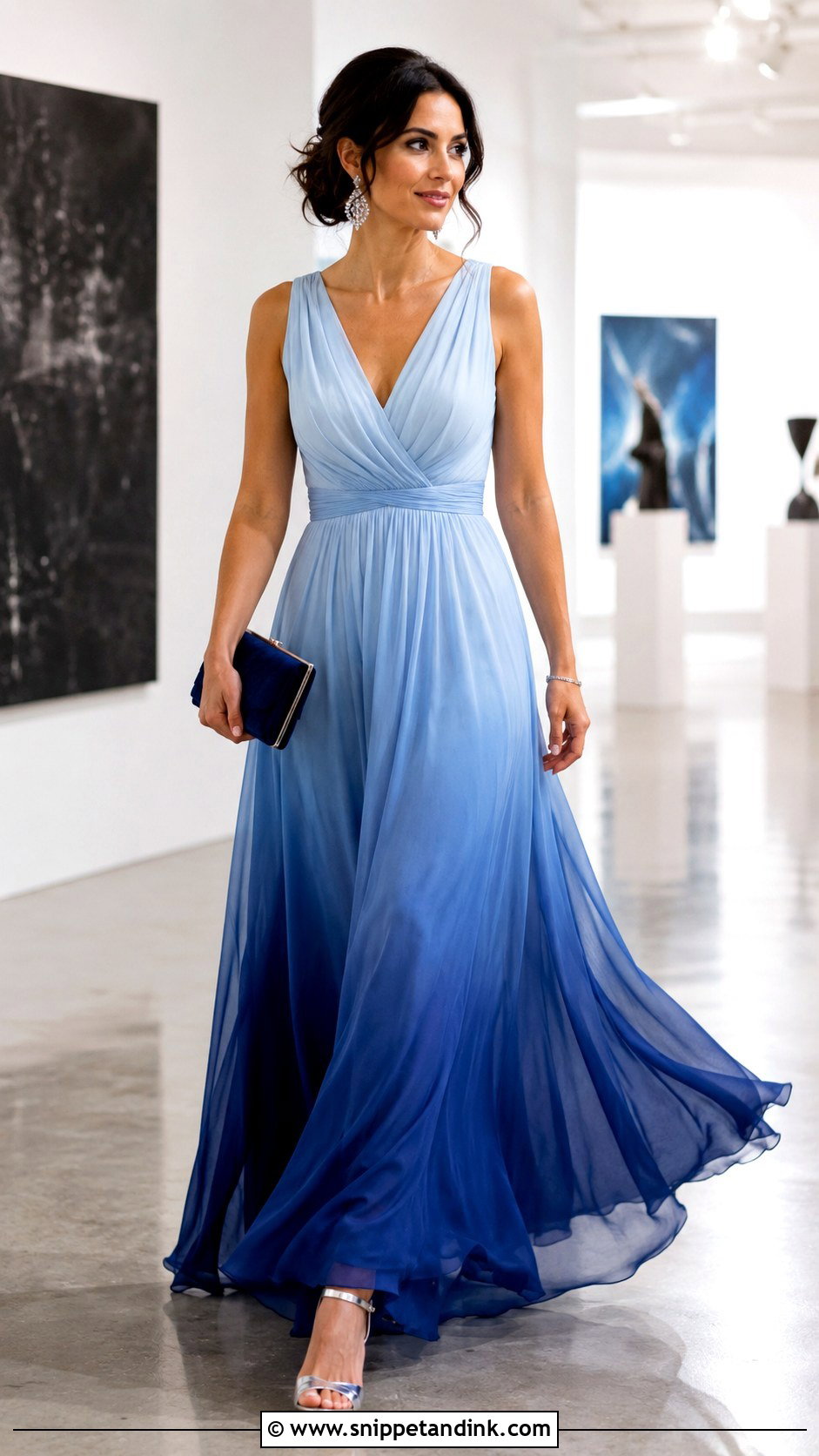
Hemming an ombre gown can cut away the darkest part of the gradient, which is the first thing I flag to a tailor. An ombre chiffon gown that moves from pale blue at the bodice to navy or sapphire at the hem looks best in an A-line or empire cut, where the transition has room to show. Silver heels, crystal earrings and a clutch that matches the darkest blue work well. Loose waves or a softly twisted updo continue the fluid effect. Keep jewelry minimal and skip patterned accessories, which fight the gradient.
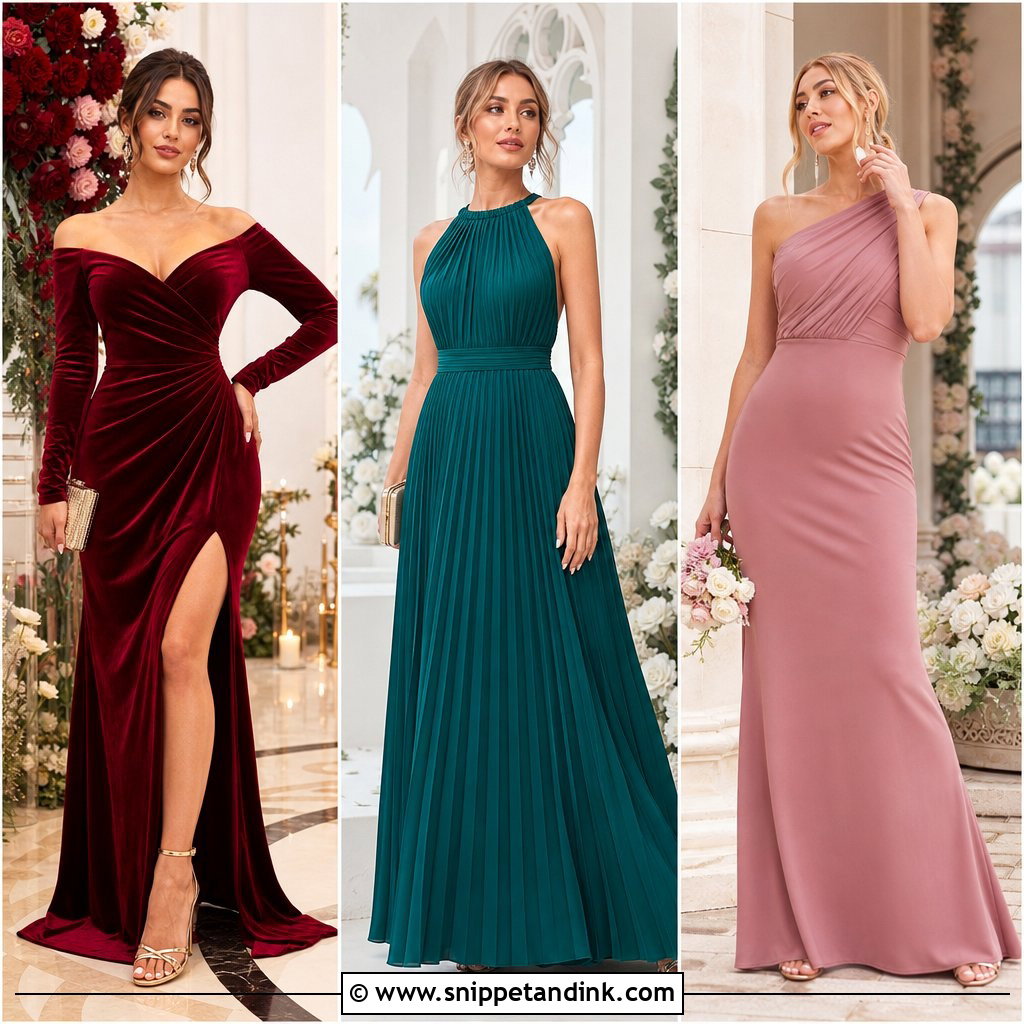
20. Blue Embroidered Ball Gown
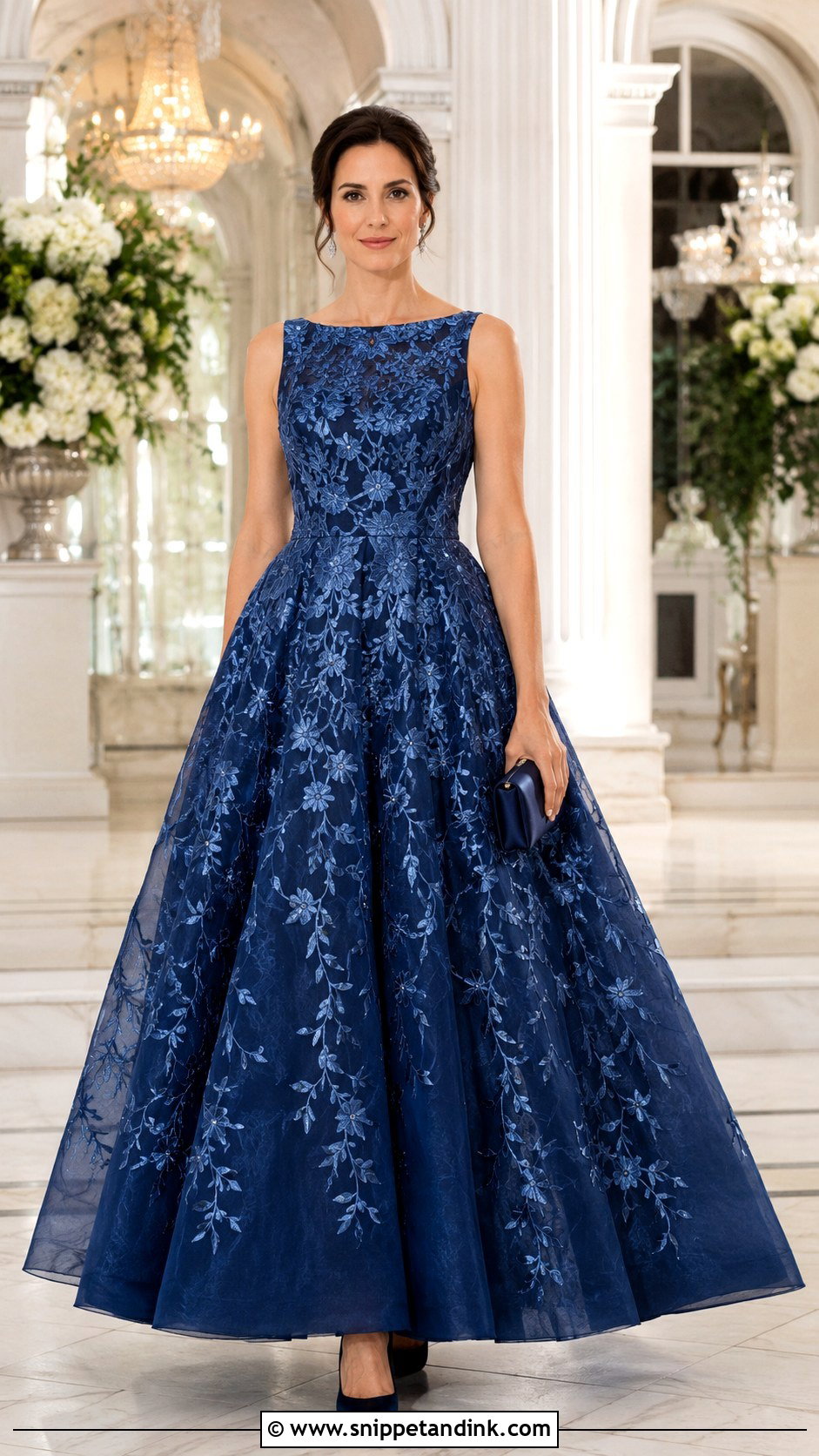
Embroidery is the one feature a tailor can’t easily work around. When a blue embroidered ball gown needs hemming, ask how they’ll avoid cutting through motifs; good tailors often take the excess up at the waist seam instead. Tonal floral embroidery, silver thread or carefully placed crystals add dimension, and a fitted bodice with a full skirt shows them off. Keep the rest modest: understated pumps, small drops and a plain satin clutch, with a classic low bun so the neckline embroidery stays visible. Check the skirt is light enough to manage for hours. This is a gown for highly formal events in large rooms.
Alterations Take Longer Than Most Guests Plan For
Very few gowns fit perfectly off the rack, and good tailors are busiest in wedding season. Leaving the fitting for the final week is how people end up wearing a hem that drags. Book a tailor several weeks before the date, and earlier if the gown is beaded, sequinned or still to be ordered.
What usually alters easily
Taking in side seams, shortening straps and hemming a plain chiffon, crepe or satin skirt are routine jobs. Adding a bustle loop or a hidden snap at a neckline is quick too.
What costs more time and money
Hemming through beading, sequins, lace borders or embroidery, since each piece has to be removed and reattached. Letting a gown out is limited by how much seam allowance the maker left, which on many ready-made gowns is very little. Moving a mermaid flare is real reconstruction.
What to bring to the fitting
The exact shoes, the undergarments or adhesive cups you’ll wear, and any wrap you plan to use. A hem set in flats will be too short in heels, and a bodice fitted over the wrong bra rarely fits over the right one. At the last fitting, sit, walk a staircase and raise your arms before you take it home.
Which Blue Gown Will Still Feel Right at Midnight?
Start from the occasion and the fit, and let the color follow. Deep navy and midnight carry traditional evening formality, while royal, cobalt, and turquoise bring more brightness to the room. Powder, baby and ice blue are softer for daytime and warm-weather events. After the shade, think about how the neckline, fabric, sleeves and skirt behave when you sit, reach and walk, because a gown you keep adjusting is a gown you won’t enjoy. Then add shoes you can stand in, a practical clutch and jewelry chosen around the neckline.
You'll Like These Ideas:


Leave a Reply