
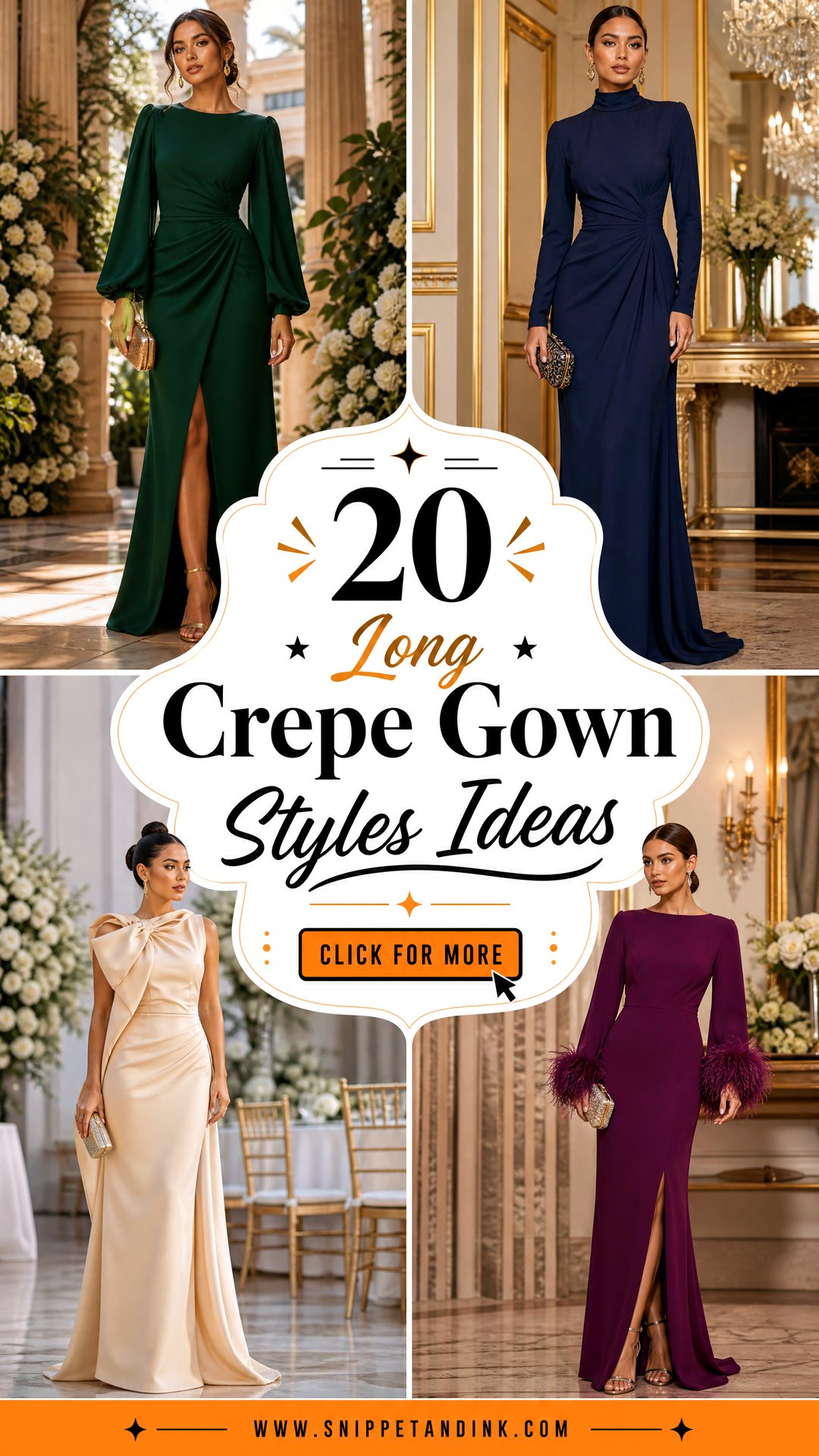
Crepe is the fabric I dress wedding guests in more than any other. It has a fine pebbled surface that soaks up light instead of reflecting it, so it looks expensive in photos, and it drapes close to the body without clinging the way jersey does. The same gown can be plain or dramatic depending on neckline, sleeves and color. Mermaid cuts give definition; A-line and empire waists give room. Cape sleeves, ruching, pleats, beading or one big bow make it personal. Below are twenty long crepe styles for guests, each with the shoes, bag and jewelry I would put with it, plus what to check before you buy.
Telling Good Crepe From Thin Crepe on the Rail
Crepe is a weave and finish, not one fabric, and the label rarely tells you how a gown will hang. I judge it with my hands before I look at the cut.
- Hold a single layer up to the shop light. If you can see your fingers clearly through it, the gown will need a full lining or it will show every line underneath.
- Scrunch a corner of the hem in your fist for a few seconds. Good crepe springs back almost smooth; thin crepe holds creases.
- Feel the weight. A heavier crepe hangs straight and skims; a light one clings at the hip and stomach.
- Check the fiber. Polyester crepe is durable and easy to care for; triacetate and silk crepe drape more softly but mark more easily.
Stretch crepe, with a little elastane, is the most comfortable for a long day and the most forgiving on fit. It also shows lumps from seams and undergarments more, so fitted styles need smooth underwear.
Colors that keep you out of trouble
Leave white, ivory and pale cream for the bride unless the couple asks otherwise. If you know the bridesmaids’ color, choose something clearly different so you are not mistaken for one in the photos. Matte crepe in deep jewel tones is the safest evening choice I know.
1. Long Crepe A-Line Gown
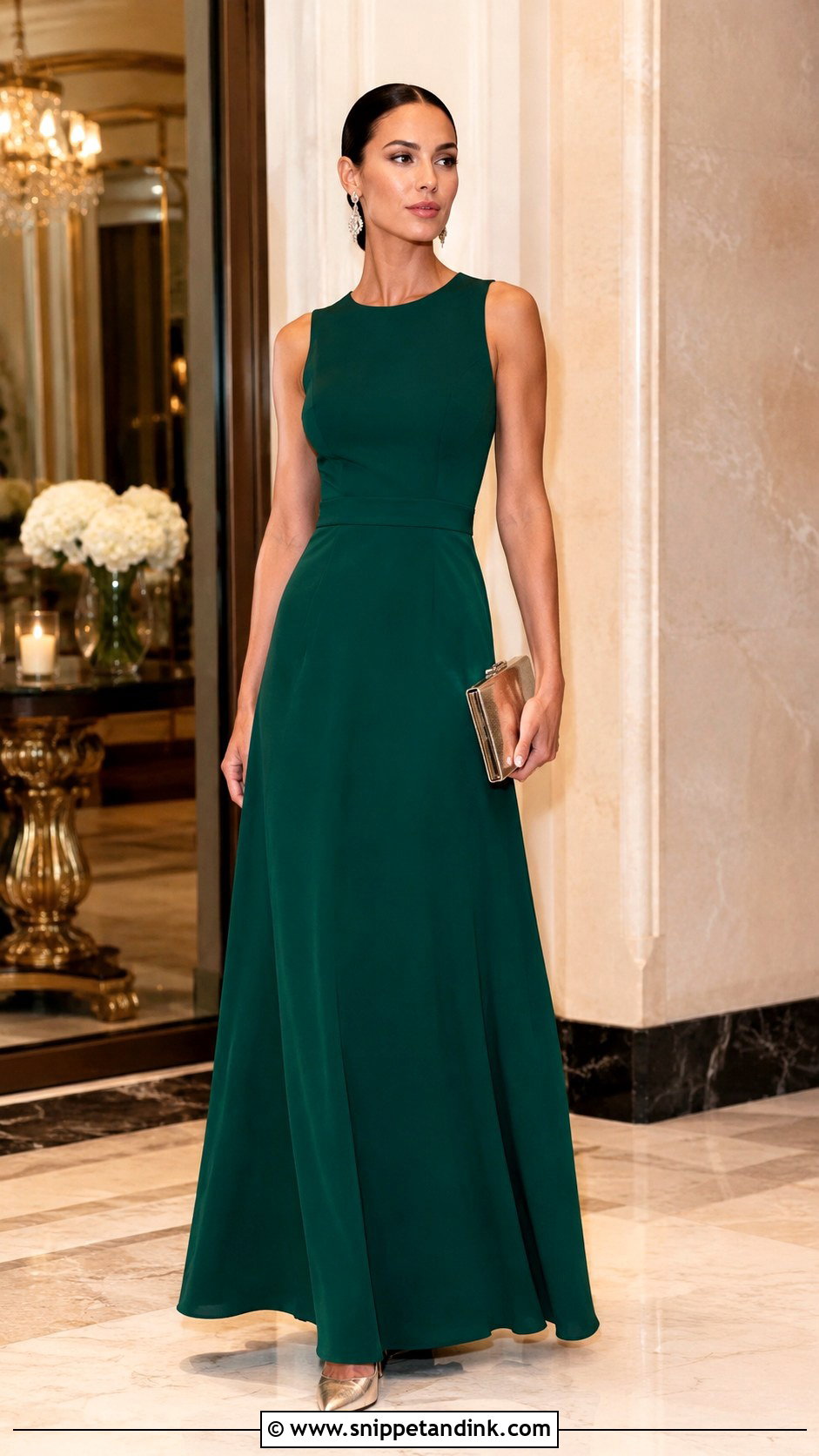
If you only own one long gown, make it this one. A shaped waist and wide straps give structure up top, and the flared skirt leaves room to eat, dance and sit through a long ceremony. Wide straps also mean a normal bra usually works, which matters more to guests than anyone admits. Navy, emerald, burgundy and plum read formal; blush and powder blue lighten it for day. Pointed pumps or slim ankle straps, a small metallic clutch and drop earrings are all it needs. With a plain neckline, a fine pendant adds a point of focus.
2. Long Crepe Mermaid Gown
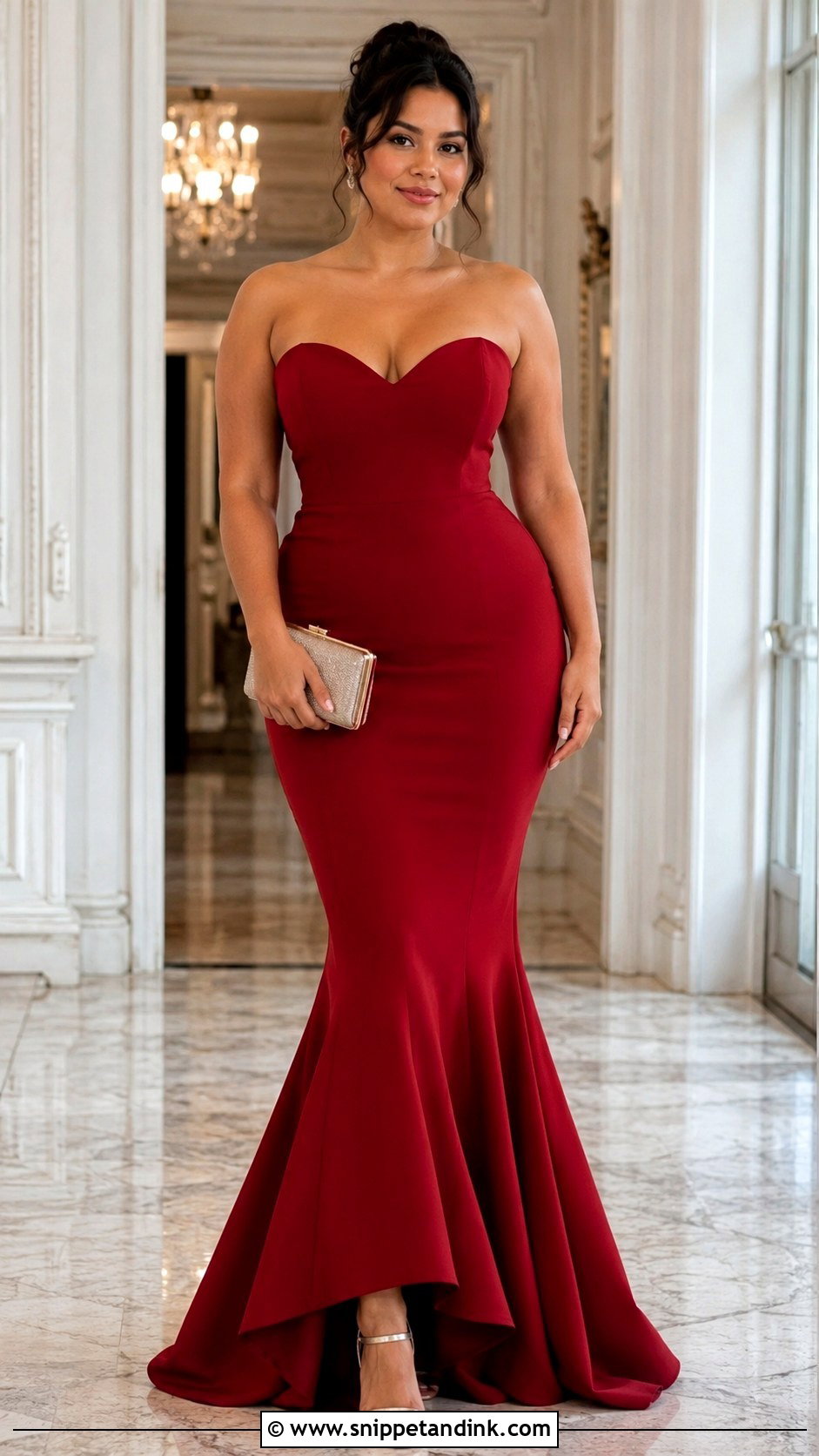
Crepe suits a mermaid better than satin does because it shapes the body without the shine that highlights every seam. The bodice should follow waist and hips and open near the knee. My test is simple: sit on the edge of a chair. If the fabric strains across the thighs, go up a size and have the hips taken in, never the other way round. A square, sweetheart or off-shoulder neckline balances the dramatic hem. Black is the safe choice; royal blue, ruby or dark green push it further. Heels that vanish under the hem, a box clutch and studs or one bracelet finish it.
3. Long Crepe Gown With Sleeves
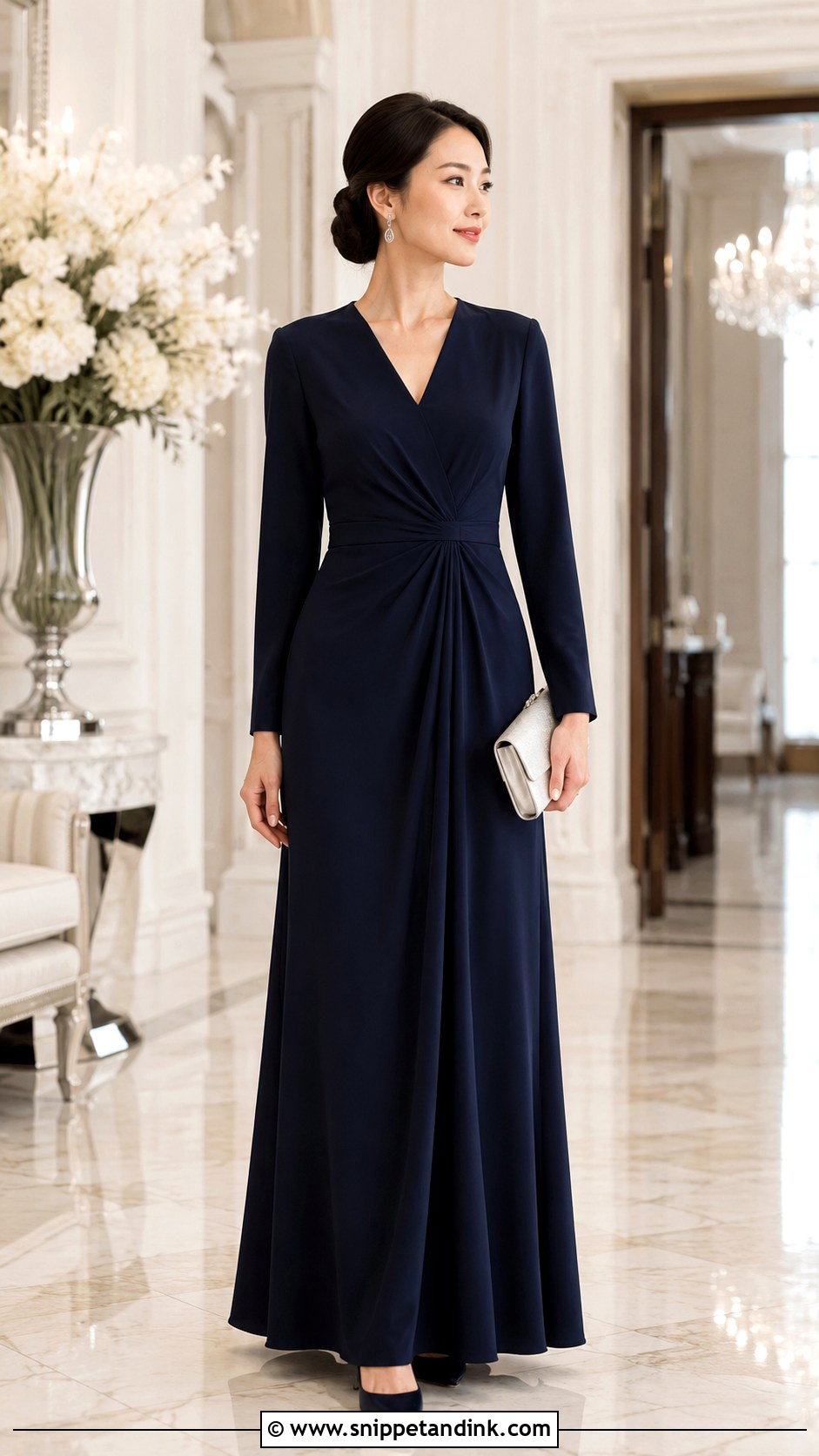
Sleeves on crepe give a long, unbroken line, and they are the answer for a cold church or a family that expects coverage. Fitted wrist-length sleeves look sharp; looser ones move more softly. Check the armhole before anything else. Crepe has little stretch, so a high, tight armhole that looks sleek in the mirror will stop you lifting a glass. A V-neck or bateau keeps all that coverage from feeling heavy. Black, navy, forest or berry with pointed pumps, a structured clutch and medium earrings. Hair goes in a low bun or side-parted waves, and the necklace stays home.
4. Long Crepe Off-Shoulder Gown
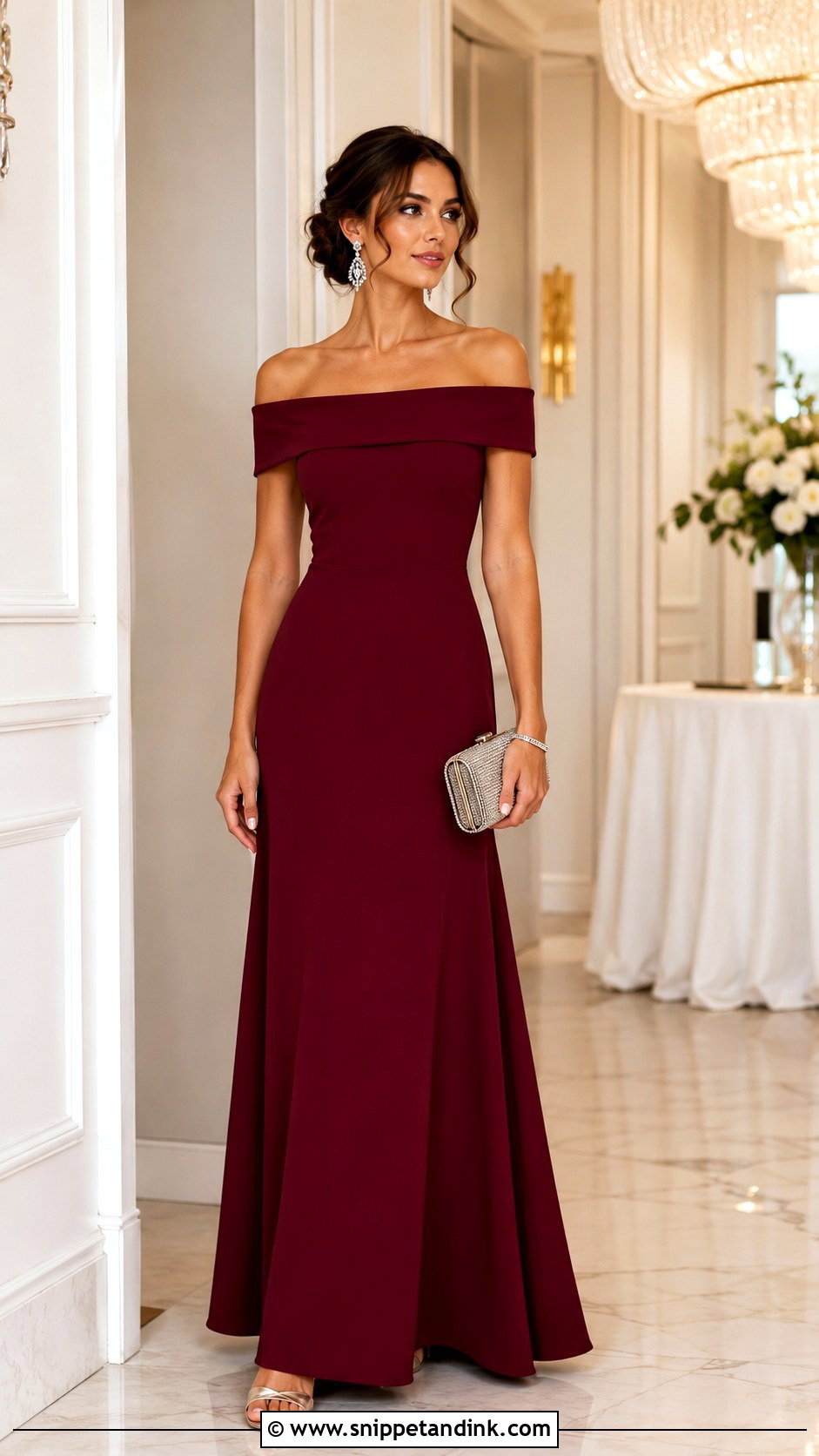
An off-shoulder crepe gown is all about the collarbone, and crepe holds a folded neckline band better than lighter fabrics. The band must grip, though. If you find yourself hitching it up at the mirror, it will be around your elbows by the speeches, so ask a tailor to add silicone grip tape inside. A fitted or softly flared skirt keeps the rest simple. Crystal drops, a slim bracelet and a structured clutch; metallic heels with jewel tones, nude or matching shoes for a longer line. Skip the big necklace and wear the hair up or swept back.
5. Long Crepe One-Shoulder Gown
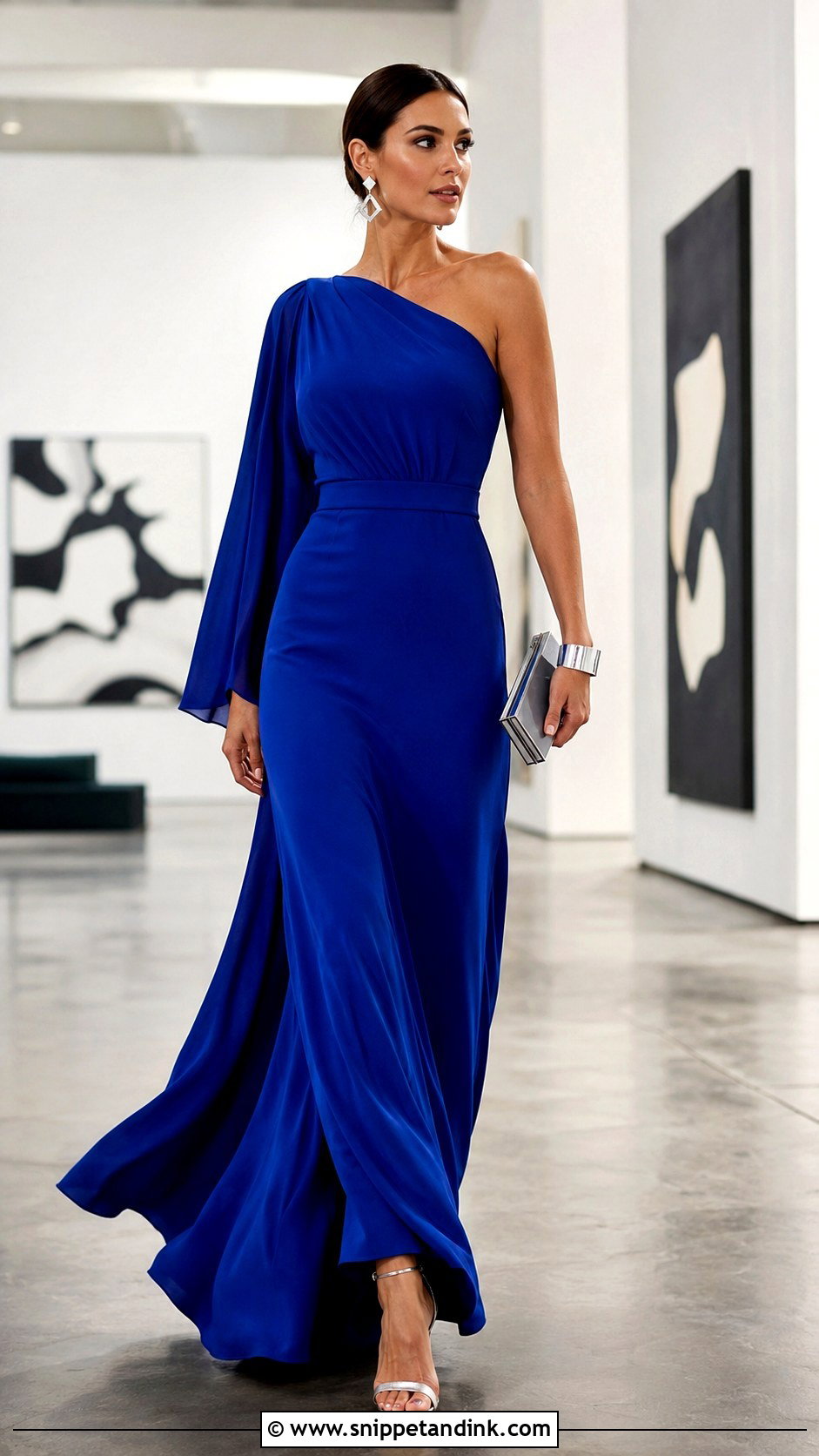
Asymmetry does the work on a one-shoulder gown, whether it is a fitted strap, a draped panel or one flowing sleeve. A defined waist and column or A-line skirt keep it balanced. Wear the bracelet on the bare arm, not the covered one, and put the clutch on that side too, so the eye travels across. Geometric earrings and strappy heels in silver, gold or a matching color finish it. A low ponytail or polished bun keeps the strap clear. I would steer you away from this if you plan to dance hard in a strapless bra; one strap needs a proper fitted bodice behind it.
6. Long Crepe Wrap Gown
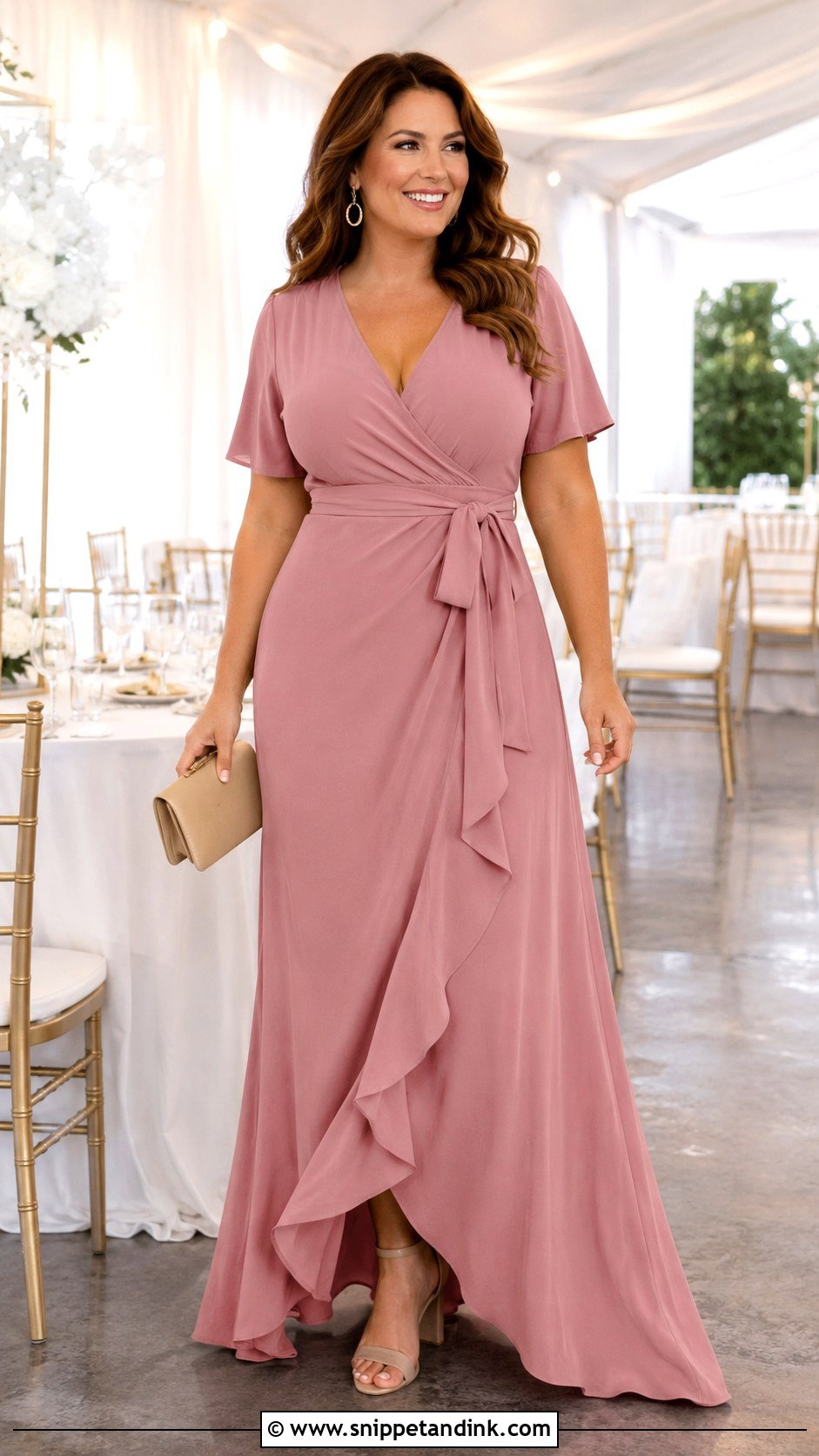
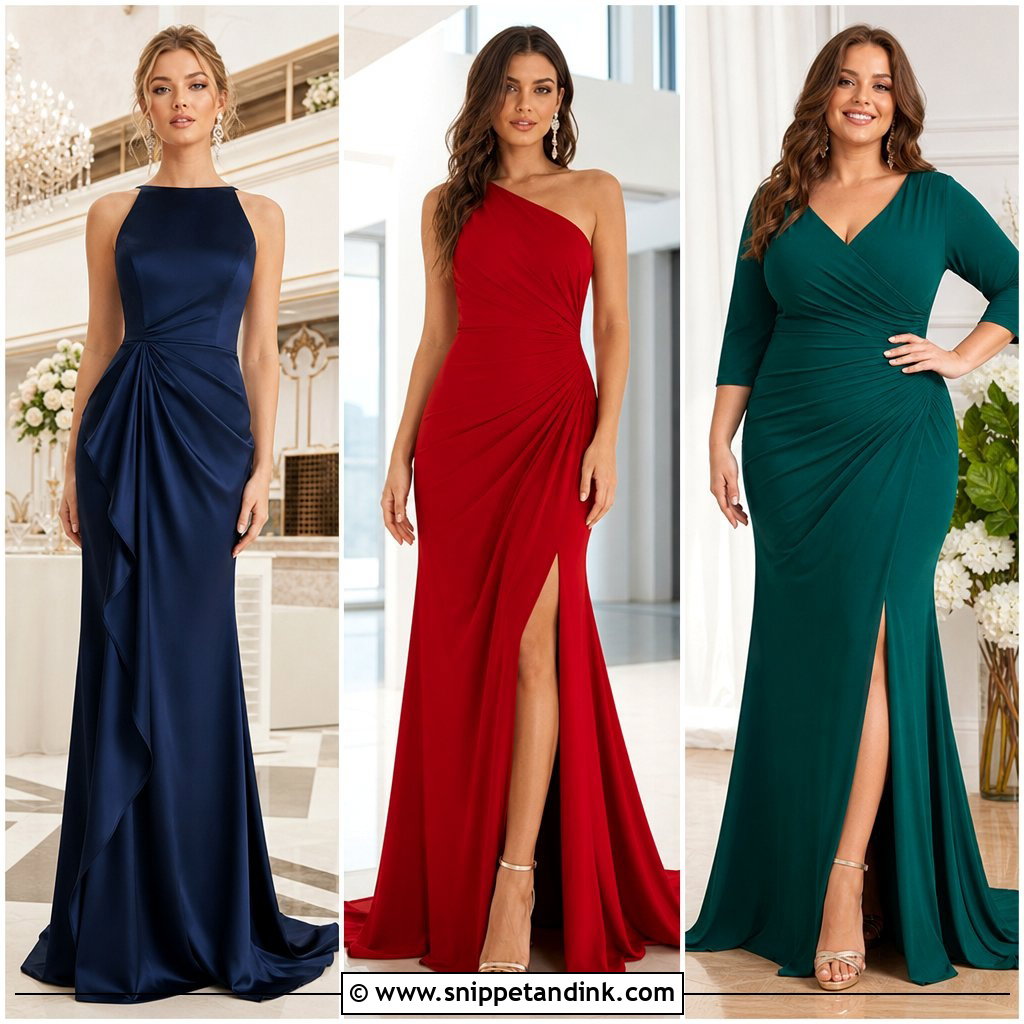
The wrap gown is the most forgiving shape here and the easiest to rewear. A true wrap adjusts to you; a faux wrap with a belt stays put better. Both give a V-neck that lengthens the upper body and a skirt with natural movement. The risk with a true wrap in crepe is the skirt opening too far when you sit, so sit cross-legged in the changing room before buying. A tiny safety pin or snap fixes it. Block heels for a long day on your feet, slim sandals for a dressier evening. Florals feel relaxed for daytime; solids look more formal. A medium clutch, small hoops and one ring are plenty.
7. Long Crepe Gown With Cape Sleeves
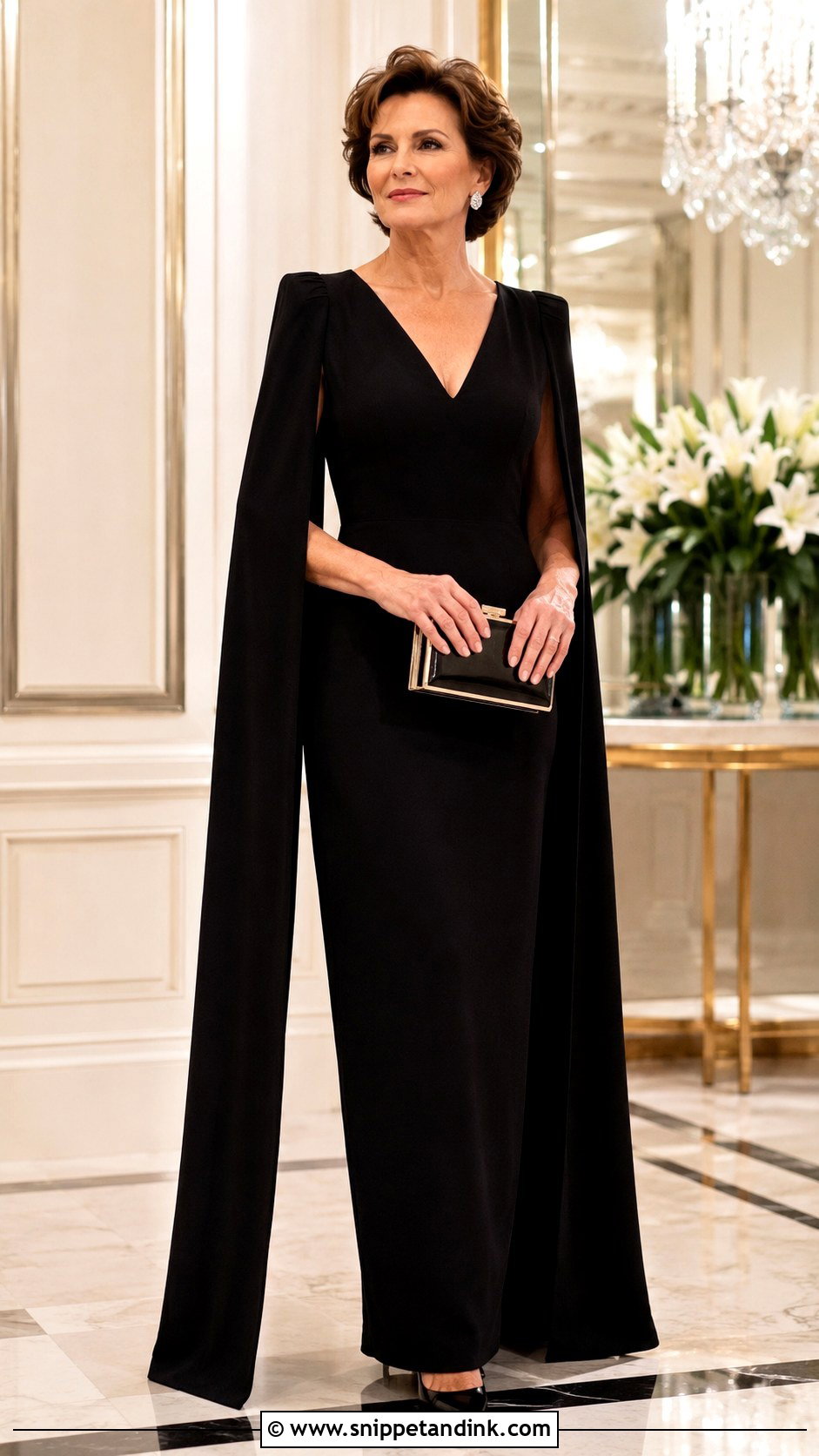
Cape panels falling from the shoulders turn a plain crepe column into something with presence, without a single bead. The panels should leave the waist visible and give your arms room to move under them. Lift your arms to hug someone in the fitting room and watch whether the whole gown rides up. A high neck feels stately; a V-neck makes the cape lighter. Black, cobalt and burgundy keep the focus on the construction. I would skip the ivory version for a wedding unless the couple has asked for it. Pointed pumps, a rectangular clutch and stud earrings are enough.
8. Long Crepe Gown With Side Slit
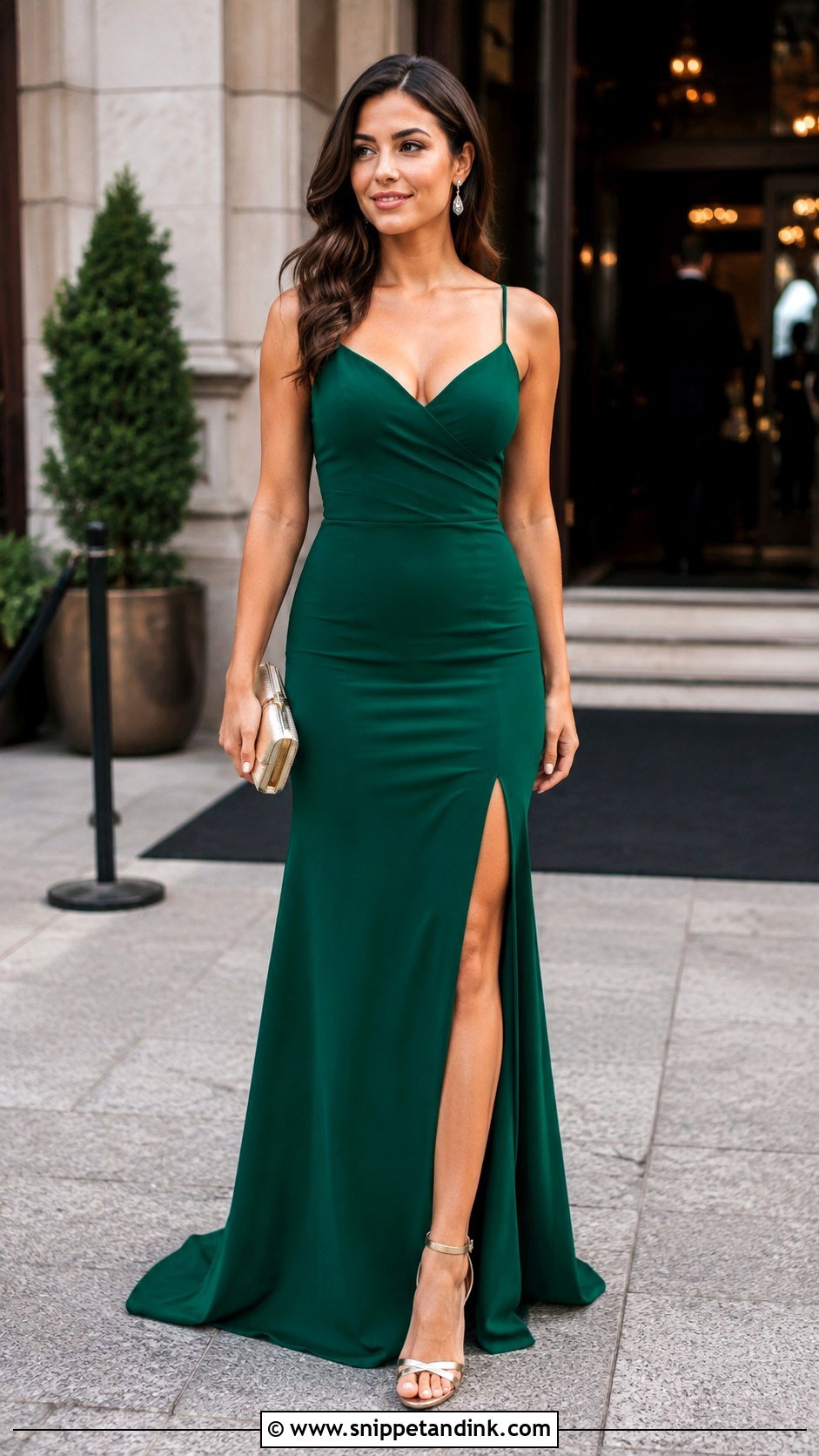
A side slit lets you walk freely in a narrow crepe skirt and shows a flash of shoe. The height is everything. Stand, then sit, then take a stair. A slit that is modest standing can open well up the thigh on a chair. Because the shoes are on show, choose ankle straps or pointed pumps that fit securely; a slipping sandal is very visible here. The hem should almost skim the floor in those shoes. Bright red, cobalt or emerald make a bold evening look, black or navy a quieter one. Keep to a small clutch and one pair of earrings.
9. Long Crepe Gown With High Neck
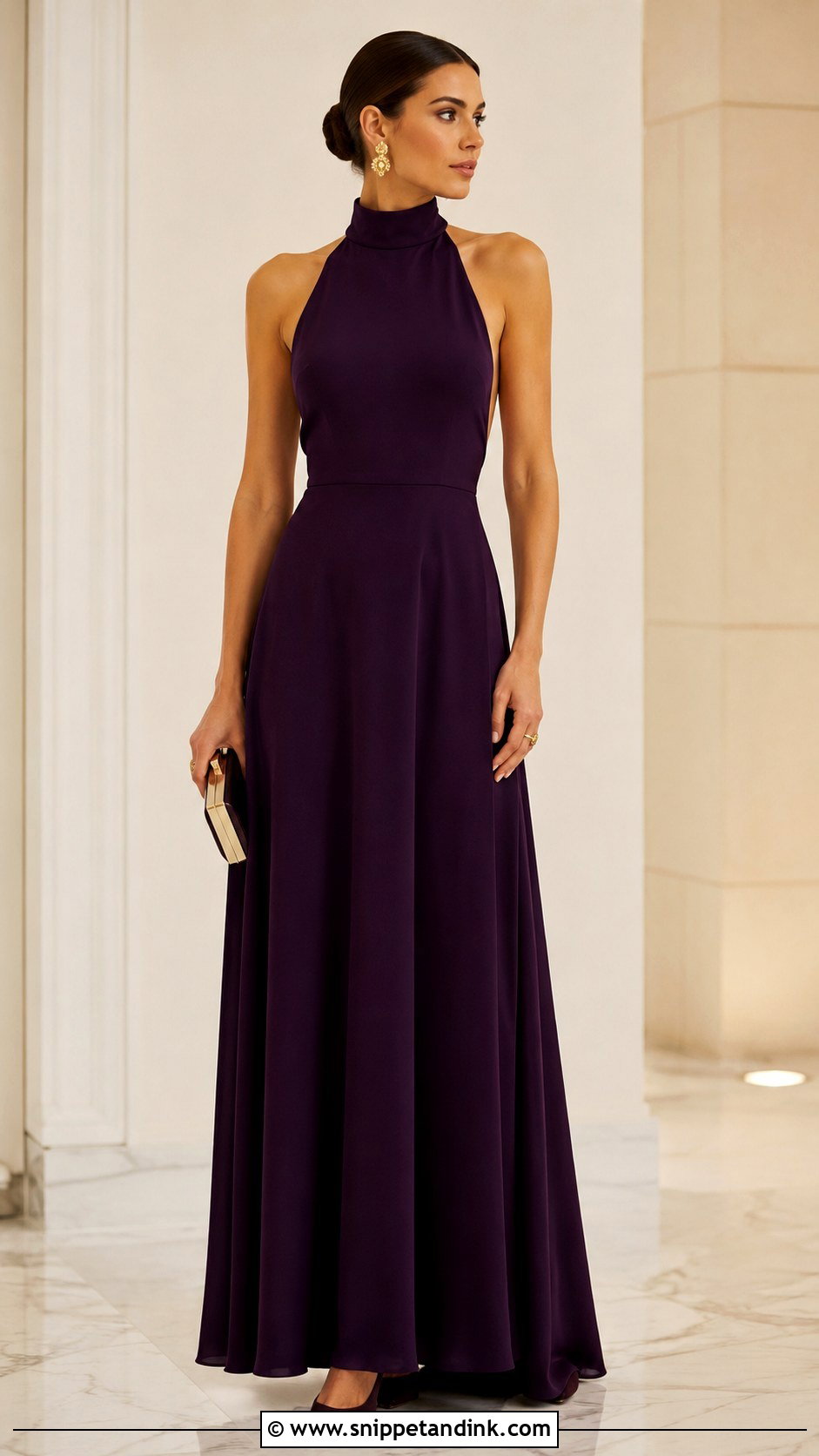
High necks on crepe look composed. A halter, mock neck or soft gathered collar draws the eye to the face, and a bare arm or open back keeps the gown from feeling buttoned up. Mock necks in crepe can be warm, so for an outdoor summer wedding I would choose the halter. Statement earrings replace the necklace entirely. A smooth bun, braided updo or polished ponytail keeps the neckline clear. Aubergine, teal, chocolate and midnight blue suit the shape. A hard-shell clutch and minimal sandals or closed pumps complete it for black-tie dinners and evening receptions.
10. Long Crepe Strapless Gown
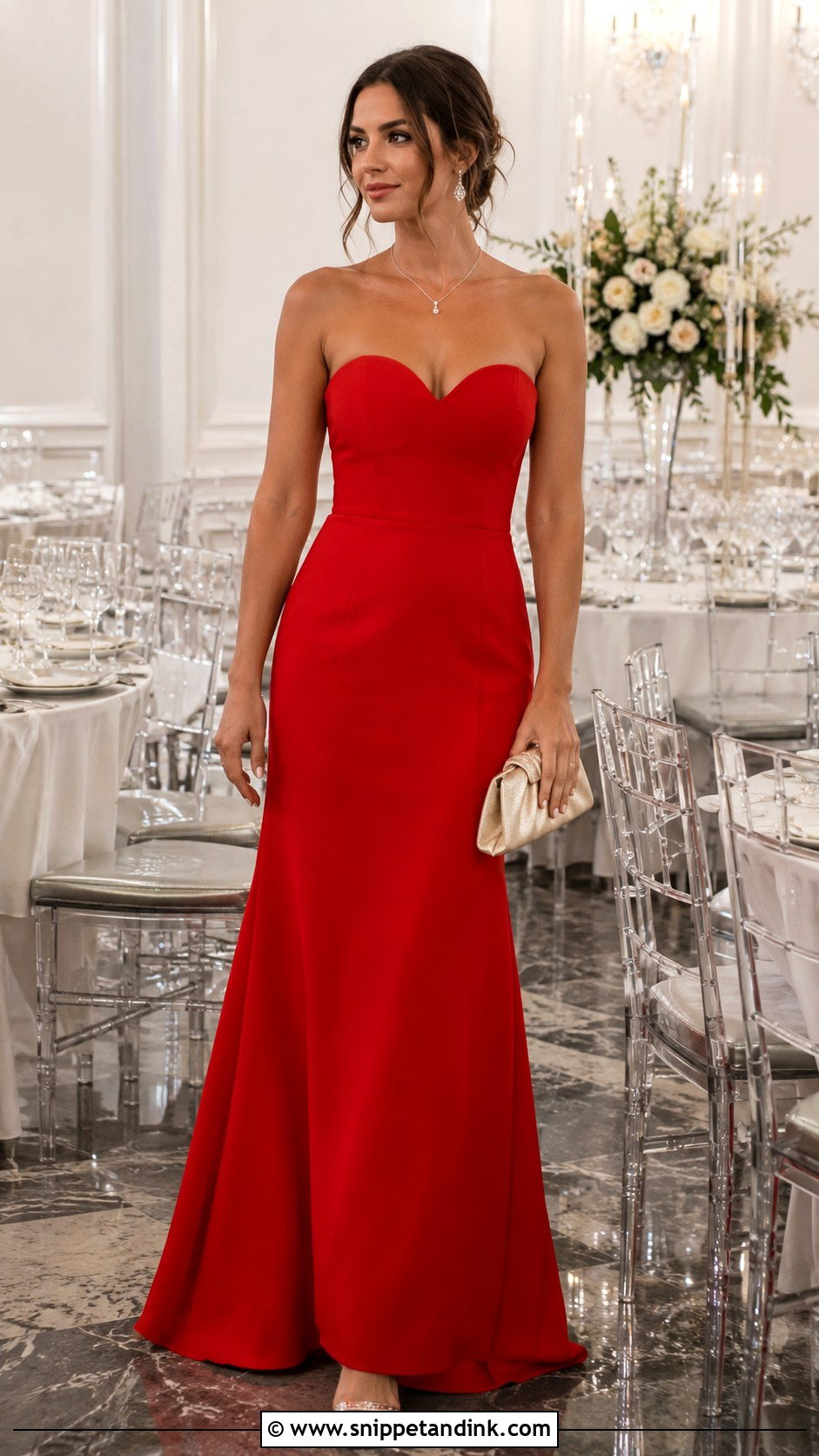
A strapless crepe gown depends on what is inside. Look for boning or a firm inner corselette and a band of grip at the top edge. Crepe is heavier than chiffon, and without structure it drags the neckline down within the hour. Straight necklines read modern; sweetheart shapes read softer. Wear a short pendant, a delicate choker or statement earrings, but only one. Bring a tailored wrap in a matching shade for an air-conditioned room. Black, red and deep blue are classic; coral and lilac are fresher. Ivory is out for a wedding guest. A slim clutch and sandals matched to your jewelry finish it.
11. Long Crepe Empire-Waist Gown
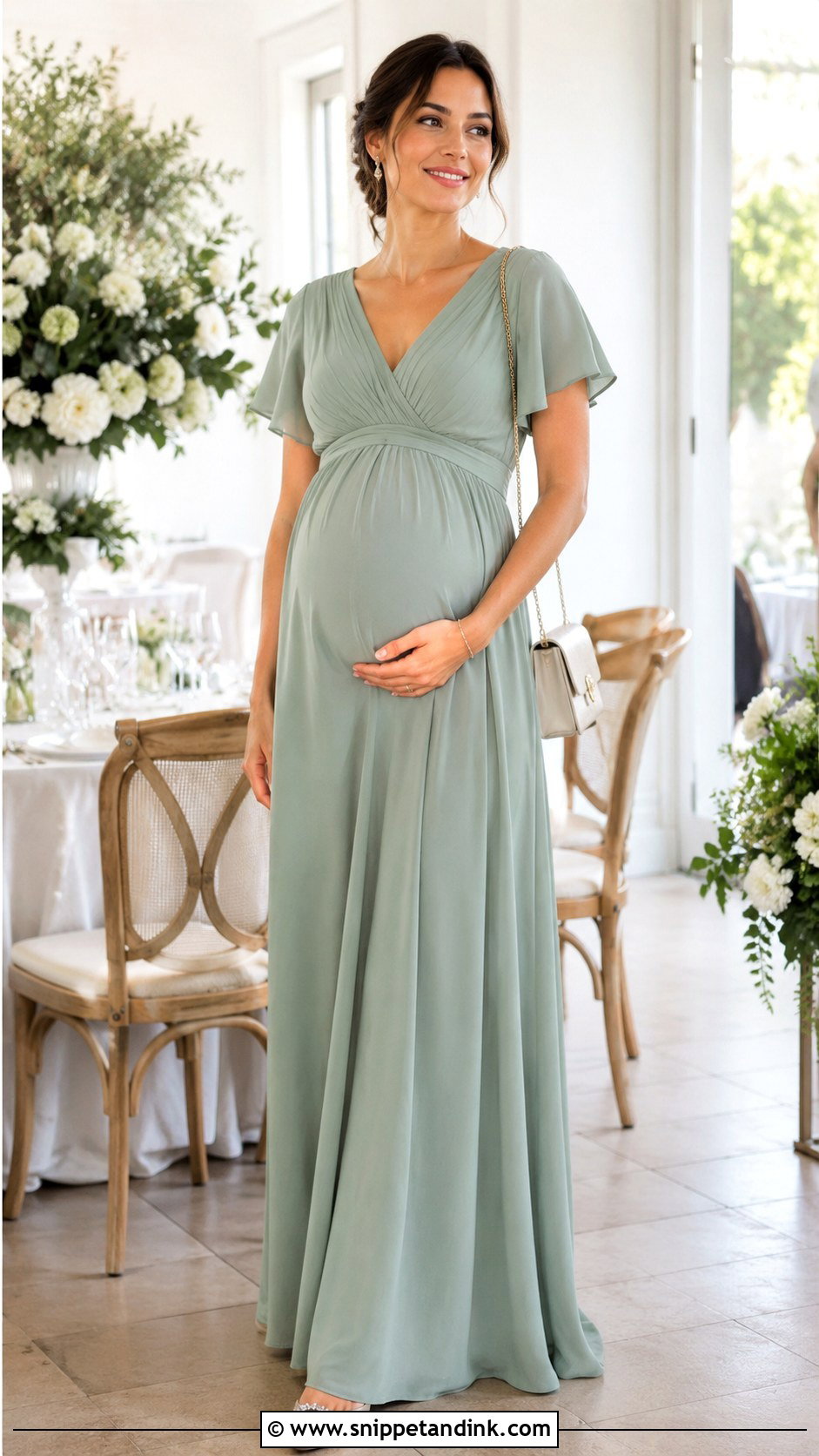
Raising the seam to just under the bust lets the skirt fall straight from there, with nothing fitted through the middle. I recommend it to guests who want to eat a full dinner in comfort, to pregnant guests, and to anyone who dislikes waist seams. A V-neck, scoop or gathered bodice suits it. On petite frames, keep the skirt slim so the gown does not swamp you. Low block heels, embellished flats or supportive sandals work, with a small shoulder bag, fine earrings and a bracelet. Sage, dusty blue, mauve and rose suit daytime; deeper tones carry into evening. It adapts to petite, tall, straight and curvy body shapes.
12. Long Crepe Gown With Ruching
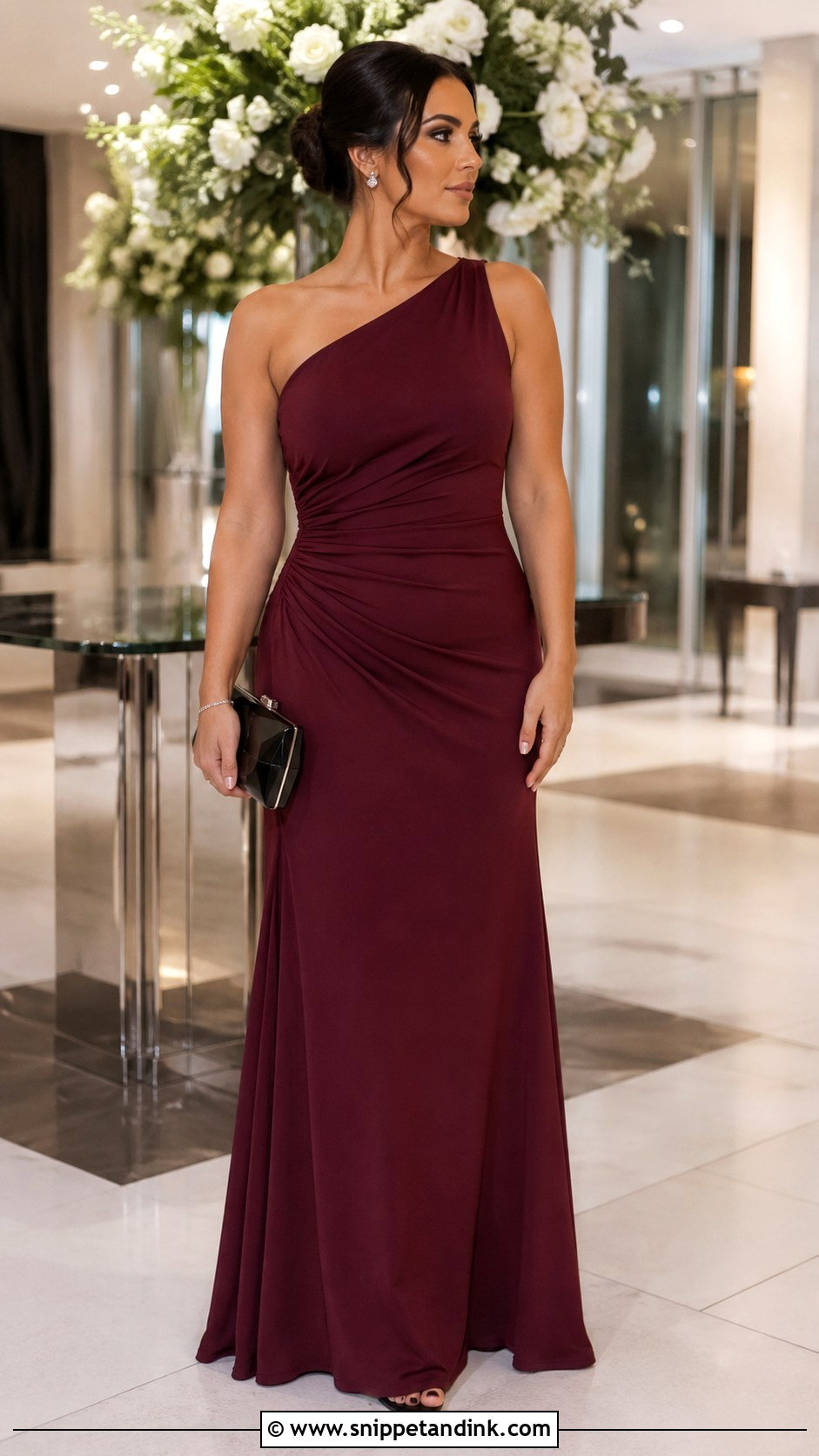
Ruching on crepe is clever because the gathers hide what they cover. Side gathering marks the waist, diagonal ruching runs a line across the torso, and both disguise a little tummy far better than smooth crepe does. The gathers should be stitched to a lining underneath. Floating ruching shifts as you move and ends up uneven by the reception. A V-neck or one-shoulder bodice pairs well. Chocolate, wine, navy and olive look rich; brighter shades are more playful. Understated heels, a structured clutch and small crystal or pearl studs are enough, since the gathers already carry the detail.
13. Long Crepe Pleated Gown
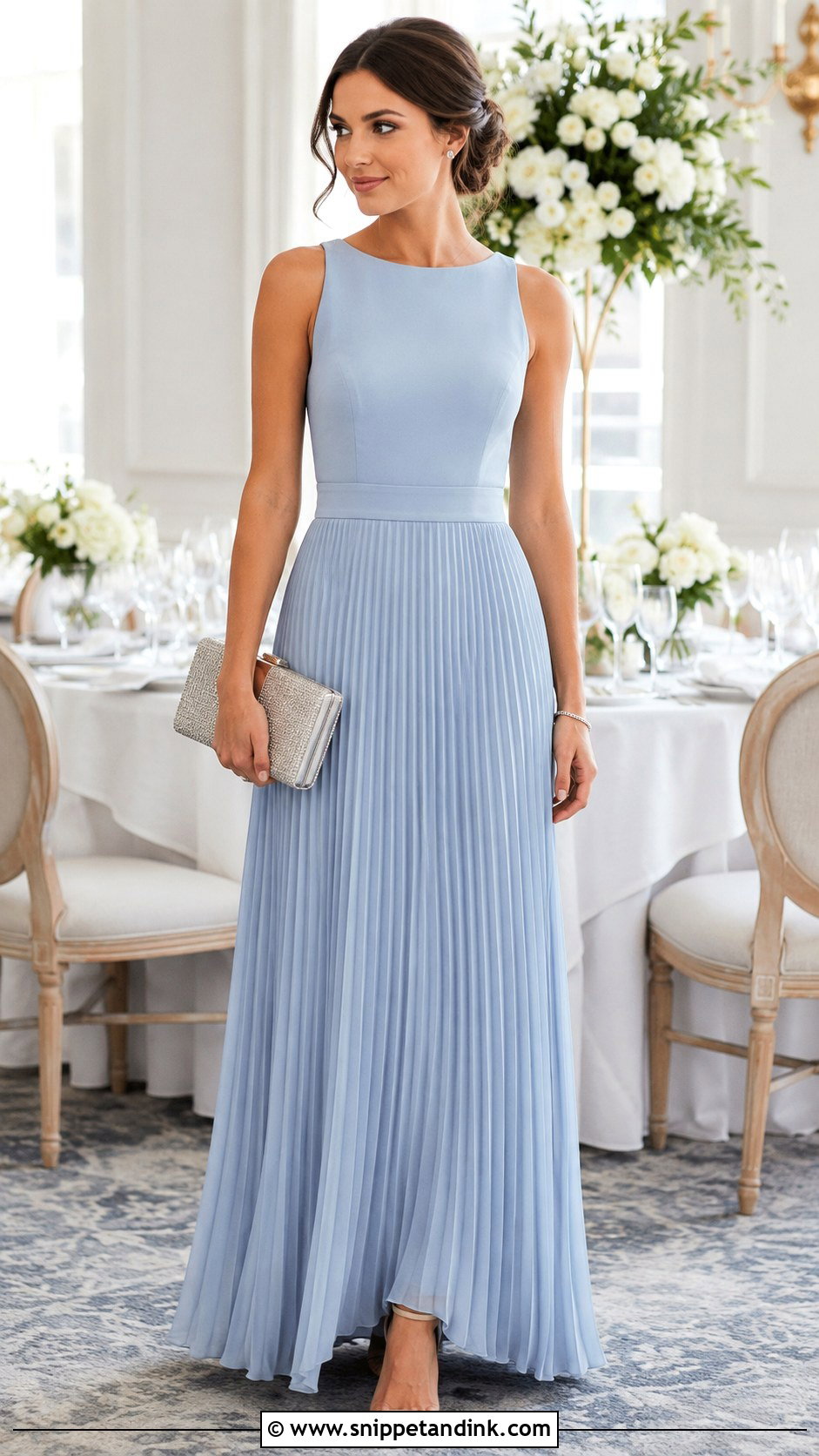
Pleats that start at the waist and run through the skirt give crepe a swing it would not have on its own. Look for narrow, evenly spaced pleats; wide ones can add bulk at the hip. Crepe pleats are often stitched down for the first few inches to keep the waist flat, which I prefer. Ask whether the pleats are heat set, because some lose their crease after a damp day outdoors. A fitted sleeveless bodice or slim belt defines the waist. Pastels for daytime; deep green, navy or burgundy after dark. Classic pumps or ankle straps, a small satin or metallic clutch, studs and a narrow bracelet finish it.
14. Long Crepe Gown With Statement Bow
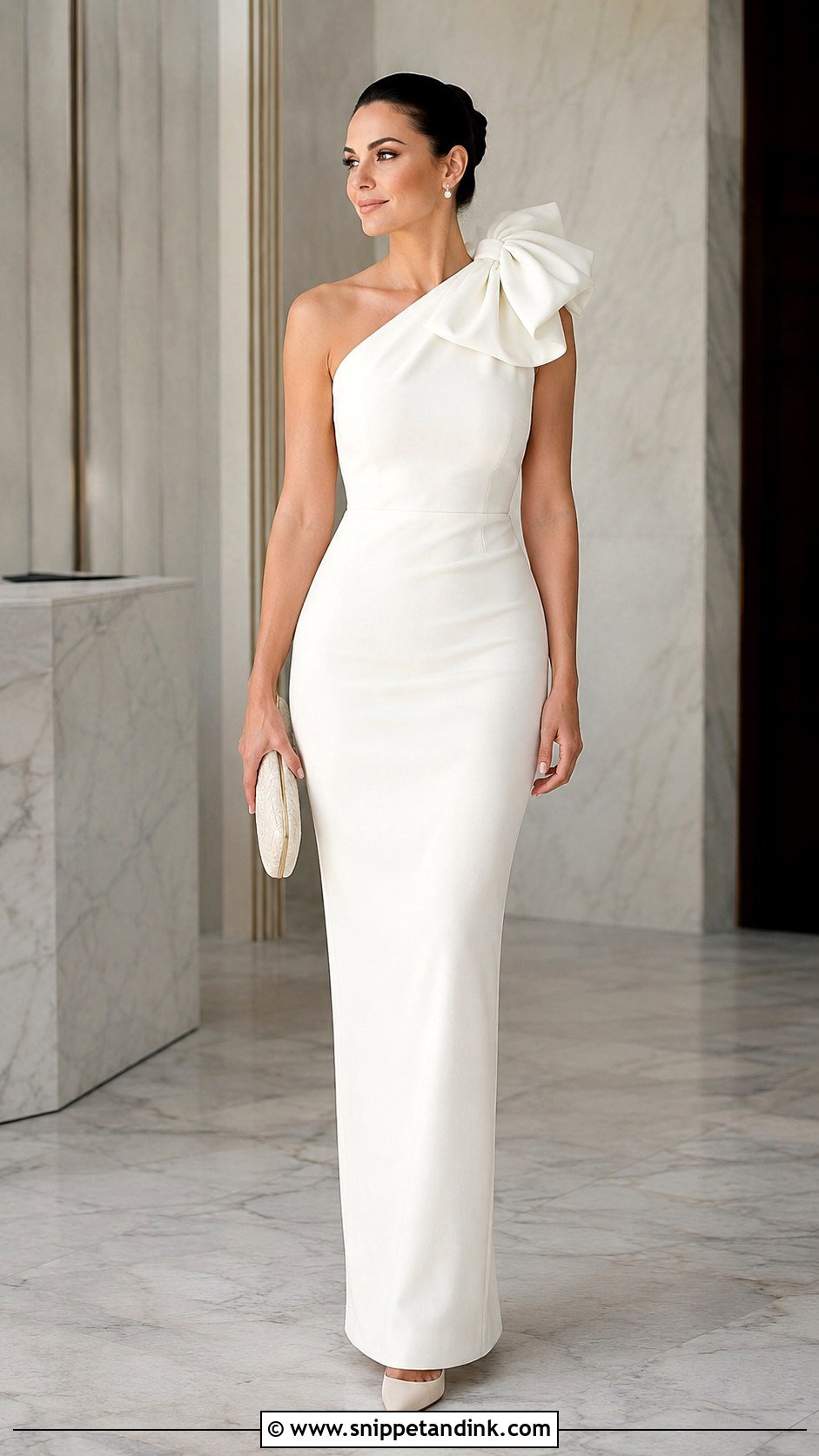
One bow, no other decoration. That is the rule for this gown. It can sit at a shoulder, across the waist or at the back above a train. The bow needs a stiff interlining to keep its shape; a crepe bow without one flops by evening. If the bow is at the back waist, sit down in the fitting room, because you will be leaning on it all through dinner. Black with a white bow looks graphic; a tonal bow is softer. Pointed heels, a small clutch and small earrings. When the bow sits near the neck, skip the necklace and wear the hair up.
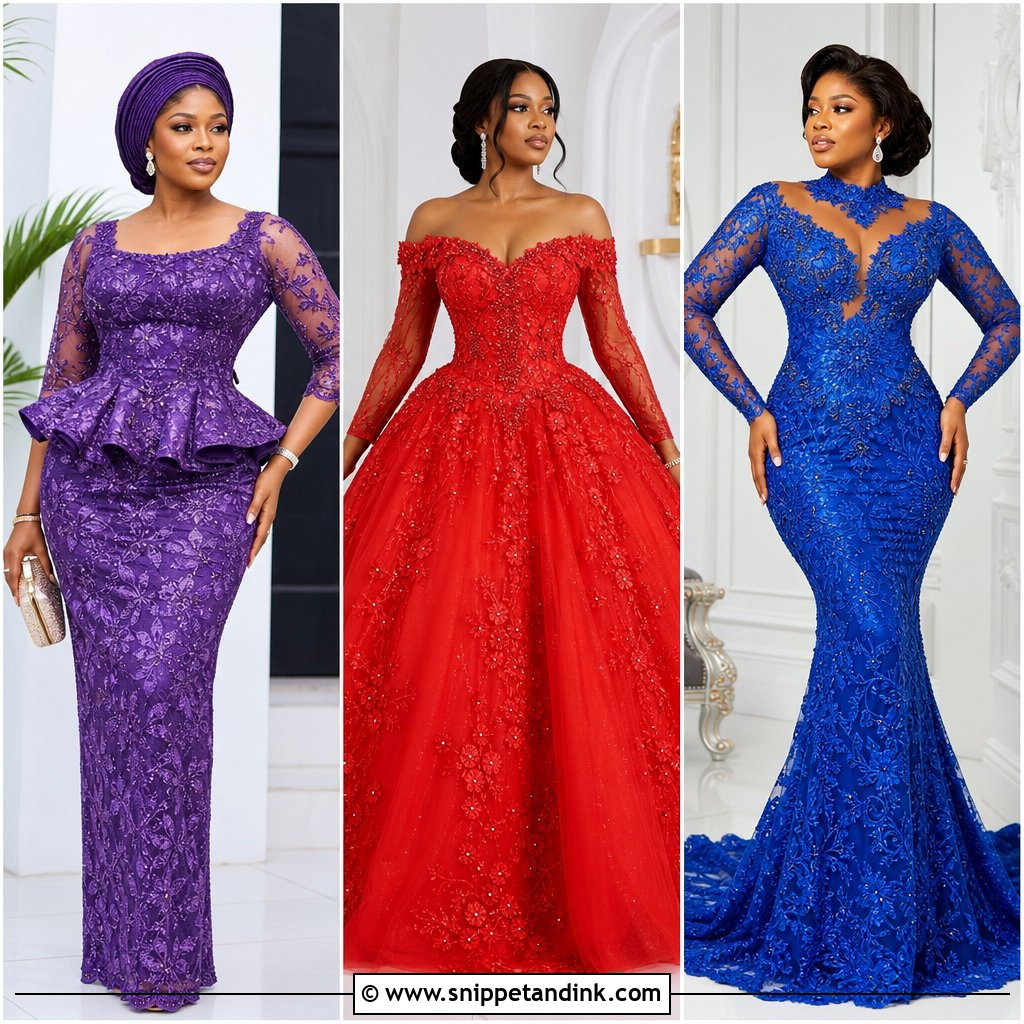
15. Long Crepe Gown With Beaded Neckline
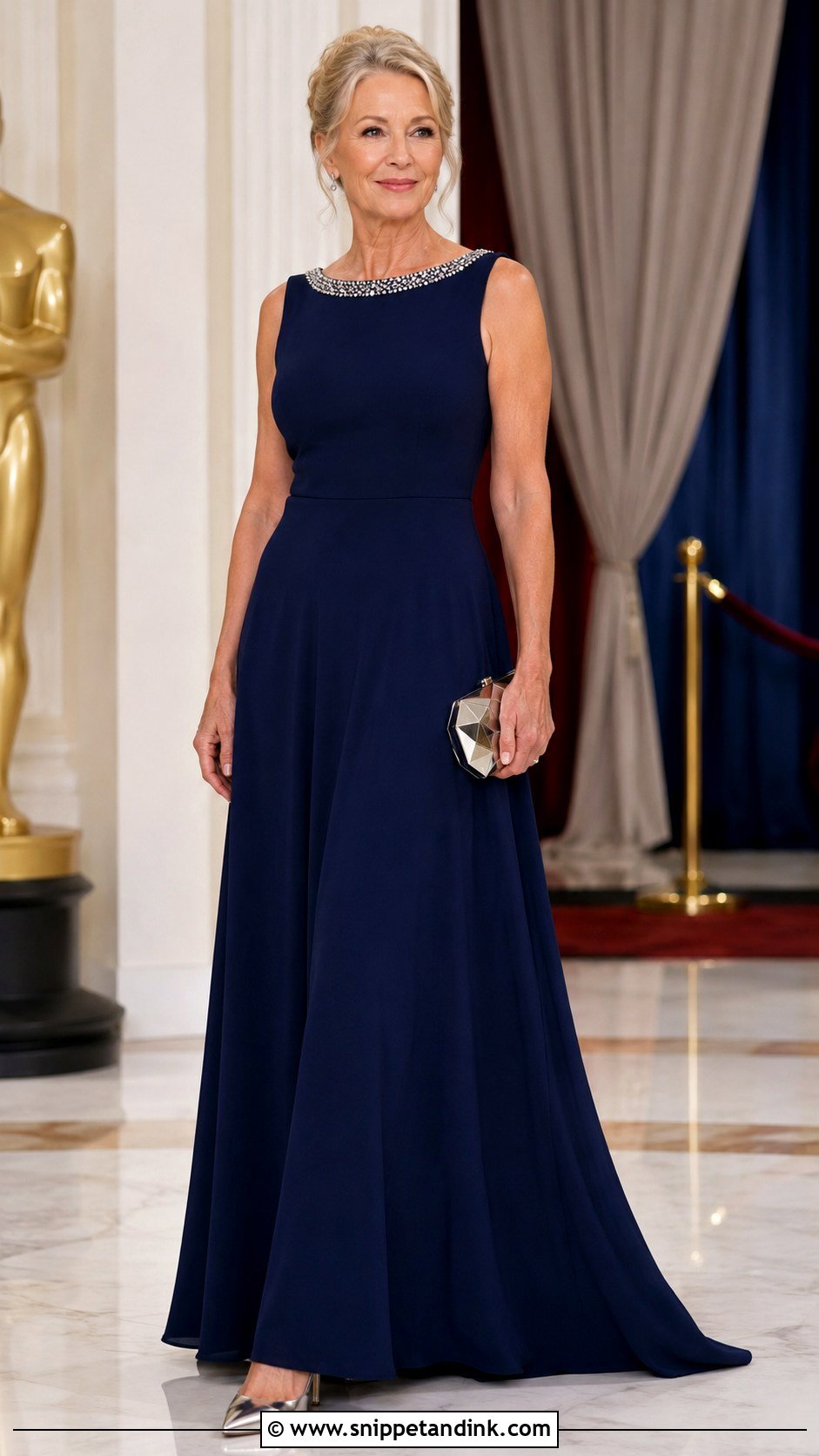
Beading around a halter, scoop, or bateau neckline frames the face, so the rest of the gown stays plain. Crystals, pearls or metallic beads all work. Check the inside of the beaded area; beads stitched straight through to the lining can scratch, and a soft facing behind them makes a long evening more comfortable. Match small earrings to the bead color and skip the necklace. A neat updo stops hair catching on the beads. Navy with silver, black with gunmetal, emerald with gold. Metallic heels and a satin or mirrored clutch finish it.
16. Long Crepe Gown With Floral Appliqué
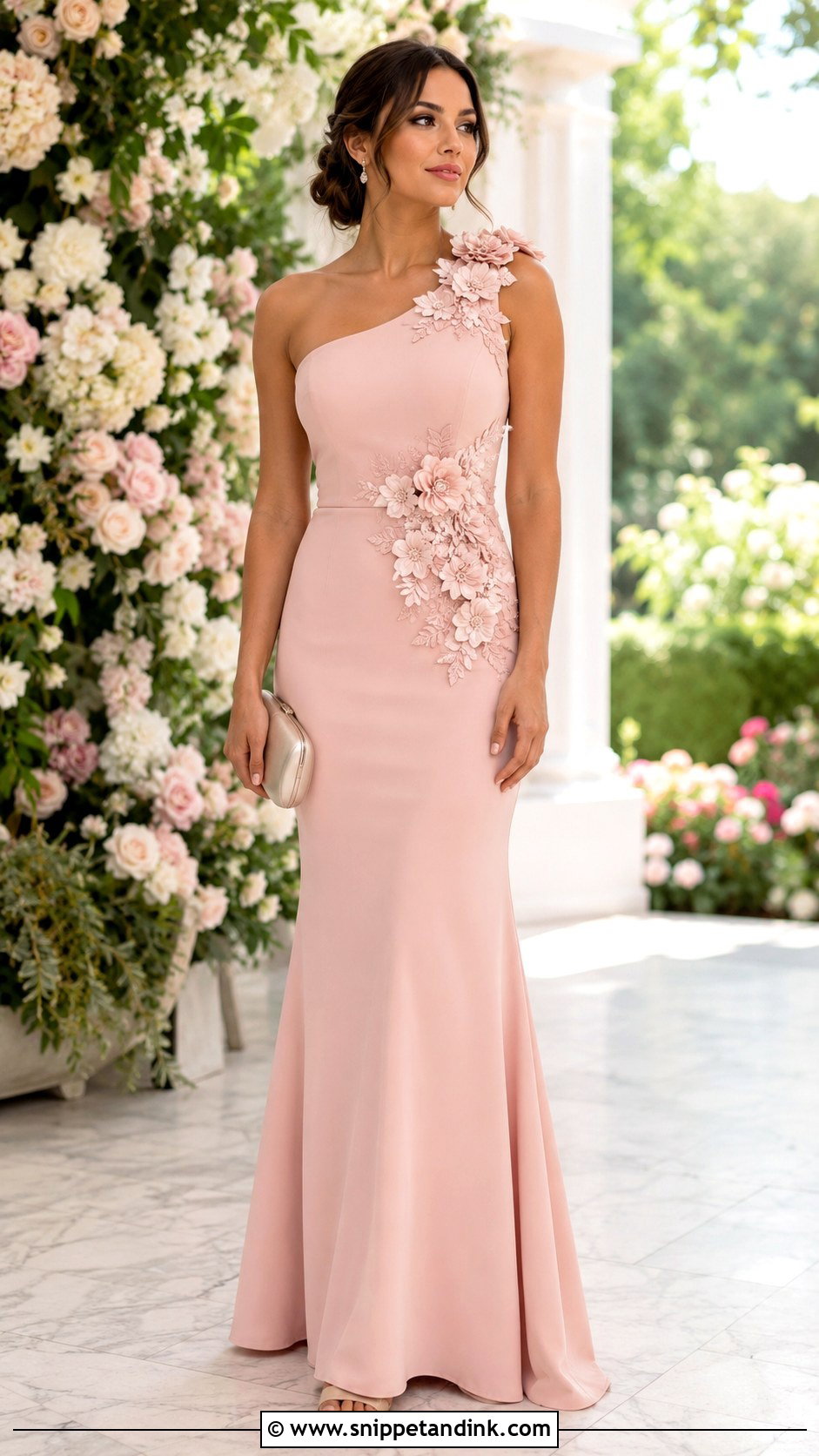
Appliqué flowers soften crepe without disturbing the drape, as long as they are concentrated in one area. At the shoulder, waist or hem they read as a design; scattered all over, they fight the clean surface that is the reason to choose crepe. Raised appliqués look best on a simple column, trumpet or A-line. If the flowers carry beads or crystals, match your jewelry to them. Blush, lavender and light blue look gentle; black with tonal flowers is more dramatic. I would avoid ivory and pale cream for a wedding guest. Tonal heels, a compact clutch and small earrings finish it.
17. Long Crepe Peplum Gown
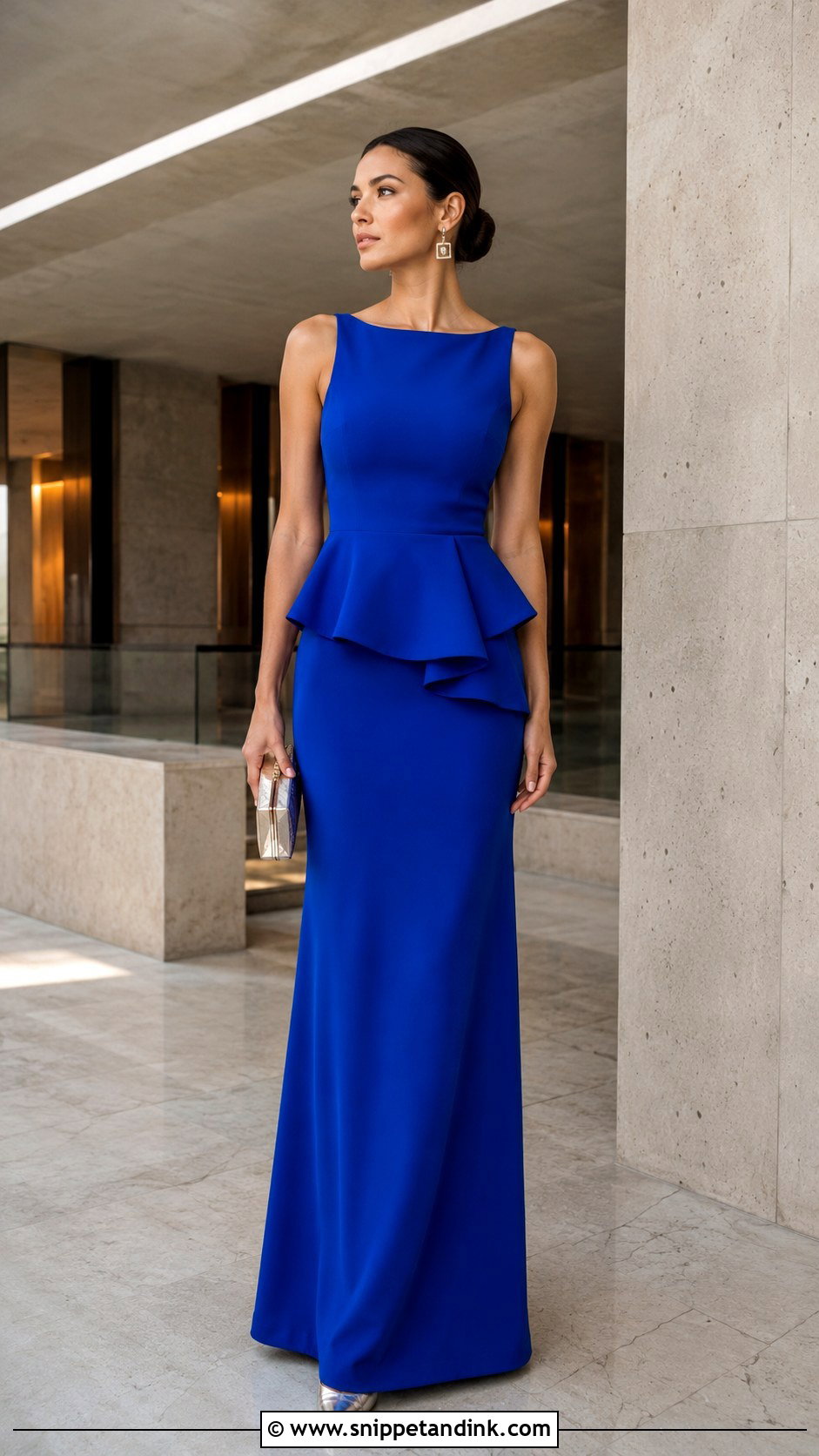
A peplum gives a crepe column a defined waist and a little architecture. Keep the peplum short and crisp; a long, soft one adds width exactly where most people do not want it. The waist seam must sit at your natural waist. If it sits even an inch low, the peplum points down and the proportions go wrong. A fitted bodice and straight skirt look tailored; a slight flare at the hem balances the peplum. Burgundy, cobalt, emerald or black emphasize the shape. Pointed pumps, a geometric clutch and simple earrings, and no wide belt competing with the peplum.
18. Long Crepe Gown With Open Back
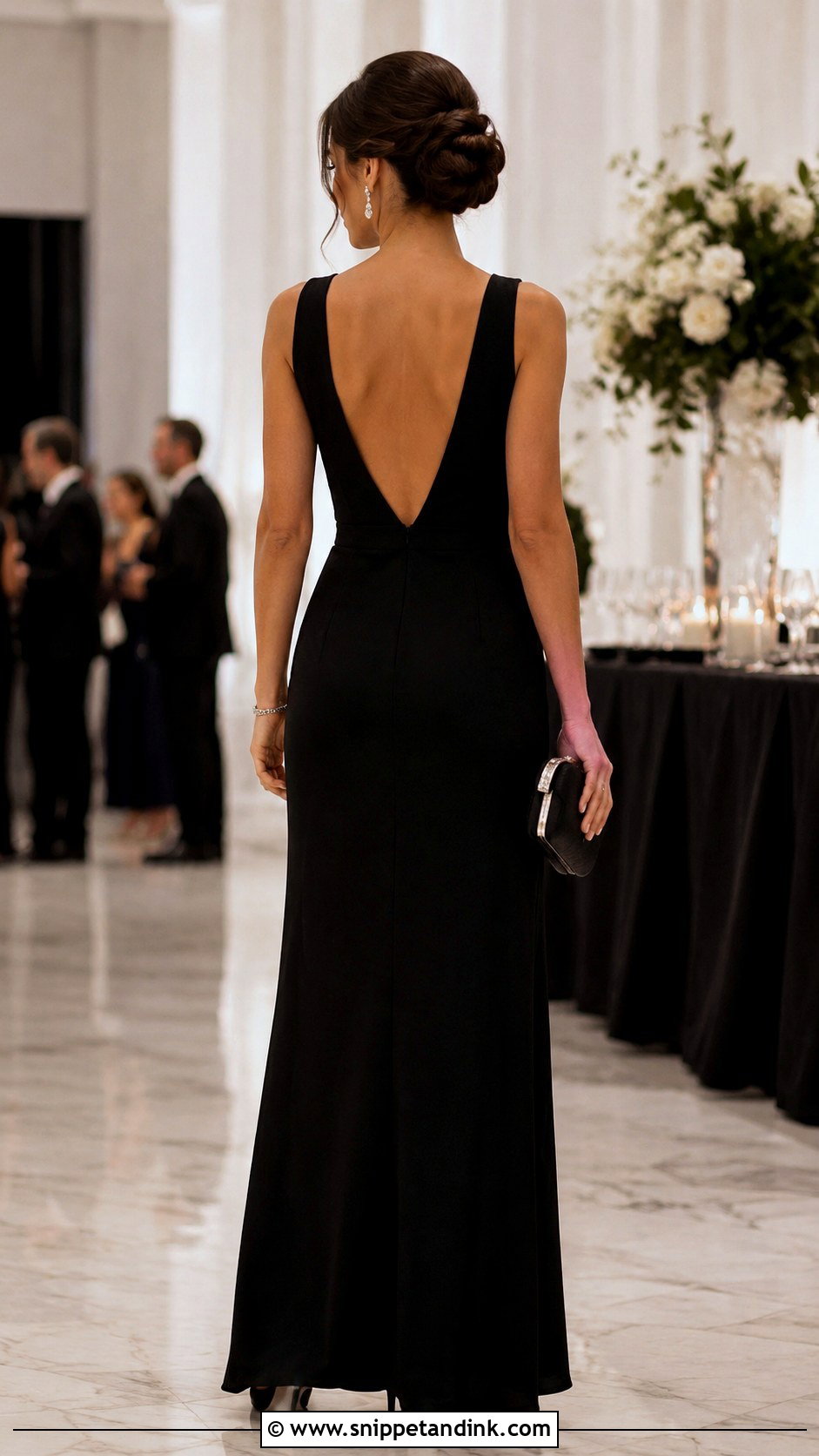
An open back puts all the drama behind you, which is nice at a wedding, since guests spend the ceremony looking at backs. The front stays sleek with a high neck or fitted bodice. Deep V, rounded opening or cross straps all work, and the question is support. A low back usually rules out a normal bra, so try the gown with stick-on cups or built-in support before you buy. Drop earrings, a bracelet and a smooth clutch without hardware that could snag. Hair up or swept to one side. Black, red, deep blue and jewel tones suit it.
19. Long Crepe Gown With Overskirt
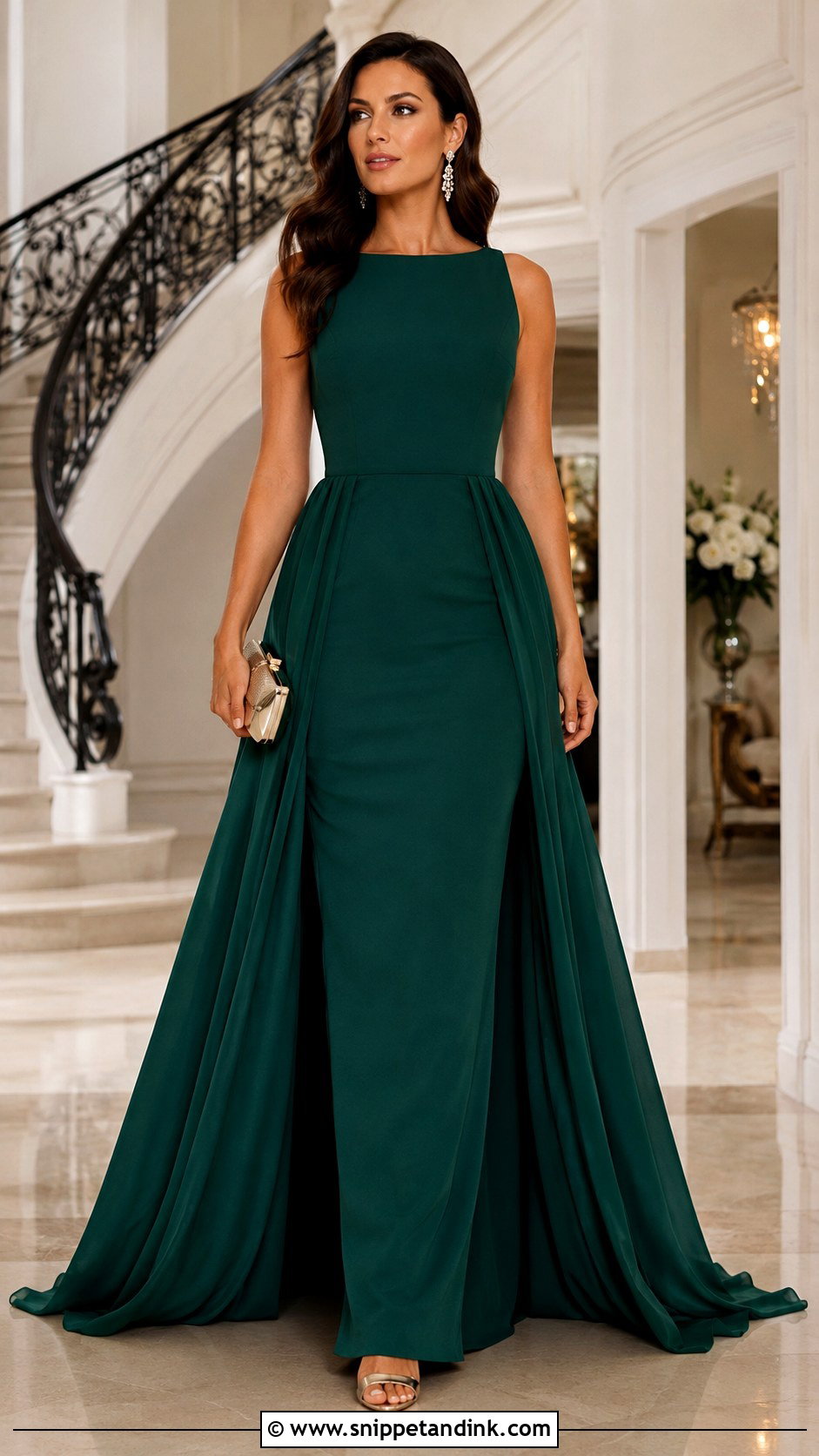
An overskirt adds fullness around a fitted crepe column, trumpet or sheath, and a removable one turns a dramatic entrance into a dance-ready dress. The fastening matters: a bulky waistband shows through crepe, so look for a flat hook-and-bar closure. A matching overskirt keeps the outfit as one color; a sheer or contrasting layer adds depth. Walk and sit in both pieces before the event, and decide where the overskirt will go once it comes off. Understated heels, sparkling earrings and a compact clutch, with no oversized jewelry.
20. Long Crepe Gown With Feather Cuffs
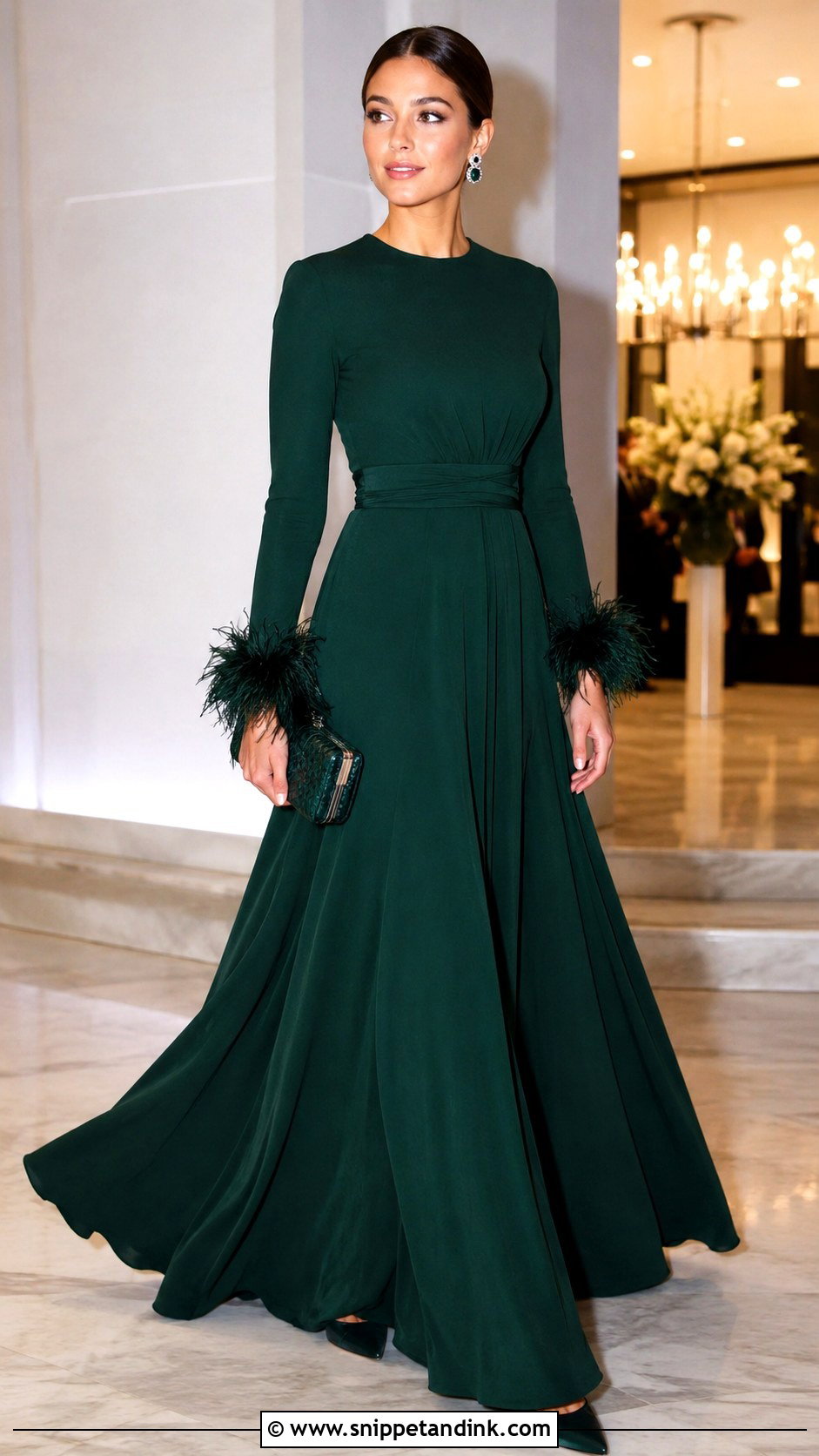
Feather cuffs are the most playful detail on this list, and the most practical worry. Feathers at the wrist go through everything: a drink, a plate, a handshake. Choose short, neat trim in a tone matching the dress, and check that the sleeve ends at the wrist bone so the feathers stay clear of your food. A jewel neckline, fitted waist and straight or A-line skirt balance the cuffs. Skip bracelets and rings; wear polished earrings, pointed pumps and a structured clutch. Navy, black, hunter green and plum are good backgrounds for tonal feathers.
Rolling, Steaming and Hemming a Crepe Gown for a Wedding Weekend
Crepe travels better than satin, which is another reason I suggest it for destination weddings. Roll the gown loosely in tissue rather than folding it, and pack it at the top of the case so nothing heavy presses on it. On arrival, hang it in the bathroom while you shower; the steam drops most creases in twenty minutes.
If you need more than steam, use a low iron on the inside with a pressing cloth. Direct heat can leave a shiny patch on crepe that will not come out, especially on dark polyester. Silk and triacetate crepes can show water spots, so steam from a distance and never spray them.
Get the hem right the first time
Buy your shoes before the alteration, not after. A floor-length gown should clear the floor by about half an inch in the shoes you will actually wear, front and back. Too long and you step on it all night; too short and it looks like a borrowed dress. Most tailors want a couple of weeks for a gown hem, longer in the busy summer months, so do not leave it until the week of the wedding.
Dark crepe also collects lint and pet hair like a magnet. Pack a small lint roller in your clutch; it takes up almost no room and saves a lot of photographs.
A Crepe Gown Worth Wearing to More Than One Wedding
Start with the silhouette that suits your proportions, then think about neckline, sleeves, where the waist sits and how much decoration you want. A-line and empire waists give room; mermaid, column and peplum shapes give definition. Cape sleeves, bows, ruching, appliqué and beading make a plain crepe gown yours without hiding the fabric. Keep the shoes comfortable, the clutch practical and the jewelry balanced. Book the alteration early, with the actual shoes, so the hem is right. A well-cut crepe gown in a solid color comes out again for the next wedding, a gala or a dinner, and that is the best reason to buy one.
You'll Like These Ideas:




Leave a Reply