
A gown is the easiest way to look formal at a Pakistani wedding without managing a lehenga’s separate skirt, blouse and drape. It also forgives a lot: one continuous line from shoulder to floor reads polished even with simple jewelry. Right now the gowns I’m asked to style lean toward flowing cuts, organza layers, softer pastels for day and deep jewel tones for night. What decides whether a gown works, though, is the event and how long you’ll be in it. The 20 looks below run from classic Anarkalis to jacket gowns and a full bridal train, each styled from the dupatta down to the shoes.
Reading Your Frame Before You Commit to a Gown Cut
Gowns look simple, but each one shifts weight and shape differently. Before I show anyone embroidery, I look at where their natural waist sits, how long their torso is and how they’ll move during the event. Those three points tell me which cut will hang properly.
- Short torso: an Anarkali with a slightly raised seam or an empire line, so the bodice doesn’t look cramped.
- Long torso: a peplum or a belted gown breaks the length and puts the waist where you want it.
- Fuller midsection: angrakha wraps and front-open gowns skim rather than grip, and a vertical embroidery line helps.
- Petite: moderate flare and one color top to bottom. Heavy can-can volume swallows a small frame.
- Tall: you can carry trains, full Anarkali skirts and long jacket gowns without being overwhelmed.
Volume matters too. Many full Pakistani gowns get their shape from a can-can or layered net underskirt. It looks wonderful standing and takes up a lot of room in a car, at a tight dinner table and in a crowded hall, so ask whether the underskirt is removable.
1. Pakistani Anarkali Gown With Dupatta
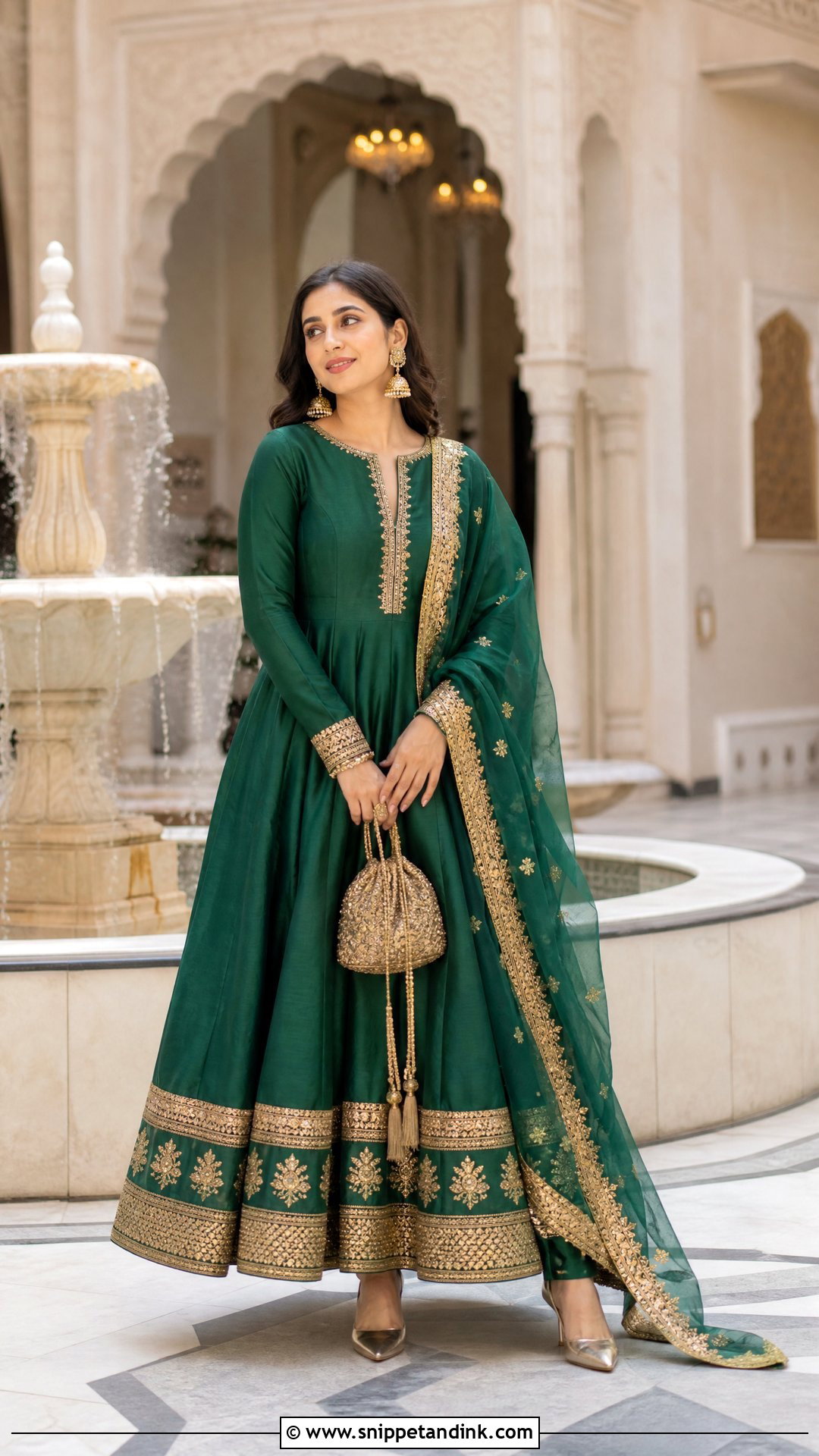
A Pakistani Anarkali gown is the shape I reach for first with guests who are unsure, because the fitted bodice and wide flare flatter almost everyone once the waist seam is placed correctly. That seam is the whole game. On petite women I raise it slightly so the skirt starts higher and the legs look longer; taller women can carry a lower seam and a fuller skirt. Silk, chiffon and georgette all work, in emerald, maroon, navy or dusty rose. Keep the zari to the neckline and borders, add an organza dupatta on one shoulder, and hide pointed metallic heels under the hem. Jhumkas and a small potli are enough sparkle.
2. Pakistani Front Open Gown With Lehenga
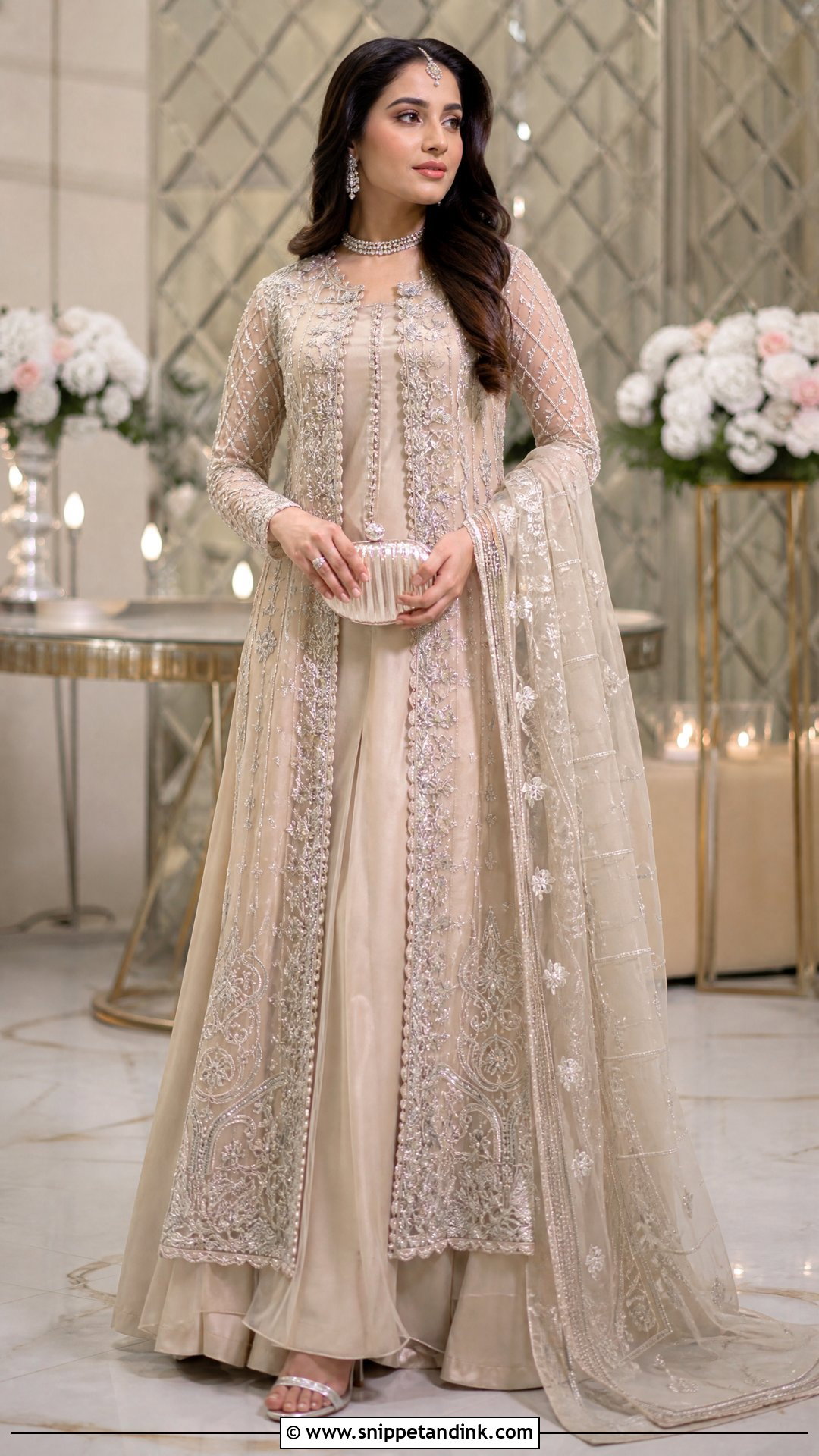
A front-open gown over a matching lehenga gives you two layers of detail and full coverage, which is why it suits a baraat or close family wedding. The opening should start at the waist, not the bust, or the gown flaps apart when you walk. Keep both layers in one color family, champagne with gold or plum with bronze, so the eye reads them as one outfit. A silk or jamawar lehenga underneath gives the opening something worth revealing. A sheer dupatta with a narrow border finishes it. If the neckline is worked, leave the necklace at home and let statement earrings carry the jewelry. Block heels will get you through a long evening on hall floors.
3. Pakistani Velvet Gown With Gold Embroidery
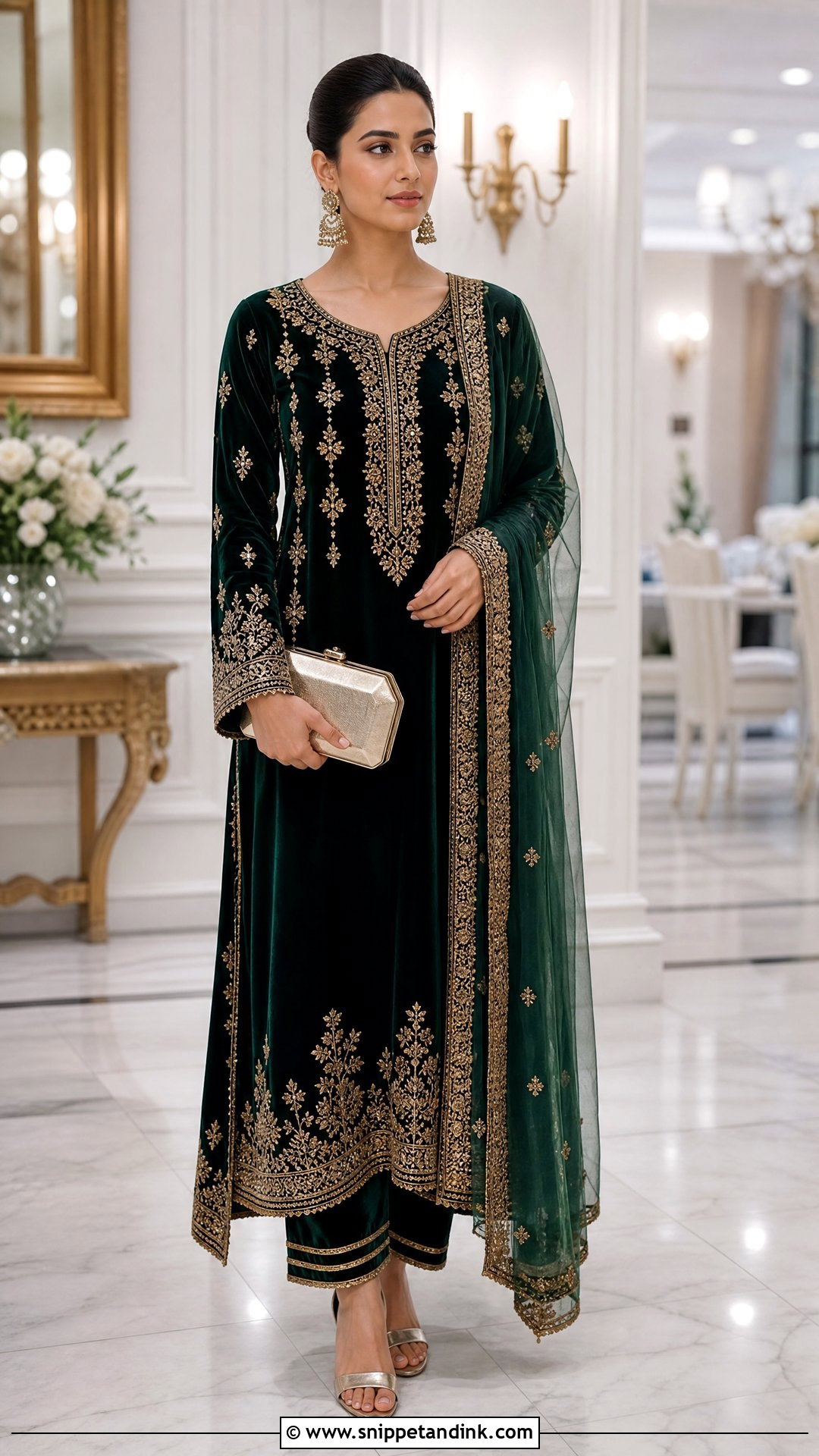
Velvet in bottle green, burgundy or midnight blue is the winter guest’s best friend, and it rewards restraint. Put the antique gold embroidery at the neckline, cuffs, waist and hem and leave the rest bare, so the pile itself becomes the texture. What I watch for at fittings is weight: a full velvet skirt is heavy, and the shoulders carry it all evening, so the bodice needs proper structure or the neckline slowly drags down. A light net dupatta keeps the outfit from feeling dense. Gold heels and a structured clutch finish it. A straight-cut bodice gives more coverage than a defined waist if that matters to you.
4. Pakistani Pastel Organza Gown With Pearls
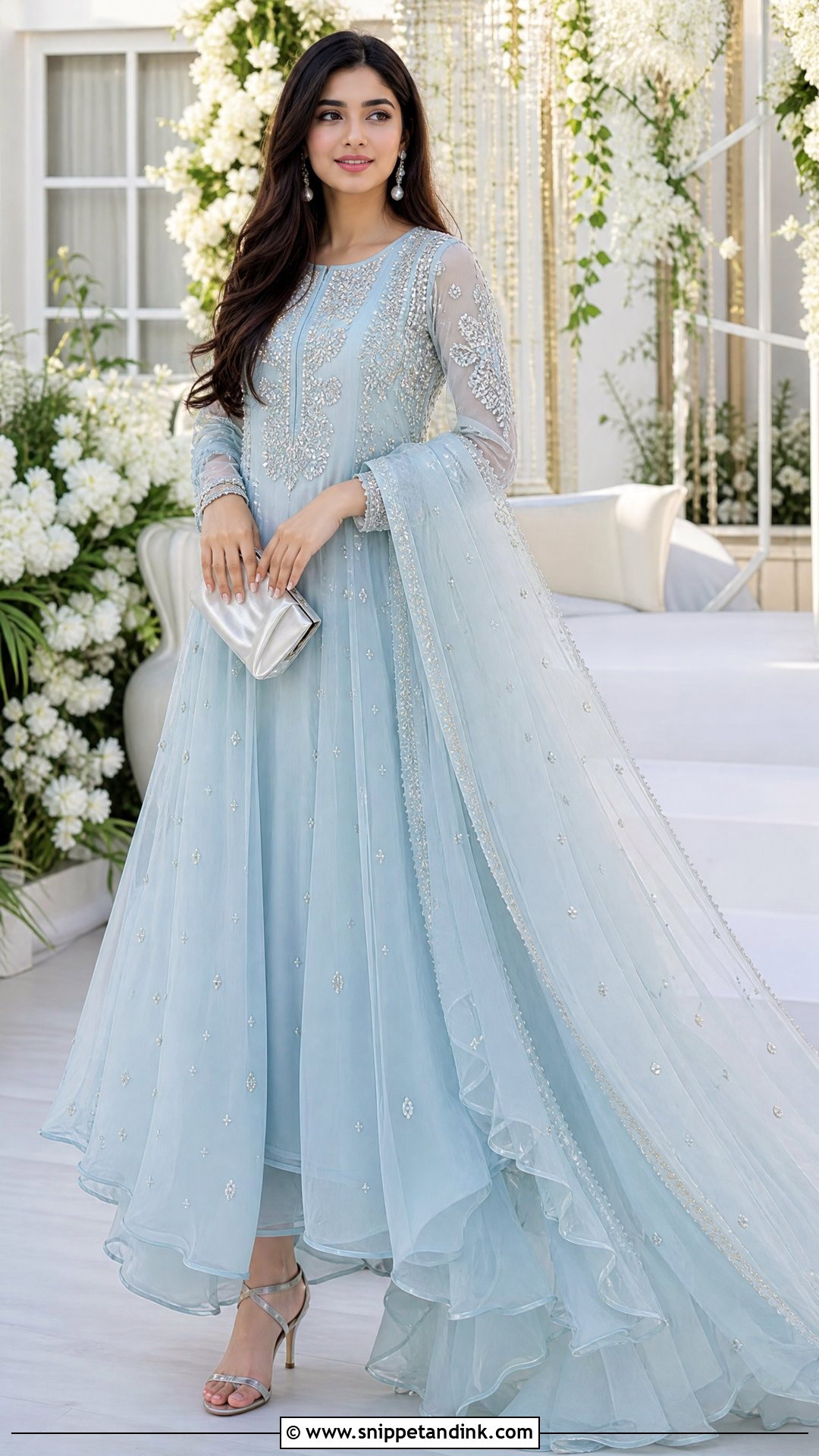
A pastel Pakistani organza gown belongs in daylight. Powder blue, mint, lavender or pale peach with scattered pearls looks luminous outdoors and slightly flat under yellow indoor bulbs. Check the lining color carefully. Organza is translucent, so a lining one shade off will tint the whole gown, and a white lining under blush can make it look washed out. A sheer dupatta with a slim pearl edge, silver sandals and pearl drops keep it light. One practical note: sewn-on pearls catch on lace and on each other, so carry the dupatta loosely rather than wrapping it tightly over the bodice.
5. Pakistani Cape Gown With Embellished Bodice
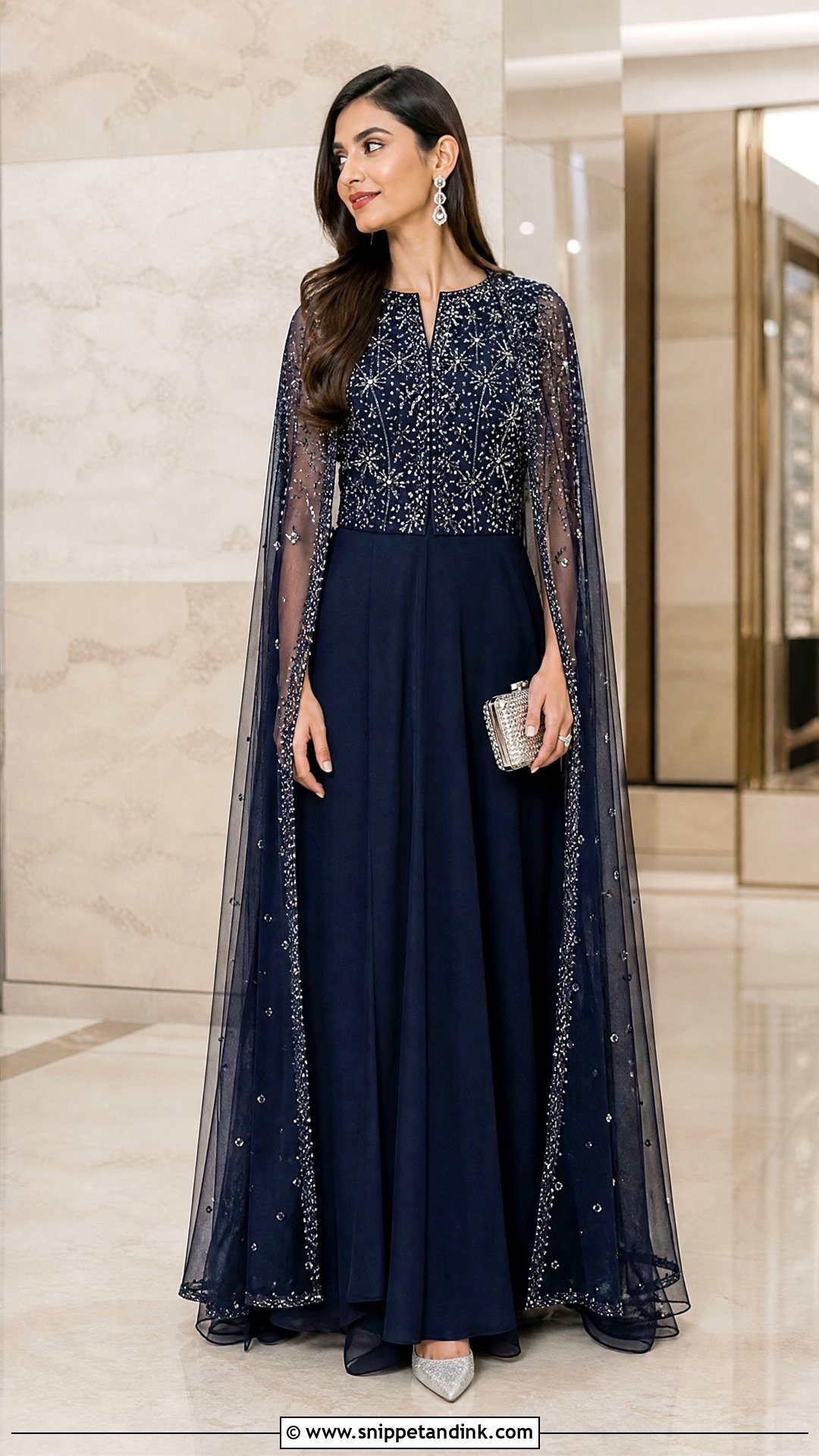
What if you want a modern silhouette without leaving Pakistani formalwear behind? A cape gown does that. Start with a floor-length crepe or silk gown with an embellished bodice and a clean skirt, then add a sheer cape attached at the shoulders. The cape replaces the dupatta, so don’t layer one on top. Crepe clings, so it shows everything underneath; I fit it over the exact shapewear you’ll wear on the day. Crystal earrings, pointed heels and a hard-case clutch suit it. Wear an updo so the cape isn’t tangled in your hair. It looks sharp in black, navy, mauve or emerald at an evening reception.
6. Pakistani Peplum Gown With Flared Skirt
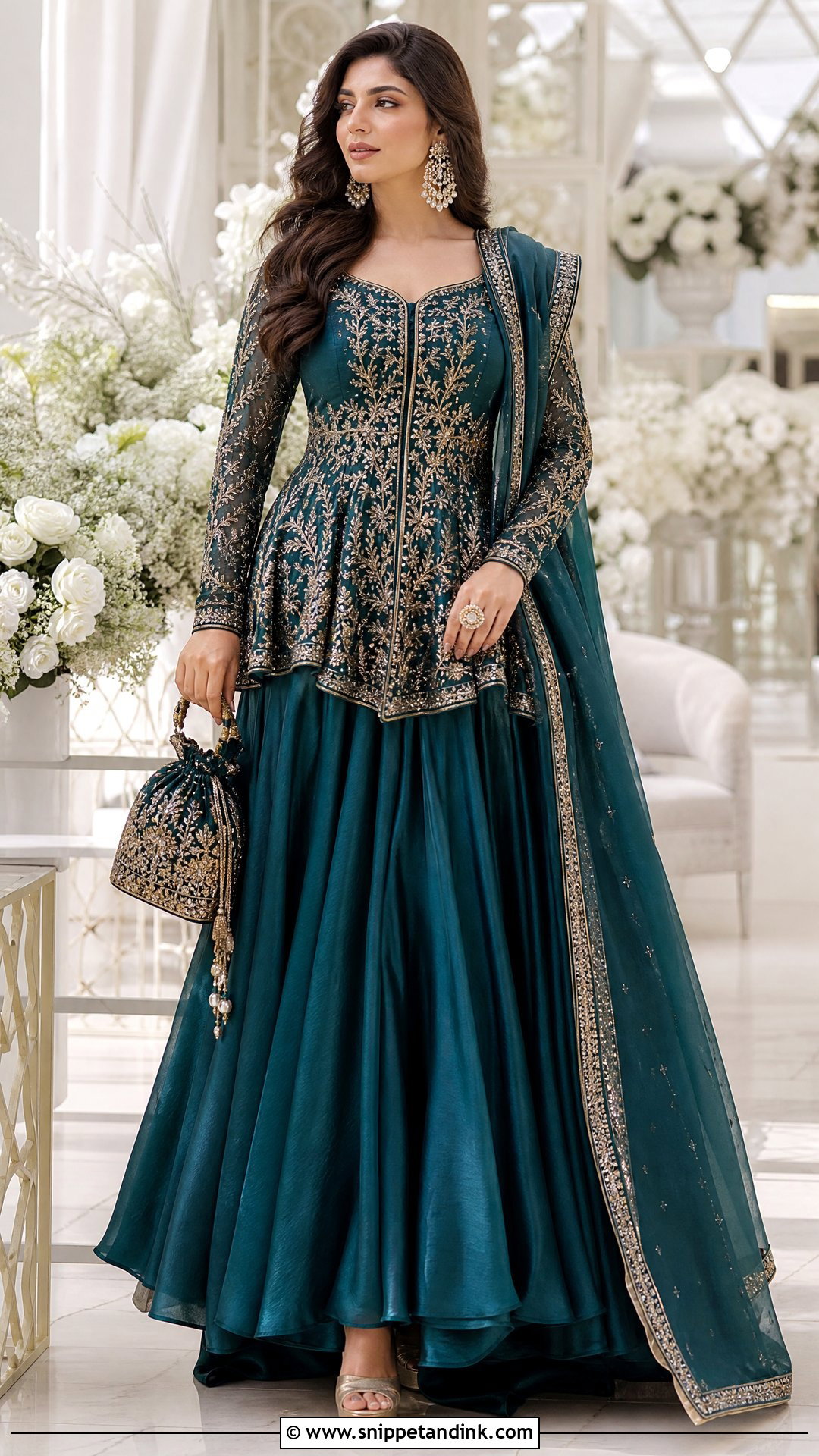
A peplum gown gives definition at the waist and coverage over the midsection at the same time, which makes it a favorite with guests who want shape without tight fabric. Make the peplum bodice in raw silk, brocade or embroidered net, and keep the chiffon or silk skirt plain. If both are worked, the proportions get muddy. The peplum flare should hit at the high hip; any lower and it widens you. Drape a narrow dupatta over one arm so the shape stays visible. Ruby red, deep teal and smoky blue are strong choices. Chandelier earrings and platform heels finish it.
7. Pakistani Angrakha Gown With Chiffon Dupatta
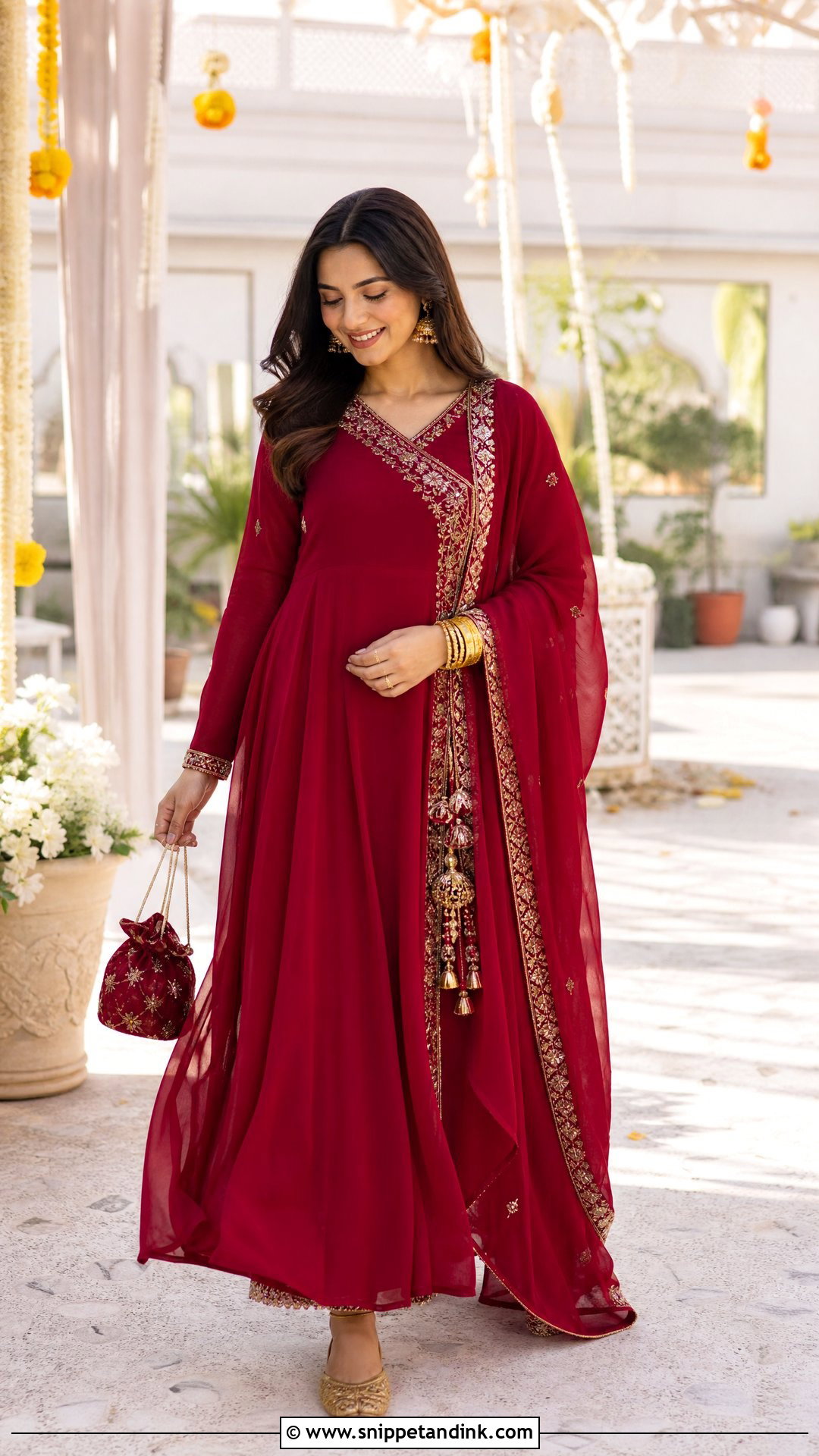
The diagonal neckline of an angrakha gown has a traditional character that’s hard to get any other way. The wrap is held by ties or a hook at the side, and I always add a hidden snap at the cross point so the neckline can’t open when you bend to greet elders. Chiffon and georgette drape softly; silk gives more structure. Jewel tones read formal, while ivory, sage and dusty pink suit daytime. A chiffon dupatta goes neatly over one shoulder. Khussas are the comfortable pick for a mehndi, low metallic heels for Eid or an engagement. Add jhumkas, stacked bangles and a potli.
8. Pakistani Jacket Gown With Straight Pants
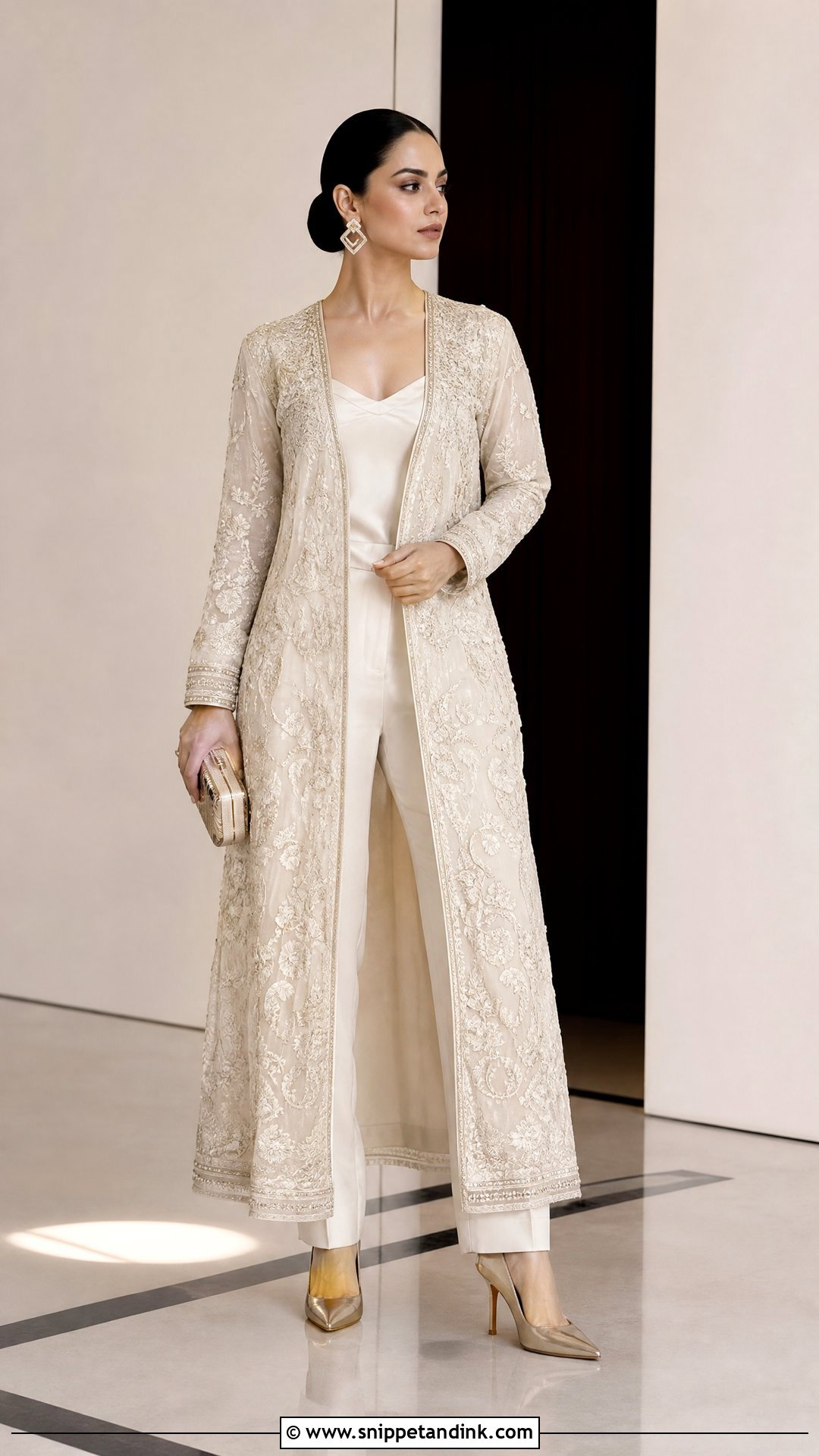
A long jacket gown over a fitted inner top and straight pants is the option for women who’d rather not manage a wide skirt at all. The jacket should reach the ankle or floor and open from the waist. Monochrome lengthens the body; a contrasting inner layer gives more definition. Net and organza jackets are lightest, while velvet and jacquard hold their shape but get warm. Test the jacket’s armholes with your arms raised, because a long, fitted jacket pulls up at the hem when the sleeves are cut too tight. Pointed heels, geometric earrings and a sleek low bun keep the lines clean.
9. Pakistani Floral Embroidered Gown With Heels
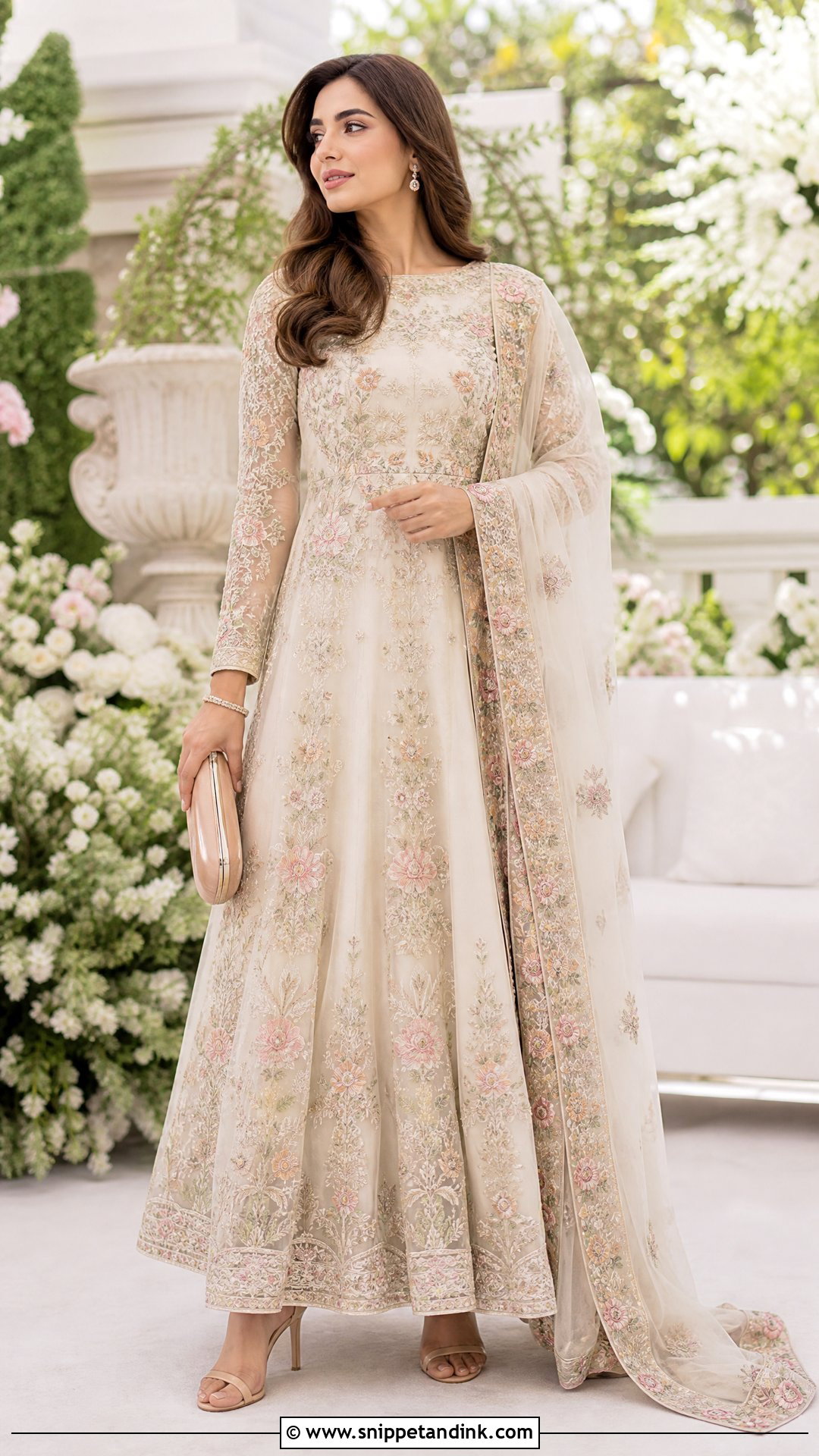
Floral threadwork gives a gown a romantic feel without heavy sparkle. On an ivory, beige or pale gray base, colored florals read clearly; on a dark base, they turn into an evening piece. When the embroidery has several colors, I pull the clutch and shoes from just one of them, which ties the outfit together far better than adding new colors. Small drop earrings and a slim bracelet are enough jewelry. Nude or soft gold heels lengthen the line. A dupatta with a matching floral border completes it. This works well for spring weddings and daytime receptions.
10. Pakistani Black Gown With Silver Embellishment
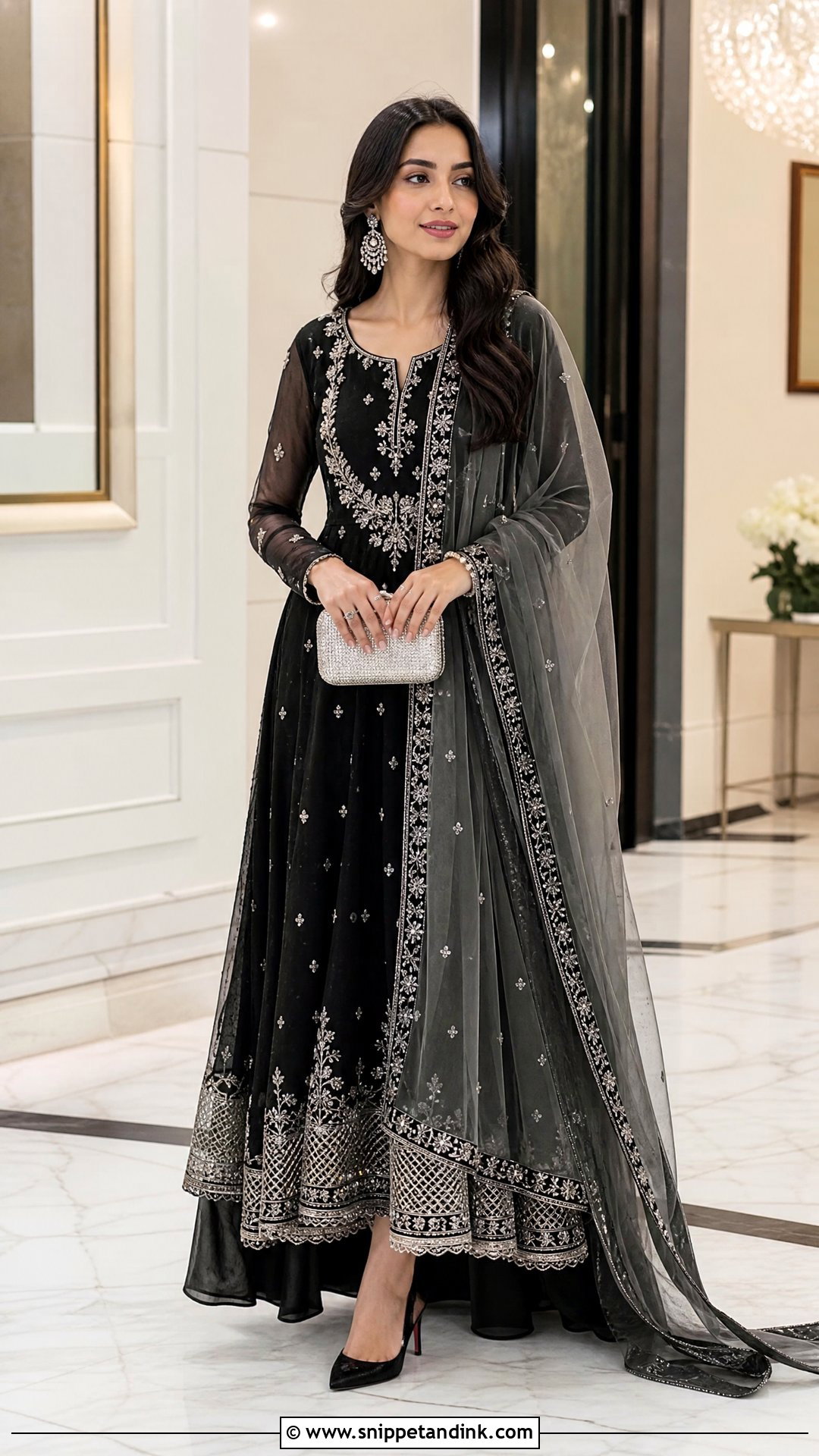
Black with silver embellishment is formal and very forgiving to style, but check whether black is welcome first. Some families are relaxed about it; others still see it as a mourning color for a wedding. Assuming it’s fine, keep the beads or sequins at the neckline, waist, cuffs and hem, with a sheer net overlay over a fully lined skirt. Sequins on the inner arm scratch through an evening, so ask for them to stop at the sleeve’s outer side. A smoky gray dupatta edged in silver, crystal drops and black pointed heels finish it. Soft waves read glamorous; a neat bun reads more formal.
11. Pakistani White Gown With Mirror Work
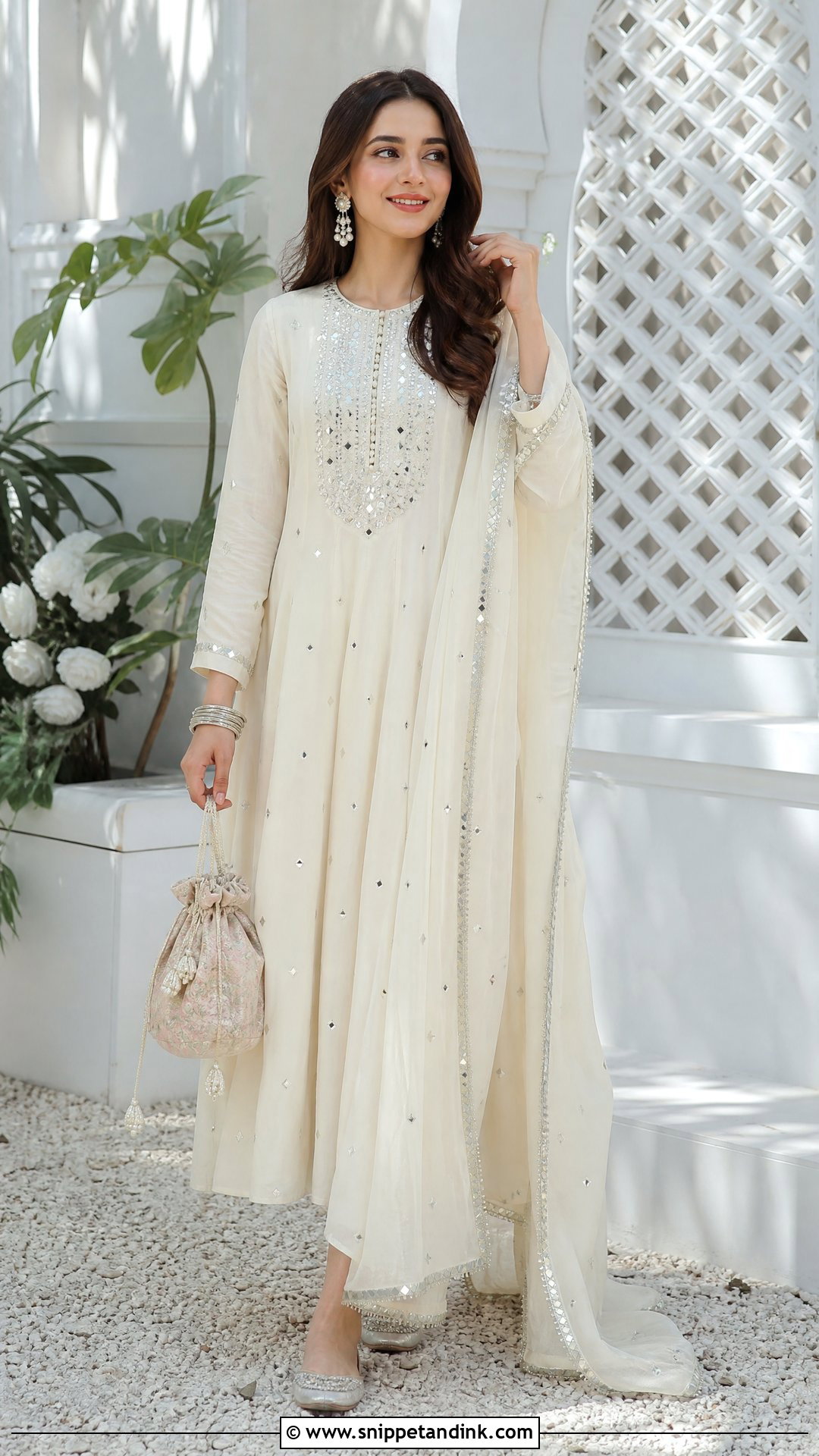
A white gown with mirror work looks fresh at daytime events, and ivory or cream is easier to wear than stark white for most skin tones. Before you wear it to a wedding, think about whose wedding it is. A heavily embellished white gown can look bridal, and in many Pakistani families plain white also carries funeral associations, so ask the host if you’re unsure. Keep the mirror accents to the neckline, sleeves and skirt panels. A chiffon dupatta with a silver border, metallic khussas and pearl earrings keep it traditional. A pastel potli adds a hint of color. It’s an easy choice for Eid or a daytime engagement.
12. Pakistani Maroon Gown With Zari Border
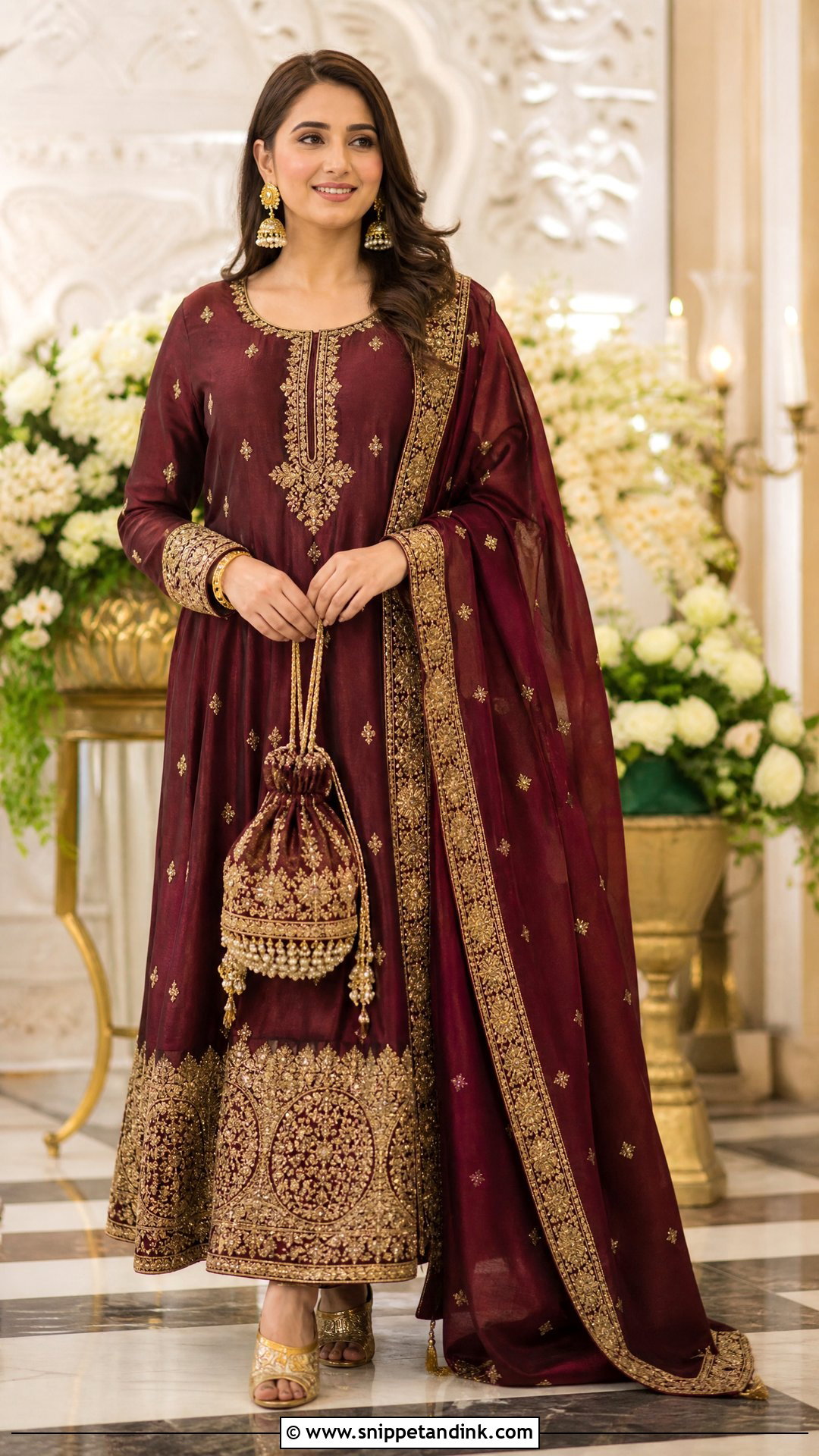
Deep maroon with antique gold zari is about as classic as Pakistani evening wear gets. Silk, chiffon or velvet all suit it; choose a defined bodice, full sleeves and a moderate flare. Let the zari frame the neckline and cuffs, then run around the hem. Add a matching dupatta with gold edging on one shoulder so the gown isn’t hidden. Real zari is metallic thread and tarnishes when stored damp, so I always tell clients to air the gown after the event. Antique gold jhumkas, a traditional potli and low block heels finish it, with a center-parted bun.
13. Pakistani Emerald Green Gown With Sequins
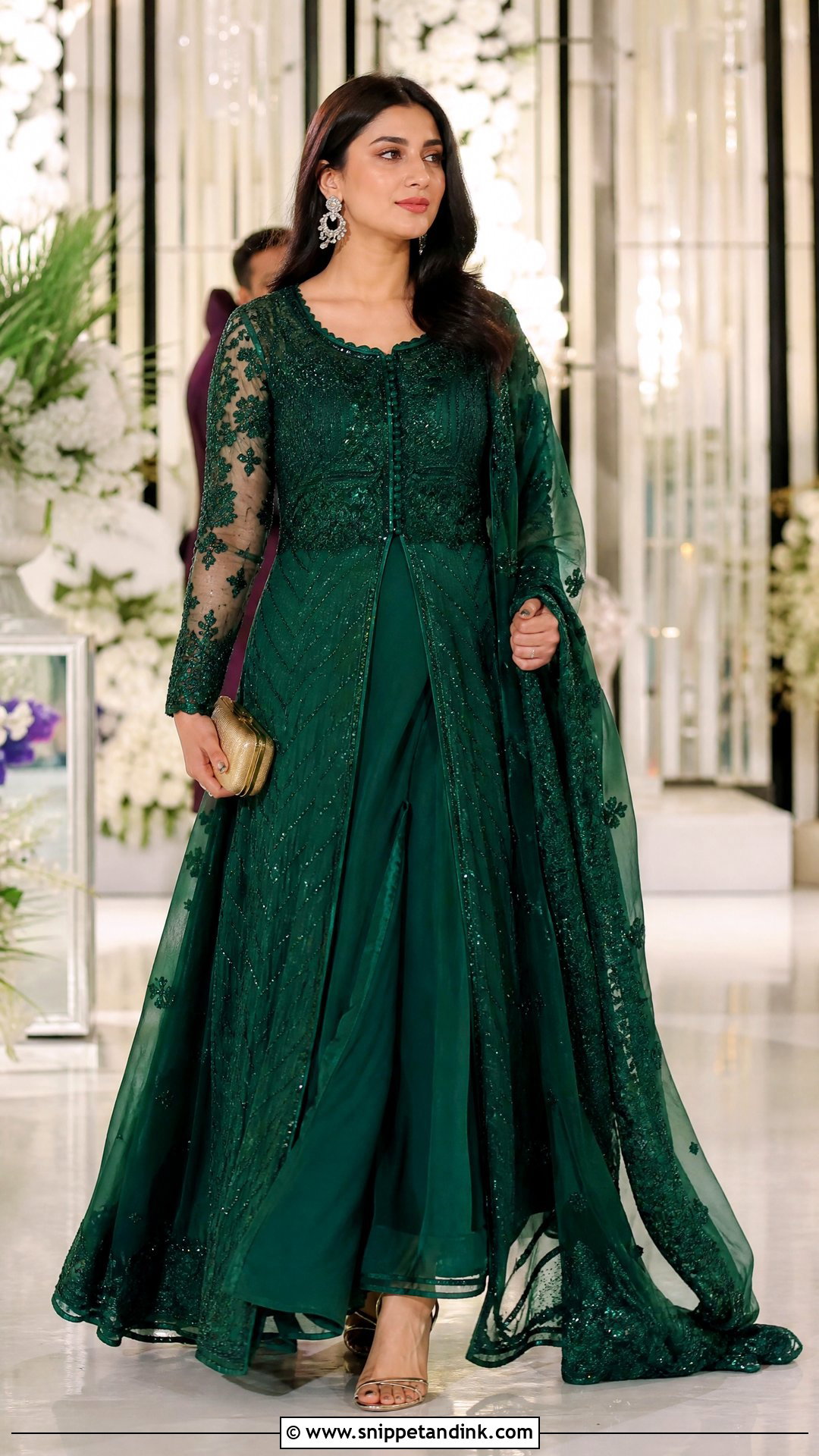
Emerald suits a very wide range of complexions, which is why it’s one of the safest jewel tones to buy without trying on. Pair a structured bodice and sheer sleeves with a flowing chiffon or georgette skirt. Matching green sequins give quiet texture; gold or silver details push it toward evening. Sequins reflect flash hard, so a scattered placement photographs better than dense rows. Add a same-tone dupatta with a narrow border, metallic heels and statement earrings. Leave the necklace off when the neckline is already decorated. It suits a reception, an engagement or a close relative’s function.
14. Pakistani Navy Blue Gown With Net Sleeves
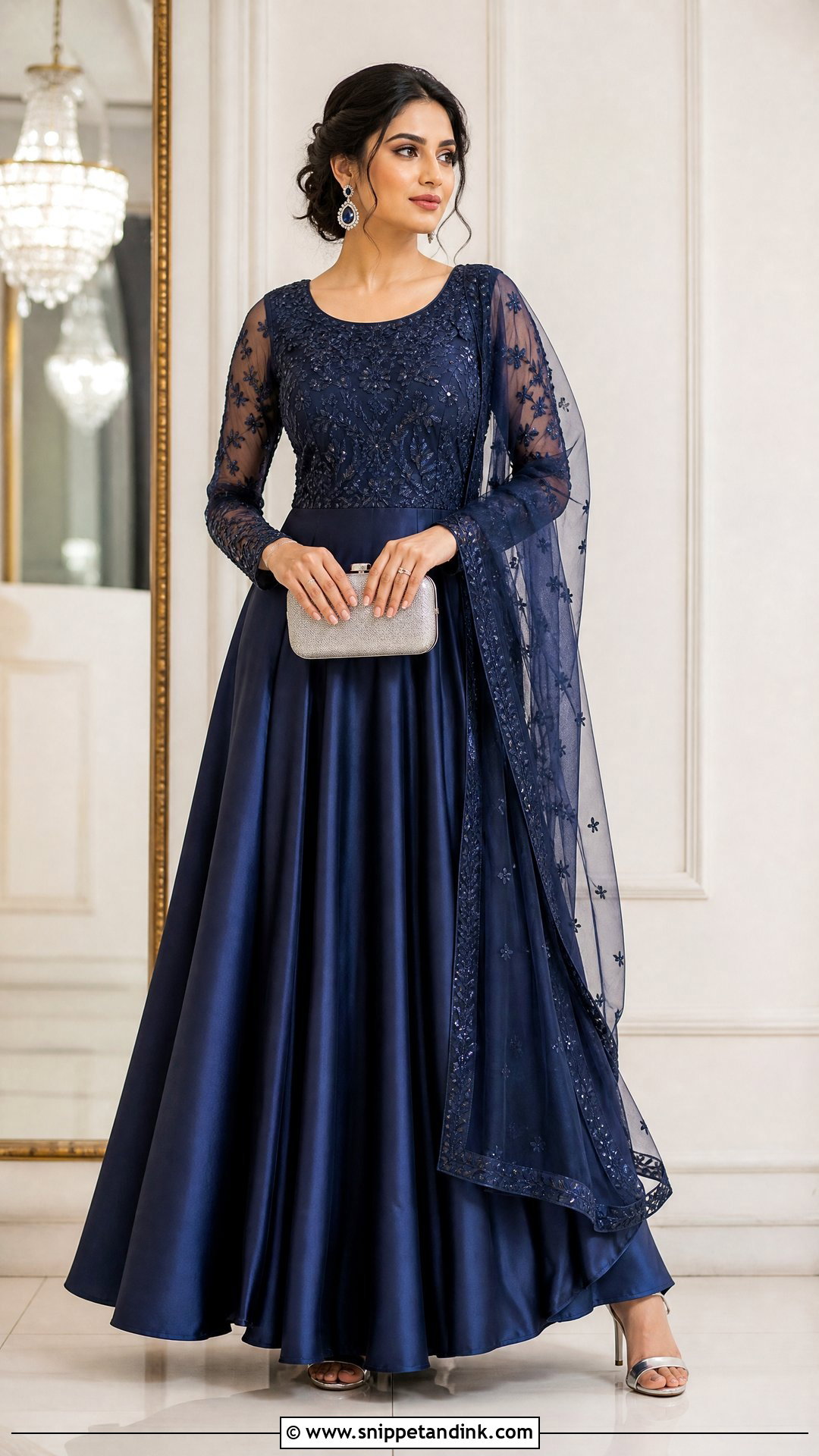
Navy gives you the depth of a dark color while looking softer than black on camera. Choose a fitted bodice and a floor-length skirt in silk, crepe or layered chiffon. Net sleeves add coverage and detail, but cheap net can itch along the inner arm; ask for soft tulle or a fine lining behind the embroidery if you have sensitive skin. Silver, pewter or tonal beadwork can trace the neckline and cuffs. For a slimmer line, choose vertical embroidery and a skirt with gentle rather than heavy volume. Silver heels and a net dupatta over the arms suit an indoor evening function.
15. Pakistani Blush Pink Gown With Ruffle Dupatta
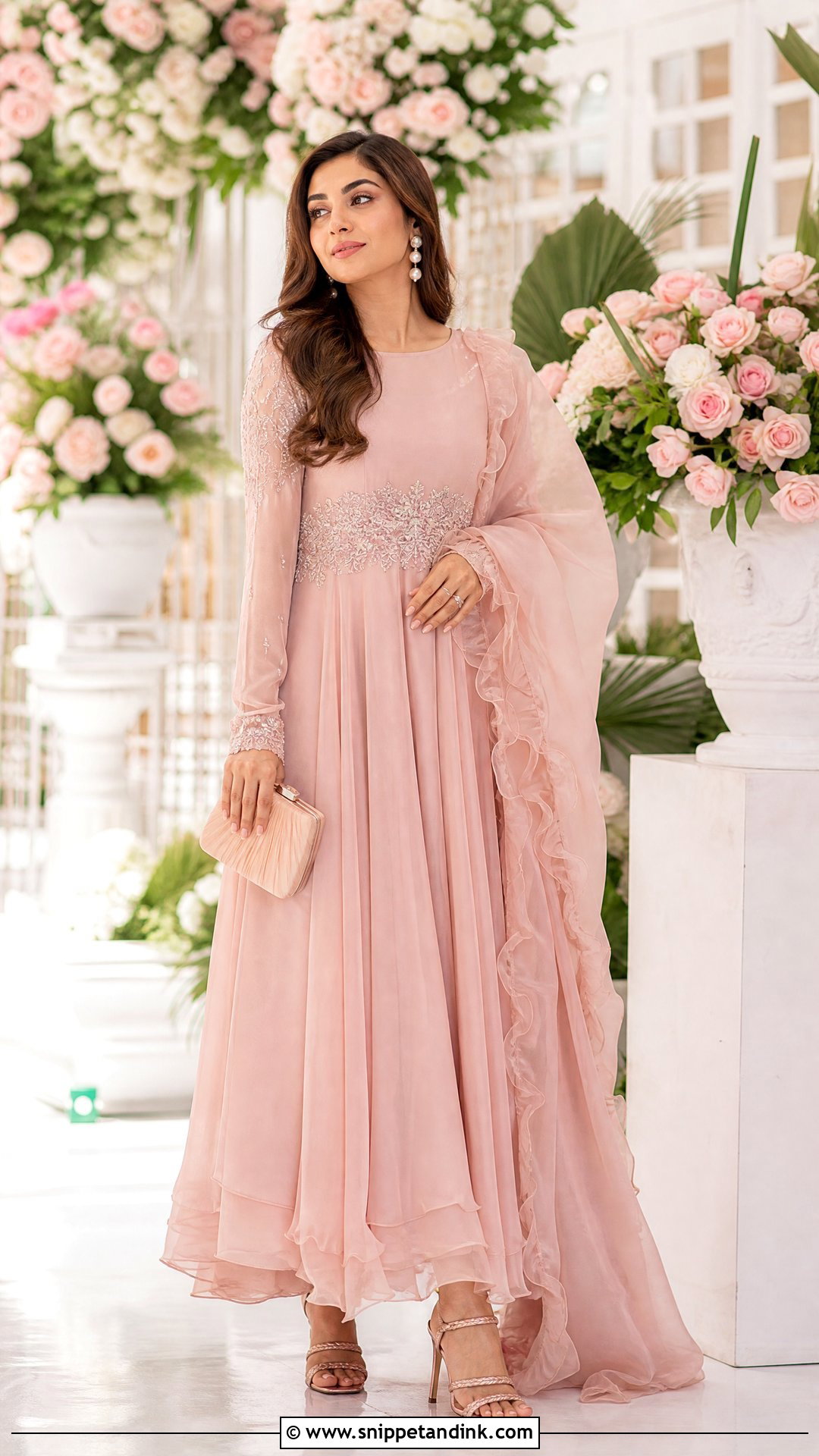
A blush gown with a ruffled organza dupatta gets its interest from texture rather than embellishment. Keep the gown simple, with embroidery only at the bodice and waist, and let the ruffle do the rest. The ruffle width matters: narrow ruffles frame you, while deep ones look like a costume and catch on everything. Pale pink washes out some complexions; if that’s you, go dusty rose or ask for deeper pink embroidery near the face. Rose-gold heels, pearl earrings and soft curls suit it. It’s a good pick for engagements, nikah events and Eid gatherings.
16. Pakistani Gold Gown With Embroidered Belt
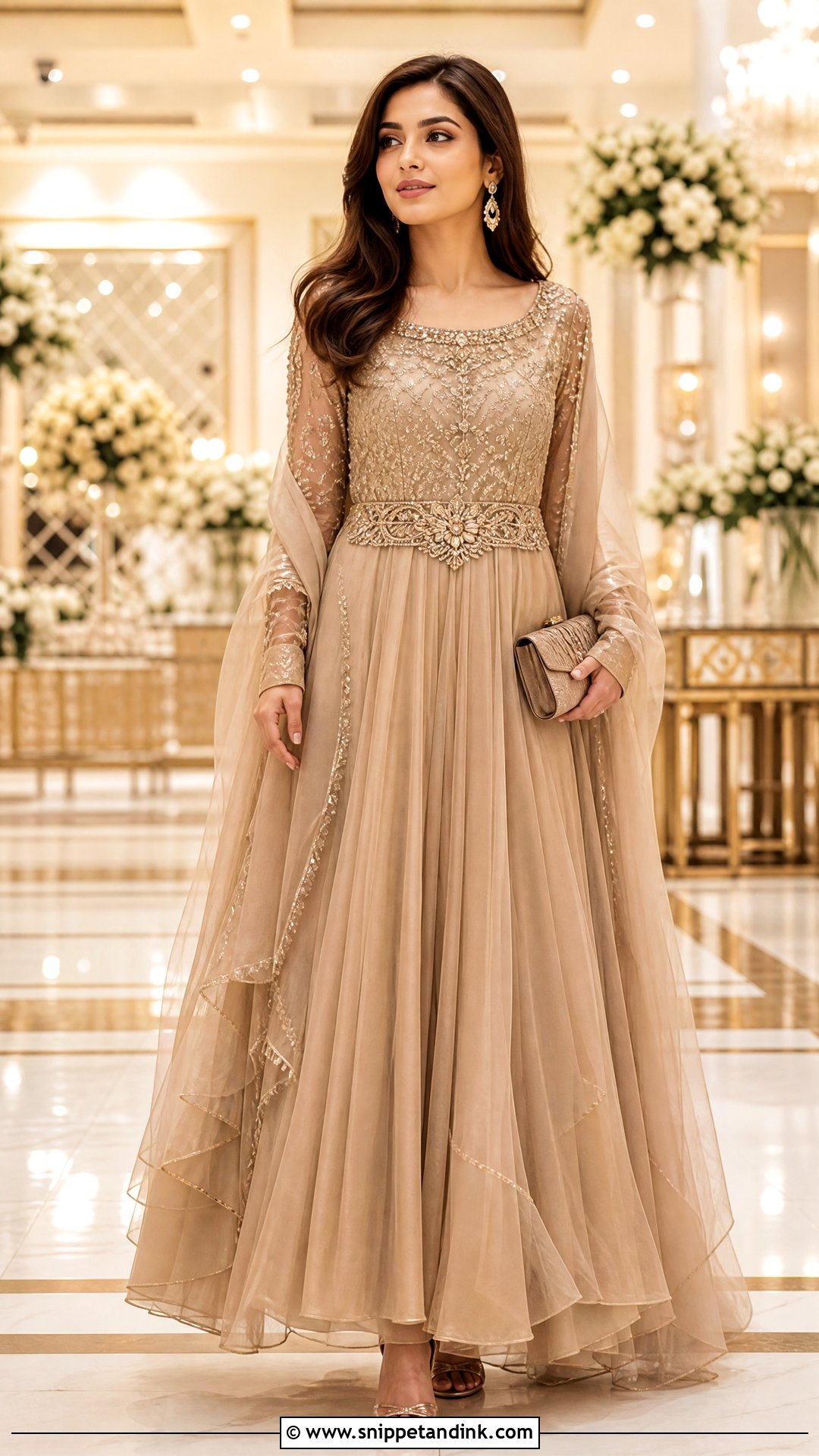
Gold is the color to wear when you want extra glamour, and the shade makes all the difference. Champagne, antique gold and muted bronze look rich; bright reflective lamé can look cheap under flash. A flowing chiffon or net skirt balances a fitted, embellished bodice. The embroidered belt should sit exactly at your natural waist, and I fit it while the client is seated, because a stiff belt rides up and digs into the ribs once you sit down. Neutral metallic heels, drop earrings and a plain champagne clutch keep the rest calm, since the fabric is already doing plenty.
17. Pakistani Two Tone Gown With Layered Skirt
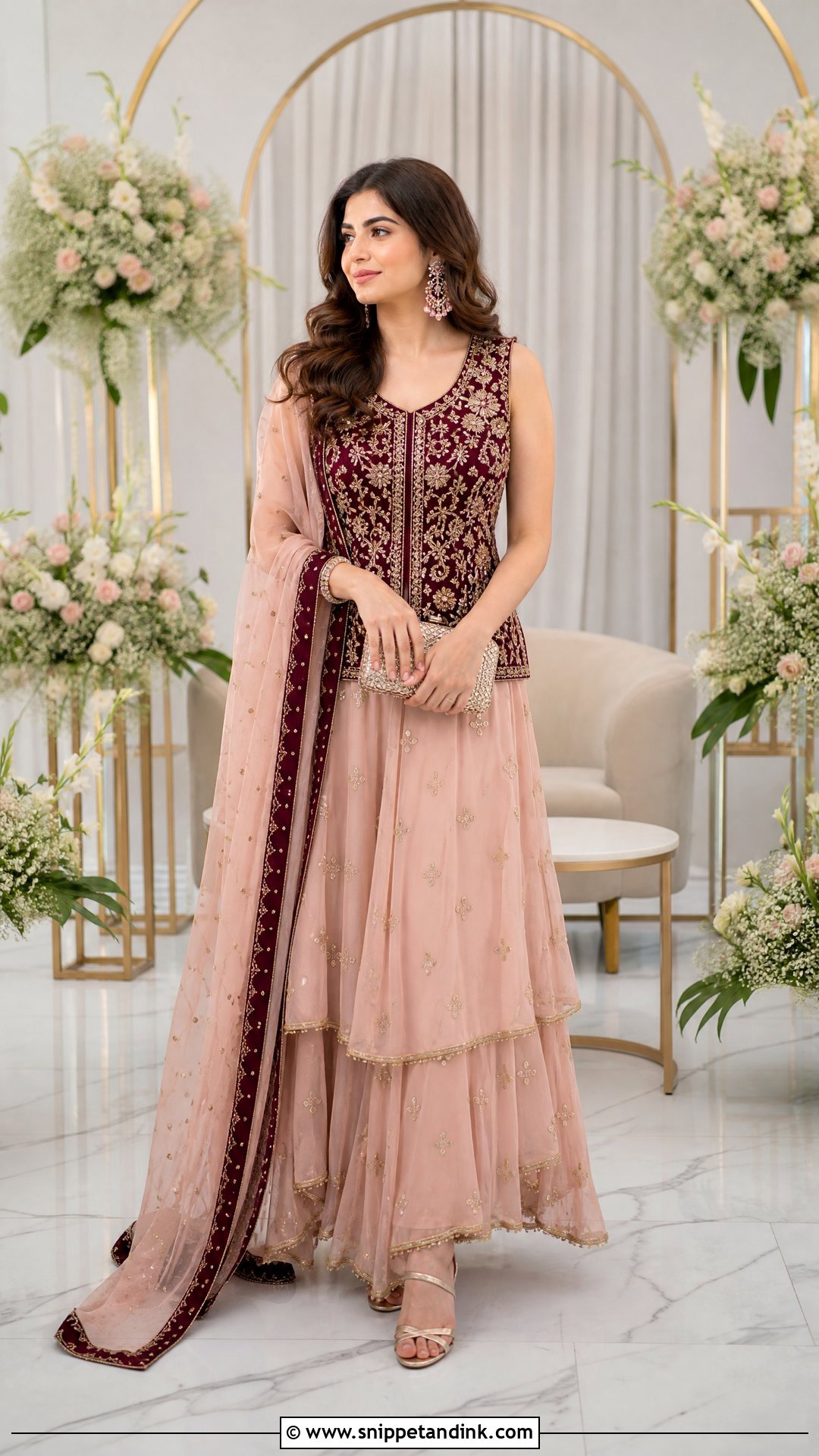
Two-tone gowns can flatter many shapes when the color placement is deliberate. Darker shades recede and lighter ones advance, so a darker bodice over a lighter layered skirt balances a fuller bust, while the reverse adds presence up top. Try navy with silver, plum with blush or emerald with champagne. Embroidery that uses both colors ties the halves together. Add a dupatta in the softer shade with a border matching the bodice. Metallic sandals and coordinated earrings finish it. It’s distinctive without being loud.
18. Pakistani Gown With Bell Sleeves And Dupatta
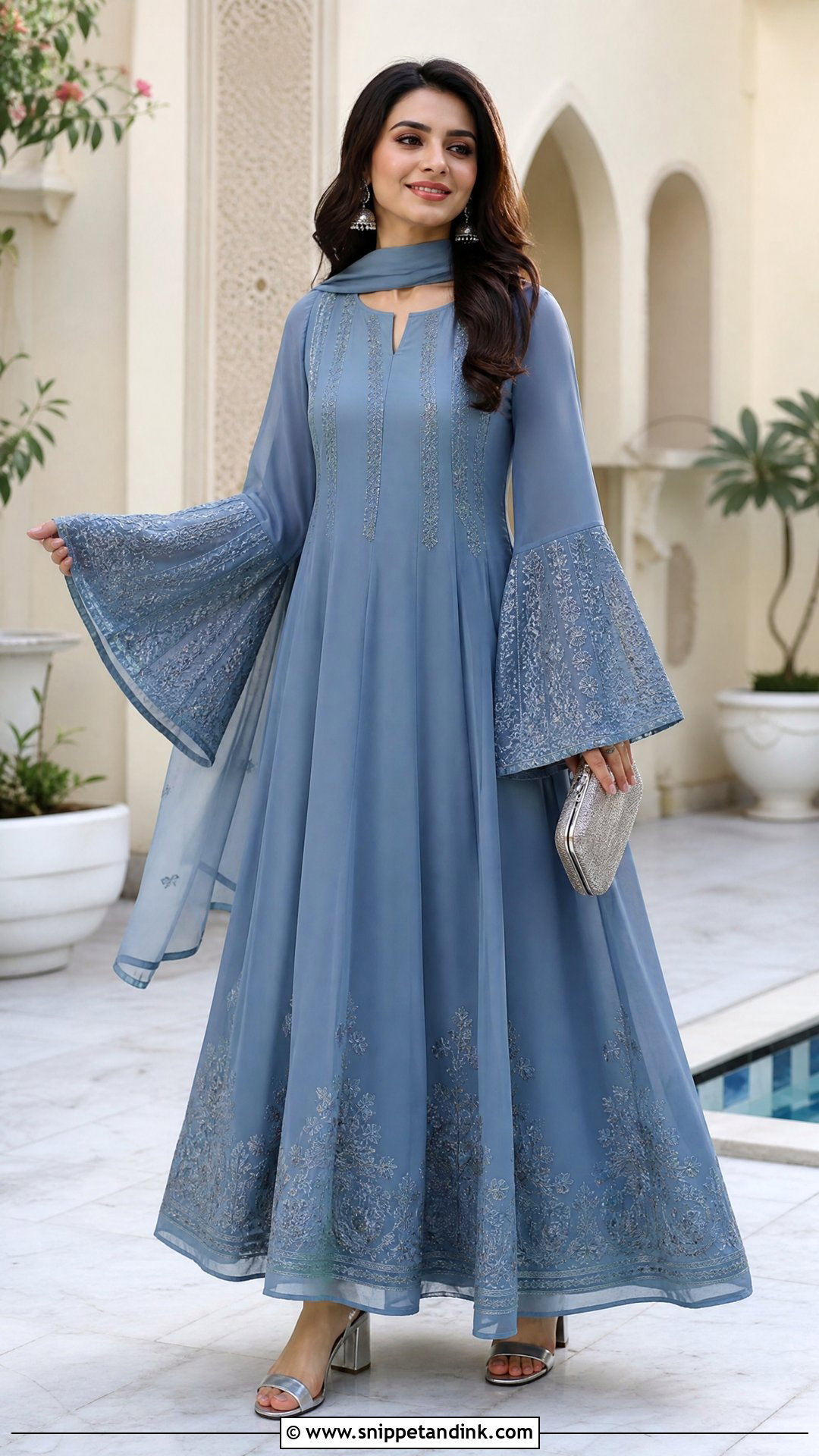
Bell sleeves turn a simple gown into something memorable, but they live in the buffet line. Wide sleeves that open below the elbow drag through food and catch on chair backs, so I suggest a sleeve that widens moderately, not dramatically. Chiffon, georgette and light net let the bell move. Keep the bodice fitted and the skirt softly flared so the sleeves stay the main feature. Drape a narrow dupatta over one shoulder without covering the cuff detail. Skip stacked bracelets, which tangle in the sleeve edge. Slim earrings and block heels complete it.
19. Pakistani High Neck Gown With Long Sleeves
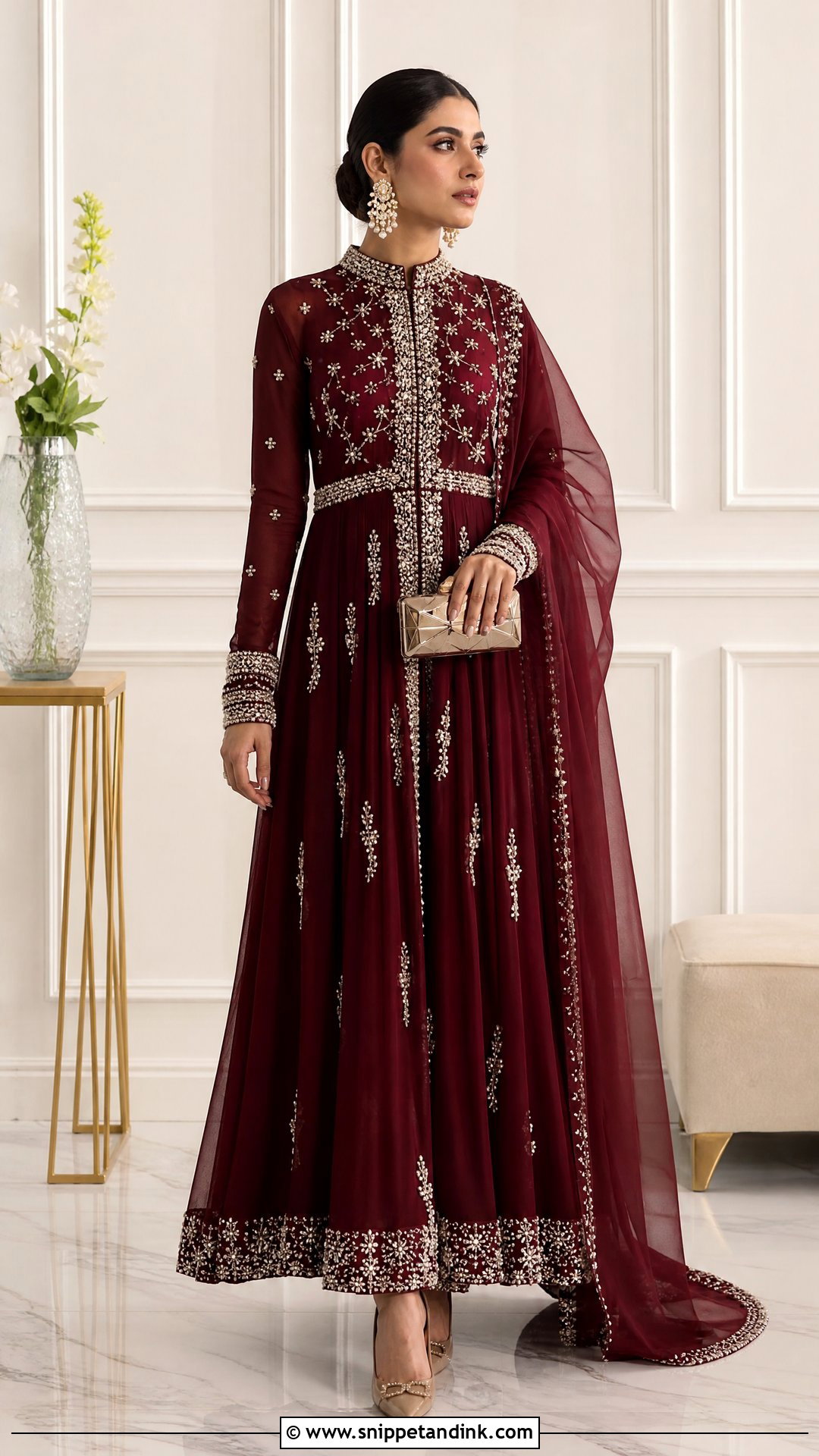
A high-neck gown with long sleeves gives elegant coverage and one continuous line. Pearls, beads or fine thread at the neckline replace a necklace, so wear statement earrings instead. A high neck needs a hidden back opening that reaches high enough to get your head through without stretching the collar; check it before you buy. Teal, plum and burgundy suit evenings, and lavender or sage work for day. A cape-like back drape can replace the dupatta, or you can carry a simple sheer scarf. A sleek low bun keeps the neckline visible.
20. Pakistani Bridal Gown With Long Train
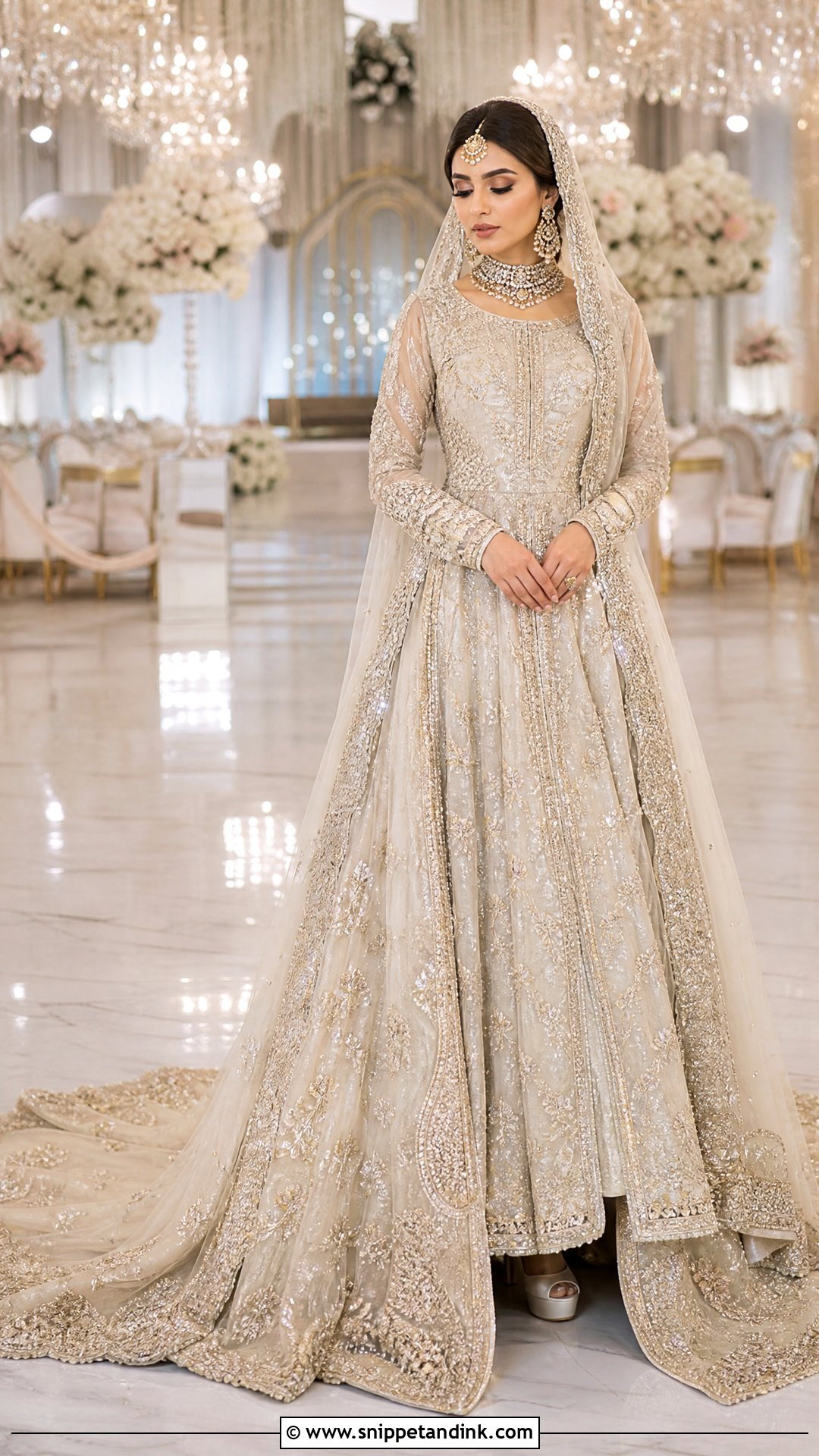
For a bride who prefers a gown to a lehenga, a long train is the dramatic option. It needs a structured bodice with real inner support, or the weight of the train pulls the back of the gown down. Ask your maker for a bustle or a wrist loop so you can lift the train after the entry and actually move at the reception. Leave some open space between the zari, pearl and crystal motifs so the embroidery reads clearly. Ivory, deep red, maroon and champagne all suit it. Coordinate the dupatta border with the train, and practice walking, turning and sitting at every fitting.
Ordering From a Pakistani Label While Living Abroad
A lot of guests shop from Pakistani brands online, and the sizing is where most orders go wrong. Ready-to-wear size charts vary between labels, so I never trust the letter size. Measure your bust, waist, hips, armhole and shoulder-to-floor length with your heels on, then compare against the brand’s chart in inches.
- Ask whether the gown is stitched, semi-stitched or unstitched; unstitched fabric still needs a local tailor.
- Ask how much seam allowance is left in the side seams, so a tailor can let it out if needed.
- Allow for production plus international shipping and possible customs delays. Weeks, not days, and it varies by label and season.
- Plan a local alteration appointment after it arrives, before the wedding week.
Where a Guest Gown Should Stop Short of Bridal
The bride’s outfit is usually the heaviest in the room, and good guest styling respects that. I’d avoid deep bridal red at a baraat, a full train at someone else’s reception and anything so densely worked it rivals the couple on stage. If the family has announced a color for a function, wear it even if it isn’t your favorite. A muted version of the theme looks considerate, and you’ll fit naturally into the family photographs.
One Silhouette, Twenty Ways to Wear It as a Guest
A single gown shape can be adjusted for season, age and occasion. Start with a cut you can sit, walk and greet in comfortably, then settle the fabric weight for the time of day: organza and chiffon for daylight, silk and velvet for evenings. Choose one or two focal details, maybe statement earrings or a worked dupatta, and keep everything else quiet. Arrange alterations early. A gown that fits you properly looks more expensive than a heavier one that doesn’t.
You'll Like These Ideas:


Leave a Reply