
Black tie is the one dress code where the rules actually help you. A black tuxedo already tells everyone this is an occasion, so what’s left are smaller decisions: lapel shape, shirt front, shoes, and how the groom separates himself from the groomsmen. I fit grooms for ballrooms, rooftops, winter weddings and garden formals in essentially the same base outfit, and the mood shifts through the details, from satin facings and velvet jackets to tonal black and a colored bow tie. Below are thirty ways to wear it, with the fit points I look at for each.
Rent It or Buy It? Count the Wears First
That’s the first question I settle with any groom. Renting suits a man who doesn’t own black tie and won’t need it again. Buying makes sense if you expect more formal events, or if your build sits between standard rental sizes, where a bought tux can be properly tailored to you.
What a rental can and can’t fix
Rental jackets are usually altered lightly, if at all, so you’re choosing the closest stock size. Sleeves and trouser hems can be adjusted; shoulders can’t. If the shoulders fit, most other problems can be worked around.
When to get measured
I ask grooms to be measured two to three months out, with a final try-on a few days before the wedding so there’s still time to swap a size. Shops vary, so check their cut-off dates. If you’re buying, start earlier, because a good tailor needs at least two fittings.
1. Classic Black Tuxedo Wedding
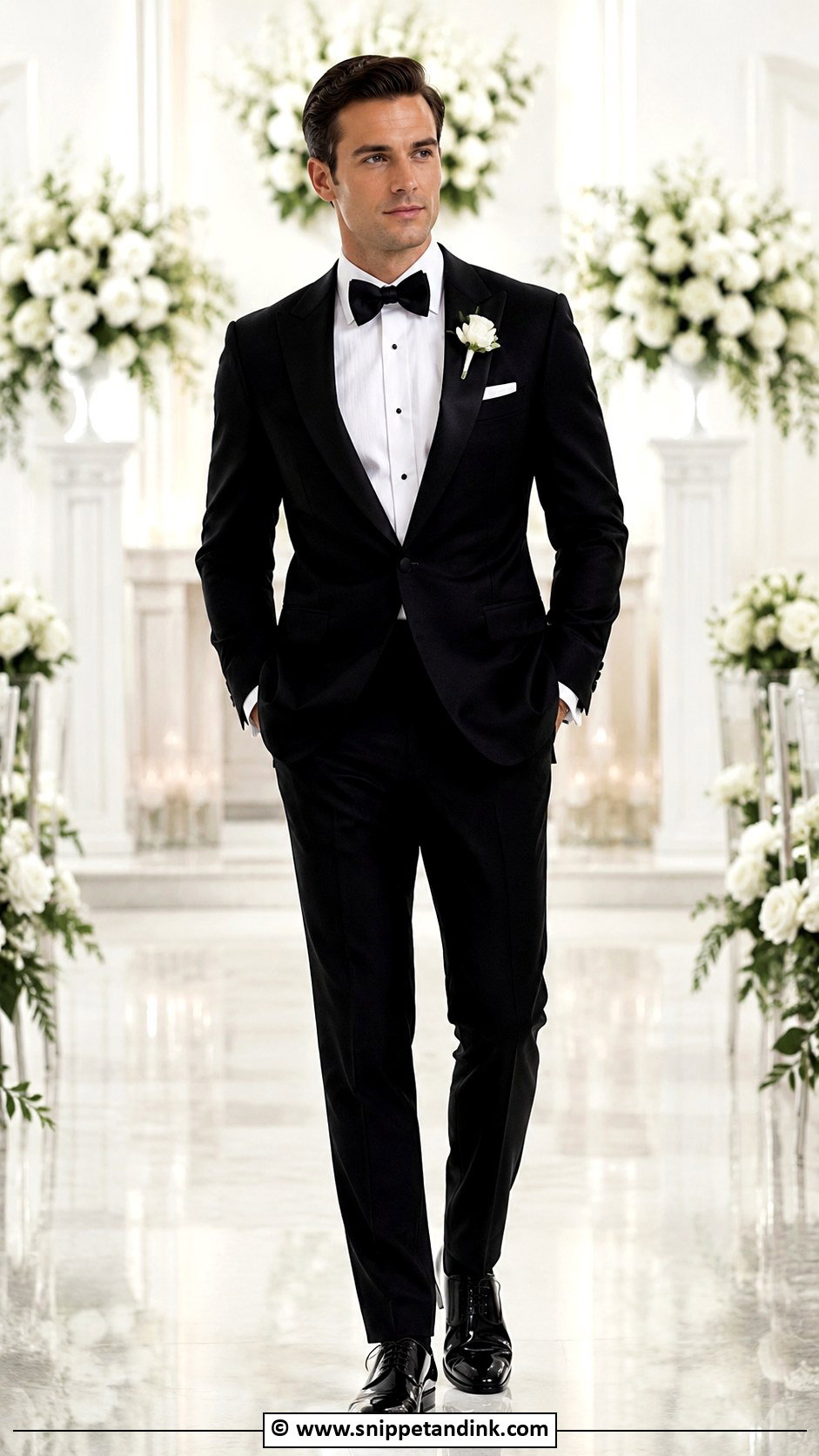
This is the baseline: a black jacket with satin peak or shawl lapels, matching trousers with a side stripe, a crisp white dress shirt and a black bow tie. Black patent oxfords or opera pumps finish it, with a plain white pocket square. Fit decides everything. I look for a jacket that sits flat at the shoulders with no dent below the collar, trousers with little or no break, and roughly a quarter to half an inch of shirt cuff showing. Get those right and it works at any evening ceremony.
2. Black Peak Lapel Tuxedo Wedding
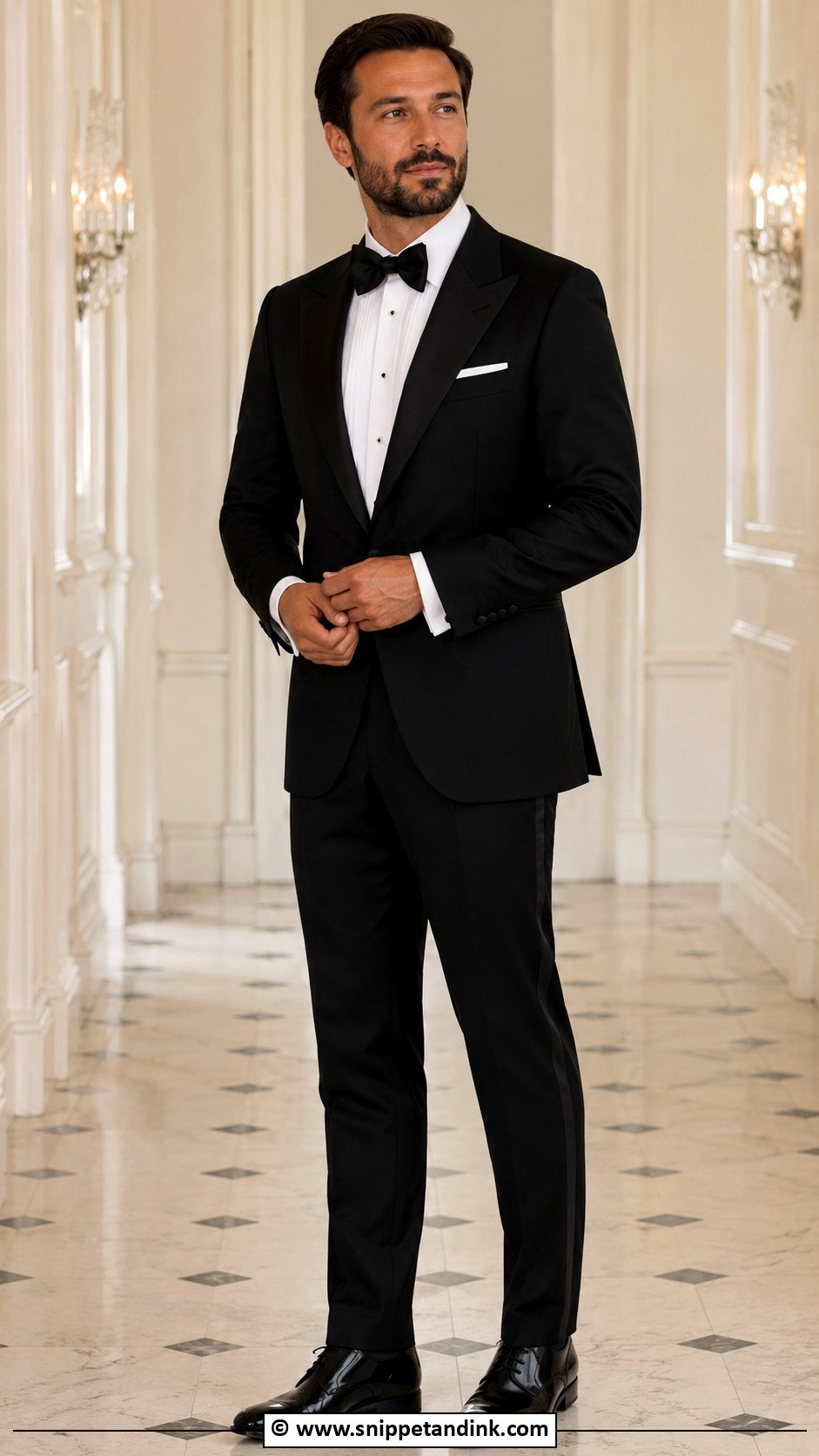
Peak lapels point up toward the shoulders, which widens the chest visually and gives a strong line in portraits. On a narrow-shouldered groom, that’s exactly the effect I’m after. Pair it with a pleated or bib-front shirt, a black bow tie, satin-striped trousers and polished black shoes. Cufflinks, a white pocket square and a small boutonniere matched to the flowers are enough. If the groomsmen also wear black, give the groom the peak lapel and put them in shawl collars, so he reads as different from across the room.
3. Black Shawl Collar Tuxedo Wedding
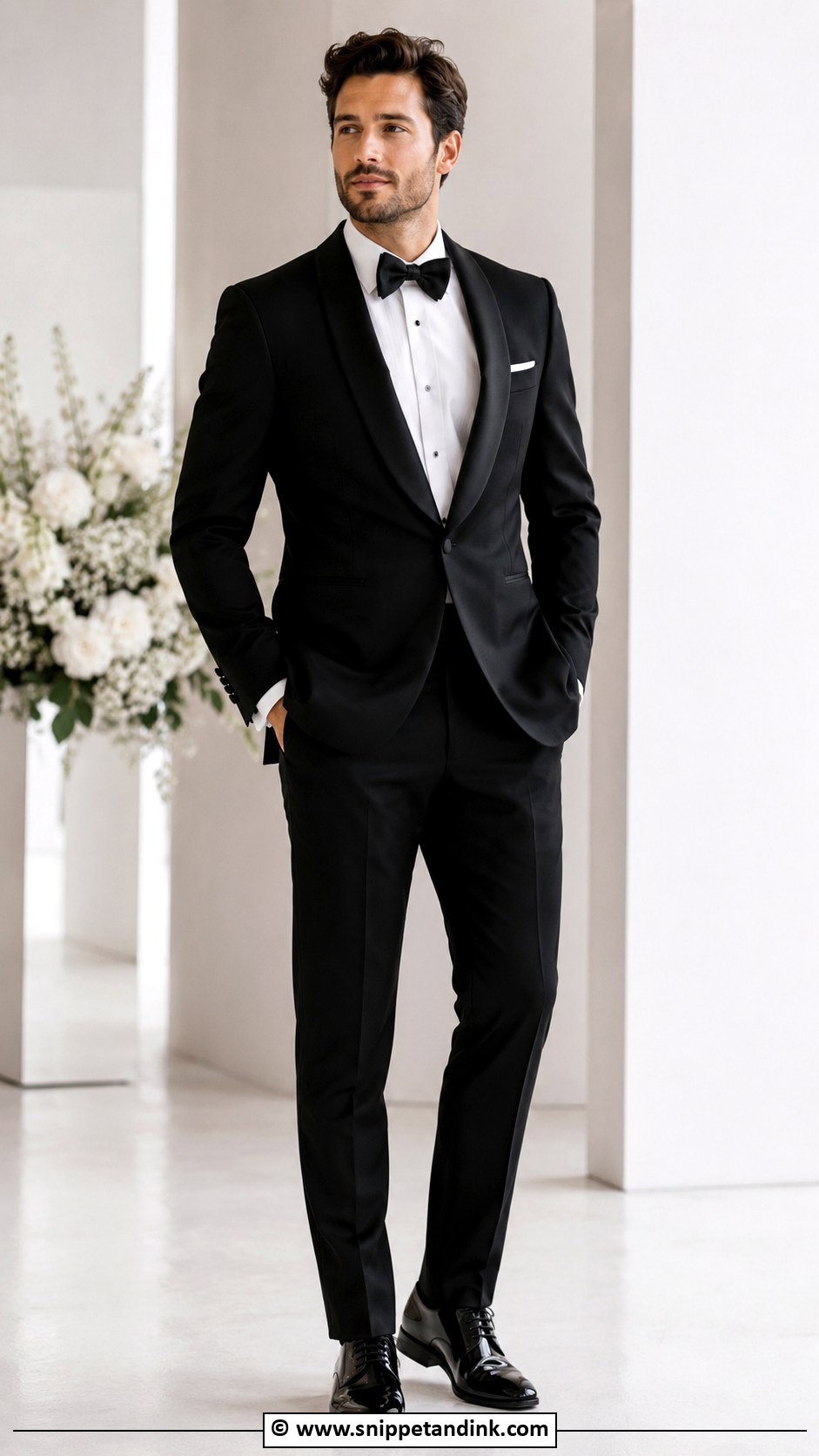
A black shawl collar tuxedo has one continuous rounded lapel with no notch, the original dinner jacket shape, and it reads smoother and softer than a peak. It’s my usual pick for gallery spaces, rooftops and modern hotels. Wear it with a white tuxedo shirt, black bow tie, matching trousers and glossy shoes. The satin catches light along the curve, which shows up subtly in photos. Keep the fit close but not tight, and leave busy accessories out.
4. All Black Tuxedo Wedding
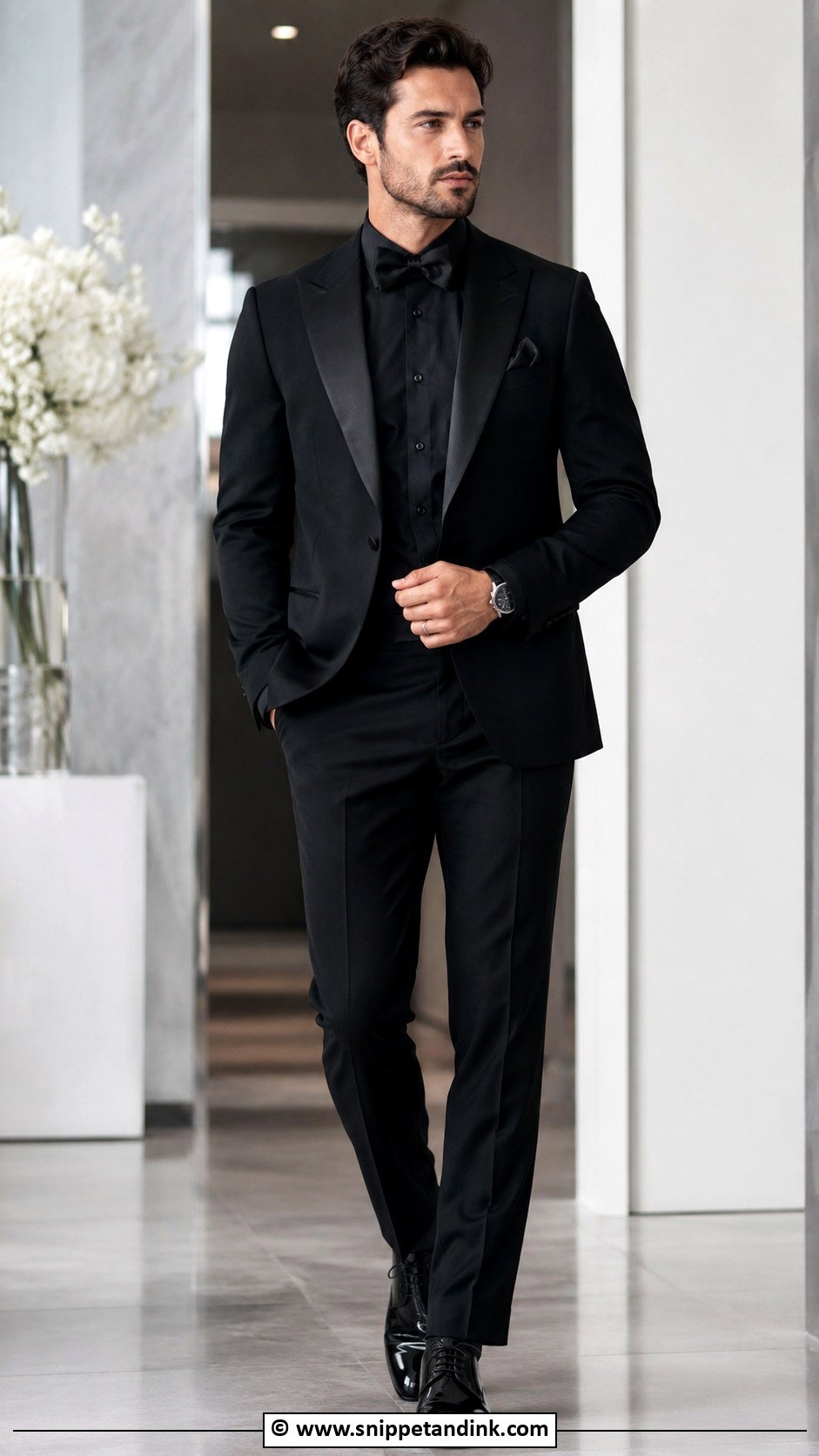
Swapping the white shirt for black gives you a tonal look for evening weddings, city venues and moody lighting. Use a black dress shirt, a black bow tie or silk necktie, matching trousers and polished shoes. Texture is what stops it from going flat on camera, so I mix surfaces: wool jacket, satin lapels, a silk tie, perhaps velvet. A white or deep burgundy boutonniere gives the single spot of contrast. Tonal outfits expose every proportion, so the tailoring has to be excellent.
5. Black Tuxedo With White Shirt Wedding
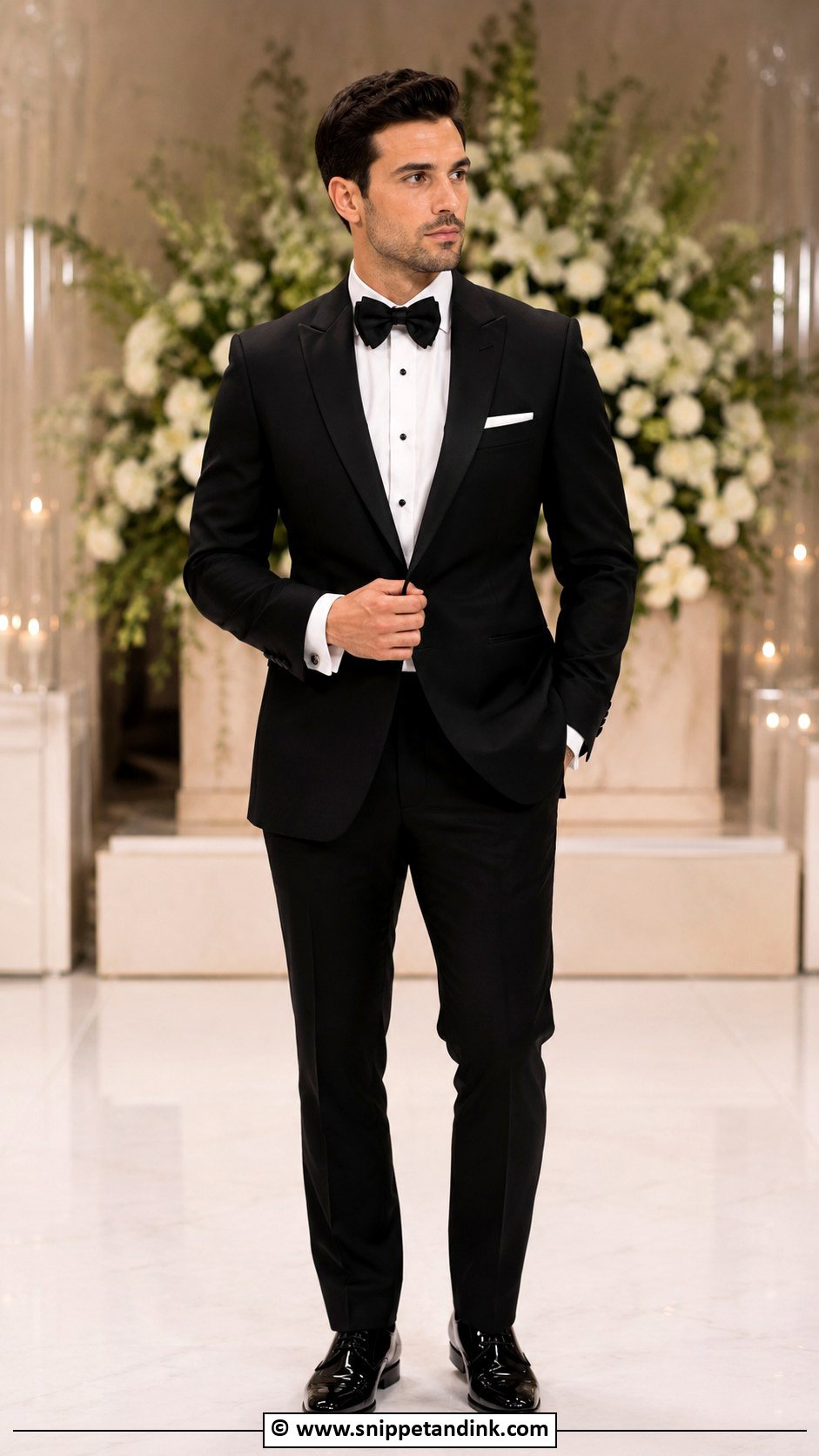
The white shirt is what makes a tuxedo look formal rather than merely dark. The collar sets the level: a turndown or spread collar is classic and easy, while a wing collar is the most formal and only works with a bow tie. A pleated front or hidden placket adds the next layer of polish. Add a black bow tie, black trousers, patent shoes and simple cufflinks. I suggest this combination to couples who want photos that won’t date, and it makes coordinating fathers and ushers simple.
6. Black Tuxedo With Black Bow Tie Wedding
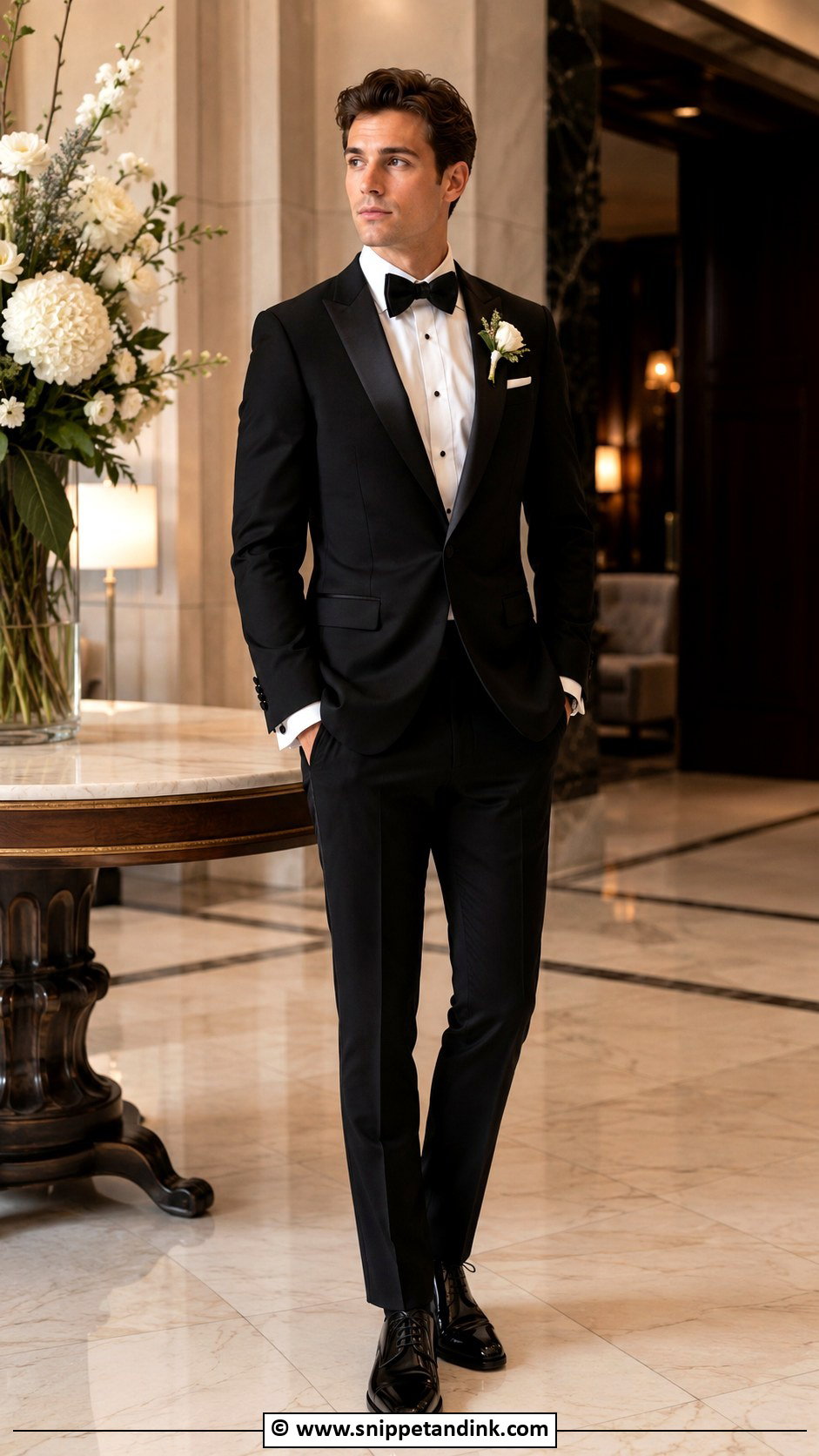
A black bow tie is the standard, and it keeps the shirt front visible so the tux never reads as a business suit. A self-tied bow is worth learning; it sits a touch asymmetrically, which looks real in close-ups, whereas a pre-tied one can look stamped out. If you do go pre-tied, choose one with an adjustable band and a natural shape. I match the bow tie’s fabric to the lapel facings, satin with satin, grosgrain with grosgrain. A cleanly folded white pocket square finishes it.
7. Black Tuxedo With Long Tie Wedding
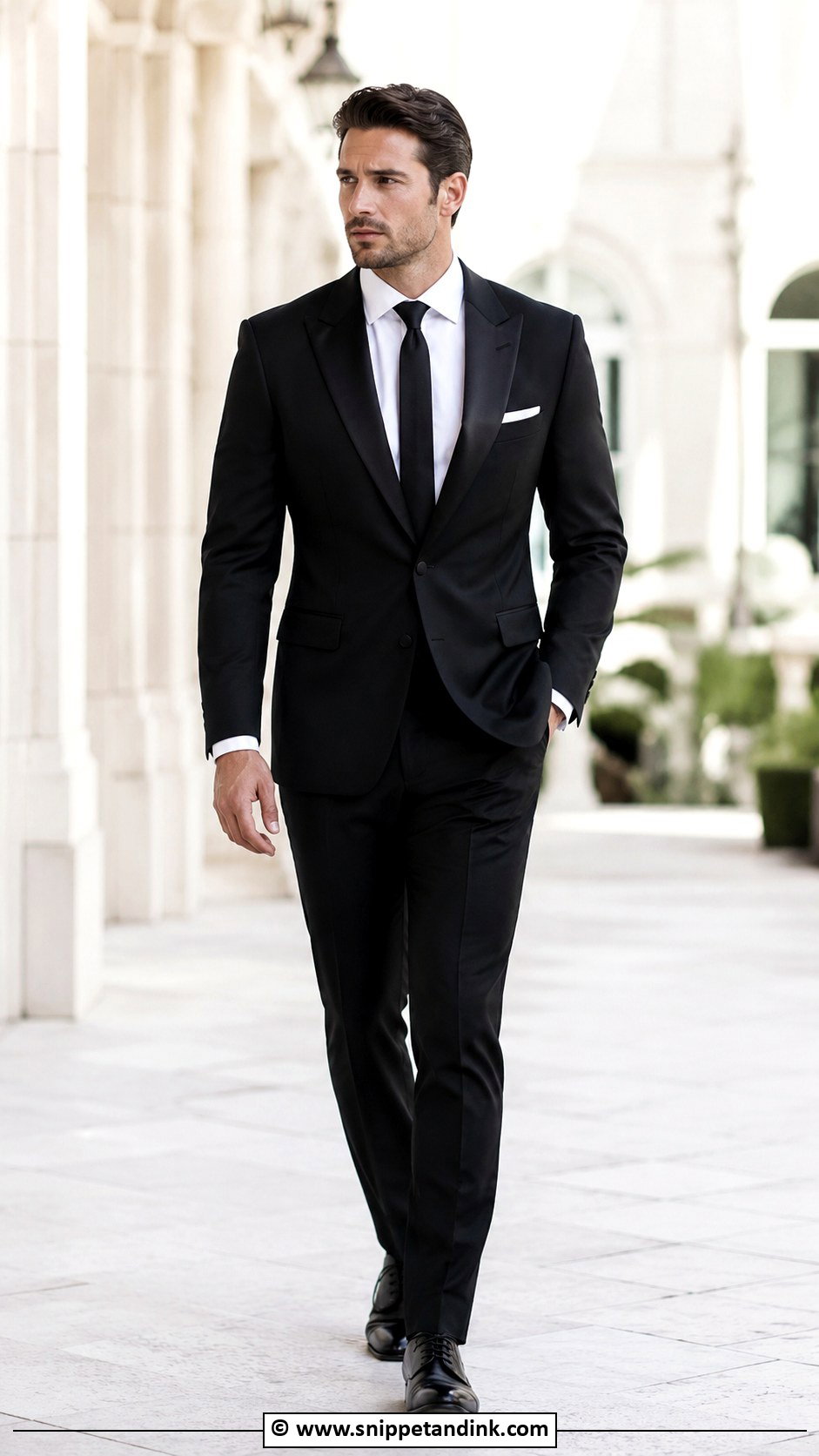
A long tie makes a tux feel more modern and a little more relaxed. I’d only use it for black-tie optional or semi-formal weddings, never strict black tie. Choose a slim black silk tie or a satin one in a classic width, with a white shirt, black jacket, matching trousers and black oxfords. The tie needs some sheen to belong beside satin lapels, because a matte office tie drags the whole outfit back toward a work suit. It’s also an easy way for the groom to differ from groomsmen in bow ties.
8. Black Tuxedo With Velvet Bow Tie Wedding
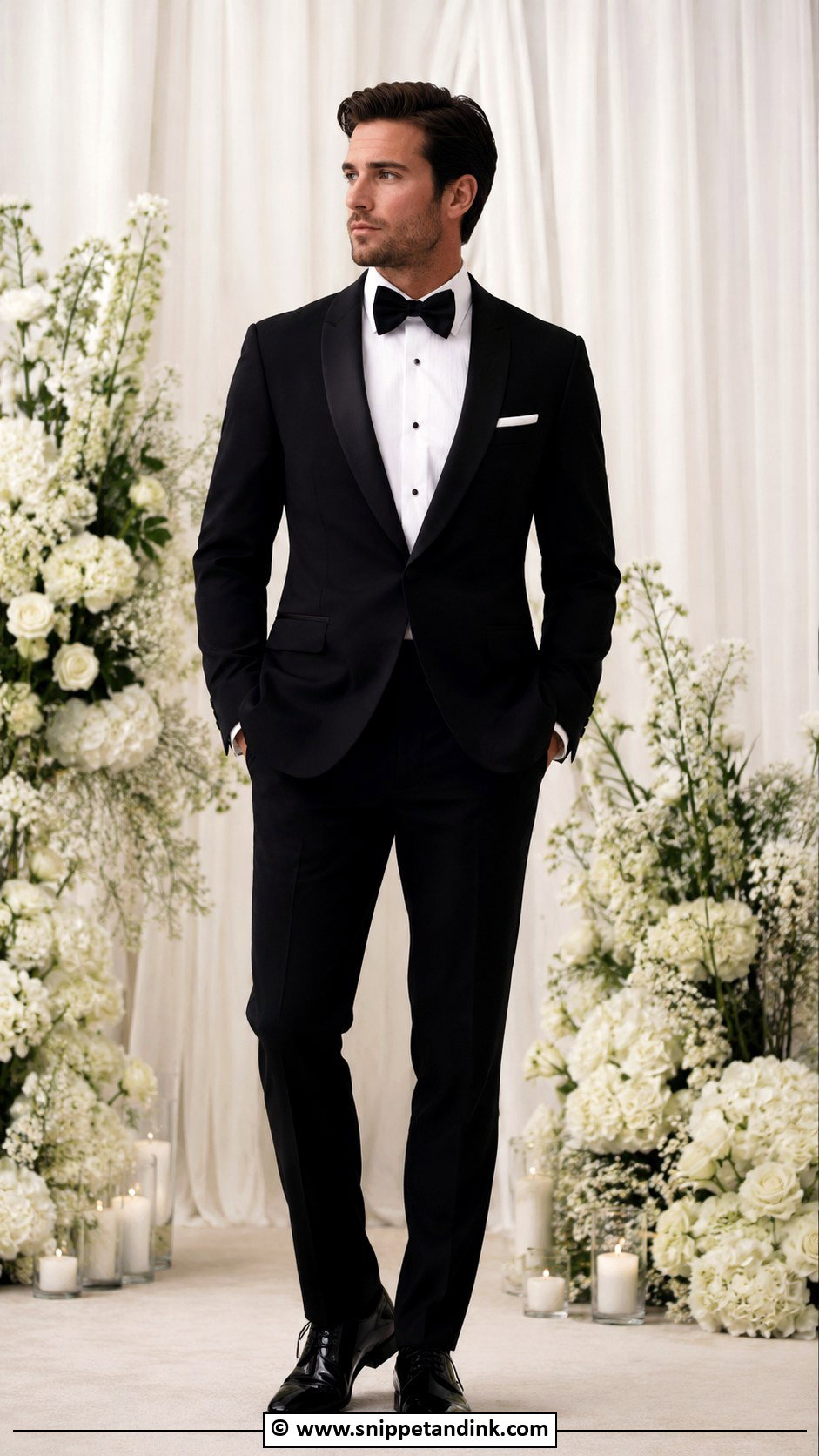
A black tuxedo with velvet bow tie adds texture without breaking any rules, and velvet feels right from autumn through winter. Keep the jacket classic with satin lapels, plus a white shirt, black trousers and patent shoes. Velvet bow ties come in black, deep green, navy or burgundy; I keep the shade dark, since a bright velvet looks costume-like next to satin. Velvet also crushes, so store the tie flat instead of balling it into a pocket.
9. Black Velvet Tuxedo Jacket Wedding
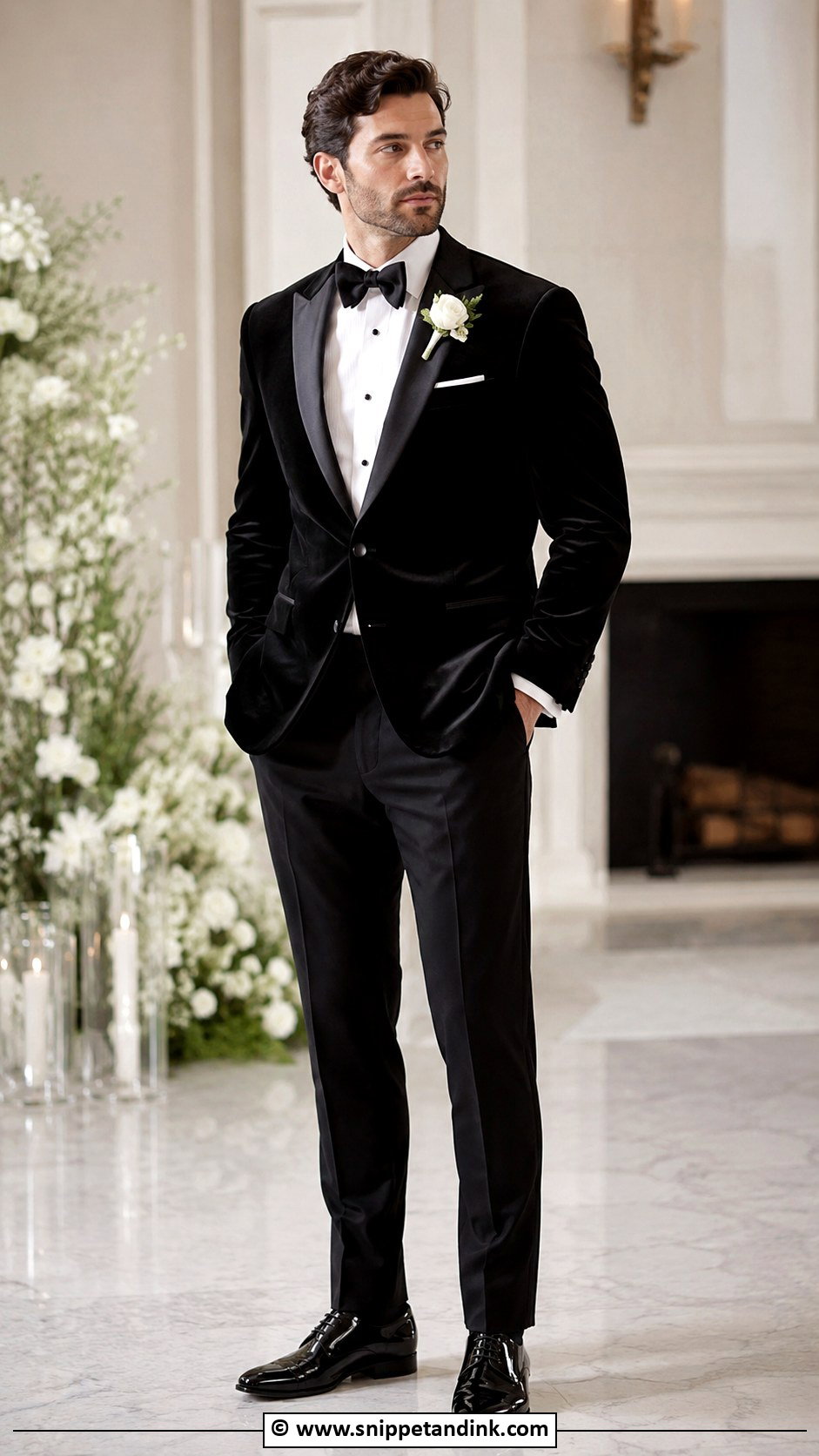
With a velvet jacket, the jacket is the outfit. Balance it with black tuxedo trousers, a white shirt, a black bow tie and polished shoes. Velvet traps heat, so it belongs to autumn and winter evenings indoors; in a warm marquee you’ll be sweating before the speeches. Keep accessories to a white pocket square and a small boutonniere so the texture has room. When it goes for alterations, I ask the tailor to watch the pile direction, because a recut panel with the nap running the wrong way shows as a different shade.
10. Black Double Breasted Tuxedo Wedding
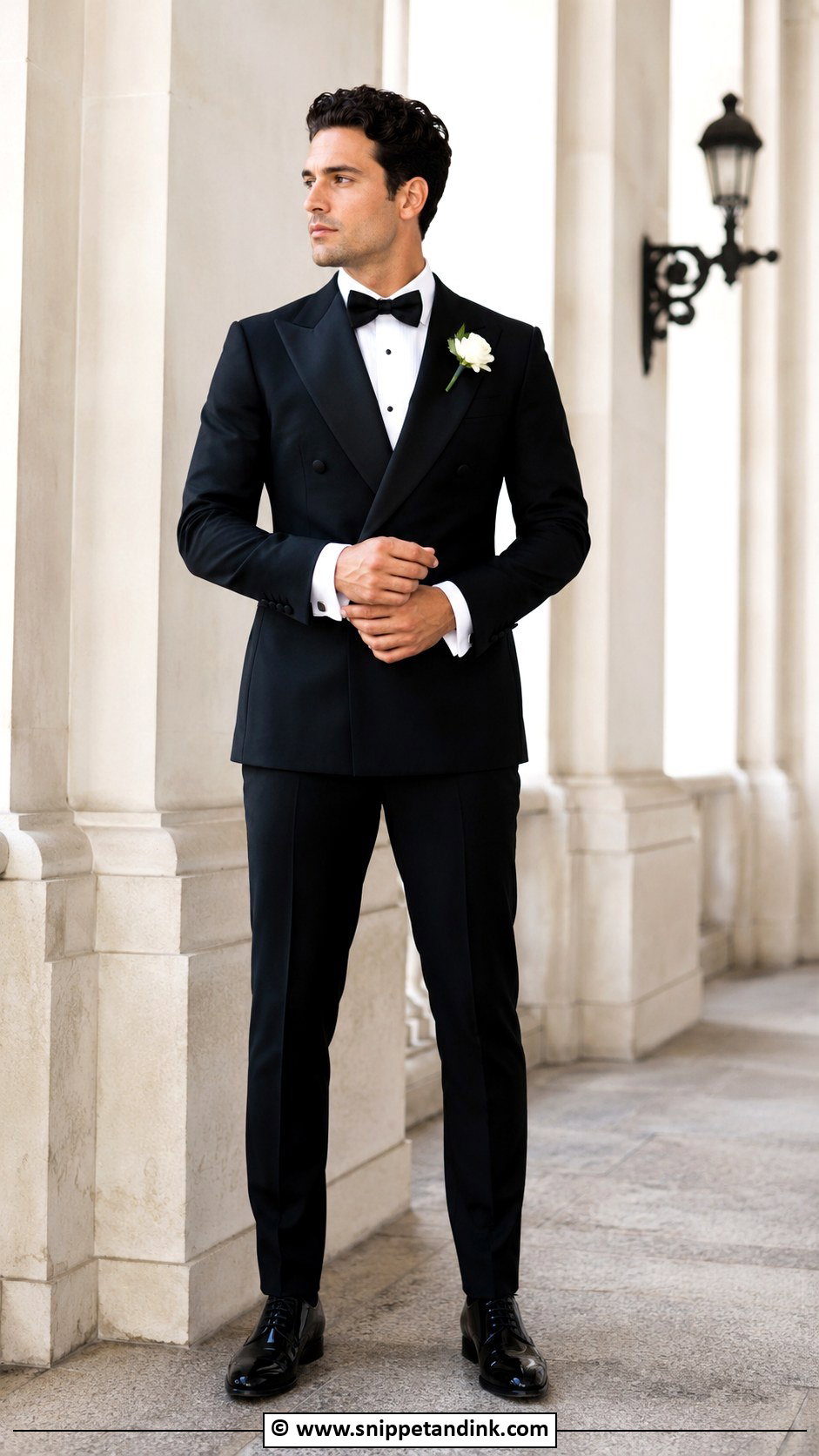
A black double breasted tuxedo overlaps across the torso and builds a strong, structured front. The catch: it has to stay buttoned. Open, the extra fabric flaps and looks sloppy, so it suits grooms who’ll keep the jacket on all evening. Fit must be precise across the chest and waist. Wear it with a white tuxedo shirt, black bow tie, matching trousers and sleek shoes, and keep everything else simple. It looks especially sharp in standing portraits.
11. Black Slim Fit Tuxedo Wedding
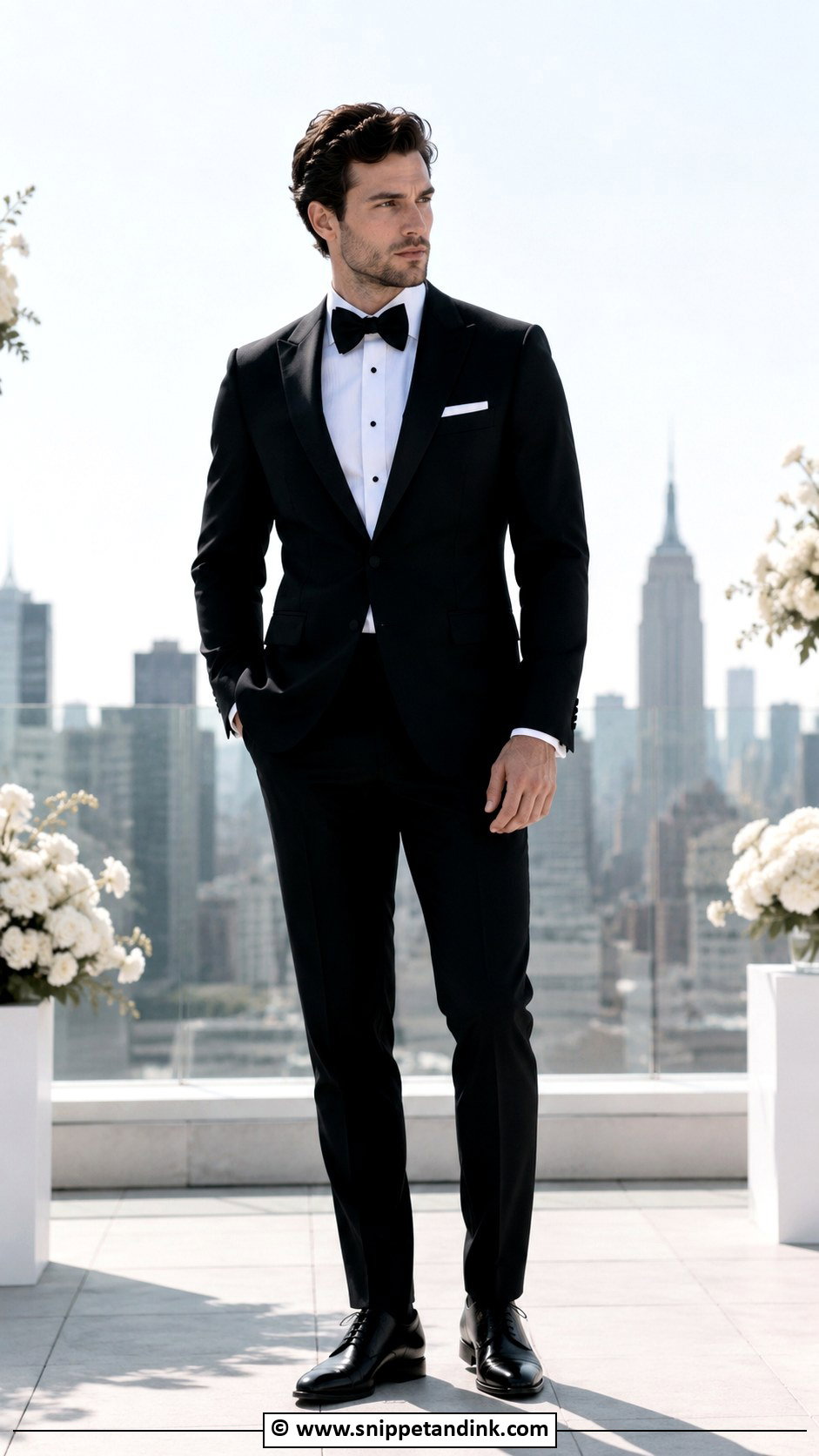
Slim fit follows the body closely without pulling at the buttons. My test is the fastened button: if the fabric forms an X of creases around it, the jacket is too tight. Pair it with tapered trousers, a white shirt, black bow tie, black socks and polished oxfords. Keep lapel width in proportion to your frame, since very narrow lapels date quickly and a moderate satin lapel ages well. A simple pocket square and understated cufflinks finish it.
12. Black Modern Fit Tuxedo Wedding
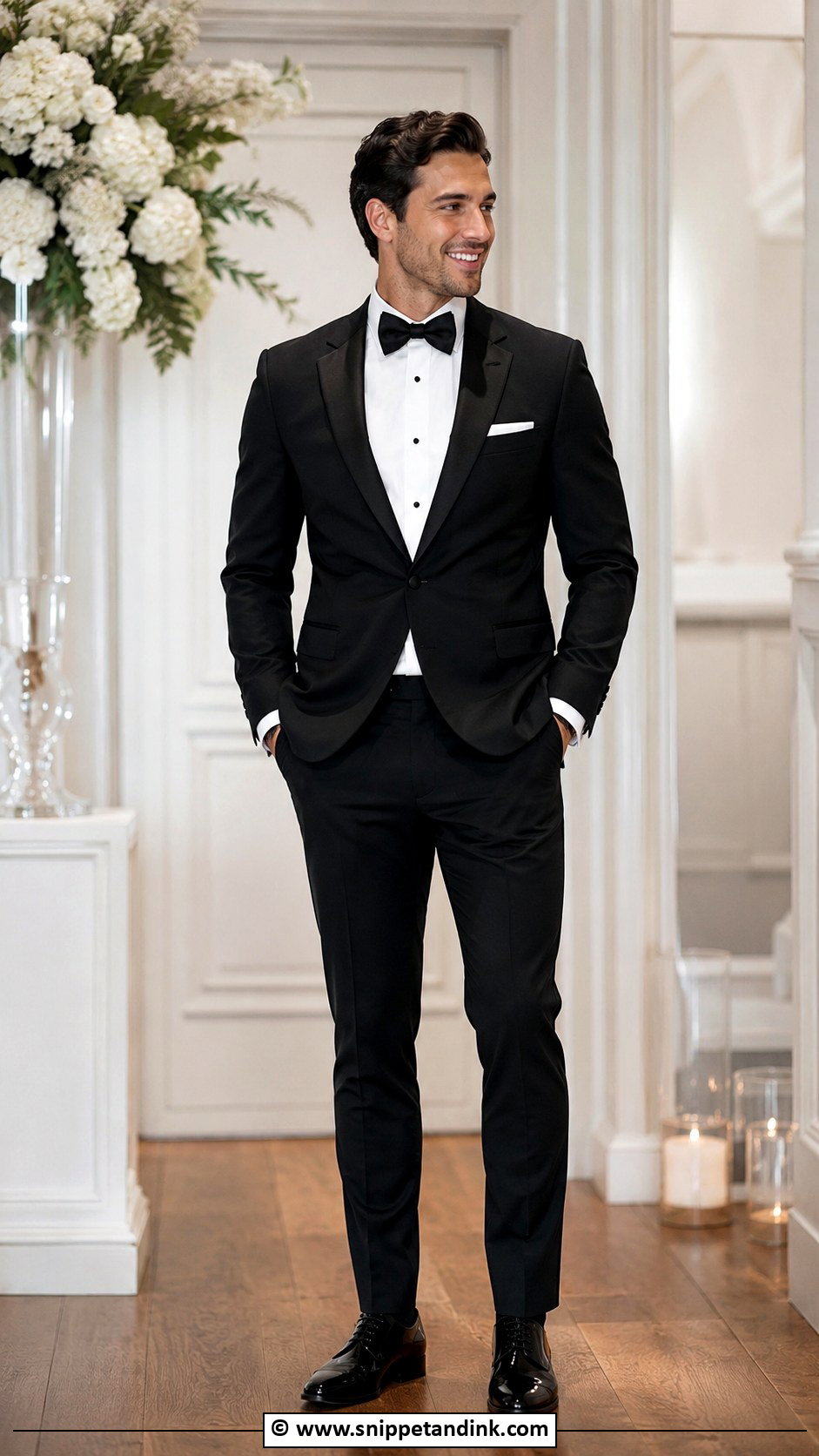
Modern fit sits between slim and classic: shaped, with room to move. On a day that starts at breakfast and ends after midnight, that comfort matters more than grooms expect. It suits most builds, particularly athletic men who strain slim cuts across the shoulders and thighs. Wear it with a white tuxedo shirt, black bow tie, satin-lapel jacket and black formal shoes, plus silver cufflinks and a white pocket square.
13. Black Tuxedo With Suspenders Wedding
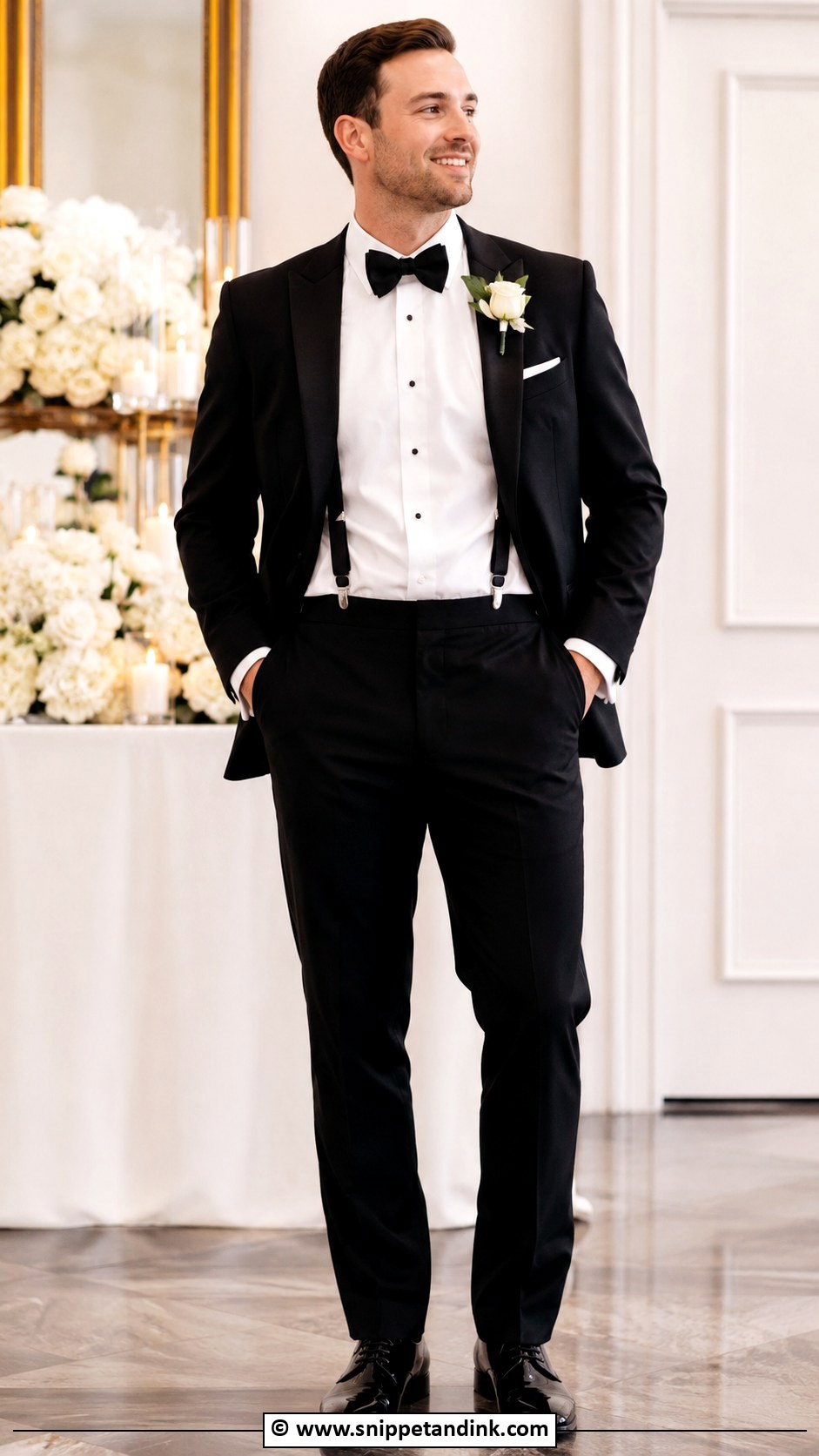
Traditional black tie skips the belt, and many tuxedo trousers have no belt loops at all, so suspenders are what keep them hanging cleanly. I prefer button-on suspenders to clip-ons, which can slip and chew the waistband; any tailor can add the buttons inside. Black or white silk under the jacket, with a white shirt, black bow tie and polished shoes. Once the jacket comes off at the reception they become part of the look, so keep them plain. They suit grooms, groomsmen and fathers alike.
14. Black Tuxedo With Cummerbund Wedding
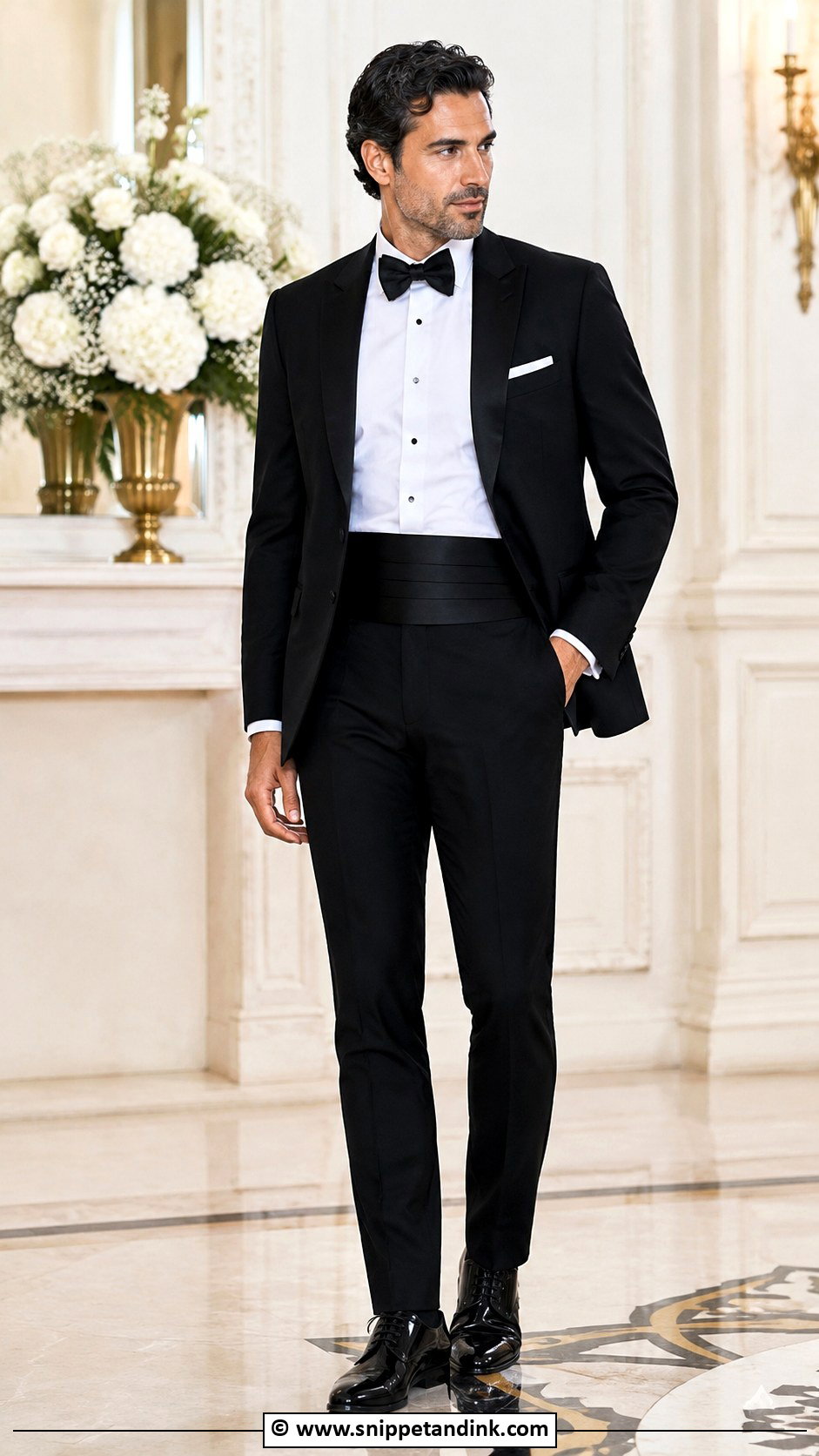
A cummerbund covers the waistband and smooths the line between shirt and trousers. Its pleats face upward, which is the detail people get wrong most often, and its color usually matches the bow tie. Pair a black satin one with the full classic outfit. It earns its place when the jacket is unbuttoned at dinner, because the waist still looks finished. Wear it at your natural waist, not slung on your hips.
15. Black Tuxedo With Vest Wedding
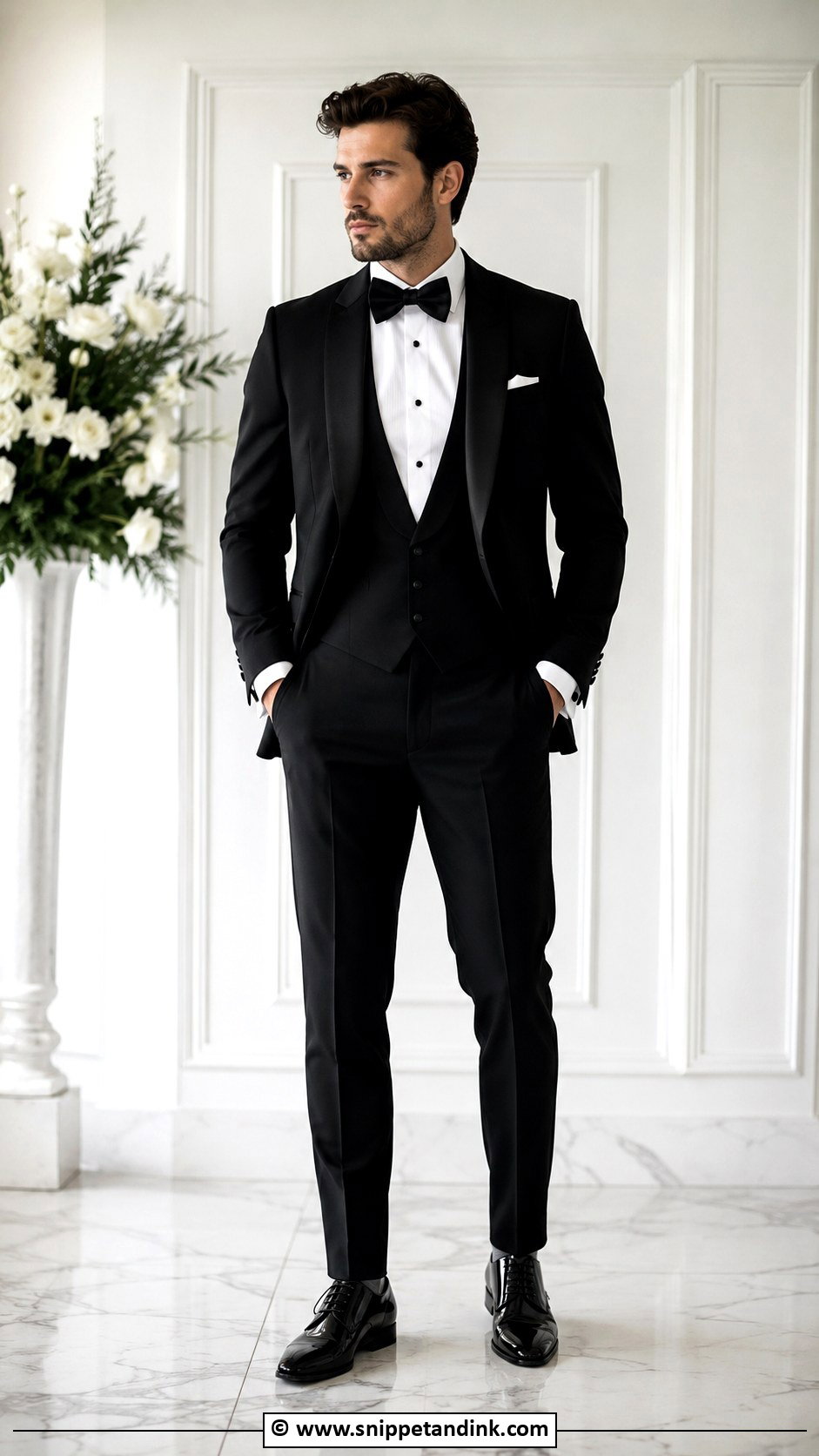
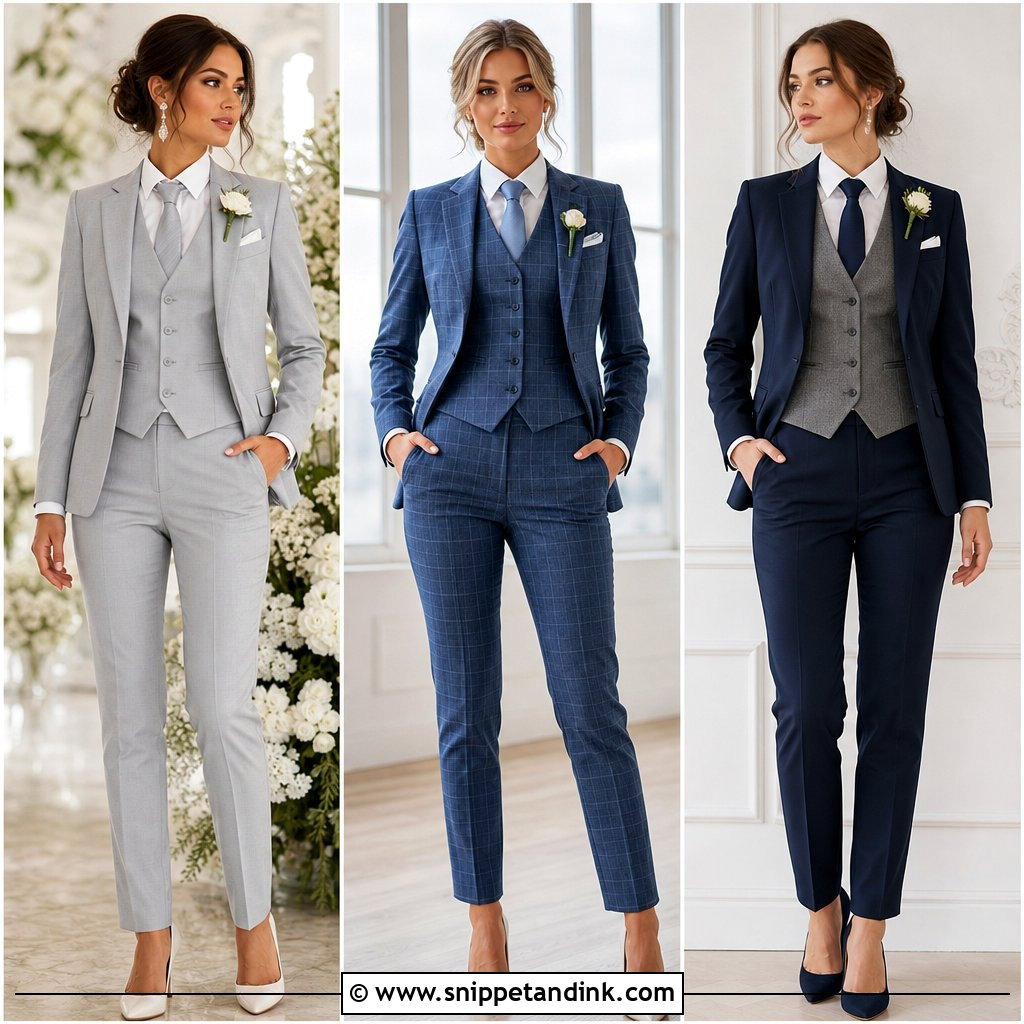
A tuxedo waistcoat is cut far lower than a business vest, with a deep U or V opening that shows the shirt front. That difference matters, since a regular suit vest under a dinner jacket looks borrowed. Choose black, close-fitting and thin enough not to add bulk under the jacket. A white tuxedo shirt, black bow tie, matching trousers and shoes complete it. It keeps the groom looking dressed when the jacket comes off, and in winter it’s warmer than a cummerbund.
16. Black Tuxedo With Patent Leather Shoes Wedding
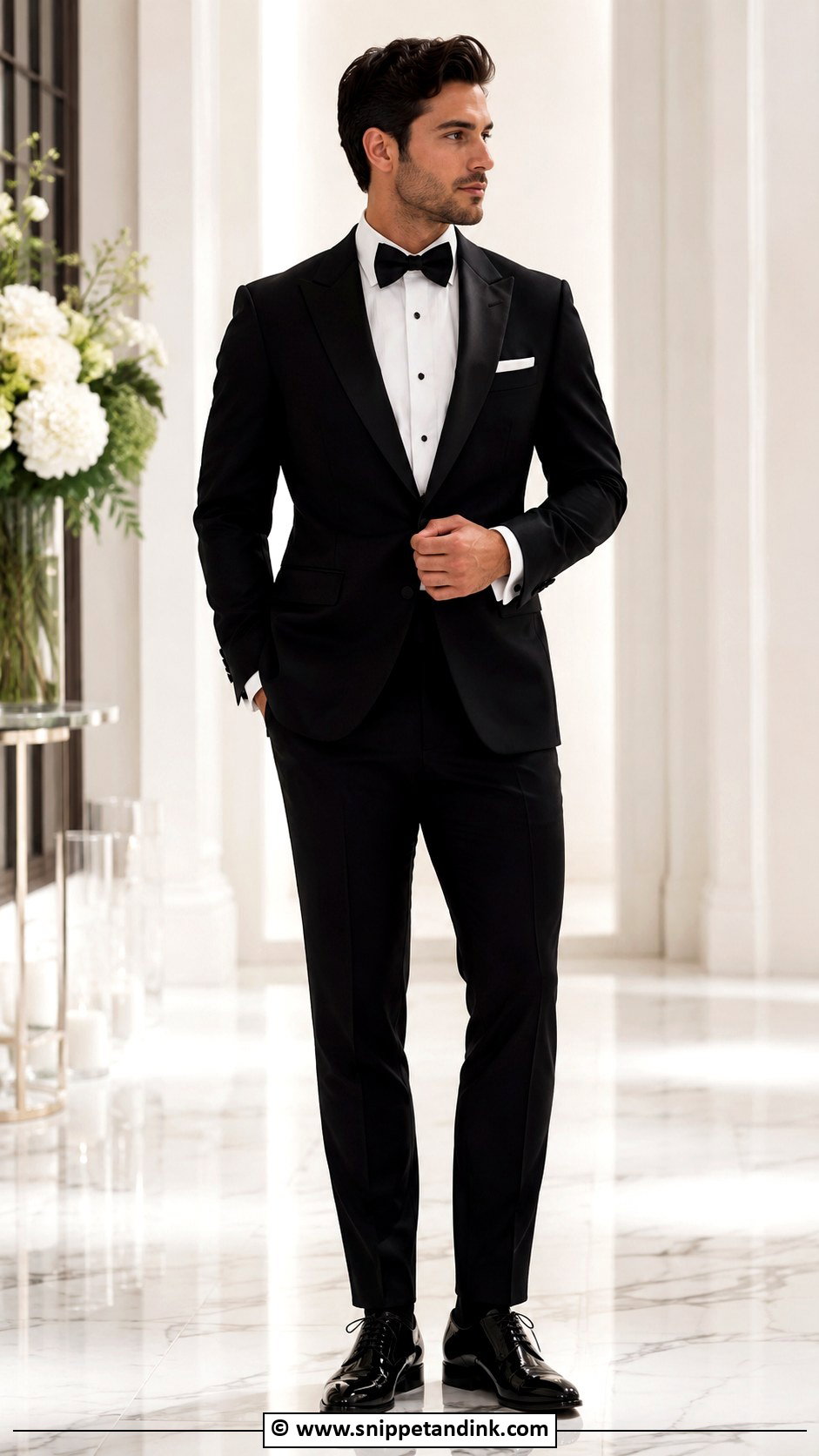
Shoes finish a tuxedo, and patent leather matches the shine of satin lapels the way nothing else does. Wear them with black dress socks and the classic outfit. If patent feels too glossy, highly polished black calfskin oxfords work, provided they’re plain-toed or minimally capped with no broguing. Avoid casual loafers, thick soles and anything brown. Patent creases where the foot flexes, so break the pair in around the house for a few evenings before the day.
17. Black Tuxedo With Loafers Wedding
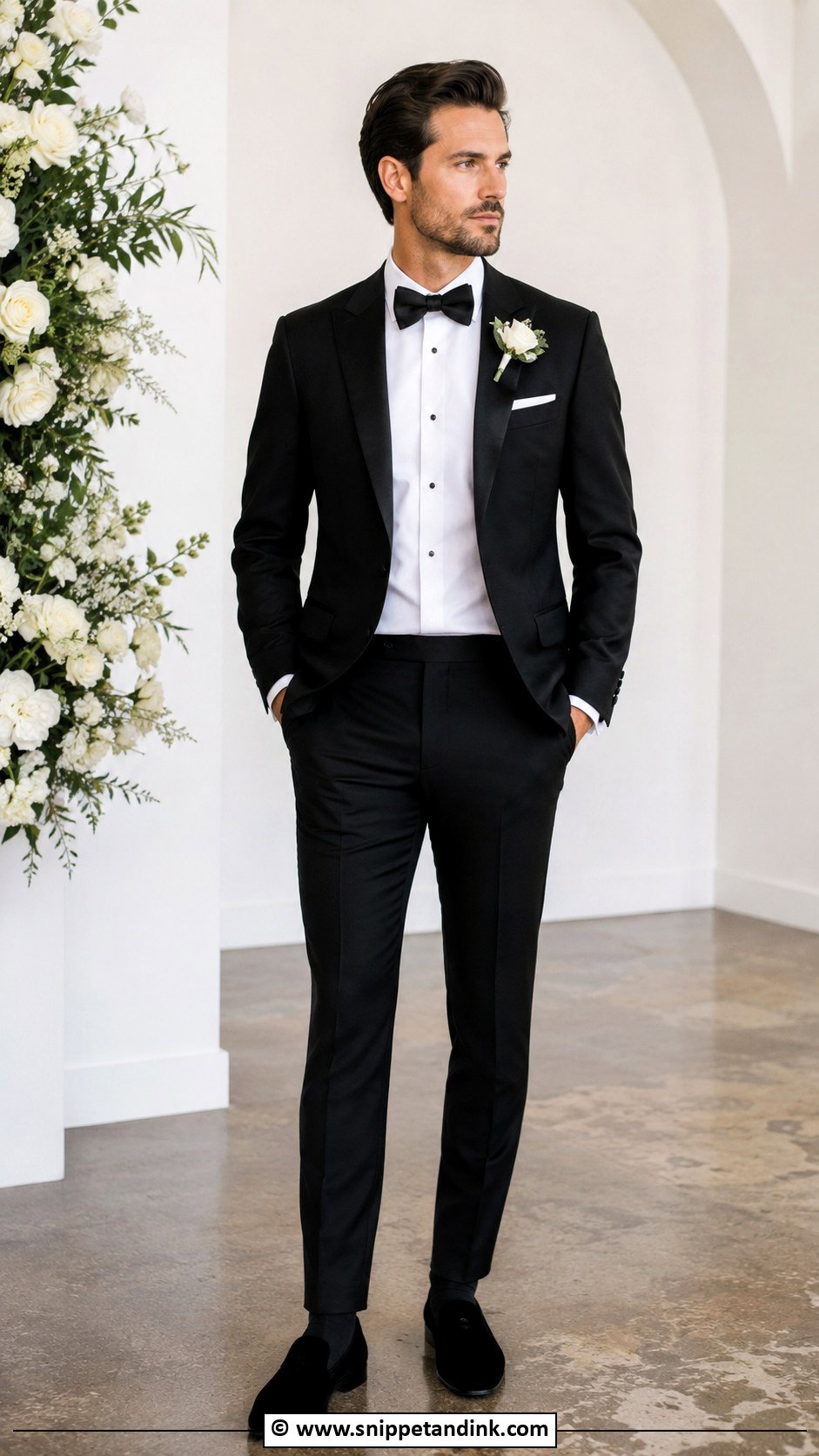
Loafers can work with a tux when they’re refined: black velvet slippers, patent loafers or slim black leather. Chunky soles and everyday slip-ons don’t belong here. They suit modern weddings, cocktail-formal receptions and destination venues. I’d wear black dress socks with them, since bare ankles undercut a formal dress code. A velvet slipper with a small embroidered motif shows personality without touching the rest of the outfit.
18. Black Tuxedo With Boutonniere Wedding
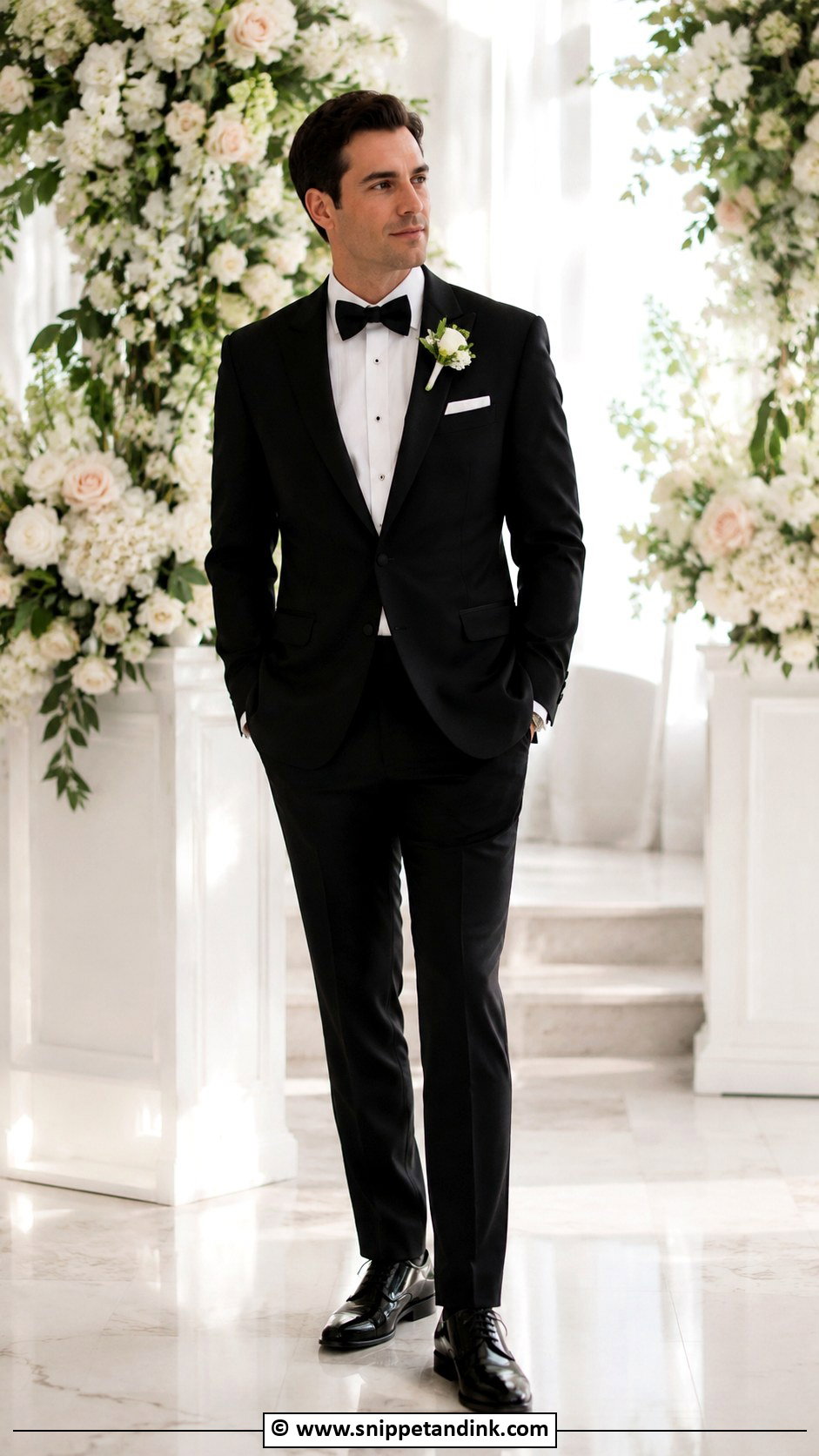
A boutonniere ties the groom into the wedding flowers. White blooms look classic, greenery looks fresh, and deep red or burgundy adds drama. It goes on the left lapel, sized to the lapel’s width; too large and it drags the lapel forward and hides the satin. I ask florists to pin it through the lapel with the stem angled toward the shoulder so it doesn’t flop, and if your jacket has a working lapel buttonhole, the stem can pass through that instead.
19. Black Tuxedo With White Pocket Square Wedding
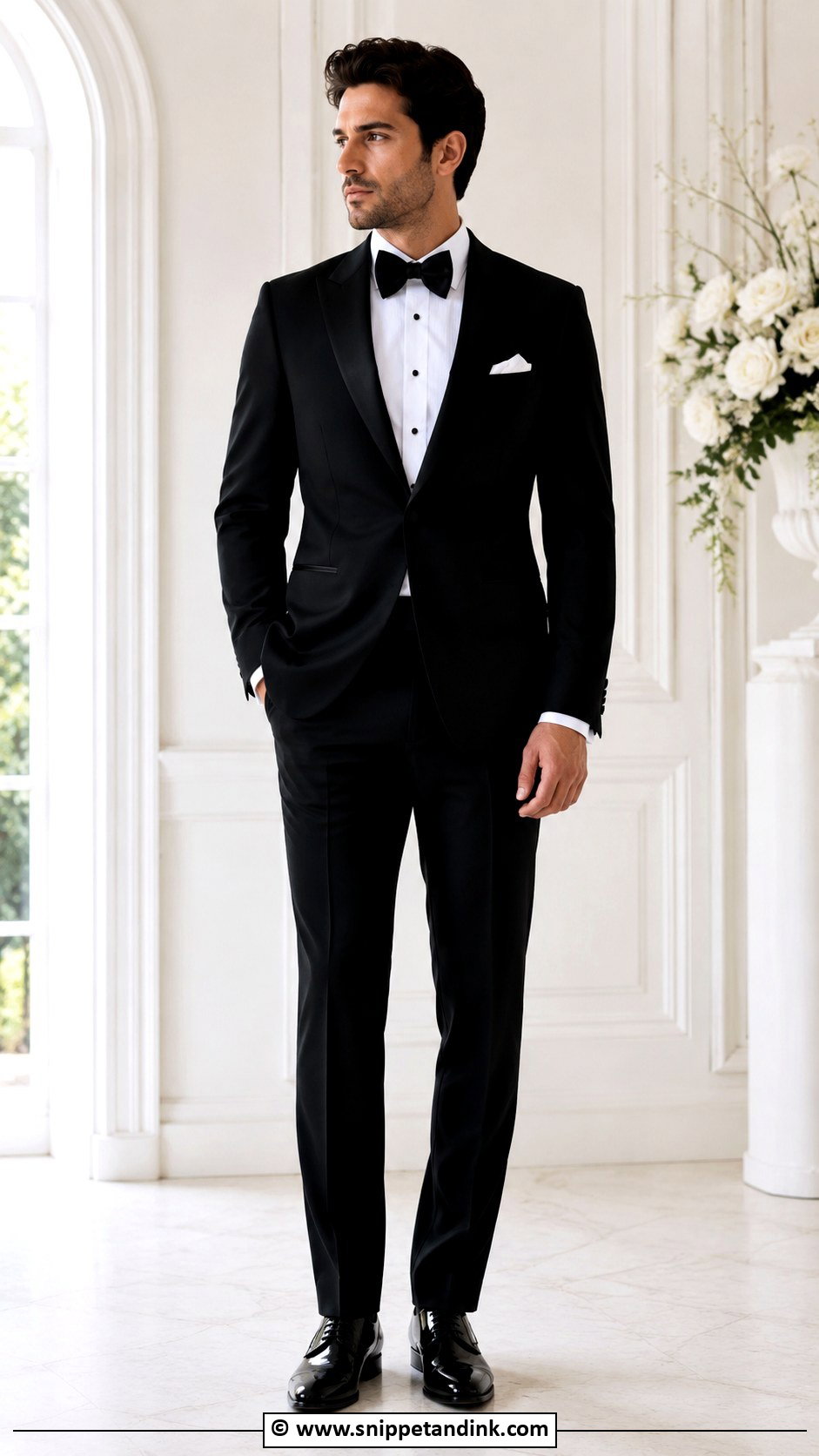
A white square brightens the jacket and echoes the shirt, which balances the outfit in photos. The straight fold is crisp and traditional; a soft puff is more relaxed. Use fine cotton, linen or silk, and don’t stuff too much fabric into the pocket, which makes the chest bulge. I press the square around a folded card insert before the day so it stays upright all evening. It suits almost every formal setting.
20. Black Tuxedo With Gold Accessories Wedding
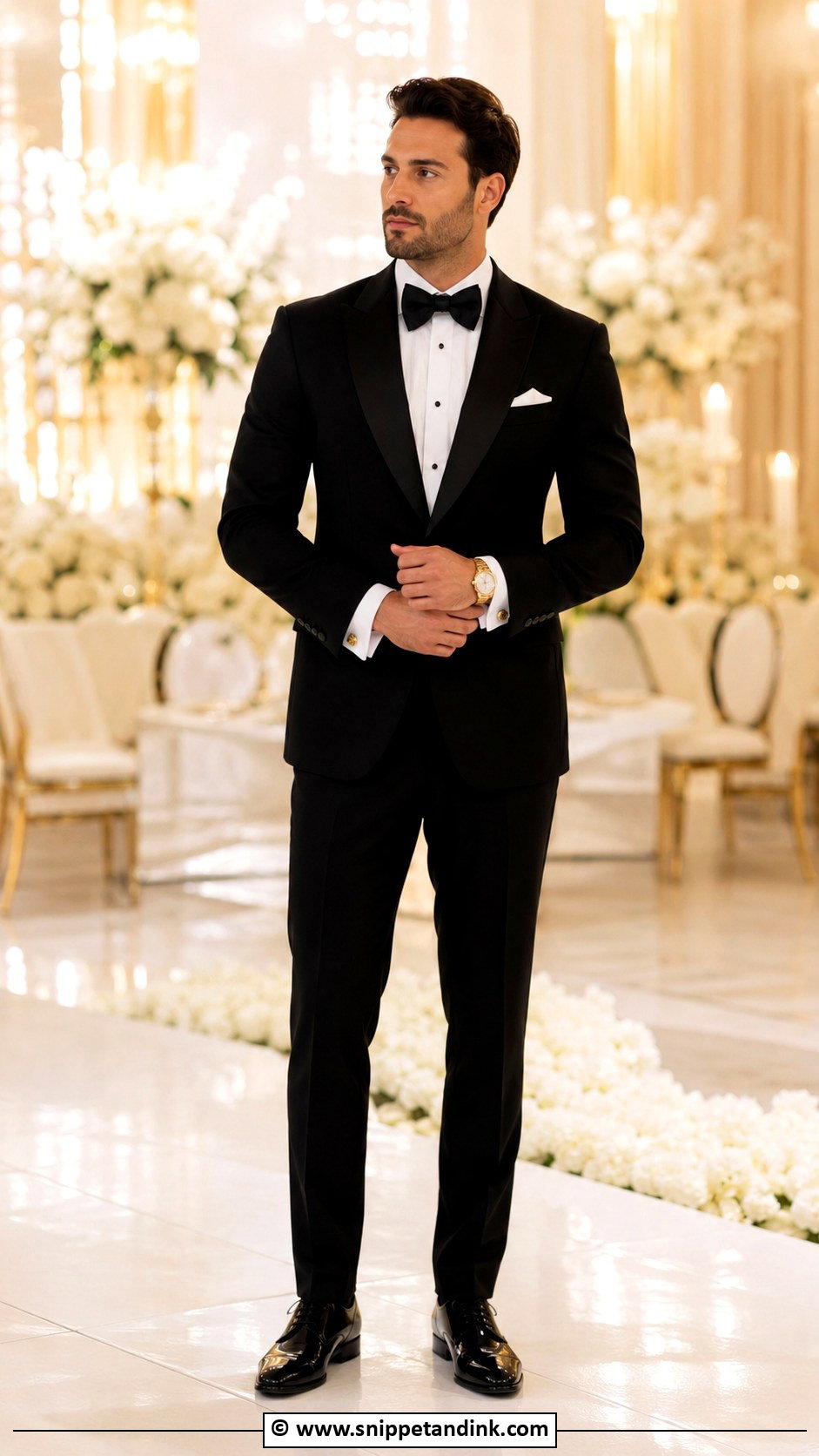
Gold brings warmth to the black. On the classic outfit, add gold cufflinks, a dress watch on a leather strap, or gold shirt studs if your shirt has stud holes. Restraint matters: one or two gold details look deliberate, more looks busy. It sits well with ivory florals, warm neutral decor and champagne bridesmaid dresses. I match the metals to each other and, where possible, to the wedding band you’ll be wearing from the ceremony on.
21. Black Tuxedo With Silver Accessories Wedding
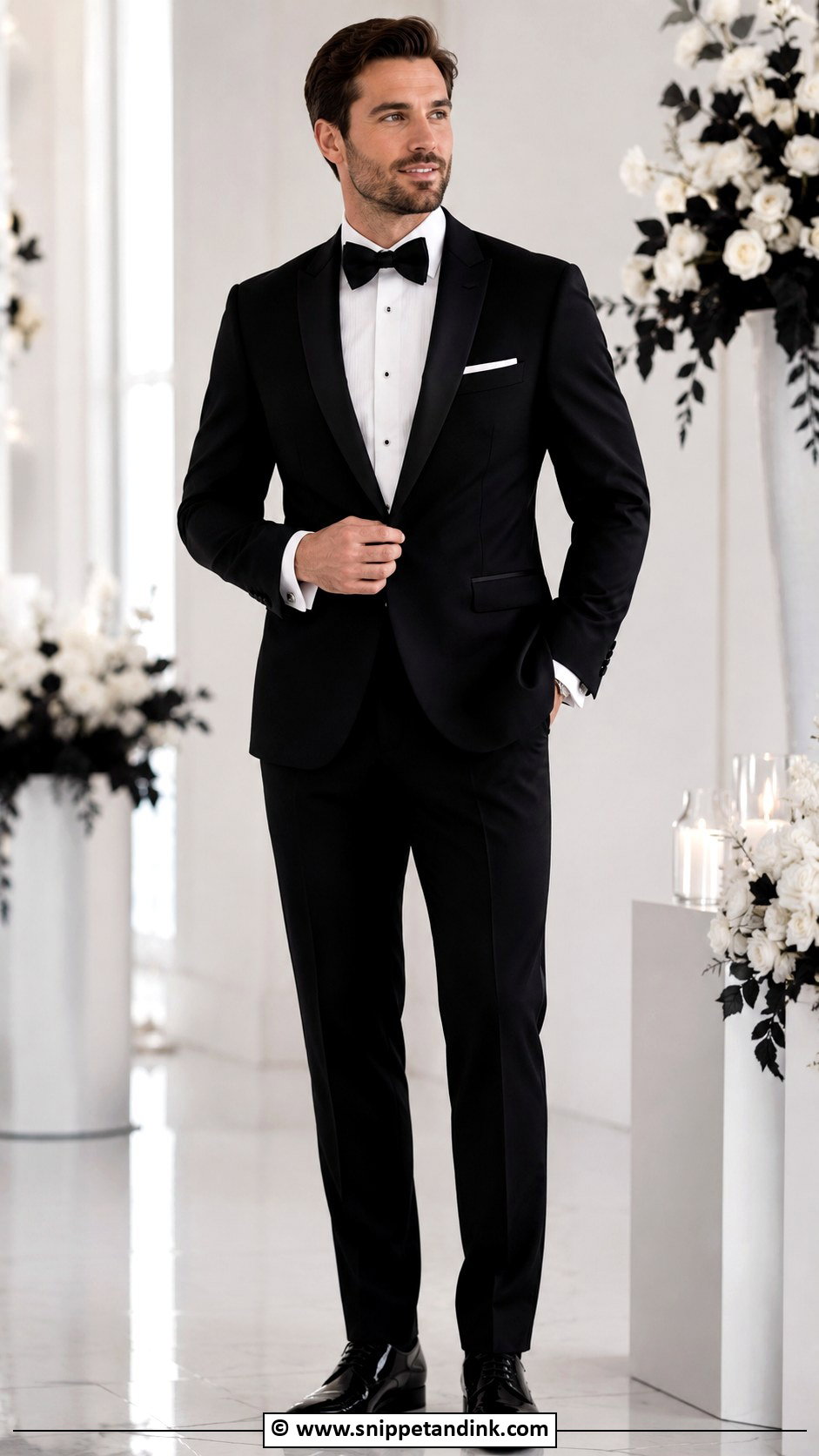
Silver reads cooler and more modern. Silver cufflinks, studs or a slim silver dress watch pair with a white shirt, black bow tie and sleek shoes, and suit white florals, black-and-white palettes or blue accents. Leave chunky sports watches at home; they make a tuxedo look casual instantly and won’t sit under a fitted shirt cuff anyway. Sterling silver tarnishes, so give the cufflinks a polish a few days before.
22. Black Tuxedo With Black Shirt Wedding
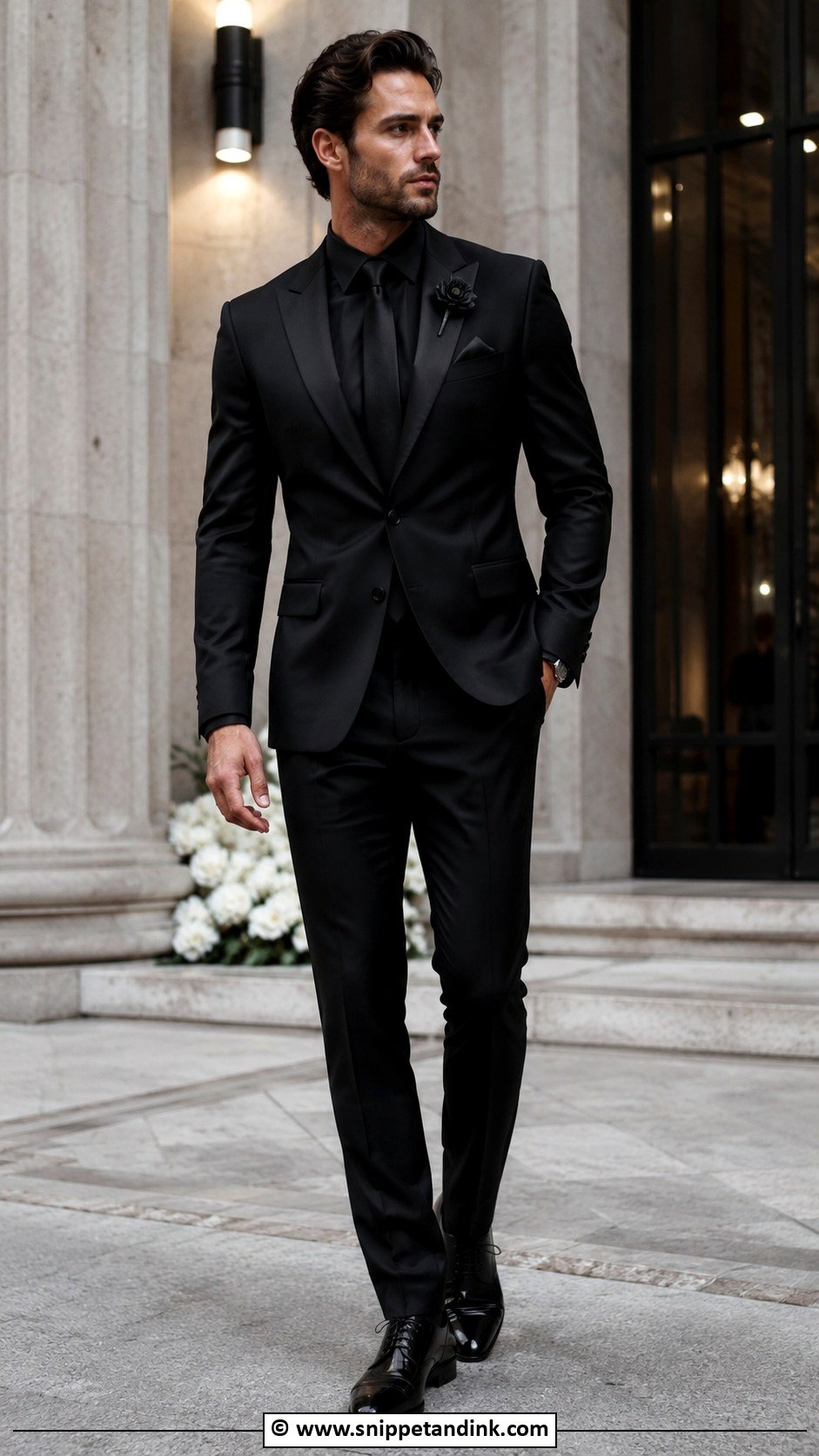
Black on black is sleek and fashion-forward, which also means it isn’t traditional; I suggest it when the wedding has a modern or creative edge. Black bow tie or silk tie, matching trousers and polished black shoes complete it. A shirt with a subtle weave keeps the front from looking like a solid block. One warning: black shirts fade with washing, so wear a new one, or it will look grey beside the jacket in every photo.
23. Black Tuxedo With Ivory Shirt Wedding
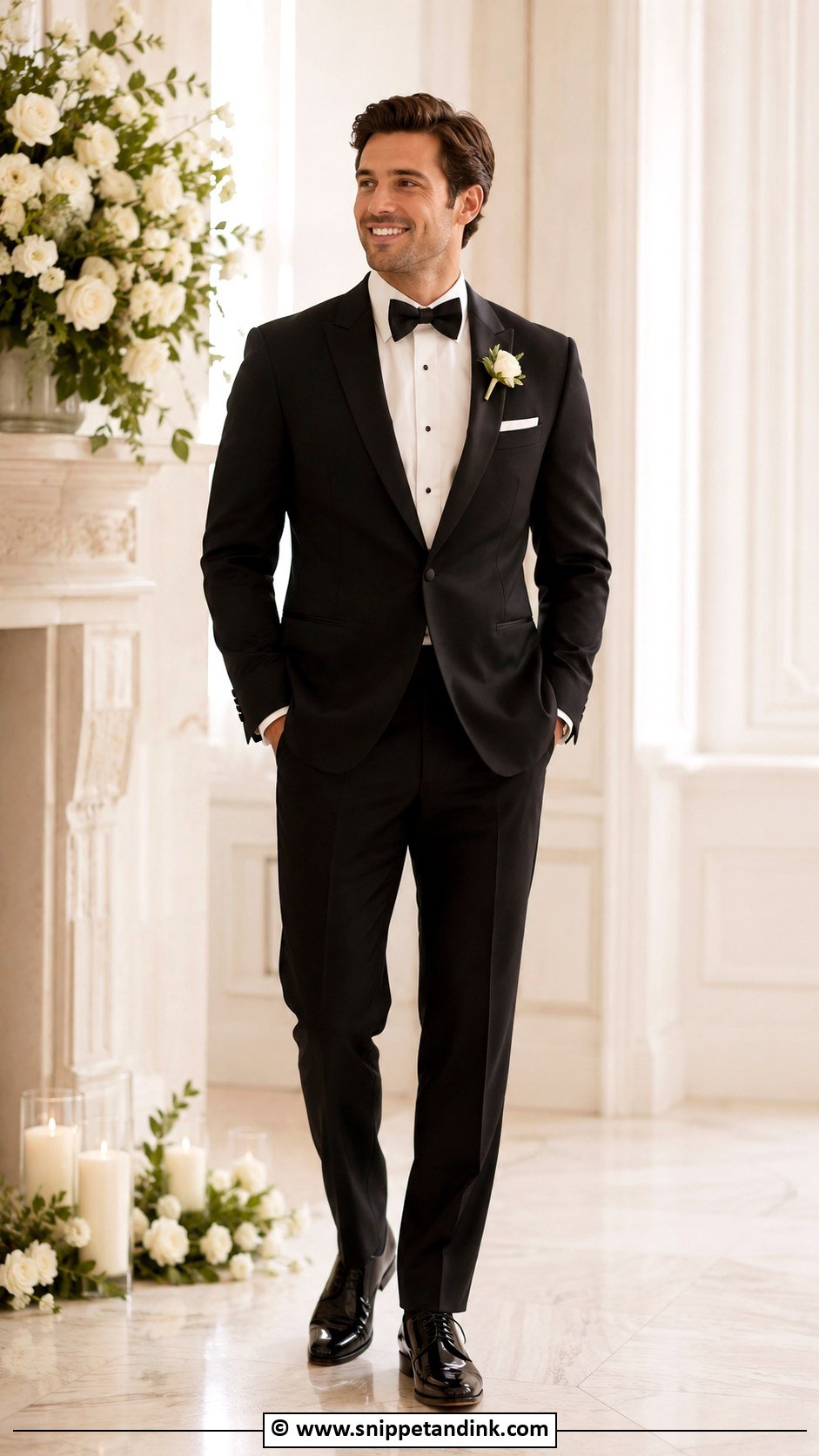
Ivory is the softer alternative to bright white, and it makes sense when the bride’s dress, flowers or decor run warm. Next to an ivory gown, a bright white shirt can look almost blue in photos. The shirt must still look crisp, never yellowed. Pair it with the black jacket and trousers, a black bow tie and polished shoes. Match the pocket square to the shirt, and hold the shirt beside a swatch of the dress fabric before buying.
24. Black Tuxedo With Floral Tie Wedding
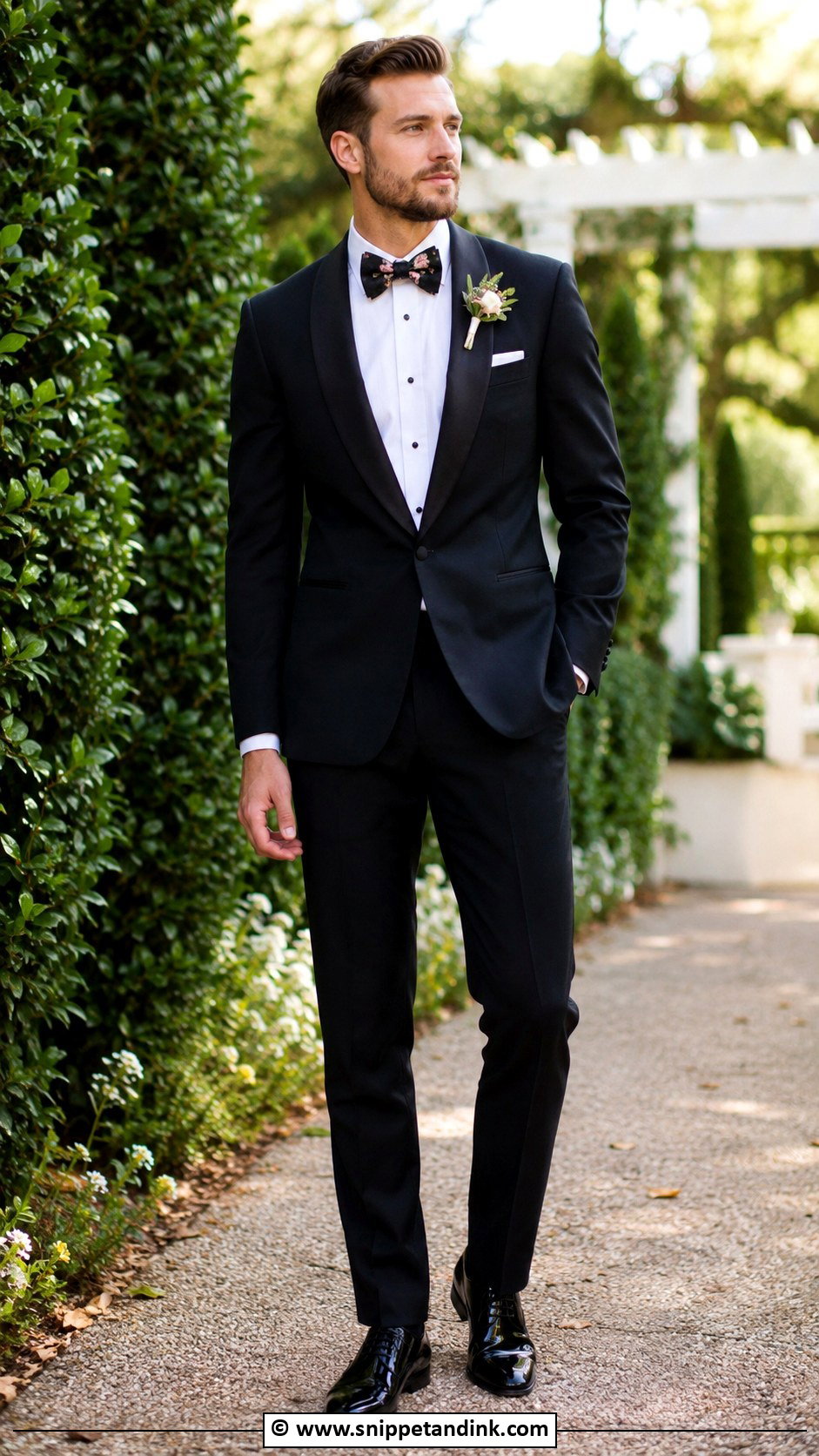
A floral tie suits semi-formal or creative celebrations more than strict black tie. Choose a dark floral bow tie or silk necktie with a small-scale print in black, ivory, green, burgundy or navy; tiny florals look refined, large bright ones look like a novelty. Pair it with the classic jacket, white shirt and black shoes. I’d keep the pocket square plain, because two patterns near the chest compete. Garden-formal weddings and spring receptions suit it.
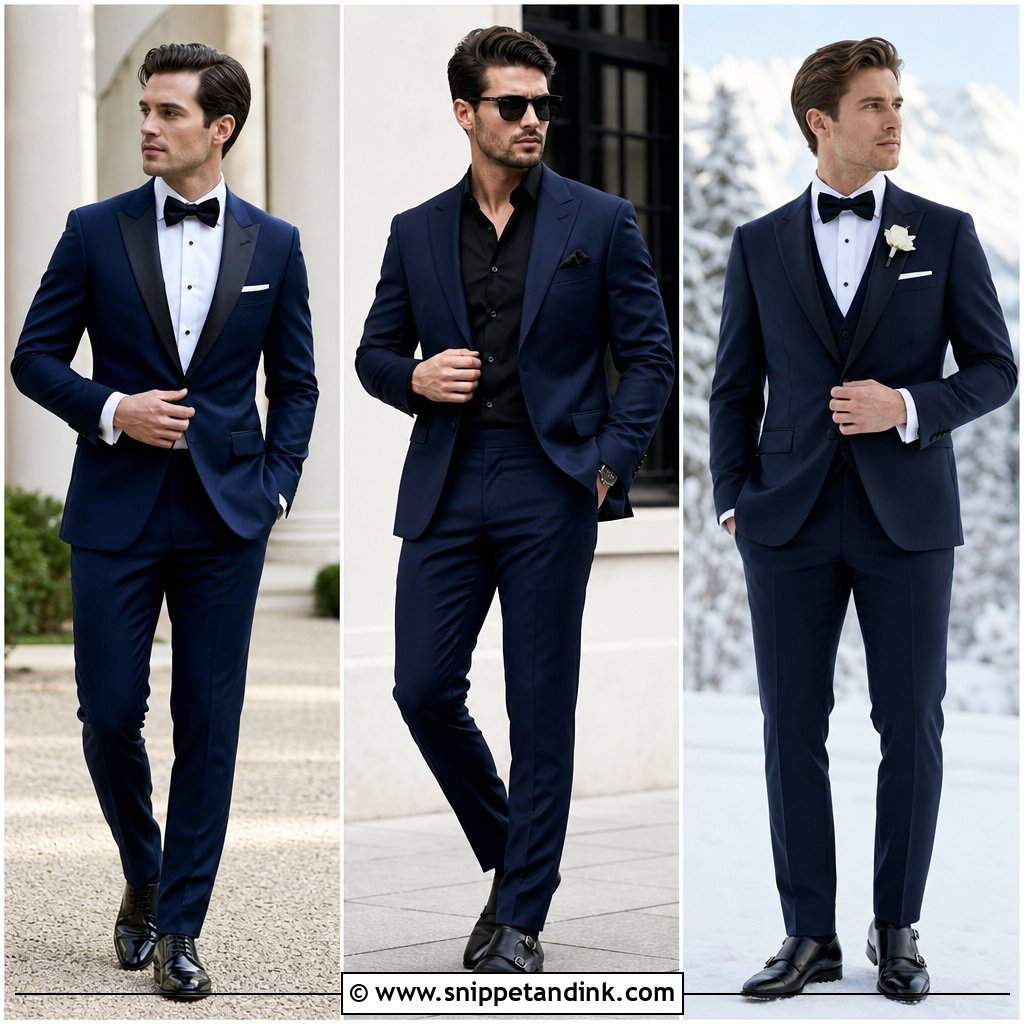
25. Black Tuxedo With Colored Bow Tie Wedding
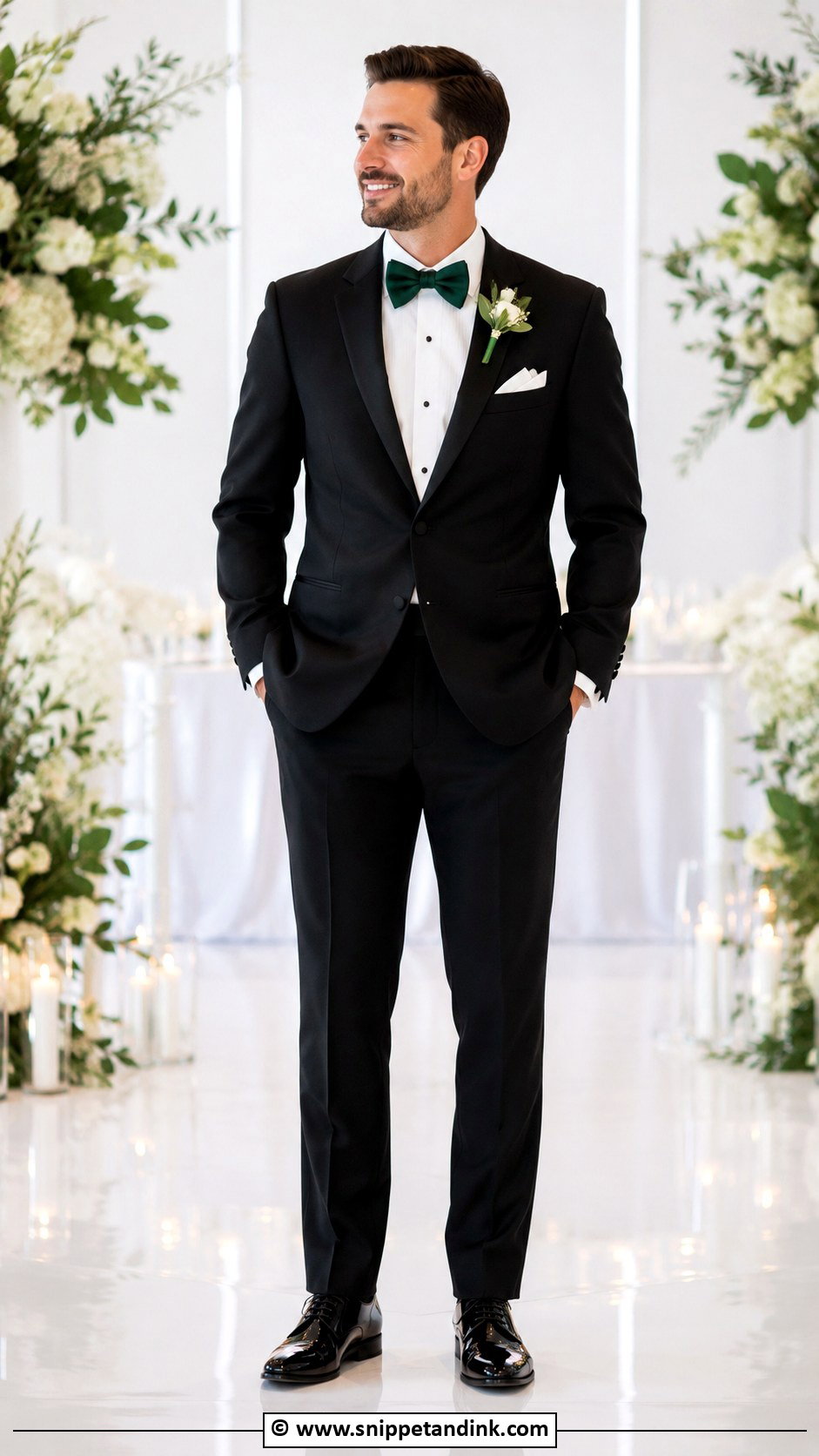
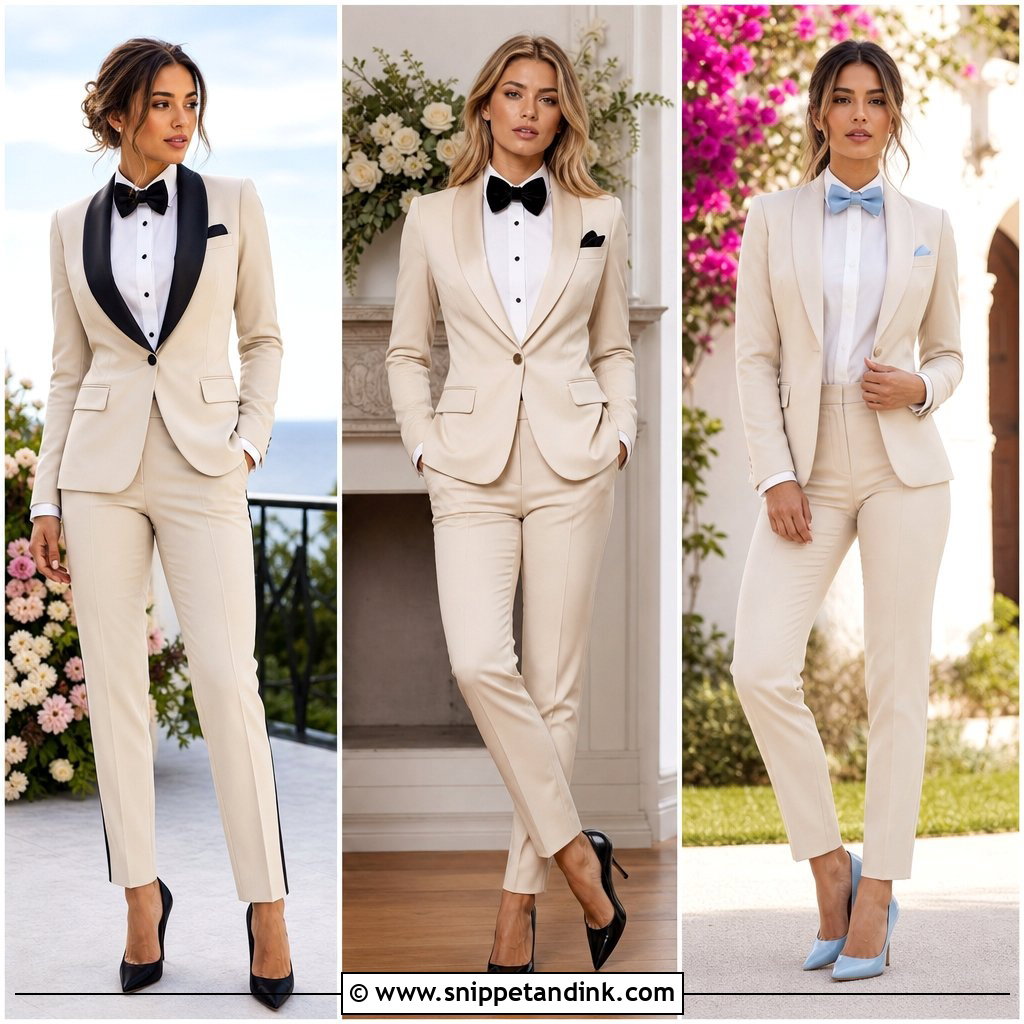
A colored bow tie brings the wedding palette onto the groom while the black base stays formal. Deep green, burgundy, navy, rust or champagne sit better with black than bright shades, which can look cheap against satin. I usually pull the color from the bridesmaid dresses or the flowers and hold a swatch against the tie in daylight, since the same color dyes differently on silk and on chiffon. Keep the pocket square white or neutral.
26. Black Tuxedo Groomsmen Wedding
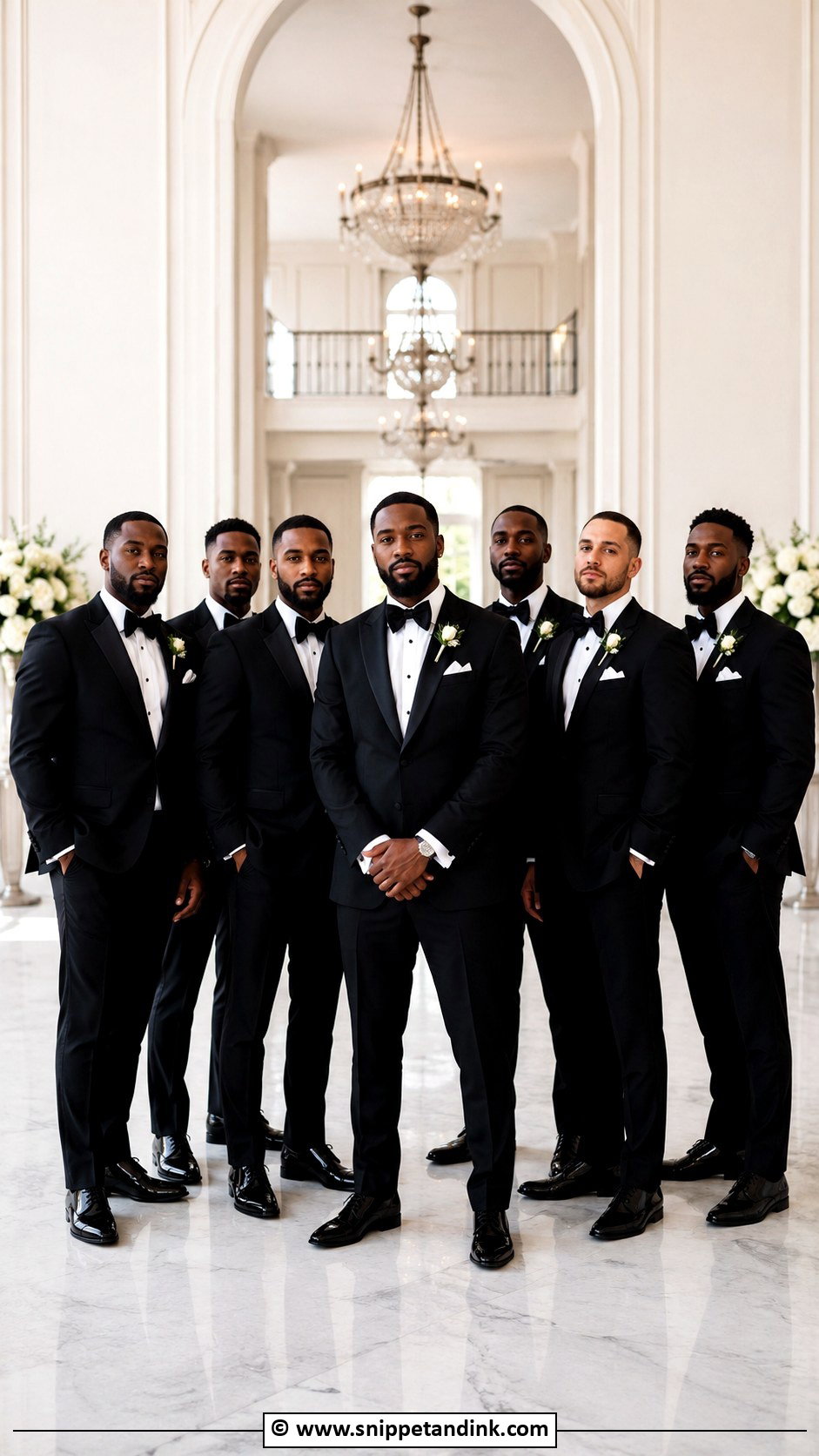
Matching black tuxedos, white shirts, black bow ties and black shoes on the groomsmen give a formal, unified wedding party. To set the groom apart, change one detail on him: a peak lapel against their shawl collars, a velvet bow tie against their satin, or a different boutonniere. A matching group only looks polished if every tuxedo fits, so I make sure hem lengths, sleeve lengths and collar sizes are checked on each man, never guessed from a size chart.
27. Black Tuxedo Groom With Black Suit Groomsmen Wedding
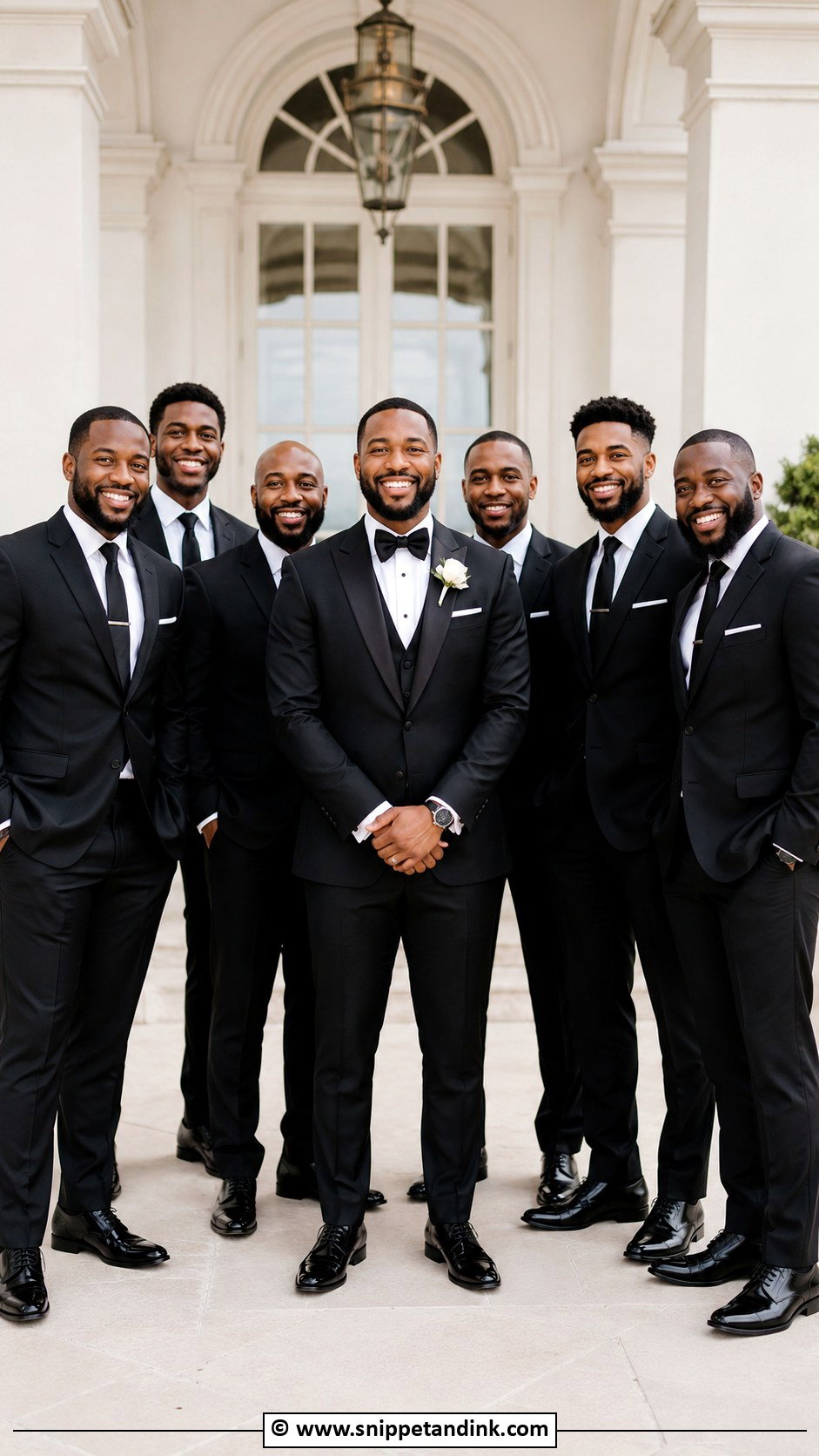
Groom in a true tuxedo, groomsmen in black suits: practical, and still polished. The groom keeps satin lapels, a tuxedo shirt, a bow tie and formal shoes; the groomsmen wear black suits, white shirts, black ties and black shoes. The contrast comes from the satin and the bow tie, which read clearly in photos. What I watch is the black itself. Suit blacks vary from charcoal-ish to true black, so line everyone up in daylight before the day and make sure they match closely.
28. Black Tuxedo Groom With Navy Groomsmen Wedding
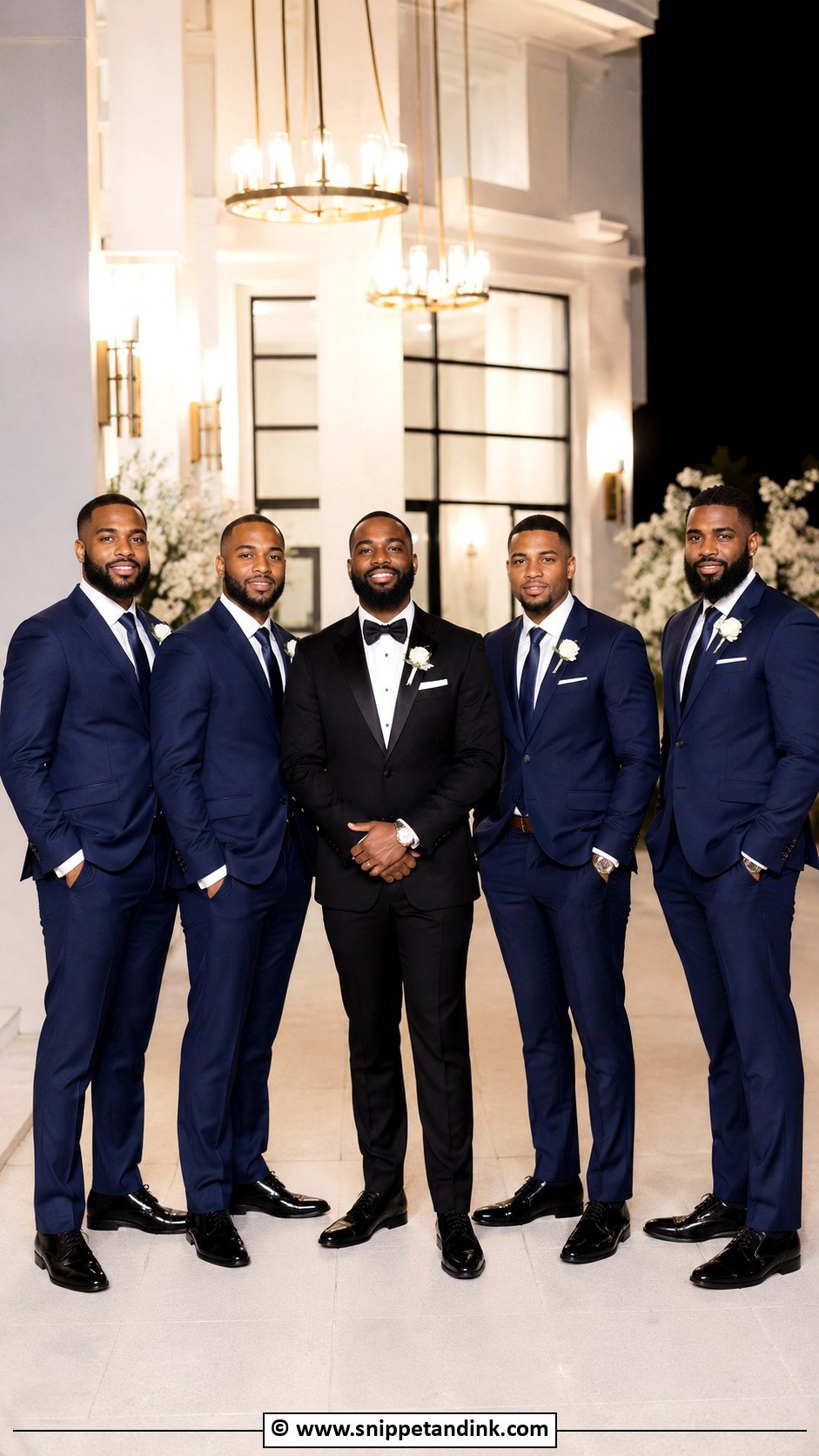
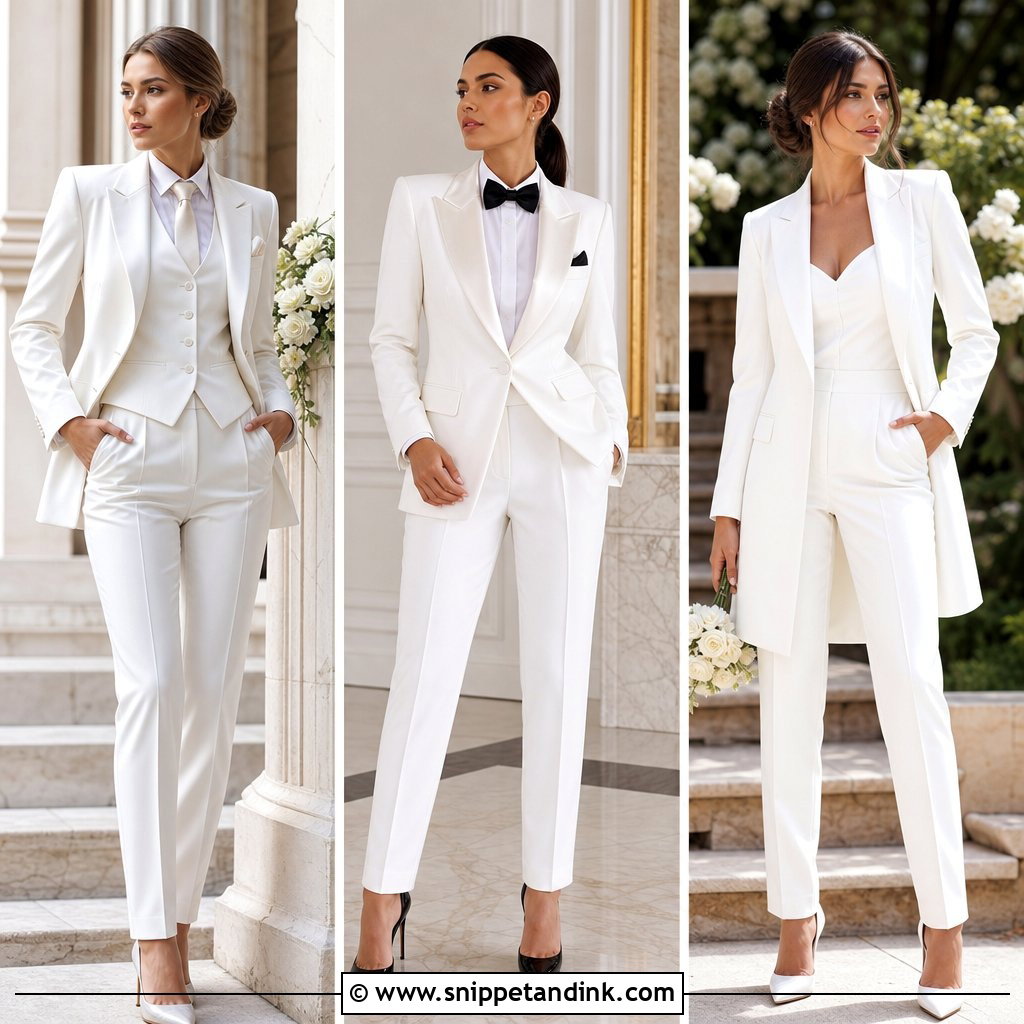
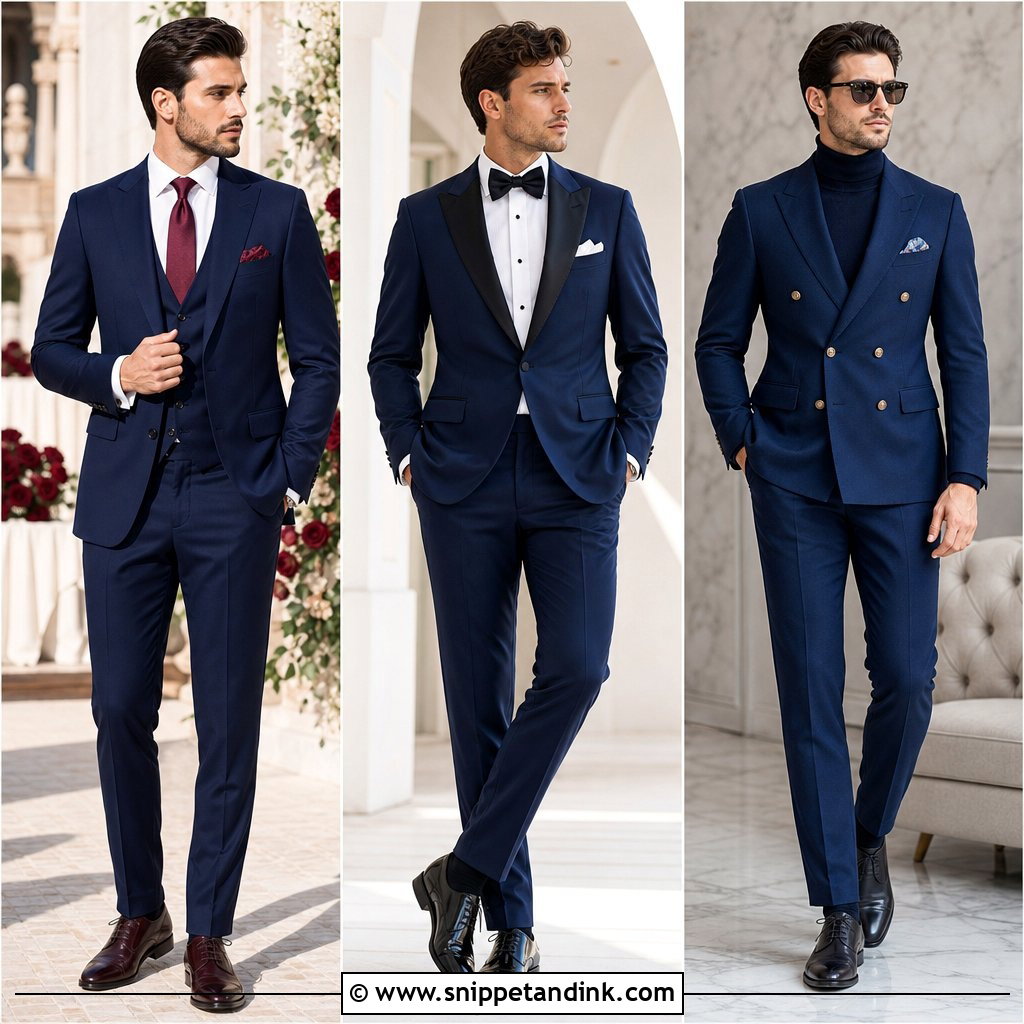
A groom in black with groomsmen in navy suits or navy tuxedos gives contrast while staying formal. The groomsmen can wear black shoes, or dark brown for a less formal wedding. Navy adds depth in photos without clashing with black. To keep the group cohesive, I repeat one element across everyone, usually white shirts and matching boutonnieres. It suits evening, coastal and modern weddings.
29. Black Tuxedo Groom With White Dinner Jacket Wedding Party
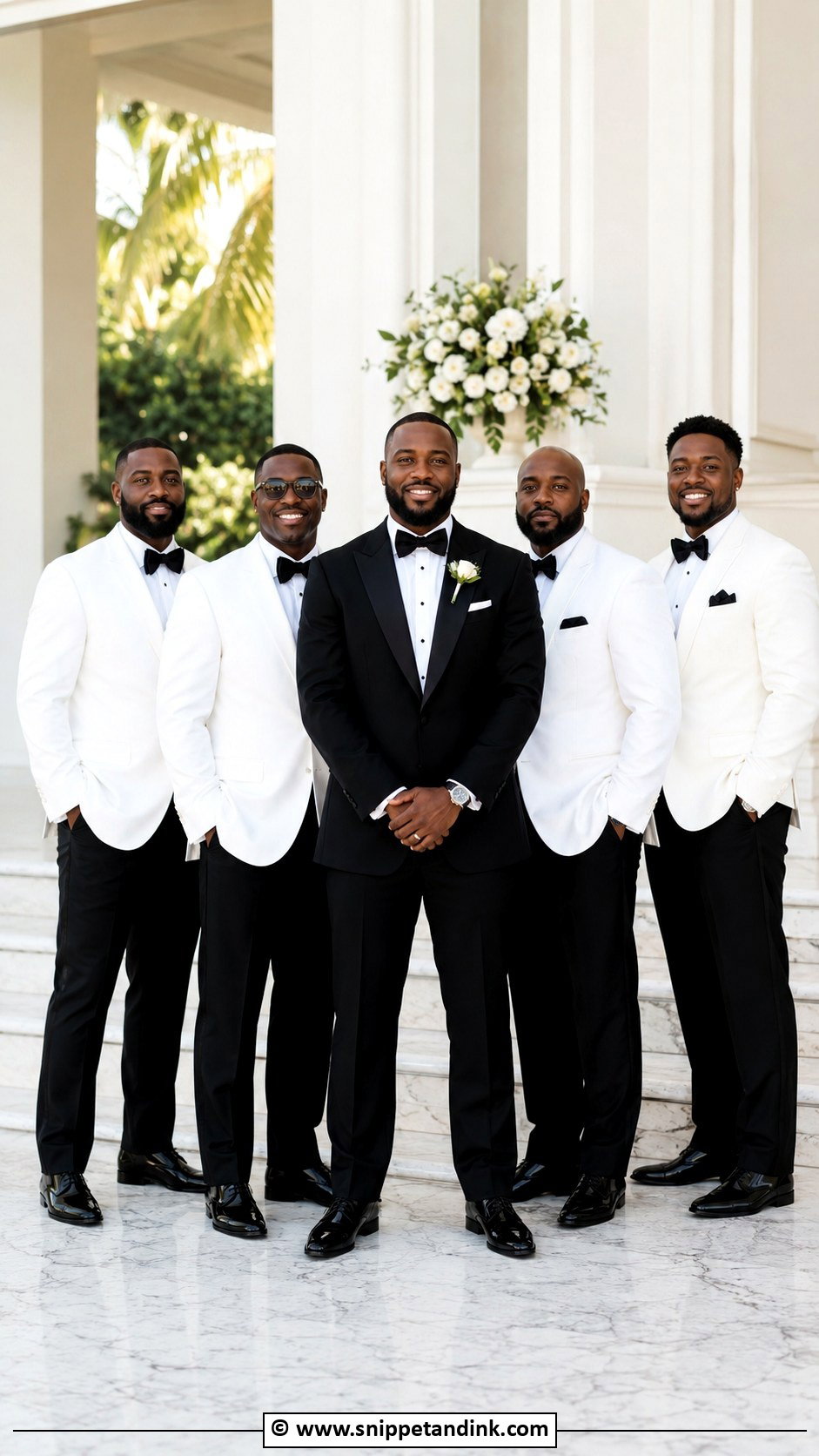
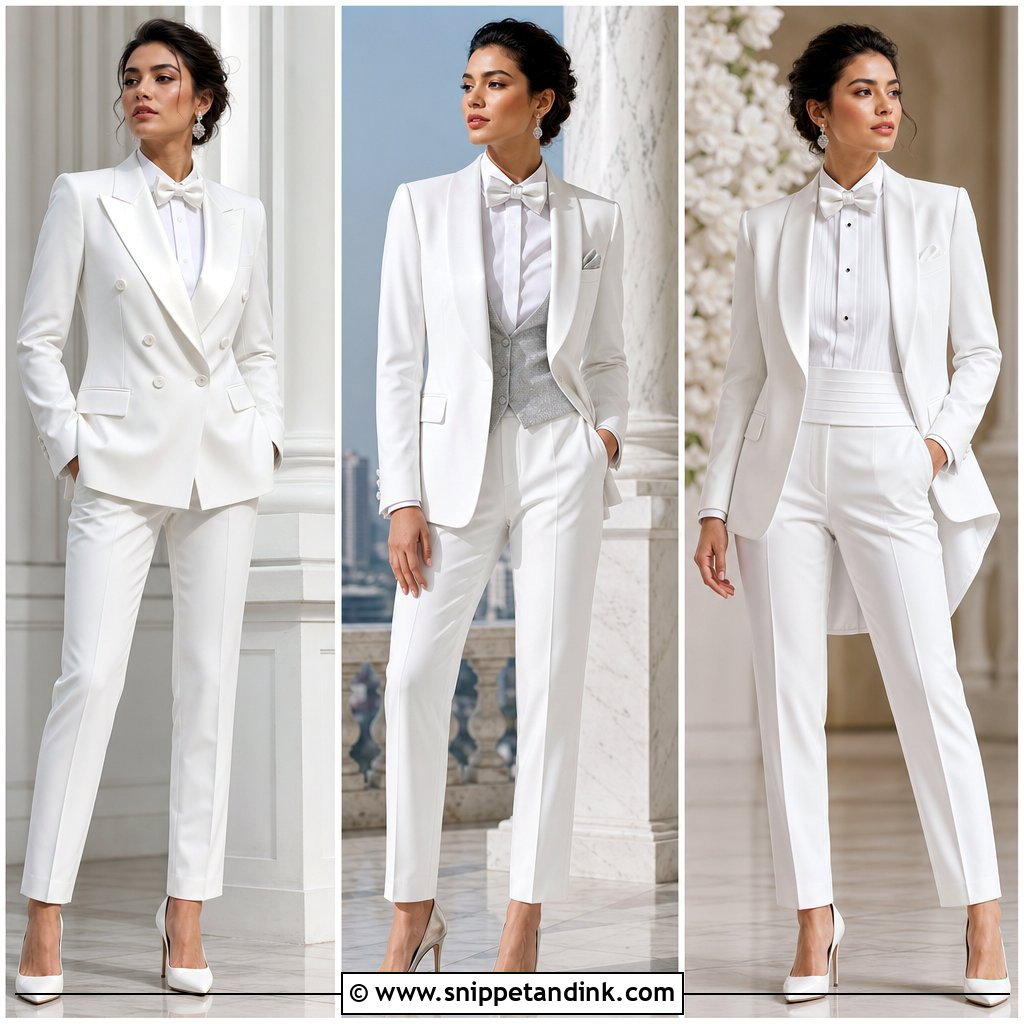
Here the contrast flips. The groom wears full black while selected members of the wedding party wear white dinner jackets with black trousers, white shirts and black bow ties. The white dinner jacket is traditionally warm-weather formalwear, so it suits resorts, rooftops and summer evenings. Keep the number of white jackets small; if half the party is in white, the groom stops being the focal point. White jackets mark easily too, so someone should carry a stain pen.
30. Black Tuxedo Wedding Guest Outfit
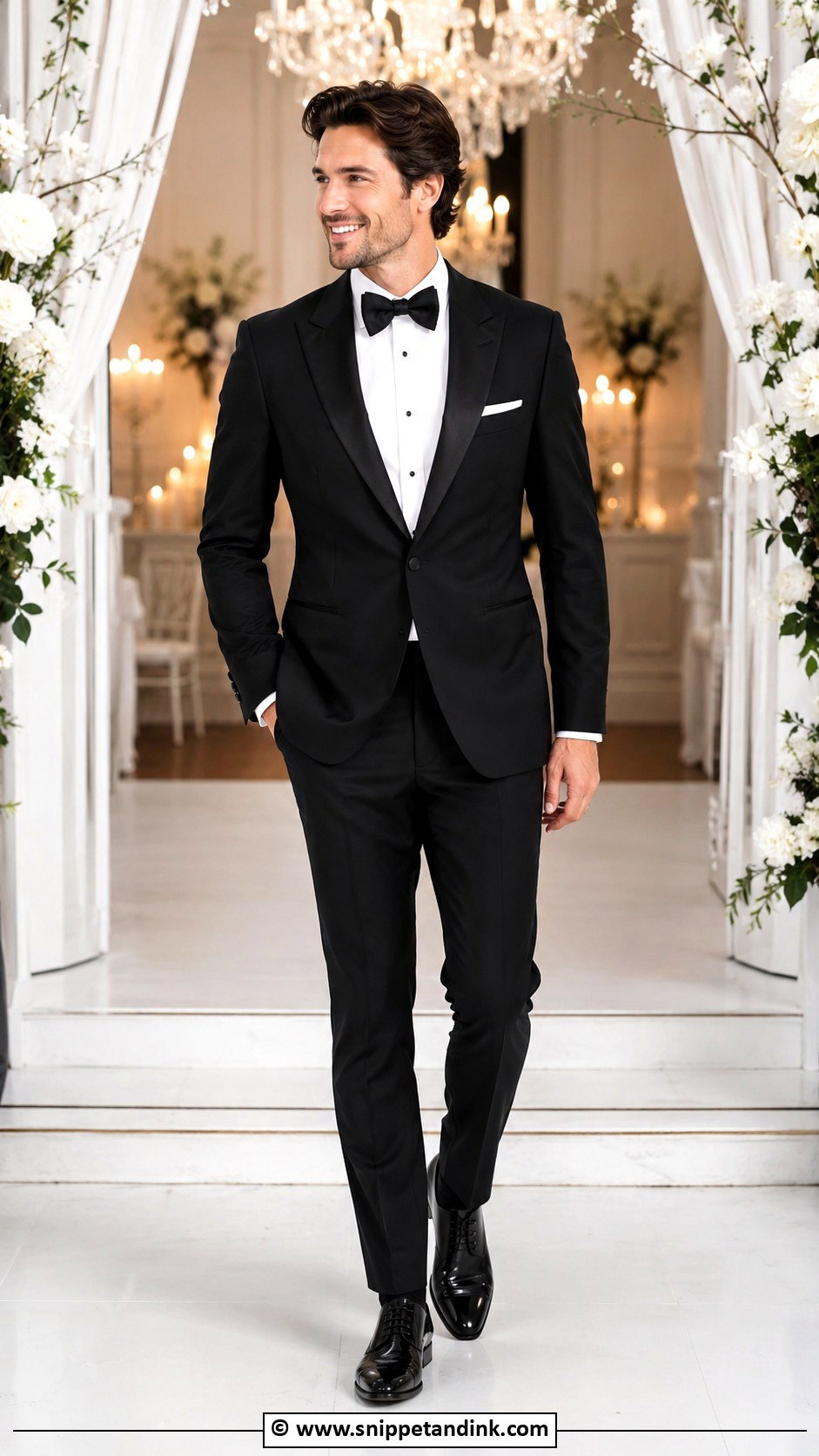
Wear a tuxedo as a guest when the invitation says black tie or formal evening attire. A black jacket, matching trousers, white shirt, black bow tie, black socks and polished shoes are all you need. Keep accessories understated so you don’t outshine the groom, and skip a boutonniere unless the couple hands them out. At black-tie optional, a tux is still correct, and you’ll never be underdressed in one.
Dressing the Groom, Step by Step
Most men rarely wear black tie, so the morning itself is where things go wrong. This is the order I use when I dress a groom:
- Fit the shirt studs and cufflinks before the shirt goes on; it’s fiddly once it’s buttoned to your neck.
- Shirt, then trousers, then fasten the suspenders and adjust them so the trousers sit at your natural waist.
- Socks and shoes next, while you can still bend without creasing anything.
- Bow tie, then the cummerbund or waistcoat.
- Jacket last, buttoned, with the boutonniere pinned on by the florist or a groomsman who has practiced.
If the day turns hot
Wool breathes far better than polyester, and lighter weights or wool-mohair blends hold their press in heat. Keep the jacket on a hanger until the photos start, and if the ceremony is outdoors in high summer, it’s worth asking whether a white dinner jacket suits the setting better than black.
What a groomsman should carry for you
A spare shirt stud, a few safety pins, a lint roller and a plain cotton handkerchief, separate from the pocket square, which is there for show and shouldn’t come out. Black barathea picks up every speck of lint and dust under a flash, so in my experience the lint roller is the item that gets used most, usually right before the first look.
Fit First, Then Every Other Detail
Black tuxedos remain the strongest choice in wedding formalwear because one base outfit works across so many venues and seasons. The details set the mood: a peak lapel feels powerful, a shawl collar smooth, velvet warm, and classic black tie quietly correct. Let accessories support the outfit instead of competing with it. Spend your attention on fit, polished shoes, a good shirt and coordinated groomsmen, and the rest tends to take care of itself.
You'll Like These Ideas:


Leave a Reply