
Suits now show up at weddings on brides, bridesmaids and guests, and most of the decisions come down to color and cloth rather than cut. A suit can stand in for a dress at a civil ceremony, a rehearsal dinner, a reception or as a guest outfit, and it can swing from airy linen in July to velvet in December. What I look at first is the venue and the time of day, because those two things rule out half the palette before we’ve even tried anything on. The looks below are grouped mostly by color, with the shoes, tops and fabrics I’d put with each.
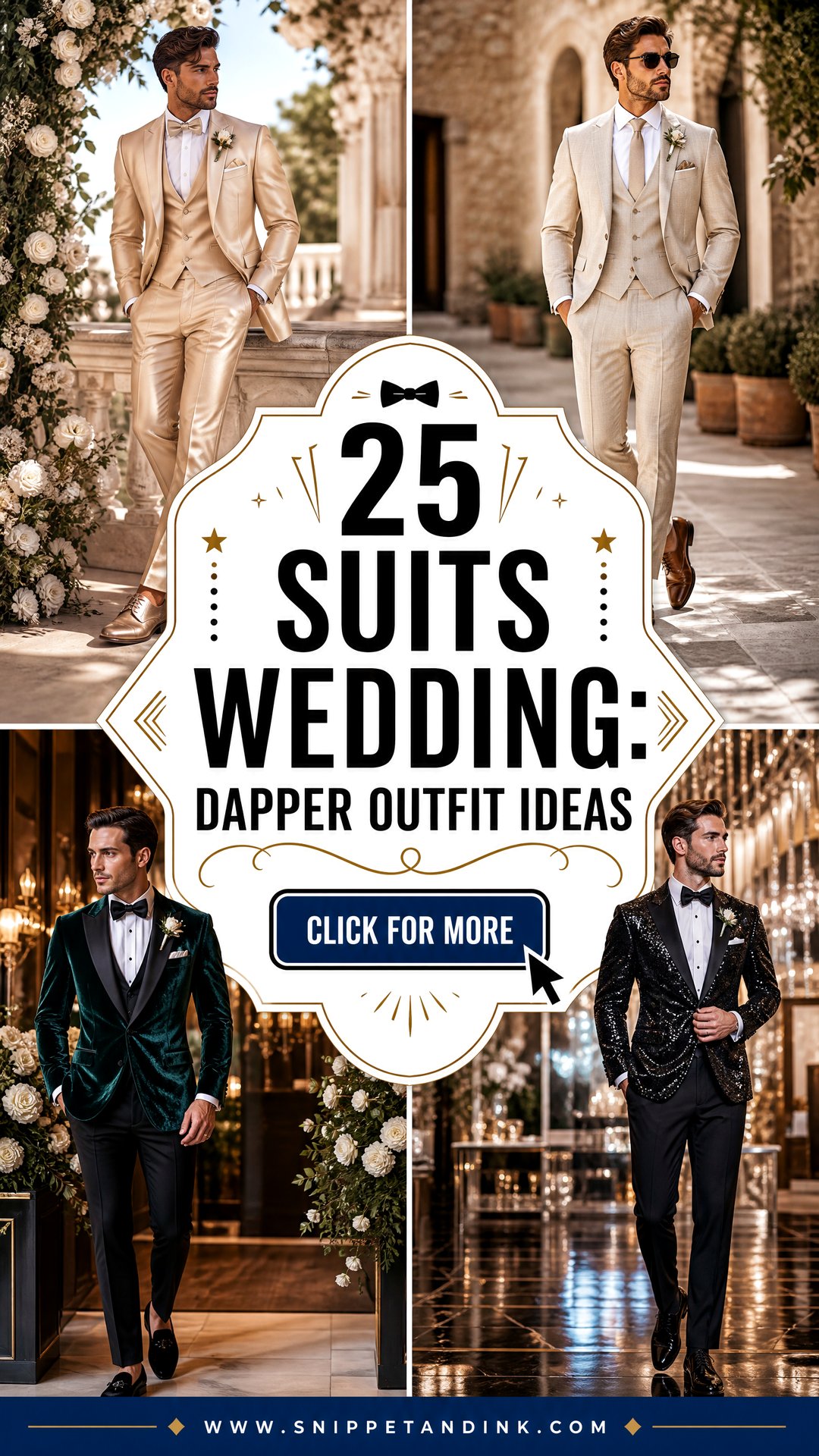
Guest Suit Colors That Won’t Upstage the Bride
Color etiquette at weddings is mostly about not looking like the bride and respecting the couple’s traditions. I’d follow these unless the invitation says otherwise:
- Skip white, ivory and very pale cream or champagne as a guest. Under flash, pale neutrals often photograph as white.
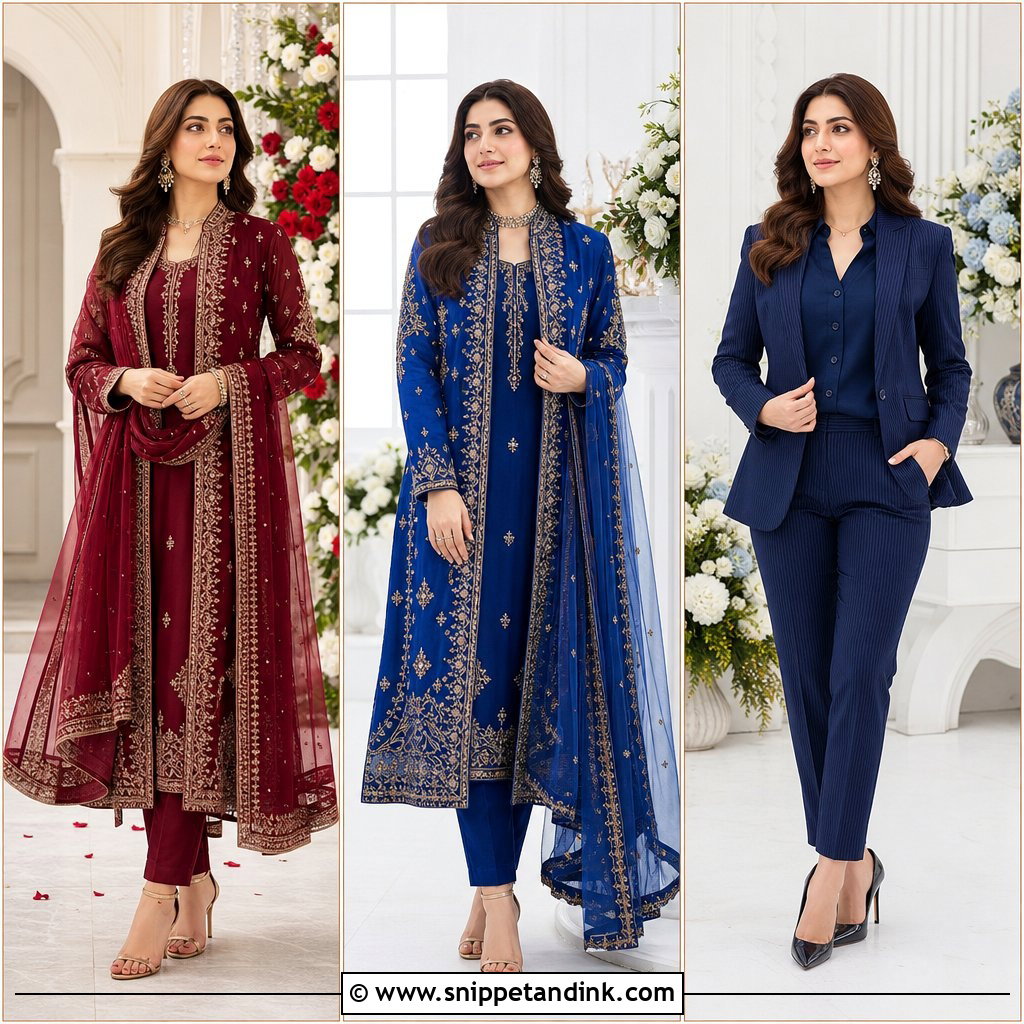
- At many South Asian and Chinese weddings, red is the bride’s color, and white or black can be linked with mourning. When in doubt, ask the couple or a family member.
- Black is usually fine for evening and city weddings, but feels heavy at a daytime outdoor ceremony.
- If bridesmaids are wearing a known color, choose a different shade so you don’t look like part of the wedding party.
For brides wearing a suit, the reverse applies: white, ivory or cream with one bridal detail, like a veil or pearls, makes the role obvious.
One more check I never skip: look at the suit by a window and again under warm indoor bulbs. Pastels shift the most. Sage can turn grey, lavender can turn blue, and blush can wash out to beige, so a shade that looked right in the shop may not be the one the reception camera sees.
1. White Bridal Wedding Suit
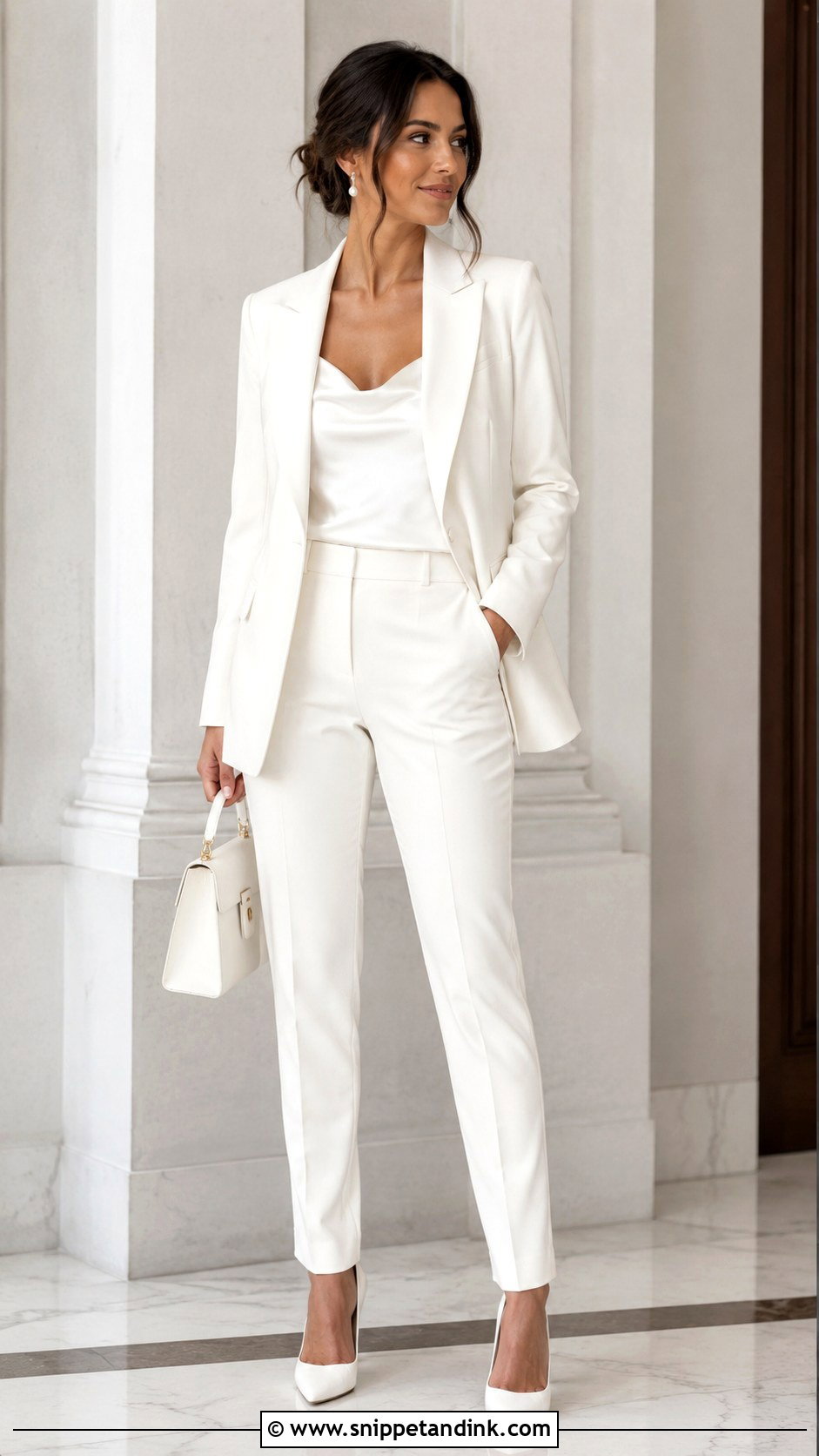
White tailoring belongs to the bride, so this one is for courthouse ceremonies, reception changes or a bride who has skipped the gown. Ivory and cream are kinder to most skin tones than optical white. Put a silk camisole or structured bustier under a sharp blazer and tailored trousers, then pointed pumps and pearl earrings. A longer blazer wants slimmer trousers to keep the proportions right. Satin lapels or covered buttons make it read bridal from across the room.
2. Black Wedding Suit
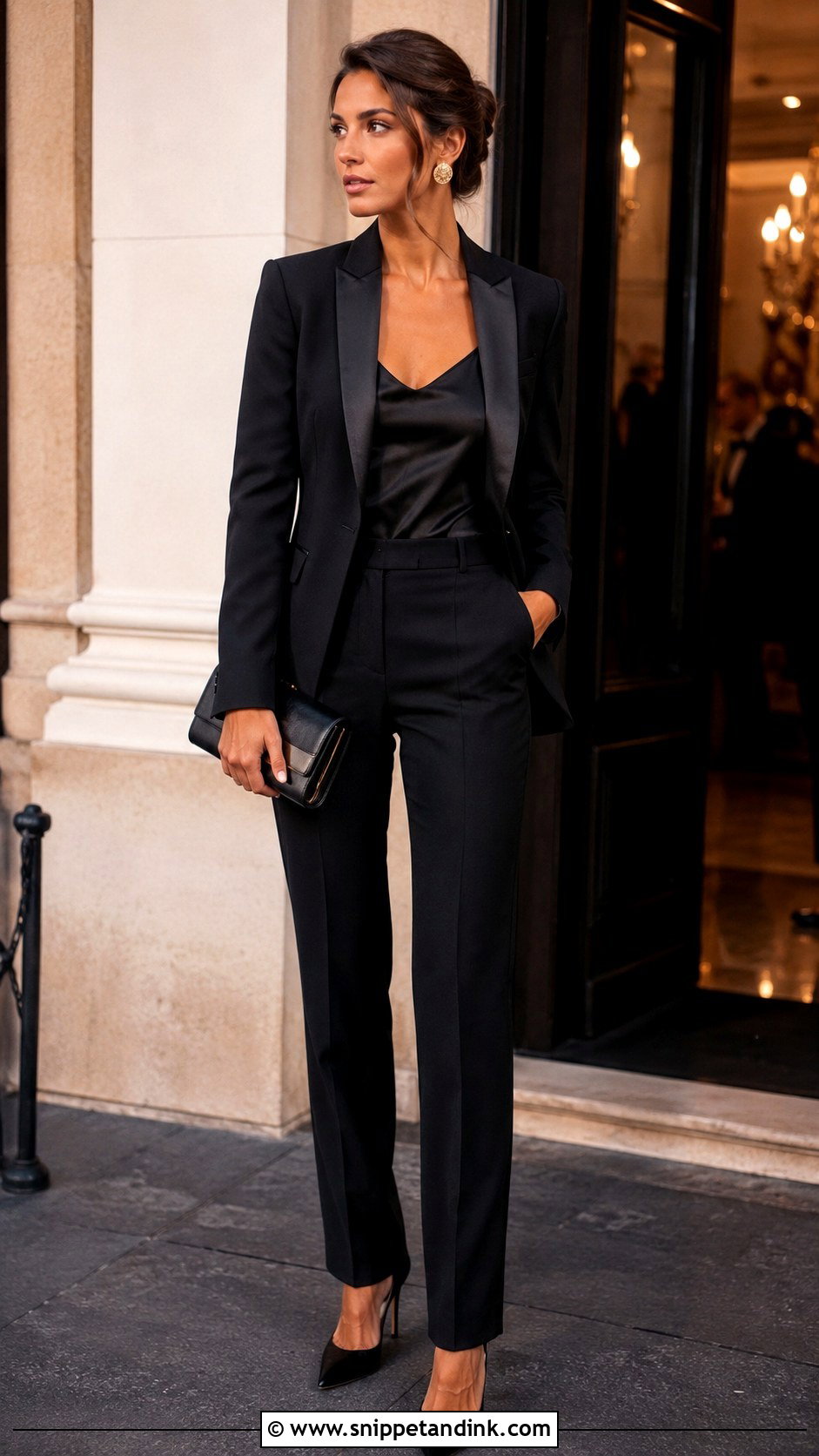
Black works for evening weddings and city venues, but I’d hesitate at a daytime garden ceremony, where it can look heavy, and at weddings in cultures where black signals mourning. Ask if you’re unsure. A tailored blazer and trousers with a silk blouse or satin camisole keep it from looking like office wear. Gold jewelry warms it up. Slim tailoring reads sharper; a slightly relaxed blazer with wide trousers reads softer.
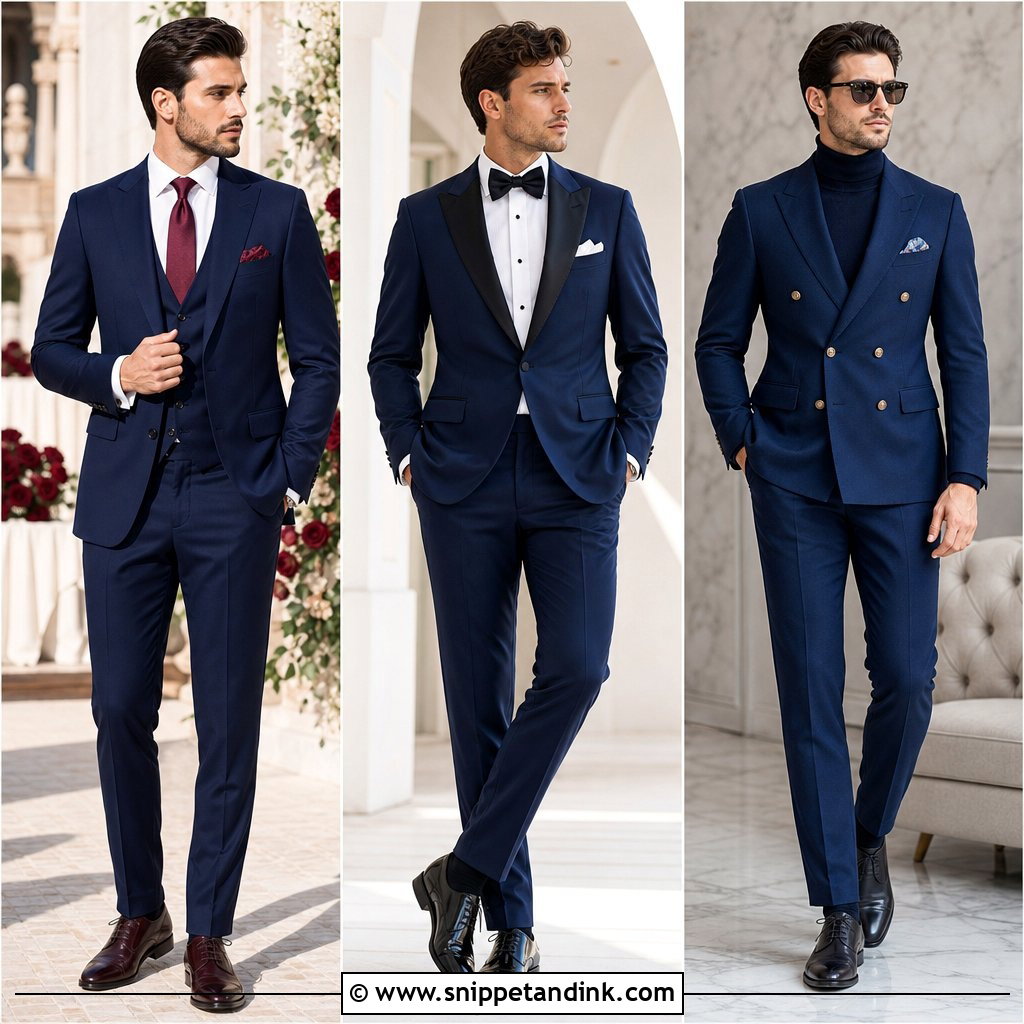
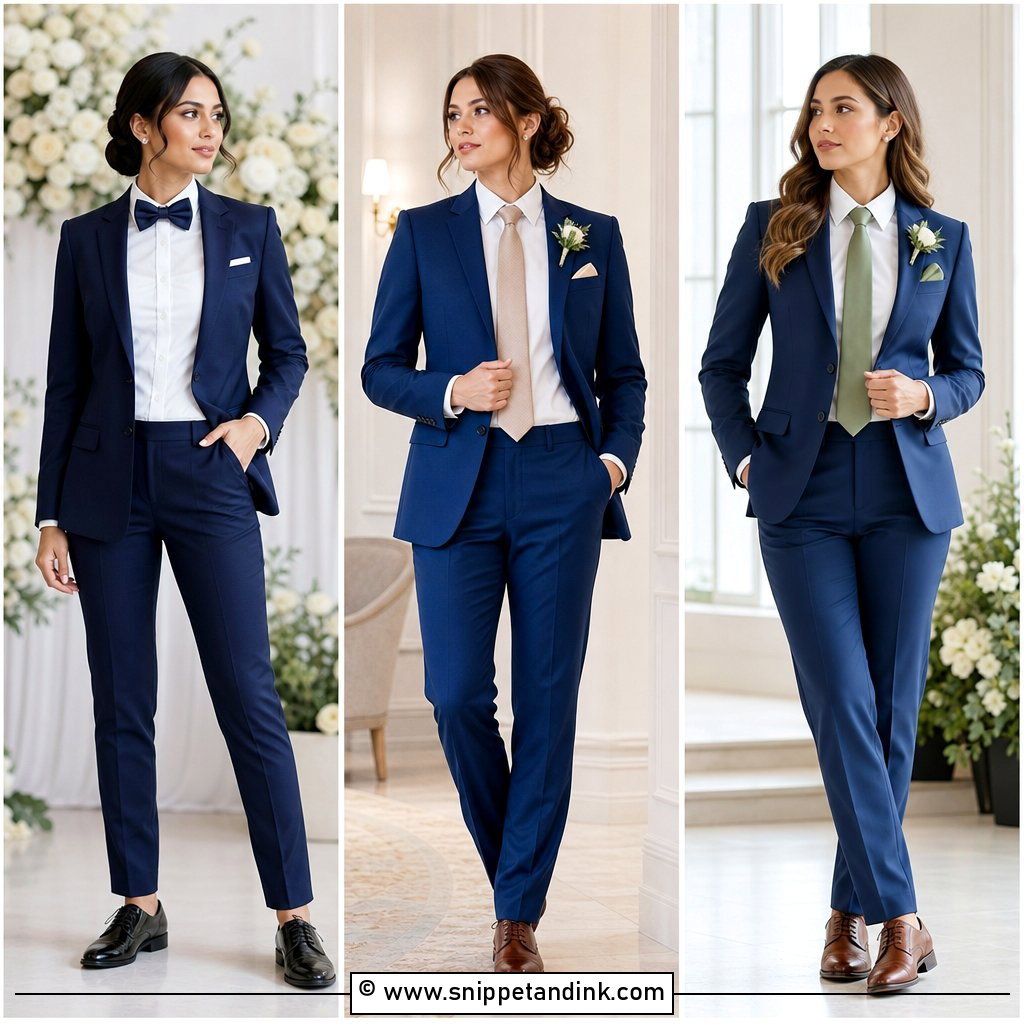
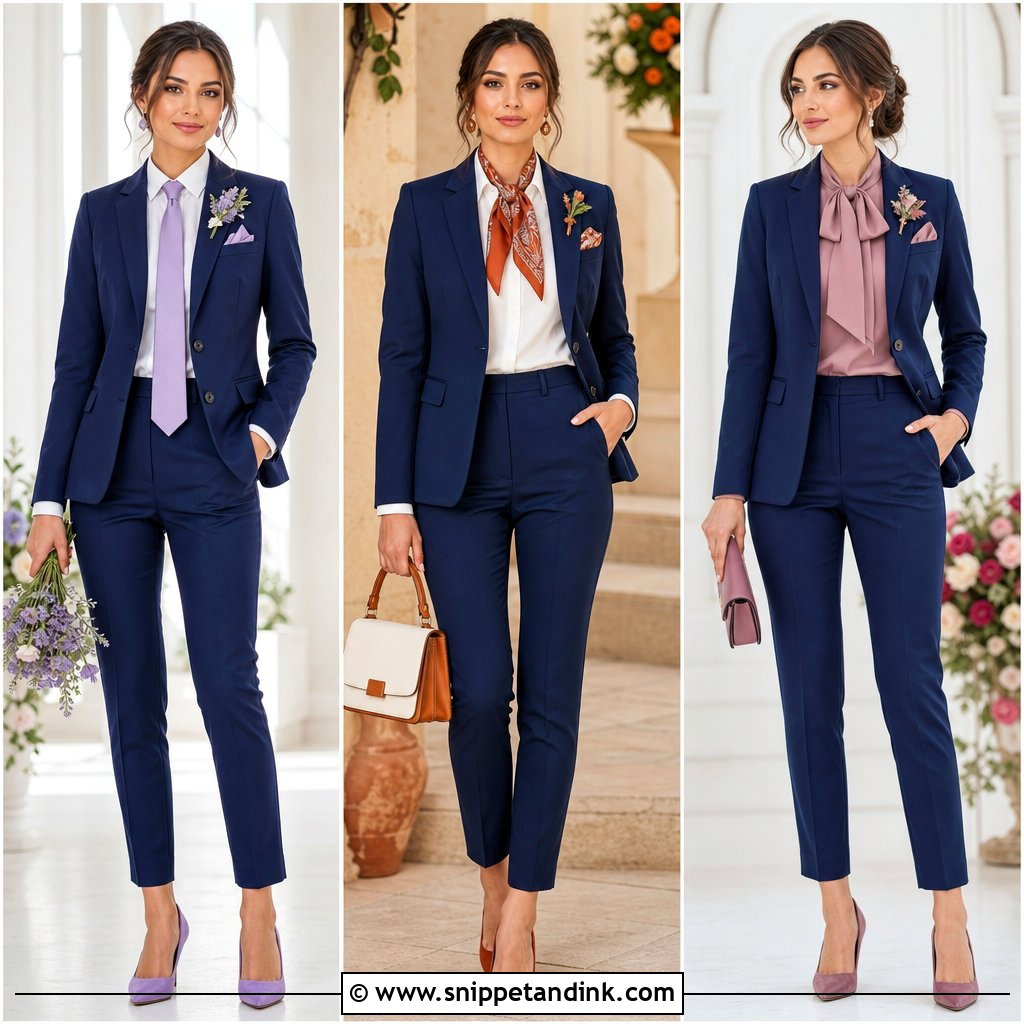
3. Navy Wedding Suit
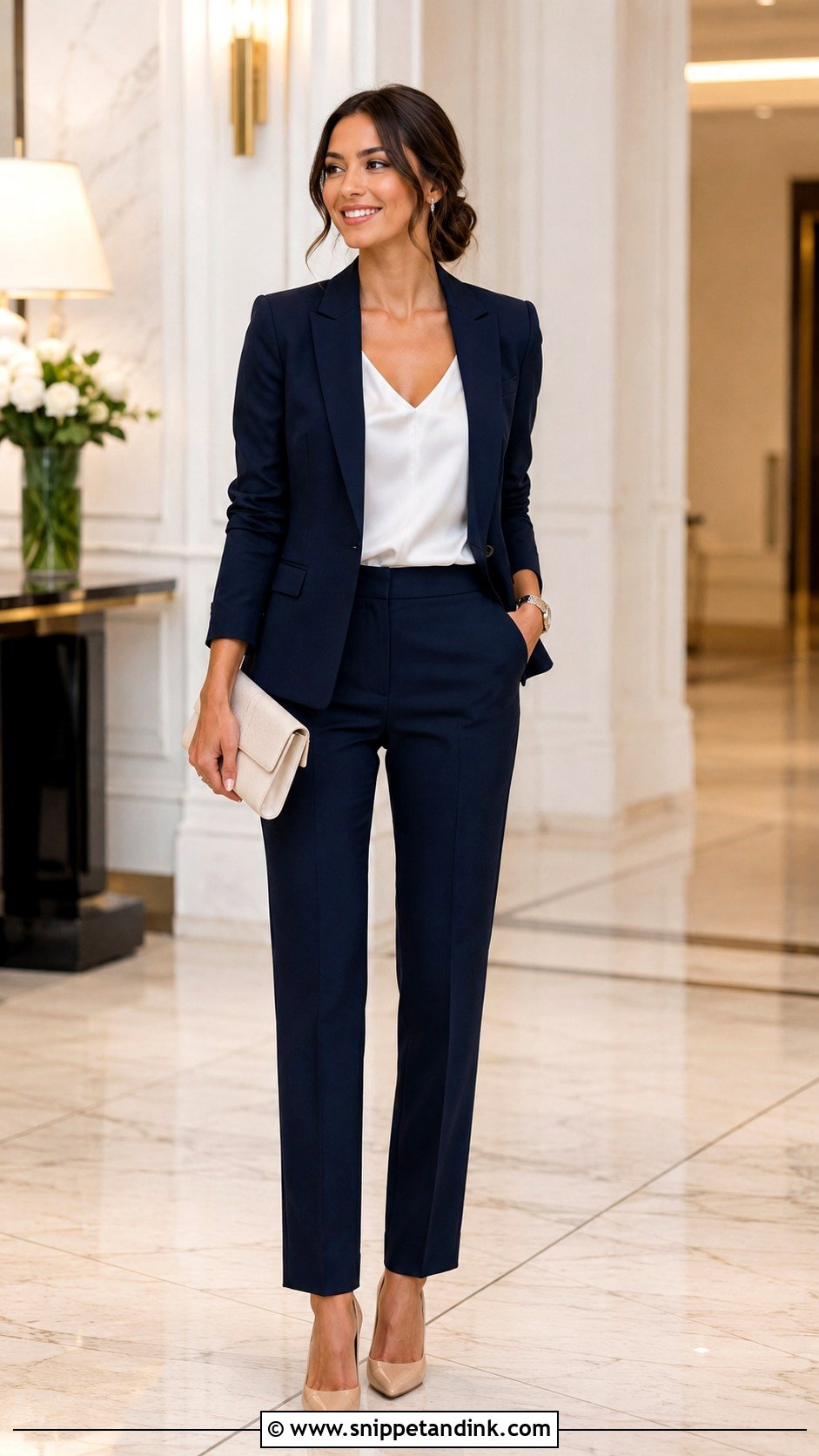
Navy is my default recommendation when a client can only buy one suit for a season of weddings. It’s softer than black in photos, works day or night, and suits most skin tones. A white silk shell with nude or navy heels keeps it simple. For daytime, add a light clutch; for evening, switch to metallic accessories and a satin blouse. It pairs easily with ivory, silver, blush and champagne, so it fits almost any wedding palette.
4. Blush Pink Wedding Suit
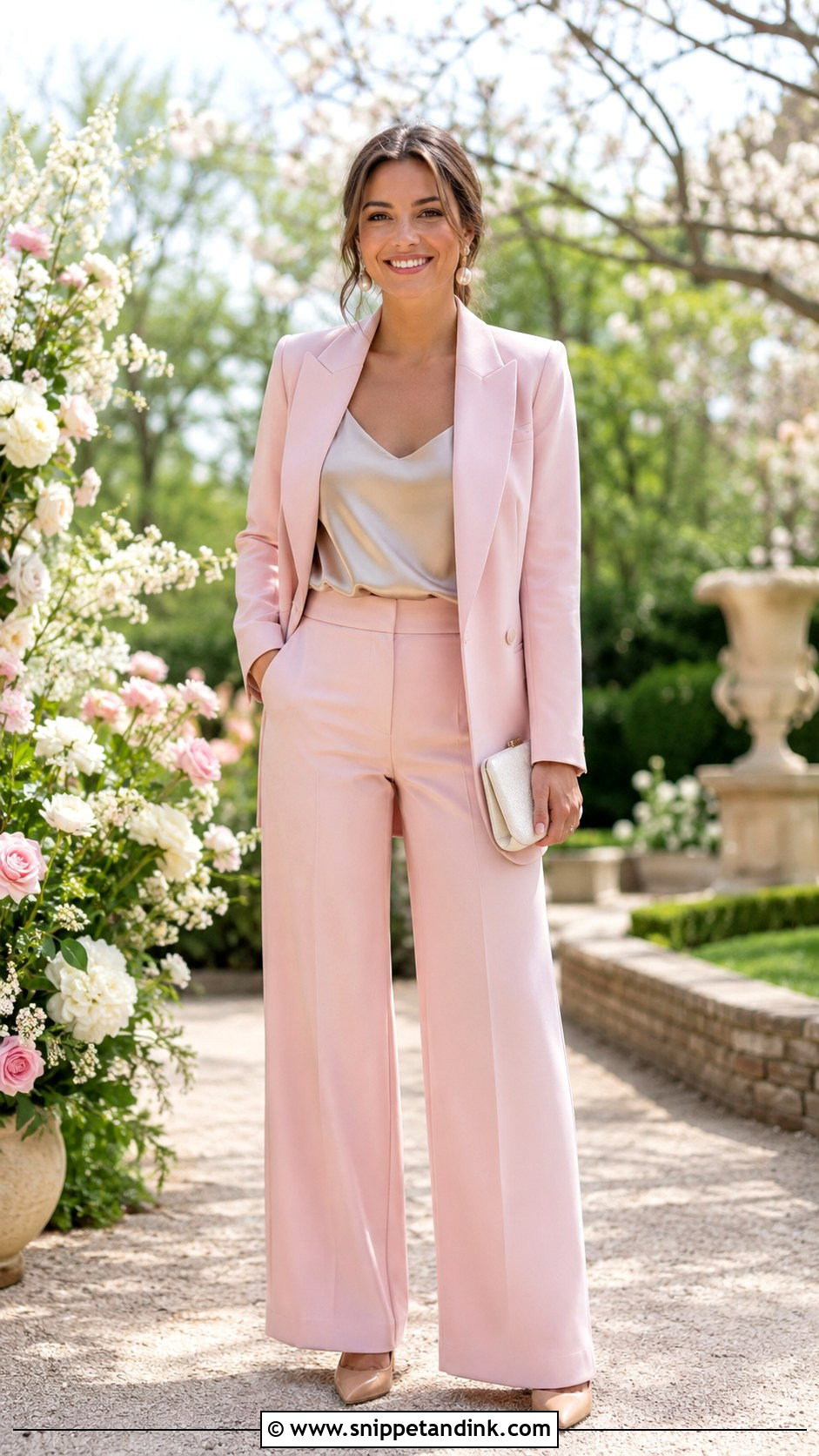
Blush is tricky: in cheap fabric it looks like loungewear, and in good fabric it looks soft and expensive. Crepe or a wool blend with a little weight keeps the color polished. A blush blazer and matching trousers go well with a champagne camisole, nude heels and small pearl or crystal earrings. Wide trousers add movement and a fitted blazer adds shape. Keep the accessories light; the color is already doing the talking. Spring weddings, garden ceremonies and showers suit it.
5. Champagne Wedding Suit
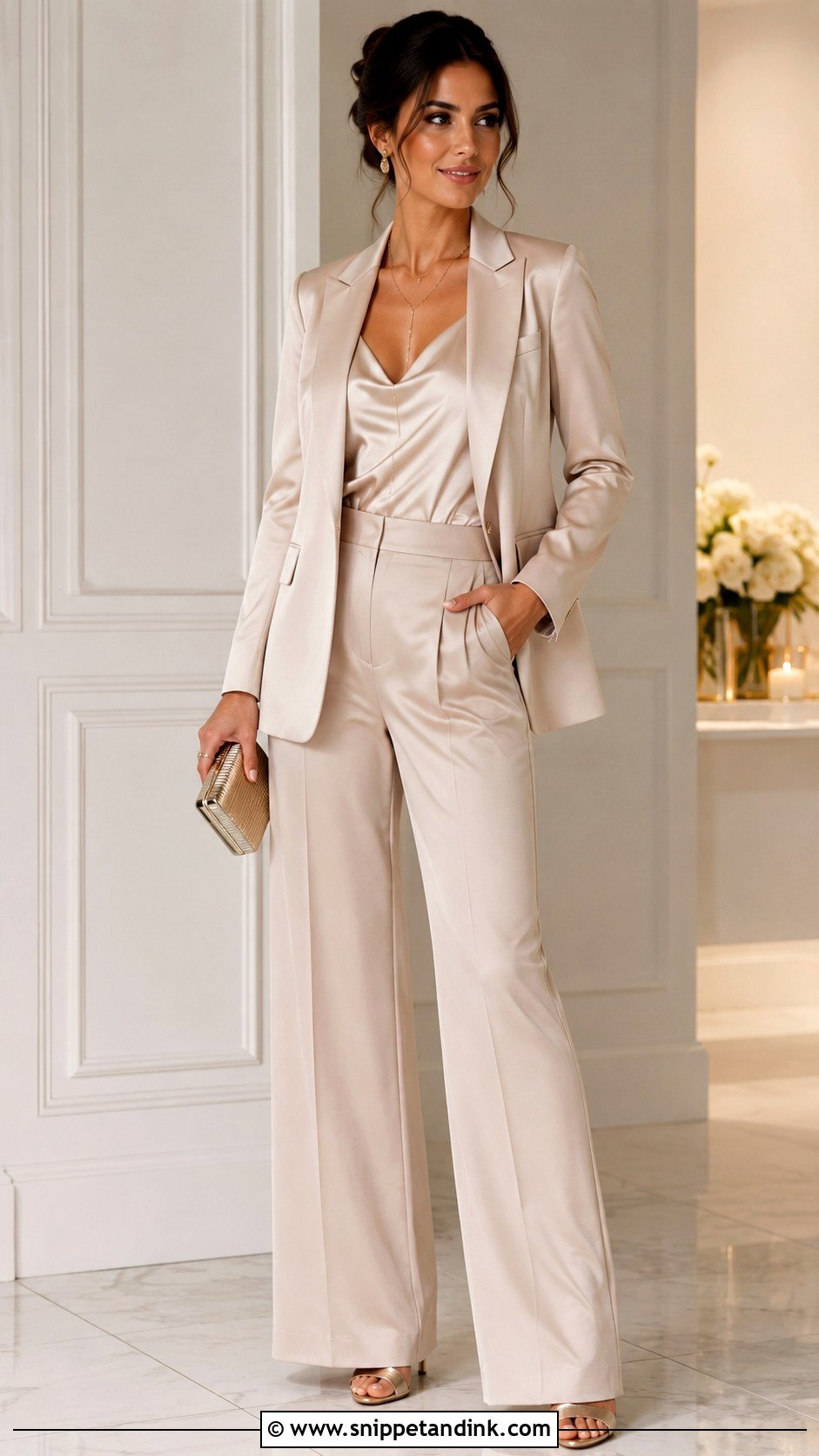
Champagne sits between gold and ivory, and that’s the risk. Under warm reception lighting, pale champagne can read almost white in photographs, so as a guest I’d choose a deeper golden shade. Satin or a sheen fabric catches the light, which means the silhouette should stay clean: a single-breasted blazer, wide trousers, maybe a fitted vest. Metallic heels and a small gold or nude clutch finish it. Minimal jewelry and smooth hair keep it quietly glamorous.
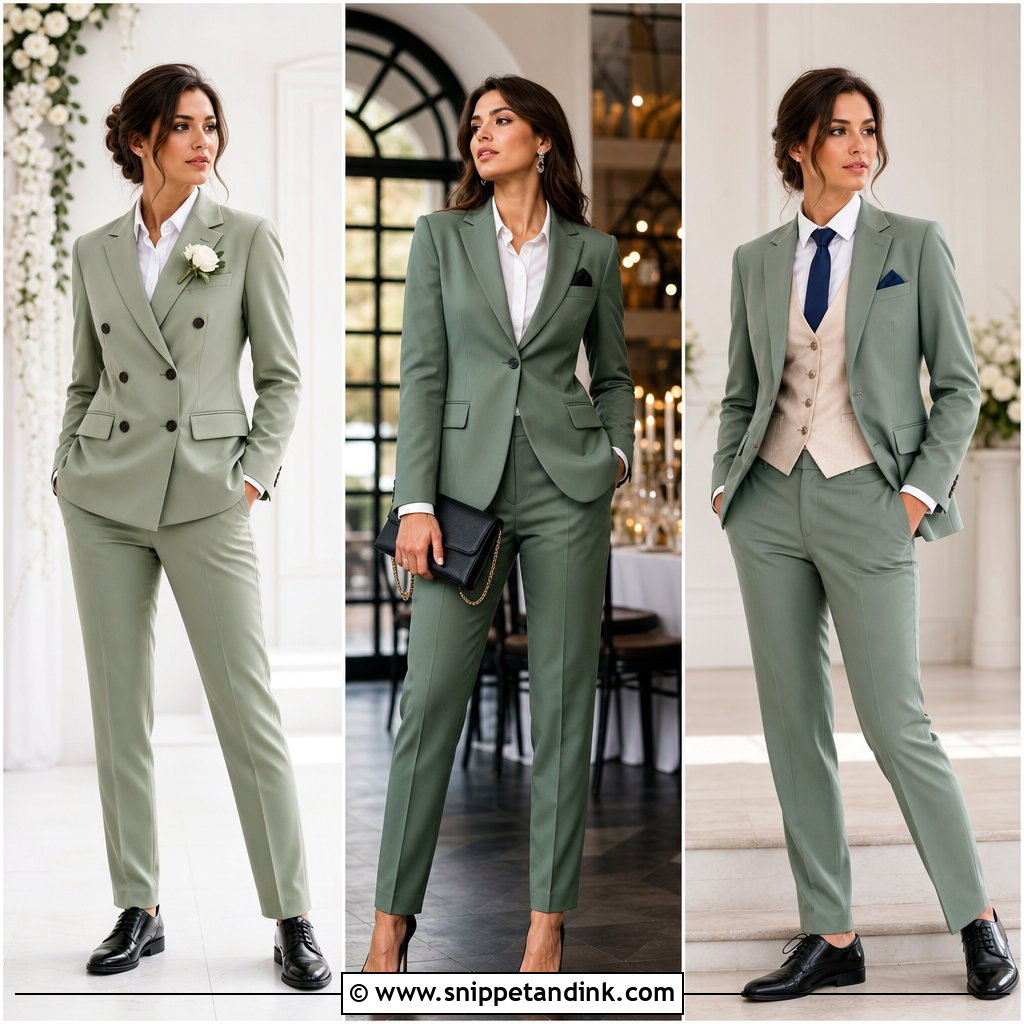
6. Sage Green Wedding Suit
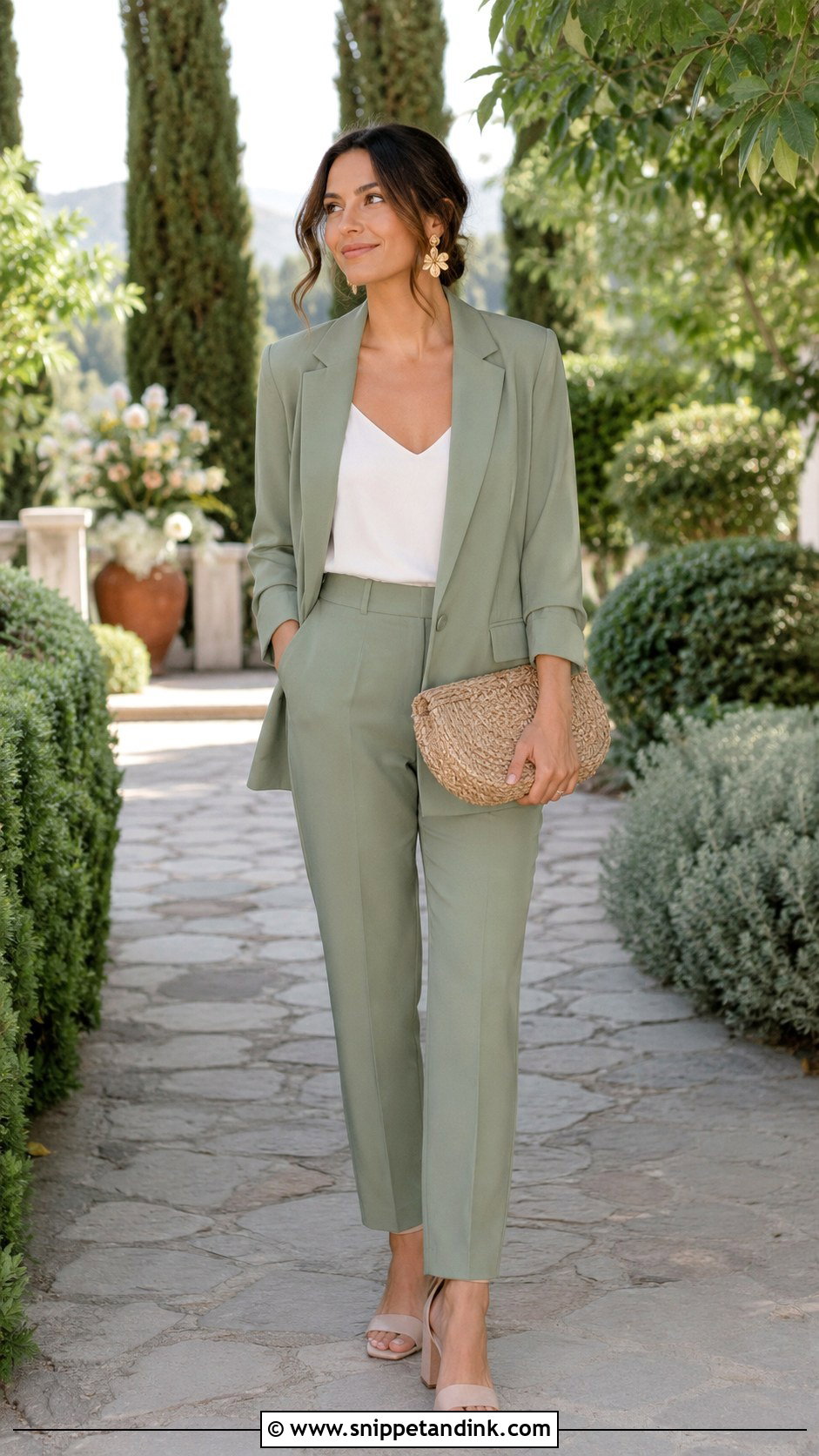
Sage green is calm and easy to place outdoors, since it echoes foliage without matching it. A sage blazer and trousers with a white camisole and nude block heels work for spring and summer. The fabric decides the formality: linen blend for a relaxed garden party, crepe or lightweight wool for anything dressier. Gold jewelry warms the green and silver cools it. It’s a good guest choice and a soft one for bridal events.
7. Powder Blue Wedding Suit
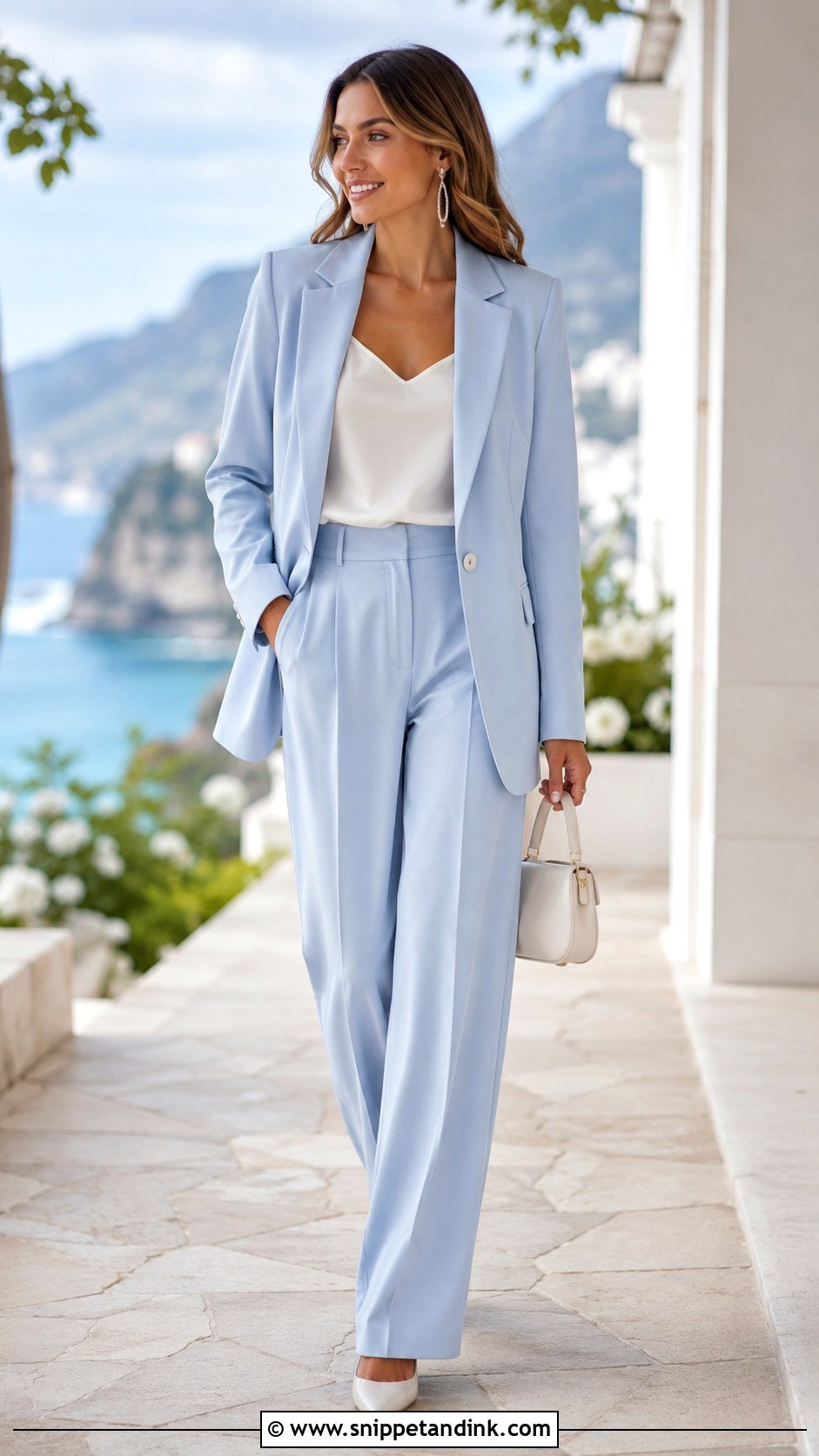
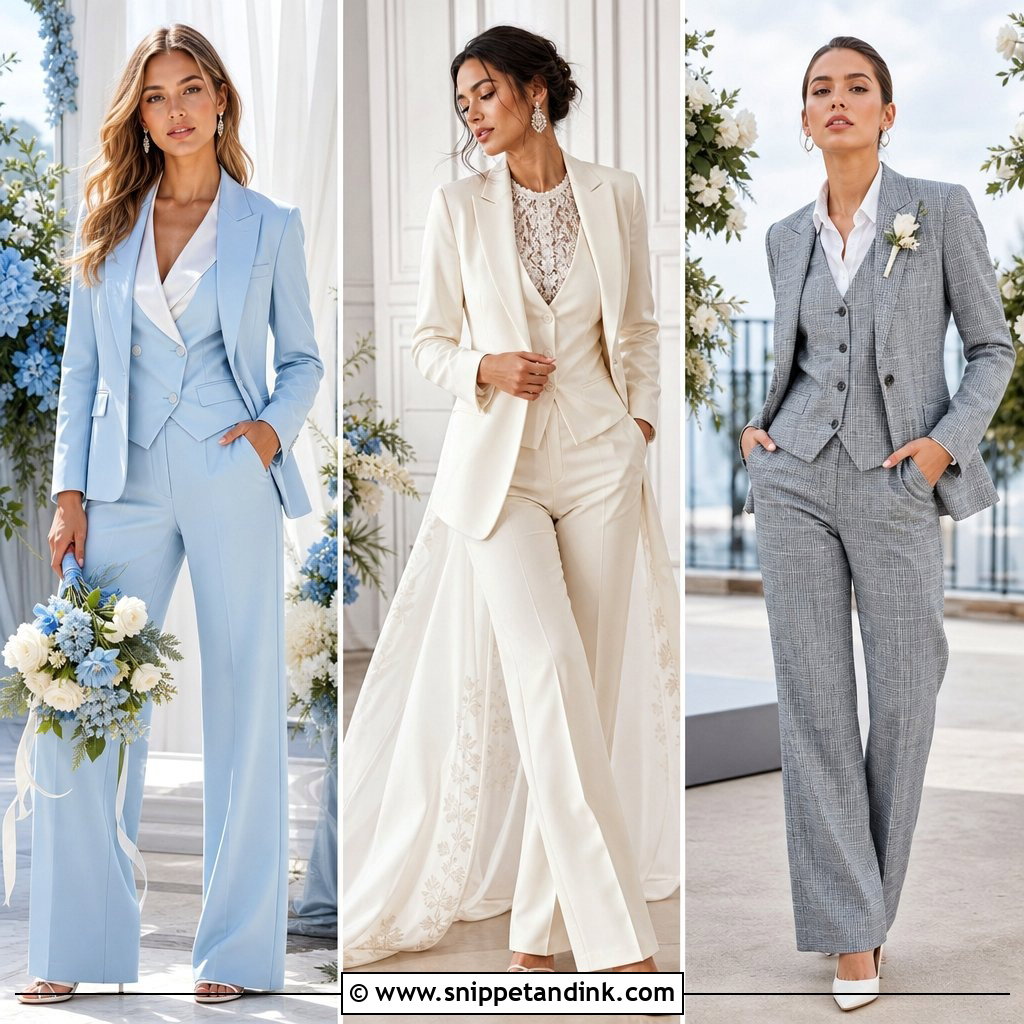
Powder blue reads fresh in daylight, which is why I suggest it for coastal weddings, rooftops and spring venues. A powder blue wedding suit with a white silk blouse and pale heels needs very little else. Wide trousers and a relaxed blazer soften it; a double-breasted jacket with slim trousers sharpens it. Pearl earrings and natural makeup suit the color. It’s a good swap if blush or lavender feel too sweet on you.
8. Lavender Wedding Suit
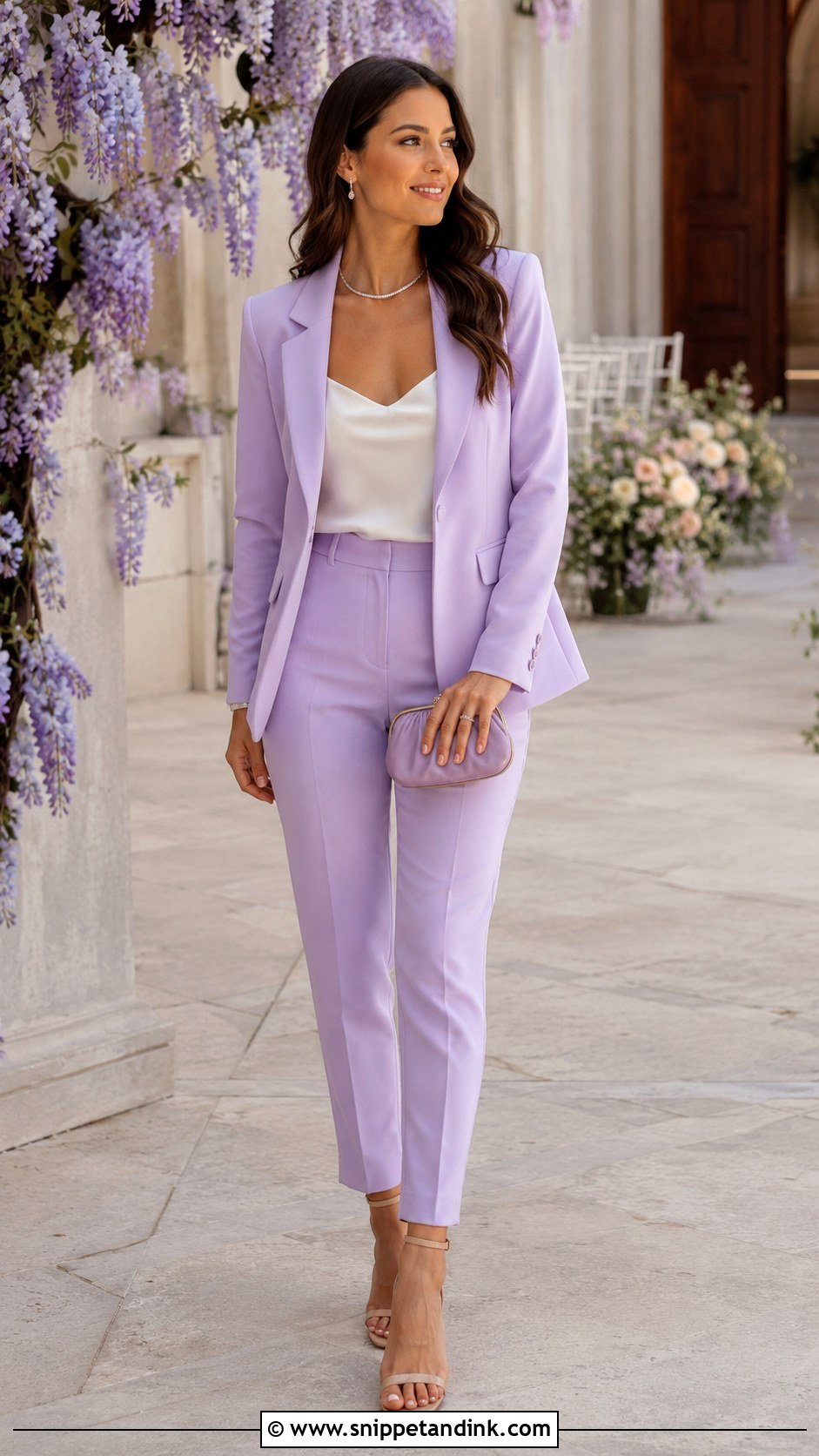
Lavender goes wrong when it gets too bright. A soft, greyed lilac looks grown-up; a vivid purple is much harder to style. Pair the blazer and trousers with a white or lilac satin top, nude sandals and delicate silver jewelry. A slightly longer blazer adds polish and tapered trousers keep the line neat. Bridal brunches and outdoor spring receptions are its natural home. A structured clutch makes it look finished.
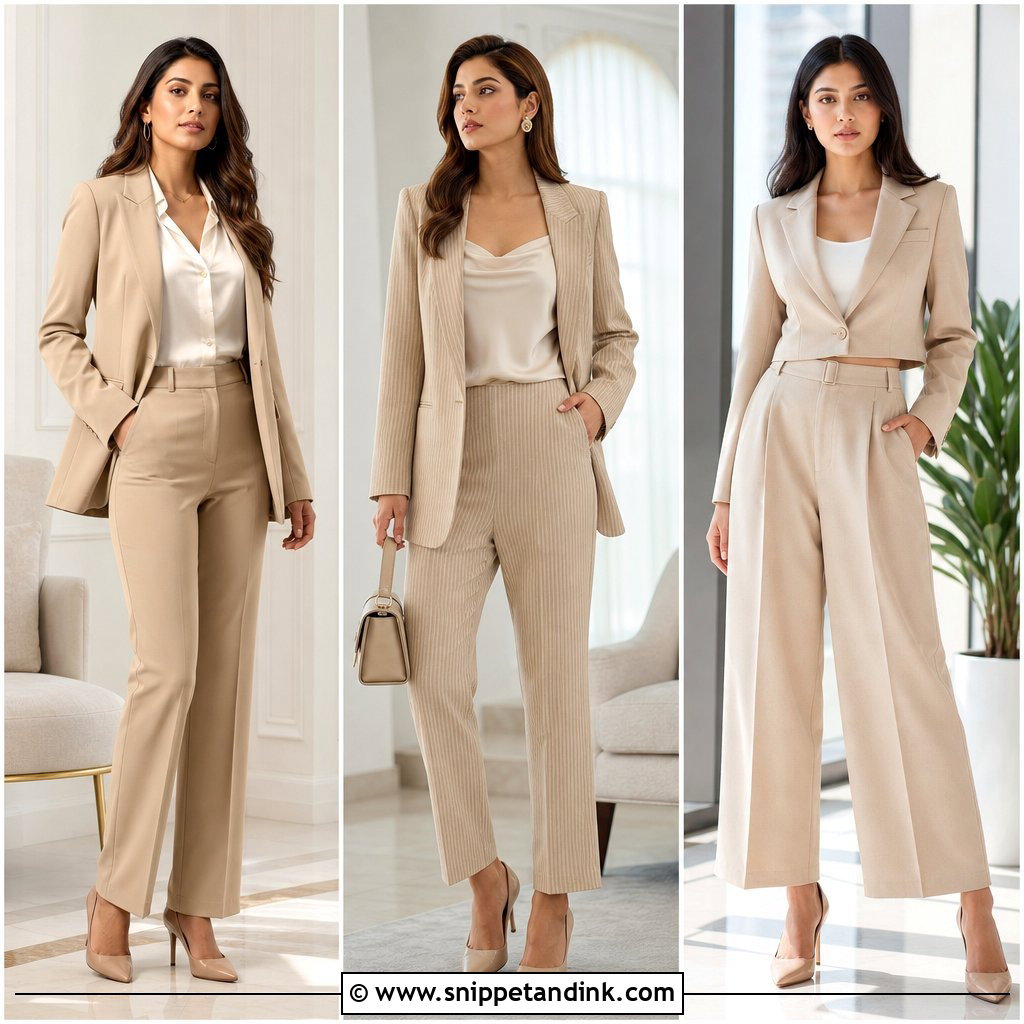
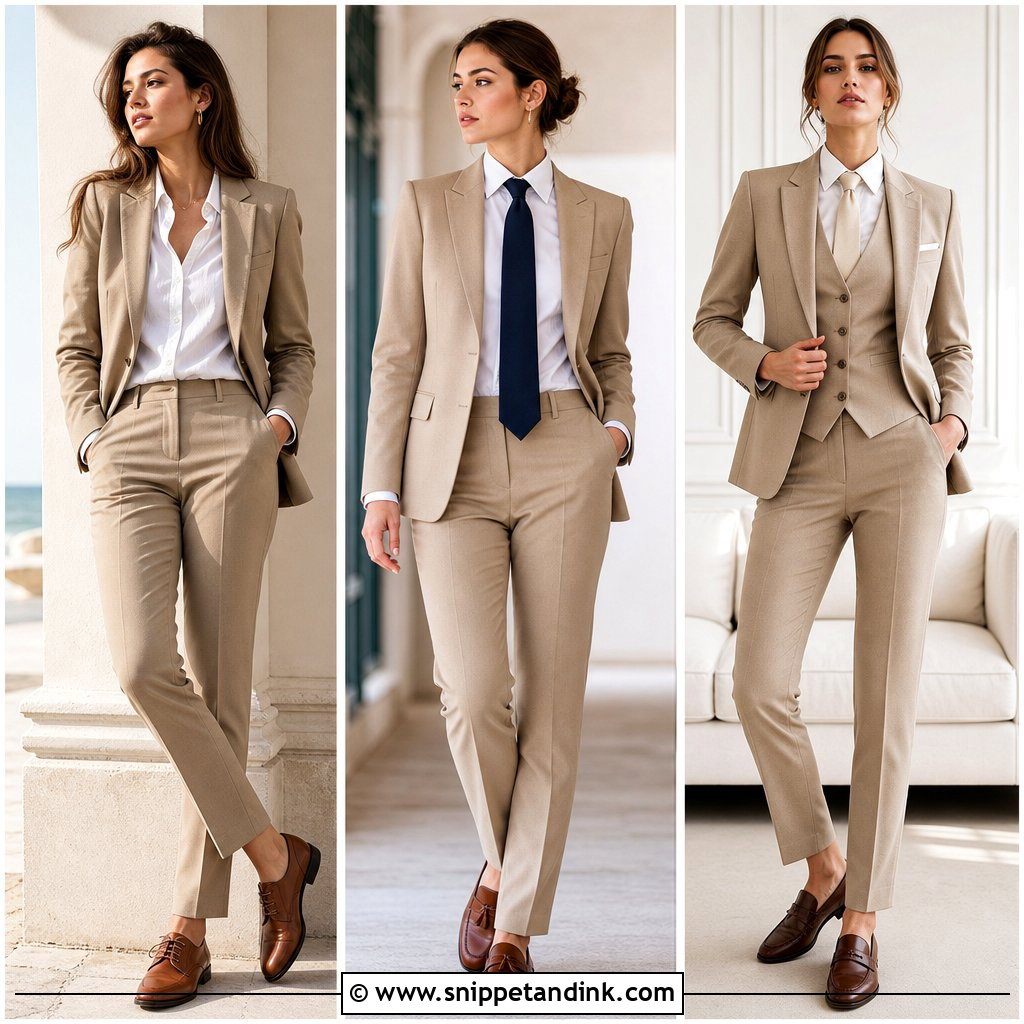
9. Beige Wedding Suit
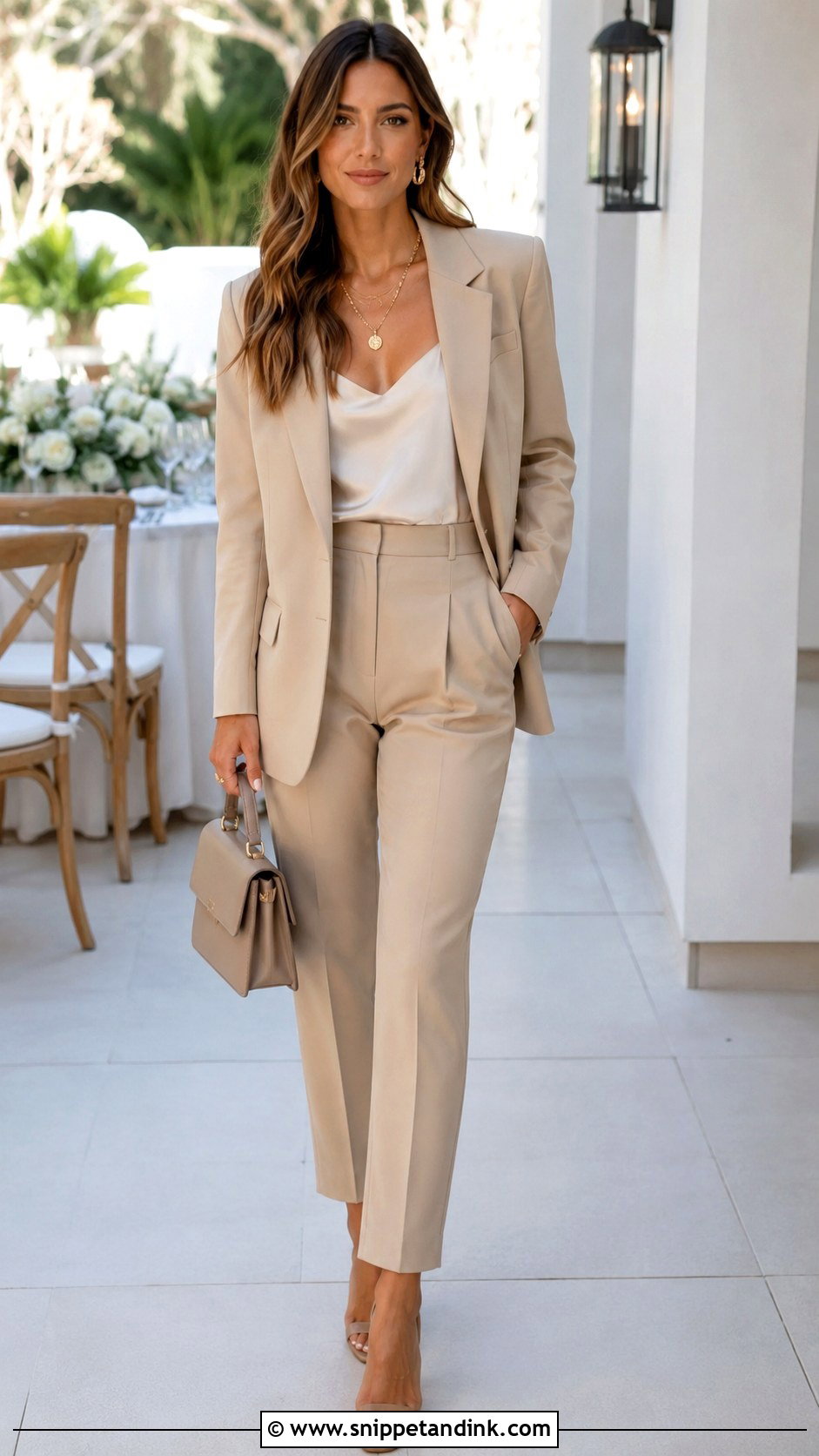
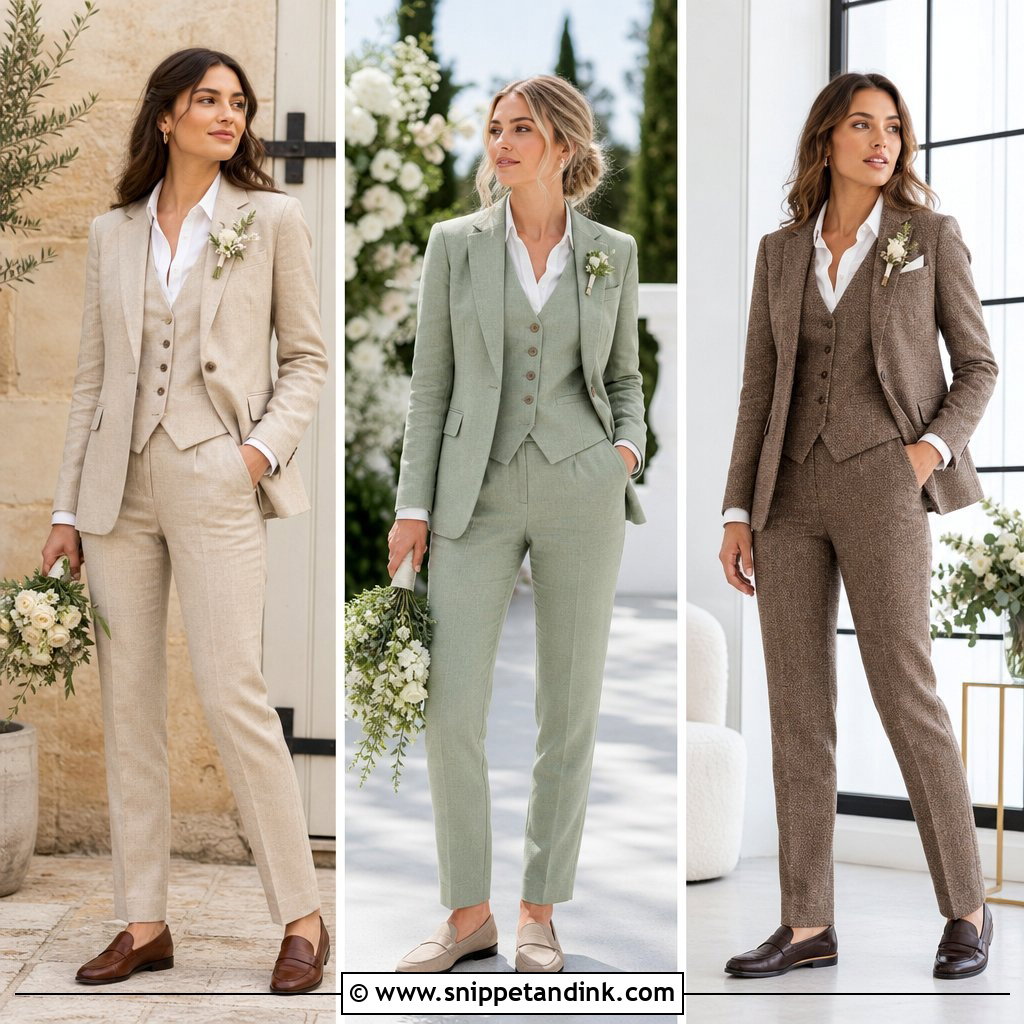
Beige is the hardest neutral to get right as a guest, because pale sand can read as ivory in photos. I steer clients toward a warmer stone or camel shade that clearly isn’t white. A silk tank, tan heels and gold jewelry make a soft tonal outfit, and a belt adds shape. For summer, linen or light crepe breathes; indoors, a smoother suiting looks more formal.
10. Cream Wedding Suit
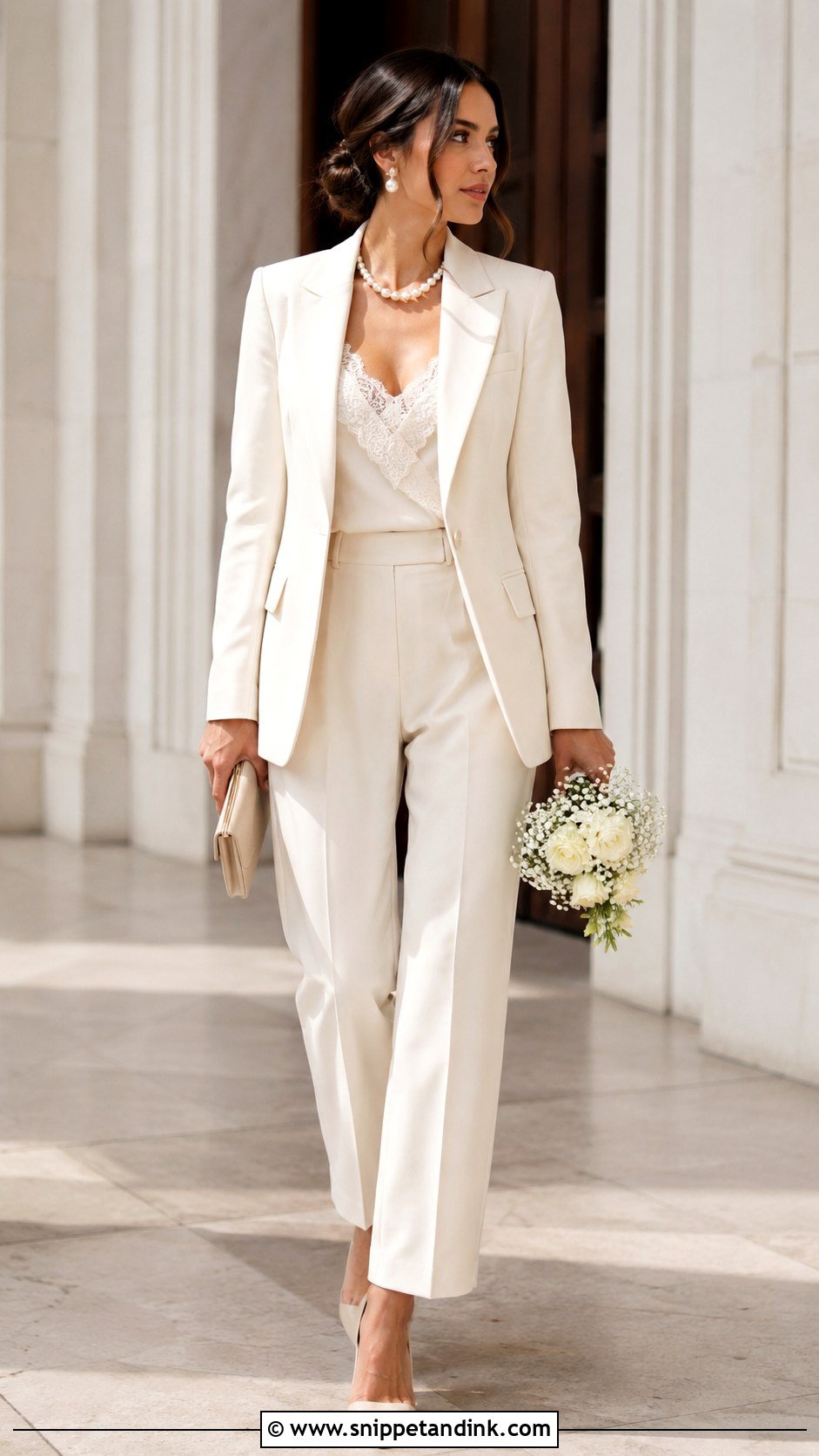
Cream is a bridal shade. As a guest, I’d only wear it when the couple or the dress code has clearly said it’s fine. For a bride, a cream blazer and trousers with a lace camisole, satin heels and pearls look soft and finished. A tailored vest underneath modernizes it. Texture helps cream photograph well; flat polyester in cream can look grey, while crepe, satin trim or a subtle jacquard holds detail. Keep shoes and bag in ivory, nude or champagne.
11. Gray Wedding Suit
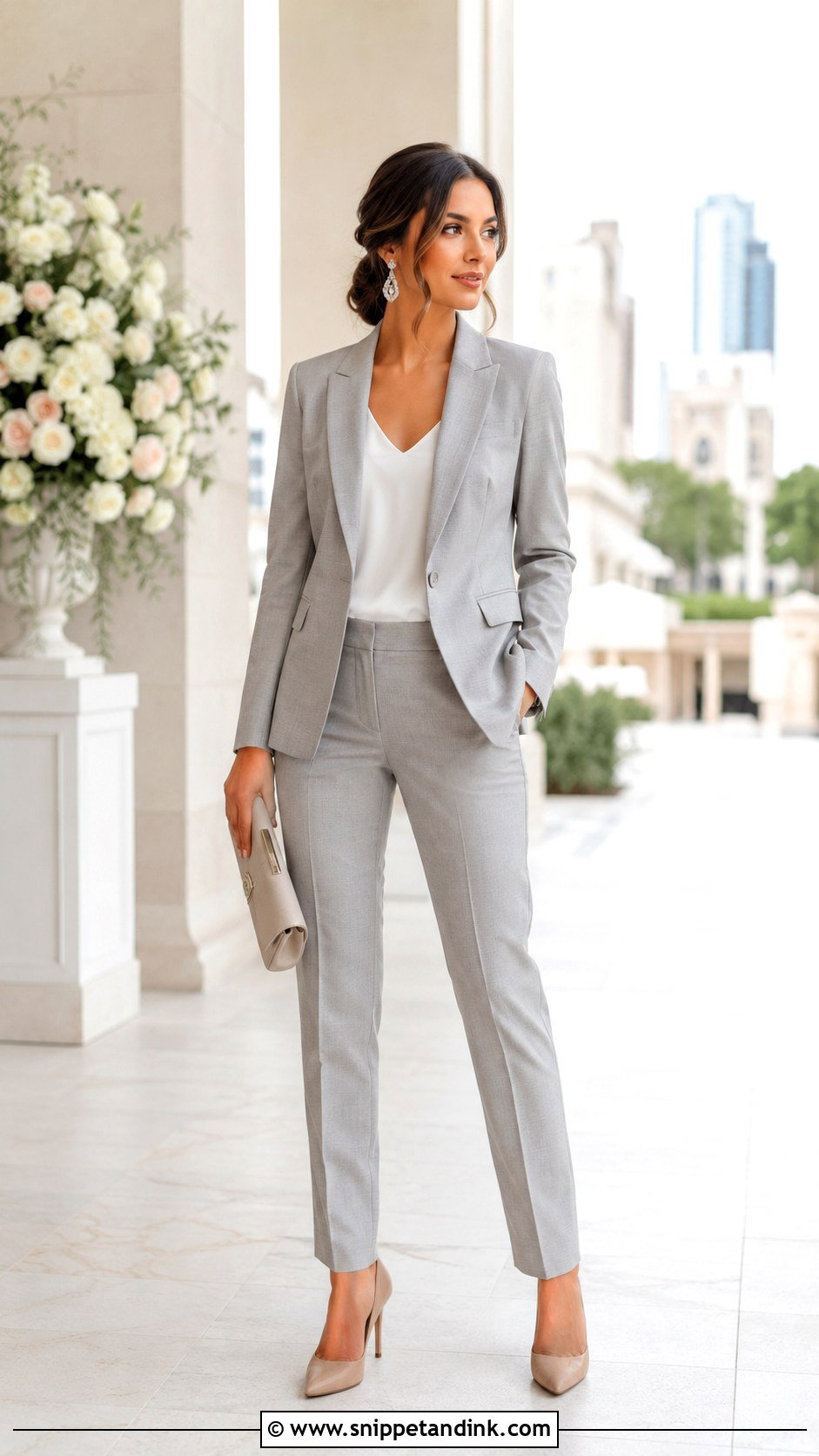
Gray is the suit color people underestimate. Light gray for daytime, charcoal for evening. A white blouse, silver jewelry and black or nude heels keep it classic, and a blush or blue camisole softens it. Fit carries gray more than any other color, since it shows every pull and wrinkle in daylight. Trousers should drape straight, and the blazer should shape the shoulder without looking stiff.
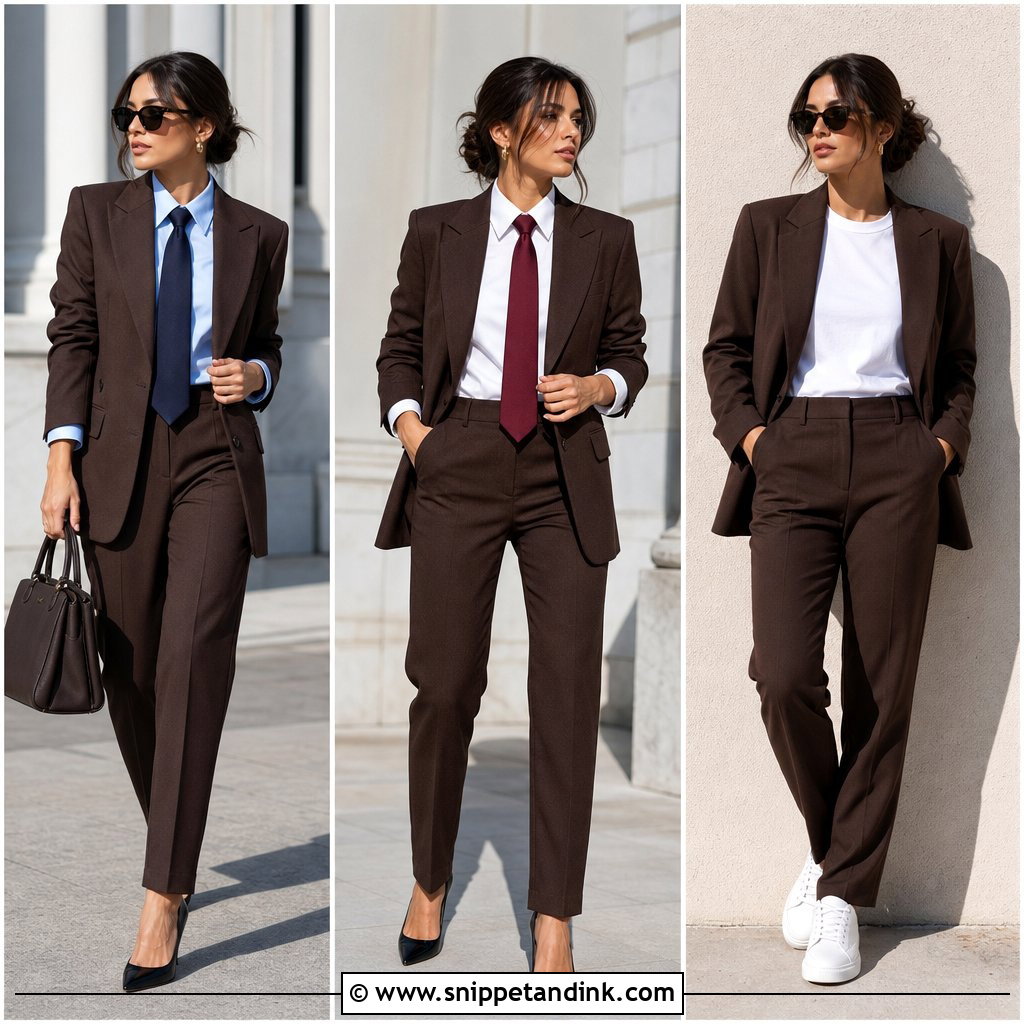
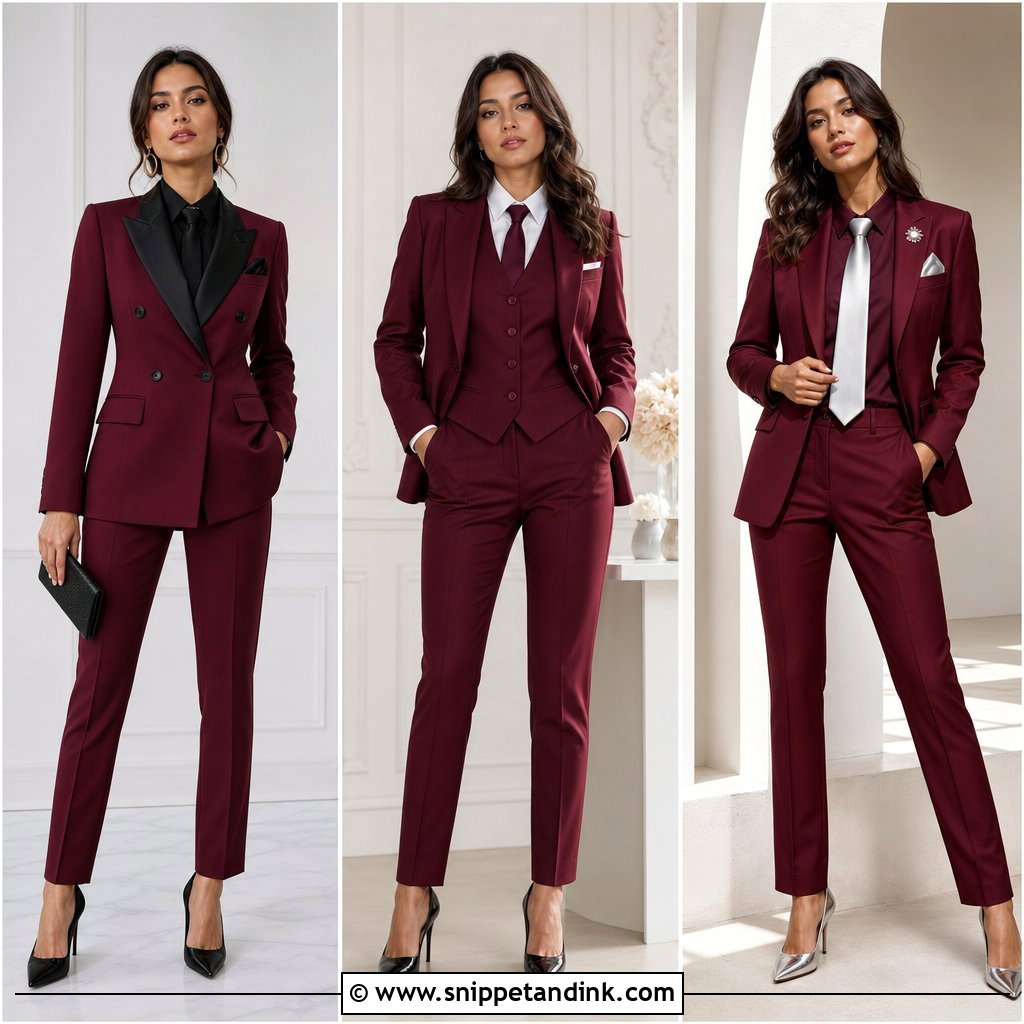
12. Burgundy Wedding Suit
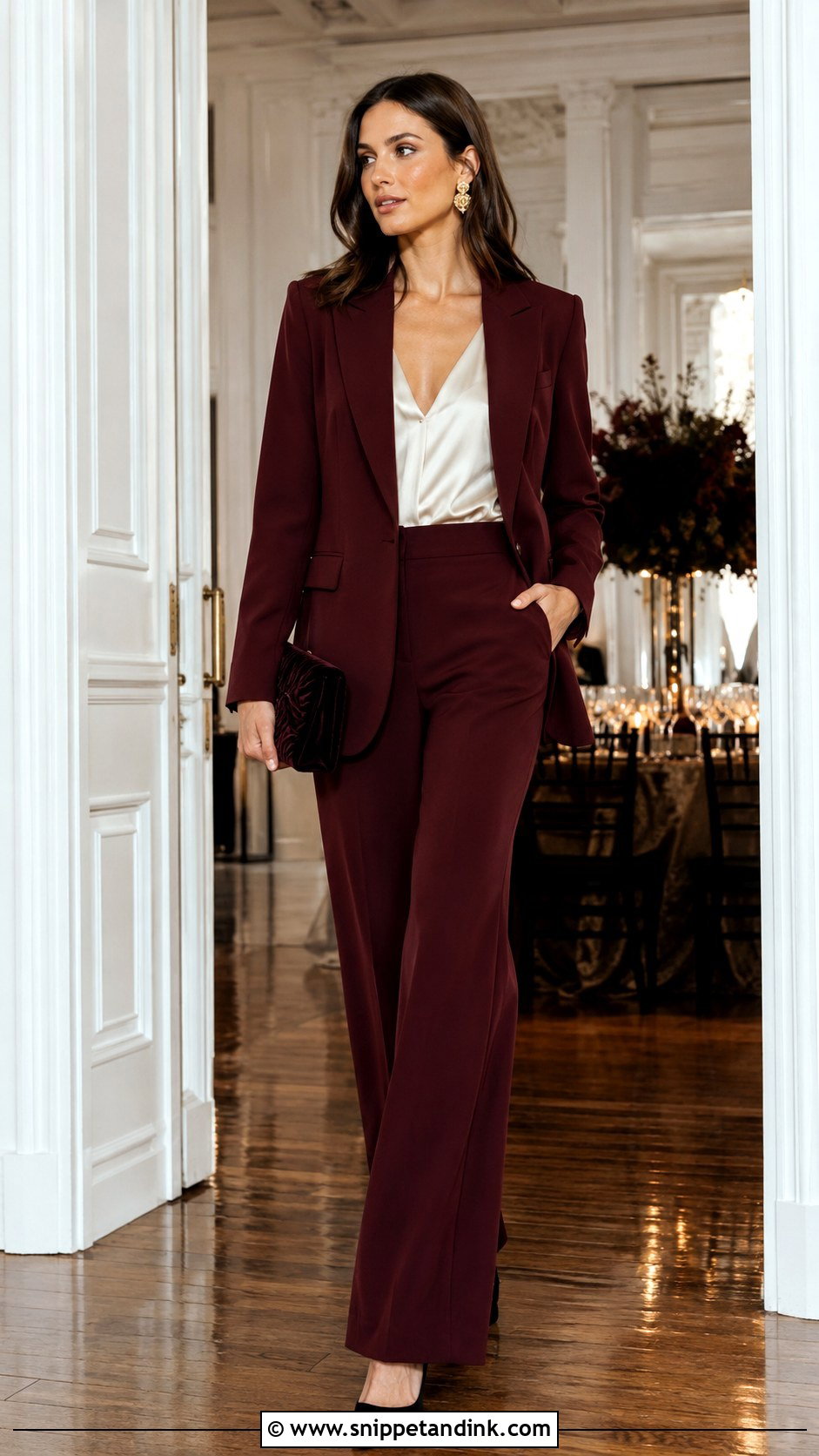
Burgundy belongs in fall and winter. An ivory silk blouse, black heels and gold earrings keep it rich without overload, and a velvet clutch adds texture for evening. Structured fabrics hold the color best; burgundy in thin, shiny fabric can look purple under flash. Wide trousers lean elegant, slim ones lean formal. With makeup, I’d choose either a berry lip or a defined eye, not both.
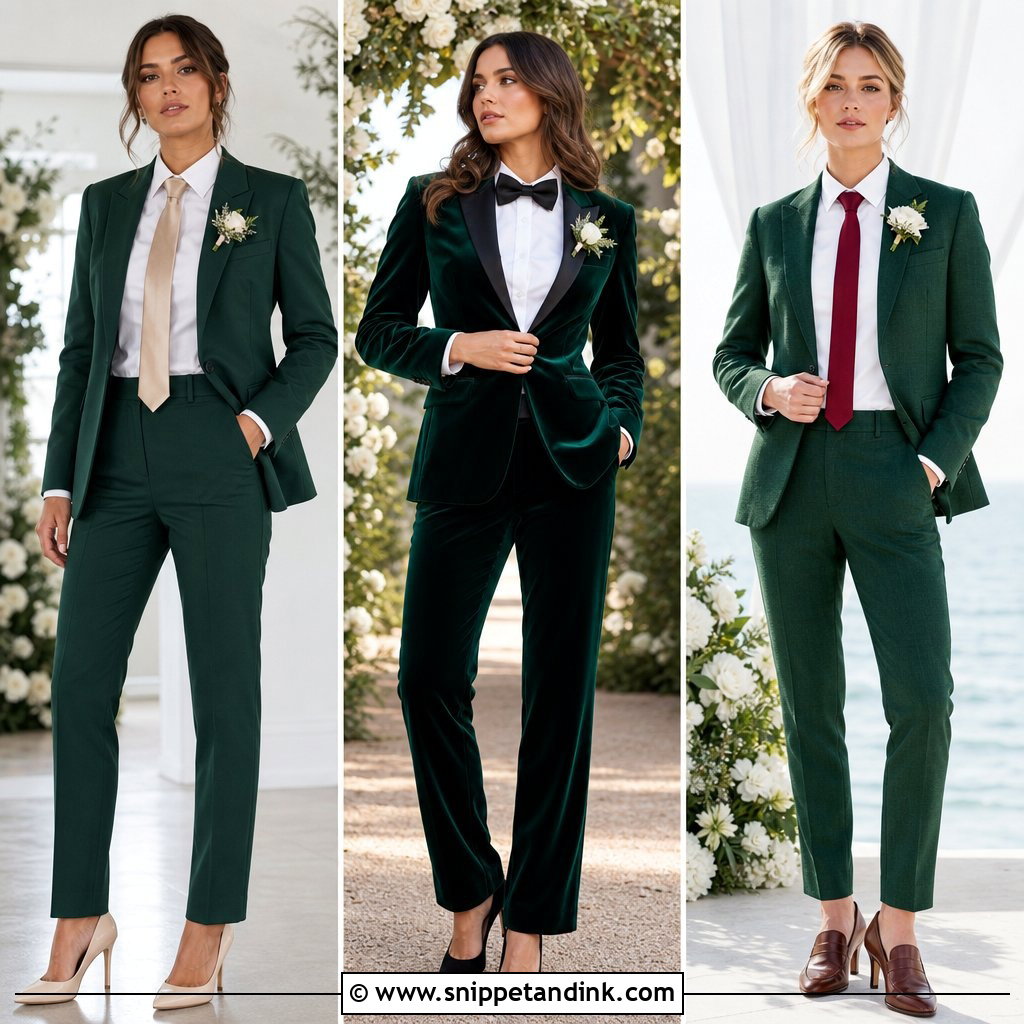
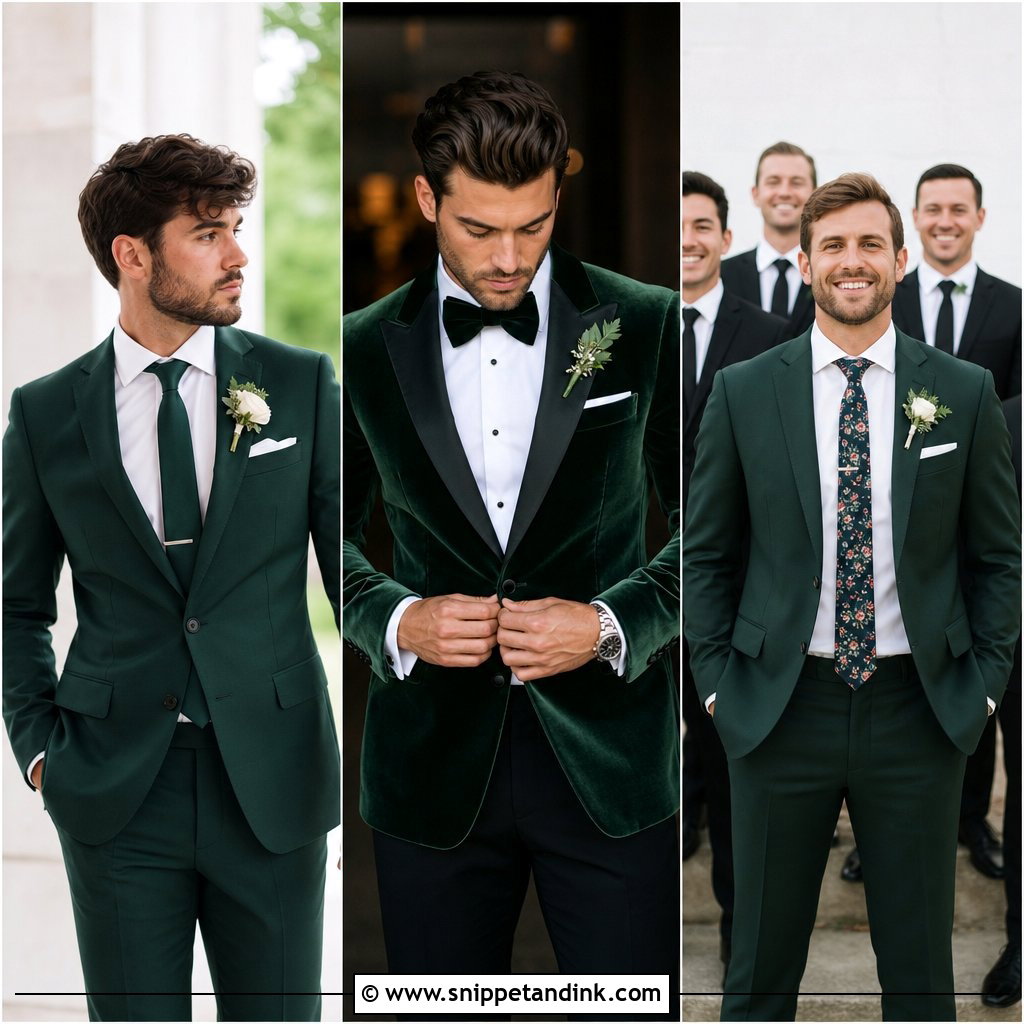
13. Emerald Green Wedding Suit
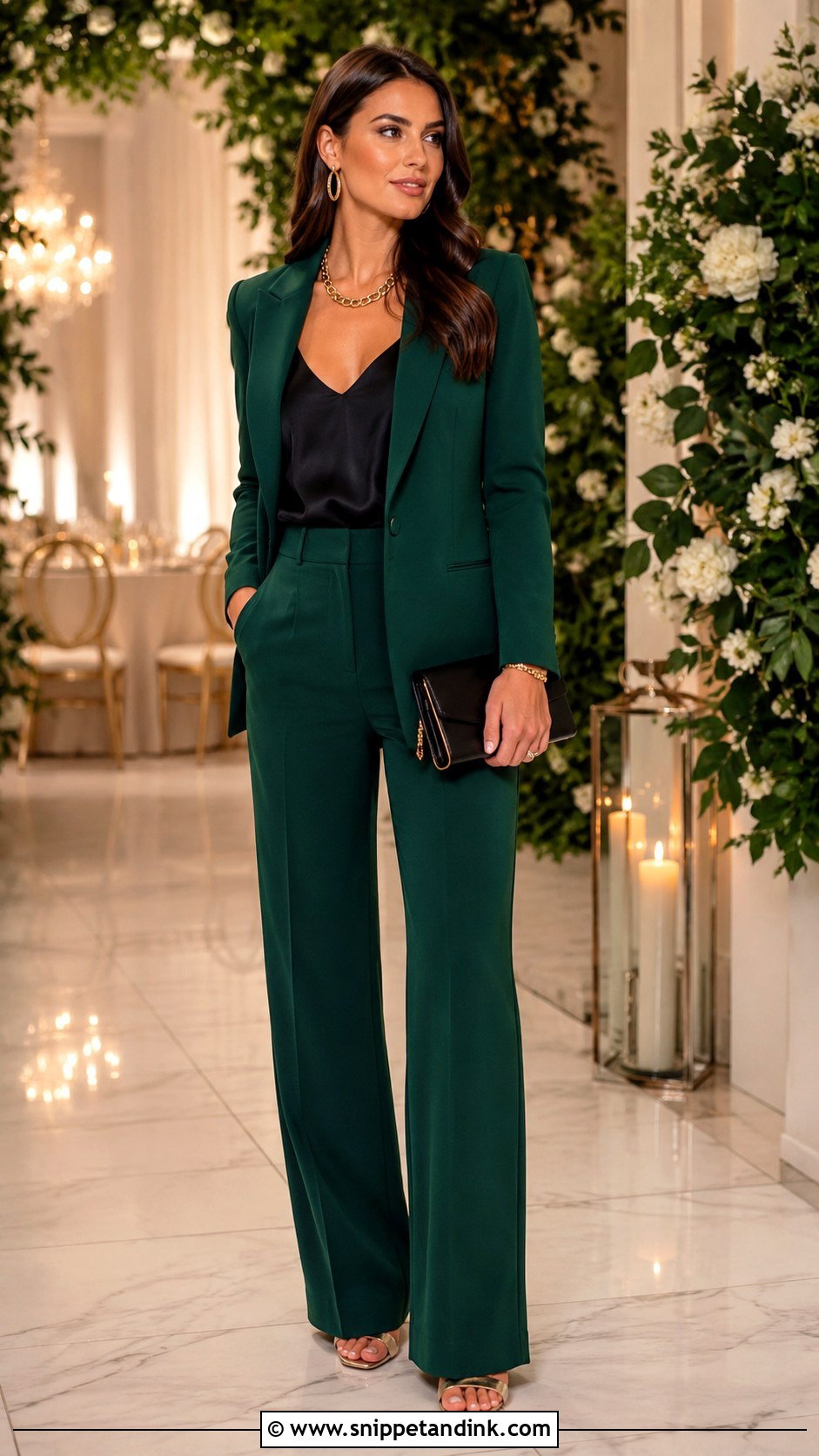
Emerald is a confident color that only works with sharp tailoring. A black satin top, metallic heels and a sleek clutch suit evening and winter receptions. Gold jewelry warms the green, and crystal earrings make it dressier. Since the color is already a statement, I keep extra details to a minimum. The trousers need to fit cleanly through the waist and hip, because a saturated color draws the eye straight to any pulling.
14. Satin Wedding Suit
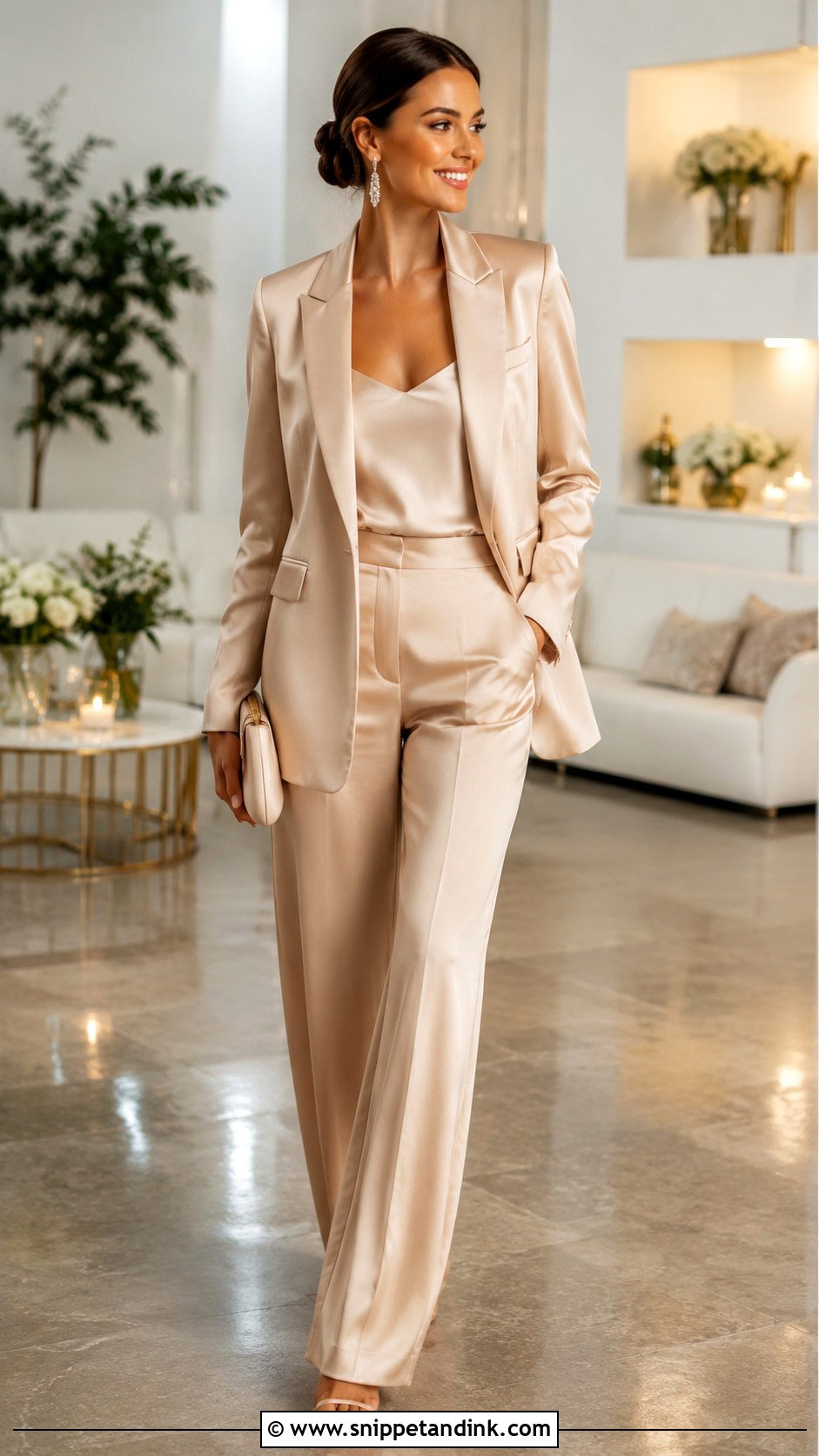
Satin shines, so I save it for receptions, evening ceremonies and after-parties. Champagne, black, ivory and blush all work. Underneath, a plain camisole or fitted bodysuit keeps the fabric in focus. Satin also creases every time you sit, which is why I look for a well-lined suit and a relaxed blazer with fluid trousers rather than a tight cut. Strappy heels and delicate earrings finish it.
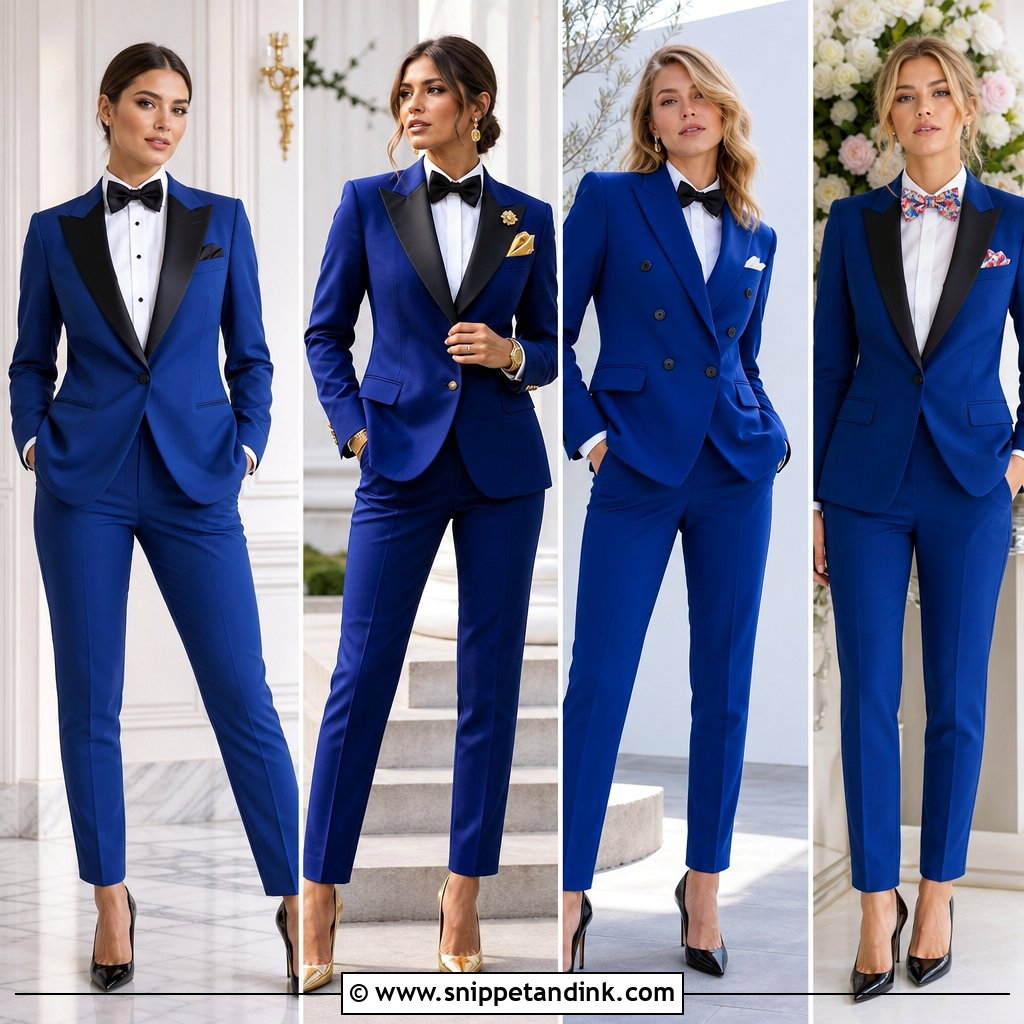
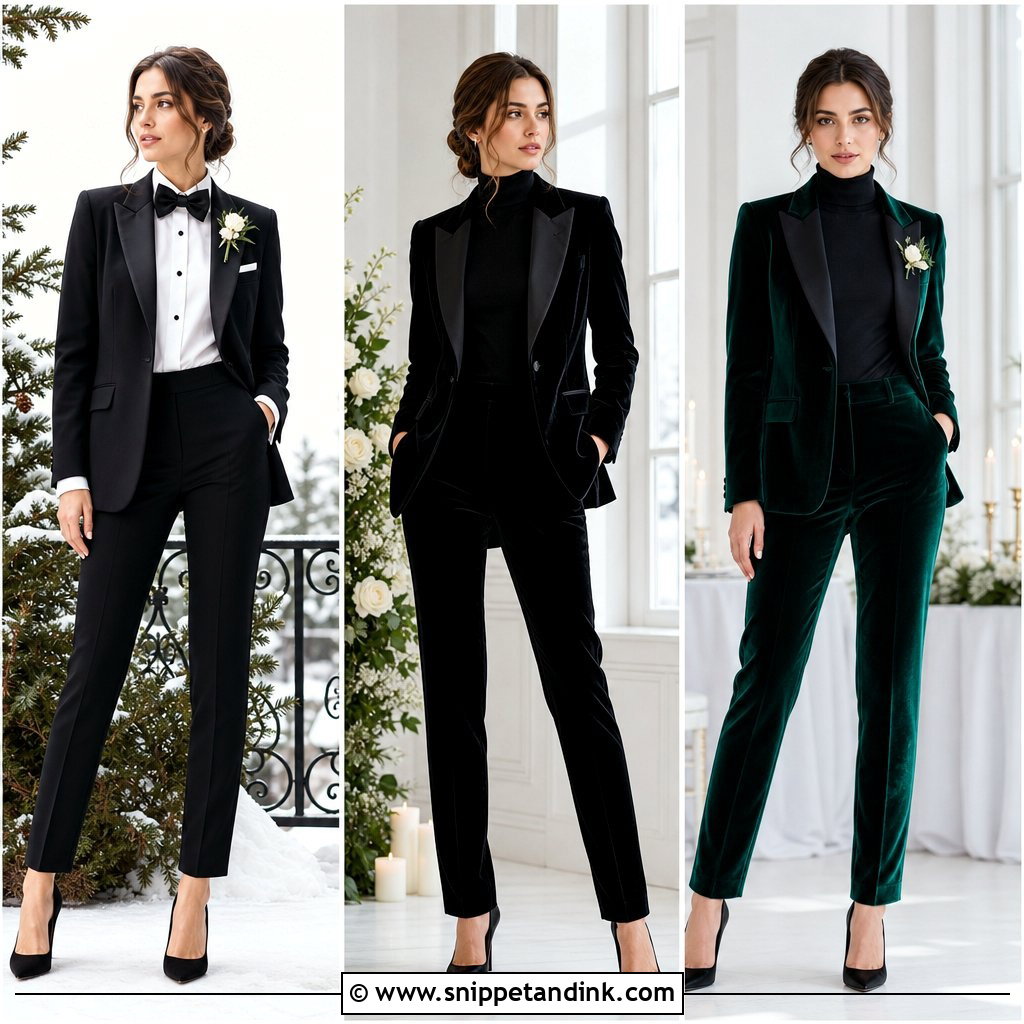
15. Velvet Wedding Suit
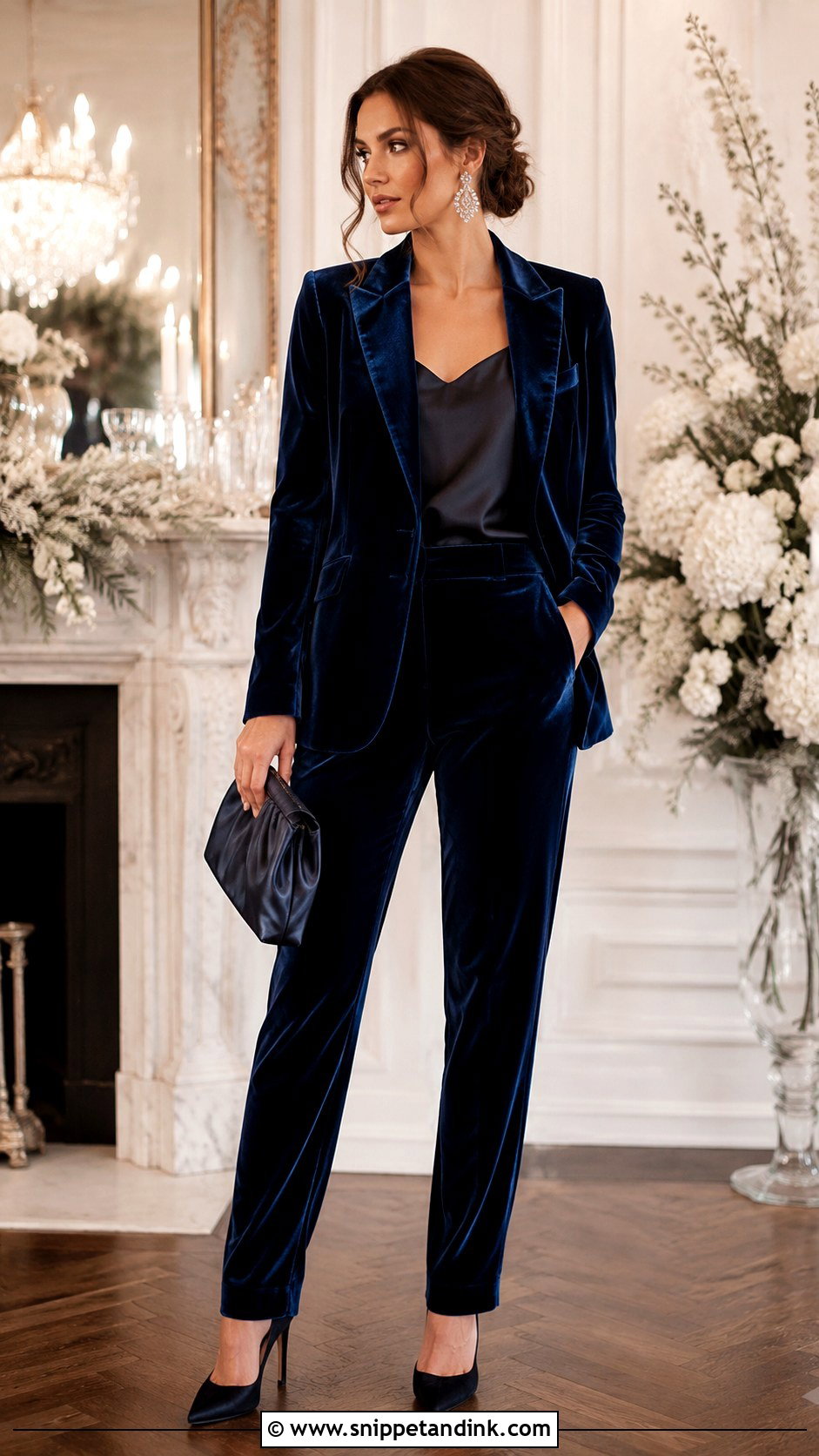
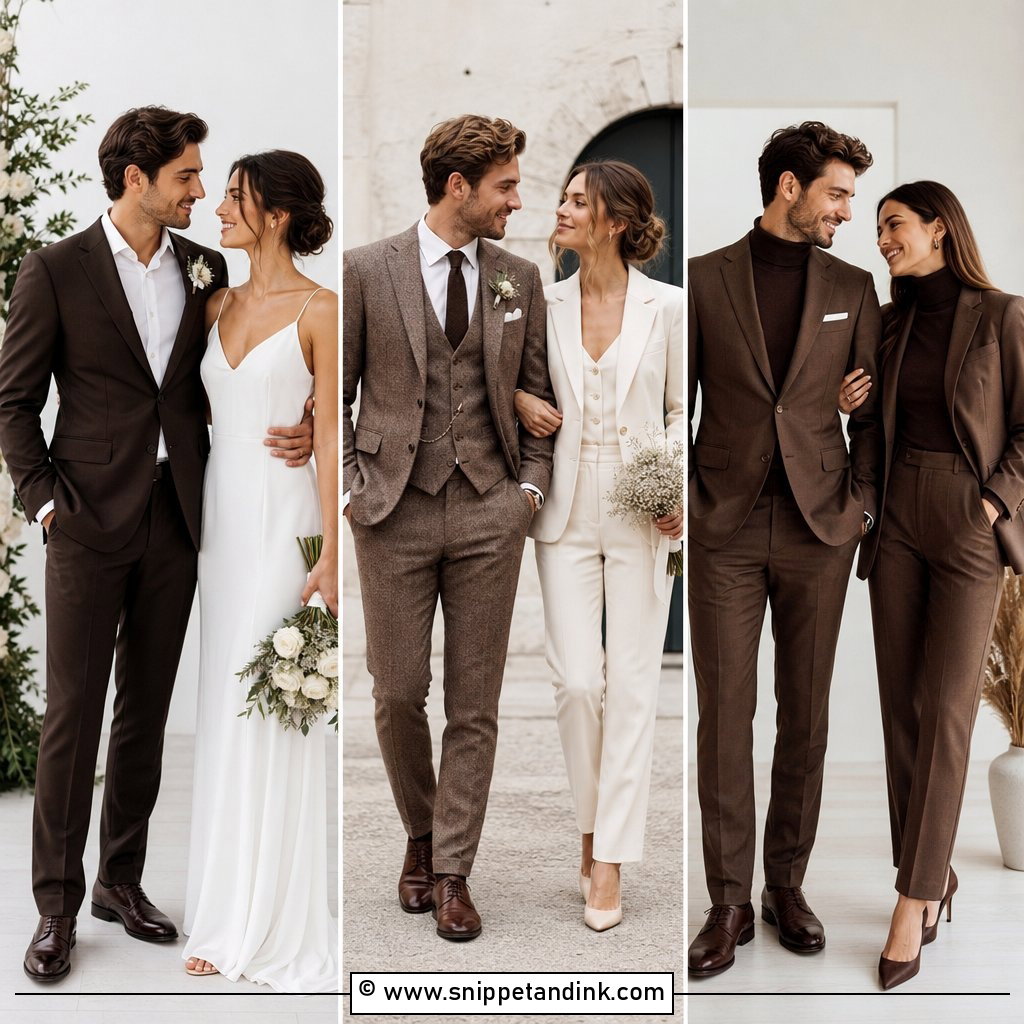
Velvet is the cold-weather fabric for suits, best in black, navy, burgundy, emerald or chocolate. A velvet blazer with tailored trousers already looks dressed for evening, so a silk camisole and pointed heels are enough. It’s warm, though, and crowded reception rooms heat up fast; I’d only wear a full velvet suit to a winter event. Pile also crushes in the car, so hang it rather than folding. Skip loud prints and oversized jewelry.
16. Linen Wedding Suit
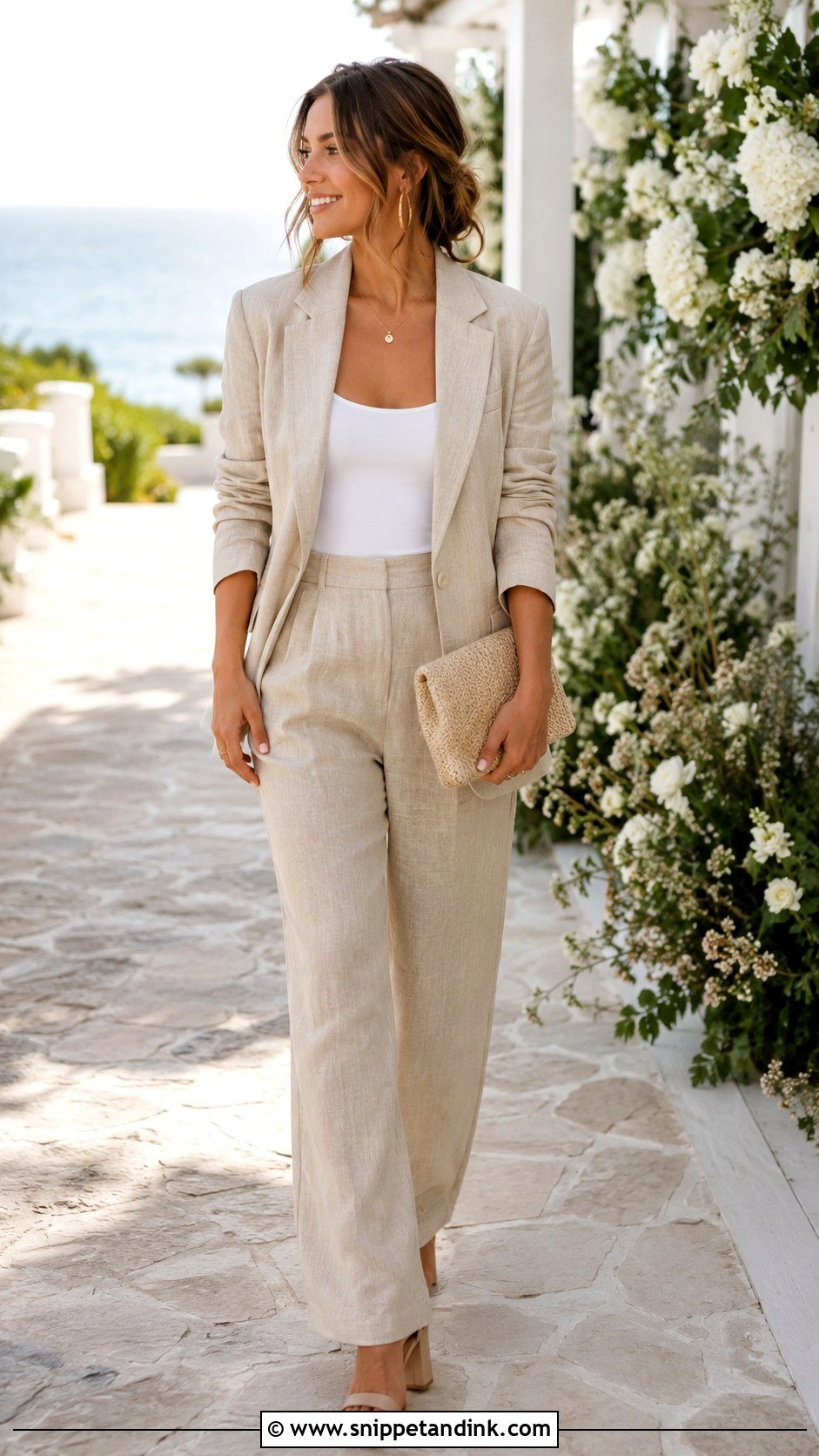
A linen wedding suit keeps you cool at beach venues and garden ceremonies, and it will crease within an hour. A linen blend, often with some cotton or viscose, wrinkles less in photos. Beige, sage, light blue and soft gray all look right. Wear a simple tank, block-heel sandals for grass and a woven clutch. Relaxed doesn’t mean baggy: a fitted top under the blazer keeps the shape balanced.
17. Wide Leg Wedding Suit
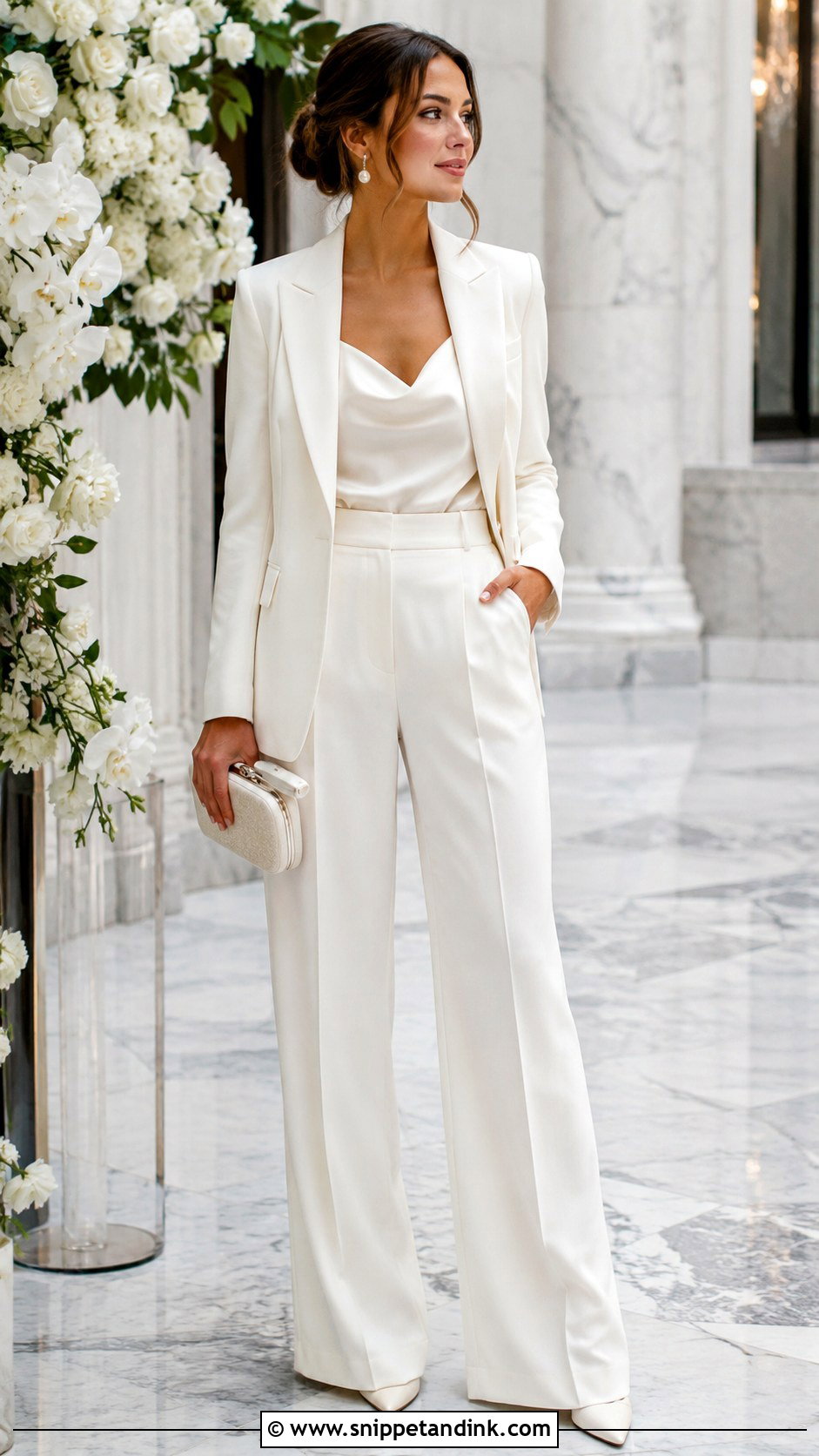
Wide trousers should skim the body and fall over the shoe without pooling into a puddle. Hem them in the heels you’ll wear, with the back of the hem about a finger above the floor. A fitted blazer, satin top and pointed pumps keep the line long. Navy, ivory, blush, black and champagne all work well in a wide leg. If the blazer is relaxed, a belt adds structure at the waist.
18. Three Piece Wedding Suit
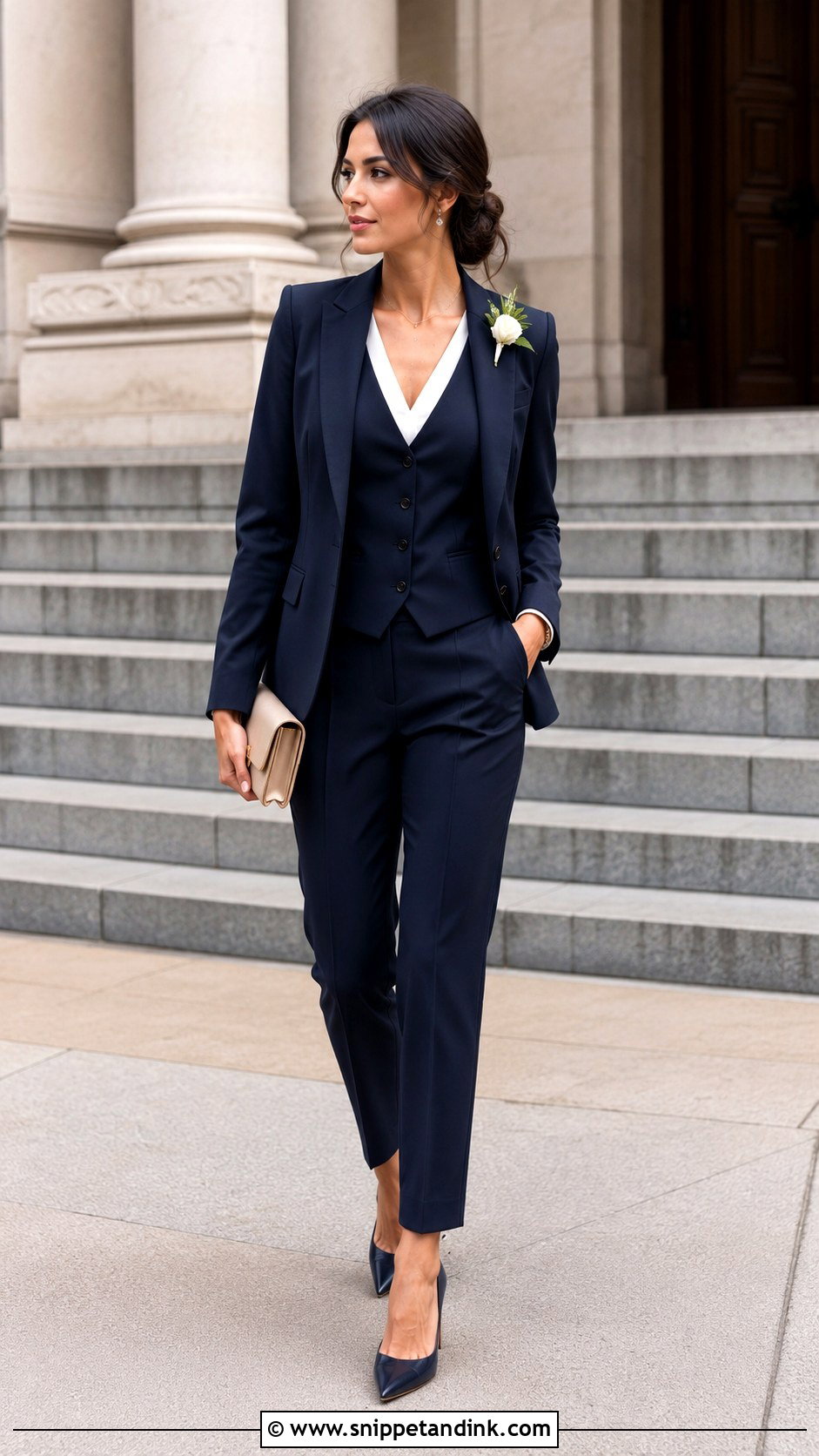
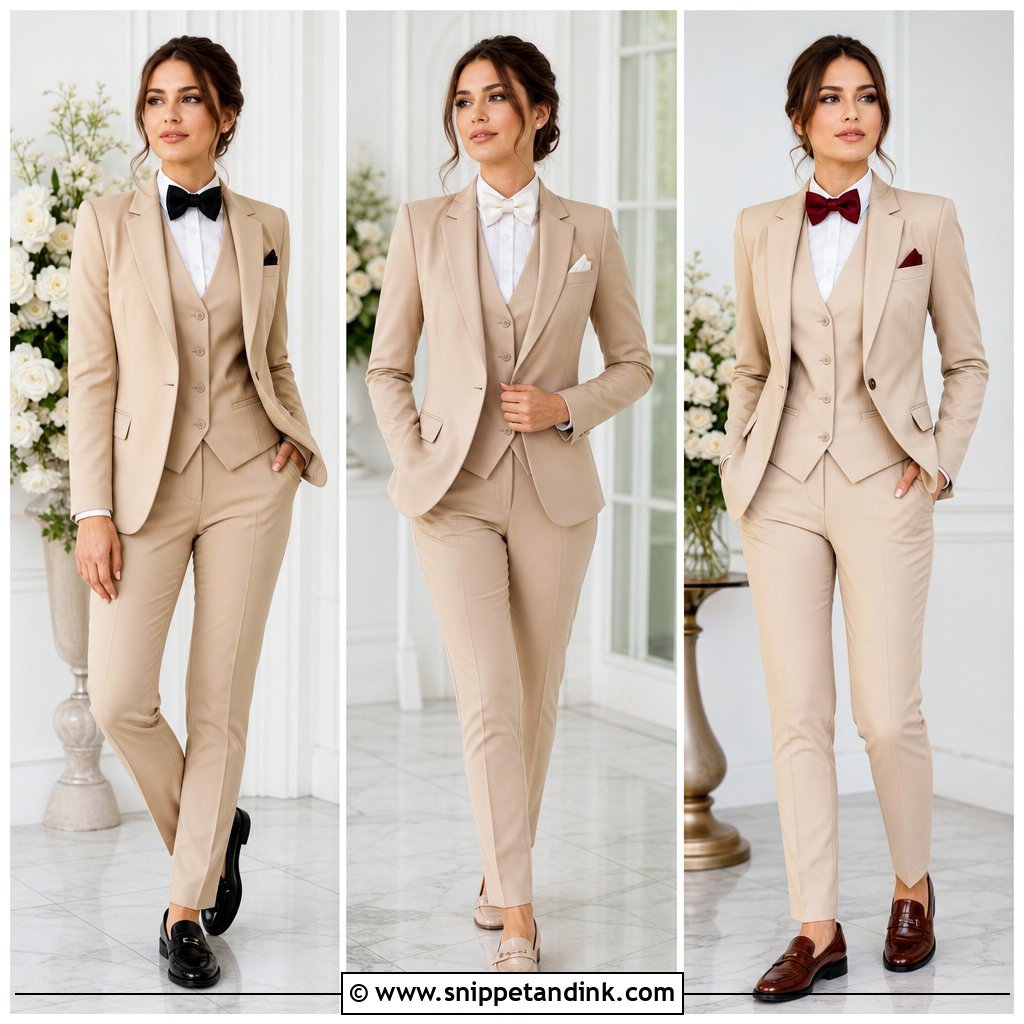
The vest is what makes a three-piece practical. Wear all three pieces for the ceremony, then take off the blazer at the reception and you still look dressed. Choose matching trousers, a fitted vest and a blazer in ivory, navy, beige, black or gray. The vest should lie flat with no gaping between buttons. Pointed heels, pearl studs and a small clutch soften it for courthouse ceremonies and city weddings.
19. Double Breasted Wedding Suit
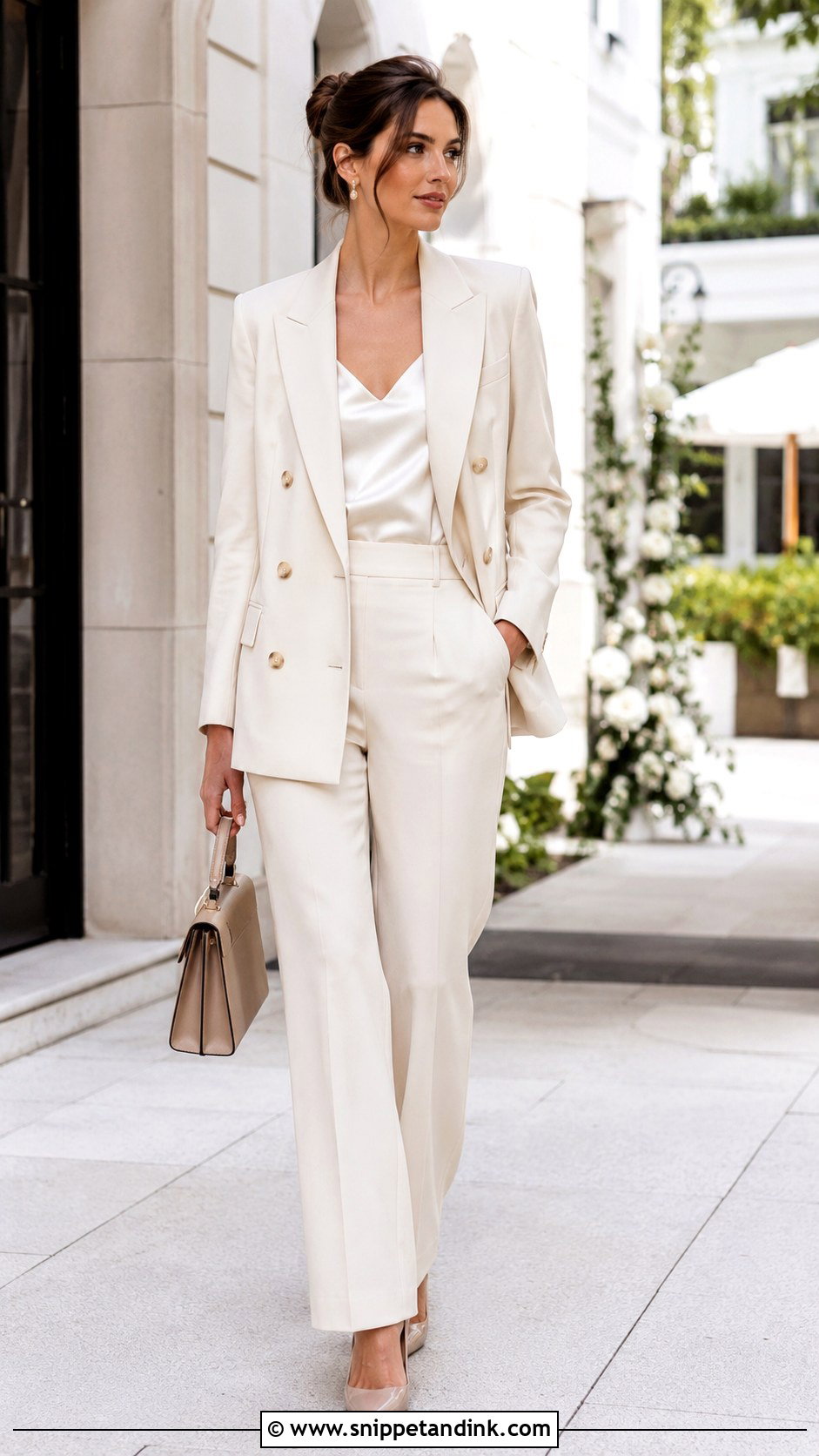
Double-breasted jackets overwhelm a body when they’re cut loose, so shoulder and waist fit come first. If the jacket swamps you, it isn’t the style; it’s the size. Navy, cream, black and soft gray suit this cut best. A simple silk top, sleek heels and a low bun keep it formal. Go easy on jewelry because the jacket already has a strong shape.
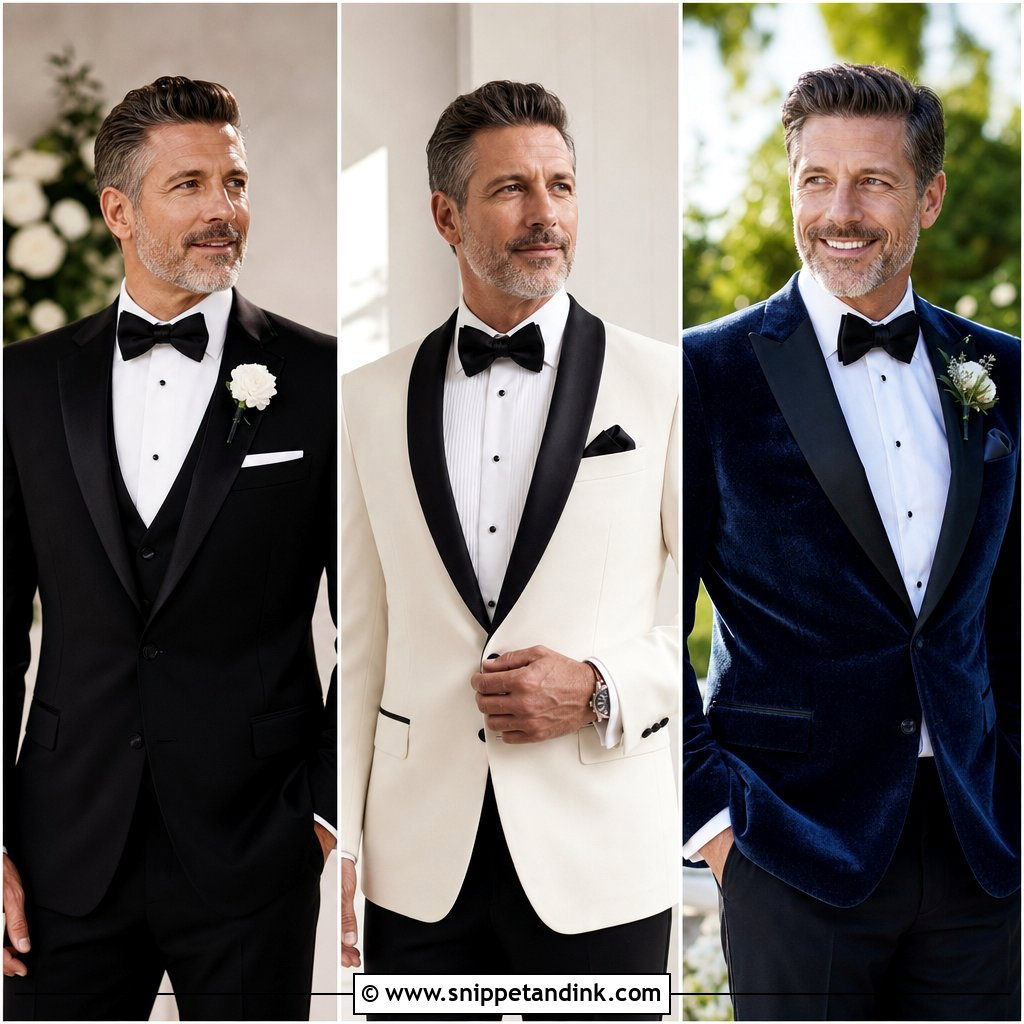
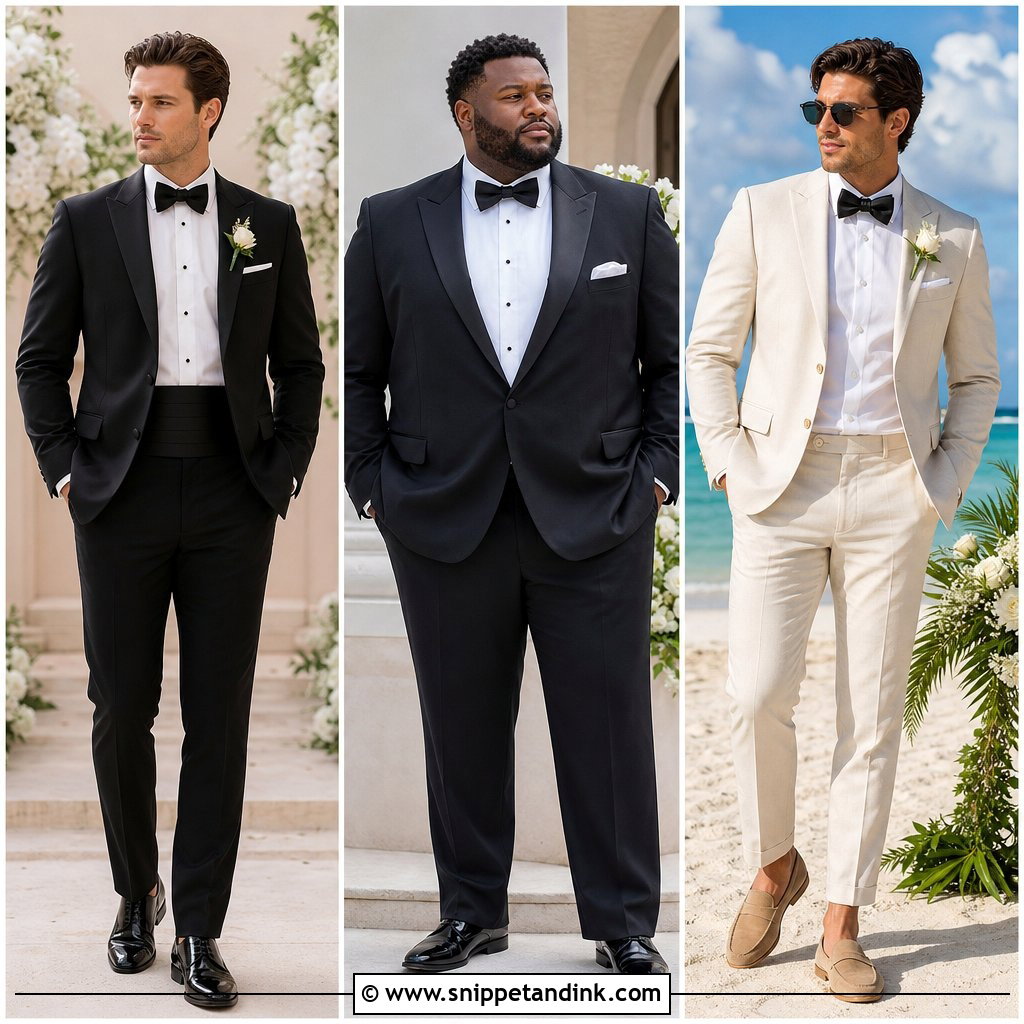
20. Tuxedo Wedding Suit
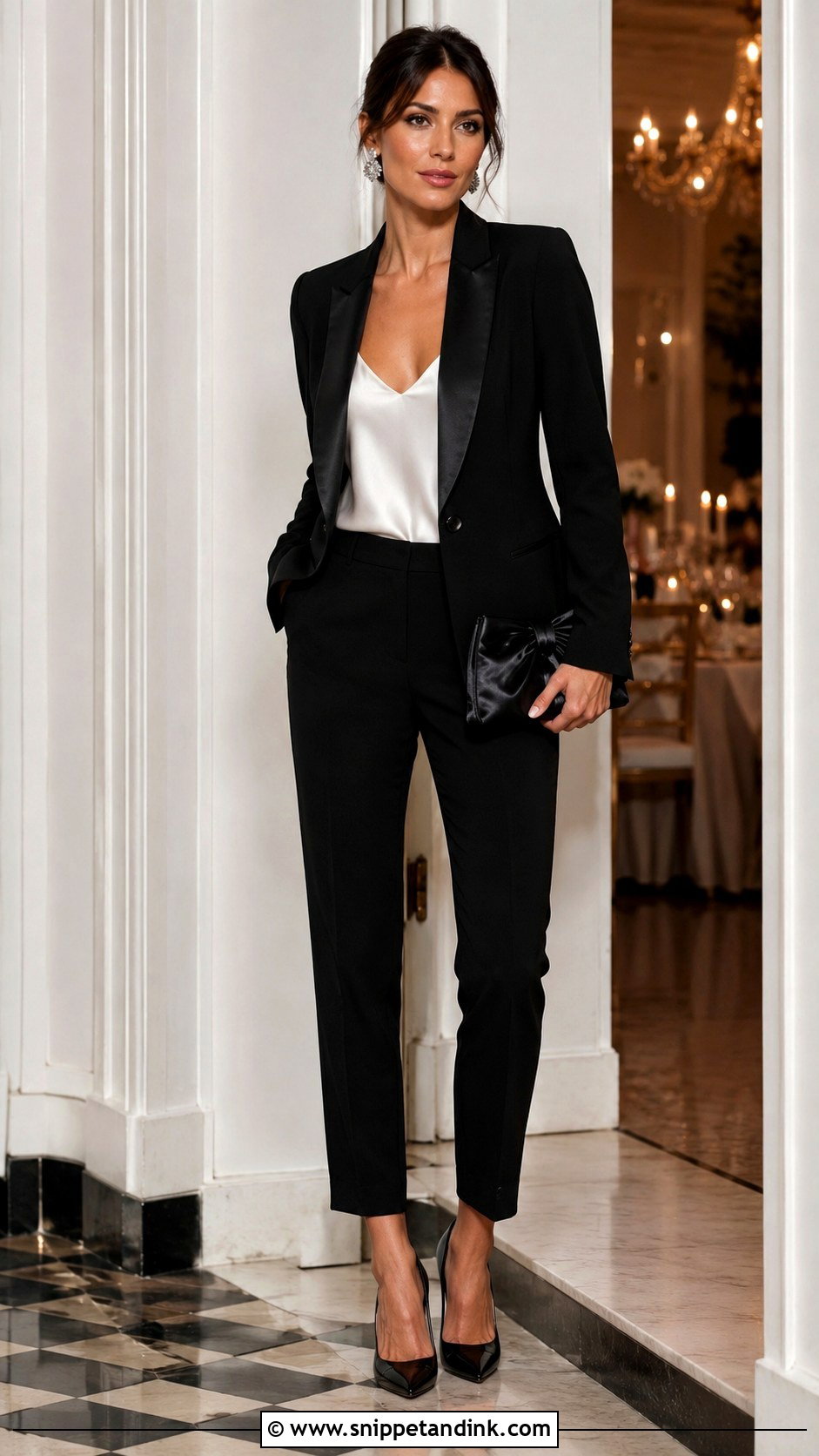
A tuxedo wedding suit is the most formal option here and belongs at black-tie and evening weddings. Look for satin lapels and clean trousers over a white shirt or silk camisole. Black is classic; ivory, navy and deep burgundy also work. An ivory tuxedo with pearls makes a modern bridal look. As a guest, I’d stick to black or navy so there’s no confusion with the bride.
21. Floral Wedding Suit
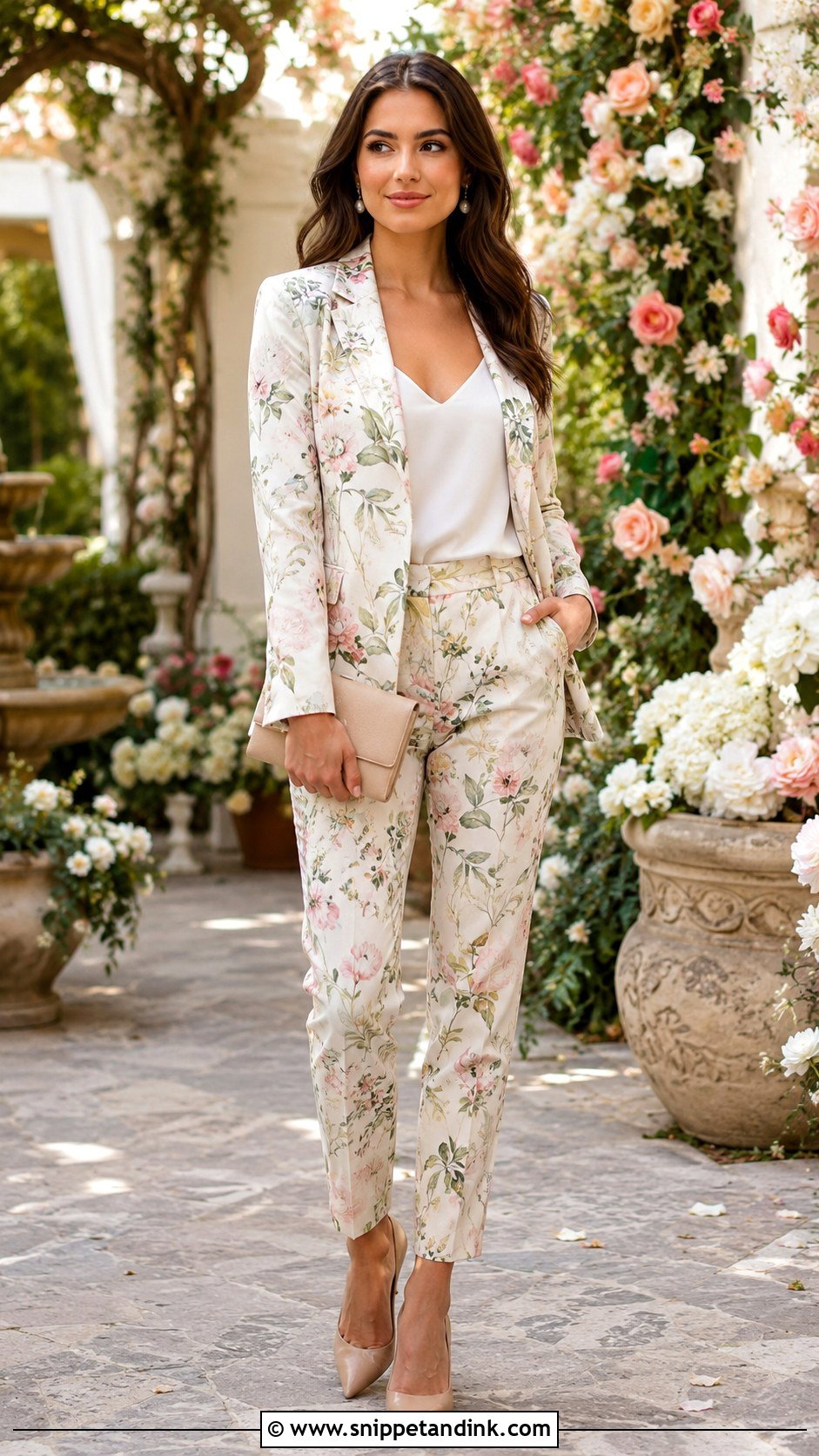
Floral prints are where suits get personal, and the scale of the print decides how formal it looks. Muted botanicals, soft pastels or tonal embroidery read elegant; oversized bright prints read casual. Pair a printed suit with a plain camisole, simple heels and a solid clutch. A bold printed blazer with tailored, solid trousers is the easier way in. Garden weddings and creative dress codes suit it best.
22. Plaid Wedding Suit
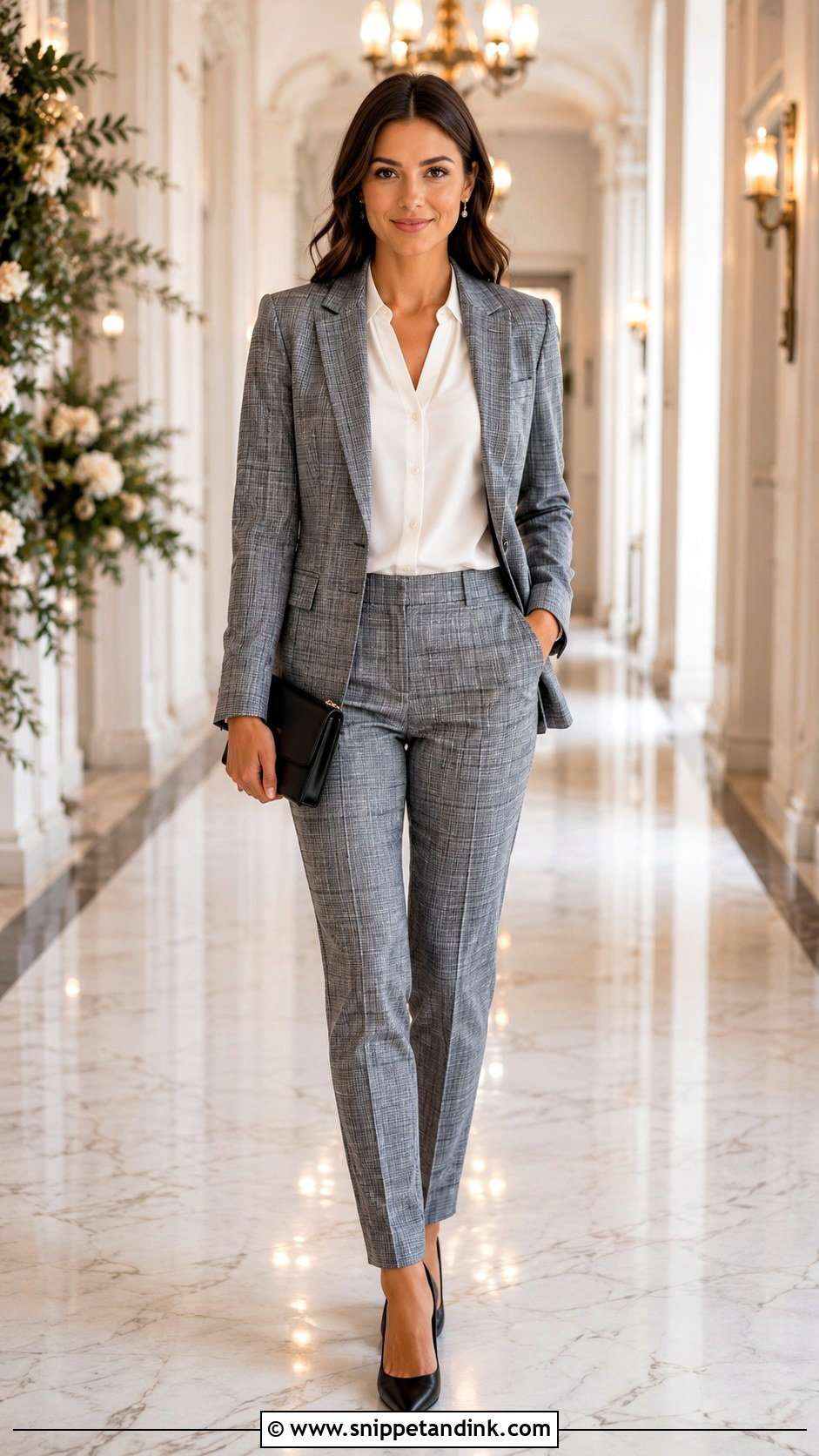
Plaid works at weddings only when it’s quiet: fine checks, windowpane or soft gray. Loud color combinations look like workwear or a costume. A matching plaid blazer and trousers look more intentional than mixed patterns. A pale camisole softens it, while a white button-down sharpens it. It suits fall weddings, city venues and semi-formal dress codes.
23. Sequin Wedding Suit
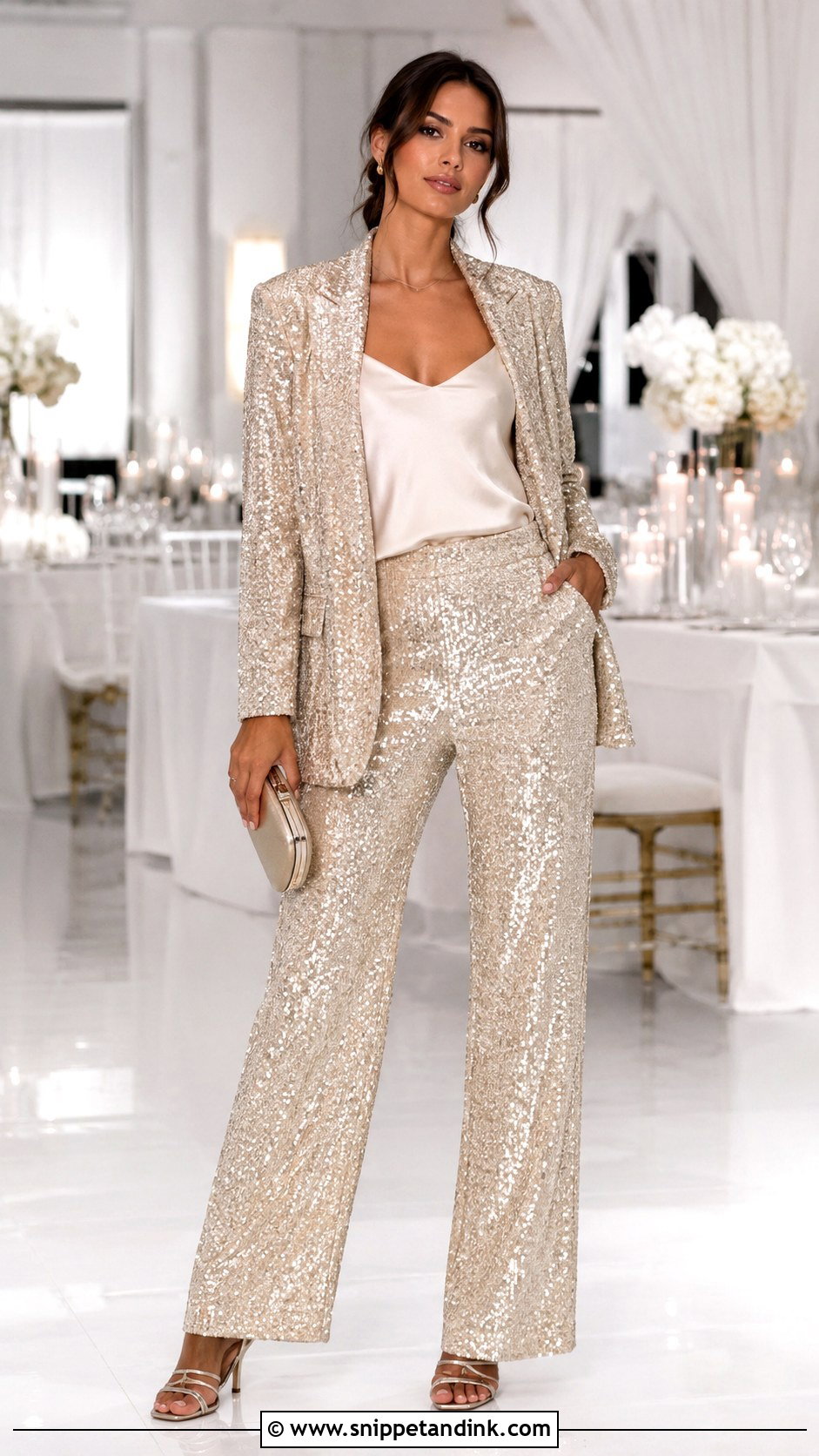
Sequins are for receptions and after-parties, not most ceremonies. A sleek sequin blazer and trousers in black, silver, champagne or deep green needs nothing more than a plain camisole and strappy heels. Skip extra sparkle near the face; it fights the jacket. The inside seams of sequin trousers can scratch, so I check for a full lining before buying.
24. Jumpsuit Wedding Suit
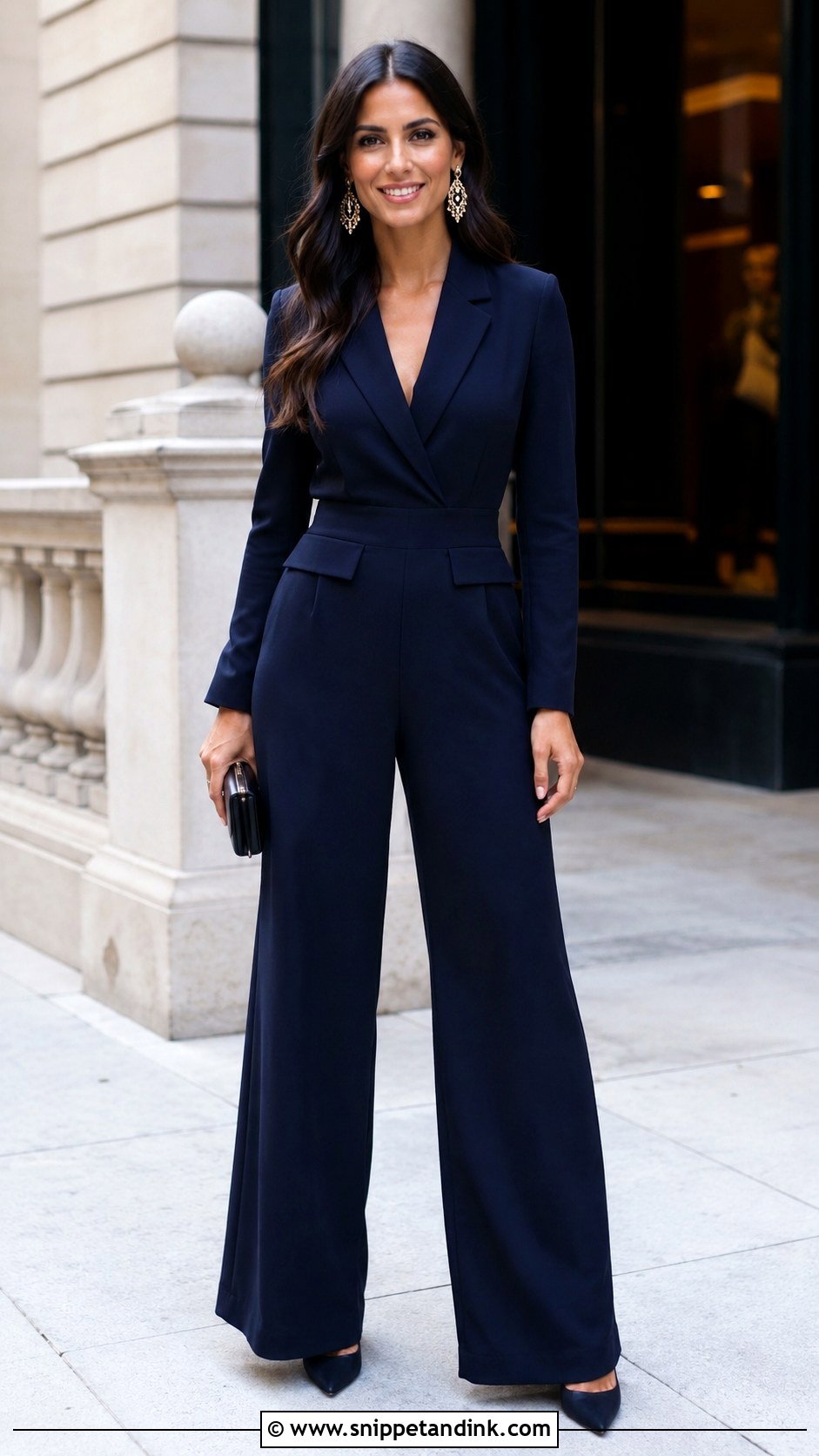
A jumpsuit gives a suit’s line in a single piece, which means no tucking or riding up. Look for a blazer-style bodice or a matching jacket over wide legs. The honest drawback is the bathroom: getting out of a back-zip jumpsuit takes time, so a front zip or wrap bodice is easier. Black, navy, ivory, emerald and blush all work. Heels lengthen the leg and statement earrings finish it.
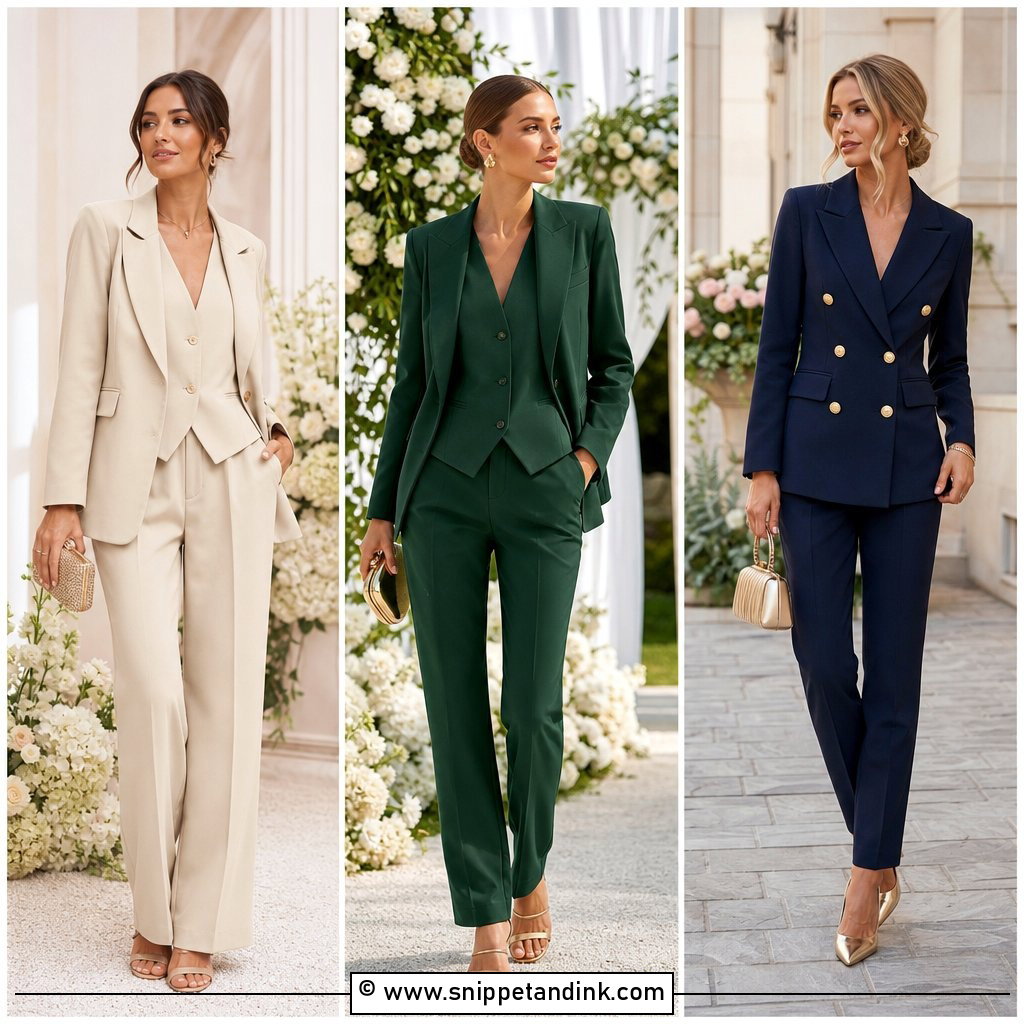
25. Matching Vest Wedding Suit
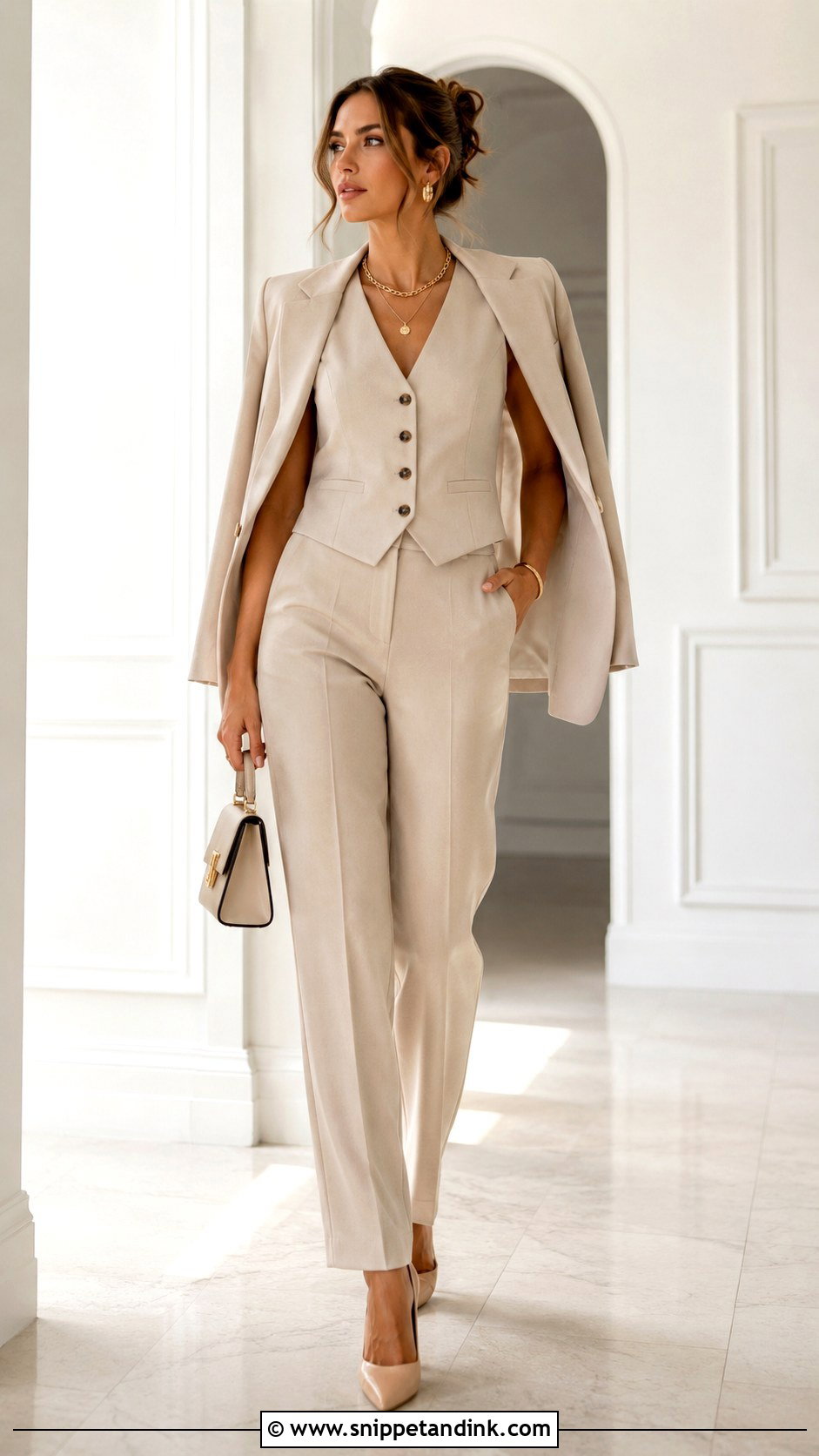
A vest worn as a top, with matching trousers and the blazer over the shoulders, is the warm-weather version of a suit. Ivory, beige, navy and soft gray look current. The vest needs enough structure to stand on its own, with darts that shape the waist, because you’ll likely take the blazer off. Pointed heels and delicate jewelry keep it polished for courthouse weddings, rehearsal dinners and guest outfits.
Matching Fabric Weight to the Season
A suit in the wrong weight ruins the day faster than the wrong color. Here’s how I match cloth to the calendar:
Warm months
Linen, linen blends, cotton and lightweight tropical wool. Look for a half-lined or unlined jacket, which lets air move. Pale colors reflect heat better than dark ones.
Spring and autumn
Crepe and mid-weight wool are the most useful fabrics in any wardrobe. They resist creasing, hold a sharp hem and photograph without shine.
Winter
Velvet, flannel and heavier wool. Remember the venue will still be heated, so wear a light silk top underneath rather than a knit, and bring a coat for outdoor photos instead of choosing a suit thick enough to stand alone in the cold.
Whatever the season, steam the suit the morning of the wedding and hang it in the car. Wool sheds its creases within hours, while linen and satin don’t.
Which Color Will You Reach For First?
Suits now cover every mood a wedding has, formal or relaxed, soft or bold, depending on the fabric and color you choose. The outfits that look best are the ones with every piece considered: the right top, shoes, bag and, above all, fit. A white suit for a bride, navy for a guest, velvet in winter, satin for the reception: each starts from the same tailoring rules. Use the color and fabric notes here to shortlist two or three, then try them on in daylight.
You'll Like These Ideas:


Leave a Reply